
#97 – An Interview with Eben Upton - Morbus Moilsome MakerFaire
Download episode · 28 MB
Also on Apple · Spotify · YouTube · RSS
Show Notes
[display_podcast]
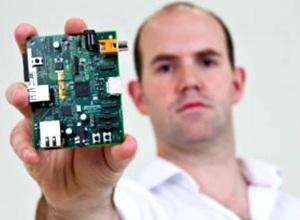
Welcome, Eben Upton of the Raspberry Pi Project!
- Chris just got back from Maker Faire!
- Is there a stigma against "Makers" by engineers by profession? There's an article at Engineer Blogs about this subject.
- There was an article from the Drive for Innovation stating the engineer's dislike for Makers as well.
- No one recognized Chris because of his Twitter picture.
- Chris built a 555 boost converter for his bring-along project that then powered some HB LEDs.
- Jeff (MightyOhm) was there presenting his open source hardware Geiger counter and showing it off at his booth http://www.youtube.com/watch?v=Q_3SVE0CQqw
- The commerce side of Maker Faire was really comfortable, it was different than conferences, where you should use fake emails and probably don't want to buy from anyone.
- We'll be shooting for a guest every other week from now on, feel free to call us on it if you don't hear one.
- The crew from Dangerous Prototypes did a fun video on "How To" for Maker Faire. Look for Chris and Bunnie at 1:20 and then Chris later around the 5 minute mark. http://www.youtube.com/watch?v=39xX4xi0Uh8
Thanks to Eben for talking to Chris during Maker Faire! And thanks to Element14 for helping set up the interview. It was tons of fun.
Transcript
Chris Gammell: This is the Amp Hour Podcast. Recorded previously, but aired May 27, 2012. Episode 97. Morbis, Moylesome, Maker Faire.
Dave Jones: Welcome to the Amp Hour. I'm Dave Jones from the EEV blog.
Chris Gammell: And I'm Chris Gammell of Chris Gammell's Analog Life. Who is sick as a dog. Yeah, we'll see if any coughs sneak through this recording.
Dave Jones: Have you got your mute button?
Chris Gammell: Got my mute button. We'll see.
Dave Jones: Is it a big red one?
Chris Gammell: No, it's a space bar. It's a right, okay.
Dave Jones: Ah, software. What a pathetic solution. You're a hardware engineer and you implement a software solution.
Chris Gammell: No, no, I did a last minute solution. Right, yeah. Sometimes the best solution is the last minute solution.
Dave Jones: It is. It is.
Chris Gammell: Yeah.
Dave Jones: Sometimes the solution is the easiest. Like I did with my new soldering microscope the other day. Yeah. I uploaded a video and I was trying to think of like the most complex way to mount my camera on my existing microscope rig and do what I was going to 3D printer thing to put it on and I was going to do this and do that and maybe build another stand and then I, no, I sat back and thought, well, can I do it without actually making anything? And it turns out, yes, I can. I can invert my tripod. If I hack a little piece off that, just invert that and put a macro lens on and bingo. So I've got myself a soldering microscope.
Chris Gammell: Sometimes the most elegant solutions are the simplest, right?
Dave Jones: Yeah. The simplest ones are the parts you've got at hand, you know. There's something to be said for a really great hack, of course, you know, and a complex build and things like that. And, you know, oh, they're beautiful. Piece of engineering, you know, to do some sort of complex build to do a job. But sometimes, yeah, the best things are just use something you've got at hand. And the good part about it is that I can take it apart and put it back together in a minute. And so I can transform my regular camera into a soldering microscope, a video soldering microscope in like a minute. It's great.
Chris Gammell: Well, that's really nice. Yeah.
Dave Jones: Yeah. I like it. And it turns out, you know, the solution was staring me in the face the whole time.
Chris Gammell: Nice. So have you actually used it for like SMT type stuff already or what?
Dave Jones: Oh, well, if you watch my video, yes, I do a little bit of SMT. I don't do that kind of thing. No, you don't watch my videos. Yeah, I don't. Yeah. I don't, yeah, read your blogs either. There we go. That's fine.
Chris Gammell: Mutually ignoring each other. That's good.
Dave Jones: Yep. Oh, we just don't have the time. We're busy, you know.
Chris Gammell: Yep.
Dave Jones: Speaking of making stuff.
Chris Gammell: Making stuff, yes.
Dave Jones: Well, today's show was going to be a good one. It's going to be about the Maker Faire.
Chris Gammell: Oh, yeah. Yeah. Yeah, we should probably prompt people up front. Some people really don't like it. And maybe we should talk about that first because it's kind of interesting, kind of visceral reactions to maker stuff.
Dave Jones: Right.
Chris Gammell: Like, I remember, I have a friend who has like a, you know, a cheaper set of tools and he had a co-worker berate him for it. He'd be like, oh, that's hobby stuff. Right. Or, oh, that's maker stuff, right? Yeah, yeah. And it's like, so what? If it works, I mean, I don't get it. I mean, like, if you don't need the precision, you know, I don't get people who are like snobby about that kind of stuff. And to be honest, I used to be a little nose upturned towards maker stuff. I mean, I'd like to be up front about that. But it was because I was ignorant about it, you know. Mm-hmm. Who was I talking to about that? I forget who I was talking to about that. And it's like, eventually, it came down to, well, I'm not making anything and they're making stuff. Exactly.
Dave Jones: So who's the douche, huh?
Chris Gammell: Not so many words, but yeah. Well, yeah.
Dave Jones: Yep. I know. And I got, I get, I still get comments daily on one of my videos about cheap multimeters, right? I, the comments just pop up every day. Oh, you're a snob, you're an elitist, you only use high-end fluke multimeters, you know. What's wrong with a $5 cheapie? And it's like, ah, well, if it suits your purposes, there's nothing wrong with a $5 cheapie. I'm just making you aware of the, you know, of the potential issues with it. I use $5 cheapies sometimes, you know. Sometimes I'm sitting at my desk and this.
Chris Gammell: Sometimes you know you might blow something up, right?
Dave Jones: You know, yeah. You know, the only thing I've got at my desk at work is a $5 cheapie, so I'm going to use it, right? And yeah, it gets the job done. You've just, you know, just teaching you what the limitations are.
Chris Gammell: Solid two and a half digits. Yeah, exactly.
Dave Jones: And yeah, and just don't measure the mains with it, you know.
Chris Gammell: Yeah, yeah. Or do it once, right?
Dave Jones: Yeah, but most of the time I'm not doing stuff like that. So yeah, so I'm, I'm accused of being an elitist slob, slob, snob all the time. The wife accuses me of being an elitist slob too.
Chris Gammell: Oh yeah.
Dave Jones: Clean that up. But it's all right, we have a child. We don't have a clean person. Yeah, right? Well, she has two children.
Chris Gammell: Oh. Yeah. Sagan and you.
Dave Jones: Yeah. Exactly. Anyway. Right. So yeah, that's not uncommon to, you know, to be accused of stuff like that.
Chris Gammell: Yeah. And, you know, I've seen this in the, you know, I've seen a lot of publications, not publications, but like, you know, blog articles and magazine articles and stuff like that. And people kind of going back and forth. And in my personal opinion on all that, it comes down to, in the end, who cares, right? It's not hurting anyone. It's getting people interested. And that's all that matters in the end. And yeah, I mean, it was.
Dave Jones: Well, that's the, yeah, that's one of the big arguments about all this maker movement is that especially from the electronic hobbyist point of view, oh, they're just flashing LEDs with freaking Arduinos and, you know, and stuff like that. Well, yeah, duh, isn't that better than them not working on any electronics at all? I think it is. I think it's awesome. I totally agree. You know? Yeah, exactly.
Chris Gammell: Exposure is the first step. Yeah.
Dave Jones: Whereas 10, 15 years ago, right, these people were doing absolutely nothing at all. And now they're actually, you know, now you're getting 100 people turned up to a soldering class at the bloody maker fair, you know? Yeah.
Chris Gammell: No, I took a picture of that, like a line going out the tent of people just waiting in line to learn how to solder. Like, how cool is that?
Dave Jones: Oh, it's brilliant. And actually pronounce it correctly. Solder. Solder. Solder. Solder. Yeah. That would have been my lecture, how to pronounce things correctly. That would have been. How did your speech go? Ossifying. Electronics. Yeah. Yeah. How did your speech go, by the way? You were going to give a presentation on documentation.
Chris Gammell: Yeah, it went pretty good. I kind of rushed it a bit. Um, and I was sick. Yeah. And I was underprepared.
Dave Jones: Apparently there was a maker fair bug going around, right? So.
Chris Gammell: Yeah. Yeah, I guess. Yeah.
Dave Jones: That's what happens when you have to associate with other humans, you know? Right, right. You have to leave the lab and leave the cubicle and, yep. Right. Get out there in the real world.
Chris Gammell: It's scary. That and I was running myself down. I mean, it was probably a 14 hour day on Saturday of just like on my feet all day walking around and just, you know, clucking like a chicken.
Dave Jones: And you probably didn't drink enough and you didn't eat enough. Right, exactly. Yep. Yeah. Yeah.
Chris Gammell: Yeah. No matter how prepared you are, it just, it just wasn't, it wasn't enough. Um.
Dave Jones: And you were shaking too many hands, mingling with too many people. Right, right. Yeah. Shake a hand like a hand.
Chris Gammell: Shake a hand like a hand. Right. Yeah. Yeah. Um. But yeah, the talk went well. I actually, I'm waiting on the video to be put, the official video to be posted, but, um. Oh, okay.
Dave Jones: So they actually officially film all the presentations, do they?
Chris Gammell: Uh, you know, I'm not sure. I was on the education stage, which is kind of a surprise to me, but I was on the education stage and there was a group there called Ed Surge and they actually are the ones that are posting it. Right. Um. Okay. So it's kind of like education technology stuff. Oh, wow. So if people are interested in that. Yeah. Um. Yeah, I know one of my friends is really interested in that kind of thing, so I push them towards that and it's a, it's a cool topic and you know, there was a lot of people there for that, that express purpose. You know, like I actually knew a guy, I met a guy from Cleveland who I knew in a prior life, um, who was there for that express purpose was bringing maker type education back to Cleveland. Wow.
Dave Jones: Okay.
Chris Gammell: Right. I mean like, yeah, so people are being sent to maker fair is like a conference. And if so, if there's people out there who are part of educational organizations, there's your excuse to go, um, you know, nothing like a free ride. Yeah. Yeah.
Dave Jones: Of course. Oh, never turned out a junket kiddies.
Chris Gammell: No. Yeah. No. I mean, just for the networking. That's the only reason I, I mean, not the only reason, but that was the main reason I went. And I, I, I think I just love gold.
Dave Jones: San Fran and.
Chris Gammell: Well, San Francisco's nice. Uh, what, what did you end up doing by the way?
Dave Jones: Cause we talked about this the other week.
Chris Gammell: Oh yeah. Yeah. So, um, on Saturday or sorry, on Thursday, I got down there Thursday. I, uh, I rented a bike, which is different for me, a little physical. And I biked down towards the exploratorium, which is like this kind of hands-on museum down in, down by Golden Gate. And then I promptly flipped over the handlebars of my bike.
Dave Jones: Awesome.
Chris Gammell: Yeah. Nothing like, nothing says vacation, like bruising the entire right side of your body.
Dave Jones: How did you do that?
Chris Gammell: Oh, I'm just a terrible bikist. I, uh, I tried to like pop up the wheel over the curb and nothing. I popped. I popped. So.
Dave Jones: And everyone's just going, eh, nerd. Yeah. Yeah. Yeah.
Chris Gammell: Nerd on a bike. Nerd on a bike.
Dave Jones: It's like a performing monkey on a bike. Yeah. Basically. It was.
Chris Gammell: And it was like this whole line of cars stopped right there.
Dave Jones: See the performing nerds.
Chris Gammell: Oh boy. Yeah. So I went to the exploratorium after, after I lick my wounds a little bit and I went to the exploratorium and there's this, um, mechanical arcade, which is real cool in downtown San Francisco. I told you about that one.
Dave Jones: Yep. You did. Oh yeah. So I did. Yeah. I told you. Yeah. You found it. It's just near the submarine there at, uh, yeah, it was really cool.
Chris Gammell: I liked it a lot.
Dave Jones: It's free. Just wander in.
Chris Gammell: Yep. Yep. And the Nickelodeons were my favorite thing, which if people don't know what those are, I mean, people know it as like the, the children's channel in the U S and there's a named after that, but, um, it's actually a piano with like a built in like drum and, you know, organ and everything built into the piano console. Yeah. It's really cool. Um, so really cool mechanical systems and stuff like that. So I loved it. Um, yeah.
Dave Jones: So did you ride your bike over the golden gate?
Chris Gammell: I did not. No, I couldn't. Yeah. It was really windy. So, so, but then the next day I met up with the mighty Ohm and, uh, Kenneth Finnegan and, uh, Jaron Havel, all those guys I stayed with at a house in a Berlin game and then, uh, hit up the surplus stores and, uh, you know,
Dave Jones: which surplus stores did you go to?
Chris Gammell: Oh, HSC or halted. Yep. And, uh, and then, uh, weird, weird stuff.
Dave Jones: But you've been to those before, right?
Chris Gammell: Yeah. I've been to both of those before, but they're both going worth going back to. I mean, it's like, it's like digging through a junk pile anywhere. Yeah. Yeah. Exactly. It's always worth going to. Like I found like a, it was like a 45 or $45 rather, um, e-reader dev kit. It was really cool. If people are in the Bay area, it, I, I have no use for it personally, but it had like a resistive touch screen and an actual e-ink display and a controller all for 45 bucks. And, uh, that was really cool. And then Jeff bought this old, uh, it wasn't an oscilloscope. What do you call it? Like a, uh, like a voltoscope or something like that. It was really cool. It was this old tube based scope. Right. And, um, so I'm sure he'll post pictures of that kind of stuff. And there's pictures all over the place. People have seen all this stuff, but, um, yeah, it was great. I mean, we ran into Ben Heck down at the surplus stores too. He was shopping for some of his stuff and, uh, all around it was, it was just a lot of fun that day. So nice. And then, then the next day I went to make a fair and, you know, got sick. Awesome.
Dave Jones: Is this your first make a fair?
Chris Gammell: Yeah. Yeah.
Dave Jones: It was my first one. Yes, it is. Isn't it? Yeah. I don't know. Couldn't keep track.
Chris Gammell: So did, was it, was it huge? It was pretty big. Um, it wasn't as packed as I thought it would be. I thought it was, I've been to like music festivals before. Right. And like, that's like, like shoulder to shoulder kind of people. And there was a lot of people there and the aisles aren't that big between stands. Yep. But, um, it wasn't like, I mean, you could move and it was very possible to move. So I'm not sure what the numbers were, but it was, it was great. I mean, there was a lot of.
Dave Jones: So they've got like, like an indoor thing with all the stands and everything. And then like outdoor stuff where people, you know, walk their robots around and things like that. Right. Is that how it, or their big contraptions that they bring in?
Chris Gammell: Yeah. You know, and someone else called it like, uh, the off season of Burning Man. You ever heard of Burning Man? Oh, I've heard of Burning Man. Yep. Yeah. It's like this big art festival in the desert where there's, yeah, big sculptures and everything. And that kind of really fit. I mean, it was a lot of like the big stuff. That was all professional groups that are doing like, you know, throwing flames and, you know, going through propane tanks like they're nothing. Yeah. Um, but still like really cool stuff. I mean, it was, it was, uh, it was a great experience. I mean, it really was. Um, got to meet a lot of people that have been on the show. That was cool. I met all them before I met you, Dave, in real life. There you go. Yeah. I got to hang out with Bunny. I saw Ben Krasnow. Jerry was there. Um, I mean, Jeff was there, obviously. Mm-hmm. Um, who else did I see? That might've been it. Right. But yeah, I mean, I wasn't going to meet Bunny in Singapore. So, uh, I'm glad he, I'm glad he came to the Bay area.
Dave Jones: And did anyone recognize you?
Chris Gammell: Did you get approached? Uh, no.
Dave Jones: Oh, you're, you're Chris Gammell. I am not worthy. I am not worthy.
Chris Gammell: No, I didn't. And it was great. Oh, excellent. Kind of disappointing. But also I was like, eh, I don't matter. Come on. Right. And, uh, I figured out the problem though. It's like, cause like most people know they've only seen my Twitter picture and I actually changed the hue and saturation on that thing. So I have like in that Twitter picture, I have like red hair and white, you know, like a really pale face. I'm not tanned by any stretch of the imagination, but I look nothing like that. Right. That's right.
Dave Jones: I mean, I've, I've seen, I mean, you've only, there's only a couple of videos of you online really. So unless you've seen that, I should, I mean, I'd, I'd probably, you know, walk, walk past you and not realize perhaps. Right. I don't. Yeah.
Chris Gammell: I look pretty generic as well. I mean, I'm pretty generic white guy. Right. Generic nerd.
Dave Jones: Cookie cutter nerd.
Chris Gammell: Generic nerd. Right. Right. Right. Yeah. Well, just another nerd. I am like all of you. Well, not all of you, but we are all the same nerd, nerd fabric, but yeah.
Dave Jones: Yep. Yeah. That's it. You need to get into video. You see, then people would recognize you and yeah. See, cause I can't walk around a trade show without being recognized, you know?
Chris Gammell: Yeah. It's better to not, I'd rather talk to people on a, you know, like I, I just introduced myself as Chris and then for someone, oh, I was talking to one of our EB writers, engineer blog writers, Sophie. I talked to her probably five minutes and then I asked about a recent post she did and she, she kind of like snapped too and she's like, oh my God. So it was a lot of that. Right. It was a lot of, yeah.
Dave Jones: And, and it can actually be, you know, I actually, not, not annoying, I guess, but to have people come up to you and hey, you're Dave Jones or you're, you know, whoever. And then, yeah, it's great. You know, Hey, how are you doing? And then you end up talking, you know, talking to them for 10 or 20 minutes and then you never get to see anything because you're too busy talking to everyone who comes up to you or talking to the people who you meet, which is good. But sometimes you go, I just want to walk around, you know? I just want to see, see the show.
Chris Gammell: And that definitely happened to like Jerry. I mean, she was wearing roller skates, carrying her base, which was pretty cool. Yeah. I've seen the photos. Yeah. So if people haven't seen the photos though, she actually turned a base into a, it used the Commodore 64 chip. But the thing I wanted to point out is that she, I don't know how many she told, talked about this on videos and stuff. She used 18 AA batteries. She set up a 12 volt rail, a five volt rail and a three, three rail with linear regulators, which.
Dave Jones: And you chastised her for it.
Chris Gammell: No, I didn't chastise her. I just said, I said, like, why did you do that? And she's like, well, I ran out of time. Of course. At that point. Yeah. I don't know.
Dave Jones: Of course that's the solution you're going to do. You're not going to waste a second dicking around trying to develop a power supply for this thing. Just whacking some batteries in a battery holder with a 7805 and a 7812.
Chris Gammell: Yeah. Yeah. You're right. Absolutely.
Dave Jones: Absolutely. And don't worry about low battery.
Chris Gammell: I just figured the FPGA stuff is so easy for her that maybe the power stuff would have been.
Dave Jones: No, you can get bogged down in that forever. Forget it.
Chris Gammell: Yeah.
Dave Jones: No. Battery packing a 7805.
Chris Gammell: Simple solution, right? I mean, like, that's another good example.
Dave Jones: Exactly. You just don't gild the lily. It's not worth it.
Chris Gammell: Hmm.
Dave Jones: Yeah. When you're just trying to get something working and, yeah. Yeah. You get it.
Chris Gammell: And actually, I brought my own hack. That was why I didn't finish my speech on time. Right. What? Because I was finishing that at home. I actually, I was looking around my shop and I didn't have any fun ICs to play with. I had some on dev boards and stuff like that, but I didn't have any loose boost converters or anything. I really wanted to do stuff with boost converters. And so I'm like, well, screw this. So I built one with a 555. And I actually, I can show a picture of it. I ended up doing dead bug method or Manhattan. No, I wouldn't call it Manhattan technique because it was so messy. But I actually took, I thought this was pretty, pretty smart on my part. If I might toot my own horn. I actually took a Dremel I have and I Dremeled out the copper clad to make power planes. Yep. So I had like a metal grinder. Oh, you have? Okay. Yeah, yeah. Yeah. Nothing new there. I shouldn't think it's original, but right. But it makes it look a little grungy, but I don't know. It was fun. And, you know, just with parts out of the junk bin and did like a nine volt, a 30 volt boost and not a lot of current.
Dave Jones: So is that the thing? Do you have to bring a hack? Is that the, you know, you're sort of lame if you turn up to make a fair without a hack? Is that without something you haven't made? You know, is that?
Chris Gammell: It's good to show up with something in hand, I think. I mean, especially the dinner that Jerry throws at the end of the weekend is called Bring a Hack Dinner. So that's always nice. And it's good when you're getting together too, you know, what did you bring? What did you bring? Yep. And I saw some crazy stuff. One of Jeff's friends, Tony, who's an RF expert, he showed me, I mean, RF stuff always boggles my mind, but like he like had this like milled out wave guide. Oh, it was just gorgeous. I mean, like he's the one that actually Jeff. Oh, everything okay there? Yep. Everything's fine. All right. They know a potential of the man behind the curtain. And yeah, so he, that's actually the friend he has who has the die bond or the wire bonder. Oh, yeah. And so he actually showed me one of those things and holy moly, that is cool. I think we might have to try and get Tony on the show sometime just to talk RF stuff.
Dave Jones: Yep.
Chris Gammell: And really that was the whole reason I went in the first place is to try and get people for the show. And I think I might have found some fun ones. Excellent. Yes. And I have to talk about the one while it's fresh in my mind. I was walking, I was walking around and I saw Massimo Bonzi, right? The Arduino, the head of Arduino, right? And I walk up and I say, Massimo, hi, my name is Chris and I run this, this, this podcast and I'm kind of explaining myself trying to see if he knows who we are. And he said, oh yeah, I've listened. And he says, oh, you're the one with the Australian fellow, huh? And I'm like, yeah. And he goes, he's the one who thinks Arduino is a stupid name. And I go, yep. That's me. I'm sorry, Dave, I was paying for your sins 5,000 miles away from you. Excellent. Yeah.
Dave Jones: But at least people know my name, right?
Chris Gammell: I guess so, yeah, for being a butthole.
Dave Jones: If you can't be famous, be infamous.
Chris Gammell: Right, right, yeah, that whole thing. But yeah, that was fun. That's brilliant. Got to talk to a lot of other great people. But you know, that's all it's about, really. I mean, like, I don't know, it's hard to imagine. And I guess a lot of people go for taking their kids. Or like one of my friends from college actually showed up with her whole family. And it'd be fun like that. But I don't know. It's hard to imagine. And you know, it's a great program for kids, right? I mean, like, it really was. Oh, of course. You just think about all the buttons there are to push. Oh, it's a goldmine.
Dave Jones: Yeah.
Chris Gammell: Yeah, yeah. It's just stimulation, like, crazy. I know. They're fire-breathing everything, right? But, uh... Oh, excuse me. That was the mute button. That was the mute. Sorry. Didn't want to get the cough on camera or on audio. But at the same time, it's for big kids. I mean, like, come on. Of course. Yeah, so...
Dave Jones: It was great. Do you get a feeling it's getting too big, too commercial? These days, I get a feeling that it... I haven't been there, but I don't know. I'm getting an inkling that it, you know, it might be. It might be getting too big for its own boots, perhaps.
Chris Gammell: Yeah, I don't know. You know, there was a post by SparkFun about why they just... They went with a smaller booth this year. SparkFun being the DIY electronics people. And they really did. They did a small booth. Why is that? And I got to go see them. I haven't read this thing yet. Right. It was like... Just the rampant cost was a whole lot. It went from, like, $10,000 up to $50,000 or something like that.
Dave Jones: Wow. Wow. For a... How big would that booth be for...
Chris Gammell: Yeah, probably like a 25 by 25 foot. So that'd be, like, 8 by 8 meter.
Dave Jones: Ouch.
Chris Gammell: Right. That's just...
Dave Jones: So, what chance does the, you know, the lone, you know, hacker, the lone midnight engineer have if they just want a table? You know, how much would something like that?
Chris Gammell: That's the thing. They have different levels, right? So... Right. Like, the corporate level. And that's what it is. They're the corporate level. They're for-profit and everything. Oh, okay. If you're, like, an open source hardware kind of person, then you're fine. Right. It's like... I think Jeff paid, like, $300 or something like that. Right. And he had a very nice spot. Okay. So I don't think that's a big concern.
Dave Jones: I think I saw a video of it. He just had, like, a table, right?
Chris Gammell: He had a table, yeah. Right. Yeah, in the maker's shed because he was selling stuff. He was, like, kind of hawking his wares. Okay. Okay. Right. Hmm. But, yeah, I mean, it is getting bigger. And, you know, I think the thing with that, though, is, like, it's like any event. You know, when you have more people that want to get in on it, especially from the sponsor side, right? Mm-hmm. Prices are going to ramp because you can't accommodate everyone. Yeah, exactly. And, you know, I don't know how to deal with that. I mean, I think it still felt, not still felt, because this is my first one. I don't have any reference point. From what I heard from other people, they said, no, it's just as good. I mean, it's, yeah.
Dave Jones: Right. I've got a niggling feeling that somebody, that there's an opportunity for somebody to set up a rival one now that it's so popular. Like a spin-off one that's non-commercial, perhaps, or something like that. You know, that you only allow in the, you know, the non-commercial people or the open source hardware people, or something like that.
Chris Gammell: Well, we're already seeing those, too. I mean, like, there's a Hope 9 conference coming up.
Dave Jones: There's the open source hardware. Yeah.
Chris Gammell: Open source hardware's one. And then there's the Hope 9 in New York City. But they're more of your traditional conferences, aren't you?
Dave Jones: They're not really fairs as such, are they?
Chris Gammell: I don't know. Yeah. I don't know.
Dave Jones: I don't know. I can't talk, because we've got hardly anything like that here. So, I...
Chris Gammell: Well, get on it, man.
Dave Jones: I know. I know. Well, there's supposed to be another Melbourne Maker Faire this year. So, I'll definitely go to that. That's good. Yep. And eventually, one in Sydney might happen. I do know some people that are thinking about it. So... But, you know, eh. Thinking about it doesn't make it happen. You know, you really need to... Because it's a lot of money, you know. It's a lot of risk, a lot of effort to actually put something like this together. So...
Chris Gammell: Yeah. Oh, yeah. Yeah. There's a big upfront cast.
Dave Jones: Especially when you don't have the backing of the big O'Reilly mob. You know, you've got to... And it's practically a full-time job. You know, you almost can't do it part-time. You couldn't organise one of these things part-time.
Chris Gammell: I don't think that would... No, not at this scale. I mean, maybe on a smaller scale, but...
Dave Jones: Yeah. That's...
Chris Gammell: Yeah. It's a big... Yeah, it's a big deal.
Dave Jones: Hmm. One of these days, I'll get to one.
Chris Gammell: Yeah. Maybe you'll actually fly to the US at some point in the near future as well.
Dave Jones: Right. I don't know.
Chris Gammell: It's too far. It's not too far. Come on.
Dave Jones: I don't know what I'd bring, either. Because the pressure would be on for me to bring something. And I'm not sort of the hackery type. You know, I don't just go, oh, I'm going to hack this just for the fun of it. You know, that's... That, you know... I can appreciate them and I do enjoy that, but I don't personally do much of that. So I would, you know... I don't know. You just bring your power supply board. Yeah, if I'm going to bring something along, it would be like a professionally designed, manufactured product and it would take me, you know, ages.
Chris Gammell: I think that's just as good. I know. I think that's just as good. Oh, true. I mean, I think it's all moving that way, too. I mean, the thing that's different is... And actually, this is something else I want to talk about is... It's really interesting, actually. Like, commerce was incredibly casual there, you know? Like, and I felt really good about it. I mean, it was like... It's like, yes, we're here. We're selling stuff. But everyone's cool with that. I mean, it's not like... It's not like, here, buy my stuff, right? Buy my stuff. People are like pushing hard sells, but it's like, here's some cool stuff. Why don't you buy it, right? And participate. And that's what I... I mean, like Jeff's kid, right? I mean, Jeff's kid is really cool. He set it up and he actually was showing off his stuff in what they call the maker's shed, right? That's where they, you know, they have an arm that actually just sells stuff, right? I mean, they actually buy kits from makers wholesale and then they resell them. And so Jeff was presenting there. And, you know, it was just... It was strikingly comfortable. And I don't know if it's just because I've never experienced that before. Not even just Maker Faire, but just that comfortable, you know, like I'm here to sell stuff kind of thing. Yep. Because it's not cheap either. I mean, like Jeff's kid is a hundred bucks, right? That's not a small investment.
Dave Jones: Yeah.
Chris Gammell: But it's like, it still is very comfortable. And I really, I dig that. I mean, it was cool. It's like, yeah, this is fun, right? And this is cool. But we're also selling stuff and I'm making my living like this. And that's, I really respect that. I mean, like that's a really cool thing. So, I don't know. Maybe people wouldn't like that, but I definitely did.
Dave Jones: Well, and also they're just as happy to show off their stuff and not just sell it, right? Because they aren't just salesmen like for a company, like you'll get at a trade show, right? Oh, there's just the sales guys, you know, on the stand, right? This is the people who passionately believe in what they designed. And this is the person, right? I doubt there was a single stand there that would have had a salesperson on it, right?
Chris Gammell: Right. Well, and yeah, I don't know if they exist because it's not big enough yet, right? I mean, there's fulfillment people, right? There's fulfillment houses, but...
Dave Jones: Right. Well, I can imagine if, say, Element 14 had a stand there or, you know, RS Components or something like that, they would, you know, you would have salespeople there.
Chris Gammell: Yeah, like Radio Shack was there and they had stuff like that. And yeah.
Dave Jones: But that'd be the sole exception, really. Right, yeah, you expect that as a distributor. Because otherwise, you've just got the engineer, the hacker, the maker, who, they're not salesmen, so they don't, you know.
Chris Gammell: Right.
Dave Jones: They sell, but they sell the same way I sell a product through passion, right? And there's people who say, I'm the best salesperson for, you know, a multimeter and oscilloscope, you know, because I review it and I'm passionate. And that's actually, you know, sales. That's actually, you know, being a salesman. Right, right. And I don't see it as that.
Chris Gammell: Talking points, that's no fun, right? It's if you're actually digging in. Because that's if you're selling engineers, right? Or even selling to makers and stuff like that. I mean, they want to know the technical side of things, right? That's right. They want to know really what's going on. I don't want to know the, I don't want to see the first page of a data sheet. I want to see the fourth page where you actually get the, not the typical specs, I want to see the max specs or I want to see the min specs. You know, I want to yell at someone, right? And that doesn't happen on the first page. The first page is marketing and sales, right? That's right. Right. So. And I guess that is my comparison too. I mean, I guess my comparison is I've been at a couple tech conferences now. I've been to ESC a bunch of times. And yeah, that's, you know, like you're right. The booth's more like, oh, here's some information. You know, we hope you buy lots of parts from us. But it's never like sitting there. They're never just sitting there selling dev kits, right? So the selling aspect is right there in your face. But also it's not as comfortable either, right? So it's definitely, it was very different for me.
Dave Jones: And they're not trying to get you as a sales lead either. You know, there's, you know, like these trade shows, you scan your past, bingo. They've got all your contact details, right? And that's what they want.
Chris Gammell: I'm still getting emails from the first one I went to.
Dave Jones: Yeah. Because I've worked, you know, I've been on the booze. I've been manning the booze at the company. So I know what goes on behind the scenes, right? And it is all about how many leads you get. That's it.
Chris Gammell: It's all about the funnel.
Dave Jones: And then, yeah, and I've seen the stats at the end, you know? And, you know, it does a company wide, look how many leads we got from this trade show. It was a success, you know? We're going to spam the crap out of everybody. Yeah. And that's all it came down to, really, was leads. And it's just disappointing, you know?
Chris Gammell: Which leads us to another point. Always use a fake email when you're going to a trade show. Right, yes.
Dave Jones: Or at least one you can easily filter.
Chris Gammell: Yeah. Yeah, I got that one wrong.
Dave Jones: Or have two. I've had two passes before. And, oh, yeah, I'll whip my dummy pass out because I don't like you. You know, piss off. Yeah, I'll enter your contest, but, you know, I'm not giving you my details. Right. Or when you genuinely do want the info, then you'll, you know, hand them your genuine pass.
Chris Gammell: Right, yep.
Dave Jones: I've done that more than once.
Chris Gammell: Cool. A little tip there. Yeah. Yeah. So, any other questions about Maker Faire? I don't know. We guess we kind of burned a half hour there, huh?
Dave Jones: Yeah, we did. Sorry. But this show was all going to be about Maker Faire because coming up in five minutes, we will stop talking in five minutes and we will let you continue with your interview.
Chris Gammell: Right. Which we didn't actually tell anyone about yet. No. I got a chance. Well, I don't know if this will take five minutes. We'll get to that. We'll get to that. Exciting interview coming out. Stay tuned. Ba-ba-ba-ba-ba-ba-ba-ba-ba-ba-ba. Tell us. Come on. No. Oh, we're still on live. Oh. Yeah. No, I'm just kidding. Yeah, I actually got an email from Element 14 and they said, hey, oh crap, what's his last name now? Eben Williams? Is that right? Oh, crap. You're telling the story. Oh, no. All right. Dave, fill in for a second. La-da-da-da-da. Here's me filling in for Chris, who's forever the professional radio announcer. Evan Upton. That's it. We got it? Sorry. It was a total brain fart. I blame that on the plague that I got there. Evan Upton. That's his name. So, Raspberry Pi Project, right? We've talked about that a couple times on here. Yes, we have. And we've kind of talked about the ups and the downs and the ins and the outs. Well, not that much ins and outs, but I got an email and they said, hey, you want to talk to Evan? And I'm like, yeah. So, yeah. I interviewed him for like 25 minutes and that's actually going to be the second half of the show. Awesome. So, stick around for that. I mean, it was great. I mean, he was super personable, really knows his stuff. I mean, he's a PhD at Broadcom still. He still works there.
Dave Jones: Oh, okay. Right.
Chris Gammell: Yeah. A little bit of vested interest there. Yeah. No, they do. But that's not his thing, though. I mean, he was doing... I mean, he talks about in the interview, too. He was working on the Raspberry Pi before with an AVR previously, right? I mean, like... Right. It was not tied to his product, right? Okay. The fact that he knows the products. Yeah. Right, right.
Dave Jones: The concept was separate from their own chips and pushing their own chips.
Chris Gammell: Yeah. I mean, basically, the whole interview kind of wiped out all of my skepticism. Okay.
Dave Jones: Excellent.
Chris Gammell: And he encouraged skepticism. That was another thing that was cool. And I'm totally ruining this interview because it's coming up in a few minutes here. So what else do you want to talk about before we cut to the interview? Because this is actually going to be a little different for us where you're not going to be there. No, I'm not. Yeah. And...
Dave Jones: I can't give... I can't go bullshit under my breath, you know? Yeah. When you'd like... Maybe I can listen to it in real time and then add my commentary over the top. No, I don't think so.
Chris Gammell: No, I don't think so.
Dave Jones: No, let's just run it raw.
Chris Gammell: I know that won't happen because you're too lazy, too.
Dave Jones: Yeah, exactly.
Chris Gammell: No, I've got work to do today.
Dave Jones: It's a... We're recording this on a Friday, which is not our usual day here, so...
Speaker ?: Yep.
Dave Jones: Yep.
Chris Gammell: Yeah, it's Memorial Day weekend here, too, coming up. So that was another reason this worked out real well, which is a day off, so... Yep. That's probably when people are listening to it. So it's worked out well. So yeah, Dave, any other questions about Make It Fair, California, anything else? People I met, people I talked to, people who insulted you? Yeah.
Dave Jones: Right. Well, it's good to know that the Arduino guys know who I am. There you go.
Chris Gammell: Yeah, yeah. I was quite thrilled.
Dave Jones: No, it's like...
Chris Gammell: That was fun.
Dave Jones: But you had fun, and one day, yeah, I'll probably get there. I don't know. I've been to California too many times. I want to go somewhere else.
Chris Gammell: I'll go to New York Maker Faire. That's September 29th and 30th.
Dave Jones: Okay.
Chris Gammell: And that is actually...
Dave Jones: I've only been to New York once, and I didn't really like it. So... Hmm.
Chris Gammell: No, it's a lot of fun out there. Open source hardware conventions before that too. That's actually how I got started in this whole mess. Right. Yeah, it's lots of fun. I mean, you should plan for that.
Dave Jones: I should.
Chris Gammell: Yeah.
Dave Jones: Well, if I'm going to go there, I'm going to do a big trip. You know, I'm going to make use of my time over there, and I'll probably do a big road trip across the country or something. That'd be awesome.
Chris Gammell: That would be awesome.
Dave Jones: Yeah. Yeah, you should do that. I think Toymaker Television just did a big road trip.
Chris Gammell: Yeah. They went from Minneapolis, where they live, down to California and Arizona and stuff.
Dave Jones: It was something insane. It was like 6,000 miles or something.
Chris Gammell: That's nothing in the US, man. That's just from the Midwest to California and back.
Dave Jones: No, I actually plotted, when they tweeted it, I actually went onto Google Maps, and I worked out how far that was from Australia. That was from one side of Australia to the other, and then right up north as well. It's a freaking long way. Yeah, man. It's the equivalent. They went, like, no, it was a 12,000. It was the equivalent of going one and a half times across Australia, which is the same size as the mainland US. So they effectively drove across the US.
Chris Gammell: Huh. Well, we've got a lot of middle here. It's the same size, though, huh?
Dave Jones: Yes, it's the same size. It's effectively the same size. Australia is effectively the same size as the continental- The lower 48. The lower 48 states of the US, yes. They're roughly equivalent in square area, except we've only got 20 million people, and you've got 300 million.
Chris Gammell: Right.
Dave Jones: And you've got stuff in the middle. I mean, you know, it's almost impossible to drive anywhere in the US for more than an hour before hitting civilization. Here, you can drive all day, and you don't hit civilization, you know?
Chris Gammell: Dave has never been to Kansas. Okay. Maybe on your upcoming road trip, you can do that, Dave.
Dave Jones: Right. Julian Banjos.
Chris Gammell: Yep, yep.
Dave Jones: Or have I got the wrong state, and I've just insulted everyone from Kansas?
Chris Gammell: Oh, probably, yeah. Right, yeah. There's banjos in Kansas.
Dave Jones: That's what I do. That's why I'm known. That's why the Arduino folk have heard of me. That's right.
Chris Gammell: Professional provocateur, right? Or provocateur, or however you say that.
Dave Jones: I'm a professional ranter. That's what I do. Yeah.
Chris Gammell: Yep. Yep. All right. Well, let's move on to the interview with Eben. And yeah, if people got any questions, we'll be back to electronics next week. I know this is kind of electronics-like this week, but we wanted to talk about Maker Faire while I was fresh in my mind.
Dave Jones: And we'll try and have more guests on. We have got quite a few guests lined up. Yes. And we are sort of semi-thinking about trying to commit ourselves to a regular guest slot I think we're committed. Come on, yeah. On the show. I think so.
Chris Gammell: Yeah.
Dave Jones: Anyway, the idea was every second week was that we would try and have a guest on. So we'd alternate between having a guest on and just us. Having a guest on, blah. Yeah.
Chris Gammell: So people are welcome to hold our feet to the fire if we do not do that. And me and Dave did talk about it. And me interviewing Eben this week does count. Yes. That's right. Yeah.
Dave Jones: But no, we do have, what, three or four people maybe lined up? So... Yeah. Yeah. Yeah. That's...
Speaker ?: Yep.
Chris Gammell: That'll last us at least two months. Yeah. Awesome. All right, cool. On to the interview with Eben. Okay, so I'm here with Eben Upton of the Raspberry Pi Foundation. And it's a little bit noisy out here in Maker Faire. We're actually outside of Maker Faire right now. But, Eben, how are you doing?
SPEAKER_00: Yeah, pretty good. Kind of a little jet lagged, but otherwise not too bad.
Chris Gammell: Okay, great, great. And so you've actually been here at Maker Faire giving talks with Ben Heck as a panel, right?
SPEAKER_00: Yeah. So just kind of trying to tell people about Raspberry Pi, trying to encourage more people to kind of find out about it and maybe think about doing something with it.
SPEAKER_01: Right, and I saw that there, I heard yesterday you were actually with Joey Hootie too, the young Maker guy.
SPEAKER_00: Yeah, yeah, we were. So yeah, he's an amazing kid. So he was building these little 3D kind of grids of LEDs and then playing stuff with an Arduino. So it's pretty cool stuff.
SPEAKER_01: That's great. Yeah, he's a brilliant kid.
Chris Gammell: So I, you know, I've been back and forth on the Pi, but I've definitely on, I've come down on the side of the Pi. Woo! Yes. Oh, yeah. Another one joins the fold.
SPEAKER_00: Would you like to tell us what was, what were on the two sides? Why I was like that? Yeah.
Chris Gammell: Well, you know, at first I was just, I was curious if it was going to be possible, to be honest. I mean, I've worked in electronics.
SPEAKER_00: Yeah, you and me both. Yeah, right?
Chris Gammell: I mean, so Dave, my co-host, who obviously isn't here, he's in Australia, but you know, he's worked in high volume electronics as well. And it's just, it is a daunting task. Absolutely. Absolutely. And I guess pessimism kind of reigned the day.
SPEAKER_00: Yeah. But. Which is good. Right. Which is good.
SPEAKER_00: Because, you know, the world is full of people who have announced things like this and they've not done them. And so, you know, even, you know, whenever people were saying this on Slashdot, whenever people were saying this on Slashdot, I was, I was going on there and I was saying, absolutely, be skeptical. You know, be skeptical until you have one of these in your hands.
SPEAKER_01: That's great. Which is the right thing to do. Right. That's the engineer way of it, right? I mean, proof is in the chip. Yeah.
Chris Gammell: Yeah. Yeah. That's great. And so, I mean, a lot of the, we heard about the challenges, but then, you know, you guys got through all the EMC testing and now, yeah, that was a bit of fun. But that was actually market driven too, right?
SPEAKER_01: I mean, you were, you had to deal with the consumer side of things, right?
SPEAKER_00: Yeah, absolutely. And, you know, I think we did on the, on the EMC side, I think, you know, you look out there, there are a lot of boards out there that aren't C marks, aren't FCC clear. Yeah. And our guidance in the UK was that, you know, you do need to be serious about this. Maybe you get away with it. Right, right, right. When you, when you got small volume, our problem was we kind of got the public. Our visibility of a, of a very high volume product before we shipped a single port. Right, right. And so there was just no way we could avoid that.
Chris Gammell: Right. And, you know, the thing, the thing I was talking about with people was, you know, a lot of the electronics people, we viewed it as a dev board, right? And then a lot of the consumer side, they all said, no, this is a computer. Yeah. And it is, it's both, right?
SPEAKER_00: Yeah, yeah. It's both. Yeah, absolutely.
Chris Gammell: And that obviously caused a lot of the, the rush towards it and the.
SPEAKER_00: Yeah. Yeah. And, you know, we, you know, we've always said, hey, it's an ARM Linux box. And, you know, to something said, if we say that and enough people believe it, then, you know. But in the end, it was fine. We were very lucky, obviously. It's a good board design. It's, yeah, it sailed through. I had a few nervous days, but I went down and supervised, supervised some of it myself. And it was just good. I've never done that before, so it was just quite nice to get in the anechoic chamber. Yeah. Yeah. That's cool, man. You know, it's just kind of, you know, taping the, you know, taping the cables down on its kind of big polystyrene desk and stuff.
SPEAKER_01: Yeah, yeah. Yeah.
SPEAKER_00: It was pretty good fun.
SPEAKER_01: People, like, shaking in the boots as you were there? I was shaking in my boots because I was spending $10,000 of my own money to try and,
SPEAKER_00: you know, try and get this thing through. Yeah. And, you know, it paid off.
SPEAKER_01: That's great. That's really great. So, now, I'm not sure if people know this, at least on, I think some people know this on their show, but you actually were one of the architects on the main chip on the board, correct?
SPEAKER_00: Yeah. So, I was involved in the 3D team, the group that built the graphics course. So, the chip we use is called BCM2835. It's an ARM-based application processor from my day job at Broadcom. Yeah. So, we're quite unusual at Broadcom in that we don't license our 3D IP. And most AP vendors use licensed IP for their graphics course. We build our own. And we actually have quite a small, very focused team in Cambridge, where I live, working on that. So, yeah, I was involved in that probably, I guess, that was now three years ago. I was involved in the team that did that. I was also involved in the team that put the ARM in because it was originally not a part of an ARM in. So, I was involved in that team.
SPEAKER_01: What was the original core?
SPEAKER_00: It's originally a co-processing part. So, it's designed to sit alongside an AP. Okay. It's in quite a lot of, if you get a very high-end camera phone today, you know, the best camera phones on the market tend to have that chip in them. Interesting. Providing the, well, with the ARM to it, providing the camera processing with some of the graphics.
SPEAKER_01: Just because it's easier to have single die and then you just shut off whatever you don't need.
SPEAKER_00: Yeah, absolutely. It's good for power. It means that, you know, if you've got an old mobile phone platform, you can drop a co-processor in as a, kind of as a band-aid. You know, it kind of gives you, it gives an old but stable and reliable platform kind of a new lease of life.
SPEAKER_01: Yeah. Okay. That's great.
Chris Gammell: That's great. And so, two years ago or so, that was when the Pi kicked off?
SPEAKER_00: Yeah, I guess, well, I mean, for me it was about six years ago. So, I was trying to build, I was building stuff with Atmel. So, I was building Atmel-based Raspberry Pis as early as 2006.
SPEAKER_01: Okay.
SPEAKER_00: So, we had, I should have released it. So, we had a, we have now released it, actually.
SPEAKER_01: Yeah.
SPEAKER_00: The, the designs for it. It's a Veraboard Raspberry Pi. Yeah. It will, it will, it does direct video, direct component video, single generation for power NTSC. Okay. It gives you a 320, 240 low resolution display. Yeah. It can do, could do kind of various accelerated graphics operations. And I was quite proud of it at the time. And the nice thing about that was it hit the Raspberry Pi price point. Yep. And you could build it yourself with a soldering app. Right. You could go and buy the components. They were all freely available components, sold it together. At the end of the afternoon, you had a computer. And that was really, that was, that was fun. I enjoyed that. Yeah. But, but then I, I joined Broadcom and kind of what really struck me was the difference between what you can buy usually on the open, you know, on the open market in one-off.
SPEAKER_01: Right.
SPEAKER_00: Um, for, you know, let's say 10 bucks. Um, and what you can buy for 10 bucks if you are a high volume company. If you're a cell phone company or you're a media center company. And that was really bothered, really bothered me, you know, because, you know, it's just, it's, it creates this, this enormous advantage for being big. It kind of really, it's tough for the small guy. So, um, so, you know, so I started looking for ways that we can maybe take one of these chips, get it into a, into a mass market hackers platform. And that's kind of eventually where Raspberry Pi came from.
Chris Gammell: Right, right. And so you actually focus more on the, I remember, I remember reading more about the, the interest in getting people, or getting younger makers with a computer in their hands, getting down into the hardware. Is that correct?
SPEAKER_00: Uh, yeah, absolutely. And, and I mean, I come from having, as a child, having a microcomputer I could program. And my, I owe my career to that. Right. I mean, I, I owe much more to that than I do to any formal computer science course I've ever done. So, so yeah, really getting these things into the hands of kids, getting platforms like Scratch, MIT Scratch, getting then slightly older kids access to Python and MC, and just getting them this kind of, um, and giving them incentives as well, you know, maybe systems of prizes and stuff to, to help them, you know, um, human beings are bad at, uh, bad at thinking about the future. Right. You know, you get, you know, we always have this, um, we talk about, you know, 35 year old parents who aren't saving enough for their retirement because that's going to happen when they're twice as old as they are now. Yeah. And they're saying to their eight year old kid, you've really got to work hard in school because you've got exams when you're 16. Yeah. And it's, you know, people don't think well about the far, what, what to them is the far future. Right. And so, you know, giving, giving kids an interest, some interesting stuff to do, and maybe, you know, giving them some money, you know, giving them an opportunity to, you know, win some prizes by, by doing this stuff. I think it makes a lot of sense.
Chris Gammell: Right. Okay. So, uh, you know, one, one of the criticisms of the pie has been, it's a little bit more closed of necessity because of IP and stuff like that. Yeah. And, and I'm more curious also about the, uh, the hardware. It seems like there's, there was a, there was a hundred mil spacing header on there and that was maybe 16 pins or so.
SPEAKER_01: Yeah. 26.
Chris Gammell: 26 pins. Okay. That's, that's more than I thought it was.
SPEAKER_00: Um, I was actually surprised how close to being like a kind of an Arduino Uno level of amount of IO it has. Yeah. So 26 pins. Yeah. Well, not too bad.
Chris Gammell: Yeah. Yeah. Okay. So I didn't, I didn't, I didn't know it was 26. I thought it was.
SPEAKER_00: I think there's some, currently on the current board design, there's some duplicators. Yeah. There's some grounds on there. Yeah. We probably, we've actually marked those as DMC in the, in the, um, in the user documentation. Um, those may get populated with, if we can tease a few more GPIOs out of the, the, the, the, um, the signal escape on the BGA is obviously a tricky thing given we've gone for a fairly low tech PCB. Right, right. But if we can tease a few more GPIOs out, we may add a few more in a subsequent revision.
SPEAKER_00: That's great. That's great. It's one of the few areas we're prepared to talk about doing something in the future. Oh, cool. We don't think people are going to not buy a Raspberry Pi because there's like a 10% chance they'll get two more GPIOs in a year's time. Right, right.
Chris Gammell: Yeah. And it does seem like a lot of the, the interest in it is more on the graphics side and the, and the getting that kind of, getting a platform. But at the same time, at the same time, a lot of, uh, the Amp Hour listeners are hardware people and there's a lot of software enthusiasts as well. Yeah. But, um, you know, hardware people, it's always more pins, more pins.
SPEAKER_01: I need more pins.
SPEAKER_00: Absolutely.
SPEAKER_01: Yeah. Yeah. Yeah.
SPEAKER_00: People are going to be putting GPIO expanders on these. Yeah. I mean, I'd be spending some people with GPIO expanders on. Also, um, ADCs. Yeah. So we don't have any, we don't have any, any analog input channels. Right. So we're going to see, we're going to see people, you know, the minimum expansion board really is one that just gives you an I2C ADC interface maybe.
SPEAKER_01: Right. Right. Yeah.
Chris Gammell: And I, I think already, I mean like that, and that's kind of the difference too, because it is a more graphically oriented processor. It's a, uh, it doesn't have that kind of general use. Like a lot of the AVRs have that, right? They have that built in.
SPEAKER_00: Yeah. Yeah. You know, I mean, the AVR is a fantastic platform. You know, that was where I came from. That's what I was hacking on immediately before I joined Broadcom. You know, they're brilliant. I love them. Yeah. They kind of bring, uh, bring hardware. And this is something we're trying to do a little bit. Brings hardware into the domain of software. Right. You know, they're fast enough. You know, quite often now, if you want to build a circuit, you've got a choice. You can build a circuit where you can stick an AVR down and have it, have it sample pins and, you know, it's actually a reasonable way of building simple logic, even simple stateless logic functions. It's just to stick an AVR down and whatever you're going to do.
SPEAKER_01: I've seen a lot of projects like that around here today, you know, at Maker Faire. Yeah. Yeah. That's great. So you mentioned a little, uh, uh, blurriness about the future or what's?
SPEAKER_00: Uh, I mean, we just don't like to talk too much about the future.
SPEAKER_01: You just want to focus on the now.
SPEAKER_00: We've got to focus on the now. You know, we especially don't want to give people the impression that we are going to do some shiny new product in three months' time. Right, right, right. Uh, we- Oh, that was Rev A. Yeah, that was Rev A. Ha ha, I fooled you. You know, you all bought it. Uh, no, I mean, obviously, you know, we'd love to do stuff in the future, but it's, you know, we're half dead right now.
SPEAKER_01: Oh, just from all that?
SPEAKER_00: Just to all the work, you know. We're half dead. I mean, Liz will string me up if I say I'm going to do Raspberry Pi 2. Right. Um, so, so yeah, you know, we're just really focused, I guess, on getting the platform out, getting volumes up. Um, volumes is really important. We're just trying to get as many of these damn things out of the door as we can, getting as many of the, um, getting as many add-on boards as we can. You know, we're going to do a couple ourselves, a couple of the more technical ones we'll do in-house. Oh, cool. We're doing a camera board. So there's, uh, there's on the blog now, there are some first pictures from the camera board, a 14 megapixel. Okay. Um, probably we'll drop that, um, to something a little more, um, uh, affordable. So, affordable, maybe a little bit, five megapixel, but five megapixel is still a hell of a lot of fun. Yeah, you can do a lot of stuff with five megapixel. That's cool. Um, so yeah, we're, we're going to try and do that. Uh, display board. So, you know, we want to be able to add, um, uh, uh, display panel, maybe LVDS, big LVDS display panel or a small DSI display panel. Um, that needs some work. Um, that'll probably, we have, so we have these two, um, ribbon cable, thin ribbon cable connectors on, on the, on the board.
SPEAKER_01: Yeah. That's what those are for. The flex, flex circuit.
SPEAKER_00: The little flex, yeah. Yeah. The FPCs, yeah.
SPEAKER_01: It's funny because, uh, you know, as, as software people are, are discover, rediscovering cardboard, it seems like they're like, oh, and look at all this cool stuff. It's never been done before. And it's like, wow, it's been done before, but now it's a cool platform. Yeah, yeah, yeah. Absolutely.
SPEAKER_00: Absolutely. And yeah, I was just saying, I was just, we were just giving a little talk there and I was saying, you know, one of the things that we're really selling here is, um, you know, not that this hasn't been done before, but what we're selling is stability. You know, there's an enormous amount of, you know, people do a lot of work hacking routers and hacking little, you know, cool little Android devices out of, cool little Android tablets out of China, you know, routers, home media centers. People put a lot of effort into, obviously, they have to release the kernel sources and people hack them and get Linux running on them and then they get end of life. Right. Yeah, and then all of that effort is wasted and then people find themselves scrapping around on eBay to try and get a second hand one in order to keep their platform. Right, right. So, you know, one of the things we're really selling here with Raspberry Pi is the fact we're going to be around in a year's time, we're going to be around in five years' time. Yeah. You know, this is going to be around for a long time and, you know, you can invest in the platform. You can invest effort in the platform as a community member or as a business member. You can invest effort in the platform and you know it's not, you're not going to have the rug pulled out from underneath you in a year's time.
Chris Gammell: Interesting. So, did you get, uh, does Broadcom have those kind of same assurances then too?
SPEAKER_00: I have no indication that chip is going to go end of life anytime soon. Broadcom really, I mean, okay, not with a Broadcom hat on, but my perception is that Broadcom is, um, has a lot of, keeps chips available for a long time. Yeah. Because, you know, it's important for customers, you know, I mean, I've known chips which taped out in 2000, 2004, you know, and had their last major volume a few years ago, still sell, you know, still new wafer starts, you know, you see every now and then someone will say, hey, we've got a new wafer start for Chip X.
SPEAKER_01: Yeah, yeah, yeah.
SPEAKER_00: Really? Yeah. You know, that's on, what process note is that on, you know, it's like.
SPEAKER_01: I know, I know Xionlix is still making like 3000 series stuff. It's ridiculous for some people.
SPEAKER_00: Yeah, absolutely, and there's, after a while, there's, you know, the fans are fully depreciated and everyone is, you know, everything's fine and, you know, they, those old process notes are very cheap. Yeah. So, so we'll, I, I, I believe that this platform will be around in its exactly current form for a long time. Yeah, maybe we'll do something new in the future, but, you know, we need to keep whatever we do, we need to keep this platform going.
SPEAKER_01: Yeah, no, it's a very important part of the community, I think. So, what other kind of community stuff is there? I mean, there's forums and that kind of thing already set up or?
SPEAKER_00: Yeah, so we have forums on our website. We have forums on rosbypi.org. There are forums on the L114 website and on the DesignSpark, RS Components DesignSpark website. There's a wiki, there's a wiki on eLinux for, for, for, for Raspberry Pi. Yeah, and then there's, there's just lots of activity. And the nice thing about being open and being not-for-profit is we don't have to feel that we are, we have to control this. We don't have to feel that we are going to control how all this works. Right. We can just, if someone else wants to be the most popular forum in the world, then that's great. Yeah. And we've, that said, we are spending an awful lot of money on server space. Yeah. Yeah. Yeah, we really, I mean, we have, we're very fortunate. We have a, it's a company called Mythic Beasts based in Cambridge run by some old friends of mine and Liz's. And they've provided us with some insane machine. It's the biggest beast. It's kind of like the opposite end of the spectrum from Raspberry Pi, right? Oh, yeah. Raspberry Pi is the littlest Linux box. This is the biggest Linux box. Oh, like the servers and everything, yeah. 96 gig of RAM, battery backed write caches on the hard drive. So, so, so, so, so writes commit instantly into this RAM buffer. If the power fails to the machine, the battery bag, it keeps it in there and commits it into the hard drive when the machine comes up next time. Absolutely amazing stuff. So, yeah, when we run our forums and our website on this, because we, it's good fun. It's good fun. It's good fun. It's good to geek out about it. I'm like, I'm like, you know, I'm spending like 500 pounds a month on, on, on, on, on server space. We also, we've been very lucky, we've had some support from a number of companies, including Web Fusion, to have a mirror service for our operating system downloads. So, you know, we have these gigabyte operating system downloads and we have, I think, about a hundred, we have about a hundred mirrors. We have, last time I looked at it, was about 200 gigabits, 200 gigabits a second of distributed bandwidth for doing these downloads. So it's managed by a good friend of ours, Liam, up in, up in Manchester. Yeah. So he manages this, he's a, he's a college student and he manages this enormous pool of machines. There's lots of, there's lots of big, kind of big eye and big IT geekery to go alongside the little IT geekery.
SPEAKER_01: Yeah. No, that's good. That's, you get that with the software guys. Yeah. It's fantastic. Yeah. I struggle with that myself.
SPEAKER_00: Yeah. I struggle these days.
SPEAKER_01: I mean, I used to be an engineer, right? Yeah.
Chris Gammell: So, so on the application side, I mean, where do you see these already planned to get designed in? Where, where they are being designed in?
SPEAKER_00: I mean, I, I, I guess there's a lot of stuff in the general area of media. There's a lot of stuff in the general area of automation. So there's people who, who see it primarily as a platform with very good video and 3D. Uh, so people want to make a home media center with it. People want to, um, put it into, uh, digital signage platforms. So there's a lot of very expensive digital signage platforms out there. And I, I think that, yeah, Raspberry Pi is going to find a home there.
SPEAKER_01: Yeah.
SPEAKER_00: Um, on the flip side, there's also, yeah, there are people who want to use it as a control platform, you know, that kind of that Arduino-like world, kind of maybe not a perfect overlap with Arduino, but yeah, Arduino-like world, but with the nice advantage that with this, you can, if you've got your little robot or something, you can plug a monitor and a keyboard into it, get it working, and then run it headless.
SPEAKER_01: Yeah.
SPEAKER_00: You know, and you see, you can have a lot of introspection into what's, while you're debugging, you have a lot of very immediate introspection into what's going wrong. Yeah. And then just yank the cables out and it's cheap enough you can leave it in the robot. Don't have to worry about it.
SPEAKER_01: No, that's good. That's good. What about, um, so, so Linux is notoriously not, uh, uh, deterministic, right? So what about like real-time type of stuff? Because if you say robotics and then it gets pushed by, you know, it's rolling towards a kid and then it, it's sensor and then it's already processing video.
SPEAKER_00: Yeah, and then it swaps to, it swaps to Flash and then the kid gets run over and we get a lawsuit.
SPEAKER_01: No, no lawsuits. I'm just, I'm just saying. So like real-time versus, versus full-blown Linux, right?
SPEAKER_00: Um, so, so there's, um, so we, we, we do support obviously a bare metal, uh, you know, bare metal configurations and various real-time bits and pieces. Because we, um, I don't think we have any of the real industrial grade RTOS that's ported onto it yet. Okay. Um, but, uh, but it is a thing people have tried to do. We have, um, uh, a number of non-Linux OSes already, BSD, BSD platforms, Risk OS on there. Um, Risk OS might actually not make a bad platform for doing, for doing real-time stuff. It's a little bit less, uh, a little bit less, uh, uh, complicated than Linux. Um, so, so we'll see, uh, we'll see a lot of this stuff. I'm sure we will see some of the commercial professional RTOS is on there. Just, it's going to be a big platform. Right, right, right. I'd be interested in putting it on there.
SPEAKER_01: Interesting.
Chris Gammell: So, so, I mean, the community definitely adds to that kind of thing. You know, there's a lot of interested parties that want to put those things on there. What about from the hardware side? I mean, are you guys allowing, you know, any kind of, uh, I don't know what you're calling
SPEAKER_01: them, like, like Arduino Shields, BeagleBone has Capes.
SPEAKER_00: Someone's calling them plates. So the Adafruit guy is calling them plates. Yeah, that's good. So, so I like that. I think that's, that's pretty cool. So, yeah, we, you know, we are, I don't think we're planning in-house to do any boards ourselves. Right, right. Uh, but we like other people doing boards. I mean, there's, there's a board called Gert Board, which is almost in-house because it's designed by a colleague at my door, Gert Van Loo, who is also on the, the ASIC design team. Yeah. Um, so, so there's that one. Um, I think we're going to restrict ourselves to the kind of technical ones, which is basically camera and camera and just like the things that require the firmware. We'll be patched. Require new firmware builds to support. We'll do those ourselves. Okay. Um, but everything else up for grabs.
Chris Gammell: Okay, cool. And what about, uh, like educational stuff built on all top, on top of all this stuff? So you have, you know, that's a lot of the, the drive behind this is education. Are there in-house programs that you guys are developing or not programs like computer programs, but so much as like, uh, tutorials, that kind of stuff?
SPEAKER_00: Yeah. So, so we, I mean, we have no full-time employees, right? We have one full-time volunteer, my wife. We have no full-time employees. So we have no bandwidth. Um, we're very lucky. We've been working with an organization called, um, uh, Computing at Schools, CAS, in the UK. They're developing, uh, some of their members are, they have a curriculum. They've produced a curriculum, um, which is just a spec. It's a spec, right? It's a curriculum spec. Um, and then some of their members are then producing an instantiation of that spec, which uses the Raspberry Pi as the teaching platform. And that has some Scratch in there. It has some Python, uh, maybe some C even. And they're producing the, the material. Absolutely. You know, some people even want to use a proper compiled language. Um, so yeah, um, so that'll be good. And so there's, there's going to be some stuff in the summertime around a kind of educational release. We're not really pushing it into schools this academic year because it's going to take time. So, um, we're not going to push it immediately. Um, but we kind of hope that we'll, um, uh, we'll be ready for the next academic year and that there'll be a lot of kind of pilot work done this academic year. Right. And then volumes be up. Using some of this CAS material.
SPEAKER_01: Right, yeah. Okay, cool. So, uh, next couple months we should expect, uh, volumes up, ports available.
SPEAKER_00: Volumes, volumes, volumes. Volumes. We're already cheaper than, you know, you got on eBay? We're already cheaper than a lot of other ARM-based, um, small board computers. Even though you're currently on eBay, you pay a premium because they're, they're rare.
SPEAKER_01: Yeah. Yeah.
SPEAKER_00: I heard it was like a hundred and a, I've seen them in the UK for 80 pounds. Yeah. I've seen close, auctions close for 80 pounds. I've seen ones, I heard some closing today for 150 bucks. So we're already cheaper than some small board computers. You know, we'll, you know, once, by the end of the next month there should be about 200,000 units in the field. Really? At that point, I don't think people are going to be paying much of a premium on eBay. So, so people who really want them are going to be paying, you know, 10 bucks a premium on eBay. Right. Uh, and then, um, you know, shortly after that, there'll be, hopefully the backlogs will be completely burned down and then it'll be fine.
SPEAKER_01: And then, and the price to the floor, right? Yeah, absolutely. $5 Raspberry Pi.
SPEAKER_00: $5 Raspberry Pi. That's the future. Don't buy your Raspberry Pi now. Wait for them to go down to $5. Yeah, yeah. No, I mean, I...
SPEAKER_01: Keep on waiting.
SPEAKER_00: Yeah, yeah. Keep on waiting. You know, bankrupt us. You bastards. Nah. Uh, but, um, uh, yeah, you know, I, I think, I think there is a, my belief is there's a floor, there's a price floor at about, I mean, obviously we're going to, one of the big things that's going to happen is the Model A. We're going to release our Model A to the only thing that's available at the moment is the $35 Model B. We're going to be releasing the $25 Model A. Oh, yeah. I'm a second. So that's going to be probably mid-year. Um, that's going to, um, you know, we just had the focus to do one thing. You know, we could pick the Model A or the Model B and it was not really the opportunity to do both.
SPEAKER_01: Yeah.
SPEAKER_00: Um, uh, initially. So we picked the B because that's what most people want. But the A is $10 cheaper, loses one USB port on the Ethernet. It consumes a lot less power as well. It's got a lot of power that goes into the, uh, into the Ethernet control.
SPEAKER_01: Um, kind of, uh, is it, you're actually pulling other, like, control chips off the board?
SPEAKER_00: Yeah, so you see, you're just, it's a depopulated version of the same PCB. Oh, okay. So it's designed, you basically, um, currently you've got this, uh, an SMSC, it's really nice SMSC part, uh, Landline 512, which gives you, it's a three-port USB hub. Oh, okay. With one port internally tied off to an on-die USB Ethernet controller. Oh, that's right, yeah. And then two ports come out. So, so, so that's what we, so that's on the Model A, that's depopulated. And you have a link that just connects the USB from the SOC straight through to the, to a single USB connector. And that's the, the, the, the main chip has its own onboard. Yes, yeah. So, so, normally that comes in the Model B, that comes out to the hub. I get you. And then out, so that's brought straight out. Oh, I get you. And then the, the, uh, Mac Jack is depopulated. The SMSC is depopulated. It's a single height, so it's also, it's also flatter, because it doesn't have the, uh, the, uh, the, uh, RCA, the RCA jack is now the, the highest point.
SPEAKER_01: Instead of the RC, the RJ45.
SPEAKER_00: Yeah, the RJ45 is down, and the USB is half-iron. Right. Okay. So, and that would be great for people who want to do robotics. It'd be great for people who want lower power consumption, who don't care about, who want to do robotics. Actually, some media center people, you're going to see people plugging a Wi-Fi dongle into that one USB, having it behind the television.
SPEAKER_01: Yeah.
SPEAKER_00: We're working really hard at the moment to bring the, uh, CEC, HDMI CEC up, so people will be able to use their remote control to control it.
SPEAKER_01: Oh, cool. So, pretty cool. I've never, I've never done any of the HDMI type stuff. It's crazy.
SPEAKER_00: It's crazy stuff.
SPEAKER_01: Yeah, that's, that could be really cool. All right, well, uh, thanks so much for talking to me. I mean, uh, hopefully it all comes through because of the, uh, the craziness of Maker Fair. There's a lot of, there's, uh, flames, yeah, flames and air horns and everything else, but it's been really great. Excellent. Well, thanks very much. Yeah. Thanks.
Chris Gammell: So, Dave, what'd you think of that, uh, interview?
Dave Jones: It was brilliant. What was all that background noise?
Chris Gammell: Oh, that was, uh, that was all Maker Fair, man. That was the, the sounds of the craziness.
Dave Jones: That was the action. And. Yeah.
Chris Gammell: Oh, yeah.
Dave Jones: How did you, how did you record that? Did you whip out your Zoom H1?
Chris Gammell: I did, yes. And then a lot of post-process stuff, so. Right. Lots of fun. All right, so people could find Raspberry Pi at Raspberry underscore Pi on Twitter. You can find Dave at EEVblog. You can find me at Chris underscore Gamble. You can find The Amp Hour feed on our website, theempower.com. We'll see you next week, Dave. See you then. Bye.
Archived Discussion (10)
Comments are closed. Archived from the original site.
Show archived discussion (10)Hide discussion
Keep current
Every episode, plus the occasional job post, in your inbox.
I have been "directed by the Australian government to undertake a compliance and enforcement role" of the carbon tax.
I just downloaded the audio for a listen, to see if any content criticised the new Australia carbon tax.
It is safe to listen. I give you permission to continue theamphour broadcasts for one more week and I give listeners permission to comment on this thread, as per usual.
.
As an engineer I deeply respect technicians, but I despise the people who consider themselves part of the Maker movement, the Makers.
.
The reason is simple, the Makers make much noise, and believe managing to copy some code and blink not one, but two LEDs make them suddenly engineers, and we real engineers have no clue.
.
Makers always remind me of parents who's child just got potty trained. It is OK for the parents to mention that fact briefly, but not necessarily over a dinner with some friends. It is not OK to describe the event in great detail or even show the filled potty around. Unfortunately, Makers do the equivalent of showing the filled potty around and expect applause.
.
Here is the deal. Makers, you can practice your religion any way you want, you can despise what I do as an engineer and how I work. I don't care. But don't try to shove your shit under my nose.
.
http://youtu.be/_otrgJ8Lmx4
.
"It doesn't matter what you make and it doesn't matter why. The importance is that you are making something."