
#74 – Younker Youtube Yarling
Download episode · 30 MB
Also on Apple · Spotify · YouTube · RSS
Show Notes
- Thanks to PStevenson for including us in his YouTube tribute song!
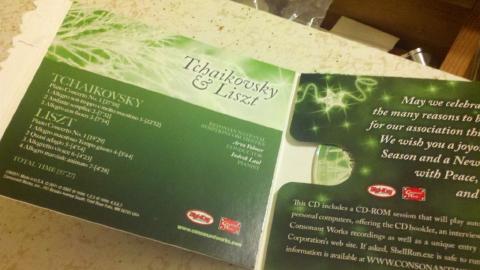
- DigiKey ended up sending me a classical music CD as part of my (jesting) Digi-Wish:
- Dave often has to deal with filling out an export form when ordering from DigiKey or other vendors.
- He's ordering parts for his new power supply kit, which should be out in a few more weeks.
- Chris thinks future designs won't need to design in LCDs because they can pipe data to low cost, standardized tablets. Dave disagrees.
- Dave is in the middle of building benches for his new lab/office.
- Dave having issues with a "short circuit" on a single plane of copper, according to ITead Studios(?).
- There is a Mini Maker Faire coming to Melbourne, the first in Australia.
- And if you're interested in all things Maker related, there is now a dedicated blog on Forbes.com about Makers.
- If you're into 3D printing, there is a cheap one available as part of a Kickstarter project, the 2nd most funded project ever (thanks to @clothbot for the link).
- The first most funded project to date was the TikTok Watch Band, which Dave used as a model when he designed his next-gen calculator watch.
- Chris met a fellow alumni at a recent event who told him about the often-referenced Booz Allen study about money in R&D. Especially how this data gets misused as a reason/excuse to cut funding when this is a narrow-minded view of the data presented.
- Listener Adam Ward wrote in about a recent Hackaday article that focused on a rip-off product.
- If you're thinking about moving production to China, keep the air-pollution in mind; it could affect the long term viability of your product.
Transcript
Speaker ?: Music
Dave Jones: Welcome to the Amp Hour, I'm Dave Jones from the EEV Blog.
Chris Gammell: And I'm Chris Gammell of Chris Gammell's Analog Life.
Dave Jones: No one else here this week, Chris? Just us? No, just us. Excellent. Last week before the holidays?
Chris Gammell: Oh yeah.
Dave Jones: How many holidays do you guys get over? Plans? Well, no, I don't have plans. I don't have a life, come on. How long do you guys get for holidays over Christmas? Because I know it's not a big break over there, right? The mid-year one is the big holiday over there, isn't it? I get Monday off the 26th. Right.
Chris Gammell: Boxing Day, yep. Yeah, Boxing Day. That's what they said over here too. They're like, yeah, Chris, you've got to go box something. Right.
Dave Jones: And is that it? Boxing Day? I think the day after New Year's is here. Surely you get New Year's Day.
Chris Gammell: Yeah, New Year's. Well, New Year's is Sunday.
Dave Jones: Oh, right. Okay.
Chris Gammell: Yeah, it's not a lot. A lot of people are going to be gone. Ronnie, I just started this new job and it's like all these people are not there. Bugging off for holidays, yep. So I'll just be sitting there twiddling my thumbs and I got some stuff to do.
Dave Jones: So here in Australia, we basically pretty much most businesses shut down over the Christmas period, Christmas to New Year. They sort of, you know, they might stop. It depends on when the days fall, of course, whether or not they fall on weekends and stuff like that. But they'll stop, you know, a couple of days before Christmas. And they generally won't open their doors until either the first week in the new year or the second week or something like that. So you mean even retail does that? Oh, no, no. The non-service, the non-retail industries. All retail stores are open. But just a regular Joe Bloggs business doing some industrial thing. Oh, okay. Non-retail thing. Like planned shutdown. Yeah, they will do a planned shutdown, basically. You know, there might be, you know, if they're a support organization, they might have, you know, a couple of people stay back to, you know, man the phones or something like that. But that's about it.
Chris Gammell: You know, I always love that time in between the holidays. You know, like I just usually clean off my desk. I go out for lunch with the coworkers that are actually there because usually it's all the young guys that don't have a lot of, you know, vacation days saved up. Right. Yeah, I don't mind it at all. I think it's a nice quiet time. You get a lot of stuff done. It's great.
Dave Jones: Dude, you're doing it wrong again. Yeah, whatever. The idea is not to do stuff. You're winding down. Nobody does stuff on, like, the, you know, the day before Christmas. Yeah, but it's the stuff that you want to get done.
Chris Gammell: Come on. It's the stuff you want to get done. No. Christmas Eve is a Saturday this year. It's not a big deal.
Dave Jones: No, you're still doing it wrong. Oh, Dave. Working hard for a living is overrated. I keep telling you. You just won't listen, will you?
Chris Gammell: I guess not. No. No.
Dave Jones: No.
Chris Gammell: I can't be taught.
Dave Jones: Unbelievable. Sorry, man. Work yourself to an early grave.
Chris Gammell: I'm having a ball. I don't know, man. Maybe it'll change, but I'm having a ball right now.
Dave Jones: It usually changes. You're in a new job. It's all exciting. Yeah, yeah. Give it six months and you'll be, yep, you'll be Gilbert.
Chris Gammell: I've been doing SketchUp models just to kind of get my ideas out. And, you know, like Google SketchUp. This is job ideas, is it? Yeah, job ideas. It's just, you know, kind of like new first impressions and everything. Right. And I was just thinking today, it's like I kind of am developing a God complex. It's like, I have created this and I can destroy it. Right.
Dave Jones: It's your project and you will have the ultimate say over its destiny.
Chris Gammell: Yeah, it has no bearing on, yeah, it's not actually getting produced. It's just, I'm just, you know, making stuff for myself mostly. And it's a lot of fun, though. I do enjoy the SketchUp.
Dave Jones: Well, fair enough. We were mentioned in, we were mentioned this week. In fact, your theme song had a bit of a, got a bit of a public canning. It did. Yes, yes. Someone called P. Stevenson. I don't know his first name, but that's his forum username. He posted a YouTube video. He's done this song. It's not a, you know, there's some text over the video. There's no video clip. But he basically recorded this song. It's about some engineering YouTubers like myself and Jerry and others. And it's quite, it's quite neat. And he criticizes your, what does he say? Shut the, tell Chris to change that damn theme song.
Chris Gammell: Yeah, something like that.
Dave Jones: So he's obviously a bit of a muso and he's not, not happy with your, if people don't know, Chris actually recorded the.
Chris Gammell: That's true. Yeah, we probably should bring that up, huh?
Dave Jones: Yep. For the, oh, the long time listeners. How long have we had that theme song?
Chris Gammell: Since like the 17th episode or so. Yeah, so ages, right? It's on my list of things to do again. I mean, if people want to send in suggestions, if P. Stevenson wants to send in a suggestion. I'm not so big on the punk thing, but hey, I'm open to new things. I don't care. It's just, it's just a matter of convenience here. So.
Dave Jones: Yep. You've, you've already done it. You've created it. And well. Yeah, it's done. It's in the bag. Maybe you're a bit sentimental. Maybe you don't want to destroy it.
Chris Gammell: Oh, I don't care. No, come on.
Dave Jones: Right. Okay. You just couldn't be bothered doing another one. Because it's done, right? We can always fall back on it.
Chris Gammell: Yeah.
Dave Jones: Lazy engineers.
Chris Gammell: Yeah. Yeah. Always the way. Speaking of, that's hilarious. And thank you to. Speaking of lazy engineers. I was going to say, speaking of music, I had a bit of a surprise in my mailbox today. Or yesterday. Do tell. I, uh. So I mentioned on the show last week about DigiKey doing their, you know, their usual did you wish thing. And I, I still see a lot of people, you know, like looking, looking to get some free stuff. And so I opened my mailbox the other day and I, I see an envelope in there and I'm like, what, what is this from? You know, it's like a padded envelope. And then I see it's from DigiKey and I'm like, oh no, they didn't. And they did. They followed through. They got me. I was kidding when I said I wanted their, uh, CD, the, uh, the Tchaikovsky and list. Right. Franz List.
Dave Jones: I don't remember you actually asking for it.
Chris Gammell: I, I posted it on Twitter at one point. Oh, right.
Dave Jones: Okay. Oh, did you actually copy them on it? I, well, yeah, I mentioned them and, uh, yeah. Okay. That's why. I linked him to the post. The social media crowd are going, oh, we'll do that and we'll get some publicity out of it. Well, it worked. Uh, it was ridiculous. We must respond to social media. That's our metric this year.
Chris Gammell: I suppose so.
Dave Jones: You know.
Chris Gammell: I, uh, I, I opened up the CD though and it's actually like, it's like a DigiKey branded CD. No. It's not like, it's not like just like a random CD. Right. So apparently other people have these things. I doubt this is the only one out in the wild, but maybe they throw them in with a lot of toters. DigiKey's greatest hits. Yeah. Greatest classical hits. So thanks, DigiKey. That was fun.
Dave Jones: Why classical? I don't know. Have they got like other ones? Have they got rock alternative and all sorts of.
Chris Gammell: They saw, I saw six different CDs and they had like just different classical composers. It wasn't, it wasn't anything.
Dave Jones: Why the hell are we even advertising DigiKey CDs?
Chris Gammell: I don't know. I, because it was hilarious. They sent me one. Anyway. Well, they didn't send me one. You're just mad you didn't get one, right? Yeah.
Dave Jones: I'm mad. I didn't get one. Why didn't they send me one? The tight asses. Cost you, my international postage is too expensive. Because you didn't ask for one, Dave. They would have to fill in one of those stupid export forms, right? Yeah. For a CD. What is the size of your company? You know, they don't ask the nuclear weapon question, you know, but they are what end product? Who are the end customers for this? Oh, yeah, yeah, yeah. I just ordered DigiKey parts yesterday. You still have to fill out the stupid export form. I guess you've never done that, right?
Chris Gammell: No, I don't have to.
Dave Jones: Oh, I have to take a screenshot of it. I don't know if you've actually seen it.
Chris Gammell: I've seen.
Dave Jones: Bullshit. Other companies don't do it. Why do DigiKey think they have to freaking do it? It's because these damn lawyers have read something, you know, ultra paranoid and reading something in some stupid, ridiculous government legislation somewhere. Give me a break.
Chris Gammell: End rant. I was waiting for it. So what were you buying parts for?
Dave Jones: My new power supply project. Oh. Which leads me on to a thing because I changed a few things. So I had some parts that I didn't have. So I had to get them. And actually, that leads me on to two things. The first one, I'll talk. No, the first one's on the list. So I'll get back to that later. I won't miss it. The other one's not on the list. And I'll forget it otherwise. I designed in this little LCD, right? Spoiler alert for the next video, right? There'll be a... I'm including a little LCD. It's a display in there, right?
Chris Gammell: And I chose a little New Haven display. Like those? No. Sorry? Not the ones that you had a shovel full of for the 555 contest?
Dave Jones: No, they had the wrong form factor. No, I didn't. No. That's too bad. No, they aren't little. They're huge. They're monster things. Yeah. Well, they're a regular sized LCD and they're a monster. Anyway, I designed in this nice one. You know, perfect. The dimensions were just right. So it gave me the biggest maximized font size possible for my particular case that would fit in there, right? Because that's what I wanted. I wanted the biggest, you know, because you've got to have nice big, you know, fonts. Yeah, you want to be able to read it. You want to be able to read it from a distance, right? So I got the, you know, it's only a tiny case I'm using. So the, you know, so I was limited in the size. I couldn't just use any LCD display. So I searched extensively. I found this one. I liked it. New Haven. And I could have sworn that DigiKey had it in stock when I looked and I was compiling my, you know, I was doing my systems engineering and compiling my bomb and I'll use that one. And no, I went to order it. Sure enough. Nah. Wah.
Chris Gammell: So they could have had it when you started. They could have had it.
Dave Jones: Because I wouldn't have chosen it if I couldn't have found stock immediately. But so some bastard must have bought it, I reckon. Anyway. Anyway. I know.
Chris Gammell: It's crazy too that they can just buy. I mean, like you, do you remember how much was in stock when you looked?
Dave Jones: I don't remember, but it would have been at least some, which would have at least got me, you know, it would have been 50 or 100 or something. Yeah, your first run at least. Yeah. Sort of, you know, out of trouble. Yeah. Yeah, exactly. It would have been fine. How big is your first run going to be? Yeah. And, but I thought, oh, you know, this is New Haven Display. They always carry stock. You can order them from the website if you have to. You know, not a problem, right? So anyway. So I, eh, I canceled that DigiKey item. So I went to the New Haven Display website and I put those. I went through the whole order process and everything because they don't tell you if they've got stock or not, right? They just say, you know, press here to add to your shopping cart. Fine. And they take all your credit card details, et cetera. And then I get an email last night saying, oh, sorry, we don't have any. Won't have them until February. And it's like, oh, goodness. Give me a break. So now I've designed in this. I haven't checked if like Mouser or somebody's got one yet, but then there'd be an order just from Mouser just for those displays. And I don't know.
Chris Gammell: Sounds like you need to hire a supply chain manager, buddy.
Dave Jones: Oh, engineering is too hard. I need to get out of the business. You never miss them until they're gone, right?
Chris Gammell: I mean, that's the thing. You know, it's fun to, you know, joke with them and say, oh, I could do that. Oh, it's just DigiKey, right? And then you have to deal with it. And it's just, yeah, that sucks.
Dave Jones: Yeah, it sucks. Anyway, and because it's the exact dimensions and it's an I squared C one as well. It's not a, you know, and because my microcontroller.
Chris Gammell: Dave programming compatible.
Dave Jones: Yeah. Well, no, all of the pins on my right, I'm using a 28 pin micro. And all of the pins are used, right? So, and I squared C is only two lines. And if I go to a regular, if I try and jury rigging a regular LCD, I can't because it needs more than two lines to drive the LCD. You know, I don't have to hack on some stupid, you know, interface.
Chris Gammell: Yeah, like an octal latch or something.
Dave Jones: Yeah, latch or something to serial to parallel latch and all that sort of stuff. And then the software is different. Eh, no. So anyway, today's job might be to find another alternative small I squared C LCD. I can at least jury rig in there and at least it'll, you know, it's still the I squared C bus.
Chris Gammell: Anyway, have we talked about that on here before about displays and like future products? And I mean, I think, I don't know how you feel about this, but I think like. Future products? Yeah, like, so like commercial products, right? Not even commercial products, but like say, say you were not making a power supply for you, but you were making like a large scale power supply.
Dave Jones: Well, this is going to be a kit. This isn't just a one-off for me, right?
Chris Gammell: I'm not designing this for. Sorry, I meant kit versus like a finished good that you're actually selling like non-kit.
Dave Jones: As in a hundred, you know, you're going to sell commercially and it's going to be a hundred thousand. Yeah, what about it?
Chris Gammell: Do you think, I mean, I've always thought that it would trend towards like commercial screens are so cheap these days. And then if you can abstract the interface so that it's just a, like say you just put a Bluetooth module on there and then it just talked Bluetooth to a screen and just threw the display to a, you know, generic screen interface. Don't you think, do you think that's a reality someday where, you know, people will.
Dave Jones: Because it's a separate item. Good product design needs to be integrated, not just use some existing hodgepodge external or use your mobile phone or something like that. That's why, you know, nobody's going to use their iPhone or their iPad to look at their oscilloscope waveforms. You know, why put a screen in an oscilloscope because you've got an iPad, right? Why don't you just put it in a Bluetooth module and shoot the data over?
Chris Gammell: No, because they are talking about that. I mean, I saw an article about that. You know, they were talking about Osium, the one, you know, iPad scope and Redfish is iPhone, you know, DMM, whatever.
Dave Jones: I don't like it.
Chris Gammell: I don't like that either. But what I'm saying is what if it's not an iPad or an iPhone, right? What if it's like a HP touchpad? Like you get some cheapo display.
Dave Jones: But it will never suit your purposes exactly. It's a compromise. It's a generic compromise. And then that second device has to be battery powered. What happens when it runs out of battery? You have to charge it separately. You have to do whatever. And you can't use your product. Screw that.
Chris Gammell: See, you know, I think like maybe low volume, maybe high volume, you're right. Like high volume, you'd end up getting volume discounts on displays or whatever else. Yeah. But I think there's a real argument for offloading all of that stuff, right? I mean, because you don't just offload the design of the hardware, right? You offload the entire software realm at that point, right? You could have people develop apps externally. You could ship your software to India if you're so inclined, right? Because it's probably like Java. I'm just saying. I'm just saying from a product design standpoint, I really think it's a valid option for certain things. And I don't know. I don't know if it'll ever happen.
Dave Jones: Every option's on the table for certain things, right? And it might make sense for a couple of niche items. But for generic design, no, it makes no sense at all. It makes no sense. Incidentally, the LCD is the most expensive item in this kit. How much? It's like $10. Even in volume, it's $8. Yeah. It's the most expensive item in the whole thing. Yeah. Actually, displays aren't that cheap, you know?
Chris Gammell: Yeah, but tablets. How about this? They just announced that $100 tablet. Did you hear about that? That Android-based Android? But $100 costs more than my whole kit. I know. But I'm just saying. Okay, so now what if your kit was $500, right? And of that, $50 was a display, right? But it's not a 10-inch display. It's a crappy 2-inch LCD that you have to write tons of software for. What at that point? What if you're just throwing data out over a data interface? Yeah, if it's what you need, it's what you need. But I'm just saying that there's a...
Dave Jones: Your tablet's only got, what, 10 hours battery life tops? It's overkill. There's a plug on the side, Dave.
Chris Gammell: Come on, man. There's a plug.
Dave Jones: No.
Chris Gammell: Plug in a USB micro. You're fine.
Dave Jones: No.
Chris Gammell: That's awful product design. You're right. It's not optimal, right?
Dave Jones: Unless it's warranted. It's not even close to being optimal.
Chris Gammell: It's not. No, you're right. It's not optimal.
Dave Jones: It's not funny. It's not optimal. It's not funny.
Chris Gammell: But I think it'll be a reality in the future with short-staffed engineering, right? No, no, no. What if you're a three-person engineering out of it? What if I started... What if I had to design a power supply today for commercial use, right? Power supply is a bad example. What if I want to design a DMM these days, which I'm not allowed to for a good long time, I'm pretty sure. If I didn't want to throw it to a front panel display, right? Or if I'm just designing the hardware because that's what I know how to design, I think it's a legitimate thing to throw the data over some kind of communication bus and then display it on an existing technology.
Dave Jones: You're welcome to do that. And you'd never sell a single one of those bloody multimeters because it's a ridiculous idea. It's only going to work for... No, it's only going to work for those specific niche items where it's justified to have the external display.
Chris Gammell: I don't know, man. I think you're going to see that more and more. Maybe not, but I think you will.
Dave Jones: I'm calling it right now. I'm putting it to the listeners. You'll see it more and more because these tablets are coming, right? These tablets are very consumer and cheap and all that sort of stuff, right? But it's not going to make a dent in the engineering universe at all.
Chris Gammell: Okay.
Dave Jones: Except for a couple of niche items.
Chris Gammell: Let's put it to the listeners then.
Dave Jones: You'll be as wrong about this as you will be about the stupid chip maker machine.
Chris Gammell: Yeah, I know. I know. All right. Listeners, if you have an opinion, please let us know in the comments. We would love to hear from you. That would be very, very nice.
Dave Jones: Now, what's this that you said about, as an aside, you said that you won't be able to design a multimeter for a long time? If Keithley got you by the balls in some ridiculous contract that they can't enforce, that you're not to design competing products after you leave the company, what's that about?
Chris Gammell: No, I don't have anything in writing. It's just a...
Dave Jones: Well, there you go.
Chris Gammell: I have non-disclosures. Go head on. I can't use any...
Dave Jones: Do source measurement units.
Chris Gammell: I don't think I could do that because I know a lot about the technology in there, so I would not do that.
Dave Jones: A source measurement unit's a basic engineering. There's nothing proprietary in there.
Chris Gammell: That's true. I guess if I designed around their stuff...
Dave Jones: It's a DAC and an ADC and a controller and your magical wireless display, right? That's about it.
Chris Gammell: Yeah.
Dave Jones: As long as you didn't take an idea that was developed at Keithley that was patented or something like that, you're fine.
Chris Gammell: That's true. Yeah, if there's no non-compete in place, then that's fine. But, well, to be honest, I don't have time for that. You're a scaredy cat. I'm not a scaredy cat, Dave. I have no time these days.
Dave Jones: I hardly had time to put anything on the list this week. Right. Yeah. Yeah, you went and got yourself another job, you fool.
Chris Gammell: I know. Well, not all of us can sit around playing game consoles in your new office and yada, yada, yada.
Dave Jones: Oh, boy. It took me all day yesterday to build a couple of benches and get the parts.
Chris Gammell: I saw the pictures of the benches in the car. Are they up now?
Dave Jones: Yeah. No, there's another one of the benches. I finished two benches. They're installed. Well, kind of installed. They're not coded or anything yet, but I have to build a third one today. And, yep, it's getting there. There are progress photos. And I've been that time lapse photographing everything. Oh, nice.
Chris Gammell: Okay, that'll be good.
Dave Jones: So eventually I will release a video of, yeah. Okay. I'll make a video of me time lapse. You know, the lab said, like the lab going from nothing, just an empty space to the finished item. But I don't know when to call that quits, when to actually do the video. So, you know, do I do it when I just get the benches installed and that's it? Or do I do it in three months' time when it's all, you know, fancy lights and it's all kitted out?
Chris Gammell: Yeah, well, you're going to move your existing lab to the new lab, right? Or to the new space? Yep. Yeah, so once that's there, that's the final thing, I think. Once you can do a before and after from your garage bench. Once all the instruments are in place on the rack. Yeah, yeah, that'll be it.
Dave Jones: Got it. Yeah, okay. Yep, fair enough.
Chris Gammell: Oh, cool, man. Glad it's going well.
Dave Jones: People are all talking about, oh, I should put fancy stuff on the walls and do all sorts of, you know. Yeah, that happens over time. Weird things like that. That'll all come in time, but it's not going to be done straight away. Too busy.
Chris Gammell: Yeah, and, you know, it's better if that develops organically, you know. If it's, you know, as you have your small victories, you know, you post those trophies or whatever. I like that.
Dave Jones: I have no idea what you just said. You are breaking up on Mumble. Mumble is mumbling.
Chris Gammell: Ah, Mumble's mumbling today. It's back.
Dave Jones: There you go. I shouldn't have said anything. We just ruined the illusion of that we're in the same studio or something, even though you're in Cleveland and I'm in Sydney.
Chris Gammell: Yeah, people are really fooled.
Dave Jones: Is there a place in America called, is there actually a town or a city called Sydney in the U.S.?
Chris Gammell: Oh, I'm sure.
Dave Jones: Yeah.
Chris Gammell: I bet there's probably one in Ohio. Let's see. Yeah, probably.
Dave Jones: Because there's quite a few, you know, suburbs here that are actually named after, well, the same name as U.S. cities and things like that. Yeah.
Chris Gammell: They spell it differently. They spell it S-I-D-N-E-Y. Oh, right. Sydney, Ohio. No. Okay. Nice. You don't live there, huh? No. But we should mention, based on IT silliness and everything, that we are looking at updating. We had generous sponsors respond to our call. Some very generous people out there.
Dave Jones: Thank you very much.
Chris Gammell: Yes. We love you guys. Thank you so much. If people are still interested in donating, we're looking for a little bit more. But, you know, we're appreciative of everything we've gotten so far. And so we started shopping around for, what are they called, VPSs? Yeah. Virtual private server. Yeah. So we're going to try and, you know, make sure the page loads faster and other stuff.
Dave Jones: And the MP3s download. They're doing okay at the moment, but they're on my dedicated server. Leeching off my dedicated server. Yeah.
Chris Gammell: So we'll try and do better for that. And we'll throw in, of course, as well. But we definitely appreciate it. And if anyone else wants to throw in, we'll post a link to that as well. So thanks again, everyone. We really appreciate that.
Dave Jones: Indeed. Now, I didn't get back to finishing my second point. Yeah. Which we led from the DigiKey thing. And we got onto PCBs somehow. Yeah. Anyway, I ordered a PCB for this project from IT Studios again. You know, I've had a run-in with them before where they expanded my copper, you know, when they shouldn't have and stuff like that. I've done a whole video on it. What's that saying? Is it fool me once? Yeah. George Bush style. I do know it. I do know it. Fool me once. Yeah. It's going to make us look like people will just keep playing it back like they do. Oh, I know what it is.
Chris Gammell: It's fool me once. Shame on. Oh, crap.
Dave Jones: Shame on you. Fool me once. Shame on you. Fool me twice. Shame on me. Yeah.
Chris Gammell: Okay. That's it. Yeah. There you go. All right. We got it together. Together we are, you know, one person that knows saying. That's not hard. Yeah. Anyway, PCBs.
Dave Jones: It's... Nah, come on. I've got a George W. Bush thing. Can I just say... You have one on here? The smart... Right. He's... The smart person in his family, the smart brother, Okay. His name is Jeb. Okay. Does that tell you something about... That's a funny name here. That's like we get, you know, we Australians probably, and other people in other parts of the world probably think Jeb is the one who should be dumb and backwater and... Dueling banjos, kind of, you know. But he's the smart one in the Bush family, apparently. So, yeah. Says a lot about old W. Anyway. Oh, boy. Anyway, I ordered PCBs. How did we get onto that? You sidetracked me.
Chris Gammell: You did.
Dave Jones: I didn't. You're the one who sidetracked onto something else, surely. Or was it me? If I listen to this back, it's probably my fault.
Chris Gammell: Let's stick to PCBs.
Dave Jones: Yeah. Anyway, you said fool me once, fool me twice. That's how we got onto that. Ordered it from IT studios, right? And it's big. It's like 10-10 design rules, you know. And it shouldn't be a problem. Anyway, and I don't think it will be. But anyway, I got an email back from them. As PCB companies do, if you haven't had a commercial PCB manufactured before, what happens is you send your Gerbers away and they process the Gerbers and look at them and check them before manufacture. And if they find any issues, they will contact you and email you and say, hey, you know, this doesn't look right or something like that. A good PCB design house will, you know, question if they see something that's wrong, that looks wrong.
Chris Gammell: Right. And sometimes they also have those automated checks as well, right? I mean, I know that Advanced Circuit says the automated...
Dave Jones: The automated checks that it matches their processing.
Chris Gammell: Yeah.
Dave Jones: Yep. And which is great, you know. So I get an email from them saying, which I always like, oh, I've goofed something, you know. Oh, now I have to send them new Gerbers. Okay. Okay. They sent me an email just saying, your bottom layer Gerber has a short circuit on it. Please correct and send us new Gerbers, please. And I go, what? And there's no... Like, usually they will screen, you know, they'll attach a screenshot and they'll circle the thing that's wrong. Okay. Yeah. The part of the board that... What the hell? How am I supposed to interpret that?
Chris Gammell: I have no idea. Yeah. You're saying, well, I guess I'll get back to you then. Thanks a lot, guys.
Dave Jones: Yeah. That's the whole idea of PCB, isn't it? Is that it contains hundreds of little short circuits to connect things up. That's why it's called a circuit board.
Speaker ?: Right?
Chris Gammell: Oh, you're saying same layer. Okay. I get it.
Dave Jones: Yeah. They're saying on the bottom layer somewhere. Bottom layer. Because they didn't tell me where. They just said on the bottom layer Gerber.
Chris Gammell: I mean, there's a short circuit. I would probably assume that's to a ground... Is there a ground plane in there?
Dave Jones: There is a split ground plane, but it actually connects on the top. So... Which is, you know, it's got like a star configuration. So it actually connects to the...
Speaker ?: Yeah, yeah, yeah.
Dave Jones: So it's actually split. There's a split ground plane on the bottom layer. So... I don't know. I have no idea what they're referring to. And...
Chris Gammell: Maybe they're like... Would it be really funny if one of these PCB houses were like, wow, we're really backed up today? Send the confusing email. That'll keep him spinning his wheels for days. Right. Yeah, yeah, yeah.
Dave Jones: I haven't had a reply back to them in like three days.
Chris Gammell: Quick, send an email in Mandarin. You won't know it hit him.
Dave Jones: Oh, boy. Oh, man. I've actually had that, yeah. Oh, boy. But you have to spend a couple of days trying to back and forth, trying to decipher what they're talking about, you know. That's why screenshot's worth a thousand words, you know. Oh, yeah. That's good. And they know that. Screenshot with a red circle around it. And even if you can't, even if their jinglish ain't that good, you know, or their jinglish isn't that great, you understand immediately because there's a visual thing with a circle. Oh, okay. Yeah, at least you'll say,
Chris Gammell: okay, I'm going to go look there, right? Yeah, exactly.
Dave Jones: And you understand what they're talking about, you know. But in this case, well, I don't know. I'm going to have to go search the whole bottom layer of my Gerber. Bloody hell, I have no idea. So unless Altium Designer has spewed out something incorrect in the Gerber file, which very rarely happens, you know, I think it's fine. And they're just, you know, don't know what they're talking about.
Chris Gammell: Maybe you should go design your own PCB layout software, Dave.
Dave Jones: Yeah, probably should. Yeah. Yeah, help out on KCAD. At least there's a face there. Oh, boy. I would if I had any programming skills with a Z.
Chris Gammell: Z, yeah. Yeah. Z. Z. Z.
Dave Jones: Z. Boy. Anyway, so I sent them an email. I haven't heard back from them. So I asked, please send me a screenshot. And I haven't heard back from them in a couple of days. So I sent another email saying, look, just ignore it. Just send me the board, you know. Really? Yeah. Because I don't care. I wanted my board.
Chris Gammell: Cheap enough for.
Dave Jones: I don't want it cheap enough. Look, it's two layer. If there's a short circuit on it, I'll fix it with an X-Zo knife, right? Okay. Yeah, it's not like this is a bloody 10 layer thing or something where, you know, I don't care if there's a short somewhere. If there is, I can fix it.
Chris Gammell: Yeah. But, yeah. Yeah, that's not too bad to mod. I mean, even if it's right on the edge, you can always drill it out, right? Yeah. Do you ever do much drilling or no?
Dave Jones: Sorry?
Chris Gammell: You ever do much drilling of traces?
Dave Jones: Oh, I have done. Yeah, I've done partial drills so you don't go all the way through the board, you know, if it's a multi-layer and stuff like that. Yeah, I've done all that.
Chris Gammell: Those always wig me out for some reason. I don't know why. I mean, I know it's like a good way to. Yeah. You know, like they weird me out, right?
Dave Jones: Oh, right. I haven't heard that term before.
Chris Gammell: Yeah, it just seems like it's. I guess I'm always impressed when a technician does that kind of thing because it's such a precise thing, you know, but.
Dave Jones: Yeah. Yeah.
Chris Gammell: It's crazy.
Dave Jones: Well, yeah. Yeah. You have to do it quite a few times to get fairly proficient at it. You know, it's not.
Chris Gammell: Yeah.
Dave Jones: You know, and if you haven't done it for five years, oh, yeah, I did that five years ago, you know, try and do it again. You just got to screw it up. Yeah. Really. So, yeah. It's best to give it to someone who, you know, does it fairly regularly.
Chris Gammell: Yeah. You know, I was, I had that epiphany last, on Saturday, actually. Yeah. You know, I've been thinking, I've been trying to get to like a hackerspace or like a, you know, a work, like a tech shop or something like that. Some kind of similar thing to do some 3D printing. Yeah. And then I was thinking about the other day and I'm like, you know, I really want to build this. And I was thinking, I don't have any time to go there. And then I was like, there are tons of, not tons, but there are things online that'll just do this for you. You know, like Pinoco and Shapeways and everything. Yep. And I'm like, I'm such an idiot. Why didn't I just do that from the beginning? I could figure out if I even like what it looks like once a professional does it. And then if I keep doing it, you know, I don't know. I always just get caught up in like the planning of how I'm going to learn something when in fact I should just try it out somehow, in which case, you know, it'd be buying it online, even if I have to pay a little more. I don't know. It's the same kind of, it's the same for programming or anything else, you know? Yeah. Yeah. Sometimes you just got to try it out. You got to try it out. Suck it and see. Suck it and see.
Dave Jones: We are, there's some news, which I forgot to add. Pretty big news for Australia. We're getting our first Maker Faire.
Chris Gammell: I did. I saw that.
Dave Jones: I saw that. Well, it's a mini Maker Faire. No, that's okay. It's a mini Maker Faire. I, you know, I'm not sure how big it's going to be, but it's in Melbourne. It's not in Sydney.
Chris Gammell: Do you think you're going to go? Decisions.
Dave Jones: Oh, sorry. Mumbles, mumbling again. Oh. I thought. I assumed that you said, do you think I'm going to go there?
Chris Gammell: Yeah. I thought, I thought you were, had a dramatic pause there. That's what I thought was going on. I thought you were like.
Dave Jones: No, it just died. The feed just died.
Chris Gammell: That's too bad. Well, are you going to go though? Anyway.
Dave Jones: I don't know. Um, because it's inconvenient timing. It's like, and it's short notice too. It's like 15th of January or something.
Chris Gammell: Oh, I didn't realize it was that soon.
Dave Jones: Yeah. It's that soon with all with, you know, the new year and moving into the new lab and doing everything else.
Chris Gammell: And I've been invited down to Melbourne in February, but I'm going down there like two
Dave Jones: weeks later anyway. So it's like hard to justify going down there for the make it fair, coming back and then going back down to Melbourne again.
Chris Gammell: Ah, you'll be fine. You got nothing else going on. Come on.
Dave Jones: No, it costs money too. You know, I got to, eh, I don't know. I'd like to be there. I don't know if I can though. I'm not sure. Anyway, we'll see. I've sort of put it on the back thought burner.
Chris Gammell: So if there is such a thing. Yeah, I think there is.
Dave Jones: It's usually starred in my inbox, you know. I get the email, you know, it's like, yeah, I'll respond to that later, you know, and I'll put a little star next to it and then Google puts it up the top of the list so I don't forget, you know.
Chris Gammell: Yeah, and then it's there for, I had one of those up there for about a year and a half once.
Speaker ?: Right. Yeah.
Dave Jones: Oh boy.
Chris Gammell: Yep.
Dave Jones: Speaking of the maker movement. There's a lot to be said for replying then and there, you know.
Chris Gammell: Oh yeah, for sure, for sure.
Dave Jones: Speaking of the maker movement.
Chris Gammell: Did you see, I mean, we talk about it on here once in a while, but did you see the, that Forbes has like a column on it now? There's a, there's a guy that's writing about it basically regularly.
Dave Jones: Yeah, I heard something about that. What is it? A profile on a new maker every week? Or what, what a Forbes come out weekly or monthly or what?
Chris Gammell: I don't know if it's a weekly.
Dave Jones: I don't know about Forbes. It's a rich magazine, right? I mean, they have online stuff. Forbes is like a finance. Yeah, it's like finance. Isn't it like a magazine for rich people, right? That's like. I don't know if that's quite. Or is it a rich business? You know, be. So it's the magazine. It's like business information, yeah. For the 1%, right?
Chris Gammell: No, I don't know about that, but it's, it's got it. It's business and tech and entrepreneurship and stuff and yeah, whatever. Oh, okay, right.
Dave Jones: I thought it was just business. I thought it was just finance and big business and crap like that.
Chris Gammell: No, yeah. So they got a, they got a writer on there who is just, that's his, that's his beat now, I guess. I mean, that's the, that's what he's writing about all the time. So the makers, that's what, that's what his, this thing is. That's, so you see, I keep seeing things pop up about, about, you know, like, oh, this thing's on Forbes, that thing's on Forbes. And I'm like, oh, okay. It's a, it's the same guy writing about all this stuff, which is great. Right. But yeah, it's crazy.
Dave Jones: There's a regular column there every week or above. Yeah.
Chris Gammell: Yeah. Yeah.
Dave Jones: Or is it a blog based? Does it actually make it to the magazine or is it just a website blog thing?
Chris Gammell: Yeah. It might just be, it might just be a blog, but maybe it sneaks through to the print sometimes. Because that's how, you know, they keep them as kind of like a bullpen. Yeah. Yeah.
Speaker ?: Yeah.
Chris Gammell: Yeah. I don't know if he wrote about the, he writes about a lot of like 3D printers and stuff too. Did you see the funding story about the printer bot? The, that real small.
Dave Jones: No, I haven't, I haven't taken a look at it yet. What is it? The second largest, second largest, second biggest?
Chris Gammell: Second largest, second highest funded project on Kickstarter ever. Basically.
Dave Jones: That begs the question, which is the highest?
Chris Gammell: Uh, TikTok watch, which was 90, 940. Oh, right. Yes.
Dave Jones: I have one of those sitting right next to me.
Chris Gammell: You do? Oh. Is that like a? Yes.
Dave Jones: Because my new scientific calculator watch was designed to fit into the TikTok watch band.
Chris Gammell: Oh, fancy. Okay. So it's just a watch band for a touch.
Dave Jones: You obviously haven't read my article in, um, the EE web magazine. Issue 18, I think it is.
Chris Gammell: Well, I guess we're even now. There's some screenshots in there. So I haven't read one of your articles and you haven't read all of mine. That's it. All right. Now we're even, buddy. Oh boy. Yeah.
Dave Jones: Anyway, there's a whole article in there on my calculator watch, which uses the TikTok watch band.
Speaker ?: Oh, cool.
Dave Jones: So it's just the band. It's designed to slide in. Because I, I figured that, you know, in a million years, I'm not going to design a better watch band than that TikTok watch band. Right? No, probably not. So why not make use of it? Right. Right.
Chris Gammell: Yeah.
Dave Jones: Existing technology. Like, you know, you know, it's a, yeah. Why not use that? Right. It's already designed. It's, you know, it's funded and you can buy it. Why not just design that? And it's designed to slip the iPad nano into it. Well, what if I made my calculator watch the same shape as the iPad nano and you can just slide it in? Bingo. Yeah. I totally changed my design like that. Bang.
Chris Gammell: Yeah. And compare that to your old cost, right? Yeah.
Dave Jones: Yeah. Exactly.
Chris Gammell: Whatever the band was on the old watch. Yeah, that's good. I think that's a great idea.
Dave Jones: But that was always the tricky thing is how do you integrate the watch band into the case? You know, how I suck at 3D modeling and mechanical CAD and all that sort of stuff, you know? So superglue, right? That's bad enough. So well. You know? Yeah, superglue. That fixes it. Magnets, maybe. So I saw the TikTok watch band and I went, shit, that looks nice. I'll just change my design principle. No, that's a great design principle. To fit in there.
Chris Gammell: Yeah. I think people, you know, it's the same thing as, you know, if you see a nice tablet you want to use and maybe you're like, hey, that screen looks pretty great. Right, Dave? Right. Yeah. Yeah. Anyways.
Dave Jones: Which will have a niche market, I will admit.
Chris Gammell: What?
Dave Jones: Just like 3D printing is possible.
Chris Gammell: Oh, yeah.
Dave Jones: But it's not going to be practical and it's not going to be pervasive. Yeah. Almost said persuasive there. Pervasive.
Chris Gammell: Yeah.
Dave Jones: Yes. Ah, man. You just lose every time.
Chris Gammell: I guess with you, yeah. Yeah.
Dave Jones: Oh, so you win your own arguments at home, do you? That's the...
Chris Gammell: Oh, yeah. When I'm arguing with myself, I almost always win. A couple times when I'm having beer or two, I lose, but...
Dave Jones: Yeah. I lose my own arguments all the time. Yeah. You know, I'm designing something, I go, you know, I've been working on something for a month and I go, yeah, that's shit. That's not going to work, you know. Yeah. And then I, you know, I totally change.
Chris Gammell: That's been happening with that SketchUp stuff I've been doing. I mean, I'm just doing concept models and I'm just like throwing them out as fast as I can make them. So, but that's what I love about it, you know, iterating on designs, it's really, is a good thing, you know, especially if you, you can't like hold on to it. You know, I was talking to my boss today about some of the stuff I showed him and you just gotta, you gotta let it go, man. Because like if you fight for it, you know, like if you could, you could end up trying to convince yourself that something's good or bad, but that's not necessarily going to make the best thing in the end, right? It's just going to appease your ego. Yep.
Dave Jones: And I have no problem scrapping a design I've been working on for six months or a year. I have no, if I, if immediately something's obviously better, I have no problem scrapping my entire, entire concept and going with something else because I've done it countless times. Yeah. And, uh, yeah, that's, and it's fun too. You know, you start with a fresh, oh, new direction. Woohoo. You get a new burst of enthusiasm and.
Chris Gammell: Yeah.
Dave Jones: You know, it's great. Rather than trying, you know, trying to make your existing crap idea, you know, even crappier.
Chris Gammell: That always happened to me with programming projects too. Right. You know, cause you just keep patching something and patching something. And eventually you realize, well, this doesn't work at all. It does. But as soon as you change, like you, like you move, you put a space before a period or something, it's just like, oh, yeah.
Dave Jones: Oh boy.
Chris Gammell: Yeah.
Dave Jones: What else we got in today's show? Any shout outs?
Chris Gammell: I think we went through all of those.
Dave Jones: Cause we already pissed away 40 minutes, you know.
Chris Gammell: Did we? Yeah. We talked about some stuff.
Dave Jones: Probably. Probably.
Chris Gammell: Yeah. What about your, uh, so you laid out your current board with through hole parts, right?
Dave Jones: Mostly through hole. There's three surface mount parts. Yes. I couldn't, uh, do it all through hole. I wanted all through hole. Did we talk about that last time? Maybe we did. Yeah. I think we did. Yeah. With, uh, we did. Yeah. Yeah. Yeah. Yeah. Yeah. I'm sure we did.
Chris Gammell: Okay.
Dave Jones: Okay. Yes. I'm, I'm absolutely sure we did. It's in the show notes, I think.
Chris Gammell: Okay. I'll have to go back and look then.
Dave Jones: Yep.
Chris Gammell: Hmm.
Dave Jones: So how about this one? And you guys laughed at me.
Chris Gammell: I didn't. I remember. Oh, Jeff. No. Maybe Jeff did.
Dave Jones: And then you laughed as well.
Chris Gammell: I laughed at that.
Dave Jones: I was designing a board for sure. Jeff's got a funny laugh.
Chris Gammell: I laugh at Jeff laughing.
Dave Jones: You guys are poking fun at me.
Chris Gammell: Yeah.
Dave Jones: Unbelievable.
Chris Gammell: Yeah. It's almost like we're on a show that's meant to, we're meant to laugh on it, right? Poking fun at each other, yeah.
Dave Jones: Yeah.
Chris Gammell: So I had an item on the list that's been on here for a while that I wanted to talk about a little bit. It's a, it's a study. So, so a little backstory. Basically, I was at an alumni event and I was talking to a recent friend, basically an older alumni who I got to meet and hang out with.
Dave Jones: I've never been to an alumni. What? We don't have that really here in Australia. It's not a done thing here.
Chris Gammell: Oh, okay. Anyway. Anyway. Continue. Sorry. Yeah. I was on the side. But basically, we got talking about like engineering, because he's an engineer and so we got talking about engineering and stuff and, you know, our usual, you know, engineers get together and they, they complain about stuff, right? I mean, that's like our show every week. Of course, that's what we do. But he turned, he told me about this report and apparently this is something that gets quoted over and over and over again. And it says this 2005 study by Booz Allen. I think they're a consulting firm. I know, stupid name, right? Yeah, Booz. Yeah. Yeah.
Dave Jones: It's actually spelt the same, is it?
Chris Gammell: B-O-O-Z. No E on the end.
Dave Jones: Oh, okay. Right.
Chris Gammell: Yeah.
Dave Jones: So basically, though. So some poor bastard's name is Booz. Yeah, out there. Yeah. Because they usually make it after the founders' names, right? The key partners' names.
Chris Gammell: Yeah.
Dave Jones: You know, wanker, wanker and wanker. You know?
Chris Gammell: Yeah. Yep. Sorry. Continue.
Dave Jones: You're at this alumni event, right? You're talking about engineering.
Chris Gammell: He starts telling me about this report, though. And so the report is called Money Isn't Everything. And basically, it's this entire report. And it goes all the way through it. And basically, the end result is more money does not equal more output in terms of like R&D. So there's tons of different examples. And it's very well researched. You can tell it's very well researched. There's lots of data in it. And I highly suggest people look at it. But basically, what it comes down to is they make this broad statement. More money does not mean more output. But it actually gets taken out of context. Basically, what happens is if you look at it as a linear relationship, it's not monotonic, right? A little bit of money at the beginning doesn't do anything, right? And too much money doesn't do anything either because you just end up, you know, in terms of like output per dollar, it doesn't correlate either, right?
Dave Jones: You've got to have the R&D infrastructure in place to, you know, actually produce output. You know, it's not a direct money relationship.
Chris Gammell: Right. And so the thing is, though, this same report keeps popping up different places as reasons to cut R&D budgets. And so, like, that's a really big deal, right? It's like if someone's like trying to find just – it's kind of like – what's it called? Not perception bias, but – or maybe it is perception bias. Whatever you're trying to find on the internet, basically, you can find it, right?
Dave Jones: You can find anything to justify your means, you know?
Chris Gammell: Right. Exactly. Exactly. And so he even sent me an article from USA Today that says exactly this. Some companies cut their R&D budgets. Now, granted, this is back in 06. So it's a while ago and it's USA Today, so it's kind of crap. Yeah. But basically, you know, companies are using this as a justification for why to cut money. Oh, well, more money doesn't do anything. You have to have more this or more that. It's like, ah, sometimes. Sometimes you actually need that better scope or you need extra parts or you need another technician in your lab, you know?
Dave Jones: You need more employees. You need – yeah. Yeah.
Chris Gammell: There are some realities to it. I mean, some of it could be, you know, blood, sweat and tears, right? I mean, we've probably all experienced that of, you know, money.
Dave Jones: Well, a lot of stuff, a lot of R&D might just be labor. You know, you don't have to buy, you know, new million-dollar toys and stuff like that. It might just be, you know, labor and freedom. It might just be lack of red tape. You know, that can – red tape can – company red tape can kill R&D like that, right? Regardless of how much money you put into it. Whereas a more creative, you know, free atmosphere might be more conducive than more money.
Chris Gammell: Yeah.
Dave Jones: So, yeah. It ain't black and white.
Chris Gammell: Right. Yeah. And, yeah, I mean, that's what, like, the end of every engineering argument. It's like, oh, well, it's a balancing act and, you know, we had to do trade-offs and, you know, but, like, I don't know. I think it's – these are big companies, too. I mean, these are really big. You know, they're profiling IBM and Johnson & Johnson and General Motors and everything. So, it's a tough thing to really say, but it's – But –
Dave Jones: The fact that – Yeah, there's facts in here. Like, if you have zero R&D money, you will get zero R&D results. You know, there are several – Surprising. Surprising. Yeah.
Chris Gammell: Go figure. Yeah. Oh, boy. So, more than zero you should spend. Yes. Anyways, I suggest people check it out. It's an interesting read and if it's going to keep coming up, it's worth knowing what people are talking about.
Dave Jones: What happened to the day that – well, the time when companies would pride themselves on how much percentage value of their income was spent on R&D? That was the measure of a successful company. Oh, we spend 20% of our revenue on R&D. Yeah. You know, we reinvest 20%. Yeah. That was a – that used to be a big factor, you know? Yeah.
Chris Gammell: It was like an investing type thing, right? Yeah. You could see how much they're spending.
Dave Jones: And herein companies would, you know, really advertise that fact, you know? Yeah. We put 20%. We're better than everyone else because we put 20 instead of 10% of our revenue back into R&D.
Chris Gammell: Right. That was a huge thing. I've been in a meeting before where up and ups point to Apple and they say, oh, well, Apple only spends 2% of their money on R&D and they get all this output. It's like, yeah, well, they're selling consumer products and all that stuff's offloaded, right?
Dave Jones: And they're one of the most profitable companies in the world, like the second biggest profitable company in the world or something. Right. Yeah. Right. It's – you know, it's – there's a – they just make a sheer buttload of money that 2% of it is still bigger than the R&D budgets of, you know, many competitors combined. Exactly.
Chris Gammell: Exactly. Yeah. So that's always tough when you're arguing against that kind of thing. But at the same time, I don't know. It's like some of it might be, well, it's a good design a lot of people like, right?
Music: Hmm.
Chris Gammell: That argument aside. But I don't know how to argue against that. But maybe it's just that – yeah, maybe they are someone to point to. But a lot of times, you know, there's industries where you just can't say that, right? I mean, if you're in like the – if you're in the military, you know, business, right? There's limits on that. You can't have, you know, 0% or 2% investment in your R&D when, you know, you have a limited customer base and the stuff you're doing is very leading edge. Oh, it's a totally different ballgame. Right. And it's almost like they're getting – Apple's getting cultural dollars as much as they're getting technical dollars. They're not on the very bleeding edge, but they're doing good things with technology. So, yeah. Apple.
Dave Jones: But, like, you know, if you compare, say, Apple with another mobile phone company who might earn one-tenth of Apple, right? Say there's some little struggling mobile phone company, right? The R&D resources to design that new phone and that, you know, all that new thing is going to be roughly the same for both companies, right?
Chris Gammell: Yeah, there's a base level to get you to pay to get in.
Dave Jones: Because Apple have worked for years – yeah, there's that base level. Apple have worked for years to optimize their bill of materials so that they make a shitload of money on this stuff, right? Plus, they've got the iTunes thing which makes them money for free, basically, right? They've got all that revenue coming in. It's all free, right? It's all vapor money, right? Yeah. They don't actually sell any material goods to actually do that. It's got to buy bigger server farms, right, to make all that happen. So they're getting free money, whereas this other company that's making mobile phones but doesn't have the iTunes and the iStore revenue and all that sort of stuff, right? They're going to have to spend 20% of their R&D budget instead of 2%.
Chris Gammell: Yeah.
Dave Jones: Because they don't have that extra income from the vapor, from the cloud.
Chris Gammell: Yeah. Yeah, it's tough. What Dave's trying to say is start a software company, people. Right. Start a media company. No, don't do that, please. Please, we don't need any more of those. Yeah. Yeah. Well, speaking of research and the lack of it, actually, one of our listeners, Adam Ward, wrote in, and he was a little cheesed, actually, about a Hackaday post. No. Can you see this?
Dave Jones: No, I haven't seen the Hackaday post.
Chris Gammell: Yeah, so basically, and he wrote me, and I asked him to clarify a little bit.
Dave Jones: He's cheesed? Cheesed?
Chris Gammell: Yeah, Adam is cheesed. He's cheesed off or somebody else is cheesed off? No, no, he is at the Hackaday post. Basically, the Hackaday post is talking about a, you know, a ripoff product. It was a... Right. I forget what it was. It's a logic analyzer.
Dave Jones: Oh, the Saley logic analyzer.
Chris Gammell: Right. Yeah. And so, it's a... It's from Malaysia, and it's definitely a ripoff, basically. And you can use it as a Saley, or you can use it as a whatever the B, something B.
Dave Jones: Right. And it uses the Saley name on it. I'm looking at the photo here.
Chris Gammell: Right.
Dave Jones: Right. That's just not on. Right. It's bad enough to rip, you know, rip them off. But to put the Saley name on it, it's just insane. Right.
Chris Gammell: And so, he was more talking about just the fact that it was tacit, you know, acceptance of the fact that, you know, people are buying this logic analyzer, and it's a total ripoff. But what my question is, is like, so, where does that point really stop? Right? I mean, like, if people are... I personally think people should be able to, you know, people buy stuff, they should be able to, you know, open up their devices and, you know, modify them and do whatever they want with them. Right? And that's... The one extreme is, no, you can't do that. The other extreme is, well, you can not only buy whatever device you want, you can also buy a, you know, someone who's ripped off that device or, you know, and produced it illegally or cheaply or whatever, however you want to say it. And that's the other, like, end of the spectrum. So, where does that good part fall? You know, like, is it okay to take a cheap ripoff hack and then, you know, make it usable? I mean, I don't know. Well, it's...
Dave Jones: Well, it's okay to hack the product that you've bought, right? That is, you know, you should have the right to do that. Yeah. But you don't have the right to rip it off and then go and resell it. You know, that's just not... Especially putting the saley name on it. That's just ridiculous. I mean, as far as I know, the saley logic analyzer is not open source, is it?
Chris Gammell: You know, I don't believe so.
Dave Jones: Because if it was open source, it'd be a whole different ballgame, right? Then you're allowed to... You're legally allowed to rip it off and, you know...
Chris Gammell: Right, right.
Dave Jones: But not use the name because the name's trademarked. And just out of good courtesy, you wouldn't use the name.
Chris Gammell: Right.
Dave Jones: But this guy... Like, if I release an open source thing, I wouldn't expect... I wouldn't like people. You know, you can go recreate my little microcurrent or any of my other projects. Just don't put my name on it.
Chris Gammell: Right. Right? Yeah.
Dave Jones: It's open source. Fine. You can make duplicates of it if you want. But just don't put EEV blog on it because it's not, you know... It's not yours. That's my name. That's not yours. So stick your name on it and give me attribution.
Chris Gammell: Yeah.
Dave Jones: I don't... Yeah. So the post itself is about someone that... What's the argument?
Chris Gammell: Basically, the hackaday was tacitly accepting of a ripoff product. Because the guy that they're writing about, he bought this ripoff product. They were endorsing it. And then modified. Yeah. Yeah. Sort of like a tacit endorsement, right? I mean, that's the word I was looking for.
Dave Jones: They're almost endorsing this knockoff product.
Chris Gammell: Right.
Dave Jones: Right. By doing an article on it and doing a blog post on it, right? That's effectively endorsing it.
Chris Gammell: Right. Because more people are going to go buy the knockoff now. I guess. Which takes away from Sally and... Yeah. I mean, it's... Right. I don't know. It's... I think this one's kind of a... It's a little more cut and dry here. I don't personally agree with the fact that this guy's doing that. But I understand people have budget limitations too. Oh, no.
Dave Jones: The guy shouldn't do it. The guy who... Is it a guy selling this or is it another company?
Chris Gammell: No. It's a company selling it on eBay. The guy who bought it just ended up hacking it so it makes it usable with anything. Right. Oh, okay. So... I don't know. It's an interesting problem in a world increasingly filled with knockoffs and cheap stuff. I think at the end you're going to end up getting burned anyways. I mean, there's no support. There's no guarantee this thing works. So, yeah, you're probably going to get burned.
Dave Jones: Well, as far as I'm concerned, it's black and white. It's not on. It's not acceptable. That's it. End of story. The guy shouldn't be... You know, the guy should be shut down.
Chris Gammell: Yeah.
Dave Jones: If he's selling this rip-off product.
Chris Gammell: Yeah.
Dave Jones: Simple as that.
Chris Gammell: Yeah. I think it...
Dave Jones: By all means, encourage hacking your genuine Saley Logic Analyzer for sure. Hacking it, making it do other stuff and, you know.
Chris Gammell: Yeah.
Dave Jones: Things like that. That's fine.
Chris Gammell: Yeah.
Dave Jones: But no, it's blatantly ripping it on. Come on. Eh.
Chris Gammell: Yeah.
Dave Jones: Anyway, maybe we're not in the full possession of the facts here.
Chris Gammell: That's true. That's pretty...
Dave Jones: Maybe we'd have to read every comment on the thing. It's part for the course for us, huh? We could be talking out of ass again. Yeah, it is. Yeah. Because I just looked at this like literally two minutes ago. So, I haven't even read any of the comments.
Chris Gammell: Dave's first look.
Dave Jones: But there you go. I've just... Yeah. Yeah. I've just ranted on about it though and given you my thorough opinion of it all and I haven't even read it.
Speaker ?: Yeah.
Dave Jones: So... I'm a very quick read. Yeah.
Chris Gammell: Quicken the trigger, right?
Dave Jones: Absolutely. That's the only way to be.
Chris Gammell: Right. Right. Knee jerk. Knee jerk reaction to everything. Shoot first. Yeah. Last question later.
Dave Jones: Yep. Better to seek forgiveness than it is to seek permission.
Chris Gammell: That is true. That is true. The... So, that product wasn't made in China but another... I wanted to bring up another downside to developing China other than... Other than, you know, the potential for rip-offs and, you know, being ripped off or, you know, using bogus parts or anything like that. I think you posted about this too. The pollution in China. Did I? Did you see that? I told you about it and then you posted it.
Dave Jones: That's hilarious.
Chris Gammell: Yeah.
Dave Jones: Oh, this is great.
Chris Gammell: I think it's relevant for electronics though. We'll have to put the photos up. Yeah. It's relevant for electronics though because there's a lot of business over there, right? And you think about it long term. But this is a backstory. I mean, China has...
Dave Jones: And this company's moving there.
Chris Gammell: Yeah. Yeah. Exactly. Exactly. So, this is in Beijing. They... There's pictures of...
Dave Jones: Which I'll talk about in a sec.
Chris Gammell: Yeah. Yeah. Yeah. Yeah. So, there's pictures of basically smog. You can't see through it. It's so thick. I mean, like that's the basis of it, right? And that could affect...
Dave Jones: And the airport was shut down and stuff. Right. Exactly. Yeah.
Chris Gammell: So, once you're...
Dave Jones: And the interesting thing is, if you read the article in there, the US embassy there actually has this whiz-bang particle pollution thing on its roof, right? This measurement gizmo which measures the particle sizes. And it's measuring these dangerously high and tiny particle sizes. They're so small that they'll embed in your lungs and stick there and all sorts of nasty stuff. And the Chinese government are apparently saying, oh, no, that's... We don't trust this new-fangled US technology because the Chinese don't have... Apparently, don't have any monitoring things that can detect particles that small. That actually cause the real danger. You know, apparently small particles are really bad because they... Yeah. They get stuck in your lungs. Whereas big ones aren't... Yeah. Big ones aren't as bad. So, apparently the Chinese don't have the technology. They're going to roll it out in like 2014 or something like that. Don't quote me on the date. But they'll eventually roll out the technology. But they're saying, oh, we don't trust the American. All this hype about the pollution is just bullshit because we don't trust the American's sensor on their embassy roof that's monitoring all this. Right. Yeah. But look at the bloody pictures.
Chris Gammell: Yeah, the pictures are pretty damning, I think. Oh, man. But from a business standpoint, I mean, that definitely affects things, right? If the airport shut down, you're... Oh, for sure. If you've got boards being produced there, they're not coming out of there, right? Right. And, you know, if you're living there, there's obviously a danger. There's long-term health costs that, you know, could go up. So, you know, there are some definite advantages to being in China, but this is not one of them.
Dave Jones: Oh, no. No, I went to Shanghai about two years ago now, probably, and the first... When I stepped up, when I stepped into the main street for the first time, I couldn't see, like, more than, like, 50, 100 metres down the street. I couldn't see. And I thought, what? Is there, you know, fog or something? Yeah, I just assumed it was fog. And then I asked around, and people said, no, that's pollution. Wow. And, like, yeah, you literally could not... Maybe 30, 50 metres, you'd have, you know, reasonable visibility. But after that, it was just, you couldn't see anything. Yeah. It was shocking. It's like, you know, I've never lived in a city like that. I don't know what it's, you know, it's just absolutely shocking to me.
Chris Gammell: Yeah.
Dave Jones: You can have that much pollution.
Chris Gammell: I was trying to think about it in turn... You know, I was thinking about if the US was as big as China was during the Industrial Revolution, I'm sure, like, it would be very similar, right? I mean, in terms of... It's not like America should be all high and mighty about it, because back when we were expanding, like they were expanding, it was just as bad, if not worse, but...
Dave Jones: I've just got to mention LA, don't I? Isn't LA the famous, you know, got so bad that the government had to take drastic action to... Yeah, they took some... Yeah. Yeah. And now it's a lot better, but... Right.
Chris Gammell: Right, but... Still not. Right, it's not great, but... Yeah. But I'm just saying, like, back in the Industrial Revolution, that's... That's what I always compare it to, right? So, I don't know. Yeah. So, be careful if you're moving your business to China, people.
Dave Jones: Like Altium did.
Chris Gammell: Yeah. And he played.
Dave Jones: Yeah. That way I would have gone, and most of the employees didn't go, so... All the smart ones... Come on down to Ohio, the air is fine. And the houses are cheap. That's right. Because we're not Detroit.
Chris Gammell: Oh.
Dave Jones: Oh, boy. It's funny. No. And, yeah, there's companies doing that, moving lock, stock, and barrel to China, like Altium are, and it's a huge mistake. Yeah. You know, not... You know, especially... Imagine moving your family there. It's just... You know, it's ridiculous. It's just shocking. Yeah. Yeah.
Chris Gammell: I know some people that have moved there full-time. And...
Dave Jones: Yep. And what are you going to do at that point? I don't know anyone who likes it. So...
Chris Gammell: Well, that's... I mean, that's not fair. I mean, like, I don't know if...
Dave Jones: Well, that's a statement of fact on my part. I don't know anyone who likes...
Speaker ?: Right.
Dave Jones: You don't know anyone who likes it. ...who has moved there who likes it. Right. I know some people who like it. Because they feel like they're forced to, or they're obligated, or something else. I get you. Yeah. And... Yeah. And all those poor people who didn't want to go got the arse. So...
Chris Gammell: Yeah.
Speaker ?: Yep.
Dave Jones: It's the company way or the highway, folks. And it's the amp hour way or the highway.
Chris Gammell: I think it's the highway. I think it's...
Dave Jones: It is. Our amp hour's up.
Chris Gammell: Our amp hour's up. Man. Good old fast-ass hour.
Dave Jones: Oh, boy. This one went quick.
Chris Gammell: It did. It did.
Dave Jones: Flew by. I have no idea what we talked about. I ranted and raved, as usual. And...
Chris Gammell: Yeah.
Dave Jones: You were wrong, as usual. And... You know, I... Oh, yeah. ...slagged off in America a couple of times. There's a George W. joke in there. That's a winner.
Chris Gammell: Oh, it's a good day for Dave.
Dave Jones: It's a good day for the amp hour when I can make fun of George W. Bush. Oh, boy.
Chris Gammell: Well, thank you again to all the people who donated. We appreciate it so much. We'll keep you updated on servers and what we're doing with that.
Dave Jones: And we'll continue to do this crazy, wacky show.
Chris Gammell: Yeah. Yeah, it is wacky, huh? What about 74? That's what happens when you donate. 74 shows. We'll continue. Yeah. 75th show will be the day after Christmas, so... I think. Yeah.
Dave Jones: And we were talking about ramping it up, weren't we? All right, well... You're too busy with your new job now.
Chris Gammell: Yeah, we might have to move to Sundays eventually, but probably not Christmas. I probably won't record on Christmas, so...
Dave Jones: Yeah, so we may not be Tuesdays for much longer, so... We may actually have to change the regular scheduled time.
Chris Gammell: Tuesdays, Australia, Monday.
Dave Jones: Right.
Chris Gammell: Yes, but I guess Tuesday, really, because most people get it, it's Tuesday. Right. Yeah.
Speaker ?: Yep.
Chris Gammell: All right, well, you can catch us on Twitter, Dave's EEV blog. I'm Chris underscore Gamble. We've got a Google Plus page. We've got a Facebook page.
Dave Jones: Yeah, we've got all that social media stuff nailed. Tick.
Chris Gammell: Done. We'll talk to you next week.
Dave Jones: See ya. See ya.
Music: administered in YouTube.
Music: It just leaves the crystal Chains that damn feature I learned more from the evil But then I did in school
Speaker ?: Cheerios were through The one true queen of the ball
Chris Gammell: And now he put in the song
Dave Jones: Nice I'm sure he won't mind
Archived Discussion (19)
Comments are closed. Archived from the original site.
Show archived discussion (19)Hide discussion
Keep current
Every episode, plus the occasional job post, in your inbox.
http://en.wikipedia.org/wiki/Sydney,_Nova_Scotia
I'll make my demands at the first board meeting :)
Happy Holidays.
also laugh all you want about dinky marketing ploys, but here you are, internet's primo electronics podcast talking about their products and saying their brand name at least 6 times.
i'd call that fairly successful.
It seems to me that its inevitable that the streaming option will become a commonplace ADDITION to the internal screen already on the product.
but you need to keep the internal screens for the simple reason of mobility.
if you notice the vast majority of electronic devices is getting smaller and smaller with more and more emphasis on mobility.
so the market seems to be pointed in the opposite direction.
i do however see a future for having both options.
like say a cellphone cannot be without a display, but i do see people in the future streaming the movies and games they downloaded with their phones to their TV's.
The important part of the conversation is volume, and market momentum. How do you mass market a DMM? What is a DMM? Only EE's call them DMMs. Average Joe consumer calls it a voltage or multimeter. If there are enough buyers, Chris wont be making any money on this. Perhaps we will see something from Dave's "One Hung Low" crowd.
Watch the crap-gadget sites for these kinds of devices being shipped from overseas!
I can see it now "Digital Multimeter iPhone case" only $14.99, shipped! (only 3 and a half digits, you engineering minded folks will need to get working on a kick-starter for that sub-$200 6 and a half digit version)
Then again, it certainly would be convenient to have a slew of wireless voltage/continuity/resistance meters that tie back to one display... Small, dongle like devices that you clip on to various locations on a larger device (car, large machine, robot), then set their options (selector switch on the device?) and view the data from a smartphone with a compatible app?
I need to stop dreaming and get back to work.
as for the question about re-using tablets as an external display for other hardware: I doubt this makes sense. A general user doesn't want to start a car onboard unit app on his tablet/iPad just to see how fast he's going in the car. Too much app-starting, cable-plugging, blueetooth-pairing.
It makes sense though to the same displays as used in mass market products like iPad for other devices. -> well-tested devices, low prices, high user acceptance.
Google Maps shortened link: http://g.co/maps/danby
Very cheap for people who just want to store files, but you pay for bandwidth. We need TB/month, so it adds up very quickly.
My impression is that Chris isn't talking about using a personal tablet such as an iPad as a remote interface for electronic equipment, but rather about integrating cheap OEM devices into equipment to speed and open up development.
I think this is a pretty good idea! A few years ago I worked with some Kyocera photocopiers that had a touch screen interface, which you could write Java or HTML applications for. I set up a simple tech demo for a customer function where you could select the wine you were drinking from the touch screen, and it would print out the corresponding document/fact sheet. I think they were intended for more lofty tasks, such as CRM/SharePoint integration.
The development system was a little convoluted (especially the licensing!) and at least at the time, there was no developer community for such an expensive photocopier. If the manufacturer had been able to just integrate an OEM tablet running Android, they would immediately gain access to the comparatively enormous Android development community and their tools, and perhaps even be able to use the app store model.
The cost saving in using an OEM device over what was essentially an embedded PC running a custom software stack (even though it was probably Linux based) would have been pretty significant.
Consider that you can get a tablet for as little as $50 from BIG W [1]! Compare this to sourcing your own LCD, writing an operating system/GUI toolkit, etc. For a control panel running a dedicated application (there's no need to have a Web browser on your bench equipment, so leave it out of the Android build), even a crummy, slow tablet is probably fine if your code is suitably optimised.
[1] http://www.bigw.com.au/electronics/mobile-phones-internet/mobile-internet/bpnBIGW_0000000252670/
It is cheap to drop in a wifi module (eg http://www.sparkfun.com/products/11047) to provide additional interfaces.
Going off topic slightly, in my ideal world, I'd like my tablet pc (not tablet) to dock next to my monitor, and it would automatically integrate into my pc desktop. I could work on both screens transparently and uproot the tablet at any time to take to a meeting or into the lab, using the handwriting recognition facilities of the tablet to take notes or sketch. I'd return and be able to seamlessly continue on my desktop.
They're also getting unbelievable complicated, so abstracting the display may be the only way to build stuff . . . someday we'll be able to plug our project into a holographic emitter :)
As one example I current run the open source Camera Axe photography trigger. Currently my most expensive component by far is a 128x64 monochrome screen. I'm sure many people would love to use the higher quality screen on their phone and save the expense of the current screen. Android has APIs that makes interfacing with external devices easy today, but others mobile OSes like iphone, RIM, and Bada are more difficult. I'm currently researching methods of interfacing in a more generic ways like wifi (expensive) or audio ports.
Once the technology is there I'm pretty sure a lot more than just a small number of niche devices will use the screens on your phone/tablet. I'm sure I will continue making a version with a screen for awhile, but if I find 70%+ of the people buying Camera Axe kits prefer using external screens I'll probably drop the screen version.
These are just my options and it's possible I'm biased since my day job is writing device drivers for a major SOC used in mobile phones/tablets. But I actually think that job just gives me a more informed guess at the future of these markets.