
#60 – An Interview with Joe Grand - Pancyclopaedic Prototyping Polymath
Download episode · 30 MB
Also on Apple · Spotify · YouTube · RSS
Show Notes
[display_podcast]
Welcome to our guest this week, Joe Grand! Hardware hacker, electrical engineer and former TV host! (but not a washout as Joe was saying)
- Joe gave us a behind the scenes look at being part of a TV show (all the design docs here). His 13 episode show was Prototype This on The Discovery Channel.
- There are some clips available on The Discovery Channel's YouTube channel or some behind the scenes footage on Joe's YouTube channel (example below).
- Joe was an early members of The L0pht, a hacking group out of Boston throughout the 90s (Joe's handle was "Kingpin")
- Corporate influence and commercializing the company hurt the group later.
- We wonder if the recently announced BugLabs collaboration with Ford will have a similar effect on the OSHW nature of their devices.
- Joe still stays in touch with some from the group, including Mudge, who is now a program director for DARPA trying to get funding for quick turn solutions from hackerspaces, called Cyber Fast Track.
- Aside from hacking days, Joe has debuted and licensed multiple designs to other companies, including:
- Emic Text-to-Speech Module
- The yet-to-be-released Low Cost Laser Range Finder. The build log is here and it's predicted to be coming out next week.
- DEFCON 14, 15, 16, 17 and 18 badges
- We also talked to Joe about manufacturing and where he does his, prompted by multiple articles about smaller companies moving manufacturing back to the US. Joe has used:
- Sonic Manufacturing in the Bay Area.
- E-Teknet in China and the US
- The Boston Consulting Group has predicted a resurgence in manufacturing in the US in the next 5 years.
- Shoutout: MakerBot TV just started, a weekly show about using a MakerBot! Awesome!
- This Week In Nerd History: On this day in 1958, Jack Kilby demonstrated his invention of a miniaturized electronic circuit to his boss at TI. This was recognized as the first integrated circuit to be built and operated. This was not the first transistor ever invented (as Chris wrongly stated).
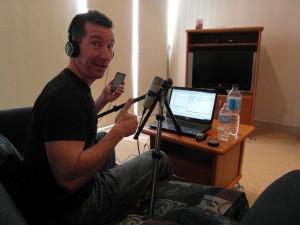
- Dave took a picture of his ad-hoc recording studio:
Transcript
Dave Jones: Welcome to the Amp Hour. I'm Dave Jones from the EEV blog.
Chris Gammell: And I'm Chris Gammell from Chris Gammell's Analog Life.
Joe Grand: And I am Joe Grand, a guest on the show and electrical engineer and, I don't know, hardware hacker and washed up TV host. All right.
Dave Jones: All right. Thanks for joining us, Joe. Thanks for having me.
Chris Gammell: I think you're our first television star. I don't know, washed up. What washed up?
Dave Jones: Tell us a story. Tell us a story.
Joe Grand: Okay. Yeah, let's start with that. Yeah, okay. So we'll start with that. So I'm an electrical engineer. I've grown up with electronics since I was about seven years old. You know, in the early 80s. I never meant to be on TV, right? I never wanted to be on TV. But I ended up being a co-host of a show on Discovery Channel called Prototype This.
Chris Gammell: And I'm sure that's how most people know you, right?
Joe Grand: Well, you'd be surprised. Oh, well, maybe not. Maybe that's a good assumption. Yeah. I think the people, you know, people that were in this community that were watching the show already knew of me anyway. So the only new people who learned about me maybe were people who weren't involved in technology. But, you know, I mean, so basically the show aired one season, 13 episodes, and it was four guys building prototypes of crazy things. And it was a really great time. It lasted about 18 months to film these 13 episodes. And ultimately, I'm sure we can talk about this at length, but ultimately, Discovery canceled the show. They said it cost too much money to produce each episode and took too long to produce each episode.
Dave Jones: I was going to say 13 months. Sorry, how many? 18 months. Well, they realized that's a lot. To produce one season, that is a lot.
Joe Grand: Well, yeah. And they realized that engineering is hard, right? It's like we told them that at the beginning. Yeah, not only do we have to make stuff that looks cool on TV, and we have to be on TV, but we have to actually design the stuff. You know, it was the four of us were actually building and designing. We weren't having somebody else do it behind the scenes. So it lasted for a while, and it made, you know, it was a great experience, but also very frustrating with the politics and a lot of the behind-the-scenes stuff that happened. So I just joke around and say I'm washed up. I'm always open to more, but the experience was definitely eye-opening.
Chris Gammell: Yeah. So can you give our listeners kind of an idea about some of the stuff you made when you were prototyping just for the scope of how difficult it was to make them?
Joe Grand: Yeah. Okay. So the reason it took 18 months is Discovery wanted things that had never been done before that looked good on TV and that we could guarantee would work. Oh, no problem. That's out of the spec set right there. That narrows things down. And so we did some things like a 30-foot giant computer-controlled water slide simulator.
Chris Gammell: Ooh.
Joe Grand: A high-tech firefighter pack that had heads-up display and thermal imaging camera and all sorts of other stuff. Oh, cool. That's awesome. And actually, each episode really took around two to three weeks to film, sometimes as much as five for the really, really, really big ones. But then a lot of the other time was just spent brainstorming and trying to come up with ideas that Discovery would actually like. All right. So what else? We built a truck that could elevate itself and drive over traffic, move in any – it had omnidirectional wheels that could move in any direction, automatically park itself. So, you know, lots of really big things.
Dave Jones: I was going to say this is a big mechanical stuff, right? This is not little electronic lead-flashing gadgets, right?
Joe Grand: It was serious things. And the original intent of the show was to, you know, build the future and make things that potentially could be products in the future. Oh, okay.
Dave Jones: Right. That's the premise. Unlike Mythbusters, which is just – yeah, well, their premise is busting myths, right? That's right. So they can be a bit more crude and, you know, backyard-y, right?
Joe Grand: So we had the same production company as Mythbusters, and, you know, the success of Mythbusters was basically –
Dave Jones: Which is an Australian production company, actually.
Joe Grand: It is. It's beyond production. Yeah. Beyond productions, yep. So we've got to test the myth and blow something up. But then in our case, it was, you know, design it, build it, test it, fix it, and then have this big payoff, which, unfortunately, we didn't blow stuff up.
Dave Jones: You signed up for that spec? You signed up for this? Come on.
Chris Gammell: That sounds like a study in entropy, you know? Things go towards disorganization, right? But, yeah.
Joe Grand: I mean, but there was big – there were, you know, big projects, lots of mechanics, but also lots of electronics that needed to control the stuff. So for me, since I kind of specialize in low-end 8-bit digital design, embedded system design, microcontroller stuff, and rapid prototype builds, you know, building things quickly, it was like, oh, that's awesome. You know, this is a chance to bring engineering to the masses and, you know, show millions of people what, you know, what real engineers do. And that was sort of my naive view of it until we actually got to the show and the cameraman the first day was filming us. And he was filming me soldering, and he goes, this is boring. I'm going to the workshop. And then, you know, that was the first day, and that was an eye-opener of, like, okay, maybe, you know – I know all of the listeners of this show, myself included, think that, you know, soldering is pretty sexy and it's cool to watch people build stuff. But in general, it's like if it doesn't have sparks and doesn't blow up, it's hard to capture people's attention.
Chris Gammell: That's the problem. You should have been soldering with, like, an acetylene torch, you know?
Joe Grand: Yeah, well, we thought of that. And actually, Zaz Brooks, one of the other guys on the show, he was a software guy. And it turns out none of us knew each other before the show. And Zaz and I actually have a bunch of the same friends but never actually met. So we were the two guys up in the lair, like, you know, designing the electronics and the software that no one would ever see. So we had to come up with cool ways to, you know, to show off what we were doing in a way that people would like on TV. So it was like let's try to dress up in costume and do all these weird things to explain these technical concepts.
Dave Jones: Oh, no. Oh, that's what you had to do to showcase what electronics and – That's like the hacker movie. Oh, no.
Joe Grand: Right. It's like a hacker movie to, like, you know, have all this extraneous graphics and, you know, crazy stuff to show a command line script running or something. Exactly. But that's what we had to do. And, you know, it ended up working. Like, people – we ended up actually motivating a lot of kids. I got emails from kids saying, this is the coolest show. I want to be an engineer. You know, how do I talk? That's awesome. That's awesome. So that was sort of cool. It was like a neat byproduct of that. Even though Discovery was targeting the Mythbusters audience, which was 18 to 39, it seemed like most people watching our show were younger. We're in junior high school and high school. And even in college, it was cool to actually, you know, even though they didn't show a lot of technical content and Zaz and I would always fight about trying to show more technical content on the show. It motivated people, and that was actually kind of cool.
Chris Gammell: And so the fact that you weren't getting that golden 18 to 39 demographic that actually spends a lot of money, was that the ultimate demise or was it something else?
Joe Grand: Well, they didn't tell us. I mean, they just said that we cost too much money, which is funny because the TV industry – I mean, I could rant about this for days. The TV industry basically treats anybody that's on the screen like complete crap. You know, there's a reason why there's these different unions and groups of actors and on-screen talent because production companies and networks just otherwise will completely take advantage of you. So with TV, they like to not only take advantage of the talent but take advantage of getting stuff for free and saying, well, we're a TV show. You should give us things for free. So we were spending about – I would say about $20,000, maybe $20,000 to $30,000, I think, per episode. But we were getting hundreds of thousands of dollars of free stuff from various companies to help us, you know, sponsors of the show technically. Ah, wrong.
Chris Gammell: For like product placements and stuff, right?
Joe Grand: Yeah. I mean, it really wasn't that much money we were spending. But I guess, you know, if you think about it and you see most of Discovery's content, most of any network television content, you know, you can make a pretty crappy documentary about aliens for, you know, a third of the price.
Dave Jones: Yeah.
Joe Grand: So, you know, we got the short end of the stick. And it's – you know, I think there is definitely room for more engineering programming out there. It's just a matter of convincing the producers and convincing the networks and convincing executives that have no idea about engineering, you know, that it is a process and it is hard. And you have to actually design stuff and test it and, you know, build it and make changes. And it's not going to work the first time. It might not work at all. But that's part of the process.
Dave Jones: Well, but even if you convince them of that, there still is the problem of actually targeting a mainstream audience. Yeah. So how do you make engineering interesting for a mainstream audience? Well, that's the hard thing. That's always going to be the killer, right?
Joe Grand: Yeah. I mean, everybody these days takes electronics and takes hardware for granted, right? Like if you're a real design engineer, you know this because, you know, nobody realizes how hard your job actually is. And, you know, people look at an iPhone and they're like, well, the dumbasses at Apple should have made it smaller. You know, it's like people take things for granted and especially with the way the technology moves so quickly these days is that people don't realize how much actual work goes into designing a product. And that's what happened with the TV show.
Dave Jones: Well, I always like to use the analogy of the building industry.
Chris Gammell: Uh-oh. Did he disappear? And we might have lost Dave. He might have ranted himself out of existence here. So people don't know. So Dave is actually, he's heading to a conference in Melbourne and he's in the hotel room right now calling into our server from a mobile phone. So we might have a little dropout there here and there. But, yeah, Joe, I totally agree with you. I mean, the fact that, like, I mean, I even do it. I catch myself doing it, right? I mean, I work in electronics. I know the complexities of a lot of products. And I still thump on my phone. And I'm like, why aren't you faster? Yeah. And this thing's like, you know, I'm like, oh, you crashed my maps program that tells me exactly where I am in the world.
Joe Grand: You know, it's ridiculous. Right. And, you know, 99.... I don't know, 999% of the people out there are just users of the technology. So it's... Yeah. You know, it's hard to be an engineer, really, you know, on TV and off screen.
Chris Gammell: Yeah. That's interesting. So tell us more about that TV lifestyle, too. Because I'm just intrigued by the whole idea of engineering on TV. I mean, honestly, I think in perpetuity people are going to ignore engineers. I don't want it to happen. I love, like, what First is doing about the PR right now and everything else. But, honestly, I just... I have no hope for it. We're just going to stay in obscurity for now. I mean, maybe there will be something in the future. I don't know.
Joe Grand: Well, I think it seems like, you know, we sort of get in the limelight once in a while if there's some cool product or something that the media latches on to. Hello. But in general, you know, we're still people that work in laboratories and, you know, maybe we don't even have windows. And, you know, there are a lot of stereotypical things that are true about our industry. And that's... I'm totally fine with it. Like, I don't need to be in the limelight. I like designing products. And, you know, I don't care if a company gets credit for something that I designed. And that's fine. I like to see things on the shelves. And I like to see people using my products. And I don't, you know... So, I think a lot of engineers are like that. They like the technology and they like engineering so much that they don't... They're not looking for the credit. And I actually felt a little weird being on TV because of that. And, yeah, you know, everybody loves the limelight, right? Everybody likes having their name in lights and getting some attention. Well, that's true. But most people would kind of think about it and say, oh, that would be sort of cool. You know, like I was walking down the street in San Francisco with my son and my wife. And a guy honks the horn and rolls down the window and says, I love prototype this. And it was cool. I'm like, yeah, you know? And then he emailed me later to assure me that he wasn't, you know, some complete freak. Right. Wait, how did you get your email? Oh, you just looked it up or something? Oh, yeah, on my website. You can just contact me through my website. But it was, you know, like that stuff is sort of fun, but it wasn't, you know, it wasn't what I was looking for. And what I learned about in the TV industry is a lot of people on TV, that's what they want to do is they want to be a TV host. And they want to be, you know, on the screen. And so it was weird for me and I know for Zaz and, you know, possibly for the other guys on the show that we were just normal people doing this stuff. And, you know, you'd mentioned the TV lifestyle, Chris. And, like, the TV lifestyle, you know, unless you're, I don't know, name a famous actor, you know, unless you're somebody with a real reputation. Yeah, Brad Pitt, right? Yeah, Brad Pitt or, you know, whatever. So there's no Us magazine covering your life story? Yeah, you know, it's not much of a lifestyle, I would say. And maybe I just had a bad experience with a production company, but we didn't get paid millions of dollars. We didn't have trailers. We didn't, you know, we had to fight for actually getting food brought to us while we were filming a show. You know, we filmed on Treasure Island in the San Francisco Bay. And there's two ways, three ways to get there. All of them require going over the Bay Bridge, halfway across the Bay Bridge. So you could either take the bus, you could drive.
Chris Gammell: Take the BART or no?
Joe Grand: That's it. You could take the bus, you could drive. BART? You can't do the BART? No BART. So, you know, we were stuck on this island filming the show. And it's like, well, wait, we need to eat lunch. But they're like, well, we can't. We have to film this scene about you guys, you know, doing our design meeting or walking in the door or whatever. And being hungry. Yeah. And it's like, well, can't we just get some snacks, some fruit? And, you know, it was all of these things that we had to fight for, which if you look at most on-screen talent, that's why, you know, people that have been on TV before, if they ever go back, you know, demand food and demand a break and demand a schedule. So they actually know, you know, at noon, I'm taking a break no matter what. And it's things that you would just sort of take for granted. It's like, well, of course they're going to let us eat lunch, right? Because that's what people do. But not, you know, they don't have to. Wow. That's crazy. You know, I mean, it was a lot of work. Like, I much prefer being in my lab designing stuff without a camera in my face all the time. So it was fun to do things and kind of goof off and have fun and explain things to the camera. But, you know, my true love is engineering and it was definitely an interesting experience.
Dave Jones: It sounds like give me YouTube any day, right? Yeah.
Joe Grand: You know, YouTube, you control exactly what you want. You can be a YouTube star. Give me that any day. You know, some office somewhere else writing comments about how your hair looks bad and how you need to, you know, not wear that shirt and, you know, not scratch your nose while you're saying this thing on an interview. And there was a lot of, you know, a lot of stuff that you see on the show, like I can't watch TV the same anymore when you see, you know, you see somebody walking in the door of a show and, like, you know, pretending to be excited to meet somebody for the first time. You know, like that stuff, even on reality shows, is just completely not real. So there's a lot of legwork we had to do that wasn't engineering related. So, you know, we had to walk in the door and we had to do that three different times because we only had one camera crew a lot of times. You know, we had to set up the scene a lot. So it took, you know, I would say, like, 75% of the show was all of the rest of the show, not engineering. And then we had to do 90% of the work and 25% of the time to actually build the stuff. So now I sound like a complete bitter old man. No, I think it's well-deserved there. I would definitely do it again. If the circumstances are right and if there is an opportunity to actually showcase engineering in a way that, you know, not like, oh, wow, look, engineering is so cool, I can blink lights. That's not the goal. The goal is to actually show real engineering and how the design process works and how you can learn things from failing and, you know, trying things, trial and error. And the real design process and not try to gloss it up and not try to be like, gee whiz, this is cool. But just do it for real. You know, and if the circumstances are right, I think it should be done right.
Chris Gammell: You don't want to see like an entire show devoted to failing. Like, or like every three shows you might make a breakthrough, right? Yeah, yeah.
Joe Grand: Well, that's the thing is we failed. One episode, it was the six by six all-terrain legged vehicle, which essentially was a scaled up version of the six legged robot that was based on some bio, you know, biomimicry of some insect. Like a hexapod kind of thing? Yeah, I don't exactly. Yeah, it had six legs. I think that's the similarity to the hexapod. Okay. But it was, so we decided to scale that up. And make it something that a human could ride in. And which was completely ridiculous. And, you know, we made some. And awesome. And awesome. Yeah, we made some really good progress with it. But at the end of the allocated time, which I think was four weeks or something, we, you know, it wasn't working. It was falling over. The, the, we, we had some, some PID loop in there to control the servos to keep everything stable. It just wasn't working right. And the engineer, or the, the producer sent the, sent the tape to the network. And they're like, you know, we couldn't get it working. And the guys at the network were like, oh my God, we failed. What are we going to do? We have to do something with this footage. We have to, you know, we have to use it. And the guy, the producer's like, well, it's okay. Because the failure is actually really cool. And they, you know, explained why it failed and stuff. And they're like, so Discovery was freaking out until they saw a rough cut of the show. And they go, oh, engineer, or failing is actually interesting.
Chris Gammell: Yeah.
Joe Grand: So that's what, did that air then? It did air. And we failed. And Discovery actually gave us more time to try to refine it. We made some refinements to it fixed some of the failures that we had encountered the first time around, but still failed. Nice. That's great, man. That's great. That's how it goes sometimes. But, you know, even, even with all of the, the fighting and the, and the pushing to get, you know, technology aired on the show and all of this stuff, we did end up educating the network about, about engineering. And that was another good byproduct that came out of it. So maybe future shows won't have to go through what we went through to, to, to, to succeed. And by the way, all the episodes, for some reason, are on BitTorrent, which I'm not advocating. But we do not receive royalties. Quick, quick, nudge, nudge. Well, we don't receive royalties for the episodes. I'll just leave it at that. And, but they're definitely worth watching. And, and some, some of the behind the scenes stuff I put up on YouTube, if you just search for prototype this, there's all sorts of stuff. But I definitely encourage people who haven't seen the show to go, you know, check it out. Cause it's kind of fun.
Chris Gammell: Yeah. And we'll definitely link everything in the show notes here. I mean, we'll try and find a bunch of those videos and stuff.
Joe Grand: So yeah.
Dave Jones: Am I back on guys? Can you hear me? Yeah. You're back. I'm back.
Chris Gammell: This has been like the quietest episode from you yet. I kind of like this. I say every episode you use your cell phone.
Dave Jones: So I just had a question that Joe, you said that you put up behind the scenes stuff up on YouTube. Yeah. Does that mean that you have the rights to do that? Well, how does that work?
Joe Grand: Well, um, Oh, Oh, it's your own camera, right? So, so basically I had my camera with me all the time because like any good engineer, you want to document the process. Right. So I would document my personal build because I thought it was cool that I was building the stuff, but I also documented, you know, I was just filming stuff as we were doing it. And the producers hated it because I would always end up in the scene, like with a camera and, you know, I wasn't supposed to film it because I was supposed to be concentrating on whatever being a host. Um, yeah. So I, so I have a bunch of stuff of different tests that didn't make it on the show and, and, um, you know, just things that I thought were neat that I put up online.
Chris Gammell: Um, and then of course, all of it's interesting though, cause they do that more now. I mean, like, it seems like more, I mean, I think those might be scripted to the behind the scenes stuff, but it seems like more shows are doing that kind of thing now.
Dave Jones: Oh, everyone's doing it. If it's part of the box set, you know, it's got to have the DVD extras.
Joe Grand: Well, yeah, it's part of it. Yeah. It's part of it. And a lot of the behind the scenes stuff is controlled by the, by the network or by the producers. But in this case, it was just me with the camera. And I also put up all of the engineering documentation for the, for the various builds, like anything that I had a hand in. Um, so yeah, schematic source code, whatever, all of that's on my website too, for each episode. Um, so people can kind of, you know, check out and, you know, actually see that we did build this stuff and didn't just make it up for TV. Right. Open source TV show.
Chris Gammell: Yeah.
Dave Jones: So if you don't know why I dropped out there, did you guys discuss it?
Chris Gammell: Uh, yeah, we said you, uh, don't like talking to us and, uh, you wanted to eat, eat more breakfast. I think you were hungry because you're in the, I said you're in Melbourne, you know, being a lazy bum.
Dave Jones: Yeah. What are you there for? I am in a hotel room in Melbourne, by the way. And I've got some weird, uh, contraption here. I've got my, um, tripod. If you, I'll, I'll post it, I'll take a photo of this and post it, but I've got my tripod. Two legs are up on the lounge here behind me. And one is on the, uh, uh, desk in front of me. And I've got my podcasting mic, uh, taped to my tripod because I don't have a proper desk stand for it. I've only got my boom mic, which I couldn't bring with me, boom stand. And, uh, yeah, it's all a bit, uh, it's all a bit backyardy at the moment. And I'm going through my, um, phone. I'm going through the 3G connection on my phone. I've got it set up next to me as a wireless hotspot. And I'm hooking into that because the idiots at the hotel advertise broadband. And I got here and, uh, broadband actually means, uh, bring your own modem, you know, plug it into the phone line. What?
Joe Grand: You've got to be kidding me. What a hack. Anyway. What a hack. You don't bring your acoustic coupler with you everywhere you go?
Dave Jones: No, I didn't bring my 3-underboard acoustic coupler. I'm afraid not.
Chris Gammell: So Joe, uh, speaking of hacking and horrible, that's, that's a horrible hack that Dave did. But if it works, it works. Uh, I mean, what's your take on the hackerspace movement these days? I mean, like, what are you, what are you seeing and how do you contrast it to your early days? I mean, you were part of the early hacker movement, right?
Joe Grand: Yeah. So, so, um, I, I was part of a hacker group, um, back in the early nineties called the law. And, um, we were, we were instrumental in, in one of the first groups to sort of be kind of public facing, um, and we discovered a lot of security vulnerabilities in various products, namely, um, notably windows and, you know, went to Microsoft and we were some of the early people to do this kind of full disclosure, uh, vulnerability disclosure type of thing and go to a company and say, Hey, we found a security vulnerability in your product. You know, you should really fix this. And companies, no, no, no, no, no, no, no, no, no, no, no, no, no, no, no, no, no, no, we did it totally, totally just, um, um, and, um, and, you know, and the recognition, it definitely wasn't for money, but, you know, we'd say fix the problem and the company would go, no, no, there's no, no, no one would ever do that. So we would write exploit code and say, no, somebody could do this. Um, so, you know, we were instrumental in doing that. No, no, we're doing this right now. Yeah, exactly. And this was, this was in the early nineties and, um, the group was seven of us and, uh, it was, you know, back when I started in computers and, you know, 1982, I had an Atari 400 and an acoustic 300 watt acoustic coupler modem. And, um, you know, I would get free phone calls to get, to get access to bulletin board systems further away from my local calling area. And, um, you know, to, to have a computer back in the day was not something you would brag about. Um, you know, being a, being a hacker, being a hacker back when, you know, we were at the loft was not, was not cool. Right. It's like these days, if you're a hacker, it's cool. And you, you know, work on projects and, and, you know, go to, go to hacker spaces and stuff. But back then it just was, it was a lot more misunderstood. Um, even, you know, even then people said, oh, okay, hackers, you know, some hackers break the law and there's, you know, always going to be this discussion about what a real hacker is, but it was just being in that, being in, in that community at the time, the community was a lot smaller and it was just a lot different. So that the hacker space movement these days, you know, there were, there were kind of closed knit private groups back when we were at the loft and that, you know, that's how we were. Um, but now it's like this next generation of hacker spaces that are all over the place. And, um, it's, I mean, it's amazing to see. It's really, it's wild to see because you have, you know, these, these groups of people, you know, maybe some of my generation and then the next generation of kids that, uh, you know, like working together and, and they're not trying to hide stuff and they don't have to have fake names to, you know, to release information. And, um, you know, they can learn lots of things and there's just a lot more communities and a lot more people willing to share information and share their skills with other people. And it's, it's cool to see, like, I'm not really involved in, in our local hacker space here is, is noise bridge in San Francisco, which was one of the, you know, one of the first of this next generation. I'm not really too involved in it just cause I, you know, I don't leave my house much. Um, but, uh, it's, it's cool to see. And like, I think it's great. You know, the more people that get involved in, in engineering and, and, and hacking and what, and whatever is good, right? The more people that are empowered to do it yourself as opposed to rely on big business and corporations is good. But, you know, there, there's some other, there's some downsides that I see too, seeing how I've, I've kind of been through it is you were already starting to see more corporate influence in these hacker spaces. You know, things are now sponsored by Facebook or this party sponsored by whatever. And, you know, you have a good way to get money, but you know, is that going to ultimately affect how the hacker spaces operate? I don't know.
Chris Gammell: Oh, it will. Yeah. I mean, it's bound to, right? But it's just a matter of how much, right?
Joe Grand: Yeah. And you know, when we were, when we were at the loft, we, in the late nineties, um, I was working at a, at an actual product development company being an engineer. And then at night go over to the loft and, you know, we were just hack on stuff. We ended up, we wanted to do it full time. And we're like, okay, what could we, you know, could we sell the company and, and, you know, maybe do this full time. So that's what we tried to do. And it was right around the time when the computer security industry, you know, a lot of consulting companies were coming up. So we ended up joining forces with, with some, with some venture capital and, and some, and some other guys starting a consulting firm. And we started it, you know, a security consulting firm with the, with the expectation that we would continue to operate our, you know, our core, our side of the business as we did at the loft. You know, seven guys that would just come in whenever and do work and hack on stuff and not really, not really have to, have to, you know, obey anybody or report to anybody. And it totally didn't work. Like it worked for, for like a month, a month or two until the VC said, wait a second, we want our money. What are, what are these seven guys doing?
Chris Gammell: What is your exit strategy?
Joe Grand: So, so we, you know, we thought it was going to be great and that ended up being, you know, not very good. So, you know, if hacker spaces are starting to, you know, change their values based on, you know, the fact that they need to get corporate dollars and stuff, I don't know. It's sort of, it, maybe it's good in the short term, but might, might not be good in the long term. Yeah.
Dave Jones: That's why sponsorship's not bad because you get the money without all the strings attached, really, you know, or without too many major strings attached.
Joe Grand: But we don't know. Yeah, you gotta be careful. But we never know like what, you know, what, what, what people are signing up for. It's like, we'll give you $10,000 for this party, but you need to put our logo on every t-shirt you ever make or, you know, things like that.
Dave Jones: Right.
Joe Grand: Yeah.
Chris Gammell: Yeah. I think, yeah, I think the resounding message is you gotta be careful. You gotta watch out how you agree to things because, yeah. Yeah. Especially because. People want to get their money's worth. Yeah.
Joe Grand: And now you see, you know, um, I haven't followed it too closely, but you have, uh, what, like Red Bull sponsored a hacking contest. So there's, you know, there's corporations that are seeing that this hacker movement now is a legitimate way for them to get market share and get advertising and get, you know, people to essentially do stuff for them in, you know, in exchange for, for something cool. And, um, that's, that's also a little bit dangerous. It is cool because now, you know, lots of, on one hand, you know, these companies are giving hacker spaces hardware to hack on, but then it's, you know, sponsored by Red Bull. Again, it's that corporate influence and I've always tried to avoid any sort of corporate influence in, in, in my day to day activities. Even when I was younger, I'm just very distrustful of that. And another reason why I worked for myself. And, um, so, you know, that, that maybe should be a warning to, to people that are getting involved in hacker spaces or just doing things on their own is that, you know, these companies, corporations are, are not just in it to be cool. They're in it to make money. Yeah. Right. And that's the bottom line.
Dave Jones: Well, that's the challenge I have because I'm now full-time video blogger and I make most of my money from advertising on my website, you know, and it's, I'd love to not have the ads there, but you know, I'd also, you know, but I know that if I have to go earn a living back at a nine to five job, well, the blogs probably, it won't go under, but it certainly, you know, um, it certainly take a backseat to my current life. Yeah. That's an engineering trade-off, I guess.
Chris Gammell: Yeah. We're seeing that actually in a bigger sense today. There was, there was news today that Bug Labs is, uh, is hooking up. So Bug Labs is an open source hardware company. People don't know. They have a, you know, modular platform. It's all open. They're like one of the big sponsors of the upcoming open source hardware, uh, conference, right? That's later this week. And, you know, they're partnering with Ford. And so some of that is really good. You know, they're, they're putting some new modular hackable piece into, into Ford cars.
Joe Grand: Oh, wow.
Chris Gammell: So people can, awesome. So people can develop for it. And it's a cool idea, right? And, and I'm sure from Ford's perspective, they want, they want app development. They want people to building around their platform. But at the same time, there, there are, like, like Joe said, there, there's risks, there's trade-offs because Ford's going to ask for certain things. They might say, well, you can open up this. You can't open up that, you know? So, um, yeah.
Joe Grand: And hopefully somebody in the community will just open up everything.
Chris Gammell: Yeah. Hopefully. Yeah. I mean, I mean, Peter, Peter Semelhack's the guy, one of the guys in, uh, in charge of Bug Labs. And, and he's, you know, a very big proponent of open source hardware and, and we're big fans of open source hardware here. But, you know, like when you do have that, that big company, you know, got out to make money thing, there's going to be, there's going to be some, some issues there. So it'd be interesting to see how they, how they get through it and see what they, what
Dave Jones: they do with it, but that's probably too big an opportunity to pass up, isn't it? I mean, that's pretty huge, you know?
Chris Gammell: Congratulations to him. That's spectacular, really. But, uh, I mean, getting inside a car, right? That's like, in terms of large purchases that that's like saying, well, uh, what else is a big purchase? A home? I mean, like getting to integrate with every, with a certain builder's home.
Dave Jones: You're inside a TV or something, you know?
Chris Gammell: Yeah, exactly.
Dave Jones: How does that work though? What are they going to put inside the car? Some sort of interface where you can plug one of these bug lab modules in or what? What's the, how does that work?
Joe Grand: Maybe, maybe they'll put it on the canvas along with everything else. Then you can actually control windows and start cars and stuff. That would be interesting. I don't think that's going to happen.
Dave Jones: Okay. And you can monitor the engine performance and all that.
Chris Gammell: I think this is all, who knows if they try to do something like that. I think this is media based. Because you know how cars are all moving towards infotainment, that horrible word infotainment.
Dave Jones: Oh, and there's a big heads up display now and there's a, yeah. Big touchscreen navigation.
Chris Gammell: So maybe they'll give them a window. But I don't know if they, Joe, you'd probably, you'd probably go crazy if you could get it at a canvas, huh? Just start hacking, hacking away, put it in a Ziggy module in your friend's car.
Joe Grand: I'm sure, I'm sure whatever first revision they come out with is going to be completely, you know, able to be hacked for all sorts of stuff they weren't intending. Yeah. Yeah. Actually, it's funny. We're looking to buy a new car right now and, or to lease a new car anyway. And it's hard because I'm looking for something that doesn't have any of these, you know, nifty new infotainment features and DVD players and OnStar and all this stuff. I'm paranoid. I don't, you know, I just want to drive my car. I don't want somebody listening to what I'm saying as I drive my car.
Chris Gammell: I don't know though, because even all the emission stuff these days, I mean, cars are, they're optimized for emissions controls and everything else. There's micros controlling cycles and good God, I should run the other direction talking about cars. Dave knows about this. Every time I say something stupid, but there are a lot of micros and cars these days.
Dave Jones: If you're paranoid, there's an easy fix. Just line all of the inside of the car with our alfoil, as we call it here in Australia.
Joe Grand: Or ride a bicycle.
Dave Jones: There you go. Or ride a bicycle, yeah. Yeah. No, but then the satellites can still track you and read your brainwaves and, yeah.
Chris Gammell: We're going from, man, you two together. It's like Chris and the conspiracy theorists.
Dave Jones: Uncle Sam is listening.
Chris Gammell: Yeah, it's not a bad thing, but yeah. So that's why you stick with the 8-bit micros? You figure no one's going to track your 8-bit stuff? Is that the idea?
Joe Grand: No, I just, it's funny because I just like the simplicity of an 8-bit micro. Like that's just, since I grew up using them, it's just kind of, there's a huge need for that type of product. Like I design very simple, effective things. Something that does the task, but doesn't have all this extra crap. And that's sort of, I call myself a technology minimalist. Because yes, I have a cell phone, but no, I don't use all the crazy apps on it. You know, and like it took me a long time to get a BlackBerry and then ultimately an iPhone. Like I was using a prepaid Nokia phone for a long time. Because I think. Like a brick? Yeah, like a big one. And it just seems like a lot of, it's not the engineer's fault, but it's somewhere along the chain that companies just think if it has a lot of features, the more features it has, the better.
Chris Gammell: Feature creep.
Joe Grand: Yeah, it's feature creep. It's like, well, if there's a 32-bit micro available, let's just use that. And oh, now it's 400 megahertz. Let's, you know, now we can play video. Let's make it play video. So I like the constraints of an 8-bit device because it forces me not only to design just for what I need, but also do things creatively. And if I need extra horsepower, you know, I have to, you know, maybe write things in assembly and maybe do things a little more creatively and just not have this complete open, you know, Linux-based hardware platform for everything I design. Yeah.
Dave Jones: But unfortunately, that's modern society with the communications revolution. How do you get internet on your phone with an 8-bit micro, you know? Right. Well, that's, yeah.
Joe Grand: I mean, luckily I don't design smartphones, so that's, you know, for me it's a new answer.
Dave Jones: You'd go crazy.
Joe Grand: Because there's, I mean, I think there's still a lot of neat little products that can help people and that people can use that can run on 8-bit stuff and, you know, that are embedded. Oh, for sure. You guys are analog guys, and I, you know, I watch your shows and listen to you. I'm not analog, no. No? No? Well, it sure seems like it.
Dave Jones: Oh, I'm mixed signal, really. I'm a bit of mixed signal guy.
Joe Grand: Dave's all over the place. So, Chris is analog. You're mixed signal, and I'm neither of those. Like, you know, I'm just digital. So, there's a lot of, you know, it's sort of black magic to me, the analog side. And, you know, 8-bit, I just think there's a use for, you know, for simple, effective devices that are, you know, that do a task and aren't just overly designed and feature-creaped and overcomplicated.
Dave Jones: Yeah.
Joe Grand: Yeah. I've got a question with the lost. I've got a question with the lost. Pretty well.
Dave Jones: Sure. Where did the name, the loft, come from, Joe?
Joe Grand: Okay. So, the...
Dave Jones: Were you actually in a loft, physically in someone's loft?
Joe Grand: Yeah. Right. That's what I figured. So, the loft, we spelled it L-0-P-H-T, which was, of course, you know, hacker speak for loft, L-O-F-T. And our first space was an artist loft space in the south end of Boston. Right. So, you know, we just said, let's call it the loft, L-0-P-H-T. And it was funny. I sort of rebelled against that for a long time. For, you know, quite a while, I would still call it L-O-F-T. But then, eventually, the name just stuck. And it was the loft. And we had, you know, hackers from all over the world would come and visit us in Boston and sleep on our floor and, you know, do all the things that hacker spaces are kind of around for now. But, yeah, you know, we were a loft space and just in a crappy neighborhood.
Chris Gammell: So, are you still in touch with a lot of these hackers back then? I'm just wondering about, like, you know, trajectories that they've taken. I mean, have people that you know from those days, are they, you know, running companies? Are they doing the same thing you're doing? What kind of stuff?
Joe Grand: Yeah, everybody. So, after, once we started At Stake, which was the security consulting company, things sort of fell apart. You know, money got involved. And people sort of changed their tune. And the whole, our whole, what I thought was like this collective goal just sort of fell apart. And I was young. I was, let's see, it was 2000. So, I was 25 when everything started kind of, well, when we sold the company in about 26 or 27 when everything really started falling apart for me, from my perspective. You know, we were very, you know, the corporation was very influential on certain people. And it just kind of, it stopped being fun. And so, I got out of it. But it hit me really hard because these guys, I was the youngest by about six years. And for, you know, from being 15 years old to 25, I looked up to those guys every day. You know, they were my mentors. They kept me out of trouble. Yeah. I actually had gotten in trouble before I joined the loft. And this was a place for me. It was an outlet for me to go. You know, keeping me off the street. And, you know, I really looked up to these guys. And it was a very important time in my life. And then to see it all fall apart was just completely heartbreaking. So, we are, we're in touch with people. You know, I would say the first few years were pretty shaky. Like, no one really talked to each other because it was just too, you know, there's too much kind of history. But recently, we, you know, we have a mailing list. Once in a while, we talk on it. And, you know, some more than others. But we are all still in touch. Everybody is still involved in technology in, you know, various ways. And probably the most high profile is Mudge, who we sort of put out there as, you know, the leader of the loft and whatever. But, you know, we were all on equal footing. Mudge? Is that his handle, I presume? That's his handle. And he is actually now working at DARPA. Ooh. He's something in charge of new projects at DARPA, which is a defense agency research something or some government thing. Yeah. I should know more.
Dave Jones: It's a military arm. It's a military arm. It's a research agency. Yeah. Yeah.
Joe Grand: But he's actually. Yeah, they fund crazy projects. He just launched a new project called Cyber Fast Track, which is intended to enable hackerspaces, sort of like the loft, to, you know, work on very quick turn government-related projects and get cash without having to go through the whole government red tape. Interesting. Yeah. Yeah. So, you know, it's sort of interesting that he went from, you know, pure hacker to executive at security company to government man. Yeah. But now he's still trying to help the hacker community. And we'll see what happens with that. Like, that's, you know, he's definitely the most high profile of us, you know, doing things these days.
Chris Gammell: Any other guys? Was that the program that was about, they talked, I saw one DARPA program where they were talking about, like, crowdsourcing, like, vehicle design. Was that that one?
Joe Grand: I don't know. He just recently announced it at Black Hat, the Black Hat briefings over the summer. Okay. I'm not sure if it was vehicle, but it's mostly things, I think, you know, if a security company is doing something cool with intrusion detection or with, you know, malware analysis or something. And maybe they have something to offer the government, but they don't have, you know, they're just not set up to deal with the government because most people aren't. Yeah. He was trying to offer away. Yeah, it's a big operation. Yeah, it's a total pain in the ass. So, you know, we'll see if it works. But so he's doing that, and two of the other guys, Weld and Dildog, both work. They started a company called Veracode, which does static binary analysis for malware and malicious code stuff. And the other guys are doing various technology-related things. We're just not as, you know, we're not as close as we were. We're not nearly as close as we were. And I think it was just at the time there were seven of us at the stage in our lives. It was just a perfect storm of all of us coming together to do these amazing, great things. And then, you know, we started growing up, and we got, you know, we all wanted different things. And, yeah, we all believed in different things. It's just, you know, it is what it is, and I learned a lot from it. And I think, you know, in part, it's what makes me so kind of bitter and pessimistic and cautious about things these days. But also, I learned so much along that line that, you know, now I can run my own business, and I can deal with large corporations if I need to, to sell, you know, licensed product or sell product. And so, you know, it was good and bad, and I wouldn't have changed it for anything. It was just sort of, you know, it didn't end very well.
Chris Gammell: Yeah, that's too bad.
Dave Jones: It's a shine.
Chris Gammell: So let's hear some of this newest stuff. I mean, you said 8-bit micros. Can you talk about any of your current projects or stuff you're looking at like that?
Joe Grand: Yeah, so the kind of part of my business, most of my business is just developing products and then licensing those out to companies. Some of the times it's hobbyist modules. So things I've designed were a text-to-speech module for a company called Parallax, you know, who makes the basic things. Yeah, I'm sure you have. And a GPS module, an RFID module, and a read-write version of RFID. So, you know, kind of building blocks that other people can use for projects. And then I do consumer stuff as well. So let's see, some recent things I guess that I can talk about. There's a few products that are coming out that I did consulting work for that are coming out that I can't talk about yet. But a recent thing that actually just got shipped to Parallax is a low-cost laser rangefinder. Oh, cool. It's just another sensor in the robotic sensor arsenal. It's like people that are doing robots. Yeah, which is what they target. Yeah, you have your ultrasonic. You have your infrared. And people have been hacking on the Kinect, right? Like there's some more expensive solutions. But even doing Kinect stuff, you need a pretty powerful host. So I was like, okay, let's try to do a low-cost laser rangefinder. You know, something that will just detect range within, you know, some decent amount of distance for people doing robotics. Like it was sort of a limited – you know, I tried to limit my specifications. And over the course of – it actually ended up taking me three years, which is ridiculous. Oh, wow. But I finally, you know, finally finished up the product into something that I think was cool enough. And we put it into production in July, and now it's actually going to be available next week through Parallax. And this is a – it's a neat thing. It runs on a propeller processor. Have you guys looked at that at all? Yes.
Chris Gammell: Yeah, I'll say that. I got a dev board, and I've been sitting on my hands, unfortunately. Yeah, okay.
Joe Grand: Well, it's a – you know, so people don't know. It's essentially an eight-core microcontroller built completely from the ground up by Chip Gracie, one of the guys who started Parallax. And who's an amazing guy, and you should try to get him on the show if you can. He's just – he's totally just amazing. And so he designed – Totally amazing. Totally amazing. Yep. Check it off. Yeah. So he designed this chip, and it's an eight-core processor and very powerful, but nothing – so I don't really know what to compare it to. It's just very different. But they have a lot of – there's a good development community with it, kind of like Arduino, right? You have all these different objects and stuff that people have written. So with the propeller, it's the same thing. They have this on the Parallax site. They have the object exchange, which is a place where people can write objects, various modules for the processor. Put them online. You can kind of use those as building blocks. And just a really cool part. So I use that and essentially a laser diode and a CMOS camera and some trigonometry to determine distance to a target object.
Chris Gammell: Yay, math. Yeah, right.
Joe Grand: It's actually funny. It's like seventh grade level math, and it took me like three days of studying it again to remind myself how it works.
Dave Jones: It's like tangent. So it's tangent. Come on.
Chris Gammell: Yeah, sign. Is it sign or sin? What are we doing here? And I was like slope intercept line. Oscar had a heap of apples.
Joe Grand: Hypotenuse? What's that? Yeah, it was really embarrassing. But luckily I was – Is that what you guys used?
Chris Gammell: Was it Oscar had a heap of apples? Is that what you used for remembering – I just used Google. Oh, really? Okay. Do you know that one, Dave?
Dave Jones: I think I've heard of that one. I didn't use that. I just memorized them.
Chris Gammell: Oh, okay. So people out listening, it's Oscar had is O-H. So opposite over hypotenuse is sign, and then you can figure out the other ones. A is adjacent. But yeah. Wow. That's how I did it.
Joe Grand: That's the extent of my engineering right there is – Ohm's law and tangents and cosines. Yeah, I had a calculator. Yeah. But yeah, so that's something that's cool, and that's a fully open source product. Nice. And so we'll see how it goes. We'll see if people end up using it. I think it's an interesting device. The range is like – the really good range is about six inches to four feet, which is good for certain applications. And so we'll see how that goes. And let's see. I don't know. What else am I doing? I'm looking around my lab right now. I'm like, can I talk about that? No. Can I talk about that? No. Not that one. No, not that one. I mean, I could talk about stuff I've done, but that's not as exciting.
Chris Gammell: How about this? Where are you doing most of your manufacturing? I mean, we talk about manufacturing a lot on the show, just like where you're doing it. Are you doing China stuff? Are you doing locally? How do you do that stuff?
Joe Grand: I do it all. So it really depends – like anything with engineering, it depends on the project, right? Everything is project specific. So for the laser range finder, that is a product that was licensed to Parallax. And Parallax has manufacturing at their own place in Rockland, California, which is right outside of Sacramento. Oh, cool. And they have a factory set up in China. That's their own factory. They're not using someone else's. But in this case, they just signed some big deal with Radio Shack. So their local facility has been really busy. And this product was too – the testing procedure for the laser range finder was pretty technical, and it required a lot of ramp up to get things right. So we didn't want to go to China with it because it just would have been too hard. So we decided to use a local place around here in the Bay Area called Sonic Manufacturing, which is a really cool place. And their pricing is comparable, actually, to stuff in China. Interesting. Not completely one-to-one, but it's compelling enough to stay local. It's not far off, yeah. And that makes it – a lot of people say, oh, I designed a product. I'm just going to go manufacture it in China because that's what everybody does, not realizing that there's huge hidden costs to going there, right?
Chris Gammell: Yeah. There are. And I've seen a lot of stories recently. I put a couple of stories on the list, too. I mean, there was one on Fortune and one on – what was this on? On smartmoney.com. You know, like they're about smaller companies that it's a really big deal because not only do you have to – the cost might be similar or even a little bit cheaper in China, but the quality side of things and making sure you just have someone there, that's the expensive side of things. Right. It's oversteen a lot of resurgence.
Joe Grand: Once you have to spend $4,000 to get on an airplane and go fix the problem, that gets costly. But, you know, there are times when it's useful. Like, so I've designed – for the past five years, I've designed the electronic badge for DEF CON, which is a hacker conference in Las Vegas. And the world's largest – That's pretty cool. Yeah, you know, around 8,000 to 10,000 people go. And so on my website, there's links to the actual products. But those were – you know, we had to make 8,000 of those. And cost was very, very – we had to keep cost down. And, you know, Jeff Moss, the founder of the conference, was like, well, can you do something for $5? I'm like, complete, you know, assembled and parts and everything. And that's where we started. It was a $5 bomb. So the most recent one for DEF CON 18, and I stopped doing it after five years, but DEF CON 18 was, I think, $14 because we had an aluminum substrate board with laser engraving and all sorts of crazy stuff. But to get that many done, I ended up – I was using a facility in China called e-teknet, E-T-E-K-N-E-T, who I'd done a lot of volume work with before. And, you know, their quality was good, but I still had to stay on them. You know, it was almost daily updates making sure that they were, you know, incorporating the changes that had to be done. And then, you know, they were able to pull it off. And, you know, they ended up – for a few of the years, they ended up having to manufacture all 8,000 boards within three days. And they pulled it off. You know, and it was – so they're definitely – you know, it depends on the project. There's times to be local. There's times to go offshore. You know, if it's quality, if it's price, if it's, you know, delivery speed. Then you have to deal with customs. So there's all these things that you have to consider. It's not just let's go to China.
Chris Gammell: Yeah. Yeah. And that's interesting because you have a little bit more resources, I think, in the – like the Bay Area. It seems like there's some smaller manufacturing operations that seem to maintain business based on similar small run, you know, prototyping or –
Joe Grand: Well, yeah. There's a lot of – well, there's a lot of – I mean, you know, this – just having Silicon Valley here is huge. And I feel – it's funny. I've been here for – I've been in California for six years and been in the Bay Area for three. And I still get a kick out of it when I drive down 101 and I see Jamco. Like, oh, Jamco Electronics. What do I need? You know, like I try to think of something I can buy just because I can, right?
Dave Jones: Yeah, exactly. We don't have that here in Australia.
Joe Grand: It's tough. Yeah, I mean, it's nice to have that. And, you know, there's so many other places like that and surplus electronic stores. But since so much of the technology is here that people are always going to do small run prototypes and, you know, have – they're going to need people to manufacture things that aren't ready to go offshore. And, you know, some companies end up staying local and then some, once they get the product to a point that it's, you know, full production, then they go offshore. But this is –
Dave Jones: Well, how many assembly houses would there be in the U.S.? There's hundreds of them, right? Here in Australia, there's – I don't know. You can probably count them on one hand, you know. Yeah. It's crazy.
Joe Grand: That's true. And maybe – That's the huge difference, yeah. I think there used to be more in the U.S. too. And it's just, you know, when the bubble burst, it's gone. Yeah. But, yeah.
Dave Jones: But the thing is, there are still hundreds of, you know, companies there. Right. So, even thousands maybe. With, you know, and they've, you know, got a warehouse full of, you know, pick-and-place machines. And it's fantastic. So, you can keep it local if you want to. Yeah, you can. And there's competition between vendors and they're trying to compete with China. So, you know, I would assume that they're going to be reasonably priced. Right. And stuff like that. But, yeah, here in Australia, I'm struggling to find anything.
Joe Grand: Well, then you see, you know, places, you know, like Adafruit, they have their own pick-and-place now, right? So, even small companies can do all their manufacturing in-house. You know, you can get a good pick-and-place machine and start doing stuff yourself. And, you know, obviously there's all the- That's if you have the resources. People that are selling kits that have their, you know, reflow toaster ovens and hot plates and all of that stuff. Hot plates, yeah. So, you know, people are starting to do manufacturing in their own homes. And it's just, you know, manufacturing is becoming more and more accessible that maybe in the future we won't have to rely on other facilities as much.
Chris Gammell: Yeah. And actually, I have another article here. There's some group called Boston Consulting Group. I'm not sure who the heck they are, but I saw some article earlier in the week about that. Basically, in the next five years, they're saying, at least in the U.S., a lot of stuff is poised to come back. Not just because of small stuff, but just other, just available labor and available, you know, money and everything else that works out pretty well.
Joe Grand: So, it's good to know. Yeah, I think there's nothing better than being face-to-face. And that's, for me, that's what it comes down to a lot of times is, like, if I know there's potentially going to be problems or if I have to kind of track the project, there's nothing better than just driving over and seeing what's going on. And, you know, explaining to the actual technician or to the person dealing with the assembly, you know, explaining how the product works, first of all. So, they actually know what they're building, but also just talking to them and talking with them until they understand, you know, what you're trying to say. It's just way – it just makes things way easier. And then you can actually focus your time on doing more engineering instead of, you know, trying to support something. Yeah, yeah. That's awesome. Even if it costs more money, I definitely – for at least, you know, for most things that I do, I like to stay where I can call somebody on the phone or drive there instead of having to, you know, wait for a response every 12 hours because of the time change.
Chris Gammell: Yeah. And also, that plays right into your old Codgerly, you know, mannerisms now, right? Yeah. I don't like this highfalutin technology. I want to talk on a telephone.
Joe Grand: I don't want to talk on the phone at 9 p.m. I want to watch TV. I know, right?
Chris Gammell: Yeah. That makes sense. I mean, I think it makes a lot of sense.
Dave Jones: And there's a reason, you know, I want to keep things here too is because I can, you know, and I feel as though I should, you know, try and – if I'm going to release something, I'll try and get it manufactured here or at least somewhere other than China, you know. I just want to feel as though I should support those sort of, you know, places so that they aren't lost, especially here in Australia.
Joe Grand: Yeah. Kind of local industry.
Dave Jones: Yep. Local industry. Keep it running.
Joe Grand: Yeah. Yeah.
Dave Jones: It's a big deal, I think. Yeah. You know, because once you lose it, you will – you know, it's hard to get it back. So, yeah, it's tough.
Chris Gammell: That's going to be a hard lesson, I think, at least for the U.S. I mean, they've already lost a lot. We've already lost a lot. And, you know, they keep saying, oh, it'll come back when it's right. But it's like, well, yeah, they will. But you have to have people relearn because all the people that were doing it were going to retire by then or – Or they're never going to want to do it again. We'll move on to something else. Yeah. Yeah, exactly. They've gotten burned.
Dave Jones: As far as I'm aware, there's only one company in Australia which still does rapid-turn prototype PCBs, actually manufactures blank PCBs here in Australia. There's one – oh, no, there's another company which do, like, really, you know, like, tin plate kind of, you know, not, you know, big solder mask, you know, silk screen and all that highfalutin fancy stuff. But, yeah, I think there's only one company that still manufactures them here, actually prototype PCBs. And they're very expensive. You know, it costs you thousands of dollars to spin one prototype board. So, you know, it forces you to go to China for those sort of prototype boards, unfortunately. It's a real shame. If anyone knows of any other place in Australia to get prototype boards or reasonable cost short runs, please let me know.
Joe Grand: Yeah, do you end up going to – do you go to China or do you go to the U.S. to get stuff done?
Dave Jones: I go to China to get my prototype boards made and short runs and stuff like that.
Chris Gammell: Yeah, it doesn't help your cheapskate too, right, Dave?
Dave Jones: No, well, you know, if you're manufacturing a prototype, you know, and you know you might have two or three spins at it, you don't want to plump down 500 bucks on a prototype board.
Chris Gammell: And I think that's an engineering, you know, mindset too. It's like, you know, you want to optimize cost. I want to do that. I'm a cheapskate normal life. So, as long as I can hold up quality, as long as I know I'm not going to get burned because the via, you know, bleeds over or something. Yeah. Yeah. I – it's kind of hard to argue against that sometimes. Yeah.
Dave Jones: See, I have no problem, though, charging more for a kit or something if I know it's all – you know, a lot of it comes from here and it's not all coming from China. I think a lot of people will, especially in our sort of community, will actually appreciate and understand that kind of stuff. It's like the Arduinos made in Italy, right? Yeah. You know, it's got proudly – you know, it's got made in Italy proudly on it. And I think people really actually appreciate that kind of stuff. So, yeah, I think it's a good thing. And I think you can actually charge more for it. I don't think, you know – you know, yeah, people will pay for things based on cost. But I think they'll also, in our industry, pay a bit more, you know, if it's, you know, helping, supporting local people. Yeah.
Joe Grand: Yeah, I would agree in most cases. You know, there's something else I want to throw out about China, and I've experienced this a lot in just seeing friends, you know, start hardware companies. And I'm an advisor for a few companies that are out there who get into hardware manufacturing and they go, oh, you know, we're just going to go to China, and China will fix it. So we'll send them the prototype. China will fix it, and it will magically become a product. And so there's sort of this void of people that want to manufacture their own hardware just, you know, dumping stuff onto a factory and just assuming that it's going to be done right. And, you know, a factory – most factories, you know, will have some engineering, some real engineers on staff. But it doesn't mean that they're any better than anybody else. And putting, you know, kind of false faith into this unknown entity to redesign your board to make it better is a little bit scary. So that's something I just wanted to kind of mention is that you always need to keep an eye on your product, even if you do send it offshore. You know, if a company might – you know, a factory might swap in different capacitors because they have a relationship with the company. Yeah, the cheaper – Yeah, exactly. And then you run into the failure problem. You know, what was that? That PDK, I think, had capacitors that were failing. Or, you know, maybe a factory has a broker relationship with some broker that's getting counterfeit parts or crap parts. Yeah, some gray market, yeah. Yeah, and that happens a lot unless you have that face-to-face contact and the client knows – or the factory knows that, you know, you're a serious client. And most people aren't going to go to China and introduce themselves. So there's a lot of risk there that kind of will come later, right? If your product ends up – they substitute parts and then three months down the line products start failing, that's going to be a complete nightmare to try to, you know, reverse engineer the problem and then work backwards.
Chris Gammell: And it's at the point when you're in volume too, so you've got, you know, a thousand of them out there instead of ten of them out there, right? Yeah. Yeah.
Joe Grand: Yeah, and that's happening in the most recent two projects that I've done consulting work for to design the prototype of the project. Sort of a pre-production state, you know, it's to the point where they could manufacture it, but these guys want to bring it to a factory and have them cost-reduce it even more, which is fine. But they end up replacing, you know, key subsystems that I, you know, spent hours and hours and days and days on refining for a specific reason. They'll drop in some other part that they're friendly with and completely change the operation of the design, and that's really risky. And then, you know, one company that did that, they don't have their own engineers. They had just hired me to do the design. They came back to me and said, these guys changed this stuff. Now it doesn't work. Can you help? And then they had to end up essentially paying as much as they did the first time around for me to go and then work with the factory to fix it. And it was fine for me because, you know, I got paid. But it was also really frustrating because the process could have been a lot smoother if it was just, you know, they wanted to make changes, but it was communicated to the original design engineer and all of that. But it was just this loss, this lack of communication really, really jeopardized the product.
Chris Gammell: It's too bad you were probably trying to keep on good terms with them and get more money from, you know, further work because otherwise you could have just sent them the original bomb and been like, please see below or something like that. Yeah, yeah, yeah.
Joe Grand: Except, you know, the factory didn't really, they didn't see anything wrong with it. They were using subsystems that they had already designed from other things. So they just, they sort of used mine as a, just a proof of concept and then made it themselves with their own modules and sort, and kept some stuff the same and changed some stuff. It was really a mess. But ultimately now they're, you know, they're in production with, I think their latest run was 10,000 pieces and they haven't seen a failure yet in the field. So that's good. Excellent.
Dave Jones: Our amp hour is almost up, Chris. Do we have any regular show segments to squeeze in?
Chris Gammell: Shoutouts? Oh yeah, shoutout. How about that? Because it's pretty relevant too, the television side of things.
Dave Jones: Oh, it is, yes.
Chris Gammell: Yeah.
Dave Jones: MakerBot TV show.
Chris Gammell: MakerBot started a TV show. I mean, it's an online TV show, but definitely some cool stuff. Joe, did you get a chance to see that? I don't know if you follow MakerBot. I've only seen episode one.
Joe Grand: I haven't seen episode two yet, but it's super cool. And I have a MakerBot. I've only seen the preview. It's awesome. Yeah. It's worth watching. And it's, you know, it's only five minutes. So people with short attention spans like me. Oh, okay. At least the first episode was five minutes.
Chris Gammell: Yeah, I was going to say it's the non-Dave model because he says it's going to be five minutes. I totally break all the rules. Yeah, it's great though. Yeah, with my one hour reviews. I thought it was great.
Dave Jones: It's crazy. Yes. Hey, it works. It works for me.
Joe Grand: Yeah, MakerBot. Don't knock it if it's working. MakerBot is definitely cool. Yeah.
Dave Jones: And they put a lot of production value into that too. I think there's two producers that are credited at the end of the show. And, you know, it is highly polished. Yeah. And it does take quite a lot of work to get it down to that five minutes. For sure. Yes. Excellent work.
Chris Gammell: Yeah. And real quick, we can do a This Day in Nerd History. I don't know if people like these. If people don't like Nerd History, I can stop doing it. But I don't know. I thought there was some fun stuff this week. Today, August 12th in 1958, Jack Kilby actually started with the transistor. He miniaturized what he had on silicon and showed it to his supervisor. And that was officially the first integrated circuit to be built. So I thought that was pretty cool.
Dave Jones: Some people actually dispute that, don't they?
Chris Gammell: They dispute who is the father of the transistor. It was between Kilby and Moore.
Dave Jones: No, we're talking about the IC here, aren't we?
Chris Gammell: Oh.
Dave Jones: Not the actual transistor. We're talking about ICs, right?
Joe Grand: He had two transistors on the one substrate. Oh, that's right. Okay, yeah.
Chris Gammell: Yeah, that's right. My bad. I've already gotten it wrong.
Dave Jones: And I think you said August, too. Isn't it September?
Chris Gammell: Today's September? Yeah, I think you might have slipped August in there. I'm getting married on Saturday. I've got so much crap going on right now. Oh, my God.
Dave Jones: When is the wedding?
Chris Gammell: Saturday. Wow.
Dave Jones: This Saturday.
Chris Gammell: Yep. Congratulations.
Joe Grand: Yeah. That's going to be a day in nerd history.
Chris Gammell: Right. The days Chris stopped doing any hobbyist stuff.
Dave Jones: The day the F hour ended. Chris Gammell's nerd life ended on this day. Yep, yep. You are owned now. Yep. That's right.
Chris Gammell: That'll be good. She's used to it.
Joe Grand: Has anyone asked you, is your wife to be technical?
Chris Gammell: She's not. She's expressly otherwise. Yeah. Although, she's been talking about getting into programming and Arduino and stuff. And I'm like, heck yeah. Yeah, seriously. It's awesome.
Joe Grand: Keep her as far away as possible. You think so? Yeah. I think having friends that do that stuff is good. You know, the same stuff you do. But there's nothing, you know, after a full day of work, I would hate to come home and then have my wife say, let's go build another circuit. You know, it's like, oh. Yeah, yeah. But, you know, I know a lot of people that are married to people that have exact same hobbies and professional lives, and it's fine, and then there's other people that can't. But I like having the mix.
Chris Gammell: Yeah.
Joe Grand: That's interesting.
Dave Jones: Because I'm being booted out at the moment by my wife saying, get rid of all the crap. Go and get in office space. Bugger off.
Joe Grand: That's funny. My wife likes me here. Yeah, you're just getting kicked out. My wife likes me here, and I asked her to review my articles and manuals and stuff, and she's like, this is the most boring stuff I've ever read. But here's a typo. And I'm like, cool. You know, that's fine. So she sort of understands what I do, but not really. I don't think anyone will ever really understand what engineers do.
Dave Jones: Yeah, my wife's a scientist, so, you know, she sort of understands what I do. But she hates oscilloscopes. I hate those oscilloscope thingies, you know. Yeah. Yeah.
Chris Gammell: The ultimate battle in the Jones household, the test and measurement battle. Right, right. Right.
Dave Jones: Oh, goodness.
Chris Gammell: Oh, man, that's awesome.
Dave Jones: Anyway, congratulations.
Chris Gammell: Yeah, well, next week if I go through with it.
Dave Jones: Does this make you want to be here next week?
Chris Gammell: I will be here next week. You will. That's how dedicated I am. That's commitment. Wow. Going back to work, yeah. From your honeymoon, or just you're not going yet? No, I'm not doing honeymoon until later. So I'll need some hosting help later in the year. I'm going to go in the winter when it's nice and miserable. I'm in Cleveland, so it's pretty miserable. A good portion of the year I'm going to try and escape during that.
Dave Jones: You'll have to come to Australia, I'm telling you. I don't know, man.
Chris Gammell: And stop in San Francisco on the way. There you go. If that's a heck of a trip, I could do the honeymoon world tour. Shortest marriage ever.
Joe Grand: Yeah, right. If you can survive that honeymoon, then you can survive anything.
Chris Gammell: There you go. There you go. Well, Joe, thanks so much for being on the show, man. It flew by. Yes, you did. Yeah, no problem. It was so much fun hearing from you.
Joe Grand: Thanks for having me. It was fun.
Chris Gammell: Yeah. All right. Well, we'll talk to everyone next week, and I'll be doing what my wife tells me by then. We will. And I'm off to a hackerspace tonight. All right. Can't wait to see those videos, Dave.
Dave Jones: I'm off to the Melbourne Hague. I got some great video yesterday. Wait until you see it. It's brilliant.
Chris Gammell: Awesome. Yep. All right. Until next week.
Dave Jones: All right. See you. Thanks, Joe. See you. Bye. Bye.
Speaker ?: Thank you.
Archived Discussion (5)
Comments are closed. Archived from the original site.
Show archived discussion (5)Hide discussion
BuglabsDEF CONDiscovery ChannelFordJack KilbyJoe GrandPrototype This
Keep current
Every episode, plus the occasional job post, in your inbox.
Congrats on getting married. As I've told you the nerd life won't end when you get married. That's when you have kids. It didn't stop Dave, though. It took us about two years to figure out how to have two businesses plus a life plus kids.
I agree with Joe that's it's good if your wife does something different. My wife helps me with forms and contracts I find almost impossible to follow. When I read things, I look for the diagrams, graphs, and equations first. She ignores those things altogether and looks for phrases that are borrowed from statues or precedent. We both do writing, and it's good to get a different perspective.
http://www.e-teknet.com/
http://www.sonicmfg.com/