
#48 – Bob Pease, Jim Williams - Posthumous Pease Porridge

Download episode · 30 MB
Also on Apple · Spotify · YouTube · RSS
Show Notes
[display_podcast]
Though it’s been a sad week for the field of analog engineering, we want to honor Bob Pease and Jim Williams’ passing. They were wonderful educators, engineers and people and we felt honored to even talk about them on the show. Please share any comments you might have about either of these two great men in the comments section.
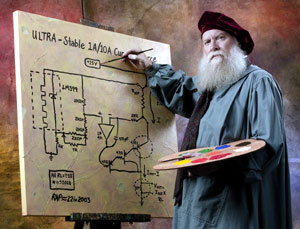
- Chris just returned from a friend's wedding and wrote an engineer's guide to Vegas.
- Ivan Hamilton was nice enough to send along a copy of Silicon Chip magazine. It's a great! Ivan has some great projects of his own on his website!
- Bob Pease died while driving home from Jim Williams funeral, doubling the loss of great analog engineers.
- Paul Rako has a touching obituary and a comment section with many people sharing fun stories from the past
- Bill Schweber also has a great piece about Bob, along with the story we read on air about how he resigned from Philbrick.
- If you're in the Bay Area and would like to attend, EDN is remembering both Bob and Jim, tomorrow, June 21st.
- If you're looking for a feed-only option to find out when the latest Amp Hour is posted, check out The Amp Hour twitter account.
- If twitter isn't enough, we could buy a Top Level Domain (TLD) for $185,000. How about theshow.theamphour? or We're.nerds?
- Friend of the show, Jeri Ellsworth, has been working on a great Software Defined Radio in recent videos. Chris tries to explain (wiki does better).
- The price of LEDs to drop 90% in 4 years? How?
- Dave needs a new camera. Is he at the high end? Or does he need to go higher?
- Perhaps he should buy a pair of these videocamera sunglasses, being funded by Kickstarter. Could be a good way around this Apple DRM-at-concerts idea, recently patented.
- New Android-specific processor being made by a fabless house in China? Could be similar to the ill-fated Java-based processor idea.
- Other chip companies playing nice? AMD and ARM striking up deals to make chips talk better.
- Get free copies of AutoDesk to get started with their software. Good for the hobbyists!
- Other hobbyists are heading out to space! Awesome!
We’ll keep Jim and Bob’s families in our hearts. Be sure to read some of their old app notes (mentioned in the show) or watch some old videos (also mentioned in the show) to remember just how awesome they both were!
Transcript
Chris Gammell: Welcome to the Amp Hour.
Dave Jones: I'm Dave Jones from the EEV blog. And I'm Chris Gammell from Chris Gammell's and the Lug Life.
Chris Gammell: Hey, Chris, you're back. I'm back. From Vegas. Vegas baby. Yep. Back from the future.
Dave Jones: What went down in Vegas?
Chris Gammell: Well, I was at a friend's wedding, so, you know, out there. And what happens in Vegas stays in Vegas, right? Yeah, mostly my money.
Dave Jones: Right. Yeah. That's right. You did tweet that and, yeah, we told you so.
Chris Gammell: No, actually, I was net positive for gambling, but the hotels and everything, it's just expensive out there. I'm not a big Vegas person myself. Right. I would have been out there if it wasn't for the wedding, but, you know, got friends, got to support friends, so that's important. Yep. Cool. Yeah.
Dave Jones: Yeah, I've been to Vegas. I kind of liked it, except I found it actually shut down at about, the whole place, like, just shut down at, like, 11 o'clock at night.
Chris Gammell: Well, no, everybody's inside their den of sin at that point.
Dave Jones: Right. Okay. Yeah, I thought, you know, Vegas, you know, surely it's a city that doesn't sleep, you know?
Chris Gammell: Yeah.
Dave Jones: But, no, everything shuts down, the monorail, you know, they've got the train thing that shunts you out. Oh, yeah. Oh, we waited for ages, and then it shuts down.
Chris Gammell: Oh, no.
Dave Jones: You've got to be kidding me.
Chris Gammell: Yep.
Dave Jones: Oh, man, I should have just stayed at the hotel, as everyone else was doing, I guess. Yeah. What, you go out on the street in Vegas? No.
Chris Gammell: Yeah.
Dave Jones: You're supposed to be fully catered for in your own hotel. Yeah, I guess that's what it is. Big mistake.
Chris Gammell: Or chauffe it around, if you're really fancy. Yeah. Noob mistake, I'm sure. It's too bad, I didn't get back out to the desert, I wanted to get back out to the Hoover Dam. If people haven't been out there ever, it's just amazing. I mean...
Dave Jones: I've been to Hoover Dam.
Chris Gammell: That was just...
Dave Jones: I dragged the wife there, and she wasn't that impressed. Really? Oh, wow. Well, she's been to millions of dams, she works for a water company. Oh, yeah, I guess that... Yeah, like, damn, what do you want to see that for? But, yeah, it's pretty cool. Damn, I don't want to go there. Have you seen the documentaries on how they built that sucker? Yeah. Yeah. Yeah. Oh, man, like in 45 degree Celsius heat. Mm-hmm. Oh, yeah, they had to blast the whole canyon away, and it was just, like, blast diversion tunnels to build the damn thing, and the concrete's still setting, and oh, it's just...
Chris Gammell: Yeah. Yeah, the thing that bugged me about that is that they're like, yeah, it can shift, like, 10 feet in either direction, or something like that. You know, they built all this in, and it didn't bug me. It, like, put a bug in my brain, basically. I was just like, wow, 10 feet in either direction. That's a lot of give, you know? It's freaky, yeah. Bridges are built like that, too, you know? Bridges. All that mechanical civil stuff.
Dave Jones: Yep. Skyscrapers. Yeah, exactly. Yeah. All that big, real engineering stuff, right, as opposed to what we do.
Chris Gammell: Well, I don't mind making fun of civil engineers once in a while, but, yeah, that is damn impressive.
Dave Jones: Yeah, in two years, they can build a city. In two years, we build, well, a square millimeter of silicon, you know? Yeah. Yeah. Yeah. It's a little bit different.
Chris Gammell: Build a toy that squeaks or something, yeah. Yeah.
Dave Jones: A farting novelty toy. Yeah, there you go. Yeah, the fart toy. There you go. Yeah. Yeah, that's our contribution as electronics designers. Farting novelty toys and spanko meat. Yeah. Yep. What can you do?
Chris Gammell: We could start selling them in a store or something if we had one, but we don't have a store, so.
Dave Jones: No, we don't. Right. We can sell our made-in-China toys just like everyone else, huh? Ah, terrible. Terrible. I just tore down my shotgun boom mic. Oh, yeah? And it's designed and made in Australia. So, it would fall apart or something? No, no, I was actually adding an LED to the front because it's bloody annoying. Anyway, I haven't uploaded the video yet, but I'll explain. You know, I'm always in front of the camera, right? Yeah. Staring at the boom mic and the power switch is on the back and it has an LED that tells you it's on and if the battery's good, you know? Oh, yeah. And as long as that light's green, you can trust that your audio levels are going to be fine, you know? So, you don't have to monitor yourself through the headphones. Not that I can sit there in front of the camera with my headphones on talking to myself. And I always either forget to turn the switch on or I forget to turn it off and drain the battery. so I just drilled out the case opened up, drilled out the case and put an extra LED on the front of the thing so that I can see it when I'm talking to the camera it's just one of those nice little touches that I don't know why they didn't think of it they just assume everyone's going to be behind the camera and being able to see the lead but no
Chris Gammell: do you adjust the current or anything like that? do you change out resistors or something?
Dave Jones: I upped the value of the resistor so I was drawing half the amount of carbon and they were pissing away 4 milliamps through the LED on the back it's only powered by a 9 volt battery
Chris Gammell: I was going to say it's battery powered
Dave Jones: yeah, it's only a 9 volt it's not like it's using hefty double A's or something and it wouldn't matter so yeah, anyway, I halved that to 2 milliamps but now I've got that's taking 6 milliamps instead of 4 milliamps it was before so 4 and a half so anyway that was a good yeah, that was a handy little fix that's good I shot a video about it as I do
Chris Gammell: I've heard about that
Dave Jones: I'm trying to do more of that now I'm trying to just shoot something that I just that I'm just doing and I just want to share with people even if it's just trivial like that
Chris Gammell: no videos of you in the can reading silicon chip or anything like that right, no I don't think so no one wants to see that well, I heard
Dave Jones: I heard that somebody sent you a copy
Chris Gammell: yes, that's right yeah
Dave Jones: a real dead tree
Chris Gammell: yeah, Ivan yeah, Ivan Hamilton he was nice enough to send it over and I just got an email back from him actually he's been working on a couple projects and I'll post a link to his stuff but yeah, he was real nice he had an extra copy that his wife bought him so he's like, yeah, I'll just send this over and he sent it from friggin' Australia
Dave Jones: oh, all the way from Australia yeah excellent
Chris Gammell: yeah, it's awesome it's a great magazine it's really good good on you, Ivan
Dave Jones: that's terrific
Chris Gammell: so I shared it
Dave Jones: yeah, I enjoy it but it's, well you know, a lot of people will complain that oh, it's not technical enough or it's not this or it's not that or, you know I always complain oh, they've got the vintage radio column in there that's taken up space et cetera, et cetera yeah you can't please them all, right, Dave?
Chris Gammell: yeah sorry? you can't please them all
Dave Jones: no, you can't please everyone so don't even try just do what you want that's what it comes down to and yeah, yeah it's still going sadly, one of them left he's gone back to I don't know overseas somewhere so but no, the mag's still going and no, it's great
Chris Gammell: well, it's good
Dave Jones: hopefully one day I'll surpass their readership that'll be a
Chris Gammell: that would be nice
Dave Jones: actually, that will be a novel day
Chris Gammell: yeah
Dave Jones: actually that will I will I might get a sense of satisfaction out of that you know, I was growing up reading these magazines and if one day you know, I can have an audience that of my own that's actually bigger than the circulation of the magazine then yeah I'll be stoked, I think anyway that's a little bit down the track but something to look forward to possibly if it all keeps growing yeah hopefully it will maybe the amp hour will be we'll have more listeners I don't know have you been tracking the growth stats lately? no, I've been trying to ignore that ah, right because I know you were all obsessed with that when we first started yeah it's a sickness it it needed to be ignored I needed to
Chris Gammell: let that go and just enjoy right talking to you you know talking to other people
Dave Jones: and that's yeah actually doing what the show's about rather than just staring at the stats every day quick you know first thing Chris does when he wakes up in the morning load up the stats yep ah love it it can be fascinating but then after a while you just go ah, who cares I'm just enjoying what I do and you know
Chris Gammell: yeah I think it's almost necessary for survival or else you get all consumed it is because
Dave Jones: you know you see it start to dip a little bit and you go oh oh no you know everyone's leaving bring out the buzzwords right
Chris Gammell: week word bingo time uh beagle board arduino what do we need to say not that apparently no
Dave Jones: no we're not supposed to we'll be talking about that too much on here apparently open source hardware and arduino so yeah we've been taking the task about it five five five anyway Jeff stepped up last week as usual while you were cavorting in Vegas yes thanks Jeff
Chris Gammell: thank you Jeff it was good so now he does listen yeah yeah that's true we got one uh
Dave Jones: right and um yes we started out last week with some sad news yeah um and unfortunately um we have even sadder news yeah this week this um this is just like I I know I cannot believe it uh last week we talked about uh Jim um Jim Williams the famous analog designer um having a stroke and um dying as it turns out it was a stroke and uh dying suddenly and it was a great loss to the analog world well as it turns out in an ironic very double ironic twist of fate um the famous the legendary Bob Pease himself um has suddenly been killed in a car crash yeah I just couldn't believe it uh first I heard about it um Jerry tweeted it
Chris Gammell: yeah
Dave Jones: um and then wow apparently it was confirmed
Chris Gammell: yeah I think she got that email from Paul Paul Reiko and then
Dave Jones: Paul Reiko right yeah
Chris Gammell: man it's just it was
Dave Jones: that's just
Chris Gammell: dude I was up I was up late last night I was just you know stressing out reading articles going through his old stuff man it really I don't know it really got to me like you know like I I've only read the guy's stuff you know I've gotten one email from him in my life
Speaker ?: yeah same here
Dave Jones: I've never met him you know
Chris Gammell: and uh and it it's no more or less sad than Jim Williams dying to both of them I mean at the same time too and if people don't know I mean uh Bob was driving home from Jim Williams funeral when his car he drives a Volkswagen Beetle his car went off the road and
Dave Jones: he slammed into a tree and died instantly apparently and um oh yeah ironically he was driving back from Jim Williams' funeral in fact the funeral I believe was held at the winery which is on the top of uh mountain overlooking um Silicon Valley it's uh overlooking San Jose and the whole Bay Area really I believe I haven't been up there but uh anyway it's got all the windy roads through forest and everything to get to it and apparently he was driving back from his memorial service up there and yeah
Chris Gammell: yeah
Dave Jones: hit a tree unbelievable and in a double ironic twist of fate Bob Pease has written a 470 page book on driver safety how to drive safely and uh he wasn't wearing a seatbelt and I'm sure that contributed to the um
Chris Gammell: well maybe well I can't see a
Dave Jones: 1970 VW Beetle getting up to you know 150 kilometers an hour as the hoons do so um I and also they were speculating
Chris Gammell: he may have had you know a heart attack or stroke
Dave Jones: it could have been anything or it could have been a mechanical fire of the car or who knows you know
Chris Gammell: so um but it doesn't matter because he's gone and it's just so sad you know
Dave Jones: and it's it's tragic yeah I can't believe it two analog legends in a week
Chris Gammell: yep
Dave Jones: in such an ironic twist of fate
Chris Gammell: yeah and I mean we'll post a bunch of articles too but uh you know uh Paul Rako wrote a really nice obituary to him and
Dave Jones: oh I haven't read that yet yeah okay
Chris Gammell: and actually uh Adafruit had posted you know they they posted an article and linked to the the videos that Bob used to do Bob Peace used to do uh analog by design it was an old video uh show right basically yep and uh you know they listed it as one of their influences and I didn't realize that Paul was on that show with him I had heard of the show before I never really watched it but
Dave Jones: I had heard yeah same here I've never watched it
Chris Gammell: when it was on no
Dave Jones: I've never no I've never watched it
Chris Gammell: it was like 03-04 and all the way I think the most recent one was 2008 and uh and that was obviously before National Semiconductor sorry Semiconductor yeah I always
Dave Jones: goof those too
Chris Gammell: yeah before they laid him off and a bunch of people off so I think after that it you know it didn't come back but
Dave Jones: yeah
Chris Gammell: it's it's crazy so I mean Paul Rakim knew him real well and we used to work with him and wrote a real really nice obituary
Dave Jones: I'm checking that out here and it's very detailed so I'll have to definitely have a read of that when we over it everyone else should too
Chris Gammell: yeah definitely and you know there's there's a second page there too actually oh is there well there's a page of comments from you know from co-workers and I mean you know the best thing to do at a funeral I think or a memorial however we wanted to do it you know you tell stories to make people laugh you know just remembering how awesome those people were and that's what the second page is just hearing about these hijinks I don't think there's any better word than hijinks yeah
Dave Jones: I think so yep
Chris Gammell: there was one talking about oh crap I think it was on a different page I mean honestly there's like three or four articles now about this I think it was on the ee times page or somewhere else and but the commenter oh here it is here it is so apparently when they got a new ceo at philbrick which is where bob piece used to work he started yeah and this is ralph grancelli who wrote this and so I'm just going to read this verbatim because it's pretty funny so he calls a meeting and he brings the new ceo in from philbrick and he says he gives the new ceo the triple humper award he pulls a three cup bra from a shopping cart I was in awe it was incredible entertainment and just to serve under the first cup a voltage to money converter under the second cup a frequency to money converter I thought this was the most incredible event I had ever witnessed until he unveiled the third cup's contents he reached into his pants and pulled out a letter of resignation he quit effective immediately to go to national semiconductor
Dave Jones: that's amazing
Chris Gammell: oh yes that's such a great story
Dave Jones: that is fantastic
Chris Gammell: if I ever resign from somewhere I'm definitely pulling the note out from somewhere in my pants hopefully a pocket
Dave Jones: I can't believe I never thought of that
Chris Gammell: that is
Dave Jones: brilliant pull it out of your ass
Chris Gammell: you could have done how you pull videos out of your ass every week so you should have done a video oh
Dave Jones: boy
Chris Gammell: yeah that was a great story and there's just tons of great stories because both Bob and Jim they were both so committed to people right into them they'd always write back I had a co-worker who told me he just wrote an email to Bob PC last week and didn't get a chance to hear back from him because he was so busy answering other emails that's basically it though I mean this guy answered so many emails and helped so many people and
Dave Jones: I'm sure they did that like I did before the days of email when you would hand write letters back to people or type them out and that takes a massive amount of time and these guys just do it you know they just reply to everyone who is kind enough to write to them because they enjoy doing it it's fantastic yep so that's brilliant pulling the resignation letter out of your pants
Chris Gammell: yeah
Dave Jones: and I
Chris Gammell: mean both of them brilliant engineers you know like I've got books on my shelf you know troubleshooting analog circuits if people have never seen that book you know that's that's kind of like the essence of Bob piece it's written with a really conversational tone you know it's very anecdotal it's very accessible and then if you look at the picture too on the front I mean it's Bob with this mass it's like a rat's nest of circuits you know they're just all skywired together yeah
Dave Jones: it's fantastic
Chris Gammell: it's a thing of beauty and Jim Williams has two books called the art and science one is the art and science of analog circuit design and the other is analog circuit design people personalities and something else so they're both really great books and those are actually contribute you know a lot of them are like I think Jim edited them and people contributed articles and there's just tons of great information about there even if you're not an analog person it's really
Dave Jones: I they just didn't get him they hadn't been reading the art yeah because they had no idea who he is in his background and he's writing style which is
Chris Gammell: quite
Dave Jones: different and he was into so many different things he would have in his peas porridge column he would talk about anything and everything from hiking to cars to medicine and all sorts of stuff he had a theory on almost everything and he always somehow tied it into engineering in some way or tried to tie it into engineering thinking or something like that so
Chris Gammell: it
Dave Jones: was brilliant I used to love the peas porridge column it's fantastic and
Chris Gammell: they changed the name of it when he went over to electronics design I found it so did I yeah but you know it it's encouraging to think that both him and Jim's work is sitting there and people can still see it and you know it's I mean like Jim's app notes they're unbelievable like the one that I keep referring back to is he measures like he's measuring like 775 nanovolts of noise on top of some reference and it's just you look at the circuit and it's like it's like a you know you have to turn it portrait style and it takes up the whole page and there's like feedback loops that are like three op amps deep and you're just like what is going on here but he's just pieced them together like that it was amazing so
Dave Jones: ah yes rip Bob pays unfortunately it's terrible
Chris Gammell: yeah I don't even know what to do about it anymore you know
Dave Jones: well yeah should we have some more upbeat news
Chris Gammell: ah after one more thing sorry I don't
Dave Jones: know have we got any more upbeat news I don't know
Chris Gammell: we do but anyway if people are in the bay area um EDN posted this too they're they're celebrating uh they had a thing scheduled for tomorrow June 22nd 21st June 21st uh so if you're in the bay area there's there's a memorial for Jim if you want to go to that and now it's going to be combined with Bob obviously and uh so I don't know how many our listeners are in the bay area but if you are or if you want to travel uh you know there's that tomorrow so we'll post that link too that'd be cool I'm I'm sure you'll see people there that you would not believe your eyes but yep honestly that's not going to be the this isn't like some uh you know the analog meetup in a bar kind of thing this is going to be a little more somber I'm sure there'll be a lot of laughing and telling stories which would be
Dave Jones: oh you betcha
Chris Gammell: yeah which would be somebody
Dave Jones: needs to record those seriously please take a longer camera post this stuff on youtube yeah this stuff has to be yeah
Chris Gammell: recorded yeah for you know both our legacies I think you'd get some awesome stories about both of them so
Dave Jones: absolutely yeah
Chris Gammell: uh
Dave Jones: all right what do we got on today's show not much electronics probably
Chris Gammell: oh come on we'll find something
Dave Jones: all right we'll pull something out of our ass will we yeah
Chris Gammell: like a letter
Dave Jones: peas style yeah
Chris Gammell: right
Dave Jones: all right yeah shall that be forever called doing a peas or
Chris Gammell: appeasing someone
Dave Jones: yes appeasing uh
Chris Gammell: uh
Dave Jones: hey that's I like that appeasing someone
Chris Gammell: yeah there you go you
Dave Jones: you appease your boss
Chris Gammell: appeasing your boss that's
Dave Jones: to pull something out of your ass yeah
Chris Gammell: there you go
Dave Jones: pull something out of your pants I love it
Chris Gammell: yeah
Dave Jones: that sounds good all right
Chris Gammell: maybe we can introduce everything we're going to talk about today in the peace style so uh so what's what how does he say it what's the deal with this twitter anyhow is that is that how you would say it
Dave Jones: what's all this something stuff anyhow oh okay so what's all this
Chris Gammell: twitter stuff anyhow right all right so that would be uh so we got a dedicated feed i don't know if people care about that but if if you're sick of if you follow us on twitter and you care you can follow the amp hour now instead of chris or dave uh you know you can still follow us
Dave Jones: i'm not even sure if i follow it yet
Chris Gammell: well get on it man we'll have we'll have one link per week on there yeah yeah so i don't know i just did that to fill it in just to make sure
Dave Jones: just to make it official when we contact people that they've been on that when we tweet people that they've been on the amp hour we can send it from the amp hour
Chris Gammell: yeah
Dave Jones: account i guess
Chris Gammell: yeah i've already forgotten how to say it so how would you say it again so what's the what's all this twitter stuff anyhow okay thank you
Dave Jones: okay and every column if you don't know every pieces porridge column was entitled and that got me for a while i you know when i first started reading the thing i thought oh that's a weird title you know the first column and then the next one came out i went huh why is he using the same title that's a bit and then i you know i finally got it yeah
Chris Gammell: yeah
Dave Jones: so i was a bit dumb at first but uh yeah what's all this anyhow
Chris Gammell: yeah uh
Dave Jones: so uh what's all this three letter acronym stuff anyhow
Chris Gammell: three letter acronym
Dave Jones: three letter domain stuff
Chris Gammell: oh top level domain that's that's top level domain so that's a new thing so uh so there was news today that you can buy uh top level domain of just about uh anything you want to so you could you could for 185 thousand dollars dave you could now buy eevblog.davejones or since there's so many davejones in the world
Dave Jones: eevblog
Chris Gammell: yeah
Dave Jones: or i could do it dot davejones yeah i could get i could actually get david jones as a domain name
Chris Gammell: which is sort of yeah
Dave Jones: impossible
Chris Gammell: you know you can't goodness i don't know what this is going to do i mean obviously it's a lot of money right now but i think it's just going to make stuff really confusing to be honest
Dave Jones: it will it's stupid the internet is dot com and everyone knows and understands that and occasionally when you're in australia where you're outside of the us in the real world um you you add your country code to it you know dot au for australia
Chris Gammell: you're going to be the old codger that says back in my day yeah
Dave Jones: when i was a boy
Chris Gammell: yeah
Dave Jones: and it's just stupid i don't know people that's why i mean we talked about paying like 80 bucks to get the dot um what
Chris Gammell: i don't remember which one it was
Dave Jones: domain was it it was dot uh well it wasn't dot tv it was uh dot oh
Chris Gammell: dot am or something like that dot
Dave Jones: dot dot fm that's it um the federated states of micronesia that's right that's the country code for them yeah and uh you know and we went well no one's going to type that in everyone just goes dot com the amp hour dot com because that's that's just what people do it's the internet it's dot com and yeah i you know same with the dot tv thing everyone thought oh people have paid big dollars for dot tv and all the other dot you know dot name and stuff like that and yeah i don't know there's a whole bunch of them that have come out um and people haven't really taken them up and when i'm i've got you know dozens of domain names and every time i go to register them uh well even years after i've actually registered them um there you go in and they go well would you like to buy dot tv dot domain dot net and all that and even for some really big huge websites uh commercial ones they don't bother registering those other those other um domain uh levels what are they called
Chris Gammell: top level domains
Dave Jones: no top level domain they don't bother registering those top level ones because they're just pointless yeah um i don't know so i think this will just fizz out it'll be like whatever there'll be a few companies will pony up the 185
Chris Gammell: yeah
Dave Jones: for the to buy it and then well they won't do anything yeah you'll probably
Chris Gammell: get like a dot nbc you know like big network affiliates that already have three letter names probably yeah
Dave Jones: and what are they going to do actually rejig all their market and all their websites so that that becomes the top level domain it'll just confuse people people will go oh dot com and it redirects you to dot nbc or something you know it's going
Chris Gammell: to happen the same thing that happens right now people will just type it into google and it'll just go on their way right okay
Dave Jones: that's a crock really why did we even mention it i don't know it was next on the list yeah don't blame me people chris put it there
Chris Gammell: oh yeah hmm all right well let's jump around the list
Dave Jones: my favorite pastime blaming you you're welcome yeah
Chris Gammell: okay did you uh so so god damn it i forgot it again what's the deal with all the i keep thinking like jerry seinfeld what's all this what's all this i'm gonna write this down hold on
Dave Jones: write it on a post-it note stick it on the screen in front of you what's all this what's all this anyhow
Chris Gammell: what's all this blank stuff he's actually typing it in people oh yeah i got it there it's coming up so what's all this sdr stuff anyhow did you see jerry's videos about that
Dave Jones: stuff yes um the radio the digital radio thing software
Chris Gammell: defined radio
Dave Jones: what is it software yeah software defined radio what is it i'm not huge into it is it just a way to control is it a like a a protocol thing over the radio or is it a well basically what you do
Chris Gammell: is so like so like remember that multiplier chip we were talking about the other day yep where you have you know you can use that actually to mix base band with some intermediate frequency or rif rather so that that's how you actually like shift signals around in the spectrum so that's like a radio thing i'm not very good at that stuff but that's how you do it you know you you know you know your signal is at 10 megahertz and you have like a little audio band there right so you multiply that signal by 10 megahertz like or sorry you is it multiply yeah it's multiply so you multiply that signal by a 10 megahertz signal and it'll shift it to 10 megahertz to 0 megahertz and 20 megahertz and then you can filter out the 20 megahertz stuff so that's kind of how you do that stuff well what you
Dave Jones: can do here point of
Chris Gammell: it all so what you can do here is instead of having a predefined frequency so you could always just pump in 10 megahertz right or you can have software to find that 10 megahertz and so you can then shift around in the spectrum to find out you know
Dave Jones: oh right is that all we're doing is just shifting through that that's why i saw in one of her videos that it was scanning through the spectrum well there's nothing new there radios have been doing that for that's digital you know smart radios have been scanning through the spectrum for well that's true well or or do they do it in the analog domain and this one's done in the digital domain or something right yeah exactly so i don't know so i don't see much differentiation there really so i don't see what all the the killer thing about this is
Chris Gammell: actually not in so jerry's doing it with she's doing really she's doing really great videos to start i mean she's doing like am to start with in order to find very well-defined signals that she can receive at her house right so if she's looking at a you know a 900 kilohertz signal she knows to look right at 900 kilohertz and then if she goes you know 100 kilohertz to the left or 100 kilohertz to the right 800 megahertz right then there really shouldn't be a signal there she knows that stuff based on you know radio stations in her area whatever else right uh so that's a good for a testing platform but then what you can do and the really cool thing about software-defined radio is that's kind of how cell towers work basically they have these you know frequency hopping standards what you do is basically you have this analog front end and then you leave kind of like these not dangling you know like but it's it's like you leave the inputs dangling basically and then you attach a digital section to that so if you need to pipe in if you know you need to pipe in some kind of mixing frequency basically you leave that hanging and then you pipe that in digitally so that's kind of and and the reason that's useful is when you have a you know frequency shifting uh signal so like so like cell phones they they hop frequencies right if you need to have frequencies in a very specified manner then you can do that in software and then you can change it on the fly and that's the really cool thing about it
Dave Jones: well i don't know i maybe i just don't get it but i see nothing new here i mean is it
Chris Gammell: well i mean first time i've seen it as a hobby project these things have been
Dave Jones: going on for 20 years
Chris Gammell: i don't but yeah you
Dave Jones: know jumping around scanning frequency spectrums and with you know digital adjusting of frequency and scanning a frequency spectrum i don't know maybe someone needs to maybe whack me over the head with a wet fish and knock some sensor money i don't know yeah anyway you know it's cool yeah fine she's great i'm sure i'm missing some of the
Chris Gammell: other benefits of it but you know i'm sure
Dave Jones: yeah there's got to be something else to it there's got to be you know yeah it can't just be scanning the frequency no it's not
Chris Gammell: it's not just that i mean you can do filtering digitally you can do a lot of stuff digitally but right okay basically the idea is you have an analog front end and then you do everything else digitally and you can do a lot of neat tricks so and you can reconfigure that's that's the other fun thing so you buy one piece of hardware and you have you know a thousand different radios all within the click and recompile of a button right yeah okay all right be it yeah on to the next thing chris is gonna pretend he knows anything about right
Dave Jones: because you couldn't convince me on site
Chris Gammell: so what's all this led stuff anyhow is that good did that work did i do that right that time all right
Dave Jones: like a professional
Chris Gammell: yeah yeah so i saw an article about this uh leds are obviously have you heard about these things have you seen this have you heard about this
Dave Jones: these new fangled led things oh i don't know haven't they been doing those for 30 years what
Chris Gammell: you do is you stick in current and you get out light i can't believe it how's that is it a is a really bad aussie accent
Dave Jones: that was no that was um kind of english punk oh
Chris Gammell: nice okay yeah yeah isn't the same thing no right i'll tell you i probably clipped my microphone interesting
Dave Jones: story about i i arm wrestled in a english punk in the middle of what leicester square in london once what don't don't ask that no i have to ask that's that's
Chris Gammell: ridiculous i know it's like i wish i got a photo of it i guess so yeah how did that how did that come about
Dave Jones: nothing i was just i don't know i was just walking through yeah i was just walking through london and and there was this punk there and you know i can't do a english punk access hey mate you want to yeah no god that's aussie no maybe you can do it i don't know hey mate you want an arm wrestle and that is weird yeah fine whatever let's go and like as in a punk with the traditional spiky the whole punk you know he must have spent all day doing that hair and i think they just leave it in that was yeah right how would you sleep with hair like
Chris Gammell: that maybe you have like
Dave Jones: you don't have to sleep standing up you have to
Chris Gammell: have like a sheath to like a pillow with like a big cutout in the middle or something i don't know i
Dave Jones: know that's a foot long because that's how long these spikes are they go all the way yeah across their head you know in the side i guess multi colors and all so there are still a few punks you know hanging around london so i believe yeah anyway this was like late 90s or something yeah so i don't know they've died off anyways but live on
Chris Gammell: forever in my horrible horrible accent anyway
Dave Jones: ellie uh yeah that was a non sequitur yeah uh should we go back to leds sure yeah what uh what about them they're gonna go for 30 years
Chris Gammell: what's new yeah well apparently another four years though they're gonna drop about 90 percent in price which would kind of put them i know there's a curve for leds kind of like moore's law i forget the name of the law uh
Dave Jones: right that is specifically applies to led industry does it yeah okay i forget
Chris Gammell: what it is sorry uh but basically you know or maybe oh maybe it was for solar panels that's why i was thinking of the solar panels one so there's a solar panels you know that's dropping price is dropping so much and you know outputs drop or increasing so much anyways in four years according to an analyst this is good enough to publish so i think it's financial analyst yeah probably yeah so that's a i mean it's pretty hefty prediction though so 90 percent cheaper if you have a you know a dollar light bulb right now made from leds uh that's 10 cents in the future or a ten dollar goes down to
Dave Jones: a dollar yeah but in what aspect in the final product
Chris Gammell: that's true price or the or the integration prices
Dave Jones: or just the wafer price or the you know i you know the oem price what you know one
Chris Gammell: of the big thing that's going to help that i think is the is the heat lot the the um the efficiency and the getting being able to have less heat in general that's one of the biggest problems right now so that kills your that because it kills your led lifetime you know more heat heat heat is the main factor that kills the
Dave Jones: lifetime and if you look at but unfortunately they're not going to magically make these leds twice as efficient as they are now in four years i mean that's
Chris Gammell: just no i don't think so
Dave Jones: you know i'd be incredibly surprised if that happens it's a very slow incremental process to increase the efficiency you know all they've looked they've you know he's he's the latest crey led and it's you know two or four percent better than the previous model you know and that's a year to develop yeah that can sure it all adds up yeah ridiculously efficient compared to what they were right five ten years ago but right still um they're not on par with all their no they've just come to parity with fluorescent i
Chris Gammell: think in terms of lighting you mean quite
Dave Jones: match the sodium vapor yeah uh lamps yet so as far as street lighting efficiency and stuff like
Chris Gammell: that stuff you always see stuff from crey and and everybody else that's you know oh we just hit 200 lumens per watt it's always lumens per watt and uh yeah yeah so if you go to 500 lumens per watt it's not like you're going to be cranking 500 lumens probably you're probably just going to use less power in order to get the equivalent amount of light
Dave Jones: because yes it's a ratio it's a lumens per watt yeah big yeah you may not run them yeah they might be capable of of being run at that sort of thing but you're not going to run them at 500 lumens you know you might derate them to get extra life out of yeah yeah um one of the
Chris Gammell: things they cite in this article that that's interesting is that they're they're still using four inch with i mean they they call them 100 millimeter but uh four inch wafers right now for leds that is small
Dave Jones: that's a tiny wafer and
Chris Gammell: that's likely from uh you know that's you know secondary fab equipment so you have older fab equipment that you can use then because leds aren't well the same yeah why
Dave Jones: would you want to use a you know a fab house that's expensive that can do down to 20 right and no meters or something you know one of the leading edge process right yeah you don't need anything and anything like you just don't need that you're just doing an led i don't
Chris Gammell: know right yeah so or
Dave Jones: maybe it's integrate the more exotic processes is just required for the leds perhaps yeah i'm just assuming here i'm talking out my ass i'm just assuming that they require slightly different processes than standard silicon wafers yeah and usually that's how they
Chris Gammell: gain their efficiencies that they gain their
Dave Jones: efficiencies by tweaking them maybe it's cheaper to do that on a well i think
Chris Gammell: it's no because that's what this says it says they're moving up to a six inch basically so i'm guessing what's happening is you see you see all this industrial equipment moving down the line you know they're they're they're talking about 18 inch or 450 nanometer wafers now which is monster i mean that's a that's a friggin pizza pie you know like yeah uh and there's a that has its own issues right but if you know as the as the older equipment moves down the chain and you know then then you could start buying it and and you and it still has a long lifetime you know this this equipment is old but it still works yeah exactly yeah uh so i think it's
Dave Jones: great for doing leds and other course kind of work yeah it doesn't require all the fine geometries right
Chris Gammell: exactly yeah so you know they're so now they're moving up from four to six inch wafers according to this article at least i mean i don't really know anyone at a at a cree facility or anything else but uh you know that's that's good so you know you get more wafers you get more output you increase your yield on those higher or those bigger wafers and you're you're making more stuff but you know that's so i don't mind i could use some led lighting
Dave Jones: moving up that you moving just to bigger wafers is not going to drop your prices by 90 percent in four years so where else are they going to get their price drops
Chris Gammell: from well i would guess another thing is uh economy of scale so right now you know you do you have any leds in your house any led lighting
Dave Jones: yes yes i do oh damn uh down on my deck i've done a blog on it like a year and a half ago get with the program dude i don't watch your stuff dave uh right oh i don't read your blog either all right excellent we just don't have time we're too busy to read each other's shit
Chris Gammell: uh anyway so i i think uh you know you you're more on the the leading edge of that stuff you're and i i would have it if i needed it but anyways uh you know so i i think the majority of households don't have it right now i think you know as you keep moving down that price curve though more and more people start buying and then more more players come to the market say hey there's a lot of leds being sold we should make some and then it kind of just builds on itself builds builds builds builds and eventually hopefully they all price themselves out of oblivion and we have right you know we have cheap led light bulbs that are efficiently lighting
Dave Jones: our homes and have a very short life because they're all one hung low brand well at that point and they over spec them and they just yeah and
Chris Gammell: last like a month found to be another thing too i mean yeah in terms of things that china can can bring up i mean i'm sure kree's gonna fight it like the devil but you know if it's a if it's a simpler process then you know if inland china can build a small fab and and crank this stuff out faster at cheaper you know cheaper rates then yeah one hung low is gonna start nibbling at the
Dave Jones: wrinkles well and this is something that everyone in the led lighting industry knows i know my mate my analog mate doug he's into lighting leading edge led lighting that's some of the stuff he does and i know a few other people into led lighting products actually designing and marketing them and they all say exactly the same thing you know you have to buy the top quality brands you know you've got to stick with your your kree or your king bright or your lumi you know leads or something like that yeah you've got to stick to that the other ones are just garbage and they just do not work yeah um plain and simple well they work at first oh well yeah yeah they work at first and then they just die and then they get a bad rep for actually producing these shit products and well you know doesn't help so they stick you know they've got to pay their five you know their 20 bucks for each led or something like that yeah they can't go on ebay and buy the oh look it looks the same it's got the same lumens it's claiming the same lumens per watt yeah it comes out of the one hung low factory yeah and it's one tenth the price well you know they've tried them and they're they all just don't work it's a universal thing yep they just do not work it's funny though people still buy it you know like that's uh people still buy it yeah because they're attractively priced and people get sucked into that and and and the banner specs and you know usually they might meet their banner specs but they'll only meet it for a month until they yeah die in the ass and that's the key um to led lighting everyone everyone expects it to last forever right it's solid state it's led it's that's what it's advertised as yeah but you know but even the big brand ones if you overdrive them heat them up yep oh yeah they can have a short life yeah so it's
Chris Gammell: interesting wary it's it's it's not just leds where you know like the the one hung low brands do that but it's just everything you know it and it's it amazes me that it continually works right i mean come in on the low end right and then just keep using this cash flow and building it up i mean it's it's the same formula every time and it's just because it it keeps working man like every industry it's just if there's any industry that doesn't have it yet guess what uh yeah you think you know you you digital marketers out there you're so clever with your your little uh your little icons and everything else you got on websites man guess what some chinese brand is gonna come in and design a icon for 10 cents and then hey they're gonna get a little better at it and then eventually you're gonna get priced right out of the game it sucks but it it works it really sucks
Dave Jones: one of the universal laws is it i
Chris Gammell: don't know man it's right up there
Dave Jones: with gravity and
Chris Gammell: i right yeah i i'm i'm in awe of it i'll tell you that it's it's just this disparity of of costs that man there's nothing you can do to argue against it right now so right
Dave Jones: speaking of products and marketing and stuff like that i'm i'm gonna have a rant on consumer goods here if i may
Chris Gammell: all right
Dave Jones: i'm trying to buy a new camera for the blog right i want to get like a high i don't want to be tight ass like i was last time and bought a little sanyo exacti camera you know i want to get like a high i want to spend a decent amount of money and get a top end one so i'm i'm looking at every top end maker on the market you know canon sony jvc panasonic are the main ones right and um and a samsung is another one and uh well you know a you can't even buy the samsung ones i'm serious you go to their website and you get their you know here's their new whiz bang camera looks great meets all the specs can't buy it okay first rant but that's a non sequitur really my main rant is that these cameras you know you can pay 1500 bucks two grand for a camera right a top of the line prosumer camera it does not do what i want crazy like you know how much do i have to pay how big does the camera have to be before i in fact it's um the bigger and more expensive and more complicated these cameras get the less they seem to do what i want it's crazy in terms of maybe
Chris Gammell: you should just change what you want
Dave Jones: dave i know silly me yeah none of them seem to actually shoot in low resolution anymore it's hd or bust right it's high bit rate hd 1920 by by 1080 yeah you know 18 or 24 megbits per second or nothing yeah well you know if you shoot as much video as i do that's a hell of a lot of um file space a hell of a lot of processing and yeah you know and then
Chris Gammell: you try and buy a 40 gig hard drive and your your sol on that one too yeah well
Dave Jones: that's all right yeah i don't mind the big hard drives but you know this is just nuts that's interesting because that's
Chris Gammell: that kind of is the same thing you know like so these manufacturers you know consumer products is one of the the best examples of it because they get squeezed the most right they have the lowest margins of anyone so they have the one hung long hook one hung low brands come in and then they keep saying okay well we have to offer the premium we have to offer the premium so that's in this case the hd stream like you're looking for and what happens is there's there's no middle ground anymore and eventually the one hung low brand is going to you know come up with a middle middle of the range brand or middle of the range camera and you'll buy that because that's all there is because there's no margin in that for the the
Dave Jones: others have abandoned it well they don't know you know all the big makers have low-end cameras as well but oh jesus none of them do what i want it's crazy what's like all of jvc's line right jvc are one of the top camcorder makers in on the market or they were right all of their top level prosumer cameras every single one of them not one of them has an external mic input are you shitting me they they used to but now they've seen to it they must have you know somebody there made made the bright decision oh we're just going to drop the external mic why because oh we don't think anyone uses it well you're talking about an input for an external mic a microphone input yeah exactly so you can hook on an external pro mic because everyone know everyone anyone who's serious about recording video knows that the internal mics are shit right even on your top of the range ones so you hire a you know a
Chris Gammell: microphone boom kid you know to hang it over or when yeah or when your kid grows up old enough and he has to hold the boom for a while you know he's got a well yeah
Dave Jones: i mean granted they're like four thousand six thousand eight thousand dollar ones do but not their uh prosumer ones like their two thousand dollar ones or their fifteen hundred dollars don't have so
Chris Gammell: you're in the middle of the range that's the problem there you go yep there's the
Dave Jones: feature set well yeah but all the other ones do right all the other brands jvc seem to be the odd one out there in terms of not having a external mic input and then there's other little things like they don't think about well if you're in front of the camera you don't have access to the button so you've got to use the remote control and if you want to play back a clip how do you do it oh you've got to switch to playback mode first and you know the cannons only let you um play back without going in a playback mode only let you play back the last four seconds of the video or something well what point is that yeah stupid oh and there's anyway there's no end of different trade-offs that i'm trying to get between cameras and it's pissing me off well i have a solution for you so and what i think you
Chris Gammell: should buy some video eyeglasses
Dave Jones: no i haven't so it's on the list so
Chris Gammell: there's a kickstarter project so i wanted to mention this oh i'm not kickstarter
Dave Jones: it's a kickstarter project here's why i
Chris Gammell: wanted to mention it they blew their their funding target away by like 2x i was i was listening to some story on kickstart and they they brought this up i just can't believe this many people want video like sunglasses they're like sunglasses
Dave Jones: they're like wayfarer sunglasses yeah with a camera built in like james bond yeah
Chris Gammell: exactly exactly and i mean i don't know if it's maybe because of the apple uh patenting you know you can't record concerts anymore you can't uh they're they're putting so there's this interesting actually you know patent that apple filed they're going to have an infrared i guess it's going to be like a strobe you know the mounted above uh above concerts and it'll be this infrared beam or strobe that you know pulses at a certain frequency and then each of their phones will have a detector that or even regular cameras can detect ir right so they'll just have a you know an algorithm that can detect oh this frequency or this pattern is coming through and they'll just say nope sorry this is a concert you're not allowed to record this it's oh yeah there's there was a wired article about it it's it's interesting i don't know it's i'm sure and you know you know this is going to do though this is going to drive even more you know product hackery which is in our of course in our opinion a good thing
Dave Jones: right absolutely yeah and it's just oh and it's going to piss people off yeah give them more reason not to buy apple
Chris Gammell: right well yeah the apple thing i mean i'm sure i doubt apple's alone on this one but uh you know drm's a big deal so i don't know
Dave Jones: oh yeah but i can't oh you know who's putting pressure on these companies manufacturing these phones to actually put this shit in there yeah somebody's got to be you know apple don't go oh we don't like people recording concerts on our phones you know yeah didn't happen somebody's put pressure on them somewhere
Chris Gammell: i'm sure the ones that uh you know and i hope allow them to sell you know itunes market i'm sure i'm sure it's a lot of those guys
Dave Jones: oh right okay yeah yeah right yeah maybe or me yes because apple's so invested in the uh in the uh you know the actual content side of things yeah oh yeah that's that's a big part of the business you could argue apple's more a content company than it is a hardware company so yeah yeah yeah there's been heaps of comparisons about well i think apple do technically make more on their content side than they do on their hardware
Chris Gammell: side so i believe it they reach that
Dave Jones: milestone anyway anyway these eyeglasses is this like a just an artist's rendition of i haven't watched i haven't played the video here but uh you know i can they actually do it they've got 165 000 dollars people have backed them for their goal is 55 grand money that is a lot of money and they've got it well they actually have to produce it now and therein lies the problem with this kickstarter shit right um unless you've got like a real prototype to show i know their videos are wank yeah it's very i don't see you know it's just i'm not actually there's no sound and it's just yeah it's just a rendition yeah it's just a 3d rendering of of oh look but it is shiny we'll have this magic little it is very shiny it's very good uh artists rendition of these things but can they actually make it have they do they have the engineering now to actually do it for 165 000 i don't
Chris Gammell: think so yeah that's a lot of money but yeah even that is not a lot for a whole
Dave Jones: product you know just off the bat here i'm willing to say that they will not be able to produce this thing they will fail well
Chris Gammell: that's an easy position to take i think but
Dave Jones: yeah yeah i i mean you know here it is it's got a little usb thing in the in the um yeah a little usb connector on the micro yeah uh the what's the stem of the glasses that yeah i don't know what that is you know that the foldy part that goes over your ear you know does that have a name i don't know the arm the arm of the glasses oh we have a phone call oh our first amp hour guess our first amp hour guess should i answer it no
Chris Gammell: why not it could be a caller okay if it's a caller you can pick it up all right it's
Dave Jones: caller hello you're on the air well howdy my name's randy and am i on the amp hour oh my
Chris Gammell: god is that davy jones and chris gammell the accent oh yes it is randy go for it
Dave Jones: well i just called in to say i love the show and i'm i'm an american and i just love chris gammell he's my favorite and i don't know about that davy jones character uh he's a bit funny sounding but uh anyway i'm sitting here and i love to solder and uh i've got my workbench my goal is to be on workbench of the week but i think you guys cancelled that didn't you well yeah we did randy i'm sorry about that but um yeah
Chris Gammell: sorry folks dave jones has gone around the bend what's with all this insanity stuff anyhow
Dave Jones: well i just wanted to say that i love the amp hour i love listening to you guys and uh well god bless america
Chris Gammell: thanks for calling randy thanks randy that was there you go that was amazing that was amazing yeah
Dave Jones: caller randy from where where was he from i don't know somewhere in america yeah
Chris Gammell: anywhere usa out there somewhere yeah i yep yeah must have been must have been texas and or scotland and or australia or whatever that was
Dave Jones: that was randy from hicksville thanks for calling in randy much appreciated
Chris Gammell: oh my god
Dave Jones: okay yeah you thought you've heard it all on the amp hour yeah
Chris Gammell: one last thing i want to mention have you uh so there's one last article i saw that apparently a chinese chip company which is apparently more more common than we think uh you know a lot of the soft ip and the fabulous houses are are popping up in china and india but uh right they're supposed to be making one specific for android i saw this article on ee times and basically i think making what kind of chip what's that but what chip are they making for the android they're making an android chip oh then an android chip like a direct so so if android makes a java call it's going to basically have these dedicated functions within oh god everybody please take it easy on me with my my chip knowledge here so they've
Dave Jones: converted processing into hardware so it's kind of like a cedar hardware kind of yeah thing so instead of doing it in a sequential processor like an arm processor they're going to do it in hardware yeah yeah well it's yeah it's an instruction set yeah so right an instruction set so it's a hardware accelerated instruction set i think
Chris Gammell: that's pretty close yeah and so they've done this before they've actually tried this with java that like just straight java before but to my knowledge this has never worked i mean they they have a couple but they're not popular at all and they're not popular i said that already right uh you know there's there's a there's a wiki page i'll link and you know they list them like pico java and aj 102 but as far as i know these are just designs not necessarily hardware you know it's a lot of fpg kind fpga kind of stuff so yeah interesting well yeah i
Dave Jones: well they're they've always the phone manufacturers are struggling with getting the processing power out of these things because you know they have to up them to a gigahertz and new phones are what 1.2 gigahertz or something yeah just to run the bloody and everything yeah yeah just to run the the graphical user interface on these smartphones yeah they're crazy so and that chews into the battery consumption and the heat and everything else so really um it doesn't surprise me that they're trying to you know eek out some extra performance by having hardware accelerated functions yeah but i i'm surprised that the big players don't already do that maybe they're so heavily invested in the arm architecture that maybe they're working on printing
Chris Gammell: chips who knows i'm sure yeah you need to react to that i was expecting to get a rise out of you
Dave Jones: at home it's not sorry you lost that argument
Chris Gammell: it's so far past that you just ignore it
Dave Jones: it's like yeah
Chris Gammell: nah yeah i mean i need to come up with something new yeah i think there's a lot of focus on the the efficiency thing there's there's another article about uh arm and ad amd basically playing together so you know amd owns oh shoot ati is that right the the graphics processor i
Dave Jones: don't know yeah they own the graphics
Chris Gammell: processor too but basically a lot of these chip companies are starting to arm and amd are actually collaborating now so that they can you know hand off processing to one and to to different chips on board you know so if you can throw a whole chunk of processing over to a gpu from an arm then you can offload a lot of it so that's a you know another thing you can do yeah i it'll probably end up being a big old mess because there's only you know if there's only two chip two big chip companies if only amd and intel are making these deals then it's basically going to be like some kind of war and then you're gonna have compatibility issues and all that other junk that ends up cropping
Dave Jones: up all the time but yeah yeah well i don't know whatever phones yeah hate smartphones i know you're right we we
Chris Gammell: didn't have as much on the circuit side we'll we'll we'll drift back towards
Dave Jones: that next week yeah that's all right yeah no we've uh well here's an interesting um well not totally non electronics related autodesk have released a stripped down version of their product they're entering the hobbyist market so that's rather uh that's rather interesting and um i've been you know getting involved in an argument on the altium side of things that altium should release a hobbyist uh version they've completely missed the boat you know they've completely they could still do it i'm i'm i'd use oh of course i could but with all their their their legendary vision in the industry and everything they just totally missed the open source hardware hobbyist hacker maker revolution they missed the whole thing and um yep oops yeah so yeah yes well anyway um autodesk seemed to get it so they're uh they're they're actually releasing a yeah strip down i assume it's free right it's a i believe so yeah is it limited in some way i should yeah it is it is limited this is from diy drone so yeah yeah i think they're arguing against
Chris Gammell: like sketchup you know they they have a big a big competitor from right they
Dave Jones: well they're probably scared that sketchup's going to take away their market oh yeah yeah it's hard to be
Chris Gammell: free you know so yeah exactly so
Dave Jones: that's that price you got to match their price and how do you make money well volume yep you know yeah get it you know
Chris Gammell: volume free oh yeah volume yeah yeah
Dave Jones: that's that that's how you know free software companies make their money volume yeah yeah yeah no sorry bad joke uh anyway and one last um thing which i've had this on for a couple of weeks it's not new but um uh somewhere in copenhagen i think it is a private this is really cool this has nothing to do with electronics but so this is like
Chris Gammell: the non-sequitur section at the end of
Dave Jones: our show this is the non-sequitur section
Chris Gammell: squeeze it in power the squeeze it in
Dave Jones: time one of the great one of the best projects of all time they are trying to actually put a man well a person sorry yeah i'm talking 1960s here um they're trying to put a person into space right and they're trying to build their right they're building their own rocket and they're they're oh hang on i've opened their page and it says we did it um they wouldn't have no they haven't launched a person no yet no they've been test launching they've actually made yeah they've been test launching and um it looks like oh there's video here sorry i don't have time to yeah they they had
Chris Gammell: launched a couple weeks back and you know they i saw it i hadn't heard about it until i saw a couple of people on twitter saying oh it's about to happen what's about to happen yeah but they launched from the middle the middle of the ocean i believe right there's a platform and they yeah they just launched
Dave Jones: in the middle of the ocean yeah how much would that have cost to get all that together well well in today's
Chris Gammell: dollars or back in the day when it was all starting i mean like you know like
Dave Jones: 1960s dollars you know like i mean i'm
Chris Gammell: just saying how much did it cost them
Dave Jones: to build the rocket and build the platform and yeah everything else i mean it's not cheap to build a platform out there maybe they use an existing yeah i think they use an old
Chris Gammell: sub or something so right okay yeah
Dave Jones: all right love to know how much funding they've got for this sort of thing but that's cool anyway that's a real kick-ass project to build your own rocket and if you've seen the and if you've seen the mock-up of the rocket that they're thinking of sending i will have to post a photo maybe of the rocket they intend to actually put a person into and launch it's called the uh the uh tyco um uh bray the tyco bray rocket and uh it's like it's not much room in there there's like there's this like glass dome on the top and the person's head like sticks inside this glass dome and you're like sitting at the top of this rocket that's going to be launched yeah what are they going to do how are they going to pick someone to ride it paper scissors rock
Chris Gammell: yeah i guess uh start with the monkey yeah i will not be uh anyway
Dave Jones: volunteering they've got guts if they if they do that but that that is so cool to actually have a goal to launch your own person in a rocket yeah that's just fair you know it's one thing to launch a rocket which is cool enough right but to actually put somebody into low i think it's i think they're aiming for low earth orbit or something not not orbit but a low you know over the hundred kilometer yeah sort of uh level which is deemed to be space or something so anyway yeah um that's that's just
Chris Gammell: awesome so uh dave what what's with what's all this amp hour stuff any anyhow
Dave Jones: i don't know it's nothing to do with
Chris Gammell: electronics well no i meant we're i think our amp hours up buddy i think it
Dave Jones: is what's all this capacity stuff any here
Chris Gammell: yeah oh okay
Dave Jones: capacity come on capacity i think you
Chris Gammell: always talk pacitive
Dave Jones: oh no capacity yeah capacity
Chris Gammell: right anyways rest in peace bob peace and jim williams we'll miss both those guys
Dave Jones: absolutely we'll talk to you guys next week we'll be around next week yeah
Chris Gammell: we'll we'll talk to you then see ya
Speaker ?: you Thank you.
Archived Discussion (20)
Comments are closed. Archived from the original site.
Show archived discussion (20)Hide discussion
AMDAndroid ProcessorAppleARMBob PeaseDRMEDNEE TimesJim WilliamsLEDSilicon Chip
Keep current
Every episode, plus the occasional job post, in your inbox.
Juuust wanna let uall know amma prosecuting.
Instead of sampling one frequency of the FM band with a 36kHz ADC, sample the entire FM band with a 100MHz ADC. Now you can do a couple of cool parlor tricks in software:
1. Tune into every FM station at once
2. Tune into two distinct FM stations that are transmitting at the same time.
The list goes on...
I agree with Dave, this isn't such a novel idea in that this has been done for ages. However, with the increasing capabilities and decreasing costs of processing power, the capabilities of what can be accomplished for a desktop computer is now quite substantial.
The submarine is a project from two or three years ago. They built the platform to launch the rocket on their own, it's purpose built.
Their funding is almost entirely private. And it's under $1m IIRC. They do it cheap, and do it right. Their last launch aborted because their O2 valve heater failed... the heater was a blow dryer. ......
Tycho Brahe is "just" this rocket. The Heat 1x. The futehr rockets will be a little larger, and will have different names. IIRC the heat 3x will be man carrying.
For me, the launch was really emotional moment. I was at work on that time. And I forced a client to wait after me to see the launch. :D
For first fliers, the builders want to do it and loads of enthusiasts are happy to volunteer when they get the chance.
Copenhagen Suborbitals ftw! :P
Check out this one from Sony www.sony.com.au/product/hdr-td10e
And yes it dose have a Mic input.
ps: I would love to see a 3D EEVbloge.
enjoy the comfort food while mourning the loss of some fine analog artisans.
<b>SDR</b>: I think of SDR as sampling the IF. The first stage converts the band your interested in into an IF. The second stage converts a particular frequency in the band to baseband to extract the message signal. SDR samples the entire IF at once with a high-speed ADC. Then the software algorithms determine the bandwidth of the filter that extracts the message signal and determines the modulation decoding method.
<b>Low-End Attack</b>: This is covered in my new favorite business book, The Innovator’s Solution. When a technology is good enough, a disruptor appears with a low-price product to make it available to people who previously couldn’t afford it. Taking away the lowest-end customer feels good to the established company. You would enjoy The Innovator’s Solution.
<b>The 1st caller</b>: Randy was clearly from Virginia IMHO.
Re. the Android chip, you are forgetting something...!
Do you recall the Java CPUs and Java Stations from Sun from a VERY long time ago? These were specifically designed to run Java apps and would have been lightning fast... the idea was ingenious, close to fantastic! However as with all these things, it got ditched as the idea didn't pick up...
Anyway, the Android chip is a good -naturally- idea that will get my support as Android user :-)
Take care and keep it up!
Ronald