
#41 – An Interview with Jeff Keyzer - Exhilarating ESC Escapades
Download episode · 32 MB
Also on Apple · Spotify · YouTube · RSS
Show Notes
[display_podcast]
This week is another three person episode! Chris & Migthyohm Jeff are jury-rigged up in a hotel room at the ESC conference.
- New startup kit business Nerds Like Us
- Sebastian (@sgtech) linked to us on his blog
- Chris & Jeff visited Halted Electronics & Weird Stuff
- Dave retold the Robert Cringely's DEFCON hacker conference story
- DealExtreme are selling ripoff's of an Adafruit kit
- Dave talks about a Sydney TAFE initiative to get high school girls into electronics, and the inevitable boy vs girl argument starts.
- Talk about support networks for consultants. Dave announced he is also now a consultant.
- Talk about the Noisebridge Hackerspace.
- The In-House Google Hacker Space
- Philips are using proprietary AAA batteries
- TI are now using Ramtron FRAM.

Transcript
Speaker ?: Music
Dave Jones: Australians all let us rejoice For we are young and free We've golden soil and wealth for toil Our home is good by sea Oh, our home is good by sea
Dave Jones: This is the Amp Hour Podcast, recorded May 4th, 2011. Exhilarating ESC escapades. Welcome to the Amp Hour. I'm Dave Jones from the EEV blog.
Chris Gammell: And I'm Chris Gammell from Chris Gammell's Analog Life.
Jeff Kaiser: And this is Jeff Kaiser from MightyOm.com. Is there anyone else there? No, that's it.
Dave Jones: No, that's it. Dude, you failed. I told you. Sorry. You had to get the Woz. No, I didn't. The Woz is there in the building.
Chris Gammell: I think he, no, I don't think he's anywhere near the building now. I think he's long gone.
Dave Jones: Right.
Chris Gammell: Yeah, he was here for probably about an hour. Yeah.
Dave Jones: Okay.
Jeff Kaiser: Yeah.
Dave Jones: So, how is it over there, guys? You guys are in a hotel room there somewhere, are you?
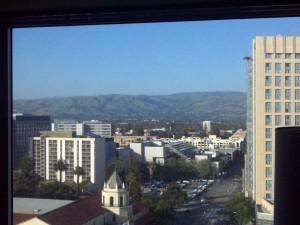
Jeff Kaiser: Yeah, we have a beautiful view of the hills surrounding San Jose. It's actually gorgeous. I don't know how Chris worked this out, but he's got this nice room in the Hilton, and we're up here on the 15th floor, and it's beautiful.
Chris Gammell: Yeah. Great view of the mountains. I didn't realize there were this many hills out here, so it's very, very nice. I took some pictures. I'll post them up to the Amp Hour, too.
Dave Jones: Right. So, that's not the Hilton that's next to the Exhibition Center, is it? Oh, it is. Oh, it is. The same. Right. That might have been the one that I stayed at then when I was there, because it was literally tied onto the conference. Yep.
Jeff Kaiser: This is that one. Okay.
Dave Jones: Yes, I think I had a room as well that overlooked the hills surrounding San Jose. Beautiful.
Chris Gammell: It's very nice out here. It's my first time. People didn't know that. It's my first time in California. California, so it's very exciting for me. I've felt like a fraud all these years, never having been to California after working on electronics.
Dave Jones: Even I've been there, dude, and I'm halfway around.
Chris Gammell: I know, right? Yeah. Yeah, so it's been great, though. And now, you know, we're sitting here recording on an ironing board, also of which we'll post
Jeff Kaiser: a picture of. Yeah, Chris has had to improvise this setup where there's two laptops, microphones, headphone amplifier, all strung out on this ironing board. So all we need to do is make one wrong move, and the whole show will go tumbling to the ground. Yep, that's right.
Dave Jones: Oh, beautiful. I love that. There's nothing like a good hotel room hack. Like, we've been there, like, you know, it's an hour before the exhibition's supposed to start, and we're there with soldering irons, and we're, you know, assembling stuff and trying to get stuff to work, hacking firmware and doing God knows what to get stuff up and running. You guys don't have that pressure, though, because you don't understand. Yeah, we're lucky. Yeah. Yeah.
Jeff Kaiser: Yeah. That's good.
Dave Jones: Just wake up, go and have the free breakfast, and head off to the show.
Jeff Kaiser: I've definitely, I've talked to engineers that have had to do that before, and there's always this mad rush. And it's usually, CES is the big one. And these engineers are trying to, like, strap together this total kludge of a solution to demo their product. And I just, I remember it always used to be such a big deal in the consumer electronics industry. But, yeah, we're taking it easy today. We're, this is great.
Chris Gammell: We've already had beer. That's right. Yeah, we're set to go.
Dave Jones: Fantastic.
Chris Gammell: Yeah.
Dave Jones: Yeah, I've got some great stories from the trade show stands. I remember once we didn't have any gear with us, so we had to rush off to Fry's. And buy soldering irons and test gear and microscopes, because we had to do some fine soldering work. And, ah. Wow. Yeah. Chaos and mayhem. That's crazy. I didn't think to get a photo of that, though. You know, there was this, oh. We had, like, 20 demo boards all set up, scattered across someone's suite there, all over the beds. And we had, like, a makeshift lab in the corner on the study table or the business table there. We had a complete soldering set up. That's great. And, ah, it works. And, yeah. Ah, beautiful. That's awesome. I don't know what it is, but I guess it's like the triple five contest, right? Everyone enters at the last minute. It's the same thing with trade shows. Yeah. Because, you know, nobody is ready, on time, prepared. They turn up. They do everything.
Jeff Kaiser: Well, it's usually because some sales guy somewhere promised that you would have this product ready for the show, right?
Dave Jones: Exactly.
Jeff Kaiser: And it's never ready, of course. They said it would be ready in three months, and it actually was going to take nine months. And so you have to do something. And the vaporware appears. The vaporware, yeah, appears.
Dave Jones: And it always seems to come off, too. It's that, you know, it's that magic that happens under pressure in the last minute. You know, I've been there on my back under the stand of the trade show, you know, under our stand actually, you know, screwing things in and wiring stuff up as the doors open and people start coming in. And we're going, whew, finished it with like, you know, five seconds to spare or something. It's just crazy.
Jeff Kaiser: You know, there's some great stories. I've read books of the early days of the personal computer industry. And those guys that were creating, you know, the Apple IIs and all those early desktops, they were creating demos in the days before the trade show up until, you know, the night of. And I think there's, I read a good book last year called Hackers, Heroes of the Computer Revolution. And it talks about... Yep, by Stephen Levy. Excellent. Yeah, exactly. And it talks about, it gives you a real sense for what it was like to be with those guys and trying to get code working in their hotel rooms. And it's very exciting.
Chris Gammell: And actually, that was what the Waz was talking about today, too. Oh, yeah? Yeah, he, yeah, Jeff, you missed his keynote, right?
Jeff Kaiser: I didn't register for the conference. Well, no, this is how if you just register for the expo, you don't get to see these little things like the keynote. So I couldn't make it to that today. But you were there.
Chris Gammell: I was there, yeah. And that's actually what the Waz was talking about. He said that he was talking about a disk drive for the Apple II. Right, because he wrote the disk drive controller for the Apple II. Right, yeah. So he said a week before ESC, or ESC, CES back then, his whole motivation was getting it done so he could just go to Vegas. That was his big thing. Right. It was this great story he was telling. Wow. Yeah. I was really impressed with him, too. I mean, like, he was a very charismatic, you know, for an engineer, he was very charismatic, very passionate. Like, I was very impressed with him. And, you know, especially, like, his talking about creativity and just what you need to do. You know, Dave, we talked about this before on here. Kind of just letting engineers run, you know? Yeah. He's all about that. And even, like, having departments talk, you know, like, just give them some time, give them some money, and let them do their thing. You know, kind of bound them a little bit, like, hey, stay in this industry, but otherwise, just get out there and make some cool shit, and you're going to get some awesome products out of that.
Dave Jones: Exactly. Yeah. Yeah.
Chris Gammell: He was very – I'm going to write about it later tonight, hopefully, but he was very inspiring.
Dave Jones: This actually reminds me of a article – well, a blog post I read not that long ago from Robert Cringley, who writes an excellent IT blog. He's been doing it for, like, 30 years or something, even before they were blogs. Anyway, he recounted the story of – he was at one of the very early hacker conferences, maybe in the 80s or something like that. I'll have to post a link to this in the show notes.
Chris Gammell: Yeah.
Dave Jones: And how these whole bunch of hackers were sitting around or something in this – it was a hotel attached to a casino or something, and they wouldn't let them do something, or they screwed – the hotel screwed them over somehow. So all the hackers were in this room, and they thought, what can we do? I know. We can hack in and shut down the entire casino computer system. And so some guy tried it, and he actually got in, and they were one key press away from shutting down the entire casino. And then they had a show of hands. Should we do it or not? And hell yeah, everyone stuck up their hand, but do it, do it. But apparently there was some lawyer in there as well that was in the room, and she said, oh, I recommend you don't. It's a felony. And they didn't go through with it. But that was awesome. They could have shut down the entire casino just like that.
Chris Gammell: And that was known as the only time a lawyer has ever been useful.
Dave Jones: Right. Yeah, because they probably would have all ended up in jail or had their knees crushed in by the heavies at the casino or something. But, you know, stories like that.
Chris Gammell: Brilliant. Yeah. That's really great.
Dave Jones: Love it. So how did Jerry go with her keynote?
Jeff Kaiser: Hers isn't until later in the week. Yeah, it's Thursday. Oh, okay. All right. Yeah, but we saw Jerry today. She was in the expo. She was at the Element 14 booth for a while with her shooting gallery hack that she brought, which was very cool. Very cool. I got a chance to play, but I didn't do very well. I didn't either. Yeah, I think she has it rigged so that only she can win.
Dave Jones: Right. Yeah, as you would.
Chris Gammell: It's a great little demo, though. I mean, just even the bell on the back draws people over, you know?
Dave Jones: Yeah, exactly.
Chris Gammell: For being in a monitor.
Jeff Kaiser: Yeah, she did a great job with it. It looks great. And actually, the gameplay is pretty good. And I saw a lot of people playing it. So, yeah, nice hack. Is she wearing roller skates? No, she's not wearing roller skates.
Chris Gammell: She's caved in, has she? She did say she brought them, but I don't know. Maybe she'll wear them. We're actually going to a meetup later. So, there's a hacker. Hacker? I don't know if it's a hacker. Is it a hacker? Yeah, I saw that. It's a meetup later tonight for people around here that want to bring a hack. Should be a good time. Did you bring a hack, Chris? You're looking at it. It's what's holding our microphone up.
Jeff Kaiser: Right. Chris has this, like, GorillaPod with a PanaVice attachment attached to it that's holding up our microphone.
Chris Gammell: Yeah, it's also my tripod for my camera slash phone. The whole show depends on us. Yeah. It's pretty precarious right now, actually.
Dave Jones: Brilliant. Now, I saw, just before the show, I watched your recorded Ustream thing that you did from that. Yeah, I found that. It popped. You tweeted it or something. I went and had a look. Jeez, that's bad quality. Yeah, sorry. Yeah, streaming from the phone just doesn't.
Chris Gammell: No, it's streaming from the phone with 3G. That was the real problem. I was really impressed with the, when it's on Wi-Fi, it does great. I mean, it's 3G. So, yeah, I apologize to everybody. I saw there was, like, 14 people watching at one point, and I'm just thinking, sorry for those people. Yeah, sorry to those people. But it was great because, I mean, Jeff was showing me around. I mean, so, Jeff, what were the places we went to again?
Jeff Kaiser: Went to weird stuff, didn't you? Today we went to three of my favorite places in Silicon Valley. We drove from the conference up to St. John's where we had lunch, which is a famous, it's like a Silicon Valley institution. It's a bar slash grill that serves hamburgers. And every Tuesday they have this thing where they do Tri-Tip Tuesday. So you get, like, a steak sandwich, basically. And I used to come there once a week whenever I worked in the area. So we stopped there for lunch, and then we went to HSC Electronics, or Halted, which is just a couple blocks away. And we went, you know, browsing through surplus electronics. And I bought a hot plate that I saw was on one of the shelves, one of those, like, laboratory hot plates that you can use for reflow because it goes up to something like 900 degrees. And that's pretty cool.
Chris Gammell: I mean, like, so that just heats the whole entire world.
Jeff Kaiser: It has a stage on it that's, like, five by five inches or so. And, yeah, it's got a thermostat. But I'm planning to take it apart and hack it with a digital controller. Oh, that's a great idea. Yeah, you can put a PID controller on it. And then, actually, we spent quite a bit of time at HSC because you can spend hours there. And then we drove over to Weird Stuff, which is also in Sunnyvale. Actually, no, HSC is in Santa Clara, and then Weird Stuff is in Sunnyvale. So we drove over to Weird Stuff and spent probably at least a half hour browsing through, you know, the junk that's at Weird Stuff. But I think Chris had a good time. Yeah, it was great. Dave, have you been to those places?
Dave Jones: I didn't get to Weird Stuff. No, I wanted to. But, you know, unfortunately, when I was there, mostly, when I was there for the conferences, I went to DesignCon and ESC. And I wasn't doing the blog back then. So I sort of wanted to see other things than, you know, just some surplus electronics place. Sacrilege, I know. Yeah, some other things.
Jeff Kaiser: Are you trying to tell us that you have a social life?
Dave Jones: I've got a life outside of, yes, exactly.
Chris Gammell: Yeah, it was great. I was telling these guys about, I mean, I think, Jeff, you said you saw Dave's Apex tour. But I was... I did. I was mentioning the Apex tour.
Jeff Kaiser: Yeah, we were comparing these places to Apex. And I think Apex is on a whole other level just because of the size and the selection. The outdoors. The outdoor component.
Dave Jones: Yeah, the outdoor. Yeah.
Jeff Kaiser: Yeah. But I still... I lived in the Bay Area for about eight years. And I used to go to HSC and Weird Stuff on a regular basis. And they still... Those are very close to my heart. I just... I've spent many, many dollars at both of those shops. And I really like them. I mean, to me, they are the... They really represent what surplus electronics is all about. You know, components lined up on shelves and weird industrial equipment that you don't even know what it does. And it's just... To me, it's so awesome that you can still walk into a store like that and browse electronics bits on the shelves. And, you know, I hope that those places stay open. And, you know, I'd heart... I feel like electronic surplus is on the decline. But as long as those stay open, I'm still... I'm happy. Yeah.
Dave Jones: And actually... Yeah, we don't really have any major surplus electronics ones left here in Sydney. There's... There's one which is maybe surplus electronics. But, yeah, they've really gone by the wayside. So we had about two or three at one stage. But it's sadly all gone.
Jeff Kaiser: I mean, you get so many cool ideas for projects because you just get to have all these things. And, you know, you look through the shelves and there's all this interesting stuff. And you just think about what you can do with this. And granted, 90% of it is junk. Yeah, exactly. But there's some really interesting stuff in amongst the junk that actually could become a cool project. And, like, for example, the Bluetooth handset that I made where I put a Bluetooth headset into an old-fashioned handset, that came from weird stuff. And I was just walking down the aisle and I saw, like, a 70s-style telephone handset. And I just... Yeah. I knew that I had to make it into a project.
Dave Jones: The problem I find is that when I go to those surplus places, all the cool stuff that I'm interested in is always big. And I'm not allowed to bring it home.
Jeff Kaiser: Yeah. You know, I feel for you, Dave, because I have the same problem now. I have to carry everything on the plane. And so now I'm going to have to put a hot plate in my carry-on luggage. Nice. Yeah.
Chris Gammell: That'll be easy to get through.
Dave Jones: Yeah. What with all the extra security now?
Chris Gammell: Oh, yeah. Yeah. It wasn't bad getting out here. I had a really easy time. So another thing I want to mention is that we actually... So I was sitting at ESC this morning and just sitting there and sat down with someone. And this guy offers me a donut, right? And I'm like, oh, cool. I didn't have breakfast. Thanks a lot. This isn't weird. Weird. So, you know, I graciously accepted the donut. Turns out, though, he's like in the whole hacker scene. And like his name's Kenneth Finnegan. He runs a site called Life of Kenneth. So he ended up coming out to lunch with us, too. And he's an area native, too. So he was showing it, too. And he bought a bunch of crap. So it was really... It was great. It was like the ultimate field trip. Yeah, it was. It was... I feel a little guilty for leaving ESC. But the amount of stuff we saw was totally worth it.
Dave Jones: So, you know, my first... I'm sorry. I can beat that road trip. We, as part of our Altium stand, we flew into... Well, we flew into LA and then we went to our office in Carlsbad. And we had to drive. We had to do a road trip in a van packed full. Down by the river. Down by the roof of all our stand stuff, we had to drive from Carlsbad up to Silicon Valley, San Jose. Wow. And that was... And, of course, we took the scenic route as well.
Chris Gammell: Yeah.
Dave Jones: Yeah. Wow. That was brilliant. Yeah, this was more of a... Driving around the... Driving Highway 1, is it? Up the coast. That's right. And going around the Big Sur and Phil... You know. Ah, beautiful. Anyway, that was a great road trip. Sorry. Had to tell it.
Chris Gammell: No, that's cool, man. That's... Yeah. Ours is more of a lunchtime, you know, trip. Right.
Dave Jones: A lunchtime tour.
Chris Gammell: Ours was a two to three hour... We didn't really leave the area. So, but that's a cool trip. I mean... Right.
Dave Jones: Ours took us about 15 hours or something. Yeah. It was great. Yeah. Because we couldn't fly this stuff. It was so much stuff. And it was all fragile, too. All these cases were, like, very brittle ABS prototype cases, you know. And we couldn't afford to... Yeah. You know, we didn't have that many flight cases to put them in to protect them. To send them. So we had to pack them carefully in boxes and fill this van up. And away we went.
Chris Gammell: So, wait. You flew them in from Australia, though, didn't you?
Dave Jones: Ah, we did. But they were in larger crates or something. Oh, okay. Or we had them shipped directly there for... I don't know. It was complicated. Anyway.
Chris Gammell: You know, that's a tough thing to do. I was talking to Jerry about that because she said she actually ended up driving down here from Portland because she had that demo we were talking about earlier, the monitor thing. And she just couldn't... She didn't want to ship it with, you know, the lunkheads at TSA or whoever else might mess with luggage. So it was too bad. But, yeah. It's just a problem with any kind of trade show.
Dave Jones: Yeah. And the problem with packing stuff is you've got to... It takes a lot of time. Especially when you've got, you know, 50 or 100 irons. To pack them really safe takes a lot of time. We didn't have that time. Yeah. You know, and it costs a fortune and... It was just... And it was all too hard to arrange at the last minute. So... Into the van it went. Yeah. Good stuff. Love trade shows. Maybe I'll be there. Maybe next year. Who knows?
Chris Gammell: I hope so. That would be great, man. I hope we can all be sitting in the same room on the same ironing board next year. That would be... That would be awesome.
Dave Jones: So we're Element 14. Making you jump through hoops?
Chris Gammell: Nope. It's been going pretty well so far. Awesome. You know, the problem with any kind of thing where you're, like, reporting is just that there's so much to do. Is that I've sat down a couple times to try and write something and then I'm just off doing something else. So writing is actually the hardest part. But then I don't even think about it. Even the video I have, uploading that and just kind of taking care of that stuff is just... It's not as fast as I want it to be. And it's too bad because, you know, no one wants to see this stuff three days down the line. That's the problem.
Dave Jones: Yeah, yeah. Exactly. They want to see it straight away.
Chris Gammell: Right. And so that would be nice about Ustream if that actually worked. But then there's all these restrictions on if I can even do that from the show floor. So blah, blah, blah, blah, blah.
Dave Jones: Yeah, it's just too hard. And the quality is always crap. And it's unreliable. Yeah. It just isn't worth doing. I find just shooting the video, racing to the hotel room, very quick edit and render and upload is, you know, heaps, heaps better. Yeah.
Chris Gammell: No, I agree.
Dave Jones: But it all takes time. You know, I've been in the hotel room, 2 a.m. in the morning, bleary eyed, still editing the video and trying to upload it.
Chris Gammell: That sounds like what I'll be doing tonight, except that for a couple of beers too. All right. We'll see how that goes. Hopefully I'll upload the right video. We'll see.
Dave Jones: So is it, say there's some video? Is it a written blog as well?
Chris Gammell: Yeah, it's both actually. Yeah.
Dave Jones: So they'll be on the Element 14 site, will they?
Chris Gammell: The video will be up on the Element 14 YouTube site, I believe. And the writing, yeah, the writing will be up on the DIT blog. So I'll link that through Twitter and all that other junk. So if people are interested. I don't really know. I don't know if people are interested at all. I hope they are. I don't know. But I feel bad too. It's like, ha, I'm here. You're not. It's like, well, it's not really what I want. Yeah, exactly. I feel like it comes across like that sometimes, you know. But what can I do?
Dave Jones: All right. Is it a big show? Are there, is it empty, deserted? No, no.
Jeff Kaiser: Actually, I'd say it's considerably more crowded this year than it was last year. You were here last year? I was here last year and the year before. And definitely every year it seems like things are getting a little bit better and it gets a little more crowded. And this year there definitely were more people than the past two years. Yeah. Absolutely. Absolutely. And there's a lot of interesting companies too that are exhibiting. And I guess, Chris, you wanted to talk about.
Chris Gammell: Yeah, the one of them. I think people have probably seen some of this linked in places. We saw the one scope that was. It's an iPhone oscilloscope. Yeah.
Jeff Kaiser: And it's actually a mixed signal oscilloscope. It's got, what, one analog input that does something like 12 mega samples per second. And then there's four digital inputs. Yeah. But it hooks up to an iPhone. Or an iPad. Or an iPad. Yeah. And we met the designer of said iPhone oscilloscope as well. And had a chat with him. His name's Matt. Matt. And he was on the show floor. And I think he's coming out with us tonight. So we'll be able to ask him more questions. But, you know, it's really cool. There's actually some small startup companies that are doing some neat things. And it's not all just big corporations. And it's always fun to see the small companies. I didn't think it was like that. Because, you know, they're interesting to talk to, right? You know, they don't just have their PR guys out there. But they actually have, like, the design engineer who made the thing. And he's there to answer your questions. So that was really cool.
Dave Jones: I was on their website the other day, actually having a look at that thing. And they're actually hiring at the moment. Oh, wow. They're after someone. Yeah.
Jeff Kaiser: And they're based in Oklahoma, it turns out. Yeah.
Dave Jones: Yes, I think so. Something weird like that.
Jeff Kaiser: Yeah. That is very different for Midwest. That's a very non-traditional place. We're a technology company. Yeah, that's great.
Dave Jones: But you don't need to be anywhere else. That's right. You could be in Alaska. That's right. You know, you get stuff shipped to you via DigiKey. That's right. You've got a computer to design stuff.
Chris Gammell: That's right. Which is very freeing, you know. I mean, Oklahoma is just a beautiful place. So, you know. So flat and dusty. You could be in Australia.
Jeff Kaiser: Oh, yeah. That's true. Because I think they ship things there. Let's be honest. Who would ever do that?
Dave Jones: And that segues nicely into our first shout out. Shall we? Yeah.
Chris Gammell: Yeah. Go ahead.
Dave Jones: I got an email from a young fella, Nicky Semenza, if I pronounce that correctly. Him and a school friend of his, Simon Orr, they're starting up their own kit business. It's called Nerds Like Us.
Chris Gammell: So how young are we talking about? Like elementary? Oh, well, they're still in school.
Dave Jones: I presume high school. I think it's high school. Okay. So, yeah. They'd only be, what, 16, 17? 16, 17. Something like that.
Chris Gammell: That's awesome. That's really awesome.
Dave Jones: Yeah. They've only got one kit so far, but taking pre-orders. But, hey, you know, you've got to start somewhere. So, it's real.
Chris Gammell: The future Dave Joneses of the world. Right. Jeff, when did you start electronics? Did you start really young like Dave did?
Jeff Kaiser: I started really young. Yeah. I definitely knew how to solder whenever I was, well, probably eight years old or something like that. Yeah. I started out with those Radio Shack 160-in-1 kits. Oh, yeah. Those are awesome. That's where I got my start. So, I was burning myself with a soldering iron, you know, whenever I was far younger than probably a lot of kids today. That's great. And, Dave, you said you were, were you about that age too?
Dave Jones: I was five or six when I got my first electronics. Wow. Yeah. I had my workshop at eight. That's crazy, man. Wow. That's awesome.
Chris Gammell: That is awesome. And, you know, the Waz was talking about the same kind of stuff today too. So, I think you guys are in good company.
Dave Jones: Have you been down to Waz Way, which is a street?
Jeff Kaiser: I parked on Waz Way.
Dave Jones: Oh, you parked on Waz Way. I didn't know you could park on Waz Way.
Jeff Kaiser: There's a parking lot there, yeah.
Dave Jones: Oh, right. Okay. Awesome.
Chris Gammell: I saw that on the way in. That was pretty great.
Dave Jones: Yeah, you'll have to get a photo with Waz Way.
Chris Gammell: Okay. I'll try that.
Dave Jones: Or better with Steve himself. But he's buggered off, has he? I'm sure he's gone.
Chris Gammell: He's busy, dude. Come on.
Dave Jones: I know. He's a busy guy.
Chris Gammell: I'm hoping that some people were asking about that. I'm hoping that they'll post that up on the EETimes video site. It's like video.eetimes.com. And I don't know if it'll be this week, but they had a lot of the stuff from Design Con. So I'm sure they'll post that eventually. It was a really good talk. Anyways, back to these. Sorry, nerds like us. So... Yes, nerds like us. The kit is AM radio. That's great.
Dave Jones: It's based on a triple five timer.
Chris Gammell: Wow. Excellent. Chris is impressed.
Dave Jones: Anyway, you've got to start somewhere.
Chris Gammell: Yeah.
Dave Jones: And it's good.
Chris Gammell: Yeah, that's really great. That's really great. Maybe some people picked that up. How about... You wrote on here, Dave, that people are ripping off some open source hardware stuff?
Dave Jones: Yes. I got this from the Artifruit site. Oh, that's right. Okay. Deal Extreme. I think it is. I hope I get that right because there's Deal Excel. Not yet. It's definitely Deal Extreme. Okay. And they've ripped off the Artifruit little breadboard thing. I don't know what it's called. I think it's the breadboard we know. And yeah, they've ripped that off and they're selling it. And they just took the Artifruit name off the board and didn't credit them in any way at all. They just... Yeah.
Jeff Kaiser: That's lame. Why am I totally not surprised that this is happening?
Dave Jones: No. Actually, it's probably not Deal Extreme's fault because they just resell...
Jeff Kaiser: No, they're just a reseller. Yeah.
Dave Jones: Yeah. I wouldn't blame... So they're buying this from somebody and...
Chris Gammell: Right. Yeah. Right. Well, really, I mean, you got to hold them accountable somewhere though because you can't stop people ripping it off. Of course, yeah. But you can try and go to them and say, hey, don't do that anymore.
Jeff Kaiser: Well, you can try to get them not to carry things that violate the Creative Commons or open source hardware license. Yeah. Yeah. But, yeah. But it's hard to police, really.
Dave Jones: I'm not surprised that this is happening. Yeah. Yeah. And you can't, really. There's nothing you can do about it. What are you going to do? Sue them over a little breadboard kit? You can't. You know? It's just impossible. You've got to hope that they do the right thing.
Jeff Kaiser: You know, and it's interesting because Adafruit has had problems with counterfeit kits for a long time because for a long time you could buy, and maybe even still now, you could buy Mini POV and some of her other kits on eBay. Yeah. And then what was happening was that people were buying these kits on eBay and then posting questions to her support forums whenever they didn't work. And so she was having to support people that didn't even buy their kits from her. Yeah. And so she basically told everyone that they were out of luck, that she wasn't going to support kits that she didn't sell, which makes a lot of sense. Sure. And, you know, if they were not authentic, you know, boards that had her, that credited her and were based on her design. So this isn't the first time that she's had trouble with people copying her designs and trying to make a buck.
Dave Jones: Yeah. Yeah. I don't know why they do this. It's so easy just to credit someone. It doesn't cost you anything. And with the open source hardware, you're allowed to do this. You're allowed to copy it and sell it. So why you wouldn't just do a simple thing like putting a credit on your webpage or something is beyond me.
Chris Gammell: Yeah. Maybe they just don't know. That might be the real thing. Maybe they'll just be on their way and copy it.
Jeff Kaiser: It's possible that they don't know what the Creative Commons license is and that you have to give it.
Dave Jones: I'm sure they don't care.
Jeff Kaiser: They don't care. Well, there's that too.
Dave Jones: Well, yeah.
Jeff Kaiser: Probably in the time that they could have read the license, they copied the design and started making it. Yeah, that's right.
Dave Jones: Yeah. Anyway, it's poor form. But yeah, it was bound to happen. And it's always been happening. It's not just new with this open source hardware thing. Yeah. It's been happening for, you know, ever since kits have been around 30, 40 years. It's nothing new at all.
Chris Gammell: So how about some more shout outs? One of our listeners, Sebastian, who's at SG Tech on Twitter. He's posted to our site or not linked. Sorry, linked to our site. I know what I'm talking about. And so he's always probably the most exciting person on Twitter whenever we announce a new episode. But we always give a shout outs for that. So thank you, Sebastian. We appreciate that. We look forward to your exuberant responses to our posting of new episodes.
Jeff Kaiser: And I also have to thank Sebastian for translating the solder comic as well. Sebastian sent in a translation into Spanish of the Soldering is Easy comic book. And he also translated the original one page soldering reference that Andy and Mitch made last year. So thanks to Sebastian for the translations. And how many languages are we in now? We're up to seven now. So we have the soldering comic that I talked about the last time I was on the show. We've received translations into Chinese, Russian, Brazilian, Portuguese, Indonesian, Spanish, and Japanese and Greek. And I think we're getting French and German anytime. And actually, we just got someone from Tanzania, I think, that's going to translate it into Kawahili. What? Brilliant. I kid you not. We're definitely crossing all borders with this solder comic. And I definitely... I know some people are sick of hearing me talk about it because I've been posting all of the translations to my site. But, you know, you have to get the word out because people that don't understand or can't read English, I mean, they're really happy whenever someone translates it into their language and they can actually read and distribute the comic.
Chris Gammell: That's awesome.
Dave Jones: So do you have to tweet it in Spanish?
Jeff Kaiser: You know, I try to. I try to. Right. Google Translate, huh? Yeah, you know, I do. And then people don't know what I'm talking about.
Dave Jones: And then it translates to, you are a cow or something.
Jeff Kaiser: Yeah. Well, Mitch and I have kind of laughed about this because, you know, we can't read too many other languages. And so someone could be saying, you know, Mitch and Jeff are idiots. So we're inside the comic and we would not even know. So please don't do that if you're thinking about translating the comic. But, you know, eventually the word will get back. We'll hear about it.
Chris Gammell: Brilliant. So one other shout out for the week. One of our listeners wrote in recently that he listened to all the back episodes in 10 days. So that means 40 episodes in 10 days. I don't know how it was ST1 his handle was. But I don't know how.
Dave Jones: If you're sitting at work all day, then you can watch eight episodes a day, I guess.
Chris Gammell: I don't know how anyone could listen to us for that long. Five, eight to 40?
Dave Jones: There you go.
Chris Gammell: Yeah, I know. But that's crazy.
Dave Jones: Yeah, I know. It's pretty bad. Yeah.
Chris Gammell: Especially with my voice. Yeah. Well, me too, buddy. I mean. 40 hours straight. Yeah. I also want to thank him because of that whole snafu I had with erasing all of our stats. So he helped pump them up a little bit more.
Dave Jones: Excellent.
Chris Gammell: If people don't know, I erased all of our stats for all of our past shows because I'm an idiot. So, but. Live and learn. Live and learn.
Dave Jones: But I saved the day because I had a screenshot. You did. You did. So, yes. Thank you. Applause. All right.
Chris Gammell: So what else we got, Dave? I saw you added a couple other links here.
Dave Jones: I've added a few things. What else we got? There, I got an email. It's another. I guess it's a shout out, although they probably don't listen to the show. The local TAFE college here in Sydney are doing a program for girls, an electronics program for high school girls. And they're using Arduinos and they're going to make like a lead cube kind of interactive art display project. So what is TAFE?
Jeff Kaiser: Which is really cool. What does TAFE stand for? T-A-F-E?
Dave Jones: Technical and Further Education. Ah, okay. It's a local college system we have here. Okay. Yeah. Which wouldn't mean much to you guys. But yeah, it's a local college system here. And they do a lot of programs with schools as well. So high school students can go and do some of the college courses and stuff like that.
Chris Gammell: Cool. Yeah. That's really great.
Dave Jones: Anyway, it's great. And it's, I can't remember the name, sorry. But it's, yeah, it's a great program. I love it. And they had 100 girls join it and only one dropped out, I think, for reasons unknown. But yeah, so they're obviously interested in doing electronics and, you know, adding cool interactive stuff to art. But obviously they're putting an art spin on it because, you know, girls would be more interested in art than just, you know, a 5-5-5 timer or something.
Chris Gammell: Well, that might be, I think a better way to say that is, it's a better way to break people into electronics in general.
Jeff Kaiser: I think that that's true for everyone, not just girls. No, exactly. I think that if you want to appeal to people, choose something that's interesting to a wider cross-section of people than just 5-5-5s. Yeah. So, yeah, I mean, that sounds great. And I, you know. I'm sorry, say that again. You broke up, Dave.
Dave Jones: As a generic stereotype, you know, girls would be less interested in electronics than boys. That's just a natural.
Jeff Kaiser: I see.
Dave Jones: You know, I don't mean to be sexist or anything. That's just the way the world works. Girls are naturally less interested in electronics. No, come on. You've got to agree with me, right?
Chris Gammell: No, maybe historically, but there's a lot more factors than that. I think if you put a female child and a male child in a room and you teach them the same thing for, you know, if you had a controlled experiment, I think there would be no difference, personally.
Dave Jones: Sure, but the fact is, girls are brought up differently to boys in most societies. That's true. In terms of things they learn, things, toys they play with, stuff like that. And there may be some inherent cognitive things pre-programmed into males that are not programmed into females, like the ability to do spatial rotations, visual spatial rotations. Males can do that a lot better than females. There are a lot of physiological things as well. So I stand by my comment.
Chris Gammell: Yes, that's fine. I'm going to stick with that nurture more than nature, but until we have a really horribly controlled experiment, which would totally ruin the life of children. Right. I don't think I should be allowed to have kids, to be honest.
Jeff Kaiser: I'm with Chris on this one. I think that girls are just as capable of doing electronics design or whatever else.
Dave Jones: I didn't say they're not just as capable. I'm talking about natural interest here from just the way they're brought up, the society they're brought up in. I mean, it's just a fact. More guys will get into electronics than girls. Always has, probably always will. I don't see it flipping the other way.
Chris Gammell: Do you? That's a nurture. I think that's a nurture thing. I mean, we're talking nature versus nurture. People don't know what I'm talking about. Nature being like a genetic thing. Nurture being how you're brought up and just the stuff you're exposed to. So I think that's a nurture thing because of just the social implications of boys are encouraged to have. There's this great SMBC comic. I don't know. I think we might have linked it before. And there's this SMBC comic, which is by Zach Wiener. And it says, hand a toy to a boy. And it's, what is it? Oh, well, it's this block system where it could be configured in millions and millions of ways. And you can do anything you want with it. And then it cuts to the next frame. It's a little girl and says, oh, what is this toy? It's a doll. What does it do? It's a doll. I mean, that's the nurture side of things.
Dave Jones: It's a nurture thing. But that is a practical reality of any society. But it doesn't have to be. I'm sorry. It doesn't have to be. I'm not saying it doesn't have to be either. Right? But the fact is, fact, it is. There are less girls naturally going to get into electronics. So to help them out, programs like these are fantastic. I totally agree with that. It gives them another avenue in.
Chris Gammell: I totally agree with that. I think I totally agree with that. Right now, to shift it in the other direction and get more girls interested from a young age, that's the best way to do it. And really, young boys, too. I mean, creative endeavors. Whenever you see something where you're really into it and you're in the flow and you're really enjoying yourself, and then later you're like, oh, I need to figure this out, that's going to be the next Woz. That's going to be the next Jerry. That's how it happens. You're interested in something, and then you have to go teach yourself something. That's how you do it. That's how you teach kids.
Dave Jones: Absolutely. Anyway, I think it's fantastic.
Chris Gammell: Yeah. Well, we've gotten through a total of nothing on this list tonight. No, that's not true.
Dave Jones: We got through all the shout-outs. That's pretty impressive.
Chris Gammell: That is pretty good for us. I wanted to talk about IEEE. Not IEEE necessarily, but we had some people asking on Twitter about support networks for consulting. And I actually didn't know of any. And it turns out, though, that IEEE has one. And I was talking to a guy here today about that. Have you ever heard of the consultant networks of IEEE before, Dave? Does IEEE exist in Australia?
Dave Jones: I can't say. Is there a point to it? If you're a consultant, you're a professional, you can do your own thing. Why do you need support? I don't know.
Jeff Kaiser: Well, it's for networking. Maybe.
Dave Jones: I don't know. Oh, Dave's the lone wolf. Sorry?
Chris Gammell: You're the lone wolf, right?
Jeff Kaiser: I think it's to give consultants a way to network to try to make a community. Well, that's called LinkedIn, isn't it?
Chris Gammell: This is more like if you're on LinkedIn, you might be talking to marketing people, VPs, and all that other stuff. And, yeah, that has its place. But this is more like –
Dave Jones: What is it, a forum? Is it a newsletter?
Jeff Kaiser: No, it's like a network. And I think they have regional chapters, right? So you can get together with people in your city or town.
Dave Jones: So they physically have meetings, do they?
Jeff Kaiser: Yes, they do. And they have – you can go and watch presentations about stuff. I've never gone, but I've heard about it.
Dave Jones: I just find it off the – straight off the top of my head, I find that unusual that a support network for consultants. I just – it seems weird to me. I think it makes tons of sense.
Chris Gammell: I don't know.
Dave Jones: Anyway. Why?
Chris Gammell: I think because – I think about it from at least – I mean, granted, Jeff, you said you've walked in before, right? And it's been like a group of older guys, right? I've never been. Oh, who said that to me? I've never been. Someone said that they walked in and it was very intimidating. It was just a group of older consultants. But if you are starting out, like how do you know how to start finding a lawyer? And like finding an accountant and all the other stuff you need to do as a beginning consultant, right? Right.
Dave Jones: Yeah.
Chris Gammell: I think that from that perspective, it makes a lot of sense. And that's actually how I got talking to someone about it. They were – I think they were talking to me on Twitter or Facebook or something and just asking me, have you ever heard of this before? Because they were just looking for – there's a lot of questions out there and you can't always Google for them. How do I find a good lawyer that won't screw me over in a design capability, right?
Dave Jones: Okay.
Chris Gammell: Yeah.
Dave Jones: Fair enough. I guess there's a forum for everything, right? Yeah. There's a network for every little niche out there. Oh, yeah. Yeah, for sure. And by the way, I am now a consultant.
Chris Gammell: Oh, Dave's advertising on the Empire.
Dave Jones: Right. Yes, I am. Now, I will be doing some consulting work very shortly for a company who will remain unnamed.
Chris Gammell: For design work or for – Yes.
Dave Jones: Yes. Oh, great. Some high-end design work. That's awesome. Yeah. Congratulations. That should be fun. Really leading-edge R&D stuff. So, yeah, that'll just be like a little side thing. That's great.
Chris Gammell: That's really great. Well, you probably can't talk about it much. Well, we will hope to hear about it soon.
Dave Jones: I am under NDA.
Chris Gammell: Oh, NDA is the awesome – see, and that's another thing you can ask a consultant network. What the hell is up with NDAs?
Dave Jones: You know, and it's interesting because – Ah, who cares? Just sign them. That's it.
Jeff Kaiser: Yeah, that's a little bit dangerous, I think. Yeah. And it's always interesting because I get emails from time to time because, you know, my website shows up on people's searches and I get the craziest people that want to develop products and things. And a lot of times in their first contact with me, it includes the words of, like, I need you to sign an NDA. And my take on this is that, yeah, you know, I understand that NDAs are important, but if that's, like, your first sentence of your email that you need me to sign an NDA, I instantly, like, become a little bit defensive. Yeah. It's not, like, a good opener for a conversation of, like, sign your rights away on this piece of paper and then we can continue talking. You know, maybe just a heads up, like, if you want me to do design work, you may want to just start with, like, hi. Hi. Can I hear more about your background? Yeah, exactly. I'm very interested in you as a person. Can I – what are your capabilities? Can I buy you a cup of coffee? That would be great. Yeah, you know, you're – I'll just say, you know, prospective client, you are a thousand times more likely to have me want to work on your project if you treat me as a person up front. Yeah. So, yeah. Hey, you, machine.
Chris Gammell: Let's start cranking out some stuff.
Jeff Kaiser: It's really funny. And, you know, I think the reason is that they send these emails to, like, everybody that they find on the net. You know, they're searching on Google for, like, all electronics designers and they send this mass email and they'll find the lowest bidder, right? They don't care about me. You know, they don't care about what I can do or anything. They just – they have their widget that they want and they want – They want it now. They want it now, yeah. They really do. They want it for –
Dave Jones: Yeah, I wouldn't be involved in something like that. I just – it deletes straight away when I get those sorts of emails.
Chris Gammell: Yeah. Just crap. Another thing about – like, not necessarily the IEEE one either, but, like, something I've thought about before is if you're working on a project, right? Like, so, Jeff, you've done consulting work before. But if you need a piece done, if you're working on hardware and you're like, I can't do this software, you need to go find someone. If you're in a network, then you just say, oh, well, I know this person. It's easy. You're going to have that naturally. But then if you have it in a network, then maybe you have this trusted group you can say, hey, what's Bob like?
Jeff Kaiser: You can pass work if you're overloaded. You can pass work to somebody else and then hopefully they'll do the same thing in turn. And, I mean, I already have that relationship with people that I know just – that I've already networked with. But I definitely could see the value in a network for consultants, especially if it's in a particular geographic area. Like if all the Silicon Valley consultants get together, and I'm sure they do. Yeah. Yeah.
Dave Jones: See, it would be pointless having something like that here in Australia. We just don't have the density of – Well, maybe just Australia in general, though.
Chris Gammell: I mean, because you could have – I mean, it's a lot cheaper to fly from Queensland to Sydney, right? Did I make up a city there?
Dave Jones: No. They're Queensland. All right. Those are both valid Australian cities. It's a state. Damn it.
Chris Gammell: You could fly from Ohio to New York City.
Dave Jones: Damn it. It's still technically correct.
Chris Gammell: Yeah. All right.
Dave Jones: Okay. I'll give you a pass on that.
Chris Gammell: Okay. That's good. That's good.
Dave Jones: All right. Anyway, support network for consultants. Yeah. Okay.
Jeff Kaiser: Yeah.
Dave Jones: If it works for them, great. Awesome.
Jeff Kaiser: So I wanted to talk about one thing. I've been in San Francisco for the past about a week, and I got to take a tour of Noisebridge, which is the hackerspace in San Francisco.
Dave Jones: I almost went there. I had it teed up, and I didn't have enough time.
Jeff Kaiser: Now, I have to – How was it? I should preface this with I actually was a Noisebridge member at one time, because back whenever they started, I was living in San Francisco, and so it was easy for me just to be a part of it. Although I let my membership lapse because I wasn't using the facilities and the tools enough. Like, I couldn't justify the membership. But I have to say that the space has grown a lot since I left, and it is really impressive. So I've actually been there a couple times over the past week, and I got to see their laser cutter. So Noisebridge has a laser cutter, which, I mean, if anyone's not familiar, it's a – well, it's a laser, and it cuts things. Weird. Wait, a laser – Cutter. Cutter. Yeah.
Dave Jones: And it's on like an XY table thing, right? So it just –
Jeff Kaiser: So it looks like a plotter, but it has a laser, a CO2 laser in it, and you can use it to engrave and etch and cut materials like acrylic or wood or, you know, kind of thin stuff up to probably a quarter of an inch is the absolute max. But –
Chris Gammell: I think that's how Adafruit got started too, isn't it?
Jeff Kaiser: Adafruit has a laser cutter, yeah.
Chris Gammell: I think they got started with like custom designs.
Jeff Kaiser: They were doing laptop engraving, right? And that was one of their things. Well, traditionally, laser cutters have been really, really expensive, like in excess of $20,000 to $30,000 for the epilogue, which is kind of the industry standard. But what's interesting is that Noisebridge has a laser cutter made in China that they bought for about $3,000.
Dave Jones: Ooh, low-cost sourcing.
Jeff Kaiser: And so it turns out there's this company in Las Vegas here that imports these laser cutters from China. They put their own USB interface board on them, and they add a couple custom things that they do, and then they'll sell it to you, and it's about $3,000. In fact, I think you can get it for less if you get – you know, you don't get all the options. But it's like a fully functional laser cutter for $3,000, which I thought was amazing.
Chris Gammell: That's kind of a risky business. I'd be like, hey, you know what? We should buy a laser from a low-cost region. What could possibly go wrong?
Jeff Kaiser: Well, I mean, it is interesting because Jerry has a laser cutter, and she got hers directly from China, and it was dead on arrival. It didn't power up whenever she got it. So this company actually checks them out and makes sure that they work, and they provide service and support, which is pretty key.
Chris Gammell: Yeah, you don't ever think about that until you need it.
Jeff Kaiser: Until the tube burns out, yeah, and you need a new one. But I thought that this is kind of an interesting thing because we talk about people having fab capabilities at home, and $3,000 is kind of a lot unless you're really into things. Like you want to build that into your workshop. But for things like hackerspaces, it's actually not that bad because you only need to get 20 people together and all chip in, and it's not that much money actually. You know, everyone invests a little bit, and pretty soon you've got one for the space, and that's what Noisebridge did, and they've been super happy with it. So it was just kind of neat because the hackerspace in Austin is interested in getting a laser cutter, so we've kind of been shopping around. And I thought it was really cool. So if anyone's interested, we can put a link, but the company's full-spectrum laser, and they have this, like, 40-watt laser cutter that they sell.
Chris Gammell: That's awesome.
Jeff Kaiser: And, yeah, I mean, it's only a matter of time. So maybe we can use this for our garage chip fab. Oh, yeah. Good luck.
Dave Jones: Thank you, Dave. You got it, Nathan.
Chris Gammell: And there's another one, too. There was a Kickstarter project, too, called Laser Sword. I've heard of this. That's a sub-$1,000 laser project.
Jeff Kaiser: And while I am basically extremely skeptical of any Kickstarter project, just because I don't trust anything about Kickstarter projects. And, I mean, not to say anything bad about the good ones that are out there, but it seems like anyone can start their Kickstarter. Like, I'm going to design a particle accelerator. Give me money.
Chris Gammell: Ooh, I'd like to give you money.
Jeff Kaiser: Can I give you a $10 increments? You can give me cash and, yeah, non-sequential bills.
Chris Gammell: Yeah, for $10 you will get, well, nothing. A t-shirt.
Jeff Kaiser: But we'll give you a particle. We'll ship you a view on.
Dave Jones: Actually, it's getting like that, isn't it? Because the whole Kickstarter thing has taken off and is so enormous now. As you're saying, every man and his dog's doing it to a point where, like you said, you won't trust any of them. I honestly... I presume it gets to a point where you would only trust someone that you know or something with a name or a reputation.
Jeff Kaiser: I mean, how am I to know that they're actually going to come through with it? Obviously, from the awesome video they make it. Right. But, yeah, I've heard of the laser cutter. And I honestly don't know anything about it, and it could be an awesome project. But I'm just saying that generally I'm getting tired of hearing about these, you know, oh, there's a Kickstarter project to do that. It's like, well, I'll believe it when I see the hardware. You know, I'll believe it when I see the results. And I remain on the fence about giving money to these groups. But, you know...
Chris Gammell: Well, and that's the thing. If they say they're going to offer like a beta version that you won't be able to get otherwise, that's when you really want to throw in money. Then you're willing to take that risk, right?
Jeff Kaiser: Yeah. And you have to manage the risk. I mean, it really is... You might never hear from these guys again. Of course, with Kickstarter, if they don't reach their threshold, you don't lose the money. But if they have to pull a couple suckers in.
Dave Jones: Then they've got the money.
Jeff Kaiser: But if they get enough suckers to put in money, then you may never see your investment return on it.
Chris Gammell: Yeah, smaller than $3,000. It's $100 or whatever it might be. So, yeah. Well... Speaking of hackerspaces, have you guys seen the Google hackerspace? Yes. Did you see the article about that? Yes. I did. Where is that, actually? At Google.
Jeff Kaiser: Well, Google has a lot of offices. Yeah, I know. Is it Google in the Bay Area?
Chris Gammell: I think it was on the Googleplex, so... Oh, okay. So it's here in Mountain View. Yeah.
Jeff Kaiser: Okay.
Chris Gammell: Oh, yeah. Duh. We're in California. We were right there. We could have been just driven over.
Jeff Kaiser: Actually, if anyone in the Google hackerspace hears this, they should give Chris a call and invite him up because I won't be here, but he will. He could go check it out. That's true.
Chris Gammell: Anybody at Google? And if anyone at Google is listening at all, that's awesome. Please leave a comment. I would be flabbergasted if anyone is. I mean, we have a couple of listeners. I appreciate everybody that listens, but I really have no clue. We need to do a survey at some point about who the hell listens to Google. Do you work for Google? Well, yeah, that would just be one question.
Dave Jones: Chris wants to know if you're cool.
Jeff Kaiser: No, that doesn't define coolness, but I'm just saying, you know, that would be cool. Do you enjoy the podcast? I mean, there'd be a lot of... Yes, no. If no, there are no further questions. Yeah, go away. I mean, come back and listen. Don't answer any more questions.
Dave Jones: Oh, goodness.
Jeff Kaiser: Well, I saw the article. It was cool. It looks really cool. But they said that you had to pass a written test of some sort. Like, it was kind of exclusive. Well, it's for the machine stops. You don't cut your finger off. Oh, okay. It's like a safety test. Yes. Oh, that's fine. I thought maybe they were making it so not everyone could be in it.
Chris Gammell: Oh, well, there's probably two. Yeah.
Dave Jones: Yeah.
Chris Gammell: It was... They said it was the most exclusive part of Google. So, very cool. Yeah.
Dave Jones: All right. We've got a WTF.
Chris Gammell: We do.
Dave Jones: I didn't see that. Well, you probably don't know, but I added this to the list. Oh, where's it? It's a what the... What the fuck?
Speaker ?: Yeah.
Dave Jones: Philips. Oh, that one. Yeah. Yeah. I saw that one. A bunch of dickheads. Yeah. Philips, in their new headphones, they've got... This is a bit of an old story. It's from a month or two back. And they've got these new headphones, wireless headphones powered by AA batteries. Great. Standard AA's.
Dave Jones: What?
Dave Jones: No. They're using proprietary AA batteries. You're kidding me. No. It's insane. So, what's so proprietary about them? They're exactly the same physical size, but apparently they've got the top taken off so that it touches the outside metal can. They've got another contact inside the holder or something. Not sure of exactly how it works. Oh, my God. And if you don't insert genuine Philips proprietary AA batteries, it doesn't work.
Chris Gammell: Wow.
Dave Jones: Unbelievable.
Chris Gammell: That is unbelievable.
Jeff Kaiser: You know, are you sure that it just doesn't work? And it's not just that it doesn't try to charge the batteries. Because I've seen, like, rechargeable things where they try to keep you from putting normal alkalines in because they're worried you're going to, like, blow something up, right? Because you don't want to charge standard alkaline batteries.
Dave Jones: Well, this is a rechargeable thing. They're saying use only Philips rechargeable batteries. You know, but, I don't know. It's just stupid. It's just...
Chris Gammell: That is frustrating.
Dave Jones: I don't know the reasoning behind it. You know, it's just these dickhead people who wrote the specs for this thing said, oh, well, what happens if somebody puts alkalines in there and they try to charge it? Well, you know, they could blow up. Oh, we can't have that. You know what that probably is? It blows someone's head off, you know?
Chris Gammell: It probably is a cost savings thing because they said, oh, well, we want to use these cheap, high-volume casings where they'll be able to hold double A's. Because, you know, that's in every commercial product, so the springs and the contacts. But then, oh, we want to make it rechargeable, too. So I'm sure that's part of it as well.
Jeff Kaiser: Well, this article at Hackaday claims that if you don't use the special battery, it doesn't work as well. The charging time and capacity are screwed up if you don't use the right batteries.
Chris Gammell: That's ridiculous.
Jeff Kaiser: Yeah.
Chris Gammell: Well, people know what to do with that. It's crazy. Stop buying. Shame on Philips.
Dave Jones: And it's not like this is a new problem. Like, I'm sure Philips sell other stuff that have worked perfectly well and they take standard double A's. But, no, somebody's got this brilliant idea that will try and flog Philips rechargeable batteries with this thing. Force people to use it.
Chris Gammell: Yeah.
Dave Jones: Ah, piss off.
Chris Gammell: Yeah. That's too bad.
Dave Jones: Unbelievable.
Chris Gammell: How about our new segment? Do you want to get into that this week or do you want to hold off until next week?
Dave Jones: Chip of the week. Chip of the week.
Chris Gammell: Chip of the week, week, week, week, week, week. Yes, we're so innovative here at the Amp Hour.
Speaker ?: Yeah.
Dave Jones: Yeah. Next up, we have... Next product of the week. No, next week will be the secret sound.
Chris Gammell: Yes, secret sound.
Dave Jones: I don't know if you guys have that in the US, but in Australia, every radio station... Really? ...the last 40 years has had a segment called the secret sound. I've never heard of it. They play a sound and you've got to phone in and try and tell them what it is and you can win something.
Chris Gammell: That's awesome.
Dave Jones: Anyway, we're a radio show. Maybe we should have the secret sound.
Jeff Kaiser: So what's the chip of the week? So the chip of the week...
Dave Jones: Oh, I don't know. If we just use a cool chip we're using at the moment, we'll mention it. Oh, you just mean generally, yeah. And I probably haven't got time to mention it today, so we'll start that next week, shall we? All right.
Chris Gammell: Oh, okay. Yeah. You have to wait.
Dave Jones: Yeah, because we want some technical detail. Yeah, and this one is actually really cool. The chip of the week is... Da-da-da-da-da, the LM555, and that's it.
Jeff Kaiser: Next segment. The chip of the week, for this and every week, will be the 555. Yeah. Okay, we can say that's the chip of the week this week.
Chris Gammell: How about that?
Dave Jones: And if any of the semiconductor manufacturers want to pay us a shitload of money... I don't think we'll enhance those. We can be bored.
Chris Gammell: No. Dave. Yeah. I'll go down to the show floor tomorrow and tell them all that. How about that? Right.
Dave Jones: Okay. Yeah.
Chris Gammell: Surely we can be bored. By the way, we have 14 chips of the week this week, and also, in unrelated news, I'm going to Vegas.
Jeff Kaiser: I think if there were an integrated circuit company or chip company that were to etch a likeness of Chris or Dave... Or the Amp Hour logo. Or the Amp Hour logo onto their silicon. Then they would definitely get the chip of the week.
Dave Jones: They would at least get a shout out.
Jeff Kaiser: Oh, at least. Yeah.
Chris Gammell: We'll see on that one. Yeah. Are we out of time, Dave?
Dave Jones: No.
Chris Gammell: We've got four minutes left. Okay. So we'll... Make it snappy. We'll hit something else other than the chip of the week this week. Yep. But... Hmm. Other stuff from the show, Jeff?
Jeff Kaiser: Anything else you saw? I saw TI... I went over to TI's booth, and I was looking at their MSP430 stuff. They have this thing called FRAM. You ever heard of this before?
Dave Jones: Oh, they did announce that today. Oh, FRAM. Ferroelectric.
Jeff Kaiser: I think I am.
Chris Gammell: It's not... I don't know if it's Ferroelectric. They just announced it today, so there's a bunch of links about that.
Jeff Kaiser: Oh, it is. It is Ferroelectric Random Access Memory. Oh. Sorry. I honestly don't know anything about it, but...
Dave Jones: If memory serves me correctly, I'm probably wrong here. It originally came from Australia. Huh. It's... So... I think. I'd use it... The FRAM was developed by somebody here, but now I could be thinking about another type of memory, which has been... Yeah. ...on the outer. No. FRAM, I think, if it's the one I'm thinking of, it's been going for like 20 years. It's been trying to perfect it. No, it'll be the next new whiz-bang technology, and well, you know, Flash just killed it. Yeah, it did, because of volume.
Chris Gammell: Yeah, I've used this...
Dave Jones: Flash just came out of nowhere.
Chris Gammell: I've used this stuff before in, like, low memory volumes, so, like, you know, 128 kilobytes and stuff, and it's really cool, but basically, the only people that make it right now, and I think... I saw the people who were announcing it today, is Ramtron, which, by the way, is an awesome name for a company.
Dave Jones: Ramtron! Rah!
Chris Gammell: Yeah, so Ramtron makes it... I think they partnered with TI. I think that's how it worked. Ah, okay. There was a... I'll try and find the press release about it, but basically, TI's starting to make it with Ramtron, and basically, if people haven't heard about it, FRAM, the best part about it is it's, like, somewhere between SD RAM and Flash, and so that's the really cool part, so it's high enough volume, it's really fast, it doesn't have the read-write cycles like Flash does, and it's... Well, it's really expensive right now, but it's really an optimal product for somewhere in between. If you... You know, if they could ever make it in volume, and replace all computer memory with it, it'd be like having instant startup for your computer, you know? Yeah. So...
Dave Jones: It looks like I was right. I'm on the... Wikipedia page for it. They were founded in 1984. Wow. Ramtron. I think they've actually been going that long. It's taken them that long... That's crazy. ...to get this shit to market.
Chris Gammell: That's crazy.
Dave Jones: And trying to penetrate the market. Yeah. Yeah. I'll give them A for effort. Yeah. For hanging in there, that's for sure.
Chris Gammell: Yeah. And they're... Yeah. I mean, you'd think after a while, your investors would be like, guys, it's been 25 years. How about now?
Dave Jones: I'm sure I've heard a couple of times over the decades that, oh, yeah, they've gone under. They've finally admitted that, you know, they're not competitive. Their technology's not competitive, all that sort of stuff. But, yeah, somehow they've survived, and they're winning a few orders. And TI, well, they're a pretty big one. So... Yeah. Yeah. Maybe they've ironed out all the problems, and...
Chris Gammell: Yeah.
Dave Jones: ...finally ready to go. I don't know.
Chris Gammell: I'm not sure it's actually with... I mean, maybe they sold them to my P. The TI announcement doesn't mention them. It just mentions FRAM. So... Right. But it's a 16-bit right now. So that's... I mean, it's still pretty cool. I mean, like, MSP430s are low power as it is. So this is going to be ridiculously low power. Yeah.
Dave Jones: Yeah. I think Ramtron are kind of like ARM in that respect. They don't actually make anything themselves. No. No, they do.
Chris Gammell: They do.
Dave Jones: They just want to... Oh, do they?
Chris Gammell: Yeah. I've used some of their parts.
Dave Jones: Oh, okay. So you can actually buy a Ramtron FRAM. Yeah.
Chris Gammell: Yeah. Oh, cool. But maybe they sold off some of their IP. I don't know how they're doing it, but it's... This says on here, on this press release, it says, FRAM supports more than 100 trillion write cycles. So that's compared to, I've got 5,000, I think, for modern Flash.
Jeff Kaiser: It's the tens of thousands, yeah. Tens of thousands. Okay.
Chris Gammell: Yeah. And, well, oh, I was thinking about low... I think it was lower quality.
Dave Jones: How long does 100 trillion last if you're continually writing at 10 megahertz or 100 megahertz? Probably not that long. You might be surprised.
Chris Gammell: Yeah, but still, I mean, I don't know. Let's do some math.
Dave Jones: Math, math, math.
Chris Gammell: Let's do some math. 10. You know, the hardest part about this is going to be putting in 100 trillion. It's the math problem of the week, week, week, week, week.
Jeff Kaiser: One, two, three. Otherwise known as Chris uses his calculator. One, two, three. I think I ran out of zeros. Shit. Chris fails to use his calculator. Well, anyway, I thought it was interesting. I don't know much about it or if it's useful, but I saw TI had a big, you know, demo. They had parts and actually one of the coolest things that I've seen in the whole expo so far today, TI is giving away parts out of a gumball machine.
Chris Gammell: What? I didn't see that.
Jeff Kaiser: So they've got parts in little round balls and you turn the crank and it goes down the little spiral of the gumball machine and you get free parts. That's awesome. I picked up one myself. Oh, yeah? What'd you get? It's an MSP430 of some kind. I don't know what. It's a dip part. Yeah. I'm not sure what flavor it is, but it works with the launch pad, I think. That's great. Yep.
Chris Gammell: Yeah, they've been giving out boards like crazy around here. I didn't get one. The guy that we were with got three boards. Wow. He was racing around trying to get them. He got like three boards. You can just pick up dev boards just about anywhere here. So, you know, if people are in the area, definitely come on down the next couple of days. I mean, you can get into the expo for free. The expo's free, yeah. Yeah. And a lot of the vendors have the... I am always blown away by how big these booths are. Like, they are just like... I mean, they have people come in and set them up a day beforehand, but they're like 30 feet tall. Yep. You know?
Jeff Kaiser: There's a dinosaur skeleton.
Chris Gammell: I don't understand why that's there, but there's a dinosaur skeleton. I mean, they said something about the past and the future. It's like... I don't know what...
Dave Jones: Are there any booth babes?
Chris Gammell: Yes. There are booth babes.
Dave Jones: There are booth babes. Okay.
Jeff Kaiser: Not too many. But there were a couple of flagrant examples of the booth babe. Yeah.
Chris Gammell: The same ones that when I was in Boston, it was actually the same vendor. I won't name them, but...
Dave Jones: Ah, right. Yeah, okay. Now I name them. Come on.
Chris Gammell: I don't know who it was. It was ex-JTAG. They were... Ah, yeah. They have girls in...
Jeff Kaiser: In like sashes and stuff like Miss America. It's a little bit degrading, I think.
Chris Gammell: It's flagrant, like you said. It's a... Right. I'm not a fan. I'm not either. Yeah. Dave is.
Dave Jones: I think I've done some quick math here, guys. Okay. It might be... I could have got it completely wrong. I may be in order out. My calculator borks. But I think it's 115 days at 10 megahertz.
Jeff Kaiser: But that's if you're writing every cycle, right?
Dave Jones: That's if you're writing every cycle, yeah. But would you be writing every cycle? You know, this is ballpark stuff.
Chris Gammell: Yeah. So maybe 10% utilization and like a low power mode. I mean, because MSP430 has all these sleep modes and everything, too.
Jeff Kaiser: You're not constantly updating the same...
Chris Gammell: Yeah. Oh, you mean the same... You'd be writing to the same registers once in a while. Yeah. Hmm.
Dave Jones: I think I might do that. There's a great project. Buy an FRAM chip... And try to get a killer. And build a circuit to flog it until it dies. That is a pretty interesting... Absolutely.
Chris Gammell: Yeah.
Dave Jones: Yeah. I might do that.
Chris Gammell: I'll talk to TI. Maybe they'll send you some parts.
Dave Jones: Awesome.
Chris Gammell: Yeah.
Dave Jones: Sounds good. Anyway, our MPR is up, guys. Uh-oh.
Chris Gammell: That was fast. Sorry. It did fly by. Three minutes over. Yeah. Well, we do have to get to this meetup, too. So that works out well. All right, man. Awesome. It was good talking to you. Jeff, thank you again for the fifth time now. This is number five. Yes. Thank you, Jeff.
Jeff Kaiser: Cinco. Cinco. Yep. Yeah. Yul, thanks for having me on the show. It's always a lot of fun to be here. And first time in person. The first time in person. And before today, Chris and I had never met each other or spoken face-to-face.
Chris Gammell: And I actually didn't know what Jeff looked like.
Jeff Kaiser: Yep. Neither of me and Chris. And I have to say that in real life, Chris looks much older than his photo. Which Dave posted. Right. Yeah. Chris looks like a normal adult human.
Dave Jones: Sure. That's the illusion that he wants to put. He's really 16. Yeah. Yeah.
Jeff Kaiser: That's my secret. Taking that potion every night to keep young. So, yeah. Thanks for having me on the show. It's a lot of fun. All right.
Dave Jones: Enjoy the rest of your show. Are you still there for the next couple of days?
Jeff Kaiser: Yep. Here till Thursday. I'm going home, but Chris is going to be here. Yep.
Dave Jones: And I'll be posting updates to Twitter.
Chris Gammell: So, leave. Have fun. All right. Thanks, Dave. We'll talk to you guys next week.
Dave Jones: Make sure you do something during Jerry's thing.
Jeff Kaiser: Keynote. Yeah.
Dave Jones: I don't know. Yeah. Maybe do a streak across the stage or something. I'm not doing that, Dave. Yeah.
Jeff Kaiser: I don't know. No? I don't know. I'm not doing that. You can come here and do that yourself. Yeah, Dave.
Dave Jones: Right. Okay.
Jeff Kaiser: Talk to you next week, Dave. All right. Bye.
Dave Jones: Yes. I now have total and complete control of the amp hour, as it should be. Jeff and Chris have buggered off to the pub with Jerry, left me here alone in Australia to edit this thing. So, this is what you get. For the intro, you get Adam Hills singing Advance Australia Fair, the Australian National Anthem to the theme of Jimmy Barnes' classic Working Class Man. And just to annoy Chris even more, let's finish it off. Take it away.
Dave Jones: Can't you just see it? The Athens Olympics. We've won gold in the swimming. Barnsey gets up to sing the anthem. Bottle of vodka trashed out of his head. Comes out with this. Australian soul, let us rejoice. For we are young and free. With gold in soil and wealth good soil. Our home is good by sea. Oh, our home is good by sea. Oh, yeah. And the band of nature's gifts. Our beauty rich and rare. The hair streets pay. They live to stage. Advance Australia Fair. Come on, choir. Oh, oh, oh. Advance Australia Fair. And the second verse that no one ever knows. Oh, oh, oh. In the radiant southern promise. Oh, oh, oh. Swoing with hearts and hands. Oh, oh, oh. To make this common well.
Speaker ?: The vows redound of all the lands. Oh, oh, oh. The doors now come across the seas. We've boundless plains to cheer.
Dave Jones: Oh, oh, oh, oh. Advance Australia Fair. Now, you know the words. You know the words. We've got a choir. Let's sing it to the nation. The new Australian national anthem. Sing it with me, everyone. Australian soul, let us rejoice. Come on. For we are young and free. With gold and soil. And wealth with soil. Our home is good, I see. Rock on. And let the bounds of nature's gifts.
Speaker ?: Our beauty rich and rare. In history's faith, let her stay.
Dave Jones: White fruit. Advance Australia Fair. Another one ever. Oh, oh, oh, oh.
Speaker ?: Advance Australia Fair. And a big loud song with the choir. Oh, oh, oh. Advance Australia Fair.
Dave Jones: x x x x x x x x x x x x x x x x x x x x x x x x x x x x x x x x x x x x x x x x x x x x x x x x x x x x x x x x x x x x x x x x x x x x x x x x x x x x x x x x x x x x x x x x x x x x x x x x x x x x x x x x x x x x x x x x x x x x x x x x x x x x x x x x x x x x x x x x x x x x x x x x x x x x x x x x x x x x x x x x x x x x x x x x x x x x x x x x x x x x x x x x x x x x x x x x x x x x x x x x x x x x x x x x x x x x x x x x x x x x x x x
Archived Discussion (28)
Comments are closed. Archived from the original site.
Show archived discussion (28)Hide discussion
Keep current
Every episode, plus the occasional job post, in your inbox.
However, although I thought you guys would eventually sell out, I never thought it would be to the Australian Tourist board :D
Awesome show and cool move for Dave to put the Australian anthem as a opening music.
Anyways, have fun at ESC!
As an Argentinian I also was tempted to use some words or expressions that could have resulted in a total lack of understanding in other spanish spoken countries.
I saw your blog and I think is awesome! So if you don't mind I'll link to it from mine.
http://dangerousprototypes.com/2010/05/25/prototype-flash_destroyer/
You'd need a few more 7 segment displays for an fram destroyer, since a trillion is 13 digits
I like the Ramtron FRAM chips. You can order free samples off their website but i thought you used to be able to do web sales of small quantities on their website also. I think TI's FRAM+SRAM combo msp430's are a winner.
Ramtron are also partnered with Samsung, Toshiba and Fujitsu. I wonder which of their chips/products are using FRAM.
Freescale have similar NVM in FlexMemory.
Geoff - I think you have to take Kickstarter with more of an amatuer entrepreneurial and philanthropic viewpoint.
Wishing i'd been at ESC,
JD
As much as I'd like to see more girls in the Electronics industry, and with the modern hacker/maker scene we undoubtedly are seeing a bit more activity from the girls these days, but the fact is we will NEVER see the kind of interest in Electronics from girls as we do from boys. I don't think so, anyway.
The problem is that girls are much less inclined by their very personalities to be interested in a subject like Electronics. That doesn't mean there's anything wrong with a girl being an Electronics geek of course - it doesn't make her any less female or anything like that - but as a general rule most girls interests will wander elsewhere rather than being gripped by Electronics design.
This is not being sexist, it's just a valid, factual observation of female behavior. Nurture does play a part I'm sure, but I think it goes deeper than that. Even without the nurture aspect, I think there's an inherent difference in girls that directs them to be generally more interested in different things. Female and male brains aren't they same - if they were, female behaviour would not be noticeably different from male behaviour - and the fact is that in certain aspects, there is a clear distinction to be made between males and females in that respect.
Again I should stress that there's nothing wrong with girls choosing Electronics as their interest and pursuing it as their career, I'm sure it's generally welcomed and encouraged by most people (I certainly encourage it as a good thing too), and it doesn't make her any less female for doing it or anything silly like that. The only point I'm trying to make is that GENERALLY, less women will be interested in subjects like Electronics than men.
Brian
I remember Jeri Ellsworth saying on a previous show that she felt quite a bit of resistance from what is clearly a male dominated Electronics industry, and I can certainly see where she's coming from with that, but no - there's absolutely no reason why an interested female can't be as good or better than an equally interested male in the Electronics industry. It's just that females are less likely to be sufficiently interested in the first place.
Well put.
I used to with Chris on the nurture-over-nature claim, but I have doubts. I agree with him that I'll withold judgment until someone does an abusive experiment to get the answer scientifically.
Regarding the question of why you need a consultant's support group, it's to take the place of in-person conversations you would have at a FT job if you had one. Calling it a support group, though, sounds like it's something for the mentally ill or addicts; not far from the truth. I am involved with the <a href="http://ieee-msn.truenym.net/ecn/" rel="nofollow">Madison ECN</a>, and I think it's a good thing.
Sure, you never know how things will change, but would you seriously bet on females overtaking males in electronics design?
What is the current ratio? I'd put it ballpark around 90%/10% now. Can you ever see it getting to 50/50 let alone swinging the opposite direction?
I'm simply trying to be realistic here.
Don't get me wrong, I'd LOVE to see it 50/50, but I just can't see it ever happening.
There would be countless other examples I'm sure, electronics is but one of them. Taking nursing for example, a highly female dominated field. Males are equally capable of doing that (evolutionary physiological differences aside), but can you ever see it swinging in the opposite direction?
Dave.
While most of us are eager to accept others into the field based on their interest and technical ability regardless of gender, the bureaucrats foist harmful and wasteful programs on us to try to solve what they perceive as an equality problem.
Equal opportunity must be provided, but equal outcomes will always be unattainable.
http://www.planetware.com/picture/tulsa-us-ok010.htm
But, admittedly, I'm in Eastern OK, not Western OK...
http://marathonpundit.blogspot.com/2007/08/my-kansas-kronikles-oklahomas-strange.html
:)
But, thanks for the show guys! All in all, it was a pretty good Oklahoma shout-out.
WA5PSA <--one of your ham radio "analog rock stars"
-- Google Employee. =)
Chris, you should definitely get your ham radio license, and get involved with the QRP homebrew scene. It's a totally different world from embedded digital stuff. It's too bad you just missed Hamvention. It was May 20-22, right around the corner from you in Dayton. You should check it out next year. About 20,000 people come.
Regarding gender issues, don't forget that in 1960, only about 5% of MD and JD degrees went to women. Today it's around 50%. I'm not saying there's an exact parallel with today's situation in engineering, but imagine how the world must have looked from the perspective of a male doctor or lawyer in 1960. It's humbling.
Can't say the music is "from" anywhere. I wrote it in my basement, though I don't doubt it could sound like something else. Which song is it that you think it sounds like? I'd love to hear it and compare!
BTW, I'm also a Case EE grad ('93), but am a software engineer since leaving school. Do want to get back to hardware at least as a hobby.
A fellow CWRU alumni? Awesome! Welcome and hope you continue to listen!