
#33 – Bob Widlar, Electronic Design, FIRST Robotics - Monday, Meta Monday
Download episode · 29 MB
Also on Apple · Spotify · YouTube · RSS
Show Notes
[display_podcast]
Protip: If you don’t understand the title, think U2…
- Corrections
- It was Electronic Design, not Design News with the new radio show we mentioned last week. Sorry!
- WotW (our last?)
- Lucas Weakley writes from Florida to show off his bench and some kind of device in a pelican case.
- Our first female WotW submission, Irmi from Austria! She shows off her bench.
- Soliciting feedback!
- We want to hear your thoughts about changes to the show!
- Should we bother with a live section? A chat room?
- What do people think about some small sponsorships of the show so we can use the money for improvements?
- A project show off/cry for help segment?
- Please leave your thoughts in the comments below or on the EEVblog forum page about this topic.
- We want to hear your thoughts about changes to the show!

- Natalie Portman used to be a nerd! Awesome! She was an Intel semi-finalist. Check out the video!
- Wow
- Rants
- Why do the likes of EDN and EETimes think pop ups are effective? Tell your chip suppliers to not advertise like this with them anymore!
- Nor buying covers of magazines for that matter. Silicon Chip Magazine is known to expressly forbid this.
- Chris hates how the defacto prize in competitions is an iPad these days.
- Discussion Points
- Dave likes the new boards he ordered from ITead. Cheap and decent!
- "The New Cool" by Neal Bascomb is a book about the FIRST Robotics competition. Great interview on the Diane Rehm show with the author and Dean Kamen, the contest founder and head of DEKA research.
- Should apprenticeship be a path towards engineering? Discussion with the author of "Shopclass as Soulcraft" on Boston public radio.
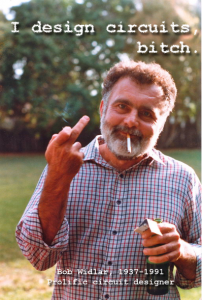
- While talking about the process of "Muntzing" a board (systematically taking off components to reduce cost), we also talked about Bob Widlar and Paul Rako's recent article. Here's Chris' poster idea for all aspiring chip designers to hang on their cube wall.

Transcript
Chris Gammell: Welcome to the Amp Hour.
Dave Jones: I'm Dave Jones from the EEVBlog.
Chris Gammell: And I'm Chris Gammell from Chris Gammell's Analog Life. Hey, Chris. Hey, Dave. How's it going? It's going good, man. I'm sitting at my new bench. I love it. Awesome. Yes. Hopefully the sound sounds a little better. The quality sounds a little better. I'm back on my old mic. I'm back sitting. My basement's still cold, but yeah. I posted some pictures and man, it's working out great so far. So new computer. Except for the no end of problems we had this morning. Oh, well, yeah. Only a half an hour to get us all set up. But compared to our old shows, I mean, that was every time we did half an hour. So hopefully this will be it.
Dave Jones: Ah, yeah. It should be. Because, yeah, like I had dramas. My headphones broke. And then I tried to tweet the image of it. And then the, what is it? The YFrog image engine didn't work or something. So that was a fail. Yeah. And then the wife had hidden the external microphone that I used to stream through to Chris. And, you know.
Chris Gammell: Fiasco. Just all around.
Dave Jones: Fiasco. And then you had audio problems because you're using the new Windows 7 machine.
Chris Gammell: Mm-hmm. Yeah.
Dave Jones: And, yeah, no end of dramas. And I'm just noticing on my VU graph here on Audacity that it's doing that variable peaking thing again. Oh, no. Oh, can't win. It just, like, dynamically gains up the mic. Yeah. Oh, man. Can't win. Can't win. So if today's thing sounds terrible, well, yeah, it's not entirely our fault. Or it is because we're just stupid, right? We just don't know how to operate modern electronics, obviously. Right, right.
Chris Gammell: Ah, it's all too hard. Yep. But we made it.
Chris Gammell: We're here.
Chris Gammell: We're talking.
Chris Gammell: Awesome.
Dave Jones: Well, I've got one ear. This is a new experience for me because I've, I've, because the headphones literally broke, like, you know, the left-hand side speaker actually broke off. So now I've got, like, a bit of plastic digging into my head on the left-hand side of my head. And, and the right-hand side, I've just got the one speaker. But, yeah, I find it a bit disconcerting. I much preferred to have the, the two speakers in the ear.
Chris Gammell: I feel it. Right. So let's get into the, let's get into the list. I wanted to start with a correction, actually. Go for it. So last week we were talking about the, the radio show, the other radio show. That was actually the, the title of our, our post was the, well, I don't remember it. That's right. The competing competition or something like that. Yes, competing something like that. Yep. How time flies, huh? But anyways, I set it as design news and it's actually electronic design. Yep. Oops. Yeah. Big oops. Sorry about that, everybody over there. I read a couple of people comments on our site, including the host, Joe Despacito, came over and commented. Yes.
Dave Jones: Thanks, Joe.
Chris Gammell: And, and that was actually the, the second point of contention because I got all pissed because I was thinking, oh, they said it was the first electronic design radio show. And I thought it was, oh, I can't believe they said that. We're the first electronic design radio show, even though we're not really.
Dave Jones: Well, I listened to it and, and I agree. That's the impression I got. Like, and they said, oh, this is groundbreaking. It's a world first. Yeah. It was a world first for their website.
Chris Gammell: Right. And that's what it was. It was, they are electronic design design and they, it was the first electronic design radio show.
Dave Jones: So, well, they are correct. They did like to talk it up. Well, yeah.
Chris Gammell: Yeah.
Dave Jones: Good on them. They want to talk it up. We talk up our show. That's right. It's all good.
Chris Gammell: Yep. Yep. So.
Dave Jones: Fine. Okay.
Chris Gammell: So, that was the first ever amp hour correction on air.
Dave Jones: Yeah. Sorry about that. I didn't pick you up on that because you put it in the notes and then I just read it from the notes and it didn't. Yeah. You know. Even I knew it was design, electronic design. Sorry. I almost goofed it again.
Chris Gammell: Oh, there's, you know, there's only some, we kind of went through this when we were trying to name our show. There's only like so many iterations of different words you can really have. Very true. You're talking about like design electronics and there's electrical and electronics and those kind of have different meanings. And then, you know, you have to start kind of spreading outside of there. Even like EDN is electronic design news, right? And EE Times is electrical engineering times. But yeah, there's only really so many things that there's usually an E and a D and an N or a T or something in there all the time.
Chris Gammell: It's easy to get them mixed up. It is. Yeah.
Dave Jones: And I, of course, need to do a brag. I have a new microphone stand and a microphone shock mount. I tweeted the photo of it. If you want to have a look, it's pretty sexy looking. Unfortunately, it's like to get it right in front of me. It's right in front of me at the moment. But then I've got to move the notebook off to one side so that I can actually see the screen. So I've got to like talk into the mic and then sort of, you know, dart my eyes sideways so that I can see the screen. Yeah. And it's still partially obscured by the pop screen. So I don't know. Can't win. I don't know how the pros do it all day. We're so inexperienced with this stuff. I know. Noobs.
Chris Gammell: I know, right? Yeah. Totally. All right. So do you want to jump into some workbench of the week?
Dave Jones: Yes, please. And it'll probably be the last for a while, we think.
Chris Gammell: Yes. We'll talk about that after we go through the workbench of the week.
Dave Jones: Yes. We, yes, we will. So go for it. First up. Okay.
Chris Gammell: First up is Lucas. Lucas Weekly. And actually, I talked to Lucas. He actually interviewed me for his school. And then he, I was talking about it and he said he wanted to submit a bench. And he's got a great one. It's just a, you know, nice little workbench there. He's got a picture of them. I'm not sure what he's holding in his picture, actually. He, it looks like some kind of like weatherproof box. Yeah, I can see it.
Dave Jones: He's got like, yeah, one of those weatherproof boxes with the O-ring seal, the Pelican case, I think they call it. I don't know if it's a genuine Pelican case or not, but yeah, it's got a whole bunch of stuff on the front panel, like drilled through the front panel.
Chris Gammell: Yeah.
Dave Jones: And yeah, I don't know what's going on there, but he's in the shot. Has he got one of those Justin Bieber haircuts? I'm sorry.
Chris Gammell: Is that one of the, or am I just too old? I think you're right. I think you're right. That is kind of. Yeah.
Dave Jones: Is that the Justin Bieber they call it? Anyway, he's a young fella. Good on you. He's smiling. I love it.
Chris Gammell: Yeah. So I was talking to him about his school program. He's actually in a high school program that's engineering based. And so that's actually pretty cool. Oh, that's great. Yeah.
Dave Jones: Man, we never had anything like that when I was a kid.
Chris Gammell: Yeah. He's doing first robotics. And actually there's a couple items in the, that works out well because there's a couple items in the discussion list we hopefully will get to about first and education and stuff. So maybe we can talk more about that later.
Chris Gammell: Absolutely. Very cool. Very cool. Yes.
Chris Gammell: Excellent. Next up is our first and our last female submitter to Workbench of the Week. I'm excited about this one. I know. I know. So it's Ermi and she's from Austria and that's another first.
Dave Jones: Hey Ermi, thanks for submitting. And she's in the photo. There she is.
Chris Gammell: Yeah.
Dave Jones: Awesome. I love it. And she does admit, she does actually admit that she borrowed the Rigol scope in the photo from a boyfriend who didn't want to be in the shot. Boo. So there you go. I don't know.
Chris Gammell: Props for her for being in the photo, but not, I don't know what the boyfriend's doing.
Dave Jones: Right. But the boyfriend has a Rigol scope and she borrowed that and well.
Chris Gammell: And if he's taking the photo too, I mean, come on.
Dave Jones: Well, yeah. Okay. Granted.
Chris Gammell: I guess if they didn't have a tripod, they could have done that, but.
Dave Jones: Yeah. Possibly.
Chris Gammell: Yeah.
Dave Jones: But I'm excited. The first female Workbench of the Week.
Chris Gammell: Yeah. That's great. Awesome. I mean, there's going to have been a good uptick about, you know, female participation electronics. I think it's on a steady, like, increase, which is really good. Oh, for sure. Yeah. It's getting huge. Yeah. Especially when we talk about first, I think there's a lot of stuff. You know, that's been a really good positive force for that, at least in the U.S. And for.
Dave Jones: Well, here in Australia, we had a bunch of the first kids over to our work. Like our work sponsor, you know, the first contest, right? Oh, yeah. They sponsor the robot they're building or whatever. And all the kids came in and, yeah. I mean, like more than half of them are girls, I think. It's just. That's awesome. It's great.
Chris Gammell: That's really great.
Dave Jones: Yeah. Fantastic. And, yeah. Anyway, we'll talk about that sort of stuff later, but we just think it's terrific.
Chris Gammell: I just wanted to point out on the link that Ermi has for her name. You know, you can put it in your name when you comment and it'll link people to your site. And so, the second or third post down is a DAC, a 20-bit DAC. And I translated it from German, but it says, porn for engineers. So, I'm guessing that's a borrowing of your phrase and translated to German.
Dave Jones: Right. Okay. Awesome. Good to see it. Let's see.
Chris Gammell: I don't know what it would be in German. I don't. Oh, no. That's actually in English. Okay. Porn for engineers is in English.
Dave Jones: Right. Okay. Yeah. Anyway, thanks for that, Ermi. Terrific. Good to see.
Chris Gammell: Oh, I think that was actually the, it's Lukey is who wrote porn for engineers. So, whoever that is. That must be the, yeah. Anyways, that's awesome. So, thank you, both of you. You're probably, at least for the near future, you are the last workbench of the week. So. Although, you know, we might make one exception when my video comes out.
Dave Jones: Oh, right. Okay. Yeah.
Chris Gammell: I made a video for my build.
Dave Jones: Might have to make one. The advantages of being a co-host. I guess so, yeah. Make your own agenda. Yeah.
Chris Gammell: Yeah. And so, we have other changes on the bill, possibly for the show. Not too much.
Chris Gammell: Possibly? Let's talk about them.
Chris Gammell: Go for it. Yeah. So, one of the things, I actually posted a question on the EEV blog forum, which also goes by EEV forum now, if people didn't know. Dave registered that domain name, so I thought that was kind of cool.
Dave Jones: Yeah, I did. I thought about changing the name, and then, like, because it was better. You know, I thought it should be, like, have its own domain, it should be separate. But then I got a bit scared that, oh, you know, it's already indexed in Google, and it's got this, you know, SEO, search engine optimization, and all that sort of crap. Yeah. And then I got scared, and I changed it back. But yeah, you can do EEV forum.com, and it links over.
Chris Gammell: Yeah. It's easy to remember, too. I mean, not that. Yeah.
Dave Jones: But Google still indexes the old site. So, I don't know. If you've got any thoughts on that, if you're an SEO expert, you know, will it hurt my site if I change over? Should I do it now for the long term? I don't know.
Chris Gammell: I mean, if you're an SEO expert, you're probably not listening to this show. Right. Okay. You're probably earning zillions of dollars. Yeah. Oh, yeah. Or you're just not bothering with electronics.
Dave Jones: Right. Got it. Because the forum just passed. I tweeted it.
Chris Gammell: Yeah.
Dave Jones: Yesterday. Just passed half a million views last month. That's crazy. So, that's awesome.
Chris Gammell: Yeah.
Dave Jones: Hi to everyone on the forum, and thanks. That's just fantastic. That's a good resource.
Chris Gammell: I mean, there's a lot of great people on there. And, you know, I've been around a lot of forums. I always try and find different communities. And EEV blogs right up there, you know? So, that's good. Absolutely. I love it. So, one of the things we talked about on this particular thread, I'll link it in the show notes. But, you know, like we were talking about maybe getting rid of Workbench of the Week, which we're definitely doing for the time being. Yeah.
Dave Jones: For the time being. Not get rid of it completely. Right. You know, we might bring it back occasionally, but we won't actively seek out more entries, I don't think. Right. Because I think we're eventually going to hit a plateau with that, you know? There's so many listeners, and they're all going to submit. The ones that want to submit, we'll submit, and we'll just end up with a dribble of Workbench of the Week.
Chris Gammell: Right. Yeah, I agree. And, you know, people say, and it's tough, too, because it's, you know, it's radio or podcast or whatever you want to call this. And that's tough for, we're just explaining it. It's not nearly as cool as if you're actually going and looking at it. So even though we give that option, it's not really an option for everyone.
Dave Jones: Yeah. If you're driving in your car, you know, and you're sitting there for an hour listening to the amp hour, then, well, you know, if we waste 20 minutes talking about a Workbench, that's Yeah.
Chris Gammell: Exactly.
Chris Gammell: It's a bit pointless. Yeah. Anyway. And so we only saw like 10 to 20% of people actually going to look at that stuff anyways, but not a big deal. Other things we're looking at, one of the people, Strube, who we see on Twitter sometimes, too, he suggested maybe a project thing so people could submit the projects they're working on. We could talk about them, maybe if they're in progress and people want feedback or people want, you know, if we're talking about it on the show, then other people could also, you know, go to their site and ping them with ideas about if they're having problems or something. And so I like that idea. I don't know. What do you think, Dave?
Dave Jones: It's not bad, but it also suffers. We will definitely do it, but it also suffers from the same problem. If we go in depth and talking and trying to describe it, then it doesn't work on radio. You know, it's hard. You really have to go look at the photo, but we can at least mention them. Yeah, that's true. You know, look, somebody's got this great open source, you know, widget they're working on and if you're, you know, it's a cool idea and if you're interested, go check them out.
Chris Gammell: Yeah, that's a good idea.
Dave Jones: That kind of thing. So more from probably a shout out point of view almost and just a quick, quick sort of, you know, mention of the overview.
Chris Gammell: Yeah. Yeah, that'd be good. Maybe I'll set up a forum for that kind of thing. And that's nice, too, for the, you know, you just set up a Google forum real quick and it'll just pop it right into a spreadsheet. So I like that. But another thing we talked about was actually doing a live show and having people being able to call in or write in or text in or whatever. And that kind of was downplayed. Doesn't seem like a lot of people want to be hanging out at four o'clock in the afternoon in the East Coast time or whatever time it is there. Eight thirty now?
Dave Jones: Yeah, it's eight thirty. No, it's almost nine here in Australia.
Chris Gammell: Yeah. Although we do have the time change coming up, so that'll be a little different.
Dave Jones: Yeah, we do. That becomes beneficial, doesn't it? Yes, quite. Because we're worst case at the moment. Right. We goofed it up last time. Right. We're going to get it right this time. Yeah. I hope. Yeah, I think, well, it must go back. So it was good. It got bad. We're in the peak of badness and now we're going better.
Chris Gammell: Yep. Yep. Yeah.
Dave Jones: Come what? What's the date for the chain? March 15th, is it?
Chris Gammell: That's for the US. I'm not sure. That's for the US.
Dave Jones: No, Australia is, I don't know. I have to check. Yeah. It might be end of March or. Yeah. So probably by April. Yeah, I think it's probably end of March.
Chris Gammell: By April we'll be on the good timing and that's like six o'clock PM here is nine o'clock or is seven o'clock AM there. Awesome.
Chris Gammell: That works. Yep. That works well. Yeah. So. Yeah, the live thing. Yeah, I don't know.
Dave Jones: But they have to be special guests, I think. Yeah. And they have to be really teed up in advance and they've got to be keen to do it. Well, that would be people.
Chris Gammell: Yeah, there's lots of. Yeah, other people writing in, right? But I think the guest thing is a totally separate thing, I think. At least how I think of it.
Dave Jones: Right.
Chris Gammell: So I would love to have guests.
Dave Jones: Oh, okay. So you've got the guest thing and you've got the call in.
Chris Gammell: Yeah, exactly.
Dave Jones: Right.
Chris Gammell: Right.
Dave Jones: Okay.
Chris Gammell: You know, and I would love to have guests. I'm still working on my setup. We had enough trouble today, but I think I really, I mean, I would love to have people on here like Jeff or Jerry or, you know, Phil or Lamore, anyone who, you know, like is in the scene and, or even people that, you know, maybe everyone hasn't heard of, like just some prominent engineers that maybe no one's heard of, but they're doing some really cool stuff. I'm more than happy to bring them on here and talk to them about projects they're working on and just kind of shoot the breeze with them, you know? So I'm.
Dave Jones: Oh, absolutely. Yeah. Yeah. The, the only problem with that is they've got to have a good mic, you know, they've got to have a decent external mic. Cause we don't want to do the Skype thing and stuff. I think that's pretty shitty. I think audio quality is important. Yeah, I do too. So, um, yeah. So they've got to have the capability to have a good mic at their end, actually record their conversation into, you know, a program and then send it to us so that we can actually mix in later. If we try and do the whole live thing via Skype at night, it's going to be an epic fail, I'm sure. Yeah.
Chris Gammell: And that's one thing I'm looking at with this, this new computer I have is hopefully I want to see if there's a way to actually get people to stream directly to like my, to the box I have here. And if that's the case, then I could record locally at higher or higher fidelity sound, like better than feel.
Dave Jones: Okay. So what is that? An internet connected mixer or something? Is it?
Chris Gammell: Yeah. I've seen programs like, but I haven't played with me because I've been waiting on this hardware.
Dave Jones: So that'd be nice. Yeah.
Chris Gammell: That'd be really nice. If we could, especially if you and I, even if you and I could just record on the same thing, then it would just be, we just pop the show right out basically.
Dave Jones: Yeah. We, we could, if we could actually record direct, if we could stream directly in high quality, have a dedicated streaming link at, you know, I don't know, you know, 500k samples per second or something like that. Yeah. Yeah. Massive, something, you know, massive bandwidth, just complete overkill.
Chris Gammell: Right.
Dave Jones: Kind of thing. Then it could work. But then if you get a dropout here or there, it, yeah. Yeah. Well, we'll see. Because we are streaming around the planet. So yeah, I don't know. But maybe there's like a really robust, you know, sort of algorithm, but you can't because it's real time, right? So you can't really, you know, it's got to be streamed real time. If you had like a 10 second, 10 second delay or something like that, then you could actually buffer it and then send it. And if it got any errors, it could, you know, check some or something, it could ask to resend. But then it's, yeah, it's not real time then.
Chris Gammell: So yeah.
Dave Jones: So I don't know. If anyone has any experience with that, then please. Yeah, exactly. Exactly.
Chris Gammell: And that's the thing I wanted to point out for all these things we talked about. You know, if you have any feedback on this stuff, that's the reason we're talking about it right now, because we care about, you know, we don't want to lose you guys as listeners. We think you're, you're the, you're the bee's knees. Duck's guts. Yeah, the duck's guts. There you go. Yeah. And you know, we don't want, we don't want to lose people over changes. And so even if, even if you're really keen on Workbench of the Week, if you can't live without it, let us know that and we'll, and we'll, we'll talk about it. Absolutely. And then there's the, the 800 pound gorilla in the room, of course.
Dave Jones: Ah, right. Yeah. Yeah. Tell us about it.
Chris Gammell: Well, that would be, we've been approached by preliminarily about advertising and yeah, it's, it's a maybe. I don't know. I don't know. Well, it's not just advertising, it's sponsorship. Yes.
Dave Jones: Which is kind of different to, you know, ads like I'll pay you X per month to put, stick up an ad on your site. That's true. And you know, that's just, you know, it's an ad. You can just have as many as you want and I've got them on my site and you know, it's really isn't a big deal. Right. That's true. Yeah. Yeah. Sponsorship's a bigger thing. You know, it's a bigger gorilla. Yes. It is. So if you've listened to the, once again, if you listen to the electronic design show, whatever, has it got a name? Radio, electronic radio?
Chris Gammell: Engineering radio it is.
Dave Jones: Engineering radio. Right. There we go. If you've listened to that then, well, yeah, there were clearly sponsored by a certain parts distribution company and they made, yes, it was extremely clear and I wouldn't like to have that level of sponsorship, you know, because I hate the pre-roll ads. I know. Post-roll ads at the end aren't too bad, you know, stuff like that. Yeah. But yeah, the big 20-second pre-roll at the start's a bit much, I think. Right.
Chris Gammell: I think if we were going to do it, we'd do it like Leo Laporte does. That's the gold standard, I think. Leo, he says, here's a service. We actually believe it. And he has enough advertisers where he believes in them and he says, you know, they actually like the service. I don't think we'd do anything different. We're not looking for any kind of riches here. So we're not, we wouldn't advertise a product unless we, or allow a product to sponsor us unless we actually believe in it. Sponsor us, yep.
Dave Jones: Unless we thought it was a good product. Yep, absolutely. Right.
Chris Gammell: So I don't think, I would hope that we wouldn't come across poorly, but I don't know. Let us know what you think because, again, that's something else that could turn listeners away and the listeners are important.
Dave Jones: Yeah. Well, I've gotten criticism for, you know, just doing a simple product review. Yeah. You know, every time I do a product review and it's a good product review because the product is actually good, you know, people start claiming sellout, sellout, you know, like what? I'm supposed to say every product's shit? I mean, you know, so you just can't win.
Chris Gammell: Yeah, you start getting good products to review, right?
Dave Jones: Yeah, exactly. Do you want me to review the product? Yes. Then, well, if it's good, I'm going to say it's good. And, you know, well, what more can you do? But if you say that, then people think you're a sellout. It's crazy.
Chris Gammell: Yeah. I don't know. That's tough.
Dave Jones: You just, yeah. Anyway.
Chris Gammell: But we'd love everybody's opinion about, you know, how you guys want to participate. And we have some ideas. You might have some ideas. And I'm sure you all have opinions because we're human and people love having opinions. Lord knows we do. Yeah. Me in particular. Yeah. You have particularly loud.
Dave Jones: I'm full of it. Yeah.
Chris Gammell: I'm full of it.
Dave Jones: I'm full of something. Love it. Anyway, it's only like we haven't even started talking about this sponsorship yet. We've just been approached with a possible, you know, let's kind of sort of discuss it. So anyway, we want people's ideas. Yep.
Chris Gammell: All right. Moving on. What's next? We got a lot of stuff on the list. I put a lot of crap on here.
Dave Jones: Right. As usual, I didn't. I don't contribute much. I hang my head in shame. Oh. Uh. Well, no, no. I can talk about my boards because you, um, you were, you wanted to hear about this as well. I did. Yes. So we talked about this last week.
Chris Gammell: This is a follow up.
Dave Jones: Yes, I did. I finally got my, uh, boards. My, I got some, a little project I'm working on. I got my little PCBs from, uh, IT'd studio. Um, it's I T E A D. Yes. Studio.com. If you don't, and no, they're not a sponsor. Nope. Not a sponsor. My radio voice. It studio.com.
Chris Gammell: Um. All right. First, first thing that's going to happen though is Dave's never going to do a radio voice if we actually get sponsorship.
Dave Jones: That's right.
Chris Gammell: Uh.
Dave Jones: Guarantee that. Yes. My, my high rising terminal and my squeaky Aussie accent. Yep. Nice. It's self-world to radio. Yes. Anyway, it studio.com. Um, they sell like, um, Arduino clone kits mostly and, you know, parts for the hobbyist and all that sort of stuff. Um, you know, so they've got really cheap stuff like that. But if you go to a little tiny link down the bottom, which says, um, I don't know, uh, open PCB or something, and it goes into their custom PCB service they've got. And what it is, is it's basically a fixed price, uh, service to manufacture a double-sided plate through solder mask, double-sided silkscreen board. Yeah. Um, for $12. That's a pretty good price. That includes tooling. Okay. That, that's like, and I paid $4 postage. So in that, not, you don't just get one board, you get 10. Yeah. So I got 10 of my PCBs, uh, you know, double-sided plate through solder mask, silkscreen, double-sided, the whole works.
Chris Gammell: Yeah.
Dave Jones: For $16 delivered. Are you kidding me?
Chris Gammell: And that is five centimeters by five centimeters.
Dave Jones: That's up to, yes. Here's the restriction. That's up to five centimeters by five centimeters. Um, but if you go to 10, you can go to 10 centimeters by 10 centimeters. Yep. And, um, that is, what is it? Uh, $28. Woohoo! Yeah. Breaking the bank there. Yeah. Um, and you can do a decent-sized board on 10 centimeters by 10 centimeters.
Chris Gammell: For all you non, uh, non-metrics out there, that's about three by three inches. Right. Okay. So that's, I mean, that is, you could fit a lot of crap on there. I mean, what are the minimum, what are the, I don't know, did we mention this last week, what the minimums are? Like the minimum, uh, line widths?
Dave Jones: The minimums are, um, 6,000, uh, trace.
Chris Gammell: Or 6 mil, if you're from, not, Dave's land.
Dave Jones: 6 mil, or 6,000. Um, trace and space. Yes, my board was actually 5,000, uh, cause it's really quite a tight layout. So I, I traditionally do it as a, like a real tight layout. I'll do as 5,500, but I actually redid this. Yeah. Cause I went to PCB cart to get a quote, uh, which they're the normal service I use. And I thought they're pretty cheap, but their tooling was like 80, $90 or something because I had like 0.3 millimeter holes and I had 5 mil, uh, 5,000 trace and space. And yeah, it, it crept up there. Yeah. Um, like 120 bucks. And so I thought I'd try it because somebody mentioned them on the forum. Yeah. And so I re re re jig my layout for 6,000, 6,000 and the smallest hole is 0.3 millimeters. Um, you know, pretty reasonably tight, uh, specs. Yeah. That's, that's good. It's, it's pretty good. Um, and there's, you know, there's no issue there at all. And, uh, basically it's a, it's a batch service, right? So they, they're always putting their own boards through. So, um, they just throw your design onto the next batch that goes through any spare space. They'll just whack it on there for you and up to those maximum sizes. Yeah. And, um, how long did it take then? Well, it took about three days before they said they shipped it. Okay. Um, but then it took about a week to get to me, um, from Hong Kong. That's not bad. That's not bad at all. But because I've heard that, um, there are a new Australian customs, um, laws where there are more inspecting packages from Hong Kong. Now it literally only started coincidentally last week. Um, they knew you had boards coming, huh? Yeah, where my boards come in. So I think that's where the catch up was, but yeah, they claim only like three, four days, but they don't make any rigid thing because it's when their next batch goes through. So, you know, it certainly won't be three weeks. It shouldn't be, you know, it should be days, not weeks. Um, and anyway, the quality is quite impressive. Um, I've seen some photos of other people's boards and they were slightly misaligned and mine are slightly misaligned. The holes are slightly misaligned on the pads on the bottom, but there were no, there were no, uh, breakouts at all. And this is a 0.3 millimeter hole on a 0.6 millimeter pad.
Chris Gammell: Yeah.
Dave Jones: Um, so, you know, pretty tight stuff.
Chris Gammell: Yeah.
Dave Jones: And, um, and they were excellent quality. The, uh, silk screen is a dot matrix type. I'll have to put up some high res photos. I was going to do a little blog on it actually. Okay. Um, and it's pretty good. Although I did notice one of the boards, I haven't inspected them all. One of them had, um, a short between two of the tracks. So, you know, eh, but for, but for 16 bucks, right? I'm, I'm happy to inspect the boards before I sold them. You know, it's just, now here's the big thing, right? I reckon this is game changing. Okay. I like, I thought PC, when, when PCB cart came on the scene, they were one of the first for, you know, doing a real, you know, quite low cost, um, easy to, you know, easy to use service, that kind of thing. And I thought they were kind of game changing a bit, but this takes it to a whole new level when you can get your circuit prototyped in, you know, like in, in a week turnaround in, you know, double-sided play through solder mask. Why would you make your own boards?
Chris Gammell: It's just, you know, yeah.
Dave Jones: The, the only reason left is if you need the board that day, you know, straight away, you can't live without, you know, you can't live waiting a week. And, you know, that's the only reason. And if you make a mistake, you just re-spin it. It doesn't matter. It only costs you another, you know, 20, $30. Yeah. What's the big deal? So, you know.
Chris Gammell: I wonder how much of that is because of the small form factor where they can, they can, you know, squeeze that in where they need it.
Dave Jones: Like, they can squeeze it in. That's entirely what it is. They put it around the outside because there's lots of, you know, space around the outside of the panel. And yeah, that's why the yield may not be as good around, you know, at the edges or something like that. I don't know, but yeah. Yeah.
Chris Gammell: I've used advanced circuits before for like their low cost stuff. And that's about, I think they have some stuff where it's like $33 a board or something like that, but you can get a lot bigger for that. I've used Sunstone and PCB cart.
Dave Jones: But does that include tooling?
Chris Gammell: Yeah.
Dave Jones: Right. And that's per board, is it?
Chris Gammell: Yeah. So they have like specials where they'll do like five for something.
Dave Jones: Okay. Well, the biggest, the highest price service that I teed is $38. Yeah. And that gets you 10 by 10 in your choice of colors and board thicknesses. Right. So that's what they're customizing. And you get 10 boards.
Chris Gammell: Yeah. Yeah.
Dave Jones: And you get 10 boards. Yeah. So you pay a bit extra for that customized aspect of it.
Chris Gammell: But still $38 for 10 boards. That's a good price. I like that. I wonder what the shipping to the US would be. I might have to just try this.
Dave Jones: I don't know. You put it in there, but I paid $4 to Australia. So, oh, well, that's for the small five by five. I think you pay a bit more for the 10 by 10. But geez, you know. Anyway, now I reckon the next thing we need for that is like a really cheap, easy to use assembly service, like dirt cheap, you know.
Chris Gammell: Yeah, that might be a little harder to find.
Dave Jones: I know. But there's so many machines out there. There's so much machine capacity out there. There's got to be spare machine capacity.
Chris Gammell: Yeah, but it's not just about that. It's about stocking the reels and having all the parts there. Yeah, I know. I know. That's the logistics of it that are hard.
Dave Jones: Yeah, I know. But it's getting there. It is. But it's not quite the same level as the PCBs yet.
Chris Gammell: You know what would be interesting for that is if there was a – I mean, it would take a whole new type of machine, really. Because we see like – you know, you see pick and place machines that are maybe 20 reels or 30 reels, 40 reels, whatever. But if you had an entire factory with – you know, if you had like one where you could have all of the reels always loaded in like some large matrix, right?
Dave Jones: And a robot goes and selects the one and – yeah, so there's no manual intervention.
Chris Gammell: Well, no. You could even have – you could have like a 40 reel kind of setup, right? But you always have the reels loaded there, right? And then you would have the boards run through machine A, which might have, you know, 50% of the parts you need. And then it runs through machine B that has the other 20%. And then it would just be trying to group the maximum number of components onto the fastest machines, basically.
Dave Jones: Yeah. And well – and where the key comes in there is you as a designer have got to know what is on those machines, right? You've got to have transparency with that stuff. And then you actually design and optimize your designs around what your manufacturer can do, like exactly what I did with these boards, right? I knew that they would do 6-6 minimum, so I went and I, you know, I will now do all my board – all my little small boards 6-6. Yeah. Spacing now, because I know that's what IT can do and they're cheap. Yeah. And, you know, so, yeah. So if you know that, you know, your favorite assembly house has got, you know, this type of, you know, 100N cap and, you know, all this sort of stuff and all this type of transistor already loaded on their machine or already in stock, then, you know, it pays to use that, pays to design that in, even if it might cost a little bit more.
Chris Gammell: Yeah. I was kind of imagining a whole new type of system, though, where you have like a program path, basically. So say you had 100 pick-and-place machines and then, you know, these boards – the A boards are going through machines 1, 4, and 6, right? And so it routes it all to those places. You'd have to have a really complicated setup. But once you finally had that in place, you could just program it in, have someone just there maintaining the reels, making sure they're always stocked, and then you could just run them through at high volume, high speed. That's the only way I can imagine the cost getting down enough to really – Yeah, right. – really take off. Because otherwise, it's a loading and unloading of reels.
Dave Jones: It's a loading and the setup and all that. Well, you've still got the setup and stuff like that. So, yeah. Well, yeah, when you put it into a new machine, you've got to set up the – you've got to set up the dartums and stuff again. So, you know, yeah, I know. It's – but still, the people who operate these machines are very quick and very efficient. Oh, yeah. Yeah. But, yeah, the only problem with having like 100 machines, as you say, is that once you put that pace down, you've only got like an hour or something to actually put your board through. Otherwise, the pace goes off. That's fine. You know. I'd run those boards through in three minutes. You know, like – But those machines have to be available. Right. Well, that's the real question. So, you can't put it through one machine and then, oops, it's got to sit in the queue waiting for the next machine. Right. Because then the pace goes off and fail.
Chris Gammell: Yeah. That's a good point. You know, it's kind of – the whole idea behind that is like lean manufacturing too. And it's like you always want to try and drive it down to the – the lowest cost is always going to be if you're smallest – or not the lowest cost, but the most efficient. Manufacturing is going to be if you're the smallest batch size. So, you could process one board efficiently and at decent cost. That's the best situation. But – Absolutely. In those situations, we have to reload all the reels and everything. That's when it starts being – you know, we have to make 10 boards at a time. Maybe you don't need 10 boards. That's where the real cost comes in. And that's why when you buy one board versus 10 boards, sometimes it's the exact same cost because there's some minimum you have to get to. So –
Dave Jones: That's right. And if you're designing a PCB, a lot of people don't realize this. When you're actually designing your board, you've got to think about how many different types of components you've got. Yeah. Yeah. You've actually got on your board. If you've got 30 different types of components or 31, say, 31 different types of components and your manufacturer, who uses a certain pick and place machine, that's only got capability for 30 reels, then you're screwed. They're going to charge you, you know, extra for actually putting the thing through twice and changing the reels and, you know, all that sort of stuff.
Chris Gammell: Yeah. So – Yeah. Time is money, right?
Dave Jones: You know, absolutely. Yeah. So they're the sorts of things you've got to think about when you're designing something for high volume – or not even high volume, just for machine – Low cost. Just for machine assembly. Yeah.
Chris Gammell: Yeah. It gets really annoying, I have to say. It's like – Yeah, it does. It's like the paperwork of the electronics design world, like trying to figure all that crap out and then design to it, and then you can't use this one component, so you have to switch it around, and that messes up three other things. It's annoying.
Dave Jones: And smart companies will have a full-time employee or employees that actually handle, that deal with that sort of stuff on a full-time basis. They're a component engineer or they're a manufacturing engineer. Yeah. And they, you know, and they specialize in, you know, dealing with the manufacturing houses and knowing their capabilities and sorting out all those things. So complex business. Anyway, I'm excited by these boards. Yeah. Even though they weren't 100% perfect, geez, for $16, I'm blown away. You know. Yeah. It's just – it's incredible. So, yeah. I don't know. Should I start mentioning this mob? Will they get snowed under? Like, I think what happened with PCB cart. Oh, really? I've been promoting PCB cart for – before I started the blog, I think even, on other forums, and the word started to get around, you know. And then I've watched the prices slowly creep up and up and up and –
Chris Gammell: Yeah, because that's what they do when they can't – As they got more popular. When they can't meet demand, they start upping the price until people are like, I can't do that anymore.
Dave Jones: Oh, well, they have to buy extra machines to, you know. Oh, that too, yeah. Take hold of it, you know, to actually move into bigger premises and, you know. Yep. Once you get popular. And they're massively popular.
Chris Gammell: Yeah.
Dave Jones: And I've – yeah, the prices just keep creeping up. So, I'm afraid that the same thing might happen here. So, maybe I should keep it a secret. Oops. A little late for that, Dave.
Chris Gammell: I'll have to edit it out.
Chris Gammell: I got these new boards for beep. Yeah. That's right.
Dave Jones: Wow. Anyway, I think it's cool. Yeah. Yeah.
Chris Gammell: I was impressed. So, we have a follow-up from last week about the – we were talking about pulling caps off boards and stuff like that and how that actually broke something. Do you remember talking about that?
Dave Jones: No, I don't remember that.
Chris Gammell: No. I don't remember what we were talking – I do remember saying that, though. And basically, that was Jerry who was telling me about that. She said how they kept pulling decoupling caps off one of her designs.
Speaker ?: Oh, right.
Chris Gammell: Okay.
Dave Jones: Yep. Yep. The joystick. That's right. Well, they actually took them all off. Right. That was the problem. Right. The main ASIC didn't have a decoupling cap.
Chris Gammell: Right. Oops. And so, Atomic Ant wrote in and said there's actually a name for that. Actually, speaking of which, that's a cool name.
Dave Jones: Atomic Ant. Atomic Ant. Yeah.
Chris Gammell: That's probably not a given name. It's probably more of a – No. Well, granted. But yeah. I just think that's cool. Yeah. Okay. But it's called Muncing. I think I said that right. That's right. Yeah. Muncing. Named after – Yeah.
Dave Jones: I think I've heard of it before, but no, I'm going to say I've learned something new. Yeah.
Chris Gammell: That's a great verb. I like it. Muncing. Yeah. I don't know if I really agree with the practice of just pulling stuff off and seeing if it still works because you need so many test vectors in order to make sure that something actually works. Yeah. He used to do that with TVs.
Speaker ?: So –
Dave Jones: Yeah. Exactly. And that's where it came from. And then as far as I knew, it started with the – you know, I mentioned last week it started with the Japanese TV industry and they would actually cost cut by taking out components until it stopped working. Yeah. So – but yeah, this like – I think it dates from the 40s or something, this guy. Yeah.
Chris Gammell: He's talking about snipping TV components with wire clippers. So it probably was nothing surface mounted.
Dave Jones: Oh, right. But that's only what? Okay. And he's talking about valves because valves were very expensive, you know. Yeah. And TV might have, you know, 10, 12 valves in it and they're very expensive. Right. So, you know, whoops, if I take this one out, does it still work? Yay, beauty.
Chris Gammell: Yeah. I love it. So the same guy, Atomic Hand, he also checked out – or he also mentioned widlerizing. I don't like pronouncing that.
Dave Jones: I don't either. It's so simple. I know. It looks like widler, but it's not. I get it wrong every time. It's widler. It's widler.
Chris Gammell: Right, or widler. It's widler. Yeah. Yeah. He should have put two I's in there. But anyways, Bob Widler, he's one of the first guys – He's famous. Yeah, so famous. And so actually, Paul Rako just wrote about him and he posted a bunch of pictures – All right, I'll check it out. Yeah, a bunch of pictures from his brother, Bob Widler's brother, and there are some awesome pictures.
Dave Jones: Oh, I've got to check this out. Yeah, so everybody should definitely check it out. Oh, here it is. I've got the link. You've put the link here. All right.
Chris Gammell: So he was famous for a lot of pranks. He blew up an intercom. He brought a sheep to work because he thought the grass was getting too long. And all these great pictures. And then you go down to the bottom and it's just him flipping the bird right at the camera. It's a brilliant picture. And I'm going to take this and turn it into a poster, I think. I don't know what kind of caption we need for it, but he calls it the Widler salute. But man, awesome.
Dave Jones: Let me have a look. Oh, he's flipping the bird.
Dave Jones: There we go. There's two of them with the fag hanging out of his mouth. All right. And, you know – Is that bad? Is that not U.S. terminology?
Chris Gammell: Oh, we call them cigarettes here, but yeah.
Dave Jones: Well, so do we. But yeah, the slang term is, yeah, fag. Yeah. Which I think comes from the ones you used to roll your own. Right. Yeah.
Chris Gammell: And that's a British thing, too. I always giggle at that. Can I bum a fag, which means borrow a cigarette?
Dave Jones: Right. Yeah, yeah, yeah. Exactly. Because the term also has other connotations. That's right. Which we won't go into. Right. Yeah. That's, you know, it's a harmless term that means cigarette. Yes. Anyways. Absolutely.
Chris Gammell: Yeah. So, I mean, you talk about the – You know, I call ham operators the badasses of the analog world, right? Yeah. But this guy was like the original badass of the analog world. Like, you know, he's kind of an alcoholic. So, not great there, but –
Dave Jones: Kind of an alcoholic. Okay. Yeah.
Chris Gammell: Well, whatever. But, you know, he just – He helps start the whole industry. So, I mean, you'll hear stories or read stories about him. It's just awesome. But, yeah, just wanted to point that out, too, because Atomic Ant mentioned that. So, we'll post a link to Paul's article, and I plan on making a little poster out of that. I'm not sure what it's going to say yet, but –
Dave Jones: But warning – I have to rant. Warning, Will Robinson. It's EDN. Oh, yeah. So, you know, EDN, the industry leaders in pop-up ads. That's right. Okay.
Chris Gammell: Can't click a page without getting to one.
Dave Jones: You can't get to any EDN page without a full-page ad popping up with a 30-second timer and a click here to bypass this ad. Give me a break. Yeah. Stop it. Yeah. I'm sick of this shit.
Chris Gammell: I don't know. Really? I want to know their click-through rate, too. Like, who's not accidentally clicking that stuff? Who's like, ooh, you know, I really needed a power converter. Let me just go and not do what I was about to do. Oh.
Dave Jones: Yeah. Ads on the site. I can – they're fine, right? The ads down the side, which they've got. I can ignore those. Fine, you know? Yeah. But, God, not a full-page pop-up ad with a 30-second countdown timer.
Chris Gammell: Yeah.
Dave Jones: God, buy a clue. Send me your – EDN. Send me your PayPal account, and I'll send you a dollar so you can buy a clue.
Speaker ?: Oh.
Chris Gammell: Yeah. What's that? That was a nice little – Too harsh? Was that too harsh? A little harsh, but it's okay. No. I think it's well-served. It doesn't help the engineer at all. You know, like – No. No. I immediately ignore it. You know, there's nothing I'm going to do except expressly ignore it. Absolutely. Yep. You know, if you want to make me angry –
Dave Jones: Whereas the ads on the side, I might have a look. Yeah. You know, I might – my eyes might dart over and have a glance at the ads on the side. Oh, that looks interesting. I'll have a click.
Chris Gammell: Yeah.
Dave Jones: You know? And it's really not even them. But not when it's –
Chris Gammell: We shouldn't tell EDN. We should be telling the advertisers, because they're the ones that are paying gobs of money for that kind of stuff.
Dave Jones: Yes. They pay huge dollars to – Yeah.
Chris Gammell: Yeah. Do that.
Dave Jones: So, just like a lot of companies pay top dollar to be on the front cover of the magazines. Oh, yeah. Industry mags and stuff like that.
Chris Gammell: You know, you had told me about that a while back, and I had never heard of that.
Dave Jones: Yeah. They do it. They've been doing it for – it's been going on ever since magazines have been around. Companies have been paying top dollar. There's a front cover rate, you know, to have your product mentioned on the front cover of a magazine.
Chris Gammell: Yeah.
Dave Jones: You pay a lot more. And a lot of companies, they do it, you know. Silicon Chip is famous for not doing it. Yeah. They get approached all the time for, you know, oh, look, can we, you know, what's your rate for putting something on the front cover? And Leo says the front cover's not for sale, you know, which is great. Yeah, take that. Yeah, take that. Advertiser. Yeah. That's good. So, it's great. So, yeah, but companies do that. And likewise, they pay top dollar for these pop-up ads to be bang in your face every time.
Chris Gammell: Yeah.
Dave Jones: And granted, you know, yeah, you can't – well, I can blame EDN for taking the money and allowing the things. But, yeah, it starts with the advertisers, really.
Chris Gammell: Well, they're the ones that are going to change it, right? So, if they say, well, we're not going to pay for that anymore. So, tell your local chip companies that you don't like when they advertise on the front cover. You'd rather hear a story – I mean, honestly, I'd rather hear a story, too. If I hear a story from a friend or I hear it on, you know, engineering radio, perhaps, maybe not because – Or the amp hour. If I hear it on the amp hour, I'm definitely going to listen to it, you know. But the thing is, I don't want to hear it if I have any inkling – and I know a lot of people are like this. If you have any inkling that they paid for a positive review, that's where it goes south, you know. Like with you and the Agilent scope, right? You got paid for that review. That is – you were above the board about that. But, you know –
Dave Jones: Oh, well, I got – no, they offered to give me money, right? They came to me and they said, how much do – you know, how much will it cost for you to review these new scopes we've got coming out? And I said, no, I don't accept money. Oh, I thought you did. You know. Oh, no. No, no. I didn't accept – I got a free scope out of it. Oh, okay. Like I do – you know, a lot of – they let me – a lot of companies will let me keep their gear. Oh, yeah. And I'm upfront about that, but no. Oh, okay. Oh, no. No, no. There was no money involved.
Chris Gammell: Yeah, and that's the same thing. I think people might have thought that you got paid for that review.
Dave Jones: Oh, no. No, not at all. Okay. Maybe they did. Well, everyone knows I got to keep the scope. But actually, at the start, they approached me. I didn't even know what type of scope – they said it was a real entry-level one. And they – but they didn't – that's all they told me. And I thought, oh, it's going to be like a $400 RIGOL. You know, it's going to be down at the $400 price point. And it's going to knock RIGOL off their socks. And, you know, I had no idea they were, you know, going to be – well, not expensive, but they were actually going to be reasonably high-end scopes as they were. So I only found out that sort of when they actually arrived and I opened the box and I went, holy shit, this looks kind of, you know, expensive. And, yeah. So – See, no – No, but they – That's the thing.
Chris Gammell: Whenever I sense that someone's getting paid to advertise something like that, like, you know, if it's a legit review, I'll listen to it any day. If it's – if I think it's bought and paid for, I won't listen to it, you know? It's just like how can you possibly be objective about it? So that's – No, well, exactly.
Speaker ?: And I think that's a lot of people.
Dave Jones: Well, that's what I try and be. I mean, you know – Hell, you smoked yours. As you know, I point – you know, I point – I point out all the negative things.
Chris Gammell: Yeah.
Dave Jones: And, you know, that's what I do. Heck, I even showed the $12,000 scope that blew up. It blew up, I remember. For goodness sake. Yeah. You know? And, yeah, but that's their risk. And I always tell the manufacturers up front, if you send me something, then, you know, if it's bad, if it's shit, I'm going to say it's shit. And if there's something wrong with it, I'm going to call you on it. Yep. And, you know, and some of them will actually ask to see the review beforehand, and I always say no. You know, you send me the gear, you take your chances. You know? Yep. And, yeah, and, you know, really getting a free scope like that is not a big deal to me. You know? It's like –
Chris Gammell: That's pretty nice. I like it. It's not going to sway my opinion.
Dave Jones: Well, yeah, it's nice. I went, oh, okay, I'm not going to turn it down if you're going to let me keep it. Yeah, yeah. You know? You know, it's not like I'm going to, you know, turn it down just to, you know, keep my credibility or something like that. It's just – No, it's stupid because I can use that in tutorials in the future, and it's a valuable bit of gear.
Chris Gammell: Yeah.
Dave Jones: Of course I'm going to keep the damn thing.
Chris Gammell: Yeah.
Dave Jones: You know? I'm not going to give it back in, you know, protest of, you know, that I don't get paid. Anyway, yes, they did offer me money, and I turned them down.
Chris Gammell: Yeah. So there you go. Well, I'm just saying that I always like it. When I could tell that it's a – you know, when I hear it from a friend, that – you know, that's what everybody's trying to do, too. They're all trying to get people to make it seem like that. But people can still sniff that stuff out. So.
Dave Jones: They can. And that's why I will always have doubters when I do product reviews or anyone else that does product reviews.
Chris Gammell: Yeah.
Dave Jones: They will, you know, they'll always have people claiming, oh, you've, you know, you're doing them a favor and you've done a deal or you've, you know, or you're – yeah, it's just nuts. Yeah. So, I don't know. You can't win.
Chris Gammell: You know what I can't win with Dave? Even if you don't keep the gear. Yeah. What's that? Contests. I can win with my contest. I can't win with my contest, actually. The 555 contest. But that's done. Tell us. Tell us why. iPads. Why can't you win? Why is everybody giving out iPads?
Dave Jones: Oh, bloody hell. I don't get it.
Chris Gammell: You see this on Twitter. You see it online. I mean, you see it in magazines.
Dave Jones: It's all engineering companies. Tektronix have got one at the moment. Another company's got one. They're giving away freaking – I don't get it. Because people lust over that stuff. Really? You know?
Chris Gammell: I don't want one. Well, apparently. I would sell it right away. That's the first thing I would do.
Dave Jones: I would probably sell it as well. Yeah. I've got too much tech in my life as it is.
Chris Gammell: Best case scenario, I'd give it away as a gift. Right. I don't know why they're picking iPads, though. I don't get it. Maybe I'm just a whack on here. Because they're lust worthy. Lust worthy. They're a lust worthy item.
Dave Jones: You know? For almost anyone. You know? Like, if you're going to get – Oh, I'm going to win a – I don't know. Can't even think of something. Just something ordinary and lame, right? But, you know, the iPad is shiny. It's new. It's sexy. It's talked about. It's, you know, envy-worthy.
Chris Gammell: And you have to use iTunes to load it up and all that other crap. Yeah, I know. Yeah. No, thank you. No. I just –
Dave Jones: But, well, it's not a bad web platform, apart from it can't do Flash, which is just a load of shit. Right. But, yeah, just to have – You know, I know people – Actually, my brother-in-law won one. He actually won an iPad. Yeah. And, you know, I told him, sell it, sell it. And he kept it. No, because he keeps it on the coffee book – He keeps it on the table in the lounge room, and it's wireless, and it just – he uses it as just a little simple, you know, web platform.
Chris Gammell: Yeah, but why is he giving it away with, like, design contests? It's like the consolation prize for – Oh, wow. It's – I hate it. I think it's – It's so dumb. It's like, you know, you're doing these electronics design contests, and then you see an iPad. It's like, well, that has nothing to do with anything that I'm doing right now.
Dave Jones: Yeah, can't it be an oscilloscope or a multimeter or something? But anyway, didn't you mention in one of our very first episodes that when you went to the Open Source Hardware Summit, almost everyone had an iPhone?
Chris Gammell: Yeah, they were just a lot of Apple products.
Dave Jones: Right, a lot of Apple products because they're highly lusted after, and the advertisers or the companies know that. Yeah. That, you know – I mean, I've been to the trade show stands. Our company's guilty of this too. And when I've been on the trade show stand, we gave away, you know, an iPhone. It wasn't – iPads weren't out back then, but an iPhone, right?
Chris Gammell: Yeah.
Dave Jones: And, you know, every couple of – you know, twice a day or something. And you'd see hundreds of people flock into the stand at the time of the drawing to win their – you know, to win the iPad. They'd all just flock in and go, oh, oh. And, you know, they're practically foaming at the mouth. Is my name going to be drawn out? Yeah. And on the iPhone.
Chris Gammell: Yeah.
Dave Jones: Man, it gets them in. If you did that, you know, if you did a multimeter, only half the people would turn up.
Chris Gammell: Not even. I guess so. A tenth. I – yeah.
Dave Jones: Anyway. Hmm.
Chris Gammell: No idea. I guess I'm just – But yes, it's annoying. I see them everywhere.
Chris Gammell: Yeah.
Dave Jones: Oh, goodness.
Chris Gammell: Well, let's talk about first because I mentioned that before. So the first – Yes. So one of my favorite shows on NPR, you know, I'm an NPR junkie.
Dave Jones: You are an NPR junkie who stole my voice. Yep.
Chris Gammell: Your voice? Bastards.
Dave Jones: Yeah, they stole my voice. Oh, that's right. Oh, that's right. In NPR radio. Yeah. That's right. Yeah.
Chris Gammell: They quoted you for the Kindle review. That's right. Yep. And so one of the shows, though, they were interviewing Neil Bascom, who has a new book, and it's called The New Cool. It's about the first robotics competition. Awesome. Yeah. Yeah. And so basically he follows around a team for a year or maybe less than a year, but basically it goes through all about the first competition and how it's – like how you mentioned before how there's a lot more females on teams now and just how it's – Yep. This is kind of the new first is the movement that might help science across the world.
Dave Jones: And get back. Yeah, exactly. It's a shame that it's only a book. That would have made a good doco. So, you know, if they followed around with cameras and – Yeah. I wonder – I'm sure someone's done that, though. Trials and tribulations. Yeah. Yeah. I just think that would make a great doco.
Chris Gammell: Yeah. But, yeah, they talked about some stats on there. So right now there's 20,000 teams for – That's – That's for the first – Think about that. That's for the Lego. But that's elementary school kids.
Dave Jones: Oh, right. I was going to say, because what is there – you know, at least five people per team. That's 100,000 kids involved in this thing. That's just ridiculous, at least.
Chris Gammell: Yeah. And – but even 100 – say there are, you know, two people a team, even 40,000 kids working on Lego robotics, which means they're programming or, you know, modified programming. That's a pretty – that's a pretty good start, I think.
Dave Jones: Oh, absolutely.
Chris Gammell: Yeah. And –
Dave Jones: And he talks about them, you know, they're working until 3 a.m. in the morning because they're so passionate about this stuff. And, oh, you know, that's just –
Chris Gammell: And that's the other thing. The teacher he ends up following the most ended up winning – his name is Amir. And he won a genius grant. So a MacArthur genius grant, he's the first public school teacher to ever win one. And it's – Oh, fantastic. It's because he worked the robotics into the curriculum. So these kids are working on this stuff in class where he'll give them a design problem and he just says, go figure it out. And guess –
Dave Jones: Man, I wish I had this when I was a kid. I know. I'm just so envious of today's kids. I really am.
Chris Gammell: So he's the physics teacher. Guess what he used to do, though?
Dave Jones: Oh, what?
Chris Gammell: Engineer. That's right.
Dave Jones: Engineer. Well, yeah, of course. That makes sense. Duh.
Chris Gammell: Yeah.
Dave Jones: Yeah.
Chris Gammell: Yeah. So I thought it was a brilliant story. And so I'll link in the show. You can actually listen to the Our Show with Diane Rehm. But, man, it's so great. It's – and so I've got the book on order. I've got to read it. But, you know, and like – Right. And especially like the new cool. I mean, you think about the title, right? What if electronics actually became cool? You know, like I don't – I don't know.
Dave Jones: Well, it's certainly not uncool anymore. And that's what's good about it. I mean, I was beat up in the playground for bringing Electronics Australia magazine to school. So, you know, I could read it in the corner in the playground. Yeah. Once the kids saw that, you're like, well, what's this shit? And they'd rip it apart and beat you up.
Chris Gammell: Yeah.
Dave Jones: You know, that's – God. That's what used to happen in my day. Now it's not because, you know, it's cool to work on this shit.
Chris Gammell: That's awesome.
Dave Jones: So, it's great.
Chris Gammell: That's really great. Love it. And Dean Kamen was on the show too. He was there talking about it because he's – people don't know. He's the one who started this – or invented the Segway and, you know, his company, DECA Research. But he – That's right. He had a really great quote on there, I thought. And basically, through the program, he says, math – people – students realize math is the hardest fun that they'll ever have. And, you know, that's – Yeah, Nate. And you think about it. You think about sitting back in your classes in, like, seventh, eighth grade, like, learning, like, pre-algebra and pre-algebra and pre-calc and all that other crap. You know, you sit there and you're like, what the hell do I need this for? Well, if you go out and you work on a robot, you know exactly what you need it for because you have to go figure out how to integrate something so you can, you know, figure out your integrating amplifier, right? I mean, like –
Dave Jones: Yep.
Chris Gammell: It's brilliant. So, I get – Love it. I get very excited when I hit these things, so I definitely wanted to talk about it. It was –
Chris Gammell: I'm sorry, but math is still not fun. It's not, but if you have context – If you have context –
Chris Gammell: Yeah, I know. That's what it's all about. If you have context to use it, yeah. You need context so you care.
Dave Jones: But, yeah, I've found that the more engineering you do, you find that you are amazed at the amount of engineering you can do with very little math.
Chris Gammell: I totally agree.
Dave Jones: You know, it depends on what – you know, it depends on what area you're into, of course. But, you know, look, I've been in the industry for more than 20 years. I, you know, I'm yet to use an integral.
Chris Gammell: Yeah.
Dave Jones: You know, it's just –
Chris Gammell: Well, you know the concept, though. Like, so you'll know the concept.
Dave Jones: Oh, of course. Yeah, I know. You've got to understand the concepts, of course, because they're important. But to actually, you know – Actually integrate. Go and solve those integrals that you learned at uni, it's just – no.
Chris Gammell: No, yeah. You've never had to. You won't have to. And I was – No. Who was I talking to about that? I think I was talking to my fiance about that. Like, with integrating – or even electronics, you know, like, you don't need math eventually. You need rules of thumb, right? So you know –
Dave Jones: Yeah, absolutely. Yeah.
Chris Gammell: I equals CVDT, right? Yep. C DVDT. Ugh. Which means that the current in a capacitor equals the capacitance times the change in voltage, right? And so that's a concept right there. You need to know that. The concept, exactly. Exactly. And so if you're looking at a graph of something and you see that you have a spike going into an integrating op-amp circuit, right, you know, configured like an integrator, then you know that that's going to create a step function. And, like, that is – that's math right there, right? So you have a delta function. Yeah, exactly. Which then integrates to a step function. That's a big concept right there. But you need to know that. And you don't need to know how to actually go and calculate it. You don't need to know – you don't need to go and figure out the – Usually. Exactly. Usually you don't have to. Right.
Dave Jones: Some fields – I do know guys that do that sort of stuff every day. Yeah, that's true. But it's very, very few. Right. You know, it's very few people. Right.
Chris Gammell: Yeah, and that's another thing I was talking to about, you know, how they teach to the highest level. And not saying they shouldn't because I think there is a lot of need for that because students need to figure out if they want to keep going or target those fields. Or come back as a teacher to continue the trend of teaching the high-end stuff, you know.
Dave Jones: Right. Yeah.
Chris Gammell: Right. But yeah, you always got to – unfortunately, you do have to teach to that sometimes. But when you actually got the practical side of things, I mean, you're going to be more rules of thumb and just kind of figuring out anecdotal type stuff.
Dave Jones: That's right. Awesome. Well, we've got a few minutes left.
Chris Gammell: What to discuss? What to discuss? What to – Your choice. Your choice, Dave.
Dave Jones: Because we piss away half the show talking about changing. Yeah. Are we talking about ourselves?
Chris Gammell: Yeah.
Dave Jones: I love it. How about – My choice.
Chris Gammell: There's something related here. Not really.
Dave Jones: Right.
Chris Gammell: So, the future first stars. Did you see the thing about Natalie Portman used to be an Intel finalist?
Dave Jones: No. Yeah. I didn't know that.
Chris Gammell: Yeah. So, that was – Wow.
Dave Jones: There you go.
Chris Gammell: So, one of our listeners, Eduardo, wrote in about this. Natalie Portman used to be – she, like, was some finalist. So, people don't know she's an actress who just won an Academy Award. Yeah. But that's – the thing that I hate about that is that that's when science gets a mention. It's like, oh, someone won an Academy Award and they used to be a nerd. Right. Yeah. Hey, science. What do you know?
Dave Jones: Can I have a rant – can I have an American rant on that?
Chris Gammell: Yes. But only after I mention that we'll post a video of Natalie Portman from when she's that young doing a ridiculous dance video. Anyways.
Dave Jones: Right.
Chris Gammell: It rivals the Bjork video. I'll just say that.
Dave Jones: Oh, okay. Well, there you go. Yeah. Got to check that out. Now, last night on the news – I think it was last – yeah, last night. Okay. Natalie Portman, right, because it's to do with Natalie Portman, as we do – as we talk about on the Amp Hour, of course. Right. We talk about movie celebrities here. And, yeah, and there was some – was it Mick Huckabee or somebody? Some dickhead U.S. politician. Right. That came on and said that she's a bad role model because she's having a kid out of wedlock. Piss off. Yeah. Really? Ah, seriously.
Chris Gammell: Yeah.
Dave Jones: I need to send him a dollar so he can buy a clue as well. Yeah. God. I think it was him. Anyway, it was on the news last night and it just – stuff like that just pisses me off. It's like, go away. I know. Take your shit somewhere else. Yeah. Really. Anyway, so there you go. There's our non-sequitur for today's Amp Hour.
Chris Gammell: That's Dave letting a little steam off there. Thank you. Yeah. Do we have time for one more thing? Yep. Go for it. Okay. So one last unrelated thing but kind of related to the first competition. There's another radio show I was listening to. It was out of Boston. And it was a guy – I mentioned the book on here before, Shop Class as Soulcraft. And basically, it's a guy who's a professor now. He used to be in some think tank somewhere basically. And then he became a motorcycle mechanic. And now he teaches part-time as well. But they were making the point for kind of what we were talking about. Like how the high-level math stuff, it's important and you should learn it. But it's much more important to focus on the apprentice side of things. So that's what they were pushing for on the show. Yep. And I think you've mentioned before that you kind of did like an apprentice type thingy, right? I mean like with your –
Dave Jones: No, no. No, I didn't do an apprentice thing.
Chris Gammell: I thought you said you did that when you started out with board design stuff but –
Dave Jones: No. No, not at all. I've never done an apprenticeship. Nope.
Chris Gammell: I went and studied and got a real job. Okay. Yeah. Anyway, so they were talking about that. I thought it was an interesting point just kind of – because there's such a focus on college stuff these days and sending people to college that there's just a really big place for apprenticeship and that it's not there anymore. So I don't know. I don't know.
Dave Jones: I'm curious to know if the US is like Australia in this but the term apprenticeship has a bad connotation. Yeah. Like it's got a blue collar, you know, connotation to it. Like the greatest you can aspire to as an apprenticeship is to be a Sparky. You know, that's like –
Chris Gammell: A Sparky is –
Dave Jones: And –
Chris Gammell: Like an electronics tech.
Dave Jones: An electrician. Oh, okay. Oh. And electric – you know, a grunt who wires up houses. Okay. Right? Okay. Is it – yeah. Yeah, I think – Sparky is not a term used in the US? No. I don't use it. I don't know. It's Australian specific, is it? No, I don't think – Sparky.
Chris Gammell: Anyway. Yeah.
Dave Jones: But anyway, that's generally where apprenticeship stops in engineering. Yeah. Really in Australia is, you know, at that sort of level. Yeah. You know? So which I think is a real shame. I think so too. I think – Is that the same in the US or do they have like real engineering jobs as apprenticeships? No.
Chris Gammell: I think – no, it's all – you're right. It's all more like electrician, plumbers, that kind of stuff. Right. Yeah. But you think about the amount you learn on the job. I mean like some of it – Of course. You could do – I mean like I could have learned probably 80%. Now, I was known to have the knowledge that I have from my college degree, right? That I can learn it. Yeah. But other than that, I mean if you had someone you were confident in, why couldn't you teach them on the job? So.
Dave Jones: Yeah. Of course. So yeah, I think it should be extended. Yeah.
Chris Gammell: I agree.
Dave Jones: To engineering and the other professional fields. Right. You know? And then when you do have – I think we need to get away from that stigma.
Chris Gammell: Right. And then when you do have someone that's an apprentice for like a couple of years and they realize they really like it, they want to go back and then they go learn that higher level math and how to apply it. And I think that's a good situation right there. They know what they're getting into. They know – Yep. They have a couple of bucks in their pocket so they actually afford school, right? And – That's right.
Dave Jones: As opposed to coming out with a $50,000 or $100,000 debt. Yeah.
Chris Gammell: Exactly. Yeah. So I don't know. That was just – I thought that was an interesting – It's all good. Conversation as well.
Dave Jones: So. You'll get no argument from me at all.
Chris Gammell: I'm sure some of our listeners will. So bring it on.
Dave Jones: Yeah. Probably.
Chris Gammell: Bring it on. We have a hell of a comment section this week between – let's see. We got all the –
Dave Jones: Oh, advertising and all that sort of sponsorship and all that. Oh, that's just going to – Explosion. Get ready for the avalanche. Yes. You know. And Dave is a sellout. Yeah. Yeah. I'm waiting for it. Come on. Rebar. Rebar. Come on. Give it to me.
Chris Gammell: Yeah. Anyway. Well, we'll deal with the fallout next week, huh? We will. That's all we got. All right. Thanks, guys. See you later. See ya. Monday, better Monday.
Archived Discussion (14)
Comments are closed. Archived from the original site.
Show archived discussion (14)Hide discussion
Bob WidlarElectronic DesignFIRST RoboticsNeal BascombRadioThe New Cool
Keep current
Every episode, plus the occasional job post, in your inbox.
I agree with the arguments to discontinue it, because, I catch myself not being happy about not being able to look at the pictures at the same time you people talk about them.
BUT...i seriously and highly recommend, that you outsource the WotW part. Basically, you collect the entries and you add them into a gallery on the Website. On every show you can also use 1 or 2 min to update people on new entries. Only stating what ammount of people from where and what age and gender have submitted. That's kind of a shoutout value and I bet people love to be named on the radio show!
So just for the naming value of it, I would suggest you keep WotW mentioning in your episodes, without the detail picture discriptions. ANd just outsource the actual pictures into a WotW gallery accessible via a tab on the Website.
I hope this idea comes into consideration becaue I LOVE WotW! And actually, I was planning on submitting myself, when I have my workbench overhauled.
I have the feeling the WotW section also inspires people to redo their workbench so they can present it. But every redo usually has also a productivity gain factgor in it. So if you inspire people to redo their Workbench and it helps them gain efficiency by employing the lessons learned with the old workbench design, then I think WotW is just out of that reason worth keeping!
Greetings from Germany,
- ExtremHybrid
http://www.seeedstudio.com/depot/fusion-pcb-2-layer-5cm5cm-max-10pcs-p-513.html?cPath=185
They do 5x5 and 10x10 boards
regards
Al
* Can he keep the product
* Any money being paid to do the review
* General statement of Termans and conditions
This would give first-time viewers the confidence they need in Dave's reviews and it also helps in general the credibility.
I hope dave takes your input to his "mind". I would do it.
Greetzs.
*Rant*RANT: 3 or 4 inches?! Which sane person givess a rat's ass! USE METRIC (base 10) units and math, then you dont need this conversion crap.
Come on you imperial nutheads. Fahrenheit, Feet, Inches, Yards, cups, pints, gallons, FURLONGS...of all those babylonian style garbage units the imperial system has, I can not understand how you people use FURLONGS as a measurement of length. It's based on a distance of furrows in the mud. Com'on you gotta be kidding me. Abbolish that crap! Why do sane people even foster and encourage the use of the imperial system?
At best you should answer them: "Give me the measurements in sensible units or dont talk to me at all - you damn furlong!"
Anyways...
* Can he keep the product
* Any money being paid to do the review
* General statement of Termans and conditions
This would give first-time viewers the confidence they need in Dave’s reviews and it also helps in general the credibility.</blockquote>
It would also be boring as bat shit!
I really can't see what value it adds. If people ask I will tell them, but to stick in each review like some formal legalese is just a horrible thought to me.
I like to think credibility comes from what you say and how you say it.
Dave.
Yeah, two or three short bullet lines in the description would do.
Anyways...love your reviews. Keep it up!
Im sure not every person who watches a single review on Youtube listens to the AMP HOUR, eventhough they should!!!
So even if you disclose such information on a ask-and-i-tell basis, I still suggest you somehow connect that information directly to the review video.
Im happy the way your handling it...I listen to the AMP HOUR and watch all your vids. Im just suggesting a solution for those who are not Dave Jones-aficionados, yet!
I hope any of this finds your consideration. I think it would help the EEvblog grow.
You guys have a great show and should be rewarded with sponsorship. I trust you will find sponsors you believe in to promote. Good luck.
1. I agree with ExtremHybrid about the format for workbench of the week. Don't trash it completely, but maybe cut down the description, and include a gallery on this site (allow people to upload pics, instead of outsourcing links to random upload locations).
2. A project "show-off" also sounds like a good idea, but I think it should be handled just like WOTW.
3. I'd say go for the sponsorship if you can. You guys put together such a great show, you deserve to get a little more than niche fame from it. I have no problem listening to a sponsor shout-out if it means you guys get a little income for you effort.
4. When I was in Washington for the 2008 Intel Finalists awards, they kept telling all of us about Natalie Portman and other notable Intel STS participants. They love to list all the finalists who have gone on to win various Nobel prizes, etc. It's kinda sad that Natalie gets the most attention just because she is in hollywood, when the STS produces so many awesome scientists and engineers.
5. If you're looking for a guest in one of your episodes, I have a nice studio mic! And since I'm probably one of your only listeners who is still at College, I might be able to offer some interesting perspectives. Plus, I have a whole rant about engineering education...
Already counting down to your next episode!
5/5 mils is tight for a simple board, but board houses that do more complex boards consider 4/4 mil a mature technology. You need it to escape a 0.8mm (31.5mil) BGA. I used to neck down just to escape, but I did a whole a few months ago 4/4 w/o probs.
Regarding cheap PCB assy, cutting down on stencil cost is important too. That might be a bigger deal than the issue of time loading the machines. Warehousing isn't a big deal b/c you can order Digi-reel quickly.
The politician who condemned Natalie Portman certainly isn't showing concern about the geek vote. He said something implying she would outsource the care of her child. He can't possibly know that b/c (from what I heard) the child hasn't been born yet.
Sponsorships: Do it. You guys put out a really great show, and deserve some reward for it. Sure there will be a few in the peanut gallery that say you "sold out" but I believe the vast majority of us think it's the natural maturation of the program. Plus, in an odd way, sponsors or advertisers actually GIVE you more credibility. It moves the AH from being a hobby, to being a "real" radio show. Having a sponsor attests to the value and quality of the program.
Dave's equipment reviews: I'm surprised that people don't know that manufacturers usually GIVE you the equipment that you review. I asked everyone around here and every single one of them said they presume that a reviewer get's to keep the stuff they review. If you get PAID MONEY to do a review I could see that warranting a mention, but short of that I don't think any sort of standardized disclaimer is needed.
WOTW: Maybe you could change it up with other audience-participatory sorts of things. Off the top of my head, the OLDEST still functioning piece of test gear someone has, the most OBSCURE piece of test gear in anyone's lab, the oldest date code on a semiconductor device, etc.
At any rate, whatever changes you make, I'm certain the show will still be great. Keep up the good work!
If you decide to do a live show, I think you should set some rules in regards to audio and video comments from the "audience" I have seen a lot of Dave's shows where he spends what seems like 5 min. playing with the audio and video to suit some "audiophile or vidiophile" listeners. If you set your quality and such before hand, and there are no HUGE problems, simply tell them to suck it up. I am sure the time period was not actually 5 min. however it seemed like forever.
Keep up the good work guys, and get yourself a sponsor! I hope that it does not require you guys to do some of the annoying to me stuff like putting commercials from them before and after, but if it means a better amp hour then I am for it!