
#30 – Agilent, Analog, Cold Fusion - Funding Fusion Is Not Futile
Download episode · 29 MB
Also on Apple · Spotify · YouTube · RSS
Show Notes
[display_podcast]
- WOTW
- Kibi (a WOTW alum!) send in pictures of a past bench! And a past beefy power amplifier!
- Jeremy Blum (@sciguy14) submitted pictures of his work workbench on his personal site! Great toaster SMT reflow!
- Not submitted, but Steve Liebson did a video interview with Jim Williams and we get to see Jim's lab.


- Events
- Analog aficionados meeting out in Silicon Valley. Sounds awesome!
- Rant
- TI is SO thoughtful to let us upload videos for them to keep! Wow, thanks guys!
- Discussion Points
- Dave did a review of the new Agilent Scope! Great teardown!
- Agilent moving manufacturing for low end back into the US. Is this a new trend?
- Karl's documentary still isn't done, but will be an interesting look into local electronics manufacturing in Australia.
- Science funding is under threat in the US, but Obama is pushing for more funding in next year's budget.
- Neil DeGrasse Tyson explains why science funding is important regardless.
- New wireless system for cell phones called "LightRadio" could get rid of towers.
- Dave turned down his wireless router, but does he have ElectroMagnetic sensitivity?
- Cold fusion is back in the news. Dave thinks it's viable in <20 years, based on a documentary he saw recently.
- Microchip is selling already programmed parts under different part numbers. Cool idea!
- At the recent SavageCircuits chat, EOD asked our opinion of the Parallax Propeller.
- WTF
- DigiKey sent Dave a catalog?? And from Switzerland no less!
Transcript
Chris Gammell: Welcome to the Amp Hour.
Dave Jones: I'm Dave Jones from the EEV Blog.
Chris Gammell: And I'm Chris Gammell from Chris Gammell's Analog Life. You're back, Chris. I am. I'm back to action. And thanks to Jeff for participating last week. That was a really good episode.
Dave Jones: Absolutely. Thank you very much, Jeff. At the last minute again, as usual.
Chris Gammell: Oh, yeah. He's good for that.
Dave Jones: Stepped up to the plate for the third time. So we'll have to add him as like an official... Actually, I think I did. I think in the About page for Workbench of the Week, I think I put occasionally joined by...
Chris Gammell: Oh, good. Good. Yeah.
Dave Jones: So, yeah, that was excellent. Thanks, Jeff. Yeah, how was it actually listening to the show?
Chris Gammell: That was a little different. I was actually listening in the car too, like I know some people do. And I was driving back. And it was great. I mean, yeah, it was a lot of fun to listen to. I mean, granted, I had a little more skin in the game because I was like waiting to hear my name, my big ego inflated, right? Right. Why are they mentioning me? Oh, I feel so left out. Oh, there we go. Okay.
Dave Jones: Right. Yeah, after two seconds. Yeah.
Chris Gammell: Yeah.
Dave Jones: Yeah, it's weird, isn't it? Because I've listened to two of them now with you guys. And yeah, it's just... It's kind of surreal. Kind of, you know? Yeah. Like, hmm. It's... I don't know. It's hard to explain unless you've actually been a co-host and then not been there and listened to your own show.
Chris Gammell: Yeah. You know, it's... I was reading... I think it was a Reddit post the other day. You know, I'm on Reddit. I like Reddit a lot.
Dave Jones: I haven't read Reddit... I haven't read Reddit for a while now. I was caught into it for a while. Is that dying off or is that just me?
Chris Gammell: No, I think it's just you.
Dave Jones: Right. Okay.
Chris Gammell: Yeah. But there was this post on there and it was interesting, just kind of related there. Like, it was like things that people should know. And one of the top ones is people don't talk about you as often as they think they do. You know? Like, just in general. You know? Like, it's just a pretty common piece of knowledge that, you know, like, you're not really talked about that much in general. And it's just kind of like our human perception that we think people are always talking about us or talking about our backs or whatever. Right. And yeah.
Dave Jones: And people just don't... Don't really... Just don't give a shit. Yeah. That's basically what it is.
Chris Gammell: You mentioned that before too, right? With like, you know, like companies and stuff like that. A lot of them just don't... They don't care unless you're really...
Speaker ?: Oh, yeah.
Chris Gammell: ...doing something wrong or in their face. Absolutely. Yeah. So, I guess that's probably why it's weird, you know? Because you guys were talking about me. And I could hear it.
Dave Jones: Right. You guys said horrible things. Yeah. I hope you were concentrating on the road.
Chris Gammell: I was. Yeah.
Dave Jones: Excellent. Driving from where to where?
Chris Gammell: Michigan to Cleveland. Is that a long way?
Dave Jones: I don't know. Sorry. I don't know my US geography that well.
Chris Gammell: Oh, that's okay. It's about three hours. Oh, that's right.
Chris Gammell: University of Michigan is a really cool campus. I really liked it there. Hmm. Cool. Cool program. Cool people. Right. A lot of micro brews up there, too. Oh, God. You and your micro breweries. I like them, you know? I like them.
Dave Jones: Right. So, did you actually hire any young schmucks?
Chris Gammell: Nope. Nope. Just went and talked to people. No? It was nice, though. Oh, okay.
Dave Jones: I thought you were going to actually hire some young whippersnappers.
Chris Gammell: Well, eventually we might, but not right now. So. Right. We'll see what happens. It was good being up there, though. Okay. I always like going to schools and checking out campuses and stuff, though. So, that's the best part.
Dave Jones: So, are the kids these days still as clueless as they ever were, or are they a bit more keyed on these days?
Chris Gammell: Man, there are some really bright kids. I mean, like Michigan's a good school, and there's a lot of other good schools, but like some of them were just blew me away. You know, like some of them were just really, you know, and just doing cool stuff, too. Anytime someone's doing like, you know, master's research, that kind of stuff, you know, like that's just a very focused topic. And usually it's on a very focused topic, and it's advanced, obviously. You have to be advanced to be going for a master's degree. Of course. At least in engineering.
Dave Jones: No, I've seen some pretty freaking ordinary master's projects and master's thesis, let me tell you. Some of my own personal projects beat them. Yeah, absolutely.
Chris Gammell: Like what? What have you seen?
Dave Jones: Oh, just, you know, things like, oh, a data logger or something like that. You know, it's like, that's their master's project, you know, because you can do a master's. I don't know what it's like in the US, but you can do a master's by coursework or by, you know, thesis project kind of thing. Or a combination of both or something like that. And yeah, some I've seen are pretty darn ordinary.
Chris Gammell: Yeah, I know. I guess, yeah, you're right, because a project is different than the thesis. And the people I was talking to, the ones that I was really impressed by were the theses, the ones doing, you know, research and really interesting topics and stuff like that. But projects, you're right, can be a little more ordinary.
Dave Jones: Yeah. Yeah. Is it, is it, I get the impression that it's easier to do cool shit these days. It's easier to do impressive stuff these days with the amount of resources out there in terms of development platforms and higher level stuff. I mean, we've at work, we've got an intern, you know, a work experience kid, and he's been there for like two weeks and he's produced this Wi-Fi, like he did an app for his Android phone that linked to a demo, that linked to a development board via Wi-Fi. And it actually scripted into some software and rotated some stuff on the screen in 3D. And he did all this in like two weeks, you know, and it's, it's very impressive, but it's, you know, I think technology is at the level where it's so high level that you can do very impressive stuff really easy. You just sort of need an idea. And it's more system level, right? Kind of thing. You know, yeah, there's lots of system level.
Chris Gammell: Yeah. And like utilizing libraries and stuff like that. It's kind of just building on other work. Right. Yeah. You're right. It is, it is more impressive from a high level view like that. I mean, or just from a user view, right? Yep. Because you're utilizing all this, this work that's out there.
Dave Jones: I mean, yeah, exactly. Like, you know, you aren't going to go and write your own Wi-Fi wrapper or something like that. Cause that'd take you a couple of months just to write something like that. But because it's all out there, you can, you know, just put all these things together and have an impressive, you know, churn out a thousand lines of code and do some impressive robot or something like that.
Chris Gammell: Yeah. Well, I mean, there's the same, there's analogies in, in hardware too. I mean, I can throw a micro on a board, right? I'm not going to go out and lay out all the transistors for a micro, but I get the functionality of using it. You know, I get to write software for it and all that other stuff. Whereas someone 30 years ago might've had to set up, you know, NOR gates and NAND gates and all that other stuff to, you flip a bit and it does all this logic for you in hardware. So yeah, I mean, there, there are analogies, I think in, in hardware too, but yeah, we all stand on the shoulders of giants, I suppose.
Dave Jones: Absolutely. So yeah, I think it's very impressive to do a, very easy to do an impressive project. There's even at home, you know, you see all these hackers, you know, they're putting, putting together a robot or a quadcopter in a week that does something really cool, you know, or using the Microsoft, you can Microsoft connect thing, you know? So, but if everyone had to write that stuff from scratch, we wouldn't get anywhere. So anyway, it's interesting.
Chris Gammell: Well, keep it up kids and you'll impress old people like Dave.
Dave Jones: Right. Okay. Who had to do it the hard way back in his day.
Jeff: Yeah. Back in my day.
Dave Jones: Oh God. Yeah. Young whippersnappers got it too easy.
Jeff: Yeah. Oh dear. Yep. Yep. Yep. Yep.
Jeff: Yep.
Dave Jones: Yep. Yep.
Dave Jones: I was a boy. No, I better not.
Chris Gammell: No, I better not.
Dave Jones: No. What have we got? We got workbenchers of the week?
Chris Gammell: Uh, I believe so. Yeah. Let's see. What do we got?
Jeff: Workbench of the week.
Chris Gammell: There we go.
Dave Jones: All right. You're getting a bit slicker there.
Chris Gammell: Yeah. A little bit. Yeah.
Dave Jones: Nope. Nope. You had a little fragment there of another, uh,
Chris Gammell: Ah, damn. Sorry. I'm sorry.
Dave Jones: Yeah.
Chris Gammell: I'm so bad at this. Unbelievable.
Dave Jones: Anyway, first up this week, uh, we have a big one. We've got, uh, Jeremy. Jeremy Blum. Jeremy. Yes. Who I've mentioned before. I'm not sure how you said. He's doing the Element 14, uh, Arduino thing. Yeah. If you haven't seen it. He's doing tutorials.
Chris Gammell: Yeah. He's on six or seven, I think, by now.
Dave Jones: Oh, okay. Right. He's really, uh, really screaming along. Yeah.
Chris Gammell: And he's going to school right now, too. So.
Dave Jones: Right. Yes. Yes, he is. And, uh, and his lab is not his home lab. Um, unfortunately. Right. We don't get to see his home lab. We get to see his, uh, lab at the, um, what is it? The.
Chris Gammell: Cornell, I believe.
Dave Jones: The. Yeah. Cornell University. The computational synthesis lab or something like that. Yeah. So, um, yeah. And it's really quite cool. It's nice. It's just a little corner of the, uh, main lab, but that's the electronic section. Because as you can tell by the name, they, uh, the computational, uh, synthesis lab, they work on other stuff. And, uh, yeah.
Chris Gammell: I suppose technically this is the first workplace of the week then, isn't it? Workplace.
Dave Jones: Is it the first one?
Chris Gammell: I guess so. I mean, like the. Awesome. I mean, some people do work from their house. I guess, uh, who is it? Mike? Mike. That's right. Work from his. Yeah.
Dave Jones: Had that very impressive video of the one at home.
Chris Gammell: Oh, yeah.
Dave Jones: Um, yeah. And he works on, one of the projects he's working on is machine metabolism. What the hell is machine metabolism? It's, it's got a. I have no idea.
Chris Gammell: It's got a link here. Yeah. I didn't, I didn't look at that and now I'm kind of sad I didn't.
Dave Jones: Biological organisms can metabolize. Break down nutrients. Yeah, yeah, yeah. Uh, geez. All right. I just think about.
Chris Gammell: I think about a computer eating a sandwich. That's what I think about when I hear that. Right. Yeah. Yeah. Oh, okay. I see. So like reusable instruments or not instruments necessary, but technology and, and like recyclable components and everything.
Dave Jones: We are designing and constructing a robot test bed capable of reconfiguring simple trust structures as shown in the concept image. Yada yada. Well, we'll have to link to it. So they're like, it's a machine which assembles machine, which assembles. It's like that, uh, bot. What's the competition to the maker bot? What's the other maker bot one? The, um.
Chris Gammell: Oh, the rep wrap. Is that what you mean?
Dave Jones: Yes. Yes. That one actually makes itself. The rep wrap can actually make all the parts required to make another rep wrap. So it's awesome. Ooh, the machines are coming after you. Yeah.
Speaker ?: Yeah.
Dave Jones: If you haven't heard of that one, they, they actually deliberately designed the rep rep wrap. That's hard to say. The rep wrap. I can't get my tongue around that. That's very difficult. So forgive me if I screw it up. Um, they deliberately designed that using almost all parts that can actually be made by the machine itself. So it's capable of self replicating almost apart from the electronics to drive it. Yeah. Of course. I think, you know.
Chris Gammell: I think the maker bot had a couple of replacement parts that it needed that it could print out itself too. It could.
Dave Jones: Yeah. It could print out itself. But yeah, the, the, um, but the whole idea behind the rep wrap was the same as similar to this, a machine that could assemble itself. So yeah. Yeah. That's just awesome. I love it. And creepy. That's cool. Yep. Uh, Skynet. Skynet's coming.
Chris Gammell: It's on its way. Yeah. So he's got a picture of a toaster oven. He said he uses toaster ovens a lot in his, uh, SMT soldering. So that's pretty cool.
Dave Jones: Everyone seems to do that. I don't know. I'm not into it. No, I've never done that. I just do it by hand. You know, I just sit down under the microscope.
Chris Gammell: Well, it depends what you're doing too.
Dave Jones: I mean, yeah. I, you know, I just don't build enough boards to warrant, you know, just doing all that and trying to make a paste, uh, you know, solder paste mask and, and all that sort of stuff. And yeah, I just, uh.
Chris Gammell: Yeah. I've used one of the squirter before you can actually squirt out solder paste.
Dave Jones: You can actually, actually move around. Yeah. With a hand thing and actually dispense a fixed amount of paste. Yeah.
Chris Gammell: That's about as much of an art form in itself as well. I always end up using way too much and I bridge everything. So yeah. Yeah. What a mess. What a mess. Anyways, uh, what else has he got there? He's got some other, uh, drawer, drawer. Whoa. That's a lot of solder in that drawer. Yeah. So cool. I like it.
Jeff: Yes.
Chris Gammell: Thank you very much, Jeremy. Flex circuits too. Nice. Yeah. Yeah.
Dave Jones: And, uh, uh, second and last, we've got, uh, who we've had before. We've got Kibbe.
Chris Gammell: Kibbe. Yeah.
Dave Jones: If we're pronouncing it right. And, um, he's been on workbench of the week before.
Chris Gammell: Yes. And this is a update.
Dave Jones: It's an update. He actually dug out of the archives, an old photo, an old print film photo for you young kids. A what? Does not compute. Yes. Does not compute. Six by four photo, you know. Yeah. Oh, that's way too big. Or a slide or something.
Chris Gammell: Three by five probably, yeah.
Dave Jones: Right. Okay. Yeah. And it's a real grainy sort of old photo of his old, it looks like it's in a basement somewhere. I would presume. Yeah. And it's, it's really looks like it's out of the 1930s or something. I'm sure he's not that old, but. No, I think it's just the film. It's just the film, the age of it. So it's, uh, yeah. Cool. Awesome. I like it. Thank you very much, Kibbe.
Chris Gammell: There was a, there was a second one on there, wasn't there? Uh, oh, he's a picture of an old, uh, power supply he did. Ah, yes. Yep. Weighed about 50 kilos. So that's pretty cool too.
Dave Jones: And it was using IGBTs or something like that. So.
Chris Gammell: Yeah. Yeah. Hmm. Very awesome. And there was one other, uh, work, workbench of the week that was not submitted, but I wanted to talk about anyways. It was a, uh, a video that Jerry sent to me today, actually. It's actually Steve Leibson. So we've talked about him on this show before. You, you know him, Dave. Yep.
Dave Jones: Steve Leibson's a mate of mine. Hey, Steve.
Chris Gammell: Yeah. And, uh, he did this video with Jim Williams, who's the, who is another analog badass, basically. He does a lot of the, uh, LT app notes and stuff like that. And he does videos too. And basically Steve went over to his house and they were going through how to fix a, uh, like an old tech four, six, five oscilloscope, one of the old analog scopes. And in, in the process you get to see Jim Williams, his home lab. And so I'll post the, the YouTube video to it, but it's, it's pretty great. And, and you just kind of, I mean, you're watching Jim Williams solder, which isn't the, the most exciting thing, but you know, he goes over to his basic, he goes over to his pile. He's like, Oh, you know, I need an electrolytic capacitor and it pans over to this pile of junk he has. And he just, he just picks ones out and he's like, eh, not electrolytic, but it'll work. You know, just like kind of seeing him in his element was pretty fun. So yeah.
Dave Jones: It's awesome. I love that. But what I loved the most about that was actually the beginning of the video where in, in his home up on the wall is this massive array. He's got it mounted on the wall, massive array of circuit boards from an old ICBM. And intercontinental, uh, holistic missile, which he actually, um, I don't think he actually worked on it, but he worked on it's, it's actually a computer. It's actually the 4k computer, totally discreet from an ICBM, which I think is 19, you know, late fifties or early sixties vintage or something like that. But, and it's just, ah, it's just awesome. And he talks about that and, you know, how they could, you know, fly half, fly around the world on 4k of Ram and trying to program that into memory and everything.
Chris Gammell: Good Lord.
Dave Jones: Oh, it's awesome. And it's all discreet. It uses all transistors, you know, diode, transistor logic, you know, and he goes like, well, here's a flip flop. And it's like a whole board, you know, that's like, that's, that's like in, uh, in your favorite
Chris Gammell: movie in, in back to the future when, uh, doc rebuilds the transistor out of vacuum tubes. Yeah. Absolutely. And it's like, any mountain on the hood of the car, you know, I always love that one.
Dave Jones: It's great. Yeah. I, speaking of which I'm playing the new back to the future game at the moment. It's awesome.
Chris Gammell: The new game. What do you mean?
Dave Jones: Yeah. It's a new game. It's a new video game. You have, you play video games. Well, not really much anymore, but this is the back to the future video game. Is it like online or what? Sorry?
Chris Gammell: Is it online or what is it?
Dave Jones: No, no, no. You actually buy it and you download it and it actually runs on your PC. It's like a, you know, it's like a proper game and yeah. And it's like a four or five part thing. So you get one part each month. So they actually, yeah. And it's, ah, it's great. Yeah. If you're a fan of back to the future, you have to get it. Cause it's a whole new storyline, a whole new story arc. So based on the movie and they got the original producer. You read fan fiction too, don't you Dave? Uh, right. No. But anyway, it's great.
Chris Gammell: Yeah. You write it, don't you? That's what it really is. Yeah. Right. And then me and Marty went and hung out at the fifties diner. Right.
Jeff: Oh, dear Eddie. Anyway, it's very cool.
Chris Gammell: Yes. Wow. Sorry. So thanks, thanks to all those workbench of the week. Those are, those are great little, uh, diversion into, into our nerddom. But yeah, that's, there's a, there's a good one. So thanks, Jeremy.
Dave Jones: And speaking of, uh, yeah. Speaking of, uh, Jim Williams and all those, uh, crusty old analog guys. Um, yeah, there's an analog, uh, convention. Well, like a analog get together coming up. Yeah. Yeah.
Chris Gammell: Tell us about that one. So that's this weekend. I think, I think that's this weekend. And actually Paul Rayko's, uh, he's the writer for edn.com. And, uh, so he knows all these guys, uh, you know, they're all kind of connected out there in the California way. And, uh, and I think I was talking to Jerry and she's going down to it to meet some people. But last year they got like 80 people and they have pictures of it, you know, like Bob Peace is there and like, you know, like Jim Williams is there as well. And all the, you know, Bob Dobkin is the, one of the founders of LT. He was there, you know, like, so just like some really big names were there and, you know, just some, you know, there's going to be some great stories from that.
Dave Jones: So yeah. Well, Paul actually on the, on the website for it, um, in his blog column, he's actually got an interesting story from last year. He was talking about how, um, you know, there were two guys talking and one got to talking about how great the 741 op amp was, you know, and all that sort of stuff as you do. And, um, and I, and I, I forget who was talking to who, but anyway, he, the, the guy he was talking to said, hang on. And he turned around and he tapped somebody on the shoulder and there's the designer of the 741 op amp just standing right next to them. And the guy was blown away. I know. Can you imagine that? Oh, that's just, yeah. That's very cool.
Chris Gammell: Well, yeah, I guess that's the downside of living in the Midwest and or a different continent.
Dave Jones: Well, it's only a plane trip away. What are you waiting for?
Chris Gammell: About 500 bucks in my pocket.
Dave Jones: Yeah, but that's, that's, that's why they pay you the big bucks.
Chris Gammell: Who's, who's paying me these big bucks?
Dave Jones: Come on, everyone in engineering earns the big bucks, don't they?
Jeff: Oh yeah, big bucks. Yeah, right, right, right. Oh boy.
Chris Gammell: Yeah, well, speaking of people that don't pay big bucks, I'd like to give a little rant real quick. Rant away? Rant, rant, rant, rant, rant, rant, rant, rant, rant, rant, rant. Oh, that was a horrible sound effect. I know it. I know it already. It's pretty bad. Yeah. Anyways, TI, Texas Instruments, they have this thing where you can upload your own videos to their E2E. That's the number two. That's their engineering community. And so they're telling us, they're saying, they're saying to me and you, Dave, that we can go and we can have the privilege of uploading a video using a Texas Instruments part. And not only can we showcase the fact that we had the privilege of using a TI part, we also can give up every right to that video so they can reproduce it in any manner that they want to. It is unbelievable. I was reading this thing and I'm like, what? What? Who do you think? I mean, I know your Texas Instruments. That's cool. Great job, guys. You make some cool parts. I give you that. But seriously, you want me to give you free videos just because I had the benefit of paying for your parts? No thanks. I'll pass. I'll pass.
Dave Jones: Welcome to the world of big corporate social media data. I just don't get it. It's a gathering, you know?
Chris Gammell: I just don't get it. Like, I didn't even bother to look if anyone's done it. But like... Right. I mean, we've made fun of videos. Like, they make some bad videos on their own. Yep. You know, like... It's... Why do they do this?
Dave Jones: I don't get it. Because they want free content for their site. Every company out there wants to build up a, you know, an engineering community site and they have no idea how to do it. And that's their way of getting content in. There's... I can't remember. I was going to put it in the list here. That reminds me. Somebody posted it possibly on the forum. Now, it may have been... No, it wasn't TI. But one of the microcontroller companies out there, they've got this kind of like a... Well, it's not a contest. But if you actually submit a video of you destroying another competitor's dev board, then they will give you one of their dev boards for free. And you've got to submit the video, put it online and sort of, you know, explain how, you know, how it's shit or something and you want to destroy their tool and how wonderful this other company's products are and please give me a free tool. Really? Yeah, and they want you to upload a video of you destroying this tool. And the terms and conditions are very similar to the TI one. It's like, you know, well, we might... And it's not even guaranteed. So you go to the trouble of making a video, destroying your thing, and they don't even guarantee to put it up. It's like, well, if we find it suitable and, you know, if it meets all our terms and conditions, then we will give you the honor of having it up on our website, you know, and we'll give you a free dev board. It's ridiculous.
Chris Gammell: I could just imagine, like, busting up a dev board and then being like, all right, so where's mine? They're like, nuh-uh.
Dave Jones: Sorry, you didn't, you know, do something such and such.
Chris Gammell: So they wouldn't send you one, you're saying, if you didn't meet the conditions?
Dave Jones: If, yeah, if it wasn't approved or something, yeah. If you didn't meet the terms and conditions, they weren't going to send you a free dev board.
Chris Gammell: That's just a horrible idea in the first place.
Dave Jones: It's just shit. It really is.
Chris Gammell: I mean, that's just a good way to start nice battles with other companies, you know? Yeah. Why would you do that?
Dave Jones: I don't know. Well, I can understand from their point of view, you want to beat up the competition and all that sort of stuff, but it's a similar thing to what you were talking about with TI, you know? They just want, everyone wants free content and they know that the geeks out there are going to give it to them, you know? Well, at least some of them will. Some of them will be dumb enough to go, oh, wow, I can be on the TI website. Oh, look, my video is going to be viewed by 50 people. Woo-hoo! Yeah.
Chris Gammell: Put it on YouTube. Make fun of the company. Put it on YouTube.
Dave Jones: Put some key search terms in there and you'll get your 50 hits, you know?
Chris Gammell: Yeah, you'll get your 50 hits and you can say whatever you want to. Exactly. You can break your dev board after you make fun of it, you know?
Dave Jones: I know. It's nuts. Don't get me started. And all these companies trying to get free content. How many times have we mentioned that on the AMVH?
Chris Gammell: Oh, this has got to be at least the fifth time, if not more.
Dave Jones: Yeah, it has to be. It's crazy. Don't fall for it, people. All these companies are trying to steal your content.
Chris Gammell: I know.
Dave Jones: And it's not worth selling out for a bloody multimeter or a dev board.
Chris Gammell: I know. And we're seeing it, too, with the 555 contest. You know, like, we're doing this because it's fun and we're hoping people will do it.
Speaker ?: Yeah, exactly.
Chris Gammell: There's no ulterior motive. Yeah. But, like, already we're seeing, you know, like, everybody's trying to get in on it. And it's okay because, like, a lot of it is spreading the word. But I know that you already told me this is going to happen. Right. I know it. But, you know, like, we just wonder where it's going to go. You know, like, if, you know, it's like everybody's going to grab the same videos of someone else's hard work. You know, like, I don't know. We'll see where it goes. Right. But I just hope it doesn't get blown out of proportion.
Dave Jones: Hmm. Well, how do people submit videos? Do they send you the video and you'll host it? Or do they have to embed their own YouTube?
Chris Gammell: No, it's YouTube. You know, it's going to be their own video. You know, like, if you make a 555 thing and it's yours, you know, we don't want to. We just want to give you a prize if it's cool. So, I mean, from that perspective, yeah, it's all your stuff if you make something. So, we wanted to make sure that it stayed like that where everybody keeps their own stuff. But that's not going to stop people. You know, it's out in the public. So, anyone can look to it. Right.
Dave Jones: So, you don't think it's going to stop other unnamed engineering websites from stealing the content and going, hey, look at these cool videos.
Chris Gammell: Yeah. But, I mean, on one side it's good because it spreads the word. On the other side, it's like, well, come on, guys. Yeah.
Dave Jones: I know.
Chris Gammell: Anywho. Yeah.
Jeff: Anyway. Can we talk?
Dave Jones: Big companies out there, buy a clue. I'll send you a dollar and you can buy a clue, okay?
Jeff: Ooh. That was saucy.
Dave Jones: Just send me your PayPal address and I'll send you the money.
Chris Gammell: Yep.
Dave Jones: A dollar should do it.
Chris Gammell: Could I ask one more thing about 555? I know it's not going to be much longer. Oh, yeah.
Dave Jones: I've got something cool about the 555 too, but go for it. Okay.
Chris Gammell: So, what do you think about crowdsourcing the... I had asked on Twitter today, but I wanted to get a little wider swath. Do you think it's a good idea to have everybody vote?
Dave Jones: For all the categories?
Chris Gammell: All except the best in show. So, that would be still with judges.
Dave Jones: So, the best in show would be Hands, would it?
Chris Gammell: And Forest. Yeah. Hands, cameras.
Dave Jones: And Forest. Right. Okay. So, you're thinking all the categories except the ultimate winner. Except the top. Yeah. Right. Except the ultimate winner. Well, yeah. I don't know. It's open to manipulation. That's one thing. Yeah. Because then you'll get people who enter on 20 different machines with 20 different email addresses just to bump up their own count so they go up. Yeah. I don't know. It's... You have to be careful there. Lord knows I've won contests before that are like this and it's pretty easy to manipulate the count. So, gotcha. Yeah. Yeah. Um. All right. Well, maybe we'll get a... Yeah.
Chris Gammell: Maybe we'll get like a committee going or something. You know, like a bunch of people that want to vote.
Dave Jones: Yeah. Even if you put in... I don't know. Even if you put in place the mechanisms to like track IP addresses and, you know, ban stuff like that. Yeah. And or individual machines. One contest entity would actually get the ID off your machine and wouldn't somehow and, you know, wouldn't let you vote twice. But then you get people going around to every machine in their company after everyone's gone home and, you know, and actually, yeah, and voting that way. So, yeah, it's open to...
Chris Gammell: Needless to say, I have no chance of doing anything that sophisticated to start with. So, that might just blow the idea out of the water right there because I couldn't even start to figure out people's IP addresses. Right, to actually code something like that. Yeah, I don't know.
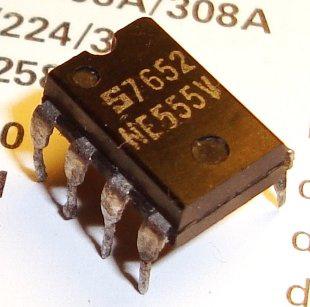
Dave Jones: There's websites out there that'll allow you to do it. Yeah. Anyway, speaking of the triple five, I have to get this name right. It's... Damn, it's difficult. Feridun Yerdedback. Oh, God. Oh, that's awesome. I've screwed that up totally. Anyway, I don't know where he's from, but he sent me a photo of his triple five timer chip that he dug out of the archives. Oh, nice. And it's exactly the same as mine. It must be for the same batch. Yeah, you know how the other week I posted my photo of the one I accidentally blew up. Oops. Right, right. Yeah, it's exactly the same chip with the same date code, everything. It looks identical. It's amazing. The coincidence of, you know, this chip is, what, over 30 years old or something? No, what is it? A 1970...
Chris Gammell: It's 41.
Dave Jones: 1976. There you go. 76. Yep. So, that's 34 years old, is it?
Chris Gammell: Older than that. Yes. 71, I think.
Dave Jones: No, no, no. But this actual chip is 76.
Chris Gammell: Oh, yours. I get it. Okay. I get it. Okay.
Dave Jones: And his one. Yeah. It's branded 1976. So, it's like 34 years old. So, the odds of 34 years later, two people who watch, you know, well, me, I'm the host of the Amp Hour. Somebody who watches the Amp Hour has exactly the same chip from the same week.
Chris Gammell: Yeah.
Dave Jones: That's pretty crazy. I'll have to post a photo of it. It's awesome. What a coincidence. Unbelievable.
Chris Gammell: I mean, you wonder because maybe there was fewer being made back then, you know, like as a total volume amount. So, maybe they made them in bigger batches or maybe they just made batches and they sat there for a while too.
Dave Jones: Possibly. But yeah, the odds of somebody having exactly the same device in their archives is just, yeah, that's spooky. Is there any spooky music?
Chris Gammell: Nope. Sorry. No. Okay. Just worthless music played at the wrong time. Right.
Dave Jones: Well done.
Chris Gammell: Yes.
Dave Jones: All right. Anyway, I just had to mention that. Very cool.
Chris Gammell: Yeah, that's great. That's really cool. So, what else we got here? We got, well, tons of things. I'll let you pick. How about we talk about your video? That was a cool teardown today.
Dave Jones: Yeah, I did a teardown. If anyone hasn't seen it, the new Agilent scopes, which came out yesterday or today, depending on which time zone you're in, I guess. Oh, right. Yeah. Yeah. The new low-end scopes. And I won't go too much into the scopes and how I think they're brilliant and all that sort of stuff. But, well, there's a few quirks to them and things like that. And I don't think their pricing's as competitive as it could be and yada, yada, yada. But the big news is that Agilent are now designing and manufacturing these low-end scopes in-house. So, everyone knows that they used to rebadge the Rigol ones, right? And I don't know if that was a success or failure for them. I guess it was a failure. They've gone back in-house, right? Yeah. So, I was just wondering if that's going to start a trend of especially American, the big American companies. They've, you know, for years, for a decade now, they've been outsourcing everything. And now they might start, are they starting to realize, oops, you know, China's getting a bit expensive now. Yeah. And the technology is so advanced in this scope that these other small pissant companies like Rigol, even though they're the third biggest scope, or fourth biggest in the world or something like that in terms of technology, I think, they can't do. They don't have the technology in the R&D to do the kind of ASIC chips which go into these new scopes. So, really. And that's what it's enabled the low cost. Right. Yeah. It pulls all that stuff in. Because once you've put in the R&D funding to do that chip, you can churn out the chip like it's nothing, you know? Right. It costs, you know, I don't know, a few bucks to churn out this advanced chip which makes the most advanced, one of the most advanced low-end scopes in the world.
Chris Gammell: So, I don't know. What? Is it? I don't know either. I hope that stuff comes back. I'm putting it out there. Yeah. I think an interesting question, too, is if, you know, like there was a big movement with that like in the 80s or whatever when Japan started on the rise, right? You know, there was like Buy American. There was like a big, there was a, I mean, in the US there was a big push for it as like a nationalistic kind of thing. Not that I was buying anything or even born for part of it. But, you know, does that actually affect anyone's decisions? Now, maybe based on the quality of the product, but the, I don't know if, I don't think that people would really care from a buying perspective.
Dave Jones: Most people don't, no. The majority don't. And that's what companies rely on. Right. These, all the big companies, regardless of whether or not it's, you know, tech gear like this or it's food or something like that that you're, you know, getting from overseas. Yeah. You rely on the fact that Joe Public, on average, does not give a shit.
Chris Gammell: Yeah.
Dave Jones: And it's sad.
Chris Gammell: I guess so. I mean, I don't know. I've, I've been conditioned that, you know, prices, prices, the thing, you know, like you got to pay for quality. Right. Yeah. And usually that's the two balancing points for me is like, if I'm buying something that is low cost, I'm probably going to expect it to be low, lower quality, but there's always a balancing point between the two. So I don't, I don't know. And, and the other weird thing, I hate to say it is that the quality isn't always better. And I mean, like, yes, there is more quality in the US sometimes, but not always. Not always. No. Just seeing the same here in Australia. Just because it says made in the USA or made in Australia doesn't mean, doesn't guarantee anything other than the fact that it was made, you know, that it was helping a local economy. So. Exactly. I don't think it really drives many people's buying decisions, but from, as an engineer, I think that's a good thing. I think it's a great thing really. Right. Yeah.
Dave Jones: Well, no. Yeah. I think you should buy the best quality. You know, it's good to keep it in the country. I, I'm a huge, especially with food, I'm a, I will not touch any food that's not made in, made in Australia. Well, made, you know, that's not growing in Australia. Look, I made a cow. Australia. It's an artificial cow, genetically modified. Assembled by MakerBot. Yeah.
Chris Gammell: There's that story about the growing the meat in the lab. So you never know, man. Oh, great. Yeah. Yeah. Delicious. Let's not go there.
Dave Jones: Don't get me started on genetically modified. Oh, yeah. Oh, yeah. Yeah. Anyway. Yeah. I'm a, I just will not, I'll go out of my way to avoid food that's from overseas, unless it's like a Swiss chocolate or something like that, which is fine, you know, some special thing I'll have occasionally. But, you know, if you, if you can't do your own food in your own country, then, then you're pretty much screwed. So, you know, but whereas technology is a different thing, you know, it's not like we can manufacture our own silicon here and, you know, do our own parts, you know, the best we can hope for is manufacture at the macro level.
Chris Gammell: So. No, you can though. I mean, like, that's the thing. Like, that's, I think that's kind of, I mean, you're talking about Australia.
Dave Jones: We can't. Not, not in Australia because we don't have the market for it. It doesn't, you know, you can't set up a billion dollar fab here in Australia and manufacture. Well, you'd be stupid. You'd be, you'd be bankrupt tomorrow, you know.
Chris Gammell: Maybe, but you could. I mean, it's not like you can't.
Dave Jones: Well, of course you, no, of course you could, but it's not going to happen. Right. So, you know, you can't manufacture all your capacitors here, all your chips, all your resistors, everything, you know. Right. Yeah, the best you can hope for is to use foreign parts and, you know, maybe manufacture the PCB here and assemble here and use a few parts from here.
Chris Gammell: Well, you used to do that, though. I mean, that's what Carl's documentary is about, isn't it?
Dave Jones: Oh, yeah, yeah. We used to manufacture transformers here, capacitors, you know, all sorts of, yeah, this is back in the old day when, you know, you actually, you know, they wound capacitors, you know, and they were all operated by hand and stuff like that, so.
Chris Gammell: But it's just this gradual thing, you know, you keep saying, oh, well, we can't do this here, all this stuff's moved over. And then eventually, you're right, it won't come back, so.
Dave Jones: Yeah, well, you know, we've never, well, we used to assemble TVs here, you know, all that sort of stuff. But, yeah, I, you know, I'm talking the average electronic product and things like that. Yeah. We just can't compete anymore. It's just, you know, it's just not viable, unfortunately.
Chris Gammell: How do we get talking about this?
Dave Jones: Oh, I don't know.
Chris Gammell: Yeah. American or Australian made stuff, right?
Dave Jones: And interestingly, you've got another point here in the list about science funding in America. Yeah. And it's, it really ties into that because, you know, Obama's cut in all sorts of stuff. What's he cut in? You know, healthcare, energy, science, you know, law enforcement and education, right?
Chris Gammell: No, no, no. Not that, so that, they, that's what people want him to cut more, but right now. Oh, right. So, right now in the US, so there's budget stuff coming down and basically the idea is Obama is actually elevating science, which is awesome, but that's kind of coming under it. Yeah. Okay. So, that's good, but like basically everybody else is saying, uh-uh, and they want to cut it. And that's, that's kind of my point to it today is that like, that's a bad thing, I think. I don't know.
Dave Jones: I don't know. Oh, it's bad to cut science, yes. It's very bad. And, and he, and they want to propose, well, cutting other stuff, you know, environment protection and health and, you know, all sorts of other shit, which is just crazy. And the one you never hear is to cut the military and that's where your big freaking spending is.
Jeff: Yeah.
Dave Jones: And they never cut it. It's ridiculous. Right. But don't get me started anyway.
Chris Gammell: Right, right, right. Well, and that's, and that, it wasn't meant to be a political argument, mostly though, that just basically science is in trouble and science and engineering by extension. And, uh, yeah. Yeah. So, hopefully, hopefully it doesn't, it doesn't. Take, but, you know, like people, people always say, oh, well, it's not going to be that big a deal if you cut science. Well, yeah, not right now, but, you know, give it a couple of years when you don't have any new inventions coming down the pipeline and you don't have any engineering efforts based on that. Yeah. And that's actually another, another link I have here is of, uh, a video of, that I, that I saw on Reddit today was of Neil deGrasse Tyson, who's, uh. Oh, one of my heroes. He's so awesome. He is. And he's from Nova, he's from Nova on PBS, or I guess that airs a couple of places, but Yeah. Nova is a, is a public programming thing, at least in the U.S. And he talks about astrophysicists and stuff like that. But he's on this, he's on this video talking about, you know, people come to science and they say, oh, well, what is science going to do for me today? You know, we need to make budget decisions today. Oh, God. And he says, you can't look at it like that. You know, like when Einstein was, was doing like emissivity equations and stuff like that, no one knew or had any idea that a few, you know, like 20 years later that lasers would start to be a big thing.
Dave Jones: Or that would lead to solar cells.
Chris Gammell: Oh, yeah. Exactly.
Dave Jones: Because his Nobel Prize was basically for, you know, the research which started solar cells pretty much. Right.
Chris Gammell: Right. Exactly. And another one was a nuclear spin measurement was another astrophysicist. So this is stuff that he's close to, right? Yeah. And that, that's what MRIs are based on. Basically, they didn't know that you'd be able to look inside bodies without cutting them open. You know, by measuring this stuff. And so like science funding today actually has a very, very big effect on like a more global ecosystem of research dollars and like, and dollars in general. So, yeah, I don't know. He, he, he had a good quote about like basically science isn't about what it can do today. It's about understanding the universe. And he said something about having like a tool belt of all these different, you know, pieces of knowledge about the universe and your surroundings. And then later you can piece those together and make really useful stuff. And that's why it's important. So. Absolutely.
Jeff: Oh, I just hope.
Chris Gammell: He's an awesome guy. He is. Yeah. He's a really good advocate for science. And I hope to be more like him. And I know, I'm sure you do too. And, you know, just.
Dave Jones: Oh, I've actually seen him. He was on the, he was on the Big Bang Theory episode. He special guest. That's right. The one I actually sat in on. So. Yeah. Yeah. Yeah. I didn't get to meet him afterwards though. It was a shame. So. Yeah. Oh, well. Yes. Yeah.
Chris Gammell: So if people have never seen any of his stuff, he has some great, great videos on YouTube. A lot of it's already up there. Oh, there's tons on YouTube. It's easy to watch.
Dave Jones: I sit there all day watching his videos. It's great.
Chris Gammell: Yeah. Yeah. So anyways, that's, that's kind of where that all came from. Uh, but. Yeah. Man. Science is important people. Not just engineering. Engineering is important too. But science is the, science is the, the precursor to engineering. So we need each other. Absolutely. We need money.
Jeff: We need lots of money. Oh boy. Yeah.
Dave Jones: Anyway. Yeah. Please don't cut the budgets in those, Eric. God. Buy a clue. I'll send him a dollar too. Where can I send Obama a dollar to buy a clue?
Jeff: Hmm.
Chris Gammell: Hmm. 1600 Pennsylvania.
Jeff: Yeah.
Dave Jones: Oh no, but I can't send it because then it's ruined because they irradiate the mail, don't they?
Jeff: Oh, that's right. Yeah. There you go. Sorry, buddy.
Dave Jones: Oh God. Jeez. Man. Ugh. US. Yeah. Nuts. Sorry.
Chris Gammell: Crazy people do.
Dave Jones: Yep. Hmm. Should be embarrassed. Yeah. I can't talk. Yeah. Our government does weird shit too. Anyway.
Chris Gammell: So how about this, uh, do you see this Alcatel Lucent thing? Speaking of new technology. No, I haven't. Do tell. Okay. So basically it's a new thing called light radio. And, uh, if I understand it correctly and I, I'm not sure if I do, basically the, the end result is going to be that base stations and all those huge cell towers that are mobile towers. I guess it would be in Australia, right? Yep. They are going to shrink down to a 10th of the size or something like that.
Dave Jones: Right.
Chris Gammell: And.
Dave Jones: But you still need an antenna of a certain size.
Chris Gammell: I'm not sure if you do though. Basically it would be like more like a mesh type network. And man.
Dave Jones: Oh, so, so you're saying there'd be more of them.
Chris Gammell: There'd be more of them.
Dave Jones: Right.
Chris Gammell: And they would, they would be able to put them anywhere basically.
Dave Jones: Right. Okay. Right. And they wouldn't need to pump out huge amounts of power like the other ones do. So they don't need massive power in infrastructure and all that sort of stuff.
Dave Jones: Yeah, exactly. And so this is some new tech. Yeah, but they still need the big poles, don't they? I mean.
Chris Gammell: No, we were talking about like putting them on like bridge overpasses and stuff like that. So like. Oh, okay. Right. So like the smaller network, you'd, you'd need less total coverage. You'd have more local coverage for like tiny, tiny spots. Right. You'd have a little bit of coverage and then there'd be more of those. Yep. So I'm not sure if it's just a, a jab to try and sell more chips, but.
Dave Jones: Well, I think it could be. It's one of those things where, well, you've got to put the infrastructure in place to actually, regardless of how big the actual device is, you still got to put the bandwidth infrastructure in place to talk to it. So, you know, you can't just go around and stick it under a bridge or something like that. You know, you've got to.
Chris Gammell: Right. I think they're talking, they're saying that now that, now that there's more like fiber available places and there's more, you know, you know, just ethernet connections, you could try and hook into grids like that and have more local devices like that. But basically it's, it's, it's more of the, the different standards are built into it too. Right. So. I don't know.
Dave Jones: So you can stick them inside a building or something like that, or a big shopping center or. Yeah. Something like that, perhaps that, that actually does have some infrastructure in place to. Yeah. Exactly. Do that sort of thing. Yeah.
Chris Gammell: And I mean, that's going to be a bigger thing too. I know that, I feel they're called like nano, nano base stations or something like that. Basically like they're talking about eventually having, not, not, not these guys necessarily, but having like at home base stations where it amplifies cellular signals as a broadband carrier.
Dave Jones: Great. That's all I want is more shit pumping out in my house. Great. I've already got my wifi set to its lowest power output setting. Really? Yeah. Are you worried about that stuff? Are you one of those people that, uh, you know, I just speak because I can, why not? Why would you have it pumping out at full power when it works at 10%?
Chris Gammell: I guess so. Maybe, uh, maybe you're like these people. So, Nathan Bauer is a sober nude guy. He actually, for a while ago, he sent us, he sent us a link to some, some crazy people that might be like you.
Dave Jones: So, I don't know. The research just keeps getting better and better on that sort of stuff. And you, you know, you hear some horror stories and I don't know. I just don't see the point in pumping out, you know, I'm sitting right next to it and I don't see the point in pumping out half a watt from that thing. If I can pump out 10% of that, I can go into the firmware and turn it down. I still get coverage all around my house.
Chris Gammell: Whoa.
Dave Jones: Hey.
Chris Gammell: I got the site wanted to play some stuff for me.
Dave Jones: Is this the, uh, that's the tinfoil head music.
Chris Gammell: Yeah, I guess it was. Yeah. Let me see if I can open that without all the, uh, the tinfoil sound to it. All right. Basically though, the, yeah, the, uh, he sent us some, so this is sober nude guy and he sent us a link to people that think they're allergic. They have electromagnetic hypersensitivity. Yep. I guess that's an, oh, there's a, okay. So it's a video. The electrophobes, the people who say electronics are killing them. So you're not one of them, right Dave?
Dave Jones: Oh, no, no, no, not at all. I just, I don't know. I was just sitting here one day and I thought that thing's pumping out half a watt. Why? You know, I went to the software. I turned it down to 10%. Eh. You know. Why not?
Chris Gammell: This lady fled the city where she would have to, she would only leave her home wearing like a tinfoil hat basically. I mean like, I mean there's probably some validity to it. You know, you can't imagine that getting blasted with electromagnetic radiation at any point is healthy. You know, if you get enough of it over enough time, you're going to get some kind of condition from it. But I don't know. Like, don't go out in the sunlight either.
Dave Jones: Well, all the cell phone research and stuff, there are, you know, when you talk on your cell phone for a couple of hours a day and you've got it against your head and it's pumping out watts, you know.
Jeff: Yeah.
Dave Jones: That serious RF, you know, actually metabolizing in your, you know, oh, I don't know what the word is for, you know, heating up your, you know, your cell tissue and all that sort of stuff. So, yeah. Yeah. It's just, you know, and the research, because it's so long-term effect kind of thing, the research has only just started and well, you know. Right. Might as well do the precautionary principle, right?
Chris Gammell: Yeah, I would go more with the, don't waste as much energy by pumping out all that energy, but I don't know about the other stuff. Yeah, well, exactly.
Dave Jones: That was one of the things, you know.
Chris Gammell: Yeah. For you, it makes sense. I'm saying that these people are kind of quacks. Yeah.
Dave Jones: Well, yeah. Speaking of which, a guy at work who is actually the head of the Australian UFO Research Association, right? Whoa. He's a good friend of mine, right? So, he's into all that sort of stuff, right? And he was talking about quacks, right? Quacks. Okay. Right? He was talking about this guy, this, I don't know, a friend of a friend or something, who he bought his new phone, right? His new iPhone or HTC or something. And the first thing he did was actually put black sticky tape over the cameras, right? You know, the front and back of the camera, because he was sure that the government were watching him via, had the capability to watch him via those webcams. And he just went, this guy's crazy. And this is coming from the head of the UFO Research Association. Yeah. Yeah. There's different levels of silliness, really. But I don't know. Anyway, it's funny. Yeah. I thought that was a funny story. So, I don't know. And aren't there people in the US who think the government tracks them with the, you know, the strip in the money? The metal strip? In the money, yep. I've heard them crazy. And all that sort of stuff. And they...
Jeff: Yeah.
Chris Gammell: I always like the...
Dave Jones: And extract it with tweezers or something, don't they?
Chris Gammell: Yeah. I don't know. I always prefer the people that try and prove them wrong and show that those people are crazy because... Right. Man. There's...
Dave Jones: Oh, I love it. I love it. Yeah.
Chris Gammell: Team foil, hector stuff. Things that people have been skeptical of a long time. Did you see... It was... I think it was a while back. We've had this link on here for a while, I think. But in the EE Times, there was a thing about cold fusion and how some Italian scientist has claimed success. That was back in late January, so January 24th. Yes.
Dave Jones: I've had it in here for a month or so. And yeah, it always does the rounds. There's always a cold fusion, latest cold fusion experiment every year. Somebody's done one and it makes big news. And, you know, but these aren't just some, you know, basement crackpot guys. These are full on, you know, big university research stuff. So, you know. Yeah. So, there's something in it. It's a good start. But whether or not it's... Yeah. Exactly. But no, I think one day we will actually crack that. And I watched... Yeah. I watched an awesome doco on it a couple of weeks back, actually. I can't remember the name of it. It was on one, like a Nova type, you know, channel we were talking about. Something like that. And it was basically on cold fusion research. And they got all of the big researchers in the field to give their prediction of when it's actually going to happen. And the worst case one was like 2040. And these guys are saying, you know, and they're building, you know, billion dollar machines to do it. You know, governments are pouring in huge amounts of money into this research. Because if you can crack it, well, you know, it's... Yeah. There's lucrative. It's all this energy. And the technology that goes into it. Oh, it's just phenomenal. But no, these are serious researchers doing, you know, working on the big physics projects. And they're all saying, you know, it'll only be 20 years from now. Yeah.
Chris Gammell: But they said that 20 years ago, too.
Dave Jones: Well, they did. But now, with the benefit of, you know, hindsight and technology and the latest experiments and the results from the latest experiments. I guess so, yeah. Whereas back then, it was pie in the sky because they had no results at all. But now, they have actually generated the energy from it. And it's just a matter. Actually, they generate enough energy to power an entire city or something like that just from one shot. And the whole idea, you know, because they actually do these... Most of these machines work in big shots. So, they charge up these huge, you know, these huge capacitor banks. And they discharge the energy, I don't know, somehow generating the fusion thing. And the only thing stopping them making enough energy is actually the cycle rate. You know, to actually have to charge it back up and bang.
Chris Gammell: Oh, okay.
Dave Jones: But they're getting out more energy than they put in. And, you know, it's... And, yeah, it's just a matter of cycle rate, apparently, on some of these big machines. You know, they can only do one shot per day. Whereas, they need... They've done calculations. They need one shot per minute or something to make it into a usable, you know, power source that can power a city. So, anyway.
Chris Gammell: I'm still a little skeptical at this point, I have to say. I mean, like... Well... I understand that the technology is getting there. Yeah. Yeah. I mean, yeah, you hear so many crap theories and crap... Oh, of course. ...experiments and stuff, so...
Dave Jones: But when you see this doco and you see the amount of money being poured in by governments into this research and what they're building, you know, they look like nuclear... You know, these huge nuclear, you know... Well, they... Experimental nuclear reactors. They are nuclear reactors.
Chris Gammell: Well, they are, right? Yeah, yeah.
Dave Jones: You know, it looks like some huge, you know, one of the... Like the Large Hadron Collider kind of...
Chris Gammell: Oh, yeah.
Dave Jones: ...big. Well, maybe not that big, but, you know, these things are huge. Yeah. And, yeah. So, there must be something in it if they're, you know, continually pouring that money in it.
Chris Gammell: Nuclear physics, I believe, is the thing in it. And they do the equations. I mean, this stuff's there, right? It's just the implementation. Yeah, yeah. It's there.
Dave Jones: You've just got to come up with a practical method for extracting it. So, I have no doubt we'll actually crack that one day. And it'll be within my lifetime, I'm sure. Is that another bet you want to take? Alongside your chip-making machine? I say nuclear fusion will be viable within my lifetime, and you're saying a chip-making machine will be viable within...
Chris Gammell: See, now that's... I think we need to have a different timeline, because, first off, you're a healthy dude. And, second off... Right. That's too nebulous. How about 20 years? What do you think? 20 years?
Dave Jones: 20 years, I think. Yes, I think. 20 years. I believe the researchers. I think 20 years will probably have something that's viable, possibly on a smaller scale. I don't know about powering a city scale. I don't know. But I think they're pretty close. So, anyway...
Chris Gammell: I will take that bet. I will take that bet. All right.
Dave Jones: All right.
Chris Gammell: Do we have a prize for the chip machine bet? I do. The chip printer? No? Do we have a prize for that? No.
Dave Jones: Just endless bragging rights. I think that's it.
Chris Gammell: I think we should have a prize where it's like, if one of us wins, the other one has to fly to the... So, if I lose, I have to fly to Australia and shake your hand. Just to... Right. Right? Sounds good. You can make fun of me in person. And then, if I win, you have to fly to the US. You have to come to Ohio. Awesome. And then, I can make fun of you in person. How about that?
Dave Jones: Awesome.
Chris Gammell: All right. Done. Done. Done. Done. Done. Done deal. Virtual handshake right there. Right.
Dave Jones: But it has to meet all my terms and conditions, not just somebody who does it in their basement. You know, it's got to be like...
Chris Gammell: I'm calling my lawyer. Get this in writing. Yeah. Chief of the... Yeah. We're going to need Fusion for me to be able to afford a ticket over to...
Dave Jones: No, because I've said before, and I'll state it again, it's possible and it will happen. You'll be able to make your own chip in some way, shape, or form. Yeah. But it won't be usable and it won't be a revolution. All right. Like the MakerBot, which you originally compared it to and you weaseled out of. No, I didn't weasel out of that. Oh, you so weaseled out of that, dude.
Chris Gammell: You don't have a recording of this, do you? I do.
Dave Jones: It's on my server, okay? Ah, damn it. You can't... Yes.
Chris Gammell: There goes the delete button.
Dave Jones: That's it.
Chris Gammell: Yeah, your server. Your server, which crashes all the time. So I think we're going to be able to...
Speaker ?: That's it.
Chris Gammell: That's the one. There goes the evidence.
Speaker ?: Right.
Dave Jones: Oh, dear. Anyway, we've got five or seven minutes left and we should probably get on to some electronics. I've had one on the list for a while. Microchip.
Jeff: Yeah, yeah.
Dave Jones: They are rebranding their regular microcontrollers and selling them as specific customized chips. Really? So there was an article in Hackaday. Here it is. I better get the number right. Yeah. Their new MCP2200 USB to serial chip, which they advertise as, you know, on their website is just a USB to serial chip. They don't tell you that it's actually a PIC... Where is it? An 18F something or other. It's an 18F 14K50 USB chip with just some firmware programmed in. That's it. You know? And I think that's great. Why not? If you can use your existing stock as a manufacturer, use your existing parts, your existing stock, and generate a new product that's already pre-programmed and it's, you know, repackaged and it's got the data sheet and it's proven and it's everything else. And I think that's an excellent thing to do.
Chris Gammell: So what would be the downside then? I don't get it.
Dave Jones: Well, there is no downside. I just think it's awesome. Oh.
Jeff: All right.
Dave Jones: Good.
Dave Jones: I just wanted to mention it. I had that. Yeah. You know, instead of designing a custom chip to do that, custom silicon, just reuse an existing micro they've got because the micros are so flexible and it already had the USB in there and it already had the UART in there. And they actually released source code to do this, you know, example programs. But then, you know, if you're just designing a product, you don't want to dick around with having to, you know, program the chip yourself and get it working and test it and all that sort of stuff. You know, if you can buy it off the shelf as a totally pre-programmed, pre-tested chip, why not? It's great.
Chris Gammell: That makes you wonder if there's like a market for like secondary people that would program the chips in between, like as a middleman, right?
Dave Jones: There could certainly be. You can take, there's nothing stopping you taking microchips example applications, pre-programming the PIC chips and writing a data sheet and selling it on as a, I'm sure, you know, I don't think there's anything stopping you doing that.
Chris Gammell: You probably could call it the Dave Jones chip, right? You'd have to.
Dave Jones: Well, no, why not? You can put a sticker on it and, you know, rebadge it as the, you know, the Davo one or something.
Chris Gammell: Well, now that would be, I would be interested to know if that's actually allowed because I don't think that they'd let that, because I think they let it happen because it's, isn't it, it's their own company, right? So, I mean, that's a little different.
Dave Jones: Yeah, but you can, well, I, you know, you resell their chips in individual products. There's nothing stopping you reselling programmed microchip PIC chips. There's, you know, I'm sure they don't care. They're still selling chips, right?
Chris Gammell: Yeah, that's, yeah, maybe. But I mean, but you're changing the name on it. That's the thing that I wonder about that they'd get in a hissy fit about.
Dave Jones: Well, no, look, ah, the classic example, PICACS, right? PICACS is sold as a, as a PICACS chip, right? It's not sold as a microchip 16F, you know, something or other. It's pre-pro, it's a regular microchip chip that's reprogrammed and they're sold as a PICACS. It even has its own data sheet and everything else. Right, but again, that's. And I'm sure there's many examples out there, actually. But isn't that through, I was going to do it myself.
Chris Gammell: Isn't that through microchip, though? I thought PICACS is through microchip.
Dave Jones: No, no, it has nothing to do with microchip at all. Oh, okay, okay. It's a UK educational company. I forget their name.
Chris Gammell: Oh, I didn't realize. Okay. Yeah. I thought it was a bar number.
Dave Jones: It started in somebody's backyard and it took off. No. No, I'm sure there's, I'm sure if I thought about it long enough, I could find heaps of examples of people doing that. But the manufacturer's actually doing that now. Yeah. Which is interesting. Interesting. So, if you have any other examples, please post them up.
Chris Gammell: Yeah.
Dave Jones: Of other manufacturers rebadging their existing chips, repurposing them. So, to speak. Yeah. So.
Chris Gammell: You know, I was on the Savage Circuits chat last Sunday. I don't know when it was. But he has a chat sometimes. And I was on there. And one of the admins on there wanted to know if we ever talk about the propeller. And I've never worked with it. Have you ever worked with the propeller?
Dave Jones: I haven't worked with the propeller. I've investigated it for several projects a couple of times. And yeah, I don't know. It's a great hobby chip. It's a great concept. I don't know whether I'd use it in a professional product. Because they, you know, they don't really have the, the company's not that big. You know. And you risk. Yeah. Parallax. And, you know. If you risk using their parts in a professional product. Which you might need a five or ten year lifetime. And you commit to using that architecture. Then, you know, you could be caught out. So. Yeah. I think it's a tough slog for them to get into professional products. Especially volume. You know. Volume products that are. Yeah. I don't know.
Chris Gammell: Yeah. I've never used it myself. I actually got it confused with the basic stamp. Which is another one of their. Parallax parts.
Dave Jones: Which is another one of their products. But no. This is actually a chip designed from the ground up. Transistor by transistor. If memory serves me correctly. Yeah. They actually brag. That they designed it. You know. They designed everything themselves. It's their own architecture. And it's actually a multi-core. It's. It's got like a cog system. They call it. Where it. You know. They've got like eight cores. And it. And this. You know. Silicon cog. Switches between. I guess it's like a multiplexing type system. That's what they're getting at. And it actually switches between these cores. So you can have eight cores. Doing different things. And they can all access the IO in turn. And. Yeah. So it's quite a novel architecture. I really like it.
Jeff: Yeah.
Dave Jones: But. Yeah. That's cool. Yeah. Yeah. So if you're doing. And it's got like VGA capability. And stuff like that. Yeah. Yeah. So you can have one. One little processor core. Just handling the video. And another one handling the UART. And another one handling your processing. Right. Right. And stuff like that. So. Yeah.
Chris Gammell: Yeah. And they. They target robotics. So that kind of seems to fit in there pretty well too. Right.
Dave Jones: It fits in pretty well. Yeah. Because you know. You have to. You know. A lot of concurrent processing. You have to control. You know. Six legs on a robot. Or something like that. Right. Yeah. Yeah. Yeah. You can dedicate a little core to each one. And yeah. It sort of makes sense. Yeah. That's neat. Yeah. I think they're pretty cool chips. They're reasonably priced. I think you can get them in a quad flat pack or dip package. And they're like you know. Ten bucks a pop or something. Don't quote me on that. But yeah. They're reasonably priced. But yeah. Great for hobby. And other low volume stuff. Professional. Eh. You know. It's a bit of a risk.
Chris Gammell: It's cool. I mean. It's cool too. That they. You know. They're a small company. Still making their own chips. Oh yeah. You know. When everybody's moving to ARM. And all these other cores. And everything too. So. The fact that they have. Different cores. And are small manufacturers. Yeah. They're pushing their own architecture.
Dave Jones: It's great. And it's novel. It wouldn't survive. If it was just yet another. You know. Single core. Competitor to pick. And you know. Or an ARM. Right. And all the other ones. It just wouldn't survive. But because it's novel enough. That it's this multi-core system. That handles multitasking. Then. Yeah.
Jeff: Let me see if I get this right. It's a niche. Niche. Niche. Niche. Niche. Niche man. Niche. Not niche. Niche. I said niche. Niche.
Dave Jones: Yeah.
Jeff: Yeah.
Dave Jones: And they're. Oh God. What was I going to say? I threw you off.
Jeff: No.
Dave Jones: I'm sorry. Yeah. She threw me off. God. Oh my bad. Oh dearie dear. Oh and the language. That's another disadvantage of it. The language is like some variation of basic or something. They've got their own language. So it's not. You know. There's no C compiler for it. Yeah. So I think that's a huge downside as well.
Dave Jones: Yeah. Yeah. Yeah. Anyway. It seems very popular in the hobby slash hacker maker. Sort of robotics kind of market. So.
Chris Gammell: Yeah. Yeah.
Jeff: Cool.
Dave Jones: Good luck to them.
Chris Gammell: Any. Any. Anything else this week? I think we're kind of running short on time.
Dave Jones: I think we're done. We're. Our amp hours up. We're. We're a minute over I'm afraid.
Chris Gammell: Did you. You didn't have any WTF stuff this week?
Dave Jones: Oh yes. I did. I had a. WCF mate.
Chris Gammell: WCF mate. There we go.
Dave Jones: That sounds like WCF to me.
Chris Gammell: It's WTF.
Dave Jones: WTF.
Chris Gammell: WCF mate.
Dave Jones: Oh.
Chris Gammell: I'll post the video to that again too. Right. People don't understand the reference. So. What the. It's a little lewd.
Dave Jones: Anyway. At. At work. They had a big delivery. And. All these bags. Like a big white. Satchel. Like a. You know. Like a Santa would have with all his presents. You know. One of those. Right. One of these like huge big mail in. Satchels. Kind of thing. With a big. You know. Cable tie around the top. And they got delivered a bunch of these things. And my name was on one of them. And I went down. And what the hell is this? Presents. Presents. Presents. There's half a dozen of them.
Archived Discussion (18)
Comments are closed. Archived from the original site.
Show archived discussion (18)Hide discussion
AgilentanalogCold FusionLightRadioMicrochipNeil DeGrasse TysonParallaxTI
Keep current
Every episode, plus the occasional job post, in your inbox.
They already have a individual cell tower, it's called a microcell. The major American cell companies already offer these to customers.
https://theamphour.com/wotw/#comment-1765
PICAXE® is a registered trademark licensed by Microchip Technology Inc.
Revolution Education is not an agent or representative of Microchip
and has no authority to bind Microchip in any way.
Go Figure??
(not mine)
Look at the power and specials functions pins...
I don't know if it's really a PIC32 but it sure look like it, and with name like "PICASO" well...
Cell Towers:
The trend to smaller cells in mobile service has been a trend for the past 25 years. Finite bandwidth with increasing calls per unit geographical area drives it. Putting antennas in shopping centers and hiding antennas on small buildings (even churches and one private home I know of) has been going on for at least a decade.
Science Funding:
You guys are right to mention military and entitlement spending when talking about about science funding. That's not a political issue. Most of the spending is military and entitlement. If we want to cut the budget significantly w/o cutting those two items, it will require very deep cuts in everything else, including science funding.
IMHO you shouldn't resist talking about the scientific and mathematical elements of issues that are normally politicized. Just because everyone else sees them as emotionally-charged doesn't mean we engineers have to.
Protectionism:
I am nostalgic too for the days when things were made locally. Going back in that direction is not IMHO a reasonable goal. I see the power the nation state decreasing b/c people can share info on the Internet and businesses can trade easily w/o regard to borders. If my prediction is right, in a few decades trading with other nation states will be perceived the way trading with other cities/provinces/states is now.
On the note of the Propeller chip...as for taking chances, Parallax has been on the scene for along time. The BASIC Stamp alone inspired much of the current technology people use and the SX chips were widely used in high volume applications. There's no reason to think that Parallax isn't a safe bet with as long as they've already been in business.
Mainly I can tell by the dialogue though that there's still a lot of misconceptions that need to be cleared up and I think this is the source for people being shy about such a powerful microcontroller. The programming language barrier is also based on lack of info as there is a C compiler available, albeit 3rd party, though Parallax is working on C compatibility.
Did you really mean a mesh network? To my ears that would mean transceiver nodes that didnt have to get data to the rest of the network by cable but rather by radio to other nodes.
Also, i tried to recycle my Digikey Catalogue Swiss Post bags into some edgy clothing fashion. But they didn't quite fit :)
If i can find a willing model, i'll send pics.