
#28 – Bowie and The Brown Note

Download episode · 60 MB
Also on Apple · Spotify · YouTube · RSS
Show Notes
[display_podcast]
- The 555 contest continues onward! Everyone is getting excited!
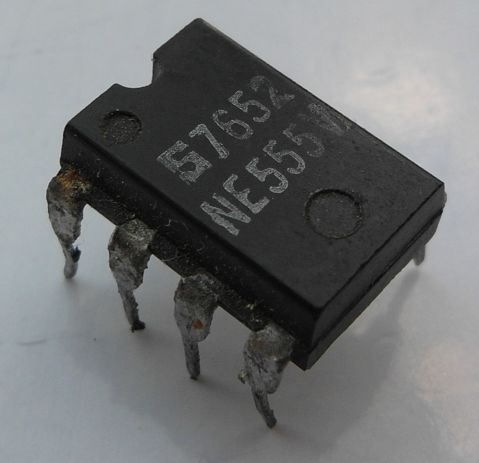
Dave's classic 1976 vintage Signetics 555 timer chip (which he destroyed! RIP). Can anyone beat it?
- WOTW
- Rants
- Shoutouts
- Dino Segovis linked here from his site!
- MAKE has a new live show! Great production value!
- Discussion Points
- Dave plays the lotto!
- Plastic transistors are improving in the lab...could help for future printable electronics.
- Using lasers in board/chip construction followup:
- Perhaps the economy is picking up? NI plans to increase headcount 19% next year.
- ADI and NI have a free SPICE package that is pretty fancy. Bloated software but Chris liked it at first glance.
- Microchip still charges $900 for open-source software you can download and compile for free.
- Intel had a bit of a snafu with one of their latest chips. Time for heads to roll? Or is it a $700 million lesson like at IBM back in the day? (thanks to Eduardo for the link!)
- Videos
Transcript
Chris Gammell: This is the Amp Hour Podcast, recorded February 1st, 2011. Episode 28, Bowie and the Brown Note.
Dave Jones: Welcome to the Amp Hour. I'm Dave Jones from the EEV blog.
Chris Gammell: And I'm Chris Gammell from Chris Gammell's Analog Life.
Dave Jones: Hey Chris. Hey Dave. What are we up to? Number 28 or something? 28. 28. 28. With a bullet.
Chris Gammell: With a bullet. Alright. What's happening in your neck of the woods? 5-5-5 contest. That is what is up.
Dave Jones: Coming out your eyeballs, huh?
Chris Gammell: That's right, yeah. I'm getting really excited. I tweeted about it the other day, but I was talking to a friend about his contest entry, which I won't be judging, of course. Right. But what he's planning, I'm already amazed, and that's one person. That's the first person I've talked to. So, I'm getting very excited for it.
Dave Jones: Amazed, huh? Amazed in its complexity or in its elegant simplicity?
Chris Gammell: Complexity, for sure. Complexity, right. Right, okay. It's almost to the point of obfuscation, where, you know, it's just like, he's using it for unnecessary things, but just to get more in there. It's pretty great. Right. And then I saw someone else on Twitter today say they just got 300 5-5-5s in. They ordered them. And I'm just trying to imagine what the hell they're going to use them for.
Dave Jones: That's 300. Well, I found out that I've got to order some more, too, because I actually was playing around with the triple 5 last night. Yeah. It was 36 and a half degrees out there in the lab, but I went out there anyway, and I vero boarded a little idea. I had not that I'm going to enter, but I might do a video on it. Yeah, that'd be great. And I had this idea, and I put it together. It didn't quite work the way I intended, but the result was unexpected anyway. It was quite novel and unexpected. But, yeah, I'm not going to give any details away, but I'm going to have to get a few other flavors of triple 5. And, you know, the first one I used must have been 30 years old in the true spirit of this. Wow. It had the pin, the legs bent. It was desolded from something. Oh, man. That is awesome. That is awesome. It was the crusty. It was the original Signetics triple 5. Was it? Oh, man. Yeah. Actually, I have to have a look at the daycare. It's probably not that bad.
Chris Gammell: I saw someone posted about that on Twitter. They asked if they get extra points for having a 78 date code.
Dave Jones: A 78? I reckon you would. If I was a judge, I would have to give bonus points for having a 78 date code.
Chris Gammell: Yeah, that's... Wow. That's pretty great.
Dave Jones: I could rush out to the lab now and actually get the chip, but it's radio. That's all right.
Chris Gammell: Yeah, I keep getting questions about it, too. I mean, I'm going to clear it up on the site, too. But, you know, any flavor is okay. So, if people listening are thinking about entering, I keep getting questions about 7555, which is the CMOS version.
Dave Jones: And then 558, the quad one. Exactly. Yeah. Yeah.
Chris Gammell: 556, 558, all those. Yeah. Yeah. Ah, boy. And then, yeah, the guys over at Let's Talk Geek, they were talking about it, too. Everyone's talking about it. I know. It's all happening. I know. Yeah. Jerry even said she's been getting questions. She's out at Design Con. And so, she's been getting questions about it, too. So, hopefully some more exciting news coming out soon. We'll see.
Dave Jones: Oh, she's actually at Design Con, is she? Yep.
Chris Gammell: Yep.
Dave Jones: Is she covering? Ah, let me guess. She's covering that for Element 14?
Chris Gammell: No. No. She's just there for the sessions. No? Okay.
Dave Jones: She's just there for the kicks? Yeah. Okay.
Chris Gammell: Yeah. On her own accord? All right. Yeah. It looked like a pretty good lineup. I don't know. Have you ever looked at the lineup for that before?
Dave Jones: I've been to it once before, but I haven't looked this year. Yeah. I've physically been to Design Con before, but yeah. No? Who's there?
Chris Gammell: Oh, I mean, just the sessions that I... I don't know, because I look at it, and it's run by the same people that did the ESC stuff I've been to. And it just seems like the Design Con is a much better fit for the stuff I like doing.
Dave Jones: Well, yeah. I mean, you know, there's ESC, and the Design Con's pretty good. I'm not a huge fan of the lectures and stuff like that. Yeah. I usually don't have time to go to them often, because you're too busy just walking around the thing. If you've got, you know, two or three days there, then maybe. Yeah. But yeah. Yeah. You know, because a lot of the lectures will just be companies introducing the thing, and you can just go online to look at their PowerPoint presentation later if you want to anyway. So, I don't know, but they always seem to fill them up. Oh, yeah. For sure. So, you know, yeah. I don't know. Maybe people just, you know, sick and tired of walking around the floor, you know. So, they say, ah, yeah, there's a lecture, and I'll go watch that and sit down for a while.
Chris Gammell: I don't know. It's expensive. You've got to pay a lot to go to those things. I mean, it can be upwards of a couple thousand. So, yeah.
Dave Jones: If you're, yes, if your company doesn't sponsor it all for you, it's all optional. Yeah. Whereas to actually get into the trade show itself is only 10, 15 bucks if you have to pay. But then again, people don't pay because you can always get a free entry somewhere. Yeah, that's true. If you ask somebody. So, yep. Or you just turn up with a video camera and say, hey, I'm with the press, you know, I'm media, you know.
Chris Gammell: That's how I did my first one. I said, you know, I'm covering it. I'm a blogger. Yep. And they accepted that for some reason and gave me a free pass, and I could get into whatever I wanted to. It was awesome. So, you heard.
Dave Jones: Awesome. Excellent. It was great.
Chris Gammell: Fantastic. Yeah.
Dave Jones: Ah, yes. Have blog will travel. No, I was going to say have blog will travel, but that's stupid. No. Have blog will is a free entry to pretty much anything these days. Everyone can have a blog.
Chris Gammell: Yeah, it's true.
Dave Jones: And become a media person. Yeah. You know.
Chris Gammell: Get a media tag. So, yeah. Well, speaking of blogs and showing things off, how about some Workbench of the Week?
Dave Jones: Workbench of the Week.
Chris Gammell: Workbench of the Week. Had to get it in there. All right.
Dave Jones: Bit late with the queue there.
Chris Gammell: I know. Look at that. And then I, man, horrible. What the hell are those frogs? Those were crickets. Are they frogs? Those were crickets. I'm trying to set up. Crickets. I need a new setup, I think. I just, this is horrible. Oh, dude. This is embarrassing. I know. The crickets are apropos then, huh? It's like.
Dave Jones: I get heaps of crickets here. You'll hear them in the background of my video. Yeah. They're up in the gutters and stuff like that. So, if it's been raining the night before or something like that, they usually come out, especially if I shoot one in the morning. You can still hear the crickets and the kookaburras.
Chris Gammell: I thought you meant shoot a cricket. I was like, why are you shooting crickets, Dave? That's horrible. And good accuracy, too, I'm sure, you know? Like, if you're shooting crickets.
Dave Jones: And they just jump through the lab and they jump all through the house and we just don't mind the crickets at all. Yeah. It's all part of being in Australia. Yeah.
Chris Gammell: They're pretty nice little creatures. I don't mind crickets as much.
Dave Jones: Oh, they can be annoying if they just go all night. Yeah. You know? I actually got an idea for a project just to shut them up because they're really loud. If they're right next to the bedroom, you know? Yeah. And you're trying to sleep and they're going all night. They're actually based on vibration. If you bang the wall or something, they will shut up for a couple of minutes. Really? You know? Yeah. Yeah. Well, at least the ones here in Australia do. I don't know what ones you've got over there. But yeah, our ones, if you bang on the wall, boom. You know? They will completely shut up instantly. So, I got the idea of this little, you know, like, it'll have a little micro in it, have a microphone and it'll actually detect the sound of the cricket and then it'll just turn like a little vibrator motor and you sit it up there in the gutter or something. So, every time they start chirping, it'll, you know, bang the gutter and it'll shut them up.
Chris Gammell: Yeah.
Dave Jones: So, I don't know. I don't know how practical that would be.
Chris Gammell: Or you could just get like a really low frequency, like, subwoofer and just always have that going. You'd eventually acclimate it to it.
Dave Jones: Well, you wouldn't want to set it to the brown note, which is what, 18 hertz or 19 hertz? Yeah. Or something. Have you heard about the brown note?
Chris Gammell: I think I know what you're talking about.
Dave Jones: Right. Apparently, if you don't know what it is, here we go. This could be a great segue into the name of today's episode. Oh, your God. The brown note. The brown note. Apparently, there's research that's been done that if you subject the human body to like 18 or 19 hertz, I think it is. Don't quote me on that. You know, high level audio energy. It will actually make you, quite frankly, shit your pants. And that's why they call it the brown note. I think it was research was done during the war or something as like a sonic, you know, you always hear about those sonic weapons, you know, and all that sort of stuff. And apparently, they, yeah, I don't know if they work or not, but they can actually have an effect on people. Yeah. Apparently.
Chris Gammell: Wikipedia says between 5 and 9 hertz.
Dave Jones: Oh, 5 and 9. There you go.
Chris Gammell: But it's got to be high vibration. And basically, it's...
Dave Jones: It's got to be high energy. Yeah.
Chris Gammell: It's creating a resonance with your body that kind of shakes things loose.
Dave Jones: Brilliant. Oh, I love it. Oh, man. So, if, yeah, if you see a weird name for today's episode, that's what it is.
Chris Gammell: There's a brilliant South Park episode about that, too. It's really funny.
Dave Jones: Right. I think Jamie and Adam did it on Mythbusters once as well.
Chris Gammell: Oh, great. Oh, man.
Dave Jones: Yes. We'll have to try and find some links for that. Yeah, I think. Speaking of which, Mythbusters, I believe Grant Imahara on Twitter mentioned the Triple Five Timer Contest.
Chris Gammell: Yeah, he did. Man, we're...
Dave Jones: Yeah, he did. There you go. Hey, Grant, if you listen, I'm sure he's listening. Come on, Grant. Oh, yeah, yeah. Give us a shout out. Come and join the show sometime. Yeah, yeah. Right. No. Yeah, it's cool he talked about it, though. He's too busy.
Chris Gammell: Yeah. Apparently, Jerry met him a couple times or something, so he follows her. You know. Right. You know, Jerry's all famous and stuff.
Dave Jones: Yep. Absolutely. All right. And she lives on the western seaboard.
Chris Gammell: And they're like all friends out there, right? I mean, everybody knows each other. Yeah.
Dave Jones: You're on the wrong side of the country, dude.
Chris Gammell: I'm in the middle.
Dave Jones: Like, there's just... Yeah. Well, yeah. Kind of... No, but you're more to the... You're kind of to the east, aren't you? Yeah.
Chris Gammell: Yeah.
Dave Jones: East-ish. Yeah. You're not actually smack in the center.
Chris Gammell: No, that'd be like Kansas. Good God.
Dave Jones: Right. Yeah, that's what I figured. Oh, boy. Sorry to Kansas. Yeah. You're just on the wrong side of the country. Nothing happens out there. Thanks, Dave. Does it?
Chris Gammell: I don't know. You should come visit. Sorry. You should come visit, man.
Speaker ?: Right.
Chris Gammell: Oh, boy. All right. Workplace of... Well, I was going to in May. Anyway. Yeah. Workbench. Workbench. Let's talk about the next... Workbench of the week. The next famous people. Here we go.
Dave Jones: We actually had four of them, but I think one came in late, so we'll only mention three, I think. And we'll go through them quick. Yeah. So, here we go. First up, William. William.
Chris Gammell: Yeah.
Dave Jones: And actually... William from Hackers Workbench.
Chris Gammell: Right. And we've actually linked... We've talked about William before because he was one of the first people to link to us, I believe. So, he's got a pretty... Oh, that's right. He's got a good setup here. Yeah. I like it. I like it a lot.
Dave Jones: I like it too. It's very nice. It's sort of in the corner of the room. It's got a standard bench and another one next to it, kind of like an L-shaped thing. And I love that he doesn't have a DSO. He's got an old Heathkit, 5MHz Heathkit and a 35MHz Philips analog scope. And that looks like a Philips... Yep, it is a Philips counter timer. And he's got a... Whoa. He's got a Kronheit brand sweep generator up to 30MHz. Yeah. Nice.
Chris Gammell: Yeah.
Dave Jones: And there he is. Give him the big thumbs up. He's a young fella.
Chris Gammell: Yeah. Awesome. I'm very afraid of William. If he's doing this much stuff when he's in high school, he's going to be a rock star someday. It seems like he already...
Dave Jones: Come on. Weren't you?
Chris Gammell: No. God, I was. Nope. Not me. I only...
Dave Jones: Oh, dude. You started late.
Chris Gammell: I did. I was a late bloomer.
Dave Jones: I had my own workshop when I was 8.
Chris Gammell: I know. Well, you know, whatever.
Dave Jones: Yep. Ah. You young whippersnappers. I know.
Chris Gammell: Yeah. That's great. But, yeah. So, great bench. Really, really kick-ass pictures, too. So, check that out. Yep.
Dave Jones: And he's got a... Yeah, he's got a Fluke 289, an X-Tec.
Chris Gammell: Yeah.
Dave Jones: 330. Weller Iron. He's got a toaster oven. I like the toaster. So, he obviously does some... Yeah. Yeah. Yeah. He does some surface mount stuff, apparently. So, awesome. Thanks for that, William.
Chris Gammell: Yeah. Next. Lawrence. Lawrence White.
Dave Jones: Lawrence. G'day, Lawrence. He's from Quebec. Canada.
Chris Gammell: Canadian. Awesome. Yeah.
Dave Jones: Love Canada. Sorry, it's better than the US.
Chris Gammell: No, it's okay. I used to live right next to Canada. I'm from Buffalo. So, you know, as soon as I turned 19, that was just like, I was there every weekend.
Dave Jones: Oh, right. Okay. Just get the hell out of the US. Yeah. You guys don't need a passport to go to Canada, do you?
Chris Gammell: We never did before, but now they just turned that on. They just started doing that. Oh, did they? Yeah.
Dave Jones: Oh, okay. Interesting.
Chris Gammell: Yeah. It's kind of stinks, actually, but whatever.
Dave Jones: Right.
Chris Gammell: I've been there.
Dave Jones: Hey, can I mention something I tweeted the other day? It's another US rant. I haven't had a US rant for a while.
Chris Gammell: Hmm. Should I? Hold on. What is that?
Dave Jones: All right. Rant time. Here we go. I tweeted this, and it is more US reactionary bullshit. It's been around for a long time, so it's nothing new. Um, there, the US, any mail that you send to the US government in Washington or to a congressperson or something like that gets absolutely nuked. It gets nuked. And, um. What do you mean? By high energy shit. Oh, no. Like, which changes its molecular structure and everything. Um, all, well, most electronics can be ruined. Um, uh, food gets sterilized and ruined. Um, plastics, they, their film gets exposed. Chips get ruined. Um, they even say you can't even send a pair of glasses through. Your glasses will be ruined. What do you. As in your eyeglasses.
Chris Gammell: What are you sending to, uh, senators, Dave?
Dave Jones: Well, I don't know, but I'm sure, because this comes around from the original anthrax scare, which was way back, you know, I don't know, 2003 or something like that. Yeah, it was. And so, of course, they decided, oh, let's just nuke every bit of mail that comes into Washington. And you can't send anything to anyone into Washington without them having nuked it. And this is the bit I hate, is that they actually say on the FDA website that they have no idea what the health effects of this stuff are and what this thing is, because it changes the molecular structure of everything that it nukes. And, um, apparently there's, uh, many workers, government workers, who have been getting sick from it. They've been getting rashes and getting all sorts of illnesses from handling this mail after it's been nuked. And it's like, oh, goodness sake.
Chris Gammell: So are you sending... Only in America. Are you sending cupcakes to U.S. senators, Dave? I don't...
Dave Jones: I'm sending cupcakes, yeah.
Chris Gammell: Greetings from the EEV blog. Enjoy this red velvet cupcake. Oh, that is crazy.
Dave Jones: Anyway, it ruins electronics, apparently. It nukes electronics, and that's what made me think of it. Anyway, let's not go there.
Chris Gammell: That was an interesting rant, I gotta say, yeah, because, uh... Yeah. I don't know what you're sending to senators, Dave, but...
Dave Jones: I don't know. But I just, you know... Hey, check out my circuit. Check it out. I'll send it to you. Oh, my goodness. Yeah. But, yeah, they admit on their own site that it is, you know, they don't know what the health effects are. They're unknown. And then they also admit that there's several people, workers suing them or something for health effects. And it's like, well, bloody stop doing it. Goodness sake. Like, you yanks are crazy.
Chris Gammell: Yeah, we are pretty crazy.
Dave Jones: Ah. Anyway. That's my rant over with. Okay. Sorry. That one just popped in there. Yeah, that did pop in there. I don't know why.
Chris Gammell: That was vehement and interesting. Yeah, you were aware that one was coming. Yeah. Sorry. It's okay.
Dave Jones: Anyway. Haven't had one for a while. Next up. Yeah. Next up, we've got... It's Lawrence. Yes, Lawrence. Lawrence White. Yeah. Oh, jeez. Millions of photos.
Chris Gammell: Good photos, though. Huge workshop.
Dave Jones: Huge. Huge workshop. It's big. It's got component trays everywhere. Lots of things hanging up on the pegboard and stuff like that. He's got a mechanical bench with a vice and et cetera, et cetera. And it looks quite nice.
Chris Gammell: And the bench is occupant. Don't forget that. That's important, too. He... Where's it? Oh, there he is. Give him a thumbs up. Yeah.
Dave Jones: Yep. Absolutely.
Chris Gammell: That seems to be the de facto pose now. I like it. I think that's...
Dave Jones: It is. Giving the thumbs up.
Chris Gammell: Yeah.
Dave Jones: Excellent. Has he got the... I think he's got the amp hour on the screen there. He does. There you go. That's great. He does. Brilliant. Thanks, Lawrence.
Chris Gammell: That looks like a really nice workshop. I like that a lot. I like the old school CRT televisions, too. Right. Maybe he's building his own scopes.
Dave Jones: Televisions? Oh, there is a television up top. Yeah. Yeah. But he's got CRT monitors, too. Yeah. Yeah.
Chris Gammell: Nice.
Dave Jones: Absolutely.
Chris Gammell: Awesome. All right. And one last one.
Dave Jones: Next up... Oh, Mr. J. Mr. J. Cool name. Yeah. Mr. J. I should call myself Mr. J. There you go.
Chris Gammell: You can't do Dr. J, though. That's the basketball.
Chris Gammell: Okay.
Dave Jones: No. Sorry. Zoom. Right. Straight out of my head. Right. Right.
Chris Gammell: So, he's a teacher at a vocational school, and he plays us for students, and I'd like to apologize for our language in advance. Yeah. Sorry. Sorry, kids. Yeah. It's all right. Don't... I'm sure they're... They're probably some cool kids if they're listening, right?
Dave Jones: Do as we say, not as we do. There it is.
Chris Gammell: There it is.
Dave Jones: I can't believe he shows my videos to the students. That's great, man. I'm sure he picks and chooses. Yeah. I'm sure he doesn't. Yeah. I'm sure they don't watch every week's video. That's great. You know, the rants and stuff like that, so...
Chris Gammell: Yeah. That's great, though. He sent in a picture of his bench, too. Pretty good setup. Couple of flukes. Couple of irons. And nice shelf setup, too. I don't know if we're seeing more shelves because of your video, Dave, or if it's just these are already there, and now they're all getting sent in. But it's a nice setup. I don't know. I like it.
Dave Jones: Excellent. Well done.
Chris Gammell: And...
Dave Jones: And that's it. We'll save... We'll save Snakebite for next week, shall we? Yeah. Yeah.
Chris Gammell: And we'll post all the links on the site, of course. And they're always sitting there on the workbench of the week page so that they're there statically so that people can always check them out later if they want to. So if it's not on the front page. Yeah. All right.
Dave Jones: Thanks, everyone.
Chris Gammell: Let's get on to something else. What do we got? Not bad. Only 20 minutes in. All right. We'll get some shout-outs real quick. Man, a couple more. All right. So first off is Dino Segovis. And he linked here from his site, too. We always like that. So thank you, Dino. And it's... Thanks, Dino. Dinofab.com. I hope I'm saying it right. I know. I think it's Dino. But yeah, pretty cool site. A couple of cool projects on there. And the other shout-out is for Make. They have a new live show. I don't know if you saw that.
Dave Jones: I watched it. Yeah. It popped up on my feed. So I jumped over to it.
Chris Gammell: Yeah.
Dave Jones: You know, because I don't remember that these things are on. Because I don't have a calendar. I've mentioned before. Right, right. Life's too hard, you know. And so, yeah, it actually popped up on the tweet. And I went, oh, I'll go check that out. Yeah, yeah. Sure enough. And then it was all over before I knew it. It only went for 30 minutes. What's going on there?
Chris Gammell: I thought it was only 15, actually.
Dave Jones: 15, was it? Yeah, I don't know. Okay. Oh, I thought it was 30. But anyway, yeah, it was very short. It was incredibly well produced, though. They had multiple camera angles. And they actually had, I think, at least two people. Two people actually behind the scenes, you know, controlling everything and the cameras and the feed and everything and making sure it all works. And it was all very, very professional and all that sort of stuff. But, yeah, it was too short. I think everyone was very surprised by how long it was.
Chris Gammell: Yeah, well.
Dave Jones: Or the lack of length, I guess.
Chris Gammell: It was live, though, right?
Dave Jones: It was live, yeah. And it was amazing how they could, you know, transition all the shots in everything live. It's like they had actually rehearsed it or something. So it was very well done. My hat's off to them, for sure. And I'm sure they've got it recorded so you can play it back and stuff. Yeah.
Chris Gammell: That's cool.
Dave Jones: So, well done.
Chris Gammell: Yeah. I actually saw another one from Make that someone on Reddit had posted it from a while ago. But there's actually, Make has a different one with, like, I'm not sure how old she is, but she looks like she's maybe like eight or nine. It's this young girl who's doing this show on, she does one on Arduino, one on a couple of the kits that they sell and stuff.
Dave Jones: Really? She's actually doing a video show?
Chris Gammell: Yeah. It's her and her father, I think. I think their father, like, sets up the shots and stuff, but she's actually the one on camera. It's called the Super Awesome Sylvia Show. And, like, you look at it from, like, a perspective of showing that to other kids, and, like, that's going to have some, I think that has some real traction. I mean, I don't know. It does. That's huge. That's awesome. Good on them. Yeah. And she sings the theme song, which is a little.
Dave Jones: Right, Mary. But that's okay, you know, because let's be honest.
Chris Gammell: I made our theme song and it's not that great. But seriously, it's really, I mean, like, it's really good. I mean, like, and, like, even the descriptions that they, I mean, like, how they're explaining signals. Like, how do you explain signals to other, like, eight or nine-year-olds, right? How do you do that? Yeah, I know. And, like, they do it really well. And it's just really well done. So, I hope that. Wow. I'm going to have to check this out. Yeah. The Super Awesome Sylvia Show. Yeah. Is that it? Yeah. Yeah, Super Awesome Sylvia. So, she's got a channel and stuff. But the only thing is I haven't seen a video. There wasn't a video for the past four months or so. So, I don't know if they stopped doing it or if they moved on to something else or maybe she's getting...
Dave Jones: Oh, that'd be a shame.
Chris Gammell: I mean, maybe she's getting a real TV show. Who knows? I mean, that would be the best thing, right? I mean, I don't know. Oh, yeah. That'd be awesome. I mean, that'd be great to put on, like, you know, like a public broadcasting kind of thing or something like that. Yep. But, I don't know. Very well done, though. So, hats off to them. Yeah.
Dave Jones: Unfortunately, it's quite common for, you know, shows to start out. You know, people start out with all this enthusiasm and then just, you know, die off. And I don't know why, either because they don't get the audience they expect or something like that or, you know, they just don't enjoy it anymore or they've just found something else to do. Sometimes life just gets in the way. Yeah. Yeah. Life gets in the way. Yeah. Life's a bitch, isn't it?
Chris Gammell: Yeah. Sometimes. Yeah.
Dave Jones: I hate it when life gets in the way. I know. What's up with that? That's all right. I'm going to win Lotto this week and I'm going to have all the free time in the world I can
Chris Gammell: possibly imagine. Lotto is a tax for people who can't do statistics. Right. You think.
Dave Jones: No, sorry. People win it. There's five, you know, people who win it every week. Why can't I be one of them, you know?
Chris Gammell: Because of statistics. You can be. You just probably won't.
Dave Jones: Exactly. And that's the attraction of it. Someone at my work won it once.
Chris Gammell: How much for, though?
Dave Jones: Oh, it was the, I think it was a $2 million drawer and they got a million bucks out of it or something.
Chris Gammell: Really? That's.
Dave Jones: So, yeah. Yeah.
Chris Gammell: All right.
Dave Jones: Well. Yeah. They're only one of a couple of winners. So, yep. But no one, no one, my luck. I'd win the damn thing and it's a million dollar drawer and I, you know, there's 20 other winners or something like that. Yeah.
Chris Gammell: Do you really play Lotto every week, Dave?
Dave Jones: I, yes, I do. Really? I, yep. I get the minimum number of games in every draw. That's my strategy. That's my strategy. You have to be in it to win it. Right? It's a strategy. That is not a strategy. You pay the minimum amount and then, you know.
Chris Gammell: That's, that's, no, that's still, come on, Dave. What? Statistics. How, how are you, how are you an engineer and then you're playing that every week? Is it just like the, the hoping to break out?
Dave Jones: Because I understand that it, people do win it and you have to be in it to win it. And it's good knowing the whole, most of the thrill of it comes knowing that you're actually in it and one day you might actually win it. That's the attraction to it. You know, you get these people, you know, these idiots going out and spending, you know, a hundred bucks a week on it. That's just crazy. Right? I just get the minimum number of games in each. Because I think we've got like four different draws here in Australia. So I just get, you know, I spend the minimum on each one so that I'm in each one. Okay. And well, God damn it, I'm going to win it someday. So you spend. Yeah, I know the odds. I've done the stats. Ah, okay. I don't care.
Chris Gammell: Okay. There, well, there it is. It's the entertainment value, right? It's not the.
Dave Jones: Well, yeah. Because I mean. I mean, I won't go and play poker machines, right? Poker machines, you know, they're, they're engineered to lose. Right. Right? They aren't just random.
Chris Gammell: So is the lotto.
Dave Jones: Well, no. Yeah. But at least the lotto is random, right? It's not engineered to lose, for you to lose. The poker machines are actually engineered so that they will only pay out less than a hundred percent.
Chris Gammell: Uh-huh.
Dave Jones: The longer you play them, the more you will lose. It's, you know, it's guaranteed. That's true. It's programmed into them. It's government regulated. Yes. That they be, that they be, you know, actually crippled like that.
Chris Gammell: Oh.
Dave Jones: So, yeah. You know.
Chris Gammell: Dave, I have to say, tiny little notch you went down in my book. I got to say, lotto, lotto, lotto is my thing. I don't know. I don't want to start anything on here. I'm sure there's going to be some people to talk about on the comments too. But, uh, cause some people just love that stuff, but statistics, man, not worth it.
Dave Jones: I know, I know about, I don't know how you can understand that there is an intrinsic pleasure in knowing that one day you might be able to stick it to the man, you know, because you won lotto. Yeah. That's, it's a great dream, especially you haven't worked in the cubicle for long enough. Maybe that's it. When you've worked in the cubicle for long enough, that's it, I think.
Chris Gammell: Maybe that is. I don't know.
Dave Jones: And that you get, you just, you know, one day, God damn it, I'm going to do it.
Chris Gammell: You know, and I've seen that too, like, cause you know, a lot of workplaces do a lot of stuff, like they band together when there's big, big jackpots, whatever. And like, it seems like the people that are a little older are a little more excited about it. I don't know. Maybe it's just, just the hope.
Dave Jones: That's, I think that's the thing. Yep.
Chris Gammell: Kind of like the.
Dave Jones: Although I've been doing it since I was 18. So ever since I could start. So yeah.
Chris Gammell: I'd like, I'd like to see, I don't know if you'd like to see, I'd like to see how much money you spent over the course of your lifetime and how much you, you project you'll spend over the course of your lifetime. And, uh, what.
Dave Jones: I actually did the numbers on it once and I can't remember what it was and I know it's significant, but I think I'm buying a little sense of satisfaction every week. See, you know, that, that's what I'm buying.
Chris Gammell: Well, what if you just bought a little sense of a stock though? And then it grew. I mean, like, what if you bought, you know, like linear tech stock or analog devices stock, you know, like over the course of time.
Dave Jones: There's going to be some huge payout at the end. There's not going to be that instant.
Chris Gammell: I guess.
Dave Jones: There's not going to be that, you know, that hope of that instant satisfaction. You're sticking it to the band. It's the dream. It's the dream. Okay.
Chris Gammell: You're paying for the dream. I get it. I get it.
Dave Jones: Yep. I'm paying for the dream. That's what you're paying for. You're paying for the dream. And I perfectly understand the odds. I've done the math many times. All right.
Chris Gammell: Oh, yes. That is some good stuff. I'm bringing that up again sometime.
Dave Jones: Right. Okay. Well, you won't be laughing when I win it, do you?
Chris Gammell: I will not. You know what? I'll be right there slapping you in the back. Because I'm guessing you're going to come visit Ohio at that point. You've got that money, right? Right.
Dave Jones: Where are you going? I'm going to Ohio. I'll come and do the live show. The show live in your basement. There you go.
Chris Gammell: Yeah, there we go. Speaking of things we've talked about before, how is that for a segue? There is new research at a Georgia Institute of Technology about plastic transistors. They came up with a new method for making them. And you know what that means?
Dave Jones: No. Oh, yeah. Not the printing machine. Oh, yes.
Chris Gammell: Yes. They're talking about the things we think about, like RFID kind of stuff, like very macro feature kind of printed stuff. But they've kind of cleared a potential hurdle. There's an e-Times article about it. And I'll link it in the show notes. But yeah.
Dave Jones: Well, that makes it real. It's on e-Times, you know? No.
Chris Gammell: But there's been published papers. I mean, you're right. I mean, it's not even close to production yet. But that's a good sign.
Dave Jones: And even if it was in production, you're still missing the point. There's no point to it, having your own chip making machine. Man. I'm not saying about my own. When are you going to stop hanging on about this? No, I'm not saying about my own. When are you going to admit defeat?
Chris Gammell: Never. Never. I'll admit defeat when you stop playing the lotto. How about that?
Dave Jones: Right. Okay. Yeah.
Chris Gammell: Yeah. Yeah. I don't know. I think it's good, though. I mean, because plastic transistors have other benefits, such as, you know, like green applications, not green applications, but just lower waste kind of stuff. And if you start moving towards organic type things as well, you can get more biodegradable chips and such. So I think it's a good thing. Oh, yeah. For sure. And even like thin film, not thin film, but like very thin profile stuff. So if you can print, I guess it is printing again, but if you can print plastic transistors onto a substrate, you know, you can put it on, you know, like an OLED screen or like a flexible screen, rather. Oh, yeah. You can do a lot of different things like that. So in that regard, I think it's very good. Not necessarily in your basement printing your own transistors like we all want to think about, but... Thank you very much.
Dave Jones: But yeah, I agree. Yeah. In 10, 20 years time, we'll be, we'll have, you know, flexible circuits and stuff like that. Yeah. Flexible substrates. Yeah.
Chris Gammell: And they make the...
Dave Jones: Yeah, they can be integrated into whatever. Yeah.
Chris Gammell: I've seen some now, but I've seen a flexible substrate before. And my friend was working on a product that was, that had it, but it is expensive. Like really expensive.
Dave Jones: As in a flex board.
Chris Gammell: Yeah. Yeah. I guess it was. It was like, it was like tiny boards and then like a flex connector all the way through it. And that's a good start. Yeah.
Dave Jones: Yeah. I've, I've, I've worked on those before. You have? Yep.
Chris Gammell: Do they actually have the components mounted right on the flex board?
Dave Jones: They have the components mounted right on the flex. Yep. Absolutely. You can do that. Open up. Even cameras from 20 years ago had flex.
Chris Gammell: Oh, really?
Dave Jones: Boards in them. Yeah. They would actually have the components mounted directly on the flex. It's not new technology. It's, it's many decades old. You open up an old Polaroid camera from, you know, 1970, 1980, you'll find flex boards in there or, you know, flex, a flexible membrane thing. And they might have a couple of components mounted on there because that's the only way to package electronics inside these sorts of products, these sorts of consumer products. To get around corners and such. To actually meet the form factors. Yeah. Yeah. That's true. Yeah. That's true. So, you know, yeah, nothing new there, but yeah, I'm talking about flexible die, you know, flexible actual circuit, not hard, rigid components mounted on flex, which is what we're at at the moment, really. Right, right, right, right. Yeah.
Chris Gammell: Hmm. Actually, there's a couple other follow-ups here about, not printing, but about laser cutting. We talked about laser cutting of boards, basically. So, you would have like a substrate and then you'd cut out, you know, instead of actually etching, you would cut it with a laser, that kind of thing. And a couple people wrote in about it. Chris and Dallas on Twitter linked to a wiki page that already has it, actually. And it's called P-Beam, so Proton Beam Writing. And that's actually a much, much smaller, like, instead of etching, it's not necessarily board level. I think you can do it actually for chip level in that case, but that's a very new technology. Right. But that's, I don't think that's very close yet. Because right now they can do, oh, go ahead.
Dave Jones: Oh, and it only costs 80,000 pounds, which is, what, a million American greenbacks?
Chris Gammell: That's a different one, actually. So, the laser cutter that's 80,000 pounds, that's actually a board level, that's a board level etcher. So, like.
Dave Jones: Oh, it is. That's the LPKF branded one.
Chris Gammell: Have you ever seen one of those? Yep.
Dave Jones: I've seen them in action, yep. Yeah. And so that. At the trade shows and stuff. They're very cool.
Chris Gammell: Yeah. So, that would be, so for, if you're listening at home, the LPKF one would be like, that'd be like if you had like a board cutter where you're actually routing out copper board with like a drill bit right now. Now, instead, there's a laser-based one where you cut out the copper board or cut out the FR-4 kind of stuff with the laser instead of with a drill, a routing bit. So, that's kind of the difference. But I don't know.
Dave Jones: I think. Why is it so expensive? I guess the laser has to be, you know, 100 watts or something, does it? Yeah. Pretty. Well, it's a physically big looking machine, but I don't understand. You know, it's an XY motor with a laser mounted on it. I mean, shit.
Chris Gammell: Maybe.
Dave Jones: You know.
Chris Gammell: It might just be a supply and demand kind of thing because there's not many out there.
Dave Jones: Right.
Chris Gammell: And you can get some nice cuts with it. So, that's good. I mean, you can cut some smaller traces. Because right now, I mean, routing, I think if you route a board, you know, with like a routing bit, the one that I've used, and I'm not saying that this is the top of the line, the smallest line width was 12 mils and mils in this case being.
Dave Jones: Oh, no. That's nowhere near. Most of your good ones will go down to 5 thou or something like that.
Chris Gammell: And me and Dave saying mil and thou being the same thing. So, you're saying thousandth of an inch.
Dave Jones: I use mil for millimeters. Right. Yep. Thou for.
Chris Gammell: Right. But I say. It's confusing. Mil for.
Dave Jones: But a mil is a thou. Yeah.
Chris Gammell: It's dumb.
Dave Jones: Or are you talking millimeters? No, I'm saying a thousandth of an inch. No, you're not. Because 12 millimeters is one hell of a trace, right? Right. Yeah. So, you must be talking thou.
Chris Gammell: Yeah. Yeah. So, it's. I say mil and I mean thou, but. Right. We've talked about that before and how confusing it is.
Dave Jones: It is. Yeah. Bloody annoying. Yeah. Yeah. And I slip up occasionally and, you know, say mil when I actually mean thou. Oh, and oh, I don't know.
Chris Gammell: Yeah. Yeah.
Dave Jones: Old habits die hard.
Chris Gammell: Right. And there was.
Dave Jones: They're very cool, but I don't know why it's so expensive. The lasers probably has to be liquid cooled or something. It's that. Right. Hot or something like that, perhaps.
Chris Gammell: And there is always the precision you need to. I mean, like if you. If you're. I mean, if you think about it, like. So, say you have a, you know, like even a laser pointer. And you're standing on a ladder and you're trying to trace something out on the ground. You need much more. You know, you need, you need that distance in order to, to focus the beam or whatever and, and be able to get, get the entire.
Dave Jones: Well, no, but a laser is inherently focused already. So, it, it looks like it's only, you know, a few inches above the board. And they use an XY stepper motor by, by the looks of things, I think. So, I don't see why it would be so expensive to get the precision there. It's, it's not like they're, they've got to fix. I don't think they've got to fix laser beam and they're actually, you know, actually deflecting the laser or something like that. I think they just move the laser around on XY and that's cheap as chips. Or just move the. And you can get down to incredible resolutions.
Chris Gammell: Or just move the platform around on the XY.
Dave Jones: Or, or just, or just, yeah. Or you just move the platform. Yeah. Same thing. So, and that's trivial. Shit, they do it in a $500 maker bot. Yeah. You know? That's true. I mean, it's, you know. Maybe it's the speed of it too.
Chris Gammell: Because they're, I mean, if it's, if it's fast, maybe that's it. But.
Dave Jones: Ah, yeah. But still, it doesn't cost 80,000 pounds.
Chris Gammell: Yeah, 80,000 pounds is a lot of, that's a lot of. Pounds, yeah. That's a lot of pounds, right? Yeah.
Dave Jones: Yep. Absolutely.
Chris Gammell: Yeah. Yeah. And there was one other feedback about that too. Cherish, from cherishescientists.net, she, she had written about the chemicals basically. And that there's, there's a lot more research into this kind of thing with the P beam and the laser cutting and that kind of thing. Because right now, the way, the way you do it is very similar to etching a semiconductor. You know, you have a, you have a photoresist kind of material, either a positive or photo or negative resist. You expose that and then whatever's left showing, you etch that away. And since you're etching copper, that's some nasty stuff. Yeah. And, you know, other, other places, they'll just kind of dump those nasty chemicals and yeah, I can do some, some bad stuff. Yeah.
Dave Jones: Well, as I've mentioned before, ferric chloride, one of the chemicals that goes into our water system here in Sydney. Ferric chloride is actually used to clean the, clean out the pipes.
Chris Gammell: Oh yeah.
Dave Jones: In, in our water system, it's probably in other countries too. Yeah. So yeah. All the people worried about tossing, you know, ferric chloride down, down the drain. It's like, well, the, the, the actual water company already does it by the time. Yeah. You know, so yeah. But then you've got the copper as well, which goes in there and that does all sorts of nasty shit. So I'm not encouraging tipping it down the drain. I, I never used to tip it down the drain. I used to always go out to the back garden and, you know, actually dump it out there. So yeah. You know, it actually gets down there. I don't know either, but I guess it's the lesser of two evils, right? Yeah. Yeah.
Chris Gammell: I always wonder about that kind of chemical, you know, like they always say to like, you know, take it somewhere or something like that. And it's tough, man. With chemicals, chemicals can be dicey to get rid of. I mean.
Dave Jones: Oh yeah, absolutely.
Chris Gammell: I don't know if I quite endorse the, uh, the garden dumping method. You might have some funny tasting tomatoes.
Dave Jones: I think it's better than putting it down the drain at least. So. Yeah. Maybe. If you can, you should, you should actually bottle it up and then take it to a proper chemical recycling. Yeah. Yeah. Like we, we have that, I think once a year or something, the council puts on a chemical recycling thing. So you, you know, people turn up with a trunk load full of, you know.
Chris Gammell: God help them if they ever have a car crash on their way over.
Dave Jones: I'm using US speak there.
Chris Gammell: What do you say? There you go. The.
Dave Jones: Trunk.
Chris Gammell: What do you say?
Dave Jones: It's actually a boot here in Australia.
Dave Jones: That's right. I've heard that before. A boot. Yeah.
Chris Gammell: Trunk.
Dave Jones: I don't know what possessed me to say trunk. I, I was in an American frame of mind.
Chris Gammell: The conversion is starting. Ah ha ha. Right.
Speaker ?: Ah ha.
Dave Jones: Not a chance.
Chris Gammell: Yeah. Did you ever, do you still etch boards at all or you just send them out?
Dave Jones: No, I just send them out these days. I don't etch boards. I've still got all, I've still got a ton of the chemicals and the, and the, you know, the blank board, the blank photo resist boards and stuff like that. Not, haven't done a few years.
Chris Gammell: Yeah. It's kind of, I mean, it's, it's good to know the process, but it does seem for the cost. I mean, like the, like the PCB service we've mentioned before, the one that, that, uh, Lane does out of, out of, or the, the PDX Portland or whatever it is or Portland Dorkbot. That's it. Sorry. Dorkbot PDX. So, uh, Lane runs that out of, out of there and, and, you know, like it's like $7 for a couple of boards or something like that. So, I mean, if you're, if you're doing the bundling thing, you can, I don't know, time wise, it's definitely worth it.
Dave Jones: Well, my projects are all, you know, they're either too complex to make, make yourself. It's just, you know, there's the double side or the multi-layer or, you know, or, or I need the solder mask cause I'm using it as a front panel with the silk screen and everything else. And, you know, uh, yeah.
Chris Gammell: Yeah. Yeah. Doing, doing boards, you know, you get spoiled with solder mask too, because. Oh yeah. I know. You know, like you can just throw some flux on there and the solder flows so nice and it just gets where it's supposed to. And, oh man, someone actually.
Dave Jones: I know. It's worth the extra cost.
Chris Gammell: Someone asked me on, uh, I forget who it was. I think Mike Calgill. He asked me on Twitter if, if one of my relatives did a video on YouTube about soldering and, uh, soldering, soldering. Uh. Thank you. Yeah. Yeah. But it's actually a really great video. It's kind of like awkward at the beginning, like, cause it's just the, the guy talking, but when he actually gets into it and shows how he's doing it, it's like really slick. Like he's doing like some, some fine pitch parts and, and, and his method is just really smooth. It's, it's impressive to watch. I'm going to try out some of those, some of those methods next time I'm doing a, you know, a flat pack or a, anything like that. Yeah.
Dave Jones: People keep asking me to do a soldering tutorial video and all of that. I don't know. There's so many out there.
Chris Gammell: There are a lot. Yeah.
Dave Jones: It's just, yeah. Every man, his dog's doing one, but I don't know. Maybe one day, but.
Chris Gammell: This one's good. I'll definitely link this one at least. I mean, I don't know. Okay. Do it. Yeah. And, and, and the guy's name's Gamble, but no relation. It's just a, it's just a Scottish last name.
Dave Jones: Oh, Scottish, is it?
Chris Gammell: Yeah.
Speaker ?: Yeah.
Dave Jones: There you go. Are there, have you actually checked in the phone book? Are there many Gambles?
Chris Gammell: Uh, not around here, but. Yeah. Over the country there. Yeah.
Dave Jones: Right. Yeah. Well, you can imagine how many Joneses there are in a phone book. It's like a, you know, more, more chins than the Chinese phone book, as they say.
Chris Gammell: Quick question though. What is a phone book?
Speaker ?: A phone book?
Chris Gammell: I'm kidding. I know what a phone book is, but. I mean, like, honestly, do you use phone books anymore? Right now, they're just, they're just things that sit on my front porch and get soggy.
Dave Jones: There's one currently sitting on my, in my front porch. Yep. Exactly.
Chris Gammell: I mean, like, they're just, they're very. Outmoded.
Dave Jones: I know.
Chris Gammell: They're outmoded.
Dave Jones: How many trees die to make those phone books? I know. I guess there's, you know, people who don't have, don't, don't have the internet, I guess.
Chris Gammell: I guess so. But couldn't they just call up and ask for them? I don't know.
Dave Jones: Yeah, but they charge for that here in Australia. It's like a couple of bucks to phone up and get connected, you know, to find somebody, you know, the service to, yeah, to find somebody. So anyway, we've got some news.
Chris Gammell: We do. Yeah. I only saw this for a little bit. So can you explain it?
Dave Jones: Okay. Is there a new sound effect?
Chris Gammell: Oh, let me check. There was a beep sound effect. It's not that. That wasn't it? No. No, not really. I had one for space. This is ground control to major tongue. We haven't been talking about space much though. So I don't know.
Dave Jones: Brilliant choice. One of my favorite songs.
Chris Gammell: Yeah, I like that one. Have you ever seen the video for that one? Yes.
Dave Jones: And I've actually seen him do it live. He did a 12 minute version of it. Oh, nice. It was awesome.
Chris Gammell: For people who haven't seen the video, I'll post a link to this. Hopefully I'll be able to find the video on YouTube or something. But it's just like David Bowie in his funky makeup. And for you youngins out there, you need to listen to David Bowie because it's awesome. But it's just him like staring at the camera and singing out of like his lips aren't synced perfectly. And you can tell it's just like really early video. But then it keeps cutting back to like this oscilloscope. And it's like this hot technology at the time. It's just like a, you know, like a tectronic oscilloscope or something like that. And then it cuts back to him. And then it cuts to a panel with this like two digit digital readout. And it's just like, it's amazing to look at because you're like, what is this? But I'll post a link to it because it's really funny.
Dave Jones: Oh boy.
Chris Gammell: Yeah.
Dave Jones: And his real name. Do you know what his real name is?
Chris Gammell: Dave Jones.
Dave Jones: Dave Jones. Is it really? It is indeed. Is it really? It is. I didn't know that. It is. That's great. I know. It's brilliant.
Chris Gammell: Maybe the show episode could be called Bowie and a Brown Note.
Dave Jones: Oh, goodness sake. Normally we talk about all this crap after we're finished. We try and decide what the name is. And as you probably noticed, we're going on like a Big Bang Theory kind of thing at the moment. It's fun to try and come up with. At the moment. Bowie Brown Note. I love it. Was that his Ziggy Stardust stuff?
Chris Gammell: I don't know.
Dave Jones: Did he do that as David Bowie or Ziggy Stardust?
Chris Gammell: I don't know.
Dave Jones: Right. You young whippersnappers wouldn't know about Ziggy Stardust. Yeah. Oh boy. Anyway. Anyway. News. News. Yes. Intel lost 700 million bucks. Nothing unusual there. Only 700 million. It's just a drop in the ocean for them. But it's because they had a bug in one of their chips. Oops. Boy. You know, somebody screwed up and it cost them 700 million bucks. Or that's what it's going to cost them. Yeah. Or something like that.
Chris Gammell: How do you go and... Crazy. And they just... Yeah. How do you go tell your boss about that? Uh... Uh... Yeah. Mr. Jones, I found something I may have overlooked before. Oh, it's just... Oh, it's horrible.
Dave Jones: Yeah.
Chris Gammell: And it's going to cost us 700 million bucks. Yeah. Sorry. Well, I'm sure they don't know that when they say that. But I mean... I don't know.
Dave Jones: Well, that raises an interest... That reminds me of the story. I'm not sure... I'm going to be talking out my ass here. No. Something different. But I think it was Hewlett...
Speaker ?: Hewlett...
Dave Jones: Hewlett Packard. Uh-huh. Or someone like that. It was some, you know, company back in the 70s. And the story goes that somebody... Um... Some engineering company. And they screwed up, you know... And they cost the company, you know, $100,000. Which was a huge amount of money back then. And then, you know, the person went in and said, you know... I've screwed up, you know... I understand if you're going to fire me and all that sort of stuff. And they went, don't be stupid. I'm not going to fire you. I just spent $100,000 on your education. Why would I fire you? Yeah.
Chris Gammell: Yeah. That sounds like a parable to me. That sounds like an urban myth.
Dave Jones: Right. Okay. Well, I read it in some biography somewhere. So, I think it was a story of somebody actually told it firsthand. Yeah. That's what happened to them or something.
Chris Gammell: I think that might have been in Bill and Dave, that book I mentioned on here before. It sounds familiar, at least, but...
Dave Jones: It could have... It could be in Bill and Dave. Yeah. I'll look it up.
Chris Gammell: Yeah.
Dave Jones: Right. Yeah. I don't know. Anyway, it's a... I read it decades ago. Yeah.
Chris Gammell: That's a nice thing to think, but at the same time, it's like, at least maybe back then, at least these days, there's always going to be some kind of heads that have to roll, right? At least for the shareholders or someone has to take the blame. Someone has to be scapegoated.
Dave Jones: No, it's not in companies I've worked at. Really? It's like, no. If there's... No, it's just no one's... You know, there's too many hands involved. No one's at fault. No. They just...
Chris Gammell: Yeah, but that's when the CEO steps down and everything. They get the gold parachute and blah, blah, blah, blah, blah.
Dave Jones: Only if it's public enough, you know. Well, this is pretty public. Most of these things are just swept under the carpet.
Chris Gammell: I was going to say, this is pretty public. I don't know.
Dave Jones: You know, but these sort of things happen. These chips are so complex that, you know, so many people involved, no one's at fault. It's, you know, the fault is diluted by the sheer number of people working on it.
Chris Gammell: I will agree with that, but I still think that we will see a follow-up article to this about someone's head roll. Yeah, I think so. I don't know. Here's a good question for you, though. Okay, so if you look at, like, people who talk about quality and, like, you know, like, customer trust and all that other stuff, they always say there's, like, a really high cost. So, say you send out a chip and it breaks, right? And your customers are so pissed and they're never going to buy from you again. And there's a definite cost associated with that where, okay, now, you know, you lose all this. Which is almost impossible to measure, by the way. Right. Definitely very hard to measure. But at the same time, at what point, this is $700 million. Would it really be $700 million on the downside? Like, I mean, yes, there's a very bad quality side of things. But, you know, like, and that's probably the same analysis they did when they came out with this and when they started deciding to do a recall or a rework or whatever. And that's kind of the, I'm just, it's amazing to think that it could be more than $700 million. But hopefully, in this case, it was. Because that's a lot of freaking money.
Dave Jones: I know. It's almost a billion dollars. It's just, you know, for one tiny little quirk in one little chip. But here's a little rant. It's a WTF moment. Have you got a sound effect for WTF? Not yet. Like, what the frig? Yeah. I've toned that down a tad.
Chris Gammell: Yeah, that's good. For all our school listeners out there. Our school listeners out there. Safe for work. Safe for work. I don't have a sound effect, no. I'm out. Okay. I'm out.
Dave Jones: Well, this is a WTF moment. Maybe we can have a WTF segment. Oh, maybe. On the amp hour. I don't know. What do you think?
Chris Gammell: There's a section on Reddit that I always look at and there's some messed up stuff on there.
Dave Jones: Well, there you go. Maybe we should have that. Yeah, the WTF of the week.
Chris Gammell: Okay.
Dave Jones: Anyway, this is a quote from the article in EE Times or whatever it was. Yep. Quote, in some cases, the result is that the serial ATA ports within the chipsets may degrade over time. What the? They may degrade over time? What sort of fault is this? Yeah. I don't know. That the part of the chip degrades over time?
Chris Gammell: Yeah. Like, maybe it's a resistor that's getting overloaded or something. Like, some kind of...
Dave Jones: No, but this is within the chip, right? You think that... Well, yeah. You can have resistors on a chip. Characterized over... You know, like... Is it an actual design issue or is it a manufacturing fault that is somehow contaminated the dye? I don't know. That makes it... But, yeah. It degrades over time.
Chris Gammell: I mean, I could see... Like, if you had a lot of heat going through that... So, like, say they didn't do the right power budget. It must be something like that. And then... Yep. And then, you know, it's like halt testing. You ever heard of that before? High... Yep. Accelerated life testing or whatever that is. Yeah.
Dave Jones: High accelerated, yep. Something like that.
Chris Gammell: Yeah. So, it's the same kind of thing. If you heat something up, it's going to fail faster. And same thing, you know, just like we talked about with CFL bulbs. If the components inside get heated up by hanging it upside down, it's going to fail faster. Same kind of thing, right? So, maybe that's here. Absolutely. Maybe they didn't do the right kind of power budget.
Dave Jones: Maybe that's... Yeah. Maybe that's possibly it. But it degrades. So, it's like its performance gets worse. I mean, well, serial ATA is very tricky business. Yeah, it's speedy. It's high-speed differential shit. And I've done that and I've measured error rates. I've, you know, designed serial HDMI stuff, which is very similar. And you measure the error rates. Like an eye diagram kind of thing? And you're down in, you know, one bit error per, you know. So, I think maybe that's what they're talking, that the performance actually degrades over time. Like you get more errors. That's where... I don't know about the time part, but I can figure out where the performance actually degrades. Yeah. Because it's, you know, you get a higher bit error rate or something. Yeah. You know, but why it's doing it over time? Yeah. Must be heat related. Can anyone think of anything else? I don't know. Leave a comment.
Chris Gammell: Yeah. Leave a comment for sure.
Dave Jones: Because, I mean... I just read that and went, what the?
Chris Gammell: Yeah. So, we might have to have a new section. I don't know. A new segment of the show. The WTF. Do you remember? Yeah. Crazy. Yeah. Oh, dear Eddie. Can you say WTF mate?
Dave Jones: WTF mate?
Chris Gammell: So, there's this...
Dave Jones: You're going to sample that, are you?
Chris Gammell: Yeah. Oh, well, maybe. I don't know. There's this video on the internet that uses that a lot. Maybe that'll be the sound effect. I'll try and link that in or get it or something. It's a great video.
Dave Jones: Anyway, here's another thing I wanted to... Wow. No, hang on. No, no. I'm all over the list here. All over the list. All right. No, here's some more news. Let's go to some more news, shall we? Okay. NI have stated in their press release financial reports or whatever that they're going to increase, not decrease, increase their R&D headcount. Yeah. By 19% this year.
Chris Gammell: Yes.
Dave Jones: And I just thought, I can't remember the last time, well, I can't remember another time that I've heard a company actually state up front that they're going to increase their headcount by X percentage during the year. I'm so used to hearing, oh, yeah, we'll spend an extra 5 million on R&D, but they don't say what. Is it equipment, capital expenditure? But they're actually specifically mentioned headcount.
Chris Gammell: Well, that's the sign.
Dave Jones: Making a conscious decision to hire more people regardless of the cost to them. So, I think that's great.
Chris Gammell: Yeah.
Dave Jones: It's fantastic.
Chris Gammell: Yeah.
Dave Jones: And the shareholders can hold them to that. Look, you haven't hired 19% more people in R&D.
Chris Gammell: I think it's more of a looking for, you know, kind of like a, hey, look how good we're doing kind of thing. If I was looking at that.
Dave Jones: I think it is. And we're doing this to help the economy and yada yada, you know.
Chris Gammell: Yeah.
Dave Jones: Because there's massive unemployment in the US, isn't there?
Chris Gammell: Some places, yeah.
Dave Jones: I think, well, not massive, but you know, it's not good. Right. I don't think so.
Chris Gammell: Yeah. That's, well, I don't know. Have you seen that? I was, so I saw you post this article and I wanted to ask you about that because I've been seeing pickups too. I mean, more recruiters are cold calling and leaving me messages and just, I've seen things picking up and this thing obviously shows it too. Have you been seeing that at all? Because I think that's a relevant question.
Dave Jones: Not in Australia because it hasn't dipped. Nothing in Australia. We avoided the global financial crisis.
Chris Gammell: What the hell, man?
Dave Jones: WTF, mate. Effectively. Because we're good, right? You guys are nuts going down the gurgler and we're just smart. So, sorry.
Chris Gammell: Oh yeah, because the global crisis, definitely not the word global in there.
Dave Jones: Right. No, we are, Australia, if you look at it, are one of only, we may be the only country, but don't quote me on that, that actually avoided going into recession due to the global financial crisis.
Chris Gammell: It's true. That's pretty great.
Dave Jones: A lot of countries are trying to, you know, look, well, what the hell did we do that, you know, made us avoid the financial crisis? And it has lots to do with how we put in stimulus funding and how we've got four-pillared bank system and all sorts of things like that. But, you know, anyway, we avoided it. So, na-na-na-na-na. Well, anyways, I've been- Sorry for anyone who's out of work because of the global financial crisis. Right. All right. Yeah. Yeah. But no, that's why we have not seen any increase here because there was no decrease. Yeah.
Chris Gammell: So, you know. Well, I've seen it and I've heard a couple other people saying it too. So, maybe it's an Ohio thing. I don't know, but maybe Ohio's on the way up, you know.
Dave Jones: Right. It's all happening. Yeah. That's right. Yeah.
Chris Gammell: Everyone's going to want to live here. Come on down. We got lots of housing. But there you go.
Dave Jones: If you're after an R&D job, NI have-
Chris Gammell: Yeah.
Dave Jones: Looks like they're going to be hiring like crazy this year. 19%. I don't know how many people they've already got in R&D and how many that actually equates to, but that's a- Pretty big, yeah. Yeah. It's a pretty big increase.
Chris Gammell: Yeah. Well, speaking of NI, they had a-
Dave Jones: Turn up on their doorstep.
Chris Gammell: Analog devices-
Dave Jones: They'll probably hire anyone, by the way.
Chris Gammell: Just to meet their quota. Yeah. No, I mean, I know someone who had interviewed there and it was difficult, but- Right. Yeah. Okay. The- But with regards to NI, they paired up with analog devices. I just saw an article about this today for a new spice simulator and they're saying, oh, it's the hottest new thing. But it's not the hottest. It's still a spice simulator, you know.
Dave Jones: Right, yeah. But- They've been around forever.
Chris Gammell: It's free and it's pretty- It is a pretty nice interface.
Dave Jones: Oh, it's free, is it?
Chris Gammell: Yeah. And-
Dave Jones: Okay, so it's giving LT Spice a run for its money. Exactly.
Chris Gammell: Is that the- Exactly.
Dave Jones: Ah.
Chris Gammell: Now, there are a couple caveats there because one, it's bloated just like every other piece of NI software. You know, it's going to, you know, it takes like- Of course. Half an hour to install. But when it's all installed, it's nice and pretty. It does-
Dave Jones: It works. Absolutely. Right, right, right. It works. Yeah.
Chris Gammell: So there's that. And then also there's a time restriction on it. So you open it up and it says, you know, you have 300 days left. Well, me and a friend did a little bit of research and if you set your computer clock date back, I don't know why they let this happen, but it- Right. And it- It works and it'll keep working, so. Awesome. Yeah. Yep. So there's that little trick.
Dave Jones: Why have they put the time restriction on there? It's either free or it's not. I don't know. Bloody hell.
Chris Gammell: I was thinking maybe so they force people to update after a year so they can push new parts. The thing that-
Dave Jones: Oh, right. There are. Well, that's okay. I don't mind that if it expires and then you go download the latest free version, that's all right. But if they, if it physically stops working and then you have no other, then you can't continue to use it. That's- Right. Yeah.
Chris Gammell: I'm not sure about that because it's not at that point yet, but I know that one of the reasons analog devices is doing it because they wanted to push all their parts in there. They got all like the models. Now, I don't know about you, but when I'm doing Spice, I don't really care about the specific op amp models and all that other stuff because it's kind of silly.
Dave Jones: So I'm just doing a generic thing usually, you know, I'm not actually simulating the exact part. So yeah, it's not a big deal. Right. And that leads us into, speaking of free- Free. We like free. And open source, Microchip.
Chris Gammell: Yeah.
Dave Jones: We've got a couple of minutes left, so let's talk about this one, shall we?
Chris Gammell: Yeah.
Dave Jones: Microchip charge, I think it's about 900 bucks for their 32-bit C compiler, their top of the range C compiler. Now, everyone knows that it's actually free. It's open source.
Chris Gammell: So the compiler is a GCC or what?
Dave Jones: It's a GCC based or it comes from, yeah, something that's based on GCC or, you know, something like that. But it is technically open source and you can download the full source code for it. And people have done instructions and it's very trivial out there to just recompile it yourself and you get the full functionality of the $900 version. Because on the Microchip website, they let you download the, you know, the entry level student version of it, which is the full compiler, except some of the optimizations are actually turned off. Okay. So, you know, you can't optimize for speed or, you know, extra memory space or something like that. But, you know, but they have to because it's open source. They have to provide the source code. And in the source code is effectively the instructions on how to bypass that. So there's nothing stopping, you know, people actually recompiling that and presumably distributing that compiled version on their website.
Chris Gammell: Huh.
Dave Jones: Avoiding the Microchip $900 charge is what they charge for that pre-compiled version.
Chris Gammell: It's like a $900 lazy person charge. Like if you don't want to.
Dave Jones: It's a $900 lazy person charge. Yep. That's pretty much what it is. Huh. And yeah, I, you know, it's, I can understand if it's 50 bucks or something like that, you know, you're paying for the convenience of them updating it and compiling it for you.
Chris Gammell: But it's, it's, it's with like drivers or anything else. I mean, it's all there.
Dave Jones: Well, that's one of the tricks. The, apparently the Microchip libraries, you know, the libraries for the Uarts and all the other native stuff, you know, all that. So that's Microchip copyright. So you can't distribute that. That's not open source. Yeah. There's, in fact, there's even a restriction in the use of it that you can't go and use it on some other competing parts. So you can't take their library and go and compile it for an Atmel or something like that. So it's free and open, but there are restrictions on what, you know, they don't charge you for using it in your final product, but they do stipulate that it must be a Microchip part it's used in. And technically you can't distribute that as the files. Only Microchip can distribute that. So, you know, that's the source code.
Chris Gammell: There you go. That's really frustrating. Cause like I was, I just got a new, I got a new dev board from TI and it's a cool board. You know, it's got the, it's got some, some nice stuff on it. And then I go and I have to install the package and like, you know, download this DVDs worth of crap that I don't need. And even then I don't get, I don't get a full license. I only get like the, the restricted license. So it's size limited or whatever.
Dave Jones: Right.
Chris Gammell: Oh, it's just, and you know, you know, it's annoying. You know what it makes me think? It makes me think I want to go build something with a 555 because I don't need to deal with any of this crap. I mean, honestly, it's like, yeah.
Dave Jones: Yeah, I know. I mean, I've talked to the Microchip CEO, Steve Senge, and I actually asked him this and you know, about free tools and stuff. And, and his response was that I paraphrase in here, but that they will refuse to make a loss on their tools. It is not a good business model. It's not sustainable. So therefore they won't give their tools away for free because then, because if, um, even though he's CEO, there seems to be pressure from elsewhere inside the company, the board of directors and all that sort of stuff. When the yearly report comes in and all we're spending, you know, X hundred million dollars, you know, supporting all these, all these development tools and they don't make a profit. What the? Let's cut that. So that's what he doesn't want. He doesn't want, you know, the, he doesn't want the, uh, the actual development group for the tools to get cut. So they have to make a nominal profit, um, or, you know, at least earn their money. Yeah. At least break even. So, um, which is a good strategy and probably why Microchip is still financially viable and most other microcontroller companies are going down the toilet financially, I guess. Yeah.
Chris Gammell: I don't follow the decals.
Dave Jones: Yeah. Yeah. You know, you've, you've got TI just giving these tools away. Like there's no tomorrow, you know?
Chris Gammell: Well, well, some of them, not the ones that I need, obviously.
Dave Jones: Right. Obviously.
Chris Gammell: The ones that I care about aren't, aren't. I mean, like you still get a, like a, you get a crippled version basically, which is, eh. Yeah. It's an okay model. I'd prefer otherwise, but.
Dave Jones: Well, I don't know if I've mentioned this before, but I reckon there's a bit of a war going on here between the manufacturers. Yeah. The microcontroller manufacturers. If you read their yearly financial statements, which is always fun. Yeah. Not. Um. It's a good exercise. They actually, yeah, they actually, it's very, it's very revealing actually. They, what they do is they highlight very prominently. I, this is quite a few that I've looked at, highlight how many development tools they're shipped this year. Yeah. We talked about that. You know, yeah. I think I'm sure we've talked about it before. Oh yeah. We've shipped a hundred thousand development tools. Whoa. Yeah. Look how popular our product is. Yeah. They gave them away and everyone, you know, nobody actually uses them. They just want it because it's free. Right. Right. So yeah, there's a bit of a war there going on about who can, you know, who can claim that they've shipped the most developing kits and therefore is currently the most popular.
Chris Gammell: And we're going to have all these dev boards just sitting in drawers.
Dave Jones: And sitting in drawers. Yeah. I've got a box full of bloody dev boards. Yeah. That's crazy.
Chris Gammell: They're not as bad as the switcher ones. I get a bunch of switcher boards whenever I'm doing a power design. Those things are right. That's like one and done. It's just like you use it and then you're like, okay, well, I guess I have this monstrous board for this tiny little chip. Now, now what? Exactly.
Dave Jones: Yeah. What can you do? It's crazy. It is crazy. Our amp power's up. It is. No more capacity. Sorry, guys. We'd love to do a two-hour show, but well, I have to get to work.
Chris Gammell: My chair is not comfortable enough either. So I'm sorry. Oh, really? Okay. Yeah. I need to get a new one still.
Dave Jones: There you go. I change chairs. Normally, I've got like a, you know, nice tilt swivel chair and stuff like that. But, you know, if I sit on it, here's the, it rattles and I'm not sure if you can hear that. Oh, yeah. But, you know, it squeaks and rattles and stuff like that. So I actually get out a nice fixed chair that doesn't, so when I shuffle around on the chair here, it doesn't make a noise and get picked up. It's good radio.
Chris Gammell: Good radio. Yeah. So. Because that's what we're about here. Electronics be damned.
Dave Jones: Even though we're not actually on the radio. Right. It's good. We need to actually transmit. You know?
Chris Gammell: Yeah. Yeah.
Dave Jones: No, it needs to get through the airwaves, you know? Yeah. And not wireless, but old-fashioned analog modulation, you know?
Chris Gammell: How about an AM signal? Nice clean AM signal there.
Dave Jones: Yeah. I prefer FM. I do too. You know, I'm a bit more advanced. I've sort of moved on from AM. Oh, yes. Yes, you're.
Chris Gammell: All right. We need to stop this right now.
Dave Jones: Ah. Do you know you can make an FM transmitter with one transistor?
Chris Gammell: I've. I don't know about one. I've seen AM with one transistor. I don't know about FM. Yep.
Dave Jones: Well, you probably need two because you need a transistor to actually amplify the microphone and stuff like that. Right. Right. But no, you can actually do it with a tank circuit and a single transistor. You betcha. Yeah. There you go. I'll leave that to people as an experiment to go and find out how.
Chris Gammell: All right. Check back next week.
Dave Jones: Thanks for joining us.
Chris Gammell: See you guys. See you guys.
Speaker ?: Thank you.
Archived Discussion (21)
Comments are closed. Archived from the original site.
Show archived discussion (21)Hide discussion
Keep current
Every episode, plus the occasional job post, in your inbox.
http://www.anandtech.com/show/4143/the-source-of-intels-cougar-point-sata-bug
Not my original design (might recognize a logo on the polyamide). But have my own version of the circuit. No inventory at the time to show mine off... Will post mine if we get some soon.
There are a lot of tricks with routing the traces and the critical flex points and adding some cutouts to increase the flex diameter and components placement. It can be a tricky thing to design (flex with components mounted).
Just thought I would share.
http://s1036.photobucket.com/albums/a447/Strube09/
Strube
http://3.bp.blogspot.com/_Yhl5K631y_M/TJZqdigARWI/AAAAAAAAAB8/grVECWy_wFY/s1600/pkd.jpg
http://www.bnet.com/article/how-australia-ducked-the-crisis/352693
At first, whenever I'd go in the garage they'd all stop making noise, but I'd hunt them down and do my stomp...
after a few weeks of this, I don't have any crickets! or at least they've wised up and don't make any noise.
dave : some of your videos have those stupid crickets making so much noise.. very distracting
Where can I find the fine pitch soldering video (Chris' brother?)
Thanks
Greetz from Germany
http://electronicdesign.com/article/digital/Bad-Transistor-Causes-Billion-Dollar-Mistake.aspx
http://www.talkingelectronics.com/te_interactive_index.html
Best regards.