
#21 – More Freeagle, More Benches and More Engineers on Twitter
Download episode · 29 MB
Also on Apple · Spotify · YouTube · RSS
Show Notes
[display_podcast]
- Seasonal
- What is on your electronics list for the holidays? Dave and Chris both need new chairs for their labs
- WOTW
- Henrik from Oslo, Norway
- Sylvain from Belgium
- David from Portland
- Portable bench setup. Taking your electronics on the road is impressive!
- Mike from the UK (mikeselectricstuff)
- MASSIVE panorama of his amazing lab. Breathtaking how well he uses the space and how much he crams in there!
- Shoutouts
- IEEE has a podcast. Not the easiest thing to find but there are a lot of different topics and interviews!
- Discussion Points
- Are squishy circuits the beginning of the circuit printing we've been talking about? Too soon in the technology to tell.
- Listener Harry tells us about The Woz being on "Wait, Wait, Don't Tell Me"
- The Freagle Campaign is still going. While we appreciate the Cad Soft team getting on Twitter, we still think the revenue generated from EAGLE BOM pushes will offset costs. And if not, RS Design Spark is free!
- EAGLE also just added a script for getting a PCB quote, apparently. No word who the vendor is but Dave thinks this will extend far beyond PCBs into entire supply chains.
- Fluke could use a little work on their Tweeting. Not all engineers care about American football!
- It seems the foundries may be buying into opening up their standards to the EDA vendors. Could this mean more open source tools (like Electric) or will it just open it among the big players?
- Dave and Chris get asked to fix peoples' stuff because we're engineers, but Chris much more often gets asked to be IT. Google has a new site to help with that.
- What's the payoff from getting a PhD? Is it even worth it for all the effort required?
- Inventables, an awesome site with small quantity, weird new materials for use in hobby projects.

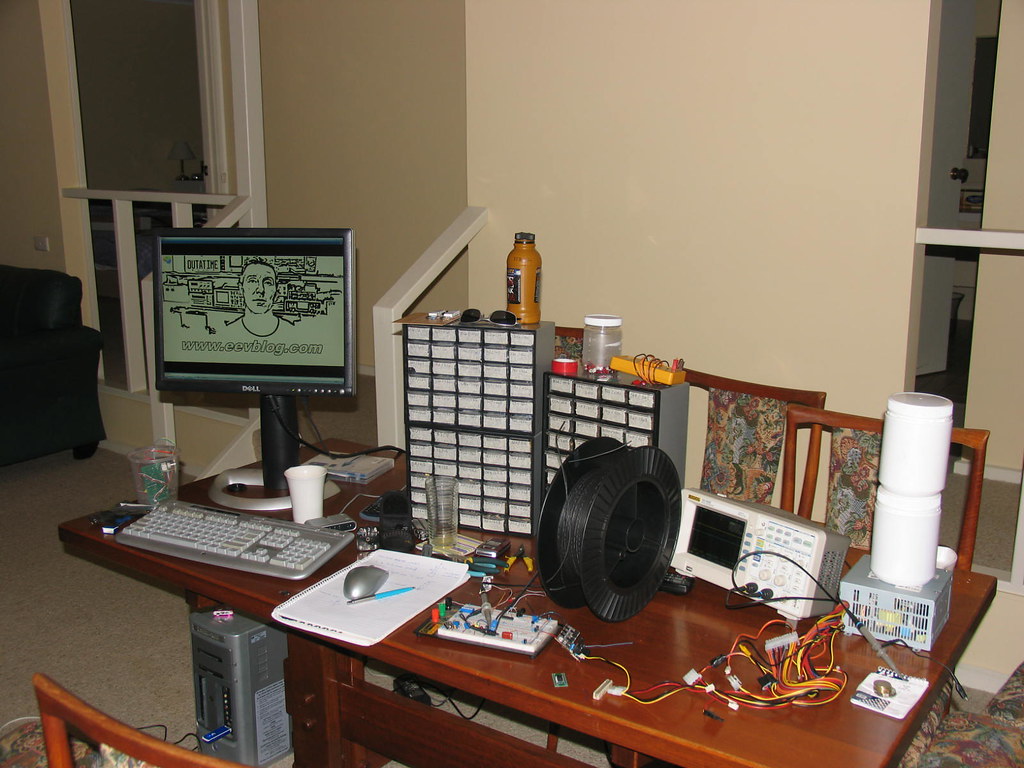


A video tour of Dave’s EEVblog lab:
http://www.youtube.com/v/LXIoZBCr3Xk
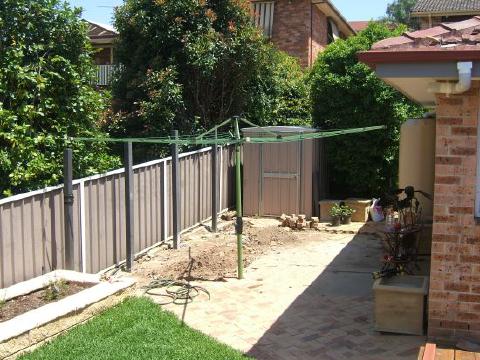
This is the “Summer Oasis” that Dave’s wife made him build her. Dave thinks it’s a waste of space and it should have been used for a big shed!" (yes, that tiny tool shed is behind the opening fence. Before and after shots:

Transcript
Dave Jones: Welcome to the Amp Hour. I'm Dave Jones from the EEV blog. And I'm Chris Gammell from Chris Gammell's Analog Life.
Chris Gammell: Hey Chris, I made it today.
Dave Jones: Yeah, a little snaffle yesterday, but no big deal.
Chris Gammell: If people weren't following the tweets, yes, I did actually forget to turn up and record the show yesterday. So, oops, sorry.
Dave Jones: Won't be the last time, won't be the first time.
Chris Gammell: No, won't be the last time, won't be the first time it's happened either. Oh dear, what can you do? Doesn't matter. Record the next day, that's what we can do. Yeah, exactly, yeah. I'm an engineer, I don't follow schedules and shit, I just work on whims, you know. Good, yeah, that's... Yeah, I've said before, if my life gets that complicated where I've got to keep a diary of stuff, of things I've got to do, then that's when I go bush. Nah. Yeah. Life's too complicated when you get to that point, I think. Anyway. Yeah, I don't know if I'll ever get there. Yeah, I know the...
Dave Jones: So, to start us off, the one person that's like that, obviously, and one person you like talking about, and one person that one of our listeners, Harry, told us about, the Woz, was on...
Speaker ?: Yep.
Dave Jones: Wait, wait, don't tell me, which is a...
Chris Gammell: Which is the first time I've heard of that, I've got... It's an NPR thing, right? Right. One of those national public radio things.
Dave Jones: Another NPR thing, right? And it's like this kind of comical game show kind of thing. And he was calling in, though, so you could tell he's kind of busy, because I think they even recorded out there. Or no, it's not. It's in Chicago. I'm sorry, I think it's in Chicago. But, yeah, it was hilarious. I mean, and they were talking about some interesting stuff with, you know, how you get started in computers, and... I don't know, just a little thing for you, if you get a chance to listen, I don't know.
Chris Gammell: Cool. Well, I'm reading through the transcript of it now, but the transcript's not nearly as good as, you know, actually listening to it on the radio. So, yeah, I'll have to do that.
Dave Jones: Yeah. It was good.
Chris Gammell: That will go on today.
Dave Jones: Excuse me. Oh. Oh, seasonal stuff. Lovely. It's just... Seasonal stuff. Wow. Getting sick, getting ready for the holidays. It's all there, you know?
Chris Gammell: Oh, speaking of seasonal stuff, well, you wanted to talk about Christmas ideas.
Dave Jones: Yeah.
Chris Gammell: Might as well throw that in there.
Dave Jones: Right. Well, I mean, I know what I've got on my list, but I was wondering if you had any stuff on your shopping list for the all-holy consumer season, and maybe some new gear or something. You got a new scope coming your way or anything?
Chris Gammell: Well, I got some stuff coming my way, not via Santa Claus, but via the manufacturers. So, hopefully, that'll be good. Yeah. I'm getting something real interesting in the new year. I'm not allowed to say what. Oh. Surprises. But there you go. Yep. Yep. So, in a couple of weeks.
Dave Jones: Do you trust other people to buy your electronic stuff for you ever? That's the real question.
Chris Gammell: No, not really, no. I'd probably, unless I told them exactly what I wanted, then no. That's what I, I sent links.
Dave Jones: I was like, yeah, if you're going to get me something, get me this. I'm looking for, like, some new magnification stuff for my lab. And I was like, yeah, get me this one, or else, maybe not.
Chris Gammell: Well, that was the same for me. I gave Nicole, my wife, a list of possible items. And one of them was also a lamp for my workbench, you know, one of those big magnifying, illuminated magnifying lamps. And then she, of course, she knows me, so she knew, oh, what are the criteria? And then I started going through the criteria. And the eyes just rolled in the back of her head, and she went, I think you should get that one.
Dave Jones: Why don't you just line up the website, and I'll click buy.
Chris Gammell: That's it. You can come along and click the buy now.
Dave Jones: Or maybe she can offer to, you know, like, answer the door when the delivery man gets there or something, you know. Exactly. That's how the electronics gift giving happens, you know, and the very auxiliary things. I forgot what else I put on there. I don't think I put any, like, hand tools or anything. I think the magnification was one. Right. What else was on there? Oh, man. Maybe a solder sucker I put on there or something. Kind of really nerdy stuff to put on there, you know.
Chris Gammell: Yep, absolutely. Well, I'm in desperate need of a new stool for the lab, because if you've watched my live shows, you've seen that my stool's been broken for six months. Yeah. And you would think from an engine, like, it's got five legs on the bottom of it. I might have to post a photo of it.
Dave Jones: Yeah.
Chris Gammell: But you would think that with, you know, five legs, you would think that if one leg breaks, it'd be reasonably stable with the extra four legs. But, oh, it's not. It's ridiculous. And I have grave fears about my safety on this thing. Usually, I, like, I've got to turn the broken thing to put at the back, and then I've got to wedge the chair up against the desk so I don't fall backwards. And it's like, I'm going to fall over and crack my head open one day. Yeah. Well... They'll just find me on the floor dead with blood gushing out of my head in the lab. Yeah.
Dave Jones: I mean, it's even worse. I mean, there's the slow death stuff, too. I mean, you're... I mean, get hemorrhoids or something. I don't know. I just remembered that was on my list as well. I asked for, like, a new chair, too, because right now I'm sitting on a wooden chair with a car seat warmer on it. A car seat warmer? Yeah. My frigid basement. No. So, it's pretty ghetto. I don't think I'll take a picture of it, but, you know, it's... Yeah.
Chris Gammell: Ghetto. Is that... That's US... That's US speak, huh? It's ghetto. Is that... Oh, yeah.
Dave Jones: You've never heard that one? Do we finally have a...
Chris Gammell: Oh, well, I know what ghetto is. I've heard ghetto.
Chris Gammell: It's a common term, but I've never heard it used as an expression like that before. So, yeah. Wow.
Dave Jones: Wow. That's a first. There you go. I can't say I'm proud of that expression, but, yeah, it's... Right. I finally have an expression that you don't know. That's the thing that I'm amazed at.
Chris Gammell: Yeah, because Australians usually know the American expressions, but not vice versa. Right. Right. Well... Yeah, because we watch far too much American... Yeah. We watch far too much American TV, so... Oh, yeah. Yeah, that's true. Oh, dear. Oh, dear. Yes. I've got an expression that we use here. If we're going to butcher something, then you'll go, we're going to get medieval on its ass. You know, we're going to get medieval. Yeah, I've heard that one before. It's like, you know, use old-fashioned axes to hack it apart or something like that.
Dave Jones: Yeah. Yeah. I've heard that one before, but... Right. Yeah. There's some others of yours that I... They're a little out there.
Speaker ?: Yeah.
Chris Gammell: Right. So, yeah. Any Christmas projects at all?
Dave Jones: Uh, no, I'm still working on some, uh... Well, I'm working on an LED thing, but it's not for Christmas. Right. Or Hanukkah or Festivus or anything like that. Right. I don't know. There's a lot out there, but the lighting projects, they can only go so far, you know.
Chris Gammell: Well, I know. I noticed that Art of Fruit this year put on a disclaimer on their website saying, we guarantee we will not have a flashing LED Christmas tree project. Yeah. You know? And people were so sick of them that they sort of... Yeah. There's... I didn't...
Dave Jones: I didn't see that Dancing Santa contest. I think that's still going on, the make one.
Chris Gammell: Yeah, that's right. I saw the announcement and I haven't...
Dave Jones: I haven't heard anything about it, so that could be interesting seeing the results of that eventually. But, uh, yeah. I don't have anything like that. I don't know. There's, uh... I don't know. There's only certain things you can do, I guess. Maybe not. That's a horrible thing to say.
Chris Gammell: Yeah, I know. I was going to have a flying spaghetti monster Christmas tree LED flasher, but, oh, you know, I don't have time. You know, you've got to lay out the board in the shape of the spaghetti monster. That's just... Yeah. Oh, you would have done it on a board? Actually, on a board, yeah. Yeah, yeah, yeah. It'd be shaped, you know.
Dave Jones: That'd be a great Christmas tree ornament. I don't know.
Chris Gammell: Yeah, I think it would be pretty cool, but, yeah, I'll do it next year. Somebody will probably gazump me there.
Dave Jones: Yeah, well... Ah, well, what can you do? There's always more of the lovely Christmas season to be had, so... I won't be sorry to see it gone. I don't know.
Chris Gammell: Right.
Dave Jones: Yeah.
Chris Gammell: Should we... We've got quite a few workbenches of the week.
Dave Jones: Yeah. Oh, yeah, we do.
Chris Gammell: Not really workplace. Should we actually rename it workbench of the week instead of workplace of the week? Because...
Dave Jones: Yeah.
Chris Gammell: I think we're just getting workbenches. That's pretty much all we're getting. That's okay. Which is great. Which is fine.
Dave Jones: Yeah, you know, my initial thought with that was if there was going to be multiple people listening... Yeah. Hopefully to get... I think we should get a double, you know, double bonus shout out. No, that doesn't sound right. But if you ever have two people in a picture, I mean, that's... Double bonus shout out here. Yeah. Yeah, there's... I mean, if you ever get two people in a picture, that'd be doubly impressive because we haven't seen that yet. But, you know, at the same time, we still like seeing ventures.
Chris Gammell: It'd be more impressive if you got every employee in the company to cram into the lab, like, you know... Oh, yeah. Like into one of those phone booths. Everyone crams in and then...
Dave Jones: Hopefully it's the small office. Yeah. Yeah. Maybe just the engineering department.
Chris Gammell: Oh, OH&S would go ape shit, I think. So, anyway. Our first workplace of the week is Henrik, if we pronounce that correctly. It could be Heinrich. Right. I don't know, but I reckon the Australian pronunciation's Henrik.
Dave Jones: Right. And Dan, he's... And he's got that first loud... I think that he started his blog doing this, but this is his first entry.
Chris Gammell: Yes, he did. And he put up The Amp Hour logo. And he's not in the photo, unfortunately. He did reply saying that he would post another one with himself in it. But, yeah, he's got the basic desk set up, which is pretty much all you need. He's got the Rigol scope there. He's got a soldering iron. I don't recognize the brand. It's one of those... I don't know. It's something weird. I'm not sure. And he's got a little bench power... One of those slim-looking power supplies. RSR or something, maybe. Yeah. And a little bench multimeter. I'm not a huge fan of the bench multimeter. I prefer the handheld, as people know. Oh, yeah. Well, we know about that, yeah. Yeah, well...
Dave Jones: I like the clamp he's got on there, though. One on the edge of the desk. That thing's awesome.
Chris Gammell: Yeah. People are listening right now. You should check that out. Yeah, it's nice. It's one of those little Panavise... Yeah. Well, that's a brand name, you know. Right, right. ...thing. And he's got a... And that's pretty much it. It looks like he's working on some little project with a motor and wheels, like a little robot-y. Yeah. With a clear Perspex thing, and he's got a little breadboard there, and it's all neat and tidy.
Dave Jones: Yeah, I was going to say, that's the thing that strikes me, and he even wrote about that. Good Lord. It's disgustingly neat. Throw some resistors around. Yeah. Please, just spill some coffee somewhere.
Chris Gammell: Well, he does admit... He does admit that it's not usually that tidy, so maybe he tidied up or something like that. Right. Yeah. And he's got the Atmel, the old Atmel SDK 500, which I hate. Ah, yes. The development board, oh, it's a nasty little... Right. It's very flexible and powerful, but oh, it's just a nasty little...
Dave Jones: Is that the one where you had the design blog where you were like, you were like screaming into the camera? Yes, I think I did. Yeah. Yeah.
Chris Gammell: I think Atmel versus pick or something. Yeah. Yeah, that's right. I flashed it around and said it was, you know, not that great. No, yeah, I prefer in-system programmers. This one, yeah, it's got like cheap little sockets on it and it's just... You've got to put jumper wires everywhere to configure all the different chips and... Yeah. I don't like it. Pass. Anyway.
Dave Jones: Pass. Yeah. Well, he already jumped in too and people should check out his projects. He's got some cool projects already started on here. Oh, okay. So, he actually moved his blog over to a personal one because the first one was a blog spot. But the... Yeah, he's already started kind of jumping right in. And I don't know if it was us talking about starting a blog to put up projects, but if it was, that's awesome. And if not, who cares? It's still awesome that he's, you know, even documenting and he's doing a good job so far.
Chris Gammell: Excellent. It's great. Yeah, he's got an ultrasonic rangefinder. And that probably coincides with that little robot looking thing with the wheels because, you know, robots usually have a little ultrasonic rangefinder on them. So, I reckon that is going onto his little robot there. So, excellent. Thanks, Henry.
Dave Jones: Yeah. And I have to say too, I love Norway's top level domain, the .no. I think that's awesome. The .no.
Chris Gammell: That's great. I really haven't seen that before. Yeah, me neither. It must be getting big now.
Dave Jones: Maybe it's starting up, but I wish I could get more of those. It's really expensive to get like how Bitly has the link shortener, bit.ly. That, you look into that and that's Liberia, I think. I think. And it's super expensive.
Chris Gammell: Really? Like thousands of dollars or something?
Dave Jones: Yeah. Or like the guy that started WordPress, Matt Mullenweg. He's got a, they're called top level domain hacks. And his is ma.tt. And .tt domain is Trinidad and Tobago.
Speaker ?: Oh, right.
Dave Jones: And he is the only, one of the only people with that top level domain at all. And he had to like go lobby the government there to get it. Oh, no. Really? Talk about like geek cred, you know? Like you really got to want it.
Chris Gammell: Absolutely.
Dave Jones: And my favorite thing, I feel remiss if I wouldn't say, I have checked and chr.is is a real thing. I forget what .is is. Right. But the only thing that's there is a single like HTML file that the guy made. And he says, this domain is not for sale nor will it ever be. Brilliant. I read it the first time and I'm like, oh, well, I guess that solves that one. Oh, dear. Anyways, that's not even close to electronics related, but I thought it was fun. No.
Chris Gammell: And next up, we've got, who is it? Sylvain.
Dave Jones: Yeah.
Chris Gammell: If that's how you pronounce it. Sylvain. Yes. And let's take a look. What have we got here? We've got, I'm calling up. He is. Yeah, mine's going kind of slow too.
Dave Jones: He's got a couple of handhelds up there, I think. Looks like that might be a Fluke 87 up there, up on top.
Chris Gammell: No, it's not. No? I think it's a Fluke. Anyway.
Dave Jones: Well, he also, he challenged everyone to figure out what he's working on there. Right.
Chris Gammell: Well, he's got an Agilent, he's got an Agilent one and he's got a HP, an old HP. Is that a scope or is that a network?
Dave Jones: No, I think that's a, it's either a network or. Like a network.
Chris Gammell: It's a network analyzer, is it?
Dave Jones: Maybe a spectrum analyzer, maybe.
Chris Gammell: Yeah, something like that. Yeah, it's got a single, yeah, it's got like a single RF input. Yeah.
Dave Jones: Yeah, he's doing some fancy GSM work or something like that, so.
Chris Gammell: Right.
Dave Jones: And I thought, and he challenged us too, because there's a big, there's a big white oval looking thing at the top and it looked like a, a George Foreman grill. You ever seen those?
Chris Gammell: Right, yeah, yeah, I've seen the George Foreman grill. That doesn't look anything like a George Foreman grill. Oh yeah, it does.
Dave Jones: It looks like a George Foreman grill.
Chris Gammell: Oh, right. Oh, sorry, I was looking at the wrong one. Right, it's a. That looks like a Saturn iron. That's the one with the one ethernet cable going into it.
Dave Jones: Right, yeah, yeah. Yeah.
Chris Gammell: Okay, right. Yes, it kind of does. Yeah, it's got the slats on it to drain all the fat out, just like the George Foreman grill.
Dave Jones: See, now we like this. This is nice and this is a very messy desk. That's, that's what we expect to see.
Chris Gammell: Absolutely. A solder paste everywhere. Clean is okay. Tiny looking board there, which probably work in progress. And it looks like he's got a bottle of flux there, just ready to be spilled everywhere. Great. That's what you want.
Dave Jones: You know, I always get thrown off when I see plugs that aren't the North American style. I know that's totally American of me. Yeah. But every time it happens, I'm like, wait, what is that? And I'm like, oh, right. People have different plugs.
Chris Gammell: Different plugs in different parts of the world. Yes.
Dave Jones: Yeah. I mean, it makes sense, but yeah, still throws me off every single time. I don't know. Right. I'm going to be one of those, I'm going to be one of those stupid Americans that goes to Europe sometime and tries just jamming mine in there, you know, and just seeing. Yeah, yeah. And I'm like, why isn't it working? Or I'll show up and have to pay, you know, triple the price in the, in the hotel gift shop. I bet they bank off people like that.
Chris Gammell: All right. Who else we got? Let's see. We'll go through them quick. We've got, uh. David? We've got, uh, David.
Dave Jones: Oh, David?
Chris Gammell: No, no, no. David. Oh, David. That's right. We have four today. There's a David.
Dave Jones: Yeah, so we're getting through these.
Chris Gammell: Yep. It's another one bench, um, like a desk kind of thing. And there's me. There's my new, uh, intro up on the screen there. Oh, yeah. Yeah, I saw that. The vlog intro. And, um, he's got a Rygoel scope and a. Oh, right. Sorry, dude. That's okay. Next time. Next time. Next time. Looks like a cheap-ass yellow multimeter. Up on top there. Yeah. Um, he's got a Rygoel scope, as everyone does. He's got, it looks like a PC power supply. Yeah. Used as a, you know, just a junked old, uh, 300-watt PC supply as his bench supply and a breadboard. Yeah, that's great. And that's all you need. Yeah, that's awesome. I don't see the soldering.
Dave Jones: He was, uh, he was, uh, he was traveling, too. Or, like, he's, this is set up in a rental house, so.
Chris Gammell: Oh, okay. This is his, uh. This is, like, a temp setup. Right, he's got a couple of parts bins.
Dave Jones: That is impressive. If you're, if you're hauling your electric gear with you, electronics gear with you. Yeah, that's pretty good. To go, like, you know, tinker in your free time while you're, you know, like, working on the job. That's, that's pretty awesome. Especially if you have to go through, get through, like, you know, any kind of American airport security.
Chris Gammell: Especially with those parts bins. Have you ever tried to transport those parts bins with the parts in them? No, I would just assume. Oh, it's shocking. What do you do? Because the part, because usually they're not, the parts will jump out over the sides of the thing, so.
Dave Jones: Oh, God.
Chris Gammell: Even though the drawers are in there and you tape over the front and everything, inside there's all these gaps where the parts can just fall out.
Dave Jones: Oh, and then the drawers probably get stuck and everything, right? Yeah, yeah. Oh, my goodness.
Chris Gammell: It's not good.
Dave Jones: That sounds, what, oh, like when you're moving houses, you had to do that?
Chris Gammell: When you're moving house or you're moving lab to a different company or, you know, a different building or something.
Dave Jones: So, is there a better solution or what?
Chris Gammell: No, not really. You've just got to hand carry them, you've just got to tape, you know, carry them always upright. You can't shake them around or do anything like that, so.
Dave Jones: What you do is you dump everything into one big garbage bag and then you sort of throw them by hand when you get back.
Chris Gammell: Right, yeah, that's the way. Yeah. How to spend a week when you get back doing that work at all. Yeah.
Speaker ?: Yeah.
Dave Jones: You get really good at noticing markings on chips and stuff.
Chris Gammell: Exactly.
Dave Jones: Yeah.
Chris Gammell: And last but not least is Mike from Mike's Electric Stuff. He's a big listener of The Amp Hour and the EAV blog as well and check it out. It's awesome.
Dave Jones: I didn't see this one yet. Let me check.
Chris Gammell: Oh, it's a panorama.
Dave Jones: In the meantime, I think, I'm pretty sure Mike is the one who gave us the show's name, right?
Chris Gammell: Was it either Mike or John? I think it was Mike. It was Mike, was it? Yeah.
Dave Jones: I think he was on the forum and, oh my God, this is an awesome picture.
Chris Gammell: There you go. You've just seen it. I hadn't seen this yet.
Dave Jones: Oh my God. All right. So just to try and give it a describe in case anyone can't view it. Sorry, we haven't been as descriptive on here. I guess we have Mike. No, no.
Chris Gammell: It's a 360 degree panorama. Oh my God. This is amazing. It's a small lab, right?
Dave Jones: It doesn't look small because he just turned around.
Chris Gammell: Yeah, yeah, yeah. But I can guarantee you, I think it's pretty darn small. And I think he says so as well. Yeah. And yeah, Eddie's just got stuff everywhere. It's like a U-shaped bench, which is a very efficient kind of way to do it. He's got a whole bunch of gear up on shelving. Yeah. Parts bins galore. Just stacked right to the roof. Literally to the roof. How does he...
Dave Jones: Where's the door?
Chris Gammell: Okay, good point. Where is the door?
Dave Jones: Maybe this is like a bunker. You know, he climbs in from the ceiling. Oh, you have to go all the... Yeah, you're right. Yeah, no, it's where the cables are. I think he comes through the window there. He's got cables piled all over the door. And that's actually a pretty decent way to store them. I mean, they still get tangled.
Chris Gammell: Yeah.
Dave Jones: Yeah. I've seen actually... How do you store cables, Dave? Do you do like over the door?
Chris Gammell: Well, yeah, at work, at places of work, we do a similar thing, like a rack where you just hang them up and stuff like that. Yeah. Yeah.
Dave Jones: We have network cable racks that are just perfect for it. I love those. But they're...
Chris Gammell: Hang them up. But at home here in the home lab, nah, they're just scattered everywhere. So, I've got to spend five minutes looking for a lead. I'm, you know...
Dave Jones: Oh, he does have them at the top. I didn't notice that. He's got the same kind of racks at the top. So, those are nice. Right. Yeah.
Chris Gammell: Yeah. I don't think this is actually a 360 degree panorama. Because you're right. There is no door.
Dave Jones: No, no. It isn't. I think it's mounted on the door. You see... So, he's got the cables there. Oh, it's the back of the door. Yeah. Oh. I think so.
Chris Gammell: Oh, right. Yes. No. I do see the door now. It's sort of off to the side. Yeah. So, it's not quite a square room. Because Mike's big into LED, you know, big commercial LED projects. Yeah. He's got a pick and place machine in there.
Dave Jones: Where the heck is that? Check it out.
Chris Gammell: Is that on the floor? It's right next to the cables. You can see the cables. The cables. They're already on the actual machine. I can... They're already loaded in.
Dave Jones: All the way to the right?
Chris Gammell: Oh, my God. If you find the window, if you go to the window... Oh, the window. Sorry, people. I know you can't see it. I know, yeah. You should probably listen to this in the car.
Dave Jones: This would have been better for a... Yeah. Oh, my God. You're right. He does. So, he has a full pick and place machine in this tiny little... It's not that tiny, but...
Chris Gammell: No, it's not that tiny. But, yeah, there's a pick and place machine. He's got, like, a little mechanical bench as well. Wow. There's his reflow oven as well. So, he's got all the reflow gear and all that sort of stuff.
Dave Jones: God help his maid if he has... I don't think he has a maid. But whoever the hell has to clean this place. Like, wow. Wow. It's great. This is a real lab. I love it. This is a spectacular picture.
Chris Gammell: Yep.
Dave Jones: Wow. And books galore. Wow. See, now, do you keep any books in your lab anymore, Dave?
Chris Gammell: Not in the lab. No, there's no room for labs. Labs. There's no room for books in the lab. I've got books here in the study. They're in the cupboard here. I'm going to refit my cupboard. I should probably take a photo of it. Before and after. Well, I will. I'll take a photo before and after I do it. At the moment, I've got sort of a big bookcase in there. I want to rip that out. Yeah. Put in shelving so I can put component boxes and stuff like that. Oh, that's brilliant. Yeah. So, make it a bit more modular and...
Dave Jones: See, now, the one thing I was always surprised about with your lab is that you... It's a lot smaller than I thought because you always are sitting in front of the instrument panels. And so, it looks like it's really expansive, but it's actually because your computer's right in front of you. It seems like it's further back, but it's actually right there. Yeah. So, it's almost like a...
Chris Gammell: It's literally less than a meter away from me as a camera. Yeah. Yeah. And that sits on the other bench. Right, right. It's... I've showed photos. There's photos up there. And there's... Yeah. Two one side. And I think it's two and a half meters by two and a half meters or something. It is not a big lab. It is... It is tiny. It's just right. It's just a little nook in my garage. Yeah. Sorry?
Dave Jones: It gets the job done. It's just right. It gets the job done. Yeah.
Chris Gammell: Exactly. And, you know, if you actually clean off the benches, there are two full benches there to work on. Yeah. Yeah. That's awesome. Yeah. But as I've mentioned before, there's no room for vices or any other drill presses or any other mechanical stuff. So... Yeah. Yeah.
Dave Jones: Yeah. When you start getting into that stuff, I mean, I don't know. It might be worthwhile to sign up for, you know, a hackerspace or something like that. Yeah. Just because of the space constraints.
Chris Gammell: I've got folding workbench. If I want to work on wood stuff, I've got folding workbenches I bring out. I take the car out of the garage and I get the tools out of the cupboards from up above that you can see.
Dave Jones: You know, if you ever go full time, you should be like, oh, you know what? I have to build a huge shed out back or something, you know?
Chris Gammell: Well, I've tried for the shed. No. It's already been vetoed. No. Try again, Dave. I'm allowed to have a shed.
Dave Jones: When it's part of the income, you know, picture, then it's a business expense. No.
Chris Gammell: No. No. We have something called the Summer Oasis here. And that's her little sanctuary. It's got a fish pond and everything else. And that's a perfect place for a huge 50-foot shed.
Dave Jones: I know, right? Just knock those fish right out of there. Who needs fish?
Chris Gammell: She wants some stupid little thing with a fish pond and a couple of plants and a fake fence. Oh, yeah.
Dave Jones: I definitely wanted to... You know, I have a really big backyard. It's great for the... I don't know if you... Did you see the pictures I posted of the dogs?
Chris Gammell: No. No, I haven't.
Dave Jones: No, no. I posted pictures of the dogs instead of posting it because we didn't get to record yesterday. But we have this huge backyard here. And I want to just put a shack back there. You know, like a ham shack, basically. Absolutely. But I want to make it monstrous. And I don't know if I'd ever be able to or be able to afford it. But, man, there's some dreams in my head for sure. Oh, man, I can't wait.
Chris Gammell: Dude, sheds are pretty cheap. Sheds aren't expensive. Right.
Dave Jones: Well, it's the heating and the cooling around here.
Chris Gammell: Oh, well, yeah. That's something we don't have to worry about. Well, we have to worry about the cooling here. But you just grin and bear it, you know, during summertime. Yeah. Yeah. Just sweat on your projects. Well, my lab was 35 degrees Celsius the other day. I was out there shooting the Digikey blog. And, yeah, it was like 35 degrees. Wow. That was at like 7 o'clock at night or something. Dang. Yeah.
Dave Jones: It is really summer there, huh?
Chris Gammell: It is. Yeah. I love it. It's great.
Dave Jones: Yeah, that's great. That's enviable, especially around here.
Chris Gammell: But not so much because, you know, the house is air conditioned but the lab isn't. So, if I go out there and you see beads of sweat coming down my face, you'll know that. Yeah. You know, and especially when you've got – sometimes I've got to spend an hour or two out there filming a blog.
Dave Jones: Yeah.
Chris Gammell: You know, if it's a real half hour, one hour long one, that might take me two hours to film maybe. Yeah.
Dave Jones: I'd be interested to – Long time to be – Of people like, you know, like we have pictures of labs now and hopefully we'll keep getting more. Or I'd be interested to know about like longest stretches we've heard of people spending in the lab, in their own lab. You know, obviously there's work labs that are different. Right. But, you know, some people can go for a long time. I think I've only done like, you know, one or two hours before I have to kind of step back and take a couple breaks.
Chris Gammell: Oh, well, when I was a boy – Back in the day. This isn't lab but back when I'd be a nerdy programmer, right? I would literally work for 48 hours nonstop programming. And, yeah, I had the attention span and the stamina to actually do that these days. What a waste. Forget it. Yeah. I would work all week, you know, that whole weekend, 48 hours straight just coding, you know. And, yeah. And it wasn't unusual when I was a kid to spend all day in the shed, you know. I go out there at 6 a.m. and I come out at 10 o'clock or something at night. So, yeah. Wow.
Dave Jones: That's awesome.
Chris Gammell: Yeah. And Mike's got a mantis lamp as well. A mantis lamp? He's got one of those awesome mantis lamps.
Dave Jones: Where's that?
Chris Gammell: I love those.
Dave Jones: Oh, I lost it. Shutsuki.
Chris Gammell: Ah, well, that's okay. It's one of those 3D stereoscopic microscopes. Oh, yeah. They cost many thousands of dollars. And we have one at work and it's just brilliant. That's why I prefer soldering at work than my home lab because we've got the mantis there. Yeah. Those things are great too.
Dave Jones: When you don't have to put your eye directly to the eyepiece and instead like a, you know, it's a two-eye display kind of thing. Those are awesome.
Chris Gammell: And you can actually move your head around and you can sort of kind of see under components, you know. It's great. It is actually 3D stereoscopic. Yeah.
Dave Jones: That's awesome.
Chris Gammell: Yeah. I think they do cost money. So, I've heard you can, you know, if you're lucky, you can pick them up on eBay cheap, but they're highly valued. Right, right, right, right. You'll be very lucky to pick one up cheaply.
Dave Jones: We need like a, it's surprising people haven't started putting together like, you know, like two webcams. You'd think you'd be able to do that kind of thing with like two webcams now instead of two optical. Because right now it's optical based.
Chris Gammell: I've seen people do it. There's been prototype systems, but yeah, nobody's come out with like a really nice sort of, you know, here it is sort of finished product. Right, right. Kind of thing. So, anyway.
Dave Jones: Yeah.
Chris Gammell: Oh, that's enough for the shout outs for the workbench of the week, I think.
Dave Jones: Yeah. Yeah. Workbench of the week, right?
Chris Gammell: Workbench of the week. Right. Yes. Near enough. So, yeah. Thanks, guys. So, if you've got a workbench, please take a photo and make sure you're in it because that's much more exciting than just the workbench on its own. We like you in the shot, giving us a thumbs up.
Dave Jones: You know, it would have been creepy if Mike took a picture of himself in every one of those panorama shots.
Chris Gammell: It would have. Yeah. That would have been funny.
Dave Jones: Trippy kind of lab shot there, but whatever.
Chris Gammell: Right.
Dave Jones: What else have we got? Well, we do have a sort of shout out. I don't know how I feel about it. So, IEEE has a podcast.
Chris Gammell: Yeah, I saw that. They've got a whole bunch of...
Dave Jones: They do, yeah. They kind of...
Chris Gammell: Is it a whole bunch of different podcasts?
Dave Jones: Yeah. So, they kind of span... They classify a lot of their articles. And, you know, we give them a hard time here for IEEE, but not the magazine as much as the organization.
Chris Gammell: No. The magazine's quite good. Right, right. So, the...
Dave Jones: But the podcast itself is usually segmented into, like, aviation or whatever kind of electronics that they're working on, you know, like sensors or blah, blah, blah. So, at first, I couldn't actually find it. You know, you can't actually find... I found the feed eventually, just the podcast RSS feed. And then later, I found under multimedia, there's a link that just goes to the podcast, too. So, we'll throw that link up there. There's some interesting ones, but...
Chris Gammell: Yeah, I've listened to the... Well, I started to listen this morning to the computing one with Stephen Cherry. And he interviewed somebody about the new Chinese supercomputer or something like that. And, yeah, it was, you know, it's interesting. So, there's tons of podcasts out there. If you really go out there, you know, if you're passionate about, you know, hearing podcasts, then there's no shortage out there, really.
Dave Jones: Is passionate about hearing podcasts also known as bored at work or bored in the car?
Chris Gammell: Right, bored at work. Yes, that's right. You sit there with the headphones on and pretend to... Yes.
Dave Jones: We hope we're entertaining you as you're bored at work or just sitting at work or sitting in your car. Honk if you're listening in your car right now.
Chris Gammell: Honk if you're listening. What's this? You added this... I only saw this link this morning. Squishy circuits?
Dave Jones: Oh, yeah. Yeah. So, that's actually an article from IEEE. They started getting... Basically, they're talking about it for neural interfacing. So, having like a gallium arsenide circuit that's being able to directly interface to a neuron.
Chris Gammell: Right. And it uses liquid metal in some hydrogel or something? Yeah. That's what I'm looking at here. Yeah. Yeah.
Dave Jones: It's some weird stuff. But I was thinking about it in our continuing, although hopefully not continuing too much debate of printable at home micro...
Chris Gammell: Dude, you got owned on that. Seriously.
Dave Jones: Ah, whatever.
Chris Gammell: You've been owned. I'm sorry. Everyone agreed with me.
Dave Jones: They did eventually. But you know what? That's fine. I will be vindicated in the near future. We will continue to monitor.
Chris Gammell: Near future. He's called it, folks. He's called it near future.
Dave Jones: Well, I didn't define near future.
Chris Gammell: Right.
Dave Jones: In the cosmic sense, it's, you know...
Chris Gammell: In the cosmic sense.
Dave Jones: 50 years isn't that far away, right? I mean...
Chris Gammell: If we haven't blown ourselves up yet, no problem is right.
Dave Jones: It'll definitely be before the sun explodes.
Chris Gammell: Right. I'm calling that one right now. You're calling it. Okay.
Dave Jones: Right. Well done. And if the world ends, then there's no one to call me on it. Oh, dear Eddie. I'm an X-ray crew as well right there. Yeah. Ah.
Chris Gammell: All right. So, there you go. Squishy circuits. That's the new thing, is it? Yes.
Dave Jones: Well, yeah. I don't know. We'll see if it works out. But it's, you know, it's always like IEEE and even like EE Times and EDN and all those guys, they always try and get the scoop on the newest thing. So, it ends up they're reading research papers, which are really quite interesting. But the, you know, you got to wait 10 years. You know, they were probably reporting on, you know, Wi-Fi 20 years ago, right? Or whenever that was first being developed, right? But people ignored it at that point and then they moved on and eventually, you know, gained momentum. And a lot more of the stuff that they talked about was in the crapper now. So, there's, you know, it's...
Chris Gammell: Good old Thomas Crapper, huh? Yeah. He gets a lot of coverage. Yeah. Yeah.
Dave Jones: Yeah. So, I don't know. It's... We'll see about the squishy circuits and the principal circuits. I was a little mad.
Chris Gammell: I just love the name. Squishy circuits. It works. It's catchy. Yeah.
Dave Jones: You know, they're always talking about like organic and plastic circuits too. And, you know, when do you really start defining a circuit? When is it, you know, like a lot of things can pass electricity. A lot of things are resistive and conductive. Is it a circuit, you know? Right. Yeah. Yeah. I mean, does it have to be, does it have to be a, you know, shoot, a 3.5 semiconductor kind of thing?
Chris Gammell: Well, I think it's got to have a semiconductive nature. Okay. Yeah. Because what makes our modern electronics are semiconductors. Yeah. So, everything past electricity, in fact, everything can in, you know, everything has resistance. Right. Right. So, that's, even air has resistance. So, it's not a...
Dave Jones: An air circuit.
Chris Gammell: An air circuit. Exactly. Right.
Dave Jones: I made the best resistor ever.
Chris Gammell: So, yeah, I think it comes down to, it's a, it's a semiconductor. You've got to make a semiconductor out of it.
Dave Jones: Yeah.
Chris Gammell: And, and then not just one big transistor. You've got to make a, you know, an integrated circuit out of it. So...
Dave Jones: Right. Yeah. And be able to have logic levels and everything else like that. Yeah. Yeah. Yeah. Yeah. It's interesting. I mean...
Chris Gammell: Because our world is digital and analog. So, it's got to have, you know...
Dave Jones: A little bit of both. Both properties. Yeah. Anyway.
Chris Gammell: We, we have a follow-up from Element14. Oh, yeah. Slash Eagle. Oh, Freegal. Right.
Dave Jones: Who... The Freegal campaign.
Chris Gammell: They, they got onto our Freegal campaign and they tweeted and it looks like they don't really understand it. They don't get it, I don't think.
Dave Jones: Well, I think they do, but I don't think they want to do anything about it.
Chris Gammell: Well, they, they, they don't agree. They tweeted back to us that basically they think that they have the Ducks Guts product. Okay.
Dave Jones: Right.
Chris Gammell: And, and they're, then they've marketed it correctly and it's the right price and they just don't agree that it's the wrong price or that they've got their limits wrong. Right. Their limit being board size instead of layers, which is what I wanted or some other aspect. Yeah.
Dave Jones: They didn't really address that very well, did they?
Chris Gammell: No, they didn't address it at all. They just skimped over it. And the reason being they, that they think it's a good idea is not only because they think it's a good idea, but also because it's easier for them to implement in the software, a size limitation as opposed to a layer limitation. Right. That was their excuse. Anyway, well, I don't believe it. I think it's, yeah, I think they're wrong. And I think if they're not careful, RS Design Spark will kick their ass and because their one is completely without limits. Right. Yeah. So I don't know how they compare on a usability factor, but you know, just from a sheer bang per buck, when you're talking free, RS Design Spark wins.
Dave Jones: Right. Right. And the, you know, the thing that they were pushing is, you know, the thing that we talked about is the fact that they're owned by Element 14 and that that's like a really big deal because if they tie in their bomb eventually, that's like a big, you know, that's a big deal. And that's how they could actually make money off of it.
Chris Gammell: Well, that's what Design Spark are doing too. Right. Exactly. But granted, Element 14 are bigger than RS in terms of, not here in Australia. I think RS actually has a bigger market share than Farnell's, but, or Element 14. Right. But they're more, but RS are really into a lot of the industrial mechanical stuff. Right. Markets as well, whereas Element 14 are more in the electronic component market. Right.
Dave Jones: Well, and they were treating the fact that they're tied in not as a reason for revenue, because obviously that would bring Element 14 revenue, right? If you have a thousand people using Eagle and then you give them all the ability to one click buy all of the parts that are designed into the thing, then you're going to get probably, you know, some percentage, probably similar to the, you know, percentage of like ad click through kind of stuff, like one to 2% or whatever it is. And you're going to get like just a direct sale out of that. And that's awesome, right? And that's what would pay for the software. That's what the point we were making. And they came back and they were talking about, well, no, this is a feature. And the fact that you're allowed to buy it from us directly, eventually, because it's not implemented yet, is a feature. And that's why you should still be paying.
Chris Gammell: Make no mistake. The reason Element 14 bought Eagle is not because they want to run an EDA company, not because they want to supply an EDA tool and be nice guys. They want to sell parts, right? That's the sole reason. And there, I guarantee you a ton of effort, and they've even admitted this, I think, a ton of effort is going into that BOM thing so that all the, they will eventually have every footprint and every data sheet linked and every schematic symbol linked to every component in the Element 14 library. Right. In the Element 14, 100,000 parts, right? Or 200,000 parts, however many they have. That is the ultimate goal.
Dave Jones: Right.
Chris Gammell: And when it becomes that easy, then, yeah, people will naturally buy that because it spits out a BOM with all the Farnell part numbers. Element 14. God, I hate name changes. Yeah. So that's the whole idea. That's the sole reason they bought them. Not because they want to get into the EDA business.
Dave Jones: And if they didn't buy it for that reason, then they're doing something wrong. They got, they've been had. Right. Exactly. Right. Yeah.
Chris Gammell: No, I think they've even admitted this. This isn't a big revelation or whatever. Right. I'm sure it's, you know, it's been their stated goal from day one is to provide that bill of material service. And it will eventually, I'm not sure what it includes at the moment, but it will eventually include PCB, footprints for every part, you know, schematic symbol and data sheet links.
Chris Gammell: Because that's the big thing now is data sheet links as well as spitting out the BOM. Right. So it's not just a BOM thing.
Dave Jones: Right. Yeah. It will get much better.
Chris Gammell: And RS will be doing exactly the same thing. They matched it. That's why they went out and bought rights to the number one systems.
Dave Jones: You have to be imagining that Mauser and DigiKey are going to jump in in some manner in the future as well. Because if they're not, they're, I mean, they're the big players still, but the, they're going to get in somehow.
Chris Gammell: Well, they are because they're already got links into Altium Designer, into Cadence and other packages like that. They actually open up their database to companies like those and you can link directly in.
Dave Jones: Nice. Yeah. I haven't done the direct stuff yet. So I've...
Chris Gammell: Right. Yeah. That's the future of electronics and it's happening now. It's the big future. Yeah. And all that info is just included in your single part library. It's great. I love it.
Dave Jones: I think the impressive thing too here is I think Element 14 was ready for this because they, you know, we started harassing them about it on Twitter and they made one of the guys from Cadsoft get a Twitter account and start talking to us.
Chris Gammell: That's right. They actually start, yes, we've got power. We've forced them to start a Twitter account. It was nice of them. You know, that's nice to have. It was. No, it was good.
Dave Jones: I mean, I know that they're, some of their answers are a little, you know, iffy. Vague? Yeah. Not vague, but like kind of politically driven and, oh, we're not going to stop charging yet. We like having revenue kind of thing. And that's okay. That's their choice. We're just predicting the future here. Absolutely. Yeah. So it's Cadsoft Tech. If you're interested in following them on Twitter, hopefully everybody's on Twitter because we like it. Yeah. They are at Cadsoft Tech. So at symbol, Cadsoft Tech. And I'm looking at it right now and it said, the guy Edwin hasn't been posted much, but as fate would have it, he just tweeted that they added a PCB quote service as like one of the scripts, one of the ULPs. So this could be the beginning of that whole.
Chris Gammell: Who's that through?
Dave Jones: What's that?
Chris Gammell: Who's the quote thing through? Who's the service provider?
Dave Jones: Oh, I can only imagine it's through Element 14. Oh, oh, oh, oh. I get it. Okay. So it's for a PCB quote.
Chris Gammell: Yes.
Dave Jones: Oh, I don't know. Oh, yeah. I mean, it must be. I don't know. We haven't checked out.
Chris Gammell: We'll have to check out the details.
Dave Jones: Yeah. So breaking news. This just did.
Chris Gammell: That'll be the next thing. And then they'll be quoting assembly as well because all that info can go with assembly. And then there'll be turnkey solutions. Oh, yeah. You know. Yeah.
Dave Jones: And then eventually mechanical and everything else. Yeah. It's just all going to be a one-week pipeline. And then they're going to all have these awesome back-end deals with the different distributors, whoever. And then it's really smart on their part because, you know, at the end, if Element 14 owns the entrance to that pipeline, they're going to charge for the right to have it, which also means they shouldn't charge the users. I'm just going to say it. Right. Again.
Chris Gammell: And this is a realistic future. This is going to happen as opposed to your silly pie-in-the-sky chip-making business. Oh, there we go. That's a low blow, Dave. The hell's a low blow? I had to get it in. Yeah.
Dave Jones: So anyways, you know, keep watching on Twitter. Well, I mean, a lot of people like Eagle. I use Eagle. You know, I use other stuff too. But it's interesting to watch this stuff, especially because they are jumping into Twitter and letting us keep track of them. Yep. Yeah.
Chris Gammell: Speaking of Twitter, there's two points. No, we don't have a Twitter account because I think we prefer our separate accounts. It's sort of diluting.
Dave Jones: We don't want to, you know, we don't want to mix the record collections in case we split up, you know. Right. It would be hard on the kids, you know what I mean? Right. Yeah.
Chris Gammell: Because we've both got big followers on our own individual accounts. So I think if we, and then we won't know, and then we'd have to agree on something before we tweet it, possibly. Yeah. Otherwise, you know, we'd just get into arguments with ourselves on it. Right. Whereas we can post any shit we want on our own account. Oh, yeah. Yeah. Yeah.
Dave Jones: Because Jeff was talking about that on there. Yeah. I mean, it's a good idea, but I don't know. I don't really, I don't like those accounts that just push stuff, you know? Like, I don't know. Right. I don't know about those.
Chris Gammell: Well, I don't mind it. If it's just news, if I'm following a company, here's another rant I wanted to get into. Yeah. An example. I like companies that, if I like their stuff and I follow them on Twitter, I want them to just push me information. I don't want them to necessarily communicate with me and have a chat. Don't look at my face. That's right. I'm interested in your products. Tell me about your products or new news you have or whatever.
Dave Jones: You like that for vendors? I like that for magazines sometimes. No, I like it for manufacturers. Electronics news. I like that one. I think that one's good. But, like, LT doesn't respond to any of their stuff on Twitter.
Chris Gammell: Right. Yeah. Some are proactive. Others just don't respond at all. Yeah. It's purely a push service. I like having, if I ask them a question on Twitter, I love getting a response back. I think that's great. But, you know, yeah, I do like just, I'm happy to be pushed stuff. Yeah. That's why I, you know, I want to know what new AVR chippers come out, you know. So, I'll follow them or I'll follow Microchip. I want to know what new parts are coming out or something like that. Anyway, the rant I wanted to have is Fluke. Okay. Fluke of, oh, I'm following Fluke. I think it's Fluke Corp on Twitter. Okay. I stand to be corrected on that. I think that's their name, their Twitter name. Uh-huh. And all they're pushing at the moment are these stupid football, American football tweets. Oh, yeah. You're talking about that. Like, oh, it's part of their stupid football-inspired marketing campaign bullshit.
Dave Jones: I can't imagine that crosses over much. It's not like, hey, I use a DMM and then I'm going to go watch some football. It's like, no, I use a DMM and then I go look at my Magic the Gathering cards, you know. Right.
Chris Gammell: Yeah, they've got some, they've got the Fluke football big game sweeps and season 2010. This is like some marketing thing where you can win a trip to the big game in Arlington, Texas. I don't give a shit.
Speaker ?: Really.
Chris Gammell: You've got an international audience, Fluke, who listen to you. They don't give a shit about American football or your stupid winner trip to bloody the big game in Texas. We don't care.
Dave Jones: You know what they should do is a trip to the Fluke factory. That would be cool.
Chris Gammell: That would be awesome. Okay. There's a suggestion. That's great. That's something everyone would love. Yeah. And seriously, like nine out of ten tweets in the last week, I think it is, or eight out of ten, have been just football about how some team beat another team. What the hell?
Dave Jones: Yeah. I'm not a big football fan myself.
Chris Gammell: Even if you are, it's like, no, I'm sorry. I don't want that on my Fluke channel. I follow Fluke because I want news about new Fluke products.
Dave Jones: Well, Dave, you know what you can do. You can just...
Chris Gammell: Win a contest to bloody... Yeah. Anyway.
Dave Jones: You can just turn it off. I mean, that is the nice thing about it.
Chris Gammell: Yeah. I think I will if they don't stop it. Anyway, I'm just curious to see if they respond at all. They may not. You know, we're marketing. We know what we're doing.
Dave Jones: You can usually tell looking through a company's Twitter going back. And even people that are following you, you can go back through their old ones, and you can tell pretty quickly if they're, you know, a bot or if they're a company. A bot, yeah. You know, just pushing. If it's like a WordPress site that's just auto-posting stuff, a lot of them are like that. So, yeah. Yeah.
Chris Gammell: I don't know. Anyway.
Dave Jones: Hopefully, people out there like Twitter. I don't know. I think some of our listeners do. I don't know about all of them. I always encourage engineers to, but I don't know. I like it. I don't know about you, but I just tried it on a whim. You know, a lot of people were talking about it at first.
Chris Gammell: So did I. I tried it on a whim, and I grew to find it very valuable. Yeah. Yeah.
Dave Jones: Yeah. Yeah. Uptake is usually slow, but it's okay. We'll get people on there eventually. We won't push it.
Chris Gammell: Right. Yeah. What else have we got? More rants? More discussion points? Well, yeah. Let's talk about...
Dave Jones: So speaking of Twitter, Steve Leapson is one of your friends, right? Yeah. From EDA360. And he's actually on Twitter a lot, too.
Chris Gammell: If you're listening.
Dave Jones: I'm sorry?
Chris Gammell: Oh, yeah. He's a big... Oh. He's a marketing guy, by the way. Oh, right, right, right. No, he's an engineer, but he's more into the... Yeah. He's an EDA. He's a product evangelist. Right. Is his wank title. Right, right.
Dave Jones: You know, I hate that it's like Steve is a very successful engineer, so he's a marketer. That sounds like a bad joke, right? What do you call a successful engineer? A marketer. A marketer. Right. Oh, God, that's horrible. You know, like that's... I mean, but at a certain point, that happens, right? So I don't know. Yeah. Anywho, yeah, he was talking about an open standard, so this is actually about EDA stuff again, but an open standard between the foundry, so that's the people that are making, you know, the wafers, and their process technologies, and they're actually opening up that standard and then pushing that back to the EDA tool, so that'd be like your Cadence and everybody else that's actually making design software, so, you know, I want to put a BJT down here and it has to have, you know, this width and this length and blah, blah, blah, blah, blah. So they're now opening that standard up, so what I'm thinking is that this might allow more access, kind of like how we've talked about in the past with that electric, that open source software that talks to Moses. So I don't know, maybe that'll happen, I don't know if it will, but... Right.
Chris Gammell: Please don't tie it into your chipmaker machine.
Dave Jones: No, no, no, I'm not talking about that. This is all about Moses. Remember we talked about Moses on here.
Chris Gammell: Yeah, yeah, Moses and the fan, yeah, getting your own chips fabbed and... Right.
Dave Jones: So that was, I guess that was kind of the beginning of it, wasn't it? Boy.
Chris Gammell: Yeah, I think it was, yeah. Yeah, that was... And I think it's good, this is a good thing, you know, anything with, you know, their opening standards, that's great, you know, and it's same thing with the PCB EDA industry. Eagle are now talking about coming up with an XML file format standard. I think we talked about that before where... We have, yes. Yeah, people can all share, you know, the file format's open, it's not proprietary and all the information's there and, yeah. Right. It's great.
Dave Jones: I wonder about that because you think about, I mean, I think about, like, you know, huge chip manufacturers like a Maxim or a, you know, LT or whoever's using some kind of EDA tool in order to make a final chip, right? But they're probably not going to use some ripoff, you know, fly-by-night, one-hung-low software company that's then jumping into the software standard, right? So it's almost like there's not a downside there. The only downside is between maybe like a Cadence and a Mentor, which are these two huge behemoths that fight each other all the time. Maybe that's the only one, but they're probably already, you know, friend-enemies, frenemies anyways. So what's the big deal?
Chris Gammell: Exactly. Well, by the way, Steve Liebson actually works for Cadence. Does he? I can never tell you. Yeah. Well, he works for a company that was just bought by Cadence. Ah, okay. There you go. Yeah, full disclosure. So by default, he's a Cadence EDA 360 evangelist, I think is the, yeah. Right. Something like that.
Dave Jones: It's interesting to see that stuff. I don't know if it'll actually drive any software growth in like the open arena because there is still so much you have to do to get to that final product, but hey. Open is good.
Chris Gammell: Absolutely. I love it.
Dave Jones: Yeah.
Chris Gammell: And we also wanted to, somebody commented in the comments on The Amp Hour website. Yeah. How do you pronounce this? Dab, Dablor Nick. Dablinick is his username. Dablor Nick?
Dave Jones: Dablor?
Chris Gammell: Something like that. Talked about.
Dave Jones: Use your real name, people. Come on. Yeah. This is 2010. Brand yourself. Come on. You can call yourself by your real name unless you're talking bad about your employer. Right. Don't do that either.
Chris Gammell: Why not? It's fun.
Dave Jones: Oh, yeah.
Chris Gammell: Do you get, basically, he wanted to talk about, do you get asked by people to fix stuff? And I've talked about the, I've done a drive time rant on this, on the blog before. And, yeah, I get asked all the time. And my universal answer is, no, I can't fix your damn plasma TV.
Dave Jones: They fix, they ask you to fix it, like just, these are like people on the internet are asking you to fix their stuff?
Chris Gammell: No, no, like friends, sorry. Yeah, like friends and family, acquaintances, you know, work colleagues, you know, they all want me to, oh, you're an engineer, can you fix my plasma TV? It's just going on the blink. No, I can't. No way.
Dave Jones: Yeah, there's a repair service that does that really great. You pay them money and then they do it. Yeah.
Chris Gammell: That's interesting because- Yeah, I could eventually do it.
Dave Jones: Right, yeah.
Chris Gammell: It'd take me so much time and money that, you know, you go to a service person who's kitted out and has the experience with that, they do it 10 times, 100 times quicker. Exactly. Yeah, didn't we have- You know, they got access to the parts.
Dave Jones: We showcased them last week, didn't we? Yeah, exactly. Who was that? Mike? From New Zealand. Oh, yeah. I think it was Mike, right? Blew. Anyway. Someone like that. Yeah. Yeah, there's tons of shops that can do that kind of thing. So, I don't know. What else? I've had like the tech service requests. I don't know. Did you see that? teachparentstech.org?
Chris Gammell: No, what's that?
Dave Jones: That's a new Google thing. My friend posted it on Facebook the other day. It's a Google, it's this website. I think it was probably like 20% time. You know how Google does that where the engineers work on just random stuff. Right. Yeah. And they recorded all these videos on YouTube about how to do random, or not random, but very common tasks like, you know, copy paste something on a computer or, you know, do a virus check or do, you know, load your pictures from a camera, all that kind of stuff. And then this teach parents tech is, it's just this interface that'll, you can just like click all these buttons like deer, and then you click the mom. And then it, you know, I've noticed that you've been using the computer more lately. And then I'd like to share these. And then you click on all these videos. And then, and then at the bottom, it's just this really funny interface for, and then it'll send them an email with all these videos in it. And then that's how you, that's how you become tech support. Right. Awesome. I think that's the most common thing. So the, you know, I, I, I, I, I haven't had the hardware requests as much, but I don't mind.
Chris Gammell: Well, it's, it's just very common. I'm sure everyone will get it. If they haven't got it yet, they will get it eventually. If people know you're an engineer or into electronics, they will pester you to fix something.
Dave Jones: And right.
Chris Gammell: Yeah. So I get the, uh, have a response ready.
Dave Jones: When I get people, when I tell people I'm an engineer though, I don't usually get the, I usually, I'm surprised by people's responses to it. It's not usually like, oh, you fix stuff, at least not right away. I mean, that happens once in a while, but usually it's like, oh, that's, that's really hard. And I'm like, yeah, it was, it was hard to do. I mean, it was difficult, but a lot of people can do it. I think that's, you know, one of the perception problems of engineering, at least in the United States. I mean, that, oh, I can't do that. I, I don't, I don't like math or I don't like science. And it's like, well, maybe if you don't like math or science, but maybe you haven't been doing the right math or science, you know, once you actually have an application in mind, then you don't mind doing the math because it's really cool stuff at the end.
Chris Gammell: Well, that, you know, I guess anything is easy if you spend the time to learn. I'm sure you could do brain surgery too. You know, if you spend the time to learn it, it's not like, you know, you're, you're a one in a million person because you're a brain surgeon or a rocket scientist.
Dave Jones: Yeah.
Chris Gammell: I think it's, you know, if you want to do it, you go learn it and you've got to have an aptitude for it as well. I mean, you know, not everyone can do everything, I think it's some people's brains are wired better than, or what, you know, wired differently to other people. It's like, you know, like I know no matter how I could practice for 50 years, right? 24 hours a day, I'm not going to beat Gary Kasparov at chess, right? It's just, it's just, he's so freaking good that, you know, his brain is wired to do that. Right, right. So, you know, but yeah, I don't think engineering's that hard that your brain needs to be wired in a certain way. It certainly helps, but yeah.
Dave Jones: Right. You know, I was having this discussion on, so I think I've talked about in here, Dr. Thomas Zurbuchen, one of the guys from, I heard him talk at Michigan and I think I've talked about him on here before. And so he was, he was talking about a similar kind of thing on a, about PhDs and why aren't people, you know, getting PhDs at least in the US. And I wrote on there, you know, a lot of people can do, a lot of it is, you know, wanting to do it and then having a reward at the end. A lot of the times right now, PhDs don't get paid that much more than like master students and you have to do a lot more work. And, you know, it's the same kind of thing though. A lot of PhDs I know, they're smart people, you know, they are smart people, but they're also like super tenacious people. They just like, they just keep doing it and they get it done eventually. So that's, that's the kind of same point I think.
Chris Gammell: Well, that's, that's interesting. My, my brother-in-law has been on the show. He has a PhD in laser physics, laser optics, but he really couldn't get a job in that field. There was just really nothing out there. So he spent all that time getting his PhD in laser physics. He had to go back to study to be a patent attorney. So now he's a patent attorney and really, you know, and, and the PhD physics helps because he's into, he's reviewing all writing patent applications for all sorts of technical stuff. But yeah, as you said, you know, you're like, there's often not, you go to all the hard work to do it and there's not the reward at the end sometimes, or sometimes there is. Right.
Dave Jones: And the other problem too, is like a lot of, a lot of the companies, you know, they're, they're expecting, you know, because there's so many, you know, foreign citizens that are, are, are doing PhDs, at least in the U S a lot of U S companies take advantage of that and then they pay them a lot less. And so that depresses wages too. So like, you know, it's kind of like this, this cyclical thing, at least, at least in the U S, like I said, I, I don't mean to be, you know, you know, stereotypical American here, but, uh, that's, that's just the exposure I have to it. So, uh, you know, it's, it's, it's too bad that there's not more of a payoff, but at the same time, the, it seems that the market isn't there for it. It seems maybe, maybe I'm wrong.
Chris Gammell: Right. Well, there's an interesting quote from that guy's article from the link. Where is it? Um, uh, here in his article, we'll, we'll link to it. He says, um, our PhD, I love this quote, our PhD process seems to beat the passion and imagination out of people. And it does a damn good job at it. Yeah. I just think that was, that was brilliant.
Dave Jones: Well, I mean, you think about, you think about a research institution these days there, there's so much extra stuff. You're not just in a lab doing the fun stuff, you know, you're, you know, writing articles and reviewing art, you know, it's like the whole publisher Paris thing that, that it's just the institutional stuff that really kind of beats people down.
Chris Gammell: Yeah.
Dave Jones: And not to mention, and I, you know, I left a comment on there, but the, you know, a lot of times it depends on who you're working with to the, to the fact of whatever you're doing, right? I mean, if, if your brother, if your brother-in-law went to a different, uh, advisor, he'd be doing a completely different degree, possibly not different, but different, you know, specialization. And that might've been something where he could get a $200,000 job, you know, like that's a...
Chris Gammell: Of course. It's almost luck really in the end sometimes.
Dave Jones: Well, I think it's research upfront, to be honest. I mean, like you have to, if, if anyone out there is thinking about doing a PhD, it is all, I've heard this over and over again. It's all about who you're working with or working for really, you know, your advisor, because they're going to drive the research. They're going to drive how much money you have and they're going to drive your, you know, how they advise you too.
Chris Gammell: So, well, there's always, yeah, but, um, especially in Australia here, cause it's a smaller country, smaller industry, laser and optical physics was huge back when he was doing it. Right. And the job prospects look fantastic. And then sort of all these optical companies went out of business and all of a sudden, you know, the market just fell flat. Really? So yeah.
Dave Jones: We need some kind of like large capital investment in like laser weapons, you know?
Chris Gammell: Right. Laser weapons. Yeah. Well, the US have no shortage of money for weapons. Oh, I'm sure. Yeah. One day. One day.
Dave Jones: Just. Right.
Chris Gammell: We've got a couple of minutes left. Um, I would just wanted to, because it was here last week and I didn't get a chance to mention it. Um, uh, the inventables.com. Yeah. So it's world by web inventables.com and go there and just check out. Basically, it's a website that just lists, um, all of these sort of obscure engineering materials that you can buy sample quantities of basically. And the categories are just insane. Um, they've got consumer electronics. Yeah. What's there?
Dave Jones: The heat shielding gel on the front page.
Chris Gammell: Heat shielding, super elastic plastic, shape memory, polymer, piezo film. This is just on the front page. And they've got literally, I don't know, it must be 10,000 different, um, things. Apparently this company, they just list your stuff for you. So they don't, I don't even know if they actually sell it themselves, but yeah, it's got a shopping cart and you can buy sample quantities of all this stuff. So all these companies with these little weird products with these little engineering materials, um, posted on here and, and you can buy, you can buy from them.
Dave Jones: The beginning of some awesome projects. I know.
Chris Gammell: It's like a temperature sensitive glass, a heat reactive paint, um, temperature sensitive ceramic. This is just on the front page. Let alone when you dig down into all the categories.
Dave Jones: Wow. That's awesome.
Chris Gammell: A squishy gel magnet, you know, it's just heaven for the, uh, to make a printable transformer.
Dave Jones: There we go.
Chris Gammell: Oh, it's just brilliant. Anyway, check it out. They've got thousands of these. Like it's almost as if you just want to go through and look at stuff to get ideas for projects. You go, Oh, look at that. That really enables me to do this, this, and this. So it's not like you have a project and you go here and look for a part to, this is where you can get ideas from anything. Oh, it's just, anyway, I definitely check it out. We'll have to showcase a couple more of these.
Dave Jones: That could be some, uh, some cool materials, like the coolest, the funniest material we can find on here. Maybe there's like an elastic.
Chris Gammell: Right. Okay. Yeah. Yeah. Elastic resistor or something. Post the most bizarre, um, cause they literally have thousands. I haven't, you can't even, I don't think you can actually search through them all. It's that many. Wow. So it's just crazy. Anyway, check it out. Inventables.com. So I think that's all we've got time for today. I think that is. I think we just ranted on about 20 minutes worth of, uh, workbenches.
Dave Jones: Yeah. Yeah. Well, I'm sure that'll taper off eventually, but you know, we're, we're still getting into it. Right. Workbench of the week is still going strong. So.
Chris Gammell: Absolutely. This one flew by. So thanks for joining us guys.
Dave Jones: Yeah. We'll see you next week.
Speaker ?: Bye. you
Archived Discussion (18)
Comments are closed. Archived from the original site.
Show archived discussion (18)Hide discussion
Keep current
Every episode, plus the occasional job post, in your inbox.
http://podcastdownload.npr.org/anon.npr-podcasts/podcast/35/131995825/npr_131995825.mp3
(and yes, it's much better to hear it Dave)
Unfortunately they make a bit of a fuss when shipping to outside of the UK.
Now, Dave's argument is valid, these homemade chips will be innacurate, unreliable, even more expensive that fab chips and a PITA to make, but they're fun!
Anyway, maybe one can remove the (presumed) innacuracies in the die with some R.C.L. circuits.
Imagine, being able to 3D print your toy car, then, also being able to print the circuit to make it into an RC car. Nifty, huh?
I can take anything, and if I get time and the problem is easy, I fix it. If it is not easy, I just tell them I could not get parts needed. So, I get a chance for getting little extra money but at the same time do not take any extra problems that I have to work with.
At the moment I have few lights to fix and one DC-DC truck converter... Both are quite easy money for a student :)
So basically i believe that it just depends on the money/work/free time ratio of the fixer for the thing that needs to be fixed.
Of course, it probably gets completely different once I finish my degree and get a normal job :D
Three hours of my life I won't get back. In the end is was something I would qualify as rotten fish. It blocked the floater which was supposed to control the water inflow.
Regarding Christmas lists; I decided to put a load of robot parts on mine this year! I had to be really specific about the parts of course, but I'm really looking forward to it! I gave her a list with loads of different modules and robot bases on it so I don't actually know *exactly* what I'll get.
I've always liked the idea of designing my own robot and writing some software for it, but it's one of those things I've never got around to. Can't wait to get started!
Have a good Christmas!
You commented that a lot of US companies take advantage of foreign students by paying them lower than prevailing wages.
As a Canadian working in the US I can assure you that much of the paperwork that a company has to file (in particular an LCA) is related to ensuring that they are paying as much OR MORE than the prevailing wage. The government doesn't care if a company pays a foreign national more than the prevailing wage, but it will NOT allow a company to pay less as this puts American jobs in jeopardy.
A company CAN outsource a job to another country and pay a lower wage, but someone working on US soil must earn as much or more than an American.
This is, of course, the intent of the laws, but I won't pretend that it isn't possible to game the system: http://en.wikipedia.org/wiki/H-1B_visa#Wage_depression
I enjoy your podcasts (although the Workbenches of the week segment isn't really compelling via audio and is starting to eat up a lot of your broadcast time).
Keep up the good work, guys!
Chrass.
The blog post about the Ultrasonic Range Finder is just meant to review a cheap part which is similar to the more expensive ones, just for people to know if they need to spend the double or triple amount of money for the more familiar brands. I love Chinese/Asian knockoffs as long as there is no copyrights trespassing or whatever its called.
Same thing goes for the little robot car, which is actually just meant to demonstrate a home made RC car brushed dual DC motor controller, because the pre-made ones are fairly expensive and often have no reverse.
One more thing, about the panavise. There are HUGE differences in quality between different models, but the prices (at least here in Norway) is not that different. If you are buying one, be sure to test it thoroughly in store so you wont get one of those where the lead screw jams and the 360 degree motion is choppy and awful. The bad quality ones are also far to bulky, and the movable joints come lose and are hard to thighten.
Here is a link to the norwegian store where I bought mine, I'm sure this is just a re-branded mass produced product, so look for this design when buying, it is flawless:
http://www.jula.no/skrustikke-med-360-kuleledd-124466