
#19 – CAD programs, Systems Design and Renewable Energy
Download episode · 28 MB
Also on Apple · Spotify · YouTube · RSS
Show Notes
[display_podcast]
- Shout-outs
- Rich Hoeg of The Northstar Nerd, linked to us from his podcast page! Be sure to check out the others on there!
- To Google Sketchup! For offering electro-nerds the opportunity to do 3D modeling (easily!). They have a new contest in conjunction with Ponoko (thanks to @dustynrobots for the link). Check it out if interested in winning free software and stuff.Shoutouts
- Dave has used eMachineShop
- Rants
- An applications engineering job working with Labview requires a PhD?
- IEEE Salary Service isn't included with membership fees?? What am I paying for? How are they any better than an eBook company??
- CadSoft EAGLE needs a new pricing structure. Perhaps @element14 could take a look at it and make more sense of it? Why not charge by the layer instead of the geography??
- Discussion Point
- A second edition of the NPR story on Hackerspaces played over the weekend. Mentions how MakerBot started out of NYCresistor (and the BotCave!)
- In an age of increasing hardware abstraction, is it better to be a generalist or a specialist?
- Jeri has a new video up about her (TSA Body Scanner) backscatter project. Trying to make a Hot Wheels radar gun into a 10 GHz local oscillator. This video is the first in the series and explains the background of radar.
- Dave & Chris butt heads over whether or not it will be possible to make your own practical chips at home in the future. Dave calls bullshit, Chris calls why not dude.
- New gesture software for the TI MSP430 Chronos watch. Cool idea!
- Medical devices are capable of very small form factors, such as this wand/iPhone combo for ultrasound.
- Renewable energy investment is politically/militarily driven in Isreal. Planning $500 million in investment in the next few years...wean everyone off oil and some of their adversaries have less money!
- Dave likes the plan in Australia to be 100% renewable by 2020.
- The molten salt method of storing energy could really help.
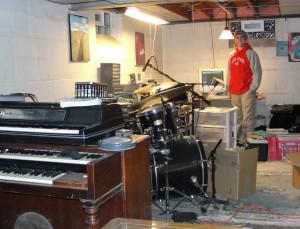
 Chris and his recently re-setup lab
 Thanks for listening! And let us know what you think of the music (don't worry, Chris can take it!)
Transcript
Chris Gammell: Welcome to the Amp Hour.
Dave Jones: I'm Dave Jones from the EEV blog.
Chris Gammell: And I'm Chris Gammell from Chris Gammell's Analog Life.
Dave Jones: How you doing, Chris?
Chris Gammell: Pretty good, Dave. What do you think of the new music?
Dave Jones: Oh, it's awesome, isn't it? I love it. All right. It starts out really, really cool. I don't know if I'm a huge fan of the middle bit. Yeah, yeah. But yeah, I think it sort of gets a bit lackluster in the middle there, but it's a good beginning, good end. Yeah. That's what you need, as they say in an act, you know. That's right. Isn't it a good stage actor, a good comedy actor, you need a good in-show-and-ending, what's-in-the-middle doesn't count all that much. But no, it's good. Who sent that one in?
Chris Gammell: So actually, this is the first time Dave found out. That was actually me. Oh, right. That was you. When I sent it to Dave last night, I said someone sent it in because I was afraid of criticism. But it sounds like you liked it enough. So that is a Chris Gammell original right there. Excellent. Well done. All right. So that means I can also modify it too if we need to. Oh, awesome. So if people out there listening don't like it, just let us know. It's okay. You can tell me. I didn't want criticism from Dave, but I can take it from listeners because I can just delete your comments if I need to.
Dave Jones: That's right. Isn't having a blog great? It's not a democracy, people. We can hit delete anytime we want. There is no free speech on the amp hour. Yeah.
Chris Gammell: Yeah.
Dave Jones: That's actually a funny thing that people don't actually realize. They get all upset if I delete their comment or I don't respond to them or something like that. Sorry, pal, but it's not a democracy. If you want to have your own say, then we'll start your own blog.
Chris Gammell: Nice. That's awesome. Yeah. It's great. I love it. I mean, some people are... You kind of need it sometimes too with blogs because some people are just meh. Some people aren't very nice, but all our listeners always seem to be very nice.
Dave Jones: Try the comments on YouTube. Oh, hell no. I don't touch that. YouTube has got some of the... Yeah. Yeah, they're nasty. Some of the wackiest people out there commenting.
Chris Gammell: You know, I try and avoid those. I just feel depressed every time I read those. I'm like... Right. I don't know what it is about YouTube, but it's just like people just spew hatred on there. So whatever.
Dave Jones: I know. It's incredible. It's absolutely incredible. Yeah. And it's not just my blog. Every single video blogger I know on YouTube says the same thing. Oh, yeah. I have to delete half my comments. They're just either stupid, idiotic, or hateful, or anyway.
Chris Gammell: Yeah. Yeah. Oh, well. All right. So let's just... Shoutouts. Shoutouts like usual. Do it. So first up is Rich Hogue from the North Star Nerd. His site also goes by e-content, I think. He's had a site for a while. He switched over to the NorthStarNerd.com a while back. But he just put up... He just found our podcast and he put up the logo. And we always like when people do that. So thanks to Rich for doing that. And actually... Thanks very much. He has a list of other podcasts too, which I still haven't had a chance to look at. But there's a lot of other science podcasts and such too. So definitely worth checking out. We'll post a link to that.
Dave Jones: Yep.
Chris Gammell: A link to a link back to us.
Dave Jones: Right. Right. Jeez, people will be falling over themselves to check that one out. I know. I know, right?
Chris Gammell: Exactly. Oh, dear. Who else we got? So the other one was kind of like the 555 timer or 555 or 555 or however people say it. Remember how I gave a shoutout to an inanimate object a couple weeks back? Yes. 555. This one's to Google SketchUp. I love the program. I think it's awesome. And just recently I saw on Dustin Robot's Twitter page about a new challenge that came out. A new design contest challenge. So basically if people use Google SketchUp and Pinoco, which is I believe a mechanical manufacturing like Quick Turn shop.
Dave Jones: All right. Yeah.
Chris Gammell: And you use those two tools and you make a video on how to use those together and how to import a Google SketchUp design to Pinoco, then you can win like a Google SketchUp Pro license, which gives you lots more capabilities. Right. And then also you get like a year's membership, I think, to Pinoco, which is awesome.
Dave Jones: Oh, but where's the cash, dude? Where's the cash? Everyone wants cash.
Chris Gammell: Oh, that's as good. I don't know. You can make stuff with that. I mean, that's pretty cool. I mean, I don't know. I haven't tried Pinoco, but I've heard about it and it always seems so cool.
Dave Jones: Right. Yeah. I've used, who are they? E-Machine Shop before. But they actually have their own software, which is incredibly easy to use. Oh, that's good. Yeah. You know, even a dummy like me got a 3D box up with holes in it and nice curved corners and everything in five minutes of using the thing. It's very, very intuitive. Yeah.
Chris Gammell: And that's with the E-Machine Shop, you said, software?
Dave Jones: Yep. Yep. Yeah. They've got their own software. So that's the downside of it is that you have to use their software if you want to use their service. Yeah. But their software is really good. Well, it's kind of- Google SketchUp. I tried that when it first came out. I think it was a couple of years ago now. Yeah, it has been. It's been out for a long time. And yeah, it was kind of novel, but I haven't tried it since. But I'm looking for one that outputs the mechanical file in a format called Step, which can be imported into Altium Designer and other packages. Yeah. So if Google SketchUp has added Step output capability, then I'm going to be all for it.
Chris Gammell: Yeah. You know, I play with SketchUp a lot just because it was free, but then the Pro license has a lot more of the professional output files. Oh, right. So I think that's kind of where the catch is. But it's like $600, which isn't bad for a- I mean, it's not-
Dave Jones: For a CAD package.
Chris Gammell: It's not Pro. It's not like- It's not like- What are the other ones out there? Like Pro-E and SolidWorks and all those other ones. It's not quite like that, but it's still- I mean, it's still pretty strong. I mean, I've showed it to mechanical engineers that I know, and they haven't been the biggest fans of it. But I mean, for electronics dumb-dumb like me, and if I need to just show a concept- Oh, yeah. And I've done this before. Oh, yeah. You know, I just draw up a circuit board. You can even overlay just like JPEGs. Yeah. And it's great for just showing people and having that fast iteration tool is what's really important to me. I mean- Absolutely. It's probably not likely that I'm going to go out and, you know, like at the point where I say I need an enclosure, if it has to be custom, I better be willing to spend a lot more money than Google SketchUp costs. Yeah. Exactly. Yeah. Because regardless of what it is, it's going to be expensive. I don't think there's any debate about that.
Dave Jones: Well, the interesting thing there is that you touched on the point that getting that example, you know, getting an example that you can put towards a customer or even your boss or an internal, you know, thing, that is highly underrated. Just the power of a 3D image of a board or something like that. You know, that's why a lot of the CAD packages or virtually all of them are going towards 3D now. Yeah. So that you can just hit the 3D button and bang, up comes the fully modeled image of your board. And when, you know, and when people see that, when managers see that, customers see that, they just go apeshit. Yeah. And think that this is the greatest thing since sliced bread and, oh, look, it's practically finished, you know? Yeah. And it's just fake, you know? It's just a, you know. Ship it. But yeah, they really get sucked into that sort of stuff and they love it. And yeah, a 3D image tells a thousand words, really. Yeah.
Chris Gammell: It's really good for that jumping off point where it's like, well, I was, you know, it's kind of like what we talked about, I think last week where, you know, if I'm talking about one thing, if I say, oh, this is going to have an antenna and then you hear an antenna and you think it's going to be some six foot thing. And so you start, you know, designing this in your mind to see some six foot antenna. And I was talking about an internal antenna the whole time. Yep. Then, then, you know, two months later when you come back, you're like, oh, well, you know, I designed all this stuff that the six foot antenna would need. And then we have to start over. However, if you have that at the beginning, then you're so much better off. So that's what I like about that kind of, you know, 3D, wherever it's coming from, I think it's great just to have a visualization is very important and answers a lot of questions. So I like it a lot.
Dave Jones: For sure. And I think the industry is moving towards these tools getting easier and easier to use. As you said, like, you know, for idiots like us, you know, us electronics guys, the one engineer will be able to do the whole thing. They'll be able to do the 3D mechanical stuff, the modeling, whereas, whereas traditionally you've had to hire, you know, some X, some, some 3D mechanical expert full time to, or contract service to get them to design your custom case. That's only got two holes in it, you know? I mean, but now the tools are getting easier. You can actually, you know, you can potentially learn and do this stuff, do this stuff yourself. So the one man band in his garage can actually produce a world-class looking product. Yeah. You know? Yeah. It's, it's not that hard. And then with the 3D printers, the MakerBots and everything, you can make your own prototype, do everything in-house.
Chris Gammell: Yeah, that's right. Yep. And there was actually a story on NPR today about MakerBot again. I saw, remember the NPR one I mentioned last week? Yep. There was another one on, I'll link to that too. The, the, there was another MakerBot story and they were talking about how, how MakerBot started out of hackerspaces, so.
Dave Jones: Yep.
Chris Gammell: I thought that was cool.
Dave Jones: And they've got a new store now. They opened a retail store or something.
Chris Gammell: Oh, that's right. Yeah. The Bot Cave.
Dave Jones: Yeah. Yeah. The Bot Cave. Great, great name. Yeah. Yeah. The Bot Cave. I love it.
Chris Gammell: Yeah. Oh dear. Well, getting back to the system, the system level design. I mean, it's interesting because you have another thing on here about, about LabVIEW, but that's kind of like the trend where you have, you know, the, the person that's doing a very high level design. You have a system designer now instead of a electronics designer, mechanical designer. And I think LabVIEW and like, like MATLAB and all those, those like math packages, those are like the ultimate extreme of, of system level design because basically now you're just doing equations and then you click a couple buttons and out pops the FPGA design. You outsource your, your board design. You out, you push a, you know, you have a simple 3D mechanical design and technically you're done. Obviously there's a lot of optimization to do, but it's, it's crazy that there's, there's that much like, uh, what's it called?
Dave Jones: Uh, capability.
Chris Gammell: Abstraction. That's the word.
Dave Jones: Oh, abstraction. Yes. The higher level abstraction. Yeah. For, for the, you know, for the, so one person can really do everything. It's, it's quite amazing. And, and, and you're expected to do a lot these days. Yeah, that's true. I guess. So, you know, I think gone are the days when companies really, you know, have like just a, an individual PCB layout guy and they have just, uh, you know, they have just a component sourcing guy and they have just a 3D CAD guy and they have just this guy and just that guy, the test guy. And the, uh, you know, well, granted for big projects, you know, you still need multiple people to do those sort of things, but yeah, you can match anyone. Do it yourself.
Chris Gammell: It almost points to, it's a question now of like, do you become, so say you're a person coming out of school, do you become a generalist where you do learn, try to learn how to do everything, maybe not as well, or do you dive in, hope to become, you know, the world best PCB designer. And then that's what you do. And then there's a much smaller set of jobs that are available now because I mean, PCB design, you know about that. I mean, it gets very intricate. Absolutely. And, but there's some places that need very intricate, but maybe those jobs are shrinking.
Dave Jones: Well, that's the age old question. It hasn't changed in 30 or 40 years too much. There's always going to be a niche job out there. If you want to go niche, there will always be a niche job. Don't worry about it. Um, it just, I guess it just depends what you want to do really. I mean, if you just want to be the world's best PCB designer, go for it. You will, uh, find a job out there. Definitely. Um, like, you know, I'm saying that, uh, you know, one person can do everything these days and that's what they're looking for. Um, but they're only looking for that because, you know, to save costs and stuff like that. Big companies, big projects. Yeah. And I'm, I'm more talking about, you know, the one man band being able to do everything. Yeah. Not necessarily the big corporations. You know, if you're working on a, you know, a $10 million product, they're, they're not going to have just one person doing the whole thing.
Chris Gammell: Well, if they are, they better get paid. They better get paid a lot for that then, huh?
Dave Jones: Exactly.
Chris Gammell: Yeah. I don't know. I kind of, I kind of favor the, the generalist stuff. I think, I mean, I like specializing, but it's, you know, it's, it's just boring, you know, like, I don't know.
Dave Jones: Yeah. I know. Yeah. Well, I, I consider myself a generalist pretty much, um, in a fair few areas. I mean, I have specialized, I've been a full-time PCB guy, as you said, and, you know, it's, yeah, it's, it's okay, but yeah, I prefer being, being a generalist. I'm, you know, I'm able to pretty much do everything that's actually thrown at me. So. Yeah. Yeah. It's almost like, that's more valuable. So.
Chris Gammell: Yeah. You like specialize for a while and a couple of things. Yeah. And then at the end, oh, I've done this, I've done that. So. Yeah.
Dave Jones: Exactly.
Chris Gammell: Yeah. Yeah.
Dave Jones: Well, maybe that's, that's a better way to start out, start out being a specialist and then just slowly branch out. So you have, or you always have something to fall back on. Then you can always target those jobs because yeah, I'm a specialist PCB designer. I'm a specialist, you know, C programmer or something like that. So.
Chris Gammell: Yep. Yeah. That's a good point. So what about LabVIEW? What if you're a specialist for LabVIEW, Dave?
Dave Jones: Well, here you go. I tweeted this this morning because I got this job alert on Seek, which is an Australian job website. It's a job here in Sydney. I think it is. And this is through one of those ridiculous, you know, agencies, right? It's not for the company direct. And they're saying, oh, PhD, right? That's plastered all over the title. You need a PhD for this graduate job, right? And you think, okay, great. And oh yeah, I've done my PhD. Watch the job. It's a bloody application. It's a field applications engineer who just does LabVIEW stuff. Yeah. You've got to be shitting me. Yeah. That's crazy. And they're actually saying you require a PhD or a master's. We might let you off with a master's, but you know, to do freaking LabVIEW. Right. Graduate work. You've got to be kidding me.
Chris Gammell: Dr. Jones, could you please come be your bitch as an applications engineer? You know, like you're going to show up at a job site.
Dave Jones: How long does it take to get a PhD? A shitload of time. Yeah. And they want you to go work as a graduate bloody application engineer, which is bad enough because application engineers are, you know, are rung below a real design engineer. You know, they're sort of- Ah, that depends. They're above a sales engineer for sure. For sure. Okay. Don't get me wrong.
Chris Gammell: I don't want to hate on them too, but I mean, just in terms of technical prowess, I think that's what you're talking about, right?
Dave Jones: Exactly. Yeah. But generally, you know, you have to have some design experience to be an applications engineer, generally. But generally speaking, in the industry, it's looked upon as if, oh, if you're not a very good design engineer, you become an applications engineer. That's sort of, you know, one of those generic for one of the local component suppliers or something
Speaker ?: like that.
Dave Jones: I wouldn't say it like that. No, I'm being very general and, you know.
Chris Gammell: You're being a design engineer. That's what you're being. The way I would say it is like this. I would say if you had like a scale of like wanting to talk to people versus wanting to dig your nose into a design, right? Yeah. Those two things, those are inverse relationships. So if you want to dig your nose into design 99% of the time, you're a design engineer. Or probably more likely you're, you know, a lab rat. You're probably doing someone's, you're probably locked away somewhere, right? You're probably the PhD in a lab, you know, 24 hours a day, right? So, but then as applications engineer, you have to talk to more people, you need more people skills. Sales engineer, you need tons of people skills. Oh, yes. But then all the technical, you don't need as much technical, you need more technical knowledge than technical expertise. Yes, correct. Just so anyone listening, we don't hate sales engineers. We just know there's different specialties. Or applications engineers for that matter. Right, right.
Dave Jones: Yeah, there's some very good applications engineers now, but that's how in the industry, they, like it or not, that's how they're generically viewed. Applications engineers are sort of failed design engineers kind of thing. You know.
Chris Gammell: That is Dave's quote, not mine.
Dave Jones: I'm just, I'll just keep digging here. I'll keep on digging. Right.
Chris Gammell: I mean, well, there's different, there's different levels of applications engineers too, because Oh, yeah. Because I mean, like the ones that are at the factory, like the Jim Williams, right? Jim Williams is an application engineer. Oh, yes.
Dave Jones: Oh, no, they're, they're totally different. Yeah, they work for internal, for the, you know, they're not going out on the road. Because a lot of applications engineering jobs are just really a glorified sales engineer. Yeah, that happens a lot. They just make it sound more exciting, but yeah, you've got to be careful. Right, right.
Chris Gammell: Just designing, designing in people's, or companies parts.
Dave Jones: And they're the ones I'm really talking about. The ones that go on the road that work for the component representatives, not the component manufacturers, the in-house guys they have, like the Bob Peas and the Jim Williams. Right, right, right, right. You know, all those guys. Yeah, it's weird. Oh, yeah, they're, they're freaking brilliant.
Chris Gammell: Yeah, yeah. I mean, it's, it's weird too, because, you know, like, I remember in school, I had never heard about any of that stuff. And I got exposed to it, you know, early on when I started my jobs and stuff. And I was just flabbergasted because there's, I mean, they're really, I mean, obviously people that go into those jobs, you know, if you come out of school and you decide you want to do sales engineering, you know, like, first off, you're probably gonna make a lot more money than a design engineer. That's the one. That's the other thing they didn't tell me.
Dave Jones: That's the sad part about it. I've ranted about that before.
Chris Gammell: Oh, well, we've talked about that.
Dave Jones: You actually get paid more for selling oscilloscopes than you get for designing them. Oh, yeah.
Chris Gammell: Well, I mean, you're close to the money. We've talked about that before. Yeah, yeah, absolutely. You know, like, close to the money. You make more money. But, you know, like, no one ever told me about this stuff when I was, when I was leaving school. So, hopefully one or two people know about it. And if they really want money and they don't want to design stuff, you know, they become a sales engineer. And hopefully they're friendly, too. Yeah.
Dave Jones: As long as you keep listening to the Amp Hour to keep your head in. Oh, yeah.
Chris Gammell: And your customers, too. Your new customers, you should turn them on to the Amp Hour. We'll help you sell stuff. Absolutely. Maybe. Probably not. Probably not.
Dave Jones: No. But we are for sale, aren't we? I don't know about that. For hire. No. No, we're not for sale. No, screw them. Yeah. All right. Yeah. No problem at all.
Chris Gammell: So, what else we got on here? We got some other stuff. That was a good rant. I like that. How about another rant?
Dave Jones: Oh, yes. Well, here we go.
Chris Gammell: Speaking of money. How about money? Oh, you were going to talk.
Dave Jones: Oh, where's the money rant? Go for it.
Chris Gammell: Well, so, people coming out of school, right? I've been advising some people that I know that are still in school. They're kind of like getting their last year. Because, you know, I was friends with them when I was in school. They were kind of fresh when I was senior. And so, now they're coming to me and saying, Chris, I have a couple questions about leaving school. I have questions about salary stuff. And so, I started helping this friend out and doing like salary, you know, like looking it up online, helping him out. And then I go to IEEE. He tells me that IEEE has a salary service. I didn't know about this.
Dave Jones: Oh, yeah.
Chris Gammell: Yeah. It's all part of your subscription. Uh-huh. No, it is not. No, it's not. No. No, that's the thing. Okay. So, I missed out where apparently at some point IEEE sends you an email that says, take this survey. If you take the survey, you get like three to five different queries of the final data. But get this. Oh. Get this. If you're not a member of IEEE, you have to pay $300 for this service. $300 to just type in, you know, the same kind of thing you do in like salary.com or payscale.com. But it's because it's, you know, with engine. I'm just like, what the hell am I giving you my money for? Exactly. IEEE, it's like $180 a year in the US at least for like membership fees. Where the hell is that money going? And this is not the only thing they sell. This is like, they're like an e-book company. You know, like, have you ever been to like those sites where it's like this, you know, four page equivalent of text and then you get down to the bottom and it's like, and then it's like, click this link to buy the e-book for $29.99.
Dave Jones: How to make money with e-books 101. Yeah, exactly. There's actually a template. There's actually courses you can take to actually develop e-books and websites like that to make money. These bogus e-books.
Chris Gammell: I hate that.
Dave Jones: I had to compete against all these with my e-book, with my internet dating. Oh, yeah. Well, no, because my one's freaking 200 pages, you know. Mine's like, you know, a real printed published book and their one's just, yeah, as you say, it's like, well, that guy who ripped off my name, The Art of Internet Dating. Yeah, I remember. I think we've spoken about this on here before. Yeah. Right. His one is like 25 pages. That's it. Yeah. Something like that. That's his entire e-book and it's just shit and it's big type text. So, it's not even, you know, there's no information in there at all.
Chris Gammell: The whole e-book industry is- It's designed to make money. I know.
Dave Jones: There's some, granted, there's some good ones out there, but yeah. Anyways. There's a whole industry scamming you out there. So, beware, kiddies.
Chris Gammell: Yes, exactly. But, I mean, it just feels like IEEE wrote the book on that sales model because it's- Where is all this money going? That's what I want to know. I sound like a political pundit when I say that, but where is the money going, honestly, because $180 a year, I know they have staff and there's expenses and all that other stuff, but there's a lot of people in IEEE and $180 a year, and that's not the lowest you can pay. You can pay more, so-
Dave Jones: Oh, absolutely.
Chris Gammell: The fact that I-
Dave Jones: Well, when you join, they try and upsell you to all these magazines. They've got like a magazine for every little niche industry. There's like 50 of them or something, I think. Yeah. And you can join these, you know, they try and upsell you.
Chris Gammell: Yeah. Crazy. And I mean, I've caught crap on here before because I've taught, you know, like the first time we bitched about IEEE, you know, Cherish started talking to us and Fluxer and all those other people. And don't get me wrong, there is some very important stuff that IEEE does, like the papers, the journals and papers and all that stuff.
Dave Jones: And I actually like their monthly magazine. It's quite good.
Chris Gammell: Yeah. But where's the money going? I don't pay $180 a month for a magazine. So either I'm missing something, which is very possible, or they need to stop charging for the salary service because it's ridiculous.
Dave Jones: Yeah, it's crazy. Yeah, somebody wanted me to go in there once and try and do it. And you had to fill out all sorts of crap and it wasn't relevant and you had to, oh, I don't know. It was just so convoluted. I just gave up. Yeah. It was just too hard. Ugh. Ugh. Ugh.
Chris Gammell: Chris is angry. That is the sound of frustration.
Dave Jones: Yikes. Oh, dear. Speaking of the upsell. Yes. Here's a nice segue into Eagle PCB.
Chris Gammell: Ah, yes.
Dave Jones: Everyone uses Eagle. Everyone craps down about how Eagle is the industry standard for open source hardware.
Chris Gammell: I like it for the record. I do like it.
Dave Jones: It's okay, right? It's not bad considering that there is a free version, right? But if you actually, and people go, oh, it's so cheap and everything. Well, bullshit. It's not. I don't reckon it is, right? They try and, if you actually go in, we'll put up a link to what the different versions are and how much you pay for each version, right? And everyone knows the free version, right? Really good. But you're limited to two layers and you're limited to, what is it? 100 by 160 mil, right? Yeah. Board size. Millimeters.
Chris Gammell: Millimeters, not mil. Millimeters.
Dave Jones: Well, I often shorten it to mil. Don't get it confused.
Chris Gammell: Right, right. That would be a pretty tiny board.
Dave Jones: Mil, which is a thousandth of an inch or a thou. A thou, that's right. Because if I say mil, I'll generally say thou instead of mil. Ah, very confusing. Anyway. That's okay. You know what I mean. Yes. Because mil is, in Australia, is shorthand. Right. But it makes a lot more sense. It's actually a recognized shorthand.
Chris Gammell: If you ask me, it makes a lot more sense than, say in a mil for a thousandth of an inch, it's, come on guys, come on.
Dave Jones: Yeah, I know. Exactly. Yeah. But, yeah. So, generally, if I'm talking about PC, well, I am talking about PCBs here. Yeah. But you know what I mean. If I'm talking about dimensions, it's millimeters. Okay. For board dimensions. Board dimensions. Anyway. Where was I? Yeah, right? Everyone knows about the free version, right? Yes. You're limited in size, you're limited to two layers, and that's fine. Right. But the other thing is, you cannot actually make money from that. Okay? Yeah. So, it's non-commercial. So, if you want to, even if you open it, if you make your little open source hardware widget, and you give it to the world, and you try and sell a kit from that, I don't think technically you can. Yeah. Because, and, you know, or maybe even nobody else can, because they're using that file to make money. So, I, you know, there's a thing there. So, if you want to actually make money from it, you've got to cough up 50 bucks, which is okay. Yeah. Right? Which is, you know, cheap as chips. Yeah, that's not bad. But you're still limited to, you get nothing extra for that, right? You're still limited to that certain, that small size and the two layers. Yeah. 160 by 100, I think it is. Yeah. And then, the next version up is, no, sorry, yes. No, the next version up is 500 bucks. Okay? That's the next jump. And, well, you know, if you ask me, 500 bucks is not that cheap.
Chris Gammell: No.
Dave Jones: Okay? No, that's... And you're still limited to 160 millimeters by 100 millimeters. Wait, what's... No, the free version is smaller than that. The free version is smaller. But the 500 buck version, you're limited to size and you're limited to four layers. Huh. It's just, yeah, it's crazy. So, if you want to make, you know, the world's simplest lead board, okay, all it's got is a bunch of leads on it and it's single-sided and it's greater than 160 in length, then you're screwed. You've got to go upsell and buy the $1,000 package, the full $1,000 package.
Chris Gammell: Wow.
Dave Jones: So, you know, all these people talking about Eagle, that it's, you know, it's low cost. I reckon they're full of it. I think they haven't actually looked into the details. They've just used the free version and gone, oh, yeah, it's pretty cheap.
Chris Gammell: I bet I know what's really happening.
Dave Jones: What?
Chris Gammell: I mean, there's nothing in the Gerber file. I bet a lot of people are just downloading it, you know, or like, you know, like getting hacked versions or cracked versions.
Dave Jones: Pirated version, you think. Probably. I thought it had like lots of security in it. People were bitching about that for years that even the PCB file itself had security in it. I think they might have taken that out now. I don't know.
Chris Gammell: I've always had a license through my company. Right. But the... I've talked to someone about it before and he was a college student. He was poor, you know. Yeah, yeah, yeah. He just, you know, he just did it, so.
Dave Jones: He just downloaded it from Torrid or something. Yeah, I guess so. I don't know.
Chris Gammell: It's... Yeah. Yeah, so it wasn't that bad. We do not encourage piracy here on the Ampere. Oh, no. I've never done that. Now cats offer.
Dave Jones: Exactly.
Chris Gammell: Yeah.
Dave Jones: Yeah. Like, it's just not cheap. I'm sorry, people. It's either $500 or $1,000 if you want to make a simple one-sided LED with 10 LEDs on it or even one LED, but it's 160 millimeters or greater long.
Chris Gammell: Yeah, it's too bad they don't have like a better tiering system. I don't know.
Dave Jones: I think they need a better tiering system. Yeah. I think the $500 one should be unlimited or, you know, something like that. You know... Or maybe even have a $250, you know, dollar version. It's... Yeah.
Chris Gammell: You know, maybe like Element 14 should do something with that where they... I mean, they've got to have some kind of thing where they want people to, you know, like... I know they give away licenses sometimes, but now that Element 14 owns them, maybe they should... Yeah. ...either change the pricing structure or... I think... Yeah. You know...
Dave Jones: I think they need to. Come on, Element 14.
Chris Gammell: Or have like a promotional thing too where, you know, like students can do it. You know, if you verify you're a student, you get a better price or something like that. I don't know. But either way... Yeah. I like the software. It's too bad that it works out like that, but, you know...
Dave Jones: Yeah. It's crazy. So, yeah. I think there's not much thought has been put into the fact that, you know, if you want a single-sided board, a simple single-sided board, you've got to pay $1,000 if it's greater than X size. No. You know what they thought about... I hate the size limitation. That's what I hate.
Chris Gammell: Yeah. You know what they thought about, though? They said, oh, beyond some size, they're going to be an industry. That's what the assumption was. I guarantee it. Yeah. I guess. And then when they get to the industry point, they say, oh, well, we can charge whatever the hell we want, you know?
Dave Jones: No. See, I think that's bullshit. I think it should be based on layer, not size. Because based on size, you know, if you're creating a big LED strip to light up something, right? You know, you might want that to be, you know, 400 mil long or something. Yeah. Half a meter long or something like that. Well, yeah, I think they should, you know, the mid range, the first tiered version should be like, you know, two layers. And then the next one should be four layers. And then the next one should be unlimited layers. You should limit it by layers, not board size.
Chris Gammell: I like that. That's so... There we go. That's simple. Because if you're going... Listen.
Speaker ?: Yeah.
Dave Jones: If you're getting like complex stuff, you know, if you've got this thousand pin monster BGA on there, you know, big FPGA thing, right? You need eight layers just to route that bastard out, right? And if you're doing that, then you're in serious business, right? You're probably not using Eagle at that point.
Chris Gammell: I don't know any people using Eagle for that kind of thing.
Dave Jones: Yeah. I don't know either. Eagle is... Yeah. It's a low end package. Right. It's low to sort of barely medium end. I'm sure it could. It would just take a lot of time. I'm sure it can. Take a lot of time. Oh, yeah. Yeah, it definitely can. But it's not as useful as the other, you know, tools. And if you're paying $1,000 for that, well, you might as well pay, you know, a couple of thousand more and go for a better package. So that's, you know, a fair bit more versatile. Right. Anyway. Anyway, the guys from Eagle actually commented on my blog about that. And they admitted that, yeah, Eagle can't compete with the higher end packages. It doesn't try and all that sort of stuff. Yeah. Yeah. Yeah, but they said, they claim that, yeah, they try and meet that low end, you know, market. Right. But I don't think they are with those price points.
Chris Gammell: Well, I think if Element 14 is out there listening, they're the ones that really matter there. So, because they're targeting like the hobby market anyways. So, you hear us, Element 14? Do you hear us?
Dave Jones: And there's competition from RS Design Spark. So, hopefully they put some fire under their button.
Chris Gammell: Yeah.
Dave Jones: You know, I bet, hey, if you, here's another rant. You go onto the RS Design Spark website and try and find info on the PCB program. It is shit. Right. Their website, their FAQ is actually like a blog type system. A blog type question and response system. It's shit. What's the problem with that? Oh, my God.
Dave Jones: I don't get what the problem is with the blog system.
Chris Gammell: What's the blog problem? I don't get that.
Dave Jones: Well, it's, well, if, well, you have to go to the design. It's hard to explain. You've got to go to the Design Spark website and look at the FAQ, right? You go, great. They've got an FAQ. They'll tell me about the prices or something like that. And you go in there and it's just like somebody's random question, you know? Oh, okay. It, like, actually appears at the top. I don't want to know that, like, how to use this. You know, when you go to a company FAQ for a product, you want the, you know, the most popular, you know, answers. You almost want the most popular questions and answers there that the customers ask. And it's usually a fixed HTML page, you know? There's nothing wrong with the blog format, but as such. But it's just the information they've got in that FAQ. It's like their little mini forum of how to use the, you know, if anyone has a gripe about the product. How do I use this? Okay, okay.
Chris Gammell: No, God. So, you want it more like the stack exchange kind of style where you can, like, vote up questions and stuff.
Dave Jones: Oh, well, no, I wouldn't even like that. I just want, I want to find out information about the DesignSpark PCB, right? How much it costs, you know? Well, actually, I don't think RS actually sell it. I think it's the company that they get it from. Yeah, it's free only. So, maybe I can understand that. But I want to know that shit. You know, I was looking for that. How much does DesignSpark cost compared to Eagle? Yeah. Well, you know, there's no info there. Because it's, well, I don't think it exists. Yeah. So, anyway. I just clicked over here.
Chris Gammell: I just clicked over here and I saw John Boxall on here. Oh, right. From Tronic stuff, yeah. That's, he's on the front page. Hey, John. All right. All right. There you go. Cool. Yeah, nice.
Dave Jones: Yeah, he's been doing some stuff for them, I think. Oh, yeah. Yeah. Oh, cool. Right in some, yeah, they're all into the Arduino stuff, so.
Chris Gammell: Ah, cool. Yeah. Very cool.
Dave Jones: Anyway. Brr. Brr. Bloody hell, you stupid websites. I find more and more companies out there are doing, you know, identical websites to what Element 14 and DesignSpark are doing. You know, they're like these all-in-one, they try to be everything. We've mentioned this before and I won't go into it, but it bugs me. Oh, anyway. Stop it, people. Don't, you know, rely on some salesman to sell you, oh, yeah, this does blogging and this package does everything. Look, and then you install it and it's just a mess. Yeah.
Chris Gammell: Yeah, it's kind of like generalist versus specialist again, right? Except for websites.
Dave Jones: Well, yeah.
Chris Gammell: They need to be specialists. That's what we need. Yep. Yeah. Yeah.
Dave Jones: Yeah. People just want a standard BBS style forum. We don't want some stupid bloody blog system you put in place. Yeah. Yeah. Anyway.
Chris Gammell: Hmm. Well, how about, let's do something happy now.
Dave Jones: Happy. Happy. Happy. All right.
Chris Gammell: I saw it mentioned a couple of places. I'm calm down. Did you see what Jerry's been doing? Jerry Ellsworth?
Dave Jones: She's been doing lots of videos lately.
Chris Gammell: She's been doing tons.
Dave Jones: She's joined. She subscribed to my channel and I subscribed to hers. Oh. Yeah. I think she's getting more into the YouTube thing. I think she's figured out YouTube is the place to be. Where it's at. Except for the comments. Yeah. Except for the comments. Yeah. And she's, yeah. I think she's got, she's got hundreds of videos on there now, but she's been doing it for, you know, ages. She's been doing those videos for years. Oh, yeah. But now I think she's taking it very, the video thing very seriously. So. Yeah. Yeah.
Chris Gammell: So did you, did you see her latest or no?
Dave Jones: No, no, I haven't. So I saw it, it popped up on my thing, but I haven't actually watched it. It's like a body scanner, isn't it? Yeah.
Chris Gammell: She's working on a, she's trying to make a body scanner like the, the backscatter machines in the U S which, which I heard you love. I, I heard you.
Dave Jones: Oh, I love them. Oh yeah. Oh yeah. Yeah. Watch my latest blog.
Chris Gammell: You've done, you've done a recent video about how much you love them, right?
Dave Jones: Oh, absolutely. Oh yes. Yeah. Heartfelt love.
Chris Gammell: Yeah. But she's doing a, she's using like a Hot Wheels radar detector or something. So. Right.
Dave Jones: I don't even know what a Hot Wheels radar, I know, you know, the Hot Wheels, the cars. Yeah. I guess they had a toy. I didn't know you could get a radar detector for them.
Chris Gammell: Yeah. I guess that's the toy. I haven't seen it yet, but yeah. Yeah. That's awesome. That's awesome. Super awesome. Right. So I'm going to keep an eye on that.
Dave Jones: I'll have to watch it. Yeah.
Chris Gammell: So we'll, we'll put the link into that too. Yeah. Yeah.
Dave Jones: Yeah. And I noticed she's a partner. She's a YouTube partner as well. So I think she's realizing maybe, you know, as you upload more videos, you get more money and poof, you know.
Chris Gammell: Cool. Cool.
Dave Jones: Just like I am. So yeah.
Chris Gammell: Bonus.
Dave Jones: That's good. Yeah. So I, I don't really see her as a competitive video blog as such. Cause she does, you know, mostly science stuff. She does a few electronics things, you know, whereas she doesn't do any product reviews and stuff like that. No. Yeah. We really are a complimentary kind of, um, you know, channels. Oh yeah. Yeah. Yeah. She's into that, you know, kind of pointless, but really fun sciencey stuff. No way, man.
Chris Gammell: She's doing some cool stuff. I like, I like the stuff she does. Like the, she does the EL stuff, like the electroluminescent.
Dave Jones: Yeah. It's really cool, but it's not very practical. Like you're not going to go out there and make a commercial product from it. They're great videos and it's really, they're really excellent to watch. You never know, man.
Chris Gammell: You never know. Never say never.
Dave Jones: No. I, you know, all the make it, when we talked about this, all the make your own transistor stuff. I love Jerry's stuff, but you know, it's, I still do. It's not cost effective now. It's not cost effective. No. And it won't be cost effective in the future. It's not. Oh, well, hold on now, man.
Chris Gammell: I mean, you don't know that.
Dave Jones: How do you know that? I don't, I don't, I think. Experience, Sonny Boy, experience.
Chris Gammell: Oh. The old man tells the young man, huh?
Dave Jones: Yes, exactly. My young Padawan learner.
Chris Gammell: Ah, yeah. Yeah. You know, that was, you know, a lot of stuff was expensive back in the sixties, Dave.
Dave Jones: I know, but there's commercial industries out there that you will never be able to beat. Like, you're not going to be able to make your own freaking transistors cheap. There's no point to it. I'm sorry. You know, you're not going to be able to make your own, your own chip.
Chris Gammell: How about this, Dave? Some, somewhere 20 years ago, maybe even you were saying this, I will never be able to get a plastic molded design cheap and fast and in my own house. Nah. Well, you can do it now, though. I mean, you can get 3D printers.
Dave Jones: Oh, yeah. That's my prediction, is that I'm sorry, but you will not be able to, you know, viably make your own chip in your bloody backyard. It's just, there's increasing orders of complexity which go into it. That's it.
Chris Gammell: I'm going to go make a kit. I'm going to go make a machine that just pops out of wafer.
Dave Jones: Come on, people. I've said this before. Go and prove me wrong. If you think I'm full of shit, go and prove me wrong. Please. I'd love it. I'd love to be proven wrong. I really do. I always do. I stand to be corrected in everything I say. And I'll happily admit that, congratulations, you know, you're the smartest guy in the world because, you know, you're successfully making viable chips in your backyard.
Chris Gammell: I think it's going to be possible someday. I think it's, and not cost effective for volume stuff because, you know, volume will be different. But I think the, you know, for like rapid circuit prototyping kind of stuff, if you could, you know, etch out a wafer, right? Yeah. Say that you had some super fine kind of etching capability to, you know, like much like how you can, you know, cut a board. If you could do that on a wafer and then create channels in silicon and then electrons would flow down the channels and, you know, whatever else you need to do for that, right? Yeah. Because there's a lot more to it than that. But, you know, I could see that happening. And then you have basically a very small integrated circuit that you could use in a design.
Dave Jones: That's great. But what's wrong with designing stuff using off-the-shelf chips from the countless companies out there who will always do it a thousand or a million times better than you will? I mean, it's just, there are so many, the market is so flooded with usable components these days compared to 20 years ago. It's even now more pointless than ever to try and do your own unless you've got some very specific niche. It's just, oh, no. Disagree. You know, and with the advent of FPGAs and stuff like that, FPGAs are going to get better. And now they've got analog FPGAs with analog in there and all that sort of shit. You know, that's going to get better and better commercially. And there's going to be less and less need for you to even want to do it yourself. It's just, ah, no. All right. Sorry. All right.
Chris Gammell: All right.
Dave Jones: There's the battle for today.
Chris Gammell: All right. Good. Yeah. We'll see. All right.
Dave Jones: People love this stuff.
Chris Gammell: Once the Amp Hour 1000 comes out, we'll check in then, right? Yeah. All right. Yeah. Once you're...
Dave Jones: I'm a realist. Sorry. Right. Yeah. Yeah.
Chris Gammell: Okay. So, yeah.
Dave Jones: Oh, I love it. I love the context. Yes, I love the fights. You put me in a bad mood now. You put me in a bad mood. Excellent. We'll get some more anger out of you. Anger is good.
Chris Gammell: Yeah. Yeah. So, what about...
Dave Jones: No, passion. It's all about passion. It's not anger. It's passion.
Chris Gammell: We were talking about press releases a while back, or last week, offline, and you mentioned that they used to do press releases when people changed jobs.
Dave Jones: Oh, yes. Yes, I did. Yeah. Back when I was a boy.
Chris Gammell: Hmm.
Dave Jones: When I was a boy, they had... You know, you got your monthly magazine, the industry magazines, which they still have. You know, they're still out there. They were normally free. They're still free as well. Well, and, you know, that's how you kept up with the industry, because there was no internet, right? Right. So, that's how you kept up. You know, what's new in the world of electronics, you know? And they would have in there, as, you know, part of the news... It was basically a magazine full of news stories and stuff like that. Okay. And they would have, you know, Joe Bloggs has joined, you know, such and such local company. He's their new design engineer, or whatever. So, they would actually announce new employees and stuff like that. Usually, the magazines wouldn't actively go out and find that info. Usually, it'd be sent in by the company. Yeah. And the company would, you know, send a little press thing to the mag saying, oh, yeah, Joe Bloggs has joined us. And then they'd just, you know, it'd wind up in the issue.
Chris Gammell: That's weird. I mean, like... Yeah. When did you stop seeing that? I've never seen that.
Dave Jones: I don't pay too much attention. I still get one of the free magazines here, and I don't pay too much attention. But I don't remember seeing that info for a long time. Yeah. So, I don't know. Maybe someone out there can tell us. I don't know off the top of my head if they've stopped doing that. I don't think they have. I've never seen it. Maybe not at the local level. Maybe, you know, somebody's joined Intel or, you know, as the head of R&D or something like that. That still makes the news, but, you know, but back in the day, it was, you know, just a regular engineer would get announced in the local mag. So, yeah.
Chris Gammell: Yeah, now it happens on LinkedIn, I guess. I mean, we have that now.
Dave Jones: I guess, yeah. It's, yeah.
Chris Gammell: But as we people, I guess, because... No. Sort of no.
Dave Jones: No idea.
Chris Gammell: Yeah. Yeah.
Dave Jones: Hmm. So, anyway, with Jerry's Hot Wheels scanner, I want to go back to that. How does that work? How does the radar detector work?
Chris Gammell: Like, how does a radar detector work? No.
Dave Jones: How, well, how does the one she uses, this little Hot Wheels radar detector?
Chris Gammell: I thought I said something about Doppler effect kind of stuff, but I know that that's not normally how radar detectors work. I know they... I think radar detectors...
Dave Jones: Oh, there's many different methods, yeah.
Chris Gammell: Yeah.
Dave Jones: Right. So, it's probably just used maybe... Because I assume, like, it's a little toy thing, right? Right. And it's not going to be dangerous, so it's not going to be... Oh, no. Definitely low power. It's not going to be pumping out tens of watts of, you know, RF energy or something. No. No.
Chris Gammell: But she did say it was 10 gigahertz, which is...
Dave Jones: Ah, right. Interesting. Pretty high frequency.
Chris Gammell: I mean, that's impressive, so... Hmm. I can't imagine ever buying that for...
Dave Jones: You know, you can buy it for 10 bucks or something. Yeah. I guess. I don't know. Because it's a toy designed for Hot Wheels cars, right? Yeah.
Chris Gammell: So, I guess it's super cheap. I don't... I can't imagine it being that much because I imagine being a parent and looking at my kid and being like, you want to do what? You want to measure how fast a car is going on a track? Like, I don't get it.
Dave Jones: Yeah. You know, yeah, I'll pay 20 bucks for a toy that does that, but I'm not going to pay 200.
Chris Gammell: I'm not paying for a 10 gigahertz, you know, radar to take... Like, what? Really? I don't care if you want to turn it into a body scanner. Now, if I was going to do it, then maybe I'd buy it for myself. But, I mean, come on. Right.
Dave Jones: Oh, dearity.
Chris Gammell: Yeah.
Dave Jones: Actually, with... Back to Jerry. I did read on one of her... No, I watched a live thing. Something popped up on the tweet. She was on somebody's show. Oh, yeah? I think. And I watched it live. And I think it was there. Anyway, it was somewhere else. And she was talking about how she tried hundreds of times to get one of her science experiments things to work. You know, people think, oh, yeah, she just does this and it works. But apparently, she, you know, puts a ton of work into this stuff. Yeah. And she tries hundreds of times to... Yeah. They were her words, I think. So, yeah. That's... Jeez. I wish I had that much time to, you know, experiment with something hundreds of times to get it working. Wow. That is a tenacious attitude. That's real passion. I mean, yeah, she is really passionate about what she does. And she spends... I don't know. She must spend every waking hour working on her science stuff. Yeah.
Chris Gammell: That's awesome. Yeah. Well, another... Speaking of science stuff, I saw a new project that just came out on... For the Kronos watch. Have you seen that?
Dave Jones: Yes. I've actually got one. I meant to do a review of it. Yeah, it's not that great. I have the screen art. Shit. The screen art's one of the worst screens I've ever seen on a watch. It uses, like, an inverse LCD. So, instead of having the black seven segments on the white background, it's got the black background with the white segments. Oh, that stinks. It's awful looking.
Chris Gammell: Oh, that's too bad.
Dave Jones: Oh, yeah.
Chris Gammell: I love the concept when it came out. I thought it was the coolest idea for a dev kit ever. But then I saw the screen. I didn't like how the screen was fixed, you know, segments, basically. It kind of has an enunciator and everything. Yeah, it's not dot matrix, yeah. Right. But there's a company... I think it's a company. Toscanini Interfacing? I think that's how you say it? Right. I've never heard of them. Basically, they're using the accelerometer in there as a gesture-based controller for a computer. Or anything, really. It's through a MIDI interface.
Dave Jones: Yeah, I've seen that. That's not... Oh, well, somebody else has done that. I think it was on, you know, hacked gadgets or, you know, hackaday or something like that. Somebody's done similar kind of gesture-y things with it.
Chris Gammell: Well, this is like a company, I think. I think this is like... Oh, right. They're trying to actually take this big time. It's a full-on product, is it? Yeah.
Dave Jones: It's kind of like a... Right.
Chris Gammell: Yeah, I'll post a link to it. But it's... Yeah, I think they're trying to take it big time. But I really like the trend that's coming out with that. Like the whole human interface. Because, you know, you think about our current interface of computers. You know, like a mouse and keyboard that's... It's...
Dave Jones: Yeah, I know. It's how long have we been flogging that dead horse.
Chris Gammell: Yeah. Yeah. And I mean, all the stuff that's out there, like even like the iPad and how you can like touch on a keyboard. Or, you know, text-to-speech is still kind of... Or speech-to-text, I guess. That's still pretty weak. Yep. You know, there's... I like the Kinect. That's kind of cool.
Dave Jones: Yeah, that's kind of cool. That's got a long way to go to do... It does. You know. But yeah, you can do some useful apps at the moment. But yeah, I think there's a lot of potential with that. Yeah. You know, in the future. So... Yeah.
Chris Gammell: I really like the minority report kind of like where you like grab and can stretch stuff. Yeah. That's, I think, where the real power is. If you have multi-touch control, that's kind of cool stuff. But I don't know. Absolutely. I think there's still more room in there. So I don't know. I've thought about some ideas before. But I'm not allowed to talk about those because I haven't done them yet.
Dave Jones: All right. Well, I've got some ideas too. Every time I lay out a board, you know, I sit there and because I come from the old, you know, pre-mouse days, so I still use a lot of all the hot keys, the original, you know, hot keys to drive my CAD program. And I'm using my mouse and I'm using my 3D space navigator thing to do my 3D rotation and stuff like that. And I'm going, well, you know, my hands are going everywhere. I'm doing all this thing. I'm getting RSI from doing the keys. And I think there's got to be a better way to lay out the board. You know, if I had some huge table size touchscreen, I could just go, I could draw a track there. That's it. I just put my finger on and I draw where I want the track to go. And I move, drag components around. And, you know, there's got to be a future there. Yeah. Surely there has to be.
Chris Gammell: Well, there's that Microsoft table too. Did you see that? Yeah. That was like a year or two ago.
Dave Jones: Yeah. I've seen the Microsoft table. And yeah, that was quite a few years ago now, wasn't it? That was very revolutionary when it, now it's like just not everyone's doing that.
Chris Gammell: It was, I've seen one and they're so slow. It's, yeah, it's a lot, you know, it takes a lot to do it. I mean, nothing against it. Oh, yeah. It takes a lot of, a lot of processing to do that stuff. But man, it's, that's crazy.
Dave Jones: But that'll be taken care of by Moore's Law. So no problem. Yeah. Just keep waiting. Yeah. But yeah, that's great. I reckon there's a huge future there for someone who cracks. Actually, if somebody can come up with a user interface plugin for one of the major CAD packages that, you know, allows you to do, there's a $10 million business there, you know, I think anyway. So yeah.
Chris Gammell: What do you, what do you know about CAD, Dave? Jeez. No, yeah.
Dave Jones: Not much.
Chris Gammell: Did you see the, the article I saw, I posted about the ultrasound? I saw this on Ray Kurzweil's site. Basically, they're, they have like a wand now and they basically, that's all it is anymore. It's just a wand and then it plugs into an iPhone.
Dave Jones: Yeah.
Chris Gammell: And so it's brilliant. I mean, like you've just, I mean, like you think about like third world countries, all the stuff you can do with ultrasound stuff and like medical devices are going the same direction. You know, all these monstrous, formerly monstrous things are getting packed down into suitcases and then into backpacks and then, you know, smaller and smaller and smaller. It's awesome. Yeah.
Dave Jones: Yeah. I'm checking out that now. Yeah. It literally is just a wand and an iPhone. Yeah.
Chris Gammell: That's very cool. And the goop. You need the goop too, apparently for some of that stuff, but. Oh, well, of course. Yes. Yes.
Dave Jones: The goop is the, right. The goop is the thing where they make their money, right? They make their money on the goop. Yeah. So they sell these special magical, magical gunk. Yeah. It's called gunk in Australia. Is it goop in the US?
Chris Gammell: It's goop for me. I don't know.
Dave Jones: Goop. Okay. Well, yeah. Gunk is a common term for that here. Gunk is just, you know. Yeah. Just a gunk of stuff. Yeah. Yeah. Yeah. You know, a big gloop of material or something. Yeah. Yeah. So, yeah. Oh, dear. That's where they make their money.
Chris Gammell: Do you have any experience with medical stuff? I never really.
Dave Jones: No. No, I don't. No, I'm afraid not.
Chris Gammell: I mean, it's a big industry, right? But it's. I mean.
Dave Jones: It's a huge industry, especially here in Australia. Yeah. We do a lot of medical electronics here in Australia. There's one just around the corner. Oh, yeah? From my home here. Yeah. Which is huge. Yeah. Yeah. I know.
Chris Gammell: Phillips is out here. I mean, that's one of the big ones. But there's. Right. There's a. Like Pittsburgh, Pennsylvania has a lot of medical companies too. I know.
Dave Jones: Yeah. We also have a lot that go under too. We were doing an artificial heart here. And that one went under. Really? Um. So, yeah. Which was quite sad. So, yeah. But there's lots of medical. If you're thinking. If you're. You know. If you're studying. You're thinking about getting into medical electronics. There's a good specialty there. But they are. Heavily red tape oriented. So, don't expect to. You know. Be producing a cool new product every week. You know. No.
Speaker ?: Right.
Dave Jones: Yeah. You don't get to just punch out the code.
Chris Gammell: In a night. You have to. You have to do code reviews. And. You know. Pair programming. And everything. All the fault.
Dave Jones: The regulatory stuff is just insane. Yeah. On that. So, yeah. It's. It can be not fun at all. Yeah. Yeah. Don't expect a very glamorous career in the medical electronics industry. It can be quite. Well, I don't know about that. Mind numbing.
Chris Gammell: Yeah. I know.
Dave Jones: No. You can be proud that. Oh, yeah. I'm developing an artificial heart or a new electronic eye or something like that. Yeah. Which is really cool. But. Yeah. Yeah. Just be wary of the.
Chris Gammell: Man. Yeah. Implement stuff is awesome. Did I. Oh, yeah. I talked about that, I think, when I went to the ESC Boston, right? Right. Yeah. The keynote speaker there that had the leg implants. Did I talk about that? Oh, yes. That's right. Yeah.
Dave Jones: Yeah. We talked about that on the show, I think. Yeah.
Chris Gammell: Yeah. I mean, just that stuff is. It's amazing. But, I mean, at the same time, it's because of the regulation and even, I mean, like, you think about people doing it and people are doing it in the garage kind of stuff, you know, like they're working on medical devices that'll help people. But, you know, do you test it out on yourself or? Yeah. I know. What do you do? You don't just get to flip a switch. I mean, you gotta be the test subject too or someone's gotta be.
Dave Jones: Oh, there's all this old medical gear on the auction site. Like, there's an auction, online auction site here in Australia. And I saw this ultrasound, you know, this huge, big ultrasound shit. It was going for like 50 bucks. Really? And I'm going, God, I wish I had a huge, you know, 200 foot long shed and I can just go to the auction houses and just buy all this shit because they're just cool. Yeah. That's awesome. I bet you get some sweet parts out of there too. They're just giving these things away. Yeah. And I think that I'm pretty sure that's where Jerry gets a lot of her stuff. You know, she's got all these, you know, vapor deposition machines and electron microscopes and, you know, stuff like that that she does her site. I think I'm pretty sure she just gets them all at auction for, you know, always free. Yeah. Pennies on the dollar. Really. So, some of the stuff you can get out there is just amazing.
Chris Gammell: Yeah. That's cool. Might have to look that up for a future show. The, like, different, because, I mean, you had that Apex video, but that was kind of more junk. I mean, not junk, but.
Dave Jones: That's more junk. Whereas the auction houses are more, yeah, surplus, you know, like a company's gone under. Like that medical, that artificial heart company, they went under. All their gear went on the website, went on the online auction website and you could bid on it, you know. And it was like all this, you know, $100,000 bit of gear for, you know, $100. It's great. Wow. But it's so niche that, you know, you go, what am I going to do with it? I don't know, but it's cool. It's only $100. And it's huge and it takes, you know, 50 megawatts or something.
Chris Gammell: Oh, yeah, that too. Yeah, that's a good point.
Dave Jones: Oh, it's great.
Chris Gammell: Speaking of power, did you see the story about Israel? I just. No, I haven't. Oh, I've heard that this morning. Oh, I've heard that this morning. Do tell. So, Israel, you know, like, you know, a lot of people are investing in clean tech kind of stuff. Like China's obviously pumping the most money.
Dave Jones: It's. Yeah. Anyone who's. Anyone who isn't is a fool, really. Right. And everyone knows that. So, even the US is.
Chris Gammell: Yeah. And the US is too.
Dave Jones: Interesting stat. The US is the biggest producer of wind energy, apparently.
Chris Gammell: Really? In the world.
Dave Jones: Yeah. Who knew? But because they use so darn much, they're the worst polluter of. Anyway, let's not go there.
Chris Gammell: Not it. Yeah. Yeah. But Israel's doing it. But the interesting thing about it is the fact that why they said they're doing it. And so, like, they hadn't invested. You know, they have a lot of, like, chip stuff out there. There's a lot of, like, semiconductor stuff out there.
Dave Jones: The Israeli electronics industry is huge.
Chris Gammell: Yeah. Yeah. Which is great. But apparently, they've never touched alternative energy stuff. Right. And now they're looking at it. And it's like, and they were talking, again, on NPR. I'm an NPR junkie. But they were talking about it today. And why do they do it? Because as soon as people get off oil, then all of their, you know, neighbors don't have money anymore. And so, it's like, it's all political. It's crazy. It's all, I mean, not like political, like, that makes people piss. But, like, that's awesome. Like, what else could we do that would, you know, make stupid politicians, you know, think that, you know, like, give people, give money to the electronics industry. You know, I don't care what it is. I don't care what your political intent is. Well, maybe not military stuff. I don't like military, like, research. I know it's important. But, like, that's a great reason right there. You know, Israel doesn't want Iran to have as much oil money. And so, they invest in clean tech. That's great. That's great. Yeah. Fantastic.
Dave Jones: Renewable energy is a new form of politics, really. It's a new form of politics, you know. And it's so, you know, you can do so much with it politically that, you know, all these companies are clambering over themselves to join the, you know, the clean energy bandwagon. And it's great. I don't care what, you know, excuse you're using to do it and pour money into it. Just pour money into it.
Chris Gammell: Dump the money in there. It's great. I know. It's fantastic. Yeah.
Dave Jones: But I'm looking at the photo of this thing. What the hell? Look at the photo. It's weird.
Chris Gammell: Of what?
Dave Jones: The tower. This Israel hybrid. What is it? A hybrid solarized gas turbine power station. I'm on the link that you put in. And it's just, it looks like some alien thing growing out of the ground or something.
Chris Gammell: Oh, yeah. You know, they have a lot of deserts out there. So, they're doing a lot of solar thermal stuff. So, with the mirrors and then they heat the tower. Oh, okay.
Dave Jones: The mirrors down the bottom. That's the solar furnace. That's the solar reflector thing. Yeah. Yeah, exactly.
Speaker ?: With the plasma.
Dave Jones: Usually, they do like molten salt or something like that to store the energy in. Awesome. Which is a great, awesome technology. Right.
Chris Gammell: Yeah, and we've talked about that on here before. It's just like, you don't realize the scale. I mean, not you, but I don't realize the scale of how much it takes to, you know, we start cranking kilowatts and, man, you need some beefy stuff out there. Like molten salt? Who uses that?
Dave Jones: I know, but that's all the new rage. Because everyone, when Renewable Energy first came out, all the big oil companies mostly, all the critics started saying, well, yeah, but you can't store it. It's, you know, how do you store it? It's not baseload and all that sort of shit. And they just went, well, we're going to store it in molten salt. And that's what they're doing now. So, apparently, you can, you know, so sunlight heats it during the day and it stores it all, you know, and extract it back out at night. And it's, you know, 100% baseload compatible energy system. Yeah. Which is, oh, it's great. Yeah. There was a study. I don't know. I can probably link to it. There's a study in, that was done here by this independent company of scientists. They got together a whole bunch of scientists and engineers and they worked out how to make Australia 100% renewable energy by 2020. Wow. And all it costs is $40 billion a year, which, well, there's a lot, but it's doable. You know, it's doable using mainly, you know, the, well, combination, but the molten salt, solar focus thing and the, you know, and wind and wave and all the combinations of them. Yeah. I would love to see that. 100% renewable. Oh, that'd be brilliant.
Chris Gammell: I know. And it just drives so much other stuff too, you know, like it drives, like you think about even just the inverters you need from, like to go from a solar, so say you have an actual solar cell, the inverters you need are ridiculous, you know, and so that drives all the electronic stuff that helps us get cheaper MOSFETs and everything else. It's great. Yeah.
Dave Jones: It's fantastic. I know. I just, I don't care what it takes to go for this, to go to the planet, to be 100% renewable energy, but that's, that's one of my dreams is to see that in my lifetime as to, you know, I probably don't think we will, but yeah, it'd be, oh, it'd be awesome. I don't know though. It's, if you had said five years ago, I said, there's no hope in hell that we'll ever see that. But in the last five years, it's just gone exponentially up in terms of, you know, the amount of money pulled in the focus from the politics and everything else. Yeah. Yeah. The trend has changed literally within, you know, half a decade.
Chris Gammell: Yeah. Thank you. Thank you. Expensive oil. We love you. Yeah. Thank you, Iran, for being crazy. We love you.
Dave Jones: And thank you, politicians.
Chris Gammell: For being idiots.
Dave Jones: Being idiot, being idiot politicians. Yeah. You know, and just following where the latest shit is.
Chris Gammell: And dump that money. Come on. Dump it in. Yes, please. All right. I think, I think we're running out of time.
Dave Jones: I think we are. Yeah. Yeah. I think we're almost done. I think we've got about a minute left.
Chris Gammell: Before we go, I wanted to mention the, I put it up on the EEV blog forum about the workplace of the week. And a lot of people mentioned, hey, I can't have a camera at work. So, if you have a workbench and you want to be focused, a feature is workbench of the week. We haven't had any submissions yet. But workbench of the week is just as acceptable because that is a place that you work.
Dave Jones: And you can win a free shout out on The Amp Hour. Yes. Free shout out.
Chris Gammell: And we don't mind messy benches either. So, it's all cool.
Dave Jones: Oh, no. Absolutely not. Right. In fact, the, yeah, even better. If it's complete absolute shambles, like a Bob Pease kind of mess, then, oh, yeah, that's what we want to see.
Chris Gammell: And double points if you're in the picture. We like when people are, you know.
Dave Jones: Yep. Absolutely. We just want to see a bench. Yeah. We want you there with a thumbs up or, I don't know. Yeah. Mooniness or something. I don't care. As long as you're in there. Nuh-uh. No. No. Maybe not that far. Yep. All right. Because The Amp Hour is PG rated. Maybe. Yeah, right. I don't know. No, I don't think so. Visually. Bullshit it is. No, no. Auditorially.
Chris Gammell: Auditorially. Auditorially. I don't think that's a word.
Dave Jones: I don't think it is, but it sounds bloody good, doesn't it? Auditorially. Yeah. Yep. That's now a valid word. Okay. All right. Done. Yep.
Chris Gammell: Count it. Thanks for joining us, guys. See you next week.
Chris Gammell: Bye.
Speaker ?: Bye. Thank you.
Archived Discussion (23)
Comments are closed. Archived from the original site.
Show archived discussion (23)Hide discussion
CADEAGLEGoogle SketchUpHackerspaceMSP430Renewable EnergySystems DesignUltrasound
Keep current
Every episode, plus the occasional job post, in your inbox.
Name another PCB CAD package of Eagle CAD quality that is $1000 or less. If my alternative is a $5000 (or $15000 or more) product with $1000/year required support license (granted, those are more feature-rich than Eagle), how is Eagle CAD expensive at $1000?
I agree that PLDs and FPGAs are how we can "make" chips at home, today, for $1 to $500 each. No home-brew fab will be able to touch that with an equivalent performance/cost ratio.
OTOH, I am convinced that if Jeri Ellsworth put her mind to it, she could make CMOS chips at home. Note, she owns a couple electron microscopes.
I used a university fab (a very long time ago) that could likely be built today for a few thousand dollars and would fit in a 3-car garage. Back then, we made 5-10 micron structures. Probably today that could be reduced, maybe approaching 1 micron.
I bet you can pick up old, mothballed-tech fab equipment for little more than the cost of hauling it away. Maybe you could reach sub-micron lines then! Note that hauling away an ion implanter likely won't be cheap.
Of course, yields would suck and you wouldn't beat the cost of those PLD's and FPGAs and you also wouldn't beat the performance, so what would be the point?
$1000 for the full version might be cheap if it suits your requirements, for sure, or it might not. That's up to the individual.
I doubt $1000 isn't something the average hobbyist is going to spend on a CAD package though, it's more the small business level. And as mentioned the $500 version can be useless to many people, so you get "up sold".
And then if you are a serious business you start thinking, well gee, maybe the more powerful $5K package might be better value...
Alternatives? Try Numberone systems:
http://www.numberone.com/prices.asp
That is the RS DesignSpark software.
Chips at home will happen someday and will be valuable. :)
-Jer
The point in doing your own chips? Doing it.
It is the same as with any other DIY. Why build your own power supply from parts if you can buy one? Because you can.
If you want to make your own IC for the fun of it, sure, go out and do it, it's almost certainly possible. I support you all the way. But that's not what I'm talking about.
What I think is crazy is anyone who thinks it will be a viable practical solution (like the Makerbot is, and that was Chris's comparison) when there are already hundreds of thousands of low cost parts on the commercial market that let you build anything your mind can conceive!
Sure you might eventually be able to make some form of silicon chip at home (it might happen this year, or the next, if you are resourceful enough). That will make a great Youtube video on Hack-A-Day, but I can't possibly see how it would be practical, or cost or time effective. Not when you can buy an ARM micro or FPGA for a few dollars, not to mention the hundreds of thousands of other devices available off the shelf from digikey et.al. All of them fully packaged, tested, characterised, cheap, and available in QTY.
Useful IC's require so many complex manufacturing processes that are orders of magnitude more complex than say a 3D printed object or an EL display, that it will just never be practical, especially considering the plethora of commercial parts available in today's market.
Please tell me what compelling advantage a future home made chip will have over the countless commercial chips?
I can probably think of one or two if I tried to be really creative, but they would all ultimately be so niche that it's so far from being a game changer it's not funny.
So my position remains the same, that home made chip in the future (which I'm sure will happen in some way shape or form) will simply not be practical or compelling enough to be of any real value to masses. It won't change anything, nor really enable anything of universal value at all.
The Makerbot for example is not a game changer because it's doing something radically different, it is forming a new movement by simply enabling an existing technology at a more affordable price point to the individual. The makerbot was actually inevitable because of the relative simplicity of the process of extruding plastic. Home made chips on the other hand are of such orders of magnitude more complex to produce than say an EL strip or a piece of extruded plastic, it's just silly to think that a magical process can come along that will be a game change enabler. It all comes down the practicalities of actually producing chips that can do useful work.
Once again, those who think I'm wrong, go out and prove me wrong, really. I sincerely hope you can!
Eagle was a lot cheaper in the '90s. I bought a 3 user license with the autorouter for less than a single seat costs now. I hope they start to realize where there bread is buttered and drop the price to something a small one or two man shop can afford because the big guys would never look twice at it.
-chrisindallas
Altium is the standard in Australia & China, less dominate elsewhere.
Altium have a student version around the $100 mark.
Zuken I believe is mostly Japan and has a poor US presence.
In the US, Altium might be one of the most popular for small to medium size firms. Larger corporations are heavily invested in Cadence & Mentor tools. So those two behemoths dominate the US market, because they do everything from PCB to chip level design.
The free packages like gEDA and KiCAD, and even Eagle are not really industry tools, so having those on the resume is of limited value.
http://www.dgp.toronto.edu/~shbae/ilovesketch.htm
It's amazing how the strokes and gestures of a pen can be interpretted in 3D space. I hope they get this out of lab.
Thanks, looking forward to the next podcast.
David, (@dtardtar)
The ironic thing is, I am an EE. Would I go to RS in my professional capacity then RS would lick their fingers to do business with my employer. However I don't.
Because I am not welcome as an individual by RS, I also don't see the point in joining DesignSpark to get my RS "design support" brain wash.
Regarding the debate of whether IC fab can ever happen cheaply at home: Why does it need to be in your home if it gets dirt cheap? Maybe it will go the way PCBs have gone. You could get a milling machine, but it's so easy to order PCBs cheaply and quickly.
Chris, the intro made me think I was listening to something on the TWIT network. :)