
#158 – Hyperloop, Upverter and Soldering - Unbelievable USB Ustulater
Download episode · 35 MB
Also on Apple · Spotify · YouTube · RSS
Show Notes
- It's faster AND cheaper for Dave to have a courier deliver a package vs go pick it up. This shows the system effect of lots of packages being delivered.
- SpaceX just announced their white paper and intent to work on the HyperLoop, a high speed train from SF to LA.
- There will be a mini Maker Faire coming to Sydney! Dave will be making something for it, anyone who guesses gets a free t-shirt.
- Dave has been hacking and capturing IR signals for his new segment. People are never happy with how you do projects online. Especially if there's code.
http://www.youtube.com/watch?v=vOzaDQmAW0g - Dave has been putting code up onto GitHub Gist. This is separate from the main GitHub site and is similar to Pastebin.
- If forking is your style, you might like Upverter. They allow designs to be forked and showed off how to create a simple design in their CAD program (online CAD! Gasp!)
- Chris will be joining them for the second session of the work on this board, Wednesday night. You'll be able to watch live on their blog page about it.
- What do you think about our advertising? Fill out the survey at the bottom of this post!
- More services are allowing forking and sharing of revenues. OSHpark now has a marketplace for existing designs. Tindie is doing revenue sharing.
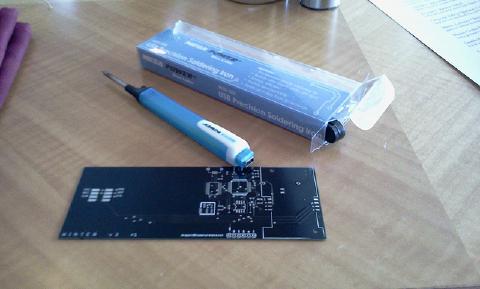
- Shonky Product of the Week: a USB Soldering Iron. Heat capacity is still a thing, right?
- There's a teardown of this unit by Connor Wolf showing how it's put together.
http://www.youtube.com/watch?v=oklHlZwPLas - They also say you can use 9V batteries. This is limited by the internal electronics resistance (which is usually the spec'd value) but also the ionic resistance, which limits the current due to the speed of the chemical reactions.
- Intel is jumping into the open hardware space with the Minnow Board. Their add-on boards are called "lures". Dave thinks you should just buy a mini-ATX board but Chris thinks there's value in having access to this kind of tech from Intel.
- You can see a lot of the different boards out there at the Big Board List.
- Development platforms are nothing new. PC/104 (which utilized the ISA Bus) has been pluggable and around since the 80s. Chris likes the Freescale tower platform, which is similarly stackable.
- The thing that makes a difference is the software layer (like the Arduino IDE) and the community (which is why open source helps!).
- Opening up designs is even older! There were standardized interfaces on the Altair 8800 and the IBM360. These really helped fuel the computing boom.
- HackRF is a new kickstarter project to get you started with SDR. It was laid out in KiCAD!
- If you're laying out boards and need to work on panels you can do MouseBites or Vscores to get your boards free of the panel.
- If you're starting at a new company, you'll be subject to documentation tribal knowledge. Just flow with it, at least at first.
- There are printable electronics at PARC (and a few other fun things). Dave still gets upset about it not being a chip printer, but we can all agree he's wrong on this one, right guys?
Tune in next week when we post the interview with Eric Ries, author of The Lean Startup!
Thanks to Leigh Honeywell for the USB Soldering Iron picture
Transcript
SPEAKER_00: This is the Up Hour Podcast, recorded August 12th, 2013. Episode 158, Unbelievable USB Oscillator.
Dave Jones: Welcome to the Amp Hour. I'm Dave Jones from the AEV Blog. And I'm Chris Gammell of Chris Gammell's Analog Life. What's up, Chris? This is our second show for the day.
SPEAKER_01: We're pulling back the curtain. We are not pulling back the curtain. Come on, let's pull back the curtain. No, Dave, don't ruin the magic. All right, fine. At least it'll stop people from asking more questions, too.
Dave Jones: Yeah, well, it will, exactly. And we can say that it was an awesome show with Eric Ries.
SPEAKER_01: That's right. We just recorded with him.
Dave Jones: We just recorded with him. And, yes, it was great. It has, folks, we'll hype it up. If you like Wank Word Bingo, get your marketing business. Honka, honka. Wank Word Bingo shoot. Yeah, Wank Wores.
SPEAKER_02: Yes, it's awesome. Oh, yeah. And he was flowing.
SPEAKER_01: That's what his business is, though. Yeah, exactly. That's his business. He's definitely, that guy knows his stuff. He does. We're not going to release it yet. So people got to wait a week yet. But it's worth waiting for.
Dave Jones: Yeah, it's about startups and, you know.
SPEAKER_01: And hardware.
Dave Jones: And, well, yeah, hardware startups as well. Lean processes and all sorts of, yeah, cool stories. And, yep.
SPEAKER_01: Good stuff. A lot of stories. Yeah, it was awesome. You have a story. What did you want to, you wanted to talk about a story or something?
Dave Jones: I did. Did LeBruiser or something? Well, we were just talking before we hit record here that I said I'm recording this from home today. And there's a likelihood that, you know, somebody might want to, somebody knocks on the door, i.e. a courier, because we get stuff delivered all the time. Randy. Or Randy calls up from Hicksville.
SPEAKER_02: Yep.
Dave Jones: And, yeah, I said if that happens, well, I have to go answer the door, because I want my package, you know. I don't know if anything's due. Like, I order all this stuff, and it just turns up, oh, yeah, I ordered that, you know. Surprise. Hey, it's like Christmas time.
SPEAKER_02: Oh, yeah, yeah, yeah.
Dave Jones: You know, but anyway, what I wanted to talk about was that the, I just scored a tear down item, or tear down, hopefully, a repair item on eBay. And it's local. It's here in Sydney, and I could have picked it up. But, and the guy asked me, do you want to pick it up, or do you want me to ship it to you? And I said, oh, just ship it. It was like 11 bucks or something, you know, $12 to ship this thing, which, you know, a rather sizable thing. But because it's only going local, it's not going interstate, then it's reasonably cheap, you know, $11, $12. So he's doing that at cost, you know. That's what Australia Post charge. And I'm sure it's similar in the U.S., right, to send a thing that way.
SPEAKER_01: Especially if you do the, if it ships, or if it fits, it ships kind of thing, those boxes around here.
Dave Jones: In those prepaid boxes. We have, we don't have prepaid boxes. We have prepaid satchels. So if it fits in a satchel, yeah. You know, if it fits in a three kilo satchel, if it's under three kilos and fits in, it's like eight, nine bucks. Or something. No, ten. I don't know. Yeah. Anyway, it's relatively cheap. And I made the comment on Twitter, I think it was, that it's cheaper for me to have him ship it than it is for me to drive across Sydney and pick it up. Not just for the petrol. Ignoring the petrol. Just the bloody tolls to get there. Like, I could try and avoid the tolls and, you know, take me an hour to get there, an hour to get back.
SPEAKER_01: And even longer if you're riding the Sinclair C5, right? Oh, a Sinclair C5.
Dave Jones: The hedgehog, yeah. And if I make it back alive, that's right.
SPEAKER_01: Right, of course.
Dave Jones: And stop to charge it up every 20 kilometers.
SPEAKER_01: Pow, pow, power wheels.
Speaker ?: Oh, boy.
Dave Jones: But, yeah, it's like, it's that insane thing where it's cheaper to send it, you know, 20 kilometers than it is for me to go pick it up. Well, it's probably a bit, it's probably 30 kilometers as the crow flies or something.
SPEAKER_01: Yeah, yeah. It's commoditized. That's what it really is. Yeah, exactly. That's what we're talking about. We depend on that stuff all the time, right? I mean, for PCBs, right? That's right. The group order kind of PCB stuff. That's it. Like Osh Park. You know, we're just, we're taking advantage of these systems, basically, and getting a cheap rate for it. It's awesome.
Dave Jones: Oh, it's great. And, you know, and that doesn't include our time or petrol or anything like that. See, the wife's realized this, you know, and now, oh, I can buy stuff on the internet and they deliver to my door. I don't have to pack Sagan up in the car and go get it. Oh. Yeah. So, yeah, needless to say, everything's bought online these days. And that's. Awesome. I'm still, I'd love to know if it's more environmentally friendly, so to speak, for, you know, the courier to bring it than it is for me to hop in my car and go get it. I have a gut feeling that it's better that the couriers, that everyone gets stuff couriered to their house because then there's less traffic on the roads. Therefore, it flows better and therefore they're more efficient, blah, blah, blah. I think there's, you know. Yeah.
SPEAKER_00: Yeah.
SPEAKER_01: Well, it's interesting. So there is a bit of transportation and energy news today, right? So Elon Musk just released the Hyperloop white paper, right? Which has its own thing.
Dave Jones: I'm going to have to rate it. I don't either. I need a dig in.
SPEAKER_01: Yeah, yeah, yeah. But the interesting thing is he actually, he plots out the average energy use for different transportation modes. Right. Which is, you know, it's a bar graph, so there's a lot of missing data here, of course. But, you know, basically he's showing just the energy, you know, in order to move people in this case, right? And so you wonder if those same kind of efficiencies exist in freight and everything else. And there's always, you know, the overhead effect of each time you move your car, you have to also move 2,000 pounds of steel or however much kilograms that is.
Dave Jones: Yeah, I see the graph now. Energy per passenger per journey in joules. You know? A thousand megajoules. A thousand megajoules. 800 megajoules to use your car, you know? A thousand megajoules to use a motorcycle, which is a bit surprising.
SPEAKER_01: Yeah, that is kind of surprising.
Dave Jones: Oh, actually, no, I've seen that before. Because a lot of people, like the general conception is, oh, it's more environmentally friendly if everyone rode motorbikes, right? And then somebody actually has done the, no, they're saying the innovation hasn't happened in motorcycle engines like it's happened in car engines, right? So it's actually more efficient to take a small car than it is to take a motorcycle. And you're talking wind resistance and all the, you know.
SPEAKER_01: Oh, I'm sure it's also because of passengers and everything too, right? Because you only get two people on a motorcycle and you get four in like a mini hatchback or something like that. Yep. Yeah. All right. But that's just math.
Dave Jones: Needless to say, the plane is the highest, but it's not that much more than the motorcycle. It's only like, you know, a hundred megajoules.
SPEAKER_01: Only a hundred megajoules more?
Dave Jones: It's only a hundred megajoules. Well, we're talking about 1,000 to 1,100, right? So it's not much. In fact, it's only like 50 megajoules or something. It's tiny. And of course, the Model S, of course, this is where he's, you know, this is where he's going. And train is right up there. Train is more than car. And the Model S, of course, is right down. And of course, you can debate these figures of merit until the cows come home, how you actually, which model you use to calculate them and, you know. But anyway, yeah, it's the interesting thing. The passenger hyperloop is right down the bottom. So what is the hyperloop?
SPEAKER_01: It's a bunch of ideas right now, but it could be pretty cool. I don't know.
SPEAKER_02: Well, they've done similar, you know.
SPEAKER_01: Yeah, they're talking about part maglev, part air train, part vacuum tube, basically. It's a...
Dave Jones: Yeah. It's a big tube, right? Where this thing just flies through this dedicated tube and using what? The combination of maglev and air pressure?
SPEAKER_01: Air. Yep.
Dave Jones: Right. So you just have... And it goes at insane speeds, right? Like 1,000 kilometers an hour or something.
SPEAKER_01: Yeah. No, more. 700 miles per hour, whatever that is. All right. Unbelievable. 1,200 kilometers per hour. Yeah. Very cool. It's cool. I mean, I don't know. We've talked about Elon Musk a lot down here and whatever he wants to do, I'll just... Right. It's got to be cool. I'll pay attention. You know, like... I think someone on Twitter today said, you know, if it was anyone else announcing this on Twitter today, it would just be laughed at, but... Yeah.
Dave Jones: That's right. Yep. Yeah. Because it's him. Yeah.
SPEAKER_01: Exactly. It's awesome.
Dave Jones: Imagine being in that position.
SPEAKER_01: Mega rich and really smart.
Dave Jones: Yeah. Yeah.
SPEAKER_02: That's right. Halfway there, Dave. Hey, hey. Hey, hey. Not really.
SPEAKER_01: Oh, boy. Someday I'm... Hmm.
Dave Jones: I love it. I love it. What I want to know, did he personally write this? It's white paper. I doubt it.
SPEAKER_01: He said he was up all night with his team, so I'm sure it's, you know... Yeah. Team. A little bit here, a little bit there. Yeah.
Dave Jones: Right. Where does he get this team from? Does he just steal it from SpaceX or Tesla? He just gets the smartest guys in the room and just pulls them off whatever they're working on and goes, hey, I got this Hyperloop idea.
SPEAKER_01: Yeah, I don't know. Let's have a crack at this. I assume SpaceX is part of it because it's in the domain, but... Right. I don't know. I don't know how that works. Hmm. If he needs any electronics help, though, he should give us a call.
Dave Jones: Right. Well, we should find out who the smartest person in the room at Tesla or SpaceX is in electronics because they've got to have electronics people, right? And we should get them on the show.
SPEAKER_01: Well, I told you that. So one of my former co-workers works at SpaceX. He works on the Grasshopper. So I'm trying to get him on. But there's a lot of that kind of stuff. I mean, so like same kind of thing with like ITAR and everything else. You know, the US government gets really antsy when people are working on missile-like looking things. Right. We might be a little rough getting those people on. But yeah, it's cool stuff. So we'll try and get them on at some point.
Dave Jones: Speaking about building and making stuff, we're finally getting a Maker Faire here in Sydney. It's a mini Maker Faire. But it's a... Yeah.
SPEAKER_01: Probably won't be that mini, though. It'll probably be... No, no.
Dave Jones: We're talking 50-odd tables. You know, if you're... It's all about the table size, right? How many tables are going to be. This one's about 50, which apparently, I'm told, puts it in the medium-sized mini Maker Faire. Yeah. If that makes sense. Because there's a Maker Faire and there's a mini Maker Faire, which is like a franchise. The mini Maker Faire is the franchise version of a full Maker Faire. Yeah. It doesn't necessarily have to be small, but it's... Yeah. So apparently 50.
SPEAKER_01: Cleveland's allowed to have a mini Maker Faire. How about that for reference?
Dave Jones: Oh, there you go. Right. Yeah. At least we're not Detroit.
SPEAKER_01: Or like SparkFun last week said that they are having a Northern Colorado mini Maker Faire, which is... Well, yeah. There you go. And we're having a Sydney one. Decidedly small as well. I mean, that's... I'm surprised... I'm always surprised Sydney doesn't have more electronics people.
Dave Jones: Yeah. No. See, it's more of a Melbourne thing. That's why we saw the Maker Faire happen in Melbourne first. Melbourne has more arty, passionate kind of people. Sydney's a bit more... Stodgy. ...New York-y, hustle-bustle kind of.
SPEAKER_01: Oh, just because of the cost of living there and everything?
Dave Jones: Yeah. Well, maybe. But it's just general attitude. I mean, Melbourne is, you know, sort of the arts, sort of, you know, arts and creative capital more of Australia than Sydney would be. Okay. So, yeah. I don't know how they got to that position, but yeah, they certainly have. You know, like you walk down the streets and alleyways in Melbourne and you see, you know, artwork, you know, down... Yeah, galleries and stuff. ...little laneways and stuff, you know, or just, you know... Yeah. Murals and all that crap. Yeah, murals and all that sort of stuff, right? Banksy and... Yeah. It's just more arty. Anyway, we're having one here and the cool thing is it teams up with the Powerhouse Museum, which is an awesome museum and it's, you know, I think it's just better than, you know, some individual running it in a, you know, some big warehouse somewhere. So, you know... So, you know... Well, that's sort of...
SPEAKER_01: Yeah, because like they do that in New York with the New York Hall of Science. They do that in Detroit with the Ford Museum up there.
Dave Jones: It just frames it in a cooler environment, right? Yeah. Right, exactly. You go there and you're in a cool science tech museum, you know, and yeah, it's just great. So, anyway... I love museums. And we discussed this before the show and I'm not going to have a table because then I'd be stuck behind the table all day, but I am going to try and make something, go figure, for the Maker Faire and Chris... Yeah, it's going to be awesome. You thought it was a good idea. Right, okay.
SPEAKER_01: Yeah, it's going to be good. Well, it's... As long as Dave does. Everybody should definitely pester Dave and say, is it done yet on Twitter or anything else. Right, is it done yet? Right, I've got to start. Yeah, that'll be in what, November, you said?
Dave Jones: No, and November 24th, I think, is the date. So, yeah, I'll start like November 23rd.
SPEAKER_01: I was going to say, that's about Thanksgiving timeframe for you guys, right? And then I'm like, no, that doesn't work. No, Thanksgiving? What the hell is that? Yeah, I know, right? Yeah. It's when you eat a lot and you watch football. It's regular football. Not the world football, though.
Dave Jones: Yeah, so we were discussing this before the show and it was like, I told him my idea and he went, oh yeah, that's good, you know, it's cool. It's pointless. Like, it doesn't do anything. No. By design, it does not work. Okay, I'll say that. But it's, yeah, I just... But that's the point of Maker Faire.
SPEAKER_01: And that's what we got to, too.
Dave Jones: Exactly, that's the point of Maker Faire.
SPEAKER_01: And, you know, I think some people have, like, misconceptions about Maker Faire. Like, oh, it's like... I've heard this before, actually. They're like, oh, it's just people mess around with Arduinos. But it's, you know, I really enjoyed it because it's... I mean, yes, there are a lot of Arduinos there, but it's just because it's an enabling technology, right? It's people that want to make stuff move, make stuff blink, make stuff, you know, sing, whatever it is. And they just want to integrate technology and art and all these other things together and learning. And, you know, it's just... It's a lot of friggin' fun. I mean, that's all there is to it. I mean, I really enjoyed it last year. I hope to go to San Francisco next year. And I put your name in the ring. Hopefully, they'll try and send you over here next year. Right. I don't know if they will.
Dave Jones: That could draw me back to the U.S., to go to the big Bay Area Maker Faire. That would be extremely tempting. Yeah. Yeah. Yeah. You'd be the mother of all meetups. Right, yeah. Whereas other things that have tried to tempt me to the U.S. in the last couple of years since I've become a daddy is, you know, just not really worthwhile. You know, it has to be something new. And, you know, I've always wanted to go to one of those huge Maker Faires. So, yeah, that'd be pretty good. We'll see. Anyway. Yeah, so I came to the conclusion that I didn't just want to do an electronics thing, right? That's obvious because, you know, that's what I do, right? Yeah, I could design an electronics widget. But, you know, unless I can walk around and show, you know, what am I going to do? Shove it in people's face. Hey, look at this new kit I designed. Isn't this wonderful? People are going to go, go away, creep. Right. So, it's like, whereas if, so I figured it's got to be something I can wear or something I can carry around that people just stare at me and go, holy shit, you know, what the hell is that?
SPEAKER_01: Or a robot custom you can put Sagan into, right? Exactly. You can do that kind of thing. That's what I'm aiming for, right?
Dave Jones: So, I'm aiming for people to stare at me. That's kind of.
SPEAKER_01: Right. Which is a little off-putting at first, but you get used to it. Right. Says the Google Glassware.
Dave Jones: Can we say there's a free t-shirt in it for anyone who guesses? Successfully guesses before you? Oh, yeah. Definitely. Anyone who guesses. Anyone who guesses.
SPEAKER_01: Guess privately, though. We don't want to. Oh, yeah.
Dave Jones: Well, you know.
SPEAKER_01: Well, yeah. I guess you don't want people emailing.
Dave Jones: Well, no. People can do publicly. I can set up a forum thread for it. Guess Dave. There you go.
SPEAKER_01: That's the way to do it.
Dave Jones: Right. Okay. And then they can all, you know. And I won't give any clue. Well, I might give a cryptic clue or something, maybe. I won't say if you're right or wrong.
SPEAKER_01: But, yeah. Right, right. Well, you'll know it when you see it, right?
Dave Jones: Yeah, yeah. Exactly.
SPEAKER_01: Yeah.
Dave Jones: So, anyway, I hope I can do it. It's possibly a bit out of my norm. But, yeah. We'll see. I can't leave it to the last minute, though. Because it's not, you know. Because it is outside my norm, I need to, you know, carefully consider how this thing is built and what technology to build it with. Yeah.
SPEAKER_02: Yeah. Yeah.
Dave Jones: Anyway. You'll figure it out. I'll figure it out. Yep. That's fun dumping it in your projects. She just rolled her eyes. You know, she's just, yeah. Right. Yeah. Whatever. You know. I'll just go. I'll go to the fair, but I'll pretend I don't know you, you know.
SPEAKER_01: Right, right. Yeah. Oh, goodness. So, you're working on another project, though, too. You've been making lots of little IR videos. That's fun. That's been fun.
Dave Jones: Oh, yeah. I made an IR video because, yeah, I did that quick hack. And a lot of people didn't like that. But, okay, fair enough, you know. But it was a quick hack. It wasn't. I originally didn't want to do that video. I wasn't going to do it. But, yeah, I just wanted to hack something together to try it. And I thought, oh, well, I might as well turn the camera on. You know, content's content.
SPEAKER_01: That's the best way to get stuff naturally, right?
Dave Jones: So, that's kind of what it was. A lot of people didn't like it. But I didn't do the follow-up video for the people who didn't like it. It was like, well, you know, stick it, right? If you don't like it, you just, okay, fine. You don't like it, right? But, no, there were quite a few people who asked, oh, can you, you know, can you show how you would do it with, you know, actually do it. Yeah, like the capture of signals and everything. The capture of the signals and then program the Arduino to actually do it properly instead of hacking a remote. And, fine, if you ask, I produce a video. And, yes, I think it's quite good.
SPEAKER_01: I liked it. It was good.
Dave Jones: Oh, thank you very much.
SPEAKER_01: I've never really been interested in IR stuff because, like, you know, like there's some kits out there, right? There's, like, the TV Be Gone is a big one, right? Yeah. Stuff like that. But I never really, I didn't like IR stuff.
Dave Jones: No, I've done a little bit in the past. No, it's cool. And I, well, no, I am not smart or cool enough to actually use GitHub, but I'm halfway there, apparently, so I'm half cool. I've used GitHub GIST, if that's how you pronounce it.
SPEAKER_01: What's that?
Dave Jones: GIST. Is that like a... Well, because apparently GitHub is, like, I'll get flamed for this, but it's not easy to use, right? You've got to download software. You know, you've got to download software, install it, you know, like a subversion thing. You've got to download software, put it on your machine, and then... Oh, Tortoise. Tortoise kit or whatever. And your Tortoise kind of, you know, it's similar to that. You've got to... I don't want to download software. You know, I've got, like, two dozen lines of source code I just want to put on GitHub. You know, like... You know, I don't want to...
SPEAKER_01: See, the real thing with that, every time I see people talking about GitHub, they're always talking about, like, you know, pulls and forks and all that stuff. Yep. And this is a mystery to me, too, and I think we've talked about this before, but I think the real power is when you are working from the command line, you're pulling in code, you're editing from the... You know, from, like, a VI or Vim or whatever, and then you're pushing it back up with command line, right? That's great for that kind of stuff. And, man, I never got into that kind of flow. For me, it was always... I always got started with IDEs, you know, especially because I started with FPGAs before. That's it. Micros, really, and it's all IDE-based. Yep. And now there's more support for, like, command line stuff, and I know a couple of guys that do command line stuff, but...
Dave Jones: Yeah, it's more for your professional software developers, GitHub, right? It's... Right. You know, whereas... Or just enthusiasts, too, right? Yeah, I just wanted to paste 10 lines of code. You know, it's not like I'm committing code every day. If I was, you know, I'd probably learn how to use GitHub properly and download the software and all that sort of jazz. But, yeah, apparently GitHub GIST, it's a separate, you know, side thing to GitHub. Okay. It's on the same website. I think it's gist.gibhub.org or something. Oh, gotcha. Yeah. It's just a simple way, without the software, to paste your code. So you just paste it in there, and you can do the forks, and you could do the revisions, and it tracks your revisions and all that, but it's not fully integrated with the whole GitHub software and the, you know, all that sort of jazz. But you can still do rudimentary forks and revisions and stuff. Yeah. So, yeah, I thought it was quite neat. It just allowed me to post it. But what I hate, I'll tell you what I hate, is that...
SPEAKER_01: What do you hate, Dave? Well, it's not... Tell me what you hate. Please, Dave, tell me what you hate.
Dave Jones: No. Go ahead. It's not integrated with the search on GitHub. So if you search GitHub for Arduino IR, right, you get all of the search results for GitHub. It doesn't search GitHub GIST. GitHub GIST has its own search results.
SPEAKER_01: Oh.
Dave Jones: It's just a... Does it get indexed or no? I'm like, oh, it's stupid. Yeah, it gets indexed.
SPEAKER_01: What is GIST supposed to be then?
Dave Jones: Well, GIST is supposed to be for idiots like me who don't... Or who just have, you know, a simple bit of code and a couple of lines of code. You know, 10 lines of code and they want to just paste it and go away. You know, and then...
SPEAKER_01: Oh, so this is more like a paste bin. This is like a paste bin for... It's paste bin. It's an improved paste bin.
Dave Jones: Somebody on Twitter told me that. I haven't used paste bin, but it's... Yeah. Apparently GitHub's version of paste bin. So... Okay. That makes sense then. Right. Okay.
SPEAKER_01: Huh. And you could still... But you could still fork it and everything. You can still fork it. Like I'm looking at it right now. You can do public and private and everything else like that then.
Dave Jones: Yep. You can fork it and you can do... Yep. And you can do everything. And it shows the revisions. Like I've edited it a couple of times. Actually, it's really cool. It shows you... You know, it highlights the lines of code. There's a thing down the left-hand side and highlights which, you know, changes. Oh, which language?
SPEAKER_01: Oh, you can do different languages and everything? Oh, you can do anything.
Dave Jones: It doesn't care what the language is. Wow. Apparently. Well, I don't think it does. Racket.
SPEAKER_01: RHTML. Rogue. Rust. Wow. That's a lot of languages.
Dave Jones: Oh, so it does support it. Okay. Right. Yeah. Yeah.
SPEAKER_01: Lots of different languages. Right. That's crazy.
Dave Jones: Yeah. So you just literally just paste your code in there and press go. Yeah. That's cool. I like that.
SPEAKER_01: This is the gateway drug for GitHub, basically.
Dave Jones: right but it doesn't give you a cool url name like github does like i i tried it i actually tried to it's there but there's no code in there because i didn't download the software and commit and it was like github.com evblog slash arduino ir yeah you know transmit or something gave it a cool name whereas the gist thing just gives it a random number or something and maybe there's a way to change that i don't know but anyway it's there and i used it so i sort of feel like i'm almost one of the cool kids you're getting there yeah you never know man i know yeah yeah it's just annoying that is it because i searched github right for arduino ir and there's like 20 pages of everyone's written their own ir library and you're like why the hell didn't i just look at this before right well no because i wanted to write it from scratch right yeah and i'm sure my code is probably near identical to someone's out there because there's only you know it's pretty simple right there's pretty obvious way to do it and uh so it's probably near identical to someone's i'm sure but but that's the mentality of of engineers right they you know yeah you might be able to download a library but it's oh it's no it's too bloated it doesn't do exactly what i want you know but no
SPEAKER_01: that's that's the sound of experience too right that's not just that's like uh you know i've gotten burned in the past i downloaded this guy's library i ended up troubleshooting it for three days straight and i'm just gonna write it myself screw it i'll write it myself yeah that's that's i think that's what experience is not yeah just engineers yeah exactly and that then that's what it is there's
Dave Jones: like you know a dozen pages of bloody all these different ir libraries for the arduino that's crazy yeah it's insane so yeah i've added another one except it's on gist i guess nobody searches gist because that's for amateurs right no so fail they fail that's okay no one will pull in
SPEAKER_01: your crappy code now it's the sandbox for us special kids special hardware kids trying to trying to look cool yeah yeah man every time i code i can code i mean like i know i complain about here a lot i can code it's just not good code you know yeah well i've been told my code is not good
Dave Jones: code but i think it's but i think i look at other people's codes and i go i can't read that shit i do not know what you're doing i think my code is just so simple and dumbass and yeah you know i'm not i'm
SPEAKER_01: not using classes and bloody all sorts it's not extensible it's not portable it's like who gives a crap i'm trying to flip a bit here come on people that's the thing yeah we're talking about hard we talk about hardware we want to turn a switch on they want to you know parse a freaking language or
Dave Jones: something crazy it's like get out and holy crap i used a global variable oh shoot me shoot me guilty
SPEAKER_01: as charged you know you know what i found is the uh the way to shut those people up i'll get it later during code cleanup i'm just trying to ship right oh yeah yeah there we go yeah yeah like i remember
Dave Jones: i got hammered for that i paste some arduino code i think it was part of my power supply project i was in a video somewhere yeah and and and i just well i want to send out 10 identical things so i just called the i just wrote 10 lines of code instead of writing a for loop to do it and i got hammered
SPEAKER_01: you know it's not efficient oh my far out dude yeah oh well speaking of forking uh fork it is no stick a fork in my eye that's what i want to do uh so upvorder uh uploaded a video so we've talked about upvorder before they had the online cad program and uh backend stuff for like for actually forking designs which is by far the i mean like the cad program is cool right but by far i think the forking is is their most powerful feature because you take you know you make a design i hit fork and then i go change it around and and i can go get it manufactured right they actually did a um they did an online video of of like the three founders basically making a clone of a fitbit what's a fitbit fitbit's the thing that uh clips on your belt so it's like an accelerometer that basically goes into a micro and then dumps the data fitbit i think communicates over bluetooth as well but they just wanted to get raw accelerometer data but it's cool because they kind of just were sitting there and talking it over and saying you know i i've like i've used this at tiny before let's use that and then they kind of were able to piece all the different pieces together and uh and then they actually had a layout by the end it was about an hour video it's cool it's cool cool little video and most importantly uh i will be joining them for their next revision which will be wednesday night oh right yeah i get to get to join in so you get to hang out with cool kids i get to hang out with the cool kids yeah yeah so it's uh yeah so it's uh i think they said some people are being able to watch live because it's going to be like google hangout and then live streaming stuff but uh i'll put more details in the in the show notes when when it's when this gets posted right so people can watch me uh fumble around with upvirtor awesome yeah have you tried viewing folks riveting viewing yeah well that's the thing with i mean like yeah you know it's it's tough but it's it it fits well with contextual electronics too so that that that's nice and uh you know it's good it's good to see how other people do it right that's why people liked your power supply videos and
Dave Jones: it's good stuff or didn't didn't some people didn't like it well i'm a shit coder apparently oh right of course well yeah and because i didn't include the feature they wanted you know right right of course uh designing in um what's the word live with people public in the public eye thank you it's just shit i i don't know if i'd do it again it's just awful it is tough i mean there's
SPEAKER_01: always there's always gonna be like you're never gonna do it right i mean you're not gonna do it how everybody else would do it right but like no no yeah but part of me feels like that that kind of like design voyeurism is like it has it has its its benefits because then you can kind of if if people can manage to shut up about it for a little while about why it's not the same way they would do it then they can actually learn you know like that's kind of the the basis behind it and all right if they'll actually you know just sit and watch that's another question but that's randy randy on cue right about halfway mark randy's calling to talk about our sponsor this week which
Dave Jones: well you can talk about our sponsor and i'll go talk to randy
SPEAKER_01: for real hello is he really going again i guess he is all right so uh we don't actually have a sponsor this week but uh the contextual electronics beta program is going on right now uh so that could be kind of our sponsor that uh yeah so picked uh about 20 people and uh about 300 people applied for the beta program and so thank you to everyone who did apply if people are still interested in applying or in getting information about the future program should be starting about october uh we're making you know making videos now i've been making videos and as we go forwards as uh you know go through the beta program people start pointing out errors and such they uh the videos will get even better but it's going to be actually similar to this upvorder thing as well so i mean upvorder is doing kind of smaller design stuff more of just kind of showing you how you're you know starting and how you're finishing right picking parts and going mine will also be how you actually do it right why why you're picking these things not because you've used them before but because you know you want this characteristic of an op amp you want this characteristic of an a to d that kind of thing so all these things are important in uh in your actual designs and hopefully that's what people get out of it
Dave Jones: you were supposed to talk about our sponsor you plugged your own stuff that is our sponsor this week buddy
SPEAKER_02: right in other words we're getting paid jack this week folks yeah yeah yeah
SPEAKER_01: you know i so i was actually going to post about that i was i was wondering because when we started advertising uh our listenership dropped off a little bit and it's kind of hard to ask people that have dropped off listening if uh it's because of advertising but i was going to try and get a feel for you know how people have liked our advertising so far since we're we're gonna have a lull for a little while so uh i'm gonna put up a survey about advertising yeah yeah do it so uh you know just
Dave Jones: i would be very surprised if they left because of the advertising i'd be very surprised yeah you never
SPEAKER_01: know uh obviously like i said we won't be able to find out if the people did leave but uh yep you know i'm just curious in general for people that are still listening too i'm just curious about how you felt about sponsors so far if you want us to try and find different ones or if you know if you like the ones we've had all these things are good to know i've i basically love surveys they're they're great yeah you're hearing from you guys yeah it's uh i mean like people like take like i put like the the extended text box in there too and some people write like an email's worth of of text and i you know sometimes i skip it for a little while but i always go back and read it it's it's great and some people are really funny too so i appreciate the funny results don't try and don't all be jackasses but you know funny thing here and there's okay we got enough jackassery between me
Dave Jones: and dave yep and by the way that was uh randy calling to uh complain about my source code oh yeah son of a bitch yeah yeah unbelievable yeah uh so we were so i was talking about upvirted there
SPEAKER_01: was another thing i was going to talk about uh oh yeah because uh so two other people that are doing kind of this forking of design stuff so oshpark like we mentioned before lane we've had on the show to talk about oshpark people should listen to that episode but he actually has a store now so if you uh submit a design to oshpark you can actually sell it and i think i think but don't quote me on this you get a cut uh when people order the board well yeah hopefully right but you know basically you just kind of put your designs out there and i i think you get a cut it might just be an open thing uh but then tindy tindy definitely is selling a thing so or has a tindy is the marketplace where you can uh sell your designs they also have a thing so that if you uh uh have someone i think it's someone else uses your design you get a cut of that then i think that's the idea uh i might be saying that wrong but basically there's kind of this revenue sharing model that's kind of emerging from different sites that are our favorite in the open hardware community and uh it's it's an interesting idea i mean it's kind of the uh it's almost like an affiliate kind of thing right i mean it's like you know i'm using your not ip obviously because this is open but uh i'm you know i'm i'm borrowing your idea so here's a tip kind of thing you know that that kind of idea and it's cool i mean it's a it's probably not sustainable like if if it you know people started asking exorbitant prices you're not gonna get a lot of people that are like you know it's like oh this this board's 40 40 dollars whereas it would have been 20 before because i want to make 20 bucks off of it but you know like there there is that kind of it's just it just kind of greases the skids a little bit you know what i mean it's totally the wrong it's late man i'm i'm running out of juice here i need another diet coke back to back is too much for you oh yeah i need a nap but but basically i think it is a good thing i mean like it's it's and and like you know adafruit's been doing this for a little while i think spark fund does this as well you know where they they give uh yeah okay commissions effectively for yes yeah cut which is which is good that's and that's a nice way to do it
Dave Jones: yeah encourages stiff can we go on to a what the product oh yeah go ahead who put this in here
SPEAKER_01: who bloody well andalic you're talking about the uh usb soldering here that's what i'm talking about
Dave Jones: yeah andalic and i've opened up the pdf there's a pdf data sheet here for a from a company called
SPEAKER_01: megatone in taiwan yeah um is is this for real it is for real yeah and there is actually a teardown
Dave Jones: someone did a teardown of one they're they're claiming like it plugs into a usb port right it's a soldering iron plugs into the usb port and they're also claiming you can plug it into a nine volt battery yeah how do you get any sort of power out of a nine volt battery enough to you know well
SPEAKER_01: the usb port is five watts right two and a half watts oh sorry 500 milliamps i think you use three
Dave Jones: is uh right as an amp max or close to right like and they're claiming five watts from the usb port so that's bullshit unless they're uh paralleling two usb ports up no i think no most or they're using the
SPEAKER_01: no well usb is it's 500 max on a single controller so well but they're showing you can plug it into any usb port on your laptop right right right but i mean like if you had if you have unless you have specified like it's usually 500 milliamps for all all usb ports on a usually they're all on the same
Dave Jones: bus yeah but it's it's you gotta advertise for the lowest common denominator right yeah right which is going to be that 500 milliamps that two and a half watts and they what yeah it's two and a half watts
SPEAKER_01: two and a half watts right right well what they do is they say okay we can get this up to temperature right they say you can get up to you know what's seven what's seven about what i usually solder at but
Dave Jones: what's that and see it's like 300 something three 300 or something yeah right yeah you can probably get
SPEAKER_01: it up to temp right maybe it's a matter of keeping it thermal capacity yeah exactly keeping it at temperature and uh so someone was talking uh uh do you remember a while back uh amanda asked us to say happy birthday to her her fiance on the show right yeah yeah yeah so mike uh mike actually has one of these and he said actually if you're careful about it if you kind of guard and what you use it on you know small stuff that it can work but yeah what a crock of shit yeah maybe on one tiny lead
Dave Jones: yeah 23 or something yeah exactly no major track connected to it yeah give me a break what a crock
SPEAKER_01: well i think the funny thing about it is like i'm trying to think of a situation where i'm using a using a device that has a usb port that it can actually supply power so usb host right and then i actually don't have any power outlet and so i definitely want to use the you know like i want to use up the battery internal to my device in order to solder and it's like i cannot think of many situations when that would happen when i wouldn't have a power port available even i would take i would take a 25 watt you know pencil soldering iron from radio shack over over this thing well i would take
Dave Jones: one of those gas powered ones you know you can get those butane yeah exactly and they're not bad right then you know they're not regulated or anything huge but yeah you know but they you know they they do a job at least they got some bloody thermal capacity yeah right unlike this pathetic joke
SPEAKER_01: yeah well this is this is the same kind of marketing over usability incarnation of like when people talk about like like power differences for like charging cell phones right like oh i can charge this cell phone by using a piezoelectric element it's like yeah you can but you're not going to you know like exactly yeah you can get it up to voltage and yeah you can you know maybe supply a little current but it's all about power delivery over time is what really matters right and they use a nine volt battery here as well yeah i don't know what the internal what's the internal resistance on a nine volt i've never really
Dave Jones: tested that from memory it's like 10 ohms or five ohms or something it's got because it's a 4a right a triple a battery is no i know a triple a battery is about 0.2 ohms or 0.2 to 0.4 ohms or something like that so a nine volt battery is you know it's probably an ohm or something i it's but still
SPEAKER_01: significant i mean you're not going to dump a lot of power out of one right i mean you're not exactly that's the whole point yeah it's just ridiculous power out you're going to want to it's going to heat up the battery too and you're going to yeah it's going to be self-limiting so that's that's always the problem with batteries is the internal resistance is what is what limits them to their benefit because then they don't blow up on you hopefully well and then there's a difference
Dave Jones: there if people don't know um in fact i um want to do a video on this there's um ionic resistance in a battery and there's internal resistance and people think that they're one and the same right they they read that you know value of you know 0.2 ohms on the data sheet of the battery oh that's its internal resistance 0.2 ohms yeah but that doesn't include the ionic resistance right that is just as you as you start to like that's the chemical reaction the ionic ionic resistance is the wank word for the chemistry that happens in the battery right yeah and it happens in the scale of like you know half you like you know half a second you know 0.1 of a second up to tens of seconds
SPEAKER_01: you know it happens over that time frame right because it actually is the the chemical recombination
Dave Jones: it's the recombination and the gassing and the whatever you know it varies by chemistry
SPEAKER_01: that's been a while for me dave yeah i know it's yeah it's not the most chemistry i get is when i watch breaking bad and walter white teaches me how to cook meth you know i don't do much chemistry
Dave Jones: anymore i'm not going to talk out my ass on that anyway so i'll just call it ionic resistance okay right right and um and the internal resistance that they specify the data sheet is usually you know a good data sheet will tell you it's measured at one kilohertz right and the reason they measure it at one kilohertz is because it takes out that ionic factor that ionic resistance factor it doesn't the chemistry doesn't have time to react to uh influence that so that's why yeah you know to just get the pure dc resistance so to speak of you know the internal the internal you know all the internal connections and stuff like that to the plates and whatever which is more in a nine volt battery of course because it's six four a's hooked up together um yeah it's a you have to do that at a kilohertz so that you avoid the ionic and the the ionic resistance factor so that value in the data sheet you know when you start pulling current from that thing yeah that that that resistance applies for the first you know point one of a second or something but then after that the ionic resistance starts to swamp it and goes up so yeah um nine volt soldier and i from a nine volt battery my ass right just
SPEAKER_01: wanted to say that sorry that's cool it's uh yeah that's definitely shonky it's yeah it's just oh
Dave Jones: like oh yeah like you almost can't you almost can't uh debunk it because yeah okay it'll get to 480 degrees right but yeah yeah like so their claim is correct but it's just absolutely useless yep as a soldier in iron and it's got a conical tip on it well i guess there's no point having a nice big uh uh chisel tip on there because it's got no bloody
SPEAKER_01: powder transfer anyway right so you might as well get up the temperature right yeah i tell you the the the day that changed my life i think it was i might have mentioned on the show before i think it was jeff kaiser though that that uh suggested it to me no no that's what it was it was uh curious inventor was talking about on youtube he has a video about uh soldering uh qfn type chips with you know like qfn being quad flat no lead type of chips right so you actually don't see the pads and everything like that evil and uh and so i was i didn't i don't have any like i don't have a reflow oven at my workplace or anything like that and i was like i gotta do this and basically the idea is you preheat the board and then you flood the crap out of it with flux and then you use a hot air pencil and you you know it kind of just kind of seats itself yeah you hope for the best but the preheating of the board man that that thing changed my life uh my my little board preheater yeah i friggin love that thing do you ever use those at all i have used them at work but i don't have one in the lab no they're worth it man like 200 bucks they have they have different ones but man it's like it's like having like a little hot pot underneath your yeah your board and everything oh yeah and like every time like dealing with like big ground pours and stuff like that anything with like any significant amount of of solder of copper rather man sit it there for a minute or two on the
Dave Jones: preheater and then get it up to 200 degrees or something you know exactly oh yeah yeah it's a
SPEAKER_01: beautiful thing it's like and then you just touch it with the heat pencil and things fly away
Dave Jones: happy trees yeah anyway so is that our shonky product of the week oh that's definitely shonky product shonky that's just garbage don't buy it folks just don't even waste your time looking at it actually
SPEAKER_01: it's just pathetic yeah yeah uh not shonky and interesting is uh intel is jumping into the open hardware the development board market grown no not grown that's interesting oh yeah well it's
Dave Jones: interesting but it's like grown why don't you just if you're gonna use an intel board why don't you just use a little mini atx or whatever they're bloody well called oh like an actual motherboard an actual motherboard yeah because they're so commoditized and so cheap right this thing's like 200 bucks or whatever right whereas a motherboard like you can get the mini motherboards that are
SPEAKER_01: well i think what we're seeing is intel getting the they're they're jonesing to jump back into the embedded market basically i mean we all know the intel so they're they're kind of they're hurting a little bit they're not they're not up a creek yet but you know they're hurting because of mobile everything like that and their new chips are supposed to be great for cell phones and all that crap but basically intel dances around embedded every couple of years and then they yeah they dip a toe in the pool and they say oh no that was way too cold so they jump out and they screw some people but you know that bought into it yeah yeah it's so this might be another another uh another incarnation of that but at the same time if it's not i mean this isn't this is a nice tool because then with the atx stuff you can't you know with like with those motherboards you can't you don't have design files right you don't have ways to modify stuff yeah it might be commoditized but if it has if it's too bulky or it's the wrong size or all this other crap you know and it's not and it varies from
Dave Jones: manufacturer to manufacturer you know it's yeah yeah exactly if you're buying some cheapy board
SPEAKER_01: from like asus in like you know some random factory then yeah you don't know if it's going to be there tomorrow versus you know industrial type stuff yeah that's the that's the advantage of
Dave Jones: this it's called the minnow the minnow board right as in the ss minnow that's not a good i
SPEAKER_02: wouldn't have chosen that's how long it'll last in the market just sit right back and hear a tale a tale of a fateful product oh boy sorry about my singing i can't see you i know and of course in
Dave Jones: true modern arduino raspberry pi wank terminology they have to come up with a name for the plug-on boards and they're called oh yeah of course right it's the minnow they're lures get it yeah yes fishing yes yes doing something with my hand at the moment yeah waving hi to intel okay right okay and well i'll give them a for having a go of course uh whether or not it's successful hey it may be good right that's a good thing yeah of course of course i'll never diss them for that um but yeah it's just yet another platform there's just so many bloody platforms out there
SPEAKER_01: there are and there is a resource for you now because uh you might want to know about all the
Dave Jones: platforms oh yeah i just want to keep up to date on all the new platforms coming out right we should
SPEAKER_01: start trading these like futures and stocks and everything why not that is good to know about but the uh bigboardlist.com actually lists all of the different uh man there are a lot there's about uh 20 20 or so on here right now and these you know a lot of arm baseboards 90 of them i'm sure oh yeah i mean these these are kind of like the big open projects i believe that's right yeah yeah i
Dave Jones: mean like they're not they're not like the single pie is the beagle bones no yeah i mean there's always
SPEAKER_01: been industrial single board computer pc 104 type stuff always this is not new people think this is new
Dave Jones: right no this has been around since bloody oh i can remember i said hey i really don't want to lay
SPEAKER_01: out this intel chip that's been around that long i i should just pay someone to sell me an entire board
Dave Jones: with memory on it too that's a great idea the arduino folks if you don't know is not a new concept it's been around for 30 years you know it's a development board whoop it's a development board no
SPEAKER_01: the power of the arduino and and all these things right and raspberry pi and everything else too and in minnow board too i i haven't seen it enough is is the community and the software that is encasing these things of course i mean that that is honestly all that matters otherwise it's just a single board computer you can get yeah i mean i get industrial catalogs that have these things out the wazoo and it's like yeah all right well yeah they've been around since the 70s you know right right yeah it's not the use pc 104 stuff i know i never use any of that stuff yeah yeah use pc 104 extensively that is so is that that refers to like the uh the headers and stuff or is
Dave Jones: that refer to something else no it refers to the yeah the header form factor it refers to the little i forget the exact dimension it's like 100 mil spacing it's yeah and the point point one inch headers and it emulates the isa bus if people remember the isa bus right so it's exactly the same well don't quote me but it's basically an isa bus but in an embedded format so instead of plugging slotting in cars it's like an arduino you stack you know you stack these boards up and you can you know it's exactly the same thing and this was around in i don't know when 104 came out but i remember using in the it's pretty old it was in the 80s right yeah right well well of course the pc started in 81 um or 80 when it came out yeah uh the embedded was tough at the beginning i mean like
SPEAKER_01: that was well yeah like when jack was on he was talking about that stuff right well that's right and
Dave Jones: there was no community as you talk about right because the internet didn't exist right so you had to buy the development board from a catalog you'd have a physical paper from the local guy right right yeah you had to buy it from your local rep he'd come around and give you the paper catalog and you go i want one of those development boards please and it came with everything you needed to yeah
SPEAKER_01: and there wasn't any github right no none of this new that's why everybody writes their own software right dave because they had to yeah that's crazy it didn't exist there's another one too the uh i really i actually really liked the the free scale tower boards did you ever see those those are kind of similar to the pc 104 style they had like they were using um what's it called pci uh pci card edge connectors and then basically they had boards with two pci card edge connectors on either side and then they had like these stacking headers where you could plug in different stuff but it was nice because you got these high density headers and you know these vertical columns that pass signals up and down i don't know it's cool cool little idea yep i like that kind of interoperability kind of stuff where you can i mean it's the same thing as arduino and everybody else you know having standardized headers and interfaces what what powers platforms really yeah i always say that the power of systems is in the interface you define an interface before you can define a system truly
Dave Jones: that's been around since the days of the altair what do you mean like having a standardized interface yeah how does standardized in today yeah exactly i didn't come up with it i don't claim that at all once they published the altair they went well no it was probably even before that in the days of the ibm 360 and uh you know mainframe and so you know it's a standardized whatever you know and then the you know they published the first uh pc the altair you know it became the altair bus was the standard then became the s100 standard bus and then right you know ibm came out it was the ibm isa bus and then microchannel and then you know
SPEAKER_01: visa and all sorts of yeah yeah i wonder what that conversation went like with uh someone because i mean like you think about the the business climate back then right you know like talking about local and all these you know like having smaller players in the market everything like that and then someone being like i mean i'm sure with ibm it's not that big a deal but like being like you know what we should do we should hide we shouldn't hide this proprietary bus we should just publish it like that the guy who said that probably had brass buttons you know what i mean like you know he's just like oh well we should just give it all away right because in the old days they wanted to actually make the hardware themselves but in that case they said here's an open bus make stuff for it and then all these companies could glom onto it and actually make stuff for it and now it's just standard we don't think about it but back then that was probably a big deal that was the big innovation for ibm i mean
Dave Jones: they ibm are you know the closed company it might as well be their slogan right and and here they were you know this skunks work project called the pc and uh they came and they opened the bus and everything else they published the bias listing and they you know they still locked up the bias with copyright but they you know at least published it and everything else and yeah that created the pc boom that we're
SPEAKER_01: still seeing today yeah yeah it's it's i think i think the only problem with doing that today is that there's it's just like we're seeing now with the you know this big board list and other projects it's just it's just a noisier marketplace right everybody's open now and it's like you just have to have a big enough platform where enough people want to develop for it you know and people want to develop hardware for it and luckily i mean there are a lot of people doing that kind of thing but it's uh it's interesting because it's it's almost like the polar opposite now where very few people are not that's not true not very few people are closed very few uh consumer level products are no that's not true either this is not very well thought out dave no very few consumer level hobby projects are closed how about that yeah yeah but it's interesting from the intel perspective too because they actually i mean they state that they're going after hobby i mean they say hobbyists in this in this video
Dave Jones: they made that's really yeah that's telling yeah that's it so yeah yeah good good on them as some
SPEAKER_01: people say right some people say right dave good on them good on them yeah on you on you mate no worries
Dave Jones: right right right right it probably comes down i probably came down to one passionate stubborn bastard in intel somewhere who went we need to do a hobbyist bloody we need to jump on this bandwagon and and and and they ended up selling it to management yeah you know i guarantee you management didn't sit around and come up with it somebody somebody pushed for this there was an
SPEAKER_01: evangelist inside yeah well he's probably like i can't make all this hardware a-holes let other people
Dave Jones: make it in fact it'd be interesting if they did this in their 10 time or whatever i don't know if they have that intel but whether or not they did on the side and they and he actually presented the whole thing look here it is look yeah should we we should probably say you know we should probably
SPEAKER_01: market this i was talking about uh 20 time with a friend uh yesterday about over email and uh yeah i was complaining because i was a little were you wasting your 20 time i was well here's here's here's the story so i was i was a little bored at work right you know i had a lull like we all do right but yeah i do not have a standardized you know 20 time kind of innovation type thing there right and and the question is how do you you know like how do you come up with these projects at work right i mean everybody has stuff that they want to do for work but getting like the permission you know allowing yourself to work on those kind of things in the downtime right like whenever i'm at downtime i always think you know i should be busy right i should have busy work or you know like getting stuff done that kind of thing but like how do you actually allow yourself that time when you're not granted that time by a higher higher level of management or whatever like that here's the answer
Dave Jones: based on my uh vast industry experience it's easier to seek forgiveness than it is to seek
SPEAKER_01: permission yes yes that is yeah it's true it's true just do it just do it just find something i want to work on and work on it yep yeah i guess i mean yeah i guess so it's just uh i don't know it's like a mental switch that was it was very tough for me i was i was struggling with it you know i mean like i guess i just need to find i don't know more things that i think i've always done it you know i know you pussy i need to be more like you dave yep every day
Dave Jones: you're right you need to start talking stride yeah yeah that'll work
SPEAKER_01: you yikes so stiff whatever
Dave Jones: that's our show we've almost done now we've just pissed away an hour there
SPEAKER_01: well now we now we go into the extra the amp hour plus talk about what i don't know uh let's see what else is on here do you see this uh open sdr platform on kickstarter i think it's still going yeah i got 22 days left how's it going everyone's talking awesome yeah sdr has it met its target yeah 312 000 out of 80 000 oh wow very nice yeah this is i mean this is the same uh not the same but uh you know the the sdr type of platform was the same as that uh red pitaya we talked about last two weeks ago yeah and uh yeah so this is another uh sdr type of platform and it's but the nice thing about this is that you know like a lot of the the sdr type of things are based on commercial like the usb dongles the the tv based ones that you can you can basically use and so this is actually open source and you know compatible with a bunch of stuff and
Dave Jones: it's 275 bucks yeah i mean but it's cheaper than building your own right i mean like oh yeah yeah no from scratch yeah exactly um and it goes from 30 you can uh transmit or receive anything from 30 megahertz to 6 gig that's pretty good that is pretty good yeah it's pretty groovy that's pretty
SPEAKER_01: um useful and the hardware was done in ki cad which is also impressive because it's rf stuff
Dave Jones: oh why why does the tool matter rf isn't magic you just lay down traces you just gotta know yeah i
SPEAKER_01: know but you still gotta usually there's all those checking tools and are in uh doing rf layout stuff right i mean there's all the nah it's not rocket science matching all that crap oh we don't know all
Dave Jones: that crap it's not hard it's not rocket science come on man man up i don't do rf very often dave neither do i but it's not hard to lay out the rs board prove it right yeah that's right challenge given not not accepted i got better things to do
SPEAKER_01: so much easier to give challenges than it is to accept them dave i've got like 10 challenges for you to do this week
Dave Jones: excellent i'll produce all the material for your conceptual electronics how's that yeah there we go that would be awesome you know what i'll work on i'll work on other stuff uh and our special guests content sucker this week is dave jones from the eb blog you don't have to do any work just get other people to produce your content yeah
SPEAKER_01: one thing the one thing i've been doing on uh for contextual electronics and for this uh board we're sending to uh open hardware summit is uh working with breakaway boards and actually doing that for fab stuff and there's actually a a good there's a nice guideline from um the mentor mentor graphics blogs about doing i never i had never heard the term before but they call them mouse bites you call
Dave Jones: i've never used the term mouse bite no they just break out tabs is what i think i've i think it's a term but it's very yeah i yeah it's cutesy right it's uh yeah i it's never a term that's appealed to
SPEAKER_01: me yeah but basically it's when you know it's like uh if you've ever gotten a board from like osh park you know that's actually how how lane does that uh so you know they do a route and then there's there's little tiny snap off tabs where it's it's non-plated through holes and then you leave a little bit then you can snap them off the other option being v scoring and uh yeah it's uh
Dave Jones: you know it's a combination what would you use the combo for uh my my just to get like a better basic example no because you may want to do um and because you don't want the uh breakout tabs because they can get ugly like if you don't oh you don't design them right when you cut them out with pliers they can be really sort of you know they can leave right right just fiberglass shards yeah it's just you know so you've got to do it right and uh yeah and sometimes you don't want big like it's okay in the corners i find if you put them in the corners they're okay you know because you can generally just get the right size uh pair of side cutters in there and snip them off and you get a reasonably good right angle edge to your board but when you put them like in the middle of the board like on on an edge then you've got to like have that little half moon cut out or whatever in your board and then go in and oh no it's just yeah it's ugly so you end up with these ugly little cutouts in your board right and yeah yeah so yeah yeah and sometimes you just want a little bit or well sometimes you want a nice clean edge on one edge of your board and uh but you still need to hold it in the panel on that edge so you might choose to do a combination of v scoring in one direction and routing in the other direction i'm making hand gestures here and yeah of course right
SPEAKER_01: right right his tongue's out to the side of course as well he's explaining it yeah yeah and uh um
Dave Jones: sorry what were we talking about what was the point of the scoring and mouse bites yeah yeah
SPEAKER_01: and i've just i i usually don't do panels i was actually i was re-going over your uh your pcb tutorial the panelization tutorial too the design for manufacturing yeah that's the thing like i mean i'm always doing prototype stuff so it's like all the proto services they just need to send them a board file and it's yeah it's fine right it's done i never i never panelize so it's not a big deal
Dave Jones: so you're a throw over the wall kind of guy huh when it goes to production oh that's the thing i'm
SPEAKER_01: no i'm i'm forced to throw over the wall that's that's that's reality for a lot of people you know
Dave Jones: it's just all right well you know you guys you've got no choice so i can do you you can do the production panel but they're just going to redo it anyway if you give it right they're just going to
SPEAKER_01: do it in the company standard you know right right yeah that's fine i mean because i i don't know all the you know the it really what it comes down to it's not even like the standard so much as what does the assembly house want right if you're using an outside one or if you have an internal one and uh you don't want to hold it up usually so that's and sometimes the engineer may not know
Dave Jones: jack about that or you you may know jack about what happens on that side of thing and also you don't want the responsibility you don't want to be the guy that screws up a production panel right well that's that's the big one over the wall and give it to someone else who's done it well 10 times and know exactly what the factory wants you know right not from not from like the
SPEAKER_01: avoiding blame because it is good to learn that stuff but that's kind of helps yeah but yeah from not wasting money that in that case right if it's a production thing that's one thing if it's if i'm going to do a panel for a proto run then yeah no big deal right i mean i'll figure it out oh yeah there's tons of stuff out there but um yeah it's hasn't come up yet so and i want to uh put a
Dave Jones: disclaimer folks if the uh board in the um summit goodie bag the amp hour board in summit goodie bag sucks ass it wasn't my idea or it wasn't me doing it okay it's all that's such a cop out of course it
SPEAKER_02: was all me jesus what a cop out well i'm just you know i don't want to complain for your shoddy work
SPEAKER_01: thank you very much don't blame me for not actually doing any work i'm going to throw in something i
Dave Jones: made a couple years ago yeah yeah that's right my one's just a rehash yeah don't do any don't do
SPEAKER_01: any stickers though chris you should definitely do something else yep while creating it i think i
Dave Jones: offered to do the board you went no you did not offer to do the board i think i offered you did
SPEAKER_01: at one point i think there was a this guy this friggin guy anyways what i was going to say about uh when you're talking about uh least resistance paths for doing thrown it over the wall i've actually realized that for so so i know this sounds decidedly corporate right but uh i've actually taken the tact of trying my co-workers documentation methods before trying anything else because i've been burned so so so many times you know like when you come in and you're like you're learning a new flow for like documentation or for you know uh document management for like actual like revision control and stuff like that man i got burned so freaking hard trying to do my own thing oh i know what i'm doing don't worry about it guys not and you know my co-workers are very nice about it they they even you know didn't make fun of me when i messed up and had to do it all over again my boss didn't yell at me no it was a nice learning experience but man you didn't follow the internal de facto standard you yeah exactly it's it's like a it's like a what's it called a uh not a tribe
Dave Jones: culture but a uh yeah some kind of like yeah no the it's you know this develops in the early early days of the project early days of the company somebody does is the first to do that style of documentation and then forevermore that is the de facto standard yeah you know and that becomes or a filing system or some other document management system or whatever the first person to come up with it forms that ultimately forms that there no that de facto standard even if it's complete crap right oh yeah definitely it's you know like it's better to follow a crap system than at least everyone's the same crap you know and it's yeah yeah yeah i've participated in stuff like i tried to
SPEAKER_01: in a past company i tried to move stuff over to like a wiki for documentation which is actually a great way to document if people have never done that just like using a media wiki install like it does yep it's a great way to document a local version of that yeah yeah yeah it's awesome and uh but man talk about backlash yeah backlash and just so like just cultural changes like that accompanies i mean obviously people will hear all about that kind of stuff next week when we talk to eric about uh i mean we thought we think documentation is bad trying to implement an entirely new r&d system like lean does but my god yeah it's just it's just crazy you know trying to actually get that done it's like it's like you need to like be a social hacker right you need to figure out how you can actually because there's egos involved and all this other crap like you know if you're working with an engineer who's been there 25 years who always has kept the lab notebook he's not going to switch over to wikipedia you know what i mean because that's it yeah one he doesn't want to two he wasn't paying attention to the training and then three he's embarrassed when he can't you know do it after the training was already passed it's like man that's just that's way too human for me sometimes you know what i mean yep yep sometimes it's just way too human the corporate world yeah it's uh okay one last thing for this week because i just remembered because it's uh we have to do it right and we have to tell me we have to talk about it what every week spit it out man i gotta find the link dave oh i bet someone downvoted on reddit i'm talking about it anyways uh uh robert scoble who i'm not a huge fan of uh but he went to a he went to park and there was a guy at xerox it used to be xerox park now it's park palo alto research center talking all about printable electronics oh yeah last time dave was like
Dave Jones: printable electronics fine but it's never going to become a bloody chip printer that spits out chips you can use in your freaking design i know but it's still a fun thing because i know see he just
SPEAKER_01: admitted it folks right there no i said i know how you feel about it dave i know how you feel about it you know it's not possible it's all about you know it depends how i feel in the day some days i'm feeling you know frisky and i'm ready to duke it out over over printable electronics but man some days i'm just don't want to deal with you uh because you know i'm right whatever anyways there's a couple usable chip park is a very cool place uh there's they have a lot of great stuff going on so they're kind of like bell labs too you know like the they're they're kind of a vestige of of old old tech and old research labs but they're still kind of hanging on there and so they're still working on some cool stuff um and printable can i let you in on a little secret what's that dave there's this amazing place
Dave Jones: you can go to and they've got like a half million chips or something and they're super cheap you can have them next day they're in stock they're fully characterized they come with full data sheets
SPEAKER_01: they're fully tested and qualified they're not sponsored do not talk about digikey
Dave Jones: insert your insert you know catalog supplier all right and that's why the chip printer's never gonna work unbelievable how many times do i have to say it whatever yeah is that it for this week
SPEAKER_01: yep but you know what i'm gonna keep emailing you crap about this please do i will i i don't mind
Dave Jones: printable electronics i think it's a i like looking at the links and i think it's a nice research field and i like the stuff they're coming up with it's neat yeah all right
SPEAKER_01: uh is there anything else this week i don't think there was no next week it's for goodness sake yeah next week is cool as we said yeah we're already done with that we're gonna be lounging some of us will be lounging others will be working on boards still but i know what to do with myself
Dave Jones: yeah yeah we should do this more maybe we should record like 10 episodes in a row or something and
SPEAKER_01: then just yeah i'm sure we'd never record again after that oh yeah right we have a podcast how do you do that again oh where's my mic where did people be like why am i listening to news from 10 weeks ago yeah must be the end of a cycle and why do dave and chris i'm so damn tired all right all right all right man talk to you later see you in two weeks yeah bye
Dave Jones: bye
Speaker ?: you you
SPEAKER_01: and the winner this week is andy lek nice for submitting the story usb soldering air in my ass you
Speaker ?: you you you you you
Archived Discussion (2)
Comments are closed. Archived from the original site.
Show archived discussion (2)Hide discussion
- kieranwhen is my wifi powered soldering iron coming? or even better, a free energy perpetual thermodynamic defying powered one!
- ftkalcevicThe embarrassing thing about the USB soldering iron is it's sold by Element 14/Farnell. Shonky company of the week?
Keep current
Every episode, plus the occasional job post, in your inbox.