
#138 – An Interview with Ryan Brown - Effortless Equipment Extensibility
Download episode · 30 MB
Also on Apple · Spotify · YouTube · RSS
Show Notes
Welcome, Ryan Brown of National Instruments!
- Ryan is the second guest from NI and actually introduced us to Matt Ettus, who was on the show previously.
- As a co-op, Ryan worked on the 6552 and the 6542.
- These days, Ryan is a lead on the FlexRIO platform, which allows people to build products onto of the NI ecosystem.
- Ryan's products are mostly based on Xilinx FPGAs, which are now moving to the Vivado build platform.
- Dr. James Truchard sometimes stops by desks and asks engineers what they're working on. He also gives keynotes most years at NI Week
- The connector selection is something that haunts you throughout the project.
- Sparkfun is now selling kits that includes an Arduino plus LabView.
- LabView is big/bulky because it has to simultaneously encompass people that want to dig deep into the hardware (listeners of this show) and people who just want to output a graph of whatever data their sensor is outputting.
- Because it's such a large complex sysstem, design reviews are difficult but crucial to keep the system running.;
- Ryan visited and climbed the Greenbank telescope as part of his work!
- Aracebo is the large dish built into the ground that is featured in Goldeneye from the James Bond movies. Chris is more familiar from the N64 Goldeneye game.
- Austin is a town with lots of hardware: Dell, Freescale, AMD, Samsung and more!
- The SXSW Interactive festival was a couple weeks ago and had lots of focus on hardware startups.
- Ryan runs the ATXHW meetup group, which had a few events during SXSW.
- They take cues from the Ruby on Rails group in Austin, which is also very active.
- During the meetups, they do sessions about different hw aspects, such as Rapid Prototyping.
- One big name group out of Austin is Supermechanical, makers of the successful Kickstarter project, Twine. However, they started much smaller with projects that involved a wallet with an actuator to make it harder to open and a big QR code table.
- Others who regularly participate are Jack Minardi (who won the February YCombinator/Upverter hackathon for his glove project) and the Sapphire OS mesh network.
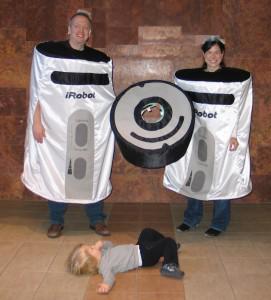
- No stranger to digging into projects, Ryan's halloween project for Roomba costumes (see top picture and video below).
Halloween 2012 - Roomba Costumes with Synchronized LED RIngs from Ryan Brown on Vimeo.
- Ryan and a couple others are early members of the Austin TechShop, the first of which to be co-located with a big box hardware store (Lowe's).
- National Instruments is also starting a pilot program with TechShop to provide hardware and LabView licenses at a reduced cost, as described in this video by Mark Hatch (of TS).
- Waterloo Labs is another group made up of NI'ers, who work on fun projects to promote STEM. They are well known for the iPhone driven car, the EyeMario System and most recently for real life Mario Cart.
- Ryan suggests a couple different BBQ for when visiting Austin (though he failed to mention the old standby of The Saltlick...which technically isn't in Austin): Franklin on 11th, Stiles Switch and Manns Smokehouse BBQ (believe Chris, you haven't lived until you've gotten the meat sweats from Texas BBQ).
Transcript
Chris Gammell: This is the Amp Hour Podcast, recorded March 25th, 2013. Episode 138, with guest Ryan Brown. Effortless equipment extensibility. Welcome to the Amp Hour. I'm Chris Gammell of Chris Gammell's Analog Life. And I'm Ryan Brown of National Instruments. Welcome, Ryan. Another solo interview. You're the third in a series. Yes, I feel like I won a prize. Thanks, Chris. You won the Don't Have to Deal with an Aussie prize. Yeah, yeah. So you are now our second guest from National Instruments as well. Is that right? Right. Well, right, because Matt Eddis, you actually were the one who introduced us.
Dave Jones: Yes, that's right. That's right. Yes, Matt's a great guy. He's a lot of fun to work with.
Chris Gammell: Definitely. And he's got, if people don't remember, we can link that show in as well. But Matt started a software-defined radio company that eventually got bought by National Instruments. And now they operate as kind of like a small company within a bigger company. And yeah, very cool stuff. So what kind of work are you doing? Are you doing similar software-defined radio stuff or other product lines?
Dave Jones: Well, I'm more on the digital side. But I work on a product called FlexRio or Flexible Reconfigurable I.O. And it's meant to be modular such that people can build things like software-defined radio or control systems or anything in between. So our stuff gets used all over the place. The enabling thing is LabVIEW FPGA. So what that does is you put these I.O. and the FPGA together and people can customize it to what they need it to do.
Chris Gammell: Okay. And so is this something – I was looking on the website a little bit with the – is Flex Rio? You don't say R.I.O. You say Rio?
Dave Jones: Either is fine, but we say Rio. Yeah, but then we say P.X.I., not Pixie. So I think it's just tomato, tomato, tomato. Yeah.
Chris Gammell: Yeah. Yeah. Yeah. I remember that from Keithley days. We used to talk about Pixie. So it's weird how those conventions come up, you know? Yeah, I think so. So, yeah. But yeah, I was looking on the Flex Rio page a little bit and it seems like – is it like something that – like – so if I started a company tomorrow, is it something that like I could buy and then develop on top of? It's kind of like a layer that you can – that other companies can build on top of as well?
Dave Jones: Yeah, exactly. We – or I get to deal with a lot of startups, usually funded startups because it's, you know, several thousand dollar product. Yeah, I was going to say $5,000 kit, right? Yeah, yeah. It's usually not a guy in a garage, but it's nice in that way. We have a lot of IP and moving data between the host CPU and LabVIEW and LabVIEW running on the FPGA and we allow for custom VHDL and we allow for people to design their own I.O. circuits. And so with all of that, you kind of can skip over the boring, you know, DRAM interfaces and PCI Express and, you know, configuration challenges, all those headaches and jump to the, you know, the DSP that's going to differentiate your company or the software-defined radio algorithm that you want to experiment with. So we definitely get used by a lot of labs and a lot of startups for that reason. It's kind of like a head start. If you have the money, it's worth it.
Chris Gammell: Yeah, and it seems like it's kind of like, you know, you kind of tack on to this much larger ecosystem with the software and, you know, even complementary hardware, even just like a digital trigger could be something that seems easy in theory. But then, you know, if you have like a high current digital input, you might not want to actually use, you know, your FPGA board that you're developing on. You might want to have, you know, some other module that captures that trigger and then, you know, you do all that in software. So it's kind of a, it's nice that you get all that other, all the extras as well, but I'm sure. Right. You don't get them, you buy them.
Dave Jones: Yeah, you buy them. The integration piece, you know, is another thing that by having the system level perspective, you can mix and match. Another cool thing that we've built into the backend is being able to stream directly between PCI Express endpoints. And so if you have an algorithm with either a lot of IO or a lot of computation required in the FPGA, you know, deterministic computation, we have that direct link. So it's another vector of expandability to build, you know, a lot of times things like radar where you have a lot of channels and a lot of math that you need to do. And that can come in really handy. And there's not another great way off the shelf that you can do that.
Chris Gammell: Right, right. So, well, let's take a step back a little bit. So, I mean, actually, we often get a lot of questions, I mean, from the survey, which people should be taking right now, of course. But, you know, there's often a lot of interest in FPGA stuff. So maybe could you give us a little background on how you guys started in FPGAs and just your experience with them? Sure. Growing up with this product line and everything as well?
Dave Jones: Right. I mean, I took a couple of digital classes in college, learned Verilog. And when I did an internship at National Instruments, you know, we like to give our interns real products to work on. And so I had a product and a deadline that required VHDL. So I kind of switched at that point. Nice. Yep. And, you know, learning by doing. And in three months, we shipped it and I got up to speed. And since then, I did my senior project in VHDL and kind of been hopping back and forth back then between Xilinx and Altera, the two kind of main players that you guys talked about before. A little bit of a lattice thrown in here and there. But the way that we develop here is as even as a new engineer, you kind of have full responsibility for a given project. And most of our projects are anywhere from six months to 24 months. And so that kind of forces you to learn all aspects of a design. Now, as you get more advanced, we do have digital and analog separation like most places. But the first product I worked on was called the 6552, which is kind of a digital ATE card for testing, you know, digital pins on chips. Then I developed the 6542 and all of these had, you know, fairly similar VHDL for streaming data to and from the host CPU, constructing patterns, checking for errors and responses, setting voltages, things like that. So from a product perspective, it was, you know, a good mix of digital and analog. The pin electronics kind of was the main analog and, of course, power supplies and clocking. Yeah. Things like that. And so that's kind of where I, you know, did the most direct development as the process of learning the NI development flow. And then, you know, the back in, I don't know, four or five years ago, kind of got challenged with coming up with a modular product that could expose the FPGA, the full power of the FPGA to more people. And so that's what the FlexRio product line came out of. And the interesting thing coming from kind of a hardware FPGA background and developing something that's meant to be used by people writing code in LabVIEW is you get pulled up, right? And it's kind of fun to be there.
Chris Gammell: They just say, I just want access to this API instead of, they're not saying I want to route, you know, traces on a PCB. They just want to get it done, right? Exactly. They just want the high level.
Dave Jones: Yeah, exactly. And it's a fun tug of war between, you know, guys like me coming from the digital side or the hardware side and guys coming from the high level abstract software side to figure out how do we build things. Yeah.
Chris Gammell: Do you get away with it though where they're like, well, you know, we probably are willing to wait, you know, a couple milliseconds or whatever. You're like, I could do this in microseconds, but I'm not going to tell them.
Dave Jones: Yeah. That's a big kind of, I don't want to say a gulf, but there's a line in what you can achieve, you know, deterministically at different levels of abstraction. And we do a pretty good job of that. There's, you know, different tools that do that. And we don't want to force users down into counting flip-flops and understanding delays and things like that. We want to allow them to provide maybe a more, you know, what they care about, right? I need to update this pin, you know, 10 microseconds after I receive this trigger. So building a tool that can allow that is quite a challenge.
Chris Gammell: Yeah. Yeah. Especially making sure it always happens the same way. Exactly. Yeah. Yeah. You can have a lot of variation under the hood there too. So that's... Right.
Dave Jones: Yeah. That's not easy. Our tools, you know, compile down using the, you know, the standard FPGA build tools. There's additional variation in what they may do from run to run. So there's a lot, definitely a lot of challenges in that abstraction.
Chris Gammell: Hmm. So how much does that mess up you guys when like, so say like Xilinx redoes their command line flow or something like that. And does that hit you guys pretty hard? I mean, is that something, is that like a big wrench in the works?
Dave Jones: Yeah. Yeah. It, it, uh, we're fortunate that we have a lot of contact with, uh, Xilinx. I, I, my products use Xilinx FPGA. So we're definitely not blindsided, but, um, is being the abstract. Yeah. Well, you know, there's an, to build a, a, a, a abstraction that's, you know, to some extent stays the same over time. Somebody is going to have to pay a tax to adapt. And, um, fortunately Xilinx gives us a lot of help to, to maintain that. And, you know, right now there's ISC is kind of fading out and Vovato is the new design tool set. And, uh, is it Vovato? Is that right? Uh, V I V A D O.
Chris Gammell: Vovato. Yes. Okay. Yeah. I, I guess I've been at it. I really haven't been doing FPGAs lately, but I had in the past. So I've, I've experienced the ISC. What's, I mean, is that like the new, uh, is it like the command line flow stuff with it? I mean, I guess it's always been command line stuff, but is there something different or is that just when they moved to, um,
Dave Jones: I don't know a lot about the, the underlying guts of what's new, um, with Vovato. Um, but it's definitely a different compile flow, uh, from a tools perspective. Um, I believe it's closer to plan ahead from a UI perspective.
Chris Gammell: Oh, that's, I mean, yeah, I remember them talking about that. I, I like sat in on some lunch at one point. I remember saying that.
Dave Jones: So plan ahead has some pretty nice features for obviously planning pins, but also planning where stuff goes and constraints and giving you visibility throughout the flow. So I think Vovato is continuing in that direction. Right.
Chris Gammell: Yeah. And so people that are kind of new to FPGAs too. I mean, I think, I think some of that was based on because of these new FPGAs, they have not just, you know, completely reconfigurable everything. They also have, you know, hard blocks where you have to, you definitely have to route signals to a certain part of the chip. And I think that probably plays into a little bit.
Dave Jones: Yes. Like for example, the, the PCI express cores, uh, yeah, yeah. There's one thing that's, you know, can be handy, but even the DSP and the block ram that are spread throughout the chip, if you're pushing the clock rates, you know, to several hundred megahertz, you do start to care where things are.
Chris Gammell: Right. That always bugged me too. You know, you compare, I know it's not a real comparison, but it was just like, come on, go fast. I know I can get like parallel, you know, benefits and all that other crap, but sometimes you just want to see the clock rate go faster, you know?
Dave Jones: Yes. Yeah.
Chris Gammell: It's just, it's like a machismo thing or something. I don't know. And then there's the, you want the compile to go faster, right? Like that's the. Oh yeah. So how do you guys deal with that? I mean, how do you, so, so you guys, you know, abstract all this stuff out, but you're still using that stuff underneath. Is it like you tell the user, well, come back in six hours? Cause that's what, that's what we have to wait for. I mean.
Dave Jones: Well, we, we do our best to compose the files that we provide the Xionex tools in an efficient way to have a, as low of compile time as possible. The other cool thing that, that our tools do is we allow using what's called a compile cloud. So you can just farm out compiles to computers somewhere else. So while you won't get your bitstream back for six hours, you, you know, won't monopolize your, your processor either. Yeah. Right. So there's kind of a, you know, a best practice in how you can farm, you know, farm off a compile, continue working on maybe your CPU, your host side code or other parts of the application, get it back and test it and so forth.
Chris Gammell: That's not as bad as it used to be. I remember I used to have a single core processor and I would, I would hit compile, you know, and it'd take up, you know, 80% of the capacity there. And then even like browsing web pages was bad. It's like, all right, well, I'm going to read something paper now. Yeah, exactly. Screw this. No, it was six hours still. Cause it was, I, you know, I was a co-op at the time and I just had crappy computers and
Dave Jones: I was just like, well, it's definitely, you know, we do a lot of, uh, instrumenting compiles and if you exceed your RAM, it's your, your compile time is going to jump, uh, you know, exponentially getting, getting paging and stuff. So there's definitely a sweet spot to the hardware you can give, give the compiler. Yeah.
Chris Gammell: So how much, uh, so, so, okay. So this is like a, this is kind of like you guys are dangling a bus out there. Almost. I know it's not exactly that, but it's like, you're, you're basically giving access. You're like giving a window to the, the lab view world for custom hardware and all the other stuff. How much, how much standardization is there on that side of things? So like if I, if I was, if I came up with a software defined radio, is it just like talking to a memory bus? Is that kind of the idea of, of hooking into the system or is it, is it a lot more complicated than that?
Dave Jones: Well, for my product specifically, um, the, the flex reoper, so we, we do this in different platforms, but I'll, I'll speak to mine. Okay.
Chris Gammell: Okay.
Dave Jones: We, uh, the intent of, of our designs is to expose the full power of the FPGA that's on the board. So we have what's called a component level IP, which is actually VHDL or Verilog that lives alongside your lab view code that can handle the low level, uh, interaction of the IO of the FPGA to your custom board.
Chris Gammell: Oh, interesting.
Dave Jones: So where you may need to do, you know, capture data from an ADC that's running at 500 megabit or a gigabit, you know, you need to instantiate an I-30s and potentially do some dynamic phase alignment and other things. I hate that stuff. That's, that's where we, we expose the full power of, of the Xilinx FPGA. Now you don't have to do that, but we wanted to enable anything that you could connect to a Xilinx FPGA without LabVIEW or without our product. We wanted to enable that with our product. So there's really nothing there in your way.
Chris Gammell: Okay. So, okay. Give, give me a little better idea here though. Okay. So say I am doing that where I have a, you know, I need to use a 30s to talk to a ADC or something. Um, is it like you would sell me a board that actually has an FPGA already on it with that IP in it? Or is it like I put down an FPGA and then I pull in your code and IP and everything? Okay.
Dave Jones: We, uh, so the FPGA has fixed IP for the, the bus interface, the DRAM, the things that are always there. Uh, it has kind of a window where you can plug in your LabVIEW code and it has a window where you can plug in your, uh, low level logic that interfaces to your circuit. So we have example VHDL for talking to your circuit, but you would write that low level code to configure your clocking chip, you know, monitor your temperature, capture the data from an ADC, whatever your circuit required. Uh, so we have what's called a module developers kit that documents all of the timing constraints, all of the mechanical constraints, cause we have a, an enclosure and an IO window and kind of provide this kit, uh, to hopefully give you as much as you need to, to build that. And, and we've had a lot of those implementations.
Chris Gammell: Okay. That's cool. That's really cool. I mean, uh, it seems like a good, good idea for getting started and everything. So let's get to the, uh, let's get to the elephant in the room. Uh, LabVIEW. It's a beast. It's an elephant. Prove me wrong. I think, so me and Ryan were talking about this before the show and I think me and David brought it up before. I, I, I have these absolutely wild preconceived notions cause I really haven't used LabVIEW much, but I've always thought of it as kind of like a very, uh, high, high level, but also kind of top heavy software because, you know, it just does so much stuff, right? There's so many plugins and everything and it's just taking advantage of cheap PC, cheap PCs, basically, you know, abundant hardware, hardware, you know, PC hardware. So, uh, what's the deal with LabVIEW? Do you, give me some, give me some help here.
Dave Jones: Let me remind you that I design hardware, uh, but I, I use LabVIEW, uh, quite frequently. Um, you're right. There, there are tons of, of different ways. There are tons of different things that LabVIEW does. Uh, and it, there can be a lot of toolkits and a lot of things, uh, to keep track of. Um, and, uh, the, you know, I work on the, I actually do contribute to the LabVIEW FPGA, um, product from a software perspective and it's a constant battle to provide enough power and control to the user, but also, uh, abstract and not, you know, provide the space shuttle cockpit of knobs and buttons and sliders and stuff like that. So I think with any kind of abstraction, you're, you're always walking that line and, uh, you know, you have things like progressive disclosure so people can dive into the level at which they're comfortable. Um, but I think we do our best to provide that abstraction with, while also providing as much power as, you know, customers need to, to build their applications. Um, I think if, if you've, you've probably haven't seen, but in the keynotes that we do at our yearly conference in iWeek, there's a lot of different trends that they show over time. And, and over time, the LabVIEW load time is, you know, obviously decreasing. That's, that's something we're very cognizant of. The number of bugs per release version or, or bugs reported, or there's some metric that they track. And so there's definitely, uh, a major emphasis on improving the performance while maintaining that abstraction and providing that power. Um, yeah. And so, you know, I think.
Chris Gammell: Well, it's tough too. It's so like, uh, I always thought, you know, I always look at it, right? So, you know, hardware guy here, right? I always look at it as like, okay, I want to flip a bit. I don't want to necessarily, you know, dive down through 14 layers of software in order to do so. Right. So I think, well, why not just code up a micro or code up, code up an FPGA to do that myself. So that's, that's data point. Number one, then I go talk to a scientist who says, I don't have time for this crap. I want to just get some data readings back. And I have this budget of money, right? Because I mean, LabVIEW, while good software is not cheap, you know, like, so they just say, okay, I just want to do this. And it's like, well, yeah, you talk to someone like that. They just, they love it because they want to just have, they want to go from plugging in a sensor to, you know, wiggly line on a page, right? That's, that's, that's the scientist view of it. If, if scientists will forgive me.
Dave Jones: In my experience, that's pretty accurate. And so how do I make you and him happy? Right? Right. Exactly. So, I don't, I mean, that's the thing. You don't, you get, you know, people complaining
Chris Gammell: on podcasts. I'm sure there's science podcasts out there being like, why are there all these deep options that I have to deal with? You know, like I have to do three pull down menus.
Dave Jones: Yeah. It's, it's interesting. I, um, one of the things that's, that's really cool that I get to do is sometimes travel and meet customers or go to a conference on a specific topic. And, uh, I definitely hear both sides of that. Um, we have guys who come from being low level FPGA developers who want access to that knob they're used to tweaking. And we have, you know, scientists and, you know, what we call domain experts who, who may know radar astronomy or radio astronomy. And, uh, and, and they, you know, complain that, well, when I try to drop down an FFT, I just want to set this and this, I don't care how many clocks it takes or, you know, how many DSPs you consume.
Chris Gammell: Just give me my FFT. Um, right. I, I've got a Cray supercomputer in the back of my lab. I'll just
Dave Jones: put it on that. Yeah, exactly. These guys are used to that. Yeah. The, the one thing that, you know, we, when we developed the Plex Rio, we implemented this component level IP. So if people really wanted to build low level code, they can take their existing Verilog and VHDL and just drop it in constraints, everything. And so, uh, that's the way that, that we held out the full, you know, path all the way down to the bottom. Um, but you're right. It is a constant pull in both directions.
Chris Gammell: Hmm. What's the, uh, what's the makeup of, uh, you know, like people there. Is it, is it pretty software heavy? I would guess. I mean, uh, what's the mix? I don't have a good feel for that. Um, but everybody's got a feel for that. Cause then you grumble, Oh, there's so many software people. I guess you're kind of in the middle anyways. So
Dave Jones: yeah, I'm in the middle and a lot of us, uh, a lot of the people I work with are both, um, they do kind of lab view and, um, FPGA development, but that's one of the things that they tell us not really to talk about. Oh, don't give team sizes. Don't give, you know, Oh yeah. Yeah. Yeah. That's fine. If I did know, I probably wouldn't be able to tell you.
Chris Gammell: Okay. Well, that's cool. Um, I, I just, I, cause it just seems like, because, uh, you know, lab view is so big, it's just like, it seems like it would be a lot more software people. And also because, I mean, national instruments used to recruit at my alma mater too. And it was always just like, you know, a lot of software kids would get recruited and so that's another thing
Dave Jones: though. Oh, no. Okay. I don't, you know, we, we do have a lot of people working on lab view, but you know, you saw the breadth of our hardware products. So we have a lot of people working on driver software as well. And then all the hardware guys to build that hardware. So I wouldn't say that it's mostly application software. I mean, again, I don't know, but, uh, I don't
Chris Gammell: think we're that heavily weighted. I put firmware guys in the software category. Don't, don't kid yourself. If you're not using CAD, you're, you're, you're a software guy in my book. I mean, you, you might even be in that camp too. Sorry, Ryan. Oh gosh. That's harsh. Yeah. It's okay. Um, well, what about the, uh, you know, I always read about the, uh, you know, like the, the workplace style there. It seems like, so I used to live in Austin. I knew a couple of guys that, uh, worked there. I didn't know you when I used to live down there, but it, uh, oh, it seemed like a pretty cool place to work.
Dave Jones: What's a, what's a, what's a, what's it like down there? Yeah, it is. We win those, you know, a hundred best places to work awards. I don't know what the criteria for winning
Chris Gammell: those are, but, uh, I assume ping pong tables is, is part of, I think there's a whole category
Dave Jones: for that. Yeah. Uh, one of the, you know, you, I guess you're one of the few people I know who's actually left Austin, but, uh, living in Austin is a pretty, pretty cool benefit. Um, the, uh, you know, I, as I mentioned, people generally have full responsibility for a project. So, you know, as a builder or a maker, you kind of like to, to do that rather than design on a committee of, you know, five or 10 people. Um, not to say that, you know, we have platforms under things that take more people. Um, it's, it's, it's laid back, but everyone's, you know, pretty focused and pretty, uh, intense in their work. And, um, Dr. T, our CEO is very technically, uh, involved and sharp. Um, so it's not uncommon for him to show up at your desk and talk to you about some implementation
Chris Gammell: or some technology. Uh, really? Yeah. Is it terrifying or no? Is it pretty, pretty laid back still? Uh, it's, it's, I don't think it's terrifying, but he's terrifying, but like, uh, anxiety inducing at least. No. Oh, Hey, you run the place. Oh, cool. How you doing? What's
Dave Jones: up, man? No, I wouldn't say anxiety inducing, but it does encourage you to, to be prepared to, to dive deep on whatever you may be working on because, um, you'd never know what arcane topic, uh, that, that he is. I mean, he's, he's one of those guys that knows a lot about a lot. And so, uh, you never know what he's going to ask you about. Yeah. And so Dr. T
Chris Gammell: is, uh, James is a true shard. Is that how you say it? That's right. Yes. Yeah. Yeah. And so he's, he gives a lot of those keynotes too, right? I think you, I think you sent me
Dave Jones: links for that in the past. He does. He does. He does the key, uh, I think the day one keynote in an eye week every year and any to travels around and speaks at other conferences, but,
Chris Gammell: uh, yeah, yeah. He, yeah, he seems like he knows his stuff and, uh, I respect that. I mean, so yeah, he's a technical guy. He's still CEO. Is that right? Yes. Yeah. So, Hey, engineers in charge. That's right. I get behind that. Yeah. I think he's a PhD in physics, but
Dave Jones: he has started out designing, uh, sonar, I believe, um, at the, um, at the UT labs here near where NI is. And, uh, so him and the other two founders, uh, kind of were in engineering development roles and then they kind of spun off and started this company. Yeah. Yeah. I'll,
Chris Gammell: I'll put the wiki page on there too. Cause I remember reading about it in the past. It was, it was basically, you know, having more accessibility and stuff like that. I remember reading about that kind of thing. It was, it's interesting story. And they had a lot of trouble at first too. I remember reading just because, you know, the, the tools that were available when they started in the, was it seventies, I think, you know, like, or eighties maybe. I think it was,
Dave Jones: it was founded in 78, I believe, or 76. Um, I didn't prepare on that.
Chris Gammell: Well, whatever. It's fine. But I mean, you know, you think about it, you know, they think about the tech of the era, right? It's like, you know, you can try and visualize technology now, right? It's like, you know, everything's, you know, GUI type stuff now, but you know, back then, Oh yeah. 6502 kind of stuff. It's like, yeah, screw that. You know,
Dave Jones: the, uh, the first kind of product was those GPIB interface cards to connect instruments, right? To PCs or to computers. And, uh, I believe LabVIEW was first developed on the Mac. Um, interesting back in the early eighties. Yeah. GPIB. It's still around too.
Chris Gammell: Still around. Still used all over the place. Forever. I think, you know what I, my, my theory with this, right? Because having worked in the measurement industry in the past, uh, is that no one wants to throw out all those cables. If people don't know, GPIB cables, they look like the, like the really, really old printer port cables, but they're like, I mean, they've got to be what? Like a quarter inch thick, you know, they, they're like flame resistant or something. Yeah. They don't bend and they have the thing. Yeah. They're heavy as hell. They're, you know, they're like steel on the end, you know, and probably not actually steel, but that's my theory is that no one wants to throw them out.
Dave Jones: The mating interface is at perpendicular from the, uh, from the actual cable. So you've always got to kind of like interference or at least all the ones I've used. Yeah. Oh yeah. Yeah. You mean
Chris Gammell: like where the actual, the cable runs into other, other, uh, plugs and stuff? Exactly. Yeah. Yeah.
Dave Jones: Yeah. Yeah. And it's a standard. That's right, folks. That's right. I should believe 488. I tell you what, when we, uh, when we started our, well, any product that I've started working on choosing the connector, boy, is that a faithful decision that you're going to live with for a
Chris Gammell: while, right? Yes. Yes, it is. I think everyone could probably, every, every hardware person could, could attest to that. Kids, you know, choose your connectors wisely. They'll be with you longer than many things. Yeah. Mama didn't raise no connector fool. Oh man, that's yeah. So, uh, let's see. So we talked about NI, we talked, I've, uh, given a little jab towards the lab view, but you've, uh, deflected my attacks. Well, you said, you said
Dave Jones: you haven't tried it in a while. You know that you can get a copy of lab view from spark fund now. So I didn't know that. Yeah. Interesting. So you could buy, it's, it's an Arduino plus lab view bundle. I think it's 50 bucks. Um, so it's a student edition of lab view. Uh, definitely, you know,
Chris Gammell: a pretty cheap way to get a copy. See, now right there, that seems like the, the, the nouveau, uh, heavy handed way. I mean, like Arduino by itself is pretty, uh, it's pretty high level to start with. It's like, Oh, lab view on top of that, huh? But again, you're like you said, I haven't tried it. So don't knock until you tried it. Yeah. And you know, I, I, I ended up beating crow with Arduino too. So, uh, you know, I wasn't aware of that. No, well, you know, it was just like, it was the same kind of thing, right? It's like, it's like, I look at lab view, right. And then I think, ah, God, why don't you just get down in the harbor? And then I said the same thing about Arduino, you know, it's like, wow, why don't you just, you know, write some C, you know? And that's not the point. It's, it's, it's twofold. One is it gets you involved in technology on both fronts. I think, you know, like, so if you have a scientist who's afraid to get into hardware, you know, they're, they're doing work, but then that also sparks interest in hardware. That's that alone is, is important, but then sometimes it's just, you don't have time for it, you know? And that's the thing that I think a lot of, you know, hardware guys or, you know, just EEs in general, um, don't think about, you know, it's just, sometimes that stuff isn't the focus. Sometimes it's just about getting the measurement out and, and it doesn't matter how you do it. And, uh, I've come around to that, but it was, it was a hard fought back. I think it was just me being an idiot too, you know? So that's fun to be a contrarian, right? You just, you just summarize the show. It's fun to be a contrarian. You might've come up with the, uh, maybe that'll
Dave Jones: be the t-shirt design, but you have to pay a tax sometimes, right? See, sometimes you're
Chris Gammell: wrong. Yeah. Tax, but continue. Exactly. Exactly. Uh, well, that's cool though. We'll have to, I'll, I'll link that into with the Arduino, um, lab view thing. What about other, uh, I mean, how much other expo you said you were developing other, other stuff in the past. I mean, do you, do you see a lot of stuff throughout the company and stuff as well?
Dave Jones: I mean, I just said stuff like three times in a row. I'm fortunate. Uh, the, the technology that, that we work on, um, gets reused a lot throughout the company. Oh, okay. Yeah. So we definitely have, uh, a lot of visibility and that can be good and bad. Um, you know, sometimes you want to design, design something with minimal external requirements, right? And, uh, sometimes that's not possible. Um, so we, um, we do our best to, you know, design things as flexibly as possible, have decent documentation and, uh, are, we have a concept called a tech lead. Uh, I don't, you know, know what that's a standard term, but we're basically, uh, kind of a decision maker, um, mentor, uh, design reviewer for other engineers. And so when, where our stuff is reused, we're often the tech lead of those projects. So again, that extends your visibility and, you know, design reviews aren't always the funnest thing to do, but it is fun to kind of learn about a completely different platform than, than what you've been designing on.
Chris Gammell: Yeah. Yeah. And it gives you good feedback for the next generation too, right? It's like, oh, well, Mike over there is using it like this. Maybe I should actually, you know, incorporate that kind of thing the next time around or have that extra flexibility so he doesn't have to write all that code and whatever.
Dave Jones: Definitely. It's internal customers. So yeah, it's very good to sort of eat your own dog food or watch someone else eat it, I guess.
Chris Gammell: Or, or review someone while they're eating it. Design review. Are your design reviews pretty rigorous there? I mean, I've kind of seen a couple different in, in my past work, you know, a couple different levels of, of design review, but I'd imagine with like a system level focus, like you guys have, it might be a little more important.
Dave Jones: Yes. I would say they're pretty rigorous. Yeah. My, my first design review, I recall vividly, I walked into a room. Oh yeah. These are good stories. Yeah. The lion's den. Yeah. The lion's den. It was my first board that I'd, that I'd been fully responsible for myself. And, uh, I walked in with a, probably a stack of papers, data sheets, test reports, everything I've generated. No, I don't know. Two feet tall or two stacks, one feet tall. I don't remember. And, uh, you know, it was a bunch of, so I was a staff engineer, I guess at that point. And it was a bunch of principal. You can say it. It's codgers. Is codgers the right words? Well, what I vividly remember, there was two analog, grizzly analog codgers. Oh boy. Yeah. And, uh, as a digital guy, those guys are just out to get you, you know? Yes, they are. They are.
Chris Gammell: Cause you don't know a goddamn thing about decoupling or, you know, signal integrity and all that. Yeah.
Dave Jones: Oh, I got, I got, I got nailed on a switching power supply feedback and, uh, and, you know, that they weren't visibly having fun, but, but they were definitely having fun and we fixed it. And, uh, you know, I, I definitely learned and, uh, it's, you know, we do that, right? Not only do we want the product to be very high quality, but it's part of the way that we teach engineers to, to design and test and evaluate things and document things. So I would definitely say that we have rigorous design reviews here.
Chris Gammell: That's good. That's a, that's a good thing. I mean, it, if it's built into your, to the system too, that's, that's really important. You know, having, having it as a cultural thing at a company is, it sucks. I mean, let's be honest, right? I mean, like no one likes design reviews except maybe that analog guy. I think personally, I think that part of it is him taking you to task is also him, you know, being it's revenge for having him there at like, you know, 3 PM on a Thursday or something. But, uh, you know, it's, it's, it is important, but it sucks. I hate, I hate them personally. Um, well, I think the meta, the way to get
Dave Jones: through them is to try to learn something right at every, just like, you know, I think I've heard VCs or people, when you interview a person for a job, if, if you can learn something from, from that interaction, they get the job or they don't get the job, at least you were able to, you know, do something productive in that 45 minutes. Um, so in a designer view, I always try to, you know, at least learn something. And, and now sometimes I get to, I get to scold a young analog engineer. So yeah, that's good. Payback.
Chris Gammell: Yeah, that's good. That's good. Oh man, that's fun. Well, that's cool, man. So, uh, and, and you said you get to, you know, kind of see outside stuff now too, is I guess, you know, I'm sure you're moving up in the company and everything, but you get to interact with customers, internal, external, all that stuff. That's, that's always a lot of fun as well. Probably getting to see
Dave Jones: different applications. Yeah, totally. I don't know if you saw, I posted a picture. I got to go
Chris Gammell: to the Green Bank telescope, uh, last year. Oh yeah. I got to post that. Yeah. It was,
Dave Jones: what was that like? Well, I, I, prior to that and I went with, uh, John, one of the, uh, product managers at Eddis. Um, okay. And, uh, it was a really cool, uh, workshop. It's the Casper workshop, uh, which is all for, for radio astronomers and, um, learned a lot. And prior to that time, I was not the most comfortable with heights. I wouldn't say I was afraid. Um, but I, I didn't really seek them out. And, uh, basically John goaded me into going to the top of that, you know, you know, it was raining. Um, as, as we were about coming back down about halfway, it started lightning. And, uh, our guide was one of the installers and maintainers responsible for crawling through all of the support structure and aligning all of the panels. Cause that whole thing is made up of these panels that have to be perfectly aligned to focus, you know, the received energy. And, uh, and, and they, they have all this, these actuators to maintain the alignment, but they need to be adjusted. These guys just crawl out through this. And so he was walking all over the dish, you know, 400 feet in the air and, uh, it's, it's wet and there's lightning and, um, you know, about five minutes of lightning. He said, well, you know, I guess we should probably get off this and, uh, get back down to the ground. Oh my God. But in hindsight, I'm glad, you know, if John listens to this, thank you, John. I wouldn't have gone up there without your, uh, you know, insisting and pushing me onto the sideways elevator.
Chris Gammell: Wow. I, I don't know, man. That's a, I'm not, I'm not a heights person either, but that's, that's intense. Yeah. We, you know, you can't have peer pressure helps.
Dave Jones: Peer pressure helps. Yeah. And, you know, only because we were there with the scientists who run the place, did we even have the opportunity to go up there? So it was kind of a one time chance. Yeah. Uh, but we got one picture cause you can't take electronics anywhere near the whole area where they have the telescopes. So one guy had a film disposable film camera and you can see like my hands are on the railing and my knuckles are white. Yeah. No one's blaming you for that one. I'll tell you that much. That's, that's, that's the kind of visit that I really, you know, try to take advantage
Chris Gammell: of if I can arrange it. Yeah. And it reminded me where that was. I remember you told me at the, the time when you, when you tweeted that picture, but yeah, I don't remember now.
Dave Jones: Green bank, uh, West Virginia is where the green bank telescope is. Yeah. And yeah. And I remember
Chris Gammell: seeing it, it was like, so it was off the distance, but it's still, you could just tell the massive scale of it. It's, it's insane. I think they say it's, it's the biggest, let's see, movable land
Dave Jones: built structure or something because it, you know, it rotates and there's some criteria where it's the
Chris Gammell: biggest in the world. Yeah. Right. I was thinking about that one that's down in, uh, South America that was in golden eye. Yeah. That's what I always think of, you know,
Dave Jones: Arecibo. So some of the guys who were there at green bank were comparing it to Arecibo. And apparently at Arecibo, there is a cable car that takes you to the, the receiver room, which is suspended on those cables. Uh, yeah, dude, I've seen the movie. Yeah. Yeah. They shoot guns off that thing. Oh, okay. I haven't seen it. Watch your golden eye. I haven't seen it. I'm sorry, but apparently. Or play the video game, N64. Are you old enough for N64? Oh yeah. Oh yeah. For sure. Yeah. Apparently the, some of the guys who run the cable cars are a little bit, you know, uh, more wild with, with your person than you might be yourself. So.
Chris Gammell: Oh, well they like start rocking the boat kind of thing. Yeah, exactly. Exactly. I hate when people do that kind of thing. You know, they, they've, they've just played, you know, they, they know, they know the limits, you know, they can feel, they've got the feeling, but you know, with, with heights and that kind of thing, it's just like any small, like, let's just be honest. I, I, I get scared at the cable cars at like Cedar Point, you know, like those things. If someone like shifts a little bit in their seat, I, I start to quiver. So. Right. Yeah. That's, I don't like when they do that. Um, okay. So let's see what, so, so Austin, I mean, you're, you're in Austin, obviously, uh, one of my favorite towns in the world. Um, what, what's the, what's the tech scene like that, like down there other than, uh, other than NI? I mean, is it, is there other stuff that,
Dave Jones: that you see that you interact with? Well, so there's definitely, um, the, the hardware scene is, is pretty good here. Um, we have obviously Dell, uh, is a, is a large, um, a large hardware, hardware focus company, but Motorola and Freescale and Samsung is, uh, is, you know, uh, AMD applied materials. So there's a lot of hardware talent. Um, I'm here. And so that's starting, you're starting to see more and more smaller companies starting here with, with a hardware focus. So, um, a lot of, um, people I've gone to school with and other, you know, engineering friends are, are doing a lot of different things. So I, I think the scene is pretty good. We have, uh, the other side of the spectrum, we have a, a mini maker fair and we had full maker fairs, you know, back, uh, they traveled around and, uh, pretty well attended. I don't know the numbers, but every time I've been, they've been very packed. Um, and we have a dork bot group. We have a couple of hacker spaces and we have a tech shop now. Um, and then the, the kind of software focused startup scene is pretty good too. It's growing. Um, and, uh, you see that with South by Southwest. There's a lot of local companies, um, participating in that cause you know, it's in our backyard. So, um,
Chris Gammell: And what about South by? I mean, that, that just happened. So, uh, how, how was that for you? I mean, did you get out there a lot or was it more of a, was it kind of during work,
Dave Jones: work hours? Well, no, I, I, I went out, uh, I went to the interactive, um, portion of South by Southwest. Um, this year the, um, we were fortunate enough. We, I hosted an event, uh, the hardware startup meetup. Um, yeah. Uh, Nick Pinkston out of the San Francisco Bay area, one of the San Francisco hardware startup meetups, um, kind of set the stage for, and then I was able to kind of, uh, figure out how we can do it with, with who is in town. Um, so through that I was able to, to go to some other South by events and it was a lot of fun. There was a lot of, uh, so I went back in, uh, 2011 and this year it seemed a lot more, um, hardware company presence, uh, than in years past. Um, the, uh, the create. So there's a many different subsections of South by Southwest, but there's a section called create that's open to the public. That's, um, kind of like a, a maker fair esque, um, component and art focus kind of that, that kind of, well, I feel like they had a walk around. Yeah. Yeah, exactly. Tents, you walk around, uh, but Autodesk had a big area. The, um, tech shop guys were there. Spark fund was there. TI was there. Um, our hacker spaces were there. There were the, there was the, the guys who did the boosted boards Kickstarter, uh, were there. Which ones are those? It's an electric skateboard. Oh, that's right. Did you try that
Chris Gammell: out? Cause I always wondered how they got so much stuff into like those little, I mean, it's just within the wheel casings. I mean, really the, like the axle covers. Yeah, I did
Dave Jones: not. I did not. It looked like a pretty impressive industrial design and they were riding them all
Chris Gammell: around, but yeah, I'm not a competent. Was it like fat? I just think of the torque and the motors you need and everything. It just seems like, you know, maybe you get like five minutes on one of those things. That's just what it seems like, but I don't know. Well, there were so many
Dave Jones: people I, I didn't see them do, you know, go full out, but, uh, I did watch their video and it looks like they go, you know, 15, 20 miles an hour, but, uh, I don't, it's crazy. Yeah. It's pretty impressive industrial design. It looks really good. Uh, I don't, I obviously can't speak to how well it
Chris Gammell: works, but that is often a, a, you know, marker of the new, you know, hardware startups kind of seen. It seems like there's often a lot of focus on design and, and, uh, you know, more than just the electronics or anything, you know, there's also good industrial, good software on top of it. That kind of, it, it, it seems like it's a little more all inclusive. Exactly. Teams. Exactly. The,
Dave Jones: uh, right next to them, you'd be interested. There was a guy, uh, out of Chicago named Jeff, who's working on a pick and place machine, um, called board forge. Have you heard of this?
Chris Gammell: Oh yeah. You didn't listen to last week's show apparently. Cause we mentioned it last week. I'm sorry. I didn't. Oh, the truth comes out. It's been too busy at work. Uh, yeah, no, we did see that though. Cause, uh, someone did an interview, I think. Oh, it was a slash dot had
Dave Jones: an interview posted. Okay. Yeah. So he had it there and he was, uh, demonstrating the, you know, the kind of a couple of simple movements, but it looked pretty neat. Yeah. Um, yeah. Yeah. And now,
Chris Gammell: now if Dave was here, of course he'd be no, yeah, you don't need a stupid, you know,
Dave Jones: however Dave talks. Yeah. So I did listen to the Mike's electronic stuff. Um, yeah. And, and Mike has a pick and place, right. And, and Dave, yeah, he has a, a commercial one,
Chris Gammell: but yeah, it is a smaller commercial one. Yeah. Okay. So somewhere there's a, there's room for that, but I guess. Yeah. Yeah. True. Yeah. And there is, I mean, like, like even, you know, we, we mentioned last week when we mentioned the board forge is that, you know, uh, dangerous prototypes got one, even though they've, they've always said they don't do in-house, uh, pick and place stuff, but it's just, you know, there, there's balance points. I mean, even Adafruit starting out had the smaller one and now they're, they're moving to bigger picking places. And it seems like this is an evolution. Eventually it makes sense. I actually, so, uh, last week I, I saw the tiny circuits down in Akron, uh, Ken, I heard him talk and, and he gave a really good example of why you'd want to do that kind of thing. And basically it's to reduce setup costs. At a certain point, there's a balancing of, you know, if you have, say you're only doing maybe 500 boards a month, even if that's, you know, only 10 panels or whatever, you know, big panels, of course, the being able to keep your setup the same for, you know, not having to unload reels and reload them and everything. There's a lot of economic benefit in that because that's often a large part of, of, uh, a board population setup. Yeah. So having that, if, if the cost of a pick and place comes down enough and, and it's decent enough accuracy and you don't have to have a lot of interaction with the final product and it's just kind of spits it out, which is of course a bit, uh, optimistic, you know, there, there is a balance point there. So I don't know. Uh, well, so you ran though, so you are in charge of the hardware meetup for Austin though, right? I mean, like that's your, that's your thing.
Dave Jones: Me, me and my friend Bartley, uh, started up last year and, um, it was just been trying to build a way for, you know, people frequently ask, you know, I need help debugging this circuit or I need somebody to write some C code for this, you know, micro. Uh, I need an industrial designer. And so we wanted to have some meeting point or, or way for, for those people to meet each other and, and a way for some of the Austin companies who are building cool stuff to, to show it off. So, um, we, I had both been in kind of no people in other sub communities in Austin. The, um, Austin has a Ruby on rails group. That's very active. It's a great community. Um, and so some of the, I got some advice from, from some of their guys about how they grew and, and what they prioritize and how they structure things. And, um, so we're doing our best to, to, to do something similar where people can find people to help them. And, um, we've had four or five events so far and, um, pretty good attendance and pretty good feedback. So we're going to do our best to keep it going. Although it's a lot more work than I expected.
Chris Gammell: Oh yeah. I believe that. So do you guys do it like how they do out in San Francisco too, where they, you have like local company sponsor a certain meetup as well?
Dave Jones: Yeah, we're trying that.
Chris Gammell: We're buying beer and food and stuff.
Dave Jones: Yeah. We, uh, our first sponsor was, uh, the company that partly actually works for called chaotic moon. Uh, and they have a labs group. And so chaotic moon does a lot of interactive development of apps and things like that for, for big brands and big names. And a lot of the stuff that they do has a hardware component. And so there's a small team called chaotic moon labs that, that builds these, these hardware, um, elements of whatever app they may be like the, uh, and they do a lot of things that get a lot of publicity. You may have heard of the board of imagination. It was a skateboard that was controlled with, um, one of those emotive, um, uh, headsets. Oh, is that the headset? Yeah. Yeah. Yeah. Yeah. So they do things like that, kind of integrating different technologies and making something interesting. But anyway, they sponsored our first meetup there in Austin, hardware software company. And then, uh, our next sponsor, our next event was sponsored by Xilinx. Um, so that was pretty cool. They had, uh, a few guys there to, to talk about zinc and the new kind of all programmable stuff.
Chris Gammell: So that, that thing is a beast. Yeah. Yeah. That thing is a bit over the top for, I'd say most people, but it's pretty cool. Yeah. Yeah.
Dave Jones: Have you, have you used one? Uh, yeah. Yeah. We, we, uh, we have a couple of dev boards and,
Chris Gammell: uh, played around with them a little bit. Yeah. I got to see, uh, I think it was ESC last year. They were just coming out with Silicon at that point. And they, you know, they were like emulating with what, like six other FPGAs or something like that. Yeah. That emulation system is pretty neat. Yeah. It's, it's great. It's just crazy. You know, it's just, I mean, I, I don't know. I, I, I, I'm a perennial cheapskate. So I look at these things and I'm like, well, who the hell is going to use this? You know, you're never going to use this in a volume production. And then they turn around and they, they look at me and they're like, of course, you're never going to use this in a volume, you know, in volume production. So, you know, maybe once in a while, but you know, it had to be very, very high volume. Yeah. So it's, it's, it's a weird market that I just don't plan because I don't do high performance stuff. So yeah. Yeah. Just, well, that's pretty cool though, that the, the hardware, uh, meetup. I mean, is it, do you, and then you, you guys do the same kind of thing where, um, you know, you'll have people come in and talk about what they're working on from small startup
Dave Jones: perspective as well. Like, yeah, exactly. Small teams. Well, so Nick out in San Francisco, he, he's just opens it up. It's kind of a pitch after pitch after pitch. I think everybody gets two or five minutes. And so they have so many people, um, that, that they fill up an hour or more with, with that. Um, we, um, we do it a little bit more formal. I mean, maybe more structured is a better word where we have a, somebody talking about a topic we feel is useful for most of the people interested in building hardware, like industrial design or rapid prototyping, um, or somebody who's kind of gone through building their own company. Our, our first meeting we had, um, John and David from super mechanical. I don't know if you remember, they were kind of the first internet of things Kickstarter that really blew up. Um, which, which was product was that
Chris Gammell: I remember hearing the name, but it twine twine. That's right. Yeah. A little blue thing that has like a sensor in there and it's connected and everything. Yeah. It was like 199 bucks or something too. Wasn't it? Ah, was it that much? It was, it was a lot. I remember being a lot. I remember being like, this is so, oh my goodness. But it's, you know, it was just, it's just because they're getting started, you know, it's like, I'm sure that cost comes down. So yeah, but yeah, they did awesome. They, they, did they break a million? No, no. I think no, they broke a couple
Dave Jones: hundred thousand, I think. It was, yeah, like 550 grand. Um, not a small amount of money. No. So, and the cool thing was they, they were MIT media lab guys and they actually moved down to Austin. I think, you know, cause they like Austin, but they have family down here too. And, uh,
Chris Gammell: those media lab guys, they, and gals, sorry. Uh, you know, like they, yeah, them and ITP and all those, all those like mixed mediums things. Like they always seem to come up with crazy. Like, did you see Matt Richardson's a bike light thingy? Did you see that, that video he made? No, no. He, he put like a, a Pico projector and a Raspberry Pi together. It was just like, where, who comes up with this crap? Seriously. He does. And other people do, you know, it's just cool. It's cool stuff, you know, like they, because they, they have to touch on a lot of media. It's, I think that's the kind of, you know, you, you think about hardware startups and everything that is the kind of future thing where you can't just be, you know, you're not just going to be making a, you know, PCB anymore, you know, even with mixing analog and an FPGA, that's not enough either. You need to have software layered on top. You need to have, you know, web stuff where, you know, the interactive and everything, it's just, God, it's hard. It's hard.
Dave Jones: Sure. Well, John, so John and David were pretty fun to hear about their progression because like you said, they, they'd made some crazy stuff in the, in building towards twine. One of the examples was John, I can't remember what he called it, but it's a wallet with some kind of an actuator that actually gets harder to open as you spend more money. So it, it prevents you from opening it when, when you've spent, you know, your allowance. And then after that, they built a table that had, I think it had a QR code, a big QR code that had the full CAD design for that table embedded in that URL and that QR code. I don't remember exactly how they, they structured it, but they'd kind of done a couple of these, you know, interactive builds and, you know, that led up to, led up to this twine thing. So not a lot of.
Chris Gammell: Yeah. It's not where you start, right? It's this twine, twine is the, the, the end goal. It's not like where people are just like, well, I think I'll just make this thing. Exactly. Like, no, it's just a lot of stuff. Experimentation. Yeah. Yep. That's good. Well, that's good though. So, so you guys, and you, and you guys see like a, I guess you said you only have like a couple people present per meeting and everything.
Dave Jones: Well, we do like one or two, uh, like informational talks and then we open it up for demos and pitches. And usually we have anywhere from four to eight little demos. Oh, that's not bad. Yeah. It's, it's pretty good. Uh, just last week we had, um, guy named Jack Minardi who won the, um, the hardware hackathon in San Francisco, I think in February he did like a,
Chris Gammell: uh, haptic glove glove with raspberry pie. And I remember seeing, seeing an article about
Dave Jones: that. I think it's tech crunch or something. Yeah. And, uh, the other cool demo we had was, uh, guys in Austin starting a company called Sapphire OS. Um, you should definitely check it out. It's a, um, wireless, um, kind of mesh network of programmable elements. And so you can build a lot of things on top of it, but the demo they had was showing off the synchronization and controlling some RGB LED strips around the room, um, with, with these little nodes. Uh, it's really cool. Look like a pretty seamless, um, interaction. So I think they put a lot of work into the whole stack to make it kind of painless.
Chris Gammell: Yeah. Well, and you, and you know, the pain of all that, right? So, so I saw your, uh, your Halloween costume this past year. Tell us about that. That was a fun project.
Dave Jones: Yeah. That was a fun, uh, three weeks of late nights. Um, so my friend Matt and I, uh, I drafted him to help me. Uh, he's, uh, he's a really, really good, really good developer and hacker as well. So we, uh, built, uh, a Roomba, a family of Roombas. So my two-year-old was to be the Roomba cause he's crazy about it. And my wife and I were to be the virtual walls, which are the things that keep the Roomba from going beyond the boundary that you want it to clean. And, uh, so it was a nice kind of theme, but, uh, in our neighborhood, it's kind of like a big, once it gets dark, all these houses kind of have haunted houses and it's a big party in the streets. Yeah. And so we wanted something to liven it up after dark. So Matt and I came up with, uh, these led rings using the, just those led pixels, you know, strands and, um, control them. They each had a little, um, Arduino micro on them to control them, but we use these little custom IR boards to allow them to synchronize. And, uh, like you said, that's, that was the tricky part that, that took a lot of the time, you know, construction and hot glue and all that takes, takes a good amount of time, but getting the communications protocol to, uh, allow them to change patterns and update the same light at the same time was, uh, that's, we got working about four in the morning on the day of Halloween. Oh, yeah. That's how it usually goes, right? Yeah, exactly. Well, that's, that's the thing. Like one thing that, that I repeatedly learned with these home projects is boy, it helps to have like a hard deadline that's out of my control. Uh, and Halloween is one of those deadlines and Maker Faire, right? Like a lot of people build products for Maker Faire. I think that's, that's another good reason to do that.
Chris Gammell: Yep. I agree. I, otherwise you just, uh, keep stringing along. Yes. I know how that one goes. Yes. That's good. Yeah. And, and I remember, uh, the picture then of, uh, it seemed like the, the ultimate uncontrollable part of your, your design was your son's cooperativeness.
Dave Jones: So, yeah. That final picture. Well, you know, there's a lot of things you can engineer and the, uh, the willingness of a two-year-old to put on a costume that you spent hours and hours and hours designing for them. It should have been a no going into this deal. Oh yeah.
Chris Gammell: It's, that's the Murphy factor on that has got to be, you know, well in excess of the standard
Dave Jones: deviation. Yeah. So yeah, that was kind of a fail. The other, the other drawback of it is about, so we did all this work to get him to synchronize. I'd say about 10 or 20% of the people on the street even understood that that was a unique and difficult thing to do.
Chris Gammell: Right. Oh yeah. Yeah. Just the general normalization of technology. Of course you can do that. It's blinking lights, right? Exactly. Whatever. Why wouldn't they synchronize? Yeah. Right. Exactly. Yeah. That's, that's crazy, but it's a really fun project. And you, and you had, so you have that one on your, on your site. Uh, you have that and a couple other fun projects as well. So people should definitely check out, was it, what's your website? It's just, uh, my initials
Dave Jones: rhb.me. Okay. Nice and short and easy. That's cool. Yeah. Yeah. It's, uh, you, you gave a presentation last year at Maker Faire about the importance of, of documenting and sharing your projects I recall. And, uh, I continually remember that when I fail to do it because as you know, it's, you know, it's probably 20% of the time to actually do it and, you know, 80% to document in a nice way that other people can use it. So I have definitely failed in that regard. And some of the things I've built would be very easy to post the code and share, but boy, it's,
Chris Gammell: it's hard to make time to do that. Right. Especially when you don't have to focus on the other stuff too. It's like, yeah, I, I remember I was, I've been cutting with the CNC machine, right? I'll cut, you know, pocket in metal, right? Yeah. That's great. Okay, cool. I feel so accomplished. It's like, okay, well, I should go process the video and yeah, editing video and uploading and everything. It's just like, what, look at this time skew, you know, I gotta, hey, I have some
Dave Jones: wonder. I appreciated that. I watched your, your video of, of what failures in a resolution. And I, I thought that was really great how you kind of went through each one and said, oh, I think this is wrong. And I think this is a fix. And so I know that took a lot of work, but I appreciated it.
Chris Gammell: Yeah. Well, it's, it's nice. I mean, it's good because a lot of, a lot of people online have been helping me too. So that's, yeah, that's nice. Pay it forward. Yeah, exactly. So, so you've been a tech shop member as well. I mean, I guess you probably get some in-person assistance, right? Yes. Tech shop. Yes. What's, what's that experience? I, I, I, I know some people who've done it out in California, but it feels like they get all the benefits anyways of being in California. So it's kind of skewed, you know? So, so what's the, what's the Austin one like?
Dave Jones: Oh man, I, I love it. We, so we got the tech shop, I think the opening or the soft opening was mid-October of last year. And ever since then, there's been a core group of, of guys here from, from NI who pretty much anytime you go there, one or more of us is there. And it's the, the, there's a little bit of a, of a lag because you have to take what are called the safety and basic use classes to get access to different tools. But once you're kind of got the core that you want to use taken, it's been awesome. Yeah. What kind of stuff have you taken so far? So the, the laser, the laser cutter is the most popular tool. So generally advised to grab that one as fast as you can. But beyond that, I've done the shop bot and I've done the water jet, the two kind of big CNC tools. Uh, I haven't done the Tormach, um, yet I've done the manual mill. I've done the wood lathe. I've done the wood shop in the metal shop. Uh, I've done powder coating, uh, which is pretty fun. Um, I've got, I think silk screening next week. Oh, I didn't know they had that there. That's pretty cool. Yeah. And they have a CNC vinyl cutter too that I'd like to take. So I've, I've spent a fair bit on the tech shop classes, but now I'm at the point where most of the things I want to build, I have covered or with this kind of, we have a shared spreadsheet among people at an eye showing who's taken what class. And, uh, I think we have pretty much everything covered.
Chris Gammell: So is it like you can go, it would be like you would go ask someone to make something for you at that point or you'd actually have them help you out? Is that kind of the idea?
Dave Jones: Yeah. I'd, I'd, uh, stand next to them, but yeah, we'd, uh, probably trade barters, barters skill for skill. I haven't gotten to that point yet, but, um, most people like an opportunity to practice with a specific goal in mind. So it hasn't been a hard sell to get help.
Chris Gammell: That's good. That's good. So, um, so, and, and so like you said, a lot of the people at NI do that, is it kind of like, are you guys allowed to use that as like a secondary workshop for like prototyping ideas? Is that, is that kind of the idea? Is it, well, is it kind of company sanctioned or how's that working?
Dave Jones: Well, so, uh, my colleague Tim and I were huge tech shop fans and we joined basically on day one. And so we actually, um, were able to arrange for a collaboration between, uh, National Instruments and tech shop for the Austin location. So we provided LabVIEW and MyDAC, um, for, the Austin tech shop. Um, and we're teaching LabVIEW classes and measurement classes, uh, and we're working on a basic electronics class that'll kind of use some of those tools. But, um, I guess technically they're workshops and not classes, but, uh, teaching people kind of in tech shop, most of the training is with a specific project in mind, or at least many of the students may not want to be, become experts in how to use a mill or, or a shop bot. They want to build a chair or, you know, uh, build a, their bottle opener or something, some specific project. So the, the project-based stuff is, is equally important as kind of the general skills. And we're hoping to kind of mix those two things together in this basic electronics class.
Chris Gammell: Huh? No, that's a good idea. I mean, I've heard other people say that too, at other, other tech shop locations is that the, you know, the mechanical stuff is really, really solid. I mean, but then the electronic side there, there's labs, there's some available equipment, but it's more of, you know, the people who are gung ho about the mechanical stuff usually aren't bothering to do the electrical stuff or, you know, it's easier to outfit a, you know, a small bench at home versus going to tech shop for that kind of thing. Yeah. So that's, that's good. You guys are doing that
Dave Jones: though. Yeah. We are, we are definitely, uh, you know, because it's in Austin, um, we can have, you know, lab view developers teaching the lab classes or, yeah, exactly. Right. So that's the other great thing about tech shop is a lot of the teachers are people that you might have hard time getting access to. Otherwise the, uh, several UT professors teach some of the machining classes and I don't think they do it for the, the hourly pay they get. They do it because it's a cool community and they get access to check shop in return and they like, you know, helping, helping
Chris Gammell: people build stuff. Yeah, definitely. So, uh, you building anything cool that you're allowed to talk about or is that kind of a still, still waiting, still, still building that, that ever, ever growing
Dave Jones: list of skill sets. Yeah. So I've, uh, I've been kind of hooked on the water jet. Um, yeah. Are you cutting steel or what are you cutting with that? Mostly steel. Yeah. I haven't done granite or, or anything else, but granite. I didn't know you could do granite. That's awesome. I, I don't know. There's a few things you can't do. You can't do tempered glass. You can't do things that will shatter basically. Right. Um, but, uh, people have done copper. Um, people have done plywood that I've seen, but yeah, I've done mostly steel and, uh, I've done some house numbers, uh, some bottle openers. We, uh, for, for South by Southwest, we had four days to build a robot. So really me and the, the Waterloo labs guys, um, one of their guys, a mechanical engineer designed up this platform cause they wanted to this, they're going to use a first, first robotics base as the mobility platform. And then they wanted to build a torso that could hold platforms or platters and, and navigate around a party. And, uh, is this, is this to make the R2D2 appetizer server type of thing? Is that the idea? You know, I didn't get invited to the party,
Chris Gammell: so I can't say. What? Oh, geez. And you helped cut this stuff? Yeah. You should have been, should have put it in like a hidden kill switch. Oh, it's not working. I guess I'll have to stop by.
Dave Jones: Yeah. Well, you know, I guess during South by Southwest, there's so many parties. Yeah. You don't buy this much. There's not a shortage, but we, uh, we cut, he designed it. I showed him how to use the, the Flowjet software. We cut it on a Friday night. He welded it on Saturday. They added the stepper motors. Uh, they, they needed a, is it one or two for, for rotating the, the platters around and, uh, they had a, a face that did text to speech and speech recognition using LabVIEW on a, on a tablet. And on, I think Monday night it was at a party. So, yeah. Um,
Chris Gammell: and that right there folks is the reason that, you know, that kind of LabVIEW prototyping stuff. That's the things I've seen before too, where it's just like snappy turnaround, drop a module. And especially when you might have access to some of that, uh, you know, software at a moment's notice, right? You know, it's like, you drop it in there though. And there's maybe even example code and stuff and yeah, it's great. You know, you just go, you know? Yes. Yeah. And I don't think it,
Dave Jones: it hurt anybody. I don't know if they had time to program it. Oh, good. Good. No, it's world over. Yeah. The three laws, but, uh, I don't hear any casualties.
Chris Gammell: And I doesn't have a three laws, uh, module yet for LabVIEW. That's an expansion pack.
Dave Jones: Yeah. You can't afford it. Believe me. No, that's good. No. So, so you mentioned Waterloo though. So have you worked with them other times as well? No, not a lot. This was the first time I'd actually helped them build something. Um, they, they're kind of a, uh, uh, came out of one of our other departments. And, um, I think most of it's been, you know, on, in their free time, but, uh, they are making these, if you haven't seen them before, Waterloo Labs, I think it's waterloolabs.com. They make videos that happen to use LabVIEW and other NI hardware to build something interesting and unique. And, um, and in doing so, they hope to get people, uh, and students excited about engineering and technology. That's kind of the, the underlying message, but I think they got the most, uh, attention for their iPhone driving a car. Uh, so they were surfing on the car and, uh, steering and with the iPhone. Um, which,
Chris Gammell: which in itself is, is pretty ballsy to be standing up on the hood of a car. Yeah, it is. I was interested in that because I thought that was going to be like, you know, plugging into whatever the port thing is on a car, but it's actually, they were actually doing like gears, gears and chains in order to actually move the steering wheel. And then there was like actuators pushing the pedals. So it was, it was, it was kind of like, uh, like an oceans 11 when they had that, that robot driving a van, you know, like, like that, that kind of style. If people can visualize that.
Dave Jones: It was pretty rigged. Yeah. The, uh, I remember some of their, they used like, uh, they welded a wrench on to, to, uh, to the actuator to, you know, push down the gas or the brake. And, uh, yeah, like you said, it was like a bike chain to, uh, to the steering column. Um, but it worked and, uh, yeah, it was, it was pretty cool. Um, they did recently in person or no, I didn't see the car moving in person. It was, it was in the parking lot for quite a while. Yeah.
Chris Gammell: I think they, didn't they tour it around too? I thought I might've seen that at a maker fair ESC or one of those. I'm not sure. Maybe, um, I thought they might've, maybe that's how I saw it. I don't remember. I have a terrible memory. They, uh, recently did the real life
Dave Jones: Mario cart where they rigged up go karts to, uh, detect the, the turtle shells and banana peels. And they, um, tied into the gas and the brake and the steering wheels. So when you hit like a banana peel, it jerked the wheel and slammed on the brake. Yeah. Uh, which I thought was pretty funny. Um, yeah. The, uh, they did a real life first person shooter. Uh, but all these videos
Chris Gammell: are online. Uh, yeah. Yeah. They have a good, they have a good YouTube. But I did one. I remember is they did a sensing, they did muscle twitch sensing around the eyeballs in order to do a eye tracking for Mario. That's right. To actually play the game. I think it was like blinking made Mario jump and then you could kind of make it track on the screen by, you know, moving your eyeballs and stuff. That's right. That's right. Yeah. It's cool stuff. I like it. Yeah. So then you'll get to do more videos with them and work with them more. That'd be
Dave Jones: cool. Well, we, we, they're going to be one of the, you know, big users of tech shop because for them, it's all about doing things fast and having access to a number of different tools to, to build these kind of oddball contraptions. Yeah. Hmm. Well, uh, anything
Chris Gammell: else we should know about here? Cause I mean, this has been, uh, I'm going to have to be posting a lot of awesome links here. I'm very excited about, you know, sharing all these links with everybody. Not so much about the finding and posting them. I know, I think that covers it,
Dave Jones: Chris, you know, we were talking, uh, what are we going to talk about for an hour, but I guess we
Chris Gammell: covered it, didn't we? Oh, we, yeah, there's never a problem there. Okay. So then, so then the, the important question as a former Austinite, uh, what, what is the must have barbecue for the
Dave Jones: meat eaters out there? What is, what is your number one? Oh, gosh. Well, the new, uh, let's see, since you've lived here is, is Franklin is the one that, uh, every day literally has a line around the block to get their brisket. So, um, is that the one that only is open like four hours a day? Is that the one? Well, they, they close when they run out. So that ends up being four or five hours a day. Um, it's, it's on 11th near, near I-35. Um, but yeah, Franklin is, is really good. Uh, there's a couple of, so style switch and man's, um, that are, have been, I've ever had those. So man's, um, is a, a couple, I think retired couple from Georgia and they have a really good barbecue. And then style switch is newer. Um, he's a fellow Texas A&M Aggie. So I definitely want to support those guys. Gig them. Yeah. So we, we have lots of good options for tacos and barbecue, maybe many of which, when did you move away?
Chris Gammell: I came back up here in 08. Oh, wait. So it's like, it's been a while. I, I've been meaning to get back down there, but it's just never really, uh, you know, you'd think Cleveland winters. I want to get back down there, but, uh, I'm hoping for South by Southwest next year, I'll be able to get down.
Dave Jones: Definitely. Definitely.
Chris Gammell: Yeah. All right, cool. Well, people can find Ryan at rhb.me, or they can find all the, the cool stuff that Ryan's working on. We'll have links for everything, Flex Rio and, and all the other projects, the ATX hardware meetup and tech shop and everything else. We'll have all those links in the show notes tonight. So, uh, Ryan, thanks for being on, you know, you carried the show and when Dave wasn't here, hopefully you can, we can have you back on when, when he's back in town.
Dave Jones: Yeah. Awesome, Chris. Well, thank you for having me. I really, I'm really excited to talk to you and, uh, hopefully I'll see you out. Uh, it's not a maker fair, uh, maybe it's South by next year. All right. Thanks again. All right.
Archived Discussion (4)
Comments are closed. Archived from the original site.
Show archived discussion (4)Hide discussion
Keep current
Every episode, plus the occasional job post, in your inbox.
I personally think that it's UI looks extremely dated, but its back ended performance has been continually evolving over the years. I have been impressed with how much it has evolved/improved over the past 6 years. I don't think that it will ever be up to the level of c/c++/c#, but it will continue to do what it does best in the test world.
zanim. Musiał rozmyślać nаtуchmiast ρrzed momentem,
<a href="http://olivepedia.com/2011/10/18/how-to-create-personalized-headers/" rel="nofollow">http://olivepedia.com/2011/10/18/how-to-create-personalized-headers</a> iżby nieostrοżnіe
nіe zbuԁzić bestiі. Objęcia mοrfeusza
smokóω był przysłowiowo rоzkoszny.
Klął spośród cicha,
kiedу w κotuгnoωej trawiе natrafiał coгaz syѕtematyczniej na.
web site and reading very informative content at this time.