
#134 – Intel, EPA & Brown Field - Google's Ground Gurgitation
Download episode · 31 MB
Also on Apple · Spotify · YouTube · RSS
Show Notes
[display_podcast]
- Chris is leaving The Engineering Commons after the next episode. If you're interested in trying out, email him at chris@theamphour.com
- Google has found some old chemicals under one of their facilities in Silicon Valley; a legacy of past chip fabs. What kind of chemicals have you encountered at work? Dave used to work around lots of Isopar-M and Chris used to work in a fab. If the sites are bad enough, they are deemed Superfund Sites (in the US)
- Cleveland's burning Cuyahoga River was a key reason that the US instated the EPA (the second time it caught on fire). For those interested, this is the delicious beer that Chris mentioned, Burning River IPA (even better when poured at the local brewery, come visit!).
- Martin Lorton will be moving back to Cleveland this summer from South Africa! Whee! Another nerd in Cleveland! Check out his prolific YouTube channel. https://www.youtube.com/watch?v=pQOVaju24DI
- There is a documentary (similar to the Silicon Valley one mentioned last week) that covers the history of Tektronix and how it impacted the Portland area.
- Dave published and sold three different versions of a PC based scope. The mark3 page also has videos where Dave talks about the kit.
- There is a headless scope project in the works that uses a Cubieboard and a BeagleBone to link to your Android as the head unit.
- 100 MSPS ADC chips aren't hard to come by these days. 10-15 years ago, that was top of the line!
- While reading about Clayton Christiansen and his upcoming book, "The Capitalist's Dilemma", Chris found out that Intel was influenced by the book (thesis, really) and that helped lead to the (lower end) Celeron processor.
- Intel is holding a "business" competition for people in Europe.
- It's not just bailing on industries that can be disastrous; the Helsinki Bus Station Theory talks about persistence and how it's required for creatives.
- Koenigsegg makes some really fast, awesome cars. They also make their own CAD software...? https://www.youtube.com/watch?v=EvHDdNzqdTs
- Please folks, don't use autorouters.
- Auto electronics will provide lots more opportunities for sensors and interfaces in the coming years. Why not cars that talk to one another?
- Code reviews, as summed up by Scott Adams: Code Mocking.
- Dave Vandenbout of Xess has a great tutorial (which apparently "sucked donkeys" to write) about getting started with programmable logic in, "FPGAs!? Now What?" New chapter added recently.
- The US Patent Office will be changing their rules on March 16th, 2013 to a "first to file" system.
- Steve Hoefer had some great Valentine's Day cards based on patents.
- Jack Ganssle did a Valentine's Day teardown of a "personal astable multivibrator".
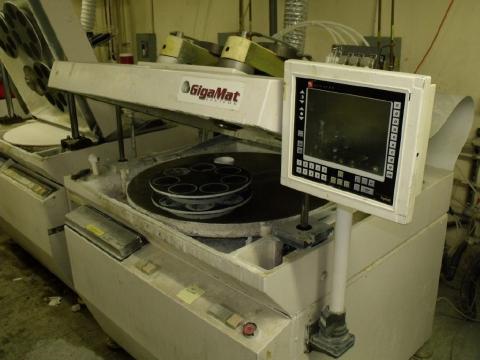
Thanks to FabSurplus.com for the picture of the old machine.
Transcript
Chris Gammell: This is the F-R Podcast. Recorded February 25th, 2013. Episode 134. Google's Ground Gurgitation.
Dave Jones: Welcome to the Amp Hour. I'm Dave Jones from the EEV Blog.
Chris Gammell: And I'm Chris Gammell of Chris Gammell's Analog Life. What's up, Chris? Not much, Dave. What's new with you in Aussie land?
Dave Jones: Aussie land? Well, I've got to get off my ass and shoot some more video again today.
Chris Gammell: Oh, yeah? Anything big coming up?
Dave Jones: Yeah, I just tweeted that I'm going to shoot for three today. I had an idea that I'll shoot three, and I was like, yeah, it's probably not going to happen. Yeah, shoot high. But if you don't set a goal, right? Exactly. You'll never fail. Never get there. That's it.
Chris Gammell: What's the Homer Simpson quote? Remember, kids. You tried and you failed. Remember, kids. The lesson here is never try.
Dave Jones: No! I love Homer. Yep. Brilliant.
Chris Gammell: Can't believe they're still on. All these years. Yeah, I know. It's as old as I am.
Dave Jones: 25 years or something? Yeah, it's ridiculous.
Chris Gammell: Yep.
Dave Jones: Unbelievable. And it's still funny.
Chris Gammell: Yeah. Yeah.
Dave Jones: Yeah.
Chris Gammell: Yeah.
Dave Jones: No? Don't think so? Anyway. Yeah. No, I don't know. I don't follow it much anymore.
Chris Gammell: Yeah. It was time. Still was time, really.
Dave Jones: No, exactly.
Chris Gammell: I'm too busy.
Dave Jones: We're busy guys, right? We've got too many things to do.
Chris Gammell: I'm in my basement cutting foam all the time.
Dave Jones: Right. Yeah. Well, I heard you're so busy that you're not going to do the Engineering Commons anymore.
Chris Gammell: Oh, yeah. Yeah, that's a thing. Yeah. We're doing one more episode with guests we had pre-scheduled. But, yep, that's over. We've got some... Yeah, it's too bad. But they're trying to find... Actually, if people are listeners for that and listen to this too, we are looking for a new me. So, Jeff is going to keep going with the show, but searching for co-hosts. So, if people are interested, yeah, let me know. Shoot me an email. Chris at TheAmpHour.com.
Dave Jones: Now, that's a good offer because it's not often that you get to jump in onto an already established podcast.
Chris Gammell: That's true. You see?
Dave Jones: So, if you want to be rich and famous like us...
Chris Gammell: Yes.
Dave Jones: Now's your opportunity.
Chris Gammell: Yes.
Dave Jones: Oh, yeah. I'm sitting on my throne of cash here. I don't know about you, but...
Chris Gammell: Well, I just kind of stack up the $100 stacks of bills, you know?
Dave Jones: Yeah, I find that the hundreds are a bit firmer than the fifties, you know? I agree. Yeah. And I actually prefer that firmer feel on my butt. You know? With the $100 bills. Yeah.
Chris Gammell: It's the back support that really helps, right? Right.
Dave Jones: Okay. Yeah. Since that lower back support. Oh, boy. I'm going to have to hire that dude. Who's the dude who does those chairs? You know? Those fancy office chairs.
Chris Gammell: Oh, Herman Miller? There's a...
Dave Jones: Herman Miller, yes. Yeah, it's the air entree. Herman Miller to... Yeah. Yeah. Yeah. Custom design us a throne of cash chair that's... There you go. ...individually tailored to... Yeah.
Chris Gammell: It's just so lucrative being a podcaster.
Dave Jones: Oh, boy. Come on. We must have some real stuff to talk about today. Okay.
Chris Gammell: Not really. No. No. Okay. Just the usual waffle, I think, as you say. Waffle? Yeah. So, here's an interesting piece of news, though. So, Google, they're kind of big, right? We've heard of Google before?
Dave Jones: Oh, yeah. I've vaguely heard of them. Yeah.
Chris Gammell: So, they have offices out in Silicon Valley where there was a lot of companies throughout the years. But, basically, actually, so, first time I was out there, I was hanging out with Mr. Jeff Kaiser, and he was driving me around, and he was showing me where a lot of the old buildings were, you know, National Semiconductor, and old, you know, like, Fairchild buildings and stuff like that. Which has a plaque out the front. Which has a plaque. Okay, yeah.
Dave Jones: Yeah, it's one of those... Well, plaque, as you say. Oh, sorry.
Chris Gammell: I just didn't... Right. Glock it.
Dave Jones: Yeah, it has... You know, it's one of the Silicon Valley historical monuments. Right. Landmarks. I don't know who owns the building now, somebody else, but, you know, it's sort of heritage listed and you can't touch it. Yeah. Yeah. It's got the plaque out the front. Yeah.
Chris Gammell: Plock. Plock. Plock. Anyways, there used to be all these fabs out there, right? And if people don't know, fabs are disgusting. I mean, especially old fabs, like the ones that... The way they used to do it. So, I actually... You know, I used to work in a fab, and I talked to some of the guys that were, like, long-time veterans, but, you know, you talked to them about, like, some of this, like, etching equipment, because I worked in etch. Right. And, you know, it's like a plasma. It's like a high-energy, gaseous mixture that you then, you know, it eats wafers. That's effectively what it does. Right. Yeah. If you're interested, look it up. It's some cool stuff when you get down into it. But, you know, these days, they're like vacuum chambers, and, you know, you have to have, like, really high vacuum to get all these good geometries and everything. We didn't have to previously. They used to be open air, effectively. Like, you could actually... When I was a boy. Exactly. Like, some of... Yeah. I think it was the Ashers. Yeah. Like, some of those, they were just, like, open. And, you know, these guys would tell me about it, and be like, yeah, you know, you just didn't get too close, and...
Dave Jones: I had it up to my armpits, you know, my arms in there, no gloves, you know, I was just mixing it around.
Chris Gammell: Yeah.
Dave Jones: I used to work in a similar thing, in the seismic industry, manufacturing these huge, you know, 150-metre-long cables, and they had oil in them. You had to... Oh, jeez. Well, they weren't filled with oil. The older ones were filled with oil. Our ones were environmentally friendly, in quote marks. But we still used cable oil to, like, squeeze the things through, because you had to squeeze all of this stuff through 150 metres of very tight-fitting, you know...
Chris Gammell: Like a small space, basically, like the small opening for the cable.
Dave Jones: Yeah, like a tube. So, you had a 150-metre-long tube, and you had to force all of this stuff through, and it expanded the PVC and everything, you know. That's cool. But nasty, huh? Yeah, but we had these huge tanks, and Isopar would fly everywhere, which is the trademark name for this oil which we used, Isopar. It would fly everywhere and get in the gear and everything. So, you know, we had to have special oil-resistant boots and, you know, everything else, because you'd just be walking in bloody, you know, oil up and down the factory. And all the benches were covered in oil. So, you went out there to try and fix something with your multimetre, and you put your multimetre down, it's sitting in bloody a pool of oil.
Speaker ?: Yeah.
Dave Jones: And not, you know, Texas crude, black oil, I'm talking, you know.
Chris Gammell: Right, right, right. But still grimy, right? And then it picks up all the other stuff.
Dave Jones: Yeah, yeah, yeah.
Chris Gammell: It's, oh, man. Yeah. And you don't think about it at the time, right? Most of the time, it's just like you shrug it off. It's like, oh, well, I got some, you know, some alcohol on my hand. It's a job, you know. Brush it off. Or, yeah, you just get it done, right? Yeah, that's right. Oh, this stinks. What does that smell? Oh, I don't know. It's like some kind of caustic chemical. Yeah. But, you know, and there's, and you have to, like, a lot of people have to probably do safety training and, you know, MSDS sheets. I think those, are those worldwide? I'm not sure. Yeah, yeah. Yes. They are? Yes, they are. I didn't know if that was a...
Dave Jones: That's a big deal here.
Chris Gammell: Yeah.
Dave Jones: Yeah, so, like, a lot of people... MSDS, for those who don't know, it's a material safety data sheet. Every chemical, every substance must have an associated MSDS sheet with it. Right, right. And then, like, the bottles all have that label on them. And label them, yeah. Like, that little diamond label.
Chris Gammell: Yeah.
Dave Jones: All that sort of jazz.
Chris Gammell: Yeah, and so you've got to go through training.
Dave Jones: And it's not just grunts like us, either, out on the floor. Like, you know, back in the early days of this seismic program, you know, we would have the managing director out there with his sleeves rolled up trying to, you know, massage these things by hand, right? Covered in bloody cable oil. Did people wear ties? Because you had to get the job done.
Chris Gammell: Was that, like, the exception? Because if you're on the floor, you don't have to wear a tie.
Dave Jones: Oh, right. Yeah, no, you would definitely take it off. Yeah. No, nobody wore ties in our business. Well, yes, I mean, sometimes... So you'd get all these PhD people out there, you'd get managing directors, you'd get the finance director, and they'd all be out there messaging these bloody cables, you know, doing the grunt work. Because, well, you know, you just had to get it done.
Chris Gammell: Because it's Australia, mate.
Dave Jones: It's Australia. That's right.
Chris Gammell: Yes, that's cool, man. But yeah, so basically, you know, and I'm sure that our listeners have similar stories of grossness and stuff. They've been, you know, probably somewhat dangerous stuff to be exposed to. Even lead, right? I mean, like, lead is a serious thing to be exposed to. If you're breathing solder smoke all day, that's a bad thing. Well, it's...
Dave Jones: Nah, that's a myth. That's... It's the rosin that is, you know... It's not like you're inhaling lead fumes.
Chris Gammell: No, but... So... Should you be inhaling the rosin fumes? You're inhaling the rosin fumes? I mean, that's pretty nasty, too.
Speaker ?: Well, no.
Dave Jones: Rosin's pretty nasty shit as well. Right, right. Yeah, exactly. Right. But yeah, yeah. You know, if you're, like, you know, soldering and you've got all, you know, the lid all over your hands and then you go and eat your lunch and you don't wash your hands and stuff like that, you know, and you do that for 20 years.
Chris Gammell: Yeah. Right, yeah.
Dave Jones: It's a, you know, it can be a problem. Yeah. So...
Chris Gammell: So, this roundabout way of saying it, though, is basically, you know, these old fabs didn't have a lot of protections. They didn't have good disposal procedures. And so, basically, there's big chunks of... Not big chunks. There's sites in Silicon Valley that are brownfields. I mean, they're... I think they're even... Some of them are, like... Brownfields? Brownfields being, like, chemical sites, basically. Oh, right. And some of them even reaching, like, the Superfund status. And Superfund being, like, an actual government-sponsored cleanup of that site because it's so...
Dave Jones: Oh, so clean up these contaminated sites. Yeah. Right. Okay.
Chris Gammell: Exactly. Exactly. And so, basically, I mean, it's really valuable land, though. So, of course, people are going to do it. Well, Google apparently built on top of something. Oh, right. Okay. And they've been finding stuff.
Dave Jones: This is where the story's going. All right.
Chris Gammell: Yeah. Yeah, exactly. I mean, so, basically, you know, it's just... It's kind of a reality of Silicon Valley that it's just been a really rough area for that. But, you know, they're taking steps for it and everything like that. But I just thought it was interesting because, you know, like, it kind of is this example of, you know, software is this, you know, obviously this huge industry now there. And, but it's all built on top of the hardware stuff, right? I mean, the chemical remnants of it, you know? It's a...
Dave Jones: So, you wouldn't want to be growing apples there anymore, huh? No, probably not. In the orchards. Right. Of Silicon Valley.
Chris Gammell: Probably would be a bad idea. Right. But interesting historical note. Did you know that the EPA was started because... Cleveland? Oh, really? Yeah, when the river set on fire the second time, that's when they're like... At least we're not Detroit. Yeah, when the Cuyahoga River, second time it went up, they said, maybe we should have a... It went up? Oh, it lit on fire twice.
Dave Jones: It went up in flames. Okay. This is the old flaming river trick. Yes. Yes.
Chris Gammell: Which is also a delicious beer in Cleveland, by the way. Burning River IPA. Good stuff. Yeah. But yeah, that's what spawned the EPA, or at least contributed to it, so... There you go. Go Cleveland! Yay!
Dave Jones: We all... The most polluted state. No. It's not the most populous state.
Chris Gammell: We're doing better these days.
Dave Jones: Right.
Chris Gammell: At least we're not Detroit. I always feel bad because every time we sing that, right, someone from Detroit, like, calls us up and like, come on, guys. You know, at least send us an email.
Dave Jones: Come on, this joke's getting old. Yeah.
Chris Gammell: Yeah, right.
Dave Jones: Sorry. No, it doesn't. It's still funny every time I sing it.
Chris Gammell: Yeah.
Dave Jones: Sometimes I'll just go to YouTube and type it in and watch it just for kicks. Nice. Speaking of which, a fellow video blogger is going to Cleveland. Did we talk about this the other week? No, we didn't. Martin Lawton. Yeah. Martin Lawton's video blog. It's an excellent blog. He's very prolific if you haven't watched it. And yeah. And he's based in South Africa. But that's where he's been doing the blog from. But he's moving to Cleveland.
Chris Gammell: Yeah.
Dave Jones: There you go. Yeah. Yeah. I wrote to him. Martin Lawton.
Chris Gammell: I hope to meet up with him and get to know him. He's going to be all over the states, I think. But yeah, they're officially moving back here.
Dave Jones: Right. Yeah. They're based in. Because his wife's getting a job there or something. Yeah. And apparently it's not his first time there. He has lived there before.
Chris Gammell: And he's coming back. See, that's a good vote. That's a good vote of confidence, man.
Dave Jones: All right.
Chris Gammell: And I've been seeing all these articles about Cleveland liking more jobs. I'm just saying, you could come work here and get a cheap house.
Dave Jones: I'm going to say, you can get 10 houses for $1,000, can't you? For the price of a VCI.
Chris Gammell: Whatever, man. There's some nice areas in Cleveland.
Dave Jones: Right. Okay.
Chris Gammell: I'm going to get an award someday as being an ambassador for Cleveland, I think. Putting up with Aussie abuse.
Speaker ?: Right.
Dave Jones: Cleveland's favorite son, Chris Campbell. They'll drag him out in a wheelchair at each Thanksgiving Day parade, right?
Chris Gammell: Yep, exactly. This is what turned it all around, folks. Not the people actually on the ground doing social good and redevelopment. It's one nerd online talking to an Australian.
Dave Jones: Oh, terrific. Anyway, Martin, good luck. Yeah. Have fun in Cleveland.
Chris Gammell: I'm looking forward to showing up.
Dave Jones: In the next month or two, I think he's going to rock up.
Chris Gammell: Yeah. Beautiful. Well, speaking of cities and old technology, there's actually a – it's not new, but it is a – it's kind of – the person – sorry, the public broadcasting station reposted it basically because of that Silicon Valley documentary we mentioned a couple weeks ago. There was actually a tech – there was an entire story about tech kind of showing the entire history of techtronics and just how it helped build up the technology, the silicon, what do they call it, the silicon forest or whatever, and just like kind of the history of it and all the technology that rolled out of there. And really, it's interesting.
Dave Jones: It goes for 30 minutes, and I haven't watched it yet because I just saw it before the show. And so I need to watch that and the Silicon Valley doco. How long does that Silicon Valley doco go for?
Chris Gammell: I think that's a couple hours, I think. I've only watched a little bit of it so far. Right. There's different parts.
Dave Jones: I'm going to have to sit down and watch it. Yeah. This is the kind of thing where you – It's entitled The Spirit of Tech.
Chris Gammell: Yeah. Right. This is where you kind of wish you had like a net-connected TV kind of thing, right? It's like where you could just browse to it easily and pop it on, search for tech, have this pop up. Right. Maybe in the future.
Dave Jones: I'm sure there's such things available, isn't there? If you want to be a vegetable in front of it.
Chris Gammell: Yeah. We're not like nerds like that, though. We're not gadget nerds.
Dave Jones: Sitting in our mother's basement.
Chris Gammell: Yeah.
Dave Jones: I sit in my basement. No, damn it. My basement. I'm sitting in my own basement. That's right. That's right. And my wife tells me what to do, not my mother. That's right.
Chris Gammell: I haven't listened to my mom since I moved out. Howard! Oh, boy. Right? That's where we got it.
Dave Jones: Yeah. Oh, love it. Yep. Did you see in the latest episode you actually caught a glimpse of Howard's mother?
Chris Gammell: No. I don't watch that show regularly. I don't do.
Dave Jones: Oh, what? No. You don't watch The Big Bang Theory.
Chris Gammell: Nope. Nope.
Dave Jones: Dude.
Chris Gammell: Nope. You just lost all credibility. What? I don't catch it. I don't know. I got stuff to do, man. Unbelievable. Yeah. Yeah. Yeah.
Dave Jones: Anyway, yeah, the spirit of Tektronix. Shame that they're probably going down the toilet. Well. If they don't start bringing out some new products. I did see. I've talked about that before.
Chris Gammell: I did see. Yeah. I did see they just released an app to talk to your scope. But, yeah.
Dave Jones: Wow. R&D money well spent there, folks.
Chris Gammell: Yeah. Yeah. Well, you know, it's no headless oscilloscope. I mean, it is still. That one still has a head. But there is a different one that I forget how I found. I think someone sent this to me. But, basically, this is an entirely developed. What's it based on? It's based on the BeagleBone and the Cubby Board? Cubby Board? I'm not sure how you say that. But, basically, it's designed. I've heard of that one. Yeah. It's designed entirely to be a headless oscilloscope. And, with, you know, obviously, A to D technology. Yeah.
Dave Jones: It's called a PC-based scope.
Chris Gammell: Yeah. Yeah. Exactly. Right. But, then, it just has the wireless stuff tacked on already. And, then, an interface built for Android already.
Dave Jones: PC-based. Yeah. It's still a PC-based scope. Whoop-de-doo. No. It's Android.
Chris Gammell: I mean, yeah. I guess it's Android-based. Yeah.
Dave Jones: But, come on. Yeah. No. It doesn't matter whether you hook it up to a PC or you hook it wireless up to a bloody tablet. Makes no difference. Same shit. Different smell.
Chris Gammell: Okay.
Dave Jones: Yeah. I don't know.
Chris Gammell: It's a cool niche uses. Yeah. I think so. I think so.
Dave Jones: People think I'm against PC-based scopes. I'm not. I've developed three of them myself. Thank you very much. Okay. Really? I've developed and published a couple of them myself. Yeah.
Chris Gammell: I didn't know that.
Dave Jones: I had a huge success with PC-based scopes.
Chris Gammell: Do you have to put links into that? I've never seen those.
Dave Jones: Yeah. There's links to my old published back in 93.
Chris Gammell: Alternate?
Dave Jones: I think it was published. I did it originally back in the 80s. Oh, yeah? Back in the late 80s. And then I got it published in 93. And it was massively popular. PC-based scope. Yeah. Hmm.
Chris Gammell: I will have to look that up. Sold thousands of them. Wait, you actually sold them?
Dave Jones: Oh, well, I sold the software for it. Somebody else sold the hardware. Oh. And which, yeah. Somebody else sold the kit. And I sold the software for it. And I sold many, many thousands of these things.
Chris Gammell: Yeah. What kind of bandwidth?
Dave Jones: Oh, audio.
Chris Gammell: Oh, gotcha. Gotcha.
Dave Jones: Well, that's a crazy thing. I mean, so like, you know, you were pretty good back then.
Chris Gammell: No, I'm sure. Yeah, no, nothing against that, really. But I was just going to say that, like, these days, I mean, like, like, like 100 mega sample per second scope or chips these days, right? I mean, yes, there is a whole lot more that you need in front of that, right? You need high bandwidth front ends. And, you know, you need to have a solid front end in front of that. And then you need to have all the software and syncing and everything. But still. And the triggering and all the things. Right, exactly. But, I mean, like, they're just cheap, right? I mean, like, compared to 10 years ago, right? I mean, it's just. Oh, of course. The fact that you can build these kind of things is crazy. You know, like, this is just, this was an entire business. This was the only business, what, 10, 20 years ago, right? 100 mega samples was where it was at. Maybe not 10 years ago, maybe more than that, but.
Dave Jones: Oh, yeah, 15 or something. But, yeah, that was like, you know, that was state of the art back then.
Chris Gammell: Yeah.
Dave Jones: And my original design, my original Mark 1 unit, there were three Mark, there were Mark 1, Mark 2 and Mark 3. And the Mark 1 unit I designed back in the 80s, yeah. Like, you know, the purpose of that was to use off-the-shelf parts, right? And none of this programmable rubbish, because you couldn't get programmable chips back then, right? Right. It just wasn't happening, you know? There were no, you know, you know, the microcontroller market as we know it today, you know, the entry level for that was so huge back then that nobody was doing that. So my PC-based scope was, you know, it hooked up to the parallel port of the PC. Nice. And it did all of the sampling, pre and post-trigger in, and all the stuff in discrete hardware. Nice. Using as fewer chips as possible, you know, in the spirit of the was, you know? And it was massively popular. But, yeah, its performance was shit, you know? It used pots, you know, as the front end, you know, to adjust your vertical gain, you know, none of this, you know, step-tenuator. Right. Bullshit, you know? Just, ah, just hook a pot on there, you know? And, ah, but hey, it was, but it was massively popular. And I think it was quite novel. I think the architecture I used in it was actually quite neat. And, ah, anyway, yeah, but now you just, like, you wouldn't even bother building it up today. It's a joke, right? But, hey, back in the late 80s, it was a big deal.
Chris Gammell: Yeah, yeah.
Speaker ?: Hmm.
Chris Gammell: Well, that's why you were publishing magazines, right? That's why, yeah. Yes. Yeah.
Dave Jones: That was one of my most successful projects.
Chris Gammell: What mag was that in?
Dave Jones: That was in Electronics Australia back in 1993, I think. So, 20 years ago this year.
Chris Gammell: Yeah.
Dave Jones: Yeah, but back when I published it, it was an old design, you know? Right, right, right. It was like, oh, I've got this old design. Oh, I think I'll publish that, you know? And, bang.
Chris Gammell: Yeah. Well, you've been put in another magazine recently, huh?
Dave Jones: Along with you. Yes. You're the star. I mean, I just have to, you know, I am not worthy. I am not worthy of your entry in Circuit Seller's 25th Anniversary Edition.
Chris Gammell: Right. So, yes, me and Dave, we're both in it in various capacities. We both obviously knew we were going to be in it because we were interviewed by email for it, but... Yep. And there's, I mean, honestly, there are some good longer interviews in there, but Dave's... Dave, you're probably like, what, like the 20th to last page, right? Something like that? Yeah, I don't know.
Dave Jones: Something like that. A couple paragraphs. I get a couple of column inches, yeah. Yeah. I get a... Yeah.
Chris Gammell: I had one line, and I was on the last page. I was, like, looking through it. I honestly flipped through the whole thing because I knew it was in there, right? And then they sent me a nice copy, and I'm like, oh, this is great. And I'm flipping through it, flipping through it. I'm like, they just... Where am I? They lied to me. They left me out. They just let me out. And then I get to the last page, and I'm like, no way.
Dave Jones: This is embarrassing. No. They should have just left me out.
Chris Gammell: No, it was still nice of them to put me in there. I appreciate that. It was just like... It was just like one of those things that, you know, you're just like, what the hell? It means I have a long way to go, Dave, to be... Yeah. I have to work my way up in pages. Right. Yeah. If people get their hands on it, though...
Dave Jones: Your goal is column inches, right?
Chris Gammell: That's right, yeah. Instead of...
Dave Jones: Next year, it's a goal of mine to get six column inches.
Chris Gammell: That's right. You need to have smart goals, specific, measurable, achievable, whatever. Yeah.
Dave Jones: And you know the thing with... When they ask you to do an interview for something like this, they send you a list of questions, but they don't actually tell you... Context. They don't give you any background on it. They don't give you any context at all. Yeah. And so the questions, when you get them, you go, these are stupid questions, you know? And you go, like, how is this going to work? You know, what the hell are they asking this for? And so... But it kind of works in the end, you know, because they had a theme for the, you know, the Q&A section that I was in, for example, and it made more sense when I actually read the thing. But when you actually get the questions just out of the blue, you think, what the hell?
Chris Gammell: Yep.
Dave Jones: You know? Yeah, I've been interviewed for a few of these things now, and they're all very similar. None of them give you the context.
Chris Gammell: Yeah.
Dave Jones: And interesting thing, that was the same with Carl von Moller's doco, right? Oh, yeah.
Chris Gammell: Still out. Haven't talked about for ages. Still not out.
Dave Jones: It's still not out. Come on, Carl. I know you're listening. You can do it, Carl.
Chris Gammell: We believe in you, Carl.
Dave Jones: It's only been, like, two or three years. No, it's... Give him a break. Yeah. He's got a day job. Yeah. And, yeah, he did the same thing. He said, oh, can I interview you for a doco? And I said, oh, yeah, fine. And so he came around, but I had no idea what it was about or, you know. So, and I think if I knew that, I would have given better, you know, answers to his questions because I didn't know what. Oh, right, right, right. Because, you know, there could have been many answers to the question. So he gave me no prep at all. The questions were... I didn't get the questions beforehand. He just turned up, turned on the camera, and asked me the questions. Yeah. And, you know, so instantly I've got to start thinking, well, there's multiple answers here. What direction does he want me to take, you know? And it's like, so some of my answers just turned out really stupid when I now go back and look at, you know, a first draft of the, you know, like the doco promo. The promo for the doco, I go, ah, that's what he's... That's the whole idea and gist of it. No, my answers were stupid, you know. And, yeah. Yeah. So, I don't know. But, yeah, I mean, I can see where he's coming from, because he said if I had the questions beforehand, then I would have had rehearsed responses and it wouldn't have been as good.
Chris Gammell: Yeah.
Dave Jones: So... Yeah, no one wants to see that in a documentary, right?
Chris Gammell: I mean, you want to... Yeah. Catch people all off guard. I get it.
Dave Jones: Yeah. Yeah, exactly. Yeah. But, yeah, some context would have helped. And it's the same thing with all the interviews I've done. I think I've... I don't think I've had context for any of them. Yeah. Hmm.
Chris Gammell: Well, speaking of interviews, there was... So, there was... So, Clayton Christensen, do you know who that is? No idea. No? He's the guy that wrote The Innovator's Dilemma. Ah, right. Which is this really... One of these books which you love, right? Oh, I love this book. This was... Yeah. It's a good book. Honestly, it scares me a little, because I like it so much, it feels like, oh, does this mean I want an MBA or something? You know, it's like one of those books.
Dave Jones: Oh, I need to devote my life to this.
Chris Gammell: Yeah, yeah, exactly. You know, and yeah.
Dave Jones: And because, you know... If only I followed every page, I'd be rich and famous, you know?
Chris Gammell: Well, no. No, no. I don't think like that. But it's just, you know, it's just a very often cited management book. Right. But I was reading this interview with him, and then it started getting into... So, like, when he first wrote it, which was only 16 years ago, right? He starts talking about Intel, though. And this is a story that I didn't know. Basically, you know, he was kind of... Clayton Christensen was working on this book, and he had this thesis that he was working on for his... I think it was PhD thesis. And basically, Andy Grove somehow heard about it, the CEO of Intel. Soon to be former. Is that right? Is he retiring? Is he the one that... Oh, yeah. Could be. He already retired, and then Odellini is retiring as well. Yeah. But Andy Grove's awesome, right? We've quoted him on here before. He's just brilliant mind. But basically, the idea is that smaller innovations basically come up and end up killing the father innovation, right? Or, you know, like the example that he uses is like hard drives, and that Flash ends up coming in and really hurting the hard drive industry, although that wasn't totally true. It's still not happening today. Right, right, right. But there's a bunch...
Dave Jones: There's signs of it, but there's been signs of it for 20 years, right? Right, right.
Chris Gammell: Well, he also gave examples, though, within the hard drive business, right? So like the two and a half inch Platten guys thought that the 1.8 inch Platten would never go, right? So they just kept making the two and a half. And then eventually, it just kind of keeps eating itself, right? And basically, so Intel looked at this, right? And, you know, Clayton comes in and says, you know, it's going to be a low cost competitor that comes in and kills you if you don't do something about it. And basically, so they went back and they looked at their business and ended up making the Celeron processor. That's the reason. Clayton Christensen is indirectly the reason that Intel made... The reason. Well, there you go. And it was because they knew Cyrix and AMD was coming up behind them and these small upstarts. And basically, they said, well, because we've seen this happen before in like test equipment. We've seen this in electronics, right? You know, companies end up wanting to move to higher and higher levels of, you know, expensive stuff, right? So they don't want to sell you transistors. Oh, go ahead.
Dave Jones: Same in the CAD market. Altyom, for example. Exactly. Right? Being slaughtered in the low end.
Chris Gammell: Exactly. You see it everywhere. And then, and it's because, you know, they want to, they want to do more with less. They want to, it's just, it's just taught this way, right? I mean, I talk about the NBA playbook. This guy is basically explaining it, right? That's a lot of, you know, when I talk about that stuff, it's based on me reading Clayton Christensen's stuff. And actually this new book that this whole interview is about is actually about that. It's called The Capitalist Dilemma. Anyways, I'm geeking out here already. But yeah, but basically you see it everywhere. And Intel finally, finally, someone said, oh, okay, well, we'll just fix it. And they made this lower cost, super high volume, right? No one wants to say that. Oh, we'll make tons of stuff, right? People want to make less stuff for higher cost or higher margin. And they want, they don't want to make more stuff at lower margin, but they did. And they ended up, well, we know what AMD's doing. I don't even know who the hell Cyrix is.
Dave Jones: So, uh, no, God, they're gone the way of the dodo.
Chris Gammell: Yeah.
Dave Jones: I don't even, I haven't heard that name for 15 years.
Chris Gammell: Yeah, exactly. So, I mean, basically, but it was, it was really interesting. I mean, like, and you see it everywhere, right? I'm sure that listeners could give us, you know, a hundred examples at their own companies, right? You see it and you, I mean, hell, like look at China, right? China is, they, they embody this idea. They come in at the low end, right? Or, or, or car makers, Kia, the, the Korean car maker, right? Right. Hyundai, all of these, they come at the low end. Honda, for God's sake, right? They come in at the low end and they sell enough stuff. They get the brand in people's eyes, right? They, they increase their quality and then they move up in the value chain. I mean, I know that you could say that, well, what else are you going to do? Right. But, but man, you got to watch out for those little guys. They're going to kill you. I mean, like, yep. It's crazy. It's crazy, Dave. I know.
Dave Jones: Okay. Don't have to sell me on it.
Chris Gammell: Oh.
Dave Jones: It's happening everywhere. Everywhere I look.
Chris Gammell: Yeah. And when I say like the NBA playbook, it's usually because people are ignoring that stuff, right? They're saying, well, no, we need to focus on this or that. And we can't, we can't spend money on research or. Yeah. Hello. Teutronics. We can't, we can't chase, we can't chase this market or that market. Yeah. Boy.
Dave Jones: Yeah. No, companies think that they have to, uh, try, you know, they think they have to keep changing, innovating, like in going, moving onto different markets, abandoning old ones and stuff like that. But there is something to be said for the company that owns a market and sticks with it and just innovates within their space. Yeah. You know, for example.
Chris Gammell: Oh yeah, exactly. And that's actually another, uh, that's something, uh, Matt Richardson posted today, uh, on Twitter. It was this, this thing called the Helsinki bus station theory. I was talking to you about that before the show. What did you think it was?
Dave Jones: Yeah. I thought it had something to do with the Helsinki syndrome, but no, apparently not.
Chris Gammell: Oh yeah. That's right. The, uh, the hostage thing, right? The, yeah. Right. Where you start to enamored. Like your. Yeah. Become enamored with your captors. Yes.
Dave Jones: You start to empathize with your captor. Yeah. Yeah.
Chris Gammell: Uh, but basically this one is, it's kind of in that same, the same idea, right? You, you know, it's talking about creative people, right? The, the bus station theory is with creative people. It's like, you know, you, you, how's it go? The, so you're at a bus station and you get on a bus and after like a couple of miles, all the buses diverge in different directions. And if you're trying to always be original, you know, you'll end up seeing that before the, right before the buses diverge and you'll end up running back to the station, getting on a different bus. And basically, uh, to paraphrase it's, they say, what do they say? Uh, and the key is, it's simple. Stay on the bus, stay on the frigging bus. Bus. Exactly. But basically, yeah, it's like, you know, if you want to get really good at something and kind of find your, you know, end up iterating on ideas and actually be original, you have to stay in one area, which is counterintuitive, right? I mean, like, I don't know.
Dave Jones: Well, yeah, it is. And a lot of companies don't do that. Right. They think, oh, we're going to fail unless we innovate into other areas where no, well, you know, you can succeed and be number one. What's wrong with being number one in the world in your niche little area? Right. Nothing. I'd rather be number one in the world than, you know, number 20 in 10 different areas.
Chris Gammell: Yeah. Right. Screw that. Well, I think the answer is money, but that's a different podcast. But I think this one's interesting from a, you know, uh, you know, they talk about it from originality too, right? I mean, I, I fall into that trap where I'm like, oh, you know, I just want to create like an original circuit. So I'm going to do everything from scratch. I'm going to, you know, simulate everything. It's like, dude, come on. No, that's stupid. You know, sometimes it's about, it's about putting something known in there and then iterating on that or, you know, from a system level design of integrating other stuff. Right. I mean, it's, it, you, there is no absolutely original, right? You're not going to start from square one, invent new transistors.
Dave Jones: That's a startup dilemma, isn't it? Is worrying about the startup, you know, like as in startup companies, right? Yeah. Yeah. People worry so much about choosing the right bus to hop on.
Chris Gammell: Yeah.
Dave Jones: Sometimes it's like, well, you're just wasting your time worrying about what bus hop on a bus and see where it takes you. Yeah. And stay on it until you get to the end and see where it takes you.
Chris Gammell: Yeah. Well, sometimes you can, I mean, that's kind of the, the, the lean startup idea thing is where it's like, you know, you try and fail fast so that you can get on a different bus. But I think the key there is just to try a lot of stuff too. I mean, like you can, you can try a lot of stuff at the beginning versus trying a lot, you know, four years down the road, right? That's, that's when you really don't want to try a lot of different stuff. I don't know. Maybe, maybe we're saying different things here, but.
Dave Jones: Yeah. Well, there's, well, there's so many, you know, there's no one size fits all here.
Chris Gammell: No, no, definitely not.
Dave Jones: Then hardly ever is, you know, there's no, no one rule, which, you know, there's no one rule to rule them all.
Chris Gammell: No.
Dave Jones: So to speak. So, you know, eh. Yeah. But yeah, you know, if you're just chopping and changing buses all the time, you never finish anything. Like us, of course. Yes. You know, we, we just get bored sitting on the bus sometimes and we. Well, that's the thing. I mean, you know, you want to try different things, right? Look at that bus over there. Look, look. Wow. That one looks exciting. I'm going to stop the bus. I'm going to hop on that one. Yeah.
Chris Gammell: Yeah. Yeah. Well, speaking of creativity and, uh, and Intel, actually, they're actually having a business competition. I'm not sure how much of this is tech versus actually like the business side of things, but, uh, like if it's going to be like business plans and all that other crap, but, uh, if people, it's, it's only for Europe. So if, if, uh, you don't hear that a lot from, you know, usually it's like only in the States, right? But, uh, it's only for Europe. So if people are interested, it's Intel challenge.eu and, uh,
Dave Jones: And anyone, what is it? Anyone can be part of this or what?
Chris Gammell: Uh, you have to like apply and stuff, but you know.
Dave Jones: Right. Okay. Yeah. Some program or something, is it? They put you in and they fit you into a suit, a nice fitting suit and they. Yeah. And then they fly to the States too, right?
Chris Gammell: That's the other thing. Right. It's a European contest and then they fly to the States.
Dave Jones: Uh, right.
Chris Gammell: Yeah. Classic. But yeah, it's interesting. I mean, maybe, maybe they'd want to do it.
Dave Jones: Eh. Speaking of European, really interesting, uh, video, which you posted here. Um, I'm going to get the pronunciation wrong.
Chris Gammell: Oh, I didn't, I didn't post this one. I didn't post this one.
Dave Jones: Oh no, somebody else. Sorry. Uh, Spikey posted it. Oh, Spike. Yeah. Spike E. Yeah. Uh, posted this one. Um, Connie Zeg or Koolig Zeg has, I think it's Koolig Zeg. Really? Is the pronunciation. Well, I think that is, that's the UK pronunciation.
Chris Gammell: It's like the secret, secret is said.
Dave Jones: Yeah. I think the N is pronounced as an L in some places. Anyway, Connie Zeg, Koolig Zeg, they make that high performance car, right? You've probably seen it on Top Gear, right? It's the one where it's so fast. The, uh, Stig actually crashed it. Right. And then they put a spoiler on the back of it and, you know, it, it was the top of the Top Gear times. You know, it was the fastest car on the Top Gear test track.
Chris Gammell: Yeah.
Dave Jones: Anyway, very cool, high performance, um, sports cars, right?
Chris Gammell: Yeah.
Dave Jones: Anyway, there's this interesting doco where they're talking to, is it the owner? I don't know. He, he does a lot of talking, but they've also got the head of the, um, hardware and software division, um, as well. And they're talking about the, you know, the, uh, all of the hardware and the software that they're using to design and they do it all in house and, you know, they design their own boards and they, they do everything else and they write their own CAD software. It's like, what the?
Speaker ?: Yeah.
Chris Gammell: Yeah. Yeah. That, that's gotta be a cultural thing, right? Where it's like, you know, well, we got to keep it secret or I, I don't get that. I don't know.
Dave Jones: I don't. And the funny thing was in the video, they keep talking about, oh, if we only had time to do stuff, you know, we're always out of time to do stuff. Right. It's like, well, you spend all that time writing your own CAD software.
Chris Gammell: Yeah. We're, uh, you know, we're, we're out in the fields growing our lunch later, later in the day.
Dave Jones: Yeah. Well, we don't have time for anything. Yeah. Yeah. We don't have time for making cars.
Chris Gammell: Yeah.
Dave Jones: Cause we're too busy, you know, plowing our corn.
Chris Gammell: Yep.
Dave Jones: Anyway, I mean, awesome. Right. Go and watch this video. It's only like eight minutes or something. And, um, and it's great. I love it. How he talks about, oh, I don't do any of this auto routing rubbish, you know, none of this. Oh, I've got to hand, hand, hand route all these boards, you know, because they perform better, you know, great.
Chris Gammell: I mean, that's true, but it probably not for the reasons he's saying, right? Yeah.
Dave Jones: I mean, like, no, no, it's just, yeah. Auto routing doesn't work. Right. Exactly. Come on. It's just one of the, well, he's one of those purists who take his boards seriously, you know?
Chris Gammell: Is that a purist though? Do people really, we might have to do a survey here, Dave. Like who uses an auto router? Do you use an auto router ever? I've never used an auto router. Yes. Really? I have. Ugh.
Dave Jones: Yeah. And I've explained, yeah, there are some niche places where you can use, like, you know, you do all the placement, right? By hand. And then if you've got like a digital board and you've got to connect 10 freaking million digital interconnects.
Chris Gammell: Nope.
Dave Jones: And the frequency doesn't matter, right? The signal integrity doesn't matter a rat's ass and they're all over the shop. Then you're just going to go, you're going to set it up and you're going to go auto route. And I want to auto route that section, right? I'll never auto route a whole board, right? It just doesn't work. It's stupid. Right. But no, there are many uses for selective auto routing. So people think I'm anti-auto routing. I am. Yeah. I am for beginners and for people who think you can do, it just magically does the entire board for you, right? It's bullshit. Or auto placement. It doesn't work.
Chris Gammell: Ugh.
Dave Jones: Right? Ugh. Or auto placements. Yeah. Exactly.
Chris Gammell: Good Lord.
Dave Jones: But no, there are times and places where auto routing is useful.
Chris Gammell: Yeah.
Dave Jones: You may not have seen it in the analog side of things, but trust me, in the digital side of things.
Chris Gammell: Maybe. Yeah. That's the thing. I've always had guys that do the digital side for me. It's like, okay, just give me it back when it's done, you know? There you go. Give me a couple of stub signals I hook up to. Yep. Yeah.
Dave Jones: And it's kind of different all these days. We know with the system on chip integration and stuff like that. Yeah. Right? So often a design these days is just all these little modular blocks joining into one big huge chip or a couple of big huge processor or FPGA chips or something like that. Right? So it's like auto router is pointless because you've only got, you know, so many blocks. But hey, back in the day, right? You know, auto routing was all the rage back when you had all those dip, right? A board, a processor digital board. I've done a video on this. We're like tearing down some 80s vintage gear. Yeah. Yeah. It'll have hundreds of 7.4 series TTL logic all lined up in a row, right? Try and route that by hand. I've done those and they're a pain in the ass.
Chris Gammell: Well, I can't say I've ever been around for the 7.4 series stuff, Dave. Well, there you go. Especially not in dip.
Dave Jones: Yeah. So yeah, it's different these days, but there are still selective uses for auto routers. Definitely.
Chris Gammell: Yeah.
Dave Jones: But yes, I do share your general aversion. Yes. And ugh.
Chris Gammell: Ugh.
Dave Jones: Yeah.
Chris Gammell: Blah.
Dave Jones: Blah.
Chris Gammell: Yep. Yeah. Anyway.
Dave Jones: Yeah. So it's just fascinating how they were talking in this cool exec, this car company, were talking passionately about their hardware and their software. You know, I think he said they spend 20, 25% of their R&D time just developing the hardware and software for the car.
Chris Gammell: You got to figure that's going to be increasing too. I mean, we see that everywhere, right? Oh, yeah. It's interesting from, you know, I had this question on the list from a couple weeks ago, but I really like the, you know, I was talking to some people that kind of cover Cleveland and Detroit and stuff, and I was talking to one of the higher guys that came to talk to me, and he was talking about all the different sensors that are going in cars now, and it just sounds like that's just- Hundreds of them. It's going to be a playground. Like, I think if electronics-
Dave Jones: Well, it's not going to be. It already is, but it's going to be more. Your general car, you go buy, your general car, you go buy, and your thing has hundreds of sensors in it. Yeah.
Chris Gammell: No, no, you're right. But what I'm sorry, what I was trying to get at was there's going to be so many more. He said something like 12 cameras per car is going to be average because of just- Wow. Right? I mean, that's a ton. Yeah. You know? And then, like, all the vision stuff, and then radar for collision detection, all of the stuff that eventually will get us towards, like, a self-driving car like Google's talking about. Yep. I mean, that takes a lot of hardware, but that's a lot of cool problems.
Dave Jones: And that's on top of- Yeah. And that's on top of already the massively complex standard car that you buy these days.
Chris Gammell: Yeah. Yeah, exactly. I mean, like a low-end-
Dave Jones: With hundreds of different nodes hanging off these CAN buses, right? Hundreds of nodes.
Chris Gammell: And was it LIN bus? Is that the other one?
Dave Jones: LIN, are these LIN used in cars? I'm not sure. But CAN is the main one.
Chris Gammell: I thought CAN was the main one, and LIN was the secondary. Possibly. Yeah, it's cool. I mean, it's just going to be really- I think it's really cool. And so, I don't know. Like, I was- Because I started thinking about it, right? So, say you have two self-driving cars on a road, right? Right now, the only way that one car talks to another is basically a turn signal or a horn, right? But you could just as easily have-
Dave Jones: Or a finger.
Chris Gammell: Or a finger, right? A well-placed finger. Or does it- Not as effective as other signals, but- Oh, I think it's very effective. It's not- It's more self-effective.
Dave Jones: I think it really gets the point across.
Chris Gammell: Yeah, not much changes, though. Maybe you'll get a finger in return. The one-finger salute. But I started thinking about, like, communication protocols, right? You could have, like, a communication protocol in, like, a, you know, RF frequency that is only cars, right? And then, you know, have them talk to one another and actually correlate movements and stuff like that. You know, there's just a lot-
Speaker ?: Sigh.
Chris Gammell: What? There's interesting problems there, I think-
Dave Jones: Oh, yeah, there's interesting problems for solutions that don't exist. They're interesting solutions for problems that don't exist.
Chris Gammell: Not yet. How about people just drive their freaking car? No way, man. I'm all about it. I cannot wait until I get in a car and read a book or something. You can't wait until you hop in that Johnny cab, right? Exactly. I'll be soldering in the back of that thing, man. I'll just- All right. On my way to work, getting some work done. That'll be great.
Dave Jones: All right. Oh, man. Nah.
Chris Gammell: Yeah.
Dave Jones: What's that iRobot? Is it iRobot, the movie? Yes. Yeah. Where Will Smith, he's like, you know, like, it's the future and they've got self-driving cars. And, you know. And then he's got the old one. All he wants is to drive the car himself and he wants a pair of Air Jordan sneakers, right? Just regular shoes, right?
Chris Gammell: You know, really old school stuff. Yep.
Dave Jones: It's just- Yeah.
Chris Gammell: Well, that'll be what it's coming. People are going to value that stuff more, I think. It'll be like the hipsters of the future. You know?
Dave Jones: All right. The other interesting thing about the Koenigsegg video, I keep saying Koenigsegg with an L. Sorry. I thought you said it's pronounced like that. I think it is. I think it is. But I could be wrong.
Chris Gammell: I'm sure some Swedish person will come and yell at you. Is it Swedish? That must be Swedish or something.
Dave Jones: Yeah. Something like that. Yep. Anyway, one of the interesting things I was talking about in there is that how, because they're a small team, right? They're not a huge, big automotive company. Their cars perform better because the same guy who worked on the firmware for the drivetrain is also working on the firmware for the analog braking system. Ah. You know? So he intuitively, and he's out there driving the car as well. Yeah. He's out there test driving it. So he knows, oh, you know, look, if I just tweak this in the analog braking system and then, oh, that's going to have a flow-on effect to, you know, the differential drive or something like that. Yeah. You know? Controller, he can just go and do it. Rather, you know, at these big automotive companies, right? Oh, they have to hold 20 meetings and, you know, write the specs and hold 20 meetings and get focus groups and tiger teams and, you know. The tiger team. I've never heard of that. Oh, you haven't heard of tiger teams? No. That was all the rage in late 80s, early 90s, maybe. A tiger team when you've got a problem and you get a bunch of smart people. Like a tiger. The tiger team. To focus on the problem and get it bang, solved, you know. Like, yeah. It was the latest wank word in the 90s.
Chris Gammell: That sounds fun. Yeah. Yeah, that really sounds fun.
Dave Jones: And there's a whole bunch of these, you know, terms for, you know, efficient management of projects when you're seeing some huge conglomerate with, you know, 10 million people working on one project. Yeah. Yeah, it never works. And anyway, that's why they're saying that that's why their cars perform better. Because they're designed better because they're...
Chris Gammell: Yeah. I've been on teams like that before. But, you know, that works really well until one person decides to leave the team and then it's screwed.
Dave Jones: Or one person's not very good at it and you think they are.
Speaker ?: Yeah.
Chris Gammell: Exactly.
Dave Jones: You've put all your trust in that guy and that guy's actually really shit, right? And the product that comes out of the end is shit. But yeah. I mean, that's the double-edged sword of the small or single man, single person.
Chris Gammell: Right. There's no redundancy.
Dave Jones: Design team, right? It can either be fantastically perfect because that person doesn't have to worry about what anyone else has to say and is just going to do it. Yeah. Right? Yeah. If they're good at what they do. Or it can completely fail because it's had no input from anyone else.
Chris Gammell: Yeah. I mean, I look at like the code I write and, you know, I can understand what I write but other people wouldn't want to look at it. And if I had to work with them, you know, if I had to hand over this code that I'm writing, obviously I would, you know, that's the thing. Like there's that kind of that electronics peer pressure, right? Of, well, dude, I can't work with this. Just clean up your shit. You know, like I can't do anything with this. And until you do.
Dave Jones: That reminds me of, yeah.
Chris Gammell: Go ahead.
Dave Jones: That reminds me of a recent Dilbert cartoon, like in just the last week. I'll have to put it up where about software code review when a new person comes onto the job and they actually review the code. So we'll have to link in that. We'll have to link in that one.
Dave Jones: Yeah. It's terrific. Yeah. Design reviews. I like Dilbert.
Chris Gammell: Design reviews. Code reviews.
Dave Jones: Ah, it's called code mocking. Here you go. Are you coming to the code mocking? The what? Code mocking is an engineering tradition. It happens whenever a software project is handed to a new engineer. The new engineer is required to mock the previous engineer's work in a public way. We, we spectators get to vote on whether the old code is killed or spared.
Chris Gammell: Like Roman times with like thumbs up, thumbs down kind of thing?
Dave Jones: Yeah, exactly. Thumbs up, thumbs down.
Chris Gammell: Oh man, that'd be great. That's great. I think if you had that going, right, you'd be like, oh, well, you know, maybe I won't use the autorouter. Maybe, maybe I won't, uh, maybe, maybe I won't not comment my code. Code, right? Exactly. Oh, but yeah, it's terrific. That's great. Ah. So speaking.
Dave Jones: So there you go. Anyway, watch this video.
Chris Gammell: Oh yeah, yeah. Uh, speaking of code and snark, uh, Dave Vandenbout, who runs, uh, I think it's Zess, or I'm not sure how you pronounce it, but it's an FPGA company. They make like dev boards and stuff. Uh, he just added a new chapter. I, I, I had never heard of this book before, but he just had a new chapter to his book called FPGAs? Now what? Uh, but I, I knew you would like this, Dave, because the first chapter starts with, uh, where is it?
Speaker ?: Yeah.
Dave Jones: Writing tutorials sucks donkeys.
Chris Gammell: Yeah. That, that, that's the one. So if that's, if that's not an indicator of what you're in for, uh, yeah, it's, it's, it's good though. I like it. I really do like it. It's, it's a fun book and you know, it's, it's good cause it's, you know, getting in FPGAs is usually pretty tough too. So, uh, I, I just, I like the snarky writing.
Dave Jones: Yeah, I want to do some videos on it. I plan to. I've got a couple of, um, FPGA dev boards in the, that are sitting in the office and I do want to, uh, do some stuff on those. But yeah, um, as he said, writing tutorials does suck donkeys as he calls it. It's not an easy thing to do. No, definitely not. Um, yeah. People say that all the time. Oh, why don't I do in-depth tutorials on this, this, this, this, and this? Well, yeah. Okay. Try, try, do one yourself and see how much work's involved, you know?
Chris Gammell: Yeah. Right.
Dave Jones: Yeah. It's not easy. You really need, you really need to be motivated to, you know, do something like that.
Chris Gammell: And he talks about it too, cause you need so much context, right? You need to actually talk about, you know, especially in FPGAs, right? Where there's these huge tool chains.
Dave Jones: Oh, you need example apps. Oh, yeah. Oh, yeah. And then you need a cool example app to, you know, you can't just flash a lead. No one wants to see that, right?
Chris Gammell: People want to see a, you know, a scrolling lead display or something. Yeah. And at the same time, you also have to start from square one, right? You have to do the hello world. Yeah. You know, like you have to do the blinky, right? That part sucks too, just as much. If you're, you know, if you're experienced like, like you and he are, you know, it's just, it's just, you can't really capture the whole, the whole spectrum of it.
Dave Jones: No, I've done some, like I've done a video on FPGA, just some basics. And it was like an hour long or something, just some basics of, you know, like powering the thing up and, and actually choosing the right pins or something. And that was just scratching the surface. I mean, whew, there's so much involved.
Chris Gammell: Yep. It's, it's tough.
Dave Jones: That's why anyone who says FPGAs is easy is bullshitting themselves. No, they're just saying that they've been doing it for a while. Because they've been doing it for a while and they've learned all the stuff and they haven't realized how long it's taken them to actually learn all the ins and outs. Right.
Chris Gammell: Yeah. Teaching, teaching a beginner is tough.
Dave Jones: It's one of those things where you have to work backwards. You've got to take an existing working design. Somebody asked this on the forum, I think the other day. Yeah. How's the best way to learn FPGAs? Well, take an existing working design, plonk that in your design. Yep. And get it working. And then once you've got it working, then go back and figure out how and why it all worked. Yeah. Don't try and do it from bottom up and try and figure, you know, do it from top down.
Chris Gammell: Well, I liked a lot of the, a lot of the, the, the, you know, the FPGA companies now, they have these like system builders. I know at least Xilinx and Altair have them. I think, I think, or a Microsemite might have them too, which is formerly Actel. But, you know, that's just like these integrators, right? And eventually you're going to have to dig down in there, right? You're going to, you know, one signal won't talk to another signal. You'll have to write some, you know, converter module.
Speaker ?: Yeah.
Dave Jones: Because you've got the wrong pin configuration setting or something.
Chris Gammell: Yeah. So, you know, you're going to have to dig in eventually, but at the same time, you know, you could set up like a, you know, you could set up a small micro in there if you really wanted to, but that, I think that kind of defeats the purpose. But, you know, you can, you can do these things that handle all the ethernet or whatever you want to do there. And then also do your little bit where, you know, you're flipping the bit or, you know, blinking the LED. So, yeah, I like, I like those for, for learning too, even though they are pretty complex to start with. Yep.
Dave Jones: Anyway, this looks very good.
Chris Gammell: Yeah. I like it. Yeah. It's good stuff. Speaking of complex, one thing is getting a little less complex. Did you hear about the, the news of the, I know it doesn't matter as much there, but the, the U S patent system.
Dave Jones: Yeah.
Chris Gammell: Like care factor. I know. Zero for you, right? Yep. It matters for me though. You know, okay. Looking out for number one here. Tell us about it.
Dave Jones: How have they fixed in quote marks? No, no.
Chris Gammell: The patent system. Nothing has been fixed. Please.
Dave Jones: Nah.
Chris Gammell: Yeah, I know. Really? Yeah. Here's what I like about it. Okay. So the, the, the news is the patent system in the U S is switching over to first to file right there. So what does that mean? So first to file means if you're going to patent something, Dave, you've created a widget for some reason, you're patenting in the U S and you want to, you want to, you know, actually file for that patent. You no longer have to prove that it was designed on February 25th, 2013. You just have to be the person that puts in the app, the first application for it. Previously, what happened is if two people put in an application on February 25th, you have to, or even, even if one person put in an application a year later, right? So I put it in February 25th, 2014, you put it in the third, 2013. The burden is then on you to prove that you invented it first as well. I think it's burdens on both of us basically, but now the new rule is starting March 16, in the U S it's just the first person who files it gets it, you know, assuming that you actually can prove the patent is valid.
Dave Jones: Well, that, that, that's, that makes sense. Cause that's how it works in the science industry, you know, the, the peer reviewed science industry, right? It's whoever actually sends their paper, you know, you physically have to send paper, you know, in the mail who actually sends the paper to the journal first. And it gets, you know, and it's date stamped by the post office, you know, that's the, you know, that's the date. I mean, you know, who cares if you actually, you know, it's first to publish. My sister-in-law is, you know, is a, that's the difference between getting a Nobel prize and not. Yeah.
Chris Gammell: My sister-in-law is a, she was doing a PhD and she got scooped actually about halfway through her. Ah, so like she was doing research and then she got scooped by someone else. They're like, we already have all this. We're, we're, you got to start over basically. And she had to.
Dave Jones: Oh really? They, they wouldn't let her finish the PhD.
Chris Gammell: Well, she could, but then, you know, with the PhDs are weird though, right? So PhDs are very specific. You're so, you're so drilled down. You know, we talk about the bus earlier, right? That's taking the bus to the end of the line. You're taking that over the line. You're going home with the driver. You're, you're having dinner with his family. PhDs are crazy, but yeah, yeah. It's just so specific. And so if someone else has something that's that specific, then you're just, you can't publish that. You have to be different for, for a thesis, at least how I understand it. I'm never doing one.
Dave Jones: Well, yeah. You've got to be significantly different. Yeah. The whole idea of PhD is doing original in quote marks research. Yeah. Right. And you do that by drilling down. And that's what you're judged on. Yeah. Yeah. And, um, but usually that, that's pretty rare for that to happen. Usually you can go, oh, okay. Somebody's, somebody's beat me to it. You know, um, look, I can spin off my project in this little way and it's now different and I'll still give you your PhD.
Chris Gammell: Yeah.
Dave Jones: So, you know, that's a, I don't hear very often that they've gone, oh, sorry, you've got to start again.
Chris Gammell: Yeah.
Dave Jones: You know, that's, that's pretty rough. Wow.
Chris Gammell: Well, it wasn't start again, but it was, you know, move back a bit. So.
Dave Jones: Right. Okay.
Chris Gammell: Yeah. It was not fun. No idea.
Dave Jones: Anyway, I think, so that's law now, is it? Yeah. Yeah.
Chris Gammell: So what that means though, is that, uh, you know, so people have been in a lab before, you know, working with, you know, insensitive situations. Previously, you had to keep a lab notebook, right? You had to have. A journal. Oh, is that what they were calling? I always just called them notebooks.
Dave Jones: Oh, well, a lab journal or whatever. Yeah. Yeah. And you, and you have to date every page. Yeah.
Chris Gammell: You get to sign off on any, any kind of like patentable invention. You need to have that specifically signed off on, uh, that's gone. I mean, effectively you could still do it. And I'm sure they're still going to require that for places that are, you know, that that's ingrained in the culture and they want very good documentation. But effectively that's gone now, you know, you could write it up on a napkin, uh, submit the patent and, and I mean, hell, technically you could go steal that notebook from someone else and go file the patent and it still goes. But I think there'd probably be some kind of ways to prove that, but.
Dave Jones: Well, no, you would still get the patent. They can sue you in other ways, but you'd still get the patent. Theft and all that crap. The patent office doesn't care where it came from.
Chris Gammell: Truer words were never said.
Dave Jones: Or, or even if it works. Yeah. Right. I don't give a shit. Right.
Chris Gammell: Oh man. Yeah. There was these, uh, did you see all this? Uh, I think it was Steve Hofer, uh, put he had patent Valentine's day cards. I know it's kind of a couple of weeks past Valentine's day now. Yep. Yeah. They were fun. I, I, I retweeted.
Dave Jones: Um, I'm sorry. Speaking of this, I retweeted. I don't know who it came from, but a physicist proposed to his physicist girlfriend by way of a paper, by way of a research paper.
Chris Gammell: Really? Was this on Valentine's day too?
Dave Jones: I'll have to link it in.
Chris Gammell: Yeah. All right. Cool.
Dave Jones: And, uh, yeah, it was like, and his paper was entitled the interaction of two bodies or something like that. So it was, you know, and it's good. So I'll have to link that in. Yeah.
Chris Gammell: I'm not sure if I mentioned on here before, but my, uh, my, it's a friend of a friend. So I obviously have to take this with a grain of salt, but, uh, basically he was really frustrated with the, uh, with the paper review, the peer review system. I think I might've mentioned on here before, but basically he did this long paper and he ended up proving Ohm's law by the end of the paper. And, uh, that was like the last line. And, and therefore V equals IR.
Dave Jones: And was it published?
Chris Gammell: I think it, well, yeah, it was published. That was why it was so ridiculous because it still got published. All right. You know?
Dave Jones: Okay. Yep. Well that, yeah, that reminds me of the auto paper generator. We've probably talked about here before you can go online. There's this website. These two guys, these computer science guys thought they will publish any shit. Right. So what we'll do is we'll actually write a program to auto generate a site, a computer science paper. Yeah. Right. We, we, we, we, we just all bullshit words and bullshit graphs and everything like that. And they, and they actually got it published. They got it submitted. Well, they got it submitted to a, um, uh, you know, a, uh, tech conference or something. Yeah. You know? Yeah. It was actually accepted as at, at, at the tech conference and it was auto generated with complete bullshit.
Chris Gammell: Wow.
Dave Jones: And they just, yeah. So it's great. So you can go online and get a different auto generated paper. You just hit a button and bang up comes your paper filled with bullshit. Yep. It's great. That's awesome. I love it. Oh boy. Uh, academia.
Chris Gammell: Yep.
Dave Jones: Yep.
Chris Gammell: Well. Any last minute stuff? Yeah. I was just looking through the list to see if there's any, uh, any last couple of things. Uh, so we did mention Valentine's day. Obviously we're past the mark, but, uh, Jack Gansel, previous guest of the Amp Hour. Uh, he wrote, he wrote, he wrote to me to, to mention his, his article. And, uh, and at first I was reading it and I'm like, oh wow. Jack did a review on a, what do you call it?
Dave Jones: He called it a personal, a stable, a stable, a stable multivibrator.
Chris Gammell: Yeah. And I'm like, okay, I'm reading it. And I'm like, oh, you must be like making fun of it or something like that. I'm reading it, reading it, reading it. And I missed the picture on the first page. And if you look at the picture on the first page, it's, well, the, it is what you think. Yeah, it is what you think. It's a, it's for Valentine's day. He did a tear down of a vibrator and it's very tongue in cheek, but it's, uh, it's pretty funny. It's great. I love it. Well done, Jack. Yes. The guy's still, still got it. He's a funny dude.
Dave Jones: Uh, and, well, there's a bunch of stuff left on here, but does anyone care?
Chris Gammell: No, not really. Uh, what kind of, uh, what kind of boards you are doing right now? You used to, how's the power supply? Is that going good?
Dave Jones: Um, yeah, the power supply board is actually, um, a, I'm getting the boards due in a couple of days. I've already sent it away. Um, the parts are coming in from DigiKey. They'll be coming in, in the next day or so. And, uh, hopefully the end of this week, I'll be building up another prototype.
Chris Gammell: Very nice. Very nice.
Dave Jones: But I've been too much, you know, cause I don't know if we've discussed it before, but I, I sort of think I made, I, I made a bit of a mistake by publishing, you know, as I went.
Chris Gammell: Yeah.
Dave Jones: You know, by actually documenting. And I ended up with 12 or 13 videos in this power supply design series. And it like, and it's gotten nowhere, right? After 12 or 13 freaking videos.
Chris Gammell: I think we might've said it last week or two weeks ago, but you need a manager. That's what, that's what we decided. You need a manager.
Dave Jones: Well, I actually finally got off my ass and went, ah, I'll just get another board or something to build it up. Yeah. And we'll, you know, because you can't do anything without that real prototype in your hands. Otherwise you're just sitting there having a wank. Exactly. If you just, you know. Well, that happened to me.
Chris Gammell: I, I got my board in. I, so I, these are work prototypes, but. This is work. Yeah. Yeah. And, uh, you know, I thought it, you know, I, I'd been looking at staring at the schematic on and off for a couple months and I got in and I, you know, you immediately find like 10 errors. And I'm like, what the hell happened here? You know, it's just cause you're staring at it so long. You just have. Yeah. You know, you, I was just staring at it the wrong, I mean, I just missed stuff. You can't see the forest for the trees. Exactly.
Dave Jones: You cannot review your own work.
Chris Gammell: Exactly.
Dave Jones: I don't know anyone who can review their own work. Well, some people are better at it than others, but. Yeah.
Chris Gammell: Well, I think a lot of that's just catching errors that you've had in the past, right? Stuff you're looking for, right? And if you're not looking for. Yep. Of course. Yeah. That looks right-ish. Of course that diode should be backwards. Why not? Yeah. Of course. You definitely want current to go that direction. Oh, boy. Yep. Happens to the best of us and the worst of us.
Dave Jones: And I'm sure there'll be faults on this one, but it should, at least, hopefully. Yeah. You know, I mean, I'm far enough down the chain, but I've changed a lot. You know, I've changed a fair bit. Yeah. On it. And, yeah, I don't know, you know, there's going to be something wrong with that. I just know that for a fact, you know, but. Well, I know I'm not going to find it unless I actually build it up. Right. Yeah. That's the key. Folks, don't expect a video until it's actually built up and at least tested. Even if there's a fault on it, I'll probably still make a video and go, well, here it is. It's close, you know. Yeah. And, yeah, my next revision of the board will fix that little issue or something, but. Yep. Yep. Yeah.
Chris Gammell: Well, good luck, man. I wish you well.
Dave Jones: Thank you very much.
Chris Gammell: Can't wait to hear about it. Next week on the show, we will actually have Mike Harrison from Mike's Electric Stuff. Cool. Yeah, we'll have a page up at Reddit and hopefully on the site to get your questions in.
Dave Jones: About all his lead stuff and things like that. Yeah. Because he's into big lead arrays. Yeah. You know, big lead displays and all that sort of jazz.
Chris Gammell: Yes, very big. All right, cool. We'll talk to you then. See ya. Bye.
Speaker ?: Bye. x x x x x x x x x x x x x x x x x x x x x x x x x x x x x x x x x x x x x x x x x x x x x x x x x x x x x x x x x x x x x x x x x x x x x x x x x x x x x x x x x x x x x x x x x x x x x x x x x x x x x x x x x x x x x x x x x x x x x x x x x x x x x x x x x x x x x x x x x x x x x x x x x x x x x x x x x x x x x x x x x x x x x x x x x x x x x x x x x x x x x x x x x x x x x x x x x x x x x x x x x x x x x x x x x x x x x x x x x x x x x x x
Archived Discussion (8)
Comments are closed. Archived from the original site.
Show archived discussion (8)Hide discussion
Keep current
Every episode, plus the occasional job post, in your inbox.
I doubt this is a legitimate request but perhaps Im missing something. So heads up folks.
Could Tesla be considered one such example? It will take more time before we know of course how successful that company will be. GM had built and sort of marketed an all-electric car; they and other manufacturers have plenty of resources so why didn't they develop the Tesla roadster?
Someone in the comments to the linked article mentioned ARM as the disruptive technology that Intel has not avoided, in spite of their effort with Celeron chips.
Great show guys!
is the rosin really that bad? its just pine sap right? i think little lead particles cling to the rosin when it "sizzles" and makes a little lead cloud.
still waiting for electricstuff mike to come on!