
#12 – Dave Is Back And Blogging!
Download episode · 28 MB
Also on Apple · Spotify · YouTube · RSS
Show Notes
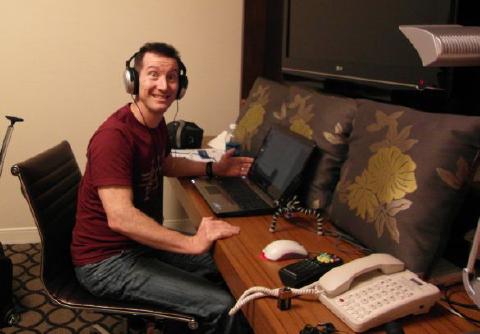
Dave is back! And blogging from a hotel room, just like Chris did in episode 9 of the Amp Hour. He has lots of great videos he made at Renesas Dev Con and some good stories and experiences. On to the links!
[display_podcast]
- Shout outs!
- Thanks to Nathan from the Sober Newt for linking here!
- Thanks to Alan at From Orbit for linking here as well!
- Chris likes the wrist scope from Seeed studios. Dave says he wouldn't use it.
- Thanks again to Jeff from MightyOhm for helping us out last week. We look forward to having him on the show again sometime.
- Tech News
- Arrow buys Nu Horizons, more consolidation in the distributor market.
- Actel bought by Microsemi, who wants to use the parts now that they might go obsolete?
- Farnell has an announcement on October 25th, we're guessing they'll just become Element14 officially.
- The BeagleBoard team has released the Panda Board!
- New Robot (video) podcast starting soon. Live hack every episode!
- Discussion Points
- Microsoft has a new development platform called the Gadgeteer. Designed to work with .net.
- Dave is back from Renesas Dev Con! Check out EEVblog for all the latest videos!
- Chris visited his local hackerspace for the first time, the Maker's Alliance in Cleveland.
- Dave gave a preview of his talk with DJ Delore. Conversation about the Open Hardware definition. Why aren't open tools part of the open hardware definition?
- Update not mentioned in show: EAGLE will have XML datafiles
- Phil Torrone also discusses this may be a part of the 1.0 definition.
- Rants
- The Gadgeteer mentioned above connects to Silverlight? Seriously? It's the antithesis of the open hardware movement! Gah! Plus the smallest program will be 64K? We don't like it so far.
- The IEEE has a crap article about social media. Not even going to link to it, they don't deserve it.
Note: We still see random 502 and timeout errors which we think are still server side. Please keep trying to download the episode if it doesn’t work the first time.
Transcript
Dave Jones: Welcome to the Amp Hour. I'm Dave Jones from the EEV blog.
Chris Gammell: And I'm Chris Gammell from Chris Gammell's Analog Life. How are you doing, Chris? Pretty good, Dave. Welcome back.
Dave Jones: Thank you. And we're a bit closer this time. That's right. I think we're only how many miles away? 4,000 miles away from each other?
Chris Gammell: Yeah, three or four. I don't do geography, so...
Dave Jones: Right, yeah, I don't do it that well. Everything's outside of Australia. That's all I know.
Chris Gammell: Yeah, right. You don't like swimming, so... Exactly. That's about where it stops, right?
Dave Jones: That's right. Well, I'm in, if anyone doesn't know, I'm in Anaheim, California. I'm at the High Regency. I'm coming from a hotel this time, just like Chris was last time. I'm on a blogging gig as well, so...
Chris Gammell: All right.
Dave Jones: Yes.
Chris Gammell: Maybe this will be a regular thing. Who knows? Yeah.
Dave Jones: It might be. I'm at the Renesys DevCon 2010 event, and it's been awesome. If you've been following it on my blog, I've now posted four days' worth of blogs up there, and... Oh, they're all up now? Plus, there'll be some... They're all up. The fourth one is literally just uploaded five minutes before this show, so it's probably still rendering... All right. ...on YouTube or something like that, but it will be up. Plus, there'll be some bonus videos as well going up, full lectures, part of the new Renesys Design Contest, which I'll be involved in, which we can probably talk about later if we want to. Cool. But, yeah, I'm having a great time here, and I've spent four days, and I've been working flat out here, actually. It's not a holiday.
Chris Gammell: Not quite a vacation yet, right? That comes next.
Dave Jones: No, it's not. No, I'm heading off flying out of here to San Fran tomorrow, so...
Chris Gammell: Very nice. Yes. Any plans for out there?
Dave Jones: We've done our 10-day holiday. Well, I was going to visit Agilent, but that fell through, so... Oh, that's too bad. Well, I didn't hear back from them. They said they were looking into it, but, yeah, there's not enough time.
Chris Gammell: Well, I hear there's a couple other tech companies out there. Maybe you can poke into one or two of those.
Dave Jones: Maybe there is. I don't know, but we've only got half a day now, because Virgin America canceled our flight, our early flight into San Fran. So, yeah, now we're flying at, like, 1 o'clock or something, so I've only got, like, half a day. Mm-hmm. And that's not enough time to drive down to Silicon Valley and...
Chris Gammell: Yeah, yeah, that's... Yeah. Especially in California traffic. Yeah. So, what I hear, what I hear.
Dave Jones: What is it, like, 40 minutes, an hour from San Fran to...
Chris Gammell: My friend that lives out there, he said to drive from, like, downtown San Fran to Silicon Valley, it's about two hours on a good day.
Dave Jones: Oh, what?
Chris Gammell: Really? Yeah, that's what he said. I don't know. I hope I'm not misquoting him, but...
Dave Jones: Well, I've done it in the other direction, but... Okay. Yeah, okay. I don't know. It's... Yeah, it's certainly not pleasant. So, yeah, I think that's probably out. So, I don't know. Maybe I can do something in San Fran, if anyone's got any ideas.
Chris Gammell: There's tons of great stuff there. I've never been out to the West Coast. I don't know if I've ever said that on here before, but...
Dave Jones: Yes, I think you have.
Chris Gammell: Yeah. It's kind of sad, you know, electronics. Yeah. I like electronics, but I've just never been out to the valley, so... Someday, hopefully someone will pay me to go out there. That's what I'm hoping.
Dave Jones: Well, that's right. Well, maybe you can make it to the ESC show, because I will be back in the U.S. next year. I don't know if I've mentioned that anywhere, but I will be at the ESC Silicon Valley next April.
Chris Gammell: Yeah. So, yeah, hopefully I'll be able to get out there and we can actually, you know, like, shake hands. Absolutely, yeah, because we've never actually met.
Dave Jones: If anyone doesn't know, we've never actually met in person. All we've done is chatted on Skype and Google Talk. Interwebs.
Chris Gammell: Yeah. The interwebs. Then we can make fun of each other in person. Exactly. And that will be great.
Dave Jones: Fantastic. Maybe I can go to that science museum in San Fran. What's the name? I've been there before. The Discovery Museum or something. Something like that, yeah. And it's really cool. Maybe I can do a blog from there or something.
Chris Gammell: That'd be great. That'd be really great. Show off some cool stuff.
Dave Jones: Yeah. But the White's tagging along, so she makes all the decisions, you know.
Chris Gammell: You got it. You know, keep her happy, man. That's important.
Dave Jones: Yeah, absolutely. Well, we have to. I've got to be quiet. She's in the other room. Okay. Yes. Yes. She's been banished in there for an hour while I do my silly radio show with my silly internet friends. That's right.
Chris Gammell: Yep. Well, we're thankful.
Dave Jones: And you can finally see her. She's actually on my videos. I saw that. The second day one, right? From the DEVCON.
Chris Gammell: Or was that the first one? It was the first one.
Dave Jones: I think she's in two of them now, I think. Okay.
Chris Gammell: Yeah.
Dave Jones: So, there you go.
Chris Gammell: That's great.
Dave Jones: She's in there.
Chris Gammell: So, tell me about the conference. I mean, we saw the videos, but anything that didn't make the cut that we should know about? I mean, it looked like a lot of fun out there.
Dave Jones: Oh, it was. Seriously. It was fantastic. And I'm not just saying that because they are paying for me to be here.
Chris Gammell: Good night. That's a disclaimer. That's a good disclaimer.
Dave Jones: Disclaimer. Yeah, exactly. No, I've been to a lot. You know, quite a few of these events. And they're pretty boring. Yeah. They are usually pretty lame. And that was my expectation for this. Oh, it'll be four days of just sheer boredom and, you know, and monotony. And no one will turn up. And droning on. Yeah. Yeah. Yeah. Exactly.
Chris Gammell: Have you been to ones in the U.S. before that are just like standard? Okay. That's a good reference.
Dave Jones: Yeah, I've been to two in the U.S. before in San Jose, Silicon Valley. Okay.
Chris Gammell: Well, we should probably qualify the listeners, too. I mean, like sometimes they're put on by vendors or rather distributors, which is okay. I mean, and usually it's a lot of different companies that are coming there and doing the same thing. And you mentioned this, I think, at the end of your first day video. Yeah. But this is actually by a company. So, it's a lot more focused. And then other people also come in as partners. So, that's a little different. Yeah.
Dave Jones: Yeah. It's very much focused. And I think that's what makes it better because everyone wants to be here to see Renesys microcontrollers. Yeah. There's no other reason to be here, you know. Yeah. Really. Yeah.
Chris Gammell: If you don't like them, why are you there, right?
Dave Jones: Yeah, exactly. And all the lectures and labs, I mean, they've got like more than a dozen of them running concurrently. Even if you watch the videos, you'll see the board and all the lectures. There's like 12 of them at 8.30 a.m. And they're all full. It's just unbelievable.
Chris Gammell: That's great, man. That's really great. Yeah. Well, how about the people? Did you meet a lot of people there?
Dave Jones: I met a hell of a lot of people. And a lot of people recognized me, of course. Really? That's great. Yeah. Came up to say hi. And a lot of people, even, well, everyone recognized me after Wednesday night's event. Because I had to get up in front of all 750 people and do a big presentation up on stage. And that video is coming shortly. So you'll be able to see the whole thing.
Chris Gammell: I was going to say, because I saw you put something on Twitter about that, like how you don't like, that's why you like off the cuff. But you didn't get to do that. You had to actually do prepared remarks or something and it didn't work out. But I guess. Oh, no.
Dave Jones: Here's the story. Okay.
Chris Gammell: I'll tell you the story. Okay.
Dave Jones: I was just going to do an off the cuff thing because they said, oh, look, we're going to get you up on stage. You'll just be just before James Meigs, the editor of Popular Mechanics magazine. And you'll be talking about the design contest, the new Renesys design contest. Video coming on that, by the way.
Chris Gammell: Yeah.
Dave Jones: And I was supposed to get up there and just say a few words. And I, yeah, no worries. Easy. You know, just do it off the cuff like I normally do. And then a couple of hours before the event, they called me in for a meeting and they showed me all the PowerPoint slides they were going to show. And they were going to show like my hype video, my one and a half minute video short that I've done. Have you, I don't know if you've seen that.
Chris Gammell: No, I haven't.
Dave Jones: That I did for this talent contest.
Dave Jones: Oh, that one. I did see that.
Chris Gammell: That was the clips and everything. Right. Yeah.
Dave Jones: Yeah. Yeah. Exactly. One minute clips. That's right. That was funny.
Chris Gammell: That was, that was like kind of like a really compressed version of your, your hundredth show that I really liked.
Dave Jones: It's a compressed version of my hundredth show. Yeah. And they're going to dim the lights and then, you know, so they're going to announce me Maury Wright, who's the other blogger there. Yeah. He was going to announce me, dim the lights. And then, you know, ta-da, the video comes up. And they were telling me how important this all is to the whole thing. And don't, you know, pretty much, you can read between the lines, like, don't screw it up. Do not.
Chris Gammell: Swear. Did you, did they say anything about swearing? Cause I mean.
Dave Jones: Um, they said swearing was okay. Um, the head honcho from Japan was in the audience and a whole bunch of them actually. Yeah. All right. He's, he's pretty cool dude. It's great.
Chris Gammell: Go out drinking, do some karaoke. Yeah. Kara, okay. Yeah.
Dave Jones: It's good. It was good. And so they told me to do all that. Okay. And, uh, and I, but they made it sound like, oh, it's now so massively important. A couple of hours out and I thought, oh no, I'm going to screw this up. So I better go back to my room and write a script or something and at least polish something.
Chris Gammell: Yeah.
Dave Jones: So I get back to my room and I try and write something and I only had, I had about, they said roughly four minutes tops or something like that. And for the life of me, I could not get a damn sentence out.
Chris Gammell: Oh no.
Dave Jones: And I tried to sit here with my recorder.
Chris Gammell: I'm from Australia.
Dave Jones: Yeah. That's about it, right? And it was pathetic. I recorded myself with my little Zoom H1, which I'm now using to record this show. Oh yeah. Yeah. Um, and, and it was, it was garbage. I couldn't string two sentences together. Oh, that's too bad. I'm feeling pretty bad. So in the end I just went, oh, bugger it. I'm going to go off the cuff again.
Chris Gammell: Yeah.
Dave Jones: And, and it worked. It worked fine. Awesome. Yeah. See, never fails. I know. Never fails.
Chris Gammell: That's perfect.
Dave Jones: So, so it's different when you're up there in front of 750 people. Right.
Chris Gammell: If 750 people are watching, you don't get to like look them in the face. You don't see if someone's snoring, you know, while they're watching a video blog. Right.
Dave Jones: Well, well, the thing is, I think when you're recording in your room to yourself, you, you, you sort of stop, like you'll be start recording something and you'll go, oh, that sucks. And you'll just stop and you'll do it again and you'll try and be perfection at it.
Chris Gammell: Yeah.
Dave Jones: You know, and it just didn't work.
Chris Gammell: Yeah.
Dave Jones: Whereas you went up there, your mindset's different and bang, away it went.
Chris Gammell: That's great.
Dave Jones: Anyway, you'll be able to see, everyone will be able to see that video. I'm looking forward to that.
Chris Gammell: I'm really looking forward to that. You know, it must've been different too, because I mean, you know, there's, there's, there's a really wide range of people that, you know, listen to us and watch your, watch your video blog as well. And like, and, and that's really awesome. You know, like that, the fact that there's hackers and there's hobbyists and there's beginners and, and experienced people, but that must've been a little, a little scary to get up in front of like, you know, these are like probably like developed hack or, I mean, these are very experienced people I'm guessing at DevCon. So that must've been a little different, huh?
Dave Jones: It was. Yeah. I mean, um, it was originally supposed to be 500 people, but, uh, yeah, 750 turned up and, and we're at this massive, you know, really schmicko dinner event and, and the, oh, and they hyped me up and the lights drop and the video comes on and everyone's laughing. Then I've got to get up there and perform. Oh boy.
Speaker ?: Yeah.
Chris Gammell: Yeah. And you were sick the whole time too.
Dave Jones: And I was sick and I've still got a cough. There we go. You heard that just then.
Chris Gammell: Yeah. So. Well, that's too bad. Uh, but I'm, I'm looking forward to seeing the rest of those videos. So that's great. That's really great.
Dave Jones: They'll be uploaded soon. Um, there's a really good one I got, um, which I should, uh, we might, uh, might talk about later, but, um, I got a, um, I got to sit down with, uh, DJ Delore. Um, who's the, uh, who, who writes the, uh, GEDA, the open source hardware, um, the open source EDA package, a piece of being a schematic package. Yep. And that, that's a real, that goes for about 12 minutes, um, continuous clip, um, interview. And that's, that's really quite nice. Um, in fact, that brings out our first discussion point. Should we talk about it? I just added this 10 minutes before. Yeah. Have you seen it? It's right down at the bottom there.
Chris Gammell: Yeah.
Speaker ?: I was just looking at it.
Chris Gammell: And you know. On the list. Yeah. Go ahead. Go explain it. I mean.
Dave Jones: Well, uh, basically about open source hardware, cause the GEDA tool, okay. Is fully open source EDA. And there's only two types. There's GEDA, uh, only two open source tools. There's GEDA or there's, uh, KiCad or KiCad, however you want to pronounce it. Um, and he was, he says in the video, you'll be able to see this, that he commented that basically, um, on the, on the new open source hardware standard, we've talked about before on the blog, this new definition they're trying to come up with, you know, being led by Arta Fruit and SparkFun and all the other major players, you know, in this new open source hardware field.
Chris Gammell: I went to something about that. Yeah. Yeah.
Dave Jones: Yep. That's right. Yeah. Duh. Yeah. You went to the open source hardware summit. That's right. Of course. And, um, yeah. Well, DJ made the great point that really, um, you know, it's, it, it, his exact words weren't this, but basically, um, you should be, um, well, if you're going to be open source hardware, you should use, only use open source tools and fully open source tools. And that, you know, you really have to be hardcore or nothing go away, you know, basically he didn't say that, but that's, I think that's what he meant. You know, you have to be a purist. So really, you know, um, but as you know, the, the de facto standard EDA package in the open source hardware industry is Eagle. That's right. Because it's free, but it's not open source. It's closed. It's freemium. Exactly. The, the file format is closed and DJ made the concession that maybe if the file format was open, that would be enough. Right.
Chris Gammell: Because then you can cross it with other tools and stuff.
Dave Jones: Yeah. And you could process it and you could, you know, at least extract the data out. But I, I believe, don't quote me that Eagle is a closed format file format, just like, you know, all the other CAD packages out there are all closed proprietary format.
Chris Gammell: Well, we know that element 14 might sometimes listen to this, so we should tell them that. I mean, uh, so element 14, if you're listening, you know, open it up, open it all up, man. We need, we need open, you know, open source.
Dave Jones: Yeah.
Chris Gammell: And you know, we're using this tool and we've talked about inconsistencies too. I mean, like, like how we mentioned that people at that summit were, you know, like a lot of them are Apple fans because you know, it's good design and the same thing with Eagle. I'm sure too is, you know, it's, it's, it's polished, it's finished. It's nice. It's, it's done.
Dave Jones: But if you are going to be a purist, I think it's that great to use actually, but no, you
Chris Gammell: don't like Eagle. Oh, well, I guess.
Dave Jones: No, I don't like the user interface, but still it's, you know, it's reasonably easy to use compared to say Jeeb or something like that. For free. For free. Yeah. So you can't complain.
Chris Gammell: Right. And so, I mean, yeah, that's, that's probably the balancing point. And so, yeah, purists will say that, but, uh, it's interesting. I've never tried it. I'll have to give that a shot because, you know, is I, I have, I have a license for my work, but I, I wouldn't feel comfortable using outside of work. So I, I should be learning other tools. So maybe I'll pick that up and give it a shot.
Dave Jones: Yeah. Well, the other thing about the Eagle is not only is the file format closed, I believe, but it's limited in size and limited in layers. The free version. That's right. Anyway, you can buy the full version for like $600, $800 or something. But yeah. Yeah. So, you know, is that a real problem? This, this, this open source hardware, uh, definition is really, you know, it's really compromising the true essence of open source there. So, you know, it's been contradictory.
Chris Gammell: Because I was, I was actually around last Saturday and for the first time I got to watch, uh, ask an engineer live. So, uh, it was a filter on and, and, uh, the more freed from Adafruit. And I actually got to ask that I, you know, I was doing it like, yeah, it was, uh, you know, you stream and, and I asked him, you know, what else is left on the, uh, open hardware definition? Because Phil, I think Phil's one of the main ones that's doing it. And he said that, you know, it's a lot of tweaks right now, but that might not even be on there. So that might be a really good, and there is, there is a link to, uh, add feedback about that. So if, if people are interested in, you know, bring it, if that, if that's an interest to you, you can bring that up, you can, you can submit that. And, and maybe that should be a legitimate piece of that, of that document because, you know, as far as there's buy-in from the whole community, community on that document. So maybe that should be in there. Exactly. That could be a really big thing.
Dave Jones: Well, I think, well, in, in, in the purest sense of the word, it, it should be. Um, but I'll tell you why it's not because Arda Fruit and all the other major players who are involved in this, they all use Eagle. So they've got a vested interest. Right.
Chris Gammell: Exactly.
Dave Jones: That's all they use. So they're not going to swap to Jeter just because, you know, so they're, yeah, they're being, I don't know. I don't like it. Um, yeah, they're, because I've mentioned before that I don't like the fact that, um, they're not allowing the, uh, non-commercial license to be included in the open source. Well, I agree.
Chris Gammell: If you listen to the reasons they give for the non-commercial, I think, I think they give good reasons for that. But I think with this, this Jeter thing, I mean, I think that maybe it just was never brought up. I mean, yes, you're right that there is self-interest for, you know, contain, continuing, you know, if they have board files that are in Eagle, transferring that over is difficult. There's no, there's no doubt about that. You know, no one wants to change software packages, especially when it's your business, but it could be an honest omission, you know, like if maybe this needs to be brought up. So, and, and, and I mean, DJ has some, he has some self-interest too, because, you know, he's writing this package he's working on. He wants it to be widely used. And not that he has personal interest. Like, I don't know if he has monetary interest in it, but, but there's always, you know, there's always self-interest in all this stuff. You know, I've talked about that with open source hardware stuff, you know, all the companies that are doing it, there is some legitimate stuff, but right now people are still playing together. So that's a good thing. And, and, and maybe it just needs to be brought up.
Dave Jones: It is a good thing, but DJ is a purist. I've, I've talked to this guy and he has no vested interest in Jeter, by the way. Actually, in fact, he mentions in the video that I'll put up that he doesn't care whether you use Jeter or whether you use keycat as long as you use.
Chris Gammell: Ah, okay.
Dave Jones: Open source. He doesn't care. That's a good point towards that. In fact, he put some good, good reasons in the video why you should use keycat. Yeah. And, and, you know, who should use keycat. So. Okay. Well, that's good. Definitely. Yeah. So he has no vested interest in Jeter. He knows it's quite a primitive interface compared to keycat or Eagle or something like that. It's just harder to use, a bit harder to use. So. Yeah. Yeah. But I think there's a huge vested interest in there and, and, you know, they're compromising the open source, the spirit of open source by not doing that. But hey, you know, I can understand. Otherwise the whole thing falls flat on its face and every one of them who's involved in this thing would have to learn a new tool.
Chris Gammell: Yeah.
Dave Jones: Well, I mean. I don't think any of them are going to do that.
Chris Gammell: It's worth bringing up and I think we should. And I think if our listeners are interested, they should as well. I mean, and, and we can start a discussion about it. I'm sure.
Dave Jones: Absolutely.
Chris Gammell: I'm sure it's a legitimate point. So that's, that's great. I'm looking forward to the video. Terrific.
Dave Jones: All right. What's up next?
Chris Gammell: Well, we've got a couple of shout outs we need to get through, not get through. Of course, we, we love shout outs and we love the people that do it. So Alan from, from orbit.com, he put his, uh, he put our logo on his page. So thank you very much, Alan. Thank you, Alan. And also, uh, Nathan did too. And his is a, a sober newt. That's his, uh, I thought that was an interesting name, a sober newt, but, uh, he's got a page I was looking through about audio stuff and it's, it's a cool site. So we'll, we'll post a link to that as well. Both, both of those guys. Yeah, definitely. You know, putting, putting a link and a picture back to our page is, is awesome. We really appreciate it a lot.
Dave Jones: So, and I have to thank, uh, Jeff from last week.
Chris Gammell: Oh yeah. Jeff Kaiser. Mighty Ohm.
Dave Jones: Mighty Ohm. Mighty Ohm. Dot com. Check it out. Um, yeah, he took over for me while I was, uh, under the weather. So thank you very much, Jeff. That was at the last minute.
Chris Gammell: Yeah. Did you, uh, did you get a chance to listen to that about that?
Dave Jones: I did actually. Yes. Yes. It was excellent. I enjoyed it.
Chris Gammell: He definitely knows his, his, uh, his Arduinos. That's, uh, his other stuff too. I mean, I got to talk to him off offline a little bit too, and he knows his stuff. So.
Dave Jones: And he probably uses Eagle too, not an open source package. Oh yeah.
Chris Gammell: Oh, now we're going to start judging people, huh, Dave?
Dave Jones: Right. Judging people. Well, yes. Yes. Everyone knows what package I use. It's hardly, uh, hardly open source.
Chris Gammell: Right, right, right. So yeah. What else do we have? We have, uh, man, a couple of things. Did you see, I have another shout out on here. It's from a couple of weeks ago actually, but I was so excited about it and no one else, people at my work didn't really think it was that cool or thought it was a dumb idea, but a risk, a wrist scope. Did you see that?
Dave Jones: I've, I've seen it. It's from the, uh, it's from the seed studio people here, isn't it? Yeah. Yeah. Who make the DSO nano.
Chris Gammell: That's right. Yeah. Yeah. And, and, and one of the guys, one of the main guys from seed studio was actually on one of the panels at, at the open hardware thing and, and they actually have a pretty complex operation from what I could tell from the, from, you know, there, I think he was doing the business talk and yeah, but I don't know. I think it's a cool idea. I love instruments that are like body mounted. I know that like that's a hazard in certain cases.
Dave Jones: Yeah. I, you know, I, it, it just screams wank to me. I mean, it really, it, it does. I mean, yeah, I've thought about doing something like this too. And I always stop myself going.
Chris Gammell: I mean, you have a device that goes on your wrist. You made a wrist calculator, you know?
Dave Jones: I did have it, but it's a bit, but it has a legitimate history. There's just no reason to put a bloody oscilloscope. I think it would have been massively, it's a novel form factor, but nobody's going to use it on the wrist. Just like actually the majority of people who use, who bought my calculator watch did not use it on their wrist. They used it as a little pocket watch. They whacked it in their pocket. Really? They used it. Yeah. They, they actually didn't mount the band on there. They loved it because you just slip it in your pocket. It was effectively the world's smallest scientific calculator. Nice. And that's what this thing, you know, I, I, I assume I can't see photos of the back of it. I've got some photos here, but I assume that you can just rip off the wrist mount and I guarantee you, nobody will put it on their wrist. So I would, you know, no, yeah, you'll put it on once and then you'll go, no, that's a wank. And I used to love, I don't know.
Chris Gammell: It's like, uh, wasn't it like a Star Trek thing where like data was wearing, didn't he always like wear things on his wrist? Oh, I don't watch that new Star Trek one.
Dave Jones: A lot of people say I look like data from Star Trek.
Chris Gammell: No, I don't think so.
Dave Jones: Oh, I get it all the time. I get it all the time. Really? Yep.
Chris Gammell: Maybe. Maybe if you grew your car and slicked it back.
Dave Jones: Right.
Chris Gammell: Well, yeah, possibly.
Dave Jones: Maybe that could be your Halloween costume. I think it's the eyes and the pale expression or something like that. But yeah, anyway, the design looks a lot better, hell of a lot better than the DSO Nano. It's got, uh, what is it? Um, it's got fully, uh, vertical input scales. It's got a 36 meg bit sample rate, uh, 30 meg bandwidth, but that's only, you know, three and a half megahertz.
Chris Gammell: Yeah.
Dave Jones: Real time bandwidth, ACDC coupling. It's got, you know, it's got two mega storage and, um, and it's a mixed signal thing too. I think it's cool. Yeah. It's kind of cool, but yeah, no, I'm not jumping. I'm not, I'm not writing home to my mother about it. So, so it sounds, it sounds like you're right.
Chris Gammell: I can hear tapping over there. Do you, are you tapping right now?
Dave Jones: I am. I am pushing keys.
Chris Gammell: He's pushing keys. That's right. You know, he's writing to someone right now. He's ordering David. Just, just, you hear this right now. Dave's going to show it on his, he's like, Oh, I have to get this before anybody else. He's saying he doesn't want it, but you're going to see it on the EV blog in about, you know, two months. You're going to say, Hey, check out my new risk scope. Yeah. We'll see. We'll see. We'll see who's doing a risk scope review in a while. We'll see. Right. Well, it doesn't have B and C input. I mean. That kind of sucks. I understand that.
Dave Jones: You know, it's just that they went to the trouble to sort of make it a bit more like, a bit more professional oscilloscope like, but it's still, it's still a toy, you know. I like it. But it's open source. Yeah. It's cool. Okay. But it's cool.
Chris Gammell: Seed studio does some cool stuff. They do.
Dave Jones: Yep. Okay. But please, as I've said before, don't buy it as a replacement for a real oscilloscope. I wouldn't say that. No. Oh. Well, that's what everyone kept asking me. I kept getting flooded with emails. Really? About, yeah, that's why I did a whole blog on, should you get the DSO Nano? And I said, no, it's a toy. It's a heap of crap. Go get a real analog oscilloscope.
Chris Gammell: Oh, so maybe they don't like you already.
Dave Jones: No, they probably don't like me. I mean, yeah, I accept that it has its place. If you do want an oscilloscope, you can slip in your back pocket. Then, well, yeah, okay. It's okay for that little niche application. Yeah. But, no, I get all these beginners saying, oh, should I buy it? And I'm going, no. Right. It's because it's cheap, right?
Chris Gammell: It's cheap.
Dave Jones: It's because it's cheap. Yeah. But for the same money, you can buy 100 megahertz analog oscilloscope.
Chris Gammell: Yeah.
Dave Jones: You know, give me a break. There's no contest whatsoever.
Chris Gammell: Well, hey, I didn't put this on our usual thing, but I actually pulled my scope apart. I have... Excellent. Yeah. So, I have a 425M, the military version of the 425. Oh, yes. Yep. And I pulled that thing apart, and I love it. I love this old scope so much.
Dave Jones: Isn't it pornographic inside, those old tech scopes? It is.
Chris Gammell: Oh, my God. And, like, they made it all modular. I mean, like, it's got, like, PCI slot-type connectors, but they're all analog connections through there, too. So, they're, like, these huge copper traces. They're all hand-drawn. You know, all these boards are hand-drawn. I feel like... I think some people do that. Maybe Jeff is even... Jeff Kaiser might be one of the ones that does it, where, like, they put up Flickr profiles of just, like, basically what you call electronics porn. You know, like, just, like, the coolest layouts and, like... Absolutely. Oh, it's so awesome. And, you know, they got, like, the old set... Like, they're using 741s in there. You know, like, it... Yep. I love it. I have to fix mine, actually, because I turned it on. You know, I got it a couple years ago, and it's just been sitting here, and I have a different scope in the meantime. But I finally opened it up to start fixing it the other day, and I realized that it's the power rails that are... They're just low. I think something's shorter in there, so...
Dave Jones: Right. Or the caps are drying out or something like that.
Chris Gammell: Yeah, that's a common thing, so... That's right. Yeah. I'm really nervous, though, because the... I mean, so it's a CRT scope.
Dave Jones: Oh, yeah. There's seven...
Chris Gammell: Big energies, big voltages in there. Yeah, like, seven... Seven kilohertz... Kilovolts, rather? It's like...
Dave Jones: Um, well, the standard... Well, maybe for those older ones, yeah. For the higher voltage ones, they're usually 20 kilovolts. Oh, really? For a 100 megahertz CRT or something like that. Yeah, I mean, it says on there seven kilo... Or greater than seven kilovolts, so... Oh, right, seven kV. Okay.
Chris Gammell: But you can just tell from the connector, um, you know, like, just, like, the big rubberized connector... Oh, yeah. ...so it won't arc over.
Dave Jones: And they store a lot of charge, too. Yeah. They're hugely capacitive, and they store massive potential energy, so don't go poking around and scope kitties.
Chris Gammell: Right. Yeah, and I definitely... Very dangerous. I was unhooking, you know, like I said, their modular boards. I was definitely pulling one out, and I realized that I, by accident, I had knocked the power on, and... Oh. So, kids, remember to unplug the power plug from the back. The unplug... Oh, I'm a professional, and I, you know, I would have... I would have been found two days... My girlfriend wasn't here. I would have been found two days later, you know, like, crap my pants and, you know, like, kick the bucket, but...
Speaker ?: Yeah.
Chris Gammell: You know, I got lucky. Make sure you unplug it before you start messing around inside a scope. Absolutely. I need really, yeah, gear. But, I mean, just, like, the mechanical stuff, too. I mean, like, I... You know, they... You know, like, you do a lot with, like, the Rigol scopes, and they're cool. I have one of those, too. And, like... Yeah. You know, but, like, they're... They're, like, little tiny, like, data-encoded knobs, and they're so boring now.
Dave Jones: Yeah, I know.
Chris Gammell: And then you look at, like, these old scopes, and, like, there's... I'm looking at this thing. It's got... It's got a... You know, it's got a rotary knob, and it's connected to a potentiometer. So, you know, that's actually how it's doing the control. It's doing analog control all the way back. But it's got, like, a three... Probably, like, four or five-inch actual rod that goes back there. You know, and, like, they don't do that stuff anymore, because it's just not even close to economical.
Dave Jones: No, it's so hideously expensive. Some of them go all the way to the back of the chassis. Yeah. There's rods in there that are, you know, 12, 15 inches long in these scopes. Yeah. And there's dozens of these custom rods, which... Exactly. Some of them go right angles. They pivot. So, they have the board, which is at right angles to the front panel. Yeah. And the rod goes back from the front panel through a 90-degree mechanical, I don't know, knuckle bend on it. And then goes into... Right angles into the board.
Chris Gammell: Oh, it's so awesome, though.
Dave Jones: Oh, I love it.
Chris Gammell: I love it. I love it. I know people don't design... They don't make them like they used to, you know? But...
Dave Jones: And then you've got the multiple-layer ones, you know, the big time base. You've got the dual time base. Yeah. One with the... You know, it's got the main time base and the inner time base. That's right. And then it's got the knob in the middle, so it's like a three or four... Yeah, it like snaps in and out. Yeah. Yeah. So, it's got like a three or four-layer knob. Oh.
Chris Gammell: Yeah. From a design perspective, it sucks, but I love it.
Dave Jones: Yeah. From a complex design perspective. But it's... Yeah.
Chris Gammell: But that's probably why this thing costs... I mean, it probably cost $1,000 to $2,000 back in the day, and now, you know... Oh, easily. $200 these days, so...
Dave Jones: Exactly.
Chris Gammell: You know Jim Williams? He fixes these for fun. You know the linear tech guy? Yes, yes, he does. The linear tech guy?
Dave Jones: Yeah, yeah. Oh, Jim.
Chris Gammell: I love that his articles sometimes end with, Jim Williams lives at home with his wife, his two dogs, and 88 oscilloscopes. Oscilloscopes, yeah. That's so great. Like, I can just imagine, like, walking in there and, like, you know, lining in the kitchen or something like that.
Dave Jones: Yep. Yep.
Chris Gammell: That's great. That's great.
Dave Jones: I get in trouble every time I bring home a new oscilloscope. Oh, I'm sure...
Chris Gammell: Well, you get the garage, so that's good. I mean...
Dave Jones: Oh, yeah, but, you know, it's two meters by two meters. Give me a break. Oh, is that it?
Chris Gammell: Oh, I thought it was bigger than that.
Dave Jones: That's it.
Chris Gammell: You know what? No, no, it's two meters. It looks bigger on camera. No, no, maybe... The camera adds 10 pounds to your garage. Right. Right. Excellent.
Dave Jones: Let's move to some news, shall we? Yeah, news. Definitely. Definitely. Bought New Horizons, you say. I hadn't heard this one.
Chris Gammell: You know, it didn't get a lot of press, really. I think New Horizons... I don't know if people knew about New Horizons. They're on, like, the top 20 distributors list. Mm. And they... You know, I've talked to them once or twice, but they're gone now. Yeah. So...
Dave Jones: Well, New Horizons, don't quote me, because I've lost track. The mergers these companies have done over the years are so hideously complex that New Horizons was formed by... They bought out somebody, emerged, and changed their name or something. Oh, yeah. I don't think they sprung out of nowhere. I think it was... You know, so they have history, names you've probably heard of in the deep, dark past, and now Arrow have bought them, and there's so much consolidation, and it's...
Dave Jones: Yeah. It... I remember it happened about five to eight years ago. There was huge consolidation in the market, and now there's even more. It just... Yeah. It never ends.
Chris Gammell: Right. I mean, yeah, because you get the little guys, they keep getting swallowed up by the bigger guys, but... Did you see that news... The news release? You're the one that told me about it, I think, on Twitter. The... About the Element Fort... Or Farnell was... Was... Has an announcement coming out next week or something? Yes.
Dave Jones: That... October 28th or something. 25th, maybe? Yeah. I got some flyer or something that says, yeah, we've got a big announcement.
Chris Gammell: What do you think it's going to be?
Dave Jones: Well, the rumor... The rumor going around DevCon is that they will change their name. Farnell will no longer be Farnell. It'll be Element 14. That would be my money, too. They will completely re-brand.
Chris Gammell: Yeah.
Dave Jones: And I don't know if that's true. I have no inside knowledge whatsoever. That may be a complete fizzer at a marketing... You know... But...
Chris Gammell: I would just say, because they're spending so much money on all that marketing stuff, that would be my only guess. I mean, I don't know anything else about them, but that would be it. You know, that they're moving all the way. Because, like I said, I think I told you or someone else on there that if you look on, like, Octopart, they already list themselves as Element 14. They don't list it as Farnell or... Yeah. Or Premiere.
Dave Jones: They're slowly rebranding the interface to various other... Right. ...things. But, yeah. Yeah. As a corporation, they're still Farnell, but... Yeah. So, they may... I can't imagine.
Chris Gammell: I mean, they're spending so much money on other stuff anyways that it just... It would make sense, so... Not a big... Yeah, well... Not a big deal, but...
Dave Jones: Oh, but I just think it's stupid. You know, some marketing dickhead came up with this Element 14 idea. Yeah. Yeah. Yeah, Element 14, my friends. I've done some stuff for them. I'm in their new magazine. Yeah, yeah. And, but, you know, I'm allowed to bag them. Yeah, of course. I bag everyone. And, really, Element 14, it's just a stupid name. It's, you know... Yeah. It's a fine concept for their little blog site they've got, which we've said before is hideously over-complicated, you know, and difficult to use and all that sort of stuff. But...
Chris Gammell: So, that's good. I mean, we like Ben. He's got a good show.
Dave Jones: Well, yeah, we like Ben Heck.
Chris Gammell: Yeah.
Dave Jones: Yeah, he's on there. Yeah, but, yeah, to rebrand your company, Element 14, I'm sorry, guys. That is just suicide. That is suicide. It's ridiculous.
Chris Gammell: Well, it's not suicide like Tropicana. You know how Tropicana did that, where they changed their carton and then people stopped.
Dave Jones: Tropicana changed their... Yep, they lost 30% of their market overnight or something. But, yeah, but Farnells have been... I've known about Farnells since 1980s. I used to buy parts from them. 1989, I bought my first commercial parts from Farnells.
Chris Gammell: But old people are starting to retire, right? I mean, you're close to retiring, right?
Dave Jones: Yeah, I am, hopefully.
Chris Gammell: You're going to be young and hip in Element 14. Yes, right.
Dave Jones: Oh, it's, you know... Yeah, they try and be, you know, hip and change it. And they think their Element 14 blog is the be-all, end-all, right? And quite frankly, it's not, you know? I mean, I've got a bigger audience than they do. I mean, give me a break, right? It's just...
Chris Gammell: Yeah.
Dave Jones: I'm sorry, guys, but it's, you know, it's not the be-all, end-all solution, this Element 14 site or the Element 14 brand. I don't know, but I can understand from the corporate perspective that they want to merge the brands. So, go ahead and do it. Yeah. Yeah, I don't care. I'll just still call you Farnell. I was just like...
Chris Gammell: Yeah. I mean, that's the thing. And we'll still buy from people that have parts. You know, it's like, if Element 14 doesn't have parts or Farnell doesn't have parts, you're still not going to buy from them. It doesn't matter, you know? Like, if they're going up against the DigiKeys and the Mausers and everybody else's, it doesn't matter to me. To me. I don't know about you. It doesn't matter to me what you're called if you have decent prices and you have availability, which is so much of a bigger deal these days.
Dave Jones: It's a big deal. Price isn't that much. It's can you get the parts, really? Yeah.
Chris Gammell: And you'll pay more if you can get the parts. So, you know, like, you know, there's shortages all over the place. And people are paying through the nose. I don't know. Do you ever deal with, like, brokers or anything? You ever heard of brokers? You know, brokers.
Dave Jones: Yeah, yeah. I've dealt with brokers before. They're like the scum of the earth from what I can tell. Yeah.
Chris Gammell: You know, it's basically people that hoard parts, you know, and...
Dave Jones: And they're usually gray market parts, too. They're not always authentic parts. Yeah. So, they're, you know... That's tough. Yeah, you... I know. As most professional companies will not buy... Blanket company rule, don't buy from brokers and the gray market. Yeah. End of story. You buy from the official channel suppliers or you buy from Farnell, DigiKey, Mouser. Yeah. Whatever. And Newark, by the way. What's going to happen with Newark? Because, you know...
Chris Gammell: I thought they were the same thing. Aren't they?
Dave Jones: Well, they are. See, there's Farnells, there's Newark, and there's Element 14. So, maybe they... Yeah.
Chris Gammell: Are they Premier Farnell or no? I thought that... Isn't there a Premier in the summer?
Dave Jones: Well, that's right. It was... Well, it was Farnells, and then it was Premier Farnells, and then it was... Oh, God. And then they bought Newark, and then they rebranded their blog channel, Element 14. It's like, oh, what are you doing, guys?
Chris Gammell: Yeah.
Dave Jones: God. I can't keep track of your own, you know? One company. I was pissed off enough that, you know, they still kept Newark and Farnells kind of as separate entities, and oh, I don't know. It's just... Yeah. It's too hard. I don't want to think about it. Should we skip this next one, then? Do you not want to talk about this? Yeah, my brain's starting to hurt.
Chris Gammell: Should we skip this next one? Is this going to upset you, too?
Dave Jones: Oh, no. No, no, no. Actel. Actel. Yeah. FPGA. One of the... Well, the... Probably the fourth FPGA vendor out there has been bought by Micro Semi. So, what do you say?
Chris Gammell: You say Xilinx, Altera, Lattice?
Dave Jones: Xilinx, Altera, Battle It Out. They have for decades as number one. Lattice is number three. Lattice is number three. Yeah. And Actel is number four. Right.
Chris Gammell: And then there's like a... I saw a chart once, actually, of those four usually were really solid. I think it was an E! Times article or EDN or something. And they showed like... Then like everybody behind them, they just like kept, you know, trying new businesses and failing.
Dave Jones: Oh, there's so many FPGA startups. Yeah. Silicon Blue is another one. Oh, yeah. That have just started. And I just got the inside scoop of another FPGA startup today.
Chris Gammell: Oh, cool.
Dave Jones: Well, actually, they've been going a while and it was formed by the former head of... From Xilinx who developed all their Vertex devices, which is their high-end parts.
Dave Jones: Yeah. He left and formed some other FPGA spinoff. And now they reckon they're going to be cheaper and higher density than Xilinx. Oh, blah, blah, blah. And they're going to kill Xilinx. Yeah, right. Yeah, right. You know, give me a break.
Chris Gammell: I bet Xilinx has something to say about that.
Dave Jones: Yeah, there are a dime a dozen FPGA startups, let me tell you. Well, it's interesting because... Yeah, anyway, I'm...
Chris Gammell: Oh, go ahead, go ahead.
Dave Jones: Oh, no, I'm just saying I'm pissed off at this merger because Micro Semi have actually said that I... Not quite a quote, but it's effectively a quote that they will... They have said that they will kill off any part of Actel which is not profitable and they will kill off... Which is standard business practice when you buy a company, fair enough. Yeah, yeah. But they will also not try and compete with the other major FPGA players. See, now... Which means...
Chris Gammell: I had read a contrasting article to that, though. I had heard that, too. Yeah. But go ahead. Sorry, I cut you off.
Dave Jones: Oh, anyway, I was just saying that that means that... You know, for them to come out and say those two things, it means that Actel is, in my opinion, it's no longer a viable long-term FPGA vendor because... Right. They'll keep whittling away. If you design your part in now thinking you're going to buy that FPGA in 10 years' time, you might be kidding yourself. So... Yeah. I agree. Yeah. I mean... And I was about to put an Actel FPGA in one of my new boards. Yeah. And I'm thinking twice about it now. Right. And you know what?
Chris Gammell: And that's enough. You know, the confidence factor is enough that it's like, that's going to hurt them just from the get-go. They should have been like, we're not doing a darn thing. Nothing's going to change.
Dave Jones: That's what they should have come out and said.
Chris Gammell: That's what they should have said, but...
Dave Jones: Yep.
Chris Gammell: The fact that they didn't, well, you know, you're going to have to deal with that too. You know, maybe you could take new niche markets or something like that, but good luck. Whatever you're going to do, good luck. Because, you know, being bought by MicroSemi, MicroSemi is an analog company, you know? Yes. And that alone is, it smells shady, right? Yep. And so the fact that, you know, they might be able to do great things, you know, we'll see. But, and this has been talked over, you know, 30 times on different, you know, tech blogs. They ate this stuff for breakfast. Like, they loved it. Oh, yeah. This was huge news, yeah. And, but, you know, well, it's for people that aren't in the publishing industry or looking for, like, conflict. We're just looking for parts. Well, maybe we'll just go with a different vendor for now, you know?
Dave Jones: Exactly. And it's a real shame because the Actel parts were really nice. The Actel fusions are actually a combination of analog and digital FPGAs. I didn't like those. And the Actels, and they're really low power. They're flash only, which is fair. That's why I was using them in my, in my new design because they got built in flash.
Chris Gammell: And, you know, I like the flash thing, but I did not like the, the mixed signal stuff. I, because the thing is, like, you could use, you know, I talked to the vendors about it a lot too. Yeah. And I liked, I liked the fact, you know, when I first heard about it, I was so jazzed, you know, because I like analog stuff, but I'm, I'm also, you know, you, you need FPGAs or you need some kind of glue logic or micros or something. And the, the idea that would be there would be awesome. And, and, and they were even talking, I think the, the fusion, the pro fusion or whatever it was. Yep. Or is that the, that's a razor blade.
Dave Jones: Yeah. The fusion. Yeah. The, yes. The, I don't know.
Chris Gammell: Yeah.
Dave Jones: The smart, smart fusion. Smart fusion is the combined analog digital.
Chris Gammell: Yeah. And, and they were talking about reconfigurable, you know, filter blocks. And that's kind of like getting into a field programmable analog arrays, which are kind of, they're kind of on the horizon still. But you look at the specs then and you're like, this is, this is nothing. You know, they could, the best they could do was like a 12 bit A to D, 12 bit DAC. And then like the analog stuff, you wouldn't, I wouldn't touch that with a 10 foot stick, you know, like it just wasn't, it wasn't worth it. So I, it was interesting. And the stuff they were talking about was like, you know, like power monitoring for really big systems. But I, I was definitely lukewarm on all of that stuff.
Dave Jones: So. Well, it's always a compromise with those devices, the performance. But if you just want adequate performance, then it's, you know, it's going to be right up your alley. But it was expensive too.
Chris Gammell: Like it was expensive. Did you look at the prices on those? They were expensive, man.
Dave Jones: Oh, then, then, then, they're not cheap parts. I mean, you know, if you're got, if you want a cheap design, you don't use an FPGA. It's. Oh, well, that's true. It's true regardless. You know. Yeah. End of story. You know, you buy one of the new micro, you know, the integrated microcontrollers with all their fantastic analog peripherals. Yeah. For a dollar. Stuff like that. Yeah. For a dollar. Exactly. Yeah.
Chris Gammell: Exactly.
Dave Jones: Yeah. Well, that'll be interesting to see.
Chris Gammell: I mean, where it goes. But for right now, like you said, I mean, you're not designing with it. I'm not going to touch it. Yeah.
Dave Jones: Well, I'm in two minds. Because I, it's still, I think, the best fit for my current design. But I, I'm just nervous about it. That's all. And.
Chris Gammell: Yeah. You don't want to put work into it. And have it all. Yeah. And then. On the toilet.
Dave Jones: A couple of years down the track, it's just, you know, it's gone. Yeah. Yeah. Yeah. Yeah. Anyway. Well. What can you do? We can talk about the new Beagle Board.
Chris Gammell: Oh, the, the, you know, I don't know much about that.
Dave Jones: The Panda Board. It's, it's got a new OMAP chip. Well, it's got a new high performance dual core OMAP chip. Have you, have you seen these two OMAP chips?
Chris Gammell: I, I've seen that the old chips, I haven't looked at the new one yet, but I, look at it.
Dave Jones: They're really cool because they actually use a stacked die. They actually use two dies inside the one package.
Chris Gammell: So is it flip chip or is it like bonded or how do they do that?
Dave Jones: Yeah. It could be flip. I think it might be flip. Anyway, I don't know how they connect them inside. But yeah, there's two dies in the one package. So it's a standard looking chip, but it's got your, it's got your processor on it plus a huge amount of external RAM as well. So it just uses the second die as the, for the actual RAM.
Chris Gammell: So they use actual two entire die, like eight, this is Cortex A9s. And they actually put two die in there and then they, they hook them together externally.
Dave Jones: They hook them together. They somehow join them together on the one device. Yeah. I think they flip them over and they join them. So it's a way to couple. So instead of you requiring an extra flash memory chip, it's, you know, this massive amount of flash memory is built into the one chip. And the way they do it, they can't fit it on the single die. So they just do it as separate dies. And it's really quite neat.
Chris Gammell: You know, I think we're going to keep, I mean, we've, we've already seen that, you know, like there's, there's like those power modules that do that. Have you, you've seen those, right? Where they actually like, they actually pour in and put like inductors and all that stuff in there too. But I think that that is just such a big trend still, you know, well, not still, it's going to be a bigger trend yet where, you know, you're going to see entire systems just continue to get shoved in there because these vendors, they have so much silicon sitting around. So many ideas and IP and everything that they're just going to shove it all together. You know, your cell phone is going to go down to single chip kind of stuff and they're going to fight to the death to get it into your, your next smartphone. Oh, absolutely. Especially like the Samsung's and the big, you know, the big ones, the Intel's. Well, not Intel's probably, but.
Dave Jones: Well, that's interesting that Intel, number one, fighting it out with Samsung as we've talked about before, but Renesys is number three. Yeah, I read that.
Chris Gammell: I read that.
Dave Jones: Who knew, right? Renesys, the third largest semiconductor manufacturer in, in the world. It's crazy.
Chris Gammell: Right. And, but they, I mean, they all kind of target different markets too, don't they? I mean, Intel's, you know, Intel, everybody knows it goes into computers and consumers. Intel's Intel, yep. Right. And, and Samsung has kind of been, I mean, they, they do a lot of, they do the Apple A4, they do their own phones now.
Dave Jones: They do memory. They do everything. They're, they're across the whole.
Chris Gammell: Right. You know. And then Renesys, I mean, they're across the whole board too. Like, I know they do industrial though too, right?
Dave Jones: Oh, they do tons of industrial. Yeah. Yeah. Yeah. Yeah. It's mainly micros, but they do, you know, they do FETs and all sorts of, you know, analog stuff as well. And, you know, they do. Yeah. Yeah. I, I'm not sure they're right across the board like, uh, Samsung are, but yeah.
Chris Gammell: Are they in any phones though? That's, that's the kind of question I'm wondering is like, is, are they consumer at all? Are they like?
Dave Jones: I, I, I don't. I, well, they, they're heavily consumer in, in terms of cars and white goods and stuff like that. Maybe not mobile phones. Right. Right. Right. Don't quote me on that.
Chris Gammell: Right. Okay. Yeah. That's interesting. Cause you know, like there's always going to be a big person or, you know, there's going to be a, you know, the 400 pound gorilla in every market, but it's just, you know, they're it and more markets are opening up every day. You know, like you hear about renewable energy markets opening up too, and there's going to be a 400 pound gorilla in that too. It's just, you know, as they come up and they start eating each other and everything. So it's just, it's just interesting to hear what, what markets each one is in. So, so this, uh, OMAP though, anything else? Let's see. I, I know I put this link in here, but I didn't, uh, I didn't see much on here. Right.
Dave Jones: You, you've been to your local, um, hackerspace.
Chris Gammell: Yes. Yes. I did that, uh, Tuesday. It's called makers Alliance in Cleveland and they're kind of, they're kind of getting started. They were a mix of, uh, apparently there's a big conference in Cleveland. I, I never, I mean, I knew about it, but I never went to it. It's called not a con. It's kind of like, uh, you know, a hack conference, uh, or dev con, not dev con. What's the other one? Uh, what's the big con?
Dave Jones: Oh, uh, yeah. I know the security one. Yeah. Whatever. Sorry. Yeah. With all the, yeah.
Chris Gammell: I'll think of it. Uh, anyway, so a lot of those guys got together and they, and they, they have one here. So they got a great space and, and, you know, they're building it up and I don't know. It's, it's interesting. I mean, you said you've been to yours before, right? I mean.
Dave Jones: Oh, no, I haven't actually been there. I've donated gear to them, but I haven't. Yeah. I haven't actually been there. It's, it's a, it's on the blog list. Uh, so I'll go there and I'll do a blog from the hackerspace, you know? Oh, cool. Yeah. So that'll eventually, um, happen. I'm not sure when, but yeah, probably sometime this year. And, um, yeah, cause it's on the other side of Sydney and I don't have a lot of time to, you know, and. Well, I wonder about that too.
Chris Gammell: You know, it's, it's, it's like, it's such a cool idea and I love the collaborative. I mean, like even on a Tuesday, I was there on a Tuesday night and there was probably, you know, eight people there and, you know, they're doing work, setting up the space and everything. And, but like just the fact that they're doing that is, is very enviable, you know, like the, that they're there all the time and doing this cool work. But then I also think, well, I, you know, I get stuff to do at home too.
Dave Jones: Exactly. If that's your, usually the, those people who go there, that's their only hobby is the hacker space.
Chris Gammell: Right.
Dave Jones: Whereas if you've got other hobbies like that or other things to do like us, I'm not sure. I'm sure they have other things to do too, but that's one of their, you know, that's, that's their passionate hobby is to go to the hacker space and be part of the hacker space. Whereas, you know, guys like us who just like to drop in and, you know, it's, if it's not close by and convenient, then we're just not going to do it. It's one of those, you know, right.
Chris Gammell: Right.
Dave Jones: And I'm fully kitted out at home. You know, I don't need to be there to, the whole idea is that you go there to use their tools.
Chris Gammell: Well, right.
Dave Jones: You know, I don't really need to use any of their tools. Right. But they've got one of those 3D machines, which would be really cool. Yeah. I might use once, but you know, apart from that, I don't.
Chris Gammell: Yeah. Like metal work stuff. I'd like, if they start doing, I think they're, they're still getting gear and stuff too, but like, you know, stuff that I wouldn't have here, like a drill press and stuff like that. Exactly. A CNC machine or anything like that. Once they have that stuff. Yeah. I'm definitely going to, you know, I'm going to be down there and, you know, and stuff and, and you know, they're great guys and they're all going to, they're going to get it students, that stuff soon. So looking forward to it. And if they're listening, hi, hi. Please let me back in some other time. Excellent.
Dave Jones: You, you, you, you just wanted to rant about, we're not going to link it. You want to rant about a shit story in IEEE.
Chris Gammell: Oh yeah. Well, I mean, you and I talk about like social media story, social media stuff sometimes because, you know, I don't think that we're like into it, you know, we're not talking about all the time, but we're, we're proficient with it. Right. I mean, we use Twitter naturally and, and we have blogs and we do podcasts and all this stuff that a lot of people do very, uh, it, it feels like it's very staggered and it's not natural. You know what I mean? I'm not saying that we sound like naturals cause I just stuttered like crazy there and I was, I sounded like an idiot, but I'm saying.
Dave Jones: No, at least we're doing it.
Chris Gammell: Right. Yeah. It's not like we were like forced to do it. Like, you know, like it's not like, uh, we're, it's not like we're throwing PR, like press releases up on a Twitter account all the time. Right. That, that, that is what I'm talking about. And so there's a site, there's a story in IEEE magazine about social media and they got this lady who must have some kind of prior credentials and then got into social media stuff. And like the stuff she's saying though is ridiculous. I mean, these, these article, this article was talking about, Oh, well you should get on, you should definitely get on Twitter and then, Oh, post your press releases there and do all the stuff that I said was ridiculous. Uh, that's, that's basically what she was suggesting to do.
Dave Jones: You know, like it was social media wank word bingo 101. That's exactly what it was. It was, Oh yeah, I know it just read like a, you know, a cut and paste from some textbook on how to run, you know, social media for your company, for your money, you know, your company and how it will be well managed and all that sort of, you know, it's just garbage. Yeah.
Chris Gammell: Yeah. Yeah. I don't like it. Oh yeah. And become a, this is, this is the line that I really didn't like the, uh, you know, and I've read stuff like this before and, and, and, and at first I thought about it like that. And then I'm like, this is ridiculous. A blog is not for, it said like, Oh, you should, you should sound, you'll sound like an, you're like an expert. You, uh, you sound like an instant expert. And it's like, no, you won't. You'll sound like an idiot until you actually research stuff and go out there and produce good content. Exactly. And that's, that's the key. I mean, like, so yeah, I, I love, you know, I like writing. I mean, I, I, I love that, that, you know, practicing writing has gotten me to be a better communicator, you know, emails and everything else from my professional life. But I don't think that I, I, you know, I'm told on a regular basis that I'm not an expert by Dave. I'm told by people at work. I'm told by myself quite often too. And you know, and like, and it's like, so, you know, go do that stuff, doc, use it for documenting your projects and showing that you're doing cool things, but don't think you're going to be an expert. And, and don't write a blog about blogging and then say that you're going to be an expert because you sound ridiculous. So I don't, I didn't want to call this person out by name, but it was a ridiculous art. You know, you know, if I have talked about the IEEE magazines before and this was just like, uh, it, it, it kind of just kind of poked me in the wrong spot.
Dave Jones: So, uh, speaking of the IEEE, I just, uh, met the, um, a few hours ago, I just met the, uh, former editor of the IEEE magazine. Oops.
Chris Gammell: He's, he's here at DevCon. Oh, sorry. Yes.
Dave Jones: Well, this was a long time ago. This was like in the nineties. It must have been the good days. Back in the days. Those were the good days when he was running it and, uh, yes. And it was all hunky dory. Yeah.
Chris Gammell: Yep. Did you see the, uh, so one of our, our listeners actually posted on the suggestion or on the, the 11th episode about the, um, the new Microsoft.net board. Have you seen that?
Dave Jones: I had a quick look of it. Is it, has it only got 64 K of Ram? I've got it. I've got it up here.
Chris Gammell: No, they were saying, so the, the expert there, the, so he's from my, the Microsoft embedded group and he was saying, Oh, you can have such small programs. You can get it down to 64 K of Ram. That's what he said is the smallest you can get it to be. What? I know. I was like, what? That's the smallest it's going to be like. What sort of program to flash a lead? Yeah. It's going to be 64 K. Exactly. Like, cause it's all the Microsoft overhead. So that's what I was kind of like. I was, I was flabbergasted. He said 64 K.
Dave Jones: And I haven't watched the video yet. I can see the photo of the board and it's all headers.
Chris Gammell: Yeah. It's all headers. They have little breakout boards. So we should, it's called the gadget here. Is that the, yeah. Yeah.
Dave Jones: Yes. Yes. It's called the .NET gadget here.
Chris Gammell: Yeah.
Dave Jones: And .NET is so early two thousands, isn't it?
Chris Gammell: I mean, uh, I don't know. I, you know, I've used, I know it's the, it was came after VB six. So it was .NET right after that.
Dave Jones: Yeah.
Chris Gammell: And that's kind of, I never really, I don't do Microsoft stuff that often, but I mean, it's a programming language. It's meh. It's, it's not like, you know, it's not meant for low. I didn't think it was for low level stuff. I mean, I know they're trying to get into that space. Yeah. But it's doesn't seem, I mean, I'm not a programmer. So like I said, I'm not an expert just because I have a blog does not mean I'm an expert about this stuff. Uh, but you know, the guy was talking about like, oh, well you can talk down to a camera and then it can push it back to a, to Silverlight. And do you know what Silverlight is, Dave?
Dave Jones: Um, I've heard of it. I don't know. No.
Chris Gammell: It's like this flash based thing. And it's like Netflix runs on Silverlight. It's like this really, really DRM closed source. The reason my Netflix uses it is because it's really closed source and it's secure, quote unquote. So they'll stream, they'll stream content to it. But this guy's talking about streaming, uh, a camera, like having a plug in camera, you know, you have a tiny breakout board with a, with a CCD, a charge capture device. And then that plugs into this board. And then you talk, you program the board, whatever processors on there with .NET. And then it pushes it back to Silverlight. Silverlight, the super close. If there was like a antithesis to the open hardware movement, I think we're looking at it right here. Right. So anytime you want to go, and you know, like he's talking about, oh, well it's so simple because, you know, in .NET and VB and all those things, you know, it's auto suggests all the, all the extensions you might have. So you might have like camera dot, you know, get data, you know, parentheses or something like that. And, and, and it's, oh, it suggests data. Well, what if you don't, what if you need to write your own stuff? You know, at what point do you stop sucking from the teat of Microsoft and go out and develop your own stuff? No.
Dave Jones: Suck from the Microsoft teat. I love it.
Chris Gammell: You know, and I don't know. I know, I know, I know what they're trying to do with it. I think, I think, I don't know. I think, I think they're trying to get into the embedded markets more. You know, they were, they were at, they were at that conference I was at, whatever the hell that was called.
Dave Jones: The open source hardware. No, ESC. They were at ESC. Oh yeah. Cause they, they, they have embedded operating systems. They always have. Yeah. But it's, so, yeah.
Chris Gammell: Yeah. Yeah. I don't know. I mean, it's, it's pretty, maybe it's gooey. It's gooey friendly, but like, I don't know. Right. This just, it rubbed me the wrong way. I didn't like it. Right. It was, I mean, it's good they're trying something. Don't get me wrong. You know, like, it's good that they're trying, and it's like a prototyping platform. That's very good too. But I just, I didn't like it. I wouldn't use it. So, you know, take, take it or leave it. Yeah. Take it or leave it.
Dave Jones: So, I believe there's a, um, Hackerspace contest coming up.
Chris Gammell: Yeah. I keep seeing that mentioned. I don't, I haven't watched it yet though. That was. Oh, okay. Vimby. Right. So, uh, I was going to ask Jeff. Jeff was actually going to do this show too. I asked him before. Oh, okay. He's actually going to put this in here. So, maybe we'll have to ask him about it a little bit more. But, uh. Oh, I've got it. Yeah. He, uh, he put that in. You know, I think they're, they're doing, I think I saw one where they, they had like an automated beverage dispenser. Right. Yeah. And like, it's, oh, it's, it's like man versus machine or hacker, hack the machine or something like that. I think that's that one. And, and it was, uh, you know, you, you have a device that already does this stuff and then you try and do it better or you hack into it and stuff like that. Yeah. So, very, very cool idea. And I, I think it was Mitch Altman that does that stuff. So.
Dave Jones: Okay. So, there's a new robotics webcast.
Chris Gammell: Yes.
Dave Jones: Starting Robot Girl.
Chris Gammell: Oh no. Oh no. Sorry. I opened a link and it started blasting. I don't know if you heard that, Dave. Sorry. No, I didn't, didn't hear a thing. Sorry. I opened that Vimby link and it blasted me with.
Dave Jones: I opened in those porn, porn, uh. Yeah. Yeah.
Chris Gammell: I opened it and it was, it was a hacker sucking from the teeth of Microsoft. It was, it was, it was harrowing. I was, I have to say it was, uh, yeah, but there's a new, uh, it was just announced on, uh, Adafruit today that there's a new robotics webcast where, uh, Robot Girl is going to be, you know, actually like hacking and like putting stuff to kind of like Ben Hack except for straight robots, I think, like just doing robots the whole time. Okay.
Dave Jones: Cool. Looks like fun. And that's not, not Robot Girl. It's Robot G double R L.
Chris Gammell: That's right. Yeah. So yeah. Girl. It's got a funky spelling because they probably couldn't get Robot Girl. Oh, right, right.
Dave Jones: So they, yeah.
Chris Gammell: Yeah. That'd be my guess anyway. Yeah. Well, one quick thing before we go. Yep. I wanted to just say, you know, like what, have you seen, I mean like, like kind of getting back to that Microsoft thing. I don't want to bitch about it too much more, but. Please do. Okay.
Dave Jones: Everyone loves to bitch about Microsoft. Okay.
Chris Gammell: Well, you know, and you know, they're, they're, they're getting better. I want to give them credit, you know, like. Oh yeah. They listen with Windows seven at least, you know, seven's better than Vista. Uh, but I don't get, so like you have all these platforms out there and what makes them just try and go out and just start an entire platform? Like, so this new gadgeteer thing, there's a ton of stuff out there. Why don't they just pick up on the Beagle board or the Arduino or something? Well, we know why they're not on the Arduino. It's because they wouldn't fit on an Arduino, but. Yeah, exactly. But like, why, why do people do that? I mean, you've seen that before, right?
Dave Jones: Yeah, they create their own, you know, instead of going out and using some existing platform and building upon that and, oh, I don't know. It's the, it's the very early computer, um, age all over again. Everyone was, you know, back in the eight seventies and. Oh yeah. And early eighties, everyone was doing their own thing. Everyone come out of their own standard instead of, you know, they'd want to do something slightly different. So they'd start from scratch. I don't know. It's that mentality all over again.
Chris Gammell: Is it, is it like the engineer hubris? I mean, is that kind of what it is maybe? I mean, like maybe there's a designer somewhere that, oh, I have all this dreams for it. And then it ends up just being, you know, as generic as anything else.
Dave Jones: Well, I don't know. There's, I mean, everyone wants something different from something. That's why generic platforms like the Arduino and the Beagle board, they're not going to be suited to everything, you know? Right. It's just, it's just impossible. It's impossible. So they, they probably looked at it maybe and they thought, oh, you know, it's very easy to talk yourself out of it. Yeah. You know, it's, it's much easier to talk yourself out of it than to talk yourself into it. So really it's, yeah, I think, I think that's the idea. Okay. Well, that must be, I mean, I figured. Anyway, I think our amp hour's pretty close to up, is it?
Chris Gammell: Yeah. Oh, let's see. Let's check the H1. Oh yeah.
Dave Jones: I'm turning around here and the wife's giving me the eagle eye because she's hungry and she wants to go to Disney. She wants to go to, what is it? Disneyland. Downtown Disneyland. Downtown Disneyland. There she is. Oh, downtown. Say hi to the AirPower audience. Hello everyone. Or my internet friends. Internet friends, say hi. There you go. She's, she's breathing down my neck behind me.
Chris Gammell: Well, we don't want to keep, keep you from eating out there. So that's, that's good that, that's good that you're, you know, having fun out there. I'm glad. And you have the taping coming up, right? You're going to the, the show.
Dave Jones: Um, yes, we're going to the Big Bang Theory. Yes, that's in four or five days. Something like that. We'll be back in here in LA. We're going to San Fran tomorrow, but yeah, we'll be back for the taping of Big Bang.
Chris Gammell: That is awesome. And you better get a picture with a couple of those people.
Dave Jones: Well, you're not allowed to take your camera in, which sucks. Oh, come on.
Chris Gammell: They must have something where you can get a picture, snap a picture with them.
Dave Jones: Yeah, I don't know. I might have to stuff the camera down my, down my decks or something like that. Oh boy. Yeah.
Chris Gammell: Just what you should do is, is, is run into the taping in the middle of it and then just, you know, pull the camera out.
Dave Jones: Right. And, and, and you think that'll make the final cut, huh?
Chris Gammell: Yeah, maybe. Tell them you're, tell them you've, you've done speeches and you have a video blog.
Dave Jones: Right. And I blow shit up.
Chris Gammell: That's right.
Speaker ?: Cool.
Chris Gammell: And I'm a nerd just like that. Well, have a good time out there. And yeah, let me, let us all know how it's going to go.
Dave Jones: Will do.
Chris Gammell: All right.
Dave Jones: Will do. And there'll be more videos soon. There's lots of, there's several cool videos coming up. So watch the blog. Can't wait, man. Shortly.
Chris Gammell: All right. Talk to you soon.
Dave Jones: All right. Thanks everyone for joining us. And that's it. I'm signing out from my hotel room here in Hyatt Regency, Orange County, Anaheim. Got to give it the full title. Oh yeah.
Dave Jones: Yeah. The Yanks might get a bit upset. All right guys. Catch you later.
Chris Gammell: Bye.
Dave Jones: Thanks Chris.
Archived Discussion (7)
Comments are closed. Archived from the original site.
Show archived discussion (7)Hide discussion
Keep current
Every episode, plus the occasional job post, in your inbox.
I'm not against the platform per se. I am against using it as a round peg in a square hole.
.NET is not dead. Microsoft devs love it. In the uC/uP space there was a quiet period between the original SPOT concept and the larger ARM based .NET Micro Framework devices.
The problem with .NET Micro Framework and sizes is that it does not run native code. It uses a CLR Interpreter (Common Language Runtime). So before you've put your blinking light app on there's already a bunch of stuff crammed in there. Because it's a CLR it's difficult to protect your code. However it does mean the code is highly portable. Classes and chunks of code can be reused in the PC flavor of .NET.
Because your app is being interpreted at real time, the thing you want to have happen in real time don't happen at real time unless you want to write kernel mode drivers but then whats the point of a high level language right?
Anecdote: a .net Micro Framework module had been chosen for a hardware against my better judgement but there wasn't much i could do about it. Long story short: the project required RS485 where the 9th bit gets used as address signalling. .NET could not flip the 9th from mark to space as required. (which confirms my belief that there's no longer anyone at Microsoft that understand serial). So what to do? The final iteration was to add a "real" microcontroller to do that work and then throw some softball comms to the .NET device. ugh!
So, it's fine as long as you only want to do the things that Microsoft and the people that write the HAL (Hardware Adaption Layer) have include in the classes available. The thing is that for a lot of devs coming from a PC dev space they don't have to chage gears. In my world, the argument has been made for common collections of code that are portable between PC software and firmware for devices. It's hard to argue against that notion and it works where the square peg has a nice square hole to fit into.
It does work if you have a short lead time, programmers that can program and like to program .NET and where the solution calls for high level functions. Depending on the vendor, you have USB host + device, ethernet + TCP/IP + web services, CAN, SQL, serial (sort of), video, SD and others a few include declarations and function calls away. And the software tools and class libraries are to a large extent free.
It doesn't work where the device has to do what you want, when you want it but won't. It doesn't work where the silicon side of the solution costs more than you could sell the thing for. <- that argument only works if you can actually get away with it using a non .NET solution.
I think the Gadgeteer will get just as much "meh" from uC/uP people and "cool!" from PC Software people as all the other .Net micro platforms that have come out over the last 5-6 years.
.NET was developed after Microsoft settled a legal battle with Sun Microsystems to the tune of some $20 million dollars. The argument was over some silly buggers Microsoft were doing to Java. How do people feel about embedded JVM running JAVA. Is this better because it has at least in the recent past been more open?
Finally, i should point out that as of November last year, the .NET micro framework has been open source.
Also, I already have some .NET micro device from another vendor, but i'll probably buy a Netduino in the near future. Just for the blog cred right?
Thankyou, I am now vented,
JD
Great show yet again. Just thought you might want to read up on Cadsoft Eagle. The fact they are migrating to XML to store the designs.
http://hackaday.com/2010/10/14/cadsoft-eagle-migrating-to-xml/
Napalm
Silverlight open sourced = Novell's Moonlight
And as JD mentioned .NET micro is open sourced.
Not that I'd recommend anyone using any of these. My old Sansa e250 MP3 player was developed with Mono. Now it uses Rockbox. :)
JD, many introductory embedded platforms are interpreted, nothing wrong with that for many applications. The Arduino, Basic Stamp/Propeller are examples. .NET is just bloated and obviously not an ideal fit for bit-banging.
I'm not registered on the eevblog forum but someone there asked about DIY high performance data acquisition. I don't know anything about that but googling for some DIY projects I came across DIY PCI card on protoboard project! Pretty cool.
http://elm-chan.org/works/pci/report_e.html
I'm also interested in using proto/stripboards for one-off projects, because they can be had for less than $1 a piece.
On the same page I found some really nice SMD *direct* on protoboard.. Woah! How did the dude solder those wires, pretty amazing.
http://elm-chan.org/docs/wire/wcd.jpeg
http://elm-chan.org/docs/wire/wiring_e.html