
#119 – An Interview with Dr. Kent Lundberg - Luculent Linear Legacy
Download episode · 30 MB
Also on Apple · Spotify · YouTube · RSS
Show Notes
[display_podcast]
Welcome, Dr Kent Lundberg!
- Kent has been a lecturer at MIT and now teaches at Olin College.
- He also keeps a great blog called "Reading Jim Williams". Kent personally knew Jim through Jim Roberge
- Kent also has a bibliography of all of Jim's publications, which were very numerous.
- As fans of JW's will know, some of his app notes were epic. AN47 clocked in at 130 pages.
- Kent has had one student in particular he remembers and has seen all over the place, including the cover of Wired: Limor Fried (AKA Ladyada) of Adafruit Industries.
- In his control systems classes, he doesn't use network analyzers but uses Dynamic Signal Analyzers like the HP3562A.
- Dave says "Bow-duh", Chris and Kent say "Bow-dee", Bode's family (but not him), say "Bow-dah". Dave has been to Bodie, California.
- Kent is a fan of the Severed Heads, a long time Aussie band that did a lot of experimentations with synths.
- Kent also has a bunch of synths of his own, including Moog and Dave Smith synths.
- When he's not teaching, Kent consults for industry for analog. His company is called Keeling Flight Hardware, Ltd. "Flight Hardware" also refers to hardware that is ready off the shelf.
- He also works at Lincoln Labs and has worked indirectly with Dr. Greg Charvat, who was a guest on show 115.
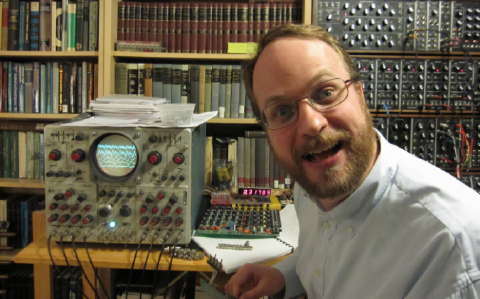
- When he's not teaching or consulting, he also collects and repairs scopes, thanks to JW's inspiration: http://www.youtube.com/watch?v=I6ODi7qSpYg
- Kent has a 511, a 556 and a 7104. Great hardware! He also has one digital scope from the older era: 7854
- Kent was the historian and editor for the IEEE Control Systems magazine and did a feature about analog computing.
- Beyond all this, he's also an avid book collector and has hard-to-find books from the Rad Lab and the Manhattan Project (the ones that are allowed to be collected).
- He's now developing a new class along with students to teach EE Prototyping. We can't wait to see how that turns out!
Transcript
Chris Gammell: This is The Amp Hour Podcast, recorded October 28th, 2012. Episode 119, with guest Kent Lundberg, Luculent Linear Legacy.
Dave Jones: Welcome to the Amp Hour. I'm Dave Jones from the EEV blog.
Chris Gammell: And I'm Chris Gammell of ChipReportTV and Chris Gammell's Analog Life.
Kent Lundberg: And I'm Kent Lundberg, a visiting professor at Olin College and oscilloscope collector, historian, blogger, consultant, others. Nice. I like it.
Dave Jones: The others. Sounds interesting. Thanks for joining us.
Kent Lundberg: Well, I guess I didn't actually want to say, now I'm going to say it, but I didn't want to say, you know, jack of many trades, master of none. Right.
Dave Jones: And you're a teacher at MIT as well?
Kent Lundberg: Yeah, I teach classes there part-time. I did have a teaching appointment there several years ago, and then I'm still involved in a couple of classes on an occasional basis. That's cool. So I do a little teaching part-time in several places.
Chris Gammell: Well, Boston's a good area for that kind of thing, so you can kind of bounce around all the different fun companies and schools in the area. Right.
Dave Jones: And you're a Jim Williams aficionado. Yeah, I've been doing the blog and... Which we've talked about here on before, haven't we, Chris? Because you're a big fan of it. A couple of times. Yeah. Oh, yeah. Reading Jim Williams, it's called.
Kent Lundberg: Yeah. Yeah, thanks. I appreciate the shout-outs.
Dave Jones: Reading Jim Williams dot blogspot dot com dot au. Dot dot au?
Chris Gammell: Yeah. Dot au, no. Dot Boston? Dot com.
Dave Jones: Well, mine's got dot au on the end of it, so I don't know how I got dot au.
Chris Gammell: Oh, that's weird. There you go.
Dave Jones: I've got the page open here, and it's dot au.
Chris Gammell: Must have just added that for you. Something special.
Dave Jones: Maybe it automatically uses the blogger server in Australia or something. Who knows?
Chris Gammell: Maybe that's Aussie-isms to the excellent writing. Oh, right.
Dave Jones: It actually changes all the words. It's got some smart algorithm on there that translates from Yankee into Australian. Yeah. Right. Sure.
Kent Lundberg: Well, so he was a friend of mine. Oh, really? And I was absolutely devastated when he died suddenly and unexpectedly last year. Yeah. I actually met him through MIT, through Professor Jim Roberge, who was my advisor at MIT and the professor that I teach with the most. We teach a class called Advanced Circuit Techniques. It's kind of the graduate analog circuits class. And Jim Williams would come in and give a guest lecture whenever we offered it. And he actually told the students that if they passed the class, then linear technology would fly them out to California for a job interview. Nice. Oh, that's way. Yeah, just like an open invitation. That's brilliant. Just an open invitation. And if you make it through this, and I have to say, it is a tough class and it's a lot of work. Right. And there's some large kind of design projects and labs you have to survive through. But he left that open. And I know several students took him up on it.
Chris Gammell: Oh, yeah.
Kent Lundberg: But he'd come out and give the guest lecture. And then we'd kind of hang out and talk. And then a couple of times when I'd go out to California, we'd go to flea markets and go to junk shops and stuff. And he was a great guy. And he was a friend. And the kind of person he was, I think a lot of people considered him to be a friend because he was just that kind of guy who would spend the time to talk to you and have great conversations and tell stories and just be a fun guy to hang out with. And so, yeah. So when he passed, I felt like I had to do something. And I realized that I hadn't really read through all of his application notes. And I just thought, hey, here's something I can do. Here's something that I can kind of have a last conversation with him and kind of read through some of the stuff he wrote. The other thing that I did is I wrote up a bibliography of his publications. And he was a prolific author. He once told me like 350 publications and articles and app notes and book chapters. And I've found over 300 of them. I haven't found all of them. But I've found over 300 of them. So there's plenty of stuff that I can continue to work through and read through. So it's kind of a chance to get through some of that stuff. That's great.
Dave Jones: It ended up taking you years, wouldn't it, by the time you methodically went through each one of them?
Kent Lundberg: Yeah, yeah. I think it's not a project. And certainly at the rate that I've been going recently, it's not a project I'm going to end anytime soon. I think if I got stuck with it, I had a good weekly schedule going on. And then the term got in the way. I haven't kind of gotten back to it. But yeah, it was going to take me at least a year just to get through the app notes. And it's kind of unfair to call some of his things app notes.
Chris Gammell: Well, the 25-page ones you're talking about? Like, what's that, app note 24? Is that the one that's, I think that was Thermocouples or something like that? Yeah.
Kent Lundberg: Yeah. I mean, it's just, you know, you think of an app note where they just, you know, they, some companies, you know, provide a just, you know, quick documentation or an example circuit to use their chip in. A recipe, right? Exactly. Yeah. It's a quick, you know, maybe half a dozen recipes, but it's just kind of a quick recipe book. And what, you know, what Jim would write with these, you know, voluminous treatises on, you know, the practical approaches to measuring temperature. Yeah. Right? And it just so happened that he was talking about, you know, that, you know, linear technology had a thermocouple chip that they wanted to sell you. But that's not, that's not what Jim was talking about. He was talking about, you know, how you instrument a variety of temperature controller problems. Yeah. And so, and like, you know, the app note 47, which I think is one of the better ones, probably the best one. You know, it's 130 pages, right? It's a book. It's a small book. It's not an app note. So to call it an app note, it's kind of disrespectful.
Chris Gammell: But, and, and, and, and I've got a copy of, I think they were all the, if people see them out in the wild, if you see, I guess they call them application manuals or something like that, but there's different volumes of them. And I have the 90, the 93 and the 97. And that has, I think all of them. And it's, you know, it's a solid, you know, probably eight inches across my bookshelf.
Kent Lundberg: Printed copies of all the, of all the app notes, not just the Jim Williams ones, but kind of all the linear tech. Yeah. Right. I mean, he wrote, he wrote a good 50% of them probably, but.
Chris Gammell: And the other ones are kind of, I mean, like nothing against the other authors, but, you know, you can, you can tell when you're going through, you know, like, like I was flipping through and there's like, okay, okay, this is a Jim Williams one. This is Jim Williams one. And then it's like uses of the LT 1024 or something like that, you know, and it's like, it's very specific to that chip. And you're like, okay, well, this is what, this one wasn't Jim, right? It has to be like poetry for DC to DC converters. That one is Jim Williams. Right. And, uh, so yeah, it's, it's, you can tell.
Dave Jones: By any tangents he goes off on, right? Oh, right. Yeah.
Kent Lundberg: The number of tangents and the number of appendices, you know, some of his app notes are, you know, he's got, he's got a nice little discussion of the problem at hand and the solution and a circuit and description of the circuit. And then, you know, a good 60% is, uh, is all appendices on all of these tangential topics on the history of analog to digital conversion and, you know, how to make sure that your scope probes are properly compensated. And, and, you know, some approach to verifying the measurement chain in the wide, wide band amplifier measurement, you know, and just all of this stuff that's like, you know, important, necessary, but just tangentially related to the topic at hand, which was the first eight pages of this 48 page app note. Again, app note. Right. So, so it's, yeah, it's really the, you know, you can see the scientist in him, right? You can see that he's really trying to.
Chris Gammell: So do you use these app notes in, in, in your teaching as well? Or, or how, I mean, how, how do these come into your life outside of the blog? Is it, is it mostly just a enjoyment thing or is it, uh, actually a, you know, using them in everyday life?
Kent Lundberg: Yeah, some of it's certainly, certainly an enjoyment thing, but certainly, you know, they are useful references on, you know, depending on the class you're teaching, but the useful references that you can point students off to. I mean, I, I really recommend, you know, half the time when students come to me with, with measurement problems with the instrumentation problems, you know, I can't get this trace on the oscilloscopes. Like here, go read this. Come back in a couple of weeks. If you still have a question. Yeah. And it's not just to, you know, send them away for a month while you try to read through it. But, you know, I mean, like the, the app note 47 has, has a whole tutorial on oscilloscopes and probes and connections and grounding and kind of all the things that, you know, if you haven't really thought about it, if you haven't really worked with it before, you don't, uh, you don't know. Of course. Yeah. You don't know what you don't know.
Dave Jones: You know, it's not, it's not instant knowledge, you know, it's like people aren't born with this knowledge. It's, uh, it's learned. So what are some of the, it's learned the hard way often. That's true. Yeah. Yeah. You make a mistake. Your thing doesn't work. You get in noise and you, you know, you're picking up, you know, uh, you know, you've got ground bounce or something and you can't figure out why. And well, you know, it's, uh, all this stuff can often come the hard way, which some people say is the best way to learn is by making them is by actually, you know, actually troubleshooting things.
Chris Gammell: So Kent, what are, what are some of the, uh, the classes that you are teaching right now?
Kent Lundberg: Um, so mainly the, kind of the two threads that I teach are, uh, class and control systems. Um, and so I, I taught a class of, in control systems at Olin and a class and feedback systems at, uh, at MIT for, for years and years. Um, so it's kind of one thread. And then the other thread is kind of, you know, practical topics in analog circuit design. Oh, so, uh, you know.
Dave Jones: That must be tough.
Kent Lundberg: Analog filter design or, or, you know, data converter design or just, you know, kind of transistor amplifier topics. Yeah, yeah. Um, uh.
Dave Jones: Because all that control systems theory stuff, that's stuff that the students traditionally hate, right? That's all that, uh, control systems theory. It's, you know, even its title sounds boring as bat poop.
Kent Lundberg: Well, so, so there, you know, there are, there are differences of, differences of opinion there. I mean, there are different. Of course. I mean, not just opinion between you and me, but, but also kind of different ways to teach it, right? Because there's, there, there's, you know, I, I believe a very practical way to teach the material and there's a very mathematical way to teach the material. And I'm.
Dave Jones: Obviously one's better. Well. And you'll probably get no argument on the show. Yeah, exactly.
Kent Lundberg: I mean, I'm sympathetic to the, some of the mathematics behind control theory are really, it's really beautiful. I mean, it's really.
Dave Jones: They're really elegant and beautiful.
Kent Lundberg: Elegant stuff. And it's just great. And you think about, you kind of, you know, take the 50,000 foot view of it. And it's really this, you know, kind of this gorgeous application of some, some, you know, esoteric and sometimes complicated mathematics. Yeah. But it's a great application. I was going to say it's kind of terrible as well. But some, yeah, some students hate that, right? And so they get kind of, I think the, the, the faculty gets seduced by the beauty of the mathematics and forget that students want to use this stuff to, you know, go build a Segway. Yeah. Right. Or they want to go, they want to go do some motor control problem or they want to keep their amplifier output from ringing so much. Right. And so I've, you know, kind of pretty much predominantly or I guess the exclusively taught kind of a classical control systems class that's, you know, kind of frequency domain. There's no linear algebra. It's very practical in terms of, you know, kind of how to, how to get the model you need, how to do the measurements, how to do the compensation to improve the behavior of the system. And then, you know, either have a big laboratory component or a big design problem component at the end where the students have to go and apply it and they have to, you know, and, and it ends up being kind of the embarrassing, one of the embarrassing things about control systems is that the actual control system design, actual application of control systems theory. It's like, it's like 10% of the problem, right? The other 90% of the problem is getting the hardware to work, getting the sensors to interface with the, with the controller that you have, get the motors to not saturate when you're trying to drive in this direction and that direction. And so, you know, I think that's, it's, I think it's good experience, but again, it's just, you know, it's where the rubber meets the road is in the, in the application of it. And one of the things that I think, you know, makes a good control systems engineer is someone who's not afraid of being kind of a, an integration engineer. It's like, oh, I've got these six components for the system I want to build. And, you know, half of my time is going to be spent in interfacing these six components together. That's not a bad thing.
Dave Jones: You're welcome to engineering. Exactly.
Kent Lundberg: That's how you make things work. Right. So.
Chris Gammell: Well, what about that?
Kent Lundberg: That's the way, that's the way I like to teach control.
Chris Gammell: That's always tough in an academic setting, but maybe that's just my experience. I mean, maybe it's different at Olin or MIT, you know, what is, what is the general, are you similar to other professors around there or are you different in that approach in the practical versus classroom kind of stuff?
Kent Lundberg: Yeah. I mean, part of it is, is that I'm not, I'm not a full-time academic. Okay. So, you know, I, I only teach about half time and the rest of the time I consult. So, so I'm not kind of a, you know, I'm not kind of a, a full-time, you know, professor academic guy. That's kind of the, I think that, you know, you had mentioned earlier that you hadn't really had a, you know, you hadn't really had a real academic on the program yet. And you still haven't. Okay. Because I'm not a real. Right. Yeah, of course. I'm not, you know, I'm not a real professor. I'm not a real, I'm not, you know, I'm not a real 10 year track, you know, cranking out the publications guy. So I spent kind of half time teaching and half time consulting. And so, you know, I bring a lot of that with me when I come into the classroom. It's like, all right, let's, you know, let's build hardware. Let's make stuff work. We'll, we'll, you know, we'll do the theory. We'll do the math. We'll do the analysis. But, you know, the design and the implementation are just as important. And so that does make me, you know, that does make me kind of a little different from, from other, I mean, some of the other faculty look down on that. And that's fine. I can live with it.
Chris Gammell: Well, I was going to say, I don't think that, I don't know if we'd be able to have a pure academic on here. Because we'd be like, you know, you look at like the percentage of time. It's like, oh, so how's grant writing going these days? Is it enthralling? Yes.
Dave Jones: Because they're not enthusiastic. They're usually not enthusiastic about electronics in itself. They're more enthusiastic about. That's not what all the research is usually either. Yeah. You know, they're enthusiastic about the academic process and all that sort of jazz, you know, which we have little to zero interest here on the show.
Kent Lundberg: Or in their, you know, or in their particular, I mean, you know, I know people who are really excited about their particular research field. Of course. And it can be really, really interesting and really advanced and really complicated. But it's this thin, little narrow window. Yeah. You know, that if you understand what they're doing, it can be enthralling. And if you don't, it's just like, what?
Chris Gammell: Is there a reason you didn't, I mean, was it just a preference kind of thing of not wanting to do academic track where you were doing that kind of stuff?
Kent Lundberg: Yeah. Yeah. So, you know, I kind of tried at it. And it wasn't the, you know, it wasn't the lifestyle for me. Yeah. That I, you know, I don't know. I don't think I would have been very good at it. And at the, you know, at all of the other stuff. Right. Because teaching is a small part of it. And, you know, research is a large part of it. And then there is all of the, you know, grant writing. Politics. And kind of management and politics. Yeah. And, you know, university service and that stuff. And I just think, yeah, I'm better. I'm better building things.
Dave Jones: You're more of an engineer than a, you know, if you're a practical, if you've got that practical bent. Oh, yeah. Then you don't end up an academic. That's pretty much the way it works, I think.
Kent Lundberg: Yeah. I think that getting that practical, you know, wanting that practical emphasis does kind of, you know, take you out of that sphere. Yeah.
Chris Gammell: So what got you into the analog side of things in the first place then? I mean, how did you, what drove you into this kind of side of things?
Kent Lundberg: Mostly interest. Mostly, you know, some really good classes and really good professors I had at MIT. You know, Jim Roberge at MIT is kind of a famous analog guy. And I took his, he had kind of a series of classes that I took when I was an undergrad. And just decided that, hey, this is, this stuff is fun. It's interesting. It's, you know, there's, there's space in it to be creative and to, and it's, you know, it's, it's an interesting field and kind of a narrow enough field that you can, you know, gain, dig in with some expertise and, and, and have fun doing it.
Chris Gammell: Yeah. Yeah. Where do you, when, when you're, when you're telling your, you know, when you're working through problems with students and, and, you know, working through lab classes and such, I'm curious, what do you tell them are job prospects? Because, I mean, I, I always see articles about, you know, chip, chip design and the analog side, but on, on the, the integration side, which I think is some, some of your classes probably. I mean, where, where, where do you see that kind of stuff? Because that's, that's what I'm always, I mean, that's obviously what the field that I'm in.
Kent Lundberg: Well, you know, I think everyone, you know, a lot of companies need, you know, both, both, you know, designers that understand applications. And then, you know, I think application engineers that understand design. I think there's a, you know, there's a, there's a broad spectrum there, you know, from kind of the, the pure designer to the pure apps guy. And, you know, I think kind of, you know, a good student and, and I guess a student I'd be proud of could kind of fit anywhere in that, in that spectrum. And so I've certainly had students that have gone on to do, you know, to do real chip design kinds of things for, you know, for a chip company. And I've had students have gone on to do, you know, either kind of apps work or real integration work.
Dave Jones: Is there anyone we've heard of?
Kent Lundberg: Well, so I've got one student that's been on the cover of Wired. Ooh.
Speaker ?: Oh, right.
Kent Lundberg: And so that would be, so that would be, you know, Lady Ada of Adafruit Technology. Oh, cool. We were free. And of course, you know.
Dave Jones: That's right, because she, she, she went to MIT. Right.
Kent Lundberg: So I certainly don't take any credit for her success, but I like to say that she was a student of mine, that she took, she took the transistor circuits class from me at MIT. Oh, cool.
Dave Jones: Cool.
Kent Lundberg: So, yeah, that's great to, great name drop there.
Dave Jones: Well done. Now, you mentioned before, I wanted to ask you back when you said it, that only a couple of the students took, who completed that class with Jim Williams, took him up on the offer to fly out there and interview for linear technology. Why only a couple? Why wouldn't every young student take a free flight to wherever linear tech is and, and.
Kent Lundberg: No penis. As a junket.
Dave Jones: What?
Kent Lundberg: I would say, I would say a couple a year. I don't know. I don't, I don't know the exact numbers. I didn't, I didn't follow. That'd be interesting to find out how many.
Dave Jones: How many would finish the class? Like it'd be dozens, right? It wouldn't be dozens. No, it'd be 10. Oh, right.
Kent Lundberg: There'd be 10 students, 10 students that would finish the class. And then, you know, I would say, you know, several of those that maybe three or four of those would, would, would be interested in doing that. You know, would want to go and say, all right, that's, you know, that's what I'm after. I'm after a job with a company like linear tech or analog devices and would take them up on that. But yeah, no, I don't do a free trip. Yeah. Right. Go hang out with Jim Williams for a day. Right. I just did. Absolutely.
Dave Jones: Because if you take that class, right, it's a difficult, some would say obscure in quote marks class. Right. It's, it's not part of your normal thing. Right. You, you have to choose to do this, not your normal engineering course. Right. So the ones who choose that are going to be, you know, passionate or very interested about that stuff. And they're going to have the nows to complete it. So why they wouldn't go on to, you know, like a relatively small.
Chris Gammell: I'm sure that these students are very sought after Dave. I mean, I'm sure it's not just, you know, yeah, I'm sure, I'm sure that these kinds of students are getting flown a lot of different places. So I wouldn't. Right. Okay.
Kent Lundberg: And I'd imagine that the ones that didn't regret it.
Chris Gammell: Yeah.
Kent Lundberg: If not, they should. If they're listening. You know, there may be some that just say, well, I can't, I can't do that. I can't do that this summer. Because I've got to, you know, I've got to work on my research. I've got to finish this thing I'm working on. Yeah.
Dave Jones: Or I've just been offered, you know, $250,000 a year designing high speed trading hardware for Wall Street.
Chris Gammell: That's what I was thinking too. Oh, I hope. Yeah. I hope not. Yeah.
Dave Jones: Well, yeah, unfortunately. MIT students are sought after. That's where a lot of them end up. Or they've gone to work for the military or something. What is it? Half? Is it a half or a quarter of the world's scientists in some way, shape or form work on a something to do with, you know, military hardware? It's crazy. It's a crazy percentage.
Chris Gammell: Well, if you take it a couple steps back, I mean, everyone has some, I mean, like working on test equipment, right? I mean, there's some level of, so.
Dave Jones: Well, you know, how many engineers go end up working in, you know, these, you know, the darker side of engineering, so to speak? I don't know. It's an interesting question.
Chris Gammell: So what about the control system side of things as well? I mean, are you focusing mainly, you know, you said math is a big part of it and that you do get a practical side in the lab. But what are some of those lab side practicalities? I mean, are you doing like amplifier design in the lab or is it more the motor control type stuff?
Kent Lundberg: Yeah. So there's, so certainly amplifier design is, you know, one important piece of it. You know, doing just amplifier compensation and, you know, solving, you know, ringing and oscillation and overshoot kinds of problems. But then also.
Dave Jones: Does it involve a wet finger? Yeah.
Kent Lundberg: As little as possible. Oh, come on. You've got to introduce your shoes to the wet finger. Oh, no, no, no. Absolutely. You feel around. But, you know, that's not the, hopefully that's not the solution.
Chris Gammell: That's not the academic approach. What about network analyzers? I had that question posted on our subreddit. I mean, are you guys using that in the lab? Because I had never really used one until I got out and was actually in the field and using.
Kent Lundberg: Yeah. So I think that'd be, so me, not so much. Because I don't teach too much kind of at those frequency ranges, right? So I'm not really in the RF. Oh, no way, man.
Chris Gammell: You can use network analyzers down into the Hertz range if you wait long enough.
Kent Lundberg: So on the low frequency end, you know, like a dynamic analyzer like the HP 3562A is a great tool.
Dave Jones: Intimately familiar with those beasts.
Kent Lundberg: You know, it gives you a nice Bodie plot or a Nyquist plot just on the bench. And so certainly I do use that in my controls class. And that's a great resource.
Chris Gammell: See, no, I think that is the one I've used.
Kent Lundberg: Very often I'm just happy if the students know how to use an oscilloscope and can choose the right probe for the right measurement. Yeah. And network analyzer.
Dave Jones: I'd chain the bastards down until they can prove that they know everything. Oh, boy. Sorry. That's just me. I'd make a poor teacher, I'm sure.
Chris Gammell: So what about the students coming in? I mean, are they – what kind of exposure is there before this kind of – before they actually get to your class? I mean, I know that coming out of my circuits classes, my Bodie plot knowledge was pretty crap. And I never got to take a class like yours. So I mean, like, are you seeing people actually grasp these concepts before they come into your class? Or is it more of a –
Kent Lundberg: Yeah. So the level that I teach is generally kind of junior, senior electives and then some grad classes at MIT. So by the time they've come to me, they've been through a signals and systems kind of course. And so they've got the basic Laplace transform, Bodie plot, step response stuff down. And, you know, it's not to say they all know it or – you know, I think that's one of the great things I think about a class like controls or kind of an advanced class in circuit design is that, you know, it gives you a chance to really see why a Bodie plot is so useful. Yeah. Right. Exactly. You know, why it is that you study – I mean, you go through – you can go through a whole signals and systems class and be like, what am I going to ever use this for? I don't understand why we're plotting these crazy variables on crazy axes. Yeah. But, you know, you take a class in controls or you take a class in amplifier design and, oh, that's why. Yeah. And you get the – you really get the knowledge through use. And so that's why I like to teach – you know, I kind of like to teach that level of class because you have those kind of aha moments. Right. You see the students read, oh, yeah, that's what it's useful for. And so, you know, so it's not to say everyone comes in knowing it, but – They leave knowing it? It's utility. Yeah. I hope so. Yeah. Yeah.
Chris Gammell: That's – it's funny because I remember thinking, you know, once I actually figured out, you know, like just get hands on kind of like looking at them more and actually using them in a realistic context. All I could think back to is like learning them the first time and then like for the next year or so, all you ever see the first time you learn Bodhi plots is like, you know, single pole kind of, you know, 20 dB, you know, dive at a certain point and then like 45 degrees straight across. Right. You just – like that's the same plot you see for months and months and months. And then you get an actual circuit and you're like, oh, this is way crazier than that. I guess I'm not just using RC circuit or something like that. So it's – it was an awakening for sure.
Dave Jones: By the way, it's called Bode Plot.
Chris Gammell: Is it really? Here in Australia. Oh, no, that's right. We've talked about that before.
Dave Jones: Yeah, we have talked about it before. Bodhi. No, because we looked it up.
Kent Lundberg: Well, so the further complication there is Hendrik Bodhi's family pronounced it Bode. Oh, no.
Chris Gammell: Oh, there you go.
Kent Lundberg: So they pronounced it Bode up, but he himself – I don't know if he finally gave in or if he himself always pronounced it, but he himself ended up calling himself Bodhi. And so if you go to the man, if you go to the man, it's Bodhi. Broke his spirit, huh? His relatives might disagree with that. So it's Bode Plot. Nice. Okay.
Dave Jones: I've been to Bodhi in – it's a ghost town. Bodhi is an old abandoned ghost town out in east part of California somewhere, out towards the Nevada desert. Oops.
Chris Gammell: Dave's usual call. That's the ghost calling now.
Dave Jones: Oh, boy.
Chris Gammell: Yeah, that's people from the town telling him that he's pronouncing it in wrong. Very interesting. Right, exactly. It's the family. The family's calling with the – That's right. It's the family to complain. The naming rights, yep.
Dave Jones: But that's actually spelt B-O-D-I-E. Bode. Gotcha. It's the town. So, yeah.
Kent Lundberg: So it's really not the same thing at all.
Dave Jones: Anyway, Bode Plot. Thank you very much, people. Even though I'm out number two.
Chris Gammell: Now we'll be able to tell Dave's actually from Australia. No, it wasn't – we weren't sure up until this point. But now we're definitely certain.
Dave Jones: Well, apparently you're into Australian music, Kent.
Kent Lundberg: Well, so, yeah. I've got a favorite band from – actually, I swear I'm not pandering. But I do have a favorite Australian band, and it'd have to be Sydney's own Severed Heads.
Dave Jones: Oh, Severed Heads.
Kent Lundberg: Never heard of them.
Dave Jones: Are you familiar with them? No, never heard of them. Oh, wow. They're some death metal thing, are they?
Kent Lundberg: I'm jealous that they don't – it's actually one guy now, Tom Ellard. He doesn't tour anymore, but he occasionally does shows in Sydney. I'm jealous that he'd have the opportunity. But I'm not surprised at all that they're kind of a niche band.
Dave Jones: Oh, they were founded in 1979.
Kent Lundberg: But, yeah, no, they've been one of my favorite bands for like the last 25 years. Wow.
Dave Jones: Their genres are industrial music, synth pop, techno, and electronica.
Kent Lundberg: Yeah. Yeah, they've – Ooh. They've had the long career that's kind of been, you know, genre blending over the past 30 years, right?
Dave Jones: Right. There you go. I actually – yes, I come to think of it, I have heard of them. There's been talk about that, yeah, because they do weird electronic music, right? Yeah. You do weird synthesizer stuff, right? Yeah. Like, you know, maybe even circuit bending and weird shit like that perhaps. Maybe not, but, you know, you know what I'm talking about.
Kent Lundberg: Yeah. Yeah, that kind of – and they were also pioneers in kind of early video synthesizers as well. Right. So there was a guy – there was a – early on, there was a guy in the band that, you know, his instrument, quote-unquote, was the video synthesizer. And he would do these live, you know, completely analog, completely – I mean, you can kind of imagine, you know, that mistuned television, you know, backdrop behind the stage. But he would just, you know, do these crazy visuals during the concert with a video synthesizer. That's really cool.
Dave Jones: And every show would be different, right? And every show would be – Because it's completely analog-y.
Kent Lundberg: Yeah. Yeah.
Dave Jones: Which is a technical term, folks. Analogy is a legitimate engineering term.
Chris Gammell: So, Kent, are you a synthesizer fanatic as well? Did I see that on some of your pages? That you actually do that as a contract thing? No, no.
Kent Lundberg: I do it more as a hobby. Okay. But – so, you know, it's just kind of another outlet for my pent-up analog design stuff. Oh, man. We got a good one here, folks. I love it. I love, you know, both. So I love analog synths and, you know, modular synths and kind of the whole process of, you know, kind of building up sounds from – Yeah. From, you know, kind of the basic components and the basic building blocks. And so I've got more gear than talent.
Chris Gammell: Hey, that's how I am, too. I have four pianos and zero talent.
Dave Jones: That's a great T-shirt slogan. More gear than talent.
Kent Lundberg: But I have a lot of fun. I have a lot of fun playing with it. I have a lot of fun, you know, messing around with it and building simple stuff.
Chris Gammell: What kind of synthesizers do you have? I mean, do you actually buy finished goods and, like, mess with those or do you actually build your own up?
Kent Lundberg: A little of both. If I had more time, I'd build up, you know, I'd build up more stuff myself. But, you know, there's been kind of – there's been a recent renaissance in kind of analog synthesizer design in the past, you know, 10 or so years. And so, you know, Moog is making things. There's a company – you know, some kind of famous people who were doing analog synths in the 80s have kind of gotten back into the business. So a guy named Dave Smith in California has a company that produces several neat scents and there's kind of a neat variety of things that are available now.
Dave Jones: Is there any audio foolery involved in that part of the industry?
Kent Lundberg: What do you mean?
Dave Jones: Audio like as in all the, you know, the $5,000 power cables and all that sort of thing. Oh, yeah.
Kent Lundberg: Absolutely. Absolutely. That shows up.
Chris Gammell: And super pure sine waves like –
Kent Lundberg: Well, it's worse. It's actually worse than that because, you know, some of these synthesizers were originally built in the 70s and 80s with really crappy components. Yeah. Because they were cheap, right? Right. And then, you know, and then so people try to recreate that now. Right. And so they have to go and find the same crappy transistors. And there's one story – I don't know if it's true or not. But there's one story that, you know, there's a particular transistor that's used in one of Bob Moog's famous designs. And it's become incredibly hard to find and people pay ridiculous amounts of money for it on eBay.
Dave Jones: For this crappy, sandy transistor.
Kent Lundberg: And so someone, like, asked him while he was still alive, asked him, you know, why did you choose that transistor? And he said, because I got, like, a 55-gallon drum of them for free surplus. And so I just used it in all my designs. Yes. That is brilliant. But, you know, but now that's the sound. Oh, yeah, yeah, yeah. You know, that – The non-idealities of that stupid device are what people think of as a good sound. So they've got to chase that down. So absolutely the audio fool stuff exists at every level, certainly.
Chris Gammell: That was my first exposure to analog. There was this guy that took off-the-shelf guitar pedals. And his name was Analog Man. And all he did was solder in different op-amps. And it was, like, this stupid Panasonic op-amp. And, oh, you know, it's got this certain crunch to it. It's like, oh, come on. Really? And, like, people would pay, like, $40 for this, you know, upgrade kit. And it was a blue LED and a different op-amp. And it's like, oh, man.
Dave Jones: Jeez, I wish I'd thought of that. I know. That's what you're thinking. Yeah.
Chris Gammell: I'm sure at some point it'll fall out of favor again. You know, analog as a term will fall out of favor again. And, you know, there will be some new term that takes its place. But I agree.
Dave Jones: It'll always come back, though. Yeah. It's always – it's got that old-world charm. You know?
Chris Gammell: That nice, warm sound.
Dave Jones: Which can't really be beat. You know? It's –
Kent Lundberg: It's warm and crunchy.
Speaker ?: That's right.
Kent Lundberg: Crunchy. Yeah.
Dave Jones: It kind of – I don't know what movie it was, but it just flashed into my head of – they're in the future. I think it was Will Smith. Might have been iRobot or something. Yeah. I don't know. It was one of those future movies. And all he wanted was a pair of 1980s sneakers. You know? Like the Air Jordans or something. You know? Right. And he had like a gas motorcycle. 50 years in the future. Yeah. That's a product placement. That's all he wanted. You know? He's sick of the modern shoes. All he wanted was a pair of Air Jordans. Oh, boy. People long for that sort of stuff.
Chris Gammell: So you don't actually – you said you don't actually build these for hire, but you did have it listed on your consulting page. So what are you consulting in these days? What kind of work are you consulting for?
Kent Lundberg: So mainly analog circuit design, a little bit of control system stuff, and kind of related areas. I kind of joke that I do the analog front end from whatever the sensor is, whatever the real-world interface is, kind of up to the first analog to digital converter. And then you wipe your hands.
Dave Jones: And then I'm out. Absolutely.
Kent Lundberg: Once it's digital software, once there's an FPGA involved, I'm out. Oh, yeah. But I kind of do that. And then, you know, so I get involved in the power supply design that goes along with that. I've done a lot of power supply stuff. Yeah. And a little bit of RF, but not, you know, not a lot. I'm certainly not an expert. I can make some basic stuff work.
Chris Gammell: Yeah, it sounds familiar. I think you and I are in the same boat, especially with the not being very good at coding and or FPGAs.
Kent Lundberg: Yeah, I absolutely avoid. I tell people, you don't want me, you know, I don't know how, and you don't want me involved in the software.
Dave Jones: It's just going to end there. Absolutely.
Kent Lundberg: It's going to be bad for everybody. So just let me convert it to a digital bus for you, and then you take it, or somebody else can take it from there.
Chris Gammell: See, now, that was another question I was getting to as well, because the trend I've seen is that a lot of the front-end stuff, it's getting – I actually complained about this to my LT rep the other week, was that circuit design for analog guys is getting kind of boring. I mean, it's not like – there's obviously still a lot of problems, and, you know, we're asked to do more with less, and yada, yada, yada. But, I mean, like, with these analog front-end chips, it's really – it's getting a lot easier. Or not even easier, but just more integrated.
Dave Jones: And your complaint is?
Chris Gammell: Eventually, someone's going to figure out that maybe they can have a digital guy do it. And, of course, then they'll call me to, you know, clean it up.
Dave Jones: But, you know, like, that's basically the idea is that higher integration. Okay, so you'll have a digital guy lay out the board with no concern for, you know, analog performance. Performance, right.
Kent Lundberg: Right. Well, I think the flip side of that, right, is that the analog to digital converters are getting – have to be getting better.
Dave Jones: Yeah.
Kent Lundberg: They have to get better in order to make that work, right? Right. Because people want to – they want to convert closer and closer to the front-end, whatever that front-end is. Yeah, that's right. And whether it's the antenna or whether it's the pressure sensor or whatever the front-end is, they want to convert closer and closer. And that just makes the analog to digital converter has to get better in order to do that. And so that's, you know, I think there's full employment still for people who can, you know, design analog stuff, design analog front-ends for converters or design the converters themselves. I don't think we'll ever run out of stuff to do.
Chris Gammell: No, well, I mean, at the very least we need power, right? But – Oh, yeah. Well, yeah, there's that. But I just keep yelling at these chip companies because it's like, come on, guys, leave a little bit here for me, you know? Like – I don't know. Are you doing like high speed or low current or what kind of stuff are you doing there on the front-end?
Kent Lundberg: Mostly low noise has been kind of the direction I've been pushed. Yeah. The jobs that I've been working on is kind of, you know, both in kind of the low-noise signal chain and also in really low-noise power supplies. Yeah.
Chris Gammell: Oh, yeah. Well, that'll – you're right. Like they'll never get that right with all this – I mean, switching anything, you know, usually someone's got to clean it up. With all the ground mounts, right? Yeah.
Dave Jones: That's my side of analog, too. Like, you know, if you want me to design, you know, a one-kilowatt, you know, amplifier or something, it's like, leave me out, you know? But if you need something that, you know, is super low noise or something, yeah, great. Not a problem. So are you involved in that high-power end of stuff?
Kent Lundberg: No. High-end of town? No, not really high power. You know, probably the power supplies I work on are in the, you know, maybe 100-watt area and below, but nothing.
Dave Jones: Nothing serious, not like – Nothing serious. No, no, no. Big huge rack gear to, you know, pump out megawatts to an antenna or something. Yeah.
Kent Lundberg: No welding machines.
Dave Jones: Right.
Chris Gammell: So your consulting company is called Keeling Flight Hardware. I didn't quite get – where does that come from? Is this satellite stuff? Is that why it's called that?
Kent Lundberg: Well, so they're kind of – one thing, the flight hardware – flight hardware is a term that's sometimes used just to mean ready to go. Oh, I've never heard that. Oh. So if you've got – okay. You know, the flight hardware is the kind of the final prototype.
Chris Gammell: Okay.
Kent Lundberg: The one that you're just ready to take into the field. So that's kind of where that name comes from. It also works out that Keeling Flight Hardware Limited has the same initials that I do.
Chris Gammell: Yeah.
Kent Lundberg: So that's the secret message that's buried in there. Yes. But I didn't want to be – you know, I've got some friends that are, you know, that have a consulting company and then it's just, you know, their name, comma, Inc. Yep. Right? Inc. Yeah. Or LLC. Yeah.
Dave Jones: Right. Analog Life, Chris Grammar. I know. Chris Grammar.
Chris Gammell: My company is Analog Life, LLC.
Kent Lundberg: Okay? So don't even. Oh, okay. Don't even. Yeah. No, that's great. That's great. So I wanted to avoid that. Nothing wrong with that. Right. It's just that, yeah, I wanted something other than my name, LLC. Right.
Chris Gammell: Yeah. You know, I was telling a friend about that actually because, you know, I was looking through a list of contractors. You know how like a lot of vendors, a lot of like chip vendors or software vendors will, you know, list people who are competent in their programs or whatever. And it's usually just an application process. But I was going through a list like that. I was telling a friend, you know, like it's very easy to tell when it's a person versus, you know, a consulting company. And it's kind of like a little game to try and outwit people like me looking for someone, right? Yeah, yeah. It's like, oh, of course I'm a 30-person company. Let me hand you over to marketing. Hello? Yeah.
Dave Jones: You're obviously a one-man band, dude. I could spot you a mile away. Right. Right. Exactly.
Chris Gammell: I mean, I'm easy to spot, but, you know, someone like Kent, I'm sure, could, you know, pass it off, right? Yeah. Yeah.
Kent Lundberg: Just don't ask me to put you over to marketing.
Chris Gammell: Right. Exactly. Oh, they're on vacation.
Dave Jones: Well, you can hand them over to someone who speaks in Indian accent or something. There you go. Got to work with the voices. If you can speak, you know, if you're very good at different accents, you could really make yourself sound like a big company.
Chris Gammell: Yes. It's strategic.
Dave Jones: So you have the front desk receptionist and then, you know, hand you over to the sales guy and then to marketing. Yeah.
Chris Gammell: So, Kent, you also work at Lincoln Labs. Is that right? I do. Did you know Greg? Yeah, I do some consulting there. Our previous guest?
Kent Lundberg: Yeah. So I met him there. It's kind of a long story. We got time. But, so, you know, Lincoln, I mean, I think Greg talked about this. Lincoln's a, you know, Lincoln's a huge place. Yeah. Like 3,000 people who work there. And, you know, they take their job of kind of doing research and providing advice to the U.S. government really seriously. And part of that is that, you know, that, you know, when there's a big program, they'll have, you know, they'll have a team of really smart people working on it. And then they'll have sometimes a team of really smart people kind of looking over the shoulders of the people who are kind of working on the program. Really? And so there's kind of this, you know, this culture of peer review, sometimes informally and sometimes formally, where you actually kind of, you know, sit down and go through design reviews. And it can sometimes get, you know, it can, you know, it's all, you know, it's all professional, but there are some professional rivalries and sometimes can get contentious. You know, with any design review, you sometimes have people throwing tomatoes at the speaker. And then there's kind of the additional thing. Anytime you get a really big engineering company or engineering organization like that is that, you know, of course, there's kind of different divisions. Yeah.
Chris Gammell: Some with more money than others, some with more favor, right?
Kent Lundberg: Right. Yeah, exactly. And some with different structure than others. And kind of one of the funny things about Lincoln, one of the interesting things about Lincoln is there are these kind of mission divisions and then there's an engineering division. And the mission divisions are the, you know, are the people who interface with the sponsor. And they really do the, you know, they really do the analysis and the design and the research into, you know, meeting the requirements and meeting the needs that the sponsor wants for their program. And then there's the engineering division that actually builds the hardware.
Dave Jones: Who are the Oompa Loompas.
Kent Lundberg: Yeah, exactly. And so the engineering division actually builds the hardware and then, you know, hands it back to the mission division to, you know, to do the tests and to do things. And so I'm in the engineering division at Lincoln. And Greg was in one of the mission divisions. And so we, you know, we worked on a big radar project together, but we were kind of on opposite sides of the table. And, you know, and so the, you know, the engineering division kind of looks askance at the mission divisions because, you know, they're top heavy with managers and, you know, they're a bunch of theorists that don't know which end of the soldering iron to hold. Yeah. And the mission divisions. I hear a battle royale coming on here. I think we got to have Greg back. And the mission divisions look down on the engineering division, of course, because everything takes too long, costs too much. It never works the first time. And so, you know, so there's this, you know, professional rivalry that goes on between the different groups. And so Greg and I were on different sides of the table. I think if we had met in any other circumstance, you know, we've got a lot of things in common. I think we'd be great drinking buddies. Yeah. The way we ended up meeting at Lincoln, it's kind of, you know, we kind of look at each other suspiciously.
Chris Gammell: He's one of them. He's one of them. He's in the wrong group, you know. Maybe we'll have to have an on-air, you know, drinking buddies session sometime. We can have both of you guys back.
Kent Lundberg: That's great. I don't know if that was too much inside baseball. No, that's great.
Dave Jones: No, that's good stuff. I mean, that's good. That's what happens at every big company or every big organization.
Chris Gammell: Yeah, exactly. I mean, it's just even the divide between, you know, marketing and engineering a lot. I mean, it kind of seems like the mission guys were a little closer to marketing, although they seem like they still had a lot of knowledge about stuff.
Kent Lundberg: Right. They're still all PhDs, right? Right, right, right. But they're just, you know, they're just… They're more apps level than… Yeah. Right. Yeah. They're closer to the sponsor and they're, you know, closer to the analysis. And they're not, you know, they're not building the hardware. Right. Some do. Some do. There is some of that. But they're not, you know, they're not bolting it all together and then handing it back for them to break.
Chris Gammell: Right. Well, I just remember my first company, though, like, you know, like talking to marketing guys. Like, oh, you know, you always hear coworkers complaining about, oh, well, you know, Mike over there is asking me to do this and this and that. And then so, of course, in your mind, it becomes this, you know, this competition. And then you talk to Mike and it's like, oh, Mike's kind of a cool guy. So, like, what's the problem? Right, exactly. And it's just work. So, it's just, you know, that's just what it is. Yeah.
Dave Jones: What do you think of Sheldon from the Big Bang Theory saying that engineers are the Oompa Loompas of the science world? Is that a slap in the face or does it have an air of a...
Kent Lundberg: Well, I mean, the flip side of that is scientists are people who don't know how to make stuff work, right? Yeah, yeah, of course. If scientists could actually build working hardware, they'd be engineers. But they're not, so they're scientists. Yep. So, you know, I think the really smart people, the really smart people, the really capable people become engineers. And, you know, the people who the next layer down become scientists.
Dave Jones: They're smart and become scientists. We could have a revolt.
Chris Gammell: I think we're in a bit of an echo chamber here as well. But that's, you know, what do we care, right? Yeah, yeah. Right. There's no scientists in here. So, Kent, what about your, I mean, you are a guy that likes building stuff and likes taking stuff apart. What about your scope stuff? I mean, it seems like you're pretty big into the scope side of things and, you know.
Kent Lundberg: Yeah. So, I kind of, I do have to blame Jim Williams for that. He got me into kind of the scope collecting business. Uh-oh. And so, I've got, I've got a collection of vintage Tektronix instruments.
Dave Jones: I must ask, are you married?
Kent Lundberg: I am.
Dave Jones: I am married to a very, to a wonderful understanding woman.
Kent Lundberg: Well, that's two now. Just like Alan. Who doesn't, yeah, who doesn't go into the basement or the garage and count blue boxes.
Dave Jones: Why were they, why were they always blue?
Kent Lundberg: Oh, that's just the, that was just the Tektronix color. They, just that, that beautiful blue paint. I don't know where the history of that comes from. And it wasn't always blue because the very early ones, the very early Tektronix ones were kind of a gray. Yeah. Like the, the, the first product, the 511 and the, I think the 511, 512, 13 and 14 were all kind of a gray color. And then the, the kind of the next, the next series, the 535 series ended up being, ended up being that blue. Do you have any. Which you can still buy. Yeah, you can still, there are people who sell, who sell that blue paint so you can touch up your scopes. It's a special Tektronix blue paint.
Kent Lundberg: A couple of guys that sell it by spray pan.
Dave Jones: Well, some companies take their color, their official color very seriously. Like that, some even specify on their website, the official, you know, company X color is Pantone, da, da, da, da, da. And, you know, there'll be a Pantone specific color. And I, I've worked for companies that have fussed over their official color. You know, oh no. The hue is slightly off from this manufacturer of this part. You know, no. I can't use them anymore. They screwed up our, you know, our, they didn't match our Pantone color. It can be serious business.
Kent Lundberg: Send it back.
Chris Gammell: Yep. Yeah. Can't you have any prize jewels in your collection? I mean, any, any hard to find or hard to fix?
Kent Lundberg: Um, so there, there, there are, there are two that, uh, there, there, I guess there are two that I'd say are, are probably the prize jewels. Um, well, three, they're probably the prize jewels. So I do have a, um, yeah. Don't let me think too long. I'll come up with a longer list. True skate guy here. He loves all of them equally. Uh, I do have a five 11, which is the first, uh, the first oscilloscope that Tektronix made. Um, and so that's a nice, that's a nice one. Um, the, the five 56 is the dual beam plugin scope. That was probably Jim Williams favorite. Yeah. Uh, I have one of those. That's a very nice, it's a very nice oscilloscope, very capable. And the fact that it's got two beams and kind of two plugin slots, um, let you do a, a kind of a wide variety of, uh, of things with it. Um, but probably the nicest one, probably the one that I'd save in a fire. Um, and not only because.
Dave Jones: And, and, and you've thought about this, haven't you?
Kent Lundberg: Well, well, also, also because it, it also be, you know, it's also one of the few that I could actually, you know, lift and carry. Uh, well at the five, the five 56, you know, I would, I would want to save that, but I would die. You know, I would not make it out in time. Exactly.
Dave Jones: Um, it's okay, honey, I'm coming. I'm just saving the Tektronix. I just gotta get the scopes. I'll be there in a minute.
Kent Lundberg: So the one I'd save would be the, the 7104, which is one of the big, um, the 7,000 mainframe scopes that have the four plugin bays along the long, along the bottom of it.
Dave Jones: And you can carry that one. These ones you can come on trolleys. You can just wheel it out, right? Yeah. It'd be nice if I had.
Kent Lundberg: I don't have enough, I don't have enough carts for all my scopes, but that's the one I'd probably save. That's a beautiful scope, um, made in the late, made in the late seventies. It has a, it's a purely analog scope with a gigahertz bandwidth. Um, and, uh, it's just, uh, uh, an amazing piece of technology. And there's kind of a great story behind it in that, um, the original customer for that scope was the, uh, us atomic energy commission when they were doing their, doing their nuclear weapons testing. Uh, that they wanted a, they wanted a high bandwidth one gigahertz scope. And so they went to Tektronix and asked them, um, asked them if they could build a, a one gigahertz scope for them. Um, so Tektronix went and thought about it and then came back to the atomic energy commission and said, yeah, we can do this. This is in the seventies. Um, but they're going to cost $30,000 and that's, you know, $30,000 in the 1970s to buy you a house. Right. Yep. Um, they're going to cost $30,000. You're going to, you're going to have to buy a thousand of them. Oh, and then, and then we, and then you have to let us sell them, you know, sell them on the market when, when we're done.
Dave Jones: Yeah.
Kent Lundberg: And so the, and so the atomic energy commission said, um, yes to number one, yes to number two. Um, and we'll cut you a check for $30 million and you can sell them. But you can only sell them to other Americans.
Chris Gammell: Oh, like, uh, yeah.
Kent Lundberg: And, and for, and for years after that, for at least 20 years after that, you know, the importation of high bandwidth oscilloscopes was seen as evidence of nuclear proliferation. Yep. In the 1990s, when Pakistan imported some high bandwidth scope scopes, people said, oh, they're ramping up their nuclear program. And that's why.
Dave Jones: Some poor hobbyist from, some poor hobbyist in Pakistan bought a one gig tectonic scope when eBay and all hell breaks loose at the UN, you know?
Kent Lundberg: You know, they can't say that anymore because now all communications is up in that frequency range. But, you know, until, until kind of the mid to late nineties, kind of the reason you'd want a really fast scope is because you were looking at neutrons or something.
Chris Gammell: Well, they, they had the same restrictions as a Keithley, but they still have them. I mean, basically they still, they're still all export restricted. So that's for like low current stuff. It's, it's kind of crazy. It's so.
Dave Jones: It's insane. It's just, just ridiculous.
Chris Gammell: Yeah. Dave, Dave goes off on rants about, uh, ITAR and filling out forms on distributor websites and stuff.
Dave Jones: Oh.
Chris Gammell: We all deal with it. It sucks. It's ridiculous.
Dave Jones: Yeah. I want to buy a resistor from DigiKey. Please fill out this export form. Are you, and tick the box. Are you going to use this for nuclear weapons? I want a ticket one day and see what happens. You know, just to, just to actually make some, some idiot paper pushes do some job in Pentagon, in the Pentagon or somewhere.
Kent Lundberg: You'd get visited by men in suits. Yes, you would. They would show up.
Dave Jones: And I would film the whole thing. It'd be awesome.
Kent Lundberg: It'd be funny as long as they were, it'd be funny as long as they were in coat and tie, you know, but if they show up in the bunny suits with the Geiger detectors, then it's not, it's not quite so funny.
Dave Jones: That'd make even funnier YouTube video. It'd be awesome. So any.
Chris Gammell: I'm sure Chris would bail you out. I'm fully prepared. No way, man. I'm not vouching for him. I live in the States. They can get me a lot easier than him. I'm going to bleep this all out on the recording, Kent. So what about scopes? Do you do any digital or is that kind of a, is that a, is that a no? Is that a kibosh on the, on the digital? Well, push your mouth out.
Dave Jones: Yeah.
Kent Lundberg: I don't, I don't collect any digital scopes. Okay. Okay. There's, there's maybe one, there's maybe one exception to that would be the, the 7854, which is the same, you know, the same 7,000 mainframe scope. It actually is a digitizer. Gotcha. And it's got a whole, it's got a whole 8k of sampling RAM in it.
Dave Jones: Oh, that was massive back then.
Kent Lundberg: Eight kilobytes. Yeah. Eight kilobytes of sampling RAM. It's like a whole waveform. But, uh, uh, uh, well, yeah, that's all you need, right? Exactly. You just need one, you just need one. You just need one sweep. Anything else would be excessive. So, uh.
Chris Gammell: Well, especially when it costs that much, right? Right. Yeah.
Kent Lundberg: I don't even want to know what that costs.
Dave Jones: People, people laugh at that, but they forget it wasn't that long ago that, you know, 2k was a decent size sample memory on a scope. You know, that was all you needed. You know, I mean, 8k was, oh, that's one of those ones you had to mortgage your house to get one of those 8k sampling scopes, you know? Now it's like, well, you can get a meg for 300 bucks. Yeah.
Kent Lundberg: Well, the thing that I just kind of realized in kind of a flash of, a flash of epiphany, not that, I mean, like a month ago was, you know, the first hard drive I ever bought, now we're, we're, we're showing our, showing our age here, but the first hard drive I ever bought was a 10 meg hard drive. Oh yeah. Yep.
Dave Jones: And now I was a 20, so you're a bit older.
Kent Lundberg: I routinely work with files that large, right? I'm working with 10 meg files all the time. That's nothing. All the time. I'm, you know, opening 10 meg PDFs or 10 meg data sets or just.
Dave Jones: That's nothing. Try video blogging. Oh, I'm sure. As Chris can attest to now.
Chris Gammell: Gig raw files. Shooting in HD. Yep. Do you feel, Ken, do you feel, um, uh, not, I guess outmoded as analog. I mean, do you, do you feel, do you feel that pressure at all or, or no?
Kent Lundberg: I mean, no, I don't feel that. No, I think there's enough, you know, you've always got to interface to the real world. Yeah. So you've always got to take in, you know, you've always got to take in the real world data and, and, you know, whether it's temperature or RF or power supply or, you know, some measurement of position, you've always got to take in an analog variable. You do the processing on that. And then, you know, you've got some, usually some analog or that's, you know, that's not as ubiquitous as it used to be, but some analog output, um, that, uh, that you've got to deal with. And so there's always going to be, there's always going to be room. Do you see one of the things I, one of the things I used to tell my students was that, you know, a, you can build it, you can build a purely analog computer. Yeah. Right. You can build an analog computer and solve problems with just analog techniques. But if you think about a purely digital computer, right. It had no analog pieces in it at all. It was just digital. It'd be a doorstop, right? Cause there'd be no inputs. There'd be no storage. There'd be no hard drive. Right. There'd be no, there'd be no network. There'd be no wireless. There'd be no video or audio. There'd be no power supply. There'd be, you know, it's completely, it's completely, a block of all digital stuff is just useless without the analog bits around it to make it useful. Right.
Dave Jones: Well, you could maybe flash a lead.
Kent Lundberg: Yeah, you could. Well, but still, no, that's current. That's current that you've got to, you've got to drive current out of a pen to turn an LED on and off. No.
Dave Jones: Lead is a non-linear device.
Kent Lundberg: Yeah, that's true.
Chris Gammell: It's not, yeah, it's not, it's not purely digital. Yep. No. So, so you mentioned analog computing and you actually have, you've did like history on analog computing. Is that right?
Kent Lundberg: Yeah. I've done some study. I actually, I, I actually, uh, um, uh, guest edited a issue of control systems magazine on the history of analog computing. And I've done a lot of research and collected a lot of books on, on the history of analog back to the, um, back to the mechanical analog systems that were built in the 1920s and 30s. And then the, you know, the more, the more modern quote unquote modern, the electrical analog stuff that was built in the forties and fifties and sixties.
Chris Gammell: Oh, like op amps and I guess.
Kent Lundberg: Well, yeah. I mean, that's where, that's where op amps come from, right? I mean, the invention of the op amp was originally to, to make these analog, electrical analog computers work. That's right. Um, and so kind of.
Dave Jones: Hence the name also operational amplifier. They, they, they did operations. They did mathematical operations. That's the whole reason. That's where the name comes from. The whole reason they exist.
Kent Lundberg: Yep. And so, and so, yeah, so kind of my, my interest in the history of engineering, of electrical engineering, you know, all roads kind of lead back to, um, a lot of the roads lead back to analog computing.
Chris Gammell: Have you been following any of that stuff about the, uh, the trends back towards analog? Have you seen that at all? Like the, uh, you know, like, I guess you could say multi-level control could be one thing, but actually talking about, you know, because, because of shrinking geometries and, and kind of running out of room in terms of, uh, you know, gate widths and everything that eventually they might, they might move back towards analog.
Kent Lundberg: I guess I, I've seen a little bit of that, you know, kind of a little bit of trying to do, you know, trying to do some of the processing, what processes, what processing you can do in the analog domain before you do the conversion. Um, that it's a, it's always a trade-off, right? I mean, I think there, there'll always be niches where that kind of stuff can work, but, uh, um, you know, I don't think we're ever gonna, I don't think analog's ever gonna beat, uh, Moore's law in terms of integration and complexity and, and processing power. Um, but certainly, you know, certainly low power, low amplitude, you know, low sensitivity stuff. Um, uh, that'll always be analog domain.
Dave Jones: And that's why Chris keeps, uh, asking analog people on the show. He needs to feel secure about his, uh, choice. Did you sense that a little bit? Yeah, a little bit. I sense that a little bit.
Chris Gammell: It's tough, man. I mean, some of it, you know, you always see, it's, it's a trade-off between, you know, you hear, uh, well, there's no people that can do analog. It's like, well, yeah, that's true. There's, there's many fewer, but at the same time, you know, the economies have kind of been pushing for many, many ages of, you know, moving away from it, right? That, that's always been, you know, pushed into the fab, see as much as you can do there. So there, there is a focus on that from an economic standpoint. But I mean, I, I agree with Kent saying that there's always going to be analog signals. It's just a matter of how much fun stuff there is to do to those analog signals.
Kent Lundberg: In my opinion, that's, and, and, uh, well, and I think there's also, you know, there's also kind of a consolidation of the analog engineers. Yeah. You know, you can look at companies that don't have any analog talent. You know, some chip companies don't have any analog talent. You know, it used to be that every company had a couple of analog guys because they had to. Right. But, you know, now you've got, you've got the analog talent concentrated at companies like linear tech or analog devices or, or national or what used to be national. Um, and so, you know, you, you kind of have these, these pockets and I think those pockets aren't, those pockets, those pockets aren't getting smaller. They're getting larger as, as again, as the data converters have to get better, as the interfaces, as the, as the low noise amplifiers have to improve. Right. So, um, you know, I think, uh, you know, gone are the days where, where every, every electronics shop has to have an analog expert, but, uh, I don't think there's any fewer, no fewer applications and, you know, and maybe even more opportunities. Yeah. So you may have to move. Oh yeah. Or, or, or get, or get linear technology to open in the Cleveland design center. But, uh, well, they do that a lot. Actually, they, they usually, they do.
Chris Gammell: Yeah, they are talent. They're spread around. Right. They said they had like, I think 12 or 13 different design centers. Cause basically when, you know, an analog shop will close or they just say, eh, why don't you guys just, you know, keep working for us and you can stay where you are. And that's brilliant because if they are hard to define, then you go where the talent is and, uh, then you don't have to live in.
Kent Lundberg: Or you get the, or you get the really, you know, you get the superstars who just say, oh, I want to go here. Yeah. Yeah. And then the analog devices did that with Barry Gilbert, right? Yeah. Barry Gilbert said, you know, I want to live in Portland. They said, okay, we'll start the Portland design center. That's right.
Chris Gammell: On these days it's easier than ever, right? With, I mean, you know, internet connections and everything. I mean, co-location is the same if it's the cube over and you're working on design versus, you know, working across the country. I mean, aside from flags and meeting, meeting on online, you know, so that's a little bit easier these days. So maybe, uh, maybe we can open another office out and, uh, maybe they'll open one in Australia too. Maybe they can hire Dave. Yeah.
Dave Jones: Yeah, right. So Ken, you mentioned, uh, there, there, there's always that time zone difference. There's always a killer. Oh, that's true. As we've talked about before.
Chris Gammell: Well, they have China offices, I'm sure. So I'm sure they can do it. Ken, you mentioned, uh, books though. You said, uh, you collect a lot of books and, and it seems like you are kind of a big book collector. Can you tell us a little bit about that?
Kent Lundberg: Yeah. My name is Kent and I'm a bookaholic. I've got, if there was a, if there was a 12 step program for book collectors, I think I'd have to be in it. I have, I have several thousand books. Thanks.
Chris Gammell: Is that what really gets the wife going? Is that, uh, it's not the scopes? See, I don't have as many scopes as I have books, honey. I'm fine. That's right.
Kent Lundberg: The thing, the thing is actually causing the house to settle on one end, right? To sink down on the foundation. It's actually the book collection. It's not so much the scopes. I'll just start storing them under the foundation.
Chris Gammell: You'll be fine.
Kent Lundberg: There you go. Yeah. I could just start piling them up and using them as extra insulation around. Yeah. Yeah. Yeah. So I've got all kinds of, uh, you know, mostly engineering and electrical engineering books. Um, but stuff on analog computing and radar and, you know, certainly circuits and a wide variety of topics and, you know, both classic stuff and, and a fair bit of modern stuff. And I've got a couple of things that, you know, a couple of collections that I'm really, really proud of. Um, I've got, uh, kind of the first couple dozen, maybe about two dozen, uh, control systems books that were kind of the first two dozen that were published in English. Um, I've got a complete set of the MIT radiation lab, uh, the rad lab books. Um, I actually got a couple of sets. So, um, so, uh, those, if you haven't seen them there, it's an amazing set. It's amazing. Like 30 volumes, uh, 28 volumes of, of books that came out of the, uh, out of the MIT radar lab at the end of world war two. So, um, so after MIT had done all the radar research, um, they basically, they basically paid, um, a big group of people to stick around for another six months and basically write textbooks on all the topics that they had, that they had researched and they came out with this. I mean, just, it's this impressive. Six months? Is that all? Um, I think it was six, yeah, six, six to 12. I mean, it wasn't too long. I mean, it's like, you know, your full-time job is to write up the, you know, they had a team of, you know, a hundred or more people. All right. Um, yep.
Dave Jones: And, and the info was already there, but they just wanted to put it in use of the book form. Right. Yeah. Okay.
Kent Lundberg: And so everything on, you know, on, on circuits and, and antennas and, you know, the, you know, klystrons and tubes and all the radar pieces. And, and there are just all these volumes of measurements and, and instrumentation that came out of the, that, uh, came out of the MIT lab. And it's just this really impressive, impressive collection of books. And, and people have said that, you know, it wasn't just kind of a, kind of a technological statement, but it was also kind of a political statement for the United States to come out and say, you know, you know, we're the top, we're the top engineering community now. Uh, here's proof of it.
Dave Jones: And, uh, you can't actually read these books because they're export restricted. Bastards.
Kent Lundberg: And so if you haven't seen a set, you should see, uh, um, you should look it up because it's a great, it's a great set of, uh, it's a great set of books.
Chris Gammell: I always wonder with book collectors, I mean, how often are you getting back through these kinds of things? Because it seems like, uh, in their quest or in your quest rather of, uh, collecting more and more, it seems like it would be really difficult to actually go back through. Is it more of a, you know, uh, just got to have it just in case, or is it, uh, you actually refer back?
Dave Jones: I think you understand the concept of collecting.
Chris Gammell: I don't think so either.
Kent Lundberg: Well, there's certainly, there's certainly some got to have it. You know, I certainly won't pretend that I have read, you know, that I have, that I've read everything. Um, but I do, uh, I certainly appreciate a good, a good index. Um, I do refer, you know, I, I do pull the stuff off the shelves and look at it. Um, you know, certainly when I'm, you know, whenever I'm teaching, I love to kind of weave in some historical perspective or some historical vignette about the stuff that I teach. And so I love kind of digging through and trying to find, you know, an early example of a digital to analog converter or an early example of a, you know, of a two transistor or two turbo circuit that solved such and such problem and show that off. Um, and so I, I, I do a lot of that and that's, that's, you know, that's, that's the rationalization that I carry around with me for, for collecting all these books. And then there is a lot of just kind of fun to have that, you know, I've got, I've got collections of, you know, I've got, you know, sets of things that I don't think anyone else has kind of stuff.
Chris Gammell: Like what kind of stuff?
Kent Lundberg: Well, there, so there's this one, well, the rad, the rad labs are pretty popular and then they've got quite a few sets of those that are, that are around. Um, another one though, that's kind of a funny story is, um, so the, the rad lab series was very successful when it came out and the, um, the other big wartime lab in the United States, of course, the Manhattan project, uh, I think they kind of looked at the rad lab with some jealousy and thought, well, we ought to do that too. And so they decided, um, the Manhattan project laboratories decided that they would publish a set of books as well, kind of outlining all the work and all the research that was done during the war. And so they got a team of people together and planned out a series of like a hundred volumes of books on every topic that the Manhattan project had looked into. I mean, you know, on, on, on radio chemistry, on, you know, the metallurgy of certain materials that are useful in containment and, um, and, uh, um, you know, in isotope separation and of course the electronics and all the biological research and biological effects of radiation. Well, that was the, that's the funny part of it is that they put together this huge series of books. Um, I think about a hundred volumes all total and then two thirds of it got classified. And so they only published, they only ended up publishing about 30 of them, um, when it was all done and they wrote them all, but most of them were, were done as restricted classified reports. And then 30 of them were published in the open literature. Um, and so you go and you see a set of these, you see a set of these books on the shelf and there are huge gaps in the numbering sequence. You know, they're just these crazy huge gaps because all those, you know, so they were like, something like 16 books written on isotope separation. Um, but only one of them, only one of them was to classify the rest, the other 15 volumes in that set were all classified. They're still, some of them are still classified, including the titles. Some of the titles of those books are still to this day are still classified.
Dave Jones: And so, you know, it's kind of funny. So I will sell my first born for a number 22.
Kent Lundberg: Oh yeah. So I have a, I have a complete set of all of the unclassified volumes that were, that were published in. And I've looked around, I've looked around, I've looked in libraries and, you know, I think there's probably a national library that has a full set of them, but I have, I've never seen another complete set of these books. And that took me, that took me several years.
Chris Gammell: You go to like book dealers, you're like, Hey buddy, you got a 23. Come on in the back.
Kent Lundberg: So, uh, yeah, well I, I actually, you know, the, the thing that was a big, was a big win there was, uh, um, you know, it's finding stuff on eBay that people didn't know what it was. Right. You can find that you find a crazy book on the metallurgy of zirconium. Like who, who wants that? Well, you know, I want that. Right. But I need that. I need that to complete the set on, on metallurgy of random elements and alloys. Yeah. Um, and so, uh, you know, so I actually found, I found, I found a lot of them in, you know, kind of in, in dusty bookstores, but I, you know, certainly finished, uh, got the hardest to find ones off eBay for, for not a lot of money, but that's, that's great.
Chris Gammell: So you, you mentioned, uh, you mentioned using these in your classes, but you actually have a new class that you're developing. It's called, uh, is it EE prototyping?
Kent Lundberg: Yeah. Yeah. That's, um, that's a lot of fun. That's kind of an interesting, uh, um, it's, it's something, I mean, I've always kind of been interested in the practical side and kind of doing very practical classes. And that's kind of the, the, the electives that I've taught in the past have been very practical classes, but, but this one's kind of got a different spin on it. So there's a bit of a background to it. Part of the background is, so this is at Olin college that I'm doing this for, and there's a class at Olin college, um, called mechanical prototyping, mech proto, everyone calls it. And, and it's a, it's an elective. It doesn't have any prerequisites. Anybody can take it. Um, whether you're a mechanical engineer or, or, or other. And, um, and basically what it is, is, is that basically teaches you different methods of fabrication. So you spend a little time learning how to make solid works and then you spend time talk, you know, talking about laser cutters and water jets and different, you know, different machining options. And then they talk about, you know, kind of building stuff out of sheet metal or with printers or with plastic molding or fiberglass and stuff. And so it's this great class where students, you know, learn how to really build stuff. And then they do the design project at the end of the term. And they'd have, there's a website, um, that Olin has with some examples of the design project. And you have these really cool projects that the students end up with.
Chris Gammell: Yeah.
Kent Lundberg: And so the electrical engineers, sorry. It's like a hackerspace class, basically. It's like, yeah. You know, like all this stuff that gets covered in how to build, yeah. How to, how to build, you know, how to use all this, all this stuff in the machine shop and use it to build stuff. And so the electrical engineers were kind of looking at that and saying, Hey, we want something that's really cool. We want something like that. And so, uh, uh, last, uh, last term, a couple of students kind of approached me and there's been kind of this long simmering desire for something in this vein. So a couple of students approached me and asked me, you know, could you teach a class in EE prototyping? And I said, well, yeah, but you know, what do you mean by EE prototyping? I didn't quite know what they meant. And after talking to a couple of students about it, it kind of became clear that, that, uh, they didn't really know what they meant either. You know, was it, is it breadboarding? Is it, you know, is it kind of, you know, troubleshooting? Is it PCBs? Is it PCBs? Exactly. Is it, you know, what kind of, what's the piece of that that you're interested in? Um, so, you know, what I've done is I've gotten a group of students together, about eight students, and we meet in kind of a seminar format weekly. And we're just kind of co-designing this class. Huh. That's great. And, uh, and, and just kind of discussing, you know, what topics do we want to cover? What kind of, you know, what lectures do you want to hear? What kinds of assignments do you want to do? What are the options of kind of the various pieces of the class? And we're basically designing this whole class from the ground up. And it's been a lot of fun. It's been interesting. And it's been a, you know, it's been a very kind of different course development experience for me, uh, as well. You know, I've done, I've done plenty of top, you know, top down designs before for courses. Some, some successfully, some not. Um, and, uh, um, and so this is kind of a different, a different technique. And it's been, uh, it's been interesting. I think it's going to be an interesting class. Yeah.
Chris Gammell: It sounds like this is how classes should be, should be designed, to be honest. I mean, uh, you know, as much as it's possible, it's not like students come in and say, oh, I want to help design the Diffy Q class, but this kind of stuff sounds like that's, that's a great kind of co-design stuff. That's, that's really cool.
Kent Lundberg: Yeah. So, you know, ask me again in six months and, uh, um, I'll tell you how it went. They're going to offer it in the spring. Oh, cool. And, uh, and I've already got, um, I haven't seen the final registration numbers, but the pre-registration for the class was like 37 students. Whoa. Um, so it's going to be crazy. Yeah. So I might have to limit registration. We'll see what their final numbers look like. Right. But, uh, um, I think it'll be a, be a lot of fun. And I think it's going to be, you know, sorry, it's going to be some, um, you know, kind of some kind of, you know, basic prototype building, like, you know, dead bugging and stuff, you know, teach them how to teach them how to put together a quick board and then we'll do some, uh, you know, do some PCB design and really talk about, you know, what are the trade offs? What are the techniques? What do you need to know about grounding and what do you need to know about noise and interference and kind of how do you make a simple, how do you cross domains between analog and digital and how do you solve the thermal problem and the power supply problem and how do you make kind of a, you know, a moderately complicated system? I'm, I'm hoping to mainly get, uh, I'm expecting to mainly get kind of juniors and seniors. Um, so, you know, moderately complicated electric electronic system.
Chris Gammell: I have, I have an idea for you for, uh, if you have too many students register. So if you have the first day and you have 37 students and you only want 25 or whatever, what you do is you say, okay, welcome to EE prototyping. We're going to listen to three or four hours of the amp hour straight and whoever, whoever survives, you get to stay in the class. And, and if they, if it's still not down, then make them watch a couple of EEV blog videos. And then if they really bad, make them watch some chip report and then they'll just, that'll sort them out.
Dave Jones: Yeah. They'll be bored shitless by itself. Whoever falls asleep doesn't get to stick around.
Kent Lundberg: Well, one of my, uh, one of my professors at MIT had, he had a set of kind of a set of problem sets, um, that, uh, that he would, that he would assign weekly, uh, and they just got almost exponentially harder each week, um, until the class size got down to the right size. And then he'd stop assigning problem sets out of that pile and go back to the normal pile. Oh, wow. And it worked. And so, yeah, so the class would just drop down to like 12 and he'd be like, all right, that's good. That's what I want. That's less homework to grade. All right.
Chris Gammell: Oh, that's, that's really fun. I like this. I think this is actually one of the posts that we called out. So I'm looking at all the posts on, uh, on the reading Jim Williams site about the E prototyping. And it was the, uh, the third post about how you're actually pulling guitar pedals apart. And I think that's a great idea. You know, like you wouldn't, I think we said that, you know, you wouldn't, you wouldn't design a bridge without looking at other bridges. And it seems like a lot of electronics education is quite the opposite. You're starting from first principles or from, you know, layouts. And it's just like, yeah.
Kent Lundberg: Yeah. So there's, there's kind of two pieces of that that I want to do. One is, you know, I think there's a lot to learn from just, you know, tearing stuff down and looking at how it's designed. And, you know, I, I know you guys do that. And a lot of people do that. And there are a lot of great, you know, there are a lot of great YouTube videos and video blogs on doing teardowns. And I think that's great. I think that's great educational materials. Just pull stuff apart and see how, how it was put together and see, uh, um, and kind of see what the trade-offs are and, and, and try to, you know, figure something out in terms of component selection and layout and, and all the pieces that went together. The other piece of that that I want to play with in the class though, is to get something that's relatively simple, like a guitar pedal. And that's kind of the, that's kind of the example that I've been playing with the back of my head and have the students completely reverse engineer it. Oh, just, you know, tear it all the way down, but tear it down, get the schematic, figure out all the component values. Um, even simulate the thing. Maybe some, exactly. Just figure out exactly how it worked. And then from that, play a game of, of clean room where you basically put together a documentation package that completely describes the circuit and the interfaces and everything. And then pass that off, you know, basically trade documentation packages with another team of students. And then you've got to build it. Oh, nice. It's like playing telephone basically. Exactly. That's great. So you've got to build the thing from another set, from another student team's documentation package. And then when you're done, you compare the original object and the, and the student designed object and see what the, you know, what are the things that we, maybe the things that we did better, things we could have done better, the things we completely missed. And, you know, I think there's a lot of, uh, uh, there's a lot of things, you know, and some of it, some of it's just, you know, kind of getting that experience and also, you know, trying to make decisions. You know, how do you, how do you decide what, what, you know, what package to use or how do you decide where to put these resistors on the circuit board? And sometimes it just doesn't matter. And sometimes it really does. Yeah. And so I think, uh, I think kind of running through that, running through that, uh, that experience would be a fun, be a fun thing.
Chris Gammell: No, that's, that's a really great idea. I like that a lot. And I, I, I hope you, I hope you were able to write about it too, because I'd love to see the, you know, the differences, you know, you'd see like the, how it morphs and see what all the points are. Yeah.
Kent Lundberg: Yeah. See what you end up with. I think some of it's going to be a little hard in, um, in kind of, you know, hiding the original object from the, you know, from the other team. Right. So he's like, don't show your, you know, don't show your pedal. Don't show your product. Just base the grades on it. If they see the original, you fail. That's right. If it's too similar, it's too similar. You obviously cheated. Right. But, uh, you know, I think, uh, it'd be fun to see kind of what the, what the trade offs end up being.
Dave Jones: If you want to add a tricky twist to it, give them the object, i.e. the guitar pedal, but don't tell them what it is. Like actually strip the board out of its case and get them to, you know, don't tell them what it does and they've got to figure it out. Yeah.
Chris Gammell: Like black out all the, all the markings on the board and everything.
Dave Jones: Here's the inputs, you know, he said, they've got to figure out which are the inputs, which are the outputs, what does it do? And they, and they've got to come to the conclusion of what the circuit ultimately could do.
Kent Lundberg: Yeah. That could be an interesting, or yeah. Or do that. You know, some, some manufacturers like try to sand all the part numbers off all the components and do that, you know, although, you know, we do have a scanning electron microscope that doesn't, that doesn't stall you for long, but, uh, it's usually, it's usually written on the die, you know, somewhere there's a part number on the die that, oh, I know that's an op amp. Yeah.
Dave Jones: Oh, well, we're way over time. A bit. But it's been, uh, you know, a bit, but we always are. But it's been awesome, Kent. Thanks for joining us.
Kent Lundberg: My pleasure. Thanks for inviting me.
Chris Gammell: And we, I definitely look forward to, you know, read more of, more of the blog and, you know, following this, this class now and stuff too. I think it's going to be really good.
Kent Lundberg: Yeah, no, I hope to, I hope to write some more on the class. I hope that, uh, um, it's, it's gearing up to be a lot of fun. I hope it, uh, uh, I hope it plays out the way, the way it seems to be going now. Cause, uh, I look forward to writing about it and I look forward to it. Yeah. To a great class next term.
Dave Jones: I would love to do something like that myself. And it's been in the back of my mind for years to teach like a teardown class or, you know, something like that, something of that form. So I'm kind of jealous.
Chris Gammell: All you gotta do is move to the States, Dave. You can, uh, you know, go. Right. Yeah.
Dave Jones: This happens at every local school, right? In the U S yeah. Here it's God.
Kent Lundberg: No, I've had a, I've had a couple of other faculty members who've said, you know, I want to take that class. Could you do a summer session just for faculty? Nice.
Chris Gammell: Yeah. Go on the road with it. Right. That'd be fun to compare to is compare the students and the teachers, right?
Kent Lundberg: I'm sure I'd be sworn to secrecy.
Chris Gammell: So people could find you at the blog and also a Twitter. That's right. Uh, yep. At Dr. Analog.
Kent Lundberg: Yep. That's, uh, that's the Twitter. I occasionally, I'm not, I'm not hugely active, but, uh, I have fun.
Chris Gammell: Yeah, that's good.
Kent Lundberg: All right, cool.
Chris Gammell: Well, thanks again, Kent. We really appreciate you being on the show. Great. Absolutely. Talk to you soon. Next time. All right. Bye. Bye.
Chris Gammell: Bye.
Speaker ?: Bye. Bye.
Archived Discussion (2)
Comments are closed. Archived from the original site.
Show archived discussion (2)Hide discussion
Keep current
Every episode, plus the occasional job post, in your inbox.
Also, regarding analog integration, I feel a little the same about digital as well: Logic->SoC->"just buy this module and whack it on some fibreglass with some connectors".
And contextual learning FTW!. "Tell me and I'll forget; show me and I may remember; involve me and I'll understand."
I agree regarding the 7104 - great scope. One of only 2 or 3 that featured the micro-channel plate CRT which gave incredibly fast visual writing rate. I had a couple of those in my lab at my first job. We also had a few of the 7854s too. Somewhere in a box I have a certificate from Tektronix that stated that I completed the class that they offered to teach customers how to use it!