
#109 – An Interview with Larry Sears - Hexagram Hardware Holism
Download episode · 42 MB
Also on Apple · Spotify · YouTube · RSS
Show Notes
[display_podcast]
Welcome, Larry Sears!
- Our first in-studio guest ever!
- Larry is currently an adjunct lecturer at Case Western Reserve University in Cleveland (Chris' alma mater)
- After school, he was a teaching assistant and soon after started a design and build company called Hexagram.


- One of the earlier products was working on the MeisterMatic600, a computerized embroidery machine

- Since he wanted to develop a turnkey, proprietary product for someone, he chose gas meter reading.
- Initially, the wired device required a person to walk up to a wall and take a reading

- Later, they "bet the farm" on the STAR system, which worked with cellphones and low frequency RF

- Hexagram was bought by ESCO in 2006
- Shortly thereafter, Larry set up an endowment to ensure students would have a place to tinker.

- Larry is working on a new project at Case, think[box] (previously mentioned in episode 53 of The Amp Hour)
- This will be a makerspace/incubator/classroom housed in a 50K+ sq ft building.


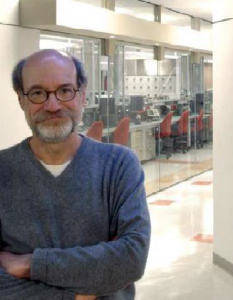
Thanks to Larry and Case.edu for the images.
Transcript
Chris Gammell: This is the Amp Hour Podcast, recorded August 19th, 2012. Episode 109, with guest Larry Sears. Hexagram, hardware, holism.
Dave Jones: Welcome to the Amp Hour. I'm Dave Jones from the EEV Blog.
Chris Gammell: And I'm Chris Gammell of ChipReport.tv.
Larry Sears: And I'm Larry Sears. I'm an adjunct lecturer at Case Western Reserve University.
Chris Gammell: Welcome to our first in-studio guest ever.
Dave Jones: Welcome, Larry. Thanks for joining us. This is great. My pleasure. And you're in Chris's dungeon there.
Larry Sears: That's right. That's right. But there's a little bit of light filtering through. So our eyes haven't grown over yet. Yeah. You haven't turned into a zombie and you're not going to eat Chris. I'm used to basement. I'm used to basement. We're all used to basement. Yeah. Engineers.
Dave Jones: That's where we live. If you basically have sunlight, you're a manager, aren't you?
Larry Sears: I think that's what happens. Right. You're right.
Chris Gammell: Actually, we do that at work, too. We say, you know, doors and windows. If you get a door and a window, usually that means you have a position of power, right? Right. As opposed to the corner office. Yeah.
Larry Sears: It's just beyond your imagination.
Chris Gammell: Oh, yeah, yeah, yeah. But otherwise, it's cube. It's straight. It's straight, you know, burlap or whatever they put on the cube walls these days.
Larry Sears: Cubes are going out of fashion. True. Cubes are disappearing. That's true. It's the back to the open office. And I wonder where people go to pick their nose.
Dave Jones: It could be a little bit distracting. Or watch their, you know, YouTube videos and stuff all day. Yeah.
Chris Gammell: Yeah. Well, someone's got to be watching you, right, Dave? Yeah, right.
Larry Sears: See, there was a noticeable drop in productivity during the Olympics.
Chris Gammell: Really? Yeah. I didn't hear about that. Oh, right. No, I didn't. It's expected to GDP. Wow, there you go. NBC sure didn't pick it up either. No, no, I didn't want it.
Dave Jones: So, Larry, you're going to tell us all about your history, how you formed a company, and then we're probably going to get on to education.
Larry Sears: Okay, that would be fine. I guess. That would be fine.
Dave Jones: Excellent. Because they're your two big things, right? You're of, well, tell us. Let's start with what you're currently doing now, and then we'll jump back in our DeLorean, back to 1972.
Larry Sears: All right. Well, I just like to make things. That's probably where it all started. And at the present time, I teach a circuit design course at CASE for juniors and seniors, and it is pretty much analog design and mixed signal. It's the only thing I know, and that's what I'd like to think I do best, and I enjoy it a lot. It's a project-oriented course. So the project of the week will be make a function generator or make a motor that regulates its speed with an encoder input, and they have a week to do it, and that's the way the project is taught. So we'll talk about a particular topic. It might be analog switches, for example, or something. And then the project is based around using those particular components. And we have a great lab and lots of neat equipment. They probably won't see that equipment when they go out to get a job. But just the same, it gives them a good introduction to the engineering world. And I have a lot of fun. I really enjoy it. In fact, when I graduated from CASE in 1969, I actually did this for a few years when I started my company. And then 35 years later or so, after I sold the company, I went back and did it again. So I'm having a great time.
Chris Gammell: It's a good full circle.
Larry Sears: Yeah, it fends off the Alzheimer's.
Dave Jones: So you're purely an analog guy? You don't do that evil digital stuff?
Larry Sears: Or, heaven forbid, software? Right. When I was an undergraduate, I did punch cards and algal. And that's enough to turn anybody away.
Dave Jones: This is in the days of NASA, right?
Larry Sears: Yeah. Well, yeah.
Dave Jones: Of the moonshot.
Larry Sears: Oh, that's right. That's right. Yeah, that was a big thing. Right, 69.
Dave Jones: What were you doing when the moonshot? How did you watch the moonshot?
Larry Sears: On a TV we pulled out of a garbage can. And, yeah, it was really amazing. Of course, I like to look. I'm very interested in historical technology also. I like to look back at the fact that the way I understand it was they were given a cubic foot. And they said, this is your bay for the computer. And that led to, I think it was DTL or something. Really? And all that stuff. And they started with a cubic foot. Wow. And they had a fit there.
Chris Gammell: Mechanical guys always get to define it. That's right. Every time.
Larry Sears: And they probably had a weight requirement, too.
Chris Gammell: Yeah, that's true, too.
Larry Sears: And probably a power requirement.
Chris Gammell: Yeah.
Larry Sears: But...
Dave Jones: I download... There's a book on that. I downloaded the sample from the Amazon Kindle store, how they designed the Apollo flight computer. Oh, that would be interesting. And there's a whole book on it. I haven't bought the whole thing yet, but I've read the sample of it. Oh, okay. And it sounds interesting. So, yeah. I don't know who wrote it.
Larry Sears: Yeah, I'm interested in, like... I'd love to get, like, the guidance system from a Nike missile, you know?
Dave Jones: Yeah, yeah, yeah.
Larry Sears: Probably three-volt vacuum tubes or something. Right. That would be great to have. Right.
Dave Jones: Yeah. And all sorts of analog...
Larry Sears: Oh, yeah.
Dave Jones: You know, it'd be all... Would it be all analog? Something like that?
Larry Sears: The guidance systems... Yeah. The guidance systems of the heat-sinking missiles were certainly analog. In fact, there's an interesting story. They were going to build the... They knew how to build the heat-sinking guidance system. And they were like... You know, this was back in the 50s. And in the 50s dollars, it was going to cost, I don't know, say $100,000, a missile. And some guy said, you know, that's ridiculous. I could do it with what was called... You know what the All-American Five is?
Chris Gammell: I have one right here, actually.
Larry Sears: Or in your case, Dave, it was the All-Australian Five. Right. That was a tube lineup for the five-tube radio. That's right, yeah. With every tabletop radio used the same tubes. And so this guy figured they made them in such large quantities that he would use some of those tubes.
Chris Gammell: Yeah.
Larry Sears: And he did this thing for like 50 bucks on his kitchen table. And they actually did use a design.
Chris Gammell: Really?
Larry Sears: And by the time they were done, it was $10,000. But it was still like 10% of what it was supposed to cost. Yeah. And he used those, you know, those vacuum tubes. Right. Just looked at it from a manufacturing side. That's brilliant.
Dave Jones: I'm curious, as to say, for someone who hasn't worked on valve stuff, especially in that sort of environment, how would you get a fragile glass valve to survive in something like a missile?
Larry Sears: Well, it didn't have to last very long, did it? Oh, well, no, it doesn't. Right. It only has to last a couple of minutes. Yeah. A short warm tea. Yeah. Well, you know, that's a good question. They did have metal vacuum tubes. Really? Yeah. Remember the old black metal military vacuum tubes? Never saw those. Yeah. Okay. They were, you know, sort of like we had JEDEC. They had certain military numbers. But...
Dave Jones: So they would be designed for high vibration, high shock environments. Yeah.
Larry Sears: That's where the hearing aid vacuum tubes, remember what those looked like? No. I haven't seen those. They were like little tiny, almost like Christmas tree lights. Yeah. Those were developed for fuses. Really? And what the military thinks of as a fuse is a little radar set that goes in the nose of an artillery shell.
Dave Jones: Oh, right. Yep.
Larry Sears: And that, you know, 50 feet away or something, it would detonate. And that's how they developed those tiny, tiny little tubes. And I imagine they had, just like automotive bulbs, they probably had very rigid filaments. So, yeah, it's interesting to see how those developments are... There's so much that's prompted by the military, as we all know.
Chris Gammell: Yeah. Yeah.
Larry Sears: So, yeah, it's interesting to look back and...
Chris Gammell: And you see those kind of popping up these days, a lot of like surplus projects because those were higher volume stuff.
Larry Sears: Right, right. Yeah, that's right. That's right. That's fun. Well, for example, a good example would be MEMS devices. Now you can buy a gyroscope for four bucks. Well, that's because they're using them on cell phones. Right. Or you can buy a GPS card for 15 bucks. It's amazing. Right. You know, what happens, the joys of production.
Chris Gammell: We talked to Bunny Huang, who's a consumer electronics guy. And he said he bought an iPhone schematic for $4 on the streets of Shenzhen. Oh, my God. But he did it in order to get the parts list because he wanted to do the same thing. You know, if Apple's buying it, there's going to be lots of copies, right?
Larry Sears: They give you stories when we talk about subcontracting along those lines. Oh, really? There's a real lesson there as to leveraging what people are making a lot of.
Chris Gammell: Yeah, I do that all the time. And it's sensible.
Larry Sears: Somebody wanted to make, if you go to a bakery or an ice cream store and it says now serving.
Chris Gammell: Yeah.
Larry Sears: So there's this company that made them out of, you know, plastic flip cards or something. And he had the idea to make them out of LEDs. I don't know where this guy got the idea. So he said, listen, I think we can make these out of, you know, seven-segment display using LEDs. He said, but LEDs are $2 a piece. I've checked. I said, he said, you really think this is worth doing? He said, everybody I've talked to said this is ridiculous because you need 36 LEDs or something and they're $2 a piece. And I said, give it time. And so we made a prototype and we did some testing and this and that. At that point, I still remember, they were about $0.35 a piece.
Chris Gammell: Just watching the slope, huh?
Larry Sears: In a year, they had dropped from $2 to $0.35. And then, of course, you know, by the time we got in production, they were probably $0.10. Right, right. You know, so hit your star to volume production and you'll do just fine.
Chris Gammell: Exactly. Well, how about, can you take us back? I mean, so you got out of school, you started teaching for a little while, and then you decided to start up a company. And what was that all about?
Larry Sears: Right. Well, again, I just, since I was four years old, I wanted to make things. That's all there was to it. And I just loved to make things. And that really was sort of my driver. I was really pretty fortunate because most people, you know, by the time they're 60, don't know what they want to do. So I was sort of driven by that. And I was just fascinated not only by electronics, but just by mechanical things and taking things apart. You know, the usual. And so when I graduated, I had been very fortunate because the faculty members had a lot of industrial projects. And so they were always looking for hungry undergraduates who could, you know, help them out in breadboarding and things like that. So I said, great campus jobs, and they would send me out to these companies. So I worked for a little while for a company in a small town in Ohio, and that was not fun. So I decided I would go back to the campus because there were more girls there.
Chris Gammell: Well, not a case, though, right? You were a case of technology.
Larry Sears: Well, no, they had merged with the universities. Right. Anyways, so I was lecturing, and it gave me some time. I had lots of time, you know, all night long, to build up what became a design and build business. And there's this neat little neighborhood called Little Italy, which is right next to campus. So I had a storefront. The rent was $100 a month. And, you know, it was a great spot. You could have a heavy floor, so you could have, you know. Drops. A lathe. Yeah. A lathe and some heavy stuff. And so I decided I was going to make things for people. And my feeling was that there weren't electrical engineers like there are now. There were electrical engineers who were making, you know, working for industry and things like that. But there wasn't a lot of semiconductor. The semiconductor industry isn't what it is now. You had big companies that had people, you know, designing motors or something or running conduit. But you didn't really have instrument designers. You didn't have control designers. So I figured there must be a lot of companies, especially in an industrial area like we were in, that would have products. An example might be vending machines. And they could use an electronic control. So I had this great idea that people would come to us. We would design controls using whatever TTL, discrete logic, whatever. Or maybe they might need power supplies or motor controls or something. And I would design these little circuit boards or modules. And they would buy them by the millions and put them inside their machines. And the world would be great. Yes. So it was designed and built. There were also, at that time, actually not many, but there were certainly many in the next decades, stuffing houses. And that, of course, was pre-surface mount when you literally stuffed boards.
Dave Jones: Right.
Larry Sears: And you stuck the parts, axial parts, whatever, into holes and boards. So there were stuffing houses and design and build. I didn't want to be a stuffing house because a stuffing house would get a blueprint. And you would build it to the blueprint. And that just seemed pretty boring. That was pure assembly. But design and build, you could offer a complete service. And at the same time, you would be able to utilize your design skills, which, of course, was my interest. I also felt we could be more competitive because we could design products to use parts that we were using for something else. We already were buying them in quantity. And you could have families of products and all that. And cross-fertilization. It sort of worked that way. We started out, actually, our biggest customer was General Electric, oddly enough, doing not production, but just one-of-a-kind instruments.
Chris Gammell: Machine design kind of stuff?
Larry Sears: No, more, yeah, some machine control, but mostly instruments. Things like watt meters. This was a time when they were developing the compact fluorescent. What year range was this? This was like 1970 through 75. And high-pressure sodium lamps, which had very fast rise time, high-voltage pulse. We did a lot of high-voltage work, a lot of power supplies, some sort of optical regulating equipment, scanners and stuff. So it was wonderful work because you really didn't have a lot of risk. The stuff had to work, and if it didn't work, they were just down the street. So you didn't have issues like inventory or even a lot of expense. And I did very well, I mean, at the time, because I was the only employee. And, you know, it was just basically me tinkering, and I had a great time. But I realized you couldn't really raise a family or have any, you know, stability with that because it was just erratic. But then eventually we did actually get some production. The most, probably one of the most interesting ones was we made the world's first computerized embroidery machine.
Chris Gammell: Really? There you go.
Larry Sears: Yeah, the biggest embroidery company in the world. Of course, there were probably two embroidery companies in the world. They made embroidery machines. And these were heavy, you know, machines with motors and all that. And little old ladies would buy these. And these were operated with their knees. Very interesting. Like a room almost? Yeah, they had, yeah, sort of. What it was is, you remember from day camp, you had a hoop.
Chris Gammell: Yeah.
Larry Sears: And the fabric was stretched across the hoop. And when you weren't making ashtrays out of tile, you would use these things to embroider. Right. And make, embroider things.
Chris Gammell: Home sweet home, right? Right, exactly.
Larry Sears: You know, and prayers and psalms and things like that. So we would take these, these little ladies would have, they would have two knees. One would control the width of the stitch, because embroidery is different than sewing, because you're actually jumping side to side, making a thick trace. And then the speed was controlled by the other knee, because their hands had to be free to move the hoop. So they had a very, very clever, interesting guy who had taken over this company, which was started in like 1870 or something. And he decided, somewhere deep in his mind, he thought that this could be automated, because they were losing their business, because these little ladies were dying off.
Chris Gammell: So this is non-industrial type.
Larry Sears: Oh, no. This was, what would happen is, is bowling shirts, sports, all this stuff. Monogramming sleeves on shirts. It was surprisingly big business. And there were shops that had many machines, and there were people that just did it in their basement. So we used an F8 processor. Oh, yeah. Yeah, good old, yeah, good old Fairchild F8 processor. And we had...
Dave Jones: I too young, Chris.
Larry Sears: Brilliant guy who you know from Keithley. And he slogged through this software, just, you know, ones and zeros, with 100 feet of teletype tape. And we got this thing to work. And it was really advanced in its day. For example, we had a video camera to digitize logos. Really? Wow. Put your logo. Okay. And then it would generate an audio tape. That was the storage.
Chris Gammell: That was the encoding of the data.
Larry Sears: And to digitize the image. And stepping motors would move the hoop. And we would sell just the boards. And I still remember, we would sell the board set for $1,000.
Speaker ?: Oh.
Larry Sears: Well, of course, we had a year of design. Yeah, yeah, yeah. And they would sell the machine, I think, for $10,000 or something. Wow. And their business went from a million a year to $10 million a year in one year. They were the Inc. 500 fastest growing small business in the country.
Chris Gammell: Wow.
Larry Sears: And we were just seventh heaven. And then the Japanese bought the company.
Chris Gammell: Right.
Larry Sears: And that was it.
Chris Gammell: That was that. And that really... More Fairchild processors, right? Yeah.
Larry Sears: And that became the story of my life. The problem with being in the design and build business is you don't have control over your destiny. No customer ever would take the design. We would always just do the design for free, basically. And it was not a handshake. Everybody was very loyal and fair. But just things went... We had customers who would drop dead.
Chris Gammell: Really?
Larry Sears: We had customers that would go bankrupt. Big customers. We got stuck with the inventory. And so it wasn't a fun business. And...
Chris Gammell: Could you clarify with the build side of it, too? So you said you did design for free. But were you actually doing the higher manufacturing... Higher volume as well?
Larry Sears: Because the money, obviously, when you did the design for free, the money had to be... That's true. Yeah.
Chris Gammell: Yeah. Yeah.
Larry Sears: Yeah. And so a stuffing house would quote a job. Say they would say that... Say it didn't take equipment. So they would say, okay, we're paying our people $10 an hour. We'll try to make $15 on every hour they work. And, you know, it's a tight margin business. Yeah, yeah. And the parts they would maybe charge a couple percent on, you know, handling charge, depending on how long they would have to float the inventory. But we would... It was a premium service. So, you know, we would... Our margins were a little better. Nothing like the margins on a proprietary product. But... So, I don't know. We probably did back then a couple... Three, four million dollars worth a year, you know, in business. And, you know, some years...
Dave Jones: That's a pretty decent-sized business back then. Yeah, yeah.
Larry Sears: That's right. That was real money then. And so...
Dave Jones: How many people did you have at that stage?
Larry Sears: Oh, it varied a lot. I know for quite a long time we had about 10 or 15 people. And then it probably got up to 50 or something like that. Wow. And so, yeah, that was an example of one of the products that worked well. But we did some electronic ballasts. And we made car wash controllers. Really? Yeah. Yeah, so when you drove up on the... Into the car wash, all those pumps would turn on and all of them. Those things have hundreds of I.O. lines. Really? You don't realize. Those are unbelievably... They have built in all kinds of cash register auditing interfaces. I mean, they know everything.
Dave Jones: How did you find you were getting your jobs then? Was it word of mouth? Or did you actively have to go out and sell yourself?
Larry Sears: It's interesting from sort of a cash flow standpoint. If you're making a proprietary product, say you're making, you know, volt meters or instruments or power supplies or, you know, whatever. Something that has your name on it. You have to build these things. So you have to buy the inventory. You have to build them. So you're going to build a hundred of, you know, a hundred power supplies because that's an economical quantity. And then you put them on the shelf and you hope for people to come along and buy them. You have to have a lot of cash. You have to have a lot of very professional marketing. You have to know what you're doing to do a business like that. But if you're in the design and build, or for that matter, the stuffing business, you're a contract manufacturer. And there, you don't do anything until you get the order. So you don't really have to carry the inventory. We could ship things before we had to pay for the inventory. So I never had any money. I mean, I started with absolutely nothing. And so in order to build up, if you don't have any money and you don't know how to market very well, a contract business is not so bad. The same thing might be true of a consulting business. But in terms of marketing, it really wasn't my thing from a personal standpoint. And on the other hand, you tended to do business locally. So you put an ad on the yellow pages. You just didn't have the communications you have now.
Dave Jones: It was an entirely different world back then. Yeah, absolutely. People don't know a world before the communications revolution. To make an international phone call cost, you know, a hundred bucks or something. You know, it was pretty expensive.
Larry Sears: And imagine importing something from China in those days. That was just out of question. You couldn't import something from Pennsylvania. So the marketing, I would have customers who would leave one company and go to another company. And, you know, that would be, in a sense, marketing. Right. So it varied a lot. There were ups and downs. There were a few consistent customers. You know, the car wash went on for years and years. And that was actually pretty good. That was by far the largest car wash system in the country.
Dave Jones: What do you think about the new... Well, it's all changed now because of crowdsource funding. That's right. Where you can get the money up front for your widget. You don't have to fork out that $10,000 to build a hundred units or whatever.
Larry Sears: That's right. Now, people on the outside looking at that often have a misconception. And the misconception is that you're investing in the company. You're not. You're simply placing an order. Yeah, exactly. And you hope that the company will come through. It is. And, yeah, you know, it's interesting because in mail order or whatever you call it now, there are certain laws governing the fact that you have to be able to produce the product. Right. So I imagine, for example, Visa will inspect or study. If you want to sell something and use a Visa card or credit card, they have an obligation to make sure that you really have this product. If it's not on the shelf, it has to really be there. So I don't know how they work around this. But, of course, the scale of it isn't that large. Right.
Chris Gammell: They might run into it eventually.
Larry Sears: Yeah. But I think it's a terrific idea. I think it's very, very interesting. It hasn't settled into my brain yet exactly what is going to happen. If you have a few failures, you know, that could burn people. Because, remember, you're still depending on the, you know, the strength and stability of the company to give you your money back. Well, that's the thing. Even though it's only a deposit.
Dave Jones: That's the big thing about this is trying to sell to people in your video, usually, you know, your pitch video about, you know, you can trust me because, you know, I did this. I did this. I did this. Or I did this. Or, you know. That's right. Something like that. So that's what you've got to sell is your ability to actually produce the final thing now.
Larry Sears: And with the best intentions in the world, you might not be able to produce it. Exactly.
Dave Jones: A lot of things can happen when you haven't actually produced that item before.
Larry Sears: Right. And it's not as if the money has gone into legal escrow. It's not as if the provider has any kind of credit rating or anything. Oh, no. But on the other hand, it's nickel-dime. You know, you're not risking, you know, $50. Most people are buying $100 versus $2,000. It's usually under $100 or something like that. Yeah. So nobody's going to go crazy. The bigger change, though, is the security. I know. I don't sound like an engineer. The security laws have changed to make it easier to actually invest in small companies. And that hasn't hit the books yet. I think they're writing the regulations. But that's going to be very interesting. You're going to have all kinds of scams out there. Oh, yeah. Snake whale out the wazoo. Yeah. Oh, yeah. So that's like another lever. Right. That's like another layer on top of the Kickstarter.
Chris Gammell: We will have a resurgence of shonky product of the week, and it will be strong. Yeah. Well, this is all in contrast, too, because we always hear about, like, you know, the apples of the world that we're leveraging, you know, different payment terms, right? I'm not sure if you ever had to deal with that as a design and build kind of house.
Larry Sears: Well, with design and build, you, as I said, it's a little bit easier. Okay. You still have a bank, and, you know, don't get me started on banks, but let's just say that, you know, my firstborn was signed over. Oh, right. Along to my house and everything else. Yeah. And, you know, some people don't realize, I think it's colloquial, but, you know, realize what an entrepreneur is on the line for in these situations. Right.
Chris Gammell: And more so back then as well. I mean.
Larry Sears: Well, I'll tell you that I feel sorry for anybody trying to start a business now because they're just not writing loans.
Chris Gammell: Oh, yeah. But now there's outside investment, I think. You know, you see a lot of, like, Internet-type startups. You have Ventral Captor. And they don't really have as much vested, right? You lay down some part of you or, you know, your... That's right. That's right.
Larry Sears: The percent, let's face it, though, the percentage, you only read about the winners. True. The percentage of people who are knocking on doors and looking for money is, the number of people, I should say, is unbelievable.
Chris Gammell: Yeah.
Larry Sears: It's just, it's hard. And the reason is, imagine how many business plans a known venture capital firm will get in a week or a day. It's just, you just can't read them.
Dave Jones: Yeah.
Larry Sears: And it's, I think it comes down to who you know and things like that.
Chris Gammell: Oh, yeah, big time.
Dave Jones: And the other... It's really a choice. When you're starting up your company now and, you know, whatever it is you're trying to do, your startup or whatever is the buzzword, you've got a choice between, you know, leveraging your own funds, right? Or, you know, taking on that personal risk, getting your own loan from the bank, but you still own everything, or risking someone else's money where if it fails, well, you know, you're fine. You don't have to declare yourself bankrupt or anything like that. You've just lost some poor suckers, poor investors' money. Well, yes. But then you give away your company. There's hooks in everything. Right, exactly. And then, hopefully, in exchange for that lack of risk, personal risk, you sign away your company to someone else.
Larry Sears: And I certainly don't mean in any way to, you know, to speak poorly of banks or venture capitalists. I mean, this is, you know, they certainly serve a purpose. There's no question about it. But from the entrepreneur's side, you have to understand banks only loan money if they're guaranteed to be paid back.
Dave Jones: Except for the global financial crisis. Well, yeah, we're talking about commercial banks. We're talking about real businesses here, right, not derivatives.
Larry Sears: Right. Let's talk about commercial banks doing the kind of business they did up until that banking law was changed. And the idea is that, you know, the people put money in the bank because it's safe, and the bank is supposed to only lend you things where you can pay it back. So what are your choices? Well, you can collateralize your house, you know, or your wife or whatever.
Chris Gammell: Oh, yeah. Oh, yeah.
Larry Sears: And in a few cases, you can collateralize your inventory, and that's such a stretch, or your accounts receivables. So, you know, I had a terrific guy who, you know, all along started out more or less on the manufacturing floor. It was pretty much self-taught, but he was a brilliant financial guy, it turns out. And, you know, always managed to get through.
Chris Gammell: Was that a key to success, you think?
Larry Sears: I mean, it's funny, but I would never write a check. I figured my time was more important, you know, designing or building or something, than it was trying to keep the books and learn what Social Security tax will be.
Dave Jones: Yeah.
Larry Sears: So I always had, you know, some little old lady, you know, to come in and do the books or something like that. I mean, I really recommend that.
Dave Jones: Yeah.
Larry Sears: You really have to, if you're the only one in a small situation, you've got to look carefully at your time. You know, you can't be running a drill press. You've got to turn that over to somebody else and do the high-value stuff. So, you know, I didn't want to mess up. You know, the last thing I needed was the IRS because I forgot to fill out a form. Right. I always was very careful to, and there's bookkeepers around. It is very reasonable. But, so, on the one hand, you could borrow money, and on the other hand, you could take an investor. But there's a lot of complexity to taking a venture investment. But the rule is very, very straightforward. The rule is that they will, and again, I'm not trying to speak disparagingly. This is the way it works. This is the game. Because most of their deals, they lose a tremendous amount of money on. But what they do is they'll say, okay, let's look at your business plan, your projections, and all that. I know I tell people, Bill Gates never wrote a business plan. I mean, let's put an end to the business plan right now. But they'll look at your receivables. They'll look at your projections and all that. And they'll say, great, you say you're going to do $10 million next year. So, we'll take 35% of the company, and we'll loan you whatever you need. We'll loan you $1 million so you have enough money to buy parts.
Chris Gammell: And that makes you worth X, right? That's what they say.
Larry Sears: Yeah, the valuation. But whatever it is, you don't care, you take it.
Chris Gammell: Right.
Larry Sears: The problem is in the contract. Yeah. The contract is written such that the VC will take control. Yes. All right. Just go with the flow. Don't think that they're not going to take control. And it's very simple. I'll give you a simple example. Your projection said you would do $10 million in two years. Well, they write in a contract that says, if you don't do $10 million, we get 52%. Right. We get 85%. And that's what happens. Yeah. And, of course, you see what the negotiating is here. You try to make your projections look as rosy as possible. Maybe you stretch them a little bit. And it's a classic negotiating skill. The VC will say, fine, you said you're going to do it.
Chris Gammell: Yep. Let's see it.
Larry Sears: Yeah. And that's why the entrepreneur, you know, on a good day will retain, you know, a small percentage of the company. I mean, this is the way it is. Friends and family, of course, that's different. But that has a whole host of other potential problems. Yeah.
Chris Gammell: Awkward Thanksgiving. Very awkward things. So let's get back to the actual, your business. Okay. So you didn't actually take VC money, though.
Larry Sears: Well, what happened was when we were doing the design and build, we poked along pretty well. Okay. You have a good relationship with your customers. It's a very close relationship. They'll help you out. Just like we used to help out our customers all the time. You know, we'd say, listen, we'll help you with the design. It's a good idea. Yeah. We had some very grateful customers along the way. Yeah. Yeah. Yeah. Because you work really hard to help your customers. However, as I said, it was just sort of, it goes back to the old make money while you sleep. Hmm. You know, you want to have ideally an organization that sits there churning out something while you're on the beach.
Chris Gammell: Yeah.
Larry Sears: It doesn't work that way, but that's everybody's goal. So what you do is, what I decided was I really wanted a proprietary product.
Chris Gammell: Okay.
Larry Sears: And, boy, did I pick a terrible proprietary product.
Chris Gammell: Tell us. And you built your legacy on it, right?
Larry Sears: Yeah. What happened was, was that, I just met some people at the gas company.
Speaker ?: Big gas company.
Larry Sears: And in the process, and I'm actually pretty proud of this part of it, because I started nosing around saying, well, I have a meter reader that comes to my house every day. And he goes down, he knocks on the door, he stands there in the rain, he knocks on the door, he kicks the dog, goes downstairs. Isn't there a better way to get the meter reading? So I spent, I think, two years learning the meter reading business. Really? They were very helpful. And I would look at, well, how many, well, let's see, how many meter reads are in a hospital at any given time? And they were on disability, because they'd fall down the steps. Oh, really? How many lawsuits you get, because something is stolen, okay? What is the turnover? Meter readers, the turnover was 100%. Can you imagine managing people that make minimum wage and a turnover, and it was horrible.
Chris Gammell: Right, yeah.
Larry Sears: And they were, at the time, they had IBM punch cards on a ring, and they were always getting wet and soaked. So the meters would go to the bar, and since they had the previous readings, they would guess. And they'd write down the next reading, and they'd sit in the bar all day. There's even a name for it. It's called curb reading, because they would sit on a curb in nice weather. So the meter reading business was a mess. Yeah. They would get sometimes 60, 70% of the reads. The best story is they tried passing out these little plastic cards with little neat pointers on them. And you would rotate the pointers so it would look like your gas meter, and then you would hang it on your door. Great idea, except the rivets, the eyelets were too loose. So every time you'd close a door, the dials would spin.
Chris Gammell: That's a true story. That's great. That's terrific. So you were building a value proposition. That's right.
Dave Jones: So was that based on the honesty system? The person would... Those cards? Yeah.
Larry Sears: Well, there's all kinds of rules. For example, no matter what they do, reading the meter, guessing, curb reading, they have to read it once a year.
Dave Jones: Right.
Larry Sears: But here's a fascinating aspect of this. Your gas meter, okay, is calibrated. It's a positive displacement meter. And the utility commissions have very elaborate controls over the calibration. Because no meter is perfect. Some are plus, some are minus. But you have to prove that over the aggregate, the average calibration is always at the customer's favor.
Chris Gammell: Really?
Larry Sears: Oh, right. Isn't that interesting? Right. That was a fascinating tidbit of information. Because they couldn't guarantee that they were going to be perfect. Right. And they would sort of say, well, gee, we want to make... Yeah. So everybody... So the decision was that they sample these meters. They would go out and get 1,000 meters a year, bring them in, in this very, very accurate positive displacement calibration scheme. You know, big brass.
Chris Gammell: Spare no expense. Right.
Larry Sears: Yeah. And they would calibrate to a tenth of a percent or something. Wow. You know, temperature compensated. Wow. They were made out of leather. Really? They had these leather bellows inside. Wow. These things would last for 50 years in the field. But they would always make sure that on testing, they would always favor the customer. If they didn't, then they had to go out and remove all those meters of a certain bait
Chris Gammell: coder. So the house always wins. But in this case, it's your house. It's your house.
Speaker ?: Right.
Larry Sears: The house does win. Yeah. So... But that's just an interesting satellite. But anyways, the meter reading was a real problem. And there was a history of gadgets and stuff like that. One of them failed notably because there was a little hole in there, a weep hole. To let the water out of this gadget on the side of the house. And there was a certain spider that would go inside this thing and clog up these little gears and stuff like that. Anyways. So nobody really had a solution. So the idea was that if we could move the outside, the inside, the reading on the meter, which is in the basement, gas meter or water meter, to the outside.
Chris Gammell: Yeah.
Larry Sears: And then build a computerized thing that the meter reader could access, you know, and get the data, then we'd have the problem solved. Yeah.
Dave Jones: We have an easy solution for this here in Australia, by the way. We just mandate that all meters are built on the outside of the building. Yes. Yes.
Larry Sears: There are historical reasons, though. Of course. Right. And in the U.S., most meters are outside. But still, I don't know, 3% of them are. Well, the biggest problem is water tends to freeze.
Chris Gammell: Yeah. Especially in Cleveland, right? Yeah. And most of the country.
Larry Sears: It only has to freeze once. All right. Fair enough. Well, gas meters are in pits, or they are invasive. Pits are terrible to read, too. You have to pump them out. So, anyways. But gas meters, gas used to be made, used to be called coal gas. And so gas meters had a, there's a lot of moisture in there because it was a steam process. And so gas meters would freeze, and they had to be inside, too. So, anyways, in a lot of the country, that's the case. And so it was very expensive to move them outside. Right. So the idea was we wanted to remote the reading and have a sort of a non-contact little data link. And so we basically had a little computer that we would stick to the meter. And we had various means of sensing the dial going around, like the one gallon or the one foot per minute. And there would be a register, a lithium battery, and AA battery. And then the outside of the house, we had a little, would amount to half of a transformer. And the meter reader would come along with a portable computer, essentially, what now we would call a smartphone. But this was a dedicated device. Right, yep. And pointed at this thing, and they would talk back and forth. They would wake up the thing in the house, and it would send back the meter reading and the ID number. And it was a great little, great little system. We knew that there were a lot of handheld computers out there already. The business had just started. This was in the early 80s, mid-80s. Some of them used paper tape and, I mean, mag tape, and they were terrible. But, you know, they had like 16K of memory or something. Yeah. But, so we didn't get into that business in a big way. But we just made the thing. Again, I wanted the production. I didn't want to have a lot of expensive programming or software support. There were a lot of legacy systems. Right. You know, IBM 360s and utility and all that. So the meter reader would walk around with his handheld device, get the meter readings, and then go back to the main office. And he would download them into their computer and their billing system and all that. Yeah. And we sold about 2 million of those. We even sold some in Mexico. Yeah. But then probably five years into that, the interesting thing is those were installed starting by 86, 87. Some of them were still out there. That was 25 years on a lithium battery. That's pretty good. Wow.
Chris Gammell: And this is Hexagram, right? We didn't say the name of it. Yes. Oh, sorry. Yes.
Larry Sears: A company at that time, as it was found, was called Hexagram.
Dave Jones: Well, where did the name come from?
Larry Sears: The name came from a Leonard Cohen folk song. Really? Cool. And I had no idea what a Hexagram was. It just sounded neat. And the line was, I put my hand upon the Hexagram and then upon the girl. And only Leonard Cohen knows what that means. But it's actually an Amish anti-hex symbol. Oh, good. And a lot of Amish people around here. So there's a couple of names for it. That's just neat. That's fun. I think I wouldn't have worked.
Chris Gammell: No, probably not. Right.
Larry Sears: Hexagon was a soldering iron company. Yeah. But anyway, so that device was successful. We were still doing the subcontracting.
Chris Gammell: So for other clients? Yes.
Larry Sears: We were still doing the design and build. Yeah. Any time-slate of interest? No, no. No, not at all. Because our companies were utilities. Okay. The reason I said it was a bad choice of a proprietary business was there were many aspects of it. But among the biggest was the time to sell. The time to sell. Oh, yeah. Yeah. We had one utility in Kansas that tested it for eight years. I mean, talk about cash flow. Yeah, right. You know, you're paying a salesman, you know.
Chris Gammell: Can't eat IOUs, can you? Gosh. Or expectations.
Larry Sears: Expectations. Yeah, right. Yeah. But in any event, the problem was that the technology passed us by. It's not like we had a lot of, you know, assets. Oh, by the way, another story is that we had a full custom IC. Remember, there were really no processors then. Yeah. There were certainly no micropower or CMOS processors. So we went to National Semiconductor, and they thought, oh, this is neat. And we were going to make a full custom, they were going to make for us a full custom silicon part. And I think it was $100,000, you know, or something like that. Yeah. And it was a 200-gate equivalent. 200 gates. Yeah. You should have done it. There was a breadboard somewhere. Yeah, yeah. But anyways, we obviously couldn't fit 200 gates on a, you know, little box the size of a matchbox. So we had it go with an IC for a lot of reasons. And they were a year late in delivering it. Ouch. And it was a nightmare.
Chris Gammell: That's why they're not around anymore, right?
Larry Sears: That's right. Well, here we had, you know, we had paid half down. We had an order. I still remember, for 330,000 of these things. Really? And we were just sitting on the order. Oh, ouch. And we had injection molded parts. Oh, God. Powdered metal parts. And all this stuff. Oh, man. All the machinery. And we just had to. Then we had a venture investment.
Chris Gammell: Yeah.
Larry Sears: And.
Chris Gammell: You didn't have to eat that whole cost, did you? Like, did you lose the order?
Larry Sears: No, no. The utility stuck by. They were great. That's awesome.
Chris Gammell: They really did a great job.
Larry Sears: Yeah. So, and they were desperate and there was nothing else. Right. That helps. Yeah. But, I mean, the cost justification was pretty easy. But, so anyways, that's when we took a venture investment. But as soon as we started shipping, we bought it right back out.
Chris Gammell: Really?
Larry Sears: So, we didn't have, you know, a flip. They, you know, I retained control. We got rid of them. Um, they weren't very, um, they were benign, I guess. How did you get rid of them?
Dave Jones: How did you get rid of them? You just paid them out?
Larry Sears: We paid them out. Yeah. Right. There was a, a preset buyout.
Dave Jones: Oh, so they got, they, there was some figure that they wanted to return on their investment and they were happy to take it?
Larry Sears: That's right. Because they were only in for a couple of years and they probably made, I don't know, several hundred thousand dollars. Um, I found out later that there was a, um, a, a, a bet that would always happen. We had board meetings and I was, who was going to fall asleep first in our board meetings? Me or the representative of the venture firm? So, I heard that years later. Because there wasn't much to talk about. Everything goes well. Everybody's happy. That's good. Yeah. You make, you make your numbers.
Chris Gammell: Success is boring, huh?
Larry Sears: Yeah.
Speaker ?: Right.
Larry Sears: So, um, so that was the first, that was the first crisis. But then, um, I realized we had to evolve. And what happened was, in our system, we put the microcomputer on the gas meter and then we ran a wire out to this, uh, this little ferrite. Yeah, it's like a nub, right? It's an air core, right? Yeah. It's an air core, uh, air core coil on the side of the house. Yeah. And there was resistance against running that wire. Really? Yeah. Yeah. Yeah. Because it just, real or not, um, that was the, the problem with our, our system. When there was nothing else, it was no problem. But then they came out with an RF device, an RF competing product. Actually, a couple companies did. And the way this worked was that, um, again, assuming you had an indoor meter, although this was supposedly justifiable for outdoor meters, they put a little passive receiver on the meter and a little, uh, what used to be called a Part 15 transmitter, unlicensed transmitter. And the idea was that a truck would go by with a, I don't know, 250 watt, you know, thing that they would blast these things. They'd wake up and then transmit the meter readings back with an ID number and stuff. And they would do things like randomly time division them and things like that. Um, and it, it sort of worked. There were a couple out there. Um, it never worked as well as it was supposed to because just when you look into the current drain of the passive receiver and all this kind of stuff, they only had microwatts of
Chris Gammell: power.
Larry Sears: They could only go about a hundred feet. Well, you know, there are all kinds of problems.
Chris Gammell: So, was this like current day, uh, uh, passive RFID kind of stuff where it actually uses the received power?
Larry Sears: Yeah, but remember, the truck could be a hundred feet away.
Chris Gammell: Right. Right. Right. And power law.
Larry Sears: Yeah, right. So, I mean, there were all kinds of issues. It worked about 85% of the time. They would drive down the street and go 85 because they never published that figure. Loop around, right. And they would come back or they would stop the truck and the guy would get out. Oh. As it turns out, the most frequent implementation, they just skipped the truck and they would just have meter readers just like they always had with a handheld transmitter and he'd wave it around. Yeah.
Chris Gammell: Yep.
Larry Sears: And so, the problem was this always required the meter reader to go to the house. It was still on-site meter reading. Mm-hmm. Mm-hmm. But, their system cost twice as much as ours. Mm-hmm. Mm-hmm. Theirs was maybe $50 and ours was $25. And that was enough of a differential that it was, it wasn't enough differential to overcome the problem of running the wire. Mm-hmm. And I knew this. Right. I mean, I knew this as soon as these things came out. Mm-hmm. So, then it was a problem because our, you know, we were winding down probably in 1994 of the sales of our remote reading device. And then I had a real decision. Because, you know, we had a fairly big company by then. We probably had, you know, 40, 50 people. And I didn't know what to do. So, I figured, well, this is the business I know. I've been going to trade shows. People know the name. They didn't buy it. But, I mean, whatever. Yeah, exactly.
Chris Gammell: Details, details.
Larry Sears: Well, who's going to buy from this little tiny company? I mean, these utilities, you could sell them a system that would handle $100 million of billing in a year. Their entire revenue stream.
Speaker ?: Yeah.
Larry Sears: Who's going to buy from some junky little company? It might not be there. So, we had some good relationships with a couple of utilities. But it just wasn't going to fly long term. So, I decided, well, we'll just bet the farm and we'll come up with the world's greatest metering system. The one that is the Holy Grail. Which would be that you sit in your office and the utility gets all the readings, you know, magically. You would not have to visit the house at all. And you could read it every day or every hour or whatever you wanted. There had been efforts at this. Famously, Motorola and Schlumberger started a joint effort. This was funded initially with $10 million. And these are big, powerful people. Motorola. They're huge companies. Yeah. Yeah. Well, Motorola had the radio side. And Schlumberger owned a big company that made gas meters and some other stuff in the business. So, we'd heard about this and they were plugging away. But for some reason, I decided it might be, you know, it'd either be fun to try or the only game in town. Because you had to come up with something new.
Chris Gammell: I enjoyed how nonchalant it was. Well, I guess we'll just bet the farm. Whatever.
Larry Sears: To this day, I get a cold sweat just thinking about it. What made me think? What the hell was I thinking? Yeah. What? And so, but there were a couple of interesting things that happened. First of all, one company that tried it did it wrong. They made two major mistakes. And they've been bankrupt. I think they might still exist in some form. They were bankrupt a couple of times. One is that they used an unlicensed transmitter, just like this other device I mentioned. So, of course, the range was terrible. And they were always struggling to try to get the range out of it.
Chris Gammell: And that's governed by actual power. By the FCC stuff. By the FCC, right.
Larry Sears: And the laws of physics. So, it was a struggle. The other mistake they made was very interesting. So, you would install data collectors or whatever you want to call them, receivers and computers on some kind of a matrix to pick up these transmissions from the individual homes. But then you had to collect the data. So, what these guys did was spend, I don't know how many million dollars, millions of dollars for a proprietary microwave link. To connect. Each house? No, not each house, but each data collector.
Chris Gammell: Oh, okay.
Larry Sears: So, you know, say they went, I don't know, a quarter mile or something like that. You would need every mile, square mile, you'd need four of these things. Oh, God. There's a lot of data rushing around there.
Dave Jones: And they'll probably rub their hands together. Oh, we're going to sell 100,000 of these million dollar bloody base stations, you know?
Larry Sears: That's right, but I think it was more engineers gone mad because...
Chris Gammell: Oh, right. Look at these problems we could solve.
Larry Sears: We did it with a cell phone on nights and weekends. Yep. So, we got analog cell phones. They were free if you got a two-year contract, just like now. Right. We would throw the bag away, throw the handset away. We paid nights and weekends, 10 bucks or something. Great for sending data back. And it would make a one or two-hour phone call. And it would, you know, be able to send all the data.
Chris Gammell: Like, modem style?
Larry Sears: Yeah, just a bag phone. We used to call it a bag phone, yeah.
Chris Gammell: Bag phone, huh?
Larry Sears: So, anyways, that company made those mistakes. The other interesting thing is that this company that made the drive-around systems kept promising that they could evolve, migrate to a fixed network. They said, well, we'll just put a data collector. No, I mean, didn't these people ever take algebra? The thing transmitted 100 feet. So, that means you have a data collector every 100 feet. Well, your next-door neighbor is about 100 feet away. Yeah. And sure enough, in their test, they would have a $1,500 data collector for every meter.
Speaker ?: Ouch!
Larry Sears: And they kept trying to sell this thing. Well, there were stockholder suits and all kinds of ramfing. And it obviously failed. Yeah. So, we would go to the trade shows and we would try to point this out and nobody ever listened. I mean, they would actually laugh at the other company and some of these other efforts, but they never believed us. So, it was tough. But then, the other thing that happened was, and there's a lesson here someplace, the FCC in 1996 changed the regulations. And I'll briefly mention it because we supposedly have a technical audience and I don't remember the details. What they said was you had to have a certain bandwidth utilization factor. In other words, you couldn't make a transmitter that could have a narrow bandwidth. In other words, you had to have the transmitter had to have the capability of sending lots of data. Okay, I forget what the number was. So, no more scope for you.
Dave Jones: That seems rather silly, doesn't it? Well, no, it wasn't. It's not encouraging frugal use of bandwidth. No, it is. It is. Because you'll need less users.
Chris Gammell: Oh, okay.
Larry Sears: Instead of, you know, having to take 10 channels to send something. Right, okay.
Dave Jones: Right.
Larry Sears: So, what they said was, was that every transmitter had to have, and again, I apologize, but you had, I think, a 12.5 kilohertz bandwidth, and you had to send, I don't know, say 6 kilobits, you know, Percentage of that or something like that.
Chris Gammell: Yeah.
Larry Sears: Well, it wasn't easy.
Chris Gammell: Really?
Larry Sears: Well, the people that did it, a good example, would be a police radio. So, with a $300 radio, okay, they would send out, they would have a powerful output amplifier, and then a very expensive filter to shape the, you know, to shape it so they're not outside the spectrum. Right. Well, you know, we're trying to do this for 10 bucks.
Chris Gammell: Ah, right.
Larry Sears: And, you know, it wasn't easy. Right. So, we're thinking, and no matter what happened, it was, though, that we were never able to get this bandwidth requirement. So, Motorola and Chamburgé shut down that operation. They said, well, they changed the regs. We're not going to do it.
Chris Gammell: Oh, okay.
Larry Sears: All right. But here's where they went wrong. They didn't read, you know, they always say that when you take a test, you know, read the question.
Chris Gammell: Yeah, yeah, yeah.
Larry Sears: There was a loophole. A technical loophole. Because the FCC said you had to have such and such a spectral efficiency or equivalent, and nobody saw the or equivalent. Right. So, what they said was, look, or what I argued was, look, say you give somebody a channel, a licensed channel. They're free, you know. So, you get a licensed channel. You get them forever. And you're a flower shop. The flower shop has two trucks. And they'll do $200,000 of your business. So, talking to two trucks, they'll use up one channel.
Dave Jones: Yeah.
Larry Sears: Okay? We can't, you know, we're having the spectral efficiency limitation because our transmitter isn't as expensive as fancy is there. However, we're going to have, in the same service area, maybe 100,000 transmitters. And in the aggregate, the spectral efficiency is unbelievable. We're going to be taking one channel. And we're going to be using it for millions and millions of dollars of revenue. Tens of thousands, hundreds of thousands of users.
Chris Gammell: Yeah.
Larry Sears: And because we only transmit, you know, little bursts. Right. And they bought the argument. Nice. And so, everybody else went home and we were sitting there turning this thing out. And, I mean, there were some eyebrows because, you know, you have to submit all the information. And there were some arguments against it. But the FCC loved us because we're using bandwidth just the way, you know, for a very important social good. Yeah. And that's exactly what it's supposed to do.
Chris Gammell: That's great.
Larry Sears: So, we read the regs and I wrote this letter. And I had an attorney help, you know, an FCC attorney help with it. But they allowed us to proceed, issued the channels and issued the, you know, the certification of the product and everything. So, what year is this now? This was about 1996.
Chris Gammell: Oh, that's right when the regulation changed.
Larry Sears: Actually, we started testing in 95 and then we changed the product, you know, a little bit to meet the requirements. So, we could send then a very low bit rate. The meter reading is about one bit an hour. Really? Wow. Yeah, that's all it is. I mean, because you want to read a meter once a month. There's not much happening. But there's a little bit of overhead, of course. But the idea is that if you send a very, very low data rate, you can have essentially a very sensitive receiver. Because you've got, you know, you can do lots of processing. You're not trying to send high bandwidth. Right. Of course. So, we could keep the cost down. Very simple FM modulation. Got it. Nothing fancy. And we didn't have to waste power in our, to meet the emissions mass. We didn't have to, you know, use up a lot of power.
Chris Gammell: Right.
Larry Sears: Still a very difficult product at this time. But when all of a sudden done, you know, excuse me, it was inexpensive.
Chris Gammell: Wow.
Larry Sears: So, that's what we did. And then it was a great product. And then nobody bought it.
Dave Jones: Oh.
Larry Sears: Oh, right.
Dave Jones: I thought you made a killing on this thing.
Larry Sears: It took a long time. Oh, right. Okay. But it eventually did pay back.
Dave Jones: Yeah.
Larry Sears: Right. What happened was, you know, we sold a couple of little tiny utilities who were so desperate because their meter readers were on jail and stuff. And then we eventually sold a couple of utilities that were very well known in the field. And eventually it did fine. But again, we had to take another venture investment, which we probably didn't need. But the lag between developing the product. Well, you know that hindsight, right? Oh, yeah. So, what are you going to do?
Dave Jones: And not long after that, you were acquired.
Larry Sears: Yeah. In 2006. And there was from a company. What happened was, don't ask me how this happened, another cold sweat. There was a very, very large order, I don't know, quarter of a billion dollar order out there.
Chris Gammell: Wow.
Larry Sears: That everybody was waiting for. It was in California for the big utility. And lo and behold, we got the order. I was absolutely stunned. And thrilled. I mean, it was exciting. Another company, this was for the gas meters, another company had the order for the electric meters. And they were large, publicly held. And it was, you know, we figured that arrangement would work. So, and so, you know, it was pretty much able, I think, to protect the jobs and things like that. So, you know, I decided it was time to, you know, do something else.
Chris Gammell: Oh, yeah. That's great. And so, you're saying that the large order actually kind of brought the attention and that actually led to the acquisition later.
Larry Sears: No, I think that the successor company, which is called a Clara, I think they've made now, you know, starting back in the 90s, I think about 10 million units, if I believe. Wow.
Chris Gammell: That's great.
Larry Sears: Yeah.
Chris Gammell: And so now, if people see these, these actually look like large metal boxes up on.
Larry Sears: No, no, no.
Chris Gammell: No, what you have is a little plastic box. Oh, sorry. I was thinking about that. Right.
Larry Sears: A little plastic box on the side of the building or in the basement. The data collector, you'll never see because it's up on a roof. Oh. Typically, it's on schools. Oh. Because schools are distributed at roughly. Yes, that's right. Roughly, yeah. Yeah.
Dave Jones: In every area, we'll have X number of schools per square area. Right.
Larry Sears: Or maybe libraries or something like that. Yep. And this little guy will transmit, I think we tested it out to 25 miles. I think the calculated transmission distance is about 75 miles.
Dave Jones: And how many houses could you collect with one data point? It's the same.
Larry Sears: It's essentially unlimited. The trick is that is diversity. In other words, we have antenna diversity because we have multiple receivers. So one device, say in a downtown, real busy area, maybe it'll transmit a mile in one direction and a quarter of a mile in the other direction. So a couple of units will pick it up. I think we designed for typically about three or maybe a minimum of three would pick it up. But sometimes you get five or ten. Sometimes you pick up in the next town. Right. It's just, you know, you've got to understand the statistical nature of propagation of the channel. It's just, you know, amazing. Again, you can go from a mile to 75 miles is typical.
Dave Jones: And it can change daily too based on the weather and all sorts of... Absolutely, yeah. It's just, yeah.
Larry Sears: Now, we're at a relatively low frequency. Oh, okay. So most people try to go for high frequency. They had no idea what they were doing because we didn't have to have a small antenna. So why in the world would you have high frequency? Why would you want a high frequency? Yeah. We could have an antenna that's, you know, big as a cigar box or something and nobody cared. I mean, it's just, again, it's just engineers bite on something and it's just like a dog. They won't let it go. You know, hey, take a step back. Cheaper semiconductors, you know, easier to get gain, lower power consumption. Yeah. Everything screams lower frequencies. Yeah. Even now, I notice that a lot of the action in auctions for Spectrum is they want the lower frequencies, you know, the 800 megahertz and 700 megahertz left over from the TV as opposed to the 900. Because the propagation is so much better.
Chris Gammell: Right. We actually had a guest on talking about microwave and he was telling us about the long distance of, like, microwave transmission is very difficult.
Larry Sears: Yeah. And you have more problems, I guess, with multipath and bouncing and all that.
Chris Gammell: Yeah, yeah.
Larry Sears: But it's really amazing. We designed, if we designed that we had to go a mile, we expected to go a mile, you really did have to have an open, what's it called, open field range of about 25 miles. Interesting. You really did. I mean, that's the number. That's the way it works. Anyways, so, but what's interesting is the statistical aspect of this. Because if I have one transmitter and I've got a large matrix, a large grid of data collectors, maybe I'll hit, say, three of them. Some days I'll hit four, some days I'll hit five. But also, I transmit, say, four times a day. Okay? And I don't need to get a reception every day. I might only need it every other day because meter ranges is like, who cares? Yeah. So, you get a bill once a month and there's some tricks there. So, anyways, what that means is I have all this diversity. I really have, you know, five or ten or fifteen tries.
Chris Gammell: Yeah.
Larry Sears: And it's the sum of the probabilities. So, we designed for one transmission having a 50% probability of getting through.
Chris Gammell: Okay.
Larry Sears: Where else do you have the luxury of design? Some of the works half the time. Yeah. But if you take, you know, one over .5 times, one over one, do that five or ten times. You'll guarantee. We got off the 99 point. And we did. Yeah. We would get that thing 99.99% of the time.
Chris Gammell: And that's how you sell something.
Larry Sears: Yeah. And that would include product that wasn't working. Right. And product that was stolen. Right. It was really a tremendous performance. Unbelievable performance. Go math.
Chris Gammell: Get and go your company.
Larry Sears: That's great. But, well, diversity is a good example. Like, if you're going up your driveway, you stop your car, you press your garage door opener, nothing happens. But press it while you're moving.
Chris Gammell: Yeah.
Larry Sears: You'll probably get it to open. That's the key. That happens to be, you know, geographic or antenna diversity. But time diversity is the same way. Mm-hmm. And, of course, you know, we do some error correction on it. But it's very interesting the way it works out. And I would say that what made it work was just, I was never like a ham operator or anything, but it just had a feel for playing with the garage door opener, you know, playing with a CV or something. You know, just, you know, moving things around, you're always better off. Yeah.
Dave Jones: Now, so you sold your company in 2006. Right. And you did pretty well financially from that, I'm guessing. And so you moved on to something entirely different.
Larry Sears: Yeah.
Dave Jones: Tell us about it. This is interesting.
Larry Sears: I went back to exactly the same location I was in 1970, the same building space where I was lecturing at the time. And I, you know, was able to help with setting up a new undergraduate design lab at Case Western Reserve. And, you know, ancillary space, electronic stores, lounge space, and lecture room, lecture hall, and things like that. And so that's where I hang out.
Dave Jones: A little bit of a full time, Chris? Sorry? Was this during your time there, Chris? Because Chris went to Case Western as well.
Chris Gammell: Yeah, this was actually my last year.
Dave Jones: Oh, right. Okay.
Chris Gammell: My great loss of Case is that I didn't get to take Larry's class. Although, some of my students, my fellow students said that I missed a little bit of misery, and I think I missed a lot more learning.
Larry Sears: We call that challenge. That's right. Challenge. Challenge. Challenge. Right.
Chris Gammell: And I'm sure Larry will tell us all about this course that he started up, which is spectacular.
Larry Sears: So, but anyway, so this is a really nice environment. And we have a lab director with a lot of industrial experience who helps prepare labs for professors and things like that, and a technician who's a great guy, again, with a lot of industrial experience. And so they're really mentors. They're there all the time. And it's nice that you're not, you know, stuck in the lab without anybody to turn to. And, of course, we have TAs floating around and things like that. The other thing we have is really is access. We have a great flea market where all kinds of stuff magically appears, most of it from my basement. And, you know, I mean, you always see people rummaging through the stuff. And frankly, that's how you learn. Yep. Absolutely. Nobody teaches you interconnection, you know, or why you use lock washers. But you see this by taking things apart. And we also have, more formally, you can make boards or buy parts or anything you want. All the stuff is, you know, is complimentary just because we're trying to get students to make things. And, you know, we see some really, really neat stuff coming out of there. And it makes me feel real good. So it's a great facility.
Dave Jones: So it's just one big floor on the building where everyone just hangs out, all the nerds just hang out.
Larry Sears: Well, it takes a village, as they say. In other words, the departmental office is there and support people are all there, a couple of conference areas and the lab. And the idea is that labs shouldn't be, like we were talking about light, labs shouldn't be tucked away in basements. This is a real busy place. It's on, you know, the main floor of the building. It's on glass. Yes. The professors are always walking around. And so you see people, the head of departments wandering around. The campus tours come through. The lab is all, you know, glass walled. So it's worked out very well. It's become sort of a prototype, in fact, for other departments. In other words, labs are neat things to see. You shouldn't tuck them away. You should, you know. Right. People are there a lot. Exactly. Something to see. Right. So how did you build these? A coffee machine. Yeah.
Dave Jones: Did you go in there with the idea to build this? And did you have to sell it to them? Did you, you know, donate money to help build the first thing? Or how did that work?
Larry Sears: Well, I suppose somewhat facetiously, if you're going to pay for it, it has a tendency to get done.
Chris Gammell: Yeah.
Larry Sears: But.
Chris Gammell: You should be a venture capitalist.
Larry Sears: Yeah, that's right. You know, over the years, I had seen this sort of prime educational space. Be taken over by other things. There was an NASA office there. Well, I mean, that's great. But that has nothing to do with students. What's that? You know? Yeah. NASA. NASA. NASA. NASA. NASA. NASA. Oh, right. Space people.
Dave Jones: Right. Yeah. Right.
Larry Sears: I mean, that shouldn't have been there. And, you know, certain back office functions, development, things like that. And the lab got smaller. You get crowded out, right. Yeah. The lab got smaller and smaller. Right. So this is an endowed facility. So the lab personnel, you know, it's endowed. So they can't leave. And, you know, there's certain requirements. Because I think this is pretty fundamental to education. Yeah. Well, you know, the politics change.
Larry Sears: Definitely. I remember when, you know, various technologies of note would come along. Everybody. I remember fluidic logic.
Dave Jones: No.
Larry Sears: Anybody remember that? No. No? Fluidic logic was the big thing.
Dave Jones: Is this kind of like fuzzy? Is this like fuzzy logic? No, no.
Larry Sears: This was pneumatic logic. Oh, really? Yes. Wow. Where you would have little oscillators and gates and flip-flops that worked with air pressure.
Dave Jones: Oh, right. Okay. Yeah. I've heard something like that.
Larry Sears: Yeah, I mean, I suppose it was great for radiation hardening requirements. But that's about the only one that comes to mind. Yeah.
Chris Gammell: It's like trains, maybe.
Larry Sears: Yeah, trains. It's pretty hard to minimize. Yeah. Although pilot valves are still around. That's an example. Yeah. Right. So, you know, you'd have organizations starting to work on things like this. And then they fall out of favor. Lasers are another example. Yeah. Plasma physics was really, really large a case. And it just, unfortunately, it wasn't a good choice. Why? Why was that? Because it died. Yeah. Yeah. I'll say lasers took over, you know, unless you're going to, you know. Oh, okay.
Dave Jones: Right, of course.
Larry Sears: Blow up things or cut metal, you know. Yeah. Yeah. So, anyways, I just wanted to make sure that the undergraduate portion of this was stable and sort of appreciated and was going to remain there.
Chris Gammell: And replicating your making experience, basically. Right. Right. Exactly.
Larry Sears: And, you know, like I always tell people is that you have people that make things in, say, they're in junior high or high school, they have a workshop, right? Yeah. Or they have a garage or they have a corner or something. So they go to college and the first thing we do is take away their tools. And, you know, that's not a good thing. That doesn't really help. And so we try at Case to give them back their tools. And that leads into this other project, which I've been involved in, which we call ThinkBox.
Chris Gammell: And we've actually mentioned on the show before.
Larry Sears: Yes, you did mention that. Right. And this is what we are pretty sure will be sort of the country's most well-equipped fab lab, you know, maker space, you know, around. It's very, very well-funded. And we're just in the process of expanding it and buying equipment as fast as we can. Where's the funding coming from? There are a lot of people who are very interested in this, you know, just alumni and things. No foundations around that. It's typical. Right.
Dave Jones: It's all individuals who are just passionate about this.
Larry Sears: Right. And it's about a $25 million program. Wow. And that's a lot of machines. That buys you a lot of toys. Yeah, a lot of laser cutters. A lot of laser cutters. We have more on order. Yeah. And we also have a 50,000-square-foot building that the architects are working on. And we haven't broken ground yet, but hopefully that will be before too long. And that's going to be entirely dedicated not only to the sort of the fab portion of it, but we're envisioning all kinds of ancillary stuff. You know, for example, just a big room where you can have contests and poster displays and things like that. But also a sort of a business incubator side of it where we hope we can encourage interaction with industry and just helping people start companies. Right, right. Exactly. But there's a lot of… Microfunding or something? Yeah, there's a lot of launch-type facilities around, but typically they're just in an office building someplace. We want to go after the people that have real hardware requirements. And we have a foundry. I mean, you know, we've got some… You're going to have some neat stuff. And so instead of… It's a shadow, man. You know, instead of a small company scrambling all the time, you know, because they need a microscope or a sewing machine or a laser cutter or, you know, something like that, we want to have all that stuff available, you know, both to, you know, some local industry and certainly to our students.
Chris Gammell: I've been telling people that it's kind of like a tech shop but on a campus, like raw commercial venture, where it's very high-end, it's very…
Larry Sears: Right. Tech shop and some other organizations are sort of, you know, open to the public in a sense. This has a strong educational component, but certainly the people that have ideas and come out of it, we want to try to support them, you know, with access to funding, access to mentors, that type of thing.
Dave Jones: Is there any vision to potentially turn this into a business that actually self-funds itself or, heaven forbid, makes a profit?
Larry Sears: Well, you're treading on controversial grounds.
Dave Jones: I'm sure I am. That's why I asked it. Yeah.
Larry Sears: No, it's very interesting. There are two schools of thought. Most of these organizations do take a piece of the action.
Dave Jones: Right.
Larry Sears: So they say, you can use our facility and we want 10% or 15% or something like that. Of what? Your business or…? Equity in this startup venture. Right.
Dave Jones: Okay.
Larry Sears: Okay. There's another school of thought, which is actually supported by some pretty powerful information that says that it's not worth it. You're better off being sort of helpful and supportive and just depend on successful people to come back and help you out. Right. Okay. I suppose, you know…
Dave Jones: And there's some studies on that. There's some anecdotal evidence to… Yeah, you're sitting in front of me. … say that's better. Right. Well, okay. Yeah, yeah. Sure. Okay. Granted.
Larry Sears: I mean, you know, just help people all you can. And the reason this project is to be funded like this is because, again, you know, we want to endow everything so that we don't have to really make money. Right. I mean, we've actually looked at the operating costs of running this big facility and, you know, it's really not too bad.
Chris Gammell: Oh, really? Okay.
Larry Sears: It shouldn't be too bad. It's just the way the university covers some overhead and contributions and things like that.
Chris Gammell: So this is kind of like a version of sit on the beach and make money, but it's the reverse, right? You sit on a beach…
Larry Sears: Other people…
Chris Gammell: Yeah, exactly. You just like… You have money, you know, running the place, right?
Larry Sears: Well, for example, we want… There are some revenue-producing aspects of this. For example, we have interest in companies that want to have a skunk works there.
Chris Gammell: Nice. Yeah, yeah.
Larry Sears: Because they have access to the equipment. They have access to faculty for consulting. Creative people, right. Right. And how do these people get a name for themselves so that they can hire students?
Dave Jones: Yes. It's pretty hard.
Larry Sears: I mean, you have some pretty big but pretty obscure companies around, you know, that are in niches.
Dave Jones: Yeah.
Larry Sears: Well, this way they can have their name on the door. They can have interns. They can have summer help. Right. Work on projects there and go back and forth. So we're pretty excited about that.
Chris Gammell: Joint ventures with master's projects.
Larry Sears: And we're looking at something. We've actually considered apartments. Really? It's a pretty wild idea, yeah. Yeah. We don't know if that's going to fly, but… Oh, man. I've talked to someone about that before. We're looking at it.
Chris Gammell: Having like a joint makerspace and living… Living… It's the loft idea. Yeah, loft idea. Right. Yeah.
Larry Sears: But also, it's the entrepreneur in residence. It's temporary, you know, visiting faculty or something like that. Because right on the campus…
Chris Gammell: Oh, yeah.
Larry Sears: A lot of these… It's like where you used to live. Right. A lot of these various campus innovation centers are not on campus. I mean, typically they're, you know, an old Kmart that they converted on. But this is… It's 100 feet from my office. So, yeah. And so we're very excited about it.
Dave Jones: And that's great. A lot of aspects of it. You spend all your time working on these days?
Larry Sears: No, I still have my basement. Well, right.
Chris Gammell: You have to, right? Right. It's like a compulsion these days.
Larry Sears: Oh, it is. Yeah. All days.
Chris Gammell: Yeah. Right. So, real quick, can you tell us about your class a little bit more? Just… Oh, the course I teach? Yeah, the course you teach. And also, maybe the… You said there's a new one as well?
Larry Sears: Yeah, there's a new one. This is a big development. This is a freshman engineering course. Yeah. Of course. It's called Sages. And there are a very large number of courses that K-7 undergraduates can take. I mean, it's a tremendous… I don't even know how many there are. I mean, it's hundreds or something. I don't know how many. But these are very small classes, you know, usually 15 or something like that. And they have to take something. But they're in, you know, like crime in 18th century England or something like that. All of those are. Right. But which one did you take?
Chris Gammell: I was there before Sages started.
Larry Sears: Oh, okay.
Chris Gammell: Didn't quite start.
Larry Sears: Okay. I was going to do a lot of stuff. But anyways, for the first time… Sages is run by the Arts and Sciences Department. So, for the first time, we can offer engineering courses.
Speaker ?: Yes.
Larry Sears: So, mine is volts, amps, bits, and bytes. And I have a med student, an astronomer, a couple chemistry majors. But we're doing what we can. We'll convert them all to become electrical engineers. Yes. But don't tell them I said that. But no, I'm thrilled by the fact that we do have that kind of diverse… Because diverse people, because they're the ones that are, you know, sort of… They must be excited about it to take that course. Yeah. And so, it should be a lot of fun. And…
Dave Jones: See, that's not something we have here in Australia much in our university slash college system, where you guys seem to take these bizarre courses that are totally… Classes that are totally unrelated to the…
Larry Sears: Yeah.
Dave Jones: …to the degree you're studying.
Larry Sears: It's called a liberal education.
Chris Gammell: Right. The well-roundedness is very highly valued for one reason or another.
Dave Jones: Okay. Yeah. We just don't have, you know, as much of an emphasis on that here. Yeah.
Larry Sears: You know, I mean, I tend to think it's a pretty neat idea. I think that a strong engineer is so self-driven, and that, of course, is the caricature, that you've got to get them, you know, out of the lab once in a while.
Dave Jones: But do they have to… But what's the benefit in them learning, you know, 18th century history, you know, or something like that?
Larry Sears: Because that's the only way to meet girls.
Dave Jones: Right.
Larry Sears: That's the way I decided what class is. No, but seriously… Yeah, it's a real question. This is a real deep philosophical argument, you know. Yeah, it's the basis of education. And, of course, who said, you know, what good is a newborn babe? So, yeah, it's one of those stories. It has no answer. But, anyways, so my course, and actually a number of professors are teaching sort of similar courses, but we do some neat things. For example, you're almost required to go on field trips. Yeah.
Dave Jones: Yeah.
Larry Sears: So, we're going to go to this, I don't know, 250,000 square foot surplus place, which you've been to, HGR. And this is a phenomenal, just piled up with junk. Yeah. Nice. But you learn. I mean, it just, you know, this is sort of like American industry before your eyes, you know. And you look at a machine that dries plastic pellets, well, you can explain that you need an auger to move plastic pellets, you know. How are you going to teach that otherwise? Right. So, I'm excited about that, and we're going to visit a submarine, and just all kinds of neat things. That's awesome. A lot of movies related to engineering, so…
Chris Gammell: You should point them towards the EV blog, too.
Larry Sears: Pardon? Dave's… Oh, don't worry. My EV blog, yes. Yeah, I think I'll embarrass myself, but I'll tell them about this one. But, yeah, so it should be a lot of fun. And it's a seminar, which basically means that the professor doesn't have to prepare, but I'm still busy at it.
Chris Gammell: Yeah. No, that's great. I've always been, you know, especially with, like, the finding classes that teach analog, like your 372, I think it was 371. Yeah. You know, I was always trying to recruit kids out of that because, you know, people that can actually bias the transistor… When you were hiring yourself. When I was hiring, yeah. When I was hiring, I was staying on it, yeah. Mm-hmm. Trying to bias the transistor, right? Surprisingly small, even, like, working with BJTs versus FETs. That is something that you wouldn't expect it, but I went and recruited at MIT, and you would be surprised how many kids at MIT didn't understand what a BJT was. Yeah. Yeah. And it's just, it's not anyone's, it's not any of these kids' faults, right? No, no.
Dave Jones: I mean, it's just a function of the education. Yeah, yeah.
Larry Sears: Yeah. Well, I've always felt that somebody should make a list of the things you have to know if you're going to be, say, specifically an electrical engineer. I mean, you've got to know what a relay is. You've got to know what a BJT is. You've got to know what a SCR is. Think about it. Nobody teaches SCR as a relay. Right. I mean, just to pick an example. Right, exactly. Yeah, yeah. When you learn FPJs. How does a lamp dimmer work? Well, you don't teach these things, you know? So, yeah, I try.
Chris Gammell: Well, another question I had about that, too, is, you know, how, a lot of our listeners are hobbyists and stuff. How many of the kids coming into these classes are hobbyists, or how many are just kind of seeing even, you know, just BJTs for the first time or something? I guess, educationally, you see them.
Larry Sears: For years, I've hunted a correlation. Correlation. I asked the question, do you own a soldering iron?
Chris Gammell: That's a good one. All right. Excellent.
Larry Sears: I think the correlation is there. It's not as high as you might think. Generally speaking, I am, I think these kids are fabulous. I really do. I think some of them are just unbelievable. And very few, you know, are lost. I didn't know what the caliber of the kids would be like, but I'm really impressed. I think they do realize. Of course, I only see a little tiny section. The ones that decide to jump in. Of course, and they're obviously, and the course has a reputation. And so you've got to be really interested in it to take it.
Dave Jones: I was going to say, nobody's going to take it on a whim, right? No. The only people who are going to take it are the ones who are, you know, have an interest in it in some way, shape, or form. Right. So your results are going to be skewed there when you ask that question, perhaps.
Larry Sears: And probably two-thirds of the kids, you know, yes, they own a solder. Something like that. See, that's crazy.
Dave Jones: You know, in my experience, in general engineering degree and other engineering courses, like, it's down around the 1% mark. Really? Yeah. It's practically no one, right, has any interest in hobby electronics. You know?
Larry Sears: You know what I always wonder about? I mean, I've even asked non-technical people. I say, how can you go through life not being totally obsessed with wondering about certain things? Like, why are all those wires hanging off telephone poles and stuck in the ground? What are they for? You know? There's obviously not electricity. And then why are they there?
Dave Jones: Where's your natural human curiosity? Right.
Larry Sears: Like, why do you have something coming out of the wall, maybe, and it makes things go around? I mean, like, how does that happen? You know? I just can't believe that that doesn't drive. Right. Like, you know, the old bit about religion came from the fact that they couldn't understand, you know, early people couldn't understand, say, lightning, so they made something up. Well, it's sort of the same thing. Aren't you fascinated by all these things around you? Right, right.
Dave Jones: Yeah. I can't believe that the, you know, the biggest, you know, cable television network is not a science channel. That's right.
Dave Jones: Why? It's so fascinating. Yeah. You know?
Larry Sears: Well, I think my conclusion is, is that the ones that do wonder about these things are the ones that become engineers and then good engineers. I suppose that's it. Right.
Chris Gammell: I think the real question is when, when they do it too, because I mean, I think that people who ask that and have the facility to do it earlier in life, they become hobbyists as they're growing up. Right. And some kids just don't have that. And then they go to college and say, oh, I'm curious about electronics or I'm curious about electricity. And then. Yes.
Larry Sears: There's always staging. But here's the question. Does or do, does Lego Mindstorms count?
Chris Gammell: Oh, that's a good question.
Larry Sears: Does that really count as hands-on tinkering?
Dave Jones: I'm not sure. Well, it's better than nothing. I mean, you know.
Larry Sears: You're absolutely right. Right. I should go around to garage sales and see how many show up at garage sales. Yeah. Like the. You know, like do people give up and do they really keep them? Yeah. I don't know. I just, you know, you see barbells laying there and exercise machines on the sidewalk all the time. Nordic tracks. Nordic tracks. Nordic tracks. But I don't see Lego Mindstorms. So I don't know.
Dave Jones: Well, there's the same debate going on with the Arduino, for example. Is that, you know, hobby electronics or is that just, you know, people.
Larry Sears: Well, I will tell you something. We had a debate on the process. We wanted to have a digital side on this course, this freshman course. And I decided the Arduino would be the way to go because probably a certain percentage of the kids would be familiar with it. Plus, you can buy it at Radio Shack. And, you know, maybe there's some longevity there. There is practical reasons to.
Chris Gammell: And I had the exact same argument that Dave did. You know, I didn't like it at first. And then eventually I said, who cares? People are working on electronics. That's all that eventually matters. It's better than nothing. Yeah. The ones that want to work with analog will go towards analog. The ones that want to go towards FPGA.
Larry Sears: Why didn't you like it?
Chris Gammell: I thought it was copping out at first. But that was stupid, right? I mean, I thought it was.
Larry Sears: Well, at least it uses C. I mean, Lego Mindstorm.
Chris Gammell: It uses modified C. It uses wiring. But, yeah. Yeah. I mean.
Larry Sears: Yeah. But there's also the pickaxe.
Chris Gammell: Right.
Larry Sears: That uses basic.
Chris Gammell: Yep. No, I didn't know that. Yeah. Yes, it does.
Larry Sears: And so there you have something that a junior high school kid could have a great amount of fun with. Right, right. And maybe, you know, get excited about it. Right.
Chris Gammell: And that's what it came down to for me is, you know, if people are doing electronics, it doesn't matter. You know, like, whatever works.
Larry Sears: The people that do, who stay in the digital field, of course, have no concept of what it's like to get a complicated analog circuit to work. I mean, it's just worlds apart.
Chris Gammell: Right. Worlds apart. I think, you know, I personally, some digital stuff just, pew, whatever that. Same with me. I know. I know. Exactly.
Dave Jones: I was going to say, some, you know, complex FPGA stuff is, you could say, orders of magnitude more complex than trying to get an analog, you know, control loop working. Right.
Larry Sears: Try PowerPoint. I mean, I really have problems. But it's all, you know, it's all your history and what you like and just what tickles your fancy, I guess.
Dave Jones: So we're all pretty much agreed here. There's a consensus that it doesn't matter as long as you're doing something. Right.
Speaker ?: Right.
Larry Sears: Yes.
Dave Jones: It doesn't matter what it is. And who are we to say? It doesn't matter what floats your boat. Right. Who are we to say? As long as it somehow involves electricity.
Larry Sears: Right. But I do, but, you know, it's in my department and a lot of universities, electrical engineering and computer science. And so I try to tell people, if you know, you're going to know software, but if you know hardware, you know, just interfacing and things like that, my goodness, you're so much more valuable, you know.
Dave Jones: That was a question on the forum that popped up yesterday, actually, on the EEV blog forum. Somebody asked, I've done my computer, you know, my IT degree. Should I do another two years master's in computer science slash, you know, IE software, or should I do EE? Right. And I said EE would make you a much more valuable, you know. Absolutely.
Larry Sears: In a small machine environment, okay, like a microprocessor or something, what are you going to do with it? It's got to light a light bulb or turn a motor on or something. I mean, there's got to be interface and hardware and all that. It's not like you're sitting as the IT person in a law firm, where admittedly, you probably don't need to know circuit design. But to make anything, again, in a small system, you really have to know hardware. And, you know, people are probably doing it that don't.
Dave Jones: Yeah, I just figured, why do another two years of software when you can learn hardware? Woo-hoo! Right. Yet another completely valuable skill set, you know, different to...
Larry Sears: And look at all the people who started out as psychology majors who are phenomenal computer programmers. You know, the point being that, yeah, I'm not, again, I'm not trying to demean anyways, but, you know, it's a lot easier to progress in software on your own than it is in hardware.
Dave Jones: Yes, because most hard, probably the majority of hardware people can at least program. That's right, but not the other way around. But not vice versa. I never thought about it that way. Yes, you're absolutely right.
Larry Sears: Yeah.
Chris Gammell: I'm sure we're going to have some software people up our bus. Oh, I know. You're kidding. Three hardware guys are like, yeah, hardware, but...
Larry Sears: Yeah, but, you know, I mean, have them work out of the grounds on a, you know, five megahertz switching power supply and call me in the morning, you know.
Dave Jones: Oh, boy. Yeah. We could talk for hours about this sort of stuff and we'd, yeah.
Chris Gammell: And we have. Getting to way too many arguments, I'm sure. We should...
Dave Jones: I think our time is well and truly up. Larry, we'd like to... Thank you for joining us. It was awesome. Well, it was great.
Larry Sears: It was a lot of fun. I've been looking forward to it.
Dave Jones: Yeah.
Larry Sears: And I hope your listeners enjoy it.
Dave Jones: I'm sure they will. The many, many thousands of our listeners. All right.
Chris Gammell: Yeah. And we will definitely post information about Thinkbox, which is definitely a very interesting development and some of the historical stuff about Hexagram because there actually is shockingly little on the internet. So, I don't know if that's by design, but...
Larry Sears: Well, the company changed names. The changed names.
Chris Gammell: Right, right, right.
Dave Jones: I've got one last question. I always do it. Sorry, it just popped in here. Did you ever give a thought to moving interstate, you know, moving to Silicon Valley or something like that? Why have you stuck around in Ohio?
Larry Sears: Well, first of all, how many design and build companies were there in Silicon Valley?
Dave Jones: Uh-huh. Yeah. Pure competition, right? Yeah, of course. Right. Yeah. Yeah. Was there any temptation to move at any point because... No.
Larry Sears: For some reason, customer reasons or... No. No, absolutely no reason. And remember, we were looking at that time, at least, at sort of an industrial customer base.
Dave Jones: Yeah.
Larry Sears: Right. Design and build in Silicon Valley is sort of coals to Newcastle.
Dave Jones: Yeah, I got it.
Larry Sears: But, you know, we made stuff for testing springs and, you know, just the car wash control, for example. Right. So, there's business everywhere. Got it.
Chris Gammell: And now there's definitely business everywhere, so... Right.
Larry Sears: And now with, again, communications, everywhere is everywhere. Right. Right. Awesome. Well, thank you very much, Larry. It was a lot of fun. It's been great. Nice talking to you, Dave. Yeah.
Chris Gammell: Well, thank you, Larry. First guest in the Chris Campbell's basement, so hopefully not the last.
Larry Sears: I like the waiting room. That was particularly nice.
Dave Jones: How can people follow you in quote marks? Do you have a Twitter account? I hate to say it. Are you that modern? No. You hate it?
Larry Sears: Remember, I'm an analog guy. Right.
Dave Jones: Okay. Right. Carry your pigeon.
Larry Sears: They can just email me. Very simple. Sears. Mail. With a stamp and a... No, no. Email. Email. Email. Oh, wow. I'll say this, though. Very progressive. I never touch paper. I will tell you that much. Nice. But anyways, it's Sears, like the store, at case.edu. Great.
Chris Gammell: All right. Well, thank you again, Larry.
Larry Sears: All right. My pleasure.
Chris Gammell: See ya.
Larry Sears: We're having some strange noises back then.
Chris Gammell: That's the Dave baby. Oh, okay. Oh, okay. Sorry. It's not that strange.
Speaker ?: I'm sorry. I'm sorry. I'm sorry. I'm sorry. I'm sorry. I'm sorry. I'm sorry. I'm sorry.
Archived Discussion (10)
Comments are closed. Archived from the original site.
Show archived discussion (10)Hide discussion
Keep current
Every episode, plus the occasional job post, in your inbox.
Awesome story about the gas meters... I am surprised people didn't yet come up with the conspiracy theory that "THEY" and their supposedly harmless RF meters are reprogramming people's brains, causing cancer, etc, etc, etc... :)
Being a hardware guy, I share your vision about having hardware knowledge as an important piece to have when going to the workplace, However, my opinion about the ability of hardware guys in creating software changed a bit after some years of working with a mix of microcontrollers and embedded processors. Typically the low-end is perfectly covered by me (or us HW engineers), but the complexity of the high-end embedded processors (true computers on a single chip) demand a level of planning that throws my bit-banging knowledge through the window.. :) And I am not only talking about embedded operating systems, but also multi-core and co-processed devices.
Obviously that I can learn that too, but I sometimes see myself pleasantly surprised by the human genius behind some of the most interesting and creative ways when using C language...
There's plenty of RF meter paranoia: http://bit.ly/PyqKkh
From there I moved on to a "600 in 1" spring terminal board and "short circuits" kits, simple circuits of my own and then PICAXE, I did a few more projects with Arduino and other things in my high school years and now I'm studying 1st year EE at LaTrobe in Melbourne.
They are using an arduino clone to teach us the basics of microcontrollers, and I think I'm the only one who has actually designed and built a circuit by myself. (It is only a small class, about 20) A few of the kids have a lot of experience with software but most of them didn't know a resistor from a cap before they started.
I can identify with the problem of not having access to tools because I moved about 4 hours away to come here.
Thanks for a great show, it has given me a great insight into the world of EE.
https://www.tcf-nj.org/proceedings/2009/Apollo%20Guidance%20Computer%202009.pdf
One of the actual AGCs that went to space is on display from time to time at the InfoAge Science Center. I was able to see/touch this unit, and have a nice chat with Frank on the history and design of the AGC - fascinating stuff.
FYI - InfoAge is full of history on its own. I worked there while in college when it was called Camp Evans and was part of Fort Monmouth. During WWII, this was where most of the US Army Signal Corp's RADAR development was centered. One of the key engineers working on this was Howard Vollum, who later went on to found Tektronix. In the early 1900's, it was one of the first installations of the new Marconi Wireless Company (before it was confiscated by the Navy during WWI. Lots of history, and some really great exhibits (http://www.infoage.org).
Thank you for writing. I'll put InfoAge on my itinerary the next time I am in the area: it looks like a neat place. Incidentally, my wife and I just traveled to Newfoundland where we visited the village of Hearts Content where the first transatlantic cables were terminated. The Canadian government has done a terrific job of preserving the cable station and you can see all the original equipment. Surprisingly, you can even walk down to the beach and see the actual cables.
Great videos, by the way, and I am planning to use them in my courses.
Just wanted to be one more person saying that this was an awesome show! Very very interesting, stayed in my car on the parking to listen to the end!
Larry, thanks a lot for sharing!
thomas