
#345 – Milling About
Download episode · 68 MB
Also on Apple · Spotify · YouTube · RSS
Show Notes
- We referenced a TON of past guest shows this week:
- Dave and David have been fixing up a microscope.
- Chris got back from Maker Faire and some very nice people showed up for his talk. There were also some crazy demos:
- Intel/Microsoft had a demo that identified gender, age and if the person was smiling pretty accurately. Felt like the pizza shop that was doing the same.
- IBM quantum computers were running user code
- There was a younger lady from Australia at Maker Faire showing off a homemade particle accelerator.
- Automation craziness in a grocery store/warehouse.
- Chris likes NYC CNC's Fusion 360 tutorials
- David2 prefers Solidworks, because of the integration with Altium.
- Dave liked eMachine shop, which was a intuitive interface for Dave to build project boxes.
- Bre Pettis purchased OtherMachineCo, makers of the Othermill.
- Dave talked about getting a 24 hour turn in his PCB manufacturing video for the Nixie board.
- The milling machines use copper clad FR1 (phenolic paper) vs FR4
- Dave is considering registering as an educational organization for tax purposes. But it probably isn't worth the hassle.
- Kickstarter, Avnet and Dragon Innovation announced a partnership to help funding campaigns make more manufacturable hardware.
- Dragon used to have a crowdfunding platform that was shuttered.
Transcript
Chris Gammell: This is The Amp Hour Podcast. Released May 30th, 2017. Episode 345. Milling About.
Dave Jones: Welcome to the Amp Hour. I'm Dave Jones from the AEV blog.
Chris Gammell: And I'm Chris Gammell of Contextual Electronics.
Dave Jones: What's up, nerd? Hey, man.
Chris Gammell: Not much here. Back from Maker Faire.
Dave Jones: Yes, I heard that your 4.30 p.m. slot, actually people turned up.
Chris Gammell: Oh, yeah, you saw pictures, huh?
Dave Jones: Yeah, I saw pictures.
Chris Gammell: Yep, yep, yep. Yeah, no, people were very nice. They showed up. But I had finished my talk a total of two hours beforehand. And, yeah, it was great. I didn't record it, though. Is there a video? No, I didn't.
Dave Jones: Oh, you didn't. Okay.
Chris Gammell: I think I'll try and give this talk again at some point in the future, though. This was... Right. It was a talk about prototyping, so... Right. Comma how I'm bad at.
Dave Jones: Were you sharing your experience? What was it? Yeah, yeah.
Chris Gammell: I mean, it's basically just like... So I came up with this talk title about, like, how to build hardware quickly. And as I was, like, writing the talk, I'm like, I don't know where I came up with this talk title from. I'm not good at building hardware quickly.
Dave Jones: Right, okay. You know?
Chris Gammell: And so it kind of turned into, like, well, so how do you build hardware quickly? And, you know, just the usual... Right. You know, prototyping things. Buy stuff first. You know, I don't know about you, but I still... Like, even now, right? Even after I say all these things in public, and I've said it on here before, even still, my first instinct is just, I'll just build a board. Yeah, yeah, yeah. That's just the wrong... That is the wrong call almost all the time. You know?
Dave Jones: When you can just lash something together.
Chris Gammell: Yeah, exactly. Yeah. I was calling it cobbling. That's kind of the... Yeah, yeah, yeah. I like that term. Cobbling together. Cobbling, yeah.
Dave Jones: Yep.
Chris Gammell: We're like shoemakers. We're cobblers, David. Well, we should be cobblers, rather.
Dave Jones: Got out with our shoe anvil and our...
Chris Gammell: Yeah, right.
Dave Jones: Or whatever it's called. I'm sure it has a name. Sorry for all you...
Chris Gammell: Yeah, all the cobbler listeners, yeah.
Dave Jones: Cobbler officially are those, yeah.
Chris Gammell: Yeah, right, right, right, right. So what have you been up to?
Dave Jones: I don't know. What have I been up to? I don't know.
Chris Gammell: Well, you've been making videos with David too.
Dave Jones: It goes from one day to the other. I've been making... Well, yeah, trying to make videos and just being busy with all sorts of stuff. We're still trying to get our, like, everything up to speed in terms of, like, being able to produce videos, you know, like consistently and, you know, stuff like that. I didn't realize that...
Chris Gammell: So I saw your video about the cleaning up of the microscope thingy. That was cool. Yep. When did you get that? Did you have that for a while?
Dave Jones: I had that for ages. I actually... The unbox... I don't know if anyone noticed, but the unboxing footage, like, it starts out... The video, first video starts out with me unboxing the thing. That was actually, like, a year, year and a half ago or something.
Chris Gammell: Oh, really? Okay.
Dave Jones: Yeah. So I actually had that footage just sitting there because, like, I unboxed it and then I went, oh, you know, I've got to clean and service this thing. Right, exactly. It's a project, not a tool. Yeah, exactly. I'll do that next week and, you know.
Chris Gammell: And so on and so forth, right, of course.
Dave Jones: And so on. And then I decided, no, we were actually cleaning up the lab and I went, damn it, we're going to do the microscope thing.
Chris Gammell: So do you find... Is it like you're forced... Not forced to, but are you finding actual uses for it?
Dave Jones: Yeah, yeah. It's really good. Because I've got some video on the second channel of, like, dyes and stuff like that. Oh, yeah. I did see that.
Chris Gammell: I saw that. Yeah. Okay.
Dave Jones: Yeah, yeah, yeah. It's just really cool for things like that. And now that, you know, I can shoot video through it, it's, you know, and it's pretty much set up on my bench. So I've pretty much got, like, a visual inspection recording bench, which has my Tagano microscope. And this one, that's not quite optimized. I've got to change a few cables. But once it's all, you know, I actually have dedicated hardware in there. See, okay. And I'm sharing my camera. It should be easy.
Chris Gammell: I was feeling what you were saying at one point, where you, like, zoomed way in. And people should definitely check this out. You zoomed way in, you're like, I don't really know what I'm looking at here. Right, yeah. And that's the thing, because it's like, yes, I understand that there's transistors there. And it was the RF one that you were looking at. Oh, yeah, yeah. But unless you're going to, like, go and trace it out and redraw it, you know what I mean? Yeah, no. And that's what, what's his name, Ken Schuriff does, and then the Zepta bars.
Dave Jones: Yeah, of course. Yep. They actually reverse engineer the actual layouts on there. Right. And, you know, I just don't have the expertise. Well, I could learn. You know, I've actually got a test wafer. I haven't done a video on yet. I've actually got what's called a test wafer, which has all the different elements on there. Yeah, it tags. And they're all labeled. It's got all these transistors. It's got the resistors. It's got the, you know, capacitors. Like, everything on there is, you know, and they're all labeled in all different sizes and everything. It's really fascinating. Yeah.
Chris Gammell: Oh, so it's almost like a process wafer? Like, to test out the different.
Dave Jones: It's like a process test wafer. Yeah. They actually test out, you know, what, you know, this is a regular MOSFET. This is one with two gates on it. You know, this is like, oh, two drains or whatever, you know, like multiple ones and in different geometry sizes. And like, wow.
Chris Gammell: I just think about it. Like, if I get to the point where I need to be looking at a chip, I'm already way past where. Oh, yeah. No, no, exactly. I'm already way past the point I'm going to have given up. I get the inspection piece, though. Like, overall inspection.
Dave Jones: No, the good thing. Like, I think I need, I've always wanted something like this just for teardowns and stuff like that. You know, like, if there's an interesting chip in there, I could like decap it or something, you know, or, I don't know, something like that. Right? Yeah. I can inspect stuff. Yes. Yeah. It's just nice to be able to have a microscope that I can actually shoot video with. Yeah, I get that. And those little, you know, 50 buck USB jobs are just, you know.
Chris Gammell: I think mine does great for what it is. I mean, like, it's. Well, they do the job. Yeah. Yeah. It's going to get like solder joints. And, but even that, like, I think the real thing is the real reason to get like a nice, like an optical microscope is just because of the distance you can get up off the board. Right? So, being able to get a soldering iron underneath it. You know, if you're doing like, like small soldering stuff.
Dave Jones: Well, that's, well, that's different between a, like a soldering microscope is entirely different.
Chris Gammell: Yeah. Right.
Dave Jones: To a, an inspection microscope. Because like inspection, you can get really close. Whereas soldering, you said, yeah, you need that working distance, you know. Right. So, but I've got my Tagano microscope with the 40 times zoom and I can, you know, it's got like a 30 centimeter working distance. Oh, it does. Okay. Oh, so that's what that's meant for. It's about 12 inches, right? Working distance. Yeah. And, and then I can zoom in to like, see like inside vias and stuff like that. It's really remarkable range, but you can't beat a good microscope for getting, you know, down in the micron level. You know, like seeing bond, like I'm always tearing down stuff and you want to inspect like, you know, a, some sort of sensor, a CCD sensor. And you want to see the elements in these sensors. Right.
Chris Gammell: You're not going to see the actual gate level, but you'll see like the, the array at least. Right.
Dave Jones: Well, no, no. I, with this microscope, I can go down and see the individual pixel level and I'll be able to see like the Bayer filter on top, which is the RGB color. Oh yeah. Right. Bayer filter. You know, like stuff like you'll be able to see all that sort of stuff.
Chris Gammell: We talked to David about that. Kronstein, right?
Dave Jones: Uh, yes. David Kronstein, whose thing is still going. And, uh, yes, he's, um, the camera Kickstarter thing. I'm getting the updates cause I backed it. So I get the updates. Oh, cool. Yeah. Like, I think he's very close to shipping. Uh, very nice. Yeah. If not already or something, he might've shipped early back cause I'm not sure. But yeah.
David: Cool. That's stressful.
Dave Jones: Anyway. So the next stage we want to do with that, no pun intended, um, is, is, is to fix the stage. That's what the bed on a microscope is called. It's called the stage. So anyway, um, cause it's very slack and we want to actually automate this. So we want to build a jig. So we want to attach motors to it. Right. With of course, some sort of reduction gearbox, like a stepper motor. Right.
Chris Gammell: So it's not like one step is like, like four centimeters. Or something like that.
Dave Jones: No, no. Yeah. One, one step will be like 40 microns or 400 microns or something. Right. Yeah. Yeah. And, um, however the field of view or the camera is. So what we want to do is actually be able to photograph dyes and actually automatically stitch all the photos together.
Chris Gammell: That's a cool idea. Yeah.
Dave Jones: And it's not necessarily that hard. You know, once you've got all the mechanical fiddlies done, then actually programming it to do, it's not hard at all. You know, move like, you know, you know what the field size of your send, like your frame size of your camera is. Mm-hmm. So then you just shift it, not right to the edge, because you've got to have overlap when you stitch videos together, uh, stitch photos together. So, but you know, step it like two thirds of the way or whatever, and then take another photo, two thirds of the way. Boom. And you can activate the shutter.
Chris Gammell: You know, I never, ever, ever, ever believe anyone when they say something's not hard.
Dave Jones: Oh, right. I know. Same here. Every time.
Chris Gammell: Every time I hear, I'm just like, nope, I don't believe that for a second.
Dave Jones: He's right here, bugs me. He's smirking right now, because he always says, it's easy. It's easy. He's youthful enthusiasm. That's right. Right. Um, and you know, and I, me with all my crusty experience and jaded view goes, nah, it's never that easy. And he always goes, it's five minutes, it's 10 minutes. Yeah. Well, and then, yeah.
David: Five in the morning. Yeah.
Dave Jones: Right. Yeah. Yeah. Okay. So you're with me.
Chris Gammell: What do you mean with me? Whatever. You were saying it's, okay. Well, we'll just let that, I'll let that one slide. But yes, uh, in general, I am, I am crusty and old and, and, uh, and a pessimist. Yeah. It's just.
Dave Jones: Yeah. Anyway, it's no, like in theory, once you've got that, well, and in practice too, I, you know, my spidey sense tells me once we've nailed the move in the stage, well, technically it's, it's done. Right. You simply have to then control the motors and go and step them and then activate the camera shutter. You know, it's not. Yeah.
Chris Gammell: I, I actually, I would think in a project like that, the, the hardware, if you know, if you get the coupling all right and you've got the, you know, if you get the coupling set up between the stepper and the gear reduction, whatever. Yeah. Okay. Maybe that's, maybe that's 20% of the project. I would actually think the software piece.
Dave Jones: No, no, no. That's no, to me, that's 90% of it.
Chris Gammell: Okay. Well, uh, we'll check back in, I guess. Right.
Dave Jones: Right.
Chris Gammell: Today is what?
Dave Jones: Come on. It's not hard to drive.
Chris Gammell: It's May 24th today.
Dave Jones: So it's not hard to drive stepper motors. Come on. Don't be that pessimistic. Jeez. Even I'm not that pessimistic that it's hard to drive stepper motors X amount in a grid and in an array grid. That's like, geez. Even I can knock up the code for that in 10 minutes.
Chris Gammell: Oh yeah. Okay.
Dave Jones: Yeah. David's over there nodding.
Chris Gammell: Yeah. So how's it going having an office made again? I mean, I guess that's something different, right? I mean.
David: It is something different.
Chris Gammell: You guys still getting along?
Dave Jones: Yeah. We're still getting along. That's good. Haven't killed him yet. All right. No, he's working on, he's working on cross platform. Come on, man. All right. He's working on cross platform development at the moment, doing the app for the EV blog multimeter. Oh, that's right. I saw you talking about that and you said not Matt. And apparently that's really hard. Yeah. And he's going to do some videos on it, which will probably go on the second channel, we think. Yeah. Because we actually asked our audience whether or not, where they want to see videos like that. Yep. And they said the second channel, I think, pretty much. Cool. Because it's software, because this is the EV blog, right? And if it's like app development stuff, well, you know, it probably doesn't belong on the main channel. Well, yeah.
Chris Gammell: It's the things we all need to know, but we are gladly allowing someone else to do it, right? Right.
Dave Jones: Yeah. Because apparently it's hard. I don't know. We'll have to have David on to discuss it or watch his videos when he comes out with them. But yeah, it's like doing true, like one lot of code, just one lot of code that automatically compiles for every different platform. Yeah. Yeah. You know, Android, Windows, you know, Linux or whatever, and, you know, whatnot, and iPhone or whatever. Apparently that is not easy. Yep. To actually get it to the point where, you know, you can just, like you actually using Microsoft Visual Studio, you just hit compile and it generates boom, boom, boom, boom, you know? Right. All these different apps.
Chris Gammell: Yeah, I'm going to be way out of my element if I start talking about this stuff.
Dave Jones: Right. Yeah. It's much easier to sort of cheat and go, well, 80% of the code's compatible and then you've got to tweak the interfaces for each one. It's all about the interface, really. It's more about the GUI, the user interface and how buttons are handled and all.
Chris Gammell: Well, the only thing I know is that KiCat has a lot of issues with that because it is cross-clipped from one, but it uses a really, it's called WX Widgets, which is like an old. WX Widgets? Yeah. It's like an old rendering engine. There's like QT and WX. I don't know. Again, I'm way out of my element. I only know what I read on the developer list. Got it. Yeah.
Dave Jones: Got it. So do they like just, do they, can they just press the compile button that automatically generates the three different versions?
Chris Gammell: No, that thing breaks all the time. I thought it wasn't.
Dave Jones: No, because the Windows one's always been the oddball one. It's like, well, you want a Windows version? Oh, yeah. Okay. There's some guy who has, is it still just some guy has it on his own website or something with the Windows version?
Chris Gammell: No, it used to be like that. It's gotten a lot better, actually. Yeah. Okay.
Dave Jones: Cool.
Chris Gammell: Yeah.
Dave Jones: But it still kind of works like that. There's somebody who goes, right, I'm the guy who generates the Windows version. Right.
Chris Gammell: So we've had Adam, so you weren't on that show, but Adam Wolf's been on the show before and he helps with the Mac version. Oh, Mac. Okay. Right. And like, so I'll see emails that pass, like, oh, it's broken right now because of this new integration type of thing. Right.
Dave Jones: So it's definitely not true platform, cross platform. Somebody has to tweak it for that platform.
Chris Gammell: I don't know what you'd call it, but I just, yeah, there are. There are issues. There are issues. But it's just like integration issues, right? And that's why being at a level of, like, stable builds is good. Yep.
David: Oh, yeah, totally. Yep. So, yeah.
Dave Jones: Interesting. Yes, cross platform development. So we decided to do it properly. We could have just cheated, right? He could have finished the app by now, right? If, you know, we just cheated. But we thought, oh, no, there's probably value in actually having, you know, going through the motions and trying to figure out how to do true cross platform app development.
Chris Gammell: Yeah. I don't know, man. I was talking to someone yesterday about everything just being like a web page, but I think there's issues with that too.
Dave Jones: Oh, right. Okay. Yeah. Yep.
Chris Gammell: God help us. Everything JavaScript. Well, maybe. That's another.
Dave Jones: Is that another way to do it? I wonder if, because we use the Bluetooth module inside the EV blog meter is the Giga. Oh, the Blue Giga, yeah. The Blue Giga 112.
Chris Gammell: Man, this is just like an episode. We're talking about tons of throwbacks. We've got Jeff Roberg, who is from Blue Giga. Yeah, right. I have lots of links to pass guests in these show notes. They do. Yeah.
Dave Jones: Anyway, so it's kind of like one of the de facto industries. It was one of the first popular ones, wasn't it? It was one of the first that really made it easy to use. Yeah, that one was doing well. What chipset does it use? It uses the 112, which is the original one.
Chris Gammell: It's got their own, they've got their own silicon?
Dave Jones: Well, Blue Giga, yeah.
Chris Gammell: They don't use the NRF?
Dave Jones: Oh, I don't know which one they use, but the module is the Blue Giga 112. I don't know.
Chris Gammell: So it's using a Scilab something.
Dave Jones: Oh, okay. Right.
Chris Gammell: I should probably Google it. Google it. Yeah. So one of the Scilab chipsets, it looks like.
Dave Jones: Right, okay. And anyway, it just dawned on me. Instead of like, at the moment, it just sort of like acts as a serial port, and it's just like spewing out data. Yeah. Right? But could that actually run like a little web server app so that you can connect, simply connect to the web page, which is the multimeter? I wonder.
Chris Gammell: I wonder. The module probably could not. No.
Dave Jones: Well, the module's got its own processor in it. It can run it. It's got an 8051 processor with 8K of RAM and 128K of... So you're going to run a web server on an 8051? I don't know.
Chris Gammell: Again, Dave, I think we're pretty far out of our element, but I'm pretty sure that's not possible.
Dave Jones: I'm just asking the question. Yeah, no, I don't think that's possible.
Chris Gammell: I think if you had like a coprocessor on there or, you know, something... Oh, come on.
Dave Jones: You can run a web... Surely you can run a web thing in 128K of Flash and 8K of RAM.
Chris Gammell: Not if it's running JavaScript.
Dave Jones: Well, no, but I'm sure I've seen web servers in much smaller platforms than that.
Chris Gammell: No? I feel like we should be like playing like a girl from Ipanema. Like we're like having an awkward elevator conversation where we don't know anything here.
Speaker ?: You're like...
Chris Gammell: Yes, you can find 8051 web servers on Google, but no, I guarantee it would not do what we're talking about. It would not serve up like a modern web page.
Dave Jones: Oh, I'm not talking... Like I'm talking about a text. Well, just a basic web page. I don't know. Anyway. Whatever.
Chris Gammell: Yeah. I think you guys are doing it right. Don't worry. I think you guys are doing it right. Especially with Bluetooth, right? If it had like, you know, some other kind of network connectivity on there, maybe you could have it push up to the cloud and yada, yada, yada, but then it would take forever. Right.
Dave Jones: Okay. Got it.
Chris Gammell: I have to say, this kind of... This... Obviously, you and I are out of our element here and people are probably cringing right now and that's fine. But I did have this interesting sensation at Maker Faire. You know that Gibson quote, William Gibson, where he says, the future's already here, but it's just not evenly distributed? No. That quote. It's a great quote. I use it all the time. Okay. I love that quote, right? I mean, and it's true, right? I mean, you have people that are having a really rough time economically and then you have people that are, you know, driving Teslas, right? You know, it's just...
David: No, of course, right? Yeah.
Chris Gammell: It's just crazy, right? Welcome to the real world. Right. But I've been feeling that on the tech side. Now, obviously, there's, you know, there's some of the thing at play is just I've got sore tech muscles, right? I'm not using them enough and that's on me, right? But then certain things like, so like Microsoft was there, right? And they were showing off, I mean, they had the HoloLens out and I'm, you know, lukewarm on the actual application of it, whatever, but that's not really the thing. The thing that I was wigged out by that was a very Piper booth thing, there was a camera that was looking at a crowd. And it looked at your face and it obviously could find your face, no problem. And then it said, your emotion. It said your gender. And then it said your age. And it got everyone's age on the nose, Dave.
Dave Jones: It was so creepy. This is in advertisements. Right. Somebody tweeted.
Chris Gammell: We had a link on the Amp Hour too. We had a link on there. Oh, did we? It's there, isn't it? Yeah, it was a Finnish...
Dave Jones: Oh, the code. Yes, yes, that's right. Somebody, this thing crashed. If you don't know, it was inside like a... Was it a pizza shop?
Chris Gammell: It was a pizza shop, yeah.
Dave Jones: Pizza shop in Europe somewhere or something. Oh, Oslo.
Chris Gammell: Yeah, there we go.
Dave Jones: Yeah, yeah. And it was a... And, you know, like it was a big TV screen, right, outside the shop. And normally it displays ads, right? And it turns out this thing crashed. And all this... Well, kind of, not really source code, but all the like script information...
Chris Gammell: Right, exactly.
Dave Jones: ...all the command output from this... It had this camera in it and it was identifying people. And all this information was up on the screen. Like, yeah, female or whatever age, you know, you're happy this person...
Chris Gammell: Attention time, that's the crazy one, right?
Dave Jones: Yeah, yeah. So, it was watching... The camera was watching people as it went past and put up relevant ads based on your... What it determined your demographic is.
Chris Gammell: Yeah.
Dave Jones: You know?
Speaker ?: Right.
Chris Gammell: And so, like, even I looked at this and I'm like, yeah, right, that's a load of crap, right? But like... No, it's real.
Dave Jones: It's like...
Chris Gammell: Yeah, it's like really a thing. And it can be used for devious... I mean, like, it's not like this tech is probably even that new. It's just more accessible, right? It's always like... Like, this stuff has been available in military applications probably for years with, you know, depending on levels of processing power. However, it's all about access, right? It's like, you know, we all have access to this kind of stuff now. And it's... That makes things different, man. It's just... I don't know. I know. And not like I've ever felt like 100% control, but like seeing that, I was like, oh, wow. You know what I mean? Like, and then it's like... Like, then I have a day where I have a hard time soldering. I'm like, what am I even doing here? Right. And then there was another one. Who else was there? The... I think it was IBM. Yeah, IBM. You can actually...
Speaker ?: Oh, right.
Chris Gammell: Wow. I didn't get to see it, but you could run code on a quantum computer. Sweet. Like, you could write code.
Dave Jones: They actually had one there or it was just cloud connected?
Chris Gammell: No, it's like you upload it to the cloud and then it would run it. Right. So it's like, it's definitely novelty on that side of things, but... Oh, totally. But like, still, it's like, wait, that's a thing? Like, that's really a thing?
Dave Jones: Yeah. I don't know. You can get quantum computers. They're just not that very good. They're just not very good. Yeah. I don't know.
Chris Gammell: I don't know, man. Like, you just...
David: Yeah.
Chris Gammell: I guess that's good, right? I mean, like, I... You know, sometimes I... I'm like, oh, well, Maker Faire, we'll see what happens. And, you know, and... But people are bringing real demos and, like, that's some legit stuff. And there was... I mean, there was some great stuff this year, right? I mean... I don't know.
Dave Jones: You're the one telling the story.
Chris Gammell: Yeah. Well, it's just... I don't know how to process some of this stuff. You know what I mean? Like, some of that stuff feels... Okay. Obviously, it's not electronics. Well, it is electronics, but it's not accessible.
Dave Jones: Speaking of Maker Faire, I'll try and send you the link right now. I think she was 14 at the time. 14-year-old girl I met at Maker Faire last year. She was working on a... Here it is. Working on... I'll forward it to you. Okay. Here we go. She was working on a science project or whatever. And it turns out that she actually won the Editor's Choice Award at the... At the Maker... At the... One of the huge Maker Faires or something. She went over there or something and demoed it or something. I'm not sure. And, yeah, she won, like, the Editor's Choice Award for this... A model of the Large Hadron Collider. So, anyway, it's very cool. That's awesome. Like, yeah, yeah, it's great. It's great. So, good on her. So, yeah, I met her at the Maker Faire last year. Very cool. Sydney Maker Faire, of course. Right, right. Yep.
Chris Gammell: Right. You don't leave the country. Yeah, that was great.
David: And... I don't know, Dave.
Chris Gammell: I guess we're just getting old. I guess we could say that.
Dave Jones: Speak for yourself. Times are a-changing, aren't they? I guess so. That used to be my old joke, you know? Yeah. Yeah. Well, there's other things, too.
Chris Gammell: Like, there's other stuff on our list, right? There was this article about automation, right? And from grocery stores, right? So, they were talking about... They showed the video in this grocery store. And it's another thing where it's like, yes, the technology's there, but it's like, it's starting to get... You know, it's just kind of like, we're on the edge here. We're on the edge of something different. I don't know. Good, bad? I don't know. I don't know if it's good or bad. But it's... But, like, if you watch this video, it's a completely automated warehouse.
Dave Jones: Right.
Chris Gammell: And so, of course, my alarm bells...
Dave Jones: There isn't a human in sight. Is that what you're saying?
Chris Gammell: Pretty much, yeah. And they show the simulation of all the bins moving through and everything. And it's... I mean, it's not everywhere, right?
Dave Jones: Simulation? Simulation? I don't want to see no other simulation.
Chris Gammell: Sorry, the modeling of what's actually happening, right? Because they're actually doing, like, the tracking and the... Yep, of course. And again, like, nothing new in, like, a technological sense. And yet, it's always about... Like, every time there's, like, a breakthrough, it's kind of just a confluence of technologies, right? Like, the whole drone thing is, like, the confluence of low-cost sensors and increasing power and lower costs on just all components and the motors available and the batteries and, you know, like, all those things kind of coming together.
Dave Jones: Right.
Chris Gammell: So...
Dave Jones: There was a...
Chris Gammell: But...
Dave Jones: So you're saying we have no jobs in the future.
Chris Gammell: Well, yeah, I've been saying that for a while, but, like...
Dave Jones: There was actually talk on this... There was a thread on the EV blog forum last night, and somebody raised the point of that, you know, when there's, like, you know, when the robots come for our jobs, you know, there'll be, like, a thousand people applying for every job. And it's, like, there'll be mass discrimination because, like, people will just be given jobs to their family members, you know? They'll be, you know... Oh. Like, nobody else will be able to get a job. And it's, like, you know, real sort of post-robot apocalypse kind of... Right, right, right. Well, I... Scenario. Yeah.
Chris Gammell: We've said for a while in here that, you know, like, the best idea for the future is to make the robots, right? Right. Be the person who makes and controls them. I stick with that. I am still on that track, rather, and I don't think that... I'm not sure if it matters much for EEs, but maybe. I mean, I don't know.
Dave Jones: It doesn't matter much for us. Come on. I mean, I'm calling it now. Oh, another one, huh? If I am out of a job, you know, if I, as an EE, if I was working as an EE, would be out of a job in 30 years, I am calling bullshit, right? Like, for the rest of my working life, I'm calling bullshit on that.
Chris Gammell: Right.
Dave Jones: Well, there's no way that I will be made redundant as an EE. It's just not going to happen.
Chris Gammell: Well, maybe... So, okay, the only thing that I would say against that, and this is something I mentioned in my talk, too, is that, like, the only thing that I think will probably happen and something that I think is actually kind of exciting is that levels of integration will go up, right? So, yes, you as an EE, or maybe my old title, like, Analog EE, like, there's really... I mean, come on. You don't need that anymore. However, you know, Chris, the guy...
Dave Jones: What do you mean you don't need to just... No, no, no. Mr. Analog Life is saying that analog is... Yeah, no, no, no.
Chris Gammell: That's exactly what I'm saying, Dave. I mean, like...
Dave Jones: Gone the way of the Dodo.
Chris Gammell: Yeah, exactly. Exactly. Because Analog EE is a bunk title, right? It's E. It's just E. It's just engineer, right? It's mechatronic engineer, whatever you want to call it. It's like you have to do mechanical, you have to do electrical, you have to do firmware, you have to do software. Like, you know, David 2 is the prototype, right? It's like you just have to do everything. And because... But it's also enabled by chipsets where you don't have to think about the analog front end anymore, right? Or embedded platforms that give you half the code to start with, and then it's just about changing some variables for, you know, for a majority of the cases. So, yeah. I don't know. I learned how to 3D model. I think it's a really good thing to know, you know? Have you learned yet? Correct?
Dave Jones: No, no, I suck at it. Like, I still suck. There's just not a package I like. I'm sorry. I bitched about this to David the other day. Oh, you did? Okay. And there's just... Oh, the other month or whatever. There's like not... There's no easy-to-use package that just works the way I expect a freaking 3D modeling package to work.
Chris Gammell: Well, I think I've talked about it in the past. I've learned at least the beginnings of Fusion 360. Yep. And apparently that's similar to Inventor. Yep. Yeah. But... I didn't like any of them. I know. But like, that's the thing. Like, it's a very... It felt very foreign at the beginning, right? Hmm. And actually, I was talking to a buddy who's an EE. I mean, like, so he's on... Hang on.
David: Dave is just plugging SolidWorks in the background here. He's just...
Chris Gammell: Oh, yeah. He's down with the soap. No. Yep. He is. Oh, but that's because he's an Altium guy too, right? And so that's actually what I was talking to my buddy about, is that he was, you know, he was at the point where he had to basically do some drawings. He had to do... You know, he had to pull in some 3D models that he just couldn't get. And that still happens a lot, right? You know, you have a component. You got to model it yourself, whatever.
Dave Jones: But why should I have to learn this, right? I'm an engineer, right? I know what I want to design, right? I'm familiar with caddy-type packages, right? Why can't I just walk up to a bloody package and go, right, I want a cylinder. I want to drill a hole in it. I want to, you know, like, do this and make it flange out here. Like, it's just...
Chris Gammell: It's because of the same reason that Altium isn't super easy or KiCat's not super... I mean, like, it's just like they're pro tools. You know what I mean?
Dave Jones: Yeah, right. Yeah, I know. No, there is one which I really like, which was the eMachineShop software, which is kind of like it's tied into their website. It's their own software they wrote. Like, so it's their own software. So you get the parts generated by them. It quotes it. So you draw it, and then it automatically quotes it for you, and then you can press the button, and it gets manufactured, right, all in the one app, all in the one program. That's a lot of 90s-degree angles, right?
Speaker ?: Right.
Dave Jones: No, but that's the only one I've ever used that I just walked up to and was able to design the case for my 3D watch, right? When I was working on my watch project. Yeah, I did a pretty funky-looking 3D case for my watch.
David: Yes, funky-looking, indeed.
Speaker ?: Right.
Dave Jones: No, I'll show you. I've got photos. I can show you. I've seen the pictures, man.
Chris Gammell: I mean, like, it's just that... But, like, in terms of, like, manufacturability, like, all the other things, right?
Dave Jones: No, no, it tells you it was smart enough to go, no, you can't have that. There's not enough, you know, edge metal there to, you know, to do it or with it. What about Onshape?
Chris Gammell: Have you tried Onshape yet?
Dave Jones: I think I did.
Chris Gammell: Okay.
Dave Jones: I don't know. So, like, at a certain point,
Chris Gammell: so I've obviously been on the train of everything's got a little learning curve. You've got to just kind of get past it. And I think, so, like, I've really only tried Fusion 360. I've tried SolidWorks at one point a long time ago. But, like, it's really just parametric modeling and just how they do all that stuff. It's just a new paradigm, you know? So.
Dave Jones: Yeah. Anyway.
Chris Gammell: I don't know. But I think it is worthwhile. So, if people are listening and are like, oh, well, I think it is worthwhile to learn one because, you know, again, going back to Maker Faire, of all the tools that are there, right? The best 3D printers in the world, the best laser cutters in the world, the best metal CNC machines in the world, all those things, they don't mean anything if you can't model, right? Modeling is the new skill, really, right? I mean, everything else gets... Of course. You don't even need to have the tools anymore. You can just send out for these things. You know, you can do these online 3D printing programs, machining programs, everything like that.
Dave Jones: Get no disagreement from me. Yeah. No argument from me.
Chris Gammell: I think it's just a...
Chris Gammell: Yeah, a good one. Go ahead.
Dave Jones: Segues perfectly into a name that we haven't had on the show for quite some time.
Chris Gammell: We have not had that on for a while, yeah.
Dave Jones: Bree Pettis, who, you know, the famous sellout.
Chris Gammell: Couldn't have been nice to start with, Dave. That was...
Dave Jones: No, it was like, no, but that's a... We all knew that was going to happen, right? He, you know, the company, MakerBot, of course, he's the, you know, founder of MakerBot, co-founder of... Have we had the other co-founder on the show? Yes.
Chris Gammell: Zach on the show? Zach, that's right. Another, yep.
Dave Jones: Yep. Zach Hoken-Smith. And, of course, everyone knew that was going to be the future of MakerBot, you know, and it happened,
Speaker ?: of course.
Dave Jones: No, not everyone knew.
Chris Gammell: And then Bree... That's not what everyone knew.
Dave Jones: Come on, everyone knew.
Chris Gammell: Anyways, we'll keep going.
Dave Jones: When they had the corporate buyout, everyone knew, and Bree stayed for the two years, he was contractually obligated and took his money and ran. I don't blame him, you know?
Chris Gammell: No.
Dave Jones: Fantastic. Good on him, right?
Chris Gammell: Whatever, yeah.
Dave Jones: And, anyway, so he's, yeah, what?
Chris Gammell: I mean, whatever. You don't agree? You agree? I don't... I nothing this, you know what I mean? Yeah.
Dave Jones: Right. Yeah, I kind of nothing it, too. I'm just making the comment that it's fine, you know? Anyways, let's get to the news.
Chris Gammell: The news is...
Dave Jones: Anyway, so, yeah, we haven't heard anything for a year. Like, last I heard he was working on... What was it? We had it on the show.
Chris Gammell: It was like a creative enterprise, I thought. He was doing something.
Dave Jones: I don't know. It was something... Yeah, it was something out of left field. Anyway, now, it turns out he is just bored, because he had the money from the MakerBot. I don't know if he's using his own money. Maybe he's got money from somewhere else. But he's just bought a company called Other Machine Co., who I've never heard of, but they make CNC machines, do they?
Chris Gammell: You've never heard of Other Machine Co., the Other Mill? We've talked about the Other Mill many times before.
Dave Jones: Oh, the Other Mill. Okay, they make the Other Mill. Okay.
Chris Gammell: You didn't read that story, did you? I know, I haven't read. You just saw Brie Pettis, Buys Company, and then you said, hmm, I know what I'll say.
Dave Jones: I didn't see the Other Mill. Okay, right. No, I haven't fully read it. Okay. The Other Mill, and it looks like the MakerBot. It's basically the CNC version of the MakerBot.
Chris Gammell: I disagree with that. What? Just because...
Dave Jones: Look at it!
Chris Gammell: I think it's actually much more finished. The software's nicer.
Dave Jones: No, just the physical look at it. Oh, you just mean like the shape. It looks like the bloody MakerBot. You mean the shape, okay. It looks like a desktop MakerBot.
Chris Gammell: Sure. Yeah, so they have two versions now. There's the Pro and the regular. Right. The Pro is like a 16,000 RPM spindle motor. Mm-hmm. It can do... They say six by six. They have this at the design lab out in Pasadena where I work, and they have a couple of these. And, you know, when they're dialed in, they do pretty well. You know, you can definitely... Okay, right. I don't know how much board milling you're doing.
Dave Jones: I've never seen one.
Chris Gammell: Do you ever... Did you ever do board milling on other types of machines?
Dave Jones: I've played around with them occasionally, but I've never actually done one in anger.
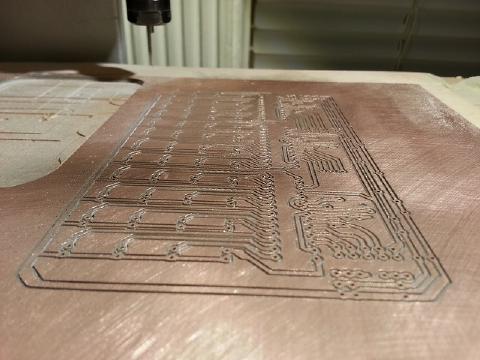
Chris Gammell: Got it. Yeah. The hard thing, it's always like dialing in the Z height and then making sure it's like nice and flat. As far as I can tell. I mean, like it's basically CNC machining. It's just that, you know, you're basically... So if people can visualize this, instead of having a full... You know, there's like a copper layer on a PCB, right? Normally, you etch off everything except the trace. In the case of circuit board milling, you're just outlining, basically. So there's still tons of copper there, so you could short it pretty easily. And so you're basically just isolating traces from the rest of the sea of copper, in so many words. And then you can do drills and stuff like that, but the hard part is aligning drills and then setting up, doing your own vias and...
Dave Jones: Right. Oh, yeah, no, no. For PCB, no, it's... You just... PCBs are commodity these days.
David: Yeah.
Dave Jones: So the only reason you would use a... It is to mill your own PCBs is time.
Chris Gammell: See, and even that, man...
Dave Jones: You want something then.
Chris Gammell: Yeah. I don't know. So I had this discussion for...
Dave Jones: But even then, you can get 24-hour turn boards.
Chris Gammell: Exactly. Right? Yep.
Dave Jones: For what? $500 or something. Like, it's crazy price. Yeah.
Chris Gammell: I don't know. I haven't quoted an overnight board in a while.
Dave Jones: I did a video on this a couple of... Last month. And like, even 24-hour turn was like... It was sub $200.
Chris Gammell: Oh, wow. Okay.
Dave Jones: Yeah. Like, it depends on the size of the board and the complexity. Right, technology, like two-layer versus four-layer. Yeah.
Chris Gammell: And that's kind of like... So they were going through this at the space I work out of M-Hub here in Chicago. They didn't have any milling equipment. They ended up getting one. I actually recommended the other mill just because it was getting the lower cost one just to see if people use it. You know what I mean? Like, because ultimately that's what you need. But they actually ended up getting a nicer one, the Modelo MDX50, which looks pretty nice actually.
Dave Jones: How much does that cost?
Chris Gammell: That's about $10,000, I think.
Dave Jones: Okay. So that's serious.
Chris Gammell: Yeah, it is. And it's got like a six-tool changer and yada, yada, yada. And it's like heavy, too. It's like 300 pounds. And it seems like a pretty nice... It's by Roland. It's a pretty nice tool.
Dave Jones: Oh, Roland. Okay. Yeah.
Chris Gammell: I don't know the software flow. I remember the Roland MDX40 I'd used in the past and it did not seem that friendly, but... Really? Okay.
Dave Jones: I've heard the Roland software is fairly decent. Okay. Yeah.
Chris Gammell: I mean, that's what's used for a lot of the Fab Labs use them. So like that standard set from MIT and stuff.
Dave Jones: So can the other mill... Is the other mill just only a vertical drill? It can't go flip horizontal and like do holes in the side and stuff like that?
Chris Gammell: Yeah. It's traditional three-axis milling. Right. I mean, it's... The Z height's only got like, I think, three inches of Z height on the main one. And, you know, so it's not super rigid. It's made... It used to be a lot less rigid. They've done a little bit better on the newer ones. Mm-hmm. And so rigidity being like a... You know, so that's a measure of... If you think you're moving through a material, but then the whole thing starts to flex a little bit, you start to lose accuracy and stuff like that. All right.
Dave Jones: So anyway, the article is going... Is saying something along the lines of, is CNC going to become the next 3D printer?
Chris Gammell: No. The answer is not. Praise. No. Exactly. Exactly. However, what I will say is that I really do like... I think the... So other plan it's called. And for a while it was Mac only. So that was a little problematic, but I think they've since moved over to Windows as well. But that's actually...
Dave Jones: Mac only?
Chris Gammell: What's that?
Dave Jones: Mac only.
Chris Gammell: Yeah. I think it was just... That's what they were developing for at first. And... But it's since moved over. And that actually is a pretty decent software, as far as I can tell. I'm kind of going off secondhand. My friend who's actually running these things pretty often. But I like... So this is something that's talked about a lot, though. Software in this realm is usually pretty terrible. I don't know if I mentioned that I started doing laser cutting at this space I work out of. And it's literally terrible. I mean, it's really, really, really bad. It's a printer driver. You know? Like, you're printing... And you can't, like...
Speaker ?: Right.
Chris Gammell: And you can't, like, move shapes around in the... You know, at least on this one. It's, like, the... Yeah. Is it full spectrum or whatever the other one is? One of the... They're all terrible.
Dave Jones: Yeah. It's all about the software. I mean, like... Right. Right. Like, the hardware is... Like, it's a drill on a, you know, X, Y, Z axis. I mean, that's... Right.
Chris Gammell: And, like, you're going to pay... Like, that's, like, you pay more for the better hardware. You're going to get a better result.
Dave Jones: Yeah, of course, you pay more... The better bearings, the better stepper motors... Exactly. You know, feedback... Right. ...and the more rigid frame and the...
Chris Gammell: But most of the time... Most of the things that you and I care about is the interface and, like, the... Oh, yeah. The everyday kind of thing.
Dave Jones: How easy... Well, they're claiming with the other Mill Pro here is that, you know, it's simple. You just throw in your Gerber file and double-sided boards with six thou, you know, trace and space. You know.
Chris Gammell: Well, we won't know until we try it. I have not used a pro. I've used a regular one. I've also, like a genius... Let me tell you my story here. The first time I used one of these things... Yeah. So, they're, like, you know, so that if people don't know what they look like, they're, you know, like Dave said, they are kind of like a MakerBot, like a cupcake shape. And so, they've got these Lexan plastic covers on the front with, like, magnets to hold them on and then they're interlocked as well. And so... And they're on every side. And for some reason, my dumbass thought that I pulled it off and I saw there was a bunch of dust on it and I go... And I blow into the goddamn thing. It all comes right back out into my eyeballs. Like, I had copper and luckily FR1. So, that's something to know. These things use FR1 instead of FR4. So, I'm not...
Dave Jones: How do they? What? These can't mill FR4?
Chris Gammell: FR4 is fiberglass, right? And that stuff just chews up every bit because...
Dave Jones: Well, FR4 is actually the flammability rating. That's what it stands for. It's a particular type of woven fiberglass epoxy mix. Right.
Chris Gammell: So, whatever FR1 is, it's much safer to mill. I know that. Right. Because FR4 is not safe to mill. Like, you'll get, like, you basically, you're aerating fiberglass, which is already, like, you know, little tiny shards of glass that then...
Dave Jones: Right.
Chris Gammell: ...sometimes get in your eye somehow. I don't know. No, no, no. Sanding fiberglass, that's dangerous.
Dave Jones: Like, sanding fiberglass is... Right. Exactly.
Chris Gammell: Or cutting it with, like, a Dremel is terrible. Right.
Dave Jones: Oh, okay. I didn't know you had to use FR1.
Chris Gammell: Yeah. So, it's usually FR1 or some kind of safer thing to use.
Dave Jones: Oh, that would... Is that a phenolic base board?
Chris Gammell: Probably. Yeah, I think that's right.
Dave Jones: Is FR1 a phenolic base? I can't remember offhand.
Chris Gammell: Yeah, I think it's something like that. It's definitely something that's safer to mill, though. So, anyways, luckily, I was wearing contacts, and I just got in contacts, and I ripped those out real quick and washed my eyes out and felt really stupid. So, what did we learn?
Dave Jones: Yes, FR1 is phenolic paper. Got it. Phenolic paper is material often used to make printed circuit board substrates, blah, blah, blah. It's made of phenolic polymers. Yes.
Chris Gammell: Right. And so, this has been another discussion...
Dave Jones: FR1 and FR2 for those playing along at home.
David: Got it.
Chris Gammell: This is another discussion we had about...
David: And it's only rated at 130 degrees C. Sorry. No, no, it's fine.
Chris Gammell: It's fine. It's like I was going to make a point or something. Any other obscure details about stuff that people probably aren't going to use?
Dave Jones: What? This is important shit to know. We're educational here on the end now. Thank you very much. I should talk about that.
Chris Gammell: Oh, yeah. Later.
Dave Jones: Remind me to talk about that in the last five minutes or something.
Chris Gammell: Okay, cool. The EEV Academy. Yes. Yes. What? What the hell was I going to say now? Oh, so the thing that's... So, I talked to another friend about this who used a lot of milling machines. There's also the one that's been out there for a long time. What's it called? LPKF. Right? So, they have a laser-based one.
Dave Jones: They kind of like the Defecto industry standard. And that was another one.
Chris Gammell: And so, I basically passed through a bunch of these... The knowledge that I've learned from these friends. And pretty much everyone said it. Is that, you know, you can do it. But the learning... It's not like you walk up and start it. Right? Because there's no tools that are... No milling tools that are like that right now, at least.
Dave Jones: Right. Is that Bree's plan?
Chris Gammell: Maybe.
Dave Jones: Is that his plan? I'm guessing Bree's going to be pretty hands-off.
Chris Gammell: I mean, Danielle's got a pretty... You think? You think he'll be hands-off? Yeah, she's doing a great job. So, I'm guessing he'll raise more money and, you know, try and grow the company.
Dave Jones: I'm guessing he won't be able to help himself.
Chris Gammell: Well, okay. Either way, it's fine. Yeah. And, man, I keep losing my train of thought. Whatever. Funny, though. Yeah. So, milling sucks. That's what I'm trying to say. Milling, right.
Dave Jones: Okay. Right. So, you think he's on a losing bet there. No, I mean, it's a good little company. It's going to be a nice niche. You know, if you can become the de facto PCB milling company, like, there's a huge market there, right? Right. Well, there's a perceived big market. No, I actually... There's a lot of companies who like the idea. The idea is better than the concept.
Chris Gammell: That I do agree with. Right. And that's actually what I was going to say is that the feedback I got was be prepared to have someone kind of running the machine. And the truth is that you don't need most places until you get to that point where you need someone running the machine, right? That just implies a certain amount of volume. And so, one of them was at a makerspace at a school, right? And so, there was enough people that were like, they were regularly submitting boards, right? And at a certain point, so that might make sense from a money perspective. But like we've talked about with 3D printers and everything else in the past, like, the real calculation is how many overnight turns would you need to have in order to pay for
Dave Jones: it, right? We've talked about this before, haven't we? We've talked about, yeah, if there's sub $200 for an overnight turn, right? And this thing costs $2,000, right? Or more, double that, right? Or whatever, especially in Australian dollars.
Chris Gammell: The pros are $5,000, I think now.
Dave Jones: Oh, okay, right. Then you're talking, you know, 20 overnight, you know.
Chris Gammell: Right. And the other thing is that, like, you might have to remake it.
Dave Jones: So, you have to be desperate in 20 different occasions just to pay. And you get an inferior board, a vastly inferior board. These things aren't plated through. They've got no solder mask, no silk screen, no bloody nothing in there for an olick base, for goodness sake.
Chris Gammell: Right, exactly. So, if you're doing anything like RF-based, all of your impedances are different, stuff like that. And that's another piece of feedback I got was, yeah, you might design a board because you need it. You need a prototype board right now. And that's fine. But the thing is, like, you have to go and redo the board. Like, it's not like you're going to be doing a finished board, right? You're not doing something with, you know, 3-3 spacing. And, you know, controlled impedance and four layers or six layers or whatever, right? So, at a certain point, it just doesn't make sense. There are applications, and it might be worthwhile to learn this stuff, but...
Dave Jones: And sometimes you have to lay out your board knowing that you're going to make it on this thing. Exactly. Exactly right, yep. Because you don't want 50 Vs under chips, right? Where you've got to, like, solder the, like, SMD chips and stuff. Right, because they might short out, right? That's a pain in the ass. Right? No, no, it's just a pain in the ass, because then you've got to put the, you know, you've got to put an individual wire through each one. You've got to solder on both sides, and then it's too high off the board that your surface mount chip doesn't go down. So, then you've got to get your flush cutters. You've got to cut it flush, maybe get the knife out and shave it off so that it doesn't impact the height profile of you. It doesn't interfere with your surface mount chip that's got to sit flat on the board with these Vs. Yeah, some of them have rivets, kind of.
Chris Gammell: They have, like, rivets that go through.
Dave Jones: Oh, you can get rivety things. I would think that's what the LPKO system does and stuff like that. But, you know, but, oh, like, eh.
Chris Gammell: So, eh. Some people need it. Some people don't. Right. Personally, I think if, and not only that, it's like, how guaranteed is it to work? Are you going to have the parts on hand? Yeah. So, yep. Hmm. Actually, I did, what was that calculation I did? Oh, because I, so there's another thing in my talk I did. It was like, because I always balk at $200, like, dev boards, right? So, like, you know, sometimes you see these evaluation boards, and I don't have anyone that's giving them to me. Like, I don't have any sales reps giving them to me anymore for free. Right. And so you see something that's like $300, $200, $300, $500, right? And so what I did is I just laid out the cost of, or the time, rather, of, like, assuming you have the parts on hand, assuming you have a circuit board milling machine that can do this, assuming that the technology is sufficient, like, you don't have BGAs or anything, like, super, super fine pitch. Assuming all those things, and then you still do all the layout and the, the whatever, the, you know, the assembly, the testing, the software. Where it's like, I just said it was like 30 hours, and I said even at 50 bucks, that's, you know, that's $1,500. You could buy six dev boards for that much. Exactly. And get them all shipped overnight. Just go buy the dev board. Right. Exactly. So, again, it's like, it's just like, it's that same thing that we talked about at the top, kind of. It's like, I still have this, this, uh, impetus to, to go and build it because I like the building process and I want to design it and I think that I need to, but most of the time, that's not the right call. And so, that's kind of what the other mill is kind of playing against too. And, yeah.
Dave Jones: I know this is like, speaking about just ordering the things and getting them shipped overnight or whatever. Uh, I ordered some parts from TGK the other day, right? Haven't, haven't done it for a little while, right? Order some parts from TGK. And now, like, of course, this is like, well, duh, right? But this is a big deal for people in other countries like here in Australia, right? Normally it's, uh, 30 bucks US just to get the parts shipped here, right? You've got to choose FedEx DHL or whatever, right? You've got to choose one of them. And it was 30 bucks.
Chris Gammell: 30 bucks for shipping or a shipping charge on top?
Dave Jones: Just for shipping. Yeah.
Chris Gammell: Okay.
Dave Jones: Right? What?
Chris Gammell: Keep going. I'm, I'm about to get upset, but yeah. What? You'll, you'll hear why. You'll hear why. But now it's free, right? Okay, anyway.
Dave Jones: Now it's free for anything over 50 bucks.
Chris Gammell: Yeah, that's why I'm upset because nobody in the States gets that. Damn it. Oh, really? Yeah. I don't freaking get like, cause they're trying to get more business outside the States. I get that. Like, fine. But like, come on. Like, I paid, like, I mean, I not, it's not that big a deal. I pay USPS. How much do you pay? It's like five bucks for like, for like eight ounces or less, whatever, right? Oh, right. You know, it's like, it's not a big deal.
Dave Jones: Ours was always a fixed charge of 30 and 30 US dollars, which is like 45 bucks Australian. Yeah. But that's like, I mean, that's any shipping with like UPS around here would be that much too. Yeah, no, no, of course. No, I'd never really, you know, I complained. It was just the price of having to do business with DigiKey and Mouser. Yeah. Right. And now it's like, no, I can order 50 bucks worth of parts and that used to cost me $80. Right. Right. 50 plus the 30 shipping. Now it only costs me the 50 bucks and the shipping's free.
Chris Gammell: Right. Well.
Dave Jones: It's great.
Chris Gammell: I.
Dave Jones: Unbelievable.
Chris Gammell: That is, that is a nice perk.
Dave Jones: Yeah.
Chris Gammell: Yeah.
Dave Jones: Sorry that you're angry. But you've got companies that ship for free in the US, don't you? I mean, you're talking about like Element 14 and others, don't they ship for free?
Chris Gammell: I'm not buying enough that they're shipping me anything free, quote unquote free. Okay. Yeah.
David: Right. Because we, we, we have that here in Australia.
Chris Gammell: I should say that I don't make decisions based on this either. Right. It's not like, because I was tweeting about this the other day. But it's. About like, I see all these promotions about like, oh, it's Memorial Day coming up or we'll give you a coupon for shipping. It's like, look, I'm not going to buy or not buy parts. Right. Just use the shipping. It's just that like, like, why does Dave get it for free? It's just more about like, it's about like, I mean, a little kid, you know, like, I want
Dave Jones: the toy he has. Come on. Come on. But we've, we've had it bad for a long, long time.
David: It's because you live in the middle of the ocean, man. I know. I know. Right? So, geez, you know. Like the Southern Ocean. Like there's nothing around you. I know. It took me forever to get there. It took you 14 hours just to get across the ditch, you know?
Chris Gammell: Yeah. Yep. So, no, I'm, I'm glad for you, buddy. That's great. Yep. Anyway. You got to win. You got to win.
Dave Jones: Yep. Yeah. We finally got to win. Yep. You're in Australia. Yeah.
David: Yeah.
Chris Gammell: Beautiful people, beautiful weather, you know, healthy food. But, you know, finally you got to win on the components. Yeah. Good. Glad. Glad for you. I'm glad for you.
Dave Jones: Boy. Okay. We do have like seven minutes left. I was going to tell you about the, the educational thing.
Chris Gammell: Yes.
Dave Jones: I don't know if I had told you this, but I looked into actually becoming an educational organization.
Chris Gammell: Is that like a tax thing?
Dave Jones: A, a tax thing. Yes. Interesting. Like, because educational organizations are exempt from, you know, income tax exempt here in Australia. Interesting. Um, and I assume in other countries is probably, you know, quite similar. Um, but ultimately like, like, so I, I, you know, I had extensive discussion with my accountant about it and, uh, yes, it's possible. I could actually, cause I basically, that's, that's what I do. I produce educational material. Right. Yes. I might have to learn something to the public. Yeah. Right.
Chris Gammell: At some point. It's not free. Yeah. Whatever, man. My attention is not free. It's free. What? Yeah. Sorry. I don't give it. If you're not paying anything, you're the product. I'm the product, man.
David: Screw you. If you don't like my free shit, you can just shove it up. I'm your boss, man.
Chris Gammell: I'll tell you what to make.
David: Right. Dance monkey. Dance. And dance. That's cool. Give me that tutorial. Yeah. Yeah.
Dave Jones: Anyway. So yeah, I looked at, you know, it's like, you know, it sounds good in theory and then you get down to the practicalities of it and there ultimately becomes really no advantage to it.
Chris Gammell: Are you like a nonprofit or something? I mean, how does it work?
Dave Jones: It would be, well, that's one of the thorny aspects of it is, you know, what do you do with the commercial making a profit side of the thing? Right.
Chris Gammell: You know, split into two companies kind of?
Dave Jones: Yeah. It might have had to be split into two companies. But ultimately it comes down to the fact that if you're an educational institution and you're making a profit, which of course I would want to do, you know, because like I've got kids to feed. Right.
Chris Gammell: Right. Right. You can't draw like a monster salary, although that is a big part of nonprofits.
Dave Jones: I go, well, no, I can draw, like, but even if, right, let's say I form this educational institution and everything's taxed, all the profits are tax free, right? Everything's hunky dory. And then I draw out all the profits as a wage, right? Sure. Which I could probably do.
Chris Gammell: Sure.
Dave Jones: Right. Then I'm still paying personal income tax on that. Sure. So you can't avoid it. Oh, no, no, no. I don't. There's no magic bullet. No, I know that.
Chris Gammell: But I'm just saying from a nonprofit, you know, perspective.
Dave Jones: Yeah. So technically it's possible. Yeah. Like as a content producer of free educational material, I can potentially do that. Yeah. But no, it just, yeah, there wasn't any way to make it work.
Chris Gammell: But that means you'd have to like list your title as educator though? You'd have to be like Dave Jones. I don't know. It's David L. Jones, educator.
Dave Jones: Keter. Yeah. I don't know. Anyway. So that was meh. It was no real benefit. So we dropped it.
David: Hmm. Hmm.
Chris Gammell: Yeah. That's business stuff, huh? Yeah.
Dave Jones: Business stuff. It's all I'm doing these days.
Chris Gammell: Yeah. That'll get you.
Dave Jones: Yep.
Chris Gammell: Can't avoid it. Not doing any assemblies? Nothing like that? What? Assemblies? I mean like new designs. You said at one point David was doing new designs or you're doing new designs.
Dave Jones: Oh, no. Well, no. No. We're just working, trying to get the multimeter done, the custom multimeter. Because it's going to come to a head very shortly.
Chris Gammell: Oh, like having software for it?
Dave Jones: Yeah. Yeah. Having software and ready to go for the crowdfunding campaign and stuff like that. Oh, I see. Because it's currently, you know, there are 10 units currently at the assessment. What's the, you know, the compliance house. Oh, right, right, right, right. That are doing all the compliance testing. That tastes like. For like SEC and stuff like that. Yeah. Yeah. Yeah. So that tastes like 12 weeks or something. I didn't realize you were doing crowdfunding. Oh, yeah. Yeah. I'm going to do a crowdfunding campaign for it. Yep.
Chris Gammell: Well, that is some more news. Avnet and Kickstarter. No, I've been saying that for ages.
Dave Jones: Oh, Kickstarter, yeah. Kickstarter have a new bloody thing. It's not all about you, Dave.
Chris Gammell: Sorry. I know. Yeah. Yeah. Yeah. So Avnet and Kickstarter and Dragon, another former guest, Scott Miller of Dragon.
Dave Jones: Another former Dragon. We're just the center of the hardware universe. Well, yeah. Yeah, pal. You know.
Chris Gammell: With exceptional scheduling, you know.
Dave Jones: Right. Yeah. I wonder who does that.
Chris Gammell: From the guy who doesn't actually schedule shows anymore. But they're coming. They're on their way. Believe me.
Dave Jones: Yeah. I was talking with David about this before. If you've ever done a Kickstarter, any crowdfund, Indiegogo, whatever, you will get in. Well, no. Let's say what it is first. They've basically, the title is, Kickstarter is launching a program to help prevent hardware startups from failing. Right. Yay. Can we have that, insert that, you know, kitty applause sound? Right. Yeah. Yay.
David: Right. Right. Right.
Dave Jones: And, of course, so they've teamed up with Avnet, who they've teamed up with before, right? Aren't Avnet, is that Avnet approved shit? Or is that Indiegogo? No, that's the thing. That's the thing.
Chris Gammell: This is the response to that. So Arrow had paired with Indiegogo. That's right. And this is Avnet. That's it. Whatever Arrow does, Avnet does, and vice versa.
Dave Jones: Right. Yeah. Yeah. And so. Right. So Avnet have teamed up with Kickstarter and Dragon Innovation, who help, you know, people develop stuff like that.
Chris Gammell: Well, and Dragon's done this before, too. Dragon used to have their own. They have.
Chris Gammell: They used to have their own Kickstarter, like, platform. So people remember, we had a guest on Eric, who teamed up with James to do that Mushi Meter. So James and Eric did the Mushi Meter, and that was funded on the Dragon crowdfunding platform, which is no more. Right. So. Okay. Yeah.
Dave Jones: Why did they stop it? Did they? Have we heard?
Chris Gammell: I think it was just not, they're not getting enough projects, right? I mean, they did. Ah, right. Okay. So I think that's just fell off. Traction.
Dave Jones: Right. Okay. So they've basically re-Kickstarted that again.
David: Yeah. Get it? I got it. Yeah. No, that's good. That was really good. That was really good, Dave. Thanks. Yeah. I'm quite proud of that one.
Chris Gammell: Now they're teamed up with Kickstarter, who also put out that stuff recently. I don't know if we talked about it on the show, but Kickstarter recently released a document, like, of what they were, they kind of, like, put out a call for proposals almost on, like, the type of campaigns they wanted.
David: Oh, I did that. Okay. Yeah.
Chris Gammell: So, and so I know Clarissa and Zach and, like, you know, they're, they're a good team. Like, I mean, like, I like the Kickstarter folks. I, we like Scott, obviously. Avnet's doing good stuff too. I mean, like.
Dave Jones: Yeah. No, no, no. It's all good. No, no. It's all good. But then comes the practicalities of it. It's like, as I was saying, if you've ever done a Kickstarter or an Indiegogo or whatever, once your project goes live and it's a hardware project, you will be inundated with spam email from all these Chinese companies who will say, we'll do it for you. Like, we'll give us 10% of your Kickstarter money and we'll handle everything. You know? Like, it's basically what they're doing. Except they've got their own official approved version of it. You know? That's basically what it is.
Chris Gammell: No. No, no, no, no. No? What? So they're doing, I mean, that's the kind of thing. Like, they're basically doing like, I mean, yeah, I guess maybe on a little bit of a range, but like, they're really just doing DFM activities, right? So they're talking about sourcing.
Dave Jones: Yeah, but Dragon are going to take a cut, right? Like, I greatly doubt Kickstarter are paying Dragon to do this for free for Kickstarter projects.
Chris Gammell: I have to assume that this is a lost leader and.
Dave Jones: Really? You think it's going to be free? To any hardware Kickstarter or maybe to approved hardware.
Chris Gammell: To approved ones, exactly. And that's the same thing for the Arrow thing. Like, Arrow is not like. Okay, right. So Arrow basically chooses them.
Dave Jones: Right. So you maybe submit your project and then Dragon look through and go, ah, that one's not going to work. We're not touching that with a 10-foot barge pole. Right. Exactly. Exactly. Right. Okay.
Chris Gammell: Although I was a little dismayed that Arrow, I think, gave their approval to your favorite project.
Dave Jones: They've given their approval to bloody everything. They don't. But they also.
Chris Gammell: So like, but Arrow will also give funding. So that was the other thing. And I don't know if I didn't, I lost this article somehow, but the Arrow gives 75 grand to certain projects too. I mean, that's the thing.
Speaker ?: Oh, really?
Chris Gammell: Everybody's doing this because they, that's like every, every company wants like the, the, the, the main line to startups that might be the next big thing.
Dave Jones: Right.
Chris Gammell: But the truth is none of them are. At least not in the beginning. Because. No.
Dave Jones: Very, very few of them are. Right.
Chris Gammell: Like 0.01%. Right. Zero, zero, one percent. And the truth is that the ones that were really big, they're going to see them coming anyways just because like the sourcing. Yeah, yeah. Right?
Dave Jones: No, yeah. So I don't know. Most of them are obvious, you know, that they're going to be big. Right? In some way. I don't know. Yeah. Well, it's, it's easy to spot the crap ones. It's easy to, I will agree with that.
Chris Gammell: Yeah.
Dave Jones: It's easy to spot the crap ones. It's truly easy to spot the ones that are going to fail, fall on their ass, you know? It's like.
Chris Gammell: And, and so from Kickstarter's perspective, that's good. You know, they have some people looking into it, but like, even just like whoever the program is, that's great. Right? If they've, so like, and, and we talked to Josh too from CrowdSupply. Right? So that's another person we've talked to. And, and so CrowdSupply does this stuff in-house. They actually take a look and they're very discerning with projects. Oh, yeah. Kickstarter, Avnet, Dragon are going to take a look at it. They're going to at least give guidance and then, you know, give it their blessing if, if it's good enough. Right? So like, that's great. Like all these things are actually really nice for proof points. So, and that's the best you can do. There's no, there are no guarantees. Right?
Dave Jones: I know.
Chris Gammell: So.
Dave Jones: But yeah, I don't know. So I guess this is good, but it's like, I, like, just, just like the Indiegogo thing with the Arrow thing. I'm so, like, that, that just turned into a complete schmuzzle. Right? It was, it was just an absolute joke. Because, oh, it's Arrow approved. And, oh, therefore it's going to, oh, yeah, it's guaranteed. This project's going to work and it's going to be, you know, they're going to meet their target online. They're going to deliver and it's going to work. It's like bullshit. All they do is look over their bill of materials and go, yep, we can get those parts for you. You know? Right. Well, exactly. And it's like, well, no.
Chris Gammell: But that has nothing to do with, like, I mean, and maybe they'll take a look at, like, plastics, stuff like that.
Dave Jones: It has nothing to do with the viability of the idea. Sure, of course. The concept. It has nothing to do with the financials of the company. Cash flow. Cash flow is a big deal. Cash flow and everything else, right? No. But, you know, but to Joe Public, right, that looks like, oh, it's Arrow approved. They must be, you know, like, it's approved by this company. They must know what they're doing. You know? I think there is value in that, though. I mean, I don't know. I think there is some value. It's just that some of it's going to be marking value. No, I think there's none. It's all wank value. It's 99% wank value. Wank value.
Speaker ?: Okay.
David: Mm-hmm.
Chris Gammell: Okay.
Dave Jones: Yep.
Chris Gammell: Well, we'll see, I guess.
Speaker ?: Yep.
Dave Jones: So I hope this doesn't turn into the same. Oh, it's Avnet approved because they just checked that they can source all the parts. And that's, you know, and then they go put the big approved logo on their campaign while it's still raising money and go, hey, look, you know, we're approved and we're, you know, that means that we're going to be a winner. Right? Bullshit. I'm calling bullshit.
Chris Gammell: You really turned on that. I got to say, you got to really. Yeah, no. You're going to convince yourself that you hate it now.
Dave Jones: Well, no, no. I hope it doesn't turn into that.
Chris Gammell: He's going back. That's what I'm saying.
Dave Jones: I hope it doesn't turn into the Indiegogo. Right? Because Indiegogo is a joke. Arrow is a joke. And I'm pretty sure everyone agrees with that.
Chris Gammell: Right? I think Arrow is a fine company, man. I don't know. I think all the.
Dave Jones: They are. Right? But the concept of how it's implemented is bullshit.
Chris Gammell: It's like we need like a pendulum. I'm telling you. Is there like a sound for a pendulum? Like.
Dave Jones: No, come on. You know what I'm getting at. You have to agree.
David: You've agreed with this before. I don't even know what I'm agreeing with at this point, Dave.
Dave Jones: That the Arrow approval on Indiegogo campaigns is just smoke and mirrors.
Chris Gammell: At this point, my agree with is, yes, these are definitely companies. And they're definitely talking about crowdfunding. And Dave is definitely upset or not upset.
Dave Jones: You never want to hang your balls out there, do you?
David: There's enough ball hanging. By you, buddy. I'm just going to go ahead and say something right now.
Chris Gammell: That's how you always start thinking. I'm going to go and make a prediction right now.
Dave Jones: Anyway, I hope it doesn't turn into just that. Like it's just a rubber stamp by bloody Avnet. I hope they do pick good projects.
David: And on a positive note. There we go. Yeah.
Dave Jones: Unbelievable. Anyway.
David: Dave, you know what?
Chris Gammell: I still enjoy hanging out with you, buddy. I still enjoy it. All those weeks in Australia. All these shows later.
Dave Jones: Can I say I told you so? The very first time the Avnet approval goes onto a project that is demonstrably going to fail. See, I don't think that's healthy, actually.
Chris Gammell: Come on, man.
David: What?
Chris Gammell: That's like when people are like, oh, oh, I can't believe they funded renewable energy and one company failed and oh, blah, blah, blah. It's like, okay, look, investing is, you had to invest in a lot of things and not, of course, nothing.
Dave Jones: No, no, no. Like, right, come on. But you'd like, you know, anyone with any engineering now knows solar roadways isn't going to work. Knows batteries. These are all freaking approved. These are all approved projects.
Chris Gammell: Maybe what they really need, Dave. I hate to say it. I can't believe I'm about to say this. Maybe they don't need a Kickstarter slash Avnet or a Indiegogo slash Arrow approved. They need an EEV blog disapproved.
Dave Jones: Right.
Chris Gammell: I don't know if they'll put it on their own page, but, you know, maybe you.
Dave Jones: A big not bullshit stamp, a not bullshit EV blog stamp that you can put on your project.
Chris Gammell: That's not bad. That's a little bit.
Dave Jones: We talked about this like five years ago. That's a little bit more positive. I'm sure we talked about this five years ago. Oh, man. Yeah, we did.
Chris Gammell: And if you ever did this, you would be miserable. Think about how much crap you'd have to sift through.
Dave Jones: I think you were thinking about it at the time. I think we were both thinking about it way back.
Speaker ?: No, you were.
Chris Gammell: You were talking about doing a YouTube channel, remember? You said, I want to do a YouTube channel about...
Dave Jones: Oh, yeah. Yeah, a YouTube channel with, you know, looking at crowdfunding campaigns, you know, like, yeah.
Chris Gammell: Boring.
Dave Jones: Yep. And then the natural... Yeah, it is boring. And that's why I didn't do it. And then the natural spinoff from that was, you know, but then it becomes like, oh, you're paid to vet it and you become a paid service and they, you know, like, you know, you wouldn't do it for free, obviously.
Chris Gammell: Well, no, because you'd have so many. I mean, like, it's surprising. Yeah, you'd have hundreds of them. How many campaigns are still doing this kind of thing? I know.
Dave Jones: Yeah, hundreds, hundreds. Like, you wouldn't... Yeah, it could be your full-time job. Yeah. Right? And you still wouldn't get around to vetting all of them. Right. Right? And, you know, so, yeah, no, it just wasn't a viable business model, you know? I still think something like that would be really good, you know, where somebody with a clue, right, actually vets these projects and goes, okay, well, it's not bullshit, right? I think that's kind of the point of this, Dave. At least doable.
Chris Gammell: I think you've talked yourself into, like...
Dave Jones: Well, look, all I'm doing is this has not worked before, right? They tried it on Indiegogo with Arrow and it was a schmuzzle, right? Demonstrably, right?
Chris Gammell: On at least one project, you're saying.
Dave Jones: No, no, we have multiple examples, right?
Chris Gammell: I don't know the other examples, but okay.
Dave Jones: Okay.
Chris Gammell: Maybe you should get David to create a page that keeps score. Maybe that would be a good public service.
Dave Jones: We do need to keep score, right? But, yeah, no, it's right. So that's just my fear because we have evidence, right? I'm not just shooting off the, you know, shooting from the hip here, right? Yes, you are. I'm basing this on evidence.
David: Dave, that's the only way you shoot. Bullshit. No, no, not bullshit. I'm basing this on evidence. We've seen this happen before.
Chris Gammell: You literally say all the time, I'm off the cuff, I shoot from the hip. You literally say that all the time.
Dave Jones: Yes, of course, but in this case, I'm speaking from experience. Right, right.
Chris Gammell: Don't listen to me three months ago. Listen to me now.
Dave Jones: Unbelievable.
Chris Gammell: Unbelievable. Oh, man, it's fun. It's fun, folks. This is good. This is good. All right. Anyway. Let's end on a positive note. Our buddy, Robert Ferenczek, who's been on the show before, another one. Oh, yeah. I feel like we should have a counter here for how many ones, right? Robert, who's been on the show before.
Dave Jones: That's got to be like seven or eight now. Oh, we're getting up there.
Chris Gammell: Yeah. Yeah. He just released 100 hardware design tips. And, you know, some are better than others, but overall.
Dave Jones: He didn't release 100 at once. No, no.
Chris Gammell: He did them over the course of like, he did like five a week, pretty much.
Dave Jones: You're right. Yeah. It's his 100th.
Chris Gammell: Yeah.
Dave Jones: And are they all on PCB layout?
Chris Gammell: You know, some of them are a little bit more unprocessed. Like, he did one about like doing a release document.
Dave Jones: Oh, okay. Yeah, yeah, sure.
Chris Gammell: So like, good stuff. Stack up, stuff like that. So like, everything throughout PCBs. Good stuff.
Dave Jones: Yay. Content producers.
Chris Gammell: Exactly. Hats off to him. Yeah. Brilliant. So, and yep. Good stuff. I like his channel. So people should subscribe to that.
Dave Jones: Yeah. It's great. He's got so much information on there. It's just, yeah, I'm surprised he'd... Well, PC, but like, you know, how many people really want to take the effort to learn PCB design properly? It's not going to be in the hundreds of thousands.
Chris Gammell: No, exactly. Yeah, it's... Right. Yeah, it's a... Some people are going to build a board, right? Yeah. Some people are going to put it on a PCB.
Dave Jones: Bumble their way through it, you know.
Chris Gammell: Right, right.
Dave Jones: But for those who really want to learn, it's, you know, this information is the duck's guts.
Chris Gammell: Mm-hmm. Exactly.
Dave Jones: So, yep.
Chris Gammell: So that David guy, man, he's making noise over there. I don't know about this office mate of yours, Dave. I can hear him.
Dave Jones: Yeah, you can hear him in the background. Yep, he just ran out and came back in.
Chris Gammell: He's making noise, you know?
Dave Jones: Yep.
Chris Gammell: Time to sit quietly in the corner. Sorry, I'll walk in. Like a good assistant. Right. He's a junior engineer. Where's the hazing?
David: Right. I did.
Dave Jones: I'd like to say I did this on purpose, but I didn't because it would have been a hilarious joke. Like a hazing joke.
David: Yeah.
Dave Jones: Like, you know, when he started working on the app for the multimeter, he's going to grin in a minute. You know, I gave him one of the meters, right, from my desk here. Okay. And, you know, and he's working, you know, and he's working for like a day or something, or it might have been two days or something. And he comes back and he finally says, I can't talk to this bloody multimeter through Bluetooth. I think there's something wrong. Sure enough, it's one of the ones that didn't even have a Bluetooth module installed. Yeah. And I wish I'd thought of that because that would have been freaking hilarious.
David: Gotcha, Rook.
Dave Jones: Anyway, it turned out to be funny.
David: Oh, man, that's good. Yep.
Dave Jones: That explains all the problems. Always do your sanity check, folks.
Chris Gammell: Yep. Yep. Yep.
David: Great.
Dave Jones: Happens for the best of us. Yep. Yep. Yep. Yep. Send the old apprentice down to the part shop for a long wait.
David: That's right.
Dave Jones: Need a long wait.
David: Or a purple screw.
Dave Jones: Yeah.
David: The old left-handed screwdriver. Oh, left-handed screwdriver. That's the one, yep. Yep. Anyway, I thought that was funny. Yep. That's good. So, yep.
Chris Gammell: Well, we've got a buttload more links. We probably didn't cover 50 plus links this time. So, we always have more links on our subreddit. We always appreciate Patreon supporters who are consistently supporting us for some reason.
Dave Jones: Yep.
Chris Gammell: Yeah, we appreciate that.
Dave Jones: Should I, should I like push my stuff to Reddit? Because I, technically there's an EV blogger Reddit thread somewhere. Like page somewhere. I think it's like dormant. I think the odd person, you know, chimes in. But like, should I like auto push? Like how big is this Reddit thing? You know, should I like auto push my...
Chris Gammell: It's the number four site on the internet. I actually learned this recently.
Dave Jones: Number four site on the internet. Yeah. So, what, I should be pushing my videos automatically to Reddit? No, I don't know. Maybe.
Chris Gammell: I think, honestly, I don't think so. Just because you have so much forum discussion, you know?
Dave Jones: Right. But I auto push to Facebook. Like, I don't use Facebook, but I have a page with like, I don't know, 15,000 likes or whatever. And I auto push every time I publish a new video, it automatically gets posted on the Facebook page.
Chris Gammell: You will get flagged for spam if you do that on Reddit, I believe.
Dave Jones: Oh, really?
Chris Gammell: Really? Yeah. Every link is hand selected by Chris, which means, well, not just me, but probably 85%.
Dave Jones: Yeah, but it's about my video. Like, it's a specific Reddit section. Like, it's not like I'm publishing it to the electronics thread or whatever. Are they called threads? What are they? No, what are they called? Pages? What are they? Subreddits. Subreddits. Subreddits. That's it.
David: Just newfangled Reddit thing. I mean, Dave, you can do whatever you want, man.
Chris Gammell: I don't care.
Dave Jones: Anyway, but it's a specific EEV blog of Reddit.
Chris Gammell: It's slash r slash EEV blog. That is correct. I just picked it up. Yeah, right. 285 readers.
Dave Jones: Yeah, like, so why would I be flagged for pushing material to a specific subreddit for my specific videos?
Chris Gammell: I guess if you're the moderators, you probably would, yeah, you probably waitlist yourself. That's true. That's a good point.
Dave Jones: Right. I don't know. I can't remember if I set it up or somebody else did.
Chris Gammell: You did. Yep. You did. Did I? Yeah.
Dave Jones: Oh, yeah. Hello world. Bye bye old zone. There it is. Go figure four years ago. There you go. Yeah.
Chris Gammell: And remember, that's where the Ant Power started too. It was on Reddit.
Dave Jones: Right. Yep. Oh, yeah. Yeah, it did. That's right. Oh, yeah. Yeah. I remember that.
Chris Gammell: Right. So.
Dave Jones: There you go.
Chris Gammell: Post number 14. So is this place dead? Maybe I'll look into that. Yes, it is. All right, Dave. We'll talk next week, yeah? Cool. Yep. Talk to you then. Catch you next time. Bye.
Speaker ?: Bye. ! Thank you.
Archived Discussion (1)
Comments are closed. Archived from the original site.
Show archived discussion (1)Hide discussion
- Chris GammellThanks, fixed
AvnetDragon InnovationFusion 360KickstarterMicroscopeMilling MachineOthermillSolidWorks
Keep current
Every episode, plus the occasional job post, in your inbox.