
#477 – EcoWoke and Going Broke
Download episode · 54 MB
Also on Apple · Spotify · YouTube · RSS
Show Notes
- Dave and Chris have both read our Listener Survey feedback. We're going to bring back:
- Chip of the Week (CotW)
- Call in shows - possibly by using an answering machine equivalent (leave a voice message for us)
- Starlink
- The Art of Electronics X Chapters are now available
- Chris admits he did not have Electro Magnetic Compatibility Engineering, the famous book by past guest Henry Ott
- EEVblog reference - Easter egg - 9x.5
- Chris is once again dealing with pick and place machines (NeoDen4)
- Our Chip of the Week is the TTP223, available via LCSC
- Remote troubleshooting
- When Dave sold kits in '95, people dialed for a price sheet by polling his fax machine
- Particle is deprecating Mesh and will no longer produce the Xenon board
- LastTissue thread on EEVblog forum
- Eco-Woke
- Arduino Pro announced at CES, it has a dual-core Arm Cortex-M7 and Cortex-M4
- Looking for an editor for the podcast! Please email relevant experience to editor@theamphour.com
Transcript
Chris Gammell: This is the Ampar Podcast. Release February 2nd, 2020. Episode 477. Eco-woke and going broke.
Dave Jones: Welcome to the Amp Hour. I'm Dave Jones from the EEV blog.
Chris Gammell: I don't even recognize you anymore, man. It's been like a month.
Dave Jones: Is this our 10th year?
Chris Gammell: No, it's not yet. Can we say this is our 10th? Yeah, it is our 10th year, but August is the 10-year mark. We'll have celebrations of some sort.
Dave Jones: Yeah, but it's the year. The year of the 10th.
Chris Gammell: Yes, that's right.
Dave Jones: Anniversary.
Chris Gammell: And I'm Chris Gammell of Contextual Electronics, in case anyone didn't know that yet. If this is your first year of listening to the Amp Hour, you are in for a long backlog of pretty much what you're going to hear today. But we are going to try and shake some things up in our 10th year, I think. That's what you were getting towards?
Dave Jones: We are. I was getting towards that, thanks for the segue. Because we have read the feedback.
Chris Gammell: Yeah, you read a ton and you were commenting.
Dave Jones: I read every single one of them. Yeah, I decided, yep, today I'm going to sit down and I'm going to – well, I don't grab coffee, but I grabbed myself a protein drink and I sat down and I read every single comment. I don't know how many there were, but geez, it was a lot. It was 800. A thousand?
Chris Gammell: 800 of this year.
Dave Jones: 800. Yeah, I thought it was getting up there towards four digits.
Chris Gammell: We've had four digits in the past. I think we had 1,500 when we would give away a scope. For some reason, that number is a little different then. And the one question that wasn't on there that I think maybe you mentioned on the show, but we're going to ask in the future, what is people's favorite past episode with guests? Because that always – we'd like to compile a list somehow of just go and listen to this. Obviously, we had Chuck Peddle pass away a couple weeks ago. That was one of the top ones, but we'd love to know just like what kind of sticks out in people's minds. Not with us, but with guests. So what did you find?
Dave Jones: And hang on. Also, I'd like to know if people want – well, I can leave it in the comments down below, I guess. But would people want to see people outside of our normal industry?
Chris Gammell: Yeah. Like give an example.
Dave Jones: Oh, no. I don't want to give it away.
Chris Gammell: Do you have an auxiliary type of – give an idea? Like how far outside our industry?
Dave Jones: No, it still might be engineering system related, but it might be somebody – like just somebody who's not an engineer, but they know about engineering systems, for example.
Chris Gammell: So they're like a train engineer. Yeah, something like that, yes.
Dave Jones: Anyway, yeah, like do we have to stick to – what I'm asking is do we have to stick to electronics as such?
Chris Gammell: The answer is, of course, yes and no. That's one thing that I pulled out of the survey is that like people would be like, oh, there's a lot of Dave and Chris shows. We like that. And then people would be like, there's a lot of interview shows. We like that. And people would be like, I like neither, and I like both.
Dave Jones: I like neither, and there's too much software. There's not enough software. Yeah, of course.
Chris Gammell: It's always all over the place. We try and compress it down. But we appreciate everyone who actually took some time to fill it out. And we did send out – I don't know if you saw on Twitter. We sent out 10 amp hour notebooks. We did.
Dave Jones: I saw that.
Chris Gammell: We sent out a BM235. How many of those got left?
Dave Jones: Did we actually blow our stock?
Chris Gammell: There's one left. There's one left.
Dave Jones: One left.
Chris Gammell: One left that has not been written in by me, I guess, or you. I think you have one too. Yeah, I've got one. Yeah. And then – Rear as hen's teeth. Yeah. Those are collector's items now. And then there's also – we sent out two analog discovery twos as well. So, yep. Sent all those things out. It was great. What else did you pull out of the survey? Anything else?
Dave Jones: Yes. Obviously, people complained about me not being on as much, and that's, yep, true. Guilty as charged. So, yes, I will be back more often. He's back. And although I've got – you know, I've said this privately to you, and I've said it before as well. I don't necessarily like the three-way interviews. Yeah. I find them – I personally find them a bit, you know, messy. Yeah. It's tough.
Chris Gammell: I mean, like I think it's about building rapport. When you're doing an interview, it's about building rapport with a guest. And I think if it's like two people or three people in three different – Yeah, three different locations, and we obviously have delays, so we talk over one another.
Dave Jones: And we have delays, so we talk over each other, and that's one of the problems. So it's bad enough when you only have two guests. If you're wondering why we're always talking over our guests, it's because there are audio delays. That's right, yeah.
Chris Gammell: And I try and cut it out, but it's tough. I mean, honestly.
Dave Jones: Oh, yeah, no, it's tough. Even small delays, like, you know, tens of milliseconds matter when you're doing a podcast, which is why we can't use Wi-Fi often.
Chris Gammell: Oh, yeah.
Dave Jones: You know, or a slow internet connection with a bad ping, for example, that's going via a satellite or something. That'll just kill it. So, yeah. Yep, yep. So all this Starlink business isn't going to help, is it?
Chris Gammell: It'll help a little bit, but it wouldn't help –
Dave Jones: It gives everyone internet, but it doesn't enable audio.
Chris Gammell: Well, I think one of the things they talk about is like low latency for like priority stuff for traders and stuff like that, the ones that are – they're going to be paying a lot of money extra to have priority packets, I'm sure. But that's not us. Right.
Dave Jones: No, but simply further to go up than it is to go via a landline.
Chris Gammell: I don't know if that's true, actually. I mean, I guess –
Dave Jones: I think it is.
Chris Gammell: Well, I don't – I think it would be fewer hops, though. I think it would be fewer hops.
Dave Jones: Right. Oh, okay. Could be. Anyway. Yeah. So –
Chris Gammell: It'd be interesting to see like a direct line, you know, from Chicago to Sydney. Like what is like the – as the satellite flies versus, you know, as the fiber goes.
Dave Jones: Oh, well, no. No, satellites definitely further. If you're talking about one side of the planet to the other, that satellite has to be a heck of a long way away, right? No.
Chris Gammell: It's got to be – Starlink is like a – it's like a quilt of – Yes. Yeah, I know.
Dave Jones: But I'm talking – Yeah, but – Well, they would have to hop from one to the other to get there. Yeah, true. The lower the orbit you are, the limited distance you have between directly connecting two points.
Chris Gammell: Yeah, that's a good point.
Dave Jones: So that's where a direct fiber-to-fiber connection from country under the ocean is better. Yeah. It's actually faster and more reliable.
Chris Gammell: Yeah, I wonder – we've never actually done a ping in like – I don't know if your stuff goes up to like – goes up to Asia first and then comes over, you know?
Dave Jones: It's most – we do have a direct trunk to the US. Oh, you do? Okay. Or a couple. But which path it actually takes, I don't know.
Chris Gammell: Yeah, okay. I'm sure we could, you know, ping it out. It's like thinking about like how the paths are happening in our brains at the same time. It's just like you don't think about it. Obviously, I can hear you, you know. Right. I can talk to you, but I don't think about any of that stuff. So, yeah.
Dave Jones: Yeah, so – and a lot of people said that they wanted more of the two of us bantering. So we may go away from the guest every second week. We may have more of the two of us. We just don't know yet.
Chris Gammell: Yeah, I think the short and the long of it is we're going to play around and try some new things. Yeah. We are going to bring back Chip of the Week. Chip of the Week. Chip of the Week. That is one thing that was brought up many times. And –
Dave Jones: And call in as well.
Chris Gammell: Yeah, we're going to give that a shot.
Dave Jones: Except we're probably going to do that a bit differently. We haven't fleshed out the details yet. We've had live call-ins before, but we're not sure if we'll do that. We might do that again, but they won't be live. We'll like semi-screen them. Mm-hmm. And – but we'll have like an answering machine type thing, hopefully, where you can simply call in and leave a message. And we will play that on air or maybe we'll even invite you on to ask your question live or something like that. We just don't know how that's going to work yet. But, yeah, quite a few people said they want that back, and I think that's a good thing for a podcast. Yeah.
Chris Gammell: Yeah, it was a lot of fun when we tried it in the past. Yeah. You know, we tried to do the car talk thing, but it's a little tougher when people are all over the place, you know.
Dave Jones: Because our episodes together, I think everyone probably agrees they're – they could be hit or miss. You know, both of us agree that it's often hit or miss. You know, sometimes we'll like finish the show, you know, catch you next time, and then we'll talk to each other afterwards and go, that was a good show. You know, we'll just know it was a good show, and sometimes we'll just go, oh, that's another one in the bag. You know. It's like – Definitely talk for an hour. Yeah. Too much I'm in and I, you know. We're just like – like sometimes we nail it and sometimes we don't. That's the nature of an unplanned show like this. And they are hard to plan. Like we could spend hours and hours planning this show, and it's not going to go the way we planned it. So there's probably not a lot of point to that.
Chris Gammell: Well, we are going to keep talking about electronics, and we'll try that. Hopefully. Yeah. We'll do that today, I'm sure. I am staring at the X chapters right now. I actually brought my book into the – Ah, you got it. You got it. Into the recording room. Have you been digging through it?
Dave Jones: I've had it for a couple of months. I haven't had a real – A couple of months? I haven't sat down. Oh, wow. Oh, yeah, I was – yes, I got it early because I got a mention in there.
Chris Gammell: Yeah, I saw that. That's the first time I saw it. And then I'm –
Dave Jones: That's awesome. Yeah, I got a mention. Thank you very much. Where is the mention? Oh, I put it on Twitter. It's like page 300 and something. Oh, 300. Jeez.
Chris Gammell: Anyways, this is the Art of Electronics X chapter. So this is – there's the third edition. It just came out, by the way. The third edition of the Art of Electronics came out a couple of years ago now. It's the gold one. And then this is what, like the additional stuff that they wish they could have put in but they didn't.
Dave Jones: Yes, exactly. So it's just like, you know, more like a random – it's even more – like if you thought the Art of Electronics was a practical, you know, oriented text, this is even more so. That's right. This delves into the more practicalities of, you know, miller capacitance in capacitors and, you know, gate capacitance in MOSFETs and how it affects it in practical circuits and all that sort of, you know, juicy goodness and PCB traces and how they impact your designs. And, you know, really.
Chris Gammell: I'm going through page by page. And so I'm still in the passive section. But, like – Right. I really like the – I was in the capacitor section and they, like, kind of call out, like, oh, well, here's why it's good to use different types of caps in different scenarios. And they don't really cover that in the original text. Yes, that's right. And so – and then, like, things like aging and voltage variances and stuff like that. You know, so it's just like a lot of the – the way I was kind of reading it, it's like this is something that the grizzled old gray beard would be sitting next to and be like, you know, you got to watch out for this one thing. And then they would – you know, and that's basically what this part of the book is. It kind of feels like it's that watch out for – at least what I've done so far, of course.
Dave Jones: Yeah, and there's tons of original research in there. Like, there's tons of characteristic curves where they'll, like, do shootouts between different diodes and different capacitors and different, you know, MOSFETs and things like that. Like, this is the sort of stuff that I would – you know, that I used to do in my – back when I had a day job. You know, you would, like, okay, we need to choose the best 500-volt MOSFET. Right. Right? So you'd get a whole bunch of them and you'd test the various characteristics and you'd plot graphs and then you'd put it into a report and go, yep, we're going to choose this one because X. Right. You know, and all that data never sees the light of day. Right. You know, it's never published. It's never – you know, it's just died away in somebody's journal at some company somewhere, you know. And this feels like they've just, like, opened up all their notebooks and they've just spewed out all this information. You know, it's great. Yeah, yeah. It is great. Yeah, I'm trying to do a couple pages a day.
Chris Gammell: I've been – it's been – it's actually – it's been my train reading. So, like, when I got a train to go home at night.
Dave Jones: Ah, right. Nice. Yeah.
Chris Gammell: So I'm the weirdo on the train reading about electronics. So it's good, though.
Dave Jones: And in nice hardcover form, too. Yeah, of course. Not that softcover rubbish.
Chris Gammell: Right, right, right.
Dave Jones: Absolutely brilliant. Anyway, yes, definitely recommended. You could even have this if you don't have the art of electronics. But why would you not have the art of electronics? It's true. Sorry.
Chris Gammell: Dave, I just want to call out right now. We're talking about books. You and me together. We're talking about books.
Dave Jones: Yeah, because it's not some bloody business book. You know? It's not so –
Chris Gammell: Oh, I got so many. You know how long it's been since we talked about books last? I've got so many we could talk about if you want to.
Dave Jones: Oh, God. Here we go. And this is a lot of the complaints. Yes. Oh, Dave doesn't let Chris talk about books. Most people don't know about what's called taking the piss. Oh, well, yeah. Okay. This is what us Aussies do.
Chris Gammell: If they don't find out. This is a master class, isn't it?
Dave Jones: Oh, goodness. Man. My sarcastic, dry sense of humor just – and Aussie taking the piss just doesn't come across on radio, apparently.
Chris Gammell: Apparently. Apparently.
Dave Jones: Yeah, a lot of people just don't get it. Yeah.
Chris Gammell: I do have other technical books that I've been digging into. I have an embarrassing confession. Yes. I didn't have Henry Ott's book. No. There you go. Yeah. So I finally bought it. Yeah. And so I've started that too. I don't know what it was. I think it was just like the price. You know, like the $100 text for some – Oh, yeah, yeah. For some reason on all these things, like they're $100. Even the Art of Electronics, I think it was like $70, $80. The X Chapters, rather, was $70 or $80? Yeah.
Dave Jones: Yeah. It's not cheap.
Chris Gammell: And it's just like the psychological threshold where I'm like, I don't know. I could –
Dave Jones: I know. It's not quite impulse buys. It's not. That's exactly it. You know, throw it in the shopping cart on DigiKey or – Right.
Chris Gammell: Or Amazon or whatever, right?
Dave Jones: Or Booktopia or wherever – Booktopia. Oh, I don't know. That's an Aussie one. Yeah. Right.
Chris Gammell: Yeah. So that's another one on my list. I mean, and that's another thing too is like they're dense. You know, like there are these dense texts and I don't know like the best way to get through them. I did read one of the self-helpy books that was talking about it, the SQ3R Method. You ever heard of that? Oh, God. No. It's basically like a way to self-learn and –
Dave Jones: Oh, right. You can add that to your black belt Kanban or something. Yeah. Kind of like that. Right.
Chris Gammell: But it's actually kind of practical. It's like basically – So like in the X Chapters, right, it's like one of the main things I pulled out of it. It's like, okay, so say you actually want to like really, really learn something technical. The idea is you go through – let me actually – sorry. I know this will be boring on air. But if you open up the table of contents, you're like, all right, I'm going to read about bipolar current mirrors today. And then like some of the subheadings below that are like a simple high-speed bipolarity current source, right? And that's like the name of the section. And so basically your notes that you would have beforehand is like what is a simple high-speed bipolarity current source? Because then you're trying to answer your own questions and then try and review that later. And I've just never – I had really bad habits, like studying habits as a student. And like so this is like a –
Dave Jones: How fat is mine. Well, it's tough, right? Study? What's that?
Chris Gammell: Yeah, I think that's what it comes down to. And I think that that is like a way to self-learn that's kind of like proven method. So I've been trying that for the technical stuff. But it's still – it's, you know, it's a slog. And it's like unless you really need something, you know, in the moment. But then you don't know where to look in the books and stuff like that. So I don't know. It's tough reading the technical stuff sometimes.
Dave Jones: Right.
Chris Gammell: Tougher than the sci-fi stuff I read at least.
Dave Jones: So which is book of the week? I guess X chapters. Yeah, it's totally X chapters.
Chris Gammell: Yeah. Do you know which – so you said it's like change 300. Which section is it in, the EEV blog reference?
Dave Jones: Oh, God. Look, I'll go to my Twitteries. No, that's that easy. Okay. And I'll go to my Twitters and I'll go to media because I posted a photo of it. Okay. So I'll be able to scroll down, scroll down, scroll down. I've been logging the temperature from my air con. Oh, yeah, I saw that. Because it's been mysteriously turning on. Yeah. I think it's something to do – like there's got to be like some glitch on the mains or something that's causing the control with a switch on. Here it is. Found it. It's page – it doesn't have page numbers. Yeah, it's weird. I think the book has bugs in it. It's like only – Maybe it's your book. Two-thirds of the pages have page numbers.
Chris Gammell: Well, you had like an early copy too, so.
Dave Jones: I got an early copy, so maybe it's – yeah. Okay. Actually, I – oh, I didn't even say which page it was. All right. Well, it's an Easter egg for people to find then. Yeah, yes. It's in the – sorry, 9X.5.
Chris Gammell: Oh, there we go. Okay.
Dave Jones: 9X.5 PWM for DC Motors. Great. Yep.
Chris Gammell: People can go find that there. Yeah. Fantastic. So, Aircon, you've – you haven't like built like a monitoring system for this at this point? I mean like you could probably just set up a camera to take a picture of like the – are you sure that the thermostat isn't just ticking on at that point?
Dave Jones: No. I literally switch it off. It's a – you know, it's one of these digitally things, but I switch it off when I go out, and that's obvious from the temperature graphs. And when I come in in the morning, it's switched on. And I've – and I can see it. Like 3 a.m. in the morning, it – the aircon switched on. You can see the temperature ramp down and then do its little wiggle, wiggle, wiggle, yeah, at the bottom where it actually oscillates. You know, where it's – yeah, it's just switching off and on. And you can see that. And it like switched on at midnight or 3 a.m. in the morning. And –
Chris Gammell: Do you have a – do you have a cleaning person? Is it possible that?
Dave Jones: Nope.
Chris Gammell: Okay.
Dave Jones: No, there's a cleaning person that goes down the corridor, but they don't go into individual units. No, I don't have anyone cleaning here. I do it myself. You know, I'm self-employed.
Chris Gammell: So it's filthy in there.
Dave Jones: And so, like, I actually got two captures of it, and they both switched on at a smidgen under 25 degrees Celsius for you, Yanks. And I went, aha, but correlation does not equal causation. That's right. So as it turns out, no, I had it happen again, and it – no, I had it go up over 25 degrees, and it didn't switch on. So it's like – no, it's not that.
Chris Gammell: Yeah.
Dave Jones: Okay. That was just a coinkydink. So, yeah, mysterious. Although I was probing in an unrelated thing. I was actually probing some mains. I was actually probing bridge rectified mains for a thing that I'm working on. And I was – I saw these little oscillations. You know, there's the half-wave rectified signal. And then all of a sudden, there'd be these high-frequency oscillations on there. And that's likely – not like real high-frequency, like only like a couple of hundred – maybe a kilohertz or something like that. I didn't actually measure the exact frequency. But there's all this, like, you know, like 10% of the signal was this superimposed higher-frequency sine wave.
Chris Gammell: Oh, sine wave. Okay. I was going to say, it's not like the digital – Oh, no. No, no. Like the thing where they –
Dave Jones: It's not noise. It's – yeah. It's superimposed. Oh, no, not noise.
Chris Gammell: I meant, you know, like the power line communication stuff you can do? I thought it might have been that.
Dave Jones: Yes, which is designed for – we have that here in Australia. I don't know about in America. But it switches on off-peak water heaters. Okay. We have this, you know, the power company superimposed this signal. I can't remember what frequency it is. I think it's a couple of kilohertz. Yeah. They superimpose it on there. And so they can turn the water heaters off and on in peak times and stuff like that.
Chris Gammell: That's cool.
Dave Jones: So, yeah. Yeah, that's part of that system. And that's been known to interfere with stuff. Oh, really? Okay. Yeah, yeah. Yeah. It's, you know, quite common to put filters on products that are susceptible to this. You have to put a mains, you know, a fairly decent mains filter on there to filter out all these control signals coming from the power provider. Right, right. So, yeah. Anyway, that's dodgy as. I don't know what's going on there, but. Yeah. Had another leak. Had another leak in the, you know, water leak in the lab.
Chris Gammell: Oh, yeah? Just before Christmas, yeah. Like ceiling coming in kind of thing?
Dave Jones: Ceilings coming in, yeah. Ceiling tiles destroyed, you know. Me. Carpet soaked again, and yeah, it turned out to be a blocked line in the, no, it was a blow on fan in the aircon. So, the aircon was still working, but apparently some fan that de-ices it or something stopped, and it just, all this condensation built up on the outside, and there's this giant drip tray under it. Yeah. But the drip tray filled up, and then the drip tray overflowed, and yeah. Yeah. Yeah. Not good. Luckily, I just have it serviced, so I didn't have to pay for that. Oh, that's good. Yeah. Yeah. Yeah, it's part of the lease agreement. You know, you've got to maintain the aircon. Otherwise, it's your fault if it goes. It gets up. Yeah.
Chris Gammell: Yeah. Yeah. Mm. Well, speaking of temperatures rising and falling, what about the China right now and the coronavirus?
Dave Jones: Oh, yes. Oh, we have to talk about this. Yeah. Because, well, I guess, luckily, in quote marks, it's happened during the Chinese New Year when China was already shut down and people had already planned for the Chinese New Year shutdown. And we've talked about that many times on the show, how that can really impact R&D and businesses and stuff like that. Because it's very common to shut down for weeks. That's right. At a time. You know, you just don't do something in, you know, late January, early to late January that involves China. You know, it's just.
Chris Gammell: I definitely pulled. So one of the boards I was working on, I basically said, like, look, I normally I would have sent this out. It's like a pretty simple board. Right. You know, a lot of the same parts on it kind of thing. It would have been really simple to send out. I'd send it out once before. I was like, the timing was just like.
Dave Jones: To be assembled or bare board?
Chris Gammell: Like pick and place and everything.
Dave Jones: Oh, pick and. Right. To be assembled. Yeah.
Chris Gammell: Yeah. And I was like.
Dave Jones: But you're in the US. You've got lots of places in the US that do that.
Chris Gammell: There's a lot that'll do it, but they're not. It's, you know, fast. Super cheap China. Fast speed or what is it? Yeah. Quick high quality or. Right. Or cheap. Choose one. Yeah. Choose two, I think. But yeah. Yeah. Right.
Dave Jones: Cheap, high quality and fast. Yeah.
Chris Gammell: Right. And so anyways, a lot of the ones that are fast around here are great, but they're just really, really expensive and this is not an expensive product. Yeah. Sure. So I was like, look, I'll just do it. You know, like I'll just. Yep. I got the pick and place up and running at my workspace and then that didn't work. And then I was the pick and place. Yeah. Nice. Yeah. Yeah. So.
Dave Jones: So all that time wasted setting it up was just wasted. Well, yeah. I ate those hours myself.
Chris Gammell: It was, you know, a reintroduction and a relearning that like, oh yeah, it's not always worth it. Um, but.
Dave Jones: And in that time, in half that time, you could have just assembled the board yourself.
Chris Gammell: Oh, totally. Yeah. And it was very frustrating to do that. I should have done that math beforehand, but I didn't. I was too focused on it. I will say it was better this time of like going back to the Neoden. That was, the software was much less of a problem. Like getting up and started again, I was really nervous that I like forgot how to do everything. But a really nice person at my workspace kind of helped me figure, remember some of the numbers and stuff like that. And then I actually, my process is a little different because they have this really weird method of like component one is your zero, zero. And then everything's referenced off that instead of like off a fiducial.
Dave Jones: Oh, that's interesting.
Chris Gammell: Yeah. It's, I'm not a big fan of it.
Dave Jones: Component one is your reference. No, I don't like that. Yeah. Because what, the center of the loaded component or the center of the pad for the first component.
Chris Gammell: Center of the loaded component. So like usually it's like a.
Dave Jones: The loaded, oh.
Chris Gammell: So it's like a capacitor.
Dave Jones: And if the first one's, so if the first one's off, then your reference for everything else is off?
Chris Gammell: Everything is in relation to that.
Dave Jones: Because there's tolerance in the placement. There's tolerance in the placement of your first, of each part. Oh, no, no, no, no.
Chris Gammell: So this is, no, sorry. This is just the reference coordinates, right? So in KiCad, what I do is I go and I say everything. So like the center of C1, which is my first component, is zero, zero. And then everything, you know, there's a capacitor that's then maybe like 10 millimeters away from that. Okay, now that's X10, Y0. And then the machine then takes that and says, okay, well, where are the fiducials in reference to that zero, zero component? And that's going to calculate that too.
Dave Jones: Okay. Oh, right. So it does include the fiducial at least. Yeah, yeah.
Chris Gammell: And so it's like, it's all just a little, you know, kind of wonky. You know, and because I can pick where zero, zero is on, in KiCad, that helps a lot too. But it's just, it's just a quirky system. Anyways, all that was actually fine. It was actually the, it was the, this LED that I'm using has like this weird, like kind of like depression. It's like one of the larger size LEDs and it has like a depression. And so it's got like this cup, you know, it's like, like a epoxy filled LED. And so it's like a cup. And so it's like creating like this pressure there where the pick and place just like won't let go of it, you know, because of the size of it. Right.
Dave Jones: It's not, you've got maybe the wrong type of head to pick that up, that part.
Chris Gammell: Yeah, something like that. And it was just like, I just tried and tried and tried and I gave up.
Dave Jones: And yeah, you've got to be careful with LEDs in pick and place machines. I've been told that, yeah, if you don't choose to write down pressure as well, you can actually break them. Oh, really? Because they're like an epoxy top on them. They're one of those parts that do break a lot if you don't get the, because one of the settings for your pick and place is your downward pressure. Yeah. That you, that you actually put on it. And yeah, LEDs can be susceptible to that. So just be careful you don't come a gutter there.
Chris Gammell: Yeah. And I'm sure that's what I was doing wrong that I was not, you know, I kept adjusting the pressure more and more. And they're like, really the height, you know, because they're all big, like a springy release. And anyways.
Dave Jones: This is why you shouldn't do pick and place. Just leave it to people who do it every day.
Chris Gammell: No, totally. Totally. And I would, but it was just like by that point.
Dave Jones: I know. China shut down. So yeah. China shut down. Yeah. And it was really.
Dave Jones: So let's.
Dave Jones: Yeah. Yeah.
Dave Jones: Yeah. Let's talk about that. Like here's, you know. Here's the problem. Well, it's still shut down.
Chris Gammell: And it's going to be shut down for a while. Coronavirus. Yeah.
Dave Jones: They have told companies in lots of regions now to stay shut down for a while, you know, for at least the rest of the, you know, and there's quarantines. EHL, the courier, which I use for all my couriers, and that's common as mud in China. They are now not going into certain provinces in China.
Chris Gammell: Yep.
Dave Jones: Um, so couriers are shut down, even though couriers are, and, uh, freight, uh, planes and freight trucks and things like that are much easier to quarantine and control, um, than us pesky humans who hop on a plane and then just scatter with our coffee.
Chris Gammell: Right, right, yeah.
Dave Jones: Bloody, you know, pesky humans. Um, yeah, they're, they're impossible to control, but, you know, like, uh, courier, like, because often there'll only be a couple, you know, there'll be the pilots on the plane and that's about it, um, pretty much. So it's, you know, it's fairly easy to control cargo flights, but even those, they've, they've shut them down.
Chris Gammell: Yeah.
Dave Jones: And they're starting to progressively shut them down. So yeah, it's not, uh, it's not good.
Chris Gammell: So we should say, uh, we're glad that they're taking precautions, of course, like from a, well, from a health perspective.
Dave Jones: Yeah, after, after, a bit too late, but yeah, they are at least now. Whatever, right. They're taking it seriously.
Chris Gammell: Yeah, I think that's great. I mean, like, I think that, you know, like public health crisis, I think it really just kind of like highlights, like how interconnected a lot of, you know, supply chain is. Not a lot of, all of, right?
Dave Jones: Oh, people don't realize. Yeah. They don't. I mentioned this on the forum last night. People do not realize the infrastructure, the transport and distribution infrastructure involved in our everyday life, let alone, uh, you know, or the, the supply of products to be manufactured. It's just insane.
Chris Gammell: Yep. I always think of the, uh, that scene in, uh, the beginning of Castaway, you know, like Tom Hanks, his character's working for FedEx, I think, maybe UPS. Yes. And he's got like, he like ships like a clock. And I just think about like, like the stress that those people must feel. I think we've talked about it on here too, you know, but like just the, the stress of like getting a thing somewhere in a certain amount of time is like, ugh, you know, very high tense tension.
Dave Jones: That's their business, you know? Yeah, totally. That's why they charge a lot for it. Yeah. And they have operational procedures in place to do it, you know? It's yeah. They can have it. That's what I'm trying to say. Right. Yeah. Picket place people can do picket place. I can do.
Chris Gammell: Our farting novelty gadget on time or, or, or, or for our audience, our latest chip of the week. Chip of the week. What is chip of the week? On time. Because it will be coming from China, right?
Dave Jones: It will be coming. Ironically, I don't know where LCSC is. Where are they in the, which, which province are they in? Does it tell you?
Chris Gammell: Well, they're attached to, uh, uh.
Dave Jones: Shenzhen. It's, well, their name is Shenzhen. Yeah.
Chris Gammell: Right. But I mean that they, they're part of JLC, right? So they're the same parent company.
Dave Jones: Yes. Uh, so yeah. Where are they? Technology park expected, uh, 350, 350,000 square meters. Wow. They got their own technology park, not just one building, a technology park.
Chris Gammell: Yeah. But that could be like a multi-floor building kind of thing. You know what I mean?
Dave Jones: I'm looking at, well, they're, they've got like an artist's impression. Expecting 2019. Well, it's 2020 now. So maybe they.
Chris Gammell: They're there.
Dave Jones: Yeah.
Chris Gammell: Anyways. 10,000 square meters. What is the chip?
Dave Jones: Sorry. I'm just, I'm, I'm interested in the technical details of the warehouse. Like, do it later, Dave.
Chris Gammell: We haven't had a chip of the week in years.
Dave Jones: No, no. I'm going to leave people hanging. I mean, they're, um, in use, uh, warehouse is 10,000 square meters, but their new one under construction near, near Shanghai. There you go. Um, is 60,000 square meters. Fully automated. Yeah. Yeah. They spent 500 million RMB on it. Wow. Divide by six. And they reckon, uh, they're, they're dropping their rate from four hours to be like packing, you know, picking and packing in four hours, uh, turn around to 1.5 hours, turn around.
Chris Gammell: So you don't need to advertise for them, Dave. Come on, man.
Dave Jones: I just like this. The logistics of this stuff fascinates me. It's absolutely fast. I know you don't care, but you know.
Chris Gammell: No, I care a little bit, but I'm waiting for the chip, man.
Dave Jones: The chip of the week. Chip of the week. Chip of the year. A Tontek. Tontek. Everyone's heard of Tontek, right?
Chris Gammell: Never heard of them before today.
Dave Jones: Never heard of Tontek. No, me neither. I'm not gonna. Anyway, Tontek, um, I had this on my mailbag as well. Uh, TTP 223 is the generic number, but you can get, you know, several variants of it. And it is a SOT 23, six pin SOT 23. None of that three pin rubbish. Uh, six pin SOT 23. Uh, where's my data sheet? Here it is. Um, a touch pad, uh, you know, touch sensor detector I see. So it's a controller I see that just has one touch key. So if you need one touch key on your product and you don't want like a clicky one, you want like a capacitive touch sensor because you want to get, you've got like a waterproof panel or something and you want to, you know, be able to touch through that or something like that. Um, and you've got no touch sensors on your micro. So then this little jobby for the sub 10 cents is fantastic. Yeah. Um, and it's got various modes. You can say, so basically it's just got one input for the touch sensor, adjustable sensitivity from one picofarad to 50. And when it powers up, it, it, it adjusts itself, adjusts and stuff like that. Um, and it generates a nice D bounced, um, output, which you can, uh, choose, which you can pin select either, uh, you know, active high, active low. And, uh, yeah, it's just, it's really quite cool. And then you just feed that into a regular input of your micro. It can be either a, an, a regular input, uh, that's a polled or interrupt driven, or it can be a wake up interrupt driven pin on your micro. So, you know, if you've got a power button, a touch sensor power button that you want to wake up your micro with, then yeah, this is really cool. This is great. This is great.
Chris Gammell: I mean, basically this kind of removes the need to have software, you know, like the finickiness of, of some cap touch software stuff. Um, yeah, it's great. And, and, and, you know, you can put it onto older products too. It's great for like a toolbox type part because of that.
Dave Jones: Yep. And it's probably, I know a lot of micros have built in touch controllers these days, and it's like taken for granted that a lot of them do. But even if you do have that, let's say for example, that example where I said, if you want a power button, a touch sensor power button that then powers up your micro later. Yeah. You can use the built in touch sensor on your micro, but it's going to chew more power.
Chris Gammell: Right. Right. For resistance. Yeah. Pulling or something like that. Yeah.
Dave Jones: This thing's only going to take two micro amps. Right. And then you can have a MOSFET switch, then turn on your micro and start up your product. So really, you know, that is the extent of the standby current of your product is two micro amps, um, with this little, uh, jobby. Yeah. I'm not going to claim it's the lowest power, but you know, maybe there are others, uh, micros out there that will do lower with touch sensor interrupt wake ups perhaps. Yeah. But yeah, it's just really cool. And it just works. Like you don't have to dick around and yeah. Yeah.
Chris Gammell: So you've actually tried it too.
Dave Jones: I have, I've actually tried it and it does work. Um, and it does, I, I, I like spilt some water on the sensor and it does actually trigger when you put water on there and stuff like that.
Dave Jones: So yeah, that's great.
Dave Jones: Yeah. And it's got auto calibration and stuff like that. And it'll re and it'll, it'll recalibrate after power on, as I said, or it'll, uh, if you touch the key for eight seconds or if you haven't touched it for eight seconds, it'll do recalibration periods and you can select all that sort of stuff.
Chris Gammell: It's really neat. By, uh, by chance today, I was, I was, uh, searching through some circuit types and I stumbled upon your latching to momentary or other way around, I guess, momentary to latching, um, circuit that you had from back in the two hundreds of the EU blog stuff.
Dave Jones: Oh yes. I still get emails about that today.
Chris Gammell: Soft latching, right? Soft latching.
Dave Jones: Yes. And it was called the, the world's simplest soft latching power circuit or something, right?
Chris Gammell: Yeah.
Dave Jones: Something like that. And a lot of people email me bragging, ha, I've got a simpler one. Yeah. Good on you.
Chris Gammell: Yeah. Yeah. No, it's a great, it's a great little circuit too. I mean, I like that it's, I mean, basically I was going through somewhere. I was trying to find a push button, you know, like going to a latching push button is like really expensive and they're bulky and stuff like that. So.
Dave Jones: Oh yeah. Right.
Chris Gammell: You know, something like you showed is, is great for that kind of thing.
Dave Jones: Some people have emailed me and said, Hey, I can't get it working. I've got, it's got all of these sorts of problems. I'm like, well, you know, I don't know. Like you can't troubleshoot by email.
Chris Gammell: Yeah. Yeah.
Dave Jones: You can't do it a lot. I get so much email. Like, can, like, even if I had the time to individually troubleshoot one-on-one with you for something, like you just can't do it.
Chris Gammell: Yeah.
Dave Jones: Like, you know, you can give them a couple of pointers to here or there, but you can't like, no, nothing beats sitting right in front of the product.
Chris Gammell: Yeah. I've had to do a lot of troubleshooting over email now for clients and stuff like that. And like. Of course. Yep. I think the number one thing I always do now is I first say, can you send me a picture of your setup? Don't tell me anything about it. I just want to see a picture first. Because I'd be like, oh, you know, actually you don't have a, there's no chip on there. Yeah. Right. It happens. Like, you know, like some, you know, maybe it was a poorly assembled board by myself or, you know, something happened. Or like, there's just, oh, there's actually no battery or, you know, the wires are backwards. Right. You know, it's just like that we're such visual creatures that, you know, I need that personally in order to troubleshoot anything. And then, and then I've tried to do my video too. And that's always really tough. Yeah. Um, you've never watched Arrested Development, have you? The show? No. There's a character on there where it's like, he has like a surrogate who's wearing like a hat and like walking around. So basically one of the characters, it's like a joke where he's like controlling this guy that walks around with a camera on his head. And it's like, it's basically like Google Glass, right? You know, like to bring up the old standby joke. But like, there, there is actually like, if you could like control an Android would be best. But if not that, then a human that would be like, you know, like you have a camera on your forehead or like a, you know, a camera where you're looking where that person's looking. You just tell that person what to do. That'd probably be the best, the next best thing. And even that would still suck, you know?
Dave Jones: It would.
Chris Gammell: Remote troubleshooting is just really tough, you know? It's just.
Dave Jones: And that brings up, oh, I can remember a story. I, when I used to sell kits, you know, well, yeah, back in the day. Right. So, you know, I send them a kit of parts and this was 25 years ago. Right. It's a long time ago in a galaxy far, far away.
Chris Gammell: Yeah.
Dave Jones: And so, yeah, I got a, oh, was it an email or was it a letter? I can't remember because I was like troubleshooting by letter back then when you had to lick a stamp and actually reply.
Chris Gammell: 95, folks. Right. There was limited email access.
Dave Jones: Yep. And he said, oh, I've thoroughly checked this. I've inspected every component. There's a problem with your design. It does not work. And I'm going to ship it back and you're going to fix it under warranty. You know? And it's like.
Chris Gammell: I mean, it's very optimistic. Very optimistic.
Dave Jones: Yeah, I know. Right. So he, yeah. So he assembled all this and he swore black and blue that it was nothing that he did. Right. And so he ships it back to me and, or it might've just turned up. It might've just turned up in the mail with a nasty note on it saying, you will repair this under warranty. And so I just like got the board and just like the first 10 seconds of looking at it didn't even have to power it up. I just like got a post-it note with a big arrow saying, here it is, dickhead. And shipped it back to him. What was it? And it was like the, the 78 L05 voltage regulator was in backwards in the TO92 package. Oh yeah.
Chris Gammell: Yeah. Like, come on. Yeah. That is, I think that's a good lesson for kit makers to like, to print markings on things too. Like markings are really important for, I mean, it's so tough for people that are beginning, right? I mean, like I really do feel for them. Like it's like a pin package. Like why does it matter if it goes one way or another? Right. But it's like, oh no, no, no.
Dave Jones: But it's on the silk screen. It's got a, it's got a flat side to it. And then a half circle on the other side, you know, it's like, oh, yeah.
Chris Gammell: Anyway. So you're not in the kit business still, huh, Dave? That's a.
Dave Jones: No, I'm not in the kit business anymore.
Chris Gammell: Yeah. Oh man.
Dave Jones: Yep. That's tough. Yeah. That's why, you know, companies like Art of Fruit and stuff like that, they just go, go to the forum, go to the forum. Yeah.
Chris Gammell: And I mean, and they have great forums too. Like they're very, the people that are on there are helpful and stuff.
Dave Jones: Even, even the employees will be on the forum. Yeah, of course. I'm sure. I haven't been on there, but you know, I assume they are. Yeah, they are. Just like I'm on the forum, you know.
Chris Gammell: Yep. Yeah. But I think that it shares it.
Dave Jones: Yeah. Because I've, I've actually got, I get so much email that I've, I've, I've got a template reply, you know, a thing. So somebody sends me a technical question and if it takes me two seconds or something, yeah. Or it takes me 30 seconds. Yeah. I'll, I'll, I'll reply to you. But most cases, no, I've got this form email that basically I'll reply back to them saying, look, sorry, but I get hundreds of these emails and I can't possibly spend, even 10, 15 minutes on your one email just helping you.
Chris Gammell: Right. Right.
Dave Jones: One person out of my, or 700,000 audience, you know. And, and yeah, if I spend 15 or 30 minutes replying to your technical question, that only helps you. But if you go to the forum then, and, and ask there, you'll almost certainly get a better and quicker response than you'll get from me.
Chris Gammell: Yeah.
Dave Jones: Yeah. Cause I don't know everything. Surprise.
Chris Gammell: And some, yeah, there'll be an expert on the forum.
Dave Jones: They'll help you out. Even I might help you out on the forum. Right. Cause I'm, I'm the number one poster over there. And then that doesn't just help out you. It helps out everyone else who searches for that same question. You know, it shows up in the search results. So it's like, yeah, it's like this one-on-one thing is just, you know, yeah, I'm so over that. It's just a bad math. Yeah. No, I just can't possibly do it.
Chris Gammell: Yeah.
Dave Jones: You know, I've, I've spent the last 30 years doing that.
Chris Gammell: Right.
Dave Jones: Right. When back before, like you had, as I said, you had to, I had to hand write a reply and stick it in an envelope and, you know, put a stamp on it. Right. It's like, yeah. And it helps out that one person. And sometimes I'm, you know, I'm, I'm still happy to do it, but it, it just, no, it could suck away my life. Totally.
Chris Gammell: The only time I use stamps anymore is when I have to send in tax stuff. Like I did today. That's the only time I, I think I use stamps ever anymore. I can't imagine having to do that for, for like communications. And things like that.
Dave Jones: Yep. I know. Well that, yeah, that was the thing. And then faxes came in.
Chris Gammell: Oh yeah.
Dave Jones: Oh yeah. Yep. Did you ever have a polling and do you ever personally own a fax machine?
Chris Gammell: I never did. No. I mean, we had like a multi-center when I was a kid, you know, like we had like a printer fax combo.
Dave Jones: Nah, nah, nah. You're too young. Too young. It's okay. Hands up in the audience. If you remember polling, fax polling, do you know about fax polling?
Chris Gammell: I do not. Christopher J Gamble. I do not, Dave.
Dave Jones: You do not. Let me educate you in the ways of pre-internet. Back before webpages, I had my own webpaging quote marks on my fax machine at home. So what you do, this polling feature, right, is that you would have like, you know, you could have like, you know, 20, 30 pages of like a, I had like a product price list.
Chris Gammell: I was going to say manifesto. It sounds like something a manifesto would be on.
Dave Jones: It's manifesto. Yeah, exactly. And you would scan that into the fax machine and then that would hold, you know, it could hold up to 10 pages in memory or whatever. And then people could dial into your fax machine and poll it and actually get and automatically get that price list or that information sheet or whatever it is from your fax. So it's like looking up a web page. It effectively was your web page before the internet, before the web came along. Yeah, that's great. So this was like, you know, because what, the web was invented in 93, I think. So this was like, yeah, pre-93, basically. And as soon as the web came along, well, it just almost died.
Chris Gammell: Well, I'm sure even as the web was going to adopt it too, right?
Dave Jones: Oh, yeah, it took a couple of years, maybe 95 polling fax machines sort of like died out. But from the late 80s to early 90s, yeah, that was the way that you would get information from companies. You would dial in and, you know, often you had to keep trying because like my phone would just keep on ringing. I had a separate line. And yeah, just for that. And so I had two phone lines, separate lines just for that. Because you're like, you know, you didn't want to interrupt your modem when you're talking to the BBS, you know, that would tie up your line. So, you know, so I had it open, the fax machine line open. And it would just be, you know, I had to set it on silent, you know, because it would be ringing. But you could see the lights flashing, people are dialing in all the time. I had dozens of people a day dialing into my fax machine.
Chris Gammell: I mean, I don't miss that age at all, man.
Dave Jones: It's great. It's great.
Chris Gammell: I mean, yeah, it's like, it's fun to look at from like, from afar. But damn, like, you know, you and I are talking from like thousands and thousands of miles away right now with very little lag. Yeah, right.
Dave Jones: Yeah. Yeah. It's nuts. Anyway. Yeah, there were the days before the web.
Chris Gammell: Before the web.
Dave Jones: Ah, young whippersnappers.
Chris Gammell: You know, even modern web stuff doesn't work either. I don't know if you saw, Particle is deprecating their mesh. I don't know if you knew anything about it.
Dave Jones: And you used to work for Particle, right?
Chris Gammell: That is incorrect.
Dave Jones: Oh, that's incorrect? Who did you work for?
Chris Gammell: I work for Hologram, which is a quasi-competitor of Particle.
Dave Jones: Oh, okay. Right. Sorry, I'm mixing them up. It's okay.
Chris Gammell: I like Particle. I've used Particle on client projects before. You know, they're good service. But basically...
Dave Jones: They're gone tits up, huh?
Chris Gammell: No, no, no, no. The company's still around. They're still...
Dave Jones: Right, but they've discontinued their thing.
Chris Gammell: Just the one thing. So here's the idea. So they had three things that came out. They were all named after noble gases, boron, argon, and xenon. And basically on all of them, they had an NRF52840, which is a very solid little chip. And so it would have the 52840 and then either by itself, and then it would have a cell modem, or it would have a Wi-Fi modem. Excuse me. And basically the idea was you could have a cell modem. That was kind of the idea. You had a... I think it was the argon. You have a cell modem. It talks to this 52840. And then it can mesh over the 802.15.4 protocol using thread, I think it was. There's a blog post we'll link in about all this stuff. But the idea was that it's just really tough to set up these networks. So basically having these like self-healing, each node kind of identifies itself on a network and then is able to pass along packets. And if one of the nodes goes down, it says, oh, no worries. I got all these other connections over here. And after about a year of trying, they said, nope, we're not going to do that anymore. So the hardware is still around. But if you have a Xenon, which is the Bluetooth chip only that could only do – only could be a node on the mesh network, they said, we'll give you a refund on store credit and then you can go buy something else if you want to. So, yeah, it's interesting to see. I mean I keep hearing about –
Dave Jones: So does this leave customers in the lurch? Their systems just stop working? What happens? What happens? Or if you've already purchased their system, does it work independently of them no longer supporting them?
Chris Gammell: So it's going to stop getting updates in I think 2021. I think mid to early 2021. And then – but you could go and develop it yourself, but it's just they're not going to push the updates anymore. So the way that Particle stuff works in the first place is it has an OS that's like loaded on all their devices. So most of their devices have an SDM32F2 on it. And then, you know, usually some external thing like a U-Blocks cellular modem or a Wi-Fi chip from TI or something like that. And so that's like the photon and the electron and a lot of the other things that are out there. But the idea is that they have an OS that you then – it's not scripting language, but it's effectively a scripting language because it's basically like Arduino-esque code that then gets compiled down. But it's all running on the OS. And then they have like background tasks that are running. And it's really a real-time operating system. It's not a true OS. But it's – you know, they've got background tasks operating that then can do like network stats. And they can, you know, monitor a lot of things and talk to the network and also handle firmware things. So that part is actually great. Like it's – you know, if you go to the particle site and you have – you know, you want to make a change to your sketch, you just change one thing, click the button, and then like, you know, it'll just magically upload the firmware, which is, you know, not an easy thing to do. Something hologramies do too on their products. But, you know, it's a lot of firmware overhead to do these kind of things. Right. Making sure you get the right data, CRC-ing everything, whatever.
Dave Jones: So customers aren't necessarily left out in the cold, but maybe long-term they are.
Chris Gammell: No. So the idea is – so that still works, right? So now the newer stuff – so the STM32 stuff is their older stuff. The newer stuff is NRF52-based. The newer stuff, it was – the idea was, okay, the NRF52 is a – is the processing unit in this case. So running – basically it's running the OS on there and stuff like that. But – so it's still capable of doing it. It's just – it cannot mesh. That's the main thing. Right. Okay. Yeah. Yeah. And so – so the only one that's really –
Dave Jones: So therein lies a warning about, you know, choosing solutions like this. Yeah. I think that's – I think that's right.
Chris Gammell: I think it's – it's, you know, mesh technology. There are things that do mesh, right? So I think Zigbee can do mesh. I think – what's the one – or XB maybe? I don't know. One of the brand names that's out there. They have –
Dave Jones: Oh, there's Ant as well. I think Ant might be able to do it. Yeah.
Chris Gammell: I'm not sure about the – Not sure. Yeah. Yeah. There was one commercial one, but I thought it was like XP or someone like that. But basically, the more generic the solution tries to be, the harder it is, right? So it's like if you're buying something that's – say you pre-buy a solution, like an IoT solution that has like a master node that has like a cell modem on it, and then like a hundred – you know, you buy a package that has a hundred subnodes. Okay, that's probably going to work, right? It's pre-configured and whatever. They're all – maybe even they have numbers. They're pre-set up. There's something like that. But if you now have to like set up a network dynamically all the time, that's just a really tough – that's a really tough problem to solve.
Dave Jones: And it's only going to last for another year because come 2021, they're going to discontinue network management features and stuff like that. So it's another one of these things that sucks, you know? I mean, but that's the risk of –
Chris Gammell: So I think this is just really – what it comes down to is it's like you're buying into an ecosystem. The ecosystem, you don't have as much agency in it, right? But you're basically fast-forwarding if you were going to do all this stuff yourself, right? It's even harder to write your own mesh stack or even your own, you know, OS, your own – Of course. Your own firmware loader, right? That's just a huge undertaking. And so basically if you're buying into the stuff, you just kind of got to take it sometimes. It's – yeah, it's a tough thing. So, yeah. IoT is still hard. It really is.
Dave Jones: I know.
Chris Gammell: Yeah.
Dave Jones: And unnecessary a lot. I don't know.
Chris Gammell: So here's the thing. I've been telling – I've been working with someone and I think that my paycheck for the next 10 years will be reducing industrial churn based on like humans, right? So taking humans out of the loop, which kind of sounds bad. But like as someone grows – this is how I'm telling myself, right? As someone grows and they want more like technicians, like that gets expensive, right? Having people in the loop is expensive. But if it's basically the technician is just like driving somewhere and like checking a reading on a device, that's like really kind of a silly thing for a human to do. But it was just for a long time. That's all you could do. Yeah. And I think that that's going to be my paycheck for the next 10 years, honestly.
Dave Jones: Remote monitoring and automation.
Chris Gammell: Yeah, exactly. It doesn't have to be devious. It doesn't have to be like – it's hopefully not silly, right? But I think that those kind of things are – have very tangible, very easy value to show to like – Oh, of course. – businesses that are like, oh, yeah. And if people go back and listen to – when Scott Miller was back on the show a couple months ago, he talked about this a lot. He actually took it a little bit further where he talked about product as a service. So now instead of showing someone like, hey, if you pay me this chunk of money or this much money per month for a service, then I will sell you a device that will monitor all this stuff. Instead, he's like, well, you don't want to go out and check your meter. But if you just pay me a dollar a month per meter and we'll also – the hardware is free. That's what he talked about. And I think that that as well is going to be a very big thing. That may be a very big thing. I think that's what we're trending towards. Yeah, I think that's what we're trending towards. Yeah. And so, yeah, that was a great episode too. So go and check that out. IoT, Dave. I'm okay saying it now. That's from 2020. Okay.
Dave Jones: I'm still not. No, I still get contacted by Internet of Things companies. Yeah. To review their latest Internet of Things widgets, like I just don't care.
Chris Gammell: I think I've just like normalized enough to hearing it and I'm like, yeah, whatever. You know, IoT just means money. That just means there's money somewhere in it.
Dave Jones: Maybe I'm just scarred from the whole craze from like 10 years ago where like Altium, for example, turned on a diamond and said Internet of Things is the future. You know, we're going to pivot our whole company on Internet of Things. It's like grown. Yeah. You know, that didn't work out for you, did it? Right, man. You know, it's like, oh, God. Can we briefly mention I've got – can we have a fail of the week?
Chris Gammell: Sure, sure.
Dave Jones: It's not shonky product of the week. It's just innovation fail of the week.
Chris Gammell: Okay. What do we got? It's called Last Tissue. Innovation products are usually a bad start.
Dave Jones: Yeah, I know. It's not an electronics thing. I'm sorry, but this was just so funny. I had to tweet it and put it on the forum as well. It's called Last Tissue. Oh, my God. It's a Kickstarter. Have you seen it?
Chris Gammell: No, I'm looking at the picture right now.
Dave Jones: Yeah. You know, it's like this reusable tissue. It's like you've invented the handkerchief.
Chris Gammell: That's right. Which are gross. Which are really gross.
Dave Jones: They've literally invented the handkerchief. Yeah. They've invented the handkerchief, and they're marking it as this new thing. It's like we're going to save the environment because you don't toss away your tissues. It's like –
Chris Gammell: Yeah, that's greenwashing. That's a term that I've learned recently. It's greenwashing. Oh, what is it? Greenwashing. Greenwashing. Yeah, so it's like you say that you're going to be – there's a really good – Environmentally friendly. That's right. Yeah, exactly. So there's a really good episode of Patriot Act, which is a Netflix show by Hasan Minhaj, and he talks about greenwashing in the fashion industry, and I really, really recommend it. I'll link it as well. Cool. But basically it's used as a marketing term for like, oh, we're so – Green. Green. Yeah, exactly. Eco-friendly, blah, blah, blah. And then you actually look at what they're doing, and it's not –
Dave Jones: Can we call it eco-woke? Yeah, right. Exactly. Yeah. Eco – I think I just invented a new term, eco-woke. Eco-woke. I like that. Well, maybe we'll – Eco-woke.
Chris Gammell: Maybe we'll name the episode that.
Dave Jones: The episode, eco-woke. Yeah. Yeah. Maybe eco-woke fail.
Chris Gammell: Yeah, right, right. Yeah, right. But anyways, yeah, that's – and I think that's the kind of thing that happens a lot, especially in crowdfunding campaigns. Yeah. You know.
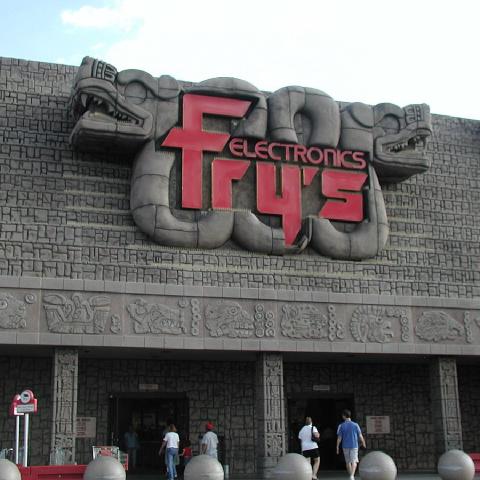
Dave Jones: Oh, yes. No, they all try to – Yeah. You know, we're saving the planet. Yeah. It's like, yeah, good on you. Yeah. You know. Fry's – Yeah. Electronics is – Dead zone, right? Dying a very sad death. Although they claim – They claim that, oh, no, we aren't dead. We're financially fine. I'm not dead yet. We're going through a patch where we just can't get supply, you know, because they don't order stuff themselves directly from the manufacturer. Apparently, they have some sort of like a broker managing agent who stocks all their stores, and apparently they're having trouble with those people, which is – like the shelves are empty. Oh, I see. And of course, I'm sure you've been into a Fry's, right? I've been into several Fry's.
Chris Gammell: They don't have any in where I am, actually. There's a ton. When I go to California, I'll go out to one, but – Right, yeah.
Dave Jones: But you've been into Fry's before. Yes, I have, yeah, yeah. And they're all themed and they're very fun. And they're themed, underwater theme, Egyptian theme, or whatever, you know. Which is very cool.
Chris Gammell: I will lament them being gone. Whereas, like, Radio Shack was like – you know, obviously they were great back and back in the day, but then they just became like this, like, monolith of, like – Like, 70s, 80s. Yeah, yeah, exactly. Exactly.
Dave Jones: But, like, Fry's – Whereas when – I went into – last time I went into Fry's was 10 years ago, right? Yeah. And I was very impressed. Like, that was – you could buy – we literally bought, like, soldered iron wire parts. Yep, yep, exactly. You know, also – and this is from, like, a big box electrical computer retail-y type store. I was thoroughly impressed.
Chris Gammell: Right. Yeah, exactly. And I think that is still a good place to have, like, some kind of retail of electronics kits with – I think computer stores are the natural one with it. But I think just the realities of big box and, like, just brick and mortar is just so tough, you know. It's just – again, hiring humans, you know.
Dave Jones: Because we had to convert our hotel room into a lab. Oh, yeah, right. You know, because we had to do last-minute trade show stuff. And we didn't bring soldering irons and gear and, you know, meters and power supplies and stuff like that, you know. So we had to go literally buy a lab from Fry's and then go back to the hotel and set it all up.
Chris Gammell: You don't travel with the traveling iron? You did it different now? I mean, surely –
Dave Jones: Oh, it wasn't a thing back then. I guess, true. But if I – under – yeah, I would these days. But back then we thought we had it nailed, you know, and sort of – last minute we had to redo everything. So, yep, nasty. Anyway, that's – yeah, that's quite sad. But they may – well, they claim they're not – I don't know if they, like, own their stores and they're not paying rent. I don't know. And so they can survive like that. But, yeah, I've heard it's – anyway, it looks terrible. It's just depressing to go through there with a camera. There's several people that have done it. And it's just – and they stocked – there's – I watched one guy's video where he, like, went through and it's all depressing and everything. And then one of the staff told him that, oh, all the stock went to Las Vegas for the CES show. Oh, interesting. There's a story near Las Vegas. So they wanted to make it appear as though they didn't have any problems. So they shipped. They cannibalized all the other stores and shipped it in. So he went buggerly. So I'm hopping on a plane. I'm going to Las Vegas. I'm going to check out this story. And sure enough, it's all, like, fully stocked, you know, completely stocked. So they kept up appearances for the CES show, which was funny.
Chris Gammell: We kind of miss – I mean, so Christina talked about CES a little bit. But we didn't talk about there's a new Arduino board as well.
Dave Jones: Do we have to talk about a new Arduino board?
Chris Gammell: Well, I'm interested in it because it's getting on towards – it's getting closer to, like, a beagle bone than it is – I mean, not quite. But it's – you know, the amount of stuff that they want to do with, like, JavaScript on it, it's pretty beefy. I mean, the H7 that's on there. So basically it's got a – I think an M4 and then, like, a Linux processor on board.
Dave Jones: Right. But it still runs the Arduino ecosystem because the thing that makes an Arduino on Arduino is not only the pinout, but it's also the fact that it interfaces with the – and it runs – you know, it interfaces with the Arduino IDE.
Chris Gammell: That's right, yeah.
Dave Jones: Basically. And then it compiles for – you can have – you know, a lot of people think it's only Atmel, but no, it can be – and Arduino can be microchip. There's microchip versions of Atmel. There's ARM versions of Arduino.
Chris Gammell: All those things are actually the same these days. Arduino – or sorry, Atmel, microchip, and ARM are all –
Dave Jones: Yeah, but no, you know, I'm talking about Atmel versus PIC, right? Architecture's totally different. Oh, I see, I see, I see. Architecture, right?
Chris Gammell: That's what I'm talking about. You're saying there's, like, a PIC32-based Arduino.
Dave Jones: Yes, there's a PIC32-based Arduino, and there's ARM-based Arduinos, and you can get Intel-based Arduinos. Intel got into it, right?
Chris Gammell: Yeah, I don't think they're doing that anymore, but yeah. No, no, I think they canceled. But I think actually that's a good example. Like, it is getting closer maybe towards, like, an Intel Edison type of level of processing. I don't know. It's a Cortex-M7. So, like, if you see, like, a high-end STM32 with, like, a display, anything that has a display usually has, like, in that level of, like, M7, you know. It's probably running RTOS still, but it's got some – it's pretty beefy. So that's what's interesting to me is that, like, they keep making it beefier and beefier, and this is also $99. So I'm also curious about, like, you know, are people willing to pay $99 for an Arduino, you know. So spanning the whole range of, like, super, super low-end, you know, you could get, like, a, you know, a dollar-based, you know, like you said, it's running, like, an ARM-based micro or something, something super cheap off Taobao or AliExpress. Or you can now pay $99 to run JavaScript or Python. I think it's TruePython as well. Yeah, it's actually TruePython instead of CircuitPython or MicroPython. And so it's, like, no, this is targeted more at, like, software people that are trying to get into the hardware space more. So that's – I don't know. That's my wonkery for the week, I suppose, but I don't know.
Dave Jones: Well, speaking of wonkery of the week, like, I've got a useless wonkery gadget that Google sent me for free. Oh, yeah? Yeah, it's one of these Nest, Google Nest things. You know, it's like the Amazon Alexa thing, isn't it? Yeah, that's right. Yeah, that's like a Google Home, but they rebranded it Nest. It's a good Nest.
Chris Gammell: That's the one that I mentioned, actually, with the show with Christina, that it's the only smart one I have in my house anymore is in the bathroom, so I can shout what I want to listen to while I'm in the shower.
Dave Jones: Oh, God, really? That's pathetic. No, there's no way I'm plugging this in and giving Google microphone access to it. I know they probably already have it, but I don't have, like, it enabled on my phone and shit like that.
Dave Jones: Okay.
Dave Jones: So, yeah, if people have got ideas, it's one of these Google Nest mini things. Okay. And it's the latest version. They send it for free. I mean, I would tear it down for sure. Well, yeah, but I want to, like, hack it into something. I see. If people have got any good ideas what I can turn it into. Yeah. Yeah.
Chris Gammell: John over at Predictable did a teardown of a dot, Echo Dot. I mean, these have been torn down before, but that's another link I had in the notes this week.
Dave Jones: Yeah, that's why I don't want to just do a teardown of this. They're like, meh.
Chris Gammell: Well, I think at the end of the day, like, it's going to be, like, it's going to be directional, like, four microphones are equivalent to, you know, get directional. You know, where's the sound coming from? And then it's like.
Dave Jones: Does it even care where the sound comes from?
Chris Gammell: It needs to be able to, like, do cancellation. So it's kind of like beam finding or beam forming, rather.
Dave Jones: Oh, yeah. No. Okay. So it's a microphone array, you think.
Chris Gammell: Yeah, that's right. Yeah.
Dave Jones: Yeah. And it's got DSP goodness, right? Right.
Chris Gammell: I don't know what to do with it at the end of the day, what you would want to do with it.
Dave Jones: Anyway, that's why I'm asking. Maybe someone's got a good idea to package something.
Chris Gammell: Speaking of asking, we should wrap up with our final ask of the show if people are still listening, of course. But we are looking for an editor. This is tied back to the.
Dave Jones: We are. We are.
Chris Gammell: Changes for the new year. So we're interested in.
Dave Jones: We figure our time is better spent doing other things than splicing audio clips together. Right. And, you know. Yep. Stuff like that. Yeah. So please, no tire kickers. We only want to. We are looking for a professional who has done this before, i.e. audio podcasts. So we're looking for people who have a showcase of work doing editing audio podcasts. Yeah, it's pretty specific. It's pretty specific. Yeah. It's very specific. Yep. It's not hard work, but we want somebody who does it. Yeah.
Chris Gammell: So please send us a, you know, a reference or two or like what you've done in the past. And then if you have a sample, that'd be great. And then we'll set up a time to chat. You know, that would be, that'd be great. It is a paid gig. Cool. If that is. It is a paid.
Dave Jones: Yes, it is a paid gig. We won't pay you in merch or something like that. It will be. We'll pay him friendship.
Chris Gammell: How about friendship, Dave? Is there. Can we really put a price on friendship? It's, it's almost. It's worth infinite dollars, you know.
Dave Jones: Ah, no, it's highly overrated. Nerds are very socially.
Chris Gammell: Some of us are more social than others.
Dave Jones: Not quite there. Yeah, I know. Anyway. Yeah. So yeah, please. Is there a special contact email or it's just email?
Chris Gammell: Yeah, they can email editor at the amp hour dot com, which is a new, a new email address.
Chris Gammell: New address? Yep. Awesome. Done. Cool. All right. Well, we'll talk soon and more often. Catch you next time.
Speaker ?: See ya.
Chris Gammell: Was that a good show? x x
Speaker ?: x
Archived Discussion (7)
Comments are closed. Archived from the original site.
Show archived discussion (7)Hide discussion
arduinoChinaChip of the WeekCoronavirusDHLFrysHenry OttProStarlinkThe Art of Electronics
Keep current
Every episode, plus the occasional job post, in your inbox.
TLDR: as the speed of light in a vacuum is about 50% faster than in glass there's a chance Starlink with it's 1000's of low orbit satellites might be faster. Certainly faster than "old school" geostationary sats (much higher orbit). So the old "fiber is always lower latency than sats" rule may not apply to Starlink.
I reckon it's too soon to tell. Also we've not seen a real Starlink ground antenna yet.
France had the "Minitel" in the 80s, a text-based online service where you could find plenty of info, including company catalogues, and, of course, sex oriented content ;-)
It was subsidised by the state so you could find "Minitel" terminal in almost all middle class households. Of course, like many French innovations with a strong government control, it didn't adapt and change, and eventually disappeared...
(Dave should do a teardown!)
Just noticed during listening that you are interested in Microphone arrays and beam forming.
Microchip/Microsemi has an interesting solution for that.
https://www.microchip.com/promo/timberwolf
https://www.microsemi.com/product-directory/audio-voice/827-audio-processing
Let me know if it is interesting and I can involve the marketing and/or engineering group.
Kind regards,
Mark