
#728 – Space Age Bluetooth with Alex Haro
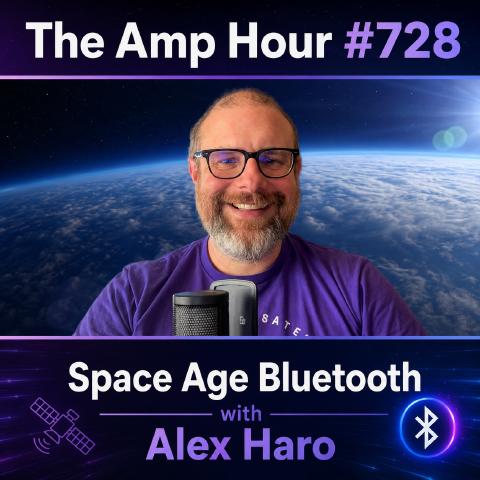
Download episode · 83 MB
Also on Apple · Spotify · YouTube · RSS
Show Notes
Welcome Alex Haro, CEO of Hubble
- Chris welcomes Alex Haro, co-founder and CEO of Hubble, to discuss the ambitious task of connecting billions of Bluetooth devices directly to space
- The “banner level spec”: Hubble enables any off-the-shelf Bluetooth chip to communicate with low Earth orbit satellites using a software-only firmware update
- Alex describes the system as a global “Find My” for enterprise that also handles sensor readings and arbitrary data
- Addressing the “Bluetooth in space” skepticism: Alex explains that while the standard is optimized for high-fidelity audio, the chips can be repurposed to emit a custom software-defined waveform in the 2.4 GHz band
- The true innovation is on the satellite side: massive antenna arrays with thousands of elements perform advanced digital beamforming to pick up weak signals (0-20 dBm) from hundreds of kilometers away
- The “Dinner Table Analogy”: Traditional networks “yell” to be heard, but Hubble has the device talk slower (lower bit rate) and enunciate (error correction) while the satellite uses thousands of “microphones” to isolate a single voice
- Why Bluetooth instead of LoRa? Hubble co-founder and CTO of Ben Wild, is the architect of Amazon Sidewalk. He chose Bluetooth because it is globally ubiquitous and the 2.4 GHz band is unlicensed worldwide
- Technical trade-off: While LoRa uses spread spectrum chirps, 2.4 GHz allows for much smaller antenna arrays on the satellites compared to the 900 MHz band
- The hybrid network approach: Devices use the same SDK to communicate via a crowdsourced terrestrial network (apps and gateways) or directly to satellites when out of range
- Constellation roadmap: Hubble currently has four production satellites in orbit (covering the globe twice daily) and aims for 64 satellites by 2029 for continuous real-time coverage
- Removing the GPS chip: By using Angle of Arrival (AoA) on the satellite, Hubble can determine a device’s location to within tens of meters, reducing BOM costs and power consumption
- Future “Reverse GPS”: Once multiple satellites are overhead, Hubble can combine AoA with Time of Flight (ToF) measurements for even higher accuracy
- Network capacity: Each 10km satellite beam can handle roughly 100,000 simultaneous devices before hitting saturation, with terrestrial gateways offloading density in major metros
- Dealing with the “grumpy engineer”: Alex discusses lowering friction for developers by investing in the Zephyr Project and partnering with Texas Instruments to pre-flash the Hubble stack on Bluetooth SOCs
- Stack coexistence: The Hubble SDK allows the radio to time-slice, maintaining a standard Bluetooth connection to a phone while sending satellite packets during idle periods
- Payload specs: Data packets are 13 bytes, transmitted at 400 bits per second
- Business model: Pricing starts around $2 per device per month and scales down with volume to hit the “price elasticity” needed for tracking billions of assets
- Enterprise use cases: From tracking shipping pallets to monitor loss, to cold chain monitoring for pharmaceuticals and agriculture
- The SpaceX experience: Alex describes the “visceral” feeling of the double sonic booms from the Falcon 9 landing during their launch party
- Find out more at hubble.com (or hub of BLE)
Transcript
Chris Gammell: This is The Amp Hour Podcast. Released July 9th, 2026. Episode 728. Space Age Bluetooth with Alex Haro. Welcome to the Amp Hour. I'm Chris Gammell of Contextual Electronics.
Alex Haro: All right. Hey, Chris. Well, I'm Alex Haro, co-founder and CEO of Hubble, and really excited to be here with you today.
Chris Gammell: Great to have you here, Alex. I think you're probably going to blow some people's minds here if they have not heard of Hubble. I've been watching all your stuff for a while, but maybe we can start with the banner-level spec of what y'all have been doing in the space with Bluetooth. In the space with Bluetooth. Yeah, absolutely.
Alex Haro: Pun intended, right? Pun intended, yeah. But, you know, what we do at Hubble is we're focused on building a network that allows any off-the-shelf Bluetooth chip to communicate directly with our space satellites. So it's a software-only change that can go onto any existing device or new devices that have Bluetooth chips in them. And it allows a global availability anywhere in the world using our satellites in low-Earth orbit. So I'm sure we'll dive a lot more into the technical details of how we make all of that happen. But, you know, one of the ways that you can think about Hubble is kind of like a globally available Find My for any device that has Bluetooth in it. And it's not just about location, but you can also get sensor readings and other arbitrary data through the network as well. So our goal in the long term is to hopefully one day be that ultimate unit economic and power efficient network that scales to billions of connected devices and helps eventually merge the digital and physical worlds together. So that's the quick on Hubble.
Chris Gammell: That is very, very impressive. I remember it was a couple months ago that you finally had the test that actually went all the way through from satellite down to Bluetooth. It was mind-blowing. So how does... How? You know, so I think about Bluetooth. My mental model for Bluetooth is 2.4 gigahertz, you know, absorption in the water, you know, water absorbs 2.4 gigahertz. So like, and it's got a long way to go. So that means there must be some significant signal processing to dig the signal out of the dirt there. How do you do that?
Alex Haro: Yeah, absolutely. So to start off the, you know, the initial reaction of what the heck, Bluetooth to space, my headphones barely work when I walk 10 feet away. A big part of the reason everyone has that built-in model is because, you know, originally the Bluetooth standard was, you know, kind of a special built for high fidelity audio streaming of, you know, audio from your computer to your headphones. And that's sort of what everyone has as their mental model of Bluetooth in their head. And certainly as it relates to streaming of, you know, millions of bits per second of audio, it has become the kind of default standard that all headphones use and now is embedded in all electronics. That being said, from a pure RF perspective, there's no reason it has to just be that use case. And certainly there's other things built into the standard like advertising packets and long range advertising packets. And so, you know, if you think of the Bluetooth chip as just this thing that can create sine waves in the 2.4 gigahertz band, you can use it for a lot more than just what the standard was kind of built for. And so that's really kind of the insight that my co-founder Ben Wild had, which was, you know, we don't have to necessarily use the Bluetooth stack. We can use the Bluetooth chip and instead emit our own waveform in the 2.4 gigahertz band. But then, as you mentioned, you know, even then, the path loss is pretty significant. And on top of that, you know, the 2.4 gigahertz Bluetooth chips, you know, they have to operate between zero to 20 dBm output. And so these are still very weak signals. And the true innovation of Hubble lies on kind of our signal processing and antenna array that are on our satellites. So we have thousands of antennas on these satellites that are all doing pretty advanced digital beamforming and signal processing that allows us to hear these very weak signals. So if you'll allow me, I can give you a bit of analogy that might make it a little bit easier to understand. But if you think about traditional kind of cellular and satellite networks, the way that they solve some of the harder RF problems and physics problems is basically yelling as loud as possible. So if you imagine you're at a dinner table and you're trying to talk to your friend across a very long dinner table, one way to solve the problem is basically to yell as loud as possible. And, you know, that's somewhat effective. Your friend can hear you across the room. But there's a few issues with it. First of all, it's very energy intensive on you. You can only yell for a short period of time before your voice starts to get hoarse and you need some water. But then on top of that, it's pretty annoying to your neighbors. So as soon as you start yelling, you kind of become the dominant voice in the room and everyone else feels the need to start yelling. And so all of a sudden you have everyone yelling at each other and you get all of these kind of cross interference and self-talk issues. And that's why if, you know, you've ever looked at how the cellular standards work, you know, they're very coordinated. And so Chris, you yell now and then Alex yells next and then someone else yells after that because it's the only way to kind of share the spectrum without everyone getting crowded out and having to yell simultaneously. So that's existing kind of cellular and satellite networks. What we do at Hubble is actually to solve the problem in kind of a very different way. So first of all, we have you talk slower. So we lower the bit rate down. More energy ends up going into every bit, which allows it to travel quite a bit further or be received quite a bit further, I should say. Then on top of that, we have you enunciate and pronounce your words much more crisply and cleanly. So this is changing.
Chris Gammell: I'm like live translating in my head. I'm like, I think I know what they're doing. It's a good analogy though. I like this. I like this.
Alex Haro: Yeah. And again, for the RF focused people in the crowd, no analogy is perfect, but it's good to help non-technical folks kind of understand. You know, we change the modulation, which is how like bits get encoded from analog RF signal or digital bits into an analog RF signal. And then we have you repeat yourself. So we add things like error correcting codes. And believe it or not, just through those changes alone, your friend can hear you across the dinner table, even at whisper Bluetooth levels. However, we haven't solved for kind of the cross talk issue yet. And so the way we solve for that is we give your friend thousands of microphones that create all of these spot beams, including one that is, you know, directly focused on your face, essentially. And so by creating these thousands of spot beams, it's kind of like, you know, thousands of little strings. If you remember the two cups and a string between them. And one of them is, you know, focused on your face and your friend can listen in on that stream. And it doesn't matter what's happening in all the other strings or streams or beams, whatever you want to call it. The one that's focused specifically on you, we isolate the noise and, you know, it kind of focused through beam forming just directly on your your packets of data. And that's essentially how we create not only a very power and cost efficient network, but a very high capacity one as well that is allowed and able to see these very weak Bluetooth signals coming from you know, literally hundreds of kilometers away.
Chris Gammell: Yeah. Yeah. I mean, this sounds, I mean, if you, I'm not sure how much the competitive nature is, if you don't mind the analogy, but like from like the spreading factor in like a Laura type of setup as well, basically you take the chirp out longer, you kind of integrate over more time, you have, you have the error correcting codes like you mentioned as well, and you start to buffer with additional keys and data in there. So that kind of feels like a similar use case, obviously a different, different frequency though.
Alex Haro: Yeah, exactly right. And one cool thing about my friend, or well, both my friend and my co-founder, Ben, is he's the inventor of the Amazon Sidewalk Wireless Network. So that's what he did before he started. That'll do it. So as you might imagine, he knows Laura very, very well. And yeah, we spent a lot of time looking at Laura versus Bluetooth. And part of the reason we went with Bluetooth is Bluetooth is already embedded into every chip, but pretty much every electronics device out there has Bluetooth for one reason or another. Often it's, you know, pairing with your smartphone or, you know, over the air updates or lots of reasons why Bluetooth has become so ubiquitous. Where Laura, you know, you can only get your chip from Semtech. And, you know, on top of that, the bands are discontinuous. So, you know, the frequency bands here in the U.S. versus Europe are different bands. When you're trying to build a satellite network, it's much more convenient if you've got a singular band that you're focused on. And then finally, you know, because it's a lower frequency, it's in the 900 megahertz range versus the 2.4 megahertz band. You know, this is a more technical detail, but the beam forming is actually a lot harder to do because of the sped spectrum nature of the Laura protocol. But on top of that, it's a longer wavelength. And so your antenna array actually has to be significantly bigger than something built for the 2.4 gigahertz band. And so, you know, we, again, Ben was very, very familiar with Laura. We're, you know, big fans of the technology. I think they've done a lot of interesting things. But being able to leverage Bluetooth, which is already embedded into every device in a band that's unlicensed everywhere in the world, you know, kind of hard to beat the 2.4 gigahertz band from that perspective. Yeah.
Chris Gammell: Well, I think, so I think this leads into another interesting and like immediately available piece. So the satellite stuff is still not GA, but the terrestrial stuff already is out there and you claim like 90 million access points. Basically, same, you know, the same method of communicating the same chipsets that are out there, but now you're just kind of piggybacking on other gateways that are out there. So like what are the gateways that are actually making that happen to go from Bluetooth device through the terrestrial network?
Alex Haro: Yeah, absolutely. And before I touch on the terrestrial network, just a quick clarification on our satellite network. So we've launched seven satellites in total. The first three were our demonstrator satellites. And then last year launched our first four production satellites. As you mentioned, we're kind of slow rolling out the satellite network. So it's not technically GA today.
Chris Gammell: Not available for noobs like me, yeah?
Speaker ?: Yeah.
Alex Haro: But we actually have our first customers actually on the network and using it. I believe that. Yeah. And we don't have an exact rollout plan, but it will be live for everyone this year. So more to come on that. On the terrestrial side, so just to explain briefly about the terrestrial side since we've been so satellite focused, as you mentioned, it's still the same SDK that goes on to our customers' devices. So our customers install the same SDK and the SDK kind of takes care of the complexity between choosing the terrestrial network or direct to the satellite network. The terrestrial network is a crowdsourced network not too dissimilar to what Sidewalk did with LoRa or what Apple Find My does with iPhone. So we've been able to partner with a bunch of both physical gateways similar to the Sidewalk model, but then also smartphone apps similar to the Apple Find My model. And, you know, our partner gateways include a few very popular smartphone apps, but then also a lot of our customers have deployed their own local physical Bluetooth gateways that are participating in the network as well. And again, very similar to Find My, we're always scanning in the background for the Hubble signal. When we detect the Hubble signal through, you know, the terrestrial network, we then, similar, you can think of the satellite as basically a huge, you know, node in our terrestrial network, so to speak, just happens to be in space.
Chris Gammell: Yeah. It's not in a really long pole, right? Yeah, exactly. Really high out there.
Alex Haro: Yeah, yeah. But it's the same exact kind of protocol and message that we pick up, and then, you know, we route it through our terrestrial network, it gets to the cloud, and then we farm it out to our customers just like we would any satellite traffic as well. So ultimately, the vision is you don't have to think about terrestrial versus satellite, you just install the Hubble SDK, and we take care of all the complexity of routing the data, location, and data that you care about from your device to your backend cloud, and then really take care of all the complexity of that.
Chris Gammell: Cool. That's great. That's really great. You mentioned like the apps as well. Like how does that work? Is it like, so like could I go download a Hubble app right now, or is that like a partner app that I might just kind of be part of the user agreement? How does that work?
Alex Haro: Yeah, it's both. So we do have our Hubble Connect app, which you can install, and it allows you to participate in the terrestrial network. We also have an SDK. So some of our customers that have their own app, they embed the SDK into their app, and then it participates in the terrestrial network. And then we have a few partner apps that are participating in the terrestrial network by installing our SDK as well. So, you know, our goal at Hubble is to be the one who takes care of all the complexity of building out the infrastructure and the network so that our customers can essentially have that Find My-like experience, but really built for enterprise use cases. Because if you're familiar with Find My, it's really only purpose-built for consumer apps. You can only have a certain amount of devices associated to a single Apple ID. If you're an enterprise customer and you have thousands of assets that you want to keep track of, you know, Find My really doesn't work at all. And on top of that, it doesn't give you access to your own data. Everything has to live in the Apple ecosystem. So at Hubble, you as the end customer are fully in control of all of your data. We've got APIs. Everything is encrypted end-to-end. And you can think of us, you know, at a very high level as an enterprise version of Find My that, you know, works over this terrestrial network. And then as the satellites go live, also works over the satellite network as well. And then from a pure satellite perspective, you know, with the four satellites we have today, we cover every part of the globe. But we only, unfortunately, today cover every part of the globe twice per day. Eventually, when we get the constellation to 64 satellites in total, you'll always have a Hubble satellite over your head. And it becomes, you know, the satellite network itself becomes a continuous coverage sort of network. network. And so that ultimately is our goal is to really build the satellite constellation as fast as possible and get to those 64. And the roadmap to the 64 is roughly over the next three years. So by the end of 2029, we hopefully will have all 64 satellites up and the satellite network along with the terrestrial network will be sort of continuous real-time coverage. And then the reason for having the terrestrial network is to solve some of those trickier indoor coverage areas as well. So, you know, something like a deep concrete basement, doesn't matter what RF magic you'll pull, you'll never talk to a satellite. But you can talk to a locally installed Bluetooth gateway. And that's really how we'll kind of cover the edge cases where satellites are insufficient.
Chris Gammell: Yeah. Yeah, that's great. And actually, that does make sense then. That's almost like a kind of shared infrastructure where like a factory owner is like, oh, my RF is terrible. You know, like I'm tracking stuff in like a smelting plant. It's like RF nightmare. But if you got enough access points you could install on top of the SDK on top of, then you could also ping stuff in there, track stuff from the ship all the way through. Yeah, that's exactly right. In terms of like the satellite needing to, so you have this phased array, you can get really good kind of dig signals out of the dirt with that sort of thing. Does it, does the satellite need to know kind of like a library style lookup of like where stuff approximately is? Like, or is it just rastering across the earth looking for stuff?
Alex Haro: The short answer is that the satellite can actually figure out where something is just by it emitting at the satellite. And so the way that we do that is through angle of arrival. So we have this antenna array. It's got thousands of array elements on it. As it emits, like, let's just think of a, say a tile as an example. So tile, you know, the AirTag competitor. We actually have versions of tile that are talking to satellite now. And so the, the way it works is the tile emits out the Hubble waveform. As part of that waveform, you know, there is kind of what I'll call a preamble, which is kind of a, you know, special message that the satellite knows to look for. And, you know, when the satellite receives it, it's first looking for that preamble. That preamble allows us to do a lot of complicated things like adjust for Doppler and also, you know, identify a signal through the, through the noise. But we're doing parallel beam forming. So this is a lot electronically, digitally steered. It's not like a physical, array, phase array. It's instead, you know, a digital one. And so we're basically looking through all of these beams in parallel to find these preambles that are coming from, you know, the Hubble protocol in waveform. When we lock onto that preamble, we know, you know, a device packet message is about to follow it. We can adjust everything we need to from a Doppler shift perspective. And then, because, you know, the satellite is at a certain XYZ position, you know, with a certain kind of way it's tilted towards the Earth, we can adjust for that. And then, you know, we get a slightly different angle of arrival to all of the thousand plus antenna elements that we have. And that allows us to actually determine a rough location on the surface of the Earth for where the device is. So one of the cool parts of Hubble is you can actually remove the GPS chip from your device as well. So you no longer need a cellular modem, you no longer need a GPS chip, and you can just use a Bluetooth chip. And that significantly reduces the bomb cost of creating, you know, an asset tracking like device because the satellite is able to calculate the position of where these devices are. And then, you know, we've really moved the complexity of kind of all of the signal processing from the endpoint device and put it onto the satellite. And so that allows us to create a very highly efficient from a power consumption kind of protocol that allows these endpoints, you know, with a single coin cell battery reporting, you know, once per hour, you can literally create devices that last for multiple years on a coin cell. And that ultimately is what we see as the market need is there is this opportunity and need to deploy, either asset tracking or sensing telemetry kind of use cases that are very power efficient because you don't want to constantly go out into the field every few months and replace batteries or deal with solar cells. So how do you create these very lightweight, low cost, high battery life devices with the minimal kind of complexity on the endpoint and all the complexity kind of on the received side of the satellite? So ultimately, the satellite has no concept of where these endpoint devices are until they emit up to the satellite and then the satellite actually calculates the position itself.
Chris Gammell: Okay. Okay. So basically, it's like in a beacon mode first, it calculates the angle of arrival and then that's how it starts to lock in. But there's no like ongoing like, oh, we know that there was a shipping container that's, you know, halfway across the Pacific and we think it's probably still within this distance. So we're going to like put it in as part of the scan and say when you're going over this area, we think it's probably a high likelihood to send this area, that sort of thing.
Alex Haro: Yeah, no, we don't have to do that because again, you know, the, as soon as it emits again, if the satellite's overhead, it will pick up the preamble and know that the device is there. So we, I mean, it's an interesting idea and it's one that I'll definitely talk to Ben about because maybe there is some efficiency to be gained out of predicting should we be receiving a packet or not. So certainly an intriguing idea, but as you might imagine, because we're doing all of this parallel beamforming across thousands of antennas, you know, the satellite spends a lot of its own energy kind of constantly doing all this digital parallel beamforming. And so, you know, the goal is to scale to one day billions of connected devices on this network. And so I would guess, although I will talk to Ben about it, the complexity of having those lookup tables of trying to figure out are there devices underneath or not, you end up spending a lot of computation and more important memory on that. And it's probably easier to just always look for all potential devices versus try to predict. But it is intriguing. So I will be talking to Ben about that idea.
Chris Gammell: Well, and I think probably my mental model is like thinking about this almost like inverting GPS, right? Like basically GPS is usually like you want to know where all the satellites are. And so you have like, you know, like you can save some power by having like a starter table of like, oh, they're probably within this region. So, you know, don't look everywhere, you know, or don't don't look for the satellite that's definitely behind, you know, the other direction. You know, you're roughly in this area. That's like the PGPS type stuff. Um, so that's really where that came from.
Alex Haro: Yeah, no, it's a good idea. And, and again, we kind of move the ephemeris from the, uh, end point up to the satellite, especially when we have the full constellation because you can just always assume there's a satellite overhead. One, one of the other intriguing things, and this will take us slightly longer to build out. Um, but if you have multiple satellites overhead, you actually can basically think of Hubble as reverse GPS, uh, because if you have multiple satellites overhead, not only can each satellite do angle of arrival, but then you have technically different time of flights, uh, from the end point to the, the satellite, and you can actually start to create a very accurate model of where that end point is. So with angle of arrival, you know, you're somewhat limited, uh, by the physics of there, there's a small error to every angle. Uh, and so you can only get down to like tens of meters, uh, from a theoretical standpoint with angle of arrival. But then if you have multiple satellites overhead, uh, you can actually kind of combine them and think of it as pure reverse GPS. So again, the satellites are doing all the complexity, uh, but you can, uh, combine the time of flight measurement as well. And then essentially with no GPS chip at all have GPS level accuracy, uh, which we think is pretty cool and compelling long-term.
Chris Gammell: Yeah. I mean, especially thinking about like high value, like asset tracking type things, you know, like the, like the shippers of the world will tell you, you know, they'll, they'll buy the, they'll buy the fanciest GPS and the fanciest satellite communication already because they, they're not size constrained, they're not power constrained. But now if you'd say, actually we can put it on every single device that's inside of that shipping container as well, like that really starts to up the ante quite a bit and ups the Hubble revenue hopefully.
Speaker ?: Yeah.
Chris Gammell: Yeah. That'd be, that'd be good too.
Alex Haro: Yeah, absolutely. And that's what really excites me about the potential of Hubble. I'll give you a concrete example. Like, you know, today, if you look at cellular based asset trackers, like you mentioned, you might track a truck, but you're not going to track every package on a truck because like best case scenario with cellular, you're looking at a device that if you want to have a profit margin on it, you have to sell for like 50 bucks or something. Um, but there, there are people that are now building shipping labels with Bluetooth in them that cost significantly less than a dollar. And so all of a sudden you can, you know, when you have a network like Hubble, you can start to think about how do we track literally every package that UPS, FedEx, DHL, USPS ship globally, uh, in, in real time. Uh, and you start to unlock really cool use cases. Um, I'm sure you're familiar with RFID, uh, but you know, for, for anyone who's not familiar, RFID was this very compelling concept where it was a super low cost tag that you could attach to pretty much everything. And, and RFID did get embedded onto billions of things on a yearly basis, uh, because the, the cost structure was so attractive. The problem with RFID became not too dissimilar to like the Laura problem. You had to manage all of this local infrastructure. And so RFID worked really well if you're a Walmart and you control all of your warehouses and you can train your workers to scan every RFID tag coming in and out of the warehouse. Um, uh, but as soon as it left the warehouse, you like lost most of your visibility on where RFID was. What I, what gets me so excited about Hubble is, you know, we are essentially approaching the cost structure of RFID, but our customers don't have to manage any of the infrastructure because that's Hubble's job. Uh, and so we're creating all of this like, uh, networking infrastructure so that these very low cost tags can be found anywhere in the world. Uh, you know, with, um, kind of the global connectivity that cellular offers you. And so I, I think that's a really compelling concept if you can start to imagine Bluetooth getting close to the cost of RFID, but with a truly global network, like what, what can you track? And it turns out there's a heck of a lot of things that people want to track that just weren't possible, uh, with the previous kind of iterations of cellular and RFID technology.
Chris Gammell: I mean, if you look at the, uh, the WCH family, they have, they're not on your, your chipset yet list yet, but cause you're doing the well-developed one so far, but like the CH 32 V 572, if you look to those, those are like 25 cent Bluetooth chip is just like, oh my, I mean, and that's like the consumer price. And obviously even
Alex Haro: even cheaper than that. Yeah. It's crazy. So cheap. Yeah. It's, it's nuts.
Chris Gammell: Let's, let's mental model this a little bit though. So are there theoretical maximums of, you know, like even if you have 64 satellites up in space, there are just bandwidth. So now if you're listening to the whole earth, even just, you know, filtering for this preamble, could you get overloaded on, you know, like if Hubble achieves all everything you hope and dream for, everything does have a thing. Do you, do you start to run out of bandwidth in that space?
Alex Haro: Yeah. So the cool thing again is we're a very high capacity network. So, you know, what matters more is how many devices can fit into a particular spot beam. So we create these, you know, thousands of spot beams that are pointed at the surface of the earth. And if, if one spot beam gets too many devices that try to talk at the same time, you know, similar to any other RF, you, you still have cross interference talk in that particular beam. And, and the, the rough takeaway is it's about like a hundred thousand simultaneous devices talking to each other in the same beam. And these beams are like 10 kilometers big. So kind of think of a roughly speaking, a circle that is like 10 kilometers diameter. So relatively tight, but you could still imagine some scenarios where you have like a hundred thousand assets in a given area. The cool thing is, is that, you know, if you model out what like distribution of devices look like when you start to hit those saturation points, you are talking about billions of devices on the network. And the way that we imagine it is like, you know, in the middle of say a city that is where you're more likely to hit kind of that, you know, distribution problem the soonest. And that's also the area where terrestrial coverage covers it the best. So the cool thing, and this is part of the strategy of why we have terrestrial and satellite long term is if you have the terrestrial network and, you know, our cities are well covered. If you go to network.hubble.com, you can see what the terrestrial coverage looks like, but it pretty much covers every major metro in a very significant way. And so the terrestrial network allows us to offload a majority of those, say, you know, in the middle of LA, as an example, most of those devices will go over the terrestrial network. And then it's only the ones that aren't next to the terrestrial network that go over the satellite network. And that really is part of the strategy of why we, you know, we want to take care of all the complexities so our customers don't have to think about terrestrial versus satellite long term. And it really allows us to scale to, you know, potentially almost infinite number of devices as we kind of continue to build out the terrestrial network as well.
Chris Gammell: Yeah. Yeah, that makes sense. Yeah. And that, how does the interaction then go? So now you have two, I don't know, two shipping containers worth of stuff and somehow that's a hundred thousand devices, but there is a terrestrial gateway there. Is it like they wake up, they all start screaming and say, look at me, look at me, look at me. I have this preamble. Is it like once they get an act that they just kind of turn off for the hour or how, how would you, how would you quiet down those hundred thousand devices?
Alex Haro: Yeah, that's essentially right. So the, the, the gateways can also just say like, Hey, got it. So the, the satellites as of right now are uplink only, but the terrestrial gateways aren't. And that allows us to just say, received your message. You don't have to worry about sending it over the satellite. So that, that ultimately is how we like build the long-term long tail scale as well of the kind of terrestrial and satellite components. So, you know, today from a, and customer perspective that, you know, both networks are kind of one way longer term over the terrestrial network, we can actually support lots of two-way applications, which is really interesting, including that, like, Hey, I got the, I got your message. Don't worry about sending it over the satellite network. And so that, that's kind of how we think about it. Also, you know, even without an acknowledgement let's just say one spot beam is hit. You know, if you've got the terrestrial coverage, you still completely, you'll pick up all those local messages as well. And then, you know, that basically covers that area that is kind of too dense for the satellite network to be able to, you know, act, um, accurately, uh, disambiguate different packets.
Chris Gammell: Yep. Okay. That's yeah, that's great. That's great. A while, a while ago, long, long time ago, actually at this point, I think we had hyper on here, who is the now defunct satellite company. And that kind of led to one of my questions here as well, which is they were actually doing the beam forming the other direction. So they, they had put that intelligence on the chipset. They had like a hemispherical antenna. They were doing beam steering across the sky to track as the satellite went over, which is kind of its own interesting thing, but that did not work out longer term. Uh, just space, as you know, but I did wonder about like, uh, antenna needs. Are there any specific antenna needs or is it even like just off the shelf modules? You're good. like any, any specific antenna needs for the satellite?
Alex Haro: Yeah. So, you know, um, the short answer is no. Uh, but the longer answer is we put that as a design constraint from the very beginning. So as you mentioned, you know, there, there was hyper, there was a few other that were kind of trying to do this direct to device sort of network. Um, another one was totem, um, that also kind of a similar idea to hyper. Um, they were more of a, a sped spectrum kind of protocol. Uh, but what
Chris Gammell: before they got eaten and eaten by SpaceX, they were very, you know, before the acquisition.
Alex Haro: Yeah. Yeah. Yeah. They were like, uh, super low on the spectrum side of things. Um, but the, the problem that we saw with all of those wasn't necessarily like the technology or how they were trying to solve the problem. The problem was that they were forcing their customers to have to embed a new silicon chip or basically a, a modem in their devices. And that the issue there is that I, I do actually believe unless you're Elon Musk, that is a untractable way to solve the problem because you have to go to customers and you have to say, Hey, I'm standing up a new satellite network and I'm creating a new bit of silicone and I need you to spend, you know, up to 18 months prototyping and then deploying this, this out. Like, trust me,
Chris Gammell: bro. It's going to be there when you're ready. Right.
Alex Haro: Yeah, exactly. Yeah. So the cool thing about Hubble is I still have to go and say, trust me, bro. But the, the, the trust me, bro is like, here's a bit of firmware, do a software update and you can start testing it tomorrow. And, and that really removes a lot of the trust me, bro. Uh, to what I feel is a tractable problem. Obviously again, space is hard. I'm not trying to say that my, uh, my challenges of scaling Hubble are easy by any means, but it's at least a tractable problem of like, Hey, look, I've got seven satellites. I want to get to 64 satellites. Like that at least appears linear in terms of level of hardness. Um, but I'm not forcing you to change anything about your hardware. If you don't like me, just get rid of the software and that's it. Right? Like it's a very much a simpler go to market motion that allows our customers to start testing and, uh, developing right away and not have to change their existing devices. So all of that is a long, um, you know, prelude into, we didn't want to have our customers change anything about their hardware. Cause we felt as soon as they had to change anything about their hardware, uh, you know, we were basically dead in the water. So your standard PCB trace, omni directional, and you know, 50% efficiency antenna. Great. Use it like, uh, you know, uh, use
Chris Gammell: it, but maybe make it better next time. Yeah.
Alex Haro: Well, yeah. I mean, that's the cool thing. Once we're established, once this is a new well-known thing, then like your next generation of device, like, yeah, use a more efficient antenna. Like it's not that much more expensive. You can test it and you can build it into your like prototyping and R and D phase of, uh, new devices. And yeah, if you use a more efficient antenna, if you use something that is pointed at the sky, like, you know, you can get even better performance out of the Hubble network, but we wanted to make sure that the initial go-to-market was, you know, every tile air tags slash any, any device out there that has an antenna and a, and a Bluetooth chip. Like we did not want to change anything about that and just make Hubble work regardless.
Chris Gammell: So then I have to ask, uh, as someone who's also in this space, how do you deal with the grumpiness of people like me? Uh, and like asking hardware and firmware engineers to do anything is horrendous. Uh, speaking as one, uh, you know, the number one, number one, uh, grumpy over here. How do you do that? How do you get them to actually adopt it and try it and, you know, step up and say, yeah, I trust you, bro.
Alex Haro: Yeah. Yeah. I mean, I, I'd say, um, care going on a
Chris Gammell: podcast. They of course listen to, you know, that's step one, of course.
Alex Haro: Obviously step one, uh, chat with great folks like you, uh, and, and, you know, joking aside, it is part of the strategy from the perspective of we realize like there's a lot to the trust me, bro. And so the more we can educate and prove that this works, the, the less grumpy, uh, you know, everyone gets. Uh, but we're also investing into the ecosystems that matter to you. Uh, and what I mean by that is, you know, one of the most popular ways to build embedded devices today is the Zephyr project. Um, and we have a plugin for Zephyr. We invest a lot into making sure that we work with the chipsets that support Zephyr. We, you know, focus a lot on how, how can we make this, uh, you know, similar to the story that Twilio or Stripe sold, right? Like one single rest API to send an SMS, one line of JavaScript to like embed billing, one command line to get this onto your, like Zephyr board. Um, you know, how do we really focus on that developer experience? So again, you know, it is as minimal of an ask on a grumpy embedded engineer. And, and for the record, I, I studied software, uh, engineering software. I'm a software guy. So not much of a hardware guy initially, but you know, I, I built tile at life 360 and, uh, I've, I've messed around with hardware and I, I consider myself a grumpy engineer as well. So I, I totally, uh, I'm empathetic. Uh, yeah. The first thing you have to
Chris Gammell: do is become the grumpy, right? You first become the grumpy, then you talk to the grumpy.
Alex Haro: Um, and, uh, you know, Ben, Ben's an, uh, a sweetheart, my co-founder and CTO, a sweetheart, but he's a pure RF hardware guy at heart. Uh, so he's probably the most skeptical, uh, take no assumptions at face value person I've ever met. Uh, and I love him while saying that. Um, yeah, I, I think it's really about, you know, how do we make it as easy as possible to start testing? Uh, and how do we, you know, really invest, uh, in the open source communities and, and like the places where, you know, Sparkfun is one of my favorite, uh, websites in the, in the world, uh, in terms of just like getting new dev kits to play around with cool prototype ideas. How do we, uh, you know, support the raspberry and Arduino communities, raspberry pie, I should say. Um, you know, all, all these kinds of, uh, concepts where really the, the trust me is, you know, don't just trust me. Like here's one command line. It's not that hard. Just trust your own eyes and start playing with it. Right. Um, cause I, I, I don't anticipate any marketing material is going to convince a grumpy firmware engineer to change anything. Uh, so that's how I
Chris Gammell: guys also go both directions as well. Right. So that's like bottom up type of community led, that sort of thing. But then also like, like Ben's experience at Amazon, I'm sure as well, like going industry top down, and being like, Hey, look connectivity. This is a thing that also that motion can also really benefit people as well. I feel like.
Alex Haro: Yeah, absolutely. And, and, and so, yes, we are doing it from both sides. And again, if you think about how like a Twilio or Stripe has successfully scaled, you know, they still have an enterprise direct sales team. They have a marketing team that's doing explainer videos. You know, they invest a lot into content and community and all that. Uh, but then they also just have, you know, a groundswell of support from developers that have, you know, either had to do it for their day job or did it for their side projects. And I think one of the other cool things that, uh, you know, hopefully we're able to leverage is that, um, you know, this whole concept of a find my like network has been pretty popularized by Apple and, and others. Uh, and so there's a lot of people building interesting applications and devices that would love to have access to a find my like kind of network. And so, uh, you know, we've really found a lot of product market fit in terms of finding the people that, you know, looked at what Apple built with find my and said, well, I would love to use this for my own devices. Uh, and so now Hubble is kind of that solution. Uh, and so, you know, figuring out these ways where people are already looking for these kinds of solutions. And then, you know, Hubble is kind of the enterprise friendly version of that or developer friendly version, I should say really. Uh, and then one, one last point I'd add is, um, you know, we're also working with the, uh, the Bluetooth OEMs to make Hubble even easier to embed. And so we, we announced at CES, uh, a partnership with Texas Instruments where when you buy, you know, your TI chip, Hubble will come already like flashed on it. Uh, it's obviously still optional. You don't have to use Hubble, uh, but it will allow, uh, you know, those firmware engineers, like once the Hubble stack is already, you know, pre-installed on the Bluetooth chip, it becomes even easier to test. Uh, cause you don't even, you know, for the first kind of, um, testing of it, you don't have to worry about flashing the Hubble firmware on, it's already available on, on the, you know, SOC itself. Uh, and really, you know, how do we reduce that friction from being skeptical of Hubble to being able to see it for yourself?
Chris Gammell: Yeah, that's great. Actually that, that leads perfectly into my next question about, um, coexistence. So like, so if I have, uh, NR52, eight, four, I can hold up some hardware to you hear. Yeah. I got my little, my little air tag clone that I've made and there's a little ring based air tag clone. So if I have just a Bluetooth app on there, but then I want to put the Hubble SDK on there as part of Zephyr, can it also coexist and still talk Bluetooth to the phone, but then talk, you know, the preamble talk up to the cloud. How does that work in practice?
Alex Haro: Yeah, absolutely. So, uh, the cool thing is, is that both stacks live in parallel to each other. Uh, you know, there's nothing that we're doing that precludes you from, or prevents you from using the full Bluetooth stack. Uh, what I would say is kind of the exception of it is, you know, if you're say advertising like an air tag would every two seconds, you know, those are very short, uh, sub hundred millisecond advertisements that you do. And then, you know, you have like 1.9 seconds that are the Bluetooth chip is not doing anything. Uh, and so, you know, during that 1.9 seconds, we can then emit the Hubble signal. Uh, and so that's how, you know, you have both stacks in parallel. They both can emit and, you know, you can kind of synchronize them so that they're not trying to emit at the same time. Uh, and then that's how it works from a deeper, uh, level. If however, you were say using that Bluetooth chip for, you know, streaming nonstop of data, say over headphones, uh, then obviously it would be, you know, we would have to stop the pause the audio for a second, as an example, upload to Hubble and then re resume the audio. So, you know, we, we can't work magic technically, you know, it's only able to emit one waveform at a time. And, uh, we haven't yet figured out a way to, to combine them. Um, although maybe I'm totally talking out of, uh, my butt at this point, but maybe there is a way to emit both waveforms and decoherum or something. But, but anyways, that's, that's what the RF times.
Chris Gammell: We got 2.4 gigahertz. Why not 2.5?
Alex Haro: Yeah. Yeah. Yeah. Uh, but anyways, you know, I, I just want to be a little bit more exact since this, this is a technical audience. Um, you know, if you were a hundred percent, uh, utilizing the, the Bluetooth chip, then you wouldn't be able to, uh, speak Hubble at the, at the same time. But for a lot of these asset tags, obviously you're leveraging the Bluetooth chip for over the air updates, traditional advertising, like all of these things where you're not a hundred percent utilizing the Bluetooth chip. Uh, and then Hubble just slots in when you're not utilizing it. Basically.
Chris Gammell: Well, and you said the Hubble basically, so you're just targeting the 2.4 or 5, 2.4 gigahertz fine. Basically. You're not like you, do you have an extra stack that's on top of it? Like how much, I guess from a integration perspective as well, is it like a binary that's getting installed in there? Is it like a soft device, like an unordered context? Is it a separate software stack where I'm actually going to see it and be able to, um, manage time slicing like that?
Alex Haro: Yeah. So it's a completely open source, uh, uh, framework. So like I said, we've got the Zephyr plugin and then we've got a free RTOS version of it as well. Um, and then there's like a base C layer that they both pull from that you could also just embed if you're running on bare metal or whatever. So, uh, again, our, our job is to hopefully make the, um, you know, the base level complexity of getting to trying it as simple as possible, depending on, you know, what, what chipset and what your, you know, developer environment is. Texas Instruments has got its own crazy developer environment. Nordic obviously supports Zephyr now, but they've got their own, um, you know, kind of environment and studio as well. So it really depends, but, um, generally speaking, uh, uh, it's open source. Uh, some, sometimes some of the satellite stuff has to be closed source, depending on the chip set, that's just more or less kind of up to the Bluetooth OEM to be, uh, perfectly Frank, but a majority, we try to make, you know, 99% of it, uh, open source and the few bits depending on chipset that have to be binary. Um, you know, that's the only part that is a binary. We strive to make this SDK as small as possible. So it's, it's, uh, you know, a few like on the order of two to four kilobits, depending on how much, like the crypto library that you're using versus the crypto library that we're using and all that sort of stuff. Um, and again, you can kind of, you know, for people that are truly, uh, you know, counting every byte, which is most embedded engineers, you know, there's a lot that you can strip away from the library in order to just get the bare minimum that you need. So again, made it super easy to, uh, prototype with and just get it onto a device so you can start testing it. Uh, but then as you think about deploying to production, you know, make it also very, uh, modular so that you can rip out the parts that you need. And, um, you know, if you already have a crypto library, it's very easy to like plug that into the, you know, Hubble SDK as well, or the Hubble source code as well.
Chris Gammell: Yeah. And so like on the, so just to go back to the TI example, then, so someone buys a TI dev kit, it's going to ship with the Hubble stuff on there. Is that like a Hubble only example that's on there or is it that, that dual Bluetooth and Hubble?
Alex Haro: Yeah.
Chris Gammell: Bluetooth like app example plus Hubble comms.
Alex Haro: Again, we're, we're still, uh, working through the exact details with TI, uh, on this, um, and it will start shipping, hopefully later this year on the TI chips. Um, but that's exactly right. It'd be kind of a Hubble plus Bluetooth, uh, example app that would come that you could start testing right away. And then obviously you still completely own the, uh, the chip and could put whatever your own modified firmware on it after you tested it.
Chris Gammell: Well, let's, uh, I'd like to talk a lot, two other things that are definitely on my list before we run out of time. Uh, one is pricing. Cause people are probably listening to this and be like, Chris, ask about the price and two. Uh, but before we do that, uh, I'd love to hear actually about just the packet size, like the stuff that we can send up in there. Right. So like, how can I send, you know, can I send a novel? Can I send OTA? Can I, I guess it's going up. So it's not coming down. Uh, can I send, you know, uh, an MRIs worth of data? Like, obviously that's stupid, but you know what I mean? Uh, how, how much can I send up on a satellite link?
Alex Haro: Yeah. So, um, you know, on both the terrestrial and satellite side, each packet that we, uh, that you send is about 13 bytes. Um, so you can shove whatever you want in that 13 bytes. And then you have a, a message longer than 13 bytes. We can chunk it into sort of, you know, N number of 13 byte packets, uh, essentially. Um, and so, you know, we, we kind of advise anywhere from 13 to like 130 bytes is kind of the, the recommendation. So call it 10 packets. Um, uh, and you know, that would take, you know, 10 packets at it's, we operate at 400 bits per second on the satellite side to that would be roughly like four seconds of transmissions to get 130, um, 30 bytes out. Um, technically a satellite passes four and a half minutes. So you could just like transmit the entire, uh, pass potentially. Um, but again, we really, you know, we work with our customers and. You know, we care a lot about bid efficiency to maximize what you can get into 13 bytes. Um, so plenty enough to like, you know, some cool applications that are built on Hubble tank level monitoring, as an example, like, you know, just standard asset tracking, uh, a lot of sensing for like yardsticks for agriculture. So generally speaking, what we see is, uh, you know, anytime you give someone a network, they always want to put more data onto it, but you know, just having a global globally available network where you can get, you know, tens of bytes out. It's very, very powerful. So that that's kind of, uh, what the data limit is. And then the pricing model, um, is very simple. It's like a per, uh, device per month, uh, basis for both, both networks. So, uh, on, on both networks, it starts off roughly like $2 a device a month. Um, but then as you scale, uh, scale on volume, it gets significantly, uh, cheaper than that, you know, especially as you start to think about like millions of devices, uh, but kind of entry prices, $2 a device a month for both networks, uh, and then scales down as you, uh, scale up in volume.
Chris Gammell: Yeah. Okay. That's great. That's nice and nice, easy mental model there as well for, for people that are picking up on that sort of thing. I think the, um, yeah, I think you kind of, you touched on the point that I think about, it's like, you know, if you have a shipping container in the middle of the ocean and you're expecting a satellite to pick it up, it's like, you're not, you're not sending any movies, no, no movies of the, of the humpback whale that just went by. Right. You know, it's like, yeah. And, and even one byte actually gets one packet rather one 13 byte packet would get you the location as well, which is also sometimes all you really need, you could be sending dummy data and if you're like, but it's coming from here ish, right. At the 10, the tens of meters is like, that's actually super valuable in its own right for a lot of asset tracking situation.
Alex Haro: Yeah, absolutely. And then, and that's what we see, you know, for the pure asset tracking, a lot of times it's, you know, either some additional ID that's associated or, you know, battery level is another popular one. But technically all you need to do is emit and you don't need to have a GPS chip and you don't need to add like the location part of it doesn't add any overhead from a bytes perspective. So you still get the full 13 bytes and you get location essentially for free.
Chris Gammell: So then cloud side standard REST API is to talk to the, to the dashboard side of things. Like how do I actually get that data out of there? Is it like locked in the system? Is it piped out somewhere? How does that work?
Alex Haro: Yeah. So we have a few different integrations and certainly as we continue to add more customers, we're adding integrations all the time. The default standard one is either, you know, a traditional REST API that you can just pull and get new packets from. What a majority of our customers do is however, enable webhooks. So we have full webhook support as well where we can push it. And then for like our AWS customers, we also, you know, have some kinesis like integrations as well and S3 and that sort of stuff. So really trying to make it flexible so that you can either pull it from us or we can push it to you. And on top of that, you know, some of our customers, they've invested into their own dashboards. You know, they've got fairly mature products for themselves. And so they essentially use Hubble just as the kind of network layer. And then they use the APIs or the webhooks to receive the data. And then others of our customers, actually, we do have a dashboard as well where you can log in, you can see all the devices, you know, billing, all that kind of stuff, but also like the maps for where all your assets are and all that sort of stuff. So some of our customers use our dashboard and other customers have their own dashboard and just use, you know, Hubble as the network essentially.
Chris Gammell: Cool. That's great. What are, I mean, so what are some of the exciting use cases that you see that are kind of out there with these early customers using the satellite specifically?
Alex Haro: Yeah. I mean, lots to be excited about. You know, I think I talked about some of them earlier, but I am really excited about, you know, the future of shipping and porch, the porch pirate problem. And how do we actually know where our packages are in real time? And, you know, there's a lot of reasons why I feel like that's a cool, significant, uh, use case. Uh, you know, we, you could, uh, work with
Chris Gammell: Mark Rober to trigger, trigger, uh, trigger some glitter bombs from anywhere sort of thing.
Alex Haro: I mean, I, I, I, I'm a huge fan of his, so I'd personally welcome that, uh, one, one day. Um, yeah. Uh, but yeah, he, he could know exactly when those, uh, take off and where they go. Uh, although he obviously had his, uh, smartphones attached to it. So yeah. Huge fan of what, what he did. And, uh, yeah, maybe there's a future video I should pitch them on. So, uh, I'll, I'll get your thoughts on that. Um, you know, uh, tank level monitoring. I, I mentioned before, I mean, the cool thing is, is once you start to imagine Bluetooth embedded into everything like RFID, like, you know, you could embed it into every sunglass, every luxury good. Uh, you can start to solve like anti, uh, counterfeiting problems. Uh, cold chain monitoring is a big deal right now, there's lots of regulatory pressure and reasons for like pharmaceuticals, but also meat and produce and all that to be, you know, tracked from origin, uh, to destination and make sure that it's all temp controlled the entire time. Once you can start to not only know the location, but also things like CO2, you could know when, uh, a crate or pallet of fruit is starting to ripen and you can start to like optimize when, uh, you know, things make it to the grocer and also out onto the actual floor. Make the boat go faster?
Chris Gammell: Yeah. Make the truck go faster?
Alex Haro: Well, a lot of times like, uh, you know, bananas ripen in a super interesting way and that's after it's made it off the boat and, you know, when it's in kind of a controlled situation, how they ripen, um, uh, pallet pooling is another kind of, you know, no one probably thinks about this problem, but it's super interesting. You know, there are all these companies that have built pallets and they lease them out to the Costco and Walmarts of the world. They have huge issue with loss. Uh, I'm sure a lot of people have probably been to a pallet, um, bonfire before where like all of these pallets are are being used not to move things around the supply chain, but keep people warm at a beach party. Um, uh, and that, that actually causes a huge amount of loss for these companies. And so, you know, they're never going to send someone out to recover a $50 pallet, but, uh, if they could attribute which customer lost that pallet or allowed it to be, you know, uh, lost or stolen, um, that's, that can make a significant debt in their cost structure of managing that business. So, um, you know, longer term, I think there's all sorts of cool sci-fi things that can happen. So, you know, what really excites me is if this does become, you know, a core part of a network infrastructure, you know, the, the future of the digital and physical worlds will merge and whether it's, you know, smarter automation, better manufacturing, uh, humanoid robots, uh, physical world, AI, uh, you need to be able to collect data from, you know, lots of sensors, not just from the robots, but like, where are all of the tools where, you know, how's everything doing? How's the entire like line working? Uh, and so, um, you know, you kind of need this network that can collect data from hundreds or thousands of places around, say, a warehouse, uh, to allow the future of humanoid robots or physical AI to work better. And that, that's the stuff, uh, I, I think we're still not as close as the AI bros think we are, but you know, uh, uh, I, I do think that world will eventually come where we will have, you know, smarter farming because you do have yardsticks and you can, you know, micro climates and how, how soil moisture and pests are doing in real time, um, in a way that you can't today because, you know, farms actually don't have LoRa gateways or cellular connectivity often. Right. So how do you actually think about creating these, uh, sort of locally deployed, awesome, uh, use cases that collect data and then, you know, build the future of, uh, automation on top of that. So that that's the stuff that really gets me excited. That's more of the, the long-term vision of Hubble. Um, not necessarily in the short term. Cool. I think the, the
Chris Gammell: real, the real problem space in the humanoid robot is not knowing where the robot is. It's the robot knowing
Alex Haro: where you are. Right. Yeah. Yeah. Where, where you are and where like all the things that needs to do its job are. And, uh, Oh, I was, I was making a joke
Chris Gammell: about it's coming to kill me, but that as well, that actually that's the real, that's the good, good CEO answer
Alex Haro: there. Yeah. Yeah. You know, uh, maybe we are creating a world of terminators, but, uh, along that path, I want to
Chris Gammell: make them useful. Yeah, yeah, exactly. Exactly. Well, I mean, I think, you know, you pointed out a couple of things in, in those examples as well that are, are, are really important, which is, I just feel like bringing Don, like, if you think about like the, the cost, the cost barrier of like, when it would make sense to do a Laura based solution or cellular based solution, it is significantly high, higher than I feel like a lot of the Hubble stuff is starting to enable. And like bringing that, that barrier down really starts to open up new spaces that are not possible. Like I've done stuff with farmers in the past and it's just like, they're like, yeah, I need so many nodes and they're so expensive. And like, so unless you have the scale that's so massive, it just doesn't make any sense. But now it's like, oh, actually no, a $50 node does make sense or, you know, $50 all in node, that
Alex Haro: sort of thing. Um, yep. Yeah, absolutely. And, uh, I think what, what we'll prove over time is the price elasticity is here, here is crazy. So like, you know, if you go from something that is close to the cost structure of cellular all the way down to something that's close to the cost structure of RFID, you know, you're talking about like 50 times better on, um, cost savings, like going from a $50 device to a dollar device. But I, I think the, the level of devices that are, you know, the, the need for devices doesn't increase by 50 X, it increases by like a thousand X. Uh, and you know, you unlock, like it's such a price elastic, elastic market that, you know, really focusing on how do we reduce costs to the bare minimum, you know, adds orders of magnitude to the size of the market. And that, that, that ultimately is what, uh, you know, drives me at Hubble, which is how do we make this as cost and power efficient on our customers? Because I think, you know, again, to repeat myself, being 10 X more efficient on cost means that you open up a thousand X size of market.
Chris Gammell: Yeah. I think that's right. Yeah. And that is, I think it's also like loading, you know, you've loaded a lot of those costs into the big expensive thing that's floating around the earth right now. Right. And like that, that is, that is the hard part. And that's going to continue to be the hard part, but then everybody benefits from it and they kind of rent, rent that hard part from you. And that's kind of the idea there. And it, yeah, sends a lot of use cases. So that's good. If my cohost was here, he would punch me in the face for not having asked you about putting stuff up in a space. Uh, I know we're at the end, near, near the end of our time. What was that like? I mean, like you've launched things into space now that's, that's pretty cool. Uh, so how long was that? You know, what's the feeling like that sort of thing?
Alex Haro: Yeah. So we started the company in 2021, we launched our first three satellites in, uh, 24. So roughly two and a half years from, uh, starting the company to first satellites in space. Uh, we hosted our literal launch party for the, uh, so we, we went up on a, a transporter mission with SpaceX. And so we threw an awesome literal launch party, uh, uh, our LLP. Um, and, uh, it was so cool. We, we rented a winery right next to us, the Vanderberg air force base. Um, and so we got to actually feel the shock wave, uh, from the Falcon nine going up for anyone who's never experienced a rocket launch. Uh, what's sort of surprising is watching it fly back in, uh, from being in outer orbit to, you know, landing back on the, the launch base. Uh, and not only that, so you see this thing that looks like a missile about to hit the earth. And then all of a sudden it slows down and like gracefully, uh, land. Uh, but there's actually a second sonic boom that actually feels stronger. And so you get this two cool moments of just realizing you put something in space, the initial sonic boom, and then the landing sonic boom. And so your whole body gets literally vibrated by the sonic booms. And, uh, you know, it just makes the whole experience so visceral to really understand that you went from, you know, building what could have been a very expensive space rock to something that actually works in orbit. Uh, and, uh, you know, funny enough, speaking of Mark Rover, he has an awesome video, uh, about putting, you know, a satellite in space. So, uh, definitely recommend people watch that video if you're interested in the process of getting something into space. But I do, you know, give a lot of credit to SpaceX for really making this attractable problem for companies like ours. Like, you know, prior to SpaceX, you had to buy your own dedicated rocket. You're talking about probably a hundred million dollars worth of investment, both from the rocket perspective, but also building, building a satellite that justified, you know, a big enough rocket to, or like using the space efficiently. And so like prior to SpaceX, it really was, uh, you know, the job of government and some very, uh, few, uh, private companies that could attract enough capital to, you know, get to, you know, even credit to the Iridium for being able to do this before SpaceX, right? Like, uh, pretty crazy. The amount of capital they had to put up front before anything was proven. Uh, and, you know, with Hubble, it took us two and a half years and sub $20 million and we got three satellites up. And so I think, I think that does show you how, uh, power efficient you can be. That being said, it's still ridiculously hard to build for, uh, for space. Lots of things go wrong. Lots of people, you know, unfortunately have incidents where they'd never established that first connection or something is wrong with the hardware. Uh, and you know, unfortunately you can't do anything. Once that happens, you can't send a probe up there to talk to the satellite. Yeah. So you, you just create, you know, very expensive space rocks that eventually deorbit and burn up. Uh, and so we, we feel very fortunate to have, you know, a hundred percent success rate so far on our rocket launches. Um, but still moving quite fast, uh, and being able to, you know, go from initial idea to fully validated, uh, commercial offering in, you know, roughly four years. That's awesome. Yeah. We've, uh, talked on the show a bunch
Chris Gammell: about eccentric orbits, the book about the iridium constellation and the guy who saved it. Like it's, it's insane how much money was put into that. Like it's, it's still operating. It's great. I mean, like that's, um, you know, but it's, uh, it's, it's a wild, wild story. So it's, it's good. You know, I have lots of issues with, uh, certain people at SpaceX, but I have no argument against the things that they have done, uh, for the space industry has been great. Uh, so.
Alex Haro: One, 100% same page with you on that. And, um, you know, it's, it's also a very exciting time in space because there are other people obviously very excited about Starship and the potential there. Um, but also very excited that, you know, lots of new providers, whether it's, you know, I'm, I'm going to forget some of them. So apologies for anyone. I forget, but, you know, new Glenn on blue origin or rocket lab or firefly or stoke or, you know, ESR, like there are all these people trying to, uh, you know, bring solutions that are comparable to Falcon nine to market. Uh, and I, I think that only is good for, uh, the space ecosystem and it's never great when one company has a true monopoly, which is I think pretty true today with SpaceX. Um, and so I'm, I'm excited for the days of there being real competition, uh, against SpaceX again. Um, and it, it does feel like, you know, Elon and SpaceX, they're pushing really hard for Starship to become a thing. And so that, that is exciting, but you know, Starship can take up so much mass that I think something for a Falcon nine size class rocket will still be necessary. And so I'm, I'm excited to see
Chris Gammell: people compete there. Yeah, that's great. That's great. Well, uh, Alex, thank you for being here. Where can people find you? Uh, if they're, I mean, this is always a good place for people to say, uh, probably people listening, like I want to, I want to work for Hubble. How do people find your, your job pages, things like it? Um, yeah, where can they find more? Absolutely. Well, uh, you can
Alex Haro: always go to hubble.com H U B B L E. Um, kind of fun fact that is Edwin Hubble, the discoverer of the galaxy, uh, but also hub of BLE, uh, to make it a little bit easier to remember. Uh, but yeah, you know, uh, hubble.com I'm alex at hubble.com. So feel free to shoot me an email or find me on, uh, LinkedIn and always excited to talk to, uh, potential customers that see something interesting. They want to build on Hubble. Awesome. All right. Well, thanks for being here.
Chris Gammell: And, uh, yeah, keep putting stuff in space. Cause that's, that's pretty cool stuff.
Alex Haro: Thank you. Will do. And, uh, really appreciate the time. This was a lot of fun and, uh, thank you very much.
Speaker ?: Thank you.
AirTagAsset TrackerBluetoothFindMyPhased ArraySatelliteSpaceTile
Keep current
Every episode, plus the occasional job post, in your inbox.