
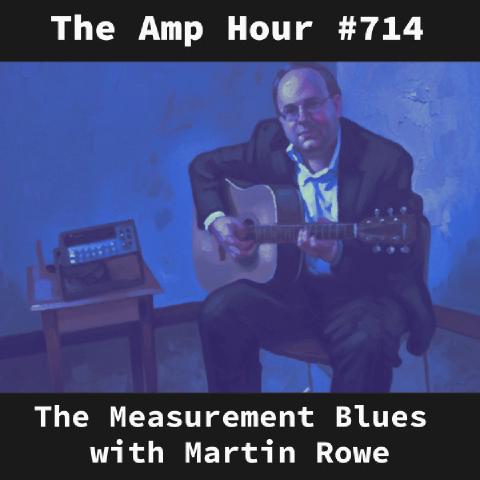
#714 – The Measurement Blues with Martin Rowe
Download episode · 109 MB
Also on Apple · Spotify · YouTube · RSS
Show Notes
Welcome Martin Rowe of EE World!
- Martin is a long time journalist in the electronics space, having worked at magazines like EDN, Test and Measurement World, EE World, and more!
- Kenneth Wyatt
- Concentrated vs diffuse information
- Product reviews
- Unitrend scope video
- Tek 5 series B
- Wirecutter for test equipment / parts
- Skepticism
- Webinars - 3 levels
- Martin has an HP34401A early model
- Touring T&M companies
- Littelfuse
- Martin is in the Boston area
- Boxborough has multiple EMI labs
- Article on building an anechoic chamber
- PCB East was in Boxborough now in Worcester ("Wuh - Stah" :-D )
- International Microwave Symposium (IMS) inBoston this year
- What is driving the Boston ecosystem?
- NYU wireless
- 6G summit
- Components trickling down into the other parts of the industry
- Ted Rappaport from NYU writing a paper
- Open RAN
- 5G standalone vs nonstandalone
- Poster session
- ISAC
- Test equipment has to test everything leading edge
- 3GPP
- The impacts of satellite connectivity
- IoT still talking about LTE
- 5G modems and battery life
- Private networks
- Automation software
- The Measurement Blues song, among others
- Find him online
- Martin sent over some links related the things we discussed during the episode
- 6G discussions: How things have changed. We assembled a timeline of the topics so you can see what's come and gone
- Nokia Bell Labs’ Peter Vetter talks 6G research Live from the Brooklyn 6G Summitd
- Teardown: HP 8112A pulse generator - I bought this at a flea market. MIT holds these once a month April through October. I go every year to buy things for teardowns and to take photos.
- DSL router uses parts from old phones - Heard about this from a European telecom newsletter and just had to get the details
- The slide keyboard is back, in a 5G phone - Video interview from 2020. I mentioned the Psion Organizer. The designer of this phone used to work for Psion. He designs beautiful products.
- Tryout: two low-cost USB inline meters and a load - My latest. This was the one where the audio in the videos seemed overdubbed. I uploaded the videos again using different file names. Seems OK now.
Transcript
Chris Gammell: This is The Amp Hour Podcast. Release February 2nd, 2026. Episode 714. The Measurement Blues with Martin Rowe.
Chris Gammell: Welcome to the Amp Hour. I'm Chris Gammell of Contextual Electronics.
Martin Rowe: And I'm Martin Rowe, Senior Technical Editor at EE World Online. That's eeworldonline.com. I have been a technical editor for going on 34 years, so I've seen a lot in the industry.
Chris Gammell: You've been around. Yeah, you've seen it, man. You've been there. And I've actually been a reader of yours for a long part of my career as well. You know, early magazine days and then online. And then you and I ran into each other, actually, at the Tektronix event a couple weeks ago. Months ago, I guess, at this point. Yeah, it is a couple of months ago.
Martin Rowe: So just a little bit about me. I started in this business in 1992 with a print publication called Test and Measurement World, which was at the time owned by Connors Publishing of Boston. And I did that for about 20 years. Test and Measurement World folded. And the content folded into EDN, which is a sister publication. We were all right next to each other in the office in Boston and did that for a few years. And then we went through a period where lots of publications were being bought and sold and acquired and so on. And at one point, I believe it was 2010, I actually had three employers and never changed jobs, all within less than a year. Wow. All within less than a year. The Connors became Reed Publishing. And Reed then wanted to get out of the advertising-based magazine business. And they sold us off to a company in Los Angeles called Cannon Communications. And that was early in 2010. Do you remember them? Okay. Cannon was acquired in whole later that year by United Business Media, UBM. That's a UK-based company, right? A UK-based company. That's right. Reed was also a UK-based company. Connors actually started back in the late 1940s, just after the war in Boston. And there are some buildings. There are a couple of places in Boston that actually have the Connors name on it. There's even a Connors Place next to the street called Connors Place. That's next to the building in Boston where I never worked. It was before my time they had moved out.
Chris Gammell: I mean, just the scale difference is insane to me. To me, just like how the publishing industry changed. But then there's this crossing of ships as well where obviously the electronics industry was big, but has grown massively since the start of that time. But then just how publications and obviously a lot of it being ad-supported, that entire business model has changed as well. And then as a consumer of all this stuff, just as an outsider effectively, I still need to find out new things. So it's almost just like, rightly or wrongly, I'm not yet ready to lick over the reins to the algorithm and the LLMs of the world. I still need to find information. So just thinking about that in 2026 and beyond and how I find out about new stuff, I guess maybe I just need a Martin Rowe newsletter and I just follow you and see what you find out.
Martin Rowe: Well, EE World has a long list of newsletters that you can subscribe to. What we do right now, at least for the moment, EE World has a major kind of an umbrella site called eeworldonline.com. But then under it, the content actually flows up from websites with different URLs. So for example, I'm responsible for testandmeasurementtips.com. And I'm also responsible for one called 5G Technology World. But I also do other things too. We have a site for power and we have a site for microcontrollers and sensors and so on. There's about 14 of them. So we are in the process of merging that all under EE World Online because it's just got too many URLs to it. It's become too hard to manage. So the web development guys are working very hard to bring that all under one umbrella. So that should happen in the next few months or so.
Chris Gammell: Yeah. I mean, so now someone listening to this, obviously listening to Amp Hour to find out about some new stuff, but that's mostly through the lens of Dave and Chris and our guests. But how do you expect engineers, maybe even specifically younger engineers, how do you find out about new things? You guys cover so many things on EE World. 6G is not particularly relevant to me, right? That type of stuff and the leading edge telecom stuff. But when someone comes up to you and says, how do I find out about new parts? How do I find out about new things that are happening in the industry? Where do you go for information and start discussions?
Martin Rowe: You know, most of the time people go to web search. I think that's starting to morph into using AI for that. I've done that recently. I needed to, I wanted to look up something and I asked AI about it. I'm trying to remember what it was now. The last thing I bought for my little basement lab was a static dissipative mat. There was something I wanted to know about it. And I said, you know, I asked AI and it gave me, I said, give me some links about this and that. And it gave me some links and I asked, you know, where is it available and so on. And then I asked the person actually. One of our freelancers is an EMI engineer. I've known him almost as long as I've been in the business. The name is Ken Wyatt. He's a really good EMI engineer. And he's been writing for me for years and years. And finally he said, oh, I bought this one. I said, okay, well, Ken knows what he's talking about. So I'm going to, I ended up buying the same one. And, you know, but I, but I went to a person who I knew I could trust. It was good to, to get the, the information. Now, as far as finding, especially you mentioned something about new parts that's gotten difficult. And at least I think it has, you know, when, when you got everything in a magazine, you went to the back of the magazine and there was always a new product section. And usually the products that the editors thought were, you know, particularly cool. Most of them are not, but occasionally, you know, especially if you're like a new oscilloscope comes out, that's got some new feature that you've never heard of before. Or you might, you know, put that up and give that a little bit of prominence. So we still do that. And, and most publications still do that, but I don't know how easy it is to find anymore. It used to be easy when you just picked up a magazine, you knew where it was. Now you've got to go, you know, you've got to go search and you know, so you probably go to, you know, maybe you go to AI and say, okay, you know, I need, I need an op amp with these specs and, you know, and, and give me, give me some, some, give me some ideas.
Chris Gammell: Yeah. It is like the concentration versus the diffusion of information. It feels like way, way, way more diffuse. Like, like the magazine was, was that centralized point. It's like, yeah, you want to find specialized knowledge about, you know, electronic components. You go to that, that magazine or, you know, in the case of like extra specialized, just like telecom equipment. Yeah. You go to that one magazine and it, the diffusion is part, part of the problem. Obviously there are some benefits to it as well, because now it's, it's more accessible. It's lower costs to get information out there, but if you want to actually like grab eyeballs and you want to like, you know, as a, as a producer of parts, you want to grab eyeballs as a consumer of parts. You want to like have access to information. Like finding, finding that new thing is, is tougher. And, uh, as much as the marketers at TI and ADI want me to sign up for their email list. They, uh, you know, they don't, they don't even know, you know, they have so many parts. It's like a fire hose then as well. You know, it's like, so it becomes like this specialization. I feel like it actually comes back to that people thing. You know, like if you have the benefit of, uh, an FAE stopping by your office, talking you through it, that's still one of the better ways of doing things. But obviously it's very high cost, high people costs, high time costs, that sort of thing.
Martin Rowe: Yeah, it, it, it is. It is. But what's happened with the business is if people looking for parts, you know, what, one of the things we have to do as, as media people. And by the way, I, I actually, I am an electrical engineer. I do have a degree in electrical engineering from WPI. So I'm not a, I'm not like an English major who just happened to stumble onto this. I actually did work in industry before, you know, our job is to get people to, you know, get, get page views, get people to look at our stuff. Of course not only to look at it, but to look at it and actually read it. And what happens is that products don't get anywhere nearly the page views that you get from actual real technical articles, whether they're from industry or whether there's something that, that an editor created. You know, I do some stuff in my lab occasionally. I do some videos and such, but the companies are all over you to cover their products. Even though I don't know how many people really find it from websites like ours and all of the others that are out there. I think everybody's in the same boat.
Chris Gammell: I think the hard thing is, so now if I put on like my, I'm pretending I'm a chip company kind of thing, like my best case scenario would be like, like, Hey Martin, I've got this new, you know, amazing buck boost regulator. And I really love you to try it out. And, you know, can you take, you know, uh, two weeks and put it through its paces and do all the, you know, make a project out of it and do this, do that, whatever, show all the, the amazing whiz bang specs. And it's just like, no, like who, who's got time for like, maybe you could. Yeah. But they're not willing to pay the amount that it would take to do that sort of thing. So it becomes this like exposure thing. And then not, not to mention that in the, the attention economy, you then also have to make something that's compelling enough that it's like, you know, better than the gajillion other videos that got uploaded that day. So it becomes this kind of like push pull there too.
Martin Rowe: There, there, there is that. And yes, you're right. We don't have time for it. I've, I've done a few product reviews. I they're rare. Uh, they take a lot of time, you know, try, try going through. And the soul scope, there's so many features and you can't possibly get through them.
Chris Gammell: Now menu 17 subsection a, you know, feature number 25. Right. It's just like, Oh God.
Martin Rowe: Yeah. Yeah. It's, it's crazy. I mean, the, the last I did it, I did, I've done a couple of them. I did. I have actually have this unit trend scope. It's a 200 megahertz scope. We actually bought it. And I purposely, we purposely bought it so that we could say anything we want about it. I mean, it was only, you know, a few hundred dollars. So it was okay. You know, I was able to get the money for that. So I was able to go in and say, Hey, I don't like this part. You know, this, something about this, I mean, actually it was their software. I thought their software needed a lot of work. And I, and I, and I could say so because we own it and I don't have to feel any obligations about a year before that. I did a much bigger, a solar scope. It was a Tektronix five series B, which was, you know, they made a big splash about it. And I somehow, I don't know, it was on LinkedIn. I think I made a comment saying, gee, this would be nice to play with one of these. So they, they sent me one and you know, this thing was fully loaded. I think it was about $30,000 and they sent it. Yeah. They sent it to me. Now I don't have the equipment to really put it through, you know, to be able to really check it specs, you know, and, but, but I can do it from a user perspective and I can say, okay, you know, yeah, it's got this feature in that feature. And there was one feature that I actually couldn't figure out how to do. They had two ways of being able to look at signals in the frequency domain. One is the standard, you know, usual way with an FFT, but they had some other, other feature and I couldn't figure out how to make it work. Well, as it turned out by luck, I happened to be at a trade show and they had one there. And I asked the person at the, at the booth, I said, gee, no, I've got one of your things. How do I get it? How do I do this? And then once I was able to do that, then I was able to, you know, actually show it and put in a video and say, yeah, you know, it's got these, this is an interesting, and it gives you a different view, but you know, to find all those features would take weeks and I have
Chris Gammell: hours. And someone who's watching you as well, right? They're comparing it against, you know, they want to look at that scope and five, 10 other scopes and make like a decision, arguably very important decision, given the amount of money it is. But like there's limited time for evaluation as a user or a consumer of like your review videos, Dave's review video, Shario's, you know, like all the videos that are out there, they are like these high bandwidth ways of like viewing a thing, but then you have to still like do compare and contrast. I've always thought like a wire cutter style, like A, B testing plus, it's just like the market's not big enough, but I've always wanted that for test equipment basically, or similar parts.
Martin Rowe: Yeah. It's, it's, and it's, you know, it's especially, you know, with test equipment, there's so much, so many features that makes it hard to do. If you're trying to do a, you know, a buck, a buck converter or whatever. Well, you know, I don't have the time to set up a board. I don't have time to learn how to use the demo board. When you're dealing with a website, it was actually easier when I did it with a magazine because you'd have a certain amount of time and, you know, you come, you know, you had, you had once a month and the magazine would come out. But when you're online, you have to have content nearly every day. Right. Not, not, you know, we, we're not a news outlet, so we don't necessarily put up, you know, 20 different items a day. We, you know, you know, a technical article, we might do one or two a week per site.
Chris Gammell: Even those are more advanced than like a rewriting of a press release or even just collating of press releases, that sort of thing. It's like, it becomes like a lowest common denominator, just like as a business use case almost.
Martin Rowe: Yeah. And, and, and the thing about press releases, when I see something that I think is interesting, I will actually at least look at the data sheet and say, cause you often find some hidden specs or something in a data sheet that a press release might not have picked up on. And I go, oh, gee, I didn't know it could do that. And so I'll mention it and I'll, I'll make it, I'll give it some, some prominence. You know, even that you don't, you don't really have a lot of time to do it. So what, what most publications do is they take the press release. They either copy and paste it straight up, or maybe they do a little bit of editing. You know, we do a lot of that because a lot of products are kind of me too stuff or they're not, you know, big announcements. When you have something big, then, then I want to take the time and do it, but it's gotta
Chris Gammell: be some good, good reason. I do. Yeah. And I agree in the, in the chip industry specifically, it's often they're like filling in a portfolio to like, you know, price match against the competitors. It's just like, okay, well, what do we, you know, like this part is like, like that part. And, you know, they're, they're just kind of not turning the crank. Cause that sounds a little bit silly, but like they're, they're filling in their product portfolio and it's not, I remember I used to subscribe to RSS feeds of like product releases again from a TI or an ADI. It's just like, oh man, there's 500 chips a year, you know? And it's, they're, they're not all, they're not all winners. Some of them are just there to make sure that they are fulfilling the needs and trying to win every socket, that sort of thing.
Martin Rowe: And, you know, and if you're, you know, if, if you, if you do power and they come out with an RF chip, well, I'm not interested, you know?
Chris Gammell: Yeah. It has become a filtering, a filtering, like a customization sort of thing as well.
Martin Rowe: Absolutely. But, you know, I'm, as I've been in this business for so long that obviously the technology has changed dramatically. The people haven't changed much. Everybody still wants it. Nerds are still nerds. Business people are still business people. Business people are still business people. And, you know, everybody still wants to get, you know, people send me what they call technical articles all the time. And most of the time they're just, and usually you can, you know, after you've done this for a long time, you start seeing patterns. And one of those patterns is, oh, if they have a technical article, that means that there's probably a new product announcement coming soon.
Chris Gammell: That's right. Exactly. And it might just magically solve the problem that they're framing up in that first, that first technical article. Who knew? Wow.
Martin Rowe: Well, that's true. But editors, editors, at least as going through the going, having gone through this and worked with a lot of other technical editors before we have, we have names for, for those kinds of articles. One of them is we call a poof article, which is set up a problem, buy my product, poof, problem solved. And we cut those all out. I'll just chop that right out. And I'll say, if you can't say something from an industry perspective, you can only say it from a company perspective, we're not going to run it. And I have, I have turned down many, many articles like that. And what is a product promotion or what is not a product promotion to a marketing person is still a product promotion to an editor. You know, okay. You just can't take the name of the, of the product out and say it's not promotional.
Chris Gammell: Allow, allow me to refer you to our advertising department. That's usually the right, the right call. Right. It's just like, you know, there are paid, paid opportunities as well, but it, it is that like that, that tension of like, you know, they're trying to put something into the marketplace and sometimes there's paid access and sometimes there's free access. And I'm sure they're trying to go through door number two more often than door number one. That's often true.
Martin Rowe: So we get, you know, we get, I get a lot of that. And a lot of times it's like, no, I can't do anything with this. Or if you would like to, you know, we, we do have webinars for that. And we actually, we, we, E-World, we have sort of three levels of webinars. One is a company can say whatever they want. The second one is a series that's been very successful that we call E-E training days. And that is, it's a single sponsored thing and the sponsoring company gets their, it gets to have their person, but the content is vetted by the editorial people. You know, you can kind of say a little bit towards the end, but you can't, you know, I mean, we've all been to webinars or seminars and we used to, we used to do them live, go to them live where it's like, okay, we'll let you have, we'll let you have your product pitch, but you have to teach me something first.
Chris Gammell: Right. Exactly. Yeah. There's the learn is the part of the lunch and learn. That's most, most often. Sometimes people are just in there for lunch, but yeah. Exactly.
Martin Rowe: And, and then we, we've, we're now doing one, which is purely editorial. We're only doing a few a year right now. I think about four. And that is one where we, the editors go out and find the speaker and we do, you know, we do everything. And yes, there, there can be a sponsor or multiple sponsors, but they don't have a say in it, in what the content is. It's purely editorial. I, in fact, I was just on the, on the phone or just on a zoom with, with someone right now for one that we're going to do next. It's going to be on test and measurement. That'll, that'll be out in a few months. So yeah, we're going to, we're going to do something like that. So yeah, I've been around test and measurement for a long time. And yes, I do have, as I said, I do have an oscilloscope in the, in the basement. I also have one of the very early HP 34, 401, six and a half digit DMMs. Really? That's yeah. And this is, it was built in 1991. Now, how did I get it? Now we, in the publishing business, we've always had a pretty strict policy, especially in the old days of companies cannot come in and just, you know, I've had companies offer me oscilloscopes, you know, for years. And I have to say, thanks guys. No, I can't, I can't take it. You know, I can't accept it. I can use it, write a review of it, but I have to return it. Right.
Chris Gammell: But then I'll send it back. Yeah, exactly.
Martin Rowe: Yeah. Right. But my first day at test and measurement world, they walked me into my cube and they said, here's your, here's your cube. And they're sitting on the desk. What's this meter? So I never actually accepted it myself. Somebody else did. Nobody knows who it was. And it was just there.
Chris Gammell: So I, and that's why that person was gone. Maybe, maybe that's why they weren't there anymore. They accepted the, maybe.
Martin Rowe: So they, so they kind of said, well, you never, you didn't break any rules. You didn't accept it. It was, it was here before you. It was like, okay. So that has moved with me from office to office. And then finally, you know, I've been working at home for a dozen years. And, and so it's downstairs. I actually did have to do a repair on it a few years ago. I had a, I had a capacitor fail in, in the AC measurement circuit. And it, when it failed, it took out a couple of transistors and it burned off a solder pad and whatever. And I actually brought it to a cow lab. Cause I've done this a few times where I'll bring it, I'll bring this meter to a cow lab. And then I'll write up the story about it. Here's what it's like to, you know, bring your meter to a cow lab.
Chris Gammell: The high accuracy, like polyester that's in there, or was it, was it just a power cap that?
Martin Rowe: No, it wasn't, it wasn't a power cap. It was right in the AC measurement circuit.
Chris Gammell: Oh, it was. Yeah. Yeah. Those are fancy caps. Yeah. They're expensive.
Martin Rowe: Yeah. Yeah. Well, they weren't that expensive. I was able to, you know, I was able to find it, you know, bought it off of a, you know, bought it from a distributor. I was able to find it. And, you know, I was got in there and soldered the tiny little parts on there. And, but the, the solder pad that burned out was ground. So I had to like run a wire from the component over to a way and find ground. So unfortunately I had the service manual. So I had all the schematics, the board layouts, the parts list, everything. And, you know, I put it all back together and, you know, it works great. So I, yeah, I use that. That's my, my gold standard for, for any kind of, you know, DMM measurement. Companies have come when, when we used to have an office, people would, companies would come in and they would do press tours. And sometimes you'd get a DMM and they would leave it, you know, and I ended up, I would give them all away. I didn't want to keep it, but I would, I'd say, okay, thank you very much. You know, I give it to a friend or I'd give it to a university. I've done that. Universities are really happy to get test equipment.
Chris Gammell: Yeah.
Martin Rowe: So, so I've done that, you know, a few handheld DMMs that have gone out. So, so in doing all of, all of this, I've obviously been to a lot of test and measurement companies. Now going back to my first visit was we, we did actually did a tour. It was like three, three of us. There were three technical editors at test and measurement world. And we did a tour of the Northwest and we went to, you know, what was HP at the time and went to Tektronix and Fluke and, and audio precision and a couple of others that we did over a course of a week. So I've been to a bunch of those. And, and, and I actually have a picture of me in the parking lot at HP in Colorado Springs with Pike's Peak in the background. Actually, Ken Wyatt, who I mentioned earlier, he's a, he's a very good photographer. And so he took the, he took that picture of me, which I, I know is here somewhere. So I've been to a lot of those, those companies, but I also, as I said, I've also been to a number of companies that were not in the test equipment business. What we used to do for about the last several years of the magazine, we changed our cover story from a technical article to more of a user article. And so we would go to visit companies that, you know, and, and, and talk about how they test their products. And so you get to go to some interesting places. I'm just looking at my, my, you know, I, I've got all my magazines here behind me and, you know, I went to visit, I went to visit Bose and, you know, they talked about how they do test their speakers and little fuse. I'm going to say something about little fuse because on one of the episodes of yours from years ago, I think it was, it could have been a dozen odd years ago.
Chris Gammell: What do you say?
Martin Rowe: Well, somebody, somebody who wasn't you. Mench said something about, Oh, I can't do the, I won't try to do the accent, but said something about, said something about, Oh, little fuse. Yeah. They just make those components or whatever. Yeah. That's not really interesting. Well, let me tell you something. They're in the circuit protection business and they have to do some really interesting things because the only way you can test a circuit protection device is to blow it up. There's no other way. And they, they did this test where they took a, a, a wire. And I, it was like, maybe it was an, you know, it was, it was, you know, a couple millimeter thick wire. Oh, really? Okay. Yeah.
Chris Gammell: So like, like it's going to glow before it blows up. Yeah.
Martin Rowe: Oh yeah. This thing, I mean, and, and they, they apply it. I don't know. And they had, you know, they have this like all this equipment over there, you know, this huge, huge thing that generates the, you know, the power and they, and they have it. It's in a room. It's in completely encased. You can only look at it through glass. And the guy flips this big switch and the thing just, you hear what sounds like a gunshot and the, and it's gone completely vaporized.
Chris Gammell: Right. Yeah. Yeah. Like photonic induction stuff. Do you watch, do you watch his old channel? Do you remember that guy? Andy? No, I don't think I've seen him. Oh, he's a British guy. He was like a power engineer. He basically like vaporizes stuff. Him and like, uh, who's the other one? Who's the crazy guy in Missouri? The, the one who does all the laser things. Um, I can't keep up with all you podcasters. I try, but I can't. Well, those are YouTubers. And they, yeah, they just. Well, YouTubers, you know. Now you see it. Now you don't because of how much current is going through the thing. So yeah.
Martin Rowe: Yeah. Yeah. So, so yeah, they, they do some, they did some really interesting stuff. Um, I've been to a whole bunch of EMI labs. There's actually three of them right nearby here, about an hour away from here. There's this little town.
Chris Gammell: And you're still in the Boston Northwest Northeast area.
Martin Rowe: Is that right? Uh, yeah, I'm still in, I'm still in Boston. But if you go, if you drive about an hour Northwest, there's a little town called Boxborough. And within, within, you know, a kilometer of each other, there are three EMI labs. One of them actually just opened about a year ago. And I've been to two of them. Uh, actually I've been to all of them and I really want to go back and, and, you know, see what they do. And, and some of the things they have to do. I once did an article on building an anechoic chamber. What does it take to build it? And, you know, and, you know, they have to do, you know, the things that, that they have to do, you would never think of.
Chris Gammell: Like isolate off the floor and just like the. Yeah. Isolate off the shielding.
Martin Rowe: And yeah. And you know, and you've got the, you know, you've got the cones on the wall, which make great photography.
Chris Gammell: Is Boxborough out where a PCB East is going to be this year? Is that, is that the right area?
Martin Rowe: You're actually, it's where it used to be. Oh, okay. It used to be in Boxborough at a hotel this year. They're moving it to Worcester. So yeah, I'll go to that. Okay. And, and also this year, I also don't have, again, again, another time I don't have to travel is a show that I go to very quite regularly is the international microwave symposium. What's that like? I mean, that's the R that's the real, you know, hardcore RF people. It happens to be in Boston this year. I get to come home at night. You don't have to travel to the West coast. You know, you get everything from, you know, the test equipment to antennas to these little microwave components like wave guides and such. Yeah. And there's a whole bunch of very small companies that, you know, go to the show. So, and they have, you know, very specialized, you know, parts and they're the way that they're, they're milled and, and, you know, just to be able to take a signal and make it, make it do a turn. Now, of course, you know, with the frequencies going up, you know, these antennas have gotten much smaller. You have to be much better at machining to get these little, like.
Chris Gammell: Machining becomes micro machining becomes nano machining sort of thing. Exactly. Yeah. You know, so I go, I go to that every year. Um, I've been going to Boston, like Boston area to like why, I mean, obviously you have kind of the prowess of MIT and Harvard up that way. What else is driving that historical industry in that way? I mean, like you said, microwave, but microwaves there this year, but it seems like there's a lot of industry in the space. Like what, what is driving kind of the Boston ecosystem?
Martin Rowe: It's not on par with Silicon Valley. There was a time when it was, you know, we still have some, some hardware. We still have, we have some medical device companies here and some of them, you know, are in the electronics business. We have a Raytheon, which is a, you know, they're all defense. We have a big defense business. There are a lot of small companies that are still around. You know, they, they, you know, like all small companies and some go out, some get gobbled up by bigger companies and then the engineers move on to, you know, to that. But, but we still have quite a bit, quite a bit of that. We have, we still, we have analog devices here. That's true.
Chris Gammell: Yeah.
Martin Rowe: We have analog devices. We have analogic, you know, they used to be in the sort of components that they've gone into big systems business. So they've, they've, they've kind of gone in a different way, but you know, they still hire a lot of engineers. Teradyne is here. They are a big ATE company. Silicon, Silicon test. Is that right? Silicon test. Yeah. They acquired another local test company, ATE company, Genrad, which started life as general radio back in the, I think around 1915, you know, and they did, they were doing radio business. Eventually they got into test equipment and then they were acquired by Teradyne. Teradyne used to be in downtown Boston. They're not, they're in the suburbs out there. They're out in the suburbs now. And, you know, that's, that's where most of the life lives is, is at least for the hardware side, you know, everything's in the suburbs because that's where they have space.
Chris Gammell: Yeah. Right.
Martin Rowe: You know, for lab and manufacturing. Exactly.
Chris Gammell: Yeah. And usually tax breaks too. I feel like that's always a big driver that's unspoken, you know, you just meet Keith Lee and Solon, Ohio. It's like Solon, Ohio was not, I was just giving some tax breaks, I think in the, in the 60s when it was built as well.
Martin Rowe: Now I know you used to work for Keith Lee. I I've been to Keith Lee a couple of times. Yeah. You may remember a company from someone who left Keith Lee and started a company called IoTech. I don't know if you remember that. Of course. Yeah. Yeah. I actually, I have, I have a story. I got to tell you, I got a story about it. I had just left Keith Lee.
Chris Gammell: This must be the Cleveland passionate nature that I recall.
Martin Rowe: Well, only later did I find out why they quickly escorted me to that side of the building.
Chris Gammell: Was there a competing, a competing group there? Is that what it was?
Martin Rowe: Well, there were a couple of guys from National Instruments there at the time who I knew and they were there to discuss NI acquiring IoTech.
Chris Gammell: That's right.
Martin Rowe: And so, you know, so IoTech was closed and they moved the product line actually to Boston. There's a company that's still, still a subsidiary of NI. They're called Measurement Computing. They do, you know, data acquisition kind of things, you know, everything that most, most of that business now is, you know, connecting to sensors and most of them are USB related and, you know, connect, connect to a laptop by USB or whatever. But we used to have a whole bunch of those kind of companies in here. Data translation was another one. They got acquired by AI. And there were companies that made it back in the early days of this, that made plugin boards that when you plug into your desktop PC, they're still around, but you know.
Martin Rowe: Yeah, sure, sure, sure.
Martin Rowe: Kind of a niche business. So Measurement Computing started out life as a company called Computer Boards. And the guys who started it came from a company called Metrobite, which got acquired by Keith Lee. And there were a couple of others. Actually, Analog Devices actually had some boards for a while and so did Analogic. Yeah, interesting. And I once did an article where I got a board from, I'm trying to remember where I got them from. One was from Analogic. I think one was from NI and I don't remember what the third one was. Might have been Iotech, where the whole point of it was to, I was playing around with Visual Basic and they all had drivers and I wanted to see like, well, what can I do with Visual Basic to, you know, get this board to work? So yeah, I did a little article on it. So yeah, so the, and there were a couple of other companies in the area. There used to be like five or six companies that made these plug-in boards and all in the Boston area, the Measurement Computing is the only one left. But, you know, so there was this whole thing and there's a lot of software here now too. A lot of software companies. Of course, yeah. So, but yeah, with the universities and, you know, we have, you know, five or six universities that have EE programs. You know, obviously everybody knows MIT. Harvard has an engineering school. And, you know, I went to WPI, so that's out in Worcester. And, you know, we have, we have Tufts and Northeastern and UMass Lowell. So we still have a lot of, you know, there's still a lot of engineering here and it's still a good place to make a living as an engineer.
Chris Gammell: Yeah. I mean, just like you said, the ecosystem and the, you know, the being able to bounce between different companies that, that keeps people there. You know, when Dave's on the show, he always talks about how in Australia, a lot of people like kind of stay put in their city, but that's more on cultural level. And I feel like being able to like keep people in an area in the U.S. at least based on like density of employment and like that sort of thing, like people will move if they need to or if they want to. But obviously having, having a good, good, like corpus of like strong employers, that's what actually builds ecosystem over time. Silicon Valley, of course, as well, kind of fits that niche. So it is interesting how that, how they keep people in the area over time. And then, and then you build relationships over time too. I'm sure you, you know, better than, better than most, just the seeing people transition through their careers to different spots and then being able to have these strong connections from maybe a previous employment situation. You can still ring them up and, you know, talk about what they're doing now and that sort of thing. I can imagine that's, that's important from a publication thing as well, to be able to talk to them about their new thing and find out about new things.
Martin Rowe: Well, one of the things I like to do is, you know, like I triple E will, will occasionally put on a, you know, a live seminar and I try to go to those. Sometimes it's I triple E, sometimes it's the universities. We'll do, we'll do, we'll do kind of things and they're open to the public. And so I'll go to those and that's where I meet people. And sometimes, you know, I've run into people who I went to college with. Wow. That's awesome. Yeah. Yeah. It's like somebody I haven't, Oh, Oh, Hey, haven't seen you in 20 years. How are you doing? So, you know, we run into that all, all the time. And, uh, you know, I've, I've actually made a few visits to Northeastern. They're very big into, well, they've been to a lot of things there, but one of the things that I was, was big on them was, was in the whole wireless thing. You know, some of the research that they do is, is, is really cool. And, uh, so I've gotten to know a couple of professors over there and I often see them at the, the telecom conferences. For example, I've been to, you know, there's a conference that is put on actually by NYU. NYU has a, a part of its engineering school called NYU wireless. And they're really like very much on the leading edge of, of research of, uh, this and, and they have for years put on a conference. And now it's, of course it's called the 6g summit. It was the 5g summit, you know, in a few years ago, they had to change the new merge too, you know, you gotta get, well, there's that, there's that too. But, you know, I've been going to that now for, I don't know, four years since it's been called 6g. And I went to it once or twice when it was still called 5g that was before the pandemic. I'm good. I know you're not, not so interested in what 6g is, but let me talk about a little bit.
Chris Gammell: I actually, I am interested. I don't get it. So like, I feel like the 4g LTE thing was like stretched out for so long. 5g was all this hype cycle. And then, you know, we're still like in the midst of deployment and certain like millimeter wave still isn't really broadly available to schlubs like me in the, you know, in that way. But like, I'm really just a consumer and truly a consumer in like my handset is doing 5g stuff. Sometimes I'm working on circuit boards that have a modem on them, but like most of the time my stuff's still LTE connection, you know, like maybe cat one NB IOT, like that sort of stuff, like for IOT stuff, but nothing at the, at the top high bandwidth levels that I'm sure the 6g summit is talking about.
Martin Rowe: Well, yes and no. And the reason I say that is first of all, let me, let me, let me back up and say that to, to understand 6g, which nobody really knows what it's going to be, no matter what they tell you, this is not settled yet. The people have been trying to talk about this for years.
Chris Gammell: It's not great branding. I got to say, because it's so bulky, right? It's like this become this, you know, this umbrella term that kind of, it means so many things. It means nothing. You know what I mean? Same with 5g, 4g, whatever. Right.
Martin Rowe: Well, the, the technical people will tell you that we shouldn't even have Gs anymore that, you know, you know, things should go sort of incrementally. So what happened? Well, then we'd only have the OGs, I believe. I believe. Well, yeah, but no, the people who need the Gs are the marketers. Right. They need to be able to go on and try to sell you, you know, their, their 4g phone, 5g phone, 6g phone, whatever it is. So the telecom pundits who mostly deal with the consumer side will tell you 5g was a flop period. Why? Because the, the download speeds are only a little bit faster than 4g unless you go to millimeter wave, but nobody went to millimeter wave. Cause that's, that to them is also a flop. And right.
Chris Gammell: Because, because it was such a logistics problem, right? Like an infrastructure logistics, like the amount of towers you'd need, the micro towers, nano towers, that sort of thing. Right.
Martin Rowe: Yeah. And then 5g had all these other things that were, you know, built for one of them, you know, there were like three, three pillars of 5g. And one of them was, you know, massive machine to machine communications, which, you know, so that's all industrial kind of thing. Yeah. And then the other one was ultra reliable, low latency. And then sort of the other, the fourth one, if you can call it that was to be able to get lots and lots of connections, you know, and, and so the lots and lots of connections work great in stadiums and arenas.
Chris Gammell: Got it. Yeah. And, and, you know, the applications, just lots of, lots of towers being able to talk to pinpoint and, and frequency divide and time slice for each person, right?
Martin Rowe: Something like that. Yeah. But, but, um, you know, in fact, you know, they'll have basically micro cells or, or femto cells in or around the stadium, or if it's an arena. It'll be in the arena. And in those kinds of places, millimeter wave can work because the distance is short enough. So they, they can connect with millimeter wave and some of them, and there are, there are places that do that, but for anywhere else. Yeah. You'd have to have a, you'd have to have a little, a little cell on, you know, every, every light pole. So the deployment of millimeter wave has been very, very limited. So the, those huge download speeds, you know, you can download a, you know, a, you know, a 4k movie in, you know, 30 seconds or whatever. Well, that doesn't happen. But having said that, millimeter wave isn't dead. It's just taking on a different form. There are still companies that are really doing millimeter wave stuff. There's a company in Taiwan that's doing more, more, so they came out of a university. So they're doing more like research oriented test equipment. There are other companies that are doing kind of repeaters where the idea, and the same company is also doing some semiconductors and some antennas and things like that. And the idea there is you put the receiver, you put, you put, you sort of have something like right outside the building, or maybe, even maybe inside the window, right at the window that's pointing at a tower. And then it repeat, it'll be a repeater and then bring the millimeter wave inside.
Chris Gammell: Yeah.
Martin Rowe: Cause it, it falls off faster, right? That's part of the problem. It falls off very fast. And, you know, and, and, you know, even, you know, even rain will do a number on it, rain or, you know, foliage, things like that. So it's very limited. I did run across a company in the UK that's building equipment for what they call fixed wireless access, you know, internet service. You hear T-Mobile and Verizon advertising them, even probably AT&T too, all over the place. And most of those are not using millimeter wave. They're, they're using roughly 3.5 gigahertz, give or take, and they've been very successful. But this company in the UK is actually doing millimeter wave. And the story that I got from them was, it's really hard to find parts for millimeter wave. There's not many companies making millimeter wave parts. And so they had a, they had, they have a really tough time getting parts. So what they had to do, they had to come up with a solution, which is basically mix it down to a frequency where we can get parts. And then we'll work with that. So, you know, we'll just mix it down to a lower frequency, you know, and, and that's how they work it inside the, inside the box. And that's, that's how they do it.
Chris Gammell: You know, that's interesting because I was going to say one of the, one of the legacies of, you know, these 4G, 5G, 6G, whatever, is it does feel like there's more, I don't want to say consumer technology, but just kind of everyday engineer technologies that are available. Like just as a very, very simple example, like being able to get those like 24 gigahertz heartbeat, like present sensors that are out there. Have you seen those? The ones that like you can get in China for like a dollar. I've heard of them. Yeah. They're insanely cheap. And it, that mostly comes, I think from like the automotive, like radar industry, you know, the backup detector, that sort of thing. But now that's trickled down into other parts of the, of the industry as well. And just like the sensors that have kind of kicked off of that. I feel like the same thing, you know, high-end microwave capabilities, millimeter wave type of things that has also propagated down into the space and made it then even cheaper for as a very simplistic example, like Espressif finally kicked up to from a 2.4 gigahertz wifi modem to a five gigahertz as well. Right. So like making that more affordable at a Silicon level, but then also like a supporting component level. So like there are benefits to just the engineers that might be doing other things with it, but it is, you know, it's a pretty, pretty long distance between leading edge 6g, whatever is going to be coming. And, you know, the stuff that I use on my bench as a engineer, just trying to send temperature data over a cell connection, that sort of thing.
Martin Rowe: So the things I've been hearing about 6g are what else can we do with it that the telecoms can make money. And because there was talk at the, in the early part of this, you know, in the early part of this decade, there was talk about going up even higher in frequency, going up to, you know, up above a hundred gig, you know, sub terahertz. There was talk about that. And there's been quite a bit of research. NYU was doing that. Northeastern's very heavily into that. And I've been to their lab and there was, there was a paper that was written by Ted Rappaport from NYU and his, his graduate students that showed that they said, you know, the, the problem with millimeter wave where, you know, where the, you have the propagation problems and so on, that when you get up to sub terahertz, it doesn't get worse. Like you might think that it does, but it doesn't.
Chris Gammell: Yeah. Right.
Martin Rowe: But nevertheless, because of millimeter wave having shown what it is or isn't, nobody's really, nobody's talking about sub terahertz for 6g at all. If everybody's given, they've given up on that. They've pretty much given up on millimeter wave as well. And now the whole talk is all, well, first of all, the talk is AI everywhere. And that means everything. That means, that means. Yeah. Yeah. Yeah. But that means. One next verse, just like the first. Yeah. Yeah. Yeah. Yeah. That, that means from, from the radio and having the radios being able to adapt to changing, you know, conditions, whether it's, whether it's people moving around in a mobile case or weather conditions, and then to what's called the, uh, the RAN, the radio access network, which is in the one thing that's probably going to be different about it. 6g is that there's something called open RAN and the idea behind it. R-A-N-D. Is that right? No. R-A-N radio open R-A-N. Okay. Okay. Cool. And, and the reason for that is that if you look at a cell tower, you'll see a tower and then you'll see a building next to it. In that building, there's a box and that box contains basically the interface between the, the radio that's up above and the rest of the network. That's basically, if you want to think of it in the simplest sense, that's the big A to D converter.
Chris Gammell: You want to think. Well, there's a lot of software in there too. Yeah.
Martin Rowe: There's a lot of software in there. And, you know, so basically what you got is, you know, you got analog going actually. Yeah. And, and, and then, then, you know, that everything, you know, goes out on either on a microwave link. So it's really not all D, but it is, or if they have a wired connection, then they're, they're able to do that and, and bring it back to some central location. And then, then there's, you know, lots of computers that are dealing with all of the, the signals from everybody, you know, getting them to where they have to go. And what they're doing is they're breaking that up into three parts and they call it the radio unit, the distributed unit or distribution unit and the centralized unit. And then there's a core network beyond that. And so the reason for breaking it up is so that companies can add services closer to the user. Now you hear a lot about edge computing. If you hear about edge computing, you probably hear about that all the time. Okay. Well, the idea then is, is to be able to bring some of that computing closer to the user because of latency. So that you can turn, you can turn it around. You know, things can turn around much faster than if you have to send it back to the cloud. So the idea is, oh, this is going to open up a lot more opportunity. It's going to open up things for new companies, mostly software, but there'll be AI in the RAN to met, to do the management. And then there'll be AI in the core. So that's where the AI everywhere comes from. And, and the other thing was, and this people now say was a mistake about 5G. What they did, you may have heard of standalone versus non-standalone. And the AI. I don't know what that is. Okay. Well, basically a non-standalone means the, what they call the data that you, you and I want to consume. It's called the user. Cat video while I'm driving down the road. Yeah. Yeah. Cat video while you're driving down the user plane, you know, that's, that's, that's what they call it. And then there's the, all of the management that goes into getting that data from, you know, to where it needs to go. And what they did was that management part, they left an LTE because it doesn't need, it didn't need the higher bandwidth. The higher bandwidth is all in the data. So what they did was they said, okay, we're going to do that. But what it did is it limited the use, you know, you didn't have, you didn't have a 5G core. They were using 4G cores.
Chris Gammell: Is that the, I'm, my phone wakes up. It talks to a cell tower. It needs to like handshake, accept the connection, see if I'm a subscriber, that sort of thing. Like you're saying that's all still in 4G, but then at some point I'm handed like a continuous IP address, private IP address for my phone. And then I can go get the cat video.
Martin Rowe: Sort of that's called 5G non-standalone because it's tied, it's tied to the LTE network. 5G standalone is starting to appear. The idea is we're going to not connect. We're going to do everything through, through 5G. We're not going to, we're not going to rely on the LTE network anymore because, you know, the LTE network is going to go away eventually. I mean, right now, right now the 3G networks are going away and that's left some people up high and high and dry. Oh, they gone. Yeah. Yeah. Yeah. But what happened is a lot of telecoms in the world are saying, we don't want to spend the money to move everything completely to 5G. This works. We're going to leave it. So what they finally said is one of the things you hear about 6G is they said, we can't do that again. That turned out to be a tremendous mistake. And it was a way, it was a way of getting.
Chris Gammell: And then in the next month they say, and we also still don't want to spend money. I bet that's a thing they say pretty often.
Martin Rowe: Thousands of times a day.
Chris Gammell: Yeah. Right. And they do still spend money. Like they have to spend money as part of the thing, like new towers, you know, updated towers, updated software, all that stuff is money. They just don't want to spend money. They don't want to spend that sort of thing.
Martin Rowe: Well, right. Well, I mean, nobody does, but to get to 5G, even, even the non standalone, you need all new radios because there's different frequencies, there's different, you know, the modulation is different. You need a whole new radio. So they called it 5G NR, 5G new radio. Now the talk is, can we use 6G with 5G radios? Do we really need another modulation? And so. Can we shoot ourselves in the foot one more time? Again. There are any toes to blow off. Right. And the reason being, of course, is they don't want to have to go and deploy, you know, hundreds of thousands of new, of, of, of 6G radios.
Chris Gammell: I think of like cell coverage as like this, you know, this thing that exists. It's there, it isn't there, or, you know, my phone's behaving, not behaving, whatever. It's just like, it's like, you know, it's turtles all the way down, right? There, there are towers and there are providers and there's multiple providers and just like there's multiple carriers and tower operators and all the things that are there. And I don't have to think about a lick of them. And I am very grateful for that, but boy, there's a lot of business in there, right?
Martin Rowe: There, there is a lot. Now, the other thing you were hearing about 6G is we're not going to really be able to make the downloads faster and yeah, everybody's going to, you know, and so the AI is really something that, that you're not going to see. It's going to really, the idea is to, you know, get some better performance, lower operating costs and reduce energy consumption. So what are you, what are you going to do with 6G? Well, the latest talk about 6G is using the radio signals to do something else that's not connected to a device. And the thing is it's called integrated sensing and communications. And the idea is that use the radio signal to, you know, to sense something in space, you know, a car, a person.
Chris Gammell: It's going to be like that, that thing in like, you know, the second Batman where like everybody's phone is a microphone and it's like sending out signals and it's mapping everything illegally. Is that, is that where we're going to Martin?
Martin Rowe: Uh, you know, I don't know yet. I don't know yet. But at, at the last Brooklyn 6G summit, which was, uh, about, it was, it was the week after we met. It was the first week in November. There were a couple of exhibits there. They have a small, small little exhibit. Half of it is mostly research and mostly by NYU. But nevertheless, there were, there were a couple of poster sessions, if you want to call it that, that we're talking about the waveform that you would need to do ISAC. And so nobody knows what that's going to, how that's going to land. But if it do, if you do need a new waveform, you're going to need a new radio. Yeah. Can I get, you're not going to get away with that.
Chris Gammell: So it feels like all the radios are actually, I guess you're saying on the tower side, I'm thinking like every handset that I've ever, that I've had from my hand for the past 10 years is effectively an SDR, but there's still testing and certification, all that other stuff too.
Martin Rowe: Oh, there's a, there's a lot of that. I mean, you know, you know, the, you know, the carriers will do their own testing, usually of phones, because they want to make sure it connects to their network. You know, they'd be happy if it doesn't connect to their competitor's network. That's what we have that thing called locking. Yeah. But the other thing that's happened with the, with the testing is everything's so integrated into the, into the, you know, the, the, you know, the Qualcomm chip or the, the media tech chip that you can't, there, there are no test points anymore. You can't, you can't go in and look at it. You can't look at what the signal is at the, you know, at the chip. You can't do that. The only thing you can do is test the whole phone, put it in a chamber and see if it works, you know, and you can do some measurements of that. You know, it's not just a matter of it doesn't work or doesn't it, but you're not able to do that. You know, so it's, you have to, most of the testing now is just over the air, even, even at the, even at the early stages, because there's just no, there are no test points. You know, there's no space on a board to put a test point anymore. So they're doing all of that. So 6g, nobody really knows yet, but because there's this history of coming out with a new G every 10 years.
Chris Gammell: And marketing around it. And the, and the marketing. Yeah.
Martin Rowe: Yeah. Yeah. Yeah. And that, that, all of that, that goes. Yeah.
Chris Gammell: Cause that also trickles to the, the test equipment industry too. Like they're looking to see like, you know, do they need to also move their game up to measure higher amounts of gigahertz as well? I'm sure.
Martin Rowe: Well, not only the gigahertz, but whatever new modulation might come out of it. The test equipment companies will go to, to go to these small 6g things. You know, Keysight will be there. Viavi will be there. Rodin Schwartz will be there. And the test equipment people, as with every other technology, the test equipment has to lead everything.
Chris Gammell: Right. It's wild.
Martin Rowe: You know, the test equipment has, has to be able to test the thing before it's invented. And, you know, so, so, you know, the, the very early prototypes and so on are usually something, you know, I'll call it kludge together, but you know, even though it's all in silicon, but nevertheless, the, the test equipment companies have to, every time a new data rate comes on, you know, a new serial data rate comes on the, the test equipment companies have to have an oscilloscope that's fast enough to look at the signals and they have to have it before, before somebody produces the first silicon.
Chris Gammell: And they have to be able to prove that the thing that they're saying there is showing is actually showing the thing it's showing, right? It's just like, yeah, it's like this, uh, or a boros of, uh, of test equipment and validation of, of said testament equipment.
Martin Rowe: Yeah. And, and, you know, when, if you, if you start getting into these high-speed digital signals, you know, the people at design kind of will tell you that, you know, you know, you, you can't actually, you don't know what the signal inside the chip looks like. You can only test it out to the, as far as the pin. And what can happen between the pin and the chip, a lot can degrade in that tiny, tiny little distance. Packaging matters a whole lot. Packaging matters tremendously. So they, you know, you're dealing with all this. So this, so getting back to the 6G thing, supposedly standardization, if you've heard of 3GPP, they are the international organization that does the cell phone, the wireless standardization. The next release, which I think is going to be called release, is it 20? I figured if it's 20 or 21, supposedly the work is going to start on it in 2026. Maybe it's already started. I think some people were talking about it having to start in 2025, but yet I go to these conferences and nobody still knows what to do. They still don't know what they want.
Chris Gammell: And the reason you're really interested in that as well, like I, my, my exposure to 3GPP is limited, but like, you know, I'm using IOT modems for cellular, right? And most, not most, some of the modems I'm using are still in like 14, right? And the, you know, so you talk to like the, the low power modem vendors and like, yeah, you know, we're going to work on our way up to it. And like, so some of the satellite stuff that I was really excited about, that's like, I think 17 or 18, it was in there. Like some of the standards for that. Now that's very exciting, but that's just not in the firm. That's not in the firm. We're yet. You just can't get it. You know?
Martin Rowe: Right now. Now that's the other thing. I didn't quite get to mention that everybody is, seems to be saying that satellites going to have to be a big deal in, in 6G. I get half a dozen press releases a day with, with the word satellite in it. You know, I get.
Chris Gammell: Everybody's all about space right now. You know?
Martin Rowe: Yeah. Yeah. Everything's, everything's all about space. So yeah. So now that now there's this whole thing. So the 6G is going to be satellite. There's going to be AI, which a lot of the users aren't going to see. And, you know, and, and probably some of the other stuff, you know, the sensing part of it may, may work its way in. That seems to be, it's going to work its way in, but we are not really sure yet. So yeah. Getting back to, yeah, the IOT people. I mean, you know, if you, you know, there are a lot of companies out there making modules, you probably design them into your products, you know, to, to add the radio part of it. And, and they're still very actively marketing LTE. Yeah. You know, LTE.
Chris Gammell: That becomes a true, like, you know, you can't really depend on, oh, well, the tower's coming later, you know, like, okay, well my device is there and now it's dead because it's not like my user isn't moving. I have a, an apocryphal story about this where like I had a part designed in that was a particular cell modem and it went to the field and the field technicians installed it and they looked at their phone and the phone said AT&T five bars, you know, their phone said that. And they're looking at the top, like they're staring at the tower in the middle of a field. They finally talked to the tower operator and the tower operators like, yeah, you know what? We don't have the, uh, LTE. M firmware software on that tower yet. So sorry, you know, and it was like, oh, okay. So now we have to go redesign the board to be a lower grade. We had to then go to find a 3G modem that could talk on 3G, even though it was going to get obsoleted later in order to just serve the widest, you know, you just need the widest swath of what's available. So like, yeah, LTE is maybe still being talked about by IoT folks, but that's just because it's kind of the largest cross section in most markets they're serving. You know, you go to Africa and it's still, there's still some 2G stuff because that's still some of the more, you know, a lot of it is, is leading edge in Africa as well. But like the, the long distance stuff, 2G is still available and sometimes more reliable in certain areas. And so it's like, you know, you just got to, you got to design your hardware to, to meet the coverage map basically.
Martin Rowe: Yep. And 2G will long outlive 3G.
Chris Gammell: Yeah, I know. It's wild, isn't it?
Martin Rowe: Yeah. Yeah. Yeah. You know, I mean, 2G, you know, you can, you can manage, you know, you can text somebody with 2G. Right. So, you know, if you can talk. It's just your battery is screaming. That's the real thing. Well, yeah, yeah. There's, there's, there's all of that. Yeah. Yeah. Yeah. There's, there's all, there's all of that. Speaking of battery, I'm looking at, I got right in front of me, I have two 5G phones and on both of them, 5G is turned off. Why? Interesting. I actually ran a test. I said, I want to see, you know, what is that? What is turning on 5G due to the battery life? So I took this phone and I ran it for eight hours, just sitting there with. Yeah.
Chris Gammell: Not watching videos, not doing anything like that. Just connecting to the tower.
Martin Rowe: Not doing anything. I just left it there for literally all day for, you know, all day while I was working, I just left the phone there. Didn't answer it. I had it, you know, I had it. So do not disturb or whatever. So if anybody called me when I didn't get it. And every 30 minutes I would check the battery and then I plotted it. And sure enough, the curve drops off faster with 5G turned on. And I said, you know, the LTE is fast enough for what I need to do. I can, I can watch a hockey game. Yeah. I can watch a hockey game on an LTE. What do I need 5G for? So I turned it off just last week, just for the heck of it. I said, yeah, I wonder, let me turn to turn 5G back on. And then I have an app on my phone for, you know, for a speed test. And the speed on the 5G was probably 10 times faster than the LTE. At least maybe that's just where I live. And maybe it's millimeter wave. There is a way to find out what band you're using. I actually saw an article about this. Some codes you can type into your phone and I'll tell you what band you're using. And I was like, that's nice. I still don't need it. First of all, when I'm home on my Wi-Fi anyway, and I'm not going to, and I'm not going to be watching a hockey game on my phone while I'm driving. So I might be listening to your podcast, but I won't be watching a hockey game.
Chris Gammell: Well there. Yeah. But you download that ahead of time, you know? Yeah. Well, yeah. I suppose I could see the subjective experience of like mobile coverage as well. Right. Like, you know, you're talking about that. I'm thinking about my coverage here. You know, like I know which towers I can ping off of and that sort of thing, you know, for NVIOT or CATM1. But like, it's going to be totally different. And if I move a hundred meters down the street, it also might be different. You know, it's just like, it's a really insanely complex problem to solve for the carriers and as a consumer or a device maker. You know, it's just wild.
Martin Rowe: Yeah. Yeah. It really is. So, you know, so, so getting back to it again, getting back to 6G, nobody really knows. I'll go to another conference next year and maybe somebody will know a little more. Maybe not. I don't know. But, you know, the whole thing with the 10-year thing is really for the marketers. We have to have another G. And even though the people who are trying to define it and mostly what they're trying to do in defining what 6G is going to be, they're mostly trying to look at use cases before designing the technology. Because what they found is they designed everything for 5G and nobody used it. Now, having said that, all of these other features in 5G that don't relate to cell phones are mostly for, you know, business use cases. And, well, as we all know, businesses don't just upgrade everything every two years, you know. So, here we are, we're, you know, six years, seven years into 5G. And some of the things that were built into 5G, I've heard there are some success stories. One of those things is called private networks.
Chris Gammell: Oh, yeah. Sure.
Martin Rowe: And, yeah. So, I've heard that there are some success stories about private networks. But, you know, for somebody to do that, it's a whole new thing. And, well, I was also listening to an online conference the other day. It was about Wi-Fi. And they kept talking about convergence of cellular and Wi-Fi. But they kept saying that Wi-Fi is getting so good that why do cellular? I mean, these people are all Wi-Fi people. So, they have their bias, too. But, you know, they're saying that, you know, Wi-Fi has gotten fast enough and it can do all of these other things. And, you know, if you're inside a building and you just, even if you're, like, controlling robots or whatever, you know, in a warehouse or something, Wi-Fi can do a lot of that. Now, of course, they're all talking about Wi-Fi 8 now.
Chris Gammell: Yeah, and that really makes it tough to track all this stuff. I mean, I feel like, you know, they're talking about Wi-Fi 8. And I'm like, I don't even know what a, was there a 4? Was there a 5? You know, it truly is tough to track all that stuff.
Martin Rowe: Yeah, and some of the things that Wi-Fi does, just listening to some of these things, you know, that when you make it, you'll be, you make a connection and it actually is connecting on two frequencies at once or two channels at once. I think Wi-Fi 7 can do that. I could be mistaken. But, again, on the other hand, you know, as I mentioned, I've got a wired house. I've got, I've got. Right.
Chris Gammell: As the pundit who sees all this stuff, you know, it's like, don't tell me, show me, right? And it's like, yeah, same here. I still, like, need that connection.
Martin Rowe: Well, yeah, I mean, you know, I'm talking, the laptop that I'm using right now is going, goes through an Ethernet and it goes through an Ethernet cable and it goes into the wall. And it comes out the other end and it comes out in a wiring closet that's behind me. That's where the gateway is. And so most of my Wi-Fi runs off of that. I think that's a Wi-Fi, well, I just got a new one. So it probably does Wi-Fi 6. I don't think it does Wi-Fi 7. Maybe it does. I don't even know. I don't really care because my phones don't do Wi-Fi 7. Right, exactly. I found that when I went to the kitchen, which is, you know, downstairs and at the other end of the house, the signals were dropping off. Well, I've got an access port. I've got an Ethernet port over there. So I took my old Wi-Fi 4 router, which is 802.11n, and I, you know, went through the settings and I repurposed it and made it into an access point. And it sits in my kitchen. And, you know, what is it? It's capable of, I don't know, 50 megabits per second. Guess what? I can watch a hockey game with that. I'm seeing a theme here, Martin. Well, actually, speaking of hockey, the day that I met you in Raleigh, I actually went to the hockey game that night. Oh, yeah. How'd it go? Was it good? That was fun. That was fun. You know, we in Boston, we hate the Hurricanes, mostly because they left New England. Right.
Chris Gammell: They were the Hartford Whalers, correct?
Martin Rowe: They were originally the New England Whalers. They played in Boston back when they were part of the WHA. But anyway, so we've talked about, you know, some of the things that I've done as, you know, that I've seen as an editor and a lot of this 5G stuff. I wanted to get back to test equipment. I don't know how much time we have. So cut me off when it's time to cut me off. But because when I worked at Test and Measurement World, you know, the design books, the people who work on the bench, they think about the scopes and the meters and the, you know, the function generators and so on. But the whole other side is the manufacturing test, which is all about automation. So I have a lot of background in that. And I'm doing more of that. I'm reaching out to some of these companies that are in this, you know, the automation business. You know, a lot of it's software and a lot of it's drivers. But it's a completely different world than the people on the bench. They're concerned about throughput and, you know, how quickly can I test this and how much do I really need to test and so on like that. So there's a whole other side.
Chris Gammell: This is still production testing, but with test equipment in the loop as well. Right. So not just not just conveyor belts and, you know, PLCs and stuff like that. But you're saying like something coming off the line running through a bevy of like 2.4 gigahertz test through a test port sort of thing on an actual hardware.
Martin Rowe: Yeah. Or it could be, you know, it could be it's it's generally more functional like test and it could be boards. It's not I'm not talking about semiconductors, not talking about the chip test. That's a whole other like probing.
Chris Gammell: Yeah, that's that's a huge. Yeah, yeah, that's.
Martin Rowe: Yeah. Yeah. But, you know, the like I mentioned Teradyne earlier, you know, they test chips. And so they've got their whole other thing with their fixtures and load boards and everything else. But these are people who are generally testing boards, you know, populated boards. It's basically you've taken the test equipment, which used to be all boxes and, you know, connected by GPIB on the back. The GPIB cable. Yeah. Now, a lot of it, of course, is modular. You know, PXI is pretty much king. Pixie racks. Yeah. Yeah. Yeah. Yeah. So that's that's that's everywhere. So some of the problems they have haven't changed all that much. It's still about integrating all this stuff. I mean, it's gotten better than some of these things will be testing boards or finished products that can be in production for years. You know, especially if it's like a military thing, you can easily be in production for 20 years. The problem they run into.
Chris Gammell: I've worked on 20 year old testers as well. Right. It's not just replacing out the pogo pins. It's also like diving into the, you know, the code on a Windows 95 box and like. Yeah. That you don't break it. Right.
Martin Rowe: Yeah. And, you know, and trying to. And, you know, there are companies that have taken over old products that, you know, the key sites of the world or the Keithleys of the world no longer make. They will basically buy the IP from them and build it just because there's a market for replacements. Yeah.
Chris Gammell: Like the copy exact model kind of thing.
Martin Rowe: Exact model. Because I've run. I've heard so many situations where a company comes out with a new version of a, you know, of a meter. And it's better than the old one. And the problem was. We want the old one. Why? Why do we want the old one? Because the new one, let's say it's got better resolution or whatever. It exposes problems that they didn't know were there. So, you know, this is very much if you could just put a. So, you with the old one, nobody knows about the problem. The thing works. It works well enough. Leave it alone. Nobody has to know. So, so you run into. Yeah. You run into that. It's like, oh my gosh.
Chris Gammell: You know what we should do is. Martin, you and I should go into business together. And we should sell a standard product that is called the production fix tool. And all it is, is a blindfold for the person running the test. And when they get to the certain step in the process, they put on the blindfold, they hit the key, and it still did. The test goes on.
Martin Rowe: Yeah. Or it's $10,000 each. You know, it's like if your first meter, if the meter you were using in your automated system was, you know, four and a half digits or five and a half digits. And now you've got a six and a half digit meter. You reprogram the meter to run at four and a half digits. So, you don't have to see this other stuff.
Chris Gammell: Oh, man.
Martin Rowe: So, yeah.
Chris Gammell: This guy production tests. Yeah. Yeah. So, you get some of that. A number of times I remember like people talking about, oh, well, I just ran it again and it passed. It's like, okay. Okay. But that's kind of more of the letter of the law than the spirit of the law in a production testing environment. But, yeah, you know, you got to get products out. So, yeah. Yeah. That's exactly what you do. That's interesting. So, that falls under like the test and measurement world stuff. Or sorry, not test and measurement. Sorry, the E world stuff and like your focus on test equipment. You're focusing more in that automation side of things.
Martin Rowe: I am starting to. The previous editor was a bench guy. And, you know, when I worked at EDN, the test and measurement editor for EDN, whose name was Dan Strasberg, he was a brilliant guy. But he only dealt with bench instruments. And he knew the specs of every scope on the market in his head. He was incredible.
Speaker ?: Wow.
Martin Rowe: Yeah.
Martin Rowe: Like that. And companies would come in with their new product. And they would say, and he'd say, well, what about this competitor? They have this spec and you have this spec. And, you know, like, okay. But then when a company came in with some PXI modules and they started talking about automated text, then finally I was able to ask some questions because Dan didn't know what to ask.
Chris Gammell: Yeah.
Martin Rowe: Yeah. And so, I finally got to speak because Dan did all the talking most of the time. But we had some great conversations with some of those people a lot of time. And Dan, again, he was really good at this. He could send some of these marketing people home with their heads between their knees. Like, we didn't know that. Like, what do you mean? Oh, we don't know that. We better go ask. Like, what? So, yeah. So, those were some of the fun things. Yeah. And we actually have had some products that people came in and we said, what about this and that? And sometimes they actually went back and redesigned the product.
Chris Gammell: The focus on the automation stuff as well. Like, that is, you know, in terms of you talking about you getting to go visit places and kind of see stuff in action. I don't know about you, but like, you know, seeing. I mean, if I was to watch a YouTube tour of a, you know, a test lab versus, you know, where there might be bench equipment versus like a production floor where you're seeing like stuff in action. Like, I just love like YouTube production tours and stuff like that. So, imagining you getting to experience that as the person on site, that would be personally more exciting to me.
Martin Rowe: Yeah. Well, you know, I got to see all these companies and, you know, what they're doing with their automated tests, you know. A couple of other places I went to, I went to JPL once. That was cool. That's space. And then I went to DeWalt to make hand tools. But, you know, they're very concerned about batteries. And that was like 20 years ago. And so, you know, there are a bunch of, I went to another speaker company and, you know, a couple of, I did go to a couple of semiconductor companies. So, I've been to all those. And, you know, it's been quite a ride. It really has. It worked out very well. I spent 12 years in industry before I started doing this. Literally stumbled on this totally by accident. That's true. It's how I ended up getting this magazine job. It was a totally random thing. I could go on for another half hour, but I suppose we got to cut this off at some point.
Chris Gammell: Before you do, though, you know, you had sent me this link of the Test and Measurement Blues. That's, you know, I feel like one of your calling cards because you're also a musician. So, what's up with that? Okay.
Martin Rowe: Well, you know, after working in Test and Measurement for, you know, like 15 years, and I started playing guitar. And I thought about the only thing I could play at the time was the blues because blues is really easy to play, at least at some level. And so, I said, you know, you can write a blues about anything. So, I wrote this song. I wrote this song called The Measurement Blues. And if you Google The Measurement Blues, make sure you put the in there. You will get a page that comes up on the top. And you open it, and it'll take you to a link to another page that kind of talks about the song in details, has the lyrics. And within that, you will find a link to The Measurement Blues and five other songs that I wrote after it. And, you know, so I've got...
Chris Gammell: And this is like early YouTube, too. Like, you sent me a link that's from 2006. So, this is like stuff that's early. This is some early YouTube stuff.
Martin Rowe: Yeah. I mean, actually, you know, the audio isn't even on YouTube. I mean, this is just... Yeah. Right. The links, they go to a Dropbox account. It goes to my Dropbox account. So, the company that owns EDN doesn't have access to the music itself. I did that. And I have copyright on it. I applied for copyright for all these songs before I would let anybody do anything with them. You know, so I have... So, you know, they're my songs. And that's why if you see me on LinkedIn, you'll see I always have a blue picture. So, what we did when the first song, when we were putting up the first webpage, I went to the art director. And one of the pages actually describes this. I wore a dark suit. And I was trying to emulate Eric Clapton emulating Robert Johnson, who was a blues musician from the 1930s. Of course. Of course. Yeah. And so, yeah. And Clapton came out with this album. And he's, you know, there's this picture of Robert Johnson in this suit and the hat and everything. And then Clapton tried to emulate that with the suit. So, I tried to emulate Clapton. And in the...
Chris Gammell: Is that when he did the Me and Mr. Johnson album? I remember that one. Yes.
Martin Rowe: Yes. Yes. If you look on that cover, you'll see... And you'll see that there's a table sitting next to him. It's actually a painting. The cover is actually a painting. Next to him is a little table with the painting of the photo of Robert Johnson. So, what I did... What I did was I had a little table and I took the table and I took the HP meter that I still have and I put it there next to me. Now, some of the pictures don't... Only the full picture will show it. Some of the ones I've cropped. But, you know, so there's me with my guitar and I can't do a cross leg. I can't cross the leg on my knee like Clapton did. And then there's this little table and there's a meter sitting next to me and I've got my guitar. And then I said... I asked my art director. I said, can you make a... Can you like make this blue? So, she made it blue. Unfortunately, I don't have the original photo. I just have this thumbnail. Now, I have thought about going to a local photographer and say, can we shoot this again? And then I'll make it...
Chris Gammell: I mean, what you should really do is you should just send this over to like, you know, one of those production houses in China that just does oil paintings. You just be like, get yourself an oil painting of it, you know? I probably could.
Martin Rowe: But somebody else...
Chris Gammell: Or AI too. I mean, like AI could do that in a second too, Martin. So, you know...
Martin Rowe: Well, actually I could...
Chris Gammell: A little less.
Martin Rowe: Well, you know, I could even... To make the blue at this point, I could do that myself already. Yeah, right, right. All you need is another layer with a kind of a translucent blue on it. Right, right. So, yeah. So, I have another song I did. It was called Lab in the Corner. And that one in Measurement Blues, I have performed live at a couple of shows. The IEEE EMC Symposium, it's going to be in Texas this year. I actually played the Measurement Blues the last time that show was in Raleigh, which was I think 2014. Nice. So, what happened was 2009, this guy, Glenn Watkins, who worked for a company that made EMI in tennis, it was in Austin. And he said, yo, this is Austin. You know, there's lots of music here. So, you lived in Austin, so you know. He got a bunch of guys together and he said, we're going to bring your instruments. We're going to play. And he hired a backup band. So, I actually played this. The video is gone. I may still have it at home somewhere. But the video got lost in all of the various website migrations, the link or whatever. Yeah, of course. You know, yeah. So, I actually played this, you know, with a, you know, there's a lead guitar. I was just using acoustic guitar. And, you know, so I've got a bass and a lead guitar and a drummer playing behind me. And, you know, it's blues. You just tell them what key it's in and they play it. So, I did that. And then I had another song called The Lab in the Corner. It's like, you know, The Lab in the Corner where the sun never shines. And it's about a test guy. You know, I'm the test guy. And he goes to these, all these, all these hotshot design guys who think they've got this great product. And he comes along and says, you know, go ahead, guys. This thing doesn't work. I've tested it. It doesn't work. It was kind of my jab at the design guys. Then I did a couple others. I did one called Red Eye Jedi. That was the last one. It's like all these Star Wars references. And it was about flying all night to go to a customer who's got a piece of your equipment and trying to get it to work. And, you know, and then you're the hero at the end.
Chris Gammell: That's great.
Martin Rowe: So, yeah.
Chris Gammell: Well, I will definitely put links to all these in the show notes as well.
Martin Rowe: If you can get to any one of the songs, every song page has links to all the others. Ah, great. Okay. So, they're all there. They're actually still on EDN. Yeah. But I have the music. They just have the lyrics. I have the music.
Chris Gammell: So, that's where we are. Well, Martin, where can people find you online, follow you online, you know, follow your publications you're working for, that sort of thing?
Martin Rowe: Well, you can find me on LinkedIn. You'll actually find me twice on LinkedIn. Once which says my name is Martin Rowe and the other one which says my name is Martin Rowe parentheses E-World. And there's a long story about that. I won't bore you with it. Sure, yeah. Offline maybe, but not here. So, you can always find me there. You can find me at eeworldonline.com is the best place to find me there. And that's where you can find me. Chris, you want to do a contributed article? Let's talk.
Chris Gammell: Okay. I will. Yeah, we will for sure. Well, Martin, thank you for being here. I really appreciate it. And yeah, I just love getting all the stories from your career. And I'm sure there's many, many more fun ones to come.
Martin Rowe: So, we could do it. We could do another hour. You know, maybe in about five years, we'll do another hour.
Chris Gammell: That sounds great. All right. Okay, Chris.
Martin Rowe: Thank you. Thank you.
Archived Discussion (2)
Comments are closed. Archived from the original site.
Show archived discussion (2)Hide discussion
Keep current
Every episode, plus the occasional job post, in your inbox.
Bill S