
#709 – Nobel Prize Winner Dr Barry Marshall
Download episode · 117 MB
Also on Apple · Spotify · YouTube · RSS
Show Notes
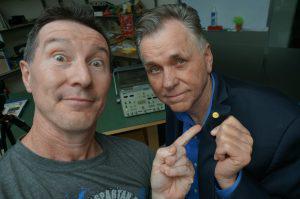
But Barry is also an electronics hobbyist and vintage HP and Tek oscilloscope and vintage computer enthusiast. He visited the EEVBlog lab and sat down with Dave for an impromptu discussion about all sorts of things.
https://www.nobelprize.org/prizes/medicine/2005/marshall/facts/
Transcript
Dave Jones: This is The Amp Hour podcast, released November 10th, 2025. Episode number 709 with Dr. Barry Marshall, winner of the 2005 Nobel Prize in Physiology or Medicine for his co-discovery that the bacterium Heliobacter pylori is responsible for stomach ulcers and not stress. But in addition to winning the Nobel Prize, Dr. Barry Marshall is also a keen electronics hobbyist, vintage tektronics oscilloscope enthusiast and also vintage computer enthusiast. And he visited the EEV blog lab in person and we had an opportunity to sit down and just discuss all sorts of random things. So I hope you really enjoy it. A video version of this chat is available on The Amp Hour YouTube channel as well. Enjoy. Hi. It's not every day that you have a Nobel laureate here in the lab. Barry Marshall, thank you for joining us. How are you going, Dave?
Barry Marshall: I'm shaking left-handed because I injured my hand. Yeah, that's right. And I'll tell you about that later. Tragic accident. Making me cry.
Dave Jones: Anyway, Barry is not only a total electronics nerd and hobbyist and vintage HP nut as well as a vintage tech nut. We've been talking all about tektronics scopes and HP gear and all sorts of stuff. But you're a... I mean, we can talk about that until the cows come home.
Barry Marshall: I do all the medical things. So I ended up being an infectious disease specialist and a gastroenterologist because I discovered that germ in the stomach, which causes ulcers, which is called a helicobacter pylori. Gesundheit. And its initials are HP.
Dave Jones: Oh, brilliant.
Barry Marshall: So it annoys me. I could never get the website, hp.com,
Dave Jones: because HP, this American company already had it. Yep. Some of this upstart company beat you to it.
Barry Marshall: Yeah. So I thought I'd come along and teach you, Dave, a bit about human health, you know, about the stomach because I know you're electronics engineers and you've got nothing, you know nothing about flesh and blood, do you?
Dave Jones: You know absolutely nothing. So you won the 2005...
Barry Marshall: Yeah, 2005 Nobel Prize for Medicine. For Medicine. And my partner there was Dr. Robin Warren, who's a pathologist. Right. And he had been looking for cancer in stomach biopsies and he saw these bacteria. And although he had seen the bacteria in a few people, like about 20 people, he didn't know how they could survive in the stomach. The stomach's got a lot of acid in it. It kills bacteria. And he didn't know whether these bacteria were causing any kind of disease. So I turned along, turned up one day looking for a research project, like impromptu. He told me all about them and I said, well, that is really interesting. How could bacteria be living in the stomach? Yes. And they've never been reported in the medical books. Because all the medical books say, bacteria cannot live in acid. Got it. So what a great, interesting research project that would be. Fantastic. And so off we went. And so that started off in 1981. And over the next two or three years, we worked out that these bacteria caused ulcers.
Dave Jones: Fantastic. Not stress. Not stress. There you go, folks. The Nobel laureate says ulcers are not caused by stress. Yes. And so that was the prevailing theory for... Yeah.
Barry Marshall: For a hundred years or more. And because what I found out, this is secret stuff your doctor will never tell you. When he or she doesn't know what's wrong with you, they'll blame it on stress.
Speaker ?: Ah.
Barry Marshall: So if ever they say, Dave, this is caused by stress, that means...
Dave Jones: Oh, YouTube job's too stressful.
Barry Marshall: That really means... Right. We don't know what's wrong with you, but we won't admit it.
Speaker ?: I can't.
Barry Marshall: But it actually, it probably also means that...
Dave Jones: Yeah.
Barry Marshall: I ran a bunch of tests on you and everything came up normal. So in other words, you might say, well, you haven't really got a diagnosis. However, you've got a diagnosis that nothing bad is going on. And that is good because that means probably you're going to get better and it's probably just a virus or something. However, you know, people with ulcers used to have it all their life. They'd vomit up blood. They could die from it. A lot of famous people had it. And when we studied these bacteria a bit more, we found out that more than half the people in the world...
Dave Jones: Wow.
Barry Marshall: ...were infected and still are. So in Australia, in fact, it's been decreasing and it's hard to find people with ulcers nowadays. It used to be very common, like in your parents' generation. I had my parents. And nowadays, probably about 20%, probably 10% of Australians still have it. Anybody who's migrated from a developing country, like the Middle East, Asia, China, Africa, South America, that more than half the population in those countries have still got it. Wow. And they still get a lot of ulcers. And in China, they get a lot of stomach cancer. So the problem is if you have a germ irritating your body for your whole life because you catch it when you're 2 or 3 years old from your mother. Got it. And then, you know, after 30 or 40 or 50 years, you know, it can lead to some other things. But anyway, that's enough medicine. Right.
Dave Jones: Hang on. No, no, no. You were talking about Pepto-Bizmo. Oh, yeah. What's it? We don't have it here. We don't call it that here.
Barry Marshall: So anyway, Dave and I were talking about how...
Dave Jones: We should have recorded the whole conversation before. It was fascinating.
Barry Marshall: We've been talking about this for a while. We'll have a couple of beers one night. Right, okay. And we'll do it properly over a few beers. That would be better. So we're talking about when I was a kid, we used to live in the rubbish tip in a shoebox. Right. And you were saying, my God, you guys had a shoebox? It was one of those kinds of conversations. But my... And the election's coming up, of course. Right, of course. And so after Bob Hawke came in, you know, they floated the Australian currency. They did. I was a penniless hobbyist. Yeah. I was a doctor, luckily. Right, okay. But, you know, with a family and everything, I still had no dough. And the Australian interest rate went up to 16%.
Dave Jones: Yeah, I remember that.
Barry Marshall: Yep. It was very, very painful. And so, you know, God. So I was doing my research. And one of the reasons that people didn't believe it was important was because so many people had it. Right. It must be just harmless, right? So that was one thing. But one of the things that I discovered was there's this medicine around the world called Pepto-Bismol.
Dave Jones: Right.
Barry Marshall: Now, in America, and the best one was Tom Cruise in that movie Rain Man. Rain Man. You know, he's trying to sell all those Corvettes. Yep. And he can't sell them. They're locked up in the harbour.
Dave Jones: Right.
Barry Marshall: Quarantine or something. And you'll see him go to the cupboard. He drinks this pink medicine. Well, I found out that this stuff, Pepto-Bismol, they were selling buckets of it in America and a lot of other countries, England. And the thing that was in it, they thought it was some kind of antacid which coated the stomach. Right. Because people used to take it and they'd sell it in the supermarket. And they'd feel better. It kind of worked, right? Yeah, it kind of did work, surprisingly. So the people who couldn't afford to have health insurance or anything, Right. would, they'd talk to their mates. They'd say, Oh yeah. Oh yeah. Go down to the supermarket, the farm or and get some Pepto-Bismol. And I just chug a like it. And so people in America were taking the stuff. And I worked out that it contained Bismuth, which is a heavy metal.
Dave Jones: Yeah, right.
Barry Marshall: It's in the same column of the table of elements as arsenic, phosphorus, maybe, you know, all down that column.
Dave Jones: Yep.
Barry Marshall: The heaviest metal non-radioactive element actually is Bismuth. So, you know, arsenic was used to treat syphilis. Right.
Dave Jones: Okay.
Barry Marshall: Mercury. Oh. Treating syphilis. And people used to get a black line on their teeth. Oh, wow. You know, all those old Victorian guys. So before we had antibiotics, people knew, or some people knew that you could take heavy metals and we would dose you with it until you just about died, at which point we'd stop. Right. And you could be cured of your syphilis, you see. So all the rich kings and princes and everything, they had these black lines around their gums from the heavy metals. And I remembered the Bismuth killed bacteria. And so I tested it on our stomach bacteria. And lo and behold, they got killed.
Dave Jones: Okay. So you guessed that there was stomach, there was bacteria in the stomach, even though everyone said there was.
Barry Marshall: Yeah, so Dr. Warren and I, we knew they were there. Right. Because we could go sample people and we grew them in the lab and tested antibiotics and everything. But the thing that rocketed me off, if you like, into a bit of an interesting career was I discovered that this over-the-counter medicine in America called Pepto-Bismol, they sell hundreds of millions of dollars worth of it, was actually killing the bacteria. So the people in the community who were taking this stuff and had it in their bathroom cupboard were chronically affected with the bacteria. Yeah. And I found out if you add a simple antibiotic to it, you can kill about 70% of it. Oh, okay. In two weeks, you cure lots of people.
Dave Jones: Permanently?
Barry Marshall: Yeah. Permanently? Yeah, yeah. So if you get rid of the germ, your ulcer's just totally cured. Right. In the story. So with the 16% interest on my mortgage, I was lucky to license a patent to this company in the US and they said, Barry, we need to tell America about this because there's a lot of dough in it. It could be ulcer treatment. Yep. And so I then had research funding at the University of Virginia. There was a nice guy there called Richard McKellen from Brisbane, but he was a professor there and he hired me over. And so for five years, we did the research funding and after that, I worked on this thing. It got lots of publicity and it took about 10 years to convince regular doctors. Oh, the regular community? Yeah. After it was published. And then we had to figure out a good treatment. So we got a good treatment. We got some medical tests. So nowadays, if you go to your GP, you say, my dad used to have ulcers and now I think I'm getting one. Right. A story like that. He might do a blood test on you, but probably he'd do a breath test.
Dave Jones: Oh, okay. Which is a chemical test. You can detect it from the breath.
Barry Marshall: Well, you have to take an isotope with urea in it, which is split. And urea is just ammonia and carbon dioxide joined together. Right. It's a waste product in your body.
Dave Jones: Of course, yeah.
Barry Marshall: But it's in your stomach fluids and saliva. And the germ splits that into CO2 and ammonia. And the CO2 then comes out in your breath in about 10 minutes. Interesting. So one of the things that I eventually did was in that test. And so nowadays, all over Australia, any of the labs your GP goes, you go down to the lab, you swallow this capsule, wait 10 minutes, blow up a balloon, send it off to the lab. Ah, got it. And said, whoa, you've got a score of 3,000 or something. And then the beautiful thing is when you take the antibiotic treatment, a month later they'll check you again. You say, you've now got a score of three. So you go from this mega level down to practically zero on this isotope test. And that's secure. Brilliant. And you didn't have to have a scope down and you didn't have to worry about the fact that you were hopeless and under stress and incompetent and everything. You're still that. But your ulcer is gone, so now you can cope.
Dave Jones: Is there still that myth that stress causes ulcers and all that? Is that so persistent that you can't get rid of it?
Barry Marshall: It kind of is. But part of it is this lying, this con job that doctors have. Did we get this on tape before? So whenever your doctor can't figure out what's wrong with you, he says it's caused by stress. So kids, I might give a talk to, say, high school students or uni students, they say, is there anything that we could do to win a Nobel Prize? And I say, well, next time you go to the doctor and he says something's caused by stress, you think, ah, if I could find the real cause, I'd probably win the Nobel Prize, according to Barry Marshall. Interesting.
Dave Jones: Wow.
Barry Marshall: So what can you think of that's caused by stress? I'll give you.
Dave Jones: YouTube burnout's caused by stress.
Barry Marshall: But headaches.
Dave Jones: All right.
Barry Marshall: Like, usually, if you've got a headache, I'd say 90% of the time it's going to be postural. You're sitting in front of a desk and fiddling around. And you're sort of tracing some horrible little signal across an instrument or something, you know. And it's so interesting. You do it for five hours straight.
Dave Jones: And you don't realize you're... Yeah, yeah.
Barry Marshall: So stress or posture. Well, we say stress, but it's usually posture or something like that. Right. And people, some people get migraines. I used to get them. I grew out of it. Yeah. I'm not intelligent enough anymore, but usually smarter people get migraines.
Dave Jones: Right.
Barry Marshall: Everyone else...
Dave Jones: Oh, I've never had a migraine in my life, so obviously that tells you a lot.
Barry Marshall: I get a headache. It's a hangover. Right. But I don't drink much anymore. So, like headaches. No one, in any individual, we might have this kind of a diagnosis, but we can't cure you because we don't really understand the fundamental cause of a headache.
Dave Jones: Got it. Where does it come from? Right. Interesting.
Barry Marshall: Is it chemical in your blood or is it coming from your muscles? So, if ever you read a medical book and there's a chapter on something, like with 100 pages in the chapter, and they have 20 causes of something, that means they didn't really know the real cause. Right. So, with ulcers, it used to have 114 pages in the medical book. Really? And there would be a list of about 20 causes of duodenal or stomach ulcers.
Dave Jones: Wow. And it turns out there's one. Why is there two?
Barry Marshall: Well, 90% of them around the world would be the germ.
Dave Jones: Right.
Barry Marshall: And the other 10% people take aspirin or arthritis medicine or something like that.
Dave Jones: Got it.
Barry Marshall: And it's not alcohol.
Dave Jones: Right.
Barry Marshall: So, I always get asked, Dr. Marshall, can whiskey cause ulcers? I say, no.
Dave Jones: No. It's good.
Barry Marshall: Okay. Actually, it does poison the bacteria a little bit.
Dave Jones: Right. Oh, it helps. There you go. Oh, that'll be on Facebook tomorrow.
Barry Marshall: So, the things that... So, I'm a hobbyist. Yes, you are. And I was telling you that I started building S100 computers after doing some... Actually, I got a scholarship to do electronic engineering out of high school. Yeah. But also... But decided that I'd do medicine and do electronics as a hobby. Right. Because in 1970... This is great. In 1968 is when I did my... 1969, actually, 50 years ago this year. Wow. Man on the moon. Yes. Yes.
Dave Jones: Absolutely.
Barry Marshall: So, that was my first year in uni. And I got a scholarship. I can't remember how I got a scholarship. Maybe I didn't have one. But I thought... Right. But, you know, electronics in those days were so expensive. A transistor would cost you like a week's wages, you know. Seriously. And so, I thought, if I'm a doctor, I'd have enough money to do electronics as a hobby.
Dave Jones: You can afford the hobby. So, finally, I got there. That's great. That is brilliant.
Barry Marshall: And so, I did some night school of circuit theory. And then I did a summer school of microcontrollers. Lift controllers and things. Yeah, yeah. That was like the Intel... Oh, okay. You're sitting here between... That's my first computer, Dave. That is your first computer. It cost me $350.
Dave Jones: And apparently, I outbid him on this. We were both bidding. I had no idea I was bidding against a Nobel laureate for the... For this.
Barry Marshall: Dave, I think I'm serious now. After we finish this, I'm going to kill you and steal that.
Dave Jones: As long as you publish the content. That's all right.
Barry Marshall: Dave's going to do a video on that for me. Yeah.
Dave Jones: Should I assemble it? Should I assemble it? Or it's... Look, it's sealed. It's like...
Barry Marshall: It's new in box. It's new in box. Let me smell it. It's new in box. It smells a bit moldy.
Dave Jones: It's that cardboardy smell. Yeah, but it's like a shrink.
Barry Marshall: Anyway, it was so beautiful. And my poor wife, I mean, she was... The children were starving for a few weeks after I bought that.
Dave Jones: Right.
Barry Marshall: But then I... A mate wanted to control his sprinklers. The well used to run dry all the time. Right. So he said, I need... Barry, I need my sprinklers to be smart. So they cycle through. When they run out of water, they stop until the well charges up again. And then they'll start up again where they left off. Not at the beginning. So I built a sprinkler controller on... Machine coded it. Nice. Real-time clock. Well, you had to. No, no. There was no compiler for this. That's right. It was a... It had a clock.
Dave Jones: Yeah.
Barry Marshall: And a sprinkler controller written in machine code in 2K of RAM, which is not bad.
Dave Jones: That's a lot for a... But that's a lot for a sprinkler controller, isn't it?
Barry Marshall: I think you're a bit loosey-goosey with your code there. Oh, yeah, probably. It wasn't documented very well either. That's right.
Dave Jones: Anyway, so he was happy with that.
Barry Marshall: And he paid me... Maybe he paid me $250 or something. And I then fed that into an S100 computer.
Dave Jones: Yep.
Barry Marshall: So I was only one of two doctors at Royal Perth Hospital that knew what a computer was. The other bloke... This is great. He was a surgeon. Yeah. His name was Val. And he had an Apple.
Dave Jones: Right.
Barry Marshall: They'd just come out. Yep. And I was like...
Dave Jones: Apple 2 or 1?
Barry Marshall: Apple 2. 2, yeah, yeah. Yep. So... But he was measuring blood flow and stuff like that in intensive care. But I managed my waiting list. You know, there were hundreds of people with ulcers trying to get my new treatment with antibiotics. And so I had an answering machine. I had a push-button memory phone that I got from Tandy. Yep. And I had this S100 computer. And then I got a drug company, like one of my sponsors eventually, to give me a copy of D-Base 2. Ah, nice. So I was then writing... Had a database with D-Base. And I was putting all kinds of information in there. And so all of a sudden I had 500 patients being managed by this system, which I put together. CPM.
Dave Jones: Yep. Yep.
Barry Marshall: And so I wrote my first paper with Dr. Warren there on CPM. And he calculated the statistics on his 11C Hewlett-Packard calculator.
Dave Jones: Yep. The Voyager form factor. Yeah. Yeah.
Barry Marshall: And then we published it. It was all great. Yep. And then eventually that led to the sponsorship traveling to the US. This is a tip. I'll tell you some secret stuff about the Nobel Prize. Okay.
Dave Jones: Yes, please do. Yep. Just between us.
Barry Marshall: So just between us. So in America, if you win a prize, you pay full tax on it.
Dave Jones: Ah.
Barry Marshall: In Australia, it's tax exempt. No. Exactly. Because it's a prize. High five. Yes. Okay.
Dave Jones: All right.
Barry Marshall: So out of kind of lucky, lucky for me, I had not yet won the Nobel Prize. Right. And come back to Australia. And then a few years later, someone said, Barry, do you realize that if you've still got a green card, the US government can tax you from your global income?
Dave Jones: Oh, God.
Barry Marshall: I was like Julian Assange. Yeah. So anyway, so I went in and I snipped up my green card and filled out this form and gave it back to the US Embassy. And they said, you're the only person we've ever heard of who handed in his green card. I've given up their green card. There are other people.
Dave Jones: That's great. Yeah.
Barry Marshall: So anyway, so I started a business in Australia then. And I used to get these crazy bills from the US tax department. They're really just trying one on. So I got rid of the green card. And then when we won the Nobel Prize, of course, no tax.
Dave Jones: Excellent. Brilliant.
Barry Marshall: And those poor Americans, they would be like getting half a million dollars. Like, oh, $200,000 tax.
Dave Jones: How much is it? Half?
Barry Marshall: How much is the price? It's 1.7, I think it's 1.7 million krona or something like that. Krona, yeah. But effectively, it's a million dollars US.
Dave Jones: Right. Something about that. But you had to split it.
Barry Marshall: Yeah. So Dr. Warren and I, you know, $800,000 each US, something like that. Right. And you invite all your relatives to Sweden. You all travel around in these crazy bus tours and go to the opera and everything. Your family has a fabulous time.
Dave Jones: And there's a big black tie dinner. Yeah. You meet the king and queen. King and queen of Sweden. Yeah. Yeah. Yeah. Right.
Barry Marshall: And it's pretty difficult because you've got to shake hands with the king. Plus, he gives you the medal. So which hand do you shake with? That's a total stressful evening, I tell you.
Dave Jones: I'm sure it is. Yeah.
Barry Marshall: So, but.
Dave Jones: Is that a Nobel pin?
Barry Marshall: Yeah. So this is your little tiny Nobel pin.
Dave Jones: Oh, they give you that, do they?
Barry Marshall: Are you going to zoom in on that? I know.
Dave Jones: I'm going to zoom in on this. Hang on.
Barry Marshall: I don't carry the Nobel Prize with me.
Dave Jones: No.
Barry Marshall: So when I first saw it, I said, how come it's got a picture of Dr. Warren on it? And they said, no, that's Alfred Nobel. It looks similar. Nice. So if Dr. Warren watches this, I say, Robin Warren, here you go, Robin. I gave you a good mention. I'm not sure. I sometimes carry some Nobel Prize chocolates. But I don't, no, I haven't. I must remember him.
Dave Jones: Oh, that's brilliant.
Barry Marshall: So I can't remember why we got off on a tangent. But anyway.
Dave Jones: What's it? So it's the Nobel Prize of Physiology or Medicine. Yeah. So what's the difference?
Barry Marshall: Well, that's what it was called. That's what. Physiology or Medicine. In 1900, they weren't really sure of where one stopped and one started. So physiology means you might study the blood pressure of a cat or you might put different drugs on it. You might get the artery out of a rat and put it in a little thing that measures how strong it is or something. That would be physiology. What causes blood pressure? Or what causes your hair?
Dave Jones: Physiological factors of the body.
Barry Marshall: Physiology is like measurements. So this one would be, you know, you've got cochlea. Yes. In Australia. So they would know all about the physiology of the ear. If you said, what's the resonant frequency of the eardrum? They tell you straight away because they've actually measured it. So that's physiology. Or if I wanted to, Dave, if I wanted to train you how to keep your lab tidy. Right. I would just like feed you every time you tidied it up. I've got, yes. That would train you. That's physiology. Yes, please. And medicine is more like human.
Dave Jones: Okay.
Barry Marshall: So in those days, they didn't really, actually, Alfred Nobel probably had ulcers. Okay. Interesting. He invented dynamite. That's another story. Yes, he did. He was an incredibly rich tycoon. And he visited Australia selling dynamite to the gold mines and everything. And then, but he used to sell nitroglycerin. That was his first business. But it blew up. His business blew up. He used to try to convince people that it was safe.
Speaker ?: Right.
Barry Marshall: And people all over the world were buying it and then getting killed.
Dave Jones: Brilliant.
Barry Marshall: And then one day, the factory in Stockholm blew up and killed his brother.
Dave Jones: Oh.
Barry Marshall: Interesting. And then he said, maybe it's not safe after all. So he then mixed the nitroglycerin with some montmorillonite clay, which is sort of powdery clay that's in a lot of things. It's, it's, I can't put it, it's called, but it's just some kind of white clay plus some oil and some sword dust or whatever. And he ended up making dynamite, which didn't blow up.
Dave Jones: Right. Because nitroglycerin is, is, is, is a liquid. That's what's in dynamite. Yeah. It's a liquid, right? So it's unstable. No. So you get glycerin. Right. I'm going to get demonetized. I'm going to get flagged. The video's going to get flagged.
Barry Marshall: You get, you get glycerin and you mix a certain amount of, you can look at it if you need chemistry.
Dave Jones: All right. Okay.
Barry Marshall: Look at, mix it with sulfuric acid. And then like you pour nitric acid into it and the reaction happens, it likes to be at body temperature.
Dave Jones: All right.
Barry Marshall: And as you, as it reacts, it actually gets hotter. But once it's a hundred and once it's about 45 degrees centigrade, it's starting to become unstable. Oh God. So in Sweden during the winter, you can make it and you'd have your old thermometer in there and it's only 42 and put a bit more in, you know, I'm in a bit of a hurry today and it would heat up too much and blow up, you see. So you can imagine what happened. Yeah. So it might actually be the beginning of the Swedish tradition of everything being safe, like Volvo cars, you know.
Dave Jones: Oh, interesting. Yes, of course.
Barry Marshall: So in Sweden, it's safe. Right. No matter what it is, we make it safe.
Dave Jones: Make it safe.
Barry Marshall: So maybe that was part of it. Anyway, so he gave his, so he always had guts aches, stomach ulcers. We don't know about stomach ulcers because the only way they could diagnose it is when you died. They did post-mortem ulcer. Oh, of course. Stomach ulcer, not stress after all. You know. So, but the treatment before our discovery, the treatment of ulcers was the treatment for stress. Dave. Yep. You'll have to give up this EEV log. Oh, you're going to have to give it up. It's just stress. Or your, you know. The wife tells me this every day. All your 10 million subscribers, they're going to be broken hearted. Right. But you've just got to give it up. You've got to retire. Yep. Sounds good. Just go and live on the beach and like fix, fix car radios or something like that.
Dave Jones: I'm there. Yeah.
Barry Marshall: Yeah. So that would, so I met people like that who had a fabulous, interesting career and they just retired at age 50 or something. Mm-hmm. And they still had ulcers.
Speaker ?: Right.
Barry Marshall: Yeah. So this stress thing was just totally bogus. So the treatment would be, they would tell you, you're not allowed to eat any spicy food. You're not allowed to take fruit juice or citrus.
Dave Jones: Okay.
Barry Marshall: You're not allowed to have fish and chips. You've got to have just boiled, boiled, steamed Mornay, crayfish Mornay, Sassana Pornay. Right. Everything with a lot of cream in them. And that would be what you lived on. Yeah. And you could never drink white wine or red wine or anything or too much beer. You know, your whole life was miserable.
Dave Jones: And.
Barry Marshall: And you still had ulcers probably.
Dave Jones: Right.
Barry Marshall: So then, and what do you reckon you died from?
Dave Jones: I don't know.
Barry Marshall: Atherosclerosis. You ate so much, so much oily fat and everything. Oh, really? Your cholesterol would be 10 times normal. Your blood would be full of lipids. And so poor Alfred Nobel eventually started getting angina. And he was, I don't know, he's about 80, I think. And he eventually died from a heart attack. And he had no friends because he was always cranky. Cranky old Mignone.
Dave Jones: But he left it in the wheel. Left his money in the wheel.
Barry Marshall: So he left the money to the medical prizes. So we're going back. What are they? So the answer is first Monday in October. Every year they announce the first Nobel Prize, which is medicine.
Dave Jones: Okay. That's right.
Barry Marshall: So whatever the date is, it's usually about the 3rd of October, thereabouts. So that was my date. And then after the next morning they do physics. And after that, chemistry.
Dave Jones: Right.
Barry Marshall: And then they do literature. And then they do peace prize.
Dave Jones: Yes.
Barry Marshall: And that's the one that gets the publicity because that is actually. Well, it does. Yeah. That is announced because when Sweden separated from Norway about 100 years ago, they said to the Norwegians, you guys can do the peace prize. So that's announced in.
Dave Jones: Interesting. In Norway. Oh, okay. Okay. Right. So it's technically a separate thing. So you don't get to meet the king of Sweden. Norway. Norway. Okay. You'll meet the.
Barry Marshall: So the good, the favorite ones is actually the Swedish ones.
Dave Jones: Right.
Barry Marshall: The Norwegian one is usually. Is it going to be Bob Galdorf or is it somebody else? You know, but someone said to me, what about Obama? Because there's no way that he could have got his application in on time by the rules. And yet he still won the peace prize.
Speaker ?: Yes.
Dave Jones: There was a lot of to do.
Barry Marshall: So I thought about it for a while and I said, well, the peace prize is usually pretty controversial. And when I look back through the people I know got the peace prize, like terrorists and
Dave Jones: different people, you know.
Barry Marshall: And when I look back along the, what I know that the peace prize is in the last 30 or 40 years, Obama was one of the best. Definitely. Oh, interesting. All right. All right. So I was right behind it. All right. Anyway. So then there's another one that's called the commerce prize, which is the Bank of Sweden in honor of Nobel or something, but sort of a proxy one or something. And that comes on and that's pretty interesting. Got it.
Dave Jones: Where does the money come from these days? Because surely his money's running out. I know.
Barry Marshall: So what he did, he left all his money for the Nobel prizes, which was $60 million in today's money, I think. Okay. And he said, so they'd spend the interest on the money on the prize each year and keep it going. So it's probably built up to hundreds of millions.
Dave Jones: Oh, okay. So it's just the interest on the money was enough to keep it going. Yeah, yeah. Kind of, sort of.
Barry Marshall: So, yeah. So $6 million a year.
Dave Jones: Right. Okay. Oh, yeah. True. $5 million or something.
Barry Marshall: But the really good prizes, like the Nobel, the reason it's good is because they get top professors and scientific people and authors and everything all over the world. And all the previous Nobel prize winners get a nomination slip each year in the mail.
Dave Jones: Oh, so you can nominate someone. Yeah.
Barry Marshall: So I told my mum.
Dave Jones: Are they the only people who can nominate?
Barry Marshall: Well, you know, like the vice chancellor of the University of Sydney. Right. Right. And then Sir Gus Nossel from Walter and Eliza Hall Institute. He might have, but he might have had a mate on the committee.
Dave Jones: Okay.
Barry Marshall: You know, somebody like that. So people of note who trusted people in science get a nomination form. And they all send them in. So they come in like votes.
Dave Jones: Is it anonymous? So they don't know who's voting, who's recommending who?
Barry Marshall: They know, you know, they know who it's from. Oh, okay. So you actually don't get a nomination certificate. Even if you photocopy it, Dave, they'll tell it's not real.
Dave Jones: Okay.
Barry Marshall: So I told my mum all those letters she wrote to the Nobel Prize. They probably just got shredded. Yeah, yeah.
Dave Jones: I'm sure they get tons, right? Yeah, they do. Yeah.
Barry Marshall: And the thing is, it's like what happens in Las Vegas stays in Las Vegas. It's kind of like that. It's superstitious. When you think you might be a Nobel Prize winner, you can never mention the Nobel Prize. And then someone says, Barry, do you think you will ever win the Nobel Prize? Don't say that. That would definitely jinx you. So who were you up against? So what happens is they get hundreds of votes, probably from these people. And so they get a short list. So professors all over the world, a lot of respected people say, this would be a good one for medicine. Got it. And then, so nothing happens for years and years. Years and years. And then finally, probably someone on the Nobel Prize committee gets an ulcer. Oh. And they say, I'm trying out these antibiotics. Wow, that is great. So that's our suspicion, you know.
Dave Jones: Right, that's our suspicion of how it...
Barry Marshall: Anyway, so then we got it.
Dave Jones: So you think it was nominated years before?
Barry Marshall: So people used to sort of mention it in that superstitious way. Got it, got it. Okay. Don't ever mention it. And so about 95, it started to be big in medicine plus documentaries and things like that. And the link with stomach cancer was important because in a lot of places like Japan and China, that was the most common cancer. Oh, okay. Like in China, even today, 300,000 people a year die from stomach cancer. Wow. Because of probably because of this germ. Wow. So then, so it became pretty popular after about 95, 96. And I had a medical company and, you know, there was all kinds of hype going on about it. And then soon after that, we figured out really good treatments for it, which became available in Australia about 1998, 99. And then all the doctors in Australia really embraced the whole thing at that point. Yeah. And they went crazy. They just treated anyone who ever mentioned the word also. Yeah, also.
Dave Jones: They just gave them. Yeah. Are there any side effects if you don't have it and you get the, and you take the antibiotics?
Barry Marshall: Oh, yeah. All antibiotics. You could be allergic or something. Oh, you could be. And you know, there's stuff about your microbiome and all the good bacteria and things like that. So it can upset your guts in different ways. Got it. But usually it bounces back because if you, if you lose, if you, so I don't want people to stop taking antibiotics. If they, if they need them, they're the best things ever. But they do kind of wipe out the gut bacteria temporarily usually. But in your family, you'll soon catch the germs back up. Of course. Of your partner, of the kids, you know, of the, any surfaces. Of the surface, just, yeah. Your old toothbrush, you know. Yep. You've got those germs around in your environment. You can go out and take probiotics or eat dirt or whatever. Yeah. You could get them back. And so that's what we notice. But that's the, that's a hot new thing now. Right. So you wouldn't want to take antibiotics unless you had a reason for it.
Dave Jones: The antibiotic thing nowadays, they're talking about bacteria, antibiotic resistant bacteria. Are we, because people aren't doing the full course. And is that how big a problem is that?
Barry Marshall: So the treatment we give for H. pylori helicobacter. Helico means twisty bacteria. So it's like a corkscrew shaped bacteria.
Dave Jones: Oh, okay. It's physically shaped. Yeah.
Barry Marshall: Pretty easy.
Dave Jones: Right. You can see that under the microscope, can you? That is sort of. Yeah.
Barry Marshall: And actually, if you type out bacteria, Google search images, helicobacter, you get about 50 pages of brilliant pictures.
Dave Jones: Oh, okay. Oh, include a photo.
Barry Marshall: And you can have, I've got, I actually went, came third or something in an animation about five years ago or 10 years ago. I paid for it myself and got a, got a, a graduate animation student out of Sydney who did it on a beach in Thailand. Another long story. Yeah. So you take, so if you get diagnosed as having it, so the doctor does a breath test or a blood test, or maybe you had the scope down and the gastroenterologist found it. You would take a treatment of antibiotics plus acid lowering drugs. Okay. Acid blockers. So it's usually three drugs, triple therapy.
Dave Jones: Why do you have to lower the acid level?
Barry Marshall: Well, antibiotics are designed to get into your lungs or your urine. That's the, or your sinuses.
Dave Jones: Is that the distribution?
Barry Marshall: The pH.
Dave Jones: Right. Oh, okay.
Barry Marshall: You know, so if you put antibiotics into acid, they don't work. Right. Got it. The bugs are there like, ha, ha. Yep. Got it. So, you know, it's giving them rude signs, if you like, towards the antibiotics. But if you get rid of all the acid out of the stomach, that's the key thing. Then ordinary antibiotics, like amoxicillin, start to work.
Dave Jones: Got it.
Barry Marshall: And so we can cure you in 10 days. Excellent. 10 to 14 days. And end of story. You just don't have it. Your ulcer's totally cured. Fantastic. And you would be very, very unlikely to have any long-term effects like stomach cancer or anything like that. So end of story. Terrific. So all the GPs just wiped out all the H. pylori, helicobacter, and ulcers in Australia.
Dave Jones: Fantastic.
Barry Marshall: And so now we don't worry about it.
Dave Jones: So why are people still dying from ulcers then? If this is like a, they can just take an antibiotic?
Barry Marshall: Well, you know, there's a lot of people in the world. Yeah. And it costs, the diagnosis and treatment probably costs $150 if you worked it all out. So that's a lot of money for people in India. For developing nations. Yeah. Yeah. So the things people are doing in developing nations is going to make a difference. Right. Like in India, they're cleaning up the water. Yes, of course. And they're giving everybody toilets. So when you've got the poo. Basic for us. The water comes in there. Clean. And the poo goes into it and goes out the other side.
Dave Jones: Yep.
Barry Marshall: That's the first discovery that saved more millions of lives than anything. It was. Yes. Actually, the invention of the flushing toilet, they say. Yep. And who was the inventor? What was his name?
Dave Jones: They had it in Caesar. They had it in Rome. Oh, yeah. No, but the flushing toilet. Crapper. It was Mr. Crapper. Mr. Crapper was the flushing toilet. It's not a flushing toilet in Rome. Yeah, yeah. It's not a flushing, but stream toilets.
Barry Marshall: So the water used to come from the mountain, down the aqueduct, and fly through the toilets, and out the back.
Dave Jones: I've sat on one. Yep.
Barry Marshall: I haven't actually been to that one.
Dave Jones: Okay.
Barry Marshall: I was probably in the business class. Right. I don't know what happens down the back of the plane, actually, Dave.
Dave Jones: Oh, boy.
Barry Marshall: So, anyway.
Dave Jones: How did you find out about your Nobel Prize? What was the shock? Did you know you were nominated?
Barry Marshall: So this is one of these funny stories. Because you're never allowed to mention it. Right, okay.
Dave Jones: Never now allowed to mention you've been nominated.
Barry Marshall: That's right.
Dave Jones: Once you've won it, they can never take it back. Right, okay.
Barry Marshall: Even if you were lying.
Dave Jones: Got it.
Barry Marshall: So, Dr. Warren, who's the pathologist, he retired, you see. And I was traveling around, giving lectures, and talking about my book and everything, you know. And I never used to see him very much. And so I said, look, Robin, why don't I pick you up on Nobel Prize night, and we'll go down the pub, and then we'll listen to the announcements. You know, you never know.
Dave Jones: It's live streamed. I've never watched the live stream.
Barry Marshall: Anyway, so we didn't have live streaming. We had a Nokia 9-11 or something. Right, so you're at the pub. So I said to my wife, I'm going, so I started this, and afterwards we had a lot of fun reminiscing, and he usually gets a big pint of Guinness, black Guinness, and I just have an EMU export, you know. Right. And our fish and chips there. And we go to the Swan Brewery pub. It's on the Swan River. Yes. And it's now just a pub, you know. Okay. Rich people live there, not me. And so we did that. And at the end of it, that was about the year 2000, because we thought, I said, you know, I think it's building up. You know, someone said, I got invited to give a lecture this year in Sweden.
Dave Jones: Oh, okay. But that's a hint, hint, not nudge, yeah.
Barry Marshall: Anyway, but so anyway, they announced it. It wasn't us. So maybe you'll win it. So the following year, I did the same thing, picked up Robin at four o'clock, and the announcement of the Nobel Prize is at 5.30 p.m. in Perth. Yeah. So at 4 p.m., I pick him up and take him to the brewery, and we'd sit down and chat on and have our fish and chips and Guinness and everything. And so that year, we'd buy no Nobel Prize. And then the third year, third year. Oh, devastated. And we didn't win it again. That was like 2002. Oh, dear. And it was now two years since I'd given the lecture in Sweden.
Dave Jones: Right, you figured.
Barry Marshall: And we'd had a conference about it a couple of years before, and I was like, oh, geez, and we missed the boat, you know. They've gone on to something else, you know, something that I couldn't understand.
Dave Jones: Right.
Barry Marshall: And so then we were there at the pub, and I'd gone to the pub, and I said to my wife, come on, come and see Robin. We're going to the pub, and we'll listen to the announcement. And she says, oh, no, no, I'm too busy. I can't do it. I've got to prepare lunch or something.
Dave Jones: And she's thinking, oh, he's not going to win at this. No, no.
Barry Marshall: But that was the lowest priority in her mind, and she was cooking cabbage or something. And she's actually got more degrees than me, by the way, so I shouldn't say that she just cooks cabbage. Anyway, so I'm there, and then Robin Warren's phone rings at five o'clock, and he says, hello. And they say, hello, Dr. Warren. Is that Dr. Warren? I'm Hans Jornvald, the head secretary of the Karolinska Nobel Committee. And you and Dr. Marshall have won the Nobel Prize. So it was the right timing.
Dave Jones: How long before the announcement? Like half an hour before the announcement. Half an hour before.
Barry Marshall: So he said, well, he's pretty dead, but he said, oh, well, that's very nice. Thank you. And they said, but we've got a problem. We're not allowed to announce it until we've spoken to you and Dr. Marshall. Yeah. And we can't find him anywhere. We've called his office. They don't know where he is. We called his home, and we called this and that, and he's not picking up his mobile. Well, we don't know where he is. He said, oh, well, he's here with me. We're at the pub. So was he. And they say, he says, well, let me, they said, let us speak to Dr. Marshall. He said, I'll hand the phone over. So, Dr. Marshall, you've also won the Nobel Prize with Dr. Warren. And I said, oh, great. And so I hung up. So then I called my wife. I said, you've got to come here to the pub. There's something special I want to tell you. And she says, oh, no, no, no, no, no. Look, I've got the potatoes on. More important than potatoes. So at that point, she looks down on the table, and there's my wallet. And she says, that swine. He's just calling me because he's left his wallet. He's called it. Brilliant. So she, I'll get you for this. Okay, I'll come. So then she came, and we told her. So it was pretty exciting then. But then the one thing when we got to Sweden, Dr. Jorn Vals, the head of the Nobel Committee, he was very, very worried because the Nobel Prize is so secret.
Dave Jones: Right.
Barry Marshall: They plan it all year, and they have this final vote, like, some hours before the announcement. Oh, really? Just hours before? Okay. So I can't speak. It's like a not guilty or guilty time where a jury comes out.
Dave Jones: Yeah, yeah.
Barry Marshall: And then, you know, somebody comes out, reads the announcement. The winner is blah, blah, blah. Yep. And they actually have somebody prepare several websites in a couple of days before. Oh, in anticipation. Like all of them. Yeah, so they have their short list, you know, and then they have, like, 10 votes around the table on the day. Right. They must have an uneven number, mustn't they? Otherwise, they could get a tie.
Dave Jones: Yes, they must. Anyway. Yeah, there's guys, sure, they're going to assist them for that.
Barry Marshall: Anyway, so he was really worried. He said, since the Nobel Prize is so secret, how come you and Dr. Warren were already down the pub celebrating, and we hadn't told anybody, because everyone else, of course... We're Australian, mate. That's why we're just down the pub all the time. But seriously, they scan that room. They don't want anyone listening to their discussions. Right. So there's only about three...
Dave Jones: They actually get...
Barry Marshall: Yeah, so the guy who does the website, he's probably in the room. Right. And the committee. Yeah, yeah. And then they come out, and they switch on one of their little websites. There's a couple of pages about it. Yep. And it's done.
Dave Jones: Wow. There you go.
Barry Marshall: So it's pretty exciting.
Dave Jones: Awesome.
Barry Marshall: And luckily, we were getting on the booze anyway. Those press weeds, though, were pretty frightened about that.
Dave Jones: Oh, that's terrific.
Barry Marshall: And so... Wow. So finally, the final thing is you have to give a speech at this fabulous dinner with thousand... Yeah. Maybe 1500 people. And you've got to thank your mum and... Yeah, yeah. But you have to give a little speech, though. Yeah. Yeah. I found out that Sir McFarlane Burnett, one of the Australian Nobel Prize winners from Melbourne, famous... Right. They invented, like, myxomatosis or something, plus... What's that? Plus they use... Rabbit killing virus. Oh, okay. One of those. Okay. But when they invented the rabbit myxomatosis and started getting released in Victoria for the rabbits...
Dave Jones: Right.
Barry Marshall: People had an epidemic that summer of encephalitis. Oh. Murray Valley encephalitis or something, and a lot of people were coming down with it. Was it linked? Or was that just a coincidence? Everyone asked that question. Yeah. So McFarlane Burnett... Wow. ...and his two mates... Names escape me right at the moment... Drank the virus to prove that it was harmless to humans. Right. And he won the Nobel Prize, but not for that. Right. For having the guts to trick his... He discovered important white cells and immunity and things like that, vaccines. So the thing was, just because... I mean, you know we're Australian, just because we've got this tradition of drinking our own bacteria, which is one of the things I did that was also famous. Oh, okay. We'll do another podcast one day.
Speaker ?: All right.
Dave Jones: Okay.
Barry Marshall: Just because we've got this tradition. It's not really a guarantee that you're going to win the Nobel Prize. I don't want all you Aussie doctors out there experimenting on yourselves. Yeah. So that was one thing, and then finally, to make sure you're going to win the prize, this is what I recommend to all you young scientists is work hard. Yes. Keep balance in your life. Yep. And just in case, always be kind to Swedish people.
Dave Jones: Ah, yes. Got it.
Barry Marshall: So that was the key.
Dave Jones: Brilliant. So why do you, do you think your one, your idea got it because it was, it overturned
Barry Marshall: centuries of thinking? Yeah, hundreds of years of dogma. Right. It turned that 120 page ulcer chapter in the medical books down to six or something. Right. Okay. It's a germ, take antibiotics, end of story. 10% of the population in the Western world used to get an ulcer. So like you could have come down with an ulcer, you know, 40 years ago, and they would have told you it was stress. Yep. And you could have had surgery to cut out half your stomach. Yes. So you didn't make too much acid.
Dave Jones: People have surgery. All that kind of stuff.
Barry Marshall: You know, it was a life changing disease. Yeah. You could have given up all this. You know, I mean, you might have had to sell your whole lab for like 20 bucks on Gumtree. Exactly.
Dave Jones: To pay for my ulcer, my dodgy ulcer treatment.
Barry Marshall: So it was actually very serious and people, the acid blocking treatment people used to take called Zantac and Tagamet were the two big drugs. Right. They were like $5 billion drugs for the drug companies.
Dave Jones: And that was wiped out? Well, no.
Barry Marshall: They were smarter. They figured out how to sell it anyway. You get it in the supermarket now. Got it. Okay. Everyone gets indigestion from acid. Oh, okay. So it does something else now.
Dave Jones: They just remarket it.
Barry Marshall: Yeah. So it'll keep your acid and ulcer under control. But when you stop taking it, if you run out, a week later, you get your ulcer back and you could hemorrhage or something, you know. So that was the thing. Nasty. So that used to cost people in Australia about five bucks a day. Oh, two. Oh, your watch. You got one of those newfangled watches. Jeez. Yeah. I have one of those. It's the, what's his name? Tim Cook watch.
Dave Jones: Oh, yeah. One of those appley things.
Barry Marshall: One of those fruity flavored ones. Mine's supposed to take your ECG, but they haven't got enabled in Australia yet because it's not legal to do medical tests on yourself. Really? Is that why? Only in America so far.
Dave Jones: Only in America. There you go.
Barry Marshall: Only in America. So we'll get into the ulcer story. Yep. 10% of people in the Western world used to get ulcers. And about 50% of people on the earth had the bacteria and would sometimes get, you know, might get a vomiting attack. Some people say, I can't eat pizza. I can't eat bread, drink red wine, that kind of stuff. So when we discovered this, it really benefited maybe a billion, ultimately a billion people. A billion people.
Dave Jones: Yeah.
Barry Marshall: So in China now, I visit China a lot. Fantastic. Half the people have got it, if you average them out. But in Shanghai and those wealthy parts of China, it's like Australia, much less. You know, we will probably, through our Marshall Centers and treatment recommendations and things, we will probably indirectly influence about 100 million or 200 million Chinese people. Wow.
Dave Jones: That's fantastic.
Barry Marshall: So you'll find me in a couple of other YouTubes if you search, talking about ulcers or something. Excellent.
Dave Jones: I'll try and find them and link them in. Yeah. Thank you very much, Barry.
Barry Marshall: And thank you for teaching me about electronics, Dave. Excellent. Sometimes I need something different.
Dave Jones: We'd love to, we could spend the next two hours talking about vintage tech gear. Yeah. And you've got like, yeah, you've got a... Where was that famous oscilloscope you said you've got? I got a 2465B down there. Oh, yeah. The man knows, the man knows his vintage scopes. That is beautiful.
Barry Marshall: That's like oscilloscope porn, as you would say.
Dave Jones: And you're going to visit the vintage tech museum soon? Yeah.
Barry Marshall: So it's in Boulder, Colorado, I think. So I've got a few connections there. And I have a couple of days conferencing in America. Mm-hmm. And if I could get a couple of days off at the end of it, I'll go somewhere nerdy like that. Awesome. Either there or NASA in the Space Center.
Dave Jones: Fantastic.
Barry Marshall: Yeah. It should be fun.
Dave Jones: Oh, I'm jealous. All right. Thanks, Barry, for joining us. That's brilliant. My pleasure. Yeah. Off the cuff. I thought we'd turn the camera on. Hope you liked it. Catch you next time.
Barry Marshall: Next time I'll bring the metal. Yes, please. We should do that. Yeah. Awesome. I need someone to drill a hole in it so I can like wind it around my neck. Yeah, yeah, yeah. Gangster style. Yeah, yeah, yeah. It should be good.
Dave Jones: Does it open door? Like presumably it opens every door. Nobel Prize. Do you drop it? You get in once. Do you drop it? Oh, you get in once. Okay. But you're not invited back. Out. Brilliant.
Barry Marshall: So it does work. It got me into the Shanghai World Fair.
Dave Jones: Oh, okay.
Barry Marshall: And so we came, we turned up at the pavilion there, the Aussie pavilion or the Chinese pavilion, and there was this big queue, the main queue was hundreds of people long. So we saw someone going around through this back door and we came in and we said, can we get in there? And they said, it was me and my mate Peter Hammond from Sydney actually. Yeah. And we said, what's that door for? And they said, oh, that's the VIP door. And they said, have you got your VIP pass? And I said, oh, no, but I got my Nobel Prize medal. Is that good enough? You've whipped out the medal. And they like, yep, you guys are in.
Dave Jones: Well done. Doesn't happen very often. Brilliant. Brilliant. Okay. All right. Thanks, Baz. Bazza. Yep. Bazza. Yeah, no worries. We're in Australia. Yeah, yeah. And I'm from Kalgoorlie years ago. Oh, there you go. Yeah. Yeah.
Barry Marshall: I went there just two days ago. Gold mine in town.
Dave Jones: I'm pretty ironic, isn't it? Yeah. You know?
Barry Marshall: Yeah. And you got the gold. And they were all migrants there.
Dave Jones: Yeah.
Barry Marshall: And they all used to get ulcers.
Dave Jones: Not anymore. Yeah.
Barry Marshall: Awesome. End of story.
Dave Jones: All right. Thanks, Bazza. Catch you next time. Bye.
Speaker ?: Outro Music
Keep current
Every episode, plus the occasional job post, in your inbox.