
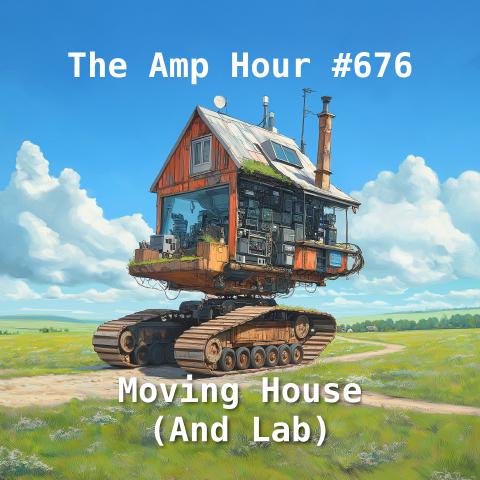
#676 – Moving House (And Lab)
Download episode · 93 MB
Also on Apple · Spotify · YouTube · RSS
Show Notes
- Chris has been moving house, which partially explains the terrible audio problems the past few episodes...
- For a lab, Chris believes in
- Lots of wire shelving (with epoxy coating)
- Everything on wheels (including shelving and workbenches)
- As much storage as you can get
- Chris has been doing livestreams of hardware design for Golioth.
- The module he is designing is called the Drachm ("dram")
- The hardware Chris has been working on for the past 2 years is now open source
- Flox video with machine learning on a camera also featured Chris
- Altium finalized their acquisition by Renesas. The price already went up (discussed previously)
- Raspberry Pi released the RP2350 while we were away
- Inductor polarity on the RPi Pico 2
- RP2350 Datasheet
- You can choose the processors you want (Dual m33, dual RISC V)
- Microchip was offline due to .... HACKERS
- Dave has been trying out a new home battery storage system
- NMC vs LFP
- Reverse cycle
- There have been lots of layoffs in tech, including 15K (!) at Intel
- Layoffs.fyi
- Being sued for a battery review? Say it aint so
Transcript
Chris Gammell: This is The Amp Hour Podcast. Release September 2nd, 2024. Episode 676. Moving House and Lab.
Dave Jones: Welcome to the Amp Hour. I'm Dave Jones from the EEV blog.
Chris Gammell: And I'm Chris Gammell of Chris Gammell's Analog. Oh, man, that's not even... That's how long it's been. Contextual electronics. That's the...
Dave Jones: Contextual electronics, yes.
Chris Gammell: That's what I sort of do, yeah. Well, do you? That was... I know. No, I don't do much anything these days. Oh, my God. Right. Would you like to do what I've been up to? Working for the man.
Dave Jones: Working for the man.
Chris Gammell: The man in this case is myself. No, I'm not working for myself. I still work for my employer. But, no, I've been moving house and being sick and cleaning up an old house for the past, I don't know, the entire summer, it feels like, at this point. It's the end of summer. It's like, there were that ones. Yeah.
Dave Jones: Oh, well.
Chris Gammell: Yeah.
Dave Jones: What would you normally do in the summer? It's not like you go hang out at the beach or anything.
Chris Gammell: We do have beaches here. Did you know that?
Dave Jones: Oh, really? Okay. Yeah, yeah, yeah. I mean, there's some lakes close by. Yeah, but you're in the middle of, like, well, not the middle of the country, but, you know.
Chris Gammell: No, it's like three hours to the mountains, three hours to the actual, like, you know, east coast of the U.S. from where I live. Okay. And we do sometimes go to the coast side, the coastline.
Dave Jones: Mm-hmm.
Chris Gammell: But, no, no, more realistically, we go to, like, pools. Right. Actually, the best thing to do in North Carolina in, like, July and August is get the hell out of North Carolina. Right. So, we also did that this year. Yeah, we usually go north to visit family. And last year, I went to Seattle. I don't know if you remember that. It was, like, going to, like, the northern regions where it's, like, perfect and beautiful this time of year. And, like, hot as heck down here, so.
Dave Jones: Well, you could just live somewhere where it's good all year round, like Sydney.
Chris Gammell: I can't afford that shit, man.
Dave Jones: Yeah, I know.
Chris Gammell: Also, you all have spiders? Yeah. You have a lot of spiders.
Dave Jones: Did you see a single spider when you were here?
Chris Gammell: I assumed they were just hiding in my bag. Right, they were just hiding. Always just behind me, you know, like, just. All right. Yeah, I've seen movies. I've seen movies.
Dave Jones: I should have taken you on a, like, a more, yeah, like a dangerous tour or something like that. I mean, you know, you saw kangaroos, but, you know, you didn't even see a snake while we were out bushwalking. I mean.
Chris Gammell: Those might have been venomous kangaroos. We don't know. It's hard to tell. Right. Hard to tell from afar.
Dave Jones: And those deadly platypus with their spurs. Yeah, exactly. You do not want to get struck with a platypus spur, let me tell you. Right, right. Yeah, you'll be locked up in pain for weeks. Yeah. Yeah, bad news.
Chris Gammell: Well, speaking of pain for weeks, yes. So I've been moving. It's been terrible. We put an offering on a house in May, and we just, like, moved into the house, like, a couple weeks ago. So it's been, like, an extremely long, an unusually long close cycle because of renters being in this house that we moved into. Yeah, of course. Yeah.
Dave Jones: There's a whole changeover thing.
Chris Gammell: It's a whole thing, yeah. Yeah. And then selling the old house and moving lab and having all my stuff in store. Like, oh, man. I just, like, you know, like when you miss your stuff, you know, Dave?
Dave Jones: Right. Do you have a new lab?
Chris Gammell: I do, but it's probably temporary. Well, I'd say it's, like, a couple years kind of thing. Like, it is a bedroom. Yep. Yeah. I'm actually, I thought we could talk about that on the show. I'm moving back away from my past method. So, you know, I had a fantastic space at my old house. It was, like, a bonus area. It was the biggest room in the house. It was, like, I was so lucky. And I had, like, a balcony. And, like, it was just really, really great. And I'm very lucky now, too. But, like, I put in shelves. And so I had, like, fixed shelving for all my books and for a bunch of my test equipment and all my soldering stuff. And that was cool. But I am moving away from that. And you do that, too, right? Don't you have fixed shelves?
Dave Jones: I, nothing attached to the walls. No. No.
Chris Gammell: Oh, okay. So I've got, like, the freestanding. Freestanding. Yeah, yeah. The freestanding shelves. Yep. So I am going to move to a new system that I'm prototyping now. So I use wire rack stuff just as storage. And I had used it on bench before. But I actually, I found really, really wide wire, like, epoxy, black epoxy coated wire shelves. And I'm going to actually mount those to my bench. And so basically I'm going to have, this is kind of like what I did in my, like, little apartment that I had in Chicago. Like, my, I have some photos online of this. But basically I really liked it, actually, because you can have lighting directly. So basically, like, your lighting is right over top of your bench work surface because it's mounted underneath the shelves.
Dave Jones: It's mounted under the shelves. Yeah, yeah. That's right.
Chris Gammell: Yeah, exactly. And then the shelves. I'm not a huge fan of having the test equipment, like, above. Like, we've talked about that on the show before. Yeah, we have. I know.
Dave Jones: There's sort of pros and cons. I tend to put my less used stuff higher up. Yep, exactly. That's kind of, yep.
Chris Gammell: Yeah. Yeah. And when I did it before, like, when I did it in Chicago in my little apartment, I actually ended up zip tying my scope underneath the shelves where the lighting was, too. And that actually works really great. Right? So then you basically have, like, a dangling scope. I like that. I could see maybe doing that a little bit more. I had also talked in the past before, like, I'd really love to have, like, my source measure unit, like, flush with the back of the bench. So basically, like, build a bracket and have it mounted to the back of the bench so that then your probes are plugged basically at the same level as your board. And they kind of, like, come up and over from the back of the bench. Like, almost like. Right, got it. Yep. Yeah. Nice. So I've always liked that idea. But, like, that is actually going to be more possible now. One reason I couldn't do that at my past lab is because everything was, like, mounted now on the walls. So everything's, like, a fixed. Even though I have these really great, like, height-adjustable rolling benches, they were all fixed frame because they were always, like, my soldering equipment was on a shelf. So, like, yeah, of course, I want my bench, like, underneath the soldering equipment. Like, that's what I wanted to do. So this is going to be an exercise a little bit more in, like, everything rolls. And I'd already been kind of in that method. I had adopted Jay Carlson's, like, baker rack-style storage. So I have, like, a bunch of, like, lunch trays, like, at a cafeteria that holds. Yeah, yeah. Like, projects.
Dave Jones: Yeah, you can put various projects on a tray and then, yep, yep, slide them in.
Chris Gammell: Yeah. And unfortunately, you know, that actually takes a lot more, like, personal fortitude than I have. Like, it's mostly just junk. Yeah, it requires discipline. Yeah, it's just junk collection for me a lot of the times. I do, like, separate out of the trays by, like, you know, project or, like, in this case of dev boards, like, vendors and stuff like that. But it really, it's easily, it's an easy, like, junk collection area. So you have to be careful about that. Same thing with, like, I'm moving my 3D printer back in now. That's going on a wire rack that's on top of, like, rubber caster wheels so that that can all move around. And, like, in truth, most of this stuff doesn't move that often. But when you do need to move it, it's actually really nice. Yeah, yeah.
Dave Jones: It's, yep. Well, that's what I've got to work on. I was just talking about this on the X's the other day about shelving. Like, it's half of my scope. You know I've got a lot of scopes, right? I do, yep. That's just the, you know, that's kind of the nature of the YouTube business. And, like, half of them are on the floor.
Chris Gammell: Yeah.
Dave Jones: Like, I need, like, dedicated, like, I was thinking about just having shelving just for scopes, you know, so that I can get them off.
Chris Gammell: Yeah.
Dave Jones: And, ugh.
Chris Gammell: Yeah, so I'm a huge fan of wire rack. One thing that a lot of people don't know is that you can, so they usually come with, like, those screw-in feet, right? Like, they're, like, 18 by 818 style, like, feet that are in the bottom or 816. I don't know. They're, like, 3 eighths. I know this is, like, free of munitions. Yeah, yanky. 3 eighths inch, like, M6, I think, is the equivalent, but, like, 3 eighths inch bolts with, like, 16 teeth per inch screws. And, but you can often buy casters that will, they almost always convert to caster style, too. So you can, like, buy, like, the wire rack shells from anywhere, and then you can just attach feet, which is really...
Dave Jones: Yeah, and then shove the casters on. Yep.
Chris Gammell: Yeah, and that's, and then, like, having those, especially if they're locking casters, that's important. But, like, having that, you can even buy, like, ground drag chains if you wanted. So, like, say you had a conductive floor, you can even buy... Yeah, right, yes. So that you, like, your ground... If you were that desperate. ...your cart is grounded. Well, that's a good idea. I mean, if you don't want to have it build up. It's like, I've seen that at, like, manufacturing facilities, too.
Dave Jones: Yeah.
Chris Gammell: But, yeah. So, a lot of experience... I mean, right now, everything is just, it's like a bomb exploded in my lab. But, like, but soon... You haven't seen my lab, dude. Yeah, I have not seen yours in a while. Yeah.
Dave Jones: So, can you, and do you actually have a clear path to walk into your lab?
Chris Gammell: I do, yes.
Dave Jones: Is there actually a clear path? Well, there you go. You are not at the threshold yet. Once you actually have to start stepping over stuff, then it's like, yeah.
Chris Gammell: Are you stuck in your lab, Dave? No, but parkour, yeah. Yeah, it's parkour here to get to... Do you need to call, should we call someone to, like, come cut you out or what?
Dave Jones: It might have to, because, you know, I never get around to it.
Chris Gammell: I think the most important thing, I think we've talked about this on the show before, most important thing is getting stuff off the floor, right? That is the... Yeah, oh, yeah. The floor is lava, right? You got to just...
Dave Jones: Yes, exactly.
Chris Gammell: Get everything up as high as you can. And I think, and that's where, like, unfortunately, like, the nice thing about shelving is that you can, like, get stuff up and off the shelf, the floor, but then it's like, it's down to you to, like, go and actually clear it off and, you know, that sort of thing. Yeah. Got to put the effort in.
Dave Jones: Anyway, I'm thinking about a lab rearrangement, like, in terms of, you know, having a backdrop and stuff like that and where my current PC is and things like lighting for, you know, like, on camera, like, a screen capture type stuff and things like that. I'm... Basically, I put my benches where they are due to convenience of the PowerPoints and stuff. Yeah. Right? So, it wasn't done with much thought of, like, what it would look like on camera. And it kind of looks, like, pretty crap on camera. So... Yeah. Yeah. Yeah. Yeah.
Chris Gammell: That is one of the things that I'm doing a little bit different. I had mounted my teleprompter, like, monitor slash camera on my bench in the past. And so, like, every time I'm, like, typing. So, if you, like, watch videos with me...
Dave Jones: Oh, I hate that. Yes. Yes. The problem is you can't... I know. It's convenient. Oh, I just mount it on the back side of the bench. And then you find that any time you move the bench, you're doing something, the camera shakes.
Chris Gammell: That's right. You know? Yeah. So, now I have my camera on, like, a rolling stand with, like, sandbags. And, like, my light is mounted to that. And it's still kind of tethered because of wires. Right. But, yeah. There's a bunch of videos that I watch. I think I mentioned on the show before, like, my favorite... One of my favorite YouTube channels is Caleb from DSLR Video Shooter. And, like, he has this one, like, standalone YouTube studio on a single stand. And, basically, I, like, ripped that off and, like, bought the same stuff. And so, that's kind of where I'm operating off of right now.
Dave Jones: Right. It works fine. It's way overkill. I find that benches because, at the moment, like, my benches, my desks here are pushed against the wall. And that actually limits your options of what you can do. Like, as you said, like, a camera on a stand with sandbags. Like, you can't just put it behind the bench because the bench is against the bloody wall. Yeah.
Chris Gammell: It's, like, flush. Yeah. Exactly.
Dave Jones: Like, you know, it's, like, yep. Anyway. So.
Chris Gammell: Yeah. So, I think my general rule is everything on wheels, everything that has a plug, you only have one plug coming off anything. Right? So, like, if it's the kneeling wire, it's only got a single plug coming off. Yeah.
Dave Jones: So, you build the power boards into the shelving or the benches. And then everything plugs into those and you have the one cable. That's right. Yeah. Yeah. Yeah. Exactly.
Chris Gammell: And then when you do have to move, you just move that one power point and then you're done. Yep. Yeah. Absolutely. Yeah. Lighting. I think lighting gets as close as you can to the thing that you're trying to light. So, in the case of, like, I bought some, like, LED tube lighting that's going, like, right underneath that wire shelving I mentioned that's mounted on my bench. Yeah. And, yeah. I don't know. We'll see how it goes. I'll probably have lots of things to gripe about in the future. But it's been okay so far. I think it's really just a matter of, like, so many boxes still. Like, what I'm really wondering is, so my buddy Mike, my coworker and buddy Mike, I was, like, talking to him about how much I really have, like, I had, like, a great, like, storage area. And he was telling me, he's like, hey, I have this idea. And I was like, I like the idea of, like, a storage area as, like, an investment property, blah, blah, blah, blah, blah, blah. Yes. He's like, no, I have a great idea for a storage area. What they do is they move all your stuff into the storage area, and then it immediately dumps it into a trash dump. And then you never see it again. Because anything you put in a storage area, you never, ever need. Right. And I thought that was hilarious. And it kind of cut pretty deep. What I'm wondering is, like. Two storage units. I know. Right. Exactly.
Dave Jones: Yep. So you, you, you, you leave it with the idea. Are there storage units nearby you that you can actually buy? Rather than rent. Renting's just.
Chris Gammell: Oh, no, there's no buy. I mean, like, I was thinking, like, oh, like, if I was rich, I'd, like, buy an entire building sort of thing. Like, that, that kind of, like, level of dreaming.
Dave Jones: You don't need an entire building. Just one.
Chris Gammell: I'm just saying, like, being an owner of the, the franchise building. That's what I mean. It's like, isn't it nice that people pay you to hold onto their crap for them? You know, like. Right. Like Dave does. Yeah. But would it really, but in the more practical sense, what I'm really thinking about is, like, I have all these, like, tubs of components. And, you know, like, we keep this stuff because we're pack rats. And we. Of course. And, like, we have these self-reinforcing things of, like, when you do need that one thing and you go and pull it out of the bin, it's, like, just dopamine, like, crazy. That's it. So you keep it around. Right. But what I'm really wondering is, like, why do I have all this shit, Dave? I mean, like, I just don't, I don't need it. And so I think one of the questions is, it's, like, how long could I leave that in there? You know that, like, that, like, organizational technique where you, like, put a date on the box.
Dave Jones: On the box. And if you don't use it by that date, out of case. If it's, like, a year later. Yeah.
Chris Gammell: Yeah, exactly. That sort of thing. I probably will not do that. I'm just being very clear right now. Right. But, like, I'm thinking about it. Yeah.
Dave Jones: Join the club. Yeah.
Chris Gammell: Yeah. Yeah.
Dave Jones: Yeah. No, I have to get the shit out of here. Because I cannot work productively in the current mess I've got. Yeah. It's just, like, I've got a lot of bench space. And I'm not kidding. 90% of it is unusable. Yeah. Because there's just crap all over the bench. Like, my bench is, like, six and a half meters long. Yeah. Right? Right. Six and a half meters by, like, 900 deep. Yeah. And, like, to shoot a video, I've got to actually move stuff out of it. And you can still see it in the shot. You can still see all the crap.
Chris Gammell: Yeah. Yeah. There.
Dave Jones: I mean, it's just insane. So, yeah. Yeah. I have to devote the time to it. But, no. You know. Oh, no. I have to make a video today. No. I've got to do this today. You know. Yeah.
Chris Gammell: You need, like, a cleaning person. Yes. That, like, you trust enough to, like, label your stuff.
Dave Jones: Yes. To label it. Yeah. I need to get, like, an intern into, like, this.
Chris Gammell: And then, like, they move it down into, like, the storage area.
Dave Jones: Right. Yep.
Chris Gammell: Then you ask what's down there.
Speaker ?: And, you know.
Chris Gammell: Top men. It's being taken care of by top men. I totally messed that up. But, yes. Yeah. Yes. That idea.
Dave Jones: Yes. I do get the reference, of course.
Chris Gammell: Yeah. Of course.
Dave Jones: All right. Can we talk about electronics? Can we talk about hardware?
Chris Gammell: Dave, I've been talking about electronics. I've been talking about where I store all my crap. Sure. I'm happy to. I've been designing electronics on camera. Camera. Have you.
Dave Jones: Oh, no. I have not watched.
Chris Gammell: Have you known this? Yeah. No.
Dave Jones: No.
Chris Gammell: Yeah.
Dave Jones: I don't follow you. Because you're not, like, on Twitter anymore. So, like.
Chris Gammell: Yeah. It's true. It's true.
Dave Jones: Right. Where's this stuff being published?
Chris Gammell: I post on LinkedIn. And it's published on. Oh, LinkedIn?
Dave Jones: Who the hell uses LinkedIn?
Chris Gammell: Professionals, Dave. No. I am a professional. Professionals.
Dave Jones: Oh, LinkedIn.
Chris Gammell: There's a Rowan Atkinson skit where he's talking about, I'm a professional. Okay. Oh, boy. It's on LinkedIn and YouTube. YouTube, you may have heard of. Oh, okay. The YouTubes. Yeah.
Dave Jones: But what channel? Is it your personal channel?
Chris Gammell: It's on the Goliath YouTube channel. Yeah. Yeah. So. Yeah. Okay. Yes. So, I am in the midst of designing modules. So, basically, I made, like, an abstraction layer at a castellated edge for a module. Yeah. And the rabbit hole went very deep. Basically, trying to make it so that I can have a range of different parts and communication mechanisms, and they all kind of work with the same castellated edge. So, it's a 24 by 34 millimeter module that I'm designing with, like, I think probably 33 usable pins around the edges. Yeah. And then I have five different versions of the module planned. I am almost done with the first one, and I've got, like, the parts kind of roughed in and all the pins planned out for the other five versions.
Dave Jones: Cool.
Chris Gammell: Yeah. It's called the DRAM module, but it's spelled D-R-A-C-H-M. So, it reads like Drakham. Great acronym. Yeah, yeah. But it's DRAM. That's how they used to say it. Because I kept naming everything, like, alchemy. So, yeah.
Dave Jones: I'm not easily finding the Goliath YouTube channel.
Chris Gammell: It's an O, not an A, Dave. It's an O. G-O-L-I-O-T-H. I-O-T in the middle.
Dave Jones: Okay.
Chris Gammell: Yeah.
Dave Jones: Yeah, I goofed that. Okay.
Chris Gammell: That's fine. It happens a lot. All right. And, you know, Google does not really change the biblical name that often.
Dave Jones: No, I still didn't. No, Google still doesn't give it to me.
Chris Gammell: I'm going to just send you a link. How about that? Yes. Does that sound good? Okay.
Dave Jones: Bloody YouTube's not going to give it to me. Yeah. Yeah. Goliath. Okay. Yep. Here we go.
Chris Gammell: You'll see a little yellow background and a little Goliath man thing.
Dave Jones: How Phlox uses Goliath for real-time neural network management.
Chris Gammell: It's a little different, but I'm also on that one.
Dave Jones: Yes. I see it.
Chris Gammell: Yeah. Yeah. My face is on there. Exactly. Yep. Yep. Yep. Yeah. So, yeah, live streaming has been terrifying. It's gotten easier. The fifth one in. Not a ton of people, like, live viewing it. Oh, man. When was the last time we talked? I don't even know the last time we talked.
Dave Jones: Oh, yeah. It's actually a while.
Chris Gammell: It's been a while. Yeah.
Dave Jones: Yeah.
Chris Gammell: I also released a bunch of open source hardware.
Dave Jones: Oh, I saw that. All Goliath hardware is now open source.
Chris Gammell: Yeah. So, the last time you and I, oh, my God, Dave, it's been July 30th?
Dave Jones: It's been too long due to various things. Yeah, of course. Yeah.
Chris Gammell: Mostly my moving house. Yeah, it's been. Right. And being sick. Yeah. Yeah. So, made a bunch of open source hardware. Now, this DRAM hardware is basically kind of shrinking that down to a kind of like the essence of it onto a module. And it's been pretty fun. I mean, it's. Cool. Yeah. Yeah. Have you ever built, have you ever built like a module?
Dave Jones: What do you mean?
Chris Gammell: Like a, yeah. Like a castulated edge style module. Like a physical plate.
Dave Jones: Yeah, yeah. Yeah. Yeah. Yeah.
Dave Jones: Of course.
Chris Gammell: Yeah.
Dave Jones: Yes.
Chris Gammell: Cool. What kind of stuff?
Dave Jones: Many of them over the years.
Chris Gammell: Like power modules or other stuff?
Dave Jones: Yeah. There's been power modules. There's been mod, you know, boards for like older hardware and stuff like that is common. Oh, sure.
Chris Gammell: Yeah. Yeah.
Dave Jones: Yeah. Yeah. And, you know, anytime you want to separate something out from the main board, because you think you might change the design later and you don't want to re-spin the main board kind of thing, or you want to test it separately. You want to engineer it separately. You want to verify it separately. You want to assemble it separately. Tons of reasons for doing like a little modulated, a little modular board and then, you know, surface mounting it as a, onto the main board.
Chris Gammell: Yeah. Exactly.
Dave Jones: So, yeah.
Chris Gammell: Yeah. I mean, some of it still rings pretty true with like the shortages. Like some of this is definitely like my PTSD around 22, 23, you know, like just being like, well, if things go wrong, you could always, if you can't get a part, you could still design in another part sort of thing. And it's, you know, there's, there's always, we've talked about on the show before, but just like trade-offs of time and costs and signal integrity and just like all of, all of the things. But sometimes if you're, if you're dealing with like low frequency signals and, you know, you don't have a, you know, huge, huge space constraints and stuff like that, like really tight space constraints, then you, you can really start to break out a lot of important things, I feel like. Yeah, of course. Yeah.
Dave Jones: Well, you can go entirely modular, but, but you're kind of in like the sort of like evaluation board, demo board kind of market where that thing is like kind of handy. So. That's right.
Chris Gammell: Yeah. Yeah. And I mean, like my, my whole idea, it was like, what could I take this module and add a battery and a sensor? And it's like, it's a thing, you know what I mean? Right. And, and it does kind of all the stuff in between sensor and battery and you're like kind of good to go. So you basically make like, there's really, really simple, effectively breakout boards for different functionality. So like we're designing one that's just like a battery and an accelerometer and it's like stupid to have just this thing. But, but if the module is always the same, then it really simplifies a lot of the other stuff, especially when the stuff in between is like cellular and wifi and all the other, you know, kind of heavy lift there. And, and then when you switch from it being like a accelerometer to a pressure sensor, it's really, you know, it's a trivial board change, right. To, to change out the, the kind of the landing board or the host board, but the, the, the, the middle goo part really kind of stays the same. And so you, you don't have to go and read even, even dragging and dropping the same design onto another board, you, your assembly is a lot easier because your assembly is now just sticking this kind of more complex. You kind of centralize the complexity onto the module. In this case, like they had modules, a six layer board, and then there's going to be a two layer breakout board for the little battery plus sensor thing. So that kind of idea. Yeah.
Dave Jones: And you've extrapolated the complexity of that board out to a different, to an entirely separate unit. You can even give it to a different design team. You can even have somebody else who's an expert in doing that sort of stuff. You can have them develop the little board and then you just plug it in, for example. Yeah, exactly. So there's many.
Chris Gammell: Yeah.
Dave Jones: Yeah. So that's, that's, that's the, the thinking there.
Chris Gammell: It, it definitely got, it definitely started in a different place. And then it became like, well, we can make this work for everything. You know, like how that, as modularity goes, it's like, well, we can make it like work for anything. And it's like, well, there are limits there, of course, you know, but yeah.
Dave Jones: That was the Altium vision.
Chris Gammell: Yes. That's right.
Dave Jones: Modular hardware. You can make it do anything.
Chris Gammell: I was thinking of that a little bit. Yeah. Yeah. And you have to start with something. We have to like draw a line in the sand at some point. So this one like leaves the SIM card off the module and it leaves the battery charging off the module and it leaves, you know, like, so like there are some lines drawn there still.
Dave Jones: Got it. Okay. Yeah. Speaking of Altium, they finally delisted from the Australian Stock Exchange. They are now fully.
Chris Gammell: Yeah. That went through. Yeah.
Dave Jones: Yeah. Yeah. Yeah. It actually happened. So, and then there was talk on the forum. Somebody started to thread about, they got an email from the new Altium, I guess you call it, that they're going to discontinue the perpetual license.
Chris Gammell: Yes. That's right. We mentioned it on the show. Oh, did we?
Dave Jones: I think so. Yeah. Yeah. Yeah.
Chris Gammell: Because the, remember someone wrote in about it and then we were discussing it. Right. This was back on the Turtles as a Service episode. Oh, yeah. Yeah.
Dave Jones: Yeah. Turtles as a Service. Yeah. Yeah. Yeah.
Chris Gammell: Right. Basically, it's going to, it's going to be more expensive for the people that, the person who wrote in said like, hey, this is going to be more expensive for my group. And then it was like, you know, should I switch to KiCat or should I do other stuff here? And, you know, that's still kind of up in there, I think. But I do think generally, I think Renaissance having purchased, they're going to, you know, they're going to make their money back at some point, you know. And it's going to come from the people who are kind of locked in, unfortunately.
Dave Jones: Yep. Exactly.
Chris Gammell: So that's too late.
Dave Jones: No, it's hard to make the change. It's hard to, you know, once you're embedded in a tool. Yeah, totally. You know. Yeah. It's really difficult to change, especially if you're in an organization, you know. If you're just a one man, even, but even if you're a one man band, you know, if you're so used to using it, you know, like if you're a contractor, for example, and you're used to using Audium, you're not going to switch because that's going to screw you up big time.
Chris Gammell: Yeah. Right. All your legacy stuff, all your workflow, how much you could charge per hour. Yeah, it's just, I think, I think honestly, they're just going to, they're going to just tick the number up a little bit at a time. And I think that this is going to be the biggest tick up. And then, then people are just going to, then it's going to be like a frog in a boiling pot of water sort of thing.
Dave Jones: Right.
Chris Gammell: So, yeah. And it's unfortunate, but it's just, I think it's just a reality. They're going to come to parity with the other vendors out there.
Dave Jones: Don't underestimate how long the frog can boil for.
Chris Gammell: That's true. Yeah, exactly.
Dave Jones: That's my recommendation. The frog can boil for decades, trust me. Delicious.
Chris Gammell: Delicious frog soup.
Dave Jones: Delicious frog can boil. So said the French, you know. Yeah. Yeah. Yeah.
Chris Gammell: Yeah.
Dave Jones: All right. Inductor polarity, dude.
Chris Gammell: What about it, Dave?
Dave Jones: Inductor polarity. Did you read this story? It made all the news.
Chris Gammell: I haven't really been reading the news, but perhaps you could recap for me.
Dave Jones: Okay. It is on our official list. Raspberry Pi. Raspberry Pi. I will link in. There's the link in. If you can't see it, I will send it to you right now so that you can, here we go. There it is. There's the link for you to the PDF data sheet. Raspberry Pi. They released their new RP 235X series microcontroller, right? Which they have on various, you know, new little modules. I can't keep up of which ones they're using. Anyway, yes, the new Raspberry Pi microcontroller. Now, this comes from Raspberry Pi themselves. Okay. So, they've got a really nice hardware design document. So, it's hardware design with the RP 2350. So, it's how to, you know, it's basically a how-to guide of how to use their microcontrollers, design them into your actual products, right? Which is a really cool guide. It's fairly comprehensive. Now, one of the things this new microcontroller has is a built-in switching regulator, right? So, you put in the 3.3 volts and then it's got a built-in switching regulator. Of course, you have an external inductor and some external caps, right? To actually go with that. And then it generates the, and then it has the internal buck switching regulators that then power the cores. Cores? Plural? I don't know. One. Of course. Yeah, no.
Chris Gammell: It's a dual M33 and a dual RISC-5.
Dave Jones: Okay. And they operate at 1.1 volt core voltage, right? So, this says you having to, you know, pick an external buck converter chip and the extra bomb cost and everything, right? It's nice to have it all built into the chip. Unfortunately, they've come a gutzer with this because when they developed their board, they discovered that, oh, it's not as efficient as it was when they actually started producing the board in volume. They discovered that it wasn't as efficient as it was during their testing. What's going on? Cut a long story short. They narrowed it down to the polarity of the inductor. It's a 3.3 mic surface mount inductor. And, yeah. It came down to the pole.
Chris Gammell: Do you, dear listener, remember that you can have polarity on inductors?
Dave Jones: On an inductor. Pepper 12 remembers. Most of the time, you don't think about it. Most of the time, they aren't marked. I forget. All the time.
Chris Gammell: Yeah, I remember. Let's read it.
Dave Jones: So, yeah. Yeah. And usually, it's not a thing. But there's something wrong. Oh, I'm sorry. I'm joking.
Chris Gammell: Is it because of how the core saturation happens? Is that where the polarity comes from?
Dave Jones: They don't actually know. Their solution to it was to-
Chris Gammell: Wait. Who's they in that sentence?
Dave Jones: They is Raspberry Pi who manufacture their boards. Got it. So, the end in this document is they tell you the type of inductor to use and the brand. It's an Abracon, I think. Okay. Yeah. L1. And they don't give the exact part number. But it's actually to be determined. So, it's an 06. So, it's a 2016 surface mount size part. And so, their solution was to actually get the manufacturer to install them in the tape in the correct polarity. Because apparently, previous to this, they just had like random polarity when the manufacturer put them in the tape. I don't sort of know. Oh, I guess I know how that happens. You know, like a vibration tray. And then they all funnel down maybe into and they change random polarity. So, they got the manufacturers and not only put them with a consistent polarity in the tape, but then also mark them as well. So, that it's this stopped the problem. So, it like in this design document, they don't actually tell you that they got to the bottom of the problem. They just, the band-aid solution was to get the manufacturer to mark it, to mark the polarity of the inductor and to mark it on the silk screen on the board. And ensure they put the inductor in the right way. So, yeah. Yeah. Yeah. Oopsie. A big oopsie.
Chris Gammell: Does that mean that they were seeing like an actual like, do you think they were seeing a two-part distribution? Because of like, well, I guess I don't know what the distribution would have been of like left versus right landing of the inductor.
Dave Jones: Well, they don't even quantify it. They only say it was a drop in efficiency. They don't tell you. I don't think they tell you exactly how much. I haven't reread it in like three or four weeks now. But, yeah. They don't actually tell you. They just say it's quite a measurable drop in the efficiency of the regulator. Huh. So, yeah. Yeah. Oops. Big oops. Now, and there's talk about this on the EV blog forum. We will link in the thread, EV blog forum, thread down below. Everyone's having a guess at what it is. See, they didn't even get to the point of figuring out whether or not it's inductive coupling, whether or not it's capacitive coupling. Like, it may not even be an inductive thing. It may be like or a combination of, you know, issues like some sort of sensitive node. Basically, everyone's converging on the solution, like the EV blog forum members, converging on the solution that it's a sensitive node inside the design of the switching converter.
Chris Gammell: Things are happening in silicon. Yes.
Dave Jones: Basically, these sort of things will happen where you have a high impedance node, right? And you've got high impedance sensitive nodes inside switching converters. It's a thing, right? That's just how they're usually designed. Like, you've got like an op amp sensing input, and that's just going to be like a high impedance input. And, yeah, they can be sensitive. But, yeah, like I've never heard of this issue on any external switching converter chip. I don't know if you have. I'm greatly doubting. I'd be very surprised if you've ever heard of it.
Chris Gammell: I've seen markings on like Lineartec and TI, like drawings, right? Because there are, you'll see like them recommend these things as well, and you'll have, yeah, you'll have markings as well. But I don't know what happens when you install it backwards. Usually not in tiny surface mount ones like this. Like, usually not in, you know. Yeah. Yeah. Once you sort of go down to that surface mount. Usually they're like the larger, like large coil.
Dave Jones: Yeah. Yeah.
Chris Gammell: Yeah.
Dave Jones: Right. Yeah, of course. Where that sort of thing matters. But, yeah, they've.
Chris Gammell: Do they quantify how much their efficiency was changing? No.
Dave Jones: That's what I said. They don't seem to quantify it. They just say that it was quite a substantial measurable difference. And they'll scratch in their heads trying to figure out why. And it looks like they never actually solved it at the silicon level of what actually caused it. Probably because they don't have control over that. They probably just used like a drop in silicon core from somebody. Right. And then it's probably some combination of where that's located on the die in comparison with something else. Some other circuitry that, you know, they've laid out on the silicon or whatever. Right. There could be a million different reasons for it. But.
Chris Gammell: Well, I think the best thing to do is for us to ask those guys to come back on the show. And we'll.
Dave Jones: Right. See what happens. That's. That's the thing. I don't think they know. I don't think they got to the bottom. Yeah.
Chris Gammell: But by the time we get it scheduled and by the time we, you know. Right.
Dave Jones: You think they might have gotten to the bottom.
Chris Gammell: We don't act on the bleeding edge here, Dave. We. Oh, well. Yeah. Especially. I haven't talked to them in a couple weeks or months. And so, yeah.
Dave Jones: Yeah.
Chris Gammell: But. I'll talk to them.
Dave Jones: It'd be interesting to know if they actually eventually find out why. And if they'll tell us too. If they'll tell us. But. Yeah. I wouldn't blame them for going. Well. It's just too hard because we buy it as a drop in silicon module. The module. Yeah. Yeah. You know. Meh. You know. You just. You know. Shrug your shoulders and go. Shit happened. You know. Yeah. I mean. You and I buy off the shelf silicon.
Chris Gammell: Yeah. Right.
Dave Jones: Yeah. So. All they got. So. All they're doing is in their design guide is actually recommending that you install the inductor the right way around. Works for me. But other people on the forum are saying. Well. They could have just chosen a bigger inductor and layout. You might not have had this problem. And. You know. Like. Maybe they're too on the edge with their. Like. Trying to get this cheap ass inductor in there. I don't know. Could be. Yeah. I don't know. Yeah. Well. I think one. It's a very interesting one.
Chris Gammell: One thing that has been very clear from the past two times. The Raspberry Pi team has been on the show is that they are focused on efficiency of capital in their designs.
Chris Gammell: Right.
Dave Jones: Yes. That's why they're trying to shave every cent off this design. Yeah. Yes. So I think that. Yes. Yes. That's right.
Chris Gammell: If that was one of the theories. That would be the one I would usually point to. Yeah. It's just like. Yeah. They're trying to just make it as cheap as possible. Yeah. So that they can really make it as accessible as possible. Which is great. Of course.
Dave Jones: That's their entire business model. You know. Yeah. Yeah. It's great. I mean. You can't actually blame them for that.
Chris Gammell: Right. It has been fun watching this chip come out. I mean. Seeing like all the. There's. I think we're. We're just on the precipice of.
Dave Jones: How many variants of this actual microcontroller are there? I haven't looked. I don't know. I assume there's various variants. Right.
Chris Gammell: I was just talking about like seeing all the. All the people who are actually. You know. So like Raspberry Pi has like reference design platform. But then they. They basically leave it up to the Spark Funds. Adafruits. You know. The smaller producers of the world. Yeah. To do that. But then I think it's even the. It's the second order. Third order. Designers. You know. It's like seeing the 2040. Just kind of like make its way into designs all over the place. I think this new chip has just got even. It's got more PIOs. It's got extra cores. It's got like kind of. Some new stuff under the hood. It's a faster clock speed. It's got more. Right. Capabilities. Like just. I think. We're just kind of on the. On the precipice of seeing what people do with this stuff. So. It is. It is weird. Not weird. That's a bad term. It's. It's impressive. To see. What they've been doing with. You know. Their silicon stuff in house. Totally. And. And like. Like people have really. Gotten after it too. Like. So. I'm excited to see all the RISC-V stuff they're doing. I think. I think I'm right about that. Boy. I feel stupid if that was wrong. Now. I thought it was a dual. I thought it was a 2.2. I thought it was a 2 and 2. But maybe I'm thinking of a different chip.
Dave Jones: No. Well. This is a dual Cortex. M33.
Chris Gammell: It was that. Okay. But I think. I thought there was two RISC-V processors on top of that as well.
Dave Jones: Oh. It doesn't say so in the. Yes. I am correct.
Chris Gammell: On the page for the 2350. Dual core M33. Oh. I saw it.
Dave Jones: Yes. And a pair of open hardware. Hazard 3. I said. Was Hazard 3 a company? That makes a RISC-V. I have no idea. Right. Silicon. Yeah. Okay. Yeah. Two Hazard 3 RISC-V cores.
Chris Gammell: Yeah.
Dave Jones: Yeah.
Chris Gammell: Selectable in software or by programming the OTP. Yeah. So. Nice. Yeah. That's pretty cool.
Dave Jones: I assume they're not beefy. The RISC-V ones. They just handle ancillary stuff. Is that.
Chris Gammell: I. Well. It says they're selectable in software. So it could also be like. Yeah. Right. And you can switch between them. They had enough extra stuff here. So this actually shows. This page I just sent you shows the different options. There's the 2350A and B. And then there's 2354A and B. And so there's. It's basically 30 versus 48 GPIOs. Different size chips. 7x7 or 10x10. And the 54 has what extra. Extra stacked flash on it. So the 2354 has integrated flash in a SIP style. So. Yep. Yeah.
Dave Jones: Right. And that's actually a stacked silicon thing. It's not built into the.
Chris Gammell: Uh. Core silicon.
Dave Jones: Yeah.
Chris Gammell: I. Yeah. I don't. I think it's like a. Probably a. Through package. What do they call those? Like. It's a hybrid package. Yeah. Like hybrid. Yeah. Like a SIP style. Yeah. But in. And it is still. In the same package. Still a QFN. So. Yeah.
Dave Jones: Got it.
Chris Gammell: Yeah.
Dave Jones: Anyway. It's very. Yeah. This chip has a flaw in its converter. So. You can actually avoid it. You can. Apparently they didn't originally say this in the data sheet. But you can just feed power. You can feed the 1.1 core voltage directly into the pin of it. So. And that will override the building switching converter. Mm-hmm. So that's probably. You know. Might be the safest way to do it. Like if they're having issues. With this. Then I'd be. As a designer. Designing this into my product. I'd be hesitant to use the internal switcher converter. Now that it's. There's some sensitive node problem. I just. As a designer. I would not like to risk. Even though it passes all the. All the testing. And qualification. And everything. Once you get it into production. If your components. If your supply chain. Changes. Or something like that. Happens. Then. You could be right on the edge. And you don't know it. And then the. Efficiency of your. You know. Internal switching converter. Halves or worse. It doesn't work at all. But there's no indication. It doesn't work. It's just. Reduces the efficiency. Or something. But still. As a designer. I'd be getting the heebie-jeebies. And using an external. 1.1 volt.
Chris Gammell: Yeah. For now. Maybe you have an option.
Dave Jones: Unless you're saving every cost. Of course. It's going to cost more. There's more board space. There's more bill of materials. You know. So. Yeah. It's a trade-off. But. Anyway. It takes your chances. If you use the internal. Switching converter. Oops. Oh boy. Anyway. It's quite funny. And it is the talk of the town. So. Yeah.
Chris Gammell: There you go. So this is. About the RIS-5 versus the M33s. This is saying that it's just. It's either or. Maybe it's. Maybe there'll be a thing in the future. Oh right.
Dave Jones: I was going to ask that. Can you? Yeah. Because they're saying you can switch them. I was going to ask if you can actually run them. It says.
Chris Gammell: It includes a pair of open hardware RIS-5 cores. Which can be substituted at boot time for the Cortex-M33 cores. Our boot ROM can even auto detect the architecture for which the second stage binary has been built. And reboot the chip into the appropriate mode. That's pretty cool.
Dave Jones: Yeah. But.
Chris Gammell: That means they doubled up the silicon. It's cool.
Dave Jones: But why would you want to do it?
Chris Gammell: Yeah.
Dave Jones: Why would you want to do it? Then you're just wasting half the silicon. Because they got. Like.
Chris Gammell: If I had to hazard three I guess.
Dave Jones: I guess. We're here all week.
Chris Gammell: I would guess that the 20. Let's see. The 2350 was made in. Started in 23. I'm guessing they've already started. Let's say. Let's call it the 2450 or the 2550. Whatever you're going to call the next one. If I had to hazard a guest. I would guess that the next one will not have. Well. That's kind of a dumb guess. I would guess that they don't have ARM in the next one. But these guys are based out of Cambridge too. So. Maybe it's a. Right. Way to show that you could. Maybe you could have a future version where you just. Had it turned off. And you didn't have to pay the licensing fee. Maybe. I don't know.
Dave Jones: Yeah. But.
Chris Gammell: I know. I don't know.
Dave Jones: Can you think of it like. Maybe some product that has dual modes. Where you want to. Power it up. Using a different processor. But I don't.
Chris Gammell: I mean. You would have to have the. You'd have to compile. That would be incredibly niche. For the two cores though too. Right.
Dave Jones: Yeah.
Chris Gammell: Yeah. Yeah. Yeah. Yeah.
Dave Jones: Like. That's like. I don't. I don't get it.
Chris Gammell: Add that to the pile of questions about that. It'll also be interesting to see like. You know.
Dave Jones: Right.
Chris Gammell: Most people don't actually operate at that level. Right. You think about how most people are using the 2040 or the 2050 now. Yeah. Yeah. They're probably using it. You know. Arduino. MicroPython. You know. Just. The CSTK. That sort of thing. Like. Most people are like. Whatever the compilers underneath. I don't give a shit. Right. Just give me access to the GPIOs and all the cool stuff. Otherwise. Right.
Dave Jones: The only thing I can think of is that they're targeting. That they're using it to target different markets. That. Oh. We. No. We're an ARM company. Damn it. We only use ARM. In this house. We use ARM. You know. Whereas in this house. We use RISC-V processors. Right. Yeah.
Speaker ?: Yeah.
Dave Jones: It could be. So they're trying to target both markets with the one chip. It's almost like. Well. You should have just had a pin on it. Like. You just strap it either high or low. And it chooses which processor you want. I know. That's weird. Rather than having software switchable.
Chris Gammell: Their data sheet even. They have like. So like. It's awful. Section 3.3 is event signals for ARM. Section 3.4. Event signals for RISC-V. Like. That's. Oh.
Dave Jones: That's. It's just. That's messy. Poor.
Chris Gammell: Poor documentation people. I mean like. Yeah. It's actually kind of cool. Poor documentation people. You can do it side by side though too.
Dave Jones: Someone please think of the documentation people. Yeah.
Chris Gammell: Think of the drones. Yeah. No. It's very interesting. Oh boy.
Dave Jones: Yeah. That's. That's oddball. I didn't know that. Okay. Wow.
Chris Gammell: I knew they had both. I had seen the top level spec. But I didn't. Right. I didn't know before this evening. That they were switchable. That is bizarre. I thought it was like. Okay. You just had extra. Because like. A lot of processors. You know. So I like. Follow a lot of the news releases about new processors and stuff like that. Yeah. A lot of people are throwing RISC-V stuff in there. I think. I think it's basically one of those things where. Oh. You know. Well it's a freebie.
Dave Jones: Right. Well.
Chris Gammell: We got like two millimeters by two millimeters spare.
Chris Gammell: Yeah. Well.
Dave Jones: Let's throw in a RISC-V call. Yeah. It's free. Throw it in there.
Chris Gammell: We can always turn it off. Right. And like. Yeah.
Dave Jones: Right.
Chris Gammell: Like I'm pretty sure. You know. I follow like the Nordic stuff pretty closely. And then some of their new parts have like RISC-V just kind of like chucked in there. And it's just like.
Dave Jones: Got it. Yeah.
Chris Gammell: What. What are you guys doing there? And I think it's like experimentation. And like. But like why not just make it accessible. And see what people do with it. And like. Interesting. Expressive's been doing that a long time. They've had like their. Their. What do they call it? Like their ultra low. I can imagine. Andreas. Spies doing. Talking about it. But like they're like ultra low power. The ULP. That's what it. ULP. It's a RISC-V as well. I believe. So like. Yeah. They're like. You know. Like they're cheap. They're easy to put in there. There's you know. At a certain point. It's like. I don't think they want to pay any. Licensing fee for the extra. You know. They wouldn't want to put like a Cortex M0 plus in there. So like. Yeah. Chucking a RISC-V in there. And that's. Of course. That's what they're doing in my head at least. I don't know if that's the reality.
Dave Jones: I don't see anyone. Switching this dynamically.
Chris Gammell: Well. You mean even a boot time.
Dave Jones: They say it's selectable in software. I don't know if you can like.
Chris Gammell: At boot though. Oh.
Dave Jones: At boot only. Yeah. Well. Yeah. I can't see somebody using both of these at the same time. In a actual product. I think the whole idea is. Yeah. Target market. Yeah.
Chris Gammell: Yeah.
Dave Jones: In the same chip. So.
Chris Gammell: Yeah. Yeah.
Dave Jones: Yeah. Odd.
Chris Gammell: Oh. I'm just seeing now. Oh God.
Dave Jones: They're going to throw a bloody processor into everything these days. Aren't they?
Chris Gammell: They are. Yes.
Dave Jones: The new toaster chip. This new toaster chip. Oh well. It's got an arm. It's got a risk five in it.
Chris Gammell: Toaster chip? Yeah. Thanks a lot. Is this a real thing or no? Or is this the old toaster joke? Okay. I remember that chip set.
Dave Jones: It's the old toaster joke. Yeah. Yeah. Yeah. I remember that one. You can buy dedicated toaster chips. Yeah. Right. It's a toaster ASIC. That's right. That just runs a toaster and it has browning mode. And you know. There's a pin to strap it. And you know. Yeah.
Chris Gammell: We definitely talked about that on the show. Yeah.
Dave Jones: Yeah. Yeah. Yeah. And now it'll have a bloody risk five in it.
Chris Gammell: Right. I feel like the silicon for the risk five is not the expensive. Like the expensive part is always like adding memory. And then like having you know. Some poor schlub to go and program it. Can probably. Right. You know. An assembler.
Dave Jones: That is why microcontroller manufacturers. You know. You pay a lot price difference at the bottom level. Between a part that has more memory. It's exactly the same part. But it's 128k instead of 32k for example. Yeah. Right. You'll pay a lot more. Because that memory space takes up a lot of die space. So.
Chris Gammell: Yeah. Yeah.
Dave Jones: Yeah. Yeah. Oh well. When I was a boy. 1k. That's all you needed. 512 bytes. You can do a hell of a lot in 512 bytes.
Chris Gammell: Yeah man. Sorry words. Did you hear the news about the parts you were probably buying when you were a boy as well. Microchip got hacked. Actually it's not on our list.
Speaker ?: But.
Dave Jones: No. Where is it? Yeah. Microchip.
Chris Gammell: Microchip got.
Dave Jones: Got hacked in what way?
Chris Gammell: I don't know if it was like a ransomware.
Dave Jones: Oh. It was in the company got. Their servers got hacked or something.
Chris Gammell: Yeah. The company got hacked. Basically they started. There's a cyber attack over the weekend. They disrupted. And basically they started turning off some of their. I think.
Dave Jones: Hackers attack. US chip maker. Microchip. Five. Five days ago.
Chris Gammell: Yeah. So. Okay. What they've been giving warnings about is like. Hey. This is going to actually impact our ability to like deliver wafer starts and stuff like that. Oh yeah.
Dave Jones: Yeah. Of course. Wow.
Chris Gammell: Yeah.
Speaker ?: Yeah.
Dave Jones: They are trying to disrupt some of the services and business operations. Wow.
Chris Gammell: Yeah. Yeah. Hmm.
Dave Jones: Interesting. I wonder. I wonder if it was a targeted attack or whether or not it was just a generic worm program that went out and. Yeah. Exactly. Right. Right. Right. You know. Right.
Chris Gammell: Yeah. And we haven't even spoke. We haven't made any CrowdStrike jokes on our episodes since that's happened. See. I am not. That's how long it's been since we've recorded. You know.
Dave Jones: Am I the only one on this planet. Probably. Who had never heard of CrowdStrike before this thing happened?
Chris Gammell: Oh no. I had never heard of it before it happened. Right.
Dave Jones: I had never. Yeah. Yeah. Right. I had never heard. I still don't know what the hell it is. What the hell is CrowdStrike?
Chris Gammell: It's basically a virus. Security software? That you program into your kernel and your Windows machine. And it allows you to have like kernel level access so that you can have a monitoring service and like a restart. It's basically like IT software to like take control of Windows machines.
Dave Jones: So a back end. So if you're an IT person, you can get in the back end of somebody's piece. Like one of the company's PCs and change things.
Chris Gammell: Right. Right. But then they like had a bad update and then the bad update.
Speaker ?: Oh geez.
Chris Gammell: Yeah.
Dave Jones: No one was going to hack that.
Chris Gammell: It wasn't hacked. It was a bad update. I mean like it was literally like a bad OTA basically but like at a global level. It was.
Dave Jones: Oh okay. And then it stopped things booting. Right.
Chris Gammell: Yeah. It went into like a boot loop. Yeah. Yeah. So you had to like revert. I'm sure anyone who's listening who's doing IT is like screaming about how bad it was. It was bad. It was like if you were in IT, it was really, really bad. Oh yeah. In fact our editor who does editing part time and is an IT person. Oh really? He was like. Yeah. Oh yeah. He was. Yeah. Yeah. No. I felt really bad for him. Like luckily we didn't make any episodes for a couple weeks. So that worked out well. Yeah. Wow. Yeah. Yep. Jeez. It was a mess but. Okay. Yeah. Linux user here. No, no. It doesn't matter.
Dave Jones: No. It was. So it only attacked Windows right? It was a Windows thing. That's right. Okay. Yeah. But you had to have this CrowdStrike company's software installed. Exactly.
Chris Gammell: And like a lot of like Fortune 500 companies, you know, have that as like, yeah. And it was like a big argument against like decentralization because it was this single vendor that's like so embedded in so many important companies and stuff like that. So yeah. What a mess.
Dave Jones: Oopsie.
Chris Gammell: Yep. Yep. Yep. Yeah. What else happened since we were gone? Let's see. So I've been doing a lot of live streams. You've been recording some videos, I assume. What have you been recording about, Dave?
Dave Jones: I have recorded. I've got actually several in the can at the moment. I've got several half finished. I've done lots of solar because I finally got a battery, a solar battery. Oh, yeah. How's that going? And hopefully we'll have the CEO on The Amp Hour shortly. Cool. Okay. Great. But you can see a video with him on my second channel.
Chris Gammell: Is the battery like powering the house and stuff like that?
Dave Jones: Yes. Yes. Video is powering the house as I speak. Great. Yes.
Speaker ?: Hmm.
Dave Jones: But I had to expand it. I started out with a 15 kilowatt hour battery. And then like several weeks later, I'm now up to 25 kilowatt hours of battery. So that's like two Tesla Powerwalls size. Yeah.
Chris Gammell: Those are like 16 kilowatt hours each.
Dave Jones: 13. 13.
Chris Gammell: I think. Oh, and this is AERL. Is that right?
Dave Jones: AERL. Yes. The Australian Energy Research Laboratory. Yep.
Chris Gammell: Hmm. Okay. So you have these batteries just like hang, would they like hang out in your garage or where do they?
Dave Jones: They're a rack. Yeah. They're in a huge rack.
Chris Gammell: Okay.
Dave Jones: Sitting in my garage. Yep.
Chris Gammell: How does it make you feel generally like about like, like is it?
Dave Jones: Well, they're. Okay. If they were.
Chris Gammell: I don't really know, honestly.
Dave Jones: NMC. If they were NMC, I'd be concerned about it. But they're the new LFP technology, which is way safer than NMC.
Chris Gammell: Can you give me what these are? These acronyms?
Dave Jones: Oh, there are two types of lithium batteries. One is lithium. What you know, NMC is what you know as your traditional lithium ion battery. So it's nickel based anode. Is this like the anodes?
Chris Gammell: Okay. Yeah. Yeah. Yes. Right.
Dave Jones: Yeah. Yeah. Yeah. It's a different material. And the other is lithium ion phosphate, which is LFP. And the LFP ones are basically safer. They're not as exothermic and they won't self-ignite. Basically, if they get an internal short or whatever, or you punch a nail through them or you do whatever. Yes. There will be gas buildup, but they won't self-ignite. So you basically have to have an external ignition source. So you'd have to like walk up to it with a lighter or something like that and actually set the thing.
Chris Gammell: As it's like, as it's venting sort of thing?
Dave Jones: As it's actually venting the gas. Yes. Got it. So, you know, I'm not saying that it's physically impossible for them to self-ignite because I think there are situations where it has happened, but not nearly as much as the NMC ones, which is the nickel ones, which most cars have, for example. Although cars are moving over to this safer LFP type. So, yep.
Chris Gammell: Oh, is it the LIFE EPO? LIFE, yes. Lithium ion phosphate. Yeah, okay. Lithium ion phosphate, yes. That's LFP, I see. That is LFP, yes. Got it. Okay. Yep. Got it.
Dave Jones: So, yeah, there's various terms. So, yep.
Chris Gammell: I have seen LIFE EPO4.
Dave Jones: And then the people in the comments will come out, oh, they're lithium ion too. They're all lithium ion. Yes, I know. It's like, yes. But anyway, they do have a different safety profile. They do have an entirely different safety profile. I would have preferred to put them outside. Yeah. And I might eventually put them outside. But they didn't manufacture an outdoor rated cabinet. So, I would have to manufacture my own little house outside that mounts the batteries. And then there'd be spiders in there. And there'd be spiders. Of course there will be. Yeah.
Chris Gammell: Of course there will. Yeah.
Dave Jones: Yeah. Anyway.
Chris Gammell: I guess you could put your own spiders in there to protect them from other critters that might want to get in there. Boy. Yeah.
Dave Jones: So, yeah. That's great. That's cool.
Chris Gammell: That's cool that that's like working out. It's awesome. I mean, you've talked about it on here before. And we've talked about it. Oh, yeah. You and I have talked about it. And I've always wanted to, yeah, like, I think my new house might go for solar. I hope. Okay. Unfortunately, my house is like.
Dave Jones: How are you in terms of like tree shading? Because I've seen photos. Tree shading.
Dave Jones: You seem to be very in a bushy kind of area.
Chris Gammell: It is. Well, kind of. Like there's trees. I have a lot of trees. But like we need to actually trim a bunch of those back. But I think the bigger problem is that the, like, I actually have a nice flat, like, it's a slanted roof, but like, like a really large surface. But that is facing west. So, I would only get afternoon sun, which is.
Dave Jones: That's all right. I've got mine east and west.
Chris Gammell: Yeah.
Dave Jones: Mine are facing east and west only.
Chris Gammell: Okay.
Dave Jones: So, yeah.
Chris Gammell: Yeah.
Dave Jones: So, yeah.
Chris Gammell: I think I looked at like the project sunroof, you know, like the project, the Google project that, and like, it was like, you know, on the edge. But I think given the fact that, you know, we have an EV now and if we get storage and stuff like that too. And, you know, just, I think the climate getting hotter too with like, oh, I have a heat pump now. Did I tell you that?
Dave Jones: Oh, you've got a heat pump for doing what?
Chris Gammell: As in hot water? No, for the house, it's like a dual mode. So, instead of.
Dave Jones: So, it's called an air conditioner. It's called an air conditioner, dude.
Chris Gammell: Well, okay. So, like in my parlance, I would say it's an air conditioner if it's only used for cooling the house. But it's a heat pump in my mind because it's.
Dave Jones: Well, okay. Because it's a heating and cooling. Well, okay. Heating and cooling here is called a reverse cycle air conditioner.
Chris Gammell: Oh, interesting.
Dave Jones: It's called a reverse cycle. But like, I think you'd be hard pressed. I mean, it's all heat pumps, right? Right. Oh, yes. Yes. It's all heat pumps. I think in Australia, you'd be hard pressed to buy a non-reverse cycle air conditioner. Like one that just cools. I don't. As far as I know, I can't. Offhand, I don't recall seeing one that just cools. They're almost all reverse cycles.
Chris Gammell: For central or for like a built-in? Like a wall.
Dave Jones: A split system or a central one or whatever. They're all reverse cycle air cons here, which basically means they can heat in wintertime. So, they're a heat pump. Or they can cool in summertime. Yeah, so the split cycle ones. That's basically the only thing people buy here.
Chris Gammell: Got it. Yeah. I mean, the central ones in the US are normally only – well, I don't know about normally. But the ones that I've always had have always been air conditioning only because then it was gas heating. So, it still is the same blower infrastructure.
Dave Jones: The ones tend to have different heating solutions, whereas here we don't have a history of having – except if you're in the mountains, you might have a gas stove. Because it gets a lot colder here. A gas heater. Or where I've lived in the past. Yeah, I know.
Chris Gammell: That's the big deal.
Dave Jones: Yeah. So, we don't have that history, which is why probably we don't have furnaces. Like, what the hell is a furnace? Nobody in Australia knows what a furnace is.
Chris Gammell: Well, if it got cold enough, you would learn.
Dave Jones: Yeah. Maybe down in Tasmania or something, they know what a furnace is. But basically, in most of Australia, yeah, we just have no clue what this heating business is. And it's kind of like oddball. Right.
Chris Gammell: And so, I think the big thing is like there is a curve where the cost, if like if it does get really cold. So, like for my system here, right? Yeah. They call it a heat pump here. So, a heat pump system here, like if it does get really, really cold, your system has to work harder in like that larger differential. Oh, yes. And so, it gets really expensive for heating. Whereas, you know, it's kind of more linear for if you have a gas system sort of thing.
Speaker ?: Yeah.
Dave Jones: Well, it depends. You can get different efficient systems. Like, as in when I installed my new heat pump hot water system, it uses, I can't remember the type of gas, but it uses a different type of gas in the pipes. And that works more efficiently at lower temperature, in lower temperature climates. Anyway, you can watch my heat pump videos. Natural gas. It's already mentioned in there. No, but like the actual compressed gas that's stored in the pipes, right, that they actually use to pump the heat around. And it's a different type of gas in there.
Chris Gammell: Oh, you're talking about like the coolant slash the refrigerant effectively? Yes, the coolant.
Dave Jones: The refrigerant, yes. Yeah. I see. You can actually get different types. Yes, that's right. Yep. For different environments. Mm-hmm.
Chris Gammell: Yep.
Dave Jones: And they have different efficiency profiles, blah, blah, blah, blah, blah.
Chris Gammell: Yep.
Dave Jones: So, yeah. All right. So, you installed an air conditioner. Congratulations. Yes?
Chris Gammell: No, I didn't. No, no. I'm saying I bought a new house and it has like, I'm like learning about the new system.
Dave Jones: Oh, and it came with it. Okay.
Chris Gammell: Yeah, that's right.
Dave Jones: Right. But it's so nothing here. It's like. I know. Sorry, it's pretty funny.
Chris Gammell: I've just never had electric heating before. That's all I'm really getting at. Okay, right. Wow. Wow. So, it's always been gas? So, it's always been gas for you? Oh, yeah. Right. Yeah. I mean, Cleveland, Buffalo, like, yeah. Right.
Speaker ?: Yeah.
Dave Jones: Okay.
Chris Gammell: Interesting. Even here, in North Carolina, like, yeah, also gas at my last house. Got it. It is the norm, I think. I think. Got it. So, yeah.
Dave Jones: Well, my house actually has, well, had gas wall outlets on it so you can install a gas heater, but not many people use those. They're, you know.
Chris Gammell: Yeah, because that's still a per room thing, right? That's how you guys operate. No. Yeah. This is all central. That is a central thing. Yeah. Yeah. No. All central here.
Dave Jones: Central things are very uncommon here. Like, well, no, you might get a central, like, if you're building a new mansion or something, you might get a central air conditioning system installed. Yeah. Yeah. But, once again, it's reverse cycle. So, it does both heating and cooling. It's just, yeah. No. I think you'd be hard-pressed to find a house in Australia that has central, old-school central heating, like you guys would actually know. So, yeah. Yeah. Just not a thing. It's crazy.
Chris Gammell: Yep.
Speaker ?: Yep.
Dave Jones: All right. Very exciting.
Speaker ?: Yeah.
Chris Gammell: Chris has an air conditioning.
Speaker ?: Sorry.
Dave Jones: I've got to laugh.
Chris Gammell: Listen, man. Yanks. I've had a lot of stuff going on. I don't have the most exciting stories in my life right now. But, you know. All good. Hmm.
Dave Jones: All right. I think your amp hour's up. Do we have anything else?
Chris Gammell: I've been doing some more Zephyr stuff. You don't really care about Zephyr.
Dave Jones: No, I don't care about Zephyr at all.
Chris Gammell: I was pretty proud. We got some Zephyr stuff working. Yeah.
Dave Jones: Nope. Okay. Nothing else. I think we're slim pickens-y. Yeah.
Chris Gammell: Well, Unmanaged is back and posting a bunch of stuff on the subreddit.
Dave Jones: He sent me something into the mailbag.
Chris Gammell: Oh, nice. Okay.
Dave Jones: Which I don't think I've got it yet. But, yeah. He said it's on the way. Cool. I don't know what he's sending. But, yep. All right. Send something in. So, that'll be in the next mailbag video. Okay. Nice. Something from Unmanaged615.
Chris Gammell: Good stuff.
Dave Jones: The purveyor of the amp hour Reddit.
Chris Gammell: That's right.
Dave Jones: Yes. Because we're pretty lazy at adding stuff.
Chris Gammell: Yeah. Very few things on here from us. Oh, the other thing that has been happening but probably doesn't, I mean, doesn't really impact any of us is Intel. That's been a big, big to do. They cut 15,000 jobs.
Dave Jones: Is this recent? How recent is this news?
Chris Gammell: That happened about three weeks ago. Oh, okay.
Dave Jones: All right.
Chris Gammell: But, generally, Intel's been just taking a dump. And, you know, I've had a long-term prediction that they're going to split out their foundry business. But, really, it's just they're completely falling behind. And they're kind of giving up on, so, you know, like, obviously, NVIDIA is off the charts. Crazy amount of, like, stock.
Dave Jones: Well, AMD, I personally know two of my friends have joined AMD recently. And one was just, like, this morning. He just sent me an email. Hey, dude, I'm now working at AMD. Oh, good for him. I've got a job at AMD. AMD. So, yeah. I don't know. They're hiring like crazy.
Chris Gammell: You should talk to them. You should talk to those friends. Yeah, I think it's, like, Intel basically, like, opted out of, like, the kind of the AI space. And that has been not well received.
Dave Jones: I need to have a listen to that.
Chris Gammell: Yeah, I mean, this is a lot of investor stuff versus, like, you know, the reality of, like, what they're building. But I think a lot of their, I think their parts are kind of starting to fall behind as well. They're seeing also a lot of competition in the server space, which is how they made their money for a long time. Right? So, like, even AMD is hitting them pretty hard. I think ARM base processors are also hitting them. And I think maybe RISC-V stuff. Probably not actually RISC-V. But, like, you know, like, just generally their once assumed dominance is not really assumed anymore.
Dave Jones: Right.
Chris Gammell: Yeah.
Dave Jones: Well, I just sent you a link to this is a depressing yet fascinating website, layoffs.fyi.
Chris Gammell: Yes, we've actually, I think we've posted this once before.
Dave Jones: I think we may have, but I'm just checking to see if it's updated. So, yeah. Basically, it lists all of the tech layoffs. Yeah. And it's just, oh, my goodness. It's brutal. It's brutal.
Chris Gammell: They track a lot of the, I think, press releases and stuff like that, too. So, they can have some of that stuff. Some of it's self-reported from employees there as well. Oh, yeah, yeah. People can, I think, submit.
Dave Jones: Yeah, so they may not be 100% accurate, but I don't know how accurate the info is. Right.
Chris Gammell: Yeah.
Dave Jones: Yeah. Ah, there it is. San Francisco, Bay Area, Intel, 15,000, the eighth of the first. Yeah. Well, the first of the eighth. Bloody Yankee dates.
Speaker ?: First of the year.
Dave Jones: Yep.
Chris Gammell: You mean August 1st. August 1st was the answer, yes.
Dave Jones: August 1st, yes. And then Tesla laid off 14,000. That was back in 15th of April. Google laid off 12,000. Meta, 11,000. Amazon, 10,000. Microsoft, 10,000. Meta, again, another 10,000. Ericsson, 8,500 in Stockholm. Salesforce, 8,000. Amazon, again. SAP, Dell, Philips. Oh, my God.
Chris Gammell: Yeah.
Dave Jones: Toshiba, IBM, 3,900. Yeesh.
Chris Gammell: Yeah. Brutal. I mean, it's, we're seeing some of that stuff. I think some of that is investors trying, or trying to, like, make investors happy. Oh, yeah.
Dave Jones: Oh, totally.
Chris Gammell: And some of that is just the interest rate environments and technology problems and stuff like that. So, I think the Intel one is probably the only true hardware one I heard on that list. Actually, I did notice that. Oh, okay.
Dave Jones: So, that wasn't, was that company-wide, or was that just, like, targeted at some groups?
Chris Gammell: Company-wide, I think.
Dave Jones: Oh, okay. Company-wide. Yeah.
Chris Gammell: But I was going to say that the other one that I saw that was on here, I lost it. Man, I lost it. Where'd it go? It was Cisco. Cisco is also kind of taking a crap right now. All right. So, yeah.
Speaker ?: Oof.
Dave Jones: Yeah. Anyway. Yeah. So, if you want to be depressed, go to layoffs.fyi. Oh, boy. 134,000 total laid off in 2024.
Chris Gammell: Yeah. But they know about it. 212 companies. Yeah. Yeah.
Dave Jones: Oh, boy.
Chris Gammell: Oof. Is there anything positive we can end the show on? No? Positive.
Dave Jones: Well, we're still here. That's positive. We haven't been sacked yet.
Chris Gammell: Yes, the Amp Hour has had zero layoffs.
Dave Jones: Zero layoffs at the Amp Hour, yeah.
Chris Gammell: Dave, we need to talk.
Dave Jones: Right. Oh, boy.
Chris Gammell: We found another Aussie. Right. It worked at half cost. It's a poisonous kangaroo that we found in the Outback. Yes. It's a spider.
Dave Jones: We should make a brief mention of the DCS lawsuit.
Chris Gammell: I don't know. I guess. What's that?
Dave Jones: Are you aware of the DCS? It's an Australian company who make batteries, DCS batteries. Here in Australia, they make car batteries. Okay. Lithium-ion lead-acid replacement batteries for, like, four-wheel drives and stuff. And they're suing an Australian YouTuber for his product review. And this is, like, kind of like a landmark case in Australia here, that normally you can't sue people for a product review. But companies that have less than 10 employees under Australian law can. They can sue for defamation in a product review. So, yeah. Anyway, we'll link to a crowdfunder down below. And, well, I have done a video on it. So, we'll probably just link to my video down below. And, yeah. Hope you win this lawsuit because this is just ridiculous. And that will change the landscape here in Australia for, you know, people doing honest product reviews. Dave's about to get sued. Product reviews. Yeah.
Chris Gammell: Or, I mean, I think the other practical thing there would be, like, you only review things for companies that are bigger than 10 people.
Dave Jones: That are bigger than 10 people. Yeah. That may be the result. But I can't see any way they're going to win this. But, you know, you never know. Right? Yeah. So, and they seem to be taking it all the way. Everywhere. Lewis Rossman's covered it. He's getting millions of views on it. Everyone's covering it. And, yeah. It's a big thing. And DCS have ruined their reputation by taking it this far. But, apparently, yep. It's going ahead. Lewis is going ahead. So, yep.
Chris Gammell: Okay. Good luck to them.
Dave Jones: Bummer. Yep.
Chris Gammell: I'll probably talk to you in, like, a month and a half, I guess.
Dave Jones: Yeah, probably. All right. Anyway, I've got several guests lined up. And hopefully a big name, too. So.
Chris Gammell: Cool. Okay. Well, keep an eye out. We'll see.
Dave Jones: All right.
Chris Gammell: Thanks, buddy. See you next time.
Speaker ?: See you. Take care.
Archived Discussion (8)
Comments are closed. Archived from the original site.
Show archived discussion (8)Hide discussion
Keep current
Every episode, plus the occasional job post, in your inbox.
IME directional mics (hypercardioid?) are super sensitive to head movements, so you have to keep your cabeza absolutely still...
In any event, thank you for another great episode, and congrats on the new house!
I’m curious how you two started your hardware career. Every job posting I see for hardware requires a master’s degree. I’m at the beginning of my grad program now, focusing on signal processing and IC design. All other electives are in various embedded and electronics courses.
The other challenging part is getting the amount of experience companies are looking for. I get very few opportunities at my current job because it deals mostly with electromechanical products (much of the hardware stuff is, sadly, outsourced to another company). So, I’m looking to just some projects on my own, doing stuff from Mims III designs and other projects I’m finding online on YouTube or Udemy.
I’m taking advice I heard on TAH, making builds to bring to interviews. Will this be enough? I’ll be in my mid-30s by the end of my masters program. Will that hinder job opportunities?
Btw, Chris, I got to check out some of your live designs on Golioth. I had to be a little sneaky because it's during work hours, but totally worth it. Great content!