
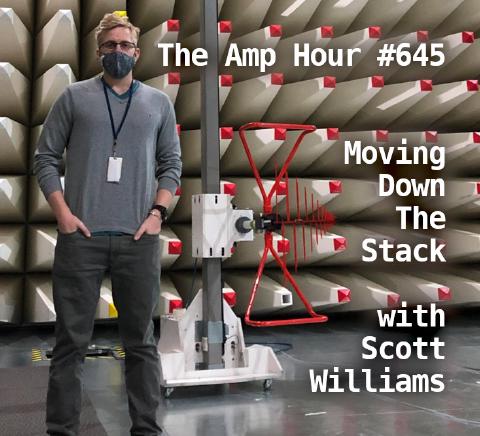
#645 – Moving Down The Stack with Scott Williams
Download episode · 81 MB
Also on Apple · Spotify · YouTube · RSS
Show Notes
Welcome back, Scott Williams of Xentronics!
- Scott was on Episode 624 talking to Dave about the business of consulting, but they discussed Scott coming back on to get more into the technical side of things.
- Chris listened to the episode and wondered if Scott would get more pulled into management of the day-to-day
- There's a new program in Victoria (Australia) to enforce deposit/rebates on bottles and cans. This opened up an opportunity for an electronics project.
- Bin management is another common IoT project
- Industrial - Site Hive is a long-time customer in the construction space
- Consumer goods
- Scott said he's likely to reach for a Raspberry Pi CM4 for quick prototyping/POC
- Wht about the high density Hirose connectors?
- Does Xentronics "go down the stack" by using tools like Buildroot / Yocto?
- Cameras make products much more difficult. Raspberry Pi cameras have a CSI interface but aren't "standard" per se.
- When starting projects, Xentronics is likely to pull out ESP32 for WiFi, Nordic for Bluetooth, STM32 for generic processing
- Bare metal vs RTOS? Normally they start in the RTOS space to add things later
- Pre-made / prior art
- Colin Karpfinger of Punch Through, a firm that largely focuses on Bluetooth
- EMC resources/courses
- PCEA educational EMC
- Todd Hubing
- Keith Armstrong
- Ken Wyatt
- Wurth seminar - Scott never got the recording, but will try again and we'll update here/reddit if he gets it!
Transcript
Scott Williams: This is The Amp Hour Podcast. Released September 4th, 2023. Episode 645. Moving down the stack with Scott Williams. Welcome to the Amp Hour. I'm Chris Gammell of Contextual Electronics.
Dave Jones: And I'm Scott Williams from Zentronics.
Scott Williams: Welcome back, Scott. We had you on the show on episode 624. So it's only been about six months, but I'm glad you're back.
Dave Jones: Yeah, thanks for having me back, Chris. It's been a while. A lot of things have, well, not too many things have changed, but enough to maybe talk about some more technical details and some updates on the business and also how things are going your side. Yeah, well, I don't matter.
Scott Williams: Come on now. I think, so last time, so I was re-listening today and you and Dave, so I had been following your posts. I don't even remember how you came into my purview, but I follow your LinkedIn posts and I talked to Dave about it. I said, Dave, there's this guy, Scott. He's a young engineer out of Australia. He's doing this awesome work. And you had like these like super engaging LinkedIn posts about like just the work you're doing at RF testing labs and your other stuff. And I thought that was, I mean, obviously I was following along for that sort of thing, but then I started looking into your business and introduced you to Dave and you and him talked about your consulting business. Can you give us a quick recap of what that episode was about?
Dave Jones: Yeah, so I guess it was a great chat with Dave around running a consultancy or design company and what it's like working with clients, very different backgrounds. Clients have a lot of different expectations, different projects. Some projects are just doing layout. If you're a real hardware focused person starting out versus once you've got a team behind you, you know, four or five or like us, you know, seven or eight people, you're dealing with much bigger projects, much bigger programs, cross-discipline work, working with mechanical engineers, software engineers in the cloud, embedded engineers. So as a hardware designer, you know, your perspective has to change a lot. And what goes into, I guess, even parts of the project that some people don't see, you know, designing test fixtures and regulatory testing and some of the challenges there that, again, if you are in a larger company, you don't really see a lot of that stuff. You can kind of be abstracted from it. So it was good to share some of that with Dave and even him coming from a testing and manufacturing background, even he had some good insights to share as well.
Scott Williams: Yeah, and well, that actually gives us a small insight into the update of your company. So last time you said six on the show, now you're at eight, is that right? Eight people.
Dave Jones: Yeah, yeah, now we are. And it's a growth pattern. I don't want to keep going too crazy on. Exponential, right? Yeah.
Scott Williams: Another six months and you'll be at 16 and then we'll be, you know, then you're the biggest thing in Australia.
Dave Jones: Look, it's growing a consultancy. It's probably one of the hardest businesses to scale because you're just selling time. So if you want to double the amount of people, you literally need double the amount of projects, double the amount of management, double the amount of meetings, double the amount of space. It's not something where you're selling a software product or even you're selling a hardware product. You can use contract manufacturers, contract warehousing, contract marketing. Yeah, right, exactly. So whereas a consultancy, you're not using robots. You're literally using people and using expertise. So we're keen to stay where we are for a bit for probably the next 12 months and really, you know, refine our process and improve how we, you know, document and go through projects and just make it more valuable. Awesome.
Scott Williams: Yeah. And so we're going to talk a little bit more technical side of the things today. Although I probably should have been there for the last one when, you know, I don't think Dave's been a consultant in a long time. So that's great. I like talking technical stuff too. So that's, that's, that's wonderful. Um, uh, I am curious about last time you had said, you know, I, I still get to do technical stuff. Is that, is that still the case? And then, uh, because I just, I talk to people who start consultancies. I know a lot of consultants. Uh, I'm excited to talk to consultants. And one of my biggest fears is that if I was, if I was to be a consultant and to grow, that basically my stuff would keep getting whittled further and further down. And then I'd see my bench, you know, one day a month. So how often Scott, are you at your bench? It's a great question. Actually, you're recording at your bench. So, so you're at least at your bench now.
Dave Jones: So that's good. That's true. I'm in the lab recording as I speak. Um, yeah. So look, it's a really great question. I think what it comes down to is you have to take trade-offs, right? So there's no, you can't actually have it all. You could have all of it, but you'd have no personal life, right? I just worked 38 hour week. I've got a great balance. You know, I'm not like that business owner who's cramming and staying up late. Um, if I really went full-time into management, so if I was constantly improving our process, doing one-on-ones with people, reviewing designs, just focusing on that purely and not actually doing my own projects or being technical, we could probably be even more profitable. We could probably do even more projects. We could be even more efficient, but I select to not do that much management so I can still, uh, you know, explore my passion, uh, stay technically relevant, uh, upskill myself and have, again, my own little solo projects that I'm working on. Even with some of our biggest clients, those are the ones I usually take on. So they have that real custom, um, hands-on service from the person they met at the start of the engagement, right? Rather than just talking to the client and passing it on to someone else to do. Um, but what that means is, you know, my time is valuable, right? So let's say running the consultancy, my time is worth whatever, $300 an hour, uh, because I'm the manager. It's, it's, I'm, I'm helping people move forward. I'm unblocking issues. I'm talking to clients, but if I'm only, uh, billing, uh, my hourly rate at whatever, let's say an example of $200 an hour, then if I'm doing a project, I'm actually losing money that I could be making by doing management, but I choose to do that because I want to stay hands-on and I want to explore my passion, right? That's, that's what started it out. It's starting it out. All I wanted to do was layout. I just love PCB layout, not even architecture, not even schematics, but now it's, it's trying to broaden those skillsets that I have as well.
Scott Williams: Okay. So what's on your bench these days? I mean, whatever you're allowed to talk about, obviously there's always sensitivity there, but what do you, what do you think of?
Dave Jones: Yeah. Yeah. So I think, um, one of the, one of the most interesting ones we're doing now is, so in Victoria, which is our state, we're introducing a, um, we're introducing a 10 cents, uh, rebate which you return cans and bottles to, to like a, uh, or an authorized collector. So it's kind of a recycling incentive. Now, Australia has actually had this for about 20 years. Ever since I was a kid, they had it on the bottles, 10 cents rebate, but it was only in one of the States, South Australia. I feel like it's always a, uh,
Scott Williams: you always say it's, it's not just a rebate. It's a deposit. That's, that's the big switch over. Cause at least in where I grew up, you paid that when you bought, right? You know, you're basically good point. Yeah. Good point.
Dave Jones: That's a good point actually. Right. Because yeah, there will be an economic impact whether you realize it or not. Um, so it's all about perception, right? Uh, so again, we're talking business here, but just to get the idea of the project, uh, that's, that's the, that's the premise. And over the last 20 years, each state has slowly brought it online, uh, and Victoria where we are, despite being, you know, the state with a lot of innovation, education, and quite a progressive state. It's actually the last state to, to ramp it on, uh, funnily enough. So we have a client we're working with who wants to set up that, uh, system for doing that counting of the containers automatically. You'd think it would be something that kind of exists. And obviously it does, right. There's, there's Walmarts, I think even in America that there's hundreds, hundreds of people lined up with trolleys. Yeah. Right. But, but what those systems usually are, is they're more of like a reverse vending machine. Uh, and there's companies out there that have those established, but that's sort of one at a time, one bottle, two bottles, three bottles, four bottles on the, on the other extreme end. There's probably industrial engineering companies that could set up a factory to do it at thousands of bottles per minute, pumping them through, but there's nothing really out there off the shelf. That's kind of in the middle. So it could be people coming to bring their bottles, but being able to throw in, you know, uh, let's say a hundred bottles a minute, something like that. So quite fast being able to deposit it, a way to return the money to them, a way to track it, a way to put that information into a database. So we're actually developing a custom system for that at the moment. So it's quite interesting because there's, there's custom electronics. There's ways we need to adapt the sensors into a Raspberry Pi or whatever the embedded computer we choose. We need a way to ensure there's strong internet signal. We're not just going to use the factory's wifi. That's probably unreliable. So we might add 4g into it. So it's a standalone little network. Uh, there's obviously buttons and keyboard and a display that shows the count. So the user can kind of see the counts going up and get the feedback from it. So it's a cool little project where it's kind of systems integration, but still custom electronics, custom software, IOT. So it is an IOT device, right? It's connected to the internet. Uh, we'll integrate it into a platform. So that one's pretty cool. And it's kind of a green initiative that we're being a part of, which is always great.
Scott Williams: Cool. That's a good one. That's a good one. What about broadly kind of in the office? Are you seeing other kind of target areas? I mean, there's kind of these generally things that are focused on the inner, the ecology and, and, um, and, um, Absolutely. Environment meets economy sort of thing. But, uh, are there sustainability? Yeah. Yeah, absolutely.
Dave Jones: So yeah, yeah, absolutely. So a couple of other examples, uh, these are ones that have come on and off in the last year or two, or we're still working on them now. Uh, one is like a, uh, a bin sensor. So just for monitoring the height of bins, it's been done hundreds of times. You know, it's a, it's a little PCB in an enclosure. You slap it on the lid of the bin facing down. It'll have some sort of sensor, which, you know, you could use ultrasonic, you could use laser, you could use LIDAR, whatever you like. And it just does a distance measurement to see how full is the bin. Some of them also use weight, uh, to determine, you know, is it full based on weight? But obviously if it's quite light rubbish, like this sort of stuff, you know, bubble wrap and styrofoam, the weight is not a good indicator. Density is not necessarily fullness, right? Right. Exactly. So we were, we were involved in one where we, um, you know, sort of developed that, just that basic distance measurement, you know, it uses NB IOT connect to the cloud sort of didn't take off because that's problem has been solved by pretty readily available solutions off the shelf that you can kind of just integrate. Um, but that's one we, we got involved in. That was good. Another one, uh, is more in the renewable space. So, um, designing some, I kind of have to talk high level, but designing for, for hydrogen cells, uh, some like monitor, some PCBs that will live inside the, the hydrogen cell and monitor the kind of the, the health, the temperature, some basic things like that. So these PCBs will be embedded inside of them for years and years and years working in quite high temperature environments, uh, quite high voltage environments, which is quite interesting. So yeah, there's, there's some, there's a lot of, there's a lot of, I suppose, innovation in the renewable sustainability and even just, um, even just using technology to track. I think there's a, there's a, a synonym, an acronym. I always forget what it stands for ECG. Um, I always get it confused or I can't remember what it's called. Uh, it's like your environmental coefficient or something. Uh, it's basically your businesses. You're yeah. It's your business and how it's, it's environmental impact. Uh, ESG, I think, sorry. ESG. ESG. Yeah.
Chris Gammell: Okay. Cool. Yeah.
Dave Jones: It stands for environmental, social and governance. So, um, there's not, there's not really exact systems on how to track these sort of things at the moment. I think there's no exact standards, but businesses are trying to look at, okay, our fleet of vehicles, how can we track how much fuel they're consuming and are they taking the most efficient route and are they using X amount of CO2 or are we using electric vehicles now? So we can say we've had a bit of a positive impact. This is a lot of technology development in that space and it's cool to be a part of some of it. Yeah.
Scott Williams: That's driving investment for sure. I mean, uh, do you see stuff? I'm not sure about where you guys are, but like, like, uh, industrial, uh, driving stuff as well. Like, I mean, obviously there's the sustainability side, but what about like industrial medical? What do you, what do you, uh, kind of what are some focus areas there?
Dave Jones: Yeah, I think it's, it's cool. Cause we've got quite a, quite an even split, you know, we've got stuff from industrial. Like you, you saw on our website, one of our longest term clients is, um, side hive. They're a company based in Sydney and they're, they're about as industrial as it gets. They have a device that gets deployed on construction sites for environmental monitoring. So kind of like noise levels, dust levels, uh, vibration, all that sort of information. Uh, and that we've been a part of their journey for many years now and they're on three or 400 construction sites around Australia and New Zealand. And they've, so that's, that's an example there where that we have that real strong industrial client base, but then we also do even consumer goods, consumer products. Um, and yeah, look, it's, it's, there's, there's innovation all around the place, especially at the moment, I kind of expected with the way the economy is in Australia, uh, with, there's been, I think the States is similar. There has been a kind of an inflation, uh, inflation issues the last 12 to 18 months. Now the interest rate has kind of tracked that, uh, from our reserve bank to increase it. And that means there's a lot less investment cash available for investment. Uh, and that applies to startups and venture capital sort of spaces, but also to establish businesses, most established businesses to do heavy R and D they need to take loans. They need to seek extra investment. Um, but we've, we've seen incredible growth and continued innovation across the board.
Scott Williams: You know, so when, one thing that I, that, that stood out from when you and Dave spoke was like, you mentioned that you like to, uh, be able to have kind of full, not full control, but like to basically be like an outsourced engineering group. So when someone like site hive or these bin management rebate things, like where do you start? Where do you start there? Like as a team or like you personally, like, like what's the first prototyping thing you pull off your shelf? This is assuming let's just take the money side out of it. Right. So assuming that's like fully funded, they're like, Scott, I, I heard you in the amp hour. I believe in every single thing that you, we need to get this.
Dave Jones: We need to get this done. Just blank check. Whatever it's going to take. Yeah. Yeah.
Scott Williams: Yeah. Yeah. Yeah.
Dave Jones: Totally. So I think from a technical standpoint, and this is great because even though I don't get to be the one designing the board or whatever in every project now, because that's just not possible. And I've got a great talented hardware team behind me. Unless there's another senior on the project, like a real high up senior, which we do have in house. But if it's me sort of help working with a junior or mid tier engineer, I'm always there at the start to kind of choose, all right, what's the path we take and sort of set them on that path. One clear thing we do at the start is basically, is this, is it either out of our capabilities? So is it like FPGA space or medical space or something like that? So if that's the case, turn them away. And the next step is really.
Scott Williams: I feel like you're stalling here, Scott.
Dave Jones: Just what is your board?
Scott Williams: What is your board? What's your go-to?
Dave Jones: No, no, no. Well, I'm saying there's three things. There's that one there. So if it's, if it's, if it's FPGA space.
Scott Williams: Outside, we have no, it's not an FPGA.
Dave Jones: We're going to do by elimination. Yeah.
Chris Gammell: Yeah.
Dave Jones: Right. You got it. And then it's basically, it's basically either, is it going to be a computer platform? So like a Linux based platform or it could be Windows, but if it's a computer based platform, so that might be, okay, it's going to have a camera, it's going to have a display. And these are things that micros can do now. Like you've seen the ESP 32 with a camera and with a display. Doesn't mean it should be doing that though, just because it can handle the data processing. Doesn't mean it should, or is it, or is it more of a, a node sensor control system, basic inputs and outputs. And then we can basically go down that path of, all right, it's going to be a microcontroller based system or product or a microprocessor or computer or whatever term you want to use. Yeah. That's one. Got it. Some projects are kind of a mix, of course, like some might have a master thing with peripherals, but you would then, you would then call that a hybrid project, but that's something at the start we do. And then we just use kind of the, the pretty standard industry prototyping platform. So for those computer-based projects, the classic Raspberry Pi, I mean, let's be real.
Dave Jones: Yeah. We've got, we've got hundreds, if not even thousands of projects that are now are out there using Pi compute modules.
Dave Jones: Sure. I was one of the, you know, I was using the compute module designing the footprint for the two connectors before it was even available, just looking at the data sheet and working it out. So we've been using those for a long time, the compute module fours specifically. Okay. Okay. You didn't use it in the, uh. So dim like the old memory form factor, the CM3? Well, I was like a, I was like a uni student grad then, you know, 2018, 2019 era. Yeah. So 2020, when the compute module four came out, that's when I was freelancing by then. And yeah, look, basically use that a lot. Nothing wrong with it. Right. I mean, the Raspberry Pi in its B form factor or a form factor for the one and two generation kind of got some flack for that. And obviously using an SD card is always, oh, it's so unreliable and blah, blah, blah. If you turn off the power, it'll corrupt it, which, you know, we've never seen that actually happen. They're not wrong.
Scott Williams: They're not wrong. Yeah. I've seen it happen. Yeah.
Dave Jones: Yeah. But, but nonetheless, right. If you, if you, if you manage the product around that, you're just choosing trade-offs. Like I was sort of saying before trade-offs is what it's all about. Yeah. But with the compute module four, you've got EMMC memory. You've got a very reliable form factor, industrial grade components. So there's nothing wrong with using the connectors.
Scott Williams: Those Hiroshi connectors are unobtainium for me. I feel like that's like, you know, I've gotten them, but like, that's, that's like my nightmare. It's actually like, first it was the CM4s. So funny. It was all during the shortage. So funny.
Dave Jones: And then like, I, yeah.
Dave Jones: Hiroshi's. No, so let, let me, let me tell you. Now we're getting technical.
Chris Gammell: Yeah. Yeah.
Dave Jones: So when, when the compute module four came out, I, those were in stock fine, but this was near the, around the part shortage time. When the compute module four came out, it was like 2020. It was like, this is, this is probably going to become a part shortage issue. I saw those Hiroshi, however you pronounce it. Yeah. Yeah. High rows, Hiroshi, whatever connectors. And they were heaps in stock. I bought, I think not, not hoarding. I just knew that there would be a pipeline of projects, right? I bought probably. Could have funded the company. I bought, I bought, no, no. I bought, I bought like 200 of them. So 200. Okay. All right. That's not bad. Yeah. That's, that's enough. That's enough for, that's, that's right. That's enough for five to 10 prototypes. Her version per project for like perfect 10 version projects or 10, 20 version projects, whatever, whatever you want to call it.
Scott Williams: So, but for me, for me, that would actually last a lot less because of the number of those connectors that I've melted, uh, using hot air.
Dave Jones: No, don't use hot air.
Scott Williams: I, I, that's, that was what I, that's, I learned that. Yeah. They don't like hot air at all.
Dave Jones: So you need to reflow oven and a little tip. You need to use, uh, point. No, I just. 0.08 stencils with those. Do not use. I just drag solder at this point. 0.12.
Scott Williams: If I'm reworking those things, I just rip them off and then I drag solder the new ones. Oh yeah. No, I've gotten very good at that. Yeah.
Dave Jones: Um, but look, you're not wrong. That was a serious problem when projects would then go to production. So obviously I talked with Dave about a bit about this. So when production comes around, we don't, we don't offer the turnkey service. I don't like to be a manufacturer. There's a lot of warranty and liability and complications that go along with doing that once you're established. So instead we work with the manufacturer, but as you predicted, as soon as we would transfer a Raspberry Pi compute module for design into manufacturer, first thing that would come back. We can't get these Hiroshi connectors. This is, you know, early 2021 to early 2022. And, um, yeah, look, we would just have to scour suppliers. So even using like LinkedIn network and, um, getting support from other people in industry or whatever forums, like, do they want to have source for these? I've been through that. And we would then supply those components FIA free and aid to those manufacturers. So they could continue with the build. So there's always these things that come up and it can be tricky explaining that to a client, right? Because they're like, what do you mean you've designed this board? I've paid you X tens of thousands of dollars or whatever to design this product and develop all the software and do all the firmware, whatever. And you're telling me it can't be manufactured because that's technically true, right?
Scott Williams: Did you feel the, did you feel the pull to go down the stack, uh, to go like, all right, well, I'll go get another module. I'll do my own like build root react. Do because one of the things that I feel like we're leaning on here is like the build systems that are like built for these boards that is pretty widely supported. Not like a Linux, like a Linux dev board is not that uncommon. But one thing that I lean on personally is like, well, a lot of community based support. And then also, uh, the hardware platform with, yeah, exactly. Or even just the hardware, the hardware, the, the, the software that's built for the hardware, right? So like having all the, having the device tree and all the Linux stuff that's already built for that specific hardware. Yeah.
Dave Jones: I mean, of course that's, that's always been a thought in my mind, but see being a consultancy, um, when you're an internal company, you, you sometimes don't realize how many engineering hours goes into doing something like that, doing a project like that, laying out DDR RAM and, and, and a CPU and all of the, the grand effort. There needs to be a really good business case for that. Right. Yeah. Well, no, there needs to be a decent business case. If you're doing it with an internal engineer, who's sitting there, you're paying them a hundred thousand dollars a year. They're a bit quiet at the moment, or this project isn't the only project we need to get done. Let's focus on it. Let's, let's do what we need to do. So it makes sense there. But when you're using a consultancy, if the difference between a pie that just, you put connectors on. Yeah. And yeah, effectively off the shelf. It kind of works. Yep.
Dave Jones: Right. Effectively off the shelf, just some integration challenges that can come up, uh, which, you know, and let's say there's X percent risk associated with that versus going through a full custom compute module, or whether it's a module you design and then plonk it on for, to de-risk it, or if you just put it straight on the board, the engineering hours, the extra prototype revisions, the risks, the, yeah, the, even, even like the, the, the spec of the board has to increase, right? And now it's the net now probably needs to use micro vias, more control, different controlled impedances. So from in a consulting environment, unless you're working with like a government or like a utility vendor or something crazy where they're or medical, how deep are your pockets client? Yeah, no, you're right. Like, you pay us six months just to develop this thing that's already out there. We just need to make it for this application because of these reasons. Yeah. Um, it's great if you can do that. I'd love to be able to do that, but I've never, I've never designed a single board computer because I've always worked in consulting and it's always very hard to justify it. Not to say it never gets done, but again, it's usually those medical high grade industrial, very high volume kind of projects. So, yeah.
Scott Williams: Yeah. I think about the alternative suppliers too. Like, so I've, I've kind of gone down this path a little bit and like, you know, obviously there are other off the shelf vendors and, but then, then it becomes more of a software firmer exercise where it's again, like I said, build root, yacht dough, that sort of thing. And correct. Again, like you said, like you're saying, it's like, how much do I want to lean into this and like, and try and explain it too, depending on where your client is and their knowledge. If they're just like, I just need a camera. Well, okay. Well, let me, let me tell you a couple of things here. Oh my God. Not exactly. Cameras.
Dave Jones: Cameras. Oh my God. The amount of like, just clients who want like a baby monitor and, oh, we want a camera to make it that point of difference to other baby monitors. Oh, well, you don't even realize how much more complex that little baby monitor now needs to be. Right? Like it's not, it's not just a micro with a RF radio and a crappy eight bit digital mic anymore. It's a whole nother beast if you've got a camera in it now. Yeah.
Scott Williams: Right. And one thing that's interesting to me is like looking at like the sourcing that happens. I'm really surprised if you look at like camera interfaces that there, there is standardization in that there's like what MIPI is like one of the things and like kind of, yeah. So like, I don't really do it myself, but like, I, I've never found enough of a standard interface where I'm like, oh, I feel comfortable. Except USB, except USB webcams.
Dave Jones: Yeah, exactly. So I went through this pain. This was like pre compute module for like, I wanted to develop this product for the client. They, we, so this is a pretty cool product. It was one that, um, imagine a dash cam. Yeah. So imagine a dash cam sits in your car. You guys have these in the U S a lot. I think we have, we have them here. There's like, you know, YouTube channels in Australia called dash cam owners Australia. And every week there's all these videos get uploaded. Aussie man. Aussie man.
Dave Jones: Aussie man.
Scott Williams: Do you watch that? Exactly.
Dave Jones: No, I don't. I don't. But, um, I have rash. I will have to add it to my list.
Scott Williams: He does a lot of, yeah, it's fantastic.
Dave Jones: One of my, Perth is, Perth is a far, long, long way. Yeah. Totally. Totally. Totally.
Scott Williams: Like, it's like Californians for me, like basically aliens, you know?
Dave Jones: Um, just remember other people are listening to this, so we gotta, I mean, I love California
Scott Williams: and I definitely work for a company based out of California. So wonderful place.
Dave Jones: Yep. Um, so, so back, back to this project, right? So this, this, this, um, dash cam, but imagine it has a, not just a FPGA that pulls data from the camera and puts it on an SD card. It actually has a processor on it. That's gonna run some programs and do processing. So on, on the edge processing, um, it has 4g modem inbuilt. So it's quite a, it's basically like a phone. Like it's got a, it had a 4g modem in there. It had a display to show what was happening on the module. It had a camera.
Scott Williams: I will say one of the worst things to ever happen to consultants is the iPhone, right? Where they, they hold up. They say, oh my God, it costs $1,200, $1,400. This is $600. This is like back in the iPhone five days. They'd be like, this is $600. Why can't you just build this? And I'd be like, do you know how much like high paid engineering effort when it like, and just like the gobs and gobs of people. And yeah. Yeah. So I, I can see Scott's face right now. He's, he's dragging on his face. He's yeah.
Dave Jones: You, he knows his pain. You said we wouldn't talk about too much business stuff, but this is client management. This is business.
Scott Williams: This is me bitching about clients.
Dave Jones: Technical business. Yeah. But look, it's so true, right? Like you, you don't even realize each year they would put hundreds of millions of R and D into it on top of building on prior IP. Yeah. Yeah. On top of building on prior IP. That's the biggest thing, right? They've got 20 years of IP.
Scott Williams: On top of vendors that just rule and like come to them and say, here you go.
Dave Jones: We'll design your camera module or whatever. Like, yeah, exactly.
Scott Williams: Exactly. Everything for you. Yeah.
Dave Jones: And then add to that, this, this was the thing that blew my mind. We're getting really on a tangent here, but I need to share this. Like I thought the other day, how many employees does Apple actually have? And I thought it would be like some crazy, some, some reasonably big number, but I looked on LinkedIn, which wouldn't even be accurate. It would be more than, it would be more than that. Right. On LinkedIn, they have almost half a million employees.
Scott Williams: No, no, no. That's that's half a million have worked there. I think on LinkedIn. So if you see that's like basically people who have listed. I think, yeah, I don't think, I think half a million have worked there, but no, I think less than a hundred. I think if you look at like the campuses and stuff like that, I think it's like a hundred thousand. I don't know. I'm sure they're still a hundred thousand is pretty crazy.
Dave Jones: That's like a, it's pretty big. They're a $320.
Scott Williams: Yeah. Yeah. Yeah. Yeah. Anyway, anyway, let's wonder back. I think that's one thing that always, that always, yeah. Like that's always hidden by that number. So say you even have a hundred thousand people support engineers, whatever. Developers engineers. Yep. There's no menu. They're not vertically integrated, right? They don't own Fox. How many people are working on Fox on how many work in all the, like, if you look at like all of the stuff, all of like the, the layers and layers and layers of going to an iPhone and similar, it's massive. Exactly right.
Dave Jones: I mean, and like exclusivity with chip vendors. So the lower side of the chain. Absolutely. Yeah. Yeah.
Scott Williams: If you look at like the, the six layers of, uh, the Kevin Bacon equivalent in the electronics world, I don't know what that would be, but like how many people, like six degrees degrees of Kevin, maybe even just two to three degrees away from the iPhone. Right. So like I used to work in Keith Lee instruments. I didn't know it at the time, but I, I, I've been two or three layers removed from Apple stuff for a bunch of my career. So like Keith Lee used to supply the 2306, which was doing battery testing for the iPhone. I used to, I got my first job at Samsung. I was working on flash memory that was getting, uh, put into some kind of, oh, I don't know, some kind of future device. I was like, no, that's going to an iPhone or iPods. You know, like it was all in 2006. Yeah. Like that was like pre I, it was basically the early iPhones. I was putting stuff into that. So like, yeah.
Dave Jones: The technology stack is crazy.
Scott Williams: It's just, it's crazy. Just think about how many people are touched by that, that industry about the ecosystem. And it, it, it really touches a lot of, a lot of different jobs and industries. Yeah.
Dave Jones: Sure. And I mean, on the contrary, being a consultant nowadays is only possible because we have access to a pretty good network and pretty good technology stacks too. So with respect, there's this kind of, it goes both ways. Um, but yeah, it is, it is hard to justify sometimes to people, the reality of technology and developing a custom product, one that you own IP around that you can manufacture yourself from any manufacturer in the world, whatever it is. Right. So this project, um, back to camera interfaces, getting back to that, right. This project, I, I wanted to just use like a Raspberry Pi camera, because those are the things that you can buy off the shelf. They've got the lenses on them already. They've got the, the kind of mechanical design, because usually if you buy a camera sensor, you just, you have to buy the sensor and put that on a board and design the optics around it. It's not actually that trivial. But all the Raspberry Pi cameras are using the CSI interface. And I looked at all these alternative vendors, um, even for a custom PCB, like using an IMX eight or whatever from NXP. And like you have to basically implement the CSI drivers yourself. It doesn't just plug and play like a pie. The plug and play ability of the pie is just crazily, and even undervalued beyond the community that still values it. Right. Um, and even working with a vendor of a compute module, like a competitor to the Raspberry Pi, asking them, Hey, can your R and D department, if I buy a hundred of them or a thousand of them, can your R and D department buy at the CSI? Yeah. And then even they were like, no, we can't do that because it's just not possible. So it was, it was camera interfaces are just crazy. Just know. It's interesting.
Scott Williams: Like how, how those kinds of things like drive decision-making, right? Like, so, so for example, when I'm designing stuff these days, granted, I have a very specific kind of like, uh, uh, on my stuff, but like I'm using Zephyr all the time. I don't design stuff in if it doesn't have a Zephyr driver personally, just because like, it is not worth it to me. Like I, I could potentially go and write a Zephyr driver, but like, there's no product differentiation in any of the things that I do because it's not, it's not like I'm not choosing based on specs really. It's just like, isn't it an accelerometer? Yeah. It's an accelerometer. It's in the Zephyr driver. I'm choosing that one. Right? Like how do you choose parts like that?
Dave Jones: Well, the biggest one is reuse.
Dave Jones: Any, from a hardware perspective and a firmware perspective. So, I mean, you're talking there around, you're reusing other people's stuff or an open source community stuff, same concept. But for us, it would be more reusing products and parts that we've used before. Okay. Sure. That, that's, that's, that saves time, but it's more around risk, right? You know, the amount of times we've been developing, we've been developing with, you'll, you'll put down a micro and an SBI module and you'll lose two or three weeks on it because you find out it uses SBI with the polarity the other way around. And that's like a setting you rarely ever go and change. And it's like all your readings are off by one bit. It's not like it's wrong. It's like they're all off by one bit.
Dave Jones: It's like clock over. Yeah.
Chris Gammell: Totally. Yeah.
Dave Jones: Right. So like just that's the sort of stuff we lose hundreds of hours on over a year. It's not the, it's not actually the solving the technical challenge. It's the drivers and compatibility and for like for money, basically. Right. Absolutely. And you're right in that whether you're selecting a micro, whether you're selecting a temperature sensor, accelerometer, whatever it is, these hardware blocks we choose, unless it's something really specialized for that application. Like, for example, if we're designing something like this hydrogen cell thing, like the temperature sensor needs to go up to 200 degrees C. Good luck finding one of those. Right. That's not actually that trivial, even though 200 degrees C isn't that hot. It's not the temperature of the sun or anything like that. If you're just designing a generic node or generic product, absolutely, we would say, look, there's so many things that suit this need. If you filter the microcontrollers with this much RAM, this much flash, this package size and this cost range, you'll still get thousands of results back usually. Right. Like, seriously, you'll get thousands of results from all the different vendors. So the most simple and pragmatic approach is choose something you're comfortable with, choose something you're familiar with.
Scott Williams: Yeah. No, I think that's right. I think that's right. And I think one problem is like, so like that 200 C thing that you mentioned, often it's like large scale economics that are so far outside. So like, whereas you and I might benefit from something that had been in an iPhone and got super commoditized. And that's how it got cheap, like something that is super specialized, like a 200 degree C thing that might be going like, like down, down hole drilling. Right. So it's like, yeah, exactly. And then it's, you know, there's the physics of it, which are difficult and very, very tough to make. But then they're selling into like a really high margin space as well. It's like, oh, I'm, I'm not able to afford it because I'm not designing for that space. So then it's just like, so then it's just like, you have to go to client and be like, well, you're just going to pay out the nose because you have this, you have this thing that the oil and gas also have.
Chris Gammell: Yeah, exactly. Yeah, exactly.
Dave Jones: Yeah. It's funny you say that because you'll find a lot of the times automotive rated products can be cheaper than the non-automotive. Oh, wait, really? Which is quite interesting. Yeah, because, well, because of the high volume they're manufactured in. Oh, I can give you an example. You'll have to give me.
Scott Williams: One thing I always get, I've been super scared about anything automotive lately too, because so much of the shortages were driven by automotive, not driven by, but swept up in is probably a better way to say it. And so that like, and like, oh, Chris loses every time, right? Like, if it's down to me or Ford Motor Company, like all of those parts are going to Ford Motor Company for as long as they say, right? They are just like, they are, they have gravitational pull that is way, I am, I am a tiny pebble in the universe of Silicon and, and they are a planet.
Dave Jones: Well, this is, this is describing the last two years, right? I don't think, I don't, I don't think little, little design houses and even reasonably sized manufacturers were the ones purchasing reels and reels and things. Right?
Scott Williams: Like DigiKey, Mauser, all these distributors that you and I buy from, right? Like they, they were just like anything that maybe got cast off, but they were back in the line too. You know, I feel like.
Dave Jones: Well, that's the thing. You think it's not until you get into high volume manufacturer for a project, you realize that a couple of thousand on DigiKey, when you're, when you're a designer early or mid through your career, you're like, oh, great. There's heaps there. It's like, yeah, actually, this is high volume. If you've got 10 of those parts per board, right? And you're making a hundred or a thousand boards. DigiKey is not enough. Well, but even, I'm not even saying extremely high volume. I'm saying just reasonably high volume. DigiKey is actually not enough volume. So you start buying reels from the manufacturer. Oh, I see. Got it.
Scott Williams: Yeah. When you're crossing that Rubicon of like, yeah, I've got so many parts that I'm like, I couldn't source this out of distribution if I try. Someone call TI. Yeah, exactly. Yeah.
Dave Jones: And you don't realize during, during the supply chain shortage, it wasn't DigiKey and all these, these weren't the leaky tap. It was literally way above that is where the reels were disappearing. Yeah. That's right. That's right.
Scott Williams: But they also bought from DigiKey, which also hit you and I, you know.
Speaker ?: Yeah.
Dave Jones: Yeah. Sorry. We made it to the other side. Okay.
Scott Williams: So yeah. Automotive. You said you had an example.
Dave Jones: Oh, I've asked one of my, I don't have the MPN. Oh, okay. But you know, it was like a 56 nanofarad cap, high voltage rated, like an X2 capacitor. And it was automotive grade, whether that's for the temperature, the AEQ 100 or whatever it is. I can't remember off the top of my head, but yeah, that one was literally cheaper in the automotive grade. So again, trade off there with, like you said, you're actually, you can pick the cheaper one, but you're choosing a trade off because there's a risk of supply chain, a higher risk of supply chain. It's very interesting. All the, and this is technical stuff that you just, as a designer, you just don't feel like you should have to think about, but you actually do need to think about these things pretty significantly.
Scott Williams: Well, like you mentioned that last show too, it's like, it affects you so late in the game that like, I don't know if I, if I can go back in time and tell my younger self to like make different decisions based on sourcing stuff. Like, oh man, like it would, it would change entire, like, uh, architectures, system architectures. Yeah. Yeah. I would just be like, well, you shouldn't do it that way. That's a terrible idea because this is going to bite you this, this, this, and this, right? A hundred percent.
Dave Jones: Absolutely.
Scott Williams: Okay. So in a best case scenario, so you said like, uh, when you have these generic kind of, and you mentioned kind of the exam, some of the examples you mentioned in the last episode as well, you mentioned some things that sometimes, you know, you do, you're kind of turning the crank on these. Best of well-specified things for clients, but in your consultancy and Zentronic specifically, what kind of shop are you? Are you, uh, what do you reach for microcontroller wise?
Dave Jones: Ooh, yeah. I like this. Uh, so pretty much it's like ESP 32. If it's a wifi application. Yep. Nordic. If it's a Bluetooth daily application and effectively anything else we go, um, SDM. So that's, that's kind of us. That's kind of, again, we're not wedded to those. We make that very clear, right? You, you want to be tech agnostic as a consultancy. If you, if you start selecting, selecting X or Y component because only because you're comfortable with it or only because you've used it before, you know, the amount of times I've seen people like even other design house. Companies designs that I come, I might come across whether it's cause I'm networking or discussing with them or whatever. And they just throw compute modules on everything. And then you look like Raspberry Pi compute module fours on everything. And then you look at it and they're not even using USB, HDMI or camera. And you're like, why are you doing that? Oh, well, we have a cloud. You guys, you guys only know Python. No, but seriously, like that's, that's a serious, you're choosing a 60, $70 embedded computer, maybe even a hundred dollars Australian over a $4.50. Even 32 bit micro, even an eight bit micro could probably do it. Now, no one's perfect, right? We definitely use 32 bit $5 STMs when we could use a 50 cent SOT 23, six little Chinese micro, but that's just silly. Then you're talking about development costs is more than the material costs over the volume. The economics don't add up there because we would spend a year working out how to use that new micro platform. But well, it's like EVT, DVT, PVT, right?
Scott Williams: I mean, I feel like you should almost approach, like you mentioned, ESP32 for Wi-Fi, right? You will be able to get them up and going Wi-Fi almost immediately. Same thing, Bluetooth, STM32, whatever. Like those are, and even at STM32, it's got this huge thing. But if you already have dev boards that are, you know, like an F4 or, you know, like, or you're always an F100 until you need to bump up, find whatever, who cares? Like that actually is the right choice for a client a lot of times because they're going to be like, it's got a what in there? Yeah, depending on the client, right?
Dave Jones: Correct, correct. Right. And even, and even that the reason I, this is the dark side to consulting is that those, the example of using, using a platform or choosing a component or whatever, only because you're comfortable with it or only because you get leverage off of it. And then the client, because we could design in, say, say you take an example, we could design in a compute module where a little $5 micro could go instead because we're using GPIOs and we want to run Python instead of C. It gets to production and gets, yeah, it gets to production and gets quoted and it's like double the price they expected. But like you could justify it and get your way out of it. Like, oh, we use this component because of this reason. So there's like the clients are always at your whim a lot of the time. They don't have the technical ability to review your design and know what's in it. And so we're pretty big on trying to stay as ethical as we can. And that's an example where that's actually an ethical question around what components you choose in your design. How crazy is that? Right. That's technical ethics. It's nuts.
Scott Williams: Yeah. No, I think it's good. And I think, I think you're right too, because, well, I think it also ends up kind of feeding back over time too, because they're not going to probably be commercially successful with something. Like if they're trying to launch into like a, like to say you suggested a CM4 for something that's like going commercial, right. Or like it's consumer level thing. You're just not going to be able to hit price points that might get replicated somewhere else. And okay. A hundred percent. Then you just don't get the next job from them. And then you don't, you don't get add on business. So I think it's in your own best interest to do that, like the way you do. So what about, okay. So client approaches you. All right. You're going to choose an SM32. Yeah. Well, let's just get into it already. Choose your hero. Choose your hero. Yep. Choose your hero. Right. Exactly. Yep. Yeah. How often are you pushing them into a real-time operating system? I know it's always going to be, it depends, but like, does your shop come there? Right. Because like, you can also do a blinky, but then there's battery optimizations, whatever. So like, do you, are you building internal, internal enough systems that you're like, well, you just go with the Zentronics way and there you go.
Dave Jones: Yeah. Yep. Great question. And it's one that's, it's one that, you know, it, it, it almost comes up every project. Like what do we do here? More and more, we're standardizing on RTOS for a couple of reasons. The first being that a lot of the time, if you start from RTOS from the start, the time difference for development isn't any more, any less. As long as you start from the start, you don't change halfway through the project because you realize you need an RTOS or you really want an RTOS. So that's one reason there's almost no trade-off in time or development. If you know what you're doing, if you're skilled with it. And fortunately, you know, I'm not, I haven't used it since university. I do a lot of firmware still, but you know, Arduino to get a POC working or some STM how to get a whatever working, but our embedded engineers, they're very talented at that. Yeah, they dig in and thank them for that. Yeah, totally. Totally. Totally. Yeah. You know, they're getting stack overflows and heap overflows and they're just, you know, working through it constantly. You know, there's always that side, but with a finite state machine approach, you'd still have those similar analogous issues. That's one reason. So there's no real development time difference. Second reason is if you have your boiler plates and templates and drivers established for that, then you save time compared to a state machine potentially, because you can have like example tasks for a driver, not just the driver itself, but even the example task that's doing the sampling, putting it in a queue and you just can use that example queue. And then the last, the third reason is a lot of times the application, if it's an application that let's say an FSM, a finite state machine approach or bare metal approach, whatever terminology you want to use is more appropriate. An RTOS will still be probably fine. It probably will shoehorn into that fine.
Chris Gammell: Yeah, exactly.
Dave Jones: On the contrary. Yeah. On the contrary, if you've got an application that really should be an RTOS. So it's an SDM, it's got an accelerometer, an SD card, a 4G modem, and it's constantly sampling the accelerometer, constantly writing to the SD card, constantly pulling from the SD card and putting it onto the modem before it sends the modem's file off. Good luck doing that in a finite state machine. You will not be able to do it. Even though in theory, the free RTOS isn't, it's still just C running. It still gets compiled down to machine code. It's not actually parallel processing. Good luck structuring it in a finite state machine. Yeah. So it's almost a risk problem too, right?
Scott Williams: Yeah. So yeah, exactly. Yeah. I mean, like, how are you going to, I think also like when you get to the edge of the things, right? So it's like in the generic case, it doesn't matter all that much, but then like, when you start to actually find a corner case, then you're, I'm not saying that you can't get around it. It's just that it gets, you know, the, the effort ramps quite a bit. And then, and then you have to explain to a client, like, like you said, right? You have to explain to a client, like, well, we have to do it this way because of these decisions we made two years ago or whatever it is, you know, it's just like, oh, and exactly
Dave Jones: right. And I think if you want to, if you know, if you have career aspirations to become, whether it's even just a manager, not, not, not just running your own consultants, if you want to just be a great manager in a technical environment, being able to explain something like that to someone who doesn't have a clue about what you're talking about. So drawings, stories, examples, these are things that, that that's a valuable skill to have. If you can have a client who doesn't know what a microcontroller is, you sit down with them for half an hour and explain why we have to invest twice as much time this way, because of this way using, you know, examples. And imagine this data goes from here to here. Then what happens if this becomes constrained or blocked or trying to use that translate that terminology in a simple way? It's such a valuable skill to have, right? Yeah. So, so yeah, I toss all the way.
Scott Williams: Yeah. Okay. I have, I've been surprised. I don't know if I'm like being aloof or like jaded or what it is lately. Maybe it's also just like the, you know, I'm in IOT and like, I don't think there's many innovative problems anymore. You know what I mean? Like, like, so, so like you said, like with the, like the bin thing, right? So like, like, like I've made a trash can monitor pretty recently, right? Like these are things that like, I'm just like, and my job is to make example designs that other people can copy. And like, I'm like, yeah, trash can monitor. I can make that one. Right.
Dave Jones: And, and so like, it's great that you say that because like we, we, yeah, I know. It's great that you say that because it's, it's, it's, it's not that the solution is novel. It's, it's sorry. It's not that the, the concept for the solution is novel. It's the physical implementation of that. So, so, so the, no, well, so the bin sensor, so it's a bin sensor. It has a $5 ultrasonic thing. It looks down and it has a $5 micro and it has a $10 4G mode a minute. And that's it. It's just, it runs off a three volt battery. You don't even need a buck converter. You don't even need a linear regulator. You can just run it off the battery.
Scott Williams: Yeah.
Dave Jones: Super, super trivial, but no. What if the ultrasonic sensor gets dirty? What if, what about ingress? Oh yeah. Is it going to be all waterproof? Yeah, no, yeah, yeah. How do you get, how do you get signal inside of a metal bin? Because most bins, at least here in Australia, they're metal. Okay. How do you remote into the device? How do you do firmware updates? That's the corner I'm talking about.
Scott Williams: Yeah, yeah, yeah. And the corner is always the implementation and the execution is always the top part. But the integration, I'm actually talking about the, so like when a customer comes, let's just say to me, I'm not going to say to you, right? So the customer comes to me and they say, I need this thing. I'm like, yeah, it's not that, you know, they're like, I have this brilliant new idea. I'm like, really? I'm sitting here, I'm waiting. Please tell me your brilliant, you know, this brilliant groundbreaking idea. And then they say bin monitor, right? And it's like, oh, yeah, okay, I can do that. You know, like, and it's tough. So yeah, it's, I'm not saying that I know everything because I definitely don't know everything. I have proven to myself over and over again. I'm just less surprised at the industries lately. I don't know if that makes sense.
Dave Jones: Yeah. I mean, I think, I think what we're, we're seeing a shift in anyway is a lot more projects where we are integrating something. So we are, you know, it's, it's, it's not that we're going to design a PCB that has a specialized sensor on it. It's this specialized sensor that's been made and refined and used. And we need to integrate to that. We need to learn how to communicate with that sensor, learn how to put it into our application, power it correctly. So there's a lot of things where it's like, they'll have that, that problem is solved. And they, that again, the bin sensor, but then there'll be some part of their problem. Like it needs to be ultra low cost because we're trying to rate our competitor or it needs to last in Northern territory. All the bin sensors in the Northern territory where it gets to 45 degrees, they keep failing because the battery chemistry can't last that high of a temperature. Right.
Chris Gammell: Right.
Dave Jones: So that's where there is a lot of things where at face value, oh, okay. Another one we're working on. It's, it's an automotive aftermarket product. It's some, it's a system where you can put it in your, your vehicle and you can have the lights in your toolbox so that you open the lid and the lights turn on and you can control your light bar on the front. Like, you know, it's super basic, but again, it's all of these nodes scattered in the vehicle and they all need to control their own logic, but also feedback to a motherboard that also verifies all of their states and make sure it's all safe. And, you know, like there's always, there is always something we find. And if there's not, cause there is times when it's not, it's literally like, oh yeah, I pull up Google, show them like this has been sold before. And they go, oh, and they walk away and we never speak from them again. That does happen. That does happen.
Scott Williams: Oh, wow. Yeah. Because they think it's a novel idea.
Dave Jones: They think that that's the, they think the business is built on that. Ah, well, because they don't, they don't know the right terminology to look up. Like they don't know to use this particular name of sensor or this particular type of battery or this, or, or, or I say to them, look, you can't make it that cheap.
Scott Williams: It won't be possible to make it that cheap. Right. Right. Right. Yeah. Here's, here's a hundred other people that are doing it. And the, the bottom of the range is 30 bucks. It's like, you're probably not getting under 30 bucks. Yeah. Right.
Dave Jones: No, no.
Scott Williams: Right. But what if, what if we just made it for 10? Oh, okay. Yeah. Yeah. How much, uh, so then in that, like, you know, there's nothing really that different. I mean, like you said, they're, they're the execution and the operational piece and the actual making of a thing. Very non-trivial, like very difficult to do, but how much then in your company are you, are you, you mentioned templates. Are you guys like templating for this sort of thing? Or how do you, do you try and offer something like kind of not pre-made, but like ready to go?
Dave Jones: I mean, yeah, it's, it's, it gets a bit blurry there. Right. Because are we then like selling someone else's IP they paid us to make? Right. And then just like, yeah. Yeah. I mean, I, I asked this like years ago on Reddit or something. Um, uh, it might've even been the consulting forum. I can't remember, but I asked this and I was like, guys, like, I'm not an IP lawyer, but like, are you sure we can just like reuse components between projects? And like all these people are just like, yeah, it's fine. Like, don't even ask about it. Like, let's get this straight. Novel IP is only around the whole solution. The pieces of the solution are just trivial. And I'm like, yeah, kind of. I mean, I could look at two. Well, I would never like, I mean, you're never like copying code.
Scott Williams: Right.
Dave Jones: But like, you're saying like, are you saying like using the actual, what about drivers? Oh yeah. What about logic? What about checking for a button? What about debouncing a button? There's half an hour, an hour that went into debouncing that button on that project. Are we going to copy that block of that, that block of while loop and just plunk it into this project? I think you got to rewrite it.
Scott Williams: You got to rewrite it every time or, or like do it yourself, right? I mean, or do it for your company and then, you know, either or sell that IP. But yeah, you're right. It's not like, like you said, it's not novel IP, but it is critical to, you know, moving stuff forward. And I just think from a personal perspective, I hate doing that stuff over and going, I just, I don't, I don't know how to. And yeah, I don't know how to solve that. It's, it's interesting.
Dave Jones: There's, it's a very tricky thing to, to navigate. I think one thing is, you know, circuit blocks is something where if you look into a data sheet for any component, the block is there, right? So the block is there. It's a buck in the middle. You've got the one microfarad capacitor on the input.
Scott Williams: Prior art. All right.
Dave Jones: You've got, you've got the two, the two 10 microfarads on the output, the resistor divider you calculate and you do that's, that's given the data sheet. So that is definitely not novel IP. That's something that's there, but what, where the effort's gone into the effort's gone into the manual labor of putting that into our system, drawing the resistor, putting it in, blah, blah, blah.
Scott Williams: But that's the way I saw this is that a key cad is actually terrible at a reusable block. So I know Altium's great at it, but I can't do it. I, yeah.
Dave Jones: Well, look, the main thing is we don't, we don't, we avoid reusing. Well, no, we don't, just don't reuse entire blocks. We will reuse components, but not entire blocks. Because from my perspective, even a buck converter, every application will use that buck converter slightly differently, slightly different input voltage, slightly different output current requirements. So you would never just copy paste both for ethical reasons, but also just engineering discipline and design notes and traceability. Where'd you come up with that idea from? How did you design that in? Right. So, but the actual main reason we don't have a lot of templates and things like that is because it can be hard to find time for it. If you're a successful business, you're growing, you're doing lots of work. You've got a backlog of work, which we do, right? We've got work for the rest of the year, which is fantastic as a consultancy being able to say that that's nuts, right? A pipeline for three or four months as a seven, eight person business. You're very comfortable sitting there, right? But that means there's, there is no time for that sort of, we do a lot of process improvement, continuous improvement, but templates is one that, well, I wouldn't say that's the highest priority. The higher priority for me would be project management, documentation, you know, employees and their lifestyle, you know, making sure they have working from home setups and all the tools they need here, improving our lab, all of that stuff, right? All those niceties, you know, come on.
Scott Williams: No, crack that whip, man. Come on. Get those templates. Get those boilerplates. Well, I do think, I mean, there is like the, you know, somewhere between, I feel like every dev shop eventually says like, well, we could make this a product or we could make a product or, you know, there's always that, that like push into the, but then I think the hard thing, so like Matt Liberty, who was on the show twice now. Yes. And I'm not. Yeah. Yeah. He talked about it in depth of like, I, I literally saw the opportunity cost of like not billing for client work. And so you have to like basically assign your own thing. And then like, he basically knows viscerally how much money he lost, you know, opportunity wise. And then also like, you know, so he's got to make that money back on the product. Then it's like tough. So buy a jewel scope, everybody. Yep.
Chris Gammell: I've got mine here. Ready? I got mine too. I got mine. That's great. Nice. Nice. Can you see the case? I think so. Yeah, there you go. There's a lot. Oh yeah. Yeah. Yeah. Yeah. Yeah. Yeah. Yeah. Yeah. No, that's great.
Scott Williams: Yeah. So it's tough. It's tough to make that switch though, you know, like to, to switch into the product space.
Dave Jones: It's, it's interesting that being in consulting, I prefer that to having our own product just because I'm so passionate about the development and design work that that's just what I want to be doing and just what I want my focus to be. Not marketing, not warehousing, not returns and customer support. And those things happen when you, people don't realize if you make your own product, as opposed to just being a developer, you have all of these extra responsibilities and they're responsibilities you have to fulfill. You can't just be like, oh, I'm not going to worry about returning calls to angry customers. Like, no, no. Yeah. Right. Yeah. Right. I agree with that.
Scott Williams: Like, yeah. Consumer commission actually eventually comes after you, right? Yeah, exactly. Yeah. Cool. What about, uh, other, uh, you know, like, uh, tech stack stuff that you guys are doing internally? I mean, so you'd mentioned like Nordic parts, ESP32, STM32, any other things that you're kind of reaching for on a regular basis?
Dave Jones: Yeah. We're kind of going through a process now, kind of evaluating IoT platforms. I think that's, that's a big one where there's a lot of players in that space. So you've got the big guys, the AWS, you've got Azure IoT hub, you've got the very generic platforms like, uh, things board, uh, is one of them. Uh, and then you've got more niche specific ones like Goliath, uh, and whatnot, you know, kind of tailor made for that hardware, trying to, you know, make that in quote marks, seamless integration from a hardware to, to the software. There's no selling Scott. Come on. Um, but you know, there's so many, again, trying to explain this to someone not technical. There's so many hurdles with using and trade-offs with all of these. Like if you go with the big guys, you know, there's going to be, um, there's going to be always new features. There's going to be always uptime. There's always going to be whatever, but as a customer, you are a tiny microbe compared to some of Microsoft's and Amazon's customers. You are not going to get the support you probably would hope for, um, versus some of these more niche platforms, more just specifically for IOT. Uh, things board, for example, we started using that on a project back in the early days, like I think two, two years ago or a year and a half ago. So when we were starting out, you know, I had one software guy and one firmware guy and me, like just three of us or whatever. And then Ukraine, uh, the whole Ukraine Russia thing happened and things board is based in Ukraine. Uh, so that was like, yeah. So that was like, oh, okay. Um, we better move from this system to something else now because who knows what's going to happen.
Scott Williams: So there's a lot of great tech in that, uh, Ukraine for sure. Like, uh, yeah, yeah. I know as well. Things board. Yeah. Yep. Absolutely. Yeah.
Dave Jones: There's a couple. Yeah. So look, we're going through that process now. I can't tell you which one we're using, trying to, trying to evaluate all of them through many different methods and trying to find something that for us as a consultancy, again, we want to have something we can kind of package up and hand to the client once we're done our development or we can co-develop with them on. Right. Yep. But we don't want to be making our, a lot of companies, even design companies. I know there's one, one or two in Australia, even a lot bigger than us. Um, but they, they have made their own platform and you plug into that as a customer. But then like, right. Right. Is that kind of like, oh yes, we'll design this. It'll be your product, your IP, but it's talking to our server and our platform. So you kind of look to us for the life of your product as well. Right. Don't really want to go down that path.
Scott Williams: Well, and then like, so if you look at some of the IOT things that have failed, like that usually it's like someone administering their own server, right. Which is a choice, but then like the company goes under or whatever. And it's like, oh, and now like the whole product's dead because of that too. So that's also. It's difficult. Right. And that's where I feel like a lot of people are like, well, then I'll go to an AWS or an Azure because of just scale. Right. I mean, like I remember, I think when AWS IOT was announced, I think Dave had said like, why would you go anywhere else? And like, fair enough. Right. I mean, like, it's like just from a scale perspective, like that, that does lower risk security. Yeah, exactly. Everybody getting fired for buying IBM. Right. So there's, there are, there are trade off there. Sure. Yeah.
Dave Jones: Yep. Yeah. And I mean, but even the big players, pretty fair to say five years ago, Google were a big player or reasonable player. Now they are platform shutdown or 12 months ago or whatever. So you don't know like that. Yeah. Even Microsoft or AWS. Yeah. Yeah. Even Microsoft or AWS, they could shut down just those particular services. They don't have to shut down. You won't Microsoft won't shut down the services. They could just stop supporting. Right. That's always a possibility. So yeah, we're going through that process. Now I've got, we've got two software developers with us now, which is fantastic. You know, just not no hardware, not embedded, just pure cloud, IOT kind of platform space. Cause a lot more projects are demanding that now. And so they're, they're kind of working through that as a bit of an internal project, which is great.
Scott Williams: Yeah. Well, you had mentioned too, when you talked to Dave about like, you know, you kind of have people coming to you from, you say you didn't want to be like an internal, you say you didn't want to be like a layout group, but you didn't want to maybe be an engineering group. But then I feel like that, that then potentially determines. It always matters who you're talking to, like who your end customer is. So if your end customer is the software group, then often you're tied to like, you know, like you're kind of tied to what they're tied to. Right. But if your end customer is like an, what I call an operator, like a, you know, so like someone wanting, running a carwash that wants to sensor nodes throughout their carwash or whatever, very tried example there. Like they don't care what your stuff is. So they might be like, yeah, just hand us an app. An app or a website. And that's all I really care about. So you can choose then.
Dave Jones: Yeah. And I think, I think, you know, starting out in the big wide world as a freelancer with one oscilloscope and one crappy power supply in my apartment, you know, I would have just, like I said today, my door was open to anyone. If someone came to me and said, I want to make an x-ray machine. I would have just gone.
Dave Jones: I'll give it a cry. I'll give it a crack. You know, no problem. Whereas now I'm more careful with that, but that's been an organic approach where I've just been like, all right, that kind of feels like a good fit or kind of doesn't feel like a good
Dave Jones: fit or sometimes projects come along and it's like, oh, I was thinking of us specializing in that area a bit more. And let's take on the project and use that as an opportunity to learn more around BLE. Or let's use this project to learn more about power supplies and power electronics design and send someone on a course for it for the project starts. And, you know, that's kind of where it's been. And in terms of where our focus is, it certainly is not what, like you said, with if you wanted to be a hardware company doing hardware design for software companies, that's a great niche. That's an awesome thing to get into. Personally, I found it really, really hard because you would have a project, you'd have a board, you design it, it would come, you prototype it, blah, blah, blah. You'd verify that it's the ends of the earth. And then you hand it to the software company and they say, oh, it's not working. They hand it back to you. You say, yeah, it's working. And there's this back and forth. You just, you can't beat having everyone who's technically involved in the same room. At least, at least there's obviously boundaries. Like we don't do mechanical design and that, that can be important, but we can always go to their office or send them the sample and get some feedback. But software embedded and hardware, those are just like this now for most products. Yeah. You can't, you just can't. The line is too blurry between them. You can't, you can't split them up. Yeah.
Scott Williams: I think you gotta have like really good test documents otherwise of like, no, this is, this is how it's going to go. This is how we're going to. No, but then, but then it gets political.
Dave Jones: Then it gets political. Right. It's not, you know what I mean? Like a table that has, this company has to test this part of the project. Yeah. Right. Right.
Chris Gammell: Right.
Scott Williams: Right. And then it's a lot of finger pointing. Collaborate. Yeah. Yeah. It's, it's tough. You get yourself into a hell of an industry, Scott. Come on, man. Industries, plural, really, I guess. You know, the difference. Yeah. That is one thing that's interesting too. So I was actually thinking about, so Colin Carpfinger who was on the show, oh man, a long time ago now, he did a punch through design and it's a consultancy, Minnesota and San Francisco, and they're still around, but they are like Bluetooth. Like you want Bluetooth, you go to, they are like Bluetooth, Bluetooth, Bluetooth, you know, like, and I think my, I'm not going to do, do what you do. Like if I'm a consultant, I'm, I'm, I'm a lone wolf. I'm, I'm hard to tame, you know? That's what I said for nearly two years. Yeah. Yeah. But yes, here I am. I think one of the good thing about that punch through idea is that like, you can really optimize, right? You have people that know the thing. They're like, yeah, we're just going to turn the crank, turn the crank, turn the crank. I think I'm like, that is so boring, but like, but from a business perspective, that is the right call to do, but like, it's tough, right?
Dave Jones: I mean, like, yeah, it's, it just, it just, you just want to pick a market that needs, has a higher requirement for that sort of work, which Bluetooth is a great one. I wouldn't go and start a design. Yeah. I wouldn't go and design, start a design consultancy specializing in, oh, geez. I don't know. Like something really, I can't think of anything really, really niche, but you know, like, ultra low power, actually, no, that's a pretty good niche. I was going to say ultra low. Yeah.
Scott Williams: How about, how about like only devices that communicate over RS 485, but only using. Yeah. Right. Totally. How about that?
Dave Jones: Like we only do much, which, which 20 years ago would be gold. Like companies would go to your, like, we want to make a temperature sensor for this. You're the Modbus guys.
Chris Gammell: We love Modbus. Yeah.
Dave Jones: Right. Right. Whereas now that's, that's changed of course. And Bluetooth, the same thing will happen in 30 years. You might be able to make a business. It probably won't exist, but yeah.
Scott Williams: True. Yeah.
Scott Williams: I guess what are some of the other like smart home things? Like, I guess Zigbee's still around with Z wave Z wave, like starting a Z wave consultancy in 2023 would be a bad idea. I think, you know, like it's still around. It's not bad actually, but it's not, it is not, it's not hip. It's not, it's not going to be long longevity. Right. No. Okay. So Zentronics not in the Z wave. No, no, not in the Z wave.
Dave Jones: Okay. Keep, keep, keep it general. And, you know, look back to the coming full circle to the start of the conversation. Like I've done, you know, a bit of business coaching with, you know, coaches, I never really had like a mentor, so to speak, but just coaches that I've kind of paid and done courses and training with. And they all say like specialize, specialize, specialize. Don't be, don't be the generalist. Don't be the, don't be all things to all people. It's, it's a nice rule to follow, but like at what level do you specialize? And in what industry, like, there's no such thing as just being a specialist. Like we are a specialist where a electronics development specialist, but within electronics development, we're not specialists in any particular field. Right. So we are special.
Scott Williams: Like in the last show too, you said you're effectively regional, even though you're not regional. Right. But you, you've gotten business regionally. So organically, organically, yeah. Specialization. That's not actually a specialization, right? It's like these categories you start to get into without being pigeonholed. So it's, it's tough.
Dave Jones: Yeah. And in years ago, I nearly became a, well, well, I sort of was for a few months. They're just purely focusing on EMC, like literally work with a test lab here in Melbourne and got them to any, any, any people that failed testing. I'd come in and review their design and I would come to the lab and help them get a pass and suggest filter designs and shielding techniques and all these things. And I'm huge fan of Ken Wyatt, Keith Armstrong, Todd Hubing, all these guys who are gods in that space and I've done all the, you know, training, even paid one-on-one for some mentoring time with them. Oh, cool. Really was fanatic, really was fanatical around EMC and EMI for a few months there. And then I stood back and realized, hang on, I haven't designed a board myself in months. I'm going to start hating this pretty soon because that's where it all comes from. Just, I love designing boards. That's, you know, just a passionate electronics engineer, like a lot of us. Yeah.
Scott Williams: And I guess the, if you did want to like super specialize and you'd have to, in a similar way, like start teaching courses or things like it in order to, like,
Dave Jones: Right. To make it economical. Yeah. Or just your hourly rate goes from whatever, a hundred or 200 an hour to more like four or 500 an hour, which is fair enough, but that's because you're only working half as much billable time. Right. Yeah.
Scott Williams: I, I just don't have those skills that, that helps for me. That's how I, that's how I keep it fresh. Scott. Yeah, exactly. Yeah. Always learning. Always learning. Gotta keep learning, you know, like, you know, like being a educational shark. You stop learning, you die, you know? Exactly. You'd be swimming, I suppose. Really good. You know, mostly I make all my money on anecdotes during podcasts. That's how I make all my money. Yeah. If only. Yeah. What about, so you mentioned EMC stuff. I mean, is that, are you still in the lab these days at all? Do you get to go back at all or no?
Dave Jones: Oh, so, I mean, I guess different consultants have different experience in this. Cause again, like if you're, if you slot in at some point in a project or like you're just the hardware guy or you're just the software guy, whatever it might be, you cannot get to see that whole project cycle. But like I talk with Dave, it's like, no, no, no. I'm, I'm, I'm, I kind of want to guide clients through that whole process. And that includes doing all the quoting and identifying what standards talking with the test houses, arranging the testing, taking the sample for testing, writing the test procedures, all that sort of stuff. We do that whole service. We, we have might, might not be me, you know, me on and off. We'll have an engineer in the lab every week for a different project. There's just a constant churn through different projects, which is great. You know, not, not cause we're going back cause we're failing. Cause it's a new project going through testing. Right. Obviously there's always, there's always, you know, the occasional failure or whatever that you can't, you just can't predict. I said to this, I said this today, I said, you know, the, um, that in Kruger effect. It's like, if you don't know anything about EMC, you're probably worried about failing. If you've done a little bit of, Oh yeah, I followed this grounding technique and I, I have filters on every line. I'm definitely going to pass this time. Um, then you, you're at the point where you think, you know, a lot, but you don't. And then if you know, again, I'm not going to say I'm an absolute expert, but I've been in the lab hundreds of times. I've put over a hundred products through full compliance testing. You just can't predict with absolute certainty. There's so much with RF that the way the cable interacts with the chassis, the way the chassis interacts with the board, the way the clocks on the board interact with each other, the way the ground plane, the ground plane can be the thing radiating. If you've got current currents across the board between the two connectors, right? Like that's the thing that can be there's current flowing on the ground plane, right? So there's, and there's inductance on the ground plane. So you get a voltage difference on the two sides of the board, right? There's all these things that like you can do your best, but in a pragmatic product design where. Not every product can have a metal chassis. Not every chassis can have 360 degree bonding to the connectors and not every cable can be shielded. You just not going to know. You just not going to know. You can just have your best intent with all your design techniques to pass, you know, great stack up design and having filters on all the power inputs and the signal outputs. But you just, there's always going to be something that comes up.
Scott Williams: What is the, what is the craziest failure you've ever seen there?
Dave Jones: Yeah, there was one that was, that was really, really tricky. Um, a few years ago, it was basically this big charging dock. Uh, and it would charge these little devices, kind of the size of your finger. So you could fit maybe 10 of them on and charge them with kind of poker pins sort of thing. And there was this failure that was across like a broad spectrum of with radiated emissions. So conducted emissions pass. That's the noise going into the PowerPoint when it's charging. You know, even if it's powered off 12 volts, they'll still measure the plug pack. The noise coming through the plug pack like that. And that passed. And that's, that can be quite common because if you've got a plug pack off the shelf, it has a heap of filtering in it. So it kind of doesn't give you a good idea of your products emissions. It kind of, it kind of shields and hides a lot of your, your noise problems that your product might have when you do conducted emissions testing. But the radiated emissions, of course, that's measuring the noise coming off the product, off the cables, off the internals, off the internal wiring, uh, all those sorts of things. So that product was failing radiated emissions quite badly. It had a Raspberry Pi. Um, it had a couple other auxiliary boards scattered throughout it sort of like for holding the poker pins and a bunch of power cables that ran to those. It also was running USB to all of those through like a USB hub. Of course, we dived in and sort of looked at all the custom boards and saw what's the problem with these custom boards? Do we need to add filtering here or there? We had common mode chokes everywhere. We had, um, cause that's for USB cause it's pseudo differential. It's not true differential. It doesn't go around zero volts. It goes around zero to 3.3. You want to have common mode chokes cause the crossover is not exact. So that when it goes from high to low, the eye diagram, there's a bit of skew there. And when there's that skew, it means there'll be a common mode spike. Every time there's a transition, that's what causes a lot of noise. So you put a common mode choke there solves it. Uh, few, all these measures. And then we spent about a week on it and it was the USB hub, this industrial grade, like ultra compliant, all the labels, CE, all this. But then we did trace that back to just being not, not a, like a digi key one, like a Alibaba one. Again, not, not specified by me, but, um, I mean, I don't, you can, you can believe it was specified by me, but that's, this was when I was more of just the layout guy, just the EMC kind of specialist times. Um, and yeah, that that's what the failure came back to. And that just shows you there again, trade off. You choose the cheap low cost USB hub, it bites you in the bum six months down the track. So, uh, and you can't predict, you can put all the filters you want on your boards. You can make the cable length short. You can use shielded cables everywhere. But if there's some thing like that, you can't, you don't know it's noise profile. And even if you did, there's a chance that USB hub did pass its own testing, but in this configuration with these cables and these boards, this is. Yeah. As a whole. Yeah. Yeah. You got it. You got it. Right.
Chris Gammell: Exactly.
Scott Williams: Exactly.
Speaker ?: Yeah.
Scott Williams: Yeah. Well, what are the, uh, do you have any recommended? So you mentioned you do a lot of courses and stuff. What are your, what are your recommended courses for people to do that in that space? For sure.
Dave Jones: So I did the, um, uh, I'm just gonna get the right, the right full name here. So this course is great for, um, this course is great for, even if you're a middle senior engineer, but you've never done formal training for design. Cause that's not something that really has ever existed.
Dave Jones: You can do the IPC courses, the CID ones. They're like pre SMT days. Now they're like the 90, like late eighties nineties. Stand. Make sure your actual capacitors are in this configuration. Yeah. Yeah. Not even that level, unfortunately, but, um, this one here, the PCEA, uh, educational one. So you can do this in the States. You can do this in Australia. I'm not sure about, um, I'm not sure about Europe and other countries, but, um, that's one there. So a great one I recommend for just general design, even if you're a senior, even if you're a junior, uh, some great content there. The book is like a thousand pages. And then you go through a whole week course training for that. Um, one I learned when I highly recommend for design for EMC is, um, Todd Hubings courses. So learning mc.com. He does a lot of great, like super fundamental stuff. Like, like just if you've got say, um, a digital data line. So that's very, you know, like a U art line and it's a TX pin. How do you, and you might want to put like a, some way to filter that before it leaves a board. Cause it'll have sharp edges on its frequency. Even if you're only doing 9,600 board, there could be megahertz of content in that. Yeah. Right. Um, how do you filter that? Do you put a capacitor? Do you put a ferrite bead in series? Do you put a resistor in series? Do you do a combination of some super basic stuff that a lot of people just copy what they saw on the reference or whatever? Yeah, that's great.
Scott Williams: A lot of times it's so wrong.
Dave Jones: Even the other day I was using a TI part and it has the recommendation where it's like a, so week eight package, right? So week eight package, right? So week eight package with the power pad underneath. Yeah. And it has, you know, it recommends using a pour of ground on the top layer and all of the currents go back through that pour. Trying to keep like all of the return paths on the same sheet of copper, but that's actually like horrible advice to follow. You want to give those return paths, the shortest path, the path of least inductance. And in that context, the pass of least inductance is a via as soon as they come out of the pins of the capacitor of the resistor, whatever, via down the 0.1 millimeters of pre preg to the ground plane, and then a straight path back to the ground pin of the chip. Right. So there's all these things that Todd Hubing goes into, like, do not follow this advice. Here's some, not rules of thumb, but these are literally like calculations and theoretical statements you can follow. Right. And then, of course, some of the best for other EMC design is Keith Armstrong as well. So he's, let me have a look here, Cherry Clough Consultants. So that's, he comes around to very different, various different countries, and there's a lot of more formal training. So Todd Hubing's training is online. Very useful, very informative, like I said, but Keith is more of your traditional. He'll come and you get to spend a week really sitting with him, talking with him, workshopping with other engineers and all of that. And then probably the last one that I really liked, really like working with is Ken Wyatt. His specialty is more training around troubleshooting. And once you've got a failure, what do you do about it? So that's, that's obviously quite handy. Like I said, you can't, no matter, no matter what you know from those other guys, you just, you can't predict 100% certainty you're going to pass in a real product design.
Dave Jones: Right. If you have control over everything you could, but in a real product design, even I talked to Dave about it, the plug pack. No, one's going to design their own plug pack. So you put the plug back.
Scott Williams: Well, like you said in the beginning of the show too, like, like you're as a consultant, you shouldn't be doing it.
Scott Williams: It's actually irresponsible to do that. That is unethical to do that.
Dave Jones: Absolutely. So, yeah, there's some, some, some, some, uh, homework, I suppose.
Scott Williams: Okay.
Scott Williams: And actually I was, uh, searching through links and stuff like that. And I saw someone on Reddit as like, oh, like six. Oh no. It was a month ago. Only, uh, two W O M T. I'm guessing that's a, uh, ham radio handle. Yeah. Ham radio handle. Yeah. Uh, apparently we didn't ever put the link in for your, uh, with seminar that you mentioned six months ago. So we'll try.
Chris Gammell: Oh, yeah. Copy that in. Yeah.
Dave Jones: That video is somewhere. So I'll look into that. And then, as I mentioned to you before, Chris, uh, I've got a video coming up with Robert Farinac for the evil academy. So it was kind of tentative. Like he said, if I, if I don't want to, if I can't organize it in time, no pressure, I'm committing to it now by putting it out here. Oh, wow. Yeah. So, but that'll be a few months away. I have to prepare all the content. It's still a fresh idea, fresh conversation with him. Um, but that'll be on DFM, which will be really cool.
Scott Williams: Yeah. Awesome.
Scott Williams: Well, people keep an eye out there. Scott, thank you for coming back. Where should people find you online? LinkedIn for sure. I mean, that's just an open.
Dave Jones: Yeah, that's how I found you here.
Scott Williams: Yeah, exactly.
Dave Jones: I think, I think I messaged you. I look back in the old days and like three years ago, I messaged you like, Hey, Chris, I love the podcast. You messaged me.
Scott Williams: Can I join the forum?
Dave Jones: No way. No, no, it was me. It was me legit. It was you?
Scott Williams: Well, thanks for reaching out. I appreciate that. Yeah. No, that's all right. I love internet, internet connections that just become people you get to know. And then, you know, that's, that's how it happens, folks. It's a, that's it. The internet is our workplace. So that's, that's how we all meet each other. Exactly right. All right. Scott, great chatting. And thanks for being back on the show. And I'm excited to see future things you do like that. I think upcoming things with Robert. Great.
CameraCM4EMCESP32EspressifNordicPunch ThroughRapsberry PiSTM32Yocto
Keep current
Every episode, plus the occasional job post, in your inbox.