
#643 – Calibration & Repair with Ian Johnston
Download episode · 159 MB
Also on Apple · Spotify · YouTube · RSS
Show Notes
Dave and Ian Scott Johnston discuss the PDVS2mini DC Voltage Calibrator Source, production, China, CERN, ebay reselling, test gear, pick and place machines, assembly, automated test systems, and Youtube repair videos.
https://www.youtube.com/@UCtiK8QrcCrsjDXpKzB1PO1A https://www.ianjohnston.com/
Transcript
Dave Jones: This is the Amp Hour podcast recorded August 22nd, 2023, episode number 643 with Ian Scott Johnston. Welcome to the Amp Hour. I'm Dave Jones from the EEV blog.
Ian Johnston: And I'm Ian Johnston, manufacturer of the PDVS2 Mini and YouTuber.
Dave Jones: Hey Ian, thanks for joining us, fellow YouTuber. I'm going to have to get used to this Scottish accent though, if there's some things I don't understand.
Ian Johnston: I was going to ask you, have you had a Scots person on the Amp Hour before?
Dave Jones: We've had Big Clive on. He's...
Ian Johnston: Yeah, yeah, yeah, of course, of course.
Dave Jones: Yeah, yeah. How do your accents differ?
Ian Johnston: Do you think? I'm further up the coast than him, so there is a difference in the accent. Maybe you guys might not notice it, but I do. Okay, I'm sure, yeah, because he's on the Isle of Man, isn't he? Yeah, but he's, I think he does a bit in Glasgow. He lives in Glasgow as well. I'm not sure where he's from, but... Right, so what part of Scotland are you from? Yeah. Near Aberdeen, but I wasn't born there. I was born further south in Scotland, but... I'm bred up in near Aberdeen.
Dave Jones: So you've lived there your whole life?
Ian Johnston: Since I was three.
Dave Jones: Oh, okay, that's good enough. All right, so you've recently announced that you're now a full-time YouTuber. You've joined the club.
Ian Johnston: I have, I have. The oil industry wasn't what it was. I've been a contractor for many, many years, and I just had enough, Dave, you know what I mean? Yeah. I think my electronics, I've always been in electronics, and just the lure of the electronics again, you probably started that many years ago. Attracting a lot of people back, but it just became too much. I've had enough, and it was time to give it up and just be in the workshop 24-7.
Dave Jones: Yep.
Ian Johnston: So how's it been going? Has it been going good? I thought I'd have more free time, because it used to be, it used to be, you know, evenings and weekends when I was working for the man. But now it's just, it's just exactly the same. The wife still never sees me.
Dave Jones: I shouldn't laugh, but I know exactly what you're talking about.
Ian Johnston: Oh, God. Yep. Yep. So the wife never sees me. I'm always in the workshop, you know, early morning to late at night, you know, it's, you know, we've got no kids or nothing like that. So what else are you going to do? What else are you going to do?
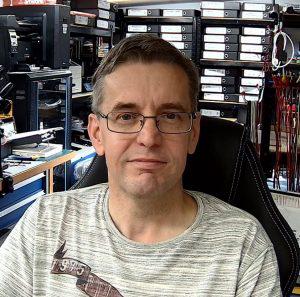
Dave Jones: So where is your workshop? For those who, we can, you can see this video, because we're recording video as well. For those who are listening to the podcast version, you can listen, see his background there. And you've done, you always shoot stuff in your shop. Where is your shop? Is it in the house? Is it in the garage? Or a commercial?
Ian Johnston: Sure. It's, I converted the garage. I got rid of the big door at the front, put two windows in and just totally converted it into a workshop. New door, the whole lot. Nice. Lined it all, insulated it all, new workbenches, the whole lot. And it'll never be a car garage again, that's for sure.
Dave Jones: Right.
Ian Johnston: Is there a video of that transformation or? No, there's not. There's probably a few photographs of when it was getting built by the builders. I probably took a few photographs, but there's no video. No. There'll be an early video on YouTube somewhere of when it was, I just got the workbenches in, but that's about it. Yeah.
Dave Jones: Because you've been on YouTube for like almost 10 plus years, haven't you? More than a decade?
Ian Johnston: Yeah, I must be approaching that. Yeah, I've been on YouTube a long time, but not as a content creator. I've only got a hundred and a hundred and eight videos, something like that. I don't have a lot of videos, you know, but. I see videos going back 11 years.
Dave Jones: There you go. Well, maybe, maybe, maybe. I didn't want to say how long you've been on there. Sorry. I didn't want to. No, no, no, no. The years are getting away.
Ian Johnston: I've probably deleted a few of the early ones right now. Oh, okay.
Dave Jones: Cause your first ones are do it yourself Segway by the looks of it. You built your own homemade Segway.
Ian Johnston: Yeah, yeah. That was before it was really a channel. That was just me. Right. About really, but I just left that one zone. A bit of fun that one there. That was just when I started to get back into the electronics. And like I said, you're probably to blame for that.
Dave Jones: That's not the first time I've heard that. Sorry. So also apologies to your wife as well. Oh boy. So, right. So we actually come from a similar background, oil and gas. You're the oil and gas industry. Same as me. Yeah. Like a decade in that. So, yeah. So can you tell us about where you've worked in your career? I've only had, I'm 58 now. And I've only had two jobs since I was 19.
Ian Johnston: Wow. And the first job was in the oil industry. I was 19. And it happened to be a tiny little company in Aberdeen. And they were looking for workshop technicians. I was completely green.
Ian Johnston: I was into electronics before then, you know, as a hobbyist at home. But it was the perfect job. It was like getting paid for a hobby. It was absolutely brilliant. And I just worked in a workshop, you know, building, drilling instruments, drilling instruments, and drilling instruments. And I've only had two jobs since I was 19. And I've only had two jobs since I was 19. Wow. And the first job was in the oil industry. I was 19. And it happened to be a tiny little company in Aberdeen. And they were looking for workshop technicians. I was completely green. I was into electronics before then, you know, as a hobbyist at home. But it was the perfect job. It was like getting paid for a hobby. It was absolutely brilliant. And I just worked in a workshop, you know, building drilling instrumentation and controls for offshore. And the company built, we built our own electronics, you know, Z80 based stuff back then. And I basically just worked my way up from workshop technician to charge hand in the workshop, technical support, and I ended up being R&D manager at the end. Nice. And designing all the electronics. So it was fantastic. And I would have been there now, but the company had problems. So I ended up moving away and took a desk job for another old company, but nothing to do with electronics. And I was about a few years into that, and I missed the soldering iron. That's what it basically came down to.
Dave Jones: And those fumes were calling, were they?
Speaker ?: Yeah.
Ian Johnston: So that's when I kind of started looking a bit more seriously, you know, building a home workshop and that sort of thing. And then YouTube followed off the back of that, really. So, you know, it's been great. It's been a good career, really. I'm not sad to give it up because I much prefer being in the workshop. Right.
Dave Jones: Yeah. I see a photo on your website here of you, you're into audio, like bands and stuff, doing audio stuff. Yeah.
Ian Johnston: Me and hobbies, I don't touch on them lightly. I go full in. You go all in. Right. I go full in. So that was, I ended up, I was sound man for an 18 piece soul band. Of course. And it ended up being one of the biggest bands of that type in Scotland. Wow. And we had a big following and the guy that ran the band was absolutely loaded. So anything I wanted in terms of gear, I got. Nice. Nice. So it was great. So the, you know, big 32 channel mixing desks, you name it, I got it. Yeah. I can see it there in the photo.
Dave Jones: Yep. All right. Okay. Yeah.
Ian Johnston: I can see the big rack and the big mixing desk. Yeah.
Speaker ?: Yeah.
Dave Jones: Fantastic.
Ian Johnston: So, you know, I did that, you know, I did that for nine years, just as a hobby evenings and, you know, that sort of weekends really. Right. But it, it was kind of that or the electronics at that time. So I kind of side-lined the electronics that I wee while whilst I did that. And, but yeah, once the band finished up, I then went back to, back into the electronics again, big time.
Dave Jones: Got it. Very coincidentally, I mentioned you in a video today. Because I was doing a repair. Really? Yeah. I was doing a repair and I showed one of your videos. Yeah. You might've seen on Twitter. Cause yeah, we follow each other on Twitter. Yeah.
Dave Jones: Yeah. And yeah, so I'm repairing a, an Agilent slash Keysight, a U1272A multimeter, which is the same as, well, it's sort of like a little upgraded version to your U12, what is it? the 50, 1253 B that you did a repair video on.
Dave Jones: Yeah. Guess what my one, guess what the fault in mine is? I wonder.
Ian Johnston: I had no idea.
Dave Jones: This was a thing in these multimeters. I didn't know. Um, and so I'm doing, I'm doing my video and you know, when I'm troubleshooting it and I'm soldering on wires, getting voltages out and reading voltages and stuff. Um, and, and then it dawned on me, I think this might be a thing. So I search, so I simply search Google what comes up the EV blog forum, your videos, your, your, your video was one of them that popped up. And yeah, um, Are you going to replace the display then? I've just ordered one. Yes. Yes. I've just ordered a replacement.
Ian Johnston: Be careful. Be careful. Oh, first one. The first one I ordered. Yeah. I think it's easier with the 1271, but the first one I ordered, it was a mirror image.
Dave Jones: Yeah. I saw that. I was just watching it before this. I was just watching and I'm going, you're getting what, what causes the mirror image?
Ian Johnston: Just a different spec to the display. Right. But it's really hard to order the right one. You know, like all the part numbers are maybe the same. I don't know, but it's quite hard to order the right one.
Dave Jones: Well, it's specifically said U1272A. Mine's the AX model, but I don't think the AX model is any different. So yeah, for those who don't know, it's the spoiler alert. It's the OLED display and these OLED displays just famously fail. And apparently it's a huge thing. Like all these key site meters and there's multiple sellers on eBay selling replacement screens. Yeah. For these key site meters that all had OLEDs.
Ian Johnston: And I think, I think I had it. I think I converted mine. I didn't order another display. Yeah. Ordered a little adapter board. Yeah. I saw those. Yep. Yeah.
Dave Jones: Oh, is that what that board is? It mirrors it back. Oh, yeah. Oh, okay. Cause it's got this wide board that sort of like solders in place and converts it. There's also another one with, or you can just buy the screen and replace that, but it'd probably fight, but they're harder to get. Just the actual screen itself with the ribbon and everything. Yeah. So I've, I've ordered the one with the board. So it should hopefully be a drop in, you know, replacement. We will see. We'll see if it's backwards. Okay. I've been diddled and they're not cheap. They're not cheap either. I paid like 80 us bucks for it. So I'm going to, I don't even think the YouTube income from the video will pay for that. So, so I'm going to auction it off when it's done. I'll just auction the thing. Plus postage. Plus postage as well, which to Australia is always, you know, a significant amount extra. Yeah. Yeah. Yeah. For those who don't yet know, you mostly do repair videos on your channel. Is that. I do.
Ian Johnston: Right. Yeah.
Dave Jones: Or that is. Yeah.
Dave Jones: Yeah. Yeah.
Dave Jones: Yeah. Yeah.
Dave Jones: Yeah. For those who don't yet know, you mostly do repair videos on your channel. Is that. I do. Yeah. Would it be a good, good lot of them?
Ian Johnston: Most of them. And I think the reason for that is back when I was working for the man, in charge of the workshop and all the electronics technicians and all the rest of it, I did quite a lot of teaching, you know, as you do when you're the lead in the workshop. Yeah. I go into that vein of showing people what to do, you know, when, you know, to go to, you know, to do their work and I've kind of subconsciously continued on doing that in my YouTube videos. I don't just want to do a straight repair, change out the caps and off we go. Right. And I want to give a little bit of background about, you know, what the circuits do and then, you know, that kind of thing. So that's why I think I enjoy the repairs more than anything else. I don't do reviews, you know?
Dave Jones: Oh, okay. Right. So you enjoy the commentary and teaching part of the review process. Yeah.
Ian Johnston: Yeah. Yeah.
Dave Jones: Yeah. So do you get comments like I get on my repair videos? It's like, that's a five minute repair. Why is your video 30 minutes long? And it's like, well, I explained a lot of stuff.
Ian Johnston: Sometimes, maybe not for a while, but sometimes. Yeah. You know, yeah. Yeah. Why the 40 minute video? It's just three caps. You know what I mean?
Dave Jones: Yeah, exactly. It's just, yeah. Oh, boy.
Ian Johnston: Sorry. On the opposite side, I've got a, I don't often do it, but I've got like a six episode repair of a Keithley 2001. Whoa. And I thought that would not go down well at all because I like to finish a video, a conclusion, you know, rather than drag on to episode one, two, three, four. And it ended up being huge. Wow. People were just loving it because it was an epic, epic repair. Yeah.
Dave Jones: They were following along at home. As I say, they're playing along at home, you know, just, yeah, yeah, yeah. Yeah. Actually following the hunt. Yeah. Although I do get complaints if I, you know, because a lot of my often, especially on my second channel, a lot of my repairs will be just, I just like, I've got, you know, half an hour to work on it. So I'll just shoot a quick video and then I might get back to it. I might not. So I'll just throw it on the second channel and then everyone complains. Why didn't you finish it? You know? And it's like, well, I dunno. I just like, you know, I've got a couple like that.
Ian Johnston: I've got part ones that are sitting. I can't get back to a part two because they're impossible to repair. Cause I've got no schematics. They're a nightmare.
Dave Jones: Or they're just not worth your time. You'd spend so much time on it. You could probably do it if you devoted, you know, a week or two full time to it or something, you know? Yeah.
Ian Johnston: And probably the money as well. And the parts I'd have to try, you know, it might not fix it and that sort of thing. So a couple of them sitting, but we'll get back to them eventually. Right.
Dave Jones: The, the old beyond economical repair, either, either it's economical in terms of money or it's economical in terms of time or both. Or sanity, you know? Yeah.
Speaker ?: Yeah.
Dave Jones: I had one, which is a big, was a big, a dynamic signal analyzer, big HP jobby with all the multiple cards, you know? Yeah, massive cards. And I did like four parts on that or something. And then I just gave it up because I realized that the, like I was, I was testing op amps on the board and like half the op amps were dead. And it's like the, the power supply had gone high voltage on the rail that powers everything on the board. It's like, and we, which has custom ASICs on it and all it's like, no, no, I'm not going to waste any more time on this.
Ian Johnston: That's what happened with the Keithley 2001. There's a big analog board and there's a big digital board. Yep. And they both got zapped. Oh, it just so happened. That was in the part one video. I kind of come to that conclusion and somebody, one of my viewers said, I've got a Keithley 2001. You can have it. It's broken. Oh, no, I got it. I got it for the analog board, but my digital board, I had to fix it. So I ended up pulling off the CPU, you know, your 120 pin flat back and all sorts. So it was a big major job. And just about every IC I pulled from it and replaced. And the joy, you see the joy in my face and my voice when I switch it on and it works. Fantastic.
Speaker ?: Oh yeah.
Dave Jones: And also people love that. Yeah. The multi-partists. Yeah. I like, yeah, I'm, I'm, I'm getting a rep for not finishing repairs, you know? So I, I actually put a poll on Twitter. You might have seen it today. Should I upload this video just as I, before I get the screen, everyone voted. No, I finish it, finish it. Just get the screen.
Ian Johnston: I think you've got a lot more going on than me, Dave, in and around your workshop and all the rest of it. Oh, I don't know.
Dave Jones: I'm just, oh yeah, I got a wife and kids, you know, I've got the kids and the, yeah. Things happening and all sorts of stuff, but you know, shouldn't be an excuse. But anyway, I, I did get special permission to go home late tonight. Cause it's, you know, getting towards the evening here. So, you know, I got special permission to turn up late for dinner. Cause I'm recording. Oh boy. So what, what a lot of people might know you for though, is the, I got bit, it's a bit confusing. P, but make sure I get it right. PD VS2. Now it's the mini it's, it's the voltage source, the 10 volt voltage reference source. And you sent one into my mailbag like donkey's years ago. Wasn't it? Was it a mailbag or a?
Ian Johnston: It was a mailbag and it wasn't even a prototype. It was just, I just put it together and it was, I was trying to gauge your interest.
Dave Jones: That's right. And, and, and people wanted one, right? Didn't they? After the video people.
Ian Johnston: No, what actually happened was during the video, you said the words, Ian has got to make these. Oh, I remember that. Oh, right. That, that's all I needed. Right. And I was offering it. So then I ended up tearing apart. I completely redesigned it. Yeah. And turned it into a product and that became the PD VS2, the PD VS1. Right.
Dave Jones: Okay. So mine's, mine's just a rough proto.
Ian Johnston: Yeah. Yeah. Yeah. I changed the voter reference. I went to the LM 399. The one that you've got, not even, it's just a basic, uh, plastic package, uh, voltage reference. Right. So it's got nothing like the stability. That's right. Yep.
Dave Jones: Yep. I remember now it's coming.
Ian Johnston: How long ago was that? How many years ago was that? Five, six? Yeah. Maybe five years, something like that. Yeah.
Dave Jones: Yeah.
Ian Johnston: Wow. Ouch. So, so then I, uh, I, you know, I redesigned it and then eventually I upgraded it. I put in a rotary encoder on the front and I, uh, changed the microcontroller. It was just using the original one was just using the, um, 80 mega 328, like the early Arduinos have got. I went to a slightly bigger one, uh, to give me more IO and that became the PDVS2 with the rotary encoder and all the rest of it on it. And it was a bit better than eventually that, that be what happened with that one. It became too costly. The price, the costs of all the components went up and up and up and I decided I've got to make this cheaper. Yeah. Uh, that's when I redesigned it completely and it became the PDVS2 Mini. Right. I got rid of the rotary encoder, a smaller LCD, got my own, uh, aluminum CNC housing made for it and everything and just basically started again with it and it knocked quite a bit off the bomb. And that's what I make to this day.
Dave Jones: How much would, how much were you able to reduce the bomb by?
Ian Johnston: I'd be 30 or 40 pounds, something like that. That's significant. Yeah.
Dave Jones: So you, you manufacture these in house, right?
Ian Johnston: Yep. Yep. Absolutely everything happens in here. Obviously I, the, the CNC aluminum enclosure for the, the box it sits in, I get that made in China. Uh, it's too costly in the UK to do that. So I get that made in China and everything else, the PCBs are all hand assembled. Uh, cause I don't really have the quantity for a pick and place.
Dave Jones: I was going to ask about that. Yeah. What sort of a quantity are you making? What, what sort of batch sizes? I'm making batches of maybe 50 a time usually.
Ian Johnston: Ooh, yeah.
Dave Jones: That's kind of, uh, yeah.
Ian Johnston: But sometimes I make more, I've kind of got like a commercial customer. Um, in China, I'm actually selling back to the Chinese. Oh, nice.
Dave Jones: Wow. Fantastic. So, uh, yeah, that's a first. I don't think I've ever heard that before.
Ian Johnston: Well, to be, to be honest with you, it's an American company.
Dave Jones: I probably have a lot of people who are selling it. I'm not going to sell it.
Ian Johnston: I'm not going to sell it. Well, to be honest with you, it's an American company approached me and wanted to buy three. Right. problem there you go sold them three and then they came back to me says look we make um variable speed drives and we want to put your pdvs2 mini in this part as a calibration kit and we've got a little suitcase or something like that and i says yeah well what's the quantities are you talking about so i can't remember what they said it was like 150 a year 200 a year wow that's that's decent yeah so i said yeah i can live with that you know problem at all and i was bearing in mind i was still working for the man then so it was evenings and weekends and you're going damn i have to make that many yeah so but um it got way beyond the 200 a year or whatever they just as soon as i delivered and gave them the tracking number for ups they were back on the email right we need order another 50 and i'm going oh it just it just became it did become too much i had to go back to the medic company and tell them to slow down a bit because all the manufacturing was done in china and it was china that was actually selling to although the parent company was american so right it was it was it still goes on to this day but the quantity has been pulled right back because they listened to me
Dave Jones: so they yeah they probably are upselling that hugely like it's you know they're probably selling like a high-end huge high-end product where they don't you know it's kind of nothing to include a few hundred dollar handheld calibrator right for a yeah yeah yeah yeah right i mean i've i've worked with the
Ian Johnston: chinese before um years ago through the working for the man and you always went through a middleman and we used to get repeat orders via the middleman for extra bits of kit and ultimately it was never going to reach its destination the middleman was wanting his cut but in this case i don't think it's like that it could be but i don't think it is because it really is it's the chinese company that are ordering so i'm never really sure what's going on are these really seeing the ultimate destination or is it a warehouse somewhere with a whole load of pdvs2 minis stuck on
Dave Jones: a shelf well as long as they pay you it's fine right yeah absolutely yeah absolutely yeah so so how many do you reckon you've sold like and aside from that like to personal customers because it's a niche market
Ian Johnston: yeah well since i started if you include the pdvs2s and all that it's it's over a thousand i would
Dave Jones: wow that's that's actually quite a lot for it's over a thousand yeah but yeah but so people are just using it for multimedia calibration people just love to calibrate their moldy check their moldy meters and
Ian Johnston: the biggest um customers i've got are are basically hobbyists and stuff like that um but i do get companies buying them want to use them to help test their own kit and one of my best customers or my favorite customers and they only bought one and that was the people at cern for the large hadron collider
Dave Jones: yeah yeah cern have bought some of my stuff as well yeah and and what they were doing i i says the guy
Ian Johnston: i wrote him an email after i delivered it i says if you don't mind me asking what are you using it for what is what is cern and the large hadron collider want with a pdvs2 mini and he says that they've got these great big superconducting magnets that are cooled by liquid gas and all the rest of it and he says if something goes wrong with the cooling the magnets become resistive right and it's 12 kiloamps of current in those magnets he said and he said we can't afford to have any resistance at all in that magnet it's got to be superconducting and he says what your piece of kit's doing is we've got our own adcs for measuring the voltage across the magnets but every now and then we have to test our adcs to make sure that they're in spec and all the rest of it and that's what the pdvs2 mini was for just for testing their adcs yeah because there is they'd be
Dave Jones: using the adcs to measure the voltage drop or whatever and it's probably very small and they have to and and it goes uh critical at some i just uh an email the other day after the other week's episode about chris and i talked about superconductors and somebody emailed us who knows all about this sort of stuff and said yeah there is uh two different critical uh temperatures and to where it completely you know stops being superconductor there's no longer any uh pairs left there's no longer any bonded electron pairs or whatever it is how the superconductor works and and once that happens boom
Ian Johnston: what he said to me is is we can't have a hundred millivolts across that magnet for any longer than 10 microseconds 10 microseconds or no 10 milliseconds 10 milliseconds because at that sort of current boom the magic smoke's going to escape and well he mentioned the words explosion explosion so it's a serious it's a serious thing so wow that that's what they're doing as nice so i tried to catch up with the guy about six months later to find out i was hoping for photographs to tell you the truth but he's let but he's left and somebody else had taken over so i couldn't get anything out of them bummer that's a that's a favorite one serum's a favorite one the only other one i nearly had
Dave Jones: was nasa but i didn't have any stock at the time so oh no so you couldn't couldn't provide it so they went and ordered i don't know what would have been good what about those ones on ebay like the you know you can't you buy like a 20 dollar multimeter calibrator now and it's got the you know analog devices 80 something or other chip on it and they're okay probably you know if you want to calibrate your
Ian Johnston: three and a half digit multimeter i guess but yeah it's all about the tempco and all that you know as well and the you know the low tcr resistors and all the rest of it it's all about that and you know i ended i ended up making like i said in my workshop i do everything myself the 3d printer and the laser cutting everything i made my own thermal chamber so that i could put put the pdvs2 mini inside that and categorize it and all that sort of thing there so it's all about it's all about the tempco yeah i was
Dave Jones: going to ask about that because you individually um bake in and temperature and thermally cycle or whatever each one right and uh so how do you do do you do that what one by one or do you do ones in the chamber i was going to say how do you if you've got a batch of 100 units how do you
Ian Johnston: like where do you get the space to do this the thermal chamber is not used for that i really just for oh okay speaking speaking oh okay right yeah but when i make a batch of 50 i have to i can't do them one by one i leave them running for 10 days yeah on the workbench running uh 24 7 and i usually i've got enough space to put 50 on the workbench behind you oh okay yeah it takes up the whole
Dave Jones: i was going to say you would have to clear that whole thing i was going yeah yeah and then my power
Ian Johnston: supply i've got like two power supplies powering them all and it's a significant amount of current as well and when you walk in in the morning at the workshop the heat is unbearable just because of all the all the i mean the only the only draw about 50 milliamps each but yeah but you've got 50 of them it adds up so yeah so i run them like that for a you know 10 10 days yeah the 50 of them then i've got to calibrate them and that's another matter an entire right so that's just so you don't monitor them during
Dave Jones: that that's just a baking is it that's just a baking okay right yeah yeah and then how long does it take
Ian Johnston: you to calibrate each one well uh when i first started calibrating them i was doing them by hand one at a time and the issue is with the pdvs2 mini it's it's not just two set points a minimum and a maximum the the 20-bit DAC that i'm using i it's got quite a high um what do you call it non-linearity or is it
Dave Jones: the game oh forget the word new
Ian Johnston: DAC yeah yeah no there's no bit spare i'm i push it to the limit and give the customer access to every single bit that's there so what i was doing was uh i ended up changing the software for the pdvs2 mini and giving it a living set point so there's a set point at zero volts one vote two vote three vote all the way up to 10 volts and if you're calibrating that by hand it takes forever pushing the little buttons on
Dave Jones: the oh yeah yeah right have you got yeah haven't automated that haven't you got a software routine
Ian Johnston: like a building test routine okay what i ended up doing is i wrote win gpib which is hosted on your forums uh the gpib app for windows and i've got like a control loop i've got my 34 58a which is connected my pc and also the pdvs2 mini's got a serial link to my pc as well so the app the app can instruct the pdvs2 mini go to one vote and then the 34 58a will pick that up detect the error and then compensate send back to the pdvs2 mini with the error and it'll adjust the counts accordingly and it'll go right through all the set points uh one at a time so basically i didn't right now i just hit a button and off it goes and calibrates calibrates you don't want to be doing that manually you want to put the effort in up
Dave Jones: front to design in custom like test routines and stuff like that yeah yeah yep that's worth its weight in gold yeah absolutely so so do you so you don't have like a bed of nails or anything like you don't have you test them as like a final product in the box there's two circuit boards in it there's
Ian Johnston: a charger board and also the main board and i've got little test jigs you know bed and nails sort of thing for both of them where i can individually test them especially a charger board because it's got you know the regulators on it 3.3 volt regulator and all that so i can test you know them individually and then i obviously sold them together with high confidence there's not going to be a problem got it yeah and then that's when i start the the final assembly and then the heat soak test in for a
Dave Jones: week after that or 10 days so how do you um do you just take like an individual reading or you take average readings with the 34 58a or how do you like is it like super stable do you does it like flip over
Ian Johnston: a couple of digits at the end oh no no yeah yeah yeah yes oh i mean the 34 58 is an eight and a half digit multimeter the pdvs2 mini is not capable of eight and a half digits so there's you know there's quite a bit of noise at that right hand side if you know what i mean uh yeah so you you run a high xd xd xd xd xd xd xd xd xd xd xd xd xd xd xd xd xd xd xd xd xd xd xd xd xd xd xd xd xd xd xd xd xd xd xd xd xd xd xd xd xd xd xd xd xd xd xd xd xd xd xd xd xd xd xd xd xd xd xd xd xd xd xd xd xd xd xd xd xd xd xd xd xd xd xd xd xd xd xd xd xd xd xd xd xd xd xd xd xd xd xd xd xd xd xd xd xd xd xd xd xd xd xd xd xd xd xd xd xd xd x
Dave Jones: 50, 50. Okay. Yeah. 50 Hertz all the way. All right. Yeah. It averages, it's integration time is a multiple of the main's frequency. So it doesn't, so main's interference doesn't cause a problem. So that's why if you've got a multimeter like that and you import it and it's, you know, it's set for the wrong frequency, it's not going to work as well. It's not going to work. Yeah. Yeah. Yeah. It'll do a number of power line cycle averages as well as you and you do averages on top of that as well.
Ian Johnston: Yeah. And then once it's completed, I'll actually go and spot check it as well. I'll just run through a few of the set points, make sure they're okay, make sure there's no problems. And then on my calibration certificate is auto generated from the app as well. It writes a PDF and spits out a completed, completed calibration cert. I record the temperature that it was calibrated at everything that was all done. I've tried to automate every single aspect of it.
Dave Jones: And that's been worth its weight in gold. I bet. Yeah. Yeah. Yeah. Yeah. People were telling you, put the effort in upfront to automate your production. I've done a video on that where just, you know, a simple thing like adding a test connector onto your PCB or something like that, that you can plug up a, you know, a test jig and a battery and, you know, or something like that. Just make it easier than having to plug in your whole product and stuff.
Ian Johnston: It's just... When I was calibrating them by hand, it was taking like 20 minutes per unit. And it's not so much the time's a factor, but also the temperature in the workshop can go up and down in that time. It can too. Yeah, of course. And I have to, I like to keep it within half a degree of, you know, so that it doesn't vary whilst I'm calibrating it. Otherwise the calibration's a waste of time.
Dave Jones: Yeah. Well, I found that my, my lab here, if I leave the aircon on, you might think aircon, oh, okay. It's a constant temperature. No. If you log it, you can, I can see it fluctuating by at least half a plus minus half a degree. Like it just, you know, it's like a sawtooth kind of, you know, thing. And it just varies. So yeah, if you try and keep it within half a degree, yeah, you've got to do it within like a 30, like, well, you know, a five minute window or even shorter, like a minute or
Ian Johnston: something. Yeah. Well, I mean, my workshop here, I've got an aircon as well and it's mounted up in the wall and it's a heater as well. It's cooler heater fan, but it was given me, I don't know why it was, it was more than two degrees hysteresis. Oh yeah.
Dave Jones: Ouch. Yeah. Mine in the office here, I think is one. So yeah, two's a lot.
Ian Johnston: And I couldn't live with it. I couldn't live with it. So I ended up hacking the aircon. It's got a wifi module in it. So I ended up disabling its own control system. Nice. And I wrote an app to interface via wifi. Oh, that's great. I've got my own temperature sensor mounted on the workbench and it does its own control of the air, the aircon itself. Oh, fantastic. And I get about maybe 0.2, 0.3 of a degree hysteresis now.
Dave Jones: Oh, very, that's, that's, that is tight. Yeah. Yeah. That's hard to do. People don't realize, you know, and the small and the bigger the space, the harder it is, you know, the smaller spaces. Yeah. Yeah.
Ian Johnston: Well, it's a tiny space. It's relatively easy to do in here, but it's worth its weight in gold. It means almost all day. I, you know, I knew the 3458A is not going to, you know, be subject to any temperature changes. But by more than maybe half a degree and that's within the spec of the 3458A. So job done.
Dave Jones: Oh, okay. Yes, it is. It'd have a spec. Okay. Yeah. I think it's one degree, one degree. Oh, one. Okay. Right. Yes. Yeah. I think I remember that from the spec. So how often do you get that cowed every year? Do you send it out for external calibration?
Ian Johnston: Yeah. I sent it to Keysight down in England and I originally did it once a year. And then I asked him, I says, I actually asked him, I says, you know, what's the, whose call is it that it's once a year? And he says, no, you can do what you want. He says, we've got plenty of customers that do once every two years. And I says, oh, well, I'll go with that then. Because it never moves. No, it never moves.
Dave Jones: No, it never moves. That's why you pay 5,000. However, how much is one of those brand new?
Ian Johnston: I think they're over 11,000 pounds now. Wow.
Dave Jones: So is yours brand new or second hand?
Ian Johnston: No, no, no. I bought mine second hand from a dealer in Germany a few years ago.
Dave Jones: That's what almost everyone does. Yeah. Yeah. Because they're so good. Like you just buy it and you get it calibrated and it just, it doesn't, they're rock solid. It just doesn't.
Ian Johnston: Well, well, my, this is my second one. The first one I got from the dealer, I'd had it a week and it started drifting and it's a very, very common problem with the 3458A. Really? Yeah, you can leave it overnight. I thought that was solid as a rock. No, no, there's the main, one of the main chips on the board.
Dave Jones: Yeah. Okay. So there's a common failure mode is there?
Ian Johnston: There's a common U182, I think it is on the board. Very, very common. And you can't replace the chip. The key site will only sell you a new board, which costs over, over a thousand pounds. So I ended up shipping it back to Germany and they shipped me another unit.
Dave Jones: So it was all okay. Oh, okay. So you got one. So, so it's either, so either you're going to get one that drifts like buggery or you're going to get one that's rock solid. Pretty much. It's got that right. Okay.
Ian Johnston: You know, if you buy, if you, if they come up on eBay as faulty, be really careful what you buy because it's expensive to fix the problem.
Dave Jones: Right. Wow. So somebody started seeing some drift and they went, Oh yeah, let's sell this on eBay. Yeah.
Ian Johnston: I did buy one from eBay. I've actually had three because I did actually buy one from eBay and I got it for like 600 pounds.
Dave Jones: Oh no, really?
Ian Johnston: And I knew full well what was going to be wrong with it. Right. It came from the Philippines. So there's not exactly. Yep. You know, I took a chance. I think I know what seller it might be.
Dave Jones: Yeah.
Ian Johnston: And I got it. And of course it drifted. So I ended up, I ended up buying a new board from keysight. You could trade in your old circuit board and get the new one. But for, you know, I ended up being 1600 pounds out of pocket, but still a very, very cheap. Yeah, exactly.
Dave Jones: You could actually flip that for a huge profit. You could still flip it. Yeah.
Ian Johnston: I ended up selling it in the end, but I kept my original one. I'll never get rid of that. It's going to the grave with me. Yeah. Yeah. Right. Here lies Ian with his 30, 34, 58.
Speaker ?: Oh goodness. So yeah.
Dave Jones: What's the one on the bench behind you? Is that, is that repair or? That's a 32, 45 A. That's a universal source. HP universal source. Oh, okay. Right. It kind of looks like a, they all look very similar. Yeah. It's almost the same front as the 34, 50, 80.
Ian Johnston: Yeah. So that's, that's at a pair.
Dave Jones: Um, I think I'm going to, I think I'm going to, I'm going to, I'm going to, I'm going to, I'm going to, I'm going to, I'm going to, I'm going to, I'm going to, I'm going to do I look very similar.
Ian Johnston: Yeah. It's almost the same front as the 34, 50, 80. Yeah. So that's, that's at a pair. Um, and a bit of an upgrade. It's more than a pair. It's a, I'm upgrading it. And they're not the most noise free units. Given that, given this, you know, the spec of them are not that great. They can be a little bit noisy at the six and a half digit. So this one here, I'm changing out the old 30 odd year old op amps and putting in something a bit more modern, maybe choppers, something like that. So I'm just trying to see if I can improve it, uh, as well as fix it at the same, at the same time. So I've done a part one video for that. And that's part two sitting waiting to, to get on with there.
Dave Jones: Oh yes. I see it. Yes. That's your latest video. The universal sauce 32, 45, yeah. Yeah. Yeah. Okay.
Ian Johnston: I've got a pair, but I've also got my own one as well. So I've got one that can benchmark too, as I make mods to this one. So it's quite handy.
Dave Jones: Nice. Oh yeah. Yeah. That's very like, but when you've got a second unit to like compare against and do things, it's just so handy. Yeah. What does the eBay market like in Scotland? So, so do you normally get them local or is there much available local? Cause here in Australia, it's like a backwater, right? Right. It's like, we, we just don't get anything here. And if we, or if we do, we have to import it from the U S it's, you know, and it costs like $500 shipping.
Ian Johnston: It's, it's much the same there, but I don't think the shipping's as bad for me as it would be for you. But yeah, a lot of my faulty gear that I buy off eBay does come from the States. But I bucked a trend with that, maybe about a year ago. I got contacted by a guy and he said, I've got six, six and a half digit multimeters. And I think they're all faulty. Do you want them? And I thought, Oh, here we go. Where are you? He's 15 miles away.
Dave Jones: Oh, no way. Did you go and get them? I did. Absolutely. Oh, fantastic. What? These were three, double four Oh ones or something. Were they?
Ian Johnston: Yeah. Yeah. There was, there was a few of them. 86 fluke, 88, 48, 48, 46 is. That's one of the impossible repairs I've got sitting at the back there because they won't release the schematic. So, and it's a complicated design and those ones, and they're pretty hard to repair. But yeah, yeah, I got them and I did a deal with them. I got some of them, I bought off them dirt cheap and the other ones I just fixed and gave them them back. All right. Payment for getting them cheap.
Dave Jones: Okay. That was nice.
Ian Johnston: He's got, he's got, he's got a house full of stuff. Oh, really? And I just took his DMMs. Oh, right.
Dave Jones: Okay. So he's just a private guy with a garage. He just works at some company or something or?
Ian Johnston: Well, no, what he said was that, uh, him and his mate, his friend, uh, bought a job lot. I don't know if a company had gone bust somewhere and they got a pallet full of.
Speaker ?: Yeah.
Dave Jones: We just don't get that here in Australia. It's like I've occasionally I've got one or two videos where I've gotten a pallet loaded a local auction, but it's so rare here to get them. And then, and then there's our professional eBay merchants who go in and buy them and they just beat up crazy prices. Cause they just then flip them on eBay for, you know, they're happy to make a, you know, 10, 20% margin or something. It's just volume for them, you know, so it's, it's hard to compete even if you can. Yeah.
Ian Johnston: And then the eBay prices have just gone. Hey, where everybody's repairing stuff now, you know what I mean? So I think, you know, like some me and you and all the other YouTubers, we've kind of knackered ourselves as I would call it. You know, we've made it too much of a thing now. So people are jumping on it too much. So there are lots of repair videos, repair channels now, they seem to be a lot, which is great to see. Yeah. Yeah.
Dave Jones: Yeah. It's.
Ian Johnston: So I end up importing a lot of stuff, you know, I liked, you know, I'll probably, I think getting paid and sponsored on my YouTube channel helps because I can pay a little bit more than maybe what it's worth. But I get my money back through the, through the sponsor.
Dave Jones: So if you've got a sponsorship, every video or. Yeah. Yeah.
Ian Johnston: Yeah. Yeah. Okay. Right. I'm using PCB where they're pretty good. Pays the bills. Yeah. Pays for the new gear. Pays for the faulty gear, really. And then I can maybe flip it on eBay afterwards or something. Some of the stuff I'll keep, some of it will flip. Nice.
Dave Jones: I wish I could do more. Like people ask for a pair videos and I don't mind doing repair videos, but I'm not going to kind of like finish it in one day, finish a video in one day and like upload and be done with it. So I can't like, and of course it's going to have a part, even if I find a faulty part, I'm not going to have it. Or did you keys not going to, you know, like, I can't just get it in a day, you know, so I've got to wait. Yeah. Yeah. I just, I don't know. I can't just get it in a day or like all my, like I deliberately buy faulty stuff on eBay. You know, it's so like I searched for occasionally I searched for, you know, things like I took the faulty box, you know, so it's sold as parts as is or whatever. And, and, you know, and I get them and it works and it's like, what, what? You know, it's like, I couldn't believe it. The fuse is blown or something like that. Or the fuse is blown or so it's either something incredibly simple or it's beyond economical repair. It's like, I just have no luck.
Ian Johnston: I put, I put some that I've faulty gear I bought off of eBay and you open up and a wire has been cut. So it's obviously some company that want to refresh their equipment. They sabotage. So they sabotage their own equipment by cutting a wire or something like that. I've had a few of them. A few of them. Wow. Yeah. Yeah.
Dave Jones: Yeah. Wow. I don't think I've, I've never had anything like that. Mine's either a simple like blow and fuse or something really, or it just works. And people didn't know how to, or the seller didn't know how to, you know, sometimes when you're searching the eBay listings, you can get a, like a, a sniff that, oh, this, this seller has no idea. This actually works. I bet you it works, you know, and cause I've been buying and selling on an eBay for 20 plus years or something. Yeah. Long time. I've, I've got like a thousand feedback.
Ian Johnston: Wow. I, I, I've got a, I had, I repaired a five and a half digit multimeter and I went inside it on video because it's on my channel and a connector had been pulled and it's not like it vibrated loose. No. Right. Okay. I'm going to get it firmly back into place. So some place, somebody had obviously just pulled the connector, boxed it back up to do a boss. This isn't working. All right, we'll get you a new one.
Dave Jones: Uh, in the case of the artist in the artist in the artist in artist in artist in artist in artist artist artist artist artist artist artist artist artist artist artist artist artist artist artist artist artist artist artist artist artist artist artist artist artist artist artist artist artist artist artist artist artist artist artist artist artist artist artist artist artist artist artist artist artist artist artist artist artist artist artist artist artist artist artist artist artist artist artist artist artist artist artist artist artist artist artist artist artist artist artist artist artist artist artist artist artist artist artist artist artist artist artist artist artist artist artist artist artist artist artist artist artist artist artist artist artist artist artist artist artist artist artist artist artist artist artist artist artist artist artist artist artist artist artist artist artist artist artist artist artist artist artist artist artist artist artist artist artist artist artist artist artist artist artist artist artist artist artist artist artist artist artist artist artist artist artist artist artist artist artist artist artist artist artist artist artist artist artist artist artist artist artist artist artist artist artist artist artist artist artist artist artist artist artist artist artist artist artist artist artist artist artist artist artist artist artist artist artist artist artist artist artist artist artist artist artist artist artist artist
Ian Johnston: manufacturing electronic equipment and they accidentally put 40 volts up its quagga and Just look we're not going to repair it. Here you go. You can have it. So, you know It's always good. So, you know, it comes from a wide variety of sources, but mainly eBay anyway Right. So was that fault just the output pass transistor? Yeah. Yeah, right. Yeah, op-amp I think it was. I can't remember. I think it was an op-amp that failed. And an op-amp as well. Yeah Something like that. I can't remember. Oh, okay. Right. So it was fairly easy to pair that one. Right. Yeah, it worked. Nice
Dave Jones: Yeah, yeah, I because I used to do this a lot of people don't know before This whole YouTube thing one of my hobbies was buying and selling test gear on eBay So I buy from the US because I found that in Australia I made a quite a lot of money out of this and that's why I've got like a thousand feedback on my old eBay account. I've got multiple Yeah, so I would take the risk to buy from the US and because I found that a lot of people in Australia Would not take the risk of buying from overseas They wouldn't buy test gear from overseas Right. They'd only buy locally. So I would I would take the risk and then I'd even if If it was faulty, I'd repair it or I'd rejuvenate it You know and like clean it up and calibrate it and stuff and then I'd resell it locally and then I could look You know I could easily triple my money on these things Wow Yeah, like you know, so I could buy like a five hundred dollar scope and resell it for like Like two thousand dollars or something. It's nuts All right, you just had to take the risk of importing it. Yeah. Yeah, sometimes things were you know It might not work out but ninety five percent of the time it was yeah I would make it I'll buy from anywhere anywhere
Ian Johnston: Anywhere on the globe I'll buy from I don't really you know, it doesn't make much difference really but I'll buy from anywhere
Dave Jones: Have you bought have you bought from the famous um Israeli? I have oh you have how did that work out?
Ian Johnston: You commented On the four I posted in the four to your forums and you posted back you replied back. Is this from? From the Israeli seller and I went yep
Dave Jones: I'm not sure what I did it look V-Day because they for those who don't know this What is it test? So surplus Mart or something? Are they still going? Yeah, something like that Yeah, and they sell this test gear that looks like it's been run over by a tank or it's been or it's been in an explosion or it's been used as Artillery practice or whatever, you know, it's like And they just post it and they post gorgeous high-res photos of it and it's just mangled mess
Ian Johnston: Yeah, I bought an Agilent power supply from them. It was exactly the same If you dropped it from 30 foot It wouldn't have looked as bad as it did in the photographs So did it work tell us Well, yeah, I think I ended up super gluing the front panel back together and a million bits And I got it working and then in the end I ended up buying a new front panel for it And I think the The display board was Bent or something like that. Yeah, I got it working in the end, but it was a mess
Dave Jones: But yeah, I'll take a chance no problem. Yeah, yeah, it's so funny like occasionally I see bargains on there But other ones i'm going i'm not touching that one that 10 foot pole I don't know just I don't know if anyone knows the story of how they get in this You know, it's it's just this israeli seller that gets them and they Purposely maybe they purposely destroy them because because that's a lot of that's a thing if people don't know it's like Companies will have a policy that once you dispose of something you must destroy it So before you toss it in the dumpster, so you must get a hammer to it or you must you know Do something to it. So that maybe that's why you find cut wires and stuff like that. That could be the um, because yeah a lot of companies will have a company a policy a you are not to dumpster dive and b It must be destroyed before that's part of the write-off process or something and you've got Some of them you've even got to document it
Ian Johnston: um, so yeah, that gets me you'll you'll see every now and then a 3450 at ear Which is arguably the world's best multimeter and they end up on ebay and State that they're in you couldn't have dragged it behind a car. Oh You know it breaks the heart F how does a workshop or how does a you know a facility let? Their test equipment of that caliber get to that into that state and beats me
Dave Jones: So it's got to be that it's got to be that policy I Oh, should I name them? There is a famous one of the big test equipment companies had a buyback Policy like I know a trade-in policy once you you would trade in your scope a different brand or an older version of their Scopes or even a totally different brand you'd trade in one, you know It could be an old even an old like analog crow, you know, so you can trade in one of those and um And you would get a discount on their new one and it was through the dealers and the dealers Had to destroy them the deal even people were giving in these perfectly functional great scopes as Tradings even like relatively high-end ones because they were trading in for a much higher end one And they had to destroy them though ordered To destroy them and they had to provide evidence that they were destroyed so they wouldn't make it back On to the secondhand market and and and then which would then cut into their sales But it cut into everyone's sales, but yeah, they were yep I won't name them you can speculate below in the comments But yes, yes the dealers had to provide evidence of destruction and it was oh Oh terrible terrible it's a shame. No, I just it it breaks the heart Yeah, yeah, oh boy, so yeah, so you're you're forced to buy from overseas these europe Do you buy much from europe? Is that a market where you can get? Decent price testing not really
Ian Johnston: And then it's it's it's either uk or us really right I'll pay the shipping the shipping's not too bad If they go by the ebay shipping program, it's okay, where you wait a lot longer, but it's a lot lot cheaper Yeah, but not a lot comes from Maybe one or two france i think rings a bell for something but no it's the eu Brexit and all the rest of it makes it a little bit more difficult for importing into the uk now it's actually easier almost to import it from the us than it is from Oh interesting for some stuff. Yeah, it's a headache. Yeah. Yeah. Yeah, right. Have you ever have you had any bad packaging?
Dave Jones: on Test gear like i've i've shown some horrible ones
Ian Johnston: I think i've been lucky, you know, and I haven't even needed to see ask them You know before you know, they ship it, you know, please be careful. I haven't really needed to do that I think i've just been lucky it's not been too bad, you know But I know I know that some of the guys out there have had Horror stories with packaging and all the rest. Oh i've seen some shockers, but yeah, but actually they haven't damaged
Dave Jones: I don't think i've had a damaged one like the package has been just just chewed to shreds crushed to shreds, but yeah, ultimately the stuff has worked so i've been fairly lucky But yeah, I know people get you know, 34 58 a's and they get shipped like just Just with one thing of bubble wrap tossed in the box, you know, it's like oh No, the horror the horror
Ian Johnston: I think I had one damaged item. It was a A solartron multimeter great big thing and it's got two little two little card handles Two little handles in the front and one of them had been smashed off
Dave Jones: But well, that's that's better than the controls being smashed off. That's for sure
Ian Johnston: What I like buying I haven't done in a while Wrecked equipment. I do like buying wrecked equipment Whether it needs straightened out mechanically and all that I like doing that As in uh test gear or other types of Test gear test gear you had one of them it was a filter unit A dual filter unit. Oh, yes. Yes. I've still got that. That's the um is
Dave Jones: Tenford research. Yes. Yeah, yeah, yeah, I can't remember the SR6
Ian Johnston: I can't see it from here. Yep. Yeah. Yeah, I bought one of them and it was wrecked buckled Oh, buckle You know, I enjoyed straightening that one out and repainting it and all the rest of it Oh great
Dave Jones: So have you got much room to store gear there or is that or do you
Ian Johnston: Not really i've got like another building outside Which I use for storage, but it's not heated or anything like that. So i've really got to watch For humidity and all the rest of it what I put in there Yeah, I struggle for space really that's my arch enemy in my workshop is space So when I see you moving around between 100 meters squared to 50 meters 50 yeah, yeah, right. Okay
Dave Jones: Plus i've got two storage units. I don't want to rub it in but i'm gonna Yeah, jealousy comes to mind. I can tell you that I've got 44 square meters and 30 and 31 and so I've got the got 31 downstairs and 44 in another part of the business park Yeah I don't go to that often now It was you know ever since I got a convenient one downstairs I just Yeah, yeah, that's the way that's where all my stock sits
Ian Johnston: Right the wife won't let me store anything in the house. Oh, no, no, no, no Yeah, it's gotta be
Dave Jones: Yep Yeah, that's why yeah, I purchased two store our storage units a thing there In in scotland like if you've got like a nearby business park with storage units and office space and
Ian Johnston: There there are but they're not a big thing I've never I've never ever contemplated using one I just like even I like to have everything to hand You know, I mean but I've never really contemplated that I suppose if I really had to I would But the weird thing about being in manufacturing like I am Is the building I've got outside Is actually mostly packing material Huge rolls of bubble wrap and boxes and all the rest of it And it's surprising how much room all that takes up
Dave Jones: I've I've devoted an entire thing in here. My entire cubicle is for packing and shipping. That's for yeah, you know It's got my packing and shipping computer and all my shelves of stock and and bubble wrap and you know and uh And boxes and you know
Ian Johnston: Yeah, I remember you deliberating over that and i'm shouting at the screen. Yes, they've turned that into packing and shipping department You'll regret it if you leave it in the outside workshop
Dave Jones: Although I do I like I do I've got a couple of like I do have like a little work bench in there, which I use for like Photography on if i'm selling something on ebay or something like that You know, I I really want a nice Photography space i've got my light box next to me But I really need to there's a you'll see right behind me there is a light tent, you know But like it's a big one meter cubed You know, it's massive and like I don't really have anywhere to sort of like permanently set it up and Just devote to just product photography, you know, if I want to sell stuff on ebay, you know, so yeah, I just You don't use it that often really no, but it's just nice when it's there, you know, it's just boom You know, you don't have to dick around now I've got to spend 20 minutes dick it around just setting up for one ebay photo, you know
Ian Johnston: I've got to move stuff I've got to move stuff big time to do that
Speaker ?: Right
Dave Jones: Yep Uh all those ring all those ring ball binders behind you is that uh document is that documentation for the units?
Ian Johnston: Oh, that's parts that's part. Oh, that's hard. You've got them all in ring binders Yeah, you the clip that's inside throw that away and it's they're perfect So I've got maybe one for through hole resistors one for through hole caps One for transistors and they're all you know, they're all labeled up and it's just the most convenient way for me To store those parts rather than have the plastic bins. I think that most people use
Dave Jones: Uh, well, you've got something you've got some beside you there, but is that just your miscellaneous? That's just your miscellaneous. I see you've got all the drawers there. Oh, yeah
Ian Johnston: That's for things like spiral wrap and usb cables and and all that sort of stuff But components are stored in the the binders the boxes at the back
Dave Jones: So no pick and place machine anytime
Ian Johnston: No, I mean, where would I put it? Where would you put it? Yeah, exactly. Yeah, exactly I did get plans drawn up to knock through that a back wall in the workshop there and I have like an eight foot by eight foot space and I was going to put the laser cutter Maybe the 3d printer and maybe a pick in place But I just just can't warrant the The cost is it's not just the cost of the pick in place. It's the learning. Yes. Oh time. Oh, yeah
Dave Jones: It's a huge time involved. Yeah You're just better off giving it to someone who'd who'll do it for you and paying, you know Five or ten pounds per board or something together. Yeah
Ian Johnston: I mean if pdvs2 minis went through the roof Then I'd have to do something you would have to do something. Yeah, you know right now I know I can assemble all the pcbs for 50 and maybe four days And you know and what what's four days? It's not bad. It's not too bad. Yep. Yeah, but you'd spend four days
Dave Jones: Setting up and dicking around with a pick and place machine anyway, probably just to make 50 boards Yeah, you know forget how to use it, you know, yeah, yeah, exactly. Yes. Yes You wait six months and then you yeah, you've got stuff from scratch again
Ian Johnston: You know, so I know no no, so I've kind of avoided that, you know, I mean, I'll just As good as it is at the moment it works out as it is at the moment. So happy with that
Dave Jones: Right. Have you got anyone local? Is there like a local assembly house to you that could?
Ian Johnston: I've never really looked. I've never never really looked It's probably my own fault, but I don't know if it's trust is one thing, but you know, there's low tcr resistors and all that on the pdvs2 And it's quite a some bespoke parts and stuff like that. And they're expensive
Dave Jones: Yeah, yeah, you can't just waste them like you can with you know, 0.1 cent resistors, you know
Ian Johnston: Yeah, exactly exactly. So i'm not really sure I could trust that, you know, I mean, so Just kind of avoided that as well. I've never even gone for coats. It's certainly in the uk It would be too expensive. I'd have to get it done overseas
Dave Jones: You know the the assembly right because my I used to um, sell I used to sell kits and I used to hand assemble a watch. I I I used to sell a calculator watch I used to do runs of those and I was doing, you know, 50 hundred boards and stuff like that I used to do them myself and then screw this right and um, so I so I advertised on this was before way before the blog I advertised on uh usenet Usenet oh, yeah, yeah, yeah Right, I advertised on usenet and some guy in melbourne said oh, yeah, i'll assemble those for you And he just in any hand assembles him in his garage and he only charged me like five bucks a board and I went Why did I even assemble these myself ever? You know, it's like, yeah, okay so I just built the five bucks per board into my price of the product and You know, like and yeah, he just happily assembled these um mix of surface mount and through hole Boards in his garage and yeah, so maybe if you ask on the forum or something, maybe someone local
Ian Johnston: Yeah, maybe something it's maybe something I need to look into for sure Uh, yeah, it's a thought when you sit down with 50 blank boards And a tub of solder paste And all your components and boxes and all the rest of it, you know But what I usually do is I I usually put on a movie Uh at the other end of the workshop. I don't watch it obviously, but it's just in the background
Dave Jones: Yep, and then if you've seen it before you can visualize it anyway, so yeah, yeah, yeah
Ian Johnston: Exactly and and then and before you know it you're just going through the boards I've actually done a video. I think i've done a couple of videos on my channel of going through the Assembly process of pdvs2 minis So yeah So yeah, once you get into it's not too bad. It's just kicking off the problem Getting it going is a problem. But yeah, but right now it's okay. I'll leave it as it is right now Thank you very well amp hours up that flew by
Dave Jones: Yes, yes, it's been an hour and six minutes That flew by So unfortunately we'll have to cut it there But thank you very much Ian for joining us. This has been great. Thank you. Thank you, Dave Yes, good to talk to a fellow youtuber although we've chatted before Um, but not not via video. So this is a really good So if you want to watch the video version of this people listen on to the amp hour you can go over to Um, the ev blog 2 channel i'll upload it there. So where can people um find you? Where can they because you're on twitter under Ian? What's your Handle or x handle now these these days? Ian johnston, I think ian johnston. Okay. Yep. Anyway, i'll link it in down below and you've got the youtube channel Which i'll link in down below and you've got the website where you sell the um If you want to calibrate your meters and stuff, um, there's nothing better on the market Than the pdvs2 mini now. Yep, that's it mini version nice and you don't sell it as a kit do you? It's just all made up
Ian Johnston: No, no, no, no, no, no
Dave Jones: No, because it no you wouldn't know because you'd have to People would be phoning you up. How do I calibrate this thing?
Ian Johnston: Yeah, it's arguably a metrology grade piece of equipment. Yes, so you don't you know, I wouldn't know you don't want to sell the kit Have has somebody asked for a kit though? I think once yes, just just to try and get it cheaper, you know, I mean Many years ago, but I said no I says you try and buy something Of a similar spec Yeah, no, you can't a lot of money, you know, it's not even close
Dave Jones: Yeah, is there anything else on the market that does I mean, there's uh, you know, real exotic high-end name brand stuff Is there anything else on the market that is like yours with the lcd and you can adjust every digit down to the six digit or whatever?
Ian Johnston: I'm not I don't think there is No, not what I call a digital one. Yeah You know We've not got a port, you know, mine doesn't have a port on it. It's all you know, a little keyboard and it's not fixed
Dave Jones: You know the the cheap ebay ones are just like you'll get 10 volts five volts and yeah
Ian Johnston: One volt or something out and that's yeah, they come out of china those ones. Yeah. Yeah
Dave Jones: It is quite unique really. Yeah, no, it's great. Yeah, so you've got a that's a really a great example of a niche Product just you know filling a nation now. It's your full-time job pretty much that and and the youtube Like I said, Dave you're to blame I'm sorry you started me on this. Yes Me and my video gone you should make these And you did well you listen to me that's it Can't accept you're the one who listened to me Don't take advice from dodgy youtubers Oh, mate, all right. Well, thank you very much mate. It's been great Okay, thanks, Dave. No worries. Catch you next time. Bye
Ian Johnston: Bye
Speaker ?: x x x x x x x x x x x x x x x x x x x x x x x x x x x x x x x x x x x x x x x x x x x x x x x x x x x x x x x x x x x x x x x x x x x x x x x x x x x x x x x x x x x x x x x x x x x x x x x x x x x x x x x x x x x x x x x x x x x x x x x x x x x x x x x x x x x x x x x x x x x x x x x x x x x x x x x x x x x x x x x x x x x x x x x x x x x x x x x x x x x x x x x x x x x x x x x x x x x x x x x x x x x x x x x x x x x x x x x x x x x x x x x
Keep current
Every episode, plus the occasional job post, in your inbox.