
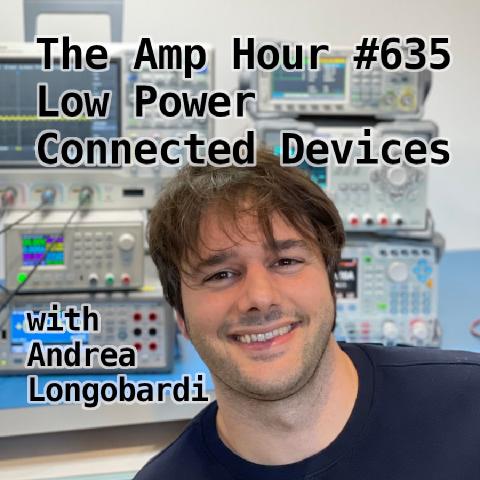
#635 – Low Power Connected Devices with Andrea Longobardi
Download episode · 72 MB
Also on Apple · Spotify · YouTube · RSS
Show Notes
Welcome Andrea Longobardi of AL2tech!
- Andrea is a consultant in the HW / FW space, based out of Italy.
- Chris met Andrea when he was transitioning to consulting and he joined the consulting forum.
- Andrea comes from a family of engineerhing, His father is an EE who made PCBs at home but kept it from the kids
- He worked at ST Micro designing drivers for server disk drives
- If you lose power, the arm will crash into the platen. So when power fails, you use the energy in the motor to backpower the arm.
- Didn't like being pigeonholed and he wanted to get into apps engineering
- Moved to Maxim, which he knew about because of their sample program
- Working in automotive space: harsh environment and dealing with things like:
- Load dump
- Cold crank
- Low power during shutdown
- Dealing with customers on last minute basis
- Went abroad to the UK and worked for ARM/PA Consulting
- Chris asked about the engineering culture in Italy/UK
- Lot of focus on theory
- "With the internet you can become an expert very quickly"
- AL2Tech is Andrea, his brother Allessandro and a lab assistant
- Had been back at Maxim focused on low power, connected devices
- What's it like working with a sibling?
- Finding first client as a consultant:
- Networking with people on linkedin
- Looking at job openings and offering part time work
- Did it while building up the company
- Showing side projects (air quality sensor + BLE) since he couldn't talk about his work at chip companies
- It worked when a small company took a chance on him
- FAEs were big companies, didn't get access to the smaller company engs
- Building test boards to learn new things (for the Joulescope), like a custom front panel
- Gas monitoring is an area of focus for AL2tech
- The device is battery powered, sitting on the meter.
- Certification is critical: the certifying body is looking at schematic / layout and making sure nothing heats past the point of igniting gas.
- Zone 0, 1, 2
- Conformal coating
- Why not put everything in Resin? Cost
- Volume correctors for gas monitoring
- For billing, they lean on PV=nRT
- Internal product at AL2Tech is the Elektra
- There is a CO sensor that caches data and sends over NFC and BLE
- It detaches from a shirt with battery, but a reed switch disables power when not connected (so it can be washed)
- Using the shirt to attract people and talk about capabilities
- Embedded World helped expand outside of Italy
- Other proejcts
- Find Andrea on LinkedIn
- Check out al2tech.com to learn more about the company
Transcript
Chris Gammell: This is the Amp Hour Podcast. Released June 4th, 2023. Episode 635. Low Power Connected Devices with Andrea Longobardi.
Chris Gammell: Welcome to the Amp Hour. I'm Chris Gammell of Contextual Electronics.
Andrea Longobardi: And this is Andrea Longobardi from AL2Tech.
Chris Gammell: Hey, Andrea. How are you? I'm good, Chris. What about you? Real good. Real good. I'm excited to talk to you. You and I got to hang out at Embedded World, and you are a member of the Consulting Forum, and we've known each other through that for a long time. And yeah, we're going to talk about your work and your work with AL2Tech here, and I'm glad you're here.
Andrea Longobardi: Yeah, thanks. And I mean, first of all, thanks for inviting me to the show. I've been a long time listener, I think since 2013. So it's almost 10 years. Almost the beginning. Yeah, I think I missed very few episodes. So thank you. Yeah, it's an honor for me to be here.
Chris Gammell: Well, we have a lot of great things to talk about here today. And so you are consulting currently. You've shared a bunch of really cool links that we'll definitely get to here. I'd love to hear about your journey into electronics. How did you get started? You have some interesting names on your CV.
Andrea Longobardi: Yeah. So, well, actually, I mean, I think my exposure to electronics started at a very young age. So my father was an EEE here in Italy. And so, you know, I remember when I was a kid, he was like doing PCBs at home. He has a home lab. So he was doing PCBs. Yeah. Yeah. PCBs. I remember, yeah, we are talking like in the middle of the 80s. He has these PCBs and he was designing the layout on the PCB itself with a special marker pen. Oh, really? Wow. Yeah. And then putting the PCB inside the fluoride chloride and getting the PCB, you know, etching the trucks and then drilling the holes, making the vias and all this kind of stuff. And he was doing this stuff at home. And so I've been exposed to electronics when I was very young, but he didn't push me to, you know, to follow his path. I know, I mean, that stuff was there. I was allowed to watch and everything, but, you know, he didn't push me. Actually, he was very jealous of his stuff. I remember he was locking up his lab and he was saying, yeah, he was saying, kid, electronics is my hobby. Go find yours. So, you know, it was, but, you know, somehow I ended up doing it.
Chris Gammell: I think it's just fate. I think that's, it's like, you know, Odysseus, you know, like a long time epic poem kind of thing. It's like, you're just destined to come back to electronics then. Yeah.
Andrea Longobardi: So when I came to the university, I decided to the electronics engineering and I got my degree in Pisa because I'm originally from Tuscany. So Pisa was very nearby. It's the city with the pending tower.
Chris Gammell: I don't know if you, you know, yeah. We've heard about it here. Yeah. Yeah. Kitchy, kitschy photos that people take there. Yes.
Andrea Longobardi: Yeah. So yeah, I've done electronics engineering and then after the university, I started working and I spent the first 10 years of my career in the semiconductor industry. And my first employer was ST Microelectronics, which is a big, quite big company here in Italy. Yeah. So basically if you studied electronics or microelectronics, it's very likely you end up with your first job in ST.
Chris Gammell: Oh, really? Okay.
Andrea Longobardi: Yeah. Yeah. They are based close to Milan. So where they have a fab. So I moved up north and I joined them. I was doing digital design over there. So basically VHDL, very low code. Yeah. And that started my working career. I worked there as a digital designer a couple of years working on hard disk drivers.
Chris Gammell: Oh, cool.
Andrea Longobardi: Which are really, they are embedded systems. They are really complex systems. So we were working on this IC, which basically was in charge to drive and control the spindle motor. So that's the disk that contains all the data. And, you know, it sounds like a simple thing to do, but there is a lot of control theory and a lot of, I think you have to pay attention behind it. So it's super complex. And this IC had the power stage. So the H-bridge to drive the motor, which is a brushless three-phase motor. It has all the analog electronics.
Chris Gammell: Yeah. I just think about the, like the responsiveness, like when, especially like laptop, I don't know if it was a laptop or just meant for the desktop, but like it can like recover from shock and vibration too.
Andrea Longobardi: It seems really intense. Yeah, it is. It was mainly for servers at that time because it was the biggest market. Okay. And because, yeah, laptop and desktop, they're mainly going to solid state drivers. And yeah, I mean, there was a MEMS on the board to, you know, to understand if there's any shock vibrations and work around that. The control loop was very tight because, I mean, the thing that you don't want to happen is, so yeah, in the hard disk driver, you have the spindle motor, so the disk, but you also you have the arm, which is controlled by another motor. The thing you don't want to happen is to arm to plan on the disk because that will damage the, well damage, and you lose your data. And one condition that this thing can happen if you have a power supply failure. So if you remove the power supply from your disk, that the arm will plan. If you don't have, you know, any protection mechanism, the arm will plan on the disk and it will crush everything. So basically the way we solved this problem was to use the motor as a generator. So usually the way it goes, you have the power supply, you have to spin the motors. So the current is going from the power supply to the motor. But when you lose the power supply, there was like another voltage comparator, which understand that. So basically what you do is use the kinetic energy that you still have in the motor because it's still spinning. And basically you take this energy and pump the supply capacity, the power supply basically. So you use the motor as a generator. You use that tiny energy, which is still in the motor to keep the electronics alive and to move the arm, to park the arm. Wow. So yeah. Yeah.
Chris Gammell: And it drives. So the arm actually, I always, I always kind of figured that the arm was sitting, that it wouldn't touch the disk. I guess I don't know much about disk drives, but in my head it was always like the arm was had enough strength to like kind of support itself over top of the disk. But is that not correct?
Andrea Longobardi: Yeah. No, I mean, if, if the way it does is because the, the, the disk is rotating and the, yeah, the arm is, is, is not touching the, the disk, but the arm is also controlled by motor. If the motors dies, the arm will crush the disk.
Chris Gammell: Huh? Interesting. Yeah. Yeah. That's a, that's a really elegant solution to, to kind of back power using the, the, the, it's almost like a regenerative braking, but for like an arm. Yeah. Yeah. The motor becomes a generator. So yes. Yeah. Yeah. Yeah. That's really cool. Yeah. Yeah. That sounds, that sounds like really, like you said, tight, tight control loops and just fast, fast response time. Like just almost inconceivable to me. Yeah. The amount of time you probably had.
Andrea Longobardi: Yeah. And back then we were talking about 2010, everything was done digitally. I mean, at least in our team through, so we HDL code nowadays, I mean, I'm sure at least for TI's like that, not sure about ST, but now they have a microcontroller, which does that. And well, it's a dedicated microcontroller. It's more like a DSP. So it's, and then the control is done. Basically you write software to control the motor back then instead it was inside all logic and gate drivers to do that.
Chris Gammell: So hard coded. Do you think they're, are they still using spinning platens in, in server, in server farms? Do you know? I don't know. I don't know. I was talking about someone with this the other day, cause I think it came up with, you know, like a lot of like AWS and digital ocean, all the server providers, they all kind of like say that they have solid state, but I just kind of assumed that they all had switched to that. Cause you don't really see, you don't really see platens out in the wild much anymore other than legacy drives. Yeah.
Andrea Longobardi: I don't know about that. Cause all the people that were in that team, they, they moved away in different companies. So yeah, I don't know. That's still working on it. I remember at the time, I mean, they were, they were, you know, afraid about the solid state drivers and they were saying that, you know, you won't last long.
Chris Gammell: So sure. Sure. Yeah, exactly. All the rights and like the needing to do wear leveling, all that kind of stuff. Yeah. Cause like platens were such a proven technology and on, on kind of its own Moore's law curve sort of thing. I I'm sure.
Andrea Longobardi: Yeah.
Chris Gammell: That's cool.
Andrea Longobardi: Yeah. So, so yeah, I spent there a couple of years and, uh, I was, I would say quite happy, but I didn't think I didn't like is, you know, where you're in a big company, everything is divided in sectors. So the way I operate that, I was writing the HDL code, then send it over to the application engineer, which will put it on an FPGA. So they have this FPGA with, uh, all the scripts to emulate the H bridge. And then they were driving the motor and watching the current and the voltages on the oscilloscope and then send me back the results. And we were in, you know, in different sites. So I was basically working in front of my PC and never saw like a motor spinning. I just, yeah. So, you know, and I, I thought I didn't like that. I wanted to do something more hands-on and work in the lab. And then I moved to Maxim where I basically started doing the application engineering, which is a different role inside the semiconductor company. So you don't design IC anymore, but you know, you work with the ICs. So it's a bit like, you know, be a PCB designer. So you design evaluation kits, demonstration boards, you work close with the clients that gave me a lot of exposure to clients, which is good. And you work in the lab, uh, you test the new ICs, you measure all the specs. So it was a bit more a hands-on job for me. And, uh, I prefer to do that. And then I'm, that's why I decided to move to Maxim.
Chris Gammell: Cool. Yeah. No, it sounds like that's definitely more my speed than the, the kind of the electronic stuff. I, I, I, I think I talked about this on a past show, but like, I had a friend that I was like jealous. He went to Intel or a classmate, I suppose we weren't like super close, but like he went to Intel, but then he was like, yeah, I just sat in a cube the whole time. You know, like just, because that's what Intel needs unless you're doing kind of application level support or, or supporting a end customer sort of thing.
Andrea Longobardi: Yeah. So yeah, there are, there are, there is a good, there is the bad, you know, I was very close to the clients. So if they have a problem, I have to go there. I remember once. So by the way, I was working the automotive business unit. Oh, cool. Okay. And where's, where was Maxim based before? Were they based out of Italy as well?
Andrea Longobardi: Yeah, yeah, yeah. No, it was, they are close to Milan. They have an office in the town where I'm living now, which is Pavia, which is still a university city. So there are a lot of E here, but it's very close to Milan. Now, now they moved. Headquarters is Italian as well though? It's like an Italian company originally or no? Well, no, Maxim is San Jose. It's an American company. Oh, it is. Okay. I didn't know. Yeah, I didn't know. Yeah. Yeah. Yeah. It's from the Bay area. Okay. I think it was founded at the beginning of the 80s and they started doing the, I think they started doing clones and then, you know, they become a great company. I mean, to be honest, Maxim is one of the best companies I've been working on and Maxim I see, I really love them. I mean, I love them since the university because they used to send you free samples.
Chris Gammell: Uh-huh. Yeah. That sample program, man. Yeah.
Andrea Longobardi: Yeah. They got a lot of people in trouble though, too, you know, thinking you could get them in production.
Chris Gammell: Yeah.
Andrea Longobardi: Yeah. Well, I think, I think, I think that they make very good devices, especially for power management. Yeah. Yeah. So, yeah. And I mean, nowadays they've been acquired, they are on analog devices, but yeah. Yeah. You can still find the, the Maxim parts in their website. In fact, when, when I look for a power management, I see, I go to the analog devices and I write max in the search box. So I'm sure I can get the max. Yeah. Yeah. It's a workaround.
Chris Gammell: Yeah. Yeah. What was it like in the automotive space? I mean, so we were talking about Canbus last week and I caught some flack for my lack of knowledge there. So I should, I should be curious here. I guess when we're recording this too. Yeah.
Andrea Longobardi: Yeah. So, I mean, we, I was, when the business unit, we were mainly working on the infotainment systems. And so all the electronics that is behind your dashboard in the, in the car behind your screen. So we were mainly working on that type of electronics. So nothing under the hood. Okay. And yeah, it was, uh, uh, so it's a harsh environment. So basically the power management is in charge of generating all the voltage rails around for, for the board. And also we did also some interfaces. I see like sensor interfaces or lean interfaces, also kind of interfaces, but just, you know, the physical transceiver, the physical stage, then not the logic itself. So it's a harsh environment. I mean, your voltage regulators are connected to the battery and it's not always 12 volts. It goes up to 40 volts during the load dump and during the cold crank, it goes down to three volts and you, you don't want it to really, yeah. Yeah. When it's really cold, it does. So you don't want your screen to turn off. So you need to have like some front front end boost and stuff like that. So it's, it's a harsh environment. So yeah, you need basically to design around that. And somehow I was thinking about it, uh, lately when, when, because with Alta Tech, we basically do embedded systems. So we kind of have specialized in low power devices. Even though automotive is not low power, I've been exposed to low power designing with the power management in the automotive, because as I said, it's not a low power design, but when you turn off your car, your, um, infotainment system, maybe it's still exposed to the 12 volts from the battery and clients like Continental and Bosch, they come to you and they say, okay, the entire board has to consume less than the hundred microamps. So basically, yeah, you have to design the power management to be low power when everything is shut down. So your, uh, regular, your front end regulators, they have a low question current and your low voltage regulators, they have a low shutdown current. So somehow it w I was exposed to low power design, uh, back then when I was doing automotive. Hmm.
Chris Gammell: Yeah. Yeah. And I'm, I mean, I'm sure they also have like wake up time specs as well. Like not only do we want you to be in this low power state when you're, when you're in shutdown, but then we also want you to respond within like, what, like a hundred microseconds or something like milliseconds to wake up and be, you know, be fully powered and handle the 40, 40 volt load dump type of conditions. Right.
Andrea Longobardi: Yeah, that's, that's right. So in fact, I mean, so it shut down usually when, when, at least in maximum, when we were referring, referring as shut down, instead the LDO is completely, the regulator is completely shut down. So the voltage is not regulated anymore. But we talk about quiescent current is basically the, the regulator is still keeping the output in regulation, although your load is not drawing any current. And then when your load starts drawing any current, the, the voltage rail is already ready to deliver the current and the regulators goes back in a full power regulation. It gives you all the, all the power that you need. So, yeah. And then of course there was issues related to DMI because usually operate near the radio. So our DC, DC, DC, DC converts us to operate in specific bands. Maxine was doing a lot of, was the first one to do two megahertz DC, DC converters. So they were out of the AM band. Uh, they, we had a spec spec in the, on the switching frequency to spread the noise and reduce, reduce the switching noise. Uh, so when it comes to regulation, it will ease, uh, I will make our clients life easier when they, they have to, to go through the, through the testing, EMC testing.
Chris Gammell: That's great.
Chris Gammell: Yeah. Cause that's a lot of, uh, a lot of constraints there. It seems like. Yeah.
Andrea Longobardi: Yeah. Yeah.
Andrea Longobardi: So, and, and, and also, you know, I was working as an application, so close to the clients. So if they have a problem, you know, uh, they may, they, some, some of them, they call me directly. So I remember once I was, uh, it was Sunday and I got the call from one of the Maxine VP and say, look, you have a problem with continental. You need to take the flight and go to Germany. So the day after I was in Germany, uh, you know, it was, it was a hard situation because they, they were, you know, they had problems on the, well, their clients had the problem on the production line. It means basically they have the cars ready. And, you know, when you turn on the infotainment system for some cars, you have like a power failure. And then they went back to, to, to our clients and they, they discovered it was a problem of our, of, uh, one of our ICs. So it was passing the buck on down the line, huh?
Chris Gammell: Just eventually it got to, it fell over your head, huh? Yes, indeed. Wow.
Chris Gammell: It's interesting in the car space too, because there is so many, like, there is that OEM kind of culture as well, right? Like, so continental is this huge OEM, aren't they? Yes. That supplies a lot of, and automotive people. Yeah.
Andrea Longobardi: Yeah. I mean, I mean, our main clients was continental and Bosch. Mm-hmm . So yeah. And so basically, yeah, they do all these electronics, which goes inside different cars. So, you know, it doesn't matter then if you then buy a Fiat or a Peugeot or a Renault. Right. They, they, they have, you know, probably same parts, you know, at least for the electronics. Really? Yeah.
Chris Gammell: Yeah. Yeah. I mean, I can see that from like a, from a repair perspective, that's actually really nice to have like common, as long as the, you could do a cross on the part number that continental spits out. But like, that would be nice from a availability of, of repair components. Yeah. But from a differentiation, maybe not so much, I guess, I guess, you know, that I'm sure continental sees a lot of benefit from kind of bundling all these things together too. So then when they approach a maximum or a TI or ST, they can be like, Hey, look, we've got all these designs. We're a really big customer as well. Yeah. Not to mention automotive is huge. So.
Andrea Longobardi: Yeah. I mean, especially in Europe, I would say it's the main market in Europe. Definitely. I mean, between Italy and Germany and France, I think, I think it's the main market.
Chris Gammell: Do it, do Italians and Germans like their cars? I haven't heard this before. Yeah.
Andrea Longobardi: I mean, I would say, I think German cars are probably the best. But you know. You're not allowed to say that.
Chris Gammell: Come on, man.
Andrea Longobardi: Yeah. You're not allowed to buy cars. Well, I mean, we have a lot of, you know, high, high end brands like Ferrari, Maserati, Lamborghini, and also Fiat Chrysler. They're doing quite well. So yeah, it's, it's huge. I mean, in Italy, it's huge, the automotive industry and everything that surrounds car, especially in the north. So yeah. Yeah. Yeah.
Chris Gammell: That's yeah. That's cool. That's a cool space to be in for sure. Yeah. So now you're in the application space and so you're continuing to do that sort of stuff. So now you're kind of like back at the board level. Is that right? Is that what you were going to do? Yeah.
Andrea Longobardi: Yeah. Yeah. Yeah. And then, yeah. And I took like a four years break from Italy and I decided with my, that time was my girlfriend. Now it's my wife. We moved to the UK. Oh, cool. Yeah. Because I always had this dream about making an experience abroad. I think it's something, you know, it's very valuable. I mean, I met a lot of different people, different cultures, different way to approach problems. So yeah, we decided we don't have kids. So we are, we are still, you know, under the thirties and we decided to move to the UK and I basically joined the arm. So came back to doing digital stuff, but still on the application side. Got it. Yeah. But, you know, being a very digital company was a lot of software and firmware, which was good because somehow, you know, I get to, get to learn a bit more about software and firmware than improve my skills in that field. So, so yeah, we moved to Cambridge. We've been there, we lived there for four years and Cambridge is a great city. I mean, from the tech point of view, I've met a lot of interesting people working in different startups and IoT embedded companies. So, so yeah, it's, it's been great.
Chris Gammell: Yeah. It's awesome. Yeah. What about, so one thing I'm curious about generally too, I mean, like, so we, we've had some guests on from, you know, Europe and the UK and stuff like that, but, you know, can you give us a feel for like engineering culture in both, in both places and maybe how they differed? And then I, you know, obviously I, I only have US based, I have a limited, you know, US based engineering culture experience. Well, let's start with Italy first.
Andrea Longobardi: I think, you know, people here, they work quite hard and they're very dedicated. I think in general, the culture is to put a lot of effort on the theory before, you know, start working on something, which I don't necessarily like because, you know, sometimes you learn more that if you jump straight on the bench and start a few things, right, right. You can miss something, but you can learn a lot.
Chris Gammell: People are wondering why you and I get along with this sort of, this kind of perspective that you have.
Andrea Longobardi: Instead, you know, if you, you know, keep reading books and never, you know, be on the bench. Yeah. You may become an expert, but you probably may not really know what you're talking about until, you know, you work on it. Instead, the UK was very hands-on approach. And I remember that it was a guy which blew my mind. I mean, he was a really expert consultant. And he told me, remember with the internet, you can become an expert very quickly and you can be pretty credible. And that's true. I mean, nowadays with the internet and we do all the things that we have, you can really, you know, if you have a topic that you want to learn a lot, if you spend, I don't know, a full week on it, I won't say you become an expert, but, you know, you can get to learn a lot, especially if it's in the field that you've been always working on. So I would say in the UK, they have this much more hands-on approach, which I think I really like.
Chris Gammell: Hmm. Interesting.
Andrea Longobardi: It was a bit different, at least here in Italy. And also, I think, I don't know how it is nowadays, maybe things have changed, but when I graduated, there was this culture that, right, yeah, then you have to do like 10 years experience. Then maybe you can think about, you know, managing a group. You may think then about, you know, doing something harder. Instead, the UK was a bit like more, okay, you know, if you want to do it, let's try to do it. You know, they give you the opportunities to grow much faster, for sure.
Chris Gammell: Oh, interesting. Okay.
Chris Gammell: Yeah.
Chris Gammell: I'm curious about that too. So like, you know, when you say the theory versus kind of the hands-on as well, like, is there, in Italy specifically, is there like a strong academic culture as well? Yeah. Like, is it gated based on whether or not you're degreed at a higher level? Yeah.
Andrea Longobardi: I mean, I'm, you know, I'm talking from experience. So I got graduated like 15 years ago. Sure. So maybe things have changed.
Chris Gammell: Sure.
Andrea Longobardi: You could have changed, right. But back then at university, I've been in the lab very few times. During the high school, I never been in the lab and I was in like in the scientific high school and I should, I should, I would have be, I was supposed to do also a lot of programming, which I never did. So yeah, it was a lot of theory, a lot of maths, a lot of physics for sure. And then maybe the last two, three years, you do some electronics and hands-on, it was really limited to maybe the last year and the thesis. So yeah, it's very, I mean, at least 15 years ago, I hope things have changed nowadays, but 15 years ago, it was very academic.
Chris Gammell: Okay. Yeah. That's, I mean, it's different everywhere, right? I mean, like it's some places, you could even say that in some places in the U.S. that are, or some industries as well that are more academically focused or more kind of hands-on focus, that sort of thing. Like industrial, I feel like doesn't have as much requirement on that side of things. But that, like you said, that was my experience 10 years ago, that could have changed as well, right? Yeah. It's always in flux, I feel like.
Andrea Longobardi: Yeah. Yeah. I remember, you know, when I went out of the university, I know everything about the MU-AS 741, which is no pump. I mean, on the paper, but I wouldn't have, you know, probably idea on how to put it on a breadboard and power it up and use it for doing something. I don't know, maybe on the paper, but I'm not sure if you would have work on the bench. So yeah, I think, you know, you need to do a bit of both.
Chris Gammell: Yeah, we need some battle scars before we really can, before we're asked to lead the next battle, right? Yeah. Yeah. Yeah. Well, you are battling every day now as a solo, not a solo, sorry, a member of a two-person consultancy with your brother.
Andrea Longobardi: Yeah. Yeah. I mean, we also have a third person, which is a part-time. Oh, great. Great, great. Yeah. She is a lab technician. She, she helped us to assemble boards when we do it from time to time. So we are a two and a half, like, like the TV series.
Chris Gammell: Yeah. Cool. That's cool. So what is, so that's the AL2 tech. What is, what is kind of the area of focus? What are you doing in that, in that space generally?
Andrea Longobardi: Right. So, so we founded AL2 tech in 2019 and the aim was to help our clients in developing embedded systems. So both of us, so myself and Alessandro, we, we come from the, well, I was coming from the embedded and automotive sector as we talk since now. And my, Alessandro's dad was, he had a degree in embedded systems and he was working in computer vision companies doing smart glasses. So we are both, you know, work, we've been both working on the embedded systems. And you, we said why we don't team up and build a, like a small consultancy company, which can help our clients in developing embedded and IoT products. So we decided to do that in 2019. It was, I mean, he's, he's seven years younger than me. So, so he was fine with that. For me, it was a bit of a leap of faith because I was working at Maxim then, because then I came back in Italy and Maxim had been so lovely to take me back. Yeah. And so I was working with Maxim with a permanent well-paid job. And my son was one year old. And I said to my wife, look, I'm going to leave my job and start Alta Tech. And we don't have any clients yet, but we're going to have it that soon.
Chris Gammell: So it was, I think that's, I think that's when you and I got in touch too. I think when you, I remember you, you and I would like corresponded about that. And you said you were going on your own and I thought, yeah, it's great. I think it's a great idea.
Andrea Longobardi: I think you did it like a year before me and you know, you kind of gave me the, you know, the, yeah.
Chris Gammell: I, I hope, I hope I don't get in trouble with your wife if things go sour. No, no. Sounds like you guys are doing okay though. Yeah, we are.
Andrea Longobardi: And you know, I, you know, I can manage my time. So, you know, I was able to, I mean, the first two years I've been working at home. So basically I've been with my son every day. It's a great experience. And you know, it's, I wouldn't have the chance to do that if I was an employee, but yeah, so it has been great. I mean, we kind of tailored our expertise around the low power devices. So the products that we are working on for our clients are mainly battery powered devices. So that they have some constraints about, you know, how much current you drain from the battery. And we kind of built an expertise around that. They are connected devices. So they have some means to connect to the internet or to the external world. Like usually it's a radio link, like Bluetooth low energy, Wi-Fi, cellular. Some, some of them, they also have wired connection and they have sensor interface. They have sensor interfaces because they have to do something meaningful, which is acquiring data from different types of sensors. So yeah, we've been working for, on these products. I mean, we don't produce, I mean, these are not our products. They are our clients' products, but we work with them as a basic, basic external consultant. So the way we operate, we try to get the entire project for ourselves. We don't tend to do like part of projects, but just the entire project. And we deliver the complete solution. We also have some external consultant, which we hired on the project base for doing the mechanics. And we have a company, which we partner together from time to time, where they do web development, the application, mobile application development. But yeah, the core is myself and Alessandro. I try to cover, I cover more, mainly the harder side. He covers more the firmware and softer side. Yeah.
Chris Gammell: That's a good split. Yeah. That makes a lot of sense. I mean, and you both have to know a lot about a lot, I'm sure as well.
Andrea Longobardi: Yeah. Yeah. Yeah. I mean, you know, when we started, I also did the firmware side because there was more demand on that. And Alessandro did something on the other. So yeah, we can kind of, you know, exchange, not completely. And we also, you know, because we are, we are working from different places. So I'm located near Milan. My brother, Sandro is instead in Tuscany. Oh, okay. Yeah. But we, you know, we think every day we have the standup meeting, which is something from the UK culture. So every morning we have a call and we talk about what we're going to do during the day, which are our issues and how we can help each other. And we have some strict methodology. So like, for example, we use extensively use Confluence. I don't know if you ever use Confluence.
Chris Gammell: I've used Confluence.
Chris Gammell: Yep.
Chris Gammell: Yeah. It's not my favorite. It's not my favorite. But it's, I mean, honestly, it's no worse or better than, it is a little weird. It's, it's a documentation platform is what you make of it. Right. I mean, that's what it is.
Andrea Longobardi: Yeah. Yeah. So every time we, for example, we start working on your microcontroller, we write a guide on how to use it, how to program it if we have problems. Wow. Yeah.
Chris Gammell: That's, that's very, that's great. Actually.
Andrea Longobardi: That's, that's very disciplined of you. I think. Yeah. Well, we forced ourselves to do it. And because, you know, we are also looking to, to expand our business. If someone, someone wants to join us, I mean, they have all our knowledge over there. So there's no, you know, documents scattered around.
Chris Gammell: Even if you don't like I, I've come back to projects like two months, two years later, and then like, who the hell wrote this? You know? So like having a guide just for even your future self is good planning. And then, like you said, if you do expand, then it's also there for that person. Yeah. Yeah. It, it, it, it goes fast. I mean, like, that's the thing. Like it, it, two years will turn around. You'd be like, Oh yeah, I, I think, I think it's on my computer still. I think that tool chains on my computer still, but like having documentation on how to install that tool chain and how to use it and you know, like what you're doing. Like that's important.
Andrea Longobardi: I was just about to say, I just, you know, replaced my, my computer and thanks God I have to, you know, written how to set up all the tool chains that we use. So, you know, it was, it was great.
Chris Gammell: What about like working with your brother? I mean, like you said, there's a big age gap. So that, that might be helpful in a, in a certain way, but like, I, I only have sisters. I would not work with my sisters personally. I was a little worried about it from the outset too, of just like, you know, yeah, no, it's a different relationship. If things go work bad at work and then you have to hang out at a family event, you know?
Andrea Longobardi: Yeah. No, I think, I mean, we, we, we both get along very well since we, we were, we were kid. It's great. We work well together. We, we go fast because we kind of understand each other. And that's great. We, we, we probably never argue. I mean, we always find agreements. They think I'm, I'm a bit missing. That's why I want to expand the company is, you know, having someone with a completely different mindset, because even if it's seven years older than me, we kind of grow up in the same area, the same environment. So the mindset tends to be very similar. Instead, you know, when you work in a company, that's something I mean. So when I, when I was in a big company, so you have people with completely different mindset. And sometimes, you know, watching that problem from different angles will help you. So.
Chris Gammell: I would, I, I can highly endorse, you know, pairing up with an Australian and arguing with them once a week, at least. That's, that's a, that's a viable option for many people. Yeah. Just gotta import in an Australian, you know? Yeah. Yeah. That's great. That's great. That's great. So what, so you mentioned, these are like IOT projects, low power. I think one thing that's that often when people ask me about consulting, they're like, yeah, I definitely want to do it. And I'm not saying this is part of our thing, but our interaction around this, but other people often say like, what is, how do I get that first client? So since you were moving into that space, how did you find your first client? Cause I feel like that's the most critical. Yeah.
Andrea Longobardi: So the way I did it, and that's basically the same way I'm operating at the moment, which I don't know if it's a smart move, but at least it did work for me. So basically I start contacting people on LinkedIn and that's the tool I'm using still, I'm still using at the moment. So I was working, so I found, I tried to identify what was my target. So I'll say embedded IOT and small, medium company size company, because probably I wouldn't have any chance to approach a big company and join them. So I identified my target, the small, medium size company. And because I thought that big companies, they wouldn't probably be approachable. Yeah.
Chris Gammell: And long sales cycle too. I feel like it, even if you find the right person, like getting, getting listed as a vendor, that was one thing I was always surprised with. Like becoming quote unquote, becoming a vendor is like, it means that you're going through their accounting department, going through all the different things, getting everything checked off. And then finally, then you can send an invoice and get paid 60 days later or whatever, whatever the terrible terms that they offer with big companies.
Andrea Longobardi: Yeah. And then I started looking at the job openings. You know, LinkedIn, you can find job openings. That's a good idea. Yep. And then I, you know, I saw, okay, this company is looking for a hardware engineer. Maybe I'll look up the company on LinkedIn found who is the CTO or the CEO, or, you know, that maybe the HR, which posted the job opening and send them a private message and say, okay, we are Alto Tech. We are an embedded design house. And maybe we can help you developing some products. Right.
Chris Gammell: Right.
Chris Gammell: Just try it out. Just try it out folks. Like, yeah, this is, this is brilliant. This is probably the best way that I I've heard to get to, to target potential consulting work. And like, you know, the CEOs and CTOs, they, they get other people pitching, but I think it's all about like, like pointing out your, your similarities to what they're looking for. The fact that it's flexible labor, blah, blah, blah, you know, like, and you know, they're getting pitched all the time, but if you do it right, I feel like you can, you can land a couple.
Andrea Longobardi: I mean, it was very much, very harder at the beginning because, well, I mean, we didn't have any track record. So, you know, they have kind of trust from us.
Chris Gammell: Well, this is while you were still at Maxim or is this, you would did a hard cut and then you said, I'm going to go do this as my job. No, no, no, no, no. I've done it in parallel for like six months. In parallel.
Andrea Longobardi: Yeah. I like a bit of faking that I have a company which I didn't have. Yep. And when I built up a pool of potential clients, then when I decided to make the leap.
Chris Gammell: Yep. I think the other, the only thing, maybe you did this too. What did you show them when you were, when you were pitching these CTO CEOs? What did you show them? Yeah.
Andrea Longobardi: Right. Well, of course, during those years with big companies, I've done some side projects, which I think is vital. So one thing I've done was an air quality sensor, the key ring shape, and which then lead to the air quality T-shirt, which we can talk later. Yeah. So basically, well, I've done a few projects on my own, but that was, that one was my, I would say my spotlight. So it was a very, it's like a key ring so that, you know, they use to put your keys, but it has a small battery inside and some electronics and an air quality sensor. And then sends the data, the air quality data over Bluetooth through energy to your phone.
Andrea Longobardi: So that's, that's the product I was showing them. Yep. And also I have other couple of power management, the general purpose boards. So I was showing them, you know, these, these things. Yeah.
Chris Gammell: I think that, that end to end nature though, like the fact that you're trying to find work that was end to end, I'm sure there's other people in the space that were also looking for similar kind of things. Like BLE is like a key term, be like, Hey, look, I built this BLE thing. You're looking for a BLE designer. Let's chat. You know, like even just getting to that chat is the most important thing, I think. Yeah.
Andrea Longobardi: Yeah. And, and, you know, the, the thing that we were already advertising for low power, there are, we, we, you know, they were looking for low power expertise and these, these, these, the key ring, it was a very low power design and, you know, showing them how I characterize the sensor and all this kind of stuff. It was good.
Chris Gammell: Mm-hmm. Yeah. And so what, what was the first, what ended up working, I guess? Sorry, could you repeat the question? Like which, who ended up taking a chance on you, I guess, in that case, who was your first, if you can't say the name of the company, like what was the nature of the company that was, that took the first, the first jump? Yeah.
Andrea Longobardi: Yeah. Right. It was a small company, like four people. Uh huh. Yep. Yeah. Yeah. Yeah. Tatar along with it.
Andrea Longobardi: For monitoring like infrastructural systems like, uh, dimes or bridges. bridges and they were building this box which basically has a sensor interface to this type of sensor using to measure the displacement they're called the vibrating wiring wire sensor basically they are like in the street the guitar string which resonates at a certain frequency so basically depending on the strain that you put on the sensor it will resonate at a different frequency so you need to build some electronics to excite the the sensor and then to measure the response and trying to understand what's the resonating frequency doing basically the fft these sensors are very precisely to measure small displacement like sub millimeters displacement so this company was doing the data logger which was interfacing with these sensors getting all this data and send it over to the cloud and it has to be a low power design they had a firmware engineer they didn't have a hardware engineer so i did the hardware for them that's how we started one branch of uh of the products that we are filling with AL2Tech which is is the data logger industrial monitoring system yeah that's awesome and also then for another one we did something similar for uh for the water metering market which then lead us to the gas metering market which is the the main area where
Chris Gammell: we are working at the moment yeah that's great so when did when did you make the cut then so like okay so you got this first gig and you know i'm still focused on like i want to definitely hear about the details of the the actual gigs too but like yeah i still think it's important for the consulting side of things like that bootstrapping that first gig when did you then kick the the full-time job well i mean
Andrea Longobardi: so at least i couldn't have started working uh you know on on it since i was with maxim i couldn't work for someone else that was my contractor so um as soon i found the first client which gave me the job which was this one i immediately cut off with maxim well the first thing i asked it well i know to be honest ask the maxim to go part-time of course and they said no and in that case i would be able to work with someone else they say no yeah and i say okay no matter so i'll do it yeah and and also remember i had the client from the uk which he didn't pay me the job it was my second job but so you know it wasn't an easy start and i was a lot of work for not a lot of reward yeah yeah i was totally pissed off and i i also felt bad because there was a guy from the consulting forum which helped me with his client which i introduced it to him and he didn't pay him as well so i felt bad about that bad story was my second job so i was a bit pissed off luckily it didn't happen uh anymore so it was just a one-off and then you know and i now i have i took action to avoid that like you know getting some from money and this kind of stuff which i did at the beginning yeah the beginning was yeah yeah yeah again learn
Chris Gammell: there's the battle scars there right there right yeah okay so then so then you can't so this is the other thing i tell people uh this is all mapping well to my experience you know i got lucky too i got a you know my first client was through a friend and so like that that is another path it sounds like so like the stuff you were doing fantastic this is really really good stuff i think because i tell people like oh i got it through a friend they're like well what i don't know anyone who could give me a consulting gig to start and i'm like okay well you got to do something else what andrea is saying is basically a great way to do the something else if especially if you can't work you can't moonlight if you can moonlight while you're at a full-time job as well you could also do that to start to bootstrap i feel like but so then the other thing i tell people is once you do that hard cut and you say hey i'm now i'm out on my own and you can publish on linkedin that you are available
Andrea Longobardi: did things start to open up at that point well not really in my case no okay all right yeah because different than my my theory then okay yeah but probably you had you had a different community which was following you i mean my all my linkedin contacts were basically people from the semiconductor industry oh sure and they surely they were looking for uh you know hiring a consultants because they they are employed from companies so sure i probably i think applications engineers are
Chris Gammell: fantastic reference points to end customers right they all know everybody so that's where i figured
Andrea Longobardi: you might have gotten yeah yeah but yeah but my end the end customers of applications engineer usually they are not my target company that's true so small small small and medium-sized company they they get support from distributors it's it's i mean with the maximum you know if you if you wouldn't buy a million parts per year i wouldn't help you sorry that's true good point good point yeah
Chris Gammell: yeah no that's a really good point yeah and actually though the when i think applications engineers i often do think the like the avnet and the aero faes as well because they also have on-site yeah
Andrea Longobardi: distributor faes yeah yeah so yeah i didn't get too much i mean i i have to chase people around that's was the only way so you know being in contact with 100 person people 10 of them will reply maybe one is a potential client that's the numbers i mean you really have to i mean i every morning i woke up and contact them people that's the way i was doing and constant constant constantly doing that still doing that at the moment not so so much but you know that's great but it's like kind of built into your your dna then as well yeah and and you know the way we we tried is to build long time relationship with our clients and i mean if we look our clients most of them we started work in 2019 so we are still keeping them doing like one big project every one or two years and yeah and so that that's the way we we did and we we are busy at the moment and we always been busy since we started to be honest there are few few few moments where we have been light and we we get this time to advertise a little bit but also to do some um internal projects like the smart t-shirt or maybe writing some documentation or uh you know exploring new platforms like new microcontrollers or
Chris Gammell: firmware platform like iot like iot platforms as well maybe you said you're gonna try that too sorry you're gonna try that with zephyr and maybe maybe maybe your friends iot platform you're gonna try
Andrea Longobardi: that too yeah yeah no i well i throw i throw when alessandro had the at a few month uh free month and i throw him against zephyr because we we were yeah we were using the nrf52 extensive oh yeah products nrf5 sdk yeah yeah yeah yeah yeah we say okay we have to switch a certain point yeah and so what we did basically we we built some test boards so which probably you saw that at the embedded world mm-hmm yeah so the idea was to develop some boards which will plug into the jewel scope and we can use them to characterize the the current consumption from few new platforms like the nrf53 or the or the sp32 and matt liberty has been really kind with us because we we basically we developed the custom front panel for the juice scope which uh connects directly to to our boards so they can both still uh stand flat on the desk and you can connect them very easy to use and matt liberty has been very kind to review the the front-end panel and and so yeah we we took that time off that we had free time to develop these boards and we use it to learn the new platform measure the current and then we reuse it in the next project or this information is then reused in the next project i have to say so if people are
Chris Gammell: listening to this right now and they're like i wonder if al2 tech is a disciplined company you have said two things that like jump out to me as like incredibly disciplined one the documentation and two this like time off like building up your own stuff that is very very impressive so kudos to you on that and if anyone is listening this sound this is a this is the kind of company i want to work with too thanks
Andrea Longobardi: thanks chris thanks yeah but i mean the main thing that we we try to have fun because i mean we we decided to take this path to to work on nice things of course you know there are things that when there are problems you have to solve them uh but you know we we are having fun and you know if i look back in my career in my 10 years in big companies i was changing job a lot which uh you know doesn't look good in your resume but also it means that i wasn't in the right place now it's maybe it also just might mean you're a millennial you know yeah yeah maybe that's that's what all the articles tell me i i
Chris Gammell: jumped i jumped jobs because i'm a millennial not because i i didn't all right okay but i think you're right i i think i think it actually feeds very well into the consulting thing because like by definition you're jumping work a lot because you're serving different clients and trying a lot of new things and it's just that's a lot of fun personally yeah i think it it fits it fits the personality type well
Andrea Longobardi: yeah yeah it does it does yeah i i mean i've never been bored since i started this experience that's
Chris Gammell: great yeah so you mentioned that you are doing a lot of gas monitoring which is interesting that is seems like a huge market uh what is what does that what does that involve yeah so basically
Andrea Longobardi: um this involves basically two things so it's uh it's a low-powered device because these devices are mainly battery powered and they have to last like 10 years without replacing the battery in some application so in power consumption is a hot topic and the other hot topic is the fact that they did they are they work in an explosive environment so they don't have to ignite yeah that's very hot yes yeah hot hopefully not hot uh yeah so these devices that they have to go through the atex certification in europe i think us is uh uh iecx uh-huh so basically you you need to prove that the device if there is any failure in any circuitry you won't ignite the the gas which is surrounding the device uh so yeah you there is a lot of uh tensions you have to put when you design the board on the harder side that's mainly harder side you can't do anything on firmware because the atex certificate or they assume that you can't rely on firmware you can't rely on the internal ices protections everything has to done be done via discreet we have resistor and fuses so there is a lot of things in the hardware design which you know makes the things a little interesting on the harder point of view how do they when the
Chris Gammell: testing comes up like when you go to certification how do they actually trigger the various failures because it just feels like there's ever expanding branching set of things that could go wrong but right they're trying to actually see if it's going to spark or ignite right right yeah so i'm also i've
Andrea Longobardi: never been in a certification uh test facilities but i've seen some pictures because that's my client which goes through the certification so one thing first first they go through all your schematic and they make all the calculation which we can talk about that about uh you know temperature rise and every components i don't like people looking at my schematics those are for me thank you very much yeah then they go through the layout going through all the distances between trucks and this kind of stuff and then there are some tests which means they place your device under like a glass bell and they fill it with uh with explosive gas and then they start to power up the device yes and then there is like a brush which on the motor which touch the circuitry different position so making shorts all around the circuitry and it should it shouldn't ignite wow that's interesting i would love to see that i want to see when it goes wrong actually yeah i designed for this industry that's actually the video that they said me when you see this boom okay yeah oh great yeah so basically there is a lot you know you basically depending on uh which zones so you you're using this device because there are three different zones in the attack certification zone zero is the more severe where the gas is always present zone one is likely to be present zone two zone two is unlikely to be present so depending on the zone you're operating you are limited on the number of capacitance you have you you want to have on a given voltage rail then the number of inductance the inductance value you want the total inductance value you want to for a given current so that so if there is a short across the capacitance there won't be any arc and it won't ignite so yeah do you get to do any like conformal coding or anything like that too yeah well i mean for uh like at the moment we are working on a on the product product product which goes in zone zero and it has to work in presence of a hydrogen so basically your capacity for a five volt for a five volt rail your capacitance is limited to 30 i think 35 micro micro farad and we have to place a modem there so there's no way you can yeah oh wow so the only the only way you can do it is to encapsulate the entire board inside the resin so yeah yeah you do that a lot i mean especially for this kind of application it's gotten
Chris Gammell: better like it's not like 2g gsm days where like there's these huge you know two amp spikes every time you transmit but it's still not it's not 35 you know 35 microfarads probably ain't gonna cut it you
Andrea Longobardi: know yeah no it won't be enough so yeah that's for the entire world you know so oh really aggregate to the whole thing yes yes so the only way you can do it is to to resonate to the the entire board that's interesting but somehow you know i think we found the right spot because this attic certification somehow implies that you you do a low power design i can explain you what i mean let's assume that you have it like a three volt rail in the board regulated by dcdc regulator which gives you up to one amp so it means that the output power of this is this dcdc regulator is three watts right and you you supply it like an edc with these three volts so the certificator says okay if you have a dead short inside the edc let's assume you have it for any reason then these three watts they can go through the edc and every components on the board has not to reach a temperature higher than for example this project we are doing 135 degrees so let's assume you're you have a tqfp package with thermal resistance of 50 degrees per watts under three watts is already 150 degrees increase yeah you're gonna ignite you're gonna ignite the gas because you can ignite the gas only because of temperature rise of the components on the board so the way you get around that is basically placing like a 1k or 10k resistor between the power supply and the adc power supply pin so that means that your adc has to be in the micro micro area micro micro sorry uh current range so basically if you look at the an athex certified device they all use low power devices for these reasons uh huh so somehow those two things are related together the 1k the 1k 10k you said though isn't that always burning power or no yes but yeah well you have an edc which consume like 100 micro air or something like that micro micro micro sorry chris uh-huh so yeah it's always burning power but yeah it's if you have an edc which is in the milliamps then yeah it's you have a you know you have a drop it's it's not the power it's the the voltage drop you can't you can't so you're saying the 1k is
Chris Gammell: in line with the power rail before the adc yes and then so then the adc is pulling some amount of current but you're saying then it has to be low power so that when you draw current through this safety resistor you don't have a huge drop so that you brown out your rails exactly i mean usually you
Andrea Longobardi: want your power supply to have the lower output impedance as possible instead here you have to work with 1k output impedance you still have your bypass capacitor close to the adc connected to the dc so it's it's at ac you you will help you but your average uh current has to be in the micro m in micro
Chris Gammell: amps area so wow that is really interesting and that's all because of that temp right yeah that's a that's a really cool workaround why why don't they just say everything's in in resin why don't they just do that
Andrea Longobardi: yeah it was cost reason basically it's costly and i mean resonating a pcb it's it's i mean it's uh it's a messy it's a messy procedure you have to find someone to do it it will rise your cost dramatically for example yeah one one way is that you know you have some daughter boards which are resonated and that you put them on the main board which is not resonate rare resonated so yeah yeah yeah
Chris Gammell: yeah interesting huh so yeah for reducing cost yeah and so you said this is in the gas industry is this like on the meters or is this at a facility or is it kind of like all over the place well yeah
Andrea Longobardi: it's it's a facilities but it's close to the meter so the this type of products they they are called called the volume corrector so the gas meter so there is a flow meter which measure the the volumes of gas you're consuming but the way that you know they don't build you based on that number the way they do it they also measure the temperature and the pressure of the gas because you should be built based on the energy you're consuming and the energy if you yeah if you follow
Chris Gammell: the gay lussac rule yeah if it's a cold day it's going to be it's going to be a different amount of flow or whatever yeah pv equals nrt i guess that's gay yes so basically these volume correctors they take
Andrea Longobardi: the input from the flow meter they take the input from the pressure sensor from the temperature sensor put all them together and come up with the the standard volume of gas you're consuming and you will be based on that on that number so yeah so these devices are close to the gas meter that's why you know they're exposed to to yeah to gas and they have a cellular connection usually yeah so there's a modem and they send data over to the cloud through the modem yeah and that makes sense too that they
Chris Gammell: would have a lot of a lot of money to do this sort of thing too because then you're also i mean this is like classic iot type of application i feel like because the old way they used to do this is send a guy around with a little you know like for a while it was just reading a gauge and then it was driving a truck and then now maybe not even drive a truck i'm guessing yeah i mean and i mean these these things are in
Andrea Longobardi: an explosive environment so you can't really send your average o to do that i mean yeah he has been
Chris Gammell: like sorry i was thinking residential but yeah this is the commercial you're saying so yeah yeah don't send yeah don't send a guy into a hydrogen yeah yeah so you have to be a certified certified
Andrea Longobardi: person yeah sure expensive expensive yep yeah totally i mean these are high these are high margin products in you know compared to the embedded iot you know gadgets and these these are high margin
Chris Gammell: products yeah well what about the other direction so you also worked you also mentioned this shirt the electra yeah this is a product you guys made as a kickstarter and then it kind of became a uh product that you can kind of showcase for al2 tech right yeah correct so basically two years ago we had
Andrea Longobardi: this idea to do an internal product i already did this uh air quality sensor in a key ring form factor and i say okay i like this idea you know i like the idea that people are aware of the air quality that you know the air they are breathing and i was working in milan and i remember i saw people running at lunchtime during the lunch break nearby the highway and they say you know i would like to or if you know if you know i was them i would like to know if the air i'm breathing while i'm exercising outdoor is good or not and so we had this idea to build this air quality sensor which is embedded in t-shirt that you can use to run outside and basically the sensor will measure the air quality through a carbon monoxide sensor which is a good indicator of air quality or air pollution mainly from you know diesel engine and then we'll make this information available through bluetooth low energy so again with your cell phone you can retrieve the data or through nfc so if you don't want to exercise with your phone later on when you're back home you just touch the sensor and you'll download all the all the all the all the air quality data from from from the sensor so the sensor itself is very tiny it's like 18 by 18 by 8 millimeters and it's very light it weighs less than one euro so less than a few grams five grams and the battery instead is embedded into the t-shirt so basically you connect the sensor to the t-shirt through a magnet and which is inside the sensor i mean everything is encapsulated so you don't see anything and the battery will power the sensor and
Chris Gammell: we start gathering data yeah that's nice too so that you don't have to so that like you go to take this thing off the shirt and then you want to touch it to your phone you don't have to like hold the phone up to your shirt you take the sensor off and do that sort of thing how do you i think i asked this at the show but how do you wash the shirt you take the battery out when you're doing yeah so so yeah you
Andrea Longobardi: know no so we we've done some testing and we've done there's something smart underneath the there's not on the t-shirt there's not just the battery there is some circuitry uh-huh which uh basically so on the t-shirt you you see the two pins which are the the battery well the two pins which power the sensor but they are not the the battery pins there is something else in the middle so you probably i showed you if you go with a multimeter and measure the the voltage on those two pins you won't see the the battery you see zero volts the batteries the voltage is exposed only when you plug the sensor and this is done that's right yeah that's right magnetics and yeah yeah so that's like pulling a reed switch shut or something yeah yes yes that's that's it and so basically we've done a few tests so when you wash the t-shirt basically the water will touch the two exposed pads but it won't shorten the battery because the battery is not directly exposed and then everything is uh um is there is like a resin inside the the battery enclosure which basically is ip68 so ideally you can wash it i mean we've done a few tests i won't say it's a production ready but you know we we i wash it yeah it's good proof of
Chris Gammell: concept that sort of thing toward yeah and that's probably and it's not it's not in production yet
Andrea Longobardi: either so like it would be get further testing that's no but i mean i wash it like 10 times and the
Chris Gammell: battery is still okay that's great yeah and and that's i was thinking too i was like oh what if you want to replace the battery but it's so low power that's like kind of like 10 year lifetime probably it's going to outlast the shirt you know like yeah the harsh environment of shirt so you if you if
Andrea Longobardi: you run one hour every day the t-shirt will last two years so it's probably yeah it's well lucky for
Chris Gammell: me i don't run an hour much of any time yeah but then yeah you have to change the t-shirt you know after three years right it's probably a good idea if you're running an hour a day in a t-shirt you
Andrea Longobardi: should get a second t-shirt at least yeah probably yeah so yeah we started as a side project and then we are nowadays we are mainly using to showcase what we can do because basically it does everything you know we can do in terms of low power design uh bluetooth nfc rf connectivity is on a flex pcb so there is also you can show off we can do also flex stuff there is a very low power sensor touch button so yeah we can show off few things with that yeah and i feel like you know for showcasing you know the
Chris Gammell: entire again like showing up to a so like the linkedin stuff that you're doing is basically getting you to the point where you have you get a call with a potential client and then it's like you need to show up in that that that is definitely a hard hard thing to do is to get that first call but then like your entire job is just to get them i feel like once i got that first call the job was to to show enough stuff and to show enough like know-how to get to the first 10 hours build right so if i can convince them like hey we're just gonna here let's get the document signed let's you know say we're only going to do 10 hours of work just to get things going because then really the proof positive in my consulting work when i was doing it was like they see at the 10 hour mark that i'm communicating that i'm you know documenting my stuff that i'm doing good work that sort of thing and then that then is ultimately what gets you the full contract if you like yeah in fact you know
Andrea Longobardi: when i go to the client the first thing i do when we sit on the desk i just take out all the boards and put them in their hands and start to you know talking about them yeah that's brilliant yeah yeah and also you know for clients which are more in the hardware but i can also share them my projects you know yeah i use altium so it's very easy to share the entire projects layout schematic everything you just need the web browser so i do that and you know they can watch how we do stuff yeah i mean
Chris Gammell: you're basically just trying to get bona fides right you're just trying to show like yes i have done this yes i will take care of you you know like i will do good work because there's that's what they're ultimately trying to figure out anyways it's like they're not they don't want you to be done if if what you were doing could just be bought off the shelf they would have already bought it right so yeah you
Andrea Longobardi: got to prove that other stuff yeah and you know a few times we also had people interested in the the t-shirt and say oh we want to have samples and so yeah we we are you know still thinking about making it you know a commercial product at a certain point uh-huh you didn't so you didn't end up kickstarting it is that right no we didn't we didn't we we kind of stopped that i mean we invested quite a lot of money in advertisement but we didn't get enough leads so basically it means you know there is a cost per lead which is like a metric so how how how many euros you have to invest to to get someone interested when this metrics was really bad and we decided okay we shouldn't do the kickstart because it's not worthwhile and we put it on pause but you know as i say i used to advertise what we could do with altotech and maybe in the future we will find a different way to launch i think that's
Chris Gammell: great and like like you know you had it as a main thing on your stand at the embedded world yeah you said you got work out of that that also you know like that again like it's one of those things where you can just kind of reuse this idea over and over again to showcase the things that you do yeah because
Andrea Longobardi: you know if you have a board it's very hard to attract attract someone at the the roadshow instead if you know i have like this model with the t-shirt it was easy you know say you come here are you do you like to exercise at the door do you want to see a t-shirt you know it's it was easier to get people interested in what we were showing yeah so yeah and people can like identify with it too like
Chris Gammell: they're you know they can identify with it maybe as like oh i i know how to run oh come on over let's talk about it like it's a common more commonality than like do you do do you do you know what this fr thing four thing is that i've been holding in my hand yeah it's exactly it's exactly exactly yeah and uh embedded world as a startup was a good experience bad experience no it was a great experience
Andrea Longobardi: yeah at the moment we are mainly working for italian companies and we've done a few works abroad but not too much and embedded the word was the idea was to get us to get known also outside italy and we got some few interesting leads talk with interesting person so it's definitely a good experience also you know managed to to to meet you and robert and andreas other people that you know i'd never met in person so even on the human level was it was a great experience yeah you know after three years of kobe it was definitely yes exactly right yes yeah yeah it was definitely i think after the first year
Chris Gammell: of kobe i probably would have gone to a trade show where it was just like me talking to a mannequin you know or just like any kind of uh anything to get out and talk to people but yeah after three years it was really great to get to meet you and hang out it was a great great experience yeah yeah that was great let's uh so we're running out of time here but let's let's go through some of the other projects real quick that you've been working on because i think these are kind of showcase the other things that you can do in the iot space and you know that sort of thing sure so we have the rain
Andrea Longobardi: yeah irrigation sorry yes so basically for for this company we we developed the we helped them to modernize their irrigation system which basically was a electromechanical stuff and we built these smart sprinklers which are battery powered with the bluetooth energy interface so basically you go there connect with your phone and you can change the schedule when you want that springer to go on and regate your your gardens and you can do it with an app so it's it's much more you know user friendly and more in line with the time yeah for them we also done some gateways so wi-fi to ble gateways and cellular to really gateways in that way this you can control the sprinklers directly from the cloud yeah and again we we did this gateway mains powered but also battery powered because sometimes they have to put it on a pole in in the garden so there's no mains so again low power design was uh was uh a great feature that you know that we added to the product and were they like a
Chris Gammell: mechanical company that you kind of came in as like the the people adding connectivity uh yeah kind of i
Andrea Longobardi: mean we we got them through actually another partner which was this company i was telling me before that does web development and mobile development so they they were they had the link with them and they said that we need to develop some new smart harder stuff and they approached me and we kind of team up to doing that because this thing this project has also the mobile phone and the mobile application and the web interface so we kind of team up with them actually i also do consulting in that area so in web development and mobile development so that good company and they are called tower and that's actually one of the the other products we have been working with them which is the tawanito which is a gas yeah it's a data logger a battery powered cellular connectivity that's the one that was shaped like a coffee bean is that right yes so battery powered cellular connectivity gps so you can use it simply as also as simply as a try gps tracker but it also as like a shield like an arduino style shield where you can connect the different different shields like with different sensors so we did the shield for like co2 measurement for the food delivery industry and temperature measurement and pressure measurement indoor air quality oxygen sensors so yeah you can kind of customize it depending on your application and what we'll do basically gather the data from the sensor and send it over to the cloud with time stamp gps location all this kind of stuff yeah yeah it kind of feels like it's a
Chris Gammell: this is like an offering that they would use as kind of like a proof of concept to a lot of their customers then or you can as well and be like hey we can make this any sense you want it to be but then we also have all the other pieces to make it go full stack from hardware all the way up to cloud and all that's going to be a lot of the data yeah yeah yeah exactly exactly exactly i mean yeah yeah i think that's going to be a lot of the data yeah yeah i think that's a good idea too is like you know having a proof of concept to a lot of the data proof of concept to a lot of their customers then or you can as well and be like hey we can make this any sense or you want it to be but then we also have all the other pieces to make it go full stack from hardware all the way up to cloud and IT infrastructure style stuff
Andrea Longobardi: yeah yeah exactly exactly i mean yeah it depends then by you know the volumes the end customer volumes just want a few we can you know you reuse the shield that we have if the volumes are higher we can make a custom yeah right yeah
Chris Gammell: Right. Yeah. Yeah. I think that's a good idea too, is like, you know, having, having platforms you can build on top of, it's like, you can kind of offer a suite of services that are like scalable for like, to be glib, how much money they have. You know, if they want something fully custom, it's going to be expensive. And if they don't want something fully custom, then no problem. Yeah. Here's what you get, you know?
Andrea Longobardi: Yeah. It's one of the questions that you learn to ask when you met clients for the first time is, you know, how many you want to do it? They say, maybe three. I say, am I sure you want to hire me to do a custom? Yeah. Right. Right. Right.
Chris Gammell: Those three are going to be real expensive versus, you know, we can amortize my cost over a thousand, a couple thousand units.
Andrea Longobardi: Yeah. Yeah. And then, you know, we, I mean, it makes sense to know that we, we are honest with them and we say, okay, look, you know, if you want to just do three, we can buy off the shelf and we can make a prototype for you without off the shelf components. And, you know, we still do the job. It makes sense for them. It costs less, it's probably faster. And then, you know, if then they want to make more, we can think about the custom product.
Chris Gammell: Yeah. Yeah, exactly. Yeah. Yeah, no, this is great. It's been really, it's been really great kind of following along as, as you're building out your company. And it'd be interesting, I think as well, like if you do end up hiring another, so you have your technician that's doing build stuff, but if you do hire another engineer, I'd be interested to hear about that experience too, because it'll be like someone coming into quote unquote, a family business, you know? And so I was like, you guys are doing a really, really good job on documentation and the, you know, driving yourselves and that sort of thing. But then it's like a kind of culture shift when you bring in an outsider as well. So if you decide to do that, I'd be, I'd be very curious to hear how that goes.
Andrea Longobardi: Yeah. Yeah. I mean, we, we have to, we are, we, I mean, we are looking, you know, if someone wants to, to join us, we definitely have.
Chris Gammell: Do you have any like young cousins maybe, or long lost sibling?
Andrea Longobardi: Not that I'm aware. Well, my, yeah, my son is five years old. Yeah. Yeah. You get a little while for him. Right. But, but yeah, I mean, I think it will be, I mean, I think we are ready. I mean, internally we've done everything thinking about when we're going to expand. So yeah. Yeah.
Chris Gammell: That's smart. That's good to think and plan about that. Especially because like, you know, knowing you, you're very technical and it seems like your brother is as well. So like, then it becomes like more of a management kind of thing too. That's always the shift I feel like for growing consultancies. It's like, when does it shift into a more management or like finding work? Yeah. Yeah. I'm afraid of it. You make more money, but then you don't get to be on the bench. So is it worth the trade off? I don't know.
Andrea Longobardi: No, I, I, I think I'm gonna, I'm gonna stick with the bench, you know, as long as I do this job, I don't see myself being, you know, just doing management or being away from the bench. Maybe, you know, teaching, teaching, teaching stuff or something. Sure. Sure. Teaching is fun.
Chris Gammell: But I don't see myself. But it does, it does. That's always like a question in my mind when I think about like growing consultancies is just like, who's going to be doing the lead generation and who's going to be doing the management of people as it grows. You know, you start getting past that. Like we had Scott on, I forget Scott's last name from Australia. And he was, you know, went from, Dave interviewed him and he went from like, you know, young engineer to like a six person consultancy. And then like, he's like talking about all the other things he has to do. And so, yeah, that, that is, that's what happens is that you start to have to do the other, the other stuff. Yeah. Be frustrating sometimes.
Andrea Longobardi: Yeah. I mean, I hope my brother will take that, that part. I mean, even if he's a younger, I'm fine with that. Totally fine. I think I'm more inclined to be on the bench while he is probably more inclined on management. So yeah, you probably can do that.
Chris Gammell: That's great. That's good. It's just important to know what you like, right? I mean, I can focus on that. Yeah. Andrea, I have enjoyed, really enjoyed talking to you about this stuff. I enjoyed hanging out in a better world. Hopefully get to hang out again sometime soon. Yeah. Where can people find out more about your company and the work you've done and what you're hoping to do in the future?
Andrea Longobardi: Yeah. So I would say that the best way to reach me is through LinkedIn. So if you look for Andrea Longobar, the Altitech, and that's the main tool that I use it. And of course, we have a website, altitech.com, where there is a form that you can fill it to contact us. But if you just send me a contact request on LinkedIn, I will be happy to be in touch. You know, we have from time to time people approaching us, just asking, you know, suggestions or questions. And we always take the call. Don't be afraid. Just be in touch. There's no problem at all. I mean, we like to get new people and hobbies. So, yeah, we are definitely available for a chat.
Chris Gammell: That's great. All right. Well, thanks for chatting with me today and looking forward to talking again soon. Thank you, Chris, for having me on the podcast. Take care. Take care.
ARMBluetoothCellularConsultingGas MonitoringItalyMaximPA ConsultingSafetySTMicro
Keep current
Every episode, plus the occasional job post, in your inbox.