
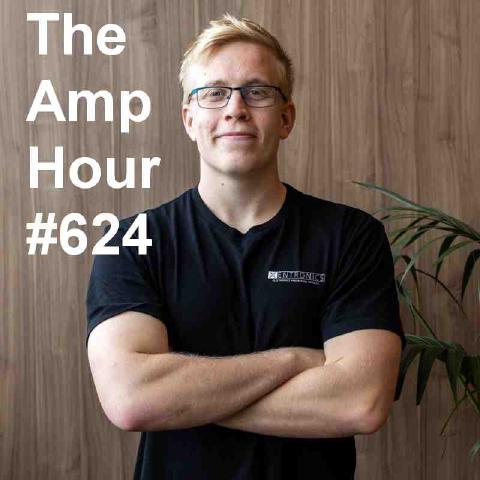
#624 – Design & Manufacturing Consulting with Scott Williams from Xentronics
Download episode · 91 MB
Also on Apple · Spotify · YouTube · RSS
Show Notes
Scott Williams from Xentronics in Melbourne joins Dave to discuss setting up and running a design and manufacturing consulting business.
Transcript
Dave Jones: This is The Amp Hour Podcast, released March 20th, 2023. Episode 624, with Scott Williams from Zentronics in Melbourne. Welcome to The Amp Hour. I'm Dave Jones from the EEV blog.
Scott Williams: And I'm Scott Williams from Zentronics.
Dave Jones: With an X.
Scott Williams: With an X. Not a Z. Like xylophone. That's what I tell people on the phone.
Dave Jones: Right. And it's Z, not Z. Because you're Australian like me. Yes, exactly. It's good to hear another Aussie voice, mate. Thanks for coming on.
Scott Williams: Thanks for having me, Dave. Like I said before, it's great to meet someone I've been watching on YouTube for 10 plus years and certainly an idol of mine.
Dave Jones: Oh, thank you. Thank you. Yeah, it shows how. 13 years I've been doing this crap now. You know, it's like, yeah. It's scary because you're a young, you're a youngster.
Scott Williams: I'm 26. Yeah, I'm very young. Yeah. Wow. Jeez.
Dave Jones: But we're going to talk about the service, like you have your own R&D company who does subcontract design work.
Scott Williams: Yep. Absolutely. So I guess, yeah, Zentronics, we're basically a dream company for any electronics engineer who loves design. You know, we provide as a service the end-to-end design, development, research for product development. So we service any sort of industry really. We help with the very front-end doing concept-level stuff, you know, like what will the product look like, feel like, requirements, the fun stuff, the detail engineering, the PCB design, schematic capture, firmware development. We have got an embedded engineer, dedicated embedded engineer, software developers, doing that IoT cloud stuff, drivers, sensors, all that sort of integration work. We do sort of help clients coordinate, you know, field trials, that late stage verification, validation work. And then we don't sort of just hand over the project after that. We also really own it, you know, really get in the driver's seat with the client. We take it all the way through all the EMC testing, safety testing.
Dave Jones: I was going to ask about compliance, yeah, and safety and product approval process and all that sort of stuff.
Scott Williams: All regulatory compliance and approvals, we guide clients through that. You know, we've done it so many times. It's quite easy for us to have those conversations and give some general advice at first and then get down to the nitty-gritty product specific. And then look further to that, you know, we'll go on sort of support contracts with clients to help them find a manufacturer, tap into our network of, you know, cable suppliers, battery suppliers, manufacturers for bare boards, manufacturers for the complete product and, you know, make the introductions, organize quotes, qualify the manufacturer, you know, support with that handover, developing test fixtures, work instructions, and then, you know, seeing that first production run roll out, I suppose. And then, you know, full circle, right? We work with them to then say, all right, what's next? You know, are we going to support this product long-term? Are we going to look at end-of-life part issues and managing that? Are we going to look at software updates, bug fixes? Are we going to look at your next product line to, you know, start to flesh out a suite of products, not just this one first product you've developed? Right. So, yeah, it's end-to-end. It's a lot of fun. Yeah, it's been a dream come true. That's for sure.
Dave Jones: Nice. At the ripe old age of 26. So that's impressive. Well done.
Scott Williams: Thank you.
Dave Jones: Yeah. So you mentioned there that you would, once, you know, the typical, the design job's done, they've taken it into production, and then you, like, move on to more of a support phase.
Scott Williams: Yes.
Dave Jones: Would they, would you start, like, a new contract with them for support phase? How does that work? Because I can't imagine people were, you know, because they don't know how it's going to go at the start. So you're a designer, you might start, please correct me if I'm wrong, and this is how I've done it. I guess I've worked in this myself, although I never had a whole firm behind me. It was just me as a contract designer.
Scott Williams: I was there too, though. Yeah.
Dave Jones: Yeah, yeah. You would just start, you know, sign a simple contract, you know, we're going to design this prototype, for example. And then you'd have another one for, oh, help us into production. Then you'd have another one to help us for support. Is that how it generally works?
Scott Williams: So, and I guess this is the thing, right? You know, I guess later we might talk about being a consultant. It's an interesting thing. It's something that can be hard to put into words, you know, like it is a bit of a unique position to find yourself in. And one of the key things, I think, to be a successful consultant or run a successful consultancy is being careful with how much you're scoping into, not just in general, just in terms of each phase of work. You know, a client, when they come to you, they would probably, if it's the first product they've developed, you know, which they might not be a startup, they might be an established business, but it might be their first time developing a product from scratch, right? And as you would know, product development, that's a journey.
Dave Jones: Oh, yeah.
Scott Williams: The most simple of all products, an LED and a battery in a plastic box, that's a six months to production journey. That's it. It's so, but when they come in the door, they're going to have in their mind that whole journey. They're going to have in mind, yeah, you give us a quote to get this thing to production, but it's like, we can't actually do that accurately at the start. So being careful around exactly as you've said, we can put together a contract for this amount of work. And if it's a very risky project, you might only be able to scope in the proof of concept phase. If it's something you've developed before, you might be able to say, look, here's an estimate or here's what we think it's going to cost for a mature, fully working, maybe not compliant, maybe not fully tested and meeting all regulatory standards, but here's a pretty mature product and we can give a price for the whole development up to production. And I mean, if it's really, really simple, you might be able to give a ballpark all the way through production. But again, you would never really want to promise that. And it's just one of those things that like my journey has been, which I'll go into a bit later, but being that freelancer at the start, over-promising, but unintentionally, right? Unintentionally over-promising. So yeah, absolutely. Different contracts for different phases. You know, we do a pretty open-ended type contract, you know, agreeing on scopes phase to phase and agreeing on, you know, each month we revisit that and look at what's next, what's up and coming versus then that long-term support is a whole nother different can of worms. And there's not a lot of hardware support, but you'd be surprised what can be involved in terms of, take for example, test fixtures. Yep. If you've got a product that is, you know, 10,000 volume a month, that test fixture is going to need pretty consistent maintenance on it.
Dave Jones: Yeah, been there, done that.
Scott Williams: Yeah, yeah, exactly. You would know, right? So you need a plan around that. And a lot of times, if you're working with a very large manufacturer and there's a high price involved, they will take on some of that and we can hand over that knowledge. But a lot of times, especially modern contract manufacturers, a lot of modern ones based in Australia, especially, you know, we work a lot with most of our designs are built here locally. Great. They don't want that responsibility. They say, this is your test fixture. And when I say your, I mean the client's test fixture technically, right? Not ours. So we need to be responsible for maintaining that. And that could be as simple as giving them a pack of test probes to swap out and a little instruction on how to swap out the test probes because they've worn out. Exactly. That's as simple as it could be, but that needs work. That needs response time. You need to be able to get back to them within 24 hours. Otherwise the whole production run stops and customers don't get their orders. There's a whole can of worms. And the manufacturing side is what I really love. My first job out of university at IntelliDesign in Brisbane, that was what made me fall in love with it pretty deeply. You know, it was a manufacturing facility who did R&D as a service as well, you know, an ODM, I suppose. And being able to be a designer there, it meant that, you know, I got to do my own designs, be a part of that front end process, but really, you know, write my own test procedures on how it's going to be tested and not really mature test fixtures, but doing little ad hoc test fixtures to hand to someone else to sort of mature out a bit. So it's sure. Yeah. The manufacturing is something I'm really passionate on, as is pretty much everything in the process.
Dave Jones: But yeah, that's interesting because the manufacturing and test engineering side of it, that's where I spent several decades as like, you know, test engineering side of things.
Scott Williams: Yes.
Dave Jones: That's considered very unglamorous. Oh, is that the correct term?
Scott Williams: I would say, I would just say undervalued.
Dave Jones: Oh yeah. Totally. Totally. But it's not, you know, nobody goes, oh, I want to be a test engineer. You know, like who does that? It's like, it's, it's usually something that you fall into, you know, you started a company and they go, oh, we need somebody to, that's how I fell into it. It was like, you know, I was hired as a contractor and well, you need to go out and fear, you know, design these test jigs and then fix them and, you know, make sure, write all the procedures for them and, you know, massage them and, and do all sorts of, you know, go out there at midnight and piss for sweet nothings in their ear to make them work. And, and yeah, you just sort of fall into it. Is that the same thing? Yeah. Or did you accept a job knowing it was a test engineering role?
Scott Williams: Well, no, no. Look, I mean, this is, this has really been just the whole way through my career. I've been just the, I guess the, the designer, but I guess it's, it's always a responsibility that in one way or another does come back to the original designer in terms of at least telling the test engineer what he needs to test to or what criteria to meet or what, what is the design what's involved. And I guess ever since starting Zentronics, I was always interested in keen and excited to take on that fixture development. Cause I find it's, I find it quite interesting. You know, you take, for example, you might have a PCB that's got three infrared sensors on it and three LEDs on it. Now that's a very simple design to do from a design perspective, right? You buy these off the shelf, infrared sensors, they're I squared C, you pop them down. Yep. Yep. LED current limiting resistor connected to a GPIO pin, whatever. Testing that in production. That's a pretty complex product to develop. You need fiber optics to measure the LED light levels. You need, you need some sort of moving object to cover the infrared, move away from the infrared measure, you know, sort of feedback of, is that the reading we expect? You know, the fixture development I find is just as exciting and interesting as the product development. I just don't think people, it's not, it's just that awareness isn't out there. You know, if you, I feel like if in university they showed images of text fixtures and there was a subject on test engineering in electronics engineering, I feel like that would be a huge, huge interest for that industry. There would be, you know, an oversupply of engineers probably.
Dave Jones: Right. Yeah.
Scott Williams: I just think, yeah, I just think the demand's not, I just, the awareness isn't out there.
Dave Jones: No, it's something that's never, test engineering is something that's never mentioned in any school that I'm aware of anyway. I don't know, leave it in the comments down below if anyone has any evidence to the contrary, but no, it was just never spoken of. It's just, you know, something that an engineer is expected to do often, especially if you're a one man band engineer. Yes, absolutely. You know, if you're, you know, if, if you're the entire engineering department, as I have been several times, it's like, yeah, everything, all every responsibility for all of that falls on your shoulders. So, yep.
Scott Williams: Yep. Absolutely.
Dave Jones: Just expected. So you mentioned like, you know, scope of work for jobs and things. Do you like quote an entire job or do you go, oh, look, let's just do an open-ended number of hours, which do companies prefer one way or the other, like a fixed price job?
Scott Williams: Or let's, let's be real here in my experience. And in three years of full-time business, four years of part-time, I've never found a client who didn't want fixed price. Right.
Dave Jones: Okay. They, they, they didn't want to get into that open-ended.
Scott Williams: Of course. I mean, it's, it's a huge risk for, it's a huge risk for anybody. You've got, you've got the spec, you've got the spectrum of, you know, the startup green one man client who's got this idea for this smart toaster or whatever. Yeah. And then you've got the other end of the spectrum where it's an established business. They might even have internal R and D ability. They just outsourcing a project, you know, putting a tender out there for someone to compete with. There's a huge spectrum. And in any of those, any of those gaps throughout that spectrum, everyone there for one reason or another has a motivation to know how much a project's going to cost. Right. That's, that's the reality. If they're a one man band, they're funding it themselves. They need to know how much money they're going to lose, potentially lose on it. Right. If, if they're up the higher end of the spectrum, you might be dealing with just one stakeholder of many, you might be dealing with a project manager or, or a program manager, but they have someone they're answering to. They have a budget that they need to make, right?
Dave Jones: It's a turtles all the way down.
Scott Williams: Yeah, exactly. Exactly. Right. But this is the thing, Dave, you know, I've, it's been a bit of a merry-go-round this quoting thing and just the commercial, just, just the commercial side of the business in general. And something I'm always improving, always working on the position we're in now is we're pretty firm on never giving out fixed price quotes.
Dave Jones: Okay.
Scott Williams: It's the reason behind that though, is it's a, it's because by doing, I guess, I'm not going to say open-ended, right? We give estimates. We commit to those estimates. We stick to them, right? We don't go, we don't say this will be 20 hours or this will be 50 hours of work. And then we go at the end and say, Hey, it took a hundred. Sorry. That's not how the, that's not how the process works. Right. It's, it's, it's, you know, something's happened. Hey, look, we need to discuss this. There was a risk that this would happen. We flagged that risk at the start. We need a way to move forward. Here are some options. You know, this could be another 10, this could be another 20. The reason for that though. I mean, of first couple of reasons. First, obviously unknown, right? We're doing new product development. We're not developing white goods a second time. We're developing new products that have generally never been done before. There's just, there's just unknowns, right? Unknowns with trying out new sensors, new connectivity technologies, just integration, you know, A plus B is not always A plus B when you start to add sensors together and whatnot. The third thing is there's the stuff that we can't ever promise. So EMC, right? EMC. Oh yeah, right. EMC.
Dave Jones: Yeah.
Scott Williams: Right, right. You got it. So EMC is something I'm super passionate about. Last week I gave, I was a part of one of the worth seminars. I was one of the speakers. I gave a two hour talk and a real life demo of using some of the near field probes, the current probes, all of that sort of thing.
Dave Jones: So was that recorded? Is that available anywhere or?
Scott Williams: I think it was recorded. I can share that with you at some point.
Dave Jones: Okay. Yeah.
Scott Williams: I've just thrown some images.
Dave Jones: If we can link that in, we will.
Scott Williams: Yeah. Yeah, of course. I've just thrown some images in the Google chat.
Dave Jones: In the chat.
Scott Williams: So just circling back to that point, the point is, I'm not going to say I consider myself an expert in this, I'm saying this is something I'm passionate about. I've put a lot of time and effort into doing training courses. You know, I've paid, I'm the only engineer I know who's paid out of my own pocket time in the EMC lab to test out experiments for my own designs.
Dave Jones: Oh, that's serious commitment. Yeah, yeah.
Scott Williams: Yeah, yeah. Right. And so I can tell you in terms of what's the phenomenon where you think you know stuff, but you actually don't know. And when you know more, you realize you don't know anything. What is that?
Dave Jones: Oh, that's the Dunning-Kruger effect. Is that the Dunning-Kruger effect?
Scott Williams: Yep. So Dunning-Kruger effect, I'll consider myself past that spectrum where I know no matter how good you think you are, you can't really ever guarantee the EMC results of a product. You can put in as many power filters, as much good design with stack-up design and considering crosstalk and coupling and putting shields over all the components on the board. But really, you know, there's always, for example, there's always a little bit of off the shelf hardware in there. There's always a plug pack that you're using. Oh, yeah. The plug pack will have- Huge variable.
Dave Jones: It's the variable.
Scott Williams: Yeah, right, right. You got it. So that plug pack could have the RCM logo, FCC, CE, CCC, like whatever you want. It could have passed by two decibels though. And when you integrate it into your system, that two decibels will no longer be enough margin for you to pass. Yeah. And that's what I talk about in that presentation, right? Things like Raspberry Pis. I love them. We use them all the time. They give a lot of leverage. That leverage is a trade-off we take in the development process. But the trade-off you're taking is that risk for supply, that risk for EMC, that risk for safety. There's a lot of things that we can't promise. Certainly not fixed price on a whole program. And then the fourth thing, which is really the thing that I care about the most, because I've done fixed price a lot. And those first three things, I was always happy to risk at the start. And, you know, I've absorbed hundreds of hours, right? We don't have to do that anymore unless we've made mistakes, of course, right? If we make mistakes that are blatant.
Dave Jones: You've got to eat that, yeah.
Scott Williams: Absolutely. The fourth thing is collaboration. So this comes back into the agile manifesto. I'm not sure if you've read that. This is a very software-minded thing. But by having those agile principles, it means you can collaborate with the client. We can say at the start, instead of saying to the client, if you want a fixed price, you've got to tell me every LED color you want, what the display is going to look like. You've got to tell me, do you want 4G? Yeah, yeah. Do you want 4G or do you want Laura? You've got to tell me, do you want the battery to be one amp hour or do you want the battery to be two amp hour? You can't expect that of a client, I think, to be honest.
Dave Jones: It's just like trying to get a board fully routed, fully auto-routed. You've got to specify. You've got to spend a month setting up every parameter before you can hit the auto-route button and then expect it to come out perfect.
Scott Williams: Absolutely. Absolutely.
Dave Jones: Yeah. And the same thing applies there.
Scott Williams: So I'll share you, again, we can share this image just as a little JPEG or something, I suppose. But this is something that is in our capability statement that I share with clients. And this is exactly on this topic. That's the first image there I've just sent. Oh, okay. Got it. Just for the listeners, it shows like traditional product development. You've got requirements followed by design, followed by development, followed by V&V, you're testing, validation, EMC testing, and then production, right? That's the waterfall. Yeah, that's the traditional workflow.
Dave Jones: Yeah, yeah.
Scott Williams: That's the theory. And then we gladly tell clients that this is what happens in reality. So a couple of things. You spend half the project time doing requirements, not the first 10% of the time. Immediately when you start to do the architecture, you realize we put infrared sensors in the spec, but we actually need LiDAR sensors. So let's change the spec. All right. That's fine.
Dave Jones: For those who don't realize why I'm laughing, it's because I'm looking at the image here, which there's a lot of loopbacks. Yeah. Let's just put it that way. Yeah.
Scott Williams: Right. Well, look, I'll share some more, right? So we get to the development. We're doing the detailed design and we realize, oh, we specified the PCB and the product has to be 100 by 100 by 50 millimeters, quite a small little compact product. But we also packed in all this technology. Those are conflicting things. That technology and that battery and that thing needs size. You can't have both. So PCB doesn't fit enclosure. Okay. Well, we've got to go back, change the requirements. The enclosure gets larger.
Dave Jones: Or you'll have to tell the poor customer that, sorry, this is going to actually cost twice as much to actually make because you're now using 0201 components instead of something else, et cetera, et cetera. You've now gone to like an eight layer board instead of a four layer board. And this is going to cost you more in a hundred thousand volume, you know?
Scott Williams: You get it, right? So look at the last one. Production. You get to production. You get the designs done as far as anyone's considered.
Dave Jones: It's done.
Scott Williams: And what do we have? We have a feedback line that says production quotes too high and we need to cut features. Exactly. Right? So I left that to last because that's the real reason we don't do fixed price, fix this, fix scope jobs. We assume that us and the client don't know the answers. And that's to be in a position to do that as a consultant, you've got to be pretty well established. You've got to have rapport. You've got to have proven projects behind you. You can't quit your job, go out as a contractor and say, no, I can't guarantee anything for you today. You know?
Dave Jones: Yep.
Scott Williams: Yeah.
Dave Jones: So I assume that you've got clients who approach you, you know, and they want that fixed cost and you go, you know, look, and you tell them all that, you explain all this stuff to them and they just storm out going, you must be hopeless if you can't give us a fixed quote. And they just don't understand because they've never been involved in this before.
Scott Williams: Every day, Dave. I'm sure that's happening. Every day.
Dave Jones: Every day. Okay. Right.
Scott Williams: I'm the salesman for the company, right? I'm still, unfortunately I get to be quite hands-on still. You know, yesterday I was in the EMC lab doing conducted emissions troubleshooting, you know, like I'm very hands-on still, which is great, but I'm the point of contact for business development, I suppose. And that, that, those conversations come up every day. Now, what we can do is, you know, we, we can in very specific circumstances promise these sort of fixed price things, but it's, it's, it's a very limited scope. It's got to be something we know we've done before.
Dave Jones: It has to be something guaranteed simple that, you know, there's not going to be any gotchas or if there are, you know, three different ways to circumvent it and, you know.
Scott Williams: Absolutely. Absolutely. Something, something, something like, for example, a client, it's brand new and they want a demo with a display and they want a temperature reading, like something super basic, but it's in the context of another product. Maybe they want to put things together and cobble up a big demo. Well, I know we've got a Raspberry Pi shield with a temperature sensor.
Dave Jones: You've got five ways to do that. Come on. A dozen ways to do that. Yeah.
Scott Williams: Totally. So I could say to that client, yeah, look, here's the price. We can deliver that in four weeks. No worries.
Dave Jones: Yep.
Scott Williams: You know, so.
Dave Jones: Excellent.
Scott Williams: Yeah. It's, it's, it's interesting. There's a lot.
Dave Jones: So how did, did you start the traditional way as everyone does? Like, as, as you said, nobody just suddenly decides they're going to open to design consultancy. I presume you started the midnight engineering thing. You were working in a company and then you got a friend or the company asked you to, or some other company asked you to work on something and you did at literally at right at midnight. That's why it's called midnight engineering. You're working through moonlighting in your garage, moonlighting, whatever you want to call it. So that's how you started.
Scott Williams: Absolutely.
Dave Jones: And what point did you want to, did you know that it was going to like, oh yeah, I should probably do this as a full time. I should start up my own company.
Scott Williams: Before I say that, you know, I must say I work really hard to be in the position I'm in, you know, I've got, I've got, I've got, I've got a dream job here. You know, I walk five minutes to work. I've got a team of six now. They're awesome engineers. Love working with them. I get to work on all these awesome projects, get to work on from start to finish, you know, and I'm very lucky to be in that position, but wouldn't be here without my network and who I've been working with. And that includes these people at the very start, right. Who gave me those opportunities and, and sort of gave those tip offs. I suppose the point when I went full time, I don't know if I was necessarily expecting or ready for it. Effectively what happened was one of my employers who I was working with, I won't say who, but you know, they were, they were aware of what I was doing. They were okay with it. You know, I was working, I had the, I had the same client for the two years I was moonlighting. It wasn't like I was working on four or five different projects and all this, it was probably like a couple of hundred dollars or a couple of thousand dollars work by the end of it. You know, I was probably charging way below what I should have been. Right.
Dave Jones: Yeah.
Scott Williams: And, and that was fine. So they didn't really mind. Like, it's not a conflict of interest. They're not interested in doing just PCB layout work or whatever. Right.
Dave Jones: Yeah.
Scott Williams: But they did sort of approach me and say, look, you know, we, we love your commitment. We love your passion. It's amazing. But you know, we don't really know what you're thinking about day to day. We don't know what's going through your mind. We don't, you know, and very true. I could be, I could be sitting there looking at data sheets and they, and they don't know, is that, is that for my side project or is that for my.
Dave Jones: Yeah. Yeah. I can understand.
Scott Williams: I'm glad you can, because as soon as they said that, I went, that's totally fair. That's a hundred percent fair. They're paying, they're paying me a salary, right? This is, this is absolutely fair. So I didn't immediately, I didn't.
Dave Jones: They need focus, right? They're paying you to focus on them, not.
Scott Williams: Absolutely. So when they approached me with that, I didn't make a decision. Then I thought about it for a week and I thought even just with this one client I've had and doing this at nighttime, I am just in love with this. I'm just so in love with it. I can't give it up. At the age of 22, I was like, I can't actually give up this side work.
Dave Jones: You're right.
Scott Williams: So look, I decided to take the jump, I suppose. And the thinking at the time was what a lot of people do is, okay, I'll take this jump and maybe this employee, employer will get me back as a contractor one day a week anyway, you know, and I'll have some cashflow, right? I'll say that didn't happen. Right. So I didn't have that.
Dave Jones: It actually surprisingly does happen a lot.
Scott Williams: It does. Oh, absolutely. People transition to two days a week or one day a week. And that's great for those people. For me, it didn't eventuate to that, which was sad. But yeah, and I had that one client and that work dried up pretty quickly. And then...
Dave Jones: Right. Murphy's Law, right? As soon as you decide to go full time, that reliable client you've had for years. Absolutely. The work dries up. Yep.
Scott Williams: Absolutely. And so in the early days, the work came through things like, you know, freelancer.com, fiverr.com, these platforms. Oh, okay.
Dave Jones: I was going to ask about those. Yeah.
Scott Williams: Yeah. So that's where the work came from. And again, pretty savage platforms to be working on. You know, you're competing with people. Well, you're competing globally. You're competing with people who they only need to make $20 an hour to live an awesome life there.
Dave Jones: So how much were you charging an hour on something like that? Or were you charging job lots or what?
Scott Williams: Yeah. I mean, again, on that platform, a lot of it is fixed price bids. That's what a lot of people ask for. A lot of people don't like the open-ended projects on those platforms either. So look, it was always pretty much fixed price and it was always tidbits. It was always designed this laser PCB with a laser and a connector on the back and design. So it was never really those nice fleshed out full projects.
Dave Jones: It wasn't a full design cycle from concept through to production and, you know. Yeah.
Scott Williams: No, exactly right. So, and then look, I did, I just, it just, it was from that point onwards, it was organic. You know, eventually I found those bigger projects on the platform. Eventually one of them was a local person. I could meet them and actually catch up with them and talk about it. Yeah. Right. And then they gave me a referral.
Dave Jones: So did they actually prefer someone local? I was going to ask, where do most of your jobs come from? Are they local or are they, I know on your webpage, you say you've done designs in, felt like a thousand different countries. But where's the majority come from? Is it local? Because they want to like deal with someone local. They feel more comfortable.
Scott Williams: So this is the thing. When I started out, I didn't have a single client in Australia for the first six months. Right.
Dave Jones: Oh, right. Okay.
Scott Williams: Again, just trying to compete globally, trying to just get on these platforms. That's where most of the jobs are coming from. Most of the jobs on those platforms aren't Australia, of course.
Dave Jones: It's just sheer volume. Yeah. It's just like sheer market volume. Most of the, you know, where Australia is only, you know, 2% of the global population or something.
Scott Williams: Exactly right. So, and then look, organically, it's literally just honed in slowly and slowly towards Melbourne, where we're based. Now, at the moment, I would probably say 50% of clients are Melbourne. Okay. But I can gladly and proudly tell you, you know, the other 50%, they're all Australian clients. I don't work with any international clients anymore, which is.
Dave Jones: Oh, you actually deliberately turn them down or you're just not getting them? No, no.
Scott Williams: This is just organically how it's evolved to. Yeah.
Dave Jones: Right. Exactly. Right. Because people have maybe, do you think that's because people have been burned? No, no. Is it because you think people are being burned by overseas, you know, the cheap Indian and Chinese, you know, or whatever, you know, contractors and they've, you know, they've done an okay job. But no, you know, it's like I would prefer someone local so I can talk to them. Is that a trend you think?
Scott Williams: I think so. I think that's a trend, but I don't, I wouldn't say that's most of the clients we have now there. This is the first time working with another company doing product development. And a lot of the clients we have, again, not going to name any names, but they've worked with other local design houses and have had bad experiences and moved to us. Now, look, we've had clients who've walked away from us. I'm not going to pretend we're perfect either, but there's, there's no, there's no clear distinction on why the clients are Australian. I think it comes down to just referrals. So now at this point, I haven't been on those websites for years, right? Now all the work is generated through referrals, through LinkedIn, through our website. So if you, if you go to Google right now, Dave.
Dave Jones: Yeah.
Scott Williams: Are you on there now?
Dave Jones: Yep.
Scott Williams: Yep. Yep. If you search electronics design, Melbourne.
Dave Jones: Melbourne. And if you design Melbourne.
Scott Williams: So if you skip past the, if you skip past the sponsored ones. Yep. You are number one. Congratulations. Thank you. And look, it's been that for two years now. And that's, that's, that's not tricky SEO work and that's not high click numbers either. You know, it's just a website for a service provider, but it's.
Dave Jones: Well, it helps that you've got, you've cleverly got Melbourne in your banner title.
Scott Williams: Don't give away my secrets.
Speaker ?: Oops.
Dave Jones: Yeah. Because people put in specific keyword. It's just like in the YouTube video business. If you want your video to show up, the keyword has to be in the title. It's not good enough to have it in the description or in the keywords. It's got to be in the title, you know? Exactly right. So, you know. Yeah. Yeah.
Scott Williams: But, but with, with that said though, like, you know, the contacts form on our website, that's one in every 10 is actually a good lead. Right. Right. Yeah, of course. Right.
Dave Jones: You get a lot of tie kickers, huh?
Scott Williams: No, no. I wouldn't even say tie kickers. The intent is there. Tie kickers are someone who doesn't plan to buy. Right. That's different. Yeah. Yeah. That's different to someone who's happy and willing to pay me a thousand dollars to develop a custom generator for them. You know what I mean? Right. Like, I'm like, we don't, we don't do custom generators for your home.
Dave Jones: A free energy, a Tesla. Yeah. Yeah.
Scott Williams: Yeah. That's sort of the leads that come through there. Okay. But certainly one in every 10 is a, is an awesome, you know, an awesome lead. Right. And it comes to, you know, it's someone who genuinely is just looking around, doesn't know where to search, doesn't know where to Google. I've had two interns that we've gone through now, you know, school, high school interns, year 10 sort of age. Yeah. They found us on the website. You know, so there's, there's been good things that come from Google. Don't get me wrong. But look, most of the key leads are really through those, those referrals.
Dave Jones: Those referral things.
Scott Williams: Yeah. I don't, I don't do a lot of networking, but the once or twice I did go to, you know, electronics and even the all energy conference. That's the sort of green energy one, you know, I've, I've had clients eventuate from just going to the seminars and ask, I've asked a question and then someone's noticed my question was like, oh, you know, talking about electronics design. And then they approached me after saying, oh, you provide that as a service. You know, we might, we're looking for someone for that to help us. We've got, we've got this product we're using off the shelf and we want to transform it into our own, own our own IP. We want to add features, cut features, shrink the costs, you know, those sorts of things come from those in-person meetings, but it's, it's a good mix. It's a healthy organic mix. I wouldn't say the trade shows are important. They're just a part of the organic mix because we, I started the business just as COVID started. I left my full-time job in February, 2020, right?
Dave Jones: Perfect timing. Well done. Well, this is the, this is. Well, is it, is it, was it a good thing to get into?
Scott Williams: Well, this is the thing, right? Like, even though it meant I didn't get to go to networking or meetups and find maybe more of these local, local leads and local business, it meant that I could focus a bit more. I mean, I could do 50, 60 hour weeks and there's nothing I was missing out on really. Right. So yeah. And that, that wasn't sustainable of course, but you know, certainly those first, that first year, year and a half when those lockdowns were a big part of life, I did work a lot. And I guess that, that probably shows, you know, it has only been three years full time and I like to think we're pretty established. We've done a lot of projects, you know, there would have been 40 clients in those three years, which is, yeah. I mean, it's, it's, it's substantial. Wow. That, that, that's a lot. And you know, these aren't clients we're just designing boards for, right? We're now doing full product development most of the time, you know, managing the whole project, bringing in industrial design companies to develop the enclosures and, you know, as a partnership type thing, bringing things always all the way through to manufacturing, like I said. So it's great. It's, it's, it's, it's really awesome.
Dave Jones: So do you have to turn away clients? Cause you've got too many jobs on at the moment or do you hire more people or have you got some people on tap who can?
Scott Williams: Yeah. Well, this, this is the thing.
Dave Jones: Actually take up those, I guess.
Scott Williams: Overflow.
Dave Jones: Overflow jobs. Yep. Yep. Overflow work. Yeah.
Scott Williams: Yeah. So great question. Great talking point. I mean, scaling, scaling a consultancy is probably one of the hardest things you can do in a business, right? You don't, we have no guarantee of work, right? We can't.
Dave Jones: Oh, no, it's either a drought or a flood, right? Usually. Feast or famine, right? So feast or famine.
Scott Williams: What that means is.
Dave Jones: How do you deal with it?
Scott Williams: Yeah, yeah, yeah, exactly. It's, it's a constant struggle, right?
Dave Jones: Yeah. Yeah.
Scott Williams: You're always going to be, even if you have all this work coming in the door, I'm in the back of my mind, three months from now alone, we would have closed out all of our open tasks, open items, and there will always be more work, but I don't necessarily have a guarantee on that, right? And you can't expect a client to sign a one year contract for development, you know, that's not.
Dave Jones: That's right.
Scott Williams: So I guess a couple of things. The first one is yes, saying no. Again, I've got, I did write some notes for this, but saying no, that's one of the things I think learning when to say no is one of the big parts of being important skill is a very important skill. So I always laugh about this, you know, if the very start of becoming a freelancer, you know, I'm hungry. I want to get some projects.
Dave Jones: Hungry for work.
Scott Williams: So hungry for work. If someone walked in the door, if someone walked in the door and said, I'll pay you a hundred thousand dollars, which that's not a lot for product development. But that's a, that's a pretty average product development in terms of the whole scope, you know, the software, the, the enclosure design. Sure. Yeah. Someone said, I pay you a hundred thousand dollars to develop me an x-ray machine. I would have said yes. Right. I would have. Yeah. Yeah. Because you just, I would have gone, hell yeah, I can do this. It's going to be challenging. I'm going to need to bring in some people and talk to some experts, tear apart some x-ray machines. But I would have done that right now. I would run for the hills. If someone, of course, even, even offered me $10 million to develop an x-ray machine. So it's just, that's something I just learned. You have to learn that. You don't, you don't just know that.
Dave Jones: It's too big a job. Yeah. It's too, there's too many unknowns. There's too many.
Scott Williams: But, but even, but even, but even if it was, even if it was, I'll start paying you money. I don't care what the result is. We just give it a try. If it was some millionaire who has nothing better to do, it's still not, it's not fulfilling. It's not something we want to be a part of. It's not something that aligns with our values. Right.
Dave Jones: Right.
Scott Williams: Yeah. So.
Dave Jones: Got it. Although if you had no work, you would take the money. I'm sure. If you had nothing, come on, you would, you would take that free money. You'd pick that up.
Scott Williams: Let's, let's, let's not, let's not go there. So yeah, look. And, and, you know, sometimes as much as, as much as we want that, those, those big projects, because that means you can resource, right? If I know there is, I've got five projects, each of them are a hundred thousand dollars over the next six months. That's half a million dollars. That's enough for my payroll. That's enough for my bills. And that's enough for, you know, some small margin on it as a business to make a profit. Yeah. That's fantastic. But that's just not how it goes. Right. We have so many work. We're always cleaning up. We're getting called for bug fixing and continued development on old projects. Which then, which interrupts your current project you're working on.
Dave Jones: It just kills the flow, right?
Scott Williams: No matter how hard you try, if you want to be a good consultant, you just, you can't be too proactive. Reactive is a part of the skill. Your customers will have, your customers and clients, they're going to have an expectation that you're a reactive person, you're a reactive business.
Dave Jones: And they expect you to fix their problem now. They don't care what other projects you've got on.
Scott Williams: They're paying you to fix their problem. Exactly right. So, and you know, you can manage those expectations. You can, on case by case basis, you can establish, all right, we're handing this to you. If there's bugs, keep testing and testing it. Get back to us in two weeks on what bugs you find, rather than call us as soon as you find a bug.
Dave Jones: Every day. Right.
Scott Williams: So you can set those boundaries a little bit, but not in all cases. Not in all cases. Not at all. So now you mentioned contractors. So that's a good one. So if there's a lot of work, instead of saying no, how about we get a contractor in to just just here, you're a skilled guy, you know, might be a gray beard fellow who has all the equipment at home. He doesn't even need to come to our office. It could be another young engineer who's just, they want to work one day a week or two days.
Dave Jones: Hungry for their fare. Yep. Yep.
Scott Williams: Take any job they can get. Yep. It could be that. I've done a bit of work with contractors. I don't think I'll ever work with contractors again. And I think this is just because I take great pride in the quality of work we output. And when I say quality, I don't mean like quality management in terms of consistency of product. I mean, I mean the quality, I mean, you know, our schematics, how readable they are. We use, you know, block schematics. We have blocked chunks. We have all power ports on the top ground on the bottom. We have all the resistors are a standard symbol. We have solid libraries. We have manufacturer part numbers embedded in all the symbols. We have all of this clean stuff. That's just the schematics, right?
Dave Jones: Yeah.
Scott Williams: Let alone talking about PCB.
Dave Jones: Oh, there's like bombs and test procedures and documentation.
Scott Williams: GitHub, commits, pushes, all of that. Working with a contractor, there's a huge inertia if you want to expect them to do that. You need a long-term contractor. If they're a long-term contractor with you, I would consider that an employee, not someone you're bringing in just for one project, right? That's a different scenario. So if you take great pride in what outputs you're generating for the clients and you want to be able to take that back off the contractor and actually understand it, understand the code they've produced, understand the design, why they made those design decisions when there's something biting you, biting you in the ass, you know, two months later, then it's really hard to do that on a short-term basis. So yeah, I think I will always just be saying no to projects. I will always be, you know, sometimes we're under-resourced. That's just the reality.
Dave Jones: Well, that's the thing. Like you talked about before, you've got one full-time embedded firmware guy. It's like, well, what happens if you've got suddenly a flood of firmware projects that need doing? I mean, obviously you can do some, you know, you might be able to jump in. Maybe one of the other engineers has a bit of firmware skills as well.
Scott Williams: They can help out. I'll just answer that one quickly. So there's other tricks, right? Like I said, consulting is a bit, you know, there's a bit of trickery that goes into it. I don't like that side of it, but, you know, we could say to a client, okay, cool. Well, we'll start the project in four weeks. They've signed the contract. We didn't actually tell them when we're starting. We told them how long it would take to develop it. Well, we're not going to tell them, we don't tell them when it's going to start until they've actually committed to it. Yeah. Yeah. That's a pretty fair thing to do. As long as you make that clear and upfront, you're not hiding that information. The other thing is you can just stage your estimates for a project. And when I say estimates, I mean the time taken estimates, the duration, not the resource. You can stage that proposal to proposal based on how busy you are. So, you know, we've got a new project we're doing with, you know, it's a Raspberry Pi based one. The clients requested that because they'll do a bit of the software.
Dave Jones: Yeah.
Scott Williams: We're going to do a bit of the software in-house just to sort of get it in a nice place where we can hand it to him to do the refinement, do the calibration and tweaking. So we'll do sort of the verification level software. But my software guys just moved to Canada. He's going to be working remotely for the next six months, which is great for him. You know, I'm glad I can give him that opportunity. It's hard to do that for a hardware engineer, of course, but for a software guy.
Dave Jones: Yeah. Software guy. It's pretty easy. Yeah.
Scott Williams: And he's, so he's gone to three days a week while he's doing that traveling remote work. And so I've had, I've stayed that proposal as if we were under-resourced. So that I'm saying it's going to take four weeks to get a Pi up and running and get some drivers written for RFID when that would be a week and a half if he was here. You know what I mean? Yeah. So, and that's fair. We're being honest. We're not saying, we're not saying it will take a week and a half and then stinging them later and saying, Hey, we're under-resourced. It's going to take longer. I'm being.
Dave Jones: Yeah, exactly. No, they're not going to appreciate that.
Scott Williams: No. Right. But I'm being upfront and honest and saying, this is how long it's going to take. And that's all they care about. All clients care about is the end result. They don't really care about the details of, oh, someone's sick today or whatever.
Speaker ?: No, they don't.
Dave Jones: The details are your problems. No, they don't. No. Exactly right. At all. That's a universal rule. Yep. Absolutely. The client never cares about your problems. Exactly. Because they're paying you. They're giving you money. Right? They aren't giving you money for you to give them problems. Yep. Exactly. Right? Or to whinge about your own problems. Yep. No.
Scott Williams: Exactly right.
Dave Jones: I don't want to hear that.
Scott Williams: So, yeah, look, the resourcing is a big thing. But as I just showed you there, there's, besides just saying no, because that can be hard, right? If it is a good project, you want to make it work. And just as an example, you could have five or six projects. You've been working on them for years. You sort of want something fresh and new. And the client that comes in the door is one you'd love to be a part of. But it's a huge project. You've got all these other ones on. Sometimes you have to make tough calls in those circumstances. Right? So, yeah. Yep. Excellent.
Dave Jones: Exactly. So, if you're looking for an employee, as a design consultancy, what is your official, like, what do you call yourself? You're a design consultancy? Or are you a...
Scott Williams: I don't like that word, right? Because... Right, okay. Well, consulting is a... Consultancy. Consulting is a part of the business and it's a core part of it. But most of our work is just development. It's just doing the work, right? We...
Dave Jones: So, are you a development bureau? Are you a development lab? I would say...
Scott Williams: Are you a development service? Well, in some ways we're a research provider, you know, like a registered research service provider. But, you know, I would just say we're a... I would say we're a product development firm specializing in electronics. That's what I would say in a mouthful, right? Because we wouldn't be interested in a product that doesn't have electronics. Yeah? So, we wouldn't say we're a product development firm, full stop. And then... Right. And then contrary to that, we also wouldn't just say we're electronics design firm or electronics development firm because...
Dave Jones: No, because that implies just a small aspect of...
Scott Williams: Right. We're not a layout company. We're not going to take your FPGA board and do it. We're not going to just take your product through EMC for you. You know, that's... We don't... That's work I've done before. You know, I spent about three or four months where I focused on EMC and was a... You know, I just... EMC Technologies, I know you visited their lab. I know...
Dave Jones: Yeah.
Scott Williams: ...pretty much every single staff member there. They're a great team. They see me there every two or three weeks with all the projects we go through. And there was a time there where I was just consulting in that space. And so, I've tried, you know, these focuses and always come back to wanting to be a bit more general in the process. Got it.
Dave Jones: Your Google search result does say you're an electronics design and manufacturing consultancy.
Scott Williams: Yes. Well, look...
Dave Jones: Maybe that's a legacy description. The whole website's legacy.
Scott Williams: The website was even...
Dave Jones: Legacy, okay.
Scott Williams: The website was before I had staff, to be honest, right?
Dave Jones: Right, okay. Right. Yeah, yeah.
Scott Williams: Like, for example, there's an image at the bottom which has a cool rooftop sort of view of our office. But it's... That's a co-working space when I was by myself.
Dave Jones: I was going to ask about that. Yeah, yeah. Right. Well, I'll get onto the space in a minute. Remind me about that. But my question was before...
Scott Williams: Please.
Dave Jones: If you're hiring someone as a design company, are you looking for a generalist? Yeah. Would you prefer a generalist or would you prefer a hardcore, oh, this is the best firmware guy in the business, but he can't solder to save his life?
Scott Williams: Yep, yep. No, I love it. Right? I love it. That's a great question. And I saw something about this the other day. So, I guess you have traditionally two kinds of employees in terms of skill sets. You have the T-shape, right? You have someone who's pretty lacking in skill across most areas in whatever field, in whatever, however general you want to abstract this analogy, right? And then they have a focus. They have a T sort of line vertically. They have a vertical focus. And a lot of times that makes sense. And then you have a generalist who might be, let's say, I'm not going to say like a U-shape that's sort of good at everything, right? Right. You know, let's say like a V-shape that isn't... No, not a V-shape. How about like a... I think of a U-shape, but one that doesn't go very deep. So, sort of a stubby U.
Dave Jones: It's sort of like a... You would call that a bathtub. Yeah, bathtub. You got it. You got it. Yeah, exactly. Bathtub. Yeah, shape. Yeah.
Scott Williams: Now, what's ideal for me, I think, from my experience so far is neither of those. And it's an up and coming term that's being used. It's the V-shape. So, it's someone who, again, this is all just models, but it's someone who does have a specialty. They do go deep in a way. They might be very...
Dave Jones: But they need to have a skill stack, right? They need to have like a...
Scott Williams: And they might be completely lacking at the tips, right? They might have no idea how business works. They might have no idea how RF works, but they are pretty good at soldering. They're pretty good at getting a Raspberry Pi up and running. And then they're really awesome at embedded firmware.
Dave Jones: Yeah.
Scott Williams: Right? So, like C, bare metal C stuff. As a V-shaped type, that's exactly the sort of...
Dave Jones: Right.
Scott Williams: ...person I'd be looking for, I think. And I have experience, you know, hiring a grad engineer and, you know, mentoring them through the ranks. She's still with us now and she's been fantastic. It was a good experience. But I think in a consulting firm, you do really want an expert.
Dave Jones: You want someone established. You're probably, yeah, if I had a consultancy with employees, I'd be looking for someone who... Because you don't have the luxury of time, of being able to... You're a small firm. You're working on 10 projects at once. You don't have that time luxury.
Scott Williams: Exactly right. So, it's been a good experience with that. And I wouldn't say I'd never do it again as such. It's just... Yeah. Back then, I could afford, what, you know, say $70,000 salary for a grad. Whereas now, I could afford a senior engineer salary. I could afford, if I needed to, hire someone on $120,000, $130,000, $140,000 salary. And they would bring in the value, right? Back then, I didn't necessarily have the system set up. I didn't have all the tools we needed to get them being productive. So, yeah.
Dave Jones: Hmm. Now, back to spaces. Yes. Do you own your own space or are you renting?
Scott Williams: Yeah.
Dave Jones: I guess you need a lot. How big's your space?
Scott Williams: So, we're about...
Dave Jones: Square metreage?
Scott Williams: We're about 150 square metre. Okay.
Dave Jones: That's reasonable for six people. Yeah. Yeah.
Scott Williams: We'll fit about eight, I think, comfortably at some point. Yeah. We've got room for a lab area now, like a dedicated lab area. We've got that, you know, nice and staged with a bit of, you know, safety signage and tape on the ground.
Dave Jones: Oh, okay. Yeah, yeah. So, it's just a regular office space in a commercial office building?
Scott Williams: No, it's... I wanted something a bit more... Industrial? No, no. I guess... Combo? Original. No, no. This is like an architecture style building. So, I'll show you some... Oh, okay. I'll show you some photos. I do have some here. Oh, yeah.
Dave Jones: Yes. Yes.
Scott Williams: So, it's like an old... Think of like an old Melbourne architected, old Victorian style building. Yeah, got it. Yep.
Dave Jones: High ceilings. Yeah.
Scott Williams: Yeah, and it's just above a shop front, you know, like on a main high street of shops and things. It's quite a groovy little space. So, I guess these are some photos I took a while ago, but there's one there. That's just our sort of... I'll just set it now. Sorry. This only lets you send one at a time. There's just like the working area. Oh, yeah. The next one here. We've got standing... Everyone's got standing desks, which is great. I do love those. Right. There's like a conference room. So, there's... Conference room, yep. There's sort of... If you look at the first image in the top left, there's sort of like an upstairs mezzanine area.
Dave Jones: Yeah. So, I see that. Yeah. It's like a... Yeah.
Scott Williams: So, that's where the lab is in there. You can see that last photo and then...
Dave Jones: Oh, yeah. Right. Oh, yeah.
Scott Williams: And then even...
Dave Jones: Oh, and it's like... Yeah. And it's curved. It's like a... Yeah. A curved roof. An arch. Kind of like a loft. Yeah. Arch. It's a loft.
Scott Williams: Exactly. And you can see... Yeah. You can see the arch at the front down to the shop front too in that last photo.
Dave Jones: Oh, okay. Right. Got it. Yeah.
Scott Williams: So, the last photo is like just some storage for projects and things. So, it's...
Dave Jones: So, were you renting that or did you buy your space?
Scott Williams: Just renting. I do not have enough cash for buying a...
Dave Jones: Right.
Scott Williams: You know...
Dave Jones: In the current interest rate climate too. Oh, yeah.
Scott Williams: So, I mean, look, we were in that co-working space only until about four months ago. This is a new space for us we're in. So, I did grow in that space, the co-working space organically. We went from a couple of desks in like the open area and I had to still do solaring and stuff at home. So, I couldn't even get the team.
Dave Jones: Oh, right.
Scott Williams: I couldn't delegate those tasks. You know what I mean? Yeah. That was a hurdle we had to go through and then we could afford to then move into one of the sort of private offices in the co-working space. That was a nice step for us, you know? Excellent.
Dave Jones: Yep.
Scott Williams: And then we moved again into a bigger space again in the co-working space where we went from three people to five and then now it's six.
Dave Jones: And then you went, well, this is a bit tight. Yeah.
Scott Williams: It was a bit tight. It was actually more just value for money. We weren't doing the rooftop beers and the networking.
Dave Jones: Oh, okay. All that sort of... Yeah, yeah. We just weren't doing that anymore. You were basically doing your own thing. We were starting our own culture. Being in co...
Scott Williams: Exactly right. Yep.
Dave Jones: So that's the advantage of the co-working space for those who don't know. If you don't have any networking already and you're looking to get into the field or something, you're looking for contacts, then you would be in a co-working space. Yeah. But if you've got your own niche thing and you've already got your own industry network of contacts, then you don't need that sort of thing. Absolutely. In fact, they're more likely to be in fields that you just don't care about.
Scott Williams: Yes. Well, this is the thing, right? In the last space, this was not a hardware co-working. This was filled with recruiters, marketing agencies, freelance graphic designers. This is a bougie Melbourne inner city type facility, right? Got it. So we definitely stood out, that's for sure, with all the oscilloscopes and cables.
Dave Jones: Yeah, what's all this weird? Yeah. Right. Okay. Yes. Yes. Very strange.
Scott Williams: So I'm aware we've only got probably 10 minutes left. So is there another topic you wanted to maybe dive into and unpack or?
Dave Jones: Well, let's talk about the crazies. How many crazies contact you with their, I mean, we touched on it before with their, you know, free energy Tesla device. Oh my goodness. It's how many a year? Like, yeah, right. I can see you just like face palming right now.
Scott Williams: It's probably only one every six months, but. Oh, okay. That's not too bad. It's not too bad, I guess. And some I have helped out, but again, you've got to be careful with what you are promising to help out with, right? One of them had a, again, it was, yeah, it was a free energy device. It was this thing where you spin it with the drill to get it going. And then, you know, the magnets, the magnets keep it going and look, oh, look, it's generating 60 volts. Look, look. And then you put a resistor on it and it drops to nothing. Right? Oh God. Just standard stuff. But for them, like, you know, I did look again, just a side note with, with consulting, nothing's unethical. As long as you're bringing net positive value, that's the main thing. You want to bring net positive value to the client. And in this instance, they didn't want me to design the thing yet. They wanted just a power supply to use. They, they wanted us to show them how to use it, let them loan it for a few days, do what they needed to do. And that was an instance where, again, we didn't get too involved with it, but we did sort of enable them to do what they needed to do. Hands off. Got it. Yeah. Yeah.
Dave Jones: So have you had to be brutally honest with people who contact, like, you know, usually like they might send you a package, you know, I can imagine you going, oh yeah, please send us your ideas and whatever you're working on. Have you ever been, had to be brutally honest that no, you're wasting your time and your money. Don't do this because it's already been done or whatever. Is that.
Scott Williams: So that's a good question because even just, you know, a week ago I had an inquiry and this is, again, I won't say the person, I won't say the industry, but let's say, let's say detecting fires, for example. Now.
Dave Jones: Right. Okay.
Scott Williams: Yep. The spec I got was, you know, it's got 360 degree thermal camera, 360 degree normal camera, the ability to detect fire from one kilometer away, the, you know, all of these, all of these machine learning algorithms and all of this stuff. And I'm like, you want this in six months. This is, this is, you know, CO2 monitoring, oxygen monitoring, all of this stuff powered on a battery that lasts six months. I'm just like, no, like this is, this just can't happen. And the problem is though, you need something to back up what you're staying. You need to give an example like this, this, this, this battery here is 10 amp hour, you know, just simplifying it for the client. This is 10 amp hours. That means it would be running on one amp for 10 hours. This system you're proposing, this would probably use one amp constantly. If all of these cameras firing constantly, not on a duty cycle, just constantly firing. This would last 10 hours. And this battery is the size of my forearm. You know what I mean? Right. Exactly. So how big do we make this if you want it to go six months? You're talking about a battery, the size of a small town.
Dave Jones: Yes. It's, it just isn't doable. It's completely impractical. So do you just like, obviously you wouldn't charge them for that. No, no, no, no, no, no, no, no. This is business development.
Scott Williams: This is business development. This is those early conversations. Now you can, you can take it the next step and say, how can we make this work? What can we cut? What can we work out? And most clients are receptive to that. But of course there are clients who will just say, nope, I'll find someone else. And you just have to say, good luck. That's, that's the reality.
Dave Jones: Good luck. And then, so would you, there are a percentage of customers that they will pay you for like a, a feasibility study, I guess, or a feasibility, you know, how feasible is this? Give me some advice. Is that a common thing?
Scott Williams: Absolutely. I wouldn't say common. I'd say, I'd say any project that justifies it, we will encourage it. Like I wouldn't say, you know, a project that's got a battery, a heater and BLE controlling the heater. You know, I'm not going to say, Hey, we need to do a feasibility study. We need to do $5,000 feasibility document upfront, right?
Dave Jones: Yeah.
Scott Williams: But if it calls for it, you know, if it's global scale asset monitoring, high volume, every goes in every ambulance in America type product. Yeah.
Dave Jones: Okay. Got it. Absolutely.
Scott Williams: We'll look at what's on the market, what could go wrong, you know, or. Right.
Dave Jones: And so you would offer up, you would offer them, would you call it a feasibility study? Feasibility study, for sure. For sure. Or a market, market study or market survey or something like that?
Scott Williams: I'd say feasibility and the market is in some way of that. And again, this is the consulting side. This isn't the product design, the engineering development side. This is the consulting side. No, no. Yeah.
Dave Jones: The good part about that is it's probably reasonably easy to cost that out because it's really just your time. Absolutely. Pretty much. You're not actually doing any hardcore development where stuff can go wrong. No, no. Absolutely. So it's just easy to cost that out. Would you pad that less? Yeah, yeah. Would you pad that less than you would a different job? Absolutely. Like actual hardware? Yeah, yeah. Of course. I don't call it hardware for nothing.
Scott Williams: No, no. Just because it's hard. Exactly right. Exactly right. Look, we would absolutely be pretty fixed on what we give a price to that. You know, we would say 40 hours. And if we go over that 40, that's on us. You know what I mean? It's just, it's a report. We do some research. We look around. And again, back to managing expectations. We can say, we'll touch on these topics. If we want to go deeper, we can talk about more scope to go deeper on some of these things we find out. We don't have to promise that the level of how deep you go in this report, that's not something you want to necessarily say, all right, we promise we will flesh out every single product that's on the market just like this. That doesn't, who knows how long that's going to take. Yeah, exactly. So yeah, it's not something we do a lot of. We've probably done, you know, across those 40 clients, we've probably done that, you know, five times, right? It's not something that's super common because a lot of the products we do, they are, you know, they're not that, they're new products, but they're not, they're integration exercises at the end of the day. You know, we're using chips that we know we've used before. We're using a Raspberry Pi and a Shield and, you know, there's complexity in especially the IoT stuff, you know, provisioning devices out in the field and managing fleets of devices, all of that stuff. But most of that, those problems have been solved, right? We just need to integrate. Yeah.
Dave Jones: Will customers come to you and say, you must use this FPGA or this microcontroller, or do they generally leave it up to you?
Scott Williams: So I guess we prefer.
Dave Jones: Or this CAD tool, like, oh no, you've got to use mental graphics, you know, you've got it like.
Scott Williams: No. So that's, that's, that's a, that's a, that's a, that's a great wall of China. Altium is, that's, that's our bread and butter, right? That's like asking, that's like asking a tradie to use this multimeter instead of your fluke. Please use my J car multimeter instead of your, you know, $2,000 fluke. You know, my, my.
Dave Jones: You're just going to go, no, you're, you're, you're too much trouble, go away.
Scott Williams: Exactly. Exactly right. I mean, my dad's a trade, my dad's an electrician, right? I, I, that's something he would be just confused if someone asked him that. And that's the same way I would feel. Yeah. So what you're touching on there is you're talking about what I would call, you know, technical clients. You're working with clients who they know what they want in a way.
Dave Jones: Yes. Yeah. Oh yeah. These wouldn't be just your inventor coming off the street. Yeah. They don't know anything. Exactly. Exactly. Whereas, yeah, no, yeah. An existing technical company and they might have, have used that schematic tool in house before, but they now looking for a contractor and they want you to use that as well.
Scott Williams: Exactly. Which for example. Exactly. So again, back in the freelance days, that might be a prospective client. Now, now I would say that's not the sort of work we're interested in. We don't, we're here to be, be the department. We're not here to be a resource for that, for that client.
Dave Jones: Right. Okay.
Scott Williams: So if there was a spectrum of absolutely knows nothing about anything technical to electronics engineer we're working for, we wouldn't be interested in that far end of the spectrum. Our ideal client is someone in the middle, someone who can appreciate challenges, someone who can appreciate unknown risk assessments, who can appreciate quality of what we produce, someone who might be technical in another field, or there might be a project manager, but just a general project manager, but not, not someone who is another electronics designer. And we are just working for them as a subcontractor, if you will. Cause it just, it just gets, it just gets too tense. Right. Especially things like EMC, DFM. There's, there's so many ways to tackle those issues that if they start reviewing our design and say, you've done a pie filter here, I would have done a T filter. Uh, why have you done that? Like, no, no, no, no, no. Just trust our judgment and just let us do our job.
Dave Jones: That's why you're paying us. Yeah, exactly. Otherwise you should have just hired an employee to.
Scott Williams: Yeah. Or a contractor. I wouldn't consider us a contractor. Yeah.
Dave Jones: Or a contractor. Yes. Yeah, exactly. In quote marks, you know, they, they, they are paid by the hour. They come in there, they sit down and they do what you tell them.
Scott Williams: They use your tools. You know, they use your equipment.
Dave Jones: They use your tools, your equipment. Yeah, exactly.
Scott Williams: They're just, this is just, this is, you know, this is semantics, but it is important to have those terms defined, I suppose. Yeah. Yeah.
Dave Jones: No, very important. Well, this is an absolutely fantastic discussion. No, thank you. I mean, we could spend.
Scott Williams: Oh, I could talk for eight more hours.
Dave Jones: Hours and hours. Maybe we need to do a part two.
Scott Williams: I'd love to do that. Yeah, absolutely.
Dave Jones: Because our amp hour is up. Yeah, I know.
Scott Williams: And we haven't even, we haven't talked anything technical. I haven't, I haven't mentioned a single chip.
Dave Jones: No, we haven't mentioned a single thing.
Scott Williams: I feel dirty, to be honest, because like I said. Oh, you're right. Yeah, exactly. Yeah.
Dave Jones: We're talking business instead of tech.
Scott Williams: And like I said, I'm, I'm, I'm very fortunate because I'm not full-time business. I'm probably a good 50-50 split being on the management side, both, you know, program management and business management. And then the other 50, still, I've got my own projects I'm doing designs for, you know, we're doing, I'm going to a manufacturer in four weeks to deploy one of those test fixtures. I'm the one who designed all the insides of that fixture. I think that's important being a, being a technical manager, you need to still get that hands on stuff. So I think.
Dave Jones: Although at what point.
Scott Williams: Yeah, I know.
Dave Jones: Can you anticipate like if, you know, you grew to 30 employees, would you still be doing that?
Scott Williams: Exactly right.
Dave Jones: Or would you hire a CEO at that point? Would you hire like a, an, an, an, an, an, an, an, an, an, an, an, an, an, an, an, an actual someone to manage. Business side.
Scott Williams: Exactly right.
Dave Jones: At that point. Yeah.
Scott Williams: And then.
Dave Jones: Is it, is it really annoying? Like, do you, like, you sound like the guy who was like, I don't really want to run this business, but I just enjoy.
Scott Williams: No, no. Look.
Dave Jones: I enjoy the business, but I don't want to run the business.
Scott Williams: No, no. Look, don't get me wrong. And I think to be in my position, you've got to be passionate and interested in everything. You've got to be interested in profit and loss charts, balance sheets. And, you know, you would, you would not have got into six. Full-time employees without. Exactly. That interest. Just the interest in that. That interest in that. Yeah. Yeah.
Dave Jones: Yeah. Exactly.
Scott Williams: Where I think, ideally where I end up, and I think a lot of engineers would feel the same in my position is, you know, somewhat of an internal consultant, right? So I may have someone managing the business, someone managing projects, managing the whole R&D department. And I basically come in to put out fires. I get to work on my own projects. You know, that's, that's the ideal circumstance, I think for me, but we'll see if we can get there eventually.
Dave Jones: Well, well, I hope it goes well.
Scott Williams: Thank you.
Dave Jones: Basically Australian, you're not taking overseas work?
Scott Williams: No, no, no. We will, we'll take overseas work by any means. You will. Okay. But like I said, it's just, that's organically what's happened in terms of who we've managed to get inquiries from and whatnot. But yeah.
Dave Jones: Well, I pretty much think anyone listening to this show who's in need of these services, they're probably going to be at least a half genuine contact. Yeah, of course. If they actually approach you with a, oh yeah, we need something done. If they like the way that, if they like the stuff you're saying, you know, like to work with you, then how can they contact you?
Scott Williams: The way the website does have the inquiry form there. It also has an email address. Like I said, the website is a little bit, it was just as the cusp as I started to hire staff. There is one photo of me with staff member. And I did add in, I think there's a block there that's software development when I hired a software developer.
Dave Jones: Right.
Scott Williams: But it is a bit deprecated, you know, like in here I have design reviews as a service. You know, we don't really do design reviews anymore. That's, that's.
Dave Jones: Okay. Right.
Scott Williams: I mean, that's, that's six hours of work and then we never see that client again. It's not really sustainable.
Dave Jones: It's not worth the paperwork.
Scott Williams: Exactly. You've got it. So please check out the website, have a look at some of the work and projects, but it is about two years old. So there's a lot, a lot of fleshing out I'd like to do at some point, but for now. Yeah. Anyone's welcome to reach out. Always keen to chat with like-minded individuals.
Dave Jones: Yes. And if they do reach out, please mention that you heard him on the amp hour because then he'll know that you're a genuine caster and not some nut job who's after his free energy device.
Scott Williams: And hey, consulting and business advice, always ask your leads how they heard about you. That's for sure. That's a big bit of advice.
Dave Jones: Yeah. That is. All right. Well, thank you very much, Scott. It's been very interesting.
Scott Williams: Thank you, Dave. It's been, it's been good. I feel like we should definitely do a part two. I'd be really interested in that.
Dave Jones: Part two sounds good, but we would have to focus on, okay. Business stuff done. Let's just talk tech.
Scott Williams: Yep. Absolutely. Sounds good. Yep. Excellent. All right. Thanks a lot. Hey.
Dave Jones: All right. Thanks, mate.
Scott Williams: Cheers.
Dave Jones: Catch you next time. Bye.
Speaker ?: We'll see you next time.
Keep current
Every episode, plus the occasional job post, in your inbox.