
#611 – Grad School Time Capsule with Joshua and Zach
Download episode · 114 MB
Also on Apple · Spotify · YouTube · RSS
Show Notes
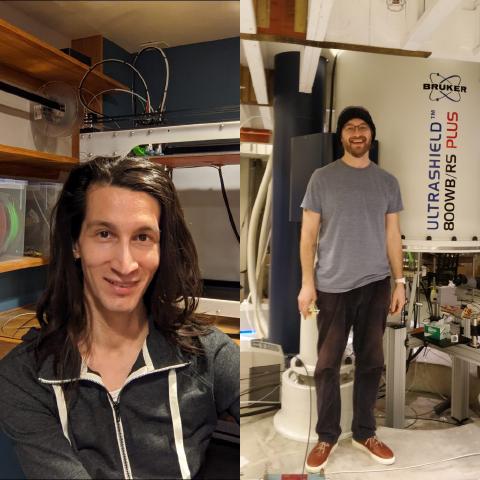
Welcome Joshua Vasquez of The Allen Institute and the Jubilee Project and Zach Fredin of Commonwealth Fusion Systems!
- Background
- This is a special show because I (Chris) found a 2019 recording during Teardown (other shows were released from that event). Somehow the show with Joshua and Zach was never published, I think because I found it on my recorder much later.
- The 2019 show (starting at 1:31:00 on the recording) was when Joshua had been in grad school at the University of Washington for 1 year and Zach was getting ready to go to grad school at MIT at the Center for Bits and Atoms (CBA). Both were intending to get their PhD.
- I caught up with Joshua and Zach at the 2022 Hackaday Superconference in early November (discussed on 610) and learned that they had both left their PhD program with a Master's Degree and now were back in industry, working at some very cool new jobs.
- I thought it would be an interesting experiment to record with them again in 2022 and get their perspectives on grad school...but I didn't let them hear the 2019 show first.
- The Jubilee Project is a toolchanger on a CNC machine / gantry.
- Zach had been on the show before for Neurotinker
- Zach worked on Reconfigurable computation systems
- NMR
- Joshua joined University of Washington to work with past guest Nadya Peek
- "Fabricatability"
- Kinematic coupling, which is a method of exact constraint
- It's like "Free body diagrams but in reverse"
- Bal-tec precision balls
- Joshua contacted a seller on alibaba and has an 8 mm ball with M3 threaded hole made for other people wanting to build a Jubilee
- Hackaday vocabulary of parts
- Misumi
- Jubilee project long term? Still going, some people building the project still. Filistruder makes a kit based on it.
- Jubilee Discord community
- The community is working on some specialized heads, like a sonicator head
- Zach was working on nuclear magnetic resonance, trying to make containers that could withstand 7 million rpm / 112 kHz.
- Using the machine they were able to get the molecular spectrum (like mass spectrometry) of things like brain plaque for Alzheimers research.
- PI = Principal Investigator
- Work is continuing on the microadjusters and making diamond tubes
- What are the downsides of grad school?
- Getting to work on the things you want to work on
- Balancing Research and Development
- Prior to grad school, Joshua was at a synthetic biology company. He was "the human who would write software for hardware" and building machines for their manufacturing capabilities.
- E3D toolchanger
- Was drudgery part of the process?
- Zach gives cautionary advice for grad students: "Early on you need to learn how to evaluate rabbit holes" (note this advice when listening to the 2019 section)
- Tidal forces
- How to make almost anything
- Joshua says that in grad school, "the projecting part of you becomes weaponized. [It was] was near and dear to who I was"
- A lot of work before grad school was trade secret
- Joshua's current work is open source, which is an unexpected benefit.
- He works at the Allen institute (named for Microsoft co-founder Paul Allen), in the recently formed "Institute for Neural Dynamics".
- They are imaging mouse brains to understand what are the ingredients inside the brain.
- They already know a lot of the genes in neurons, but now they're finding out where those genes are expressed.
- The project he's working on is like a "reverse SLA printer".
- It's a rolling shutter camera with a laser sheet slicing across a mouse brain that is "transparent" (with some bio chemical voodoo)
- 1 mouse brain = 100 TB of data
- Zach is now working on Commonwealth Fusion Systems, a 400 person startup for fusion energy.
- They are busy trying to get deuterium and tritium to fuse
- ITER is a long running fusion project in France, built using the magnetics available at the time.
- CFS is using higher temp superconductors, which represent better magnetics. Magnetics and plasma containment are one of the key constraints for "power in vs power out"
- Zach does instrumentation for the machine as a "Tokamak Instrumentation Engineer"
- The platform CFS hopes to commercialize is called "ARC"
- Zach is getting back to making by joining the recently relaunced Artisans Asylum
- Joshua felt bona fides (masters degree from UW) helped in the interview for his current job (which he found out about at the Seattle Hardware Happy Hour!), but he didn't need to have the knowledege gained at grad school to understand the work.
- The 2019 portion of in the show starts around 1:31:00
Transcript
Joshua And Za: This is The Amp Hour Podcast. Released December 4th, 2022. Episode 611. Grad School Time Capsule with Joshua and Zach. Welcome to the Amp Hour. I'm Chris Gammell of Contextual Electronics.
Joshua Vasquez: I'm Joshua Vasquez of the Allen Institute and the Jubilee Project.
Zach Ferdinand: And I'm Zach Ferdinand of Commonwealth Fusion Systems.
Joshua And Za: Hey guys, welcome back. So here's an interesting story. I recorded with Joshua and Zach in 2018, I think it was. Do you remember what year it was, guys? It was definitely pre-pandemic.
Joshua Vasquez: I think it was 2019. It was right after Teardown? I think it was 2019.
Joshua And Za: So yeah, it was at Teardown. Yeah. Yeah, I guess I should look that up too. Because we had a bunch of shows from Teardown. And I recorded a bunch. And I had thought I lost the audio. And so the three of us were at a party. And we were recording. So it's going to be somewhat good audio. But we're going to put it at the end of the show. And the interesting thing is that Joshua and Zach were just about to go into grad school. And I saw them both at Supercon, which is the conference we were all just at in November. And they are no longer in grad school. And so I thought, because I've been holding on to this audio for three plus years now, what happens if we listen to them now and then we also get to hear them then? But the really interesting thing is they haven't heard it either. So I don't know. I feel like this is a great audio experience. How are you guys feeling about this? You know, I trust you, man. I support it. That's your first mistake. That's your first mistake. Okay. I'm curious. So we'll see.
Joshua Vasquez: Who was this person?
Joshua And Za: Exactly. Exactly. So young. Real quick, before we start into the now, let's give a quick little sample of what was 2019 for both of you? So, Josh, why don't you go first?
Joshua Vasquez: Oh, sure. Yeah. Let me think. So I had been in grad school. Actually, yeah. So if it's 2019, I had been in grad school for about a year. And I had been working on a project. I was really into multi-headed CNC machines. And I was looking into building one. And I was very close to getting one working. At the time, I had just named it Jubilee. And I remember kind of pouring my heart into it. And I was very excited about what I was going to share. We're going to make it open source. Yeah. So I had actually been there. I had actually been there for a year. Now that I think about it, it's kind of weird because it all mirrors into one.
Joshua And Za: Yeah. Yeah. Right. Yeah. Okay. That's great. That's great. And you were at UW. Is that right?
Joshua Vasquez: That's right. I was at UW in Seattle in the HCDE department, Human-Centered Design and Engineering. It's a big mouthful.
Joshua And Za: Yep. Yep. Okay. That's cool. And we're surely going to come back to Jubilee because you even said in the intro that that's part of the thing that you're still about, which is great. So why don't we switch to Zach? Zach, where were you in 2019?
Zach Ferdinand: Yeah. So 2019, I was kind of winding down the startup that I think I was on the amp hour to talk about a number of years earlier. So I had started this company called Neurotinker. We had gotten some funding. We made electronic neuron simulators. It was a lot of fun. It was interesting. We sold a bunch. And then the cost structure was not ideal for the educational market, et cetera. So I wanted to go back to grad school. So I actually applied in the fall of 2018 and was accepted in the spring of 2019. And my wife and I lived in Minneapolis. So spring of 2019, we're like, okay, we need to sell our house and we need to move to the East Coast. And selling our house was like, our house was a total gut job, like project thing. So we were like, we need to finish this project. And in the midst of all that, we're like, there's a conference called Teardown in Portland. So we flew out to Portland together. And on the way back, we actually took the Empire Builder train through Glacier National Park. Oh, awesome. It was great. Yeah. And then we came back and I got a paint sprayer and we did stucco work and we did two bathrooms and we did all the things that we hadn't done over the previous years and had a big party and then moved on. So yeah, I think when you talked to me, I was like really excited. You were like, oh my God, I'm going to grad school. Like what's, what is this? This is crazy. Right. Right.
Joshua And Za: And you were, you were going to MIT at the Center for Bits and Atoms. Yeah. Right. The Center for Bits and Atoms. Yeah. At MIT. Yeah. Awesome. Awesome. Well, okay. So that's before. That's the before. And now we had, then we had a gap of three years, three plus years. And then what? So Zach, why don't you keep going? You're already there. Why don't you keep going? Yeah. Yeah. Right. Right.
Zach Ferdinand: Right. Sure. I was at the CBA for around two and a half years. Yeah. I worked on a number of different projects there. One was on, I kind of was, was started working on a project on reconfigurable computational systems. The idea being you could build physical computational structures and distribute processing across like a physical architecture. And then those nodes talk asynchronously. And you like basically build a structure to fit the type of problem you're, you're trying to solve. So it was looking at simulation, you know, particle simulation and physical simulations were like, you know, close interactions matter, but global interactions for what we were doing didn't.
Joshua And Za: Is this like smart goo? Is that kind of the idea?
Zach Ferdinand: Yeah. This was, this was more like more crystalline than that. So, and more, more deliberately assembled. So a prior student had worked on paintable displays, like conceptualizing paintable displays where, yeah. Just, just hilarious. Like the, the idea is you, you have a can of display when you like paint it on a wall and it becomes a display, which is.
Joshua And Za: It's very like a looney time, right?
Zach Ferdinand: Yeah, exactly. But so he, you know, that, that's certainly in the history of our, of our lab. And I did some other projects, one on a magic angle spinning NMR, which is a technique for understanding atomic scale resolution, molecular structures of, of crystalline solids. So that was a, that was like a laser machining project. And I did a lot of work with Fab Labs. So we, we remotely deployed Fab Labs to, um, in Nepal and Bhutan while I was there. I didn't unfortunately get to go because there was a pandemic, but we, you know, we sent a wire EDM to, to Bhutan, which was kind of neat.
Joshua And Za: Yeah. And that's kind of a common thread between you and Joshua as well, right? So Joshua, you were in a similar, so your PI was also a former guest of the show, right? Nadia Peek.
Joshua Vasquez: Yeah. Yeah.
Joshua And Za: She was from that same lab that Zach was in?
Joshua Vasquez: From the CBA. Yeah. And, uh, she had just started a lab over at UW called the machine agency or just machine agency, my bad. And I was like in her crop of her students. No, cool.
Zach Ferdinand: Okay.
Joshua And Za: That's great. Yeah. Uh, so why don't we switch to Josh again? So we're going to kind of ping pong back and forth here, but why don't we switch to Josh real quick just to, to get a feel for like, you know, the things that you did, you know, we're going to get into the ultimate outputs, but, uh, yeah, what Josh, what, and, you know, and feel free to ask each other questions too. I feel like this is like, and now Josh, and now Zach, and now Josh.
Zach Ferdinand: I'm excited to hear more about Jubilee. It's such a neat machine.
Joshua And Za: So yeah. What, what happened with Jubilee? So that was, that was actually like grad school work or that was just something that like, cause you said it's still going. So like, is that a project that was, that was like your thesis or how did that, how did that all go?
Joshua Vasquez: Yeah. So I think kind of the way I've been trying to organize my life over the last, I don't know, I guess ever since I like left undergrad, it was kind of, can I find ways of kind of shoehorning projects I'm secretly interested in into like the work that I do? Don't tell my employer that. No, no, no.
Joshua And Za: That is actually, that's the right. That's, that's the life goal right there.
Joshua Vasquez: That's, but yeah, I think that's so. Paid to learn. Exactly. Yeah. So I have this list of this huge list of projects that I want to do. And 3d printer was one and a head changing like 3d printer was another one. And so I figured, okay, like, let's like, can I pitch this as like a grad school project? So the first month that I was there, my professor, Prof. Nadia was interested in this idea of fabricatable machines. And so this kind of ecosystem where you could take a machine and build it from very readily available constituent resources. And for me, I said, this is awesome. Can I, can I build a tool changing a CNC machine? And she said, sure. And so I kind of took that first year as an opportunity to kind of start unpacking this, this multi-headed 3d printer that I hadn't in kind of that I've been interested in for a while, turn that into something with something with teeth over the course of the next year. And that's kind of what happened is I started pouring like a lot of time into solid works and then trying to understand, okay, this fabricatability idea is we want to be able to kind of throw a design out the door in a way that somebody else can reproduce the project from kind of rudimentary tools, rudimentary techniques, kind of like you want, you want to like, you have a Lego set and all these parts come together and they fit together in certain ways. That was kind of also baked into this idea of fabricatability where I could take a, uh, kind of the, the components were supposed to only go together in certain ways and it was the correct way.
Joshua And Za: Yeah. I remember that. So like, I remember your demo, I think you had brought it to one of the other conferences where we saw each other. And I remember you showed me that this, like the, the head that goes onto this, the 3d printer. Yes. I do remember that. Yeah. And it's like, it is, it's almost like a true, like zeroed kind of thing, right? It's almost like known in space where it is because of how it all lines up. What is the mechanism for that? Yeah.
Joshua Vasquez: Yeah. So that's called the kinematic coupling. It turns out that, you know, where I work now, which involves a bunch of optics, like these things are like, they're a dime a dozen, they're all over the place. But at the time I had never seen them before. And so kind of the question, the thing that this does is it's a way of taking two parts and joining them together such that they only fit one way. And it's a repeatable mechanism. So you take, you can take these parts apart and then you put them back together and take them apart and put them back together. And the physical dimensions of both of them are such that they only fit together one way. The nice thing about this is that the construction of these two plates to form this coupling is very, very simple. You can do it with dowel pins and basically steel BBs. And the idea is that this is, this is built, baked off of this concept or this like line of mechanical engineering called the method of exact constraint, which there's this cute little blue book that you can buy about it. And it's kind of like free body diagrams, but in reverse where you want to take a physical thing and you want to pinpoint it. You want it to fix it in space such that it doesn't move or it only moves along certain degrees of freedom. And the way you do this with the method of exact constraint is you use the minimum number of constraints to constrain every degree of freedom. And so you have, so if you think about a physical object that's floating in space, there's six degrees of freedom there. There's three rotation and there's three translation. If you want it to only have five, what you do is you take like a pin and you put a pin through this object in space and suddenly it can only move along this pin or it can't translate. It can only move, it can only rotate now. And so you cut down degrees of freedom this way. So that's kind of, that's what the coupling does is that it uses the minimum number of points basically to constrain these two plates together. And if you do that, it turns out you can build a really cheap locking mechanism. That's really, really accurate. And that ends up being really good for heads or in tools that you need to detach and put back over and over again on a machine. Yeah.
Joshua And Za: Like repeatability. Whenever I see those like monster tool changers, the one thing I always notice is like that crazy shape. I'm thinking of like the Haas machines that are out there, like the crazy shape of the tool change heads. And like that, that is part of why they're so expensive also because it's a captive system, but like, uh, yeah, but like that shape is really important. Right.
Joshua Vasquez: Absolutely. Yeah. And it's, uh, I think the way they do it is slightly different where they're, they're using like a conical, they're like two conical sections that they're attaching together and they put a lot of pressure on the tool. They pull it up, uh, with a bunch of pressure, but it's the same idea. It's like, you want to be able to, you want this thing to only spin if that's your end effector. Uh, you don't want it to move an X and Y except for the, unless the piece that's holding onto it is moving an X and Y, uh, or Z. And so you apply this force into it, into this cone that just prevents it from moving.
Joshua And Za: Hmm.
Zach Ferdinand: Josh, hearing, hearing you, uh, talk about kinematic couplings makes me think of a company I came across in school called Baltech, B-A-L hyphen T-E-C, which is just a, a really fascinating tiny company that basically sells all of the components for making kinematic couplings. And some of them are just enormous. Like they have these canoe couplings that are designed to handle massive loads without, uh, without deforming. Uh, I don't know if you've come across them, but the website is the delight. It's just a delight.
Joshua Vasquez: I think I did eventually find, find like there, I like landed on their website at one point because I actually had this problem, which is like, okay, people want to build my machine. It has a kinematic coupling on it. How do we, how do we get them to, we either have to make the coupling out of rudimentary parts or we need a way to have, or I need to go mass produce like a couple of these specific components. And originally I was going to have people make these out of steel BBs, but eventually what I did is I went to, um, this vendor on Alibaba and I asked them to manufacture like a couple thousand eight millimeter steel ball bearings with an M3 threaded hole drilled halfway into them. Um, and so that was how I kind of distilled this like precision out to the world without them having to do this on their own. Yeah. So that like this, the whole fabricated. Now you've captured the market, right?
Joshua And Za: You're, you're the only one selling these M3, uh, all bearings.
Joshua Vasquez: The original way people, I actually had people do this is I, I, I looked for this part, like kind of in the back of my head, there's this like wishlist of parts that I wished existed and this eight millimeter thing, eight millimeter ball with a hole with a threaded hole drilled into it. That was on my like wishlist. If only I had that, then I could build the rest of this machine. And it turns out there was someone on eBay who, I don't know if you're familiar with kind of stop motion. There's a whole ecosystem of people who will build puppets for stop motion. And what they do is they use these ball and socket armatures that are these metal components that are essentially exactly what I wanted. And so it just so happened that they were selling an M3 threaded eight millimeter steel ball. Oh man. So the original bill of materials actually pointed you to this one-off eBay website that said, Hey, go get a 25 packet. These amazing.
Joshua And Za: You know, I wish I could distill the feeling of finding. Cause I can actually, I can actually like have some memory recall of like the, a similar, obviously different scenario, similar sensation of like finding that part. There is like some kind of dopamine hit that is just like, if I could distill that, I could sell it on the streets, man. Like it would go for, it would go for good money. You know, like the, the, the amount of dopamine you get from finding that perfect part. Oh, it's good stuff. I totally agree.
Joshua Vasquez: And sometimes it's, it's like, if I could only know the name of the part. Yeah. Oh my gosh. I have this, like, like this kind of comes up in the Hackaday articles that I was more periodic about writing this idea of the vocabulary of parts where I would kind of show people these, like, here's this cool new part. That's like a mechanical component and here's a normal way to use it. And here's a, here's a way you can use it in a non-conventional way to do something other than what it was supposed to do. But it's like, here's the name of this part. So you can go look it up and you can kind of see it being used in different ways. And now it's like, it's part of the grammar of your kind of nuts and bolts that you use to design with.
Joshua And Za: Totally. Yeah. Mental library is so, so important. And like, and like immediate recall too, because it's like, if you think about being tongue-tied in that same way of vocabulary, you might actually go down the wrong path. And, you know, you'd be like, oh, well, I'm, I don't know the proper way to join these two pieces together, but I could maybe 3d print a jig to do everything. And you spend four weeks doing the jig and then you find out there is a way easier way to do it. So like, that kind of sounds like what both of you were kind of in these grad programs for as well. Like the, the putting of things together, right? Like the, the making of things that that's a very simplistic distillation of, of what you guys did, but you now have that, that vocabulary in your lives because of the, the grad school that you did and, and the work you've been doing still.
Zach Ferdinand: Yeah. I think, I think we need like a mechanical equivalent of DigiKey parametric search. You know, we have, we have like Ms. Not McMaster. Yeah. Well, you know, McMaster's all right. And you have Misumi, which is, which gets you pretty close, I think, but. Misumi? Yeah. Misumi is kind of a more, more customized. You can often get things that are semi-machines to order. So like I would, I would buy these hardened half dome dowel pins that I, so I would use these for, for making little kinematic couplings and it would be a, you know, four millimeter OD with a, with a half sphere machined onto it. And then it would have a three millimeter OD pin sticking off the bottom of it, but you could size that to order. So you could tell them what length and what diameter you wanted. And it wasn't monumentally expensive either. So you could, you could, and the lead time is really relatively short and you could buy it and, and, you know, hardened steel and so forth. So they have, you know, Misumi will like periodically add a new configurable, like configure to order mechanical part like that. But it's still pretty expensive and it's still very much like single sourced. Right. And it still takes a while. It's just, it's not ideal. And it's, and it's limited. I mean, like the threaded eight millimeter ball, like that Josh was talking about is not a, is not a Misumi part, you know? So there's, there's nothing close to it on the site.
Joshua And Za: Yeah. Well, so it's interesting that, so Joshua's project is, is ongoing, right? It's a open source project and it sounds like people are building it in the same way. Like Zach, you mentioned you were continuing work on someone else's project. And like, that's kind of just how a lot of these labs go. I have a feeling for you build on other people's research and because generally that's what research is, but like Joshua, what is the kind of, what is, what is the long-term for this, for the Jubilee project?
Joshua Vasquez: Oh yeah. I think, I think what I wanted was I wanted to be a reference of all the like best practices of the time for building kind of precision XYZ stages with head changers with rudimentary parts and processes. So it's really like, if you go to scroll to the bottom of a data sheet and you look up the, like the reference design section where they have like, here's the, here's the ASIC that they're selling you. And here's like a bunch of applications that you might be able to use it for. So I wanted Jubilee to be this reference for precision motion. If I just wanted a platform and I didn't want to, and I wasn't necessarily going to go buy one, how could I build one without having to think about the design of it?
Joshua And Za: Like, but are people still building it as well? Like, is it kind of an ongoing, like, is it an ongoing thing for you? Is it an ongoing thing for people building it? What's the, what is like the, what's the active piece of it versus kind of the reference piece like you mentioned?
Joshua Vasquez: Yeah, I think it's, it's on and off. I think it really depends on how much time I have to devote to it now that I'm actually like working full time and it's become much harder to find spare time. But yes, the short answer is yes. I think there's right now, what I did is I worked with a, a commercial vendor called Philistruder and we created a kit for one of the latest revisions of the kind of like the latest release on GitHub of Jubilee is something that you can go out and go buy as a kit of parts. And it's basically someone went down the bill of materials and, and said, Hey, let's put this all into a box. So that's one thing there's a discord community right now, which has grown over to a little over 2000 people. But I think most of that growth happened in like the first like year and a half to two years. And now like, I know there's about 150 people who have built one in the wild that they kind of exist in someone's living room somewhere, like all over the world, which is really cool.
Joshua And Za: That's really cool.
Joshua Vasquez: But as far as like the machine, the core machine development and, or the tool development for the heads that go onto it, I've done very little. And let's say like the last six months while I've been kind of onboarding to a new job, but it will, it will pick up again. Got it.
Joshua And Za: Okay. So, but it, uh, Jubilee lives on. That's, that's great. That's great.
Zach Ferdinand: I'm interested to hear if there's any stranger esoteric community, community develop heads that have come out of it. Cause that was, I had a colleague, Jake Reed, who, uh, Joshua, I think, you know, at CBA is also doing, you know, tool, tool changing open source, you know, fabricatable machines. And, and I think that's always been the thing he's talked about is like wanting to develop a community of people that make heads for the machine. Right. So have you, have you, have you, have you seen any, any interesting things come out of your, your discard community that are kind of like, uh, you know, the, the, the, the pancake, you know, pancake batter syringe for CNC breakfast production, or like, you know, any, any really weird ones like that?
Joshua Vasquez: So the short answer is I've seen like a, like I've seen a bunch of people do some really fun things, but it's not necessarily making heads. It's not to say people have made some cool heads. And, you know, I also made some fun heads where, um, we collaborated with a lab and we ended up doing a sonicator head, uh, which is like an ultrasonic stainless steel probe that we, people in the sciences will use it to kind of break down cell walls for DNA. And we basically just turned Jubilee into a kind of a liquid handling motion platform that was scriptable with Python. But as far as what other people have done, I think a lot of it, I've, the way I've seen people mostly use the platform is a starting point for them to put modifications on top of, uh, what's already there. And I think that's not a bad thing. You should absolutely do that. Use, use this as a jumping off point that I, that I can vouch for and then kind of make your own tweaks to it. So I've seen mainly the majority of what I've seen in terms of heads is, uh, is, uh, more, more printer heads, more, better printer heads.
Joshua And Za: Yeah. Yeah. Yeah. I mean, that is, I mean, if people are coming into the 3d printing space, I'd say the majority of them are going to try and do 3d printing. Right. But, uh, but a generic, you know, three access machine is also very useful in a lot of contexts. So I can imagine, you know, like the Tappy style robots and things like that could also, there's, yeah, there, there are a lot of uses of, of, of a device moving in 3d space. So we just got to wait, wait for the, the concrete pouring, uh, specially aligned Jubilee head sized up, sized up to mega scale. Right.
Joshua Vasquez: Oh my goodness. I mean, yeah. And I think for people, it's really, for some people it was like their first, their first time wedding, their, like wedding their lips on, on kind of all these precision components and, and kind of knowing that there was a set of instructions that would take you from start to finish. And like, that's something I want to give people to is like, give them a good first experience, putting together parts, like get that feeling in their hands.
Joshua And Za: Totally. Zach, your, your work has also continued on. Is that I, I, yeah, I'm not sure about the, on the academic side as well. It's like, you're, you didn't, you didn't spin yours out to open source, but, but yours is, uh, still out there, I'm guessing.
Zach Ferdinand: Yeah. Yeah. The work that I did previously is still, is still floating around, but I think it's, it hasn't really been picked up as much. I'm hoping maybe someday periodically, if you look in like the last, actually like the last 80 years, people have wanted to build little neuron simulators. And I'm hoping like, you know, when I decided to build mine, I, I looked all the way back. I mean, the first one was Otto Schmidt's PhD thesis. When he created the Schmidt trigger, he was, he was building a neuron simulator. Yeah. And it's in a, it's in the, uh, electricity museum, the Buck and electricity museum in Minneapolis. Uh, yeah. I got to look at it when I, when I lived there. That's cool. But like, since then people have done it, you know, they've, they've tried to make these simulators. So I'm hoping maybe in the future, someone stumbles across it and takes our lessons, you know?
Joshua And Za: Yeah, totally. I was actually talking about the grad school stuff too. Oh yeah. So not the, not the.
Zach Ferdinand: Yeah. One of the projects I've been working on is, is definitely ongoing. So we're, we're not to like dive into a rabbit hole on solid state NMR, but basically you, you, you, you need to average out, you know, these anisotropic spin modes that you, you, when you, when you do NMR on a liquid sample, you take advantage of the molecules kind of randomly bouncing about. And that, that averages out these.
Joshua And Za: What is NMR? Sorry. I didn't ask that.
Zach Ferdinand: Oh, a nuclear magnetic resonance. So, so kind of similar to MRI, like you have a giant magnet, but instead of, instead of imaging, you're trying to get molecular structure. And, and with, with solids, you, you, you can't take advantage of the liquid phase to like randomly bounce molecules around. So you, for reasons again, that not only will I not get into, but also I'm not an NMR person, so I can't really explain. I'm just the fabricator. So you have to put the sample in a tiny tube and spin it very quickly and at a, at a very specific angle with respect to the magnetic field. So basically the faster you can spin a tiny sample in a tiny tube, the better your resolution and the faster your samples get acquired. So now the tubes, you know, as you spin a tube faster, you know, it tends to explode. So you make the tube smaller. So the tubes used to be like 10 millimeters in diameter, and now they're 0.7 millimeters in diameter. So the diameter of pencil lead and their inner diameter is half a millimeter. And they're made out of like a yitria stabilized zirconia, which is just a really tough ceramic material. And they cost like two grand, you know, for this four, four and a half millimeter tube. And it spins at about 7 million RPM. And it does that in the bottom of like a, you know, a back, back up, back up, back up. 7 million RPM. Well, so they talk about it. It's so funny. How did they not come up with a different unit at that point? They did. They talk about it like in NMR language. They talk about it in kilohertz. So they're like, oh, it's 111 kilohertz rotor. And you're like, oh, that's not very fast. And like, well, no, it's the tachometer reading is 111 kilohertz. So it's, you know, so we would always, so we did this collaboration with the Francis Bitter Magnet Lab at MIT. And like, they're all the NMR people. And they talk about kilohertz. And we're like, no, we have to think about it as RPM. Because otherwise, otherwise it doesn't sound as interesting. And then you have to do that like in the bore of a, of a, you know, 15 plus Tesla magnet, you know, so the more powerful the magnetic field as well, the, you know, the higher, higher the resolution and the faster the acquisition.
Joshua And Za: And what does one measure with this? Like what goes into a tiny little pencil lead tube?
Zach Ferdinand: Kind of any, any like organic or inorganic solid that you're trying to figure out the molecular structure of. So they were using it for Alzheimer's plaque and like amyloids and like trying to, trying to understand the, the very complex molecular structure of, of interesting molecules.
Joshua And Za: It's like back calculating basically what's in there and how they're all hooked together.
Zach Ferdinand: Yeah, right. You can, you can get this very, very complicated high resolution spectrum and then you put it in a, you run it through a lot of software and you're able to derive what the, what the, what the actual like ball and stick model of the molecule is. It's what feeds into very complex ball and stick models that you'd make in, in your chemistry class.
Joshua And Za: Yeah. Lots of balls, lots of sticks. Yep. Yeah. But you know what, when you start getting like eight millimeter balls with like an M3 thread in it, and then you use that to put all these molecules together, it's like, so that
Zach Ferdinand: would be a cool chemistry set. So we, we, yeah, we got to this point where the tubes were starting to explode and my PI had gone out to like a PI meet and greet and met the PI principal investigator, the person that runs the lab had met the PI of the magnet lab who complained about his tubes exploding. And my boss was like, well, we, we figured out how to machine diamonds with our laser. So let's, let's try to make tubes out of diamond because diamond is really strong. So why not? You know, like let's just throw everything we got at it. They're not the good diamonds. These aren't finger diamonds. These are lab diamonds. So these are chemical vapor deposition grown diamonds and you can buy CBD diamond for like 10 bucks per cubic millimeter roughly. And you're limited in size, but like it's, you know, for, if you're trying to make a tiny tube out of it, it's actually not, not that expensive. So I got involved because we needed to, we needed to like machine a tiny tube out of diamond. So I, we had a laser micro machining system. So I built a lathe for it that would allow you to machine the OD of the tube and then flip it up. So you could machine the ID at the same time and maintain concentricity and all that.
Joshua And Za: It's like, it's like the exact opposite of like a, like Colin Furze just keeps like building bigger and bigger stuff and you're just going smaller and smaller. Right.
Zach Ferdinand: No, exactly. And my, and my machine, like barely, I mean, we got it to work and we're, you know, we're submitting it for publication and we're excited because we were like able to spin a tiny diamond tube to, you know, 7 million RPM and get a, get like the first NMR spectrum from a diamond tube, you know, which is big. I mean like diamond, diamond has advantages because it's transparent to microwaves. So you can, you can do what's called dynamic nuclear polarization where you couple in, you know, a hundred gigahertz microwaves from a gyrotron and are able again, because NMR things like you're able to increase the resolution and decrease the sample acquisition time. So using diamond is great because it's effectively trans transparent to radiation at that, that frequency range.
Joshua And Za: You know, sometimes you guys sound so normal and then sometimes you guys to pull the stuff out like this and I'm just like, wait, what?
Zach Ferdinand: That's crazy. That's really cool. It's interesting. But like the, the project is like the method that I developed was like, okay, we need to make this precision machine that we can like flip. Cause we, we needed to maintain like micron concentricity between IDs and ODs and micron taper between the two ends. So like my machine was like, we said ID and OD a bunch as well. Inner diameter, outer diameter, you know, that's a, a TLA, a two letter acronym, not to be confused with a TLA, a three letter acronym. That's right. Right. Right. Yeah. So like my, my machine was basically like kinematic couplings and, and micro adjusters. So the, the part I discovered in grad school was the precision micro adjuster, which is, which is basically like a little brass tube that has like 50, uh, 50 micron pitch ID threads in it. And it's got a matching slug that has like a, you know, a three millimeter hardened steel ball on the end of it. So every turn you turn the, the slug, it advances by 50 microns. So you can use that to make like, you embed those in structures and have them made up with hardened kinematic couplings. And they can like, you can make precision micron adjustable machines. So my way of building precision machines was like sprinkle micro adjusters all around it and then hang a laser displacement sensor on our, on our machine gantry and use it to like tram things in and adjust them. And it was really, it worked really well. It just like, couldn't handle any forces in it, you know, it was fussy to align, but the ongoing work is like the much more talented people that followed me that like know a lot about how to design precision machines that are making it far more repeatable and far more robust, like getting our concentricity from, you know, eight or nine microns to like one or two microns. So yeah, it's been interesting. I came into that project pretty early on and like kind of got the first spectrum, but now there's people working on it that are, they're going to make it really work well, which is exciting.
Joshua And Za: That's cool. That is really cool. Okay. So I was also interested. So both of you have given us very positive sounding experiences so far. Let's get some bad stuff. What's the bad stuff, guys? Time to dish.
Zach Ferdinand: So I feel like when I think about grad school, I feel like you're, you go into like a situation in life and you like crank the contrast ratio all the way up. So at least for me, like you took all of these things that were sort of good or sort of bad and you were just like, this is now fucking amazing. Like I have a wire EDM. I've got like an SEM. I got all this other stuff, but like also like I'm not making a lot of money. Like, and Cambridge is really expensive.
Joshua And Za: I should also, I should also say before we dive too deep in here, I told my wife that we were going to be talking about this stuff. And she's like, you know, Chris, you, you have a proclivity to be a little anti-education. So I don't want to sound too anti-education in my responses here. I just want to like preface this because I've been accused by my wife and others of being that way in the past. So I'm not anti-education because the stuff that you both described, I don't know if you would have been able to do that stuff other places. And that was through educational institutions. I think we're talking about the institutional piece of it though. That's really the downside from my perspective. Sorry to cut you off, Zach.
Zach Ferdinand: No, no, you're, you're totally good. Yeah. Cause there's just like, there's dramatically negative parts to it too. You know, you, depending on where you're working, you have varying degrees of success, like deciding what you're going to work on. Right. So in some cases, if you really want to work on a thing, like you have to find the time yourself to do it. And that can be really hard when you have other deadlines or you have different pressures. And I think that I know, and Josh, you'll, Joshua, you'll, you'll, I'm sure you'll speak to this more, but like where your advisor is in their career is, is an enormous factor. You know, my, I was working for someone who had had tenure for 20 years and like, I didn't really have a huge amount of publication pressure, but you know, there was pressure to do really interesting, novel, crazy out there things to like, keep us relevant, you know? And that can be, that can be hard to balance versus, you know, wanting, wanting to work on things that are more modest, but you know, or maybe more quote unquote incremental, but like still, still worthwhile, you know?
Joshua Vasquez: I like throwing around the word, uh, dignified. It's dignified work. It is dignified work. No, uh, incremental, incremental is. Oh yeah.
Joshua And Za: Incremental is. Yeah. Right, right, right. I, I, uh, my old boss used to always talk about like R and D, uh, some places are big R, little D, some places are little R, big D. And the place I used to work was little R, big D because it was like, it was all just development. It was just doing more of the same thing, but you still had to, you know, there was a little research pieces in it, but it was nothing like crazy there. You know, it sounds like in the grad school stuff, it's big R, little D for sure.
Joshua Vasquez: I think it really depends. Cause I, I mean, yeah, I think you're, I think that your grad school experience can be highly variable. Cause I think I would argue that before, when I was still working, there was quite a bit of R, quite a bit of R and D. And so I was very fortunate that I got to be able to kind of be pick and choose kind of depending on what was not on fire, which part I would go work on. So for context before this, before grad school, I was working at a synthetic biology company that was started off as a startup. So I think it was like employee number 24. And I was kind of the, the, the human who would write software for hardware and occasionally spin, uh, PCBAs for the instruments that were going into the factory. And so I think because there were no, there were fewer instruments when I started versus when I left and we, we got to have a lot of a say in what we, what instrument was going to be the next thing that we wanted to build and put into the factory.
Joshua And Za: Yeah. Yeah. Machine design is, is ripe for research. I feel like just cause it's like, you got to figure out so many things about each piece. And then you also have to make it stable enough to be in a factory setting.
Joshua Vasquez: Totally. And I think that was the really fun part about it is that first there was a, first there was no instrument and then there was something that worked once. And then there was something that eventually we had to get it working 24 seven.
Joshua And Za: Yep. Yep.
Joshua Vasquez: And I think that was super fun. And I think honestly, a lot of that translated over into kind of the work I put into Jubilee where I got it working once. And I think people were really excited. And I was like, Whoa, like this, this only worked once. Like this is a head changer. And we need to be able to take the head off on and off like thousands of times per, like per operation. Like if you want to print a multi-headed part, that could be like 300 tool changes and it needs to work perfectly every single time. So I had to set up a bunch of like cycle testing that I would run late at night. And then eventually like, you know, the 250th time something would break. And eventually I had to get out the camera and figure out, okay, where, where is this breaking and record things so that I could go back in time and see what was going on.
Zach Ferdinand: Your, your demonstration. I think it, I'm trying to remember when you brought Jubilee and I first saw it, it might have been at a Hackaday conference or it could have been, it might've been at Teardown actually, but seeing it print that, that interlocking dinosaur where every, every layer or like every other link was a different color. So it would just have to do head changes. Like every single layer was, I had never seen anything like that. That was amazing. Yeah. It's dialed in. Yeah. That's really cool.
Joshua Vasquez: I think so in a way, I think I got really lucky because, um, when I, I was interested in this pro in this project at the same time as I would say the whole kind of the whole world's like in the hobbyist world, their appetite was also whetted because people were talking about CNC, like tool changers being the next evolution in 3d printers. And at the time there was a company E3D still around. It's a wonderful group of people that was starting to come out with a beta version of their own tool changer at the time. And I think what ended up happening is that my, my work on Jubilee and their work on the E3D tool changer, it was, it was always like intertwined. Like we couldn't like ignore the other, we couldn't like neither of us could ignore each other. In fact, I saw the first kinematic coupling on a Twitter post that they had posted in like an earlier version of their machine. And so that was kind of the aha moment where I was like, okay, I could make this out of rudimentary parts. But I think part of that project success was, I think was because a lot of people, I think we, we, we benefited from a lot of people knowing about this like tool changer concept and being really excited about, about it. And I think that's still kind of the case too, because one of the bigger 3d printer vendors Prusa is still supposed to come out with a 3d printer that has a head changer on it. So you can switch between, I think like six colors and that's supposed to be, that's slated to come out like end of like later this year, if not early next year.
Zach Ferdinand: Wow. That's awesome. That's cool.
Joshua And Za: So Joshua, one of the things, one of the things you said there is like the kind of the late night testing. That was kind of like what Zach was talking about as well. And what that kind of inspires in my, my head is kind of that you had said like, uh, what did you say? It was like grace, grateful work or something like that, but dignified. Oh, dignified. Yeah. But the reason that, that kind of got me is cause like, it does feel like a lot of, I, I, I like my vision of grad school and I did not go to grad school is that you kind of have a lot of grind as well. And it kind of sounds like that late night testing as well as, is kind of there. Was there generally that, that piece, was that part of your, your experience as well of like just kind of drudgery or, or is it not, not really that?
Joshua Vasquez: I think yes and no in different ways. So, uh, let's say during the early testing, when I think, uh, kind of my PI wanted me to move on, it worked once, like ship it, like send it out to the world. For me, I was, I was very afraid of, of releasing everything as open source too early because if I, because I knew what people wanted to do with it, they wanted to put a 3d printer head on it. And if you drop your 3d printer head and they want to run it overnight. And if you, if you drop this in the middle of the night, it's a huge fire hazard. So in a way, like the, the diligence of like coming into lab late at night and running a bunch of tests over and over and over, and then redoing the design a few times until it worked, that was partly because I was afraid that people were going to take the design, try to build it and then like have a fire in their house. So that's, so that grind did happen in the beginning.
Joshua And Za: Then I think the next time you say late, when you say late night in the lab, you were there like monitoring. It wasn't like you said it and forget it. It was like you were there watching it in the beginning.
Joshua Vasquez: I did not set it and walk away from it. Yeah. Am I supposed to admit that? Uh, but I did do that later. Okay. So I did do that later where I would, you know, fire it up and then walk, come back the next day, but at the beginning I would, I, uh, it just wasn't good enough. It was not reliable enough where I'd run it for 10 minutes and it would, might be fine. And then I run it for an hour and then something would break or after running it for six hours, like only after the sixth hour would something like melt finally. And then you had to figure out what, what, what fell apart. Uh, so there certainly was a grind there. I think the other grind came from once everything did start to work pretty consistently. Uh, it was just a matter of churning out instructions. And this is something that like, I actually really enjoy, but it took a while to get fast, faster at it, which is kind of, so the thing that makes, I think Jubilee really special is that it's a, you know, it's an XYZ motion platform. It's open source, but there's like 120 something pages of step-by-step instructions. They're visual. They look like Ikea instructions. They're colored. Every, like every page has like the, the list of all the parts you're going to need and how many. And there's very few words. It's mostly pictures and that's on purpose so that you don't have to, you don't have to spend a lot of your time reading. You can spend most of your time putting stuff together. And so what I basically had to do was in CAD, uh, create a view for every single picture of every single kind of diagram of every single like part going into different places.
Joshua And Za: And that was definitely a bit of a, you know, that Ikea has like an army of people doing those, those crazy directions too. So like you're basically doing the work of an army.
Joshua Vasquez: And I, and I wish I had those people.
Joshua And Za: Yeah.
Joshua Vasquez: And that was kind of, I think one of the biggest, uh, drawbacks of the project, but it's not something I could have, I couldn't have worked around it because I did all of my work in SolidWorks. And the issue there is that it costs money to have a SolidWorks license. Yeah. If, if I could have had someone else make instructions for me, absolutely. Yeah. I totally would have said, please like break it down step-by-step like this, you know, we can review it, but it's not something everyone has access to. This is partly like my hope for things like free CAD is that in the future, as things mature in that world of open source CAD work, uh, having like instructions as like a first class feature, I think would be phenomenal for being able to share mechanical designs and have other people reproduce them. Cause I don't know, in my mind, like the design.
Joshua And Za: I don't think free CAD's there yet though. Sorry. I know, I know, but I've been in it for a couple of days actually. It's, it's, I'm getting better, but it's, uh, it's, it's on the individual, unfortunately.
Joshua Vasquez: Yeah. Yeah. So I think in the future, uh, we could get there and that's, that's like the future that I want where the idea of, you know, someone gives you the design and like, what, what's the design? Like, is it your CAD file? And the answer is, well, yes, it's the CAD file, but it's also the instructions of how to put it together. It's, it's the CAD file. It's the wiring diagram. And then it's a bunch of step-by-step instructions because there's some people who can build things from just opening up the CAD model. But the problem is like, that's practically speaking really hard to do because you can put something together and then realize that you're missing parts in the inside and you have to take the whole thing apart before you can stick those parts in. So I really do think that the design, if I like raving my air quotes around for what, for design, I think that includes like the procedure to assemble it.
Zach Ferdinand: Just making those instructions though. Like, I just imagine you, you, you have to think about like, when do you, when do you decide to still use a screenshot from a CAD cutaway that is not perfectly accurate, but like maybe it's not perfectly accurate in a way that doesn't impact at all. Like the assembly instructions or whatever, or, or may, or maybe you're like have the luxury of making the instructions after everything's locked in. But I know when I made instructions for things, there were always parts of it that were like, well, that's not quite up to date, but it doesn't really matter. And that's really stressful.
Joshua Vasquez: You're totally, you're totally right. And I think for me, like what I realized is that the more true to real life, the CAD model was, if the CAD model was a perfect one-to-one representation, you know, perfect in quotes, but if it had all the constituent components or represent like representative components for it, that was the best you could be. Because the problem is that you change the design a little bit. You're probably going to first, in order to do that, since most of these parts are 3d printed, in order to really change the design, you're probably going to change the model. And so if the model is inside of a bigger assembly, if you do the instructions, right, then what happens is that you update the model and then you reopen the instructions and everything resizes and automatically changes again and reaccommodates the new view. And so you actually, you do a little bit of extra work by coming up with all these views and like assuming that you actually tie them correctly into the original assembly, they auto update every time you change something. Because you did it the right way.
Zach Ferdinand: Once I figured that out. Yeah, you didn't do screenshots. I always just did screenshots, which is the wrong way to do it.
Joshua And Za: It's like the difference of like having, like downloading the zip versus like, you know, cloning the Git repo. Yeah, yeah.
Joshua Vasquez: I think this was really a point of contention because I think the thing that I couldn't do, that I wasn't willing to do was do like video. Because I think same thing with pictures. I think I realized that like, if you take a picture of something, it's exactly what happened. Like what you said, it's a, it's a moment in time. And the thing is that like, you need good lighting for that picture. You need a good workbench for that picture. You need to have like a setup where you can go to and like take the whole thing apart. And that's like a whole lot of effort.
Joshua And Za: And if you, and if you are willing to redo it later, you need to replicate the look and feel each time.
Joshua Vasquez: Exactly. That's exactly it. And so I realized that if you had all of this captured virtually as best as possible, then you just push a few buttons, change the model and everything downstream just updates, which is awesome.
Joshua And Za: There's a lot of cost to doing that though, I think, right? To, to have a perfect model and have all the views. So.
Joshua Vasquez: I think there's a ton of upfront cost, but I think at the end of the day, what I was reminding myself of was, you know, before I was in grad school, I was working. And for the most part, people, you know, they catted things down to the nut and the bolt. And the benefit of doing that is that you just right click and export a bill of materials. And it's perfect. As long as your model has everything that's there.
Joshua And Za: Yeah. And so you, I mean, so both of you were working prior to going to grad school and then you were, you know, you said something about, I also didn't listen to the episode. So I should have done that beforehand, but you said something about, you were both excited. I remember that piece. If you were going to talk to your former selves, what would you say? You know, so if you, if you had a three year, an only three year ago time machine, what would you, what do you have told those, those, those folks?
Zach Ferdinand: Yeah. I would say like trust yourself and have fun. And then it goes really quickly. But I, I would, I would certainly never like try to convince myself not to do it. I mean, I have. No, I wouldn't have expected that. Yeah.
Joshua And Za: Yeah. What would you have warned yourself about though? I guess this is the real thing. Like, you know, you know, you're going to do it still, right? You, you, you know, you want to be at the, at the three year later mark. Yeah. What would you have warned yourself about?
Zach Ferdinand: I think I would say, I would say like, you know, there's, there's just, it's just like a minefield of rabbit holes. Right. And like there's gold at the bottom of some of them. So you like have to go down some of the rabbit holes, but a lot of them are just, you can just keep digging forever. So like you need to figure out really early on how to evaluate rabbit holes and like how to decide where to spend your time because your time is limited. And like really, I mean, being there for just a few years, like you need to like set the direction of what you're doing pretty early on. I mean, there's like, there's really a grace period in some ways where like you start and you have more freedom at the very beginning. And like, you need to really quickly evaluate what, what the focus is going to be so that you can start digging into it. And that's really, I mean, it's hard and it's scary, but like, you have to, you have to be able to do that and commit to it.
Joshua And Za: Joshua, what would you tell you your younger self? Again? Yeah. I think, I think we should assume that you're both going to do it because you want to be where you are now. And also if you have a three year ago time machine, you don't want to change the present. You just want to come on rules, rules apply here.
Joshua Vasquez: You know, that's tricky because I think that the three year mark was really, was really good. The first year I think was really good. And then I think after that, I am. Oh, sorry.
Joshua And Za: Sorry. I just, I was, I was sorry. I was keying on three years. I'm saying beginning of your, I forgot yours is maybe the longer.
Joshua Vasquez: Oh, oh sure. Okay. The beginning. Yeah. I think maybe I would tell myself, like, don't forget why you're there is the first thing. And then if it's not working for you, like, just keep like, for, don't forget to advocate for yourself. Yep. And you, yeah, I think it's, don't forget to advocate for yourself. Like you had reasons why you wanted to be there. Like, are those still, do those still hold true? This is this kind of what you wanted. So just like, I would remind myself to reevaluate.
Joshua And Za: Okay. That's good. Yeah. I, so one thing that, again, my outside perspective and my, my, you know, you too, but then also my other friends that have gone to grad school, it does seem like there's a lot of things you can't control, right? You can't control how your relationship with other grad students might go, how you're, you know, who you have to manage if you're managing, you know, younger people or, you know, all of the things that, that go that, that way. It seems like there's kind of just like title forces that are pushing and pulling you a lot of different ways. And you both kind of sound like it's like, that is tough to break out of. And I, I mostly, I think about tropes as well of like having to TA classes or TA labs and stuff like that as a, as a grad student as well. Just things that are the mechanics of being in a, in a larger program.
Zach Ferdinand: Yeah. I mean, I think TAing is often like some, some people you talk to and TAing is like the drag they have to do for the first year or two or three of their program. And even that, I think let yourself be surprised by it. I don't know. I, TAing was one of my favorite parts of school. Like we, Neil teaches a class called how to make almost anything. And like being a TA for that class was just one of my favorite parts of, of being at CBA was like seeing all these people come in with wildly ambitious, poorly scoped ideas and like helping them figure out how they can actually make them using machines they didn't know existed when they started the semester.
Joshua And Za: That might be, that might be one of the most, that's one of the classes that I've seen that I've been most jealous of for people that get to go and take that. It seems like it's really cool. It was, it was fun.
Joshua Vasquez: Oh yeah. I remember stumbling on that website, like the websites of people's project websites and be like, oh my goodness, you guys get to do this in school.
Zach Ferdinand: Yeah. It's that. It is that. Yeah.
Joshua Vasquez: Yeah.
Zach Ferdinand: Yeah. There's, there's like a funny, you know, you hang out with your advisor long enough and you, you learn their isms, but like, there's a, a Neil ism that I think brings true, which is don't suffer in silence. You know, and he would, he would tell us that, but remember that, you know, like to Joshua's, Joshua's point, like advocate for yourself, but you know, make, make sure you speak up.
Joshua And Za: What does that look like too? Cause I mean, like I could also imagine like someone taking that advice and being like, like complaining to their advisor, but then getting smacked down because of that. Right. Versus like, you know, talking to your peers, talking to people outside, like what does that look like to advocate for oneself?
Zach Ferdinand: Yeah. I mean, that's, that's one of the challenges is like, you don't, you don't always have that many avenues. Like it's really, depending on your program, like the buck kind of stops with your advisor, but depending on, you know, depending on the situation, like my, my program was very lab centric. So it was like, you apply to be in a certain research group and you get accepted into that research group and not into like a general class of people joining like the chemistry department or something. But in a lot of programs, you'll have a committee of other, other people on faculty that might be the ones responsible for deciding when you're allowed to defend, you know? And so you can get, you can get folks like that involved. It's all just complicated because the power, the power structure is that you have no power and they have all the power and you don't want to go behind your advisors back, you know? So it's hard. Like it's hard. Yeah.
Joshua And Za: A friend is working in academia now and they told me about, uh, it's just like, it's like a true pyramid scheme, right? Like it's like there, there is the person at the top and it's by definition they're at the top because they are, you know, they get all the money and they, they drive all the research decisions and all that other stuff. And that works fine most of the time until like you disagree with the top. Like that, that is where it could potentially be problematic and it's not necessarily wrong. You know, they might not be wrong in, you know, the global sense, but in terms of like what you need out of the program, I can imagine that would be potentially problematic of like, Hey, I'd like to graduate, move on with my life. Uh, can I do that? And they're like, no, you can't do that yet. Oh, you know, right. Uh, I've struck, I've struck Joshua and Zach dumb or their connections have dropped as I maybe hit a point there.
Zach Ferdinand: So I will move on from that. It's hard to talk about, you know, it's, it's just, it's so complicated and it's so, I don't know, Joshua, you don't, you certainly don't have a comment, but like, I know I just have a lot of emotion tied up in it and it's not, that doesn't mean it's bad to talk about, but it, you know, it's a lot, right. It's you go to, you go to a place where it's like, that's your life, you know, whether, whether or not, like, I think I gave, I think I gave the MIT like two all nighters, you know, which is like probably way on the low end for grad school. But so it wasn't my life literally like sleeping in the lap all the time, but you know, it certainly is like emotionally and, you know, mentally it's like, that is, that is what you are and who you are when you're there. Yeah. It's your whole world. It's your whole world.
Joshua And Za: I mean, like that's what you can't, you can't have a whole other world.
Zach Ferdinand: Right. At the same time. I'd imagine. Yeah. I didn't do anything. I really didn't do anything that wasn't related to, to lab, you know, other than like take pictures of birds occasionally, which was fun, you know, like, you know, that's just COVID thing though too. Right. Right.
Joshua And Za: Like COVID Corvid thing. Right.
Joshua Vasquez: Hey, oh, I didn't think about that. Yeah, no, I think Zach, what you said checks out. I think it's actually interesting too, because I think I, I made the right choice, which is to, to depart with a master's. I made it at like the right time because it's been, it's been about a year since I've worked on Jubilee in like great detail. And I think I, what I realized after I left the lab is my original, like, I think I've kind of thought of myself as someone who's always hungry for projects and projecting and shoehorning some learning experience soon into like, into my garage late at night. And I realized that I tried to do that after grad school and I couldn't do it. And it's, it's been about a year since I've tried to like pick up a project and make it fun again. And I think that's, that's like the big cost I think for me, which is part, part of myself that was very near and dear to me. I have, I have been in like almost completely unable to connect with it again, which.
Joshua And Za: Which is like, is it just the identity piece or is it the actual, like just the, the kinetic energy to get started on a new project just for yourself?
Joshua Vasquez: Oh, it's, it's tricky. I think part of it is that like, in a way I feel like this part of who I am was like weaponized and used in the name of like something else.
Joshua And Za: I like that. Yeah. So you guys are like, you're like the superheroes, right? I mean, it is right. You're going to basically superhero training for this, you know, this skill, but then they point it at, you know, not they, that that's too significant, right? It's the academia. It points it, you're pointing it at, you know, basically trying to use it to make money off of it, right. In, in, uh, research dollars or whatever, you know, like basically really focusing it down onto a single point. That's, I always talk to people about like PhDs are like becoming the world expert in a very, very, very, very narrow area. And that speaks to like having this focusing down.
Zach Ferdinand: Yeah. When, when Joshua and I caught up at Supercon and it was, Joshua, it was so wonderful to see you after all these years and the pandemic and all of the rest, you know, it was just like, but I hadn't even thought about the fact that like Supercon was the first place I picked up a soldering iron since I left grad school in December. Like it had been, it had been 11 months since I had picked up a soldering iron.
Joshua And Za: That's really saying something. Cause Zach used to not do anything except that at Supercon. It would be like Zach, Zach's just sitting at the table soldering.
Zach Ferdinand: Well, that's what it became that again. And it was like, Oh my, it was, it all came back. It was, it was wonderful. But yeah, it was just like a total hiatus. Just like, I can't. And I tried, I tried a couple of times, like I tried to get a little workshop set up in my apartment and like, no, it all stayed in boxes and it just was painful to take out for a while. Like it was weird. Yeah. I think that checks out.
Joshua And Za: Huh. That's terrible. I mean, I'm sorry that happened. That sucks. I mean, like go back to the weaponized piece real quick. The, so like, how, how do you see it as being weaponized? You know, like, cause that's a really powerful description of it.
Joshua Vasquez: I think, you know, I think, uh, this is, I think for me, projecting was something that was very near and dear to who I was. And then to see it go off and do something for other people that was beyond what I had originally imagined it being, which was like a, for me, like this is kind of projects for me. I've said this before to like friends, it's like a manifestation of the self. Like, you know, this is me in this project. Like this is me in this little remote control game cube that drives around. Yeah. This is me in this like little animatronic tentacle that I made.
Joshua And Za: Yeah.
Joshua Vasquez: And, uh, what I realized that like when I was, I was doing this, uh, I was kind of inextricably going to be tied to, to something else. And I realized I had this question of like, do I, do I want to be, because a lot of these came from my head. Do I, do I want that to be, uh, tied to, to other things, to another idea or do I want them just to be mine? Um, yeah. Yeah. So I think that's kind of where the weapon, the weaponized comes from, where it's seeing, seeing my joy poured into, into building things, being kind of used for other, used for other reasons.
Joshua And Za: Does, does this, so, I mean, so you're both in industry now. You've, you decided to move out of grad school and that's totally understandable. And then, you know, you're both in industry and I'd, I'd love to hear about that because you're both doing really cool work, but does it feel the same when you're at the job now? Like, cause that's, that's kind of the difference I'm curious about.
Joshua Vasquez: That's a great, that's a great question. I think, so there's like a before and after here that I, that I can actually reflect on, which is before grad school, I worked for a company where a lot of stuff was trade secret. And I, I wanted to go to these meetups and talk about people, talk to people what I did and this cool project problem I solved, but I couldn't. So what I did is I like, there was work stuff that happened at work. And then there were projects that were kind of a different field, kind of different subdomain of engineering. And that was like the fun stuff. And so that was where like, I was doing mostly software at work. And then at home, I'd go to this like garage machine shop that I had made with a bunch of tiny machine tools. And that's where I was building my laser cutter. So that was my back and forth. Now I'm in this like very, very privileged spot where the things that we're doing at work are by and large open source. Like the intention is I work for a nonprofit and the intention is that most of our stuff is going to get pushed out into the world. And part of that is because it's a science organization. We want to prove that the reproducibility of our stuff comes from like a very good kind of food chain. Like the food chain of getting this data is all, is all sound and reasonable. And part of that is sharing kind of the core work that we do, including things like drivers, other pieces of software, and even hardware designs, which is kind of mind blowing. So I think I get a lot of fuel from that too now. That's a really, and it ends up being a really special sweet spot.
Joshua And Za: But is it, are you, so you said you're not still projecting at home and is it because you're, I mean, let's be honest, some of this is burnout, right? You guys sounded like you were very, very burnt out, but is it because it's, you're no longer burnt out and you just are getting kind of the design jollies at work? That's what I call them, design jollies. That's a good one. I like that. I'm taking that. Yeah. Yeah. Go for it. Or, or you still, is it the residual of like, you still can't pick up stuff at home because of the kind of the, the, the scars?
Joshua Vasquez: I think what I found now is it's a little bit more fleeting where I definitely, I do get those design jollies at work. It's true. And I was not expecting that either. I was, I was very lucky.
Joshua And Za: So you were expecting kind of just a job versus, versus like fulfilling.
Joshua Vasquez: That's kind of what I was expecting is that this would be a job, a good like recovery mark to move on to being able to take on like harder projects again. And, but it ended up going, getting really deep, really fast. And, and I'm, I'm grateful for that.
Joshua And Za: We shouldn't say what it is. You said at the beginning, but it's the Allen Institute, which is Paul Allen of Microsoft fame who passed away, I believe. Yep. Yep. Yep. And you guys do like brain research and stuff like that, right?
Joshua Vasquez: Yeah. So the, the Allen Institute is a neuroscience organization. There's multiple subdivisions inside of the Allen Institute. And I joined the newest one, which is called the Institute for Neural Dynamics. And what they're interested in doing is at least one of the projects that we're working on right now is like a high resolution, high fidelity images of the brain. Like we're talking the whole brain and the whole brain. And in this case, the brain is a mouse brain. And so. Still pretty big though. A lot of neurons.
Joshua And Za: A lot of, a lot of things to look at. Yep. Yeah.
Joshua Vasquez: Yeah. And so prior research people had, and I mean, I am not a, this is like kind of what Zach said. I'm just a fabricator. It's exactly that. Like I'm just the engineer here where I. So my crude. Oh man. This is the, this is going to sound. People are going to squirm when they hear me talk about neuroscience. Sorry. I apologize. Well, I have no knowledge.
Joshua And Za: So don't worry about me. Okay. My, my, my, my, my, my, my science knowledge in this area, it comes from Zach being on the show. However many years ago talking about neural or not neural length, whatever it's called. Sorry. That's great.
Joshua Vasquez: Yeah. So I think basically a previous project had kind of mapped all of the genes in the neurons in the brain. And so the idea here is we want to know what are the ingredients of the neurons that are inside of, inside of the brain. And so the new project currently is kind of this question of like, okay, we know we have all the ingredients. It's like you took a machine, you melted it down and you were able to find like the constituent ores of what the machine was made out of. But what we don't know is like, where, where are these genes expressed spatially in what neurons? And so this question of like, let's say you like move the camera over to any neuron. The question is now like, okay, what genes are expressed in this neuron? And so in order to do that, what we have to do is first take a really good picture of the brain, take a picture of the brain that's tagged with, so that certain genes that are attached to certain neurons light up. And you do that with a few different genes. And once you have about four or so, you can use it as a barcode and say, okay, this, this neuron has these four genes. We think it has the rest of these genes too. And suddenly you have this mapping where you can, you can apply, you know, what genes are on what neurons from a particular subset of neurons that you can tag with, uh, and basically make them glow, uh, according to a certain laser, uh, certain laser channel. And so the part that I work on is basically like a reverse 3d printer. It's a, it's a microscope. It's called a light sheet microscope. No, it really is where you have a camera and then keep the thread going throughout the life.
Joshua And Za: I mean, that's great, man. It's like, you know, very precise.
Zach Ferdinand: Like you mentioned, I just imagined like a 3d printer with a tiny vacuum on the end of it. I know that's not what you're talking about. Sorry.
Joshua Vasquez: No, no. I think the way I would describe it is kind of like a, like a reverse SLA 3d printer. In a way.
Joshua And Za: Oh, okay. So you're, so instead of, instead of like taking a, or like having a screen that like shoots light under goo. Now you take a slice of goo and you extract light from it.
Joshua Vasquez: Kind of actually, that's actually really close. Okay. All right. Great. So you've got a, you got a camera, you have a brain, which has been cleared. And what that means is that it's, it's mostly translucent. And there's been a chemical process, which is basically magic. As far as I'm concerned, uh, there's a chemical process that will remove most of the cellular material, cellular material, except for the neurons and their links to other neurons. Yeah. That is magic. Which is like magic. Right. And so now you have a structurally relevant too. Right. I mean, like it stays in place. That's great. It's embedded inside of a gel. Yeah. And so it's retained its shape. It's retained the pathways of the neurons and it's retained the neurons, but everything else is gone. Unfortunately, the mouse does not survive the process. It does not retain the mouse. In case, in case that was unclear to people. Yeah. So we're taking pictures of brains that, of dead mice. So just, that's, that's a very important part. Yeah. At least in this machine. Yeah. And so, yeah, so you have a, you have a brain that's submerged in goo. Essentially you have that goo inside of a chamber, which can move around in X, Y, and Z. And then what you do is you have a camera looking in one direction and a sheet of light that is orthogonal to the camera that is in the focused field of view of that camera. And what you do is you move the sample and you time the laser such that you turn on the laser. You image a very small, like tile of the brain, and then you move the sample in X and then in Z and then Y and then X. You move it a little bit and then you shoot the laser again. You take another picture and you do that a few million times and you have a volumetric data set of your brain.
Joshua And Za: That's awesome.
Joshua Vasquez: And what's really interesting about this is the way the picture, the way that actually that camera takes the picture, it's using a rolling shutter camera. So the first thing to keep in mind is that the sample's not moving, it's stationary. And what they do is it turns out, so if you were to take a light and take a picture of a really small, tiny thing, and you just flood the image with light, you get a bunch of unwanted reflections. And the reflections are coming from the light bouncing off of different features inside the field of view. So you're taking a picture of a tiny thing, you flood it with light, and all these reflections bounce around and you get a picture with lower contrast. What some very smart person realized is, what if I used a rolling shutter camera and a scanning laser and I moved the laser such that when I turned on the rolling shutter, the pixels that were being turned on were exactly where the laser was at that point in time. Then I scan the pixels and I scan the laser and what I do is I create an image from that. And the result is that you get way fewer reflections because the light's only where it's supposed to be. And you get a way higher contrast image, which is way higher quality. And that's how we take the picture.
Zach Ferdinand: But you have to be set up to synchronize your CCD shutter scanning with your laser scanning, which is...
Joshua Vasquez: That's exactly right. So you have to drive... All of those have to be driven in concert where the shutter gets turned on, the shit starts rolling, the laser starts moving in the field of view of the camera. And so I think one of the things that I'm not... That I haven't mentioned yet is like this is a huge... This is like a lot of... This is a lot of engineers. And then there's a lot of scientists upstream and downstream who are processing the samples. It's a lot of data. And then... That's so much data. Yeah. Oh, yeah. Oh, yeah. Oh, yeah.
Joshua And Za: This is what I remember from Joshua telling us this is a super con. He's... What was... What were the numbers? It was like 100 gig per like picosecond or something? It was like some crazy amount of data that I was just... I was blown away by.
Joshua Vasquez: The data set for a mouse brain is about 100 terabytes. Oh, my God. Uncompress. Yeah. That's... Yeah. That's not a small amount. So what we have to do is we have to compress them online. While you're taking the picture, you want to squeeze it. If possible, you want to see if there's a way to squeeze it before you upload it to where it's supposed to go. And the thing is, the data set is so big that you can't even hold it on the computer that's taking the pictures. So you have to plug it into a bigger ecosystem. In this case, you have a bigger network. And you compress it as the picture is being taken. And then you send it up to the network. And that's how it ends up working. And so there was a person who sat down and said, okay, generally this scheme of this network and these components and this data rate, all these numbers should check out. And then there's folks who are really good at aligning the optics. There's optical engineers who do that. And then I've been working with a group of... I guess it's like three of us total who are basically... We do the drivers. We do the acquisition and the online compression. And then there's someone else on our team who's doing the GUI on top of all that so that a scientist can walk up, stick a sample in, define some coordinate XYZ limits, and then say go. And then a couple of days later, you come back and you have a bunch of data in another drive. A couple of days. Allegedly has some beautiful pictures.
Zach Ferdinand: That seems fast for that. That's wild. Wow. That's incredible.
Joshua Vasquez: Yeah. There are some secret sauce that I can't talk about yet. But the project is going to be released online. There's going to be a preprint with the code. You can start downloading it now.
Joshua And Za: You can finish your download at the heat death of the universe.
Zach Ferdinand: I mean, at some point you get to data, just total file or database sizes where the fastest way to get data is put hard drives in a suitcase and put someone on a plane. That's right. That's still the best we can do as humanity, right? I mean, you could send a DHL. Oh, right, right, right. Yeah.
Joshua And Za: Yeah. But then, you know, free flight.
Joshua Vasquez: I've heard of that. I can't say that we've done that here, but I've heard of this.
Zach Ferdinand: I think I heard about when they were doing the black hole picture reconstruction. I think they had to do it then. Oh, yeah. Because they had all these giant interferometers that they had to coordinate globally, I think. I don't know. I just remember it in the context of that project. Someone got on a plane with a suitcase full of hard drives.
Joshua And Za: Wow. Okay, so I'm going to be honest here, guys. I was so enthralled hearing Joshua talk about that. I have no idea where we were in the conversation other than cool things that you've been doing post-grad school. So that's awesome. Zach, I also know that your thing is awesome. Maybe you could tell us about that so I can try and I'm going to try not to marvel at yours. I mean, I'm still marvel at yours, but I'm going to try and remember where I was in the conversation prior to that. But what are you doing now that we can hear about? What are you doing now?
Zach Ferdinand: Yeah, sure. So I work for a fusion startup called Commonwealth Fusion Systems. They're a spinoff. Fusion startup, as one does. There's kind of a lot of them now. Fusion is having... I've heard that. Well, I've heard it from you. Yeah, but there's... Fusion has been around... I mean, people have been studying fusion for 70 years, I think it was when they started building fusers. And it's kind of this generational thing where once in a generation, there's this big push to do fusion. And this time, it's in the private sector. So there's like...
Joshua And Za: This time, we're running out of time.
Zach Ferdinand: Well, so what's interesting is fusion is really complicated. I mean, it's hard to get it to work in a way that's useful and that actually gets useful energy out. I mean, we don't... You're basically... You're trying to overcome electrostatic repulsion. Like, you're trying to get nuclei of deuterium and tritium to get close enough to fuse. And like, you need to overcome the fact that in a plasma, you've stripped electrons off and they're all positively charged. And like, you got to get them really close together. And like, stars do that with gravity and we can't make gravity. So we have to do it with really strong magnets. And that's kind of the crux of the problem. So back in the 80s, Gorbachev and Reagan shook hands and created this project called ETER, the International Thermonuclear Experimental Reactor, which they designed to build in the south of France. And like, they're building it right now. You know, so it's been a generational global project that has... You know, they realize that, you know, basically like they learn more about fusion plasmas and like confinement. And they realize like to get this to work, you have to make the vacuum vessel and the plasma itself, you know, this size. You know, they did the scaling calculation based on what they knew and based on what magnets they had. Like, okay, our vacuum vessel... That needs to be at like 10 to the negative a lot, you know, needs to be the size of a five-story building. So they built, you know, they're building a cryostat that is 100 feet tall and 100 feet in diameter. And like the whole machine weighs 22,000 tons, I think. I mean, it's a huge machine. So that kind of like shut down a lot of... I mean, there's still like a ton of plasma physics research and so forth. But like the idea of getting more energy out of fusion than you put into it, like was all on Eater. It was like, okay, this is what the math tells us we need to do. So we're going to build this enormous machine. So what our company does is we... That was kind of built using the type of magnets that you could use at the time. So then they were using niobium tin and another... There's another alloy, but they're considered low temperature superconducting magnets. They're the same... Actually, the same kind that they use in NMR magnets. So they cool them with liquid helium and they get them up to, you know, X Tesla. But they're limited in how powerful the fields can be. So a thing I've learned about superconductors is that not only do you have to get them below a certain temperature, but you also have to keep them below a certain critical current. And you have to keep them below, you know, under a certain magnetic field density. So there's several parameters that make superconductors, you know, work at a given field strength. So what CFS is doing, and, you know, we're not the only ones. Other people are talking about using these types of materials too, is we're using higher temperature superconductors, which you can run at liquid nitrogen temperatures. But more importantly, you can run them to higher fields in like higher ambient fields that higher current densities. And it happens like the scaling law with fusion gain scales as the fourth power of the field strength. Yeah, right. So like you're doing engineering, you're like, oh, a fourth power. I should look at that.
Joshua And Za: I should run away.
Zach Ferdinand: Right. Yeah. But like the challenge is that like niobium tin is like a wire, you know, and, and Rebco, you know, rare earth barium copper oxide high temperature superconductor is like a micron thick ceramic coating on like a metal tape, you know? So dealing with high temperature superconducting tape and using it to actually make a useful high field giant magnet is really, is really difficult. So I joined.
Joshua And Za: And so, so sorry, most of my fusion knowledge comes from the terrible movie with Val Kilmer and Elizabeth Shue called The Saint, which is completely wrong. So just take that as a, as a reference point here. The more energy that you have to put in, you come out, then comes out, right? Two questions about that. One is the energy mostly going to the magnet? Is that, or is it going to like cooling systems or what is the, where's the energy?
Zach Ferdinand: So, so you, you put energy into the reaction to get things hot, to get them to move more, to get them to, you know, encourage them to be closer together. And you get energy out by combining, when you can combine a deuterium and a tritium, you spit out neutrons and like the neutrons are what carry the energy out.
Joshua And Za: Aha. Okay.
Zach Ferdinand: And then you, you absorb these neutrons, you moderate them. So you slow them down, thermalize them, and you extract that energy as heat. Yeah. There's, there's, there's, there's kind of a lot to it.
Speaker ?: Okay.
Joshua And Za: Okay. So the, but the, the in, so that you already answered the second question, which was the hour. Right. The in, where's, where is the energy that you're putting in? Is it, is it electricity that's basically going into this? Yeah.
Zach Ferdinand: So there's, there's, there's a lot of ways you can do it, but, but to start with you form a plasma in, in your, in your reactor. And then the, the plasma basically becomes the secondary of a transformer. So you can, you can inductively drive current in the plasma up to like the mega amp range, you know, substantial currents in the plasma. And you get, you just get resistive heating in the plasma. But at some point you, you reach the limit on that and you have to inject energy other ways. So the way we do it is by injecting RF energy. So we have a 50 megawatt RF generator.
Joshua And Za: Which is also how you make plasmas inside of, inside of, uh, edge chambers. Right. That's what I learned in my plasma days.
Zach Ferdinand: Oh, great. Yeah. So you were, you were at Samsung, right?
Joshua And Za: That's right. Yep. The dry edge group.
Zach Ferdinand: So we have like a central building where our tokamak is. And then one of the buildings next to it is where we have a 50 megawatt RF generator. Whoa. So then we couple, we couple RF energy into the plasma using, using antennas in the vacuum vessel. That's crazy. Yeah. You know, just a casual 50 megawatt, you know, uh, yeah. Yeah. So that's, so that's part of it.
Joshua And Za: And then fun fact, uh, all the holiday lights, they light themselves, uh, in, in the facility. Right. Right. Right.
Zach Ferdinand: Exactly. And then, and an eventual power plant, you, you absorb the neutrons. There's different ways you can do it, but like the, the notional plan is to absorb them using a blanket of liquid salt. The liquid salt circulates around the reactor. It moderates the neutrons. Yeah. And you use a specific type of salt. Yeah. That's like a heat exchanger. Yeah. Then you can like, you know, run the molten salt through another heat exchanger and like use it to boil water and turn a turbine in the rest of it. Boil water.
Joshua And Za: Yeah.
Zach Ferdinand: Yeah. Yeah. Yeah. The old standard. All the quote unquote boring things. But the salt is also has beryllium in it and a lithium and you can use that. There's a, there's a neutronic react, neutronics reaction that, that produces tritium. So you can produce some of the fuel for the plant that way. Cause deuterium is easy to pretty easy to come by. It's just like, you know, hydrogen with an extra neutron and it's part per million quantities in seawater. But, but tritium is a lot harder. You have to make water. It's always, it's always, always seawater. It comes back to seawater, man. Yeah. So I, so I do instrumentation and controls for the machine. So there's a class of instruments called diagnostics that actually poke and prod at the plasma itself. And like basically act as the inputs to all the control loops for plasma control and like tell us how many neutrons we're producing. So those are all like the interesting scientific instruments. I work on boring instruments, which are like, is this cool enough so that we don't quench our magnets and like, we're not heating up too much from neutrons. And like, how is the structure looking and are we exceeding like our structural, our structural margins?
Joshua And Za: It has the building melted down yet.com.
Zach Ferdinand: Yeah. So a cool thing about fusion is that like, it's so hard that the second you make like the slightest mistake in your control, the plasma just like disappears. And like, there are things like disruptions and you know, there, there are minor hazards that can be associated with that, but it can't run away from you. Like it's not, it's not going to self-sustain without the very, very doc. Doc. Yeah. It's not like a vision plan too. Yeah.
Joshua And Za: I just remembered all of the other references I have to fusion, which is fusion, fusion, bad superhero movies.
Zach Ferdinand: Totally. It's a cat, it's a cat program. You know, it's, it's everything. Yeah. Yeah. Totally. Yeah. Yeah. So it's, it's interesting. I'm learning a lot about neutron radiation and cryogenics and vacuum systems. And, and also it's a big project. Like, you know, we, I think we're well over 400 people now, which is a lot for like a four year old company. And we're just about to move into our new, our new headquarters. So we like are, you know, building a, building a campus and like, it's, it's a, it's a very fast growing operation. It's, it's really interesting.
Joshua Vasquez: 404 years is super fast. Yeah.
Zach Ferdinand: Yeah. It's more than doubled since I started, which was less than a year ago. So yeah. Wow. Wow. Yeah.
Joshua And Za: That's startup, startup life on the, well, we want to, like, we want to, that's great.
Zach Ferdinand: We want to turn it on and like demonstrate net energy by the end of 2025. So it's, it's an ambitious target.
Joshua And Za: Right. Cause you also need to raise more money. Yeah. It's a private, it's a private company.
Zach Ferdinand: We like that sort of thing. You know, we, we, we raised what we could for spark, which is the built, the machine we're building now. But, but arc the machine after that is, you know, we got to build that afterwards.
Joshua And Za: So you guys are making an arc reactor. Yeah.
Zach Ferdinand: It's kind of this, is that correct? Kind of a backronym from that whole world. Right. From, from et cetera. Marvel person, uh, Iron Man. That's the one. Um, but it, but it stands, yeah. Yeah. I mean, when you get that many nerds in a room. But it stands, it stands for affordable, robust, compact. Cause it's smaller than here. Cause it's not the size of a five story building. Yeah.
Joshua And Za: Cool. It sounds like both of you have found very interesting and rewarding roles. Do you think it would have been possible without grad school? Did grad school open the door for these things or, you know, network sort of thing?
Zach Ferdinand: Like for me without, without question, like going to, going to MIT and like the diamond rotor project was like in the magnet lab, which was at the plasma science infusion center. So it was, it was like via that, that I kind of was adjacent to it.
Joshua And Za: You have similar, similar coworkers now. Yeah.
Zach Ferdinand: It's kind of, it's all like this weird closed, like kind of tight ecosystem. Although I really like learned about the company when I was like reading a New Yorker article. So you could also just subscribe to the New Yorker and you'll, you'll hear about interesting things. Yeah. That's right. I'd say as opposed to Joshua, we're really like doing design work and testing and like, you know, big project engineering. So I'm kind of going back to what he did before grad school, which is separating my like hacking and making and, and doing that, doing that separately. So I've, I've joined a, a, a maker space that is just opening up and I'm, I'm excited to like get back into that and start making things that are not related to work.
Joshua Vasquez: That's awesome. You get to be part of the culture. I think it's always a really great part of it.
Zach Ferdinand: Yeah. It's a, it's a group called artisans asylum. They had, they had like a big space before the pandemic and then they had to move out of that space and then the pandemic happened. So they were kind of shut down for like three years and they're just, they had their grand opening tomorrow. Like, and I moved into my studio like last weekend and they just got their certificate of occupancy and are like just plugged in their laser cutters and like have a few hundred members. So like, we're just, we're, we're going to like be able to create the culture we want to, which I'm really, I'm really excited to be a part of. I've never been a part of an organization like this. Like I've, I've always done my making and hacking, like either in grad school or like in my basement, you know? So it, it'll be great. Oh yeah.
Joshua And Za: Yeah. Artisans has been awesome space. I mean, I did a couple of events there. Yeah.
Zach Ferdinand: The irony is that like the, the landlord decided they wanted to like go from supporting artisans to like attracting tech startups. So they like jacked the rent way up. And like, now that is one of our offices for CFS. So it's, it's, there's a weird, like small world thing going on, but yeah. Yeah.
Joshua And Za: It's pretty strange. Joshua, what about your, your role was tied to your, your work as well or no?
Joshua Vasquez: Interesting. Let me think. I think when I think about like, you know, what are the skills I'm using at work on the day to day? I think it would have been pretty straightforward to go from the job, skip grad school to the next job, but whether or not I had the right qualifications to get through the door in the first place, that I think is, is really tricky to answer. Right. Cause I think, uh, different places weigh degrees in different ways. I think I could do the work without the degree completely, but, uh, whether or not I would be considered in this pool of applicants with other people, I have no idea. It was actually a really good, a really good thing to bring up, which is, um, kind of this sobering idea that like as an engineer, I have a tremendous amount of flexibility in that really I can get away with the bachelor's for pretty much, for pretty much it. But if I wanted to go into, let's say a neuroscience, if I wanted to go into neuroscience for science, or if I wanted to go into biology, or if I wanted to go into some of the other sciences, like you need a PhD to get in, to get into the door and be considered. And that's something that like, yeah, I have a, like being an engineer and being able to make these comments about grad school and being able to weigh it, uh, as like, well, is it worth it? Is it not? That's, uh, you know, this is all coming from an engineering point of view.
Joshua And Za: So it's totally, yeah. My wife reminds me of that as well, as she has an advanced degree and she's like, you know, you just, you could do it. You, you could get a job. I couldn't have gotten a job. I was like, oh yeah. Okay.
Joshua Vasquez: That's, that's totally a big part of it. Yeah. So I think I, I could do the work from the first job to the next job, skipping grad school, but I may not have been considered. And I think, uh, the other thing too, is that like, I think it was the right place, right time where I was ready to leave right when they were ready to, to create this like new wing.
Joshua And Za: Yeah. Yeah. Was there any networking involved? I mean, how did you, how'd you find out about it? That's another thing I always think about is like grad schools. I always think about this for like MBA programs. Like the, the primary thing for an MBA program is the network. Like if you're going for other stuff, it you're going, you're going to get other benefits, of course, but like the network is the number one thing. Grad school for engineering. I feel like there is network, of course, like Zach mentioned, but there's skills and, you know, just, uh, publications and all the other stuff.
Joshua Vasquez: So, yeah, I think it was, it was the right place, right time. I was doom scrolling Twitter and it turns out that the person behind the interview I had met at a hardware happy hour meetup in Seattle. Nice. So that's how we had known. That's how, how we, that's how we knew each other before we, before we did the interview together to join the team. So I think it's, it was serendipitous in that way. Yeah. So I'm not sure if that answers your questions yet. There was certainly, I would say a little bit.
Joshua And Za: Would you have been doom scrolling Twitter quite as much if you hadn't have had the stress of grad school?
Joshua Vasquez: There we go. No, no, no. Interesting. Something like that. No. I have always been a sucker for, I want to go meet people who do projects because I want to hear other people share their joy and what have they been working on and learn from them. And also kind of share that feeling. Cause it's very like, I don't know, it's a very low level thing in my brain where I'm like, oh yes, I made a blinky thing and it makes me feel so happy. And let's go find other people who do the same thing. But I think as a consequence, like if you, I think there, there is some element of there's a networking part of going to these meetups that I don't necessarily go for them. For that reason, I came to bring the project and, and listen to other people talk about their projects, but I think there's definitely a benefit to going to them, which is networking based.
Joshua And Za: Well, I, I hate to break it to you, but the things that you described before you said, I don't, I go to these things for the non-networking benefit. That's actually networking in our space.
Zach Ferdinand: I feel like, oh really? Talking about your project. The best networking comes from like not going into networking though. Like you don't walk into it because you want to go networking. You go into it because you are excited to see what people are doing. And I will, I will say that like, you know, even engineering school though, you can, you can do networking. Like I had a, I had a friend I met in undergrad and he ended up starting this podcast and his name is Chris Gammell.
Joshua And Za: It's true. It's true. That's right. Thanks for closing that loop there, Zach. Yeah.
Joshua Vasquez: Yeah.
Joshua And Za: Oh, he made a circle. Speaking of closing the loop. So we are about to kick into the, the before recording, which I, again, I have no idea if it's any good audio wise or what these two guys said. I don't know. But what is the, what's the coupling style? Can you guys talked about? Kelvin. Kelvin coupling. Kelvin coupling. Is that what it's called? Right.
Joshua Vasquez: The one I made was the Maxwell coupling.
Joshua And Za: Maxwell. Okay. Okay. Okay. Okay. So anyways, I, here's my proposal because I am a tire together of people. I suggest that you two start a podcast. And usually I do this for people after the show, but I'm going to do this on the show for extra added pressure because you both are working in similar spaces, similar, you have similar backgrounds and you're very amiable to talk to and with one another, you guys could talk to one another all day. I'm sure too. I think you should start a podcast and here's, here are my two suggestions. One would be kinematic coupling would be one, but maybe that'd be kind of weird. But the real one I think would be, here's, here's the title post doc, right? And then you guys could just call it post doc. And it's also acts like a post doc and you could talk to people like it's, you know, if they've also get us in a PhD program and then you could talk about interesting people that are in industry. Of course you would not step on my toes because you would clear every guest with me. You'd also feed me guests. This is also why I got distracted when Joshua was explaining his project.
Zach Ferdinand: So it would make so many post docs angry too. Cause they'd be like, you didn't even get a doctorate. Like you, you're not a post, like, no, exactly. They would like rage listen to us and we'd get more listeners. That's great.
Joshua And Za: I know. But think about how good it would be. Yeah. Anyways, think about it. So because we're in the present, I will say thank you both for being here. Thank you for sharing your stories. Thank you for sharing the ups and the downs. It sounds like it was a tough time, but ultimately you guys survived it and I'm glad for that. And seeing what you're doing with all this work, it's been really great.
Joshua Vasquez: Yeah. Well, thanks for chatting with us. I mean, I think the other thing too, is that like, we just went through a pandemic and that's absolutely. Oh yeah. Yeah. We forgot that.
Joshua And Za: Yeah.
Joshua Vasquez: In like some ways, like the, doing the work on Jubilee was like, that was a, it was very healing in a way during the pandemic when I had nothing else to do. I was like, well, might as well make some instructions. Yep. And so like, I can't, but I can't untie these two things from each other. They all happened together.
Zach Ferdinand: Pandemic grad school was, yeah, I was, I was there for, I was there for five months. And then it like, I remember I was, there was a weekend and we got a note from MIT and they were like, all the undergrads are leaving like in three days and we don't know when you're coming back. So like seniors, like say your goodbyes and like go back to your parents' house. And then I, I spent the next like two months trying to figure out how I could do like pandemic relevant maker projects just so I could get back into like fabricate things. And then we've like made face shields and all those other bullshit that people did, but it was purely cause we just like needed to keep making, keep making stuff. You need an outlet. Yeah. But you can't, you can't untie grad school from, from a pandemic for either of us, I think.
Joshua And Za: Yeah. Well, like I said, I'm glad you both survived and thanks. Thanks for being here. Let's, let's roll the tape on three years ago. Here we go. Let's do it. Hi, this is Chris. And I'm with, who am I with?
Zach Ferdinand: Zach Ferdin. Joshua Vasquez.
Joshua And Za: And Josh and Zach are both people that went, that I know from industry and you're both going back or have gone back to academia. And I want to get your opinion on this. We're, we're a teardown as well. So we should mention that. So what was your motivation for going back to academia?
Joshua Vasquez: Ooh, long story or the short story? Let's see if I can. Short-ish story. Yeah, let's condense it. Um, when I was leaving undergrad, I thought I was kind of 50, 50, going deeper into academia or going into industry. And for me, I, I wanted to teach one day, go back and teach. Um, but, uh, industry opened the door first. So I said, okay, let's go here. And I did apply to places. I didn't get any anywhere, get, didn't get in anywhere. Um, so I thought no problem. I will make my own adventure in my garage. And so I started building machines in my garage and then met Prof Nadia at a super con a couple of years later.
Joshua And Za: Oh, and we've had Nadia on the show as well. Dr.
Joshua Vasquez: Nadia Peek. Yep. Uh, so I call her Prof Nadia now. Right. Yeah. Does she like that or no? I think she's okay with it. Okay. For me, it's very endearing, but plus with a little bit of respect.
Joshua And Za: Yeah. Right. Right. It doesn't sound weird to the other students as well, but it's still like casual enough that you're not like, Oh, great sage.
Joshua Vasquez: Yeah. Um, so I, she said, Hey, I'm starting a lab at UW. And, um, I said, wait a minute, like starting a lab at UW, like, do you need some students? Maybe me. Uh, and she was doing machine building and I was thought to myself, wait, I'm doing this in my garage. Let's, let's do it full time. Let's do it for reals. For, for, for, for funsies and see if, see if other people can reap the benefits of what we do too. Yeah. And that I think was really cool.
Joshua And Za: Cool.
Joshua Vasquez: So I'd say being able to go back, work on something that I was really interested in, that I was doing in my garage for fun and be able to add some, being able to contextualize it, add meaning to like, why are we doing this? What are the patterns that other people can, that I'm doing, that other people are doing that we can tease out and make explicit.
Joshua And Za: Yeah.
Joshua Vasquez: Um, and teach people about it.
Joshua And Za: Cool. Zach, what about you? So you are going back.
Zach Ferdinand: Yeah. I'm, uh, I'm going to, I'm going to start, um, this coming fall after, after being out in industry for 12 years. Um, and I, I initially similar to Joshua was torn when I graduated between staying in academia and, and going out into industry. And I, um, ended up at some point getting into my head. I wanted to be a manager. Um, I wanted to be a fact, like a factory manager. I wanted to be in operations.
Joshua And Za: Um, sales for a while too, weren't you?
Zach Ferdinand: Yeah. So I was, uh, I was in a rotational management development program and I was, I was doing, you know, factory floor management as a, as a production supervisor at a forge. Um, and then for a while I was in sales selling, uh, industrial, um, instrumentation and control valves and such. So I had a territory in a car and I drove around rural Minnesota and I went to sugar beet plants and I sold them radar level sensors for their, for their bins, you know? Um, and then, uh, I started a company. I, you know, we've talked about that before. That's right.
Joshua And Za: Jack's been on the show before. We'll link that.
Zach Ferdinand: And, um, at some point during the course of my work at, at NeuroTinker, I realized taking deep dives into very specific, interesting subjects was the part about it I liked the most. Um, and, um, commercializing and selling the products and optimizing the cost of a bomb and, um, running a business, um, turned out to be the parts that interested me the least. Um, so when we, when we had technical problems and I needed to test hypotheses and like do interesting novel deep research, um, that was when I was happiest. Um, and then like, uh, like Joshua, I was at the open hardware summit last year and, um, thanks to, uh, Noah Feehan and Clarissa from, from Kickstarter, they grabbed me at the last moment when they were taking a last minute lab tour and dragged me along. And I, uh, I met my advisor and he showed me around the lab and we had dinner and then I found myself applying and got in.
Joshua And Za: Right. Which is interesting too, because Nadia also used to work in the lab that you will be going to. And so it's like, you guys are connected in that way as well. It's like a lot of machine building and machines that build, build machine. Yeah. Yeah. So, you know, everybody's doing it these days really. Um, but yeah, no, it's really cool. And I, so I really liked that idea. I mean, it sounds like the, the deep research piece, um, you know, I consider myself, um, but I think some of it's interesting too, because of like the lifestyle piece and you've both been like, it's like a conscious decision of like, no, no, no. Well, this is a thing where I'm going to do. It's going to be a chunk of time that I'm willing to donate or to, to dedicate to this thing. And then. Did you say donate? Well, it's effectively done. I call it the five year mission. Okay. Yeah. I mean like that, right. You've got a head start on Zach. So that helps. Yeah. Okay. Four years. Yeah. Um, so like, what was that mindset chain though? I mean, like, I guess maybe Josh, you're a little closer. Like, would you still recommend it after being in it? Or should Zach run away screaming right now?
Zach Ferdinand: Josh, Josh, if I could jump in and quote you from our discussion yesterday. Um, and you said, well, the first year is the hardest and it gets easier after that. To which I replied, well, you've only been in it for, for one year. To be fair.
Joshua And Za: To be fair, I was quoting someone else. Okay. Yeah. Fair enough. Fair enough. It's a lot of hearsay at this point, huh? At some point, someone's gonna be like, oh no, no, I was totally wrong with that. That last year's the hardest. Last year, yeah. Oh no.
Joshua Vasquez: Just gotta get that thesis out.
Joshua And Za: Right.
Joshua Vasquez: Uh, okay. So I think, so our lab is starting. We're in our first-ish year. And what was interesting for me was, um, I, there was such a, uh, huge overlap with things I did for fun and with the things that I was going to be doing for research. I was thinking to myself, okay, am I going to build a lab at home and then have a lab at school? Where are the tools going to go? Am I going to? And eventually I was, I was, or for a long time I was splitting my time at home with some tools and then going to school for other tools to get certain things made. And then I realized this is not going to work. Everything's going into school and like, I'll just put my name on tools and, you know, people have been pretty respectful about using them, you know, in a reasonable way. And that's been, so going all in in the beginning, um, as far as the, the physical things I can bring into lab, um, was a little bit weird for me, but I've actually, I think it's made, um, it's been awesome for our lab because in one sense by setting the tools, we're also establishing certain types of practices. Yeah. And in my mind, I'm hopefully bringing in what I think are the best things I can bring forward from the, from the get go. Um, of course I'm sure I'm bringing in bad practices too. Um, but in the form of, yeah, yeah. I brought in my McMaster catalog. Um, yeah, so, uh, being able to going all in and having realizing that, Hey, I'm not going to have the garage fab lab that I had back in my last place when I was working. It's, it's all going to be in this lab. Um, that was, that was different. Um, but I think it's, it's definitely going all in has definitely been a great decision. So all my machines live in the same maker space with other people. Um, we've got a quarter in our lab and yeah, that's good.
Joshua And Za: That's good. Okay. What about the actual research aspect? I mean, I guess it's more of a, uh, I don't know if you're publishing yet or Zach, you're going to be publishing, but like, what is the actual requirement around that too? Cause that's another thing I always think about is like, it seems like that's a very tough aspect of academia. Um, what is it you think about when you think about having to like put your work out like that?
Zach Ferdinand: Well, so, so, uh, the lab I'm joining has, um, has a 20 year history and a research arc. So what I've learned about publishing has been from reading a lot of the theses and a lot of the papers that have come out of the lab that relate to the work I'll be doing there. Um, so my, my main understanding is, you know, seeing the rate at which papers have been produced and who's been publishing them and seeing how much work goes into a thesis. Um, and then thinking about my own abilities to produce that kind of work.
Joshua Vasquez: Yeah. Publishing is one of the, one of the main mechanisms in academia where you're by, by which you are known. And it is the means by which you establish the credibility to your name, the things that you do. And it is, it is, it is literally your contribution in many cases. And that's different and interesting for me because in, in the past for me, my form of contribution has been maybe writing a piece for Hackaday or maybe an open source project that I make some pushes into, um, or, um, just publishing my CAD files of something that I built.
Joshua Vasquez: Right.
Joshua And Za: Like GitHub type, like open sourcing type of things versus a more formal method.
Joshua Vasquez: Right. And so in academia, the publication being the primary mechanism is kind of weird for me, um, where the CAD files and code are all somewhat a little bit, I would say slightly secondary to the, the content that goes into the paper. Um, so that's been interesting. There's, uh, so publishing is going to be new for me and it's, again, it's going to be one of the main mechanisms by which we drive, it's how we're rated as where we are in, in the, in the program. So you've, you've done a certain number of papers by this certain amount of time. Um, I, I think what's been strange and different is, uh, as we read more papers, we, we started a reading group, um, earlier in, back, back when we started, we started reading what's one paper a week at least. Um, and what I've been noticing is that I'll see repeated patterns of people doing things in HCI. Uh, that, oh yeah, HCI is a human computer interaction. So there's a whole group of academia that does things with usually involving humans interacting with some form of technology. Um, but what I've noticed is there's a lot of work that's going into HCI in the academic community that is almost mirrored in the hacking after hours engineering community. And it's been very interesting that they actually don't cite each other. Um, it's almost like they don't know. Um, and for me, like when I first realized this, I thought, oh, like this is, this is so disappointing. I've seen so-and-so do this like in their garage already and they didn't credit them. Um, but I realized at the same time that I might be the only one who has that perspective. So I'm, maybe I'm supposed to go in and build a bridge or steal some great work.
Joshua And Za: You know, one of the two. Yeah. Now that I know how it works. Uh, yeah.
Zach Ferdinand: One thing that Joshua said earlier about going all in on something like this just kind of stuck with me also when I accepted my, um, my offer in order to accept it, I had to click a little button that said like, okay, now everything, like everything that you produce, any, like anything you produce intellectually and design is jointly owned by your lab. Like you're, you, you have a, you know, a non-exclusive right to it, but so do they. Um, and that, that was just a really interesting thing because I've always been able to separate my work when I was in industry or when I was running my own business. So this is 24 seven no matter what, until you're gone. That's certainly the impression that I got. Yeah. You know, it's well, because, you know, most of the time you're going to be spending in the lab anyways. Um, uh, my, you know, my, my, my wife, Donica and I are right now in the process of selling our house and we're going to move into the graduate couples dorm. That's a block from the lab. So, you know, we're not going to have our own equipment even if we wanted to use it anyways. So I'm only going to be using the resources, but getting to a, getting into a place where everything I produce is not just owned by me is, is a real, it's like, that was a real mind shift that I had to, that I had to use or that I, that I experienced.
Joshua And Za: Yeah. That's, uh, that's a big shift for sure. I mean, like, does that, oh, I was going to say, that's really interesting that you
Joshua Vasquez: mentioned that, um, actually one of the reasons I was going into academia and again, this is a case by case basis is because a lot of, because UW actually doesn't yet have a policy on ownership of things. So I'm skirting the system. So yeah, I actually, uh, in industry, I remember building a lot of things and realizing, wow, this is so cool, but my hands are tied as far as discussing details of the design with people in the future. I can't, I can't give talks about it. I can't, um, right. Now it's like literally your job to give talks about it. Exactly. It's the complete opposite, um, where all of our work is going to be open source or in most, a lot of the things are already starting to distill out in the form of thing. Averse or things on GitHub. But, um, I remember that being one of the reasons why I wanted to go back is because I, I like talking about stuff that I've made and that's something that's really fulfilling, but it's fulfilling for me, but I'll be able to do that within this lab. Yeah.
Joshua And Za: It's like you're, I may have already said, it's just kind of like your job to do that now too. It's like, if you don't do that, you're, you're not doing it. Where are we going to get the money from? Right. Exactly. Yeah. Yeah. Well, I think about it like from, uh, I've been, you know, trying to build like a portfolio site. It's like, what can I even put on there? No. Yeah. Like my client stuff. No, I don't get to. Yeah. That's not a thing.
Zach Ferdinand: Well, that's a, I don't know. When I, when I was in college, um, Chris and I went to college together, but, um, we, we were two years ahead of me. So we had, there was a group of engineers that were all in the same year as me and we would sit around and just like talk about engineering stuff and interesting projects and interesting stuff. And like now 10 years out of that, I'm still in touch with all those engineers and the most interesting things they're doing. They're not allowed to share with me. And it's just, I got to a point where I know.
Joshua And Za: I think about when you work from GE is. Yeah.
Zach Ferdinand: Or, you know, whatever, whatever other name your, you know, big name company that does really cool stuff that they're not allowed to talk about. Um, yeah, I, I, I think, uh, you know, the, the, the lab I'm joining does have a much stricter policy. It sounds like then, then Joshua, you're yours. Um, I was, I was reassured by the fact that I met my advisor when he was giving a talk at the open hardware summit. So that, that, that ended up, you know, that was a good sign, but I had a discussion with him at some point. It's like, well, you know, some things get open source and some things don't, you know, there's, it's a case by case basis depending on the technology and what's being developed.
Joshua Vasquez: Um, so I think one of the things I've realized from industry and I think Matt Bergeron has actually mentioned this. Matt Bergeron, the, uh, uh, Autodesk Eagle.
Joshua And Za: Uh, yeah. Yep. Yep. Okay. Former coworker supply frame. Yep. Yeah. Good questions.
Zach Ferdinand: Cue in an Eagle sound right now. Thank you.
Joshua And Za: That's actually a Hawk. Yeah. You know, yeah, I heard that. Yeah. The Colbert sound is always a Hawk. Well, that, but that's the sound we want.
Joshua Vasquez: Okay. Yeah. All right. Hawk sound. Thank you.
Joshua And Za: Here we go.
Joshua Vasquez: Uh, yeah, but he mentioned something at a hardware developers didactic galactic talk. Maybe three or four years ago at this point about him noticing engineers solving the same problems. Yep. In many different isolated environments and not being able to talk to each other about
Joshua And Za: it. Right. Matt's really big on like design reuse and he pulled that into Eagle. That's actually a feature of Eagle that I really like is that design reuse kind of thing. The blocks. Exactly. I think he mentioned.
Joshua Vasquez: He's very into that. Something about IoT, uh, where I think he had a phrase where, uh, the, the world of electronics is not infinitely subdividable. Oh yeah. Something like that. Yeah. Yeah. And that was a nice perspective shift for me because I remember solving little small problems in industry at work on my desk and be like, Hey, I got this working. And then realizing to myself that, Oh, wait a minute. Um, I, someone else has gotten this working too at some other company and I would have been able, had we been able to share those designs, I would have been able to just download it and solve the next problem. Um, yeah, something.
Joshua And Za: So yes, I agree with that. But some of it is also like, you know, I've got to do something at work and, uh, I do find personal joy in some of those things. Like, you know, sometimes when I'm stuck and it's like, and, and honestly, when it's client money, here, watch this thing. Um, uh, when it's like client money, I shouldn't be necessarily solving those things, but I have to say there is some personal joy and even discovering things that people have discovered before.
Joshua Vasquez: I completely agree. I got so much design jollies. Let's be honest. Absolutely. That is absolutely true. Yeah. It does feel so good. Um, but then I had to remember like, okay, like if I, if we want to do things farther down the line, right. Help humanity. Right. Right. Yeah.
Joshua And Za: If I, you know, if, if we're in space and I'm laying out a DC to DC five volt to 3.3 volt switcher again, uh, something's probably broken.
Zach Ferdinand: Uh, and yeah, for some, for some reason, this reminds me of a really important point. No, no, if he comes up again, um, that he said, try not to work too long between each endorphin rush. Yeah. So try to, try to be able to split your project into little excitement chunks that keep you going towards the next step. And in some cases those come from solving an existing problem in a slightly more elegant and probably far less cost effective, but very satisfying way. Yeah. And if it gets you to the next step in the project and the other option is putting it on the shelf, like it's, it's worth it.
Joshua And Za: Right. Well, Noah's also done MIT, right? Yeah.
Zach Ferdinand: He was, he was in the media lab.
Joshua And Za: Right. But I think that's another thing that I wonder about is like that. It sounds like, uh, from the people I know who've gone through it, that the, it is kind of like open loop, like you're kind of on your own. And is that kind of concerns about that? Or Joshua, have you, you've felt that of like, like how much there is like, well, just go find a new thing to do. Like I would personally worry about that.
Joshua Vasquez: I actually going in. That was one thing that I worried about is that, okay. I remember thinking to myself, I'm going to be alone in labs solving a problem. That nobody else has solved. Because by definition it has to be. Maybe. Yeah. Yeah. Odds are good. Or, or if someone has solved it, it has to be contextualized in a way that no one has contextualized. Yeah. Sure. Sure. It has to be spun in some new flavor. Right. That's stressful. Yeah. A little bit. Yeah. But that said, I think this is, yeah, this is definitely going to be the challenge of figuring out how, I think, what do I really want to say? Figuring out the lay of the land and then taking the next step forward, which is the step that is now on the shoulders of every grad student. Sure. I think figuring out the lay of the land, I have benefited from being in industry, getting a sense of the lay of the land a little bit. Yeah. Yeah. Yeah. You actually know what's really needed versus just what's the next research step too. So there's that. Yeah. But I still do worry about best practices. I think I can easily hold myself up in a wall or in a corner and design things in one particular way for the rest of my, rest of my time there and realize that actually it's a bad practice. And while I'm doing that, someone else has a tool called SolidWorks Electrical where the schematics are done automatically for them or their wiring diagrams are automatically generated. And I'm doing it manually. You're drafting on a table, right?
Joshua Vasquez: I'm drawing. I'm scanning my pictures from my notebook.
Joshua And Za: Yeah. Zach, what about you? I mean, I know you're, I mean, that's the thing. Like I asked you to do this talk, but it's like, you're kind of coming into this.
Zach Ferdinand: Yeah, no, I, I, I, I guess I feel a little weird saying anything definitive about what academia will be like being that I'm still a few months away from it. I know in speaking with other people that went through this lab and went through other graduate programs, kind of it is, I've been out of school for 12 years. So this is like a, that's a thing. I didn't know if it would be a good idea or not. Um, the common feedback I got was that collaboration happens in some projects. Collaboration happens a lot. Sometimes it's in the lab. Sometimes it's outside the lab. But like, fundamentally, it's your thesis and you are doing all of the original work on your thesis. And like, you may get some ideas from other people, but like, it's really your thing. And you gotta put it in the hard yard. Yeah. And that's like an inherently isolating thing, um, that you just have to learn to manage and pull in resources when you can, but it's still, it's still you. It's not, it's not the lab. It's you.
Joshua And Za: Yeah. So how do you go about finding something that's like never been done? I mean, like, is it just figuring out that next iteration or I guess, I don't know how iterative it is in academia too.
Joshua Vasquez: Yeah. I think this, the answer to this question actually really depends on who you ask. Um, and where, like what field they're working in.
Zach Ferdinand: How defined the field is. How, how formally defined it is. Right.
Joshua Vasquez: Yeah. And is your contribution going to be an optimization of something that already exists and you get a 10% improvement in speed or, um, or performance in some other way or like resources that are used maybe, or is it something that no one's ever seen before? Uh, and that's, that's, I guess where I'm at right now, which is kind of in the human, in the HCI, uh, human computer interaction environment. That's a little bit more of an integration of many different existing technologies. So a lot of what I'll see is not someone pushing the technology forward, but the, I would say, but the consequences of the technology forward by merging them together in new ways that people have never seen before. Um, so that's actually what I'm telling people now is that I'm not in grad school to push the science or technology forward. I'm here to push the consequences of them forward. Um, by giving, like changing them a little bit and then having them engage. Yeah. And having them engage with people in ways that they've not been able to do before.
Joshua And Za: I mean, it's amazing that how much stuff is, so like whenever, so I'm like a huge Ben Krasner fan, so say we all. So say we all. Oh yeah. But like every time he goes through like a research paper, um, you know, whenever someone's going through a research paper and, and like explain the consequences or patents, like Ben does a lot too, you know, it's like, there's a lot of shit that's out there. Like, and I know some people are implementing it in, you know, algorithms or being pulling it in or licensing or whatever, but there's just so much out there that's just like, it's just sitting in a, in a paper. And sometimes I kind of grumpily say like, oh, well, it's just academia. I don't do anything for the real world. But it's like, that's not really the job of academia. It is to, to do this new research thing. And then it should be applied somewhere. Like, so you look like a Disney research paper, actually Noah. So, uh, he's also right. Uh, yeah. Tagged. Um, uh, he's taking a Disney research thing and turning that into weft. Right. That's what he, he wants to do is, is turn that a thing. But, but there's nothing Disney wasn't going to do that, not by a long shot. Right. And so it is on the role of, you know, some engineering corporation or, or an engineering, you know, bent PhD to make it more relatable and deployable in the real world.
Joshua Vasquez: Yeah. I think you'll see in the paper, um, the kind of the related work and implications are there. Those subsections of the paper are, are different sizes depending on what journal you're looking at. Oh yeah. And what discipline. And in some cases, maybe the implications don't matter so much. Um, but in other cases, maybe that's the primary reason of doing the thing in the first place.
Zach Ferdinand: Yeah. Well, and I think that's, I mean, that's a big part of doing research is knowing the, knowing the background for whatever you're, you're studying. So it's reading papers and then telling other, you know, it's sharing those papers with other people in your research group and then suggesting papers that you should read and trying to figure out how to pull all that together into a coherent arc that you can then, that you can then extend. I've, I think, uh, you know, a great way that you can kind of hack that process is to read, to read PhD theses, uh, because most theses include.
Joshua And Za: Saturday night.
Zach Ferdinand: Yeah. No, exactly. I mean, there's a, there's a, there's a joke that like if you, you know, back when theses were like published in paper and sort of the university library, it's like, you know, put a $20 bill on your thesis, then come back 10 years later and, you know, grab your, grab your money. It's like you can access a safe deposit. Right, right, right. Um, but, but like most compared, compared to a lot of papers that are like 10 or 12 pages long and like really are designed to push, you know, have a high, high density of information and like not a lot of background. Like a thesis might be 130 pages and like 30 pages of that is a comprehensive literature review that talks about everything that they've studied. So you can like, you can take that.
Joshua And Za: It's like a genealogy.
Zach Ferdinand: Yeah, you can read that section and then you can look at what they've cited and you can read all those papers and then you can go to the next thesis. I think it's not a rabbit hole. Yeah, but it's, but it's like, it's your job as a researcher to go down a rabbit hole. It's like, it's a, it's a, the, the biased random walk of like going down the right rabbit hole.
Joshua Vasquez: Yeah. And that's kind of awesome. Like that's probably why I want to be there. Yeah. Someone's going to give me the time to actually go deeper in something that is very obtuse.
Zach Ferdinand: Super, super deep. I'll send you a link to this, Chris, but there's like a great web comic that talks about like, um, your, your progression through educational levels. So you have like your undergrad and you're like making a circle and the circle is the boundary of your knowledge. And like you go to grad school to get a master's and like that boundary expands, but it expands kind of in a biased manner towards one discipline. And then you go and you get your PhD and there's just like, like this tiny little thing that pokes out and that's, that's the section that, that, um, that passes through the boundary of what we know as this, as humanity. So you have, you have this tiny little contribution that is actually pushing like human collective knowledge forward somehow. Um, and then the point of the comic was like, oh yeah. And don't forget to zoom out because it's a big circle. Like it looks like a line. You're so close to the edge of it. You know, you have to zoom out and see that there's other areas of study, but I don't know. I thought that was really compelling.
Joshua And Za: I was going to say, that doesn't sound like PhD comics because then it would be like much more depressing and it's like, it's just like you're kind of, there's a lot of cynicism
Zach Ferdinand: in like internet grad school discussions that is worth avoiding if you're getting ready to go into grad school. That's right.
Joshua Vasquez: You do that about two, three years in and you're like, Hey, I want to pitch about this. Yeah. I'll mention it's partly your responsibility to make sure that you're looking out after yourself. Um, yeah, I think if I were having a horrendous time, I probably would not stay there for a long time or also step ones, figure out like, what is the problem and figure out ways to help myself to make sure that I don't wake up every day feeling grumpy about what I'm about to do. Because I, I feel like doing that for five years would be a take a toll on me in some way where I'd come out jaded or like bitter about the world in general. And I don't want to be that person.
Zach Ferdinand: Yeah.
Joshua Vasquez: You're very far from that person.
Zach Ferdinand: Thank you. I agree with that. Well, thank you. Thank you for your, your relentless positivity. It, it sheds off on all of us. I've had my dark moments. The hair was in front of my face. You don't, you don't know what I've seen.
Joshua And Za: I'd do like Batman voice at that point. Yeah, you don't.
Zach Ferdinand: I'm just imagining like servo, like stepper motors just flying all around your shop and yeah. Okay. Anyways.
Joshua Vasquez: Yeah.
Joshua And Za: Uh, it's more like chemicals, but yes. Gotcha. Gotcha. Gotcha. Yeah. Well, uh, guys, thanks for telling me about this stuff. Uh, if, uh, if people are interested in talking to you about your journeys towards, back towards academia, because both of you are, you know, you're definitely not as young. You're no spring chicken, Zach. Uh, yeah. Josh, you're, you're younger, but not super young. Uh, I can grow a beard now. Almost. Hey, you're getting there. I believe in you. Yeah.
Joshua Vasquez: It's I'm working on it.
Joshua And Za: Yeah. Yeah. Um, where, where can they find you online if they want to talk to you?
Joshua Vasquez: Yeah. Um, so email is Joshua at double jump electric.com. Um, or you can just reach out to me on Twitter. I'm there too. Um, yeah, I'm, oh, I'm poof junior on Twitter. Oh, you see, you have to say that. You have to say the whole thing. So it's P O O F J U N I O R. Okay. Get the story on that next time.
Zach Ferdinand: That one's a little weird.
Joshua Vasquez: Yeah. Yes. Yeah.
Zach Ferdinand: Yeah. Um, and my, all my contact information is, uh, Zach Fred dot I N. Um, I grabbed a great domain. Uh huh. I'm happy about that. Um, Zachary dot for Dean at gmail.com or my Twitter handle, which is Zach we, C A K Q W Y, which is a throwback to when I had a speech impediment growing up and couldn't say the letter, you know, pronounce R. And unfortunately the letter R is in Zachary. So I pronounced it Zach week. It's super adorable. It's super key forever.
Joshua And Za: All right. Thanks guys.
Zach Ferdinand: Thank you. Thank you. We'll be right back.
Archived Discussion (1)
Comments are closed. Archived from the original site.
Show archived discussion (1)Hide discussion
Keep current
Every episode, plus the occasional job post, in your inbox.
Found it very interesting when it was mentioned in podcast.
https://hackaday.com/2019/09/11/books-you-should-read-exact-constraint-machine-design-using-kinematic-principles/
It's the little blue book that's mentioned.