
#608 – Vapor Phase with Saber Kaygusuz
Download episode · 67 MB
Also on Apple · Spotify · YouTube · RSS
Show Notes
Welcome Saber Kaygusuz of PCB Arts!
- PCB Arts has been developing the EdgeKit, a modular platform for AI and vision applications baesd on the nVidia Jetson
- Saber and team were building robots previously, up through 2017
- After they encountered software people not understanding hardware, they decided to focus on nvidia jetson
- They focus mostly on smaller companies
- Example application is an inspection tunnel in auto manufacturing
- Use nVidia resources to rebuild camera modules in the kernel
- They have 6 people on the team and do consulting services in additoin to the products they build
- 3 month timelines for projects
- They have been focusing on reinvesting in the business and investing in product development
- Buying parts 1.5 years ago
- Complexity of the product determines the percentage of the overall process the design piece is (vs manufacturing / certs / sales)
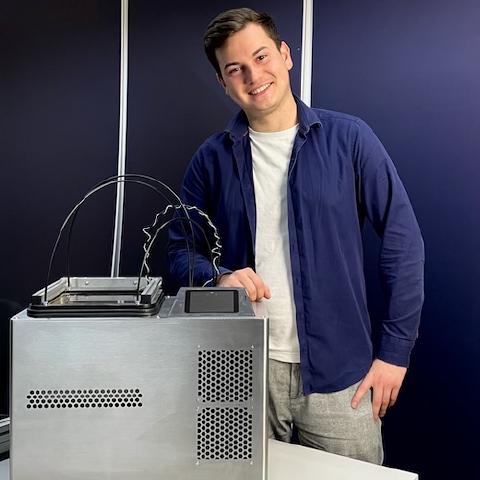
- The Vapor Phase One is a prosumer level Vapor Phase reflow machine
- Chris first encountered Vapor Phase when Jonathan Hirschman of PCB:ng was on the show.
- Compared to infrared ovens, Vapor Phase doesn't have to worry about scorching or shading components.
- Normally they are 10K+ euros for oven
- Safety wise, it's safe as long as the liquid is heated precisely
- The Vapor Phase One is available in their web store
- Also available on Mouser for US people (as are most Crowd Supply campaign products). There are 4 distributors in Europe.
- It was a hassle to get the product certified in the US
- They targeted a $1500 price, ended up at $5k (still half of most Vapor Phase)
- The liquid inside the machine is called Galden, which stays at a stable vapor temperature when heated.
- 1kg lasts 1 year or more.
- After a bit of time, you need to clean the flux out of the Galden resevoir.
- There is a post cleaning process based on water cooling built in the system. At 120C, the PCB will come out "dry".
- PCB Arts has posted on Twitter/their blog about visualizing boards in Blender.
- They are focused on software improvements for the Vapor Phase machine.
- Since PCB Arts is based in Nuremberg, they will again be at Embedded World
- Follow the company and Saber at PCB Arts on their site.
- Follow Saber on LinkedIn
Transcript
Saberkite Use Us: This is the Amp Hour Podcast. Released November 7, 2022. Episode 608. Vapor Phase with Saberkite Use Us.
Chris Gammell: Welcome to the Amp Hour. I'm Chris Gammell of Contextual Electronics. And I'm Saberkite Use Us from PCB Arts.
Saber Kaygusuz: Hi, nice to be here. Hey, it's good to hear from you. Good to talk to you again. We met in person at, well, I'd seen your stuff online, of course, and we're going to talk about that here. But we met in person at Embedded World. You were in the startup area and in Embedded World and I was walking by and I was like, well, I recognize PCB Arts. So what were you showing? What are you showing at Embedded World back in June?
Chris Gammell: Yeah, back in June, we introduced our latest product, EdgeKit. EdgeKit is a modular-based hardware on NVIDIA Jetson. So for other software engineers back there or out there, when you're focused, for example, for some use cases and want to do something with machine vision and something like this, we built a modular hardware that you don't need to introduce or to, yeah, going to custom engineering, for example, a whole hardware thing at this point. So you could plug it together and, yeah, starting developing really fast and also going really fast to deployment at this stage. And this was our focus point with EdgeKit. And, yeah, we meet there.
Saber Kaygusuz: That's great. Yeah. No, and I think that kind of thing, too, where, so like the NVIDIA Jetson is like a AI kind of edge processing type of thing, right? And they market it to software engineers and they're like, yeah, you can get this plug-in board and it's got a little breakout and you can use it like a Raspberry Pi. And then everybody goes, okay, how do I use this like in the real world? And they're like, well, you got to go figure that out. It's like, wait, what? That's not cool. So, yeah, this is a great idea to have this sort of thing.
Chris Gammell: Yeah, thanks a lot. Yeah. Back then, we also got really good feedback about this because we learned that I think not that much software engineers want to care about hardware. And this was also why we introduced that because we are hardware specialists in an engineering company. And this is our focus point. And we want to enable different use cases for machine vision and machine learning out there because I think it's more than a buzzword. And especially here in Germany, it's got buzzword-y every time if you talk about AI or machine vision or something like this, but to give them a real value and some real use cases. And we want to support the different software engineers out there with our product.
Saber Kaygusuz: I think the most interesting applications of this are going to be in a factory in Germany, watching a robot arm and making sure it's doing the proper thing. And it's like, you can't just stick a dev board on the edge of that and be like, oh, it'll survive okay. It needs to have good enclosure, good heat protection. It needs to just have all the peripherals that it needs. So yeah, I could see all that sort of stuff.
Chris Gammell: Absolutely.
Saber Kaygusuz: Yeah. What are some of the modules that plug in?
Chris Gammell: So right now, we support different use cases at this point. For example, if you have opto-isolated IOs in the industry like you're talking about right now, you could talk to other machines with the opto-isolated IOs or with an RS interface. This is also a module which we support right now. And also, yeah, customizable relays, for example, default relays to 24 volt DC machines. You could turn on, turn off and everything like this. Yeah. We have media modules. We call them media for camera applications, for example, and industrial module for all industrial applications. But also, yeah, the normal Jetson support package, I would say. That's our main board where you could plug in the Jetson Nano, the Jetson NX and every board, every SOM board from NVIDIA Jetson series right now. Yeah. To enable different use cases out there.
Saber Kaygusuz: That's great.
Saber Kaygusuz: And you guys do have a really fun... I'm playing with the configurator of the actual thing too, so that you can put together like, hey, you want to hang this thing on a DIN rail. You want to have a certain case type. You want to have active cooling. You want to... All the different plug-in boards, stuff like that. It's... Yeah. It's nice like 3D modeler and stuff like that too. It's just great. This is really cool.
Chris Gammell: Yeah. This was also one idea of us because from our point of view, if you're a software engineer, and you don't want to relate with the hardware and have to do something with the hardware at this point, we thought that we could make it or we should and have to visualize it in the best way how we could do it. And yeah, this is with the web configurator you're seeing right now. And also, yeah, with WebGL and everything, what's you in the web, we use there for the visualization at this point to make it, to make a really good customer experience and user experience at the first point out of it. Also with a live pricing, which isn't common to be honest, in the market of the edge AI
Saber Kaygusuz: right now. Right. Right. They just say, call our salespeople and of course we'll give you a price. It's like, come on. Yeah. My friend recently asked me for a... He asked for a service recommendation and I started to give him one. He's like, no, no, no, but I don't... If I have to talk to a salesperson, I don't want to hear about it. It's like, oh, okay. Yeah, yeah. I get that. Like I relate to that, you know, to like just wanting to be able to... Play with all the different options, see what the price is and like make your own decision based on that. And then maybe you talk to a sales guy to be like, what about, what about discount or you know, like all the stuff that the salespeople want to do anyways.
Chris Gammell: Absolutely. Absolutely. I'm also one of the persons who don't want to talk to the sales guys, to be honest, because yeah, I want the live price. I want to discuss it with my team internally, for example, for different solutions. And then going to the sales guy and ask for discount or something like this. Yes, of course. And this is also one point why we choose the live pricing at this point. Yeah. Because also a lot of software engineers are from smaller startups and everything, and they could choose their configuration on their own in their room without talking to other people. Yeah. And this is also, I think one common thing all engineers have in common on the earth. They maybe are a little bit more on the introvert side than on the extrovert side. So yeah. Yeah. Yeah. Better playing with an online configurator at this point, rather than talking to other people.
Saber Kaygusuz: I feel like that also like, you know, like people look at that, they hear you and I said this sort of thing and they're like, oh, well, they just want to, you know, not talk to someone. But I feel like it's also like, like having these kinds of selection things. It's like, it's literally, it's like a trade off machine, right? It's like, in this case, it's money versus whatever, but it might also be space. It might also be like, when I think about other configuration type tools like this in the past too, or like, say I'm doing comparisons between different chipsets. What I really want to know is like, okay, I need three serial, I need three URs for some reason. That's fine. I can look at all the parts that are there that have three URs. But what I really want to know is what do I have to give up in terms of like pinouts and I have to give up in terms of, you know, maybe power or other things in there. Like, it's not just the, does it have it? It's not just the shopping. I'm not looking for a shopping experience. I'm looking for a trade off experience.
Dave Jones: Mm-hmm.
Chris Gammell: And absolutely. And exactly. This is what we want to give other people out there. Yeah. Directly via the left configurator you see right now is to, yeah, have this trade offs by itself or by himself at this point. And yeah, to have also the trade offs really fast and have all the information on the desk for what you need to also make decisions at this point. And this was really important also for us. That's why I think we developed on this configurator you see right now about half a year, to be honest. So it's completely over-engineered, but to have WebGL, yeah.
Dave Jones: I mean, don't go laggy and buggy and everything. Yeah.
Saber Kaygusuz: Yeah. Yeah. It's really hard. And it's doing lots of… Is this all running on one of the NVIDIA Jetsons or whatever? Unfortunately not.
Dave Jones: At this point.
Saber Kaygusuz: So… So let's talk about the actual like applications too. So… So why… Why the Jetson? Why… Why were you looking at that in the first place?
Chris Gammell: At this point, we decided I think two years ago to go with the Jetson because of two of two main reasons so um the first point was um back in 2017 maybe we can later do that uh we we had a company it was yeah that's maybe a fuck up story so we had we had a company back there um where we um build robots um and also using nvidia jetson boards within the robots which analyzed yeah or which had 3d cameras and everything in it and we had the problem in this earlier company that we don't have any hardware which could be implemented that fast into the robots without much pain and yeah we searched the solution back in 2017 for this problem but we didn't find one and after we don't make this company anymore it's this robot company because yeah the business model wasn't that good at this time we're focusing on helping other engineers in the in the software area like for example we was in in this earlier company back then and this was the first point because we had the same problem but the second main point was that nvidia has a or has the biggest community for software developers out there for machine vision and if you have a problem for example the cuda integration or something like this you know that some person out there also have the same problem or had the same problem and this problem also was discussed for example in online for example and this is why we also choose nvidia because the software community is the biggest and uh in my opinion also the greatest one out there right now yeah no that's
Saber Kaygusuz: really smart from like a business perspective too because you're you're basically like you're serving a known market you're part of that market right you're you have bona fides as like people that have been building stuff as well and that makes that yeah that makes a lot of sense i mean are people that are developing software and this sort of thing are they kind of i'm just kind of curious about the industry there as well like are they are they embedded inside larger companies it might be like like you said doing robotics and things like that or are they are they kind of out on their own trying to build their
Chris Gammell: own startups and things like that so mostly they're smaller companies to be honest so right now i think also in the in the german big companies there are more conservative maybe at this point right now but the machine vision things aren't in the heads of the people which are right now in the bigger companies i would say
Saber Kaygusuz: right in about three years uh some some brilliant cto at uh you know siemens is going to be like we've come up with something amazing it's called machine vision it's like okay okay buddy okay this is
Dave Jones: super new this is super new right now no i think the german industry right now is hanging on iot so iot is the greatest big stuff right now in the industry in germany right so new so hot yeah absolutely
Chris Gammell: absolutely and uh yeah this is why we're also focusing right now on maybe the smaller companies at this point there are a lot of startups like like we are for example which are helping bigger enterprises and companies for integrating machine vision applications for example yeah for for the car industry in germany they have a light tunnel and in the light tunnel they could analyze some yeah some some issues at the car at the end of the manufacturing for example and this is also one case which is done right now with cameras and camera analytics to detach scraps or um yeah something like this on the um car and on the vehicle before it's going out to the customer and this is one point where machine vision from startups is implemented into bigger enterprises in germany um right now so uh we are mainly talking right now to yeah the the smaller companies luckily because uh we also have faster processes at this point
Saber Kaygusuz: yeah yeah to talking with the customers well and i mean big companies come from small companies right so you never know in terms of what's going to hit so that that's not a bad thing either i think you you know you might have people that are you're serving their needs directly and yeah i think there's just that's that's a good that's a good way to do it especially if you like i said if you have you're going from a community like the jetson thing so i personally i haven't used the the jetson set a series of boards i mean it's all it like runs like linux on there what is what is the actual
Chris Gammell: what's on the board software wise yeah on the board is um uh normal linux um with ubuntu 18.4 um and right now ubuntu so 18.4 for the older modules and for the new um later and newer modules they are running ubuntu 24 on it with the latest linux kernel or yeah and it's it's really nice and easy i would say to set up so to be honest from a machine vision analytics side we also don't do that much in the systems here what we are focusing on is to um yeah make the hardware to the os and deliver the finalized os with or kernel adjustments and everything to our customers so they don't have to care about if for example the camera via csi is or could be communicating with the application so this is one point we take care about because we are the kernel specialists here at this point and yeah also for this mission to enable software engineers to focus on their application and not to anything else at this point because like i said before back in 2017 we had the same headache the same problems back there and we wanted that someone else could solve them for us yeah right do you know
Dave Jones: how much money i would pay for someone to solve this problem right now
Saber Kaygusuz: yeah no that's really interesting too is like so because i think even if you went to say like a software person you're like all right you're gonna go learn pcb design you're gonna figure this stuff out you're gonna get all the way through it awesome you did it you have a a thing you have a card edge connector the jetson nano could plug into and you have all your peripherals on it you've tested them they're working it's like all right now it's time to learn build root or yocto so yeah that what what do you what do you guys use for for rebuilding a kernel with all the hardware
Chris Gammell: stuff in there so we could use a lot of frameworks from nvidia at this point so nvidia also have documentations for for the hardware guys i would say and we are working close with nvidia at this point also for for building all all the hardware kernel modules and everything like this
Saber Kaygusuz: so that's part of like their their software flow is basically to to get to make it easier to to
Chris Gammell: to be part of linux there basically yes of course and also for example for the for the camera applications or something like this we are working with camera distributors and camera manufacturers out there and to also integrate the different kernel modules and camera modules into into the linux system because they're providing drivers for us so we could implement that that to also help our software engineer our our hero our customer at this point yeah for realizing their application really fast
Saber Kaygusuz: that's great yeah that's i mean like that's so much of the hassle of like i think about the people that are doing this sort of thing basically you guys are outsourcing what would happen inside a larger company if they you know people were building their own custom hardware so you're you're basically kind of that in-between step and i i assume some of your customers end up might end up bringing you know if they got big enough they would be like oh we're going to bring this stuff in house at some point but there's so much i feel like so much knowledge you know in a service like what
Chris Gammell: you're doing that's great yeah but also also at this point if they're larger companies for example like you said they're doing that in-house they obviously do that but they're also focusing on rapid prototyping and yeah trying to um to develop their application really fast and before they have a hardware this takes around six to eight weeks or something like this and also a lot of engineering effort at this point so why don't start with i would say a dev kit yeah totally with all the possible connectors you want to have in your systems to also integrate um so to be interactive with machines and everything like this so um this is also one point we are maybe helping um bigger companies at this point but as you said if you're going to production for larger quantities also we also wouldn't recommend any more the edge kit so we also do some um some analytics at this point and we would say so a custom engineering effort for jets nvidia is around 15 to 25 000 euros for or dollars for bringing the product out yeah it is it is pretty much the same thing these days which
Saber Kaygusuz: is pretty crazy yeah yeah the fact that the dollar and the euro is yeah it's crazy yeah one one year ago
Chris Gammell: that wasn't uh that wasn't so extreme like that uh this was also one point which we learned in the crowds uh in our in our crowdfunding campaign for another product but let's talk later about that
Saber Kaygusuz: so yeah yeah definitely yeah that's yeah we're definitely going to get to that and i probably should have led with that as like a little teaser for what we're going to talk about we're going to leave that in the second half of the show here which is a vapor phase machine yes people there you go there's the there's the teaser but yeah that that can end up hitting a lot of you know business operations type things if you know currency starts moving around on you like that that's kind of kind of kind of problematic for especially if you're trying to like forecast out by two years or whatever most quotes crowd supply or crowdfunding campaigns do so yeah absolutely that that is really hard on the uh so then the on the on the uh the jetson boards and the modules and the things that you make here sorry i've already forgotten the name the edge kit how big how big is your team that's building this sort of thing i mean like is this small team getting larger team so right now we
Chris Gammell: are um yeah a really small team from six people and we have three hardware engineers two software engineers or yeah one software engineer and the other guy is me so i have to differentiate that because i'm mostly in the web development and if i'm saying to other persons who are real software engineers they say okay web development isn't real engineering around here any kind of code
Saber Kaygusuz: is software it's outside the you know software is it's software so that's that's that's we understand
Chris Gammell: yeah i'm doing software okay i'm fine by that and uh yeah one one person was mainly focusing for all the business operations and um yeah doing all the stuff with the taxes and the buy-in stuff and everything yeah that's what keeps us away from being creative yeah yeah well that's that's uh that's
Saber Kaygusuz: good that's that's a good size team in there and stuff like that so yeah but we're we're also trying
Chris Gammell: to um yeah become more people because what what pcb arts and the core is we want to focus um on that that we want to be a creative place here in germany uh for creative people for software engineers and hardware and electronics engineers to to come here and um yeah make interesting projects for for uh different customers but also to creating products for other engineers out there that's that's the call of pcb art so being so producing uh products out there for people or for for engineering people like for example for software engineers the edge kit and for um yeah the hardware engineers um the the vapor phase one oven this is what what's all about to help to help people at this point to get a faster innovation cycle this is the main point we are focusing on the products and the other way is that we are also developing as a normal engineering company products and projects for other for our companies other customers at this point and this is how we um yeah working as a team so on projects and on products to have also a really good calculation basis and to have a predictable cash in income at this point because yeah if you're doing engineering um you just could do around three months of planning something like this um so custom electronic engineering for example because the customers won't wait six months or nine months before you begin projects for them yeah so yeah you just have a calculation basis of around three months and this is was the main problem how we started at pcb arts because we just could take a look into the future within three months at this point we said okay let's focus also on helping other engineers with our products which also is obviously great for the other people at this point but also for us because the income at this point is more calculatable and predictable at this point and so we have a good mix out of engineering and products also because of being more predictable with the money which comes into the company also which which let out of the company right so are you saying that
Saber Kaygusuz: that you'll you're planning three months out or that you're you're you won't take engagements that are longer than three months because then it's a stretched out timeline yes normally we are we are
Chris Gammell: planning with three months um so and what we see that um if we are planning for four or five months with with our customers uh they want uh or they didn't work with us at this point because it takes
Saber Kaygusuz: too long um that we start for different projects okay so it's basically the customer requirements are that like you need to kind of do these fast hits for them in order to to hit their their requirements yes absolutely that makes sense yeah and then that benefits your business because yeah fast projects fast payment hopefully yeah hopefully yeah i do find it's interesting with like smaller companies too i'm not sure how it is in germany but like the smaller companies in the u.s they the payment terms are less stringent like they're they're used you know they're not like an old industrial company my friend works at a defense contractor he's like look our subcontractors are on net 90 and they're lucky if they get paid on that okay and i'm like holy crap i cannot imagine doing work today and getting paid maybe three months later like the amount of cash you need to have to be able to float like maybe you're going to make a ton of cash doing that sort of thing and that's why it's why these subcontractors put up with it but like as an individual you know as a one person dev shop i can't imagine waiting three months for a paycheck or or you know if i am waiting three months i'm screaming my head off at the end of those three months and be like give me that money
Chris Gammell: wow that's absolutely crazy so i also think we wouldn't do something like net 90 to be honest because um like you said we we are also six people right now and mostly all in full time and we have uh yeah big big salaries or not big salaries but a big salary part that we have to pay a monthly on a monthly basis and yeah we have to pay that and um also the customers have to pay us if we work for them it's yeah easy like this i would say from my from my perspective but we also had those customers which ask for net 90 for example and to be honest i said to them we can't do that because that's too
Saber Kaygusuz: late that's too late yeah i mean yeah i mean it's like maybe if i was like independently wealthy but at that point would i really be doing your design work for you like oh i i do i do lay out on my yacht yes in the sun on my on my 100 000 inch tv you know or whatever it is you know absolutely yeah absolutely well that's interesting i mean and it is interesting mix as well from like having having products right so then basically you are your own internal customer now where you are developing you have these these configurable products but i assume that you're you're building and holding stock of these these individual boards and then you're assembling them later so then you basically are one of your own consulting clients and i i imagine that that pull is is difficult
Chris Gammell: after after we started the company back in 2019 we are focused first of all about all the engineering stuff to have a good cash flow and a secure cash flow at this point but also to reinvest all the money which we earned to equipment we needed for um yeah different other projects and everything like that so yeah equipment is extremely painful for for from a business point of view because um yeah you just need some equipment once a year or something like this he said twenty thousand dollars and
Saber Kaygusuz: you're all excited when you get it and then you use it and then you're like oh that's just gonna sit on the shelf isn't it oh my god you just like look over everything like oh there's twenty thousand dollars that's just becoming less money because it uh you know amortizes and like holy crap or depreciates
Dave Jones: rather so yeah and why nobody use it use it under the year and just once a year yeah but
Saber Kaygusuz: you're talking about a vna aren't you it's equipment right yeah that's the painful one you know you
Chris Gammell: have to do it for fcc that's absolutely painful yeah yeah oh one of our things uh what we bought this year was a climate chamber also yeah it's also incredible heavy because we're at the first floor we have to put it put it in the first floor here uh it was super heavy but um yeah it's also extremely expensive and it's also running i think once a month so luckily not once a year but it's
Saber Kaygusuz: it's and when you say first floor is this the thing where in europe the first floor is actually one flight up upstairs it's not the ground floor it's the first floor so that's the is that is that right so the one flight because because in the u.s we would call that the second floor but yeah so like first floor i was like oh that that's not that bad but yeah but i i that's terrible when you have to like get it up the stairs and you know if we don't have a freight
Dave Jones: elevator it's like oh man that's crazy so yeah it was workout at this day exactly and a small team
Saber Kaygusuz: means you're not hiring movers you are the movers yeah yeah we are the movers yeah that's the other thing too is like i feel like when you're when you're doing you know it's always like these it's like surge it's like these surges where you need you don't need one thermal chamber you need like three thermal chambers but you only need them for like a month at a time and it's just not realistic and you know there are rental services and stuff like that at least where and where i was in chicago i haven't even looked in the area here but you know that's always a premium for that sort of thing too and so yeah it's just it's a tough it's a tough thing as a as a
Chris Gammell: business owner yeah and this was just one of the investments we we did in the last time but there are a lot of yeah different equipment we needed for us and this equipment we we had yeah we had bought from the from the first engineering contracts we had back in 2019 then and yeah after after that we have mostly all the equipment in our in our lab then we we thought about it okay what we could invest also in or where to put our money to also invest into different things and one major point where our products at this point yep like you said before we are our own clients and we also needed to care about about to have stock especially for for the edge kits right now and also for the for the vapor phase opens because of also the shortage so we have to buy in i think one and a half years in advance so the the edge kits we we've launched on this july on the embedded world we bought different parts like yeah pci express hubs and everything one and a half years ago which were delivered i think in may this year and also um some chips are already um yeah um delivered in october i think so last month and uh this was pretty heavy because we have to invest really a lot of money for our first batch of 500 modules or 500 uh edge kit mainboards uh which is
Saber Kaygusuz: yeah which is a little amount of money right and you need to get to 500 in order to get so matt was talking matt liberty was talking about this last week too right on the jewel scope basically you have to get to 500 to get you know price breaks and all that other stuff as well and it's just like yeah it's a huge cash flow tie-up it's crazy so man my my heart goes out to you that's yeah especially for a startup right that's crazy well hopefully it's all paying off and you're able to sell these very quickly and start the process to build a bunch of new ones and by hopefully in the next build it's
Chris Gammell: a little easier a little bit less shortagey than it has been yeah i also hope hope so but let's see how it works so right now the sales process uh comes and every of this of this other product management things so i would say if if we have our prototype here for example from from the edge kit um we have done this process of developing products um the second time so the first time was the vapor phase over the second time right now is the edge kit and as soon as we had prototype of the edge kit here everyone was like okay right now we have 20 percent have done on the whole product development process here yeah and this was one thing if you had asked me this 2019 or 2020 maybe i wouldn't say um that the prototype so from my perspective the prototype is close enough to the product so we could launch that really fast but um to be honest this process to have the prototype is a really early stage process and all the another processes like certification going to production talking to manufacturers everything they're taking a lot of time and it's a huge amount of yeah work from prototype to the product and to the market i've actually thought about uh discounting
Saber Kaygusuz: my consulting services for prototype versus production because the prototype is the fun part you know like it's not easy but it is the fun part right it's like oh yeah but buying one of these i don't you know i could i could design with this on digikey or mauser whatever supplier doesn't matter i can you know cobble stuff together with amazon and whatever and it's just like that's not that's not the that's not the hassle part right it is it's hard it's just not the hassle the hassle is all in manufacturing manufacturing is such a grind so you're i think you're right 20 is a good good estimate i think of the overall overall effort especially like i think what's interesting is like a less complex product i think it actually shrinks that down right so like making a you guys make very complex products i think and so if you were making a simpler product like a you know it just like it was just a breakout dev board type of thing and it was just you know you're just adding a single led to a jetson nano right that's sort of crazy crazy example that would then be what two percent of the product and then the rest would be like all of the other things to make that that happen and get out in the world
Chris Gammell: absolutely yeah i also think so that this could also be or will also be a one major part how complex your product is to um yeah going to 50 percent by prototype or to two percent
Saber Kaygusuz: uh on that scale yeah well and speaking of complexity let's let's switch over to your first product which is uh what we teased here uh that is the vapor phase one so this is a crowd supply campaign that started uh it funded on the 20th september of 2020 so that's been around for a while and it is built
Chris Gammell: it's out there what is the so first off what is it i guess yeah so the the vapor phase one is an open source vapor phase oven how a vapor phase oven works it's for yeah it's a reflow oven for electronics for a smaller hardware engineering offices out there what it is exactly that is that we have a heater and or in general you have a heater and a liquid it's called galden and the galden is boiling exactly at 230 degrees and if it's boiling it generates vapor which is heavier than air this means you have a 230 degree or and perfectly 230 degree vapor which is perfectly for for for um soldering electronics um and prototypes out there because you can be sure that all your bgas yeah working after that all you um and all fpgas for example don't kill your your parts on on your electronics this is the the usp at the vapor phase soldering process in general because it's um yeah really really defined temperature curve there what you have there so i i remember
Saber Kaygusuz: i had never heard of vapor phase prior to jonathan hirschman who uh used to run pcb ng he was on the show back in god what year was this this was 2016 so i never heard of it prior to that it's been around a long time i think but i yeah i never heard of it and they did it because i remember they were doing like kind of low-run prototypes as well like but manufacturing you know maybe up up to 100 sort of thing and yeah it's just mind-blowing to me like how that works it's basically like it's like basically giving your components and solder paste a bath in like 230 degree yeah quote-unquote water but not water you know vapor
Dave Jones: absolutely yeah in 230 degrees hot clouds and
Chris Gammell: but it's really gentle for for the electronics um at this point and it's it's really nice because
Saber Kaygusuz: i feel like the the the alternative is is the important comparison there i think about like my piece of crap infrared oven right it's basically like a literal toaster and what i'm relying on there is two things one is radiation like direct radiation off the elements but really that it's heating up the air and the air is circulating and that i get uniformity of that air across all the components as well which is which is not normally the case usually it's more yeah uh non-uniform bad it's bad
Chris Gammell: and i mean also if you have for example higher components or something like this your infrared energy don't comes to the part which has to be soldered for example because it's hidden by a large component which is before that uh so you have um some solder problems with infrared for example is that shading or what is that called there's like a manufacturing they talk about yeah it's it's it i would also call it shading so yeah this also leads to some problems and we had for example the problem uh we worked with um hot air gun and um yeah basically it's desert it's it's a desert air 400 degrees gun how we sold our pcps um back then and we had the problem in our prototypes that yes some of the prototypes in this engineering processes um yeah were destroyed because of the soldering process uh we had with the hot air gun and nothing is more frustrating than being a creative person like we said before prototyping is the the or to the prototype it's the it's the fun part yeah yeah but yeah but not the fun part is to assemble um pick and or pick and place your your components by hand for five hours for example or six hours and then your prototype isn't working because of our soldering issue at this point and we had this problem uh for a prototype at our at our desk and this was really really frustrating and so we are searching for some solutions which are a really gentle solder process at this moment because at this point we thought okay what we could do to improve our work to could what we could do to focus on the fun part um in prototyping um which also um yeah helps us um for for the prototyping for example yeah so we choose that we need definitely a vapor face oven and we took a look at the market and um yeah unfortunately as a startup we we take a look to the to the equipment which is really expensive so vapor face ovens are really expensive and uh we take a look to the market um back in 2019 i think and we didn't find a solution that could fit our quality um expectations and also our okay and what were the
Saber Kaygusuz: relative prices of of the available stuff in the marketplace so it's over 10 000 euros i would say
Chris Gammell: in general um what what a vapor face oven costs and yeah i would say also 500 euros for some equipment where or are really uh really tough in the state in the um invest for us at this point and um yes so it was completely out of scope so we said okay let's go to the basics um why we don't build our vapor or a vapor face oven for ourselves at this point because um yeah the physics behind that isn't that hard to be honest because it's a heater and it's a liquid yeah so for for the completely general
Saber Kaygusuz: i remember seeing i remember seeing a um i think there was a hackaday project or something like it where someone was doing this kind of ad hoc they were just doing their own thing and they were just basically using a heater to heat up and i i remember distinctly thinking like uh i don't do that i don't just heat up i don't i don't heat up random liquids even if they are known and then you know like i assume somewhat noxious or maybe not you know noxious so much as just not safe to breathe in but it does seem like it's relatively simple in that way so why why i guess maybe a good question is why why doesn't this exist in china right now like why can't i buy one of these from china
Chris Gammell: so i think this will come but um also if um i think the technology isn't that common in in the market and not that many hardware engineers know that because like you said um also if you're doing it by yourself so i have a heater and a liquid and everything this isn't 100 safe to be honest if you don't treat it correctly so it it's getting just this liquid it's getting toxic um if you heat it up to 300 degrees something like this 290 okay so precise control is important right it's not like
Saber Kaygusuz: you don't just like light a little box inverter beneath it and be like oh that'll be fine you
Chris Gammell: know it's not like self-regulating in that way right yeah absolutely so don't try this at home at this point but you have to regulate it really precisely um and don't put that much power into yes some a different defined surface at this point so this is really important and yeah that's why i think it's also not came that much to different industries and not requested that that much by by different hardware engineers in the past but right now if we are talking about to yeah have smaller components um have um also heavier components on a smaller place for example this are challenges for um normal um infrared um reflow processes or hot air reflow processes at this point so this is where um the vapor phase maybe also became became more popular in in industries for electronic development for example and also for um yeah more or faster prototype cycles at this point it's also important that maybe you have your really good um reflow station at home or um in in the office or something like this and um so also at this point we think that prototyping will become more and more popular because of the innovation cycles they're getting shorter and shorter every time and every year yeah that's great and so
Saber Kaygusuz: well uh tell people like what so can they can they buy this right now so it was a crowdfunding thing can is it a commercially available how to how do they get a hold one you can buy one if you if you want
Chris Gammell: one to be honest at this point over over our webshop and also over different distributors so coming back to the business side at this point we are working with a lot of distributors around the world so for example with mouse electronics for the us and for the europe uh europe uh we're working with right now four different distributors for different countries and these are the only um two areas we are sold the system or selling the system right now because of different certifications we need and to be honest to get certifications for the us was one of the toughest challenge in the history of pcb art i saw that on
Saber Kaygusuz: your uh it was in the updates on your uh your crowd supply page so it didn't it didn't look like it was easy yeah it was really hard but but it was also what what about it because it was because of the chemicals or was it just more about like fcc and ce type stuff more about um that one machine is going to sell
Chris Gammell: to the us and from a german perspective this is horrible for all the uh authorities which need to need to need to check that we're working with different certification authorities here in germany which are certified for the us and that's just two yeah so they were really pricey and really they're really looking into each detail so for machine safety and everything so yes of course that's their job but i think the certification took about four weeks so close to full time that that someone looked into documents uh reviewed everything and they they tried to find something what yeah what maybe could could damage uh damage some other parts or something like this yeah it was it was really heavy to to make a certification there for the us for for europe it's quite easy so for europe it's really easy to be
Saber Kaygusuz: honest compared to us i mean that's great i that is not normally the story no people aren't normally like oh you know europe regulations are so so easy versus the us usually it's the other way around and so that's good good for you know selling to europe that's great definitely so i also think it's easier for
Chris Gammell: us-based companies to launch products in the us okay because the certifications are more easier to get but from a german or european perspective it's really heavy to get this market barrier also which is between europe and the us but i honestly don't know if you're working in the us and launch products to the uh to europe if it's also that hard so maybe it is i don't know yeah right exactly yeah well we
Saber Kaygusuz: should mention so the the price tag is not cheap but it is still half of what you said otherwise right so you said it was 10k euros to get any other machine so it's 5 000 europe's for the for the current machine which is i think you know you think about like yes it's uh yeah i think i paid like 300 bucks for my cheapo oven but you think about how many prototypes i potentially destroyed and you know it starts to add up pretty fast and i think about the other thing too is like the ones that you're targeting like you mentioned with like bgas increasingly people are working on very high-end prototypes local to their um you know in their local shop where they might have exported those to a assembly house previously and it actually is kind of possible to do this stuff in-house now so you start
Chris Gammell: to save money there too absolutely yeah and i think it's getting more popular and popular to have the more complex prototypes on a desk at home or at office or locally and don't work with your manufacturer for um yes single prototypes at this point so we also want to to enable people and hardware engineers out there for faster innovation cycles at this point and yeah it's it's not cheap so um we also don't wanted to have this price point to be honest because 5k is also really expensive at this point our first idea was to help other makers and hobbyists at this point for have a solution at their home at their desk for example for around 1500 dollars that that was our main goal at this point to be honest we had some some features in the system which weren't allowed or which don't allowed us to have this price point at this point because for example we have an adjustable lift to have a really precise definition of the temperature curves and the profile temperature profiles you want to give in to have a really really good solder result for your prototypes we are water cooled within a fixed connection and we have some of yeah really good features for prototyping from our point of view and yeah have a really good stainless steel enclosure and everything like this so the quality for the product was one of the main point but also so one of the main point why we can't reach the 1500 dollars at this point but also the
Saber Kaygusuz: certifications the certifications for the us i also feel like if you know you're targeting 1500 you say you know say you were looking at the maker market right but like 1500 is kind of how i feel like that's outside the you know with if you're outside a certain realm anyways you really start to limit how many people in that market anyways so you know like so so now it's like okay now you're up into prosumer or maybe actually pro in terms of like that sort of thing and at that price i feel at that point i feel like the price becomes it's not not an issue but it's really then it's a it's a true comparison in the marketplace and like what else is out there so then it just becomes a a discussion of like well this is the best process now look at all the things so like if i've convinced you that vapor phase is the best way to make your prototypes on your desk for your professional exploits and the things that you want to do in your home lab okay i'm convinced you of that now let's look at the marketplace and this is the cheapest best thing in there it's like then that's an easy sale i feel like so it's just really it's almost like you have to be like an evangelist for vapor phase in the home in the home office or small office in the well ventilated small office
Chris Gammell: yeah it's okay so um we don't lost that much of of the garden so it also don't need that good
Saber Kaygusuz: ventilation but i get the point absolutely yeah so i mean do you do you give guidance on that i mean you should should this be have a vent hood or anything like that or is it okay to just do an open air
Chris Gammell: yeah so um we recommend for example to have a window near of the machine for example because um yeah it it melts a little bit um so um the garden um yeah um if it vaporizes um it smells a little bit
Saber Kaygusuz: how do you how do you spell that though the you're talking about the liquid that becomes a vapor right how do you spell that word yes of course uh garden how do you spell it letters like letters uh
Chris Gammell: oh sorry so g a l d e m okay yeah it's it's the this liquid um from solvay um from the us and um they're the only company who produce uh produce this liquid um with which is yeah perfectly for for the soldering but also they have the monopole on this and it's not the cheapest liquid so it's it's quite expensive um so we are talking about uh one kilogram so this is what the vapor phase um needs is around two hundred dollars uh right now um but um this liquid um i would say we we are right now soldering with one kilogram since one and a half years okay so yeah about 100 or 200 um different uh different uh solder cycles so it's a investment which you don't need to read like a spool of filament on your
Saber Kaygusuz: your your 3d printer that'll run out in a day or two if you're doing some printing yeah yeah yeah absolutely yeah so i never heard of this stuff before i'm looking at the so it is a per fluoro wait where was it per fluoro it's a pfpe oh my my bad chemistry day as you're coming back per fluoro but it is inert it says so that's interesting right right there that it is listed as chemically inert so basically it's designed for this sort of thing it's basically made as a temperature stability type of thing and it says even that you can get it at different temperature boiling points range for 55 to 270 degrees c that's super cool there are also different
Chris Gammell: different liquids out there um from from solvay and yeah they have different uh boiling temperatures and also supported by the vapor phase one so if you have different solder pastes for example which have uh hatch another um point to to get yeah liquid at this point huh you also could take other liquids from
Saber Kaygusuz: so that's oh so another one they have another product they have this is i've never heard of this stuff before this is super cool it says golden d is the electronics testing suitable for electronics reliability testing including thermal shock resistance and hermetic sealing huh so you could basically could you use the the vapor phase one machine to actually as like a ad hoc tester of like
Chris Gammell: thermal shock and things like that like if you had other monitoring on there yeah we we never had this request before but um i also didn't thought about that but we could do really really fast increasing temperature profiles um with different uh temperatures so this uh also could be possible at this point that for example if you're using garden 160 or something like this uh you could also make
Saber Kaygusuz: make a shock shock test okay well i will send you my uh bank account that's interesting when people start buying for that application you just you know give me the the standard 50 cut that's fine you know like per definitely definitely yeah that's cool no this is this is with the code chris this is like better better uh better living through chemistry sort of thing man that's really interesting this is like why we have chemists here we go per fluoro polyether polyether fluorinated fluids wow
Chris Gammell: and so they're the only people that make it is that right yes i think they have a patent on that so they also could have a really high price point on on this liquid uh-huh but to be honest the cycle costs are around um so for one soldering about 50 cents so it's okay yeah from our point of view because yeah you get really good um soldering results out of that and yeah we never sold ever again with a hot air station since we have the vapor phase at this point so just the and so it doesn't
Saber Kaygusuz: collect i guess the flux it's in solder paste as well that that normally vaporizes and kind of burns off does that also burn off out of the liquid as well like so if so the vapor comes up over top of the board the solder paste is holding the little balls of solder in place does the solder the solder paste flux does that get into the into the actual galden or does that just kind of burn off yeah so it drops
Chris Gammell: sometimes into the galden reservoir which is under the pcb at the vapor phase so after a time you um yeah have a milky um liquid beneath that so this is the the mix between the galden and the solder flux but this is also really easy to clean at this point yeah like because it separates out and and that sort of thing okay that's great huh yeah so you don't burn it at this point and yeah you don't have this this yellowish um things on your pcb that much anymore so interesting so and then uh so the the
Saber Kaygusuz: so i'm just kind of visualizing to paint a little word picture here so so basically the reservoir is underneath the pcb it gets heated up the vapor phase kind of like climbs up above the pcb it's kind of like creeping up like water kind of like a water rising sort of thing over top of the pcb exactly and then as the process is finished does the vapor stay around i mean like how do you ensure that all of it has kind of slid off the board is there any kind of post-cleaning process or anything
Chris Gammell: like that so in general um yeah the vapor is climbing up for the process um to a certain point and at this point we have installed a water pipe and a water cooling which lets there um that the vapor phase is break or breaks on a um on a certain point of height so we could regulate the temperature over over the height of the of the lift at this point so to ensure all all different solder profiles for the pcb or for different electronic parts on it at at this point the normal profiles the soldering profile is um yeah if they are finished um we try to um take the pcb to 120 degrees celsius this is where the garden slowly vaporizes at this point and so you get a dry um pcb out of the process at this point so if you want so 120 degrees um holding your pcb after the process for 10 or five minutes um this is the clean process so this will clean all the all the garden from the components and below the components for example um to get a dry pcb out of the vapor phase at this point we call this the anti-condensation
Saber Kaygusuz: mode yeah right because i would imagine that like even though it's an inert thing i wouldn't necessarily want to have like little droplets in between bga balls just from a from a reliability standpoint even if it's non-conductive it's it's fine but like i'd yeah i just would want it to be to ensure that it comes out
Chris Gammell: of there yeah so we also wanted um yeah dry pcbs because it's it's not it it doesn't look natural if you uh look at a pcb which is wet and then put it put it to the electricity or something like this
Saber Kaygusuz: that's that's not good well that is really cool so okay so you buy a unit you have it near a window maybe a little a little passive airflow away from it just to get rid of the smell that's great huh and then control wise the all the um so you know just looking at the promo videos and stuff like that they are it's controlled uh using a little screen it's got like a controller board much like a lot of the infrared reflows are but a little bit a little bit fancier it looks like yeah we we also wanted to
Chris Gammell: design a machine which is looking good which is also making fun to interact with um that's why we decided to to choose a um yeah a four inch uh capacity uh display to interact with the machine to see also
Saber Kaygusuz: live profiles and everything it does it does look very nice that's great so thanks i was going through your blog and i realized the first time i saw pcb art stuff was when you guys were posting about the rendering of pcbs because you put a xylene zinc onto a feather form factor board which is insane like the the density the density of stuff going there i remember seeing that and being like first off the renders were amazing and second off the fact that you did that is insane
Chris Gammell: yeah at this point i have to say um it's um um yeah a private project from a co-worker from from lucas at this point and yeah he he's crazy about that so he he said okay i want to do this project right now and um he's also um yeah rendering this stuff making this um yeah for marketing reasons really really nice and we said because we also got many requests so okay could you could you maybe explain how the the blender process is and how the rendering process of our pcbs is going because we are working a lot of with open source tools at this point um so we said okay let's make a quick tutorial about it which you could find on our blog separate into three parts and we try to yeah help other people to also have a nice rendering software pcbs because also if you have a prototype they're just 20 from the product you also have a marketing piece which is also yeah a lot of work at this point and this is also maybe one thing we could help other engineers out there it's really it's great i'm uh so
Saber Kaygusuz: greg davo who's been on the show a couple times he's obviously did a lot of that rendering type stuff and we see this i mean whenever i see it on twitter it's it's instant eye candy so it's it like you said it is really good marketing and it just kind of you're like wait is that is that real no that's not real oh my god that's not real that's so crazy so yeah and uh blend blender has its own challenges so yeah helping engineers with blender is is very nice that's a that's a good thing
Chris Gammell: yeah absolutely and i mean yeah maybe we could see more eye candies out there yeah in the future but that that that is the hope of of this tutorial and of our github repository at this point actually
Saber Kaygusuz: this is a really good example so i'm you know just scrolling down the page here and uh the so like you have a close-up of the feather board and it's got you know these 0201 maybe even smaller than that but basically in and amongst the huge connector the huge um two millimeter jst you know huge relative a huge usbc connector but like this is a really good example of like the where the vapor phase would help to get in there you know you have all these tiny bgas and there would be a lot of shading in there as well uh and that would really help in this scenario it feels like absolutely and i mean for example the
Chris Gammell: sink feather if you have a problem there which is related to to soldering or something like this if you have yeah two bolts connected under a bga or something like this you won't be happy for oh my god i just throw the whole thing away so you're like yep it's two thousand dollars that's going to get trash uh yeah thanks yeah and you have you have no chance no chance to to debugging this correctly so with the vapor phase you it's it's a forgivable process at this point because if you solder paste process wasn't that good for example at this point the vapor phase could fix a little bit out of it so not everything it's not a magical thing that will fix all your electronics but it's a forgivable process and don't yeah if you have to make a mistake in the process before for example a placement or something like this other reflow processes are not that forgivable like the vapor phase at this point
Saber Kaygusuz: that's great well this is really cool are you going to be continuing to like is it kind of like a one and done is it like well now we have it in stock and people can buy it if they want to or are there future future improvements that you're hoping to do for the for the vapor phase as well so in general we are
Chris Gammell: doing um software improvements all the time so new software features will come out for the vapor phase for example also a more stability in um in the soldering process at this point um also yeah some minor bug fixes and everything so we are working mainly on on the software side at this point and for the product and hardware side of the vapor phase for example we are also working for yeah nicer pcb holder for double-sided pcbs for example that you could yeah mount them easily in the vapor phase and so some useful stuff for the vapor phase process in general which we are also launching maybe also
Saber Kaygusuz: this year yeah yeah that's a good point like work holding is important what's the relative size so people know that like what's what's the biggest pcb people can put in there so at this point um we have a
Chris Gammell: really small vapor phase um to be honest because we also focusing on on our pcbs we had back there um at this time and um so we are talking about um 20 um 20 centimeters by 19 centimeters which uh
Saber Kaygusuz: fits into the vapor phase one that's eight inches by inch eight inches for all the uh the us dummies like me
Dave Jones: thanks a lot i wanted to ask if you could if you could calculate that into american please yeah yeah
Saber Kaygusuz: honestly the thing that helps me with that if i got that did i get that right i think i got it right yeah i think i got it right right i think okay um is the thing that my reference point for all that stuff is 12 inches is a 300 millimeter wafer for my semiconductor days and then you can kind of divide by divide by whatever you need it to be so 200 versus 300 million 200 millimeters is eight inches
Chris Gammell: yeah okay divided by 2.54 right yeah yeah i wouldn't do that math but yeah it's roughly eight inches i should say yeah okay yeah so so we got a lot of feedback um for this point for example that it's maybe too small for for different pcbs and we also um saw that so we are working right now maybe on a vapor phase two yeah but um yeah it's it's just in the in really really early stage right now so um but this is also one point where we are maybe working on okay in the future
Saber Kaygusuz: all right cool yeah it's good to have the the one in the title too because then it's like oh maybe there will be a sequel yeah definitely so will you be at the upcoming uh embedded world i know that you guys are based you're based in ford is that am i in my how's my german is it terrible uh it's it's beautiful
Chris Gammell: no no it's completely okay yeah we're based in ford um we're just next to numbeck so that's where
Saber Kaygusuz: the embedded world is and that's coming up in march i believe so i will see you there hopefully in march
Chris Gammell: definitely so we will be there we also have a booth at this point which will be um a little bit more fancier than the last time because it was really really um simple booth yeah the startup
Saber Kaygusuz: the startup area they expect that you're just kind of showing up and hoping people look at the product and not the booth so yeah it's it's a tough thing
Chris Gammell: definitely yeah but uh it's focused on communications i would say last time will also be in the next time with the edge kit also and with the vapor phase at this point so um we will prepare something for the upcoming embedded world yeah you should have live demos that would be the
Saber Kaygusuz: that would be my jam you know live demo solder boards would be great let people solder their own boards i'm sure i'm sure the conference organizers would love it yeah you want to bring what to do what there is something with 200 degrees
Dave Jones: so they soldered you what no
Chris Gammell: if if you're in germany and you're talking to to organize organizers um from different fairs and shows and talking to them and say okay we want to solder there with 230 degrees liquids
Dave Jones: yeah the germans the conservative germans well maybe you can do it in the parking lot yeah
Saber Kaygusuz: come on to our special roving around van that can't be caught by the police
Dave Jones: i think that's that's the second idea i will take from from this podcast you know there's always
Saber Kaygusuz: like some events as well you guys maybe have it at like uh you know if there's like a meetup or something like that you know bring it to the meetup that sort of thing
Chris Gammell: mm-hmm yeah we're we're also working a lot of a lot with universities and maker spaces and fab labs here in germany so they are also organized um some some meetups and everything so uh we are also doing live demos there or in our office so i mean yeah inferred that's not too far away like you said
Saber Kaygusuz: next to nuremberg short train ride i'm sure we also could uh do the life yeah the life shows there right yeah there you go just have a have like the after after party at the at the pcb arts uh office and then uh you know crack a couple beers solder some boards it's all it's always a good time it's always a good time definitely so we will plan that for sure well i'm looking forward to seeing march saber uh where can people find all this stuff and buy either a uh vapor phase one or an edge kit
Chris Gammell: you could find that stuff on our web web page so pcb dash arts dot com yeah that's that's where also our webshop is linked in and also over linkedin you could also find us and uh yeah if you have some questions or something like this just uh write me over linkedin i will respond to that and yeah at this point i also would say um i would love to see everyone at the embedded world next year so in march and uh yeah if you want to come to the to the office after after party then so we will organize that
Saber Kaygusuz: that sounds great all right well thanks so much for telling us about this stuff today and we'll look forward to seeing more vapor phase stuff in the future it was my pleasure thanks a lot
Speaker ?: so
EdgeKitEmbedded WorldJetson NanoManufacturingPCB:NGRobotVapor PhaseVapor Phase OneVision
Keep current
Every episode, plus the occasional job post, in your inbox.