
#603 – An Interview with Ray Ozzie (Blues Wireless)
Download episode · 78 MB
Also on Apple · Spotify · YouTube · RSS
Show Notes
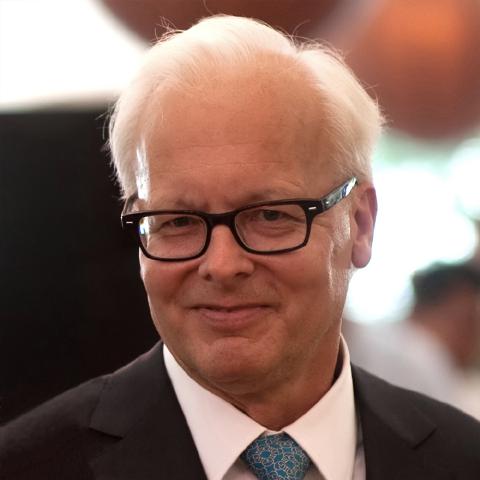
Welcome Ray Ozzie, founder and CEO of Blues Wireless!
- Chris had a Notecard / Notecarrier in front of him from a training he attended.
- Blues describes the Notecard as a "data pump".
- Ray first encountered the cellular IoT space with the Safecast project, which started in March 2011 after the Fukushima nuclear disaster. Former guests Akiba and Bunnie also worked on the Safecast project.
- The earliest versions of monitoring were Geiger + GPS + cellular. Sometimes they collected data onto SD cards when cellular wasn't available.
- When the towers were available, it was 3G. Early prototyping was with Adafruit Fona 3G modules and Voltaic panels. Later prototypes included LoRa networks.
- There were software solutions involved using Balena.io (formerly Resin.io)
- Solarcast boxes
- PSM (power save mode)
- PTCRB certification
- Craig Mundie
- Ray had formerly worked at Microsoft, where he took over as Chief Software Architect when Bill Gates stepped down to work on his foundation.
- Ray also worked at places like
- Data General
- Software Arts
- Iris Associates
- Groove Networks (the acquisition of which brought Ray to Microsoft)
- Ray's early days were programming on TRS80s and using Intel 8080s to help Physics grad students do their experiements.
- Ray has a range of huge software projects he's worked on
- Competition in the 90s
- Chris is amazed at hearing about how early software was built, which reminded him of the Xerox Parc book discussed on the show previously.
- Ray referenced this "org chart for Microsoft" with guns pointing at one another. (found here)
- 300 to 2400 bps upgrades was a big deal!
- Ray on working on tech in the 'good old days': "You knew where it was going but it took so much longer to get there"
- The Blues Notecard is built on top of the STM32L4R5, which has 640K RAM, and 2 MB Flash. It felt familiar to Ray because of his early programming days on similarly constrained computers.
- Drawing people into orbit to increase impact
- Ray is a Computer History Museum fellow as of 2021. Tributes from Bill Gates and Mark Cuban. Ray will be helping to induct Don Bitzer for his work on PLATO.
- Storage Tube
- Blues Wireless was Ray's solution to the problems of cellular IoT
- Developing connectivity into products
- PIC32 talking to cellular
- Ray gives an example of how an engineer might retrofit an older product with a Blues Notecard
- Dev.blues.io is the hub for people building with Blues. It has links to the Notehub, which is how you interact with your data coming back to Blues.
- Uri / Wokwi episode
- "we dont' provide the glass"
- A cellular Notecard is $50 for hardware, 10 years of cellular data (500 MB), plus consumption credits on the Blues Wireless Notehub. Most people sending back data won't go over limits unless they're trying to send a lot of data.
- Powered applications can save on session overhead by staying connected. Also applications can queue "notes" (data packets) and then send all of them at once to cut down on the need for multiple sessions to the cell tower. The data will synchronize to Notefiles (database).
- Chris asked for Ray's predictions for 5-10 years out, since Ray has been very successful in the many parts of his career. Ray wants to get 10s of billions devices and thinks this will enable a lot of new things.
- Find Ray online!
- Check out the main site at blues.io and check out the developer portal at dev.blues.io. Ray recommended picking up a kit to get started.
Transcript
Chris Gammell: This is The Amp Hour Podcast. Released September 25th, 2022. Episode 603. An interview with Ray Ozzie. Welcome to The Amp Hour. I'm Chris Gammell of Contextual Electronics.
Ray Ozzie Blues Wireless: I'm Ray Ozzie. I'm currently CEO of Blues Wireless, but I've been in the industry for a long time. Hi, Ray. How are you? I'm very well, thank you. Good to be here, Chris.
Chris Gammell: Yeah. Yeah. I mean, so I'm actually, in preparation, I got my Blues Wireless board out. And it is just to give people a small word picture of what the board I have is, because you guys have actually introduced a couple since then. This is a maybe one-ish by one-ish inch cellular board that plugs into an M.2 connector and then interfaces your board to the rest of the world through cellular. Yep. Could you tell us a little more about, well, first off, is that a good description of it?
Ray Ozzie Blues Wireless: Absolutely. I mean, what it is, is it's a very small cellular module. Somebody might look at it at the beginning when they see it and say, well, it's just a modem or it's something like a modem. But really what it is, is it's a new composition of function that is supposed to enable developers, hardware engineers, firmware engineers, to kind of treat cellular as a data pipe, as opposed to kind of the mystical nature of what it is right now. Currently, people have to deal with AT commands and crazy things to do. Have to?
Chris Gammell: You mean get to? Get to. You mean I get to dig through a PDF of 14 different module vendors who all have their own custom AT commands?
Ray Ozzie Blues Wireless: Exactly. Exactly. I mean, we can get into it. But basically, I had a personal experience with a nonprofit post-Fukushima that gave me a much closer to the metal understanding of the impediments to this cellular IoT future that we've been talking about for so long. And essentially, I took it upon myself to kind of ask the question, what could we do if there were no limits, no constraints, to make things easy for developers, both design for scale, economic scale, manageability, but make it very easy for hardware developers to kind of put a data pipe, a cellular data pipe into their designs so that all they really had to think about was what they were building, what kind of data needed to be sent to the cloud, inject it into this little data pump.
Chris Gammell: Data pump.
Ray Ozzie Blues Wireless: Data pump. Sure.
Chris Gammell: That's the one I've been seeing on the copy lately. I actually do like that. I think that's a good descriptor.
Ray Ozzie Blues Wireless: Well, people want a very simple analogy. And it really, you know, I think if you spoke to any of the developers who've used it, it kind of fulfills that promise. You have to worry about what kind of device you're building. You have to worry about what you're going to do on the cloud side with the data when it comes in. But what you inject into the note card via I2C or USB or UART appears, you know, in your cloud. And there's very little you have to manage in between. It's an infrastructure as a service product that's supposed to be something that hopefully developers will grow to love.
Chris Gammell: Yeah, that's great. And so the project you were mentioning was SafeCast. And actually, two past guests of The Amp Hour have also been, so Akiba, who has been on the show a couple of times, I think he was working on SafeCast. I believe Bunny Huang was also working on SafeCast.
Ray Ozzie Blues Wireless: Absolutely. At the very beginning. Absolutely. Essentially, you know, in the, this was March 2011. Many people in the tech industry, I'm sure outside the tech industry also, but I'm very close to a number of people in the tech industry. And whenever there's a natural disaster, people just wanted help. They don't know exactly what they can do or should do, but they want to band together and help and a group of about, I'll estimate about 30 people gathered in Tokyo first week of April of 2011 and just tried to decide what we could do. And at the time, you know, this was, you know, a week or two after the meltdowns. People were being relocated from point A to point B without really being told why. People throughout Japan and throughout the world were wondering, you know, am I safe? And there were really no numbers being released on the ground. The government had its hands full. The power company, Tepco, had its hands full trying to cope with the disaster. And we kind of came to the conclusion that the best thing we could do was to measure data and publish both the way that we measured the data and the data itself without saying, is it safe or is it not safe? But publishing it in a way that was open data that let people who really knew what they were doing to help citizens understand and appreciate the threat. And it's a great project. You know, initially, by the end of the first week, we just went to Akihabara and got a commercial GPS unit, used somebody's laptop, borrowed a commercial Geiger counter and drove through the exclusion zone and started to cover as much territory as possible, correlating time, location and radiation reading and publishing it in little segments. You can call them journeys or trips. But by uploading those segments from SD cards, which they were initially written to, a map started to take shape. And you could see very clearly on the map. And you can go there today at safecast.org, go to the map, and you can see that a plume had gone kind of north-northwest from the plant. And sadly, we learned that people were relocated from safe areas to unsafe areas because people didn't have that big picture. So a number of us just said, look, let's set this up as a nonprofit and as something sustainable based on citizen data to try to set a baseline even elsewhere outside Japan so that if something else ever happens, we have a baseline and we're prepared very rapidly to deploy devices and deploy the know-how that we had built up at that point in terms of measurement.
Chris Gammell: Yep. Yep. And I imagine, I mean, 2011, I think about like even five years ago using cellular stuff, that's kind of when I got started into it and it was kind of rough. And I mean, seven years prior to that and seven years prior, you know, like just, so it's post iPhone start, but, you know, in terms of availability and I guess it would have been what, 2G, 3G at that time?
Ray Ozzie Blues Wireless: It was quite an interesting journey. I mean, I had done hardware probably from 10 years old through college. I was a double E major when I went to University of Illinois, but I switched to software early on and, you know, I hadn't, I hadn't soldered a thing, you know, until the first months after we had started the initial, the initial things that we were trying to build were based on simple SparkFun, Adafruit, Seed Studios, you know, modules.
Chris Gammell: Yeah. Like the SimCom 811s or 810s or whatever those are, 800s?
Ray Ozzie Blues Wireless: Actually, at the very beginning, there was no cellular service in the area. So, so, so initially they, we recorded data on SD cards, but the first devices that were wireless, we tried LoRa and I built a little LoRa concentrator based on what was at the time resin.io now Belena management of just of raspberry pies. And then we built these things called solar cast boxes, which were essentially solar powered with dual particle counters for air quality, dual Geiger counters and LoRa backhaul for, you know, and we were fortunate that we found a way to get these solar powered devices brought into the exclusion zone. We had access one day a year because people who were sent away outside the exclusion zone were allowed to visit their homes once a year. So initially we were backhauling by LoRa. As the cellular service came up, that was something we were looking forward to because building your own LoRa network can be challenging, especially in holy environments. And initially I went for Adafruit Fona modules and they worked really well. It was 3G. The challenge though, was every time we tried to build it to prototype, we could never meet the current budget goals based on the solar panels. We had these beautiful voltaic solar panels that were generating a lot of energy and nice battery packs that were storing them. But, you know, the, the cellular, whether it was connecting 2G or 3G, it was, you know, probably a two amp pulse, you know, at the beginning. Yeah. GSM is unforgiving. It was. In that way. Yeah. And, and you didn't know what you were going to go, what network you were going to hop onto when it, it came up. And so basically I stepped back and said, how hard can this be? Even not having done any of this work in a long time. I started with a Nordic NRF 51 chip thinking that if somebody is doing something with Bluetooth, they must have a decent firmware stack to let the firmware at least sleep. And started going through the journey of, of trying to deal with PSM on the modules, realizing that it was a pain and, and I couldn't achieve the, the current budget that was in the data sheets. So, you know, I just stuck a low side end channel MOSFET in there just to shut the power off to the whole modem to, you know, completely. Then we, you know, start, started to have to write, essentially write the, the, the firmware to measure what kind of voltage was in the pack, modify the measurement frequency and the upload frequency based on the available power. And eventually we did end up with a really great device that, that did operate in a standalone way and, and, and have been very reliable over time. But it was a real learning experience for me because I just did not understand the complexity of both doing, well, what, what I was familiar with, which is essentially state machines, you know, program, develop programming of state machines based on all the knowledge at my disposal. But dealing with controlling sensors and, and controlling cellular, realizing that this was going to be a multi-module world that, that just because we could deploy that module in one region, it didn't necessarily work in another. The AT commands were different for each one. The carriers, you know, if we didn't want to operate stealth, the carriers required us to do PTCRB certification, you know, of the modules, which brought in a whole different set of challenges. You know, the cellular plans, we had to deal with local use of local carriers and temporary roaming versus, you know, whereas what we really wanted was permanent roaming where we could build the devices in one place and just deploy them where we wanted. Anyway, many, many, many different challenges. And so where the note card, you know, really just emerged from was after that project, the concept of, could we really make a completely different developer experience, both hardware and software developer, where the hardware developer could not worry about cellular data plans and things that they could just get a cellular card from a distributor, from a DigiKey, mouse or Avnet, you know, whomever, treat cloud connectivity as part of their bomb and just assume that as soon as they plugged in, it would work and auto self-provision and be good for 10 years and that it would work anywhere. Once you start building it, there are constraints. It's not everywhere. It's where there's coverage and 137 countries, not every country. 207 or whatever the current count is.
Chris Gammell: I feel like it kind of shifts around day to day.
Ray Ozzie Blues Wireless: Yeah. But it's a great, it's a, it's a great solution. I encourage people to, to try it out. That's great.
Chris Gammell: I would love to. So up until this point, I think the story, so the story you're telling here, the struggles you went through, these all sound very, very familiar to me, all of the certifications and the various options that are out there. But I'd love to blow a couple of people's minds here who haven't heard of you before. Could you explain what you were doing? Let me just look on your LinkedIn thing real quick. Around 2005, what you, what you, you took over doing in 2005.
Ray Ozzie Blues Wireless: Sure.
Chris Gammell: Just going back in time here a little bit, you know, just, just to give people context.
Ray Ozzie Blues Wireless: Yeah. So 2005, I'll give the story before that in a minute, but 2005, one of my startups I've done, depending on how you count, six or eight startups. One of my startups was bought by Microsoft and I was asked, Bill Gates, who I, who I've known for many years, probably since 82, asked, he told me that he was thinking of leaving to start a foundation with Melinda and he wanted to devote full time to it and asked if I would take over his role. His concept was that, uh, I would divide his job with another, uh, guy by the name of, uh, Craig Mundy, great guy. And Craig would take over all external facing, uh, you know, outside facing aspects of his job. I would essentially give inward guidance, uh, that I felt was appropriate to the development teams and try to steer the company forward. And my, my view at the time was that the biggest single challenge that Microsoft had was, uh, that it was a box company. It made servers, Xboxes, you know, PC operating system, and that it had to kind of shift to a world of services. So I took over Bill's job as a chief software architect and tried to, uh, shift the course of the super tanker by a few good degrees. And, uh, that was quite a, quite an interesting journey. And so it essentially laid the groundwork for many of the things that you see, see today that are connected versions of what in the past were not connected and, uh, had a pretty direct, uh, role in initiating the Azure project.
Chris Gammell: That's pretty cool. Uh, yeah, Azure. I've heard of that. Yeah, that's really great. And I have to say between you and Craig, I think you got the sweeter part of the deal because you've got, sounds like the fun part. I mean, not, not easy by any stretch of the imagination, but you know, Craig's probably talking to shareholders and dealing with stuff like that. And you're getting to talk to engineers.
Ray Ozzie Blues Wireless: Depends on your, depends on your personality. Craig, it loves, you know, Bill is, uh, you know, Bill would fly from country to country and meet with ministers and, uh, obviously deal with customers. I am an engineer, engineer. I'm a little bit more on the introverted side. And, uh, yeah. And so, uh, yeah, I, I, I enjoyed my side.
Chris Gammell: That's great. I mean, culture shift wise, that's, that must've been just crazy. Like, I mean, I think about Microsoft in the old days of just like, no, no, you buy, you buy the hologram sticker that goes onto the back of the PC when you buy the PC. And like, that was just like the, that was the cash cow. And then it's now it's like Azure is just monster. It's just the monster it's, you know, AWS and Azure are the two monsters. Basically. It's crazy.
Ray Ozzie Blues Wireless: Well, it was a, it was a pretty strange, uh, surreal experience for me because I'd spent most of my career competing with Microsoft.
Chris Gammell: Yeah.
Ray Ozzie Blues Wireless: I had, uh, you know, the, when I first entered the industry, you know, back in the late seventies, I started in operating system development at a company called data general back in the day. I was into, I could see that this microcomputer thing was going to, going to be something. So I went to a small company in Cambridge called software arts, but 29, 30 people at the time, uh, they worked on a product called Visicalc. And so my, my first job there was porting Visicalc to the TRS 80, uh, model three. Yeah. Great.
Chris Gammell: You know, I, I'd like to pause on that as well, because this is, this is an interesting, like software time too, where like you were, you know, you're writing software, but like, man, you must've been so deep in registers on, on the actual chipsets on the TRS 80, because it's not like today with, there was like, there was an OS, but it was more custom to each build. It was like, not as, it was not the same world at all.
Ray Ozzie Blues Wireless: No, it wasn't. And, and I started programming well back in 69, uh, you know, on a, on a GE 400, you know, main, mainframe computer. Heavy iron. Time sharing. But when I was in college, I was an electronic technician as a, in department of nuclear engineering, I built little devices for grad students and they brought in, uh, one of the, one of the guys brought in one day, a four Oh four Intel four Oh four, and then eight Oh eight and 8080. And we would just, we would just have so much fun with these things, you know, just building, integrating them into people's, uh, experiments. Of course it was all assembly language. And yes, you're dealing with, you know, there's no OS you're, you're just, you know, bootstrapping it just like at the time you would bootstrap every mini computer by, you know, the, you dealt with by typing, you know, programs in with switches. The same thing was true with the, you know, 80, 80s. And I think at the time I did visit Calc for, for the model 80, it was a Z 80. Okay. But in a case I did that, you know, I had essentially, while I was there ever since I left school, I had wanted to start a company with my, uh, my friends to do something, uh, that had not been seen at the time, which was, uh, a collaboration system where computers were used as communication terminals, but we were still in a microcomputer era and, you know, there, there was no networking between these microcomputers. People were just becoming enamored with spreadsheets. My previous boss, a friend of mine started a company with Mitch Capor called Lotus, and they were trying to take down VisiCalc, which I had been working on. And, you know, they, they tried to convince me to go there. And, uh, I said, no, I want to go do the startup. And they said, look, if you just do one version of what at the time was called Lotus one, two, three, just do one version for us. The development group was about eight people, you know, then, then we will get you funded to do what you really want to do. And so I went to, uh, to the then pretty young Lotus and did a product for them called Symphony. It was about a quarter million lines of assembly language. Uh, three of us did it. Matt Stern, Barry Spencer, and I as a amazing project, nine months from the first day we worked on it until it shipped. After that, uh, Mitch Capor, who was the founder of Lotus, uh, followed through with his commitment, a verbal commitment and, and said, how can we get you set up with your startup? So I started a company with my buddies called Iris Associates. And we started working on this thing that eventually became, uh, Lotus Notes.
Chris Gammell: Which, yeah, that, that hit, that hit a lot of people's, uh, eyeballs. I think, uh, Lotus Notes, I, I think I was actually, I was still using, I was looking up the history of this when we talked about you coming on the show, because I used it still at ABB in 2014. We were still using a very modified version, of course, of Lotus Notes, but yeah, it was still in, in name at least.
Ray Ozzie Blues Wireless: Yeah, it was amazing. It was an amazing experience. And with Lotus Notes, essentially this was at the dawn of, uh, local area networking. You know, the 3Com had just come out with the ethernet card. IBM had their token ring. There was, you know, there were several competing technologies and it was just, it was, it was tremendous. We had no idea what we were doing. We didn't know how to sell it. This was an enterprise product, but Lotus didn't understand what enterprise was because it was an era of shrink-wrapped software that you sold at computer stores. Yep, yep. But eventually it started taking off and we eventually, after, after 10 years were acquired by Lotus. Then Lotus was swallowed up by IBM. And I think when I left, that was, uh, it was probably 120 million users at the time. Oh my God. But we were, we were competing head to head with this little product called Microsoft Exchange. And we took half the market. They took half the market. We won all of the global 2000, they won most, uh, small to medium business. And eventually, you know, eventually they ate up the whole thing. But the point, my point to this whole thing is even though I'd known Gates and Balmer and so many people at Microsoft from the Visicalc days, because Microsoft was only 30 people at the time also very small, small industry, even though I knew them, they were the enemy, you know? Yeah. Yeah. Yeah. And so after I had done another startup groove and eventually they, uh, bought that startup, I was the enemy, you know? And so it was, uh,
Chris Gammell: So like, you know, like, so like 2020, 2020s, let's say Bill Gates is, you know, philanthropist, uh, major, like, you know, like he's just, and he's got this very soft image, but like, so like, and, and the Ray Ozzy that, that I've met and, and know a little bit, uh, you're very kind. And, uh, is there a past version of Ray that was also like very cutthroat? Was this like, was this endemic to the nineties where it was just like pleated khakis and hatred for your enemy in the software world? Or what, what was it? What was the, what was the old Ray like?
Ray Ozzie Blues Wireless: No, the old Ray is, is the current Ray. And I hope, I hope that you'd find people who work for me and they'd probably confirm the same thing. No, Bill, anybody who is in a position of, you know, incredible success who is surrounded by people telling you how smart, smart you are all the time and is asking you to keynote, uh, CES and, and this and that and the other, you know, you, you, you, I'll, I'll just say you grow, you know, he had to scale. He had a, he had to, at a personal level, understand how to go from being the techie CEO of a, 30 person startup to somebody who had 70, 80, 90,000 people, uh, reporting to him in a cutthroat competitive environment. You know, we wanted, you know, Lotus, uh, had one, two, three, we wanted to take Excel down, you know, or didn't want to let them come up, you know, in every aspect of it was very competitive. And Bill is one of these rare individuals who particularly rare at the time, who both understood, uh, technology business and customers and, and market. And he could, he could kind of foresee how you would mix those to create a big company. The companies that were led by pure techies kind of lost over time. The people who are pure salespeople kind of lost over time because they didn't understand the business opportunities. So, um, uh, you know, by the time I got there, Microsoft, I don't know if you've ever seen those, that sketch that's out on the, uh, the internet, uh, that has a picture of the hierarchy of Microsoft with little guys that are shooting guns at each other and, uh, uh, you know, different, different tech companies with their cultures. The Microsoft culture was a very divisionalized culture and there was a lot of internal competition. And so trying to shift that company, uh, you know, towards services was challenging, but obviously, uh, obviously many people stepped up and, uh, that's why the company
Chris Gammell: is what it is today. Interesting. Yeah. Yeah. I mean, I, so I'm a little too young to have been in this part of the industry, but my intro to all this stuff, I was really excited to go to the, uh, Zephyr summit and we got to go to the computer history museum. And cause I had just read the Xerox park book and I really didn't have, you know, just to go back a little bit to the, to the kind of software on microcomputers kind of thing. I didn't have a good feel for like how that process was. And even the lack of networking, you know, it's just like, so I take it for granted every single day, right? Obviously you and I are talking through fiber optics across many, many miles and, and, uh, yeah, over audio and it's just, it's flawless now. And it's just so, so completely easy to, to connect over the internet now. And it's kind of crazy. Yeah, I know. And so I didn't have a good feel for that on the development side either. And so like, that's where it really kind of like your experience doing VisiCalc, doing Lotus, all of the, all of the, as connectivity was maturing, you were like right there ready to, to build these tools that help people along. It's, I could see how that would be very profitable and, and, you know, and cutthroat, like you said.
Ray Ozzie Blues Wireless: Well, what helped for me and for my co-founders at Iris was we had a picture from this thing that we had dealt with in college called Plato. We had a little tiny peak of what it was like to have thousands or tens of thousands of users using a single system, creating interactive games, building chat tools, building, you know, electronic forums. We had this, this picture of the end game already in our minds in the early seventies, well before the internet. And when we left, we all went to system software shops. They went to DAC. I went to data general. We all worked on operating systems. They worked on VMS and so on. And because we honed our skills in operating systems in very complex code and, and source management techniques and so on. And we knew what the end game was. Essentially what we did is to say, okay, well, how is that, all that infrastructure in the middle of going to come together? Pre-internet, the only way you could create a virtual image of a unified system worldwide was to somehow weave together distributed systems. And in that, in that era, the, the, the best one thing out there was this thing called use UUCP. It was a Unix to Unix copy program that would run in the background, you know, at night or, you know, periodically dial up a phone. Oh, like an R sync almost like between machines? It was exactly. Yeah, exactly. R sync. And it would swap news groups, use net, use news groups across these different things. And so when you were looking at these news groups or your mail, you would have this visualization that it was one unified thing.
Chris Gammell: Yeah, a chunk of data. Yeah. It's like, it's like a, it's like a mail delivery, almost like a package of papers getting delivered to your house each day. And then you'd go and parse
Ray Ozzie Blues Wireless: them. Exactly. And so with Lotus Notes, we built a system that had, that used PCs as servers and as clients. They used modems. You know, at the time we had gone, we had upgraded from the 300 Baud that, that it was when I started in the industry to like 12 or 2400 Baud, but they would dial each other out. We built a, what today you call a NoSQL database and it would do synchronization, bi-directional synchronization of these databases over phone lines. And essentially the end user had this view of what was going on throughout their organization and so on. And there were other efforts like bulletin board systems at the time that were trying to do the same thing. Fidonet
Chris Gammell: was a wonderful one. Yeah. Yeah. I just imagine how exciting that must've been too, for having, going from like no connectivity to tons of connectivity. I think the only analogy I would have in my life is like, is probably that same, like kind of getting to college experience and then like having this new way of operating. And I went to a school where they had fiber to each room and it was like internal gigabit network, like just within the campus, anything external was dog slow. And, and, you know, I should have seen, like, I should have looked at, so like Ray, you looked at your experience and you're like, okay, I should go build this company. I looked at my experience and I'm like, oh look, free movies. Uh, but what I should have done has been like, you know, Reed Hastings and been like, oh, sharing movies or streaming movies. That should have, the smart, smart Chris would have done that. And I, you know, I'd be, uh, atop a, uh, empire of, of waning content, but still,
Ray Ozzie Blues Wireless: uh, you know, it's, it's easy to say at any given point in time that it must've been cool back then, you know, because of this and that and the other. And I will just counter with two things. Number one, it was also extremely frustrating because there were many, many, many impediments and things took so much longer to mature. You knew what, where it was going, but you didn't know how to get there. For example, you know, one of the biggest impediments of getting Lotus notes deployed within many of the big offices in like New York, Merrill was a big company now Merrill Lynch, and they wanted to bring this thing in, but it was a union job to, to drill holes in the walls. So it took them probably 18 months just to get the land installed, even though that's what they wanted to do. And, you know, uh, it, there were just all these impediments. And so today we're standing on the shoulders of each previous generation of technology. And I guarantee you every time of my career, every moment has been the best of times and the worst of times. And right now, if you look out there, there is so much opportunity to innovate based on where things are. I mean, I hadn't coded, I was a developer and I, because of success, because of leading a company that was getting larger and larger, I had to stop coding in 96. Isn't that heartbreaking? Just how that works.
Chris Gammell: You know, it's just like, the thing that you love doing, the thing you went to school for, the thing you're passionate about, I'm sure you've spent, you know, the requisite 10 to 80 plus thousand hours, you know, like whatever the expert level they say is these days. It's just like, yeah, of course you've done that. And then it's like, oh, now I have to go and deal with humans.
Ray Ozzie Blues Wireless: Well, some people have, some people decide to make that choice. You know, some people I know, like Dave Cutler, you know, at, at, from deck and who's at Microsoft. He's, he's older than I am. You know, he's still probably the first one at work every day at Microsoft working on Xbox kernel. Oh, wow. If you decide to stay technical, you, you know, you can, but at that time I had made the choice of, of moving on from that. And I didn't code again until safe cast until that volunteer project. And I've got to tell you, when I started working on the note card, it was one of these working on something by yourself for two years before you start, you know, bringing other people involved in and just all of that learning. And it was so great because although the very first thing I did was to start with a raspberry pie or beagle bone and mock things up at a very high level, I knew I wanted to make a little card out of it. So I picked a processor, you know, in the, in my case, it was SCM 32 L4 plus L L L L 4 R 5. And what is the SCM 32 L 4 R 5? It's 640 K of RAM. It's two megabytes, megabytes of flash of storage, a little simple RTOS. It was exactly the computer that I, I was programming on when I stopped programming. I mean, 640 K of memory, different memory and battery
Chris Gammell: requirements. I think maybe. Yes, slightly, but it was, but it was like going home again. I mean,
Ray Ozzie Blues Wireless: you know, the, the, I was using Emacs and make and just what I did then, but it's, you know, I think each one of us has to find our own balance. I learned probably 20, 25 years ago about myself that I could not have a happy week unless I did something that made me feel as though I was having a broad impact on something, you know, or, and I wouldn't, could not be happy unless I was close to the metal on something. And so my whole career, you know, when I was at Microsoft, I had my labs and people, you know, reporting to me who were doing projects like Azure, a thing called live match. There were probably a dozen of these projects at any given point in time that I was scratching an itch that I, that I couldn't find some other way to, to realize. And the rest of the time trying to, in meetings, essentially trying to recruit others to the vision that they should convert their, what they were, are doing to a services centric vision. Interesting. Yeah. Yeah. At the current time, I, I scratched the, the startup itch because I've got, you know, I'm CEO of this 50 person startup, but I'm also on the board of Hewlett Packard Enterprise. I'm on a technical advisory board of the CEO and his staff at AT&T. So, you know, I kind of try to span both sides.
Chris Gammell: That's good. Yeah. I mean, I think, you know, so I think there's, there's a, there's something in there as well. Like the ability, I think one thing that, that I look at, you know, your success and, you know, someone, someone that I'd like to emulate and the ability to have the technical stuff. I want that in my life, but like the ability to convince people to join on a project or, you know, to jump in on something new and scary and exciting and unsure of things, you know, like that, that is a skill that I think anyone listening here could, could try and work on because that doesn't just happen at like, you know, just CEO level. It's also like, maybe you're starting up a technical study group internally or something like that, but you still have to convince people. And so, well, as an engineer, how do you, as an engineer, you know, you mentioned kind of introverted, how do you start to, to do that sort of thing? How do you, how do you develop that skill to, to draw people into your orbit, to, to build impact? You know, that is a really,
Ray Ozzie Blues Wireless: really good question. I mean, I, I can, I can tell you what it was like for me. I don't know how much of this is a repeatable pattern, but I will tell you that from a very, from a very early stage, if this was in, in college, I, I was fortunate enough to have been exposed to and eventually worked for what I would call a creative eccentric, somebody who's a little bit nuts, somewhat of a magician, somewhat of a salesperson, a deep engineer. And the first one was Don Bitzer. And I'm actually, I'm very fortunate. I'm in the, I'm a computer history museum fellow. I'm going to be inducting him on October 14th. It's, it's really great. But he, he had this vision for how computers in 1968, how computers could be used to change the, the, the art of teaching and it, how it could be used, you know, how computer, computer-based education or computer-assisted learning could potentially be very transformational. There were no big systems at the time. He managed to convince, he, and several others, but he was the, the leader. He recruited a bunch of people every single time he found a technical roadblock. He being an engineer, being a physicist, you know, being a magician, he found a way to get past that roadblock. So for example, at the time, storage was incredibly expensive. And the only way you could actually get an image on that you could look at on a terminal was to use a storage tube. That was the only economically viable way. And he envisioned that thousands of students would be using graphics terminals. So he said, how can I, how can I get these images to be retained on a display and make the display cheap enough that we could put them in terminals? So he invented the plasma panel. Wow. And so what Plato was, is they were terminals with 512 by 512 individually addressable dots on the, on the screen with an integrated modem, with an integrated, uh, fish projector that were, that you could, uh, digitally select which of 256, uh, slides to project on the ground glass on the back of the plasma panel with an audio device, with a, with synchronized audio to the vision. You know, he just had this vision and he did it and he inspired people by telling stories and we absorbed, you know, we were, we, I was young. I, you know, I was, uh, you know, I was in college and you just wanted to be like this person because he could accomplish anything. As my career progressed, I just gravitated toward these people. You know, I had the opportunity to meet Doug Engelbart and, and I didn't work for him, but you know, he had this vision. JCR Licklider had this vision of, of communication. Every, there were all these people who would, would have this very romantic vision of the future who might not be able to execute it, but boy, that's a project I want to work on. And so, you know, my recommendation, you know, would be, you can't just become that person overnight, but the more you put yourself into a situation where you are supporting the risk taker, realizing that risk taker's vision, seeing how that risk taker balances execution and promotion, because they're all, they're all necessary. You have to, you know, you always have to do something that is outside your comfort zone, maybe potentially unpleasant speaking in front of people, raising money. You know, the best part of it is feeling like you're part of an exciting journey. You know, it's, it's this classic thing, change the world. Not every project has changed the world, but you can have a really great vision of what you are trying to change. And I would just say, attach yourself, you know, to those people and you will become them.
Chris Gammell: That's great. Yeah. I think that, that storytelling aspect too, that's a, I mean, obviously you, you're doing that right now. I think you're doing a very great job of it. You know, the, the storytelling, I'm actually reading a couple of different books about like kind of storytelling as an art, just cause like humans are so primed for it. You know, that's like prior to, prior to Lotus notes, that's, that's how we got the point across. Yeah. Yeah. Yep. That's great. So let's go back to, so, you know, blues is your current thing. You've, you know, you've mentioned you have a 50 person strong team, which is awesome. What, where, where's that all going? Maybe, maybe actually talk about the, it's not just cellular anymore. So what are some of the other things that you're, you're building?
Ray Ozzie Blues Wireless: Well, let me, let me just step back. What I was amazed by when I was working on the Safecast project was that I had, you know, in developing Azure, in bringing early enterprise customers onto Azure, certainly I knew what IOT was. I think at the time we called it M2M, but you know, machines lighting up and doing things, being able to be remote controlled, doing remote monitoring, tracking, and so on. I knew of all this stuff as an application area. When I started to work hands-on at Safecast, I suddenly realized that all of these people who were talking about there being billions, potentially billions or hundreds of billions, they weren't insane. Like they, they, this thing, you know, many, many people ask, how does Bill Gates, how did he become successful? And other people, jobs and others, if you have a clear understanding of the technology and the technology evolution, you can draw a line to where the technology will ultimately be. And so all you have to do is try to imagine if the world was born that way, what maybe some potential solutions might look like. And then it's a matter of either building it or, you know, or having, uh, you know, patience to, to get there. But it was very clear that the, you know, Masa San, uh, the, the, the crazy guy, uh, leading, you know, SoftBank who has been written about a lot, or if you saw the WeWork movie, you, uh, you know, he'd talked about this trillion IOT device future and it hasn't happened, but that doesn't mean he's wrong. And so I started to look at what are, you know, what are the impediments? I do believe, uh, my passion is not on the consumer side of technology. I think a lot of people are doing good things and not so great things, uh, you know, uh, in, in the way that they're integrating it into, into our lives and creating complexity that maybe we don't need. But on the commercial side, I believe that there is an immense amount of value that can be created by instead of just building boxes and throwing them over the wall, maintaining a connection to the customer and maintaining, you know, giving them feedback about how that thing that they're using is working or not working over time. Even in areas where there are multi-tiered distribution chains of getting products out, maintaining the contact between the original vendor and the, and the people who are using it, I believe has immense value and, and everything, these, everything that you look at when you walk around outside, you know, a generator, a propane tank, you know, a stoplight, what, whatever they are, they are all going to be cloud connected. They, they just simply will be. And so I am trying to enable that future and, and, you know, obviously many people are trying to enable it. We are concentrating on the communication domain because I believe if we can help people to, to focus on what they're trying to build and, you know, as, as I said, you know, create this little embeddable data pump and do it economically, not, you know, not use it and abuse it. AWS has shown that you can build a really great business around very simple infrastructure. You know, they, yes, they're trying to walk up the stack and what, and increase profitability by moving from infrastructure into paths. But if you treat developers well, if you solve the problems that they've got, if you don't abuse that relationship, you can get their trust and maintain their trust. And so what we're trying to do with blues is essentially a solve the, solve a problem that is a real problem, which is, you know, getting devices, getting equipment connected by cellular very, very easily. Number two, I believe very much that because I'm a developer, I believe that there, that you really have to understand developers. If you're going to build something that developers love and you can kind of tell the difference you get, you know, but you can go, if you go to a site and it says click for pricing, it's not a developer focused site. You want to give, you want to show empathy for, for the, the journey that the developer must go through because, because he or she has got a very complicated existence. So focus very much on that. And at the same time, have a separate motion where you're approaching product managers or that level within large companies who have 10,000, 25,000, a hundred thousand unit potential deployments of something and show them economically. And from a security standpoint and a sustainability standpoint, that if they bet on this, it's the best way for them to, to accomplish what they need to accomplish.
Chris Gammell: Yeah. I think that that's kind of the transformation I've, I've made as well. Like I've, in the past, I've may have spoken disparagingly about the internet of things. If, you know, the empire is 12 years old. Now I've, I've probably said, I've said some things across the years and now I would also work in the space, but what it's come to, to me, it's like, it's all like IOT, internet of things, anything like that, M2M, however you want to say it. Like the entire value proposition is just saving money or making money. Right. So like at that point it becomes, you know, assuming you knock down walls in terms of actual implementation, like it's, it's pretty easy. So it's like, okay, well you, you don't have to do as many stops on your route in order to, you know, because you already know the status of five out of the 10 machines don't need to be serviced on your route. And so you're going to save money on fuel and time and stuff like that. Or, you know, the status of all your machines on the field. So you don't need to send technician. You don't need to have as many technicians, or you can do more with the technicians you do have. And just like all of those, those small things, especially like in the face of labor shortages, like it just all starts to add up and really, really starts to make sense. But like you said, in order to implement, you still need it to be easy enough to implement and, and make it so that people understand they can make money or save money
Ray Ozzie Blues Wireless: using connected devices. And I, and I believe in the earlier days of IOT, there was a lot of, there were a lot of people talking about the fact that this could be coupled to a change to a subscription model for classic products. What we have found at this juncture is that a lot of people in the early days prototype things using, you know, little ESP 32s or, you know, wifi and this and that. It didn't work out for one way or another and for one reason or another, and they could not figure out how to modify the business model. The majority of the people we deal with now are now realizing that they just need to embed connectivity into the base bomb and price of the product. And essentially what they're doing is delivering better features to the customers as a side effect of that. So for example, if you, if you are a large scale manufacturer of refrigerators, you can offer them at very little marginal cost, the knowledge of whether their stuff is going to go bad or not, because a power failure happened. You know, it's a very simple thing. If you don't have this, this, this idea that this is going to do this super grand transformation, you can make very material, small, incremental, positive changes. If you buy a, you know, a propane tank, you can know when it's running out or, you know, or an oil tank. You know, if you're, you know, if you can run things more efficiently for sure, you know, if you've got a construction site, knowing where the equipment is, knowing how fast the concrete is curing, there are lots of applications of, of these different technologies, but for each industry, there are people within those enterprises who already know what they're trying to accomplish and don't know how to get from point A to point B. Consultants are ubiquitous. We need more. Agree. Agree. You know, people who will get out there and help bridge that gap from, from the person, the domain expert who knows what, what they're trying to do to getting something out there. But it's going to take all of us to eliminate that friction and to get management of billions of physical assets to be as easy as the tool chain is right now, just for cloud developers to manage millions of instances up in the cloud.
Chris Gammell: Yeah. Yeah. I think that does kind of touch on, so like prior to my own journey into the IoT space, I think I was kind of just hesitant on like, well, I don't know, I don't know any software stuff. So maybe can you run us through like, so someone's using Blues, they decide to buy a note card, they design into their product, they, they understand all the hardware aspects, but then like, okay, let's just make up a fake product here. They've got a, they've got for, you know, they've got a, a pick 32 that's doing some industrial process. They're like, you know, I want to make this cellular. Now they decide, they do a board rev, they put an M.2 connector on there. They've already prototyped with a note card. Now they have a note card in there and it can talk cellular. So then what changes about their embedded code? And then what changes in terms of what they have to actually do on the cloud side? Because I think that that was the scary part for me when I got started in all this.
Ray Ozzie Blues Wireless: So it all depends on whether you are thinking about a new product or retrofit. And let me just walk through a retrofit example. In many, in many cases, and this, I, this was not planned. This just ended up being this way. I, when we did note card at the beginning, we had a view of how to make a very seamless developer experience, primarily focused on new products. But it turns out once people have it indoors in house and they see the power of it, suddenly they realize I can retrofit a million units that are out there already. So I'll give you one example, a concrete example of a, somebody I went to visit a, a potential customer. This is very early days. And this was a, a, uh, someone who had an MSP 430 plus an FPGA. It was just like a, a very small, it was a device that had already been built, but it was going to save all
Chris Gammell: this power on the MSP 430 and then I'm going to put an FPGA on there. Yeah. But, but even the MSP 430,
Ray Ozzie Blues Wireless: you know, it had like, I think it was 32 K. It was very low power. Oh yeah. And they just wanted to get the result of, of the, uh, machine learning that was being done by the, the, uh, this thing. And they had already started shipping a ton of these units, uh, to people. How can I get this cloud connected, um, more easily? They had started prototyping wifi and cellular was needed. So what we did in an hour was the guy did, uh, added two print Fs to his code and you could do it with print F or an Arduino, uh, serial dot write or something like that. But essentially you put together a text string that is a Jason text string. And there's one text string that you would need to configure the note card, meaning you say to it, I am product ID X. And I'll come back to that because that's how it finds its way to the cloud. I am product ID X. I want to synchronize over cellular once an hour. If there's data pending once an hour and that's it. And then, and, and so you just put a little, a little Jason object with two fields in it and you send it out, you just print F it out the serial port. Then, uh, once every time an event happened, they would create in memory another little Jason object and, and format it up in a buffer and just send it out serial. And that was it. That was the whole thing. And it was good. It, it sounds too simple to be true, but it was good enough to ship. Meaning our, our module is pre-certified. It's already, you know, it does TLS. Uh, it already does firmware update of itself and it can do it of the, the host firmware. It's a, an extremely simple thing, but there is this, this really low, low, low bar. If you just want to start seeing how you can get, uh, let's say you want to, you're, you're building, uh, some equivalent of a, of the classic mousetrap. All you want to do is report open or closed. And for something like that, all you have to do is hook it up to a serial port or I squared C on I squared C. We have a serial over I squared C, very simple protocol. So you're doing the exact same thing. You're just sending it over I squared C. If you don't happen to have an extra, an extra, you are lying around and that's it. And if you look at all note card applications, they essentially start with that simple model and move up from there. So for example, the note card has on it a modem, a GPS, an accelerometer, a SIM, a, a secure element. It's got all these things, but it packages them all as these simple little Jason commands. So if you say, what is the orientation? I am face up. I am lying on, on, on the back. Okay. Uh, then it serves an application where they can just slap this thing on the back of a road sign and find out if the thing got knocked over, you know, for during construction.
Chris Gammell: Sure.
Ray Ozzie Blues Wireless: For GPS, I could build a very simple tracking application by having it report to me, uh, changes of location and it uses the accelerometer, uh, so that you don't have to power up the GPS. If the device has not moved, essentially there are all these little things. And so the developer experience is you could, you start by going to dev.blues.io and you can start to look at the vocabulary of these little Jason commands. We have a, a rebel. Uh, it was funny. Cause I listened to you, uh, your show where you covered walk. We, Oh yeah. But there were, yep. The, the concept of having hardware simulation behind a webpage is an extremely powerful concept and you can do everything that you would do to a note card directly in a repl on the website, you know, to practice, to understand how you would build your app. And then, you know, if you order the hardware, you just hook it up to USB, we use a web serial to enable you to.
Chris Gammell: I did, I did a training with Rob at, uh, when he was in. Oh, that's great. That was, yeah, it was really, that's the hardware I have actually. And it was like super, super fast to get started. You plug it in. You just start talking over the USB. It was really, it was really slick.
Ray Ozzie Blues Wireless: But at, at a high level, the thing to, to think about is my goal to me, success is the simpler the app, the better. The, the more complicated the app is, the more, the longer it will take to ship. You know, the people who are focused and saying, these are the three, the four, the five pieces of data that I want, that I need sent up, up to the cloud. They can get those devices spun very quickly using our note carriers, spinning your own. It's very simple. And then to, to your point, what they have to do is they, or their buddy, their pal who understands the cloud tool chain. Oh, the web pal. Yeah. Yeah. The web pal. The cloud pal. All you have to do is use standard. You don't need an IOT platform. We inject it into your web app using standard REST APIs. So the Jason that you put into the note card comes into your website as that same Jason decorated with other metadata fields of what is the cell tower location, where it, where it called in on, what was the voltage of the thing? What was the RSSI of the, you know, we give you all sorts of information, you know, that we have that we're able to ascertain from, because we wrote the code that's wrapping the modem. Yeah. And then you just have to, you, you have to do what you're going to do on the service. We do not, we are not a, an end to end solution provider where we provide the glass. Our core customers tend to know what they want to do with the data and have it injected into their systems, whether it's their customer support system and service systems, maintenance systems. Some of them just have it drop into Snowflake and they do an analytics on it there. What do you mean by, uh, we don't provide the glass for people that don't know that? So we do not, there are companies, great companies like Samsara who sell solutions. They sell you a box for tracking and then they sell you a website and you do user registration. And it's a SAS, a software as a service offering where you will go to their portal. You will see where of, where all of your assets are and so on. It's a, it's a complete end to end solution. We are again, think of AWS. We are hyperscale cellular IOT. We are a, an infrastructure component that you embed on your board and you will get your data in the cloud. And it's up to you or your partner to build the app that is appropriate for what you're trying to do. If you're managing moving assets, you might want to see them on a, on a map. If you're, if you're managing fixed assets and temperature and you're measuring vibrations in a compressor or whatever you're doing, it's kind of up to you or your cloud people to build that aspect of the app.
Chris Gammell: Yeah. I've been using Grafana quite a bit lately. That's how I've been doing it's open source and I'm, you know, visualization, I'm getting a little better at it. And like, you know, you can, you can build whatever you want, but it doesn't mean it's easy, you know? And so, so you need, you need to talk to something like a REST API.
Ray Ozzie Blues Wireless: Yeah. It's an extremely quick way of getting things up and running. You know, some people want to just have it injected into Postgres or into some other simple time series database and then hook it up to Grafana for visualization. That's, it's really great. That tends to be the kind of thing that people do if they're, say there are 25 people or 25 devices, you know, it's a, it's a quick, it's a, an amazingly quick way of, of getting gratification and getting things up and running. People who do things at scale. And as I said, we're kind of a hyperscale, cellular IoT, we're easily, easy to use at the low end, but I am not doing my job if I don't scale to the levels of, of an Azure or, or, or whatever. And when you do things, when you do things at scale, you need a user interface to manage devices at scale. You need ways to manage a large quantity of data.
Chris Gammell: Right. Right. I think at that point too, you're going to have, you know, if you have a million devices in the field, you almost certainly, well, if you don't have a cloud team, you're probably struggling, but you almost certainly have a pretty sizable cloud team, app team, all of the things that, you know, you think about commercial applications are going to have in that way, because you just, you need, you need to have insights at all different levels. And so you're going to have software people at all different levels as well. So yeah, totally, totally agree.
Ray Ozzie Blues Wireless: But I encourage people to look at it because it is, it brings hyperscale economics and usability to one person projects. You know, it's very, very easy, very, you know, very approachable.
Chris Gammell: What are the relative scale of costs for, for a note card? So if someone is listening to this, they're like, okay, well, what does it take to get this onto my board?
Ray Ozzie Blues Wireless: 50 bucks is the price of the note card. You can go and get it, you know, right on, on the store at blues.io or go buy it through DigiKey, but it is a $50 that $50 buys you the note card and the data is embedded on the note card. So you have 500 megabytes of data and 5,000, what we call consumption credits, meaning as the data is routed through our cloud router, the thing that the note card talks to, that's called the note hub for every little event that flies through. It's a, it's called a consumption credit. We bundle prepaid consumption credits and data in with the note card. So essentially for a large number of applications, you'll just buy that thing and put it on the board and you won't have to pay a subscription, you know, to, to anyway, it's kind of prepaid. If you exceed, you know, those volume requirements or the data requirements, we have these connectivity assurance, you know, plans where it will auto recharge, you know, it, uh, the, the, either the data, uh, or the consumption credits, but it's, it's, it's quite a bit of data. We have very few customers, very few for whom the 500 megabytes isn't good. I mean, we, because I come, because I am a, of a certain vintage, I come from an era where we use modems, you know, and you say,
Chris Gammell: he's about to talk about bit packing here. I think, you know, everything's encoded. Everything
Ray Ozzie Blues Wireless: is tiny. Yeah. Everything is extremely tiny. I mean, it's, um, the luck, luck. What is a good
Chris Gammell: guideline for someone? So like, say, say I'm like, uh, so say we're going back to that, uh, that pick 32. I'm, I just want to log like, uh, from a local variable. I just want to log like a state, like, uh, whether or not the machine learning model has triggered or not. And then maybe a temperature, how many times per minute could I do that for, you know, to, to last that 10 years and the consumption credits? It's a really good question. You have to,
Ray Ozzie Blues Wireless: you have to kind of do some math. It depends. It depends. Of course. No, I'll tell you what depends the, the, the, the biggest variables. So if you set up, I'm going to get technical for a moment. If you, if you establish a TCP session, if you connect the note card to the cloud and it's authenticated over, or sorry, it's, it connects over TCP IP. It's just under a K between 750 and a K bytes of overhead just to make that connection. It's just the nature of, of protocol setup. If you are connecting and you want a secure session and you're using TLS, the TLS key exchange is just under 4k. It's between 3k and 4k. So if you care a lot about on wire confidentiality and you want every session, you know, encrypted and you're, you don't want to be connecting and then hanging up, so to speak once every minute, because you know, you're going to blow through.
Chris Gammell: It's power intensive.
Ray Ozzie Blues Wireless: Yeah. It's power intensive and you're going to blow through your data point because you're, if to send 10 bytes of data, you're, you're wasting 4k. So if you are a power, uh, miserly application, what you want to do is write a lot of things to the note card, you know, a lot of measurements and let them queue up in flash memory on the note card and tell it, ask yourself, how often do I really need these in the cloud? Could I do once a day? How about every 12 hours? How about every six hours? By packing them together, we compress them heavily and you're, you're saving on the session overhead. So, you know, generally just a rule of thumb is if you have, say a dozen measurements and you set it to connect in its normal mode of operations, you're talking maybe 400 bytes. Okay. Yeah. Of complete and, you know, uh, and, and traffic above the 700 or so for the session setup. So you just kind of do, do that math. And we have, we have calculators, you know, that'll do it. People who have power connected to their modules, just tell it to connect to the cloud constantly. They just, there's no penalty. You just suffer the session overhead once and then just leave it connected. And, and that's fine too. Uh, but we have some customers who are sending data once a second, once every few seconds, we have, we have many customers that are doing things once a day. Yeah. It just depends on the application.
Chris Gammell: I do like the idea. So like the queuing is something I actually did want to bring up because that that's an interesting parallel to how you were talking about, like the, as you were moving from 300 bits per second to 2400 bits per second. And like the idea of Lotus notes going and grabbing this big chunk of data and then like processing it, it's kind of, kind of an analog to that of, right. It's like, you're just queuing up all these packets, making a quasi mini database. If you think of sequential JSON packets as a mini no SQL database, which I realize it's not.
Ray Ozzie Blues Wireless: Uh, it may not be a surprise that the reason it's called the note card and the note hub. And it was called Lotus notes is that the core synchronization and communication algorithms, all the core data structures are modernized versions of exactly what we did in those days because it was super reliable. It worked and it occupied very little wire bandwidth. You know, we, we didn't have it at the time. So why not just use it?
Chris Gammell: It is interesting too, thinking about like, you know, cellular connection and really just thinking about IOT in general, like this, uh, you know, you have a pipe to your device, but you have no guarantee. It's going to, I mean, you have guarantees it's going to get there, but like, you have to think about it as like this kind of time invariant or maybe time variant, but you have to basically imagine that you're, you don't have any, any guarantee of like deliverability at a certain time, unless you do a lot of extra things on top of it. So like, then that actually changes how you operate as well. Like you said, you might, you might queue up 12 readings to save data, to save power, but then like that actually changes the nature of your monitoring as well. And, uh, and then you have to set up alerting and just like, there's a lot of other like nuance in there. That's like really interesting. I find. And, uh, and not intuitive either. It's like, once you run into, you're like, Oh, Oh, now I get it. You know, no, it's,
Ray Ozzie Blues Wireless: it's actually very cool and very simple. If you look, when you look at it, you will see that there are two core paradigms. One is the queue and it, and those can be bi-directional. The other one is the database. Meaning if you do, we call these things notes. So you add a note, you delete a note, you remove, you know, and so on. So when you, when you queue a note, you give it to it and the note, it will sit on the note card until the next time it sinks and it will compress all those things together. If you put it in a date, in a database, we call them note files. It will bi-directionally synchronize with the server copy of same. And so for things like configuration variables where, you know, you, you just want to set an environment variable on the server and have the whole fleet or a sub fleet pay attention to that, that variable just synchronizes down into a little database and you can just read it with the same simple little JSON commands. It's a very scalable paradigm.
Chris Gammell: Yeah. Yeah. That's great. Yeah. And I would encourage people to not to get too scared of JSON. I was very scared of it at first for some reason. And it's, it's not that bad. It's just,
Ray Ozzie Blues Wireless: it's just a hierarchical list. No, no, it's really easy. It's just a simple text format of strings and numbers and true, false. It's, it's. Just don't forget to escape before your quote marks.
Chris Gammell: That's the, that would be my, that would be my thing. Cause that's gotten, that's bitten me a couple of times. Yeah. Always escape before you, your, your quotation marks. Yep. So Ray, uh, you have, uh, shown throughout your career that you are, uh, very prescient in terms of what's coming, you're building what's new, what's next. Uh, can you give us a little of that, that future magic here? What's, what's, what's five years out? What's 10 years out? While many people right now
Ray Ozzie Blues Wireless: are, um, how can I say this focused on the metaverse and focused on web three and focused on this and that, not, not to say that these are not worthwhile things for people to, uh, to be focused on. You're in good company here, Ray. Don't worry. We think it's BS too. Yeah. I, I actually believe that the thing that, that I really want to happen, the thing that I really, the change, the, the dent that I want to make is realizing this, uh, uh, tens of billions or hundreds of billions of, uh, device future. And I think what's going on, if you look at the landscape of where innovation is happening, I don't think people are giving enough credit, uh, in two very somewhat related dimensions. One is wireless in general. There are many different protocols that are happening. If you can go up the unlicensed stack into what's happening in wifi, you know, wifi six and beyond, you can go into the licensed world and what's happening in 5g, what will be happening in 6g. There are all these sub protocols of, you know, 5g, uh, uh, red cap, which is reduced capabilities. There are lots of innovations that are happening there and getting those innovations realized and delivered to developers, uh, is incredible. The other innovations that are happening are, and I'm sure you have a lot of exposure to this is on the MCU side, the, the, the integration that's happening and what is going to be in a sip in, uh, uh, the next several years is kind of mind blowing. I mean, we've seen recently a lot of sophistication of arm-based processes. You've got the beginnings of risk five, you know, happening. People are now building little things that will, will have an MCU, a modem, a SIM, a, uh, an ISIM, a, a, uh, a secure element, uh, several neural, you know, processors. If you, you know, need to do inference, it's, it's extremely powerful and it's going to really change the game of the kinds of things that we can build. The reason I believe so much in our architecture where we've kind of separated the telecom from the compute innovation is I believe you're going to want your choice of MCU for a given application. Oh, this is an analog application. This is doing a lot of edge ML. This is doing, you know, you, you're, you want to tune and optimize your choice of MCU at the same time. There's also innovation happening on the telecom side and over the lifetime of a device, you may go through two generations, three generations of different cellular or other things. And I believe Laura has got a great future too. I mean, there, there are, there are four wireless stacks that have one and, you know, Bluetooth, wifi, Laura for wide area and cellular for wide area. And each one is finding its sweet spot. Uh, Laura seems to be finding a sweet spot in a smart city and agriculture applications. I mean, it's, it's got many possibilities, but you know, very, very low cost, large numbers of X, you know, whether it's lighting or, you know, something, Laura is really hitting a smart anything in motion or, or, uh, anything that where you don't know where the product is going to be lit up, uh, where you're not the one controlling the deployment, uh, cellular wins and everything's going to be cloud connected. So I'm kind of, I'm super excited about that. That's great. Yeah, no, I think
Chris Gammell: this, I mean, it's, it, it is, it's like, it's exciting to be in this part of the industry. You know, I think what I would, I always encourage people to just try and take it one step at a time, you know, like, like getting a note cardboard and carrier. Like, I think that's a great way to get started in this sort of thing, learning new, you know, taking classes, learning new real-time operating systems, things like that. I think there's just a lot of stuff to learn.
Ray Ozzie Blues Wireless: Well, and go to the forums and chat with other people who are going through the same thing that you are, you know, when I was the, you know, in the two years that I said, I was, uh, trying to figure out how to get this, the note card built. I didn't know this stuff. I didn't know if I should start with nucleo, uh, uh, or nuke, sorry, nucleus as an, a real-time operating system or this or that. I ended up with free art us. Um, each time I had to make a decision, I had to figure it out. And the only way you learn that is by finding people to talk to, go to a meetup, you know, get, get involved in a, in a Slack discussion or a discord discussion or something with like-minded people, try to build a project together and solve a problem. You always end up coming out knowing more than you did going in. That's yep. That's good advice.
Chris Gammell: Ray, uh, where could people find information about you, about your company, about your past? Uh,
Ray Ozzie Blues Wireless: where could people find you online? You don't want to find out about me. You want to find out
Chris Gammell: about the company. I think you're pretty interesting. I'd say, uh, I'd say this 80 minutes we've been
Ray Ozzie Blues Wireless: recording is, uh, is pretty, pretty proof positive. Well, I am, I am Rozzy at a not very active, uh, Twitter account and LinkedIn as, uh, Ray Ozzy and, um, blues is, uh, is really where it's happening. It's, uh, blues.io, but for this audience, dev.blues.io. Yeah. It's a, it's a great thing. Go to, go to the shop, you know, buy a little starter kit, buy a feather starter kit or a raspberry pie starter kit and just start messing around and, and scratch some itch. And, uh, we would love to help you in the forums. There's a very active forum where, where, uh, we, or somebody else in the forum can help out. We'd love to, we'd love to shout with you. Awesome. Well,
Chris Gammell: thanks so much for joining us in the amp hour and talking about all this stuff. I'm, I'm
Ray Ozzie Blues Wireless: excited to see what's next. Thank you, Chris. No, thanks for inviting me. I appreciate it. Thank you.
Speaker ?: Thank you.
Keep current
Every episode, plus the occasional job post, in your inbox.