
#592 – Product Design with Simone Giertz
Download episode · 62 MB
Also on Apple · Spotify · YouTube · RSS
Show Notes
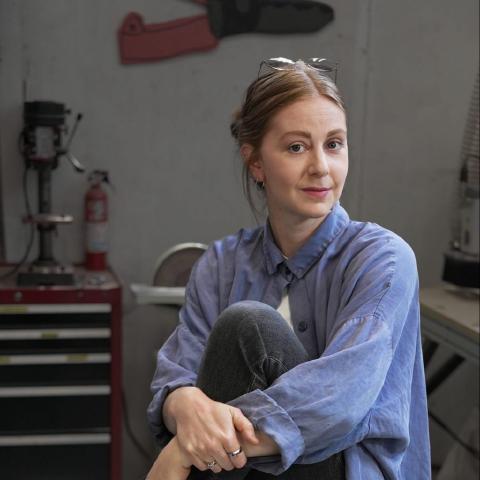
Welcome back, Simone Giertz!
- Simone returns to The Amp Hour to discuss her new venture selling products (Yetch.store) that she has been designing.
- Simone was last on the show in 2017 on episode 331.
- She has been doing more voice overs so that she can focus on the work while recording. Chris mentioned past guest James Bruton recording as he goes along.
- Truckla
- She's interested in random everyday problems and solving them
- Course showing how she designed a fruitbowl
- Moved to LA
- Scissor lamp - will likely become a product for sale (As Seen On YouTube)
- Taking things to production
- The Everyday Calendar is a capacitive touch calendar that mounts to your wall and allows you to track a habit throughout the year.
- The Calendar was on sale in the MoMA store!
- Design For Manufacturing meant reducing costs, so she didn't want to do pushbuttons (especially because there would be so many)
- Kickstarter
- The product design firm has 1.5 employees, but soon will be 2 people.
- Setting prices
- Puzzle table
- Screwdriver ring
- Margin invites counterfeit
- Scraps chair
- Future flatpack engineering for furniture sales?
- Having to think about new challenges for selling things: certification in different markets, sales tax, etc
- Collaborate moving stuff into engineering
- High cost items like the Vesta Board
- "make your own gnome"
Transcript
Chris Gammell: This is The Amp Hour Podcast. Release June 6th, 2022. Episode 592. Product design with Simone Yetsch. Welcome to the Amp Hour. I'm Chris Gammell of Contextual Electronics.
Simone Yetsch: And my name is Simone Yetsch and I am... Oh, this is a hard one.
Chris Gammell: You know, you had the same response last time, actually.
Simone Yetsch: Really?
Chris Gammell: Yeah. Oh, no. No, no, it's great. Simone, you are a creature in evolution. You are evolving.
Simone Yetsch: Ever evolving. But I guess I'm always... I'm trying to sort through my list of titles and be like, which one brings me joy? And I'm currently like mostly going with inventor and product designer. And then a little bit ashamed, I'll say, and a YouTuber.
Chris Gammell: Nah, that's great. That's great. You know what? Everybody needs that engine of growth and you have it. And you keep people entertained in that way. And I think the product designer is what we're going to focus on here. Because you have a new store.
Simone Yetsch: Yeah. No, it's been a long time coming. I was like checking the bullet points from last time I was on the Amp Hour. And I was talking about maybe wanting to make maker kits, but I was like a little bit nervous around it. And I know that that was something that I thought about for a while, but I was never really excited enough to pursue it. And then for the last, I mean, honestly, it's been almost five years since I started working on my first product. I've been kind of slowly trying to nudge things towards being product development focused. And last month I launched the Yetge store, which is my online store with products that we've developed. And that's kind of become like my future plan.
Chris Gammell: Yeah. It's like your new home base. It's like you get to point people there and they can go buy all the cool stuff. I mean, so I remember actually we talked about this a little bit. We talked about this in two different ways, I think. One, I think we talked about it a little bit on that episode. So we'll obviously link that in for people who haven't heard it. It's, you know, Simone and a different part of her journey. And it was a lot of fun talking about that. I think that was still kind of shitty robot time. I can't believe I swore in this show before you did. That's pretty great.
Simone Yetsch: Oh, wow. Yeah.
Chris Gammell: But, you know, you're the queen, still the queen of shitty robots.
Simone Yetsch: I don't know if that means that you win or that you lose.
Chris Gammell: I don't know either. Yeah. And yeah, so you were like right in the middle of YouTube ascendancy, I think. Is probably the right way to think of it, right?
Simone Yetsch: It's a word that I would need to Google to understand. Ascendancy?
Chris Gammell: Like on the rise, you know, ascend. Yeah. Oh, ascendancy. Yeah, yeah, yeah. I get that.
Simone Yetsch: Yeah. It was definitely, I feel like you can kind of block my work into three different chapters so far or like first being shitty robots. And then I guess like having a brain tumor felt like one chapter and now it really feels like a new era of like product design and kind of, you know, still making stuff for YouTube and because I'm enjoying that and I'm enjoying it as a platform, but also having this other like goal in mind.
Chris Gammell: I really like, so first off, I always get really excited when your videos come out. They're definitely different, right? And I think you've actually made that transition really well too, because every time I see a new Simone video, I'm like, it's not like, okay, what's she going to get slapped by? You know, which robot is she going to get assaulted by now? But it's great. I mean, you're showing a lot of the process and actually in the last chat, you had actually said, I don't show as much of the process. You know, we were talking about electronics. You said you don't show that much of the process, but I feel like with the stuff you've been doing lately, you actually have been, you know, like that, the lemon window that you made was perfect. That's a great example. Like you show everything.
Simone Yetsch: Yeah. Yeah. I think that the, the, the, the different, so I've kind of transitioned into a different category of builds because what I started, what I started doing on YouTube during like the shitty robot days, it was the whole video was me playing around with a project that I'd built already or like with a robot. So the video was just like me being like, oh, I built this thing and now we're going to mess around with it. And then when I started building projects that didn't have that punchline in the same way. So like, I'm not going to spend 10 minutes sitting at a table and showing off the table and all it does. So I was kind of forced to start documenting more of the build, which was, is really uncomfortable. I mean, it's, it's, yeah. I think you're great at it. Oh, thank you. Every, every time is a struggle and every time is like, I'm not going to get this together. I don't have enough footage or it's not good enough. And it's just like, it's just very hard to do those things in parallel for me. And I think for a lot of people, so it's.
Chris Gammell: Oh yeah.
Simone Yetsch: But yeah, it was really the nature of the projects that kind of forced me into that. And I'm always happy to have the footage afterwards. And like all of the storytelling is in that process. But in the beginning, I didn't have to film a process because the project itself and like showing it off was, was enough to make a video.
Chris Gammell: Got it. So you could like lock yourself away for however many hours it takes to make the early prototype of the robot in the old days. And then you could just, you're saying you're just filming the, the, after the prototype is done ish. Maybe you're making. Yeah. No.
Simone Yetsch: I remember being like, Oh, I have 20 minutes of footage to edit for this video. That's so much. And now when I like have a build video, I'll easily have like 10 hours of footage for a build.
Chris Gammell: Yeah. Yeah. That's. Yeah. That is, this is a time to get a time to get video editors on board. Oh boy.
Simone Yetsch: Like I've tried. I still edit everything myself. That's amazing.
Chris Gammell: Yeah. I just, I'm not. Yeah. That's, that's, that's a tough thing to do. That is very impressive. And I think, you know, like the documentation piece as well, just like remembering to do that as you're going along and like turning to the camera and saying like, Oh yeah, now we're going to do this.
Simone Yetsch: Yeah.
Chris Gammell: That didn't work. We'll do it again.
Simone Yetsch: Yeah. And I've, I've started to like, it's always evolving because I'm trying to figure out ways to make it easier because also the easier it is for me, the more I'll enjoy it and the better it will come out. But something I've started doing more is doing voiceovers. So before I would have to like plan out every transition and you kind of had to, I kind of had to edit in my head and make sure that I got the pieces to camera. That I needed to explain what I was going to do and then doing it. And what I'm doing more is like, I'm just shooting B-roll while I'm building and I'm reacting to the things that are happening, but I'm not spending a lot of time being like, okay, so this is what I'm going to do with this part. And that I do in voiceover later. And that's made it a lot easier, but it also means that a lot more of the storytelling happens in the edit. And that works because I'm also the person editing it, but it would be harder for somebody else to be like, oh, how can we transition for this? And yeah, do a lot of scratch video.
Chris Gammell: Yeah. Have you, uh, I remember when James Bruton was on the show gobs of years ago as well. He said he edits like in real time, like he'll shoot something and put it in his timeline and shoot something. Do you do that too? Like, that's crazy to me.
Simone Yetsch: Not, not really. So I'll have my assistant like puts everything in the timeline and sometimes she does a first cut down. So she cuts out all the bad takes and stuff. And I tried to like, if I'm going to shoot a piece of camera, I'll rewatch what the latest footage was. But it's like, if I'm building, I'm building and I'm not going to, I think it's so hard to switch gears and be like, no, I'm going to sit and edit for two hours because I'm like, no, I'm building. I'm like covered in paints and I'm going to keep on doing that.
Chris Gammell: Well, need another keyboard.
Simone Yetsch: Yeah, totally.
Chris Gammell: Yeah, that makes sense. Yeah, it's, it's tough. I mean, like, it really is that it's that, you know, that everybody hates the documentation phase. And, but that's like such a critical part of that part of the process. It's just like, yeah, you have to do that. It's crazy. For people that haven't been watching, shame on them. But what have you been building in the past five and a half years?
Simone Yetsch: So a lot of it has been, I mean, truck club was a big one.
Chris Gammell: Yes.
Simone Yetsch: So I converted a Tesla into a pickup truck. And that was a huge project for, for me. I mean, both in like what an undertaking the build was, but also in the implications that it had for my career. Good, good ones.
Chris Gammell: Got it.
Simone Yetsch: And then, I mean, recently it's really been like, what I've been most interested in is like random everyday problems. So it's a lot of like little inconveniences or corners of my house where I'm like, I want to make this work better. And then I'll spend a month making some very specific and over-engineered solution to it. But I'll also just like have a blast making it. So, I mean, it's, it's been a lot of like, I designed a fruit bowl. This is not on YouTube. I did it for an online class, but I designed a fruit bowl that you can change the diameter of the bowl depending on how much fruit you have. So it's like actually a mechanical fruit bowl that almost has this like iris mechanism in the bottom.
Chris Gammell: Yeah.
Simone Yetsch: So it's stuff like that because I'm like, dang, I always have like one apple or 15 apples and I don't want to have to switch out different bowls. So a lot of it is just like kind of mundane problems in some way, but I just love it.
Chris Gammell: Yeah. That's what Buckminster Fuller was doing too, right? I mean, he was making space houses and then putting stuff in that space house, I think.
Dave Jones: Yeah.
Chris Gammell: That's really cool. No, that's, and actually, I think you have moved since you were in the Bay Area and now you are in the LA issue.
Simone Yetsch: Yeah, I moved to LA. Yeah. Yeah. During the pandemic.
Chris Gammell: How, how was the, I guess, pandemic means the, the maker scene is not going to matter too much in that, in that amount of time, but.
Simone Yetsch: Yeah, it was, it was September, 2020. I think mostly it was just, you know, I, I was, I'd lived in San Francisco for six years, I think, which I feel like around five or six years is usually where people are like, ah, should I really still live here? But it was, it was mostly just like renting a house and a workshop and having to justify that cost of living for myself and being like, I'm not in tech. I can kind of live anywhere. So I might as well just move somewhere where there's more work for me and more community really.
Chris Gammell: Yeah.
Simone Yetsch: So it was great. It's been a very like chaperoned experience because it's been mostly during the pandemic. So I feel like I'm, I'm dating LA and I'm like allowed to hold its hand, but I can't do any of the fun stuff. But it's, it's been really great. And I mean, a big difference as well was that I was able to buy a house for the first time in my life. And that's really been like such a huge, like inspiration as a maker because I don't have to explain myself to a landlord. That's right. That's right. Right.
Chris Gammell: And I don't even like the small things like paint. You're like, oh no, no, no. I'm, I'm ripping this wall down. This is my wall.
Simone Yetsch: I'm just, I'm just playing around and it's been so fun to just be like, how could I make this space work better? What can I do with this? And, and honestly, like, I think the product company and the Yatch store are in some ways like a direct result of that and of like the pandemic having a lot of time on my hands and just having actual time to build stuff and not just because otherwise I was always just having to rush builds because I was on the road so much and talking at conferences and stuff and all of that slowed down. So like for the first time in my life, I was able to really spend time on builds and trying to perfect them and make them better. And it just, I think it just really changed the nature of the, of the projects. And yeah, it's interesting how, how the pandemic kind of helped propel that in some ways.
Chris Gammell: Yeah. Yeah.
Simone Yetsch: That's as much as the supply chains, like also screwed us over. Well, yeah, of course. Many creative ways. Yeah.
Chris Gammell: Yeah. Right. Right. Do you have practical limits on what you will or won't do? So this came up actually on the show. Dave and I were talking about chargers. Like we're like both like, well, we don't touch power in our houses just because it's like the potential to burn stuff down. And actually there was a, there was a build video I just posted to our subreddit today as well about like someone who I was actually thinking about your, your build with truckload as well. Like they installed, they actually converted their car to electric and like, they just, you know, they were very comfortable changing the nature of like these solid white goods. I don't, I don't know what you'd call it, like a car and a house and stuff like that. You know, like things that have a lot of stored value in them. I wimp out really fast. I don't know what your, what's your take on that? Like, are you willing to knock a house or knock a wall down or, you know, rip out electrical or deal with things that might be potentially dangerous in the house?
Simone Yetsch: I don't, I don't mess with electrical or plumbing. I haven't like water. I won't mess with because I'm like a water leak is going to be so bad. And I don't trust myself to, to do that. I haven't, I've been like, should I get my contractor's license or something like that just to have it and to be able to do those things? Because I'm like, yeah, of course, of course we could learn it. But yeah, I don't, I don't really do that. And then it's also like, you know, I'm okay with being destructive, but I wanted to be in the, in the honor of like being constructive eventually. So it's like the reason I felt okay with cutting truckla apart or cutting apart a brand new car was because I was like, oh, this is destructive, but it is because I actually want to turn it into something better or something that I want more. So yeah, I wouldn't just want to like, I feel like there's definitely a branch of YouTube as well. That's just like, let's put stuff on fire and like break things because we're wealthy enough to be able to do that. And I'm just like, yeah, but then you have to make something out of it. And that's different.
Chris Gammell: Yeah. Yeah. And maintain it. I think he's the other thing that I think about, like, you know, the two of them. So like, say, say I decide to go do some plumbing in my house. I've done that in the past, but then like when it breaks, it's my fault and I have to go fix, I don't have to fix it, but like, I feel like it's that kind of added mental burden too.
Simone Yetsch: Yeah. I'm very, I'm very good at the let's make it different. But then I'm very bad at the maintaining part.
Chris Gammell: Yeah.
Simone Yetsch: Then I'll happily have somebody come help.
Chris Gammell: Yeah. I mean, you're doing some like design types. I mean, like you have a very design sensibility type of thing as well. Like the scissor lamp, I think was, that's one you have, right? Yeah.
Simone Yetsch: That's one we're working on as a product.
Chris Gammell: Oh, really?
Simone Yetsch: That one is actually, yeah. So we have some, so like some of the products that we're working on are new builds completely and things that I never documented for YouTube, but that I've been working on on the side. And then some of it is like YouTube favorites. The scissor lamp, the companion chair.
Chris Gammell: As seen on new TV.
Simone Yetsch: As seen on YouTube. Yeah. Also eventually probably going to do, I made a side table that looks like a big thread spool. So there are some, some things like from that calendar or from, from that roster of like YouTube projects that, that we're going to turn into products, but then yeah, also some new stuff. And it's honestly, you know, it's just really fun to have another like arena to do things. And as much as product design and manufacturing is incredibly painful and inevitably any product that you start manufacturing, you're eventually going to start hating a little bit just because
Dave Jones: of like all the problems with it.
Chris Gammell: Yeah. Yeah. If I see another thread spool table ever again in my life, I'm going to cook something. Oh my God.
Simone Yetsch: I will. I'm like, I don't want this in my house anymore because it just makes me anxious. Yeah.
Chris Gammell: Yeah.
Simone Yetsch: But yeah, there's, it's, it's been really, it's been such a like fun and hard learning curve.
Chris Gammell: Yeah.
Simone Yetsch: But then also just like having another business that I can, while I still do YouTube, like I can have these two kind of flow side by side in a really nice way.
Chris Gammell: Yeah. That's great. Well, let's dig into the product stuff. Cause like, like you said, this is a big shift. I mean, like this is, I mean, you're probably doing a, talking a lot of manufacturers, I assume. I mean, what is the, what is the taking a scissor lamp to production? What does that look like for you?
Dave Jones: It's looking really painful.
Simone Yetsch: I mean, it's fun, but essentially. So, I mean, as anyone who's, who's done manufacturing or talk to anyone who does manufacturing, like it's a very big difference to make one and 10,000 of something like the process that you need to use is so different. So I've made a lot of ones for my YouTube channel, but then there is a huge like undertaking and design for manufacturing. So a lot of it is just being like, what compromises are we willing to make on the shape and form and functionality of this product to be able to manufacture it? And once you have that design down, it's getting samples from different factories that are bidding to do it. And a lot of calipers. So just like, I mean, the amount.
Chris Gammell: In your garage kind of thing or what?
Simone Yetsch: Yeah, no. So we'll get samples and my engineer in the UK will also get samples and then we'll just like take very detailed photos of everything and try to evaluate it. And also like, there's a lot of detective work of like, this is how we told them to make it. But we think that they use these and these processes because we can see the glue joints here are different. And these corners, like they're milled and not mitered, you know, so there's a lot of just trying to figure out what happened. And this is also like manufacturing during the pandemic when we can't just go there and walk on the factory floor. So we do have liaisons in China who are helping us get these factories and stuff. But like, I still haven't been able to go there in person.
Chris Gammell: So you mentioned 10,000. I mean, is it like 10,000 single shot? Is it 10,000 over the life of the product? What is the, what's your EAU, Simone?
Speaker ?: Yeah.
Simone Yetsch: Well, thank you.
Chris Gammell: What do the manufacturers love asking that?
Simone Yetsch: Yeah. No, it's, it's, I mean, the thing is, especially when you're working with new manufacturers and products that you haven't manufactured before, we've kind of been tiptoeing the orders. So we'll order like a small pre-production run where you're like, okay, I just want 50 units that are manufactured using the exact same methods that are going to do at a bigger scale and evaluate that. And then we've just kind of been like, okay, let's put it in order for 500 or for thousand. Because what you really don't want is to have to open 10,000 boxes and you're like, they're all the wrong color or they're all scratched up. And like, there are so many. So in 2018, I did a Kickstarter campaign for the everyday calendar. There were some really painful moments of like getting a hundred calendars and these are expensive products. Like we're selling them for $365 now. So even just a hundred calendars, it's like, it's a lot of money up front from us, you know, and they were all scratched up because of the storage rack that they had used. So they had just been like storing the PCBs on top of each other and the prongs from the PCB over it had been, had been scratching them up and, you know, like opening box and box after those, it's just like such a nightmare. So I've really learned to like be conservative with orders until you build a lot of trust with the manufacturer and being like, okay, they can actually deliver on this. So it's a lot of just like ordering different prototypes and trying to evaluate them. And then like, as you gain confidence in the product and in their proficiencies, you increase the, increase the orders. So, I mean, we'll go up like the second order for us is almost always bigger. So the first order will be pretty small. And then the second one, we're like, okay, this is good. And then we can put in a bigger order.
Chris Gammell: Yeah. I think, I mean, one thing I can imagine will be a boon to your business will be that you could, you could do short run and like kind of like teaser type stuff on the channel and be like, this is a short run first edition type of scissor lamp thing. And then that might actually get additional interest in it as well because you have this promotional engine.
Simone Yetsch: Yeah. No, I mean, it's, it's been, it's been good to, I'm, I'm very uncomfortable with a lot of stuff like that. Like my manager would love it if I did more things like that. I don't know. I'm just always. And that's also one of the parts of like wanting the brand, the yet store to be separate from me because then we can use a marketing tactics or that I would be really uncomfortable with using my own face for like, not, we're not going to be very aggressive. But like, if I'm posting on my Instagram, I'm always like, Oh, I don't want to clutter people's feeds or like, I don't want to ever ask them to watch something or do something that I don't think is worth watching or doing. So having the brand separate for me, it's like, okay, I feel comfortable with like us running ads, for example.
Chris Gammell: Yeah. Okay. So we're not going to, we're going to say you're going to see Simone in like a banner ad being like waving and being like, buy this lamp.
Dave Jones: I did. I just can't. I just can't.
Simone Yetsch: And that's the thing that that's the push and pull of like, really like we've worked so fucking hard on these products. But at the same time, I'll be like, yeah, maybe check it out if you want to. I don't know. You don't have to, but like if you want to.
Speaker ?: No big deal.
Chris Gammell: It's just my future. I guess there's a lot of money tied up to this. I don't care.
Simone Yetsch: Yeah. Yeah. No, you know, maybe I've like worked for the last five years on this, but like, whatever. I just get no pressure.
Chris Gammell: Oh man. Yeah. No, it's tough. I think that engineering to sales shift. I've been in some conversations recently, you know, like the ask for the sale. Have you like been in those meetings yet?
Dave Jones: What do you mean?
Chris Gammell: So like where you like you get to the end of the call and then you're like, all right, it's coming. We have to do this. And be like, do you want to buy this right now? That is like the line that needs to come out of my mouth.
Dave Jones: And I'm just like, oh, no, virtually I haven't had to do that just yet, but maybe one day. I'm sure. I'm sure.
Chris Gammell: Yeah. I'm sure. Like you're the you're the boss, right? I mean, like you will. I can imagine that being a thing, especially if, you know, the yet store grows big enough that it would be acquired at some point as well. Right. I mean, which is another benefit to being separate from Simone, which is like you could sell the yet brand without selling your person hood.
Simone Yetsch: Yeah. Which I, for the record, have no plan doing. But but that was one of the one of the parts I was thinking, because like going through my health problems and yeah, I had I had a brain tumor. I went through brain surgery. It really like showed a light for me on how brittle the business model of like influencing is, because if I'm not well enough to be in front of a camera or on a stage, like everything stops.
Dave Jones: Yeah.
Simone Yetsch: And it was really it's just not sustainable and it's just not scalable. Like I also just for my mental health of being like, I need to make sure that I feel like it's always voluntary for me to go in, you know, and not something that I'm like, oh, I have to do this because otherwise like people are going to lose their jobs. So having a kind of a company that can keep on going independent on of me was was really important and something where I'm like, this can take some pressure off of my face so I can just decommission it.
Chris Gammell: That's great. Yeah. Yeah. I think that's that's a really smart move. Yeah.
Simone Yetsch: Yeah. But it's also it's been interesting because like, sorry, I interrupted you.
Chris Gammell: No, it's OK. You're I'm I'm here to be interrupted. I'm here to talk to you. OK, fuck you.
Simone Yetsch: So. But something that's really interesting about like the creator economy is that it's so young and the creator economy, I mean, like people who are on YouTube and on TikTok and stuff like that. It's so young that you haven't really seen. I mean, you haven't seen a full lifespan career on any of these platforms. And there's a point where you're like, I've been on YouTube for the last seven years and and it's I still really enjoy it. But you're also like, what am I going to do when I'm 55?
Chris Gammell: Right.
Simone Yetsch: And like, what's the long game for this? And you haven't really seen like what people turn it into or how people do it. And for me, it was really like I have an opportunity to have my YouTube channel support kind of whatever I want to do. Yeah. And this was it. And it's kind of been like such a good way of like it takes a lot of risk out of it for me because I know that I have free marketing and I also have like a free R&D department because I'm constantly having to build things for YouTube. So it's it's really been interesting to be like, OK, I'm doing this. I'm like on YouTube. But like, what do I want to do beyond that? And what do I want to do for my career?
Chris Gammell: Right. And I yeah, I think like aside from like the knowing any monetary details, like in terms of actual growth, like there's, you know, thinking about growth of like influencers, like you could basically sell more of your audience's attention, which I think is a diminishing return type of thing. Right. You could be like, how many times can you promote something assuming you felt comfortable doing that? But eventually that does, you know, people will be like less and less inclined to to go after that advertiser's thing each time. Whereas in theory, you know, each new person that comes to a store or a, you know, a product design entity, they could want all of the things which would be, you know, and then each additional thing you add, you could also have them as a return customer, which is also beneficial.
Simone Yetsch: Yeah. Now that and also it's like the only way to make more money or to scale up as like an influencer is to get more famous. And I'm really like, I really don't want that.
Chris Gammell: Right.
Simone Yetsch: You know, I'm so happy where things are at.
Chris Gammell: Yeah.
Simone Yetsch: It's like an any, anything beyond this, I feel like it would start getting prohibitive or limiting in ways that I just don't want. So then it's like, okay, if I don't want to like grow and have a huge YouTube channel or like get on a super big show or anything, then like, what, what am I going to do?
Chris Gammell: Yeah.
Simone Yetsch: Yeah. This had always been scrambling around. So here we are.
Chris Gammell: No, that's a, that's a really thoughtful approach to it. Honestly. Like I, I think that if I take a very quick second to think about like kind of an analogy, I think about like some of the bands that I, that were very influential in my life when I was in middle school and like, they were very popular at the time. But I think about like, what are those folks doing now? Right. They had all that attention then, but they're very likely still playing those same songs to smaller and smaller crowds. Right. I mean, I, that's right. I assume maybe YouTube will take the same kind of approach.
Simone Yetsch: No, and there's a lot of channels like that where it's people are just doing the same thing and maybe they still love it, but it's like for a smaller and smaller audience, but it's like, if that's what they want to do, that's great. But I'm also like, I, I don't want to do that.
Chris Gammell: Yeah.
Simone Yetsch: And I never want to like, feel like I'm beating a dead horse because that horse deserves its rest. It had a hard life.
Chris Gammell: Yeah. Take it easy. Yeah. What was the new? Take it easy horse. The horse that was in the, the championship or the, the recent Preakness or whatever. It was called early voting.
Dave Jones: What are you talking about?
Chris Gammell: Early voting. It was the name. I love the name, the, the one of, you know, like there's like Kentucky Derby and the Preakness and all these different things. The one that just won this big race, its name was early voting, which was like this great, what a great name for a, for a horse. Yeah.
Simone Yetsch: That is a good horse name. Yeah. I should, I should have named my Zelda Breath of the Wild horse. Very specific reference.
Chris Gammell: Yeah. Let's talk about the everyday calendar. So that had definitely came up, I think after last time you were on the show, what, what was the genesis of that and kind of some more of the story? I mean, we heard about the scratched PCBs, but like that was the, I think of the things that I've heard you talk about in terms of your current store and the, the stuff that you've built already, that is the most electronics-y thing that you've built.
Simone Yetsch: Yeah. And I've, I've sworn it off ever since. I'm like, never again, except we are doing more electronics. Yeah. Nothing at the complexity of the calendar. So yeah, the everyday calendar, it's an electronic calendar that you hang on your wall. It has a whole year on it. So you, that's 365 days. And if you tap a day, you can light it up. So it's kind of like a personal gold star system. I made it because I wanted to meditate every day and I would make these like grids and notebooks and check little boxes. But I was like, I want a prettier version of this that hangs on my wall. So it was, it was a really interesting, it was definitely an incredibly ambitious first product.
Chris Gammell: Yeah.
Speaker ?: Yeah.
Simone Yetsch: Especially like considering how small of a team we were and that we were doing everything independently. And it was like the DFM or design for manufacturing process was really interesting because the first prototype that I had just made for myself, it actually had toggle switches. So each day was represented by toggle switch. And then I was looking into, or we were looking into like physical push buttons, but we very early on realized that like when you have 365 of everything or of anything on a bomb, like the cost of that unit is going to heavily implicate the cost of the, of the product as a whole. So early on realized we could not have any mechanical input really, because it would just, it would end up being like a $1,500 product, which I didn't want to sell for. So we ended up using capacitive touch. So the front board is actually all circuit board. So it's a really giant circuit board. I mean, it's, it's bigger than an A4 paper.
Chris Gammell: Yeah.
Simone Yetsch: And yeah, and it's all, so no mechanical input, just capacitive touch, which is very interesting to ship around the world because it's like, if somebody's outlet isn't grounded properly, the calendar can start acting really funny. Like there's definitely a lot of weird stuff that happens with it. And that's like beyond our scope. Like there's no fix in the product. It's like people's outlets, but they don't really notice it with other stuff.
Chris Gammell: You can, you can use your calendar, but just make sure you're touching a metal window. So when you do it, please.
Simone Yetsch: Yeah, totally. And also I should just say that this is like exceedingly rare. We've had a few people where we've sent multiple replacement calendars and they keep on showing the same weird behavior. And when we try them here, they work fine. And then it's like, oh, there's just something wrong with their outlet. But yeah, it's, it's been a great product overall. Or I mean, like in terms of how it's been received, they started selling it at the MoMA. So like in the MoMA gift store, which was a huge honor. Yeah. That's like our first and only wholesale retailer.
Chris Gammell: That's the Museum of Modern Art. Is that correct?
Simone Yetsch: Yeah. Yeah.
Chris Gammell: Which is awesome.
Simone Yetsch: Thank you. But it's, it's really been so, so I'm still like waiting for that product to kind of be self-moving in some way, because we did the Kickstarter and we shipped that. And then we were looking into making, we made a second batch and we shipped that. But then when the pandemic happened, our bomb costs went up with like 50% and it just made it unfeasible. So we kind of had to hold off to manufacture any more units for a while. And I'm still just waiting to like, and we've been changing factories as well because of some other stuff. So I'm just waiting for that to start like really rolling along and where we were like continuously putting in new orders. But I think it's still a couple of months out, but.
Chris Gammell: Like, so you're still working down stock and stuff like that on, on your store side, you mean?
Simone Yetsch: No, it was, so we were switching factories. So we do, we still have some stock, but then it's like, it's going to be a while before we can put in another, we're testing 50 units from this new factory, but it's going to be another while before we can order a big batch from them. So there's just like a lot of hiccups along the road, but I'm really hoping that we can like find a factory and then just continuously work with them and keep on churning out these calendars and ship them around the world.
Chris Gammell: I mean, you have really disparate, like, like product types. So how are you, how are you managing all this stuff? I mean, do you have like a documentation system for all this? Like a, what's it called? A PLM? Do you have a PLM for this stuff?
Simone Yetsch: You know, one of the interesting things about starting this business is like really having to decide my own role and my own involvement in it. And the most important thing for me, like I, I've, I was just like, I want to be the creative output. I'll be the one who's like, this is an idea. Let's see if this can be a product. I want to be head of the brand and everything that you experience as a customer, but I cannot because of lack of time. And like, frankly, I just need to make money for the business on other ends. I cannot be the one who's like actually doing the engineering or sitting and talking to manufacturers. So I'll be on top of like the broad strokes of that. And I will jump on calls with manufacturers for critical things where I will need to be able to make decisions on the spot, but I'm not sitting and like making all the file, file names, name of the files. I'm the one who throws in like 30 new files and I'm like, Hey, can you please work these for me? Right. So yeah, it's, it's been interesting to try to like hire and recruit for the business as well. And seeing like, what are the most critical roles that we need? So what we have now, there's one and a half full-time people. There's one who's coming on full-time in July, which I'm really excited about. So I have one full-time product manager. So she's the one who's just talking to manufacturers and chasing down quotes and like really being on top of where everything is at on the pipeline. And yeah, she's just a beast in the best of ways and keeping track of all of that. And then the second person who's coming on full-time is an engineer.
Chris Gammell: So awesome.
Simone Yetsch: He's going to lead a lot of the design for manufacturing efforts for these other products that we want to add to the pipeline, which is going to be really exciting. So I'm hoping that can like pick up speed a little bit because my concern as well was like launching the brand and the store. And then it's going to be another year until we have another product to launch. Because it is, it's like, it's taking one to two years to make any product for us because we are so small and like don't have any established supply chain yet. But I think that will let us pick up some speed.
Chris Gammell: So one thing that I would imagine in similar like store launches type of thing, like you're doing with the Etch store is you could bring in outside, you know, people that are also building products and you could start to sell that. Is there any plan around that side of things or is that not really of interest to maintain the brand?
Simone Yetsch: Yeah. So for me, it's always a push and pull of like ownership versus convenience and speed. And really early on, I was like, oh, we should like pair up with the bigger brand or a bigger company that we can tap into their supply chain and into their product ecosystem. And also to take some of the risk out of it, because it's like it is really expensive to develop products and I'm investing money from the media company into the product business. But you're also like it would be pretty nice if you had like a bigger infrastructure that could assume some of that risk. But then like every step of the way, I've been like, I want to do it independently because we can.
Dave Jones: Yeah.
Simone Yetsch: Like I know that we can do it and we can pull it off and I want to try that. And then if it doesn't work out, then we can see if there's outside expertise that we can bring in. But it's really like my goal is not to sell the most products in the world. Like my goal isn't to get into the targets and the Walmarts, you know, it's like to make something that feels really unique and that I'm super proud of. And to do that, it's like I need to retain ownership. And that's kind of been my like mantra for the media business as well. Like there are so many ways that I could have scaled up and that I could have had a show or I could have had a much bigger output of content. I could have hired more people. I could have worked with bigger organizations. But I was always like, no, I want to do it at speed where I feel like I can make things that I'm proud of. And that's kind of what I've kept on doing for the product business as well. And it's something I'm historically very happy that I've done. So hopefully that will be a good decision for this as well.
Chris Gammell: Yeah, no, I think I think that's actually great. It seems like you're not, you know, like so you have a store now. It's not like you're trying to become a retailer. You're selling your own stuff, really. So that makes sense from that perspective. So, yeah, that's that's actually really that's a great a great view on things, I think.
Simone Yetsch: I mean, sometimes it would be nice to be somebody who's like, oh, I know exactly how we're going to do this. And this is like just plug in here and we'll fix everything. But I also know that that's just not how how it works. And also, I know that I'm so stuck up and anal about things. I mean, it's why I edit my own video still, because I'm like, no, it's the only way it becomes exactly the way I want it to be.
Chris Gammell: Yeah.
Simone Yetsch: So, yeah.
Chris Gammell: Yeah, that's that's that's great. I mean, it's good to know that about know thyself, right? One thing that's interesting about the type of products that you're selling. So, like, I'm going to make a little bit of a mental leap here, you know, not just the things that are currently in the store, but also like the stuff that you've been showing and building and and things like that. Is that like they like they kind of have I'm going to say that I'm going to say fashion, but it's not fashion like they are fashion products. I'm I want to say that they have like a an additional margin on top of them because they have like a design element to them. And there's like a potential margin adder as a result of that. I'm not sure if that's intentional or not intentional, but like, are you able to charge a higher premium than you might in another sector? That makes sense.
Simone Yetsch: I mean, price is really tricky for me because I'm always wanting to sell things as cheaply as possible. But then you're like as a small. Yeah, because I don't have everyone ask somebody for more time or money or anything, you know, but as a small brand, it's like your margins are really important. So it's it's kind of been a compromise from there. But also, yeah, being the bracket that I want the store to be in, it's more boutique. It's products that you can't really get anywhere else. So it's not just like another chair. It's like, oh, this is a special type of chair that you can't really get anywhere else. And it was it was really interesting to develop the brand. I mean, we went through so many iterations of photo shoots and of designs of the website. And I kind of felt like I wanted these like very polar opposite attributes to be in. Like I wanted it to be self-deprecating, but fancy. Or I wanted it to be like gritty, but also exclusive. Like I didn't want I wanted to be expensive looking, but not snobby at all. And I wanted it to be funny, but not silly. Like it's not for kids. So there were all these like I feel like the brief that I gave myself in the development was it was kind of impossible. But I I'm very happy with where it's at now. And I feel like I've hit that note. But then also it's going to be ever evolving.
Chris Gammell: So, yeah, I mean, my reference point for this is I have a friend who runs a very, very high end furniture store in Chicago. And yeah, I've walked in there. I've he runs a very, very good operation. But like he's he's a retailer and like he's selling these brands. And I look look at these things and I'm like, oh, my God, like they are charging so much like so much money for these things for something where I'm like, I know I couldn't have designed anything in that. Like literally nothing in that store. I could not have designed it. But I also look at it. I'm like, you know, I look at like a seven thousand dollar chair and I'm like, there is no more than two hundred dollars materials in there. And yeah, I think the thing that always comes back to me is like it doesn't matter. Right. Like the price is the price and that's what they set. And that's what people people are willing to pay it. And so. Yeah. But I think people listening to this and especially like I think about like the the Tindy style market, the small circuit boards, it's tough to get past some multiplier because there's just this there's not a higher perceived value than the function that's there. And I feel like the stuff that you're designing, there is a higher perceived value because of the design and and the story that you're building around it.
Simone Yetsch: Yeah. No, it's definitely. And I go, gosh, I hope I never sell anything for seven thousand dollars unless it's like an auctioned item. But I don't know.
Chris Gammell: Like the puzzle table, though, like that something like that could be, you know, like.
Dave Jones: Yeah.
Chris Gammell: That's got hundreds of dollars of material in it. But like someone might buy that as like a very specific thing.
Simone Yetsch: But I feel like it's definitely butting up against like my comfort level with it. And I feel like now the pricing on the website is kind of my upper limit. So, I mean, we're selling the rings for eighty five dollars a piece. And also part of that has just to do with the manufacturing process of it. Like they're all milled. They're not cast because it's a screwdriver ring. So it's actually a functional tool. So you need the metal to be hard enough.
Chris Gammell: That's right.
Simone Yetsch: To be able to use it. So you can't cast it.
Chris Gammell: Yeah. I was going to ask about that, actually, because like you show the promo of it like.
Simone Yetsch: Yeah.
Chris Gammell: Being used. And I just imagine like the marring on it. Like it's not like a it's not it's not silver coating. You know, it's actually like a stainless stainless steel.
Simone Yetsch: Yeah. And it says on the on the box that I designed for it, it says intended for light screwdriver use only unless you're into scratches. So it does scratch up a little bit, but you can totally use it as a for light duty screwdriver purposes. But yeah, it's really like finding your your price bracket is also an interesting thing and stuff you don't think about. But I'm feeling like more premium, but not like it's I hope it will never be like Louis Vuitton expensive. That's not the bracket I want to be in. Like I want it to be affordable enough that if you really wanted it and you were really excited about it, you could afford it.
Chris Gammell: Yeah. Yeah. Well, and I think that that is then the other side of this. Right. So I think about like like I said, design, fashion, like stuff that like commands a much higher margin. The other side of that then is if it gets to a significantly high level, then you start to have like knockoffs and you start to have true like outright fakes and stuff like that. And that's another like potential downside to that to that piece of it.
Simone Yetsch: Yeah, because the higher I mean, the bigger the difference between the cost of your product and the price you're selling it for. Yeah. The more you're inviting counterfeit products, which I haven't seen any of ours so far. And I think we're still a while out before we would see that. But maybe one day.
Chris Gammell: Yeah. I mean, yeah. I was just thinking about another of your projects that people should go check out the video of the I would say the chair for your adorable dog as well would also be a seven. I would that could be a seven thousand dollar. Let's try and sell what's not bolted down. Simone, what can we sell in your house? Yeah, totally. Seven thousand dollars. Go. Seven thousand dollars. Reverse price is right.
Simone Yetsch: Oh my God. No, but that's that's that's one of the products we're working on. So we have I'm currently sitting on version 4.0. Oh, of that one. Yeah. But it's also it's like when you go into furniture, I mean, one of the reasons while I haven't pursued the puzzle table yet as a product is because I'm like it would need to be a two three thousand dollar table and that's more expensive than I want it to be. And the chair feels like we could probably get it into I'm hoping to get it into like a seven hundred dollar price point, which is still fucking expensive for a chair. Yeah.
Chris Gammell: I think of I've probably sat on seven thousand seven hundred dollar chairs like pretty, pretty, you know, like most offices, you know, like a Aaron chair is at or above that. Right.
Simone Yetsch: And I know. But this is I think this is like my Swedish forced humility of like, no, you can't. You can't. You can't charge too much. You can't ask for too much, which is very much a contradictory relationship with my job.
Chris Gammell: Interesting. Yeah, it's that's tough. Right. I mean, like that is that's going to be a push pull, I think, probably for the rest of your your product, your product design career. Huh?
Simone Yetsch: It's definitely an interesting thing when you're like terrified of disappointing or upsetting people. It's like running a product business.
Chris Gammell: It's like the pinnacle. YouTube might be tough for that one, too, Simone.
Simone Yetsch: Yeah. No, I know. But, you know, I'm growing a thicker skin. OK. And so far, people have been very, very sweet and happy. So, you know, it's really you could only try your absolute best and try to do good by people. And that's really all you can do.
Chris Gammell: Yeah. How about the logistics piece of that then? So, like, I imagine shipping a ring from China, probably not super onerous, but like shipping a chair unless it's flat pack. Are you doing flat pack?
Simone Yetsch: We are.
Chris Gammell: Scandinavian roots coming out?
Simone Yetsch: Currently, no. I mean, we are looking into flat pack. Flat pack engineering is a whole other world. Oh, yeah. And we're like, OK, we need somebody who actually knows this and can look at it and figure out how to flat pack it. I think what we're settling on and what we're currently working on is like a half flat pack. So there are parts of it that are flat pack and some assembly that's going to be required, but it's not fully like especially with a companion chair because it has a staircase that goes around. There are just some elements that would be incredibly there are bent rails with rods in them. So there are some components that would be very hard to assemble because you need glue and stuff. So kind of a half flat pack. But no, I mean, it's definitely shipping has just been crazy during the pandemic as well. And like stuff like the rings, we were able to just freight on the plane because even a couple of thousand rings, it's just not as it doesn't add a lot of weight or bulk. But stuff like the everyday calendar, which is an incredibly heavy product, it really scales up. So all of those have to go by boat. But yeah, and it's stuff like that where you're like, OK, but then you need a fulfillment center and all the different areas where you're selling. So we probably need a European fulfillment center. And it's all, you know, there are so many different things that need to grow and you just got to find which one to grow first. Yeah.
Chris Gammell: And sales tax. Oh, my gosh. I didn't even think about sales tax.
Simone Yetsch: And different regulatory bodies in different countries. I mean, the thing of like, because we're going to start selling everyday calendars in Japan and the amount of messages about power supplies and what the power supply requirements are for the Japanese market. And it's just like, you know, we have to reprint like, I think, a thousand stickers because the power supply was certified. It had all the shirts, but it wasn't printed on the sticker. So we had to reprint and re like put those stickers on all the power supplies for them to go to Japan. So just stuff like that where you're like, I don't I don't want to know about this. But I'm in a position where we're having to learn.
Chris Gammell: Yeah. Yeah. Yeah. And that's the kind of thing where you get pulled in, even if you're not like making the new sticker, you start getting pulled in because it's like this is a very potentially big issue, I'm sure.
Simone Yetsch: Yeah. Or like, you know, our fulfillment center, we have these little thank you cards that we're putting in all the boxes and the fulfillment center is like, oh, we need a barcode on the thank you box. And you're like, oh, can't you just use it as a part of the packaging? And they're like, no, they need barcodes. And we're like, they're all already been printed. And then what we ended up is one of our team members partner having to sit for a whole weekend and stick stickers, barcode stickers on the back of 10,000. Thank you. Like cards. Oh, my gosh. Which is just like, you know, it's so infuriating. And you're like, is this truly the best solution? And then you're like, yeah, I guess it is. Gosh.
Chris Gammell: Yeah. Yeah. It's always interesting. You know, so like some of the stuff I've been doing, you know, you see these software companies kind of coming into the hardware space. And I was doing consulting and like same kind of thing. It was like software companies like, yeah, we want to build a hardware product. And like the first question almost always should be, are you sure? Yeah, totally. Do you know? You're not going to know everything here, but do you even know the first stuff that's just going to suck? Oh, gosh. Yeah.
Simone Yetsch: No, it's definitely sometimes I'm like, why did I have to, why did my dream have to be one of the most complicated businesses that you could ever get into? Because I'm like, oh, YouTube is making me anxious. Let's try manufacturing. I bet that's not going to keep me up at night. You're like, yeah.
Chris Gammell: Oh, boy. Does that mean you're going to start going to trade shows for like manufacturing stuff? Because.
Simone Yetsch: No current plan.
Chris Gammell: They are so awesome. So if I can put a pitch.
Simone Yetsch: Yeah.
Chris Gammell: For IMTS, this is one. So I was in Chicago. I used to live in Chicago and this would come into Chicago every year. I think this is the first year they're doing it again. You should just go just for just for walking the show floor. It's just like nine axis machine, you know, milling machines. And they have like three phase power coming down from the ceiling for all these things.
Simone Yetsch: And it's just like an episode of how it's made, but you're in it.
Chris Gammell: That's right. Exactly. And it's like it's just like just going to look at band saws. You know, there's just like a row of like bandsaw companies. It's so awesome.
Simone Yetsch: If you're going, I'll go.
Chris Gammell: Am I going? I don't know. It's in September. Maybe. Maybe. I think. So here's the other thing I think about. This could be because you're kind of, you know, you're popular content creator. I think there might be some. I dropped some ideas in the chat that we should talk about later. But like there might be some like manufacturing companies that want to have a voice such as yours as well. Like bridging that gap could have other potential benefits, I think, because, you know, in manufacturing companies, there's nothing sexy about manufacturing. Right. It's just like everything is old school and they don't know how to advertise. They don't know anything about YouTube. And it's just like, so how how do they get the attention of people when they actually want, you know, say they have budget to do that sort of thing.
Dave Jones: Yeah.
Chris Gammell: Having someone who is in the media space understands how to talk to an audience could be beneficial for them as well.
Simone Yetsch: Yeah. I mean, it's definitely an interesting area and something I'm trying to learn a lot more about. But yeah, it's still like currently the only dovetail between the store and the manufacturing side and the YouTube channel is like using my YouTube channel as a as an R&D department. But yeah, I'm trying to think of if there are other stories that I can tell about the product business because there's so much that's happening. And there's a lot of things that I find very interesting about building this business. But I'm still trying to figure out like how to make content about that.
Chris Gammell: Right. Right. Especially I would imagine at the same scale, that would be tough as well, where it's like the manuscript factory is like, yeah, we're interested in like being a sponsor. And you're like, here's my sponsor rates. And they're like, oh, we thought we thought something different. Never mind. Because like, I mean, manufacturing is like not great margins. Right. That's why it's I feel like that's a tough business.
Simone Yetsch: No, it's definitely tricky. And you're like, when we're cutting these margins, what are we actually cutting them from? Because like, I really hope it's not the PP of the people working on the floor. Right.
Chris Gammell: Right. Yeah, totally. Yeah. That's it's a tough thing to kind of do there. When you are going to manufacturing, like when you're preparing. So say you make a video about something. Mm hmm. What is like a best case scenario that like you you hand over just the the thing? Or is it like, are you like making plans as well for like, here's here's my, I guess, CAD files and material list? Or how do you actually hand off a thing?
Simone Yetsch: So some of the projects that I have been working on recently, I have been collaborating with the engineer who's coming on full time. His name is Stu. So he'll have I'll have a sketch of like what I want. And we will collaborate on making a model infusion. And then if we're going into manufacturing, he'll make engineering drawings based off of that and whatever, like the DFM model will be. So, yeah. But I mean, my future plan, like my vision for what I want this to be is to just have like a giant workshop. There's a corner of it that's just mine. And I have a team of engineers and I can just throw over a prototype to them and be like, let's see if this is something, you know, and then I want to be the person who has samples brought to me and I'll be like, I don't like that button. No. Yeah. Yes. No.
Dave Jones: That color of blue is too blue.
Chris Gammell: And yeah, too blue.
Dave Jones: So, yeah, that's kind of my future plan and what I'm hoping.
Chris Gammell: That's awesome.
Simone Yetsch: I'll be able to pull off.
Chris Gammell: That is a really cool vision, actually. I think that's does that mean does that mean then so like again, like I'm I'm envisioning this with like the material types and like there's a lot of other stuff that I don't think about on like the overall product design side of things. But does that mean then you have just like piles of the nose? Like what what happens to all of those? Is it just like scrap then of the nose?
Simone Yetsch: Oh, gosh, it is. It's really like I need a better system for cataloging all of this stuff because we have so many prototypes of each product.
Dave Jones: Yeah.
Simone Yetsch: And stuff like the rings, it's like it's easy because they're tiny. But we also have like generations of everyday calendars or generations of puzzles and puzzle box iterations, which I didn't mention. I'm selling in complete white puzzles. Yes. Yes. That's an outlier in the in the product roster is I just thought it would be really funny to sell solid white puzzles, but you only get 499 out of 500 pieces. It's very masochistic. Yeah, it's the it's the most like wholesome villainous thing I could think about. So, no, I definitely need to catalog those better. But I mean, even like old YouTube projects, I'm so.
Chris Gammell: Oh, yeah.
Simone Yetsch: I always want to harvest them for parts. And my team is like, no, you cannot. Like we need to keep all of this. So we need to file them away because maybe one day in the future we'll want. But like, I mean, the earliest builds that I had, like the wake up machine, which was an alarm clock that slapped me in the face with a rubber hand. And yeah, that one I don't have anymore because I just stole all the motors and stuff. Yeah. Yeah. I got picked apart and Frankensteined into other other projects.
Chris Gammell: Right. Yeah. That's weird, huh? How that happened. I mean, like. But but but at the other the other end of that, then is like then the storage needs and the cataloging, you have to basically be like a archivist for your own. Yeah. Right. And someone's got to dust that, you know, like.
Simone Yetsch: Yeah. Which is hard when you don't really see the value of it in.
Chris Gammell: Right.
Simone Yetsch: Like in the present where it's like now looking back, I'd be like, yeah, it would be pretty neat to have that first wake up machine. But back then you're just like, this is like duct tape together and it's terrible. And it was. I have to look at it. But it's also. Yeah. It's like historically it's really important for me.
Chris Gammell: Right. Oh, man. Well, I mean, I guess you have the videos. That's that is ultimately the important thing. But yeah. Yeah. Yeah.
Simone Yetsch: For sure.
Chris Gammell: That auction item, you know, that could that could have been the seven thousand dollar thing, Simone. Like.
Simone Yetsch: Oh, wow. Right. Yeah. Here's some poorly duct tape together motors for you.
Chris Gammell: That's that's great. Yeah. I mean, that that vision you you picture the paint of the of that future that future product shop is. Is awesome. I think the I hope I hope you get there.
Simone Yetsch: Well, thank you. It feels really, you know, you always need something to work towards. And this feels like such a worthy goal and something that I feel like I could be comfortable with for the rest of my working life. You know, there's nothing of like, oh, what would be beyond that? It's just like, no, that would be it. Yeah. No. So I'm just really grateful to have something to work towards, especially when I'm like, what do I do with with all this that I got? You know, and this is like, oh, this is it. And this is the dream that I can chase.
Chris Gammell: That's great. Before you go, I want to I want to put a pitch in for more electronic stuff. I tried this. Actually, this is an email. We were talking about emails that I had sent you in the past. I think this was an email I had sent you. I had said, Simone, if you need any help building IoT things. And you said, hell no. I think what's your response? Which is rude. No, no, it's fair. It's fair. And I think it was right. I think it was actually like as the calendar thing was going on. So I think that's where it came from. But how can we how can we? So you said you have some electronic stuff in in flight. What's yeah. What's it going to take?
Simone Yetsch: I don't. You know, the thing is, I'm still really. The funny thing about the everyday calendar is that like the fact that it's zero percent internet connected actually became a part of the pitch.
Chris Gammell: That's true.
Simone Yetsch: You're like, it's not smart in any way. It doesn't connect to an app on your phone. Like there's no Bluetooth, no connectivity. And I'm still like, you know, I appreciate some of my IoT stuff sometimes. But mostly I'm just like, why are you so slow? Why isn't there just a switch that I can change the color of this bulb on? And like, why do I have to pick my phone up? So I think I'm still a hell no on IoT. But all right. You know, time will tell.
Chris Gammell: All right. Well, I'm sure some people are laughing their asses off at me right now. But I will say on the light thing, I have colored LED bulbs behind me and I'm either wireless, but it's just like one of those like really cheap, you know, like little push button remotes. And I'm like very happy with that. So no, that's good. I'm on board. I'm on board with that.
Simone Yetsch: I think having to pick up my phone and connect to an app type of thing like that, that workflow. I just don't like it.
Chris Gammell: Oh, yeah. No, I don't want the phone in my life. But some IoT things I think are good. Actually, one thing that is necessary and is not very common is not like IoT inputs. So like things that are like measuring the world or whatever. I think there needs to be more silly outputs. So like, okay, so the temperature in your house is going up too high. Right now, it's always like, you know, maybe your phone lights up or maybe you have a voice assistant that tells you a thing. But like, why doesn't it blow up a balloon animal or something like that? There's no like silly outputs for IoT things. It's always just like normal inputs. And I think that's maybe a space you could innovate in, in the IoT space.
Simone Yetsch: Oh, that's fun. Yeah, no, I do. I do like that. I like it. Like, what's it called? The Vesta board. There's this beautiful flip board panel that hangs on your wall. And that I came across when I was doing research for the everyday calendar, because that was like a flip dot interface was one of the initial ideas. But yeah, it's just beautiful. So it's almost like an airport arrivals.
Chris Gammell: Yeah, right, right, right.
Simone Yetsch: Type of thing. But you have it and it can tell you the weather or jokes or whatever you want it to do. So that's, I mean, that's a beautiful IoT application and where it's actually outputting something. But it's thoughtful and it's not intrusive.
Chris Gammell: And it's $3,000. So there you go. And it's so expensive. That's very expensive. I know. I was like, I want it.
Simone Yetsch: But I'm like, I can't. I can't. I cannot.
Chris Gammell: That is going into the vestibule of high end software offices.
Simone Yetsch: Yeah, for sure. Maybe in my innovation office in the future, we can afford to put one in the entrance.
Chris Gammell: Yeah.
Simone Yetsch: Above the receptionist.
Chris Gammell: I mean, if you have one of these $3,000 boards too. See, this is the other problem. Is that like, so I feel like in the hardware space, I don't know about you, but I am a cheapskate. Right. So like, I, you know, I talk a big game about like, you should up your prices, but I'm such a cheapskate. Then I'm like, I look at this $3,000 vestibule thing. I'm like, there was no way in my, like, maybe if I, you know, was a billionaire someday, but even then I'd be like, come on, $3,000.
Dave Jones: Yeah. But that's also because you could make that.
Chris Gammell: But I could, but I, but I won't. Right. I mean, like that's the thing. Yeah.
Simone Yetsch: But you know, you know, the price of it. It's the same. Like, I mean, for me looking at some, some laser cut accoutes and I'm like, there's no way I'm going to pay 55 bucks for this. I could make this in like 20 minutes.
Chris Gammell: All it would do is take my Saturday afternoon.
Simone Yetsch: Yeah, no, totally. And then it's, I call it the make your own gnome. And it's that little gnome that sits on your shoulder and it's like, shouldn't you just make your own? And then you, after spending like twice the amount in material and like two weeks of every free hour, you're like, I should maybe just have bought it. You know?
Chris Gammell: That resonates very hard with me. That is amazing. Make your own gnome. Oh, yeah.
Simone Yetsch: Short for myog. It's the myog speaking.
Chris Gammell: Okay, Simone. It is time for you to ask for the sale. We're going to practice here. So listening audience, Simone is going to pitch you on buying something at yetch.store. Go. Go. No.
Simone Yetsch: Okay. So like, if you don't have anything better to do and you maybe are interested in some stuff that you can't get anywhere else, like a screwdriver ring or like an incomplete puzzle, like maybe go to yetch.store and check it out. I don't know. Bye.
Chris Gammell: That was brilliant. That was brilliant.
Simone Yetsch: Maybe not. But thank you.
Chris Gammell: No, that was good. That was really good. I think, I mean, that's what like, I guess that's asking for the sale, right? I mean, like, I mean.
Dave Jones: Oh, gosh.
Chris Gammell: We don't know if anyone listening actually needs or wants these things, but we're going to assume.
Dave Jones: I think it's either that or fuck you, pay me.
Chris Gammell: Have you ever seen that talk? The guy that does that for like design services?
Dave Jones: No.
Chris Gammell: Yeah. There's a, there's a talk called fuck you, pay me. That's a, it's, it's, it's about a person that like, you know, basically is doing design for other people. And, you know, they're like, well, you should be able to, you know, you should prototype this for me for free.
Simone Yetsch: Free. Yeah. I'm sure. Fuck you, pay me. No, it's, it's been a mantra as well for me. Yeah. But in a very nice way.
Chris Gammell: Simone, for real, where could people find you online and this stuff? If they, if they don't know already.
Simone Yetsch: I'm at Simone Yach. So at Simone G I E R T Z almost everywhere. And you can find Yach store at Y E T C H dot store. So Yach dot store. I mean, the joke that we didn't say was, is that the name of my brand is the way that you pronounce my last name. So it's the phonetic.
Chris Gammell: I thought that was brilliant. I really did. I mean, like people are probably going to mispronounce your, your spelled name much, much less often now, I would imagine.
Simone Yetsch: Yeah. No, it's, it's a, it's an undercuff way of educating people on how to pronounce my very unintuitive name.
Chris Gammell: Yeah. That's great. Well, Simone, thank you for coming back. I can't wait to talk to you again and hear about your, your trials and tribulations and successes in the product design space. So thanks for coming back.
Dave Jones: I'll see you 2027. 2027 if we're doing this on a five-year cycle.
Chris Gammell: Thanks. We'll see you next time.
Archived Discussion (1)
Comments are closed. Archived from the original site.
Show archived discussion (1)Hide discussion
- SpencerWhy on Google podcast are the show notes not included on a lot of the recent episodes?
Keep current
Every episode, plus the occasional job post, in your inbox.