
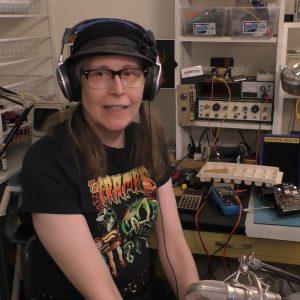
#586 – Fran Blanche Version 3
Download episode · 84 MB
Also on Apple · Spotify · YouTube · RSS
Show Notes
Fran Blanche and Dave discuss publishing, newspapers, Frantone, manufacturing, the kit business, ebay, and pontificate what we would be doing if the Internet didn’t exist.
The Frantone pedal as used by The Hives’ Nicholaus Arson and Vigilante Carlstroem VIDEO
How VHS tapes are manufactured VIDEO
NOTE: This episode is also available as VIDEO
Transcript
Dave Jones: Welcome to the Amp Hour. I'm Dave Jones from the EEV blog. I'm Fran Blanche from Fran Lab. Hey Fran, thanks for joining us again. Hey Dave. Chris, our esteemed co-host Chris Gammell couldn't make it, so Fran stepped in at the last minute. Thank you very much. Sure. The t-shirt's good. We are shooting video, by the way, if you want to watch this in video. We are over on the, we'll post the video on the Amp Hour as well. Video and audio.
Chris Gammell: Yeah, this is number, is this number three for me on the Amp Hour? It's three. Three. At least. Yep. Could be three or four. Not sure. Well, is it the third guest host time or, because one time I was on with you and Chris.
Dave Jones: Yes. And I guest host.
Chris Gammell: And then there was another, it was just two of us. Right. That was the first, first time. Right. Right. I was the first guest host, first non-Chris Gammell on the Amp Hour, way, way, way, way back. Yes.
Dave Jones: Wow. That was a long time ago. In the galaxy. Very long time. Far, far away. And how many lab moves have you had since then? Two. Two. Same as me, I think. I think I've had, yeah, at least two. So. Well, technically, you moved back. Didn't you actually move back, though? I moved back into my old one, which kind of doesn't count, does it? So it was like a, yeah, that's like a.
Chris Gammell: Still a move?
Dave Jones: It's like a, yeah.
Chris Gammell: Yeah, that's true. Unfortunately, I just, I just finished the taxes. I know you had your tax. Oh, I just did taxes. Oh, God. Yeah. Well, in, after 2018, they, they no longer allowed moving expenses as a tax deduction.
Speaker ?: So.
Chris Gammell: What? Seriously? Yes. So these last two moves have been a complete loss. So, yeah.
Dave Jones: That is nuts. How can you, that, how can that not be a regular business expense?
Chris Gammell: It's. Well, ask.
Dave Jones: Are you a sole trader or a LLC? I'm a sole proprietorship. Oh, okay. Right. Surely, if you were an LLC, that would, really, it doesn't matter.
Chris Gammell: Yeah, it doesn't matter. Yeah. So, it's, it's the one-two punch because landlords can evict you because they're raising, they're changing their property and they can push you right out. And then you can't deduct the, the loss of being pushed out and having to move to another property. You have to just absorb that. On top of everything else. So. Wow.
Dave Jones: That's incredible. Practically everything I do is a tax deduction. Yeah. I can, you know, I can just go somewhere and send one tweet and it's, and the entire trip's a tax deduction.
Chris Gammell: Oh, yeah. It's, it's very similar with me. It's, uh, you know, every piece of equipment I buy is part of Fran lab. Uh, so, uh, it, it, it ends up, I got a new accountant this year because, uh, my last year's account and moved out of town. So, uh, it was quite a learning curve. He was like, when I presented him with all the things he's, he was like, what do you do at Patreon? I said, well, I don't, I don't work at Patreon. I said, I said, well, what do you do for this money? I said, well, I didn't do anything at Patreon. He says, he says, they just, they just give you this money. Yeah. And I said, well, actually, yeah. And, and he was looking at me like really angrily. And he says, well, I, and when I showed him all, all the, all the purchases that I had done last year, it was like one, six figures of like, uh, payouts and expenditures. He was like, he was like, well, what, what is this, all this stuff? And I said, it's everything, you know, parts and equipment and, you know, everything from solder to breadboards to clocks to things. He says, what are you doing with all this stuff? I said, well, I just, it took like half an hour to explain what it was that I do. Yeah. He says, okay, well, what do you do for a living? I said, well, I, I don't know. I said, uh, I said, my official profession now is I am paid to be Fran. I love it.
Dave Jones: Paid to be Fran. Wow. Yeah. Cause people, cause the majority of your income is, is it Patreon or is it YouTube or is it split? It's split, but Patreon is definitely number one. Yep. Wow. So yeah. Like, and that's technically like, they're just giving you money. Like you don't, although you do ship stuff in return, like occasionally you might give someone a seven, someone a patch or something, but it's not really, it's like, it's not really quid pro quo. It's it's yeah. No, it's yeah. They're just giving you money cause they like your stuff for, for, for, for being Fran, as you say. It's very, it's very hard to explain. Oh, that's crazy. Yeah. I, I changed accountants cause my old accountant, uh, he retired. Um, and he, but it was like, so I was dreading that I was dreading going to the new accountant, but it was seamless. Um, and he was better. So he was like, he actually understood it. And, and I pretty much operate just like a standard business. Like to them, I'm just a, you know, a packing and shipping business kind of thing. Um, so, and all the incomes, just income. It doesn't matter what I actually do. It's all just, you know, classes, business income and expenses.
Chris Gammell: It used to be like that for me when I was in manufacturing, it was very straightforward. Um, uh, most, most accountants can understand the nuts and bolts of the manufacturing operation. It's harder to explain this.
Dave Jones: I don't understand why you have to explain it though. It just seems like, oh, it shouldn't like incomes, income and expenses are expenses. Why does it matter? What? That's just nuts.
Chris Gammell: I think, well, uh, you have to have, um, we have to state a job title. Right. What you do. I think when I creamed my neck around the monitor, I think he typed in spokesperson as my profession. Spokesperson. Yeah.
Dave Jones: We, we have those here. We have the official tax. You have to fit into one of their categories. And I don't know what I am. I'm just like, you know, Joe blogs engineer or something. Probably. No, no. I'm a videographer. I'm a videographer. I think is my official tax thing. So yeah.
Chris Gammell: And I don't know if they still have that as a category, but I'm, they used to have videography wasn't a thing in the eighties. I don't know if it's a thing now.
Dave Jones: Hmm. There, there, there is YouTuber. I think. YouTuber is an actual. There is a, I think it's an actual category, but I don't know. I just haven't updated, but I think it's been added because there's so many people doing it now.
Chris Gammell: So, you know, I was, I, I used to file as a videographer back in the late eighties, early nineties when I was, when I was a videographer, a real videographer. Yep. Yeah. I used to, I, I had a, it was all, I had a Panasonic linear editing suite, the Pan, the AG series. Sweet. Super VHS, you know, dual super VHS deck with the AG controller. It was state of the art at the time. Wow. Cost a fortune. Had to take out a loan to buy the system and everything took years to pay it off. Um, but I edited in super VHS for a good decade, you know, from like 90 to two, I was still doing super VHS into the arts. Wow. Have you still got that kit? No, the system, I don't have the system. I still have one of the cameras, uh, and a few, uh, playback decks, but, um, but no, I don't have that original system.
Dave Jones: Because that'd be great to see if it still works and see if you can feed video into it and see what you can get out of it, like modern, by modern standards, it's like.
Chris Gammell: At this point, it, it wouldn't operate without, you know, they'd have to be overhauled at this point, but it was an amazing system because it would, it had, uh, frame, you know, half, half frame, like per field accuracy for the cut in and out. Wow. Yeah. Yeah. And it was hi-fi audio, which was, you know, scanned right into the, into the track. Uh, and, uh, yeah, I, I used to do commercials and weddings and, uh, stuff like that, uh, music videos for local bands and. Oh, wow. Plus my own projects. I was doing film and video. So I had, you know, transferring film, transferring slides, corporate stuff. Um, yeah. Incredible. It's not like I made any money doing it.
Dave Jones: Right. But yeah, well, you made something obviously. So it tied you by. Was that like, and you were doing Fran Lab at the time? Were you doing, sorry. Um, no, you were doing, um, Frantone. Sorry. Before that. Oh, before Frantone. Okay.
Chris Gammell: When, when did Frantone start? When was the pedal business? Mert and I started talking about it and working on a product in 94. And then we, we spent a year and about $30,000, um, building a prototype, uh, which was the pedal that failed because it just turned out to be impossible, uh, to build. I mean, well, we could have built it, but it would have cost us more to build it than we could have sold it for. Um, and then I, I revamped and retooled and used the off the shelf case knobs and such, went and built the Hepcat in 95, 96, but it took a good 18 months to get it rolling as a company. Wow.
Dave Jones: Now I'll have to link in down below. You did a recent video on, uh, why, why don't I just make a few pedals? And that was actually, that was really terrific. Cause I've never heard you talk about the whole, uh, physical production process before, like in terms of like, everything's about the case. It's got nothing to do with making the PCB. That's like trivial, right? Anyone can make your PCB copy it, but it's the, it's the amount of effort that goes into the physical case and the multi-layer lacquering process and the silk screen and, and, and, and the spray painting, how you had to design a custom booth. And I, I found that fascinating. Well, yeah, that was just remarkable.
Chris Gammell: Well, it's funny cause there were so many comments, uh, to the effect of, oh, it seems like you were in the painting business, not in the pedal business. And, uh, and you know, why, why would you care about that? No one cares about what the case looks like and stuff. Well, I beg to differ. First of all, it was very unusual to have a pedal that, um, would be made to be looked at up close. You know, that's the thing. Um, because I knew that, why was it made to look up close?
Dave Jones: Well, because I don't, don't these things normally sit on the stage floor or something and you operate them with your foot or something.
Chris Gammell: Yes. But you see, I knew that when this is this, we're talking the nineties. So I knew that, uh, a person, this is before the internet was a thing for buying pedals. You, if you're buying a new pedal, you went into a guitar store and they had glass cases with pedals and everything pointed at it that they were laid out like, like candy at a can't, like an old candy counter at the movie theater where all the candy would be laid out under the glass. That's how the pedals were displayed. And so, so you needed to be seen in like a sea of things. And when they pulled it out and handed it to you, they would, you know, they'd look at the pedal like this, you know, they, and they twiddle the knobs and everything. The first impression was close up. So if you had complete shit coating on it and crappy silkscreen, first thing you're going to see is this thing is a piece of shit.
Dave Jones: Yeah. Yeah. It's a cheap, it's made in China or it's, you know, it's just, yeah. Wow. I didn't think about that. Of course, that is obvious. Yeah. That that's the case. And so that's why you need a light, like a nice, uh, bold color. Like you need a big pink to sort of like stand out from the crowd or you need, you know, lime green or something to. Well, my colors were always inspired by food.
Chris Gammell: Food. Okay. So, uh, lots of pastels. Um, uh, but yeah, the, the color combinations, um, this, and also the knobs that I could get in the, in the early days, uh, Davies was the only, uh, company to make that 1400 series chicken head knob that I used. And so, uh, this is before they were making them in China. So, uh, in order to get like knobs that weren't just black, I had to go Davies molding and they were making the knobs out of Bakelite, which is a therm, which is a thermoset process. It's a phenolic, you know, um, thermoset plastic. So, uh, difficult to do and the molds were very old. So, um, often that when they would, um, put the two molds together, they wouldn't, uh, kind of, they, they wouldn't interface, uh, completely. So I would have to order like a thousand knobs. Uh, and I might be ordering, if I was ordering like white knobs and they made a thousand of them, I would have to go through every single knob and check it. And usually, uh, some of them were just so poorly molded that they'd have lots of flash, you know, like the, um, it would be like this rickety kind of like a muffin top, you know, on the bottom, like it would just, you know, like where the nose wasn't molded all the way or, or they'd be filled with inclusions. I'd order white knobs, but they're filled with flecks of black and blue and red because they didn't clean out the machine completely.
Dave Jones: Oh, from the previous run or whatever.
Chris Gammell: Right. So it would be like cookies and cream. And so, and so all the knobs that weren't like white. Right. And so I would have to go through all 1000 knobs. I'd probably reject like 40, 50% of them.
Dave Jones: Wow.
Chris Gammell: And I'd have to send those back to Davies. Uh, but it was like that every time, you know, uh, I, and, and, and they didn't have inserts on the knobs for the set screws.
Dave Jones: So they're always going to ask, which ones do you use the set screw onto a fluted shaft or a, sorry, onto a flat shaft or, or were you a fluted? Did you use like the spline shaft or whatever it's called?
Chris Gammell: They didn't offer that Davies. Um, the, the, it was a solid Bakelite knob and they just tapped the phenolic plastic to put the brass screw in. So, so, you know, maybe 5% of the knobs were stripped out. So you'd have to check that, you know, and those are going to reject booth.
Dave Jones: That would be the quality of your product would be like how the knob stays on. Right. If, if this thing's used on stage and you know, and the knobs are just flying off everywhere, you know, it's, it's been tossed around and abused. Um, I, I would have thought you'd go for more than, I don't know, some, some better than some sort of like just embedded set screw.
Chris Gammell: It wasn't an option. If you wanted that, if you wanted that knob, it had to come from Davies because it was a 1400 series. It had to come from Davies and they only made it one way. Right. But, uh, but they learned to hate my name because every time I ordered knobs, every time I ordered knobs, there again, I'm going to send half of them back. Oh no.
Dave Jones: Unbelievable. So did you ever like hold them on with a glue? Did you ever lock tight them on or anything? No. No, no, no, you don't.
Chris Gammell: That's why not. You would think that'd be more robust. No, that's, that's, that's quality with a K. You know, nothing half-assed. I didn't do anything half-assed. Right. That, that, that's sort of when you start having to start having to do stuff like that, it's a death knell of a product. When you have it, fudge it. Yep. Yeah. No, I, I wanted the pedals to be the most robust. You said the way I designed them initially was for them to be like a tank. You know, that's why the battery compartment was an aluminum clip originally. The way that I mount the circuit board right on the switch and everything, I, I made it to be absolutely bulletproof because I knew what touring gear went through and what touring musicians would do to their equipment and, and proof, proof positive. I have some custom pedals, some one-offs that I built, uh, like the, the Vigilantron that I built for a Vigilante Karlstrom of the Hives. Um, that pedal has been used. They, I built them three, but they're still using the first one. The original one is still in the rack and being played every time the Hives play and on every tour in every city for the last 12 years. So, uh, yeah. And, and I caught up with them a few years ago and I said, I said, do you need any repairs or anything? He said, no, we're still using the original one. Still going.
Dave Jones: So do on, uh, audio, like tour audio gear, do the connectors wear out and stuff like that? Cause you're like going to like two or three, you know, a show every day and you've got to bang them in, bang them out.
Chris Gammell: And, uh, I, I used a switchcraft jacks, which are pretty robust. Um, you pay a fortune for them.
Dave Jones: You'll use six and a half mil jacks, don't you? Yeah. Well, quarter inch. Quarter inch. Sorry. Met you. Yeah.
Chris Gammell: 6.5 mil. Uh, but yeah, it's quarter inch jacks. But, uh, but the thing is with the quarter inch jacks, you, um, uh, I mean, they were made for the telephone system, uh, originally. Yes.
Dave Jones: To plug in and out. Yeah. Of course.
Chris Gammell: And they're by design, um, they're, they're made to that size and stuff because you, you, every time that you insert the plug, you get a fresh surface or it wipes the contact. Yep. So, uh, but yeah, the switchcraft jacks and everything that the most, uh, vulnerable part of the, as far as the hardware goes as always turned out to be the DC jacks because there were, there never was an option to get a heavy duty. The AC, uh, jack for that barrel plug.
Dave Jones: Yeah. There's not, is there? No. Do you ever think about using something? No, but that's, you have to use that because that's the industry standard, right? And it's got to be center negative. Right. Right. Right.
Chris Gammell: It would be that center negative rubbish. Right. Yeah. So yeah, the, the, the, the standard 5.5 mil standard, uh, barrel jack, it's, uh, it, yeah. So again, you're at the mercy of what the parts manufacturers make and they only make plastic barreled, you know, with a plastic nut. There's no metal option for that. No, that's, it's the Achilles seal of all equipment is the AC jacks. Even if you, no matter, you know, even if you're buying like a, uh, you know, a mixer, it might come in an all metal case, all, you know, rugged, rugged, rugged, but the DC jack is, it's going to be a little thing. It's just soldered on the board inside of the, and they drill a hole in the metal casings that you put the barrel through. And it's just wiggling on a thing. That's just soldered on the pad. It's the Achilles seal of every piece of equipment that's made. Yeah.
Dave Jones: But you can get metal panel mount ones though. You can get panel mount metal. I think, yeah, they're mostly metal. I've used panel mount metal ones with the, you know, you, you screw on, you drill your hole in and you screw your thing on the back and then you have to wire up to it, of course. So you can't mount it straight on your board. You've got to actually wire them in. I don't know if they're suitable or not. Yeah. But yeah, tough business.
Chris Gammell: That's just nuts. Oh, I, I, I do, I do not miss manufacturing at all. I tried to really put a fine point on in that video, but still, even with everything I said, the comments are, oh, so why are you whining about, why don't you just say you don't want to do it and just shut up already? Yeah. Yeah.
Dave Jones: Well, no, I thought that was fascinating because I haven't heard you explain the whole process and the, and, and the paint rooms and everything else. I thought that was brilliant. And then your next video after that was the promised land of kits. Yes. And I've, I've been in the kit business as well. And it's just, yeah, it's not, it's a mugs game as we say here. Yeah. It's, yeah.
Chris Gammell: Well, you have, who's the guy who, who's the guy down in Australia who did, who had the big kit business, the, the, the, the online, the, the catalog kit stuff down there. Oh, that would be Colin Mitchell.
Dave Jones: Mitchell. Yes. That's it. Colin Mitchell from talking electronics. Yes. And he spent his whole life just selling like little $5 kits, you know? Yeah.
Chris Gammell: See, when people think about Colin Mitchell's kits and they think that that's, that's how you make your million dollars. But you don't realize that, that he must've had a warehouse full of circuit boards that he never shipped. Yes. You know, and, and, and, you know, someone would order a, like a blinky kit, a 45, 11 blinky kit. And, and he would go to a, you know, go to a shelf, get one of the boards, go to another stuff, get, get a chip, get a socket, grab six LEDs, put it in a bag and everything, fill out the envelope, blah, blah, blah. People don't realize that you got to have like a frigging warehouse of parts to pick in place. Yep. To put together kits. It's not, it is not, it's like that classic tale of the Kickstarter where they get a million dollars and they get six weeks that they got to deliver the product and they don't know frigging how to do it.
Dave Jones: Oh, do it.
Chris Gammell: Why not? Because they don't realize that they have to have like, like, you know, a hundred thousand square foot facility just to house the parts that they're going to need to build their thing.
Dave Jones: Yeah.
Chris Gammell: It's nuts.
Dave Jones: Yeah. He, he, yeah. At one point, I think he had four or five staff working for him. You know, like really minimum wage kind of, you know, kids and stuff like that. Working for him. Child labor, bring back child labor for kids.
Chris Gammell: Get the kids out of the coal mines and picking kits. Right.
Speaker ?: That's it.
Chris Gammell: That's how we do it. That's how we do it.
Dave Jones: That's how we can sell it. It's, yep. Yep. It's safer than the coal mine. It's safer than, yeah. Tick tock or something. I don't know. But yeah, I, and, and of course you mentioned that, you know, people go, people just expect you to fix it under warranty. You know, even though it's a, yeah.
Chris Gammell: That's the thing people don't even consider the heat. It's the heat kit paradox. Mm-hmm. It's the heat kit paradox, which is people don't even consider the fact that you got to have customer service for all the kits that you sell that someone assembles and they don't work.
Speaker ?: Yeah.
Chris Gammell: Or they make a mistake and they just, they just want it to work and they're going to send it back to you and you're going to have to fix it. You know? And if you're just selling a kit every month, maybe that's not a big deal, but if you're going to make a business of it and you're selling 10,000 kits a month.
Dave Jones: Yep. Absolutely.
Chris Gammell: You got to have a staff of people to fix kits. Yeah.
Speaker ?: You know?
Chris Gammell: It's crazy. You got to have like a room of people to fix kits. Yes. And people just don't grasp that.
Dave Jones: Our, our magazine, one of our magazines here in Australia that used to sell a kit, well, one of our, like our, we had the magazines, you would publish your article and then some of the kit suppliers would actually sell the kits. And we, and they famously had a sorry, Dick, it doesn't work service where you could, you know, look, look, I built my kit. I followed your, you know, your detailed 50 page instructions and it still doesn't work. You can send it back in and, you know, and yeah, they, they had to have a staff of people actually just repairing kits. So this was back in like the eighties, you know, early eighties kind of thing, late, late seventies, early eighties. I, I don't know. Is anyone still doing that? Is anyone at all like doing a, I know there are people who have kit businesses, but I'm not sure that they're at any scale that, you know, that they've got like a team of people just repairing them. That's a good question. I don't know if anyone knows, leave it in the comments, but I don't think there's any left.
Chris Gammell: Really? So I don't know of any in the, I mean, there's, I mean, yeah, there's things like, you know, Adafruit.
Dave Jones: Well, there'd be Sparkfront and Adafruit, but I don't think, I don't think they have people
Chris Gammell: repairing kits. Yeah. I don't, I don't know what to do with returns. You know, it, it, it would seem to be, I mean, the real boondoggle with kits is the, the stuff that doesn't work. So I don't know if it would, if you would just, it would be cheaper just to have a policy where you just send them another kit.
Dave Jones: Yeah. Yeah.
Chris Gammell: Rather than dealing with the return. Yep.
Dave Jones: I, I, I think that's how they deal with it. How the Spark funds and the Adafruits would deal with it, surely.
Chris Gammell: Well, regardless of what your approach would be, you still have to deal with all the emails and you still have to deal with the correspondence with the customers. And that's another staff altogether. I mean, if you're just one person, again, if you're, if you're having to move thousands of kits a month, just to make a penny, you're dealing with thousands of emails a month from people who have all kinds of questions, all kinds of problems. Oh, I got the kit. I don't, I, I, I, I'm confused about this. Explain how this is going to go and why does it do this? And why do you have to do that? And can't I do this? And can't I do that? And what if I took this wire and did that and what, you know, if you did this jumper and everything, and I'm going to give you three paragraphs of why this kitsch could be improved. If I just rewired it this way, I'm going to send you diagrams with drawings of how the traces should go and everything. And, oh, you know, if we shouldn't use this chip, you should use another chip and need this much smaller profile. And then you can do it surface mount and blah, blah, blah. And multiply that times a hundred people. And you got to deal with that.
Dave Jones: It's not. Yeah. And, and, and then you get like the nasty worded letters, you know, back in the day. Now it's emails, you know, but they would send the kit back because you'd publish your address, right? Even though you don't say, oh, send it back. If it, if it fails, they would just do it. Right. And then you get the nasty letters back. Your design is absolute trash. And here's, I've checked every single component and every single solder joint. And then you take two seconds, check the board and you go, yeah, you're a 78.05 is in backwards. You dick, you know, and it's like, yeah. And yeah, but no, they were positive. It was your design, your trash design. How dare you publish this? And, you know, it's just hilarious. And then they turn up at your doorstep with a kit wanting to fix it. So yeah, that was fun. So yeah, you know, they turn and they're, and they're kind of surprised. Like they turn up to your house and they think they turned up to a business and they go, this, this can't be right. And then go, yeah, come into my bedroom, you know, where my lab is and I'll fix it for you. And then, oh, what? What the hell? Yep. Oh boy. Yeah. The kit business. Yeah. Nah. It's, it's bad enough with like the, uh, things I ship, like the actual products I ship, you know, occasionally they're faulty and, you know, and you have to deal with return issues or, you know, people have problem using them. For example, what they just, you know, don't know how to use a multimeter. What can you do? I don't get it. The only winning move is not to play. To play. Yes. Exactly. Although I can't complain because a good half of my income, I think, comes from my packing and shipping business. So, you know, I'm not going to complain.
Chris Gammell: You've got quite a thing going on with the products.
Dave Jones: Yeah. It's, it's working fairly well. It's, um, I'm doing it all myself again now. So yeah, I'm getting into the flow of like doing it all myself. So I'm at the point where I don't know if I'll like hire another person, like, you know, like hire a person to do it because, um, the person who was doing it part-time for me, she can only do it a single, uh, like one hour a week or something now. And that's not really, you know, that isn't really enough. Um, so yeah, I don't know whether or not to, you know, spin it off, like to actually put more investment into it and actually hire a dedicated space just for that and hire a dedicated person. And, you know, I like, if I was a serious businessman, I probably would, but you know, I'm just, I'm just, I'm just too lazy, I think. So, yep. I, I, I think both you and I are just doomed to, uh, the, um, yep. Just, just the, uh, solo engineer kind of thing, you know, we're just a one man band. So anyway, I wanted to talk about, um, speaking of old school newspapers, because you started out, is it a regular segment now where you're looking through newspapers, like current newspaper articles and stuff? Cause you were talking about your wood and I thought it was interesting. I started doing it a couple of weeks ago.
Chris Gammell: Uh, yeah. And well, I re I read the papers every day. So, um, it just turned out that, um, every now and then I'd send a set aside an article that I thought would be a good topic for discussion. Yeah. And, and, uh, as the days go on and weeks go on, they just pile up. And so it's like, well, this, this is, this is stuff I could talk about. Just stuff in the news. So yeah, something I've been doing. That's in the real news, like as in the newspaper.
Dave Jones: So tell us about you trying to write a, um, trying to get a column in the Philadelphia Inquirer, uh, newspaper, trying to six month journey. You just released a video and I, wow. And you haven't even gotten a single response and you physically turned up to their premises. And I think they went stalker, stalker alert, stalker alert.
Chris Gammell: Yeah. They've got very high security. It's what's weird. Cause I, years ago, well, it wasn't that long ago, maybe six years ago. I actually, um, I went to the Inquirer's offices. I was up there for, it was some social meeting thing, like, uh, some, uh, some, uh, something related to something else, but they were, they were meeting in the Inquirer's offices. So I, I'd been up there and it didn't seem, this was, this is before the, um, the current state of affairs. It was before that massacre happened and then on the paper. So obviously, um, uh, and yeah, I don't remember the security or anything. It was just, you know, just go right up and in. So, uh, obviously it's, it's a sign of the times. Things have changed. Yeah. Uh, but yeah, there's just, uh, yes, it's been difficult, but you know, you suggested about, you know, publishing, uh, online. I, you know, I didn't want to do that. I, I, I'm considering it because there are other things that I would want to do. It wouldn't be just, if I did the route that you're suggesting, it wouldn't just be a column. It would be, I basically published my own like mini newspaper, you know?
Dave Jones: Right. Okay. It'd be that elaborate. Would it? Well, it would have drawn into it. So that you'd want to.
Chris Gammell: Well, puzzles and comics and. Oh, wow.
Dave Jones: That is newspaper. Yeah. That is your own individual news newsletter level.
Chris Gammell: Yeah.
Dave Jones: So to speak.
Chris Gammell: If I, you know, the problem is going that route. It's not that I couldn't do that. It's just that, well, I've already got two full-time jobs. Yeah, exactly. So where am I going to get, where am I going to scrounge the hours for the other two full-time jobs of running a newspaper? Yep.
Dave Jones: Well, you just start out with a column. I think, because everyone, for those who don't know, I'm talking about Substack. I don't read stuff on there myself, but Substack is apparently the thing that all the hip kitties are using to be all, well, all the hip independent journalists are using to publish their, you know, articles and stuff now. And it's a subscription thing. It's not, I don't even think there's a free option. Yeah, it's all subscription. Yeah. It's all subscription based. But if, yeah, if you want to get into a magazine, I guess my theory is that if you can show that you have people willing to pay to read your stuff, then, you know, you can go to them and say, hey, look, I've got, you know, a thousand people willing to read my stuff.
Chris Gammell: The thing is, if I had a thousand people reading, if I had a thousand people subscribing to a column on that app, the last thing I would need is to be dealing with the bureaucracy of the newspaper because I'd be, I'd be getting, I'd be getting more than enough from the app.
Dave Jones: But I, I got the impression that you were doing it because for the, for the prestige, maybe prestige isn't the right word, but do you have.
Chris Gammell: There's definitely no prestige in it. No, I, I, I wanted to do it. It was a strictly like a local thing, you know, because it's, it's my paper, it's my city. And I just, I wanted to do it as a form of like representation to represent Philly. Basically take what I do here and reflect it somehow on the local level.
Dave Jones: Local community level.
Chris Gammell: And use, I wanted the column to be an outlet for basically what FranLab represents. I've tried that before, like the Franklin Institute, I volunteer every year and every year that they, they just ignore my application for the volunteer. They're, it's just, it's just a common thing. You know, I, I might be a big deal on YouTube, but in Philly, I'm absolutely nobody, you know? And here's the thing that the inquirer, I mean, they, they have a total circulation of like 193,000. Right. So if, if even half of my subscribers were to read my column, if it were in the inquirer, that they would increase their subscription by 50%.
Dave Jones: I know, I, I think it's an absolute no brainer to take somebody with your audience in your, even though they don't know who you are, surely they can at least do the, you know, five seconds of research to take, to see the size of your audience and the views you get. And surely that would translate over into viewership for them. I don't get it.
Chris Gammell: I think it's, I think it's something of the like of, well, you know, if we were going to have a science columnist, it would, we want it to be Dr. Neil deGrasse Tyson. Right. Yes. You want, and so, and I'd be like, okay, well, is he knocking on your door about a job writing a column for you? Exactly. Oh, no, we would, we would want to, we would want someone with a doctorate from Temple, you know, someone local, like, you know, like an adjunct professor at Temple, maybe, maybe the former dean of Drexel to Drexel University to, to write a column. Okay. Well, are, are they calling you saying, yeah, I mean, it's a great job if you can get it. Yeah. You know, it's like, I'm friend to friend lab. I I'm living right here. Like, you know, blocks away from your office, you know, I, here's the thing, you know, when I came up with this idea last year that I decided that I wanted to write a column, I, I, I didn't even go into it thinking that I'd even be paid for it.
Dave Jones: You know, I was going to ask that. Would you do it if you weren't paid? Would you still do it just for the, you know, just for the fun of it?
Chris Gammell: Or I, I was going to do it just for a stipend. And, uh, my goal at the time was just to basically to get published and just be able to have like a backlog of articles that were published, you know, I, I, cause I friend lab isn't going to be forever. Uh, I, I, I've been on the earth long enough to know the ephemeral and temporary nature of what we do. And so there's, there's definitely a finite end to this. And so I'm always looking for the next thing that I want to do. And for years I've wanted the next thing to be writing. And because I'm an essayist, I really thought that, uh, a column would be the ideal format for me to output, you know, 850 to a thousand words, you know, it's, that's sort of my, that's my, my format. So, you know, but, uh, I, yeah, I, I was surprised that I didn't get a single reply. Yeah.
Dave Jones: That's just like, uh, sorry, no, we don't, you know, um, one of the, one of the comments on the video is, um, somebody suggested they have a, one of the options could be, they have a pre pre-decided their editorial policies at the highest level and do not consider them even worth discussing with anyone else. I can see that happening at a large newspaper like that. How many like staff would they have at a large paper like that? The Inquirer.
Speaker ?: Do you know?
Chris Gammell: Is it like dozens or is it hundreds? The Inquirer used to be a massively large paper. Yes. Uh, and they've, uh, been whittled down. I think they, um, they actually turned off. There's only a couple of years ago. Maybe it was last year, a couple of years ago. They turned off their press plant and they're actually outsourcing the pressing of their actual paper. Yeah. To a company in, I think Chester, uh, a press company. They're, they're also printing the times. Not basically all of the papers that you get regionally are all done at one press plant now. Oh, interesting. Um, but, uh, uh, if you go on their website, you can scroll down that their staff, it's like a hundred people. But if you actually read the paper every day, the, the actual people with the byline, it's, it's like a dozen, you know, that actually like in, that actually have a byline and, you know, the picture and this is their column, uh, maybe weekly. Uh, so yeah, but like I said, I, I was willing to take the job, you know, with first stipend. I didn't have, didn't have to be like some big salary thing. Yeah. But I, I, it's probably, I don't know. It, I probably burned the bridge when I complained about it, but who knows?
Dave Jones: Yeah, probably. Um, or, or the other thing somebody said here, um, you are sufficiently unique and original that they have no box to tick against you. And therefore your correspondence is endlessly circulating between people who all look and say, not me, not me. I don't know. Have a look at this. And everyone goes, I don't know.
Chris Gammell: They just pass the parcel. I doubt that they're even considering me. I doubt that anyone's even. Yeah. I, I, I think that probably none of my emails are read. None of my letters are read. I think it's just that simple.
Dave Jones: Right. So what are your options now? Cause clearly you want to do this. So is it to go to some other part, try other publications? Does it matter who you get in with, you know, or does it, um, or would you start the online thing?
Chris Gammell: No, Philly's down to one paper. I mean, there used to be, uh, the city paper went dark, uh, years ago. Uh, the city paper was my favorite paper and I would have loved to have written for the city paper. Um, but that was a tremendously great publication, but they, um, city paper got bought out by, uh, a competitor in town that, uh, bought, bought them out. Cause they, they had gotten into financial trouble, trouble, uh, years ago, years before that. And they had like been rescued by like an investor, like a, uh, you know, you know, like an entrepreneur investor, like rescue the paper. They kept printing paper, but then the compete, the competing paper came in, uh, and, and just went around the staff and just, just made the deal with the investor and just bought them outright and then shut them down the next day and bought them to kill them.
Dave Jones: Oh, bought.
Chris Gammell: Oh no. And then, yes. So, and then the paper that bought them out ended up going out of business.
Dave Jones: So is there some other, like, can you go to the New York times? Although everyone wants to go to the New York times, right. Or, you know, like, or, you know, like surely us has like, I don't know, a hundred newspapers or something. It's dwindling.
Chris Gammell: Uh, yeah, yeah. It's dwindling. Well, they said, uh, something like 2,500 newspapers have closed in recent, like the last five years.
Dave Jones: Yeah.
Chris Gammell: Wow. But most newspapers are, that are still being published. They're our own by a handful of companies. Yeah. Like mega conglomerates. No, I, I, it isn't that I want to write for a newspaper. I just wanted to write for my local newspaper. Right.
Dave Jones: Okay. Right. So it's, okay. So it's pretty much done and dusted then if you can't get into the Philadelphia Inquirer.
Chris Gammell: I mean, I'm, I'm considering your option of, you know, going. Sub stack paid sub stack thing.
Dave Jones: Yeah. I'm, I'm considering it. I think you'd get at least a couple of hundred people. I'd, um, subscribe.
Chris Gammell: Maybe.
Dave Jones: In, in addition, you would get people in addition to Patreon. That's the thing too.
Chris Gammell: The biggest thing is the, the investment, the startup investment of a proposition like that. Cause I figured if, if I did it that way, I would have to like publish articles every week and I'd have to do it for like at least three years to know if it's a viable doable thing. Just to build up the audience and everything. And while I'm building up the audience, very few people are actually reading the articles while I'm in the first year while I'm publishing them, yada, yada. Um, I mean, I did consider the idea of, um, like a Kickstarter type thing.
Dave Jones: Right. Okay.
Chris Gammell: So that people, I don't know if that, how transferable that is, but the idea that like people bought into the Kickstarter, if I've had a goal of like a certain number of like a goal for the readership and then people who buy into the Kickstarter, they get, uh, the membership for the, you know, for the app or something like that, but I haven't worked it out, but, um, but yeah, it'd be more than if I, if I had to publish that, it would be more than articles. It would be other things, puzzles and whatnot.
Dave Jones: Got it. Almost. Yeah. Like a physical newsletter, like almost, and you could almost print it. You could almost actually print your own and everyone gets a little booklet and, you know, and, and then you're in the packing and shipping business again.
Chris Gammell: Yeah.
Dave Jones: Congratulations. Stuffing envelopes. That sounds great. Oh yeah. Oh, that's fun. Yep. Yep. Like I couldn't even do that. Right. I couldn't even do that. Right. Um, I don't know if you remember, but when I was shipping my ruler, I Indiegogo, no, it wasn't Indiegogo. It was using a local, um, you know, uh, one to raise money. Everyone got one of these PCB rulers. You know, and, and it was successful. I've got thousands of people. So I had to ship thousands of these rulers and I thought, how hard can it be? Stick them in an envelope and, and send them off. It turns out, um, it's incredibly difficult. And I wrote an entire article. I, I, I discovered that, um, I, I had to figure out a way to, uh, uh, make sure they didn't flap around in there. So each one had to be, uh, glued down to a cut sheet of cardboard for starters. And then even, and then I discovered that they, if they did come loose, then they would go out the sides. The, the, the, when the, the flap, the envelope is, is actually, is got like holes in the ends. And that was the same size as the ruler. So these rulers would just vanish in. If it went in the machine upside down, the ruler would just shoot out the end of the envelope. It's like, you're going to be kidding me. How hard can it be to ship some like little PCB rulers? Yeah. It's a pain in the ass. I spent months handling that, just trying to ship out these bloody rulers. So yeah, no, don't do it. But yeah, certainly, certainly a sub stack. I think we can do it. I think we can do it.
Chris Gammell: I'll consider it. Excellent.
Dave Jones: One of your videos I liked recently was the, uh, looming time, a digital clock with no electronics. And that was obvious. That was like, when you look at how they do it, it's like with these content, with these rotatable contacts and these little, you know, tags, and they actually decode which segments turn off and on. And then they, and then you turn those wheels with a, you know, a gearboxy thing. It's great. I love like internet. And so did everyone. That kind of went semi-viral and got a ton of views.
Chris Gammell: Yeah. In fact, uh, someone put up a, uh, a loom time clock, uh, a slightly later one than this one. Um, went, went up on eBay today. It's already got like, I'd look just before I came on it. It had like 30 bids on it. It's already up to like 200 bucks. Yeah. Yeah. So. Right. Yeah. The, uh, Fran effect. Yep. This, this is, this is the kickback effect of the YouTube channel. Because when you, when I, when I get something cool and I do a video on it, if that video, I mean, most of my videos, 5,000 people maybe watch it, you know, very, very few people, but every now and then I do a video on an item and lots of like hundreds of thousands of people see it. And then that's it. I'm never going to buy another one again. Yes. 10 years ago, 10 years ago, if a new, if a Nemo tube were to come on eBay, you probably could get it for 20 bucks. Yeah. If it came up now, you wouldn't be able to get one for a thousand dollars. If it came on eBay. Uh, those, these, these tubes, these, uh, uh, Burroughs tubes, you know, when I bought, uh, the first ones of these tubes, they were like, you know, a hundred dollars a tube, which was a lot of money back then there, since I made that video. Now it's, it's like a thousand dollars for three at a discount.
Dave Jones: Ooh. Wow. Yeah. I get the same, uh, complaints when I do like an eBay score, you know, I get a bit of test gear on eBay or something. Look, look at it. Buy this model. You know, it's a really obscure model, but it's really great bang per buck. And I got mine for 50 bucks and now it's 500 bucks. You know, not anymore. Yeah. Sorry. Um, and a lot of my, uh, patrons say when you do an eBay score video, show us first, like several days before, so that then we can go on and find the cheap ones before everyone else gets it. You know, it's like, yeah. Uh, sorry people. There's nothing we can do. I mean, if you want to see these videos, it's just a natural consequence of.
Chris Gammell: There's a display, uh, that I, I'm not going to say which one it is, but it's a display that I did a video on a few years ago. I've, and I've got like a dozen of them that I bought at the time for, I paid like five, 10 bucks a piece for them, you know? And I got like a dozen. It got on eBay. And I got on eBay. He, uh, had a stock of like 18 or 20 of them. And so I, I, you know, I contact the seller. I say, look, you know, I want to buy everything. You know, you have them up for one, you know, one off. I just, I want to buy all, you know, the lot that you have, you know? And, uh, and I said, I'm willing to pay this amount for every, for everything that you have, which, you know, I was a fair offer. And his reply is LOL, LOL, it's like, it's like, and I was like, well, wait a second. I'm the only person who wants this display. Yeah. Yeah. You know, I, I'm the only person who wants this display because I, and, and, and like, LOL, LOL. Well, it's like, it's almost like, oh yeah, I know you're the only person who wants the display, which is why I'm going to charge you a bajillion dollars because I know only you would want it. And it's like, well, what kind of crazy effect is that when you get on eBay and the seller specifically is like, oh, I'm, I'm, I'm going to charge you this because I know that you're the one who's going to buy it. And I know who you are. Yep.
Dave Jones: What can you do? Oh, eBay is a fun place too. It's almost as fun as YouTube.
Chris Gammell: Well, it's gotten, it's gotten to the point where when I sometimes now when I buy parts or films or, you know, if I'm trying to make a deal with a seller, they'll say, are you Fran? Are you the Fran? Fran? Yep. Yep. Bastard. I've had that as well. I don't know. Does that get me a good price or a bad price? Price or a Alba? It depends.
Dave Jones: Yep. Yeah. Cause I often buy, cause I've got my, I've got like a thousand feedback on my personal account there, eBay, and it has no relationship to my channel, but people sort of get, you know, and I'll often, you know, and if I send them, send them some sort of message, I'll go, I'll sign it, Dave. And then I, then I've had, you know, replies back saying, you're not Dave from EEV blog, are you? Yeah. Bastard. Okay. I, I haven't had them up the price on me. Like I haven't had them, you know, usually they sort of like a bend over backwards for me and pack it properly and, you know, do other things. So, yep. They would. They would. They wouldn't want you to complain on the EEV blog that. Exactly. They're a shit packer. What is the worst packing job you've ever had? Like, you know, have you ever bought one of these like fragile tubes and it's just come like un, unpadded and it's shattered in the box or something?
Chris Gammell: I've had some good ones. I had a good one this week. I, I just, just yesterday I had to complain to a seller cause I, I bought a, I bought a film and, um, I paid a good price for it. Um, as in a film reel, like a 16 millimeter reel.
Dave Jones: Yeah.
Chris Gammell: Yep. But it was on a plastic reel and they, they, they took, they just took the plastic reel, not in a case. Usually there's a hard shell case, you know, a reel shipped in. I've had a lot, most sellers, if they're not like archival. They're not a film collectors. They'll put the reel in a case. They'll tape up the case and they'll either just ship the case, like in the hard case or they'll put the case in a bag. I usually insist that, okay, if it's in a case, put the case in a box. Don't just ship the case. It depends on what I pay. But in this case, they took the bare reel without a case and they just stuck it in an envelope and mailed it. And it looked like someone had sat on it and it was like cup shaped. It was like a cup shaped. And the, the edges of the reel where, where extended over the film were, were like buckled over, like, like nose, like crushed down. So it was, it was crushed.
Dave Jones: Oh no.
Chris Gammell: Oh no. Well, it's like, and, and so I, you know, I, he must have, but no, I've, I've had some good ones. I had, uh, uh, one where I ordered some special incandescent bulbs, these long, uh, incandescent bulbs. It's for like a, um, like a lawyer's lamp, you know, the old, you know, the long bulbs. Yeah. Yeah. Right. Yep. I had a special, right. Uh, but I had a lamp that required one of those bulbs. I ordered from a seller and they, they literally, I bought three bulbs. They literally took the bulbs, put them in a paper envelope and, and, and ship them. And they, they were pulverized. I said, I said, I said, I, I said, you have to explain to me how you thought putting light bulbs in an envelope would work.
Dave Jones: I mean, surely, of course they're shattered. These are functioning adults, aren't they? That are doing this. You would think that a functioning adult would know about glass and like glass shatters.
Chris Gammell: Like I don't, uh, I make a lot of such assumptions and I'm often wrong. Yeah. No, there, there are some, there are, there are always some doozies that not, now here's an interesting thing on the other side of the spectrum. I'm just going to show this in a video, but hang on. Cool. I got a box around here. There we go. We've got a good view of Fran lab there. On the other side of the spectrum, this box, I ordered another clock that I was going to tear down of and they, they put it in this, uh, box. It's actually a Phillips box. Yeah. Um, but they, um, this is the clock, but to fill it, to fill in the gap, they stuffed it full of old VHS cassettes. Oh, just to fill in the box.
Dave Jones: I know. I think they just, maybe they're just recycling their collection and they didn't want to throw them out and they thought, Oh, people will use these and they'll, maybe they're freebies. They're actually using them as packing.
Chris Gammell: Yeah.
Dave Jones: Yeah.
Chris Gammell: It's not like the, it's not the lightweight. I mean, they waste. No, I was going to say that that just adds to the cost of the shipping cost. It's not just empty boxes. It's actually VHS cassettes in there. Uh, but that, that was a first. Is there anything good? What's on the tapes? It's a, well, one is little big man and the other is man. I haven't heard of that one. Oh, it's a fantastic film. It's one of my favorites. Dustin Hoffman. It's a very, if you have never seen it, you should watch little big man. It's a, it's my life is sort of like little big man. Uh, the other one is a collection, the best of red skeleton. So, uh, yeah. I don't know what red skeleton is either. Sorry. Oh, American classic American comic clown comic, you know, Oh, okay. Club cadiddle hopper and yada, yada. Uh, but yeah, these were usually, um, man, best of red skeleton. So it's actually like a full length cassette too. It's like a, it's like a 60 minute cassette. Sometimes, uh, I used to work, uh, I was assistant manager of a video store back, um, in the early nineties. And, uh, sometimes these, uh, off-brand, uh, VHS cassettes, uh, they would be recorded in like slow speed. So you might get like a, it might say like 60 minutes of material. And then you open up and you'd have like that, like a tiny little bit of tape. You'll record it on slow on the six hour mode. Like, yes, yes.
Dave Jones: It's like, yeah, yeah. Right. I remember at half the, uh, half the, uh, not, I was going to say pit rate, but you know, half the, um, half, half, half the bandwidth.
Chris Gammell: Yeah. Six hour mode. Sometimes four hour mode, which is the, um, the in-between four hour mode.
Dave Jones: Oh boy. I, I, I always wondered how they made those things. Cause you know, how can you make these things, the millions and the tens of millions when you've got to like to physically record them? You've got to. Well, they're recorded at, they're recorded at high speed. At, at higher speed. Okay. Right. And that would lower the quality. Right.
Chris Gammell: Well, yeah, there's two ways to do it. I mean, um, if the recorded actual, if those duplicating houses used to be massive, I mean, you would have. Yeah, I know. I'd love to see one.
Dave Jones: Is there, I've never looked at like a photo of a, of a duplicating house.
Chris Gammell: Well, I, I used to go to those places cause back in the day, when I was a filmmaker back in the early nineties, I used to work with duplication houses and even the small ones had hundreds. Like they, they, the VHS recorders were rack mount. Right. So you would have like basically racks of maybe 20 recorders, like a wall of them, like a few hundred, a few hundred recorders. And they would literally have like cases of blanks and they were just a one, two, three, four or five. You know, they would load up a whole wall. Right. Wow. All the machines would be synchronized to a master. Right. Yeah. And, uh, a lot of these typically duplication places, like they would master like on one inch or three quarter.
Dave Jones: I was going to say the master would degrade over time as well. Wouldn't it? Well, yeah. Progressive degradation.
Chris Gammell: Well, VHS, uh, well, VHS is a low resolution doesn't have a lot of lines in it, but so you would use a high res, like a broadcast quality master and you have like a one inch, uh, or, uh, or three quarter master. And then they'd be synchronized with the other machines and then they'd all start in sync. Yep. You'd, you know, so you'd have like one master running record two or 300 in a shot. And then at the end of, if it's a one hour, two hour, when they're done, they all eject. And then they walk down the, walk down the, you know, with a cart, with a big box,
Dave Jones: pull them all out.
Chris Gammell: Label, label, label, label. Right. They'd pull them all and refill them and run another 300. Wow. But yeah. And those duplication houses, a lot of them would run 24 hours, you know.
Speaker ?: Wow.
Dave Jones: You wouldn't have any old like film footage of that, would you? Did you ever shoot? No, no, no. What did you install in one of those places? No? Oh, that's a giant.
Chris Gammell: I'm going to have to Google it now. I probably did. I don't have, well, I wouldn't have the tape anymore because I lost the, my, my, my, all my originals back from the early nineties, I lost, uh, probably mid aughts. Um, I don't, I don't have them anymore, but, uh, but yeah, I, at the time I would have had, uh, like footage of, especially like, um, um, when I transferred a couple of things because I, I used to have like stuff duplicated back in the old days used to, um, if you made short videos, they call them films, but there were videos. Right. You would, uh, you would sell them through publications. Like there was a magazine called film threat. The love indie, um, filmmakers and video makers used, and you put an ad in film threat for your, for your cassette and, you know, get mail orders. And then you, and you'd ship out, you know, so, so I, I would duplicate my film projects and, you know, have like a stock people sending orders and it'd be like, you know, $10. So you get a $10 bill and an envelope and, you know, cash and then you put it and, you know, be like a couple of weeks, but yeah, that's, you know, I know we're hitting the hour, but, um, I want to talk about this with you because I had it in my queue. One of the questions I wanted to ask, um, which rather than just asking it rhetorically, um, if the internet had never been invented, what would you be doing right now?
Dave Jones: Oh, I would still, I've got to say, because I'm still doing the YouTube thing after 12 years, I got to say, I'd still be doing the same thing I was doing pre-YouTube, which would be writing magazine articles. I'd be selling kits. I'd still be selling, well, maybe not kits. I'd be selling finished products. Maybe I get sick of the kits or something, or kits would naturally die out as they have. I don't know. I would, I'd probably be like a mini Arta fruity. Well, no, because they're all internet. Their whole stick is that everything's on the internet, right? All the information's on the internet. So you'd have to make it, you'd have to be publishing a catalog. I almost, before this blog, I thought about publishing my own electronics magazine. I almost did it. I started writing some articles and stuff for my own electronics. So maybe I would have got into the magazine publishing business. Maybe. I don't know, but I'd still be at least writing articles. I'd be selling kits. I'd have my own side hustle business, you know, selling kits and stuff. And if there was no internet, yeah, I'd be advertising my stuff or publishing my articles. Yeah. I'd still be doing that. Yeah. Probably the same. I think, uh, I think I'd still be,
Chris Gammell: I probably have a cable access show and be, and I'd, I'd probably be selling my, uh, goofy film productions, um, through the magazines and still, still, well, if they would have never invented the internet, then I'm assuming we'd still be doing linear editing on tape. So I'd still be doing that. Yeah. Cause that's the other thing without, without the internet, without the internet, we wouldn't have, uh, had, you know, digital non, you know, non-linear editing wouldn't have come
Dave Jones: about. It wouldn't have been very popular. So I would never have got into video cause I was never into film or video. Like I was never into photography or video or anything like that. Um, we'll just too poor to have a video camera. Um, so yeah, I probably would never, maybe I would have, I don't know. I can't see myself getting into the video. You know, I can't say without seeing other people do it. The reason I did the YouTube thing is cause I saw other people doing YouTube and I thought, Ooh, maybe I could do like an engineering one, you know? Um, so there wouldn't have been any motivation there to start up a video thing. I don't think.
Chris Gammell: I'm going to take, uh, I'm going to take a leap and, and suggest that I think that if the internet had not been invented, that rather than your huge EV blog lab, you would have a humongous train setup, like a big train platform. Probably. Because if the internet hadn't, yeah, yeah. The internet hadn't been invented, then trains would still be a big thing. Like train stores would still be a big thing. Yep. Because of all the brick and mortar stores, the radio shacks, the, the, the hobby stores, the big train stores, uh, the big model stores, all those places would still be alive. Oh yes. Yes, they would. And all the culture that was around them, the slot racing places that, you know, used to have, like they, people would buy up like a storefront and build a huge, the slot racing tracks in there.
Dave Jones: Yes. Yeah. Yeah. Yeah. I've got my videos of my local hobby, uh, shop, uh, shutting down and I, and I scored their big, um, you know, train set from there and stuff like that. And yeah, that was sad. But then again, the other question is what would happen if there was the internet, but no e-commerce? What if some, what if nobody had in, you, you would invented the internet. So you share information, but you couldn't buy anything online. Nobody invented the, uh, the secure hashy, you know, thing it's called that enabled e-commerce. Like if credit cards hadn't been invented,
Chris Gammell: but the internet had like with the idea of like, it was a cash economy. Yeah. You would know you would
Dave Jones: still, yeah, you still have to manually process the credit card with the, you know, the swiper,
Chris Gammell: the, um, you know, the slider thing. It's hard to, that's a hard leap to make only because in, in my own mind, money is such an easy construct, uh, in any form, uh, the internet not being so easy a construct to, uh, to fathom. I mean, honestly, it's very easy. It's very easy to imagine the internet never happening, you know, because the only reason it did happen was just because that there was, uh, an unusual government intervention during the Clinton administration. They actually like did something that governments aren't supposed to do. And they actually like put a lot of money into the idea of building a worldwide web. Uh, it, it, it probably, it, it could very easily just stayed a university military.
Dave Jones: It could have. Yeah. Hmm. We'd still be dialing up bulletin boards and, you know, yep. That wasn't so bad. No, I had great fun, you know, Oh damn, I'm going to have to call back. It's busy. The, this, this BBS sucks. It's only got eight lines or whatever, you know, you can't. Well, yeah, maybe I'd be, yeah, I might've been running my own BBS. Maybe I might've been. Yeah.
Chris Gammell: It goes back to the whole, the Holt and catch fire sort of that time, you know, Yep. Yep. That's terrific. Slightly fictionalized. Uh, I don't, I don't, I don't really remember it being that exciting. No, no, it's not, it's not that exciting. No, it's incredibly boring. Um, Yeah. Those were the days. But I, what I really regret about for, I mean, you and I, we, we make our, our living and build our lives around this thing. Um, yes, but we have, um, but the, the loss of the culture that, that culture that used to exist, uh, of, you know, like said, those, the retail, those retail stores, like the Heathkit stores and the radio shacks and everything where, where, where you would go to talk about stuff with other human beings that were right there and, and show things off that you built. And, uh, just that, that's never coming back.
Dave Jones: No, no, we're never getting it back. I can remember being in, um, one of the, uh, shops in the city here and yeah, and they sold kits and everything. And one of them happened to be my kit, you know, and, um, and somebody there, you know, I was just in there hanging around, you know, and then somebody said, Ooh, and check out this oscilloscope kit. I love this. And, um, I went, yeah, it's mine. And, and then we just started yapping on for, you know, ever about the, uh, design of the, you know, thing and, and the software and everything else. And yep. Yep. Those were the days. It was very local. It was more local. Like, as I said before, if the e-commerce thing hadn't have happened, the e-commerce enabled global, uh, trade and commerce. Whereas if you still had to accept like the credit card, you know, swipey type, did that work internationally? I can't, I don't think I ever bought something internationally on credit card before the internet. It was.
Chris Gammell: Yeah. The international commerce really, I think that that's very strangely recent because it wasn't until those intermediary companies like PayPal and stuff came into actually transfer currency. It really was, because it was PayPal was PayPal the first, uh, one of, they were one of the first.
Dave Jones: It was one of the first. I don't think it was. Yeah. Yeah. It was the one that became popular.
Chris Gammell: Yeah. But until those intermediate companies, those exchange rate companies that would exchange like pounds for dollars or marks or, you know, be able to do it, you know, commerce from one currency to another and, you know, and make that happen. Yeah. It was very unusual to, uh, to buy something, uh, with, uh, with a country that had a different currency. I don't, honestly, I never bought anything internationally back in those days. I don't really know how it was done. I imagine it would have been just, you put cash in an envelope and hope that they wouldn't just take it. Yep.
Dave Jones: There was a lot of trust in those days. Oh yeah. Totally. I would. Yeah. The amount of cash I, I got in the mail is just phenomenal. You know, it's just nuts. Yeah. Physical cash. Um, just,
Chris Gammell: just shipped to my home address. That's the other thing people today don't realize that back in like 20 years ago, buying anything you, you were writing off a hundred percent of what you were putting in
Dave Jones: the mail that, that you might not ever see. You might not see it again. Yep. Totally. Yep. But people were honest. I don't remember ever getting ripped off. I don't, I can't, I don't think so. That's interesting. And I can remember, um, back, this is, I think it might've been pre PayPal. I was selling kits on my website. Um, and it was just, uh, I wanted to accept, uh, credit cards. And of course it wasn't easy. Like, so I, you know, had to call up my local bank and then a bank representative came out. It was at my company at the time. So he, he, he, you know, we went in the conference room and we, you know, I sort of pretended to be all professional and everything. And, um, you know, and here we are trying to negotiate, you know, basis points rates for the credit card commission and all this sort of stuff and all the red tape that you had to go through to set up the, to accept credit cards. And then, yeah. And then PayPal came along and it just changed everything. You know, you, you put your credit card in once and they did, it wasn't just the currency transfer. It was the fact that you could put your credit card in to them and then it'd pay through that, you know, so you could use them as an intermediary. Now, now we have, you know, uh, Stripe and other third party, uh, players like that. Um, yeah, but back then you had to deal with the bank. The bank had to give you a merchant facility, it was called. And, and then they would physically give you a swiping machine as well, you know, and, and it was a real huge deal.
Chris Gammell: Wasn't it? Wasn't PayPal originally, it came out of eBay, correct? What, what wasn't eBay and PayPal?
Dave Jones: They, they were tied together. eBay purchased PayPal. They, they, they purchased them. They, they originally integrated and then they purchased and then they had to split them once they sold off PayPal. Yeah. Once. And then that changed everything, you know, once you didn't have to get a merchant facility at a bank to accept, uh, credit cards as a, as a business, you know, and it was, yeah, changed everything. So yeah, I think it'd still be local. I think there was no e-commerce, everything would still be fair. Although people would find ways around that, I guess, once you've got the internet opened, international, uh, flow of information, I guess naturally the credit stuff and the, you know, the money stuff and the credit stuff would naturally happen. But I don't know. That's, that's interesting. Yeah. If nobody ever invented, cause for, for a long time that that was the thing, there was a lot of pundits saying you would never be able to do online shopping cause nobody had cracked. I can't remember the guy's name, but he, uh, he came along and published this paper and he actually cracked. Is it the two, uh, what's the, there's a name of the algorithm that allows it, uh, the, is it the one time pad? I, I'm not sure, but anyway, there's a secure, you know, he actually cracked the, no, it was, um, the, the, the public private key thing. So, so before public and private keys were invented, um, you could not do online commerce. You, you just couldn't do it. There's no way to do it as hugely. So nobody did it. And once that technology was cracked, bingo, it exploded. So if that didn't happen, that's another interesting historical path that we could have taken because the internet was always going to happen. Well, it always was there, right. In terms of dial up BBS is like you could like, you could share it. It was just hard,
Chris Gammell: you know, it's sort of been there since the, well, the, the, the tendrils of it began in the sixties, right. With the, yeah, yeah, of course. So, um, yep. But yeah, it's, uh, an interesting alternate reality. I'm, I'm just, I'm waiting for them to start the new season of for all mankind and, uh, right. I'll wait to see what, what happens with, with my, um, shows that have been on hiatus for
Dave Jones: forever. Awesome. Well, I think our amp hour is up, Fran. Thank you for stepping in for, uh, Chris. All right. Last minute, literally the, almost last minute.
Chris Gammell: Yeah. Uh, I'm glad we could synchronize because your, your day and my day are very different.
Dave Jones: What is it? Nine, eight 30 PM or something? Yeah. Well, after eight. So yeah, it is 10 30 AM ahead in the future here. So it's now Friday the 15th. So talking to me from tomorrow. Yes. It is
Chris Gammell: tomorrow where you are. Another marvelous advancement of technology. I'm just glad we could get all the
Dave Jones: technical glitches. Yeah, we did. Yeah. It's still can't get it sorted. Like, you know, it's just, yeah. All this marvelous tech we've got and it's, it still sucks ass. Like, you know, it's still incredibly difficult just to talk to somebody on the other side of the planet in and get it all working. Like, it's not seamless. It's like, yep. Always have issues. It's just everyone we sort of chat with. Yep. Oh, it doesn't support this browser extension or this browser or this thing, or, you know, there's a windows conflict or there's, you know, God, it's just, yep. No. Well, I don't know why we're in this business. Why are we in this business? I don't know.
Chris Gammell: Still haven't gotten used to the time delay, but yeah, I'm glad we could pull it together.
Dave Jones: Cool. Awesome. Thanks, Fran. Good to catch up again and we'll do another one soon. All right. Catch you next time. Bye. Bye. Bye.
Archived Discussion (2)
Comments are closed. Archived from the original site.
Show archived discussion (2)Hide discussion
Keep current
Every episode, plus the occasional job post, in your inbox.
1 master, SVHS to get the best quality, and recorded onto standard VHS tape, with stereo sound, though I would say 99% of the time only the mono sound was ever played, mixing the 2 stereo tracks into mono, but actually recorded on the linear audio track as stereo sound, and also on the video section as VHS Stereo as well. Recorders came with it, and it worked with regular tapes perfectly.
Originals were a mix of Betacam SP and Umatic, never had the Betacam player, but still got 2 Umatic boat anchors around. The other 3 older ones went to scrap metal as they stopped offering spares to fix the working ones, though Dexter'sLab in the UK is using one of the drum assemblies as a coaster in his lab.