
#568 – YouTube to Consulting with Florin of Voltlog
Download episode · 65 MB
Also on Apple · Spotify · YouTube · RSS
Show Notes
This episode was sponsored by Mouser Electronics. Check out TheAmpHour.com/immersive for more information about Immersive Technology and how it might change your engineering workflow.
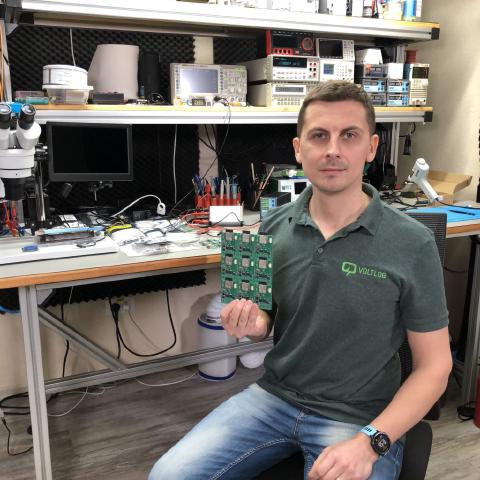
Welcome, Florin of the Voltlog YouTube Channel!
- Florin is a YouTuber and consulting engineer based out of Romania.
- Chris has many of the low cost finds that Florin discusses on his channel, often on the "In The Mail" segments. His focus on low cost comes from the hassle of importing and paying VAT on equipment.
- Florin likes that Mouser allows him to pay the taxes up front.
- He got into electronics early and eventually ended up selling dev boards to his school based on the PIC32.
- After school, he went to work in the automotive space, including for Continental
- Florin once met up with past guest Andreas Spiess, while he was visiting Romania.
- Automotive videos come from his general interest in cars but also working on automotive chips for Freescale in France from 2011-2012
- ECU
- The ESP32 CanLite has GPIO in addition to LIN/CAN
- CAN bus is a protocol, without any requirements on the formatting of the message (or frame)
- The parts (and the entire product) would need to work over a wide temp range to be useful in a car long term.
- What are users doing with the CanLite?
- Grabbing info from car
- Interfacing with CAN
- We have discussed CAN bus with Macchina on the show before
- CAN works with a "lowest wins" bus topology.
- Florin is also consulting when he's not making videos. People find him via YouTube.
- He has had 3 Different labs, in his latest, he made a custom workbench:
- IoT
- Florin recently got into ham radio (callsign: YO4VLT) and built a UHF repeater/gateway:
- His new office also has a Tasmota floor heater, so he built a control board for it
- Looking for gift ideas for the holidays? Florin has you covered:
- Chris asked for 2 recommendations off the list:
- Cheap option: a metal plunger for syringes for dispensing paste or flux
- More expensive, but still around #100: a Uni-T waveform generator:
Automated Transcript
The transcript is autogenerated from Zencastr, our recording software. We attach no guarantees to its accuracy, but offer it as a way to make the show more accessible: 568 - Voltlog - Auto-TranscriptTranscript
Florin Of Voltlo: This is The Amp Hour Podcast. Released November 28th, 2021. Episode 568, sponsored by Mauser Electronics. YouTube to consulting with Florin of Voltlog. Welcome to The Amp Hour. I'm Chris Gammell of Contextual Electronics.
Florin Of Voltlog: My name is Florin, but most people know me as Voltlog from the Voltlog YouTube channel. Hey, Florin. How are you? I'm doing good. And how are you, Chris?
Florin Of Voltlo: Good. I find that I increasingly have stuff. I point to stuff on my bench and people are like, oh, where'd you find out about that? I was like, well, Voltlog made videos about this. Your YouTube channel and your videos, increasingly you find stuff that I'm like, oh, yeah, that's got to be on my bench. So thank you for that.
Florin Of Voltlog: Yeah, no problem. I like doing that stuff. And I think that's probably one of the main reasons that people follow my channel, because I discover interesting stuff that they can learn about it and then later on use it for something.
Florin Of Voltlo: That's right. Yeah, I think the main one on my bench is the long throw microscope. It's really, it's like a webcam almost, but super useful for basically monocular, not binocular, but monocular vision. And then I put it to a small monitor on my bench. You actually put that into a trinocular setup, right? Yeah.
Florin Of Voltlog: That's a great thing, though, because you can use it in different setups. Like you have the monocular and you have it at the higher distance up your workbench, because I've seen a picture of your setup and that works great for you. For me, it works better on a trinocular microscope. So that's great because we have the flexibility for that kind of camera.
Florin Of Voltlo: Yeah. And it also seems like you kind of find stuff that's like lower cost, usually like AliExpress, Banggood, things like that. And that's always useful, too, just because it's a lower risk. It's not necessarily the cheap, it's not like $10, but it's like, you know, maybe $100 for a microscope versus, you know, looking at something like Dave has, like a Mantis. So I'm like, oh, I'm not paying three grand just to try it out, you know, so that's a tough sell.
Florin Of Voltlog: Anyone would love to have a Mantis, but not anyone gets one. Yeah, that's right. And so we need the alternatives, like most people need the alternatives.
Florin Of Voltlo: I have a running eBay search, and there's like some album, there's like some like CD or album from the 70s that has Mantis in the name. And so like every, like probably like twice a week, I get this thing that's like, ooh, new Mantis listing. I'm like, oh, the CD again. Oh my God.
Florin Of Voltlog: That happens to me as well for various searches.
Florin Of Voltlo: Yeah, yeah. You got to be real specific. But sometimes it's good to have like just a really broad search and do the human filtering just because you might get someone who like labels it wrong or whatever. It's just, you know, you have to do the, put the work in.
Florin Of Voltlog: Yeah, and for that reason, you could get like a really low price for a specific item which would otherwise sell for a lot more. That's right.
Florin Of Voltlo: Yeah, I used to, so I used to play drums. And I think I mentioned this on the show before, but I used to have running searches on Craigslist, which is like a, you know, classified listing in the US. And I would always spell symbols wrong. So instead of like symbols, C-Y-M-B-A-L-S, I would do like S-Y-M-B-O-L-S. And like just get people who are terrible at spelling and try and like, try and get some cheap equipment off people who can't spell.
Florin Of Voltlog: That's really clever, man. I never thought about doing that.
Florin Of Voltlo: Yeah. It's a little more helpful when it's like, you know, really available stuff, you know, like a microscope is going to be a lot more rare, it feels like. Yeah. So you're usually buying this stuff from like a AliExpress or Banggood or stuff, but you are shipping it to Romania where you live. What's it like in Romania? What's the electronics seem like? What's it like getting stuff imported from China equivalent? What's that like?
Florin Of Voltlog: So I would treat these as two separate subjects. So one of them, importing stuff into Romania is not as easy as one would think of. Like when you compare the experience that you have in other European countries or even with importing stuff into the US. So first of all, when you import something from outside the European Union into an European Union country, you will have to pay VAT on that. And recently they changed the rule on that because previously there used to be this rule that anything under 10 or 15 euros wasn't really supposed to be charged. So a lot of these small packages used to go through without being charged VAT. But recently they changed that. So now it doesn't matter which value your package has. It has to be charged with VAT. And because of that, various postal services also started charging this handling fee because they are now collecting that VAT for the government.
Florin Of Voltlo: Yeah. And just for people that are US-centric, VAT is value-added tax. Is that right?
Florin Of Voltlog: Yeah. Yeah. That's just a tax that gets added to every product, every purchase.
Florin Of Voltlo: Yeah. Well, you operate as a business. Are you allowed to do the pass-through thing?
Florin Of Voltlog: It depends. Like it depends on what, because you could be registered with different types of handling of VAT. So the most common way is that you still pay VAT. So there's no... But once you reach, once you go past a certain threshold in your business, you are obligated to switch to collecting and dealing with VAT.
Florin Of Voltlo: VAT. Got it. Got it. Yeah. That's... Yeah. I mean, the handling charge too. That... I mean, what I... Did you make a... Someone made a video about this. I think it might've been you. But it was basically like a lot of the low-cost packets. So like something where you might get like a $5 supply in eBay, like a power supply. It's like that becomes... That doubles the price and becomes a hassle now.
Florin Of Voltlog: Yeah. Just because of the handling charge, which is a fixed rate. And sometimes that's higher than the actual VAT.
Florin Of Voltlo: Mm-hmm. Yeah. Okay.
Florin Of Voltlog: But then you have also a number of other limitations that might happen for various products. I don't know. Some types of products have these additional tax, additional import tax on top of VAT. But it depends on the category that that product falls in.
Florin Of Voltlo: Mm-hmm.
Florin Of Voltlog: So I really don't remember any specific examples right now. But often cases, you are charged with an additional import tax.
Florin Of Voltlo: Got it. All right. So more of a hassle than it used to be, which sucks.
Florin Of Voltlog: But... Yeah. And it's also not just about collecting these taxes. It's also about how slow the process is. Oh, right. Yeah. A lot of... At least here in Romania, a lot of this stuff doesn't happen automatically. So I would be happy if the package was delivered next day with an invoice. Mm-hmm. And I'll just have to pay that invoice. Yeah. But a lot of the times, it's not like that. It's a hassle. Yeah. A lot of emails have to be sent. A lot of documentation needs to be supplied to the customs authority. And that just takes time and add delays when you're doing consulting for a client and you have to build a board. Right. And you have to build some prototypes. You have to explain to that client that there's a one-week delay because some authority in your country needs to process that import until you get it.
Florin Of Voltlo: Right. I'm walking them through what a capacitor is and an inductor and why I had to buy these. Stuff like that. Oh, my God. Yeah. Yeah. Oh, boy.
Florin Of Voltlog: So that definitely adds a layer of complexity and delay to every import I have to do. Mm-hmm. Yeah. But there are also good stories. Like, for example, Mauser has this system where they collect all the tax and they file all of the documentation required on their end. Oh, really? So, yeah, I could have, like, a Mauser order placed Friday evening and have it delivered Monday morning. And that's, like, 6,000 miles away from me. And that's impressive.
Florin Of Voltlo: Yeah. Yeah.
Florin Of Voltlog: And that's totally because they handle this on, like, a higher level. It doesn't have to go through the local authorities here anymore.
Florin Of Voltlo: That's nice. Yeah. Hmm. That's great. So then you also said there was, like, a two-parter there as well. Yeah. So then what is Romania like? So is there an electronics scene locally, stuff like that? How did you get into electronics?
Florin Of Voltlog: It's a funny story, actually, how I got into electronics. Like, I don't know how it used to be in the U.S., but here when I was a little child, you know, the old cars used to have very basic electronics in them. But still, they have a couple of blinking LEDs or stuff like that. And I was always curious, you know, when I saw those things. And I always wanted to understand how that works. And I wanted to be able to build my own circuit. So I started as a very young kid, you know, tinkering with electronics.
Florin Of Voltlo: Usually the next line in the story is, then I started taking things apart. I'm a little worried. I'm a little worried for the adults in your life at this time. They walk out to their car being disassembled.
Florin Of Voltlog: Yeah. I mean, I did it all. Like, my parents keep telling stories. Like, I used to plug things into the wall sockets. And I used to get shot early on.
Florin Of Voltlo: Yeah. Yeah.
Florin Of Voltlog: And I did all of that as early as possible. But then, you know, so I started getting some electronics books. Some of the stuff in there was very hard to understand. And I realized I need to follow some kind of school education that would help me understand what they're saying in these books. So I can understand those circuits and actually build them and modify them. So then, you know, the obvious followed. I studied. I got my bachelor's degree. And from then, I started doing all sorts of projects and even consulting. Like, I'm pretty happy to and lucky to be able to say that, for example, during my bachelor's degree, I was able to design this development board based on a microcontroller and actually sell it to the school where I was studying at.
Florin Of Voltlo: Oh, really? Wow.
Florin Of Voltlog: Yeah. So not a lot of people get a chance to do something like that. So I was pretty lucky to be able to do that.
Florin Of Voltlo: And what was on that board?
Florin Of Voltlog: So the issue was that we had these microcontroller classes in school, but we studied a lot of theoretical stuff. Like, we wanted to be able to test the programs that we were thinking about, the algorithms that we were implementing. And, you know, we wanted to see how coding for these registers inside the microcontrollers would actually behave on real hardware. And we were missing that in class. So I just built a board that used a PIC32 microcontroller and had lots of peripherals on board. Peripherals that are typically fun to play with, like sensors, temperature sensors, accelerometer, you know, an LCD, the serial interface, stuff like that. It would be fun for someone to write code and actually see something happening with that board.
Florin Of Voltlo: Right. And I think you also remove a lot of the jumper wire aspect that a lot of school programs do, which is, you know, it has value in its own way. But if you're focusing more on the code than the, you know, what hooks to what, then that can really help to move things along and let people go a little deeper on the code side.
Florin Of Voltlog: Yeah, certainly. But then to answer your other question, what is the electronics scene here in Romania? It's not as good as I would like it to be. I know, for example, that if you want to work in this field, there are a few companies, mainly in the automotive space, that hire people to build electronics. But other than that, I don't think that there is a lot of electronics industry here in Romania. And it was the obvious choice for these big automotive companies like Continental and others to open up shop here in Romania because there are a lot of talented young people. And it's probably cheaper for them to hire talent here than it is in the west of Europe. But other than that, I don't think we have an electronics scene here in Romania. So that's why a lot of my activity is in the online playground.
Florin Of Voltlo: Yeah. I mean, that's great. And it opens it all up so that you can be in the marketplace and offer your services and obviously make great videos. That's awesome.
Florin Of Voltlog: Yeah, totally.
Florin Of Voltlo: Yeah. Cool. Yeah. I remember Hungary has a decent amount, which is east of Romania. Looking at just like other countries in the area, Poland has, you know, we've had Ant Micron. They're up, I forget where they are, Poznan maybe, but they're up in Poland. So like kind of like obviously Eastern Europe, yeah, Eastern Europe and stuff like that in general has some electronics, but it is, it seems kind of, it's a large area, of course. You know, it's just, it almost seems equivalent to the US and like spreading across the Midwest. There's like pockets of, there's pockets of electronics in different areas. But if you're not in that specific pocket, it's like, okay, well, what is this really going to do for me?
Florin Of Voltlog: Yeah, exactly. And in the actual city where I live is, Constanza, which is near the seaside, it lacks even more in the electronics industry. So I had the choice of either do something in the online space or relocate. And I really like the place where I live. I wouldn't want to move unless it's absolutely necessary.
Florin Of Voltlo: Yeah. I mean, living by the seaside, that's pretty nice. Yeah. I love it. Yeah. Yeah. Black Sea. That's cool. That's really cool. I'll have to look at some photos later. That seems like a, there's like one really interesting looking old building right on the seaside in the Google images. I'm not sure what that is. It looks like a. It's the casino.
Florin Of Voltlog: Maybe it's called the casino. Yeah. That's actually renovating right now.
Florin Of Voltlo: Oh, cool. Okay. Yeah. That's great. All right. I'll add it to the list. Got other places I got to visit. Yeah. That's great.
Florin Of Voltlog: Actually, Andres Peace, you know him, you've had it as a guest on Game Power. He, he was here. He visited and he liked it very much.
Florin Of Voltlo: Oh, awesome. That's, you guys get to hang out?
Florin Of Voltlog: Yeah. Yeah. It was pretty cool to, to hang out with the Andres Peace, the legend.
Florin Of Voltlo: Yeah. Yeah. This is the Swiss YouTuber. Yeah. Yeah. So let's talk about some of the videos you've been doing. So you mentioned the automotive industry and I have noticed you've done quite a few videos on, on like interfacing to a car, things like that. Yeah. You just did a recent one about ESP32 and controlling, controlling a car over CAN bus. What's your, what's your general interest in automotive?
Florin Of Voltlog: So this kind of, this topic kind of opened up to me when I was in, in France in 2011, 2012, I was there to get my master's degree. And as part of that study program, we had to do an internship with a company in the field of electronics. And at that point I went with Freescale and I was assigned to their analog and mixed signal and power division. And they generally deal with automotive in that Freescale division.
Florin Of Voltlo: I was going to say, we should say Freescale rest in peace now, now NXP. Yeah. Now NXP. Yeah.
Florin Of Voltlog: Yeah. And, and, and during my internship at, at Freescale, I got to work at this, uh, really cool IC that they were developing. It was supposed to be the next generation, uh, engine control unit. So like the CPU inside an engine control unit. And as you know, in, across all of, in all industries, everyone tries to, you know, increase their profit margin. And to do that for, uh, an engine control unit, you basically need to integrate. Integrate as much as possible into a chip and avoid populating that stuff as external on, on a PCB.
Florin Of Voltlo: Right. Which, which these days would probably make you seem, if assuming you could get the ECU chip, it would make you seem very smart because you wouldn't have all of the other chips that you would need to buy and couldn't get in the automotive space.
Florin Of Voltlog: Yeah. Yeah. That, that would probably be a good idea these days. Yeah. So that was like my first incursion into like the automotive electronic side of things. And I thought it is, I really liked it. I'm, I mean, there was so much stuff that I didn't know it worked the way it did.
Florin Of Voltlo: And kind of, any examples of that?
Florin Of Voltlog: Like this stuff that I worked on this chip, like they integrated so much stuff inside a chip, like both analog and digital, like they used to need all kinds of these external filters, like no more. We will put them all inside the chip. And on top of that, we'll put multiple values and we'll add this like selection matrix and you can control and enable all of those filters digitally. And all of a sudden you have all of these new capabilities that enable so much more for, for that ECU. Got it.
Florin Of Voltlo: And I mean, when you're looking at an ECU as well, like I, I guess my, my inclination is to think that it's just kind of like maybe a CAN bus or two and a LIN bus or two, and then that's the main interface to it. But it seems like you're talking more like GPIO and like direct interfacing.
Florin Of Voltlog: Yeah. I guess that can vary from manufacturer to manufacturer, but the ones I've seen, like they, they have like a bunch of sensors that tie in directly to the ECU because the ECU is the one taking decisions on how to run the engine and running an engine is based on a lot of sensor data, sensors that are spread around the engine.
Florin Of Voltlo: I see. So it's, it would be too much overhead time to have it go through a second, secondary processing, or you wouldn't want to have it on a bus where it might be time multiplexing and that sort of thing.
Florin Of Voltlog: Yeah. I would guess so. Like many important sensors tie in directly to the ECU box.
Florin Of Voltlo: Got it. Okay. Yeah. And I guess the other thing too, is it like, I get a little confused about the term ECU because I thought that other processors in cars are sometimes called ECUs, even though they're not directly controlling the ECU or the engine. Is that, is that, is that correct or incorrect?
Florin Of Voltlog: From my side of things, the way I see things and the people I've worked with, we were only calling ECU like the control that deals with the engine.
Florin Of Voltlo: Got it. Okay. All right. So then that, that makes more sense then too. I mean, so then what is the relative spec? I mean, obviously this is 2011, 2012, you said. So like, but what is the relative spec of a processor in that space? Is it like a Cortex M zero, Cortex M four, Cortex a something?
Florin Of Voltlog: I can tell that it was all custom.
Florin Of Voltlo: Like, Oh, interesting.
Florin Of Voltlog: Okay. It was all custom. And I can tell you that due to wanting to get the most out of it, it was all coded in, in assembly. So it was running assembly code. Oh, wow. Okay. But it doesn't have to do like very complicated stuff. It just needs to take very fast decisions based on, you know, sensor data.
Florin Of Voltlo: Got it. So like pipelining, you know, if, if this sensor goes up, then do this other action on the other side on a GPIO or something like that.
Florin Of Voltlog: Yeah. And at the same time control, like these high current outputs that sometimes drive, you know, the injectors that inject fuel into the engine at the same time, you, all of this operation needs to happen over a very wide range of temperatures and like supply voltages, which complicates things.
Florin Of Voltlo: Yeah. Yep. Yep. Yep. Yeah.
Florin Of Voltlog: But you know, we were talking about how, how this opened up my, my interest, my interest for the automotive electronics, and you can kind of see how there's all sorts of complicated and interesting stuff happening in the automotive electronics. And I like it. And so I kind of continued after that and, and started thinking about these small projects that I could design in, in my lab and, and play with automotive electronics. And one of them is the CanLite. And this is a board that I designed, probably started designing that a year ago. And what I wanted to do is to kind of interface with some of the electronics on board of my car. So I wanted to kind of read some information from the CAN bus and maybe put something on the CAN bus that would trigger a reaction in the system. So I made this board, which has an ESP32 on board. That is the processor of the board. Then I have the CAN transceiver for interfacing with the CAN network. The ESP32 does have a CAN interface, but it needs an external transceiver to, you know, switch the lines at the correct voltages. And I also added a couple of automotive high side switches to this board. Now, automotive high side switches are like, you know, a MOSFET, just that it has some added intelligence. It has some added protection features. So you deal with it approximately the same way. You just switch a logic high or low to control it, but it does its own thing to protect it, to protect it against transients, to protect it from over temperature, over current situations. And that's really nice to have because from this little board, I can then turn on or off a small motor. I can control something on power to something that is hooked up to my car. I want to say that it also contains an automotive grade DC to DC converter for power because, you know, you can't just go and use any DC to DC converter on one of these boards because what might happen is there are a lot of transients on the, like the 12 volt line on a typical car. So there is a high chance that typical converter might fail at some point due to all the stress that it encounters.
Florin Of Voltlo: Yeah, that makes sense. Yeah. I mean, it is a, it is a rough environment and the, the ESP32, what is, what is that rated for in terms of temperature? Like, could you actually put this whole unit into a, you know, automotive rated environment or is it more like zero?
Florin Of Voltlog: It's more like standard. It's more like standard temperature range. So you wouldn't expect it to kind of work at those extreme temperatures. But then again, if it sits on the inside of the car, it's probably not subjected to, to those. Right. Right. Most of the times it's, it will not be subjected to those extreme temperatures.
Florin Of Voltlo: Yeah. Yeah. I mean, and this seems like this is a great way for people to kind of start tinkering with their car, maybe not make a product out of it, but then they, you know, they could get a better feel for what's going on and then harden, harden it over time and stuff like that.
Florin Of Voltlog: Yeah. I think it's an awesome little can hacking platform as otherwise, what are you going to do? Are you going to grab like one of these big STM 32 development boards and yeah, that's going to take up a lot of space and it's going to make your life harder. If you just need a can interface and the beefy processor to run your code.
Florin Of Voltlo: Yeah. Well, that's interesting. So, so obviously you talked to your, your users, uh, the people that are buying these boards, what are they, what are they doing with it?
Florin Of Voltlog: So they're doing lots of interesting stuff. Like one of the users emailed me some pictures and he actually just grabbed the source files and spun a new board based on that design. And it's actually grabbing, uh, some useful information from the canvas, like speed of the vehicle, the temperature of various fluids. And it's, uh, showing them on this, uh, head up display that he put up on his dashboard.
Florin Of Voltlo: That's cool. Yeah. Yeah. So a lot of people that are like tweaking and they like to, uh, they want to like optimize their car and driving and stuff like that.
Florin Of Voltlog: Yeah. There might be other interesting stuff. There might be some secret stuff. I don't know. People are not telling me everything.
Florin Of Voltlo: That's right. That's right. Yeah. It's not, it's not sending back telemetry from the ESP 32 to, to Florence computer. Yeah. Yeah. No, that's great. I mean, and I think having that connectivity to that as well, I mean, you might even be able to put it, you know, under the hood, uh, through the firewall without having to actually punch through the firewall of a car and you could have some more connectivity, which is great.
Florin Of Voltlog: Yeah. You could adjust settings on the fly and just from a simple webpage that you open up on your smartphone.
Florin Of Voltlo: Yeah. Yeah. And I mean, isolation then as well, right. If this thing's not that it would be floating to high voltage levels or anything like that, but I guess maybe in a, if it was in a EV or something, it could maybe float up.
Florin Of Voltlog: It's always nice that you, if you don't need to touch the hardware, once you've installed it, it's always nice if you don't need to get back in there and mess with the wiring.
Florin Of Voltlo: Yeah. That's great. That's great. I mean, and so, so then interfacing with CAN as well, we've had Machina folks on here many years ago and they were doing some CAN bus stuff. I remember them talking about like, you just kind of like can kind of, it's not encrypted. You just kind of push and pull readings off of there. It seems like it's kind of the wild west. You just have to like know what you're looking at and know what you're reading. Is that, is that sound right?
Florin Of Voltlog: Yeah. So, so you do pick up everything that's on the bus, but knowing what every byte of data means, that's a whole nother story because there is literally almost no standard. I mean, each manufacturer does have its own standards, but they're kind of secret about it and not releasing it to the public. So you kind of do a lot of reverse engineering to figure out what's going on on the bus and what each frame ID points to. And sometimes a manufacturer, they go on top of the standard CAN bus spec. And if they want to transmit more data, they wouldn't be able because of the CAN bus, you know, framing and how it's organized. But what they do is they sometimes split their data across multiple CAN transmissions and they kind of add their own protocol on top of CAN bus to be able to reconstruct all of that, that data. And you're really in trouble if you're trying to decode something like that.
Florin Of Voltlo: Yeah. Yeah. You're like, this doesn't make any sense. You got to glue it back together. That's, that's really weird. So like in terms of like the CAN protocol and stuff like that, then too, is it just if the bus is available, it's just like, you can kind of take control or their priority levels. How does, how does that kind of all get coordinated?
Florin Of Voltlog: So I'm, I'm hardly an expert on, on, on this field, but.
Florin Of Voltlo: More expert than I am. Yeah. Yes. That's all the matters here.
Florin Of Voltlog: Here's how it works. It's, it's based on the, so the way the CAN bus is designed is that it's based on the priority of the ID that you're sending. So. Ah, okay. Yeah. So the, the lower the ID, the higher the priority and that message is going to be a process first. And what happens in, in a typical automotive CAN bus network, like the most important stuff that's related to the engine, the braking, the, the critical stuff that has the lowest IDs on the network. So. Breaking is only if you don't want to go fast, man. I mean, come on.
Florin Of Voltlo: Yeah. True, true, true racing mindset is, you know, braking is last.
Florin Of Voltlog: I get that. Priorities can vary from, from one man to another.
Florin Of Voltlo: Uh huh. Yeah. That's. And, and is that like settable then as well?
Florin Of Voltlog: Uh, sorry, I didn't get that.
Florin Of Voltlo: Is it settable? Like the, can you set what priority is what, like, so if I open up the hood and started tinkering with the brake system, is there like a dip switch in there? So I could switch priority from like a six to a seven?
Florin Of Voltlog: No. So that's based on a fixed ID that that particular module has or that particular sensor has. So for example, I'm just pulling numbers here. There might not be real addresses, but let's say some hex address, which is 110 has a higher priority than a higher number.
Florin Of Voltlo: Yeah. Got it. Yeah. I've done something like this on an RS 45 bus where it was like lowest wins because it was actually like, it was like X or in the addresses or something like that, but it was like going through all the different, uh, addresses and basically once it hit the bit, once it hit like a one in a, in a binary number, it's like, okay, now I know I can talk to this thing.
Florin Of Voltlog: Yeah. So it's, it can bus is doing a similar thing and I don't know all of the details, but if two devices want to talk at the same time, because of the way the, the network is, is constructed, the lower, uh, ID is, is always going to have priority. So he's going to talk first. Got it.
Florin Of Voltlo: That sounds like a kind of hectic.
Florin Of Voltlog: And yet is, is used for the most important stuff. That's right. Yeah.
Florin Of Voltlo: Yeah. Well, uh, I'm going to start riding a bike more, I think. Yeah.
Florin Of Voltlog: I think there's, there's really a lot of backup built in, into these, these protocols. So there are a lot of checksums and a lot of, you know, opposing values that need to match for the most important stuff for that computer to actually consider that information good and well received.
Florin Of Voltlo: Yeah. I guess I'm thinking about it in terms of like, if I was just grabbing modules off the shelf and like, you know, okay, this brake module, this engine module, whatever, whatever, whatever, and gluing it all together. But in reality, the car maker knows they, they can decode all the packets. They know what's going on when they piece it all together.
Florin Of Voltlog: Yeah.
Florin Of Voltlo: And then we're just kind of reading it. If we want to, if we want to peek into their world. Right.
Florin Of Voltlog: Yeah. And, and to complicate things on typically on a car, you'll also find a can gateway because on a car, there's usually more than one can networks. So all of these different can buses tie in to a can gateway and the can gateway has to like interface between all of these buses and let through only some of the messages from one bus to another.
Florin Of Voltlo: Got it. So it's like a, it's like a translation system almost.
Florin Of Voltlog: Yeah. Almost like some of the messages from the engine. We want to propagate down to the, like the multimedia system. So we can show by RPM and speed on the digital screen, but we don't need to send all of the data from the engine canvas to the multimedia canvas. So all of this filtering happens.
Florin Of Voltlo: Yeah. That, yeah. You don't, you don't need like the temperature of the, the cooling fluid or something like that, unless you're doing some really crazy stuff. Yeah. Yeah.
Florin Of Voltlog: And on, on top of that, to complicate things even more with more recent cars, they have also started encrypting some of the stuff. So like modules will first try to authenticate with the ECU to make sure that they belong to that car. And they have not been like harvested from another car and just installed on this car. So they use some encrypted keys to authenticate. And only after authentication is successful, they start talking on the canvas. Ah, I see. So it's even more complicated with newer cars.
Florin Of Voltlo: Huh. So then what, what are you, are you messing with your car? I mean, what is the, what's your interest in this?
Florin Of Voltlog: Yeah. So what I wanted to do is it turns out you can kind of display your own information on the small display you have inside your cluster with the speedo. And to do that, you basically have to first capture the information that you want shown there from the canvas. And then you'd have to send it in a certain way to the cluster computer, such as to create this custom menu on that small LCD and show your own data. So they have actually built in this, this functionality into the cluster firmware, because there are some modules on a car that would natively want to do this. I wanted to build this board to replicate this functionality and show data that wouldn't otherwise be visible on that small LCD screen.
Florin Of Voltlo: I see. And so, and you're monitoring, like, are you doing some mods and stuff like that to your car? Is that why?
Florin Of Voltlog: Uh, I'm not big fan of doing mods to my car, but it's just the electronic side, which is very interesting. And just reaching that milestone of finally being able to do that, it just means a lot to me.
Florin Of Voltlo: Yeah. Yeah. Hmm. That's great. I mean, and, and I guess we've implied here, but you are selling these as well. I mean, once you, when you can source the components, you just made a video about, uh, having trouble sourcing, but what, what is the experience like, like selling Tindy, Tindy and equivalent?
Florin Of Voltlog: So the selling side of things on Tindy is pretty straightforward. Like they take care of everything and that's pretty easy. I mean, I've only been on, on the platform for starting this year, so I don't have a lot of experience, but it's been going great for me. Uh, now the actual building of the electronics during these times, that's a whole different story. So for example, I am already at revision D for the, uh, can light board just because I need to constantly switch some parts and find new ones because the old ones are not available anymore.
Florin Of Voltlo: Yeah.
Florin Of Voltlog: And they have those delivery dates of, I don't know, like next year or two years ahead. And I can't wait that long. And the people on my Tindy store can't wait that long.
Florin Of Voltlo: That's right. Yeah. Oh my gosh. Yeah. It's a, it's, it's a shit show out there for sure. It's a, especially, I mean, well, especially automotive, right? I mean, like that. Yeah. Yeah. More than anything else. You're just kind of scraping the bottom of the barrel.
Florin Of Voltlog: It's probably the worst kind of business that you can be in at the hobby level that I am. Right. It's, it's worse for the big auto manufacturers, but if you think about it, it's going to be much worse for, for the little fish like, like myself.
Florin Of Voltlo: Yeah. Well, it's nice that you, you know, you offer the files. You're like, if you want to try and build this yourself, uh, good luck. Yeah.
Florin Of Voltlog: I've had the biggest trouble, you know, finding the high side switches, but some people don't need those. They just want to hack their canvas and they just don't need to switch anything. So I have the option of ordering the board without those high side switches, just in case I can't get them anymore.
Florin Of Voltlo: That's good. Yeah. Yeah. That's, it's a, it's, it's a, it's crazy times. I mean, uh, so do you have any, any tricks you'd like to share about sourcing components? Anything?
Florin Of Voltlog: Are you, uh, do you like one trick, which might be too late to apply for most people is to keep a good stash of the components. Right. Right.
Florin Of Voltlo: Time machine. That's what that's called. Yeah.
Florin Of Voltlog: Yeah. So that saved me like with a recent project that I was doing for a client, uh, on my consulting side of things, I just had a bunch of the parts that we needed for the prototypes that I was building for, for this client. And I had them in my own stash of parts because I do have a lot of parts stashed in, you know, these Ikea plastic bins in, in my lab. And, you know, sometimes that really helps because I just went to my boxes and found the STM 32s that he needed. I had about 10 of those left from a, a, a previous project. So I was able to build his 10 prototypes and everyone was happy.
Florin Of Voltlo: I mean, you, what you really should have done is you should have sold those STM 32s on the open market and just retired. You could have just been, you know, living, living large by the seashore. Yeah.
Florin Of Voltlog: Skip the, skip the hard work of building the hardware.
Florin Of Voltlo: That's right. Yeah. Yeah. I mean, how is it, how is it on the consulting side of things?
Florin Of Voltlog: Well, it's, it's hard. Like, I mean, recently I've, I've had clients that are not necessarily building stuff in the, you know, hundreds of thousands or even thousands of pieces. So it's, it's mostly they're, they're building stuff in the tens of pieces. So yeah. Quantities. So that's much easier, but still you have some, some difficulties. Like you, you try to work your way around the design phase, such as to have some backup plan. Like is, is this, I see really the, the, the only one that we could get it because if this becomes hard to get, then we're going to be unable to build these boards. That's right. Yeah.
Florin Of Voltlo: You can have a bad time.
Florin Of Voltlog: Yeah. So I, I try to do my best to, you know, find and select some, some components that have some that can be replaced at some point, maybe with a little effort, just by switching to a different footprint or adjusting some of the IO. But I try to keep in the back of my mind that I need to find a part that should and be able to be replaced at some point with a different part.
Florin Of Voltlo: Yeah. Yeah. We're back with Mouser Electronics and talking with Paul Gallaud, a senior technology specialist, who will be talking about the new section on the Mouser Electronics resource page about immersive technology and how it will change workflows in the future. I asked Paul what he saw as the most impactful elements of immersive technology.
Chris Gammell: Well, I think there's a couple things. We're going to be doing designs in a whole new way. One of the exciting things I think from an engineer, what, what do we care about it is collaboration is going to change immensely. You know, with the internet, we all communicate and share our ideas, but we do that kind of with pieces of paper, right? We've moved, as you've seen with all this COVID now that everybody is doing Zoom and, and communicating on that, but it's still a kind of a two dimensional thing. What though, if I could step right now, instead of just seeing you on a screen and actually feel that you and I are present, that it feels like I'm just three feet away from you and you and I are having kind of a conversation where you can actually see me having my cup of coffee and you feel like that I'm present and it sounds that way in it, in it, and, and you can move around in a space with me and maybe we can jointly experience things together.
Florin Of Voltlo: I asked Paul about some of the technologies that will allow us to feel more present across the web.
Chris Gammell: I think, first of all, it's interfaces that are providing new accessibility. So one of the ways, for example, is a tactile connection. So you've probably seen people with gloves and the ability to take a type of glove that's on them, manipulate this glove and then move digital objects in space. So that's coming. This whole explosion that's happened with spatial computing leaders, such as NVIDIA with what they're doing in the, in the computational space and, and other world-class leaning semiconductors are taking the ability to manipulate the math and the processing in three dimensions and do the calculations so that this whole three-dimensional aspect of what's going on and being able to both look around in a 360 degree world and go up, down, left, right, inside, outside, and that, that type of stuff. It's just happening automatically.
Florin Of Voltlo: So what are some real world examples of this experience and how does it impact consumers?
Chris Gammell: My daughter and her husband are looking for a home. Well, you know what they're doing? They're virtually touring all that type of stuff. Again, that's a virtual tour where you can look 360. They're doing it on a two-dimensional screen. But the next step is to be able to take that and if you will put on a headset, put on some, you know, tactile gloves and you will be in the house. You won't just be looking at it two-dimensionally on a computer screen. You'll be like you're there, thereby making it so that it's almost like you went to the house itself. You can walk through and manipulate, you know, your space and position in this domain.
Florin Of Voltlo: To learn more about immersive technology and how it might impact your workflow, check out the amphour.com slash immersive, which will take you to the Mauser Electronics Immersive Technology page. And now back to the show. How are people finding you for your consulting work?
Florin Of Voltlog: So I think my YouTube channel is the main gateway into finding clients for the consulting work. So people will typically search online for a particular topic that they're interested in for building stuff. And sometimes they end up on my videos, which might, where I might be talking about that subject. And they see, hey, this guy is talking about exactly what I want to build.
Florin Of Voltlo: Yeah. Yeah. Yeah. That's nice too. Cause then they come to you like, hey, can you build me a ESP32 with a canvas? It's like, oh, actually, yes. Yes, I can. Yeah. Yeah. I mean, it's, uh, it's interesting. I mean, would you, so then as someone, so you have 33,000 YouTube subscribers, you know, something like that, not small, not huge, but definitely a good size. Seems like a good community. Would you recommend people start a YouTube channel just for kind of showcasing their services or is it not really worth it just for that?
Florin Of Voltlog: I think it's an excellent idea. I mean, it's a little more difficult these days to, you know, kind of get noticed on, on YouTube or YouTube is so big these days and it's, it's a bit more difficult to get noticed. But, uh, YouTube, you know, from a search engine perspective, it's like what the second biggest search engine that, that people use. So that has to count for something, you know, that at some point people are going to be searching through YouTube stuff and they are going to be ending up on your videos.
Florin Of Voltlo: Yeah. Yep. Yeah. That's great. And I think, especially if people are, you know, showcasing their own projects, right? If they want to like start consulting, I think it makes sense or, you know, just start doing electronics for a living broadly, even if they're not consulting, maybe they want to go work for a company. It's like, if you're showcasing your own projects, you want to like show off what you've been working on. You're excited about electronics. It just seems like that's a, a good venue to, to do that sort of thing. It's just a lot of people are not wanting to be in front of the camera. Obviously. I think you're very, you're very natural in front of the camera. So that's a, that's a good start.
Florin Of Voltlog: I mean, it's, it's something that you work on. It's not going to be easy or your first video is probably not going to be so great, but it's something that you work on and get better with over time. So that's not the reason not to start.
Florin Of Voltlo: Yeah. Yeah. I think that's right. Yeah. It's a, you just got to not care at the beginning. Yeah.
Florin Of Voltlog: Yeah. And it's also good to not care along the way, because there's going to be some ugly comments that you receive.
Florin Of Voltlo: Oh, well.
Florin Of Voltlog: But it's part of the course and you just have to move on.
Florin Of Voltlo: Yep. That's great. That's great. Yeah. I mean, over time as well, I'd imagine that you're, you know, you build out your lab. I mean, you do a lot of videos about your lab. You build out that sort of thing over time. It just kind of seems like a gradual buildup.
Florin Of Voltlog: Yeah. I mean, I've switched to like three different labs since I've started the YouTube channel in 2015. So you kind of build and improve with each new one. The latest one is, is the greatest in my opinion. I have this great new workbench. I did the video on the workbench build. I built it from aluminum profiles instead of the usual, you know, wood timber frame construction.
Florin Of Voltlo: Mm-hmm. Yeah. I saw that. That was a good one. And you did like a, you'd be able to design, it was like an online design tool. Is that right?
Florin Of Voltlog: Yeah. I mean, I, I, I did it in fusion 360. It's got it. It's just, I just built it how I imagined it. And then there are these online shops where you order your aluminum profiles already cut to size.
Florin Of Voltlo: Ah, that's, that's what I was thinking. Yeah. That piece is what I was thinking about. Yep.
Florin Of Voltlog: Yeah. And that's super helpful. I mean, if you can get those aluminum profiles cut to length, then the only thing that you have left to do is to assemble it with screws and nuts.
Florin Of Voltlo: Mm-hmm. So I'm just, I'm just staring at your, your, uh, cover image for this video. It's, it's like, uh, do you increase the size of your head or something? It's very, it's very like uncanny value style. It's like, yeah.
Florin Of Voltlog: Yeah. I thought that would be an interesting thumbnail.
Speaker ?: Yeah.
Florin Of Voltlo: It looks like a, like a, like anime almost, you know?
Florin Of Voltlog: Yeah. I mean, you have to get creative with these thumbnails and I don't do it all the time, but when I do it, you, you notice it in. You go all the way. Yeah. People just click that thumbnail more than they would otherwise.
Florin Of Voltlo: Yeah. Yeah. That's, that's the tradeoff, I suppose, of, uh, the YouTube, the YouTube side of things.
Florin Of Voltlog: Yeah.
Florin Of Voltlo: Oh, that's great. So, I mean, so on the consulting side and generally like the stuff you're making videos about that you are interested in, like what, what would be, you know, what's your sweet spot, I suppose, on the consulting side? Is it STM 32 kind of stuff? Is it ESP 32? Is it automotive sensors? What are you, what are you hoping to do in general?
Florin Of Voltlog: I haven't done any specific, you know, automotive stuff for my consulting side because that's typically what, uh, you know, companies that build stuff that actually goes into cars, they tend to deal with, you know, bigger consulting companies, not a one man show like I'm running. Mm-hmm. So I guess that's one of the reasons which I haven't, you know, built any, any projects on, on that side of things professionally. But I do build a lot of IoT stuff on my consulting business, have a lot of clients that would like to build. So in general, you know, small stuff that's wirelessly connected and somehow contain some sensors somehow transmits data over the air. Hmm.
Florin Of Voltlo: Yeah. That's great. I, I, I've, I have said many times before, I think my, uh, my, my paycheck for the next 10 years will be things that people want to hook to the internet. You know, like a lot of industrial things that they're just like, yeah, I just want, you know, I have this thing. I want it to work. I had, it already works. I want to make it work and talk to the internet. It's like, okay, well, that's not trivial, but we can make it do it.
Florin Of Voltlog: I think that takes a good share of, of the market in, in this field and kind of specifically, I think it tailors best to this type of business and this type of consulting business where you would hire one or two engineers to work on that project and design it for you.
Florin Of Voltlo: Hmm. Yeah. Yeah. I think that's right. I think it, I think the scaling piece, especially it depends who they come through with. I I've had people come through as like software companies and then they're like, yeah, we just need the hardware at the end piece. And it's like, okay, yeah, I can do that. And then I've had other people who are like, I need you to do all of it. And then I have to usually pull in, pull in some software people and, you know, that sort of thing. And then it's kind of a different, it's a different, uh, style of thing where it's almost like a standing up an entire system for them versus kind of slotting into the system they already have.
Florin Of Voltlog: Yeah. That's, that can be nice. For example, I have my new lab in an office building and there are some software coding guys here, which are really good. And I did work with them on, on, on a past project with a client of mine. And it was a really good cooperation, you know, being so close with them. And I dealt with the hardware side of things. They did the software side of things for the client.
Florin Of Voltlo: Yeah. That's great.
Florin Of Voltlog: It's nice to have these kinds of people that you can collaborate with on, on such projects because you deliver more value in the end to the customer.
Florin Of Voltlo: So, yeah, it's almost like you're building out like a little ad hoc team and then kind of you scatter afterwards. It's, uh, yeah, it's good to have those, those kinds of partnerships and stuff. Are you, uh, where are you mostly like in your area? Like where, where are customers located? Are they kind of all over the place?
Florin Of Voltlog: Most of the times international customers.
Florin Of Voltlo: Oh yeah.
Florin Of Voltlog: Okay. I have, I have few customers from here, from Romania, but most of the times it's like United States, Germany, United Kingdom. Yeah.
Florin Of Voltlo: That's great. Yeah. International, uh, consultant of mystery.
Florin Of Voltlog: I know it's, it's nice to meet all of these people. It's nice to work on such a, uh, a variety of projects. Sometimes you get to work with other teams because sometimes, uh, you just, you're just brought on to, to help on, on a particular project on which an existing team is already working on.
Florin Of Voltlo: Yeah. Can I try and convince you to go to embedded world in March? Maybe we can meet up. I'm going to be there.
Florin Of Voltlog: I was actually thinking about that because I've heard you mentioned that in, in, in a previous Ampower.
Florin Of Voltlo: Uh-huh.
Florin Of Voltlog: So I was actually thinking about that.
Florin Of Voltlo: It doesn't, doesn't look like a short trip from, uh, from your part of the world, but, uh.
Florin Of Voltlog: Yeah. So the last time I wanted to go to a similar meetup was to Hackaday, Belgrade, I think. Yeah. I even got plane tickets and booked some accommodation there, but you know, in the end it got canceled. So.
Florin Of Voltlo: Oh, it was the 2021. Yeah.
Florin Of Voltlog: Yeah.
Florin Of Voltlo: I've heard rumor that, that we'll come back. So that's good. Yeah.
Florin Of Voltlog: Yeah. I'm kind of eager to, to, you know, leave the country and go to one of these meetups.
Florin Of Voltlo: Yeah. The same. Yeah. It's, I've, it's been, it's been a little too long since I've had, I've had like a true nerd out session, you know, in like in person. Yeah. And, uh, it's just not the same on, on, on online, you know?
Florin Of Voltlog: Yeah. I think there's a good chance we'll, we'll, uh, I'll be there. Okay.
Florin Of Voltlo: Great. Well, we'll coordinate after we'll, uh, we'll, we'll talk about that. But if other people are going to, then we could all meet up, you know, in a safe way, of course, you know, assuming that there's no flare ups of COVID like usual. So, uh, I long for the old days.
Florin Of Voltlog: You know, we have to adapt.
Speaker ?: Yeah.
Florin Of Voltlo: Uh, so you also are a ham. Uh, so I saw, I was watching your video about the repeater you did a month ago or so. What's, uh, what's, what drove that interest?
Florin Of Voltlog: So actually I wanted to, to get my ham license even before COVID and here in Romania, the exam, I mean, it's not super difficult, but it's not as easy at, as it is in, in other places. Like you still have to pass this theory exam where they put you through all of these different subjects and kind of need to know them all to pass the exam. And I studied for the exam. Then COVID came, then the exams got canceled or, yeah, or, uh, delayed. And then I was reluctant to go to the next exam because of COVID. So it kind of took me two years until I got back on track and, and finally managed to go and take this exam for, for the ham operator license.
Florin Of Voltlo: Nice.
Florin Of Voltlog: And I, uh, I got it. My, uh, call sign is Yankee Oscar for Victor Lima Tango. That is in a call sign language. I'm, uh, happily using that language, even though it's not necessary.
Florin Of Voltlo: You said Yankee Oscar for Lima Tango. Is that right?
Florin Of Voltlog: Victor Lima Tango. It's like an abbreviation from Volvo. Oh, nice. Yeah. I'm probably too excited for this.
Florin Of Voltlo: That's great. Oh, uh, cool. Well, uh, and how, how far afield is it taking you? Are you, uh, are you making contacts far and wide?
Florin Of Voltlog: No, no. For once, because of lack of gear and I'm probably also not really into that thing, making no long range contacts. I know it's, it's a thing in, in the ham operator world, but it's not what attracts me. I just have a small Balfin radio and I just use it to connect to one of these, uh, repeater networks that, uh, the awesome guys here in Romania built. It's called rolling. And so what they did is they, they built this, uh, network of repeaters. So you can connect locally, short range to one of these, uh, repeaters over analog. And then it just goes through the internet into this, uh, national network.
Florin Of Voltlo: That's awesome. Yeah. I mean, it's, it is interesting in like the days of like the internet too. Obviously you and I are talking over a very, very large distances and, you know, we're near perfect quality. Yeah. Uh, but, but there's, there's still something about it of like, you know, doing that through a hand handheld. Basically, you know, you have, you know, just it's for the interest of, of doing the ham radio side of things. So, yeah.
Florin Of Voltlog: So as you were saying, I built one of these small repeaters myself, cause for once you can connect to one of these, you know, let's call them higher power repeaters that some people built and maintain. But at some point that repeater is probably going to be offline or you're probably going to be going off coverage. And I built this, uh, portable repeater unit that just uses a small single board computer and orange pie.
Florin Of Voltlo: Yep.
Florin Of Voltlog: And it uses one of these walkie talkie modules. I believe the part number is SA 818. So it's, it's a module the size of an ESP 32 module that basically has all of the walkie talkie functionality built into it.
Florin Of Voltlo: Yeah. Like, yeah. TXRX, it does the keying for you, all that kind of thing, right? It's just like simple GPI inputs and a single antenna.
Florin Of Voltlog: Yeah. And half a watt or up to one watt of output power. Yeah. So you have this portable node that you can connect to like a wireless hotspot that you generate from your smartphone and it goes through the internet and you're onto the network from like any place where you get cell coverage.
Florin Of Voltlo: Yeah. That's pretty awesome. I mean, like that is, that is really fun for like, you know, if you're doing events or similar kinds of things, it's just, that's a lot of fun.
Florin Of Voltlog: And it can hold more users, like not just for yourself.
Florin Of Voltlo: Yeah. That's true. That's true. Huh? Yeah. I, uh, I just finished, I just finished the surely you're joking, Mr. Feynman. And there's an anecdote in there where he's like trying, he's in Brazil and he's trying to get data from Caltech. Like he, like he was on, he was on sabbatical in Brazil and he like, he was using these long range contacts to contact Caltech, you know, like Pasadena, California. And it's like, oh, that, that sounds terrible. Like when it was really, really important that you had that sort of thing, but now it's just like, okay, well, send an email or, you know, nobody thinks about it anymore.
Florin Of Voltlog: Yeah. Exactly. Distance is not a problem anymore.
Florin Of Voltlo: Yeah. But now it's just for fun. And I mean, that's, that's a super cool, uh, module. So then in terms of like the interfacing, was it tough to actually get it to getting that walkie talkie module to talk to the pie?
Florin Of Voltlog: No, because I have this kind of mindset when, when I'm building these projects and this is partly due to the fact that I present them on YouTube and I do a video each week. So I kind of don't have a lot of time at my disposal to build these projects and document them and present them on a YouTube video. So usually that's not enough time to build both hardware and software. That's usually just enough to build hardware and maybe just a little bit of software.
Florin Of Voltlo: Got it. Yeah.
Florin Of Voltlog: Just the timeframe is, is too short. And what I like to do is I try to build projects where I can do a lot of the hardware side and very little of the software side. And this is one of those examples where the software side of things was already done for me.
Florin Of Voltlo: Yeah. Because of the, it's on the, the pie and the, just like a software stack on the, on that Linux board and stuff. Yeah.
Florin Of Voltlog: They just built this, uh, Linux image that you just load onto an SD card and it already has all of the required scripts and software pre-installed. It's just a small config file that you need to adjust to your own needs and then you're up and running.
Florin Of Voltlo: Yeah. Florin, when are we going to want to get better at software? This is the thing I keep struggling with, you know, like, uh, yeah, I just, I don't, I don't know, you know,
Florin Of Voltlog: I don't think there's enough pressure these days. Like, uh, like, I don't know, 10, 15 years ago, maybe there was a lot more pressure and you really had to do it yourself. But these days I take on a new project. And even if it needs a, a, a large chunk of software to be written with for, I can just collaborate with a programming guy that does all the programming for me. I deal with the hardware. He deals, he deals with software and we're both happy at the end of the day.
Florin Of Voltlo: Yeah. Yeah. See, now this is another thing where the internet, it just ruined things, you know, it ruined the long range contacts. It ruined the collaboration used to, you know, it used to be more self-sufficient, I guess. I don't know. Yeah. Yeah. We just get to, we just get to play around with the stuff that we really like the hardware, you know?
Florin Of Voltlog: Yeah. I have, I have a lot of examples like this in, in my recent projects. The other one is the valve controller based on ESP 32. Mm-hmm. That one just was designed to run this open source, uh, firmware, which is called Tasmota. And it's this MQTT based platform that runs on ESP 8266 and on ESP 32s. And it's just great for building automation type stuff because it has drivers for most of the stuff that you would normally connect to an ESP 32. And you just load that, that firmware image and you're good to go. You just need to configure some GPIO and everything just runs.
Florin Of Voltlo: Huh. And what, what kind of valves are we talking about here?
Florin Of Voltlog: I'm talking about these thermostat valves for a floor heating system.
Florin Of Voltlo: Oh, cool. Okay. Like a, uh, radiative, like a style heating.
Florin Of Voltlog: Yeah. Yeah. They are electric valves. They are typically based on this, uh, wax cartridge and they have this small resistive heater. So when you apply power, it starts heating up and you know, it takes about two minutes for the wax inside that cartridge to completely expand and push this spin to actuate the valve.
Florin Of Voltlo: Huh. It's wax based. That's really weird.
Florin Of Voltlog: I don't quote me on that. It's, it's probably not the most accurate piece of information. I'm just guessing here because other, other types of similar valves are, are, are built on wax cartridges.
Florin Of Voltlo: Well, that's yeah, that's, I mean, that's really cool if it is though. I mean like that's, I just feel like that would wear out, but I guess the, you know,
Florin Of Voltlog: it's the most reliable way. It turns out it's the most reliable way of controlling these valves. Cause the other way would be to have some mechanical, you know, gears or yeah.
Florin Of Voltlo: Right.
Florin Of Voltlog: Right. Right. And that's a lot more parts that have to move in and that's a lot more stuff that could fail in the longterm.
Florin Of Voltlo: Yeah. Right. And I was, I was worried about that sort of, and so this is like, so this is like resistive heating or is this like the, uh, resistive style.
Florin Of Voltlog: It's just a resistive, uh, component in there that heats up something could be wax, could be another type of fluid that just expands with temperature inside the cartridge. And through the action of that fluid expanding, it just pushes a pin that actuates a thermostat valve. That's super cool.
Florin Of Voltlo: Yeah. And so this is what's keeping your lab warm or your home or what do you use it for?
Florin Of Voltlog: Yeah. I use it in my home because I recently installed one of these floor heating systems and you don't really need this level of automation, but if you're like an electronics engineer, why wouldn't you do it?
Florin Of Voltlo: I mean, what do we really need though in our lives in that way? You know? Yeah.
Florin Of Voltlog: I mean, you can go without it, but it's fun to build and.
Florin Of Voltlo: Yeah, totally.
Florin Of Voltlog: And you can then get statistics and what engineer doesn't love seeing nice statistics and graphs in his home automation project.
Florin Of Voltlo: Yeah. Yeah.
Florin Of Voltlog: I love that stuff.
Florin Of Voltlo: Yeah. That's great. That's great. I always think when I, yeah, you know, like they also have those kind where they, they have like liquid going through piping in the floor. That's what I thought it was at first you're talking about. Yeah.
Florin Of Voltlog: It's based on liquid. So there are pipes laying in, in the floor. Oh, what is that? Okay.
Florin Of Voltlo: All right. All right. Yeah. Okay. I thought it was, I thought it was resistive, like, like a wire in the floor.
Florin Of Voltlog: Like a heating element. So there's actually liquid going into those pipes. Uh-huh. Yeah. And because you have different circuits going to different rooms or different sides of the room.
Florin Of Voltlo: Okay.
Florin Of Voltlog: Yeah. You want to be able to control those circuits individually. So you have one of these valves on each of the circuits so that you could turn it on or off based on the heat requirements for that specific room.
Florin Of Voltlo: Yeah. That's awesome. Yeah. I've always, I always wanted something like that. I always just felt like that idea of like having like a nice toasty warm floor would be like super nice and like to be able to dial it in so that when you're not in a room, it turns off, whatever. And my answer instead was to move south.
Florin Of Voltlog: Yeah. I heard about that in, in your recent Ampour talks that you move south and the winter is much nicer now. You go out for walks.
Florin Of Voltlo: That's right. Yep. Yeah. It was 70 the other day or it was 20, 22 C the other day. It was great. It was, yeah, it's, uh, I'm, I'm quite wimpy now though. I, uh, I get cold, I get cold much easier. So that that's the downside. Uh, I'll be traveling to, I'll be traveling to see family for, for the Thanksgiving holiday here. And, uh, I'm a little worried. I'm a little worried about how I'll handle it.
Florin Of Voltlog: Probably gonna, gonna have to pack some work clothes. That's right. Yeah.
Florin Of Voltlo: Yeah. Does that, uh, does this, uh, floor heater, does it work for like heating clothing?
Florin Of Voltlog: No, but I do think they sell something that works off a power bank or something like that. Yeah.
Florin Of Voltlo: Yeah. They do. I saw they actually have it at like the home repair store here. They, they sell them there. And I, I had heard about it, uh, like on Banggood as well. You could get like resistive heating elements for your clothing.
Florin Of Voltlog: Uh, I think you've lived in, in the cold side for, for a lot of years. So there should be something left in you.
Florin Of Voltlo: You'd think so. You'd think. Yeah. I hope so. I hope so. Well, I'll find out soon. Uh, by the time this episode is published, I'm sure I'll, I'll have, I'll have some feedback.
Florin Of Voltlog: Well, I am the kind of person that much prefers the cold over the warm. Oh, interesting. And I'm talking about the extremes here. I would rather stay in extreme cold than extreme hot weather.
Florin Of Voltlo: Huh. What, uh, what, what are the ranges of temperatures in your part of the world?
Florin Of Voltlog: Uh, it depends. I mean, especially in, in the last few years with, we, we've had some change. Of things in, in what the weather is like. And I think anyone over the world can say the same thing. It's not the same as it used to be.
Florin Of Voltlo: Yeah, I agree. Yep.
Florin Of Voltlog: But typically in the winter, right. In, in, in December to January, right here where I live, we can get minus 10 degrees in the night Celsius.
Florin Of Voltlo: Yep.
Florin Of Voltlog: And it can go, you know, positive five degrees over the day if it's nice and sunny.
Florin Of Voltlo: Mm-hmm.
Florin Of Voltlog: But during the, uh, summers, if it's a very hot summer, we can easily get 35 degrees Celsius, even higher than that.
Florin Of Voltlo: Yeah. Okay. So that's pretty big swings. Yeah. But I mean, you are right near the water too. So that helps.
Florin Of Voltlog: Yeah. That, that helps. Yeah. Definitely helps.
Florin Of Voltlo: I mean, if, if nothing else, then to just be able to run and jump in the water, you know?
Florin Of Voltlog: Yeah. Yeah. That definitely helps.
Florin Of Voltlo: Yeah. That's great. So, uh, we are approaching the end of the show, but also approaching the holidays. I wanted to point out, you have a really fun video about gifts for electrical engineers. I thought that's, you kind of do, you always, you do a lot of mailbag stuff. Um, but I think this is really useful for people that are looking to, uh, you know, tell their family what to, what to get there for, for the holidays. You know?
Florin Of Voltlog: I mean, I, I look at my family members and they really struggle when they're trying to get me a present. Yeah.
Florin Of Voltlo: Like what? You want what? For what?
Florin Of Voltlog: Yeah. Yeah. Yeah. And, and they kind of, they, they've gotten used to it that it, and they, they kind of feel the stress when the holidays come up because they really need to find something that's going to be appreciated and they go through the stress. And I was thinking, Hey, there must be other people out there going through the same trouble. And I like doing these videos every year. And I typically like showing stuff that I have owned and have tested in these videos. That's always a positive thing when, when I can say about a particular tool that I have used it for the past year or even more, and I find it useful.
Florin Of Voltlo: Yeah. So can we get out of the 10 that are in this list? Can we get, uh, maybe a preview of two of them so that people can hear, hear, uh, some ideas, price range. Yeah. Yeah.
Florin Of Voltlog: I'll give you a very cheap one. That I think it's really useful. And every electronics engineer that builds prototypes and thinkers with electronics should have, and that is the aluminum syringe plunger. So, you know, as when you typically order these flux or solder paste syringes, they tend to come either without a plunger or with a very skinny plastic one. So there is this aluminum designed one that fits over a standard, you know, solder paste or a flux syringe. And so it's reusable when that syringe is done. You can just install it on the next range. And it just, you know, it just feels good when you're dispensing solder paste or flux from a syringe to use one of these. And they're sometimes called boosters on Aliexpress and they're really cheap. They're like, you know, four or $5 a piece.
Florin Of Voltlo: And is it just because it, I mean, it doesn't push any harder, right? But I guess it won't snap if you push really hard, but yeah, it, it just feels like something
Florin Of Voltlog: solid as opposed to a flimsy plastic plunger that you take from a standard syringe.
Florin Of Voltlo: Mm-hmm. Okay. That's a good one. I like that.
Florin Of Voltlog: And on the more expensive side of things, I can talk about the Unity waveform generator, which I got this year.
Florin Of Voltlo: Oh, is that the one that you said everybody should have, must have this one? Yeah, it's that one.
Florin Of Voltlog: Because I believe it's just over $100 or something like that shipped. Yeah. And, and it's, it's a really cool waveform generator. I mean, if you're an advanced user, it's probably not for you, but if you're just starting out with electronics or if you want to run your own experiments, or if you don't need anything high frequency or very, very clean signal, I think it can work just great for you, you know, for just for experimenting, just for educational purposes. I think it's great.
Florin Of Voltlo: Yeah. This is like, looks like it's like a tiny bench instrument, just looking at the size of the ports and stuff.
Florin Of Voltlog: It's very small and compact. It's powered by a USB line. So you could very easily turn it into a portable unit. You can power it from a power bank just as easily.
Florin Of Voltlo: Yeah. And do you think this has benefits over, I guess this is a bench instrument, over like a USB-based instrument? I was talking about the Analog Discovery 2 last, last episode. And it seems like it's about the same range and stuff. I'm guessing the chipset's probably pretty similar.
Florin Of Voltlog: I haven't used the Analog Discovery. I know about its functionality. I don't know about its specs or cost. But if it's in the same price range, then it probably depends on how your preferred way of working it.
Florin Of Voltlo: No, it's like almost double or triple.
Florin Of Voltlog: But it also adds a lot more functionality, I would guess.
Florin Of Voltlo: Yeah, yeah, yeah. Okay. Yeah, this is, I mean, this is good. This is a good bench one for sure. It's very cute and compact. I mean, it definitely like has the right form factor. It's pretty fun.
Florin Of Voltlog: I mean, some people prefer to work standalone with workbench type instruments. Some people prefer to work in front of a computer. So it also depends on how you prefer to work.
Florin Of Voltlo: Yeah, I think that's right. Yeah. A lot of people are, they just say, no, I need to have a screen. I need to have knobs I could turn, buttons I can push, that sort of thing. So I think that's, this is a nice interface for that sort of thing.
Florin Of Voltlog: Yeah. So these would be like my, my cheap and bit more expensive selection from, from that video that I would recommend as, as gifts for engineers for holiday season.
Florin Of Voltlo: Yeah. And I think too, is like, if you're going to get stuff out, like, so like the, the waveform generators off Banggood and it's like, you got to probably get the order in now to, to get it in time for the holidays as well.
Florin Of Voltlog: Yeah. Yeah. So I, I, I've been hearing that it's especially difficult this year with the, you know, the whole postal and logistics systems worldwide. We're going through some tough times.
Florin Of Voltlo: Yeah. Yes. Buy your, buy your gifts early folks, or else you're, you're going to have to shop in person. Good Lord. Oh man. Well, Florin, I would highly recommend people check the rest of your videos out. I enjoy every single one of them. You're a must watch channel on my YouTube subscription. So please keep making great videos. I really, I really like the stuff you're making.
Florin Of Voltlog: Thank you so much, Chris. It means a lot to hear it from you. Cause you talk to a lot of people.
Florin Of Voltlo: Yeah. Well, I do talk to a lot of people, but, uh, you know, this is, this is you, you're, you're making the kind of content I like, including, including Kiket videos. So keep that up too. Yeah. Where can people find you online generally?
Florin Of Voltlog: So people can find me on youtube.com slash Valdog. I mainly publish YouTube videos once a week, but I'm also on twitter.com slash Valdog. I tweet once in a while. Great.
Florin Of Voltlo: And you have a Tindy store as well.
Florin Of Voltlog: I also have a Tindy store. Just search for Valdog on tindy.com and you'll find some of the products, uh, showcased on my YouTube videos. Some of them can be purchased from my Tindy store.
Florin Of Voltlo: Awesome. Well, thanks for joining me today, Florin. I really enjoyed talking to you.
Florin Of Voltlog: It was a pleasure to talk to you, Chris. Thank you for having me on the show.
Speaker ?: Bye.
AutomotiveCANCAN busConsultingFreescaleham radioIOTLabMouserPIC32Test EquipmentTindieVoltlog
Keep current
Every episode, plus the occasional job post, in your inbox.