
#553 – Debunking with Shahriar
Download episode · 61 MB
Also on Apple · Spotify · YouTube · RSS
Show Notes
Welcome Back Shahriar! Other episodes here.
- https://theamphour.com/228-an-interview-with-shahriar-from-the-signal-path-quisquous-quivering-quadripole/
- https://theamphour.com/430-shahriar-discusses-5g/
- 00:00 - Shahriar from The Signal Path
- 16:05 - Using 6G technology to fuse radar mapping and data transfer
- 18:45 - Product design in research
- 20:45 - Angstrom level chip design & Moore's Law.
- 23:54 - Silicon Germanium and Silicon on Sapphire technology
- 26:58 - Gallium Nitride & Marketing BS
- 30:05 - The Limits of Debunking
- 32:20 - Scams you can't debunk. Flat earthers. And the erosion of confidence in science
- 35:04 - From burning witches to burning rocket fuel
- 35:51 - Youtube and Facebook algorithms. Publisher vs Platform
- 39:12 - Should you even debunk?
- 44:21 - Famous people who spak out & Cancel Culture
- 47:51 - How to teach critical thinking
- 51:00 - Credibility of sources
- 53:54 - Energy Saver BS
- 56:45 - Wifi protection BS
- 58:34 - A well educated public
- 1:03:14 - Authorities going bad
- 1:07:32 - Teching kids critical thinking skills
Transcript
Shahriar: This is The Amp Hour Podcast. Released August 10, 2021. Episode 553. Debunking with Shariar.
Dave Jones: Welcome to the Amp Hour. I'm Dave Jones from the EEV blog.
Shahriar: And this is Shariar Faramian from Bell Labs and the Signal Path.
Dave Jones: Thank you very much, Shariar, for joining us again. How long has it been? It's been a couple of years, hasn't it? Since the 5G episode? Yeah, we've done a few of these.
Shahriar: I should start collecting royalties from the Amp Hour. Right. Bye now.
Dave Jones: Trademark for your face and name. Exactly. Appearing. Well, we do have a budget for this kind of thing, you know. So, yeah.
Shahriar: How you doing, mate? Good, good. Yeah, like I said, we were saying, yeah, we spoke about 5G last time. And, yeah, life's gone on with the pandemic. I'm sure a lot of people are now even listening to these things even more so. So I think it's good timing.
Dave Jones: I suspect so. Yeah. So what's been happening for you? You're still at Bell Labs, aren't you?
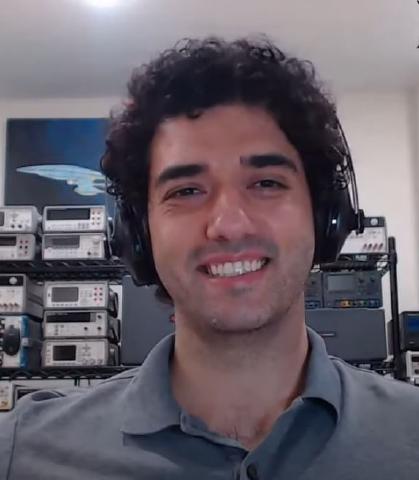
Shahriar: Yeah, yeah. Still at Bell Labs. I still lead the ASIC research team at Bell Labs and do the Signal Path, of course, is kind of a hobby here, part of my lab behind me.
Dave Jones: Yep. So you've still got time for doing the Signal Path? What's your frequency these days of content? Or is it just, it happens when it happens?
Shahriar: Yeah, it kind of happens when it happens. If I can do one, maybe two a month, I think I would be, I would consider it a success. Yep.
Dave Jones: Yep. Because yours are very long form, detailed content as opposed to most other channels. I mean, what's your average video? 45 minutes an hour?
Shahriar: Yeah, 30 to 45 minutes, 72 an hour. I get a lot of complaints that I speak too fast. And I always have to tell them, look, an hour video, if I speak half the, half a second, that's two hours then, right? So you can have to slow down your site.
Dave Jones: Exactly. Well, YouTube has the ability to speed up or slow down. Yeah, exactly. So, you know. Yeah. Yep. Nah, it's all good. All right. So we've covered 5G. That was a very popular episode. Not sure how many views it had, but I keep referencing it all the time for everyone who, you know, for the 5G, you know, conspiracy stuff, which keeps going around. Yeah, of course. And just to debunk that, it is the go-to debunk link now in terms of like, yep. So it's really good. So should we talk about dodgy technology? Because you wanted to talk about misinformation. Yeah, yeah. Not the medical as we're talking about, you know, as the hot button political topic. It's all the same. It's the same reasons, right? It's probably the same psychological reasons why people want to believe in various things. Is there anyone in particular you wanted to talk about? Yeah.
Shahriar: So last time, I think it was after we made the 5G. I made the 5G kind of amp hours with you. Then I made one specifically about is 5G dangerous. It was one of my episodes. I typically don't do that kind of video, but I thought it was necessary.
Dave Jones: It was, yeah.
Shahriar: The reaction was interesting. Obviously, the channel, the people who are watching it are almost all the time. The people in the domain, they understand what is going on in the field. So that was an issue. But it also caught a lot of people who are not subscribed to the channel, who are not in our domain. I mean, I got death threats from them.
Dave Jones: Welcome to the club. Yeah, obviously, they're not serious. I'm sure. No, no, that's right.
Shahriar: But it goes back to the saying, and it's easier to fool someone than to convince them that they've been fooled. Yes. It's tough to change people's minds. Yeah, the reason I wanted to talk about this dodgy technology in general was because I was listening to somebody else talk about this, and I cannot fortunately remember the name of the study. But they did this study on human interactions. So they took, they made a very simple human model, and they connected the human model to other entities in their model, and they ran a simulation. So they ran a simulation such that every person is connected to 10 people, and then they ran that simulation. What happens to the progression of ideas that you agree with and ideas that you disagree with? And then what they did is that they increased the number of interconnects, meaning that more people are exposed to more other people's opinions. So intuitively, you would think that if you connect people to more people and expose them to more of the ideas, that it actually means that the good ones will kind of come to the top.
Dave Jones: Float to the surface. Float to the surface. Float to the surface. Yeah. That's the hope.
Shahriar: But it was the opposite. It was the opposite. It was completely went the other way. Wow. There are a lot of reasons for why that could be. One possible reason is that, let's say you talk with 10 people, and then you have one out of 10 people agree with you on some crazy conspiracy theory that you have. Well, then in your view, you're like, I get one person agreeing with you and nine people disagreeing. So you may say, oh, maybe, maybe this is not the right idea. But when you go on the internet and then you have 10,000 people agree with you, but then 90,000 people disagree. The problem is that it's still the same ratio. Yeah, exactly. But now you have 10,000 people agree with you. And then you're like, you're more convinced that that's the right idea. It's just a weird, weird human trait. Oh, wow.
Dave Jones: And I guess it depends on the source. It might depend on the source because, you know, we shouldn't take authority. You know, there's no, you know, as a reference, but like humans can't help that. Like, like I'm, but then some people earn it like, like yourself, for example, you know, we know you're a 5G, one of the world's leading 5G researchers. So if you say something about 5G, we can be pretty sure it's not BS. Right. So we can be pretty confident. Yeah.
Shahriar: I mean, from a technical view, definitely. And then people always ask, you know, you're not a, you know, the doctor, you don't know the effects. Yeah. Of course. But as a scientist, I can interpret the work of other scientists that are correct to peer reviewed work. Right. So I, I can interpret them, understand them and accept them that they have gone through the scientific rigor. And this doesn't mean is the end of it. You continue to test. And I went to all of that in the, in the, in the video and so on. But then I saw a couple of videos you made. I think maybe your latest favorite topic is wireless power. Uh, Wiggle. Uh, Wiggle. Yes.
Dave Jones: Who raised 5, 5 million dollars for an off the shelf demo of energy harvesting at 5 mill worsh
Shahriar: or something it's just come on yeah we had a phone call a while ago about uh the demo that uh what was the company who had done the demo uh you made a video about that too about the phone wireless
Dave Jones: charging remote charging if it was from was it oh uh oh that's uh was that the ultrasonic one or
Shahriar: was that no no the other one the one that was actually doing wireless charging with this big
Dave Jones: box in the living room oh yeah yeah that's right yes and you helped yeah we discussed that on the phone you helped out for that uh video yes oh i can't remember the name yeah i also forget xiaomi xiaomi i think you have to pronounce it it's an x i something it's yeah the xiaomi wireless
Shahriar: charger that's right it was that's right that's right so i mean and the question always comes i think this is and i i know actually people who are fairly respected people in in the millimeter of a wireless community who are working on on wireless power transfer the thing is that it's not that it's impossible it's not impossible it's definitely possible it's just the issue is is it a good idea or is it a practical idea in some really niche situations i think when you have maybe something really low power that's difficult to reach and maybe for space in places where you want to have energy transfer between two entities in space that might have some some area but for your cell phone on a day-to-day basis i mean is it is that really the is that really what you want i know it's just and
Dave Jones: there's so much practical i just simply turning your phone from face on to this changes the entire capture area of the antenna doesn't it wait it changes everything yeah yeah it's yeah so you can make it work how do you how do we deal we in the debunking community i guess in the scientific educational engineering educational space convince people that something yes it works but it's not practical and that's the point what is what do you think is the best way to convince people that you know okay because that's the problem all of these things i debunk work yeah in some you know whether it's yeah you can get five you know tens of milliwatts out of this rf receiver that it's but it's never going to scale up to charge your phone at five or ten watts that's so you'd have to pump a 500 watts into it you'd have
Shahriar: to probably kill a watt into it i mean everything we build is is continuously moving towards more efficiency even even if you look at just near field charging as you know the efficiency of a near field charging also drops dramatically when the coils are separated or misaligned yeah and that's that's one of the reasons you know in the apple phone they have this now magnetic alignment procedures just so that they can squeeze out as much of this wireless charging near field charging as much as possible so when you now take this to to longer distances you you have to sacrifice that efficiency for what is perceived to be convenience but the issue of convenience only goes so far i mean forget fcc regulations and the safety and the interference and putting all of that aside is that really the direction you want to go because these are massive engineering challenges yes and and if you get them to work i'm sure you can is still is that really the right way you know i'm not genuinely too worried about that even because that's more at the end of the day the technology will either be adopted or not based on its practicality regardless of what we think about it beforehand you know you will either
Dave Jones: succeed that's right it'll leave a survival die in the market that i mean money will be wasted all that
Shahriar: energy will be wasted that's a separate story but the problem of the the fake one is is i think much more sinister and much more serious one of the comments in the 5g video was this company i forget another name that they're advertising these 5g protection things oh i've done a video on those
Dave Jones: yeah these little stick on dots and there's all different varieties there's little you know cubes you can just sit on your desk and it absorbs or you know it's got orgone crystals in it or rocks in
Shahriar: it or something that's what it is come on come on you know i talked that i talked about this before too i i think first of all this i'm sure the people who made those ones i think i think they know they're
Dave Jones: lying at least i i was going to ask that do you think that they know they're deliberately scamming people or are they so just so hippie you know and do they so believe it that they you know i because i i think there are people who fundamentally do believe that these things absorb the and they just mentally you know it doesn't matter how much technical information you throw at them they just want to believe
Shahriar: that this stuff works i think the ones who spin it on the kind of oh i think it absorbs makes me feel better the ones who are spinning it by just hand waving it may believe it but the ones who are spinning it as a you know it's like here's a paper here's a sign i think they know they're lying right yes i think you're right so obvious i mean all you need to do is to have very basic knowledge of electromagnetics you don't even need to know anything in detail yep but i was i was i mentioned i may have mentioned this in the video i forget now but i was talking about how much the world has changed in you know in the past let's say 10 or 15 years i was talking about the phone that just the iphone that i would argue that there isn't a a single human being alive who understands everything about the iphone from the end to end because there is first forget the ocean of software that's there and then there is ic design material design and screens and it's incredible it just keeps going it's just keeps going yeah it's not the first time humans have created something that not a single human knows about that to end but i would say it might be the first time where that thing is in everyone's pockets yes and that that's a unique situation and the magic is almost gone you know in a way things are just so sophisticated and they work so well and people just take them for granted i mean what has gone into creating a phone i mean this is oh it's incredible this is extraordinary yeah 40 50 years of
Dave Jones: technological and software and and all sorts of manufacturing technology progress and it's just a nothing thing it's just something that we toss away it's just buy a new one you know it's like this
Shahriar: is the part that's disappointing in a way it's disappointing because i think as educators it is actually kind of in a way our fault right because we are the ambassadors of our own field of our fields and if we cannot demystify things while maintaining the magic of it then we are not doing something right and then this information this information will propagate and cause the problems that you see is is it destined to
Dave Jones: be not at some point any advanced technology oh here we go it's this is isaac asimov kind of yeah or in a reverse of isaac asimov which was what any sufficiently advanced technology is indistinguishable from magic well is any sufficiently advanced technology becomes just not magical anymore at
Shahriar: some point well at some point it just becomes great yeah you take it for granted it it it becomes normal right yeah and once you take it for granted then you then you you stop thinking about what has gone into it and you stop thinking about the expertise that's gone into it and if you abandon the expertise part of it then you don't listen to the people who have actually created the technology and it's just down from there the other thing that is a major problem is that the amount of energy required to create a piece of misinformation is significantly less than the amount of energy required to fix it and to fight to
Dave Jones: debunk it to debunk it or to change somebody's mind yes yeah because it's so easy to say something wrong
Shahriar: and then if you really want to correct it you're gonna have to spend and people just don't have the time i mean you can't expect every single person and fear always stands out things that worry always stands out and you have to fight that and that this is depressing to be honest in some ways this is
Dave Jones: what we were talking about this i think briefly on email when you were talking about doing that video the 5g safety thing and i was saying yeah you know it's great because i was going to do i did i do my own one i don't know i covered it somewhere but yeah like i thought yeah like to reach mainstream people which are the people that matter really like not our audience there's no point you know our audience is going to understand right because we've got a primarily technical audience but to reach other people yeah it needs to be sound bitey it needs to be tick tock it need you know the one minute tick tock thing you know debunk 5g in in one minute you know on tick tock or it needs to be like five or ten minutes because that's the usual human attention span for video type stuff and yeah we send out the link for the 5g amp hour episode where we totally you know destroy the concept of you know it actually being a problem from a safety point of view but who's got an hour to listen to a tech what is a really a technical type podcast so how do we do that like do do we have to get on tick tock is that the like unfortunately is that the way the problem is it's it's it's also genuinely
Shahriar: difficult to to get people to accept the piece of information because you can always you can always accuse the person of either lying or or not telling the truth but it's funny how the things that make you the things that make people feel like they're being that someone's helping them to not be fooled that stays with them much longer right yes somebody says oh you know 5g is doing this or you're you know you're getting cancer from your wi-fi signal or your brain is getting a tumor from your cell phone all of those things are if you get people you tell them that they're like oh of course because corporations are are evil and a lot of them are right pharmaceuticals are evil and a lot of them are and yet the thing is there is some truth to that and there there is just enough frequency of conspiracy theories to happen to be correct just enough of it right they give them credibility right
Dave Jones: and that's exactly it's a big problem well there's there's some people that you just won't convince there's x amount like i'll whack a number on it saying you know 25 of the population you're never going to convince regardless of how much you try it's just like you know it's oh i could go into the what's currently happening at the moment and stuff like that but i won't you know yeah there there is experiment no no matter what you do it is pointless to try and even argue with them be or not not argue but you know try to explain things no matter how tick tocky you get no matter how novel you get in your
Shahriar: explanation they're just going to go no no yeah yeah and yeah so you know we we talked about the the 5g one last time we talked about and i know at bell labs we now work on 6g of course because we do 5g is considered you know mostly mostly deployed and from a technology point of view obviously 5g promised so much that some of it is going to trickle down trickle down until it actually becomes reality you know one of the big deals of 5g was this whole millimeter wave part of the ecosystem and you bring this directed beam with a very high data rate and one of the interesting things these are public information and from white papers of various big companies like nokia you know samsung and the likes and ericsson they talk about this a lot one of the things we're trying to do in 6g from a system point of view is that so we've gone to these higher higher frequencies there's potential of even going even higher than that you know some of the circuits we're working on right are above 110 gigahertz and wow so so these these circuits one thing that happens when you go to these very high frequencies is you go there just because you have a lot more bandwidth right the bandwidth translates to translates to of course having the data throughput that you could potentially have now there's going to be shorter distances and putting that aside one of the other thing that happens is that radar also benefits from having more bandwidth because with radar the more bandwidth you have the more resolution you have right so the resolution of a radar is proportional to the occupied band got it and that's important
Dave Jones: from that aspect because you want to see you know is it a large plane is it a small you know plane is it a you know
Shahriar: whatever so this opens up this entire domain of of creating radios that also are sensors so that you can you can create a radio that's communicating while simultaneously imaging its environment in a radar fashion piggybacking on the communication signal wow okay yeah so you you can you can do that at 2.4 gigahertz too but the problem with doing it at 2.4 giga is that you have a very narrow channel to yourself in the ism band so even if you were to want to use that channel for a radar application your frequency is very low your wavelength is big and your bandwidth is very small so your resolution is small so it's not that useful you could do it but it's not that useful at lower frequencies but then going to millimeter wave and then near terahertz uh for communication also means why don't we create devices and sensors that do that too and this is a stuff that people are talking about talk about 6g potentially having sensing capabilities and applications built into it which is an interesting domain of research too
Dave Jones: mmm and that could also end up in phones and things like that there could be some new novel thing that you know your phone can scan your environment for example you could 3d map your environment with your phone using 110 you know gig or something like that is that the promise i guess is that the obviously you guys don't go into this with application do you go in with applications in mind going hey this would be cool and do you shape the technology to kind try and match the application or do you just go or do you just leave that to other people
Shahriar: no no we do we do take the application into account because again look here is a big entity so they they look at from cloud down to devices right so there's a lot of things in the in the middle and the idea of your phone you know modeling an environment indeed it in fact it already you can already do that because the cameras are so advanced there's time of flight cameras oh of course yeah you can opt in yeah yeah but the thing about the rf is that rf festival is is quite a bit not less invasive because it's not a photo realistic image you're getting of your environment but also rf kind of goes everywhere so you can detect presence and movements without having the camera pointing as something it's a different kind of sensing for other types of applications is is possible so it's an interesting area of research that quite a few companies are looking at and their publications you can go and see people trying to piggyback on the 5g radio signals things that can sense and model the environment it's it's cool it opens up and then we take that kind of application space and bring it down and we study what is the influence of those kind of applications at the circuit level what do you want to do to your radio from a design point of view to to make sure that it does those things well because a radio that does a radar circuit from an ic point of view and a 5g radio are not quite the same there are differences between them so you want to not do this dual purpose thing is not so straightforward in some situations
Dave Jones: yeah yeah you might have to build in that capability and then that might either double the cost or it could you know if you want to do that or something like that that can have a product impact as well yeah exactly yeah that's right and then this will eventually end up
Shahriar: you know something you know that labs is part of this is research and some some things may end up in the product some things may not but uh the ideas and technology point of view because we deal with semiconductors there's also interesting things happening in that area around the world because we have this uh i think it was just a few days ago that the intel ceo was talking about creating a new infrastructure of producing semiconductors at the larger scale they have this five-year plan to get to uh in the angstrom level which would be equivalent to two nanometer kind of a thin fed device of some
Dave Jones: kind potentially how do they do that that's just like that's i it's insane how like because they're not doing that optically or how anymore are they it's just no they're doing it optically they're doing it but
Shahriar: but yeah they are but you know as it's got to be some other trick yeah there's of course there's
Dave Jones: god no i think there's a dozen tricks just to get where we are now right and that's one of the reasons
Shahriar: it's also become more and more expensive you know this is moresla thing that is kind of flattened out and then there is the another equivalent of it that describes that the cost of semiconductors also goes up in the opposite direction so what they do is once we hit this kind of fin fed nodes in the 16 nanometer cmos nodes and then become shrinking smaller and smaller what starts happening around that area is first of all you went into this deep uv wavelengths that's one way to get to the lithography you want but then you you can't do that anymore because the dimensions are very small so what they do is that they do this thing called multiple patterning so they take your layout your semiconductor this design and they used to put it into a mask create the mask of every different layer and then illuminate the mask and etch and do all the things but now what they do is they break your design the same layer let's say on the same metal layer they oh they pattern it in several ways several was not each of those patterns are larger because they're further apart yeah and then they they multiple pattern expose them on top of each other so to get the fine resolution so that it's a it's a it's an absolute nightmare but and then so there's no restrictions too so before for example this is not quite old now but you used to be able to put your devices in any orientation you wanted you could have the gates going in zero degrees like that oh this is orientation dependent really but now you can't do that anymore because of the patterning limitations everything has to be the same direction uh that's just one of the many many things uh wow yeah this is called the drc rules you know when you do this is also true for pcbs right yeah so the drc stack which is the complexity of how many things are you have to take into i mean this thing is now massive of how many and the tools are very expensive you have to spend yeah of course just for the tools so the cost of development uh and that's if you look there's actually like if i think there's only maybe two or three semiconductor companies now in the world that can do these five three kind of nanometer process in the tsmc and samsung intel potentially could get there and these are the guys who who can do this extreme small lithography in the cmos side of the devices and which goes into which is the majority of the semiconductor manufacturing and most of the stuff we make is actually not in cmos it's mostly in silicon germanium i've got it is that uh silicon on uh sapphire no no it's still a semiconductor it's still a pure silicon it's just that bipolar devices are silicon germanium based uh in the way they're made and then there's also some cmos in there it's a hybrid technology it's called a silicon germanium by cmos process but they put them all on the same wafer but the cmos is of course not nearly as advanced as the cmos you use for but it is kind of a helper device in a lot of ways you can build but the primary kind of star of the high-speed devices are silicon germanium now silicon germanium is a device with a higher breakdown so you can create high power devices and it's a different different beast altogether got it so that's the kind of stuff you
Dave Jones: need for your rf transmitters and you know if you want to do the energy harvesting thing you've got to like how do you convert 10 watts of captured rf energy right that's extremely difficult yeah so it's
Shahriar: an issue of linearity and so on there's another class of semiconductor devices that are in cmos are called soi these are silicon and insulated so what they do is normally in a traditional bulk cmos process the source and the drain of the transistor are in the in the substrate they're all connected together in the same semiconductor material what you can do is you can put them in these individual wells of silicon oxide so each device becomes kind of floating it means that the source and the drain are now isolated from the substrate this has several interesting effects one is that it reduces the parasitic capacitance and the devices but because it's now floating it means that they can be at different potentials so there's this whole other study of building power amplifiers that take soi devices and
Dave Jones: stack them and then they cleverly distribute the voltage massively higher voltage transistors when
Shahriar: individually they couldn't exactly so you can get down a lot more power from devices where the individual device breakdown is below the power you're trying to generate quite a bit below and people have shown record performance in cmos wow of these kind of things this is quite an interesting area of it's been going on for a while it's not a new thing but people are now pushing it further and further it's been an interesting thing particularly for 5g because people have been building these millimeter wave device the millimeter wave amplifiers and phase arrays in those particular semiconductor technologies
Dave Jones: by these floating devices right not only could you put them in series to increase the voltage you could also parallel them couldn't you to increase the power capability that's just that's the advantage
Shahriar: of that of course yeah i mean the parallel paralleling device is obviously very common the issue is that let's say you keep paralleling devices more and more you're into a 50 ohm impedance for example at some point the voltage swing across your 50 ohm load is larger than the breakdown of the devices so there's only so much you can do before you reach that point where you can you can't swing 10 bolt on a process that has a breakdown of 1.2 right so exactly yeah that's right it doesn't work so you
Dave Jones: can series and parallel you could have some big matrix of power transistors or something that's exactly how
Shahriar: hydro in fact builds and then there is the the rise of uh gallium nitrite which i'm sure uh you've heard of a lot of gallium nitrite devices are now used in power supplies you hear the yes yeah yeah they
Dave Jones: they they even advertise it at the consumer level don't they they go oh this you know transistor has you know this uses transistors that have this x you know this actual technology yeah and there's actually been fake ones was it big clive or one of the other youtubers they like took apart a fake one that was advertised as having this type of transistor in it and they went no it didn't yeah it didn't it was just once again dodgy technology right they're just marketing fake technology based on a kernel of truth because it's always based on all these scams whether they're scams or whether they're you know just you know airy fairy feel good things they're all based on a sometimes a kernel usually a kernel of truth especially the technical claims they're based on you know some technology you know oh yeah this this audio cable sounds better because of bigger because of us our skin effect on the cable right yeah skin effect is a real thing but sure but it has nothing to do with it sounding better no at audio frequencies right yeah it's just it's it's just nuts so there's
Shahriar: also you know to the people who listen to the audio things to them it may sound better it's a placebo
Dave Jones: right so it's a placebo yeah it works it works i always say that in my videos it's just not for the
Shahriar: reason they think it works but it does work yeah yeah yeah it's also interesting that you know people talk about gallium nitrate because it's it used to be fairly obscure gallium nitrate is an obscure technology now it's kind of found its way into the mainstream it's it's kind of funny to see people who don't go look at semiconductors talk about their power supply being gallium nitride basis yeah yeah yeah
Dave Jones: all the computer people oh yeah my my latest gaming pc's got you know gallium nitride power
Shahriar: transistor yeah yeah just in case some people who are listening might be interested gallium nitride is a category of semiconductor devices with a very large band gap so it allows the gallium nitride devices to have these huge huge breakdown voltages and normally what happens is that when you increase the breakdown voltage of a transistor you tend to make it slower it's a very first order approximation so but with gallium nitride is that the advancement of that particular technology has create devices that are now fairly fast but they retain their this large band gap performance very very high breakdown so what you can do is you can create switching power supplies among many other things but you can create switching power supplies where the transistors that switch to transformers have such a sharp rise in fall time and such a huge breakdown you can create extremely efficient dc-dc converters based on a gallium nitride device that's why these power supplies are so tiny they're like this super small power supply and they give you 60 watts is because its own efficiency is so high it's so high because then
Dave Jones: you don't have to then there's no waste heat the less waste heat you're more efficient you get the less waste heat in it therefore the smaller and more compact you can make it because you don't need large internal heat sinks or external you know it just all flows on from there so yeah oh the dodgy technology stuff the problem the most the problem i have is if people want to go like is people who actually scam people out of money once money's involved or health or safety or something like that that's where i sort of step in otherwise it's like eh you know i don't really once well once people are harmed in some way that's kind of my limit where i go no okay i've got to do some you know a video on this yep so do you have a similar limit do you just not care about the small time
Shahriar: stuff if it's not affecting people or no no i i agree i mean this this is this is the reason i i did the 5g video in the first place was because there were attacks on 5g engineers in the uk yeah they were burning down towers yeah it's just so so again it's it's it's it's a fear factor of it that is unfortunate but yeah and and to be honest in the medical industry people who sell these uh oil things to cure cancer and all that oh yeah a whole other level of of evil in my view yeah because it's one thing to get 50 bucks from somebody who thinks they're blocking 5g radiation which doesn't do anything for them to begin with but it's all other things for them to think that they're getting their cancer they're getting the cancer cure which is a very different different story so so definitely definitely i i get emails all
Dave Jones: the time you know because i've been debunking stuff for like 12 years now or something it was the first i did that so i get tons of email on the oh can you debunk this or this medic you know and often it's a medical thing you know because people want to believe that this thing's going to help them or whatever and and you can't blame them you know because the slick marketing and everything else that goes along with these websites and things and i go i can't debunk like i have to be honest like i can't debunk this all i can do is like laugh at it because to debunk it requires proper you know scientific medical studies of people you know your double blind or your all of your testing your your placebo testing the whole works right and that that that requires huge resources which i don't have yeah yeah of course so it's like is is is there value in just doing a video laughing at this stuff do you think or should
Shahriar: we keep it technical it's a it's a tough one because first of all there is that that very famous uh physicist who said uh when when it was this is so bad it's not even wrong it's it's it's in that category
Dave Jones: that sounds like uh fireman that sounds like yeah i forget who said it i don't know if it was him but
Shahriar: yeah it is true sometimes things are so far off from reality that it actually cannot be adequately addressed it's difficult to address it's difficult to go after it because there's nothing that you can latch on to and then there's no train of thought that's correct that's going on but going back you know i watched this documentary which i highly recommend you watch on netflix i think it's called the curve
Dave Jones: or beyond the curve or something is about flat oh yes it's great beyond the curve yes it is hilarious
Shahriar: i highly recommend it too yeah but if you if you look there is one part of it where they have this
Dave Jones: conference where they are together oh yeah for those that don't know this is about flat earthers
Shahriar: yep yeah so they have this kind of conference where they get together and they present and they talk but if you listen to it it's actually more of a community right these people these people want to belong to yes to a group yeah and they comfort each other and they feel good in each other's presence and that's the actual thing that's going on there right they're not even talking about i mean they did try to scientifically go after which failed but putting that aside it's really a sense of belonging and if you leave an entire group of people behind because you didn't educate them fast enough you didn't get them to appreciate the science fast enough and if you ridicule them i really do think it pushes them further into that fringe into that it could yeah it's even harder i think it becomes harder to bring them back but yes but at the same time you know there's no infinite infinite amount of time available which is why it's so important especially for some of these technology websites when they write gibberish and they write things that are not well studied they don't go after it carefully they make these big headlines about things just so that they can get the click these erode the confidence in science and they erode the effort of the people who have to come after it so yeah you know people like yourself you're you're doing something that has a it's a huge service to the to the community in a way because everybody who comes and sees somebody and you know i think you hit a good balance between laughing at it but then explaining it because if you make a video just laughing at it i try and
Dave Jones: explain it if i can there's often points where i just can't so all i can do is laugh at it yeah
Shahriar: there's things you cannot do of course yeah of course of course but i write in my in my 5g video at the end of it i said something which i genuinely believe in i i i showed a picture uh from when they were burning witches it was a witch burning kind of photograph not a real one obviously a hand drawn one of a picture of what was going on and then the other photo next to it was one of the photos where we launched a satellite or it was landing on the moon or something like that one of those photos of something and i said that you know we went from burning witches to burning rocket fuel like to leave our solar system and this is an extraordinary transformation for a species right this is this is absolutely two ends of as extreme as you can get and yes it's the same idea and but if you push it further to a point where the appreciation goes away and then this this love and passion of genuinely understanding and this constant distrust then yeah of course you're gonna fail in part of the study that i was mentioning by the way was about the way the algorithm of youtube and facebook and other places work and i did this experiment a while ago i haven't done it recently maybe somebody can try it i cleaned up my browser history and everything so i entered youtube from a blank slate so youtube knew nothing about me i even did a vpn so they could know nothing about even my location and i searched and i searched for vegetarianism okay which just being a vegetarian yep so now there are videos about being a vegetarian now you select one video then you watch it and when it ends youtube gives you recommendations and then those recommendations are always inherently taking it a step further so you can latch either on the left or on the right yeah yeah if you latch on the right side you keep going going going going you're going to end up in a video where someone says we should kill anyone who eats meat and then if you go and you can latch to the other side you watch video you know 10 videos later you watch someone's like we should kill anyone who doesn't eat meat yeah it's just that youtube's algorithms intentionally or not they they want to keep you on and the only way to keep you on the platform is to show you a more extreme version of whatever it is that you just saw yes i don't think that's deliberate it
Dave Jones: pushes you out either i don't think it's deliberate yeah no i don't think it's deliberate it's because those extreme videos are more sensational so they'll probably get more clicks so it it's it's a self fulfilling thing you're going to end up that way yeah that's interesting if they could tweak the algorithm to bring it back in the middle but but then it becomes a point of you're not a you're a publisher now you're not a you're not a neutral platform anymore you know so should should the most popular videos regardless of what they are should the most popular videos rise up i mean why
Shahriar: not you could make that argument yeah right no i i i i i am the first person who would who would fight for people to be able to say whatever they want to say as long as it doesn't cause harm it's the openness that's that's vital yeah the other but going back to the algorithms the algorithms are self-learning so it just happens that yeah if you it's just it's evolved on its own in a way so the algorithms have figured out through this neural network pattern of detecting that oh yeah okay if i show a more extreme video or if i show this video after that video it keeps people on and it's just crank cranking forward it's not like somebody actually programmed this manual it's not it's not done that no no no it's yeah it's not like that but then going back to being a publisher you know one of the one of the things these platforms like youtube and twitter and facebook and so on one of the ways they are originally operated was they basically eliminated the thing that editors used to do because anyone can put on anything they want and in a way they kind of cleaned their hands and said no no we're not publishers so we're just hosting so we're not responsible for the content on our on our site but then at some point if everybody gets their news from the same source should you still say that that entity bears no responsibility isn't how does that work i know i don't know the answer there's no easy there is no
Dave Jones: easy answer there's it's just it's almost impossible yeah another thing that i have to when i get all these emails can you debunk this can you debunk that is i go one of the reasons is no i can't for technical reasons you can't do it the other one is no i don't want to give them the oxygen information like you know there's the argument you shouldn't debate the uh flat earthers because that's you know that's what they want in fact the wireless energy transfer the new one i did what is it the wiggle the yeah the founder of wiggle actually wants to you know he contacted him wants to come on wants me to interview him right it's like no i'm not falling for that trap that's what you know because that that will then give the marketing info right it'll give them stuff that then they can market look i was on the eev blog it's like no is there stuff that you won't touch actually because of that um the audio stuff like i won't do people have said do a d audio debunking like a proper technical audio debunking you know audio snake oil debunking and i go no i don't want to give
Shahriar: them the time of day that that one that one people might actually show up at your door and kill you right that's a serious that's a serious one you don't want to go after that one but yeah there are some things i obviously don't do for for many reasons one is that there's conflicts obviously from where i work i don't want to jeopardize things but when i did the i did the the tear down of the starlink dish yes yeah it was it was a very interesting video as someone was yeah of course yeah watch and i really enjoyed working on that and i got a lot of messages and one of them was an interesting one somebody from i guess one of the reporters of bbc contacted me and they wanted to interview me about the impact of having this kind of thing around the world on oppressive governments and regimes and how would they react i'm like so let me understand you want an iranian-born person living in the the states to come and tell you about oppressive regime i mean that's clearly not going to happen right yeah right at the same time and i understand why they're talking about it because it's so hard to block it it's hard to block satellite signals so if you have you know one of these satellite dishes let's say you know somewhere where people aren't allowed to have access to the internet and then you put it on and you're behind all the firewalls you have direct access to the same internet that the most of the world has so the impact on information exchange from within oppressive regimes is very strong is a it's something that certainly has geopolitical impact these type of lights that the starlink and then amazon project kuiper might be doing so you know it's i think it's a it's a very interesting thing that's going to happen and i'm i'm always for open information open access that's one of the reasons i make the videos and i make them available for free and everything it's because i want everyone to have access to knowledge so but obviously i'm not gonna go on bbc and tell you about this and it just doesn't it it's not it's just a bad idea yeah i agree yeah
Dave Jones: that's why i decided to not do that but yeah yeah there yeah there's so many i just won't touch like i want to you know because i i love doing this sort of stuff i love and i love getting reading all the comments on the videos and stuff like i i just love doing it but it's like no no i'm i'm just going to give them the platform they want i'm going to give them the oxygen and they'll take me out of context guaranteed like is that something that you're actually concerned about being taken out of context because i'm somebody who even though i'm debunking something i will actually give them a massive benefit of the doubt when i'm doing my whiteboard calculations for solar roadways or whatever it is i'll go like even if everything's like i'll assume everything's perfect you know and the numbers i'll run are based on everything's perfect i won't even take practical things into account and even then they can take that out of context they can take any aspect of that and snip it is that something you're concerned about well you're a lot more famous so you you have
Shahriar: exposure to a much much wider range of people and a much larger number of people so you run certain that risk more than i do you know i i'm probably for every thousand people who know you maybe you know
Dave Jones: 10 of them know me so yeah but if you do a video they'll search for it if they're the owners or whatever they'll search for it they'll find it they'll guarantee they'll find it and they could snip it so it doesn't matter how big your channel is really yeah this this is a problem i think everybody
Shahriar: who puts out their opinions into the open environment and that's part of the sacrifice setting you have to make the risk you have to run and many brave people much braver than than i have done this in the past so i it's i think it's a small price and i i i don't touch a lot of topics that are very sensitive to begin with so it's i'm fairly sheltered like i said the biggest controversy that has come my way was this uh starling dish business so yeah which you can again it's not even that is not such a big thing but yeah i mean if you look at the famous people uh even more famous people who speak against injustice people who speak against problems in different countries they are constantly under attacking constantly being taken out of context yeah they go back and they dig other things that these people have said and nowadays you can't even change your mind because if you you know let's say you go back as an example let's say you go back 25 years okay and you find that that somebody said something 25 years ago which is considered offensive today oh god that's that just bugs me yeah so what what is it what is the outcome here if this person no longer believes whatever they said 25 years ago and has changed i mean isn't that a sign of growth isn't exactly isn't that a good thing if they're still saying it then you judge them for today that's a different story but if they've moved on and they have made their apology and then they have said okay i don't i don't accept this anymore i don't believe this anymore shouldn't that be enough then you know what's the controversy it should be but it's
Dave Jones: yeah unfortunately that's the cancel culture you know yeah as somebody who's been cancelled i know all about that i won't go into details but you know they tried to anyway but no no it's it's easy when you it's hard when you work for yourself yeah that's it exactly yeah no they they will go after your livelihood you know and that's that's the culture these days and it's just it's awful it's awful yeah
Shahriar: yeah that's a whole other problem at the same time so fighting multiple this multi-dimensional problem from all angles at the same time but but at the same time i think that there's some extraordinary things that happen constantly in the field of science and you look at it and it's really truly inspiring i was looking at i was listening to this doctor talk about just the development of vaccines in general and how hard it is and how difficult it is and i think you said that on average it takes eight years to develop a vaccine oh yeah yeah that's yep they did this in it's a long time in less than a year right and to be fair you know there are some having such a large sample helps well the uh the
Dave Jones: the actual technology the mrna technology was already in place before this whole thing happened of course they just used it yeah they just hadn't used it before because it would take so long yeah but now now they had a reason to use it and yeah and then as i put almost an infinite amount of money
Shahriar: into it and then you also had a large patient sample which is doesn't exactly that's that's one of the main things yeah yeah so it's it's amazing i mean again proud to be a human honestly looking at some of these things and i wish that people could you can share the the passion for it it doesn't mean to be naive of course there's a big difference between being naive and appreciating the positive and and i i i said also in a different video one time i said that knowledge is basically information is free knowledge is free it's not it's not the most important thing and i think people misunderstood i said that knowledge is not the thing the faculty of discernment is the thing right but exactly it's not that knowledge is not useless obviously you need to have it to do anything but what i meant was that you can get anything you want you have the entire human knowledge in your fingertips but what is what part of it is useful what is real and what is that skill to differentiate those two that's you need that now whether you like it or not because whether you like it or not if you're looking for a new piece of information that you don't know you're going to run across several contradicting things you're going to run across several pieces of incorrect information embedded among everything else and you need to figure out what is right and what is not that's a skill they need to teach i think more and more in schools when
Dave Jones: when people are young and figure out how to do this how do you teach that i've always you know i that's always been on the tip of my mind it's like a video like a video on how to think critically how to research stuff maybe but i've never
Shahriar: sort of thought of a good way to do it it's a it's a tough one i think there i mean there's i have three rules for it generally is that is that first is that you look at if a person who is trying to give you a piece of information in a certain way if they have a vested interest you're right that information being that number one that doesn't that warning sign number one it doesn't mean that it's wrong it doesn't know that's right but it is something to take into account the second is if you look at the source where where is the sources of information is it somebody reporting it from someone else who reported it from someone else who reported it that you'll find your and again these things all take time that's the problem exactly find out where it is coming from is it been is it gone through peer review is it gone through third party independent study is it something that is consistent with other pieces of information that are established and so on and you go through that one and the final one is you look at yourself do you have a vested interest of accessing one version of it over another version that's right so that you can at least address your own sense of bias and delusion on the topic those are kind of my three tests that i try to run on the piece of information but unfortunately these all take time and that's the problem with misinformation
Dave Jones: that's right and most people just don't want to put in the effort and that vested that personal vested interest doesn't have to be financial it could be oh this makes me feel better or this makes me look smarter i can virtue i can virtue signal about this to my friends that that increases my social credit whatever you know people do by virtue signaling these days or just afraid or fear or anything you know it's there's i'm sure you can come up with a list of dozens of different reasons why people could have a vested interest in actually believing something yeah and how do you separate the the technical ones from the feel-good ones though the ones that but it it all comes down to well what's what what's the cost if they believe something you know it it could actually as you say you know cancer treatment they'll die right yeah yeah of course no those those are those are obviously always going
Shahriar: to be the case that that is a clear answer to that you know if you're taking a medication that you think is curing your cancer but you should be getting chemotherapy then then obviously that's that's the one but you know you wear a crystal you feel good let's say somebody gives you a crystal that makes you be happier you may even be happier but to me those who offer you false constellations or false false friends i would rather have the actual piece of information the truth about something and again we all have a certain level of delusion we we cannot escape as human beings it's just the nature but fighting it in a constructive way i would say on average being having the right piece of information on average is always better even if it doesn't help you feel good good at the moment what about the
Dave Jones: credibility of sources because obviously in the current climate which we won't get into there are there have been things that have been proven to be wrong for example this is not just in the medical field but this is in the political field and all sorts of fields that you know like this was proven a year ago or two years five years ago or something and now it's like no that was all bs you know and it was like and then that ruins the credibility and if that happens to say an organization be it a news organization or it happens to a medical organization or it happens to a political organization or whatever it is that happens so many times that erodes public confidence in that so they don't actually blame people for not not not actually believing that person or that source or that government anymore
Shahriar: because they've lied to them you know so many times yeah this is this is this is what i was saying a little bit earlier too is that uh whenever a conspiracy theory is true it feeds on to the next one so let's say you have a hundred things you just need them just enough frequency to to keep the thing going but going back to what you said about you're always going to find some doctor or someone with a phd or someone who's going to tell you something that's wrong right i mean humans are not infallible
Dave Jones: system and and the and the system of peer review people hold up peer reviews the whole standard no there's countless examples of a peer-reviewed paper being completely and utterly wrong yeah so but
Shahriar: people have to also keep in mind that every time you know that something was wrong that's actually testament to the fact that the mechanism works that's why you know the process works that's right it's part of the process the reason you can point to it is because the system on average this has an average of work progression right i mean again the fact that you have this cell phone in your pocket is is a proof of that the fact that you can be you can be picked up tomorrow in a helicopter and get an open heart surgery yeah that's proof that these things work right exactly but yes of course things can be wrong scientists can be corrupt institutions can be corrupt but that's why that's why we have you know genuine honest scientists that that fight for these things and that's why there's this upward progression all the time not every mistake is going to render the entire thing pointless you know it's it's
Dave Jones: part of this discovery yes the the system's going to go on the scientific process is going to go on because it's the only it's the only well it's not the only way but it's the best way we have it's the best tool we have of actually actually progressing in science and engineering and everything else yeah yeah no absolutely it's just nuts are there any other ones you've seen lately dodgy products that you're not not like I always keep it made the rounds again because people seen it on Facebook it's the energy saver thing the battery it's a capacitor in a box no it's just it's just a capacitor in a box and just the marketing every couple years the marketing just comes back and back and I get a flood of emails that my mom saw this on Facebook you know any good I think just for the viewers who
Shahriar: may not be familiar with it it's the idea that so what happens is in your in your house you have a lot of different kinds of loads that you put on the power line and it turns out that there are quite a few inductive loads and these inductive loads can be motors and power supplies and big transformers that are different things you have and these things cause a particular current voltage ratio that you would draw from the wall but most in most places at least in most residential places you don't pay for you don't pay for it exactly power you don't pay for it it's you don't pay for it yeah because it's just all it means is that every time you have this kind of up and down wave from of the current you pull a lot of current from the grid but then on the next cycle of the power you push it back into the grid that's what a reactive load would be these capacitors in a box putting it onto your power line is shows up in parallel with all the other inductive loads in your house and that they tend to cancel each other out and they bring the phase of big power voltage in phase so you look more like a resistive load now the difference is makes no difference in your power consumption because I don't pay for a parent power you pay for real power in some industrial scenarios you do yes because the current being very high being pushed in and out actually causes you to need bigger copper wires so they can handle that extra current so then that means the cost of the grid is a little bit
Dave Jones: higher to deploy for some of that's the argument yes yeah I put in one of my
Shahriar: debunking videos it doesn't apply to the residential but it doesn't apply to your home yeah that's right it doesn't matter and yeah these people are just stealing
Dave Jones: your money but being the engineer that I am I had to explain to them that yes in theory you are paying more because as you said more more copper on the actual grid infrastructure that means you're paying in increased bills for that infrastructure so in theory you are paying more because of this apparent power but it's not because of the metering in your box yeah so actually just putting the capacitor on there won't do anything and but it's based on a real thing right power is a real thing but yeah it's like but I thought that was a slam dunk video I did debunking that and I keep I done it twice actually I think but it just keeps coming up and it's just like I can't keep making the same video over and over because it's got a new branding on the box or whatever you know it's just as much
Shahriar: as I want to my favorite one on Amazon are these metal cages you can buy and put your router inside of it protection to protection from your I'm like I can tell you it works it will block the but it would also block your Wi-Fi you won't have Wi-Fi if you don't want to have Wi-Fi just unplug it you don't need to
Dave Jones: have it or you can go into the Wi-Fi settings and adjust the power level if you're worried about if you're worried about it yeah just
Shahriar: lower the power and that's exactly the same thing you're reducing the range and that's fine if you're more comfortable with that do that but don't pay because these things are like seventy dollars like seven it's a mesh box you can make it for you know three dollars if you really want to but it is a it's a frustrating it's frustrating because so much money is being and and the thing is that when again these things happen and people buy them and this causes mistrust of other future things too because the person who goes and buys this box and puts it on the router all of a sudden it feels smarter they feel like oh look at me I didn't let the man come and put em into my home and next time it's something else you just need make yourself vulnerable to future problems and future
Dave Jones: things that may come your way yep so is the should I be doing a video for every single thing people send me or is it just like my limit as well you know where I don't want to give them the advertising like and unless they've raised like a million dollars on Kickstarter or something I'm like if it's raised you know a hundred bucks or whatever like I'm not gonna like it's just gonna die a certain death right there's just there's just no point I mean for you you know it's
Shahriar: be given that at least you're this whole YouTube thing is your main profession I know you also make a lot of products it's a very different story so you do to know the hundred different things at the same time but I would say that maybe tackling things that have direct human life on them oh yeah in a very clear way it's probably the one that makes them you know like it was a sort of roadways the money in that can go for something much much much much more valuable especially when the government puts taxpayer money onto it I mean that's a that's a clear one in my view that it requires to be addressed yeah I
Dave Jones: I I'm glad I actually did so many videos on that because it keeps coming they just raised another 2.5 million dollars solar freaking roadways and and they're just installing people they're installing new ones in the Netherlands they're installing the solar bike paths again they just they just keep on doing it and it's like wow it's just yeah unbelievable like I don't then the other level is the politicians they're the ones that are actually how do you target the politicians because they're the ones who have the financial purse strings right they can they can put government money behind stuff like this this this was the
Shahriar: point that I also wanted to mention the issue with with politicians is that when that that's why it's really important to make sure the public is well educated because if you have a well educated public the politicians will not be swayed to do something to appeal to an ignorant population whether they believe it or not right I mean not that politicians may have no they may even know the right answer but if they want to have the voters if you want to have then you have to go with what people believe in if yep if sufficient and I am sure if sufficient number of people believe the earth was flat there would be a politician the other day it was like I'm gonna remove around the earth from the school system system yeah it's just a matter of time right so yeah it's not that far-fetched so that's why the public needs to be very well educated so that not only they can they not be taken advantage of by the people who are purposely trying to fool them but also to not allow politicians to potentially just to get the votes pass laws and regulations and do things that are just harmful or ineffective and that that's that's another reason why I think it's so important for the public to be aware and educated and scientific thinking and critically thinking the problem is is
Dave Jones: that there's so few people willing to put the effort because it takes effort as you said it takes you know order of magnitude more effort to debunk something than it does to actually believe it in the first place and it's so few people willing to put in the effort I did I guess once again there's no financial advantage to it like my videos do well but it's not like I'm going to get rich from just you know starting up a debunking channel or something like that so you know how do we get more people involved in is it is there any way to do it or are we just doomed to that only X number of people like us are going to be willing enough to put in the
Shahriar: effort I think it's important enough I think these conversations help and I have received a lot of emails a lot of nice wonderful messages from people who watch the videos and they say that they're inspired to either go into a particular field or to make their own videos or to make sure that they can they speak to other people same here yeah it's great about whatever their field of expertise is to make sure the misinformation doesn't propagate and that these things that that the correct message that the writing of the right sources of information are preserved and that the right things are passed forward from as many people as possible and that's why we said that everybody in a in a certain field once you're an expert you are an ambassador of your domain of expertise in more than just working in it but also making people understand it that's why people like Carl Sagan Tyson and and others people who do popular science and I've spoken at Brian Green and there are many many of them that I can mention these people are are much more than just they're being physicists or scientists and so on they're also another whole other layer of benefit to humanity and is to making very complicated things
Dave Jones: understandable and ironically those people have reached because of their apparent authority so I know there shouldn't be an appeal in an ideal world there shouldn't be this appeal to authority everyone should look at the data should have the critical thinking skills to look at the data and decide oh yeah that's obviously BS right yeah but unfortunately most the majority of the population you have to appeal to
Shahriar: authority almost don't you I mean it's just you have to look at the reputation you look at the reputation and see you know where they've published how they've published and where where they stand on something and whether again there's a conflict of interest for them or not and these things do help if you follow those trails and you can see where where it takes you and at the same time when people who actually have some expertise in the field are the most dangerous when they go bad okay yes just think about think about for a second let's say if if you wanted to to sell some dodgy product oh yeah you could put the right language on it you could say the right things you could say just the right amount of technical and and be articulate about it so yeah when when experts go bad they go bad indeed that's why that's why the scientists for example who either have lied or have presented things that have later on been proven to be incorrect are so dangerous and so harmful and that they are that they are by far the most dangerous and the person I forget his name now the guy who originally faked the result of the vaccination autism link he lost the autism link yeah I can't remember his name medical license
Dave Jones: yes but the damage is done right exactly and they're still citing that people are still citing that today it's yeah as you said yeah the damage is done and yeah I've I've seen this with my April fools jokes which I don't do but a certain video comes out on April 1st and tens of thousands of people will actually believe what I've said and it's like it's a you know like it doesn't do any harm right but it's it's just for fun but yeah it's amazing what people will believe because I said it you know it's scary so oh boy yes we've got a lot of responsibility yeah it's not a bad thing no no that's not no that's good but somebody's somebody's got to do it somebody's got to do it so I'm glad that uh there there are there's an increasing number of people willing to do it when they see other people willing to put in the effort to do this I think that's important because they might go oh yeah I can you know it doesn't have to be a video it can just be a blog post somewhere you know if you just go through the calculations and here it is you know that yeah yeah that's that
Shahriar: that is worthwhile yeah and one of the things I I think I try to tell us and engineers is to focus and and learn how to be concise and articulate on the messages you want to convey because engineers tend to to because we're very technical we tend to dive in and say too many things and you know you have to know your audience and that's remember somebody asks me to present something somewhere and one of the very first thing I ask is tell me exactly what the audience composition is who's going to be there what's their background where they're from why are they there so that I can adjust not just the tone but the content and the way that you describe it one of the things that is also really frustrating with youtube videos on a separate note is when things are verbose it drives me crazy oh yes yeah yeah I can't help it like it's just my nature I mean it's just you know yeah no no you're you're you're not you're not verbose believe me you're not verbose but yeah there are some that are they're just so and that's a problem because then that they're losing the opportunity to have exactly the impact they're looking for and that's right very knowledgeable fantastic and I just
Dave Jones: trimming it down it helps a lot you talked about uh Neil deGrasse Tyson before who's you know a science popularizer and he he said yes the best skill I learned was you know because he's he always anything happens in any realm of science or anything you know they're he's one of the first people that the media call to you know oh do you know and there's ufos are they real you know and they'll you know they'll get him on because he's you know the the science expert or whatever or they'll get bill nye the science guy and anyway he said that the most important skill he learned is the sound bite because they're all that's all they're after the media are after that 10 second sound bite so that they can put that on the six o'clock news and that draws people in and that's all they want that's all they're after so you have to concise it down to like 10 second sound bite or as I said like a 10 second like a one minute video that gets viral on tiktok or whatever yeah of course unfortunately that's how much that's how far
Shahriar: you have to dumb it down so yeah it also helps that he is very articulate and oh yes very very eloquent and he can put things in in concise terms so that's it that's a skill that he has for sure
Dave Jones: yep so I don't know it's it's just difficult but oh what can we do our our amp hours up sharia oh yeah unless you've got a final product which you want to uh poo poo
Shahriar: no no no no no particular products no just uh and make sure that you teach children the skill required to differentiate what is true and what is not to the best of their abilities and and putting the effort and and fight against misinformation fight fight against injustice as much as you can anywhere in
Dave Jones: the world for any topic yep is there an age do you think that you should be teaching kids have you read
Shahriar: any have you seen any data on that or or whatever i'm not a parent yet but oh maybe i'll get that
Dave Jones: i'll get that yeah i could i could guess it's like you know it's yeah it's probably like seven or eight when they start developing the critical thinking skills perhaps i i could be way off but you know i've only got a sample size of one you know sure sure at that age the thing is that for you i mean obviously
Shahriar: you know as a parent you know that's one of the reasons i think honesty is so important to kids okay because you know i i listened to this book called lying by sam harris it's like only an hour and a half i highly recommend that you listen to read it yourself so he says he basically he goes all out he says honesty 100 no white lies no nothing and it's worth listening to his reasoning yeah and he says that to his kids from the from the very very beginning of their life they didn't tell him about santa claus and tom any of this stuff right he was very honest because he said that if you if you show that honesty there is never any doubt in your kid's mind at any age that you have the ability to completely lie to them and fool them i know there are practical limitations to that and i'm not a parent so i'm just guessing but right but you know you can teach that i would imagine from very early on to be to evaluate what can or cannot be true to follow a train of thought and you make it more and more and more advanced as time passes and of course once you get to the age of seven ten you know so and then more and more critical thinking should be should be taught in schools just like you know finance should be taught in schools absolutely no kids should come out of high school and not understand the finance
Dave Jones: right so i know yeah yep yep i totally agree yeah although i don't necessarily 100 agree with sam harris there it's important to have that imagination to believe that santa claus is real like there's a whole psychology and and brain development thing behind that so i'm not sure but i certainly the concept yes yeah i i understand where he's coming from yeah yeah we can we can talk about that i totally agree
Shahriar: yeah yeah we can talk about that again this is that it's a his his view and it's worth listening to but indeed it's the idea the idea of the concept is for that the concept of it yeah yeah of course i
Dave Jones: i i totally agree yep and there's a lot of people who say i shouldn't do my april fools videos because of that people won't know whether i'm lying or telling the truth it's like well come on it's come on
Shahriar: the video like like it's obvious right i mean i i made i made i made only one one actually and i made mine so ridiculously clearly okay insanely obviously that it was not true but yeah but you're really good at it that's the problem i mean you made i fell for the fluke one you made oh i genuinely
Dave Jones: i genuinely thought that that was true so it was yep yep and yeah i i do it because it's just i just find it fun no it's it's fun to troll people yeah and that's why i never tell people about it like i never go hi april fools at the end of it i just let them believe it you know and then figure it out for themselves because i think that you know there's a skill in that as well it's like you know like they're going the back of the mind was that right can i really etch a pc can i etch copper on a pcb with plain tap water and a magnet like you know it's like and they think about it and then i've had actually a lot of people say that that they have gone away and thought about it and yeah i came to the conclusion it was bs and then i really and then and then i check the comments and oh sure enough you know i've been had and i think that's valuable yeah um that people like learn that so you're not
Shahriar: trying to sell anything and you're not touching yeah a topic that is important for people's lives so
Dave Jones: it's good yeah it's all good all right well thank you very much for joining us again sharia of course it
Shahriar: was a pleasure and hopefully we do this again in the future we will certainly will thanks mate catch you next time
Speaker ?: you
Archived Discussion (7)
Comments are closed. Archived from the original site.
Show archived discussion (7)Hide discussion
Keep current
Every episode, plus the occasional job post, in your inbox.
All right," said Susan. "I'm not stupid. You're saying humans need... fantasies to make life bearable."
REALLY? AS IF IT WAS SOME KIND OF PINK PILL? NO. HUMANS NEED FANTASY TO BE HUMAN. TO BE THE PLACE WHERE THE FALLING ANGEL MEETS THE RISING APE.
"Tooth fairies? Hogfathers? Little—"
YES. AS PRACTICE. YOU HAVE TO START OUT LEARNING TO BELIEVE THE LITTLE LIES.
"So we can believe the big ones?"
YES. JUSTICE. MERCY. DUTY. THAT SORT OF THING.
"They're not the same at all!"
YOU THINK SO? THEN TAKE THE UNIVERSE AND GRIND IT DOWN TO THE FINEST POWDER AND SIEVE IT THROUGH THE FINEST SIEVE AND THEN SHOW ME ONE ATOM OF JUSTICE, ONE MOLECULE OF MERCY. AND YET—Death waved a hand. AND YET YOU ACT AS IF THERE IS SOME IDEAL ORDER IN THE WORLD, AS IF THERE IS SOME...SOME RIGHTNESS IN THE UNIVERSE BY WHICH IT MAY BE JUDGED.
"Yes, but people have got to believe that, or what's the point—"
MY POINT EXACTLY.
Terry Pratchett, Hogfather (Discworld series)