
#528 – New Year, New Gear
Download episode · 68 MB
Also on Apple · Spotify · YouTube · RSS
Show Notes
- TEAS - Test Equipment Acquisition Syndrome
- Dave did a video comparing high voltage probes liked the HVP70
- CMRR is improved with wymmetry in the probe design
- Chris has acquired an active load, the Siglent SDL1020X-E\
- Plugging some active loads with constant resistance / power into power supplies will make them hiccup because of the control loops interacting.
- Chris also got a new soldering station, the Thermaltronics TMT-2000S
- The lower end series are 470 kHz power supplies, the higher end Thermaltronics and Metcal stations use 13.56 MHz
- The Metcal, Pace, JBC, Thermaltronics designs all use cartridges that heat to the proper temperature (as opposed to an adjustable temp). Thermaltronics calls this the Curie Heat Technology.
- Tip to grip is the distance from your fingers to the end of the soldering iron. A shorter distance means more control. Unless you hold it like in the stock photos.
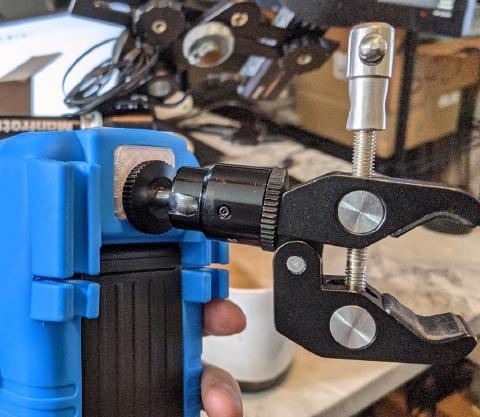
- Chris has been using Small Rig clamps that have 1/4-20 threaded ends to interface with 3D prints. All you need to do is put a 6 mm hole in your 3D print and the clamp screws in and holds quite well.
- This is the STL file for 121 GW
- Dave predicts bench meters will make a comeback. The Fluke 37 is an example of this concept.
- Chris is trying out the new Digilent Analog Discovery Pro, which was kindly sent to him
- We had former Digilent president Clint Cole on the show a few years back
- Though we're the last to talk about it, Raspberry Pi released the Pico board based on their custom chip, the RP2040.
- The board comes on a reel!
- Eric Schlaepfer (@TubeTimeUS) explains the costs of making chips on twitter. This is (likely) why the RP2040 doesn't have any internal flash.
- Hackaday explains the PIO on the RP2040, an interesting peripheral that allows local processing of external events on the I/O.
- So wait...is the RP2040 not a microcontroller? Find out next week when Chris interviews the Raspberry Pi team!
- We will also talk about why they decided to go custom. We have had many guests on in the past few months/years talking about custom chips and the cost of chipmaking.
- Mohamed Kassem
- Tim Ansell
- Brian Faith
- What is the breakeven point?
- Ladyada (Limor of adafruit) discusses the RP2040 and how they plan to integrate it into their projects as well
- Pico board specification
- Interested in learning assembly language? Check out this web based 6502 simulator called the tejotron
- It was inspired by past guest Ben Eater
- Beagle, SiFive and Seeed Studio are teaming up to create the BeagleV. This will be one of the first RISC V (sub $200) boards to run mainline Linux. It also has some pretty serious processing capabilities.
- Chris and Dave discuss RISC V and how it's an open source ISA, not an open source chip design. Those also exist (such as past guest Claire Wolf's PicoRV design), but are not used on the BeagleV.
- GM says they'll be all electric by 2035
Transcript
Chris Gammell: This is The Amp Hour Podcast. Released January 31st, 2021. Episode 528. New Year, New Gear.
Dave Jones: Welcome to the Amp Hour. I'm Dave Jones from the EEV blog.
Chris Gammell: And I'm Chris Gammell of Contextual Electronics.
Dave Jones: I've still got it in 2021. Still got the intro. Nailed it down, Pat.
Chris Gammell: Still got it. Yeah, still got that. Still got it. Mojo. Got it, yeah. How was your holiday?
Dave Jones: Excellent. Thank you very much.
Chris Gammell: You've been gone for three weeks. I don't know if you know this.
Dave Jones: I've been gone for, yeah, quite a few weeks. And then you forgot I was back. So you already had a couple of shows already pre-canned. And so, yeah, we ended up skipping a week when I would have normally been back.
Chris Gammell: Well, you know, another week of relaxation in the EEV blog world. So what have you been doing with that week that's back now? Now you're back. So what now?
Dave Jones: Trying to catch up with crap, you know?
Chris Gammell: Yeah.
Dave Jones: Business crap takes half my time. Business crap does take a lot of time, for sure. Yeah. You know, because for those who don't know, I do run a packing and shipping business as well. As a, you know, in a forum business, like advertising, you know, I've got.
Chris Gammell: But if this is your first show, you probably don't know this. If it's not your first show, you've probably heard.
Dave Jones: We've got new people joining all the time. Come on. Our show's growing, isn't it? I haven't looked at the stats. Where are our stats at? How many viewers have we got?
Chris Gammell: No, no. Well, no viewers, but we're pretty flat.
Speaker ?: Oh, sorry.
Chris Gammell: Listeners. Yeah, we're pretty flat. So if people are listening, you can tell your friends, tell your coworkers, you know. So I think the other thing is people are not like, you know, driving in cars and going on walks.
Dave Jones: So what you're saying is that we don't have much chance of that, you know, $10 million exclusive Spotify deal.
Chris Gammell: That was $100 million for like. Yeah, I know.
Dave Jones: But we're like, I'm just estimating we're an order of magnitude lower. So, you know.
Chris Gammell: I wouldn't hold your breath. I wouldn't hold your breath.
Dave Jones: Oh, that'd be each. That'd be each. Oh, right. Of course. Yeah. Right. Because it doesn't buy much these days because, you know.
Chris Gammell: Yeah. Yeah.
Chris Gammell: Cool. Well, I have been upgrading my. So you sell stuff and I've been buying stuff. So, you know, you'd see who's making money, who's spending money. But you know what they say? You got to spend money to make money. So apparently I'm going to make money at some point.
Dave Jones: Oh, you're going to be rolling it in. If you buy enough stuff. Have you seen the test equipment syndrome videos that I posted on Twitter?
Chris Gammell: No, no.
Dave Jones: Oh, the test equipment acquisition syndrome videos. Well, I'll have to link them in. I forget who does them. He's a YouTuber.
Chris Gammell: T-E-A-S, right? T-E-A-S.
Dave Jones: Yeah. Test equipment acquisition syndrome. Yep. If you search my Twitters for that, you'll probably find it. Okay. Test equipment acquisition syndrome. I'll find it. It's great. Anyway, I forget who does it. Sorry.
Chris Gammell: It's a sickness. I think many people here can probably relate. Yes.
Dave Jones: Anyway, they're very well done videos. There's two parts.
Chris Gammell: What's your most recent piece of gear?
Dave Jones: Oh, my most recent piece of gear. I don't buy much because companies send them to me. Yeah, yeah, yeah.
Chris Gammell: It could be acquired or bought, you know.
Dave Jones: Oh, yes. Acquired would be the high-voltage probe, the new Mixig high-voltage probe. I'm thinking about going for a lot of people who don't know this. You know, I've been selling my high-voltage probe for quite a few years, my HVP70, which is a great probe. But the only issue is with it, it's very expensive.
Chris Gammell: Yeah.
Dave Jones: So I actually contacted Mixig, who I'm reselling their current probe for. Their current probe is really good, and it's reasonably priced. Probably the best bang per buck on the market. Anyway, so I contacted them and said, hey, look, I see you make these other high-voltage probes, but you don't have one that's 10 to 1 and 100 to 1 ratio. They only had the higher ones, you know, for higher-voltage systems. And can you actually make one specifically to match the HVP70 specs, which times 1 times 10 to match all the other specs? And they went, oh, yeah, probably. So, you know, like seven months later, they came back to me and said, yep, yep, we've done it. Here it is. And then they started selling it, of course, because it's not exclusive to me. So you can go out and buy it now. And, yeah, so I'm thinking about reselling that one. But I've been testing it, and I've had a little issue with it. So I'm waiting for them to get back to me on that. So, yep. Anyway, it's a common mode rejection ratio. I tested its common mode rejection ratio performance versus the HVP70, and for some reason, it doesn't quite meet specs. So I'm wondering, you know, look, have I goofed it? Because you always second-guess yourself, you know?
Chris Gammell: Yeah, totally.
Dave Jones: For, like, measurements like that that you don't do all the time, you know? It's not like I, you know. Yeah, exactly. My day job is doing CMRR measurements on high-voltage probes, you know? Right. So, yeah, I thought, you know, so I sent them a video.
Chris Gammell: What actually about the probe itself helps with the CMRR? Is it, like, insulation or, like, channel isolation? Or what is it?
Dave Jones: It's the symmetry in the design, in the internal design, the balance of the internal differential amplifier. So if you look at your current, like, if you look at your traditional, like, you know, two-op amp differential amplifier thing, you know how you can make a differential amp with, like, you know, two-op amps? And it's a classic building block circuit. And if you unmatch the resistors, like, if you use 1% tolerance resistors on there, right, which sounds pretty, you know, tight, right? Yeah, they're 1% tolerance. Like, I don't care about the gain much. Well, yeah, okay. You might not have an issue with the gain, but you will have an issue with the common mode rejection ratio. Because when those resistors differ, when the divider ratios differ in the inputs, right, to your differential amplifier, I'm not explaining this right, but anyway, when they differ, if they're not matched, that can actually contribute to higher common mode or lower common mode rejection ratio. So that can make it worse, i.e. So it's, yeah, it's matching. So that's why, you know, you open up these high-voltage probes, and I've done a teardown. And they've got, like, lots of little trimmer, you know, caps and other, and trimmer resistors and things in them, you know, because somebody with a, you know.
Chris Gammell: So they do that, like, at the factory? They do that at the factory, yeah.
Chris Gammell: Put on a jig.
Dave Jones: That's why they'll have, you know, holes in the can, you know, they'll have trimmer holes in the can. So you assemble it all, and then you test it, and then somebody gets in there with a non-conductive screwdriver and, with their tongue at the right angle, tweaks the knobs. So, yeah, to get, you know, to get decent performance. So it's probably something to do with that, would be my guess. Got it, yeah. Yeah, yeah, yeah. Yeah. Oh, cool. Okay. That's the usual thing anyway, so.
Chris Gammell: Yeah.
Dave Jones: Yeah. Anyway, I've got the link to the test equipment syndrome, so I'll whack that in.
Chris Gammell: Okay. All right. There you go. Great. I just, I've been doing some battery testing, and so I finally got, I didn't have, like, an active load that I hadn't built. So, like, I didn't feel comfortable doing, like, multiple amps or anything like that.
Dave Jones: Right. It's just been like you've just had those low-power do-it-yourself ones?
Chris Gammell: That's right. Yeah. And so this one's a Siglent 1020XE.
Dave Jones: Right. Is that a new model I haven't been keeping up with? I don't know what it is.
Chris Gammell: Yeah. Active loads. But it's super helpful. Like, I really, I kind of wish I would have had one. Like, I always kind of, you know, I have a source meter on my bench, and so, like, that's great. I feel very lucky to have that, honestly. That was from my DSP.
Dave Jones: Oh, yeah, because they're a high-end bit of kit, right?
Chris Gammell: Right. Exactly. And those are meant for precision, right? And, like, you can do them in, you know, four-quadrant. You can, like, use them as a load, whatever. But they're just kind of awkward as a load. And, like, the Siglent thing, it really does any active load. It's just, like, it's just nice. It's just a dumb programmable resistor. It just does its job. Yeah.
Dave Jones: It doesn't do anything else. It's just a variable resistor load, basically. Or, you know, an active load.
Chris Gammell: Yeah, sort of. It does do one other thing that I did find actually very useful, which was on constant current, it actually will. So, I was doing, like, just a battery test on a lithium ion that I had sourced from China. I just wanted to verify specs. And it's literally, like, a one-button, hey, I want this to go test it down to, like, three volts, and then tell me how long it lasts for at 800 milliamps or whatever the test was.
Dave Jones: So, you just set the cutoff voltage you want, and it'll discharge and then stop. I know. They're great. They're worth their weight in gold.
Chris Gammell: Yeah. And it really wasn't, I think it was, like, three, four hundred bucks or something like that. It was pretty cheap in the States. Yep. So, yeah. That's been a really beneficial thing, and I've been using that for troubleshooting, too. You know, like, I had some power supplies that I thought were, like, oscillating or something like that, and it ended up being a totally different problem. And I was able to verify it just by throwing this active load on there and just be like, nope. You know, half an amp, one amp, one and a half amps, you know, like this thing. And it's going through, you know, wires, too. So, it's got a bunch of inductance on it, too. And it's just, yeah, it's rock solid. So, really, really, really worth it. So, wish I would have gotten one a lot sooner, I think.
Dave Jones: Oh, yeah. They're great. Well worth having. I mean, as we said, you can do it yourself, right? You know, like one of my most popular videos ever is a do-it-yourself load, right? Yeah, yeah, yeah. Countless people have done variations on my do-it-yourself active load. There's so many open source funnels.
Chris Gammell: I have that on contextual electronics as well. Right. Okay.
Dave Jones: Yeah.
Chris Gammell: Yeah. I think it's actually a great first project for people that are, like, looking to do a first project, too. Oh, totally. I think it's like, you know, if you're looking to get into analog electronics, you can chase all the op-amp problems. You can, you know, you can build something that's actually useful on your bench later. Like, yeah. I mean, I felt comfortable, I think, cranking an amp through that thing, and it was great for that.
Dave Jones: No, it's fine. But the only issue is, is that it doesn't have all that nicety stuff like, you know, active cutoff. It doesn't have, like, a keypad and a graph, and you can't, you know, set the active modes, and you probably can't do constant resistance mode. You can't do constant power mode and stuff like that, right? Which you need active smart circuitry to measure and compensate. And in that case, I've actually used, I've killed power supplies as part of my review process for power supplies. I put an active load on it, and I put it in constant resistance mode. And then because the load actually dynamically responds, you know, fairly quickly to changes in the source voltage to give that constant resistance load, it actually makes power supplies hiccup. And I've actually killed output pass transistors in commercial power supplies using this active load. So it's like a torture test thing.
Chris Gammell: What about it makes it hiccup, though? What do you think is making that happen?
Dave Jones: Well, the power supply, well, the power supply outputs a voltage, and then the power supply responds by changing its load to simulate a constant resistance load. But it's not a constant resistor. It's an active element. So it's got a continuously, it's got that feedback loop. So you've got the feedback loop of the power supply trying to compensate for the feedback loop happening in the load. And if they get out of whack, and your power supply is not robust enough, boom, you can pop your output transistors or do something else, you know? So, yeah, it's fun. Yeah, I love active loads. Active loads are just, yeah. I've got two of them here. Yeah. Yeah. And sometimes I've used two at once, you know? They're worth.
Chris Gammell: Yeah, what is the, I think that's the other thing that I wonder about is like the power envelope. And like, you know, this thing's relatively beefy. I think it can do like maybe 200 volts, maybe 10 amps at like the extremes, not both at the same time. I think it's like 150 watt total.
Dave Jones: Right. Yes. You can, and you can get high voltage ones and low current and low voltage, high current ones and high voltage, low current ones. And, you know, so it's a bit of a trade-off. So most manufacturers will make different models. Like any serious manufacturer of these, they'll make, you know, five different models catering different power and voltage and current ranges, you know? So, yeah, you've got to sort of pick like a generic kind of one that suits your stuff. Yeah, you're right. And then, but often I've gone, oh God, I wish I went, wish it went to 150 volts, you know? And then like, but then you can't, yeah, you can't have everything. You can't have one that does it all. So, so often, you know, like a serious lab, if you're doing power supply, a lot of power supply stuff, you'll have multiple active loads with different ranges.
Chris Gammell: Yeah.
Dave Jones: Very cool.
Chris Gammell: Yeah. Or you can rent them. You can rent them too.
Dave Jones: Oh yeah. You can rent it, of course. Is that a kid of the week? Is that kid of the week?
Chris Gammell: No, actually the next thing is. So I'm actually much more excited about the second thing.
Dave Jones: Oh, okay. Right.
Chris Gammell: It's very good. I, Dave, very exciting here. Want to guess what I got?
Dave Jones: What can be possibly be more exciting than an active load?
Chris Gammell: I got a soldering iron.
Dave Jones: Yay. I know. I know. Which one? Come on. I have moved up.
Chris Gammell: Exciting. I have moved up in the world. What did you get? What did you get? I have a Thermaltronics. It is a TMT 2000S. So not all the way up, but up. So this is very different for me.
Dave Jones: Nobody gets excited about a Thermaltronics. People get excited about JBCs and-
Chris Gammell: JBC and, yep, exactly.
Dave Jones: And other brand, Thermaltronics. Like I've never used one of those. Like I've never used that brand. Cause I don't even think that- Do they even sell them here? Couldn't tell you.
Chris Gammell: I don't know.
Dave Jones: Where are they made? Where are they made?
Chris Gammell: They're made in the US. Or I don't know if they're made in the US, but they're distributed out of the US. Right. They're former Metcal folks though. And so they make-
Dave Jones: Oh, okay. It's a spinoff, is it? Yeah. So can you send me a link? Send me a link to the one you've got. Oh, sure, sure. Send me a link to the model. Let's have a look.
Chris Gammell: Yeah. And they started distributing through, I heard about it through the consulting forum. And they used to sell in DigiKey, but now they distribute through Amazon. So like extra easy. Oh, okay.
Dave Jones: Oh, yeah. You're an Amazon man. You're like, you know.
Chris Gammell: Totally.
Dave Jones: If it's on Amazon, you'll simply buy it because it's on Amazon.
Chris Gammell: Yeah. I mean, yeah. Unfortunately, yes. Yeah. But all the tips are also Metcal. They can also switch over and be used in Metcal as well.
Dave Jones: Oh, that is a total ripoff of the Metcals. Oh, yeah. Wow.
Chris Gammell: So it's just like a lower cost version.
Dave Jones: Right.
Chris Gammell: And so it's like the lower, it's a lower frequency.
Dave Jones: Yeah. Well, I thought Metcal had those locked up in the patents. I thought they were.
Chris Gammell: I think, I think it expired. Yeah.
Dave Jones: Oh, that's why they spun off. Okay. Right. Yeah. They've, they've, they've probably been working there for 20 years and went, guys, it's expiring in six months. Let's, let's make our own company. Let's go start a company. Yeah. Yeah. That's smart. Yep.
Chris Gammell: Yeah. Wow. It's been, it's been great. So I've never used like cartridge tips. Have you, have you ever used those? The Metcals or JBC or anything?
Dave Jones: Yeah. Yeah. Yeah. Yeah. No, of course. All of my, all of my irons have a cartridge chips now. Well, I, I still have my old HAKOs that, you know, are the old. Got it. Yeah. The old tip. But yeah. All, all my new ones are the cartridge. Yep. And you just leave them in there. You leave them in the back of the tool stand and then you just, whoop, you know, take them out as you need them and change them all the time. Yeah. It's great.
Chris Gammell: Yep. Yeah. Yeah. Yeah. I, so I think, you know, my soldering gear has always been kind of subpar. I mean, I've, you know. Yeah. Gotten, gotten along well enough. But this is just like, this is like, I think that's the thing for me is it's just like such a step up because I had been using such kind of low quality stuff and it was starting to affect some of my, my solder joints and things like that. And I was just getting really frustrated.
Dave Jones: Yep.
Chris Gammell: And it's just like, I'm using it every day. And so, yeah, it's, uh, wow. Okay. You know, there's a wide variety of tips and stuff.
Dave Jones: Yeah. 230 bucks. Wow. That, that blows Metcalf out of the water. And for people who don't know, it uses like, well, this one works at 470 kilohertz. I can't remember the frequency that I think Metcalf work at a couple of megahertz.
Chris Gammell: 13.56. So that's the, uh. 13 kilohertz.
Dave Jones: Oh, I thought it was much higher than that.
Chris Gammell: No, sorry. Sorry. 13 megahertz.
Dave Jones: Oh, I thought so. Yeah. I thought it was in the megahertz range. Yeah. Yeah. Yeah.
Chris Gammell: It is. Right. Yeah.
Dave Jones: Ah, yes. And that's how they use it. And of course the Metcalf fanboys, you know, they're like the Tesla fanboys. Don't, don't, don't diss the Metcalf. So they will. Yeah. Don't go in. Don't go into a room full of Metcalf fanboys wearing a Weller t-shirt or a JBC t-shirt. You, you won't come out alive.
Chris Gammell: I've heard people like talk about them before. And then like, usually here's what my thing would be. If someone would be, I'd read online or I'd see, here's someone talk about like, oh, they love their Metcalf. They love their JBC. See, I go to the site, be like, oh, a thousand dollars. Okay. Yeah. Exactly. Turn it back off. You know, it's just like, that's not me. No, that's right. And, um, and this is kind of that in between where like, this is still expensive. Right. And you can get some good low end irons for, you know, a hundred bucks or so.
Dave Jones: You can get a, get good low end irons for a couple of hundred bucks. And then you can buy the desoldering station and then you can buy surface mount tweezers and you go, you can buy a second one because you need two soldering irons, by the way. One is not enough. It's like owning a multimeter. You can't just have one multimeter. Right. You got to have two. Likewise, you got to have two soldering irons so that you can flip parts off. You can just get an iron on, on either end of a part and just go pop it off.
Chris Gammell: Well, if you have tweezers that, that also works.
Dave Jones: If you had SMD tweezers, that works different. Yeah. Yeah. That's, you know, solves that problem.
Chris Gammell: And I've been looking at those too, but you know, like it's, it's like one of those things where I just have to be like, okay, Chris, just give it, give it a couple months, you know, don't, don't go too crazy.
Dave Jones: I still don't have one. Weller have been saying they'll send, I'm sorry, not Weller, Pace have been saying they'll send me one for like a year. They've got some new model that came out and anyway, yeah, hasn't turned up yet. Yeah.
Chris Gammell: So what's interesting about these things is that they're, so they're basically like, RF amplifiers internally. And like a lot of irons that are out there as well, like they have, so they all have these switches or some kind of detection mechanism. So when it's in the cradle, it shuts itself off. And the idea is by the time you pick it up and you have it in your hand, it's pretty much hot again. It's an instant heat up. Yeah. Yeah. And the cartridge thing, that was another thing that, again, I was new to all this stuff and the cartridge thing. So people don't know you buy basically a temperature range instead. So you buy the tip type and then the temperature range and the temperature range there's at least with, with, uh, Thermaltronics and, and MedCal there's three that they have and Thermaltronics does like color bands. And so I do like the yellow, which is 750 Fahrenheit or whatever the, I think 300, yep. 325 maybe for Celsius. And so, yeah, it's, I don't know. It's, it's like super simple. And like, I don't know. It's just like one of those things that we're.
Dave Jones: 370, Chris. That's 370 degrees Celsius.
Dave Jones: Oh, sorry. Yeah. 370, which is quite high. Yeah. That's the, that's the only issue with the Metcals and the, and this one is that yes, they are fixed temperature tips. So if you want different temperatures, there's no temperature controller. If you want different temperatures, you have to change the tip. That means if you're, if you need different types of tips and different types of temperatures, well, you've got to have an array of like 20 tips. Yeah. You know? Yeah.
Chris Gammell: Yeah. And they're like 10, 10 to 15 bucks each. So it's not terrible. It's not, it's not cheap, but like I can already tell just from like looking at the one that I've been using as my daily and just, it's just going to last so much longer. Like because the iron turns off because it's, you know, that instant heat thing and like, yeah, it's just going to last a lot longer. So I'm real, real pumped about that.
Dave Jones: Oh, well, we'll come back in a year and we'll see how it. Yeah, exactly. Yeah. I'll be like, oh, these frigging things, you know? But yeah, because tip design is all a big trade-off because some manufacturers will target longer life for their tips. Some will target higher performance with their tips. And it's all to do with what type of material they use in the cladding of the tips and how much thermal resistance that adds to the tip. And, but, you know, typically you can't have the best of both worlds. You can't, you can't have a long life tip and a really super low resistance, efficient tip. It's kind of like, yeah, you've got to sort of trade them off. So each manufacturer sort of, you know. So yeah, these things just heat up at one temperature and they use an RF induction system to do it.
Chris Gammell: Yeah.
Dave Jones: So that's why a lot of people swear by the, the Metcals. This would work the same way in that they can instantly deliver the heat to the tip. They don't have to heat up an element, which then has to radiate out. So it kind of like, it just heats up the entire tip. It's not really true because it's still inside. It's still going to make its way out. But your Metcals fanboys claim it's better. And I don't doubt it. Cause I've, I've used Metcals. They used to be our standard production iron.
Chris Gammell: Yeah. Right. And I think that's, that's really what they're designed for. Right.
Dave Jones: Oh yeah. That's what they're designed for. They're designed for high volume production. Cause we were doing like big cable harnesses and stuff like that. Right. So they needed like big beefy, you know, and the Metcals could actually deliver, you know, like you can get like a three under what one or something, you know, like a really crazy sort of wattage.
Chris Gammell: Yeah.
Dave Jones: Yeah. And they deliver that heat instantly. And there's no controls on it that the operators can screw up like this. And it's just this big one, one brick, you know, it's a very robust die cast alloy brick that, you know, it's just, yeah.
Chris Gammell: Yeah. So there was, there was one video I was looking at reviews and stuff. And there was one guy, Shane Burrell. He did a, he did a good review, but he was actually talking about mostly about the handles and he said he bought like a lot, a lot of Metcals power supplies. So like the brick, like you're talking about, he bought like 20, a lot of 20 off a pallet like 10 years ago. And he said, they're just, you know, it's easy. Right. So like, as long as you can get the consumable parts still, which a lot, you know, these are all still reverse engineered and they're reverse compatible.
Dave Jones: Oh, these are compatible with Metcals tips. Yeah. These are. Yeah. Yeah.
Chris Gammell: That's right. Yeah. Yeah. So if you look on the Amazon page, if you look at the Amazon page, all of the, all of the tips that I have are cross, cross listed with Metcals tips.
Dave Jones: Oh, wow. And, and the iron itself, it's the same plug and everything.
Chris Gammell: I think so. Yeah.
Dave Jones: Wow. Okay. So it's a complete clone. Wow. They didn't pull punches, did they? That's right.
Chris Gammell: No, this is, this is meant for that thing. Yeah. I think I'm pretty sure. Don't, don't hold me. I'm still kind of confused about like, there's different series and I'm not, there's like the series. Oh yeah.
Dave Jones: There's same with Metcals. There's all different series. Like there's just countless.
Chris Gammell: It's, I just got the one, I just went in and I was like, whatever is most common. Just give me that please. Yeah. Okay.
Dave Jones: And you've got the 2000, that sounds like it's the lowest one. Whereas they've got the 9,000 and the 5,000.
Chris Gammell: Well, even within the 2000, there's, there's, there's different series. So like I have the P series and that's the handle that came with it, I believe. Cause then the, the tips are tied to the handle. It's like, I get like a PM75. Oh yeah.
Dave Jones: They've got three, three different series on there. And they do have a tweezer kit. They do have a tweezer kit.
Chris Gammell: I know. You don't have to tell me. What are you doing? What are you doing?
Dave Jones: It's probably on Amazon. Buy it now. Buy it now.
Chris Gammell: I know it's on Amazon, Dave. I'm trying to save money, man. Like.
Dave Jones: Come on. You need those tweezers. You know, you need those tweezers. Don't do that.
Chris Gammell: Don't do that. I will sick my wife after you, man.
Dave Jones: Yep. Oh, okay. So your one's got a one year warranty and the up market 9,000 has a four year warranty at 400 bucks. That's interesting. Right. And the 5,000 is a one year warranty. And they, it looks like they have a short tip to grip distance as well. Just like the MekTowers. That's good. If, for those who don't know, a key in a soldering iron is tip to grip distance. That's one of the keys. You want the shortest distance between your fingers and the joint. If you've got some long shaft thing. Yeah. Maybe a big phallic symbol. Good luck. Um, you know, trying to do decent soldering with it. Cause it's hopeless. Cause your hand is so far back from the, you know, the, the, the point of control.
Chris Gammell: Yeah. It's like a force times lever arm kind of thing. Right. Yeah. You have like a little bit of force and it moves the tip. Or a movement.
Dave Jones: You have a tiny little bit of, yeah. Movement. You know, half a meter back. Cause your tip's half a meter long. That's right.
Chris Gammell: Yeah.
Dave Jones: Right. Right. Right. You know, it's like, yeah, you can't control the tip of that thing. You know? So you want it as close to your fingers as possible.
Chris Gammell: Well, you can, if you hold it like in the, the, you know, those stock photos.
Dave Jones: Oh, right. Yeah. Of course. Classic. You'll, you'll have to post a photo on Twitter, Chris, of you holding the iron, like a, like a stock. Yeah. Yeah. Oh boy. Anyway. Oh, cool. I had no idea. Um, that's why I hadn't heard of them because well, oh no, I know. I think I have heard of them. I think I have heard of them, but I've never seen it or looked at them, but yeah.
Chris Gammell: I heard about it from past guest Colin O'Flynn. Uh, so he's the one, he's, he's a bit of a gear head as well.
Dave Jones: Is that on their about page? Are they, um, brazen enough to go, um, that, oh yeah, we're from Metcow and we, and we do it better.
Chris Gammell: Oh, I think, I think they, uh, yeah, I think so.
Dave Jones: Really?
Chris Gammell: Yeah.
Dave Jones: Oh, design and development is undertaken in the U S and Australia.
Chris Gammell: Hey, there you go.
Dave Jones: There you go. They've got a sales office in Perth. There you go.
Chris Gammell: Perth is like, I mean, it's on the other side of the planet.
Dave Jones: Yeah.
Chris Gammell: Basically another country, you know?
Chris Gammell: Right. Wow.
Chris Gammell: But still that's, yeah, that's cool. Yeah.
Chris Gammell: You should be showing the show. Okay. Yeah. They've got, yeah. They actually do some design. Yeah. And their robot is cool too.
Chris Gammell: I had never seen like the soldering robots before. So like they, you know. Oh yeah. These are things that exist in production facilities.
Dave Jones: Is that, oh, okay. I see that now. Yeah. Yeah. The soldering, yeah. The soldering robots. Yeah. Yeah.
Chris Gammell: So it's basically like a, you know, three, four axis CNC machine and then it can, you know, apply joints. All right. And that's, that's fun. Yeah.
Dave Jones: Yep. Soldering robot. Oh, six axis. Sorry. Six axis. Six axis. Yeah. Soldering robot.
Chris Gammell: That's, that's probably out of my price range. So that's, that's not for right now. All right. One more thing in the gear head column. Since this is, this is not test equipment acquisition syndrome. This is test equipment creation syndrome. I showed you a photo of all of my mounting methods. So I've been, I've been creating 3d printed mounts for everything's like up off my bench now. Yep. Yeah. I'm very excited about this. So I've, I figured out. So, so the key thing is if you get these little, uh, small rig, like they're these clamps. I'll put a link in the show notes.
Chris Gammell: For cameras.
Dave Jones: Yep.
Chris Gammell: Yeah. Right. And I really like them. They work really well with like the wire racks that I have on my bench. And then the key thing, I forget what video I was, I wish I could remember what video I was watching, but if you're doing a 3d print and most things are like, PLA, if you make a six millimeter hole, you can just take a quarter 20. So the quarter 20 is the type of screw that's on the bottom of like camera mounts and tripods and these little things. So like tons and tons of like interoperable gear that's out there, like these little clamps, you make a six millimeter hole and you can just screw that, that quarter 20 and the threads are big enough that it grips like crazy.
Dave Jones: It grips straight into the plastic.
Chris Gammell: I made so far, I've made a microphone, sorry, a microscope mount. So I got the microscope, the, like the long throw microscope that a volt log, uh, Florin had, had recommended it on his YouTube channel. And I really liked that. That's like a hundred bucks. And now I've got like this great mount for it because it doesn't actually, it doesn't come with a mount. It's meant to hook on. So it has like a long lens, but it also hooks onto a, uh, like a trinocular stereo microscope.
Dave Jones: Right.
Chris Gammell: And so I now use that. So I made a mount, this rock solid. Now I've made a mount for just like tools. So it's just like literally just a bunch of holes in a piece of plastic. So I can put my tools in all size to, it all came from the, uh, the fact that I have the sticky flux that Lewis, uh, recommends and that was getting everywhere. So I wanted to get that up off the bench. And then the last thing is the one that's most relevant in here is that I figured out a way to make a mounting point for my 121 GW multimeter.
Dave Jones: I saw that. Yep.
Chris Gammell: And that thing is great off the bench. It's like, so one thing, one piece of constructive criticism is that the viewing angle is actually kind of rough on, I'm sure. Oh yeah.
Dave Jones: No, if it, yeah, you've got a view. It's designed to view either straight on or at a lower angle. Yeah. It's not good at a higher angle. There's a lot of LCDs like that. Unfortunately. Yeah.
Chris Gammell: And so, and so this basically gets it up at eye level now and it's perfect. Like, so it's like literally perfect to just get it up off the bench. Not to mention, it's not like on a, on the angle anymore. And it's like, yeah. So, uh, I will, I can link in my, uh, my little STL file.
Dave Jones: Yeah. I was just, I was just thinking this the other day, I was going to go dig out like an old bench, uh, cheap bench meter from my storage bunker and try and like modify that to be, well, I think it is battery power, but I was going to like chock a full of batteries. And I reckon I can get like 10 years battery life from like a bench meter. I was thinking, will bench meters make a comeback? You know, because like a lot of people are like, I, I would just bet. I hate ones that are mains powered. Like I just don't want another thing on my damn bench. That's mains power. Yeah. That's the thing. I think things on there, right?
Chris Gammell: Yeah. And it really starts to eat up your space. So I'm, I've been working on this really big PCB and like, it's just like cables everywhere. And so first and foremost, I just want to get cables out of the way. And then also just reclaim the, uh, the actual space. So like if I'm using like a low slung board or if I'm using those PC bytes or even like my pantovise, you know, like to hold this huge board, it's just like, I don't, it's just like I'm bumbling everything. Everything was just falling off the bench nonstop. And now it's at least up. And so like tools are up, the DMMs up, the microscopes up and it's still, you know, there's still a ton of cables, but it, it, yeah, it works a lot better.
Dave Jones: Yeah. Sometimes I wish like Fluke still sold their Fluke 37. Have you seen the Fluke 37? I don't think so. Okay. Here we go. Hang on. I'll get you a, I'll get you a photo.
Chris Gammell: So it's a bench. So when you say bench meter though, what do you, how do you define that?
Dave Jones: Well, one that's like a flat and like it.
Chris Gammell: Oh, this is the one like Dave made. This is the Dave. I forget his last name. He was on the show.
Dave Jones: He made a Fluke 37.
Speaker ?: What?
Chris Gammell: Yeah. He designed it. Remember? No? You don't remember? No, no, no.
Dave Jones: Oh, no, no, no, no. Dave Taylor. No. He did the 8060. He did the famous 8060. I don't think he did the 37.
Chris Gammell: Oh, it looks, it looks very similar. Sorry. Yeah. You're right. That looks very similar. I thought it was, I'm looking at a picture of a Fluke. What I'm seeing on the internet is a Fluke 37. It looks very similar with the push buttons on the side.
Dave Jones: No, no, no. You're looking Fluke 37. Are you sure you're searching the right thing? You do Fluke 37, Google image search. It looks like it's got like a carry handle on the side.
Chris Gammell: Oh, no. The first picture is an 8060. You're right. Okay.
Dave Jones: It's like a, it's like a combo. This, it's a kind of a weird combo bench and carry meter. It's got like a, a case on top. It looks like a flashlight. You can put your leads inside, you know? Yeah.
Chris Gammell: Okay.
Dave Jones: But it's, but it's got, you know, but it'll, but it's battery powered and it'll last a thousand hours with a thousand hours from batteries. Right. And, and it just, and it can sit on your bench and it's just perfect. It does just what you want. I kind of wish there was. Yeah.
Chris Gammell: You should totally bring these back, man. You should bring them back and what else you should do retractable leads. That's what I need. Retractable leads. Man, I tell you that, that stuff would sell. I would buy retractable leads in a minute. I don't know if it would impact like the installation and like the, the characteristics.
Dave Jones: You would have to anchor it to your bench though, unfortunately, because the force of pulling the leads out. Sorry. I'm just, my mind instantly went to the practicalities. No, no, no, no, no.
Chris Gammell: That's great. It doesn't have to be attached to the bench. These could be some completely separate product. I want to see like a, like a, you know how they put like, like car cables, like a, like jumper cables. Sometimes they're like in like a, in like a thing that can roll up the leads or the, the cables themselves.
Dave Jones: Like a vacuum cleaner. Vacuum cleaners have retractable power cords.
Chris Gammell: Oh yeah. No, that's a, yeah. That's, that's a great, that's a great example. Yeah. That's right. Yeah. For the power cords. I was thinking about the two. Yeah. Yeah. Yeah.
Chris Gammell: You want a retractable test lead.
Chris Gammell: Yeah. I totally want that. And they have that for power leads as well. Right. So like for extension cords and stuff.
Dave Jones: Yeah. Yeah. They have, yeah. A windy wheel kind of thing, but they're usually manual, you know, they're usually not, you know, sprung loaded or whatever. The, the advantage is, is that test equipment leads, they're already inherently highly flexible because if you get the proper silicone leads, right. They've got like, you know, 256 strands in them. Right. Yeah. They're highly flexible. And that, so they, that would actually lend itself to a windy mechanism.
Chris Gammell: There you go, man.
Dave Jones: Yeah.
Chris Gammell: Go make that, go make that product. I'll buy, I'll buy at least five sets.
Chris Gammell: Hmm.
Chris Gammell: Cause that's the thing. I just have cables everywhere and I just love getting, you know, this is like my thing for moving too. Like the first thing you do when you move, set up shelves, get everything off the floor. There's nothing more frustrating than like tripping around boxes when you're moving. That is just like, that is the number one way that I will get into a, a rage when I'm moving. Yeah. Nerd, nerd, nerd rage. Nerd rage. Yeah, exactly. Yeah. It's, it's, it's terrible. So.
Dave Jones: There you go. Okay. So anyway.
Chris Gammell: I'll take 10, 10%. Only 10%.
Speaker ?: Okay.
Dave Jones: 10%. Yeah. I will. After this, I'll do a poll on Twitter. Should we bring back the bench? Should we bring back the fluke? 37. You know?
Chris Gammell: Yeah. That doesn't look like it has a lot of digits.
Dave Jones: So what do you need digits for dude?
Chris Gammell: I don't know.
Dave Jones: Three and a half digit. Good enough for Australia. Okay. All right.
Chris Gammell: Three and a half. Yeah. Okay. That's all. I'll take three and a half. That's all. Yeah. Yeah.
Dave Jones: Hey, well, these days you do like 6,000 count, you know?
Chris Gammell: Yeah.
Dave Jones: Yeah. No, you would make it 60,000.
Chris Gammell: I think what you should do, you should just start selling these mount things with your 121 GW. Just sell that as a stand. Like this is really a decent solution just to get it off. Just getting stuff off the bench is the main thing. Yeah. So yeah. You're welcome. 10%. That's all I need.
Dave Jones: Well, I can buy a magnetic hanger for it. There are, you know, a significant number of people ask for the magnetic hanger, you know? What's it?
Chris Gammell: Magnetic? Because like to insert in the back, you mean?
Dave Jones: Yeah. Yeah. You can insert it in the back. Yeah.
Chris Gammell: Oh, cool. Okay.
Dave Jones: So then, you know, like, so then you can, like, if your bench is metal, like, well, I've got half metal, half wood. So I can, if it was, if I put a metal bench, yeah, I can just stick it onto the metal bench. So yeah, it just, just sticks there. Cause those things are super strong. So it holds the weight of the meter and it's just, yeah. Yeah. Yep.
Chris Gammell: Cool. Yeah. That works too. That works too.
Dave Jones: I feel it. I think I'm out of new gear.
Chris Gammell: I think, I think I'm out. So.
Dave Jones: Well, you don't have a, well, no, you've, you've got a bench meter, haven't you? You've, you've, surely you've got like a Keithley.
Chris Gammell: I've got a, yeah, I've got a Keithley 2000 and I just picked, I just was sent a analog discovery pro 3450. So I'm going to be trying that out too. So that's on the list as well.
Dave Jones: Is, is that the new pro one?
Chris Gammell: Yeah. It's the pro. Yep.
Dave Jones: Oh, with a, like in a case and everything with like B and C. Yeah.
Chris Gammell: Yeah. It's, it's definitely a different style. It's closer to like the NI, like, yeah, it's like an NI.
Dave Jones: I've got an NI in my, on my bench at the moment, but that's like super duper high end, you know?
Chris Gammell: Yeah. And there, and so it's like a, I mean, so digital is NI now. So I'm sure that they're very careful about the, to do that. And Caitlin was very nice to send me when I'm going to try it out. I love, so I love my analog discovery too. Like I love, love, love, love it. Oh yeah. Yeah. It's great. Yeah. Specifically because it's portable. It's the software that makes it. Yeah.
Dave Jones: It is the software that makes it good.
Chris Gammell: Yeah.
Dave Jones: Yeah.
Chris Gammell: Well, and the portability. I have to focus on that too.
Dave Jones: Oh, totally. If you need to move it somewhere, you know, if you need to go to the client site or something, you just have your laptop and oh, of course. Yeah.
Chris Gammell: Yeah. Yeah. And it's got like scripting and all that other stuff. So I'll see how this goes. I, I, you can tell that this is like a, this is like a thing where they had people using it in production. I'm pretty sure that this is like the, you know, the, the big brother, you know, they're like, Hey, make it, make it more legit, get some better specs, that kind of thing. It runs Linux on it.
Dave Jones: How much is it?
Chris Gammell: They have not said yet.
Dave Jones: It runs Linux on it. It runs Linux on it.
Chris Gammell: You can do like a, you can do like a local mode where it has a Linux computer internally. So again, I just got the box.
Dave Jones: They've gone to town. Cause the old one just had an FPGA with an internal ARM core or something.
Chris Gammell: Yeah. It was like, it was streaming mode, you know, effectively. Right. Yeah. Yeah. It was just streaming.
Dave Jones: Okay. Yeah. Right. Okay. Interesting. So how much is this? Cause the analog discovery is not cheap. Unfortunately. Like if you buy it retail price, not like student price.
Chris Gammell: Yeah. Retail price is like three 50 for the discovery to analog discovery. Yeah.
Dave Jones: So this thing's got to be over 500 bucks. I'd be surprised if this is under 500.
Chris Gammell: Yeah. I'm pretty sure. Cause also I think cause they're targeting, they're targeting production, you know, and this is.
Dave Jones: Of course I know this is a more, well, it's got pro in the name, right? That's right. Yeah.
Chris Gammell: You got to pay extra for that.
Dave Jones: Oh yeah. Right. There's no, there's no price on it yet by the looks of it on their webpage. So yeah, I don't think. Yeah. But I'd, yeah, I'd be stunned if that's under 500 bucks.
Chris Gammell: Mm.
Dave Jones: Yep.
Chris Gammell: Hmm.
Chris Gammell: Wow. Oh, there's the analog discovery to pro bundle, but then there's also the analog discovery pro. Yeah. That's. Oh, okay. That's confusing, but though. Yeah. That's.
Dave Jones: Um, what does the pro bundle come with?
Chris Gammell: That's just like the discovery too with like cables and, and stuff like that. You know, it's got all the, all the bits and bobs that come with it. This is, this is different. So yeah.
Dave Jones: Jesus got four USB ports on the back.
Chris Gammell: Yeah.
Dave Jones: Wow. What do you need four USB ports for? Oh, a keyboard and mouse or something. Can you hook it up to like a monitor? Is there like a local, like if it's Linux inside, can it be?
Chris Gammell: No, I don't think it could do any of that stuff. I think, again, I have to still, um, still check it out, but, but, um.
Dave Jones: No, it doesn't have any sort of USB C video out or anything. So no. No.
Chris Gammell: It says Linux mode provides an on-device operating system that when combined with waveforms, SDK is a flexible jumping off point for all kinds of tests and applications. So I think the idea is that it kind of like you program it and it's just like a standalone running thing. I think.
Dave Jones: Oh yeah. This is, yeah. You can, I can.
Chris Gammell: Cause like if you're making a test stand, you want it, you don't, I mean, you either put a, put a computer in there, you, you know, you buy an Intel NUC or you do something like this. That's right. You know?
Dave Jones: Oh yeah. I know. I could totally see these being used in a production test rigs. That was my business. That was my business. Yeah. Right. Exactly. Over a decade. And yeah, no, this, this would have been killer. You know, whereas before we needed like 19 inch racks of everything, you know, it's like, and so you end up with this gigantic rack on a trolley because, you know, you just had to buy off the shelf, 19 inch computer rack. That's right. You had to buy it off the shelf, you know, it's like everything had to be 19 inch rack. And it's like, Oh God. You know? Yep. Enormous. Right. So yeah. Very nice. Very nice. I think that's going to be very popular. But yeah, for me, the thing that makes it is the software. The software is very comprehensive.
Chris Gammell: Yeah. Yeah.
Dave Jones: It'd be nice if it was open. Like the, the, the script inside of it is open, but the software and hardware aren't open source for this thing. So yeah. Yeah. It's a closed design, which is fine. I don't really expect that. I got no problems with that. You know, it's, it does the job. Yeah. The software is really good. The software is very comprehensive. So yeah. Very impressed.
Chris Gammell: I will say a little callback. Clint Cole, a former president now retired. I think he's doing educational stuff, but he was on the show some amount of time, but I'll, I'll link it in below. But, uh, Clint was a fun person to talk to. So.
Dave Jones: Cool. All right. You know, we have to get to it. You know, we have to get to the, uh, the big.
Chris Gammell: We do. Yeah. Electronics. This is big news. I think. Yeah. Yeah. Although by the time this comes out, people are like, yeah, yeah, we know guys. Yeah. Yeah. Yeah. We know.
Dave Jones: Okay. Yeah. There's a new raspberry pie in town. And it's not a, and it's not an arm micro based thing.
Chris Gammell: It's their new processor. Well, it is an arm micro. It is not a Linux. Oh, sorry. Yes.
Dave Jones: It's a cortex zero, but it's a micro controller. It's a, yeah, it's a micro controller. It's called the RP 2040 is the chip, which raspberry pie have. They've actually developed this chip. They're not using an off the shelf. Yeah. It's a chip. It's a, you know, they've developed their own micro. Yep.
Chris Gammell: Yeah.
Dave Jones: And, uh, yeah. And it's a micro controller. It's not targeted at the high end raspberry pie. It's targeted at the really low cheap end. And there, so it's the RP 2040 and the board that it's on is called the raspberry pie Pico. And one of my most popular tweets in a long time was that I tweeted out a photo that it comes on a reel. The board, the, the, the castellated board. Yeah. Haven't you seen this?
Chris Gammell: Oh no.
Dave Jones: Oh dude. Oh, oh.
Chris Gammell: That's pretty cool. I wonder if that's just because like, it should be, uh, they expect it to be integrated with the castellated edges.
Dave Jones: They expect it to be integrated with the, yep. Here we go. I will copy image address. Here we go. There you go. Look at this. Look at this bad boy. Oh, come on. It's not going to paste. Can I paste the URL? Can you image address? Copy image address. Thank you. Bloody computers. Hey computers. There you go. Look at that. Look at that bad boy.
Chris Gammell: That's pretty cool. That's, that's a wide, that's a wide tape. That's a wide tape. It's on.
Dave Jones: They were thinking about that because tapes are a standard width, right? They come in various standard widths. So they would have designed that board. They would have had that, the force site to go, right, we want this on a reel and, you know, let's make the board to match the width of, you know, the biggest reel we could get or whatever. This, this certain size reel. And they've made the board to match. So the entire Raspberry Pi board comes on a pick and place reel, which is, you know, fantastic. I think it's only like 0.8 kilometer board or even less. It's like a very thin little board. And it's got the castellated edges, just like all the other modules on the, you know, little micro modules on the market. Name them, you know, there's like hundreds of them.
Chris Gammell: And they're cheap, man. This is, I think that's probably the biggest thing is just that it's, it's real cheap. I mean, this is like.
Dave Jones: Unfortunately, it's not going to be that cheap in volume because the Raspberry Pi, you get it cheap if you buy one or two of, because it's an educational thing. But if you want to buy 10,000 of these for a production run, you can't get that price, I believe.
Chris Gammell: Buy the board or buy the chip?
Dave Jones: Buy the board. The price goes up. This is the only thing in this industry where the price goes up with volume. Because Raspberry Pi, if you want to buy, they do this with the compute module, right? If you want to buy the Raspberry Pi, you know, plug-in compute module, it's, if you want volume, if you want industrial type volume, the price goes up. Whereas if you can buy.
Chris Gammell: Well, it starts up actually. I mean, yeah, it starts up. It doesn't, it doesn't actually scale up. It's not like you buy a thousand.
Dave Jones: Yeah, no, no, but it goes up. It's cheaper to buy at one off on Artifruit.
Chris Gammell: I mean. It does.
Dave Jones: It goes up in price.
Chris Gammell: I'm just saying, if you buy from Newark, like I did, and you wait six weeks, like I did.
Dave Jones: No, no, no, no, no. I know. The Raspberry Pi, they are low cost at Artifruit and other sellers because they only sell one or two. They limit your quantity. You can't go to Artifruit and go send by, you can't order a thousand boards of these through Artifruit. I don't believe so. Maybe this one's different, but the other Raspberry Pi ones, the Raspberry Pi products, the price goes up. I've looked into this. I've looked into designing a Raspberry Pi cluster, right? And the price actually goes up with volume. They specifically say it on their website. And the dealer websites, they go, this one or two price is cheap because it's educational pricing. If you want more, you pay more. It's backwards. But that's the way it is, right?
Chris Gammell: I'm just saying that, yes, that is the cheap price. But once you get to the first quoted one, it's not going to get more. It is going to be like, so, okay, you're going to buy one from Artifruit. Great. You're going to buy one out of distribution for one out of, you know, you're going to get quoted for one. And it's going to be a much higher amount, but it's not going to go up from there then. Like that, that's where the disconnect is. There is a, there is a step function. Yeah. Yeah.
Dave Jones: There is a step function. Yeah. Yeah. Yeah. That's right. And then it will go down from there. So it's. Yes. And then it will go down. Yes. That's right. So. Yep.
Chris Gammell: Okay. I think we're on the same page now. Yeah.
Dave Jones: Yes, we are.
Chris Gammell: Yeah. Oh boy. Well, so what do you think of this thing? I mean, I don't know how much you've looked at the data sheet and everything. It's pretty, pretty great documentation from what I looked at so far.
Dave Jones: Yeah. It's got external flash, doesn't it? Oh, sorry. What's no, no. Yes. It's got external flash. Does it have external something?
Chris Gammell: It's got flash on board. It's got SRAM on board. It's got. Ram. I think.
Dave Jones: There was something it didn't have on board because that would have increased the cost.
Chris Gammell: Okay. I don't know about that.
Dave Jones: Uh, YouTube, uh, time on, uh, Twitter. He, uh, did this huge Twitter thread about it.
Chris Gammell: Yeah.
Dave Jones: About the cost in of why they didn't include. Because they would have needed extra mask in on to include this function. So, um, I'll try and find it.
Chris Gammell: Yeah. You would. You put that on the list actually. So why are chips so often expensive? So yeah.
Dave Jones: Uh, yes. Yes, I did. There you go. Yeah. Good job. Pass Dave. Yep.
Chris Gammell: i'd forgotten it's been so long so it's very interesting i think that probably the thing i hear about most is the pio function which is the programmable io and basically there's like assembly language to go and program the you know like small arithmetic style interfacing to these chips so it's basically like a not quite like an fpga but basically it's like a there's a way to handle combinatorial elements of different pins and then alert the processor to the output of that and so that's a little bit different and i think something that's going to be interesting in this case i was talking to mike stich about that today a little bit and the fact that it's just like programmable it's you know you can like offload so if you were imagining you know your taking the input from pin one and you're trying to add it to the input of pin two you in theory you know as a very very simple and maybe wrong example you could uh you could basically combine those two and then have the output without having to use the cycles internally on the dual core 133 megahertz uh cortex m0 that's actually running so you're not like you're not hitting you're not hitting the actual core of the micro you're doing this kind of stuff outside outside the function outside of that that central uh processing block so kind of interesting i think there's going to have to be a bunch of code written for it still or you know people will some people dig into it i think you know schlubs like you and me are not going to go and do that uh so right no i was i was right
Dave Jones: there is no internal flash this chip the the micro itself does not have internal flash it's got 264k of on chip sram but it has uh it has uh support for up to 16 meg of off chip flash memory via a q uh spi bus and uh once again uh tube time in his uh twitter thread here's um some people i'll point this here we go i'll send you the exact thread so we can link it in so that you can have it yeah he he explains why the flash is external because of the masking cost to get the flash internal to the micro it would have required you know extra masking steps and to get the price point down on this they wanted to have uh yeah they wanted to get the the actual chip itself not the entire module but the actual chip itself as low cost as possible so they left out flash so it has no internal flash memory which is going back you know which which doesn't make it yeah i mean flash is like super cheap anyways i mean like that's the other thing it is right and that's the point right but technically this is not a microcontroller this is a processor it is not i'm gonna oh i'm gonna tweet this after this yes yes i'm gonna yes i'm gonna put it up with the meme there change my mind you know the change my mind with the you know sitting there no the raspberry pi is a back when back when microprocessors with
Chris Gammell: microprocessors they were not using flash right no well no they didn't have anything i thought that's also the ram bus though too like having access to like the memory bus in general so like for like ram isn't that the other distinction you know like the memory bus is external no no well all external
Dave Jones: memory no all micros have some form of internal uh sram they've got some form of internal where be they just register memory or something they've got at least something there right whereas yeah no the the traditional definition of microcontroller versus microprocessor is that it has all the memory internal on a micro all of it that means program and data program and data memory this only has data memory internal so i'm claiming this is a microprocessor prove me wrong i always thought it was like uh i always
Chris Gammell: thought it was having the actual like memory bus exposed like like having at least eight pins 16 pins
Dave Jones: 32 pins but oh well technically well no no it's no no that's just that's just how i've seen it i'm not
Chris Gammell: saying that that's the actual definition but like you know like because that's what a lot of the
Dave Jones: traditional microprocessors were no no it's all no the definition of microcontroller is that it can all you can program it and executes with no external chips no external it doesn't matter whether it's bus or it's a or it's an spi like this one makes no difference all the functional you can run the program internal to the chip you can't do it on this it is not a microcontroller damn it i'm gonna die
Chris Gammell: on that hill worth it i guess it's a micro processor damn it yeah yeah well uh well here's some news i guess uh you can i i will i will put the screws to three of the the team three of the raspberry pi team
Chris Gammell: next week when they're on the show so right do it tell them dave said let me tell you what dave
Chris Gammell: says about this and they'll be like uh-huh okay so so what they're just gonna go so well we we call
Dave Jones: it a microcontroller sue us yeah right fine right my lawyers will talk to your lawyers that's right right
Chris Gammell: i'm gonna take down an education startup they're in a they're in educating people i'm about being right yeah exactly somebody's wrong on the internet you know yeah right i'm curious about like why they did it it's it's very interesting i do like that they're i know sharing everyone's saying the same thing
Dave Jones: like why and and it's not open like this is not you know and i'm sure it's got it to be either you
Chris Gammell: know like no it's expensive right i mean this is an expensive thing to do right we've had people on the show talking about like yeah brian was just on the show talking about fpga stuff a couple weeks ago we've had tim talking about all the open pdk stuff sorry tim ansell uh brian faith right so like thinking about all that stuff it is still very expensive i was just talking to mohammed kasem who's been on the show as well and it's just like it's expensive to do this stuff yeah it is but this thought
Dave Jones: just jumped into my mind because they're an educational foundation technically not for profit right technically i think i don't know it's been a long time since i've looked at the raspberry pi
Chris Gammell: foundation yeah i don't know how uk i don't know how uk uh yeah i don't know yeah under uk but yeah
Dave Jones: i believe they're like a foundation right they're at they're you know and some sort of educational foundation yeah they are yeah that's right and does that mean that they get any like tax breaks tax subsidies for doing something like this is it potentially cheaper for them than it would be for some other manufacturer to do it i think that's a worthwhile question well when you look at how that
Chris Gammell: stuff works i mean even in a so as far as i understand the ones in the u.s it's like they can retain earnings but they can't pay out earnings right so that's like the big thing so like for 501c3
Dave Jones: right but in the case of expenses okay it is a uk-based charity yep the raspberry pi is a uk-based
Chris Gammell: charity yep but in the case of like the on the business side it's expenses are still expenses right so if you're a profitable business and you spend a million dollars on mass sets and you make two million dollars in the year you're still only taxed on that hundred oh yeah that other million that's left over right yes yes exactly so i think of course the big thing is that they just you know they don't take that profit they don't get taxed on that profit because they're well i'm way out of my depth there but the expense side i don't think would matter i think that's a reasonable
Dave Jones: question is that what like yeah why would you do this and put all the expensive design in your own microcontroller when there's already thousands of them out there to choose from like literally i
Chris Gammell: wouldn't say thousands i mean there's thousands of skews but there's not thousands of companies
Dave Jones: no no so i think but there's dozens right okay there's dozens if i had to put a guess forward i would
Chris Gammell: think that they looked at the economics of it all and it's just cheaper like at the scale that they're working at like they they just oh yeah they they wanted to sell it cheap yeah yes exactly i'm sure that's the answer yeah and so the you know the thing that i i mentioned on twitter i think but it was like i remember being skeptical on this show and we were very skeptical of raspberry pi when they first announced it we're just like how the hell are they going to do this right i mean it's just
Dave Jones: like the cost basis and everything yeah yeah it was so cheap no it was under the cost of what you
Chris Gammell: could buy the chips for yeah oh yeah well commercially yeah or something like that yeah and they have delivered over and over again i mean like like just and the fact that their educational foundation and all this other like i'm just i'm i'm very glad they're around you know and all of the similar kind of companies and so i think though the one thing that they have that other ones don't is just the scale like i just i don't know any there's no other companies out there that are doing this kind of educational hardware at the scale that they're doing and you know the base the basis for all of it is the fact that you know a lot of people thought they're going to use it for a media center or are using it for a media center yep but bought it and it sits in a drawer but they still paid that 35 bucks to subsidize the people that are using them and like man that that has an impact i what i'm curious about is if they're going to be able to hit the same numbers for this thing you know like like what is what what is the break-even point you know so with with this micro because
Dave Jones: technically it's a new target market right it's a new target market because this doesn't it's just a board with io pins on it it doesn't hook up to your hdmi monitor it doesn't hook up to your keyboard you know it's like yeah it's yeah it's a very different target market it does it does hook
Chris Gammell: into a keyboard or into a uh those things it can be a tiny like a 80s 90s oh can it oh oh it uses a it uses the usb c thing does it no i think it's hang on i think it's usb micro b but it can clock and drive a vga at least so if you overclock it there's yeah but you can't do vga over usb no no i think they're big bang in the pins i think so i i've seen it i've seen it driving it drives a i've seen it driving a monitor at least once i forget where it is right okay but it's not but it's not the same though it's not the i mean these well anyways well yeah we'll hear about it next week i i'm very curious about it all because i think the one thing that's very exciting about this specifically is like okay four dollar circuit board if you can plug in if you you can if you can plug in a you know keyboard mouse whatever and you can drive it to a monitor then they've just one seventh the price maybe or more than that probably one eighth the price of a raspberry pi which sounds like oh well 35 versus seven dollar four dollars rather like that's you know crazy cheaper oh but there's a big drop in functionality i mean sure sure but like but the real thing is if it's a truly an educational thing just getting this thing out in the world you know like yeah like i look at like the costs of of technology even even raspberry pi it's it's too expensive for certain classrooms you know they got to share computers whatever like and if they start to disseminate it more then that's amazing you
Dave Jones: know if there's true people but i'm i'm gonna say but raspberry but uh uh do we know clones are this cheap as well yeah but maybe not the same you can get one for five bucks five bucks delivered yeah have they have they not got the same this one's probably more powerful yes oh way more powerful yeah i mean yeah dual core 133 megahertz well i i don't know i haven't done that oh yeah because it runs it like good well it's got 264k of sram for starters i don't know how much flash memory how much flash memory does it have and and it's actually clocked at 133 meg so i don't know if there's any
Chris Gammell: arduino clones that come close yeah and i think so i think i was watching lemur and phil talking about it so so they also sold them to like adafruit has some chips and spark fund has them and they basically are other companies other open source hardware companies are are building with them as well
Dave Jones: which is interesting and so i think i was watching oh so you can buy the individual chip now you and i
Chris Gammell: cannot say yet but but they are going to they're going to do that i think right okay but lemur and phil were talking about oh you'd be mad mad not to they were talking about like the actual overclocking i think i'll try and i'll try and link in that video as well they did like a i think like lady ate his desk and yeah i mean like they're just talking about the capabilities of it all and if it is capable to be a simple small computer like it's not going to be a smartphone whatever but it's like if it is at that same level and you can this might drag more people down into the embedded kind of world
Dave Jones: too that's what i was about to add yes exactly whereas the raspberry pi is it like there's a lot of people out there complain oh that's not really electronics you know if you buy a raspberry pi and you just run linux on it that's not you know whereas this you do actually have to get your hands dirty so to speak yeah you know yeah yeah and yes you are dragged down you're dragged down yeah i think
Chris Gammell: some people are going to be unwillingly right they're not going to be super happy about it and that's that's okay like i think a lot of people are going to get these and be like oh wait i have to do what but yep this is going to be a whole new generation of people that are doing interesting things at low
Dave Jones: levels and low power so yep very exciting can i can i tip my hat very briefly to a small thing that i uh noticed it's it's on the pcb layout side of things so whoever laid out this pcb slight tip of the hat if you notice if you have a look at the pinout of this thing right if you get the or even the uh photo of the board all of the ground pins there's two four six eight ground
Chris Gammell: pins on this thing yep they have square ends on them yeah that's that's uh that's a nice little
Dave Jones: touch all the others are rounded nice little touch very nice very nice somebody was thinking that's yep yep very impressed with that so yep would have been nice if they could have squeezed the silkscreen on the board though you know to tell you which look i i just see all that always something
Chris Gammell: man it's always i know i always see i just see all those pin all that space all that potential silkscreen space being wasted you know yep yeah but then you wouldn't then you don't go read the docs you know like uh all right no yeah okay well you know uh let's take a let's take a sharp right turn
Chris Gammell: into the past here uh this is a cool little project i found on hacker news earlier teijotron did you see this thing no so basically it was inspired by ben eater's tutorials so ben eater's been on the show before he does the 6502 computer on a breadboard it's like a whole course you can buy stuff from him now really really fun oh nice really yeah so he sells kits now and basically you can follow along and do everything it's great right someone took that and then they put it onto the site teijotron.com and then it's got like virtual representations of the chips and then you can run assembly in a split screen and see what happens it's super cool so you can actually like step through
Dave Jones: where's the link for this thing is it in our yeah i'll send it to you right now finding it and so you
Chris Gammell: can step through and uh actually see it executing different things you can watch you can watch the rom you can watch the ram you can watch the cpu instructions like all the the registers in there and uh yeah it's just like you know like i so so ben's course is awesome and but this is like basically now peeking inside
Dave Jones: oh wow so the website is instantly you don't i like that you just go to the website tjtron.com
Chris Gammell: and it's you're instantly in the editor are you it's a hello it's a hello world like like programs
Dave Jones: already written on the right side yeah yeah yeah yeah and and if so if i press play okay so this is where
Chris Gammell: it gets tricky i kept clicking play and i was like what is going on what is going on click the thing to left of it first it's like it's like a rewind button first click that first oh really oh
Chris Gammell: nice there it is there it is oh oh isn't that cool oh that's beautiful yeah so super fun super
Chris Gammell: fun thing and like a great way you know like wow i don't do assembly you know like but this is a i think a lot of people like that about ben's course too and and and more generally just working with old school processors right and like being able to see right probe probe the memory bus probe the bit the pins that are on there and uh yeah and now now there's a thing yeah the problem is encouraging
Dave Jones: people to do this i mean these these are two like opposite extremes we just went from this you know newfangled raspberry pi micro that's you know going to have all this high level joy and wonder to it right you never have to really go beyond oh okay i need to hook something up to this pin to make my lead flash or whatever and then you've got the opposite end of this gorgeous thing of you know being able to single step through instructions and watch the and watch the pins toggle live and the registers go and the ram and the rom and the oh there's the cpu registers going the address and the data and the program counter and the all the registers and stuff like that's just like you got it like what's the downside to be a limited market i mean it's like how do you entice people to get that low level
Chris Gammell: oh yeah i think you don't i think i think okay here's the thing here's the thing that i think there's always going to be certain day let me let me talk to you as a electronics educator to electronics educator people are coming in at all different spots you know like i just feel like you can't predict it you know like there is no like one way in and i so i feel like having all of these different things like some people are going to come in from the raspberry pi world and be like oh rp2040 i wonder if i can you know use this as a media center what what i can't oh my god and then they're gonna go figure it out and then they'll be like oh what is a resistor you know and it's like that's great yeah some people are going to come in and you know they've they're coming from the ham radio world and they've used you know they've built up small qrp things and they're like oh i can automate this using a rp2040 like that's great you know and it's just like who cares there's all these tools now so yeah of course find you find your bliss people find your bliss tell other people about it that's that's what electronics is about yeah but this is i mean this is
Dave Jones: beautiful that's beautiful really nice on a stick yeah this is very nice i couldn't figure out who
Chris Gammell: did it you can buy them a coffee but you can't there's no oh really you don't know who's done
Dave Jones: this oh yeah there's no like about or anything is is the person so yeah yeah wow some people like their anonymity you can no no there there isn't about no tj tron yeah you're right you can just you can invite yeah it's it's inspired by ben eda okay but they're anonymous i'm sure it's on their resume somewhere so i'm sure you know someone somebody might you go stalk them i'll do i'll do other stuff boy that's just yeah that's impressive anyway wow yeah all right what else we got our shows up but do we have anything else pressing that needs to be done let's go let's go way up the stack way up the stack
Chris Gammell: way up the stack so beagle uh beagleboard.org and seed studio and i forget their oh sci-fi does anyone
Dave Jones: use beagle boards anymore yeah yeah i do yeah yeah it's still a thing okay so i think the thing is the
Chris Gammell: am35 whatever the hell the processor number is it's getting long in the tooth right i mean like it's so i was doing a project with a software person and we were like oh okay let's like compare like could we use i i like i like the thing i like about the red the beagle board the beagle bone which is the beagle bone black is the is the board that's the shape of a altoids tin it's got the double rows of pins whatever yep i like the same kind of thing that they they have a similar thing as like what they have on the the raspberry the new raspberry pi thing like this low level handling of pins right so on the rp2040 it's this pio so you can like interface with the io at the at the device on the beagle board on the am 3358 or whatever it is they have the i forgot the name of it rsu no that's not it the pru that's it so the pru is the programmable real-time unit and so when jason and robert uh were on the show from beagle board they talked about it a bunch but basically it's like uh you could program it to just sit there and monitor for a certain bit pattern and it's just sitting there spinning just waiting waiting waiting for this you know bit pattern and that's all it's doing there's like actually a separate core in there doing that that's cool i mean it's like great for low level embedded control while you also still have like a high level linux computer of course yep so that's great but it's just the computer itself is getting a little old and so they've got new things out there uh and one of the newer things is so they had come up with this thing called the beagle ai i think it's something like that uh basically it's like meant to do like vision processing and now this is a new one but it's using risk 5 and so like that's super exciting so it's star star 5 seed studio and beagleboard.org and basically it's this new processor it's all open source hardware open source software risk 5 so like and it's like actually modern like capable of doing like high level vision processing with all open silicon too which is like really cool i don't know i don't know if it's well i don't know actually i don't know how how open the silicon is but it is right well
Dave Jones: risk 5 so open isa yeah yeah so technically it's open but you know yeah i like i don't have i don't have enough information about the the sci-5 yeah that's interesting right right the risk 5 right the risk v however you want it what is kind of the it's risk 5 yeah it's risk 5 is the is the majority
Chris Gammell: pronunciation no it's yeah i've i've been corrected many times now enough times that i'm not saying risk
Dave Jones: 5 or risk v anymore okay right okay the risk 5 right it's an open source core right no but nope
Chris Gammell: no well no it's not no it's an open source instruction set so it's the equivalent of
Dave Jones: oh right it's an open source instruction right okay so which is interesting i don't know if we mentioned
Chris Gammell: on here but power pc the instruction set is now also open that was like a response oh okay yes yeah
Dave Jones: right so that's also open now so how does the license flow down if you take the risk five instruction set and you design a core and you sell that core like say say it's a dropping core for an f fpga or something do you have to make all of that open as well nope no you don't okay right so that means somebody can come along take that and sell chips sell sell sell proprietary cores soft cores and hard chips as well that's right yep and that's so uh brian faith who was on the show
Chris Gammell: two two or three up three episodes ago i believe yep brian faith is the ceo of an fpga company uh and quick logic and they're doing that they're selling they're selling open source ip not open source ip they're selling ip they're also they can implement risk risk five cores and similar so yeah
Dave Jones: and i think that's the only way it probably would speed the adoption would help it spread because if a lot of companies go oh well you know do we want to use these make chips with this open source core oh no because the license says that we have to then make our chip design that we spent millions of dollars developing open source as well it's like yeah no thanks so i can see a lot of companies doing
Chris Gammell: that yeah yeah i don't know if that was ever yeah i don't know if that was ever on the on the in the plan so but the isa the thing that i didn't get about the isa thing is that if you go and compile so again we were just talking about this taser tron right and it's showing you assembly code right yep and at the end of the day what that's doing is it's going through the instruction set and saying you know like a move is this code and a jump is this code and whatever and basically now there's there is you know a risk-based arm instruction set right and now there's the risk five uh based instruction set so the compiler is similar and like it can tell that the instructions are the same and so you could start to target multiple pieces of silicon i was really confused that you could just switch a flag in gcc and it starts targeting risk five stuff like that is just so crazy to me yeah but that's a thing you know and like i don't think it's like perfect it's not flawless but like but it just seemed like it came out of nowhere and the answer is because gcc then pulled all the risk five instruction set in and then they basically tested the compilation down to these instructions and that's because and basically it's because there is this new instruction set there too if there was a similar compiler if gcc supported open power or whatever the power pc one is called now as well you could go and switch over to that and it's literally just a it's like a flag difference it's it's nuts i mean like it's like really like switchable architecture at that point and there's a ton of things happening under the hood of course that i have no idea about but like it just feels like so it felt so sudden to me and uh and i know it's i know it was not there's a lot of hard work that went into it but yes that's that's where the rubber hits the road for me just that yep yeah sweet yeah so and we should say like that now you go way way way way way way way way way back up the stack and so star five is the name of the chip that's made by sci-fi and it's using the open source instruction set but it's also at like the level of like so this is like a dual core u74 1.5 gigahertz you know like this thing is just like some crazy amounts of silicon in there and it's got like a dsp uh open computer vision like co-processor in there too right and basically the thing that's going to be interesting about all this stuff is that people are making cores using this open source instruction set some are open some are closed i think a lot of the biggest ones are going to be closed probably but it's still like it's spreading adoption a lot more and that's that's yeah very very interesting so we'll see what happens cool bananas yep all right that's our amp power up yeah i know we don't have time to mention there's general motors just announced they're not going to make gasoline cars anymore like all right whatever
Dave Jones: yeah i wouldn't be surprised if that changed i wouldn't take that to the bank i mean i wouldn't
Chris Gammell: take it to the bank either but like yeah i don't know there's there's lots of other links that's the thing when we don't do a show for three weeks you know it's just like there's other links so go check
Dave Jones: out the links yes we'll put a link in the show notes this year's going to be huge for evs but yeah yeah yeah i wouldn't uh wouldn't count your chickens okay no no chicken counting here excellent
Chris Gammell: all right catch you next time while we don't count our chickens on the amp hour we do count on our patrons who are helping to bring this and future electric episodes of the amp hour into the world in the coming years you can join the gearheads and thermal grease monkeys at patreon.com slash the amp hour come and join in the group therapy session and work out your test equipment acquisition syndrome issues in a safe discord space
Archived Discussion (1)
Comments are closed. Archived from the original site.
Show archived discussion (1)Hide discussion
- John BurtDave, for microcontroller vs not microcontroller: What about the Intel 8031? They called that a microcontroller.
Keep current
Every episode, plus the occasional job post, in your inbox.