
#497 – An Interview with Brock LaMeres
Download episode · 68 MB
Also on Apple · Spotify · YouTube · RSS
Show Notes
Today’s episode is sponsored by Keysight, who recently started Keysight University. We hear from Daniel Bogdanoff and Jit Lim about USB, including the specs on the newly announced USB 4.0. To check out the USB 4.0 Pitfalls course and many more classes about test and measurement, check out Keysight University.
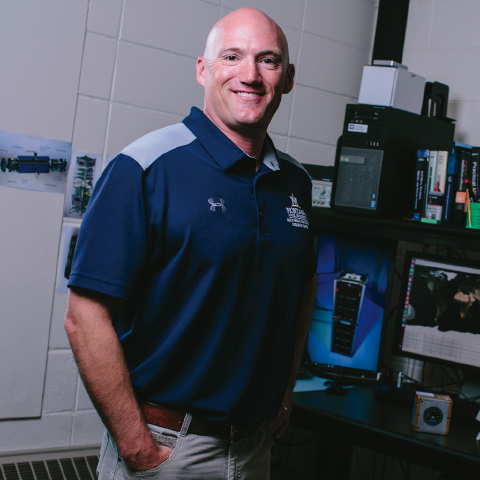
Welcome, Dr Brock LaMeres!
- Brock came from industry. He was working at HP and took classes at night to work on his Masters and PhD. The classes in his program had few traditional students. The profs were working engineers.
- After graduating, he stuck around to teach classes and loved it. He wanted to make it part of career.
- Using (modern) CAD tools in school
- Application was tied to the tools
- Chris went to a conference of EE Dept Heads (ECEDHA) and was put off by their unwillingness to try new tools.
- Teaching with captive tools in virtual machines?
- To get the context of the material, you have to show the application.
- Brock likes to show the historical aspect of engineering, or the "Rapid historical evolution of technology". As an example: the battles between Tesla and Edison (War of the currents)
- Another example is how Intel ("INTegrated ELectronics" made up the name, if you didn't know) hasn't really been around that long, historically (<50 years).
- Brock teaches every level at MSU:
- Beginners: EE 101
- Middle of curriculum: Logic circuits and design
- Advanced: Embedded systems
- Grad level: Digital design, including real world problems like signal reflections (Editor's snarky note: so analog too!)
- MSU has been dealing with COVID-19, like any other higher ed institution. But Brock was already teaching classes online.
- He has written books and paired it with youtube videos, so it wasn't a huge transition for a lecture class.
- However, there was a range of experience across the campus, especially the profs who weren't super digital savvy.
- Brock was interested in distance learning 10 years ago, especially addressing problems with the labs.
- He got a grant from the NSF to research how students could access equipment on campus and perform the lab somewhere else. This was before the availability of the low cost instruments of today.
- Chris asked how they measuring engagement / frustration
- It's a wide range: Students that need full engagement is not 100%. In fact, there's a percentage that don't want interaction at all. "They just want to crank"
- Breaking the class into different groups based on learning patterns means more time to engage the students who are struggling.
- Engineering is more about internalizing
- The thing that is missing is self-regulation: "If you're stuck on something for 30 minutes...then stop"
- They do a large number of low stakes homework assignments to track progress. It helps let them know when students get left behind and he's not a fan of exams.
- Vocational education vs traditional education.
- Senior design class is a must to be ABET accredited. Students learn that the circuit design is not the problem. It's the "everything else"
- Brock started working with NASA, continuing on his work designing FPGAs with HP. NASA wants reconfigurable hardware to accelerate computation, but also want to reprogram on the fly. Reconfigurable hardware can also flush out faults in space.
- They came up with a digital platform: Rad PC
- Processor voting on the output. "Voting" = 3 circuits produce outputs: if one crashes, the two that are the same will validate the broken one. This results in triple modular redundancy.
- They have gone up to space a bunch of ways!
- Put on sounding rockets
- Put on the ISS (!!!)
- Two cube sats
- Rad Sat U
- Rad Sat G
- Internally, the hardware has a bunch of monitors all over the place, including error correcting code (ECC).
- MROM
- Rad hard parts are expensive and hard to get, so they're trying to use commercial FPGAs.
- Chris asked about the overhead "cost" of having monitoring internally on FPGAs.
- Looking at MTTF
- The mission itself is driving a lot of the requirements
- Other ventures like Planet Labs (past guest), SpaceX (past guests) also are using commercial hardware with smaller mission horizons.
- Any missions requires an analysis of how to burn up.
- They're currently working on a project to go to the moon! Part of the Artemis Program.
- The computer will use the landers and rovers radios for talking back. Brock's computer will connect to the Lander and the Lander will take care of all the data (over some satellite uplink).
- Their Cube Sats are amateur band using SATNOGS for base stations.
- New book/course that's coming out, which is an Intro to Embedded Systems course reboot at MSU.
- Took a different approach, a different way of learning
- Wanted every student to come to class with the micro attached to their laptops, so a $10 dev board/platform was the goal.
- Brock is passionate about reducing costs for students, especially because of the public school charter.
- Previous target was Freescale processor, but the dev boards will still $100.
- The lecture for this class leads right into the lab, hosted in a room with more infrastructure.
- Wrote the book/recorded videos.
- A new book about Embedded Systems is coming out this week!
- Breaking down material into smaller chunks
- Some students are faster than others students
- Chris asked if the students coming out of the class, but Brock says it's tricky to figure out "are they better".
- Regular employers for MSU students? Bozeman has a strong optics community, as well as large scale employers like Boeing in Seattle.
- Brock was named a Boeing Professor, which means he got a grant to work on the program.
- Check out more about Brock:
Transcript
Chris Gammell: This is The Amp Hour Podcast. Released June 21st, 2020. Episode 497, sponsored by Keysight. An interview with Brock Lemares. Welcome to The Amp Hour. I'm Chris Gammell of Contextual Electronics.
Brock Lameres: Hi, and I'm Brock Lemares with Montana State University.
Chris Gammell: Hey, Brock. How are you doing? Doing well. How about you? I'm great. I'm great. I'm really excited to be talking to a professor who's kind of embracing a lot of the modern education techniques and is teaching electronics and kind of the way I wish I would have been taught. So how did you get into teaching to start with?
Brock Lameres: Actually, I was, after I got my bachelor's degree in electrical engineering, I went to work for Hewlett Packard in Colorado Springs. And they had one of the, you know, they'll pay for you to go back and take classes and kind of develop yourself. So I ended up chipping away at a master's degree at the Colorado Springs branch of University of Colorado. And after I got done with that, I'd met some of the, you know, some of the faculty. And since that school was, you know, centered kind of right in the middle of a big tech hub in Colorado Springs, they really catered to the working individual. And so their classes were essentially, you know, one time a week, three hours.
Chris Gammell: The executive engineering program, huh? Exactly. Exactly.
Brock Lameres: So when you went to class, it was, there was very few traditional students. It was, you know, working professionals, but then another thing that they did is a lot of the instructors were working professionals. So you'd have maybe half that were standard faculty and, you know, the other half were people that were working. So after I got my master's degree, they, they asked me if I could teach one of these night classes in embedded systems. And so I said, well, yeah, I can give it a shot. And well, I tell you, I fell in love with it right away. It was, it was, uh, uh, it's kind of a rush, uh, to, to be in front of a class. Uh, it was fun. And so I got hooked right away and then I, I kind of kept doing it. And over time I started thinking about, geez, I wonder if I could make this part of my, uh, my career. So not just have it be something on the side, but actually a meaningful part of what I actually do when I go to work.
Chris Gammell: Yeah, that's great. That's great. And, and, and could you talk a little bit more about the, the classes taught by like people in the industry as well? Like, obviously you've seen a lot of teaching, you've done teaching yourself now. Like what was, what was different about that? And, and why isn't it more widespread?
Brock Lameres: Yeah. So I think the, the key word is the, is practical. And so, you know, the traditional theoretically driven classes that are taught by professors, professors, uh, you know, they tend to live, yeah, exactly. They tend to be, you know, theoretical and very broad because the idea is that the students in your class are going to take that theory and they might go apply it to, you know, 20 different applications. And so you never really know, uh, how they're going to use that theory. Uh, when you have somebody from industry teach a class, uh, they hone in on the way that the, they use that theory. And so even if it's not exactly how you would apply the information or apply the theory in your own job, it was fascinating to see, uh, what other people are actually doing with the theory at their own companies. And probably the biggest, uh, one of the, one of the biggest things was the, the use of, uh, CAD tools. So, you know, you learn theory, paper and pencil in college, uh, about electrical engineering. And then when you go into the real world, it's, you'd never do that other than just a back of the envelope calculation. So you rely on CAD tools. And so the application of our engineering theory and industry is, is using these tools and understanding how they process information and how they make assumptions. And when you take a class from a person that uses those on a day-to-day basis, you really get an insight into how you actually do the engineering.
Chris Gammell: Yeah. Well, I, I imagine our listeners right now are all nodding their heads. They're like, oh yeah, this is why Chris was so interested in Brock being on the show. Okay. This is, this is good. And obviously we'll hear more about like the stuff that you're using. You're using tools as well. So, okay. Then why don't more schools do that? Like, why isn't, why isn't CAD integral? I mean, like the excuses I've heard, I went to a, uh, department heads, EE department heads, ECE department heads association thing. And they said, oh, well, we can't teach using tools. They might become outmoded or something like that.
Brock Lameres: Yeah. I mean, that is honestly a real concern. Uh, you know, first and foremost, it's, uh, the theory, you know, you need to know the theory before you jump into the CAD tool. So it's never a good idea to put somebody in front of P spice on day one, and they don't even know any of the laws that govern the circuits. And so you need to have the theory. And so what ends up happening is the tools kind of come out later in the curriculum. So you're, you know, juniors and seniors before you get to the point where you start using the tools. And then what happens is, you know, as an instructor, you have to build a class and get the material prepared. And it just takes flat out a long time to, you know, write up the material to show somebody how to use the tools. And then it really does happen is, is then all of a sudden the tool will undergo a major revision. And you're sitting here with four months of teaching material and everything has to be redone and you're redoing it for no reason other than the buttons moved. It's not like there was a big breakthrough in the way data was analyzed. So there is resistance in terms of just the amount of effort it is to stay modern. Uh, and of course tools can go obsolete, but what, in my experience, it's the revisioning is what kills you as an instructor is they revision these tools every quarter and you're just trying to stay up to date and they move things for no reason. Uh, and it, and it becomes really frustrating. So then, you know, you do see a lot of tools, uh, used in kind of the graduate level classes. Uh, but by that time, you know, you're, you're down to low enrollments. I mean, it's not, I wouldn't call it prevalent throughout the curriculum. I mean, you're, you're talking to a dozen grad students.
Chris Gammell: Right. Yeah. I guess. Yeah. I get that. I guess. I, I don't know. I, I still, I still am on the, uh, I don't know. I feel like the, maybe, maybe it's because it's like the requirement to like know where to click, you know, that's kind of like a big part of tools. But, uh, yeah, I'm, I'm still, I'm still not a hundred percent sold. I suppose that's part of the value prop that I think professors are really instructors in general, you know, like our, our offering. So saying that they have to redo it, it's like, oh, well, okay. But you know, I am paying money.
Brock Lameres: I know. I, and I totally understand because it's, it's not a good excuse. Uh, it's just a real realistic excuse. And I feel guilty too. I mean, sometimes I'll be like, I'm just going to use the old version of this tool because I don't have time to revamp. So, right.
Chris Gammell: Well, I'm not against like the old version, you know, there's always versioning problems, but it's like the, I feel like virtual machines should take care of some of this stuff where it's like, oh, okay. You just kind of boot this thing up and it's like, you're in the system and then it's, you know, this controlled environment, but that's, that's tough on its own. Hopefully that'll take off more in the future too, of like Docker or some kind of VM where it's just, you boot it up and it's the same on everyone's or web-based is also good if
Brock Lameres: it's possible, but yeah, it is a stinker. I will tell you on that topic, I, I've seen it change quite a bit since I was a student. I mean, when I was a student, maybe a little piece vice in the undergrad and as a graduate student, I mean, we were trying to use like synopsis and it was just held together with scripts. And nowadays, I mean, every class we're using the, the cutting edge tools, you know, the Intel FPGA tools, and we're using, you know, Keysight ADS. I mean, we're using the real tools and it's partly because the tools are getting better and better as in they're making them easier to use so that we have a chance of staying up to date. Yep.
Chris Gammell: Yeah. And I think as well, at some point, some salespeople figured out the whole, Hey, if, if I give these tools to the schools, then. You know, and maybe some support as well. These people are going in an industry. They're going to buy these tools later. Okay. That's not bad. Yeah, exactly. Lock in. Nice old lock in. So, okay. So you've been teaching for a while. Obviously you do a lot of research as well. And I'd love to talk about that. But before we do, like, tell me a little bit more about your, I'd like to talk a little bit more about your, kind of your theory around, around teaching and your, your, and you know, like how you like to teach that. I'd like to get into research and then I'd like to get back to teaching. Cause I feel like that's a big piece here and you have some, some newer stuff to talk about. So how do you think about teaching someone at the various levels of a university education about how to do digital, digital electronics and embedded and all the things that you teach?
Brock Lameres: Yeah. So the thing that guides my teaching, I think more than anything is the context of the material. Nothing drove me more crazy when I was a student than a professor that would walk in and just start writing equations on the board. And you're sitting there after 45 minutes of taking notes. You have no idea why you're learning the material, no idea what it's used for. Totally. Yeah. And you know, they've shown it's, you don't remember, you don't comprehend when you don't see the context. And the, the word is application that everybody uses in engineering. It's, you got to show the application. You got to go show the application for me. I'm more, uh, I'm, I'm heavy into the application. I want to know why we're learning the theory and why we're learning these techniques. But I, I have one other kind of step that I take it. It's the historical, uh, aspect of where, where we've been and where this has all come from. And when you work in computer engineering, it's the history is not long. I mean, we're talking about, you know, 1971, the, you know, 1970s, the first microprocessor. So students are sitting in the classroom and their parents were alive when the first microprocessor was shipped, you know, when Intel was formed. I mean, this isn't hundreds of years ago. So I, I love this rapid historical, uh, uh, evolution of technology of why we're doing what we're doing today in class. And so I'm always trying, I always try to, to frame it with like, here's why we're going to learn this. And then I take it a step further and I'm like, here's why we're learning it today, because you probably have heard of other things. And those were things that we used to do in the past. And that led us to where we are today. And then once you set the context, then I think that the students are more, they're more open to grunt through some of the, the math and the tedious, uh, kind of the tedious nature of solving some of these electrical engineering problems by hand.
Chris Gammell: Totally. Yeah. Could you give us an example of, of one thing that you gave historical context so that our listeners might, might, uh, get a better feel for that.
Brock Lameres: Yeah. In my, uh, one-on-one class in electrical engineering, I love talking about the, uh, the, uh, Tesla versus Edison conflict. Uh, I just, I love the whole, you know, you talk about sciences, creating knowledge about how the world works and they figure out that when you move a conductor through a magnetic field, you know, electrons flow. And then that just turns into electricity and it's really great. And there's papers that are written by the scientists. And then here come these, these engineers and they go, you know what I can do with that? I can make a light, you know, I can, so we don't have to have money. Yeah. I don't need fire anymore in my house and I can become rich. And then you look at just the, the way that, uh, Edison approached it and, you know, the way, the, the way that Tesla approached it and that battle of, of, you know, competing ideas. And, and it, it gives the students, you know, it's entertaining number one, because then you start talking about like, you know, they've all heard of Tesla right before Elon Musk, when you would tell these stories, no one had really heard of Tesla. Now everybody's going, Oh yeah, I've heard of that company. I guess that is, this is a guy that was really important in our, you know, electrical engineering history, but it's the, the battle between these minds and who wins out. And it also gives a perspective of the, uh, the business side of things. So it exposes people right away to, uh, you might have an answer and you might have an, a better answer than somebody else. But if you can't get that answer into a market and make it a commercial product that's viable, it doesn't matter. And so I love setting the stage of that, of the, where electricity came from and, you know, and transformers and, you know, Tesla's transformers idea and AC power versus DC power. And then you go into things like, okay, let's talk about, uh, you know, transformers. And then they go, Oh, okay. I, I'm going to, I'll be able to make it through the next 15 minutes of this somewhat boring
Chris Gammell: material because I'll hold on to the next story.
Brock Lameres: Yeah. Cause I'm thinking about Nikola Tesla and his idea for, uh, AC power. And so, or, or, or Edison, it's just, yeah, that's, that's one example of it. But, uh, on the kind of digital system side, I love talking about, you know, the, you know, Intel, you know, integrated electronics. No one even knows that it had a name before Intel and, and talking about, you know, Gordon Moore, uh, and Moore's law. And what's really cool about that is when, when we talk about Moore's law, you know, doubling of transistors every 18 to 24 months, you know, knowing that he was a founder of a company that's still around today and made the first, uh, microprocessor on a single chip. Uh, that's really interesting because it's, it's relevant history. It didn't happen, you know, 200 years ago or in some laboratory that they don't have a feel for it. You're talking about processors that are in their laptops right now. And, and so I, you know, I love setting that stage of why we're at where we're today with the historical kind of, kind of play.
Chris Gammell: Yeah, that's great. That's great. What is the, what are the ranges of classes that you teach as well? I see you mentioned a one-on-one. Is that just electronics one-on-one or just electrical engineering at one-on-one? What is, what are the different classes that you, you kind of focus on?
Brock Lameres: Yeah, I teach every level. So, uh, right now, you know, we rotate around at Montana state so that, uh, every, every, everybody gets exposure to kind of all the classes and then the students meet everybody. But right now I'm, I'm working in the fall. I do electrical engineering one-on-one. So this is students that have never heard of an electron. Uh, they walk in and we have students that are just sampling to see if this is the right degree for them. And so you have those students, which is interesting to, to meet and interface with. And then you have people that have known they want to be an electrical engineer their whole life. I mean, they're, they're makers and they walk in with Arduinos in their pockets and everything. So you have this huge range of capability. But then I also teach, uh, you know, the, the middle of the curriculum. So like the logic circuits and logic design, uh, FPGAs and then, uh, embedded systems. So microcontrollers. And then I also teach a, a graduate level class in digital system design, which is kind of, you know, reflections and transmission lines and the, the analog behavior of digital signals. So I'm kind of all levels, but my, my kind of, I guess, core competencies in the area of broadly speaking, computer engineering.
Chris Gammell: Okay. Yeah, that's great. And Montana state, I mean, uh, how, how big is the school for reference? Like I, I've heard of the school, but you know, I didn't know about the engineering program in particular. I'm sure it's great.
Brock Lameres: Yeah. Whenever, whenever I tell anybody I'm from MSU, they say, oh, wow, Michigan state. That's great. Uh, so Montana state is, uh, it's located in Bozeman, Montana, and we have, uh, about 17,000 students. So we're the, we're the large, largest university in our state. And we're the, uh, the, the land grant institution, which means we have, uh, the engineering program. And then we also have the egg program.
Chris Gammell: Oh, cool. Yeah. So that's gotta be pretty, pretty big, pretty big crowd of folks then.
Brock Lameres: Uh, yeah, yeah, definitely. Especially in a state like Montana, which is very, uh, very spread out. So when we get 17,000 people in a small area, it almost feels like a regular city, I guess.
Chris Gammell: That's great. Yeah. No, that's great. That's great. And then, so I have to ask, of course, it's, you know, June, 2020, how, how has COVID been impacting, you know, the end of last semester and then moving into summer and fall, fall programs as well?
Brock Lameres: Yeah, it was, uh, it was pretty incredible how, uh, fast the transition happened. Uh, I was very fortunate because I had been, uh, you know, teaching a lot of my classes online. So I had a lot of material that I was already using. So, you know, YouTube videos and I had, you know, written books that I provide to the student as, as eBooks. And I had my labs created so that they could be conducted anywhere. So I was very fortunate because I had already been working in this area for, you know, the whole online education area for probably five to seven years. Uh, so for me, it wasn't that big of a deal in a class where I would walk in and, and let's say, call it lecture Monday, Wednesday, Friday, I just simply would sit down in front of my computer and record a video. And for me, it was really, it was, it was easy because I had all the stuff. So I had the, the webcam that, you know, the document camera that I can write on. I had all the video recording software already installed. So for me, not, not a big deal, but it was really eyeopening to see the range of kind of, I guess, expertise or experience with technology across our campus. So we have everybody, I would classify myself into somebody who's kind of doing the online education and has figured out a lot of that stuff. Not that it's groundbreaking, but I've embraced it and I'm working in it. But we also, we have professors all the way to, to the point of not using a website, right? I mean, not entering grades in a Excel spreadsheet and, and printing out grades and hanging them on their office door. So what was really interesting to watch was how the different range of experience with online learning impacted people's stress level and just the conversations that we had. So it was interesting to watch. I think that was the number one. I was very pleased though. It went much better than I expected in terms of bringing along other professors who had never done this before to get them to the point where they just said, this isn't a big deal. It's not a big deal to just sit down and record a YouTube video or to record a little mini lecture writing on a pad of paper with a document camera. So I think it's going to have a really lasting effect on higher education and probably all education, but it's, the impact it's going to have is that you, you almost did this rapid bootcamp of college professors that just forced them to embrace technology in learning and embrace the idea of providing online resources, either as the primary mode of education or as a supplemental mode. And what I foresee going forward with fingers crossed is that even if people don't use it as their primary mode, they're using things like, you know, supplemental videos to give students more information, different ways of explaining the information and resources that the students can go back to. So it was fascinating and I was encouraged for the spring transition, which was essentially spring break. We came back and we're all online until the end of the semester.
Chris Gammell: Yeah. So that is a, that's a stark, stark difference for sure. It's, you had mentioned that you'd been doing for like five to seven years. What is the, what was the split, you know, pre COVID, what was the split of online versus in-person students?
Brock Lameres: For our department, I think I was the first one who ever taught like a full-blown, full-blown online class. And the first class was our introduction to logic circuits. So kind of the Carno maps and and gates and or gates and state machines, that type of stuff. So before that we were a hundred percent face-to-face. Okay. So it was the traditional, you know, 10 years ago, this was traditional. Everybody writes on a whiteboard. Students take notes, ask them if they have any questions right before the bell rings.
Chris Gammell: Calling the kids sleeping in the front row. That whole thing.
Brock Lameres: Yeah. Throw the eraser at them. Yeah. So then I got really interested in this idea of distance learning. And what was interesting to me is not necessarily the lecture, you know, the lectures, you can record a mini lecture and everybody's kind of okay with that. But with engineering, it's the labs that kill online education. It's how you do a laboratory. Right.
Chris Gammell: What do you do when, what do you do when you're like two in the morning and you're stressed out and you can't get anything to work and computer crashes and, and you're just completely lost.
Brock Lameres: Yeah, exactly. And so that's, that was the interesting problem to try to address. And so I started looking into that, uh, again, specifically in embedded systems or microcontrollers. And I ended up, uh, getting a grant from the national science foundation that was trying to look at how you could access equipment that's on campus and perform the lab from somewhere else. And so I do, I was studying this, you know, kind of the, uh, the efficiency or how well you can learn if you're programming a microcontroller, but instead of having the microcontroller and the equipment that you're looking at it with specifically like an oscilloscope or a logic analyzer, instead of having that in front of you. What if you're in your dorm room and the equipment is across campus in a lab and, you know, and I had web cameras set up so they could see the, the lights flashing. And then with, you know, the, with modern tools, you can emulate button presses and everything. And this was back before you had kind of the low cost portable instruments that you have today. And it turned out that it was not a big deal at all. Like the students, it didn't matter if they were looking at a screen of a box that's in front of them or a picture of the box on a screen five miles away. And so that really opened my mind up to some of the possibilities that you could do with, uh, online engineering education. Cause if you could solve that lab problem, uh, then you can do a lot of different things. So that's kind of where it all started for me.
Chris Gammell: So you found out that basically students could be confused. Like I was from anywhere. Is that what we're hearing? Exactly. Yep, exactly. So what about the engagement element? Cause this is something that, you know, so I, I teach online as well and it feels like I'm thrown it in the void. You know, that's part of the problem. I feel like, like, uh, with a university education, you know, the, their skin in the game, they want to get the degree at the end. They need to prove it out. I don't ask for that stuff, but even, even if you do have that, how do you ensure that people are asking questions, how do you ensure that people are getting feedback and, or rather getting, getting through the struggles that they would have. And maybe a TA would like, look at them and be like, wow, that, you know, Billy over there on the bench looks really upset right now. You don't have that if you're remote in your dorm room. So how do you, how do you measure all that?
Brock Lameres: You know, that's really the question is how do you handle that situation? So what I kind of discovered is the students that have that, you know, that need that engagement that will get stuck and that you're, that need prodding. It's not a hundred percent of the students. So what, what I've kind of found is that there are a, there is a percentage of students that really don't want to necessarily work in a group. They just want to crank. They just want to give me what I need to do. And I, and the resources to learn this and give me the assignment and let me go. And so when you think about your class as breaking them into different ways that they want to learn and that they thrive in learning, it allows you to take like an overwhelming number of students and almost kind of triage them into groups where you say, you know, those students that can crank this stuff out on their own, let's send, let's let them do that. And so let's let them work at their own pace and let's let them do that without, you know, the interaction of me asking them how it's going all the time. And when you do that, what happens is that now you have more time to help and, and try to monitor the students that are, are not engaged and need that kind of extra push. And, you know, education is it's right now I kind of break it into two styles of, uh, kind of just two general categories is there's the, the active in class learning where you go to class and you're, you know, you're talking to other people and you're asking questions with other people and discussion groups and that type of stuff. And they've shown that that's very impactful and trying to like remember information and how to, uh, you know, explain it and form a deeper understanding of the material. Now with engineering, it's a little bit different because you don't really discuss the material. It's about, you got to do it. Right. So you're, it's a, you repeat this process over and over until it becomes second nature. And then you use that.
Chris Gammell: It's about internalizing and mental models and, and just like picturing it in your own, in your own way. Right.
Brock Lameres: Exactly. And then, so what I kind of think about with, uh, the engagement part is, is instead of trying to monitor, which we still do, you can monitor when students log into the system. You can, you know, email works, you know, Webex, quick Webex sessions work. Uh, it's, it's shocking how well they work. I didn't think it was going to work this well when I first started doing this, where you say, Hey, let's do a Google hangout. You're on cell phones doing a video call. They're showing you, the student is showing you the breadboard and you see where the wire is not connected and it works. So the technology allows you to do that. What is missing though? And this is the key, the key ingredient is teaching the students, this idea of self-regulation. And that is knowing that if you're stuck for a certain amount of time and you're not making any progress, it's time to stop. And so you're trying to avoid that student. That's been up for 28 hours, who just is staring at their breadboard and they're pulling the wires out and putting them back in just over and over and over, hoping it'll work. And they're, they're not noticing that they're not making progress. Their chip is backwards. Yeah, exactly. And it's, it's when you first start out, it's just knowing like only work, you know, I tell them, it's like, if you're stuck on something for 30 minutes, you know, stop and, and go, go exercise, go switch, you know, take a nap, do something else and then try it again. And then if you're stuck again for 30 minutes, then call me or call the TA and let's, let's talk about this. And, and so if you can set the expectation early of how to do it, so how to self-regulate your behavior, how to, to continuously monitor whether you're making progress, then that allows students to start being able to ask for help when they recognize they need help. So it's, it's really one of these things of like the, I think your original question was something to the tune of how do you observe these students that need the little push it's in an online environment. I feel like it's, you're trying to teach the students to monitor themselves to know when they need to ask for a little push.
Chris Gammell: Got it. And then do you have like bumper rails in case you don't hear from someone in like three days or something like that? Do you have some kind of way to, to reach out if you don't, do you have some kind of mandatory like touch points so that if they don't reach out that you check in on them or is it more like, well, you're kind of on your own?
Brock Lameres: No, it's what I, what I do in my classes, online classes, I have a large number of really low stakes homework assignments and in an online environment, that's usually multiple choice quizzes. So, you know, when a typical engineering class, you hear the, well, I give three homework assignments a week, uh, times 15 weeks. So you have like maybe, you know, with exams, it's like I gave out 30 homework assignments or something like that. So in a class that I'll have, I might have 60 or 70 homework assignments and people hear that and they're like, oh my gosh, are you crazy? And you go, no, no, no, no, no. These homework assignments are basically, they take maybe five minutes and they're just to show that they did watch the video, that they were able to find the information in the book really quick. And if you have a lot of those low stakes, uh, the students like it because they, they see their points kind of, they, they see their earnings growing toward their A. And it also allows us to just easily check every day. It's like, okay, who missed the deadlines today? And then you kind of watch them and you just, you can look at your grade book and online and just see the students that are starting to fade away. Then you reach out to them and say, Hey, let's do a WebEx. Let's, let's see what's going on.
Chris Gammell: Yeah, that's great. And I like that too, because it, I've always kind of like, like chafe a little bit at the idea of grading. Like I get where it comes from and what it is, is you're really trying to prove that, you know, people are engaged and learning whatever, but like the two huge exams kind of model doesn't really work in my mind as much as like, like what you're talking about of like, Hey, I'm there, I'm showing up, I'm learning. Maybe I don't get everything. And, but then the grade is a measure of how much did you show up? How much effort did you put in? How much did you try? And then hopefully that, that results in, you know, moving forward with the, with the actual education at the end of it, like that, the knowledge that will move you up in, in the ranks and make you a better engineer.
Brock Lameres: Yeah, exactly. I've, I've never been a, I don't know if I should say this, but I've never been a fan of the exam myself. Well, if your students are listening, then they should get extra points anyways.
Chris Gammell: Right. They're interested in their teachers, you know, you know, there's online presence and like they're stalking you and it's, it's really a sign of love in 2020. Don't you think?
Brock Lameres: Yeah, exactly. So for me, it was always, you know, what I noticed when I first became a professor was students knew the material and they would, they would bomb an exam because they were stressed out. And so you're sitting there going, well, this, this isn't fair because they're not, I don't know. I know that they know the information. It's just that in this format, they're not able to prove it to me because they're too stressed.
Chris Gammell: Right. None of my clients have ever been like, Chris, you must solve this problem in the next 30 minutes with full work, or you don't get paid ever again. And if I did, I mean, why? I just wouldn't get paid ever again. Honestly, it's like, oh, okay, well, I'm going to have some time to think about it. And like, you know, and it is that like, like school, no, I'm not saying that like school should completely approximate the workplace because I think that that has, that would be very odd, but I don't know. Like what's, what's your take on like the role of vocational education versus, versus more traditional education?
Brock Lameres: Yeah. I think there's a need for both. One of the things that I want to be, or try to be a champion of is this idea that not everybody needs a PhD in electrical engineering to become an engineer. Right. It's, but we do need some part of our society that does do that. Right. Yeah, totally. So, you know, to be an engineer, what does that mean? I mean, is there really a gate that says you must complete four semesters of college calculus to be even considered an engineer? But if you look at like what the definition of an engineer is, it's, we take knowledge from the scientists and we create and maintain systems that benefit society. You can do that with vocational training. Right. And so it's interesting because people fall on at all parts of the spectrum on this discussion where, you know, people think that to be called an engineer, you should have a minimum of a master's degree. They should make that the first degree that you get. And I'm kind of of the, of the thought that going forward, I think we just need a lot more types of engineers and we need different ways to get into engineering that kind of matches what people are passionate about. If you're a really hands-on person, you know, vocational training is, is the way to go. And that doesn't make you any less valuable to society from an engineering standpoint. And when you make that argument, I think the people that, that stand in the camp of, we need to have everybody get a master's degree or a PhD, they think you're watering it down for them. But what I always try to explain is you're not trying to make one education that fits everybody. What you're trying to do is give more educational opportunities. We still need people that get a master's degree. We still need people that are get a PhD degree, but we also need people that have vocational training, right? We need people with a two-year degree, a one-year certificate. I mean, we need everybody.
Chris Gammell: Yeah. Yeah, I agree. I agree. What about the pulling? So I guess, you know, the hands-on kind of stuff. So it seems like you're very hands-on with your coursework and we're going to talk about some of your, your, one of your new courses that's very hands-on, but like what it was actually, one of the things I was kind of talking about too, is like vocational in the context of, I guess, senior projects, but like really practical type of work like that. I've heard some people say, oh, well, that's, that's too close to industry. It doesn't make any sense because it's so specific. But my counter for that is always, well, you're going to learn, you're going to pull some thematic things out of even very, very specific projects. So why not just do the specific projects? So do you see it that way? Or is it more, you know, you think a broad-based education is more important?
Brock Lameres: You definitely need a little bit of both. The challenge with the industrial projects is trying to bound them to something that can be accomplished within a certain academic timeframe by a student that is learning everything for the first time as they go through it. So that's one of the biggest challenges is we're all involved with our senior design, you know, class. So we all sponsor projects and we try to find projects. And I've worked with local companies that have had projects that they have students do. And I've, I've worked with, you know, places, federal agencies like NASA that have sponsored projects. And then I've made up my own projects. And I'm always struck by when the student team starts working on the project, it's everything takes so much longer than you would think because they're, because they're doing things that are beyond like the circuit analysis and the, the board design. They're trying to think about things like schedule and they're trying to think about things like requirements. And they've heard these terms before in a class classroom setting, but when they go to apply it, you realize that it's, it's like their second or third time that they've ever even tried to think through these things, the circuit design, that's like their 200th time. So when it comes actually down to doing the design, they're quick at it. And that is never the problem. It's always the, this notion of like, how do you, how do you get the requirements defined so that you actually have a chance to accomplish this in a couple of months? So it's very powerful. And that's why every, you know, accredited engineering degree has some sort of capstone requirement, but it is like, as the, as a professor, you kind of stand in between the student and the project definer. And you have to take these, these ambitious projects and you have to kind of strip them down to something that is actually manageable and also gives the students the real experience, you know, the actual working with the customer to define requirements and then putting the scope in terms of a schedule and a cost and then paring it down into something that says, okay, I can do this in this amount of time for this much money. Now let me go do it.
Chris Gammell: Yeah. Well, I'd say the, uh, it always takes longer than you think it will. That's doesn't get much more real than that. Here at the amp hour, we're interested in advertisers and sponsors who help teach our listeners. And today we are hearing again from Keysight who are doing specifically that there's a new program called Keysight University. And we're going to be hearing from Daniel and Jit who are talking about where USB has been and where it's going.
Brock Lameres: So about a year ago, they went into buy two mode. And in parallel with that, they switched to a brand new connector called the type C connector. So it went from just a couple of pins to five pins to 24 pins on a much smaller form factor. And in that case, they also introduced something called USB 3.2 by two, where they run two lanes of five gig and 10 gig in parallel. In addition, they still have the original D plus and minus on the type C connector. It did not go away. USB 2.2 still runs on a type C connector. And of course, today we talk about the introduction of USB 4, which can only run on type C. It still has the D plus and minus pins dedicated only to USB 2. That did not go away. Even with USB 4 at 20 gig by two. So it runs 40 gig in each direction. So the pipe is 80 gigabits.
Chris Gammell: These are some really tough numbers for me to comprehend just because it's so fast. So I asked JIT, what are they using to actually measure some of these signals and actually characterize the lines?
Brock Lameres: So you need to have a low noise instrument to be able to provide margin. So voltage is one area, but the bigger issue is around things like eye diagrams and jitter.
Chris Gammell: And then I had to ask, what is an eye diagram? Because I've seen them before, but I don't actually, I don't know what those are.
Chris Gammell: If you put yourself in the, from the perspective of a receiver, you're essentially trying to sample a zero or a one over and over. So what an eye diagram does is it takes that bit stream coming in, those ones and zeros, and essentially overlays them on top of each other. And you can get this collective view of almost like if you had a bunch of transparencies and you put each bit stacked on top of each other. And you can see what sort of margins you have for your receiver because you know where your sample threshold is. And you can see how high above it your ones are, how below it your zeros are, and then right to left, how much space you have for your transitions between each bit.
Chris Gammell: And this is just the tip of the iceberg. This turned into a half an hour conversation between Daniel and Jit and myself. And it was really great to learn about USB and some of the insane speeds that are going on there. You can fast forward to learning about it directly from Jit at Keysight University. There's a course called USB Pitfalls that's available now, as well as a bunch of other courses about test and measurement topics that you might want to learn on your own from home for free. So that's Keysight University. Check out the link that's in the show notes for this episode. And now back to the show. And you mentioned NASA, and that's somewhere of where your research is as well. So could you tell us some of the research points you've brought students into, but also some of the stuff that you've been working on in the past couple of years or during your career?
Brock Lameres: Yeah, absolutely. So when I was an engineer for HP, I was a digital system designer. So I did, you know, like programmable logic devices, field programmable gate arrays, FPGAs, what they're called today. And so when I came into academia as a professor, I was trying to find something that matched my background and my interest. And so I kind of stumbled across this idea of trying to use reconfigurable hardware to accelerate computation. So the idea is, you know, let's say you have a chip that is a Intel processor and it runs all these different pieces of software because it's designed to, you know, it's a jack of all trades, right? It can run Word, it can run Excel, it can run a game, it can run, you know, audio codecs, it can do all this stuff. But what would happen if you had a chip that could be reprogrammed on the fly to when you launch Microsoft Word, the chip is optimized for Microsoft Word at the hardware level. And then you do Excel and it's optimized for Excel at the hardware level. And that was the idea of this reconfigurable computing. And, you know, and it was an area of research that people were looking into and field programmable gate arrays were a technology that allowed research to actually be tested. So you could actually try this out. So then what ended up happening was as I started writing papers and going to conferences, I ran into some people from NASA and they started talking to me about the idea of reconfiguring the hardware can actually flush out faults that may have been caused by radiation in space. And this was something I had never even heard of. I mean, this was totally new to me. But as I learned more and more about it, it was, I mean, it was super exciting because you're talking to people from NASA about, you know, putting stuff in outer space. But then it also was cool because it was really a computer system problem. It wasn't a physics problem. It was, hey, we're going to have ones and zeros that flip every once in a while. And we need to build a computer that can recover from it. And so I was able to kind of define the project or define the problem in a way that my simple brain could understand it. And then once I did that, I was able to contribute to it. So we, you know, I started, you know, hiring students and we started looking at this and this was 10 years ago. And we came up with this computer architecture and we've actually coined it a RAD PC for radiation tolerant, either personal computer or powerful computer or whatever. But the idea is to basically take a FPGA and put redundant processing cores on it and then vote on the output. And if one of the processors gets faulted because of radiation, you can still produce the output because the majority of the cores have the right result. And then the novel contribution was techniques to go back in and reconfigure the faulted processor and restore it to a healthy state and reintroduce it back into the computer system.
Chris Gammell: You know, the tough part with, with voting chips and stuff like that is just like all the politics that happen. It's just, it's such a, it's such a mess. Choose option A. Choose option A today. What?
Brock Lameres: So could you explain what voting actually is as well? Oh yeah. So let's say you have three identical circuits and they're producing outputs. Well, all three should be producing the exact same output because they're looking at the same input. If one of the circuits crashes, then you have two of the outputs, which are the same. And one of them that's different. Well, if you're, if you know that you designed the system to have three identical circuits, you can still find the right output just by looking at the majority. So you say, I'm going to vote of these three. And as long as two of them are the same, that must be the right answer. And so they call it a majority voter. And it's just a circuit that you put in, uh, put in systems that might have faults. Yeah.
Chris Gammell: And then the idea is that statistically the likelihood of the two are going to fault the exact same way is almost infinitesimally small. That kind of idea. Yeah, exactly. Exactly. They may have three different results, but that would, that would not be one wins. It's just like, everybody's wrong then.
Brock Lameres: Yep. Exactly. Exactly. Yeah. And there's actually a term for it. It's called triple modular redundancy or TMR. Okay. I was going to say, so that original idea, uh, led to some projects for NASA where they said, okay, go ahead and take your idea and let's, let's test it. So we started building circuitry and we, we started putting it in like a radiation chambers and then we started flying it on high altitude balloons. And we got some opportunities to, uh, to put them on a sounding rockets, which are the, the rockets that just go up and come back down. And then we got some opportunities. Uh, we actually were put on the international space station in 2017 for a year long test. And that has gotta be the coolest frigging feeling ever. Oh yeah. Yeah. The pictures, they actually sent videos of the, of our computer getting installed and the, the, the ISS crew was spinning it around and you can see the Montana state logo and he was spinning it. And it was really amazing. Yeah. Wow. And then after that, we followed it with, uh, uh, two small satellites. So they're, they're called cube sats and they're like about the size of a loaf of bread. And so we put the computer in these two little satellites and they're actually orbiting earth right now. Uh, so they, they pass over ground stations and we, we get data from it to see how the computer's operating. So they're called rad set you and rad set G. So those are orbiting us as we speak.
Chris Gammell: Nice. And then, so, so, uh, one thing I wanted to ask you about with the, the reconfigurable logic piece is like, does that mean that the, the individual cores kind of reprogram each other as well? Is it like part of a, part of the process to actually regularly update the logic or, or how, how does the actual reconfigurability play into this, this, uh, TMR, not TMI, TMR? Yeah.
Brock Lameres: Yeah. It's a, so that becomes the problem is how do you repair? Because as soon as you repair something, you notice that, well, there could have been a problem over here. So you need to put another layer and then there's another problem over here. So you need another layer. Right. Right.
Chris Gammell: I was thinking like, if you, if you have the, if you have the actual bit stream stored in memory somewhere, what if that bit stream gets corrupted and what if exactly, maybe you have the thousand bit streams now, but then you got to double check them all against one another. And it's like, it's yeah, it's not, it doesn't sound easy.
Brock Lameres: Yeah, exactly. So, you know, to begin with, there's the voter, which just looks at the output. And then if that happens, you can reconfigure that, that processor and keep going underneath it all though. We have a lot of different monitors. So we have, uh, air correction code monitors on the, the memory interface. So we kind of monitor there to see if false may occurred in there. And then if they did, we, we restore the value with a memory scrubbers, what we call it. We also have, uh, a circuit that goes through the bit stream that is active in the FPGA and checks every single bit. If it's, it has changed and we have a monitor for that. Uh, so, so you have, you have that going on in the background and then you just have your standard watchdog CRCs and stuff like that. And yeah, you, you just have all the things that you've heard about. It's the, the trick is putting it all together so that, uh, you can build a system that's reliable and then you're right though. There's, there's always a single point of failure where you've got these bit streams. And what you try to do is you try to put them on a device that is, is immune as possible to radiation. So if, if you built a final spacecraft, that's going to use this computer, you'd probably store the bit streams in some device like an MROM, uh, some, something that no matter what you do to it radiation wise, it's those ones and zeros aren't going to flip. It'll be slow, but you don't care because you're only using it every once in a while.
Chris Gammell: Okay. Okay. What about the, so I've heard about rad hard parts before as well. Yeah. And is, is that something where you're using like older technology as well? Like this FPGAs are from 10 years ago or what about those parts?
Brock Lameres: Yeah. So there are parts, uh, that are radiation hardened by design or by process and they work well. Uh, one of the tricks to them though, is that when you go in and modify the way that they're fabricated or to modify their, their circuit design, you cut the volume down of the manufacturing because the customer for the type of part that you're doing, uh, it's pretty small, right? So you think about the reason that microprocessors aren't a million dollars a piece. It's cause we make a million of them a month. Uh, but when you start talking about making a chip that can survive in space and you're only going to make 10 or 20 a month, I mean, they're, they get outrageously expensive. And so there's a big push to say, well, I want to use something that's tolerant to radiation, but I want to be able to take advantage of kind of the commercial, uh, kind of volume that causes the price to be low. So what I'm trying to do is, is use these commercial FPGAs that are inexpensive, you know, tens, $20 and put something on them that is an architecture that allows them to respond and recover to radiation as good as some of these more expensive radiation hardened parts.
Speaker ?: Hmm.
Chris Gammell: And what is the, what is the overhead for doing these? So obviously you had three cores, so that's going to be at least a, you know, a third as efficient as otherwise, but what, what other, what else is the total like cost in digital logic in order to, to add all these features like you're talking about?
Brock Lameres: Yeah, it's, it's more than 300%, probably less than 400%. So you do. Okay. So you do pay for it, uh, in terms of the traditional design variables. So area power, uh, but computation is not, you don't get a hit on computation because they're all run in parallel. Uh, so what you're trading off, it's an interesting, uh, design requirement because it's something I've never thought about, which is reliability in space. So you have this, this new requirement that on earth we don't think about. So what, what these aerospace, you know, spacecraft designers look at is they go, well, can I put up with a little bit more power if I can guarantee that my computer won't crash or that the meantime to failure is, you know, 10 years. And so that's why that these, this idea is even viable. It's because there's a fourth, uh, trade-off or a fourth, uh, design consideration.
Chris Gammell: Right. And also it's, if it's the, uh, computer that's going to be controlling the airflow in the capsule, then they're like, yeah, yeah, I think, I think we're cool with it. You know, we'll take the hit. We'll put a couple extra batteries or solar panels out. We're going to be fine folks. Uh, yeah. And it seems like, so we've had, uh, people on from space companies in the past, planet labs and SpaceX and, and similar. And it, it, it seems like that is a, a, a larger trend as well. Obviously, you know, not isolated to those commercial companies. Obviously NASA is, uh, doing a lot of that too. Is it, is it purely driven around costs or, uh, is it, is it that the chip companies are also moving away from these radiation parts or what's ultimately driving this at a, like a high level?
Brock Lameres: Well, it's kind of the, the mission itself. So if you're going to put something on Mars, for example, and it's going to be there for 10 years and it's going to cost a billion dollars, you know, you're, you're going to pay for the more expensive, reliable chip. Uh, but when you have missions like a planet labs is a classic example. Uh, so they're, they're putting up these small satellites that do imaging and they put up a lot of these small satellites and their missions are not 10 years. I mean, they can be as short as six months, maybe a couple of years.
Chris Gammell: And so 30 seconds, given that one that blew up on the pad as well. I don't think they made it very far.
Brock Lameres: Yeah, exactly. And so they're not able to put up a constellation of a hundred satellites, uh, for six months. If each satellite costs a million dollars, I mean, it's just the cost drives it. So really it's the type of mission. So when you see these, uh, tons of these little satellites going up, they're not meant to last as long as you might think. And so it reduces like how long the parts have to survive. And so you can get away with applying techniques that will survive for, you know, a couple of years, uh, and are much more affordable than trying to stick one of these expensive red hard processors in there.
Chris Gammell: Yeah, that makes sense. Yeah. It's, I think it also helps that they're like usually smaller things. If I, uh, people listening to the show know that I, I listened to the, uh, read the, uh, the eccentric orbits book that was recommended on here a couple of times and about the iridium satellites. And just like the fact that there's like basically three chapters about the government and Motorola going back and forth about like, you know, how to actually reenter these, the set of satellites. It's like, yeah, being small helps in the, in that purpose. It's like a little, little cube sats. They burn up a lot faster than a, than a big old iridium satellite.
Brock Lameres: Yeah, exactly. That's actually, it was kind of funny the first time I did a cube sat is that's one of the, the analysis is that, or the analysis you have to do is you have to turn over your material list and your mass and they figure out how long is it going to take for you burn up. And there's some rules in there that you can't be up there for more than 20 or 25 years. And so every small satellite is on its way down.
Chris Gammell: So do they calculate like a, a, a degrading orbit, like on purpose, or is it more like they spin up the reaction wheel and then they say, nope, you're going in the Pacific this today. Like you're done little satellite.
Brock Lameres: No, that it's, it's really about the materials and guaranteeing that you will burn up almost completely. Oh, I see.
Chris Gammell: Okay. So like nothing that's like, like tungsten, you know? Yeah. Oh, titanium. Okay. Yeah.
Brock Lameres: Yeah, exactly. I couldn't, you couldn't get a cube sat approved that was made of tungsten, uh, cause it would land. And so, but if you're just using aluminum and, you know, FR four and, and standard solder, that stuff just burns up and it just lives in the upper atmosphere as particles.
Chris Gammell: Mm-hmm. It's the, it's the dust that, that, uh, you know, goes through my dreams. I think, you know, I dream of, of, uh, FR four fairy particles. It's, it's, uh, it's what gives us, what gives us all inspiration for our next project. So that's great. So what, what about outside of NASA? I mean, so is NASA kind of like the majority of your research?
Brock Lameres: Uh, it has, it has been on the technical side, uh, and it's, it's been awesome. Uh, what we're working on right now is I mentioned, we have two satellites in orbit. We're actually working on a project to put this computer on the surface of the moon. So we got chosen. Yeah. We got chosen as part of, uh, you know, the Artemis program, which is to put boots on the moon at some point, but it's a much larger program.
Chris Gammell: That is a very specific. So wait, is it not 2024? Is that not going to happen, Brock? What's happening? I can't confirm or deny, but there will be. Politics. They're not on this. Yeah.
Brock Lameres: Yeah. And so as part of this, you know, sending people to the moon, it's, there's a lot of missions. They're going to send a lot of unmanned, you know, landers up there and rovers. And so we're going to be able to, to demonstrate this technology on one of these landers. So we're going to go up there and you collect information on the way to the moon, and then we'll get on the surface and then we'll operate for a certain number of days and collect radiation information about the environment and also how well our computer works. So that's NASA has been the primary funder of, uh, of my technical research. Um, yeah, so it's been, it's been awesome.
Chris Gammell: Do you get like sweet NASA swag? My question is so dumb, but do you get like sweet NASA swag from this or how does that work?
Brock Lameres: I have more NASA stickers than you could ever count.
Chris Gammell: Yeah. Okay. Yeah. I'm saying like mission jackets or like patches. I don't know. I'm nothing like, nothing like that.
Brock Lameres: No jackets, but we do have quite a few mission patches. They love giving those away and stickers.
Chris Gammell: You do have like photos of your stuff in space. So that's kind of its own like, yes, that's the cool part. So like, okay, you've got a, you've got, let's see, what was your old one called? So they were called cubes, rad sat you and rad sat G, and this is going to be rad sat amp hour. Uh, and rad sat amp hour lands on the moon and it's broadcasting back. What, what is, what are the radios? Is it like off the shelf radios or quasi off the shelf? Like how do you actually transmit back? Is it on a particular band or is it all bespoke?
Brock Lameres: Yeah. You know, the, the moon project we have, it's, it's kind of nice because the lander is going to provide the communication link. And so we don't know what they're going to do. Uh, it's actually, it's really a nice project because we plug in and they give us power and then we give them data and they take care of everything. So it's to be determined how they're going to do it for our satellites. Uh, we're using like amateur band. So it is, you know, four 37 megahertz and we're just doing GSMK modulation and any amateur radio can pick up the data packet. In fact, there's a, there's an amateur satellite observation network called sat nogs. And it's all these hobbyists that have these little stations and they're, they're willing to allow their stations to receive information from these satellites as they go over. And so I can log into this website and I can see these satellites, you know, passing over all these ground stations all over the world. And I can sometimes get data from it.
Chris Gammell: That's awesome. Yeah. Sat nogs won the Hackaday prize the first year. That was a, that was very exciting. It was. Yeah. That's cool. Well, I wanted to get back to education and we're kind of running out of time here, but you have a new course that you've, you've been developing and I think it's very relevant to, you know, what people on this show are listening to. I know I've been trying to get better at embedded computing and stuff like that. So what is this new course that's coming out? The new book that's coming out?
Brock Lameres: Yeah. So, uh, we reinvented our introduction to embedded systems course at Montana state university. And, you know, you, you have to do this every once in a while anyway, because you almost always use microcontrollers. And so they go out obsolete. And so you have to change to the new microcontroller. But what we did this time is, is we took a different approach to just, instead of just selecting a new microcontroller, we tried to find something that would enable a different way of learning. And there were a variety of requirements, but essentially the big ones were we, I wanted every student to be able to come to class and have the microcontroller attached to their laptop and be able to code along with me. And when you put that requirement in there, a few things fall out of it. So number one, it has to be cheap. Okay. It can't be a hundred dollars because I can't at a public university. I can't require. Yeah. It can't even be a hundred that I was saying I started with $10 as my goal. I said, $10. I can tell every student to buy this microcontroller.
Chris Gammell: I mean, Brock, I don't want to tell you anything you don't know, but you know how much books cost? I mean, they're trying to expand.
Brock Lameres: Yeah. I'm aware of that. We're trying to work on that too. Okay. Good. Yeah.
Chris Gammell: Yeah. So it sounds like it's a broader goal of just reducing costs for students, especially in public education, which is amazing.
Brock Lameres: Exactly. Yeah. Exactly. And then when you want every student to have this in front of them, you also have a couple other requirements. Like we needed multiple OS supports. So we needed to be able to run on windows and Linux and iOS. And then you also needed it to be low enough power that they could power it from a USB drive for, or a USB port for 50 minutes or two hours. We can't, it's, it becomes very impractical if you have a hundred people and they all need to plug in a daisy chaining power strips together. Yeah. Right. Yeah. And so that was kind of the first goal of this was if you could find a microcontroller that could do that, it totally transforms the way that you can teach because you no longer have this idea of three lecture periods each week where you write on a board and then a two hour block where they go to a lab and the lab is two hours long only because you only have access to the equipment for two hours. It's, it's kind of an artificial, uh, artificial constraint.
Chris Gammell: I have to ask what was the processor? I'm imagining like you're using like a, like a, like a VAX computer in the old days or something. I know that's, that's complete hyperbole, but like, what was, what was the micro that you were using that was needed to plug in? Was, you know, was it like a, like an all, uh, Altera Intel, like FPGA board or something like that? Or what was the, what was the target previously?
Brock Lameres: Before this, we were using free scale processors. They were great. I mean, but yeah.
Chris Gammell: Oh yeah. Used throughout industry. Great for that kind of thing.
Brock Lameres: Oh yeah, absolutely. But they were still the development boards that, uh, worked for our class. We're still 75 to a hundred bucks. And so you're sitting there going, it's just, it's great, but it's just too much money.
Chris Gammell: Yeah.
Brock Lameres: If you can get something that every student has, you move to this model where you can start having the labs or the lab experience at the time when the students naturally are ready for it. So I envisioned a class where you lecture a little bit, 10 or 15 minutes, then the students do a short lab for 20 minutes. Then you go back and lecture a little bit. Then you do a lab as, as opposed to waiting and putting all these little lab experiments together to make this artificial two hour assignment, uh, just based solely on being able to go and do a physical lab and access the equipment. And so it kind of just changed the way that, uh, we, we created this course. Uh, and we actually were able to get, uh, you know, access a room that had larger tables so that every student could have a laptop. And we were able to do three, two hour blocks. So when you look at this class, if you walk in, it's, there's no more of a, of a professor at a whiteboard writing codes on a white, you know, writing out code. You, what you'll see is, you know, if the instructor is doing anything, they're typing code and what, and showing you how to run this program on a microcontroller board. And every student is sitting there typing along, or they're working on lab assignments and you have multiple teaching assistants that are running around. And so it, it, I really feel like it changed engagement in the material. It made it the relevance of what you're talking about better because the students were immediately able to code it up and see it. And then again, since, uh, we, we designed the course first, I then wrote the book. And then what I did is I went back and recorded, uh, YouTube videos of the book. And so as of right now, the book will come out pretty shortly, probably within a week, YouTube channels live. And you can have this class online now. So I'm actually teaching this class fully online right now as we speak.
Chris Gammell: Right. It's like some people might like accuse you of having a time machine, given how well the time it worked out for all the, the, uh, challenges coming to education because of COVID. But yeah, that's, that's great. And I, I was, I was, as you were talking about the, the lab model and stuff like that, I was like, well, wait, that's how I did it too. And then I, I thought about it and I'm like, no, no, no, that's how I go to workshops now at conferences. And that's what I do at conferences in school. It was nothing close to that. Right. It was, I, I barely had microcontroller stuff in school. It was, I was very disappointed in my school with how they did that, but that is fantastic. And are you pushing this to other schools? Because like sign up every college you can. I mean, like that's, that's great. That's what it should be. I mean, high schools too, if you want, I don't, I don't care.
Brock Lameres: You know, I'm trying to, uh, you know, it's, that's, it's a trick, you know, you got to try to find people that are willing to adopt it, but anybody that's willing to listen, I'm, I'm, I share all my resources with the instructors. I have the solutions manuals. I have lab exercises, YouTube, obviously all the, all my lecture videos are live or, you know, they're, they're there. Uh, so somebody could even learn the material and use the material in their own class without the book. Uh, but you know, the book is, is affordable. It's, uh, usually, uh, it's an ebook through, uh, the publisher Springer. And what they try to do is they try to, uh, have a model where the library pays for a subscription and then students at the university get access to the ebook as part of that library fee. So, okay, that's good.
Chris Gammell: And so, I mean, I have seen this one other time. I've seen the Valvano at U Texas. He also does a similar course like this. What is the uptake of, of this method? Like, so do you see characteristic differences in how the students are learning or how, how is, how is the reaction to this sort of thing?
Brock Lameres: Yeah, I think the students, they really like it because it's, it's really hands-on and you break down the material into smaller chunks. So earlier we were talking about giving a lot of homework assignments that were not worth as many points. Now we're giving a lot of lab assignments that aren't worth a lot of points. So students aren't as stressed, uh, when they engage with it. Uh, but what you really, what you observe is interesting because you start seeing some students work faster than other students. And when you follow an artificial, uh, timeframe of like having a two hour lab period, you, you throttle the fast learners. So you almost have to slow them down. But what you see now is, and I don't care if a student finishes the class fast. I have a student right now, it's a 12 week summer session and they're almost done with it. We're not even halfway through and he's almost done. And I don't care because he's just working ahead and going at his own speed and it's awesome. And so we see that in the classroom and this, this mode, this model of delivery, it allows that. And so it's frustrating for fast learning students to have to slow down just because the rest of the class isn't moving along. So that's one, that's one of the, the first thing that popped out of this that was really interesting.
Chris Gammell: Yeah, that's great. And I, I mean, as, as a, uh, former and current slow students, uh, it's also frustrating because sometimes they're like, well, we got to move on, you know, and it's like fast students, they're all, they're all waiting there. They're getting antsy. We got to move on. And I'm sitting in the back to being like, I, I don't get what static means. Why do we put static in front of this variable? Does it make any, you know, like, yeah. And so it, it kind of serves all levels. And I've, I've heard about this happening in elementary, middle school, high school kind of classrooms that, you know, there's a lot of, uh, pedagogical like, like studies on this stuff, but I hadn't really heard about it as much in the engineering realm. And I really, I love it. I mean, I think it's great. I wonder, I mean, are you going to have any kind of benchmark for like at the end of the students are more, uh, not at the end, but like at the end of their schooling, like if they're better prepared for work, I mean, I don't know how you would even capture that sort of thing.
Brock Lameres: Yeah. It's, it's really tricky to try to figure out, uh, you know, are they better? Because what ends up happening is you, you monitor how well students do on the next class. And so.
Chris Gammell: Yeah. Right. Oh, wait. It's sorry that the next class being the next round of students or the next class that a pretty particular student takes.
Brock Lameres: The next class the student takes. So, yeah. So if they take the, the follow on, uh, class and embedded systems, then the instructor in that class would say, wow, these students are doing a lot better. Uh, this is great. The trick though, and this is, it's continual improvement, right? If the students come out of my class and are better for the next class that they take, the instructor of the next class then changes their class to be more advanced. And so we're just continually ratcheting up, like how much information the students know and how well they do. So it's, it's kind of really hard to say at the end of a four-year degree, were they better than before? And the answer is, well, probably, but we just turned the material up to the point where they all felt about the same. So really where you see it is, uh, the employers that come back. And when they go, you know, this person was able to hit the ground running within three months. It usually takes a new engineer a year to start contributing. So I really appreciate what you guys did. So that's really the, the, the best kind of metric, but unfortunately it's, it's kind of a hard thing to measure because it's really, really random.
Chris Gammell: Yeah. Yeah. It sounds super anecdotal, but in that case, it's still, but it's, that's, you know, you are getting that kind of feedback. It sounds like, so that's, yes, absolutely. And what, uh, what are some of the Montana area kind of employers? Like what are some of the regular employers for the MSU students?
Brock Lameres: Uh, we have a lot of students going to power. Uh, so we have a lot of power consulting firms that do work, not just in Montana, but, uh, everywhere. So building up the grid, uh, we have a strong optics community in Bozeman. Uh, you wouldn't think about it, but we have something like 30 plus small businesses, uh, that work in the broad field of optics. Uh, so LIDAR ranging, uh, just all sorts of things. Uh, so we have a lot of students that go into, uh, I'm sure, I'm sure no car companies are interested in that right now. Yeah, exactly. Uh, and then you just have kind of traditional employers that are in the region. So we, we have a lot of students that work for Boeing in Washington or Micron in, uh, in Idaho or go down to, uh, to Utah and work for power companies there. And then you, you know, just, uh, random companies here and there. Uh, a lot of, a lot of aerospace companies are starting to hire out of, uh, Montana state due to our, uh, work with like small satellites and aerospace systems.
Chris Gammell: So that's great. And speaking of Boeing, you are a Boeing professor. Yes. I am.
Brock Lameres: What does that mean? So, uh, Boeing created an endowment, uh, a couple of decades ago. All right. Yes. Yes. Yes. And so what they wanted was they wanted a fund that would generate some small proceeds that, uh, could be used by the Boeing professor to kind of help with college wide educational initiatives. So things where, and then I was appointed the Boeing professor a couple of years ago by our Dean. And what, so what I do is I'm able to use this money to, to give myself time to be more involved with, you know, let's say the capstone courses across college or trying to push out modern pedagogies to instructors of first year courses or just anything that benefits the college, not just myself. But, uh, yeah, the role is to try to benefit, uh, the entire college.
Chris Gammell: That's really great. Yeah. And I, I mean, I, I love that you're playing around and like getting all this, like trying all these new methods. That is so awesome. It's, it's really encouraging, honestly, too, because like I was, I was a bit discouraged for years. I mean, that's kind of what led me to start thinking about contextual electronics. And it's really encouraging to see that there's, you know, the small piece, you know, breaking out, uh, education into digestible chunks and having it hands on. That's the kind of stuff that I, I'm, I'm a really big believer in. And I'm, I'm glad to see that it's happening at a university level. Cool. Yeah. Where can people find out more about you and, uh, and find you online?
Brock Lameres: My MSU website is probably the, uh, the best place to find me. That's where you can find links to my books and my YouTube channel. So it's basically just, uh, www.montana.edu and then slash B Lemires spelled L-A-M-E-R-E-S with a B in front of it for Brock. And you'll, you'll see links to my books and, uh, you can subscribe to my YouTube channel and you can look at some of the news stories related to, uh, some of my recent NASA research. There's, there's pictures of the satellites coming out of the international space station. And, uh, there's even a video of, uh, the, in the space station install of our computer experiment in 2017. So you can actually watch the astronaut flip around our computer and you can see the MSU logo. That is so cool. That is so cool.
Chris Gammell: Well, Brock, thank you so much. And, uh, I'm looking forward to seeing more, more teaching and more, uh, awesome stuff from you, including stuff on the moon. That's really amazing. So thank you for joining us.
Brock Lameres: Yeah. Thanks for having me.
Archived Discussion (3)
Comments are closed. Archived from the original site.
Show archived discussion (3)Hide discussion
ABETbookCADCovid-19digital LogicEducationEmbedded SystemsFPGAHPMROMMSUMTTFNASANSFRad HardRAD PCSatNOGSWar of the Currents
Keep current
Every episode, plus the occasional job post, in your inbox.
Understanding what tools are actually doing is a foundation that changes little as tools evolve. Education is fundamentals, training is tool use.
HOWEVER, if tool or technology vendors publish training content in a structured and template compliant form, (like a software library is structured) an educator can link to the tech vendor content and then only the interface changes need to flow out both ways into the educational content and the tech vendor tool dependent content. This way the educator only references the template compliant package from the tech vendor and as tools change even radically the references from the educational material don't break.
There is a need for an independent body to sit between these groups maintaining templates and promoting standard approaches to skill acquisition. Crazy idea perhaps but it could solve the problem of the overhead involved in Professors doing the tech vendors job. Also different vendors are forced to present their offering in an industry standard framework so it can be compared, evaluated, and made more accessible.
In summary, its in the interest of tech vendors to actively understand and support the role and skills of educators.
Tech vendors focus mostly on the benefits of their product. They want you to buy their product. Benefits are often high end expert level capabilities.
Whats needed is easy skill acquisition and low complexity. So many tools evolve into massively complex and intimidating fortresses. Little effort is made to support skill acquisition. I often avoid expensive tools because the effort barrier to achieve basis competence is just too high. Most of what we do is actually pretty simple.
When I started writing embedded code everything was easy to understand. Now IDEs are super capable but getting to the blinking LED or 'hello-world' point in some cases can take weeks not minutes. Novices get turned off and even worse never get to understand the fundamentals under the hood.
The AmpHour is a forum like no other. I dont know how you can monetise what you are doing but it is valuable to me and our profession.
For example I had a half hour discussion with a consultant today regarding a serious issue raised on TheAmpHour. (Professional Indemnity Insurance, no actuarial data to assess risk and provide meaningful insurance rates and binding valid coverage).
Thanks Chris for all you are doing,