
#447 – Voltnuts for Flashlights
Download episode · 57 MB
Also on Apple · Spotify · YouTube · RSS
Show Notes
- Dave is sick! (it's winter in Aussieland)
- Toy switches
- DC arc over
- Dave's home solar system failed
- Louis Rossman has been dealing with water ingress on mac connectors
- Saturn PCB toolkit
- CR123A. Previously used for camera flashes, now used in torches/flashlights
- Specify battery packs in Wh
- AAAA batteries
- Could electronics folks be trusted to do a design on its own?
- Design For Hackers (book)
- "Specialization is for ants"
- Designers taking apart a Tesla
- Alerting cost problems in the design phase
- Selective solder
- Scotty (Strange Parts)'s tour of PCBway
- Wave solder
- Maker Media, owners of Maker Faire and MAKE magazine shut down
- Silicon Chip has 1/10th of their magazine numbers
- EMSL did a nice retrospective
- So did Mightyohm
- Branding
- Infineon buys Cypress
- Backing for RISC V chip companies
- Rabbit 2000
- Chris will be at Teardown next week, hopefully recording.
- Dave...might start a conference?

Transcript
Chris Gammell: This is The Amp Hour Podcast. Released June 16th, 2019. Episode 447. Bolt Nuts for Flashlights.
Dave Jones: Welcome to the Amp Hour. I'm Dave Jones from the EEV blog.
Chris Gammell: And I'm Chris Gammell of Contextual Electronics.
Dave Jones: Cough button at the ready.
Chris Gammell: Yes, wintertime. Wintertime sickness.
Dave Jones: Yep, yep. Sorry if my voice is crap. Above usual crap. You know why. No magic filter to fix that one, I'm afraid.
Chris Gammell: Has it been impacting your... Have you been having any spacey circuit diagrams that you've drawn out in a sickness haze?
Dave Jones: I actually decided to do pretty much nothing. I actually decided to just take the week off. So I pretty much haven't done anything for the whole week. Yeah, I think, yeah, last Thursday and Friday. Following Friday now, so... Yep. I only really got back into it yesterday. And yeah. Yeah.
Chris Gammell: I don't want to sound like an addict or anything like that. But sometimes when I take cough medicine, like in the winter when I have a cold, and you know it's like a stimulant. Right, right. You're like, yeah, layout time. All right, let's do this. And then I look up and it's 12 hours later. And it's like, that's not good for your sickness. You know, you're just, you're working yourself even harder. Exactly. Because you've got all this effectively speed in your system.
Dave Jones: Well, I don't take the dry... Well, I did in the end. I was told, I was told that I must take them. So...
Chris Gammell: Yeah. Yeah.
Dave Jones: But like for the first three, four days, meh, you know.
Chris Gammell: Yeah, I think that's smart though, to take like to do like the hard break, be like, I'm not going to work. Yep. And just, you know, rest it up and that kind of thing.
Dave Jones: But that impacts your business. And if you think about technically the money it's worth, like it's a crap ton of money. Right?
Chris Gammell: Right.
Dave Jones: So if you think of it in those terms, especially when you work for yourself.
Chris Gammell: Well, yeah. How does it work in Australia? I mean, you guys have... I guess like I always think about like, you know, the benefits in the US are always kind of crap in general. But when you work for yourself in the US, it doesn't really matter. You know, you don't work, you don't get paid. You know, there's no real difference there. So it's not like there's sick leave. There's no sick leave.
Dave Jones: No sick leave in the US.
Chris Gammell: I mean, there's nothing required.
Dave Jones: Oh, okay. Right. No, here it's compulsory of all companies. I think everyone gets 15 days a year, sick leave. But it's non-accumulative. So you can't accumulate the sick leave. Yeah.
Chris Gammell: You know. Yeah. Right. Right. And so I knew that happened in like Europe and Australia and stuff like that. But how does that then work when you work for yourself? It doesn't. No.
Dave Jones: Well, I can pay myself, you know. Sure. Sure. But it's like, yeah.
Chris Gammell: Money's still coming out of the same bucket. Yes.
Dave Jones: No. Technically, I'm an employee of my company. So therefore, I do have to pay myself sick pay. But like I can just pay myself anyway. It doesn't really, you know. It makes no difference. Right.
Chris Gammell: If you took the day off and went to the beach, you could also pay yourself that day. Yes. Yes, of course.
Dave Jones: I just. Right. Right.
Chris Gammell: You're responsible to your corporation, which is you. Yep. And you're in charge of that kind of thing. Yeah. Okay.
Dave Jones: It isn't like the government gives us money. Right. Of course. So it doesn't work like that. Yep. Yeah. But it forces the employer to pay their employees up to. I think it's. Or is it. No. I don't know. I rarely took a sick day at work. Oh, really? Okay. Yeah. It was. Oh, the old sickie. It's very. No, it's un-Australian. Not to take a sickie. I remember that one. Chuck a sickie. Chuck a sickie. Yep. Yeah. Very un-Australian, if you don't. Chuck a sickie. And yep. Anyway. Our prime minister at the time, when we beat your Yankee ass back in 83.
Chris Gammell: My Yankee ass? Yes. I was born in 83, Dave.
Dave Jones: Oh, well, something like that. I think it was 83. When we won the America's Cup for the first time. Oh, I see. I see. You guys hadn't lost it for like 115 years or something. And these Aussies come along and win this America's Cup. It's only got America in the title. And we win it. And our prime minister, drunk off his face, on national TV that morning, got on and said, anyone who, any boss who sacks anyone for not turning up to work today is a bum. And it's a famous line, you know, from our-
Chris Gammell: That's amazing.
Dave Jones: Famous line from our prime minister, who holds, by the way, the world record for skull in the yard glass. So-
Chris Gammell: You're saying words that I just, I don't, are you, is this like delirium that you're, the sickness delirium?
Dave Jones: Yeah. Well, I wasn't, nobody's aware of the yard glass unless you're a real hardcore drinker. It's a glass that's a yard long. A yard is about a meter, you know. And-
Chris Gammell: I know what a yard is. That's actually how we measure things. Right. Right. Right. There you go. American football is, you know, yards.
Dave Jones: Oh, okay. Yes, of course it is.
Chris Gammell: Yes, it's 39, 39 inches to the-
Dave Jones: Yep. Anyway, there's this giant flask glass thing and he holds a world record for skulling that. That's the Australian prime minister. Well, former. He actually just died the other month. So- Yeah, he just died. Yeah. Anyway. There you go. So we're into beer already.
Chris Gammell: Well, beyond the beer, what's been going on there? Pure excitement.
Dave Jones: Yeah. Going internally berserk. It's so exciting.
Chris Gammell: No, yeah. What is the video you made about- I can't say I brought myself to watch them, but like the children's toy switches. What was up with that?
Dave Jones: Oh, right. That was- What was the deal with that? Is that I was at home, like I wasn't supposed to be working, right? And Sagan said, oh, the toy's broken. All right, I'll have a look at it. And I don't have a lab at home. Like I don't have anything. Like I've got a screwdriver, right? I don't- Yeah. Like I can't solder anything. I can't do anything, right? Yeah. And so I took the thing apart and discovered that the switch had melted inside. This is a AA battery-powered- Melted? Melted. The switch had melted. Like it burned the board, melted the plastic case all around it. But the lever, the switch, you know, it's one of those slide lever switches. That actually physically burnt off, melted out, and embedded itself in the plastic cap on the side of the case.
Speaker ?: Oh.
Dave Jones: And anyway, so anyway, I thought that was so fascinating. I got the, you know, little compact camera out and just shot a quick video of it. And yeah, and I thought, oh, bugger it. I haven't, you know, I'm sick. I haven't uploaded any content to my main channel. So I thought I'd chuck it on the main channel and, yeah, quite a few people complained that I didn't actually repair it because I didn't solder the new switch in. Oh, God. That's not the interesting part of the video. The interesting part is that how a AA battery-powered little infrared remote control toy can melt a switch, you know? Right. And obviously-
Chris Gammell: Was this something like failed short or something or what do you think happened?
Dave Jones: It's failed short inside the switch. Either it's a- Okay. Because they grounded the outside contacts of the switch. It's one of those metal-covered through-hole, you know, old-school slide switches.
Chris Gammell: It's like super cheap. Like stamped- Oh, it's super cheap. Stamp metal. Stamp metal. One cent each.
Dave Jones: Yeah, exactly. So it's either shorted out to the case internally or it's shorted out as a make-before-break contact inside the switch. Yeah. Yeah. Yeah. One of those two options. Anyway, it's shorted out inside the switch. And the way they designed it, it was connected directly across the battery. Right? So- Oh. And AA batteries actually contain a lot of energy. Even AAA batteries. Yeah. Right? Contain a ton of energy.
Chris Gammell: I'd love to talk about that. I've been doing a bunch of stuff with that, with battery stuff. So I'd love to talk about that in a second.
Dave Jones: It's the- Even a little coin cell, even a CR2032 coin cell battery actually contains a lot of energy. But its ESR is like 20 ohms, right? Yeah. I was going to say- So you short it out and it does nothing. Right? Right. But if you extract all the energy out, dump it into a super capacitor that's got a ridiculous- that's got practically zero ESR, then you can almost weld with that thing. Right? With the energy that came out of that battery. Yeah. Right? If you can convert it to a more usable form- I'm not going to say it. It's still more usable form into a-
Chris Gammell: Yeah, more readily available.
Dave Jones: More readily available. Yes. With a lower ESR, then you can do a lot of damage.
Chris Gammell: Right. With just the energy inside. You can pump it up and all that other stuff.
Dave Jones: Yep. So yeah, it's just- So anyway, it shored out the switch.
Chris Gammell: That's crazy. What do you think actually did that then? I mean, do you think something actually built up the charge and had it stored or something? I mean-
Dave Jones: Huh? The charge is stored in the battery.
Chris Gammell: No, I know, but you don't think that there was like an alternative- I don't remember. I didn't see the circuit, so it was really simple.
Speaker ?: Right.
Dave Jones: Well, it's like the contacts inside the switch were connected directly to the battery, so they shorted out. Oh, you did see that. And they literally shorted out the battery. So obviously that- Yeah, and it wasn't zero, hence why it dissipated a lot of power inside that thing. So it might have been an ohm or something like that, for example. It didn't short out. Got it. You know, if it shorted out to nothing, then there's no power dissipation there. Right? Got it.
Chris Gammell: So it basically turned it into a heater, you're saying, basically.
Dave Jones: It turned it into a heater. It was a resistor. And it dumped three volts across that poor little resistor, and it heated up. Right? Yep. Okay. So three volts, you know, V squared on R, right? So three volts on, say it's an ohm, there's nine watts, right? There's nine watts being potentially dissipated, not including the contact resistance and the wire resistance and everything else. There's potentially nine watts being dissipated in that tiny little pissant switch.
Chris Gammell: Yep. Yep.
Dave Jones: No wonder the poor thing melted, you know? Yeah. So, yeah.
Chris Gammell: Never had a chance, man. Never had a chance. No. You know, they don't make them like they used to, I guess, the little ray guns.
Dave Jones: Anyway, so I made a follow-up video. Ah, I've got a segway. I've got segways coming out my backside today. Okay.
Chris Gammell: Cold medicine.
Dave Jones: Anyway, I did a second video, a follow-up video, where I actually sold in the switch, just to keep everyone happy, you know. Anyway, well, I didn't sold. I desolded it and jumped at it. Anyway, I inserted some video into there, and I talked about DC arc over, right? Which a lot of people in the comments of the original video said, hey, what if, you know, Huxley was sucking on the thing and there's saliva in there? Couldn't that cause it to, you know, go low impedance and then it heats up and then it triggers a, you know, a thing? No, unfortunately, it doesn't work like that because the voltage is only three volts. So you're not going to get what's called DC arc over into the thing, which then sustains like a plasma, like a carbonized plasmary thing, right? And I insert this. So if you've got a high enough voltage, say several hundred volts DC, it's got to be DC. That's hence why it's called DC arc over. And I insert a video where they got four solar panels, just regular solar panels. I think they're 40 volts each or something like that, right? So about 160 volts. And they short them, right, with these cables. Don't try this at home, kiddies. And they get these massive arcs, right? These massive plasma arcs that just, you know, like once you contact them, it just, it starts burning, flames start going everywhere and you can pull them apart and it sustains this arc, right? Whoa. So it's actually, yeah.
Chris Gammell: What's the voltage on that thing? 160 volts.
Dave Jones: Thereabouts, right? It's not much. It's not high.
Chris Gammell: Yeah. It's not like, you'd expect like tens of thousands of volts to arc over, like stuff like that.
Dave Jones: No. No, no, no, no. DC arc over. And this is why they've recalled like a dozen different brand DC isolator switches. This goes into a previous video I did for my home solar system, right? Where my, where my DC isolator failed. It's an isolator switch. Right? And it's designed to break the high voltage. Yeah.
Chris Gammell: Yeah. I saw that. It was like all like gunked up up in the. Yeah.
Dave Jones: It was all gunked up. And we're lucky that didn't catch on fire because it's so common. A lot of Australian homes have burned down because. Whoa, really? Yeah. Seriously. Because these things catch on fire. You get DC arc over inside these failed switches when you get moisture ingress into them, right? Because they're out in the weather. So they, you know, when the water gets in, like in mine, it corrodes everything. And then the DC arc over starts, or you can get this in failed connectors, failed dodgy wiring, you know, old wiring and stuff like that. And because here in Australia, we mostly put all our solar panels in series. My one's 430, 450 volts, right? DC. Right. And that's the thing with DC is that it sustains that arc and sustains that fire, right? So whereas AC wouldn't do that because the current would go in the other direction and it automatically extinguish the arc, right? Each cycle, right? So it doesn't have the same chance. So that's the difference between the real huge fire difference between DC and AC there. Yeah. And, um, yeah, so it's a real big deal. And, uh, yeah, but unfortunately that can only happen at the higher voltages. It can't happen at three volts in this particular case, but yeah. Anyway, I've got another segue if you'd like.
Chris Gammell: Sure, man. Yeah, you're on a roll.
Dave Jones: I'm on a roll, which involves Lewis Rossman, a former guest on the show.
Chris Gammell: Yeah.
Dave Jones: Everyone knows Lewis Rossman, right? He, uh, he sent me an email the other day and I might actually do a video on this. I might do it today after this, perhaps if I'm feeling energetic enough. And it involves one of his recent videos, which we can link in where he, you know, he, he repairs Apple products, right? He repairs mostly Apple notebooks and things, right? And, and one of the most common failures in them is water ingress, right? Spill the coffee on there. They've got water or a glass of water or other fluids on the right inside, which shall remain nameless, um, inside the, uh, you know, probably like through the keyboard and the hinges. I think Chris just got it folks. And yeah. And he, um, and apparently there's this common, this common LCD connector inside that always fails, right? It always arcs over. Ha ha. There's a segue.
Chris Gammell: Ah, yeah, yeah, yeah.
Dave Jones: And, and he, he contacted me and saying, Hey, you know, can you explain somebody like six months ago, like it's been going on for ages. Somebody left this comment. They used to work in the hardware engineering group at Apple and they wanted to, and they explained the reason why this, this particular connector, I can include our photos by the way, uh, why it always arcs over. I'll try and can we just paste photos into a mumble box or is that, uh, you don't know? Oh, what a shame. Okay. Hang on. Here we go. I might be, can I, yep. There we go. I just sent it to you. There you go. Photo. Right. So you know what I'm talking about. I think it's, it's, it should be, there we go. You should have it. And it's one of those, you know, flat flex, um, you know, high speed, one of the pressing ones, right? And it's, you see how it's got some large contacts at the end, right? Well, they actually hold the backlight voltage, which is about 52 volts. And you might think, oh, okay, it's only 52 volts. It's not hundreds and hundreds of volts, right? But 52 volts is enough for this thing to arc over. You can see all the arcing next door because right next to it is like a carbonized, it's just carbonized, boom, you know? Yeah. And, and that is, that's arced over and the moisture ingress has done that.
Chris Gammell: So you're saying a little bit of moisture has gotten through and that initially causes the charge? That initially helps the arc over. Because I'm a little confused about what actually, okay, so it's kind of like a cascading effect or what is it?
Dave Jones: It's a cascading effect. It's a, it's a catalyst. So once it starts that breakdown, then the higher voltage and it's got to have high current capability as well.
Chris Gammell: I was going to say like, it's like a constant current source because then as it drives, it'll keep driving up and up and up to get to that voltage. I mean, it's not going to break down the air just because it's DC or anything like that, right?
Dave Jones: No, no, that's right. So you've got to have the catalyst there to begin with. This connector, I've actually pulled up the data sheet for it and it is 60 volts rated, right? So that's spoiler alert for my video, sorry. And they've, they've already, so they're designing within the margins, right? So everything's like fine, right? So you're designing this product and okay, it's 52 volt backlight voltage. We're choosing a 60 volt connector. Everything's hunky dory, but they obviously haven't given any thought to, and that voltage rating on a connector, by the way, if you don't know, is going to be due to the creepage distance, not clearance, not clearance, but creepage as a distance, difference between creepage and clearance. I think we mentioned this the other week, didn't we? Clearance is, is an air gap.
Chris Gammell: We've definitely mentioned before.
Dave Jones: Anyway, yeah. Anyway, when you use the word clearance in PCB and electrical, you're talking about an air gap. So if there's a physical air gap between two items, that is the electrical clearance. But if you're talking about a PCB or a connector, which has two contacts on a surface, then obviously the surface or the shape of the surface, it might have little grooves in there and cutouts or whatever it is, right? It follows that surface. So the creepage is that something traveling, is the arc traveling over the distance.
Chris Gammell: I think about it like an ant, if an ant was crawling.
Dave Jones: If an ant was crawling, yes. Yes. Yes, that's right.
Chris Gammell: And sometimes that is, it's never shorter than that, but it does need to be, it's, or sorry, it can be shorter if you're going like around the edge, so like you said a PCB, right? If you think about going around the edge of a PCB, then that's going to be the shortest path versus then the air is going to be, you know, even if you were just above the PCB, you're going to be a little bit longer. Yeah. Exactly. So it's geometry focused and stuff.
Dave Jones: Yes, exactly. So it has to do with the topology of the thing. It has to do with the surface coding, which is why if you get out a good PCB calculator like the Saturn PCB toolkit, then you can actually calculate the creepage or like the, the, the withstanding voltage that you can get between how close can you get two traces together, right? For a, for a given voltage, right? That'll be the rating. And that will change depending upon whether you have solder mask or not. Cause if you've got solder mask, then in theory, the moisture can't get under the solder mask, right? So there's no surface contaminants on there. That's one of the reasons for, but that's one of the benefits of solder mask is that it keeps contamination off your actual traces, right? So.
Chris Gammell: One of many benefits. Oh, one of the many benefits.
Dave Jones: It's called solder mask for a reason because it's used for soldering. But one of the benefits is that, yeah, it keeps contamination off your traces. So, you know, inside your product, you get soot and dirt and crap built up and fluid, you know, you might get a moisture built in from its, its thermal cycling or using different environments and that stays off the traces. So anyway, so it's obviously gotten inside this. They've had spillage and once it starts, then, then it arcs over and it forms like carbon traces. Once it, once it does that initial current surge, then it starts converting that into carbon, right? And, and then of course that's low impedance and then it starts all, and that's where you get all that charring, right? From the thing. So yeah, it's, um, and it's only 52 volts DC.
Chris Gammell: Yeah, it is a lot lower than I would have expected. Exactly.
Dave Jones: Right? You'd expect, oh, there must be hundreds of volts on that connector or something. No. 52 volt backlight does all this damage. You have to see the photo for yourself. And, and it's just common as mud. He gets so many, uh, Apple notebooks in and he knows by, you know, without even taking apart, oh, somebody spilled something in there and it's the backlight. Yeah, right, right. Just right. And anyway, um, so the employee at, um, the former employee at, at, at Apple actually, uh, let me call it up. Um, it's, it's easy to see, um, I'm quoting this person, which is a rainy days on, they're just a random YouTube comment, but they claim to have worked at Apple. No single designer is responsive. So we're, we're trying to find out who's the, who's the cause of the problem here. Is it the designer? Is it the PCB layout person? Is it, you know, who is it? Right? So no single designer is responsible for the design from start to finish in a large corporation. The error started with the CAD librarian. And here's where, you know, one of your favorite things, right? The error started with the CAD librarian, who's responsible for drawing the schematic symbols for new parts and maintaining them a library who incorrectly labeled pins one and 43 to be far apart numerically when physically they are close together with the mindset that the physically larger rail would be grouped together with the other rails without highlighting. So it's a numbering and I can send the schematic through to you. Um, but I won't do that now. Anyway. Yeah. So, so he's thinking that it's probably like, because, and then the person who was designing the schematic pulled in that library and went, aha, pins one and 43, they're physically far apart. I got no problems with pin one being the 52 volts and pin 43 being the ground or the other little low voltage, uh, differential signaling data line. No worries. Right. And yeah. So whose fault is it there? Well, I contend that it is the schematic designer again, because if you actually have a look at the schematic, they've physically drawn the connector. It, even though they're numbered weirdly, yes, 41 is, is next to 43 is next to pin one, but they're physically grouped them to, to reflect the actual physical layout of the connector.
Chris Gammell: That's why I like doing it too. So you don't ever get like, you know, confused by that kind of thing. It's sometimes it's not practical, but I like that kind of thing if you can.
Dave Jones: Yeah. I prefer to do it that way too. I like drawing physically how it looks and, and it's always a debate, right? It's up to the, uh, schematic designer or in this case, maybe the PCB librarian, how all your company standard, how you're actually going to lay out your schematic items and things like these connectors. It really kind of is important to, to group them functionally, like to actually draw them as they're functionally equivalent on the PCB. Because it helps you from a repair and troubleshooting point of view when you're debugging the design. Ah, you know, pin 20 is like, and you can physically see, especially with one of these type of connectors that has like a different, like a physical larger pin at one end and, and the other, then, you know, it, it just makes it, it, it helps you orient, uh, mentally where these pins are and stuff like that. So, and so it's drawn like that. So you've got to say, well, the schematic designer knew, right?
Chris Gammell: That, well, yeah, I mean, it's tough too.
Dave Jones: That data pin was next to it.
Chris Gammell: I mean, I, I guess, have you ever, have you ever been separate from the layout in your career?
Dave Jones: I have been. Because you did a lot of layout. Oh, yeah, yeah. I was the company PCB layout person. Right. I've, I've sat both sides of the fence. Yes, I've had to hand over, I've had to reluctantly hand over my designs to the PCB layout person. Yes.
Chris Gammell: Right. Yeah. I mean, it's tough when that happens. Cause it's like, you know, like the best you can do is like, you know, obviously you're going to look at the, at the physical thing if you have it already, but say, you know, like librarians get backed up a lot of times too. And like, sometimes you don't have it. So you're kind of making these informations. I could see how that happens and it just kind of gets kicked down the road and, you know, and then of course, you're not, you're not going to spill water on it intentionally in the lab.
Dave Jones: No, that's right. So, and so, so that's the thing. So it really, it's not like I blame the electrical person like, but, but they should see, cause Apple don't fix their own products. Right. That's the thing. They don't get feedback from technicians saying why these things fail. Cause they're, they're a board swap company. If you send it back to Apple, they don't actually repair individual parts. That's why it's so expensive. And that's why Lewis is in business. Right. Is, is because he fixes into, he troubleshoots them down to individual parts. Apple just board swap. Right. They don't care. Sure. So I'm, I'd be surprised if they get any feedback at all from this common as mud fault that, oh, people are spilling water in their notebooks or some other liquid in their notebooks. And it's causing the, um, you know, it's causing an arc over on this high voltage pin. And Lewis says it's common as mud.
Chris Gammell: That might've been fixed already too. Right. I mean, that's the other thing is that like these designs are so decoupled, you know, by the time there's a consumer product hits market, you know, they're already working on three, three products down the line.
Dave Jones: Well, yeah, true. You know? So yeah. What's the average span of an Apple product? Like 18 months tops, you know, 15 months, something like that. Depends. Depends on the.
Chris Gammell: Yeah. Right. I'm sure that like, there's not a ton of rework. You know, like, and it's even a new product when you start to like cost down and that kind of thing for the future, it's in manufacturing's hands versus designer's hands. And so as a former person who it's, you know, working on manufacturing style of things, I wasn't about to go start changing everything around, you know, and be like, I'm going to reconfigure this connector. You know, it's like, you just do the best you can. Yeah. Yeah.
Dave Jones: So, you know, you think, but you think they would know about water ingress and they'd probably have a design policy around water ingress, perhaps. Maybe. Like, because they physically don't have, even though they could have, I believe, I still haven't researched it thoroughly, but they could have left a couple of spare pins between there and not had the, you know, the data and ground pins right next to the high voltage DC thing. But really, you know, is that the fault of the designers though? They could have taken more margin there. Perhaps.
Chris Gammell: You know, you did say earlier, you did say, I'm not here to blame.
Dave Jones: Oh, right. I'm not here. Well, it's here. Well, I'm, I'm actually taking the blame off them somewhat. You know, it's like, like, how far do you go? Do you start putting in physical slots between 50 volt rails just in case moisture gets into the board in that particular part? Like, you know, it's, it's a tough call, right? How do you, how do you particularly blame a, a, a designer for that? They use the right rated connector and you know, yeah, they could have took a few more liberties, but anyway, it's a very interesting question.
Chris Gammell: Well, it sounds like you're going to, you're going to be doing more analysis. I'm sure we'll hopefully be able to link in the video by the time it's out. So that'll be good.
Dave Jones: I might end up doing a deep dive video. We'll see. Yeah.
Chris Gammell: That'd be cool. Yeah. I want to go back to batteries. Can we go back to batteries?
Dave Jones: Did we start with, oh yes, we did talk about batteries before.
Chris Gammell: We did start with batteries a little bit. Go for it. And I've been, I've been working with some battery stuff and you know, so like I haven't done much with, with like cells in the past. Like, you know, I've been, I've talked about lithium and I've been doing a little bit more with lithium lately. Yep. But, um. What type of lithium?
Dave Jones: Lithium ion, lithium polymer?
Chris Gammell: Lithium ion. That was the 18650s that I was working on.
Dave Jones: Ah, right. Okay. Yep. Yeah.
Chris Gammell: And we've talked about, that was on the show. I can put that in here. But I've been doing stuff with some alkaline, just more consumery, replaceable stuff. And it's actually really interesting, the two, the two projects I'm doing here was so like disparate in terms of like cost targets too. Cost targets were like, for the first one we're like, yeah, $250, $250 or less and it's fine. And this one's more like $5 or less. $5 or less. Yeah. So it's like, yeah, it's like that mindset shift is, is significant. It's huge. Yeah. Yeah. Um, and so, um, but I had, I had been poking around a bunch with like battery stuff and I, I had happened upon some new cells, not new cells, definitely not new. Um, but cells that I had never really heard of before. And maybe, maybe you had that, like the CR123. Have you used those?
Dave Jones: Yeah. Yeah.
Chris Gammell: Yeah. So what is, what are there like pros and cons of using those things? I mean, I looked at them and it seems like they're, they're lithium mostly, or I think they're all lithium, right?
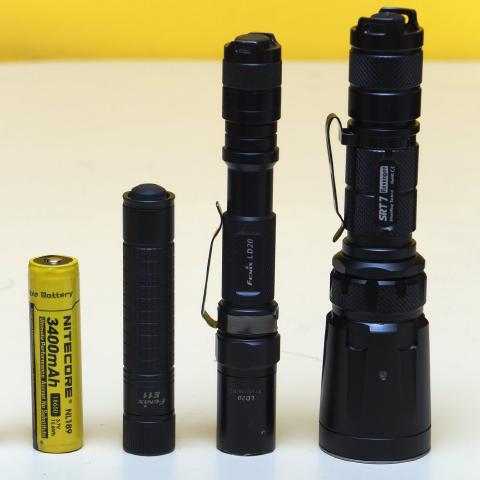
Dave Jones: They're lithium primaries. Yes. They're lithium primaries. They have massive energy density and, uh, they're very common in like, uh, torches. And, um, uh, CR123s used to be common in cameras back in the day. This is before digital cameras, right? Film cameras. So they flashed up? Yeah. Yeah. Flash is for flash and things like that, like for charging up because you needed the ultra low ESR. And CR123s were very popular in, um, old school film cameras for that reason. And yeah, no, there's still, there's multiple, you know, standards for little compact ones. Torches are a big deal these days. You know, the, all the super thousand million mega lumen torches and stuff like that.
Chris Gammell: Or your torch aficionados. Or your really fat LED on it. That kind of thing.
Dave Jones: Yep. Or your torch aficionados are, uh, yeah. Sorry. Flashlight for you yanks.
Chris Gammell: Yes, that's right.
Dave Jones: And, uh, yep. Yep. Yep. That's a, that, that, that is a rabid fan boy rabbit hole. If you want to go down the torch for, go to any torch forum. Wow. You know?
Chris Gammell: Right. You'd hold a torch for it.
Dave Jones: They're serious. Yeah. They're, they're serious about their torches. Let me tell you. Yep. Why is that?
Chris Gammell: I mean, like, I guess it's like the knife collectors and the, the, the people that are like in the different things. It's just like a collector thing.
Dave Jones: Yeah. It's the same thing. They just, I, I, I think it's like, oh, this one's like 2% better. Like it's, so it gets that anal retentive crowd. Oh, I've got to have this new torch. Cause it's got 2% more lumens and the, and the beam width is, is slightly wider than this other one I've got, you know? And like, they're just obsessed and it weighs two grams less. You know, it's, it's a big deal. Yep. And they just love specs. Like I think they're spec driven.
Chris Gammell: So it's like a test measurement folks, but for, for flashlights.
Dave Jones: It's vault, it's vault nuts for flashlights. Yeah.
Chris Gammell: Yeah.
Dave Jones: Vault nuts. The, you know, the people who obsess over, you know, eight and a half digit DMMs. Oh yes, that's right. Yeah. All day. Okay. Yes. Yeah. So it's, it's, it's fantastic.
Chris Gammell: Have you ever used one in a product though?
Dave Jones: Uh, CR123s? I've used them in not commercial products. No, but I've used them in other like sort of short run.
Chris Gammell: Short. Yeah. Okay. Yeah. Yeah. Yeah. I mean, it's nice. I mean, three volts and like, it seems like they have like, I think the ones I was looking at were like 1500 milliamp hours on them and stuff like that. So it seemed like a nice little compact thing.
Dave Jones: It's just, you know, you do realize you're not talking. They're not proper units. You don't talk milliamp hours. You talk watt hours in batteries. Just saying.
Chris Gammell: Really?
Dave Jones: Oh yeah. Yeah. No. Well, the only energy, the only figure that matters is watt hours. You can't, you can't say milliamp hours. Equivocate things you're saying. No, no. But milliamp hours, you're, you're leaving out the voltage equation entirely. So you're not talking about energy. Right. So you're talking. I know.
Chris Gammell: I can, I can do that part in my head though. You know, like I, so I'm comparing. Yeah. But you're just assuming it's three volts. Two double A's. Yeah. No, I said. You can use it. I said it was three volts. I know.
Dave Jones: Yeah. But it doesn't stay three volts and it's not precisely three volts. It's like, you would never survive on a, on a torch forum. You'd be dead already. On a torch forum.
Chris Gammell: Yeah. You're right. Yeah. Yeah. Anyway.
Dave Jones: No, but if you want to do the engineering right, no, you specify battery packs in watt hours. And, um, you know, I've done a lot of work in this area and you do always have to talk in terms of watt hours. Nothing else matters, you know? So anyway, that's, that's, that's how you have to qualify batteries and, and stuff like that, but you can compare same chemistry batteries, uh, in terms of milliamp hours, if you want to, that's fine.
Chris Gammell: Right. Well, and I was looking at some comparison curves too. And like, and really, so like when you say watt hours, it's really like kind of like area under the curve kind of thing. Right. Because it's, I guess it's not even, yeah, it's like energy, right? So it's a full, full energy kind of like a summation over the whole, um, correct. And I, I know some people like, like doing the, the, uh, like that's always used as a, as a good example of like a data logger type thing, right? There.
Dave Jones: Yeah. Right.
Chris Gammell: They measure a battery as it drains and, and watch the current, watch the voltage, that kind of thing. So, um, but never, I'd never, never done one of those tests before. Maybe in the future though. We'll see. Cool.
Dave Jones: Anyway. So you, so you're now suddenly fascinated by CR123 batteries. Yeah.
Chris Gammell: I just, I, I'd never really heard of them before. So I thought, you know, I'd pass on the never heard of, and I'm sure there's other people that have never heard of, but a lot that have. So, uh, yeah, no, it was, it was interesting too. And, uh, apparently like quadruple A's are becoming more prevalent now because of a lot of the, um, like you go on, like you go online and a lot of people are complaining about like the, the, they're in those, those pens, the, uh, the, the stylus pens.
Dave Jones: The tablet, tablet pens. Yeah. Yep. That's right. Yep.
Chris Gammell: So I was just kind of comparing all those things and looking at different, um, um, watt hour ratings, apparently. Yeah. Um, you know, just trying to figure out like, because like the real thing that I was looking at too is that, you know, ultimately it comes down to a space constraint thing. And I found that I've been more and more, I've been doing a lot of 3d modeling stuff at the very beginning of my designs more than I ever used to, because it used to be like, I'd be handed a shape, you know, it's like, here's what you get, you know, fit inside it. Don't ask questions. Yep. You know, now it's like projects I'm doing are much more open-ended, like, well, what's the best we can do? How do we optimize this and this and this and this optimize costs, all these other things. And so it's been more back and forth. And a lot of that is the, the space constraints and even what are the plastics going to look like and all that other stuff that I've personally never, never had to deal with. I mean, I think you guys were for the micro supply, you, you, you knew you wanted to target a certain shape just for cost. And you're, you were targeting the extrusion at first.
Dave Jones: Yes, that's right. Yeah. But then we switched to the two part, uh, molded.
Chris Gammell: Yep. Yeah. And I think that's the thing. Like, so I think about like the constraints and like, so the note that I read myself for this, this episode was like, um, can electronics folks be trusted to do a design on their own? Uh, you know, we, we've complained on here before. I remember we've complained on here before about like being handed the mechanical piece, but like, if I'm asked to do an electronics design, it's going to be a square board with really sharp corners and, you know, some mounting holes on it, you know, and that's not right. Oh, goodness. Um, can we, can we be trusted, Dave? I don't, I'm not sure. That's our job. Come on. Of course we can be trusted. Well, I'm just saying that without the, no, I'm saying be trusted to, to do the best mechanical design. And that's, that's where I think the answer is no. Um, like if I, I think that, that at least I optimize for, you know, like big square numbers and square boards and like very simple, you know, and lots of space. Yeah. Yeah. And, but you get like a product designer. Uh, so like last week, uh, Pete, Pete Belak was on the show and he was talking about, so he was an antenna designer at Apple. Right. And he talked about like, no, no, no. So you get the, uh, industrial design folks, they get first crack and then everything is based on that. Right.
Dave Jones: And it's like, yeah. Cause they're making consumer products, right? That there's a huge difference there.
Chris Gammell: Yeah. No, true. But I mean, like, but like, so, okay, let's use the Microsoft plugin, right? You know that you want to have within a certain, a certain envelope, right? A certain size. You want it to be handheld. That implies a certain thing. You know that there's going to be certain power envelopes as well. Like all of these things are ultimately constraints that now I'm much more, what I'm saying is I'm much more forced now to place these on myself. And like, like sometimes they're obviously very application based, but I find myself, I'm doing it to myself a lot more now.
Dave Jones: Actually, this is very interesting here because in terms of trust, I, I almost didn't trust David to do this, right? Cause he's the one like, like, cause you know how he's like a 3d mechanical CAD person, right? You know, he's an optimizer. He loves it. And he, and he loves doing 3d CAD stuff, but you know, and he, and he came out and he said this one day, Oh, trust me, I'm a professional. I know what I'm doing. And I went, no, you're not a, you're not a 3d, you're not an industrial design CAD professional. Yes, I am. And, and no, you're not. Do you do it every day? Oh, but I've done plenty of designs. Well, no, you're not. Right. You're not, you know, you're not a professional. You don't do it every day.
Chris Gammell: When, when do you get, when do you get, when do you get that, that title though? Like when would you say that someone is.
Dave Jones: I would say you wouldn't get it after just doing one or two projects, right? Even if they're successful and you've learned a lot and, and, and, you know, 10 times more than what I do. That's great. But I still wouldn't classify you as a professional because you don't do it every single day, day in, day out. That's your thing. Right. You might be good at it.
Chris Gammell: It's almost like a question of like, would you, would you call them up specifically for that one piece of knowledge that alone? That's like when it's a professional. Like if you're going to hire them as a consultant for that one thing.
Dave Jones: Yeah. Yeah. Probably. Right. And, you know, and, and, and, and sure. I trust David to do these things, but I just thought it was interesting that he used that terminology. Right. And, and, you know, and, and he considers himself a 3D CAD professional. Even, even, even though he's never. I mean, like it's, it's a huge part of workflow. Well, it is a large part of the workflow and you could argue that he is. Yeah.
Chris Gammell: Yeah.
Dave Jones: But, you know, to me it's. Yeah.
Chris Gammell: It's always, it's always shades of gray and like where you are in the, in the ecosystem kind of thing. Yeah. Yeah. That's interesting. Yeah.
Dave Jones: So it's, it's fascinating, but, but obviously, well, I don't think he did a mechanical. No, he wasn't like an electro mechanical degree or whatever. I think it was. Anyway, he's very good at it.
Chris Gammell: Sure. Yeah. Yeah.
Dave Jones: But whether or not he's a, you know, a, a, like, yeah. In the same classes as other, uh, you know, in industrial professional industrial designers that I've worked with, I would say definitely not, you know, they, they just have a ton more experience doing that sort of stuff, you know?
Chris Gammell: Yeah. There's that special something too. Like when you see a, like a, when I see like a design from like an ID person and you're like, first off, ah, I'm not sure that could actually be me. Yeah. But second off, that looks amazing. Yeah, exactly. You know, like when they, when they have the eyes for that kind of thing. And like, I think a lot of it is like, you know, humans and pattern matching, all that kind of stuff. Like they've seen design after design after design, like, oh, well this fillet usually looks the best. And, you know, this, this kind of mold injection, you know, this kind of mold element is going to be okay here and that kind of thing. And actually like thinking about mechanical stuff.
Dave Jones: I've got an example of that. The front panel for my, um, HV, my high voltage probe, right? My HVP 70 high voltage probe, available at discount on my store.
Chris Gammell: Mm-hmm.
Dave Jones: You know, anyway.
Chris Gammell: Wow, shillings.
Dave Jones: Anyway, it's a great probe. Anyway, I got a custom front panel, um, you know, like a stick on, um, you know, front panel made for it. You know, it has the EV blog brand in the EV blog colors and everything else. And anyway, uh, one of my viewers is like a, is a professional industrial, uh, designer in terms of like doing front panel layouts. And they just know everything. They know how to match the colors. They know what fonts work together. They know how to generate the correct files in the correct, uh, you know, all the correct stuff that goes to the silk screen designers. They know how the silk screens are manufactured in the various layers. And they know, you know, like they just know absolutely everything and produce this beautiful result. So I definitely use him again, right? So he's, you know, he's my number one to call if I need another, like a front panel thing. And, um, and then, uh, well, once again, David said, oh, I can do front panels. You know, I can do this. So he gave you, so he showed me some examples of, uh, sort of front panels. He's does, he was quite proud of, and, uh, they look just like the ones I draw, you know, they're good. Right.
Chris Gammell: Yeah. Right. It's like the special something. It's like that design item. It was really tough to get.
Dave Jones: It was hard to like, I, and, and the, basically the best thing I could tell him is I'll know it when I see it. You know, it's one of those, like, oh, like I'll know a good result when I see it. I can't explain what makes it special, but you know, yeah. And there was a big, big difference there.
Chris Gammell: You know, one of my old bosses, uh, he, he had a recommendation. What was it called? I think it was called like design for hackers or something like that. Um, so my old boss was like, had a really good design sensibility and, um, and stuff like that. And he had, he had recommended this book as called design for hackers, reverse engineering beauty. And it is, I, I, I, I read a decent chunk of it. Um, but it's kind of like, how do you make things look a little bit better at a time? You know, like obviously you need to, you know, keep practicing, keep doing that kind of stuff.
Dave Jones: But, um, some people just have the flair for it, you know, the knack. Yes. Yes. So. Yep. Hmm. But with, but that's the thing, right? With the one man band being so multi-skilled these days, right? Yeah. Like almost like anyone and being, you know, the tools.
Chris Gammell: Specialization is for ants.
Dave Jones: Yeah. And the tools are so readily available and the, and the processes are so cheap. How cheap is it to design your own LCD, your own front panel, your own 3d case, your own enclosure, everything. Right. So it tempts the electronic designer in the case of this podcast, right? It, it tempts us into taking on all these different roles. And, and, and, and, and.
Chris Gammell: I think there's actually consequence of not doing some of it. Oh, true. Right. It is that, it's a delicate balance of.
Dave Jones: But, but then you risk thinking that, oh, I've done that before and I'm an expert. I know how to design 3d cases. And then you come a gutzer.
Chris Gammell: Sure.
Dave Jones: Right. Right. On your next design. Because. Right.
Chris Gammell: Once you hit, well, well, or even if you get, take it so you're like, it works well enough. You 3d, like, so in my case, I've done that. I've 3d printed it, whatever. Got into a certain point. And then it's like, you know, you maybe even send it. So like, there's like online services that allow you to do like, like even injection mold, like soft tool injection mold these days. And it's like, but you're going to get to a point and then it's going to be really expensive or not a good design or, you know, like, it's just, you're going to run into a place where that was, that was not a good idea.
Dave Jones: I've got a great example, a high pro, huge example of this.
Chris Gammell: Yeah. Okay.
Dave Jones: Tesla. As some.
Chris Gammell: Wait, the car manufacturer? Yes.
Dave Jones: The car manufacturer. Sorry. Right. Tesla. The hot in the news. Right. They, you know, best cars on the planet, supposedly. Right. They're making, winning all these awards, blah, blah, blah, blah, blah. Right. But they're super expensive cars. Right. They are not cheap. And, and these designers from, you know, these industrial designers, like car designers, you know, all about car design and manufacturing and manufacturing for cost and all that sort of stuff, took apart a Tesla, took apart every bolt and they analyze it. Can't remember where the article is. And, and they went, this is why Teslas are so expensive. Look, they're using five bolts here when Toyota are only using two. Right. Cause they've perfected. They know how their designers know how to manufacture low cost cars. The people at Tesla didn't. Right. And that's why their cars, and that's why they're having production problems. Right. Because they can't get the volume and they can't get the cost.
Chris Gammell: Right. And the volume then drives like a manufacturing engineer to be like, why are there five, why are there five screws here?
Dave Jones: Why are there five screws here? And, and, and they went, oh, look at the shape of this panel. You don't make it shape like this because it's X amount more expensive. It takes X amount more production time, blah, blah, blah, blah, blah. And if you were an experienced Toyota designer, you would know this.
Chris Gammell: Right. If you're, if your job is to just take cost out of a thing. Yes.
Dave Jones: Yeah. That's right. And they've been doing that for 50 years. Right. That's, that's been the job for 50 years is taking, you know, shaving cents off here and there. Shaving seconds off the production line.
Chris Gammell: Yeah. But then it also then feeds forward. Right. So then a good company like, like Toyota is going to then feed that forward and be like, Hey, stop doing this crap. I got to, I don't want to redesign this later. Right. So then they go to the design meetings and they start to push that forward. I think Tesla's just young, you know, quote unquote young in the car market over time. If they keep growing, I think they'll get there too.
Dave Jones: Of course they'll figure it out. Right. You know, they may not get there because their share prices is going down the toilet. Right. And they're not making money and somebody is going to end up buying them. Right. That's most likely end result. But anyway, that, that's a fascinating height. You can make a fantastic product. Right. That, you know, is an absolute world.
Chris Gammell: The Juicero, it was, was a, was a beautiful product.
Dave Jones: The Tesla is the Juicero of automobiles. Chris Gammell said.
Chris Gammell: I didn't say he said it.
Dave Jones: I'm going to put a photo of you with this.
Chris Gammell: I just said the Juicero was a beautifully built product, which it, which it was. It was a beautiful product. It was just really stupid.
Dave Jones: But, and, and the Tesla's not stupid. It's just not cost optimal, you know.
Chris Gammell: Right. Right. Yeah.
Dave Jones: And, and, and that may mean it might not survive in the market ultimately.
Chris Gammell: Right. It is not a forgiving place.
Dave Jones: Yeah. Right. So, so it's fascinating, you know. And, and I'm sure they've got some of the best designers in the world there. Right. And they know exactly what they, because it's like the safest car on the planet. It's like the fastest car on the planet. It's, it's the best, you know, everything.
Chris Gammell: It looks beautiful.
Dave Jones: On the planet looks fantastic. Everything about it's beautiful, except that they can't manufacture it cheaply.
Chris Gammell: Yeah.
Dave Jones: Because that wasn't, I don't know. They didn't have enough people there experiencing that sort of, or maybe they did and they didn't have enough sway.
Chris Gammell: Time. You know. Whatever. Yeah.
Dave Jones: They didn't have enough influence in the company. Maybe. They might stick their hand up and go, hey, Toyota do this for a reason. Just saying, you know, we, we only need two bolts here instead of four. Oh, this panel needs to be shaped this way. And, you know, maybe they, yeah, they just didn't have enough voice within the company perhaps. So.
Chris Gammell: So when does this, when does this push back into your, your design? That's what I think about is like, okay, so we're talking about this stuff. We're talking about cost optimizing at the manufacturing piece. Right. How do you pull that forward in the design piece? I think that's ultimately the goal, but I think that's really hard to do.
Dave Jones: It's really hard to alert. I've had much experience in this over the years. It's really hard to alert people of potential. Well, it's really easy. It's easy to raise the alarm, but whether or not they take it seriously, they can go, look guys, in six months time, we're really going to have problems because we're not doing it this way. And it's really hard to articulate why you need to do it this way. You know, often you have to go, look, trust me, you know, I've had experience in this before. And I go, no, no, no, don't worry about it. You know, she'll be right. She'll be right, mate. You know?
Chris Gammell: Right. Right. So I had an example of this. So I was, you know, and it was just a simple thing of like choosing between surface mount and through all components, right? And just thinking about process steps. And obviously this is a very small example of this, but like surface mount versus through all components, like how that would end up impacting things. And like, you know, so I was doing all these shuffling around when I was talking about battery stuff, but ultimately, you know, like I know that if I have to do a selective solder process, it's going to be a lot more expensive. Not a lot more expensive.
Dave Jones: Can you explain to those at home what the selective solder process is? Yeah. So selective solder process.
Chris Gammell: So there's wave process. Actually, there's a link to Scotty just went to a factory, strange part. Scotty just went to the PCB wave factory. That was a good, a good tour. And he showed a wave solder at the end. That was just like basically. A big wave. The big, the whole board. Yeah, wave of molten solder. Yep. Selective solder is basically more like a, like a squirt gun of molten solder. And then it basically kind of does an XY and it shows, you know, where it's going to be and stuff like that. And that's good for soldering through all components. However, then you have to like leave clearance around it, right? You can't put certain parts near it or else, you know, if you have a 603 resistor.
Dave Jones: No, there's got to be a, yeah, because it's, it's a nozzle that comes up from the bottom of the board, right? So you put your through hole component on the top, right? If you're wondering how an entire board can be surface mount, the whole thing, you know, hundreds of BGAs, hundreds of other through, and then it has one through hole connector on it and you go, oh, geez, that's a pain in the ass. You've got to pass it through the wave. A whole new process. No, no, no, you don't. You sit on a frame, a little XY robot, little bubbly bath comes up and it might be five millimeters in, in, in, in diameter and it comes up and it sold as each pin.
Chris Gammell: It just goes boop, boop, boop, boop, boop, boop, boop. Well, it's still a separate process though. So that's, that's still expensive, but it's not as expensive as like making a shield. Cause the other thing you can do is you can do like, you can do a, like a shield that covers up, you know, it's basically like a solder mask, but like for now for entire sections of the board and you can put it through the wave and the wave, you know, it hits the metal there and it doesn't go through there, but then some parts it does go through.
Dave Jones: Anyway, folks at home, don't put your surface mount parts on the bottom of the board close to within like 10 millimeters of your through hole pins. Otherwise they won't be able to get the selective head on there. Yeah. They won't be able to get the selective head and they'll have to hand solder it. Yeah. And that's just.
Chris Gammell: And then it gets real expensive. Right. And so like, so think about that. So like, so then basically it's like you almost said you have to put a keep out area. So it's like, okay, I know that I'm definitely have a through hole component now. I have to use it. It's the only one that's going to work. Sure. And then personally, like usually that's when I'm like, well, does it really have to, you know, like sometimes, you know, sometimes it is, you know, it's the only thing that's going to work. And it's like, okay, now there's keep out areas around there. And like, how does that kind of impact other things? Thinking about the process and how that's going to pull back into the design phase. And then maybe it affects your spacing. It affects your bunch of things. So, um, yeah. So I don't know if there's other examples of like pulling that manufacturing piece back. Like, like, like I always think about this with like the, um, like the kickstarters of the world too. Right. So they, they start from a certain point by the time they're talking to a manufacturer, it's like, oh, I have to redo the entire board now. It's like, that's not gonna, you know, I'm out of money. I'm out of whatever. You know, like that's, so talking to a manufacturing person early is usually a better case. And, and then you can kind of pull that back into the design cycle if you can. I don't know if there's other examples of that that you have off the top of your head though.
Dave Jones: No, but it's a fascinating topic. So anyway. Yeah. We need to, we've only got five minutes left. We need to cover the big news. The big news. Oh yeah. Yeah. Of the week.
Chris Gammell: Yeah. Make, make is gone.
Dave Jones: Make is gone. Make, make magazine. Make affair. Pour one out.
Chris Gammell: Pour one out for your homies.
Dave Jones: What? Pour one out for your homies? No?
Chris Gammell: You never like, you know, like rap culture? You know, like.
Dave Jones: No, no, sorry. No, you're gonna have to explain.
Chris Gammell: David, you? Not a rap culture? Like when someone dies, you pour out a little bit of liquor on the, on the ground. You say, pour one out for my homie?
Dave Jones: No. Sorry. No, it's too street for me. Sorry.
Chris Gammell: Yeah. Yeah. Right. That's, that's what I represent on the show. Yankee street. Chicago, you know, like. Right. Okay. He's from the, yeah.
Dave Jones: Right.
Chris Gammell: I apologize. Anyways. All right. Yeah. Next on.
Dave Jones: They gone. They shut up overnight, but apparently this was not, it was announced by the CEO that, well, hinted by the CEO in recent months that, hey, look, you know, this might be the last make affair, you know, like, you know, look where we're really struggling to make money.
Chris Gammell: Yeah.
Dave Jones: Yeah. Yeah. It sucks.
Chris Gammell: I know a bunch of people that work there and I like them all. They're all good folks. It sucks. Hopefully they're finding, hitting, hitting the ground with their running, you know, what is landing on the feet, I guess. Yeah. So they're good writers. But I think generally it's just like, you know, it's an event company and a writing and a publishing company. And those two things are tough. Publishing, especially, obviously. Yeah.
Dave Jones: Well, the magazine, they had 125,000 subscribers to the magazine. So you've got to think, well, how did the magazine not make money? Because the likes of Silicon Chip, right? They have an audience like 10 times, one tenth of that. And they are able to run at a profit. So you've got to think that the magazine, you know, it's the other overhead, you know, because it was all under the one barrel. Right. So, you know, you had the events, you had the magazines, you had the whatever it was.
Chris Gammell: Right. And the thing you really want to talk about is that they also took VC. So let's just cut right to it, man.
Dave Jones: They took 10 million bucks that we know about, right? Way, way back at the start. They took, and you've got to, come on. I mean, you've got to think, right? VC people are looking for a 10 times return, right?
Chris Gammell: Sure.
Dave Jones: That's kind of, you know, ballpark, that's what they're looking for. You know, they might take a five times return, right? But heck, if the end, if everything's failing, they'll want to get their money back, right? So when you take, when you accept $10 million in venture capital, they want to exit at some point with $100 million, right? So that $100 million either has to come from profit, from operating profit, usually not, but, you know, in theory, if the company was to just, like, if they were to pull out and you had no other investors, they would want their $100 million, right? So you're not going to get that in operating profit from an open, from a make magazine thing, right? I mean, just, yeah.
Chris Gammell: It's a low, both are low margin business. They have high costs. They have high people count. They have high physical count of distributions. Yeah, tons of things. Paper magazine has distribution costs, everything else. And then advertising just sucks. Yeah, it's not a great... I mean, it's just a terrible, terrible thing.
Dave Jones: And then you're reliant upon advertisers and sponsors and things like that, which can pull out and ebbs and flows of that happening. I'm used to that myself. You know, advertisers coming and going. And it's a fickle business to be in, right? So the only way they were going... So I'd say it was either destined to... Well, you've got to say it was... Well, no. I'd argue it was doomed from the start when they took that VC money. Oh, maybe. Yeah, I don't know. Because they could have... Okay, they could have kept the dream going longer and then offloaded to... And then sold it to... Unsold it to another investment sucker, right? And then the original investors, yay, we bailed out, right? They jump ship. That's what they're looking for. They're either looking to go public or they're looking for an exit strategy, right? So they're looking for one of those. So they could have made their money. But ultimately, you said it, right? The company, it's a low margin business, right? I mean, it's real tough.
Chris Gammell: I have now officially run an event. One event, a small event, 200 people. And goddamn, that was tough.
Dave Jones: Did it make money? Did you at least break even?
Chris Gammell: I broke even a little bit of money, yeah. Kind of, right. Yeah. But like, I was the employee. So the other thing that I think about is, I mean, the top level sponsors they've had for the past couple of years, at the fair at least, it's just a tough business. They're asking for hundreds of thousands of dollars effectively for top level billing. And then what are they getting out of it? They're getting a bunch of... It's not like this is... It's not much. This is not like an industrial kind of conference where you're getting access to certain people. You're basically doing a general public event. And it's targeted. And I think it's a lot of goodwill. Yeah. Yeah.
Dave Jones: There's no visible return on investment.
Speaker ?: There's not ROI.
Dave Jones: No. Right, exactly.
Chris Gammell: So like, how are you going to convince your company to keep doing that year after year? And that's a tough sell, I think, so all around. The thing that always weirded me out is that there was a couple years in a row where the top billing company, they died the next year. So it was like Radio Shack was one year. And then it was like Barnes & Noble was one year.
Chris Gammell: Right. Yeah, of course. Of course. And then I was like... Yeah, right. Every year, I was looking at who's the top. I'm like, oh, who's going to kick it this year? Right. I'm like, oh, no. Right. Arrow, don't do it. Arrow. Arrow. Sorry, Google. Don't do it. They're both fine. They're both fine. Right. But, you know, Radio Shack specifically, it's like, where the hell did Radio Shack get money for that kind of thing? Right. Where did they get money for anything, honestly?
Dave Jones: Oh, you've always got money until the doors close. Right.
Chris Gammell: There's always money in the banana stand.
Dave Jones: Right. And that's the thing. Like, so was it... Does anyone agree with me that it was... This market, I'm sorry, it was just doomed to fire. Once they took their venture capital money, they couldn't just operate it as... Even if it was making money, right? They couldn't operate it as a successful business because the VCs want their money back. Right? Sure. Yeah.
Chris Gammell: I don't know how that works. Like, even if they want their money back, like, how does that... Is it like calling a loan? Is that kind of how that works or what?
Dave Jones: I don't know. They put in a new CEO. No. No. They're always going to push the limits, right? They're always going... They're going to sack the CEO, right? Because they have control to do that. And they're going to put in a new one who then will... Well, maybe. There's not guaranteed that they have control. ...will then try to on-sell it to someone else. Right? Because there's only two exit strategies when... Oh, there's technically three. As I said, when you're an investor, one is to go public, right? And then you go, woo-hoo, I'm a shareholder. You can sell your shares and you can... That's how you exit. The other one is to get another investor to buy in at a later stage. Woo-hoo, I'm out now. Somebody else bought the shares. Ha! Run. Right? You've got your money. And the third one is to go, well, look, nobody's going to buy this company, but it's... And we can't go public, but it's profitable, so let's just extract the money out of the profits. Right? And then just leave.
Chris Gammell: Yeah.
Dave Jones: But there's, of course, it's not profitable enough. Right? It might be profitable and it might have been a profitable business. We just don't know. And we suspect it wasn't. But even if it was, it was like, well, the investors are going to want to leave. Right? They're going to want their money back. It's been 10 years or something more. Right? It's been more than that. Ah, yeah. And they just know.
Chris Gammell: 2007 started, so 12 years.
Dave Jones: So I suspect it, like, up until the last minute, they were looking for new investment income and nobody was going to be part of it. No, nobody wanted to buy it. So, you know. And then they just fold it overnight, so.
Chris Gammell: Yeah, it's too bad. It's, you know, it's like a... Well, I did appreciate all of the kind of retrospectives people did. Elomad Scientist Labs did a really good one. We'll share that here. Yeah, I saw that. Jeff, our buddy Mightyome, Jeff Kaiser did one as well. Oh, okay.
Dave Jones: Didn't see that.
Chris Gammell: Yeah, it's on his blog. I never... There's a picture of a very, very young Jeff Kaiser on there. Oh, right. Okay. Yeah, it's fun.
Dave Jones: Cool. I never did get to go to a real Maker Faire, obviously. I only got to go to a mini Maker Faire. Yeah, I had offers, but, you know. Yeah. It's like... But everyone was telling me. In the last couple of... Like, last four or five years, it's the same every year. Like, people just gave up going. They said they gave up going because it was the same. I may have said that as well.
Chris Gammell: Yeah.
Dave Jones: Yep. I think you have said that on the show. Yeah.
Chris Gammell: Yeah, it's tough. I mean, like, it's a lot of the... But the reason to go is the same reason that I go to every event. It's not for the stuff, you know. It's for the people. You catch up with the people. Yep. Right. And that's...
Dave Jones: You catch up with them again. Yeah.
Chris Gammell: That's what I... You know, I always promote that people do at any event. You know, I just had a meet up... What was the day? Two nights ago. You know, and it's starting to become the same crowd that comes to the Hardware Happy Hours here. But it's like, you know, you catch up with the people. But then it's also... I think the big thing is, like, encouraging people to bring that next project. Work towards that next thing. You know, like, have something else to talk about. If it's just like a, you know, a casual catch up chat, it's like, well, that's less compelling in getting people to come back. Because it's like, I think that events kind of atrophy in that way. You know, you have to keep doing interesting things. You have to have interesting... And hopefully that brings in new people and that kind of thing as well.
Dave Jones: Right. So there's no more future for fairs. It's just meet ups.
Chris Gammell: Because... I think they still... They said they still might do minis. They might still... That's kind of all... I think they're figuring that out. Like, what the... Yeah. Who owns the IP? And, you know, like, what is the future of the licensing agreement and stuff like that? Right.
Dave Jones: Because with the Maker Faire, it's all about the branding. Right? Sure. I know that the Sydney Maker Faire, they did it as a mini Maker Faire, official branded Maker Faire one year. And suddenly, the next year, it wasn't a Maker Faire anymore.
Chris Gammell: Oh, really? Okay.
Dave Jones: It was just a... Yeah. No. They said... I talked to them about it and they said, no, there was too much red tape. You know? There was just so much, you know, crap. They wanted hoops. They wanted to jump through to making a mini Maker Faire. And it was just, no, we just couldn't be bothered. So we just ran it as a Maker Faire. Oh, sorry. As I did like a... I don't know what they called it.
Chris Gammell: Science Faire or something like that.
Dave Jones: Something like that. Yeah. Yeah. Exactly.
Chris Gammell: Is there any... So I saw there was... There was a thing that I completely missed, actually. But Infineon is buying Cypress. I don't know if that actually matters to us at all here. Does it? No. I mean, Infineon's mostly automotive, right? That's like a big thing that they do.
Dave Jones: Oh, they do tons of stuff. But yeah. Yeah. Yeah, I think so.
Chris Gammell: I think of them mostly as automotive. But yeah, they're in a bunch of markets. Cypress, I can't really say. I mean, like, I know Cypress makes the PSOC. That's about the only thing that I know about with them. I think they've... They do one of those Bluetooth... Or sorry, one of those USB chips as well. But that's like... You know, it's like thinking about, like, does this affect me? No, not right now. It may be in the future. But if people don't know, that just happened.
Dave Jones: Oh, well, it's going to happen or something. Yeah, it's going to happen. It agrees to buy. It's going to be a year before they...
Dave Jones: Yeah.
Chris Gammell: Yeah. You know, it's interesting, too. Like, all the people I know, you know, a past heartbreaking purchase of Linear Tech now being gone. You know, I keep watching all the LinkedIn profiles. They're all different now. Right. Yeah. So... But honestly, it hasn't really impacted that much. So... Right. That's a positive, you know. Not that I would have asked for it to happen again. But, you know, it hasn't seemed to change too much. Maybe internally there's some changes happening. But... So that's good. There's a hope for acquisitions yet.
Dave Jones: We just gave up at one stage, actually, reporting on market consolidation. It's been a bit quiet recently.
Chris Gammell: It has. I think because money started getting more expensive. I think it's...
Dave Jones: Money's getting... Right. It was getting... Yeah.
Chris Gammell: Yeah. So borrowing. So there's less, like... There was definitely a lot less, like, privatization than it was happening. Like, that was happening, like, towards the beginning of the Amp Hour. Like, a lot of things were being taken private. Right. Like, uh... NXP, formerly. I guess... No, sorry. Free scale than whatever they are now. Uh-huh. Um... Yeah, they were private, and then they went back public, and a couple others went that way, too, I think. So... But, like, that stuff's kind of... Like, at the end of the day, like, what do we care as the electronics people? We care about, like, can I talk to an applications engineer? Can I get the board? Can I get the parts? That's all that really matters to us. Like, the name on it... Exactly. Yeah.
Dave Jones: It's like...
Chris Gammell: It'll be interesting to see. Like, so, one last thing. Risk V got some backing as well. Sci-5 is one of the companies doing it. So, again, Risk V is the architecture, the ISA. Mm-hmm. And Sci-5 is the company... It was one of the companies that's using that architecture to then build chips of their design that then conform to that architecture. These are the things I've learned. They've created an open hardware group, too. But basically, they got invested in as well. And so, it's going to be interesting, I think, with the whole... I'm still very interested in Risk V about, like, the... Is this open architecture going to, like, spin up more small companies, right? Right. So, that's the thing that we don't see anymore is small chip shops, you know? Yeah. Now, with, like, open architectures and, obviously, fabless semiconductor manufacturing, it is at least possible. Maybe not likely, but it is possible. And it'll be interesting to see if that continues to trend up. Hmm. So, that's all the wonka tree I can handle right now, Dave.
Dave Jones: And... Because that used to be, like, a thing... There used to be, like, several, like, sort of little boutique processors around the Rabbit 2000 processor, you know? Oh, yeah. We've talked about that before. Yeah. Yeah. And there was the... There was the Parallax, of course. They manufactured their own... Designed and manufactured their own processor and stuff like that. Does that make it, you know, a bit of a comeback or nobody's going to bother? Everyone's going to go, oh, RISC-V, you know?
Chris Gammell: Hmm.
Dave Jones: Like...
Chris Gammell: Yeah, I don't know. I think at a certain point, we're going to hit some limitations on, like, you know, like, so if you can't squeeze parts any closer together on the board, you know, where else can you go? It's like, well, you could start to make either custom logic in an FPGA or custom logic in an ASIC. And I think at that point, there is competitive advantage there. I think the tools are still, you know, pretty closed up. So, at least from my outside opinion. I'm very excited, of course, about the open toolchain stuff. I just got my icebreaker, former guest of the show, Peter. He just... I got an early bird icebreaker board with the Ice 40. So, I'm going to try out the FPGA toolchain stuff, finally. Cool. I'm very excited about that. Excellent. Yeah. And I will be... Oh, next week, I will be at Teardown. So, if anyone's there, come say hi. I'll be seeing Peter and Alvaro, who are on-site recording helpers. I'll be recording with them, hopefully. And then, just found out Jeff Kaiser is going to be there, too. It's a little Mighty Ome action.
Dave Jones: Yes, sir.
Chris Gammell: Yes, sir.
Dave Jones: That does look like a fairly good event. Yeah. Yeah.
Chris Gammell: Definitely. Very excited about that.
Dave Jones: And it makes me cry that there's nothing like that here, you know.
Chris Gammell: You're going to have to start it, man. Sorry.
Dave Jones: I'm going to have to start it. Yeah, I know. Yep. Yep.
Chris Gammell: Or, you know, get on a plane for many, many hours. Your choice.
Dave Jones: No, no. I'm thinking about it.
Chris Gammell: Okay. Yeah, think about Supercon in November. It's LA.
Dave Jones: No, no, no, no. I'm thinking about starting one here.
Chris Gammell: Oh, okay. Oh, okay.
Dave Jones: Like, it's just like, yeah, like I need another thing to do. Right. You know? Like, yeah. I don't know.
Chris Gammell: Well, you do it. I'll give more consideration to fly down there than you'd probably fly up here. They're right. Yeah.
Dave Jones: Boy. Yep. Well, I do have an employee. I guess I can task him with it.
Chris Gammell: Sure. Sure. Yeah.
Dave Jones: Go and make a show happen. Okay. Yeah. Come back a wrecked man. Yep. Anyway.
Chris Gammell: All right, man. Well, don't beat David up too hard there. All right. All right. See you next week. Catch you next time. Yep.
Speaker ?: Outro Music
Archived Discussion (1)
Comments are closed. Archived from the original site.
Show archived discussion (1)Hide discussion
AAAAassemblyBatteryConferenceDesignMAKE magazineMaker FaireSelective SolderswitchesTeardownWave Solder
Keep current
Every episode, plus the occasional job post, in your inbox.
The requirements are too different in the different areas.
The requirements in my company are for example:
Costs per part aren’t that important.
The construction have to work at the first try, only small changes are possible and have to work for the next 20 to 50 years.
(The production volume is very low.)
We got product-designer from the automotive area some years ago.
They were experts in the high volume automotive area, but weren’t able to adapt to the requirements in our company.
That in mind, you have always to look out for the specific area the expert is working in.
Outside of their comfort zone, even an apprentice will deliver better results.