
#415 – Ergs Per Second
Download episode · 57 MB
Also on Apple · Spotify · YouTube · RSS
Show Notes
- Chris just got back from the Hackaday Superconference, where he got to hang out with/meet Ben Krasnow, Andreas Spiess and many others.
- Flex PCBs
- Scotty from Strange Parts (our guest last week) gave Chris iPad PCBs, which were pretty thin!
- Transmission line impedance calculator
- PCBs inside of cameras
- Always easier to Pick and Place as a flat thing
- 3D printing onto fabric
- Dave and David found a thermal imaging watch project in the lab cleanup
- Chris was impressed by a project that used a grid eye and a TI pico projector, built by former guest Robert Nelson
- Chris was asking about off the shelf cases vs 3D printed ones.
- This was discussed in our interview with Marcus Schappi when he talked about the Ninja Blocks project
- uSupply moving to 2 part die cast case
- Video about how to do an SMD board to fit into two part cases.
- Writing a datasheet first helps to bound the constraints of a board
- Pleasing the last .1% of the customer
- Chris will be doing assembly again this week and released an intro video about using the NeoDen4.
- Past guest Piotr Esden-Tempski did a great video/stream showing how to do PCB panelization in KiCad
- Chris didn't understand how panels were spec'd and you didn't need to put out a full panel size.
- Mike's video about the fish installation talked about stretching what was possible with PCBs and assembly.
- Dave's old DfM video(s) go over good practices for getting boards assembled.
- Dave's move is going slow
- Dave was mentioned on the Techmoan channel talking about Data Play discs
- At the Hackaday Superconference, Chris gave a talk about common circuits that can protect designs
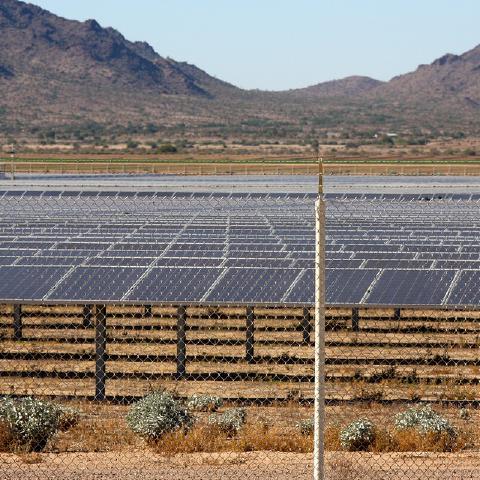
- Jimmy Carter's Solar panel
- Dave's experience with solar
- Ergs per second are akin to kW. Do your own conversions online.
- Check out Ben Krasnow's talk from Supercon, his deposition of electoluminescent material was particularly impressive (including the methods he used to drive them)
Transcript
Chris Gammell: This is The Amp Hour Podcast. Released November 11, 2018. Episode 415. Ergs per second.
Dave Jones: Welcome to the Amp Hour. I'm Dave Jones from the EEV blog.
Chris Gammell: And I'm Chris Gammell of Contextual Electronics.
Dave Jones: What's up, nerd?
Chris Gammell: Hey, buddy. Welcome back to the... No, I guess you've... Not welcome back. I would restart normally, but I think, yeah. Hey, how are you? I think we'll just go with that. How are you doing? It's been too long. It's been too long.
Dave Jones: Nothing changes with me, you know. Yeah, yeah. I'm still the same.
Chris Gammell: Okay.
Dave Jones: Yep.
Chris Gammell: Sorry you didn't get to join me and Scotty. That was a good convo last week.
Dave Jones: I didn't even know you were interviewing. I just saw it pop up and, oh, okay. I didn't know. But, you know, when... But it's hard. If people don't know, it's hard when you're there with the person. Yeah. And then to try and coordinate with a third. Yeah, that is stuff. Remotely. Like, it's just pointless, really. Yeah, it's tough. You know, yeah. No, you're better off just interviewing the person live there. Yeah. What sort of setup do you use when you're doing...
Chris Gammell: In that case, that was just like two lapel mics plugged into my Zoom H6. Right. Yeah, I thought so. Cool. Yep. It's great.
Dave Jones: Just those cheap-ass Amazon...
Chris Gammell: Yep, yep.
Dave Jones: ...Amazon lapel mics, yeah?
Chris Gammell: Yep, exactly.
Dave Jones: Yep. Cool.
Chris Gammell: Yeah. So, good... Man, I don't want to make people feel FOMO, but, man, the Supercon this year is great. I highly recommend people go next year. If you've never been, I highly recommend it. It's one of my favorite conferences. And just, like, getting to see some of the hacks up in person and, like, talk to people. It's always just really, really good.
Dave Jones: Cool. How many people attend that?
Chris Gammell: I think this year they sold 500 tickets. Wow. So... That's a lot. Yeah, it was a good number. It doesn't seem like that many because it's like, you know, people are moving in and out. Some people can't stay the whole time, but...
Dave Jones: Right, yeah, okay. Okay, yeah. So, like, is it a one-day thing?
Chris Gammell: No, no, no. This is... It's stretched out to three days now. Three days? Wow. Yeah, there's, like, a workshop day and then two days of talks. And then there's workshops interspersed on those two. And, yeah.
Dave Jones: Yeah, that's why you'd never see 500 people in the one place, really, would you?
Chris Gammell: Yep, exactly.
Dave Jones: Right.
Chris Gammell: Yeah, but notable things. So, remember we had talked about Ben Krasnow's laser etching thing? Yep. Where he's putting circuits onto plastic and stuff?
Dave Jones: Yep.
Chris Gammell: Yeah, so he showed that off. He did a talk about that. He was, like, the keynote on Sunday. He did a talk about that. And then he also did... And all these talks are available online now, too. So I recommend people go check them out. Sweet, yep. But then he did... He printed with EL wire material, or, like, the electroluminescent, like, the type of material it is. And then he did a driver circuit with a matrix. And so it was a 16 by... No, sorry. More than that. He had 64 lines. It was a 32 by 32 matrix screen that he drove individual... Each piece of EL, like, electroluminescence, was driven by a separate circuit in, like, a matrix format. So 32 by 32 of that. And he made it into, like, an ad hoc video screen. It was unbelievable.
Dave Jones: Sweet.
Chris Gammell: Yeah.
Dave Jones: Is that on his YouTube channel?
Chris Gammell: That's on the... I'll link it in. It's on the Hackaday talk that he did. Oh, okay.
Dave Jones: So he hasn't done a YouTube channel about it yet. He has a YouTube video about it. Correct, yeah, yeah. I'm sure...
Chris Gammell: I'm guessing he will. He'll probably give more details about it. Yeah, of course.
Dave Jones: But, yeah, this was... You don't go to that much effort and then not do a video about it, you know.
Chris Gammell: Right.
Dave Jones: It's kind of... Yeah.
Chris Gammell: So in an interesting turn of event that most people probably don't know, so he's up on stage and he's like, you know, he's talking about that circuit on plastic thing. And he's like, you know, you never know who you're going to meet at Supercon. And there's the guy that actually runs the company that actually does those demos. You've seen the demo before, right? Like the circuit printed on plastic? It's like on a curve inside a piece of plastic?
Dave Jones: I don't recall, no. Okay.
Chris Gammell: Well, anyways, it's in the video that he did initially. Yeah. It's like... It looks like traces... Inside a piece of curved plastic, the traces are printed in there, right? And so we're all like... Everyone's like, oh my God, the person who runs that company is here. And there's only one company in the world that does it. And so I heard it, forgot it, whatever, right? And then later on that evening, I was talking to Andreas Spies, who you may know has another YouTube channel. One of my favorites. He's the crazy Swiss YouTuber. And so he's there and I'm talking to him. And he looks at me. He's like, you know, that was me. It's my company.
Dave Jones: I was like, holy crap. So, yeah.
Chris Gammell: So...
Dave Jones: There you go.
Chris Gammell: I didn't know that. Wow. I didn't know that. Yeah, that's... Yeah. So I forget what the company's called. But like if you've been to... So you've probably seen it at trade shows before because I remember seeing it at trade shows prior as well. And it's a neat technology. So...
Dave Jones: Okay.
Chris Gammell: Very cool.
Dave Jones: Yeah, but it's just... It's not actual circus. It's just traces, right?
Chris Gammell: Like is there solder mask over top, you mean?
Dave Jones: No, no, no. I know. I'm talking about is it like an actual chip? That's what I'm talking... See, is it just like a flex PCB kind of thing?
Chris Gammell: Oh, no, no, no. It's actually... It's copper traces that are deposited onto plastic.
Dave Jones: Yeah, but... Okay, but there's no chip.
Chris Gammell: There could be a chip.
Dave Jones: They're not actually creating transistors on there.
Chris Gammell: No. Oh, God, no, no, no. Right. That was... Oh, you're saying because... Oh, oh, oh.
Dave Jones: See, that's what... You know, it's like... That's what I'm thinking.
Chris Gammell: Like you're saying, oh, is this chip printer type thingy? Yes, that's right. No, definitely not. Oh, God, no. Right. No, no, no, no. This is a PCB putting put onto a contoured plastic, basically. Yeah. It's good for like assemblies and stuff. It would be simple assemblies, right? Well, see, but...
Dave Jones: See, here's the thing I don't get with this is like, why when you can just order a flex PCB, which is copper on plastic?
Chris Gammell: I think this would be... I think, honestly, I don't know all the applications of this thing. And it might not even be something that's going to take off. But I think like low cost, if you think about low cost applications, you know, flex are still somewhat expensive. And so...
Dave Jones: Oh, but not in the scheme of things. No, you're right.
Chris Gammell: You're right. I mean, I don't know. I don't know. But it's interesting at the very least. And Ben's video about it is very interesting.
Dave Jones: Or, you know, because I picture this the same benefit as what you get out of making your own fiberglass PCBs. It's like, yeah, you can have it within the hour, but that's really the only advantage. Although with the plastic one, you can actually stick layers together and, you know, and do stuff like that, I'm guessing. Is it a multi-layer thing? No, no, it's just single layer.
Chris Gammell: Single layer right now. So...
Dave Jones: Okay, right. Less impressed.
Chris Gammell: Yeah, I'm actually not sure what the original application was. I assume it's like, you know, just high... Just really weird situations, I'm guessing.
Dave Jones: Oh, it's just... Yeah, no, there's countless applications. For flex PCBs and stuff like that. And if you can 3D print them yourself, of course, then, of course, you can have it in your hands straight away.
Chris Gammell: Sure, sure, sure.
Dave Jones: Bam, for, you know, little complex prototypes that have to, you know, form fit in some sort of, you know, little tiny volume or something like that. You know, you don't have to have a rigid PCB. And if you can do that within an hour, then there's advantages to that. But apart from that, you know, you just order a flex PCB.
Chris Gammell: Yeah. Yeah, that's true.
Dave Jones: And wait your three or four days, you know. So...
Chris Gammell: Hmm. Yeah, I've actually... Have you ever done... You've done flex stuff before?
Dave Jones: I've done flex stuff. But, yeah. I've never done it before. It's... And back... Like, back when it cost a lot of money.
Chris Gammell: Yeah, okay. What is... I mean, does it change the calculations on, like, impedance and stuff like that? I mean, do you have to... Are there a lot of other considerations?
Dave Jones: Well, you generally wouldn't be doing it for, like, really high-speed stuff. Generally. But you can. You can get controlled dielectric ones, I believe. But, yeah, it's... You know. Yeah. But, yeah, it changes the equation. It certainly does. Okay. Because they're generally much thinner. Yeah, okay. But not much thinner than a pre-prig, really, than a really thin pre-prig. So, you know, it's... Anyway, you can order different dielectrics, I do believe. Okay. If you're doing that sort of stuff.
Chris Gammell: Hmm. But... You know, so Scotty gave me some... After the show, he had some extra PCBs and stuff. And he gave me a couple. And one of them was, like, a processor board from an iPad. They're just, like, cast-offs that you could buy in the markets of Shenzhen and stuff. Yeah, yeah, of course. They were really thin. Like, I was really surprised by that. Yeah.
Dave Jones: Yeah. Yeah. They're just effectively pre-prigs, as I said. Yeah. Yeah. Like, people think of a PCB as 1.6, 0.8... Right, exactly. You know, maybe 0.3. But that's nothing. You know, when you're talking about pre-prigs, you know, 0.05. Stuff like that. Mm-hmm. And in theory, they buy that. Well, that's what the manufacturers... That's how they build up their boards. Right. That's how they build up their 10, 12-layer boards. It's these multiple little pre-pigs. And, well, you can just go, I just want the inner pre-pig bit, please. Don't build up anything more. Right. And they're super flexible.
Chris Gammell: Yeah. That's what I was really surprised about. Yeah, they're amazingly flexible. Yeah. Yeah. So, I mean, that's got to change the assembly process. That's got to change... Yeah, yeah. It's just stuff that I've never really considered. Because for me, it is always 1.6 millimeter, like, just rigid, cheap.
Dave Jones: Yeah, yeah, no. No, it's very different. But the ones that you get in the iPhone, they're not all that flexible because they're, like, still eight layers and stuff like that. So, the more layers you get, the less flexible it gets. But if you've got a single, you know, double-sided...
Chris Gammell: No, this was a 12-layer, though. That's what was surprising to me. So, he's like, yeah, it's a 12-layer, and it was still super flexible. Wow. It was crazy. The two... Probably, like, a four or five... Four or six-layer, rather, was a connector one inside, like, a lightning connector or lightning to audio connector. That was, you know, super flexible. Probably only six layers. But, like, the 12-layer, like, iPad processing board, yeah, it's nuts. I just... I don't know.
Dave Jones: Yeah, they're super flexible. But if you get one of the two-layer ones, wow. They're just... It's like a sheet of paper. It's like a flex circuit, you know. Yeah, yeah. They're really, really amazing.
Chris Gammell: So, are they doing that, though, just for weight savings, cost savings, impedance stuff? Why is that the case?
Dave Jones: All of the above. Well, impedance is better, the lower you get. But then it's harder. The thinner it gets, they believe it, the harder it is to control the impedance of it, like, you know, to keep a consistency across. But then, of course, you can make your circuit smaller because the thinner diameter, the thinner thickness, when you go down in thickness, then for a given impedance, your traces can be thinner. So, because you're closer to the board. Because that's the...
Chris Gammell: Because there's less dielectric material below it, you're saying?
Dave Jones: And there's less dielectric material below it. So, it changes the equation. And, you know, like, you know how you get your, you know, transmission line impedance calculator, and you've got to put in the thickness of the board. And if you do a... And if you play around with the calculator, anyone can do this, and you make your board thinner and thinner, then your trace for a given, say, 50-ohm impedance gets narrower and narrower. So, you can make smaller traces, smaller traces, smaller layouts, et cetera, et cetera, while still keeping the same impedance. Interesting. Okay. Yeah. That's great. Although, one of the... The other aspect to flex boards, which people don't give a lot of thought to, but you'll see this if you open up, like, a camera or something, you know, one of those complex 3D...
Chris Gammell: So, now you're talking about flex PCBs, not necessarily... Well, no.
Dave Jones: Now I'm talking about the combo. Now I'm talking about the combo. Like, a lot of people think that, you know, you either have a flex PCB or you have a rigid PCB. But, you know, I don't know. Maybe the majority of flex technology out there is actually as interconnects between rigid boards. So, I'm not sure if you've, you know, played with those, you know, where you actually get flex and rigid in the same board. So, you get... You effectively might get two boards, right? Two rigid boards, and then they're joined by a sandwiched flexible connector. So, then you can fold the boards back on each other without having an extra... Without having the expense of an extra connector and ribbon cable, you know, flat flex ribbon cable and all that sort of jazz, right? And all the reliability and cost issues which go along with having that extra connector and that extra ribbon cable. You can just order your two rigid boards joined, sandwiched with a flex connector, which is in the inner layers of the board, which actually joins the two boards together. That's awesome. So, it's a board interconnect system, and then you just fold them, and that's how, you know, they... You open, as I said, like open any modern complex... Not even modern. This dates back to the 70s, 80s, where, you know, like inside a camera where, you know, the form factor is everything, and they've got to put all these little rigid boards in there and stuff like that. I mean, it's always going to be easier to pick and place and reflow a rigid board. So, you know, it's like, yeah, you can put your stuff straight on flex, but it's harder. So, you know... Right.
Chris Gammell: You might need something below it or something to stiffen it up, you're saying, or what?
Dave Jones: And stuff like... And when in the pick and place machine and stuff like that, it's just, you know, it's much harder to do that. Yeah. So, yeah, often they'll use... Combine the rigid board with a flex interconnect that joins the boards together, and then you can fold them like, you know, into a cube or something.
Chris Gammell: Someone had told me before that, I think Zucan is like a PCB program that is targeted towards that application.
Dave Jones: Oh, okay. I haven't looked at Zucan forever.
Chris Gammell: Yeah. Okay. Right. It's good. I thought it was them or someone else, but they're specifically targeting flex and like high-speed applications. I think they were actually talking about cameras. And that's why I was wondering, though, if there was like something special about the simulation or the layout or stuff like that. I thought you might know, so...
Dave Jones: Ah, the simulation is going to be harder because then you've got to transition from the flex to the rigid and stuff like that. That's... If you're running, you know, controlled impedance stuff over those... Over that flex interconnect with joins the boards, then that's harder. But if you've got a purpose-designed CAD software, then that would do it. I'm not even sure if Altium does combine flex rigid these days. I'm not sure. I'm not running the latest version, but yeah, there was talk about... I mean, when I was working there, we were talking about adding support for... Yeah, it was like a way to move up market kind of thing. Yeah, yeah, exactly. The way to get more professional and, you know, yep. Get more dollars, man.
Chris Gammell: Got to get them dollars.
Dave Jones: Yeah. Yep. But that's, yeah, but that's, you know, if you want to do a board like that, like sometimes you could have like... I've seen ones that are like half a dozen boards, like rigid boards, and then they're all joined together with all these different flex cables, you know. Open up any one of these modern high-volume consumer products and yeah, that's what you'll find. And they all fold on top of each other and it's fantastic. Yeah. But, yeah. So, I actually love that tech. It's great. It's, you know, it's more interesting than just rigid or just flex on its own. So, but a lot of people aren't aware of that. And I don't know any prototyping houses that do that cheaply.
Chris Gammell: Yeah.
Dave Jones: If anyone knows, if anyone knows, yep.
Chris Gammell: Right. I mean, I think the setup cost is probably going to be the huge thing there, right? Because you have to actually spec. That's the thing I've always... That I was very confused about when it came to prototyping stuff. Because I remember the first time that people were like, oh, well, you know, send me a fab drawing and all that stuff. Like fab drawings mean that you're speccing everything out yourself. And, you know. Yeah, yeah, that's right. Instead of you're not using someone else's process, you're using their process, right? That's the idea of a prototype house. And you get the cost savings because of that. When you move outside of that and you're like, oh, I can do anything now. It's like, yeah, you can.
Dave Jones: But you've got to be prepared to pay for it. And they will charge you for it. Right, exactly. And see, something like a combined rigid flex board system. If you want it, you know, you can't just send your Gerbers off to the PCB manufacturer and forget about it. And magically back comes your combined rigid flex board. You know, you've really got to have extensive notes on the panelization part of the Gerber. So that tells you, you know, this part is flex. I want it in this layer. You've got to do all your layer stack. You've got to tell it which layer you want your flex on and, you know, and how far the flex penetrates in and what the overlap is between the boards. Because, you know, because basically you're relying on, you've got to have good physical connection between the pads on the flex and the pads on the PCB, for example. And then they've got to wedge those together. Then they've got to glue them together as part of the pre-preg stacking, gluing process that you'd get on a regular multi-layer board. And then, but then you insert or half in, like, you know, overlap, like a, you know, a centimeter overlap or something of the flex in one of the, in one of the boards as you're stacking it up. And it's really, you know, you've got to specify all that. So even if you gave extensive notes, I'm sure they're going to come back to you and go, hey, you know, look, are you sure? Maybe if we do it this way, it might be, you know, like.
Chris Gammell: You talk to a production engineer and they're like, this is not the right way to do this, right? Yeah.
Dave Jones: Yep.
Chris Gammell: Yeah.
Dave Jones: So.
Chris Gammell: I actually, totally unrelated, but a similar process type thing. At Supercon, someone was telling me about a new, newish kind of method for like you 3D print something and then you leave it halfway through and you just have like spikes coming out of it or you have like a flat area and then you put a piece of fabric down. Right. So you print the little fabric, a little bit of a base. You put down a piece of fabric and then the heat from the next layer melts the fabric between the layers. Yes, you could do that. And then you 3D print onto fabric. In fact, well, you know, basically you have like a 3D insert into directly onto the fabric. I was like, oh, that's a super cool idea for like costuming and stuff.
Dave Jones: Yeah, you could do that.
Chris Gammell: Yeah.
Dave Jones: Yeah. Because, yeah, that, because it's, it's, it's actually molten. It'd go through the weave in the fabric. Yeah, exactly. It'd just melt, melt straight through. Yeah, it could.
Chris Gammell: Well, I'm sure it was a lot of trial and error because I, well, that must have been a mess. Yeah, yeah. Super cool idea though. You think about like for, I mean, the replica pop people and getting cosplayers and stuff like that. Oh, yeah, yeah. Absolutely. Yeah.
Dave Jones: Yeah.
Chris Gammell: Well, we were going to talk a little bit about 3D printing. I've been doing a little bit more of it for prototyping stuff. And it sounds like you said you were doing stuff too?
Dave Jones: Oh, no, I have done stuff. I've got a thing that we found in the lab cleanup. Oh, really? What'd you find? It's interesting. Well, because we were just before the show, we were talking about, you know, Chris's, well, he'll tell us that, you know, making 3D printed cases and stuff. And if you remember that thermal imaging watch that, that we, that I did.
Chris Gammell: I don't remember that. Way back. So anyway. Okay. Like an add-on to the micro watch or what?
Dave Jones: No, no, no. It was its own watch and we kind of like designed our own custom 3D printed case. It was like two halves that went together and it was a watch and it looked like a, you know, and it, and it worked. It was a, you know. So it's, yeah. So we tore down a Fleur thermal imaging camera and we repackaged it all into our own custom case. Got it. Got it. To actually wear as a watch. Nice. Anyway, yeah, that was kind of cool. But anyway, obviously we don't wear it, you know, it's not a daily wear. Um, and it's been sitting on the shelf for like, I don't know how many years ago, three years ago. Did we do that?
Chris Gammell: And, uh, there's the problem with the shelf, man. It just sits there, you know?
Dave Jones: Yeah. And of course we tried to make the case as compact as possible, you know, to fit around the electronics and it just fitted, you know, just all went together nicely and had little plastic clips. Well, we found it and it burst open, right? This case had actually burst open because the, um, I posted photos on Twitter. The lithium ion battery or lithium polymer battery. So I think it's lithium polymer battery inside, um, actually swelled up, you know, just like, whoa, like puffed right up and just, and, and like, and actually, and just broke the case wide open. You know, it was.
Chris Gammell: You're going to have a bad time.
Dave Jones: I'd love to see that do it. Like I'd love to have a time-lapse camera on that over the weeks or a month that took for this battery. Oh man. A month for this battery to puff up. Right. And to the point where it suddenly goes crack and cracks all the supports and everything holding the case together.
Chris Gammell: Yeah. So yeah. Oh, there it is. I see. Mmm. Puffy. Okay.
Dave Jones: Puffy. Yeah. That's it. Yep. Oops.
Chris Gammell: Not anyway, not in the watch realm, but, uh, one of the hacks I saw this weekend was, uh, from former guest, uh, Robert Nelson. Um, he was on here with, uh, Jason Kreidner. They work on Beagle, Beagle board stuff together. And, um, he had taken one of the Pico projectors. Uh, right. Yeah. And then, uh, one of the, the floor, not the floor sensors. What is the other one that you see a lot of places?
Dave Jones: Um, oh, the, uh, grid eye.
Chris Gammell: Is that it?
Dave Jones: Oh, I was going to say lept on, but that's actually a flu. Yeah. Um, yeah. I think it's the grid eye. There is a couple of them around. Yeah.
Chris Gammell: And so he took that and then he, he put the Pico projector on it. And basically you would hold your hand up like against the wall and it would project the heat of your hand onto the wall. And then you moved your hand, but because your hand made the wall hot, it still could detect heat and project it directly onto it. So it was like a, it was like an augmented reality.
Dave Jones: Not right.
Chris Gammell: Thermal imager. It was so cool.
Dave Jones: No, I said that's, uh, yeah, that's pretty noble.
Chris Gammell: There must be, I'll try and find photos of it. I like that. I like it. Um, and it seems like something that like, there, there's surely some kind of application. For that.
Dave Jones: But I always just think about Pico projectors or, you know, it's almost like that'd be one of Mike, Mike Harrison's art project kind of, you know, one of those arty installation things.
Chris Gammell: I mean, yeah, Mike and Mike and Robert are, you know, kindred spirits, it seems like. Right. So, uh, yeah, that was a, that was a super cool hack. Um.
Dave Jones: Right. So you've been 3D printing cases.
Chris Gammell: I have. Yeah. I mean, um.
Dave Jones: What, uh, 3D printer are you using these days? I, I assume that you don't have your own. You're using the hubs. Well, I do have my own, but I actually.
Chris Gammell: It's mothballed right now. And it wasn't really worth it for me to do it. Um. I, uh, normally what I've been doing is, um, out of my workspace, they, they do an SLS print and they just charge for the material. I think I mentioned that on here before.
Dave Jones: Oh, nice. Wow. No, that's pretty good.
Chris Gammell: That, that helps pay the rent pretty much. Those things are expensive. Yeah. It's, um, so I probably save 20, 30 bucks per print just off of like, instead of like, you know, going to Shapeways or something like that. Right. I use Shapeways too, and that was nice. Um. That, the flexible, not flexible, but one of the, one of the, just the basic plastics. Um, but I'm pretty much in the, and then the most reason why I just hired someone in this space here to do it for me. And they were using like a TAS 6. Worked great. Um. But I'm, yeah, I'm just out of the game. I don't, I don't want to print my own stuff anymore. You're right. It helps when like it's a, you know, I can charge it for like a job because it definitely makes a lot more sense to get it right the first time. Sure. But, um, but yeah, I was just wondering about like, uh, your experience of like modeling stuff like that. And if you put things together, I don't, I don't know how much, how much you've been doing this lately, but.
Dave Jones: Well, I don't do it. David does. Oh, David does it? He's the modeling. Yeah. I was going to ask this too. He's the modeling guy.
Chris Gammell: You said three years ago you did this watch. Was that David working on that as an intern or as an employee? How long has he been an employee now?
Dave Jones: Uh, 18 months.
Chris Gammell: Oh, wow. Okay. Getting up there.
Dave Jones: I don't, I don't, I can't, I don't recall actually. I don't, now I don't, now you've got me.
Chris Gammell: Next thing you know, it'll be a gray beard, you know.
Dave Jones: Yeah, no, it was one of the first things he did. So it was either one of the first things he did as an intern or one of the first things he did as an employee. I'm not sure. Okay. Anyway, so it could be older than I thought.
Chris Gammell: Yeah. That's cool. That's great. Yeah. So I was just wondering about like modeling and stuff like that, but I guess if he's doing it.
Dave Jones: Yeah. It's easy because he's, you know, he's, I just haven't bothered to learn. Yes, exactly. I just haven't bothered to learn.
Chris Gammell: Yeah. I mean, so like my big thing is just kind of like figuring out and like at the end of the day, like if I really need to, I should just hire a mechanical engineer, I guess. But yeah, it's been nice for like simple, simple case design stuff. I guess, I guess the balance point too is, you know, I'm somewhere between, you know, if I'm making like 10 units, you know, is it better for me to constrain the board for a off the shelf case? Or is it better for me to, you know, use an off the shelf board?
Dave Jones: Yeah, I'd be, I'd use an off the shelf case really. They're nicer, right? Because they're injection molded.
Speaker ?: That's true.
Dave Jones: They're perfect. They're exactly, you know exactly what you're getting. You can just buy it from DigiKey, have it in your hand and like no dicking around. Yeah. Like seriously, if, you know, use an off the shelf case.
Chris Gammell: Well, this one was also, this was like a proof of concept too. So I was actually taking a bunch of like dev boards and shoving those together and then kind of printing around it. But I think that in the next rev, if I do a custom, I will do a custom board if I get to the next rev. And then I think, yeah, probably the injection molding thing.
Dave Jones: Yeah, for a 10 of. Like when you're doing consulting like this, you don't want to spend, well, unless you're charging for it, I guess. But, you know, like you don't want to spend, you don't want to spend an extra minute even thinking about a case. You know, because it takes hours and hours to design a case and then you, oh, you make little tweaks here, little tweaks. Oh, wouldn't it be cool if I did this? Don't. Yeah, right. No, just get a damn case which looks suitable off the shelf and then just design your board around that and it's going to look fine.
Chris Gammell: Yeah. Yeah, that's true. Well, the other thing I think about is like, so I had another person talking to me about like, well, we're going to go to like, you know, 200, 300 next year and we're going to do an injection mold. And I'm like, oh, wow, that is a lot lower than I thought it would be for a tool, you know, like just the amount. And I was like, I personally wouldn't do that. I would, you know, stick with off the shelf as long as you can for, especially for production level stuff. Like I would never do printing for a production level thing.
Dave Jones: Oh, you'd never do 3D printing. Well, we talked to Marcus at Hiddlebird Electronics, Donkeys years ago, right? And he did that, what was it, what was the Kickstarter he did? The Ninja something? Ninja, Ninja thing. Yeah. Yeah. The Ninja Blocks. Oh, that's right. Ninja Blocks. Yeah. And it was very successful, Kickstarter. Yeah. And, but they, but they promised, you know, part of the appeal because, you know, 3D printing was cool back then.
Chris Gammell: It had that little can coming out the side. That's what I remember about that thing. Ninja Blocks.
Dave Jones: And, you know, back then like 3D printing was the hot shit, right? Yeah. So like, it was the hottest thing. So, oh, we're going to 3D print the cases. And he said that was the biggest never, never again. So they, and of course they got orders for thousands of them and they had to buy more 3D printers. He was telling me. And at home, they had a whole room with these 3D printers just running 24 seven. It was, he said it was just horrible. Like, you know, and, and, and the quality is not that great. Really? No, I agree.
Chris Gammell: Yeah. Right, right, right.
Dave Jones: You know, that's okay for a one-off, but you know, this is like a, a thing that you're sending, you know, backers. Like, you know, people are paying for this. It's like, you know, like you can get a good one, like a nice SLA print or something, you know, like a, from a, you know, $100,000 machine or something like that. Well, okay, it's going to be reasonable.
Chris Gammell: Like, I know some people who've done that with, they, I think they were doing like maybe in the, you know, high tens, low hundreds kind of thing. Right. And they, they had like SLA machines. I think like the form, the form labs one, which is a nice machine. But, you know, I was looking at, I was like, oh, I should like go and look at how much the goop costs. You know, you buy like a bottle of goop. Yeah. It's like a kilogram worth or something like that. And you get like, I don't know, 20 prints out of it, but it's 150 bucks, you know? Yeah. It adds up real fast.
Dave Jones: It adds up real fast. And then it takes time. Like these things don't, you know, to print a nice detailed case is like three, four hours, you know, a couple of hours for one case. It's like, you're going to be kidding me.
Chris Gammell: Right.
Dave Jones: No, thanks. You know, it's a mugs game. Yeah. If you ask, you know.
Chris Gammell: I think you're right. It scales linearly is the, is the problem for that stuff.
Chris Gammell: Yeah. Yeah. It's nuts. Anyway. So I think this would just be a low run thing, but I probably in the next one, I'll, I'll change the board enough. Then it'll be enough of a custom board that it would definitely fit.
Dave Jones: Right.
Chris Gammell: You know, in a case like that.
Dave Jones: So speaking of cases, the, the infamous micro supply, you've, you've, you've seen a, a concept drawing of that. I have. The new one, like a 3D model. And yeah, I think we're probably going to change it. We think like, cause we were going to.
Chris Gammell: I think there's any truth in the universe, Dave, is that you're going to change it.
Dave Jones: We're going to change it. Right. Cause we were going to use an extruded, a custom, custom extruded alloy case. Right.
Chris Gammell: Right.
Dave Jones: And no, we think we're going to go to a, like a two part cast one now. So we're going to have a, like, you know, so, because it's actually, it's, I've done a video on this. Yes, I have. I've done a video on this of how to actually do SMD thermal heat sinking in an extruded aluminium case design. And it's not easy. I forgot what it was about. Did you? Yeah, I think so. Right. Yeah. And it's, and it's like, it's a pain in the ass to, to slide your board in and yet get good vertical contact pressure on a SMD. So we're thinking, ah, maybe we'll just do it as a cast, you know, a two part cast, screw it together with screws on the, on the top. And then, you know, bam, it's, it's easier to sandwich stuff in terms of heat sinks than is to slide. And then, you know, it's just, yeah, infinitely easier. And we think it's kind of going to be more rugged and look cooler probably. So, you know, and it's, we don't think it's hugely expensive.
Chris Gammell: You're not doing the, you're not doing the PCB plating or PCB structural element, are you? Like you do for the microcurrent?
Dave Jones: No. Okay. No, no, no. It's going to be a top and bottom, you know, die cast alloy cast thing. Oh, okay. Sandwiched together and the board will be in the middle. You know, we might do a PCB front panel, who knows, you know.
Chris Gammell: Okay. Yeah. That's cool. Yeah, that's great. And it's going to have no buttons. I forget. You'll see. Okay. TBD. TBD. Cliffhangers on cliffhangers, folks. Yep. Wait, so you're, so you're thinking though, you're rethinking about this for the assembly aspect. Is that the idea?
Dave Jones: Oh, the, the assembly aspect. Yeah. As a pain. Cause we came up with this like convoluted system where we had the extruded element in case that have a big cutout in it. Cause it's got an LCD and it's got a slide in and like it gets complicated real quick. You know, just one thing, one, just one aspect can be a showstopper.
Chris Gammell: Totally. You know. Did you guys start assembling these?
Dave Jones: We got a showstopper, but.
Chris Gammell: Did you start assembling them yourselves or anything or no?
Dave Jones: No, no. We started assembling in our mind. It was a thought experiment. You know. Yeah. Cause I mean like that. Paper.
Chris Gammell: I think building the first five is usually a good indication. It's like, what the hell did we think here? You know?
Dave Jones: No, it's like, it's, and, and it's not hard to, you know, like we're both experienced, like it's not hard to imagine what the problems are going to be.
Chris Gammell: Right.
Dave Jones: You know, it's, it's pretty easy. For anyone experienced in this sort of thing, it's pretty easy. And we're just, you know, and, and then we're going down a road where, oh yeah, look, we can make this work by, if we have this other custom plastic molded clip thing. And then we, we ended up starting to design all these other solutions to make this extruded
Chris Gammell: Right. Exactly.
Dave Jones: Case idea work. We were going to, we could see ourselves going down that rabbit hole.
Chris Gammell: Right. This is the, this is the mechanical equivalent of doing rip up on a, on a PCB design. Yeah. Right. Starting over and moving where the processor is. That's not going to work, you know?
Dave Jones: And it's just, yeah. And in the end we just went, well, you know, no. And, and David's done a two part case project, cast case project before, and it looks nice and it, you know, and then we just went, yeah, let's just go for that. Yeah. You know, it might cost us more in tooling upfront maybe, but you know, like.
Chris Gammell: So it's going to be like a, it's a die cast case. Is that the right term? It'd be a die cast case. Yeah.
Dave Jones: Yeah. But the good thing about that is that you can have it machine, you can have a prototype machine first.
Chris Gammell: Yeah. Right. Right. Right.
Dave Jones: So it's a good, you know, like, like you can't machine an extruded aluminium case, right? Really? You know, it's like, oh, maybe you could do it as a two half, you know, if you've got the two half things and you, you know, but if you're going for a two half extruded aluminium case, you may as well go for like a die cast instead of extruded. But extrusion is cheaper. Extrusion is cheaper for tooling. It's cheaper for in, in, in volume and stuff like that. But it's not as sexy.
Chris Gammell: I've never done a metal case before. So.
Dave Jones: Right. Anyway, it's cheaper.
Chris Gammell: Why metal instead of plastic?
Dave Jones: Because we need as a heatsink it's a power supply.
Chris Gammell: Oh, okay. So you don't want to put an external heatsink in there?
Dave Jones: No, no, no, no. We think that's a bit daggy. Got it. So it's better off to, and it's more rugged and blah, blah, blah. You know. Yep.
Chris Gammell: Big metal box. So, yep. You going to do, you going to do some picket place yourself? No? No.
Dave Jones: I know this is segueing into, you know, Mike.
Chris Gammell: This is just, of course we're not, but let's just segue into it.
Dave Jones: Yeah, let's do it. And our board's getting complex though.
Chris Gammell: Yeah?
Dave Jones: Like there's this, you know, we add, oh, we've got to add a filter here and this to this. And, you know, geez, there's going to be a lot of, a lot of, you know, the bomb count is high.
Chris Gammell: How many uniques?
Dave Jones: Oh, I don't know at the moment. I haven't done a recent count, but it's like, it's double what we originally had. You know, we just keep adding stuff. It's just.
Chris Gammell: The problem is you don't have a product manager who's like, yeah, you're charging, you're making, you're making this, this is going to cost you much.
Speaker ?: Yeah.
Dave Jones: But, well, it's not, you know, we're just talking passives really. You know, it's just like lots of, you know, and little, you know, cheap transistors and stuff like that.
Chris Gammell: I've never actually done this before, but have you ever written a data sheet for the overall product? No. Someone told me that it's like a method of like, they're like, well.
Dave Jones: I do know that. Yeah. You're right. The data sheet. Yeah. Yeah.
Chris Gammell: Yeah. I mean, it's interesting too. Cause like, so like, well, I know a salesperson actually would go and sell that data sheet, which is.
Dave Jones: Yeah, exactly. I don't like that. Super impressive. David's a fan of doing that. David's a fan of like, I need rigid specs up front or bugger off. You know, it's like, nah, nah. See, I don't like the, I don't like the inflexibility of that.
Chris Gammell: Well, I mean, I think the idea is you make them rigid, but you know, they're, they're squishy underneath. Yeah.
Dave Jones: Well, see, well, then, then I go, well, what's the point? You know? Yeah. No, it does tend to give you some focus. Right. Right. That's why David likes to do all the 3D modeling up front to know what it's going to look like.
Chris Gammell: Mm-hmm.
Dave Jones: And then, right, there's our target. Right. And I think that's good too, especially if you're like. And it's not bad.
Chris Gammell: We can't go any further than the outside of this, you know. You get to go to the walls of the case and that's it.
Chris Gammell: Yeah. Do what you want.
Dave Jones: Well, we've talked about this several times before is that you often choose your case first and then you design your product. We're just talking about that 10 minutes ago, you know. Yeah, sure. And design your product around that. And that gives you, that often the case might give you your constraint, for example. Mm-hmm. You know, rather than say, you know, there's like, this is how a lot of, you know, Kickstarters or other or any project can come undone is you've stuck to this spec and this feature set of what you want when, you know, like at all cost.
Chris Gammell: Yeah.
Dave Jones: Right? And it might cost you five times more than if, oh, if you just lowered the specs slightly, it's half the price, you know, or something like that. That's true. Yeah.
Chris Gammell: Arbitrary specs can also get you in trouble. It's like asymptotically approaching. They can too. Yeah.
Dave Jones: Yes, they can. But yeah, so there's pros and cons both ways. I mean, there's no ideal way to do a design. If there was, everyone would be doing it, right? Right. Right. They'd be teaching it in university, right?
Chris Gammell: Yeah.
Dave Jones: This is how you design a product, right? So.
Chris Gammell: Yeah. Yeah. I think that, yeah. I mean, unfortunately, I think, so I've been on projects before where you're, by the end of the product, you've designed stuff for 99 out of 100 people and you're still trying to please that last one person.
Dave Jones: Right. Yeah.
Chris Gammell: And I think in your case, the problem is you're that one person. Yeah.
Dave Jones: Because it's my pet hobby project. Of course.
Chris Gammell: I'm not saying it's good or bad. Exactly. I'm just saying that you are a finicky customer. Sure. I think there's lots of documented evidence that you are a finicky customer, specifically in the test and measurement realm. So, you know.
Dave Jones: And tell someone who cares. Right. Of course.
Chris Gammell: Of course. Of course. Yep.
Dave Jones: Oh, boy.
Chris Gammell: Yep.
Dave Jones: Yeah. But no, yes, pleasing the one, you can spend, you know, you can double your price to please an extra 0.1% of the market. Right. Exactly. You know, and sometimes you've just got to go noob. Right. You know. Yep. Doesn't work. Well. And it's different depending on the industry as well. And, you know, like it's not just the fact that there's different ways of doing things. Some industries can only work in a certain, you know, are best served by a certain method.
Chris Gammell: Are you talking about the undersea cable or undersea method like you used to work in?
Dave Jones: Oh, no. Well.
Chris Gammell: Super high spec ADDs and stuff or what?
Dave Jones: Well, sometimes. Well, it's sometimes. But no, you could be talking about the airline industry. How do they design a plane? Right. You could be talking about the automobile industry. How do they design a car? Right. They've obviously got methods and procedures in place for a reason. And you don't deviate from those. You know. Yeah. So. Yep. Yeah. But sometimes you're just thankful when the customer comes. You know, if you're a designer, like you are at the moment, a consulting engineer. Right. Sometimes you just love it when the customer comes in and goes, these are the specs. Do this. Yeah. The end. Oh, constraints are the best sometimes. Yeah. Constraints can sometimes be the best thing ever.
Chris Gammell: Mm-hmm. Yeah.
Dave Jones: But if you're trying to design a successful product, they can also be a hindrance. So just, you know, just be careful.
Chris Gammell: Grass is always greener. And the grass shall be Pantone color number 4421. Yeah.
Dave Jones: Oh, dear.
Speaker ?: Oh, dear.
Chris Gammell: Well, I am firing up the pick and place again this week. And another go at that on the Neodent.
Dave Jones: You're physically doing it yourself? Yeah. There's no one there holding your hand?
Chris Gammell: No. There's no one here to do that. Right. Okay. It's just me.
Dave Jones: And they let you use this thing?
Chris Gammell: Yeah. Well, it's the one you saw. You saw that trade show. Yeah, yeah. It's not, like, particularly nice.
Dave Jones: Yeah, yeah, yeah. It didn't, right?
Chris Gammell: Yeah, the Neodent 4. Yeah. Yeah. Right. Yeah. So I'm trying that again. And, you know, I've done it. I've run it twice now. And honestly, the hardest part is, I think there's two hard parts. One is getting the files kind of ready to go for the kind of less than standard software. I'm not saying I really know. I don't know any other pick and place software. I just know that this is, it has a feel to it. It's not great software. Okay. Yeah. There's three buttons you can load up on the first screen. Here's my measure. There's three buttons you can use on the main home screen. One is, like, edit a job. One is save a job. And one is run a job. And if you hit run a job before you've edited a job, the whole computer crashes. Ah, nice. That's not a great experience. I learned that. That was the first thing I learned, though. You know, it's great.
Dave Jones: Yeah, right.
Chris Gammell: And I will say, I did make an intro video. I still need to edit more of the videos. But I made an intro video about it if people are interested. So I posted that on my... We are interested. Context Electronics. Posted. Yeah. So, yeah. So I've done it once before. And so that was one hard part. The other one is the... Which I didn't realize the first time through. So I was doing a bunch of LEDs on the original board. I was doing that DEF CON badge that went nowhere. And so it had, like, almost 300 LEDs on the front side, right? And so the LEDs were...
Dave Jones: Which is perfect for a pick and place.
Chris Gammell: Exactly. Perfect. Exactly. So four PCBs on a panel times 300, 1200 LEDs. Holy crap. Oh, yeah. So lots of picks, lots of places. And the thing is, the calibration on the LED, the 0603 LEDs I had was fine. Have I talked about this? Maybe I've talked about this. Possibly.
Dave Jones: Was it they came on the tape in a different orientation or something?
Chris Gammell: Is that the... No, nothing about that. No? It was just the... It was pre-calibrated. I didn't even realize there was a calibration. I just started using it and it worked, right? And then the tough thing for me was then I finally, you know, I redid all the files for the backside and got that all worked out. And there was, you know, obviously other feeders had 0603s and, you know, capacitors and resistors and a bunch of other passives and stuff like that. And I didn't realize that there was a calibration step. It just worked the first time through with the LEDs, right? And then the resistance and capacitors I started running and it was the Z height was calibrated wrong. And so it started just hitting the board and like these things were like ping, ping, ping,
Dave Jones: ping. It was like flying everywhere. Yeah.
Chris Gammell: Oh, man. So not great. Yeah. Yeah. So, and so that's the part that I have not figured out yet is like the, you know, this is like we've talked about like the part of pick and place machines that's really important is the feeders, right? That they don't jam up, that they, they will calibrate it, that they, you know, they understand where they are. And I have to learn that stuff still. So.
Dave Jones: Yeah.
Chris Gammell: It'll be interesting. I don't know.
Dave Jones: So, so these pick and place heads, they, they don't have like a, they're rigid. Are they, they don't have like the ability to like spring, like to like, you know, like if you program the Z height wrong, then it's going to crush your component or whatever. Is that.
Chris Gammell: No, no, no. They have, they have, they're spring loaded. So they, they will, they do have give.
Chris Gammell: They're springy. And then even when, if you, if you put them into the board too hard, the board will give as well, right? There's always flex in the PCB. Right. Of course. Yeah. The problem is when it like, you think about like the PCB getting hit by a component attached to a vacuum head and being pushed down into the board is that the whole thing flexes. And then when the, the nozzle lets go of the air and it pulls back up, it's like, it's on a, the down stroke of a trampoline. Right. And then the part just goes kapoo and into space, you know. Yeah.
Dave Jones: But your solder paste is, the tension of your solder paste is supposed to keep the part there and not flying off. I mean, how much force is this thing flinging down with?
Chris Gammell: I mean, that's the thing. A lot, obviously. Yeah. It was really, really bad. Right. So, so I just need to kind of learn that step. And, and so another thing I learned though, is that, you know, so I was doing, like I said, a ton of LEDs on the front side, not many parts on the backside and not many boards overall. Right. So I placed probably, I think I did 10 boards. So that's what, like nearly 3000 LEDs. Great. But then I did the backside and the backside had, you know, one high cost switcher. Right. Not even high cost. It was just a switcher that was, you know, two bucks and it was a, you know, a Sot 23, six. And, and I didn't have many of them. I didn't buy, I bought enough parts for 10. And so I didn't have nearly enough tape. And so at that point, like I was just like, oh, I just skipped the stage. Yeah, exactly. Yeah. No, no, no.
Dave Jones: You don't buy it. Like if you've got to pick it, you don't have to pick and place every component.
Chris Gammell: You know? I don't, yeah. No plan to.
Dave Jones: Sometimes it's, you know, just like in, in this case, the LEDs, just do all the LEDs. And if then, then you've got a quad, quad flat pack, like really easy to solder. Yeah. Get in there and, you know, swipe it along and boom, boom. Do it by hand.
Chris Gammell: Oh, you don't even, you know, I mean the stencil still puts the paste down. So like, and I think this is how a lot of like the macrofabs of the world do it too. I think they. Well, yeah, okay. Yeah.
Dave Jones: And unless you deliberately knew what components you were going to do and then, or, and then modified your, um, paste mask. Oh, your stencil, yeah. To not put paste, your stencil to put, you know.
Chris Gammell: Yeah.
Dave Jones: Yeah. So, but you have to know that ahead of time that, oh, I'm going to place those by hand. And, and of course your, uh, CAD program will automatically generate the, uh, stencil or, or no, you could design it in so that you can design it into your footprint, but then you'd have to modify your. Don't let this layer through. Yeah, yeah, exactly. Go in and modify a part to not show up on the, uh, on the stencil.
Chris Gammell: So, yeah, I will say too, I, uh, I created my first panelized design ever, which I know sounds stupid, me having done electronics for 15 years, but I always just had to be someone else panelize it or I just got single PCBs.
Dave Jones: Yeah, or the, or, or, or you, or you let the PCB, um, manufacturer panelize it for you.
Chris Gammell: Yeah, exactly. Yeah. That's another service that they offer.
Dave Jones: You just, yeah. Yeah. Okay. So you, you actually panelized it. Yep.
Chris Gammell: Cool. Yeah. Yeah. Uh, actually Peter, um, uh, uh, as the Tempski who's been on the show before he had this really great live stream where he was showing how he did that on his design in, in KiCad. And so followed along and yeah, it's doable. Cool, but nice.
Dave Jones: I think the thing that I was stressed. Yeah, because KiCad doesn't have a panelization tool, does it?
Chris Gammell: That's correct. Yeah. And then people said like Altium's is like really, really good for that kind of thing. Yeah. Yeah. It's quite good. It's a little janky, um, with the, with the panelization, but it's like at the end of the day, it's like copy paste, you know, first stuff. Um, and it can do that.
Dave Jones: I've done both. I've done copy and paste. Cause like, cause sometimes like the Altium one, well, it might, it might be much better now, but you know, sometimes like it wasn't like it worked well, but it often wasn't magic. You'd do something custom. Often I've gone, look, I'm not going to, even though I've got the panelization tool, I'm not going to do it. I'm just going to copy and paste and do it, do it that way.
Chris Gammell: And have like, yeah, different versions of the same board. Yep.
Dave Jones: Yep.
Chris Gammell: Yeah. I think the thing that was like kind of bugging me, I, I kept asking around and I should have just asked you or someone like on here or just ask someone else. It was kind of a stupid waste of time, but like, I always thought there was, I mean, I know there are standardized sizes of panels, but you don't have to do that. A PCB panel is just a big PCB with multiple designs on it.
Dave Jones: And it is, but they buy them from the manufacturer as a standard size.
Chris Gammell: No doubt. But when I send it to a, you know, if I, if I ask for a panel from a prototype house, like, you know, like a low cost prototype house, they're just going to make my design as a big PCB. Right. And I'm not doing, I'm not doing a full PCB size, right. Or sorry, full panel size. So like my last one was like, I don't know what, a hundred millimeters by a 300 millimeters or something like that. And that'll fit fine in the neoden. It's adjustable. I can change the rails and stuff like that.
Dave Jones: Well, that's the thing. Panels are large. The panels that they order from the manufacturers, they are large and often they will not fit in pick and place machines. So it's like, Oh, I've got a, Oh wait, you know, they usually specify them in inches. You know, what is it? Like a, you know, 18 by 24 inch panel. Right. And it's like, that's big, right. That's pretty big. And that often won't fit in a pick and place machine. And it's like, you can't just magically feel that. And, you know, many companies come a gutter when they've, you know, designed this big panel just because that's what their PCB manufacturer told them was the maximum panel size. And they didn't talk to the assembler. And then they got these big expensive panels made and they shipped them off to their assembler and their assembler went, this doesn't fit the machine. You know, like.
Chris Gammell: Yeah. I know the Neo Debt. It has, I think 400 millimeters total space across and the rails can't go all the way to the edges. So yeah. Good luck with that.
Dave Jones: Well, well often because, often because boards will feed into a pick and place machine, your boards can not be an unlimited length, but they can be longer than, you know, height is usually the problem. So, you know. Yeah.
Chris Gammell: I remember Mike, when he was talking about that really crazy thing for his.
Dave Jones: Oh yeah. Like a meter long or something.
Chris Gammell: The installation in London. Yeah. It was like, it was like six meters, not six meters. I think it was maybe.
Dave Jones: But the actual PCB was like a meter long or something. Was the PCB a meter long?
Chris Gammell: Yeah. It was just on the edge of what was possible, I think. Yeah. Yeah. Yep. So.
Dave Jones: And then he had to find an assembler that could do it. Right? It's not, you can't just go to your local assembler and expect them to be able to do it. It's like, no, somebody's got to have the machine and the technique that's capable of doing that.
Chris Gammell: Right. Yep. So.
Dave Jones: Hmm.
Chris Gammell: I guess the thing that I wanted to get across is that like, I always assume that there's standards. You know what I mean? Like that there are like, well, here's your laundry list of things you can do. But like, it's much more open loop than I ever would give credit for. Oh, it is. And so. Yeah. Totally. And, you know, it's like, you know, more rope than you can hang yourself with. But like, I just wish, I just didn't know that. And now I do. And that's good. Yep. But I wanted to pass that along.
Dave Jones: And once again, you go to a large panel, the board warps when it's in the, because as you said, the pressure of the head comes down. That's bad. And especially when you panelize it, because especially like if you've got routed slots on there, or even worse, V grooves, for example, if you've got a large panel, like, you know, like 12 inches by 12 inches, and it's V grooved on there, and you've got hundreds of little boards, try putting that in a pick and place machine and held by just the guide rails at the edge. Right. Your board will just snap in half as soon as the head hits it. Right. Right. You know, it's just going to fold. Yeah.
Chris Gammell: Definitely.
Dave Jones: So, because those V grooves are designed to snap really easily. So, just be careful what you wish for. Oh, I want a nice panel that snaps easily. Yeah. Good luck with that. So, often, what, so the way the manufacturers will overcome, the assemblers, sorry, will overcome that is they will design a custom holder for you. Right. That your board sits in this custom holder, like this custom carrier, and it's custom designed. Like, it's milled out to fit your panel exactly, and it's got supports in various locations on the board, so your board doesn't warp and snap. And then, especially if you've got a thin board, like we're talking about earlier in the show. Right. You know, if you've got a 0. 0.8 millimeter board, right? On a larger instance against larger, they're pretty flexible. Right. And they're common as much.
Chris Gammell: Even the panels were probably, again, they're probably pretty similar to what I was talking about, 100 by 300 millimeters. I mean, like, not, not like super big. That's not a big panel. No.
Dave Jones: No. Yeah. Right. That's a small panel.
Chris Gammell: I mean, you've got four boards on it, right? But, like, you know, they must be cranking through because, yeah, it's Apple.
Dave Jones: I think I might talk about this in my design for manufacturing tutorial video, my old one, but I'm not sure. But anyway, yeah, they will make you a custom carrier that your board fits in. Uh-huh. And they'll, you know, charge you a one-off tooling fee for that. It might be, you know, 500 bucks for a custom carrier or something like that.
Chris Gammell: Well, you've got to make a couple probably, right? I mean, if you've got to reload them every time they go through, right?
Dave Jones: Oh, yeah, yeah. You make a couple. They'd either, like, usually make them out of wood or something like that, you know. And they put them in, like, a CNC milling machine that'll, you know, mill out, like, the slot that, you know, the cavity that your board fits in and stuff like that. Yeah. So, yeah. But somebody has to design that. They've got to make them. And then it's only used for your board. So it's absolutely no use for them.
Chris Gammell: Another engineering effort, right?
Dave Jones: Yeah. Yeah. And they don't want to store because they're quite, you know, they're large. They take up space, you know. So you might go back to them, you know, six months later and go, hey, I need some more boards made. And they go, oh, sorry, we actually turfed out the carrier. You're going to have to buy another one, you know, because they're not going to keep it, you know, they're not going to waste space in their factory holding your custom carrier that you may or may not use in 12 months' time.
Chris Gammell: Right.
Dave Jones: So, yep.
Chris Gammell: Yeah, you better get that and store that on your own if you really want to.
Dave Jones: Yep. Oh, yeah. No, you could ask for it back. Just say, oh, take it back, please. It's yours. You've paid for it, you know. Yeah, that's right. Yeah. Yes. No, penalization is there's lots of, you know, it's very fluid. As you said, it's very non-standardized. It's all, you know, pretty, you can do pretty much anything, but there's pitfalls in everywhere. Right. All over the shop. Right. No pun intended.
Chris Gammell: Yep. Speaking of all over the shop, how's the move going? I guess we didn't talk about that at the top.
Dave Jones: Yeah, no, it's going to be, it's going to be, no, it's going to be slow. So it's going to be slow. Like, well, I don't get internet.
Chris Gammell: You're opening boxes in six months from now.
Dave Jones: Yep, probably. I don't get internet there until next, that's being installed next Wednesday. So I can't, so I'm still in my office at the moment. So I can't move my office. There's just no point because there's no internet. That's a killer. Like, you know, so that's a showstopper. But anyway, no, it's just, there's so much crap in the old lab. It's like, now it's like, I think I'm going to have to make a blanket rule. Yeah, I know. Nothing, you've been there, right? Nothing goes on the floor. Everything either goes on the tub or in a shelf. I think that's a big one too. Yep. Even though you've got all that wasted volume under the benches, right? That's all wasted volume unless you've got like shelving under the benches, maybe under the work benches. But I might do that, but I'm not going to put stuff on, nothing goes on the carpet. You know, it's like, no, it goes in the tub or on it.
Chris Gammell: I think that's, I was moving recently, I move apartments recently. And like, that was the big thing. Like when it stops feeling uncluttered is when I built the shelves that I had in my room. And then I put stuff up, you know, getting stuff up really just changes the feel of a place, you know? Yep. And, yeah. So that's good. I mean, that's a good rule to have for sure. I think you got to make like a floor detector or something. I don't know. How do you police it for yourself? I mean.
Dave Jones: It's easy. I put a live webcam in and then I instruct the community to, yep, they pester me.
Chris Gammell: The first person that sees something on the floor gets a free BM-235.
Dave Jones: Yeah, that's it. They get a free meter. Anyway, so instead of, every time I upload a video, instead of typing first, I'll instruct people, you know, first, first comment. Anyway, instead of typing that, they'll type, clean the lab, clean the lab or clean that box over there. I can see it on the webcam, you know? Right. So that's how I'll probably keep myself. Yep.
Chris Gammell: Good. It's good. Community involvement. It's very important.
Dave Jones: Yep. Yeah. No, it's important. Well, because, you know, like, I own the other space. It's mine. It's like, you know, like, it just grew to be, I grew to be complacent, you know, whereas this place is not mine. You know, I've got to keep it in good nick and, you know, and it feels good. Like, moving in, like, there's so much space. It feels like there's so much space now, and I want to keep it like that. So, yep. Yep. Hmm. So, yeah, I'm going to put more. Huh? Yes. What did we mention? You put more what? No, sorry. Ah, I was just going to talk about organizing the lab. Nah.
Chris Gammell: Oh. I'll do it. I'm going to try and make a shitty segue into me mentioning you in my talk. I did a talk. You said something about boxes. I was like, speaking of toolboxes. Okay.
Dave Jones: Yep.
Chris Gammell: Yeah, yeah. I put you up on screen, actually.
Dave Jones: Oh. Toolbox what?
Chris Gammell: So, I did a talk at Supercon, and I went over, like, a bunch of circuits. About? And I mentioned your EEV blog 262, I believe, the soft start, soft circuit. The one where it's like push on, push to turn on, push to turn off on a single switch.
Dave Jones: Oh, God. That's old. Yeah. Right.
Chris Gammell: Yeah, that was old. What about it? That was good. Still good.
Dave Jones: Why did you mention it?
Chris Gammell: I put it up on screen because I went over, like, 30 circuits in, like, 20 minutes.
Dave Jones: Oh, okay. Oh, that was the theme of your talk. Right. 30 circuits in 20 minutes. Yeah. Yeah. Okay. Right. Cool. All right.
Chris Gammell: Yeah. Thank you very much. It was a lot of different circuits in there, but, you know.
Dave Jones: You will feature in my next video. I've already shot it.
Chris Gammell: Oh, no. I better hurry up, then. I got to release the... I know what that is. I got to go... What? I'm going to go home and record some more of those videos tonight. So, this will come out after that, I'm sure. I made... What? No, I don't... You got the mailbag? No.
Dave Jones: I didn't get what mailbag.
Chris Gammell: Oh, okay. You didn't know. Oh, then never mind. It's buried somewhere in your mail pile.
Dave Jones: Oh, you sent me something. Really? I sent you something. Yeah. Sorry.
Chris Gammell: That's what friends do, Dave.
Dave Jones: Oh, okay. Right. No, sorry. All right. Great. No, no. It's not that. No, it's not that.
Chris Gammell: Crossovers on crossovers we got going on here at the Amp Hour.
Dave Jones: Well, I am. I am. Speaking of which, I will be in the next... It's already released to patron supporters, but I will try and find the link. You know the Techmoan channel? Techmoan? Techmoan. Does like vintage tech.
Chris Gammell: Oh, no, I don't know that one.
Dave Jones: Tech, T-E-C-H, moan, M-O-A-N.
Chris Gammell: M-O-A-N? Oh. Yeah. No, I don't know that.
Speaker ?: Okay.
Dave Jones: Techmoan. Anyway, he's very popular. And yeah, he does like vintage electronics and stuff. Like, you know, old like 80s technology and stuff like that. It's really great. Anyway, so I have a cameo in his new video. So he's a big channel. I think he's got like 700,000 subs or something. It's big.
Chris Gammell: Oh, really? Okay.
Dave Jones: I'll check it out. Yeah, yeah. Sometimes that's just how it goes.
Chris Gammell: You just don't hear about it and, you know, until someone tells you, you know?
Dave Jones: Yeah, right. Well, there's so many channels.
Chris Gammell: Are there any other gems in your YouTube watch list that we should know about here, Dave? I mean, come on.
Dave Jones: I don't know. I do enjoy the history guy.
Chris Gammell: The history guy? Okay.
Dave Jones: The history guy. There's a random one. There you go. Which isn't really. Yeah. Oh, no. Yeah. Okay. No. Once he did an engineering related one. But yeah. No. The history guy. I enjoy the history guy. Okay. There's just a random. There's just a random one. So anyway. Yes. Techmoan. I do a cameo in Techmoan's latest video. It's right near the end. You've got to look. Okay. You know. Spoiler alert. It's like 20 minutes in or something. He doesn't make short videos, really. So. Yeah. Yeah. Hmm. I will send you the link.
Chris Gammell: Okay.
Dave Jones: Bloody multiple screens. I can't see.
Chris Gammell: All the slides I have. You are slide number. God knows how many. I'll put it in my resume.
Dave Jones: Yes. I'm slide number 32. You're welcome.
Chris Gammell: Yeah. Love it. Oh, it's a video. I was trying to do like circuits that. I think I mentioned it on here. But I was trying to do like circuits that would like save your product from blowing up or, you know. Right.
Dave Jones: Okay. Stuff like that.
Chris Gammell: Yeah. Jeez.
Dave Jones: You spent a while on that one. Some of them you spend like two, three minutes.
Chris Gammell: Oh, yeah. Yeah. Some of them I did. Yep.
Dave Jones: All right.
Chris Gammell: Yep. I was definitely racing by then.
Dave Jones: Who shoots the videos and edits at the conference? Do you hire someone to do that?
Chris Gammell: At the Supercon? Yeah. There's someone. Jordan works for Supply Friend. And he does all the live streams too. So like all those events that I used to go to in San Francisco. Those are now like all live streamed too. So they're good stuff. Cool. Yeah. Because that's a lot of work. We had one other thing on our list for this week that was kind of random. What was I? I don't remember why I asked you about it. But it was something about solar. And we were going to talk a little bit about solar because you said you haven't been checking into it.
Dave Jones: Oh, the Carter White House. Oh, yeah.
Chris Gammell: Oh, that's right. Because we had a thing on our list about Jimmy Carter's solar panels on display in a factory in China. That's funny. I was asking you about how you're – yeah, sort of.
Dave Jones: Yes, you're asking how much – it is. It's hilarious.
Chris Gammell: I mean, yes, it is.
Dave Jones: You're asking how much – they're just going – like I totally forget about them. Like I just – like as I said to you before the show, I don't have an automated system anymore that – well, no, I do. I've got the GSM. I've got the newfangled GSM automated system. But for the pvoutput.org system, I don't have an automated system anymore that uploads the data. So I've got like an app on my phone that I use like every month or something. And it just bulk downloads the data and then uploads it. But I can't remember the last time I actually did it because I've got to remember to actually do it like once a month. And the thing only holds like 30 or 60 days worth of data, you know, before it just, you know – What, it like erases itself or something? Yeah, yeah. Yeah, it actually erases it. You know, it only keeps like the last 60 days worth of data or something. So, yeah. Anyway. Well, it's just – it's interesting. I think it's like this active thing.
Chris Gammell: But it's not, right? It's like it's just this – it's this thing in the background now that it's been installed. No, yeah.
Dave Jones: You just don't notice it. Yeah, because we've got no display in that. Like some systems will have like a display in the house. Like a little – you know, it sits on the kitchen bench and it tells you, you know, how much power you're generating. I think I can get something like that for my system, for my inverter. It's, you know, it has to match the inverter that you've got. Yeah. Anyway, you know, like a kitchen table stand. But even if you had that, you'd –
Chris Gammell: Right. You glance at it once a month and you're like, oh, look, there it is. You glance at it once a month.
Dave Jones: Oh, okay. Yeah, it's still generating power. You know, like – Oh, why are you still on? Yeah.
Chris Gammell: I know.
Dave Jones: Yeah.
Chris Gammell: That's what's crazy about it to me.
Dave Jones: And that's even for a tech guy like me.
Chris Gammell: Right.
Dave Jones: Right? Right. Who loves this stuff, right? And it's – and after a while, it's just – Right. It's like, yeah, it's just generating power. And if I installed a battery system, I'd be excited about that for the first few months. And then once again, that would just – Right. It would just fade into the background.
Chris Gammell: Right. Well, until the power goes out. Until – Until the power goes out. Until the grid goes down. And you're like – My battery. My battery system works. Exactly. Vindicated.
Dave Jones: Yeah, vindicated. But I've told you about the reliability of our power grid here. Yeah. You know, if we have one – If we have one power failure for an hour every two or three years, that's, you know, that's as bad as it gets, really.
Chris Gammell: The biggest concern is that you might have a computer without a UPS that you have to restart.
Dave Jones: It's just – yeah, it's just like, who cares? It's like, you know, like, if you're installing a battery, you know, solution because your power might go out, you know, for an hour, it's like, whoop-dee-doo. Yeah. You know, God. Yeah. Read a book.
Chris Gammell: I guess I just think about it. It's kind of like a socioeconomic type thing, right? Where it's like, it's something that's hard to get people to evangelize about because it's just like, oh, yeah, it's just part of my life now. Yeah, yeah. But it is something that could have a big impact. So it's interesting to me. I think ultimately what it comes down to, though, like, you know, speaking of Jimmy Carter and obviously the failure of the 70s to bring on the solar aside from the cost of it, whatever, is that the economic argument is the best argument there is, right? The best argument is that you're –
Chris Gammell: Yeah, if it's cheaper. You're earning it back and you're eventually going to get free power from it, you know, that kind of thing.
Dave Jones: Yeah, that's it.
Chris Gammell: Yeah.
Dave Jones: Yeah. But, you know, we still pay a lot for power. Yeah, true. It's like it doesn't serve our needs 100%.
Chris Gammell: Right, yeah.
Dave Jones: Even if we had a large battery solution, it might still be drawing – we may not be self-sufficient, you know?
Chris Gammell: Yeah, it would be interesting if you ended up getting another quote for more solar. I don't know if you have room for more solar, but if you –
Dave Jones: Oh, we do because we extended the house so we now have more roof space. So we could actually put it on another maybe four panels or something like that.
Chris Gammell: It would just be interesting to see that because you would see the cost difference then, you know what I mean? Like because the costs have dropped so much in the past couple years.
Dave Jones: But battery solutions are still expensive. I've run the numbers on it. Oh, yeah. And it's just – it just doesn't – it doesn't add up.
Chris Gammell: It's too bad.
Dave Jones: It really does not add up.
Chris Gammell: Yeah.
Dave Jones: So, yeah. And our power here isn't cheap either. Yeah, right, right. So I can't imagine what it's like for people – you know, you guys in the US –
Chris Gammell: I know we get like 10 cents per kilowatt hour or something crazy though. 10 cents.
Dave Jones: Here it's 30. Yeah. Right? So, yeah. It just doesn't add up. It's just not enough power. A battery solution is $10,000.
Chris Gammell: Yeah, right.
Dave Jones: Right? Even at our current bill, I don't know, a bill might be $200 or $300. A quarter, is it? So, $1,000. Even then, it's like 10 years. Yeah. And the battery's going to replace that, right? Yeah. And you're not even breaking even and then your battery's got to be replaced. It's like it's just not worth it. Yeah.
Chris Gammell: Right.
Dave Jones: You know? Whereas you can – especially if you consider that that's a large amount of capital, right? 10 grand. If you go invest 10 grand in shares or something else, right? Or even an interest-bearing account after 10 years, even with a piss-end interest rate, you've still got a return on that investment. So, you know, it's like, yeah, you may feel good that you're – but from a purely financial point of view, battery storage solution doesn't make sense for us. For others, it might be – if you've got an electric car, electric hot water system. Right. Stuff like that. Whereas we've got gas hot water, you know, if you've got electric, you know, yeah, heaters and all that sort of stuff, it can make a big difference.
Dave Jones: Yeah. But for our particular thing, no. Sorry.
Chris Gammell: Not worth it. You know, a random thought that just came into my head. And I'm really grateful that the U.S. somehow standardized on an SI unit for power. We do kilowatts. Did they? Well, yeah. Kilowatts instead of BTUs per hour. Oh, okay. Right. Or metric horsepower. That's right. I was just looking at some of the other things you can convert kilowatts into. Foot-pound force per minute.
Dave Jones: Oh, that's it.
Chris Gammell: Erg per seconds.
Dave Jones: Ergs. Yeah. Yeah. Oh, come on. I'm a bit of an Erg fanboy.
Chris Gammell: There we go. We've got a show title now. Ergs per seconds.
Dave Jones: Ergs per second. Yeah. There we go. What is an Erg? I don't actually know. Oh, God. I forget. Don't put me on the spot about Ergs. Sorry. Sorry. But yeah. But yeah. All right.
Chris Gammell: You guys got it right. Yeah.
Dave Jones: I've been doing better with this.
Chris Gammell: I think all of my 3D prints are now metric. No inches for me. Right. Okay. PCBs. So I mentioned that video of Peter doing the panelization and he mentioned metric. I'm like, yeah, why am I not doing metric? I still need to switch over, I think, for just, you know, I've been trying to do more metric on the traces and stuff like that.
Dave Jones: I'm still not a metric. I'm still imperial for traces. But I'm anything, as I say in my videos, anything for physical stuff, like PCB dimensions, drill sizes, all that sort of stuff. Bolts, nuts, whatever. M2, M3, M4. That's all metric.
Speaker ?: Yeah.
Dave Jones: Yeah. That's all metric. Yeah. Whereas my traces, I still can't get over. You know, my 8th hour, 8th hour. Yeah. You know, like, yeah. Yeah. It's just.
Chris Gammell: Yeah. Kaiken shows both. And it doesn't help. It still is tough when you see it, like, one versus, one in front of the other.
Dave Jones: And that's the thing. It doesn't help when the manufacturer, when the PCB manufacturer is half, half, you know? I know. Like, there's no. Yeah, I know.
Chris Gammell: So, I've been using a lot of the Chinese fab houses and they say 0.3 millimeter drill and then 5.5. Yep. You know? Yeah.
Dave Jones: Containers. Yeah, right. Yeah. Well, I think most of them are standardized on the drill sizes. Yeah. Like, you know, you won't. I don't, I haven't seen one for a long time that'll specify imperial drill sizes. So, you know, that's, yep.
Chris Gammell: Yeah.
Dave Jones: Hmm. But yeah, traces. Yep. Still a thing. So.
Chris Gammell: Yep. Hmm. All right, man. Well, we should cut this off. But good luck with your move. You know? Thank you very much. Powering up your lab with ergs per second.
Dave Jones: It's, yeah, the move is just gonna, it's almost gonna be a continual process. Yeah. Like, you know, it's one of those, oh, I need to do a video. I'll just set up this part of the lab for this video.
Speaker ?: Yeah.
Dave Jones: Yeah. You know? And then, yeah.
Chris Gammell: Cool.
Dave Jones: Anyway. Cool. All right.
Chris Gammell: All right. Talk to you soon.
Dave Jones: Catch you next time. Bye.
Speaker ?: Bye. Bye. Bye. Bye.
Archived Discussion (1)
Comments are closed. Archived from the original site.
Show archived discussion (1)Hide discussion
- ANTALIFEAltium does do rigid-flex, has been in there since at least 16. There is also a simple folding simulation too, so you can see clearances and what not when the flex part is folded
3D printingBen KrasnowCaseDFMExtrudedPanelizedPCBPick and PlacesolaruSupply
Keep current
Every episode, plus the occasional job post, in your inbox.