
#414 – An Interview with Scotty Allen (Strangeparts)
Download episode · 93 MB
Also on Apple · Spotify · YouTube · RSS
Show Notes
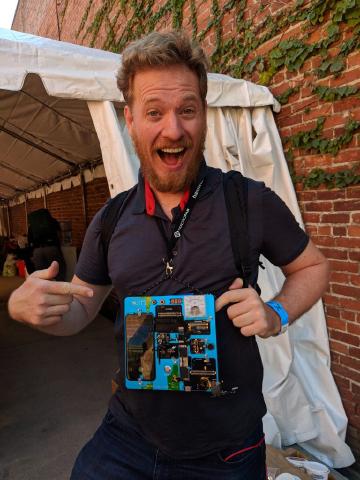
(image thanks to the Hackaday.io)
Welcome Scotty Allen of Strangeparts.com!
- Chris and Scotty were just hanging out at Supercon. Scotty gave a talk from there last year.
- Scotty's latest video is about making an RFID chip
- Kitchen Confidential
- Scotty did software consulting in college and then joined the Google search team.
- He decided to quit and travel more and was became a "Minimalist by default" when he accidentally set apartment on fire.
- Blog posts in 2014 had him curious about Shenzhen, including posts from Ian from Dangerous Prototypes.
- He first visited with Mitch Altman during his yearly tour to China.
- Greg from RevRobotics makes parts for FRC
- The process to stay in China
- WePay (really "WeChat Pay")
- QR codes
- Scotty knows some conversational Chinese, but also relies on Google translate and Microsoft translate (OCR).
- Videos
- iPhone
- RFID
- Factory tours
- Videoes with Collin Abroadcast in the Yiwu commodities market outside of Shanghai
- Inside the massive market
- Cashierless convenience store
- Places Scotty wants to tour (please contact if you know of any contacts)
- Silicon fab
- Batteries - LiPo
- Injection molding - greg nedall
- White label modification
- 100 units
- Chinese entrepreneurs use local manufacturing
- iPhone testing board (also pictured above) is a good example
- Intermeshed network of specialized manufacturing
- People shop around for quality/relationships
- Finding factories
- Moving outside of Shenzhen
- Mismatched expectations
- Chinese entrepreneurs
- Moving upmarket
- Shanzai phones
- Made in China 2025
- 100 year plan with 5 year plan segments
- Scotty doesn't plan to start a QVC channel
- DSLR video shooter
- Video
- Background in video/theater
- Story telling
- Quest
- The Engineers journey
- Any complex project goes through the heroes journey
- The only way through is to change who they are as a person
- There are two ways the story can finish
- Succeed
- Explaining why it can't be done
- Battery stories with past guest Steve Kreuzer
- Boards brought from the market
- Scotty is growing the Strangeparts team, namely looking for a COO.
- Contact Scotty on
- Twitter @strangepartscom
- Scotty@strangeparts.com
Transcript
Chris Gammell: This is The Amp Hour Podcast. Released November 5th, 2018. Episode 414. An interview with Scotty Allen. Welcome to the Amp Hour. I'm Chris Gammell of Contextual Electronics.
Scotty Allen: And I'm Scotty Allen from Strange Parts.
Chris Gammell: Welcome, Scotty. Thank you. You're in the States. This is not normal for us. No. Usually we see you on camera across the way.
Scotty Allen: Yeah, this is not typical. I make it out here a couple times a year, so I'm glad we were able to meet up.
Chris Gammell: Me too.
Scotty Allen: And we were just at Supercon.
Chris Gammell: Yeah. We're both about an octave lower. Hello. I know. I'm Chris, and you're Scotty, and we're going to record the Amp Hour now.
Scotty Allen: I know. I think we've both spent the past three days speaking nonstop to a bunch of other really exciting teams.
Chris Gammell: And look at this thing. And look at this thing. I can't believe it. Oh, my God. Yeah. Yeah. That was really fun. And I'm glad you made it over here, though. Yeah.
Scotty Allen: Yeah. I'm glad. Yeah. It was a very last-minute decision. I booked my tickets like six days in advance. That's a ballsy move, I've got to say. Yeah. Well, I was planning on not coming, and then I was remembering how much I enjoyed coming last year. And I was like, screw it. I'll come. Right. It's a crazy thing to do. You gave a talk last year, too. I did. I'll post that talk. What was that about? It was about the iPhone headphone jack hack I did. Okay. So I was really sad when Apple removed the headphone jack from the iPhone, and I decided that maybe I should try and add it back.
Chris Gammell: Right. Right. So people who started listening are like, oh, Scotty, strange, sounds familiar, sounds familiar. They're like, iPhone video. Yeah. I remember. Yeah. So how much of it is you getting people just wanting to talk to you about iPhones versus other stuff?
Scotty Allen: Yeah. So that's the thing that people definitely know me for the most is the iPhone stuff I've done. And I've done, I would say probably half of the videos that I've done have been sort of iPhone hacks and iPhone adventures, mostly in China. But I'm really excited to do a bunch of other stuff with strange parts, too. I just finished a project trying to build my own RFID tag. I saw it. That took me halfway around the world. Yeah. And that was really, really fun. That's great. So I'm really excited to sort of continue to branch out and do more things. I guess the way I think of strange parts is like a travel show for geeks.
Chris Gammell: I was going to say, it's like you're like Anthony Bourdain, but more tech than eating. Don't eat the stuff. Yeah, exactly. In fact, wash your hands a couple times before you eat the stuff, because there's probably
Scotty Allen: lead and chemicals all over the place. Exactly. And I think Anthony Bourdain, obviously, that's a big reputation to live up to. I don't think I'm anywhere near his level of awesomeness.
Chris Gammell: Have you ever read or listened to his first book, too? No. I'll have to check it out. Oh, man, Kitchen Confidential. It is raunchy and fun. I can only imagine. Great look into what the world of cooking is like, but I don't know how real it is, because I've never been there, but it's very heuristic in that way.
Scotty Allen: But I think a lot of his work, I think what's compelling about a lot of his work is that food is the excuse to explore countries and to dive deep into cultures and humanity. And I think it's a lot of what I want to do with strange parts as well, but from a tech angle. And sort of, so it's really important to me to not just do like a technically interesting project, but is to use that as a window into interesting parts of the world and of humanity and cultures. And I mean, that's sort of how I got started with the channel was through travel and sort of going to Shenzhen and discovering this amazing place and being so excited about it. And wanting to share that. And, you know, I heard about this idea of trying to build your own phone from somebody that I was hanging out with in China over beer. And I was like, that's a really good idea. But it's also like a great way to sort of like tell this story, right? And dive deeper into it.
Chris Gammell: Yeah. Well, the travel thing is interesting because I remember like I had known your, I had learned about your channel through the iPhone videos and stuff like that. And then like one time you're just like, I'm going to go figure out how to get like manhole, what was it, manhole cover? A manhole cover in India. In India. Yeah. And so like, oh yeah. Okay. So now you're over there. Now you're over there. So like, so we're, yeah, I guess it's kind of, eventually you're going to end up in Antarctica at the station probably, right? That'd be really cool. I'd love to do that. Former guest Sean Meehan used to work there two summers, two winters or whatever they are. Okay. Yeah. Awesome. Yeah. Yeah. That's, yeah, that is a. Work my way up to that one. I think down, it's work your way down. Work my way down. Yeah. Exactly. Yeah. Yeah. I've always been intrigued by Antarctica. Yeah. Yeah. That's cool. So let's step back then. So how, how did this start? How did you get here? I remember you said you were a San Francisco person prior to that.
Scotty Allen: Yep. Yeah. I was in San Francisco kind of bouncing around the, the startup world. So I, I originally, uh, so I have a computer science degree and, um, in 2006, San Francisco, this is. Yeah. Right. How does this work? Shocking. So I originally came out there, uh, I went to school in Boulder, Colorado, and I came out for a job with Google. And, um, so I was a software engineer on web search for a couple of years, like 2006, 2008. And, um, that was amazing. And, and an amazing sort of, uh, it was almost like doing a master's in professional software engineering because their processes are so great and there's so much great mentorship and stuff. Um, but I got tired. I, I really enjoy building stuff and then shipping it right away. And that's like when you get to the scale of like Google web search, that's not really how it works anymore. Yeah. If they do, they get in big trouble. Yeah. Right. Right. Right. And so, so I spent a lot of time doing analysis and, and, um, you know, sort of a lot of code review of other people's code and stuff. And I said, you know what? Like I, I think maybe I would be happier, like working at smaller, like earlier stage. Uh, companies. And so I kind of bounced around a couple of startups in the Valley. And then I said, you know what? I, I really, I put myself through college, um, doing software consulting and I really enjoyed that. And, and so I said, you know what? I'm going to go, go start, start something of my own. And, and, um, and so I started a small, like, uh, online software as a service company, um, and ran that for a few years and kind of grew that to the point that it, that it sustained me, um, and had a small team.
Chris Gammell: Oh wow.
Scotty Allen: Um, but it was like a B2B sales company and it turns out I hate enterprise sales. We were selling to like fortune 500. Oh yeah. And so it just was like these. A lot of ties in your, your past then. Yeah. Yeah. Not so much because I did it mostly remotely, but like a lot of conference calls. Right. The thing where you're wearing a suit up top and like gamma bottoms below. Exactly. Exactly. And so, yeah, it was, you know, nine months sales cycles and, you know, just, just, you know, a lot of, a lot of talking to project managers and, and, you know, procurement and going through large company procurement cycles. And I said, you know what? I just don't enjoy this. And, um, I had originally built the company with the goal of, uh, enabling me to go full time remote and to, to start traveling full time. Um, so we never had an office, uh, and the, and the goal was always to build it in a way that would allow me to travel full time. Uh huh. And, uh, I, I finally did that in, uh, 2014. Uh, though the catalyst was, was somewhat unfortunate. The outcome was great. So I accidentally set my apartment on fire. Oh, Tyler Durden. Yeah. Right. Wow. Um, which is the whole story in and of itself, but it, but it meant that I like got rid of a lot of my possessions and like, like a minimalist by default. Exactly. Yes. Yeah. Um, I highly recommend, uh, apartment fires as a way to, to, to, to shed off your worldly possessions. Yeah. Um, that couch, I would never have to buy a couch again. Yeah, exactly. Exactly. That couch. And yeah, it was an Ikea couch. Yeah. It was like, well fits the, uh, yeah.
Chris Gammell: Yeah.
Scotty Allen: Chuck Palahniuk. Yeah, exactly. Soothsayer. Exactly. Exactly. So, um, so I went, uh, yeah, I lived with a friend for a couple of months and then I, I started traveling and, uh, I had traveled a lot in the past, um, sort of in the middle of college, I'd taken four years and worked and then traveled a bunch. So in Asia and, um, and so that's still really been part of my sort of DNA of, of sort of traveling to, to weird and out of the way parts of the world. That's cool. Um, and so I was really eager to get back to that and, uh, while still sort of doing engineering and technology work and stuff. And, um, so I had been, I'd been nomadic for a year or two and I started hearing about this crazy place, you know, Shenzhen, uh, where, you know, it was sort of the electronics mecca of the world. I'd seen some blog posts by, um, uh, Ian from Dangerous Prototypes. Oh yeah. I think I'd seen, uh, former guest of the show. Yeah. Okay.
Chris Gammell: Awesome.
Scotty Allen: I, yeah.
Chris Gammell: His is, his is one of the most crazy stories where he's like, yeah, I was in Amsterdam and I went to Shenzhen and I just never went back.
Scotty Allen: Yeah. It's like, Oh, Oh, okay. Well, my story's pretty similar. Oh really? Except that I was traveling and then I, so I actually like the catalyst for going out there. I'd started hearing about it from like Ian's blog posts and I think like evil mad science, evil mad scientists, like, I don't know. Maybe they've been here. Yeah. I think, I think they wrote a blog post. Anyway, there were a few like little breadcrumbs and I was like, this is interesting. And then, uh, so what timeframe is this? This is like end of 2014 maybe. Okay. Uh, and then, or 2015 maybe. Uh, and then I found out that Mitch Altman, who I know from Noisebridge. Yep. Does a yearly, uh, hackership to China.
Chris Gammell: Yeah. And I think it's coming up or.
Scotty Allen: They're there right now. Yeah. Yeah.
Chris Gammell: Yeah.
Scotty Allen: Yeah. Um. It's usually in October, right? Yeah. October and November. October and November. Yeah. Yeah. Yeah. Time frame. So yeah, they're currently in Beijing. Yep. And I'll meet up with them, uh, in Shenzhen in a week or two. Nice. Um, and so that was finally the catalyst that got me out there.
Chris Gammell: Okay.
Scotty Allen: So I went out for three weeks with him. We had Hong Kong, Shenzhen, Shanghai, and Beijing. And, uh, like the first time I saw the markets in Shenzhen, I just immediately fell in love. Oh yeah. And by the time we were done in Beijing, I had bought a ticket from Beijing, uh, a train, uh, like a 24 hour train ticket from Beijing back to, to Shenzhen. Oh wow. And spent another month like hanging out with Ian and, and sort of the, the, the hacker tribe that had sort of built around him and dangerous prototypes, uh, in Shenzhen. And like we would go out, we would go out most nights for sort of barbecue and beer. And I was coming back with like half a page of notes of like all of the stuff that I had learned just hanging out with people that were, that were doing manufacturing in China, sort of doing open source, small batch manufacturing type stuff. Um, and just, just hanging out with people. Um, like I, uh, the guy that I learned a ton from was, um, uh, Greg from Rev Robotics. Who makes, um, uh, they make, uh, parts for, um, first robotics teams. Oh, cool. Uh, and he's a, a toy industry veteran. And so he's like a, so he's doing trips over there. Yeah. Three times a year to get ready for holiday season. Exactly. Every time they're opening an injection molding tool, he's out there. He sort of batches them up and, um, yeah. Um, and so just, you know, hanging out with him and, and just hearing all his war stories was like, was literally just an education in sort of engineering for manufacturing. And I just, the longer I spent there, the more I fell in love and, and the more time I was spending in the markets and, and, you know, I mean, it's just literally like a kid in a candy shop.
Chris Gammell: I, yeah. I'm afraid. I still haven't been actually. So.
Scotty Allen: Oh man.
Chris Gammell: Yeah. You've got to make it. I know a podcast about electronics and it's like, you haven't been to the place where most of that stuff is made. You gotta come. Yeah.
Scotty Allen: Flights are cheap. I know. Like a round trip, uh, Shenzhen direct to LA is 450 bucks. Oh, that's not bad. Right now anyway.
Chris Gammell: Okay. That's good. Yeah. Makes it easier to come here. That's good. It makes it very easy. Makes it very easy. Yeah. That's, that's great. That's great. So, okay. So you, so you decide, it's like, what is the process like to then be like, all right, well, I'm just going to stay.
Scotty Allen: Well, it's sort of gradual, right? Because you, you come and you like stay for a month and then you go away and you're like, Oh, I really want to go back. And then you go back for two months and then.
Chris Gammell: Well, so, I mean, this is a little different though too, cause you just a traveler in general, like you're a nomad.
Scotty Allen: So it was very easy for me. Like I didn't, I didn't have to, I didn't have an apartment at that point. Right. Like I had a small storage unit in San Francisco, but like I didn't have a lot of ties. So it was really easy for me to just go and, you know, book a flight and get a hotel and then stay, you know, as long as I wanted. That's great. And yeah, I mean, those trips just got more and more frequent and longer and longer. And now I'm there, you know, good portion of the year. Do you not move there, I guess, cause you don't move any, you don't live anywhere, right? Yeah. I mean, I have, I have an apartment that I maintain there now just cause like, you know, I've got a microscope and. Got it. You gotta have all that gear. Yeah, exactly. Yeah. I've sort of accumulated more and more gear, which, which sort of like really pains the like minimalist traveler in me. But I had, I'm drawing the line at like, I'm trying not to accumulate so much stuff that I would be really sad if it all just got thrown out. Got it. And then that way I can, I still have benefits to the market is that you can just go and
Chris Gammell: buy more. Yeah, exactly.
Scotty Allen: For a long time, I just had like a plastic tote that I would store in the manager's office of the, of the hotel that I stayed at. That's nice. Um, and then like it was the microscope that actually tipped me over the edge, which is really funny because it's like, it's a $300 microscope and, uh, and I was paying like, you know, 750 bucks a month, uh, rent to store this $300 microscope. Wow. Okay. Um, but, but now I've kind of, yeah, I got the whole lab and, and, you know, shooting stuff and whatnot. So it's, yeah. Got it. What about like a language stuff? I mean, that's. Yeah. So language is a big deal. Um, uh, like most people in China don't speak. Fluent English or don't, don't, don't speak any English at all. I would expect that to be the case. Yeah. Yeah. It's, I mean, it's, it's a little bit surprising in that a lot of other places you travel in Asia, there is a lot more English spoken. Um, China's really, uh, yeah, very sort of, uh, they're very little spoken.
Chris Gammell: Right.
Scotty Allen: You're never going to get into a taxi, uh, and have the taxi driver speak a word of English. Um, and so that, uh, that can be very challenging as, uh, as a traveler, um, who doesn't speak any English. And then also just like China is so big and has been closed for so long that there are a lot of things that are just not super set up for, for foreigners and for travelers and stuff. So, um, you know, there's a lot of things that like you need a Chinese ID card for. Oh yeah. Right. And so, so it's all doable, but like there's nothing that like, Oh, I'm, I really wish I could do that. Um, that I can't do. It's just a lot of things are like more difficult or like a separate process. Right. Yeah.
Chris Gammell: I was doing with that just like I was working with a vendor in Alibaba and they're like, yeah, you have WePay. And I'm like, I, I thought I did. Yeah. And then I realized that there's actually a different thing of like, there's an online WePay, which is like for, uh, is it WePay or Alipay? Sorry. Alipay. Yep. And so Alipay, I had that, but it's for the online one versus the in-person one. And all that stuff. And yeah.
Scotty Allen: And so some of that comes down to like currency control stuff because it is a controlled currency and they want to control conversions from USD to RMB.
Chris Gammell: Yeah. Um, and, and honestly, that's like a residency requirement too. Like it was like only, you know, like us is very similar. I, I've been learning more about the us banking stuff and it's like, it's very different. You know, if you want to get paid across the country in Atlanta, it's very different. So yeah. Yeah. Totally.
Scotty Allen: So yeah. People use, mostly use, um, WePay. Uh, uh, that's like the payment platform in China. Yep. Um, which is really amazing.
Chris Gammell: Like I, are you familiar with how it works? I saw your video about the, uh, that's the one where you walked in the scanning. That's how the RFID stuff started, right? Uh, cause you like walk up with little scan code. Yeah.
Scotty Allen: Yeah. It's all QR code based. Um, and so most of the time, like in small shops and small vendors, you're scanning their QR code. Uh, uh, and then you type in how much you want to pay and then you just show them the screen and you're done and they get a notification on their phone. Um, and that's cool because the barrier to entry is so low. I've seen, um, like, like all of the street food vendors that just have a little cart have WePay. Uh-huh. Um, and I've even seen beggars with a, with a laminated WeChat QR code in their bowl. Oh, yeah. Um, because people aren't carrying cash as much anymore.
Chris Gammell: Yeah. Yeah. That's interesting. Um, so I was on a flight for about four hours sitting next to someone who's brought some RFID stuff to China, according to him. And I don't, I apologize. I don't remember his name, but he was, went on for four hours about how they went to our, or they skipped RFID, even though they, they should have gone to that right away. And it's more QR code based. Yeah. And how silly that is. But then.
Scotty Allen: But I don't think it's that silly because like.
Chris Gammell: Every phone has a camera. Not every phone has an RFID thing. And then the interface. And like to accept like WePay, all you need is a printer.
Scotty Allen: Yeah. Right. That's true. Yeah. Right. Like you don't even really need a phone. You just need access to a phone to set up a WePay account tied to a bank account. Yeah. Right. Um, and then, yeah, you just need the printed out QR code. And so it's literally everywhere. Yeah. Um, and then that's because now, because of that, everybody knows in China knows what a QR code is and, and has been scanning them all day long every day. And so you can do all sorts of other cool stuff with it.
Chris Gammell: That's interesting too, because that's like, uh, that's what they, that's what the dream of marketers was in the, you know, mid two thousands when they put it on every movie poster. And it was like, well, it gets far better.
Scotty Allen: So, uh, like one of the restaurants I go to on a regular basis, uh, you sit down and there's a QR code, uh, at every seat on every table and you scan the QR code and you get a menu through WeChat that has pictures and everything. You choose what you'd like. Yeah. You hit pay. It goes through. We pay. You, you, you know, a table, you know, they know what spot and they know what spot spot you're at and, you know, a couple minutes later, a waiter shows up with your food and the robot will just replace the waiter eventually. And so it's no installation of apps, right? It's no, like there's no barrier to doing that. Right. Yeah. It's like a pull versus a push. Right. Right. Exactly. And so that's, I, and the U S has not figured out how to do that. Right. It's always sort of like, right. Cause a garden through three, right. Right. Right. Right. Right. Sort of like do basic stuff. Right. And it usually involves installing an app, which is a very heavyweight sort of activity.
Chris Gammell: Yep. Sorry about that. A little mic problem there. Yeah. Yeah. So that's crazy. So, so then how did that work for you then? So difficult to get as someone coming in from the outside or no?
Scotty Allen: So I had to get a Chinese bank account. Oh, okay. So that, that, that is the highly enabling thing. Got it. Which has gotten harder I've heard. Okay. But it used to be that you could just show up at the bank with your passport and, and like an hour later you'd have a bank account. Got it. And so then that's enabling to then use WePay and all of that. Okay. Um, I don't quite know. Yeah. I don't. So it's not credit based on it. It's debit based. Is that right? Yeah. Oh, interesting. Okay. Cool. And, and so then the interesting, like this is getting into the economics, but like, um, WePay, a lot of the, uh, money that goes into WePay never leaves. Yeah.
Chris Gammell: Right. Same, same, same thing, right? Right. It's like the idea is it just sits in there and, right. Recrues interest for them and that's how they make their money. Right.
Scotty Allen: And it's quite a bit of money because, you know, the whole country is kind of functioning on, on WePay. Everything from like paying for taxis, paying for food to like, you know, relatively large ticket exchanges in the markets, um, is all happening through WePay.
Chris Gammell: Have there been any outages yet? I don't know of any. I mean, like what happens, right? I mean, like. I have no idea. The pessimist in me thinks that. Yeah. I have no idea, but it would be really scary.
Scotty Allen: I think. Yeah. Um, yeah. Hopefully not. Yeah. Yeah. Cause I don't think people carry a lot of cash and I think, I think there's, there is kind of a, there is a little bit of a fearful mentality of, uh, like about the future in China. And so I think. Locally or internationally? Yeah. I think, I don't know. This is sort of speculative, but I wonder if there would be a rush on ATMs. Oh, interesting. Yeah. Yeah. Yeah.
Chris Gammell: And that could be really amazing. Right. Or just keeping a little bit of cash in your apartment. That kind of thing. Yeah. Yeah. That's yeah. Yeah. Monetary stuff is weird. Yeah. So, okay. So how does that then impact? So if I was going to go visit for a month. Yeah. Yeah. What would you tell me to do? So, um, yeah. So.
Scotty Allen: Would I get a WePay account? Yeah. It's tricky. And I don't know if there's, I don't know what the current path to that is right now. It used to be like get a bank account. Um, but that's getting harder and harder. Um, and, uh, so like I think they want you to have like a work permit now. Um, which is, which pretty involved to get. Yeah. Um, and, uh, so then that would give you WePay. You can get a WePay account now, but it's just hard to charge it up. Right. Oh, it's like how to get money into it. How to get money into it. Yeah. Got it. Okay. So I don't, I don't have a great answer to that. Mostly because I've sort of solved it for myself. Sure. Of course. Right.
Chris Gammell: Well, and I've seen like, I've seen blog posts about this before because it was like people that were traveling there or wanting to move there or whatever. And so it was like, here's how to kind of navigate the system. Yeah. Even to the point of like, click here on the website. You know, this is only going to be in Chinese. So you have to like, you know, do that. So, yeah.
Scotty Allen: Um, yeah. I mean, it's, I, I think there's that. I think there's sort of like getting SIM cards and internet access sorted out. You know, there's sort of the great firewall. And so there are issues around that, um, that you need to sort out. Uh, there's, um, uh, sort of language is just a huge barrier as we talked about earlier. So Google, you know, having like Google translate installed on your phone. Um, and then I use a couple other things I use, uh, I use Microsoft translate, which can do, uh, it will translate all of the, all of the words or characters it finds on a, on a given picture. Uh, so you can take a picture or what I use it for the most is, uh, app screenshots. So like for a Chinese app, I'll screenshot the app and then load it up in Microsoft translate and it will translate the whole screen at once. So like OCR. Yeah. And then overlay the text. Um, and that's, that's hugely enabling. Um, so that allows me to do like delivery food because I, I'm, I speak some Chinese, but I don't read very much. And those are really like pretty separate skills, right? Like there, cause you, you basically just have to memorize all of the characters. Right. Or you have to memorize every character. Right.
Chris Gammell: I can't imagine like looking at a, you know, like an S, right. And be like, eh, I don't know. You know, like what sound does that make? What, you know, like it's, it's so baked into my brain at this point that it's, it's learning. And I, you know, to be fair, I learned Japanese for like three semesters, but whoo, that is gone. Yeah. Right. Yeah. So you have some sense. And boy, was I wrong. Did I guess wrong? Yeah. My friend took Mandarin and, uh, yeah, did a little better. Yeah.
Speaker ?: Yeah.
Chris Gammell: That's not true. I had another friend who ended up going to work in Japan. So no big deal. Um, yeah. Okay. So, uh, so for a month, if someone shows up, plan to be in cash, but it's going to be more difficult. Yeah.
Scotty Allen: And it's fine. I, you just going to sort of get some, some size from vendors and stuff.
Chris Gammell: Yeah.
Scotty Allen: Like, I got to find change for you now. Yeah. Yeah. But yeah, it's very workable.
Chris Gammell: Well, what about, so then in the markets now, so now you're going to buy some components, right? You've got a project idea as we see in your videos, uh, you go, used, uh, WePay for that thing.
Scotty Allen: I'll use a mixture of WePay and cash. Okay. And it sort of depends on the day and stuff and what I'm doing and, and, and whatnot. Okay. So transactionally, that's just not that tough. You're saying? No, no, no, no. It's not, it's not a barrier. I think WePay is mostly just cool and how frictionless it is. Uh-huh. Um, but it's not a strict requirement for, for most things. There's a couple of things like, uh, like the bicycle rentals. Have you heard about the, all the shared bicycles?
Chris Gammell: Uh, I've done it here and I've, uh, my old job, we kind of worked with that a little bit, but it's like you scan a code and then it just blips it and opens it, right?
Scotty Allen: Yeah. And you could park a bike anywhere. You just flip the lock closed and you know, on the sidewalk or whatever. Right. And so, uh, for those, well, I guess that's different now. I guess now you can probably bind those to a credit card as well. It used to be that you needed WePay to get those. Right. And there was no real way to do it in cash, but I think they've like, at least the big companies that have sort of sustained the initial like bubble crash. Right. Um, which are like Ofo and Mobike. Yeah. Um, I think they both have like, you can put in an international credit card.
Chris Gammell: I used an Ofo in Seattle before they withdrew from that market. Oh, okay. Yeah. Yeah. Those things are not great bikes. I got to. No, no, no.
Scotty Allen: But yeah, you can usually find one that has two wheels and rolls. Um, everything else is sort of optional, but.
Chris Gammell: Right. So I was watching your, I forget who you're filming with, but you guys were riding through the markets and I remember there's like a Christmas market or you guys were different stands. What was that video?
Scotty Allen: So that was, um, we did two videos, uh, with, and that was with Colin, a broadcast, um, who's a friend, another YouTuber, uh, in China. And now he's, he's sort of traveling all over. Um, so that was up in Yiwu, which is outside of, um, Shanghai. Okay. And Yiwu is unique because it has the largest, like general commodities wholesale market in the world. Yeah. Uh, and it's, I think it's seven kilometers long and like 40,000 booths. I forget the numbers, but the metrics are insane.
Chris Gammell: When you guys were like going through the signs of like, Oh, where do you want to go? Do you want to go to that village or this village? And it was just like, just the most random shit.
Scotty Allen: Well, it's one long series of buildings that are all interconnected with, with overpasses. Yeah. Like seven kilometers long. I think it's a million square meters. Oh my God. That's so much space. Which is just, I mean, it's, it, it was actually a challenge from a video perspective. Because neither one of us could really figure out how to tell the story of how big it was. Right. Visually. Right. Right. Without a, well, even with a drone, right? Yeah. Even with a drone. You run out of sight line, right? Right. Well, we also were fighting the, we were, the markets are right on the edge of the exclusion zone for the, or the no fly zone for the airport. Oh. And so we couldn't actually fly over the, over the markets, which would have helped. Yeah.
Chris Gammell: Well, even with Google maps, too, like you don't, you don't get the scale, right? Yeah. Until you're in it, you're like, oh my God.
Scotty Allen: Yeah. And when you're in it, it takes you like, if you're, if you stop and look at stuff, it will take you eight hours to walk from one end to the other.
Chris Gammell: Mm-hmm.
Scotty Allen: And then, yeah, I think that's really hard to show in a, you know, 20 or 30 minute video format.
Chris Gammell: I was actually thinking about that when I was traveling. Oh, I was down in New Orleans for just a, you know, a trip or something. And, you know, there's just kitsch shops, right? It's from New Orleans. But I remember your video. It's all from you. It's all the same thing. It's all from, yeah.
Scotty Allen: It's all from you or that area in China. Yeah. Yeah. I mean, there were just shop after shop of like generic refrigerator magnets that were like palm trees and, and, um, parrots and whatever. And they said, you know, Cancun. And then the next one that would, it was exact same design, but just had like, you know, right. Right. Spain or whatever, you know. Right. Yeah. Oh, man. Barcelona. You know. Yeah.
Chris Gammell: I don't know if it'd be, I, I actually, I also remember watching that and thinking like, I don't know if it'd be better or worse. My mom like loves Christmas. I'm not sure if it'd be better or worse to take her to something like that. If she'd be like going nuts or she'd be like, oh, it is all this. You know what I mean? Like, I think it kind of, it's like, it's like bimodal in that way. Yeah.
Scotty Allen: I think like for me, it definitely like burst my bubble on a number of things. Exactly. Of like, oh, this is all like BS. Right. You know, like there's a lot of like Americana kitsch there. Yeah. Yeah. And I was like, oh wow. Like all American like antique stores.
Chris Gammell: Oh, you want to get an old Coca-Cola sign? Exactly.
Scotty Allen: Yeah. That was made last year.
Chris Gammell: Yeah. Exactly. Yeah.
Scotty Allen: Yeah. Oh, man. Yeah. There's, there's actually been a lot done on the Christmas industry in you. I think like, I forget the exact metric, but I think it's 60 to 80% of all Christmas decorations are made in you or in the surrounding area. Oh my God. And I think like New York Times, I think has done a piece. Okay. Um, and they were, it was like a photojournalist piece where they went to factories that were making ornaments and, and shot a bunch of photos and they're gorgeous. Uh, but they interviewed one of the workers.
Chris Gammell: Yeah.
Scotty Allen: And asked him, like, what, like, what do you know about Christmas? Uh-huh. And they basically didn't really know very much about Christmas.
Chris Gammell: It's just this weird design. Everything's red and white. What's the big deal?
Scotty Allen: It's red and white. Uh, and I think it's kind of like Chinese New Year. Oh, yeah. Um, which is like, like from a- And you celebrate and you eat a lot and you- Yeah. And like, everybody's got some time off. And like- Sure. Yeah. Um, and like, yeah, I mean, I like, I don't, uh, yeah. I-
Chris Gammell: I mean, I can probably tell you about as much as about Chinese New Year. Right. Exactly. Like, I don't, I don't think there's anything negative. Don't try and travel. How about that?
Speaker ?: Right.
Chris Gammell: It's a nightmare at the, at the airports and train stations. Exactly. Yeah.
Scotty Allen: Largest human, modern human migration. I know. Yeah. So what do you do for that? You just- Get out. Yeah. Get out. Come to States. Yeah, because, uh, so, um, again, I'm, I'm feeling numbers. I think it's 80 or 90% of the population of Shenzhen leaves for Chinese New Year. Uh, and it's a city of 20 million.
Chris Gammell: Yeah.
Scotty Allen: Uh, and so it literally just turns into a ghost town and nothing's open. They should film like a zombie movie there. Yeah. At that time, you know? Well, I thought about staying to film a video about it because you can literally walk down, uh, you know, the main boulevards that are, you know, six lanes of traffic on either side.
Chris Gammell: Right. Like that scene in Vanilla Sky where they did that in New York Times. You ever see that movie? No. Oh man. Yeah. It's like, I don't know how the hell they did it. Money is the answer, but like they filmed in New York Times, like Tom Cruise running down the, the, the center of, of Times Square. No, I said New York Times, sorry. Times Square. He's running down the center of it. Yeah. With no cars or anything. They must've filmed it like in the middle of the night. Maybe it was a CG, but I don't, yeah, I have no idea how they did that. So. That's crazy. Yeah.
Scotty Allen: Yeah.
Chris Gammell: You should do that though.
Scotty Allen: Yeah. Yeah. Yeah. It would be kind of interesting. It's just like, it's, it's actually difficult being there because there's no restaurants open. There's no shops open.
Chris Gammell: Sounds like you're not, not a cooking your own food kind of guy, huh? No, no.
Scotty Allen: No, I guess I could stockpile, but.
Chris Gammell: Yeah. Right. Right. Yeah. You know, the, the takeout only lasts for so long. Yeah. Right. Exactly.
Scotty Allen: Exactly.
Chris Gammell: Okay. Okay. Cool. So, um, all right. So you've done, well, let's go through some of your videos. Obviously the iPhone stuff is a big one. Uh, uh, you've done RFID now. Yep. Um, what are some other ones that like people should keep an eye on? Oh, let's see. Um, and there's multiple iPhone ones as well, right?
Scotty Allen: Yeah. There's, there's like a pretty solid handful of iPhone stuff at this point. Um, yeah, the RFID was really cool. Like, so we did that, that sort of happened by accident. Uh, when I was up in UW with Colin broadcast, um, we ran across to, uh, um, cashier list convenience. That's right. Yeah. Which is sort of like, I mean, it's the same idea as the Amazon stores that they've been doing. Um, but it's all based on RFID tags and, uh, I thought Amazon was doing like machine vision or like vision stuff. Yeah. I think it's most, mostly or entirely vision. I don't think they have any RFID. Okay. Um, uh, and actually like, so the, the, at the end of the, the second RFID video that I did, um, I got to visit the office of impinge, which has the, I'm getting a little head in the story, but like, but, but they're right next to Amazon. And they said they had been to the, to, to the, um, first, uh, is it, what are they
Chris Gammell: called? Amazon go stores? Yeah, I think so. There's one in Chicago, but it's open from Monday to Friday, eight to five. It's like, cause it's in the loop and it's only for business people. I'm like, this doesn't help me.
Chris Gammell: Right.
Scotty Allen: You can't actually, yeah.
Chris Gammell: Yeah. Amazon go away store.
Scotty Allen: Yeah. Right. So they had said they'd been down to the store and said that, yeah, it didn't, it was all visual. It wasn't, wasn't using any RFID.
Chris Gammell: It doesn't seem very sustainable in that way of like, Oh, we're going to set up every store with all this infrastructure and it's like, yeah, I don't really get
Scotty Allen: it. Um, particularly after talking to the impinge folks about like what their stuff can do. Yeah. Um, I mean they, their theoretical read range on their tags is like 10 meters, which, yeah. And they're doing all sorts of like, they had, um, like phased antenna arrays. So they could actually like figure out not just, they could not just read a tag, but they could also figure out like where the tag was roughly. Right. Right. Um, which gets super interesting.
Chris Gammell: Um, yeah.
Scotty Allen: Sort of bouncing, bouncing signals and yeah, that's cool.
Chris Gammell: Yeah. Yeah. That's great.
Scotty Allen: Um, so yeah. So yeah, the, the RFID inventor was pretty cool. Um, I've started doing, uh, factory tours. So, I mean, I think like one of the biggest, most interesting parts of China for me, um, has been, uh, how open the factories are and sort of how much manufacturing is done there. And, and, um, and we mentioned the JLC video a couple of times on here as well.
Chris Gammell: Yes. I thought that was just really great as a look at the process, right? It was, I'm sure that they were showing you what they wanted you to see, but also like, I mean, those, I mean, God damn, they move a lot of stuff, you know? Like, yeah.
Scotty Allen: Yeah. So it's really, it was really impressive. I've been to a number of PCB factories and that was definitely like the most modern and the highest volume I've seen.
Chris Gammell: Um, oh wait, before we move on, sorry. Yeah. I asked this on the show and I, I was asking Dave about this. What did they do with the transparency? So they just throw those out. I have no idea. I want to hope they recycle them, but I don't know if they would. If you ever talk to them, can you ask them for me? Yeah. Yeah. Yeah. I can ask. Yeah. Cause like there's like, I just think about it. Like there's what, like 10, 12 transparencies per, each one is a different exposure layer. Every layer that I send as a Gerber becomes a transparency or part of one.
Scotty Allen: Yeah. So they've got, yeah. Uh, one per copper layer. Yep. Uh, and then one for solder mask. Yep. On each side.
Chris Gammell: Yep.
Scotty Allen: Right. So if you've got a two layer board, that's four right there.
Chris Gammell: Yeah.
Scotty Allen: Uh, and then they'll have silk screens, but they don't, for low run, they won't do, they won't make silk screens. They'll just, they'll just print them on with the UV printer.
Chris Gammell: Yeah.
Scotty Allen: Um, and then. But still like at the numbers they're doing, it's insane. I mean, that's like, it's like at least four to six per panel.
Chris Gammell: Yeah.
Scotty Allen: Yeah. Um, so, and then, you know, they'll obviously pack more orders onto a single panel if it's low run, but, um, but still, yeah. I mean, it's, you know, they're moving a lot of panels. Right.
Chris Gammell: Well, and Dave, Dave was saying on the show when we were talking, he's like, well, usually it used to be you would save them, right? Because you would, if you're doing multiple runs, you save them and then you just have this as a revision. That's the setup charge, right? Yeah. But on low run stuff, it's not like that.
Chris Gammell: Yeah.
Scotty Allen: So it gets even crazier when you get into flex PCBs, right? Oh, yeah. Which, which I got to visit a, um, I visited a couple FPC factories, but I did one on camera as part of, um, the headphone jack video. Uh-huh. And when you get into FPC, you start making, um, steel tools to stamp the, the cap on. Yep. And now you're making like a real, like machined chunk of steel. Uh-huh. And they save all of those. Like there's, you know, shelves and shelves and shelves.
Chris Gammell: Just like you would have at an injection molding factory, right? You have the tool sitting on a shelf and you use it for the hundred thousand shots you get or whatever.
Scotty Allen: Exactly. And it's done. Exactly. And so, yeah, the economics there get kind of crazy. But, but I mean, it's cheap. I was doing prototype runs of FPC for like 75 bucks.
Chris Gammell: And that's not, you can't gain those up either, right? You have to do a full tool for that?
Scotty Allen: Um, I think, I, I forget. We, we kind of went back and forth. They can do some stuff with laser. Okay. Um, and so I think maybe they didn't make a full tool until we did, I did a run of a thousand after the, the first couple of prototype runs. And so I think that was the point at which they made a steel tool, but I forget.
Chris Gammell: Okay. Um, well, and like we saw Ben Krasno talk about last night on the Supercon stage, he's doing with lasers too, man. Yeah. Yeah. I missed that talk. Unfortunately, I'll have to go back. I'm very excited for all the, well, anything Ben does as well. Yeah. Your channel, his channel. They don't, like, it's really bad. Like, you know, especially when you guys like I'll release them like overnight too. I'll show up in the morning and be like, oh, I got like an hour and a half of video to watch now. You know? I'm sorry. It's okay. So I, I love it. I love it. You know, like this.
Scotty Allen: I shoot for like, uh, morning East coast time. Yeah. So yeah, that's, that's my target.
Chris Gammell: That doesn't help actually. That's, that's when I get in the office.
Scotty Allen: It's still pretty middle of the night.
Chris Gammell: It's now 11 in the morning and I'm still sitting here watching a video. Yep. Anyways, that's cool. So, okay. So more factory tours. Like what, what else have you been talking? Like, so actually maybe it's stepping back. How do you set that up? Is it just like my friend has a person there and I'm going to ask the owner to go through or what is it? Yeah.
Scotty Allen: Usually that's, that's what I've done thus far. So I've done three thus far. I did a, a 3d printing factory, like an, uh, like industrial SLA. Yep. Um, yeah. They had machines on machines. That was crazy. Yeah. Yeah. They're very serious machines. Yeah. Um, and their turn time is insane. I mean, they'll, they'll, uh, from receiving an order to shipping it out, uh, is under 24 hours. Yeah. Um, which is pretty amazing given, given the amount of like hand finishing they're doing.
Chris Gammell: Yeah.
Scotty Allen: Um, uh, and then I did, uh, like fiberglass and carbon fiber factory. And unfortunately we visited those right before Chinese new year. So they had mostly shut down, but it was still pretty fast. Which video was that in?
Chris Gammell: Was that part of another video?
Scotty Allen: Um, I think it's, uh, I accidentally went to a hockey stick factory is the name of the title. Oh, okay. Or the title of the video.
Chris Gammell: Okay.
Scotty Allen: Um, and we actually shot both of those the same day and those were just tagging along with my friend Sasha who was over there doing manufacturing for a, um, food delivery robot.
Chris Gammell: Oh, cool.
Scotty Allen: Okay. Um, and so we were visiting two of his vendors. Um, and so that's an easy way. Um, and just sort of asking the bosses when we're there, like, Hey, you know, this is, I've got a, got a YouTube channel. Like, would it be okay to film? And, and, you know, I'll put a link to factory in the description. That's great. Um, and they're usually pretty happy to, to sort of, um, to have that, that publicity. Uh, and then like for JLCPCB, they approached me and they said, um, they said, we'd like to do a, a, um, tour of our factory. Like, you know, we, we've seen your other factory videos. Would you be interested in doing that? And, uh, and I actually had wanted to do, I have a list of probably, I don't know, 50 or a hundred different types of factories.
Chris Gammell: Okay. Well, let's either get a link to the list or get a highlight here because I'm guessing that some of our listening audience here has actually been to some and might be able to make some intros. Totally. This could be some amp hour magic here. Hopefully.
Scotty Allen: Yeah. Okay. So I will, I will start with my white whale, like the factory that I most want to get into. I would love to go see a Silicon fab. Oh, well, I used to work one of those. Okay. Yeah. You're not going to go into Samsung's fab though. Sorry. Right. So that's the problem is that, is that I'm definitely not going to get into like a tier one fab, right? Yeah. TSMC is not going to be like, yeah, sure. Come on and bring your camera.
Chris Gammell: Yeah.
Scotty Allen: But what I'm hoping is that.
Chris Gammell: The camera might be the hard part actually. You're going to scrub that thing down, man. Yeah. Yeah.
Scotty Allen: Right. Yeah.
Chris Gammell: Yeah.
Scotty Allen: Um, so the, my thought is, can, can I find like in a older fab that is running on significantly older processes, you know, much larger process nodes, uh, that, you know, at this point, like none of the technology is super secretive. Right. And we can just go through the basic process without doing any super esoteric stuff.
Chris Gammell: I mean, honestly, if you're not looking at the, I mean, so the, I think the thing they'll be sensitive about is process in to getting into the fab and location and stuff like that. Yeah. But then as long as you're not shooting any of the screens, that's where all the magic is on the machines. Yeah. Yeah. So.
Scotty Allen: Yeah. I think it would be cool to do just like a, a walkthrough video of sort of all of the basic processes. Yes. That are involved in, in doing second fab and, um, uh, in making a chip. And, and I've had, that's like the number one requested video.
Chris Gammell: Oh yeah. Uh, when I, when I sort of, people are going to be bored to tears by that. It's cool at first, but man, there's like 300 steps and you're like, Oh, by the end, Oh, you're going to wash that again, huh? Yeah. Well, we'll use a little bit of editing. Yeah. Right. Right. Right. Skip over. Yeah.
Scotty Allen: Videographers and your magic. Exactly. Yeah. Exactly. I mean, PCB struggles from that too. Like there was 25 or 30 steps. And now back again. Right. Right. Exactly. Right. Right. Exactly. That by the end, the factory was like, you want to go back in the clean room again? Yeah. Right. We all have to suit up again. Yeah. Cool. Okay. What else is on the list? So let's see. What else? Uh, I want to do, um, uh, lipo batteries.
Chris Gammell: Oh, there was a, did you watch that video from the, one of the drone people? There was a drone video.
Scotty Allen: Yes. I've seen it. I've not watched it all the way through. I think I know what you're talking about. Okay. And we've, we've been sort of ships passing in the night in China. Oh, he's messaged me and we've tried to meet up and then it didn't happen. That was a great video too. And Holy crap. That's yeah. He just did a Kickstarter. I think. Did he? Oh, okay. I don't know. Um, we talked about in the show, I'll try and find a link. Okay. Okay. Yep. So yeah, I'd like to do a couple battery factories. So I want to do like pouch batteries, pouch lipos. I'd like to do 18, 650s. Definitely. I also think it would be fun to just do like double A's, right? Like double A alkaline. Yeah. Um, big lead acid things. Yeah. Right. Yeah. That would be cool too. Yeah. Uh, I'd like to do, um, injection molding. Okay. Like, and I actually would like to do a, an injection molding project where we really go through from, okay, you know, a napkin sketch all the way to opening the tool for shots, you know, texturing, polishing, like, because there's so much fascinating stuff.
Chris Gammell: Also, you could, you could offset it of like, I got this thing 3d printed. Why can't I get it made into a mold? They're like, ha ha. Exactly. Yeah. Exactly. Absolutely.
Scotty Allen: And, and probably do, yeah, start with just like an FDM off the shelf printer. Yeah. And then go get, um, Lexcent, uh, the, the SLA factory to, to print a, you know, high quality prototype and then, um, you know, take it all the way through. Yeah, the step between the SLA and the, and the real thing.
Scotty Allen: Yeah. There's a lot in there. Yeah. And, um, I don't know a ton about it yet. Um, I, you know, I've, I've spent a lot of time hanging out with, with, um, Greg Needall of, uh, of Rev Robotics and, and learned a lot from him. Um, I actually got to go to, to one of his, um, or, or to, uh, to a, um, injection molding factory that he was evaluating last time.
Chris Gammell: I would be interested too, is like, so like, you know, that kind of gap between one unit and a thousand units and 10,000 units, you know, and all the way up. But like specifically how that happens in China. Like, so like at a, like a hundred units is usually the pain point for a lot of people I know. And myself included, um, of like, what do people do in China when they need to make a hundred units? Do they go get a soft tool made? Do they go? Is it still 3d printed? You know what I mean? Like, it seems like the services are there. And the costs are low enough that it might be make sense. But like, but like, especially as you cover through that, because man, that, that hundred, you know, you make a hundred or something, you're going to just feel it.
Scotty Allen: A hundred is always the number that I think of for, particularly for foreigners coming to China doing manufacturing. It, that's sort of the inflection point where it starts to make sense to engage with factories and things like start doing dinners and start to meet owners. Yeah. A hundred is always like what I, whenever I sort of think about engaging with a contract manufacturer, a hundred is always the number that I have in my head for like minimum order quantity of like where people are actually willing to talk to you, but it's still really quite small for them. Like they don't want to do a hundred, but they're willing to sort of on the promise that I could grow into something bigger.
Chris Gammell: Um, was that your videos where you're, someone was showing like, uh, the showroom and it was all white label stuff. And they said like, maybe it was you, maybe, I don't know. And like at a hundred, it made a lot of sense to like, to, to ask for the white label room and be like, I want to modify this thing versus I want to make something from scratch. Exactly. And that would be another interesting thing for you because it'd be like, how modifiable is it really? Is it like slap my label on it? Is it like I can change a tool? Is it, you know, there's inserts I can do, you know, like stuff like that. Totally. Totally.
Scotty Allen: Um, yeah. And I think, I think that's probably really good advice for people wanting to do manufacturing is like go visit factories and see what they're already doing. Right. The, the best, the best way to get a high quality result is to find a factory that's already doing something that's incredibly close to what you want. Yep. Yep. Right. Uh, where you're only sort of making minor tweaks. You get into trouble where, uh, you're asking a factory to do something you've never done before. Yep. Um, and usually the answer you get back initially is it's impossible. And then, which is different than the U S in the U S of course we can. Right. For enough money. Right. And in China it's like, no, it's impossible. And then you have to sort of work towards it's possible. And then there may be, it will be a, be a money exchange as well, but usually it's more of a risk. Yeah. Right. Because it's opportunity cost, right? Right. They don't, well, they don't want to take risk on you being unhappy. Right. And like screwing it up or having a problem, not being able to do it. So they would, they would rather just do something that they already know how to do. And it's a core competency.
Chris Gammell: Interesting. Yeah. So it's kind of cultural thing.
Scotty Allen: Yeah. Yeah. I think so. Yeah. I think so. Um, and obviously like not every factory is the same and some are much more willing to sort of charge into the unknown. But, um, yeah, you need to sort of balance that. Yeah. Suss things out. Um, but going back to the question of a hundred, I think there are a lot of things that, uh, Chinese entrepreneurs use for doing low run that Westerners don't necessarily think about. Okay. Um, so I think a good example is like, um, the thing that I brought to, to Supercon, which was this crazy iPhone breakout board. Oh, that thing. That was great.
Chris Gammell: Yeah. Uh, we will have to have a, maybe there's a picture of you we can use as the, there are definitely some pictures on Twitter. Yeah. Maybe use that as the, as the headline. Okay. Cool. Yeah. Um, yeah.
Scotty Allen: Um, uh, um, uh, uh, Lindy took a great, uh, uh, photo for Hackaday on there. That's on their Twitter. Okay. Um, so that thing is like a, it's a big, it's a big chunk of aluminum. Yep. That is, um, anodized, uh, this beautiful blue color and then has laser etched, um, with like a fiber laser, uh, like logos and, and, you know, product name and things. Yeah. And call outs of where the sections are too. Right. Right. Right. Exactly. And, um, so it's like, it's like a slab of aluminum that has a bunch of cutouts, uh, custom cutouts for like an iPhone logic board, the screen, the battery, and then all of these breakout PCBs that sort of snap onto the, uh, logic board and break out all of the connectors like for the camera and for the, for the touch ID button and for the screen, and then provide you test points for each of those connectors. Right. And so, um, I think that's a great example of like how at least the cell phone repair industry would tackle like very custom things that are, they don't know whether they're going to make a lot of. And so like spinning up tooling doesn't really make sense. Um, so, I mean, everybody either has a CNC mill or knows a friend with one. Okay. And generally like the friend is actually far more typical of the China model is like, you will have a company that is highly specialized. Right. Like if, if you have a CNC mill, like that's all you do. Right. And you have 10 of them.
Chris Gammell: Okay.
Scotty Allen: Right. And you are a CNC house. Right. If you have like a laser cutter, you have three of them and that's all you do. Right. Uh, and then.
Chris Gammell: So like small five person companies, less than that maybe?
Scotty Allen: Yeah. But you can then end up scaling those up. I mean, those grow and then you end up with a hundred person, you know, CNC company. Right. And then you might sort of branch out a little bit right now. You also have CNC lates, right. Or, you know, you, but, but those companies will partner with other very specialized companies. And so you have this like highly intermeshed network of very specialized sort of, I don't know if this is the right way to describe it, but it's, it is how I think of it in my head, like cottage industry maybe. Uh, and I say that just to separate it from like, it's not that it's not very advanced. It's to separate it from, I think more of the American model where it would just like vertically, very vertically integrated. And you're going to try and grow the company as much as possible. Right. Yeah. Right. Um, which I, it's not to say that, that Chinese entrepreneurs don't want to grow their businesses, but, but I think the Shenzhen ecosystem is at least at the level that I engage with is a lot of very, a lot of small companies all working together very closely rather than a couple of big manufacturers. Right. And there are big, I mean, there's Foxconn and things like that. But a lot of them sub out too, right? Absolutely. And they, I would suspect they sub out to, you know, some places that are, that are, you know, small to medium size. Yeah. You know. Um, and so, you know, the, the, the company that made this test jig, I, I imagine, I don't, I haven't looked at them, you know, tried to find a website or anything, but, uh, I would imagine that they only make like test jigs for the cell phone repair industry, probably
Chris Gammell: only for iPhones. Right. So someone says, Hey, where'd you get that? They have three people they could send them to, but all those people make similar, very similar things you're saying. Um, so like an iPhone tester, sorry, a phone repair person in a market, you say, Hey, where'd you get that? They'll be able to tell you one, two, three, there's like three people that make these type of things or what?
Scotty Allen: Yeah. There's, there's competing companies for these test jigs. I actually ordered a different company and they were sold out. And so they, they gave me a competing one instead. Got it. Um, they're very similar. But, but my point is that that company designs that test jig and then they have relationships with a CNC place. The, the CNC place, you know, machines the aluminum to their spec. And then probably the machining place probably sends it out to the, the anodization, anodization plants. Got it. Got it. Right. And they only do anodization. Right. And then they probably get it back and they send it out to the laser etching place and they have it laser etched.
Chris Gammell: Oh yeah. Right.
Scotty Allen: And then it comes back and then simultaneously, like they're working with like a PCB or PCBA house to have all the little breakout boards made. Right. Which is, you know, very standard process at this point and then have all the connectors soldered on. Right. And so that bypasses, like there's no tooling in any of that. Right. And so you can do all of that low run. You can do all of that. Oh, I see. Starting at quantity one, you know, and working your way up. I mean, the CNC place probably isn't going to be super happy to do one, but they'll do, you know, 10 or 20 or a hundred. Right. Right. Right.
Chris Gammell: It's almost like the, like the old school, like French, you know, like I think about like French villages, right? There's the baker, there's the butcher, there's the Gantt State maker. I think that's a great model. Right. Versus going to Walmart. Right. And America's Walmart. Yeah.
Scotty Allen: Absolutely. Yeah. And it's, I think what's so exciting for me about Shenzhen is that there is, yeah, there's these highly specialized sort of smaller businesses that are all working together, but also because it's so heterogeneous or it's so, I don't know what the right word is. Ubiquitous? Ubiquitous, but also like it is not one big monolithic company.
Chris Gammell: Ah. Yeah.
Scotty Allen: And therefore, there's very easy access into it. Got it. Got it. Right.
Chris Gammell: Like if you're gatekeepers and stuff like that.
Scotty Allen: Right. I mean, like, like I can't roll up to Foxconn and say, hey, make me a widget. Right. But I can show up in the markets and find a CNC booth and say, hey, I have CAD files. Like, can you, can you do 10 of these? Yeah. Right. And they say, sure. Come back tomorrow and pick them up. Right. That is. Yeah. I mean, there is, there's 24 hour CNC. That is pretty damn magical.
Chris Gammell: So, yeah. Yeah.
Scotty Allen: And like.
Chris Gammell: And then you're just paying for the difference of how fast you want it, whatever.
Scotty Allen: Yeah. And like, you know, you can get, get discounts on quantity and things like that. Right. And then, and then you're, the biggest thing is just, you know, the biggest reason that people shop around is, is, you know, quality and relationships. Got it. Okay. You know, getting, getting the results you want.
Chris Gammell: I think there's another interesting thing is that there, that the market's big enough. The market, not the markets. Yeah. Right. Is markets big enough that it's just like, so I think one of my concerns would be, oh, I'm getting a bad price as well. Right. Yeah. So if I go to a CM anywhere in the States, some of them are going to, first off, they're going to take me two weeks to quote. And, and usually it's for, you know, there's more overhead to do that kind of thing. And then when I do, it's going to be like, they come back, you know, if you have an experience where you get a quoted five places and one of them comes back 2000, it goes like down 2000, 1500, 1500, right? Yeah. Then you're going to be like, well, what the hell is the difference here? Whereas I assume that maybe there's a little bit more price regularity there and it's low enough that you're just like, oh, whatever.
Scotty Allen: Yeah. And I think the far bigger question for most people is, I think it's disadvantageous to try and find the rock bottom price in China because you're going to get a quality to match it. And so actually it's more of a balancing act of trying to find the quality you want, but still keeping getting within, within budget. And how do you, how do you do that? Going and drinking tea and visiting factories and looking at samples and, you know, I mean, it's sort of an iterative process. I, you know, I think a lot of the people that are the most successful are the ones that have gone to China, have met with the factories they want to work with. Yeah. Um, and then in, you know, if you're doing a full product, uh, actually going to the factory during the production run, you know, before and during the production run and actually sort of treating it as, uh, I think the best way to describe the way that I think about it, at least for people doing small runs is the factory provides the building, the machinery, the employees, uh, the supply chain. And it is up to you to use all of that to get the results that you want. And so it is not, I think a lot of Western engineers and entrepreneurs come to China and expect to just throw a design over the wall of like, right here are my Gerbers, here are my CAD files. Like here's my Pantone colors. Yeah. Um, like get it done. Send me a sample.
Chris Gammell: Right.
Scotty Allen: And then they don't get the result back that they want. And I think from a, uh, I think a far more effective strategy is to view it as a partnership and to come into the factory and sort of, I think factory owners are very, at least small to medium sized factories seem very welcoming to have you come and camp out in the conference room and walk out on the factory floor and work alongside their, their people to, you know, work as peers, right. Yeah. Um, to get the results you want. Sure. Um, cool.
Chris Gammell: Yeah, that's great. That's great. So let's talk about that. So, okay. So someone, let's talk about the finding of factories cause that's often an interesting thing. So you mentioned go drink tea and hang out, whatever. Yeah. It's a, uh, how often have you ever blind emailed a factory or is it always introduction?
Scotty Allen: Yeah. Yep. I've, I've definitely contacted blind contact factories on just like through Alibaba is, is one. Um, but yeah, I mean like, yeah, it is, it is fairly normal to, um, yeah, just find a factory on Alibaba or, or through whatever other mechanism and then contact them and say, hey, I'm interested in doing X. Like, can I come visit you? Um, and, and generally the answer you get back, um, is like, sure. When, when do you want to come by? Like, you know, is tomorrow okay? You know, can we pick, can, can we send a van to pick you up at the train station or whatever? Oh, that's nice. Yeah.
Chris Gammell: And how, how disparate are these things? I mean, are you contact, are you specifically targeting within Shenzhen and I mean, not like that's a small area, but yeah, no.
Scotty Allen: And it's really like manufacturing, Shenzhen manufacturing really is, um, uh, expanded without outside of just Shenzhen proper. So it goes all the way up. I mean, it's basically nonstop manufacturing all the way from the Hong Kong border, all the way up to Guangzhou and then all the way down to Macau, um, which is a really big region. Yeah. Um, a lot of roads. Yeah. Um, and there's a lot of water in the middle, so it's, you can go up and around. Um, you know, getting down to like Zhuhai is like at least a couple hour drive or you could take the ferry across, but like it's, it's almost more than a day trip. Um, I wouldn't want to do a day trip to, to Zhuhai, but like, yeah, I, I generally go to sort of the greater Shenzhen area, which was like, you know, Dongguan to, to like, um, Huizhou, which are sort of the, the bordering cities. Um, but yeah, there's just, just, there's, there's not a lot of factories in the center of Shenzhen. The government's gradually been pushing out, uh, right.
Chris Gammell: When it gets more developed too, right.
Scotty Allen: You know, more people that are like, I don't want a factory here. Exactly. I live here. Exactly.
Chris Gammell: Exactly. Yeah.
Scotty Allen: And they've been in particular pushing out the dirtiest of the processes. So, so, um, the PCB factories, the, um, aluminum, uh, anodization factories, um, uh, because the batteries, yeah, batteries. Yeah. Right. Right. So that stuff's getting pushed out. Um, it's still in the region, but now it's like, you know, a two hour drive from the center where I live. So, um, uh, yeah, but it's, I think it's pretty fluid. I guess what I would say to, I know because of my videos, more and more people are coming to Shenzhen and, um, what I would say is like from a politeness perspective, it's important to realize that the context for a lot of Chinese factories, that they, there's a lot, there's a lot of white privilege, uh, in China. Like, like, um, people expect because of sort of the history of, of Westerners coming over and doing manufacturing in China, there's often an expectation of, of factories, particularly smaller ones that anybody who's, uh, Western who's in China, um, is there to like drop big manufacturing dollars. Right. And so it's very easy to end up with sort of mismatched, mismatched expectations. Right. Uh, and so I think it's really careful. I think it's important for people to, to, to realize that it's not cool to just like call up a factory, uh, and, and line up a tour because like you're curious. Right. Right. Right. Right. But, but on the other hand, if you, if you really are interested in making something, it is totally fine to have a speculative factory visit of like, you know, we think we might want to do like, um, you know, metal die casting. Like, let's go see a die casting factory and see if they can do what we want. Right. And like, let's go look at their samples and let's go look at their pack, you know, their, their factory floor. And then let's go like show them, you know, whatever prototype we have and talk about like, is this possible? And if that doesn't turn into business, like it's not, it's not the end of the world.
Chris Gammell: Um, I would be interested in another video set from you would be, um, one thing I talked about a while, a mile back, um, was like a library of methods. So like, yeah, like the problem is I could go and poorly do a 3d model. Right. But if it's designed for 3d printing, you're probably going to 3d print it. Right. Uh, if it's meant for metal bending, then that's a very different thing too, versus lathe versus whatever. Right. And so you get into this whole like design for manufacturing. Exactly. And, but if you don't know what's out there, yeah, if you don't know what's out there, then you're going to design a thing that's just generic and curvy.
Scotty Allen: Absolutely. And I think it's why it's so important for people to visit factories and to learn about factory processes. Um, and it's part of why I'm excited to do more factory videos is to give people who don't necessarily have the opportunity to visit all these factories more insight into, okay, how does this process actually work? Cause I've learned so much from just going in and seeing the machine in person and seeing what, you know, the, the factory workers are doing. Um, like if you go see PCBs step-by-step, you're like, Oh, that's, that's why I can't make my V is too small. Right. Like that's why. Oh, it's like really, it's a drill. Yeah. It's a drill right there. Yeah. Right. Right. Exactly. And like, Oh, like if you make them too small, they like can't use a drill bit anymore and they have to use a laser. And like, that's a whole nother step in the process. Right. And like, you know, the factory that I visited didn't even have lasers there. Right.
Chris Gammell: So now it's like getting farmed out to another factory. Yeah. And like, I remember I had to cast related edges on a board and they're like, yeah, we just can't do this. I'm like, wait, what do you mean you can't do this? It's just the thing. Right. I'm like, no, it's a different factory. Don't be dummy. Yeah. Right. Yeah. Yeah. Like it's a different machine. And like, yeah, right.
Scotty Allen: Yeah. Yeah. I think Ian with dirty PCBs was like running into issues where people were wanting to do V score that like stopped halfway through the board. Right. So they were wanting to do like a TV score. Oh. Right. In the middle of their board. And like the problem with that is like a V score machine has like a blade and you, it just has a circular blade. Yeah. Yeah. I mean, it's like a table saw. Right. That doesn't cut all the way through. And so like you have to run the board all the way through that machine. You can't stop it part way.
Chris Gammell: Right.
Scotty Allen: But like, if you don't know how that works. Sure.
Chris Gammell: Yeah.
Scotty Allen: It's a reasonable thing to think you can do. That's actually a good point. Right. Right.
Chris Gammell: If you thought it was like a V bit on a milling machine, you could stop it and you would turn and. Sure.
Scotty Allen: Absolutely. Right. But I suspect a lot of people just also don't think about it. Yeah. And they're just like, I would like to be able to snap the board off this way and then that way. And, you know. And then. Right. Yeah. And they don't like think about like, okay, how is that going to happen? Right. In the factory.
Chris Gammell: Yeah. Yeah. Yeah. That's a good point. Yeah. Yeah. So you mentioned Chinese entrepreneurs. Like what, what are you seeing as, you know, just as a, since I haven't been over there, like the people you meet, you know, what are people building over there? What are people excited about as like, you know, potential business opportunities? Are they targeting, are they targeting international markets? Is it mostly domestic stuff? Is it electronics focused? Is it more brand focused? All of the above. Okay. I mean, it's a decently sized place, you know.
Scotty Allen: Yeah. Yeah. Um, and a lot of stuff gets made there. Um, so it's very broad. Yeah. I think. My impression is that there is currently a transition right now from. And this is, this is being backed by the government is, as best I can understand. China is trying to transition from being the factory of the world to being. So, so I think what they would, for a long time, for decades, they have been kind of the outsource contract manufacturer of like American or Western brands. Yeah. And they have been like, we want you to manufacture X and put our logo on it. And like, here's the design. Yeah. And so all of the motivation for the factories has been around, uh, like keeping their, their factory running at capacity. Yep. And, um, efficiency.
Chris Gammell: It's a margin game, right? Right. Yeah. Yes. Stuff comes in, product goes out, make that margin, but maximize it.
Scotty Allen: And it's not just margin. It's also capacity. Sure. Yeah. Yeah. Right. You want to make your margin, but make sure you're, yeah. Right. Right. Yep. And so because of that, they haven't really had to care a lot about what they're making.
Chris Gammell: Uh-huh.
Scotty Allen: Right. Which, which leads to a lot of interesting phenomena like fidget spinners and hoverboards where you have like factories making stuff like that, that they're like, I see that this is a fad. Everybody seems to be making me as, this is a way for me to fill capacity. Got it.
Chris Gammell: Right.
Scotty Allen: This is like the, uh, what's the phone thing?
Chris Gammell: The, uh, not Shanzai. Uh, the, Bonnie talks about it. The, there's a type of phone, there's a phenomenon where it's like the copying culture.
Scotty Allen: Uh, Shanzai.
Chris Gammell: Oh, Shanzai. Yeah. Yeah. Okay. Is, is, is sort of, yeah. Talks about copying. Right. Right. But it's also because I'm sure it's trend spotting as well. It's like trying to hop ahead and say, and make this next thing because like, oh, I made this, this, this, this, I'll just go over here. Right. I'll just make this thing that's going to maybe be in the future. Exactly.
Scotty Allen: And, and all you care, like you don't need to build a brand around it. You don't need to, um, you don't need to make a premium price on it. You just need to be able to sell it at a price point that gives you your mark, your expected margin such that you can keep your factory busy. Yep. Right. Um, and then I think a lot of those guys while they're doing that are also like, would be much happier to have, you know, other customers come in to that process. Right. Because the risk, the risk that they're taking, like if, if they're doing contract manufacturing work, like they get paid regardless of whether the product sells. Right. Right. Like that's not their responsibility. Whereas if they're making something like, uh, you know, Shanzai or like, or, or just, you know, white label or whatever that they're selling themselves, then they're taking a lot more risk.
Chris Gammell: Yeah. Right. Right. Right.
Scotty Allen: And so open-ended thrown out of the world, see what happens. Right. Exactly. And so now they are wanting to transition. I think the government sort of wanting to transition some of the manufacturing economy into really building up Chinese brands.
Chris Gammell: Is this made in China 2020 or whatever? 2025? Is that the thing? I remember this. That's right. Right.
Scotty Allen: It's part of the five-year plan. Yeah.
Chris Gammell: Yeah. Yeah. Yeah. Yep.
Scotty Allen: And which is the whole crazy thing in and of itself. Yeah.
Chris Gammell: I'd love to hear about what you know about it. I don't know very much. I've only honestly heard it framed through the tariffs, which is not something I'm a fan of, but I think it's kind of spooking at the governmental level because it's like, oh, well, maybe we'll get shut off, you know? Yeah. Like that kind of thing.
Scotty Allen: Yeah. Yeah. Broadly, it's the 100-year plan to bring China into the next century, right? To sort of elevate China out of, I don't know if this is sensitive to say, like maybe out of poverty or raise the quality of life of all of China.
Chris Gammell: It feels like moving up market. That's how I see it.
Scotty Allen: Moving up market is a good way to say it.
Chris Gammell: I don't want to say out of poverty because I don't think of China as a very poor country at this point. Well, I think if you listen to what Bill Gates talks about, he's talking about the government there has done a lot, especially for like extreme poverty. That's a different, that's a social program thing. I see this as like, look, we're sick of just making trinkets. We want to make stuff, especially for our markets. Well, this is part of the 100-year.
Scotty Allen: Oh, I see. So there's the 100-year strategy, which is to bring China into the 21st or 22nd. I think it's, they're saying 21st century. But maybe they'll say in 22nd. But anyway, like bring it into the future. And yeah, part of that is raising the quality of life for all of China's citizens. Got it. And the number that I go back to, which I think for me explains a lot of what I see in China and also what you see in the West now that Chinese people are traveling more. In 2000, 15% of China's, you know, 1 billion some odd population was considered middle class. In 2015, it was 65%. So there's been this huge change in the past, you know, 15 years of, you know, the whole society. So they have this 100-year plan. And they have broken it up into five-year plan segments. Got it. And this is happening at sort of the top level. And this gets pushed down into, you know, progressively more granular government. Sure. Right? To enact this plan. And they're ahead of schedule. Yeah. And so this is everything from manufacturing to, like, rolling out high-speed rail all across the country. Right. And it's, in many ways, very interesting and very cool. And so, yeah, there's this push, I think, as part of maybe the, well, whatever the current five-year plan is.
Chris Gammell: Uh-huh.
Scotty Allen: Is this.
Chris Gammell: I have the wiki page, if you're here. Okay. Yeah. It says, made in China 2025. 2025 includes increasing the Chinese domestic content of core materials to 40% by 2020 and 70% by 2025. Yeah. And it focuses on high-tech field like pharmaceuticals. And I'm guessing that's where a lot of the sensitivity comes from. Yeah. Right. So I think it's like moving up into IP as well, right? If you think about, like. Right. Exactly. Things that you can sell over and over again without much input. Without much. Yeah. But Atom input is IP stuff, right? Exactly.
Scotty Allen: And so you're getting really interesting brands in China now, like Xiaomi. Yeah. Sure. That are doing, like, you know, they may be sort of, you know, getting some of their design inspiration or their aesthetic inspiration from companies like, say, Apple. Uh-huh. But they're also, like, branching out into all sorts of interesting things. Right. And making all sorts of, you know, interesting products. And so, you know, we got, like, DJI. Sure. Right. Is a good example. Uh-huh. But then sort of at the more sort of granular, like, like, um, market level, I think you're still seeing, like, a lot of Chinese entrepreneurs struggling, honestly, with what a lot of American entrepreneurs struggle with, which is, like, how do you figure out, like, product market fit? Right? Like, how do you figure out what product to make?
Chris Gammell: Right. And. Or the more broad question, which I always say is, how do you get anyone to give a shit on the internet?
Scotty Allen: Yeah.
Chris Gammell: That's my common one. Absolutely. You're actually pretty good at that. I got to say. Well, thank you. Yeah. Yeah. Keep doing that.
Scotty Allen: Yeah. Thanks. Yeah. Um, it's, it's been a little bit of a, um, I don't know, a blind walk, I guess. But I'm gradually figuring it out. Yeah. Yeah. Fumbling your way towards success is. Yeah. Yeah. Pretty much the only way it's ever happened. Yeah. So, good. Yeah.
Chris Gammell: Yeah. Yeah.
Scotty Allen: Yeah. So, there's, I think there's a lot of folks that are still, like, particularly if they're trying to make things for a Western audience. Right. But they've not been out of China before. Oh, really? That's, like, a really challenging thing. And so. Common or not common? To, to have been outside of China?
Chris Gammell: No. Common of, to make a thing without, with, like, take a leap like that. You know, like, I'm going to take a shot and be like, oh, I've heard about FBA and I'm going to sell things on Amazon. Very common. And then there's this weirdo thing that, like, it's like, oh, okay.
Scotty Allen: Yeah. Very common. I guess I wouldn't say that FBA is strictly necessary. Like, you have a lot of people that are just producing stuff and then putting it in the market. I mean, I'm thinking specifically in Huasheng Bay, but, like, there are a bunch of ways of doing that of, like, Alibaba or, like, you know, the markets in Yiwu. Like, they'll make a thing and they'll put it there and then look for Western exporters to come buy that.
Chris Gammell: Right. Right. And. I have noticed with the, the rise of how to make a business, how to make a lifestyle business by selling on FBA. Man, that is. Yeah. That's, that's its own market here and its own thing. And boy, is it. And it's gross.
Scotty Allen: It's like, yes. And, and getting, going to be heavily cannibalized by the factories that, that those folks are buying from because they're, they're essentially just doing arbitrage.
Chris Gammell: Right. Exactly. Um, they're, they're. And then they're going to say like, oh, we're seeing a lot of volume from this customer. Let's go find on the internet. Click, click, click, click. Not that hard to find. And now we'll sell there. Right.
Scotty Allen: And so the challenge for, for Chinese like factory. So, so it's really interesting because they're cutting out a number of middlemen. Yeah. The challenge for them is figuring out how to market to a Western audience. Yeah. Right. And so that's where you get sort of, you know, bad, bad product descriptions, weird product photos and things. And they're like, people are getting better at it.
Chris Gammell: Oh, sure. Sure, sure. Yeah. I mean, so like I, I felt like you like lighting industry. I'm sure like for video stuff, you like the LED lighting stuff that's out there. Like it's so cheap and high quality. And like the CRI on all these video lights is like really high. And the brands, do you ever heard of any of the brands? Like I've heard of like the really high end brands, but the normal stuff is like, I don't care. You know, I just, yeah. Right.
Scotty Allen: Like deep panels, really. Exactly. And so I think there's a lot of learning going on right now, trying to figure out how to get better at marketing, how to get better at exposure. And so I've actually, it's, it's kind of an interesting opportunity for me. I get a lot of Chinese companies contacting me saying like, Hey, would you come do a, do a factory tour with us? Would you show off our product? Whatever. Cause they're trying to reach that, you know, connect with that Western audience and build a brand. Right. Um, and you could start your own QVC. Yeah. I'm not sure that's really in my DNA, but I do think that.
Chris Gammell: Just remember like how like the, the splash screen is always just like the jewelry slowly rotating, you know?
Scotty Allen: Like, there are a lot of companies that make like, that make like, you know, Bluetooth speakers. Oh yeah. That would love for me to do that. How would you differentiate? That's the problem though. It's always these things. Like how do you differentiate any of these things? What do you say about a Bluetooth speaker? Like there's only so much you can say, you know?
Chris Gammell: When I think of Bluetooth speakers now, wasn't it Shaq had his own version? Did he? Shaquille O'Neal had, had a Bluetooth speaker company for a while.
Scotty Allen: I thought so. Yeah. Yeah. And it's just like, what do you say about it? Um, so yeah. Like I'm not.
Chris Gammell: Shaq just say, you know, whatever Shaq says. I'm huge. And I used to play basketball and he's awesome. You know? Yeah. Right. Right. Buy this Bluetooth speaker. Right. Which I think is very weird. Would he also say Shazam? Was that? No. Is that the movie? Kazam? He's Kazam. The, the 90s movie where he's like a genie. No? Yes. Vaguely. Was that him? I don't know. Yeah. I think so.
Speaker ?: I don't know.
Chris Gammell: Anyway. Let's stay up on these things. That's, that's, that's, that's, let's go past that. Yeah. Okay. That's really, that's really interesting though about the, so, and so when they approach you about this, it was just come look at our factory, not, hey, can we talk to you? Like, so I think about if I was approached by a company that was like, hey, we want to sell this thing, they wouldn't say come look at our factory, they'd say, hey, can I send you one? Oh, that's usually what I get. Oh, okay. Yeah, to be clear.
Scotty Allen: Okay. And a lot of it's just, just, you can tell it's cut and pasted emails of like, they have found a bunch of YouTube channels. I'm sure, I'm sure anybody with, with a reasonable size. Bluetooth speaker emails hit my. Yeah. Okay. Yeah. Okay. Yeah. I'm sure we're getting the same emails from the same people. So there's a lot of that. Okay. And I think that's just sort of the desire of like, how do we market to a Western audience? And, and it's something that, that in the past, like, like they've just gone through, just, they've just sold wholesale.
Chris Gammell: Yeah. Right.
Scotty Allen: And so now it's, it's going more and more direct where literally there are sellers in the markets that are not only selling on things like Alibaba and AliExpress, but are also selling directly on eBay and Amazon and things like that. Right. You know, essentially directly out of their booth. Yeah. Right. Right. Right. Right. Or, or directly out of the factory. Right. And so that's, that's kind of interesting. I mean, that seems, uh, obviously it's going to put a lot of like, um, lifestyle entrepreneurs out of business, but, um, amen, amen. But, uh, but, uh, at the same time, I think, uh, you know, it does seem a lot more efficient. Right. And like, I think it's, I think it's cool to be able to buy something directly from the company that made it or directly from the person that made it.
Chris Gammell: Well, I guess the ultimately comes down to the, what is the real value add of, of any marketing company often is the exposure. And if these other channels allow exposure, then, then maybe there isn't as much value there.
Scotty Allen: Yeah. I think it's the exposure and being able to present a product in a way that is palatable to, to a particular market segment. Right. So like, so, yeah, I think it, and this is again, going back to the challenge, right. Of like, sometimes it is much easier for a Western person to pitch a product than it is for a Chinese factory.
Chris Gammell: Yes. To a, to a Western audience. Right. Right. Well, and so like to, to use that same example, the reason I found out of all these things is a YouTube channel. Right. And so DSL video, video shooter is one of my favorite YouTube channels. Yep. And Caleb does really great reviews about stuff. And, but like at that point he's the marketer, right? Right. He's not getting the benefit of that. If he says, oh, well go to, I guess he says go to Amazon, but if he said go to your local B&H video or whatever, you know, your local video store is, it doesn't get the benefit there. But he is the exposure mechanism. Absolutely. So like he, in that scenario, if we're talking about true value add, that is the value add. Yeah. Right. So. Yeah. You know? Yep. Totally. Yeah. Speaking of video, you said you don't get to talk about video very often. Yeah. But like, how did you get into, Dave's obviously not here. I don't know if he, he's not like sitting in the corner, like tied up with the duct tape on his mouth. No, no. That would be funny. Not funny. That sounded weird. But so how did you, what made you decide to start actually doing video around this stuff? And like, you have a good video style too. Are you like a. Thanks. YouTube watcher or did you have background in that or what?
Scotty Allen: I mean, I've, I've watched a lot of YouTube. I, um, I, I've dabbled in video, uh, over, over the years here and there. But that, that first, like how I made my own iPhone video was the first real serious project I'd done.
Chris Gammell: Right. And you have an editor now and you do like, I mean, like that's something too. I think you said you did like a hundred hours of video for like a, it was a lot of video
Scotty Allen: raw footage. Yeah. It depends on the, on the project. But like, yeah, for that first video, I shot a hundred hours. The headphone jack was 250 hours, which is like, that's the level of footage that like a feature film in Hollywood will shoot. Um, and, uh, you know, it's a real project.
Chris Gammell: And your poor editor has to scrub through it all too.
Scotty Allen: Yeah. Yeah. Yeah. I get, yeah. He's like, why did you do 15 takes of this? I was like, but it wasn't quite right. Oh man. Okay. Uh, yeah. Hashtag perfectionist problems. Yeah. Yeah. Yeah. I was like, it didn't feel right. Uh, so I think I, I actually, um, my first two years of college, so I was a theater geek in high school, a tech theater geek. Yep. Yep. And I, my first two years of college, I, I thought I was going to be a lighting designer in theater. And I, through sort of a random series of, of life events ended up in the, in the tech and, and, you know, sort of online software field during the dot com boom. Uh. And that sort of steered me into the tech sphere, which I think ultimately was, um, was a good career move for me. Um, but, uh, I still always had that sort of, you know, passion for, I guess, storytelling and, and performance and, and, um, and that had sort of, you know, like dormant, um, for, for 10 years.
Chris Gammell: And, uh, when I, I guess back then too, it would have been like, you know, talk about access and, you know, all that other stuff too. Right. I mean, back then it wasn't, there wasn't really YouTube. You needed a future film, future film, right. Or something like that. Yeah. Right.
Scotty Allen: Yeah. Um, and yeah, at the time, like live theater seemed a lot more interesting than, than film or any of the sort of, I mean, it was really sort of only industry. It was like industry or like wedding videos, which, and even like wedding videos wasn't even really a thing. Right. Um, and so I, it was really, it really sort of started when I was in China and I was sort of discovering all of these cool things. And I had, I'd spent like probably a year coming and going from China before I started the, the iPhone adventure. Um, and I dabbled in a bunch of different projects and I had bought a little, a small but powerful point and shoot, um, uh, RX one Sony RX 100. Okay. Um, I know what other YouTube channels you see, you watch them.
Chris Gammell: Okay.
Scotty Allen: Yeah. Yeah. So, so this is a cool little camera because it looks like a point and shoot fits in your jeans pocket. It's nice. Um, but you can shoot like, uh, the version I have shoots 10 EP, um, but you can get one that shoots 4k as well. Right. And, um, and I have to ask, do you have an electric skateboard as well? Do you wear sunglasses? I don't. Okay. I don't. No, no. This is the Casey Neistat joke that I'm making here. But I do, I, I do get a lot of my, my, um, gear inspiration from him. Yeah. Yeah. It's just good stuff. I'm currently rocking the, the GH5 on, on his recommendation. I think he's moved away from that since, um, because of the, the bad autofocus, um, which drives me nuts too. But, um. There's a new firmware update. Yeah. I need, I need to get the latest. Um, yeah. Hopefully that will solve my woes. Yeah. Are you, are you shooting on one as well?
Chris Gammell: No, that's on my list of. Oh, okay. I have to, uh, sell all of the excess test gear that I have before I've allowed myself to buy one. Uh, I, I put like multiple barriers in place. I sold all my old, uh, drum microphones, which I just did. I'm, I'm, I'm moving towards it. It's real dangerous. Okay. I have questions after this. So. Yeah.
Scotty Allen: Yeah. Um, yeah. Once you start getting into serious video gear, it can get, it's so expensive. Yeah. It gets really pricey. And then, and then once you start like seeing it as your job, then, then you're like, Oh, this is a business expense. I have a credit card for this. Right. Exactly. Oh no. Exactly. And that gets really dangerous. Yeah. Um. Yeah. Okay. So yeah, I was just, I had, I had made a couple of things that in retrospect, like were strange parts videos, but I didn't really know what strange parts was yet. And so I kind of dabbled, like I did a, I actually did another, I did a PCBA factory tour. Oh yeah. Um, that I haven't released and I won't release. I want to do, reshoot it.
Chris Gammell: Yeah. Um. Again, how do you make that interesting? Right. I mean like. Yeah. Because like, I think it's interesting from a, like digging into it, but like at the end of the day, you're sticking things to, you know, it's a robot that sticks things to boards. Right. And it's like. But I think that's interesting. It is interesting for the first minute. You know what I mean? And if you want to make a thing that's like about the, you really have to dig out like, oh, well let's find the failures. Right. And, and I can't imagine a factory would want to talk about failures as much as they would about like how fast we can go. And like, they want to market their thing. You want to find out the things that are like when it doesn't go right. So. Exactly. Exactly. Yeah. Yeah.
Scotty Allen: No, you've totally got it. Yeah. You've totally got it. And yeah, I think it's just a matter of sort of being interested in digging deep and asking the right questions. Right. And sort of getting, getting them to talk, but also sort of finding someone at the factory that you can have an in-depth conversation with.
Chris Gammell: Well, I think having that broad, the broader storyline of like, I want to do this thing over here. There's many steps between, I'm going to run it. It's like a, it's like a, like a, like a quest. It's a quest. Absolutely. Yeah. Absolutely. And your quest is hopefully always at the end, you're showing the thing that where it works. Yeah. But yeah. The in-between stuff's just as interesting to me.
Scotty Allen: And this is something that I think a lot about of like, uh, like there's an interesting factory process that I want to show. Like how do we pitch that? So, so one of the challenges on like YouTube is, uh, sort of, I mean, it's, it's always the challenge of like getting views, right? That sort of drives a lot of, if you're trying to run a business that is reliant on YouTube, um, you know, uh, you, you're making money from, from AdSense revenue, which is driven by views. You're making money from sponsors, which is driven by views. Sure. Right. So, so it's all about like, how do I get people to start watching this video?
Chris Gammell: How do you get people to give a shit on the internet?
Scotty Allen: Right? Exactly. Exactly. And one of the challenges with that is the way you market a video other than sort of your reputation of having made other interesting videos, the way you get someone to click on the video is, is limited to just the thumbnail and the title. Yeah. Right.
Chris Gammell: And so, which is kind of crazy, but at the same time, you're, you're just, you're, you're like a, you're like a carnival barker almost. Right. Yeah. If you don't say, uh, you know, dolphin with two heads, they're not going to come in.
Scotty Allen: Right. And so people, you know, there's, there's a lot of complaints of like, Oh, like, like YouTube is all clickbait and it's like, you kind of have to do it. Yeah. And, and there are varying levels of clickbait of like, you know, really misleading stuff that's like, you know, putting a thumbnail that relates nothing to the video. But like, I definitely sort of have to think in that mindset of like, okay, I want to go do this thing. Right. Um, I want to like, okay, so here's an example. Like I have been talking, um, uh, we, we did the RFID video and as part of that, like I made my own inlay. Right. And I got to visit and pin and stuff. And, and we talked about like, could we go see a factory that, um, makes inlays. Right. And has like a high speed pick and place machine doing inlays and they can do like, you know, many, many, many, many per second kind of thing. Right. Like, and they're picking and placing directly off, off, um, you know, tape and frame and, and all this stuff. Uh, but the question is like, how do I make that palatable? Right. Like what, what is the title?
Chris Gammell: If a million people are going to watch that, how many are give a crap about electronics? And I'm guessing it's not that many. Exactly. But that's actually not even the point. Right.
Scotty Allen: And I don't, I don't even think like, I, I guess I have the faith that I can make an interesting video about that.
Chris Gammell: Mm-hmm.
Scotty Allen: More. My concern is how do I get people to click on that video and start watching it? Right.
Chris Gammell: Right. Right. And so. Well, and I have a vested interest in your videos because if people watch that, they're like, oh, electronics are kind of accessible and maybe they'll, you know, get more into it. Absolutely. And that's, I think a big thing that's been missing for a long time is like, well, if we've just focused more on the electronics and we make better stuff about electronics, then we'll, you know, people will of course show up and that's not how it works. Right. You have to like, you have to make it entice people. Welcoming. Yeah. Yeah. Exactly. Totally.
Scotty Allen: Yeah. And I think it's, it's one of the things that, um, that I've, I've gotten a lot of positive feedback of like, oh, I thought that was really hard and unapproachable. Yeah. And then, you know, I started watching just cause it seemed, you know, you know, I was curious and then I realized, oh, this actually isn't like, you've worked hard at this, but it's not unapproachable. Yep. Right. And it's, you know, it's been my experience in doing a lot of this stuff too, of like, you know, like micro soldering, right? I'd never done, you know, prior to doing the headphone jack video, I'd never done flex PCB. I'd never done BGAs. I'd never done, I'd never even done, um, really very much surface mount. Um, and I kind of just charged headlong into that and I was like, oh, like, yeah, you got to kind of work at it and you got to find the right tools and you got to refine your techniques. But like, no, this is like eminently doable.
Chris Gammell: Yep. Right. Well, and I think it's the faith that it's going to work out eventually if you keep persisting at it. Right. So like, yeah. I talk about that with like Sprite and Ben Krasnow and like they're, they're like shining examples to me of, they're like, they, they know there's something at the end. They're just going to keep trying different things. Right. Yeah. I always call it like the, the thing that is valuable these days on the internet is like someone who plays the foil. So I always talk about playing the foil because if I, so like, uh, as the foil is like, uh, uh, someone is opposite of what you are. Right. Yeah. And so in my case, I usually am the idiot asking the dumb questions and then in doing so other people can relate to that because they're like, oh, I wish I would have asked that. Right. I was afraid to ask that. Right. And it's like that ultimately is, that's hard in a world where everything in the world of Facebook and Instagram where everything looks great. Yes. Showing the dirty underbelly and then saying, well, actually at the other end there's okay.
Scotty Allen: You know? Absolutely. And I think there's a lot of value. I mean, along those extending on that, I think there's a lot of value in showing failure and showing struggle. Yeah. It's part of what makes stories interesting. Right. The hero's journey. You got it. Yeah. But it turns out the engineer's journey maps perfectly onto the hero's journey. Oh, you have a theory here. I can tell. I do. I do. I thought I wanted to do this. So this is getting more into the storytelling and video side. But, um, is, uh, the, any sufficiently hard or complex project, uh, in the engineering world is, or I mean, screw engineering, any, any project, any complex project goes through the hero's journey. Right. So the hero's journey for those that don't know is sort of the, it's an, an archetype, like it's a story template for most stories. Most stories can be fit onto this template.
Chris Gammell: I always use gladiator. I think gladiator is a very, very obvious.
Scotty Allen: Gladiator, Star Wars. Yeah. The Hobbit.
Chris Gammell: Yeah.
Scotty Allen: They all map onto this.
Chris Gammell: But gladiator specifically because it's like being cast out is a big part of it, right?
Scotty Allen: Uh, it can be. Yeah. Yeah. It's, it's, so there are a lot of optional elements to the hero's journey. Um, and I, um, I'm not a hero's journey expert, so I'm, I'm going to struggle to recall some of this, but, but some important elements are like, uh, so a lot of the movie world uses this and the movie world uses a three act structure around hero's journey. Right. So that's like a little bit of template on top of it. But like act one is like, um, you have to have a hero. It can sometimes be a couple heroes, but it's often one main hero, the protagonist. Um, who are they? What world do they live in? That's right. Right. So you sort of establish that. Um, and then, uh, there is the call and the call is sort of like the call to adventure. Hmm. Right. Um, so it's, uh, and I'm, I struggle to remember plots, but like the Hobbit. I have it here if you'd like as well. Yes. Um, so there's the call to adventure, right? Uh, and, uh, so like the Hobbit, it's like Gandalf coming. That's right. To Bilbo back in. We'll use that as an example. Right. And I, I don't, I'm not sure I know this story super well, so we'll, we'll struggle through it, but, um, yeah. So they may have watched a couple. So, okay, so Gandalf comes to Bilbo and tries to get him to come return the ring to the mountain.
Chris Gammell: He's, yeah, basically he figures out.
Scotty Allen: I'm going to embarrass myself here.
Chris Gammell: No, no, no. Yeah. So he finds it. So Bilbo already has the ring, or sorry, his uncle has the ring.
Scotty Allen: Yep.
Chris Gammell: Gandalf finds, oh, spoilers by the way.
Scotty Allen: Yeah, right.
Chris Gammell: Uh, finds out that he has it and then realizes he has to destroy it. Doesn't think he can do it himself. Task that to Bilbo back in. Right. Yeah.
Scotty Allen: And then there's often the rejection of the call. Of like, no, I don't want to do that.
Chris Gammell: Yeah, that's very true. Right.
Scotty Allen: Yep. Um, and then, uh, there's, there's often like, I forget what it's called in, in Hero's Journey, but like there's the re-acceptance. Supernatural aid threshold, probably threshold is probably the thing, right? No, I think it's before that. Oh, okay. I think it's in Call to Adventure. But, but there's often like this, this secondary like, oh, I actually will decide to do this. Got it, got it. And sometimes these are very small moments. They can be 10 second moments. And there's a bunch of pieces to this. Um, but then there's sort of the start of the adventure and there's sort of this trials and tribulations and there are some, some key pieces along the way. Right. So there is, um, often like the training phase. Right. Um, so it's like, if you think of like the matrix, um, it's like Neo in the dojo, like learning. Right. Yeah. Yep. Um, there's also like the, like there is like an, uh, something about like equipping. So like, um, so like the, you know, the, the racks of, of guns flying in, right. That, that can be mapped onto many stories of like, you have to get sort of equipped for the journey. Yep. Right. Uh, there is, um, mentors. So it's often meeting mentors. There's the, the supernatural aid, which is like some supernatural power, um, some higher power, you know, connecting with the, you know, going to the temple to meet the, you know, whatever to get the, the inspiration. Right. To get the sword or whatever you need. Yep. Yep. Yep. Yep. Um, and then there's, uh, yeah, sort of a series of smaller hurdles. Yep. And then there's sort of like the, the abyss. Yep.
Chris Gammell: Yeah.
Scotty Allen: Yeah.
Chris Gammell: What's that one? I don't actually know the, this is death and rebirth revelation, abyss, death and rebirth.
Scotty Allen: Um, okay. I'm not quite familiar with this.
Chris Gammell: We're going off the wiki page and people can't tell.
Scotty Allen: I'm not quite familiar with this, this pitching of it, but like ultimately you sort of get to, the, like the final boss, the final showdown, the final fight. Right. This might fall to be a game. It's all building up to that. Yeah. Um, and then I guess, I guess one key element that maps well onto the engineer's journey is the, um, the, at the acceptance of the call, the, the hero sort of now has a challenge to solve. And the more they try and solve this challenge, everything they try and do to solve this challenge, uh, the worse it gets. This sounds familiar. Yeah. Right. Right. Exactly. So they do all of these things. And the only way, the only way through is by changing who they are as a person. Hmm. And so part of, part of the call to adventure, part of the acceptance of the call is the idea that once you accept the call, life will never be the same again.
Chris Gammell: Hmm.
Scotty Allen: Yes. Right. And so, and so then. I too have learned how to code.
Chris Gammell: Exactly.
Scotty Allen: Or sort of. Exactly. Yeah. Exactly. And so, uh, and then there's sort of, you know, the, the, the final boss and, and the final showdown and then the triumph. And then the, uh, part of this is at the call of adventure, we go into the underworld or the other world. Right. And I think this is like the known world versus the unknown world. That's right. Yeah. Yeah. Yeah. Yeah. So we sort of start in the happy, like, like, uh, you know, idealic suburbia or like, you know, Bilbo Baggins, like, like Hobbit town. Right. And then we go off to the mountain. Yeah. Right. Uh, and then at the end, sort of after the, that final showdown, uh, we come back to the known world. Yeah. But now the hero is forever changed and has like learned something about themselves. They've had to change. So sort of like on South Park too. I learned something today. Exactly. Exactly. Exactly. And so this maps, I think really well onto an engineer's adventure. Right. So like, I think whenever you're thinking about like, let's take like, like a hack that isn't like driven by business as an example. Right. To just sort of remove the, like, I have to have a job kind of, uh, motivation. I think when a lot of people are looking at like, so I'll take like the headphone jack thing. Right. Like I, I, I came up with that, that actually, I think started with. A comment on the first video of like, someone said, Oh, like you should try and I think I'd, someone sort of said that like, you know, could you add a headphone jack to an iPhone? And I was like, Hmm, that sounds hard. And then I was sort of grinding on it and I'd gone to the Apple store to get a new phone. And I actually had forgotten that they had removed the headphone jack. And I was, and I, I was sort of in a rush. What the hell? It was like the week after the, the iPhone video, the first iPhone video had launched. And like, my life was insane. I'd, I'd talked to like tons of reporters and I was just like totally overwhelmed. And, and, um, but my, I needed a new laptop cause I was, I had edited the first video on this like, like failing air. And so I'd gone down to Hong Kong to the Apple store and I, while I was there, I somewhat impulse purchased a new iPhone cause I was like, I want the better camera on the iPhone seven. And they sort of brought everything out and I was unpacking it all. And I was like, Oh shit, it doesn't have a headphone jack. I had totally forgotten about that. That's really annoying. And I was on the train back and I was like, Hmm, like remember that, you know, whoever it was mentioned, uh, like you should try and add a headphone jack. So is that your call to adventure? That was my call to adventure. Right. And then my rejection of the call was like, nah, that sounds too hard. Like, like surely. How the hell would I do that? Right. Right. How the hell would I do that? Like that sounds really hard. Like these are really closed phones. The stuff's really small. And like surely. Also, I just paid all this money for it and I don't want to mess with this.
Chris Gammell: Exactly. Right. Exactly. Which was my thought when you started doing it. I was like, what is he going to? He's going to do what to what?
Scotty Allen: Exactly. And so then, and also like surely, uh, surely if there was room for a headphone jack in this phone, Apple would have like, wouldn't have removed it. Right. Right. So like surely it's not going to be possible to do this. And then I sort of ground on it more and I was like, Hmm. And I, I started to do a little bit of research and I was like, maybe this is pot, like, like, maybe this is possible. And so that was sort of the acceptance of the call. Right. Right. And, and then the further I got along, like the worse it got. Right. This is the underworld thing or the unknown. Yes. Right. Right. And, and this whole idea of like, like the more I tried, the deeper problems I created
Chris Gammell: for myself. I've actually had this on like one solder joint before I've had, I've had the engineer's journey on one solder joint of like, Oh God, what am I doing? What am I doing? I lifted a pad. Oh crap. Yeah, exactly.
Scotty Allen: Absolutely. Yeah. And then sort of, you get all of these things about like finding a mentor. Right. So I found, you know, various people like, you know, my friend Nick that had CNC experience.
Chris Gammell: I mean, you know, um, you know, which is actually a really interesting point because I think a big part of the engineer story is I'm self-contained. I should figure this out. I'm by myself. And yet that is the key to so many things is like, let me just, I remember, Oh, I remember I did this for the hackaday badge. Right. Yeah. So all these people around me are, so this is a great little, you know, keyboard based badge. There's tons of articles online about it. And like all these people are like, Oh, writing pacing programs, blah, blah, blah, blah. And I'm like, I'm like doing it and nothing's working. I'm like hitting the enter key and it's not even hitting enter. I'm like, what the hell is going on now? And then finally I'm like, I shout to Mike Stish, who, you know, I know. And, uh, and I'm like, Mike, can I just look over your shoulder as you do this? And he does it. And I'm like, wait a second. That just worked too. What am I doing wrong here? And then I showed him what I was doing. He's like, Oh yeah, you're in the wrong program. There's two forms. First off, they put two forms of basic on the badge. Why the hell did they do that? But I just skipped over the fact that it said hackaday basic. And then I was down to the one that said like tiny basic or whatever. Yeah. That's crazy. Yeah. That's a mentor in the simplest terms of looking over someone's shoulder is so contextualizing.
Scotty Allen: And I think we, we fool ourselves into thinking that, um, I mean, there's like, like imposter syndrome, right? Of like everybody thinks that, Oh, like I actually don't know what I'm doing.
Chris Gammell: And any moment people are going to find out. Right. And then this is me. This is me as a person. I'm, I'm a failure. I'm not failing the moment. I'm a failure. That's the big difference. Right. Right. Yeah, exactly.
Scotty Allen: And that's so pervasive. Like it was so pervasive at Google, like all of these really talented software engineers who like truly believed that somehow their, their application had gotten switched with somebody else. Their, their acceptance letter had gotten switched and they didn't actually deserve to be at Google. Wow. And had they been there for years, had gotten glowing performance reviews and they still believe that at any moment someone was going to figure out. Right. They're going to call them out and be like, they're like, didn't know what they're doing. You looked that up on stack exchange. Right. Exactly. Exactly. Um, and so I think, yeah, I mean, I, I think maybe the hero's journey is instructive in many ways, uh, because I think you can map the hero's journey just onto life in general. Yeah. And there, and there is a bunch of theory around, there's a bunch of academic work around the hero's journey. Right. Um, but there is, there is some theories around sort of the hero's journey as a model for life. Right. And as a model for adventure in life, the, the fun thing for me and for what I get to do with strange parts is for these project videos, for these more ambitious videos, not every video that I do. Right. When I go and visit a factory, it's not hero's journey. It's just like, I want to show off a factory. Right. Um, I, I heard the call as in, I got a text message. Exactly. There's a call. Exactly. Exactly. I mean, we can do it that way, but it's sort of like a different thing. Um, but, but for like, you know, for these more ambitious projects, the fun thing that I get to do is it, I'm not writing a script that is based on the hero's journey. Instead, I'm constructing an adventure for myself intentionally of like, how can I, how can I create a call to adventure for myself that will put me in a circumstance that leads me through sort of these various steps? Right. Right.
Chris Gammell: That, that step where you guys were, you got the RFID to start to start working and you're sitting in your apartment and you're like, yeah, exactly.
Scotty Allen: Yeah. Exactly.
Chris Gammell: And everybody else is watching the videos like, yeah, you did it. Exactly.
Scotty Allen: Exactly. And so, you know, and sort of like, and then you can sort of start to map the various things that happen in the video onto the plot elements in the hero's journey. Like what mentors am I going to go see? What tools am I going to go buy? You know, what, what are the various sort of like successes and failures? Like what training do I need to do? Right. Like where is it going to be set? Like, like who am I in? What world do I live in? Right. Sure. Um, and so that's been really fun. That, I mean, that's super fun. Like it's a super fun way to think about sort of creating adventures for yourself. Um, at the same time, like part of the hero's journey is really about sort of struggle and adversity.
Chris Gammell: Oh, some of it sucks.
Scotty Allen: Right. Yeah. There's, there's, I mean. Right. Does it help if you know that it's going to suck though? I think so. Yeah. And if you sort of like, um, if you go into it with the idea that like, that even if it sucks in the moment, it's going to be interesting afterwards, like it's going to make for a good story. Yeah. I think that's, you know, we talked about like, um, the value of persistence. Right. Yeah. Yeah. And I think it's one thing that I'm, I was surprised when I started getting comments of like, like I really value how like determined you are. And I don't think of myself as a particularly like determined individual. Like I think of myself as like regularly distracted by shiny objects and like someone who struggles to like complete things. Um, uh, but I will say that, uh, when I am, when I've committed to sort of making a video about something that is this really nice external sort of motivation that is outside the project of like, and this was particularly relevant during the headphone jack story. Um, where like if I had been doing that as a project for fun, I think I would have quit
Chris Gammell: right. Right. There's no, there's no tie to it. Right. It's like, Oh, well, I guess I'll just get the converter. Right. Exactly.
Scotty Allen: Exactly. Like, like that, that got hard to a level that was like really like really like kind of stressful on like, like it got unfun at about 80% into the project, which I think is true for a lot of engineering projects. Like you hit that 80% mark and you're just like, I want to be done with this. You know, I don't, but, but I kind of want to see it through. Right. Yeah. And because I was making a video about it, what I was telling myself in the moment was I feel like I have a commitment to my audience to finish the story. And there are two ways the story can be finished. One is, is to succeed. Sure. And the other is to prove why it can't be done or be able to say why it can't, why it's impossible. Yeah. Right. It's good resolution. You're saying. Yeah. Because like, I don't think just giving up is a very interesting conclusion. And so I just, I, it got to the point where I was literally looking for why it couldn't be done. And in the process of that, I succeeded. What were you hoping would be? Um, I was worried that my biggest source of where I thought it was going to be impossible, uh, towards the end was just physical space because I, in the last, like maybe two weeks where I was, I had all of the individual, like sub assemblies working. Like I had the mechanical, right? I had the electrical, right? And it was just a matter of like literally snapping the screen closed. And every time I snapped the screen closed, it would crack the back of the LCD because I just didn't have enough vertical space. And so I thought maybe I was going to get to, I mean, I was doing crazy things like, um, shaving down the top of the hookup wire and solder joints with a Dremel to try and make them thinner on like, I don't know, whatever Kynar is like 32 og, you know, wire, like the inside, like stripped Kynar. Yeah. Um, you know, I was like shaving down the top of the plastic on the headphone jack to the point that it was like translucent. Yeah. Right. Right. Um, you know, I was shaving out the, the inside of the case. Uh, and I thought maybe I would just get to a point where I, there was nothing more to remove and I was still having issues. Um, and, uh, and then one day it just worked and, and yeah. You still use that phone? I don't.
Chris Gammell: Uh, it's more museum piece now.
Scotty Allen: Yes, exactly. Yeah. Exactly. Yeah.
Speaker ?: Yeah.
Scotty Allen: It's actually sitting in the States now so that, so that I'm sure that it will, uh, that I'll have it. Um, yeah, it's, it's definitely near and dear to my heart, but it probably took me, you know, 10 days, like from, from like having a relatively final design to actually get it assembled probably took me 10 days. And so I'm like, okay, like never again, but I put this on the shelf. Like I don't ever want to have to do this again. So I don't, I don't use it as an everyday carry phone because of that. Cause I just don't want to break it. Yeah. Um, and it's like not waterproof and it's, you know, it's pretty fragile. It's like definitely not designed. Oh, this is why they did that. Yeah. Okay. Exactly. Exactly. Like I cheated quote unquote in a number of ways that would like not be good manufacturing practice.
Chris Gammell: But it was, it also wasn't designed for that too. Right. That's like a great, another reminder on DFM. It's like, yeah, it's like designed for service or reliability or whatever.
Scotty Allen: Exactly. And so like, like as an example, like I used up a lot of the extra space that Apple had, um, allocated for the battery to expand. Oh yeah. Right. Which is fine if you're sort of doing a one-off phone and like, but, but some, you know, some percentage of phones, like the battery is going to expand as, as it gets old. Right.
Chris Gammell: Well, past guest of the show, uh, helped them. Steve cruiser helped on the, uh, battery investigation for Samsung. Oh, interesting. I'll have to go check that out. That was a good one. Yeah. We had, we had a very, uh, good, we had a, he had a very good analogy about like putting drills through, through batteries or something. And I've forgotten it now. I'll have to go listen to that. Yeah. That's a good one. Yeah. Awesome. So, okay. So what's the last thing here? So this, what are these boards you, you brought me?
Scotty Allen: That's some, some random, um, random unpopulated iPhone PCBs. Wow. Um, from the markets. And there's actually one in there that is very near and dear to my heart. Okay. Um, it's actually this one. Were these done in KiCat? I don't think they were. I don't think so.
Chris Gammell: Okay. Which one?
Scotty Allen: This one is actually particularly near and dear to my heart. I'm going to see if you can figure out what it is.
Chris Gammell: Uh, okay.
Scotty Allen: So it's a bunch of, of smaller boards.
Chris Gammell: Oh, that looks like a lightning connector. Uh-huh. Okay. But it's one that's particularly near and dear to my heart. So is it something with the headphone jack? It is. Yeah. So is this, is this a converter? Oh, this is what you probably bought to figure out what the DAC is to go from lightning cable
Scotty Allen: to audio? Yeah. I mean, I didn't actually buy this. I just bought this the first time like three days ago. Oh, okay. Um, but this is the, the bare unpopulated PCB for the inside of the lightning to, to headphone adapter. Okay. Yeah. Um, so I just, I got it as a souvenir in the markets.
Chris Gammell: This is really interesting to me. These are all very thin boards. They're super thin. I, I guess I always assume, I mean, I know 1.6 is not like a necessary thing, but this is surely a 24 plus layer board.
Scotty Allen: I don't think it's that many. I think, so that's an iPad. I think they're like 12.
Chris Gammell: A little bit of a tissue on this thing. Yeah.
Scotty Allen: I think they're like 12 layer maybe.
Chris Gammell: I guess there's no indicators on here.
Scotty Allen: It's a little bit hard to tell with just a couple boards, but I bought maybe a stack of 20 and they're like really hefty. Yeah. Uh, just from all the copper in them. Like there's not much FR4 in these. Yeah. It's mostly copper. Wow. Um, but yeah, they're just amazing feats of engineering. They really are. And I think they're, they're just really cool to look at and, and cool sort of manufacturing souvenirs. Um, yes, this is very cool.
Chris Gammell: Is that an antenna on the interior?
Scotty Allen: I believe so. Yes. So.
Chris Gammell: Uh, I guess there's really no reason to think that there would be more FR4. It's kind of like a wasted space at that point, you know?
Scotty Allen: Yeah. Yeah, totally. I mean, you just need enough to insulate, right?
Chris Gammell: Yeah.
Scotty Allen: Um, I don't know. Some of them have looked like that. I don't think this one does. Oh, where were you seeing an antenna?
Chris Gammell: I thought, uh, uh, this.
Scotty Allen: Like on the board or on the panel?
Chris Gammell: Yeah. Maybe it was just a test unit on the panel.
Scotty Allen: Oh, this here. Sorry.
Chris Gammell: This right there.
Scotty Allen: Here? Yeah. Oh, this? Yeah. Oh, no, that's, that's a, that's a, um, that's a footprint for a pad.
Chris Gammell: Yeah.
Scotty Allen: For a chip.
Chris Gammell: It just looked really exposed. That's why. Like this black, you see the black with the solder? Oh, I guess maybe I'm doing it inverted. But you see how there's like, so there's FR4 or whatever this is.
Scotty Allen: No, that's a, that's a, um, I forget the name of the coating. Someone at, at, uh, Supercon told me what it was. It's a organic something coating.
Chris Gammell: Oh.
Scotty Allen: So it's a different, like instead of the plating, it's a different plating and it's supposed to reduce oxidization or something. They do do it on, um, that pad and on the, um, the CPU BGA pads. So this is like a 0.4 millimeter pitch BGA. Okay. And, uh, they said like the, the, I thought it was oxidization, like the color is a coloration and they're saying, no, that's, that's normal.
Chris Gammell: Huh.
Scotty Allen: Um, I don't know a lot about it.
Chris Gammell: Uh, I guess it's like not, I guess everything else is gold plated. So maybe they just selectively gold plate versus not.
Scotty Allen: Yeah. And I don't, I don't quite know what the decision factor there is, but apparently it's better for some. Oh yeah.
Chris Gammell: Look, there's a test pad here. So this is a 12 layer board. It looks like, this looks like there's 12, 12 pads there.
Scotty Allen: So I didn't notice that. Yeah. Yeah. Okay.
Chris Gammell: Probably is the, yeah. 12 layer board.
Scotty Allen: Okay. Yep. 12 layers. Right. Right. In, I don't know. I don't know how thick these are, but not very thick.
Chris Gammell: No, that's less than a millimeter I'm guessing. Yeah. Yeah. Sorry. We're not really, I'll try and take pictures or something. We're just talking about boards that nobody can see right now.
Scotty Allen: I know. Um, but yeah, these boards are like, if you know where to look in the markets, um, you can, you can buy them. Um, so they're just like cast offs from the, I think so. Yeah. Often you get, um, I try and buy ones that are bad. This one you can see has a little X here. Um, so at least that board on that panel, like didn't test, uh, uh, you know, tested bad. Um, so I think they're, they're probably just like marked as destroyed or whatever. Um, and then they fall off the planet. I guess, I don't really know how they get into the markets. Um, don't ask, don't tell. Yeah, exactly. Yeah. Exactly. Um, and, uh, I just, I mean, I haven't ever really done anything with them. I've just always sort of bought them as interesting souvenirs.
Scotty Allen: Trick it too. Yeah. Um, I think what I have been told is that they are used for soldering practice, um, for the cell phone repair folks. And that, that seems like a useful thing. Yeah. I mean, at the end of the day, if you really want one of these things, you go buy an iPad, you rip it apart. Right. Exactly. Exactly. Um, yep. The, the other thing you can do in the markets, um, which I did for, for a couple of videos, you can buy broken logic boards that like don't boot anymore. And you can buy those relatively cheaply. And those are used both for like part transplant for, for repair, but also just like micro soldering practice. Um, and so they're pretty fun because you know, they've got like 010, 05s and they'll do like 20 in a row of 010, 05s. Um, how's your soldering these days? It's okay. I haven't, I haven't been doing a lot of micro soldering recently. Um, just cause of the projects I've been working on recently, but, um, something I've never
Chris Gammell: gotten into, but someone was talking about like, you know, BGA is, I think maybe it was you, but it was like BGA versus other parts. It's like, yeah, it's just as easy these days, you know?
Scotty Allen: Yeah. It's not really that bad. I would say the hardest thing with BGA is just like, if you don't have an actuary machine, it's hard to like fully inspect. Right. Um, but you know, if you can just electrically test, that's often enough. Uh, I sort of ended up realizing, uh, a BGA hack, which is that if you put a BGA on a flex PCB, uh, with no stiffener, you can look through the back of the, uh, the FPC because it's clear and you can actually see all the balls and you can see whether you've screwed up or not, um, whether you have any, any issues. Um, but you know, I don't think BGA is are inherently hard. Um, the, the 0.4 millimeter, um, CPU BGA is for the, for the iPhones are tricky. Yeah. But like the guys in the, the, you know, the good repair guys that have practiced at it, um, can do it pretty reliably. Yeah. Um, they don't have a hundred percent success rate, but they can do it pretty reliably where in a, you know, within a couple of tries they've got it working. Um, and, uh, you know, everything else is, is much more coarse pitch than that. So, yeah. Um, so yeah, it's very doable. It's a learnable skill. You've got to practice.
Chris Gammell: Yeah. I remember Ian, Ian brought, uh, one of the maker fairs or something he brought over like a, a, just a practice kit. Yeah. Yeah.
Scotty Allen: Yeah. Yeah. I remember he put together a BGA kit. Yeah. Yeah. Yeah. Yeah. Um, so yeah, I mean, I, I think people shouldn't be too intimidated to do. I honestly, the layout is more of a scary thing for me than a, yeah. Laying out the BGAs and breaking out all pins. Yeah.
Chris Gammell: Well, and then like, I mean like the, really the board, I mean the manufacturing of the board then gets much more intricate as well. Yes. Right. Blind barriers and all that stuff. Exactly.
Scotty Allen: Yeah. Yeah. Yeah. Particularly once you get down to those really fine pitch. Yeah. Yeah. Yeah. Yeah.
Scotty Allen: Um, I've done, you know, a tiny bit, but not nothing, nothing anywhere approaching these. Um, yeah. I mean the BGAs that I did were only like eight pins of like breaking out from them was not super hard.
Chris Gammell: Okay. Um, so.
Scotty Allen: More layout in your future?
Chris Gammell: More other.
Scotty Allen: Yeah. Yeah. I would like to do some more, some more like, you know, PCB design and things like that. Cool. Um, yeah, it's, uh, definitely on the roster. Awesome.
Chris Gammell: What else, what else on the roster? How, oh, you see, you also mentioned you're growing the strange parts team.
Scotty Allen: Yeah. Yeah. So the big goal for me, I mean the big challenge has just been producing enough content. I've been working on this full time since the start, um, and often more than full time. And I'm, I've just the, I sort of have split strange parts into the future of strange parts into, into multiple phases. So phase one was like build an audience, which was wildly successful very early on, well beyond my, my wildest dreams. Uh, and then phase two really has been, um, get to the point where I can regularly produce content and kind of have a machine that I can just kind of crank the handle on.
Chris Gammell: You show up, you want, you want to do a thing, you show up maybe, but then eventually you have, you're not filming all yourself or.
Scotty Allen: Exactly. And so I originally thought, oh, like I can, I can do a lot of this myself and, and just sort of, you know, get processes and, and get good at this to the point that I can just crank out content. And the types of things that I want to do are, I think are just really involved. Like there are a lot of YouTubers that are, you know, publishing a video a day or a couple of videos a week or even a video a week, but they're often shooting them like sitting in their desk chair in front of their desk and they've got, you know, one camera position. And like, that is a very different thing than, you know, flying around the world to a factory, you know, or like, or these crazy adventures where like, it's a really hard engineering task on top of sort of video production. And so when I'm spending, you know, months making a video and you know, the, the upper end was the, the first video, like took me five months of full-time work and the headphone jack took me four months. And a couple of the other projects have taken like one to two months each of just, just shooting. Right. And, um, I think I've had the goal of like trying to get to a video a week and I, that's still like where I'd like to get to, but like there is, there is sort of like a physical limitation here of like, if it takes you more than a week to produce a video, like how does that work? Yeah. And, and so I've come to the realization that I really need to, um, video a week.
Chris Gammell: Damn. I mean, like just build. Yeah. Like you're saying build, I mean, you would be able to build stuff faster and like, damn. Like, yeah, I mean, I'm not going to be able to do a headphone jack video a week, but I
Scotty Allen: could do a factory tour a week. Um, and so that's part of the motivation for why I'm sort of expanding the types of videos that I'm doing is to try and still, I still want to do the really ambitious stuff. Right. And I have a lot of ideas of like, like I'd like to go do stuff in Africa. I'd like to go do stuff in India. Like India is fascinating. I've heard amazing stories of, of folks in, uh, like Nigeria and Tanzania, like amazing sort of entrepreneurial and, and factories and mines. And like, I, I have a lot of things that I think will be really cool. Um, but, uh, I don't think I can have every video be super ambitious. And so I've been trying to find some other things that are interesting to my audience, um, that I can do that I can shoot in a day, you know, or in an afternoon or potentially shoot two videos in a day. And then we, I can kind of hand those off. I've got a, an editor, uh, Kevin, who's been, been great. He's down in, um, uh, Mexico, uh, not for any reason other than, um, just, uh, that's where he happens to live. Uh, and I, I found him online and, and he's edited, um, probably the majority of the strange parts videos at this point. Yeah. Um, great cut, great cuts. Yeah.
Chris Gammell: Yeah.
Scotty Allen: Yeah. No, he's fantastic. Um, we've worked, uh, you know, we work online through like Dropbox and, uh, we use a tool called frame.io, which is sort of like imagine a code review tool, but for like video editing. Oh, cool. Um, so. So down samples, all this stuff or sorry, down converts it. So it's like really tight. Yeah. Not as high quality rather. Yep. Yep. Yep. So he works entirely off of low quality proxies.
Chris Gammell: Yeah.
Scotty Allen: Uh, and he uploads renders of those to frame.io and then I can go in and watch them and comment on particular timestamps. Oh, that's really cool. And then he makes changes and like uploads a new copy and it's all versioned and stuff. Uh, and then when he's done, he sends me the project file, the premier project file, and I render it on the, uh, the raw files on a hard drive on my end, which, which I never have to send over the internet. Wow. Because it's just way. Right. Because Dropbox would be crazy, right? Yeah. We have like a terabyte of video for 10 videos. Yeah.
Scotty Allen: So like of raw footage. So, um, so yeah. That's super cool. Yeah. So that works out really well. Um, but I'd like to grow the team now so that we can do all of the things that I want to do. So, and the, and the biggest thing that I'm looking for right now, and I'm spending more and more time on this, is trying to find someone, uh, who can be like a COO of strange parts and really run the, the business side, like everything that's not sort of directly involved in like being on camera and the projects and creating the videos of like, there's just a lot of logistics to running this stuff. Right.
Chris Gammell: And I remember when Simone, when she got a business manager, that was like a big turn for her. Yeah. Especially on stress.
Scotty Allen: I mean, you should reach out to her and see, see like how she went about that.
Chris Gammell: Um, I think it was luck. I mean, not, not that she wasn't capable. I think that the right person came along at the right time and it, that worked really well.
Scotty Allen: Yeah. And so I'm in the process of trying to find the right person and figure out like what exactly the structure is there. Um, but I'm realizing like if I want to keep doing what I'm doing, I can't hire and manage a big team myself. I need to find somebody else that can be the manager of everybody else. Um, you know, of camera people and drivers and fixers and translators and, you know, manufacturing liaisons. And like, like I would like to continue to, to make things like I'd like for there to be strange parts products that are, we're going and telling a story about a particular manufacturing process and we're building something as part of that. And then you can buy one. Yeah. And here's the store. Right. Yeah. Right. Like here's either, here's the thing we made or here's a kit related to it or like, here's a tool or like, like we're finding a lot of cool stuff along the way that you don't necessarily have access to in the West. I mean, like one of the biggest frustrations is like, I'll find something cool in the markets and then immediately I get 20 comments that are like, where can I buy this thing? And I'm like, well, I can tell you what booth to go to, but like, I don't think that's going to help you. Right. Like I have no idea. Best case they have an AliExpress. Right. Yeah. Yeah. But like good luck finding it sometimes, you know? And it's like, and I try, I've tried to hook people up. Like I've, I, um, Sue May, my microscope lady, um, set up an AliExpress page for the exact microscope that I bought. That's great. And that's actually been really incredible. Like, um, I, I made that, I made a video about it just because people kept asking me like, where can I get your microscope? And so I went to her and I was like, set up an AliExpress page and I'll make a video about this. And, um, she sold like 300 microscopes. I believe it. Um, and sent me, actually sent me a message on WeChat the week after I posted the video and said, thank you so much. You've changed my life. Yeah. Um, yeah. I mean, that really could, right? And, and so it's awesome. Yeah. But you gotta be careful.
Chris Gammell: Your microscope person would be like, yeah, I'm retiring. See ya. Yeah. Right. Exactly. Exactly. Exactly. And now I need a new microscope. Exactly. Exactly. Exactly.
Scotty Allen: So that, that's been really cool to sort of connect the Shenzhen world sort of directly to, to, um, sort of Strange Parts fans and, and really sort of give some access into, into that. But it's still like a challenge of, uh, there are just a lot of things in China and elsewhere that, that like are, they only sell to the local market. Like they're not set up to do international trade. So, yeah.
Chris Gammell: Where can people get in touch if they have some video ideas or they know someone who might want to be a COO or they want to build something with?
Scotty Allen: Um, Twitter is great. Uh, strange parts, com, C O M. Uh, or you can email me scotty at strange parts.com.
Chris Gammell: Great. Yeah.
Scotty Allen: And, um, yeah, YouTube channel, youtube.com slash strange parts.
Chris Gammell: Oh yeah. They should watch the videos. Yeah. Watch some videos. Yeah. Yeah. Yeah. Yeah.
Scotty Allen: Awesome. Um, and then, yeah, I'm also on Instagram, strange parts underscore com. Okay. So great. Well, I appreciate you taking us time to talk. Absolutely. Yeah. Thanks for having me. Spread out across the country again. I'm glad we could, we could, um, find a time when we're in the same time zone. Didn't have to funnel through or anything. Yeah.
Chris Gammell: It's really worked out well. So it's good hanging out. It's super fun. Yeah. All right. Thanks a lot. Yeah. Thank you.
Archived Discussion (2)
Comments are closed. Archived from the original site.
Show archived discussion (2)Hide discussion
ChinaInjection moldingiPhonePCBRFIDshenzhensiliconSuperConVideoWeChat
Keep current
Every episode, plus the occasional job post, in your inbox.
Sorry you didn't like the interview, though. I thought Scotty was fascinating. His insight into the Chinese ecosystem was a lot healthier than many I've heard and his curiosity about the world is a very redeeming feature.