
#408 – Tronnort Software Rises Again!
Download episode · 63 MB
Also on Apple · Spotify · YouTube · RSS
Show Notes
- Dave's identity was stolen
- Sneakers
- Hackers
- Open Hardware Summit
- Supercon
- Humble indicator LED
- Mike's smallest LED flasher
- Flashing light prize
- Macrofab contest
- Supercap
- Blinking LED
- Digikey changed UI
- Chris started selling on Tindie
- "the moore's law of ecommerce"
- Aliexpress stuff
- Power supply panel
- Official stores on Aliexpress
- Discussion about creating footprints in CAD (centroid)
- Old CAD packages are referenced to pin 1
- Snap grid is never referenced to the grid
- ESP32 example
- The 74HC00 footprint we discussed
- Open Parts Library
- KiCad Digikey Library
- Locally cached libraries?
- sci.tech.electronics
- Internal part numbers
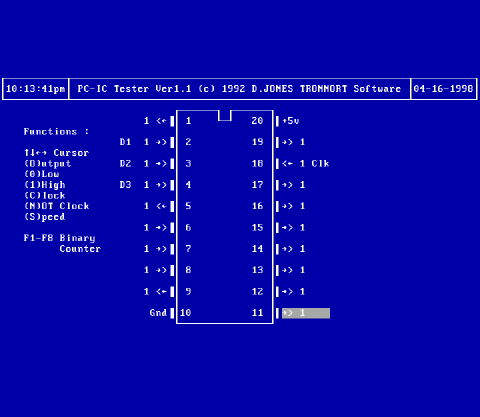
- Tronnort software 14 pin chip analyzer
- TRON - Trace On
- eCommerce ruined the need for chip harvesting
- RPi 3 with PoE video
- PoE uses 48V
- Official explanation (might not be right?)
- Dave just posted the video from the 2nd EEVblog meetup
- Indiana Jones in the bunker
- Solar Observatory, white sands
- Carl Sagan - Contact
- Yasuka Maezawa is taking 8 artists to the moon with him on the SpaceX BFR
- Cody wants to go
Transcript
Chris Gammell: This is The Amp Hour Podcast. Released September 23rd, 2018. Episode 408. TronArt Software Rises Again.
Dave Jones: Welcome to the Amp Hour. I'm Dave Jones from the EEV Blog.
Dave Jones: And I'm Dave Jones of the EEV Blog.
Chris Gammell: What?
Dave Jones: Didn't you get your identity stolen? Didn't I see that online?
Chris Gammell: Oh, yeah. I did. Damn. I did get my identity stolen.
Dave Jones: That was quick. I bought it. I bought it.
Chris Gammell: You bought it on the dark web.
Dave Jones: I'd like to make a return, please. Are there refunds on this one? Oh, man.
Dave Jones: Have you ever had your identity stolen? Well, no, not my identity, but like your personal.
Dave Jones: Yeah, some of your info, right? I mean, like, I think.
Dave Jones: Yeah, but some. But have you ever had enough stolen in one go that it could be used to full-on identity theft?
Dave Jones: Like, did anyone open accounts or anything? No.
Dave Jones: No, no, no, no. No, it hasn't happened. It most likely won't. But, you know, but technically there was enough stolen for them to do that. So.
Dave Jones: Yeah, that sucks.
Dave Jones: You know, there's always been breaches and stuff where your email and password are hacked and stuff like that. Yeah.
Dave Jones: Yeah. You just got to depend on having enough people out there in the world that you're the not the likely target. Right. Yep. Yeah.
Dave Jones: I think I'd have an easy time actually proving who I am. So, you know. Yeah.
Dave Jones: Like, they'd have to do like a. I'm Dave Jones and my voice is my password. My voice is my passport.
Dave Jones: Please verify me.
Dave Jones: Is that what it is? Yeah.
Chris Gammell: That's the exact phrase. Oh, I was talking to sneakers.
Dave Jones: I was hanging out with Jason Huggins today and he said he showed that to his 12-year-old who loved sneakers. And I was like, hell yeah. That's a great movie. I got to rewatch that.
Dave Jones: Actually, yes, it is. It is very PG. Like, is it? I think so, yeah. I assume it's rated PG. I don't remember any swearing in or any other. No one gets killed. No one gets, you know. Yeah.
Dave Jones: It's pretty tame on those side of things. Yeah. Yeah. And it's like, you know, it's actual like some security. It's not the best movie, of course. No, of course. But it's good. I enjoy it. It's better than Hackers, I think.
Chris Gammell: Oh, wow. Hackers never held up to begin with. Yeah, that's true. That's true. Hack the planet.
Dave Jones: And Jolie to Jolie is, you know. Yeah. Yeah. Yeah. It's a classic in its own category, you know.
Dave Jones: It's even got Penn Jillette in it.
Dave Jones: Yeah, that's right. That's right. Yeah. He's the computer operator. Yeah.
Dave Jones: Yeah. Yeah. That's right. Have to hack the Gibson. Apparently, he's been. Everyone just asks you. Everywhere he goes, everyone asks him to. You know, everyone mentions the Gibson.
Dave Jones: Not only this magic stuff. It's just the Gibson stuff. No, no.
Chris Gammell: Exactly. Yeah. The Gibson stuff. Sneakers. Yeah. That'd be good.
Dave Jones: Yeah. There you go.
Dave Jones: Yes. For those who don't know. Yeah. It's a hacker movie where they steal. Well, no. They didn't steal his identity. He had to form a new identity because he was a hacker. Because he did some hacking stuff back in the day. And they found him out. Yeah. Well, the mafia found him out. His ex-mate. Oh, no. I won't ruin it. Spoiler alert. Anyway. Anyway, it's very good. It's very good. Yep.
Dave Jones: Well, that's nothing we're doing. I mean, I guess I go to security conferences. You don't really do that stuff. I don't really know what I'm doing when I go there.
Dave Jones: Well, there's nothing here. Like, I'd go to this shit if it was actually here. Oh, that's a good point. What am I going to do? Fly to America? Do I go to a conference for a day? You know? Yeah.
Dave Jones: Yeah, man.
Dave Jones: I mean, sure.
Dave Jones: You'll get forward. Forward enough eventually. That's what I think.
Dave Jones: 40 hours of travel for an eight-hour conference. That's right. For a one-day conference. Yeah, it makes sense.
Dave Jones: Yep. Yep.
Dave Jones: Yep.
Dave Jones: Speaking of conferences, I've got a couple coming up I wanted to mention. Next week, I will be at Open Hardware Summit. I will actually be hanging out with former guests. Prior to that, I'll be hanging out with former guests and actual hacker, Colin O'Flynn. That's next week. But then I'll be down in Boston at Open Hardware Summit. So, looking forward to seeing people there. And then I just found out I will be going to Hackaday Supercon, which is in early November. And I'll be giving a talk there about... What was it? I have a talk title here somewhere.
Dave Jones: It's completely riveting, folks. Yes, yes.
Dave Jones: Improve your circuit toolbox. Simple designs that will save your next product. So, things that are like... You know, things that are like protection circuits and just indicator LEDs and simple stuff like that. But just having a toolbox of stuff because we all need that. You know? I'm sure you have circuits like that too. Yeah.
Dave Jones: Absolutely.
Dave Jones: Yeah, yeah.
Dave Jones: So, this is your former conference?
Dave Jones: Yeah, the one I helped set up. I helped organize it in years past.
Dave Jones: And now he has to beg to go, folks. That's right. Yeah.
Dave Jones: It was like, yeah, I've been accepted.
Dave Jones: I've been accepted.
Chris Gammell: Please let me in.
Dave Jones: Yeah. You know, got to keep the world of rest of where you're going to be or else you can't be sad when nobody's like, oh, I didn't know you were there. You know? I think it's actually important. You got to like kind of let people know before you're going to be there or else, you know, you have no legs to stand on.
Dave Jones: Right.
Dave Jones: I started... I'm going to hopefully keep brainstorming new things on my blog. But I actually wrote a blog post about the... Oh, yeah.
Dave Jones: Text blog post.
Dave Jones: I know. Right.
Dave Jones: Wow. Old school.
Dave Jones: As old school as sneakers. Yes, that's right. That's right. Yeah. The humble indicator LED. So, I wrote about that. So, if you want to read about LEDs, yeah, riveting. It's riveting.
Speaker ?: Woo!
Dave Jones: Can we talk about Mike's lead flasher? Oh, I see. Have you seen his video?
Dave Jones: I didn't watch the video yet. I just saw the slide. Well, it's only 30 seconds long. Okay. Okay. But it's very tiny. So, what was it?
Dave Jones: Well, he says, yeah, the world's smallest lead flasher. Have they got that project again? Have they? Has it been a year since the last lead flasher project?
Dave Jones: Are you talking about the blinking light contest?
Dave Jones: The blinking light contest. Yeah. Did he do it for that? I don't know. Or is it just anyway? He made it for Maker Faire.
Dave Jones: I know that Macrofab was doing an LED contest as well. I'm not sure which one it was for, though.
Dave Jones: Right. Okay. I didn't know. Anyway, he's got to show it off at Maker Faire. Yeah, the world's smallest blinking lead. And basically, all it is is a ceramic. These are quite nice. A ceramic super cap. Oh. Yeah. Yeah. Probably a, what is it? Epcos or a, uh, Taiko. I don't know how to pronounce it. I never know how to pronounce it. Taiko Yearden or something. Oh, oh. Brand. Anyway, they make these little ceramic super caps, which look like crystal oscillators. You know, the little five by seven ceramic oscillators that we're used to. Yeah. Right? Yeah. It looks basically, you know, similar sort of ceramic package to them, but it's like got a 10,000 mic in there of, you know, super cap. Very nice. Little surface mount job.
Dave Jones: So just for like really, really long blink delay or just for charge storage?
Dave Jones: Oh, for really long blink delay. No, for, um, uh, no, for charge storage for like a CMOS battery backup and stuff like that in our products. But so instead of using a battery or a, or a more traditional super cap, which is in a, you know, a leaded through, you know, through hole, you know, type round circular package and stuff like that. This is just a 1206 compatible, uh, you know, reflow compatible, uh, pick and place machine compatible. Oh, nice. Okay. Yeah. So you just drop it in as one of the other surface mount parts and Bob's your uncle, you know? Great. Yeah. Very nice.
Dave Jones: Yeah.
Dave Jones: So, yeah, these are very nice little parts.
Dave Jones: And, uh, so to go back to what I was saying, I was saying how Mike was using it, not necessarily how most people use it.
Dave Jones: Well, it's, it's a physical, well, he's, the whole thing's about physical implementation. It's got nothing to do with the circuit. Like, you know, it's the physical thing. So he's got that, that, that crystal, you know, I don't, a couple of millimeters by a couple of millimeters, right? It's like a 12, not a 1206, but a, you know, a 1210 or an 1812 package or something. And then on top of that, he's put a little five pin, uh, SOT 23 micro of some description. I don't know what. And then a bypass cap and a, um, or a type. Yeah. No, it'd just be probably a bypass cap. And then a, um, lead, a little, you know, 0402 lead or something. And it's all like packaged in this little cube. So it just sort of fits, sits on the end of his thumb. It's kind of cool. Yeah.
Dave Jones: You know, I was introduced to, uh, so, so, uh, people who were at DEF CON, uh, may have seen my, my little add on badge thingy, little, it looks like a video camera. Uh, and it was meant to be like a, uh, you know, my getting to Blinky, right? Basically I'd done this five, five, five circuit, whatever, all these times. And basically I just worked on the art and I threw the, the circuit on the back, not really looking at it. Get it back from the fab. Doesn't work at all. Turns out it just hooked up the schematic completely wrong. Cause I didn't look at it. Right. So that was my, that was my V zero. And I was like, Oh, I'm going to throw out like a hundred boards. And I didn't want to do that. And then someone told me they actually make LEDs with Blinkies, the, with just a blinking circuit internal to it. So it's an 060, it's an 0603. No, maybe 0605. What?
Dave Jones: You do realize you're about maybe 35 years too late on that news.
Dave Jones: Oh yeah, of course. I'm not saying this because it's news. I'm saying this because it was news to me and maybe, maybe news to people listening. Sure. Yeah.
Dave Jones: Right. They've been around since, you know, I was a kid, little flashing. Yeah, exactly.
Dave Jones: That's how they make like super cheap toys and everything. Right. It's like, yeah, yeah, exactly. So, but just in case people hadn't, hadn't heard about them. So I don't know.
Dave Jones: Yeah. So the whole idea is that, you know, the standard five millimeter, you know, leaded lead package, right. What are they? I never remember the official package designation. What is it? Like L1 or something or L3 or something. I don't know. Anyway, they do have a, they do have a name. It's not just five millimeter lead package. There is some description for it anyway. Official looking thing, which nobody ever uses, I guess. Anyway, I'm sure you'd find on DigiKey. Oh, speaking of which, remind me to segue into DigiKey straight after this. I won't go off on tangent now. And yeah, so they made these like, you know, the standard five millimeter ones back in, probably back in the seventies was the first one. And don't quote me on that, but if not early eighties. And yeah, so you could, once again, for your panel indication or something, you know, if you wanted it like a lead, which was like a warning indicator or something like that, and you want it, and you didn't want it to just light up, you wanted it to flash, but you didn't want to build that whole thing. Put a driver circuit. Yeah. Put a triple five. You didn't need any customization. Right, right, right. Yeah. All that, you know, there were no little, you know, 10 cent micros back then that you could just whack it in and do the job. Right. You had to build up, you know, a triple five timer and all the parts around and everything else. Pay in the ass. Right. Yeah. So yeah. So you just drop in these little. Yeah.
Speaker ?: So you just drop in these little.
Dave Jones: Which they probably put on the circuit anyways, right? Yeah.
Dave Jones: It's basically implementing that on silicon.
Dave Jones: It's doing that on silicon and you could just drop in this lead into any existing thing and it'd work and it'll flash instead of stay on. And that was great. Yeah.
Dave Jones: I just never, I'd never heard about that because I don't know when I would have come across it, you know? So some people showed me about it and they're like, yeah, it comes in like 0603, 0805 too. So I was like, oh, great. Tiny. No problems.
Dave Jones: But that's cheating, right? So you could whack one of those on top of a super cap and that's it. Yeah. Right. That's the entire. Yeah.
Dave Jones: Yeah. It's a little more boring. But yeah, I was thinking about that as well because that's the same kit that I started selling. So I started basically the video. So I did that whole thing for an in-person KaiCat tutorial. And so I couldn't use a not working circuit. Had to redo it. Right. And yeah. Yeah. So I did finally, I started selling that kit and there'll be some videos coming out about that in the near future. Looking forward to that. Yeah. Yeah. And we could talk more about the selling stuff, but you wanted to talk about DigiKey. What about DigiKey?
Dave Jones: DigiKey. I just last night, I just tweeted my excitement of this life-changing stuff for a nerd. You know how DigiKey. Who uses DigiKey, right? Right. Yeah. Like, I don't know how long they've had this, but I'm sure it wasn't there last time I used DigiKey and now it is. You know how DigiKey, you go to the website, you know, and you're doing your parametric search and they've got all the 20 different fields. Normally that's horizontal across the screen and you've got to drag the bar across, right? To see the other fields. Well, now it's all vertical and you don't have to do that anymore. Oh.
Dave Jones: I'm just going to say, Dave, when I worked on stuff like this, you already didn't get very excited about it. I'm just saying. Well, okay.
Dave Jones: When you work for the man doing this sort of stuff.
Dave Jones: I'm just, yeah, yeah. You're right.
Dave Jones: But I mean, come on.
Dave Jones: Anyway, I just thought it was really annoying. Oh, actually, the bar is still there. The horizontal scroll bar is still there, but it doesn't do anything. That's a bug. It wasn't at home last night. I think it's probably because they're probably seeing more people going mobile.
Dave Jones: I personally don't do it, but if you think about doing that on mobile, it's got to be
Dave Jones: kind of a... Yeah, something like that. Jeez, you wouldn't want to do that on a mobile. You wouldn't want to be searching for parametric parts and stuff.
Dave Jones: There's certain electronic sites I would just completely avoid on a phone.
Dave Jones: Almost all of it I'd completely avoid on a phone.
Dave Jones: Yeah. But I'm sure there's some legit reasons for it. It's such a shit form factor. You know, and some of the distributors are doing app thingies, I guess. Some people, like my buddy, there's a barcode scanner app you can use to reorder parts. That's kind of cool. Yeah, that's all right. But again, that's like on the bench kind of thing.
Dave Jones: Right.
Dave Jones: Yeah. It's not every day.
Dave Jones: But still, you can't do this. There's just so many parameters and stuff. When you're searching for parts, that's what you're doing. You're doing parametric search virtually every time.
Dave Jones: Yeah. Yeah, definitely. And that is a skill unto itself, right?
Dave Jones: Yeah. So they could write an app, right? It could be the world's best app, the greatest user interface. It's still going to be shit because it just has to throw so much data at you. And you've just got it. Nothing beats real estate, right? To whack that on a big screen. And yeah. Yeah.
Dave Jones: I mean, if it got it right, like, well, like, say op amps, right? So you and I, if you're doing video work and I'm doing, like, precision analog work, we have very, very different requirements. However, we're starting from the same spot. And so, like, how do you deal with that? It's just a butt ton of data. It's unbelievable.
Dave Jones: Can I have one complaint about this? Sure.
Dave Jones: Sure. Just one?
Dave Jones: Is that I just realized, well, it didn't. Well, because I was doing it at home last night and I've got standard 1920 by 1080 full HD monitors at home. Oh, yeah. Right? Whereas here I've got a full HD, a 2K and a 4K monitor. And I'm looking at this on my 2K monitor now. Yeah. Looking at this on my 2K monitor and it's not the full width of the screen. So they're actually doing the tabloid format in the middle.
Dave Jones: Oh, okay.
Dave Jones: So they're wasting the space on the side.
Dave Jones: You just got to zoom way in and then the text will be huge, you know? Then it'll help your old eyes.
Dave Jones: And then you have to scroll more.
Dave Jones: And then you don't need to wear your glasses, you know? Right.
Dave Jones: I don't have to wear my glasses.
Dave Jones: Unbelievable. Yeah.
Chris Gammell: Yeah.
Dave Jones: So, yeah. Anyway, how many decades did it take them to...
Dave Jones: Yeah, that has been similar for a long time. Kudos. Hey, change is good and it also gives us things to complain about later. So, you know. Cool. Works out well for the amp hour.
Dave Jones: I wonder how many people will complain about that. I think it's better. But there will just be people who you guys know. I think it's worse. I use DigiKey every day. Yeah. That's always the problem. I just can't handle this. I just can't handle this improvement.
Dave Jones: I think people... Anytime there's a change, it's like you got to get used to it. You got to get over the... You know, like anytime a CAD program changes or an online program changes. There's always an adjustment period. So, yeah. I am selling things. And I wanted to ask you about that a little bit. Because you are a master of commerce, of course. Don't. Don't do it? Don't do it. Yeah. Yeah. It's a world of hurt. Yeah. That's the thing. I mean, like what was... What would you estimate was your settling time into figuring it out? I mean, I know you have like a shipping person now. But like... Yeah. How long did it take you to figure it out?
Dave Jones: Oh, look. And it's never just once. You're always changing shit. I've gone through probably four or five different like e-commerce platforms, for example. Oh, yeah. That I've actually used. Because I'm always going, oh, this new one comes along. That looks a bit better. It might help me here. And then you switch over. And then you go, oh, well, you know, it's great here, but it's not so good there. Right. It's missing that feature. It's missing this feature. And you just keep switching for, you know, various reasons over the years. And I've, yeah. I think I've used at least four. Oh, wow. Maybe five.
Dave Jones: Okay.
Dave Jones: Different platforms. And then I'm shipping between, changing between shipping systems and, you know, like couriers and their platforms are changing all the time. I've got to change with it. And so it's not just a matter of doing it once and you're set for the next five years.
Dave Jones: So it's not six months and then you're settled. It's forever.
Dave Jones: No, no. I would bank on having to completely change a system every 18 months maybe. It's like the Moore's law of e-commerce. Yep. Okay. And unless you went for like a completely, you know, roll your own, you know, you buy one of the platforms, you customize it for yourself. No. But if you did do that, then, well, you could keep that going for a lot longer.
Dave Jones: Yeah, that's true.
Dave Jones: Yeah.
Dave Jones: Yeah. It's interesting. So I started selling on Tindy, which is something I've known about before, but I've never like pulled the trigger on it.
Dave Jones: Yeah, I've never sold it. It was pretty easy. I don't think I've ever bought anything on Tindy. I'm not sure I have.
Dave Jones: I think two weeks ago we talked about that USB-C Explorer board that former guest Jason Sarandolo was selling on there. Yes, I remember. So yeah, we talk, I mean, like we talk about a lot of people that are selling on there and I was just hanging out with a couple guys today that sell on Tindy too. And like, you know, it's not, it's a good platform. It's, you know, it's some people just go on there and browse and, you know, buy. It's kind of like also like Alibaba as well. Not quite the same level, right? A little bit more makery than just straight stuff.
Dave Jones: So why would you use Tindy over eBay, for example?
Dave Jones: Mostly if some things are only on Tindy, I guess that's probably it. And usually if you're Googling for something and you, that's why, you know. I don't know about geographic preferences. So I think like in Australia, I'm not sure where you, like when you're buying stuff on eBay, you're usually buying stuff from China or you're buying stuff from Australia or what? Oh, buys. Yeah. I'm surprised at that. So like some of the people in the badge life community, like they, you know, people making badges, they kind of go all over the place, AliExpress, eBay, just wherever's cheapest. It's like that whole, it's really bargain hunting type stuff, you know. Sure. And to be honest, I'm always terrified of that stuff and I just go distributor. I don't usually stray outside of it.
Dave Jones: See, no, I am doing more and more AliExpress stuff. Really? Okay. Like, yo, yeah. Why is that? Yeah, I'm like, I don't know. Like they're just cheap and there's tons of stuff on there.
Dave Jones: So it's just been working out though each time? Like I think that's-
Dave Jones: It's been working out each time. I've had no issues in the platform. It took me a bit of a thing to get my credit card verified on there and stuff. But once I did, it just works. So yeah, I've been, you know.
Dave Jones: So like reels of components though or like what kind of stuff are you buying on there?
Dave Jones: Oh, we've bought parts and not huge reels, but I bought a tray of chips on there. Okay. You know, and you know, just like other more obscure, hard to find parts, a lot of the like little modules and things are on there. Yeah, that's a big one. So I'm after a little, you know, DC to DC converter brick or something like that. Like that's where, that's the first place I'm going to start looking. Yep.
Dave Jones: Yep.
Dave Jones: You know, so yeah, it's huge.
Dave Jones: Yeah. I mean, and that very easily could have been an eBay in the past and it might be a Tindy. It might be other things like that. I mean, it might be a DigiKey or Mauser.
Dave Jones: Well, that would have been, that would have traditionally been a DigiKey or Mauser. Like I'm still doing your DigiKeys and Mauses and Farnells, right? Yeah. But like if I know, like, like if I want like a guaranteed no one part, right? But if I'm going, oh, I just need the cheapest. Right. You're like trying something out. You want to just, yeah.
Dave Jones: Yeah.
Dave Jones: It's like you're shopping, right? I mean, like it's. Yeah, that's right. Yeah. It's tough.
Dave Jones: And I like their shipping options, right? Because they've almost all the sellers have. Yeah. Almost all the sellers have the shipping option from free, right? Which is, you know, come. Oh, like 30 days later. Maybe in the next two months if you're lucky. You know, but it's free, right? So if you're not in a hurry, right? It costs you an absolute pittance. But they've also got DHL. They've got reasonable price DHL options. And I've got the DHL guy coming here every day. Oh, yeah. Right? And it's like, yeah, that just like all of them just have these comprehensive. And there's like three or four different postage tier options you can choose from. And it's just great. Yeah. Love it.
Dave Jones: No customs issues? Nothing like that?
Dave Jones: No. No. Because it's coming via direct courier.
Dave Jones: I don't know what that means. Sorry. Like so versus what's the other option?
Dave Jones: It's a door-to-door. Well, stuff like DHL, FedEx, and all those, right? Their full service carrier is what's called a door-to-door service, right? So they pick it up from there and they deliver it straight here. There's no middleman. It doesn't get handed off to anyone else, right?
Dave Jones: But how does that affect customs? That's what I mean.
Dave Jones: Oh, well, no. You will get hit with customs if it's over a threshold, right? In fact, you're guaranteed. By using that door-to-door service, you're guaranteed to get hit with customs, right, if it's over the threshold because those companies will do that. But most of the stuff is under a threshold. And the – well, it's not – here it's not too big an option, but they have started charging GST locally now. Oh, yeah. Because Australia changed their GST laws.
Dave Jones: Got it.
Dave Jones: So goods and services tax. Anyway, it's –
Dave Jones: Yeah, I mean, that stuff will be regional. I just meant like if it's getting held up in customs or stuff like that. So you're just saying that because it's going courier –
Dave Jones: No, it bypasses – like DHL – well, it doesn't bypass customs. Like DHL and FedEx and all the other couriers, yes, they have their own customs people do that, right? So they have their own clearance systems. Like it doesn't actually go to a government customs agent or a government customs clearinghouse first, right? So it's – yeah, it's different. Okay.
Dave Jones: So it's not going to be stuck in a port, that kind of thing. No, no. No, that's right. I've had a set of boards got held up. I had DHL shipped from China, and they got held up for like a day. And that's – I mean, that's not that bad. I've heard stories of things being held up for weeks, you know. Oh, yeah, yeah. That's common.
Dave Jones: Anyway, I just like the various postage options on there. If you want it within a couple of days, you choose the courier option. If not, get it cheap.
Dave Jones: I think it is kind of the – it goes back to my theory of hardware people as cheapskates, right? We don't have to be cheapskates, but because we need to buy stuff to not just service the products that we've already designed, but also the potential products in the future, we're bargain hunting. You know, like you don't necessarily – you know, like there's no premium brands. Like, I mean, aside from like maybe chip types where you know you're going to be paying more because of different functions. Like you're saying, like a 12 to 5 volt DC to DC converter, like unless you have some very specific noise requirements, it's – like who cares? Yeah, right. No, if it's just a one-off project or something. The one that's reliable and maybe has a common footprint that you could plug in multiple places, that's probably the best you can hope for. Or – and then everything else is going to be like incoming inspections when you actually order a lot of 100 or something.
Dave Jones: One – the downsides though of AliExpress is they often won't have it in stock.
Dave Jones: Ah.
Dave Jones: So it'll appear like they have it in stock, but then they'll say, you know, oh, it'll take five days to start shipping. Yeah. You know, because they've got to buy it from somewhere else. Oh, right, right, right. Unless they're the actual dealer and manufacturer themselves. Right. Which a lot of the times they are. Like those little – I've done a couple of videos on those little power supply modules, right? I keep forgetting the company name. You know, those all-in-one power supply panel mount things. Uh-huh.
Dave Jones: Uh-huh.
Dave Jones: Right? So you can buy the complete module. It's just a complete switch mode power supply in a little panel interface with the knob and everything. And you just stick it in a box and hook on an external power source to it. And you've got a complete bench power supply. Anyway, they design and manufacture those and they sell them on AliExpress. That's the official place to go get them.
Dave Jones: Oh, yeah. Right. You know?
Dave Jones: And there's lots of companies doing that now. Yeah. Like I just ordered a new – I just ordered a new inspection microscope, right?
Dave Jones: Uh-huh.
Dave Jones: Which I'm hoping will be the duck's guts, right? It'll beat my $5,000 Togano microscope. Mm-hmm. That's what I'm hoping. And I just ordered that from AliExpress, right? And the manufacturer of that, that's their official store is the AliExpress store. Yeah, yeah, yeah. So, yeah.
Dave Jones: Yeah, I was thinking – I've experienced that too. One other – the official store being on AliExpress was maybe like the Zion – like the gimbal that I have.
Dave Jones: Oh, yes. The orange – the – what is it? The orange pie that I've used before. Okay. One of those, you know, Raspberry Pi ripoffs with the all-winner chipset, their official store, AliExpress. Yeah. You know? There's just so many companies.
Dave Jones: Yeah, I think that's just the power of – I mean, Alibaba is just a monster. It's the 800-pound gorilla in China, so. Yep. Commerce.
Dave Jones: Anyway, I find myself using that just as much as mouse or a digi-key.
Dave Jones: Interesting.
Dave Jones: So, yeah.
Dave Jones: Trends. Yeah. We would love to hear from people if they're, you know, whatever you're using. Because that's the other thing. Like, if people have a new source, I'll be like, oh, I'll go check it out, right? And then I'll probably browse around and maybe buy something just to see what the flow is like and that kind of thing.
Dave Jones: Well, and it's the vibe too. Because if you asked me this two, three years ago, I would have said, oh, shit, AliExpress, that's dodgy as hell. No way. Yeah. Like, I'm just not getting a good vibe from there. Like, no way I'm handing over my credit card number to that dodgy-looking Chinese site. Right. You know, but you slowly build up confidence. Yeah, that's true. In it. And now, yeah.
Dave Jones: And also, there's stuff and we like stuff. That's the thing.
Dave Jones: Our shallow first world lies revolve around our stuff.
Dave Jones: I don't even think it's a first world. I think it's just, you know, just hardware, man. You know, like, what are we going to do if we don't have stuff to build with, you know?
Dave Jones: True.
Dave Jones: Can't make it all ourselves, though. Yeah. Speaking of, are you guys moving forward? Like, so two weeks ago, you just mentioned you and David are doing the custom, I guess, with power supplies, right? Yeah, yeah. With the BH curves and stuff?
Dave Jones: Yeah, yeah. We're doing that. We're still working on it.
Dave Jones: Nice.
Dave Jones: So, you know, it's a slight process. It's not, you know, we're designing our own switch mode converter and, yeah.
Dave Jones: Okay. Cool. It takes time. Making footprints, making CAD drawings, all that stuff. Yep.
Dave Jones: Well, no, David's obsessed with simulation. Oh, got it, got it. Simulation world, you know. I'm just going to build it, you know. Yeah.
Dave Jones: Just build it. I'm there, too. Yeah.
Dave Jones: Yep.
Dave Jones: I wanted to bring up, so someone had been asking on Twitter about this, with CAD footprints and kind of like the legacy of how CAD footprints are specced. And I called it making, finding the centroid, but you were, what did you call it? Just the center point?
Dave Jones: The, yeah, the center point of the component.
Dave Jones: Yeah.
Dave Jones: Centroid, I don't know where you got that term from, but I kind of knew what you meant as soon as you said it. Yeah. I kind of implied that, yeah.
Dave Jones: I essentially, I think it's from the pick and place machine. I think that's what they call just the zero, zero on the part.
Dave Jones: There could be. I don't live in the pick and place world, so, yeah.
Dave Jones: I don't even.
Dave Jones: That could be the official term. Yeah. Yeah.
Dave Jones: But, you know, like, and so if people are not sure what we're talking about, basically when you go to look at a footprint that's specced on like a PDF data sheet, it will be, you know, so they'll give you the, say it's a eight pin SOIC style footprint, but maybe not exactly the same thing. They'll give you the length and the width of the, of the pad, right? That one's easy. But then they'll show you the distance between the center of the, of two of the pads from one pad to the next, but they won't necessarily call it out to the center of the part, the zero, zero of that part.
Dave Jones: See, that's the thing. I mean, yeah, it, I believe it is. Yes. The official term is centroid. Oh, it is. You are correct. Yeah. You should have it on the center of the component.
Dave Jones: Right. Because ultimately the pick and place machine is going to try and pick it up there, right?
Dave Jones: That is the driver. I mean, the whole driver behind designing a circuit board is to get it assembled. Yeah. Right. And if you put your, the, the other traditional point, of course, is your pin one. Yep. Right. People point it smack over the pin one pad. And that's like a lot of CAD packages will come with all their footprints like that as default.
Dave Jones: Oh, really? Oh, wow.
Dave Jones: Especially back in the day.
Dave Jones: Yeah. I used to make footprints like that. And then I started getting yelled at.
Dave Jones: Yeah. Yeah. Yeah. Exactly. Yeah. Yeah. Because then the pick and place people just have to program that they've just got to go in there and every single component they've, well, they've got to change the reference point, the centroid point. Yep. Right. And it's just, yeah, it's annoying for them. Because there's no way they can use that pin one marker. Right. That is useless to them. Right. Right. It's absolutely useless.
Dave Jones: Well, and you could potentially do that if every part was the same size, because then you would then offset the pick point from that, the same amount. Right. But because every part is not the same size, then it's like, okay.
Dave Jones: But here's the annoying thing, right? From a PCB designer's point of view, having the centroid in the center of the part is bloody annoying. Right. Because it's never like, because when you're placing your part, you've got a place snap grid. Right. So you've got two different snap grids, one for your traces, one for your parts. And you move your parts around and you'll whack it on there. But then the pins won't line up with your grid, with your routing grid. Yeah. And you've got to like snap to the pins. And like, it's just, you know, you don't get a warm fuzzy with that.
Dave Jones: Yeah.
Dave Jones: That's a good point. But you've got to live with it. Yeah. Right. So, yeah.
Dave Jones: Well, I think that a lot of...
Dave Jones: That's why traditionally all this was driven from the PCB layout point of view. So that's why pin one was always the reference. So that, you know, if you've got a 0.1 inch all through hole and 0.1 inch pitch, for example, then it was, you know, then your pin would end up right on the grid.
Dave Jones: Yep.
Dave Jones: And then all your other pins would automatically line up on the grid. And the same thing with surface mount. You know, if you've got 1.27 kilometers, you know, 50 thou. Surface mount SO packages, for example, you put the one pin down and then all your other pins would automatically be on the same grid.
Chris Gammell: Mm-hmm.
Dave Jones: But your pick and place machine is now driving everything. Yeah. That's a good point.
Dave Jones: The world has turned upside down. And that is my question, too, is like, why was this stuff specced like that in the first place? I had figured it was because of mechanical drawing standards, right? So, like, how mechanical components are specced. But it sounds like it's actually the pin one thing. No, no.
Dave Jones: It was entirely pick and place. Yeah. No, no, no. Sorry.
Dave Jones: The drawings, right? So the drawings are not referenced to the centroid. They are referenced to, you know, between pins.
Dave Jones: Oh, the drawings in the data sheets you're talking about.
Dave Jones: Yeah. Right, right, right. Yeah. Right. The package drawings. I have never seen a drawing, not never, I have rarely seen a drawing of a footprint, a suggested footprint layout that is referenced from the 0-0 of the center of the part. Right. Usually it's, you know, it shows a cross point, but it doesn't do anything to that. So here's a good example, like the ESP32 footprint. Yep. It shows the relative distance between the pads on the outside of this module, because it's a module, not an actual chip. So it's a module. And then it shows what looks like the center footprint pad, right? Like a thermal pad that's underneath the module.
Dave Jones: Right, yep.
Dave Jones: The center pad is offset. It's not in the center. Oh, it's not. Yeah.
Chris Gammell: So they will put the center in. I know. It's, yeah.
Dave Jones: It's really bad. I mean, like, I got it wrong the first time. Yeah, yeah. Well, I think I got it wrong the first time that someone clued me into it, and I quickly changed it before I sent it off for Fab. But, but like, you know, like you make these mental leaps that where you're like, oh, it looks like it's good. It looks like it's a center. But there was no drawing there. You know, there was no actual like, oh, well, there was no, like, if I was going to call something out, I would call out the center from the center point of that part where the pick and place machine should pick that thing up to the center of that thermal pad. I would think that'd be a very critical measurement. But from a, I think from a mechanical perspective, they don't care, right? You could do whatever you want. It's an open, open season, you know?
Dave Jones: Well, I, I just opened a random 7.4HC00 data sheet from Nexperia. What a shit name.
Dave Jones: That is, that is what NXP became, by the way. Yes.
Dave Jones: NXP. Yeah. It was Philips before that.
Dave Jones: You know, they paid a lot of money for that though. Like a lot, a lot. Yeah.
Dave Jones: They paid some bastard. Yeah. Like, you know, $100,000 to come up with that name. Yes, they did. Yeah. Yeah. Unbelievable. And it's got, sure enough, the center, the center of the chip, the physical center of the chip.
Dave Jones: It does? Where?
Dave Jones: Yes, it, yes, it does. It does have the center of the chip, but I don't see any measurements actually going out from that center though.
Dave Jones: You're talking about on page 9 of, 9 of 15? I'm thinking I'm looking at the same sheet.
Dave Jones: Oh, okay. No, 10 of 15. 10 of 15. Oh, yeah, 9. Yep, yep, yep.
Dave Jones: Okay. Yep.
Dave Jones: Yeah. It's got the center. It shows, it marks the center.
Dave Jones: Right. It marks the center. And I'll link this data sheet too so people can follow along if you're listening. Yeah.
Dave Jones: But it doesn't reference from that point though.
Dave Jones: No, exactly.
Dave Jones: It gives you the pin to pin dimensions. Right. And these tables are actually rather standardized and packages like Altium, like the Altium Import Wizard. Yep. The Altium Component Creation Wizard. Actually, all these like letters and stuff that they use are kind of standardized. And, you know, so if you see like a uppercase D, for example, then that will be, it should be the same in Altium as well. So you can enter the value in there and then your part creation wizard will actually create your footprint for you.
Dave Jones: Yeah.
Dave Jones: You know, so they're kind of standardized.
Dave Jones: Well, you know, I'm in the low cost region of Kaikad. Right. Yeah. Right. The wild west of part creation. But this is a big, so like people were listening like, why do I care about this? It's like, look, if you don't have a part librarian, right? Some people are lucky enough to have a person who does this for them in a company, right? Usually there's process around that because, you know, entering another part obviously costs more time in terms of checking and also then usually you start steadying up your supply chain through that person as well, blah, blah, blah, blah, blah. But if you don't have that person, like this, this is a huge thing. Like this is an investment that you make in your CAD program and your time in as an electronics designer, I think. Of course. Because that's something that you take with you from project to project to project. And once you find and verify a part works, then you, you're done. But yeah, it's.
Dave Jones: But how often do you find yourself reusing parts between projects? I find it's almost, it's hardly ever. Yeah, I might use this. I wouldn't even use the same processor each time. You know, I might use the same brand of processor, but I'm going to like. Yeah, it's true. You're going to have different requirements. Right? You know, I actually.
Dave Jones: I'd like to circle back to that at some point because I was, I was thinking about the open parts library and thinking about like, what, what's the, what's the, the project people could make with the open parts library? You know what I mean? Like it is like a lot of these common parts and, and we'll, we'll talk more about it. But yeah.
Dave Jones: Who's driving that again?
Dave Jones: That started from Seed Studio and then. I thought it was. Yeah. Yeah. So Seed Studio started that and then they kind of let it float for a while. And then Octopart took it on and they called it the common parts library. Right. And then more recently the, if people saw that DigiKey had released the KiCad library that was based on that. So it was like basically a thousand components that are common components. And it was pretty much a crossover with the open parts library.
Dave Jones: Does that come packaged with like the latest KiCad install or something? Does that?
Dave Jones: Which one?
Dave Jones: Well, some common parts library. Does it?
Dave Jones: Uh, no, uh, the, the libraries that are installed are just kind of like what's available. Like there's, there are library maintainers for, for KiCad. Right. But that's not.
Dave Jones: Why haven't they just officially included this common parts library?
Dave Jones: Uh, I think because of the breakout of stuff, right? So the common parts library includes like, you know, surface mount, resistors, capacitors, all types of passives. But then also commonly used op amps that are not spec'd that well. And so instead it's like, uh, because KiCad is broken out by footprint types. Right. So.
Dave Jones: And here's the inevitable problem. Everyone's got their own way of doing things. Every CAD package has their own preferred way of doing things. Everyone has their own requirements and there is no say everyone. This is one of the most common questions in the ECAD industry is, oh, why don't it? Why isn't there just one component library and everyone contributes parts to that? Oh my God. And then it's, it's the Holy Grail. That might, that my heartbeat, my heart rate just went up 10 beats per minute. Exactly. It just. I can't even imagine. Yeah. In, you know, utopia it works, but in the real world, it just, it just falls apart. Sorry.
Dave Jones: It's okay. I think, I think it's good that like, I think that sponsored things like this are good though. So like DigiKey did the DigiKey library. I have a video about that. Oh yeah. They're good. Showing people how to actually include it. Right. But like.
Dave Jones: But they're not the solution for everyone.
Dave Jones: Oh, definitely not. Right. And that is like, it is, it's just one library. It's just like, here's all the parts. It's a thousand parts, you know, like, and it's. Yeah, right. Micros are mixed in with resistors, you know what I mean? And so it's like, okay, well, that's not how I like to work personally, but that on its own is nice because it stores all the stuff internally to it. And it's a great starting place for people, I think.
Dave Jones: And then there's the knuckle down fist fight between those who want to, who believe in keeping component libraries and those who keep project libraries. I don't know what the difference is. Store your projects with your PCB file.
Dave Jones: Oh, this is another thing I talked about. Those people. On Twitter this week. Well, so like I had received a project that had basically locally stored footprints and schematic symbols, you know. Yes.
Dave Jones: And some people will only work like that. They will swear by it. And there's advantages and disadvantages to both ways. Right. If people don't know what we're talking about, when you create a project, you know, you create a PCB and a schematic, you, in most packages, I believe, you have the option to store all the footprints and all the schematic components and bundle it into that project file.
Dave Jones: Yeah.
Dave Jones: Right? So it's all self-contained so that you don't... Right.
Dave Jones: So Dave makes a file. He sends it to me. He makes a board. He sends me all the files for it. And then I open it up and it's just like, it's the exact same thing.
Dave Jones: It's the exact same thing. You don't have to rely on any third party library dependencies. Right. No includes. No pointers to anything. It's just open it and it works.
Dave Jones: Yeah. Right. Yeah. Did people go to the mat over this one? I didn't know that was...
Dave Jones: Oh, yeah. Oh, hell yeah.
Dave Jones: Oh, wow.
Dave Jones: Oh, yeah. No, this is probably the big differentiator.
Dave Jones: This is the SciTech Electronics mailing list. This is pages upon pages of vitriol.
Dave Jones: This is the line in the sand that people... Which side do you follow, Dave? ...will die over. I've done both. Like... No, no, see...
Dave Jones: I've died on the line.
Dave Jones: Exactly. I've sat on the fence. Well, because sometimes you go to a new company and they do it a certain way. Yeah. Right. Or you're working on somebody else's project and that's just... Well, you just keep using... You know, they had it all packaged into one, so that's how you keep working. You know, you're not going to... Most CAD tools will have a tool in them. If you've got one that's all embedded in the package, you will like... It'll be able to break out the components for you from that and then you can save them as separate library files. And you're usually not going to go to that effort. You just go, oh, well, you know, look, I'll just do it the way they did it.
Dave Jones: So, that is the exact scenario that I've been in recently. Right. Well, so here's the thing. So, if you wanted to... So, I had something where I had 20 of the same component on a board. Right?
Dave Jones: Right.
Dave Jones: But because it's stored locally, I could either go in and individually change each component or I could change the component it's referenced to. Yes. Right. And so, that's ultimately what it came from where I was like, I don't want to change each one of them individually. I want to just change it once and it updates all of them. And you couldn't do that. And so, I was like, oh, okay. Well, then I kind of dug in.
Dave Jones: Well, maybe you can't in KeyCAD, but that's something you can do in Altium. Okay. Sure. You can have the one part. In fact, that's how it works. You don't go and edit each individual part. You can have the one.
Dave Jones: Even if it's stored locally in the layout? Yeah, yeah. Okay.
Dave Jones: Yeah, because it basically has its own. It's basically still a library-based system, but it's just embedded in the project.
Dave Jones: Yeah.
Dave Jones: Yeah, it's like a local library, basically.
Dave Jones: Well, that could have been user error as well. It's very possible that that was the case.
Dave Jones: But either way, I found myself cleaning up.
Dave Jones: I was just doing a lot of cleanup as well.
Dave Jones: But sometimes, you do want to make just that one change to that one part.
Dave Jones: Oh, like the outlier of the 20? Yes.
Dave Jones: Like you're using 20 of the same part, but this part just happens to be right on the edge of the board. And you just want to shave a bit off the pad on just that one part.
Dave Jones: Right, right. Yeah, that one part's always tombstoning because of the heat of reflecting off something else on the board or something like that.
Dave Jones: Or you've got some other physical requirement or something like that. And you just don't have the luxury to spread your components out more or something like that. There's always some constraint. Yeah. And yeah, that's just like people will die on this hill, you know.
Dave Jones: That's fun.
Chris Gammell: Yep.
Dave Jones: Are you out there listening right now and dying internally? We don't care. It's a podcast. We can't hear you right now.
Dave Jones: But our comment section can. Come on. It's all care, no responsibility.
Dave Jones: Okay.
Dave Jones: We care or we'll pretend to care.
Dave Jones: But we'll do nothing to change our lot in life because of it.
Dave Jones: But you cannot argue that one is better than the other. Yeah. Like you just can't. Got it. You know. Under certain circumstances, you can. Like, you know, if you're in a large corporation, then really if you're using individual project libraries, you're doing it wrong.
Dave Jones: Yeah.
Dave Jones: Basically. Got it.
Dave Jones: Yeah.
Dave Jones: Yeah. I mean, like, because then each time you start a new thing, you got to go and pull in all the parts you need. Right. I'd say. Yeah. It depends too.
Dave Jones: And then you end up, you know, you've goofed where, you know, somebody goofed on some other project within the company. Oh, that's a good point. And then the result of that goof should make its way, flow onto all the other projects so that they can't make the same mistake again. Right. So then that's the advantage of having, you know, a company librarian and a database of approved parts. Yep. Right. Is that that part is approved. It's tested. We know that footprint's correct. Nobody swapped the pin on it. It worked because it worked in the previous project. Yeah. So you can simply reuse that approved part. And companies like IBM have been doing this since the, you know, the 50s and stuff like that. Right. They will have their own unique. Once a part is approved and signed off. Internal part numbers. Oh, man. It gets an internal company part number.
Chris Gammell: Yeah.
Dave Jones: And they will, you know, if you open up any bit of IBM gear or any bit of HP. HP used to do this. Yep. Right. Open up a HP gear. They will, because they order so many chips from the manufacturer, they get them custom silkscreen. Right. Yep. So they don't have the part number. They get the HP part number. It's a. Yeah.
Dave Jones: It's not bad until you're trying to replace a part on your board. You're trying to replace it.
Dave Jones: And it's a standard 7-4-HC-00. Exactly. Right. But it's got.
Dave Jones: But you don't know. Because it's got this HP part number. Right. Exactly. Right. Yeah. You need like a chip analyzer to actually figure out what it is.
Dave Jones: Yeah. Right.
Dave Jones: Oh, man. Yep.
Dave Jones: I did a chip analyzer once.
Dave Jones: Oh, yeah? Oh, cool.
Dave Jones: Yeah. Yeah. It's probably on one of my old websites somewhere. I wrote this software. Oh, I'll see if I can hang on.
Dave Jones: I'll see if I can. I think you may have mentioned that before. Was that like it. It wasn't a transistor tester, right? It was actually like. No, no. It was an IC tester. I've seen transistor testers where it was like. It was trying to figure out like which, you know, base collector emitter kind of stuff. It would basically run through different tests and do leakage analysis and all that stuff. But this is something different you're saying.
Dave Jones: Yeah, yeah. Here we go.
Dave Jones: Was it for like 14 pin dips or what?
Dave Jones: It's for dip packages. Yeah. Okay. And I'll send. I've got a photo of the old prototype and the software. I thought I was quite proud of the software. I thought the software was really jazzy. Here we go. How can I send this to you? It's coming your way. There you go. And yeah. I thought the software was quite. The classic.
Speaker ?: Yeah.
Dave Jones: The classic. The classic. 1992. Yes. 92 this was. Oh, man. And yeah.
Dave Jones: This is deep dark web here, folks.
Dave Jones: Yep. And that was like the first hacky. But it didn't even have a ZIF. Well, maybe it did have a ZIF socket, but I didn't have it in store. Wait. What is this? Because ZIF sockets were expensive back then. What?
Dave Jones: What is Tronort? That used to be my company name. Yes. Oh, man. And we have a new episode title. Tronort Software. Tronort Software rises again. Yes. Yep. Oh, man.
Dave Jones: Yep.
Dave Jones: Classic.
Dave Jones: If you want to know where that name came from. Yeah. Yeah. Yeah. It worked. Yeah. It was great.
Dave Jones: I do want to know where that name came from, Dave.
Dave Jones: Well, Tron. Do you know where Tron comes from?
Dave Jones: Like the movie?
Dave Jones: Oh, God. Like the movie? You young whippersnappers. Like the movie. Yes, it is, but it predates the movie.
Dave Jones: Got it.
Dave Jones: Right. Tron stands for trace on, which was an old command in BASIC. It was one of the, you know, trace on command. It was, you know. Anyway. It probably predates, you know, goes back to the Vax days or something like that, I'm sure. Anyway, it was a command. Tron was a command in BASIC. You know, trace on. It stood for. So you turn. It was basically software debugging. You know, you turn on debugging. Oh, okay.
Dave Jones: Trace. Got it. Yeah.
Dave Jones: Kind of thing. Yeah.
Dave Jones: Sure.
Dave Jones: And I liked perfect palindrones.
Dave Jones: Oh, it's the same backwards and forwards. I see it now.
Dave Jones: With the same number of letters. That's right. Of each letter. So that's why, that's the difference between a palindrome and a perfect palindrome. A perfect palindrome has the same number of each mirrored letter.
Dave Jones: So the Panama Canal one is not perfect because it has one in the middle?
Dave Jones: Something like that. Yes, that's right. It wouldn't be a perfect palindrome. Yep. Anyway, that's where that name came from.
Dave Jones: Okay.
Dave Jones: Yeah. Yep.
Dave Jones: It just rolls off the tongue, by the way. Tron or Tron. Right.
Dave Jones: Yeah. It was totally shit name, but I was like, you know, 13, 14 when I came up with it or something. So it's just kind of stuck. That's great, Dave. I love it. Yeah.
Dave Jones: That's awesome. Yep. So what did the tester do?
Dave Jones: Oh, it would automatically, it was fully automatic. So you would whack in your chip. You would whack in your digital chip on there and it would automatically search through the entire database of chips and figure out what the chip is.
Dave Jones: Oh, that's cool. Is it?
Dave Jones: That's assuming it worked. Assuming it worked. Right.
Dave Jones: It was standardized enough though that the pin 20 and pin 10 were standardized enough that you wouldn't be shorting stuff out.
Dave Jones: You had to tell it which pins, you know, were the, yeah. Oh, okay. Which pins were power. No, but no, it could automate. No, I think it could automatically even search that. Oh, cool. It could automatically apply different size power to different pins.
Dave Jones: Nice. And so it just plugged into actually like a computer and it went over like RS-232 or something.
Dave Jones: New fangled RS parallel port, dude. Oh, sorry. Hey, man. Yeah. Whatever.
Dave Jones: I'm sorry I'm younger than you.
Dave Jones: Serial port needs like a controller and shit, you know, to actually, you know, interpret serial commands and things. Oh, hell no.
Dave Jones: Sorry. Yep. Yeah. Okay. Parallel port. My bad. Parallel port. Good luck finding one of those these days.
Dave Jones: Yeah.
Dave Jones: Yeah.
Dave Jones: Anyway. Yeah. There you go. And I was quite proud of this. I thought that software was really groovy. You know, it had like, like it doesn't, you've only, only got the one screenshot of it there. But, you know, I thought it was like, there was a whole database behind it with all the different chips and it would automatically search or apply power and, you know, or you could manually test as well. I think it's showing manual mode there. It's showing manual, like clocking mode where you could go in and you could specify this pin's an input, this pin's an output. And I want to feed in a one or a zero and then it would notify it to display what the, or you feed in a clock, for example, and just feed in like a one hertz clock so you could see things happening and, you know, stuff like that. So, yeah. It was an IC tester. That's great, man. When, you know, they, they, they were a thing because ICs were expensive. So, if you wanted to desolder ICs from a board, you know, you would whack them in. So, you desold them from the board, you whack them in your IC tester. You could buy commercial IC testers and you'd whack them in there and make sure the chip works and then, yep, works. Okay, I'll put it in my component bins. Nice. And then, well, yeah, component bins. And then, well, yeah, the e-commerce revolution happened and, well, you know.
Dave Jones: You really, you blame the e-commerce revolution as killing, killing the, the pulling parts off the board thing?
Dave Jones: Well, yes, because chips were still, well, they weren't, they still weren't that expensive back then.
Dave Jones: Oh, so you're just saying the dropping value of chips. Okay.
Dave Jones: Yes, because the availability of chips, right? It was, it was all about availability. It wasn't, it wasn't really price, you know. Got it. It was availability.
Dave Jones: Got it. So, it's a scarcity, scarcity problem more than a.
Dave Jones: Yeah.
Dave Jones: Yeah, there was no internet. You couldn't just order a line and, you know, your big catalog and, you know, nobody had credit cards over the, you know, like buying stuff like that. You know, you had to have a corporate account back with DigiKey or Mouser. Sure, yeah. No, I didn't even know they existed back in the day because they were an American thing.
Dave Jones: Right. Right? Yeah. Shipping international would have been tough.
Dave Jones: You know, so, yeah, like we had Farnells here, for example, and, yeah, that was a thing. But they, but they, yes, they were expensive, very expensive. But, you know, you needed to set up, you had to be a business. Yeah. Right? You had to have a corporate account to, you know, with a freaking credit facility and all the rest of it to buy one chip from them. You know, it's, yeah.
Dave Jones: It's better. How about that?
Dave Jones: It's better now. It's much better. So, yeah. No, it changed everything. No, now that you can just go, you know, feed your credit card number in to the internet somewhere and parts just magically arrive. It changed everything.
Dave Jones: Yeah. Oh, man. It never, I mean, like, I had, I've ordered two sets of circuit boards in the past two days and they're just like, yeah, we're just getting your way. No problem. Yeah. It's great. I love it. It's awesome. Until it all blows up, of course. Right? Right. Just in time is a great concept until you, you know, when it stops working. Until lead times go out until 50 weeks, you know? Ugh. You know, that happened actually on, well, the thing I'm talking on right now. I had a, I have a new laptop and it's a beaut, but because of how it works, so basically the, the...
Dave Jones: You mean how it works? Don't they all work the same?
Dave Jones: The solid state drive and the RAM are soldered directly to the circuit board and it was a custom made, or it was a custom designed, custom spec product. And so they actually had to assemble the whole thing. So it took me four weeks to get it assembled.
Dave Jones: And that's still, you know, it's not bad. Oh, right. Oh, okay. Well, I think my Microsoft Surface is like that. I think if I opened that up, I wouldn't be able to, like, upgrade the solid state drive or whatever. Yep. I think it's, you know, well, you could, but you'd have to physically desolder chips on it.
Dave Jones: Right, right. You have to call up Lewis. Right. And hack it. You'd have to, yeah. You're like, hey, I got a job for you. Yeah. But yeah, I have my new, my new, I'm dual booting now. And so I have, I have a Windows side for, for video and 3D CAD and then a Linux side for troubleshooting and KiCAD and Audacity and everything else.
Dave Jones: So what size solid state drive did you get?
Dave Jones: 256 on that side of things.
Dave Jones: Right. Yeah. I just find 256 is enough to hold the operating system and every program I need to use. Yeah.
Dave Jones: At least.
Dave Jones: And then everything else like video files and all the other, you know, space hungry stuff just goes on external drives. Yeah.
Dave Jones: Yep. Exactly.
Dave Jones: So. Yeah. Yeah.
Dave Jones: So I am excited to have USB A ports again, although I'm now terrified of blowing them up. I don't know about you.
Dave Jones: Did you say USB A?
Dave Jones: USB type A? Yeah. So my last computer was a MacBook Pro. It only had USB type C connectors on it.
Dave Jones: Right.
Dave Jones: Like the.
Dave Jones: Oh, is it? Right. Yes. Traditionally USB plug. Yeah. Yeah. Right. Yeah. That's what I mean by type A. Right. Right. Yes. Of course. Yeah. I just.
Dave Jones: Yeah. What did you think I was saying?
Dave Jones: I didn't. No, I was just confused for a second.
Dave Jones: Oh, okay. Yeah. Yeah. Do you have a solution for that? So like, I was just thinking about like plugging in. Yeah. So I, I use like my analog discovery too. And I don't think that, that thing's protected on like current, but like also just dev boards and other stuff. Like you never know what you're going to be plugging in. Do you do anything for like current limiting or anything like that on?
Dave Jones: No, I just rely on the most, almost every USB port has overcurrent protection and stuff like that. So I just know. I just don't trust myself.
Dave Jones: That's the main thing. I trust the computer. I don't trust myself, you know?
Dave Jones: No, they've almost always got a USB protection chip in their poly fuse, you know? Yeah. So.
Dave Jones: But it's also pushing current the other way. You know what I mean? Like if I did something stupid, I don't know. I just, I don't, I don't trust anything.
Dave Jones: Speaking of which. Yeah. Did you see my Raspberry Pi hat video? Power over Ethernet video? Oh, we did actually.
Dave Jones: Yeah, I did watch that. Yeah. And so that was, what was wrong with that? It was, it's the newer, the newest version of Raspberry Pi 3, right?
Dave Jones: It's a new version of the Raspberry Pi 3 and it has support for power over Ethernet so that you can plug this hat on top of it, which they've now, now released the official power over Ethernet hat for Raspberry Pi. You buy it from them. It's the official, you know, one. And power over Ethernet, remind me, is 48 volts. Is that right? 48 volts. Yeah. Yeah. Well, it's actually, yeah, from 37 to 50 or something.
Dave Jones: Okay. Yeah. So kind of.
Dave Jones: But it's, but it's a 48 volt nominal.
Dave Jones: Okay. Okay. Yeah. I mean, it's interesting. I'm seeing, I'm seeing power over Ethernet more places now.
Dave Jones: There's a lot of people who hate it because the variability in the standards and stuff like that. And there's, you know.
Dave Jones: It is DC, right? It's 48 volt DC.
Dave Jones: It is 48 volts DC. Yeah. Yeah. Yeah. But you basically feed 48 volts DC up the clacker of the cable. Uh-huh. And, yeah. Because it's higher voltage, it can, you know, you can get a decent amount of power over that.
Dave Jones: Right.
Dave Jones: Right. And, yeah.
Dave Jones: Because you're going to be drawing less current, then you're probably going to convert it down and then, you know, you do that conversion.
Dave Jones: That's right. You can draw like 15 watts or something is like the minimum standard. Okay. That's not bad. Yeah. Yeah. Yeah. So it's a lot of power. Yeah.
Dave Jones: So what were you looking to use this for? Yeah.
Dave Jones: They just. Oh, no. So I wasn't going to use it for anything. I got quite a few emails. People saying, please check this out. It doesn't work. You know, they've released this new hat and everyone's complaining it doesn't work. Please investigate. So I rushed, ordered one.
Dave Jones: Uh-huh.
Dave Jones: And I investigated. And then I blew it up. So I had to. As one does. Yeah. So that abruptly stopped my investigation. Luckily, it happened right at the end where I was, you know, looking to finish up the video anyway. With a bang. And make my conclusions.
Chris Gammell: Boomtish. Yeah.
Dave Jones: Yeah. Yeah. And as it turns out, just after I uploaded my investigation video, Raspberry Pi came out with their official investigation explanation. Oh, okay. But we don't think it's correct.
Dave Jones: Oh. Who's we? This is like from foreign people and everything?
Dave Jones: This is foreign people. This is, you know, the community. The community. I don't think it's correct. The hive minds. Yeah. Because basically the explanation that Raspberry Pi gave, which seems quite reasonable and it could be an issue, but I think there's more than this issue here, is that when you plug in a USB device into the Raspberry Pi, there are charge, there are decoupling caps, bulk decoupling caps, after the USB protection device that's used on the Raspberry Pi. And they were taking a surge of current to charge the bulk capacitors. And that was causing the chip to go into overcurrent mode. And then the Raspberry Pi would instantly shut it down and would report that through the thing. But there's a lot of people who will say, well, it just happens when I don't plug anything in. It's just sitting there. And I saw this as well. When it was just sitting there doing nothing and all of a sudden you'd get the message, the overcurrent message. So it's not that.
Dave Jones: And this is the thing that you referenced, quote unquote, the thing was through the UI you're saying?
Dave Jones: Through the console interface, yeah. Got it. It'll actually log the error message from the USB. Okay. Yeah, yeah. Over the serial thing. So it had logged that. And it had logged that error message from the USB protection chip, apparently. So it just says overcurrent and it shuts down the port, right?
Dave Jones: So the same kind of thing where it's trying to protect itself, but it's getting what is assumed as a false positive in this case.
Dave Jones: Yes, that's right. But so they're claiming, oh, the bulk decoupling caps were caught charging up and causing the problem. But myself and others have said, no, it's happening. That could be one of the triggers for it, but it's not the only trigger. And I suspect, and some people have now started to confirm this, that it was just excess noise on the five-volt rail. Because I measured it at like 300 millivolts peak to peak, and that's enormous. Yeah, that's a lot. So there's some other subtle thing which is causing the USB chip to trigger because it's got a dirty house.
Dave Jones: It's like noise fuzzing the input, right? It's weird.
Dave Jones: Yeah. So it causes it, you know, because if you've got a noisy rail, especially on a five-volt logic rail, and you've got 300 millivolts of noise, that's enormous, right? So you don't know what your chip's going to do with that much crap on the rail.
Dave Jones: Do they say, is it just from the switching supply that the five-volt, is that noisy?
Dave Jones: Yeah, it comes from the 48-volts to five-volt switching converter.
Dave Jones: Oh, I got it.
Dave Jones: Yeah. So there's a few people now who have hacked their Raspberry Pi hat, and they put in a big LC filter in there, and they said, yep, that solves the problem. Yep. That's good. So it wasn't. So Raspberry Pi did their big investigation. It turns out, well, I don't think that's the case. I haven't followed it since then, but that was the last update.
Dave Jones: Okay.
Dave Jones: Anyway, so I'm not sure if they come back with another theory or not, but anyway.
Dave Jones: More updates if you join the EEVBlog forum right there. Forum. That's where it all happens. There is a reason to join right there. Yeah. You can see it all in real time.
Dave Jones: After we finish the show, in a couple of minutes, because we're over time, I'm going to release my meetup video.
Dave Jones: Oh, great. Okay.
Dave Jones: For the EEVBlog meetup. Nice. Yeah. People were showing off their projects and stuff like that. Awesome.
Dave Jones: I'm looking forward to seeing that. Yeah. That's always a good crowd.
Dave Jones: We had a few. We had a slew of guest advertisers at the event, which people will like.
Dave Jones: On purpose? Advertisers or what?
Dave Jones: Well, let's just say you have to watch the video. Got it.
Dave Jones: Okay. Oh, the teaser there. Yeah. Right. There we go.
Dave Jones: Yeah. Yeah. It's about 10 minutes in. If you want to jump to, I don't know, 10, 15 minutes in or something, you can see that. But yeah, so I got some footage of people showing off their projects and stuff they bought in. Yeah. You know, some people just bought in like an old glass battery from the 1930s, you know, just cool stuff like that, right? Right, right. You know. The junk collectors. And an old 1970s, you know, multimeter, you know, from the Australian army. Right, right. Really, you know, things like that.
Dave Jones: I was quoting Greg Charvat from last week's episode today. And it was, you have to make sure that your spouse or partner, they only see one out of every five pieces of junk you bring home. Right, yeah. Right. Yep. That's good advice. That's good advice. It really allows you to build up the store of stuff, you know, for that.
Dave Jones: Or just have your own cave somewhere as I do. There you go. Yeah, right. I don't bring stuff home anymore. It stays at the lab and she's happy with that.
Dave Jones: Yeah. Yeah. Especially with that huge ass Indiana Jones thing. Is that still around? Yeah, yeah.
Chris Gammell: That's still in my bunker.
Dave Jones: Oh, man. That thing is monstrous. It'll be a sad day when...
Dave Jones: You visited my bunker while you were here. That's right. Yeah, yeah, yeah. Yeah, yeah. That's right. Yeah. Yep. I've got in my hands right in front of me now, I've got the little rocket sled from Indiana Jones 4.
Dave Jones: That does not exist, actually, Dave.
Dave Jones: What?
Dave Jones: That Indiana Jones 4 does not exist to me. Much like... What?
Dave Jones: It's all right. People... Come on. You've got to admit the first act was pretty good.
Dave Jones: Nope. I don't have to admit anything. Nope.
Dave Jones: Really? Oh, no. You know, it's... Yeah, it's jumping shark.
Dave Jones: Last week, too. Greg brought up the prequels. What is going on in this show, Dave? Come on.
Dave Jones: No. No, everyone's bringing up the prequels. You want to know why? Because the new Star Wars movies are so shit that people are going, oh, actually, those are prequels that we hated. They're actually... They weren't too bad.
Dave Jones: So, it's just the lovely patina of time that really gives... Yep. That allows it to really look nice.
Dave Jones: Time heals all wounds.
Dave Jones: That's right.
Dave Jones: Time heals all wounds. I guess so.
Dave Jones: All right. Maybe I'll have to go back and watch number four, which you claim exists. Yes. I...
Dave Jones: Yeah, like, you know, the endings, you know, the triple agent bullshit, you know, and stuff like that, and the swinging through the jungle and stuff like... Yeah, that was crap.
Dave Jones: It's been long enough that I don't actually remember any of that stuff, so that's good. Okay. Yeah.
Dave Jones: All right. Yep. I can remember I went to the premiere of that, and I thought, well, that opening... The whole opening scene thing was just fantastic. It's just, you know, it was classic.
Dave Jones: Gotcha jazzed. Yeah. Yep. Yep.
Dave Jones: Oh, yeah. Yep. And then it kind of, you know, the middle of the movie's a bit meh, and then the ending, yeah, it jumps a shark.
Speaker ?: You know.
Dave Jones: And everyone makes the complaint, here we go, I'm going off in Indian... Because I'm an Indiana Jones fan.
Dave Jones: We know, yes, who are. We know you are. Yep.
Dave Jones: And everyone complains.
Dave Jones: Every time there's a break in our recording, Dave starts whistling the theme song, and it is not good, but you can just tell how much he loves that movie. Yep. Those movies.
Dave Jones: I often whistle it in my videos, teardown videos and stuff. And, yeah, everyone said, oh, the interdimensional aliens at the end, what a load of unrealistic garbage.
Dave Jones: Spoilers, by the way. Oh, yeah, well.
Dave Jones: What a load of, you know, unrealistic garbage, as opposed to the Shankara Stones and ripping the guy's heart out. Spoilers, Dave. Come on, man. And all the other crap that was in the other Indiana Jones movies. You've got to give me a break.
Dave Jones: Give me a break. Yep.
Dave Jones: It was actually more believable than the, you know, the bloody... I just like that Dave's really getting worked up about this.
Dave Jones: I really like that. Bloody oath.
Dave Jones: This is important for us nerds.
Dave Jones: That's great. You know? That's great.
Dave Jones: That's... I think the interdimensional aliens are more plausible than the bloody cup of Christ.
Dave Jones: Dave, is it...
Dave Jones: Give me a break. Speaking of interdimensional aliens...
Dave Jones: I was going to try and segue to this, too. Oh, that's awesome. Great.
Chris Gammell: I loved this.
Dave Jones: I was going to say, speaking of things that sound like it's out of a movie...
Chris Gammell: I was so obsessed with this, I had to know why.
Dave Jones: It was brilliant. The solar observatory.
Dave Jones: Wait.
Dave Jones: For those who don't know... What?
Dave Jones: Are we talking about different things? Oh, we're talking about different things. Oh, okay.
Dave Jones: Oh, what the hell were you going to say?
Dave Jones: I was going to talk about SpaceX. What are you talking about?
Dave Jones: Oh, okay. Yeah, I was going to... Okay, well, we'll talk about both. We'll extend an episode here of the Amp Hour.
Dave Jones: Yeah, right.
Dave Jones: Right? And... People tuned out.
Dave Jones: They tuned out when we started talking about footprints. Don't worry about that. All right. Anyway, so solar observatory. This sounds good. Yeah, I don't... Okay.
Dave Jones: You're letting me go. Okay. Did you hear about it?
Dave Jones: I did not, no.
Dave Jones: Oh, in New Mexico, just near Roswell, right? Just near where the Roswell thing happened. Okay. At the White Sands Missile Test Base, there's this solar observatory, right? It's been there since the 60s, and it monitors the sun. It's one of the world's biggest... Oh, wow. You know, solar observatories, right? Okay. One of the world's most important. The FBI shut it down. Oh. Mysteriously just shut it down, evacuated everyone. Wow. And they wouldn't tell anyone why. They wouldn't even tell the local sheriff why. It's just evacuated.
Dave Jones: Huh.
Dave Jones: Right? And so all the conspiracy theories start.
Dave Jones: Of course.
Dave Jones: Of course. And then, oh, they've discovered the sun's about to blow up. There's a massive solar flare that's going to kill us all. I don't think...
Dave Jones: I think you just see, like, FBI agents being like, all right, well, I'm just going to get drunk, and what's the big deal here?
Dave Jones: Right? And anyway, so this, like, for five days, seven days or something, before it started hitting, you know, it shut down, and then, like, three, four days later, it really started to hit the news. Yeah. And, yeah, and they still wouldn't tell anyone why this place was mysteriously abandoned, just for security reasons, they said. Right? That was the only official explanation. And then everyone started checking all the other solar observatories, and then the news started going around that. All these solar observatories around the world, they've all gone mysteriously offline, and, you know, which wasn't actually true. But anyway, it made a great story, right? It fueled the conspiracy. And then there was some blogger or something, some YouTuber, who took a photo of the sun or something, and they then saw all these alien spaceships, these motherships heading towards the sun. Oh, my God. And then this went, like, wildfire, right? And it's, like, it's fueling all this stuff, it's fueling the rumors, and the whole internet's going crazy. And I even did my own research on some stuff.
Dave Jones: Research. Research. Googling, Dave. It's called Googling.
Dave Jones: Googling. And I was actually ready to, like, go find a local solar observatory so I could go visit and actually look at the sun.
Dave Jones: I was ready to stare at the sun nonstop.
Dave Jones: Anyway, so I was ready to go on a field trip, you know. And then they, oh, and then to fuel it even more, some guy actually, some YouTuber, not of any note, but he is now, I guess, is that he decided, well, I'll just walk in there and start filming around. Oh, my God. So he just walked into this abandoned facility, like, they had roadblocked it, but there was no one there to stop him. So he decided he would just walk in there and start walking around with his camera and everything. Yeah, yeah. Brilliant. But it was, the place was completely abandoned. The houses, the people that live there in the houses are all boarded up and, like, it was all mysterious. And then he poked his camera through the window of the main facility there and right there, like, there was this trash can.
Dave Jones: Oh.
Dave Jones: Close. And X-Files Ultimate Access DVD was sitting on top of the trash can, purposely placed so that anyone who looked through with a camera would see it. And so that fueled the conspiracy. Oh, my God. It was all just a viral marketing campaign. Someone there was trying to warn us. Oh, yeah. Yeah, some employee there was trying to secretly warn us all that, you know, it was. Okay, Dave, punchline time.
Dave Jones: Punchline time.
Dave Jones: Anyway, this was great.
Dave Jones: Was there a punchline? Nothing.
Dave Jones: No, there wasn't. It all petered out. Well, no, I thought the leading theory was that the Chinese had installed secret monitoring equipment at the facility because the facility overlooks the top secret White Sands missile test base. Right? Which is where the U.S. test all their top secret weapons. So that was the most plausible theory. So we still don't know. Anyway, the employees have gone back and it's all like, oh, I wanted it to be aliens. Oh, man. It's just, anyway.
Dave Jones: In the second hour of the amp hour, it becomes a conspiracy hour.
Dave Jones: All right. It all petered out, you know. Just like Fox Mulder, I want to believe. Got it.
Dave Jones: Got it. Just for kicks. Doot.
Dave Jones: Doot. Doot. Doot.
Speaker ?: Doot.
Dave Jones: Doot. Doot.
Dave Jones: Doot. Doot. Doot. Yeah, it's a smoking man.
Dave Jones: Yeah.
Dave Jones: All right. Anyways. Did you ever watch the X-Files? I never did. Were you in X-Files? Oh, really? I am actually. You don't get my smoking man reference.
Dave Jones: No, I'm a big wimp about like anything even just like. What? I don't watch horror films. I don't watch anything with aliens in it. Really? I get freaked out real easy. Was. Yeah, yes. Very much so. Whatever.
Dave Jones: Anyway, let's quickly talk about SpaceX, shall we? Sure.
Dave Jones: I mean, they're basically just sending some Japanese billionaires going to the moon, apparently. In 2023. Well, no.
Dave Jones: Yeah, but it's not just him. It's not just him, right? Well, he's basically funding it. He's bought all the seats.
Dave Jones: I found out about this from Cody's B-Lab. Is that what he said? I don't know how you said.
Dave Jones: Yeah, I didn't actually see the announcement when it happened. It just snuck under my radar, and then people started tweeting about artists going to the moon. And I went, what?
Dave Jones: Right, right.
Dave Jones: You know? And sure enough, you check it out. And this guy bought, he's not an artist himself, but he supports artists. He's an art collector or something. And he made his billions in the fashion world or something. Anyway, so he basically, he's funding the rest of the development of the BFR, apparently. The Big F and Rocket. Yeah. And he's bought all the seats. I think six to eight seats, depending on the configuration of the ultimate configuration. Because they haven't finished designing it yet. Right? Right. Well, that's what's amazing to me.
Dave Jones: It's like 2023 is not that far away.
Dave Jones: No, it's not that far away at all. And he's bought all the seats. And he said, I will give a free seat to any artist who wants it.
Dave Jones: Well.
Dave Jones: And it's like, holy shit. This is worth hundreds of millions of dollars. And he'll just give it to you for free. Right. So he's going to send six to eight artists. Right. Oh, yeah. No, you've got to come back and be inspired and create an art that changes the world. Yeah, that's right. That kind of wank. Right. You know.
Dave Jones: And so Cody had proposed that a YouTuber was an artist. And yeah, that's how I found out about the whole thing.
Dave Jones: Oh, what? He was proposing himself? Yes, he was.
Dave Jones: He was saying YouTubers are artists and I should go to them. Oh, right. Okay. So that was a pitch.
Dave Jones: So everyone's jumping on board now. Everyone's, you know, jumping on Twitter. And like Scott Kelly, the famous US astronaut, he famously went on Twitter and said, hey, if you need someone with experience to go, because they didn't plan on sending astronauts, right? Trained astronauts. The computer will drive. Right? Yeah. If the navigation system fails, you know, whatever. You know, so he said, hey, you know, if you need someone with a bit of astronaut experience, I'll happily go. You know, I'll take the free seat.
Dave Jones: Nobody turns down a free space ticket, Dave.
Dave Jones: The free ones. And then there's a campaign to send Adam Savage. There's, you know, because he's like an artist.
Dave Jones: I don't think this is what people are thinking about when they think about artists. I think it's.
Dave Jones: No, but it's, no, but he's, I think, gave like seven categories of art that he would send. I'm just going to call it now.
Dave Jones: I'm going to make the joke now because so many other people are going to be making the jokes. Right. It's like the Jodie Foster, like, so beautiful. Should have sent a poet.
Chris Gammell: Oh, yes, of course. They should have sent a poet.
Dave Jones: Yeah. So now they are. Now they are. So I guarantee that is not the first time that joke was made, nor is it the last time. People should prepare themselves. That joke's going to be made a lot. I thought of that.
Dave Jones: Yep.
Dave Jones: Yep.
Dave Jones: So, so, but it's very similar to Contact, actually. Now we've got this trip and we've got all these, you know, if you've read the book. I have not read the book, no.
Dave Jones: By Carl Sagan. Oh, okay. Your son's namesake.
Dave Jones: Yes, yes, Carl Sagan. Yes. Yeah, absolutely. And they, the whole premise, it's different. The book is different than the movie. In the movie, they've only got one chair. Yeah. Right. Where one, one chair in the spaceship, which goes through the portal. Yep. You know, and, but in the book, it's actually, I believe it's five chairs, right? They've got five chairs. So all these countries are fighting, you know, and in the book, the, well, no, in the movie, too, they mentioned this. The Japanese gave up their chair so that they could get the, the systems integration contract, you know.
Dave Jones: Yeah. Yeah. Yeah.
Dave Jones: Yeah. Money tools, right?
Dave Jones: Yeah. Right. Anyway, so the five chairs, and now it's a similar thing, right? We've got these five, well, these six, at least six chairs. Yeah. There's a lot of, that are available, and like, everyone's going to be fighting over.
Dave Jones: Yeah, but for art, Dave. For art.
Dave Jones: Who wants to go? Yeah. Oh, for art. Yeah. But, but I think most people, it'd be hard to find people willing to risk their life. Maybe. To do that.
Dave Jones: I think that people sign up for that shit all the time. I think they'll chicken out eventually. I think that's.
Dave Jones: It's easy to say you're willing to die for it. It's easy to say, yeah. It's like the people who signed up for the Mars One thing. Right. You know, like everyone was signing up, right? I signed up. And it's like bullshit. You wouldn't have gone. Really?
Dave Jones: I signed up.
Dave Jones: Really? You signed up?
Dave Jones: Yeah, I would have chickened out. Come on.
Dave Jones: All right. Yeah, of course you would have.
Dave Jones: Yeah. I mean, yeah. Of course.
Dave Jones: I think I'd do it if I was childless. And, you know, in my 60s or something, I'd probably go. Yeah.
Dave Jones: Yeah.
Dave Jones: Yeah. Interesting. Definitely. I think we're. I wouldn't.
Dave Jones: I think we are in the generation where someone's going to have to make that choice for sure. Like the not coming back choice. Like, yeah. Yeah.
Dave Jones: Funny. Have you actually watched the announcement with Elon? And sorry, I don't know the guy's name.
Dave Jones: I can't pronounce it. I do not know his name. It's a Japanese name. Yeah.
Dave Jones: You know. Yep.
Dave Jones: No, I have not watched it.
Dave Jones: Anyway, I haven't watched it at all. But I watched, you know, sort of skipped through parts of it. And there was this part where Elon's going in his typical Elon fashion going, oh, maybe we'll send one first just to test it, like unmanned first. But I don't know. You know, it's like, like he wasn't sure if they were going to actually send one around the moon first as a trial run.
Dave Jones: Yeah.
Dave Jones: You know, so it's like. It's Meizawa.
Dave Jones: That is the guy's name.
Dave Jones: Meizawa. Yeah.
Dave Jones: Meizawa. Yeah.
Dave Jones: Meizawa. Yeah. Yep. And yeah, so I thought that was like, and the guy's just sitting there nodding. It's like, yeah, she'll be right. You know, it's like. Oh boy. We won't send them up untested.
Dave Jones: Yeah.
Dave Jones: But if you remember the Apollo mission, they didn't send them up tested.
Dave Jones: I do not remember the Apollo mission, but. See, yeah. No.
Dave Jones: The first manned Apollo one after the. Well, Apollo one didn't even get off the ground. The fire, of course, killed all three astronauts. And the first manned mission after that, they didn't like the first manned one. They just went for the moon.
Dave Jones: Yeah.
Dave Jones: That was the Apollo eight flight. They just went, screw it. The Russians are going to beat us. We're going like, it was supposed to be like a, like an orbital test flight, you know, to test out the various systems that have worked. And they went, no, let's just go for a break. We, we've never sent any, never sent a ship around the moon before, but let's just do it. And, and put humans in it, you know?
Dave Jones: Yeah. That's crazy.
Dave Jones: Let's just do it. And it worked. So.
Dave Jones: Yep.
Dave Jones: It's great.
Dave Jones: Space. Anyway. Space 2.0, man. We're, we're there or whatever 0.0 we're into. Yeah. It's a weird, it's weird times, weird times.
Chris Gammell: All right, man.
Dave Jones: Well, um, I'm going to do some terrestrial electronics now. Uh, I gotta get back to that, but I know, right?
Dave Jones: I'm, I'm going hunting for aliens.
Dave Jones: Yeah. Right. Right. These are definitely not zero G electronics I'm working on. So.
Dave Jones: All right, man.
Chris Gammell: We'll talk to you next week. Catch you next time.
Speaker ?: Bye. Bye. Bye. Bye. Bye. We'll be right back.
Archived Discussion (2)
Comments are closed. Archived from the original site.
Show archived discussion (2)Hide discussion
AliexpressCADFootprintKiCadLEDLibraryPower Over Ethernetraspberry piSneakersSolar ObservatorySupercapTron
Keep current
Every episode, plus the occasional job post, in your inbox.
I'm hoping Dave will share his experience with the inspection microscope he is getting from Aliexpress, I've been thinking of getting a new one myself.
Chris - Best of luck with your Tindie store. The advantage Tindie has over other places I've sold is that people go to Tindie looking for electronics type projects. Versus something like eBay where they have everything in the world.
On the topic of connecting to the USB on a laptop. I always use a USB hub when connecting a development board or a board that I've created to my laptop. My hope is that if something goes wrong it will kill the USB hub instead of my laptop. I did have a development board once that had been damaged and the hub just current limited and shut it off.