
#406 – Nerds In A Corner
Download episode · 85 MB
Also on Apple · Spotify · YouTube · RSS
Show Notes
- Dave had another EEVblog Meetup in Sydney
- 0:01
- It was part of Electronex
- 0:01
- He did a video with Gav about optics and polarization
- 0:02
- The important of bringing something to a meetup
- 0:05
- Talking about post offices
- 0:07
- Homebrew computer club
- 0:10
- Lightning talks
- 0:11
- IMTS
- 0:13
- Dave and David decided to roll their own modules
- 0:14
- Power bricks
- 0:16
- BH Curves
- 0:17
- Jury duty
- 0:17
- Portable power supply
- 0:20
- 5-10W
- 0:21
- Former guest Gareth was asking on Twitter about a similarly portable power supply
- 0:23
- Fo3rmer guest Jason Cerundulo has a new device out that helps illuminate the ins and outs of USB C
- 0:25
- USB PD standard
- 0:25
- The FUSB302B is a programmable USB Type-C Controller with PD
- 0:26
- Chris used a board by Ben Hencke (his company is ElectroMage) called the Pixelblaze 2. It's an ESP8266 based LED controller
- 0:29
- Ben Krasnow is back at it again with a video about etching PCBs onto plastics
- 0:33
- PWB
- 0:36
- Chemicals
- 0:37
- Dave saw a 3D printed PCB technology at the trade show called NanoDi
- 0:38
- https://www.youtube.com/watch?v=aLcdm6gB6eE
- 0:38
- Can't go through a reflow oven
- 0:40
- Targeting IP protection
- 0:41
- Chris answered a question on Twitter/Hacker News about milling PCBs: there are still very few cases where it makes sense. Though there are some!
- 0:43
- ElectronUpdated did a teardown/decap/explanation of ESP32
- 0:46
- FX260 calculator teardown by electronupdate
- 0:47
- Former guest David Kronstein made an "Electric Jet" called the Ikarus
- 0:50
- There are build instructions in case you want to make your own
- 0:53
- VTOL
- 0:55
- FlightTest
- 0:55
- Chris Anderson was on the show many years ago talking about DIY Drones (and what became 3D Robotics).
- 0:58
- GlobalFoundries stops all 7nm development
- 0:59
Transcript
Chris Gammell: This is The Amp Hour Podcast, released September 9th, 2018. Episode 406, Nerds in a Corner.
Dave Jones: Welcome to the Amp Hour. I'm Dave Jones from the EEV Blog.
Chris Gammell: And I'm Chris Gammell of Contextual Electronics.
Dave Jones: I am nerdly hungover.
Chris Gammell: Oh, yeah, right? I mean, you spent all that time, you know, you weren't drinking beers, but you were chatting about nerdy stuff all night, so that'll do it.
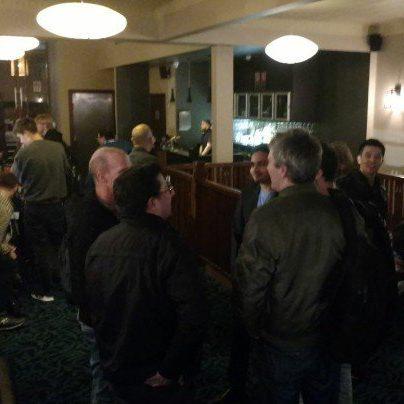
Dave Jones: Yeah, huge turnout at the EEV Blog. It was packed, standing room only.
Chris Gammell: That's great, man. Yeah. All right. Fantastic. So, same location as when I was there when we did the...
Dave Jones: It's so different. No, it's out near my place now because the electronics show was yesterday and today. Oh, right, right, right. So, I'm going there again today. Got it, got it. Yep, and so it was nearby after that, so that people, the idea was people go to the show and then mosey on over to the meetup. Yep.
Chris Gammell: That's great. So, how's the show? Well, first off, how's the show? And then I guess how was the meetup?
Dave Jones: Right. Well, I didn't see much of the show. I literally went to two stands because, like, you know... Well, I got there late, right, and yeah, one stand talking for an hour or two and then another stand talking for an hour or two and then I met up with someone and we had really cool stuff, so we went outside and shot, you know, a video of that. Oh, great. Okay, so there's going to be video coming of this too. There is video coming, yes. Great. Yes. Like, as in separate video, I'll do that. It's so interesting that... Yep.
Chris Gammell: Was there some of the previews that I saw on Twitter? Is that what this is or something different?
Dave Jones: Possibly, yes, yes. One of them. One of the, yeah, preview of one of the things. It has to do with optics and the polarization of light and stuff like that. Really, you know, not really electronics related unless you want to talk about fiber optics, which we did in the video. Okay, okay. Yeah, so that'll go up as a main channel video.
Chris Gammell: Awesome. All right, well, I'm looking forward to that.
Dave Jones: Just because it's fascinating.
Chris Gammell: Yeah, yeah, man. You got to get that curiosity going, you know? Exactly. Regardless. My channel's... Which is also what meetups are great for, you know? It is. For meeting new people, figuring out new areas to investigate and see what people are doing.
Dave Jones: One thing I kept hearing all night is, you know...
Chris Gammell: Where's Chris?
Dave Jones: Did you hear about what... Not mentioned once, although there was the odd Ampour T-shirt, but...
Chris Gammell: Okay, well, that's... Hoodie jumper. I'll take that as a... Right, as a placid. Yeah.
Dave Jones: They were all going, oh, did you see what so-and-so is working on and stuff like that? It's amazing. And, like, I just kept hearing that all night. You know, people are just doing really amazing stuff.
Chris Gammell: Oh, just like, oh, they were all... As they were viewing each other's projects.
Dave Jones: They were moving around the room, yeah, because everyone bought projects and stuff like that that you could look at. Oh, that's great. That's a good sign. That's a good sign. Yeah. Fantastic. So, and there were giveaways...
Chris Gammell: So, what were some of those... Is this, like, are you saving some of this for the videos or is this... Were there some projects you might mention here?
Dave Jones: There's some in the video.
Chris Gammell: Some of it just, yeah, didn't make it.
Dave Jones: Like, we just didn't bother recording any of it.
Chris Gammell: What about the nature of the projects? Are they mostly electronics-based or was it kind of mixed electromechanical? No, no.
Dave Jones: As I said, the one I'm going to do a separate, entire separate 22-minute, 25-minute video or something on is the nature of the polarization of light and how to study that and how to... Well, can I spoil it? Sure. I'll try and think of a way not to spoil it. Is that... No, it doesn't matter. I'll maybe encourage you to watch the video. Is that it's developing a project of how to not only study the polarization of light, but do a polarize, a pixel-mapped polarizing camera. So, instead of doing, like, infrared camera, instead of doing, like, a thermal camera, you're looking at the polarization of light. So, polarize... And everything... And I showed an example. And everything looks different. It looks subtly different when you look through a... Through, you know, the aspect of polarizing. You don't notice that certain wavelengths of light are polarized and then they reflect off things so other objects look reflective because this polarized light's coming off and your eyes don't see any of that. It's... Yeah, so it's like looking on a sort of, like, a different world because you're... Through the looking glass with decants.
Chris Gammell: Yeah, that's it. It's very cool. Anyway, I thought it was fascinating.
Dave Jones: Yeah.
Chris Gammell: Yeah, yeah, yeah. So, what was the percentage of people you'd say brought projects with them to the meetup?
Dave Jones: Oh, probably half bought something, I'd say. Good. Excellent. Yeah. Even if it was just a little blank PCB or something like that, you know? Yeah, of course.
Chris Gammell: Right, right. Something to get a conversation started.
Dave Jones: Yeah, yeah, that's right. So, no, we're great. There was, like, nobody sitting in the corner, like, just on their own some...
Chris Gammell: Right, right.
Dave Jones: Yep. Good. It was great.
Chris Gammell: Awesome. Well, that's great, man.
Dave Jones: Nerds are kind of social when they've got... Something in common to talk about. Yeah, right. Otherwise, like, you know, if it was a room full of other people, they'd just be sitting in the corner, you know? Right. To themselves, right? Yeah. Oh, man. When I'm at a, like a...
Chris Gammell: So, I was at a party... I was at a rooftop party a couple months ago now, I guess, because summer's almost over here. And, you know, it was a normal crowd. Very nice people, but, you know, talking about the usual sports and... Yeah, right. ...work and all these other things. Trump. No? No? No? Okay. Okay. And I met this guy who was a professor of history, but he, like, studied, like, newspapers throughout history. Oh, no. Sorry. Post offices throughout history. And so, we were just geeking out about post offices. Yeah, yeah. And I didn't talk to a damn person after that. You know what I mean?
Chris Gammell: Yeah, yeah. Exactly. It's just, like, you know, like, it's just... You got to find those people. You find the nerds, you get deep into a subject, and, you know, you talk about post offices for literally three hours. Yeah.
Dave Jones: That's brilliant.
Chris Gammell: It was awesome. And you didn't even have any alcohol? No, of course. No? Yeah.
Dave Jones: Awesome. It might have been more interesting with alcohol. Who knows? I don't know. No?
Chris Gammell: I guess I haven't really said that on the channel. I've been sober for a year. Yeah. I don't know. So, I'm living the EEV blog life here. You know?
Dave Jones: And you've lost a lot of weight.
Chris Gammell: I have, yeah. Man, all the...
Dave Jones: Apparently, you weigh less than me, and you're significantly taller than me.
Chris Gammell: Yeah. And significantly weaker, too. So, that helps. Yeah.
Dave Jones: That's one thing that strikes... Like, I'm, like, average height, right? I'm five foot nine, right? Maybe a smidge under if you take my shoes off, right? Yeah. So, I'm, like...
Chris Gammell: He's very sensitive about his height, folks. Yeah.
Dave Jones: Like, you know, really average height. Not small, but not average. I agree.
Chris Gammell: I agree. Average height, yes.
Dave Jones: Yes. And... Well, it literally is the average height if you look up the average height of males. I know, Dave. I'm just saying.
Chris Gammell: Yeah. Oh, man.
Dave Jones: Anyway. Yeah. Like, half the people at the event were, like, over six foot. I don't know what the deal is.
Chris Gammell: Were they younger?
Dave Jones: Yeah.
Chris Gammell: So, I think... So, usually height is tied to, like, nourishment. Yeah. Yeah. Yeah.
Dave Jones: No, that's what I was thinking. I was thinking that.
Chris Gammell: I think it's just, you know, like, affluent societies, right? Affluent. Exactly. And Australian general affluent societies. Yep. You know, you just start eating more, and you grow a lot more.
Dave Jones: Yep.
Chris Gammell: And, yeah, I don't know.
Dave Jones: Yeah. That's the first thing that came to my mind is, oh, these are all these young affluent kids, you know? Don't know how good they got it, and they're all six foot. That's all. I don't know. Yeah.
Chris Gammell: Yeah. Yeah, man. You're born just a little too early, just a little too late. Yep. That's it. That's how it goes. Yeah. I didn't eat much when I was a kid. So what was the, how many people overall showed up?
Dave Jones: Probably a hundred, I think.
Chris Gammell: Oh, wow. Okay. That's great. All right.
Dave Jones: Yeah, decent sized meetup. Yeah.
Chris Gammell: More EEV blog meetups in the future, I'm sure, folks. Yeah. More in the future.
Dave Jones: I think I'm pretty sure it's more than last time. Yeah, I'll probably do it every six months, because it's great. I probably don't want to do it any more frequently than that. I think that, you know, the novelty would wear off.
Chris Gammell: I think it's, well, I do think it's nice to have a, it's nice to have enough time to actually develop something substantial and different. You know what I mean? Yep. The tough thing with monthly meetups, like I have done in the past and have tried to do here. Oh, monthly, yeah. But I've fallen flat. It's just like, unless you're someone like, it's like Bart Dring is this guy here in town who's this prolific inventor. And he's always got something new. You know what I mean? Exactly. There's like one or two guys like that. And so you go to see what Bart has done. Yeah. Right. But that's it.
Dave Jones: Everyone else would not have anything. Right. Right.
Chris Gammell: Yeah. I think it's good to have something to look forward, like some, some reason to show up your projects. You know, that could be a hackerspace meetup. It could be whatever. It's nice to have that kind of like extrinsic motivation, but you know, it can be, yeah. The six month thing could be like building up towards that.
Dave Jones: Right. I couldn't help but think it'd be, I'm not saying a better event, but sort of like showcase projects better if it was more run like the homebrew computer club was back in the days where like it's in like a stadium, like it's in like a, um, a lecture hall. Right. And then you bring along your project and you got like five or five minutes up there to simply say, Hey, this is what I've done. Check this out. And if you want to, if you're interested in it, come and talk to me kind of thing. So that everyone, everyone there gets, yeah. Yeah. Everyone there gets to know, it gets to see every project. And then afterwards you can go pick and choose who you want to mob, you know, because that's what you're interested in rather than just randomly, you know, it's like, Oh, did you see what somebody brought in? No. Cause they've been on the other side of the room all night, you know, with the same person. Right. That's a good point. Yeah. I can't help but think it'd be better like that, but I don't know. Do you have any experience with those type of events?
Chris Gammell: Uh, some of the ones we did, uh, so usually it would be like, um, uh, when I used to run the ones for supply frame, it was like, we'd have two like official speakers, but then it was also like, you know, get up and talk about your thing if you want to at the beginning. Oh, okay. Right.
Dave Jones: It was, it was like an open mic kind of. Yeah, exactly.
Chris Gammell: Yeah. You have like a section of the evening. So if you have like, like, like you've done ignite talks before too. Yeah. Yeah. Right. And I don't know if they had that kind of thing.
Dave Jones: No, they didn't have an open mic. It's like you prepared your thing for weeks. It was all pre-approved and, you know.
Chris Gammell: Oh, okay. So, but they didn't have like a section where it was just, just at this one time there was.
Dave Jones: No, no. Okay. No, I've been to like many of those and no, I've never, they've never had that.
Chris Gammell: I like that piece. Cause it's, I mean, sometimes it gets a little bit like, oh, you know, like more like community announcement type things. But if it is nice, if there is like two minutes to show off projects and that kind of thing.
Dave Jones: Yeah. That's what I thought, you know? So I don't know. Maybe I have to put it out there to the peeps.
Chris Gammell: Yeah. I'll be able to try it next time. You know, just plan that. If you do the next one, just be like, yeah, we're definitely going to do, you know, a little lightning talk at the beginning. Yeah.
Dave Jones: Maybe I, you know, I should be able to get like a uni lecture hall somewhere. Like half the people there were from a uni yesterday. Like, you know. Yeah. It was like, so I'm sure we could get like a lecture hall somewhere and, you know, have a thing. Yeah. Like it doesn't have to be a presentation. Like you just get up there and, you know. Yeah. Here's the thing. Here's the thing I did.
Chris Gammell: Here's all the background info. Go to this website. That's how you find it.
Dave Jones: Exactly. You know, whereas if you put pressure on people to have to create a power, you know, a death by PowerPoint presentation or something, you know, not many people are going to do it. But, but then again, I guess not many people are going to want to get up there in front of, you know, a hundred people and, and show off the project. Yeah. I think it depends on the crowd, you know. Yeah.
Chris Gammell: Yeah. Yep. I'm sure.
Dave Jones: Anyway. Cool. That's great, man. I couldn't help but think that was the go.
Chris Gammell: That's a, that's a good, it's good you did another one. So.
Speaker ?: Yep.
Chris Gammell: Well, great. I am living the, the life fantastique of a consultant, which means I'm very confused and I don't know what to do.
Dave Jones: And you've got no space and you're living in squalor. Lauren.
Chris Gammell: Yeah. It's, I'm looking forward to, we have social events coming up around here as well. Cause like I mentioned last week around IMTS, there's a couple of events here and I'm looking forward to that for, you know, hanging out with people and seeing people. But man, it's a, this is a different lifestyle. I was talking to a friend earlier today and, and she was like, wasn't this just like other times you've had? I'm like, yeah, you know, this is, you know, open, open ended kind of work. I've had that before, but it's like in the back of my mind, I'm like, yeah, but you're not getting paid at the end of the month, Chris. You gotta, you gotta, you gotta hustle, buddy. Yeah. That's it. Yeah.
Dave Jones: It sucks, doesn't it? You have to actually, you know, you gotta continue. Yeah. You gotta keep doing it. Yeah. You gotta keep doing it. It's relentless. If you decide to, you know, not take on a thing for a month, you don't get paid for a month, you know?
Chris Gammell: Yeah, exactly. Yeah. Well, just trying to, you know, just trying to keep, keep focused on electronics too. I think that's the main thing. Yep. So, uh, you know, beautiful. Yep. Got a couple of product ideas. How's your product going? How's your, uh, how's your, your power supply going?
Dave Jones: Oh yeah. We showed it off last night. People were playing with it and, uh, yeah, it's, it's come a long way. We're, we're just like, we just decided, oh, let's just read, let's just not use this off the shelf module. We can roll our own cheaper. You know, we can, we don't need to buy two of these expensive off the shelf modules. Nah, we can just roll our own. So now we're, you know, knee deep in, uh, in simulation land and, uh, custom transformers, you know?
Chris Gammell: Oh, oh, so like power transformers. Yeah. Yeah. Sorry. Power modules rather.
Dave Jones: Power, power modules. Yeah. Okay.
Chris Gammell: So like, I see. Yeah. Cause you're trying to get like different rails and stuff.
Dave Jones: We're trying to get an isolated, uh, yeah. Isolated from the power input. So.
Chris Gammell: Well, it gives you lots of content to talk about. I'm sure. Have you figured out the envelope of that thing?
Dave Jones: The, the envelope. Like, oh, as in the, like the form factor.
Chris Gammell: Oh, sorry. No, the, uh, like the, the, how much power, like wattage wise. It's. Oh, God.
Dave Jones: Well, we had, but now that kind of gets reset because we're rolling our own, um, input converter, which, you know, which might even limit or widen depending on how we do it. Um, the power envelope. So yeah, no, it's going to totally change now.
Chris Gammell: Got it.
Dave Jones: Yep. And it should be cheaper though. It should, uh, first initial estimates are that it's, uh, it should be cheaper than our two, uh, power bricks to roll our own. So.
Chris Gammell: Oh, cheap. Well, yeah. Cheaper. Uh, so what is, what is the trade-off then?
Dave Jones: Well, the trade-off is that it's, you know, you've got to order like custom transformers and, you know, you've got to, there's an extra 20 parts on your bill of material instead of just one, you know. Got it.
Chris Gammell: So complexity for sure.
Dave Jones: It's, it's, it's complex. Plus, plus the R and D and testing and design complexity. Sure. Whereas a power brick, you just throw it in and it works, right?
Chris Gammell: Yeah. Yeah. I always wonder about that too. Like when, uh, when, uh, when it comes to sourcing, like. Well, that's the other thing, right? It seems like the bricks would be easier, but like if, if they obsolete that you, you are just kind of screwed. That's right.
Dave Jones: Well, we're actually at this sweet spot of power levels where there was really, we only found one power brick on the market that did the job. So we're tied into one manufacturer. We could always go to another manufacturer and say, Hey, make us this custom brick that meets this form factor, you know, if the other company went bust, but you know, it's, yeah, we were locked in. So now I guess we're still locked in because we need a custom transformer, but at least we can take our design files to any custom transformer manufacturer and get it made. So, you know, yeah. Anyway, so we're, we're knee, knee deep in, uh, you know, BH curves and all that stuff. Got it. Yeah. Yeah. Well, David too is, you know. Yeah.
Chris Gammell: But he's like a pig and shit probably, right? Yeah.
Dave Jones: Exactly. You know, I think it was secretly hoping that I'd give him the okay to design our own converter, you know. Exactly. Yeah.
Chris Gammell: It was like, well, I've made a couple of modifications to our agreement. Yeah. Yeah. It's funny.
Dave Jones: I'll tell you what we keep getting pestered by. I don't, it's not, I don't think he's going to mind if we, um, if, you know, tell anyone, it's just a thing that happens. Um, jury duty.
Chris Gammell: Oh yeah. Oh, interesting. Yeah.
Dave Jones: You guys have that in the U S do you? We do. Yep. Yep. The compulsory jury. You just get called up. Well, they called him up.
Chris Gammell: As soon as I moved, I got one. Oh, right. Nice. I was on the grid. And then, uh, yeah.
Dave Jones: I haven't had one for 20 years or something.
Chris Gammell: I had, I hadn't in my 30 plus years, you know, 30, mid 30 years prior to that. Yeah.
Dave Jones: Right. And it's right. So you just got suddenly called a letter out of nowhere and. Yep. Yep. Yep. Anyway, they've been pestering him for like, this is the fourth time now they've pestered. And, and the first couple of times they, they either canceled it. He was on the verge of going and they canceled it. And the next one, I had to write a letter to say, Hey, this is really going to impact my business. Like he's my only employee. We're in the middle of a bloody Kickstarter. Like, you know, he's the one who handles all this, you know, crap. And like, and, and the fact was they were going to take him away for six weeks.
Chris Gammell: Oh, Oh, okay. So that might be different here.
Dave Jones: They actually told us this time, right? They went, yeah, you're at a six week jury, tough titties for you. Wow. That's a long time.
Chris Gammell: Yeah. Right.
Dave Jones: For, to take an employee away. So I wrote this letter saying, Hey, you know how it's going to impact my business. And we think that did the trick and they let him off. But sure enough, a month later called up for another six week jury. Wow. You know? Yeah. And, and, and, and they actually tell you, you know, cause they've got some case lined up and they went, yep, you're going to be six weeks.
Chris Gammell: Like. And here I am thinking that I sure didn't have any crime. Oh.
Dave Jones: Oh yeah. Well. The odd thing happens here, you know?
Chris Gammell: Yeah. Right.
Dave Jones: Yep. And, and geez, it's like, but that, like that can massively impact a small business.
Chris Gammell: Totally.
Dave Jones: You know? Imagine if you only got two or three employees taking away one of those for six weeks.
Chris Gammell: Yeah.
Dave Jones: And I've got to swallow that. I've, I've got to swallow that cost as a citizen and a businessman. Right. Yeah. I mean, yeah. You know, I've got to swallow that cost. I've still got to pay his wages for six weeks. Is that how it works in the U S?
Chris Gammell: Uh, couldn't tell you Dave, I don't employ anyone. Right. Okay. Sure. When I hire someone, I'll let you know. Right. I don't think, I think they get paid by the state here, but it's like a very low amount. So.
Dave Jones: Right. Okay. Yeah. Yeah. No, I don't think there's any like reimbursement here. The company has to, it's your civic duty. Yeah. As a corporation. Cause I'm a corporation, you know? Yep. So yeah. Sucks. Yeah.
Chris Gammell: You guys are still mid kick kickstarters. Is this like still delivering the Kickstarter?
Dave Jones: Oh no, no. We kind of, we're, we're finished, but we're still.
Chris Gammell: You had said that in the past. Yes. Yes.
Dave Jones: Cause the previous time, the previous time was, yeah, we were right, you know, knee deep in the Kickstarter.
Chris Gammell: Got it. Yeah. You know, so, well, speaking of this new thing that your future Kickstarter, I'm sure, uh, for the, the supply. I, so Gareth, who has been on the show, uh, I interviewed him at the tour camp. Um, uh, he was asking about a similar kind of thing, like similar kind of, uh, power supply on, uh, on Twitter. And, and we were talking about a little bit. I saw that.
Dave Jones: Yeah. Oh, you did see that. There is one, there is this portable one, which is the mains, you know, you plug the mains into it and it's got a switching converter in there and it, you know, it's like a regular power supply. It's kind of cute. I've kind of, you know, it's okay.
Chris Gammell: Well, and so that's why I was asking about the envelope of this power of your power supplies, because like I was just, you know, I've thought about this too. So he was asking about the analog discovery too, which has an onboard power supply, but kind of not really. It's, it goes in a hundred millivolt increments, uh, up to five volts and that's good. I mean, it's better than nothing.
Dave Jones: And it can only do a hundred milliamps or so, can't it?
Chris Gammell: It's not, it's not a lot. Maybe, maybe 250, but it's not, it's not much at all. Yeah, no, it's not.
Dave Jones: It's just designed for powering external amps and circuitry and stuff. It's not, you know, designed for powering an entire project kind of thing. Right.
Chris Gammell: And so what he was getting at, so he's a big, he's a big traveler and, you know, and I've kind of moved towards a, you know, that whole portal lab thing we've talked about in the show before. It's really, it shrunk down, you know, and the analog discovery too, I also use and I like, um, but it's, you know, kind of thinking about the same thing. So I was going to ask you about like what, if you'd heard about other things other than the stuff we talked about on Twitter, um, or if that's kind of even the market that you're targeting with your, your product.
Dave Jones: Well, we're, we're looking at, um, five to 10 Watts, something like that. Okay. So, you know, it's, it's, you know, kind of, it doesn't even get up to medium power, I guess, but it's not, it's not, you know, it's, it's decent. Right. So yeah, it's, um, you know, what's that, you know, like, like that's the power envelope. So the current depends on the, you know, depends on the output voltage you're giving. Right. Yeah.
Chris Gammell: How high of a voltage though are you targeting?
Dave Jones: Uh, 12, like 13, 12, 13 volts. Okay. All right. So perfect. So it's not, yeah. Yeah. And then of course you can get, if you need a negative supply, you put a second one on and you'll, you know, and that makes sense. Because the outputs are isolated so you can, you know, join them, you stack them together, you can parallel them, you can, you know, series them to get a positive, negative, you know, all that sort of jazz. So yeah, like we, like we, we had to limit it somewhere. Like we could have gone, you know, I said, oh, let's have a zero to 30 volt supply.
Chris Gammell: But of course, this is product design at its base, right? It's like, you have to, I mean, or you're going to charge too much or it's going to, you know, be noisier than someone wants. And so you just kind of take, you're taking your best shot. And, but what I was getting at is that it doesn't seem like there's anything really in the market around this. And I was curious too, because I, you know, I travel now and I, having a bench supply on the road is a nice thought, but it just doesn't really seem to go there. I mean, it doesn't seem to exist yet. So if people have seen other ones that, you know, me and Gareth and other people would
Dave Jones: on Twitter, there is a, there is a kick, there was a Kickstarter one. And it ran off like a five volt plug pack or something like that. I can't remember the name of it, but there is, yeah, there is one which kind of looked, you know, fairly neat.
Chris Gammell: Yeah. I think the problem is just like, you know, there's, there's a ton of switching supplies out there. You can, you know, you can get a 12 volt adjustable supply. It goes, you know, two volts, 12 volts, whatever. It gives you a decent chunk of current. It just spews noise like crazy though, you know, like, and it's somewhere balancing it.
Dave Jones: There's probably a market out there just for like fixed output. Cause a lot of the time you only need a fixed 12 volt output, you know, nice and clean, or you only need a fixed five volts output, but, but you need it, you know, properly regulated and everything else, you know, and you, then you've got to power it from a, you know, a lithium ion pack or, you know, some other power source. So there's, you know, there's a market out there just for like a bunch of little fixed supplies, you know, and it's got, maybe it has simple current metering, but there's no adjustment. Like you can't adjust the current limit and stuff like that.
Chris Gammell: You know, it's like, that makes sense. Yeah. Yeah. I think that's, I, you know, I talked to, I think one person on Twitter brought it up, but I, I had always thought that the USB-C stuff would be kind of towards that, but, uh, it still kind of scares me off. And actually that was one of the links from the, uh, the list this week. Um, uh, Daniel, not ascended Daniel on Twitter or, uh, Jason Sarundolo, who we've had on the show before. Um, uh, the USB-C Explorer, he, he's basically kind of publishing about through, uh, Reclaimer Labs. He's been publishing about and kind of trying to better explain, um, uh, USB-C. And so. Cool. Yeah. That's useful. And I think that, uh, I mean, it is like, it's still, it's a, it's a bit of a dicey standard, you know, you know, it's just like.
Dave Jones: Well, all of the, all of the US, like the USC PD, the USC, USB power delivery standard. There was something about that recently. I don't actually even know that one. And it's, yeah, it's, it's another thing and, um, it's designed for like charges and, you know, stuff like that. And yeah, it's like, yeah, it's messy. It's messy business. Yeah. So.
Chris Gammell: When I've been, so I've been doing this, I just got a new laptop and, um, you know, I've, I've specced it out and I asked for help on Twitter and people helped me get, and I ended up getting a, a, a carbon X one, which I, I like quite a bit. It's, uh, I've yet to put Linux on it, but I plan to put that on the base, as the base unit. Uh, but it's got what looks like a USB-C port on it, but it's like Thunderbolt three. And I'm still like trying to figure out like, what the hell is the difference between Thunderbolt three and USB-C and all these different, you know, like there's, there's like a bunch of different competing crossover things that are, the connector all looks the same, but it's right. They do different things based on what logo is there. So yeah. Figuring that out.
Dave Jones: Cool. Actually this, this one uses an interesting chip. Can this be the chip of the week? The F USB 302B. It's a programmable USB type C controller with USB power delivery, as I was talking about.
Chris Gammell: So it has that same standard thing. Yeah.
Dave Jones: Yeah. So it, it supports multiple, you know, standards. I'm going to look at this.
Chris Gammell: Hmm. I'm going to, uh, chip of the week as Dave views it.
Dave Jones: I'm just going to send this to, excuse me while I, uh, email, um, David too.
Chris Gammell: My assistant. I mean, and there are more, I mean, I think that's the thing too, is that for a long time, there weren't many parts on the market. Right. But now more stuff is becoming available. Um, so what else does it say? It has dual rule. I mean, I know that all the, some of this stuff is autonomous DRP toggle. Dave is literally emailing his, uh, sorry.
Dave Jones: I don't use a microphone with a spider mount anymore, like to absorb the vibration. So you're hearing all my typing coming through the desk. It's just, yeah.
Chris Gammell: Well, it's definitely made for, uh, so we got WLCSP nine. So nine pin chip scale package or a WQFN 14. So, uh, yeah, not exactly a large, uh, part here. Oh my God. Why do they do this to me? Oh boy. Yeah. Uh, looks like it's got I squared C. So on the nine pin, uh, chip, it's got V bus, VDD, I squared C, SELS, CDA, an interrupt pin, and then two, what are CC one and CC two? I don't know what those are.
Dave Jones: Say, say is constant current.
Chris Gammell: You think? No. I don't know. That's what it means to me. I mean, yeah, I mean, yeah, but yeah. I don't have to dig in this state issue as well. But I think the idea of this, uh, this overall device is to kind of help people get a view on what's actually being delivered. And then, uh, you know, how, how USB-C is actually working. So it's got a, it's got a SAMD 21 on board, which is like a Cortex M3 power regulator, a port, and then a, a screen that actually displays some of the, uh, uh, some of the stats and things. Yeah. That's great. Yeah. So, and I mean, so, uh, Jason has been selling, he sold that breakout for a while on Tindy as well, but now this is like an $80, um, $80 kind of device. So good for him. See lots of people selling stuff on Tindy these days. Did you ever sell anything on there?
Dave Jones: No, I've never sold anything on Tindy cause I've got my own web store. That's true. If I want to sell something, I can just whack it on there, you know? Yeah. Yeah. It's not a problem. Yeah.
Chris Gammell: I do wonder about that. Like how much of it is a, uh, like the network, like the people browsing. Yeah. Browsing a marketplace or they just whatever, you know? Um, right. But I've, I bought something off there. Actually, I bought a really nice, um, Ben Henke, um, uh, who I believe. What's a Ben Henke? Ben, uh, he's out, uh, he's out in the Bay area. I think I'm saying his name right. Um, but he, uh, he has a controller I was doing actually when I was that, that controller project I was talking about, this thing came too late, but, um, I was kind of looking around for like LED controllers that are out there and stuff. And basically he took a WS 28, 12, I'm sorry. Uh, he took a, uh, ESP 8266 rather, and then uses that to control both the, um, APA 102s, which is one type of like programmable LED and then the WS 28, 12s. And basically he made like this scriptable interface on wifi that you can like tap into and then like, like do all these crazy patterns without really doing much work. And I got away too late. Unfortunately, I had already started writing the code and everything, but basically it's like the scriptable, the scriptable way to do LED art. And it was pretty cool. Yeah. So it's called Electromage, I think. And given that, that's your new. That's true. That's not my job, Dave. I was re-listening to that. That is not what I'm doing. That is one thing I have done. Man. Trying to pigeonhole me.
Dave Jones: Yeah, but you're always going to be looking for, yeah, but you're always going to, you end up being pigeonholed. That's, I mean, you're, I mean, you are right. You always do, people always do. Because you, you know, like ultimately as a consultant, you don't like risk. You like doing what you've done before. You're going to pick a project, you're going to pick a job that you know you can do and you've done before over someone in some job that looks, oh, Fenn, that looks really interesting, but I have no idea how to do that. That's true.
Chris Gammell: That's true.
Dave Jones: Because it's your dime, right? Well, it's very different.
Chris Gammell: And that's the other, that's the real problem is when it's. Well, yeah, but it's, yeah.
Dave Jones: But then it makes you look bad if you can't, or if it takes you five times longer than you expect to do it. Because you don't know anything about it and you've got to learn it.
Dave Jones: And it might be fun, but it doesn't, you know, it's not a good image for a consultant when you can't do stuff quickly.
Chris Gammell: That's a good point. I've been, you know, I used to always wonder about that too. Like why, you know, why do, why do people standardize on microcontrollers, right? And like have just that one thing. Right, yeah, because they know. Exactly. So like Mike Harrison, he's always used PICs.
Dave Jones: Uses the PIC 32 every time. Right, right. It's just what he knows. Right, but why wouldn't you? He's not going to dick around using something else.
Chris Gammell: Of course, of course. Right. And that shift to that new thing, it's like, unless someone's paying you or, you know, you have some very specific reason to move.
Speaker ?: Yeah, they force you.
Dave Jones: Yeah, they give you the requirement. They hand it down on the stone tablets and you've got to.
Chris Gammell: Right, yeah. And then you switch and then probably you use that for the next project, right?
Dave Jones: Right, right. That goes into your toolkit. But then again, if you don't use a microcontroller in a tool for several years, you know, you're, you know, you're sort of. Just as good as not. Not quite going back to square one, but you know, it's not far off.
Chris Gammell: Yeah, that's true. I mean, that's the same thing though. I mean, with CAD programs too, right? So like, you know, someone comes to me and it's like, hey, I want you to do an Altium layout. I'm like, huh, okay, well. Yeah, right. You're going to buy me a license and also give me time to learn it?
Dave Jones: To come back up to speed on it, yeah.
Chris Gammell: Right. No, I just hand it off to my friends who do that. Right. Yeah.
Dave Jones: Exactly.
Chris Gammell: Yep. That's the fun pieces. That's the fun pieces. I sent you a link to that Pixel Blaze too. It's called the Electromage Pixel Blaze. It's called. And it's, you know, it's a pretty simple looking little device. It's pretty much like a breakout for an ESP8266, but that little chipset keeps on popping up, you know? Yeah. And the nice thing is the web interface. I think that's the really killer thing. It's not like you program it. It's like you just kind of actually you're editing the script on the web page that's getting served up from the device. And that is an interesting mode of operation, you know? So if I wanted to go log in and change something, I just hook it into the access point, update the web page, or update the stuff on the web page, and then it just kind of reboots and does its thing. So I like that. Hmm. Yeah.
Dave Jones: Speaking of interesting.
Chris Gammell: Okay.
Dave Jones: It's good enough segue. Give me a break. It's good enough. Yeah.
Chris Gammell: Yeah.
Dave Jones: Make plastic printed circuit boards with a standard laser cover. Ah, yes.
Chris Gammell: I was hoping you would talk about this one. Yes. Did you watch the video?
Dave Jones: I haven't watched it all yet. No, sorry.
Chris Gammell: It only came through when I'm busy at the show. This is a former guest of the show because we keep getting requests in our request to guests request thing. It says, oh, you should have Ben Krasno on. It's like, come on, people. We did. We did have Ben on. Exactly. Yeah.
Dave Jones: Having to listen to our entire 350 episode back catalog, you know.
Chris Gammell: 406. Six. The 400. Shit. We're in the 400s. Okay. But yeah, there's a lot of interviews too. So yeah. Yeah. So this is yet another example of the fantastic scientific method of Ben Krasno. Holy crap. He's like, what was the thing I quoted on the subreddit page? Yeah. On the subreddit, I quoted him. It was like, wait one second. Sorry. Dave, why don't you explain what it is while I get into this, while I find this?
Dave Jones: Let me call up the page.
Chris Gammell: Oh, you don't? Okay.
Dave Jones: No, I don't have to. No. It's a, well, I haven't watched the video, dude. Oh, okay. So I'm only going to buy it.
Chris Gammell: So the quote is, the quote is, right around sample number 83, I really started to dial it in. So that shows, that shows the level of the scientific, yeah, the commitment and also just the, you know, like his interest in iterating on, you know, the scientific method and all that stuff.
Dave Jones: Imagine if he gave up at, you know, prototype 82, you know.
Chris Gammell: I know, right? Right. So anyways, what Ben was doing is he was doing a, you know, a, a, a, a, a, a, a, a, a, he taking a piece of plastic, laser, laser cutting it.
Dave Jones: Was it any, was it any type of plastic or was it a specific type?
Chris Gammell: No, it was a, I think it was actually a SLA, SLA plastic. So from the 3D, I think it was from the 3D printer and I don't think it actually had a, I don't think it actually had any features on it. Yeah. Right. So I think it was just a block of plastic from an SLA printer, like a Formlabs. Right. And then he put it into a bunch of chemicals. He started with some chemicals, put it into a laser etcher. Brought it back out, finished with the chemicals as, like, that's like the simple version of all this. And at the end of the day, he was trying to get to that point, which I'm sure, you know, you're talking about going to a trade show. I don't know if people have seen, if you go to some trade shows, they show like electronics being printed onto plastics. And that was what he was really trying to replicate. They show up like printing on curves and stuff like that.
Dave Jones: Well, he's not printing electronics on there.
Chris Gammell: He's printing circuit traces.
Dave Jones: It's very different. That is very different. Well, there's some talk about this being the chip printer, you know. It's like, no, it's a PCB.
Chris Gammell: Right. Exactly.
Dave Jones: Exactly right.
Chris Gammell: And so basically... PWB for the old timers. PWB? What's that? Printed wiring board. Oh, nice. Get with the program. Well, you know, young whippersnappers.
Dave Jones: Young son, young whippersnapper. Yeah.
Chris Gammell: Sorry. Continue. No, it's okay. And so basically he laser etches the traces like you're talking about. And then... And then...
Dave Jones: Does he laser etch the traces or the negative of the traces?
Chris Gammell: The traces.
Dave Jones: So it's a positive process. Okay. That's right. Yep. Yep.
Chris Gammell: Right. That's a good point. And then within the traces, basically he's depositing copper using lots and lots of chemistry. Okay.
Dave Jones: I was going to ask what the conductive medium is and it's copper.
Chris Gammell: It is copper. Yeah.
Dave Jones: I bet. So he applies the copper later as a separate process? Yes, that's right. As a chemical process. Yes, that's right. Right. Okay. Right. Yeah.
Chris Gammell: Got it. So... Yeah. And that's kind of the... Like, it's not worth it. I will not do it justice if you have me repeat all the things in there. But... Yes. Needless to say, it's very fun always watching, you know, like Ben and Jerry Ellsworth when she was doing Chip Stuff or Sam Saluf who we got in the show. So, you know, basically they're using like, you know, home chemicals. It's like... Yeah, yeah. It always cracks me up. It's like, oh shit. Like, yeah. Yeah, we can do this stuff. It's got boron in it or whatever the hell they need in there, you know? Yeah, yeah. It's just... Yeah. Well... It's very cool. I guess if you don't want to buy it from the scientific supply, you just get it from the hardware store.
Dave Jones: But at the opposite end of the spectrum, which will be coming to a video on my channel shortly, I... Well, I didn't see this in the flesh yesterday at the trade show. I sent you a link. Yep. I see it. And it's the Nano Dimension, it's called. They're an Israeli company and they do 3D printed circuit boards up to 16 layer.
Chris Gammell: Whoa. Cool.
Dave Jones: At ridiculously small, like, I think the board I saw yesterday was like 4,000, 4,000 or 3,000, 3,000. Jesus. Something like that. Okay. So, up to 16 layer at... And it's, yes, as I said, they're an Israeli company, which is where all cool tech seems to come from. Because they're really good at that sort of shit.
Chris Gammell: Yeah.
Dave Jones: And, yeah, it's a 3D. It's exactly as you... It's an additive method. It's exactly as you say. They build up the PCB layer by layer. And it's not like a fiberglass. So, there's no woven fiberglass in there. It's a... It's like a resin. So, the resin... So, they print the copper and then they fill in that layer with the resin around, you know, so beside the traces and beside the vias and everything else. And then they build the next layer of, you know, metal traces on top of that. And they all join. And, you know, you can have blind and buried vias and everything, you know, like, really
Chris Gammell: cool. So, it's like... So, it's like... Well, I guess... So, last week, me and Spencer were kind of talking about 3D printing of metals and stuff like that. That was kind of... Because he's in the 3D printing industry. But, like, that was kind of the very, very large stuff like turbine blades and crazy stuff like that. Right. Do you know... Is it printed like... Is it laser printed? Is it laser...
Dave Jones: I don't know the mechanism for putting it down. I don't know. Yeah. Okay. So, maybe it's in here.
Chris Gammell: What I'm imagining, though, is like... So, they're building up these metal structures like you're talking about. Well, like what looks like traces. But if you looked in really close, it would look like a maze, right? Yeah, yeah, yeah. And then you flood the maze with goop. And that kind of isolates it.
Dave Jones: And then that builds... And that has the base for the next layer. Got it. And then you put the next layer of... Yep, yep.
Chris Gammell: Yeah, it's interesting. I mean, it's kind of late.
Dave Jones: And it's like a dot matrix head, apparently. Like, it's... Oh, okay. Like, it hasn't just got one nozzle that just goes around and squirts things. Apparently, it's an array of heads. Okay. That do it, just like a dot matrix printer. So...
Chris Gammell: So, this is saying silver inks, though. So, this is not copper.
Dave Jones: Well, yeah, there are limitations to it. Like, it can only support like 140 degrees. So, it can't go through like a reflow oven and stuff like that. So, it's, you know, it's emerging technology. Yeah. And there's only one of them in the country. And it's at the University of Technology here in Sydney. And I'm trying to arrange to, you know, go and check it out. Yeah. But it's quite prototypy at this stage. But, yeah. You want to know the price? Guess the price, son.
Chris Gammell: I mean, five million.
Dave Jones: Five million.
Chris Gammell: Is that good? You're a bit over. Oh, I don't know.
Dave Jones: No, it's only 300,000. If there's only one printer, you know. No, there's more than one. But there's only one in this country. Oh, I get you. I get you.
Chris Gammell: Okay. That's the demo unit.
Dave Jones: Yeah, yeah. Which is why they couldn't have it at the trade show. Because it's at the university.
Chris Gammell: I mean, what's the BS meter tally on this? I mean, like, how's it reading?
Dave Jones: Well, I haven't physically. Like, I've physically held the 3D printed board from it. But I haven't, like, inspected under microscope. I haven't tried to solder to it. I haven't tried to do anything. But, no, my BS meter is not going off. This is the real deal. It's just not, you know, it's not a replacement for a PCB.
Chris Gammell: Yeah, I was going to say, what are they targeting as the industry, too? Because it usually, that's kind of what me and Spencer talked about last week, too. It's like, so I had asked him, like, well, 3D printing is kind of sold as the future of everything. But he's like, well, it's no. But it's in very certain industries that is the future, right? So, like, rocket printing and aeronautics.
Dave Jones: No, the industry they're absolutely targeting, there's basically almost no other industry for it, really, is the large companies who want to keep their IP in-house.
Chris Gammell: Ah, okay.
Dave Jones: And so they want it, yeah. And they want to do rapid prototyping, keep the IP in-house, everything, so that nothing leaks out. You know, we're talking military. We're talking the CIA. We're talking, you know.
Chris Gammell: I'm just saying that, like, it still leaks, it still leaks, but yeah.
Dave Jones: Yeah, well, you know, yeah. But you can't just send your Gerbers out because then, you know, they can reverse engineer your Gerbers. You know, like, that's just not allowed in the contract. You know, you cannot send, you know, you have to have safes in your room where you keep all your documents. I see. And all that sort of jazz. Yeah, so companies like that and that want to keep all their IP in-house and rapid prototype in-house and a rapid prototype like fine pitch. Right, yeah. I think that is the big difference. Up to 16-layer stuff, yeah. Like, if you, yeah, otherwise you get one of the, you know, LPKF milling machines or something, you know. Right. If you just want a, you know, a couple of layers, right.
Chris Gammell: Yeah, I'm trying to figure, someone was talking about, I think this might have been on Twitter as well, but we were, it was another discussion around, around, like, when is milling, a milling machine right? And my answer is still, like, I don't, I don't know. Not many cases. I don't know, right. Yeah, exactly.
Dave Jones: Like, RF boards is a classic case because they're mostly, like, they're often mostly ground plane, you know. And, yeah, there's a couple of, I know a couple of companies that make great use of those. Right. You know, because they make rapid in-house prototypes or they only need 10 boards or something. But as we've talked about countless times, a real PCB is just so cheap and fast these days that it.
Chris Gammell: Oh, I was, I was echoing our conversations when we were discussing, I think it was on Twitter, because I think it was, Joe Fitz, who we've had on the show, talked, he mentioned the security piece might actually make sense, right, as like keeping it in-house type of thing.
Dave Jones: Yeah. Yeah. That, that's really the only angle left almost, you know.
Chris Gammell: Yeah.
Dave Jones: Like, there's, there's some, something to be said for, I need a PCB like today, right? Right. I, I need it within the next two hours, I'm going to go build my own, damn it.
Chris Gammell: Right.
Dave Jones: Right. And, you know, that's the kind of, that's the only. Right. Good, positive left for do-it-yourself PCBs. Right. You know, or in-house printed PCBs.
Chris Gammell: Right. So this was actually, it was actually a thing I, I, I had answered a question on Hacker News because someone was asking about this, making PCBs and stuff like that. Yeah. That's, that's really where it came from. That's, I had forgotten why, why I was even talking about this in the first place. Someone on Hacker News was asking about making your own PCBs. So, and I think that.
Dave Jones: It's a very common question.
Chris Gammell: It is. And I think that, you know, like, so one of the guys around here in Chicago, Rob, he makes some really great, like, self-etched boards. He does a lot of rapid prototyping stuff too. And that's still a very viable process, I think. He's got a drill of the, is though. Oh, it is.
Dave Jones: But it's just, you know, I, but, but if you, the fact is, if you can wait four days.
Chris Gammell: Or one day. That's all you have to owe you if you want to spend more. Or one day with a lot of bucks. Right.
Dave Jones: One day with, you know, more bucks. Yeah. And, yeah, it's. No, no, no. No, no. No buck rogers.
Chris Gammell: And that's all right. That is my MO. But I think it's kind of each, to each their own. Right. I mean, if you're going to, if you want to go for it, go for it. You know, like, that's great. So. Yeah. Yeah.
Dave Jones: No, but give me the solder mask and the silk screen any day. You know, like, this is just, you can't beat it. And the plated vias and that. Like, I never want to have, like, I used to do this at companies too.
Chris Gammell: Yeah.
Dave Jones: I used to manufacture my own prototypes at the company. You know, I bought in all my gear from home. Yep. And I just made my own boards there in the lab, you know.
Chris Gammell: Mm-hmm.
Dave Jones: Yeah. Went outside to the trough water cleaning thing.
Chris Gammell: Dumped all your chemicals down the drain, huh?
Dave Jones: And washed off my boards. And, yeah.
Chris Gammell: Dave, not very environmentally friendly. Oh, boy. Yeah. What would Mrs. EEV blog say? She would not be happy. No. No.
Dave Jones: Not at all. Nope. I didn't do that at home.
Chris Gammell: Got it.
Dave Jones: So, yeah. But there was basically nowhere to do it at the company. Right, right. You can go outside and dump it in the grass or something.
Chris Gammell: Speaking of chemicals that'll take things apart, Electron update did a teardown of ESP32. I thought that was pretty good too. It was nice kind of going down through the various levels. I had not seen any die shots of that. Had you seen of the Espressif 32? ESP32, rather?
Dave Jones: No, I haven't. I haven't seen any die shots.
Chris Gammell: I do enjoy. Oh, me too. I love, you know, usually I don't know what I'm looking at if I'm being completely honest. Yeah. But-
Dave Jones: I saw another video of his, it was, what was it? I have to go to his thing of the- Oh, that's right. He did the Casio calculator. Oh, right. He did a follow-up to my video because I did a review of the FX260 solar calculator. So he did his own review in that, well, it was basically just de-capping the chip, you know? Right. And yeah, yeah, it was very, it was absolutely fascinating.
Chris Gammell: Yeah, that's great. Yeah. I mean, I think that's the thing. Like, and so for people that are out there, you know, like who haven't gone through a chip design class, because I'm not going to say I've ever designed a chip, not even close.
Dave Jones: I've, I've, I've never done it. Right.
Chris Gammell: I think it's really good though to kind of, just to get like relative, like I thought around, you know, how much space memory takes in a chip, right? That's often a very common thing, right? Yeah.
Dave Jones: Or something as simple as a voltage regulator on chip or something like that. Or a capacitor on chip. You know, it just takes dire space.
Chris Gammell: Exactly. Exactly. And I think that's, so big inductive coils on, on chips too, as well for like understanding what an antenna looks like, or, you know, if there's, you know, if there are just inductors built in, that kind of thing. So just kind of like being able to point out big sections. I think that actually does have a lot of, not a lot of use, but it's, it's a nice use, right? It just kind of gives you a feel for like what's in there. And, you know, having, having some idea what's going on inside these, these magical little block boxes that we, we often, we often use without thinking about too much. Also of interest too, is that I, I had always thought on the Espressif, the, the ESPWROM modules. So those are like the, that's what actually most people think about with the Espressif, like the metal can in the ESP32, there's a metal can and then a bunch of chips underneath. They think the whole module is the chip, but it's actually the, the chip itself is, is soldered to what is a tiny circuit board. And then underneath that metal can, there's, there's the Espressif actual, the ESP32 chip. And then there's what I thought was memory, but the memory is actually internal. That's actually just a boot ROM on the, there's like an eight pin SOIC on there. So I didn't know that. And then there's a couple other, you know, passive components, stuff like that. And the idea is that that whole module is, you know, FCC certified, blah, blah, blah. So.
Dave Jones: I, I love the coils on the, on the die, you know, it's just, it's nice.
Chris Gammell: Right. Right. It's very cool. Going down through the different levels and.
Dave Jones: Yeah. The different layers of, I'd love to be able to do that. I'd love to be able to, you know, but it's such a messy chemical process of, you know, stripping away all the different layers and everything else. It's really not. And it's nasty stuff. It's nasty chemicals. Right. Well, I don't know too. It's not something you can do in like an office lab environment. You know, you've got to.
Chris Gammell: Yeah. Yeah. Yeah. Cause you need to basically use all the stuff that they're using for cleaning, like hydrofluoric acid, whatever. Yeah. Yeah. Uh, nasty. Be, be careful if you do.
Dave Jones: I've always thought about doing it, but just that, you know, it just puts me off every time.
Chris Gammell: I think it'd probably be good to like find someone who's doing it. If someone is doing that regularly, they should give Dave a call and he would love to come and watch what you do. How about that? Yeah.
Dave Jones: But then again, you've, you have to be in Sydney, you know, so.
Chris Gammell: Right. Right. Well, you know, some of the security people like decapping chips, crazy people, but like Chris Grilinski, who's, I talked to at tour camp. Um, he does that stuff. Apparently I was like, why? But yeah, apparently you could dig, you can dig stuff out of there. That's useful. So it's crazy. Cool. That's a crazy idea.
Dave Jones: Anyway, very, I love his, uh, die teardown. Yeah.
Chris Gammell: Yeah.
Dave Jones: Great.
Chris Gammell: Yep.
Dave Jones: If you haven't subscribed, do it.
Chris Gammell: Definitely. Hmm. Oh, what else should we talk about, Dave?
Dave Jones: Uh, bleh.
Chris Gammell: Bib-bi-bi-bi-bi-bi-bi-bi-bi-bi-bi-bi-bi-bi.
Speaker ?: Hmm.
Chris Gammell: Oh my God. Did you see this crazy one? The Icarus electric, uh, rocket fan? This is, uh, uh, David Constein. Oh, yes. Oh man.
Dave Jones: Yes, Dave, who we've had on. Yeah. Yeah.
Chris Gammell: Yeah.
Dave Jones: Yeah. This is very cool. This is just a side project. it deserves more videos he's a crazy person it deserved more videos i thought there's so much in this yeah that i don't how long is the video it's like 30 minutes yeah okay yeah but it's like i thought oh it was just you know perfect for like a series of build videos you know but he just knows
Chris Gammell: i don't think he has time because he's you know so so people don't know david is tesla 500 on youtube uh but he also is uh he runs the uh the chronos 1.4 is a product was a crontech so
Dave Jones: crontech the chronos high speed camera that's right yeah yeah and that's that's what i was
Chris Gammell: thinking i was like i just wish there were more slow slow-mo footage shots i thought that the whole thing was going to be about slow-mo footage but it was like no this is actually how you build
Dave Jones: the thing same here i i was expecting oh i'm gonna see footage of a of a drone taking off you know and no it was a complete build video yeah and uh yeah anyway so it's basically it's uh it's like a
Chris Gammell: ducted fan like they use for i guess like model rockets or model model uh airplanes and stuff like that but also you see these on those crazy people that are trying to be iron man uh like the hacksmith has tried this i think and there's that guy who's actually flown like these things on them uh so strap a hundred of them to your back oh my god off you go they're so crazy it's like and then it's like oh yeah batteries out i guess i'm just falling to the earth um yeah but the interesting thing with this is just the uh the control system that you have to set up right because you have to have um so basically much like a rock the reason i think he calls it a rocket is because there's uh fins that you know you basically the guide vanes yeah you need to basically move the the air in the proper way it's basically thrust uh vectoring right yeah
Dave Jones: nozzles so yeah yeah yeah or veins thrust thrust vectoring veins yeah that's what they're called oh i'm probably not 100 but that's basically it's thrust vectoring that's what they do on rockets you know like like like the satin 5 rocket those motors on the bottom right the the um the f1 engines
Chris Gammell: they swivel they like right the engine moves each one is fins in between though no no the engine
Dave Jones: pivots like that so that's that's thrust vectoring but this is because you can't change the you know you can't change the swivel motion of the actual engine right you have to do it using guide vanes
Chris Gammell: yes right underneath which actually interrupting airflow right yeah they're changing the direction of the airflow and you know yeah anyway yeah and there are uh design files and all that other stuff too we'll we'll link that stuff in um awesome yeah you know i keep seeing these um these controllers everywhere like it's you know obviously a lot from the the quadcopter industries and uh and really just rc in general you know there's but there's there's controllers that people are you know like the autopilot
Dave Jones: type controllers that are out there oh i i yeah we're talking about one of those last night oh yeah someone there claimed to have the world's best autopilot system they're working on they they reckon it's streets ahead of anything else on the market and there they are that streets ahead the meetup
Chris Gammell: saying that's what sorry anyways yeah uh yeah they you know it's got it's got this and that and it's got this resolution and this and yeah i was gonna say what actually is it like the the speed with which
Dave Jones: it actually reacts to things or or what i mean i don't i don't oh it's the it's the algorithms you know behind it's all the algorithms these days and another one showed me a um a combined helicopter plane they had so it could do either vertical or horizontal takeoff right got it and then and and then mid mid flight it can change from horizontal plane flight to and then the algorithms like switch over into like well they don't switch over they they sort of blend in software so they blend the algorithms in software if you know what i'm talking about and they sort of and the output result is that the the plane slash quadcopter thing actually transitions seamlessly from horizontal flight using wings to uh to the vertical quadcopter yeah so like vertical takeoff and landing vtl yeah yeah so it's so it isn't like they just switch off one controller and hit the other right you know and turn the other on because that'd be abrupt it'd probably flip or roll right you know they've got a yeah they've got to merge these in software and then you know merge the output result of the algorithm in software which is ultimately driving because you only have one thing driving the motor ultimately so you know and yeah and it just transitions beautifully it's fantastic yeah i think that's the thing too is it
Chris Gammell: like so the thing that's actually enabling a lot of these technologies so like i don't know about you but i follow flight test it's like one of my favorite youtube channels um uh those guys are they just they're making like cardboard planes all the time and they you know basically so they'll take these controllers and they'll pop it onto a you know a cardboard creation and you know in a couple hours they have like like they've made a chair fly right it's like it's insane right but the idea is that it's like moving up the stack right so basically at that point it's now like oh well this part on my handheld um rc controller is just making the aileron go back and forth right it's kind of just taking out taking on all that you know whereas you and i would be like oh well we should make like a servo motor from scratch and you know it's like no no you buy all this stuff off the shelf you get it and then but what you do is you move up the stack and you're able to basically use this tool set over and over and over again to go and make that next plane and and do the
Dave Jones: next thing well when when i was working on quadcopters seven i was in the old lab so it would have been maybe seven years ago right it's it's like you kind of had to roll your own stuff back there you know they did have ardu pilot right but it was very early days of ardu pilot and you know it's it's you it's not the drones you think of these days that you know they automatically come back to you and they do you know they do all sorts of things automatically it was like you know it was very early infancy back then and you sort of had to roll your own right um but now now companies have popped up and done that exactly and done that and you can just buy the off-the-shelf modules and the
Chris Gammell: ardu pilot is now so advanced that it's you know oh i know right it's crazy yeah right right it's nuts yep so well so we had uh chris anderson i'm doing a lot of callbacks here i suppose but we've had a lot of guests on the show if you don't know check it out click click click um um but chris anderson was on the show what i mean episode like 100 or something like that yeah yeah yeah and that was when he was still running 3d robotics but 3d robotics is like out of the they don't make drones barely anymore i think they're a software company now but it's because i think they were making some of those custom things and then they kind of just all the hardware kept building up around them and then the prices kept dropping and so now you can get everything from
Dave Jones: china these uh these other yeah these other companies just took over they just couldn't compete anymore they were just making you know better stuff yep you know and they just couldn't compete right or they decided not to i think yeah i think it is yeah we'll just give up we'll just
Chris Gammell: actually pivot into something else because it's just not worth it yep i think yeah yeah and and now i think i think they're still doing some of the software stuff i don't think i think 3d robotics is still around but yeah no no it's still around it is okay good hmm excellent that's what i would hope for
Dave Jones: cool any last minute things because i only got a couple of minutes left oh yeah it will strictly be
Chris Gammell: an amp hour it is an amp hour um no just uh let's see if i did a video of power playing capacity oh that was it yeah that was great man i like that that was like excellent thanks you know classic
Dave Jones: classic dave you know right classic dave dave jones classic not new jones you know a classic arcade game
Chris Gammell: you know right right oh dear you know like all of our links are on the amp hour subreddit uh i thought that we didn't talk about it here but the the global foundry stopping seven nanometer development that is not the that is a misleading title because i thought it was like nobody's going to hit seven nanometers it's like well tsmc is still doing their thing uh but global foundry is just having trouble uh and that is interesting to keep an eye on um we can probably we probably should have someone on to talk about the the rapidly slowing um you know moore's law thing uh yeah i don't know
Dave Jones: what the hell's gonna happen oh it's practically come to an end you could almost you know there's quite a few people in the industry who've said yeah it's basically over yeah the party's over
Chris Gammell: uh music stopped it does seem like the party's over i it's just i you know it's not like like money's gonna keep chasing that next thing so it's more like what is that next thing is it like custom you know custom hardware again or like um you know maybe you're using these uh standard chips
Dave Jones: back to like 3d stackable dies and things like that you know things like that they'll build them up three dimensions instead of trying to just get the one two-dimensional node down yeah right bug you
Chris Gammell: know and then and that might be you know if you average it over time it might be like oh well that you know that new thing that dave was just describing allowed it to keep you know expanding the the you know the the technologies further and further but you know when we usually talk about moore's law it is talking about that you know having the it's talking about that single process node piece right right and so it likely will move out of that so yes yes yeah to some other area
Dave Jones: yeah like like speeds have stopped right you know it's not like you can get you know we would have expected like a 20 gigahertz processor by now right it it just stopped right right what uh four five gig three something four ish you know right something like that it's like yeah it's like
Chris Gammell: it doesn't make sense to try and push them any faster some some some poor analyst uh lost his job because he was drawing a straight line approximation of uh you know frequency at some point and you know he he didn't he did not get his bonus that year and and even companies you know like they're instead
Dave Jones: of going for like bigger die bigger process are they going for multiple dies you know you get your um what is it the um what's the new uh the multi the amd um multi oh god multi-core i don't know multi-core chip god i yeah massive mental block that's um anyway it's it's like multiple dies oh it is
Chris Gammell: okay so it's like it's like bonded together it's not actually yeah but just bonded together yeah got it got it that's it you know so yep cool well anything new from you no no anything else
Dave Jones: no okay no i'm probably going off to the show again today great great uh well i hope you see
Chris Gammell: many people and uh well this will come out much later so i hope you have a good show because i don't think anyone here will sorry yeah cool all right all right man that was good talk good talking you have a good time the show catch you next time all right a classic amp hour
Archived Discussion (2)
Comments are closed. Archived from the original site.
Show archived discussion (2)Hide discussion
3D printingBen KrasnowEEVblogElectronexGlobal FoundriesJetMeetupMillingPower supplyUSB-CVTOL
Keep current
Every episode, plus the occasional job post, in your inbox.
- Declare a wall in your location to be the "Project Wall".
- Attach an A4/Letter template (Selfie, Name, Project description) to the event invite for people to print out and bring along
- Have BluTack on-site for people to hang their project specs to the wall
- Profit!
See https://twitter.com/whitequark/status/1038207325188882432