
#382 – The Toggle Boggle
Download episode · 54 MB
Also on Apple · Spotify · YouTube · RSS
Show Notes
- Dave has been dealing with an over-zealous, "over-unity" power...person.
- Ring was bought by Amazon. It was on Sharktank as DoorBot.
- Our Survey is still open and we have had some great responses. You can win a 1000X if you take the survey. Results will be posted later.
- Dave's wondering how people prefer to control power supplies.
- Maplin is finally shutting down. They have taken the slow nose dive behind Radio Shack and Tandy.
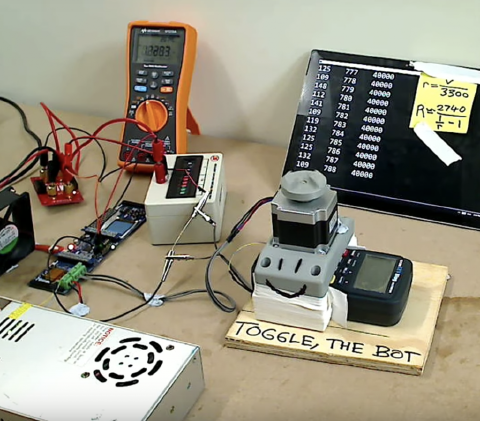
- Toggle the bot
- Chris has a soft goal of "no longer saying he's bad at software". He's been using the educational JLink debugger from SEGGER.
- State of Electronics keeps posting nice videos lately
- Microchip is looking to buy Microsemi. (after the show was recorded this was confirmed).The latter makes FPGAs and was always jockeying for the number 3 or 4 position with Lattice (who make the parts described by Claire (nee Clifford) Wolf when she was on the show)
- Amazon also bought a company making chips that are used in low power video monitoring equipment.
- Sign up for The Amp Hour newsletter (below this post or on the home page) to get notified of new episodes and possibly when there are links posts.
- You can now get an "on demand" Amp Hour T-shirt (instead of bulk buying through teespring) and a Widlar poster if you'd like.
- Update: Dave's testing with Toggle may have been all for naught!
Transcript
Chris Gammell: This is the Ampour Podcast. Released March 4th, 2018. Episode 382. The Toggle Boggle.
Dave Jones: Welcome to the Ampour. I'm Dave Jones from the AEV Blog.
Chris Gammell: And I'm Chris Gammell of Contextual Electronics.
Dave Jones: What's up, nerd?
Chris Gammell: Hey, nerd. How are you? You're on a schedule today.
Dave Jones: No, I'm on a schedule. Tight schedule.
Chris Gammell: Okay. The Ampour exactly.
Dave Jones: Right. Speaking of capacity and, you know, all that sort of stuff, energy, I've got another over-unity person. Oh, I saw you tweet about this. Yeah, yeah, yeah. Okay.
Chris Gammell: Tell us about the opportunity. Tell them what they've won.
Dave Jones: Well, I do like to keep my emails confidential, but, you know, like, so I won't mention names or anything.
Chris Gammell: We don't want to give away this million, billion dollar opportunity, really, too. So what is the technology? What is the baseline technology? Let me guess. Flywheels?
Dave Jones: I don't actually know yet, but there's some. It doesn't use electronic components, right? But it boosts, of course.
Chris Gammell: Then, of course, you would talk to you because, you know, the one thing you're known for.
Dave Jones: Yeah, it's mechanical. And, of course, yeah, so they come. Oh, yeah, I've got this idea. I've been working on it for 40 years. I'm a, you know, some. Yeah. Yeah. And, of course, I've powered lead. I'm powering some leads. Yeah, of course.
Chris Gammell: The ultimate measure of a tiny bit of current and some voltage. Get out your Peltier heaters, folks, you know, like. Yep.
Dave Jones: So I'm powering, you know, so the first day, you know, like I'm powering 30 leads, you know, and they're 10 milliamps each and they're 7.7 volts each. And that's the first time I went, uh, okay. They're 7.7 volt leads. It's, oh, but I'm powering a cluster of, like, eight leads in one little light bulb thing. And that's how they're 7.7 volts. And it's like, it's just, yeah. You can see the hilarity. So what is the prescription here, Dave? What is the prescription? The prescription?
Chris Gammell: Right. So, uh, maybe.
Dave Jones: I don't know that term in that context.
Chris Gammell: I mean, so would you write back to this person? And if not, if someone thought about writing to you in the future, what would be a better way to get your attention?
Dave Jones: Well, a better way to get my attention is, A, don't get your units wrong. B, don't get your voltages wrong. Like, you know, explain, you know.
Chris Gammell: These all sound good, yep, yep.
Dave Jones: Like, you know, post evidence, you know, rather than just text and expect me to, you know, like I've been getting, before email, I've been getting letters like this, you know. And, yeah.
Chris Gammell: You must have missed out on some big opportunities over the years.
Dave Jones: Oh, I must have. I could have been filthy rich. I could have been Elon Musk rich now.
Chris Gammell: You know, I'm, so speaking of missed opportunities, I am surprised. So I don't know if you saw the news about Ring, the thing getting bought by Amazon.
Dave Jones: Yes, I did.
Chris Gammell: Because you watched that show that I am not a big fan of, Shark Tank. They were on Shark Tank.
Dave Jones: Oh, I don't really watch it that much. Oh, they were on Shark Tank. Who? Ring were on Shark Tank.
Chris Gammell: Whatever it was before. Several years ago, were they? Yeah, like four or five years ago. Wow. I mean, like, okay, you know, different era of stuff too. I forget what they were called. Like, they had some of their name in them.
Dave Jones: Right.
Chris Gammell: But nobody invested and that's fine.
Dave Jones: Oh, okay.
Chris Gammell: But like, I'm just amazed that something on Shark Tank actually worked.
Dave Jones: Right. And I know that's, I don't want to hear from anyone.
Chris Gammell: Like, it's fine. I know there's other stories.
Dave Jones: Well, it's the same thing here. Like, this person expects me to take them seriously. When I get hundreds of emails like this, there's, you go on YouTube and there's thousands of people thinking they've cracked over unity. Oh, but no, this person's obviously, you know, like they're, oh, wow.
Chris Gammell: I guess, I guess the prescriptive thing then would be like, and maybe, you know, an actual relevant thing for us, right? Like, okay, there are some real breakthroughs, right? There are some things that like, like people should be tempting, attempting all these things, right? Like, we shouldn't be the constant naysayers because then you, you do miss when there's a real breakthrough. But I think it's more about that, that process like you're talking about of like, okay, let's test it against like reality. Yeah, exactly. Is my test different than anything else I know that people are doing? Can it pass a certain, you know? And it's, it's, it's amazing to me that like, it's, it's just, there's not these, these, there's no standards in a lot of these cases, right? And so people say, well, my test is the only test that matters. It's like, no, you made up the test. It doesn't matter, right? But it's almost like it just requires logic, you know?
Dave Jones: Well, yeah. They said, oh, there are some people in the world, in this world, making amazing breakthroughs in science and technology every day. Of course.
Chris Gammell: Right. You know? That is a truism. It does not, it does not excuse your lack of analysis, right? Yeah.
Dave Jones: It doesn't validate your, you know, your results. It's like, like I had to tell him the classic Carl Sagan, you know? And now I'm closed-minded that I want, you know, I'm skeptical of this thing. So, oh, you're just closed-minded, you know? And it's like, yeah, as Carl Sagan said, don't be so open-minded that your brains fall out.
Chris Gammell: Right. You know?
Dave Jones: It's like, and I'm trying to... Well, and that's the thing.
Chris Gammell: Like, you could always find, like, especially within the age of the internet too, right? You could find a lot of supporting evidence, which also might not be backed up, right? Right. And it's like, it needs... You need... I mean, peer review is there for a reason, right? Because, like, you want to have other people looking at it.
Dave Jones: That's what... I told him. I said, you actually need someone like me who does not take you seriously and goes in with the idea of trying to debunk it. Because that's... See, I don't think like you, though. If you want to just be in a big circle jerk, though, and everyone's going to go, oh, yeah, I got two times over Unity on my lead flasher ring. So, you know, you must be on the right track, you know? Right. If you want that sort of thing, that doesn't help you.
Chris Gammell: See, but I wouldn't say someone like you, though, because, like, high profile... Like, that's the thing. People always go right to high profile people. It's like, have you showed this to other people that are not high profile? And, like, is there any expertise and or common sense among that group? Right? It's like, you should... Basically, you should have, like, you know, a core group of people you're working with. And then check it with all them. Ask them to break down your assumptions and all that stuff. And then you move out to a wider ring of people that don't know you and don't care if they hurt your feelings, right? And still not high profile. And then you go through them and they say, eh, that looks okay, too. And then, you know, the next ring out might be someone higher profile like you, right? But, like, you don't just, like, jump right from there to, you know, like... No, you don't. There might be people that are in this person's life that are like, good job, you're an innovator. But it's not the encouragement that matters. It's the check against reality.
Dave Jones: It's the check against reality. Yeah. But there is a line that you're on either side of. There's the line of, does it obey the laws of physics and does it... Sure. Or are you trying to break the existing laws of physics? I mean, they are too... You know, it's a very clear bar, you know?
Chris Gammell: I totally agree. And obviously, this person did not check against that bar. But, like, that's probably even a smaller circle, right? If we're talking about, you know, expanding circles, right? That should really be the one of the individual, right? That's on you. If you don't check that, then all bets are off. Then you're just wasting people's time. Yep. Because I don't know.
Dave Jones: I'm all for people working on free energy stuff. Go for it. Just don't expect people to take you seriously. I'm sorry. You know, you need some pretty good evidence, right? Really good evidence. The only person who's gotten close is the stern guy. And, you know, who gave public demonstrations and, you know, like, got 10 million bucks from people and just went on for like a decade and just went on and on and on.
Speaker ?: You know?
Dave Jones: Getting 10 million bucks from people. Yeah. That was a good measure. And at the public demos, something subtly always went wrong with the test. Oh, sorry, guys. It worked yesterday. You know, it should have been here yesterday. You know, like... Right.
Chris Gammell: And I think we could generalize this in... You know, you could generalize this to lots of things, right? Yeah. And it's just like anything with free energy, it's like automatically like alarm word, right? Yep. And so you have to work extra hard to prove to yourself and then your inner circle and then, you know, the ring of experts and then the other body else, right?
Dave Jones: No, no, no. You've got to be careful that now because I get all these free energy people taking me to task that, you know, there's energy all around us, right? Which is true. That's energy harvesting. So they'll use that as evidence that their thing works. So there's a difference between...
Chris Gammell: I go right past the pedantry and the crazies and I'm just speaking more generally here.
Dave Jones: No, but you have to, when you're dealing with these people, you have to differentiate. Sure, right. I don't deal with these people. That's what I'm saying. Yeah, right.
Chris Gammell: I don't deal with them. Right. Like, you are nice to even indulge us a little bit, but yeah.
Dave Jones: Because it's funny, you know, right? I don't know.
Chris Gammell: It's kind of sad at a certain point.
Dave Jones: Oh, well, yes. Yes, it is. The guy spent 40 years of his life and millions of dollars, apparently. Yeah, sure. He spent millions on it.
Chris Gammell: I don't know. So I think about this in terms of like just generally like going to tech meetups and stuff like that too, though, right? Like, I don't want to like dismiss people out of hand, but I can pretty easily tell when someone's going to like have something. If they just want to talk about these great ideas they have, that's a lot different than if they're going to show me something that they've done. Yeah, show me something. Show me something, right? Of course. Don't tell me you have a secret. Don't tell me you want me to sign an NDA. If you want to show me something great, if you don't, that's fine. We can BS about the weather. Just don't drag me into a conversation for three hours about this great, oh, this great opportunity. It's like, no, no, no. If I want that, I'm going to go and stay in a timeshare and, you know, get a free hotel room out of it.
Dave Jones: And this is what I get all the time, right? People say I'm dismissive of absolutely everything, right? I think your problem is that you've engaged a couple times. You've engaged a couple times. That's right, because I'm one of the few people who publicly debunk stuff, right? There's very few people out there actually doing that, right? But it's because, right? Engineers, right? No, experienced engineers, why do I dismiss things? I think somebody commented in the Amp Hour survey, which we'll talk about, about our day is always dismissive of everything. It's because, well, I'm an experienced engineer. Because he's a cranky old bastard. No. Sorry, same words, same words. I'm an experienced engineer, right? And when you come at me with ideas, like, my mind just instantly processes it and comes to the conclusion based on all my experience. And it's not hard to know that, oh, okay, I've developed this little batterizer thing and it gets, you know, 800 times the capacity of your battery. You know, eight times my... Like, I just... Right. The numbers just run through my head and I know it's bullshit. No, right, right, right.
Chris Gammell: You're saying it as, like, this is a filter that you have, right? Yes, exactly. You have a filter based on past experience. And really that's just, like, a human characteristic, too, of, like... Of course. If you... It's like the humans basically create subroutines based on habit, right? That's the idea. And you've seen it enough times where you're like, eh, it's probably not. Yeah, exactly. The dismissive piece is how you respond to it. So I will agree with them on that, right? Yeah. Because you have no...
Dave Jones: Fine. Well, because I have the conviction of, like, doing that. If I'm wrong, I'll say I'm wrong. Just convince me with the evidence. So what's wrong with coming out and being skeptical? I'm instantly skeptical.
Chris Gammell: Some people are a little softer. A little bit softer.
Dave Jones: But sometimes I hear ideas and I go, bang. You know, I'm not dismissive. I know. Oh, bang. That's great. That's like, yeah, that's got something. Right? You know? It's just there's more bullshit out there than not. Right?
Chris Gammell: I do agree with that. So it's like... I do agree with that.
Dave Jones: So I can point to evidence where I'm not dismissive of things. It's just, you know, so much crap. Don't worry, Dave. Anyway.
Chris Gammell: Don't worry, Dave. Yeah.
Dave Jones: There you go.
Chris Gammell: Survey. Yeah. Thank you to everyone who's taken the survey so far. We still are looking to hear from people.
Dave Jones: I had a browse through it, but I haven't gone in detail. But I love the comments. The comments are the good part.
Chris Gammell: Oh, yeah. I mean, and like we said two times ago, right? It's, you know, both the good and bad. We want to hear from you. So thank you. Thank you to everyone. I mean, like, you know, speak your mind. We don't care.
Dave Jones: And you were getting like a total boner over the... Ah, not a ton. You were. You were getting a metric boner over the fact that what? We went from 20-something percent to 40 percent of people would highly recommend the show or something?
Chris Gammell: No, you didn't even come close, but yeah.
Dave Jones: Oh, well, you know.
Chris Gammell: There's a question on there that is the standard of surveying, which is called net promoter score. And, you know, it's basically the only measure that is consistent. Yes, I know. It is. Yes. And it's based on if people would recommend the show to other people. Some people, you know, more people said yes this time than last time. So thank you to everyone who does. And if you'd like to... Why do you have a scale for that?
Dave Jones: Why do you have a scale?
Chris Gammell: No, no, hold on. Let me get my pitch out here. If you'd like to share the Amp Hour, please send them to theamphour.com or any of your fine podcast listening feed apps out there, which is how many of you listen in the car. Most of you listen in the car on a podcast. Yes, they do.
Dave Jones: What, 50 percent or something? 40, 5 percent listening in the car or something? Yeah, high. Yeah.
Chris Gammell: Anywho, keep your eyes on the road, damn it. Yeah, so net promoter score is just about that. So what were you saying? What were you giving me crap about again?
Dave Jones: Oh, about how it's a scale. It's like, would you recommend it or not? Like, if it's a scale from 1 to 10, this is why YouTube got rid of the ranking thing. You know how you used to rank videos? Subscribe or rate them. Subscribe, rate. Everyone said at the end of the video, yeah, you used to be out of five. You used to be able to give YouTube videos five stars. No, I don't remember that. And Netflix had the same thing as well. You used to be able to rate Netflix shows out of five stars, and they've all realized this doesn't work. People either put one star or five stars most of the time. And it doesn't, so they changed them. Both of them changed them to thumbs up, thumbs down systems.
Chris Gammell: Yeah. You know? Right. And there's some interesting stuff in there too. So like, again, with the statistics stuff, I think this is from my Samsung days, like thinking about like all of the black belt crap I had to learn. But like, even like, so like within that one to five star system, right? But there's people out there who are going to be like, well, it's mostly fours and fives. So they kind of skew up in that scale. And if you took it out to 10, right? So most people are going to be, you know, you know, be pretty, very positive or very negative or whatever, right? Most people are not going to use the full scale. And so that's like you're saying, it doesn't, it doesn't utilize that actual thing there. And even in net promoter score, you only take eight nines and tens and then you basically turn it into a up down kind of score like that. So it's eight nines and tens versus everything else. So if you want to mess with our data, you still can. And you can, you can rate us a seven if you really want to mess with me.
Dave Jones: 5% of people said they didn't want to enter the scope draw.
Chris Gammell: Yeah, it's true.
Dave Jones: Okay. Oh, some people have more scopes.
Chris Gammell: We have a well-equipped audience, I'm sure. I'm sure that there's a lot of mentors out there. Yeah, exactly.
Dave Jones: And they want it to go to someone who genuinely wants it, which is great. And that's nice too, right? Yeah.
Chris Gammell: I am, I've been eyeballing my bench for a reorg. Oh, okay. I'm like a management consultant. Like all I know to do is to reorg.
Dave Jones: Are you going to do a before and after video?
Chris Gammell: I don't know. God, no. There's nothing. I mean, like Dave, there's no space in my, you know, people that don't know, I'm in a kitchen nook. Like there's not much space here. Basically, I'm going to switch where the computer are. Computer and the bench, you know, the soldering area. So that's all I can do, right? Right. In six months, I'll switch it back.
Dave Jones: Why don't you get a bigger space?
Chris Gammell: I mean, I don't even use that much of this, Dave. I mean, like. All right, okay. I mean, like. So I was going to actually ask you about that. Because the reason I'm switching in the first place is like, it feels like accessibility stuff, right? So like you have lots of bench space, right? But I would guess that the majority of the time.
Dave Jones: Which is never available.
Chris Gammell: Sure, there's that piece. But even if it was kept pristine, right? And I'm sure that a lot of people listening can relate to this too. Even when you have pristine bench and you're very good about that. To be honest, most of the day is computer stuff, right? I mean, like. Either you're writing firmware or software. You're responding to emails. You're on a forum. You're on Twitter. You know what I mean? Like. For better or worse.
Dave Jones: I literally have two. I literally have a lab and an office. I spend most of my time in the office. You know. Exactly.
Chris Gammell: And I think that's. I mean, like. I think back to my jobs too. Like. I mean. So at Keithley, I had a bench right next to me. And like. It just. The split was like that. Like. I think the people that are at the bench most of the time. Are deep into the. You know. Like. Deep into something. Which is great. And that's the enviable state. Right? I've always said. A good measure of how I'm doing. With web stuff versus electronic stuff. Is when I type in. DI into my browser. If it comes up DigitalOcean. It means I've been doing too much server stuff. Right? That's what I use for hosting. If it comes up DigiKey. I'm on a good path. Right? It means that I've been searching for parts. And all that stuff. Yep. Yep. And so that's how I kind of measure. Like. If I'm doing more electronics or not. And unfortunately. It's been a lot of DigitalOcean stuff lately. So. Just trying to shift the balance a little bit. You know.
Dave Jones: Right. Yeah. What else? Was there anything else?
Chris Gammell: Like. Like. Getting the. Getting bench time is tough. Right?
Dave Jones: Yep. Yeah. I know. Is there anything. Any other interesting results? There's just not enough graphs in this thing. I'm sorry.
Chris Gammell: Oh. Not enough graphs. Oh. Yeah. I'll let you set it up next time. But. There's not enough pie charts. Yep. Got it. Got it. Yep. And we will post these eventually. Like. We'll give another couple weeks for the people to enter. So please do add your. Your stuff.
Dave Jones: Hey. I've got a technical question. Go ahead. All right. I'm just completely getting off this topic. Oh. That's fine. You know.
Chris Gammell: We're moving fast here, man. You know. What would you prefer? I was thinking from the survey actually. We. You know. A lot of people said we missed chip. Chip of the week. You know. We haven't done that in a long time. So maybe we should sneak one of those in. Oh. Yeah.
Dave Jones: If. If you're using a power supply. Okay. And knobs is not an option. Not an option. Just putting it out there. Okay. Would. Would you prefer. Up. Down. Voltage. And current. Keys. With velocity control. You know. So you just hit up. And it goes. You know. Yeah. Yeah. Yeah. So you hold it longer. It goes faster. It goes faster. And in proper steps. You know. Or would you prefer a keypad.
Chris Gammell: Oh.
Dave Jones: Because it's something we've asked on the EV blog forum. This is for the new. Got it. Got it. Yeah. Yeah. I get it. This is a new power supply project. And we're just. Like. We just want to know what people think.
Chris Gammell: I like that. There's another survey for you right there. No. Don't actually ask the public. Never ask the public what they want. I know. I know.
Dave Jones: We're happy to totally ignore the public. Yeah. Good.
Chris Gammell: And just do what we want. I think probably keypad. I mean. Like. If I'm being honest.
Dave Jones: Right.
Chris Gammell: Because you could always turn one of the keys. You know. You could like put a plus over the plus minus over the one and two or something.
Dave Jones: Yeah. That's what we've. Yeah. That's what we've done in one of our implementations. Is to put the arrow keys. It's just. You know. Not. If you want to use the arrow keys. It's not obvious how to do it. So. Yeah.
Chris Gammell: I think that's the thing. Like. Yeah. If you have the capability of doing a keypad. I think that's nice. Right. But again. Like you're saying.
Speaker ?: Like.
Chris Gammell: Yep. You know the best way to test it. Is you put it in front of someone. Yeah. Yeah.
Dave Jones: Exactly. Yeah. But people will end up using it either way. It's like. Oh. Yeah. I can use the up down buttons.
Dave Jones: Yeah. Oh. Look. Doesn't that have nice velocity control. You know. I think the thing is like.
Chris Gammell: So. I'm looking at my. My power supplies. Which will soon be moved. My 2400 is up down. Yeah. And that. You know. I've gotten through. And basically. It's like. If you could select. You know. If you have a left right as well. So you can select the different digits. That matters.
Dave Jones: Oh. I'm not a fan of those. I'm not a fan.
Chris Gammell: I'm not a fan either. I'm just saying. No. Like. That helps speed it up a little bit. You know.
Dave Jones: Oh. It does. But. Oh. Yeah. No.
Chris Gammell: And then. My other supply is just a simple. Like. You know. Knob supply. Yep. But you're not going to do knobs. So that doesn't matter. Yeah.
Dave Jones: Yeah. And then. You've seen what I'm talking about. Yes. You've seen the. You've seen a render of the. Yep. Yep. Thing I'm talking about. So.
Chris Gammell: Yep. I don't know. Keypads are not all that common. As far as I can tell. I mean. Like some of the newer stuff does. Right. Like the Rigol power supply. Has it right?
Dave Jones: Yes. It does. But. Yeah. Yeah. So I think that's the thing. Like you're kind of. But it also has a knob. So you can actually do the. Yeah. You know. The knobby thing.
Chris Gammell: It's always that thing of like convention. Versus like. Yeah. People are going to use what's. You know. Whatever's there. Obviously. If they want it bad enough. Oh. Of course. Yeah. So.
Dave Jones: Yeah.
Chris Gammell: I can't say I have a strong opinion.
Dave Jones: But probably. Keypad. Maybe.
Chris Gammell: I mean like. It seems like there's more options. So like. I'm going to go with more options. Right. Okay. Yeah. Cool.
Dave Jones: All right. Yeah. Fair enough. Cool. In fact. How's that moving along? Well I don't even know. I can. Keep talking. And I'll try and find the survey. And see if I can get the results. Because I actually. Did a poll on the forum. Yeah.
Chris Gammell: I think doing it with like. A user group versus the public. You know what I mean? Like. Yeah. If you do it on the. If you do it with the public. Well first off. There's a lot of noise in there anyways. Yeah. Right. But. I always go back to that. That anecdote I heard about. Like. You know. You put people in a room. And you ask them like. So you have. You ask them like. What color should this Bluetooth speaker be? Right. Yeah. Right. Yeah. Yeah. I'm sure I told this on the show before. Right. No.
Dave Jones: The bike shed. What? No. This is. This is. This is.
Chris Gammell: This is not bike shedding actually. All right. So this is a little bit different. So. So the. The idea is like. You put people in a room. You say. There's six different colors this thing could be. And you. And you please discuss. Which would be the best. And people discuss. Oh well it should be. You know. Purple. Because. Blah blah blah blah.
Dave Jones: In one of these. Product focus groups. Like outside of work. You know.
Chris Gammell: No. Not outside of work. No. Yeah. But that's. Yeah. That's. That's like the set up here. Right.
Dave Jones: Like pay people. Like people. Right. You know. Pay to go. Exactly. Like get paid to go to these things.
Chris Gammell: Right. I've used. I've used the effective online version of a focus group. Oh okay. For like usertesting.com is like for software. Or for like UI type. Oh okay. Focus group stuff. And it's. It's okay. But it's not like electronics focus. That's like very web focused stuff.
Dave Jones: Got it.
Chris Gammell: And yeah. So what you do is you put people in a room. You have them debate the six different colors. And you say. Okay. Thank you for coming today. We actually do have prototypes of each of these different six colors. Please take one as you leave as a gift for coming. And like. So the anecdote is. Everybody took black on the way out. It's like. Oh right. Okay.
Dave Jones: But black wasn't the consensus choice.
Chris Gammell: Right. Of course. I mean that's the thing. You don't. I mean that's. That's the whole idea. You don't ask people what they want. You watch what they do. That's the whole idea. It's a lot harder when you're prototyping hardware though. Because like. You know like even just small things of like. If. You know like the actual. Say the up down versus the keypad thing. Right. If the keypad doesn't work flawlessly. Or the up down doesn't work flawlessly. Oh yeah. No.
Dave Jones: It's shit either way. You know. Yeah. Right. Exactly. Yeah. Of course. So. No. You can totally goof up either method. You know.
Chris Gammell: Right. I think test equipment. And really just electronics in general. Has not done the whole UI piece. No. UX. Over time. Not great. I mean some things are better than others. But. Yeah. In general. The fact that we clamor for like. You know. Knobbs on. Yeah. It's some weird combination.
Dave Jones: Like on the Rhygo power supply. It's just a dog's breakfast. You know. Exactly. Yeah. It's just.
Chris Gammell: It's just a lot of. Yeah. It's a lot of history that we. And baggage we've dragged along. Yeah. So. You know. Do whatever you want man.
Dave Jones: Well. 77% of people. Say that they want keypad. And only 20.
Chris Gammell: At least. At least if you do that. You could be like. Well you asked for it. So. You know.
Dave Jones: Yeah. Right. Right. I thought you.
Chris Gammell: I thought you learned your lesson about doing public. Design stuff.
Dave Jones: I'm not. See. I'm deliberately not showing people. I'm deliberately not telling them stuff. I'm just. Like. Like. Generic. Sort of. Okay. You know.
Chris Gammell: Keep them on the hook. Yeah. Keep them on the hook. Things they might be interested in. From a user perspective.
Chris Gammell: That's right. Got it. So no. No design. No design.
Dave Jones: We've never posted a photo like you've seen. We've never. Got it. You know. I'm an insider.
Chris Gammell: Allow me to tell you more about what I think about your design. Yeah. Yeah. It's tough. You know. Like. I was. I was in a situation a couple months ago actually. Where. You know. Like. Someone. Someone did the design. And once it was all done. Everybody wanted to debate it. Right. It was done. You know. It was done. Yeah. Yeah. Yeah. I think. I think you and I have talked about that in the past. Where it's like. Hardware is a. Is a one person. At least one person needs to be like. One person needs to be still in the ship. Yeah. Yeah. Yeah. Exactly. Totally. You can have people helping with individual circuits or anything like that. Yeah. But you need one person who is just like. It. It all falls on their shoulders. It. It passes or fails based on them. And that. Yep. It sucks for that person. But also they get the glory. So. You know. Right. Yeah. Yeah.
Dave Jones: Oh yeah. The fortune and glory in electronics. Yeah. That's right. Well. Let me tell you about that. The riches.
Chris Gammell: The riches are unending Dave. Yeah.
Dave Jones: Oh boy.
Chris Gammell: Yeah. All right. Yeah. So where are the riches? We should talk about what's going on in the. Yeah.
Dave Jones: Oh well. We can talk about non-riches. We can talk about rich people turning into poor when they invested in Maplin.
Chris Gammell: Oh yeah. I heard you. I saw your post about this. Maplin has collapsed. I actually did not. I didn't know what Maplin was. Can you explain what it is?
Dave Jones: Oh. It's a. It's a. I originally knew it as a. Is it a UK thing?
Chris Gammell: Yeah. Well it's on BBC. So I figured. It's a Maplin.
Dave Jones: They used to have a. Did they have a magazine? Back in the day. Anyway. It's an electronics hobbyist thing. It's like a Radio Shack. Yeah. Tandy. You know. Kind of thing. You know. Yeah. And yeah. There are. You know. Small components. You know. Component supplier. Okay. With. With a few stores. Like drawers of resistors basically. Drawers of components and stuff like that. But they were mostly catalog and stuff like that. Okay. But. I'm surprised I never heard of them. Yeah. Oh well they're a UK. I don't think they expanded out of the UK.
Chris Gammell: I know a lot of people in the UK Dave. Oh well.
Dave Jones: Okay. But it's like. It's like people buying stuff from Radio Shack. It's like. You know. That's true. They're not like. I'm going to put in a big order.
Chris Gammell: Yeah. Do you want to join my order from Radio Shack online? No.
Dave Jones: No. Exactly. Which.
Chris Gammell: The fact that nobody says that is also. The points to why they probably didn't do so well. Right.
Dave Jones: Anyway. They. They started in 1972. And they. You know. Quite famous in the UK. And. Oh. They had an annual turnover. 235 million pounds. That's a lot. 217 stores.
Chris Gammell: Wow. 35 million pounds. But yeah. What's the profit there? You know. Like what's the. Well obviously. It's like a grocery store. It's like 3% profit margin. It's like. Okay.
Dave Jones: So I'm not sure if they were going bad. I think they were going bad when somebody invested 80 million bucks or 80 million pounds into them or something. And then no. And now. Even after all that investment. They've just gone down the toilet. And they're looking for. Administrators now. So. Yeah. One of our.
Chris Gammell: One of our. Reddit commenters. Basically said. Now you walk in. It's filled with mostly disco gear. And walkie talkies. And silly home gadgets. Which sounds exactly like. Radio Shack too. It's exactly like Radio Shack. Yeah. That's unfortunate. Dick Smith. Yep. Yep. Yep. Exactly.
Dave Jones: All the other fails. Yep. Yep.
Chris Gammell: And. I think. I mean. I think that. We are. We're past that. Right. We. We know about the distributors. Right. We. We all know the online distributors. And they've been. I think a lot of them have been doing a lot better. And then. You know. And then there's the people that have taken the place of the Maplins and the Radio Shacks. Like the Adafruits. The Spark Funds. The. The Pimerones over there. Yep. In the UK. Right. And. And. It's great. Like. I don't care at all. You know. Like. Like. There's very few times where I like on a Saturday. Like. Yes. When you really need it. It sucks. Right. When it's like a Saturday. And you're like. Oh. I just need that one component. But. That's not that often. Right. I mean. No.
Dave Jones: No. It's not. It's not that often that you're so desperate. Well. Okay. Well. You know. I like being able to drive down to my local Jcar store. And pick up a. A widget. Because I need something for shooting a video. You know. Oh. Damn. I can't find my. You know. Can't find this power resistor. I need to go down to Jcar. And get one. You know. So. I mean. Like.
Chris Gammell: Honestly though. How many times has that happened in the past. Six months. Six months.
Dave Jones: Four. Like. Four times. Three. Three times maybe. You know. Okay. Every other month. I probably go down. Yeah. Every other month.
Dave Jones: More than most. Right.
Chris Gammell: But you're doing. I mean. But yeah. But you're. You know. Doing a bunch.
Dave Jones: I'm kind of in a different thing. Where I need something right now. Because I want to finish a damn video. Exactly.
Chris Gammell: Right. Right. Right. Yeah. Most people would be like. Oh. I guess I should go mow the lawn. Or whatever. Right. Yeah. Yeah. Exactly. Oh. Yeah. Okay. There are. There are other things I could be doing.
Chris Gammell: Yeah. You know. I've been thinking about this too. Because. Well. And I think it does. Lend itself to like the. The cycles. Right. So. So. I. I talked to a lot of people who are in software. And they come to hardware. And they're very frustrated with the. The iteration times. And it's like. I get it. Like in software. You recompile. And you just do this thing. Right. And then. Hardware. It's either. You send off a new board to Oshpark. Or you. Put a new order into Adafruit. Or whoever. And like. All these things are getting faster. And faster. And cheaper. And cheaper. And it's great. Like. But there is. It's not as instantaneous. As most people would like. And it's like. I get it. But like. I think it's just about changing your workflow. A little bit too. Right. It's about having. Three or four. Parallel boards in work. You know what I mean? Like. Like.
Dave Jones: Projects. Yeah. Entire projects. Having entire projects. You can just go on to. Yeah.
Chris Gammell: Project boxes. Like you said. Right. As you've shown in the past. You show projects that are in like. You know. These Tupperware containers. That are just like. This one thing. And if you don't have the one part on. Project A. You switch to project B. You know. And. And. And context switching is not like. Something that should be encouraged. But like. But at a certain point. You know. Like. That's.
Dave Jones: Yeah. You have to. Hardware. You have to wait for stuff. Exactly. You know. It's like.
Chris Gammell: It's. And. And. And. That's also been the rise. You know. From trend. A trend spotting. Perspective. Like. You know. The Bantam tools. Formerly. Other Mill. And like. What's that laser cutter company. The. Source. Or Glowforge rather. And like. All these things. Where like. There's people that are willing to pay money. For these potentially. You know. Things that will speed. Yeah. Speed up the process.
Dave Jones: Speed their development cycle up.
Speaker ?: And.
Dave Jones: Yeah.
Chris Gammell: And. And. And. And. And. And. And to not be the crotchety old people. Right. We should encourage that. Right. Like. There are reasons to do it. And there's obviously. Constraints around that. You can't do. You know. A five mil. Five space. Thing on. Another mill. Or Bantam tool. Right. But like. But it does pretty well for a lot of things. And you can get a lot done with it. However. My. My thing is like. I just do what I always do. Which is. Have a couple projects going. And when. One slows down a little bit. I switch the other thing. Right. It's like. Right. I don't know. So. Software people listening. Because there are. Many of you. As we know from our survey.
Dave Jones: Although these days. You can go on. And. If you waited on the hardware. It almost always involves software. The hardware. So you can write the software. While you're waiting for the hardware. Sure. Well exactly.
Chris Gammell: That's a great point. Yeah. Right. And I think that. That's a huge piece too. And. And you know. If you look at the real. Like. If you looked at. If you looked at the Gantt chart. Dave. Oh. Gantt charts. I saw one in earnest. The other day. And I was like. Really? Like a Gantt chart. Wow. It's like a. People still make these. Huh? Oh yeah. It's still a thing. Four weeks design. Four weeks manufacture. Four weeks testing. Four weeks release. Duh. Yeah.
Dave Jones: But you have to. Like. Is there another way to do a schedule? There's not. Right. Gantt charts are a really good way to do complex. Right. They are actually very helpful. When you've got a complex program. Project. With lots of dependencies. Like. You can't start this. Until you get this. And then. Yes. Yes. You're right. You know. Gantt charts can do. I know. They link dependencies together.
Chris Gammell: Yes. Right. You know. Yes. This is not the kind I saw. Mine was like the kind where like. You have the blocks that were like. Each one. There was like. Each dependency was just based on another thing. Oh. Was it? Yeah. There was no like parallel path type stuff. It was just like.
Dave Jones: No complex dependency. Yeah. Yeah.
Chris Gammell: Right. Yeah. Yeah.
Dave Jones: So anyway. I'm actually a bit of a Gantt chart fanboy. Oh really? Yeah. I can't like them.
Chris Gammell: Please share your Gantt chart for the micro supply. I'd love to see that one. No.
Dave Jones: I don't do them for my own personal projects. But I. Every time I've used them. I can kind of see the value in them. But I'm also bitching. Yeah. You get to make a chart.
Chris Gammell: That you show to the manager above you. And you say. Yeah. Yeah. Yeah. See. There's a plan. Don't panic. Right.
Dave Jones: Exactly.
Chris Gammell: Yeah. Everything's going to plan. Don't panic.
Dave Jones: This is precisely why I'm sitting here playing video games. Right. Because I've got nothing to do. Right. Exactly. Because the Gantt chart says so.
Chris Gammell: The Gantt chart is empty right here. You see. We're here today. The hardware comes in in two weeks. We're fine. There's nothing else I could be doing. Right. That's how it works. Yeah. Well I think you're right though. Like the software piece. The firmware piece. All that stuff. Or you can build test jigs. You can do something.
Dave Jones: Right. And I can tell you about test jigs. We just had our test jigs fail the other night.
Chris Gammell: Oh really? Yeah. The button turny thing?
Dave Jones: Yeah. The button turny thing. Which is toggle the bot. It's called. Toggle the bot. Toggle the bot. Or toggle. Just yeah. Toggle the bot. Anyway we did have like a live stream. Yeah. It's like a pet. It's going to be the new Tamagotchi.
Chris Gammell: Gotcha. Yeah. Right. Yeah.
Dave Jones: Anyway we had like a live video stream. And everything else. Yeah. Stockings everywhere. And yeah. And we got to like we were up to 25,000 cycles. And then the jig just went. And it crapped itself. And the meter started. It only had to be out by a little bit. You know it wasn't superbly engineered that there was a lot of. We thought there was a lot of tolerance in it. But it turns out there's not. And then it ended up not turning the knob properly. And then eventually it broke and the shaft and the knob slipped and everything. And we.
Chris Gammell: Oh. Oh got it. Yep. Right. So you lost track of the actual turns versus the counted turns.
Dave Jones: Well at the very end it wasn't turning at all. You know. Oh I see.
Chris Gammell: It was. Yeah. That's why you need to do like you know a complex servo feedback type thing.
Chris Gammell: Yeah. You know closed loop control is where it's at man. That's it. Stepper crap you know.
Dave Jones: None of this stepper rubbish. That's it. And but anyway.
Chris Gammell: Just really really over optimize that one solution for the thing that you could you know like you didn't really need to be doing in the first place.
Dave Jones: Anyway it turns out we did get 25,000 cycles. Out of it. Sure. And and once we got in there and actually cleaned the contacts it's actually it's back we put it back together and the meat is as good as gold.
Chris Gammell: Okay. So that's really interesting. What was the hypothesis here? Did you do the full the full scientific method here or no?
Dave Jones: Well the hypothesis was that okay we've changed we've added a shim which changes the pressure on the contacts therefore more pressure should equal more wear on the contacts. Right. So we wanted to test it out. So we so we knew we had fixed the problem of of the intermittent contact issue which is what people were having you know. Okay. So we knew we'd fix that. Right. But you know what what would that do to the wear of the contacts and it turns out.
Chris Gammell: Got it.
Dave Jones: It doesn't really seem to do much if anything at all. Oh excellent. Okay. So yeah.
Chris Gammell: So this sounds like sounds like a successful test in the first place.
Dave Jones: It sounds except the fact that now that we've got a shim in there we've got a fiberglass shim made out of PCB material and and it rubs against the plastic of the case and we didn't have any lubrication in there so it actually wore down. I yeah at first I thought oh the fiberglass is wearing down you know damn it. And you know because you kind of expect.
Chris Gammell: So fiberglass versus rubber fiberglass wins.
Dave Jones: No no fiberglass versus plastic. I don't know what kind of plastic it is. Fiberglass FR4 fiberglass epoxy material versus plastic. Plastic loses. Okay. And it ground all the plastic dust like you know it started this finely ground ABS plastic dust and it got all in the contacts and the contacts are kind of self wiping so it's kind of you know most of the time it does a good job but it gets to a point where you know look you really have to get in there and clean this puppy you know after right right 15 20
Chris Gammell: you don't know where the where the dust might end up going elsewhere in the meter too and stuff
Dave Jones: right okay yes because if you shake the meter around it goes elsewhere in the meter and stuff like that exactly it's it's not conductive of course but you know still you don't want you to need a filter. You better hope not because you probably got other problems at that point right. Yeah. So yeah it's so we've so we have that issue but apart from that no it was good but yeah like when you don't engineer your jigs with enough margin like we thought we had kind of like adequate margin we thought it would work and it did for like 10 15 000 cycles but then it started to give problems you know so. Yeah yeah yeah.
Chris Gammell: I was just getting at the the whole idea of like so one thing I always struggle with is like I'll so I'll be like in frantic mode right I'll be like oh there's a problem I gotta go test it right and I won't write down my assumptions I won't you know like so like the actual scientific method is really good in that case right if you do it like so like I always point yeah.
Dave Jones: But your enthusiasm overrides it you go oh I gotta do this oh I don't need to document that I'll be right you know like.
Chris Gammell: Right right.
Dave Jones: And yeah.
Chris Gammell: Yeah but that doesn't. Don't don't do that people. Yeah right. I was gonna say that doesn't always work though right so I mean I always just point to you know like YouTubers like like Mr. Ben Krasnow I think that like you know like that kind of like you know especially when you're trying experiments like that like I think the experiment the experiment mindset is very important in a lot of these cases right especially maybe you write it down maybe you don't but like you probably should. And either way though like you're you're trying to find an actual actual test too right you're trying to trying to work towards an actual solution did I solve X or did I determine X is true or false right those are the that that feels like the important thing because like you could go like like in your case right the toggle you could go and optimize that thing but it sounds like even though there were some issues you you've answered the question
Dave Jones: does the shim oh yeah no yeah it basically did its job in the end it just yeah we were just a bit disappointed that it kind of of course right right right yeah I mean nobody
Chris Gammell: wants to see their pet robot fall apart Dave. Poor little toggle.
Dave Jones: Toggle the bot. Why? Yeah.
Chris Gammell: Dearity. Yep. Yep. Well cool man. Robots. Yeah. Uh I've been I've been struggling with a little bit of my own I don't know if you saw my my tweet about it but uh so I've been I've been on an educational path for myself uh I've been trying to uh so my soft goal is to say to stop saying I don't I suck at software and firmware.
Dave Jones: Right.
Chris Gammell: Uh step one being stop saying it right of course I could just I could just stop saying it I probably won't but you know I'll try uh but the other thing is like you know actually try and learn some of these things and like some of the under the hood stuff uh yeah but
Dave Jones: this is part of your job too you have to right kind of uh some some of it no not really actually
Chris Gammell: I mean I have I have firmware people I work with oh but like but like so like and I'm sure I mean maybe you felt this maybe you haven't like as a hardware person right so I I finished the design uh I help with bring up and then it's like ah and then I'm this guy in the corner who's like call me if you need some soldering done you know and it's
Dave Jones: like and hey I I was a hardware guy at a software company so you think I'm I'm going to be there's much motivation for me to learn the software side of things right I mean that's that and and a lot
Chris Gammell: of times in that case they're gonna you know you could say like I'd love to help and they're gonna be like okay sure yeah no sure yeah no you're more of a hindrance yeah all right buddy right
Dave Jones: exactly and and and I kind of regret that I kind of regret I spent four years at our team I kind of regret that I didn't actually put more effort into learning the software side of things yeah I did some VHDL and some FPGA stuff but I never like really you know and and and some you know high level c stuff but I never really went to town like really getting my hands dirty on the software right exactly you know I would build this you know test jig to test all these production boards and I'd I well sometimes my software wasn't good and so I'd write my software you know I'd write some software that I think so it's okay it does the job and then the software guys would come along and go yeah let me right let me help let me help you with that and they rewrite the
Chris Gammell: whole thing you know oh well that's unfortunate but but I mean like yeah so like like you're saying too unless you have that actual thing that you need to to like this this goal you need to achieve right ultimately that is the crucible with within which like you know the best software firmware people get better at anyways like sometimes it's like well they've you know people are denoted as this like so how about David right so David is the software person in your office right totally right yeah right but he's also learning a whole bunch of stuff that like he doesn't even know yet like the android development all that stuff right of course unless you have that goal and like you're the person to solve that goal you're never gonna no it's always easy to opt out of that as as the hardware guy because you're gonna have to go and do hardware right you know and so the hardware person just has to do that right I mean like um so anyways in given this opportunity I was like you know what I can I've been learning this at night I've been you know I've gotten some some uh some boards that I'm working on I actually uh if you don't know uh Adafruit sells the uh J-Link debugger so since I'm doing this for educational purposes I got the educational version which is uh much reduced right yeah uh you know and you can like to be fair you can only use it for educational purposes but I'm doing that in this case and uh and let me tell you Dave it's not friendly I don't like it really I mean it's just it's like okay so like there's all of these so like even if you go to a tool vendor right so and you know I'm friends with the embedded FM folks right I talk to them and I'm on their slack channel and then you know they're very nice to me and they they uh they uh they tolerate me but like even even their suggestion is like well did you download the tools for the part you're using and it's like I don't want to do that you know what I mean like there's even tool chains in the place right so if you go and buy a TI development board tomorrow right yeah all of the directions are going to say here is our version of the tools if you go outside of this we can't help you it's like okay I get that but I'm trying to actually learn the tools right and so so at this point I'm like all right well I guess I'll install the clips yeah it's like okay well I guess I'll install the J-Link tools you know and it's just like and so I'm just struggling through that but because I'm doing this on my own and it's slow it's it's fine so right so uh slowly but surely trying to learn some firmware stuff I've already done some software stuff I'm I've been playing with Python that's fun so uh so what I think Dave if you if
Dave Jones: you are feeling the same just gotta struggle struggle along with me Dave okay yeah I'll I'll just go there there occasionally on uh yeah that works too oh I tweet just there there right right right
Chris Gammell: yeah you can do it or you brought it on yourself dummy but I mean honestly like so so like you know we talk about this stuff all the time right even uh in the past when I've been like evaluating an ADC right so I I have a part I want to you know I got an op amp in front of it I push into an ADC I want to try the ADC even just being able to throw stuff at the registers I feel like that's an essential skill for hardware people these days is to be able to just it's peaking and poking effectively right being able to do that somehow and then you know and then the next level up is well let's do this on a real product basis I guess so just trying to enable myself a little bit more you know got it when I stare at my pile of of circuit boards on my desk I don't want to be like I can't touch that one today I don't know what to do there that one today I don't know about that one
Dave Jones: you know like and you you go for the low-hanging fruit yeah well yeah I mean like and and like
Chris Gammell: honestly you know like you and I were very lucky we got to talk to some smart people but I think even the people listening right so if people were listening to like the the show with like Jason and uh Robert from uh the BeagleBone Project right like people people took us to task about not not using the people's last names sorry Jason Kreidner and Robert uh Nelson from uh the BeagleBone
Dave Jones: Project I'm glad you remember because I'm shit at that right right and that's part of the problem
Chris Gammell: too yes we say things like Jerry and uh that's usually referring to Jerry Ellsworth yeah uh yeah
Dave Jones: uh anyways but you're the people person of this do that's right Dave also opts out of knowing names
Chris Gammell: right yeah sorry about that uh anyways yeah I did say Ben Krasnow earlier so let's be honest uh I'm doing okay so far that was good work yeah anyways um but like so like listening to stuff like that right so I like people who were listening to that I had no idea what was going on there but like even just like listening to that a little bit and like listening some experts like talk about how things are actually done there's so many experiential things that are like they they it's so natural for them now they're like oh well yeah you know you just do this and that and it's a normal thing it's like you and you and me saying like oh well you you know you you know you're doing a layout and you connect your you know you route a capacitor to the resistor and people are like what's a layout what's a capacitor what's a resistor what does route mean you know what I mean like there are these baseline assumptions that some people don't have and it's it's just part of learning and some of it is jumping in and struggling which I'm in the middle of uh and you know and you are on your stuff too right uh and and it's uh so some of it is just working at it and some of it is having some resources around it's like oh that helped a little bit so yep all right yeah what else have we got um did you watch the uh production line video from uh the the art of the state of electronics the um the lifex production bulb yes oh yes yes it was good um so this is a video uh so this has actually been a series uh is it carl who's been doing this yes carl von moller yes so we and we talked about carl in the past but there was like a lull for a while but like the videos that have been coming this whole channel has been really great and we've posted a couple other videos about this basically uh carl's a documentarian who followed a bunch of aussies and kiwis going to china and has been making a bunch of great videos so yeah i know and he's
Dave Jones: actually you know he's traveling the world to make these videos you know he's putting a lot of effort into it right and he still hasn't released a ton of the original material like he came to my lab seven years ago and shot footage yeah yeah it's that long ago he's been working on all this
Chris Gammell: documentarians are also archivists right well because like i can see why you know he suddenly
Dave Jones: gets excited about manufacturing in china so oh i'll go to china oh i see i see right yeah he's kind of working on enthusiasm dave's not changing anytime soon i just want him to dump like all the original footage that he got because he got hundreds of hours of interviews with me and a whole bunch of other people i i just love it if he just dumped the raw footage but but he's a he's a he's a professional filmmaker so he's like he's he's yeah this is this is very well professional pride doesn't let him do that you know and and everything and every video is color professionally color graded and and or you know actually professional just like he just like he does for his tv commercials and films that he
Chris Gammell: shoots and stuff right yeah this is all shot like a documentary where you have someone's face is lit on one side yeah yeah yeah it's all all the stuff that i don't do for you know yeah yeah exactly yeah
Dave Jones: yeah all the stuff us amateurs don't give a toss about yeah right well no this is a good this is good
Chris Gammell: too though because like this kind of stuff gives uh insight for like a lot of the production stuff so
Dave Jones: you know we've talked about production a lot too but you see the see the tour of the um uh the machine shop factory uh it was like machining plastics and stuff too right that was actually part of this series he's this little mini series he's doing yeah uh yes there was a
Chris Gammell: plastics factory that talked about machining and doing molds and all that stuff um yeah so there's been a lot of great stuff in here but i think that's good too because it kind of gives it's like a it's like a tasting menu of of you know different processes like you're not going to learn how to do a an injection mold but you're gonna be like oh well that's how it at least you know the name of it right sometimes the vocabulary is as important as anything else so uh yeah so these are these are
Dave Jones: good videos yeah they're great and i mean yeah and then the interview with um uh uh uh lifex guy well actually there was multiple multiple guys who founded lifex um but yes and you're talking about andy gom oh and andy gom thank you yes andy gom and and the other guys at lifex and how
Chris Gammell: they mark um and uh yes yeah so here we go dave's having trouble with names you know he's getting a little older folks you know we're gonna put him out the pasture soon don't worry sorry mark
Dave Jones: and um yes and uh they yeah do you want me to do you remember someone's name i could i could say
Chris Gammell: something like he's still got it folks something like that and yeah no it's just great how they
Dave Jones: went through the whole kickstarter thing and they had to finish the kickstarter early because they got the angel invest in and and they didn't want to be they didn't want to be saddled down with actually delivering you know because they knew this was one of the most successful kickstarter campaigns of all time back when it came out yeah it was it was like in the top two or three and if people don't
Chris Gammell: know the lifex bulb is a color-changing internet connected connected internet things right these days it's you know run of the mill right but like but then yeah yeah it was early and it was the duck's guts
Dave Jones: right it was the internet of things that thing and people went crazy over this and like they raised a million and a half bucks in five days and it was looking like it was going to go to like five ten and be the biggest kickstarter of all time you know and and they went we have to like we didn't expect this and we we don't think yeah and and and see the problem was they didn't they weren't close to manufacturing they they had their prototype they had no idea how to manufacture this thing and they they went hey guys we're going to be in a lot of trouble we're going to have 10 000 people scream down our neck every week yeah right where's our light bulb where's our light bulb and we know it's
Chris Gammell: going to take another year yeah to get this which is tough right turning down money is tough and uh but that is the right that is the right call in a hardware scenario but the reason that they were able to do
Dave Jones: that is because they had the angel investing yeah like like i think two days after it went gangbusters an angel investor came in and went hey i'll give you some money they shut down the kickstarter and then they were free to have like a year well they had less people screaming at them to actually make a product right yep so yep i'm i can understand that now because i'm totally late on my multimeter now
Chris Gammell: so right yeah it's officially officially late yeah yeah yeah although i did ship on time i did ship
Dave Jones: well no it's one week late on shipping but it turns out yeah after we shipped and there are issues so yeah so so i just put a hold on every other shipment so it's like sorry you know like yeah have to fix this and yeah so i can understand people why they did that anyway it's fascinating karl's doc yeah subscribe to his channel yeah it's definitely it's a good channel subscribe so that you get like because he's he doesn't have a regular schedule for for for releasing this stuff so
Chris Gammell: best thing to do is subscribe then you just get emailed right and subscribe to the evv blog if
Dave Jones: you haven't yet folks evv blog if you haven't and evv blog 2 i kind of i joked that i've got like 56 000 subscribers on evv blog 2 now and i joked to david that oh this year wouldn't it be funny if we set a goal of actually getting a silver play button 100 000 subscribers on the second channel you know like just for shits and giggles you know this second channel where i just throw random crap you know like and it's yeah i've been putting a ton of stuff on there recently yeah i've seen and and more edited stuff that you know originally it was just like like just single take clips and stuff now now i'm actually editing stuff to put on evv blog 2 you know sickness day putting more work in yeah
Chris Gammell: i know it's a sickness anyway yeah yeah yeah uh speaking of sicknesses oh good good what a segue uh the uh the buyouts uh and and rumors continue uh we'll see if this sickness uh uh turns into full-blown flu uh the full-blown uh uh mna flu but microchip apparently is gonna buy micro semi i don't actually think that matters that much to anyone around here uh because micro semi is the one they were a military manufacturer who ended up buying actel which is the right number three maybe number four uh fpga vendor but they're still around microchip already own atmel atmel and uh which have
Dave Jones: you know a couple others too it's just wow yeah that's a big consolidation now if if that if that
Chris Gammell: goes through uh-huh right uh i'm not a huge fan of fewer uh chip companies i think that's a bad thing overall uh so boo but you know uh you know and i think there's been i think there's been a shake-up uh in terms of the atmel uh merger in to microchip but it doesn't matter what i think you know what i mean no yeah i haven't heard of any how about this from from an outsider perspective i haven't heard of any parts in atmel being canceled but i could be wrong on that have you heard of any i think they
Dave Jones: oh no i'm not going to talk out my ass okay i mean like when we hear about it like ultimately like
Chris Gammell: you never know like so we have no control over this stuff at all right as consumers in general right where as as chip consumers we have no no thing the only way you can have control is to become a shareholder and then vote against it you know right or you know a big shareholder uh right yeah i guess you're still voting at that point right uh but yeah i mean like so there's really nothing there but like what you can do is you can watch out for you know uh so like my usually like the the hairs on the back of my neck kind of stand up when i hear about mergers because it's like well i guess i just have to watch for potential um obsolescence notices and stuff like that now a lot of the distributors are getting better with that where when they get an obsolescence notice they'll pass it to people who've bought stuff like i know digikey sends me stuff for um when a part goes obsolete that's nice and i know other distributors do that too so like that's one way to keep track of it but really you know it's almost like you should keep track of if you have a bomb out there in the world like you know run your bomb every couple months make sure they can actually buy the parts there's no because like you know if you get it quoted again uh they're gonna tell you oh hey by the way that part is screwed uh so yeah uh so i don't know i don't use any actel parts uh no i don't
Dave Jones: i haven't used actel for quite some time i mean everything i hear about fpgas these days is talking
Chris Gammell: about the ice 40 because because of the small sphere we're in and if people are interested they go
Dave Jones: listen to the well it's it's one of the few that's available in a usable small package and stuff like
Chris Gammell: that you know that and then the well the open source tool chain too is that's the that's the big one so uh yes yeah people can listen to the clifford wolf you download the tool chain for you know if
Dave Jones: you go with xilinx or altera it's like you know yeah you're in it in for a penny in for a pound
Chris Gammell: you know like exactly yeah right pick pick your poison you're done for yeah uh and from the uh
Dave Jones: the what is this this is the um well duh headline of the day what's that in it in an era of smart things sometimes dumb is better dumb sometimes dumb stuff is better well right right right my my wrist my watch that i've got my dumb watch that i've got on beach it beats the ass out of your smart watch any day of the week yeah you know i keep thinking about the the calculator that i've got in front of me that i'm holding now it beats the shit out of your bloody iphone calculator you know it's just
Chris Gammell: calculator okay whatever yeah right right uh yeah yeah yeah i mean i think that that that's kind of the age we're entering into too like so so uh people who listen to the prepared which is another podcast uh uh zach and spencer who do that they also do the public radio right so that's like a very bespoke hipstery like you know one use item right but like i think we're entering that too where people are more uh attached to like the thing that's that's very single use because of its simplicity and because it's because it's not complicated with an internet connection and it's not complicated with a screen and a yeah like it's like a light switch right exactly um and i mean i think that yeah i think that there will be kind of like a mental separation because of as a pushback to all the uh you know connected doorbells and uh and uh alarm clocks that have cameras in them you know 20 i think it's 20
Dave Jones: percent of this article says of american households having home automation appliance
Chris Gammell: yeah i bought my parents one and i have not put one in my house yet what is it what oh i what did you buy them uh echo oh yeah so amazon echo um yeah i mean they seem to like it oh really okay i mean that's the thing like i think that the so i saw there was i don't forget what it was but there was actually a really interesting article about about the echo specifically uh because for older people my parents aren't that old you know they're like in their you know 60s or so uh but like for people like kind of getting up into the aging years and stuff uh that the echo is an interesting thing because what the one of the one of the people is quoted as saying uh it doesn't judge me when i ask the same thing multiple times right which is like i mean like i mean thinking about like geriatric based products in the first place right like there needs to be some like human empathetic element to it in the first place and like that actually is not one i would have thought of like the whole like it's embarrassing to ask you know can you repeat that can you repeat that right yeah yeah of course a machine doesn't give a crap you know what i mean that's right and and uh so i think that like that probably informs more of like the consumer side of things like things that are seamless and forgiving and like kind of human in that way will do well and i think the echo is a decent example of that because it's not like i'm your alarm i mean i know amazon's also making alarm clock but i think the echo is like a standalone just speakery you know just sitting there waiting to listen is different than like allow me to lower you to sleep human right yeah so well i will see uh you
Dave Jones: know and the the echo is one of the reasons why they bought that uh company as well we talked about before the um the the the the ring the doorbell the ring thing is because they have the what the ring in the technology one which i wanted to talk about is they have an ultra low power uh chip where they can like it's a security camera thing right are you talking about blink at this point yes blink
Chris Gammell: blink sorry so that's a separate separate purchase though too yeah so amazon bought out two companies
Dave Jones: they want it for the chip they don't give a shit about the product they want the chip in there the custom chip they have which is a low power uh it it runs off i think uh find it here but it's like two double a uh lithiums or something and it can last for like two years taking continuous security video right which is bloody impressive yeah it really is right i'm sure it's not i'm sure it's not like 30 frames per second video you know i'm sure it's like once per second kind of right grab grab grab but that's you know it's just wow you know it's great yeah i mean like you know right
Chris Gammell: as a video videographer right like like those things get freaking hot and anything that gets hot is not conserving power right like you do a full frame a full frame camera like you know 60 frames per second 4k you get 1080p whatever it is it is cranking power scorching yeah uh yeah so plug in your cameras folks uh and so yeah the fact that you could do that i mean obviously security footage is not 1080p you know 60 frames a second but but at the same time it's it's damn impressive even just on
Dave Jones: like a low low res video type thing so uh yeah so they want to apparently put this well the speculation is they want to put this in the echo you know and and lower the power because apparently power is an
Chris Gammell: issue yeah for them and stuff so it is it is a little frustrating that the uh the you know the technology company that made an innovative chip is 90 million and the consumer based right uh you know doorbell company is sold for a billion dollars like those those two things you know like i know they're not that far off it's an order of magnitude but like yep but come on yeah i know brand brand matters like you know customer lists matter blah blah blah blah blah blah and the tech takes back seat you
Dave Jones: know like this yeah this sounds like they got a really innovative chip you know probably patented new you know process technology or you know i don't know like some some new chip design which you know enables a lot of things and it's like meh it's just a footnote right exactly it's just it's just a
Chris Gammell: thing that of course that's going to happen nerds come on yeah uh get back in the lab and make the
Dave Jones: next one because we're gonna buy that next yeah right the magic oompa loompa you know this is the magical oompa loompa company right that's right right and and it's just yeah it's not worth as much as the bloody toy store you know farty novelty toy store yep it's true anyway we're we're not respected
Chris Gammell: uh fellow person who can't make security chips along with myself i guess i guess 90 million is better than anything we were getting oh yeah no i'm sure i'm sure they're rubbing their hands together yeah
Dave Jones: yeah yep but it's like but there's nothing these days it's like oh no you know like you if you didn't hit that billion dollar unicorn you know it's like yeah i'm not a fan of that term i gotta say unicorn yeah i know because it just values things not based on their merit you know it's just like it's valued what it's valued at you know it's like just some artificial valuation you know bullshit
Chris Gammell: yeah just numbers on a page man anyway yes if you'd like to contribute to our numbers on a page uh we have a patreon page uh you can support the amp hour that helps to send up microphones to guests and we appreciate all of our patreon people for doing that so thank you thank you very much uh we have t-shirts again do we we do uh actually so they're on my site obviously that i so i have a store now uh on my site uh where i'm selling t-shirts for everything obviously the uh proceeds from that go to the amp hour uh i'm not just gonna run a bunch of stores i'm running one store uh there's also kai cat stuff on there all the proceeds from that go to the original right the
Dave Jones: kai cat project amp hour amp hour design that's the original it's the original logo design yep so we
Chris Gammell: have a men's shirt and a women's shirt and then uh we also oh and i also have the widelar poster on there the proceeds from that are going to stem-based charities because uh that isn't uh not our image right yeah right so we're gonna basically we're gonna make it accessible so people don't have to print it themselves uh if you like it you can get it in multiple sizes there all the proceeds that go to a charity so uh yep and uh but yeah you get a t-shirt now uh and that's speaking of posters
Dave Jones: you should start selling the poster i've got behind me which is the chart of the electromagnetic spectrum everyone asks about that it's massive popular all right all right
Chris Gammell: we'll talk about all that stuff uh yeah and uh the other thing that's new uh is we have a newsletter do we once again used to me i know well i've been doing this stuff uh so i've been like reworking mail servers and stuff so basically uh if you sign up on the amp hour.com there's actually there's an entry box for entering your email there you'll get the weekly um the weekly episodes through that if you don't already get it if you want to uh but we're also going to start sending out a uh you know basically you know at the end of the show we always say and there's a bunch more links we're going to basically start sending those out with some context around them so uh yeah so we're going
Dave Jones: to be here while we're going to be spamming people here but but but that's spamming they have a choice
Chris Gammell: exactly they opt in right so uh yes if you'd like to get a notice on the amp hour being available
Dave Jones: and the new newsletter thing or do you have to manually do it each week i mean manual right now until i
Chris Gammell: figure it out so yeah right yeah we'll see uh all right yeah so uh yeah amp hour newsletter it's a thing cool all right dave well i think we i think we hit our time and i think we we didn't go
Dave Jones: over time so all right cool i'll go back talk to the free energy guy again that's right yeah good
Chris Gammell: luck with that i'm sure that there's lots of you know you could probably make at least 90 million dollars there at least yeah all right well good luck we'll talk to you next week catch you next time you
Speaker ?: you you you
Archived Discussion (4)
Comments are closed. Archived from the original site.
Show archived discussion (4)Hide discussion
AmazonDebuggerJ-LinkLIFXMicrochipMicrosemiOver UnityPower supplyRingsoftwareSurveyT-shirtUI
Keep current
Every episode, plus the occasional job post, in your inbox.
https://www.youtube.com/watch?v=hlb3gGNBHFE
I would recomend AmpHour.
But there are some Problems.
Only a Hand full of people around me listen to podcasts.
Only few of them listen to english language podcasts.
And none of them is interested in electronic.