
#368 – The EEVblog Sparkgap Generator
Download episode · 63 MB
Also on Apple · Spotify · YouTube · RSS
Show Notes
- Mrs EEVblog inadvertently ordered an IoT dishwasher. It has not been allowed to phone home.
- Dave hadn't heard of Wireshark, which is a diagnostic tool that lets you watch network traffic.
- Jon Oxer talks about hard wiring lightswitches with CAT5
- Amazon key is a new device that will let the couriers (delivery drivers) into your home. No thanks!
- Chris has finally been playing with MQTT. This was after watching a talk by Elliot Williams, who had posted a series of articles on Hackaday in the past about the service.
- Chris was at Superconference last weekend (see the streamed talks here). Dave thought Jeri looked sad in a picture Chris tweeted and implored him to give her a hug.
- The badge turned out great (discussed in past episodes). Badge hacking was even more intense this year.
- Discussions about app development for the 121GW meter. How many people will use the app?
- Dave needs to launch his kickstarter to hit his delivery date!
- Telephone protocols/bandwidth
- Schottky diode cross section! The electronupdate channel has a couple cross section videos.
- Quake (the video game) redrawn on an oscilloscope. Todd Bailey told us about his project that did something similar.
- TechShop has shut down. They have details on their site as a PDF as well.
- Is it possible to compare a makerspace to a (physical) gym?
- How I built this podcast with Chipotle founder.
- "Don't be so open-minded that your brains fall out"
- When Gerry Roston (Civionics) that was on the show, he was a big proponent of Steve Blank who says you need to 'Get out of the building'.
Transcript! (new)
Chris Gammell: This is the Amp Hour Podcast, released November 19th, 2017, episode 368, the EEVblog spark gap generator.Dave Jones: Welcome to the Amp Hour. I’m Dave Jones from the EEVblog.
Chris Gammell: I’m Chris Gammell of Contextual Electronics.
Dave Jones: It happened.
Chris Gammell: What happened?
Dave Jones: My home got invaded by an Internet of Things’ appliance.
Chris Gammell: I saw your tweet of that. Is it Miele, [Mila 00:00:45]? How do you say that?
Dave Jones: [Milay 00:00:47], that’s how you pronounce it here, I don’t know. [Milay 00:00:49].
Chris Gammell: I know they make vacuums. What did you get?
Dave Jones: It’s a German company. I got a dishwasher. Obviously it wasn’t me. It was Mrs. EEVblog got a new dishwasher. She just, like the other one, she was fed up with it just completely. We had it for 10 years.
Chris Gammell: It’s the replacement cycles. Here’s the real question. Was it even an option to get something without internet connection these days, like high-end?
Dave Jones: I don’t know because I didn’t go shopping for it. She didn’t even go shopping. She just ordered it online.
Chris Gammell: Really?
Dave Jones: Yeah. I just came home yesterday and here was a new dishwasher, “Please install it.”
Chris Gammell: I was going to say, a dishwasher that greeted you once you entered the house?
Dave Jones: Yeah, “Welcome home, Dave.”
Chris Gammell: “I’m sorry Dave, I can’t clean that dish.” “Open the dishwasher door Hal.”
Dave Jones: It does. It opens on its own. It pops the door open after it’s finished. It’s got a little actuator that opens the door.
Chris Gammell: One of these days you’re going to be recording and you’re going to be like, “My bank account’s empty, what happened? My dishwasher stole all my online currencies.”
Dave Jones: Laundered it. It’s not a laundry but that would have been fun there if it was a washing machine.
Chris Gammell: Tell me about it. What does it do?
Dave Jones: I don’t want to know. I was installing it. There’s an install process where you can set for water hardness, the hardness of the water and there were all sorts of time and date and everything just because of the timer. Then I popped up with Miele at home and then I instantly knew what that means. I went, “This thing has Wi-Fi access doesn’t it?” She went, “Uh-huh (Affirmative),” as in, uh-huh (Affirmative).
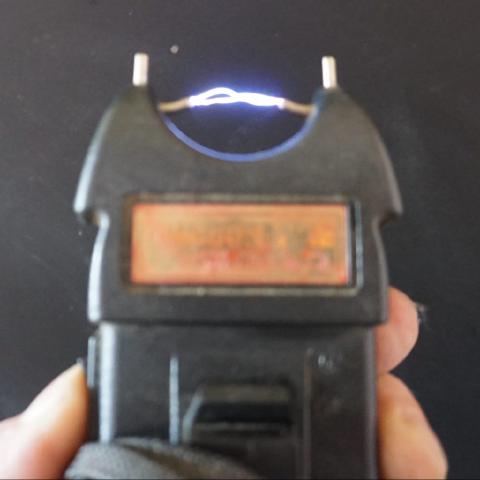
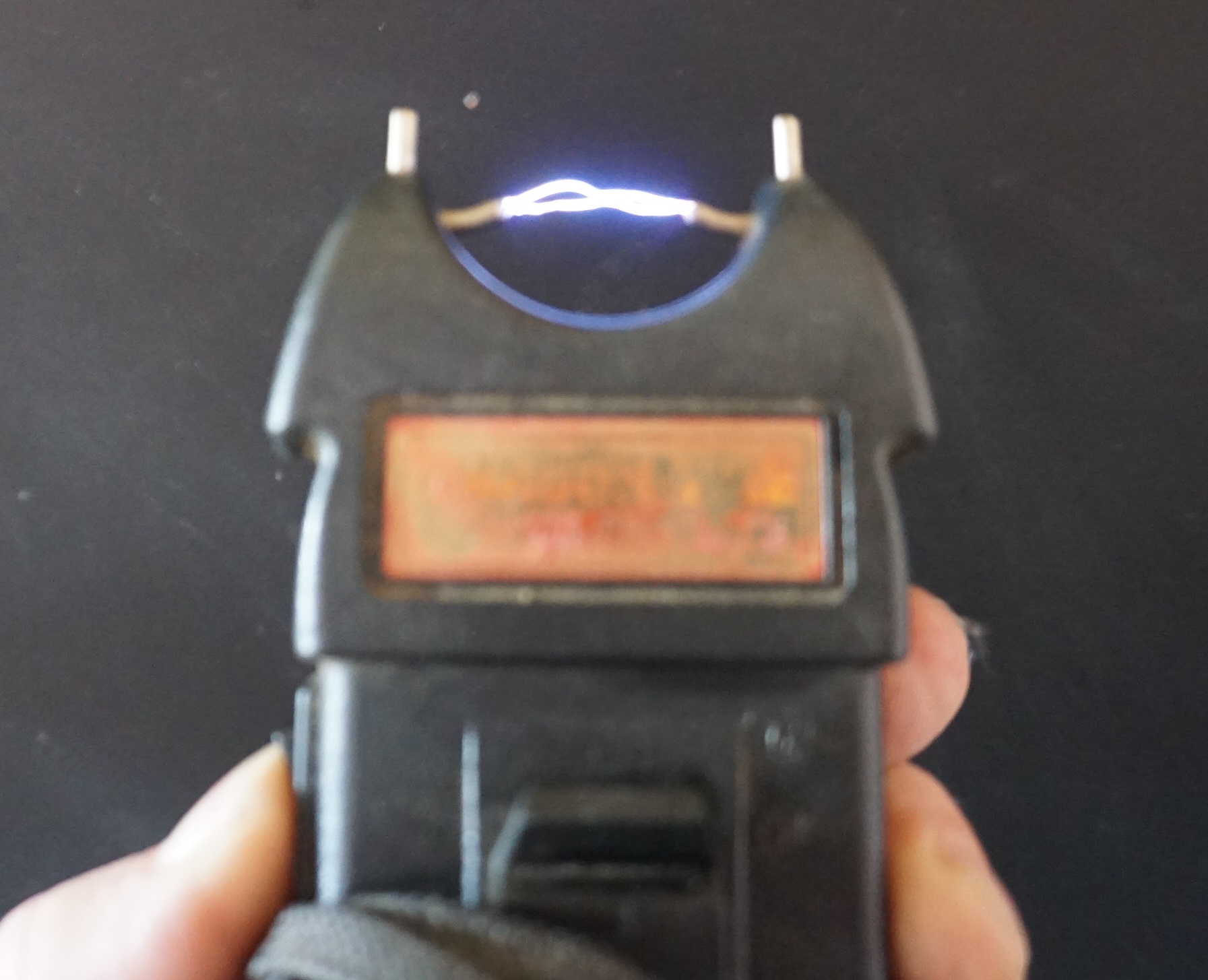
Chris Gammell: It’s a feature. The crazy thing folks is the dishwasher said, “Uh-huh (Affirmative).” A brave new world here, buddy. Here’s a product idea for you, Mr. Product Design Company. You could sell it with every IoT device, the EEVblog Spark Gap Generator. Instantly block all RF in your house by flooding the spectrum.
Dave Jones: It just applies that directly to the RF output transistor, boom, poof, magic smoke, magic smoke mode.
Chris Gammell: Is it like you just don’t put it on your network then? Had you even tried it?
Dave Jones: No, I didn’t even try it. I didn’t want to try it just out of principle.
Chris Gammell: I was going to say you should get a Mi-Fi or a controlled attack surface like a cellular to Wi-Fi modem thing. Then just hook it up to that and then just put a Wireshark on there too and see what it’s doing. I would be very interested.
Dave Jones: Wireshark?
Chris Gammell: Yeah, Wireshark.
Dave Jones: I can imagine what it is. It’s a little device that sniffs Wi-Fi RF stuff.
Chris Gammell: Technically it used to do it on Ethernet. I’m pretty sure it works on Wi-Fi as well but it just watches all the raw traffic going through.
Dave Jones: Is this a commercial product, open source product?
Chris Gammell: I don’t think it’s open source but I think it is free. The last time I used it, it was free. Let’s see.
Dave Jones: It’s just an app, is it?
Chris Gammell: Yeah. I think it’s maybe a premium thing or no, it says GPL so yeah.
Dave Jones: You stick it on your phone or your modem?
Chris Gammell: There you go. There’s your video for the day. You can just watch what it does. Basically, it’s really good for troubleshooting. I was working on an Ethernet product and I learned about it from our friend who wanted to just troubleshoot as we were trying to negotiate network traffic and stuff like that.
Dave Jones: It’s a network protocol analyzer, cool.
Chris Gammell: Exactly but it’s an entire level. You’ll see handshakes and stuff like that going down.
Dave Jones: It’s got a graph. Is that a spec? No, what is that? No, that’s something else.
Chris Gammell: I think it’s just statistical.
Dave Jones: I’m sorry I thought that was an RF spectrum, I was going to get very excited.
Chris Gammell: I think it shows how many pings are happening so you can just see what’s going through.
Dave Jones: That’s pretty cool. It’s got its own, what’s an AirPcap NX USB dongle?
Chris Gammell: It looks like that’s for doing the Wi-Fi stuff.
Dave Jones: If you’ve already got your Wi-Fi built into your notebook or whatever, you can just run it over.
Chris Gammell: I’m not sure. I don’t know. It might need special queuing for that stuff, either way it’s great for that stuff. Maybe take a look, see if it’s calling home. Did you read the brochure at least?
Dave Jones: I didn’t. I haven’t read it, no. I’m sorry.
Chris Gammell: I imagine that you get a notification when your dishes are done.
Dave Jones: Your phone or you can maybe remotely start and stop it or check the progress on your phone.
Chris Gammell: All things that are not necessary.
Dave Jones: It’s totally not necessary.
Chris Gammell: A lot of things can be handled with timers.
Dave Jones: It does have a timer on it. Start the dishwasher during the day. We do this. We start it during the day. We use our solar power.
Chris Gammell: When you got low power rates?
Dave Jones: Yeah because we’ve got that extra solar.
Chris Gammell: I used to do that at night. I would do it at night when it was lower rates too.
Dave Jones: For us, it’s the opposite because during the day when we piecing away the solar. If we don’t use it we lose it almost because we get paid.
Chris Gammell: The feed-in tariff?
Dave Jones: The feed-in tariff, we get paid. I really have to investigate again the battery solutions for solar battery solutions because apparently they’ve halved in price in the last year since I last looked. [Crosstalk 00:06:26] because they were very expensive. I’m sure they still are but they’ve come down a lot.
Chris Gammell: We talked about that. Maybe we talked about the DIY powerwall and then there was a response video that was very funny to that. I do follow, as a result of that whole thing, I started following a couple YouTube channels out there that are focused on that stuff. It’s a good way to research out there.
Dave Jones: A tip for people, if you’re going to do response videos, I haven’t watched the whole thing but we just rant this stuff off the top of our head. None of this is prepared. It’s not like we’ve done our research and this is the final word in power.
Chris Gammell: I got another one of those this week too. I was like, “We just do our thing.” This is me and Dave having coffee or just hanging out by the water cooler. This is me and Dave catching up for the week.
Dave Jones: I literally rode my bike in, walked into the office.
Chris Gammell: Healthy.
Dave Jones: Turned on the computer and pressed record.
Chris Gammell: He’s a sweaty mess right now folks.
Dave Jones: I am, so much so I had to leave the air-con on even though [Crosstalk 00:07:37].
Chris Gammell: Back to your IoT device that’s going to kill you. I guess the real question is, is there a real device in your mind that would be worth having connected like that?
Dave Jones: A home appliance you’re talking about?
Chris Gammell: Sure. Yeah.
Dave Jones: It’s got to be a white good?
Chris Gammell: Yeah. That’s a good way to classify them.
Dave Jones: White goods, I can’t think of it.
Chris Gammell: Your solar tracker is or is not?
Dave Jones: No. It’s connected to the internet. I’ve done a video but it’s not connected to my Wi-Fi at all. It’s just got a 3G GSM automatically to the website. That I don’t mind because I never have to touch it and I don’t have to worry about my Wi-Fi going down or locking up or doing whatever.
Chris Gammell: Cellular solutions are the best solutions.
Dave Jones: Says the man who works for …
Chris Gammell: Yeah. That makes sense. Not that that’s not a thing to see what’s going on with you.
Dave Jones: No but that is purpose design. That is all taught. Solar monitoring, you’ve got to do it somehow whether or not you connect, you have a dedicated computer right next door that logs it via USB or whatever or whether or not you connect to your home Wi-Fi. Whether or not you were doing that like Blue Cheese like I was before, every week it keeps the data for a couple of weeks, I’d login with my Blue Cheese app on my phone. I’d suck down the data and then upload it.
Chris Gammell: A cable replacement solution at a certain point.
Dave Jones: A cable replacement solution almost, yeah. It’s just a matter of where you store the data and this one automatically stores it on the solar analytics’ website which went down the other day by the way. It’s been down for a week.
Chris Gammell: The sun still worked, right?
Dave Jones: It still goes but yeah, it went down for a week.
Chris Gammell: That will be really interesting to hear as you do that.
Dave Jones: Apparently it didn’t lose data. They’re saying, “We’re having issues with our data but the data’s been saved. Trust us.”
Chris Gammell: Trust us? Yes.
Dave Jones: I haven’t checked since. I should check after the show if it’s come back on yet. Anyway, the answer is no. Let’s go through the list. Lights, no, I’m sick of that crap. A dishwasher, no.
Chris Gammell: What’s it called, Jon from SuperHouse, he just posted a good video about that but that’s all DIY as well and it’s internal, right?
Dave Jones: Yeah.
Chris Gammell: That’s the real question. I guess it’s what escapes your house, right?
Dave Jones: Right, yup. He’s done videos on you shouldn’t rely on the internet. He’s into home automation but not remote home automation unless he’s changed his stance on that.
Chris Gammell: No, I don’t think so. If people didn’t see, Jon’s been on the show before. He doe’s SuperHouse now. He also does free …
Dave Jones: He’s always done SuperHouse TV. He’s been doing it for …
Chris Gammell: I mean it’s his fulltime thing now because that is a company. He has a video where he was just showing how he wires up the, it was all Ethernet based though which was interesting.
Dave Jones: Yeah because it’s bloody reliable.
Chris Gammell: Right, exactly.
Dave Jones: You can get cable any day of the week.
Chris Gammell: I agree. I’m sorry, keep going. Lights, no?
Dave Jones: No.
Chris Gammell: Dishwasher, no?
Dave Jones: Dishwasher, no. I don’t see the point. Washing machine, no. A dryer, no. A fridge, everyone craps on about it, “All fridges will be internet connected because you’re going to reorder your food from bloody Amazon or whoever.”
Chris Gammell: If you happened to store all your search code on the fridge then you could really save your ass. I don’t know if you’ve seen the last season of Silicon Valley.
Dave Jones: No, I haven’t.
Chris Gammell: You’ve got to watch it.
Dave Jones: I’ve got to watch it, I know.
Chris Gammell: Season four, it was good.
Dave Jones: All right.
Chris Gammell: Fridge, no?
Dave Jones: No.
Chris Gammell: Oven, no?
Dave Jones: No.
Chris Gammell: Was it June? What was that really expensive toaster oven? Is it June or something else? No, June’s the door lock.
Dave Jones: There’s another one. Juicer, no.
Chris Gammell: Juicer, tea infuser?
Dave Jones: Tea infuser, that’s right. We talked about that one last week. I would have to say that if anything.
Chris Gammell: He’s apoplectic here folks.
Dave Jones: If anything, it would probably be the fridge. I wouldn’t personally but if things are going to be internet connected, probably the fridge and the reorder thing because people are such lazy bastards.
Chris Gammell: How about a security monitor?
Dave Jones: I have a security system. You can.
Chris Gammell: It’s like what Nest is getting into, right?
Dave Jones: Yeah and Amazon with the let the couriers in.
Chris Gammell: We didn’t talk about that didn’t we?
Dave Jones: The survey is that 50% of Americans think that that’s not a bad idea, I’d give that a try.
Chris Gammell: Money back guarantee.
Dave Jones: Yeah, a security system. Anyways, security systems and all that, security systems’ back to base has been a big thing for 40 years, 30 years or whatever since dialup phone lines.
Chris Gammell: I saw a commercial for a Honeywell system that’s like the August Smart Lock. The ring, there’s a doorbell and all these things that are camera based but then what’s it called? Honeywell came out with one where it’s a security system but it’s literally filming inside your house. I’m okay with external. I had a friend or I was talking to my coworkers about this when we stayed in an Airbnb. I’m okay with an external facing camera. Maybe not the safest thing but at least has a practical purpose. Whose at the door and blah, blah, blah?
Dave Jones: Right and to check who’s up the alleyway or whatever.
Chris Gammell: Check if your package is safe and all that stuff. It’s a big thing. Internal cameras, I am staring at my webcam right now and there’s a piece. There is an old Amp Hour business card covering it. Yes, there are microphones.
Dave Jones: Who have we had on the show that covers up the mic?
Chris Gammell: Mike Osman unplugs the TV.
Dave Jones: Mike Osman is the one? Yeah, I thought it was.
Chris Gammell: Yeah or maybe who else was that? I think maybe Joe Fitz also talked about that.
Dave Jones: When security researchers start covering up their webcams.
Chris Gammell: I think this is just a matter. I mean it just creeps me out. Cameras in a home really creep me out. Even phones sometimes. That’s a convenient thing I think but yeah.
Dave Jones: Says the man who has had a webcam in his lab.
Chris Gammell: Exactly. You can watch Dave right now folks. I don’t know. I was at Supercon this weekend and there was a very good talk by Elliot Williams, one of the editors at Hackaday. He was just talking about basically doing everything we’re talking about here, he was talking about doing it himself but he was talking about doing it all behind the firewall. He’s doing MQTT which is the transfer protocol. Doing it with ESP-8266 or ESP-832 and then what was the last thing? I guess maybe some kind of hub. Basically you don’t need to go outside your house. You want to know when your dryer’s done, your washer’s done or whatever, he made a device that’s just a button and a light and it shows, it’s connecting those two things. He’s publishing within the firewall dryer/status and then he just watches that. It was a really great presentation. It was some pretty high level overview but I’m excited for that talk to come out. It encouraged me. Dave, I got MQTT working. That’s something where I said I couldn’t do it for I don’t know why but I just said that.
Dave Jones: I still don’t know what it is.
Chris Gammell: It’s basically just like a published protocol. It’s like, I’m going to say all this stuff wrong but basically it’s a way to publish what you’re doing and then you have a central server. You can setup on a Raspberry Pi, you can setup a broker it’s called. Then you have clients. It’s brokers and clients or broker and clients. In this case, let’s talk about the dryer.
Dave Jones: Practice rip-off the clients, yeah?
Chris Gammell: That’s a different thing. You have a client on your dryer for instance. Maybe you have a temperature sensor there and it says the temperature is 100-C. Maybe you broadcast that. You just broadcast it but you say where the end point is which in this case is the broker and you say 100-C, 100-C, 98-C, 80-C, 70-C or whatever.
Dave Jones: Is it all encrypted?
Chris Gammell: That’s the piece I’m not sure about. I’ll get back to that. The broker basically stores that stuff and then you could subscribe to that from other services assuming again, I don’t know about the security piece but then you could have a phone or you could have an app or you could have a piece of hardware. In this case, Elliot showed a button with an LED and it subscribed to that. Basically it was just going to the server and watching. I’m sorry, it got rebroadcasted out of the broker I believe and then this device that says now it’s just watching for the dryer messages, it’s the dryer temperature and then he’d set the threshold. Once he gets below a certain threshold, the lights goes on and it says it’s ready to be done and the button resets it. Simple, right?
Dave Jones: Yup. I thought a mechanical timer. You throw clothes in, you set timer, you come back and it switches itself off, magic.
Chris Gammell: Yes, I agree but this is like if you wanted a notification system, that’s one way to do it. He said he has a four-floor really narrow house. That’s why. Whether or not that’s needed, that’s an argument. The thing that was interesting to me is he did the same thing then for monitoring solar. He was talking about having basically a serial out from a DMM or something like that, went to the MQTT, was published into his broker and then he just watched it elsewhere and was able to graph it. Again, you can do that locally but this is the wire replacement thing we were talking about and that also was interesting to me. This is a general problem solving tool or a skill set. Yes it is Wi-Fi or some other protocol base but it was very interesting from that perspective. I’ve known about this, MQTT for a while but I didn’t really see it.
Dave Jones: There’s a whole bunch of other ways to do it.
Chris Gammell: Of course.
Dave Jones: It’s like the same thing, it’s just you add another flavor.
Chris Gammell: Of course. I think MQTT is one of those things where we’re going to keep hearing about it especially with more and more devices, even some of the stuff that might be commercially available.
Dave Jones: I was going to say you think that commercial stuff might start. It’s an ISO standard.
Chris Gammell: Is it?
Dave Jones: Yup.
Chris Gammell: It’s been around for a long time, I know that. Adafruit has a great tutorial about getting started on the server and then it got to the point where it setup the broker on their service, Adafruit.io which is one of their new data services. You could totally do that. However, you don’t need to and that’s the key point of the whole thing. Basically, your broker could be outside your house but it also could be inside your house and that’s the key thing. That’s really the flexibility that I want because you could say the server is Adafruit.io or you could just say Raspberrypi.local or whatever your address of your …
Dave Jones: Thingy-me-bobbies, yeah.
Chris Gammell: Yeah. That’s going to be the thing that allows us to keep our sanity. If you have a service and it’s built to work with both.
Dave Jones: Once again, if your firewall gets hacked then they’re straight in. They’re looking at you through the webcam.
Chris Gammell: You wouldn’t use this for webcam but I know what you mean. Yes, I agree. There’s always and that’s a bigger thing and it should be encrypted but I haven’t gotten that far yet. I don’t know. I think in terms of just practical, in terms of a practical implementation of “IoT,” this is the closest I’ve gotten. It’s pretty cool. That was great and I’m looking forward to that talk. I’ll post the link when we find it. There are some good talks.
Dave Jones: Excellent. Can we not talk about Internet of Things?
Chris Gammell: I got to hang out with a lot of good peoples this weekend to.
Dave Jones: Peoples?
Chris Gammell: Yeah, lots of people. A lot of former guests were there. That was nice. Hopefully a lot of future guests were there.
Dave Jones: You gave Jerry a hug?
Chris Gammell: Yes, of course. Jerry was there.
Dave Jones: He posted this photo. Jerry’s in the background looking off alone like alone, it was so funny.
Chris Gammell: It was just the only shot I got of everyone at once. David prompted me to give Jerry a hug. It was really nice.
Dave Jones: You didn’t just walk up to him from behind?
Chris Gammell: No. That would be creepy. It was really great.
Dave Jones: Less creepy than, “Dave Jones said I’ve got to hug you?”
Chris Gammell: Right, “Mr. Jones sends his regards hug.” Lots of hardware hacking this weekend and hung out with Mike and what that man did with that badge was very interesting.
Dave Jones: In the end I didn’t see it. Has it been published?
Chris Gammell: Yeah. I’ll send you that post. Like we talked about the last time, it was like a PIC-32. I was like, “All right I’ll give it a shot, MPLAB, whatever.” I got all that stuff installed. I opened it up and I’m like, “I have not programmed firmware in a very long time. I have no idea what I’m going to do.” Not to mention, I mean it was a pretty advanced firmware to start with. It was doing image transforms and stuff like that but some people were doing that stuff. It was tough to get my head around but some people did. That’s great.
Dave Jones: I’ve got the link. I’m having a look.
Chris Gammell: You had not seen the preliminary versions either?
Dave Jones: I’ve seen the handmade board and stuff.
Chris Gammell: It was pretty similar to that. It was just like solder mask on top of that. The big stuff like any project, you think about, you’re dealing with this too now, is the firmware takes at least twice as long. The hardware is suck-y but once you get it working, it’s pretty fixed. You’re not like, “Let’s just throw another feature on here, let’s redo all this.” No, it’s on firmware now. Do the most you can with the firmware then rev too can be a big iteration but yeah, it’s good to get your hardware right the first time if you can.
Dave Jones: It is.
Chris Gammell: He ended up putting a scope on there which was insane.
Dave Jones: That’s what it was? Okay. That’s why you could see the wave folds. I thought it was generated.
Chris Gammell: Yeah. He did a microphone into that too and stuff like that. He had these crazy LEDs. I think there’s a link to the badge hacking. Someone made a 3-D printer. They used the screen to expose an SLA type printer. What have you been up to? How’s your product going?
Dave Jones: My product? Yes. It’s eminent we had a last minute kerfuffle.
Chris Gammell: As you do.
Dave Jones: As you always do. They’re being shipped tomorrow, 50 units. I’m getting it. It’s happening. The kick start needs to happen in the next few days.
Chris Gammell: You’re on that shipping deadline you were saying, right? You want to get it before Christmas.
Dave Jones: Yeah. I’m physically not capable of shooting a polished video and editing a polished video. It’s just not possible.
Chris Gammell: I can write you some chunky piano music.
Dave Jones: I thought about shooting a spoof. You’re starting out like it’s all polished and you go, “It’s bullshit.”
Chris Gammell: You turn the lights on and it’s like, “All right. Let’s get this shit done. Come on. You know what you’re getting.”
Dave Jones: It’s just my crudely stitched together thing voiceover. I was going to voiceover the whole lot and then I go, “Who cares?”
Chris Gammell: Your voice?
Dave Jones: Exactly. I’ll just use the in-camera mic, just shoot in camera. I shot it. I was shooting shots of all the different features working and I was just doing a voiceover on top of that, speaking as I normally do just to remind myself what to say in the voiceover. Then I ended up just using that audio that I wasn’t serious about using anyway. It’s like, “I just couldn’t give a shit.”
Chris Gammell: We talked about it last week. The people already know what they’re getting.
Dave Jones: Exactly. Either people want it or they don’t. My video is not really going to sell it to them.
Chris Gammell: It’s not exactly like the magical $99 point too or whatever the point is where people will just do it on a whim.
Dave Jones: It’s a multi-meter. It’s either you’re in the market for a $200 class multi-meter or you aren’t.
Chris Gammell: Is that what it’s going to be? I didn’t know that.
Dave Jones: The kick starter will be around that.
Chris Gammell: What’s the SRP? Is it $299?
Dave Jones: I don’t know.
Chris Gammell: Go higher.
Dave Jones: Go higher you think?
Chris Gammell: Go higher and discount man.
Dave Jones: The problem was is that my original intention was that it was going to be a $200 retail meter, a $200 class meter and then the prices just crept up and up and up to a point.
Chris Gammell: Margins being what they are. You said the chip you had to source could be more expensive.
Dave Jones: We had to add another voltage reference there, a bit of voltage reference adds on more cost, this and that. All of a sudden I said, “I’ve got to supply my own probes now.”
Chris Gammell: You’ve sourced the probes you mean?
Dave Jones: I’ve outsourced. I’m using the Bowman Probes to go with it.
Chris Gammell: Those are really good though. I like those.
Dave Jones: They’re nice but still they cost, that’s cost I hadn’t factored in.
Chris Gammell: Logistics and all that stuff. Still doing your no BS packaging, are you doing that?
Dave Jones: Yeah. I’m doing the no BS packaging. I’ve got a thousand cases sitting here next to me in 14 boxes.
Chris Gammell: A thousand?
Dave Jones: A thousand custom cases as in zipper, soft zipper cases.
Chris Gammell: The carrying case.
Dave Jones: They don’t weigh much but they cost a fortune to ship because of the volume of them.
Chris Gammell: Shipped to you at a thousand a time you mean?
Dave Jones: Yeah. Shipped to me at a thousand a time, I was shocked at how much it cost with a thousand cases.
Chris Gammell: That’s by a thousand little cuts, right?
Dave Jones: Cases, yes, a thousand zipper cases.
Chris Gammell: You don’t think about it either?
Dave Jones: No.
Chris Gammell: It’s worse when you’re doing sourcing of individual components when you start going, “I’m buying from not one distributor, buying from five distributors and this part, that extra part.”
Dave Jones: The five distributors and you get hit with five different courier charges.
Chris Gammell: You don’t factor that in, you get rush payments and all that stuff. That’s all top line cost you have to factor in. It could really get up there. That’s where it starts to make sense to have a courier account and stuff like that, to have a UPS or DHL number or something like that.
Dave Jones: I won’t give you details but part of the last minute kerfuffle was wondering whether or not we’d make another change to the hardware. I came back and said, “Look, we can do it.”
Chris Gammell: Don’t do that.
Dave Jones: Maybe, kind of, we can still deliver some before Christmas, maybe. Then they said, “By the way, we’ve already got 2,000 boards in stock.”
Chris Gammell: It would have been a board change?
Dave Jones: They’re X-dollars each and I would have to eat that cost because they weren’t going to have a buyer of that because it was a change that I wanted.
Chris Gammell: What was the cost? This is just the PCB you’re saying?
Dave Jones: It was multiple dollars per board. It’s like a four-layer board. It’s a complex four-layer board and it’s not small. It’s not 10 centimeters by 10 centimeters. It’s bigger. It’s about 20.
Chris Gammell: That’s another one that sneaks up on you, you don’t think about it. The decision starts like, “We should really do six layers, we should really do four layers or whatever.” Four layers’ isn’t bad.
Dave Jones: It’s not bad these days but it is an additional cost. They said, “Look, we’ve already got 2,000 boards in stock. Okay, we can scrap them if you want to make some changes.” I go, “No, let’s just hold off.”
Chris Gammell: Was this a change that would be nice to have thing, it wasn’t critical?
Dave Jones: It’s one of those nice-to-haves. No, it’s not a critical thing. It’s just one of those nice-to-haves.
Chris Gammell: That’s why you do a rev 1.1 and then the new and improved. Release a bunch of firmware changes with it too. It’s almost like planning for that. It’s better to get it out.
Dave Jones: Then I figured that we go and once these things hit, once there’s a thousand out there, people are going to find issues.
Chris Gammell: That’s right and it’s also true.
Dave Jones: They found issues with my BM-235 meter and they worked on that for two and a half years. They were so careful and then they released it and then the reports started coming in and they had to make some hardware changes.
Chris Gammell: You do the best you can and then you deal with it. You’re right. I think that’s what you’ve got to do. I think that if you wait too long, you’re just never going to get it out, right?
Dave Jones: You’re never going to get it done, yeah. I just had to go look and just go ahead. It’s fine.
Chris Gammell: That’s good. That’s a good call. Cool man. Firmware crunching continues?
Dave Jones: Yes, the app and everything. The app is taking forever and we’re really not even close to a real polished app.
Chris Gammell: It’s tough. It’s a lot of UI stuff.
Dave Jones: I was talking to David the other day because he’s back on it working again because the release is eminent and we had to have something for the video.
Chris Gammell: You could fake that.
Dave Jones: Yeah but we’re engineers, we don’t fake shit. It’s against our conscience.
Chris Gammell: It wouldn’t be the first time man. It wouldn’t be the first time.
Dave Jones: Anyway, we’re all talking like with hindsight, was it a mistake to try and do this cross platform thing? That was the whole idea from day one is that he’s going to write it so it’s truly cross platform. It will compile for all the platforms out there and he went, “Probably.” I was like, “Yeah.” It looks like he reckons Linux is going to be really hard. It’s not just going to automatically compile for Linux. There’s just so much stuff. I’m sure those who’ve tried to do true cross platform development have realized this. A lot of people told me when I said I was doing cross platform, everyone went, “Good luck.”
Chris Gammell: This is a computer application though or a phone application?
Dave Jones: Both.
Chris Gammell: That’s another thing. Now you have even more.
Dave Jones: It’s currently working on Windows, either desktop or tablet-y type Windows or it’s working for Android. It should in theory compile for Mac and IOS but we don’t have the physical devices to do that yet but we’ll get those. Linux is the other one. Linux is the hard one apparently. Just the way all the libraries, the graphical libraries and the interfaces and things work. It’s just apparently it’s not pretty, David’s telling me.
Chris Gammell: That’s too bad. It’s one of those things where you’re not going to make everyone happy either way. It’s either not going to be the best experience or you’re not going to offer it or whatever, right?
Dave Jones: Yeah. Out of the box, if you get a meter next month, it’s probably not going to have an IOS version of the app.
Chris Gammell: I think the real question too is, are people even going to use it, the app?
Dave Jones: Maybe not, right. Yeah, one of the big selling points is that it has Bluetooth. How many people are going to use it? Probably not many, as you said, most of them are going to use it as a regular multi-meter, it’s just nice to have.
Chris Gammell: Just to have a good API and then just to have someone else do the app later.
Dave Jones: If you want to do double, it’s got a micro SD card, just log to the SD card and then just import it the old fashioned way.
Chris Gammell: This is like a product argument right here, right?
Dave Jones: Yeah.
Chris Gammell: This is what do you spend your time on, what do you offer and all that stuff.
Dave Jones: At the moment, we’re dealing with dropped and corrupted packets. It’s like, “Where the hell are these things coming from?” The more research we do it’s like, “Yeah, that’s just Bluetooth.” It’s like, “Great. Thanks a lot.”
Chris Gammell: I was looking at that because I was looking to do a Bluetooth microphone just when recording on my cell phone or something like that for a really lightweight video setup. I kept asking around about it and as far as I can tell, yes it does exist of course.
Dave Jones: People use them for their phones.
Chris Gammell: Headsets like the jaw bone and all that stuff.
Dave Jones: Yeah but everyone says they’re shit.
Chris Gammell: The reason for that is the lower bandwidth as well. They cut out a bunch of the frequency content anyways because you want to get the really high tune-y kind of stuff so you can get the audio fidelity.
Dave Jones: It has to fit in a 1.5 kilohertz bandwidth.
Chris Gammell: There’s also some stuff about getting through lower bandwidth systems. This is all the telephone-y stuff from the old days, right?
Dave Jones: Yeah, of course.
Chris Gammell: Which I know nothing about but yeah, there are certain frequency content you can cut out without really much worry anyways but that doesn’t really work when you’re trying to record a video unless you want to sound like you’re recording through a cell phone, right?
Dave Jones: Yeah, that’s right. No, it’s crap. It’s just not workable. They’re just not designed for that. They’re designed for mobile phone calls and that’s it. For those who don’t know, back in the day, you know why modems were so slow back in the day?
Chris Gammell: Capacitance?
Dave Jones: No, the bandwidth, the same thing. It’s because they had to fit in the 1.8 kilohertz bandwidth of the phone line. The phone lines had the X amount of bandwidth. They had to develop all these X modem and all these X protocols. Your X-32 bits and all your other wiz bang protocols, it eventually got up to 56-K for a regular modem. All that technology, all that signal process and technology had to be designed to get around the bandwidth limitation of the phone line.
Chris Gammell: I remember reading about some of that stuff in that Bell Labs’ book. They talked about it a little bit. I thought they were talking about doing multiplexing by you maintain the frequency band, like you’re saying the 1.5-K but then you shift it around because you have more analog bandwidth but you basically stack a bunch in the channel, right?
Dave Jones: Yeah.
Chris Gammell: Then you shift them up and down?
Dave Jones: It all has to do with signal rates and all sorts. They’ve got all sorts and really I’m not an expert on it.
Chris Gammell: I don’t know much either. That probably contributed to some of the ability to do that with Bluetooth.
Dave Jones: 3,100 hertz, 3,400 hertz. It’s something like that.
Chris Gammell: Versus the 20-K that you and I are hopefully getting right now?
Dave Jones: Right.
Chris Gammell: Our very low voices, our very high voices.
Dave Jones: Once again, Bluetooth, mobile phones do a similar thing. People say, “Why do mobile phones sound crap?” It’s because of the limited bandwidth.
Chris Gammell: They intentionally compress that audio in the first place, right?
Dave Jones: Yeah.
Chris Gammell: They try and do the best they can but I think they do. That’s what codec-s do. We’re on a codec right now for Mumble that’s compressing it down and stuff like that and then read that and compressing it. We should move on to something we know anything about.
Dave Jones: We have issues when there’s dropped packets and things like that because then it’s got to restart the algorithm because when you drop a packet or two, you lose syncing the algorithm and it’s going to restart and you get that break in the audio or however it manifests itself based on the particular codec.
Chris Gammell: Then you think about Bluetooth too. Bluetooth, it’s a pretty busy channel to start with. I mean, there’s a lot of stuff that is talking on that these days. I assume that if you’re trying to stream data which it’s not really made for in the first place, it can get pretty easily interrupted. That’s probably what you’re seeing with those corrupt packets, right?
Dave Jones: Yup.
Chris Gammell: Good luck.
Dave Jones: Yeah, thanks.
Chris Gammell: It sounds like that sucks.
Dave Jones: It’s one of those things, it’s like, “God, never again, Bluetooth.”
Chris Gammell: As it goes, you’ll find out, right? That’s the thing you’ve got to put in the market so you see what people think about it.
Dave Jones: Yeah. Put it out there. The good thing is that the software will get better and better. The first release of the modem, we expected to be full of bugs in the feature and then tons of people will come back with feedback and then we’ll slowly fix all the issues.
Chris Gammell: I still think about that from that microphone that you had told me about, the H-1 that I have. That 1.1 firmware was a killer. It turned it from a handheld microphone to a streaming microphone. That changed the entire nature of the product which is amazing.
Dave Jones: Yeah and it was just software, that’s it.
Chris Gammell: Those changes aren’t as common but that transformative nature can be really. It’s at least worth updating the firmware for, that’s for sure.
Dave Jones: I just got an e-mail yesterday from Charles at TRIO Test. Did you know that the Siglent Spectrum Analyzer, that low-cost spectrum analyzer, it only had 10 hertz resolution bandwidth?
Chris Gammell: Uh-huh (Affirmative).
Dave Jones: He said, “The new firmware update turns it into one hertz,” which is pretty killer. He said, “Just update the firmware and you’ve got one hertz resolution bandwidth.”
Chris Gammell: That’s pretty cool.
Dave Jones: No hardware changes.
Chris Gammell: I will say that is the benefit. I have the Analog Discovery as well. I know you have reviews on software based scopes.
Dave Jones: I like the Analog Discovery. I’ve done videos on that. I think it’s a nice little product.
Chris Gammell: Yeah but I’m just saying that that’s a very baked in thing where it’s all software controlled. We’ve thrown in other audio analyzers. Obviously it’s still limited by certain physical bandwidth stuff but it’s got an FPGA board. As long as you get the analog stuff right in the front end and then you’ve got the FPGA and then the software stuff, it’s a nice little update stack.
Dave Jones: Cool bananas.
Chris Gammell: I’m a fan.
Dave Jones: All right. Let’s get into some news.
Chris Gammell: I was going to say what you can update after the fact is a Schottky diode.
Dave Jones: This is great. I am totally stealing this idea.
Chris Gammell: What is it?
Dave Jones: I’m totally stealing it. It’s from Electron Update is the YouTube channel. I can’t say I’m subscribed but I’m going to.
Chris Gammell: Go on now.
Dave Jones: I just clicked the subscribe button. Electron Update, what he did is he took a through-hole Schottky diode of 1N5817, just a standard one and sawed it in half so that you can see what’s inside. He did a cross section cut. When I first saw the title of the video, I went, “How the hell did he do that? Has he got some special thing?” No, it’s sandpaper. What he does is he puts the component in epoxy resin first. He encapsulates it in that. It basically can’t move. The leads can’t bend. Everything’s encapsulated in a hard, I assume it’s a hard epoxy, I haven’t watched the whole thing.
Chris Gammell: Yeah. It’s like a two-part that that hardens.
Dave Jones: It’s one of those two-part epoxies, one of those clear epoxies. Then he simply started rubbing it on sandpaper and just got finer and finer and finer and finer. It’s just incredible.
Chris Gammell: The mosquito falls in the amber and then we extract it and dino DNA.
Dave Jones: That was a good impersonation.
Chris Gammell: I love that dino DNA.
Dave Jones: Spare no expense.
Chris Gammell: That’s right. He’s done this with other stuff too like surface mount inductors and stuff like that.
Dave Jones: Really?
Chris Gammell: Yeah.
Dave Jones: I’m totally stealing this. I’m sorry, I don’t know his name, he runs the channel, but sorry dude, I’m totally stealing that. I’ll give him credit but I’m so stealing it.
Chris Gammell: It’s a cool idea. It’s just to keep the package together, that’s the main idea, right?
Dave Jones: Yeah, it’s to keep it all together.
Chris Gammell: There’s no epoxy internally, right?
Dave Jones: Yeah. You could try and do it without that but the good thing about the epoxy is that you have something to hold onto as well when you’re rubbing that sucker. It reminds me of how all the scientists, experimental scientists back in the day used to do things. It’s like, “You have sandpaper.” You think, “How did they shave off these atomic layers?” Sandpaper.
Chris Gammell: Right or when they’re doing stuff with carbon nano tubes, we use Scotch Tape.
Dave Jones: Scotch Tape to peel off an outer layer.
Chris Gammell: It’s Scotch Tape and carbon, what do you think we did? It’s simple.
Dave Jones: How did you polish that 10-meter diameter space telescope mirror? Sandpaper cloth.
Chris Gammell: Do anything else, one inch at a time man.
Dave Jones: One atom at a time. They just keep rubbing it and rubbing it. That’s great. Anyway, hats off to that very cool shout out.
Chris Gammell: Lots of good electronic stuff this week too. Did you see the quake on an oscilloscope?
Dave Jones: No, I haven’t seen the quake. Did someone captured a real quake that happened?
Chris Gammell: No. I’m sorry, Quake the video game.
Dave Jones: Quake the video?
Chris Gammell: Yeah.
Dave Jones: Bloody hell.
Chris Gammell: They’re just using the display. It’s silly but its fun.
Dave Jones: It’s just an XY thing.
Chris Gammell: Yeah, exactly the vector drawing stuff. That never gets old to me. I don’t know.
Dave Jones: How have they converted it to vector?
Chris Gammell: I think this is probably the same way like Todd Bailey, when he was on the show, he told us I think they needed to redraw the actual stuff, right?
Dave Jones: Right, okay. It’s not like they compiled the original source code, okay.
Chris Gammell: Right.
Dave Jones: Got it.
Chris Gammell: I guess an earthquake would also be interesting. I don’t know what you would show for that though.
Dave Jones: Anyway, it’s just one scene. They’ve just drawn one scene and they’ve penned around so you’re holding a gun and there’s a key over there and some walls and stuff. That was basically a software. That’s a software thing.
Chris Gammell: No, not necessarily.
Dave Jones: No?
Chris Gammell: Yeah. Sometimes to draw those vectors you need to have some hardware acceleration tips.
Dave Jones: Okay, you think its hardware. There’s the hardware linked to the hardware.
Chris Gammell: Yeah, it’s true. Speaking of hardware we’ve got some news today that’s unfortunate but not too surprising.
Dave Jones: Inevitable I would say. I think we’ve talked about it before. Let’s discuss it again. Tell us.
Chris Gammell: A TechShop unfortunately is filing bankruptcy and a chapter seven bankruptcy which is the bad one apparently. I don’t really know much about it.
Dave Jones: They’ve closed all their doors instantly. How many shops did they have? How many locations did they have?
Chris Gammell: I think they had eight.
Dave Jones: Eight?
Chris Gammell: They had a couple in California.
Dave Jones: This was only a US based thing?
Chris Gammell: As far as I know, yeah. They just opened one in Brooklyn.
Dave Jones: Who was behind it? Who was the money behind it?
Chris Gammell: I don’t know about funding. I think they might have been VC-backed.
Dave Jones: Were they a startup? VC-backed, okay, right.
Chris Gammell: They were for-profit and that’s one of the things they talk about.
Dave Jones: They were for-profit, yeah. For people who don’t know, they were a maker space. It was basically the first attempt to commercialize maker spaces. That’s what they say here. It failed. It was the experiment to see if you could commercialize it.
Chris Gammell: It made it 10 years. That’s something.
Dave Jones: That’s pretty. I haven’t delved in details, was that losing money every year for 10 years?
Chris Gammell: No, I don’t think so but they’ve been stealing too.
Dave Jones: They started out making a profit did they? There were some years when they may have or?
Chris Gammell: I think they may have. If you go to Techshop.ws which is their website, it’s now just a PDF but they have a history of what happened. They have acquisition interest contact forms, if you want to buy the TechShop.
Dave Jones: If you want to buy the gear. All the vultures are coming now. Now, I’m interested in TechShop because they’re selling.
Chris Gammell: I didn’t realize that it pretty much opened in time with Maker Faire, 2006-2007.
Dave Jones: I didn’t know that. I didn’t realize it was that old.
Chris Gammell: It’s been around for a long time and you’ll see them at most Maker Faire-s and stuff like that. The way I talk about it, usually the way I explain it to people is it’s like a gym for nerds. You go there and you pay a monthly fee and then you can use the equipment.
Dave Jones: Use all the stuff, yeah.
Chris Gammell: It works the nerd muscles. Much like a gym it’s a for-profit model. Obviously Dave you’re a gym-going person.
Dave Jones: I am.
Chris Gammell: Gyms are based on the idea that not everybody’s going to be there all the time and that the relative cost of per square foot is low. I’m not sure that this matched that as well. The cost per square foot of these things is pretty high.
Dave Jones: The analogies are excellent between a gym because both of them, you can get a home gym and you can do your own stuff. There’s a lot of people who don’t have the space, that’s fine but even the ones who do have the space, they buy their treadmill, they buy their cable machine and they buy everything else.
Chris Gammell: The bow-flex man.
Dave Jones: I’ve had my own home gym. It comes down to a motivation thing, working out on your own sucks.
Chris Gammell: Assuming you have the space, sure.
Dave Jones: Of course you never get the variety of the machines and things like that and free weights and everything else. You’ve got no one else to workout with generally.
Chris Gammell: I think the social aspect shouldn’t be underestimated to be honest in both cases really.
Dave Jones: This is a similar thing. We’ve talked about this before. The revolution that’s happened in our industry in terms of low-cost equipment, you can equip your own lab that has all this stuff, that has the laser cutters, the 3-D printers and all the big machines and things like that. Many people are doing this so you don’t need a TechShop.
Chris Gammell: Maybe. It’s an accessibility argument for sure but I think it’s a little bit broader than that. Yes, equipment availability is a problem. Sometimes that’s also solved by traditional maker spaces which are usually lower cost. I think TechShop in the Bay Area was 150-160 a month. It’s not cheap. It’s for premium gym practice.
Dave Jones: The other thing is the location as you’ve got to have the time to commit. That’s why hacker spaces and maker spaces appeal more to your …
Chris Gammell: City dwellers.
Dave Jones: City dwellers.
Chris Gammell: City slickers.
Dave Jones: Your single people or the kids who live on campus or something. That’s why university ones do quite well because you live there generally. You’re always there and stuff like that.
Chris Gammell: I think that is part of it.
Dave Jones: Whereas me, how many times have I visited my local hacker space? Once.
Chris Gammell: I think that’s different though too. I agree with all the points you’re making but I don’t think that’s ultimately what the problem was. I think the big problem is just the market size. Everybody at least in theory should go to a gym or workout or whatever. Obviously some people are going to run outside or not workout at all or whatever. I just think that this is a negative view coming from me, I just don’t think there’s as much need for this.
Dave Jones: No. I don’t think there’s a huge need either because once again …
Chris Gammell: At least at the scale sizes that are required for gyms and stuff, right?
Dave Jones: Yeah because you can do everything at home. If you want a 3-D part you can just order it, can’t you, in the US on Shapeways or whatnot? You don’t even need a 3-D.
Chris Gammell: Yeah, you can do that. You can make X, Y, Z. You could do lots of services. It’s not even that. It’s just a capacity argument. Why are there so many gyms in the US? It’s because there’s a lot of people and there’s a lot of need and the relative cost of operating a gym is a big upfront investment and then a low cost of maintenance. You have to maintain the machines but really it’s more about staff.
Dave Jones: It appeals to almost the entire population.
Chris Gammell: Exactly. Now, in this case it has to be a very specific group and it’s a high cost of maintenance specifically.
Dave Jones: Not only do you get hit with the limited market size, then you get hit with those who can physically afford the time and location to get there. You’re limited that way again and then you’re limited in terms of how many people would need that stuff.
Chris Gammell: From a capacity argument as well, I think this is going the other direction now but I think in a capacity argument. Everybody who’s been to a gym has seen the, “Please don’t spend more than 30 minutes on a treadmill,” which is a problem solved for me but they say that as a capacity thing. Many of the operations that they’re even talking about, again this going in the opposite direction of what I’ve said before but a milling machine takes 10 hours or depending on the size of the part, there’s 24-hour prints. You’ve done long prints before on 3-D printers.
Dave Jones: There’s hardly ever a print I’ve done that takes less than an hour or two.
Chris Gammell: If you truly charge for the cost of each, of a footprint, electricity and maintenance and all that stuff and then you try to amortize over all the people in the group, it’s just a really tough equation to crack. I think they even said in their PDF that without proper corporate backing or grants or anything like that, it becomes really difficult. Then the fact that they were trying to do it with a for-profit model versus nonprofit model which is what prevented them from getting some of those grants, that was also detrimental they said. It’s like they played with a lot of different models and I know a lot of people that loved it there. It seemed like a good community. It seemed like they did everything well.
Dave Jones: Of course you’ll have your die hard people who think this was the greatest thing that changed their lives.
Chris Gammell: Of course, businesses started through here. I think it’s a successful experiment but it’s an unfortunate ending. It’s too bad because now a lot of people that … hopefully something will rise up out of this, maybe a smaller more agile version. Maybe it’s a small shop with just desktop tools. Do you know what I mean? It’s a co-op instead.
Dave Jones: Maybe. Right, it could be a co-op based system, yeah.
Chris Gammell: Right or it’s just people go to more maker spaces or start new ones or whatever.
Dave Jones: If you try and run it as a for-profit, I think it’s forever doomed. It’s going to be forever doomed.
Chris Gammell: I really do wonder about that. Obviously for-profit gyms exist but those are the big constraint differences.
Dave Jones: We see a lot of gyms go out of business.
Chris Gammell: That’s true.
Dave Jones: Part of that is market flood.
Chris Gammell: That too.
Dave Jones: Everyone jumps on the bandwagon, just the numbers out there.
Chris Gammell: The optimist in me hopes that there’s enough of a market for this because more and more people are joining the field. The pessimist in me says that’s not the case and even if it was that it’s difficult to operate in this space.
Dave Jones: I’ve looked into it as well. I’ve looked into making one, pun intended.
Chris Gammell: It would be a very interesting thing.
Dave Jones: I was looking to starting one up and then I just ran the numbers.
Chris Gammell: Let’s do it as an estimate. How many people would be interested in that in Sydney you think? Assuming you had the most perfect location in Sydney which does not exist.
Dave Jones: Let’s say a couple hundred if you put it near a uni somewhere.
Chris Gammell: A couple hundred, charge what, $100 a month?
Dave Jones: That’s impossible for a student. That’s impossible for a uni student. That’s where your market is. The market is you can’t afford it.
Chris Gammell: Some of your stuff’s cutoff there, right?
Dave Jones: Yeah.
Chris Gammell: Then you have some people that are doing business stuff but then they’re startups and they’re not necessarily flushed with cash either. They might not want to raise the money or may not have raised money. It’s a difficult space to be in.
Dave Jones: I think there are one or two TechShop type ones in Sydney, I’ve never been to them.
Chris Gammell: That would be an interesting thing to find out.
Dave Jones: They’re more into woodwork and crafty stuff rather than.
Chris Gammell: Then you think about the security stuff, the insurance security and all that. I had joined that space, mHub and I’m still a member. I’m going to be working out of there more for my job now.
Dave Jones: They’ve got desks where you can make it your mobile, make it as a temporary office.
Chris Gammell: It’s a 60,000-square foot facility and there’s a lot of fun toys in there but I’ll tell you what, 40,000 of that is meant for renting out as a business because that’s where the real business is and they’re nonprofit and they’re backed by the city and there’s all these corporate sponsorships.
Dave Jones: What’s the name for that? What’s the name? Is that Hot Office or something, Hot Desk?
Chris Gammell: Hot Desk.
Dave Jones: Hot Desk-ing?
Chris Gammell: Yeah. Hot Desk is also a word people might know.
Dave Jones: They provide a chair or a table. Do they provide big screen monitors and stuff, you just plug your notebook into and they provide the internet and the power?
Chris Gammell: Yeah. Usually that stuff’s flexible too. It’s just like a mailing address and you have some that share the venue.
Dave Jones: You get someone to sign for packages?
Chris Gammell: Exactly. It’s definitely cheaper than running, renting an office. It’s more expensive than hanging out in a coffee shop all day but you have more amenities and stuff like that.
Dave Jones: You appear as a bigger entity when you’ve got somebody who, you’ve got a concierge who takes your calls often in your company name. We’ve got this here in the building I’m in.
Chris Gammell: We don’t have those.
Dave Jones: You can rent a little 10-square meter office space. It’s basically not enough room to swing a cat but you get a concierge who will. You get a dedicated phone number and they know when that phone rings to answer it as if they’re your secretary.
Chris Gammell: That’s a great idea.
Dave Jones: They’re, “Hello, welcome to X, Y, Z Company,” it’s just like that.
Chris Gammell: For me it’s just, “Hola, this is Contextual Electronics. Hold please.”
Dave Jones: They are recently popular because it can make you look and sound important and bigger than you are which in some industries matter.
Chris Gammell: It sounds like I just have the sweet Mexican woman who sounds suspiciously like Chris. It’s interesting to see. I would love to hear from our listening audience to hear if there are other models.
Dave Jones: Was there any hint that this was going to shutdown or was it just like you came in one day and the doors were locked? Yeah.
Chris Gammell: The doors were locked, yeah. I never had that happen to me. I know people that have had that happen at restaurants they’ve worked at and stuff. It’s unfortunate.
Dave Jones: Inevitable. You could have almost banked money that this was going to happen unfortunately.
Chris Gammell: I wouldn’t have guessed that. I don’t know enough about them.
Dave Jones: If you went in and analyzed, it’s like, “Yeah,” obviously doing it as a for-profit thing. Maybe as a co-op thing where everyone puts their own money in that helps fund the thing, everyone’s a part owner and whatnot then there’s more incentive to turn up and make it work.
Chris Gammell: It’s tough too. I lived in the suburbs. Nothing like that is going to exist out there. I think the real question too, I think the social piece is totally worth paying for. You just get connections from that stuff. I don’t need like my space just got a new big ass milling machine that I am not going to be using. I just don’t need that capability but some people do.
Dave Jones: What’s gas milling?
Chris Gammell: I said big ass.
Dave Jones: Big ass.
Chris Gammell: It’s a big ass 3-D milling machine.
Dave Jones: I thought it was gas milling.
Chris Gammell: No.
Dave Jones: I’m sorry. That’s what I heard. I’m trying to read something at the same time. I wasn’t paying attention.
Chris Gammell: Our best to them. It’s unfortunate.
Dave Jones: I think it’s one of those things where they kept hoping that they would get new funding at the last minute and then they’re just like the money literally ran out. That’s so common. We’ve mentioned that on here before. It’s like nobody wants to admit to anyone that they’re on the brink of bankruptcy because you’re always hoping that that funding would come through and save it.
Chris Gammell: You can’t be like, “We’re in trouble. We’re in trouble,” because then if you do sell then you sell for a very poor price.
Dave Jones: You can’t be negative, yeah. If you’re running a tech startup for example, it’s very non-CEO like to go to your employees and, “Look, we’re in deep shit if this money doesn’t come through.”
Chris Gammell: People run for the exits too.
Dave Jones: Then they run for the exits. For the good of the company, you almost essentially have to lie by omission basically. That’s an enormous part of your job really is to keep the hope alive which you can argue as either fair or not fair, employees should be informed but if they’re informed then they’re going to jump ship, tough one. Hats’ off for them for making it work for so long. Anyway, it’s an experiment everyone knows. I’ve got a friend of mine who did a startup and it’s like, “We’re going to do this.” They’ve got some VC-backing or some private backing anyway
Chris Gammell: Angel funding.
Dave Jones: It’s something like that, angel funding which kept them going for a year and they went. In the end, they went, “Right, it’s been a year. We’ve tried this. We know the market. There is just no market for this thing.” It was a service-based thing and they went, “Look, there just is no market for this. We tried and it’s just not there. Let’s fold up and walk away and we learned. There is none. It’s just not possible to do this.”
Chris Gammell: There’s a podcast I started listening to that’s been around for a while called How I Made This. It’s good. It’s an MPR-based podcast, really good. They had the founder of Chipotle on. He’s a really good speaker and just really good everything. Just really has his stuff together surprisingly. Not surprisingly but he’s telling the story. Do you know what Chipotle is by the way?
Dave Jones: I’ve heard of it.
Chris Gammell: Do you guys have it in Australia? I don’t even know if you have it in Australia?
Dave Jones: No, I don’t or not that I’m aware of.
Chris Gammell: It’s a burrito place. They make burritos. It’s really big in the states and it’s just really pretty well sustainably sourced food rather and they’ve got 2,500 shops.
Dave Jones: I’ve never seen one here.
Chris Gammell: The thing that was amazing to me as he’s telling the story of the genesis, it came from the idea of the mission. The burritos, they were in the mission in San Francisco and he brought it to Boulder. He said they made more money in the first month or he made enough money in the first two months to pay off his father’s $80,000 loan that he gave to him which he was very grateful for. Imagine having that in the electronics industry. If you sold more meters than you possibly could, you hit some unknown market need, I’m not saying that it’s easy at that point but how often does that happen where it’s like, “Of course.”
Dave Jones: I’d say, “Right. Obvious.”
Chris Gammell: Good on this guy for hitting that need and for making a product that people love so much but at the same time damn, that’s rare.
Dave Jones: You don’t know until you try it and that’s the thing.
Chris Gammell: Remember when Gerald was on and we were talking to him about that? Gerald, I forgot his last name but he was Civionics and he was talking about shopping an idea around. This is again going back to that product idea.
Dave Jones: That’s right, yes.
Chris Gammell: He finally found it which is great but that fit is so important. You shouldn’t even think about building, you know the fit because people, obviously like DMMs, you don’t have to know the specific one you’re making but you know they’re like DMMs.
Dave Jones: My new micro supply for example. It’s not your regular power supply so I don’t know.
Chris Gammell: You have no idea if people will use it, right?
Dave Jones: I don’t. I can have my gut feel based on my 30 years in the industry and what I want but whether or not that, you just don’t know.
Chris Gammell: Let’s go to a fictional thing. We talked at the top of the show about the EEVblog Spark Generator which I’m probably going to name this show after, the Spark Gap Generator. You don’t know if that’s a need in the market. You shouldn’t go and build a thousand of them. Obviously we’re not even talking about TechShop at this point because they built very slowly and they seem to measure their needs. You just don’t know. The idea is that a company builds something that everybody needs and wants right away. That’s like talking about Bill Gates as the founder of Microsoft. He’s the one out of thousands that was super successful. That does not happen that often. Most people flounder around a lot more and fail a lot more.
Dave Jones: It’s not possible. You could have the best minds in the industry, the best people and you can brainstorm until the cows come home for an idea. It doesn’t, in the least way, guarantee it’s going to be successful. You can have people, a whole bunch of people being successful 10 times in a row, they can get together and build the world’s best idea for a widget or whatever it is service and it may completely flunk. There’s a lot of subtle things which go into the success of a product or service.
Chris Gammell: The market is a fickle mistress.
Dave Jones: Being the engineers that we are, some things are just like you can tell somebody that’s not going to work and you’re shattering their dreams.
Chris Gammell: Dave loves doing that.
Dave Jones: I love doing that.
Chris Gammell: Does he ever.
Dave Jones: I made a career of doing that.
Chris Gammell: That’s right.
Dave Jones: It’s like yeah but you can.
Chris Gammell: It’s the logistics thing too, right?
Dave Jones: Yeah.
Chris Gammell: Market fit, you and I probably don’t have much, aside from through an engineering space.
Dave Jones: The Juicero for example. Holy crap, you could have told them that. This is just freaking a joke. They’re all, “But we won’t know until we try it.” Yeah, we know.
Chris Gammell: Maybe a dash of common sense in there or are listening to the sourcing or whatever.
Dave Jones: What’s the whole quote? I’m not sure who it’s ascribed to but, “Don’t be so open-minded that your brains fall out.” We don’t want anyone’s brains to fall out. Now people can get blinded by their personal. People just get blinded by their idea. They think it’s just so groundbreaking and wonderful. The classic one, did I talk about this? I was watching the Shark Tank. Do you guys have Shark Tank?
Chris Gammell: I hate that show.
Dave Jones: Anyway, the wife likes it. Anyways, it’s cringe worthy to me. This woman, I think I tweeted it. I don’t think we talked about it on here. This would be the last thing for the show. She came on and it’s like she had a luggage finding tag which has a barcode on it. They went, “Yeah and what?” She went, “It’s a luggage finding tag that hooks up. Scan it on the internet and your details and people can scan, get an app on their phone and then they can find your lost luggage or your lost camera or whatever you attach these barcode tags to.” I just face-palmed and went, “There are already.” I didn’t even need to check. I already knew that there were 50 identical products on the market. Older sharks went, “You know this isn’t unique, right? How much money have you put into this?” She went, “I mortgaged my house and put a quarter of a million dollars into this idea. My son who’s a tech guy, he really believes in it.” They had to be blunt with her. They went, “Just take the losses, this will never ever work.” During the show I was checking and sure enough, a hundred other people have done exactly what they did.
Chris Gammell: On Amazon probably already for sale and that kind thing?
Dave Jones: Yeah, already for sale. They didn’t even do the most rudimentary check.
Chris Gammell: Not to mention that’s just a dumb idea in the first place.
Dave Jones: It’s not a bad idea if you’re the first to do it maybe.
Chris Gammell: It’s not a bad idea. Who’s going to scan your tag for you?
Dave Jones: No, no one’s going to do it.
Chris Gammell: Tile is good because it does it without anyone interacting with it.
Dave Jones: Let’s just say in theory if you’re the first to come up with the idea, maybe you can get some early market traction perhaps just ignoring the fact that it’s not a very practical idea. The most rudimentary Google search could show that your idea wasn’t in the least way unique. How could you? She mortgaged her house because she believed in it. Nobody, obviously nobody had the guts to tell her. They went, “What have you spent the money on?” “App development.”
Chris Gammell: Marketing.
Dave Jones: The app wasn’t even. Yeah marketing and the app wasn’t even finished. They just had to tell her seriously.
Chris Gammell: That’s rough.
Dave Jones: Reality check. You get blinded by your idea and you just ignore everything else that points towards it not working. I guess we’re all going to be guilty of it at some point.
Chris Gammell: I was going to say you’ve got to get out of the building, right? That’s what Steve Blank talks about. Got to talk to some real humans at some point?
Dave Jones: Yeah. That’s it.
Chris Gammell: Man, as soon as possible. There you go Dave. Release the micro supply right now and get some feedback.
Dave Jones: You’ve seen it.
Chris Gammell: I’ve seen it.
Dave Jones: Did you think it was a?
Chris Gammell: I gave some unsolicited suggestions. I think it will be interesting to see the specs. It looks like a piece of test gear.
Dave Jones: It looks like the real deal, right?
Chris Gammell: It looks like the real deal, yeah.
Dave Jones: It’s a niche market and everyone is not going to have a need for this thing. It’s deliberately not if people think it’s going to be a bench power supply, traditional.
Chris Gammell: You already have a market. That’s another thing. If Tag Lady had owned barcodescanners.com for 10 years, that changes the equation, right?
Dave Jones: Right, got it. Anyway, there you go.
Chris Gammell: This has been a great product stuff, product based thing this week of waffling. We have been waffling like it’s our job. It kind of is.
Dave Jones: We don’t really get paid for this.
Chris Gammell: That’s right. You get what you paid for.
Dave Jones: Yup.
Chris Gammell: Cool, man. Let’s waffle again next week, yeah?
Dave Jones: Yup.
Chris Gammell: It’s all good.
Dave Jones: Catch you next time.
Transcript
Narrator: This is the Amp Hour Podcast. Released November 19th, 2017. Episode 368. The EEV Blog Spark Gap Generator.
Dave Jones: Welcome to the Amp Hour. I'm Dave Jones from the EEV Blog.
Chris Gammell: And I'm Chris Gammell of Contextual Electronics.
Dave Jones: It happened.
Chris Gammell: What happened?
Dave Jones: My home got invaded by an Internet of Things appliance.
Chris Gammell: Oh, I saw your tweet of that. Oh, man. What? Yeah. Miele? How do you say that?
Dave Jones: Miele. That's how you pronounce it here. I don't know. Miele.
Chris Gammell: Yeah. I know they make vacuums. So what did you get?
Dave Jones: German company. I got a dishwasher. Dishwasher. Well, actually, it obviously wasn't me. It was Mrs. EEV Blog. Uh-huh, right. Got a new dishwasher. She's just like the other one. She was fed up with it. Just, you know, completely. Yep. Yeah, I mean. Had it for like 10 years.
Chris Gammell: Yeah, as you say, replacement cycles. Yep. So here's the real question. Was it even an option to get something without Internet connection these days?
Dave Jones: I don't know because I didn't go shopping for it. She didn't even go shopping. She just ordered it online, you know.
Chris Gammell: Oh, really? Oh, jeez. Yeah.
Dave Jones: No. I just came home yesterday and here was a new dishwasher. Please install it.
Chris Gammell: Yeah, I was going to say, a dishwasher that greeted you once you entered the house.
Dave Jones: Welcome home, Dave.
Chris Gammell: That's right. I'm sorry, Dave. I can't clean that dish. Dan says yes.
Dave Jones: Oh, man. Open the dishwasher door, Hal. It does. It actually opens on its own. It pops the door open after it's finished. It's got a little actuator that opens the door.
Chris Gammell: Oh, one of these days you're going to be recording and you're going to be like, my bank account's empty. What happened? My dishwasher stole all my online currencies. And laundered it. Yeah, right. Oh. Well, it's not a laundry bed.
Dave Jones: That would have been funnier if it was a washing machine.
Chris Gammell: But, yeah. Oh, so tell me about it. So what does it do?
Dave Jones: Oh, I don't want to know. I don't. I was installing it. Like, you know, there's an install process where you can set the water hardness. You know, the hardness of the water and all sorts of, you know, time and date and everything. It's got a timer. And then it popped up with Melee at home. And then I instantly knew what that means. And I went, this thing has Wi-Fi access, doesn't it? And she went, uh-huh.
Chris Gammell: Like, as in, uh-huh. It's a feature. The crazy thing, folks, is the dishwasher said, uh-huh. Oh, man. Brave new world here, buddy. So did you also, uh, here's a product idea for you, Mr. Product Design Company. You know, you could sell it with every IoT device. The EEV blog spark gap generator.
Dave Jones: Right.
Chris Gammell: Instantly block all RF in your house by flooding the spectrum.
Dave Jones: No, or it just applies that directly to the RF output transistor. Oh, there you go. Yeah, yeah. Boom. Poof. Magic smoke. Oh, man. Magic smoke mode.
Chris Gammell: So is it like you just don't put it on your network then? Did you even try it?
Dave Jones: No, no, no. I didn't even try it. I didn't want to try it just out of principle.
Chris Gammell: I was going to say, you should get like a MiFi or like a, you know, a controlled, a controlled attack surface. Right. Like a, you know, like a cellular to Wi-Fi modem kind of thing. Oh, okay. Yeah, yeah. And then, and then just hook it up to that just, and then just like put like a wire shark on there too and see what it's, see what it's doing, you know? I would be very interested.
Dave Jones: Wire shark? Yeah, wire shark. I can imagine what it is. It's a little device that sniffs Wi-Fi RF stuff.
Chris Gammell: Yeah, so technically it used to do it on Ethernet. I'm pretty sure it works on Wi-Fi as well, but it just watches, yeah, just watches all the raw traffic going through.
Dave Jones: Is this a commercial product, open source product?
Chris Gammell: I don't think it's open source, but I think it is free. Last time I used it, it was free. Let's see.
Dave Jones: Oh, it's just an app, is it? Okay. Yeah, yeah, yeah. Oh, right.
Chris Gammell: I think it's like maybe a freemium thing, like some, oh no, it says GPL, so. Oh, okay. Yeah. What, you stick it on your phone or you? There you go. There's your video for today. You can just watch what it does, right? Right. Yeah. So basically, yeah, you can just kind of, it's good. It's really good for like troubleshooting. I used to work on an Ethernet product and I learned about it from my firmware friend who wanted to kind of just troubleshoot as we were trying to negotiate network traffic, stuff like that. Okay. Okay.
Dave Jones: It's a network protocol analyzer. Cool. Yeah, exactly. Okay.
Chris Gammell: But it's higher level, so you'll see like, you know, handshakes and stuff like that going down.
Dave Jones: Oh, it's got a graph. Come here. Ooh. Is that a spec? No, what is that? No, that's something else. Sorry. I thought that was an RS spectrum. I was going to get very excited.
Chris Gammell: No, I think it's like, it shows like how many pings are happening and then, you know, how much, you know, so you can just kind of see what's going through. Right. So, yeah. Hey, that's pretty cool.
Dave Jones: And has it got its own, what's an AirP, an AirP cap NX? It's a USB dongle.
Chris Gammell: Looks like that's for actually doing the Wi-Fi stuff, so.
Dave Jones: Right. But if you've already got your Wi-Fi built into your notebook or whatever, you can just run it, I presume. I'm not sure, actually. I don't know.
Chris Gammell: It might need special like queuing for that kind of stuff. So, either way, it's great for that kind of stuff. Yeah. So, yeah. Maybe take a look. See if it's calling home, you know. And I can't, so what is the, did you read the brochure at least? Is it like.
Dave Jones: I haven't read it. No. Okay. Yeah. No.
Chris Gammell: I imagine that it's like you get a notification when your dishes are done, but I have to say.
Dave Jones: Your phone or something. Or you can maybe remotely start and stop it or check the progress on your phone.
Chris Gammell: All things that are not necessary. Like a lot of things. Totally not necessary. Can be handled with timers. You know what I mean? I know.
Dave Jones: Well, it does have a timer on it. You know, start the dishwasher during the day. When you, we do this. We start it during the day. Yeah. So, we use our solar power. Yeah. Perfect. Yeah. Yeah. Because we've got that excess solar.
Chris Gammell: I would do it at night when it was like lower rates too. Oh, right. Okay. Yeah.
Dave Jones: Yeah. Yeah. For us, it's the opposite. It's during the day when we're pissing away the solar. If we don't use it, we lose it almost. You know. Oh, because of the feed-in tariff? Because we get paid feed-in tariff. We get paid so little. I really have to investigate again the battery solutions for solar battery solutions.
Dave Jones: Because apparently, like, they've halved in price in the last year since I last looked. Yeah. Everyone's talking about it now. It's like, yeah. Yeah. Because they were very expensive. I'm sure they still are, but yeah.
Chris Gammell: Well, we talked about that a couple. Remember, we talked about the DIY Powerwall, and then there was a response video that was very funny to that. Yeah, yeah, yeah. But I do follow, as a result of that whole thing, I started following a couple YouTube channels out there that are focused on that stuff. And it was, yeah. So, good way to research out there.
Dave Jones: And a tip for people, if you're going to, like, do response videos. I haven't watched the whole thing, but it's like, we just, like, rant this stuff off the top of our head. None of this is prepared. Like, it's not like we've done our research, and this is the final word at The Amp Hour.
Chris Gammell: I got another one of those this week, too. I was like, well, you know, we just kind of do our thing, you know. Right, yeah, yeah. We're just getting through. This is like me and Dave having a coffee or just hanging out by the water cooler, right? This is me and Dave catching up for the week.
Dave Jones: Like, I literally rode my bike in, walked into the office, turned on the computer, and pressed record. You know, that's like the preparation for this show.
Chris Gammell: He's a sweaty mess right now, folks. I am.
Dave Jones: So much so, I had to leave the aircon on. Yeah, right. So, yeah.
Chris Gammell: Okay, so back to your IoT device that's going to kill you. Yeah. So, is there, I guess the real question is, is there a device in your mind that would be worth having connected like that?
Dave Jones: A home appliance you're talking about?
Chris Gammell: Sure, yeah.
Dave Jones: Right, so it's got to be like a white good.
Chris Gammell: Yeah, that's a good way to classify it.
Dave Jones: White goods, I can't think of it.
Chris Gammell: Okay. Like, you know, like even the- Your solar tracker is, or is that?
Dave Jones: I do. Well, no, it's like kind of, no, well, it's not connected to, it's connected to the internet. I've done a video where, but it's not connected to my Wi-Fi at all. Like, it's just got a 3G GSM modem in it, and it spits the data out automatically to the website. That I don't mind, because I never have to touch it, right? Oh, I see. And I don't have to worry about my Wi-Fi going down or locking up or doing whatever, right? Yes, that's right.
Chris Gammell: Cellular solutions are the best solutions.
Dave Jones: Ting! So says the man who works for it.
Chris Gammell: No, yeah. Yeah, no, that makes sense. So you're saying more of a, I mean, not that that's not, people can see what's going on with you.
Dave Jones: No, but that is purpose design. That is autonomous, like, you know. Yeah. Because, like, solo monitoring, you've got to do it somehow, whether or not you connect a, like, you have a dedicated computer right next to it that logs it via USB or whatever, or whether or not you connect to your home Wi-Fi, or whether or not you're doing it like Bluetooth, like it was before. Like, every week I would, like, it keeps the data for a couple of weeks, so I'd log in with my Bluetooth app on my phone. I'd suck down the data and then upload it.
Chris Gammell: Right. Like a cable replacement solution at a certain point, right?
Dave Jones: A cable replacement solution, almost. Yeah. Yeah. And that's, you know, it's just a matter of where you store the data. And this one automatically stores it on the Solor Analytics website. Right.
Chris Gammell: Right. Yeah.
Dave Jones: Which went down the other day, by the way. Oh, okay. Yeah. It almost been down for like a week.
Chris Gammell: The sun still worked, right? It still goes. Yeah, right.
Dave Jones: But, yeah, it went down for like a week.
Chris Gammell: Yeah. That'll be really interesting to hear as you do that. Apparently, they didn't lose data.
Dave Jones: They're saying, look, we're having issues with our data, but data's being saved, so, you know, trust us. Trust us. I haven't checked since. I should check after the show that it's cut, if it's come back on yet. So, anyway. So, I was at... No, so the answer is no. Like, you know, let's go through the list. Lights, no. I'm sick of that crap. I don't know. I saw... No.
Chris Gammell: What's it called? John from Superhouse. Oh, yeah. He just posted a good video about that. But that's all DIY as well, and it's internal, right? So, that's kind of the real question. I guess it's kind of what escapes your house, right? Right.
Dave Jones: Yep. Well, he's done videos on you shouldn't rely on the internet. Right. Because, like, you know, it should be... Like, he's into home automation, but not remote home automation, unless he's changed. No, I don't think so. He stands on that.
Chris Gammell: He does... So, people didn't see... So, John Oxley's been on the show before. Yeah. He does Superhouse now. He was... He also does free...
Dave Jones: He's always done Superhouse TV. Sure.
Chris Gammell: He's been doing it for... I mean, it's his full-time thing now, because of his other company. Yeah, yeah. Because of the... Yep. And so... But, yeah. He was showing, like... He has a video where he was just showing how he wires up the... It's all ethernet-based, though, which is interesting. Yeah, yeah. And so, yeah. No wireless there. Yeah, because it's bloody reliable. Wireless there. Right. Exactly.
Dave Jones: Give me cable any day of the week.
Chris Gammell: Yep. I agree.
Dave Jones: Yeah.
Chris Gammell: Okay. So, sorry. Keep going. Lights? No.
Dave Jones: Well, no. Dishwasher? Dishwasher, no. I don't see the point. Washing machine? No. Dryer? No. Fridge? Everyone craps on about, oh, all fridges will be internet connected, because you can reorder your food from bloody Amazon or whoever.
Chris Gammell: I mean, if you happen to store all your source code on the fridge, you could really save your ass. I don't know if you've seen the last season of Silicon Valley.
Dave Jones: No, I haven't.
Chris Gammell: Oh, you've got to watch it, man. I've got to watch it. I know. Yeah. Season four. It was good. Right. Okay. So, it's fridge? No. No. Oven? No.
Dave Jones: No.
Chris Gammell: No. No June. Was it June? What was that really expensive toaster oven? Was it June or something else? No, June's the door lock. Door lock?
Dave Jones: There's another one. Your juicer? No. Juicer?
Chris Gammell: Tea infuser? Tea infuser. That's right. We talked about that one last week. Cheers.
Dave Jones: Oh.
Dave Jones: Like, I would have to say that if anything.
Chris Gammell: He's apoplectic here, folks. Yeah.
Dave Jones: It would probably be the fridge. I wouldn't do it personally, but if things are going to be internet connected, probably the fridge and the reorder thing because people are such lazy bastards. How about like security monitor? I have a security system, but yeah, it's like, you can. Because that's like what Nest is getting into, right? But once again, this is, well, yeah. And Amazon with the, you know, let the couriers in. Oh, my God. Yeah. Let the couriers in. Let the couriers in. Let the couriers in. And the survey is that 50% of Americans think that, hey, that's not a bad idea. I'd give that a try. You know?
Chris Gammell: Money back guarantee.
Dave Jones: And yeah, security system. Anyway, security systems and yeah, all that. Like security systems back to base has been a big thing for 40 years, you know? Mm-hmm. 30 years or whatever. You know, dial up phone lines, but.
Chris Gammell: I saw a commercial for a Honeywell system that's kind of like the, you know, the August smart lock is doing, or like the ring is a doorbell and like all these things that are like camera based. But then, what's it called? Honeywell came out with one where it's a security system, but it's literally like filming inside your house.
Dave Jones: Yeah, yeah.
Chris Gammell: And like, I'm okay with external. I had a friend, or I was talking to my coworkers about this when we stayed in an Airbnb. Like, I'm okay with an external facing camera. Maybe not the safest thing, but at least, you know, like has a practical purpose. Who's at the door? Blah, blah, blah.
Dave Jones: And to check who's up the alleyway. Yeah, right.
Chris Gammell: Check if your package is safe, all that stuff. That's a big thing, right? Yeah. Internal cameras. I'm staring at my webcam right now. And there's a piece. There is an old Amp Hour business card covering it. Yes, there are microphones.
Dave Jones: Who have we had on the show that actually covers up the mic? Oh, Mike Osman unplugs the TV. Yeah, I thought it was. Yeah.
Chris Gammell: I mean, or maybe who else was that? I think maybe Joe Fitz also talked about that.
Dave Jones: When security researchers start covering up their webcams.
Chris Gammell: I mean, I think this is just a matter. I mean, like, it just creeps me out. I mean, cameras in the home really creep me out. Even phones sometimes. Like, you know, that's a convenience thing, I think. But like, yeah.
Dave Jones: Yep. Says a man who has had a webcam in his lab, you know.
Chris Gammell: Yeah, right, right. Exactly. Yeah. Watch Dave right now, folks. Yeah, I don't know. So, I was at Supercon over the weekend. And there was a very good talk by Elliot Williams, one of the editors of Hackaday. And he was just talking about basically doing, like, everything we're talking about here. He was talking about doing it himself. But he was talking about doing it all behind the firewall. So, he's doing MQTT, which is the transfer protocol. Doing it with ESP8266 or ESP832s. And then, what was the last thing? I guess maybe some kind of hub. And then, but basically, you don't need to go outside your house. So, you want to know when your dryer's done, your washer's done, whatever. Right. You just, he made a device. It's just a button and a light. And it shows, you know, it's connecting those two things. He's publishing within the firewall, dryer slash, you know, status. And then he just watches that. And it was a really great presentation. It was a pretty high-level overview. But I'm excited for that talk to come out. It actually encouraged me. Dave, I got MQTT working. That's something where I said I couldn't do it for, I don't know why. But I just said that.
Dave Jones: I still don't know what it is. So, you know.
Chris Gammell: It's basically just like a publish protocol, right? So, it's just like, it's like, I'm going to say all this stuff wrong. But basically, it's like a way to publish what you're doing. And then you have a central server, right? So, you can set up on a Raspberry Pi, you can set up a broker, it's called. And then you have clients. So, it's brokers and clients. Or broker and clients. And so, in this case, let's talk about the dryer.
Dave Jones: And brokers rip off the clients, yeah.
Chris Gammell: That's a different thing. So, like you'd have a client on your dryer, for instance. Maybe you have a temperature sensor there. And it says the temperature is, you know, 100C, right? And then you can, and maybe you broadcast that to the, you just broadcast it, right? But you say where the end point is, which in this case is the broker. And you say 100C, 100C, 98C, 80C, 70C, whatever.
Dave Jones: And is it all encrypted?
Chris Gammell: That's the piece I'm not sure about. I'll get back to that. And then, then the broker basically stores that stuff. And then you can subscribe to that from other services, assuming, again, I don't know about the security piece. But then you could have a phone, or you could have an app, or you could have a piece of hardware. In this case, Elliot showed a button with an LED, and it subscribed to that. Basically, it was just going to the server and watching. It got, sorry, it got rebroadcast out of the broker, I believe. And then this device that says, now it's just watching for dryer messages, right? It says dryer temperature, right? And then he'd set the threshold. Once it gets below a certain threshold, the light goes on, and it says it's ready to be done. The button resets it. Simple, right? Yep. But really, it's just like-
Dave Jones: I've got a mechanical timer. You throw clothes in, you set timer, you come by, and it switches itself off. Magic.
Chris Gammell: Yes. Yeah, I agree. But this is like, if you wanted a notification system, that's one way to do it, right? So he said he has like a four-floor, really narrow house. So that's why. Right. Okay. So whether or not that's needed, that's an argument. The thing that was interesting to me is he did the same thing then for monitoring solar, right? So he was talking about having basically a measure, he basically had a serial out from a DMM or something like that, went to MQTT, was publishing to his broker, and then he just watched it elsewhere and was able to graph it. Now, again, you could do that locally, but again, this is like the wire replacement thing we were talking about. Right. And that also was interesting to me. And so just this is a general problem-solving tool or a skill set. Yes, it is Wi-Fi or some other protocol base, but it was very interesting from that perspective. I've known about this MQTT for a while, but I didn't really see it.
Dave Jones: But there's a whole bunch of other ways to do it. Sure, of course. Like the same thing, it's just yet another flavor of... Sure, of course, of course.
Chris Gammell: But I think MQTT is like one of those things where we're going to keep hearing about it as like, especially with more and more devices. Even some of the stuff that might be commercially available.
Dave Jones: I was going to say, you think that commercial stuff might start. Oh, it's an ISO standard. Right.
Chris Gammell: Is it? Okay. It's been around for a long time. I know that. Yeah. And then so like I was using... So Adafruit has a great tutorial about getting started on the server. And then it got to the point where it's like set up the broker on their service. Right. Adafruit.io. Right. Which is one of their new data services. And you can totally do that. Right. Or you don't need to. And that's the key point of the whole thing. Right. So like basically your broker could be outside your house. Right. But it also could be inside your house. Got it. Right. Got it. And that's the key thing. And that's really the flexibility that I want. Because you just say... You know, you could say the server is Adafruit.io. Or you could just say Raspberry Pi.local. Whatever your address of your thing. Yeah. Thingies. My bobbies. Yeah. And so that's... I think that's going to be the thing that allows us to keep our sanity. Is like if you have a service and it's built to work with both...
Dave Jones: Once again, if your firewall gets hacked, then they're straight in. They're looking at you through the webcam. You know?
Chris Gammell: I mean, you wouldn't use this for webcam. But yeah, I know what you mean. Yes. I agree. Yes. There's always... Yeah. And that's a bigger thing. And yeah, it should be encrypted. Blah, blah, blah. But I haven't gotten that far yet. So I don't know.
Dave Jones: Right.
Chris Gammell: So... But I think in terms of just like practical... Like in terms of like a practical implementation of like quote unquote IoT. Like this is the closest I've gotten. And it's... It's pretty cool. So that was great. And I'm looking forward to that talk. I'll post the link when we find it. There's... Yeah. So there was some good talks.
Dave Jones: Excellent.
Chris Gammell: Yeah. Got to hang out with a lot of good peoples this weekend too. I don't know if I... I think I mentioned last week. I'll be there. Peoples. Yeah. Lots of peoples. Yeah. Yeah. A lot of former guests were there. So that was nice. Hopefully a lot of future guests were there.
Dave Jones: And you gave Jerry a hug.
Chris Gammell: Yes. Of course. Right. Yeah. So Jerry was there.
Dave Jones: Because you posted this photo. Jerry's in the background looking all forlorn and like alone. It was so funny. Yeah.
Chris Gammell: It was just the only shot I got of everyone at once. Right. Yes. Right. Right. Yes. David prompted me to give Jerry a hug. Right. But yeah. It was really nice.
Dave Jones: You didn't just like walk up to from behind and...
Chris Gammell: No. No. That'd be creepy. No. All right.
Speaker ?: No.
Dave Jones: It was really great. Less creepy than... Oh. Dave Jones said I've got to hug you.
Chris Gammell: Right. Right. Right. Yeah. Okay. Mr. Jones says it sends his regards. Hug. Yeah. Oh goodness. Yeah. So yeah. Lots of hardware hacking this weekend. And yeah. Hung out with Mike. And what that man did with that badge was very interesting. I...
Dave Jones: In the end I didn't see it. What? Oh. There's a... Has it been published?
Chris Gammell: Yeah. I'll send you a post. Okay. So but the crazy thing... So like you know it was like we talked about last time. It was like a pick 32. And you know I was like all right I'll give it a shot. MP Lab whatever. Got all that stuff installed. Um. And uh. Uh. Opened it up and I'm like I have not programmed firmware in a very long time. I have no idea. Yeah. And not to mention like I mean it was pretty advanced firmware to start with. Right. It was doing like image transforms and stuff like that. Oh geez. Right. Yeah. And so but some people were doing that stuff and yeah. Cool. So. Uh. Right. It was it was tough. It was it was tough to to get my head around. But some people did. So that's great.
Dave Jones: Okay. I've got the link. I'm having a look.
Chris Gammell: Oh yeah. You never you had you had not seen like the the preliminary versions either?
Dave Jones: Oh I've I've seen the like the handmade board. Oh yeah. It was pretty similar to that.
Chris Gammell: It was just like solder mask on top of that.
Dave Jones: Right.
Chris Gammell: Um. Yeah. The big stuff I mean like any project right. I mean like you think about well like you're dealing with this too now is the the firmware takes at least twice as long. Like the hardware is sucky right. Right. But once you actually get it working. You know it's like it's pretty fixed. You're not like oh let's just throw another feature on here. Let's redo all this. No it's like no it's all firmware now. Do the do the most you can with the firmware and then rev2 could be in a big iteration. But yeah. Right. It's good to get your hardware right the first time if you can.
Dave Jones: It is.
Chris Gammell: Mm hmm. So yeah. He ended up like putting like a scope on there which was insane. Oh okay.
Dave Jones: Oh that that that's what it was. Okay. That's why you could see the waveforms. Okay. Yeah yeah yeah.
Chris Gammell: He did like a microphone into that too and stuff like that. And you know yeah just crazy LEDs. So I think there's there's a link to the badge hacking. Someone made like a 3D printer with it. Like a. Right. They use the screen to expose a SLA type printer. So. Okay. Yeah. So. Cool. Yeah. So what have you been up to? How's your product going? I mean like. My product.
Dave Jones: Like yes it's imminent. We had a last minute kerfuffle.
Chris Gammell: Uh huh. As you do. Yeah.
Dave Jones: As you always do. But yeah. No. They're being shipped tomorrow. 50 units. Yeah. So I'm getting. Yep. So it's happening. And the Kickstarter like needs to happen in the next few days.
Chris Gammell: Oh because you're on that shipping deadline you were saying right. You want to get it before Christmas. Okay.
Dave Jones: Yep. And I. Like it is. I'm physically not capable of shooting a polished video. It's just not possible.
Chris Gammell: I can write you some like. Some like chunky like piano music.
Dave Jones: I thought about shooting like a spoof. Like you know. Starting out like it's all polished. Right. It's bullshit. You know. And then.
Chris Gammell: You'd turn the lights off. He was like, let's get this shit done. Come on. You know what you're getting.
Dave Jones: So it's just my crudely stitched together thing, voiceover. And then I was going to voiceover the whole lot. And then I go, oh, look, who cares? I'll just use it. Yeah, exactly. I'll just use the in-camera mic, the shit in-camera. So, yeah, I shot it. So I was shooting shots of all the different features working. And I was just doing a voiceover on top of that, speaking as I normally do, just to remind myself what to say in the voiceover. And then I ended up just using that audio that I wasn't serious about using anyway. And it's like, meh. I just couldn't give a shit. Really?
Chris Gammell: It's just... I mean, the thing is, you know, yeah, we talked about it last week. The people already know what they're getting.
Dave Jones: Exactly. Either people want it or they don't. My video is not really going to sell it to me.
Chris Gammell: Right, exactly. It's not exactly like the magical $99 point, too, or whatever.
Dave Jones: No, it's a bloody...
Chris Gammell: Whatever that point is where people will just do it on a whim.
Dave Jones: Yeah, no. It's a multimeter. And see if you're in the market for a 200-buck class multimeter, or you aren't, you know, my... Oh, is that all it's going to be?
Chris Gammell: I didn't know that.
Dave Jones: Oh, well, the Kickstarter will be around that.
Chris Gammell: What's the MSRP? Is it $299? I don't know. Oh. Go higher.
Dave Jones: Go higher, you think.
Chris Gammell: Go higher in discount, man.
Dave Jones: No, it's a well... See, the problem was is that my original intention was that it was going to be a $200 retail meter, right? $200 class meter. And then the prices just crept up and up and up. Oh, yeah, right. And like, you know, to a point where... Margins being what they are.
Chris Gammell: And you said that chip you had to source could be more expensive.
Dave Jones: Yeah, so we had to add, you know, another voltage reference there adds on more, you know, a better voltage reference adds on more cost, this and that, and, you know, and all of a sudden they said, oh, you know, I've got to supply my own probes now. And, you know, like, it's... Yeah. Yep.
Chris Gammell: Oh, you're on... Oh, you have, like, sourced the probes, you mean? I've sourced them.
Dave Jones: Yeah, I'm using the Breiman probes to go with it. Oh, got it, got it. Those are pretty good, though. I like those. Oh, yeah. Yeah. Yeah, they're nice. So, but still, they cost, you know. Sure, yeah. That's the cost I hadn't factored in. Logistics, all that stuff, right? Yeah. Yeah.
Chris Gammell: Still doing your no BS packaging? Are you doing that?
Dave Jones: Yeah, I'm doing the no BS packaging. I've got 1,000 cases sitting here next to me.
Chris Gammell: 1,000?
Dave Jones: In 14 boxes, 1,000 custom cases. As in zipper, zipper, soft zipper cases. Oh, I see, I see. Right, the carrying case, yeah. Yeah, and I didn't, like, they don't weigh much, but they cost a fortune to ship because of the volume of them.
Chris Gammell: Shipped to you at 1,000 at a time, you mean?
Dave Jones: Yeah, shipped to me at 1,000 at a time. I'm not shocked at how much it cost 1,000.
Chris Gammell: Yeah, death by 1,000 little cuts, right? Cases, 1,000 zipper cases. Well, you don't, like, think about it either. No, no. It's worse when you're doing, like, sourcing of individual components, when you start going to, like, oh, I'm buying from, not one distributor buying from five distributors. Five distributors. And you get hit with five different courier charges.
Dave Jones: Yeah.
Chris Gammell: And you don't factor that in. You got rush payments, all that stuff. That's all top-line costs you have to factor in. Totally. Yeah. Yep. It can really get up there. That's where, like, it starts to make sense to have, like, to have a courier account and stuff like that, like to have a UPS or DHL number or something like that.
Dave Jones: Yeah.
Chris Gammell: Yeah.
Dave Jones: And I won't give you details, but part of the last-minute kerfuffle was wondering about whether or not we'd make another change to the hardware.
Chris Gammell: Oh, really? Wow.
Dave Jones: And, yeah, and they came back and said, look, we can do it. Don't do that. And maybe, kind of, we can still deliver some before Christmas, maybe.
Chris Gammell: Right.
Dave Jones: You know? And then they said, oh, but by the way, we've already got 2,000 boards in stock.
Chris Gammell: Oh, it would have been a board change.
Dave Jones: And they're X dollars each. Ooh, yeah. And I would have to eat that cost. Yeah. Because they weren't going to have a bar of that because it wasn't, you know, it's a change that I wanted.
Chris Gammell: What was the cost of the, like, this is, like, just the PCB you're saying?
Dave Jones: Oh, it was multiple dollars per board because it's, like, a four-layer board, you know, it's a complex four-layer board. Got it. Yeah, it's not small either. And it's not small. It's not 10 centimeters by 10 centimeters, you know. Right, okay. It's bigger. It's, like, I don't know, 20.
Chris Gammell: Yeah, that's another one that sneaks up on you, you know? Yeah. Like, you don't think about it. Like, the decision starts, like, oh, well, we should really do six layers, or we should really do four layers, whatever. Like, four layers isn't bad, actually.
Dave Jones: No, no, no. It's not bad these days, but it is an additional cost, you know.
Chris Gammell: Sure, of course, yeah.
Dave Jones: And they said, yeah, look, we've already got 2,000 boards in stock, and, okay, we can scrap them if you want to make some changes. But, you know, no, let's just hold off a version.
Chris Gammell: Was this, like, a change that would be, like, a nice-to-have kind of thing? It wasn't, like, a critical.
Dave Jones: It's one of those nice-to-haves. No, no, no, it's not a critical thing. It's just one of those nice-to-haves.
Chris Gammell: That's why you do a Rev 1.1, and then you do the new and improved. Exactly, exactly. At least a bunch of firmware changes with it, too. And, yeah, just plan. It's almost like planning for that, you know. Yeah. Yeah, it's better to get it out.
Dave Jones: And then I figured that we're going to, like, once these things hit, you know, once there's 1,000 out there, people are going to find issues. Like, you know.
Chris Gammell: Yeah, that's right. That's also true, right.
Dave Jones: You know, they found issues with my BM235 meter, and they worked on that for two and a half years. And then, you know, they were so careful. And then they released it, and then the reports started coming in, and they had to make some hardware changes. Yeah.
Chris Gammell: You do the best you can, and then you deal with it. Yeah, you're right. I think that's what you've got to do. And I think that if you wait too long, well, you're just never going to get anything working, right?
Dave Jones: Oh, you're never going to get it done. Yeah. Yeah. So I just had to go, look, just go ahead. It's fine. Yeah. That's good. That's a good call.
Chris Gammell: Yeah.
Dave Jones: Anyway. Oh, cool, man.
Chris Gammell: So firmware crunching continues?
Dave Jones: Yes, the app and everything. The app has taken forever, and we're really not even close to a real polished app.
Chris Gammell: It's tough, right? It's like a lot of UI stuff.
Dave Jones: Yeah, yeah. No, I was talking to David the other day, you know, because he's back on it working again because the release is imminent. And we had to have something for the video.
Chris Gammell: Oh, you could fake that. Oh, yeah. Well, yeah.
Dave Jones: But we're engineers. We don't fake shit, you know. Yeah. It's against our conscience.
Chris Gammell: Wouldn't be the first time, man. Wouldn't be the first time.
Dave Jones: Anyway, we, yeah, we were all talking like, I went, with hindsight, was it a mistake to try and do this cross-platform thing? Because that was the whole idea from day one, is that he's going to write it so it's truly cross-platform. You know, it'll compile for all the platforms out there. And he went, probably. Oh, really? I was like, yeah. You know. So, it looks like he reckons Linux is going to be, like, really hard. Yeah. You know, it's not just going to automatically compile for Linux. There's just so much stuff. I'm sure those who've tried to do true cross-platform development have realized this. And a lot of people told me when I said I was doing cross-platform, everyone went, good luck.
Chris Gammell: And this is a computer application, though, or a phone application?
Dave Jones: Both. Both. Oh, see, that's the other thing. So, now you have even more, right? Yeah. So, it's currently working on Windows, either desktop or, you know, tablet-y type Windows, or it's working for Android. And it should, in theory, compile for Mac and iOS. But we have yet to, we don't have the physical devices to do that yet. But we'll get those. And Linux is the other one. And Linux is the hard one, apparently. Just the way all the libraries, like the graphical libraries and the interfaces and things work. It's just apparently, yeah, it's not pretty, David's telling me.
Chris Gammell: It's too bad. I mean, it's one of those things where it's like until, you're not going to make everyone happy either way, right? So, it's either not going to be the best experience or you're not going to offer it or whatever, right?
Dave Jones: So, out of the box, like if you get a meter next month, it's probably not going to have like an iOS version of the app.
Chris Gammell: I think the real question, too, is like, are people even going to use it?
Dave Jones: Well, maybe not, right? Yeah. One of the big selling points is that it has Bluetooth, right? Right. But like how many people are going to use it? Probably not many, as you said. Most are going to use it as a regular multimeter. It's nice to have.
Chris Gammell: Or is it better just to have a good API and then just have someone else do the app later?
Dave Jones: Well, if you want to do data logging, it's got a micro SD card in it. Just log to the SD card. Yeah. And then just import it the old-fashioned way. You know, it's not, yeah.
Chris Gammell: Yeah. This is like a product argument right here, right? This is like, what do you spend your time on? What do you actually offer? All that stuff.
Dave Jones: Well, at the moment, we're dealing with like dropped and corrupted packets. Oh, really? It's like, where the hell are these things coming from? And the more research we do, it's like, oh, yeah, that's just Bluetooth. It's like, oh, great. Great. Yeah. Thanks a lot.
Chris Gammell: I was actually looking at that because I was looking to do a Bluetooth microphone. Right. Just to like my, like just when recording on my cell phone or something like that for like a really lightweight video setup. And I kept asking around about it. And as far as I can tell, yes, it does exist, of course, right?
Dave Jones: Yeah, because people use them for their phones, right?
Chris Gammell: Like the jawbone, like, yeah, all that stuff.
Dave Jones: But everyone says they're shit. Yeah.
Chris Gammell: And the reason for that is the lower bandwidth as well, right? So like, like they, they cut out a bunch of the frequency content anyways, because you want to get, you know, that, uh, really high tinny kind of stuff so you can get, uh, audio
Dave Jones: It has to fit in the 1.5 kilohertz bandwidth, you know? Right.
Chris Gammell: Well, there's also some stuff about like getting through lower bandwidth systems, right? Like they, they have, like, this is all the telephony stuff from the old days, right?
Dave Jones: Yeah, of course.
Chris Gammell: Yeah. Which I know nothing about. Uh, and, uh, but yeah, so like there's certain frequency content you can cut out without really much worry anyways, but that doesn't really work when you're trying to record a video, right? Unless you want to sound like you're recording through a cell phone, right? No, no, no, no, no, it's crap.
Dave Jones: It's just not workable. Yeah. No, they're just not designed for that. They're designed for mobile phone calls and that's it.
Chris Gammell: Right.
Dave Jones: And for those who don't know, back in the day, you know why modems were so slow back in the day?
Chris Gammell: Uh, capacitance.
Dave Jones: No, the bandwidth, same thing is because they had to fit in the, like the 1.8, was it 1.8 kilohertz bandwidth of the phone line? The, the phone lines had the X amount of bandwidth. And so they had to develop all these, you know, all these X, uh, motor, all these X protocols, you know, your X 32 bis and your, you know, all your other whiz-bang protocols that eventually got up to 56k, right? For a regular modem, um, that was all, all that technology, all that signal processing technology was, had to be designed to get around the bandwidth limitation of the phone line.
Chris Gammell: Hmm.
Dave Jones: If that, if, yeah.
Chris Gammell: I remember reading about some of that stuff in that, um, Bell Labs book they talked about a little bit. Right, yeah. I thought they were talking about doing like multiplexing by, so you maintain the, the frequency band, like you're saying the 1.5k, but then you shift it around because you, you actually have more analog bandwidth, but you basically stack a bunch in the channel. Right. Yeah.
Dave Jones: And it all has to do with simple rates and all sorts of, you know, and yeah, they've got all sorts of, I'm not an expert on, you know.
Chris Gammell: Yeah. Well, okay. I don't, I don't know much either. Like it's, but yeah, that's, uh, so that probably contributed to some of the, the ability to do that with Bluetooth, right? Yeah.
Dave Jones: 100 Hertz, 3,400 Hertz. Okay. Something like, yeah, there you go.
Chris Gammell: Right. Versus the 20k that you and I are hopefully getting right now.
Dave Jones: Right. That's the point. Our very low voices. Our very low voices. And once again, Bluetooth, Bluetooth, mobile phones are, do a similar thing. You know, people say, oh, why do mobile phones sound crap? It's because it's a limited bandwidth.
Chris Gammell: Right. They, they intentionally compress that audio in the first place, right? Yeah. They try and do the best they can, but I think they do. And that's what codecs do. Like we're on a codec right now for mumble, right? That's that's right. Compressing it down and stuff like that. And then re then uncompressing it. We should move on to something we actually know anything about.
Dave Jones: And then we have, yeah. And then we have issues when there's drop packets and things like that. Yep. You know, because then it's got to restart the algorithm, you know, because when you drop a packet or two, you can lose, you know, you lose sync in the algorithm and it's got to restart and you get that sort of, you know, break in the audio or however it manifests itself based on a, based on the particular codec.
Chris Gammell: Yeah.
Dave Jones: So.
Chris Gammell: Well, then you think about, so Bluetooth too, like Bluetooth has, I mean, there's just like a, it's a pretty busy channel to start with. Right. I mean, there's a lot of, a lot of stuff that is talking on that these days. So I assume that if you're trying to stream data, which it's not really made for in the first place, right? Um, it can get pretty easily interrupted. So that's probably what you're seeing with those, those corrupt packets. Right.
Dave Jones: Yep. All right. Good luck. Yeah. Yeah. Thanks. Sounds like that sucks.
Chris Gammell: It's like, Oh God, never again.
Dave Jones: Bluetooth, you know? Anyway.
Chris Gammell: I think you'll find out, right? I mean, that's the kind of thing you got to put it on the market. See what people think about it.
Dave Jones: Put it out there and, you know, and, but the good thing is, is that the software will get better and better, you know? So the first release of the multimedia, we expect it to be full of bugs and the feature, you know, and then tons of people will come back with feedback and then we'll slowly, you know, fix all the issues.
Chris Gammell: I still think about that from that, that microphone that you had told me about the H1 that I have. Right. Yes. That 1.1 firmware was killer. It turned it from a handheld microphone to a streaming microphone. You know, that changed the entire nature of the product, which is amazing.
Dave Jones: Yeah. And it was just software. That's it.
Chris Gammell: So that's, that's when those kinds of changes aren't as common, but like that, that kind of like transformative nature can be really, well, it's at least worth updating the firmware for. That's for sure.
Dave Jones: Well, well, I just got an email yesterday from Charles at Trio Test. Did you know that the Siglin spectrum analyzer, that low cost, you know, spectrum analyzer, it only had 10 Hertz resolution bandwidth. Right. And he said, oh, the new firmware update turns it into one Hertz. Right. Oh, wow. Which is pretty killer. Right. And he said, yeah, just update the firmware and you've got one Hertz resolution bandwidth. Like, that's pretty cool. You know?
Chris Gammell: Yeah.
Dave Jones: Yeah. Yeah. No, no, no hardware changes. Just, yep.
Chris Gammell: Yeah. I will say that is the, the benefit. So I have that, that analog discovery as well. Yep. And that's, you know, like I know your, your views on, you know, software based scopes.
Dave Jones: I like the analog discovery. I've done videos on that. I think it's a nice little product.
Chris Gammell: Yeah, yeah, yeah. But I'm just saying that like, that's a very baked in thing where it's all software controlled. So like they've thrown in other like audio analyzers. Obviously it's still limited by, you know, certain physical bandwidth stuff, but it's got an FPGA on board. And as long as you get the analog stuff right on the front end and then you got the FPGA you can, and then the software stuff, it's, it's a nice little update stack.
Dave Jones: So cool bananas.
Chris Gammell: I'm a, I'm a fan.
Dave Jones: Yep. Ah, all right. Let's get into some news.
Chris Gammell: I was going to say, you know, you can update after the fact is a shot key diode.
Dave Jones: This is great. I'm totally stealing this idea.
Chris Gammell: Yeah. So what is it?
Dave Jones: I'm totally stealing. And it's from electron update is the YouTube channel. I can't say I'm subscribed, but I'm going to, I just click, I just click the subscribe button. Yeah. Electron update. What he did, what he did is took a through hole, a shot key diode, a one in 5817, just a, you know, a bog standard one and actually sorted in half so that you can see what's inside. He actually did a cross section cut. And like when, when I first saw the title of the video, I went, how the hell did he do that? Did he, you know, like, has he got some special, uh, thing? No, sandpaper. So what he does is puts the component in an epoxy resin first. So he encapsulates it in that. So it basically can't move. It's all, so the leads can't bend and you know, everything's sort of encapsulated in a hard. Is it? I assume it's a hard epoxy. I haven't watched the whole.
Chris Gammell: Yeah. Yeah. I mean, it's like a, it's like a two part that then hardens it.
Dave Jones: One of those two part epoxies, uh, one of those clear epoxies. And then he simply started rubbing it on sandpaper and just got finer and finer and finer and finer. And, um, yeah, it's just, it's just incredible. And I like, he's got, yeah.
Chris Gammell: The mosquito falls into amber and then we extract it and dino DNA.
Dave Jones: Dino DNA. That was a very good impersonation.
Chris Gammell: I love that. Dino DNA. Oh man. Spare no expense. That's right. Yeah. There you go. Anyway, he's done this with other stuff too, like surface mount inductors and stuff like that. Really? So yeah.
Dave Jones: I'm totally stealing this. I'm sorry. Sorry. I don't know his name. He runs the channel, but sorry, dude. I'm totally stealing that. I'll give him credit. Yeah. I'm so stealing it. Yeah. No, it's cool.
Chris Gammell: It's a cool idea of like, uh, you know, but like, it's just to keep the package together though. That's the main idea. Right. It's to keep it all together. There's no epoxy internally. Right.
Dave Jones: Yeah. No, you could try and do it without that. But the good thing about the epoxy is then it gives you something to hold onto as well when you're actually rubbing that sucker. So. Right. Right. You know, yeah. And yeah, it reminds me of how, you know, all the, you know, the scientists, experimental scientists back in the day used to do things. It's like, yeah, sandpaper. You know, you think, how did they get shave off these atomic layers? Sandpaper. Right. Right.
Chris Gammell: Or like when they're doing stuff with like carbon nanotubes too. Yeah. Yeah. Yeah. We use like scotch tape. Yeah. Yeah.
Dave Jones: Scotch tape to peel off. Scotch tape and carbon.
Chris Gammell: What do you think we did? Yeah. Like simple.
Dave Jones: How did you polish that 10 meter diameter, you know, space telescope mirror? Oh, you know. Like sandpaper cloth. You know.
Chris Gammell: One inch at a time, man.
Dave Jones: Like one atom at a time, you know. They just keep rubbing it and rubbing it, you know.
Chris Gammell: Yep. Yep. Wow.
Dave Jones: You know, that's great. That's great. Anyway. Yep. Hats off to that. Very cool. Shout out. Yep.
Chris Gammell: Lots of good. Electronic stuff this week too. I saw the, did you see the quake on an oscilloscope?
Dave Jones: No, I haven't seen the quake on an oscilloscope. Someone actually captured a real quake. It happened? No. Sorry.
Narrator: Quake.
Chris Gammell: Quake the video game. Oh, quake.
Dave Jones: Oh, quake the video game. Oh, bloody hell. Oh, bloody hell. I know.
Chris Gammell: They're just using the display. It's silly. Yeah. It's just as an X-Y.
Speaker ?: It's fun.
Chris Gammell: It's the vector drawing. Yeah, exactly. The vector drawing stuff. Yeah. So that never gets old to me. I don't know.
Dave Jones: They've converted. How have they converted it to vector? Yeah.
Chris Gammell: I think this is probably the same way, like Todd Bailey, when he was on the show, he told us kind of like the, I think they needed to redraw the actual stuff, right?
Dave Jones: Right, right. Yeah. Okay. So it's not like they compiled the original source code. Right. Right.
Chris Gammell: Got it. So. Got it. I guess an earthquake would also be interesting. I don't know what you would actually show for that though. I won't. I should think. Yeah. Anyway.
Dave Jones: Anyway. Yeah. It's just like one scene. It's just got like. Yeah. Of course. So they've just drawn one scene and they've panned around. So you're holding a gun and there's a, you know, a key over there and some walls and stuff. And it's like. So that was basically a software. That's a software. No, not necessarily. No?
Chris Gammell: Yeah. Sometimes to draw those vectors, you need to have, you know, some hardware acceleration type stuff. Oh, yeah.
Dave Jones: But. Oh, okay. You think there's hardware. Well, there's the hardware linked to the hardware. Yeah.
Chris Gammell: Yeah. That's true. Yeah. So. Cool. Cool. Speaking of hardware, we got some news today that's unfortunate, but well, not too surprising. Inevitable. I would say.
Dave Jones: Like, you know, like I think we've talked about it before. Let's discuss it again. Tell us.
Chris Gammell: Tech shop, unfortunately, is filing bankruptcy and chapter seven bankruptcy, which is the bad one, apparently. I don't really know much about. And they've closed all their doors instantly. Yeah.
Dave Jones: How many shops did they have? How many locations did they have?
Chris Gammell: I think they had like eight. Eight? Yeah, a couple in California.
Dave Jones: So this was only a US-based thing?
Chris Gammell: As far as I know. Yeah. Yeah. They just opened one in Brooklyn.
Dave Jones: Who was the money behind it?
Chris Gammell: They were, I don't know about funding. I think they might have been VC backed.
Dave Jones: Oh, VC backed. Okay.
Chris Gammell: Right. They were for profit. And that's one of the things they talk about.
Dave Jones: They were for profit. Yeah.
Chris Gammell: Yeah. So.
Dave Jones: And for people who don't know, they're a makerspace. It was basically the first attempt to commercialize makerspaces, right? Yeah.
Chris Gammell: Right. Exactly.
Dave Jones: And, and yeah, well, that's what they say here. It was basically the, and it failed. It was, it was the experiment to see if you could commercialize it.
Chris Gammell: I mean, it made it 10 years. So like, that's something. Oh, okay.
Dave Jones: Oh, that's, oh, that's pretty good. But that was, was, I haven't delved into details. So if you go to tech shops. Was that losing money every year for 10 years?
Chris Gammell: No, I don't think so. But they, you know, they've, they've been stealing too.
Dave Jones: So they started out making a profit, did they? There were some years when they may have or?
Chris Gammell: I think they may have. If you go to techshop.ws, which is their website, it's now just a PDF, but they, they have a history of the, of what happened and, you know, like the, some of their finance, I think some of their, well, they have acquisition interest contact forms. So if you want to buy the tech shop.
Dave Jones: If you want to buy the gear, everyone's, yeah. Right. All the vultures come in now. Oh yeah. Now I'm interested in tech shop because they're selling all the gear.
Chris Gammell: I didn't realize that the, that opened, it pretty much opened in kind of in, in time with Maker Faire. So 2006, 2007. Yeah. Okay. I didn't know.
Dave Jones: So yeah, it's pretty, I didn't realize it was that old.
Chris Gammell: Yeah. So it's been around for a long time and you'll see them at most Maker Faire, stuff like that. But, but yeah, so it's kind of like, so the way I talk about it, usually the way I explain it to people is like, it's like a gym for nerds, right? And it's, you know, you go there and you pay a monthly fee and then you can use the equipment, right? Use all this stuff. Yeah. Work the nerd muscles. Right. And much like a gym, it's a for-profit model. I think, I think, you know, obviously Dave, you're a gym going person. I am. You know, like gyms are based on the idea that not everybody's going to be there all the time. And that, you know, the, the cost, the relative cost of per square foot is low. I'm not sure that this matched that as well, right? The cost per square foot of these things is pretty high.
Dave Jones: But the analogies are excellent between a gym, right? Because both of them, right? You can get a home gym.
Chris Gammell: Sure.
Dave Jones: Right? Yes. And you can do your own stuff, right? Yes. There's a lot of people who don't have the space, so that's fine. But even the ones who do have the space, you know, they buy their treadmill, they buy their, you know, cable machine and they buy their everything else. Yeah, the Bowflex, man.
Chris Gammell: Yeah.
Dave Jones: I've, I've had my own home gym, right? And it was like, yeah, and it's like, it comes down to a motivation thing, right? Where, you know, working out on your own, it sucks, right? And of course you don't, you never get the variety of the machines and things like that.
Chris Gammell: Sure.
Dave Jones: And, and free weights and everything else. And you've got no one else to work out with generally. Yeah.
Chris Gammell: I think the social aspect shouldn't be underestimated, to be honest. I mean, in both cases, really. Like that is.
Dave Jones: So this is a similar thing. Like we've talked about this before, the revolution that's happened in our industry in terms of low cost equipment, right? You can equip your own lab that has all the stuff that has the laser cutters, the 3D printers and the, you know, all the big machines and things like that. You know, so many people are doing this. You don't need a tech shop, you know? Well, maybe.
Chris Gammell: I mean, that's an accessibility argument for sure. But I think it's actually a little bit broader than that. I think, so like, yes, equipment availability is a problem, right? Sometimes that's also solved by traditional maker spaces, which are usually lower cost. I think tech shop in the Bay Area was like $150, $160 a month. You know, so not cheap, right?
Dave Jones: Right. Yeah, yeah, yeah. And the other thing is this location as well. You've got to have the time to commit. That's why these, that's why hacker spaces and maker spaces appeal more to your, you know. City dwellers. City slickers. City dwellers, your single people or, you know, the kids who live on campus or something. That's why university ones do quite well because, well, you live there, right, generally. Sure. Or you're always there and stuff like that. Whereas me, how many times have I visited my local hacker space? Once, right? Yeah. You know, it's because it's just...
Chris Gammell: I think that's different though too. So I agree with all the points you're making, but I don't think that's ultimately what the problem was. Well, what was the problem? I think the ultimate problem is just the market size, right? So everybody, at least in theory, should go to a gym or work out or whatever, right? Obviously, some people are going to run outside or not work out at all, whatever. I just think that... But a lot of... This is a negative view coming from me. I just don't think there's as much need for this.
Dave Jones: No, no. Well, I don't think there's a huge need either.
Chris Gammell: At least at the scale sizes that are required for gyms and stuff, right?
Dave Jones: Yeah, because you can do everything at home. It's like, oh, well, if you want a 3D part, you can just order it, can't you? In the US on Shapeways or whatnot. You don't even need a 3D. Yeah, you can do that.
Chris Gammell: You can make XYZ. You can do lots of services, but it's not even that. I just think that in terms of like, okay, so why... It's just a capacity argument, right? So why are there so many gyms in the US? It's because there's a lot of people and there's a lot of need. And in relative cost of operating a gym is a big upfront investment and then a low cost of maintenance. And so you have to maintain the machines, but really it's more about staffing.
Dave Jones: And it appeals to almost the entire population.
Chris Gammell: Exactly. And so now in this case, it has to be a very specific group, right? That's right. It's a high cost of maintenance specifically, right?
Dave Jones: So not only do you get hit with the limited market size, then you get hit with those who can physically afford the time and location to get there, right? So you're limited that way again, and then you're limited in terms of, well, how many people actually need that stuff.
Chris Gammell: Right. And then from a capacity argument as well. So I think this is going the other direction now, but I think in a capacity argument, right? So everybody who's been to a gym has seen the, please don't spend more than 30 minutes on a treadmill, which problem solved for me. But they say that as a capacity thing, right? Yeah. But many of the operations that they're even talking about, so again, this is going in the opposite direction of what I said before, but a milling machine takes 10 hours or depending on the size of the part. Right. There's 24-hour prints. You've done long prints before, right? Yeah, of course.
Dave Jones: There's hardly ever a print I've done that takes less than an hour or two.
Chris Gammell: Right. So it's like if you truly charge for the cost of each footprint and electricity and maintenance and all that stuff, and then you try to amortize it over all the people in the group, it's just a really tough equation to crack. And I think they even said in their PDF that it's like without proper corporate backing or grants or anything like that, it becomes really difficult. And then the fact that they were trying to do it with a for-profit model versus a non-profit model, which is what prevented them from getting some of those grants, that was also detrimental, they said. So it seems like it's like they play with a lot of different models. And I know a lot of people that loved it there. It seemed like a good community. It seemed like they did everything well.
Dave Jones: You'll have your diehard people who think this was the greatest thing and changed their life, you know? Yeah, of course.
Chris Gammell: Businesses started out of here, continue through here. So I think, yeah, successful experiment, but it's an unfortunate ending. You know, like it's too bad because that's now a lot of people that hopefully, you know, something will rise up out of this. Maybe a smaller, more agile version, right, of like maybe it's a small shop with just desktop tools or, you know what I mean? It's like a shared, it's like a co-op instead of a-
Dave Jones: Maybe, but I think it's, right, it could be a co-op based system.
Chris Gammell: Right, or it's just people go to more makerspaces or start new ones or whatever.
Dave Jones: It's not a for, if you try and run it as a for-profit, I think it's forever doomed.
Chris Gammell: Yeah. It's got to be forever doomed. I really do wonder about that. I mean, obviously for-profit gyms exist, but those are the big constraint differences of like, yeah, you know.
Dave Jones: Well, you see a lot of gyms go out of business, you know. That's true. And part of that is market flood. Sure, yeah, that too. Everyone jumps on the bandwagon, but.
Chris Gammell: Yeah.
Dave Jones: Yeah, I.
Chris Gammell: So the optimist in me hopes that there is enough of a market for this because more and more people are joining the field. The pessimist in me says, well, that's not the case. And even if it was, that it's difficult to operate in this space.
Dave Jones: I've looked into it as well. I've looked into making one. You know, ha. So, you know. Yeah, right. Pun intended. No, I've looked into starting, you know, starting one up. And then I just, you know, ran the numbers. Right. I mean, so like, let's do it as an estimate.
Chris Gammell: Like, how many people would be interested in that in Sydney, you think?
Dave Jones: I.
Chris Gammell: Assuming you had the most perfect location in Sydney, which is not, it does not exist.
Dave Jones: Let's say a couple of hundred. If you put it near a uni somewhere.
Chris Gammell: Okay. So a couple of hundred. Yep. Charge what? Like a hundred bucks a month?
Dave Jones: Oh, that's a, see, that's impossible for a, for a student. That's impossible for a uni student.
Speaker ?: Right, exactly.
Dave Jones: See, so that's where your market is. The market is you can't afford it.
Chris Gammell: Right. So some of your stuff's cut off there, right? Yeah. And then you have some people that are doing business stuff, but then they're. Yeah. They're. Yeah. Uh, startups and they, you know, they're not necessarily flush with cash either. They might not. Yep. They might not want to raise money or may not have raised money. So it's just, it's a difficult space kind of to be in. Like.
Dave Jones: I think there are one or two tech shop type ones in Sydney. I've never been to them. Okay.
Chris Gammell: That would be an interesting thing to find out. Yeah. I mean, so.
Dave Jones: But they're more into woodworking and crafty, you know, stuff. It's like. Yeah.
Chris Gammell: Right. Well, then you think about the security stuff, the insurance carrying all that. Yeah. Yeah. So I'm, I had joined that space M hub and I'm still a member. Uh, and actually I'm going to be working out of there more, uh, for my, for my job now.
Dave Jones: Right. And, and, and they've got like, you know, desks where you can actually make it your mobile. Yeah. And that's the thing.
Chris Gammell: So like, it's a 60,000 square foot facility. Yeah. And there's a lot of fun toys in there, but I'll tell you what, the it's 40,000 of that is actually meant for renting out as a business. Right. Right. Because that's, that's where the real business is and they're nonprofit and they're backed by the city and all like, and there's all these corporate sponsorships. And it's like.
Dave Jones: What's the name for that? What's the name? Like hot, hot office or something? Oh, hot desk. Yeah. Hot desk. Yeah. Yeah.
Chris Gammell: Yeah. So yeah, hot desk is also like, uh, like a WeWork people might know.
Dave Jones: Do they provide like a chair, a table? Do they provide like big screen monitors and stuff you just plug your notebook into and they provide the internet and the power? Yeah.
Chris Gammell: Usually that stuff's flexible too. So it's like a mailing address and you know, you have some of those shared amenities.
Dave Jones: And you get someone to sign for packages. Exactly. Yeah.
Chris Gammell: It's basically cheaper than, excuse me, it's cheaper than running, renting an office. It's more expensive than hanging out in a coffee shop all day. Right. But you have more amenities.
Dave Jones: Yep.
Chris Gammell: Stuff like that. So.
Dave Jones: And, and you appear as a bigger entity. Yeah, exactly. You know, when, when you've got somebody who, you know, you've got a concierge who takes your calls, you know, in often in your company name, like we've got these here in the building I'm in. Right. You can, yeah, you can actually rent a, a, you know, a little, you know, 10 square meter office space. It's basically not enough room to swing a cat. And, but they will, uh, yeah, but, but you get a concierge who will like, you get a dedicated phone number and they know when that phone rings to answer it in. That's a great idea. As if they're your secretary. Right. Yeah. You know, hello, welcome to XYZ company, you know.
Chris Gammell: Right. Right. For me, it's just, uh.
Dave Jones: Hola. This is Contextual Electronics. All for Chris. Yeah. And they're, they're reasonably popular because, you know, it can make your look and sound important and bigger than you actually are where, you know, so.
Chris Gammell: Right. Well. Yep. Which can, which in some industries matters. I just have a sweet Mexican woman who actually, who sounds suspiciously like Chris. So. Yeah. Yeah.
Dave Jones: Anyway.
Chris Gammell: Hmm. Yeah. So it's, it's, it's interesting to see. I would actually love to hear from our listening audience to hear who, um, you know, if there's
Dave Jones: other models, well, actually, were you like, did they just like, was there any hint that this was going to shut down or was it just like, did they, you came in one day and the doors were locked.
Chris Gammell: Yeah.
Dave Jones: Yeah. Yep.
Chris Gammell: Never had that happen to me. Right. I know people that have had that happen at like restaurants they've worked at and stuff. Yep. Yeah. Yeah. Yeah. Well, it's, uh, it's unfortunate, but, uh.
Dave Jones: Inevitable. Like you, you could have almost banked money that this was going to happen. I wouldn't have.
Chris Gammell: I wouldn't have. I wouldn't have guessed that. I don't, I don't know enough about them. So.
Dave Jones: Right. I bet. But if you went in and analyzed, it's like, yeah, you know, obviously, you know, doing it as a for-profit thing. Yeah. Maybe it's a co-op thing where, you know, everyone, you know, puts their own money in that helps, you know, fund the thing. Everyone's a part owner and whatnot. Yep. Then there's more incentive to, you know, turn up and make it work. I mean, it's tough too.
Chris Gammell: Like, like I, you know, I lived in the suburbs, like it's nothing like that is going to exist out there. Right. I mean, so it's like.
Dave Jones: Yeah, no, no, exactly.
Chris Gammell: It's, but I think the real question too, like, so I think the social piece is totally worth paying for. Like you just get connections, you know, from that stuff. But in, you know, like I don't need, like MySpace just got a new, you know, big ass milling machine that I am not going to be using. Like, you know, like I just don't need that kind of capability, but some people do, you know, there's. Gas.
Dave Jones: What's gas milling?
Chris Gammell: What? I said, I said big ass. Oh, big ass. Big ass 3D milling machine.
Dave Jones: I thought it was gas milling. Yeah. No. Sorry. That's what I hear. I'm trying to read something at the same time. Oh, okay.
Chris Gammell: That's all right. Yeah. Yep. So, um, well, our best to them. It's unfortunate.
Dave Jones: Yep. They, they, I think it's one of those things where they kept hoping that they would get new funding at the last minute, you know, and then nah, they just like the money literally ran out. That's so common. We've mentioned that on here before. It's like, nobody wants to admit to anyone that they're on the brink of bankruptcy. Cause you're always hoping. Right. Right. You can't be like, we're in trouble. We're in trouble.
Chris Gammell: Cause then if you do sell, then you sell for a very poor price. No.
Dave Jones: Well, if, if you're running a tech startup, for example, it's, it's very non CEO like to go to your employees and look, look, we're in deep shit. Right. If this money doesn't come through, then they run for the exits and then it's, you know, yeah. Right. For the good of the company, you're, you're almost essentially have to lie by omission. Basically. Yeah. Right. Um, you, you know, that's almost part of your job really is to keep the hope alive. Yeah. Um, which, you know, a lot of, which you can argue was either fair or not fair, you know, employees should be informed, but if they're informed, then yeah, they're going to, they're going to jump. They're going to jump ship. So, Hmm. Yep. Tough one. Oh, well it was a hats off to them for making it work for so long. Um, definitely. Yeah. So anyway, it's an, it's an experiment. Everyone knows it's, you know, I've, I've got a, like a friend of mine who did a startup and it's like, we're going to do this. Like they got, um, some VC backing or some private, uh, backing.
Dave Jones: Angel funding. Something. Yeah. Something like that. Angel funding, which kept them going for a year. And they went a bit in the end they went, right. We've spent a year. We've tried this. We know the market. This, there is just no market for this thing. Like it was a, it was a service based thing and they went, look, there just is no market for this. We tried and it's just not there. So let's fold up and walk away. And we learned there is no, you know, it's just not possible to do this.
Chris Gammell: So there's a, uh, there's a podcast I started listening to that's been around for a while called how I made this. And, uh, it's good. It's an NPR based podcast. Real good. Um, and they had the founder of Chipotle on and he's really good speaker and just really good, uh, everything. Right. Like, you know, just really has this stuff together. Surprisingly, like I, I don't, not surprisingly, but he's telling the story of like the, do you know what Chipotle is by the way?
Dave Jones: I've heard of it, but.
Chris Gammell: Do you guys have it in Australia? I don't even know if you have it in Australia. No, I don't. It's like a burrito place. So they make like burritos. It's like really big in the States and it's just, you know, really pretty well sustainably forced, uh, sourced food rather. And, um, they've got like 2,500 shops.
Dave Jones: Right.
Chris Gammell: But the thing that was.
Dave Jones: I've never seen one here.
Chris Gammell: Okay. Okay. So like the thing that was amazing to me is that he's telling the story of the Genesis and it, you know, it came from the idea of like the mission, the burritos that were in the mission in San Francisco and he brought it to Boulder and it, he said like they made more money in the first month or he made enough money in the first two months to pay off his father's $80,000 loan that he gave to him, which he was very grateful for. Yep. Yep. Which, but like that kind of like, like imagine having that in the electronics industry, right? Of like, if you sold more, more meters than you possibly could, right? You hit some, some unknown, you know, market need, right? Yeah.
Dave Jones: Need, right.
Chris Gammell: I'm not saying that it's easy at that point, but like how often does that happen where it's like, oh, of course, right? It's just like. Right. I'll be honest. Right. But that is, that is like the, you know, good on this guy for, for, for hitting that need and for making a product that people love so much. But at the same time, like, damn, that's rare.
Dave Jones: But you don't know until you try it. Yeah. Yeah. You don't know until you try it. And that's the thing.
Chris Gammell: Right. Well, remember when Gerald was on and we were talking to him about that and like he was, you know, he was, so Gerald, I forget his last name, but he was Civionics and he was talking about like shopping an idea around, right? This is like, again, going back to that product idea. That's right. Yes. You know, like, and he finally found it, which is great. But, but like that, that fit is so important to like, you shouldn't even think about building, you know, like, you know, the fit because people obviously like DMMs. You don't know if they're going to like the specific one you're making, but you know, they like DMMs.
Dave Jones: My new micro car, my new micro supply, for example, it's not your regular power supply. So I don't know.
Chris Gammell: You have no idea if people will use it. I don't. Right. And so like.
Dave Jones: I can have my gut feel based on my 30 years in the industry and what I want. But right. Whether or not that I, you just don't know.
Chris Gammell: But say, say, okay, let's go to a fictional thing. Right. So we talked at the top of the show about like, you know, the EEV block spark generator, which I probably going to name the show after the spark gap generator. But like, you don't know if that's a need in the market. Right. And you shouldn't go and build a thousand of them. You know, like obviously we're not even talking about tech shop at this point because they built very slowly and they seem to, you know, measure their needs. But like, you're like, you just don't know. And, and the, the idea that you've, you know, the, the idea is that, that a company builds something that everybody needs or wants right away is just, that's like the, you know, that's like talking about Bill Gates as the founder of Microsoft. Right. He's the one out of thousands that was super, super successful. That does not happen that often. You know, most people flounder around a lot more and fail a lot more. So.
Dave Jones: And it's not possible. You could have the best minds in the industry. Yeah. Right. The best people. And you can brainstorm until the cows come home for a idea. It doesn't in the least way guarantee it's going to be successful. Yeah. Right. You know, you can have people that a whole bunch of people being successful 10 times in a row, they can get together and the world's best idea for a week. Or whatever it is, service. And no, it may completely flop. Right. You just, you know, it's, there's a lot of subtle things which go into the success of a product or service.
Chris Gammell: Yeah. The market is a fickle, a fickle mistress.
Dave Jones: But being the engineers that we are, some things are just like, you can tell somebody that's not going to work and, and, and you're shattering their dreams.
Chris Gammell: Dave loves doing that. I love doing that. Does he ever? Or I've made a career of doing that. That's right. Yeah, man.
Dave Jones: And it's like, yeah, but you can't, like some people are just.
Chris Gammell: Well, there's some logistics things too, right? Like market fit, you and I probably don't have much of a, you know, aside from the engineering space.
Dave Jones: The 2-0, for example, like, holy crap. Like you could have told them that, like, this is just freaking a joke.
Chris Gammell: Right. Right. Yeah.
Dave Jones: You know, but they're all, but we won't know until we try it. Yeah. We know.
Chris Gammell: Right.
Dave Jones: We know. Right.
Chris Gammell: Maybe, maybe a dash of common sense in there or listening to sourcing or whatever.
Dave Jones: Yeah. Don't, what's the old quote? I'm not sure who it's ascribed to, but don't be so open-minded that your brains fall out. You know? Right. Right. Yeah. So, yeah. We don't want anyone's brains to fall out. But engineers are very, well, no, people can get blinded by their personal, you know, people just get blinded by their idea. They think it's just so groundbreaking and wonderful. And it's like, you know. Yeah, well. Oh, the classic one. Did I talk about this? I was watching the Shark Tank. You guys have Shark Tank. Oh, I hate that show. Right. Right. Anyway, I was like, the wife likes it. Yeah. Anyway, so, yeah, it's cringeworthy to me. And like this woman, I think I tweeted, I don't think we talked about it on here. Okay. This will be the last thing for the show. Sure. And she came on and it's like, she had one, like a luggage finding tag, right? Which has a barcode on it. Oh, okay.
Chris Gammell: Yeah.
Dave Jones: And they went, yeah, and what? And she went, it's a luggage finding tag that like hooks up to the, like scan it on the internet and your details and people can scan, get an app on their phone and then they scan it and then they can figure find your lost luggage or your lost camera or whatever you attach these barcode tags to you. And it's like, I, like, I, I just facepalmed and went, there are already, I didn't even need to check. Like I already knew that there were 50 identical products on the market.
Chris Gammell: Oh yeah.
Dave Jones: Right. And it's like, and everyone, like, and all the sharks went, you know, this isn't unique. Right. And, and they went, how much money have you put into this? And she went, oh, I, I mortgaged my house and put like a quarter of a million dollars into this idea. But my, my son, who's a tech guy, he really believes in it, you know, and it's like, and they, they had to be blunt with her. They went, this, just take your money. Like, just take, take, take the losses. This will never, ever work. Yeah. And it's like, on my, so during the show, I was like checking and sure enough, like a hundred other people have done this. Exactly.
Chris Gammell: Like on Amazon probably. Right. Like already for sale, that kind of thing.
Dave Jones: Already for sale. Like, and they didn't even do the most rudimentary check. Well, no, it's, it's not a bad idea if you're the first to do it. Maybe.
Chris Gammell: I mean, it's not a bad idea of like, who's going to scan your tag for you. Nobody's going to do it. No. Right. Right. But like tile is good, like, because it's, it does it without anyone interacting with it. Right.
Dave Jones: Yeah. But, but let's just say in theory, if you're the first to come up with the idea, maybe you can get some early market traction, perhaps, you know, just ignoring the fact that it's, yeah, not a very practical idea. But yeah, like, like the most rudimentary Google search could show that your idea wasn't in the least way unique. And how could you like, and she mortgaged her house because she believed in the eye and nobody, obviously nobody had the guts to tell her. And it's like, and they went, what have you spent the money on? Oh, app development. And the app wasn't even, yeah, marketing and the app wasn't even finished. And it was like, are you like, and they just had to tell her like, seriously.
Chris Gammell: That's rough.
Dave Jones: Reality check, you know? Yeah. So, so you get blinded by your idea and you just don't, you, you know, you just ignore everything else that points towards it not working, you know?
Chris Gammell: Right.
Dave Jones: And yeah. I guess we're all going to be guilty of it.
Chris Gammell: I was going to say, you got to get out of the building, right? That's what C Blank talks about. Got to, got to talk to some real humans at some point.
Dave Jones: Yeah, that's it. Oh man.
Chris Gammell: As soon as possible. Yeah. There you go, Dave. Released a micro supply right now. Right. Get some feedback. You've, you've, you've seen it. I've seen it.
Dave Jones: Did you think it was a...
Chris Gammell: I gave some unsolicited suggestions. I thought it's, I think it'll be interesting to see the specs.
Dave Jones: Yep.
Chris Gammell: Yeah. It looks, looks like a piece of test gear.
Dave Jones: It looks like the real deal, right?
Chris Gammell: It looks like the real deal. Yeah.
Dave Jones: But it's a niche market. It's not, everyone's not going to have a need for this thing. It's deliberately not, you know, if people think it's going to be a bench power supply.
Chris Gammell: Yeah. And it's... You're traditional. You already have a market. So that's another, another thing, right? If Tag Lady had owned like, you know, barcode scanners.com for 10 years, right? Right. Right. That changes the equation, right?
Dave Jones: Right. Yeah. Got it.
Chris Gammell: Yeah.
Dave Jones: Anyway. So there you go.
Chris Gammell: Okay. Well, this has been a great product stuff, product, product based thing this week of waffling. We've been waffling like, like it's our job. It kind of is.
Dave Jones: Well, we don't really get paid for this.
Chris Gammell: That's right. Well, you get what you pay for.
Dave Jones: Yep.
Chris Gammell: Cool, man. Well, let's, let's waffle again next week, yeah?
Dave Jones: Yep.
Chris Gammell: Sounds good.
Dave Jones: Catch you next time.
Speaker ?: Bye. Bye. Bye. Bye. !
Archived Discussion (2)
Comments are closed. Archived from the original site.
Show archived discussion (2)Hide discussion
BadgeHackadayIOTKickstartermarket fitMQTTproductSchottky diodesparkgapSuperconferenceTechShoptelephonyWireshark
Keep current
Every episode, plus the occasional job post, in your inbox.
Yeah, or you could just write your email address on your tag for $0.000000001 dollars (or zero if you use blood).
"MQTT relies on TCP as transport protocol, which means by default the connection does not use an encrypted communication. To encrypt the whole MQTT communication, most many MQTT brokers – like HiveMQ – allow to use TLS instead of plain TCP. If you are using the username and password fields of the MQTT CONNECT packet for authentication and authorization mechanisms, you should strongly consider using TLS."