
#365 – Wait, why is Jeff glowing?
Download episode · 76 MB
Also on Apple · Spotify · YouTube · RSS
Show Notes
Welcome back Jeff Keyzer of Mightyohm.com!
- Jeff will be in New Zealand in December! Hit him up on his twitter (@mightyohm) to schedule a time to hang out!
- He is now making more kits for Mightyohm.com!
- Geiger tubes aren't as hard to source (or at least any harder than before)
- 5 years at Valve, creating the Steam controller (among other things)
- "High volume is addicting" (because of the level of support
- The B Reactor is located in Richland, WA. Also known as the Hanford large scale nuclear reactor
- The LIGO facility is also there.
- Calutron girls
- Chicago Pile 1
- Check out the area on a map
- Tickets are March through November
- The guillotine cut apart process tubes
- 360 degree panoramas
- xkcd radiation
- Poison splines
- How to build a reactor
- The making of the atomic bomb (Richard Rhodes)
- Windscale reactor in the UK
- Einstein letter about uranium
- More personal histories of the reactor and the area
Transcript
Chris Gammell: This is The Amp Hour Podcast. Released October 30th, 2017. Episode 365. Wait, why is Jeff glowing? Welcome to the Amp Hour. I'm Chris Gammell of Contextual Electronics. And I'm Jeff of MightyOhm.com. Yes, sir. Welcome back, Jeff. How are you doing, man? I'm doing really well. Yeah, it's good to be back. It's great to be back. It's great to have you back. It's been too long. I mean, so we were talking about, like, it's usually the Kaiser appearances and then, like, the Embedded FM appearances. Usually, it's all bundled around the holidays. Yeah. Got in a pinch this week, and you've been doing some fun stuff. So we thought we'd chat a little sooner, and it's like its own holiday. It's Kaiser Day, you know? Yeah.
Mighty Home: Well, yeah, it's good to be back. And I don't think that we've talked about this, but part of the reason to do it this weekend is that I'm probably not going to be around because I'm leaving the country for a little while in December. And yeah, I'm going to be back in New Zealand again for a couple weeks in December because my brother is graduating college. So I get to go. I didn't realize your brother was out there. Okay. Yeah.
Chris Gammell: Yeah. I remember you had gone down there because that's when you met Dave was when you were down there for... That's right. ...brother? Yeah. Yeah. That was last year. Okay. So where are you guys going to New Zealand?
Mighty Home: So my brother is at the University of Otago in Dunedin. And so I'm actually going to be flying into Auckland and then doing a crazy road trip to drive all the way from the top of the North Island to all the way to the bottom of the South Island and then flying home from way down at the bottom at Queenstown. So yeah, it should be a cool trip. So yeah, it should be a cool trip. And the last time I was there, I mostly stayed on the South Island and spent most of my time kind of down near Dunedin and thereabouts. And so this is going to be sort of an expanded version of that trip where I get to see the North Island and get to see Auckland and all that stuff.
Chris Gammell: I was going to say, well, we've had... So obviously I did some meetups. So people that are listening, now that Mighty Um's coming to town, you should show them the same, maybe the same meetup locations even. So let's see, we did one in... I did a meetup in Auckland, a meetup in Wellington, which is the bottom of the North Island, I think. And then I didn't do one in Queenstown because it's like a touristy town. But there's a couple of stuff. Yeah, I'll give you some names afterwards. Awesome. That's fun. Yeah. How many weeks is that going to be?
Mighty Home: I'm going to be there for two and a half weeks. So it's going to be really tight. No, I know. I know. Yeah. It is. It is. Okay. It is not enough time, but you take what you can get and try to see everything. You know, isn't it like the faster the go, the more you see? No, it's not.
Chris Gammell: You will see lots of beautiful things, I'm sure, driving along the coastlines and everything. But yeah. Yeah. So Jeff, tell me, how do you have so much free time?
Mighty Home: Well, I am, I guess, in charge of my own schedule is one way to put it. But you're still married. Come on, man. Let's not go overboard. Within practical limits, I suppose. No, actually. So I'm back to working for myself. Yeah. Yeah. It's been kind of a refreshing change. And it's obviously very different from what I was doing for quite a while. And so since the summer, I've been back to, well, I'd say doing Mighty Home full time. But it's really been more of me taking a break and trying to do some fun projects and do some traveling and do some things. You know, the kind of stuff that was piling up on my desk and that was on my to-do list for, you know, quite a while before that. But I just did not have time to do. Sure. So I've been taking a little bit of time off and, as I said, traveling, trying to do some fun projects around the house and just get back into doing some of the freelance electronics design and things along that line that I was doing with Mighty Home, you know, pre-valve before 2012. And yeah.
Chris Gammell: So you're starting with, like, just restocking kits and making sure you're up on all that stuff.
Mighty Home: That's literally where I started. Yeah. And when I first started back into this again, I was at a point where, you know, the shelves were getting kind of dusty and inventory was super low because I had just been so busy that I hadn't had time to really restock. And so I really did take a couple weeks over the summer and just try to figure out, okay, you know, like, where am I with stuff? Right. Exactly. And I think I've been pretty fortunate that, you know, both of the kits that I sell have been successful and are still super popular. So it wasn't like I needed to do a total reboot. But, like... Right.
Chris Gammell: Nothing went obsolete. Yeah. Exactly. Aside from the Geiger tube, which started obsolete, right?
Mighty Home: No, it's just as obsolete now as it was when I started. But, you know, it's still easy to get and easy to source tubes. And so that part I didn't have to worry about very much. But it was more trying to solve some problems that had been lingering for a while, like trying to find more cost-effective international shipping and things like that. And those are the kinds of things that I feel were becoming a big problem because international folks that wanted to buy kits were spending quite a bit more than they had just a year or two prior. And it was because the rates for international shipping have gone up so dramatically in the United States, you know, particularly USPS. Oh, I didn't actually know that. It's basically doubled just in a couple years. And so as a result, it had gotten super expensive to ship internationally. And it was at a point where I felt like I had to do something about it. So, you know, I did a bunch of research. And I actually don't feel like I have that problem completely solved. But I made a big improvement and got things to where I felt a lot better about the international rates I could offer for kits. And so that's been a huge thing that I've been trying to bite off now that I've got a little bit more time to do things like that.
Chris Gammell: Yeah. Yeah. And that's one of those things where it's like the... Totally lost my train of thought there. Sorry. That's one of those things where it lingers and it's an administrative task. And it's just... Yeah. It's probably bottom of the pile most of the time. Yeah. Until... Yeah.
Mighty Home: I think it's interesting how those administrative tasks become a big part of the business. Like designing the kits is only one small piece. And then running the business is like kind of the big part that you don't really think about when you first get into it. But then things like that. Like, oh, you know, everything was great. And then all of a sudden now it costs like $35 to ship internationally. I need to do something about this. And you end up spending a bunch of time. And it's, you know, it's problem solving work because you've got to look at vendors and try to figure out just what the spectrum of options are that are out there. And it's not electronics design, but it's stuff that's super important. Right.
Chris Gammell: And... Well, it's like an engineering school too. They don't tell you that the thing that you'll probably do most is write emails, right? Yeah. I'm really good at writing emails now, you know? Very, very true. Yeah.
Mighty Home: That's right. So, yeah. I've been taking some time off. Been trying to enjoy... Well, I would have said like three weeks ago enjoying the summer here, but it's sort of really in the throes of like fall now. Oh, yeah. And so Seattle, it changes so fast and we have kind of a small, a short summer to begin with. But, you know, tried to take advantage of...
Speaker ?: I've heard about that.
Mighty Home: Yeah, right. Tried to take advantage of every day of sunlight that we had. And now, you know, we're in the kind of the gloomier, wetter part of the year. And so now is the time to get back to the kids. This is the time of year.
Chris Gammell: I was going to say, this is the time of year when you get stuff done, man. Yeah. This is when I make videos. This is when like you look outside, it's dark in the morning and at night and I'm at work whenever, you know, the sun's out. So, yeah, it's all the same to me, you know? Well, that's great. So, I mean, was it mostly motivated just by wanting to do your own thing again? Is that kind of the main thing? I guess, let's see.
Mighty Home: I wanted to do something different and I'd been at Valve for about five years and just felt like... Really? It was five years? I know. Yeah. Isn't that crazy? I mean, that means that we've been doing this show together for kind of a long time. Yeah. Damn, man. Yeah. I mean, time flies and it really flies when you're super busy and super committed to doing these big projects that take not just a short time, but take years to kind of pull together. And I was at a point where I was fortunate to sort of go through an entire product life cycle and not just be like, you know, riding along, but sort of be a major part of a consumer electronics product from its initial conception to like, you know, high volume production to sort of looking into, okay, you know, what is going to be the future for this product now that it's been in production for quite some time. Yeah. Right. And so to kind of go through that entire thing from start to, I won't say finish, but like, you know, to kind of see all of the stages. To study stages, at least. Yeah, exactly. Exactly. It was really interesting, but I felt like I wanted to sort of, well, to take a break, first of all, but then also to kind of get back to some of the things that really make me passionate and excited about electronics design. And part of that was kind of having my own business and running my own business, which I really enjoy and sort of being able to set my own schedule and-
Chris Gammell: You've been away from it too long. You're going to remember real quick, man. You'll, you'll, you'll. I got to say there's- Remember that regular paycheck you had back in the summer? There's compromises for sure.
Mighty Home: And it is hard. And I'm not going to say that I'm not going to go and pursue full-time employment because I think it would be foolish to not be thinking about that. And I think for, you know, for the reasons that you mentioned, like there are a lot of huge disadvantages to working to your, by yourself or working for yourself. And I think that it's really about compromise and about sort of finding the things that, that at least in my case, get me really excited and motivated and interested in kind of pouring myself into a project. I think for me, I like to shake things up and do different things and just, you know, try stuff. And I think that I felt like it was a time that I wanted to sort of take a leap into what is definitely a more sort of uncertain path, but one that to me is just very exciting and interesting.
Chris Gammell: Right. Well, that life cycle stuff you mentioned too is, is very interesting because usually, so most people don't usually do what you did, right? Especially in consumer, right? Because you guys, I mean, I guess someone's shepherding the product to a CM, but the, the, the fact is you were probably a little closer to consumer level manufacturing than most people I hear of, at least on the consumer side of things.
Mighty Home: We were super involved and I was super involved. And so, yeah, I absolutely, I was on kind of the front lines and there was no like tossing over the, the wall sort of thing, which, you know, I mean, earlier in my career. But also it's kind of nice sometimes. And again, yeah, there, there is a balancing act. So on one hand, you know, if you want to try to optimize for your design engineers spending the most amount of time working on new product development, then yeah, it absolutely makes sense to have another team that sort of picks up the design once it's, you know, not half baked, but like mostly fully baked. Like NPI kind of stuff, like new product introduction.
Chris Gammell: And it moves to manufacturing engineering and it gets hardened and DFM'd and all that stuff. Right.
Mighty Home: And a lot of times the engineers are, the design engineers that are at the front end don't really see too much of that process. Like they'll be called in to support it, but it's sort of, it's a thing that at times in my career, I've sort of dreaded, like what happens when things don't work? And then you get a call from the product engineer who is there to tell you that your product isn't working because, you know, you couldn't, you didn't account for something and I've, I've experienced that before. And there's this sort of terror that you feel because, you know, meanwhile, you're supposed to be working on the next thing. And every minute that you spend working on the last product is sort of time taken away from the new thing. And so I think that... What's the job code for I messed this up? Well, so we did things very differently at Valve because we were, I think, much more heavily involved in the later stages of development, which was really, really interesting. Like, I think it's pretty rare that an engineer gets to design something and then to sort of be the one that gets called when the millionth has an issue, if it does. And to sort of be able to see, well, okay, so all those assumptions I made, were they good assumptions? Like, did it work? Right.
Chris Gammell: It's not collated into a report. It's like... Oh, you're on the floor, you're soldering. You're on the floor with an oscilloscope. Yeah.
Mighty Home: And you're trying to figure out. And it sort of makes you, it gives you a perspective about what risks were good risks to take and which ones were bad risks to take. You know, there's definitely things that today I would do differently if I had known. And actually, I won't, I'll say it's mainly not like specific, you know, what I put this transistor there. Although there are cases where I would have specifically designed a circuit a little differently to provide more margin or just to be more conservative or to try to make sure that I wasn't going to have to go back into a design. But I'd say that the ones that I sort of wish I had the crystal ball for are like process designs, like where an assembly process or a manufacturing process, there were decisions made like super early on that, you know, weren't necessarily good or bad, but they did define sort of the path that an entire manufacturing line went down. And those are the ones where when you get to the end and you have issues, you are so deep in that to try to make changes at that point involves, you know, so many people, so many pieces of equipment, et cetera. It's like the design of an assembly line. Like if you design your own manufacturing line and you, you know, you say you're building a car or something and you decide that, okay, like I want to put the wiring harness in first versus last. And you find midway through that actually it would have been way easier, you know, if you'd put it in, in, in like after a certain component or before a certain component, those are the things that are incredibly hard to change because there's a lot of tooling and a lot of processes and, and, uh, just entire, like there are people whose jobs are defined by the order of these processes. And those are the ones where you, when you get through, it's really hard to say, oh, actually that was totally not the best way to do it. Like we should, we should have done it this other way. And it's this super gray area too, because, you know, things can still work even if they're not ideal and deciding, you know, how difficult does something need to get before you actually, um, sort of like zoom out a level and say, okay, like, is this actually really the right thing to do? And so those are the kinds of things. And it, and it all gets back to stuff that we've talked about in the past, like wet processes, the ones that require consumables, like, uh, soldering are the ones that tend to be really hard, um, because those are the ones that are the hardest to anticipate the kinds of problems you're going to run into during high volume manufacturing. So that was super educational. And I don't think I would have seen that. I certainly wouldn't, wouldn't have appreciated it as much if I was not directly responsible for, you know, making sure that we hit volume targets as well as quality goals, like simultaneously and having to sort of trade that off. It's, it's hard, uh, but it's super interesting.
Chris Gammell: So, so, okay. So now you've, now you've walked away from that and that's fine. I mean, that's the thing, right? I mean, that happens all the time. People leave jobs, but what about like the tribal knowledge? Like, so you're talking about the process changes and the design changes and all that stuff. Uh, I mean, documentation is never perfect. So like, what about, what about that stuff? You know, it's now the biggest process changes that, you know, you've left, right? So what, what now, you know what I mean?
Mighty Home: You mean in terms of knowledge transfer and like the team that's still there? How do they continue on?
Chris Gammell: It's not like, oh, Jeff's gone. Guess we'll stop making the product.
Mighty Home: Uh, it, let's see. I think that there's a couple of things that are definitely in my favor. I think one is that I worked super closely, uh, with a small group of people on the team and that the people on the team, like the roster of folks that were working directly on the product, uh, didn't really change or turn over very much, especially, uh, during the later stages of the project. And so there's definitely a lot of knowledge that wasn't just on an individual basis, but was sort of on a team basis. And I mean, it's the typical thing where you have team meetings and, or, you know, conference calls with a vendor. And it's pretty rare that there's only one person on those calls. Like I will say that there definitely was a phase of development where because of the intensity there could only be one. And I went to China by myself multiple times and met with vendors by myself, which is always a interesting experience when it's just you. And then like 12 people at a vendor all seated around, you know, uh, uh, like a 50 foot long conference table. Um, that's always an intimidating feeling, but that was something that was sort of by necessity of just having a super, super small team during the critical, like pre-launch phase. Once we got into the later stages, it was more easier. It was easier for people to work together in groups and to kind of participate and help each other out. And I think that's something that goes a long way. Um, but the other is that I sort of made a really sincere effort to document what I was doing so that I could pass along as much information as I could to the people who would be supporting the product because I cared super deeply about them and making sure that they were not left in the lurch or felt that I was abandoning them. And I think that was something that meant a lot to me and I think was appreciated. And, you know, I've been on the other end where I was working on a team and people have left and I've witnessed the whole spectrum. You know, I've witnessed the spectrum of like, today's my last day. See you later. And it being a total shock out of the blue. And obviously that happens and it's always unfortunate when it does, but like, you know, you, I've grown past it, you know, I've, I've like had to fish for design files on a hard drive of a computer that I've never even touched before to try to find like that one file that was irreplaceable.
Chris Gammell: And my favorite was that I once saw, uh, they videotaped the creator of a product explaining it on whiteboards.
Mighty Home: Oh, wow.
Chris Gammell: And then those got, it was like, you know, multiple hours of explanations. You know, obviously all the design changes, all the documentation was there, but it was still more like the theory and it was like, geez, and those things got watched over and over again, you know, past that because it was just the main mastermind behind it was leaving. Yeah.
Mighty Home: Yeah. And I, I think that's awesome. I mean, I think that was shit actually.
Chris Gammell: That was a bad, that was a bad time. You didn't like that. I mean, isn't it, but isn't that better than nothing? It's better. Totally better than nothing. Right, right, right, right. Yeah. Yeah. I mean, that's just the hard part is that, you know, any team, right. It's like one of those things where you never have time to document things properly or do things properly until it hits the fan, right? And then it's like, yeah, but in that case, that was the documentation. It was like, well, there's two weeks before this person's leaving. So yeah, what can we do? And it's like, but it's still not going to be enough. You know, it's not going to be enough.
Mighty Home: It never is. But I mean, if you do a good design, a lot of times the design sort of documents itself. I don't need to write documentation. The schematic is the documentation. Oh, yeah, I don't know about that. I think that if you, but it is, if you design a, if you architect a product and the architecture is well-designed and clear and something that doesn't have a bunch of band-aids and a bunch of hacks in it to try to make something do something it wasn't designed to do, if it's designed well, the architecture does kind of speak for itself. And yeah, there's no substitute for documentation. But I mean, I think there's a huge difference between somebody handing you a schematic where it kind of flows left to right and components are, have notes and things that describe like, like if things are, components are well-named and the schematics are drawn in a way where you can kind of follow the signal path. That's way different than getting like a hundred page binder where like every net is on a different page and you have to sort of jump between it. Because I've, I've seen both and you know, I think that it's just like code, like code can sort of be self-documenting at some level if it's clearly written. And it's usually when it's being twisted to do something that it wasn't originally designed to that it starts to get really difficult to follow because you can't see the design intent. Right. I mean, yeah, there's never going to be enough documentation, but I mean, I spent a lot of time with folks who would be working on the design to try to explain to them, um, not just what it did, but sort of what the decisions that were made, because to me, that's kind of part of the interesting part of like, okay, well, here's this circuit. And yeah, I know this looks a little weird, but like, this is why this is this way. And, and to be pretty honest about, yeah, this isn't the best way to do it because we know now that we could have done this other thing, but at the time, here's what we had to work with. And I think that's the kind of thing that as an engineer, when I've been handed projects is super interesting. Like, I think that it's interesting to not just know, like at one instant of time, this is the design, but to know, okay, like obviously somebody put a lot of work into this. Like, what were the things, what were the constraints that they were dealing with in coming up with the design? Because then if I want to kind of springboard off of that to create something new, I'm like, oh, well, yeah, so I shouldn't do it this way because like, that's what somebody else tried. And these were the issues they had. Or, you know, you might even go, okay, well, he had this issue, but like, I know, I know why he had this issue. I'm going to do it that same way, but with a slight change. And it's not going to have the same problem. Like, I'll be the first to admit that, you know, it's, you can't make a design perfect every time. And sometimes you get to the end and you really wish that you could go back and start over and do things very differently. And I think that to be very open about that and to say, yeah, here are the things that I would change if I was going to do this again, are things that for a new designer, it gives a lot of perspective. So you're not just dumping a schematic on their lap, but you're sort of sharing the thought process of design with them. And, you know, it's hard to do design reviews at every stage and to perfectly document everything. But I think that there is a lot of opportunity for conversation around design and talking about why things are the way they are. So I think that helps.
Chris Gammell: That's an interesting thing at Valve, too, was that it seemed like there, I mean, there was no hardware history, right? It wasn't like you were walking into, you know, an engineering organization that had 30 years of hardware experience.
Mighty Home: No, we were creating it as we went along. Right. Yeah, I mean, it was something that we were generating that history because we were the first ones that had done this. And I mean, that's great in a way because you're not like- Jeffrey M. Kaiser, first of his name. Well, it's nice to not have to do things in a way that doesn't make sense. I mean, just because that's the way things have always been done.
Chris Gammell: Yeah, I agree with that.
Mighty Home: So I think that's good. The other thing that helped a lot in terms of my individual transition was that, like we talked about the life cycle, you know, it's a lot easier, like if the design was to go to Fab in two weeks and I was like, see you guys later, that would be really rough. Like that's not a nice way to leave when you're at a very critical point in a project. But I think that it's a different matter entirely when you're at steady state and a lot of the issues are pretty well known and that you've had a chance. Like I found in the past that, you know, I've been on projects where just like you have that handoff to NPI and then designers sort of take off and take on new roles. Like I've worked on projects where the designers did that. And then I sort of was the one that had to stay behind and keep working and making sure that, you know, things actually worked in volume. And I think that you kind of, yeah, it's sometimes you, sometimes it's not fun to be the guy that's kind of left behind and the one that has to support things, but it forces you to sort of see, well, you know, what works and what doesn't. Yeah.
Chris Gammell: Well, speaking of things that have changed or gotten left behind, what about for you? I mean, like, so you've been there five years, which again, I'm blown away that it's been five years, but I mean, you've transitioned roles from design to, well, I guess even before that was more like R and D to design to manufacturing. And I'm sure that there was flavors of other stuff throughout there. Yeah. But two questions. One would be, have you, have you felt like you've, you've lost a step on certain, certain roles, right? So like design or whatever. And then the other would be what of, of, of the things you did, what do you prefer? Because especially if you're looking for the future, right?
Mighty Home: Yeah, that's a, that's a good question. I think there was definitely a point when I was deep in manufacturing support that I had the sense that, man, I have not done design in a really, really long time. And you definitely have this sort of dread as a designer that you're losing your edge and that, you know, because you spend the majority of your time in meetings and working with vendors and out on the line and solving production problems that, you know, because that's really the, one of the downsides of the full life cycle process is that your design engineers are sort of like, they're, they're kind of stuck supporting the product. And I think that it's hard to keep up the same level of skill with design when you don't do it every day, right? It's like if you had a PCB layout.
Chris Gammell: He does PLLs.
Mighty Home: Yeah. Yeah, exactly.
Chris Gammell: For his whole life, for 30 years, he's really good at PLLs. Yeah. Right? It's, yeah.
Mighty Home: And if he stopped doing PLLs for a few years, like it would probably take him a little bit of time to get back into it. But, but I think also, yeah, like his expertise level, he's able to spend a hundred percent or a lot of his hours a day becoming better at PLL design, right? As opposed to solving production problems. Sure. And so that is absolutely a downside of the sort of full, full life cycle approach.
Chris Gammell: But I don't know. I think the upside though, personally, is, is PLL guy when, you know, when PLLs are easy to make and, you know, like cheap to buy. We don't need PLL guy anymore.
Chris Gammell: He loses his job. I mean, and like, I've seen that, right? I mean, I've, I've been, I've been in industries where, yeah, that person is no longer needed.
Mighty Home: And so that's, that is absolutely why I decided, I started my career doing chip design and that was why I jumped out of chip design. Gosh, it's been almost 10 years now, but quite a few years ago, I, I looked at the folks I was working with and they were super smart guys and I respected them a lot, but I didn't see myself wanting to have the same level of specialization because these guys were doing the same designs like over and over and over. And I got the sense that, gosh, like if I'm not working here, like say this company, uh, you know, like building burns down, whatever, like there are only four or five companies in the country that I can go and work for. And none of them are here. Like all of them would require me moving across the country to go and work for. And I really didn't like that feeling. I also liked having more visibility into kind of product level stuff rather than chip level.
Chris Gammell: Just like mix it up on a daily basis kind of stuff, right? Like just interesting.
Mighty Home: And to work on different stuff. And so that's, that's the thing I'll say about being involved in all stages of the product development is super, super interesting. And if you're a guy like me, who's just geeks out on, you know, how to like solder processes, like what are high volume compatible solder processes and how do you implement them? And what are the kinks? And, and I think that as a designer, it's interesting because you get to make these sort of, um, you get to make these choices about the product that are a function of not just how it's designed, but how it's going to be manufactured. And I think that's the upside, but sure.
Chris Gammell: You know, the truth is next time you design something, right. You're going to, but you can walk in and be like, I think it should be done this way. And they might, well, this happens to me all the time, right? I'm like, oh, well, I think it should be done this way. They're like, well, we haven't done it like that in 20 years. Right.
Mighty Home: Or, or, or being able to say, well, I've done that and yeah, this seems like a great idea, but you're going to have this and this problem. And to, to be able to have that perspective, I think is super valuable. Um, but it is absolutely true that, you know, a lot of that time supporting manufacturing, you're not doing design. And so for me, I really enjoy doing design. I also enjoy seeing all other stages of manufacturing and I enjoyed working with the people that were kind of at each stage and sort of getting that visibility into, uh, how my design was actually manufactured. And I think that that's something that I would like to be able to do again. Like that's something I, I think I'd have a hard time just being on the design side and not sort of, um, being able to see, okay. Uh, it's like, I wouldn't want to be one of those guys that throws things over the wall and doesn't have to worry about the, the tail end, um, or the manufacturing side. Um, so, you know, that's, that's something that I think if I think about a future role, you know, I like participating in sort of all of the different phases, but I also consider myself a designer and I would like to continue working in design. So it's really about, I think, finding a balance there.
Chris Gammell: Yeah. I mean, it sounds like a small, small, I mean, I mean, Valve is operating, even though it's not a small company, it was operating like a small company. And that always feels like that's, you know, a small or at least small team, if not small company. I have a friend who works at similarly, they're much, much bigger company even, but he's working on a very, very small team. And, um, yeah, he's same kind of thing. He has to, basically there's no one there to throw it over the wall too. So you throw it over the wall, you go to the other side of the wall, you pick it back up, you just start working. Yeah.
Mighty Home: No, I know, I know that feeling and I've been that guy. Yeah. I know, I absolutely know that feeling. I mean, yeah, you're, you're totally right. You like chuck it and you're like, ha ha, sucker.
Chris Gammell: Oh crap. That's me.
Mighty Home: You know, it's, I found myself trying to, you know, time management is always a challenging thing and it's an important skill as an engineer to know how to manage your time. And one of the things that I'm not sure if you've experienced this, but if you bang back and forth between those roles, like putting on different, uh, uh, what, putting on different shoes to sort of be the manufacturing guy or be the design guys, I found if you do more than two or three of those switches in a day, you kind of come out of the day and you're like a zombie. You're like, I don't even know who I am anymore. Like, I don't even know what I think now. Right. Yeah.
Chris Gammell: No, it's context switching. I mean, like that's, that's a common thing they talk about for, uh, for like anything, even within the design field, right? They say like, if you, if you get interrupted a lot, that, that hurts your thought processes. You just need some, some deep work time to really, to really bang out hard problems.
Mighty Home: And yeah, yeah. And so I think that's when you've got a product that's in manufacturing, that's one of the hardest things to do because you're like, all I want to do today is to be head down, focused on this hard design problem. And then the line goes down and you're like, oh, well, you know, there goes the rest of my day because now I've got to deal with this problem. And you know, that's, that's something that I think if you do a good job in design, it pays back in spades because you have less of those interruptions. But a lot of times they happen for things that are completely outside your control. Like, you know, typhoon hits whatever. And like, that's not something that you are ever going to have control over. Right.
Chris Gammell: And so tolerance went out on a certain part and like incoming inspection caught it. And it's like, okay, well, it's good. You caught it, but it doesn't matter because it's already there. Right. It's like, oh, okay. Well, yeah. Yeah. Yeah. So what about, what about the, uh, so high volume? I mean, like, so we, we had, uh, Alvaro and Jen on talking about consumer stuff, but they, I think we're closer to the design side of things. Um, and, and we are a couple of weeks prior to that. I had said that we, I didn't think we really talked to many consumer level people and I'd forgotten you and I'd forgotten Alicia and I'd forgotten Todd and like a bunch of people that actually had been here, but either way, I mean, like, so would you, would you go after consumer level high volume again, or would you want to do more industrial lower volume kind of stuff?
Mighty Home: The high volume stuff is really, um, addicting. Is it really? I would not have expected that response. Well, it is because of the, if you go to a vendor, like a chip vendor and you tell them that you're going to buy a million of their part, the level of support that you get is just completely different than if you were a small time company and you're making like a hundred of something. Like if I'm a niche supplier and I'm making a hundred of, uh, of a device, like I'm, I mean, either I'm doing something that's super cool and I'm like closely aligned with some company and I'm getting some special tech. And I mean, I'm sure that happens a lot, but like a lot of times I'm limited to what I can buy from DigiKey, right? Like I can't get a custom IC to do something because it's just not cost effective.
Chris Gammell: You shouldn't get it.
Mighty Home: You shouldn't do it. Yeah.
Chris Gammell: Well, you know, maybe you kids don't listen to Jeff, but, but I mean, the thing is,
Mighty Home: so say you want to make a extremely highly integrated wearable product being limited to what you can buy in a catalog, especially when it comes to things like batteries, you are going to have a heck of a time designing a competitive product. Whereas if you're making a million or 10 million of them, you can sort of create that market. Like you alone can pay the tooling costs for a new kind of battery. That's got a special form factor because, you know, you've got the volumes necessary, or you can sort of divide the cost of that tooling across the entire volume of the product. And it gives you a lot of flexibility. And I think-
Chris Gammell: Is that like a double-edged sword though? Is that like, like you wield it too often? I assume that that would be my problem. I'd be like, well, we'll just make it custom, right? It's like custom is great until you realize that then you, you are the supply chain. There is no backup. There's no backstop to that. It's like, oh, you mean our plastic injection molding didn't work? I guess we can't just buy a project box, you know?
Mighty Home: It's like- Well, yeah. I mean, there are certain things that are necessary. You've got to find the right balance because yeah, you don't want to do everything custom for custom's sake. Although companies make custom components for a variety of reasons, you know, one is to try to discourage competition by controlling the supply chain, right? And that's something I've seen firsthand and been on both sides of that where, you know, designed a part into a product and then pretty soon every other product in that market is using the same part. And you're like, uh, I, you know, did I not just help the competition because I designed this part and it turned out to be a great solution. Yeah. And well, it's not, no, it's not, why did I bother? It's why shouldn't I have protected the design more than using these off the shelf products, uh, in a way that was fairly easy to reproduce. I don't know. You know, you could, you could go on for an hour just about that and about the decisions that are around that because they're not easy decisions. A lot of times you just do things for expediency's sake because you're trying to get to market really fast.
Chris Gammell: You can't afford. So like, I, I'm trying to think of an example that like, so as an example, you're, you're saying like, okay, so there's a new Bluetooth chip and you start using that Bluetooth chip and then everybody else starts using that Bluetooth chip. Mm-hmm. But it's kind of the wrong call to go do a custom Bluetooth chip. Isn't it?
Mighty Home: I, yeah, I think a Bluetooth chip, Bluetooth chip would be the wrong thing because Bluetooth is more of a commodity and it, it, like you'd have, you'd have other reasons to do a custom Bluetooth chip and it would be because you need some integration, level of integration or functionality. I want to break the spec or something. Well, yeah, maybe you want to break the spec or you want to use a different kind of battery or something that's more energy efficient or different architecture for something. But you know, there, there's other things that'd be like a display. Like I'm going to do a display, um, and I'm going to drive the display in a super unusual way. And that's going to give me a competitive advantage. Well, if you're just buying the display off the shelf, then anybody who gets your product and reverse engineers it now knows how to drive that display in a special way. And I mean, I think that people tend to kind of overthink trying to maintain that competitive edge by like locking down the design. Like you see a lot of encrypted firmware and, and devices with the fuse bytes blown. So you can't read back things. And I don't know, companies go to great lengths. And then of course the hackers just go right around it and get the firmware anyway. So I mean, there's, there's definitely time that's maybe not well spent. That's kind of along those lines.
Chris Gammell: So tell us more about the, uh, the addictiveness of the, I guess, I guess when, when you said that I was thinking like the, like having, having like the cell phone number of an apps engineer, is that kind of the thing? Like they'll take your call 24 seven?
Mighty Home: Absolutely. Absolutely. Okay. Yeah, absolutely. It's, it's being able to, especially when you're on a really small team and you've got a lot of things you need to accomplish on the design side to be able to put some of that burden onto the manufacturer or the vendor and say, Hey, you want me to use your chip? Why don't you go and design a circuit that does this and then show me it working? And then we'll, we'll talk about using your chip and that's something that good, uh, apps engineers. And so, so companies will typically decide who they want to spend that time with. And of course they only have so many apps engineers and sales engineers that they can't do that for everybody. Which is why if you're making a hundred PLC modules for an industrial application, unless you're like the industry leader and you've got this huge portfolio of PLCs and, and that there are companies that sort of need that business in the consumer space with a hundred of something, you're not going to get that attention unless you're working on some product area that's super cool. And you get some middle level manager or high level manager to kind of believe in your application. And that happens, you know, that's how startups with, you know, that, that are just getting started that don't necessarily have a market. They can get attention because they find some higher up at a contract manufacturer or a chip vendor that is sort of saying, okay, that thing, you know, be it. Virtual reality, be it whatever is like the big new thing. I want to put resources into that. And so you can get attention.
Chris Gammell: Because then they'll be the market leader in that space.
Mighty Home: And yeah, because they want to capture that market. And so there's a, definitely a strategic element to that. And on the design side, it's great to be able to have that partnership where a vendor is super interested in doing business with you and they're willing to kind of go that extra mile. And, you know, you find there's a huge range of apps engineers. You know, you work with guys who kind of do the bare minimum and they're just like, here's the data sheet. And then you have the other end, which is, you know, hey, I understand what you're trying to do. And I think you should look at this other way of doing it. And, you know, sometimes they'll try to steer you super proprietary so that then you can only use their solution. And yeah, and make it very hard to kind of go in second source. But I think that practically speaking, a lot of vendors know that the larger companies in that space have, you know, policies around single sourcing and that they're not going to get the slot if they try to go too far into proprietary. So, you know, they're trying to strike a balance too, where they, you know, keep you happy and keep you using their product. And, you know, you see the whole range, but that's what, that's something about consumer electronics design that is great is because the volumes are high enough and, you know, the profits are large enough. The potential revenue is large enough for vendors that they really want to win the business. And, you know, if you want to get on the phone with like a micro switch vendor, that's doing like super high volume products, you kind of have to have numbers. You have to be working on some tech that's super cool and is like in the news every week. And that helps a lot, or you've got to have volumes that are high enough that they kind of do the math and they say, yeah, this is an account that is worth spending time on. Right.
Chris Gammell: And when you say millions, you're not saying millions total, you're saying millions per year, right? That's, yeah, that's right. That's like, that's, yeah, that's some, that's some serious, it's like 50 cents per part. Okay. Oh yeah. Yeah, exactly. Yeah.
Mighty Home: And you, and you know, because I mean, you think about it this way, that some of these companies are building factory lines and maybe even building buildings in order to support your product, right? So you think about it, it's very sobering to think that, you know, because of your product and because you chose their part, there are now, you know, 3000 people that have jobs in some part of China that are now, you know, their job is to produce that module that's going into your part. Right. Right. So, you know, there are pretty big stakes on the line. And, and that's why when you do choose their part, they want you to stay there because they've built buildings and they've built production lines to support you. And, you know, I mean, there's the whole spectrum. It's, it's not the case with everybody. Like semiconductor fabs, you're just getting a slot somewhere at a fab and, you know, it's probably using existing equipment. But if you're doing something more specialized, they're probably actually, you know, they're, they're like building walls and stuff to support what you're doing. That's like the measure, huh?
Chris Gammell: It's like, how many walls went up for this one?
Mighty Home: How many square feet? Actually, that is kind of an interesting measure. But yeah. And so I think that's where, you know, when you first start out and you talked about kind of starting out in hardware and how, you know, you, you, one of the things you don't have is you don't necessarily have that street cred that you call somebody up and like, you can't call up Intel and say, Hey, I want to buy, you know, a million of your chips at like bottom dollar. And that's something that's hard to do when you're first starting out because, you know, they say, wait, who, who are you? Like, what company do you work for? Like, what are you, what are you doing? And they're trying to figure out whether you're real and whether you're worth spending time on. But once you've kind of gotten out there and established a name, it's a lot easier to do that because there is this very personal element, which is, as I said, you know, a manager somewhere has to be interested in what you're doing strategically. And, you know, if you're working on a product segment, that's not cool, you may not get the same level of attention. So you kind of see the industry like kind of coalescing around certain, certain areas and like VR is really big right now. You know, wearables are really big. You, you kind of get that. I didn't know that actually.
Chris Gammell: I didn't, I thought, I thought wearables were on the downslide.
Mighty Home: Well, okay. So, you know, you, you, you see these phases where things kind of come and go. So, and it's, I think these companies are trying to figure out like what the new big thing is and yeah, maybe next year it's not wearables or maybe this year it's not wearables. It's something else. Yeah.
Chris Gammell: Well, I mean, but yeah, like you're saying the, so I guess the other thing that'd be interesting is, is like, I mean, you were also trying to make not a new class of product, but you, you were working on new realms of within classes of product, right? So like the controller and stuff like that, you had new, new methods. I think that would be interesting too, is, is seeing, hearing about that, you know, when you come on the show after your next five year stint somewhere, uh, you know, like the hearing about if it's different because like when Jen and Alvaro were on the show, they were talking about just the iterative nature of a lot of consumer level stuff. So.
Mighty Home: Oh, in terms of like incremental improvements from design design. Yeah.
Chris Gammell: Just because of the speed, the speed with which, you know, it takes like, so valve's a special place because there's, you know, lots of money in the bank and, and they are market leader and the hardware was a new thing. Whereas if you go to like an Apple or something like that, uh, you know, like that's a, that's a defined, you know, like they, they already have product roadmaps. It's more like do, do this thing, make this thing a real thing. Right. So I wonder if you had a real, a real consumer experience, Jeff.
Mighty Home: Uh, I mean, I don't, yeah. I mean, you'll find out, right? It doesn't matter. I guess I will. Yeah.
Chris Gammell: But like, you like how high volume, which is what's, that's the interesting stuff, like consumer, not a consumer, right? I mean, like there's probably high volume and military stuff and even industrial stuff too. So. That's true. There's lots of segments. It's more about, you're, you're just kind of really talking about approaching vendors with, with a big bank account is better than with a, you know, going to a distributor.
Mighty Home: Well, with a big, with a big opportunity, not, not with a big bank account, but with a big opportunity, like to be able to show that you've got this opportunity for a million, a year of, of a particular chip. Like now you're on the radar with somebody. Yeah. Right. I think that's, that goes a long way.
Chris Gammell: Jeff Kaiser likes concierge service.
Mighty Home: This is what we're hearing here. It makes your life easier. Yeah. Well, I mean, it's, I, I've definitely been in a situation where I can't get people to answer the phone and to go from that to where you can't even get the time of day to, you know, where.
Chris Gammell: To they're bugging you for a meeting every other week, right? That's right. Yeah. That's right. It's much better to be. It's great on how your project's going because, you know, we want to impress my manager with how much money we're going to make on you at some point.
Mighty Home: It's definitely those, those relationships that you have with the sales engineers are, and the sales guys are super important. And that's another thing that you kind of learn as you're going through is that you have to be nice to people. Another thing they don't teach you in engineering school. What the hell, man? Well, yeah, I mean, they don't necessarily teach you that this is a small industry and chances are people you work with, you're probably going to run into them in a future gig. And so you can't burn bridges and you also can't, you need to value those personal relationships you have with vendors and, you know, with the sales representatives that come through the office, you know, once a month or, you know, every couple of weeks or whatever. Those are important relationships to have because you, you need that guy to call because yeah, a lot of times you're, you know, you, you're trying to work on a design and there just aren't enough hours in the day. Anybody that can help make your day a little bit easier is definitely something that's appreciated.
Chris Gammell: Right. No, I've, I, uh, I've been on that side of things too. And not to be a cynic, but, uh, don't be surprised when, if you call them in about six months or maybe even at this point, right, you said it was the summer. So you, you call them in a couple months from now, they'll be like, who are you again? Like, I mean, like I'm serious. I was working at a huge company, right. With lots of dollars behind me. You know, I experienced the same thing and it's not like, it's not like they're bad people either. It's just that like, they are super busy and they've got other clients that they've got to serve too. And it's like, yeah, try getting a lunch meeting with them. Even if you're buying, it's not like the lunch is not the hard part or the, you know, the cost of the lunch is not the thing. It's more about the, like you're saying, the opportunity that it all represents. And we're, you and I, man, we're back to zero. So, well, so we're back to zero, right? You're, you're, you're chilling out, you're resting up. Where else have you been? I mean, you've mentioned you've been doing some, some science tourism. What, so what has been your, what has been your port of call for science tourism?
Mighty Home: Oh gosh. So I just got back, uh, a couple of weekends ago, I went out to, uh, Richland, Washington. Uh, so Eastern Washington, which is kind of this strange land for people that live in Seattle, because there are relatively few trees there. It's like a completely different landscape, different, uh, desert ish almost.
Chris Gammell: It is.
Mighty Home: Yeah, it is. And the further East you go, the, the more different it gets more Dakota. It, it, I mean, it feels like a different planet out there just because it's much drier. It's hotter. There's a lot more sun. They get a lot more extreme seasons and yeah, there is, there is a high desert. You know, you can go out to, uh, out near what, or Eastern Oregon, like near the Dalles and Bend and all that stuff. And it's, it's just a very, very different landscape. So, um, I organized a trip and went out with a group. We sort of all rented a big SUV, you know, piled in and drove out to, uh, Richland, Washington to see the Hanford B reactor and to also see, uh, I think it's LIGO. Uh, I'm not totally sure how they want me to pronounce it, but it's the laser interferometer, uh, gravity wave observatory. That's out also on the Hanford site. L-I-G-O. Is that right? L, yeah. L-I-G-O. And, you know, I think a lot of people say LIGO, but it's not an interferometer. It's an interferometer. Um, so I feel like they corrected me when I called them once and I now forget, but I think it's LIGO. I think interferometer. So LIGO. Uh, so LIGO is also on the Hanford, uh, uh, I guess it's the Hanford Reach, which is the kind of large-ish block of land that surrounds, um, what was formerly the plutonium production facility that's, uh, just north of, uh, Richland, uh, Washington, where the town of Hanford used to be located, you know, before World War II. Uh, so I organized.
Chris Gammell: Wait a second. Oh, yeah. Sorry. Is there a history here that I need to, like, did it blow up or something? What, what's the deal? No, no. Well, uh, we don't make plutonium anymore. Um, and so. See, I didn't know that either. So I, so my, my nuclear stuff is, I know not to say nuclear or nuclear, however people say it wrong.
Mighty Home: Yeah, good, good.
Chris Gammell: Nuclear.
Mighty Home: Well, so Hanford is, uh, very significant in U.S. history because it was the location of the first large-scale nuclear reactor. Uh-huh. Uh, and that nuclear reactor was developed and, uh, constructed with the sole purpose of not producing electricity, but producing plutonium. For the big boom boom. And that was used to produce the atomic weapons that were used in World War II and, and to produce the United States arsenal of nuclear weapons after the war. And so it is, you know, fairly remote, um, has a large supply of fresh water, which is the Columbia River, uh, which is, you know, fairly constant in its flow because it's regulated by, I think, the Grand Coulee Dam, which is nearby. Okay. Uh, and. Yeah, looking at a map right now. It's kind of in the middle of nowhere. Like, it's, it's in a place where around World War II, there were not that many people. And so it was ideal because of its remoteness and because it was close to the supply of electricity because of the dam as well as, uh, cold water, uh, was a good place to put this facility.
Chris Gammell: And so, and so, sorry, remind me a little, again, my, my nuclear stuff's pretty, pretty weak. So, so this reactor was basically taking uranium and making plutonium. Is that right? Or is it? Yeah. Okay. That's right. So, so. So uranium is like the, like just the ore is just like the yellow powder stuff, right?
Mighty Home: Yeah. It's, it's metal, you know, and it's mined from the ground. So we get uranium out of the ground. And uranium contains, uh, what 99.3% uranium-238 and then 0.7% uranium-235. So there's two different isotopes that are in the uranium that you get out of the ground. Uranium-235 is the stuff that can sustain a chain reaction that you can use to build a nuclear reactor. Uranium-238, which is the majority of that material. If you bombard that material with neutrons, it, a very small percentage of it will actually transmute, will like change its atomic structure to become plutonium-239. So the way that you, a nuclear reactor works is that you get a bunch of this uranium in close proximity and you put a material called a moderator between the fuel elements. So you've got fuel elements in a grid, say, and you put the spaces between the grid. You fill that with what's called a moderator, which in this case is graphite. And that graphite's purpose is to slow down the speed of neutrons, which are passing between the fuel rods containing uranium. So if those neutrons are moving slow enough, which, you know, they move from like millions or tens of millions of miles per hour down to like thousands of miles per hour. So like this huge difference in speed after passing through the graphite. If a neutron runs into a uranium-235 nucleus, that can then produce two neutrons. And those two neutrons will then hit two more U-235 atoms and produce more neutrons. And that produces a chain reaction. Right.
Chris Gammell: And the chain reaction is also what causes the boom boom, right?
Mighty Home: So the chain reaction is what can be used to create a nuclear weapon. And so, you know, the first nuclear weapon that was used by the United States was made of U-235. But it's very hard to separate U-235 from U-238. You know, it's 0.7% of the uranium that you mine out of the ground. And so there was a bunch of work that was done in Oak Ridge, Tennessee to separate that material. And there's this famous photo of what are called the calutron girls, which are women who were trained to operate these things called calutrons, which I think are a variety of cyclotron. But it's basically a particle accelerator, which was used to separate U-235 and U-238. It uses magnetic fields and the different weights of those two materials. What hits where and that kind of thing. Yeah, you basically launch an atom out into space. And then if it curves too soon, it misses a bucket. But if it keeps going, it actually lands in like a physical target. And then you collect what piles up there. And that's the stuff you want or vice versa. And so I'm wondering if we're going to have to mark this.
Chris Gammell: This is like an ITAR podcast.
Mighty Home: No, this stuff is well published.
Chris Gammell: Good, good.
Mighty Home: It's all out there. Yeah. Yeah. You don't learn that kind of stuff when you're there. But OK, so back to the B reactor. So the B reactor was the first nuclear reactor which was built on the Hanford Reservation, I guess. And it was the world's first large scale nuclear reactor. So if you read your history, in 1942, Enrico Fermi created CP-1, which is the Chicago Pile 1. So some local history. And it was under like a stadium at what? University of Chicago. That was the first sustained nuclear reaction that, you know, man had ever created, right? That was December 1942. The B reactor began construction in October of 1943. So less than one year later, it was designed and they were building it. And it was designed by the DuPont Corporation. There was a lot of money. Talk about getting... There was a lot of money, but there were also a lot of people. So DuPont had who knows how many people working on the design. And then they brought in 51,000 workers to actually do the construction. It was the fourth largest city in Washington at that time because of the influx of construction workers. And of course, nobody knew what they were building because it was top secret. So less than a year later, in September 1944, the B reactor went critical. So mankind had not created a sustained nuclear reaction before December 1942. And by 1944, had constructed and was operating the first large-scale nuclear reactor in history. And when you say critical, what does that mean? So critical would mean a self-sustaining nuclear reaction where it continues by itself. You know, you're not adding energy to the reaction. It's actually powering itself.
Chris Gammell: Because doesn't critical sometimes also have negative connotations that like you're not controlling it kind of thing?
Mighty Home: Well, if you go supercritical, then yeah, it's an uncontrolled, unbounded nuclear reaction. And that's what, you know, causes large releases of radioactivity and meltdowns and stuff like that. So, I mean, I think the whole business of creating nuclear reactors is sort of like skirting that line of, you know, too little and too much. Like the criticality values for a nuclear reactor, it's basically like the gain or amplification. And I'm not a nuclear physicist, so. Jeff, bring it on back to the electronics side of things. Correct me if I'm wrong. But the gain of this system is like just above one. And there's a multiplicative effect that's happening as you're creating these chain reactions. So you have to be very careful that it doesn't run away. And so nuclear reactors have a lot of care in the design to prevent that from happening. And one of the reasons that Chernobyl blew up was because its design had some sort of non-ideal things in its construction that made it such that in the process of trying to slow it down, it actually went faster. And so the control rods, which are the thing that you push in and pull out of the reactor to change the speed of the reaction and change its, like bring it from criticality to, you know, what, subcritical. And then, you know, obviously you don't want to go above.
Chris Gammell: Right, because that basically talks about how much, that was like the neutrons that you were talking about, how many neutrons are in the system effectively, right?
Mighty Home: It's how much power is being generated. Because a lot of this energy is dissipated as heat. And so reactors are typically rated in megawatts. And so the B reactor was a 250 megawatt reactor in the beginning. And by the end, it actually was a two gigawatt reactor. So they retooled it. And using the same design, it was designed very conservatively. They were able to get 10 times more power out of it by the time it was decommissioned. So anyway, so this reactor, which is in Hanford, which is just north of Richland, Washington, very, very cool to look at on Google Earth. Because you can actually see where a lot of the, there were actually quite a few, I think like nine or 11 nuclear reactors there at one point. There's still a nuclear reactor that's operating out there today that's for, you know, public power generation. But this was a huge, huge site. I can't remember how many square miles, but it's large. It's a really large chunk of area. Oh, wow.
Chris Gammell: Okay, so I am actually looking at this on this right now. So it looks like a bunch of access roads that are kind of like going out from the observation site. And it's like, it's a bunch of little satellite sites, basically, where each one's a new reactor. Is that the idea? So, yeah.
Mighty Home: And they were separated so that if something happened to one, it wouldn't take out all of the others, right? So there was a lot of physical separation. So it's like many thousands of square miles. That's crazy. And so- And there's not much else out here. That's for sure. No, no, there's not much else out there.
Chris Gammell: Wait, so how did the water get- It's pretty- It's farther from the river than I would have guessed. So is it like they have canals?
Mighty Home: Well, the reactors are along the water. So if you follow the path of the river, the reactors were located kind of at the river, very close to the supply of cooling water. Oh, each of those. Oh, Nancy, Betty. I see. So you've got the N reactor, the D reactor, C reactor, B reactor. So the B reactor was the first one. And then they built the C reactors and D reactors, you know, very close, like soon after. So there were, I think, three or more reactors operating within the first couple years. And they were all very close to the river because the B reactor, for example, pumped like 30, 35,000 gallons per minute of water from the river into the reactor. In the time between it entering and exiting the reactor, it would go from ambient temperature to just below boiling. Holy crap. In the span of about a second, would then be pumped into storage ponds and then released back into the river, which was not a great thing. Yeah. And part of the reason why we don't do that anymore. Part of the reason why we don't do that, it actually wasn't just the radioactivity, but it was also that they loaded the water with like anti-corrosion, like corrosion inhibitors and pH balancing chemicals. All the stuff that's actually. It's going past all of the guts of the reactor. And so all of those chemicals, which included things like hexavalent chromium, were added to the water, oxalic acid, stuff like that. And then, of course, it just gets dumped back in the river. So these were very different times. And one of the reasons Hanford is interesting and is kind of a part of Washington. I don't know. It's part of people talk about Hanford because the cleanup efforts are huge. I think 5,000 people work for the cleanup agency that's running cleanup, even today. Whoa. If you look at like a laundry list of bad chemicals from World War II and beyond, chances are they were probably used and released at Hanford. So the... Yikes. Hanford is the largest Superfund site in the country. Not millions, but...
Chris Gammell: And you went there on a vacation. Well, okay. So, yeah.
Mighty Home: So why did I go there? Why did I go there? So the B reactor is a museum. Okay. And I don't know that there are very many other nuclear reactors in the country or the world that you can kind of go inside as a part of a tour. Yeah. But the B reactor, you can. And so most of the reactors there have been cocooned, like, you know, entombed in concrete to prevent radioactive release. But the B reactor was not, you know, and the core is still there and it's still intensely radioactive, but it has shielding around it. And they've cleaned up the building, you know, gotten rid of a lot of the harmful chemicals and things that were there and made it open to the public. And so for free, any, you can be a U.S. citizen or not, so it's open to anybody, you can go and take a tour of this. And you've got to reserve tickets in advance, but, you know, through like March through November, you can go and check it out. And the tour is super cool. It is really, really interesting. And it's interesting to me, not just because of the history around it and because it's there, but because you actually get to see sort of the more human side of operating and maintaining this, you know, gargantuan machine, which was intended to produce plutonium. Yeah. Extremely dangerous.
Chris Gammell: What was the, I mean, was that the sole purpose? Or, I mean, they actually wanted the power out of this too, or no?
Mighty Home: No, no, it was just to produce plutonium. So it was created purely to produce plutonium. There was a later reactor called the N-reactor, which is along the river as well, that was one of the first dual purpose reactors that could produce plutonium as well as electricity for, you know, public use. But in the early days, they didn't worry about the electricity because, you know, by the way, the nuclear reactor had just been invented. Right, right, right. You know, the idea of power generation was still a little ways off, but I'm sure it was obvious when you said, you know, I have an unlimited supply of boiling water.
Chris Gammell: You want to transfer it somehow. And so that was going to be my question is, when these reactors were just making bomb materials, it was just all waste heat then. There was no-
Mighty Home: It was all waste heat. That's nuts. The power of the reactor. So the rate at which you can create plutonium is a function of the power in the reactor. And the limit on the power that you can create or that you can run the reactor at is how you can cool it. Yeah, of course. And so in the 50s- So it doesn't melt down, right.
Chris Gammell: Of course.
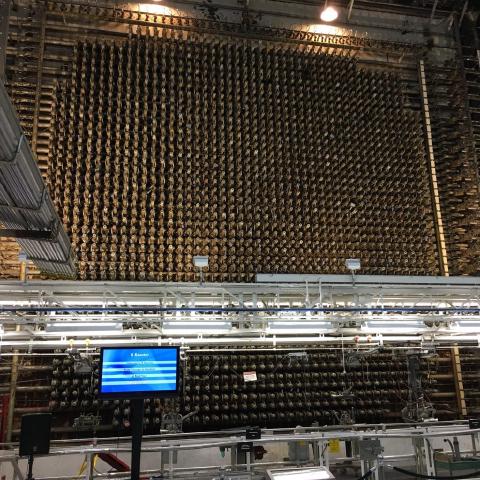
Mighty Home: So it doesn't melt down. Yeah, because you're limited. You can't- The water can't boil because if it boils, not only does it absorb less neutrons and create instability, but it also cannot pull away as much heat. All that stuff, right. So, yeah. So you actually want as much cooling water to flow through as possible. And in the 50s, they actually retooled the B reactor to double the supply of cooling water so that they could run it at higher power. So, yeah. So its entire purpose in life was to create plutonium. And then actually later it created tritium as well, which was used in the first hydrogen bombs. So they basically would put different materials or elements into it to bombard them with neutrons to create other materials that were useful in making weapons. Yeesh. Yikes. Yeah. It's scary stuff. But so here's what I thought was the most interesting part about it, which is that you go and you look at this thing, which is huge. You know, it's like 30 feet tall by 30 feet wide. It has 2,000 tubes that you'd put. Well, the building is much bigger, but the core is like 30 by 30 feet. Oh, the core.
Speaker ?: Sorry.
Mighty Home: Yep.
Mighty Home: Yep. Yep. So you look at this thing, and if you get up close to it, you can see where tubes have been blocked off, where fasteners were stripped, and where there are notes on things about like stripped parts. And the thing is, this thing operated for like, I think over 20 years. And it's like once you build it, you can't go back into it, right? It's intensely radioactive. You can't like pull it apart and go and fix stuff. And so it's this sort of living machine that degrades. You know, you've got to haul tons, like hundreds of tons of uranium metal in and out of it. And of course, the metal coming out is intensely radioactive. Right. And so it's very hard to deal with. And so there's all this shielding to try to, you know, remote manipulators and stuff. And of course, things go wrong. You know, tubes break. And there's this very famous tool called the guillotine, which is a hacksaw on like a 12-foot handle. And its purpose is to cut open or cut apart process tubes, which are the things that the fuel sits in, so that they could be removed out of the back of the reactor. And you kind of get a sense of like, this is what people were dealing with in the 40s.
Chris Gammell: Some people were glowing after this, I'm sure, right?
Mighty Home: Well, safety, I'm actually curious how much they knew about radiation safety in the very beginning. But they clearly knew that it was bad because there was a lot of shielding built into everything on the back of the reactor.
Chris Gammell: But that stuff is like, I mean, that's like alpha particles. What is that stuff? I mean, like, it's some nasty. It's gamma rays. Gamma rays, okay. Yeah. It's throwing off some nasty stuff though, right? I mean, like.
Mighty Home: It's throwing off a lot of nasty stuff. It's the kind of stuff that you will die in minutes if you get close to it. And there's this thing called shine, which is if you open up one of the process tubes. So the fuel is stored in process tubes, which are things that go through the reactor. And it's just what holds the fuel in alignment. Those process tubes have caps. And if you take the cap off, essentially like a flashlight, gamma radiation shines out the back of the reactor. And it's deadly. It's like an insane amount of radiation. And so they would essentially stand to the side so that the gamma radiation would not hit the workers directly head on. And you would have to do operations like off to the side. And basically in close proximity, but just off axis of this deadly radiation. So the stuff that these workers were dealing with.
Chris Gammell: The glass of the tube was enough to block that gamma radiation?
Mighty Home: Well, the workers would be in shielded enclosures. Like you wouldn't walk out there just by yourself while the reactor was open. You would sit in a cab, like a shielded cab, like a crane cab. Got it. And you would work with remote manipulators. But I think when the shield caps are on, it blocks the majority of the gamma radiation. Wow. But it's pretty neat. I mean, they don't allow you to go everywhere on the tour. But I'll send you a link to it after the show. But there's a series of 360-degree panoramas that somebody made that kind of show you all the different areas around the reactor. And it's just super interesting because it's a very physical thing. It's got pipes and wires and tubes and gauges and all this stuff. And it's, of course, 1940s technology. So it's very primitive. Right. But, you know, it worked. It was effective. And it did what it was designed to do, which is kind of nuts when you think about building something that you've never built before. And then having it work for, like, 20-plus years in all this continuous operation.
Chris Gammell: It's 43 to 68. So 25 years. Yeah. Crazy. That is crazy. Yeah. So, well, let's, I mean, let's ask the question everybody's been thinking. So did you bring your kit with you? I did.
Mighty Home: Yeah. Actually, I brought a bunch of them. And I think that I wasn't clear whether I'd actually be allowed to bring Geiger counters in because I think they kind of, I don't know, it seemed like they were a little apprehensive. But we were allowed to use Geiger counters there. And it actually was a little bit underwhelming because the background radiation in the main reactor room is not really significantly above background radiation anywhere else. So they've done a remarkably good job cleaning it. That's a good thing if you're standing there, right? No, it's a good thing. But you're kind of expecting like, hey, I'm near a nuclear reactor. I'm going to see all this radioactivity. Well, no. Actually, you don't because you're outside the core. The core is extremely well shielded. And they've done a very good job of cleaning up any residual radioactivity. So what I did is I brought a bunch of Geiger counters and I gave them to, because we went in a big group. I think there were eight of us. And sort of everyone had one as they were walking around. And the only place that we found a significantly elevated amount of radiation was back near the spent fuel pool, which is the kind of hottest side of the reactor. And even there, the levels were pretty low. It was like two microsieverts per hour, which is pretty low. Yeah. That's not harmful in any way.
Chris Gammell: And we can link in the forever useful XKCD about the radiation stuff.
Mighty Home: Yeah, exactly. Which is, I actually looked at today because I was like, oh, how much is that actually? Yeah.
Chris Gammell: So what is the relative amount? I mean, is that like, I remember airplane stuff. I always think about airplanes, like how much radiation you end up getting when you're just flying through the air.
Mighty Home: Well, it's like two microsieverts, I think is like 10 or 20 times above typical background.
Chris Gammell: Okay, sure.
Mighty Home: So it's, you know, it's like notice, it's easily measurably much higher, but it's still in a very safe range.
Chris Gammell: I mean, hell, my computer got hit with earlier in the show. If people didn't hear the blip, my computer shut down. We assumed that it was, you know. Cosmic rays. Cosmic rays, yeah. Not shit computer, but, you know, cosmic rays. Yeah.
Mighty Home: Yeah. So anyway, it was cool. And one of the things that to me was interesting was that, you know, not only did I get to see this thing and kind of, they let you roam around the reactor building. You're there for a couple hours and kind of look around, take pictures, stuff like that. But after I went home, I did a bunch more research and uncovered, there's been a lot of documentation of not just the reactor, but sort of how it was operated and the process of like adding and removing materials and maintaining it. And it's kind of fascinating from an engineering perspective because, you know, in history, they don't, you know, when you watch your documentary on TV, they don't tell you like, okay, well, here's exactly kind of the ins and outs of how you run this thing. But these documents actually do go into a lot of technical detail. And all the stuff you learn in science class about nuclear reactors, well, I don't even know if they teach that anymore, but they did when I was in school.
Chris Gammell: Yeah, I was going to say, like, there's a specialized job that has nosedived in terms of, you know, job prospects.
Mighty Home: Well, yeah, I mean, many universities still offer nuclear engineering programs, but yeah, it's definitely-
Chris Gammell: But not for the new, you know, reactors that are out there because there aren't any. Right.
Mighty Home: Well, but they still need people to run the old ones, I guess. Sure, right. But, you know, you hear your textbook like, yeah, you pull out the control rods and it increases power. You push in the control rods, it decreases power. Well, it's like way, way, way more complicated than that. And especially the process of starting up a reactor. Like, you've got a reactor that's cold, shut down, you've never run it before. The process of starting it up is actually really, really complicated. And it's because the reaction doesn't magically start in the same level in all locations. Like, the geometry of the reactor is such that you could have one part that's like, you know, really hot. And then some part somewhere else is really cold. And part of the difficulty of managing a nuclear reactor is trying to have like, what I assume is kind of a homogeneous or a more even contour of heat between the inside and the outside. And they do all these crazy tricks like insert what are called poison splines to like slow down the reaction in one corner because the control rods all come in from one direction and et cetera, et cetera. So this document that I uncovered.
Chris Gammell: How do we find this document?
Mighty Home: I'll send you a link. Okay. It's on, yeah, it's on one of the nuclear agencies' websites. And it's amazingly thorough. Like, it tells you how it's done.
Chris Gammell: Well, we were talking before the show, too, about the, you know, your penchant for nerd travel, which is awesome. Yeah. And that's great. But you had mentioned how with the last time you, when you went to the Bell Labs stuff, last time you were on the show, you had a great documentary that, or sorry, a great book that went along with it. And this doesn't quite have it the same level of like document, not documentation, but like storytelling around it, right?
Mighty Home: You know, I think there's been a lot of books published about sort of the nuclear, the birth of the B reactor and kind of nuclear weapons at large.
Chris Gammell: But it's a chapter. It's not like the book. That's right. Yeah.
Mighty Home: Yeah. Like Oak Ridge has a chapter and then Hanford, I'm sure, has a chapter. But, I mean, there's that very famous book, The Making of the Atomic Bomb, which is, I think, kind of one of the most popular. That's by Richard Rhodes. I think that's one of the most well-known histories of the atomic weapons program in the United States. But the thing that I found interesting about these other documents I found was that it was a much more in-depth history of just the operation of the reactor, which would be like a footnote in a book like that. Like they wouldn't actually go into so much detail about how you actually do it.
Chris Gammell: The nuclear generation app note. That's what we're talking about here.
Mighty Home: Yeah. I mean, it's like if you wanted to build your own, you would need to know all of this stuff. And, no, I'm not going to build my own, unlike the radioactive Boy Scout. Oh, yeah. Right. But there's actually a lot of things you need to know in order to build one. And that's why, you know, after World War II, other countries like the United Kingdom went off and built nuclear reactors and had horrible problems. Like did things differently. Things went extremely wrong. There's a thing called the Windscale disaster, which happened in the UK because their reactor was a slightly different design. It was air cooled. It caught fire, released a bunch of radioactive material. Like it is actually really hard to do this well. And so, you know, DuPont did a really good job in designing the Hanford reactors because they did work very well.
Chris Gammell: So, I mean, obviously, this is back in the news with North Korea. But like, so what is the like, I guess the hard part is the running a reactor without people noticing it. Is that kind of the idea? Oh, what is the hard part? I mean, I mean, like you're saying, like you're saying that this is a this is kind of a how to document, but not really. I mean, not really. Obviously, there's a lot of details that you would need. You would want to figure out the hard way. Right. But like I'm just that's that's what's interesting to me. It's like, OK, now all this stuff's out there, but there's still hard parts, obviously. Maybe the.
Mighty Home: Well, I mean, there's obviously treaties that are preventing other countries.
Chris Gammell: I'm not saying that I'm not talking about the politics stuff at all, but like literally.
Mighty Home: Like technically, what is the challenging part? I mean, I think that getting your hands on a bunch of relatively pure uranium is not trivial. You need to have mines, uranium. I thought that stuff was everywhere.
Chris Gammell: I guess I'm wrong about that.
Mighty Home: I think uranium is very common, but at the purity that's needed to make a nuclear reactor is not as common. I think around World War Two, there were only a couple sources. And I think there's even a letter from Einstein to the president saying, like, hey, you should watch out because the Germans just took over this mine and there aren't that many places to get this material. So they must be making a bomb. I think getting uranium is hard. Graphite, which was used as the moderator in the B reactor and a bunch of early reactors, is not trivial. To make it the purity that's required to make a nuclear reactor. Okay. And you need like thousands of tons of it, not just a little bit. I think the construction, the precision and construction, like there's some crazy specs on how the B reactor was made. But I think over like the 30 foot span, there were tolerances of like only five thou of error in some of the dimensions. Like because all of the cooling rods and stuff have to fit smoothly down this bore, which is very long and very narrow. Right.
Chris Gammell: And so I think the construction tolerance themselves are uranium or no?
Mighty Home: No, the rods are, I think, made of aluminum or stainless steel and they're coated with boron. So boron is a neutron absorber that is used commonly in nuclear reactors to slow down the reaction. So anytime in a nuclear reactor you want to make things slow down, you use boron. Like pretty much universally, boron is used. And it has a high affinity for neutrons. So it like sucks up neutrons and prevents them from, you know, cascading and going and hitting more uranium. And so the control rods are, you know, coated with this boron. The splines that they use to like calibrate and get the reaction to start evenly across the reactor also are aluminum or stainless covered with boron. I had no idea.
Chris Gammell: I always assumed that they were made out of some reactive materials.
Mighty Home: No, they're not. So one of the reasons that the Chernobyl reactor blew up was that its control rods had graphite on the tips. And I actually don't know why they did that. It was for sealing or something. Well, graphite is your moderator. So that's the thing that actually makes the reaction possible. So kind of the last thing you want is to shove a control rod into a reactor. Right. And have not control rod, but graphite actually be the first thing that enters the reactor.
Chris Gammell: I'm going to start this fire by putting bullets at the bottom of the fire.
Mighty Home: It's, well, yeah, I'm going to put out this fire with bullets. Oh, right. I think it's actually more like that.
Chris Gammell: Got it, got it.
Mighty Home: And so that was part of the reason that Chernobyl was so bad was because of that. And that was something that was changed in later versions of that reactor design. But yeah. So anyway, it is hard to make a reactor. And I think it's fairly easy to detect that this is happening as well. So it's something that's easy to see because of the signature. You know, they create quite a bit of radiation and also the byproducts of plutonium production. I think it's like every kilogram of plutonium produces like so many millions of gallons of contaminated wastewater. So when you're doing this operation. Yeah. So that's why Hanford is a cleanup operation that's going to be ongoing for decades. Like it's not an easy thing because, you know, of course, what do you do when you have a million gallons of, you know, moderately or slightly radioactive wastewater? Well, you put it in the ground. I mean, at least in the 1940s, that was the solution.
Chris Gammell: Well, they still do that today too, but.
Mighty Home: They still do that today. Right. So the problem is that in Hanford, they did that for like 30 years. Right. And dumped it all into the ground. Water tables and all that stuff. Went into the water table. Yeah. And the worst stuff is in tanks, which are leaking. And so that's the reason why thousands of people have a job cleaning up Hanford and will for the foreseeable future. Wow. It's a huge thing. That's crazy.
Chris Gammell: You know, the thing that always strikes me, like, so anytime nuclear comes up is just like the relative scale of like power generation. You say like two gigawatts. Yep. Or is it gigawatts? It's gigawatts. It's gigawatts. I know. I know. But like just the scale of it, like that's, that's always what it is to me. Like people talk about like, oh, well, you know, like, and, and, you know, solar's on the right path. A hundred percent solar wind, all this stuff. But like, man, like how much can two gigawatts power in terms of just like, you know, they always do it in homes. It's like.
Mighty Home: Yeah. It is a lot of energy. And it's also a lot of energy, which is very continuous. Right. Right. It's like the whole goal of nuclear power is steady state. You don't want any fast changes in anything. You want to just start it up and then have it run, you know, until you have to shut it down to change fuel. And I think that's the thing about nuclear, which is very different from a lot of newer green energy sources, which are more kind of cyclical or varying and hard to manage on the grid. Nuclear power is, you know, much more consistent.
Chris Gammell: Obviously, we've talked about a lot of the, the downsides to it. I mean, like, yeah, there's a lot of downsides to it, though, too. So crazy, crazy, crazy. Well, what's next, man? Uh, so not on the show. We should end the show. But like the, uh, so should people give you a call or hit you up on Twitter if they do have a gig that's interesting or no?
Mighty Home: Uh, yeah, I mean, absolutely. Uh, I, I, I will say that it's, I'm probably not going to dive into anything tomorrow. Uh, I mean, as I said, part of my goal is to take some time off, um, sort of catch up on a lot of things that I've been putting to the side, uh, and also spend a bit of time on Mighty Ohm, uh, which, you know, it's, that's important, close to my heart.
Chris Gammell: Sure, no, I mean, like, so, but on that front, too, do you have product ideas? Are you going to be making new, new things? I absolutely plan to do that. Cool. Yeah, absolutely. Any hints?
Mighty Home: Uh, gosh. Well, I mean, obviously more, more kits. Uh, I, no, I, I'm not going to go into too much detail because I don't want to steal the thunder. You'll tell me after the show. It's fine. It's fine.
Chris Gammell: You can, yeah. Clue me in. Leave everybody else in suspense.
Mighty Home: No, I, I, I really enjoy making kits and I think it's something that's been super rewarding, uh, for a long time. It's something I've enjoyed doing since I started, you know, in 2009, I guess, 2010, something like that. It's been almost 10 years.
Chris Gammell: Jeez. Yeah, man. Well, Mighty Um has returned. That's great. Mightier than ever, too. He's, he's, he's been training in the ways of, of high volume. So that's good. Yeah. Well, that's good, man. So, uh, yeah. Well, I guess you'll have some free time. So maybe you can come back at the holidays anyways. I guess we are rapidly approaching holidays, but. Yeah, we are.
Mighty Home: It's, yeah, it's funny. This year has gone super fast. And, uh, yeah, I mean, I think it's going to be here before we know it, but, uh, I'm looking forward to getting some, getting to meet some Kiwis. Oh, yeah. Right.
Chris Gammell: So maybe people should reach out if they, if they are in the Kiwiland and want to hang out, huh?
Mighty Home: Yeah, that would be awesome.
Chris Gammell: Well, good stuff, man. We'll talk, uh, we'll, I'm sure we'll talk on Twitter soon. And, and, uh, we'll have you back on the show soon, soon after that. Awesome. Well, thanks for having me.
Mighty Home: It's always a pleasure. Talk to you soon. All right. Bye. We didn't get to talk about Lego. Lego. I blabbed for too long about Hanford. Wait, it's different? Well, Lego is the gravity wave observatory. It's the, where they detected the neutron stars. So that is a, that's the gravity wave observatory that is next to the B reactor. It's on the same site, but it's operated by NSF. And so it's a different organization. Uh, and that's where the science is being done now. Like Hanford is all in shutdown and it's just a cleanup operation. You know, so it's historic, but it's not operating. Lego is like operating now. And that's, that's where they are detecting gravity waves from neutron stars and black holes and stuff like that. That's where they won the Nobel prize. So the Nobel prize in physics this year went to the researchers that are involved in Lego. So it's like a big deal. Very, very cool stuff. Hmm.
Chris Gammell: Well, I guess I'll just have to come back on. Did you get to go around there too or no?
Mighty Home: Yeah. Yeah. So the second Saturday of the month, uh, they have B reactor tours. If you go during the months of the year when they're doing those, and then Lego has an open house on the second Saturday of every month. And they do like a technical talk, which was really, really, really interesting. And then you actually get a site tour and you actually get to go into the control center where, you know, they're monitoring the interferometer and you get to go outside where you get to look at a, uh, two and a half mile long building. There's actually two of them that are two and a half miles long, which is sort of mind boggling, like two and a half mile long building. That's, that's crazy.
Chris Gammell: Yeah, that is, that's, that's a lot of walls.
Mighty Home: Yeah. Well, it's, it's, I guess it's a tube. It's a two and a half mile long tube. And there's a, there's a, yeah, it's amazing. So you can see that from, from Google earth as well. It's sort of like a right angle shape thing.
Chris Gammell: Yeah. That is just, that is a big part of the country, man. I'm looking at a picture. It just keeps going. Yeah.
Archived Discussion (5)
Comments are closed. Archived from the original site.
Show archived discussion (5)Hide discussion
Consumer ElectronicsElectronicsGeiger CounterHanfordHigh VolumekitManufacturingNew ZealandNuclearPowerReactorValve
Keep current
Every episode, plus the occasional job post, in your inbox.
We now have a new way to detect the previously unseen and unheard, and historically every time that has happened it's been a big deal. The microscope, the telescope, the radiotelescope, X-rays, nuclear reactions, you name it... That tour of the Hanford site sounds like fun. Of course much of LIGO itself is "just" two long vacuum tunnels in the ground but the stories they can tell are something else. There's also a second LIGO site in the states and the third interferometer in Italy is now operational also, so they can accurately triangulate the source of new detections.
As for nuclear engineering no longer being a career because they aren't building new nuclear plants -- this isn't true. There are a couple under construction in the US and five more planned. And 50 under construction worldwide.
http://www.world-nuclear.org/information-library/current-and-future-generation/plans-for-new-reactors-worldwide.aspx
The total installed generating capacity can actually be expected to increase by at least some 25% as the units under construction are larger than the reactors being retired. (Whether small modular reactors change the game remains to be seen!) Each one represents decades of carbon neutral power generation at an unbeatable, very high >90% capacity factor (the fraction of the time actually spent generating). That is supremely valuable in a world hungry for electricity - but we don't actually always price it that way (CO2 footprint + actual available supply on the grid), not yet at least.
http://euanmearns.com/the-age-and-future-size-of-the-global-nuclear-fleet/
Some alternatives (and the long distance transmission infrastructure they may require) have very low capacity factors meaning they sit idle way over half the time and need to be, say, over twice as valuable when they do supply us with energy. The actual value (demand) however follows its own rules with the daily demand peak after sunset and the annual demand peak in the winter. Matching supply and demand is an ongoing struggle.