
#353 – IoT Degree
Download episode · 61 MB
Also on Apple · Spotify · YouTube · RSS
Show Notes
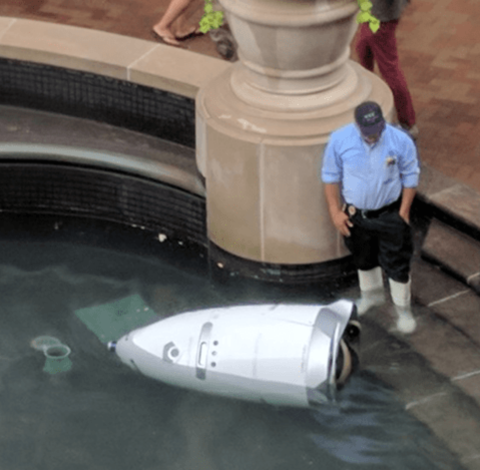
- The security bot the went in the drink
- Watching robots fall over
- When the Boston Dynamics robot finds his voice
- Dave reviewed a Trezor wallet
- Bitcoin pizza day
- $25 multimeter
- Chris has been playing with the Analog Discovery 2. Another user made a curve tracer with one.
- List of electronics youtubers on eevblog forum
- Clamping zener in transistors (EEVblog1000)
- Dave is doing self-imposed contest judging to give away a scope.
- Should you be desoldering parts? If you're starting out? Probably.
- Why's it called "contextual" electronics?
- Glass is back!
- Particle raised 20M
- IoT Degree
- Naomi (@RealSexyCyborg) tweeted about the a new innovation...a library.
- You should be following the Internet of Shit on twitter
- TechCrunch wrote about a new metal printer raising 120M. But it's still a prototyping tool.
- 350kW solution by porsche. It needs to be efficient! We had posted about this 99% efficient inverter.
Transcript
Chris Gammell: This is The Amp Hour Podcast. Released July 23rd, 2017. Episode 353. IOT Degree.
Dave Jones: Welcome to the Amp Hour. I'm Dave Jones from the EEV Blog.
Chris Gammell: And I'm Chris Gammell of Contextual Electronics. Robots, dude. Yeah, man. They're coming for us all unless they're clinically depressed and then we're fine.
Dave Jones: They're not around themselves. Alright, that's the first topic for today.
Chris Gammell: Okay, well... Where'd it come from? Hang on. You thought that we were going to get... We were promised flying cars, right? Instead?
Dave Jones: Instead we got suicidal robots.
Chris Gammell: Yeah. That was a security robot that basically put itself into the drink, you know?
Dave Jones: It was, yeah. Bill... Oh, God, I can't pronounce his name. Bill... Bilol. Bilol Farooqi. Sorry if we got that wrong. Bill... tweeted out a photo that presumably he took from his, like, office window of this... down on the courtyard of their building where this security robot is just... on its side in the drink. I mean, it's just... Oh, my goodness.
Chris Gammell: I don't quite get what a security robot even is. Is it just, like, it rolls around and takes pictures of things?
Dave Jones: I don't know either. I have no idea.
Chris Gammell: Yeah.
Dave Jones: I have no clue. Do... Does anyone have one of these things? Let us know. In the... Like, does your company have one? I... It reminds me... It's total non-sequitur. I went to a comedy show once, and the guy was ex-ASIO, which is our CIA, our equivalent, you know, spy agency thing. And he was from the CIA, and he was telling this story about how somebody left, like, a package outside the ASIO headquarters or whatever, and they have this, you know, bomb disposal robot and everything, and so they deployed the bomb disposal robot, and they're all watching from the... You know, everyone's watching from their office, window is the... That's the fondest part, you know? And they're just there chanting, droid, droid, droid. Anyway, it was, yeah, hilarious.
Chris Gammell: I think the real interesting thing is, like, when does this lose its novelty, right? I mean, like... You know, like... Well, obviously, there's novelty
Dave Jones: in one that jumps in the drink, but... Do you mean lose its novelty in terms of, oh, it's just a fad and it'll go away, or lose its...
Chris Gammell: No, like, you don't even notice them anymore. Like, I would definitely... If I was walking by, you know, and someone listed this as, like, a cross between an R2-D2 and a Dalek from, if I'm saying that right, from Doctor Who.
Dave Jones: Yeah, it looks... It looks like the nose cone of a rocket.
Chris Gammell: Oh, that's... Yeah, that's a good explanation, too, yeah.
Dave Jones: It's, yeah. It's just like a tapered nose cone. It looks like it's got four wheels on the bottom that, you know, can make it spin around 360 on its axes and then go in any direction. But, yeah, what does it do? What does it do? It just goes around taking photos of everyone?
Chris Gammell: It says it has a 360-degree video camera array, sensitive microphone, air quality sensors, even thermal cameras, but...
Dave Jones: Oh, so do we have a data sheet for this thing? Does the company make it? Does it...
Chris Gammell: Yeah, but it's stupid. I mean, like, these kind of... All the robots right now, like, there's still... Anything like this, or any kind of, like, humanoid robot, like, really, come on, what are they really there for, right?
Dave Jones: Yeah, I know. It's bullshit. I mean, one human could do infinitely more than this robot can do. It's just, you know... Well, I mean,
Chris Gammell: you can't have air sensors, but I guess... Yeah, but they don't get...
Dave Jones: Yeah, right, okay. You can go around sniffing for bombs, can't it, as people walk by? I guess so, yeah. Right, sniffing. Yeah, right.
Chris Gammell: Anyway, yeah.
Dave Jones: Yeah, but the human can have a... You know, human, I'm calling it. You know, like, we've... The person, right, the guard can have a... Like, a little detector on their belt clip that goes beep-beep as they walk around, too. You know, like, they can sniff as well.
Chris Gammell: That's true, yeah.
Dave Jones: You know, like... Oh, I don't know.
Chris Gammell: Well...
Dave Jones: Anyway, it's freaking hilarious. This thing, like, just drowned itself in the pool. Like, there's, like, these steps leading down to this fountain thing, and it's just obviously just wheeled itself down the steps.
Chris Gammell: One thing that has not changed is it's still hard to build good robots, right? Yeah, right. And even the best ones fall over, right? Even those, I mean, we've shared that video of all the Atlas robots falling over in the past.
Chris Gammell: Yeah, yeah, yeah.
Chris Gammell: Like, all the Boston Dynamics thing, so...
Dave Jones: That's... And, of course, we'll share it again. It's compelling viewing, yes. Compelling viewing. After this, I'm just going to go watch a compilation of robot fails. Right. Yep. Like...
Chris Gammell: Did we ever share the thing where there's the Boston Dynamics robot where the guy's hitting him with, like, the hockey stick? Yeah, yeah. Did you ever see the one where the guy voices over it?
Dave Jones: No. Oh, my God. It's amazing.
Chris Gammell: Oh, yeah, I'll do that, too. I'll post that one, too. Great. He's like, why are you doing this to me?
Dave Jones: I mean, real, like, special purpose robots that just do their one task are brilliant. You know, like car, automated car robots and, you know, manufacturing robots and stuff like that are brilliant. But these attempts at general purpose robots are always just garbage.
Chris Gammell: It seems like they're more for show, right? I mean, that's really what it feels like a lot of the time.
Dave Jones: I'm sure they get great funding for it. You know, it's a good R&D gig to be in. Yeah, probably. You get all this government funding.
Chris Gammell: Yeah, and I'm sure that that drives a lot of, like, actuator research and money in that sector. Yeah, right, right, right.
Dave Jones: Oh, yeah, that's a given. Yeah.
Chris Gammell: Yeah.
Dave Jones: The Nightscope. It's the Nightscope. Let's call them out. The Nightscope security robot.
Chris Gammell: Yeah. Well, yep. That's... Fail. That's that. Okay.
Chris Gammell: Next.
Chris Gammell: Well, what you been building, man? What you been up to?
Dave Jones: What have I been building? I've been... What am I doing? I've done a tear down of a hardware Bitcoin wallet.
Chris Gammell: Oh, I saw that. And I saw there was actually... There was this thing announced today, too. There was another wallet that had a... So you had... I remember in the video, you had mentioned there was a security vulnerability about that on that existing one, right? Yes. That got patched. But then there was a new one that just did as well. I mean... I was trying to think about an analogy for that. It's like... It would be like if a regular wallet manufacturer is like, we didn't notice, but there's actually a hole and all your money fell out.
Speaker ?: Right.
Chris Gammell: Or there's like a portal inside and when you put the money in, someone can just, you know, open the portal and grab your money out of it. You know?
Dave Jones: Well, the interesting thing about these hardware wallets, well, this one in particular, the Trezor hardware wallet is the name of the unit, which, by the way, the actual developer jumped on the EEV blog forum. Oh, cool. Apparently, the developer's a viewer of mine and, yeah, jumped on the forum and answered some technical questions. So that was awesome.
Chris Gammell: Yeah, that's great. We'll try to link to that too.
Dave Jones: Yeah. Like, it turns out that the, you know, basically the security on these things is so good that really the vulnerability is not the hardware, it's the piece of paper backing it up, right? Because when you set up one of these things...
Chris Gammell: Oh, like a code for like a one-time code kind of thing?
Dave Jones: Yeah, it's a one-time code generated by the hardware. So it's not online. It's not available. You know, they don't know what it is. It's generated by the actual micro on the hardware itself. Right. And on the little display, it doesn't even send it over the USB, right? So it can't...
Chris Gammell: Oh, so you have to like go write it down, you mean?
Dave Jones: Yeah, yeah. You have to physically write it down. So they give you a sheet of paper that comes with it and you've got to write these 24 words down, which is the recovery seed for this thing. Right. And the great thing about this is like people think that, oh, you know, all your Bitcoins are on this hardware wallet. If somebody steals your wallet, they've got your Bitcoins. Well, no. Or if you lose it, you lose your Bitcoins. Or if it fails, you lose your Bitcoins. Well, that's not how it works. If you've got that recovery seed, if somebody steals your Bitcoin wallet, you can instantly go and render that device inert and get your Bitcoins back out of it and put it on a new wallet. Oh, interesting.
Chris Gammell: Because you're kind of like locking like a unique ID to the Bitcoin. Is that kind of the idea? Yeah.
Dave Jones: Well, that's basically how the blockchain technology works. Yeah. The Bitcoins in quote marks aren't actually kept on the device. It's basically the private key, which is kept on the device, which allows you to access the Bitcoins, which are effectively in the public blockchain, which everyone has. So in effect, like everyone has every Bitcoin on their computer, right? If you download the entire blockchain, as a lot of wallets do.
Speaker ?: Got it.
Dave Jones: Right. Yeah. They're all the Bitcoins, but you need the private key to access those Bitcoins. So once that private key is lost, those Bitcoins are effectively lost forever. Nobody will able to, you know, they're still sitting out there worth thousands of dollars each. And, you know, if you lose that private key, you just can't access them anymore. So.
Chris Gammell: You know, I think about stuff like this, and I know that like there's not just Bitcoin now, there's like Litecoin and all these other coins that are out there.
Dave Jones: Oh, they're called altcoins for those. Right, right. That's the industry term.
Chris Gammell: But here's the thing. Okay. So I, technology, like, so cell phones were a big thing for a long time. I mean, like there were, there was like smartphones for a long time before the iPhone. Right. But it was like the usability of an iPhone that really helped that kind of thing. And then I started thinking about like.
Dave Jones: It was the app model, which was the game changer.
Chris Gammell: Sure. But like just thinking about cryptocurrencies in general, like I love the general idea, even though I'm still pretty shaky on the how it works. I don't really, I don't think I actually need to. I can't imagine like my aunt using this kind of thing or my parents. You know what I mean? Like, I just don't, I don't feel like it's.
Dave Jones: No, it's not there. The technology is not there.
Chris Gammell: I mean, maybe it's just like the friendliness of it isn't there.
Dave Jones: No, no, it's definitely not there.
Chris Gammell: Yeah. So.
Dave Jones: Not even close to being there. Like, well, no, you can make it relatively that easy if you just use the app and all that. But if you really want to be secure, it's, it's not easy. I mean,
Chris Gammell: like my parents don't even use an ATM card though. Like that's. Okay. Right. That's the level we're talking about right now. And so it's like to go from that, it's like, well, maybe I should get them to use an ATM card first. Yeah. Right. Which is. Yeah.
Dave Jones: The interesting thing about Bitcoin though, of course it was designed as a decentralized currency. Sure. And of course the whole point of a currency is that it's a medium of exchange, right? You can use it to exchange for goods and services, just like our regular currency is right. Our government issued currency, except it's decentralized. No bank controls it. No government controls it. It's, you know, but ironically it was designed as a currency, but it's not used as that. It actually failed. The experiment failed as a currency. Why? Because it's not stable enough. It is so like swings of 20 to 30% per day, plus minus are normal, are completely normal. So just imagine if your US dollar fluctuated plus minus 20% a day, right? It'd be unusable as a currency.
Chris Gammell: Right. So it's instead used as an investment vehicle for a holes, like the, uh, speculative vehicle. The Winklevii twins. Yes.
Dave Jones: It's used as a speculative, uh, it's not investment is not the right term. No, definitely not. It's used as a speculative currency. So all the day traders hold it and all, you know, and all the others try and, uh, profit from the currency fluctuations. And, um, yeah, it's interesting. It's stupid. Yeah. Yeah. So it's failed. So there are now a couple of experiments in various altcoin cryptocurrencies that are designed to be pegged to the US dollar, for example, uh, Corian is one of them. Um, and they're, you know, designed to be like a stable currency, because if you can't have a stable current, you can't have a stable cryptocurrency, it's never going to be used as a currency because everyone will go, Ooh, I'm not, I'm not going to spend it today because it could double tomorrow. You know? Right. Right. Exactly. Yeah. So nobody ends up spending it. Yeah. Right. Yeah. Yeah. Yeah. Yeah. Yeah. Yeah. It has to be completely devoid of, you know, I do know that regular currencies also changed, but they only changed by like a percent or two a day would be a massive, you know, the, the Australian dollar dropped 2% today. That's like headline news, you know?
Chris Gammell: Right. Right.
Dave Jones: So, it's a, yeah, a bit of a failed experiment, but it's interesting.
Chris Gammell: The amp hour enters geopolitics. But that's what's crazy too, is like this, all the electronics, like tie over actually does kind of like, kind of does that. I don't know. Like it's, there's a lot of interest. It feels like in the, there's like crossover in, you know, the electronics community, but at the same time, you know, like, I don't know.
Dave Jones: I kind of know where you're going. Yeah. Anyway, hardware wallets. Interesting. Yeah. You know, you could argue that, well, there's no point to a hardware wallet because you can keep a software wallet just as safe kind of thing. You know, if you just write down your private key, then, you know, the difference is right. The difference is, is that if you've got a software wallet installed on your computer, right, it generates the private key, but how do you know that there's not a key logger on your computer or malware on your computer that's secretly, you know, you, you would almost have to like, if you want to be sure with the software wallet, you have to completely install a fresh, a fresh OS from scratch, totally disconnected from the network, totally ensure that there's no back doors or malware or, you know, viruses or anything else on there. And then generate your crypto seed. But then to get that set, to get all the blockchain, to download it, to do that, you need to connect to the internet in the first place. So it's, it becomes a, you know, a cyber security problem. Whereas these hardware wallets get around that by generating it on a little isolated microcontroller with an LCD, you know, so that like, it's totally not hooked up to the network.
Chris Gammell: Yeah. I was just looking up, I was just typing if we could do a, if there was a Raspberry Pi based, like, because that'd be interesting. You could just do a fresh, a fresh, uh, install. Oh, you could.
Dave Jones: I mean, basically the only, this hardware Trezor wallet is just an ST 32 bit R micro with an LCD. That's it.
Chris Gammell: Okay.
Dave Jones: That, that's all it is. It's just right. It's even open source hardware. You can download the schematics and the source code and everything. So you can make your own. Hey, so yeah. So you could totally do it on the Raspberry Pi or something else. It's just another micro. Right, right, right,
Chris Gammell: right.
Dave Jones: Yeah. Cool.
Chris Gammell: That's cool.
Chris Gammell: Yeah.
Dave Jones: Anyway, it's fascinating tech. Who, who knows where it's going to go, but yeah. Um, I wish I had, um, yeah. I, I could have been a model. I would have been a multi-billionaire by now. If I invested a hundred bucks 10 years ago.
Chris Gammell: Sure. Sure. Dave.
Dave Jones: No, I could have. And then we can, when, when is a Bitcoin pizza day? Have you heard about Bitcoin pizza day?
Chris Gammell: No, I don't know what that is.
Dave Jones: Well, it's a day way back, like eight years ago or something when somebody famously made like the first, I think, commercial transaction with Bitcoin and they bought a pizza. They bought a pizza with 10,000 Bitcoins. 10,000 Bitcoins now is worth, they're worth about, you know, two, two and a half thousand dollars each. Right. So, yeah, do the math. Right. 10,000 Bitcoins. Oh dear.
Chris Gammell: Yeah.
Dave Jones: That's an expensive pizza.
Chris Gammell: I mean, but you could have said that about like, oh, I should have bought, you know, the first Superman. Apple shares. Right. Or Apple shares or whatever. Right. Yeah. You can always backdate decision process. Of course. Of course. Who's the guy that, one of the Apple early people that sold all the shares like in 1970 or something?
Dave Jones: Uh, Wayne. Um, he was, yeah. Apple was founded by three employees. There was, well, the two Steve's plus, uh, Wayne. What's his nuts? Um, no one remembers his name. No, Wayne. No. Oh God. Yeah.
Chris Gammell: That's fine. Yeah.
Dave Jones: Anyway. Yes. He's sold out. Wayne.
Chris Gammell: We hope you're not listening.
Dave Jones: He's famous. Yeah. He had like a 25% stake in Apple and he sold, but like, how do you know? Like 800 bucks, you know, exactly. Well, if you bought Bitcoin back in the day and it suddenly went to a hundred bucks, you probably would have sold. Sure. Of course. It's gone up by 10,000%. I bought it two cents and it's gone up to a hundred bucks. I'm selling them all. And now it's, well, it's gone up a hundred times again, you know, like, yeah. Yeah.
Chris Gammell: Yeah.
Dave Jones: Where does it end? I don't know.
Chris Gammell: Well, uh, electronics, what are we doing in electronics world? I mean, you've been tearing stuff down. You've been building stuff up or no?
Dave Jones: Well, I, um, kind of, Oh, no, I'm, I'm judging a contest.
Chris Gammell: Nope. Not in electronics. Okay.
Dave Jones: Well, no, I did it. No, sorry. Nothing interesting. I reviewed a $25 multimeter and that, Oh, I saw that. That was good. Huge controversy. Huge.
Chris Gammell: Uh, in, in your, yeah, in the, in my world, I was going to say in the test equipment world. I was,
Dave Jones: it didn't exactly make sense. CNN or something, you know?
Chris Gammell: Right. No, no, no. I just mean that I was, who was I talking to about that? I was talking to someone about like, Oh, it was someone I know who used to work at a scope company. And, um, and I was talking about how I used to work at a test equipment company. And, and like, I was basically comparing to the, you know, your forum is obviously very into test equipment, right? It's,
Dave Jones: it's the number one test equipment forum.
Chris Gammell: Exactly. And, you know, even though I'm, I'm like, I don't care that much, you know, like, I just, right.
Dave Jones: There's a lot of nerds who do.
Chris Gammell: Right. Exactly. And there, it's interesting, like on the outside looking in, you know, like of like what people care about. And it's, it's, I, I'm, I'm fascinated by it, but I, I have a hard time contributing to it. Right. So.
Dave Jones: You're just not a test, test equipment nerd.
Chris Gammell: I'm not, but I've been, I've been doing stuff with like low cost equipment. So that's been, that's been kind of interesting, but, but only because it's accessible, right? I mean, I guess it's kind of like what you're doing with the, the multimeter thing, right?
Chris Gammell: Right.
Chris Gammell: It's just because it, it makes it accessible and more ubiquitous and all this other stuff. Like, like some of the function functions you were showing on there, you know, like they weren't on, like there wasn't a, there's a, there's a temperature probe on there, right?
Dave Jones: No, there's not. I thought I saw one in the kit. No, no.
Chris Gammell: Okay.
Dave Jones: No, this particular model doesn't have temperature measurement, but the interesting thing about this is that had some really low level ranges. Like I had one micro volt.
Chris Gammell: Yeah.
Dave Jones: Resolution on it. Right.
Chris Gammell: And it looked like it was just pretty okay in terms of, you know, um, accuracy and stuff.
Dave Jones: Well, here's the interesting. Oh yeah. Right. Well, well, anyone can calibrate a multimeter to be spot on, right? It's not rocket science. Yeah.
Chris Gammell: It's spot on in a year, right?
Dave Jones: It's spot on in a year's time. How does it drift with time temperature and, you know, aging and vibration and everything else, you know, like, yeah. Measurement confidence. It's all about measurement confidence. That's what you're paying for when you buy an expensive multimeter, you know, that's, you know, you're buying the company's reputation. You're buying the reputation of that model. You know, it's, it's, it's why the fluke 87 has been the industry standard for like 25 years.
Chris Gammell: Right.
Dave Jones: Right. And it's, you know, the model is literally that old. I think like it's, it's 25 year old model. It's like the tectronics, you know, 200 to 20 series scope, right. That, that little scope that lasted forever. Oh yeah.
Chris Gammell: Yeah. With the really crap display. Yeah. Yeah. Yeah.
Dave Jones: Yeah. Really crap. Which is state of the art when it came out. I know. And so was the fluke 87.
Dave Jones: but now it's, you know, it's like meh, you know, there's, there's countless multimeters better than it. Right. Yep. But it, it's still the industry standard because people trust it. Right. It's just been around so long. It has the reputation of, you know, confidence, measurement confidence. Yeah. That's good. Yep.
Chris Gammell: I've been, I've been playing around with the, well, like on the, like I said, on the low cost side, I've been playing with the, the analog discovery. Do you ever use one of those?
Dave Jones: Yes, I have used it. I've got, I've got the analog discovery and the digital discovery.
Chris Gammell: Oh, you got the new one. That's right. Yeah. Yeah. Yeah. Yeah. That's the one that just came out. Yeah.
Dave Jones: The analog discovery too, of course we're talking about. Oh, sorry. For at least a second one. Yeah. It's not open source hardware, is it? It's closed source.
Chris Gammell: I don't really care. Is your DMM, is your $25 DMM? No. Okay.
Dave Jones: No, no, no, it's fine. I was just throwing it out there.
Chris Gammell: Yeah.
Dave Jones: Yeah. No, yeah. So I've been trying it out. The thing that makes the analog discovery good is the software, you know? Yeah, no, I agree. Otherwise it's just an ADC and an FPGA and a little fancy case, you know? I mean,
Chris Gammell: yeah, no, no, I agree. I mean, it's, and it's, well, there's, there's some front end stuff there. I mean, I don't know. Did you ever do a teardown or no?
Dave Jones: Yes, I've done a teardown on it, but there's not much in it, right? No, you're right. It's a lot of,
Chris Gammell: it's the FPGA and stuff like that, but you're right. It's the, it's the software,
Dave Jones: which allows you to do script in and does all sorts of stuff and multi-tab displays. And it's a very educational oriented and, you know, yeah, yeah. It's great.
Chris Gammell: Yep.
Chris Gammell: Well, there was a, there was a video from crap. Who was it? It was Tom tech test and he did it. He also was, so I, I've been testing this thing out a bunch and, but Tom also did a curve tracer with it. I thought that was pretty cool. I don't, did you see that?
Dave Jones: No, I haven't seen it, but I'm watching it now. Yeah.
Chris Gammell: Yeah. Yeah. Yeah. I mean, cause curve tracers, I mean, not that people, you know, regularly need curve tracers, but it's like one of those things when you need it, it's like, no, it's nice to have, you know?
Dave Jones: Yeah. Yeah. Of course.
Chris Gammell: Um, yeah. So it's a nice, and it's actually a nice walkthrough of kind of how it works, how curve tracer normally, you know, used to work and, and, um, you know, like switching polarities and stuff like that.
Dave Jones: So if people don't know what a curve tracer is, it is a specialized bit of kit. Yeah. Uh, we just assume, assuming knowledge of our audience here. Right. Um, they may not, especially young, uh, people may not know what a curve tracer is. It's, um, it's designed to put a, a current, a voltage and current through a device and get the characteristic, like sweep. A, a current through and get the characteristic curve, the IV curve, the current versus voltage, uh, characteristic curve of a transistor, for example. So you might've, you know, in your theory, when you study transistors, you'll see the characteristic curves, the famous, you know, it goes like up linearly and then curves off. And then, and then you'll have different curves for different base currents of the transistor. So you'll sweep it multiple times and get the characteristic response for each base current, for example.
Chris Gammell: Right. Exactly. So, and then, and that's also like how you set your operating points and you set your operating points and
Dave Jones: things like that. And yeah, so all your basic transistor theory revolves around the, uh, the characteristic curves of that particular transistor. Yep. So, yeah.
Chris Gammell: Yeah.
Chris Gammell: So that's nice. Uh, it was, it was cool to see too. I mean, like really, really clean drawings and good explanations and stuff. I, I don't think I've ever, I'd maybe seen Tom's channel once or twice before, but he actually does a bunch of stuff with that. So he, yeah. FFT algorithms and other. Cool. PhD measurement. So yeah, it's a good channel. I like it.
Dave Jones: Excellent. Subscribe. He's only got 894 subscribers. Needs more. Yeah. Yeah.
Chris Gammell: Yeah. So it's good. It's good stuff. I like it.
Dave Jones: There's a list on the EV blog forum of electronic channels. And I just, I'm stunned at the size of this list.
Chris Gammell: Really?
Dave Jones: It is just, yeah, it is huge. Like I, I,
Speaker ?: I,
Dave Jones: you, you probably couldn't subscribe to them all. It like followed them all. If you tried. And, and I think they only, well, well, they, I think they only let some guy in the forum that maintains it. And there's, and they only list, uh, ones that are, um, over a thousand. I think you have to hit a thousand subscribers or something to be put on the list. Um, but even then I'll see if I can, uh, find it here and we'll link it in. Um, because it is very, very cool. I'm, I'm just, I'm just nice for being able to share,
Chris Gammell: share a bunch of, uh, content and stuff too. So that's good.
Dave Jones: Yep.
Chris Gammell: Cool. Excellent.
Dave Jones: Okay.
Chris Gammell: Yeah. I mean, uh, I, I don't know. Like I, and especially like, um, like stuff like this where it's like a lot of the base level, you know, you might not necessarily find it via a YouTube search or, or even more importantly, you probably wouldn't even know. So like, like you said, the people that are younger and younger and might not know what a curve tracer even is, you know, like that, that could impact things. So you wouldn't even know what you're looking for. So.
Dave Jones: Right.
Chris Gammell: Yeah.
Dave Jones: I am going to find this list if it kills me. I'm having a hard time searching my own forum. Isn't that sad?
Chris Gammell: It is kind of big, you know, it's a big forum. So. Yep. It is.
Dave Jones: But search leaves a lot to be desired.
Chris Gammell: Yeah.
Chris Gammell: Hmm.
Chris Gammell: Well, on the, uh, on the discovery, I, uh, I think the thing, I think the, the thing like, so like, so like what Tom was showing with the, the tracer, I think, I think the thing that I was surprised at, that actually has a big impact is having the two, two, um, two wave generators. Like you'd think you'd only need one, but actually having two, cause then it's like, what I was doing is I w I was playing with this too, is like in that, in that, um, in that context, I was just like, basically I had a single NPN transistor, two resistors. And then I was just like able to set a, a voltage at the top of the collector resistor, and then set a, set a different voltage on the base of the transistor. And then I could just play with, you know, I could play with the, uh, the different parameters without really being able to hurt the transistor or anything like that. So that was, that was actually pretty nice, you know, and, and basically it's like, it's like, you almost can't, it's only five volts in either direction. And so it's like, you're really not going to break anything, which is, yep. Oh, no, of course not. As a beginner, it's always like, you know, you're, you're afraid you're going to break things. You don't know where that threshold is. Right.
Dave Jones: Right.
Speaker ?: Yeah.
Dave Jones: Although breaking things I did in my thousandth video, I did a, a little tutorial on what, you know, uh, some advantages of overdriving a transistor beyond its recommended operating ratings. And, uh, it's a common clamping circuit, for example, used in fluke multimeters and stuff like that. It's a Xena, it's the reserve, it's the Xena breakdown of the transistor. And yeah, it's interesting use of, you know, normally you do not do this. It is absolutely taboo to operate devices outside their maximum recommended operating values. But in this case, you know, it's used by companies like fluke in their multimeters. So yeah, there's a long history of doing that. And sometimes it can be advantageous.
Chris Gammell: Yeah. Oh yeah. I mean, well, and that's like one of those things where if you don't understand the underlying, like semiconductor physics, or even if you do, in some cases, you know, like you do these things where it's like, there, there are these corner case, uh, physical phenomena, but they can have, they can have benefits if you do that kind of thing. Right. So yeah. Yeah. I mean, even like, I remember the first time I was looking at back-to-back diodes on a schematic. I'm like, what are you even looking at? Why, why did they do this? You know, but yeah, it makes a lot of sense for, yeah, protection type stuff. Right. So almost in a similar way. Yeah.
Dave Jones: Yep. And it's, and it's obviously once you have it explained to you, but you know, when you, when you're a beginner and you look at that sort of thing for the first time, you go, what the? Yeah, exactly. This looks stupid. It's usually method to the madness though. Yeah. Anyway, I found the list, which we will link in, in the show notes. Um, and there's gotta be, I can't actually count them, but there's gotta be a hundred channels with over a thousand subscribers. Wow.
Chris Gammell: Yeah.
Dave Jones: It's just like most of these I haven't heard of, which is like, I feel ashamed that, you know, but like, there's a lot of them that just do repair stuff or they do radio or they do, you know, um, yeah, it's just like, there's, there's a tear down channel. I've never heard of. It's just unbelievable.
Chris Gammell: There goes your weekend folks. Sorry. That's good though. Good. No, that's, that's a, that's a, that's a nice service that your, your forum member did. Yeah.
Dave Jones: Well, somebody, yeah. Somebody's main maintaining this list. Um, yeah. If you know, there's one channel with 40,000 subscribers, you know, uncle Doug, 40,000 subscribers, vintage guitar amplifier circuits and stuff like that. Like if you're into that sort of thing, that's probably the duck's guts.
Chris Gammell: Right. There are, there are corners of, of even, even within electronics, there's, there's subdivisions, right?
Dave Jones: There is. Yeah. Yep.
Chris Gammell: Anyway. That's great.
Dave Jones: So yes, I am judging a contest.
Chris Gammell: Oh yeah. Okay. So what kind of contest?
Dave Jones: I'm giving away, I said, it had a lot more entries than I thought. I'm giving away a road and Schwartz, uh, use the Schwartz Luke. Um, a road and Schwartz,
Speaker ?: !
Dave Jones: Um, RTB 2000 scope, RTB 2004.
Chris Gammell: Is the contest still open or no?
Dave Jones: No, no, it closed. But I, so it was, you had to do a video entry, right? So I thought, aha, I'll, you know, I'll fool them this time. You've got to do a two minute video. You've got to make a two minute video. Otherwise you're not allowed to enter. That'll show them, you know, that'll rule out 99% of people. And I thought, yeah, maybe I can, you know, if there's a lot of people enter who go to the effort, because most people just don't go to the effort. Sure. Right. If, if, if you just have to go, I'm in on the forum, or, you know, join a mailing list or something like that's easy. Right. But when you have to go the extra mile to create a video, um, that really, yeah,
Chris Gammell: but that used to be a lot harder to, yeah,
Dave Jones: it used to be a lot harder. Um, but no, granted it still is, which I'll talk about in a second. And, uh, so I thought, oh yeah, maybe we'll get 50, you know, like on a, if it goes gangbusters. No, we ended up with 150 videos, which, which now I have to watch 150. David too has already watched them all. Um, he spent the entire day. Um, and we've got a spreadsheet.
Chris Gammell: So 150 times two minutes each. He's laughing at me now. He's fine. That's fine. That's at least five hours of video, right?
Dave Jones: He's going, that's a day of my life. I'll never get back. Yeah. Right. But at least he got paid for it. Thumbs up. Yeah. There we go. And, uh, I'm paying him to watch videos. Like, yeah, well,
Chris Gammell: you know,
Dave Jones: yeah. And, uh,
Chris Gammell: geez. Yeah. It's like five, that's like five hours video though. That's. Oh yeah. Yeah. Like if you take, if you don't take a break. Yeah.
Dave Jones: It's an entire day.
Chris Gammell: Yeah. That's rough.
Dave Jones: So I, I now have to spend an entire day to watch all these videos and we're going to, yeah.
Chris Gammell: And so, what was the contest? I don't, I didn't say that part.
Dave Jones: Oh, it was just do a two minute video telling us why, why you want the scope.
Chris Gammell: Oh, hell no. You got to get some more, you got to get some more challenge in there, man.
Dave Jones: No, it's, you know, well, it was pretty open ended. Like, you know, it's not like just sit in the front of the camera and just tell us like, it's like, show us your lab, show us your projects, you know,
Chris Gammell: kind of. but how, but there's no like thing to, judge one better than another. Right. I mean, like.
Dave Jones: It's the vibe.
Chris Gammell: It's the vibe. Well, good luck with that, man. That sounds like my nightmare.
Dave Jones: Well, what did you want me to do? Like some, like. Wait, so this is,
Chris Gammell: you set this up?
Dave Jones: Yeah. What?
Chris Gammell: Next time, just do a drawing.
Dave Jones: No, I, I deliberately wanted to. No, because then it's, because then it just goes to some random person. Right. I wanted to go to somebody who went to the effort, to show us their stuff. Right. And I wanted to get it going to go to someone who can use it. Right. Rather than somebody who's going to flip it on eBay or, or whatever.
Chris Gammell: That's true. That would be kind of a dick move if they did that. Yeah.
Dave Jones: Yeah.
Chris Gammell: Well,
Dave Jones: no, no, it's not. I support their right to do it, but, but that's what happens when you have a random draw with 10,000 entries. Right. Right. Odds are, it's going to go to someone nobody's ever heard of. We'll never see a peep out of them again. They may not even have a lab. Like it's just that, like they may not even do any electronics at all. Right. And they may just flip it on eBay. Right. Yeah. Yeah.
Chris Gammell: Yeah.
Dave Jones: Yeah. Yeah. So I thought, no, it'd be not, you know, cause it's like a $6,000 scope or something. Right. So I wanted to go to someone worthy in quote marks, you know, somebody who can make use of it. And so I went bugger it. Yeah. Make a public video, two minutes. Cool. Showing us your stuff. And, um, I've, I've seen a few of them so far and, uh, we've got, there's some pretty good ones out there and there's some pretty ordinary. Well, you've probably seen a lot of labs.
Chris Gammell: What is, uh, do you have, maybe you should use this as a data point for like, what do people have in their labs or obviously they're looking for a scope, but.
Dave Jones: Yep.
Chris Gammell: So what do they, do they say what they do have or no? Cause I'm always wondering about that too. Like what are people, buying first? Like,
Dave Jones: you know,
Chris Gammell: I always wonder about people's first projects too, stuff like that.
Dave Jones: Yeah. I, I said that in the video, you know, give us a tour of your lab, for example. And so a lot of people did that. They gave us a tour of their lab, you know, what,
Chris Gammell: what do you, you haven't watched enough yet to really get a good.
Dave Jones: I haven't watched enough. I've seen a few, but I've, I know I've seen videos like this before in other contests, which I've judged. And, uh, yeah, it's, you know, labs are just look like the lab I, I had when I was a teenager, you know, it's like, you know, it's just, it got gear cobbled together with anything you could afford, you know, or, or built. Um, you know, there's always like custom power supplies and, you know, old, old, you know, there's usually an old analog scope there or some old crusty power supply or some old crusty signal gen. Yep. You know, it's.
Chris Gammell: eBay specials. Yep. Right. Yeah. Yeah.
Dave Jones: Right. Although you can get a lot of bang for your buck these days. That's, uh,
Chris Gammell: well, yeah,
Dave Jones: that's a huge difference. I mean, it's all changed in the last five years, you know?
Chris Gammell: Well, I think the main thing too, is that like the, I mean, it's a lot of that old stuff is not really gone. It doesn't go bad. Right. I mean, it's just, it might be a little, no, it doesn't. It gets, you know,
Dave Jones: the knobs get a bit crusty and stuff like that. Right. Right. Right.
Chris Gammell: But if it's on a maintenance schedule or if you open it up and you need to like replace some caps, it's like, okay, well, you're halfway there. Now calibrate it. So.
Dave Jones: Yep.
Chris Gammell: Yeah. And as we already stated, that's a good thing that the, uh, EV blog forums usually get at is helping, helping you get a thing calibrated. So. Sure. Yeah.
Dave Jones: And one thing, one thing I noticed that in a couple of videos I watched is like, um, the young kids are still scrapping parts. And I thought that was brilliant. You know, somebody showed all, all their drawers of all their components that they've desolded from gear and stuff like that.
Chris Gammell: Hmm. Which is great.
Dave Jones: You know,
Chris Gammell: what is, what is great? I mean, I'm kind of not in that camp because I'm like, I'd rather buy something knowing it works.
Dave Jones: Yeah. You're a, a wimp.
Chris Gammell: You can say wim. Yuppie. Yeah. Yuppie. There you go. Yes.
Dave Jones: You're so used to the mod cons of life that, right. I'll just buy it on eBay. You know,
Chris Gammell: I was talking to my, I did, I did call my friend a yuppie the other day. And then I kind of took a pause and I'm like, I don't know, man, we're kind of moving into the moppy middle aged, young professionals instead of young urban professionals.
Chris Gammell: All right.
Chris Gammell: Yeah. No. Yeah. I mean, so, but you think that, that it's, you think there's still value in it just for, for understanding how it works or for actually.
Dave Jones: Oh, for the, you know, it's, it's just going through the motions, you know, you de-solder. So you learn how to de-solder, you learn how to identify parts, you learn how to test parts, right? If you just buy some kit on eBay and then just sit it on your shelf, you know, you, you, you, you, you haven't learned how to test and identify components. For example, you haven't learned about the different types. You haven't learned, you know,
Chris Gammell: that's a good, actually, that's, that's a good tie back to that, that curve tracer too. I guess if you don't, if you don't know the marking on a part, you could, in theory, go and put it on a curve tracer.
Dave Jones: Right.
Chris Gammell: And actually figure out, you know, oh, this is close to a, whatever, you know.
Dave Jones: Yeah. I could use this transistor because I know what the characteristic, I don't need to know the part number. I've, I've tested it, you know, I can use it in this amplifier at this bias point, you know?
Chris Gammell: Right. Yeah, exactly. And that is, that is a good point actually, because, you know, it's interesting. I, I was talking to someone a couple of days ago and they were kind of following, they were following this build blog and they were kind of, they're like, I want to build this thing myself. And then, so I was helping them source some parts and, and, you know, just kind of like buying them online. And like one of the parts was like an 0603 resistor. And I was like, and then everything was hand started at the end. Anyways, I was like, that's silly. If you've, if you just followed that direction of buying an 0603 resistor, you're going to have like pain in your life from that. Yeah. Right. And so it is kind of that it, I, so I, I guess I, I see what you're saying about the, the, the kit side of things specifically, like where you get in this, this mode of you're following direction, step, step, step, step. And then a blip happens. And then you're kind of, you're like, Oh, it's broken. Whereas it's, it might just be, it might be pretty close to workable. It's just, you don't know how to troubleshoot it or how to do that other piece of it. Right.
Dave Jones: Yeah. I just think that it's,
Speaker ?: it's,
Dave Jones: it's all part of the general learning process. You know, look, if you're not taking gear apart and at least, you know, doing teardowns and looking at how things are designed and constructed, you're missing out on a huge.
Chris Gammell: Yeah, that's a good point.
Dave Jones: aspect of electronics. And you can argue, okay, well, there's no real value in desoldering and parts and reusing. Yeah. Yeah.
Chris Gammell: Like in terms of actual having parts on the shelf. Right. Yeah. Right.
Dave Jones: Oh yeah, of course. But you know, I, I think there's a lot of subtle educational benefit from doing that. Yeah. No, I think once again, you, you could argue it's not a, you know, a valuable use of time or whatever, you know, you're better off, you know, no, no, I think some, you know, learning other stuff.
Chris Gammell: Identification piece is actually really a strong, a strong argument for it too, because I was talking to another person the other day about, you know, under, so we were talking specifically about some of this testing I was doing with, with just like transistors. And he was asking me, well, you know, how much do I need to get into that? And how much do I need to really like pick up the, the base level analog electronic stuff? And it's like, well, you don't need to write a lot of stuff you buy these days. You can go straight to buy a module online. You can buy this stuff. Right. But it's kind of about when you want to take that thing further, right? If you, or if that first module doesn't work or you want to understand how that module, it actually even works at the base level of like, okay, so you bought a 12 volt to five volt switcher, but you don't know what a switcher is. It's like, you might have trouble going and troubleshooting it when it doesn't work anymore. Right. Right. Yeah.
Dave Jones: Or it becomes unstable.
Chris Gammell: Right. Exactly. Exactly. Right. And so like understanding those, like those base level, it's always that question that we kind of talked about a lot on here of like, well, where do you start? Do you start at this high level or do you start at the low level? Do you start in the math? And it's like, well, you got to kind of do everything, right? I mean,
Chris Gammell: you're going to segue,
Dave Jones: aren't you?
Chris Gammell: To Google glass? No, I don't know. I was not planning on it,
Dave Jones: but it is on the list. What is cool? What is, why is it called contextual electronics?
Chris Gammell: Oh, that's actually, that's actually not related. Oh,
Dave Jones: it's not. I thought you were, surprisingly,
Chris Gammell: no, that would, that would have, that would have been great if it was actually related. No, no, no, no. That was actually me bitching about a, I explained it during one of those streams. I was, I was talking about how I came up with the name in the first place. So, right. Oh, I'm, oh, sorry. You weren't. Yes. So last week I recorded without you and me and Mike talked about that too. So, Oh, okay. People can listen to the Mike Osman episode from last week. Got it. Yeah. Yeah, no, but what was I saying? I don't remember now.
Chris Gammell: Speaking of Google glass. Speaking of Google glass. What a great segue. We predicted this.
Chris Gammell: Yeah.
Dave Jones: Yeah. When, when, how old is Google glass? When did Google glass come out?
Chris Gammell: It was a 2012, I think. So at least five years. 2012.
Dave Jones: So five years old. We, you know, I, did I predict it or we predict, or we both predicted or what?
Chris Gammell: What? I'm not allowed to have just predicted it myself. No,
Dave Jones: but I know, I, I, I know that I definitely,
Chris Gammell: we were both on board with this idea for sure. I think we,
Dave Jones: yeah.
Chris Gammell: Yeah.
Dave Jones: And it would become an industrial device. It would fail as, as a mainstream gadget.
Chris Gammell: Right.
Dave Jones: And it would niche itself into industrial.
Chris Gammell: Right. Like the segue, right. That's, I think that's what we talked about. Segway as well. Did not find commercial success. However, try and find a mall cop, not writing one, or try to find, you know, like a city tour that doesn't use that, you know? Right. So, right. Yeah. Yeah. No, it's, it's a, I think this is actually brilliant stuff. I mean, like what they, even the example they give in this wired piece, they're talking about the, the, the true benefits of potentially augmented reality, right? Of like, Oh, I'm working on a factory floor. I don't know how to do this process, or I don't know the exact screw name or the bin where I could find that screw, you know, talk to, talk to the glass and say, you know, what's the next step. Right. And then it says, Oh, go grab an M3 screw from bin 76 and place it into, you know, quadrant four or whatever it is. Right.
Dave Jones: But you can also do the exact same thing with a piece of paper. Just saying.
Chris Gammell: Right. No, actually this is kind of tied to that security thing you're talking about. Right. So this is like, right. No, seriously, it is. It's like, it's like all of these things. It's like, it really is. It's supplementing human labor. Right. So like so much of this stuff that the people, like this is high, this is high end manufacturing. They're talking about, right. They're talking about, yeah, someone's putting a screw into something, but they're doing it on like, they're doing that as well as a thousand other, not a thousand, but you know, many, many other operations or these are skilled laborers. And, and it's like, or, you know, or, or they're doing like a highly dynamic assembly line where, yeah, maybe, maybe it only has three operations, but tomorrow they're going to be doing a different three operations or five operations or whatever. And like, that's where it really starts to, to, to make sense. I mean, the thing I think about is like, this is, this is similar to like Uber, right? Uber doesn't drive, you know, like Uber is not powerful because it drives your car yet. Right. Uh, but Uber is basically augmenting human, uh, a human skill, which is, you know, tons and tons of sensory sensory input and operating a car and, you know, making snap decisions and all that stuff. That's what humans maybe aren't the best at, but still better than self-driving cars. But the app basically is augmenting that with information. Where do you go? You know, what's this person's name, all that stuff. Right. And that's basically how I think about this. Now it's like, okay, so now you're in a factory, the human's still doing the, the, the somewhat skilled task. And I'm sure that they can keep breaking it down into simpler, simpler tasks, but it's still not worth it to have, you know, a Baxter robot there or even, you know, right. Got it. Like the super specialized robot, like you talked about. So. Yeah, of course. This is, this is what, and I think me and my buddy, who's a doctor who also got glass when, when we were co glass holes. Glass holes. Is that what you call yourself? Oh, other people called us that actually. All right. Glass holes. Yeah, it was. I like it. It was not by choice. Yeah. Yeah. So he was, he actually, he took it on himself. He actually was, you know, he's a doctor. Basically, you know, he's walking around all day. I don't know if you've been to, I don't know how the doctors are in Australia, obviously, probably a little bit smoother in the insurance side of things, blah, blah, blah. But, but he's walking around all day and he's typing a ton. And so if someone like him where, you know, he could start to get, you know, help with differential analysis or differential, what do they call it? Differential. I'm trying to think of Dr. House right now. Diagnosis. That's it. You know, like, like, like Watson is, is doing diagnoses right now, right? The IBM computer. Yep. But, but still, it's like, you'd have to go to a computer, put all that stuff in. Whereas if you had like, you know, this is, if it was a wearable device.
Dave Jones: But you still got to input, you still got to have an input device when you speak to it. Do you like, right, right.
Chris Gammell: And, and, and with medical, there's, there's many, many other, you know, restrictions about recording patients, blah, blah, blah, like all these other things. Right. But, but at the same time, we're all working with computers all day long. And for some people, not having a keyboard as an, as the, as the primary interface is potentially very helpful. And I think medical could, could be on that path as well. I think the industrial stuff is already there. So.
Chris Gammell: Hmm.
Chris Gammell: Yeah. It's exciting. I mean, that's, that's great, right? At least it wasn't, I mean, it was a waste of money for me, but not for everyone.
Dave Jones: Schmucks like you paid a price so that others don't have to suffer the burden. And if anyone would like to,
Chris Gammell: to buy it, Chris at theamphour.com, it's sitting.
Dave Jones: It's still for sale.
Chris Gammell: You can buy an original glass. A meter and a half away from me. Yes. Yes.
Dave Jones: Does it come in the original box? Maybe it'll be.
Chris Gammell: Uh, no, no, it is. Lately used. Lately used. Lately used. Well, they talk about the hardware too. I mean, you think about like the, I mean, I think they use like an OMAP processor on there. Right. But, uh, you know, that's five years old now. Right. So, I mean, it's, it's what similar to what was on the BeagleBone black, I think, but, but, you know, it's starting to lag behind at least in terms of what's, what's available out there. So without a hardware update, it's, you know, it's going to feel old. So,
Chris Gammell: Hmm. So, yeah, I don't know. Anyway, yeah, it kind of lives on. Yeah, exactly. Right. Which is exactly what we predicted. Like a segway. Right.
Chris Gammell: Right. Like a segway. Yeah. Well, you know, it won't, what we'll live on, but we hope it changes names.
Dave Jones: No, tell us.
Chris Gammell: The internet of things, man.
Dave Jones: Oh, God, no.
Chris Gammell: Internet of things. Hey, whatever. Particle got a great vote of confidence today. So congrats to Particle. Yeah,
Chris Gammell: they got, what is it? 18 million? 20 million. 20 million. 20 million bucks.
Chris Gammell: Yeah.
Chris Gammell: 20 million American bucks or Bitcoin? 20 million.
Chris Gammell: I don't think it matters. It's however you spend it, right? Yeah, so that's, and so I think when we had Abidon on, I think he talked about it. He was one of the investors in that. So that's interesting. I mean, you know, they're connecting people to the internet. That's good.
Dave Jones: So where did the new money come from?
Chris Gammell: A venture fund. Right, yeah, because they've been pissing away so much. As they always do. Yeah, right. Oh, I do. Yeah, yeah. So, yes, but that's good for them. They can then hire someone. Now, here's a segue. They can hire someone who gets an IOT bachelor's degree.
Dave Jones: They can hire all the graduates from the new IOT program.
Chris Gammell: Yeah, James, James Cook University in far north Queensland. FNQ. FNQ, huh?
Chris Gammell: I do all the FNQ listeners. Yep.
Chris Gammell: So this is an Aussie thing. This is on you, man. I know. I feel ashamed. It's interesting. You know, I was thinking about this because, okay, so yes, this is kind of clickbaity, of course, right?
Dave Jones: To tell everyone what the,
Chris Gammell: what's happening. So basically, there's, they're going to, the first Australian university to establish a new program with any electronic systems in the Internet of Things. So basically, they're going to add some curricula that makes sense, right? I mean, like, yeah, you're going to.
Dave Jones: There's an Internet of Things course.
Chris Gammell: Well, degree, like the degree will actually be.
Dave Jones: Oh, the actual degree itself will be in Internet of Things. Well, that instantly rules you out on any resume, you know, like. See,
Chris Gammell: I always wonder about this stuff. Yeah,
Dave Jones: I mean,
Chris Gammell: it's tough,
Dave Jones: right?
Chris Gammell: So like, I even think about like, like rope. So back to robots, right? Someone who gets like a mechatronics degree at the beginning, right? That person's probably actually pretty useful at a robot company. Like you need to know mechanical, you need to know electrical, you need to know firmware, all those things. And yet, you know,
Dave Jones: are we moving?
Chris Gammell: Yeah.
Dave Jones: Are we moving into more specialized degrees? Because when I was a boy, it was like, you got a bachelor of electrical engineering and that was it, son. Well,
Chris Gammell: I think it's a more specialized name, but it's a less specialized field. I mean, like it's, it's, it's a broader swath of field, right? So like mechatronics covers at least three, you know, hardware, software, and, and mechanical stuff, right? This is kind of that, this is like the mechatronics degree, but for, for IOT, right? So it's like, right. They're saying wireless. I mean, I don't know how much you need.
Dave Jones: So how many extra courses, how many extra classes do they add in to make it this specialized? It's obviously not just one class. Maybe they got, they throw in entrepreneurial classes. Cause it sounds like there's an entrepreneurial bent to it. Yeah, sure. I mean, they're, yeah,
Chris Gammell: they're talking about that stuff too, but I think it's, it's, it's actually, I mean like, okay, so yes, we snicker at the, the, the degree name, but like, you know, these kind of like more practical, like, uh, broad based courses, you know, it's, it's, it's, uh, it's probably closer to what most people are doing. Right. So like they're talking about like data processing, right? So like doing high level processing of data with Python and, you know, like actually getting stuff connected up and understanding like how to troubleshoot an RF,
Dave Jones: like these actually are databases. Sure. Exactly. Right.
Chris Gammell: Learning how to like write something in node, but then also writing something in C, right?
Dave Jones: Like which will write something in, in a language that'll be obsolete by the time you graduate. Sure.
Chris Gammell: I mean, that's true for a lot of things, right? I mean, but, but then also getting hands on hard word, getting like understanding, like, so like that stuff actually kind of makes sense. But I think the point that you were making though, is that it's, it's hard to then explain what the hell that means. It almost feels like kind of bogus after that point, right? If you walked in and you said, I have an IOT degree, people are gonna be like, what the hell does that mean? Right.
Dave Jones: You would have to spend half the interview explaining. Exactly. Exactly. Right.
Chris Gammell: And so from that perspective, I don't know, but like even today, if you want to hire a firmware engineer, right? You're, you're trying to hire a firmware engineer. What do you, what degree do you look for?
Dave Jones: Hang on there. They actually tell you it's, it combines EE, wireless comms, software engineering, and industrial design.
Chris Gammell: Yeah. Right.
Dave Jones: So you learn about industrial design. Yeah. That's nice. Which is, you know,
Chris Gammell: I don't know if that's, I mean, you really need that. I don't know, but whatever. No,
Dave Jones: you should pay a specialist to do your industrial design. Right. Having like a baseline in that.
Chris Gammell: But I think what would be really interesting now is like taking it back to a discussion we've had on here before in the past. Do you skip statics class? Right. Do you skip, do you skip some of those one-on-one classes that are like, well, you're going to be any kind of engineer, but maybe now. Well,
Dave Jones: something's got to give. Yeah,
Chris Gammell: exactly. Right. It's still a four-year degree.
Dave Jones: You can't just magic. Yeah, exactly. The degree length has stayed the same forever.
Dave Jones: Exactly. Like Sal Khan says,
Chris Gammell: right? He's like, he's like, why is it still four years? Right. You're a librarian. You're an engineer. You're a lawyer. Doesn't matter. Or pre-med, I suppose. Right. Yeah. Four years. Four years for all of them. Isn't that funny?
Dave Jones: And this is cramming more and more. Yeah. Something's got to give. I don't know. Sorry, you were asking me what I.
Chris Gammell: Oh, yeah. So if you were hiring a, so like, I mean, I always, I, you know, I know a lot of firmware people, right? Right. And you go to hire, you go to hire a new firmware engineer, right? Fresh out of college, let's say. Right. What do you hire? Do you hire an EE? I hire,
Dave Jones: well.
Chris Gammell: Do you hire a computer scientist? Do you hire, you know, from our enemy podcast, I know Chris White is a mathematician. It depends on my requirements.
Dave Jones: What am I looking for?
Chris Gammell: Right.
Dave Jones: Right. But as a general rule, I'm looking for someone that I like, right? So if you're a glass hole, right, right, you're just not going to get hired. Right. And, um, I'm looking for somebody who's, uh, enthusiastic about the stuff they do. Right. And he does stuff on their own time. Like actually, you know, it doesn't just do this for a nine to five job, right? If you're just looking for a nine to five job, you're, I'm probably not going to hire you.
Chris Gammell: I get all that stuff. Are you saying though, that you, you're saying though, that you would just look at a portfolio then, or you would just look at the, the non degree stuff.
Dave Jones: I'm, I'm saying that like,
Chris Gammell: like the degree stuff.
Dave Jones: Oh, but graduates are a bit, graduates are a little bit different. I do actually look at graduate resumes a bit, you know, a bit different.
Chris Gammell: Right. Exactly. When there's, when there's not nothing else on there, but just less on there, right? Hopefully there's still the projects. There's still a link to the portfolio. There's still the, there's still the, I don't know if he can't hear me, but the David who knows how to be quiet in the background. He can't hear you. I know he can't hear me. I'm not going to be able to edit that out. So yeah, that's all right. Right. So you should be looking for quieter employees. That's what I'm saying. Right. The problem is having extra people. You got to build a sound booth now.
Dave Jones: I think he knows we're talking about it.
Chris Gammell: Yeah.
Dave Jones: Right.
Chris Gammell: He should, he should totally like during, during this, he should be like the peanut gallery, like the, you know, Waldorf and Statler, like firmware. Anyways. So, I mean, yeah, I mean, but that, that, that's what I, what I was wondering about is like, so even though we say that like the degree programs are very focused on things like EE or these high level terms that people understand, things like this might actually make sense into the future. It's just that then probably the thing that's actually always, excuse me, always interesting to me is how regional a lot of stuff is. So the school I went to, Case Western, you talk to people in the Midwest, they know what it is. You go to the coast and I'm like, I don't, unless they have someone working there, most people don't know what it is. And then, and so, and so that, interesting. It's like a combination of like degree, but then also reputation, but then also all these other things. Right. And so,
Dave Jones: right.
Chris Gammell: You, it would just take a while where it's like, oh, well, JCU, whatever this is, what do you call it? JCU. Yeah. Yeah. Okay. You called it something else though.
Dave Jones: I did. Well,
Chris Gammell: the North, North Queensland.
Dave Jones: Yeah. FNQ, far North Queensland.
Chris Gammell: Oh, FNQ. That's where they're from. Oh, that's the region. Okay. Yeah. Yeah. Right. Yes. Yes. That's the region. Okay. It sounds like you're about to swear, you know? Right. Yeah. Um, yeah. So until you get a bunch of degree people coming out and being like, oh, well, yeah, I, I know Mike and he had that degree and he did a good job. Right.
Dave Jones: So it, yeah, it takes time to build up a rep, but that could take a decade or two. Sure. Exactly. Exactly. It's certainly not going to do it in a handful of years. It's going to, right. Right. Yeah. Hmm. I don't know. I'm like, uh, I don't know whether I'm for or against this or just neutral. I don't.
Chris Gammell: Hmm.
Dave Jones: It is what it is, you know, like, yeah, sure. If they're, they're free to do it and I support their, you know, I mean, yeah, like you could say, no, it's a good thing because they're trying to, you know, where the future's got, where they, yeah, where they think the future's going to be, you know, it's like, no, if, if everyone's just was doing an engineering degree, like they did in the 1960s, right. It wouldn't be producing useful people. Right. I mean, yeah, like, yeah, they'd know all their math back to front. Right. Sure. They, you know, they'd know how to use their slide rule, but they wouldn't, you know, necessarily know about modern stuff. So, you know, there, there, there's got to be that trade off.
Chris Gammell: Yeah. Well, yeah. We've talked about that a lot of, of, you know, does it teach theory? Does it teach practice? Obviously I have very strong feelings about all this stuff. And it could be a show on a top.
Dave Jones: I would say that there's probably got to be like, if everyone's, if every university started doing this, I'd be pissed off. But I, I think there's got to be a wide range of, of choices, right? You know, there's got, you know, like,
Chris Gammell: if it was a little bit more, you know, if it's not just chasing, if this is just chasing a trend, then it's like, okay, well, whatever. But yeah. Yeah.
Dave Jones: I don't know. The problem with this is that it's so fast changing. You risk the problem of, as I said, like the stuff you learned is obsolete by the time you graduate. Sure. Right. Yep. Because there are, things are changing, you know, so often, oh yeah, you come out knowing how to use this cloud database thing. They've gone out of business by the time. Oh yeah.
Chris Gammell: Right, right, right. Right. And it's just transition. Writing in a certain like JavaScript library. It's like those things have like a three month cycle time, you know?
Dave Jones: Right. And yeah, so I, it's hard to see the long-term value in that.
Chris Gammell: Yeah.
Dave Jones: If you're lucky, there's some short-term value in it.
Chris Gammell: Yeah.
Dave Jones: But long-term, you know, you could be trading off, you know, other more important stuff in the degree for this. Yeah.
Chris Gammell: Right. IoT stuff. Well, like I, like I think I've said on the show before, every time I see a, a sign attached to a wall with a wire, or I start getting, you know, flashbacks to statics class and start hyperventilating. So.
Dave Jones: Oh, it just popped into my head. Can I, it's a bit of a non sequitur, but can I mention, I, I tweeted, if you go to my feed, this was hilarious. It was, um, a real sexy cyborg, real sexy cyborg. Oh yeah. Yeah. Sorry. She tweeted, um, uh, this hilarious thing about there's this, uh, internet, there's this company in China. They're a bookstore. That's right. They're, they're a bookstore and they've invented this new, you know, they come up with this new concept where people can borrow books and bring them back. And it's like, congratulations. You just invented the library. Right. Yeah. I just wet myself for like half an hour over there. Yeah.
Chris Gammell: Naomi is, is, is very snarky on Twitter. We, we enjoy following her. Yeah.
Dave Jones: Yeah. Yeah. And, and then I think it might've been her, but it could have been somebody else. You also tweeted the internet of things, toilet, you know, where, where, where it face tracks you. So it only dispenses a set amount of. Oh, yeah, no, that was her.
Chris Gammell: It was her. Oh my God. That was a nightmare. Yeah. It put like 10 sheets out. It's like, Oh my God.
Dave Jones: Yeah. Yeah. And, and I retweeted it with the comment. This is literally the internet. The internet of shit. Yeah. I remember that. If you follow the internet of shit on Twitter, which you should do. Oh yeah. That's a great account. He's now got like 250,000 followers or something on Twitter. Yeah. Yeah. Yeah. The internet of shit. And I'm like, it's so bad. Yeah. Like, and the world does not need more of this. I mean, it's, yeah. Yeah. Can they do a course at, uh, James Cook university on how to,
Chris Gammell: how to not make a machine,
Dave Jones: how to not make a, but yeah, a machine that like, how to just reason and think whether or not this is worthwhile. Right. You know, just, just a course on how to determine something. If your idea is worthwhile.
Chris Gammell: See that would, that's the problem is that's the, that's the business college that we need to do that. And, and you know, they ain't going to do that. No, because,
Dave Jones: because they're taught. The problem is, you know, the solar roadways peoples of the world, you know, everyone else, right. They're taught to, as long as you believe in your idea, you know, you, as long as you believe in, in the juicero, your dream will come true. Right. You know, it'll, everyone will want that. No, you know, some ideas are just shit. I mean, like, right. And you've got to learn, you've got to learn when to like, realize your idea is just crap. And not even crap. I mean, yes, I mean,
Chris Gammell: yes, you should learn that too, but I'm just saying like, you know, like how big is a market, right? Like some people just kind of skip that.
Dave Jones: There should be a course in futility.
Chris Gammell: A course in futility. Oh, that's nice.
Dave Jones: There's a time when you should just give up.
Chris Gammell: That sounds like the philosophy department.
Dave Jones: Right. Okay. Well, I would rather see a class like that than some internet of things, bloody, you know. Anyway, don't get me started. Yep.
Chris Gammell: Well, there was a, there was a story that you retweeted that I had talked about as well. The desktop metal thing that,
Dave Jones: Oh yeah. Yeah. This is a new, yeah. A new 3d desktop metal. Yeah. 3d printer. It raised,
Chris Gammell: it raised a bunch of money. Okay. How much? $115 million. As you probably need to, because it's expensive and you know, it's a hard process to do. These, a lot of these processes exist, but they're going to obviously enter at a lower price point. Whatever. But the problem is with all these stories,
Dave Jones: it's the product. Where is the product at this stage?
Chris Gammell: I mean, they have a full prototype. Is it? This is, okay. Right. Yeah. This is like a, this is a series D. I've been learning a little bit more about like those stages too.
Dave Jones: The stages of, Oh, a serial around a series D funding. Is it? Yeah.
Chris Gammell: Right. So this is like,
Dave Jones: that's like super progress. That's gone through like,
Chris Gammell: sure. This is like full, full production money, right? This is like, okay. Should be the last, if they don't make profitability, if they're not like completely off the charts after this,
Dave Jones: if, if, if there's VC money that gets to this stage, it's like practically beyond doubt that there's a market for this thing. And all you've got to do is apply money and it will sell. Like it's got to be like, yeah. In theory. Yeah. And that's the, you know, right. But no, there is a, if you ask any VC, you'll know that there is a probability curve at each stage. Sure.
Chris Gammell: Right. It's yeah. This is probably lower risk than an A, a C or a B or an A or a seed stage. Right.
Dave Jones: It's, it's much lower risk, but there's also, but you, but also the returns are lower, of course, you know, like if, if, if you get in at the seed, a round or whatever it's called, right, the risks are huge, but the return is a thousand times, you know, like that's the, yeah.
Chris Gammell: Right. Right. Well, and so the reason I was talking about is because like people are going to look at this and say, Oh, 3d printing, still the future of manufacturing. It's like, but even they say in the article, right, this is a prototyping tool. So just, you know, so, I mean, I mean, yes, people need prototyping, but you probably, most people, this is kind of the thing I learned working on the shared space in Chicago too, is that like most people do not need a lot of this equipment, right? You can get pretty far with a 3d printer and what, not even 3d printer, right? All the stuff you can just farm it out.
Dave Jones: You can get pretty far with a Dremel and a file too. Right. Exactly.
Chris Gammell: Well, exactly. Right. And, and there's, you know, there's this like narrowing of, yes, some people need it all. Right. It's usually companies though, that they can afford the $50,000 machines like this. But it's like, it's, most people do not need any of this stuff in these kinds of shared spaces, right? Like they might be doing something just to try out that fancy machine, but they don't need it for a manufacturing process or even a prototyping process. So I don't know. I see it all as like a statistical thing, right? The very small percentage of the population, even at the space needed, which means that a even smaller population of the world needs it. Right. It's like, I don't know.
Dave Jones: So you're saying it's going to be a niche product and it's going to, well, it's just, yeah,
Chris Gammell: it's just like, well, what I was saying is like, that's, that's where the total market kind of calculation is important. Right.
Dave Jones: So are they going for like a mass market thing? Do they think it's got, that's where the future is going to be is the mass market for this.
Chris Gammell: I'm guessing that I'm, I'm guessing, right?
Dave Jones: Every engineer in the world's going to have one. Right.
Chris Gammell: That's probably what was on their slides of like, well, right. There's, there's three, you know, there's, there's thousands of companies doing injection molding and they all have to get special tooling and they want to iterate on that kind of stuff. And so basically I think the way they, they position this is like, oh, well you can print your mold and iterate on that instead of machining out of mold. Okay. Right. Maybe, you know, like super, super soft tooling for plastics. But, uh, I don't, I don't know if that's true. So, well, whatever. I mean, good for them. Sure. I was mostly just pointing out that people are going to take it and run with it, but people are going to take the news and run with it. You know, that's the, yeah, the main thing.
Dave Jones: Anyway, another a hundred million dollar VC thing. Do, do we care? No,
Chris Gammell: but we might care about the, a little bit more money here. Samsung is spending 18 billion, another 18 billion. My former employer, I should say. Yep. Um, my God.
Dave Jones: On what, one fab? Probably, yeah,
Chris Gammell: that sounds like one fab pretty much. Yeah.
Dave Jones: Is it one super fab or is it like, you, you would barely get two for 18 billion.
Chris Gammell: Uh, so I know that on their, um, they usually build them two stories high, which is really frigging crazy. Like, so it's a fab on top of a fab.
Dave Jones: Why? Because then you land an issue or what? Well,
Chris Gammell: not for them, but no, it's, it's more logistics. You think about all the piping you have to do. And then if you just, if you duplicate everything, you just run it through the floor. Right.
Dave Jones: Ah, right. Okay. But, but don't, don't you, don't these have to be on real solid foundations or the gear? And wouldn't put in things on upper levels be a, uh,
Chris Gammell: I mean, these things are built like brick shit houses, man. Like, right. Okay. Right. Okay. Fair enough. These are very, very impressive buildings. Like they're right. Yeah. I've seen one go up and it's, and that was, you know, 10 years ago now. So I assume they've only gotten better. It's, it's insane. It's really insane. So, yeah. And it's a lot of the LED stuff too. You know, that's what they're talking about. So, um, that's great. I, yeah. What was I thinking about LEDs the other day? I was riding home. I ride a bike now. Talking about yuppie.
Dave Jones: And you were thinking, geez, these LEDs things might become a thing, you know?
Chris Gammell: Yeah. Right. Yeah. It finally clicked. Oh, I see. Okay. Okay. No, I think it was just the, the streetlights were all, they all had like solar panels on the top. I mean, they're still great power. But like, you know, you think about like how much of the world, you know, how much of the world is based just, just on lighting. It's just, it's an insane amount of the, the power needs that we have are based on. Oh yeah. So it's between that. And then like solar panels too. I don't know. Like I'm just, even though there's some rough news in the world, uh, in general, I'm pretty, pretty, uh, pretty happy. Not pretty happy, but you know, like I'm, I'm optimistic still. That's what I'm trying to say.
Dave Jones: Got it. It's easy to be. I can get you a figure for how much the world's energy. Oh yeah. That'd be great. It's consumed by. Oh, I Googled it and Google's not coming. Hang on. Seven percent in the U S. Yep. Yep.
Chris Gammell: Seven percent. Oh, that's it. That's actually lower than 10,
Dave Jones: 10 and about seven. Yeah. Can we get 15? There might be anyway. Yeah.
Chris Gammell: Tell, tell, tell David, tell David, he's going to be our, uh, research assistant. If he can't be quiet for the next show. All right.
Dave Jones: There you go. Um, 150 billion kilowatt hours for those long, long at home, equal to about 11% of total commercial sector electricity. This is just commercial sector. So 11% of the commercial sector is used for public street and highway lighting and buildings and institutional buildings. Yeah. So, you know, which is nothing to be sneezed at. That's, you know,
Chris Gammell: no, no, of course, of course. I mean, like that's huge. And then you get the efficiency gains too. So like, you know, you can cut that in half probably if you've got more and more LEDs.
Dave Jones: We're, we're, we're over time, but, um, somebody on the EV blog forum talked about, um, who was it? Porsche have talked about their new 350 kilowatt charging solution for their new car. Whoa. Right. That's huge. Kilowatt. 350 kilowatt. So if you only charge 10 cars in parallel, right? 10.
Chris Gammell: Uh-huh.
Dave Jones: That's like, you can count those on both hands, right? 10 cars. You need a 3.5 megawatt.
Chris Gammell: Generator, station. Station. Well, yeah, station.
Dave Jones: Probably actual capability. 3.5 megawatts. That's like more than this entire building that I'm in. Probably.
Chris Gammell: Right. Wait, but it is actually, it delivers 350 kilowatts at once. Yes. To one car.
Dave Jones: Yes. Yeah. It, it fast charges to one car. Jesus. It's doing it at 800 volts, 450 amps. Apparently. Oh, right. God. That's a lot of copper, man. Yeah. You, you, and, and a specially designed connector solution. Yeah, of course. Right. Because each, each million, each micro ohm.
Chris Gammell: Right.
Dave Jones: Matters. Right. Cause you, you know, I squared R was a pesky I squared R thing. Right. That gets you every time.
Chris Gammell: It would just up the voltage again. I mean, you'd think.
Dave Jones: Well, that's the thing. They have to keep up in the voltage. But when you, 800 is a lot. Like for, for a connector solution.
Chris Gammell: Right. And it's got humans involved. Right. No,
Dave Jones: no, no. The reason that it limits like to five, you know, 500 to 800 volts, it gets to the limit of what power semiconductors are capable of. Right. So because you, you, you, you need to step this down. Right. Cause I used to work on high voltage transmission thing for seismic production. So we used to work on like 500 volts, step down DC to DC converters. Right. And, and you know, you start to live, you know, this is 10, 10, 10 years ago. Right.
Chris Gammell: But like you got to, but that's not there yet.
Dave Jones: Yeah. You start to reach a limit where you, where the semiconductors you can get to do your DC to DC converter step down at the power, at those sort of power levels, you know, like that's the limit. So you can't just put, Oh, put 10,000 volts into there. Good luck down converting that. You just, you know, at, at any sort of decent efficiency, you just can't. Right.
Chris Gammell: Exactly. Right. Well, yeah. And if you just even think about the efficiency of, so 350 kilowatts, even at 99%, right?
Dave Jones: Oh yeah, exactly. What's the wastage? Yeah. Like what's, what's the heat wastage and where the hell's it going?
Chris Gammell: Three and a half kilowatts, 3,500 watt. Is that possible? No.
Dave Jones: Yeah.
Chris Gammell: Get 1% waste.
Dave Jones: 1%.
Chris Gammell: Yeah. 1, 2, yeah. 3.5 kilowatts.
Dave Jones: How the hell does that work? That's more than a bar heater. Yeah. Right. That's just like on, on, on, on, I guess that's transfer. I mean,
Chris Gammell: they're talking about transfer, but then also, yeah. So we're talking about power conversion. They're talking about transfer. So, but damn, that's nuts.
Dave Jones: That's a, yeah,
Chris Gammell: exactly. I guess you could have that on the charging station. It might have, if it had,
Dave Jones: and that's, of course you're not going to get 99% efficiency,
Chris Gammell: but you always have to by virtue of, well, there was an article about a 99% efficient GAN inverter reference design.
Dave Jones: Well, you can actually, yes. No, if you design it specifically for a particular load at a specific current, and you're not designing a general DC to DC converter, you can get very high efficiencies because you optimize it for that.
Chris Gammell: But still that's nuts. Yeah.
Dave Jones: That's nuts. Yeah. Wow.
Chris Gammell: 350 kilowatts. How fast are they need to charge these damn cars?
Dave Jones: And here's the problem, right? If everyone wants to fast charge their new whiz bang car.
Chris Gammell: Dave, I will never have a Porsche.
Dave Jones: Yeah, right. We are screwed. No, but, but fast people, because we, we have grown up with petrol driven cars, sorry, gas driven, gas, gas, gas, right? Where we,
Speaker ?: where we,
Dave Jones: where we, we effectively recharge our car in what, two minutes to full a tank from empty. You stand there and pump the fuel in for like two minutes and your car's full again. Right. Right. We've been, we've been, we've grown up in a society where that is the normal, right? And then these electric cars come along. If they want them to be mainstream, fast charging must be a solution. But then comes the question of like 10 cars, three and a half megawatts. Right.
Chris Gammell: And you're probably not going to store that in capacitors or battery banks or anything. I mean, maybe you might start with battery banks, but you're still going to be having some kind of backfill. Right. Houston. We've got a problem. Yeah. Right. That's a good point.
Dave Jones: You know, so yeah.
Chris Gammell: Power engineering. Yeah. Yeah. Learn your IGBTs and learn your silicon carbides. Yeah. Yeah.
Dave Jones: Things crap. Go into power engineering. Yeah. Right. Well, that's kind of the scales of it all. Right.
Chris Gammell: That's where the future is. Maybe there'll be a car, a college program for it. Right.
Dave Jones: Right.
Chris Gammell: Yeah. Yeah.
Dave Jones: Anyway, we're, we're way over.
Chris Gammell: Yeah, we are. Okay.
Dave Jones: We're done.
Chris Gammell: I am on vacation next week, so we'll see what happens. We might have, we'll see. Oh, I'm on vacation. I'm on work the week after too. So we're going to, this is going to be.
Dave Jones: Where are you going for vacation?
Chris Gammell: Vacation. I'm going to the East coast. So I'll be out that way with family. And then I'm going to DEFCON, which I mentioned last week. All right. Yep. So I'll be in Vegas in July because that's a great time to be there. Yep. And then I'll be doing my usual swing through California and I'll be doing a meetup. Um, on the third. So if anyone's in town, wait, August 3rd, get some cool talk.
Dave Jones: I will likely be going to the electronics show in September, early September.
Chris Gammell: In Melbourne. Melbourne. It's in Melbourne. Okay. Should I, should I go to that? Should I go to that or no?
Chris Gammell: Oh, if your company's paying for it. Yeah. Hell yeah.
Chris Gammell: I don't think there's any reason to go to that. I was thinking about the, uh, uh, what's the one that John runs the, uh, Linux. Um,
Dave Jones: Oh yes. A Linux comp.
Chris Gammell: What's that in Tasmania?
Dave Jones: Uh, it, it, it changes state like every year. Oh, okay. Yeah. That's in January, right?
Chris Gammell: That's around. Yeah. That's, that's, that's in my, that's in my wheelhouse of like, Oh, January, get out of Chicago. Yeah. Maybe I'll fly it after that. It's sort of,
Dave Jones: you know, it's, it's about Lynn. It's a Linux conference, but there's sort of like this side group who do this hardware thing. And that's what John is involved in.
Chris Gammell: Well, some of us know how to use Linux, even though we might shout at the screen once in a while, you know,
Dave Jones: I know how to install it. Maybe.
Chris Gammell: Right. Yeah. If you follow directions.
Dave Jones: Yeah. Right. There's a CD and you stick it in.
Chris Gammell: Yeah. CD. Cool, man. Well, good luck with your install. We'll talk to you next time on mumble and, uh, and audacity on Linux. Catch you next time.
Speaker ?: Bye.
Archived Discussion (2)
Comments are closed. Archived from the original site.
Show archived discussion (2)Hide discussion
Analog DiscoveryBitcoinBoston DynamicsDesolderingGoogle GlassIOTMultimeterParticleRobotTechCrunchZener
Keep current
Every episode, plus the occasional job post, in your inbox.
The Bitcoin discussion reminded me of a recent Security Now podcast where they told the story of a piece of malware that can steal your Bitcoin in an incredibly simple way. It hides in the background and monitors your clipboard and if you cut and paste a bitcoin address it changes the address in the clipboard between the cut and paste.
I imagine it was discovered after something like this:
"I sent you the Bitcoin..."
"I never got it."
"I sent it to the address right in your email...What the hell, whose address is this? It doesn't match your email."
Radiolab just did an episode about the creation of a digital currency and the crazy lengths they went thru to make sure it wasn't hacked during a critical moment.. there was also a great twist at the end!
There's also an old freakonmics podcast (as well as a recent tim ferris podcast) that goes into great detail about the virtues of quitting.. it's not always a good idea to be persistent, and knowing when to quit is just as important!