
#347 – Re-scoping the problem
Download episode · 58 MB
Also on Apple · Spotify · YouTube · RSS
Show Notes
- New podcasts
- Restart
- Hardware entrepreneur
- EWOD
- (Missed one!) Stemiverse
- Tek released their 5 series scopes, Dave has a take on it here. Summary: Lecroy beat them to the punch with the HDO8000
- Power rail sequencing video
- Dave uses his Casio calculator which has some sweet EE functions.
- Siglent entry level 200 MHz - Teardown
- This entry got an extra spot in the contest for being awesome:
- Pete gave a talk about building a VNA without knowing much about it. Now he's selling it on Kickstarter.
- Worst PCB ever
- IBM at the 5 nm node!
- Remember memristors?
- Thank you to everyone who participated in our contest! Here are the winners:
Transcript
Chris Gammell: This is The Amp Hour Podcast. Released June 13th, 2017. Episode 347. Re-scoping the problem.
Dave Jones: Welcome to the Amp Hour. I'm Dave Jones from the EEV Blog.
Chris Gammell: And I'm Chris Gammell of Contextual Electronics.
Dave Jones: What's up, nerd?
Chris Gammell: Not much, nerd. How you been?
Dave Jones: All right. Busy, busy, busy.
Chris Gammell: Too busy to listen to last week's episode? You had enough catching that?
Dave Jones: Too busy to listen to last week's episode. It's just like watching my own videos after I upload them. I just don't do it anymore. It's just, you know, after I edit them, I just don't do it.
Chris Gammell: Right. Well, if people didn't listen, it was good. Me and Joe.
Dave Jones: All right. Well, I should have listened because I wasn't there. Like, you know, so, right.
Chris Gammell: Yeah, I've been trying to get back into listening to podcasts again.
Dave Jones: Yeah, I'm not, you know, I'm just not there. You know, I'm just not really into the podcast thing. I just, you know. Well, it's the thing. Yeah, exactly. If you're not driving a lot or running or whatever. Yeah, I'm not driving to work. If I was driving to work or catching public transport to work, I'd be doing it. But otherwise, I'm just here. Like, you know, I've usually got to concentrate on the stuff I'm working on. You know, I can't do it at the gym because it's usually a group class. Yeah, yeah. It's usually a group class.
Chris Gammell: Yeah, that'd be weird if you're just like, wait, hold on, hold on. I'm listening to myself right now.
Dave Jones: So, yeah, yeah. So, I just don't, yeah, have time to listen to them. Yeah. I'm afraid. That's all right.
Chris Gammell: There's a couple of new ones, actually. Let's see. I saw that. Yeah, we have a couple on our list.
Dave Jones: I haven't looked at the details. But there's the hardware entrepreneur. I didn't know there was more than one.
Chris Gammell: More than one. Yeah, there's a couple new ones. Oh, okay. Well, like we said, we haven't listened. We don't know anything about them. They're just relevant in content, it seems. Yeah, so that's one is hardware entrepreneur.
Dave Jones: Do we know any of the hosts on there? The names don't ring a bell. No. Co-founder of Brink, co-founder of Wikispeed, co-founder of World Economic Forum or something, or someone from Indiegogo.
Chris Gammell: I mean, yeah, that sounds...
Dave Jones: Right, so it's not someone from within our usual circle, is it?
Chris Gammell: Yeah, there's no like... I don't think there's been any copies of people that we've talked to, so... Okay, right. There was... Who was the one? No, it wasn't him. But yeah, so this is also kind of more on the entrepreneur's side. I mean, definitely is more on the entrepreneur's side. Yeah, okay. Yep. Yep.
Dave Jones: All right. But it is focused on hardware, though.
Chris Gammell: Yeah. Oh, yeah, yeah, yeah. Yeah. I mean, yeah. So I think it's more on the fundraising side, stuff like that, but... Right. Yep. Yep. Getting stuff built. Whatever. Sweet. Yep, yep, yep. Another one is the... Hey, I was speaking... Well, let me get through these first, because we won't come back to this.
Dave Jones: Okay, get through it, and hopefully I won't lose my thought.
Chris Gammell: Yeah, there's Restart Radio is another one, so this is actually about... It's a little bit more gadget-y, it says, but it's about repair, so... Oh, okay, cool. So that's kind of cool. Yeah. Good, good. We like repair, and there's more repair stuff on the horizon.
Dave Jones: There's good repair stories, although a lot of the... Does a lot of the excitement of repair, would it be lost on a podcast? Well, I mean, you could say that electronics is tough to talk about. You can't show it, you know, you can describe it, I guess, but, you know, it's... Yeah.
Chris Gammell: Yeah, I mean...
Dave Jones: Yeah, like, you know, it's all about the stories, you know, like, this led me up the garden path here, and then I discovered this, and then this blew up, and this led me, and I wasted two weeks just going down this rabbit hole, you know, like, before I finally... Oh!
Chris Gammell: Yeah, well, and it seems like this is also about other stuff as well, so, like, let's see. Right. There's one about maker culture in Shenzhen, right, and sustainable design. Right. So, like, so it seems like they're covering other stuff, too. Right. And then, what was the last one? Oh, uh... Oh, there's three of them? Yes.
Dave Jones: Wow.
Chris Gammell: This last one's an interesting one. It's engineering word of the day. It's very...
Dave Jones: Oh, cool. Okay.
Chris Gammell: Yeah, it's very...
Dave Jones: Is it comedy? Like, kind of...
Chris Gammell: I can't really... I've only listened to one, and it wasn't...
Dave Jones: Right. Because I can picture that being comedy, you know, like... It could... Yeah, I think it's... Yeah, I'm...
Chris Gammell: Maybe. I don't know. Right.
Dave Jones: Has it got, like, a sarcastic bent to it or something? I think so, yeah. Right, okay. Yeah. That's kind of what I expected.
Chris Gammell: But we do like hearing about these, and if people know about other ones, you know, let us know. Obviously, there's the old standbys. We've got Embedded. We've got Spark Gap, I think, still cranking. There's Macrofab.
Dave Jones: Because podcasts are getting... Are they getting bigger? I'm not hugely following the whole market, but, like, stuff like... The market? You know, I'm not sure if you've... Yeah, yeah. We're trading on the exchange.
Chris Gammell: We're still at the top, Dave. We're still at the top of the podcast nerd exchange.
Dave Jones: Yeah, no, I'm talking about, like, globally in terms... Like, not just our little hardware techie kind of niche. But, you know, stuff like, say, the Joe Rogan podcast. I'm not sure if you've ever listened to that. You know, and that's huge. The numbers on that are staggering.
Chris Gammell: Oh, yeah.
Dave Jones: Absolutely staggering. The number of people that listen to that. It's just phenomenal.
Chris Gammell: Right, but they're not... They're not usually talking about hardware, so...
Dave Jones: Oh, no, no, no, no, no. But I'm just talking about podcasts in general. Oh, oh, oh, oh.
Chris Gammell: Yeah, I think it's flattened out a little bit from, like, the explosive... I mean, the last big story of, like, growth of podcasting was around, like, the whole serial... That was, like, a story-based thing. It was, like, a murder mystery kind of thing that people were just really into. And that kind of drew more people in. I really think... I still think the biggest thing is going to be is more and more cars get easier integration. You know, like, all the... And it's an interesting thing, too. It's, like, all the... Dread to say this word, but infotainment centers, as they... As they get... You know, they're always lagging just in terms of what is available, right? So it took forever for Bluetooth to get in there, but now it's kind of in all of them. You know, it's... And it's also, like, as it propagates down the value chain, too. Like, so, like, the high-end Mercedes stuff, we'll have it first, but then eventually, then the... What did I used to have? A Honda Civic, right? Eventually, the Civic has it, too. Like, even the lowest model, like, I had. So... Right. That kind of thing helps a lot, right? And as more people are on their phones, I don't know, so...
Dave Jones: Hmm. I've got some numbers on the Joe Rogan experience, it's called. The Joe Rogan experience. 90 million downloads last month. Last month? Monthly.
Chris Gammell: Oh, wow.
Dave Jones: Last month. This was in April. Last month. And Howard Stern has got 500,000 daily podcast listeners. Jesus. Like, wow.
Chris Gammell: Yeah.
Dave Jones: Anyway, what I was going to mention is I was watching Gary Vaynerchuk. Oh, yeah? You know Gary Vaynerchuk?
Chris Gammell: Gary V, huh?
Dave Jones: Gary V, right? Anyway, I don't know.
Chris Gammell: Not my favorite person, but, you know, I do pay attention to what he does.
Dave Jones: No, no, but anyway, I... Right, yeah, yeah. Anyway, people who don't know, motivational speaker kind of guy. Yeah, marketing guy. A serial entrepreneur kind of guy. Oh, Dave was watching a marketing thing. Oh, I was watching... I don't know how I got onto it. Anyway, he was talking about podcasting, you know, and stuff. And he made the observation that he reckons the biggest growth area, how to get a, make a popular podcast is to get, is to limit it, is to only have two guests. Like, he was talking about podcasting guests. I guess that's why it piqued my interest, right? I go, oh, what is he, you know, because we have a podcast with guests, right? And what does he have to say about it? And he said that, yeah, the best thing you can do, third wheels probably don't work. Like, having three people on there, but what you should do is try and schedule, if you want to schedule guests, actually schedule two different guests with opposing viewpoints and then just
Chris Gammell: press record and let them go at it. I do not agree with that. Although we've done sort of that. We've done impediment matching in the past.
Dave Jones: We've kind of done that. Usually it's when you're not here. Right, okay. Right. Because then it would have been a full wheel.
Chris Gammell: I mean, to be fair, you and I usually have opposing views and then we have a guest on. Exactly. And they feel all awkward.
Dave Jones: And I think that's one of the reasons for our success in quote marks. Our longevity.
Chris Gammell: How about that?
Dave Jones: How long? Longevity. Yes.
Chris Gammell: Our seven year struggle continues. How about that?
Dave Jones: Right. Because we have opposing viewpoints. Imagine if we just agreed on everything.
Chris Gammell: That would be dull. You're right. Yep. Yeah, yeah. It'd be, yeah. Wait, I just agreed with you. Damn it.
Speaker ?: Damn it. Yeah.
Chris Gammell: Yeah. You know, I was thinking about it. So, what was that? I was thinking about manufacturing stuff the other day. And just in general, like, you know, there's articles I read online and stuff like that. And podcasts did pop into my mind because it's like, so at least when we, so like when last week, example, right? So, talk to Joe about hardware security stuff. It's like, okay, you can go to conferences. If you want to get really deep knowledge like that stuff, right? So, you can go to a conference so you can listen to Joe talk, right? Or maybe you can go to training and you can listen to Joe talk. Or you can read a book, but most people are doing that. You know, you can do that, but like, you know, it's less digestible or whatever. It might need- I think so, yeah. Or it's not as anecdotal possibly as well, right? It depends on the book's written. Good video will kill a book.
Dave Jones: Especially in terms of like, well, no, no. Well, in terms of like just motivation and excitement and, you know, stuff like getting someone's interest.
Chris Gammell: Right, and the true depth of content, probably the best depth probably will be in written form. I think- Oh, yes, of course. Yeah, yeah, yeah. But I think that, yeah, a wide range of topics and like, you know, but like still like topical depth. So, something like hardware security, and in Joe's case, it was like by attacking firmware extraction, right? So, like, yes, that exists, but there's not many people really doing that. And then like getting like a really deep look at that. Podcasts are actually great for that, you know? And that's what I think. So, like a lot of the ones that I listen to as well, like Tim Ferriss does that. Like you said, Joe Rogan does that with people. Marc Maron does that. Like all these podcasts that are bringing people on and just kind of probing the depths of these weird, niche-y things, you know? Like that's, I think, where the best value is.
Dave Jones: Yep.
Chris Gammell: Yeah, I hope people like that. If not, it doesn't matter. They're not listening, so who cares? Right.
Dave Jones: All right. We spent 10 minutes on podcasts. Let's get into industry news, shall we? Sure.
Chris Gammell: What do you like?
Dave Jones: Just coming in on the teletype.
Chris Gammell: Uh-huh.
Dave Jones: Tektronix have released a new scope.
Chris Gammell: Oh, yeah?
Dave Jones: It was much hyped.
Chris Gammell: Okay. What is it?
Dave Jones: You weren't aware of this?
Chris Gammell: I mean, I saw you posted it.
Dave Jones: This is technically your former employer.
Chris Gammell: Technically, you're right. Yes, you're right. Yes. Did I know about this? Did they tell me about this shit? Was I supposed to know this? Seriously?
Dave Jones: You haven't heard of it? I don't think I did. The Tektronix 5 series. It was game-changing, in quote marks.
Chris Gammell: I mean, okay, well, I had a conversation today about how most things I do, Dave, I don't need a fancy scope at all. No, no, no, no, yeah, exactly. No, no, fine.
Dave Jones: That's perfectly understandable. It's okay. Anyway, Tektronix, they had this big teaser website and these videos of all they had was like a blacked-out photo of the thing, you know, saying, oh, it's going to have the most channels. It's going to have the biggest screen and the greatest experience of any scope, you know. And then they had these testimonial videos from engineers reacting to seeing the scope for the first time, you know. So you see them behind the scope. So you can't see the front of the scope. And you see them behind as they lift the curtain on the scope. And you see them go, wow, wow, and react, you know. It was quite funny.
Chris Gammell: Before anyone else sees it, though? It's just like...
Dave Jones: Yeah, yeah, yeah. This was part of the teaser. This was part of the big website teaser thing.
Chris Gammell: Okay.
Dave Jones: That they had. Anyway, they just released it on June 6th, which was, well, today, which was yesterday because it's the 7th here in Sydney. And, yeah, it's very cool. It's an 8-channel scope. It's up to 2 gig bandwidth. It's got a full HD touchscreen. So it's got the biggest of any scope on the market. So full HD and touch and a new touch user interface, which is new for tech, even though a lot of other companies have been doing, you know, touch and feely type scopes for quite a while. Yep. And it's, yeah, and its performance is they've designed two new ASIC chips for it.
Chris Gammell: Oh, that's cool.
Dave Jones: Which is very cool. Like, they've been working Secret Squirrel on this, and nothing leaked, by the way. Usually stuff leaks. Nothing leaked at all on this. It was amazing. Yeah, so two new ASICs. So it's 6.25 gig samples per second per channel, and that doesn't have...
Chris Gammell: And you can, like, gang them together and stuff or whatever?
Dave Jones: Yeah, well, that, no, no, no, no. You can't do that. So you can't combine two channels and get 12 gig samples per second, for example. But it's, you do get a dedicated 6.25 gig samples per channel. So they've got an ASIC per channel. So most, yeah, a good lot of scopes out there will halve the sample rate, for example, if you turn on a second channel, although it'll go down to one quarter or whatever. So, you know, so it's really good. It's really fast. They've got a new low noise front end. It's a 12-bit converter, but I think it only goes to 3 gig at 12 bits. It's still to be confirmed. There's a bit of question about that, I think. Anyway, it's very impressive scope. And a lot of people wanted to know my take on it. And the first thing that I noticed is that I, like, I went, why did they do this? Is there's brand new probe, well, a new extended probing system for it. It can have up to 64 digital channels, right? Very impressive, right?
Chris Gammell: Sure.
Dave Jones: But you have to trade off an analog channel for each group of eight digital channels because they physically decided to share the same interface.
Chris Gammell: That's interesting. So that doesn't mean the ASIC is measuring ICP bitrate stuff.
Dave Jones: No, the ASIC is not. But they share the sample memory and all that sort of stuff. So you physically got to disconnect the analog input channel and plug in a digital input channel. So it's flexible. And they actually, they've got a new trademark on a flex channel, it's called. So you can either choose an analog channel, a 12-bit analog channel, or an 8-bit digital channel. So, you know, it's like, yeah. So from a marketing wank point of view, it's great. Oh, look, it's flexible. You can do all this sort of stuff. Whatever you need, you can do it. Of course. Yeah, yeah. You can do it, right? And, yeah, it makes sense. But when, you know, when the rubber hits the road, you're paying huge money for this 8-channel scope. And just to get your 16 channels of digital, which is kind of like a standard, you've got to sacrifice two of your expensive analog channels. Right.
Chris Gammell: And the only reason you'd really want to do it is if you want to time correlate some digital signal to your analog. It's a whole idea.
Dave Jones: It's a mixed signal scope.
Chris Gammell: Yeah.
Dave Jones: So that one, like, I thought that was a fail. Unless there's really some driving technical reason why they absolutely had to do that sharing thing. And you've got to buy all new probes. You can't use the existing digital ones they had, for example. So, you know, so it's an upsell. But it's an expensive scope. You expect the upsell and everything else, right?
Chris Gammell: Well, I mean, a lot of things like this. I mean, from my experience at a test equipment company that now is part of them. So, it was always like, but these kind of things are always developed for certain customers as well.
Dave Jones: Oh, yeah. Of course. Yeah.
Chris Gammell: So, this kind of thing is going to like a motor. So, I guess LaCroix used to have that one, too, that was going towards motor people, right? So, you have the three.
Dave Jones: I'll tell you about that in a second. Okay.
Chris Gammell: Yeah. You've got current. You've got voltage on three coils. And then you've got a ground one or whatever. Yep.
Dave Jones: And you've got all that sort of stuff. And then you want to measure mixed signal digital at the same time. Yeah.
Chris Gammell: Right. So, I mean, to be fair, I mean, there have been times where I'm like, I could use a fifth channel. But, you know, like, again. Yeah, yeah, right. Yeah. You could start to do some stuff with triggering, too. You know, you could co-trigger things, right? I mean, you could have a second scope there.
Dave Jones: If you've got four plus an extra trigger, that's handy. But, you know, so often, that's a good thing about eight-channel scopes, is so often, especially on a complex mixed signal design, four analog channels doesn't cut it. Because in today's world, right, of, you know, all your high-speed digital FPGAs and processors, you can have easily four or five different core voltages. That's true.
Chris Gammell: Yeah, like that sequencing video you did. Yeah. Yeah.
Dave Jones: Yeah. So you've done your channels just monitoring your power supply to see if there's any glitch on there. Yeah, that's a good point. In the time-correlated glitch, right? Let alone have an external clock that you want to look at or any other external stuff that you want to see the signal integrity of. So it's, you know, so big eight-channel things are, you know, are really valuable. When you need it, you need it. Right. And that's exactly right.
Chris Gammell: But that's also the realm that all these test companies are kind of living in, right? Because it's like, I mean, well, as you know, and all of our audience knows as well, right, the low-end has gotten so prevalent and so cheap and so available that it's like... Oh, it's amazing. I mean, like, tech's not making money on that stuff anymore. Even the rebadge stuff they used to do, there's what, the TDS-220s or whatever those things were?
Dave Jones: Tech have given up on low-end scopes, I think, basically.
Chris Gammell: But that's probably the right call, too, right?
Dave Jones: Probably. I mean, this is innovator dilemma-type crap, right,
Chris Gammell: where it's like, okay, now Regal's going to come and, you know...
Dave Jones: Yeah, Siglent and Rigol are just killing them.
Chris Gammell: Yeah, they're going to move up the value chain, of course. Yeah, they kill them. But what else can you do, right? You either have to... No. I mean, they could buy them, which might not be a bad idea, but I don't know if they'd go for it. Right.
Dave Jones: Yeah. Actually, well, let's go. Let's not go there. Right? Right. Anyway, a lot of people wanted my take on this, and I've actually posted a reasonably extensive post, which we'll link to on the EEV blog forum.
Chris Gammell: Yeah, this is good.
Dave Jones: That this is my first initial reaction. I haven't looked in-depth. I certainly haven't played with them, but the main thing is tech were really pushing this hard as it's a game-changing scope, and your everyday average engineer, it's going to totally change what you think about oscilloscopes.
Chris Gammell: Yeah, for 25 grand, it's not.
Dave Jones: No. Well, that's one part of it, but has it? The answer is basically no, because they were beaten to the punch by LaCroix. LaCroix. LaCroix, back in April, which nobody talked about, because they're not tech, and they don't have the whiz-bang marketing that tech do. They just weren't as good at it. Back in April, they released the HDO8000A series, which is an eight-channel scope. It's 12-bit as well. It's higher sample rate, 10 gig instead of 6.5 gig. It's actually got an external trigger as well, so it's eight plus one channel, and it's got separate 16-channel logic analyzer as well, so you get to keep all your eight channels as well as have your 16 digital channels, and tech claim that they have the biggest, baddest user interface screen on the market. Technically, that's true if you're talking about built into the scope, but the LaCroix one has an ultra HD output that drives an external monitor at, what is it, 2048 by, you know, some ultra HD res, right? So you can map more data, and that's what you want. On an eight-channel scope plus 16 digital channels, you want to view all of this information, right? And sure, the tech one's good with its built-in HD screen, but the LaCroix technically outdoes it on most of the, if you look at the top banner specs, it pretty much beats tech. Tech have caught up, but it's not the game changer that they made out. So sorry, tech, but that's my initial reaction is that you've been pipped to the post, been pipped at the post by two months. And technically, the LaCroix outshines it in quite a few areas. So, but nobody's talking about it. Everyone's just gushing over the, and rightly so. It's very nice, don't get me wrong. It's an awesome scope. I think the new A6 are great. I think the performance is stunning, et cetera. But, eh, marketing, you know, how we hate marketing. So I think they, you know. We are the kingmakers. So anyway, that's my initial take on it, is that it has, like people think, oh, this has no competition. Just go look at the LaCroix one. It more than competes and beats it in a few areas. So sorry, tech, but, yep, nice scope. But yeah, welcome to the club.
Chris Gammell: Your Honor, I have no comment on this.
Dave Jones: No, you have no. Yeah, because you haven't investigated. So anyway, that's my initial reaction. No, no, no. I would love to get both of them and compare.
Chris Gammell: Specifically, my point is that this isn't for me. Like this. Oh, no, of course. Nothing that is modern test equipment is meant for me. No, no.
Dave Jones: No. In fact, I think one of the, I did this in my post as well, is they offered it a four channel, a six channel, and an eight channel version. I think their four channel is a loser. I cannot see why anyone, if you're buying a general purpose mixed signal scope, I can't see why anyone would buy the four channel version, because not only is it expensive, but you've got to sacrifice two of your four channels just to get the 16 channel digital. So that's a heavy price to pay. And if I'm buying a scope, if I'm tasked with buying a scope for my lab, right? And I go, right, I need a kick-ass general purpose mixed signal scope. Am I going to buy one that has four channels? Because that's, you know, I can only afford 20 grand free or 15 grand or whatever. So I can only go for the four channel version. Am I going to want to give up two of my analog channels for my 16 channel digital? Hell no. So I'm just going to rule that one out right there. So I think their six channel one is probably a decent sweet spot. So that's smart to have that and not just go from four to eight. I think it's smart to have the six, but I think they might find their sales of the four channel one really, really limited.
Chris Gammell: I don't doubt anything you're saying here, Dave. I just... Anyway, no, no, no, no. I'm not arguing with you. I'm just presenting my... No, I know. And I think, like I said... That's my first impression to the audience. I think you make really good points on all these things. You're right, especially about that stuff. But I actually have some serious questions here. Like, so... Yeah, go. What is the highest bandwidth you've needed in the past six months?
Dave Jones: Oh, well, see, my needs are different. No, I know.
Chris Gammell: I'm just, I'm asking yours and...
Dave Jones: Okay. The typical 100 meg scope is fine. I'm just looking at general, you know, general stuff. I'm looking at general, general analog stuff, you know, general, like, power supply, analog-y type stuff, general waveform, general signal integrity, general everything.
Chris Gammell: Right, and if we had, like, Shari Aran, right, he would have a very different set.
Dave Jones: Oh, of course.
Chris Gammell: I mean, he's got, like, that crazy high-end stuff.
Dave Jones: Yeah. He's in a different profession entirely to us, really.
Chris Gammell: Well, that's true. Almost, right? No, almost. He's at a whole other level. That's true.
Dave Jones: Yeah, yeah. No, he's, yeah, ultra-leading research in multi-tens-a-gigabit transceivers. I mean, it's just a totally different game.
Chris Gammell: No, I'm just trying to give context, too, for, like, for people, like, thinking, like, oh, I need this. So, I had someone who emailed me the other day, too, about, like, well, I've been collecting gear for a while, but I don't really have much need for it, you know? Like, they become, you know...
Dave Jones: Well, okay. Well, let's talk about the bandwidth thing. Yeah, sure. Right? Yeah. Basically, 300 meg is pretty much where it's going to stop. Yeah, and maybe you could argue 500, okay? But that's pretty much where passive probes stop.
Chris Gammell: Ah, yeah. Right, right, right, right.
Dave Jones: Right? If you're just passive probing, doing general stuff, or feeding in it, right?
Chris Gammell: Right, you're just trying to see higher frequency noise and harmonics and stuff like that.
Dave Jones: Yeah, yeah, and stuff like that, right? You want to see, yeah, if there's overshoot and other little things happening.
Chris Gammell: Sure, yeah.
Dave Jones: Right? Right? But once you get over that, once you get over 300 to 500 megahertz, probing is everything. Passive probes go out the window. You've got to buy your 1,500 to 2,000 or 3,000 active probe.
Chris Gammell: Yeah.
Dave Jones: Right? You know? And then you can't probe high voltage stuff. Right. You're down it, because if you feed in more than five volts in those things, they're just going to blow the ass out of your $2,000 probe.
Chris Gammell: Right.
Dave Jones: Right? Right.
Chris Gammell: And that's just to drop the capacitance to a level that's actually-
Dave Jones: Drop the capacitance to a level that's acceptable. That makes sense, right.
Chris Gammell: Because it probably has like- So I've actually never opened one of those up before, but I'm guessing there's some kind of like really high-speed buffer on the input or something?
Dave Jones: There's usually a FET, a high-speed JFET buffer. Okay.
Chris Gammell: Like an RF FET almost? Yep.
Dave Jones: Yep. Yep. Okay. And there's practically no input capacitance. Right. And you can't put a diode on there to protect it, because then that drops- No, no, no. It has too much- That diode has too much capacitance. Yeah. Right. Right.
Dave Jones: Right. Right.
Dave Jones: Right. Right. Right.
Chris Gammell: And so for people listening too, like you don't want- Like if you have capacitance here on the front end, that's basically just going to slow down your signal and you just- Why bother?
Chris Gammell: You can't-
Dave Jones: Well, it loads down your signal.
Chris Gammell: Yeah. Well, yeah. True. Yeah. Yeah.
Dave Jones: Let's do it. I've got my calculator here. Two times pi times, let's say, 500 meg, right? Times 500 meg times, let's say you have a regular 15 picofarad input. Let's say it's 12 times 12 puff. As the input capacitance. Right? The input capacitance, right? 12 puff, right? It's low. Let's say it's...
Chris Gammell: You know, and they say podcasting is a boring medium. No.
Dave Jones: I'm using a calculator.
Chris Gammell: Don't forget to have it in the right mode. Which calculator are you using, Dave?
Dave Jones: I am using the best, the absolute best electronics calculator on the market, the Casio FX61F, which is the only one that has a parallel key. Apart from my own calculator, which is the microcalc that I did, which I never finished, which has a parallel key. Well, so did my micro watch, actually. My micro watch had a parallel key because of the limited keyboard. It wasn't dedicated. Anyway. Anyway. This is the best one. This looks really old.
Chris Gammell: I just looked it up, so. HPmuseum.org, dude.
Dave Jones: Look, it's got capacitor and inductor buttons, for God's sake. It's got phase angle buttons. Really? Am I looking at the right one? It's got frequency input. Casio FX61F.
Chris Gammell: You're right. Oh, my God. You're right.
Dave Jones: Right? Yeah. It's the holy grail of electronic calculators.
Chris Gammell: 27 formulas. Programmable.
Dave Jones: You bet. You bet your ass.
Chris Gammell: Oh, wow. Okay. Have I? And the price just went up.
Dave Jones: These are very expensive now.
Chris Gammell: Yeah.
Dave Jones: Like, you could, like, they're going for like 200 bucks now. Whoa. Which is like, it's a $20 calculator when this thing came out. Now it's like 200 bucks. That's the 80s. They're very hard to get now.
Chris Gammell: Yeah.
Dave Jones: Anyway.
Chris Gammell: Oh, there's an EV blog post about this, of course. Why wouldn't there?
Dave Jones: Yeah, of course there is. Yeah, yeah. Right? And anyway, for 12 picofarads, 12 puff input capacitance at 500 meg is 26 ohms. Right? Can your signal that you're probing handle a 26 ohm load? The answer is freaking no.
Chris Gammell: Right.
Dave Jones: Right?
Chris Gammell: Unless it's a really, really, really, really high-speed speaker driver.
Dave Jones: Exactly. Or something like that, right? It's just like, that's why passive probes die at a couple of, even, you know, your times 10 probe and it might have lower capacitance a couple of puff or whatever. Right? It's just, yeah. Right. You've got to have the active probe.
Chris Gammell: So it just gobbles up your signal because you don't have enough current to drive it effectively. Right?
Dave Jones: Which is why most people don't do it. So, you know, like a 300 meg scope is more than most people will ever need.
Chris Gammell: Oh, yeah. Definitely me.
Dave Jones: You and I.
Chris Gammell: I now have three scopes that I don't need. That sounded incredibly douchey on my end. I'm sorry. Right. I was given scopes and I'm very grateful for them. But yes, they sit.
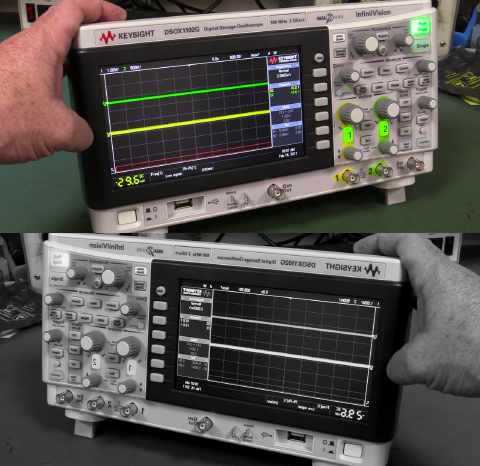
Dave Jones: And like, well, the new Siglent one, for example, entry level, 200 meg. Did we talk about that on the podcast? I don't know if we did, actually. That was interesting because I've actually got the world's only one here. The only one in the wild.
Chris Gammell: I remember you started doing a review on it. You did a review on it, right?
Dave Jones: I did a teardown.
Chris Gammell: Oh, teardown. Okay.
Dave Jones: I think. Yeah. Yes, I did a teardown. But I haven't done a review yet. I kind of, I've got some footage half shot, but I got distracted. Got it. Anyway, I've got the only one in the wild in the world that is the 100 megahertz version. Right. Because they sent me the 100, like it was going to have like a bandwidth limit, like a bandwidth upgrade. Right. You pay extra money, you get the 200 meg. Right. And so I've got one that actually has 100 mega written on the front and it's 100 meg bandwidth. And then they email. I was about to release my video. Then they email me. Stop. Don't release any video. We've changed our mind. We decided that, no, we're not going to do the 100 meg. We're going to make the $350 scope, 200 meg entry level. Holy shit.
Chris Gammell: Yeah.
Dave Jones: Holy shit balls. Like that's.
Chris Gammell: And that's out now?
Dave Jones: That's mind blowing. Yeah. Yeah. It's out. It's the Siglent 1000XE, I think. Boy, their naming keeps getting better and better, don't they?
Dave Jones: You've got to be careful.
Chris Gammell: Everybody's just so original with these goddamn numbers.
Dave Jones: Oh, man. It's bad. It's bad. Don't confuse it with the 1000X. Right. And there's a 1000. This is the 1000XE. The E one is the new one. Right.
Chris Gammell: Well, isn't that also the X1000 is the one that we're, we need to give the other. That's actually what we're going to do at the end of this show, by the way. Stay tuned, folks.
Dave Jones: Oh, the X1000 is the, yes, is the Keysight one as well.
Chris Gammell: We will be announcing our winner, probably after the outro, because I haven't prepared for it. But after the outro today, we will announce our winner from the contest.
Dave Jones: And we just got an email that the winner at The Amp Hour meetup. That's right. Oh, yeah. The Amp Hour meetup just released. He just received his 1000X scope that we gave away.
Speaker ?: So.
Chris Gammell: They're good for it. They're good for it, folks.
Dave Jones: Yeah, they're good for it. They're good for it. It takes them a while, but they come through. Hey, whatever. Whatever. So, you know. Yeah, no, that's good. It's good.
Chris Gammell: I mean, it had good Australia. Yes, we have one more. That ain't exactly, you know, next door.
Dave Jones: Do we have one more or two more? How many did they say we could give away?
Chris Gammell: I don't remember. Well, we'll look at the email. It might be two. It might be. It doesn't matter. Well, whatever it is, we'll give away that.
Dave Jones: We've at least got one more. We did have some good entries. How the hell are we going to give it away?
Chris Gammell: Yeah.
Dave Jones: What? How are we going to give it away? What's the entry requirement?
Chris Gammell: Oh, it's already passed. If you don't remember, people were supposed to share their favorite episode.
Dave Jones: Oh, that's right. Share their favorite episode. And that was actually great.
Chris Gammell: There was a bunch of people. Probably like 100 people or so did that. It was super awesome because we get to see all the ones that people were.
Dave Jones: That's good odds. You know, if you've got one chance in 100 of winning the scope. Yeah. Oh, no, it was great. That's pretty.
Chris Gammell: It was great.
Dave Jones: That's pretty sweet.
Chris Gammell: Yeah. Yeah. See, it pays off. And it didn't have to be, you didn't have to be a social media. You could have done email. It could have been, I mean, one guy wrote on the chalkboard. Excellent. We saw that.
Dave Jones: Oh, yeah. That was great. Oh, that was brilliant. Yeah. If we had a discretionary one to give away, he'd probably get it.
Chris Gammell: Oh, he got a second entry for that.
Dave Jones: Oh, second. That's right. Second entry. Yeah. He was entered twice. Yep. Yep. Worthy, I think. Yep. That was cool. If people don't know, he snuck into his classroom in the middle of the night at his uni. And on the huge, you know, those huge wide whiteboards. It was a blackboard, actually. Not a whiteboard. It's a real blackboard. And he went, you know, he did the whole air power thing with the right across the whole blackboard.
Chris Gammell: Was that episode 161 or something like that? I forget what one of those. Yeah, something like that.
Dave Jones: Anyway, that was worthy of an extra entry.
Chris Gammell: Yeah, that was good. That was good.
Dave Jones: So, that's great. Yep. Anyway, so there you go. Yeah, new scopes. They're just, like, phenomenal. But, yeah, good on tech.
Chris Gammell: Well, and I think that's the interesting thing about all this, right? So, what this tells me is that, okay, so obviously tech has put significant money into new chipsets. Huge R&D into new chipsets. Agilent had done the same. I don't know what Siglin's doing, but I'm guessing they're starting to use... Agilent? Agilent. I said, sorry, did I say Agilent? Whatever the hell they are these days.
Dave Jones: You said Agilent.
Chris Gammell: Bill and Dave's Discount Garage.
Dave Jones: Well, actually, actually, Keysight are overdue now for a new Megazoom 5 ASIC. Right. Because they currently got the Megazoom 4, and it's, I believe, six and a half, approaching seven years old. And I went through the history of the Megazoom chipset once. It's on the forum somewhere, because I'm a nerd and I do this sort of stuff. They released a new one on average every seven years. Oh, okay. So, a new Megazoom chipset.
Chris Gammell: Cool.
Dave Jones: So, yeah, I think they're all every six, I think. So, they're overdue. Right. So, they've got to be imminent.
Chris Gammell: Well, yeah, the point that I'm getting at, though, is that, like, okay, so, like, that is a competitive advantage, is having custom silicon, of course. Like, yeah, they get to, they run the show. There's nobody, like, Siglin can't come in and make a low-cost version of it, right? But, at the same time, Siglin is making a 200 megahertz scope using off-the-shelf parts, ostensibly.
Dave Jones: For 350 bucks.
Chris Gammell: For 350 bucks, right? And so, whatever. We're in a post-scope world here, folks. You know what I mean? Like, that's the whole point that I'm trying to get at. It's crazy. And also, rolled into my next thing that I wanted to mention, is a new Kickstarter. This is actually a guy that I know, Pete. So, he's an antenna designer. I don't know. I think I might have mentioned the talk. So, he gave a talk at my meetup. But, basically, he was an antenna designer. He'd never made electronics before. And then he just showed, like, the progression of these disgusting-looking layouts.
Dave Jones: Right.
Chris Gammell: But everything worked. And it was just like, oh, my God. Like, Pete's... And to be fair, it wasn't disgusting. But it was super ambitious for not having done layout. Right. And just watching his revs of this thing. And it just kept getting better and better. And he's like, yeah, I've never used a micro before. And he just started picking up firmware. And, like, he just did... That's great. It's just, like, people like him, man. Like, so... Yeah, yeah. I know. Brilliant. Brilliant. But he just launched his Kickstarter. And so, now, this is a... It's called the Chazwaza. It's a two-port, low-cost, 400 to 2.7 gigahertz VNA. So, basically, if you want to characterize antennas with a CalKit built in, this is your thing. And I think it's super exciting. I don't know how well it's going to do, but... Oh, you've just added this to the list. It was there before. Well, yeah, today I did. But, yeah. How do you pronounce that? It just launched today.
Dave Jones: How do you pronounce it? Chazwaza?
Chris Gammell: Chazwaza. I don't know. It sounds Australian, doesn't it? Chazwaza. Chazwaza. Chazwaza. Chazwaza, mate. Yeah.
Dave Jones: Yeah. Yeah.
Chris Gammell: So, whatever.
Dave Jones: Anyway, it's got, like, it's basically a box. It's a very non-assuming, unassuming box with some unassuming green, six green buttons on the front and a color LCD that has the Smith chart on it. Yeah. Wow. Yeah, no, the whole thing.
Chris Gammell: I mean, like, and, like, Pete... Yeah.
Dave Jones: Although, my first reaction to this without having watched the video or even scrolling down is why not just make it USB interface and do all your graphic-y stuff on the PC would be my first thought. Okay. Well, you know. Is there a need for a portable one that has the screen built in? That's what I'm...
Chris Gammell: I think a lot of these are. I'm asking. That's the thing. Like, they're all bench-based. So, yeah. Whatever, man. You say USB. You don't use USB scope, so why not?
Dave Jones: Oh, no, no, no, no. Yeah, no. No, no, no. It's great. It's just that, you know, you get a V&A because you want to analyze stuff. I just... My first impression is that it might be easier on a PC, that's all. I'm saying. Rather than six buttons and a screen.
Chris Gammell: Personally, I've never used a V&A. Okay.
Dave Jones: Well, yeah, it's rare that I've, you know... Yeah.
Chris Gammell: So, yeah.
Dave Jones: Yeah, I haven't used one for, I don't know, 12, 15 years, you know.
Chris Gammell: But this is just another thing where it's like, it's a super low, I mean, low cost, right? I think it's like 600 bucks or something like that. That's what you're talking about. That's pretty good. Versus like a...
Dave Jones: There's a super early bird for 459.
Chris Gammell: Right. And I saw online, I was looking at other ones, I think it was like three grand was kind of lower end. I think you can get about three grand for a V&A, but not like from like a...
Dave Jones: Oh, no, no, no. I've been looking for them on eBay, like secondhand. I wouldn't mind having one in the lab just for maybe doing some videos on them, but they're so expensive.
Chris Gammell: Yeah. Right. Especially the big old ones, right? So like, yeah. Oh, yeah, yeah, yeah. Cool. Right.
Dave Jones: Oh, this is like postage on those would cost more than this does. It's a shame it only goes down to 400 megahertz, because I would like a V&A that goes much like down to like five, you know, down to kilohertz or something. Because I'm more in, I'm less into the RS stuff, more into the lower.
Chris Gammell: What would you use that for?
Dave Jones: Frequency stuff. I think, you know, you do, you know, network analysis down at, you know, tens of megahertz or something, you know. Oh.
Chris Gammell: Well, wouldn't you use like a network analyzer though? I mean, like this is a... Yeah, yeah, yeah. Not a network analyzer. What am I thinking of? I used to have an HP one that... Yeah, for like doing like control loops and stuff like that, right? Right. Yeah. Yeah.
Dave Jones: Yeah, yeah, yeah, yeah, yeah, yeah, exactly. Whereas this one only goes from 400 megahertz upwards, but I know why. It's because it's using a, one of these RF, without having looked at the details, it's using one of these, you know, RF-y chipsets. They're probably co-opting one of these modern RF chipsets. And they're only designed for RF. They're not designed to go down to DC kind of thing.
Chris Gammell: Yeah, probably. Yeah, that's probably right. Yeah, yeah. All right. But... Whatever. I'm sure the hams will love this stuff too.
Dave Jones: No, no, no, no. If you're into RF, and it goes up to 2.7 gig. Nice. 400 meg to 2.7 gig. Yeah. Is it a Scalar one? I wonder.
Chris Gammell: I don't know. I told you, I didn't say that I had no idea how to use these things, right?
Dave Jones: Right, okay. Okay, well, we won't go into the differences. Yeah. Great. Oh, well, no, no. It's a V&A. It's a Vector. Duh. It's in the name, right? Scalar versus Vector. Yeah, yeah. There's Scalar Network Analyzers, and there's Vector Network Analyzers. I presume it's only Vector, because it's in the name. Got it. Yeah. Anyway, there is a difference for those playing along at home. Cool. I'd recommend you go Google that and go down the rabbit hole.
Chris Gammell: Yeah.
Dave Jones: Speaking of bad... Yeah, so that's awesome. So we'll link that in down below. Mm-hmm. Yeah. Good luck. That one looks... Yeah, like no one... I don't think anyone's ever done one before, have they? Like a Kickstarter or a low-cost V&A.
Chris Gammell: There's a lot of the SDR stuff, but no, I don't think I do like this.
Dave Jones: There's a lot of SDRs, but not specifically V&A.
Chris Gammell: Yeah.
Dave Jones: Like, you know, like specific... Maybe, you know, maybe you could, you know, you could make the SDRs become V&As, but nobody has gone into it with the intention of producing a V&A, you know, from scratch, I don't think. But I could be wrong. So that's very cool. Yeah. Yeah, hats off. That's great. Oh, the Smith chart. I love it. Anyway, but we aren't RF guys. We're not...
Chris Gammell: We're not even close, man.
Dave Jones: Yeah, I know. Anyway, so speaking... You mentioned bad layouts and stuff like that.
Chris Gammell: Oh, yeah. That's what I need to be talking about now.
Dave Jones: Oh, this is great. Can this be the photo for the episode? Can this be like the thumbnail for the episode? I don't know if we have access.
Chris Gammell: I don't know if we're allowed to repost it as like a thing.
Dave Jones: Yeah, come on. Just do it. Whatever. Just do it. Somebody posted it on Imga, you know? Yeah, right. What is copyright anyway? Anyway. No, we'll reference them. We'll link them in. We'll give them credit, you know? Modern, modern. Anyway, there's this shocking... You've got to see it to believe it. I tweeted this one a couple of days ago. And it was...
Chris Gammell: Surely this thing doesn't work though, right?
Dave Jones: No, no, no. It doesn't. Anyway, this guy who posted the photo, Coglacius. Coglacius is his Imga username. Anyway, he used to work as a lab assistant at a local state university. It was supposed to be... And somebody submitted this. There were four students who worked on this board and this design. Four students. So keep that in mind before you see the photo of this board. Like it's like one of these hand... Is it a hand etched and tinned?
Chris Gammell: It's hand etched, but it was definitely like laid out at some point.
Dave Jones: Like a bit... Four. Like you've got to... Like should we even describe it or should we just leave it as a... Here's what happens, folks. As a shock for people to look at.
Chris Gammell: This is what happens when you use Eagle and the DRC isn't built in. All right? That's what I'm going to say right here. I'm going to put a stake in the ground.
Dave Jones: Anyway, this board is stunning. For its...
Chris Gammell: The fact that you were... Someone was able to do this in a layout program. Yeah. Right. Damn.
Dave Jones: Well, yes. You can't like...
Chris Gammell: No, you can't do this in certain programs. You can't overlay tracks.
Dave Jones: Well, you can. Well, you can. You can disable the DRC. But if you cannot...
Chris Gammell: Nobody who's doing this knows enough to... What a DRC even is. Yeah. No, you're right. You're right. You're right. Fine. Whatever. But yeah. This is...
Dave Jones: But this is just... Oh, my God. This is something special. You're right.
Chris Gammell: Yeah.
Dave Jones: This is double face palm special. This is like, you know, full Captain Picard. You know. Double face palm worthy.
Chris Gammell: Yeah.
Dave Jones: It's... So, just look at the photo. Just go to theairpower.com and have a look at the photo.
Speaker ?: Yeah.
Dave Jones: We won't spoil it anymore. All right. Next.
Chris Gammell: Yeah. What else is next?
Dave Jones: Oh, bloody hell. Five nanometer chips.
Chris Gammell: That... Yeah, you posted about this.
Dave Jones: Please stop the world spinning. I want to get off.
Chris Gammell: Yeah.
Dave Jones: Like...
Chris Gammell: Well, okay. We should state this is about two or three nodes ahead. But... Yeah. But still. But still. It's still happening.
Dave Jones: Anyway, IBM are still doing the business, aren't they? Anyway, they've got... Like, because technically you can't do this with standard transistor silicon design. And that's true. Right? You cannot do this. They've got a new... They've had to use a new what's called a horizontal gate all around. Gate all around. A GAR transistor. G-A-A. A GAR transistor. Because you can't... Like, you can't get down to five nanometers with your standard transistor design on actual silicon. You just... Like, it just doesn't work. You need... So they needed a new Trigate FinFET. Or the next evolution of the Trigate FinFET for those playing log at home. I have no idea what I'm talking about. But it sounds impressive. I knew what the FinFET was. But, yeah. This doesn't make sense with the three...
Chris Gammell: The three gate thing doesn't make sense to me. But...
Dave Jones: Anyway. Right. What we should explain, though, is that... Because you can get multiple gates. When you design chips... Like, when you buy a regular FET, right? A MOSFET or a JFET or whatever. They've got one gate pin, right? It's got one gate.
Chris Gammell: The ones that people are buying in individual packages do not look like this.
Dave Jones: Yeah, yeah, yeah. No, no. But when you design chips, it's actually beneficial. And I don't know the exact... I won't pretend to know the exact reason why. But beneficial to... In the construction of the FET, to have effectively multiple gates on them. More than one gate on them. So it's just the topology of the circuit design in the... On the silicon. It's just beneficial to do that.
Chris Gammell: Yeah, I've been out of the game for a while there, Dave. So I don't know.
Dave Jones: Yeah, I know. Right. So you know as much as I do. But anyway, I do know that much.
Chris Gammell: The 5 nanometers... So if people don't know, the 5 nanometers refers to the width of the smallest gate, the smallest...
Dave Jones: Feature.
Chris Gammell: Feature of the gate. Right, exactly. Size, yeah. So, I mean, most of the stuff on the chip is actually much, much bigger than that. But this is, like, basically the most dense, packed-in stuff. So, like, when Intel's making their chip and... I mean, they're going to start working on something similar, I'm sure, at some point here. And TSMC and everybody else. They're... Basically, the most densely packed stuff is going to look like this. And so... It's going to be some sea of gate... No, not sea of gates, but yeah.
Dave Jones: And the reason that they do this is because it's kind of like an exponential thing. Like, if you halve the feature size, you don't just halve your power consumption. You quarter your... It's a squared thing. You, like, quarter your power consumption and increase your speed.
Chris Gammell: When you get, like, four times as many...
Dave Jones: You get... Transistors, I think. And you get as many transistors on there. But it comes... But you get the advantages in power consumption and speed. Yeah. Right? But at the expense of cost and manufacturing yield and probably, you know, radiation performance. Leakage. Radiation performance. Possibly long-term silicon degradation. Who knows, right?
Chris Gammell: And lower and lower gate voltages, too, right?
Dave Jones: Like, seriously, like, can you picture an encapsulated five-nanometer chip working in 30 years' time as a 10-micron chip would? Like, I can just picture, like, little things happening to atoms and shit. Like, that just, like, you know...
Chris Gammell: What do you mean, like... Cause it to... Like, one impurity gets out of the way where it's... Yeah, yeah, yeah. It's something. ...previously was? Maybe. I don't know. You know, I don't know. Like, something leeches out of the plastic.
Dave Jones: This is like a... I don't...
Chris Gammell: Leeches... Did you say leeches out of the plastic?
Dave Jones: Yeah. I don't know. Right? Well, it's not plastic. Why?
Chris Gammell: But I think I know what you're saying. You're saying that a migration of impurities, right? Because what you're doing is you're doping silicon. You're doping all this stuff. And then, yeah, sometimes I guess with the wrong voltage, you could start to knock stuff out of the way. So, I guess there's that. I don't think it'll move on its own, but maybe it will. I don't know.
Dave Jones: I don't know. Anyway. I just... Yep.
Chris Gammell: It's crazy. So, I think the main thing here is this is like... So, I used to work on silicon stuff. Of course. Never doing, as I should state up front, never developing new process stuff because those people are nuts. But this feels like... Nuts in a good way. Yeah, of course. Yeah. It's just like this is so far afield for me even when I was doing and that was like, you know, 06, 07. So, 10 years ago. Right. Yeah.
Dave Jones: Yeah.
Chris Gammell: But that's just how it always goes. It always just keeps marching on.
Dave Jones: Hmm. Hmm.
Chris Gammell: Yeah.
Dave Jones: Crazy.
Chris Gammell: What's the Gibson quote about like technology, certain technologies are indistinguishable from magic? Yep. I mean, that's what it feels like for me. Yes. Most people don't have any clue what I used to work on. Right? So, like... At this point, it's just all magic. Magic silicon. Yep.
Dave Jones: No, I'm just looking at the structure of these, you know, finfets and stuff like that. Jeez, they're so complex.
Chris Gammell: I wonder how this works too. So, like you mentioned, IBM is still doing stuff. Yeah. And they're all doing like process, you know, they're all racing to the next node, right? They all want to say, this is us. Oh, yeah, yeah, yeah. And then you license it, right? I mean, that's kind of how... I assume that's how IBM's making their money. IBM actually still does make some stuff. I don't know if they own the fab still. I think some of their stuff got sold to global foundries.
Dave Jones: Yeah, I think they sold off their fabs.
Chris Gammell: Yeah.
Dave Jones: Although they were in the process of doing so. Yeah.
Chris Gammell: Speaking of, there's actually more news about that. Apparently...
Dave Jones: Yes, there is. We'll move on to the Toshiba thing. Yeah, yeah. Can we... Did you want to finish your thought on the IBM thing?
Chris Gammell: Oh, no. I was just wondering how IBM was making money here, though. If they're not running fabs, maybe they like license it.
Dave Jones: They don't make... The only way IBM makes money is rebuying this stock. They will collapse.
Chris Gammell: Okay.
Dave Jones: Their collapse is inevitable for IBM. As with any modern company who is simply staying afloat by buying back stock.
Chris Gammell: Don't forget, they also have really expensive consulting services.
Dave Jones: Yeah, right. Yeah. Which is going down the toilet because they outsourced everything.
Chris Gammell: Right. Right, right, right. Well, they divested from fabs. Well, except for the research stuff, I guess.
Dave Jones: Anyway.
Chris Gammell: IBM Sunni. Interesting. Yeah. Yeah. I mean, it's all still... I think, what? They were up in... IBM had some stuff in Vermont, and I think they were also in the Fishkill area. So, if this says SUNY, that means State University of New York. So, that must be the Fishkill area. Fishkill? East Fishkill, New York. It's near Albany. Fishkill. Fishkill. Like, I'm going to kill a fish. Yeah. Right. Yeah. I don't know how I got that name. That's what I thought you said. Yeah. Okay. No, that's where, like... I don't know if it was because of taxes or whatever, but, like, that's where Global Foundries is, and I think IBM had some stuff there. Global Foundries used to be AMD, right? So, that's... They got all their stuff sold off to... Or they, like, re-incorporated as Global Foundries, and... I don't think Intel has stuff out there, but there's just a lot of talent there. That's the main thing. It's, like, one of those talent spots. Yeah. Got it.
Dave Jones: Anyway, in more news... Yes. ...segue into that. Here's a title. Apple, Amazon, joining forces with Foxconn to buy Toshiba.
Chris Gammell: Yeah.
Dave Jones: Well, let's clarify this a bit. To buy Toshiba's semiconductor business.
Chris Gammell: Right. Right. And if you don't know, Toshiba are huge. Yeah.
Dave Jones: Toshiba are huge in semiconductors. They are the number two NAND flash memory maker behind Samsung. Right. Samsung.
Chris Gammell: Behind my former employer. That's right. Yeah.
Dave Jones: Yes. That's right. And Apple, of course, buys Samsung memory. You know, Apple and... Right. They buy Fab's worth of memory. Fierce Rival. That's the real measure there. Fab's worth of memory. Fab's worth of memory.
Chris Gammell: Yeah, that's right.
Dave Jones: That's right. Yeah. Anyway, so Toshiba are huge. Always been huge in the semiconductor business. And this, I think, is a mistake. And Toshiba is selling their semiconductor business because of the massive loss that they've incurred in their nuclear power business. Obviously. Obviously. So they're, like, yeah, selling the crown jewels, so to speak, to offset losses in other... I don't know, man. There's a lot...
Chris Gammell: I mean, I think it's going to be interesting now. I saw an article the other day that, like, the NAND flashes are spiking and stuff. Like, they always do that stuff. Like, it's really boring to pay attention to. But if you do see it...
Dave Jones: Yeah, but what else is coming? Like, what else is there?
Chris Gammell: Oh, like, what's the technology after NAND?
Dave Jones: Yeah, like, NAND is still number one. Right? NAND flash. Right? Like, is something on the horizon that's going to beat it within a year or two and suddenly make NAND? It goes the way of, you know, what was the last Dodo memory? RD RAM. Architecture.
Speaker ?: Oh, right. Okay.
Chris Gammell: By Rambus. Those MFers, man. Rambus.
Dave Jones: Are we going back to, like, episode 10 or something?
Chris Gammell: I'm still bitter about that shit.
Dave Jones: You're still bitter. I know.
Chris Gammell: Intel 8100 paying 500 bucks to upgrade the RAM on that thing. Oh, man. Was that episode 10? Yeah, it probably was. I've been talking about that shit for years. Yeah.
Dave Jones: Yeah, I've been talking about that forever.
Chris Gammell: You know what? That's hilarious. I met someone that worked at Rambus a couple weeks ago. And, of course, I brought that up, too. But that's how it works with us.
Dave Jones: David 2 is in the room and he's... David 2 is pointing out FRAM.
Chris Gammell: What? FRAM is still going?
Dave Jones: It's still going. Yeah, it's still going.
Chris Gammell: I started licensing it. They put that into MSP stuff. You can still buy it.
Dave Jones: Yeah, they put it into a few things. Yeah, but it's not... No, it was supposed to be the next big thing that made computers... That was going to be used in computers everywhere, i.e. today's smartphones and everything else, right?
Chris Gammell: I think that what you're really searching for here, then, is if you're looking for what was supposed to be the next big thing that has not yet materialized is the Memrister. Yes. The Memrister. I haven't said that one on the show in a while. Fill out your bingo cards, folks. That reminds me.
Dave Jones: I was going to build my own Memrister.
Chris Gammell: Yeah?
Dave Jones: Yep. Yep. It's on my list of to-do things.
Chris Gammell: It's on your Memrister?
Dave Jones: Yeah, I'll pay that. Anyway, what else have we got? Toyota's going open source on their new Camry. I... You know? Okay. Yeah, I think it was actually...
Speaker ?: Good luck with that.
Chris Gammell: That's the second time we have to say infotainment today, but I think it was actually the infotainment system.
Dave Jones: Right. System. Oh, just the infotainment. I was going to say, like, hey, I just modded my car with some open source hack I found on a dodgy... Yeah, right. On GitHub, and oops, I killed someone, your honor. I'm sorry. It's GitHub's fault. You know? Right, yeah.
Chris Gammell: Yeah. I used the wrong git command. I still don't get how a git works. Yeah. No, yeah, you're right. Oh, wow. No, I think they would never do that for the engine systems.
Dave Jones: This is why. This is the argument over my new multimeter, right? Because I originally had plans to make my new multimeter, which everyone knows about, the 121 GW, right? Which is at the test house right now. I was going to make... I wanted to make it open source, you know? And I discussed it on the forum and everyone else. Yeah, I think we talked about that on here, too. Yeah. Yeah. The general consensus was, no, don't do it. Because then, A, you'll be supporting every... You'll get support requests for every tin pot thing, right? And Toyota might get this, right? They might open source this and suddenly start getting a flood of people. Oh, my radio doesn't work anymore.
Chris Gammell: I tried to load my DMM firmware onto my radio and it doesn't work.
Dave Jones: And, oh, I bricked it, you know? I don't think that's actually what it's going to be.
Chris Gammell: I think it's just going to be about keeping that part of the ecosystem available. I don't think it'll be like upload your own firmware.
Dave Jones: If you limit it, then it's okay. You can really limit it with absolutely no ability to affect anything else. Right.
Chris Gammell: I'm guessing that this is more a response to the Jeep thing, right? Because you know how they... Right. There have been the hacks that we talked about last week with going through the infotainment system because it's on the CAN bus and somehow...
Dave Jones: Right.
Chris Gammell: I think it's like that kind of thing. I don't think they'll ever be like, and here's the special code for the ECU. It's like, no, that's a bad idea. Don't mess with the engine. You're going to have a bad time.
Dave Jones: So there's an argument that could be made about releasing open source for the engine firmware management and not... Yeah, maybe, but... A whole kid and caboodle because then other people can test for... That's true. Maybe... Flaws in it, right?
Chris Gammell: Maybe Volkswagen is the best reason for that, right? With their... Right. Their tampering, but... Yep. I don't think... I just don't think they will. Maybe. Who knows? Who knows?
Dave Jones: Yeah.
Chris Gammell: Yeah. And I mean, the other thing, though, is like, there's probably lots of patents from the past of like, you know, what's been in the ECU of the past and then how do you turn that into a, you know, when do you start releasing that stuff? You know, you kind of have to like give up all your... Yeah. Yeah. Speaking of patents...
Dave Jones: Oh, God, do we... Oh, yes. Right. Yes, we do. Because this is a good thing, right? It's not a bad thing. No, no, no. This is great, actually. So there was news... We talked about this before and we were pondering on the show. How can we solve this? The US Supreme Court. Da-da-da! To the rescue.
Chris Gammell: Yeah. So basically, they struck down some stuff in... So right now, if you are doing patent law, you probably know about East Texas. And we've talked... Like Dave said, we talked about that. But basically, it's this really, really friendly area to litigators around patents. And...
Dave Jones: So every patent troll in the country has an office in East Texas.
Chris Gammell: Right. I think there was a documentary about that at one point. I remember they just kept knocking on these doors and stuff like that. There was.
Dave Jones: Who... I can't remember who the guy was. Yeah. We've talked about it before on here. It was good.
Chris Gammell: Yeah.
Dave Jones: He actually went around knocking on the doors and they're all empty because they're all shelf companies.
Chris Gammell: Right. Exactly.
Dave Jones: And they just opened and they rent an empty office in East Texas so that they could file the lawsuit in East Texas and extract, as in a recent case that occurred last year, $625 million the court ordered Apple to pay to a shelf company.
Chris Gammell: Shell. Shell company.
Dave Jones: A shelf. Shell. Whatever. Yeah. Like, basically patent troll. And Apple just went, here, take the money, shut up, piss off, go away. Oh, no. They didn't say that they paid off. Did they?
Chris Gammell: Did they actually pay it?
Dave Jones: Well, they won. Anyway. Anyway. Well, they paid it. They didn't... Maybe they didn't fight it or maybe they tried to fight it and lost. I don't know.
Chris Gammell: Well, just because it was decided, though, doesn't mean that they actually paid it. You know what I mean? Oh, right. Okay. So, that's... That's... Yeah. So...
Dave Jones: Oh, right. The jury ordered. Okay. So, they may... I'm sure Apple would have went...
Chris Gammell: Yeah.
Dave Jones: Well, so... I'm looking at the other story. Well, we're going to fight this.
Chris Gammell: So, this company, Vert Next, was paid $23 million by Microsoft over a Skype video technology and then they were going after Apple as well. So, basically, these are like... I can't state how big of pieces of shit these people are. Like, I can't stand this.
Speaker ?: They are.
Chris Gammell: I know. And I was telling Dave, he hasn't gotten to this point, but there is... The latest episode of Silicon Valley is about patent trolls and... Yeah. Oh. I'm going to have to watch that. It's... It's just so frustrating, you know? Like...
Dave Jones: Yeah. I know. Totally.
Chris Gammell: Oh, man.
Dave Jones: Yeah. You want somebody to stand up and just defeat this, you know?
Chris Gammell: Oh, I want to punch him in the face is what I want to do, man. Like, come on. Yeah.
Dave Jones: I know.
Chris Gammell: Okay. Like, I get that Apple doesn't...
Dave Jones: It just stifles the industry. It absolutely eliminates the little guy, you know, from... No, I don't... Start up and everything. I think it's just like...
Chris Gammell: That's a totally separate... I mean, maybe it does, but like... I don't know. Do patents really help you and me?
Dave Jones: No. Not real. Well, they help if we're entrepreneurial and we're doing a startup and we want to get bought by a biggie. That's the only time it helps.
Chris Gammell: The only time. Yeah, probably. Yeah. Yep. Yeah. Right? Ugh, man. Whatever. We've talked about this.
Dave Jones: Because even if I was a $10 million company and I had a patent on something and somebody copied it, I wouldn't be able to afford to sue them. I would not be able to afford it. Right.
Chris Gammell: That is always my question.
Dave Jones: Yeah. It'd just be an empty threat and they would know it. Right. Right? You know, it's just... Yeah, it's useless.
Speaker ?: Yep.
Chris Gammell: Yeah. Well, anyways. Unanimous ruling. Thank you, Supreme Court. That was great.
Dave Jones: Anyway, so what is the ruling? We didn't actually say what the thing was.
Chris Gammell: Well, it's all legal-y stuff.
Dave Jones: So they're basically stopping them from suing anyone in East Texas anymore? Or is that...
Chris Gammell: Well, it was actually... It wasn't even a tech company thing. It was actually against Kraft. So it was a...
Dave Jones: Kraft, as in the food company. The food company.
Chris Gammell: Yeah, these are like giants that are going after it, but...
Dave Jones: Yeah, of course.
Chris Gammell: I believe it's because... I think they said that you have to actually have stuff in that location in order it... So like all these... There is no tech happening in East Texas, right?
Dave Jones: No, no, nothing. So... Right. No, it's a bunch of bloody high-rented empty offices. A Kraft. I'm not sure how that would go, but... Yeah.
Chris Gammell: Yeah.
Dave Jones: It's right. So you've got to have a genuine company presence there doing genuine company stuff before they'll even let you raise a patent lawsuit.
Chris Gammell: Yeah. Oh, here we go. In this ruling, the Supreme Court stated it was upholding one of its earlier patent decisions from 1957. In that decision, the top court had found the specific rules of the Patent Act, which require a plaintiff to sue companies where they are incorporated, applied despite rules to the contrary in the general venue of law. So that's... Yeah, that's right. So basically... Ah, okay. Right. So like... So they clarified the law...
Speaker ?: So like...
Chris Gammell: Kraft is a Delaware company, because everybody's a Delaware company, right? And... Right. So go sue them in Delaware. Because it's tax advantageous. Right. Yeah. Right. Because the idea is that like the...
Dave Jones: And then the Delaware court system is not conducive to... It's not as nearly as conducive as the East Texas court is to Patent. I'm sure it's fair.
Chris Gammell: I mean, like that's the thing. It's just like you wouldn't go out of your way to go there because this East Texas one was so beneficial to go there. Obviously...
Dave Jones: All right.
Chris Gammell: Yeah. So...
Dave Jones: I can remember who... This is great. Last time we talked about this, like was it Apple or Samsung who bought...
Chris Gammell: Maybe both.
Dave Jones: The town... Yeah. The town in East Texas bought them like a $5 million ice skating rink or something. Yeah. Just so that they would have favor with the locals. You know? Yeah. I think I remember something about that. It was just unbelievable.
Chris Gammell: Yeah. Well, anything about patent trolls and lawyers and everything else, I probably blocked it out of my memory or drank away the... Right. Yeah. Of course. ...in the memory of it. But this is great. This is nothing but positive as far as I can tell. If we're wrong, please do let us know in the comments. I don't...
Dave Jones: Anyway, it's a step forward. Yeah. It's a step forward. It's not a solution to patent trolls by any stretch. Right. But it's... Yep. You know.
Chris Gammell: Yep.
Dave Jones: Okay. What have we got? Our time's up. But what have we...
Chris Gammell: Well, I can bitch and moan about all these stupid things. I want to put speakers and microphones in my house. So, first off...
Dave Jones: Why do you want to put speakers and microphones in your house?
Chris Gammell: People are already doing it. I mean, well, technically, you and I actually do have speakers and microphones in our house because you and I are... Well, I guess I'm in my house. You're in your lab. Yep. But I know you have a microphone at your house. But this is like the Alexa... No, I don't. Or sorry, the Amazon Echo.
Dave Jones: I don't have a microphone at my house.
Chris Gammell: Well, your phone is there. I mean, like, Dave, yes, you definitely...
Dave Jones: My phone is there. Okay.
Chris Gammell: You definitely have a microphone.
Dave Jones: And my crusty laptop with its built-in webcam mic, I guess, you know. Yeah. But it's not like on unless the NSA chooses to switch it on, I guess. Right, right.
Chris Gammell: Yeah. Right. So, it's on.
Dave Jones: Sorry, there's a knock at the door. Yeah. Oh, I get it. Yeah. Somebody in a suit, you know, like... Yeah. ...wearing dark sunglasses. Right, right, right, right. Yeah.
Chris Gammell: Yeah, so basically, uh... Amazon Echo is a thing. Google Home is a thing. Yeah, I... Now, the Android guy, Andy Rubin, who runs Playground, which is where...
Dave Jones: Are people this lazy to order shit on Amazon that they have to do? Is that... Please, Alexa or whoever at Bloody Will is, like, please buy me a freaking dollhouse or whatever. I don't think people are buying stuff as much.
Chris Gammell: Although, if they are, Alexa, buy me a scope.
Dave Jones: We tried that one before, right? Yeah, and you can get the new Tektronix one at 30 grand.
Chris Gammell: Alexa, buy me an eight-channel $25,000 scope. Hope you're not listening on speakers. That'll show you. Right. That'll teach you to have a listening device in your house. Anyways, yeah, so...
Dave Jones: We should do an entire episode just with Alexa keywords.
Chris Gammell: Well, we did that one where I was in that Airbnb, remember?
Dave Jones: That's right, yes. And we actually attempted to do it live, and it kind of worked, didn't it? Almost. Well, it kept going off.
Chris Gammell: I mean, that was the thing. We kept laughing about it, and then it kept going off. Yeah, yeah. And, yeah. So, you can tell I don't have one here because nothing's been going off. Although, okay, Google. Temperature. Doesn't that work?
Dave Jones: See, I don't have that feature on my phone switched on. I don't have the... Like, I can't just talk to Google. I've got to switch that on manually if I want it to do that.
Chris Gammell: Well, yeah, I probably should turn that off. You know, literally, that's the only thing I do with it. But I just say that. And it's 65 here in Fahrenheit, so 20-ish. A little bit less. Yeah, something like that. But, yeah, that's literally the only thing I do with it. But this is, like, the thing. So, Andy Rubin's been doing this. This is the Android guy. He also runs Playground, which is a fund that's where Cast AR is based out of. They got some new phone. I don't know. Whatever. But it's, like, that's the thing. Like, it feels like that's all that's left. That's, like, they're trying to get... They couldn't get another screen in the house. They couldn't get another screen in our pockets or our laptop bags or anything like that. So, now it's, like... Well, people might be listening. I'm wondering right now. Who knows? But, like, audio is, like, the next frontier. Right? Google Home, Amazon Alexa. Now... And that was the big one, too. Like, the big announcement from Apple was, like, oh, now there's also the HomePod, they're calling it. And that was their big announcement at their stupid event. So, I don't know. Dave, where do we go from here? What that...
Dave Jones: We don't need any more gadgets. We just leave. We just say, catch you next time.
Chris Gammell: No. Oh, you mean, like, what do we do? Right. Yeah, whatever. Oh, right. Yeah. I guess there's nothing else to say. Is there anything else positive on here, maybe?
Dave Jones: Oh, I don't... Is there? No. There's, like, cheating in the computer science classroom. There's some whiz-bang toy, which... Oh, yeah. The Lightning McQueen. That thing was beautiful. That's a great little toy. That's my screw-ups. Got a whiz-bang gadgety in it. Yeah.
Chris Gammell: All right. Well, that's fine. There is that storage ottoman. That thing's pretty great. The 555 storage ottoman.
Dave Jones: Yeah, 555 storage ottoman. But it doesn't have 555 on the top. How can it be a 555 storage ottoman if it's just paid a black?
Chris Gammell: I think it's because it was based on Evil Mad Scientist's original design. They made a footstool.
Dave Jones: Yeah, but you can't just call it that if you've got a... Right, yeah, yeah. Put a label on it. You've got the number on the top. Put a label on it.
Chris Gammell: Yeah. Yeah. I agree with that.
Dave Jones: Anyway.
Chris Gammell: All right. Well, if you didn't catch this, you can always catch it on our subreddit, reddit.com slash r slash the amp hour. And...
Dave Jones: Oh, by the time we next speak, I probably, hopefully, will have done my thousandth video.
Chris Gammell: Oh, yeah. Yeah.
Dave Jones: Video. Woo-hoo! My thousandth video. It's actually really annoying. It's been really annoying, this thousandth video thing. Because not only, A, is there pressure on me to do something for the thousandth video, and we still haven't planned anything. Like, we've got a plan, but I don't know if we can execute on it properly. It's a lot of effort. There is a backup plan, kind of, but... Anyway. But because, like, I just want to release. Like, I just want to...
Chris Gammell: You stare at the camera and just burp and then turn it off, and then you're done, right? Yeah, exactly.
Dave Jones: Normally, I have the freedom to just do a video. Like, I'm very spontaneous, right? I just, like, I don't have a list of what all my next five or ten videos are going to be. I just, oh, I want to do a video on this today. I just spontaneously go do one. Right. You're overthinking it. I can't do that at the moment.
Chris Gammell: You know you are. Yeah, yeah. You're overthinking it.
Dave Jones: Overthinking what?
Chris Gammell: It does, I mean...
Dave Jones: No, man. Yeah, but I can't do this, right? Because then, like, if I wanted to do one right now, today, but I can't. Because I already know what I want to do for my 999th video, because I think it's quite apt, right? And, of course, we've got to have something special for the 1000. So, like, I just can't spontaneously go and do something right now, and I haven't been able to for the last three or four videos. It's rather annoying.
Chris Gammell: So, Dave's going to make something... Because we're getting too close to 1000. He's just going to stop at 999. He's just going to be... I give it up. There's too much stress. I give up. I give up. Yep, exactly. There you go, man.
Dave Jones: Anyway. Yep. So, I'll actually be... I think I'll be relieved when it's all over.
Chris Gammell: Yeah.
Dave Jones: You know? Yeah, and I can just do anything I want for the 1000 and 1th video. That's right. 1000 and 1th?
Chris Gammell: That's it. 1th? 100 and 1st?
Dave Jones: I'll run with that.
Chris Gammell: Yeah. Cool. Well, hey, we're going to... Right after the... Pay attention after the credits if you did enter the contest. Thanks to all the people who did.
Dave Jones: Oh, which is how we got to draw a winner.
Chris Gammell: They'll find out after the thing. Once I figure it out.
Dave Jones: Oh, okay. Once you figure it out. Okay. And you'll add it in. Yeah. All right. Well, catch you next time. Good luck. See ya. See ya.
Chris Gammell: All right. So, it's contest. And it's always tough to try and figure out how I'm going to do this by audio. But what I'm going to tell you is that we had 94 total entries in this contest this time. So, thank you to everyone who did that. 94 total entries. What we're going to do, we do have two scopes to give away here. I have 94 emails in my inbox, and you're going to have to trust me on the rest of this part because, well, I don't want to make a video about this. And also, you know, the reason we did this as an email thing, too, is that a lot of people aren't super comfortable sharing stuff publicly, right? That's why we offer people to, you know, email their coworkers or post it on internal Slacks, stuff like that. Some people just don't have public profiles, and we wanted to include them. So we're going to do that in the future as well. Hopefully, you do like this method, and hopefully it doesn't seem too spammy. Hopefully, you do want to share the episodes with your coworkers and friends anyways because usually the thing we want to do is, you know, if you're working with other engineers, we figure they're probably the most likely listeners. So that kind of explains the theory of why we're doing this anyways. All right. So we have two scopes to give away. We have 94 entries. The 95th entry is going to be the second entry that Chalkboard got. You probably heard me and Dave explain that in the episode. And so here we go. I'm going to do just a random number generator online. So 1 to 95. And here, here, let's pick it out. Beep, boop, beep, beep, beep, beep, beep. I'm literally just using the random. There's a random number generator built into the Google search. So the first number is 28. Let's see what Gmail that was. And the winner is, pausing for effect, Enrique Viter. I hope I said that right. So he did share on Twitter, and he shared that his favorite episode was number 338 with Juergen Jakobsen. I always get his name wrong. Anyway, so congratulations to Enrique. That's our first winner. Now another number. All right. So second random number generator from 1 to 95. Here we go. 25. Wow. Random indeed. Okay. So let me count that out. And I found it. And holy crap. I have no idea how to say this. He's from Norway. That makes it kind of evident how hard this name is going to be. Stalset on Twitter shared episode 114. Stale Settervik? Oh, man. I'm so sorry. I don't know how to say that name. There's like two characters I don't even recognize. But anyways, congratulations. Our second winner there was Stale. I hope that's right. Thank you to everyone who did participate. You know, I hope this was random at the end. So we appreciate everyone who did it. Thanks to... Well, I'll put it in the show notes, though. It was... Who was it here? It was another David. Yes. David, who shared it on his... His white... Or the blackboard at school. So that was great. We'll share a picture of that, too. All right. So thanks to everyone. We will do more contests like this in the future. Sorry to take so long to announce all these things, too. But... And thank you, of course, to Keysight. If you didn't see... They did Scope Month back in March. That's where all this came from. They released the 1000X, which is the scope that we're giving away here. I think they do Scope Month every March. So keep an eye out for that next time. They gave away like a scope a day or something like that. It was pretty crazy the number of scopes they gave away. So thanks to Daniel who helped us out at Keysight. And congratulations to our winners. And, well, yeah. Thanks for listening to Amp Hour. We'll catch you next time. administered in administered in administered in administered in administered administered in
Archived Discussion (4)
Comments are closed. Archived from the original site.
Show archived discussion (4)Hide discussion
5 nmIBMKickstarterOscilloscopepodcastScopetechnology nodetransistorVNA
Keep current
Every episode, plus the occasional job post, in your inbox.
https://www.youtube.com/watch?v=4vjQl8hQdFY
LOL, OP is called "jebem"! :D
"jebem" means "I fuck" in Sebian. xD