
#342 – Our first in-person show
Download episode · 56 MB
Also on Apple · Spotify · YouTube · RSS
Show Notes
https://www.youtube.com/watch?v=tN0E1HvFS1U
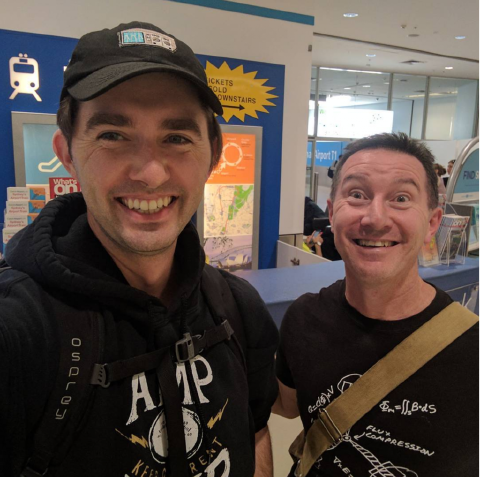
Chris and Dave record from the same room! Weird!
- There will be a Sydney meetup, on Tuesday April 11th at 6 pm. More details here. You can also RSVP via meetup.com.
- Chris will be doing a meetup in Melbourne on Tuesday the 18th, with details to follow. He also may get to tour the Syncrotron as Dave did a few years back.
- Another sci-fi book recommendation, Chris just finished the first book of The Expanse (which is also a show now)
- They were ordering pizzas via computers all the way back in the 70s!
- Dave has played with voice chips in the past, like the SP256AL2.
- The Octavo chip is the main package on the BeagleBone these days. Someone made a version that fits inside the small version of the altoid mint tin.
- Microchip used to be called General Instruments.
- Potato Semiconductor sells super fast 74 series chips.
- Chris wrote about Continuous Integration in hardware.
- There was a really good post about the depth of the Hardware Development Process.
- Sandsquid is no more.
- Dave needs to restock his microcurrent, but each time is re-figuring out the order process.
- Amazon now has FPGA instances available via AWS.
- If you're looking to learn FPGA stuff, we recommend things like the Arty board, the Papilio or the Xess boards.
- Chris was amazed by the tenacity of Pete during this talk about building a VNA.
Transcript
Dave Jones: This is The Amp Hour Podcast, recorded previously, but released April 9th, 2017. Episode 342, our first in-person episode.
Dave Jones: Welcome to the Amp Hour.
Chris Gammell: This is weird.
Dave Jones: Start again.
Chris Gammell: I think we should keep that. We should keep that. All right.
Dave Jones: Well, that was a start, but I'm going to use my professional radio voice. Welcome to the Amp Hour. I'm Dave Jones from the AEV blog.
Chris Gammell: And I'm Chris Gammell of Contextual Electronics.
Dave Jones: High five.
Chris Gammell: High five.
Dave Jones: Hang on. Got it. Got it. Hopefully you heard that.
Chris Gammell: Yeah.
Dave Jones: That was a genuine high five.
Chris Gammell: For real. Yeah. Not digital. That was a...
Dave Jones: Yeah. America. Yeah.
Chris Gammell: Physic. High five.
Dave Jones: We are physically...
Chris Gammell: This is the weirdest shit ever. This is the weirdest shit ever. This is like, I don't know. What do I look at? Do I look at you? You seem like just looking at the screen. I got that stuff on the wall. Yeah.
Dave Jones: I don't know. You've done a podcast with someone else.
Chris Gammell: I wasn't looking at... Yeah. I mean, but...
Dave Jones: You weren't looking at them?
Chris Gammell: But you weren't there either, right? No, I wasn't there. Right. And when you recorded with Fran and you guys were recording whatever.
Dave Jones: She was... Yep. So. Hello.
Chris Gammell: Well, we're in uncharted territory here.
Dave Jones: We are like a meter away from each other. Yeah.
Chris Gammell: This is weird. Yeah. You're in Australia? Three feet if you're American. Yeah.
Dave Jones: Three and a bit feet.
Chris Gammell: Yeah. Three and a bit. Right. 39 inches. Right. Yep. Wait, no. That's a yard. Isn't it?
Dave Jones: Something like that. Yeah. I don't know.
Chris Gammell: Yeah. Yards 39, I think. A meter 36.
Dave Jones: Can we work in furlons or something? Yeah. Right. Of course. Right. Right.
Chris Gammell: So, yeah. I made it to Sydney. It's...
Dave Jones: Awesome.
Chris Gammell: Nice city. I like it.
Dave Jones: It's... I told you.
Chris Gammell: Yeah. Yeah. So...
Dave Jones: You mentioned on... Was it Twitter or something? You want to just... That was a...
Chris Gammell: I was referring to something. I was referring to political stuff. So, we won't... Oh, you were right. Yeah. I was saying maybe I'll extend my...
Dave Jones: Extend your... You've got a three month on your visa. That's right. Yeah.
Chris Gammell: If I need to, I can stick around. Right. But no longer than that. I'm not on work holiday or anything. Right.
Dave Jones: I was telling you, you can quit and you can just... Yeah.
Chris Gammell: Just bum around. I have many... Bum around Australia? I've met many back... I've been staying in hostels. Yep. I can do that whole hostel circuit and... I think it would be tough to... To, like, be in a hostel and then, like, bring... You know, I had the portal lab back in the day, but, like... Yeah, yeah, yeah. The portal lab. Yeah, these days. I don't think the portal lab would really make it through a hostel life, you know?
Dave Jones: But that... That... Pulling the chicks, I'm telling you. Oh, yeah. Definitely. You're right, yeah.
Chris Gammell: All those... All the hippie chicks really love... Right, yeah. They really dig it, yeah. What are you doing? Ooh, electronics. Tell me more. I'm sure a lot of people can relate. Speaking of electronics and... Yep. Meeting people and blah, blah, blah. We should mention what you set up for us.
Dave Jones: Oh! Meetup!
Chris Gammell: Right.
Dave Jones: Yes. Oh, you already know. You've probably seen my video. Maybe not, though. No. Maybe not. They just listen to the answer. Yeah. I've met people who only listen to the... But they kind of know I do this blog thing on the side, you know? Right, right, right. You know, video once in a while. Yeah, yeah. And so, next, this, Tuesday night.
Chris Gammell: Tuesday. Sydney. That's right. Sydney time, yeah.
Dave Jones: Sydney time. 6pm.
Chris Gammell: Yep.
Dave Jones: Piedmont Bridge Hotel. Be there or be square.
Chris Gammell: Which is like... So, let's see. My geography's right here. That's... So, like, the Sydney Opera House. Yep. And then, like, that is like... If you're facing the Sydney Opera House out, that's like... He's closing his eyes. He's visualizing. ...north, right? That's like you're looking due north if the opera house is in front of you.
Chris Gammell: And it would be off to the left. So, it'd be...
Dave Jones: Correct.
Chris Gammell: ...west of that.
Dave Jones: It would be west of that, correct? All right. And, well, southwest. Southwest, right. Yeah, exactly. Because the Opera House is on a point. Yeah, right, right, right.
Chris Gammell: Right. Yep. So, yeah, that'll be good. And your first meetup. My first meetup. You set up a meetup.com account. I did. Yeah.
Dave Jones: Right.
Chris Gammell: So... Yep. First of many. We'll see.
Dave Jones: We'll see. Yes. And I've already got... You might have seen on Twitter... A potential space where we can hold regular meetups, perhaps. Oh, where's that? No, no. The Blue Chili Group. They're a... You've mentioned that before. Startup. Yes. Yes. I've done an interview at Maker Faire. We did a talk with Seb, who's the co-founder of... Yes. Blue Chili. That's a weird name. Blue Chili. That's cool. That's a cool name. Anyway, he... I would not eat blue chili. I gotta say. He just mentioned randomly on Twitter that, oh, if you need a space... Nice. Blue Chili have a space. So, they're like a startup-y, you know... Right. Like an accelerator-type space. Accelerator-type thing. Yep. Cool. So, yeah. Awesome. Excellent. Yeah. We might make it a regular thing.
Chris Gammell: Community. Yeah. Who knew? Who knew? Yeah. Bring your projects. So, that's the main thing. Obviously, bring your projects.
Dave Jones: Bring your project. Yes.
Chris Gammell: So, circuit boards. And what we were saying as well. Some people are probably software people, but if you have not ever built any hardware, but you're looking to... We thought that the best challenge for yourself would be if you could go try and do one thing in a layout program. Right. So, if you're going to do Altium or Eagle or KiCad, just do one thing. Just bring one thing to show off. Or bring your software project. Bring your Hackaday.o profile.
Dave Jones: Bring your printout on old dot matrix with the whole paper. Bring your punch cards. Yeah. Yeah. Yeah. Yeah. Yeah. That's good. Bonus points. You get two entries into the door prize if you bring dot matrix printout with the paper feed. That's right. Yeah. Holes on the side. I'm betting you never had a printer with a dot matrix printer.
Chris Gammell: I did, actually. No, I didn't. You did? That was the very first one. I remember it was a 286 computer. Yep. And it did have...
Dave Jones: A dot matrix printer. Right.
Chris Gammell: With the manual feed. Yep. Yep. The yellow green. Yep. The green and white line paper.
Dave Jones: Okay. And with the sprocket holes on the side. Oh, of course. Right. You got to rip that stuff off.
Dave Jones: It feeds up. Yeah. Yeah.
Chris Gammell: I remember that because then... I remember we tried to make like a banner that one time. Yeah. Or we tried to make birthday cards or something. Like it was just the worst. Right. It was the worst idea. Yep. But yeah, that was early days. So that was probably early 90s. Yeah. Yep. They were still in dot matrix days.
Dave Jones: They were. I was still using a... Yeah, mine until early 90s probably.
Chris Gammell: Yeah.
Dave Jones: Then I got an A3 bubble jet. Not an ink jet. Bubble jet. Bubble jet. Twice the price. Canon were the first. Yeah. Twice the price, half the resolution. That's right. Yeah. But it was A3. I could print out A3 schematics. I thought it was a duck's car. So I paid a fortune for that thing.
Chris Gammell: What's A3?
Dave Jones: A3 is double an American fool's cap. Double.
Chris Gammell: So like a legal size?
Dave Jones: No, no. And that's a standard A4 sheet, which is equivalent to your what?
Chris Gammell: Letter. Letter. Eight and a half by 11. It's double that size.
Dave Jones: Okay. It is actually double.
Chris Gammell: Like double this one?
Dave Jones: Double this one. Oh, yeah. So that's like...
Chris Gammell: We call that legal. Oh, legal. Yeah. So that's... No, legal is still not as big as an A3. Yeah, it's 11 by 17.
Speaker ?: Really?
Chris Gammell: Yeah. Google it. I'm going to look it up. Yeah, look at that. We can actually tell when we're Googling things now. Like I've been looking at Dave Googling. Okay. Yeah. But anyways, as Dave looks that up... So the meetup's happening. It's going to be on a rooftop terrace.
Dave Jones: Rooftop terrace at Piemont Bridge Hotel. Pretty schmick. Pretty schmick.
Chris Gammell: Yeah. Yep. Get some lingo in here. He's getting down the lingo. All right. Yeah.
Dave Jones: Yeah. And yeah, why not? We have exclusive use of the facility until 6 p.m. to late. So yeah. Best meetup you'll ever go to. Yeah. Weird. None of your little dodgy bar. Just sit at the pub at the bar kind of thing. We've got to own private bar. Oh, private bar. Right, right. Apparently. So, yep. Yep.
Chris Gammell: Excellent.
Dave Jones: Yep.
Chris Gammell: Cool. Well, let's see what else. So you were very nice to walk me around the opera house and the bridge.
Dave Jones: The opera house and the harbour bridge. Right.
Chris Gammell: You wanted to take a picture like Mr. Kaiser. Like Mr. Kaiser, but you wouldn't let me. With the nuts. Yeah. No, I did not. Go for that. But yeah, it was a cool tour.
Dave Jones: And we went on a ferry.
Chris Gammell: We went on a ferry to Manly Beach.
Dave Jones: The classic ferry ride to Manly Beach at night. Yeah.
Chris Gammell: Great views. Great views of the...
Dave Jones: You posted a good photo. Twitter photo. We were coming back in on the boat. Yeah.
Chris Gammell: People are interested in what I've been snapping shots of. I've been doing a lot of Instagram stuff.
Dave Jones: I hate Instagram. Because it doesn't pop up automatically on Twitter.
Chris Gammell: That's a Twitter problem. Yeah. Sorry. Right. Yeah. Twitter's been changing too with their replies and stuff like that. It's all...
Dave Jones: Oh, yeah, yeah. I noticed the format he changed or something on my TweetDeck program.
Chris Gammell: Yeah. Lots of...
Dave Jones: Like, what?
Chris Gammell: Lots of... Angst about that, I guess, on Twitter.
Chris Gammell: But whatever. Yeah.
Dave Jones: Anyway. Meh.
Chris Gammell: So what are you going to bring to the meetup?
Dave Jones: I will wear my Belovacuacuacutron Spaceview watch. And I will bring my new multimeter. My EVBlog multimeter. Oh, I have not seen that yet, actually. Oh, yeah, yeah, yeah. There it is. There you go. You can physically... There you go. So you're sticking with the blue.
Chris Gammell: Okay. I didn't realize that.
Dave Jones: Yeah, no. That's the EVBlog blue. It has a certain Pantone number. Oh, you've got a Pantone color. Yeah, I've got a Pantone color.
Chris Gammell: Oh, I don't know. If I say anything on here, is it a spoiler or no? No, no, no, no. Everyone knows. What's the 1.21 gigawatts on here?
Dave Jones: Well, 1.21...
Chris Gammell: No, you forgot the point. There's no point.
Dave Jones: I didn't want to put the point because that was, like, too obvious. So I wanted it to...
Chris Gammell: Oh, you didn't want to, like, get a cease and desist from... Right, yeah, yeah. Right.
Dave Jones: Like I did with the T-shirt, yeah. Aha. Right, right, right. So...
Chris Gammell: This is solid, man. This is really solid.
Dave Jones: Yeah, yeah, it's a brick. Yeah, because it uses four AA batteries, so it's thicker than most. Like you see, like, at the bottom, they usually thin out at the bottom. Right. So the battery's in the top.
Chris Gammell: Well, it's got, like, a gap in the back. Well, I see. This is the problem now. So now we're in person. We're like, oh, yeah, just look at this and that.
Dave Jones: I can physically hand it to you. Wow. We deliberately didn't do video here. We just thought it was meh. You know, video's meh.
Chris Gammell: So what are the specs? Specs on this thing? Or...
Dave Jones: Oh, no, specs are private at the moment. Oh, okay, okay.
Chris Gammell: So specs are on the way. Low burden, though. Okay, so...
Dave Jones: Low burden. It's got multimeter. Micro current functionality built in. Gotcha.
Chris Gammell: Very cool. Yeah.
Dave Jones: So I'll bring that along so people can have a play.
Chris Gammell: Are you going to open up the back?
Dave Jones: I might.
Chris Gammell: I think you should.
Dave Jones: Always got my...
Chris Gammell: I've got some circuit boards with me. Okay.
Dave Jones: Yeah. Yep, cool. My usual traveling stuff.
Chris Gammell: Well, we should also mention... You did mention giveaways. We are going to do...
Dave Jones: Yes, we are going to give away a couple of multimeters and a scope, I think.
Chris Gammell: And a scope, right. So we have a scope to give away. And we will be doing more scopes. Yep. Sometimes. As part of a share thing. So if you share an episode, you can enter it into a contest kind of thing. Yep. Maybe we'll do that for the next episode, which we record, which is...
Dave Jones: Right, yes. That'll be on the road.
Chris Gammell: On the road.
Speaker ?: On the road.
Chris Gammell: We are doing a undetermined...
Dave Jones: We can segue now. He's given like hand gestures for the segueing. You know, like...
Chris Gammell: Right, right. Pointing to me. Dave, you're on. Yeah. This is great. Yeah. So, but we will be doing a road trip to some surprise location, which I'm very excited about.
Dave Jones: Yeah, yeah. It's very cool. Yeah. So I didn't get the full access I wanted in this location because it depends on the downtime that they have. And it's very difficult to tee up. You're giving it away now. Yeah. Yeah. Okay. I might be giving it away. Yeah. All right. But whatever. It's fine.
Chris Gammell: Yeah. Yeah. Yeah. So we'll be doing some recording on the road and recording other stuff.
Dave Jones: And you're going to Melbourne. You're going to the cyclotron.
Chris Gammell: That's right. Yeah. Yeah. So you're going to... I got contacted and I will be... It's actually really works out well because it's the Easter weekend. And so that'll be shut down that whole weekend. And we're going to go in... Well, I mean...
Dave Jones: Are you physically going to go inside the ring?
Chris Gammell: Yeah. Apparently.
Dave Jones: Oh, I didn't get to go inside because it was operational. Right, right, right. I would have got fried. Yeah. Exactly. Yeah. But I got to put my hand in the beam.
Speaker ?: Really?
Dave Jones: As it exited. Yes. Yes. Holy crap. Because they... I mean, it goes right through. Yeah. No. Well, this one converted down to light. Oh. So they have different... Like, there's different exits off the ring. And they put different spectrum stuff and different instruments off the taps on the ring all the way around.
Chris Gammell: So one of the... Well, you can't bend the light with the...
Dave Jones: Oh, yeah. I've done the video where the guy explains it.
Speaker ?: Oh, okay.
Dave Jones: That's a good one. Anyway. Okay. I've done a full tour with an explanation. Do you show the ring thing? Because I... I show the ring thing. Yeah. I go to a full tour of the ring and, you know, they're putting the hand in there. Yeah.
Chris Gammell: Because I know you had gone to the cyclotron. I just didn't... I didn't... I guess I missed. The rest of that video. Anyway.
Dave Jones: Yeah. Full tour video available. Okay. Okay. Yeah. So they down convert that to, you know, light. So that... So they can do light experiments. Of course. Visible light experiments have certain applications. Right.
Chris Gammell: Well, I imagine as you smash stuff together, it also makes different photons kick off and all that stuff. Right? Yeah.
Dave Jones: Yep.
Chris Gammell: Yeah. I found out... Well, Fermilabs is outside of Chicago. And I got an email from one of those people, too. And I got to eventually get out there.
Dave Jones: Right. Okay.
Chris Gammell: Maybe if you ever come to Chicago...
Dave Jones: I might. Yeah. Yeah. Well, there you go.
Chris Gammell: I think we got a couple years on that one. We might have. Yeah. Yeah.
Dave Jones: Yeah. Yeah. Wife and kids. Yeah.
Chris Gammell: Well, so, you know, we'll get there. But yeah, that's pretty cool. Sweet. So, yeah. And Melbourne, I am still setting up the meetup. Melbourne? Melbourne. Melbourne. Melbourne. Melbourne. I'm still setting up the meetup. But there will be one. I will be on Tuesday the 18th, which is my last day in country. So, just because it's past the... All right. I didn't realize Easter's public holiday here. Yep. Easter is a public holiday. Yeah. So, like, the Monday after is a holiday, too. Yep.
Dave Jones: Yes, we have the Good Friday and the Easter Monday. Right.
Chris Gammell: So, Tuesday, that's when we drink beer and talk hardware. Sweet. Yeah. Cool. So, I'm excited.
Dave Jones: So, that'll be in the center of Melbourne, isn't it?
Chris Gammell: Yeah, exactly. It might be... We might do something with the hackerspace, too. Oh, okay. So, we'll talk to a couple of people there. Yes.
Dave Jones: Excellent. No worries.
Chris Gammell: Yeah. Good group of people all around. I didn't mention the New Zealand meetups went really well, too. Excellent. I did one in Auckland. That was about 10 people. And one in Wellington, that was about seven people. So, thank you to everyone who showed up. And, you know, good times, good beers. Cool. Yep. Good electronics. Everybody brought stuff, and that was always a good time.
Dave Jones: Excellent.
Chris Gammell: Yes.
Dave Jones: And we just came from a hackerspace. Oh, we did. Yeah. Robots and dinosaurs. Robots and dinosaurs. Yes.
Chris Gammell: Which I didn't realize until you told me, like, when are you meeting us at R&D? And I'm like, oh, I get it now. Right. That's cool, yeah. R&D, robots and dinosaurs.
Dave Jones: I don't know if that was intentional or not. Oh, surely. Right. Probably. Okay. Right.
Chris Gammell: Yeah, that was a nice little space, though. I mean, like, so...
Dave Jones: Yeah, it's small.
Chris Gammell: I tell people, like, I... You know, there's always, like, the equipment tour and all that kind of stuff. Yeah, yeah, yeah. But that's not really the reason. No, no, no, no. It's not the reason. The reason to go is for, like, the... The people. Like, let's talk about, like, what is that that you're working on? Yeah, yeah, exactly. And we heard a couple... We can't talk about one of the things that we heard about.
Dave Jones: No, no, we can't talk about one of the things we saw, because they're going to do stuff with it. Right. But I'm sure it'll come up later. Yeah, I know. It'll definitely come up. But it's very cool. Great group. He's been working a couple of years on it.
Chris Gammell: Pretty big success.
Dave Jones: Awesome. We're off tomorrow. We're going to up the mountains.
Chris Gammell: Right.
Dave Jones: Taking you up the mountains.
Chris Gammell: No spiders and no snakes, though.
Dave Jones: And no canyoning. He doesn't want canyoning.
Chris Gammell: Right. I don't want to get crushed by my own ineptitude of physical nature, you know? Right. Yeah. I'm more of a walk... I can walk up mountains. I've done that a couple of times so far.
Dave Jones: Well, we'll do some stuff.
Chris Gammell: Sure.
Dave Jones: Swit.
Chris Gammell: Yes. Outdoor stuff.
Dave Jones: Yep. Cool. Because you've only seen the city at the moment, haven't you? You haven't even been out to Bondi Beach or anything, have you? You haven't been out to the beaches. Well, we went to the Manly Beach, but... Oh, yeah. No, Manly Beach is not the same. But that was at night, too. That was at night. Yeah. No, it's not the same.
Chris Gammell: Yeah. You know, seeing stuff. Okay. You know. Here's the thing. I love traveling. It's great. But like I've said in the past, it's like the more places you go, the more food you try and I don't know. Maybe I'm just not going to remote enough places. But Sydney is a city. It's a really nice city. And there are different things. But like it doesn't blur together, but it's just, you know, different flavors of the same thing. It's the same thing. And so that's why I always say it's like getting to hang out with people, hearing new stories, you know, obviously see the sites. But yeah, I think it's...
Dave Jones: Any large city in the world is going to feel pretty consistent. Especially when they speak English. Yeah. Mostly whatever you guys call English, you know. Right.
Chris Gammell: Yeah.
Dave Jones: It's different when you go to a foreign language country. Exactly. It's like it feels foreign because you don't... Right.
Chris Gammell: Because you're just kind of like in the middle of a sea of people that are confusing. You know, it doesn't catch your ear. No.
Dave Jones: Yeah. You're hearing all this stuff and you have no idea what... Right. Yeah. It's like a human filter. Yeah. You know, it's just... Yeah. The ability to do that. It's entirely different. So... So you feel a bit more, oh, geez, I'm really out of my comfort zone now. Right.
Chris Gammell: Exactly. Yep. Yep. So, but yeah, this feels natural and, you know, it's a big city and it's a little sprawling, but... Your voice is different in real life. Oh, yeah. That's what you said too. Yep. It's deeper. Yeah.
Dave Jones: Although it's probably different here in the office, maybe a little bit. The first time we met... Like, I'm getting used to it now. Uh-huh. Maybe that's why, but the first time we met and you opened your mouth, it was like, what? Yeah. That's very basic.
Speaker ?: Who is this person?
Dave Jones: Yeah. Yeah. You know?
Chris Gammell: Well, I was mentioning right before we started recording too, that this is the first time we've recorded without headphones on. Oh, yes. We don't have headphones. So that's weird too, right? It is weird. It's like we hear each other through these communication mechanisms and... Yeah. Everything's filtered. You know what it probably is though? What? You would probably know what my voice sounded like if you ever listen to the podcast. After the fact. Oh, right. Everybody else knows what it sounds like. You just don't because you only hear it through the mumble thing. Got it. There you go. Reasons to listen to the podcast.
Dave Jones: There you go. It's because it's higher fidelity. Mumbles lower. It's going to be... Yeah, right. It gets sound-sampled. Essentially lower. Lo-fi.
Chris Gammell: Mm-hmm. Yeah. Yeah.
Dave Jones: Cool.
Chris Gammell: All right. So we got that crap out of the way. Good. Yeah. Wasted half a show on that. Yeah. Yeah. Yeah. Just pissed away like we normally do. All right. What do we got? What do we want to talk about? Well, we got a lot of stuff on here. This was actually really... So actually, this is relevant to some of the stuff we saw today. There was Lemnos. The guys from Lemnos Labs were writing about robotic startups. And we've talked about this a lot in the past, right? About like, yes, the robotic revolution's coming. But it's probably better to start your own company, right? That's the thing you should be doing. But this is... The reason that they bring it up is because about LiDAR. And I've already seen in the past two days, I've seen like two or three different chipsets that are like breakout boards or just single chips. Like they're just everywhere. And I still don't... I don't know how to actually get the data off that. I think it goes into like robot operating system, Ross. Yep. But like that's like the... That is one of the key pieces for building things that can avoid obstacles and all that stuff. Yep. And like the cost they're talking about, like the... I think in the article they talk about like it might be 50% of your bomb cost now, but it's probably going to be closer to five in, you know, in five years.
Dave Jones: Whereas Wi-Fi was like that. Like it was so expensive to integrate Wi-Fi. Like it was half the cost of...
Speaker ?: Exactly.
Dave Jones: Oh, God. You know, like half the cost of your product. Now it's like, you know, two bucks or something, right? Right. Exactly. Yeah.
Chris Gammell: ESP 8266 is everywhere. And there's other chipsets that are competing with that. And the stacks are all there. And like that's what it comes down to is that like this is now the leading edge. And so, I mean, it's just kind of what... You know, I kind of get... I get a lot of... What is it? The hardware... Hardware Weekly, I think it is. But it also talks about like... It shows like the things that are getting funded. Yeah. Like all these startups getting funded. And the robot ones, they just keep... I mean, not that like we're talking about investment often, but the...
Dave Jones: Is that the new flavor of the month?
Chris Gammell: What?
Dave Jones: Robotics. Like a... Oh, oh, oh, yeah. Like a... Sort of that area. I think it's been the flavor. I think it's been the flavor. Yeah.
Chris Gammell: There's special like funds that are set up for that kind of thing. But I think...
Dave Jones: But will there be like a frenzy?
Chris Gammell: Oh, maybe. I don't know. I think that there's enough of a... So like with IoT, it's like, oh, throw Bluetooth on it. And then, you know, I'm a software developer. But it's like robotics still needs a lot of stuff, right? You still need a lot of, you know, motor control. And you need, you know, all the code to control it. And then all the interfacing things. So it's not like particularly easy to get it done. But I think there's just more accessible. Like to get like one of those LiDAR spinners that's on like a Boston Dynamics thing. You know, that was really hard, right? That was $10,000 or the ones that are on the self-driving cars. But now there's ones that are smaller. And so you can get kind of like smaller scale robots. Like so I saw there was a bunch of money that was just raised by another warehouse company. So you remember Kiva robots was the Amazon one that got bought by Amazon for like $750 million. So now there's others just entrants into the market kind of thing. So yeah, robots. I don't know. I don't have any idea.
Dave Jones: Is the internet of things now dying away?
Chris Gammell: It's like, oh, you know, probably all the big people are going to be like, yeah, right. Well, maybe it's just that there's enough connectivity everywhere. You know, like, yeah, I don't know. So.
Dave Jones: Oh, boy. Oh, come on, dude. You can't have a chip printer thing on here.
Chris Gammell: I didn't put that there. And it's not. Oh, right. Okay. Who put it there? I didn't put it there.
Dave Jones: Oh, Ode Hinko.
Chris Gammell: Yeah, I don't agree with this, actually.
Dave Jones: Right. Okay.
Chris Gammell: So this is a wired article about like, it's about a silver ink printer. It's. We've talked about that. We've seen that. It's not. That's not even close to a chip printer. So.
Dave Jones: Oh, right. Oh, okay. No, no, not even close. Okay. Right. No. Are you still going to personally resign? Resign to the fact that I was right? Do I have to hand over like a $5 bill or something like that? Yeah. It's a token $1. Yeah, right. It's $1. Trading places. Yeah, trading places. Right.
Chris Gammell: Randolph, you won. Yes. Here's your $1. Yeah. No, I don't think I'm giving up on that one yet. I think I have a couple more years.
Dave Jones: Well, was it 20? Was it 20?
Chris Gammell: I think it was 20. It was 20. I don't remember. Someone asked if this was, if me coming here was me losing the bet. Right. And I was like, no, I'm just visiting, you know? Right. Yeah. No, it's not the. He concedes defeat, folks. Whatever. Whatever. Whatever. Okay.
Dave Jones: Yeah, whatever is the usual defeat response. Whatever. Yeah, we'll see. Right. Yeah. SpaceX launched the, relaunched the reusable rocket then. And we talked about that. I did a thing with Fran. Yeah, right. You and Fran. Which isn't really an official Ampower. Right. We're going to post the audio hopefully still. We'll post the audio. But it's up on the YouTubes.
Chris Gammell: That's right. On your EEVBlog2 channel.
Dave Jones: I'll post it onto The Amp Hour YouTube as well. Oh, that's a good idea. Yeah.
Chris Gammell: Yeah. Yeah. Yeah. So that was good. And you guys talked all about that. Yep. You know, I've been reading a lot. I've been, you know, doing more sci-fi stuff. I told you about that new series. The Expanse. Yes.
Dave Jones: The Expanse. I have not watched yet, but it's on Netflix and I'm quite excited. Yeah. So I like Netflix.
Chris Gammell: I've been reading the book. Right. But it's really, the thing that I keep getting towards is like, so like all of this sci-fi stuff, it's just like, space sucks. Like, I know that like people are like, oh, we're like destined for the stars. But like, man, that sucks. Like just the timeline to get, I mean, like everything's about that, right? Like it's four months to get to Mars. Right. You know, like the, what's it called? The Voyager that's way the hell out there. It's like that's in 30 years, that's still only so far. And yeah, space sucks. And you know, like you're crapping into bags. Yeah. No, it's not great. It's not great.
Chris Gammell: And so I, what was I going to say about that though?
Dave Jones: As, as, um, as, uh, Aldrin famously said, uh, Buzz said this the other month when Elon did the thing, I said this on the podcast, his response to Elon, you know, saying, oh, we're going to Mars. We're going to, you know, everything else. His response was, what are you going to do when you get there?
Chris Gammell: Yeah. Right.
Dave Jones: Like, like it's a serious question. Yeah. Like nothing. Right. You're just going to die. Well, probably. Yeah. Hopefully you build up the last a couple of months or a couple of years and then you're just probably going to die. Something's going to kill you or you just die of boredom, you know? Right. Right.
Chris Gammell: Well, yeah, I guess that's one thing you can do. I mean, you could try and come back, but probably not going to happen. So, uh, yeah.
Dave Jones: Um, yep.
Chris Gammell: Oh, that's why that's where, that's what I remember. Cause I remember thinking about the chip printer idea, right? Like ultimately, uh, that's one of the big problems is that like, if you really think about a long-term space, uh, mission, what's going to go, like you're going to have cosmic radiation. And actually they talk about this in 70s, one of the, one of the, uh, Stevenson books where basically they have a stockpile of chips that they, they, uh, they actually protect, they put it like in like a water bladder basically to protect it from radiation because you start getting all these errant, uh, x-rays and gamma rays and whatever, because you're just, you know, in the atmosphere and then, but eventually you're going to run out. So then what, you know, like, what are you going to do when, when all that happens?
Dave Jones: And you need the chip printer, just like they had in the Terra Nova. Oh yeah. We talked about this six years ago. Yes. Terra Nova was where they had a chip printer. Right. They could just, oh, the chip's broken. And we'll print one, you know, chip printer.
Chris Gammell: Right. Well, I mean, so like maybe we, before, before we, uh, add Astra, uh, whatever the, the phrase is in Latin, before we get to the stars, you know, we need to figure that shit out. Uh, I don't know. We'll, we'll get to that point. But, uh, yeah.
Dave Jones: Hey, all this internet of things bullshit. So who posted this? I think that was me. Who posted, that was you?
Chris Gammell: I think so.
Dave Jones: The, um. The dishwasher? Look at that. The, uh, pizza, ordering the pizza.
Chris Gammell: Oh, I didn't see that one.
Dave Jones: Yeah.
Chris Gammell: Where's that?
Dave Jones: Uh. You just look on your screen, huh? Yeah. Right. You can just lean over and look if you want. Um.
Chris Gammell: What a novelty. We have to.
Dave Jones: Here we go. Donald Sherman orders a pizza using a talking computer in, on December 4th, 1974.
Chris Gammell: Okay.
Dave Jones: Like, yeah. They ordered a pizza. It was like, so. Just. It's awesome.
Chris Gammell: Back on my mic. Uh, what. I didn't actually watch it.
Dave Jones: I, well, I haven't listened to the sound, but he's ordering a pizza in 1974 over the phone. Uh-huh. You're using a computer.
Chris Gammell: So like doing. This was a big deal. Yeah.
Dave Jones: I, I'm not sure of the exact mechanism, how it, how it actually worked if it had a computer voice. And there's like all people standing around watching. It's like, and all these guys with classic, uh, classic, uh, mullets and like the long hair and the big sideburns and everything. And they're got the acoustic coupler modem. Oh yeah. And they're going to order their pizza. The phone.
Chris Gammell: Yeah. Yeah. Yeah. The handset.
Dave Jones: Yeah. Handset onto the. 300 baud. Right. Yeah. Yeah. Well, wasn't it? No, 300 baud was fancy pantsy. Oh really? Yeah. Yeah. Yeah. It was one baud, huh? Back in my day. 75. Yeah. You know, because if you had the, you would have the, uh, well, you would have the 1275. So it'd be 1200 one direction, 75 the other.
Chris Gammell: Wait. This is before your time.
Dave Jones: Yeah. You receive it at, um, 1200 and you send it 75. Really?
Chris Gammell: Why, why this, uh, just because of the.
Dave Jones: It was a duplexy systemy limitation thing. It was just, yeah. Interesting. So they share the channels in both, in both directions. Cause typically like you do, you both wouldn't want to send it 1200 to each other or something. So you would, you only have limited bandwidth. So you would, you know. That's cool. Yep.
Chris Gammell: Yeah. Yeah. I like seeing those things like the, cause they always like the, uh, what is it? Like the bakelite molded things too. Oh, right. With the rubber on the top, really coupling it in there. Yeah. Yeah.
Dave Jones: Oh goodness. I'm going to have to watch war games again. Just for kicks. Yes.
Chris Gammell: Yes. Ah. So, uh, someone wrote in about this. They said, Dr. Vegeline? Vegeline? As far as I can tell, the computer being used here is a CDC 6500, an $8 million supercomputer. The speaking spell was released just four years later and used a single chip for the voice synthesis.
Dave Jones: Ah. So they're doing voice synthesis, order the pizza using voice synthesis. Right.
Chris Gammell: So the phonemes and all that stuff. Right. Like the, uh. Yep. Did you ever use those chips? I remember.
Dave Jones: Yeah, yeah, yeah. I, yes. You did a video about this, right? Yeah. Yes, the SP, um, SP256AL2.
Chris Gammell: AL2.
Dave Jones: The AL2, they, they, there was two chips. There was one which was the speech synthesizer, which you had to feed it the allophones, right? So you had to know what the allophones were.
Chris Gammell: Right, because it was like you were just pinging a memory map or something like that, right? Yeah, yeah, yeah. You just called a register.
Dave Jones: And it had a table look up and you had to give it the, but yeah, but to be able to, you either had to know how to construct words using those phonemes. Yeah. Um, or you use the companion AL2 speech, which converted ASCII. So it took ASCII input and it knew how to convert ASCII into the phonemes to then send to the other chip too. Right. Yep. And that was the classic. Nice. That was a classic chip. Right. Yep.
Chris Gammell: Yeah. And then there's, uh, then the TI one's different though, right? Because the TI speak and spell had a single chip or is that the same stuff?
Dave Jones: I think it's, no, I don't think it uses the same one. I think TI had their own tech, did they?
Chris Gammell: Uh, I just, I know that, uh, what's his name? Gene France, I think is one of the guys. Cause he's now at Octavio systems, Octavo systems. Right. Which are the folks that do the, uh, the, have you seen that new, the BeagleBone chip that they do?
Dave Jones: BeagleBone chip.
Chris Gammell: Yeah. So basically they, they did the flip chip stuff where they did like the, the system integration where it's got the, the AM three, three, five, six or whatever. I'm butchering these numbers. Yeah. The, the, no, yeah. Oh yeah. I guess it is. Yeah. It's like an arm.
Dave Jones: It's an arm thingy processor and it's got the memory on the back. So it's a flip chip. Right.
Chris Gammell: And so it's Octavo, but it's like, so, uh, cause I just saw, did I add it to the list? I don't know if I added it to the list. Um, there was someone, uh, sorry, I'm going to jump back in.
Dave Jones: It used the speak and spell use the TMC 0280 linear predictive code in speech synthesizer. Oh, cool. So it didn't use the, uh, SP256AL2.
Chris Gammell: Right. Well, I'm guessing if TI didn't make the, the, no, no, no, no, that was a general.
Dave Jones: That was, um, uh, basically, um, was it pre microchip? Was it, um, general, um, who became microchip? Um, general. General. Oh, goodness. I should know this. I'm going to pretend to be like super knowledgeable and now we have two microphones hearing, uh,
Chris Gammell: hearing our typing, right? You're right. Yeah. It's not great. Yeah.
Dave Jones: It's very disturbing. I can see your voice waveform. I'm used to watching the waveform.
Chris Gammell: I know. It looks so clean.
Dave Jones: It looks so clean and your voice is coming through. It's like, you know, no, no.
Chris Gammell: Yeah. We're not used to it. So yeah. Hopefully if this sound setup sucks this time. Yeah. Yeah. It's because we're going to be great. We, we are not, uh, we're not used to this kind of like, no, we, we, I, I, ideally we'd
Dave Jones: just have one mic in the middle of us, I guess. No, no.
Chris Gammell: It's like, uh, Chris and Alicia do this for, um, for embedded FM. Yep. They have, it's more like a stereo. I mean, it's like a studio setup. Right. But basically the idea is that my voice will hopefully flood out whatever's feeding through to your mic.
Dave Jones: Right. Okay. Right. Right.
Chris Gammell: And then the real problem is that it's an echoey room. So one of the problems. So yeah. This is, if it sucks, we're sorry, but you know, whatever the novelty of us, you know, we couldn't pass. So we're also going to be recording from a car next time. So that's going to really suck. I have, I have lapel mics, but we'll see how that works out.
Dave Jones: That's going to be bad. Yeah. Yeah.
Chris Gammell: So, uh, yeah. So I thought I added this to the list, but, um, drew from Mosh Park had posted. There was a, um, basically it's like a, it looked like a, like a mini BeagleBone, uh, but almost it was like a breakout just for this chip. So you, since you still can run, so it's like a power supply and then this Octavo, um, a eight, whatever. Um, and then it could still run the BeagleBone distro. That's, that's there. Right. So you still reading, still reading what it is. Do you got it? General. I got it. I got it.
Dave Jones: I got it. What is it? Microchip used to be general instruments. General instruments. General instruments. Yep. Yeah. Well, they might've merged with, I can't remember. Yeah. Yeah.
Chris Gammell: They're all, yeah. We were talking on the way over about the, uh, all the, no general instruments spun
Dave Jones: off its microelectronics division as a wholly owned subsidiary, which was microchip.
Chris Gammell: Wait. So did you ever refer to things as microchips before that then?
Dave Jones: Yes.
Chris Gammell: So they just co-opted the name.
Dave Jones: They co-opted the name. I think. Yeah. Yeah. Yeah.
Chris Gammell: Ballsy. Ballsy move. Yeah. Yeah. Yeah. You gotta.
Dave Jones: Nobody like trademarked it. Cause it was too common. We're calling them out 30, 40 years later. Right. Right.
Chris Gammell: now that they've bought up atmel and everything else guys not cool not not cool yeah yeah no
Dave Jones: you're gonna have to ditch that name yeah right if you have called you out on the
Chris Gammell: we're gonna name you something new what should we call them micro rip i don't know tiny transistor company
Dave Jones: you're welcome what was what what's the one you can buy their chips on ebay um they sell like a super high speed 7.4 series logic oh i need to talk yeah potato semiconductor is it like potato semiconductor is it really yeah yeah and and it's like running out of some guy's garage
Chris Gammell: oh yeah because it's it's like they're either classifying they're just like buying and and uh
Dave Jones: bidding chips or something or no no no they they do their own chips they do one one gig you can get
Chris Gammell: one gig speed 7.4 series logic there's a joke in there about like like potato quality you know you ever see like people refer to like potato quality photos and stuff like that and it's like
Dave Jones: i love their logo it's like it's like eight bit kind of like like iconic icon graphics it's like
Chris Gammell: the guy did it himself you know i guess when you're when you're when you're the boss and the whole judge
Dave Jones: and jury i guess you get to do that no it's great good on him oh i'll have to get these sometime you know it's like yeah just try it out and see what it looks like one one gig yeah that's crazy yeah what why yeah at that point come on yeah yeah it's you know yep anyway he's thinking your 7.4 series logic just because you can that's great yep anyway ah right cool what else have we got
Chris Gammell: would it be funny if we just like ran out of time we're just like ran out of shit to say that's it the amp hour usually usually yeah yeah not had a good run see ya you know well it's
Dave Jones: you know because we're gonna look at each other that takes time right usually i just ignore the
Chris Gammell: crap out of you i'm just like hey dave dave will be talking for five minutes yeah yeah no we're going to drink a water go use the restroom you talk more than i do these days yeah oh yeah that's what
Dave Jones: it is yeah so we're often like staring at the screen in the background and someone else is yapping
Chris Gammell: it away and right we're trying to think of stuff to say next it's different yeah i think so too yeah yep uh this is a link that i saw posted it was actually really good uh uh it's all about the hardware development process uh i saw star posted this or reposted this on on twitter but it's basically i was actually interested because i had just written about not doing this so i've been right i've been really interested in like the idea of like uh like uh continuous what's it called
Dave Jones: continuous integration i thought you were going to say continuous improvement i know right oh my i like i would have reached over and strangled yeah yeah you could do that right yeah yeah uh continuous improvement right like it was like for like a decade there it was like the buzzword of
Chris Gammell: oh yeah of course corporation kaizen all that crap right five ass yeah right oh yeah continuous improvement we could have gotten jobs at middle management anywhere hang on i'm gonna snap a photo
Dave Jones: of his real funky hair he he he doesn't like people to see it he doesn't like people to see it this is good during the show yeah yeah during the show i'm gonna uh i'm gonna snap a photo
Chris Gammell: here we go here we go this is why i've been having i make my own hats now right you make your own hats yeah i have a kai cat hat i have a uh i have a uh oscilloscope pad you saw my this is my this is my thing where i just go i go buy patches on adafruit and then i iron them onto the front of blank hats it's it's a great great way to do it so if you're like uh you know they got all the they've got a eagle eagle patch they've got a python patch oh yeah you can what i choose your flavor i love they're really nicely made so um yeah i made my own hats so sweet i was trying to convince the embedded folks to uh instead of making hats because they made hats to just make a patch patch and then you put a patch on anything then right put on a backpack if we ever maybe we should get an amp power patch we should yeah we should or stickers or really anything so do you sew it on or do you just uh it's a heat it's a heat one and then i sewed it after the fact okay so there
Dave Jones: you go anyways uh so not sure that that brings in the chicks too oh yeah yeah oscilloscope hat is
Chris Gammell: that an oscilloscope hat oh my goodness yeah yeah right dave likes bringing that stuff up it's pretty fun um so uh not continuous improvement but continuous integration which is a software concept do you know what that means or no no explain so basically it's it's like you it's like you
Dave Jones: continuously do a build so each time you do a commit oh okay it automatically builds it does a build and
Chris Gammell: then if it doesn't build then you've obviously messed something you've screwed something up right right so so this is just an idea i was thinking about and and it's really not a well-formed idea yet
Dave Jones: i'm really just like you're you're not going to try and do this for hardware are you well that was
Chris Gammell: the i mean that's just like could it work right i mean like and the interesting thing is like you know if you hand off you know where does it really stop right because i think about um when i do a new layout right i put a i put a cap on a board and then it's like a really tall cap and then at some point that's going to run into the plastics that are already designed right right and so the idea would be like as if i do a commit with a new capacitor on board it it all does so you're almost
Dave Jones: all automatically doing a erc no not an erc a drc oh well plus an erc it is kind of all that stuff
Chris Gammell: but then it's also like it has to go to other people right so like you have to go send it to your mechanical engineer probably right so it has to generate a a 3d model right yeah like all teams are right at that kaget's getting better at that where it generates a 3d model but then it's also like hey this is what changed you know do whatever you need it doesn't need to be like
Dave Jones: probably you could automatically do that now tm with scripting you think you could yeah you could probably because it altium does the 3d envelope okay fitting so it'll it'll show up you know so so if you go to the 3d view it'll automatically like mark in red if your component is too whole
Chris Gammell: and it's actually hitting your case okay so you have to do that because i i've been talking to people about that too because there's like a really tight integration with like solidworks right
Dave Jones: right does it work with do you know if it works with other i don't know i'm not that up on the
Chris Gammell: new because it's the thing like a lot of a lot of these things like you can totally do it if you buy into the whole system right right if you if you were like top to bottom integrators like yeah it works great yep right and and i started looking into like plm systems too because a lot of them do it where it's like oh well now you know it triggers this different thing and it'll tell your buyer or whatever you know like but now i guess the real question is could you do without that that's what i've been kind of thinking about and writing about and stuff got it but this uh article is basically a really good rundown really good rundown of why hardware is different right so it's just showing all of the different steps right especially as you taking things all the way through to production you know like the full the full production um setup basically where you're you're doing dvt pvt all these all these different stages because you're doing super high volume stuff and and it's really different you know that is where it all falls apart right it's like you know that's where the wheels
Dave Jones: fall off the billy card right of course but i think there's other things that are in there that
Chris Gammell: are kind of interesting too like like this is an extensive article oh no it's really it's very well written and um and it's and for people especially people that have not done you know uh npi like new product introduction type stuff like this is really good because it also shows like the breaks and for for when i talk to like young engineers about this i'm like as in the break as in the quantity breaks you're talking about uh sort of but also just like like so so she drew out the development and manufacturing right as like a solid break oh okay and really that's what it is right i mean you've done this too right it's like you have a product and it's finished it's through it's it's at a gate or whatever if you're doing like a gate process and at the end it's like okay this is like starting an entirely new thing where yes this thing is a nicely formed prototype and blah blah blah but now i'm going to take this and it's a whole new project effectively right taking it into production
Dave Jones: is a whole new thing and and it sucks i interestingly uh david too my um cohort um cohort cohort is that oh and yeah news coming um he showed me his he's developed a new product and he's an automation freak of course right and yeah so hasn't made it hasn't really made one yet right but he's automated everything to make it and we'll probably show this on a video in probably the next month or two yeah um and what he does is he has scripted everything so that he sucks all the data from altium right so sucks all your bill of materials data from altium yeah can automatically suck it in automatically spreadsheets it all sorts it but it tells he types in what quantity he wants to make and it automatically gets all the latest prices from all the different vendors and it automatically generates purchase orders in their required templates damn yeah it's it's fully like yeah it almost is like a single button you type in the number you want you push a button it generates the purchase order and all you gotta do is feed in your credit card number and then it goes to the assembler and 10 10 units come back or 100 units come back that ain't bad it's fully all right so in theory you could push that from altium right side and you could like light so as you're editing altium you can go i'm going to change this capacitor from this type to this type what how much that reflects in my final manufacturing cost and and lead time as well right and that's and that's
Chris Gammell: what i've talked to to some people that you also know uh that uh you know that just about like uh so maybe there's a maybe you're just watching oh well your price went up on your final bomb right or it's like watch it you're maybe it's recalculating costs and it's like doing all this stuff and it's like now now the the the drc right the drc is not for does your track get too close to another track but the drc is did you go over your cost target right it's your entire design yeah that's you're not just limiting it's i mean people probably right now that's the difference between drc and erc
Dave Jones: erc electrical rules check it's just electrical drc could encompass as much as you want it totally
Chris Gammell: could right right right um and i'm sure people are screaming at the radio right now and they're like chris has gone insane dave's gone insane but it no no we can there's a lot of overhead for this kind
Dave Jones: of thing and it's probably not worth it but for you for most people it's probably not worth it but for
Chris Gammell: some people it is the golden ticket right right and and so i i would be very interested to see uh david too stuff about that because um i mean obviously this is just you know stuff that i think about and talk about a lot so uh but this is what anyone doing prototyping into manufacturing is going to be doing right i mean like i actually found out i was sad to find out sand squid is no more did you know
Dave Jones: sand squid no i have no idea sorry i'm not going to share i believe we talked about sand squid at some
Chris Gammell: point but uh we've done 300 yeah something yeah yeah uh they are basically a bomb tool that would do um they would do send out bombs to everyone uh oh so check across all of them and then it would just give you like so kind of like what david too is doing but basically just give you the block of um of like so like for digi key you know they have that bulk order entry yeah it gives you the the quantity comma quantity and i think that's all you need right and then it's just it's just like
Dave Jones: uh it's just a list and it's a breakdown of all the different price quantities and whether or not they're on reels or digi reels or loose no no no no this is like just like a quick the quick order
Chris Gammell: thing it's like just their part number how many and then it just you do like a list of like almost like a common separated list and it just goes whoop and it fills out a bomb so right and a bunch of people have that so sand squid is no more but ah why did they fold i don't know i didn't talk to
Dave Jones: them i talked to them at some point but they couldn't find enough people interested in the concept i guess or willing to pay for it that's there there's a difference between people interested and want to use it and people who want to pay for it story my life they want all that juicy free content you've
Chris Gammell: got for them they want it for free yeah yeah yeah so yeah anyways this uh so back to this uh hardware product product development process this like dave said it is a it is a lengthy uh thing but it is worth looking at and uh you know it's it's manufacturing sucks okay i know we talk about it we're like oh yeah it's great but like i've been talking to another friend who's who's got something in high volume and it's just it's a grind you know yeah yeah totally everybody wants to do the design stuff but yeah the maintenance stuff is how you that's how you make your money you know like once you're once your engineering nre is gone like it's already spent and you know you've got this product well
Dave Jones: you know i mean you're making yeah you're making stuff i'm making stuff just paying me out i'm still manual spreadsheet crap and it pisses me off every time i have to go make a new order everything's manual everything has to be redone it's like no oh yeah and i saw you you were running out of uh microcurrents yeah running out of microcurrents again so what was when does when does that build coming i mean you gotta i've got to make more you know my manufacturer's working on it and you know okay it's not a it's not a prior my product's not a priority for them so you know it's like yeah you know it takes time and then they might be out of stock and they'll only tell me at the last
Chris Gammell: minute and you know really i gotta order more do you still have your uh reel of fancy resistors do you
Dave Jones: i they've they stock all they have yeah i get it sent straight to the manufacturer i don't double hand i used to double handle so that i made sure i got what i right right it's like you have like a wall safe with like you open it up and it's like oh because i got bit with that right because even buying from digikey i did a video on this years ago they sent me the wrong part and it made it onto the boards and got shipped out to people and it was a one percent resistor instead of a 0.1 percent
Chris Gammell: and like yes that's you know that's a bit of a spec difference it's a bit of a spec difference when
Dave Jones: you when you're selling yeah the spec is it determines there's no calibration on it it's
Chris Gammell: just it's built in for the high price components you buy that's like that thing where what is it uh there's like something some wording i was reading about food recently and it's like contains white meat chicken is different than made with white meat chicken right made with what i think that's how it goes made with white meat chicken means it actually is white meat chicken contains white meat chicken means some small amounts in there right the rest is is shoulder shrug you know entrails no let it literally shoulder shrug whatever that is yeah delicious delicious shoulder shrug oh goodness yeah so that i mean like and that yeah that's that's a big difference you know that is so well that's uh yeah so like you're not at the point though where you're uh i mean you're you're still selling like less than 100 a year kind of thing like oh no no i'd be
Dave Jones: selling a thousand a year oh thousand yeah yeah oh wow yeah yeah yeah it's it's significant okay
Chris Gammell: that's good yep yeah that's true we are in your uh shipping my shipping office which is pretty
Dave Jones: devoid of stock at the moment but come the end of next week there's going to be uh another 15 boxes there will be shelves and uh 15 odd boxes no most of all because i'm running out of multimeters you only see there's you're you're sitting on my entire stock actually well i'm using it as a desk you're using it as a desk you're using my two sole remaining boxes of 40 multimeters so there's 80 multimeters and that's uh pretty much my last stock i can send amazon and oh that's right amazon yes yeah that that's working pretty well yeah i'm pretty impressed by that yeah yeah i like probably half my sales are through amazon now sweet and i don't advertise it it just organically happens well i mean you've got well i link to it on the web store but you know like yeah yeah yeah it just happens i'm very impressed well if you need to you can always just sell that beast over there you know oh yes yes the 300 000 scope yeah so why don't you tell the story with that thing
Chris Gammell: no no no no no it's found in a dumpster yeah right did you find that uh military grade style box that it got shipped in or shipping back in nothing to see here folks the ruse is over dave nothing to see here you got another another year of uh of uh people complaining about time zones too i had to do
Dave Jones: i was forced to do i know a separate video on time zones you know i and i was living it at the time i
Chris Gammell: was like what what's the problem it's like this is this is fine right i because i was i was further
Dave Jones: i was further east than you are yes you were you're in new zealand at the time yeah so i was pretty
Chris Gammell: close yeah that's it yeah wait was that really the ruse was still going are you still trying to hold
Dave Jones: up that ruse yeah i found a 300 000 scope in the dumpster you you need i physically took a 300 000
Chris Gammell: scope out of the dumpster yes that is that is a true statement that is a true made with white chicken yes it's a true statement yeah i think you need to no more no more dumpster finds no more right anyway yeah i just imagine going down to your your storage locker and it's just full of garbage it's pretty much full of just a hoarder yeah it's full of yeah it's crap you i can take you down
Dave Jones: there yeah right yeah yeah you haven't been to my lab yet i have not no we just came to straight
Chris Gammell: well we said that you said it's very messy but i said that i don't trust anyone with a right clean
Dave Jones: a clean uh i don't think we're going to do anything there we just don't have time like you're here for seven days but i'm surprised at how little time well road trip you've probably got a lot of time but i yeah yeah you've got i mean you got stuff going on and you know i got family stuff going on up to
Chris Gammell: the wazoo and yeah it's you know yeah man well life life barrels on exactly and i'm not i'm not young
Dave Jones: and single like oh yeah yeah that's what it comes down to yes because i'm just traveling you know yeah that's it bumming around yeah you got all time in the world yeah yeah young whippersnappers oh yeah
Chris Gammell: me and my my youth i'm a youth you know you can see my gray hair from here right uh yeah yeah yep yep there you go yep it's all the stress from it's all the stress from the amp hour and the yeah
Dave Jones: run on a bloody youtube channel yeah oh man yep so uh let's see what else is on here 23 things artificially intelligent computers can do for what yeah that's a good article and who put something from buzzfeed on here if i refuse to even open if it's from buzzfeed what are you publishing buzzfeed where was i forgot what it was bloody buzzfeed robots really did take people's jobs studies confirm yeah well no shit sherlock i mean you know like i just like you know i like posting that stuff
Chris Gammell: because it's uh yeah whatever yeah uh this is interesting who's telling me about this crap uh the fbj
Dave Jones: instances did we talk amazon amazon are offering it yeah no because amazon don't amazon i i have not read the article but i'm going to i remember ec2 f1 instance so yep um amazon have is part of their servers um they have an fpga on each server rack they build it in not knowing what to do with it and now they're offloading some of their offering oh is that what it's service to use it or that was
Chris Gammell: another company was that like google or something well somebody yeah you're you're talking about uh intel started putting because they bought altera and then they started putting i think on the xeon chips they started putting one of their server chips i think they just put it in there they put it in
Dave Jones: there for future use and now they're realizing uh yeah that's right they put they used them in the google servers and google have finally said oh we've actually got an fpga sitting in every server rack computer right let's all we got to do is reprogram it to make it do stuff i'm sure that that's so they're
Chris Gammell: doing like it starts like that and like two weeks later like why did we start doing this but no yeah
Dave Jones: we we had this on the amp hour like a year ago or something i'm sure and it's like yeah and they were yeah they're now doing processing 10 times faster than what they could before without upgrading their hardware somebody just respawn some code which may no big deal no big deal folks just you know up the code quotient right yeah that's because okay it's coming back to me what what they were doing is funneling all of the traffic from the uh from the actual server processor the intel xeon or whatever it was through the fpga and the fpga was just feeding it straight through oh and then they could
Chris Gammell: you know so both like doing like packet shaping stuff like yeah and then you could do packet you
Dave Jones: could do anything you want because you can now then insert code insert hardware fpga hardware
Chris Gammell: like make a pipeline of like doing all the and you can do stuff in the background they were doing fancy stuff so yeah yeah i think it was actually dimitri that told me about this so uh neto spazoff uh
Dave Jones: former guest and and security consultant why do amazon where how why do amazon have fpga hardware
Chris Gammell: available accessible by humans uh well basically so the idea is uh you could offload so like financial fintech financial technology stuff those guys use it non-stop right they're doing
Dave Jones: you you're talking about stock share trading and stuff like that yeah exactly but you don't want
Chris Gammell: to do that on the cloud it's too slow exactly you want it's all about the transit time for that stuff yeah yeah but also you think about like doing uh like uh biological processing stuff like that all right so basically it's just you know any kind of like repetitive number crunching type thing you know you can you know you've done a lot of fpga stuff in the past you can do uh you can do custom logic to to repeat one operation type of thing right and yeah you set up these data pipelines
Dave Jones: and then and then you see the hardware compilers if you've got one routine in your existing c program that's doing something you can go you know they love some of that thing and nobody ever used it well you know it kind of sort of works and i convert that c routine into fpga and it will execute that routine not as a sequential process but in as a parallel process in fpga if it's suitable
Chris Gammell: right for that right so yeah and so to go back to one of the things that we've said in the past and then and contradict it of course uh as we as we are want to do uh uh uh why so remember we were talking about when when the guy was building that huge um uh processor like oh the in his bed and we're like why would anyone ever need to know that yeah yeah right that is one reason to know it to know process architecture to understand how data is flowing through a cpu so that you in the alu and all that stuff because you understand how many cycles it takes and then if you can find one place where you optimize you know a multiply instead of you know doing these right cycle upon cycle then you push through the fpga and then that makes a lot more sense so yeah uh but uh you still need like i think you still need i think you're just pushing the bit file i think you're actually like getting a license for the fpga software i don't think it's actually processing in the cloud oh what yeah i think it's so you're so yeah so aws provides a hardware development kit to help you develop so so this is fake news this is not fake news this is basically you are i think you're programming the instance which has an fpga on board right and then you can route stuff through that oh okay right so it does actually run on right and and i mean there's big stuff in there too like these are um i forget what the i think which part it was i think they're xilinx parts but it's it's xilinx ultra scale what's a xilinx ultra scale plus i think it's like a ten thousand dollar process right probably chip rather so yeah so uh you know it's probably going to be limited people that are going to need this kind of thing but you can uh i think you can get like a a preview yeah i think i signed up for the preview okay but it's it's not this is not oh it's it's actually a vertex architecture it's
Dave Jones: oh it's vertex ultra scale okay yeah yeah this is meant for like people that are already like you
Chris Gammell: you you know already know about this if you're doing like yeah no exactly it's not like you know someone in their garage goes oh i need to use this right yeah start yeah if you're listening to this and you're interested in fpga is start smaller much much smaller well that's always a problem though too like like um i always recommend like the papilio or it's got eight gig of memory integrated on package yeah right i mean that's the thing like these are huge huge devices wow yeah
Dave Jones: 100 gig bit ethernet mac 150 gig interlaking calls i don't even know what these things mean
Chris Gammell: this is just insane yeah wow so yeah it's i think it's just mostly interesting from a um a scalability type thing right where like people love they are love with aws right and it's yeah you
Dave Jones: know they spend a lot of money there that's i use it for backup stuff oh yeah like the bucket stuff
Chris Gammell: yeah yeah my but this is like i mean like people are using like server clusters oh yeah for like yep
Dave Jones: it's really interesting when uh scalable websites and stuff like that right right and but like when
Chris Gammell: a when a server goes down and amazon yeah you can always tell you can arrive because every everyone's there yeah right entire companies go down yep yep yep so uh yeah so it's interesting that i mean i i i doubt we'll see it for like web stuff anytime soon but i'm sure that certain industries will will take advantage of this kind of thing so yeah we're fpj people what do you usually tell what do you tell
Dave Jones: people to do for starting out in fpjs um make sure you really have to first right um don't do it for that well it can be fun just for the sake of sure of doing it but you know these days you're no let's not get in the argument of you know processes are so cheap and powerful that like but understand that you need that benefit first first is understanding what benefit it's going to give you rather than going unless you just want to from an educational point of view which is fine i highly recommend it right but yeah making sure that you've right and things that are
Chris Gammell: i always think about things like that are streaming data right so video audio things like that things where you need low latency and you you don't want to crunch like we were talking about serial to
Dave Jones: parallel certes stuff you know that's why these things that's why this ultra scale thing has uh what is it 128 33 gig transceivers to give you 8.4 terabytes of serial bandwidth in the one fpj like okay right insane stuff yeah right and so yeah high speed serial to parallel um certes type stuff and also any sort of parallel operation uh video processing you know right yep yep stuff like that right so beam forming you know any sort of right sorry i come from a beam forming background really oh yeah all the seismic stuff is all being all the underwater sonar stuff is all being right
Chris Gammell: yeah you're sending out uh what is it like you constructive destructive you can yeah and it's a
Dave Jones: steerable array yeah yeah that's cool yep that was all fpga stuff that's the only way you could do it yeah yeah the only way you could do it was to use you know these you know five thousand dollar beast of an fpga oh right in some unusable package yeah oh yeah because you were doing that yeah how do you start you just obviously you get one of the digilent demo boards or something like that they get the arty board and start with a don't try and just start from scratch down and get the demo board it automatically runs the program and then modify the program it's just like regular how do you learn programming you don't read a book and start from scratch right you take an existing working
Chris Gammell: program and you modify it i am always kind of uh weary when people say i want to buy the book because like they always want to start but well hopefully the book is starting with the hello world or something
Dave Jones: right right yeah but no it's it's the same way and have a project in mind of course yeah yes project yes contextual oh yeah oh yeah wearing the shirt yeah he's wearing the contextual i post a photo yep yep he's trendy haircut with the shirt yep and uh yeah that that's that's the way to do it there's no shame in doing that there's no no or there's no disadvantage to starting like that you know there's there's none you know it's the same argument how do you learn hardware right you don't start with silicon right you don't start with silicon physics right you don't start with fundamental physics yeah
Chris Gammell: that's just i was actually talking so uh i met some yoga instructors that were like in sydney for like a retreat as you do as you do right right it's a very healthy city uh and they were talking about like the years of practice that they do right and i started thinking about that for electronics too like actually i started thinking about uh mike harrison right and and you know like it's just about you keep building stuff right it's just about like like mike did not get to where he is you know like that stupid that freaking that serial video where he had that that led ring that was like like the leds chasing each other did you see that one no i don't know that's the first uh roadie roadie schwartz roadie schwartz um yeah yeah serial decode thing he had this oh no i haven't watched the whole video because it's like this led ring and it's just you know he does that uh that uh bit uh bit oh yeah no i i
Dave Jones: sort of skim through it a little bit and i saw yes he had a like an animated yeah ring of leads
Chris Gammell: right yeah he does that a lot and but it's just like this beautiful display and he does that all the time though he's just always iterating and stuff that's his thing yeah you just keep building these things though right and it's obviously that's and and you build up a toolkit of skills in that
Dave Jones: area exactly right so yeah that's how i was able to do things so quickly that too because you know
Chris Gammell: like yeah any other hardware is a skill right it's it's this thing where you just you keep like like like kycad's a skill soldering is like my soldering oh my god i it's so bad these days it keeps getting worse and i but i like i was thinking about it like i just need to get back into the like when i was doing it every day at that makes a hell of a difference right yeah yeah you know you just get
Dave Jones: so good like the text you get texts are so good because they're doing it every day that's the job every single day that's it every single day that's why lewis rossman for example is so brilliant at repair right right yeah i could probably repair a mobile phone too i used to be a repair tech way back in the day right a long long time ago in a galaxy far away different uh no i was working on different
Chris Gammell: technology yeah it was more bga than you were probably it was all through hole back then right
Dave Jones: yeah but you know i could probably do it too but i would suck at it right right because i yeah at the beginning it'd take me years to get really good at it right a lot of trial and error and it's the same with hardware design you know if you build up that toolkit and you're always doing that sort of thing yeah that's how mike's able to do those lead projects so quickly and efficiently because that's yeah yeah any other decent competent design engineer could eventually do the same thing but you're not going to do it right nearly as efficiently nearly as fast nearly as competently
Chris Gammell: as somebody who does it daily well it's like when we had bunny on too again the second time right he's talking about the the second the second the third the fourth phd but he's that's him also building up these skill sets where he can then you know then turn it around and make a whatever you know like
Dave Jones: like it's like you're gonna make um tutorial videos quicker and more efficiently than i am sure you've been doing more of them right like off the cuff like oh right yeah right right yeah you've done like this is like exactly yeah and you've optimized your processes you've learned how everything works and yeah i can do it too but right i'm gonna bum around my setup's not optimized i'm not you know i've got to learn different things right right you know it's the same
Chris Gammell: i guess we're just talking about skill building skills building skills is hard that's what we've
Dave Jones: learned and and keeping them though is the other like i said i used to be a repair tech right and i thought i was pretty darn good at it right now i like right well in any layout program too i like
Chris Gammell: so like you can always kind of like feel the the crustiness when you're like going back and like where is it you know you just but every day like some people are doing that stuff every day so it
Dave Jones: reminds me of video i watched of the was right he he designed the apple too right the apple too and there was a video where he you know he got an apple too like somebody in front of him yeah they put it in front of him and he tried to he was bumming around and he was like
Chris Gammell: and it was like as you know this is like 40 plus years ago right yeah exactly yeah and uh so i'm i'm
Dave Jones: in awe of people who can go back some people can i've met people who can you know talk about stuff from 20 30 years ago as detailed as you know yep right but certain memory types and yeah
Chris Gammell: personality types stuff like that exactly yeah yeah yeah well yeah there's a lot of schools i've
Dave Jones: built up and lost over the years anything you regret losing no i mean that's the thing i don't regret it it just happened that's life right you move into different parts of your career exactly yeah yeah
Chris Gammell: like the soldering stuff like yeah i wish i was better at something especially when i need to solder
Dave Jones: i used to be a really good programmer oh yeah like i ditched electronics for a couple of years there i really never knew that i wasn't doing much i was i was really i got hooked on the software thing when i was a teenager software sauce yeah yeah right and i was yeah and i was i thought i was pretty good like i was never into like the hardcore like the c plus plus yeah right was that even out then well no object-oriented programming just came out okay then i think but you were doing like a lot oh i was doing a lot of c and basic and pascal right and assembler as well i was doing 8086 assembler
Chris Gammell: you know all that sort of stuff and then and then there was also your writing career
Dave Jones: i'm staring at a uh what am i staring at dave you're staring at an old box of the art of internet dating
Chris Gammell: books yep we may crack it open i might i might take a book with you but currently acting as dave's uh speaker stand which it is my speaker stand i've got my speaker resting on them yep yep this is the perfect art of electronics too man this should not be under the is that a fake
Dave Jones: or a genuine one you think i've got a couple of copies of the art of it this is the third edition yeah it looks like a it looks like genuine one you you don't know how to tell a genuine one from a non-genuine i don't smell is the first first thing probably and then you like and then it's the spine i've done a video on anyway oh okay you can tell between a fake find that link yeah sorry what is what is the video called i don't know i'm pretty sure i've made a video okay i don't know fake but like it could be in a mailbag it's probably buried away in a mailbag oh yeah yeah they've actually ripped it off they've completely ripped it off but it's like you open it up and it's like oh no no
Chris Gammell: no is it like the turkish version of wizard of oz no that's a train wreck it's like they just remade wizard of oz and we made it and it's just like but like the most like like like the scarecrow looks
Dave Jones: like a bum oh right no no it's a genuine no this is like all the information's there so it's not like it's just they it's a non-genuine copy i see i see ripped it off they scanned it in and they've reprinted that's that's pretty lame actually yeah yeah yep anyway they they had a big problem you know and they were trying to whack them on amazon you know of course but a new one would pop up as soon as you got one shut down yeah yeah yeah anyway it's somewhere yeah i've lost a lot of skills
Chris Gammell: yourself uh well my analog stuff man like the right because you used to work at keithy right
Dave Jones: right exactly the analog Chris Gammells analog life yeah of course right yeah um i mean just general design stuff like just being designing oh yeah same here like ever since i became you know i basically gave up the full-time uh gig designing and i'm yeah now make videos for a living right and that's and
Chris Gammell: that's a different skill obviously we talk about you know like that's a it's got its own challenges but
Dave Jones: it has its own skill set you know right yeah it took me years and years to learn and perfect and
Chris Gammell: right yeah so you know people that are grinding in a grinding uh design job obviously there's there's a downside to that which is it's a grinding design job but you're also you know it's like you're in a
Dave Jones: gym effectively you're in a design right yeah i think though there's probably because i'm still even though i don't do daily design anymore you know i'm like sometimes i go months without design without you know doing anything at all um and i it's probably still enough that i'm just dicking around looking at data sheets and doing stuff that it probably keeps my hand in sure yeah
Chris Gammell: right you're not like on a desert island no drinking mai tais or something like i probably wouldn't be as
Dave Jones: efficient at pcb layout now as i used to be when i was a full-time pcb designer i was laying out hundreds of boards right every day that's all i was doing is laying out boards yeah huge big monster boards yep and yeah i wouldn't be as efficient now i i could still do it yeah yeah and the skill still there
Chris Gammell: right when they talk about getting back on a bike you never right no no no doesn't mean you're also you know doing a stage of the tour de france no right yes i'm i'm five levels of tool behind you know i'm like i don't know i'm huffing and puffing on my city bike you know but yeah yeah yeah but i can
Dave Jones: still make a decent show into myself you know like yeah so yeah i don't think i brought this up so there
Chris Gammell: was a talk yeah this is just out of the the window i think there was a the last thing i'll bring up is the uh there was a talk maybe i did bring it up but um the meetup i do in san francisco this guy pete did i mention that no so he was an antenna designer and he built a vna from scratch oh nice right yes i think you did tell me about this i don't know if i was on the show but if not anyways no no i think we're
Dave Jones: when we were on the train were we and you told me about it maybe yeah something like that but
Chris Gammell: anyways it's like you look at his layout and it's it's uh it's ugly right but it worked and he just kept going so that like pete reminded me a lot of like mike osman right so mike mike osman started from you know wi-fi background just kind of figured stuff out there's a talk that i posted a long time ago about where mike show uh it was from the hackaday conference where mike talked about his five rules of designing for rf um but pete just kept going and he he understood like how vnas worked and how antennas worked especially because that's what he does but like right just watching his tenacity is unbelievable so if you want to like cool so even if you don't have the skills right now uh you know sometimes you
Dave Jones: can just fight through it you can you can bum your way through right and that that's another lesson too
Chris Gammell: i think it's just yeah just keep pushing you know just keep pushing through and yeah it's awesome so uh anything else i mean no that's it we hit our hour yeah we're we're 10 minutes over yep yep uh so if you didn't hear at the beginning we're having a meetup next tuesday technically the only official tuesday amp hour meetup because you and i will both be there we will both be there right we there have been some amp hour meetups with just me yeah but nope official amp hour meetup and it's the first official ev blog meetup too that too so making history on tuesday if you are in sydney or willing to fly or drive here it's going to be huge yep yep yep so how many we got now we might have
Dave Jones: pushed our field we kind of wanted like 50 yeah we were hoping for 50 we were hoping for 50 plus and the room caters for 150 so if like a lot of people who don't rsvp show up then we could be in trouble
Chris Gammell: right right yeah because we didn't have the meetup link right away so who knows right now but uh but meetups always kind of dicey with that anyways people rsvp and be like and then they just don't
Dave Jones: bother chris will be back soon enough or they might turn up and hover around and see he's here
Chris Gammell: and they might shy away right oh dave and chris showed up and i'm gone yeah all right yeah anyway
Dave Jones: come up and say hi yeah it'd be great yeah uh david actually we might have so many people that you know i'm not making any predictions here no no but let's say 100 people turned up right oh like it's impossible to talk to everyone right whereas you talking about you had like six seven people turn up in
Chris Gammell: wellington or whatever sure right we were sitting there for four hours you can see and you can all
Dave Jones: hear each other right sit on one table whereas this won't be that's true right so i might have to like i don't stand at the door for the first hour and just like a reception line like just greet everyone as they come in you know like so i actually that's actually a good tip for the young people too
Chris Gammell: i didn't realize this is like all my friends started getting married yeah you don't get to talk like when your friend's getting married you don't talk to them they are like talking to everyone else right it's kind of like that so yeah yeah don't expect to talk to your friend at their wedding
Dave Jones: right you know yep yes of course no i've no i've been there and hit on the hit on the bridesmaids or you know whatever whatever uh chris's perspective has changed anyway yes so don't feel embarrassed to
Chris Gammell: come up if we're talking oh yeah oh yeah that's actually a really good tip at a meetup yeah especially just hover and say hi whenever yeah that's yep yeah i had people say that actually when i've been to the
Dave Jones: trade shows you know i've had a booth at the trade show i've been hanging around the trade shows people said oh you were talking to someone i didn't want to come up and you know say hi and no you've
Chris Gammell: got to you know yeah just jump in say something you know just join the conversation hopefully it's a
Dave Jones: conversation that's the main thing right yeah yeah no i don't mind people coming up and you know yeah i might be in a long conversation with someone i want to you know have a conversation with but you know i it's great when you come up and i always just just want to shake your hand you know and say hi right
Chris Gammell: right and then it's fine or jump in and offer some perspective on whatever well and and then you'll
Dave Jones: usually get the vibe from me it's like oh we're in a private conversation you know hi thanks you know kind of or you might or you might get the vibe from me hey join in you know listen we're just talking shop you know we're just i think it'll be a lot of talking shop yeah it's it's gonna be all
Chris Gammell: talking shop yeah so cool yeah i'm looking forward to it and we'll be doing uh other stuff so keep an
Dave Jones: eye out and uh and we'll be going on a road trip the next morning that's probably a mistake yeah yeah i won't be driving i'll be fine no no you'll be fine yeah and yep i'm the designated
Chris Gammell: driver that's right awesome all right man well uh it's been good talk to you soon talk to you soon i mean i'm still here i can shake your hand yeah that was no one all right and cut cut and cut
Dave Jones: stop stop yes stop
Chris Gammell: spice time
Archived Discussion (6)
Comments are closed. Archived from the original site.
Show archived discussion (6)Hide discussion
BeagleBoneFPGAMeetupMicrochipPotato SemiconductorSandsquidSydneySynchrotronVNAVoiceWoz
Keep current
Every episode, plus the occasional job post, in your inbox.
https://www.youtube.com/channel/UCsdA-aNqtMA1_2T15aXePWw
Good videos that start at the very beginning of things.
Have him as a guest on the show.
Chris and Dave - I am glad you finally met up!
Couldn't find the lidor product from Lemnos, but regarding the impending robot revolution, this is a good video on the future of work and how automation is going to require us to re-think 'work'!
https://www.youtube.com/watch?v=OTBjXq_9JtI
Regarding the Sandsquid alternative, Is Dave #2 planning on releasing or open-sourcing the straight from Altium to BOM/Purchase order script?
https://en.wikipedia.org/wiki/Paper_size#North_American_paper_sizes
Ledger sized paper is also called "tabloid." I believe the tabloid newspaper gets its name from the paper size rather than the other way around.
One of your later topics in the episode also touches tangentially on this same topic: Octavo Systems' name refers to a paper size! Octavo is Latin for ⅛, referring to a method for producing books where 8 leaves of the final book are printed on a single large sheet of paper, which is then cut three times in half, giving 2³=8 double-sided leaves or 16 printed pages.
Although octavo format originally referred to this process, the word became associated with the resulting book size, which is about the size of most modern books, ranging from cheap paperbacks up through typical hardbacks. (Excluding things like coffee table books.) That's right, people figured out the proper size for books hundreds of years ago, when the printing press was young. Human factors haven't changed, only the technology has.
That makes the definition circular, leading to some confusion. A snooty term for a typical printed book is "an octavo," even if it wasn't produced by printing 16 pages double-sided onto a large sheet and cutting it down into 8 leaves.
https://en.wikipedia.org/wiki/Octavo
http://octavosystems.com/about/octavo/