
#328 – The Ghost of Keyzermas Past
Download episode · 43 MB
Also on Apple · Spotify · YouTube · RSS
Show Notes
Welcome back Jeff Keyzer, AKA Mightyohm!
- Jeff's coworker Alan Yates' talk from SuperCon was just released. He was also on The Amp Hour in the past.
- Jeff's other former coworker Ben Krasnow gave a fantastic talk about prototyping.
- After reading The Idea Factory by John Gertner, Jeff decided to make a pilmigridge to various sites at Bell Labs.
- He saw the original transistor up close and personal.
- Former guest Shahriar currently works at Bell Labs at The Murray Hill facility. There is a visitor center there.
- Two books about the HP garage/life were the HP Way and Bill and Dave.
- It's amazing thinking about what they went through with the first transistors. Jeri talked about surface state issues with semiconductors when she was trying to make her own transistors.
- The Crawford Hill area is being developed real estate developers
- At this location, Jeff stood need to the feedhorn that initially measured background radiation in the universe.
- Wilson talk on YouTube
- The feedhorn was super sensitive because of a liquid helium cooled MASER
- George Smoot wrote a book about lumpy radiation when measuring with the kobe satellite
- Janskys are a unit of apparent brightness for radio astronomy
- Jeff is still working at Valve, continuing his manufacturing support for the Steam controller. Awesome video of them being assembled here.
- When looking at huge amounts of statistical data, tools like JMP and MiniTab allow you to analyze. Jeff also recommends using python to massage data before JMP.
- Viewing this data allows you to compare test setups with analysis like gauge R&R.
- Sourcing parts for smaller builds can prove challenging. Somewhere between prototype and high volume production, you can get stuck trying to buy lots of parts from distribution. Chris wrote about this in his building a badge post.
- The Batterizer has started shipping
- The EEZ-h24005 will start funding soon.
- Jeff still selling the geiger counter kit and the rescue shield.
- Chris will not be going to 33c3, sadly.
- Jeff likes that his alma mater (UC San Diego) has started a maker space and that schools are focusing on hands-on labs. Former guest Kent Lundberg did this with a class where they did teardowns of electronics and prototyped lots of circuits.
Transcript
Chris Gammell: This is The Amp Hour Podcast. Recorded December 21st, 2016. Episode 328. The Ghost of Kaisermis Past.
Dave Jones: Welcome to the Amp Hour. I'm Dave Jones from the AEV blog.
Chris Gammell: And I'm Chris Gammell of Contextual Electronics.
Jeff Kaiser: And this is Jeff Kaiser from MightyOhm.com. Do it together, Chris.
Chris Gammell: Merry Kaisermis. Yes, sir.
Jeff Kaiser: Yes, sir. Hey, guys. Welcome back. That joke never gets old. No, it really doesn't. We missed you, man. At first I thought it did, but no, no, no. No, it doesn't get old. You know, it's endearing. Yeah. Yeah. Yeah. You're back for our Christmas special. What's new? Oh, gosh. Yeah. Thanks for having me back. I can't believe it's been a year since we did this, but yeah. But good riddance 2016, right?
Dave Jones: Oh, and hello, wonderful 2017. Looking forward to 2017. It's going to be wonderful, you know. Yeah. Yeah, I'm sure it'll.
Chris Gammell: One big turd after another.
Dave Jones: Although in 2016, I have finally met one of our guests.
Chris Gammell: Who, Jeff?
Dave Jones: We met up, didn't we?
Chris Gammell: Oh, yeah.
Dave Jones: Back in April, you were telling me. Yeah. Yeah, we did. And I thought it was longer ago than that, but no, it was only this year.
Jeff Kaiser: No, yeah. Yeah, that was awesome. Yeah. That was during my 24 hours in Sydney. Yes. Like, I had literally about 24 hours in Sydney on an extended layover from New Zealand. And yeah, we met up and it was great. It was a lot of fun.
Chris Gammell: Officially, the biggest, I think Fromers calls that the biggest waste of time in Sydney ever. Yeah. To go meet Dave.
Speaker ?: Right.
Dave Jones: To go meet Dave. You got 24 hours in a beautiful city. Can you go hang out with Dave? I asked him this. Like I said, look, you've only got 20. Are you sure that you want to, oh, yeah, yeah, let's have dinner. Okay.
Chris Gammell: Your wife's going to be with you. Are you sure you're allowed to, yeah.
Dave Jones: And then I remember I was late because Sydney trafficked. There was something on and it was, ah, yeah. Yeah.
Chris Gammell: That'll show you. Yeah. That'll show you. Anyway. No, it was great.
Dave Jones: It was great. We had dinner and then we went for a walk under the Harbour Bridge, all across Sydney under the Harbour Bridge.
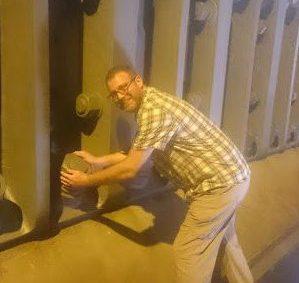
Jeff Kaiser: Yeah. And you played with some big bolts. Super cool.
Dave Jones: Sorry, sorry, some big nuts.
Jeff Kaiser: Oh, yeah. I forgot about that. Yeah, I tweeted the Harbour. Wait, what?
Dave Jones: What? He liked playing with big nuts.
Jeff Kaiser: Well, I mean, this is one of those things that I think that you can see. You can see pictures of Sydney and I think it's really hard in a photo to really understand how big the Harbour Bridge is. And then you get up to it and it's like kind of freakishly tall. Like it's really, really high in the air and you can get right under it. And so Dave and I went to one of the supports and there are these like, what, two foot, two foot wide. I mean, at least nuts. Nuts and bolts, yeah. That are holding this thing to the ground. And it is just amazing. But the scale of it is pretty jaw-dropping. Yeah, Sydney is a neat place. I would love to go back and spend more time there. Yeah, sure have to. And spend more time in Australia. So maybe that's on the radar for maybe, I don't know about next year, but sometime soon I would love to spend more time there.
Chris Gammell: I was going to say, if you wanted to go back in April, I mean, we could hang out, the three of us.
Jeff Kaiser: That would be unprecedented. Yeah. I don't know. Something might happen if all three of us get in the same place at the same time.
Chris Gammell: Oh, like a terror in space time? Yeah.
Jeff Kaiser: Right. Yeah.
Chris Gammell: Yeah. Well, me and you hung out at, you were at Supercon and Open Hardware Summit as well. And actually, you came down to one of my San Francisco meetups as well. I did.
Jeff Kaiser: I did. Yeah. You're like the traveling man. I did a lot of traveling this year. Yeah. Well, so I went to China eight times last year and that got me to like elite, you know, the elitist of, well, I guess not like million miler, but I got to like the elitist of elite levels on my airline, Alaska. Oh, yeah. And so now it's relatively easy. Like I get free trips and can do that thing. And so I've been cashing in. And so I've done a lot of traveling this year. And so, yeah, I did the Hackaday, what do you call those? The Superconference. Sorry, the Superconference. And then I also did, what was that one in San Francisco? That's Hardware Developer Didactic Galactic. Yes. Yeah. Yeah. No one's going to remember that.
Chris Gammell: I just call it HDDG these days. That's yeah. The meetup that's in San Francisco. Yeah. The hardware meetup. Yeah.
Jeff Kaiser: And that was super fun. It made me remember how great the hardware scene is in San Francisco. And I haven't really found anything quite with that same concentration, especially on the hardware side in Seattle or anywhere. Like Austin didn't have that either. So it was kind of fun to go back and just be like, man, there are so many hardware geeks in one room here on just kind of a random, like, what was it? Thursday night or Thursday night. Yeah. It was awesome. Yeah. That part is nice.
Chris Gammell: I mean, it really is. And people are coming up from the South Bay too. So that's really. And we do too. I mean, there's a lot. The speakers are always really good too. So that's the other thing is like, there's always good talks and good people. Yeah.
Jeff Kaiser: Yeah. No, the talks were fantastic. And the Supercon, the talks at the Supercon were fantastic too.
Chris Gammell: Yeah. I just saw a, well, former guest, Alan and your coworker, Alan Yates, his talk just got posted today. And if people. I saw that. I've referred to his episode on Embedded a couple of times since, but holy crap. Like the lighthouse stuff. Like he's just like talking about like, oh, you know, like micro radians and like, you know, the things like rotating.
Dave Jones: And you're like, what the hell?
Jeff Kaiser: That's not, that's not real. That's not, no. What? I think that my favorite thing about Alan, I've seen Alan's talk and obviously I work with Alan. I talk to him all the time. But one of the things that I think really interests me is like the humility. Like, you know, we didn't know that this was going to work and we thought it wasn't going to work. And so we started looking at reasons why it wouldn't work. And then all of a sudden we realized that actually a lot of those reasons were solvable. And then it worked. Yeah. And it's just, I think it really, it captures the process of engineering of like, yeah, there's tons and tons of naysayers and people saying, no, that's never going to work out. And then you just keep kind of chipping away at it. And through a huge amount of work, uh, you eventually get to something that, that does what it's supposed to do. And I think his talk at Supercon captured that. And I thought that was really neat.
Chris Gammell: Yeah. And Ben's, well, Ben's talks too. So Ben used to work with you guys. And I think this was around the same time when you guys were developing and prototyping it. That's actually inspired my 2017 goal of just getting better at prototyping in general.
Jeff Kaiser: Like, Ben's a good role model for that. Yeah, exactly.
Chris Gammell: Just like the get out of your own way kind of thing. You know, that's the main thing of like, cause I'm always like, oh, well, what if I, you know, got to make this perfect. I'm going to make this like, no, man, just go, just go, go. You know, like that is, that's a skill. And I, yeah. I agree. I agree.
Jeff Kaiser: And I think Ben is one of the best people I've ever met. So you, yeah, I think it would be hard to be at Ben's level of, of like abandon when it comes to just starting to hot glue and put things together. Yeah.
Chris Gammell: But it's a skill too. I mean like the skill of just like, you know, just like incremental it's, it's scientific almost. I mean, it is, it is scientific, right? It's, it's having a hypothesis and then you. Yeah. Go towards testing it as best you can.
Jeff Kaiser: I, I agree. Yeah. And you have to have, you have to have pretty good wits about you to, to sort of be able to make quick decisions on the fly, uh, that help make your thing better. Like, I think that's one of the other things that Ben's really great at is, is sort of just jumping in and being able to sort of start off on the right foot and make a, like a long series of sort of small decisions that all come together. And, um, and I think are part of the reason why Ben is so good at what he does, but I think there's a lot of trial and error too. And there's a lot of stuff that he's built that doesn't work.
Dave Jones: There's a lot of stuff you don't see, I'm sure.
Jeff Kaiser: Yeah. Of course. Yeah. Of course. And I think that's hard as a, as an engineer to sort of embrace failure. And I think that's, yeah, I, I find that very hard to sort of go in going like, ah, this could be a colossal waste of time. Right. Right.
Chris Gammell: Um, but it's, yeah, that's almost as important as anything else. Right. Of like, right. Right. Yeah. I was talking to some, or no, I think I was reading about that. We were, I always go back to music. Right. And it's just like, you know, like you think about like how many times you play like a piano piece and you just suck at it. Right. And eventually you start kind of working towards it. Right. But it's, you know, it's the, it's that practice over and over again, that that's really what, that's what really gets you good at it. Right. And in electronics, it's so it's because for a long time and because of how I started learning a lot of this stuff too, where it was expensive prototyping and stuff, it was more restrictive. You know, you don't, you don't do as much trial and error type stuff because there is such cost to it, but then it's getting so much cheaper too. It's, it's so enough for me. Uh, what about you, Jeff? Where else have you been traveling? Uh, you've actually, I, so Jeff has a Instagram account and we were talking about that before the show. Uh, you have some very fun pictures on there. Thanks.
Jeff Kaiser: Yeah. Uh, I've, so most recently I was in, on the East coast and I spent a few days in New York and including Manhattan visiting friends, uh, and family. And also I spent a couple of days in New Jersey. And so this was. Because who doesn't do that, right? New Jersey. So I grew up in New Jersey, so I've got family there. And, uh, when I was little, I, I grew up in, in a small town in North Jersey, uh, just not that far outside of Manhattan. And so, um, I was back visiting family and, and while I was there, I had read, read a book. Um, so earlier this year I read a book called The Idea Factory. Uh, have you ever heard of it? We have heard of it.
Chris Gammell: I've heard of it. Yeah.
Jeff Kaiser: So it's by John Gertner. It's, uh, a history of Bell Labs, basically. Um, and I found that book fascinating. It's actually probably for me, I, I don't, unfortunately I don't read a lot. I probably should read more, but I don't read a lot. And that was a book that I could actually, like I stayed into and I, I finished at a pretty quick pace because I just couldn't stop reading it. Uh, and it basically walks through the entire history of Bell Labs. And for me, it is probably one of the most inspiring engineering, uh, tales that I have read recently. Um, and it, it talks about the innovations that occurred. And I think the thing that I didn't realize about Bell Labs is that they invented like everything. Yeah.
Chris Gammell: Well, examples, let's get some examples.
Jeff Kaiser: So, uh, well, the transistor. Okay, I knew that one. That's kind of a big one. And, and, and not just the transistor, but like the point contact transistor and the junction transistor and the field effect transistor were all, uh, Bell Labs, uh, discoveries. Uh, they, I believe it at least, uh, commercialized. I'm not sure if they invented fiber optics, but they certainly commercialized fiber optics.
Chris Gammell: Oh, well then they bought Lucent eventually, or they became Lucent, I suppose, parts of it. Oh my gosh.
Jeff Kaiser: I'm not an expert on their history. It's really complicated. So, so, uh, these days it's like Nokia, Alcatel, Oh yeah. That's right. Alcatel. Bell Labs. Yeah. It's, it's really complicated. Um, but I mean, it doesn't just end there. Like they invented, uh, I, I believe wave guide for doing microwave communication was a Bell Labs thing. Um, so if you ever, anyone that's an RF design knows the freeze formula, it's a formula for calculating the noise figure of cascaded amplifiers. Like freeze was a Bell Labs guy. So like all of this very fundamental RF stuff, Shannon was at Bell Labs. So like information theory came out of Bell Labs, uh, satellite communications came out of Bell Labs, or at least partly out of Bell Labs. Um, I mean, it just like goes on and on and on and on.
Dave Jones: Solar cells, cellular phone. Solar cells, yeah. I've got, I've got the top 10 list here. Lasers, digital transmission and switching, communication satellites, touchtone, telephone, Unix operating system and, and, and, and C itself. The C language came from there. DSP.
Jeff Kaiser: Oh, and Unix, and Unix came from Bell Labs too.
Dave Jones: It's just nuts. Yeah.
Jeff Kaiser: It's kind of crazy.
Dave Jones: Is this an Instagram file? I'm looking at your Instagram. Is that a photo of you against the, the, uh, feed horn that measured, measured the cosmic background radiation?
Jeff Kaiser: Yes. Yeah, that's right. Yeah. So I, so I, so I was in New Jersey and this stuff is super, super cool. And I highly recommend if anybody's ever on the East coast to like go and see this stuff, because a lot of it is open to the public and you can just walk up to this stuff. Um, but so I, I went to, I went to three Bell Labs sites. So I read the book. I thought the book was awesome. I was like, you know, if I'm ever out there, I should just go look at it. And it's, it's kind of bittersweet, right? Because on one hand I'm, as an engineer, I'm very interested in like, so here are these guys who did these amazing things. Like you think about the guys that invented the, the transistors. So that would be what Shockley, uh, Bertain and Bardeen. Right. And these guys didn't make this huge achievement, but you don't often really get to hear about like, what did their lab look like? Like what, what was there working? Like, I'm, I'm assuming it's like, I know that. Well, yeah. So, so, so I have, I have some ideas, right? So no computers probably filled with cigarette smoke, right? Like tar, you know, tarry walls and like yellow ceiling walls. But, but any, and, and the thing is like, you don't really get to see that. And I feel like, especially as an engineer that works on the West coast primarily, like I kind of feel like I'm part of a new school of engineering that is very separate from, of sort of what electrical engineering was founded on, which was very much like this, this kind of older generation that was based on the East coast. And so it's kind of bittersweet to visit some of these sites because I think in a lot of ways, and I apologize to the people who are still there because I think it's totally awesome that there's still research being done, but I, I think it's pretty clear that it's a shadow of what it was 30 years ago. Right. And so it's interesting to go visit these sites. It's also a little bit sad because you're like, well, I wish I was here in the heyday when they were actually doing all of this amazing stuff. But.
Chris Gammell: Well, Shariar's there, right? I mean, that's where, that's where he's based out of, right?
Dave Jones: Some aspect of it. Yeah.
Chris Gammell: Yeah. I mean, that's, I think, I think he's based there.
Dave Jones: I think he's from Bell. Yeah.
Jeff Kaiser: Yeah. It's all, there is still research being done there. So I, I visited three sites. I visited West street in Manhattan, which was where Bell labs originally, I think it was a Western electric started up their research and development and they did mainly vacuum tube and telephone research that was done on West street. And it's down by the meat packing district in Chelsea down on the kind of the lower East side of, or sorry, the lower West side of Manhattan. And unfortunately there is like nothing to see there. So that was kind of a flop. The building is there. It's been converted into artist studios. It was done a long, long time ago.
Chris Gammell: The big Google buildings over there now, right? In the lower West side.
Jeff Kaiser: Oh, I didn't see the Google building. Or it's in Chelsea, I think. This is pretty close to Chelsea market. Yeah. But it's south, it's south of there by maybe seven blocks. I know that because I picked up my Google glass there.
Chris Gammell: Remember that? Yeah.
Jeff Kaiser: Yeah. Yeah. Yeah. So, so, so West street is the buildings there, but there is not even a plaque. There's like nothing, which was, I think really disappointing because that's where it all began. Right. But the building is still there. You can kind of see, yeah. Unfortunately, you can't really go inside or anything like that. But, so that, that was a bit of a disappointment. So then I went in New Jersey, I went to Murray Hill. And so Murray Hill is where the transistor was invented. And that was where Bell Labs, that was their center for research. And I can't remember the dates, but it's basically like the thirties through, I'm not sure. I mean, I guess through today. Yeah. Because there still is research being done in Murray Hill. And it is this amazing building.
Chris Gammell: I just looked it up and Charrier is at Murray Hill. So that's, sorry. Awesome. So I'll link that in if people haven't listened. Signal Path. So, yeah.
Jeff Kaiser: So I, I would love to get inside that building sometime because I went to the visitor center, which by the way, has the first transistor, like the first one. Just like hanging out in pictures. Yeah. Just, just sitting in a display case. And it's in like plexiglass. You can't pick it up or anything like that. Oh, I broke it. But it's in the center of the room. So they have a visitor center and it's open during normal business hours. And there's actually a bunch of really cool stuff in there. But the transistor is like, you know, the, the, the thing that I went to see. Yeah. Uh, and I've seen so many pictures of that transistor during my career. And even as a child, I remember looking through books and going like, wow, that looks really cool. But you never really get to see it close enough to sort of figure out how it was built. Uh, and you can just stand right in front of it. And so I, I, I probably spent an hour there just looking around and I was amazed at the amount of stuff they had there, but also the relative crudeness of a lot of prototypes. Like, which I think as an engineer, it's like, oh, that is awesome. Right. Because it is super redeeming. I can do that. It makes you feel like I can do that. Yeah. But I totally agree. I totally agree. But we do have computers and Wikipedia.
Dave Jones: This is like a, by definition, it's, it, it almost must be because this is like discovery level stuff, right? Groundbreaking discovery level stuff. It's not like they all go through 10 prototypes, polish it all up. And then, oh, here's the, you know, magic thing. No, it's that first prototype. They're not showing off the CES you're saying, Dave. Yeah.
Jeff Kaiser: And the thing that gets me is that nobody talks about that stuff, right? Like no one talks like, so, so the idea factory is, well, we do. We, I mean, we, we are, but like the idea factory as an example, and I'll also say like the HP way is another history. And I read, I read that this summer too. I didn't think that was nearly as good of a book as the idea factory. It wasn't as captivating. And part of the reason I didn't find it as interesting is that it's primarily a business book. Oh, yes. It doesn't talk about the process.
Dave Jones: It's how HP, how Bill and, right.
Jeff Kaiser: Well, no, there's history though. Or wait, is there Bill and Dave?
Dave Jones: Is that a different book? Yes. That's a different book. Well, that's.
Jeff Kaiser: There are two. There are two. Bill and Dave is a different book. Oh, that's the one I'm thinking of.
Dave Jones: Whereas the HP way is written by them or one of them. And it's about how they formed their business.
Chris Gammell: I think it's written by Dave Packard. Yeah. Yeah. Okay. So I'm thinking Bill and Dave is a fantastic book as well. And we'll link, we'll link all these books in, of course, but I think I've read HP way as well.
Jeff Kaiser: So the, the thing that I, I was found lacking in the HP way is that it doesn't go into a lot of technical detail. And the idea factory goes into more technical detail, but it's still like as an engineer, you're like, okay, well, no, tell me like, how did they really do it? Yeah. And you're like, did they fail six times, you know, before they succeeded? Yeah. Right. And, and probably the most interesting thing is the idea factory actually has a couple scans of, uh, I think Shockley's, uh, maybe it's not Shockley's, but one of the guy's notebooks, uh, on the day that they discovered amplification of the first transistor. And it's really cool. It's like, okay, so how do they wire it up and what were they recording? And I feel like there's a lot more to that story. That's not commonly talked about. Like one of the interesting things, and, and Jerry, I think knows a lot about this is, um, surface states. And I remember Jerry venting and like complaining about surface states when she was doing her transistor fabrication at home. Um, surface states are like the bane of the existence of people trying to make semiconductors, especially using point contact devices. And I know for a fact that on the first transistor, they had essentially failed and then realized, I believe that if they immerse the tip of their contact in an electrolyte, some kind of a liquid, and I don't know what kind of liquid it was, that suddenly things started working. And it is amazingly hard to find that kind of detail in any kind of history of, of the transistor. And I think it's kind of fascinating.
Chris Gammell: Well, it's kind of interesting how, I mean, so like thinking about just even how people write about stuff like these days are so much like behind the scenes. Here's how I failed. Here's how I did it. But like back, even back then, you know, think about like publication timelines and stuff like that too. There wouldn't be as much recorded, right? There'd be lab notebooks. Don't, no doubt. No, no, no, no.
Dave Jones: Nobody records anything anymore. I think stuff was much more recorded.
Chris Gammell: I'm just saying that in terms of like publishing it though. Like, so like, yeah, I'm sure that that stuff totally exists in the, in the records or in the, the lab notebooks. I agree with you, Dave, but like, I'm saying that like now it's almost like celebrated of like the, like the different steps. Right. And you actually would talk about failure. Whereas in the past it'd be more like, well, let's just talk about, or maybe it's just even lost to time. You know, like that could be.
Dave Jones: Well, you didn't have an audience to share it with. Now every single person has a global audience they can share with. Exactly. Yeah. Yeah. I mean, it's an entirely different world.
Jeff Kaiser: Um, so yeah, I, I thought just seeing that stuff in person, I mean, it made it feel a little more real. Yeah. It totally is. Yeah. Totally. No.
Dave Jones: The first thing, when I went to, um, Silicon Valley, like as soon as I touched down, I went like, and we went to the, I was on a work trip, went to the conference center, you know, as soon as we unpacked everything, bam, in the hire car, straight to the garage, you know, it was like, I went, see you guys. Where the hell are you going, Dave? I wish the garage was open to the public. Yes. Yes.
Jeff Kaiser: I've been outside the garage. I've never been inside. No, I've never been inside. It is just a garage though, right? It is just a garage.
Dave Jones: Well, no, they have actually recreated it inside of what it looked like back then. So they've done that now.
Jeff Kaiser: So you, you asked about the horn. So that's, that's at a different Bell Lab site. So the, so the other place I went was, uh, well, actually I guess it's two sites, but they're close to each other. So Holmdel is another huge former Bell Lab site. Uh, and it's a very iconic building designed by, uh, Eero Saarinen. I'm probably going to butcher the pronunciation, but, uh, he designed the St. Louis Arch and some other famous architecture. Uh, and that building, uh, is in the process of being redeveloped, which I didn't really know. I think I had heard that they were doing something and that somebody had bought the building, but sort of shockingly the property around this building, and this is like a 2 million square foot building. It's huge, huge building.
Chris Gammell: I think I've seen pictures inside of this before. It's like, yeah.
Jeff Kaiser: So there's a picture on my Instagram. I can see inside it. It's got a glass roof, which is really striking. And it's this very mid-century, very, very cool inside of the building.
Chris Gammell: Almost like Japanese inspired, it looks like. Kind of like the square blockiness. It is really, really interesting.
Dave Jones: And the engineer in me just goes, what a waste of space, you know? It's true. A huge, big void. It's true.
Jeff Kaiser: Well, I heard that they, uh, that one of the requests for the Holmdel facility, which was built after Murray Hill, was to try to get more light into the interior spaces, because apparently Murray Hill was kind of prison-like on the inside. And so this obviously is not like that, although there are like catwalks, which are a little prison-like. Hmm. So maybe they did completely succeed. Yeah, they do look like that. Yeah. But anyway, so a developer, and I think it is called Bell Works, is developing, somewhat surprisingly, single family houses on the property surrounding this building. And then they're turning the building into a, like, live-work, uh, retail, fitness center, restaurant, like commercial space. No, really, really, no. I mean, that's, that is, and there's a few tenants. So I walked through the building, and NVIDIA was there. There's a couple other companies that have small offices there. And it's a super cool space. And it seems like they're trying to do, like, this startup incubator thing there. Yeah, yeah. Uh, and trying to make the building a social, like, a meeting point for businesses that are operating out of the building, and then also the people that live in the surrounding area. So it looked like a very ambitious plan. And it was, like, well underway. Yeah, no, I mean, it, I thought it was kind of interesting. I remember when I was in college thinking that, ah, that something like that would be super cool, where you could, like, walk to work, and you're living, and you'd have access to machine tools and stuff, because you could just, like, walk over to the shop. I, I think that they're aiming for this kind of very light industrial that's not, you know, not really what was there back in the day. Right, no, no potential for brownfield sites or anything like that. It's probably already. Probably, yeah. Yeah, I actually don't know. Um, so that's, that's, uh, Holmdell. And then about 20 minutes away, not even 20 minutes away, is Crawford Hill, which is, another research center, which is super tiny, uh, which is where the Holmdell horn is. And that is the horn that I'm standing in front of that was used to, uh, in the discovery of cosmic background radiation by Robert Pierce and, uh, or sorry, uh, Robert Wilson. Wilson and, um. And Arno, uh. Penzias. I don't remember his last name.
Dave Jones: Penzias, yeah. Penzias and Wilson, who won the Nobel Prize for that.
Jeff Kaiser: And they won the Nobel Prize, yeah. And actually.
Dave Jones: Apparently, but they were, they scooped somebody else. Somebody else had it, but they, yeah, there was a bit of controversy over them getting it. But, oh, okay.
Jeff Kaiser: I hadn't heard that before, but Wilson has a talk on YouTube and I can send a link. Oh, yes, please. That was, is actually pretty recent. And it, I think it's just a few weeks old and it's actually at, uh, Holmdell or one of those sites and talks about the whole process of discovery and like building, uh, uh, the building that's adjacent. And it's actually pretty interesting. And I, I didn't really know the history behind the discovery of cosmic background radiation. And he goes into it in quite a bit of detail.
Dave Jones: Because it was an accident because they didn't build this feed horn to detect it. They were designed it for something else. And that was.
Jeff Kaiser: It was designed for Project Echo. Yeah. So the horn was designed for one of the first, uh, satellite tests and it was actually a passive satellite called, uh, Echo. And, uh, they built, so the, the, the reason the horn is interesting is that it's a parabolic reflector integrated into a, uh, a horn antenna. And the thing that's superior about it, it is super weird. And, uh, it has the advantage that it has very, very low side lobes. So, uh, most parabolic antennas have this problem in that they, they, the RF scatters off the edge of the dish and you can see the ground. Uh, so they end up receiving some of the noise temperature of, of earth, which is a lot warmer than space. And that's a problem for like very low noise measurements. And so the, the Holmdell horn, uh, was built to avoid that problem. And they actually used a liquid helium cooled maser as a low noise amplifier, which is fascinating. That is groundbreaking. A maser. Yes. Which, which also Bell Labs, I believe invented, or was at least very intimately involved in the development of the maser. Is that like magnetic laser? Is that M? It's a microwave laser. Microwave. Okay. So, so what's, what's interesting is, so maser is microwave amplification by stimulated emission of radiation, which is like a laser, but at microwave frequencies instead of light. But the thing that's interesting is you never really think of lasers as amplifiers, right? You think of lasers as oscillators. They emit light. They don't amplify light. I know that in fiber optic-
Chris Gammell: But they're really, aren't they really like amplifying just the diode light, the diode, the small signal diode light?
Jeff Kaiser: They are amplifying the input. They pump spicely. Yeah, exactly. So you're pumping a cavity and then they, they are amplifying. But usually the, the signal comes from the laser. Like you don't input light into a laser from an external source. But whereas in the maser, I guess that is how masers typically operate. And so they hooked this giant horn up to a helium, liquid helium cooled maser and got some obscenely low noise figure, which is just a really, really, really good sensitive receiver. And apparently they thought they needed that for the echo tests. I don't know if they really did or not. But in terms of discovering the cosmic background radiation that made that horn uniquely suited because they're trying to measure this, this temperature, this temperature of, of matter that's in the universe, that's only three degrees Kelvin. That's really hard to do because the earth is way above three degrees Kelvin, right? So it's going to contaminate your measurements.
Dave Jones: And they didn't set out to do that because another team, there's a controversy, another team was actually trying to do that. They actually predicted the cosmic background radiation. They were trying to build a detector to detect it. And here along come Penzias and Wilson with their satellite dish, basically. And they'll get in this noise on there that they couldn't explain. And aha, they figured it out, you know, and like they weren't even trying.
Jeff Kaiser: Well, I mean, they were trying to do a survey of the sky. So they were trying to look at the microwave emissions of stuff inside and outside of our galaxy. And I think the thing that's interesting is that, so Wilson, I believe, had done some experiments previously at a different location where he was mapping the Milky Way and he was looking at the RF emissions of the Milky Way. And that's something that had been done at Bell Labs Holmdel previously by, I can't remember his name, but there's a famous picture of this weird shaped rectangular antenna that was used in essentially one of the first experiments in radio astronomy. But the assumption at the time, even later when Wilson was doing his experiments, was that if you weren't looking at the Milky Way, you shouldn't be receiving any signal because space is a bunch of nothing, right? So there shouldn't be anything there to create a signal. And what they found was that when they steered the antenna off of the Milky Way, the signal didn't go to nothing. And that's what the discovery was, was that it went to a noise temperature of three degrees Kelvin instead of something closer to zero.
Dave Jones: And then, fast forward like 50 years later, it took the Kobe satellite and, what's his name? His name will come to me to, hey, once again, won a Nobel Prize for determining that the cosmic background radiation was not uniform. It was lumpy and hence proving the Big Bang Theory.
Chris Gammell: So it's huge.
Dave Jones: If you haven't read the book, I will link that one in as... Oh, God. Now you're going to make me think of his... Is it something with lumpy in the title? I hope it's something with lumpy in the title. Smoot. George Smoot. Space is lumpy. Thank you very much. George Smoot. You may know the famous Smoot measurement. It's not the same guy. It's his cousin, I believe. Or, yeah, he's related to the family in some way. George Smoot. Oh, yeah. He won the Nobel Prize back in the late 90s, early 2000s or something for the Kobe satellite, which detected the cosmic background radiation. Anyway, very cool book. I'll link it in. He's written a book on it. It's great.
Jeff Kaiser: That is cool. It's Jansky. Jansky is the guy who is considered the father of radio astronomy.
Dave Jones: Hence why the units are named after him. Jansky's. That's right. That's right. Not many people know that. But, yeah, Jansky's is the unit of received power. Don't quote me on this, but, yeah.
Jeff Kaiser: It's the unit of apparent brightness used by radio astronomers. Brightness used by radio astronomers. One Jansky is a flux density of 10 to the negative 26 watts per meter squared per hertz. There you go. Of course.
Dave Jones: Of course. Everyone knows.
Jeff Kaiser: Yeah. So it was neat to see this stuff. I'm actually really curious if that horn antenna is still in use. The building that's next to it is still in use. And I'm not sure what's done there, but a bunch of secret research. I don't think the horn gets used a lot. It was pretty rusty. I don't get how it works. But it looked like somebody had. I mean, like, it looks, I mean, people have to look at it.
Dave Jones: It looks weird. It looks ungainly. I don't know.
Chris Gammell: Well, it's looking at the ground in the photo. Okay. That's what I was wondering. It's like, so it would rotate like 180 degrees towards the sky? Yes. That's right. Okay. Yeah.
Jeff Kaiser: You can't leave it like that. Otherwise, it would fill with water.
Dave Jones: There's a big ring there and it rotates. Oh, okay. So it is.
Chris Gammell: Oh, it's just a big, it's not solid. Okay. So it's dark on the bottom of this picture. So, but that's, that's just a big, oh, it's just a bucket. So there's two. It's like a parabolic bucket.
Jeff Kaiser: Yeah, yeah, yeah. Yeah. So the dark square at the bottom, that's actually a cavernous, you know, large opening. And so the, the reflector, you're actually seeing the shell, which is not the reflecting surface, but inside there's a very, you know, finely crafted parabolic reflector. And so you would rotate it 180 to look at the sky and then it can also rotate around the, what, the Z axis. Yeah. Yeah. You can see there's a ring at the bottom too. Yeah. Yeah. That thing's huge though.
Chris Gammell: I mean, yeah, the staircase.
Jeff Kaiser: I'm actually curious. I'm curious. Yeah. It is, it is big. I mean, it, it's, it's huge. Like you can climb into it. Um, and, uh, I would love to try to make some moon bounce contacts using it. I wonder if the hams, the hams have probably used this to do that. That's kind of what I would, yeah, that's my interest. Yeah.
Chris Gammell: Moon bounce. They, they scoff at your moon bounces. Edge of the universe bounce, Kaiser.
Jeff Kaiser: But I mean, somebody cares enough about it to keep it in pretty good shape. Oh yeah. It looks usable. Like it looks like it would operate and there's a, it's a historic monument.
Chris Gammell: I was going to say, it looks, I mean like the, the scale and like the steel and like the paint, the, the gunmetal gray of it, it looks like an old battleship, you know, it's like an old battleship receiver effectively. Right. It's crazy. Yeah.
Dave Jones: It's very cool. I'm jealous. Sounds great, man.
Chris Gammell: That's a, so it sounds, it sounds like a, a very good trip. Sounds like the, uh, the Jersey, Jersey trip is worth, is worth it for our audience. Huh?
Dave Jones: The pilgrimage. Have, have any of our audience gone on a nerd?
Chris Gammell: Yeah. This should go on nerdy maps.com. Did I tell you I bought that? The pilgrimage?
Dave Jones: Yes. Did you actually buy it?
Chris Gammell: I did buy it. Wait, it was nerdy maps or nerdy map? I pointed it somewhere. So I do own nerdy something, nerdy map. Yeah. Nerdy map.com. So that'll point somewhere at some point. So I just haven't done it. Maybe over the Christmas break.
Jeff Kaiser: I think the horn is in, uh, the geek Atlas, which was published by O'Reilly, uh, a few years ago.
Chris Gammell: No, I know they have a list, but it's not really, it's, it's pretty limited actually. It's only a hundred items. That's the problem. Oh, I can. Oh, yeah.
Dave Jones: Yeah.
Jeff Kaiser: No, that's true. That's true. Um, uh, what is it? Atlas Obscura? Uh, it has, I think a lot of this stuff too. Yeah.
Chris Gammell: Yeah. And I mean, no, don't get me wrong. The, the, the O'Reilly book, it is good. Um, uh, and a couple of people pointed that out to me, but it's only a hundred sites and it's spread out over the world. And so you think about it, like this is already what? Three just in, you know, a pretty small part of Jersey. Granted, you know, an important part, but you can, I could get to a hundred probably within a single state in terms of nerdy, nerdy things and museums and everything. Right. In California alone probably has a couple of hundred. So that's why. Yep. Internet wins. Uh, that's great though. That's really great. Um, well, what else you've been doing? Cause we've been talking about other stuff before the show. Some of which you're allowed to talk about, some of which you're not, but, uh, you've, we talked to last year.
Dave Jones: You are still working at Valve. Yeah.
Chris Gammell: That's probably a good check-in. Yep. Still employed. Still there.
Jeff Kaiser: I've actually been there. So I've been there almost five years. Wow. Time flies. Yeah. It is amazing how fast time flies. It'll be five years in May. So I guess we're not quite there, but yeah. Yeah. Jeez.
Dave Jones: You get less for murder.
Jeff Kaiser: Uh, yeah, I, I've been keeping busy. So I was talking at the beginning of the show about having that airline status and sadly, I am going to lose all of that extra stuff, uh, in 2017. That's, that's one bad thing. I guess so. Uh, well, because I haven't been traveling, uh, is the worst, the worst consolation prize
Chris Gammell: ever. Right. I mean, like, it's not, it's not a bad thing in itself, but like the fact that you had to sit on a, so let's see, uh, 12 hour plane ride both ways is 24 hours times eight. So you spent more than a week on a plane. Yeah. Yeah. Like straight.
Jeff Kaiser: It was an adventure. I mean, it didn't feel like work, I guess. Um, but I have not been traveling this year like I did last year. And for me, that's a good thing because it means that things are going really well. Um, I talked last year about spending, I can't remember how many days I was in China, but I was in China a lot last year and it was mainly around getting our first hardware product, um, valve's first hardware, hardware product to market the steam controller. And, uh, this year has been very different. So it was kind of interesting in that our, our project lined up with the calendar year, which I suspect is pretty common in consumer electronics. You know, you ship for the holidays and then things kind of change after the holidays because now the product is, is out. Uh, and so for me, this year has meant a lot less travel, which is a really, really good thing because it means that things are going really well. Right, right. Exactly. Um, and it would be very different.
Chris Gammell: If you were, if you were over there, it's like something's busted. So that's bad.
Jeff Kaiser: That's, that's pretty much how it works. Um, and so I actually spent probably the first half of this year doing primarily manufacturing support, which I, I think a lot of people would commiserate, a lot of designers would commiserate about that. And, and I think that it is one of those necessary evils, you know, you have this baby that you've brought into the world. It comes with a job. And so you sort of have to put in the time.
Dave Jones: We're peeling back the curtain here, folks. It's rarely do you become a design engineer and you just throw it over a brick wall.
Jeff Kaiser: Right. Well, you know, I have, so I, in my career, I have been in that position. So when I was a chip designer, that's very much how things worked. And if you didn't get that right, it doesn't work at all. Well, it would come, well, yeah, it's true that if your design doesn't work, it comes right back again.
Dave Jones: But that's a different level of, uh, you know, process separation. Like if you're laying out chips, like if something goes wrong on the fabrication line, you're not going to be called in. You don't know anything about it. You've got no idea. Whereas LA, whereas macro scale electronics, if you're designing a circuit and the circuit doesn't work in production, who, who are you going to call? Part of the circuit changes, that's true.
Chris Gammell: The biggest thing is like, if you're, if you, if you have a supply issue and one of, one piece of your circuit changes, that's much more likely to happen than like, you know.
Dave Jones: It's true. Some itching changes on some lines. Yeah, exactly.
Chris Gammell: Like you can't get, you know, the right phosphorus mix in a gas, right? Or something, right?
Jeff Kaiser: It's a function of how many people are in the company too. Because when I was a semiconductor engineer, I was working at a company that had thousands of people. Right. There were hundreds of people whose job it was to be product engineers and manufacturing engineers. But of course, where I'm at now, we've got a really small team. And so if something breaks and it's electrical, I'm, I'm like, you know, the guy they call, right? Especially if it's a design issue, I'm the guy they call. And so I'd say the first six months of this year, I spent doing quite a lot of factory support and primarily looking at returns, you know, stuff comes back and you're trying to figure out why it didn't work, what broke and fixing bugs, trying to improve yield. A lot of things are like, if you can get the yield of your, your widget being a printed circuit board or the product, you know, into the high nineties, then that's like a good happy place. But if it's not there, then you are having weekly meetings with the factory. You're having units sent to you for testing. You're testing things at outside labs. And I think a lot of, and I haven't done this a lot, I'm still fairly new to this world of high volume manufacturing. But in my experience, it seems to be that there's this sweet spot where you get the yield high enough to where you don't really need to worry about things on a day to day basis. And for a designer, that's like the holy grail, because then you can finally go back to doing design, which is sort of what it's all about for a designer. And so for me, this year has been sort of my, my quest to resolve manufacturing issues and also recruit help to try to help support the factory so that I don't need to be there all the time so that I can focus on new design work. And I'm happy to say that, you know, it took me quite a long time, but I've been able to do that. And that's been really fun to sort of get back into doing rapid prototyping and development again, which, you know, being on a small team and wearing a lot of hats, sometimes it can be a while between projects. Yep, exactly. And yeah, it feels good to be back.
Dave Jones: So did the people you hire, did they come in for the interview and go, you're mighty own? I don't, you know, I don't think so.
Jeff Kaiser: I've listened to you on the Amp Hour. I don't think so. You know that? So I do know that some of my coworkers listen to the Amp Hour. Oh, hey, coworkers. I don't think it's a result of me telling them about it necessarily. No, it's just that they knew. I think that a couple of coworkers were listening. Eventually stopped across. Yeah, well, they were already into it and into electronics, and so they knew of it. But I don't get that a whole lot. I mean, I think that there's still quite a bit of separation between...
Chris Gammell: I was going to say, if Jeff's coworkers are listening right now, and you write to mightyome at theamphour.com, I will tell you some secrets about Jeff that you have never heard before. I wonder how many emails I'm going to get on that email address now.
Jeff Kaiser: Oh, boy.
Chris Gammell: So anyway, sorry.
Jeff Kaiser: So, yeah. Manufacturing support. I haven't been to China in a while, and... Excellent. I actually, I really enjoyed being there, but it is nice to spend more time at home.
Chris Gammell: Well, that's one of the things that we mentioned, too. So, okay, so you know that it's based on testing, right? I mean, so that's really what it comes down to as well, is like, there's these systems in place now where you have, I mean, you have line testing, whatever, but how do you really know? I mean, like, I guess that's another thing of like, kind of monitoring over time. It's like basically setting up, like, statistical process control as well, because...
Jeff Kaiser: Yes, absolutely. Yeah, Jump is your friend. Yeah. Oh, you use Jump?
Chris Gammell: And also, what's Jump? JMP. It's a design of an experiment and like a statistical modeling software. Oh, okay.
Jeff Kaiser: Right. Pretty much anywhere you see high volume manufacturing, somebody is going to know Jump. And Jump's not the only one. I think Minitab is one of the other popular ones.
Chris Gammell: So I did Samsung. We used Jump and then we switched to Minitab because it was like the Samsung thing. Right. And yeah.
Dave Jones: We just did our own when I did high volume manufacture, you know.
Chris Gammell: Yeah. Rolled our own stuff. I mean, it's, I don't remember why. I mean, there was just a lot of like mapping tools for like, it would pull in data and it would be able to, you know how Excel runs out of like memory at like 65,000 rows. That's a nice cell. That's right. So it would be like millions of rows.
Jeff Kaiser: I've processed millions of rows in Jump. And I think the thing that is nice about Jump is that it's really nice at doing histograms and doing CPK analysis and stuff like that. And I am not like a super sophisticated manufacturing engineer. So like I don't use those tools to their full capability, but it is super handy to be able to go in. And so my, to me, the thing that changed my life was, and I think I may have mentioned this last year. So apologies if I repeat myself, but using Python to do data processing and then outputting that into Jump or Excel, that is like the most amazing combination and it will change your life. If you're dealing with a lot of manufacturing test data. So, you know, the first step is you need to have a manufacturing tester. And I think it's, it's always really hard during the design process to think about test. And a lot of people don't like thinking about it. And I sort of kicked and screamed and didn't want to deal with it for a long time, but eventually had some people that were wiser than me say, say like, you know, you really need to do this. This is going to be important. Yeah. And I think it's hard at the outset to know what you want to test because it's hard to know what's going to break. Yeah. But you sort of focus on testing all the major features and the things that you think are likely to fail, or maybe they're the most important performance metrics for the device. You design a really good production test. And then all of a sudden, as soon as the production line starts, you have this like a huge mountain of data that you need to deal with. Well, that's the thing.
Dave Jones: If you wait until something fails and then goes, oh, we'll start gathering data on that. Yeah, right. You've got no data. No, that would be a bad idea.
Jeff Kaiser: That told you why it failed. Right. No, you've got to start that during the EV builds very early. You've got to get all that stuff going.
Chris Gammell: So the surprising thing to me with all this statistical stuff is like the one that was always, that always like really solidified it in my mind is when you'd start like slicing and dicing data. Now, like Dave said, you can do this without the statistical stuff. But when you'd start doing comparisons between like test fixtures, or in my case, it was like etch machines, right? Or chambers and really, and it would be like, you could start to group by these different data types or these different variables. And you'd see like, oh, you group by a chamber and like chamber one is always much higher, right? You start to actually map the chambers against one another, or, you know, you'd also map operators and like operator, you know. But Jeff is always, is always has a higher failure rate, right? And it's like, it's not to assign blame. It's just really just to measure these things. And you can go and investigate those, those variances that you would just never find otherwise.
Jeff Kaiser: You know? One of the terms that's tossed around a lot is gauge R&R. Yeah, exactly. Gauge R&R all the time. And people like to just do gauge R&R and everything. And, you know, I've, I found that there is a time and a place for that. And I think as a standard manufacturing, like process control thing, it's, it's important. And it's important, especially for a factory to do that religiously on test fixtures and stuff. Although I have found, and I think you run into this, is that sometimes it's used as a substitute for common sense. And if your test, if your test equipment is broken, or it's like, let's say you have like a cow stickers off, right? It's out of cow. Or maybe there's like a loose, there's a loose wire or something hanging. Then you can end up spending weeks collecting all this gauge R&R data. And I have, you know, gone into a factory and said, no, you've got to connect, you have to connect this thing. And then all of a sudden everything looks fine. Right. And I, sometimes I feel like statistical analysis is used as a substitute for common sense. And I think sometimes process engineers are guilty and I like process engineers. I like working with process engineers, but on behalf of like all design engineers, you know, sometimes I kind of.
Chris Gammell: As one of, as being both, I can tell you that it's usually because it's like, you're just running so fast that you're just like, you're willing to twiddle any, any dial to try and get it to work. And it's like, you can't do that, right? You have to like, you have to be more measured about it. And usually the design engineer who has the background is like, oh, well, I know exactly which knob to twiddle because it's always that knob because I designed it.
Jeff Kaiser: I think it's important. It's important to know how it's supposed to work and not just think of the tests as like a black box. I think that's the trap you fall into is that at a traditional company, there's a lot of separation between design and test and that the test engineers may not have all the information they need, or they certainly weren't involved in the design as much as they probably should have been. And so they're having to test a thing that they didn't design. And I guess I had the fortune to be the designer. And so when it was time to design test, it was like, oh, yeah, let's look at this thing. And when things didn't work, I sort of knew what to blame. And yeah, you know, you mentioned earlier about, you've got components, component obsolescence is a thing that keeps you on your toes in high volume manufacturer. The other thing is just, yeah, component variation. Yeah, exactly. You start to see the things. Whatever. Exactly. You see tolerances. You see components come in and they're bad. You see components varying over their ranges. You see things like multiple devices in one package that usually behave the same, but then they're not guaranteed to. I've seen that.
Chris Gammell: Wait, did you guys track at the pick and place level of like, so if there's components A1, A2, A3 on a board that, so like A1, A2, A3 on board one were from a certain reel, but then at A2, the reel ran out. And so A3 was a different, on the second board was a different, do you guys track at that level?
Jeff Kaiser: Yes. In general, yes. Oh, you do. Okay. The factory tracks everything. That's awesome. I think if you work with a good factory, I think attention to detail is super key and just having all of that. And I'm really blessed to work with a team that is really good at that. And so, yeah, it's great to go, there's something weird with this board. What did you build it with? And is it the same as what you've been building with for three months? You know, I think it may be challenging down to the board sometimes, but usually you can dig around in like the trash and like go, oh, this reel was the one that you used to build these boards. And it's different than all the transistors to date were from like a different lot. And like all of a sudden we had the first new lot. And I think that's the thing you run into sometimes is that semiconductor manufacturers will make these huge quantities of components. And then you may not see a new lot for kind of a long time. Like you may be in production for a while before you're building with anything that's different than what you started with. And in some cases it can take surprisingly long because the reels have enormous numbers of components on them in some cases. And so you don't see different lots as often as you would think. And I've run into that with like LEDs. Oh, yeah. Like it took a long time to get to a new lot of LEDs. And then when we did, sure enough, you know, forward voltage is different, current's different, intensity is different, efficiency is different. Right.
Chris Gammell: And you're saying this because you guys are high enough volume where you're actually getting entire lots allotted to you, right? Where they, the manufacturer is starting these silicon wafers and they're sending an entire set of wafers through and packaging them up for you. And you're just getting that whole thing, right?
Jeff Kaiser: It really depends on the vendor and it depends on the part. But yeah. But yeah. I mean, you see all combinations of things. And then of course you see like you got a little strip off of some other reel of a hundred components. And those are just weird. And, you know, I've heard stories of counterfeit components being introduced. You know, the factory tends to try to be efficient with inventory. And so they're not going to throw things away typically unless there's a good reason.
Dave Jones: And that efficiency word often equates to tight ass. Like they'll just buy them from anyway. Or low quality. Yeah.
Jeff Kaiser: Or do things like, you know, every, some percentage of the time the pick and place machine drops a part and, you know, at the end of the shift, somebody picks up all those parts and then they go back on reels. I mean, that, that kind of stuff I think is very, very normal at factories in high volume because those costs add up. And I think in many cases it's perfectly fine, but sometimes you get bit, you know, maybe when the machine dropped that part, one of the leads got bent slightly and it was a component that had to mount flush and now it doesn't. And yeah, that kind of stuff is that I've seen all kinds of combinations of things like that happen. But I think overall compared to the anxiety that I had at the outset that, you know, oh my gosh, we're building so many of these. It's going to be a full-time job to keep all this stuff running. I think that it is turned out much, much better than I anticipated. And I think it's, you know, partly the CM and I think it's partly the, design and I think it's partly that I've had a lot of help, especially over the past year and in dealing with a lot of these kinds of problems. So yeah, it's, it's been, it's been good.
Dave Jones: Are we allowed to say numbers? How many of these things you've made? Is that a public number?
Jeff Kaiser: Oh gosh, I'm not sure what we've talked about. We, I think announced 500,000 controllers kind of a while ago. So the numbers are much higher than that now. So, but I don't, I don't think we've talked about.
Chris Gammell: That's crazy though. That's still a lot. That's a lot. So.
Jeff Kaiser: I think that there's this general rule, like unless you've shipped a million of something, you're really not a high volume product. And safe to say, I mean, we're shipping high volume stuff. Gotcha.
Chris Gammell: You know, it's interesting. So the other thing that we talked about, and obviously, like you said, you're working with a high quality manufacturer. But one of the things that I said is that like, the interesting thing is over time, you know, like why testing is important is, you know, CMs make money on the margins, right? And over time, they usually make that margin on the backend, right? And it's just like, so you haven't seen anything like that though, where it's quality hasn't changed, obviously, but.
Jeff Kaiser: Where, where you have substituted components or something like that. I hear, I've heard lots of horror stories and I've never seen it myself. I've been fortunate. But you hear about that all the time. And I, and I think that that's one of those things that, you know, I think about, which is, you know, how often should you visit the factory? Maybe things are fine, but it's important to kind of keep tabs. You want to make sure that your line hasn't been like relocated to the basement. You want to make sure that there's still a sense of priority and that attention is given to it. And I think that sometimes when things are running really smoothly, you can get very complacent. Yeah. And I think it's important to, you know, go out and shake hands and meet the GM and, you know, do all that kinds of stuff. And that's something that, you know, I, I'm still exploring what the right balance is there and still learning sort of how all of that works. Um, because for me, this is kind of uncharted territory. It's, it's like you, you think about as a designer working towards this goal of shipping a product for so long and then you finally shipped it. And for me, the experience was like, oh, well now what? Yeah. You know, you keep doing that on the opposite side. Yeah. Well, I guess you work on the next one, you know?
Chris Gammell: Right. Yeah. And I think the relationship thing is important too, like you mentioned. I mean, uh, especially, you know, given, given, you know, China business culture as well, at least what I've heard about it, cause I still have yet to be there. Um, but you know, just like the, uh, the importance of, uh, just being on the forefront of people's minds. Right. I mean, I think that being a high priority, high volume customer probably changes things as well. I hear that more with the, the low volume stuff. So, but the.
Jeff Kaiser: Yeah. I've, I've heard tales of, uh, I was talking with an engineer, uh, not long ago that he realized at some point that all of the boards he was testing had been built with free samples of components that the manufacturer had gotten from the vendors. Like they had, they had received all these free samples of like cut strips of 10 parts because he realized that every 10 boards used a different manufacturer's resistors. And they were cutting costs and trying to use free samples. I've never seen that myself, but. But you're also not building things 10 at a time, right? I mean, like. That scares you. Well, I do, I do, I do. I mean, I don't do that in China. Right. I do.
Dave Jones: I've got a story about that. Yeah. I, it was working at a company, um, might shall remain nameless and a colleague who might shall remain nameless, um, designed this huge board. It was a, you know, a massive one-off board, ridiculously expensive. And manufactured and prototyped, it built two prototypes. Right. And using all sample parts. Like this is back in the days of Maxim. Okay. Right. When, when Maxim made all the coolest chips and you could not get them, you know, but their, but their sample service was the best in the industry.
Jeff Kaiser: I think that's still, isn't that still Maxim?
Dave Jones: Is it?
Jeff Kaiser: Anyway. Does Maxim still do that?
Dave Jones: I don't know. But anyway, they had the best sample service in the business. So you could, anyone on the planet could get, you know, two, five of these chips, right? No problems at all. And so they built up this, um, and we're millions of dollars on the line here, you know, we're showing this off to the client, you know, these, uh, these, uh, prototype boards and it worked and, and they went great. We'll buy, you know, 10 of them or whatever, you know, they're real expensive systems. Right. And he went, we can't make 10. And I'm like, I used up all my samples, you know, like we can't even make 10 of these things because yeah. Yeah. Check your sources folks, right? You got to make sure you can actually get parts. And that bit the company big time.
Jeff Kaiser: I bet. There's an interesting place in between sample, like sample quantities and, and like low production numbers where I feel like there is this void of, it is really hard, especially if you're a small company to build like 10 or a hundred of something. Well, that's why they exist. That's almost the sole reason. That's exactly right. That's exactly right. But not every manufacturer's components are on DigiQ. Yeah.
Chris Gammell: This is, I wrote about this recently because I had to do that for that badge and it's like, okay, it's 300 badges, right? Not super high quantities. And like people told me that I'm like, yeah, you're right. But it had 128 LEDs each board and it's like, so that's somewhere between 300 and 48,000 is, you know, like that's, you know, you start running into some real numbers and it, you start running out of distributor stock, right? That's where, that's where you start to get a bit. Yeah.
Jeff Kaiser: That is very true. So. And I've, I've experienced that before. Like you buy up the world supply. Yeah, yeah. Yeah, exactly. I personally bought up the world supply.
Dave Jones: You did that for the resistors, right, Dave? Like those fancy resistors. I did those for, for the resistors. Yep. Yep. Yep. I bought up the entire world supply. Yeah.
Chris Gammell: And it's like, you can, so then you could put them on order and that's fine, right? That's the legit way to do it. But it's like, it's, it's really. And wait 12 weeks. Yeah. It's about the expectations where it's like the same thing where like those people that were building two, like Dave's talking about, you know, the real expectation is, oh, well, when can you build another one? It's like 12 weeks plus however long it takes us to debug those 10 boards, right? Yeah. Right.
Jeff Kaiser: Yeah. Yeah. And I've also seen where in prototyping, it's really tempting to steal parts from off the shelf products and make other products out of them. And then you have this uncomfortable period where you're buying, everybody loves your demo, but you cannot actually make the product because you haven't ordered that, you know, LCD that you need to minimum order X panels, right? Like they're, it is interesting how it, the prototyping and I like it company, a lot of companies are great about supporting prototyping and especially if you are like a legitimate business, but as like a, a small business, like, uh, when I was doing freelance design, people don't really give you the time of day because they don't know if you're ever going to result in any real sales. And that's where it's super hard. Like as a small company trying to make a custom LCD, oh, that would be, I think really challenging.
Chris Gammell: Yeah. Yeah. Yeah. My buddy does that for military LCD stuff and it's just, I mean, the only reason they do it is because they're like, well, how about a thousand dollars a screen? That's one way to do it. Yeah. That's one way to do it. Pretty much the best way to do it if you're going to go that low. So yeah, that's crazy. Ooh, man, you've, uh, you've, you, so you've been, it's, it's good that you're, you're slowing things down there a little bit. You can't talk about your new stuff, unfortunately, but hopefully next Christmas you can tell us all about it, you know?
Jeff Kaiser: Yeah. I hope so.
Chris Gammell: So what else should we talk about then? Should we talk about news? Is there any news?
Dave Jones: Batterizer delivered.
Chris Gammell: No.
Dave Jones: They delivered. They delivered.
Chris Gammell: Okay.
Dave Jones: Well, mine is stuck in Turkey somewhere. I don't know. Sorry. Where's the update?
Chris Gammell: Bad times.
Dave Jones: No. Anyway. No, it's stuck in, uh, it's stuck in, uh, Leipzig in Germany at the moment.
Jeff Kaiser: What is this? The Batterizer? The Batterizer. You don't know. Oh, the Batterizer.
Dave Jones: The Batterizer is the industry's biggest soap opera. It's been going for a year and a half. It's a, well, no, it's the biggest threat on the EEV blog forum. It's 300 pages long.
Jeff Kaiser: Wait, what? It's a micro-thin stainless steel sleeve with extensor batteries. It's a load of bullshit, yeah.
Dave Jones: And I've done, like, half a dozen videos busting them, and they've done all sorts of weasel out of the way.
Chris Gammell: They're halfway to sending Dave a cease and desist, basically.
Dave Jones: Yeah, they did threaten to sue me in a national newspaper. They threatened that. How? I don't even under, like, how? Don't waste brain cells. I don't even know where to start. Anyway, they're on their way, and somebody on the forum just tested it. And so, yeah, and it gets, like, yes, 70%, 80% efficiency, blah, blah, blah. Exactly as we expected. And it's going to be as ordinary as we expected, and yep. But they did deliver.
Jeff Kaiser: So is this one of those devices that tries to exploit that a lot of products have, like, a cutoff voltage that's above? Yes, a cutoff voltage, yes. So it's a boost converter.
Dave Jones: It's a boost converter. That's all it is. Yep. But they're making it out like their original claim was, like, 800%. You know, you can increase your battery life in any product by 800%. 800%, up to 800%, you know, and it's like, give me a break.
Jeff Kaiser: I like that the stainless steel sleeve is a major portion of their marketing. Like, all those fancy electronics on top, you know, don't pay attention to those. It's the stainless steel sleeve. Right, right.
Chris Gammell: Because when you put it in your device and you don't see it again.
Dave Jones: And originally, that was exposed sleeve. And then I pointed out to them in my video, hey, the outside of a battery, the outside case is actually positive on most batteries and most outflow. A lot of people don't know that. They assume it's negative. It's not. It's positive. And this will just short out. So they secretly went and recoded them with, you know, a non-conductive thing.
Jeff Kaiser: Well, you are helping them with product development.
Dave Jones: Oh, I've helped them with so much.
Jeff Kaiser: It's like free consulting.
Dave Jones: Oh, yes. They religiously follow our forum, even though they don't want to admit it. And the number of changes that they've made to their claims and their product over the years, last year and a half, due to the people, you know, talking about it on the forum is crazy.
Chris Gammell: Yeah. Anyway. Speaking of your forum, Dave, I didn't actually see this project, but it's been going on there for a while. The EEZH24005. Is that right? What? No, sorry. Open source bench supply. I thought that was from your forum.
Dave Jones: Oh, it might be talked about. Sorry, I'm not following. There's 800 posts a day on my forum. I can't.
Chris Gammell: Oh. Possibly. Yeah, there's an open source bench supply.
Dave Jones: That's on crowd supply or something at the moment, isn't it? Yeah, I thought that they were on your forum.
Chris Gammell: I thought they were talked about on your forum, too.
Dave Jones: Oh, they could be. I haven't. Sorry.
Chris Gammell: Okay. I was just wondering what you guys thought about that. It's a zero to 40 volt, two channel, five amp output.
Dave Jones: Yeah, it looks pretty jazzy. I haven't seen the details of it, but yep. I'm going to be back on that, actually, probably today. I've got some hardware sitting here that I'm going to have a fiddle with.
Chris Gammell: You have one of those or you have other stuff?
Dave Jones: No, no, no, no. This is my own 15-part micro supply series, if you remember that. Oh, no way, really?
Chris Gammell: You're going to make the micro supply? Yeah, yeah, yeah.
Dave Jones: It's still there. I'm back on it. Yeah, it's going to change direction again, and I've got some bits and bobs here that I'm going to investigate. Cool, cool. But then, I don't know why it surprises me every year, but bloody Christmas, you know, it's probably bigger here in Australia than it is overseas, because you guys don't really have a huge holiday over Christmas, right? That's not your big holiday. We don't really have any holidays that are big. No, but your big holiday is in the middle of the year, right?
Jeff Kaiser: Like Independence Day?
Dave Jones: Well, I thought, yeah. Whereas us, here in Australia, everything shuts down over Christmas.
Chris Gammell: Oh, you're talking about school holidays, too, right?
Dave Jones: Oh, yeah, and school holidays. So, I've got a kid in school now, and, you know, it all shuts down and everything else. And companies shut down from, like, mid-December, some of them, and they don't open for, like, a month, you know, mid-January or something. That sounds very un-American.
Chris Gammell: Yeah, sorry, man.
Dave Jones: No, that's, yeah, it's common here.
Chris Gammell: It sounds like you guys are having a great time actually relaxing. We don't do that here. Yeah, yeah, well, I'm very European. It does, yeah.
Jeff Kaiser: I've worked with a lot of European vendors, and, like, there's a certain portion of the year. Yeah, it's August. All of August, Germany disappears. Yeah, August.
Dave Jones: It's amazing. Well, actually, tomorrow, I'm thinking about, like, I think I'm going to have to, like, shut down my shop and everything so that people, you know, so the orders don't keep flowing in, you know, because I won't be able to deliver. So, where are you going? I shut down for a little while.
Chris Gammell: Yeah, because, well, that's right, because Australians have the tradition of spending Christmas at the beach, right? That's, like, the thing there? Yes, yes. Yeah, that's a great tradition. That's really fun, actually. Dave, come on, you're an international person. You got to keep working.
Dave Jones: Pressure, yeah, I got to keep working. Yeah, sorry, man. I know.
Chris Gammell: Commerce never sleeps, Dave. No. Speaking of, Jeff. Anyway, it surprises me every time. It's annoying. We did hear that Jeff is still, you're still selling your kit, we heard before the show.
Jeff Kaiser: That's right. That's right. Cool. Yeah.
Chris Gammell: Still, are you going to manufacture over Christmas?
Jeff Kaiser: Chip? No. So, my trick is that, I mean, there is, like, a seasonality. I think kits, it seems like I sell more in the holidays, and I think, you know, people probably give them as Christmas gifts and stuff like that. They're bored and they're looking around. Usually around September or October, I start ordering and stocking up. And so, this year, I was super good about it. And I built a bunch sort of ahead of time, like, prior to Black Friday. And so, it's been smooth sailing through since Thanksgiving, which I'm super relieved because I've been pretty busy otherwise. But, yeah, I think for me, I do see a big spike. And usually, it follows, like, breaks. So, like you were saying that, you know, students here have a break over the summer. And I usually do see more sales during the summer, especially at the beginning of the summer. And also, sometimes colleges or universities will do workshops over the summer or during, like, Christmas break. And I've, my kit's been used in a few workshops at some universities. And so, I'll get these big orders, you know, right before the holiday. So, I've learned to kind of anticipate that. But, yeah, I'm still doing the Geiger counters, and I'm still doing the AVR Rescue Shield 2. Oh, yeah. I forgot about that. Yeah. And they're going great.
Chris Gammell: Cool.
Jeff Kaiser: Sweet. Right.
Chris Gammell: Micro commerce for the win. Micro commerce. Is it micro? I don't know. That's probably what I mean to say because I don't actually have any.
Jeff Kaiser: What is the bound? What's the bound of micro commerce?
Dave Jones: I just got 21 boxes yesterday. I'm sort of beyond micro at the moment. So, currently, in my office here, I'm staring at, I don't know, about 30-odd boxes full of crap.
Chris Gammell: If we're using USB standards, then you would be mini commerce after that. It goes micro, mini. Micro, mini, yeah. Eventually, you'll get to type C commerce. Right. We're using engineering. You're going to be totally reversible and higher power.
Dave Jones: Oh, boy. So, yeah. Volume's getting big. So, I'm selling on Amazon now. I just got into Amazon Canada.
Chris Gammell: Ooh, fancy.
Dave Jones: Now, I've got to work on Amazon Europe. That's going to be painful.
Chris Gammell: Well, let's finish up with this Mighty Um character here. Jeffrey, what are you excited about for the new year? Anything? Oh, gosh. Technologies? Hmm. Hmm. Conferences? Oh, I should announce, I'm not going to CCC. I found out that tickets the day after Christmas, who would have thought, are $2,500. Whoa. Even two months ago.
Jeff Kaiser: A couple years ago. Yeah. I went a couple years ago, and I remember tickets being expensive. Right.
Chris Gammell: And then the actual, I couldn't get an event ticket either. I didn't realize that those are like, I think they're- You have to have to buy them like the day they start sales.
Dave Jones: This is becoming the engineering equivalent of Comic-Con, is it? Like a Comic-Con thing. It's like the thing everyone has to go to. And like- I just, I think it's an interesting experience.
Chris Gammell: I mean, this year too, especially, it's the 33C- What is it? It's 33C3. So like, I don't know, 30th anniversary, something.
Jeff Kaiser: 33rd. It's a great conference. I haven't been since they moved to Hamburg. It was in Berlin last time I went. Yeah. And it was a great conference. And Germany is in, is wonderful around New Year's and the holidays in general. Oh, yes, it is.
Dave Jones: I've been to Hamburg around.
Jeff Kaiser: Yeah. It's just amazingly beautiful. Just before Christmas. And they know how to throw a New Year's party. I was there for New Year's- In Berlin. A few years back in Berlin. I guess there was fireworks. Lots of fireworks. There were a lot of fireworks.
Dave Jones: It does not mean Sydney. Everyone comes to Sydney for New Year's. It's the place. Sorry. I don't know. Have you been in Berlin for years? Yeah. Sydney as well. Go look at any list of the top places to go to on New Year's Eve. I don't know, guys.
Chris Gammell: Have you guys been in the suburbs of Cleveland for New Year's? Last year I did that. It was killer. I built my 3D printer.
Jeff Kaiser: Oh, one interesting thing. I got an email yesterday from my alma mater. And I don't know why I just thought of this. I think 3D printing. So I went to UC San Diego. And I'm on some alumni newsletter and get updates once in a while. They're offering... So they started a makerspace, which is funny to me in that it's bringing that whole thing full circle. I think that in a lot of ways, at least for some people, the whole makerspace movement was a response to universities not giving a practical hands-on education and not allowing access to stuff like that. I didn't have access to anything like a makerspace when I was in college. And so it's funny to see that come full circle. But they're also offering hands-on hardware hacking courses to undergraduates, like freshmen, which I think is awesome. I wish that something like that had been around. And I think that's super exciting. So I hope other universities are doing that too. It's taken a long while.
Chris Gammell: Kent Lundberg does that too. He did that... Oh, really? We talked about that teardown class. He was tearing down guitar pedals, stuff like that. Was it at MIT or maybe at Olin? I forget. But he was doing some of that stuff. It was good.
Jeff Kaiser: Yeah. It's great to see because I think that is one of the big issues with university education is not having the hands-on... I always hear horror stories of people saying, yeah, I just hired somebody fresh out of college and they don't know how to solder. As an electrical engineer, I think that's... I mean, it depends on what discipline you're in. I think we still... That's a little bit embarrassing.
Dave Jones: Or videos that you can watch on learning. How about we loop back to like episode five?
Chris Gammell: Probably, yeah. Right, right.
Dave Jones: I think we talked about this like six years ago. Sorry.
Chris Gammell: No, no, no. It's fine. Jeff, if we didn't allow ourselves to repeat ourselves, we'd be off the air a long time ago.
Jeff Kaiser: Yeah, it's like a buzzer that comes on like... Yep, yep. That's just in people's...
Chris Gammell: It's more of a, oh God, these guys again. That's people shouting that in the car right now as they're listening. Well, to the audience, I'm sorry.
Jeff Kaiser: Aw. You only have to endure me once a year though. Aw.
Chris Gammell: It's... This is like... This is people's favorite episodes, you know? Aw. One of people's favorite episodes. We're getting a lot of good guests this year. We've had some good guests this year. It's been a... We'll have more of a retrospective next episode, I'm sure. We're... We've got one more before the new year as long as Dave shows up.
Dave Jones: Oh, do we? Maybe not. Well, I'm going to do one without you then. I already have a guest. All right. So...
Chris Gammell: Anyone I know?
Dave Jones: Yeah.
Chris Gammell: They have a podcast. They're a dynamic duo.
Dave Jones: Oh, okay.
Chris Gammell: They like coding for small devices.
Dave Jones: Right.
Chris Gammell: We're going to make fun of you when you're not here. Yeah. I may not be here, so... Okay.
Dave Jones: That's all right. So, what's everyone doing in the new years differently?
Chris Gammell: Well, I mentioned prototyping. That's my goal.
Jeff Kaiser: I want to build more stuff. I've been busy. I've been busy and I haven't... My hobbies have been on the... Kind of on the sidelines. I need to get back into doing some kit stuff. I've been buying test equipment so that I can build something and I just need to like do that. That's my...
Dave Jones: But buying test equipment can also be its own end, you know.
Jeff Kaiser: That's true. Yeah.
Dave Jones: Yeah. Just doing the... Obsession is the word you're looking for, Dave. Obsession. Yeah, yeah. Yeah. And I plan on... Yes, hiring... More products?
Chris Gammell: More people?
Dave Jones: People. More people. More products. Yes. Nice. Yes, that's the plan. And once again, I probably said this last year, but you'll see me outside of the lab more.
Chris Gammell: Prove it.
Dave Jones: Yeah, I know. Yeah. Yep. But no, I've got quite a few things lined up as in, you know, places to visit that I didn't get to in 2016.
Chris Gammell: So I will... I'll be there for some of them. So hopefully, we'll see. Maybe I can join for some of those. I will be visiting Dave. That'll be one thing in 2017. In April, yeah. I'm joining that space that I mentioned when I moved to Chicago, M-Hub. I start on January 3rd. So I will be working from there. Just, you know, just doing the co-working space.
Dave Jones: I was going to say, yeah, you're using it as a working space.
Chris Gammell: Right. But then they have the workshop and stuff like that. And that's what's really exciting. You know, like, it's good to have the people there, but the workshop as well. So I will take pictures and share about that. That's going to be really fun. I'm really excited about that. So cool. Fun, fun, fun, fun.
Dave Jones: I plan to do more projects too. I've started at the end of this year. There was a little flurry there where I started two separate projects. Yeah, yeah, yeah. That was fun. Series. So, you know.
Speaker ?: Yep.
Dave Jones: Finish those off.
Chris Gammell: 2017, the year where we build stuff to ignore the world and improve the world.
Jeff Kaiser: Well, I like the first part.
Dave Jones: I mean, I got an extra space in 2016. So I'm currently working from the office. There's now the lab and there's the office. So two separate spaces. So, yep. And that worked out fairly well. So pretty happy with that.
Jeff Kaiser: Excellent. I was on the East Coast, as I mentioned, and I was reminded that houses on the East Coast of the United States have basements. Yeah. Oh. I have to wonder if like every house had a basement, what that would do to foster like creativity and hobbies and like a small business. Because just having all that space is something that on the West Coast, we West Coast dwellers don't get that.
Chris Gammell: And I feel like... You know what would be even better, Jeff, is if the houses didn't cost millions of dollars. That's usually the right thing. Well, there's that too. There's that too. Upstairs where you actually want to spend time.
Jeff Kaiser: You can actually rent a big space. I think basements are cool. I like the idea of the basement.
Chris Gammell: Do you like basements when it's like, you know, 15 degrees outside?
Jeff Kaiser: Yeah.
Chris Gammell: No, not...
Jeff Kaiser: Fahrenheit?
Chris Gammell: Not really.
Jeff Kaiser: So I want a basement, but I want it on the West Coast where it's not five degrees.
Dave Jones: Sorry, but no, I do not miss my garage at all.
Chris Gammell: Hmm.
Dave Jones: No. Yeah, there's something... I think there's something to be said.
Chris Gammell: I think I'm with Dave on this one to have separate space. It is... I mean, it's nice to be able to go down there and just tinker once in a while, but like separate space is... It's very deliberate, right? That is...
Dave Jones: I would... No, I would still like a space at home, but... But that's tinker space. No.
Chris Gammell: It's not business space, right?
Dave Jones: Yeah. No, no. It's not business space. No, that's true. If I did get one, it needs to be a professional space. Like, not some dark, dingy, you know, hot or cold, you know... Hey, man.
Jeff Kaiser: So when you bring investors by, they're not put off by your basement laboratory. Investors? How about show guests? No, it's just... I had a couple guests in the basement. It was okay. Show guests.
Chris Gammell: Yeah, there were spiders, but they got over it.
Jeff Kaiser: That's a way of moderating how often people come to visit you. That's right. Right. Yeah, you've got to make it comfortable, but not too comfortable. Right, right, right. You don't want the drop-ins. The drop-ins are the worst. That's right.
Chris Gammell: Yeah. Drop-ins. All right, guys. Are we done? Yeah. Is that a show? I guess that's it. That's a show.
Dave Jones: How long have we been going for?
Chris Gammell: Hour 15. Hour and 15. Wow. Yeah. Jeff, thanks for coming back. We always love having you on. Yeah, thanks for having me on the show once again. Be sure to travel more next year so you have more awesome tales and places to tell us about.
Jeff Kaiser: Yeah, if anyone has suggestions of geek destinations, I'm into that. Yeah, we've got to get it on nerdymap.com, but you can also email me and tell me where, or tweet me and tell me where I should go. I'm a sucker. I'm a total sucker for that kind of stuff. I like to do that when I travel.
Chris Gammell: That's great.
Dave Jones: Except when you spent one day in Sydney. Well, yeah.
Chris Gammell: He had spent like two weeks in New Zealand before that, though. That's the real thing. True. Okay. That's right. He prefers the Kiwis.
Jeff Kaiser: I will be back. I will be back to Australia.
Chris Gammell: Yeah. Jeff, where can people find you online and elsewhere?
Jeff Kaiser: They can find me at mightyome.com, my website, or on Twitter as at Mightyome, and Instagram as Mightyome.
Dave Jones: Geez, you've got that whole branding thing happening.
Jeff Kaiser: Many other places as Mightyome. Yeah.
Dave Jones: That branding thing works.
Jeff Kaiser: Yeah.
Chris Gammell: He's the mightiest of the O's.
Jeff Kaiser: It's good to be easy to find. I think that is important.
Dave Jones: Absolutely.
Chris Gammell: Awesome. All right. Catch you next time. Have a good New Year's, guys, if I don't talk to you. And yeah, we'll talk to you soon, Jeff. You too. Yeah. Happy New Year's.
Speaker ?: Happy New Year's.
33C3Bell LabsComponentControllerHPManufacturingPrototypingSteamtransistorValve
Keep current
Every episode, plus the occasional job post, in your inbox.