
#315 – Mashuppery (with MEP)
Download episode · 72 MB
Also on Apple · Spotify · YouTube · RSS
Show Notes
- Co-Podcast with Parker and Stephen from the Macrofab Engineering Podcast (MEP)
- Parker finds new ICs through the subreddit /r/nicechips and subscribing to manufactures mailing lists.
- Chip manufactures should just advertise the specifications of new chips and link direct to the datasheets.
- Other sources for new parts and information are EEweb and Electronics Weekly.
- Parker and Stephen do a really bad job explaining what MacroFab does. MacroFab does end-to-end electronics manufacturing and operations for low volume companies. Everything can be done via API end point which can enable your webstore to automatically drop ship inventory to your customers.
- Last time MacroFab talked with Chris Gammell it was only four people. Now MacroFab has over 20 employees and is moving to a 11k sq ft warehouse space.
- Renesas to Buy Intersil for $3.2 Billion. Everyone agrees that competition is good and these mergers go against that.
- How to defend against the USB Killer Thumb Drive. Best solution is to just not give users access to a USB ports.
- Samsung Note 7 exploding. Samsung says it is a mechanical issue but it sounds more like a failure of the Battery Management System.
- Parker has used the BQ24075RGTT for lithium battery management.
- Cycle life of Lithium batteries is around 500-600 recharge cycles.
- GM creates Elon Musk's dream car first. GM will be using LG Tech's batteries.
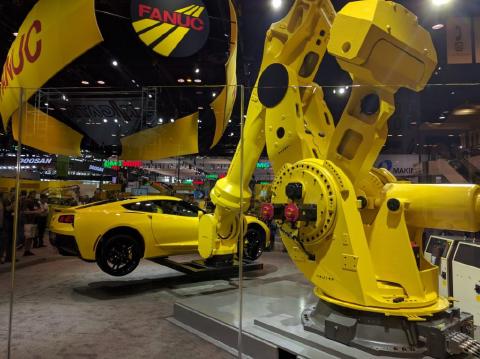
- Chris went to IMTS, International Manufacturing Technology Show a couple days ago. See Figure 1. Has lots of huge machines that Chris enjoyed looking at. How does electronic trade shows compete with this?
- Sword fighting robot arm by ABB.
- Stephen has been to Turbomachinery & Pump Symposia which is held in Houston, Texas.
- The ESP32 wifi module has been released. It is the successor to the popular ESP8266. If the price for the modules drop then the ESP32 will probably be as successful as the ESP8266.
- Stephen and Chris gotta go fast with SPI over I2C.
- Power will be the limiting factor going forward for IoT and other small devices as chips like the ESP32 drive the price of silicon down.
- Parker and Stephen are working on the SSPS (Super Simple Power Supply) and it is up on the MacroFab's github account. It is a 700W water cooled beast of a powersupply that runs a couple OPA541 opamps. See Figure 2 for the Analog test board for the SSPS.
- For EDA/CAD tools, Parker likes Eagle, Stephen likes DipTrace, and Chris is KiCad.
- MacroFab has seen lots of different EDA tools; Altium, Eagle, DipTrace, KiCad, PADS, Cadence, Ultiboard, Fritzing, EasyEDA, and MeowCad.
Transcript
Stephen Craig: hello this is the amp hour we are your guests parker dillman and steven craig
Chris Gammell: and this is also the macrofab engineering podcast and i am your guest chris gamel yeah that was awesome it's a mash-up episode dual podcast yeah that's right yeah so this is a second time that i've done this we did this once with uh we had embedded on and we did kind of a mash-up thingy uh dave is at electronics and so he couldn't make it this week and i was actually supposed to be on your guys's podcast anyway so why not do a little crossover air it on both channels uh if there are any listeners out there that do that we're expecting two episodes like an episode of the amp hour and an episode of macrofab engineering podcast sorry you only get one but yeah only one what one super episode one super episode that's right but on the bright side the people that don't know about macrofab uh the engineering podcast then they learn about it and if you guys have any listeners that don't know about the amp hour then vice versa i highly doubt that but you never know you never know they could have gotten sick of us they could have been like i need a new i need a new jam you know so uh what's going on so you guys are down in texas right yeah houston texas all right how's how are things going down there is it still uh like living in a bowl of
Parker Dillman: soup or it's it hasn't been that bad this past no it's it's been it's been kind of uncannily good we've been we've been spending time outside actually which is which is very different and we say good
Stephen Craig: because it's like it hovers around 90 degrees fahrenheit oh my god yeah yeah yeah yeah it's ridiculous feels great so like when your shoes aren't sticking to the pavement kind of thing exactly that's when you know it's it's nice outside we we had a brutal summer this summer was was
Parker Dillman: rough yep yep but uh it's it's just feeling nice now all right that's good so uh you you guys have
Chris Gammell: uh format normally we were talking a little bit before the show as well so you guys have like an actual
Stephen Craig: format and kind of yeah it's kind of half and half half and half format so we we basically like talk about you know if we have a guest on we just talk about the guest and then we go into rapid fire opinion but you know it doesn't really matter not with a mashup like this no no well
Chris Gammell: you got more format than we do so that's fine with me we have one more thing yeah one more thing well you know we used to have that stuff we used to do workbench of the week and uh what else was there chip of the week and oh yeah i forgot about that i don't remember what else there was is there just not enough new chips out there now no we just kind of stopped doing it you know there are new chips i guess i hear about them how do you guys find out about new chips i mean what are what are your sources the subreddit was it nice chips nice chips yep yeah i like that one a lot
Stephen Craig: borrowed from them uh once in a while and then uh i subscribe to all the major manufacturers
Parker Dillman: so i always get all their stuff well and and then uh if you go to ee web or electronic news weekly uh they have advertisements that usually have some cool stuff on it so i pick up a lot of stuff from
Chris Gammell: there you know i was really surprised about i was talking to mike harrison about that and i know i work for an ad company uh but he was talking about he's like you know i find out about new parts from the ads and i'm like what like but yeah i mean like people do that like it does i guess it does happen and uh that's great i mean like that is that is a source for it obviously it's you know there's only so many uh chip companies out there and they're all putting out new parts all the time
Parker Dillman: so well yeah there's because everyone keeps buying each other out well well and an ad with an electrical engineer or even an engineer in general is so different because you could just post the specs as your ad and a guy's like oh that looks great that's you know yeah yeah schematics always catch
Chris Gammell: catch my eye for sure i'll be i'll at least take a look and be like what is this thing doing have i seen it before if not you know if you get like that block where you're like not sure what the blob is in the middle and you're like oh okay i'll check it out more go check the data sheet or whatever i yeah i
Stephen Craig: guess you're right right yeah that's good so so engineering ads for parts should just link directly to
Chris Gammell: the pdf yeah that's a good idea well yeah i guess so a lot of them go to like those product pages though too they go to like because like that then they'll have like the 1k
Parker Dillman: pricing stuff like that that's not too bad well it actually on ee web in their product section which i guarantee is all just ads they have blog posts and the blog post is like maybe two paragraphs about that chip and you can go see the price and you can go to the data sheet directly from that blog post yeah that's cool so yeah they do they do it well that's that stuff's good but like i think the real
Chris Gammell: thing is you know i think about all of this stuff is usually me just kind of filing away in the mental inventory kind of thing and what i really need to know is what is this part normally used for like which industries you know if it's like an automotive part i probably can't afford it right or if it's a consumer level part i might not like the specs or whatever you know what i mean like having those kind of filters around around the industries or whatever that's usually the most helpful and then i'd love to know like the uh you know like when prescriptions go off off label and they're like like oh this is a uh uh psychotropic but you use it for migraines or whatever you know oh yeah yeah right i want to be that doctor who's prescribing the weird chip for you know something else the 10 secret tips that you need
Parker Dillman: to know about this this uh certain chip or what uh right yeah yes uh i don't know i just i just think
Chris Gammell: there's always like so like i remember there was an audio part that i saw someone used it was like an ab class ab driver you know uh pretty standard but it was used for like uh like a power amp for uh a power supply you know like those kind of things where it's like i guess you could do it by genre in general but uh i always just thought that those kind of things are interesting so yeah yeah i just keep
Stephen Craig: a giant uh spreadsheet of like if i you know i find a cool part put the part number in and then i type in like a short description what it is so i can search later and do you share this with us come on man
Chris Gammell: yeah i can put it i can put it out there yeah that's that sounds that sounds like i mean it would be nice if i mean i guess that's kind of what nice chips works the the nice chip subreddit kind of works as a repository for that stuff but it would be nice to have like a generalized you know what is
Parker Dillman: it you know like kind of like a snap lookup kind of thing yeah yeah and i think we've actually talked about this on the macfab podcast a couple times but maxim chips on their data sheets have like 800 application schematics on there and it's like you can use this chip in these like 50 different ways and it's like oh i love their data sheets because of that yeah yep uh yeah those are
Chris Gammell: really nice to have those because that is that always catches the it when you're scrolling down the down the data sheet you know page or whatever yeah at least at least for me it does uh well uh let's take a step back uh i know that we're kind of going to be interviewing each other and just kind chatting whatever uh but you guys are obviously macrofab uh what what is macrofab so macrofab is a
Stephen Craig: basically an operations replacement for uh basically uh for engineers i guess um we basically do low volume oem manufacturing for anyone that wants it and the uh what sets us apart from most contract manufacturers is we basically do everything from buying the parts putting it together inventorying it
Parker Dillman: and also drop shipping to your customers directly but we all do this with the aid of a web interface correct that allows you to handle your inventory purchase pcbs uh do the entire thing top to bottom including giving us instructions on how to build your product uh it's it's a it's an end-to-end uh
Stephen Craig: application all uh over the web yeah and everything is also uh has an api endpoint so you can write your own software if you want to to also interface with your uh like if you have your own web web store you can do everything through that as well uh explain that more so like if you let's say someone orders some boards and you need to you know fulfill those boards you can have the api endpoint automatically just click basically fulfill this order through my inventory at macrofab oh okay so like tying it into
Chris Gammell: like uh uh what's that called erp system i think yeah i was thinking there's a there's a wordpress based one uh e-commerce something like that e-commerce stuff yeah yeah but yeah exactly uh cool well that's really cool um and so you guys hold inventory too yeah we hold inventory right and so parker you and chris were on almost a long long time ago yeah a year and a half ago okay okay yeah that was back
Stephen Craig: when we had like four employees what are you guys at now 20 something whoa 23 24 and what's what's the
Chris Gammell: split on that is it like a a lot of uh people work in the the line or is it a lot of software or what
Stephen Craig: it's about half and half okay that's great about half the people work r&d and the other half is
Chris Gammell: operations okay yeah and i think you guys even moved places right or you were moving when we talked last
Stephen Craig: time yeah we had just moved to our current location but we're actually moving again in like
Chris Gammell: three four weeks wow we're moving a good sign right yeah you guys should maybe get a little bit more
Stephen Craig: space this time than you need but you know yeah our new shop is uh over double the size so it's from 5 000 square feet to 11 000 yeah nice that's great that's really great you guys gonna double up the lines or anything or not at the moment it's mainly because uh it's it's uh the air conditioning um our current shop houston yeah yeah our current shop has air conditioning but it is uh not insulated
Chris Gammell: well uh okay and so you're just blowing money at the cracks of the the building huh exactly i think uh
Stephen Craig: it'll be like 94 outside and like 86 inside the shop damn yeah that's crazy it gets brutal and you're still
Chris Gammell: paying hundreds of dollars a month for the for the privileged right yes exactly well and at the
Parker Dillman: same time we have a reflow oven that's just dumping heat into that oh that's true it's actually not
Stephen Craig: really the reflow oven because the reflow oven's really well insulated it's the fact that the reflow oven sucks about a thousand cfm of nice ac air out your roof yeah right yeah right right nice wow
Chris Gammell: that's yeah that's crazy um well yeah i i'm always surprised by places like in the midwest or you know i just moved to chicago but in cleveland too like and like these old factories it's obviously the opposite it's winter is the big problem here but um you know they just got like that single pane glass and you know it's like the the winters are obviously miserable in their in the in the lines but at least they sometimes have the industrial waste heat that can at least you know they're paying for it
Stephen Craig: a different way you know what i mean yeah yeah i've seen um up north i've seen like uh for like mechanic shops and stuff where they just take the used oil and they have a used oil heater oh like a barrel fire no no it's not all over there but it's a heater that's designed that burns off the
Chris Gammell: used oil oh that's not a bad idea actually yeah i mean if it if it's you know self-contained or whatever uh well that is cool uh i'm glad that uh you guys are expanding that's a good sign how what about the uh what about the can i just call it map is that cool yeah map school that's what we call it okay
Stephen Craig: all right so uh how long has met been going on this is episode 33 so we're an order of magnitude less
Chris Gammell: than than the amp hour yeah we're on 315 yeah so uh yeah but you know everybody's got to start somewhere so that's great oh yeah there's obviously a lot of back uh back episodes people can listen to stuff like that so um well uh i think the reason i wanted to get to that is because we were talking about finding new chips are you allowed to do you guys like peek at that i think i asked lane this too and from ash park when he was on but like do you peek at the designs when they come through no i don't at least are you allowed to i mean like i don't know i don't even know how that works honestly
Stephen Craig: like uh so you know i i didn't so i guess i just don't look at them i actually don't know if we would be allowed to i just from like a i guess a time thing well no just from a moral standpoint it's like that's their own thing there's no reason i should look at it you know
Chris Gammell: we oh okay we do have you know a standard privacy um no no i'm not worried about i mean i'm sure that that's i just mean that like i would be so curious just about like how people do you know what i mean like i think there's some there's some like aspect of like voyeurism and electronics oh yeah i kind of do that with contextual electronics a little bit too where it's like you kind of just want to see how people are thinking and what their designs are like obviously i get i get that privacy piece so i don't i don't i i think that's actually good that you guys don't do that but i just mean in general like you know we're talking about finding new parts and finding new
Parker Dillman: ways of doing things oh sure well there's there's certainly a high level of curiosity that goes into this kind of stuff in fact i was i was q seeing uh quality control checking some some boards earlier today and it's one of those things where i've got it under a microscope and i'm sitting there all the time it's like why did he do that you know exactly yeah sometimes there's these really
Chris Gammell: good tricks you know like that's and that's the other thing too like you learn these tricks from like senior engineers and if you don't have that then where do you where do you really learn these things you know what i mean yeah yeah for sure you guys should like uh ask if you can publish some of them at some you know like very above board at some point i would love to see that where it's just like
Stephen Craig: hey they said it's cool check this out yeah you know i actually was thinking is would be cool if like you check out on macrofab like there's a button at the bottom that says do you want to like can we use your your board as like you know advertisement for like social media yeah um so far the developers
Chris Gammell: don't care or some people might actually get benefit from it that kind of thing yeah yeah exactly but um
Stephen Craig: our developers haven't gotten that far down the list yet right right step one get the software to work
Chris Gammell: properly step you know seven thousand four hundred and twenty two add a check box right right share to
Parker Dillman: twitter and and it's it's pretty uh actually standard to uh see some panels and some boards walk by and park and be like what does that do and we we sit there for a second and try to figure out what that board does that that is that is absolutely that happens every day yeah that's great now that
Chris Gammell: that's got to be one of the perks i would think oh yeah just being around the being around hardware like that is like the variety of hardware right because you guys are like a low volume high mix like that kind of stuff is always interesting with like high volume there's a there's a real big difference right i mean like or there's a difference in problems definitely yeah has problems still but
Stephen Craig: uh it's a it's a different set of things you know yeah the the big thing with uh with with a high mix low volume is just it's uh it's all qc it's really easy for when you do like really big manufacturing runs is you're looking at the same board you know a thousand times a day you can automatically make sure that everything's right but if when every single board is different yeah that's when it's hard
Parker Dillman: every single one's fresh you got to treat it fresh you got to look at it you can't memorize patterns
Chris Gammell: because there are no patterns right exactly yeah yeah uh yeah that it is interesting too like i remember i remember i used to work with some really good techs and those guys would have like the eyes for like their pat their pattern recognition was just like spot on they could look at a board and diagnose it in like 10 seconds just because like they would scan through it you know it had like you know maybe at 1200 components on or whatever it was a it was a very complicated board but they scanned through it they knew there was like five problematic spots they their eyes would dart to each of those and then it'd be like bop there it is right and and like and if it they fixed that one and it didn't quite work then they would just move on and usually there's other things or whatever but that's just the life of a of a good repair tech is like being able to kind of key in on something and then and then quickly rectify the situation because time is money right well yeah and it's it's one of those
Parker Dillman: things where uh most of the time for a repair technician the actual physical action of repairing something is 10 minutes or or even less but it could take three hours to figure out the problem
Chris Gammell: so all the work is in the diagnosis yeah like house or other you know yeah yeah right right
Stephen Craig: five minutes of trying to figure out what it is and five minutes of actually curing the problem
Chris Gammell: right exactly it's lupus it's loop it's oh it's never it's never i think one it always starts off
Parker Dillman: as lupus but it but it never is later on yeah it's gotta be a solder short it's gotta be it's gotta
Chris Gammell: be it's gotta be no no no it's it's gotta be it's gotta be the firmware come on let's yeah it's gotta be the firmware it's gotta be the firmware right we're hard work guys here right esd damage esd damage oh there you no no no it's never esd damage it's never esd damage mine is like it's only ever esd damage if you know i've already dropped it on the floor three times and uh yeah it's bent in half and then oh it also is esd damage right so uh you guys had some stuff on your list uh do you want to go through some of those things or yeah sure um
Stephen Craig: well i guess the rfo section then um rapid fire opinion so this will be the first time you've ever done this chris i think so yeah so um how does it work so we usually just have a couple articles we'll read them off have a little short description and then you basically give like a uh like your opinion if you have one or thoughts you know we try to keep each one about five minutes each a lot of times it just runs over it doesn't really matter okay um so yeah intercell got bought
Chris Gammell: out i think you know that yeah we actually we mentioned that uh i think last week two weeks ago something like that yeah yeah um 3.2 billion dollars it's crazy this year has been like the
Parker Dillman: year of buyouts for the electronics industry it's just been nuts yeah i think there has i think out
Stephen Craig: of the 33 episodes of mep we have mentioned a buyout and probably 25 of those yeah because it's
Chris Gammell: been non-stop well how many how many we should speak about it more generally what are you guys feeling about that in general i mean do you do you lament it do you care um i i'd like always seeing
Stephen Craig: um more variety in manufacturers but looking at how difficult it is to actually make semiconductors it makes sense to kind of consolidate um fabs i think going forward we'll see a lot more fabulous companies like silicon labs and that kind of stuff where they don't actually have to have all
Chris Gammell: their ops stuff you know oh don't kid yourself intercells already like that and so is renaissance well renaissance has i think some fab capabilities but these guys i mean no one's doing it anymore anyways so it doesn't you just farm it all out i uh so so my rapid opinion is uh this is the nba playbook this is basically companies that can't get any more margin out of what they're doing uh understandably it's like it is a tough business like you guys mentioned but it's just they can't do anything else and so it's like well we're gonna buy our next set of profits you know and uh part of me dislikes it especially because i know what the the results of it's going to be like less choice more layoffs right all the all the bad stuff uh and then the rest of me says yeah whatever i don't really care but it's kind of like the uh the analog and in linear that just uh
Parker Dillman: happened what a month ago two months ago yes please don't bring that up that's a yeah i'm sorry yeah there were huge uh competitors and they're just like oh no not anymore right and
Chris Gammell: so i think the if my real opinion is is that uh the sec is uh not the fcc it's the um ftc rather the uh the ones who do the antitrust stuff they're just yeah federal trade commission they're sitting on their asses and i i can't stand it that that's i mean i know that that gets into like political stuff as well but like there should be more competition in general but since no one's gonna do anything it's like all right well what the hell am i gonna do well yeah it's also you
Stephen Craig: gotta think about is you is do you try to force competition then at that point and is that a good thing that's that's literally their job yeah yeah yeah but is that a good thing and all that other
Parker Dillman: stuff well okay yeah and that gets into there's a difference between forcing competition and preventing monopoly there's a very different thing there uh yeah yeah that's true that's a good point
Stephen Craig: well i i could see if if like let's say that makes sense if like let's say uh was it renasi uh renaissance renaissance so if renaissance was doing like a hostile takeover i could see like preventing a monopoly that way sure but what if like intercells like please buy us out we're going out of business
Chris Gammell: kind of thing yeah i guess so i think what it really comes down to is that they look at i think the the the large scale things look at it as like uh you know the so that the the big anti-monopoly stuff is looking at this they're also looking at like at&t merging with verizon type stuff right like huge carriers right where there's these huge categories whereas here they're like oh chip company is buying chip company there's still a lot of chip companies and it's like but we know as you get down into the sub genres of of uh and subcategories of chips it's like well there's actually not that many in certain areas and that's really where that's really where i have problems with it you know so like there's just fewer and fewer analog and then fewer and fewer you know and maybe power systems and stuff like that yeah exactly exactly so i don't know it like i said it probably kind of gets into the political realm so we don't need to do that but it it it bugs me but what am i gonna do yeah exactly start your own chip company chris uh well i'm sure that is something you can do he would start he would he would start digging into me too so yeah i don't know design chips so what's next on the
Stephen Craig: list so next is the uh we've all heard about that usb killer right yep uh i have but maybe you should explain what it is so the usb killer is a device that plugs into your usb port it has uh some capacitors and a little microcontroller on it and basically it uh buck boosts up a couple capacitors charges up to 200 volts and then zaps your data lines multiple times a second just okay so so here's the piece i don't get why does this exist like it's the same reason why like why does viruses exist why does uh why does graffiti exist it's a hardware attack graffiti is art i'm sorry uh this yeah it's it's art if the person who owns the building says it's okay
Parker Dillman: uh i think we're i think we're getting we're getting into rough territory yeah yeah yeah i think i think that okay anyways yeah so i think okay okay so this is a direct hardware attack uh and in fact i was watching a video um gosh the other day on this and and they showed it actually happening bam it zaps your your data lines and windows completely crapped itself when that happened and it just it refused to start afterwards so it's a way to absolutely just lock out someone out of their machine and so it's
Stephen Craig: actually it's it's it's essentially is uh it's vandalism so yeah okay what if you put uh i guess i guess this uh well basically going forward is like don't put you know public facing usb ports on
Chris Gammell: devices yeah the the uh the apple method of uh remove remove everything uh i guess so yeah maybe apple was onto something doubtful i don't think they're going through the 3.5 millimeter jack um i i so so the question you you were you posted was how do you defend yeah how do you defend against this so there's um don't hang out with a-holes that's the answer there you go uh don't put forward
Stephen Craig: facing usb ports on like an atm i don't know why an atm would have one but it wouldn't surprise me if
Parker Dillman: that existed yeah right right yeah but but honestly because of this we're probably going to see some kind of protection devices that are fast energy uh dissipation devices that you can put right on
Stephen Craig: your data lines yeah that somehow don't load down the you know differential signaling yeah some kind
Parker Dillman: of like super fast zeners that can they can just dump it all out i mean if it goes fast enough wouldn't
Chris Gammell: it eventually start affecting i mean there's not like a lot of current behind data signals but like wouldn't it if you had if you had a a diode on there i mean obviously you know they're they're there for um transient surge protection it's yeah like transients and stuff like that you know you stick those on there but if they're really fast aren't they going to start impacting the signals at some
Stephen Craig: point or is that is that way off no i yeah i think it would start uh harming i guess if you could um if you could detect that kind of event like if it happens multiple times so it's like i guess like a smart esd device you know so you can detect that's not a normal esd event that's
Parker Dillman: something trying to attack that bus and turn it off it's just just more money we have to drop into
Stephen Craig: this crap yeah because i can see that people who get harmed the most would be like public libraries and stuff that got you know computers that anyone can use yeah and then something you know jerk comes
Chris Gammell: in the way that i would solve this is actually not with electronics i would solve it with a lock i mean you basically you put some hooks in there or you put some some mounting holes in the side of the usb connector right so like on the left and right side you put holes there and then you do it like where you have a you know plastic device that inserts in there then you have a key that rotates and it puts some um not tumblers but whatever they called like uh like bars into those holes and then you can't you know that basically prevents you from removing the lock or inserting a usb device like that would be the that would be the way that i would do it um now that you can't pick a lock but at the you know it's that same thing with like any kind of security thing where eventually you know it's it's just it's locks on a door if someone wants to get in and they're going to get in stuff if they really want to they're gonna bring a sledgehammer and you know yeah mess your stuff up yeah if they
Stephen Craig: really wanted to mess up the computers at the library they just toss them off the desk right exactly
Chris Gammell: so i don't know um like i said don't hang out with a-holes that's probably the best one yeah it just
Parker Dillman: seems like a really discreet and simple way for damaging uh hardware yeah exactly it it definitely
Stephen Craig: is yep all right so next on the list is uh the samsung note 7 exploding this that's been going on
Chris Gammell: exploding this yeah and this got expensive too huh it's a billion dollar recall i think we had that on our yep uh our list of stuff too yep um so there's what what about it yeah so there was some uh
Stephen Craig: official word from what samsung's been doing so samsung uh says it's uh basically they're squishing the batteries too much that's what they're saying oh and like it was bad mechanical design yeah so that's what they're saying but like wait wait if you have it in like your back pocket and you sit down no so all the things that when they blow up they blow up because they've been prolonged charging for
Parker Dillman: long periods of time that's why they're blowing up the kind of like the way everyone charges their
Stephen Craig: phones yeah overnight yeah you plug it in um and so what's interesting is samsung says it's a bad mechanical design or something like that um but then samsung pushed out a firmware update that limits charging to 60 of the battery and so if it was a mechanical issue it's not like if you charge the battery to 100 it somehow gets bigger right right it's not a balloon yeah it doesn't fill
Chris Gammell: up is that is that how batteries work there's more electrons in there now so it gets a little
Parker Dillman: bigger maybe maybe we have mechanical firmware nowadays yeah i don't know samsung invented it
Stephen Craig: yeah so there's this guy that was on the uh i think it was the uh ask electronics subreddit on on on on reddit uh his name is one david e and he actually his description is battery management systems and connectors um so i guess he knows the stuff about batteries and maybe and he was one yeah maybe he was the person that brought up the 60 charge thing and so he thinks it's just bad battery
Chris Gammell: management which makes sense oh you mean like the uh the chipset that's actually uh controlling it yeah yeah so it's it's doing the the gate the fuel gauge stuff and actually seeing you know how full is it because yeah you actually that is actually a pretty interesting topic of like battery gauges aren't actually they're not directly they're measuring voltage and as current comes through but really it's just doing it over time and averaging you know just recording data as it goes along and then estimating based on how the acceleration of or deceleration of the charging happens right exactly
Parker Dillman: but a lot of times it actually takes physical readings too because it's reading the temperature of the battery as that's happening uh along with that uh which kind of gives a better gauge of where you're at
Stephen Craig: and so what's what's interesting is if it was a truly like it was truly a uh mechanical issue you know samsung couldn't do anything you know that's probably why they're also recalling all these phones but the firmware updates interesting is they're not living you know they're not letting it go up to 100 charge and it might be the battery management is not set up right and it might be something they can't actually update the firmware to you know they can they can tell you could probably
Chris Gammell: get down to that level but it might be so ingrained that it's like well it could be a bad chip you know they're not going to tell what that actually is right yeah it could just be like the cutoff like
Stephen Craig: the like on the battery management chip there's like a cutoff and like the resistor value is off
Parker Dillman: or something like that either either that or they've calculated the exact amount of energy that it takes in order to ignite a fire and they're preventing that much energy that could be true yeah yeah yeah
Chris Gammell: because these are i mean these are big phones right these are like the the phablets yeah these are little ginormous yeah phablet i don't think i've heard that before yeah what a phablet or ginormous well i have a phone tablet that's awesome yeah yeah so it sounds as stupid as they look
Stephen Craig: kind of like the uh the note no this is this this is the note 7 yeah yeah so that thing's about
Chris Gammell: this big yeah right huge you know we're on you know we're on audio yeah right guys
Stephen Craig: it was this big imagine a square about the size of a note 7 that's how big it is yes this is very descriptive
Chris Gammell: yeah that's uh you know it's it's a tough problem too like i i don't even know i mean this is a consumer level right so i obviously samsung is going to weather the storm monetarily but like man that's just so much hardware in the world yeah i think there's
Stephen Craig: too like with with a recall like they'll actually give new ones you think or what i would i would think or at least get your you know 100 your money back i think there's like a million devices something like that really that many yeah something like that's some crazy number well they're saying like a billion dollars recall and you got think what six hundred dollars a phone
Chris Gammell: yeah yeah yeah i guess six seven hundred dollars a phone would be great because then yeah the rest would probably just be overhead and dealing with waste disposal stuff like that because i mean that's a lot of that's a lot of electronics waste too let's use the phones in like china or something yeah maybe they'll i mean they it's possible they could refurb them but those things aren't exactly made to be disassembled right i mean like that's no they're not that's my that's my frustration with a lot of phones these days i miss uh just removable batteries i know i know why they started doing that but it's it's just frustrating to me it's actually really funny because i i have a
Stephen Craig: one plus two and it does not have removable battery but the back comes off so you can change what color the back is oh isn't that yeah it's like why why isn't the battery not removable at that point right
Chris Gammell: well that's just because consumers care more about the look and feel of stuff than they do about the the specs because they're just going to upgrade in a year or two anyways well yeah but yeah and and i
Parker Dillman: think there might be a little bit of malicious thought in there at the same time where if you don't have the chance to change out your battery once your phone starts to degrade then you just
Chris Gammell: go buy a new one instead of just upgrade your battery i i always hope that it's not that case but i'm
Stephen Craig: sure that's part of it yeah unfortunately well yeah because what lithium batteries have about 500 to 700 rechargers before they start to the greatest yeah it's really low and so then you gotta think is you have to recharge your smartphone once a day that's about a year and a half right that sounds right
Chris Gammell: yeah and uh i've been so i was at imts yesterday and uh the end of the day was coming around and i knew my phone was low on battery and i was like ready to call an uber and the same thing happened where it was like oh you have 10 your battery dead and i was like i don't have a car anymore
Parker Dillman: i don't know where i am you know you know uh so i'm sure they do this but uh phone companies that report uh the the level of your battery if you if they could just make a better algorithm that's more linear with the discharge rate because it seems like uh it seems like man my thing my phone hangs at like 80 for a while and then from 80 to zero is like 20 minutes well so what happens is it will
Stephen Craig: notify you got 10 and so then you check it every two minutes to make sure you have charge yeah so you're you're artificially accelerating it yeah because it's like the screen is like 90
Chris Gammell: of the battery of that phone yeah well and i wonder too like i mean so you guys have seen the the discharge curves of lithium ion batteries before right i mean like yeah yeah and it and it has it definitely has that cliff at the end but i just want about repeatability too so like i mean controlling for you know nominal current draws whatever like like like you said if it if it is someone checking the phone all the time then yeah it's going to obviously change things but i don't even know it must be somewhat consistent right i don't i've never actually designed a fuel
Stephen Craig: gauge chip in i don't think so i haven't designed a fuel gauge chip either so i wouldn't know maybe i'll
Chris Gammell: have to do that i think i think that just might be the best solution is to just go design one in and and see what happens because i don't i don't know like it's well there there are i've seen what the series is like the ti's got one series the bq 24 000 series i think they have fuel fuel gauge in
Stephen Craig: there i've used the bq 47 something something something before i think it's the 47 it's a
Chris Gammell: lithium battery management chip yeah it's yeah it's exactly it's not just the charger anymore it's like the it's got other a bunch of other bells and whistles on it right so and it actually reports what
Stephen Craig: level you're at that one doesn't uh they have some that do though oh yeah okay and it kind of
Chris Gammell: guests but yeah yeah and it must be i mean maybe it's also tied in because it's a it's a buck boost type of thing too where you know like the um you know it's it's trying to switch modes as well you know trying to boost it up or whatever towards the end maybe that changes things but i don't know it just seems like a tough problem especially since this is such a critical piece of of uh technology over time yeah you know like where lithium ion is not going away or well whatever it is you know might be lifey pos or how do you say that fusion cells man yeah micro wait so how does that work so you said 500 is 700 charges but what about like um what about like on electric vehicles uh i think it's about the same right no how could that be possible well be a year and a half for that's a full that's a
Parker Dillman: full cycle okay so yeah the charge that's talking there is a complete discharge and a complete recharge it it drastically decreases when you're doing partial charges like the you mean you get
Chris Gammell: more total cycles if it's a partial that's correct correct oh okay so yeah if you're just hammering
Parker Dillman: the battery on and off uh full discharge charge it's 500 to 700 right and i guess that's how people
Chris Gammell: use phones too because they're you know there's just less capacity overall whereas someone might you know drive to the store and back and then and top it up kind of thing yeah did you guys see that article i actually didn't post it anywhere did you see that article about uh it was a really cheeky title it was like the the car that elon must dreamed of is finally coming to fruition it's just not being made by by tesla no i didn't see that one yeah because chevy so chevy's putting on a new a new ev like a you know it's like a hatchback tiny little thing but it's got like i think they said 230 plus miles of range on it how expensive it's a 30 000 after rebate that's not bad no i mean like it really is i mean like that really is like the that is what they've been talking about a long time and that's what the uh i think the model 3 is like as well um so yeah interesting things happening with the the automotive industry right now i think especially on that side
Stephen Craig: i wonder where they're going to get their batteries from i wonder if they're just going to buy them
Chris Gammell: from tesla no they said that lg tech so i i assume that's part of lg electronics but that's who their battery supplier is is lg tech so it'd be from uh overseas then uh yes i don't know if there's i guess there was that a123 was in michigan right i think that was at one point but they shut down yeah so um yeah that's honestly i'm basing it all on a single new york times article that i read and will uh post obviously but um unless you guys want do you guys want to do the notes this time you can do yeah we can do your notes all right sweet yeah send people over to the macrofab thing we'll have it somewhere though yeah uh i'm just always i'm always doing the notes you know you guys
Stephen Craig: are too uh actually um you talked about the imts right yes i did yes i was actually looking through your pictures um what's with all the people with vr goggles on in that one picture uh okay so is that
Chris Gammell: a virtual line yeah so so uh imts is a trade show that happened here in chicago uh at mccormick place which is the one of the main there's mccormick place down south of the city and then there's um rosemont which is out by the airport by o'hare um and so it's a machining show it's you know uh machining and robots and just industrial automation around um around metalworking and 3d printing and all this crazy stuff uh so yeah so i was there yesterday i took some pictures and so the picture you're talking about is i forget who did it it was i think it must have been i think that was haas maybe but it was like a virtual it was a virtual show floor or it's a virtual shop floor rather it was really gimmicky though like so all these people were there's like four people in a row wearing headsets or like vr goggles and they were just like looking around and there was like machining operations and robots doing their thing internally i don't think there's
Stephen Craig: any interaction so so it was like it was exactly like the show floor like there's machines around doing stuff except that it was in virtual no it was more like a shop floor like an actual like if
Parker Dillman: you were actually in a machine it was like it was like the sims factory in vr yeah right exactly
Chris Gammell: yeah so um but here's what i will say about that because i did want to talk about this as well uh we have the most boring conferences in the electronics industry compared to them holy crap uh so so you saw you saw the pictures right yeah like the so there was this one i think it was a lathe it must have been like a lathe station or something but like you look at the scale of it and like you're like oh it looks like just you know like a you know like horizontal lathe with like the big closing cabinet whatever and then you kind of like you kind of look a little closer and you realize the bottom of the cabinet is at the top of people's heads because this thing is so huge that it's making parts for i don't know like engines or something you know big trains or
Parker Dillman: yeah yeah it must yeah camshafts for for uh shipping uh like diesel engines and shipping uh boats yeah
Chris Gammell: exactly i i literally had shortness of breath yet like i was drinking a bunch of coffee so i'm sure that was part of it too but i literally i literally was having trouble breathing walking around the show just because it was just like so much sensory overload and it was just like you're in the middle of you know it's a it's a conference right it's it's you know the the padded carpet everywhere and everybody's in suits and then there's a five axis mill next to you cutting you know a propeller and doing its thing you're like what is going on here and it's not one of them it's like you know and there was just like the haas station was probably 30 machines all different all doing their own thing you know it was so so so insane and and i've been to a lot of electronics conferences and we're so boring compared to that you know like well how do you compete with that lots of
Parker Dillman: blinking leds you still you know like i don't know i a hundred you know a couple hundred million dollars would would help you compete for sure well yeah that was and that was the other thing like
Chris Gammell: just the scale of like i mean you must it must have taken them days to move these things in there they're huge these huge machines and like you know in chicago's union labor so it's probably really expensive to move that crap in can you imagine how much power they'd have to route for that place exactly it's all three phase it's like yeah it was uh it was nutty and so let me pull up these pictures too because i can talk through i mean obviously you know we'll link it in you need to look at the pictures blah blah blah but um imagine a picture of a giant lathe
Stephen Craig: yeah because uh maker fairs you like you get 3d printers and sometimes you get like a you know diy you know axis machine like a cnc but yeah exactly exactly and you know and actually i was thinking
Chris Gammell: that too like i i have never felt that much uh because i had been using my 3d printer in the morning i never felt that much like uh imposter syndrome where like you go in you're like oh i've got my three axis little you know so before you know it chris before you know it chris
Stephen Craig: you're gonna put giant tires and lift your 3d printer up no i don't think so i don't think that
Chris Gammell: would help even like this is this is just like the scale of like you know they've got like the super you know they've got like 20 horsepower motors driving these you know driving the spindles and stuff like that it's just it's insane wow uh let's see what else is on here oh yeah i mean like obviously there's just the scale of the conference itself as well uh what else did i want to say about that oh did you see the the first picture the big robot oh the big the big arm yeah so i say fanuk but i don't think that's right i think it's fanuk or i'm not actually sure how you say the company name uh but the reason i took a picture of that is because i wasn't allowed to take a picture when i went to the tesla factory uh alicia and chris were kind of taking me on a tour of the tesla factory when they went and i did talk about it in the show but we weren't allowed to take any pictures in there however i can say that this is the robot arm that lifts the car up off the assembly line puts it up onto a tray and then another one takes it off the tray and puts it down in the next assembly line and it keeps going all in all in order just to let uh traffic go by these cars in order to
Stephen Craig: reverse the line you know what's interesting is uh i got to wear the tesla factory and i got to take pictures maybe i should have just asked nicer how did you get to take pictures i didn't ask i just
Chris Gammell: started taking pictures you know you might get sued by tesla like that's like an insta suing you know
Stephen Craig: like that's like the only thing they pressed a button somewhere yeah the only yeah insta sue is like i open up my bank account and it's like negative four billion dollars um you owe elon musk yeah um the only thing we couldn't do when we were at the tesla factory was we couldn't go to the battery area below like they're stuffing the battery boxes they go underneath them we could not go into that room that's the only proprietary thing that was the only thing they wouldn't let
Chris Gammell: us go look at so maybe when did you go maybe like it was maybe they've changed their policy since
Stephen Craig: i don't know that was two baker fairs ago two three baker fairs ago all right well maybe maybe you just got lucky or maybe you're gonna you're gonna did you go on an on day like were they working the floor yeah oh we went on a weekend so we didn't there was no one there oh okay so that's probably
Chris Gammell: why then as well yeah i bet you maybe like business intelligence how the line works stuff like yeah it
Stephen Craig: was probably that um because all the machines were the only things that were on were like the six axis machines they were like cutting out like the rear housing for the axis uh for the uh axles and uh okay that was the only thing that was running but everything else was shut down makes sense i guess that's probably why yeah that makes sense uh yeah so otherwise at this show though
Chris Gammell: i mean like the robotics as well like um you know this is this is like a different like so like you know we see a lot of robots these days uh kind of moving into the maker space as well um and this is not that this is like industrial like nachi and uh who's the other one big one um yakasawa or something like that uh but yeah these are just like crazy crazy industrial robots obviously fanooker i don't know how to say any of these names apparently but uh it's obviously a lot of work holding stuff like that so it's uh oh kuka as well i knew them yeah so it's just fun to i don't know i can watch that stuff all day long so yeah there's a really cool highly recommend oh yeah there's a
Stephen Craig: really cool video of one that's like it's one of the japanese companies that makes those big robot arms and they have two samurai swords that are touching just the tip and they're like and they're like moving around and yeah yeah check the description below to see that video yeah every year here in
Parker Dillman: houston we actually have the uh uh the turbo machinery show uh and it's turbo machine yeah that sounds awesome i need to go uh it actually it's happening right now uh it's it's the power generation industry so uh cool cool yeah so it's a lot of uh steam generation turbines it's pumps it's all the machinery that goes along with that uh and i a previous job i used to go every year i i had to go every year and and represent but we we got to walk around and it was it was the exact same kind of thing they had like um 3d sand printers that were printing the turbine blades for uh you know a coal power plant uh and it was just the machines the size of the room and it's just mesmerizing to sit there and watch it and and one year siemens actually showed up with a three million dollar turbine and just set it in the middle of the room you know and they had they had the whole rotor blade lifted out and they on their stand they actually had a hologram where um you went and you you would walk into this certain area and the hologram would project all around you and this entire steam turbine would explode into all of its parts and it was just it was just like oh my god so like all of these turbine parts are all around you and it's just like i wish it could be some other industry that was doing like siemens has enough money to pull this off you know but like yeah right i think chris was right
Stephen Craig: then we need more more awesome stuff at at shows oh yeah yeah i mean yeah i mean that's what it
Chris Gammell: comes down to is like their stuff is just naturally awe-inspiring just because of the scale and the
Parker Dillman: power of it right yeah i mean like and but but like as you keep asking the question like you look at this thing and you're like how did they make that how like just because it is so big how is it made
Stephen Craig: it's the opposite but it's the opposite way is something so tiny how did they make that well
Chris Gammell: yeah but it's not our we kind of live in that world yeah we live in that world right but humans humans just don't naturally react to that because it's just at a certain point it just scales down to magic
Stephen Craig: right right exactly you know yeah i got it you want we need to make a room size just ginormous relay
Chris Gammell: it looks like uh like uh one of those gates closing yeah at like uh like like a parking gate exactly
Stephen Craig: except it closes in 10 milliseconds and you had to put yeah and you had to put hearing protection on when it latches right right exactly it latches and the uh the entire room welds it needs to close with
Chris Gammell: like a cannon shell yeah yeah you have to explode it closed that would uh that would be impressive it's just no one would survive to talk about it that's the only problem you know actually so funny enough
Parker Dillman: another story i worked for a uh a power company here in texas and i was at i was at a uh a nuclear plant actually in in north texas and they had to close the uh the contactors for the entire plant and they were the they were these huge devices huge knife switch yeah well here's the thing that's crazy it looked like a a giant conch shell uh so it was like this giant spiral thing and uh they actually had to load it with these explosive charges because they couldn't blow the contacts away fast enough with like a spring drive or anything like that so they had to explode the the switch apart or it would weld uh and it was it was one of those things where like all the line operators were out there and they're just like everyone's all right and i'm this intern sitting out there i'm like what's going on what's going on and then i hear this explosion that's like earth shattering and everyone doesn't really care it was like what is happening in the back of their
Stephen Craig: pickup truck with the bed down opening up a beer right yeah you know wait for the explosion because
Parker Dillman: to them that's normal and to me it's like oh my god the world is splitting open right it was it was
Chris Gammell: it was super cool and that's the thing so like that actually that was another thing that like so even walking around right you do a couple laps whatever and you know it's crazy because the human brain is very adaptable whatever and you do start to normalize it too you're like oh yeah well like huge you know like huge mill right whatever it's just it's just whatever like a full turbine blade right would it but like i think that's the thing because that i was thinking about that used to happen to me i remember the first time i saw a bunch of fab equipment the first time i went into a fab it's just like you're like holy crap i've never seen anything this big before right like like a like a lithography machine uh lithography machine right with all its chambers and whatever and you can watch it all day long and eventually you're just like well i gotta get some work done now you know it's just like you just normalize to it because you have to you know like i don't know so i'm sure it's similar so maybe the the key thing is just to keep going to conferences you're not used to and maybe that's where you you you really get the most magic magical bang for your buck yeah constantly having your mind blown yeah right exactly yeah you know so uh yeah that uh but highly recommend machining shows like that that was fun as hell so um it's good to know that there are because the other thing is that our i think our industry is kind of toning down the whole trade show thing as well um so it's nice to know that there are still things like that you know yeah cool i guess there's still electronica uh that's a big one but that's also because that's towards the industrial and automotive sectors which have a lot of money still in them so and it's germany so uh yeah so that was imts what else is going on with you guys uh that's actually the end of our list do you have anything you want to talk about hmm well we do have i will remind people we do have a uh subreddit obviously you guys were talking about reddit already and uh we do have our subreddit called the amp hour or slash r slash the amp hour uh you know there's a couple things on here i was talking to mike today about it too uh mike's dish uh esp32 what do you guys think about that have you been have you been looking at it what do you think about the sub about the new specs and so i've only used it's uh
Stephen Craig: i guess uh its predecessor only a couple times um i haven't done too much with it um the the the specs that's most interesting is it's it's a dual core right now uh i guess so yeah i think i think it's a dual core i think it's got two microcontrollers on its core now um yeah so that's gonna be interesting um i think they're also trying to push the company's trying to push more openness in terms of its platform like how do you program it how do you do this because if it's got its own auxiliary core now now you can now you don't need your arduino anymore um right right it'd be awesome if you could just you know if they made a little tiny board that's the wi-fi board that's got a usb plug on it so you can just plug into it and then load up all your code via you know the arduino ide
Chris Gammell: that'd be cool right right yeah that would be nice i think that that you know obviously that's got staying power in terms of you know people are comfortable with the platform and they're able to peek and poke around the the registers and the the pins and stuff so i think that that is still something that people are going to want regardless of how much power it's got but yeah i'm just i i keep looking at this thing and just the you know like the the cost driver that is almost always the thing right when you really think about uh internet connected operations and having everything connected as a node it's like you really gotta get the cost down and and this is one of the at least the accessible things to the to the community that we're most privy to so that's that's usually why i'm most um interested in this stuff like especially the esp family whatever yeah i think the
Stephen Craig: last one is like what two dollars and something cents for a module now yeah it's dirt it's definitely
Parker Dillman: yeah i think this one's seven dollars right now for a module right i like the idea of being able to offload gpio i i think that's super cool being able to uh give give a secondary thing especially if it's if it's handling all your internet connectivity and you need it to just directly do its own thing with its own pins it's just available right there that just makes it so much more convenient than having to do all this communication loop between your main processor
Chris Gammell: right right yeah because well yeah and exactly because when you when you have a loop at all right that's i mean that's kind of the the downside to a micro control in the first place if you really if you really start to get uh if you really start to get heavy into processing and stuff like you have to go back and check every everything that's in the loop and uh and then you can't have the same update rate so fpga is for the win but sometimes it's better to just throw more processors at it in the first
Parker Dillman: place right yeah especially if there's a clear delineated line that you can draw between the two if if this processor can just handle all of this crap just let it do that you know right right and
Chris Gammell: anyway you spoke about arduino before too like if you look at like those solutions for uh what was that one that actually was internet connected um one of the arduinos was the not the dui the uh ue whatever it was yeah yeah yeah i think that why you yeah i think yeah oh yeah yeah exactly the ue or however you say it uh yeah and that was really just that was just a module that was running linux and doing its own thing because it needed to to have you know basically a software stack but
Stephen Craig: it just kind of sat on its own yeah so just talk to it seriously just like hey do this yeah or or give me this connect me to the internet right yeah yeah right so yeah that uh that is definitely the
Parker Dillman: the easier way to do things i think well and i think i think it really aids in kind of the education and just the ease of everything if you turn everything into a lego block where it's just like hey today i need the red lego block which is equivalent to this chip and i just place it down i'm done you know so so we should make a twitter chip the twitter you totally know you totally the chip that just automatically talks to twitter and you know what you could probably just program something and sell that chip and people would buy it i guarantee you because it would it's just like
Chris Gammell: i bet that's i bet you're right actually that yeah you could just have like a generic well you could probably make it out of like an esp32 or whatever you just slap a label on there you know or something that looks like a twitter logo because you can't use their logo um and yeah no that's actually a really good point that's kind of like it's like the if this then that a vacation of of silicon right or silicon solutions like on boot it just sends the chip your login information and bam it
Parker Dillman: doesn't and and and it's it's really kind of not even a question of what power to give it nowadays it's like everything takes 3.3 volt it's more about do you choose spi or i squared c for your communication protocol you know and even even within that it's still like you choose i squared c you know like that's just the way it goes oh man i like spy i like spy too i like going fast but i squared c is just way more readily available right i i thought you were going to say when you were
Chris Gammell: saying power is like honestly the thing that limits all this stuff right so like throwing more bandwidth at a or more you know silicon even like at this point cost isn't an issue i think one of the limiting things is still battery right because if you're on a battery solution then and you're just sitting on the network then that's expensive in terms of in terms of charge right so that's often the the limiting factor but well true if you are plugged in you're fine you know or if you don't
Parker Dillman: care or if it's worth it to you right yeah but i mean i mean look at the sleep power that's on half of these chips nowadays it's like four microamps you know or or less you know that's even high on a
Stephen Craig: lot of them well yeah um i think he's talking about like continuous conductivity yeah right right right
Chris Gammell: yeah if you're if you're hey yeah if you average over all the all the time right you know because yeah the it costs more to transmit and everything like that but right right yeah i don't know uh so so but interesting though uh we'll see if we see more projects from this maybe i think we will
Parker Dillman: yeah it's kind of a guarantee yeah see that's the kind of thing that i was kind of asking at the
Chris Gammell: beginning you know like i don't need to know what the projects are whatever i want like a just a general report of like like oh esp 32 is trending you know what i mean like that's what that's what your homework is guys i mean you're not able to do it whatever but i'm going to still ask for it like i just want to know like what's what's the hot chip these days right oh you should pay attention to this stuff and i think that that stuff gets a little bit skewed as well because a lot of people are still you know like a lot of the projects are especially the one-offs are probably using like you know 328 that's not saying 328b right right but if you just like filtered out the if you filtered out like the super common stuff you know like or you looked at the number three four five chips that are out there that that kind of stuff that's very interesting i wonder if you could
Stephen Craig: just troll uh like github looking for public accounts and then looking for parts projects do you guys use a github for your for your design uh yeah i use personally i have uh my personal github and then we actually have a macro fab github for hardware for hardware and software
Chris Gammell: okay uh what are you are you guys building hardware for yourself yeah um for the company uh we have a
Stephen Craig: couple like company sponsored projects um oh i didn't know about that yeah you should take a look at the uh the super simple power supply the ssps okay it's a okay what uh it's like a it's a 700 watt high
Parker Dillman: current high voltage output uh digitally controlled there's nothing simple about it it's the the joke is in the name yeah it's like this it's this mega monster power supply that we've been designing for
Stephen Craig: a year yeah so it does uh the main thing is it does plus minus 40 volt so you can actually uh you can actually give it a waveform and it will do that waveform at 700 watts it basically what it is is
Parker Dillman: it's a function generator that has 10 amp output uh capability and plus minus 40 volt so you can you can spit out dc or ac or if you wanted to do like 12 volts with a ton of noise on it you could just program that in and it'll give you that so we're just trying to make like the one power supply for our
Stephen Craig: bench yep one power supply to exactly exactly exactly so all that stuff's up on github too so
Chris Gammell: uh yeah and i see opa 541 is the chip you're using and which is funny because you were actually talking
Parker Dillman: about that earlier uh about guys using audio op amps for power supplies that's exactly what this is pretty much exactly yeah because you can use that op amp for like 120 watt uh output but we've we've paralyzed them and reconfigured it so we can get like up to 700 watts out yep parallelized
Chris Gammell: exactly paralyzing something is very different right parallelized paralyzing is what happens to me when i have to make a decision on a new chip okay so yeah i'm looking at the pictures now too so the uh so she's using a toroidal transformer what comes off the transformer like 50 60 volts off the transformer actually out so it's a
Parker Dillman: if i remember right it's a 32 volt that's rms all said and done once it's rectified it comes out to
Chris Gammell: be 43 volts uh okay and then it's kind of rail to rail on the on the um actual it's real close to right that's not exactly but but pretty pretty close do you guys not do is there meant to be a heat
Stephen Craig: sink on this it's just that it's actually gonna be water cooled yep
Parker Dillman: yeah we have a full like what we have a copper block we're all because so here's the thing off the transformers the then then we have plus minus 35 volt regulators uh and then those dump into our op amps and uh and and all of that's connected to a water block which is in a closed loop radiator
Stephen Craig: system so you guys are making it super practical oh yeah yeah yeah so absolutely the joke is it was originally called the soup uh the super uh super stupid power super stupid power supply and we're like and they they told us you can't call it that but we already said it was the ssps we had just come
Chris Gammell: up with another right right the ssps stuff right exactly right that's nice that's a nice origin story
Parker Dillman: and actually what's what's funny is a lot of it started from uh something that we we've talked about a couple times is i'll go to mauser or parker go to mauser and and every once in a while just go to like op amps and i'll just search for the most ridiculous op amp i can find you know the one
Chris Gammell: like yeah yeah exactly and i've found you put the slider all the way to the right and you see what
Parker Dillman: comes out and i found the opa 541s i was like oh my god what can we do with this and so it kind of
Chris Gammell: spawned this huge project yeah so okay so wait so but you have two of these so it's a plus minus 40 volt it's 35 ish okay yeah but what output current 10 10 amp peak 10 amp peak yeah uh but one or two of
Parker Dillman: these things so there's two channels in the in the uh the output oh that's nice so okay so so technically you can get 70 volts at 10 amps yeah oh because you could put them in put them in yeah we actually
Stephen Craig: actually will have relays built in and so you just press a button that says i want to serialize the outputs and then it'll go clack clack clack clack clack it'll automatically do that for you yeah
Parker Dillman: that's pretty cool and and it runs on um we actually have two 16-bit uh dax which control everything one one of the dax does uh 16 bits from zero up to 35 volts the other one does zero down to negative 35 so we sort of have a positive negative 16 volt huge rail um and then we have a 16-bit current reading in so we can see what what our output current is for both channels how does it do with uh capacitive loads i mean obviously it has to be a big capacitive load but right uh we we haven't gone that far yet where we've kind of we've had the uh the generalized hardware designed and uh the proof of concept but
Chris Gammell: that's kind of the point at which we're at okay yeah yeah because so i'm guessing it monitors feedback right at the output yes it doesn't have like remote remote that's monitoring stuff yeah that's correct yeah so you like directly at well that's this is still a fun project though i mean like this is uh that's great i mean that's that's really so like that's part of your guys's job like to make funky projects yeah that's that's part of it yeah yeah and and it's you know it's pretty
Parker Dillman: badass job yeah it's stuff that you know we we give we give fairly regular updates on the podcast uh
Chris Gammell: you know yeah yeah i was looking at the tag i saw the if you look at the ssps tag on your blog it
Parker Dillman: pulls up all the podcasts that are mentioning it too yeah yeah and i've been i've been writing blog posts about uh the design as i go along and all the crazy stuff i've been running into
Chris Gammell: cool that's great this is a that's a that's a great little um thing to follow along with you know like like i said voyeurism right like you want to hear kind of uh well what are some of the issues
Parker Dillman: you ran into right what are the you can find every single one i ran into yeah right of course but i
Chris Gammell: mean like there's there is so few ways to actually learn that stuff outside of i mean i obviously i'm a big proponent of just do it but you know what i mean like sometimes it's like it'd be nice to be able to have some prompting beforehand where it's like well at least you know if someone would have told uh house that it wasn't lupus it wasn't going to be lupus that whole time then he would have arrived at that last instead of starting with right you know what i mean exactly so like having that for electronics is nice too where you're like oh well it's it's probably you know it might you should definitely check your rails of course but like you know like having like this kind of laundry list in your head of things that it could be and you're kind of just like we're just pattern matching again right you're just trying to figure out does this does this jive with things that i've seen personally or heard the map guys talking about you know like that that kind of stuff i think that's really useful yeah uh so back to github real quick so um what uh now now the awkward question what is what is
Stephen Craig: your uh cad of choice actually that's actually really funny that was a question that we were going to ask but i didn't write it down um so you talked about uh eda tool right okay i like eagle gasp
Parker Dillman: um okay i'm so so i'm probably the odd guy i'm a dip trace dude i i'm i'm captain dip trace no no i
Chris Gammell: like i mean like i like dip trace it's probably the closest to like the key bindings of like windows that are used to yeah yeah probably i mean that the main downside is that it's just you know it's a paid license but that's actually pretty like people pay for software too so that's that's fine uh you know
Parker Dillman: and and the thing was when i was i gosh it was years ago i was looking to purchase an eda tool because i wanted to be official i was actually starting out my own business at that time and i wanted to be official with what i was doing and i tried eagle for like two minutes so i was like well this is clearly not what i'm gonna buy uh and so like i searched around oh no oh yeah no no sorry
Chris Gammell: i'm just i think it's actually what you come in with i think that's what actually would like so if you're used to other stuff too like people that are eagle are like they never come to kycad because it's it's so drastically different and usually they don't go to dip trace other unless they're you know like usually if there's not some forcing function then people won't change at all so i don't
Parker Dillman: i don't hold against well and and and i've found that eagle guys are like eagle guys are eagle guys they will they will just tell you all day long why eagle is the best and they think it's the best and like they're just firmly like this is like a like a water cooler kind of exactly yeah it is yeah no it's it's constant they know parker and i have this all the time and and i will admit there's a lot of things that eagle does better than dip trace but there's just so it's just so cumbersome for me i just it just doesn't feel intuitive in any way shape or form it feels like i have to figure out how to do everything and i like my left mouse button i like it a lot it is everything else
Stephen Craig: uses it except for eagle that's right so i come from a well i come from like a drafting program background and eagle is eagle's interface is just like let's say autodesk 2000 and so like i started using eagle i'm like you like you like doing the commands yeah i started using eagle and i'm like this is just like autodesk that right done yeah yeah yeah and and that's actually is autodesk yes now
Parker Dillman: it is come full circle that's right and and and you chris what do you what do you use uh you know
Stephen Craig: i'm undecided guys i don't know i thought you used geekad at least that's what you used for
Chris Gammell: of course i do yeah no it's like what i build up that's all i talk about yeah no i'm sorry i'm like wait you're really confused huh yeah no yeah so yeah i'm a guy guy so uh no because i the reason i wanted to ask about this anyways is just because uh is there any yeah so the dip stuff is all raw you have to look at the you can't you can't actually see any of the changes not not that you can really use it for kitecat anyways but like sometimes you can kind of discern like the the changes in the ascii format stuff so like if you're doing a diff between between boards you can uh it's not it's not pretty right you just mostly know that that file is different yeah right yeah that's the main thing yeah and i mean so like i obviously i i argue with dave all the time about about github i think it's i think it's actually a great solution for um for hardware i love it yeah i i think but also it's it's the same i think dave's argument is the same argument that i have against eagle right so like using command line is very unintuitive for dave right i i i find it very unintuitive for cad right for uh typing actual full commands in but like some people just like that see i just use the uh i just
Stephen Craig: use the guindo uh the the github uh windows app oh no no i don't know it works great no it's
Chris Gammell: too well i'm curious now actually what does dave prefer dave uses folders i think i think dropbox yeah yeah no we've talked about that a lot and i like like i said you know at the end of the day what it comes down to with with reversion control in general it's like if you're doing anything you're you're beating 80 of the competition right because if you're just like well it's it's still there so i'm fine or you know that's that is not the way to do it and it saves the undoes i'm fine right exactly yeah that kind of stuff and so i think that like i think dropbox works fine you know for that kind of stuff it's a little bit cumbersome in terms of like it's always updating but like yeah whatever you know and it has it's actually saved my bacon a couple times too where i was even though i was using github i was had in a dropbox folder and you know i was able to revert back even though i because i was learning github the git command so i you know i killed something uh and i was able to back it up so so
Parker Dillman: you know that's actually funny because i do the exact same thing for everything that i have on github
Chris Gammell: i actually have it on a dropbox account too yeah exactly and like it's it's a nice backup to a backup to a back right right right so yeah uh that's good though that's that's nice that you um i think the thing is that you saw like this was kind of the promise of upvirt as well like they they always talked about well you know uh they had github like functionality but the real problem is that you don't really ever no one really forks hardware you know what i mean like some people do but not enough that it really matters matters to to draw yeah to like to have a whole separate system i think so if you do you're probably going to be like well your v1 is good but i'm going to make v1.1 and it's just completely diverging there's no there is no chance of it merging back into your your original repo
Parker Dillman: maybe that maybe you do that on like an arduino shield template or something like that yeah yeah
Chris Gammell: i guess you could but even still like if so if if you had a shield template i go and modify it right i'm not going to be like merge my changes back in i'm going to be like mine should be the new master you know what i mean like yeah yeah that's probably probably the scenario that's going to happen it's not going to be like like oh well you'll pull my changes and maybe with so like if you are on the same uh eda tool then maybe it's like with ki cad you can do pages and stuff maybe you split it out by page maybe if you do that dip trace or eagle too but again like it's not worth it because there's so much interconnected stuff it's just not built for it right right i i that's the yeah i mainly use
Stephen Craig: github actually just so that i don't have to copy my files onto a thumb drive oh to go between computers so like if i'm at work i can you know save my changes to github and when i come home i just you know get all my you know good stuff and i'm like ready to go again yeah that's not to worry
Chris Gammell: about it right yeah it's more of a workflow thing just to make sure that you're done at the end of the day definitely commit all your stuff and you're ready to go well and and and we put all of our uh
Parker Dillman: macrafab libraries and things up there uh these are all the stuff that works with our house parts uh and everything so oh that's so that's super that's super convenient and we have it for uh the three major eda tools yeah dip trace eagle and keycat uh so you know hey guys i hate to tell you those are not three okay i'm sorry maybe the three majors the three majors for the for the for the hacker maker community let's put it that way right you're absolutely right those aren't that yeah
Chris Gammell: yeah right i think uh the billion dollar companies that are behind the other ones might not billion dollar but you know the big companies that yeah they they might argue in terms of who who is uploading
Parker Dillman: projects into uh a macrofab right now those are the major ones oh actually that's always a good
Chris Gammell: question too yeah so okay so those are the the big three uh are you still are you seeing uh not from a customer base but just like are you seeing altium stuff we see a lot of ton of altium stuff yeah yeah okay okay so that is another oh yeah what about any like super weird ones or yeah because you guys actually uh the xyrs stuff and you can probably tell from that well this this last week we actually had so
Parker Dillman: funny enough we had a guy uploading um files from altiboard um if you've ever had experience yeah so so you know do you know multi sim from n i instruments national instruments oh yeah they have that they have the add-on package which is altiboard which is actually the first eda tool that i ever learned on and i loved it it was awesome really oh it was so killer uh so so what i really liked about it uh and and maybe this was just uh uh being juvenile as an engineer but what was cool about it is if you placed a part on a board and you wanted to modify that part you could access the footprint as it stood on the board and modify it in place and save it right there you didn't have to go to a separate anything to modify a footprint you modified it right there and then saved it right to your file so you so it was this that sounds so dangerous yeah no exactly it was incredibly dangerous well then i double clicked
Chris Gammell: and the uh soic became a msop and uh well i guess that's why our product but what was really cool is
Parker Dillman: it had like it was all in one package like with altiboard you had like you had these uh these it was fully integrated yeah yeah these kind of revision loops that happened all over the place all over your board and i really loved it at the time regardless we actually had a guy try to upload uh files from not tried he he did upload files from uh ultiboard this week which that was like whoa you know blast from the past for me like i did i didn't know anyone still uses that uh we've seen stuff from fritzink
Chris Gammell: yeah fritzing um yeah i know a lot of people that like that what's the other one it has a cat a cat oh yeah free cat no it's something like that though yeah they um that's not free you're
Stephen Craig: talking about that's a no it's got a cat for a logo i can't remember what it's called
Chris Gammell: no because we talked about a couple episodes ago on the show and then they contacted us it was kind of like it was meant to be like a ki cad type um open or like open source um stuff yeah
Stephen Craig: i think you're right oh well i'm googling it real quick see if i can come up with something yeah no googling cat's eda tool actually comes up the key cat uh yeah i i there was one of those um we sometimes see pads yeah uh cadence sometimes god forbid if you use that software package uh or cad it's rough
Chris Gammell: well i think that's the same thing like a lot of those they're just the same because their customers asking them to be the same you know like that yeah yeah i think i think that that's actually like a great example of like the you know the the what was it the henry ford uh if i would have asked what they wanted they would have said better buggy whips or whatever that phrase goes wanted faster horses faster horses whatever yeah uh that's like basically what they're doing like their mark their internal marketing product marketing people are like you know what do you want us to change and all of their high-paying customers are full of you know 30-year cad engineers who are experts what they do don't get me wrong but they're like don't change anything they're like all right great
Parker Dillman: yeah you know we'll do those are the guys that renew their subscription every month exactly yeah
Chris Gammell: and it's it's not a small it is not a small check so yeah uh so anything else on this list that we should be talking about here let's see um yeah google killed their smartphone blah blah blah it tech itt tech is closing that's kind of interesting that's actually another uh that's actually a funding thing but i don't really have any love lost for them for profit education yeah at least in certain forms are sometimes a little shadier than they should be i i've had i've had a couple friends who who
Parker Dillman: unfortunately went through itt and i've never heard anyone uh say anything positive
Chris Gammell: yeah i and i'm sure there are success stories but yeah it's i think unfortunately on the on the larger side it's it's not delivering for the electronics at least the i mean like i said i knew some techs that were decent but i think that they would have been decent no matter where they went you know exactly so yeah uh yeah i guess that's uh kind of all we got on the list here guys i think so too cool uh are you guys going to be at maker fair new york because i think i met parker there the first time
Stephen Craig: right yeah um i don't think we are going i can check with chris but i don't think we'll be going
Chris Gammell: okay well i will be there i found out uh i'll be coming back from uh europe so i'll be flying through there but uh so if anyone is there seek me out i'll probably be a zombie but i'll be around that's at the end of september right it's yeah october 1st yep we'll be moving and all that good stuff come on man just like you know hire a moving company and you'll be done with it sure that's how
Parker Dillman: it works sure that's exactly how it works with a small star yeah yeah
Chris Gammell: cool well hey i'm glad we could do a a joint podcast like this is a this is breaking new ground for the uh the electronics podcast side of things huh yeah this is a lot of fun it's awesome maybe if uh carl and cory ever come back we can uh you know i could do one with them too subtle dig towards carl and cory those slackers uh anyways it was good talking to you guys and i'm sure we'll talk soon yeah later
Speaker ?: you
Archived Discussion (1)
Comments are closed. Archived from the original site.
Show archived discussion (1)Hide discussion
BatteryESP32FanucIMTSIntersilLithium IonMachiningMacrofabOPA541RenesasRobotUSB
Keep current
Every episode, plus the occasional job post, in your inbox.
It's integrated mcu is fully programmable and can be used standalone with all standard peripherals, programmed either from it's officially released SDK or via arduino software. It's comparable to any of the mcus out there with integrated radio/rf like the ones from texas instruments, nordic semi, silabs and so on.