
#301 – The Nerd Calendar
Download episode · 62 MB
Also on Apple · Spotify · YouTube · RSS
Show Notes
- It was like Christmas at Chris's house
- Chris got a Narrative Clip 2. It has GPS but we're not sure how much power that takes.
- GPS started out as a military-only device. Then up until 2000, there was "Selective availability". Once that was lifted in 2000, Geocaching become a thing.
- Chris got a kit from Boldport Club...and you can too! (You may remember Saar was on episode 286)
- Tweet a link to this episode with the hashtag #TheAmpHour301 and you'll be entered to win a 3 month subscription. Or just use this link to prefill your tweet!
- Bunnie's Guide to Shenzhen was also in the mailbox. Dave pointed out you don't need to pronounce the words...you can just point at them in the book. Bunnie was on embedded.fm talking about the book a while back.
- Chris got a Narrative Clip 2. It has GPS but we're not sure how much power that takes.
- Dave had a rover visit the lab!
- 2017 will have 3 rovers on the moon! That's crazy, but how are we supposed to hear about it? We need a Nerd Calendar. JPL has one, but it's not formatted like a calendar.
- Kyle asked on Twitter about measuring high dynamic range signals. William asked something similar on call in show #4. You really can only solve it with a low noise environment, a good dynamic range ADC with high resolution and patience.
- Or buy a stupid expensive DC power analyzer.
- Dave had an opportunity to play with a piece of characterization test gear for ADC & DACs
- Dave was tickled that Forbes said the Theranos founder is now worth $0 instead of $4.5B (hint, she never actually was)
- Chris is sick of all the focus on investing and stupid shows like Shark Tank. This is a bad sign.
- IEEE bought GlobalSpec. We thought IEEE was only a non-profit (it is) but it is "also a business"
- What's next for tech companies?
- Dave will likely be at the Vivid festival again this year.
- Given a circuit diagram in a data sheet, what would you add to make it into a REAL circuit?
- What are some common rules of thumb young engineers should learn? Simplified datasheets could be nice, especially for jellybean components.
- Proto G is doing a new series on Antenna Design.
- RF doesn't need to be mystifying, it's like other bits of electronics: just try it! Also, follow Mike Ossmann's guidelines.
Transcript
Chris Gammell: This is the Amp Hour Podcast. Recorded June 1st, 2016. Episode 301. The Nerd Calendar.
Dave Jones: Welcome to the Amp Hour. I'm Dave Jones from the EEV Blog.
Chris Gammell: And I'm Chris Gammell of Contextual Electronics.
Dave Jones: What's up, Nerd?
Chris Gammell: Hey, buddy. Back-to-back dually shows, huh?
Dave Jones: Whoa.
Chris Gammell: Yeah.
Dave Jones: How novel. 301.
Chris Gammell: Will we find something to talk about? I think we were actually brainstorming. We were actually looking at stuff beforehand, so I think we might be okay. We'll find out.
Dave Jones: We might be okay. Yeah.
Chris Gammell: If not, we'll fill in with the usual. Yeah. Uh.
Dave Jones: Yeah, right. The usual. Yeah. Yeah. Whoa. You, you, you're, uh, you are solidifying your nerd status once again. You're wearing one of these, uh, useless devices that you'll throw out in three months.
Chris Gammell: I do wonder. I do wonder. Yeah. So, no, I actually, so I first saw these from, uh, Justin, who's an Aussie, who I met in the States. And, uh, he was wearing one and I was like, what are you wearing there? And it's basically, it's like a clip on your shirt. It's called Narrative. Mm-hmm.
Chris Gammell: Mm-hmm. And, uh, so the first one's been out for a couple years, like one or two years now. And basically the second round, they had a bunch of manufacturing issues and stuff like that, but just got one in the mail. Uh, but the idea is you clip it on your shirt and every 30 seconds you, it takes a picture automatically. So you kind of clip it on your neckline or somewhere on a jacket or something and it just, it just basically sits there. And then you have kind of a stream of things you did.
Dave Jones: I was going to say, does it have like a accelerometer in there so it's smart, so it knows, well, don't bother taking a photo if it's horizontal or something stupid like that.
Chris Gammell: No, well, the, um, it doesn't do it like that. Or is that the whole point? It does, uh, like, so the way you turn it off is you basically put it face down and you block out the whole sensor. So I think it probably does like a level detect on that and then it shuts off. Yep. So we were just talking before the show though too. So this thing's kind of packed. It's got, you know, it's tiny, uh, but it's got a GPS, Wi-Fi, Bluetooth, uh, eight megapixel camera, a little processing board. I'm tempted to tear it apart, but I, I don't think it'll go back together, so.
Dave Jones: Right, it's probably got a heat welded case and an ultrasonic welded case and all that sort of jazz, yeah. So, how much are these things? Maybe I'll just get one and do a teardown if no one's already done a teardown of it.
Chris Gammell: Uh, I don't know how much they were. I kind of, I won a Twitter contest.
Dave Jones: All right, you won a Twitter contest.
Chris Gammell: Which is like the best way to get, it's, uh, 200 bucks, so it's kind of, kind of up there for, but they were also doing other things. Like if you, I don't know, they did some very hackery type things. If you shared it with people, it would knock 20 bucks off, you know, like, and on and on and on and on and on, so.
Dave Jones: So, you got sucked in, yeah.
Chris Gammell: No, no, no, none of that stuff, but anyways, yes, I, I won one, so. Yay. Yay, you, dude. So, guess what I found out yesterday, though? What? I apparently, I was looking back through my pictures of yesterday, you know, just first time trying it out. Had to go to the hardware store. You sleepwalk. No, that would be funny. Uh, I spent, I, I now have photographic evidence that I spent five minutes, five entire minutes yesterday, comparing the back of cleaning, cleaning solution at the grocery store. Like, it's just like 10 straight pictures of me looking at bottles.
Dave Jones: That's five minutes of quality life.
Chris Gammell: Oh, man. Yep. Uh, yeah, so it basically is, it's a really nice, uh, call out of how mundane life is in general. And then.
Dave Jones: But surely the novelty's going to wear off on that.
Chris Gammell: Oh, 100%. Like, yeah, it did immediately. That wasn't even that novel. That's just showing that, like, oh, man, I have no life, you know.
Dave Jones: Yeah, right.
Chris Gammell: Or I really care about cleaning comparisons, you know.
Dave Jones: It, it would basically come down to, after the novelty wears off, it would come down to the point of, oh, I'll wear it just in case, I don't know, I get harassed by the police. Or something, and I need evidence. Or, you know, like, or something happens.
Chris Gammell: Yeah, that's kind of like a dash cam. Yeah, it's like a dash cam. Like everybody in Russia has one. Exactly. You're right. Yeah. Yeah, it's kind of like that. You know, the real reason I was interested in it was actually, well, actually twofold. One was because this was actually my favorite thing about Google Glass, was just, like, throughout the day, snapping pictures, just of, like, you know, they're not great pictures, but just kind of to capture the moment. And it's not like, I'm not trying to be creepy or, you know, get pictures of people in them, but just, like, I was here, I want to remember that I was here kind of thing. Because I have a crap memory anyways. And that's actually, the second reason as well is just not just doing it as a very dedicated thing where I'm actually hitting the button to take a picture, but just having it throughout the day. Just like, you know, what did I even do yesterday? Yeah. And it kind of acts as, like, a trigger for a lot of memories. Because you know how it is, like, if you look at pictures, I don't know about you, but if I look at pictures, I remember stuff around the events better, you know?
Dave Jones: Oh, yeah, totally. Although I have a good visual memory anyway, so I can visualize, you know, like, you know, spots I was standing on holidays and things like that. Oh, really? Streets I was walking down. Oh, yeah, yeah.
Chris Gammell: I have that with faces. I can recognize.
Dave Jones: Oh, I can't do it with faces. I'm hopeless with faces.
Chris Gammell: Yeah. I usually, to be honest, it happens more with, like, movies and TV. Like, I'll recognize that person being from another show. But it also happens in life. It's a little worse, though, because there's no, like, IMDB for life. Right. So I'm just like, hey, you. Hey, you. Yeah. So, yeah. So, no, it's an interesting product for sure.
Dave Jones: And you were saying it had a couple of days battery life, which I was curious about because it's got a GPS in it. Yes, right. So presumably it's got to lock on every 30 seconds to take a photo. And I'm wondering how this is possible from a time point of view and, B, from a power consumption point of view. Because I'm, you know, I'm old school GPS, right? I'm from the days before selective availability. When, you know, like, it took minutes to lock in on a GPS. I know modern phones, you know, I turn mine on. You know, usually it's off, right? The location thing's off. Turn on the GPS. And within five seconds, maybe, ten, it's sort of locked in. Right, right.
Chris Gammell: As it triangulates multiple satellites kind of things.
Dave Jones: And that's if you haven't moved far from your previous location. Because when I was a boy, I don't know if GPSs still do it these days. But, you know, like if you hop on a plane, you fly somewhere, and you turn on your GPS, it says, have you moved? You know, after a couple of minutes, it says, have you moved more than 300 kilometers since your last, you know, operation? Yes. So it knows to reset the rough location or something, how it then computes. But anyway, maybe it's all changed these days, and they're just instant. I don't know.
Chris Gammell: Yeah. Well, I think the other thing is it's not doing precision. So it might just be like, are you still in Cleveland? You know what I mean? Like, get like a three set.
Dave Jones: But what's the point having a GPS? You can get that from, oh, well, no, that's going to chew even more power, like cell phone and Wi-Fi hotspots and stuff.
Chris Gammell: I would think if you, I don't know. I'll have to double check on the pictures and see how closely it's tagged. Because maybe it's also like if it does detect like the lack of delta in change, you know, like, oh, it's close enough. You're probably still in Cleveland kind of thing, you know. Right. Okay. Yeah. So it will be an interesting experience for sure.
Dave Jones: Right. And that doesn't work indoors. But like if your last location was 30 seconds, then it assumes that you haven't gone far. So, you know.
Chris Gammell: Right, right, right, right. Yeah, I don't know. I don't know. It'll be, I think I can check that if I go look at the pictures at some point. So that's.
Dave Jones: So that's an example of a product where, right, you actually, you come up with the idea, right, which is great. You know, fine. Okay. You've come up with the idea, but all the hard engineering, you could spend years perfecting this, is the low power design. This is. Oh, yeah. Yeah. Yeah. Like to have a camera and a microcontroller and take a picture every 30 seconds and get a GPS location is nothing. Right. You could develop this product in a day using off the shelf hardware. Right.
Chris Gammell: Depending on size. Sure. Yeah.
Dave Jones: No. Yeah. But, okay, you're miniaturized. Right. But no, but you could have a prototype up and working in a day. Right. Yes. Correct. A concept you could show to venture capitalists. Right. Yes. But it's all about the battery life. Nobody's going to want to charge this, you know, more than once per day. Oh, definitely. Right. So you have to get at least a day, let alone a couple of days. Right.
Speaker ?: Mm-hmm.
Dave Jones: And then it gets, and then it's a product that gets into the, is it like the death zone? Maybe, you know, the valley of death where, you know, you, if you have to charge it every day, then, okay, you know to charge it every day along with your phone. Right. Every night, bam, you just recharge the thing. But if it lasts for a couple of days, then you get a bit complacent and you forget about it. And then, you know, you like lose track of when you have to charge it and bingo, it goes flat on you. Right. Right. Unlike, say, a Amazon Kindle or something, which will go for like two months. Right. Right. Right. Right. And even then it won't suddenly die on you. It's still sort of, you know, you can still read, you can still read a few pages, but even though it says it's dead, you know, pretty much.
Chris Gammell: Because it just only changes, yeah, because it only holds the, it only needs power when you're changing pages. When you're changing the screen.
Dave Jones: That's right.
Chris Gammell: Right.
Speaker ?: Yeah.
Chris Gammell: Yeah, I don't know. I don't know. I will have to get back to you on how much power it actually ends, or how many days it actually ends up going. Right. I think the bigger thing is just going to be, you know, like any kind of, you know, this is a wearable, I guess. It's technically a wearable, but it's not, it's not on my wrist, right? So it's not like I'm going to sleep with it on. So it's also going to be like a, it is a conscious action of putting it on in the morning kind of thing.
Dave Jones: Right. And how do you charge it? Just via a little.
Chris Gammell: Yeah. It's USB micro.
Dave Jones: Micro USB.
Chris Gammell: Yeah. It's got a little flap.
Dave Jones: Right. You would think it would have like a wireless charging. So you put it face down on the charging pad, you know, you think that. Yeah.
Chris Gammell: It's more space and I mean, the coil can only be so big then.
Dave Jones: Yeah.
Chris Gammell: True. As cost. So I don't know. I'm never, I never have problems with USB micro. No. No. No.
Chris Gammell: No, they're fine.
Dave Jones: It's just another thing to charge. That's true.
Chris Gammell: Yeah, for sure. For sure. It's annoying. But that's actually how you also, on this thing, it's also how it uploads because it only, it only uploads to Wi-Fi when you're plugged in. So. Right. Which is smart because then that's probably the high, aside from GPS, it's probably one of the highest power things.
Dave Jones: Yep.
Chris Gammell: So yeah. Definitely. We will see how much, how much I capture my grocery store exploits. I have not worn it well. The thing I'm really worried about is like, like looking back on it and being like, oh, hey, look, 300 consecutive pictures of me reading Reddit. So we'll see. We'll see how that goes.
Dave Jones: You don't want to know how much of your life you waste. Right.
Chris Gammell: Well, maybe that's a, maybe that's a good thing. I don't know. We'll see. We'll see how that, how's that goes. You had mentioned with GPS, I actually never knew the history of the, the, the GPS. You called it what? It was selective or something?
Dave Jones: Selective availability. Yeah. This is the, you know, every, GPS has always been around. You've always been able to use it. Not always. Since before 2000. Oh yeah. Yeah. Well. Early nineties, right? Right. Yeah. Right. But until Bill Clinton turned off what's called selective availability, the errors were huge. They were like three, 400 meters. Right.
Chris Gammell: Well, he turned it off for non-military. That's the big thing. Cause that's, that's why it started. Oh no, no, of course.
Dave Jones: Yeah. Yeah. No. It was always there for military.
Chris Gammell: I learned about all this stuff from, uh, at the London museum when I was there, there was a whole display about it. And yeah, so it was a lot of Gulf War stuff. They had the, the GPS for Gulf War stuff. And then, yeah. Was it 2000? Is that when it happened?
Dave Jones: Uh, 2000, I think it was. Yes. Yeah. Yeah. And that's when geocaching, uh, took off like, like several weeks or a month. You know, it was, it was only weeks. Uh, after selective availability turned off, some guy went, Oh, I can hide something and people can find it. And bingo, geocaching was born. And now it's huge.
Chris Gammell: It was so much harder before 2000 though.
Dave Jones: Yeah. Well, you know, 300 meters, you know. Yeah. Right. It was almost pointless. You may as well just gave him verbal clues. Right.
Chris Gammell: Right. Right. It's near a rock.
Dave Jones: It's, you know, it's near a rock in this town, you know, on this corner. Right. Yeah. Good luck. Yeah. Yep. Yeah. So. Hmm.
Chris Gammell: Oh, cool.
Dave Jones: Yeah. There you go.
Chris Gammell: Uh, let's see. So I, I came home. So first off, I, I had a, a meetup in Denver that went swimmingly. Uh, thanks to everybody who came out to that. Swimmingly. Swimmingly. Yes.
Dave Jones: I could put on my finest British posh accent. Swimmingly.
Chris Gammell: Yes. Uh, we had it, we ended up having it at a, uh, a death metal brewery, which apparently is a Colorado thing. As you do. Yep. It's a brewery that plays a lot of death metal. Uh, so that was fun. Uh, but, uh, I also came home to other things. I, I came home to a wealth of unexpected, uh, toys in my mailbox. Um, one was, uh, hang on.
Dave Jones: So they just leave stuff in your mailbox? They don't make the sign for it? No, sorry.
Chris Gammell: I do a mail hold and then it'll be. It all showed up that day when I got home. So, uh, one was, uh, from SAR from Boldport. He got me, uh, uh, I try, I get to try out the, uh, the Boldport club and we do have another code, which Dave did not say he wanted it or not. So I'm just going to say that he's giving it away. I'm giving it away. Yes. So, uh, if you tweet about this episode, episode 301 with the hashtag 301, you'll get entered and we'll give it away to one of those people. So.
Dave Jones: Sweet.
Chris Gammell: A link to this episode, hashtag 301, and we'll, we'll get you in there. Um, yes. So, uh, I will be trying that out. And then the other thing is I got a bunny's guide, bunny's guide to, uh, essential guide to electronics in Shenzhen. So that, I had heard about it.
Dave Jones: And you've got an issue with it.
Chris Gammell: Well, I don't have an issue, but I actually, I had heard about, I don't, did you end up listening? He was on, he was on Embedded FM, uh, a while back.
Dave Jones: No, I didn't hear it, but like, like I saw like the example, some example pages and chapters and it looked fantastic. So what's, what? No, no, no.
Chris Gammell: It's great. I mean, like really, it's truly a guide and it, and it is writable. Like you can write in it and all this other stuff. And there's, there's like holders for business cards and all this other stuff. So the thing is like all of the Chinese stuff, I like, I was like, I don't know what I was expecting, but like even still, I don't know how to pronounce stuff with like the, so it's got the phonetic spellings, right? But like, unless you know how to do like diphthongs and ups and downs or whatever, like.
Dave Jones: Oh, okay. Right. You're talking about the pronunciation side of things. So it needs to come with an audio training cassette. Yeah.
Chris Gammell: I mean, that's what it really comes. Sorry.
Dave Jones: Old school audio. Yes. Right.
Chris Gammell: An eight track with someone explaining it to. Yeah. Yeah. So I, I don't know how much I'd feel comfortable with that anyways. I'd probably end up just pointing at it, but I guess that works too, right? So you just kind of. Yeah, of course. Yeah. So it's like, I'm looking at the page for tools and he's got things like soldering iron solder, lead free, wire cutters, lead free. Oh, with lead right there. You know, so basically you could, and it's got the Chinese characters there too. So you could just point at it.
Dave Jones: I thought that was the whole idea. You point and smile, you know, and thumbs up, you know? Yeah.
Chris Gammell: I didn't even think about that really until just now. But yeah, so that's nice. And it's, and it's got a lot of, I mean, a lot of stuff that you really would need. So like tooling and materials and stuff like that. So I think at the end of the day, you'd probably want to still have someone that spoke the language with you, but in absence of that, this will definitely get you pretty far. And you know, let me just say the build or the, I don't know if it's called the build quality for a book. The build quality. Yeah. But it's just, it's really awesome. Like just like, cause he did like a gold press. I don't know if it's like gold leaf or something, but it's got an actual layout.
Dave Jones: It's gold leaf foil or whatever you call it. Yeah. Yeah.
Chris Gammell: So really cool stuff. Yeah. So I definitely recommend if people had listened to it, the embedded episode too, where he was on, that was, that was really good. Just kind of hearing about the whole process and stuff. So exciting. Now I just need to go to Shenzhen at some point. I still haven't done that.
Dave Jones: No, I haven't done it either.
Chris Gammell: We should go together, man. I'm telling you. Come on.
Dave Jones: Yeah, I know. We probably should. Nerd escape. Yep. We should. We should.
Chris Gammell: Yeah. One day. Yes. So I think that's all for my mail. What else did I get? Anything else? I think that's it. Yes. You did not get stuff in the mail, but you got stuff in the lab. What happened there? You mentioned it last, you teased it last time. So what was it?
Dave Jones: I just happened to find a lunar over in the dumpster.
Chris Gammell: Wait, was it actually in the dumpster?
Dave Jones: Yeah.
Chris Gammell: Did you put it in the dumpster?
Dave Jones: No. I thought about doing that and having to actually drive out of the dumpster room. Yeah. Right, right, right. Sort of, you know, but I thought maybe you wouldn't appreciate that. Might have been a tough sell, yeah. Yeah, yeah. Yeah. But no, thank you very much to Carsten for dropping by. And like everyone, after they saw the episode, I just released another episode this morning. I've still got another hour or two of material or something like that. So there'll be a flood of videos people will complain about, as they do when I flood, when I do a video flood. Wow, wow. And as soon as they saw the video, they go, I know that guy. He gave a lecture at the Chaos Communications Camp on, yes. Oh, cool, cool. I'm pretty sure he did. That's him.
Chris Gammell: Nice. What about, you know?
Dave Jones: He's an FPGA guy. He's written his own FPGA compiler to make it easier. So it translates easier language into, you know, HDL.
Chris Gammell: So, yep.
Dave Jones: Nice. Even though HDL is already supposed to be a high definition language. You know, like a, like a hub. HDL is hub. It's coincidence that the acronym is the same. It's hardware definition language, but it's supposed to be like a high, you know, sort of like a high level type language, but it's still hard, you know. So, yeah, he's got some compiler or something that makes it much simpler for people to use. I don't know the details.
Chris Gammell: It's description language. It's a hardware description. Yes. Sorry.
Dave Jones: Hardware description. I always get it mixed up.
Chris Gammell: I know. Yeah. That's cool, though. So, yeah. Did he talk to you about FPGAs at all or no? I mean, you used to do FPGA stuff, right? A little bit. Yep.
Dave Jones: Yeah. Well, I used to work at a company that was obsessed with FPGAs.
Chris Gammell: I didn't know if you were doing the actual FPGA pieces. I was doing hardware.
Dave Jones: I wasn't doing much software side of things. No. Some, but not much at all. And anyway, yes, we did talk about it in one of our two hours worth of material somewhere. Somewhere in there.
Chris Gammell: Okay. You can talk about it. I'll keep an eye out for that. Very cool. Yeah, and I saw you got to drive it around and stuff, so that's pretty cool.
Dave Jones: Got to drive the Lunar Rover around. Yeah, it's very cool. It's very cool. But, yeah, 2017 is going to be a fantastic year. 2017 slash early 2018, because there's at least three Rovers that will be going to the moon. Really? Yeah. Yeah. See, that's the thing.
Chris Gammell: I don't know how these things get scheduled. Usually what happens for me is I'm online and I'm watching Twitter and then everybody starts posting like, hey, SpaceX is launching. I'm like, oh, okay.
Dave Jones: Yeah, that's pretty much how I do it too.
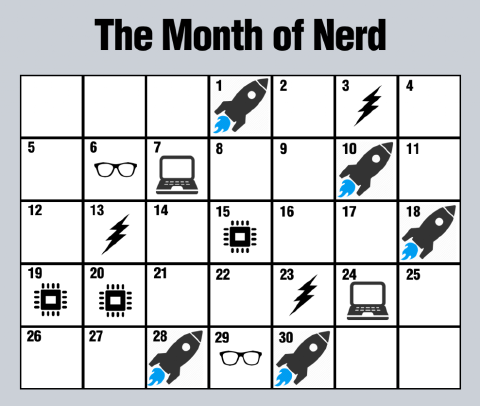
Chris Gammell: I need like a reminder or a calendar thing. It's like, hey, keep an eye out for the live stream. There must be a list I can get on.
Dave Jones: As always, I get an idea for a website. Here it is. Nerdschedule.com.
Chris Gammell: Nerdschedule. That would get bastardized so fast. It would be like, nerdschedule.com. Ooh, another webinar. Sign up today. Another webinar.
Dave Jones: Yeah.
Chris Gammell: Yeah.
Dave Jones: But, yeah, it would have to have choice stuff. There'd have to be an editor there that, you know, picks up the cream of the crop.
Chris Gammell: Surely. Nerd calendar. Well, maybe it would have to be like electronics calendar or something, right?
Dave Jones: Right. And you sign up to it and it automatically tweets you or something. You know, it automatically, you know, does something like, I'm giving away my million dollar ideas.
Chris Gammell: Well, you've got a whole day, you know.
Dave Jones: Right. I've got a whole day to register the name and do the patent application. Right.
Chris Gammell: Interestingly, if you search nerd calendar on Google, the first thing that comes up is the Bulgarian Orthodox calendar. Apparently, Google does not think highly of the Bulgarians. Or maybe there's a word in Bulgarian that means nerd. I don't know.
Dave Jones: Right. Anyway, is that a good idea? I kind of like that. I would sign up to that.
Chris Gammell: Hey, you know what you should do is you should get your own damn calendar first. Right. I miss stuff all the time because I don't have a calendar. Anything that gets...
Dave Jones: That's why I said tweet me. Right. I watch Twitter much more than I watch the, you know, like Twitter email, you know, like an event's coming up. Here it is, you know. Let's see. So, I don't have to...
Dave Jones: Yeah, I know you can...
Chris Gammell: List of nerd days, seven geek holidays you should be celebrating. This is going to end up being like, oh, it's Pi Day, 314. May the 4th be with you. With you.
Dave Jones: Yeah.
Chris Gammell: I know. It's... But I think the space thing, that's actually a good idea. Maybe there's a space calendar.
Dave Jones: Maybe. Maybe there is.
Chris Gammell: Yeah, that would make sense because then it would have like meteor showers and stuff like that. Right. Oh, space calendar by JPL. There you go.
Dave Jones: There you go. But people were... But does that only do like launches for NASA or does that do everyone? You know, the European agency, the Indian agency, does it do the whole... Oh, no.
Chris Gammell: This has got it all, man. Check this out. Oh, this is great. Well, this isn't actually a calendar. Is it a calendar format? No, this is a service right here, man. This is... Right. I love JPL. Those guys are great.
Dave Jones: So, it's already done. Well, it's sort of. Okay. Here we go.
Chris Gammell: It needs to become... It's got events, but like, let's see. So, what is today? Today is June...
Dave Jones: And it's all in raw HTML. Yeah. Yeah. For the win.
Chris Gammell: We need someone to parse this thing. But yeah, so like June...
Speaker ?: Gee!
Dave Jones: Wow! How much stuff? Oh, it's got like everything. It's got like... Asteroids. Asteroid closest approach.
Chris Gammell: Like... Yeah.
Dave Jones: That's too much. That's... Yeah. That's too much.
Speaker ?: Well, no, no.
Chris Gammell: It would just be a selectable type of thing. So, I definitely like that idea, though. I think...
Dave Jones: Yeah, but how can you select it? How can you select the level of detail here? You can't. It's just... You get bombarded.
Chris Gammell: The answer is scripting, Dave. The answer is scripting. Bloody hell.
Dave Jones: Yeah. All right.
Chris Gammell: Yeah. I don't know. I'm sure that... Yeah. It starts with comet or it starts with asteroids. Stuff like that. You know? All right. Yeah. Conference. June 6th is the 45th anniversary of the Soyuz lunch. Oh, see? They're calling you, Dave. They're calling for your million dollar idea.
Dave Jones: Right. Yeah.
Chris Gammell: Yeah. This is cool. This is cool.
Dave Jones: Yeah. Yeah. All right. There you go.
Chris Gammell: Huh.
Dave Jones: But it'd have to include the latest Tesla release. Yeah.
Chris Gammell: It's like SpaceX type thing. Yeah. Or you mean like outside of space?
Dave Jones: It'd be outside of space as well. It'd be like just... But people have so many... You know, like... It's got to work so well that you've got to exclude stuff you don't like and, you know, include stuff you do like and, you know, maybe it learns what you like.
Chris Gammell: Maybe we start slow. We start with just like a shared calendar that we could start, you know?
Dave Jones: Right.
Chris Gammell: Yeah. Maybe that's a good idea. I actually have an Empire calendar. Maybe we could start with that. Right. I don't know.
Dave Jones: Hmm.
Chris Gammell: You've got to test the market, Dave. Test the market. Yep. Yeah.
Dave Jones: I'll just have an add-on for my website and I'll just... Yep.
Chris Gammell: I'm sure someone listening can help us out.
Dave Jones: Yeah. Yeah. I'm sure.
Chris Gammell: All right. What else we got?
Dave Jones: We have a bunch of stuff.
Chris Gammell: We do have a bunch of stuff. There was something I was going to mention before. What was it? Oh, because you were talking about low current stuff. Yeah. Yeah. Like checking for the narrative. Someone actually asked that on Twitter. It was 2BlueSC. It was Kyle Manor. He was asking about... He asked about low power? Yeah. Low power analysis. So basically, you know, basically the idea that like when a micro spikes, right? So you do this a little bit with your microcurrent. But like when you have a large dynamic range of like sleep currents and then large like a transmit current.
Dave Jones: Yeah. That's a difficult problem, which I'm working on at the moment.
Chris Gammell: Actually. Dave's done talking about it. More secrets, folks. More secrets. And it won't be open source either. God damn it. Okay. Okay. Well.
Dave Jones: Because, yeah, the problem is, is the dynamic range. If you go from microamps to several hundred milliamps, right? I don't know the dynamic range off the top of my head, but give me a minute. I can figure it all out. Anyway.
Chris Gammell: I mean, it'd be like five orders of magnitude, right?
Dave Jones: Yeah. You need like 24-bit ADCs, right? Right.
Chris Gammell: If you want to measure without any range changing, right?
Dave Jones: Without any range changes with the one current sensor resistor. And then that becomes like you're so down in the noise, the effective number of bits, also blah, blah, blah, bandwidth, blah, blah, blah, blah, blah, blah, blah.
Chris Gammell: Yeah. We talked about this a little bit on the Colin show, didn't we? On the Colin show for... Probably. Yes. Yeah.
Dave Jones: Yeah. Yes, we did. I remember that. Somebody mentioned it. I forget. Anyway, I'm working on a front-end technique to potentially solve this issue.
Chris Gammell: Cool. Cool.
Dave Jones: So, yep. How soon?
Chris Gammell: Come on, man.
Dave Jones: Probably going to sketch up the thing today.
Chris Gammell: Oh, yeah, yeah, yeah. He hasn't even... Yeah, right. He just came up with the idea, folks.
Dave Jones: No, I actually sketched it at home a couple of weeks ago.
Chris Gammell: This is what we need. We need to talk about calendars. Boom. Boom. Dave gets a calendar. We talk about a current measurement technique. Boom. Dave sketches something. All right. What else do we need Dave to do? Ah, dearity. We talk about knee surgery last time. Boom. Dave schedules knee surgery. All right. We're in good shape. Oh, man.
Dave Jones: Ah, dearity.
Chris Gammell: It was William. Sorry. So, I was just looking at it. It was William. Yeah, right. We were talking about this in Colin's show four. We talked about this very similar because he was using the INA. Remember we were talking about...
Dave Jones: Oh, yes, yes. The INA, whatever.
Chris Gammell: 120, 219 or the 169. Yep. But those are basically... Again, they don't have the scaling power. So, you either have to have some kind of fast switching, but usually the pulse... You know, if you think about like a GSM signal, like the pulse is on, you know, the high currents and then it goes right off again.
Dave Jones: So... Well, and of course, the thing that comes down to is if you do want to switch in real time, right, you've basically got to switch your current sensor resistor, right? There's no other way to do it, really.
Chris Gammell: Nothing I know of, yeah.
Dave Jones: Right? So, you've got to switch your current sensor resistor and you've got to... There is going to be some downtime there where the samples either aren't valid, you know, you've got to like take them out. So, you can't exactly get, you know, the pulse at, you know, continuously sampled at one meg sample per second or something. You know, you've got a dead period there when you switch.
Chris Gammell: Well, you could, but you'll end up corrupt your numbers, right? That's better to...
Dave Jones: You will corrupt your numbers and you won't, you know, it'll just be messy. So, it's better just to shut down the sampling at that point and go, right, okay, I missed a few samples. I don't really care about that spike, you know, because there's only so much you can do. I mean, it's a dynamic range issue and there's no avoiding it.
Chris Gammell: Right. Yeah, the only other thing I could think of is if you had... No, because even if you're splitting the current, then you're going to have the same... No, no. You can't have multiple sensor resistors, right?
Dave Jones: So, yeah. The only way to do it is to have a very low noise environment, have a very fast high bit converter and with a big voltage range. That's the other thing, right? Because you've got the fixed gain amplifier on your shunt resistor, right? Right. So, you know, if you're powering the thing from, you know, you're powering your ADC and your differential amp from, you know, plus minus, you know, a few volts, then you can only get plus minus a couple of volts out. But if you go to plus minus 15 volt rails, for example... Right. Yep. Then, bam, you've instantly got another, you know, a much larger dynamic range to work with.
Chris Gammell: Right. Yeah. Because if we just run the numbers real quick, so he's talking about less than 10 microamps. Yeah. Right. So, if we did something really simple, then it would be... Yeah. If we did one ohm, well, that would work very well. But if we did one ohm, it would be 10 microvolts. And then up to 50 milliamps means it would be... Oh, no, that'd be okay. 50 millivolts. So, you could even go up to 10 ohms, right? Yeah. But if you have a higher dynamic range than that, if you go to 500 milliamps, then you start really having problems, so...
Dave Jones: Yeah. It's huge. It becomes a real big pain in the butt. Right.
Chris Gammell: And the best micros can probably go even below 10, you know, even lower on the sleep currents, too. So, if you start shutting everything off, you're just measuring leakage. That's, yeah. That's tough stuff.
Dave Jones: Why the traditional way to do this is to hand select your current shunt resistor and your amplifier based on your actual product, right? So, if you... So, you measure your product during the high power period, you measure it during the low power period. Right. And you know the ballparks you have to meet. So, you selectively choose your current shunt resistor and your amplifier to give you the greatest noise-free dynamic range possible.
Chris Gammell: Yep.
Dave Jones: And, you know, that's how it's traditionally done. So, if you try and design a general purpose instrument to do it, you know, like my micro basic example, right? It's got, you know, three fixed ranges on it. And Murphy will always ensure that you need to measure just slightly higher than that range that you need to. So, bingo, you're screwed. You've got to go up by three orders of magnitude because my ranges are three orders of magnitude, right? A thousand times. Yep. Right? And so, you've got to go up to the... And then you're screwed, right? You can't measure the low stuff again. And, you know, it's a tough problem for a general purpose instrument.
Chris Gammell: Right. That's what source meters used to do a lot too. They keep through things. But even those couldn't switch fast enough.
Dave Jones: There is a Keysight one that can do this, but it's like, yeah, $30,000. It's like a huge... Oh, is that the one he linked in?
Chris Gammell: Possibly. Oh, the DC power analyzer?
Dave Jones: Yeah. I think that's what it's called. Yeah. It's some... Yeah. If you have to ask the price, you can't afford it. Yeah. Right, right. So, you know, it's just, yeah, insane bit of hardware. Right. Just insane.
Chris Gammell: Right. And that's probably made for being in the test lab at the semiconductor manufacturer. They're testing their specs kind of thing.
Chris Gammell: Yep. Yep. Yep. Very interesting. That is tough. Yeah.
Dave Jones: I just got an offer to do a review of a product, which was a leading edge... You mentioned, like, you know, the semiconductor fabs and stuff like that. This is designed for, you know, the chip manufacturer and stuff. It's a characterization test system for ADCs and DACs. And it's like, you know, the world's leading, you know, thing. It's like, how do you review something that niche? You can't, you know. It's a little interest. Yeah, exactly. It's of little interest to people. And so I had to go, well, you know, thanks, but no thanks, really. But, you know, fascinating bit of hardware. Of course.
Chris Gammell: Right, right.
Dave Jones: Like, all custom design to, you know, and he goes, but it does 120, you know, minus 120 dB noise floor and, you know, everything else. And, yeah, I'm sure your hardware is brilliant, you know.
Chris Gammell: That sounds more like a signal path kind of thing, you know. Yeah.
Dave Jones: But, yeah, but even then I would have to set up, I'd have to spend a week setting up a test system just to demo it, you know. Right, right, right. Yeah, it's just not really practical, I'm afraid. Hmm.
Chris Gammell: Yeah, man.
Dave Jones: As much as I'd love to play with. Yeah, punt to sharia, man. Hard bit like that. I'm just saying.
Chris Gammell: Like, that's what I'm saying.
Dave Jones: Oh, dear. Anyway.
Chris Gammell: Cool.
Dave Jones: Yep.
Chris Gammell: So, Kai, I hope we answered your questions. Yeah.
Dave Jones: I didn't know we were answering questions on today's show.
Chris Gammell: Well, I just asked for suggestions and then I posted some other stuff. Right. It's always okay if people want to post to the subreddit. I basically just started posting things with topic suggestion and if people ask on Twitter too, so, or proposed topic. So, yeah, it's always good there.
Dave Jones: Let's get a few, you know, newsy things out of the way, shall we?
Chris Gammell: Yeah, yeah.
Dave Jones: One that you hate.
Chris Gammell: What Dave's trying to say is Dave posted some stories and he wants to talk about them.
Dave Jones: No, what happens is I posted some and you don't like them, so you don't want to talk about them, right? But you never like talking about these things. I think it's hilarious.
Chris Gammell: Remember, do you remember that one thing we used to talk about, what was it? Was it electronics? I think it was electronics.
Dave Jones: Electronics, yeah.
Chris Gammell: Okay, go ahead, Dave. Go ahead. Which one do you want to talk about?
Dave Jones: All right. Well, there's a couple on here and they sort of, you know, sort of segue.
Chris Gammell: Yeah. Anyway, I think this is hilarious.
Dave Jones: Theranos, if you haven't heard of Theranos, it's another, it's a U-beam but in the medical space, right? It's, you know, it's, yeah, this bullshit product that, you know, super secret. It's so secret. We can't tell you how it works, but trust us, it works. Dude, you were saying that 20 minutes ago.
Chris Gammell: What? Super secret. Oh, I'm drawing the circuit this afternoon. It's super secret, though.
Dave Jones: Yeah, but I'm not. I haven't got bloody, I'm not worth four and a half billion dollars for the idea.
Chris Gammell: And neither is she.
Dave Jones: No, because she was, yeah, the, Holmes is her name. Elizabeth Holmes. Elizabeth Holmes. And she was like the darling of the tech, you know, thing. You know, she was young when she founded it, you know. And she became the, one of the highest net worth individuals in the country, made the Forbes, you know, top 10 list or whatever of the richest people in tech or whatever. But $4.5 billion she was worth. That's what, you know, she made the Forbes list. On paper. Et cetera, et cetera. Of course. On paper, of course. I got to put that out there. Yeah. And Forbes have just came out with an article today. I think it's today.
Speaker ?: Yeah.
Dave Jones: Yes. Is it? Yeah. Yeah. Okay. Yes. June 1st, even though it's the second year. It came up with an article saying, Forbes saying, nut, we're re-evaluating what she's worth. And she used to be worth $4.5 billion. And now she's worth nothing. Nothing. That's our evaluation. Nothing. Because Theranos are being investigated by, as they say, which I think is funny, and alphabet soup of government agencies, which is hilarious. Like she's been investigated.
Chris Gammell: Stuff like that.
Dave Jones: Yeah. Yeah. I like she's, yeah. She's been investigated by everyone about this product that basically sounds like it doesn't work as claimed. And yeah, this company was, you know, the tech darling. And now she's worthless. This is what happens when you're, everything's on paper.
Chris Gammell: The whole thing is, yeah, this, everything, everything about these start, it's not just, it's not just this one. It's, there's tons of these shams. So I'm reading this book right now called Disrupted. And I don't know if you've heard about it. It's this guy that goes to work at HubSpot, which is like a marketing startup that's worth nothing, but it's claimed to worth, be worth a lot of money. And yeah, it's actually, this guy ended up, so he's, he worked there. He's like in his fifties. He's, he's writing this book about the, like, study, he, he, he, someone suggested he study, study it from the inside like an anthropologist. And that's basically what he's doing. Nice. Oh, okay. Yeah, it's pretty good. But basically now he's a writer for Silicon Valley. So I don't know if you watch that show at all. And it's just so spot on ridiculous. And I can't handle idiots that he's describing and knowing that there's so many more out there. It's just, it's, it's frustrating. Anyway. Anyway, that's why I like talking about people that are building real things, Dave.
Dave Jones: Yeah, I know.
Chris Gammell: Come on, buddy.
Dave Jones: They were building real stuff. They've got this hardware, it analyzes blood, right? But they claim that they could do everything for one drop of blood. They could analyze a million different diseases and whatnot, you know?
Chris Gammell: And yeah, I think this speaks more poorly of Forbes than, I mean, like, yes, of course they're a sham, but yeah.
Dave Jones: They're basically admitting that they, yeah, they were.
Chris Gammell: They just, they just took other people at face values and then they're, you know, they're, oh yes, they're building, they're building the hype. They're contributing the hype as much as anyone else, so.
Dave Jones: But the interesting thing here is, right, even though she owns 50%, right, she still, which is a massive stake considering all the venture capital that's gone into it, right? She still owns 50%. And so, and they're saying the company might still be worth like 700 million or something like that. But, but based on the revenue and stuff like that, which they're making, they do actually sell product and stuff like a service to do this testing. But, you know, so the revenue is quite low, but even then she still doesn't own 50% of the revenue because she's a common stock shareholder and all the venture capitalists who invested money in it, they have a higher priority in the stock. They have a, what's the word? Preferred shares. They have preferred shares. They have preferred shares. Yeah. So they get the money first. So when this turkey folds, they will get first suck of the sav. I know.
Chris Gammell: But like all this stuff, it's just, it's all a house of cards, right? All of these companies are. Yeah, totally. And it's, it's actually, it's extending in other places in life too. Like that terrible show, the shark tank. Have you watched that one?
Dave Jones: I actually watched it the other day. Like I was like, I was saying to the wife the other day, please don't let me watch this. I hate these shows. Right. But then I got suck it in because I saw an ad with some invention that I wanted to watch, you know? So I got suck it in and it's like, I can watch it when there's like novel inventions on there. But when they get the, but when they get the real, like the stupid invention, like the clearly people that are delusional on there, it just, ah, it just makes me want to bash my head against the wall.
Chris Gammell: I'm just saying that like, okay, the fact that we're treating, we're treating the invention process, not even the invention process, because I think that's stupid, right? The whole investing process as like an entertainment thing. That is a really, really, really bad sign. Yeah. It's kind of like, it's like the new version of the 90s when like, you know, people that had no business investing in individual stocks were basically talking about tech stocks. And like, I think. The tech boom, yep. Yeah, the tech boom. But like, it would be like, I think, I forget who was talking about it. Like it was Warren Buffett or someone. Like if your dentist is asking you at a cocktail party, which tech stocks you're invested in, that's a really bad sign. And I think this is the same thing for all of this stuff. So yeah. Mark my words. We're in for a rough ride in the coming years.
Dave Jones: Which is why I think very, you know, like these shows like Shark Tank, there's been many of them over the years. And they hardly ever invest in these companies. Like, you know, because it's all entertainment. They say, oh yeah, oh right. You know, they shake hands on it. Yeah, congratulations. I'll give you your two million bucks for 20% of your company or whatever it is. And then when they actually go and investigate it, like they go, nah. Like hardly, very few deals are actually done on that show. It's basically pure entertainment. Right.
Chris Gammell: I would disagree with that part, but yes, many people feel that way.
Speaker ?: Really?
Dave Jones: That's what I've heard. That very few of the deals actually go through.
Chris Gammell: No, no, no. I mean, I don't find it entertaining, but a lot of people do.
Dave Jones: Oh, right. Okay. Right. Yes. Got it.
Chris Gammell: Yeah. It just makes my skin crawl. I just can't do it.
Dave Jones: Yeah. It's pretty bad. Anyway. There's more buyouts in the industry?
Chris Gammell: Yep.
Dave Jones: This one's interesting. This one's fascinating. Um, I would not have expected the last company, company organization. I would have expected to buy somebody is the IEEE.
Chris Gammell: Yeah. I didn't know they had, I mean, I didn't know they had money. Money to acquire.
Dave Jones: I like, I, I just, anyway, IEEE have acquired a global spec. Um, and the engineering 360 platform, which is one of those, you know, engineering community websites, dime a dozen. Um, and yeah, they've bought that presumably. Well, because they want to, I don't know, have more news, a bigger news, expand their news platform or whatever. So, anyway, um, I just find it fascinating that they've bought some of them.
Chris Gammell: It's interesting, too, because I get very, uh, you know, we've, I've, I've stated that I wasn't a huge fan of them in past shows. Uh, mostly just because it didn't seem like they offered much value. But then I, I talked to other people and, like, some people are like, no, no, no. It's just, it's like there's pockets. Some people, like, for, especially around conferences, stuff like that. Um, there's, IEEE does a lot of conferences, things like that.
Dave Jones: Yeah, of course, yeah.
Chris Gammell: Uh, and then one of my consultant friends was talking about how, you know, it's just some of the networking opportunities with, you know, just finding, even just finding accountants or finding similar types of services, like auxiliary services for consultants, because a lot of consultants are members. So, I'm not sure if that's the, I, I, I don't know what their structure's like, if this is the same part of their company. But, uh, I was surprised, I'm always surprised when I hear, like, the ups and downs of, of what people do and don't like about IEEE. So.
Dave Jones: Anyway, it's fascinating that they bought the company to expand their presence, I guess, you know, to, yeah. And I don't know if they'll rebrand it or what, or what's going on, or, you know, like, what the financial benefit is to them, or whether or not, because, because the IEEE is supposed to be a, correct me if I'm wrong, a not-for-profit organization.
Chris Gammell: Oh, I don't think that's true anymore. No, no? No, maybe they switched over. Maybe that's, oh, maybe that's when we were talking about it last.
Dave Jones: Right?
Chris Gammell: Uh, yeah, I don't know. I, I remember, yeah. I remember talking about it at some point, there was some company that switched from, um, a profit to a non-profit.
Dave Jones: IEEE is a non-profit corporation incorporated in the state of New York in 1896. Holy crap. Maybe, maybe they've changed a few things since then. But anyway, no, this is on their about, no, this is on their tax corporation info. So, is a non-profit corporation. It's a tax-exempt organization. Yep. There you go.
Chris Gammell: Yeah, but then I, I found one that says, uh, they're also a business.
Dave Jones: Oh, okay. Well, maybe they have a business site.
Chris Gammell: Maybe they're like a dual thing. I don't know. That's just weird.
Dave Jones: Interesting. All right.
Chris Gammell: Interesting indeed.
Dave Jones: There you go. Anyway, that's a fascinating buyout in the industry. Now, didn't somebody else, was it you who put on here, after a tumultuous year of consolidation, what comes next for the semiconductor industry?
Chris Gammell: I have no idea.
Dave Jones: You obviously put this on here and then now don't want to talk about it.
Chris Gammell: No, I just don't know. I have no idea. Yeah.
Dave Jones: As we've said on every episode.
Chris Gammell: We've talked about a lot of the consolidations, but I haven't seen, like a lot of them are big enough, like Avago, Anisavago stuff, Broadcom, Broadcom stuff. Microchip and Atmel. I haven't really heard too much. I mean, I know that they're starting to merge stuff together, but I haven't heard too much there. I've seen Altera stuff. Altera joined Intel. Yeah. When the last time I saw an Intel booth, I think it said part of Intel now. Oh, they were at Maker Faire and it said that, I think. Right. Yeah. Okay.
Dave Jones: Intel were at Maker Faire. That's interesting. No, Altera was actually. Oh, right. Okay. Well, I've actually been invited to an Intel event at the Vivid Festival here in Sydney. So I'll probably go to that. That's next. Oh, they got some drones and stuff. I actually covered this last year. Oh, cool. At the Vivid Festival. Yeah. So I might go to that.
Chris Gammell: That's cool.
Dave Jones: Free meal. It's a free, three course meal, you know. Yeah.
Chris Gammell: Yeah. I'm sure you're hurting for food. Yeah. Right.
Dave Jones: Yeah. Yeah.
Chris Gammell: So what do you want to talk about? The chip? There's a chip in there?
Dave Jones: Yeah. No, somebody. Do we have a chip of the week? Do we?
Chris Gammell: It's just a cool chip. Someone suggested.
Dave Jones: Somebody, a listener who seems to be nameless. Given a circuit diagram in a data sheet, what would you add to make it into a real circuit? And there's an example in here. Probably like an SPI-80C chip. So a couple in the chip and then protection, current limiting, noise elimination, filtering, and all that. Yeah. Yeah. Basically covered it. You know? Like the application circuits in data sheets, they can be full-on things. Like, for example, I was looking at when I did the Rigol. Was it? No. The Roden-Schwartz scope teardown. I was looking at that front end chip, you know, through the spy bus and everything else.
Chris Gammell: Oh, that's right. When you're trying to unlock this stuff?
Dave Jones: And if you have a look at the data sheet for that, because it's a front end chip, they actually give you an example oscilloscope front end circuit, which is rather fascinating, you know? And like, you could almost run with it, but not quite. You know? It's one of those ones where, yeah, they do give you individual JFET transistor part numbers. You know? Use this JFET. You know? And it's a good starting point, but whether or not it has the performance that's applicable to your circuit. Um, these things are designed, what I'm getting at is these application circuits inside data sheets are designed to be building blocks, building block circuits that...
Chris Gammell: Oh, you mean versus the entire, the entire design?
Dave Jones: Versus the entire thing, the entire design thing. You know? Sometimes it can be. Sometimes you can just take the circuit and it just works. Right? But even in the case of like a DC to DC converter, you can't just take their example circuit and use their example values because it's most likely not going to be applicable to your target current and everything else. So the efficiency is going to be way off and everything else. So, you know, yeah, they might give you example inductor part numbers and things like that, which is a great start, but you've got to go and do all the work to verify the efficiency and everything else. And yes, as this listener mentioned, you know, you've got to, you know, is the noise suitable? How do you design it? You know, how do you lay it out? Do you, you know...
Chris Gammell: Well, I think layout's a big piece for sure. You know, like sometimes they'll give you, they'll give you the actual layout. They'll give you, show you the Gerber or something like that. I think there's two. There will be guidelines. There will be, yeah, layout guidelines. There's also kind of a differentiation between an application circuit. If there's an evaluation board, usually you're in even better shape because then they've actually, you know, they've already got the board. You can just take a sneak peek at the Gerber, the entire stack up of Gerber, as you can see. Usually they'll minimize layers as well. So if they're only doing it in two layers, you know you can get down to two layers, that kind of thing. So that's really nice sometimes. Like for me, I had that, I was working on a Class D chip and it was like, you know, especially with like how the pins were laid out, like which side of the chip the pins were on. Right. It didn't really make sense. And then you realize that they were running a ground all the way underneath. Yep. And so some of the ground lines that I thought were going to have to like bounce out from the chip and go down to a different layer, it just, it was because the entire center of the chip. It made sense afterwards. Yeah, the line went in. So that probably didn't make sense for people. But yeah, so it's just like those unintuitive pin layouts, especially those are really helpful for getting a sneak peek at how the designers were doing the layouts and stuff.
Dave Jones: But to answer the question is really hard. I mean, you know, it's very specific. I mean, each individual circumstance can be vastly different. You know, sometimes you can take the circuit and it will work as is. It'll have the performance that you need. Other times it, you know, it's nowhere near it. It's an order of magnitude or two away from what you want.
Chris Gammell: Right. I think there's different levels too. So like if, if I saw a circuit that had, because I'm usually using, you know, slightly less integrated chips. So it might have, you know, a recommended linear regulator, recommended DC to DC next to it. You might have other, you know, auxiliary chips next to it. I would probably, like as just taking this, this question at the top level, I would probably also evaluate if those are the right parts, because usually if you're looking at a vendor's circuit, they're going to use all of their own parts around it as well.
Dave Jones: And, you know, they'll use a part that costs 10 times what you can afford. Right. Exactly. Or whatever. You know, or it's the wrong package. You know, they'll use some dinky little QFN package. You can't solve it to save your life. You know, yeah. A little 4x4 BGA or something. You know, and it's like, no, it's totally inappropriate. So there's so many things and it's, every design is going to be different. So there's no one universal answer to that question, I'm afraid.
Chris Gammell: Yeah. I'd say other, so other, so like just to, again, just to answer the question here, decoupling, current limiting, noise elimination and filterings. Usually, I would say filtering, they, you know, like if it's an ADC circuit, they're usually going to give you everything, like the bare minimum of what you need. And then you can add more if you want to with, you know, the knowledge that you might introduce other issues.
Dave Jones: For a given sample rate. But if you're using a different sample rate, bingo, your anti-aliasing filter is going to be different, for example. Right. Exactly. So, you know.
Chris Gammell: Noise elimination. I'm not sure what they mean by that. Current limiting, I think, is the example that they gave was basically the transmitter to transmitter was hooked up wrong. And so basically, they would hook the TX into the TX and they blew up. I think that was the current limiting thing. Same with protection. You know, you might want to add like, it depends if it's like an external circuit, you might want to add some, you know, ESD type diodes, stuff like that. Right. But a lot of these are just kind of rules of thumb, like that you just kind of sprinkle stuff in there. And it's going to depend on what type of circuit it is too, because a high speed FPGA is going to be a lot different than a low current analog front end type thing.
Dave Jones: And that segues beautifully into our next proposed topic from a listener, presumably. What are some common rules of thumb?
Chris Gammell: Well, I do listen sometimes, but this is actually me. Oh, this is you. Just making up something. No, no, actually, this was me talking to, so I do tutoring with some of my contextual electronics students. Yep. And they ask really good questions that I just never really would think about. Of course, yeah. You know, just kind of that beginner's mind thing. And so the frustration was it was a single transistor circuit. And we were talking about it, and the student was basically really frustrated that like, and I didn't quite even realize that it tied back into stuff I've been talking about lately with like top down. But like, there was this document that he had where it was like, if you want to do like an oscillator, you can go 555, super simple. And then you can make it with an op amp, and it's a little bit less simple. And then you can just go to transistors. And that really is the method you should do, right? It's kind of going backwards. But a lot of textbooks kind of go, here's some transistors. You'll work your way up to 555. It's like, no, 555s are great. You can just crap out a square wave in LA. But the frustration was around NPN transistors and just basically looking at like generic diagrams of, okay, well, there's like a base, there's a base resistor on there. And there was no value. And there was no example circuit where there was values limited. And he knew how to kind of build up the mental models of like, oh, well, there's going to be a drop from the base to emitter on an NPN transistor, but not necessarily like where to calculate different things and stuff like that. And so what we started talking about is, he asked, well, how do you even know some of these things? And I was like, well, you just kind of learn them over time. You know, that's the tough thing. So I started thinking about what if we compiled a list of just these common things, right? So some of them were obvious. Yeah. Well, of course, but you got to start somewhere, right? So like, so like one of my, one of like an unlocking for me around electronics was like using, using a base to emitter junction to kind of start setting up voltages, right? So if your emitter of an NPN is at ground, you know, the base, if it's on, if it has some kind of source into it, it's probably about 0.7, right? And not just saying that it's there, but using that as a way to kind of back calculate voltages. So that's one. Same thing goes for, you know, NPNs or sorry, LEDs and just regular diodes, same shot keys are what 0.2 instead of 0.7, that kind of thing. And then, but then also like just general rules of thumb about like how much current jellybean parts can even handle, right? So like, you know, first off knowing what a jellybean part is, right? Like a one in 4,001, that type of thing, or two in 7,000, stuff like that. And then just kind of the general limits about what you can do without having to go back and look at the data sheet.
Dave Jones: So, but it also comes down to common sense here. I mean, if you're just having an oscillator, you're obviously not going to have a hundred milliamps going into the base of a transistor, right? It's just like, that's so like wasteful. Like, yeah, you can probably do it. Right. But that's the thing.
Chris Gammell: Like when you're starting out, you don't even have a feel for like, you know what I mean? Like you don't even have a feel for like, oh, well, I see one amp in a lot of my, when I'm working with circuits. Right.
Dave Jones: So this transistor must switch at one amp, right? Yeah. So I put a 10 ohm or a one ohm resistor in the base, you know? Right. Exactly.
Chris Gammell: So that's where it came from. And then, and then the other problem was that, so I was like, well, you know, I was like, you're never going to need, I mean, with, with simple circuits, a two in, a two in 3904, you're never going to need more than 10 milliamps on the base to base input, right? You could.
Dave Jones: Because of the current gain, you know, the transistor has a current gain and, you know, 10 milliamps in.
Chris Gammell: And it has a limit from the collector to emitter, stuff like that. Right. Exactly. And so, and so, but that was just a mental model that I worked backwards over time. And that's something where you just don't know. And the other problem is that, so he went and looked at like data sheets for a two in 3904, right? And I don't know if you looked at one recently, but first off, because it's such a jellybean component, they don't put a lot of stuff in it anymore. They just kind of put absolute max and, you know, a couple, you know, usually just the critical, you know, the gain terms.
Dave Jones: Yeah, sure, they've got all the characteristic curves still, don't they?
Chris Gammell: No, that's the thing, they don't. And so they don't have the characteristic curves. And then even if they do, they don't really, I mean, like, that's just another hard thing to kind of grasp is understanding how to read IV curves, you know? Like, that's just, that's a hard thing. And so that could be even more problematic where it's like, oh, well, now you have all this other information. And it seems like there's, you know, like when at the end of the day, it's like 0.7 base to emitter, no more than 10 milliamps in. And then like, okay, base current times gain equals collector current, you know, like that, that's kind of how I've dumbed down a transistor for myself, at least in a simplified way.
Dave Jones: Dude, I just pulled up the first OnSemi data sheet, like the first manufacturer link I found by typing in 3904, right? 2N3904? Yeah, 2N3904. And it was like the third link down or something. The third link?
Chris Gammell: The first link is SparkFun. How about that?
Dave Jones: Oh, sorry.
Chris Gammell: Yeah.
Dave Jones: Yeah, well, I didn't want a SparkFun data sheet.
Chris Gammell: No, I know, but that's great, isn't it? I'm like, whoa, that's...
Dave Jones: Yeah, yeah, SparkFun is the, yeah, yeah.
Chris Gammell: Yeah, and there's no curves on there. But most people don't go to the third link, Dave. That's what I'm saying.
Dave Jones: I don't know. All right.
Chris Gammell: Yeah, oh, you're on the Fairchild one?
Dave Jones: That's my... Well, no, the Fairchild one was a HTML, so I didn't want that. So I went to the first PDF link, right?
Chris Gammell: That wasn't SparkFun.
Dave Jones: Anyway, it's OnSemi. Yeah, it's right, and it's got all the curves in there. Probably too many, like it's too complicated. Right, exactly. So it's just...
Chris Gammell: I mean, like, and this is, you know, this is a base electronics type of thing, and it's confusing. And so it's just trying to, like, build up some of these...
Dave Jones: That's why SparkFun shows that data. Maybe they... No, see, they've left out the pages. It's got one of five down the bottom. The SparkFun have deliberately left off. They've only included page one.
Chris Gammell: Interesting.
Dave Jones: So they don't confuse people. That's deliberate. That's got to be deliberate.
Chris Gammell: Bravo. There you go. Yeah. Confuse me. Where are the curves? Where are the curves?
Dave Jones: But yes, yeah, you are right. They just put the absolute maximum ratings as the only thing they have there, and the pinout.
Chris Gammell: Right. See, I think what I need is, like, the data sheet I want to see is even dumber. You know what I mean? It's like, don't do absolute max. No more than this. You know, like, actually showing current...
Dave Jones: Yeah, but that's an application note. That's not a data sheet.
Chris Gammell: I'm just saying that would be useful when you're getting started. That's not... I don't hold that against anyone because, like, that is... Like, it's hard to jump into this stuff right away. You know what I mean? Like, it's like, you go...
Dave Jones: Yeah, but you can't dumb down data sheets to the lowest common denominator. That's bad for the industry.
Dave Jones: We can call them something else. We can call them amp power sheets.
Chris Gammell: You know, like... Right. Cheat sheet. Or something. Cheat sheet. Sure. Perfect. Yeah. But I think we should call them amp power something. Right.
Dave Jones: Branding's important. Yeah. Yes, of course. Branding. Yes.
Chris Gammell: It'll allow us to raise millions of dollars and be worth billions ourselves, right? Exactly. Yeah. Yeah. So, I don't know. I might end up just collecting a list of rules of thumb type of thing. I don't know. It's just... It's tough. It's tough getting started with this stuff. Totally. I just wanted to call that out. We forget that sometimes.
Dave Jones: Yeah. And people ask this all the time. Oh, why can't I do videos doing all the fundamentals? Fundamentals videos doing everything. All the rules of thumb people need to know. It's because they're infinite. Like...
Chris Gammell: There are a lot. Yeah.
Dave Jones: You know? I mean... And then I do... When I do a fundamentals video on this, everyone goes, oh, well, can you do one on this? Like, they don't thank me for that one. Because that's not what they wanted to know. What have you done for me lately, Dave? Yeah. They wanted to know something else. It's like, well... Like...
Chris Gammell: It's like you're married to your audience.
Dave Jones: I know. It's crazy. Anyway, you can't, like... Yeah. Everyone wants something different. You can't always get what you want.
Chris Gammell: Yeah.
Dave Jones: Maybe we should end the show on bad singing.
Chris Gammell: Oh, let's not. Come on, man. Last thing. Last thing. A Wi-Fi connected Brita picture? No. Oh, we won't do that one. Dude.
Dave Jones: And let's not do robots. We do robots every week.
Chris Gammell: No, we did robots last time. Yes.
Dave Jones: Radio Shack is back. Does anyone care? I haven't... I didn't even... I deliberately didn't bother to read that.
Chris Gammell: I didn't either. I believe it when they invite me to one of their brand new stores. All right. Oh, boy. No. No. Robots. There is a good video on antenna... Actually, it's a video series on antenna design. Oh, okay. I've just started watching it, so...
Dave Jones: That's a black magic subject that a lot of people don't... Is there a lot of math in it, or is it a lot of theory?
Chris Gammell: No, it's actually... Well, it started... So, it's Keysight sponsored, so it's actually kind of showing measurement gear and stuff like that, characterizing. But it's actually a nice little intro to, like... It's like, oh, yep, Chris still doesn't understand Smith charts. Right.
Dave Jones: Oh, okay. So, Keysight have paid some blogger to do a series, have they?
Chris Gammell: And it wasn't you, Dave.
Dave Jones: No, it wasn't me, because I don't accept sponsorship. I get this asked all the time.
Chris Gammell: I don't know if it was paid or if it was just, you know, gave the stuff. But anyways, it's... Yeah, and so it's a multi-part series. It's kind of cool. Sweet. Yeah. Antennas are... Well, I don't dabble in RF nearly as much. Actually, I had lunch with Mike Osman out in Denver. Excellent. Yeah, and he continues to boggle my mind that he's just like, eh, I just figured it out, you know? Right. But, you know...
Dave Jones: Well, you can just figure it out. It's one of those topics that you can just figure out, and then you can do the math later, if you want, to prove it all. You know, it's one of... Like, hams do that all the time. You don't think hams are in there... That's true. ...you know, doing complex math theory on how their antennas... Well, some are, right? I'm sure. Maybe many. I don't know. But, like, a lot of them go, well, you know, I need this wavelength, blah, blah, blah. I'll experiment here. I'll get my plyo. I'll chop a bit off here. Yeah. You know? And, yeah.
Chris Gammell: Yeah, I think we called it out, but the workshop that Osman did about rules for RF, I think we called that out, but it's definitely worth watching, because he... I mean, it's a similar kind of thing, where it's, like, rules of thumb, right? Yeah, right. You kind of start with that. And I think the other thing, though, that he didn't really say, but is definitely an important piece, is, like, it's so cheap these days, you know? Right. Like, so much cheaper than it used to be. That's what's really crazy about it. And it's just... Exactly. I think, you know, I think another thing that I still struggle with, and a lot of people that I talk to that are getting started, it's just, like, man, just break stuff. I mean, you say that all the time, too, but it's, like, you just gotta get over that hump. I know someone who was, like, afraid to try KiCad, because, like, oh, well, the board might not work. I'm like, it's $8! The board was $8 from Onchpark! It was $3 of them for $8! You know, like, just do it, you know? Yeah, yeah, of course. You just gotta just, yeah, grit your teeth, order it, you know? No, just, like, tell yourself it's gonna be messed up, and then be pleasantly surprised when it's not. You know, that's the main thing.
Dave Jones: Don't be afraid to waste time or money.
Chris Gammell: Right. It's, you're paying for knowledge. Yes. Yeah, yeah. So, yeah, it's tough, though. Like I said, I still struggle with it. I'm sure you still do a little bit, right? Yeah. A little bit? You know? It's that, it's that, I don't want to write stuff down yet feeling like you've had. Right, yeah, yeah. But it's important to just get, just spit it out, you know?
Dave Jones: Well, I think it's, I think it's probably a bit harder if you're an experienced engineer. Could possibly be even the hurdles a bit harder, because you don't want to dick around. You want to do it right, and you know how to do it right, but it's a lot of effort. It can go wrong. And you know what can go wrong. That's half the problem. Yep. You know, so you end up dicking around in your mind so much, rather than just going ahead and doing it and getting a board that works 90%. You're sort of, you know, you're almost too proud to, you know, to make those mistakes.
Chris Gammell: If you came up, like, I was working on boards that were like, you know, not even $800 fast turn, but like $800, you know, like just like really expensive, but if you're working, you're used to working on really expensive boards as well, then that's another one where it's like, oh, it has to be perfect before it goes out, because we only get two turns max. And it's like, well, not for a lot of stuff these days, you know?
Dave Jones: Well, I was forced to do that. Like I was in a work environment where we were forced to get expensive fast turn boards made. And by expensive, I mean a couple of thousand dollars, right? For one board, right? Turned. And yeah, you want it to be perfect because you don't want to have to re, you know, you feel a sense of responsibility that, you know, oh, it's a couple of thousand dollars, you know, to re-spin this board if I make the mistake, but you're under the pressure to get it done. Then they give you the task on Thursday and they want this thing shipped out on Friday to the board manufacturer. You know, like there's only so much you can do. So you've got to take that. You're forced to take those risks. And yeah, you've got to be forced to go, well, it's near enough.
Chris Gammell: I think a lot of this stuff that we're talking about here too is like, if you're just doing it on your own, you know, if you're doing it for work, yeah, you're doing it for work. Yeah.
Dave Jones: You have a whole different set of constraints when you're doing it for work.
Chris Gammell: You should do it for your, what was I talking about? I was reading something the other day and they were talking about, oh man, it was such a good phrase too. It was like, it was talking about creativity and it was, it was like, it's not something where if, if you stop and start that it, it preserves creativity. It's like, it was a, it was a car battery. It's like the reason that you get better at something is that you keep charging up the battery. You have to just keep building stuff and keep trying things.
Dave Jones: And it's storing experience and knowledge.
Chris Gammell: Yeah. Or even just, you know, kind of getting in the flow and also, you know, like also just feeling like you're making progress on something, even if it's small, like that's the important piece a lot of times. Right. So it's like a car battery. I really liked that. I wish I could remember what it was from. But yeah, it was, it was good. I liked that.
Dave Jones: Cool.
Chris Gammell: I think that's it, huh? There's other links on our subreddit. You can add your own. You can read ours. You can check them out over there. We'd love for you to do that.
Dave Jones: It's the world's premier resource of engineering links.
Chris Gammell: Right. Read it. I have, I have, I have, I have photographic evidence of me being on there quite often. All right, man. We'll talk to you next week. Catch you next time.
Dave Jones: What? Hmm. Nope. Tell me. How well are you? Oh, yeah. I know. Well, what?
Chris Gammell: Oh, sorry. In the net of things. Yeah. And there's lots of graphs. Lots of pretty colorful graphs of growth.
Dave Jones: What? So what's the takeaway? You've got to have a takeaway. You can't. What? Just throw the link in here and say, here's a. What?
Dave Jones: Poor nut. China's spending more on advertising every year. And like.
Dave Jones: Come on. We've got to have a care factor point in here. In the net of things. That's a losing link. I'm sorry. In the net of things. I'm sure it's an important. Thing. What? Just there's nothing there. I want a big headline. I want a juicy headline. I want a big headline. I want a juicy headline. What? I'm a lazy internet journalist. I need a juicy headline to suck me in. What?
Dave Jones: As much as I like looking at graphs and stuff. I just can't do it live here now.
Dave Jones: In the net of things. Yeah. Let's do that. I want a juicy headline.
Speaker ?: I want a juicy headline. I want a juicy headline. I want a juicy headline. I want a juicy headline. I want a juicy headline. I want a juicy headline. I want a juicy headline. I want a juicy headline.
Archived Discussion (10)
Comments are closed. Archived from the original site.
Show archived discussion (10)Hide discussion
BoldportDCGlobalSpecIEEEJPLNarrative ClipRFRoverShark TankTheranosVivid
Keep current
Every episode, plus the occasional job post, in your inbox.
[1]: https://en.m.wikipedia.org/wiki/Log_amplifier
just google dork it as "RF Circuit Design" "Chris Bowick" "filetype:pdf"
I highly recommend it. I actually learned about Bowick's book after reading an excerpt of the cookbook style biasing procedure in "Radio Frequency Transistors" by Norman Dye and Helge Granberg.
I'm not an engineer and have never taken an EE class or even been to college but desperately wanted to learn how the big boy(& girl) designers biased transistor amplifiers. The Bowick book is what did it for me. That book, a casio FX-991EX (cost only about $10, easily available and has all the electrical engineer symbols in it), and practicing the math over and over again is what helped solidify it for me.
I hope that recommendation may help some of your students, Chris. I've also done cheat sheet's like you were talking about, where I have made charts of all the parameters of interest (to me) for various BJT's, so I can quickly compare, contrast and calculate for them, although jelly beans are pretty uniform.
Best of luck! Thanks again for the great episode!
P.S. - while a lot of ham's do the "cut and try" method dave described, a great great many of them (that I know at least) take the time to simulate and calculate their antenna characteristics. There is a wealth of good software out there to assist in this.
Another possible approach to this could be having a shunt resistor's voltage buffered by a voltage follower and then that amplified in two separate channels with different gains. The outputs from these can be sampled by ADCs and fed into a microcontroller or Single Board Computer. The software can choose which channel's value to use. Something like this i.imgur.com/B7ARWjp.png Would this work?
I think it was Adafruit that had some nice infographics rule-of-thumb type images..
What would also be awesome is a listing of the "top 50" chip families and when you would want to consider using each. I'm slowly building up a working knowledge of common chips like the 555, 4017, etc. but having a table that says "if you want to do x, you should look at using chip y" would be a very helpful tool to jump start that learning.
I recently came up with a design for measuring sleep and operating currents on an embedded processor. It uses a make before break switch to allow the processor to go to sleep before switching the current path to a 10 ohm shunt resistor. The other path goes through a TI INA250 with an embedded 2m Ohm shunt resistor that gives a gain of 2V/A. This allows the engineer to measure operating or sleep currents. The only downside is that it is not an automatic process. You have to wait until it goes to sleep before flipping the switch to change the path.
This is for a dev board for an OEM product my company makes. I'm having 6 of them made for testing through PCB.NG. Should be getting them sometime next week.
I met with LT about this and they came up with a similar solution but using automatic current path switching.
http://imgur.com/a/CfomE