
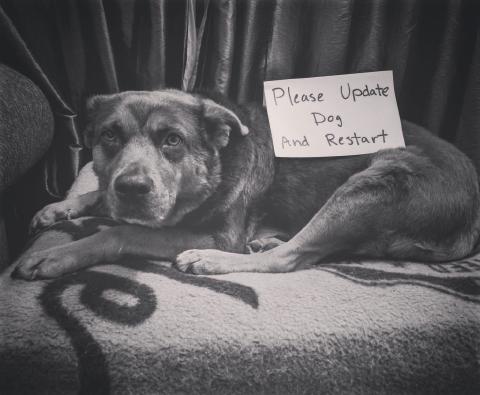
#296 – Gotta Update My Dog
Download episode · 71 MB
Also on Apple · Spotify · YouTube · RSS
Show Notes
We’re back after nearly 4 weeks without a Chris/Dave show!
- Dave just interviewed a 105 year old hobbyist!
- Dave just got a Rode Podcaster. Chris uses the Zoom H1 when on the road.
- Even though Chris just got back, he will be traveling again and there will b a bunch of meetups.
- Chris will be giving a talk at Maker Faire (time, location TBD) on revision control for hw.
- Hackaday Meetup on the Saturday of Maker Faire.
- Bring a Hack on Sunday of Maker Faire
- HDDG13 on Thursday the 26th (Mike Harrison will be giving a talk)
- Meetup in Denver on Sunday May 29th (details to follow)
- The London Science museum was fantastic! They have the Watt workshop there.
- The London Amp Hour Meetup went great! Check out pictures from the event.
- Lots of negativity going on in the electronics industry these days.
- Makerbot surprises no one by killing their US mfg.
- Microchip/Atmel is having disputes with their severance packages.
- Intel is laying people off.
- IBM is laying people off as well, but apparently doing so with a bit of ageism
- A bit of good news, Electric Imp raised some (more) money. Maybe there are some jobs there?
- In general, the future of electronics companies seems to be changing.
- Nest is bricking hardware (Revolv) that consumers thought they would support.
- Jack Ganssle mentioned similar things about the ARM mbed in the past. What happens when you don't control the toolchain? Microchip is moving that way as well with their online compiler, MicrochipOne.
- If it's ease of use that you seek, you can hot load a program onto a Raspberry Pi Zero using the PiShift. (Explained by Tom at the London meetup).
- Dave has been searching for aliens (SETI) using software for the RPi called boinc. It all comes down to MIPS/watt for processing these datasets.
- There was an article from Georgia Tech about FPAAs being more efficient. This would be a drastic swing back to the old way of doing things (when op amps were used for math operations). Chris and Mike saw a bunch of analog computers when in Serbia.
- Chris has been releasing 2 minute topic videos. Suggestions welcome!
- Dave has been working with his mystery manufacturer, spending time up front on chip selection so that there is enough room in the memory for firmware updates and new features.
- Chris saw a presentation about machine learning with software called The Wekinator by Rebecca Fiebrink. There is also an associated course you can take.
- There is more space stuff happening. Stephen "Steve" Hawking and other scientists announced plans to send ships to Alpha Centauri, even if there might not be full details on how that'd be possible as of yet.
Transcript
Chris Gammell: This is The Amp Hour Podcast. Recorded April 27th, 2016. Episode 296. Gotta update my dog.
Dave Jones: Welcome to the Amp Hour. I'm Dave Jones from the EEV blog.
Chris Gammell: And I'm Chris Gammell. Man, I don't even remember how to do this anymore. It's been...
Dave Jones: Well, it's been longer for me. It's been too long.
Chris Gammell: What are you talking about? Yeah, that's true. I've been doing this... Yeah, I've been doing this from the road.
Dave Jones: You've been doing this on the road. Because I've been on holidays and various other stuff. And you're on the road in Europe, which makes the time zones stupid. Yeah, that's a screwy time zone. So there wasn't any point in me attempting to join in, I don't think. But anyway.
Chris Gammell: Well.
Dave Jones: Come in now, live and loud with a new road podcaster microphone. This is interesting. We just discovered... I haven't had much time to play around with it. But I've got to be like an inch or two away from this thing. This is a real top quality mic. Made in Australia, by the way. You bloody beauty. Yeah, yeah. Yeah, but I've got to be... Right? So if I go like I'm now maybe six inches away. Once again, talking directly into it. But it probably sounds, you know, sort of area. What's the word? You know? Tinny.
Chris Gammell: Yeah, tinny.
Dave Jones: Tinny. So now I'll go back up to it. And there's much more bass. There seems to be... Yeah. Not that there's much bass in my voice to begin with. So, yeah.
Chris Gammell: It'd be interesting if someone ever characterized the... You know, like how we have all these adjectives like tinny and echoey and all these things. Right. There are actual audio signatures, right?
Dave Jones: Well, if there was an ISO standard for it, you're talking about... Right, right, right.
Chris Gammell: The tinny quotient. Right.
Dave Jones: Standard 902.1.
Chris Gammell: Yeah.
Dave Jones: All right. Anyway.
Chris Gammell: So what have you been up to for four weeks, man?
Dave Jones: I've been busy. I haven't been making many videos. I've been dicking around with various things. I've been trying to find a new place for my packing and shipping, which is not going well. It's apparently there's not much stock around at the moment, as they like to say in the industry. And every time I go look at something, no, it's already taken. You know, so I'm getting a little bit desperate.
Chris Gammell: Yeah. Wow.
Dave Jones: Anyway. And I actually got out of the lab. I went to record...
Chris Gammell: Wait, did you see people as well?
Dave Jones: I actually met people, yes.
Chris Gammell: Wow. For what?
Dave Jones: Did you set it up? For an interview. One of my viewers, Matt, emailed me and said, hey, do you want to interview this guy? You know, this guy is really cool. And yeah, why not? The cool thing about it is he's 105 years old. He's 105 and he's a hobbyist.
Chris Gammell: Yeah? Wow.
Dave Jones: He's still making his own boards in his workshop.
Chris Gammell: That's badass. I know. Like, how long ago did he start? Did he start, like, from childhood?
Dave Jones: Oh, yeah. I mean, he's been like a technician kind of thing. So he isn't like an engineer level. You know, he's like a hobbyist technician type thing. You know, worked on planes and stuff, as you did back during, you know, good old WWII. Right? And this guy was born in 1910. And he's still sharp as a tack, still mows his own back lawn. Nice. And just, like, six months ago he caused a big stir in the neighborhood when everyone saw him up on the roof. And I'm like, what the hell is going on? He's 104 at the time and he's up on the roof. And he goes, I'm just fixing my antenna. It's going on the blink, you know. And, like, this guy's great. Oh, that's fantastic. Yep. Anyway.
Chris Gammell: I was really hoping you were going to be like, and you know what? You know how he's gotten to such a ripe old age?
Dave Jones: Yeah, right.
Chris Gammell: Leaded solder. Leaded solder. None of that lead-free rubbish.
Dave Jones: That's right. But, yeah, like, and he doesn't use ferric chloride to etch his own boards. None of that ferric chloride rubbish. No, he actually gets a, like, a chisely, you know, what's the correct term for those, you know?
Chris Gammell: Like a V-carved bit or something?
Dave Jones: Yeah, a V-carved bit, you know, and on a handle and actually, you know, carves out his own boards.
Chris Gammell: Wow.
Dave Jones: Yeah.
Chris Gammell: With, like, a Dremel or, like, is it, like, actually like a hand?
Dave Jones: No, no, no, by hand. Oh, okay.
Chris Gammell: So that probably wouldn't be a V-carved. Maybe just, like, an X-Acto almost, you know, like a knife, effectively?
Dave Jones: Kind of. Yeah, but it looked more like a wood chisel kind of thing, you know, with a very fine point on it. So it might actually be a V-groove thing. I don't know.
Chris Gammell: Yeah.
Dave Jones: Yep.
Chris Gammell: Very cool.
Dave Jones: Yeah. Yeah. And so he makes FM bugs. He loves FM bugs. So he's making all these FM transmitters and putting them all around his house. It's great.
Chris Gammell: That's really cool. I know. Is that coming out soon or not?
Dave Jones: I'm editing at the moment. It's a bit of an editing nightmare. Gotcha. But, yeah, I'll eventually get it done. Okay. Yep. So that's, yeah, it's pretty cool.
Chris Gammell: Excellent. I look forward to that. You know, we had talked a little bit about that in the past about, you know, especially people that have been in the industry a long time. Yep. Kind of chasing them down, Silicon Valley, stuff like that. And I think we've mentioned on the show before, but there is actually, the Computer History Museum did a lot of that stuff.
Dave Jones: Oh, yeah, they've got the oral history stuff and all that sort of thing. Right, exactly.
Chris Gammell: And that's going to, obviously, yeah, that might not be as much of, like, this kind of style is interesting because it's more like the common, you know, people that we're used to interacting with, you know. Yep. And hobbyist people are just really just general enthusiasts on up through, you know, whatever experience level. It sounds like this guy's pretty experienced. But, yeah, that would be more of the top end.
Dave Jones: Not in electronics, though. He's, you know, experienced in mechanical and aircraft stuff and things like that. Oh, gotcha, gotcha. So, yeah, he's basically just a hobbyist. But, yeah, he's still, like, he knows what he's talking about.
Chris Gammell: Yeah, that's awesome.
Dave Jones: Yeah.
Chris Gammell: Very cool, man.
Dave Jones: Yep. I would recommend trying to interview them before they hit those three digits. One of five, yeah. Because, yeah, it makes it a bit difficult. But he's still sharp as a tack, you know. So his hearing's a bit shot, which made it a bit difficult to, you know, have a fluid conversation. But, yeah, once he gets going, awesome.
Chris Gammell: Good. Nice. Great, man.
Dave Jones: So we have to catch up with everybody. What's the cutoff date? I reckon 70? What?
Chris Gammell: As, like, the target before?
Dave Jones: Yeah, before that. I think I'm going to be going downhill when I hit 70. I think, you know, I'm probably going to have to give up this game.
Speaker ?: Yeah, I'd say more.
Chris Gammell: What's your age now? I think maybe now. Yep. No, I don't know. I mean, I think from, like, you know what I mean? Like, the capacities of, like, hearing and communication and stuff. Yeah, yeah, yeah. Your body starts breaking. I think that stuff can keep going, to be honest, I think. Oh, it can. It depends on the person, really. I mean, like, there is. Totally. Yeah.
Dave Jones: But just going on odds, you know? Like, most people probably aren't that with it when they start hitting 80 odd. You know, they start.
Chris Gammell: Man, we're going to lose, like, a segment of our older audience here. Yep. They're all gone. But yeah.
Dave Jones: Anyway, coming soon to a EEV log near you.
Chris Gammell: Looking forward to that. That's good.
Dave Jones: So what's been happening? We've got a ton of stuff. It's probably going to be Wank Word Bingo Week. Because we've got Internet of Things. We've got 3D printers. Sure. We've got layoffs, industry layoffs. We've got...
Chris Gammell: I was thinking before that, maybe I could talk about the different places in the world I've been. You know, some of us move around.
Speaker ?: Oh, of course.
Dave Jones: Yeah, just brag. Yeah, go ahead. All right.
Chris Gammell: Well, I got to meet some, you know, Ampour listeners throughout the world.
Dave Jones: You finally met up with Mike?
Chris Gammell: Yeah. Yeah. And I hung out with him a bunch, actually. Sweet. And obviously, he was on the show two shows ago. He was on 294. And really, that was a great show. Sorry about the audio quality if people were listening to that. I haven't quite perfected the lapel mic thing yet. So I'll keep working on that. Yeah.
Dave Jones: Shooting in the field sucks, doesn't it? It does. Shooting slash recording in the field. Yeah, yeah, yeah. It's just, you know, like, yeah.
Chris Gammell: Well, especially because I was traveling light. The whole thing, I took one backpack for three weeks. So I was pretty proud of that. But it's not.
Dave Jones: Which, did you take the, what is it, the Samson Go mic? Is that the one you took?
Chris Gammell: Or what did you take? No, I took the H1. Oh, okay. Right, the H1. The Zoom H1. So, but you've done reviews on it, I think, in the past, right?
Dave Jones: Yeah, yeah, yeah. It's a nice little thing.
Chris Gammell: Yeah, yeah, it's great. So I do that and then I split it out in channels and stuff. Right. Before I dive into where I saw, I actually wanted to, since we probably won't talk about it before I leave again, I'm leaving again. Where to? So I'll be going out to the West Coast like usual. Right. But there's a couple events that I'll be at I wanted to mention of people. There's an opening of the Design Lab, which is part of the thing that I've helped with a little bit on Pasadena. So if people in Pasadena, that'll be on the 17th of May.
Dave Jones: What Design Lab?
Chris Gammell: It's a supply frame thing. So it's like a nice, it's not like a hacker space. It's like a, I don't know, it's like a workshop. It's like a nice workshop where there's residencies and stuff like that. So that's on the 17th if people are in LA. And then Maker Faire is the next weekend. So there's a couple things going on there. I'm actually giving a talk there. About? About your favorite topic, revision control in electronics and hardware. Yay.
Dave Jones: Oh, packed house for that one.
Chris Gammell: Hey, man, it's an important thing, you know? Yep, absolutely. You could do for a little revision control. Mr. My Hard Drive Crashes.
Dave Jones: Right, for all that code I write, yeah, I can deal with.
Chris Gammell: No, this is for PCBs, man.
Dave Jones: Yeah, and like I said, for all those PCBs I do.
Chris Gammell: Yeah, yeah. And then there is always a Saturday night meetup at a bar in San Mateo for Hackaday. And then Sunday nights bring a hack. People know about that one. That's at DJ's Pizza Place. That's always a big event where people come and show their projects and stuff. I assume Jerry's going to be there? Jerry's usually there, yeah. A cast of many, many characters. And then I'll be doing one of my meetups on San Francisco the following Thursday. And then finally, the new one is I'm going to Denver the following weekend. So the weekend, Memorial Day weekend, and I'll be doing a meetup on Sunday there. So any Denver listeners or Boulder listeners who want to drive down, wake up out of your pot-infused haze. And let me know if you're interested. Just shoot me a tweet or an email. Chris at the 8th power.
Dave Jones: I've got to ask, what are you doing in Denver? In Denver?
Chris Gammell: Oh, just visiting friends. Yeah. Right.
Dave Jones: Okay.
Chris Gammell: Might see Mike Hussman if he's there. A couple other people I know. So just friends. Yep. I don't have any friends. I don't go anywhere. Well, traveling is, you have people in town, you know. So yeah.
Dave Jones: The wife's actually traveling next week. Oh, yeah? Yeah. Oh. Yeah. She's hopping on a plane and buggering off for a couple of days. And yep. Sounds like that's a... Sagan and I are just going to hang out.
Chris Gammell: Yeah. I was going to say, you get an excuse to... You get to trade that in, you know. It's like the certificate you get to trade in eventually.
Dave Jones: Exactly.
Chris Gammell: I can try to do that for... Yeah. Yep. So let's see. So Berlin was cool. I don't know if I mentioned that. I don't think I mentioned that. But it was kind of touring around Berlin. Real cool vibe there. Mm-hmm. I was listening to Embedded today. I didn't realize that Planet Labs has an office out there. So I just heard that today. Right. Embedded. But yeah. Kind of a software scene still. Not too much hardware, but a couple of people. We might have one of those guests on sooner than later. Belgrade, I talked about with Mike a little bit. So that was the conference and everything. And then London. That was a great meetup. I have pictures of the meetup on the subreddit. I'll post here. And got to meet a lot of really cool people who came in. Cool projects. Mike obviously brought a bunch of his blinky stuff. And yeah. Just good times out there. That was my first time in London. So thanks to everyone who showed up. That was really cool.
Dave Jones: Excellent.
Chris Gammell: Oh, and the London Museum. Holy crap. Did you go to that when you were there? Which London Museum? Sorry. The Science Museum.
Dave Jones: Yes, I've been there. It's very cool. Wow. They have an entire level devoted to model ships. Well, they did when I was there.
Chris Gammell: Yeah. Right. They do. It's just insane. And they have Watts Workshop. I think it was a James Watt, right?
Dave Jones: Oh, right. Yes. I think they were building. Were they building one of Watts' engines when I was there or something? Anyway, they were building. Yeah.
Chris Gammell: Yeah. They have a whole bunch of stuff there because of like Industrial Revolution stuff. Right. Like these huge, huge engines like they used to have in the textile factories. And there were always these centralized power plants that then all these belts went off everywhere. Really, really cool stuff. I mean, all steam engine stuff. But man.
Dave Jones: You can't see it in a day. Like if you really want to look at everything, you just can't. You just can't do it.
Chris Gammell: Although the one thing I was, I still laugh at is that, so they have a space section, like a pretty healthy space section there too. And I know, I'm going to preface this. I know there was a lot of people working on space stuff in the UK as well. But like the first thing I saw, I like walked in and it was like, the space program. We went to space, blah, blah, blah. And it was like, by the way, all this was enabled by Newton's laws of gravitation. I'm like, you can't claim just because Newton came over the laws doesn't mean the UK enabled space.
Dave Jones: Space travel. Yeah, I know.
Chris Gammell: Well, they've got it, you know. It was just, oh, it would just crack me up though. Yep. That's funny. Yes, that's true. Ah, well. Yeah. So, yeah, good times were had by all. Sweet. Thanks to everyone who was nice enough to hang out with me. Show me around and stuff. I appreciate that. And we'll have more guests from the area on the show in the future, I'm sure.
Dave Jones: Awesome. All right. Yeah. Should we move on to more depressing news?
Chris Gammell: Sure. What's the depressing news?
Dave Jones: Well, everyone's being laid off or moving to China or getting their severance pay cut or, you know, like, where do we start? Let's start with MakerBot, shall we? Yep. It started at the bottom. It happened, folks. Yeah. So, we're just going through the Reddit list here. Not in sequential order. Yeah. It's happened. As everyone predicted, MakerBot are packing up, moving to China. Not going to be made in New York anymore.
Chris Gammell: Right. Right. Exactly. I mean, to be fair, it's probably just assembled in China, right? I'm sure a lot of their pieces were already made there. But now it's just that final piece.
Dave Jones: Oh, yeah. No, of course. Yeah. But they were proudly, you know, proudly made in New York, you know?
Chris Gammell: Mm-hmm. Yeah.
Dave Jones: Yeah. It's-
Chris Gammell: And lauded as such, right? They were, you know- Yeah, yeah. Oh, totally. Oh. Bringing manufacturing back, right?
Dave Jones: In fact, in the article, there's a photo of, like, some sort of TV news crew in the background interviewing somebody, because, you know, they were like a darling. They were like a tech darling company. Yeah, of course. Of course. That, you know, that the media loved, because, oh, made in New York, and, you know. So, anyway, I'm not sure what's moving. I haven't- I don't- I think- Is it all of it? I'm not sure, but, yeah.
Chris Gammell: No, well, not all of their production. Not everything, everything, but, you know, all the hardware stuff. And they're going to Jabil, which is, like, a huge EMS company, and a good one. I mean, not a bad one. It's not like it's a bad- But that's beside the point. I was talking to some people on Twitter about this. Yeah, just because it's a good business decision doesn't mean it's good in general. You know what I mean? It's not good for hardware or people doing interesting things there. So, yeah.
Dave Jones: Right.
Chris Gammell: Yeah.
Dave Jones: And I think the thing, there's, like, this big, like, breakout quote here. I don't know who it's from, but, MakerBot isn't the first company to do this, but Brooklyn is part of its identity. You know? So, yeah. Okay. Our DNA and our culture very much remains a Brooklyn one. You know? Blah, blah. So, yep. Sorry.
Chris Gammell: Well, it's kind of like at the top of the show where you mentioned, you know, like, roadie was road? Roadie? Road. Whatever the- Road. Road, sorry. Yeah. I mean, like, being, like, an Australian company, like you said, that's part of the identity, right? Yeah.
Dave Jones: They're made here. I mean, they've got some stuff made in China, but, yeah, it's part of the identity. They're proudly- Like, it's got stamped on the side, made in Australia. You know?
Chris Gammell: Right.
Dave Jones: Right.
Chris Gammell: I mean, like, saying that, oh, we, you know, to have something with zero components that are made in China would almost be impossible, right? Right. Yeah, no, of course. Because eventually you're going to have capacitors or resistors or something in there.
Dave Jones: No, but they make, I believe they make the microphone inserts here and they get the, you know, the metal bodies and everything. Mate, yeah, the PC, the blank PCB almost certainly comes from China. All the parts, you know, come from wherever. However, you know, probably half in China, but, yeah.
Chris Gammell: Yeah, I mean, even if something's manufactured, I mean, like, we used to make silicon in Austin and then you go get it packaged somewhere over in Asia. Yeah, exactly. That was common as much. And then ship back down the road to Dell. Yeah, yeah, that's right. Like, I mean, it was not like, it's not like this is not a thing that happens a lot.
Dave Jones: No, it is part of the global economy. It's part of the global supply chain. Exactly. Exactly. So, you know, nothing new, but yeah, anyway, so they're gone. MakerBot, see ya. Right. And as also predicted, there were a few little hiccups with the Microchip Atmel merger. Ah, yep. Yes, yes. That didn't apparently go very well because it turns out that Microchip promised the Atmel employees that they'd get some generous severance pay, you know, because obviously they weren't going to keep everyone. Everyone knew that, right? That's just a logistical part of merging companies, right? I guess so.
Chris Gammell: I wonder about that from, you know, like thinking about that in retrospect now because obviously dialogue was going, putting a bid in. It's not that there wouldn't be any changes, but like would there have been less overlap?
Dave Jones: There would have been less. There may not have even been any exactly. Yeah. So as far as the Atmel people are concerned that, you know, the Atmel employees are concerned, then that was probably not the best deal merging with Microchip. And as it turns out, yeah, and then Microchip, you know, and everyone's finger pointing now, oh, we never promised it, says Microchip. And then Atmel says, yes, you did. And, oh, the board didn't know about it and blah, blah, blah. Yeah. You know, so anyway, so the Atmel employees are getting screwed. So if any of our listeners are at Atmel and you're, and you just got the chop or you've heard about that you might be on the cards, please let us know what's happening.
Chris Gammell: Yeah. And especially if it won't get you, ruin your severance.
Dave Jones: Well, I don't think it could be ruined anymore, can it? Yeah. Right, right, right. No. Yeah. And is it a legal entitlement over in the US? I don't think it is, is it? No. It's like more of a, right, so there's no federal government law mandating severance. Oh, no, no, no. Really? No, definitely not.
Chris Gammell: Yeah, some people get the absolute chaff of just nothing at all.
Dave Jones: Right, okay, now here we have a minimum of, I think it's two weeks per year of service or something. That's minimum, like, you know, so.
Chris Gammell: Cool, yeah, that's bully for you. Yeah. Anyway.
Dave Jones: Yeah. So, yeah, that didn't go well. Huge one, Intel.
Chris Gammell: Yeah.
Dave Jones: Wow. I was like.
Chris Gammell: I was not surprised by this. Were you surprised by this?
Dave Jones: Oh, no, but, like, the, but the scale of it, like, 11% of their workforce, that's a lot. That's 12,000 jobs. 11% is like, you know. Yeah. I didn't know they were in trouble at all. Like, they're not in financials. Are they? I don't know.
Chris Gammell: Yeah, no, they kind of are. I mean, like, they've been losing the tablet. I mean, think about, like, okay, so think about how many people are using desktops and laptops and stuff.
Dave Jones: Like, the arms, we need, blah, blah, blah, but, yeah.
Chris Gammell: It's not even, like, arm. Just think about, okay, so just think about how people are shifting over to using, like, tablets as a main input device. Right. Like, a lot of people are talking about using iPad Pros as, like, a primary input now. Right. It's like, I wouldn't personally do that, but for a lot of people, it's great.
Dave Jones: No, for your average Joe, it's probably okay. For me, I was on holidays. I think I tweeted this. I was on holidays recently, and I was trying to do work from the, you know, the holiday house that we rented. And, you know, because I had videos queued up, I needed to release them and stuff. You know, simple tasks like that, right? And my laptop failed. The Wi-Fi connection didn't work, so I couldn't talk to my Wi-Fi dongle. So I was left with just the tablet, my little Google Nexus 8-inch tablet to do everything. You know, I thought, oh, the phone would be a pain in the ass, but I thought, oh, the tablet would work fine. Wah. Nah, it's just a pain in the ass. You can't do any real work on it. I think you even replied to my work. You even replied to my tweet saying something sarcastic.
Chris Gammell: You were trying to do video stuff on a Nexus?
Dave Jones: No, not video. I was just trying to release videos, trying to do WordPress stuff. You know, I was trying to go to Google and enable a video, check comments, all that, you know, do the usual stuff. And it was just, you know, it took me two hours to release a video. It normally takes me like five minutes, you know? Yeah, right, right, right. I see. It's so painful. Anyway. Yes, tablet suck is what I'm saying for real. Right, right.
Chris Gammell: Yes, that's correct.
Dave Jones: You and your sarcastic remark.
Chris Gammell: Well.
Dave Jones: I can't remember what it was, but.
Chris Gammell: I don't either. I've been a little sleep deprived for the past couple of weeks.
Speaker ?: Yeah, you're right.
Chris Gammell: Yeah.
Dave Jones: It was one of those drunken tweets, was it? Yeah. All of them are. Anyway, sorry, you were saying?
Chris Gammell: You were going to comment? Nope. Nope. Oh, maybe just about tablets. I don't know. Like, it's just a shifting in general. Like, you know, Intel made their money based on captive audiences with, you know, especially with like pairing with Windows and stuff like that. Yep. And as market shares fall, of course it's going to hit their stuff. It's not going to. I mean, even if it flattens out, though, that ends up hurting them, right? It's a scale game kind of thing.
Dave Jones: But I thought they were branching out in all areas, so I didn't know how they were doing financially. You know, I didn't know it was that bad that they had to cut 11%. So I used to follow it closely.
Chris Gammell: I don't either. That's the thing. But it's just like, it's one of those things where it's like one of the, their broad base, you know, they have a lot of high-end stuff like server chips and they have a lot of low-end stuff with like their, you know, they're trying like the Curie stuff and the wearables and the, or even just the low-end.
Dave Jones: And the Atom processors and all that sort of stuff. Yeah, stuff like that.
Chris Gammell: Like, like, like, yeah, you're like the EE PCs never really, those kind of all went away. They got replaced by tablets too. And so you just think about the spread of their, of their product portfolio. And it's like, yeah, if their middle chunk is their biggest chunk and you start to eat away at that.
Dave Jones: Right. Then. Yeah. Anyway. So once again, if we have any listeners who are caught up in the Intel Laos, let us know what's going on. Who's, who's getting the ass? I mean, which, you know, is it like just like totally across the board or are they axing divisions? What are they, what are they doing?
Chris Gammell: The thing that scares me about these kinds of situations, you know, so like, okay, so Intel's up in Portland as well. And they're, you know, they're, they have a bunch of places.
Dave Jones: Everywhere, aren't they? Yeah.
Chris Gammell: But thinking about like, okay, so like Portland, right? You go up there and you talk to people that are like talking about Tektronix back in the day or, you know, other big, you know, just like as these giants kind of fall. Well, it's not like there's a lot of new stuff coming up behind it. You know what I mean? Like it used to be like, oh, well, Fairchild or not, uh, what was, what was it? Fairchild that was flagging. And then that created, what would the traders say? That whole thing, you know, like back in the old days, one giant falling meant eight more started up kind of thing. And there's nothing like that anymore. You know, it's not like.
Dave Jones: Well, not to the same scale, but.
Chris Gammell: No, I think here's, here's the thing though. Like, okay, so when you really start to look at it, the thing that scares me is actually just the, is the, the pay scale of the people that are getting laid off. Right. So obviously they're going to want to try and lay off people that are high margin and stuff like that. But okay. So now, so now imagine that 11,000 people, right? Maybe there's a thousand hardware or hardware centric people. Right. And, and they need a salary that can support them in the area and blah, blah, blah. All right. My fear is that it would be, okay, well, what can we do? I have skills and hardware, but also I do some software is that the only thing that could ultimately support those people in a future role is software. And then you start to just, that's just starts to erode the hardware knowledge base in general, just because even if they wanted to get a hardware job, there's just nothing else there because of geography and reality.
Dave Jones: Well, that's a, that's a geographical thing. Yeah. I mean, you know, but I mean, if you move there and base your, you know, life there because on, on that one job, then well, yeah, if you lose your job, I mean, that's, you know.
Chris Gammell: Sure. Sure. But if there's not any other, like, so usually there's, you know, if it's, so like Silicon Valley is an example, obviously a very extreme one, but like usually there's other ones you can move around to and stuff like that. If you're in an area where it's, you know, one main employer and if you don't have the capabilities to sell a house and move away and stuff like that, then, then that really starts to limit options. You know? Yeah.
Dave Jones: You can be in strife. Yeah.
Chris Gammell: And obviously I feel for the people like from a, on a personal basis, but also from the, you know, the broader basis of the hardware segment, right? That starts to lose more and more talent in the, in the workforce, you know? And, and I don't know what the ultimate issue that causes, but it's probably not positive for the hardware side of things.
Dave Jones: Well, maybe they can go and join Electric Imp. They just got, uh, 40 million bucks in, uh, round something or other funding.
Chris Gammell: That was a great try at a segue. I just. Right.
Dave Jones: No, I know. If I, let's go back. I don't think it was, I mean, like, I don't. Yeah.
Chris Gammell: No. Yeah. I mean, like, so this is actually, this is the reason. I mean, like, this is a practical thing that I talked to, to young engineers about too, in terms of like.
Dave Jones: Young engineers, says Chris Gammell.
Chris Gammell: Says the guy who's been in it for 10 years. Yeah, man. So 10 years is a lifetime in electronics, right? I mean, like, in terms of like. Yeah, well, you know, I've been in it. These days it is. I think that's the thing. I think it is. Yeah. Yeah.
Dave Jones: Yes. Yeah. Okay. No. Once you hit that 10 year mark, basically on your resume, you're considered a senior, you know, engineer. Right.
Chris Gammell: You know. Right. If you're not moving. If you're not moving up in a, in a technical role, you're probably moving laterally to a managerial type role or something like that. Right. Or a different industry or something. So. But what I talk to people about is like, so like in this case, right, Intel is a huge employer. But now someone who's like working in a fab there, if they get laid off, what are their options? Right. They can go, they can go move to Albany. Right. To work for a global foundries. They can move to. There's nothing left. There's nothing really left in Silicon Valley. Right. They can move to Arizona where there's a couple of microchip fabs left. They can move overseas, which is probably very difficult. You know, there's Germany. Dresden, I think, has fabs. The old, I mean, that's where global is too.
Dave Jones: You can move to Australia and work at our one fab.
Speaker ?: Yeah.
Chris Gammell: Right. Right. But I mean, that's what I mean. Like, it's just like that, that whole talent base then.
Dave Jones: Yeah. I know. It's, yeah. So.
Chris Gammell: I guess they have Hynex up there still. Is Hynex still up there? I don't know.
Dave Jones: I have no idea.
Chris Gammell: Yeah. Hmm.
Dave Jones: Speaking of the, you know, what kind of people are being laid off, there's a big to do with the IBM layoffs at the moment. They reckon they're illegally laying off people 60 plus or 50 plus or something. Oh, like ageism? Yeah, ageism. Yeah. And they're trying to use all these legal avenues to actually avoid being caught doing it. But apparently, yeah. A good lot of them or the majority or most are the old employees because they, you know, they don't want to pay out their 401k or whatever it is. Yeah. You know, the other. Whatever we have over here. Yep. Yep. So, yeah. Apparently, that's a big deal. And that's extra rough, you know.
Chris Gammell: So. Yeah. Well, yeah. Yeah. Unfortunately, the onus is on the people that are getting laid off to prove that too, which sucks.
Chris Gammell: That's a big deal.
Dave Jones: But yeah, they're forcing them to sign a non-disclosure agreement and can't sue them, blah, blah, blah. Because IBM have the best lawyers in the world, you know. You can't. Yeah.
Chris Gammell: Right. That's what happens when you're a solutions company eventually.
Dave Jones: Right.
Chris Gammell: Right. Well, I think. So, ultimately, what this brings up in my mind is just that what is the future of hardware people in general, right? This is relevant to people we're talking about. I mean, I think it is.
Dave Jones: Here comes the doom and gloom, folks. Doom and gloom merchant gamel.
Chris Gammell: No, I don't think so. I think it's just that it's small. I mean, it's. So, I often talk about the term I use is the solos. Right. Like, people who are consultants fall into that. Yeah. Small companies. You know, even like you mentioned, Electric Kemp just raised a butt ton of money. Yeah. But like, even then, when they were starting up, you know, like the small companies.
Dave Jones: Well, that's the thing. I don't like. Gone are the days when you work for the one company for 20 years, I think. Right. Exactly. You know, it's like. You know, and my recommendation is that you probably shouldn't. You know, two or three years looks decent on your resume. We've talked about this many times before. You know, it looks decent. Anything less than a year. If you're skipping jobs in less than a year, then that looks bad on your resume. People, you know, aren't going to want to hire you. But, you know, you stay at a couple of years at a place and then move to something fresh. And that seems to be the thing. Because a lot of these startups are failing. I'm not going to say that the Electric Imp is going to fail. But here's another one of our stories, which I'm going to beautifully segue into right now. And that is Nest. Right? Nest. Nest are like. They're like going down the toilet. Right? Rumor has it that everyone's leaving, all their people are leaving, and they haven't released a product since they got bought out by Google for the ridiculous $4 billion, which we, you know, laughed at for like an entire hour. Right. And, you know, there will they go bust. Like, you know, like, but a lot of people are leaving. They're just not happy there anymore, et cetera. And that is not uncommon. Because, like, nine out of ten startups are going to fail. Yeah, you get this great job at this exciting new startup, and boom, two years later, they're gone. You know? Right. Or significantly changed enough that you don't want to be there anymore.
Chris Gammell: Yeah. Well, and I guess that's another thing, though, thinking about hardware people is, like, they're going to be leading edge, right? Because, like, a hardware company like a Nest or an electric imp isn't going to be much until it has hardware to play with and hardware to develop on, right? And then you bring in, then you bring in, obviously, firmware engineers are often brought in at the same time. You want to sit next to them and work with them at the same time. And me and Omer talked about that. But, like, but then, like, API developers and software people on top of that. And then you start building out, like, platforms on top of that whole thing. By the time that's happening, you're already three or four revs down the line in hardware, right? So that makes it, I think that's another characteristic of future hardware people is leading edge, you know, they have to be early at the company because that's when all the interesting stuff happens anyways. Yep. And then when it gets boring, you jump to the next one. So, yeah, it's, yeah.
Dave Jones: Jump ship now, folks. That's what we're telling you.
Chris Gammell: Yeah. I don't know, man. I, I...
Dave Jones: Well, see, that's, like, we hear about this all the time, you know, these, you know, startups and they get bored out and then everything changes. And we just talked about it at the beginning with MakerBot. People might have loved that MakerBot was done in New York. Now, boom, what, a couple of years, two or three years later, boom, they're, you know, off to China. And, you know, the look and feel has changed. Well, it's 20 years later, but yeah. Well, I don't know how many years, four years or something, but, you know, that's...
Chris Gammell: Oh, they started in 2008, didn't they?
Dave Jones: Yeah, but when did they get bored out?
Chris Gammell: Oh, like that. Okay, I see. Yeah, exactly. Yeah, but that place has gone down the toilet way before that. Yeah.
Dave Jones: Anyway, so, you know, it's just the nature of the business. Really?
Chris Gammell: I guess so. I mean, I think that, you know, in terms of people that are... Some people don't want to do any of that stuff, though. Like, they don't want to chase jobs every couple of years. They want a stability kind of thing. I...
Dave Jones: Oh, yeah, no, there's a lot of people. I know a couple of companies like that. Yeah.
Chris Gammell: But you're going to give up probably salary growth for stability, stuff like that, if you really want to dig into problems, too. You know, it's pockets of stuff, right? My friends at Keithley are still doing interesting things, I think, but it's tough to do that kind of thing. And same thing with... I mentioned Tektronix before, too, right? Like, you can sit there and you can do these interesting projects at these large companies, but there's a trade-off in that you have to kind of deal with more stuff, big company stuff for a longer time, right? And it's not... Yeah, no, exactly. I'll be there, right? Yeah, and it's not just those two, either. Obviously, it's a lot of stuff. Yeah, you've said you've done it, too, right? Yep. If you want to chase interesting problems... I have a friend that ended up going from, like, the crazy life to a much more stable, quote-unquote, boring job, but actually to learn from some graybeards. Like, he specifically targeted those graybeards because he wanted to learn more from them. And I think that... You will never go wrong with that. You might deal with crappy companies, but, man, you will always make the right choice if you go to somewhere where you can find people that are a lot smarter than you and go learn from them. That is totally worth it. Agreed. Because I... I mean, that's one of the struggles I have, being on my own in a basement, you know?
Dave Jones: Oh, yeah, no, it was always the way. I, like, for many years there, I was the electronics guy at the company, you know? It was like, well, who's better than me? You know? Like, nobody. Who can I learn from? Nobody. I'm it. You know? Right. Like, yeah. It's kind of, sort of, okay in a way, but then, yeah, you just wish that there were other, you know, like, there was nobody to talk shop with.
Chris Gammell: Yeah, it almost forces you to a bigger company in general because you need, like, in order to have someone that's your superior in the same area, right? So, like, so thinking about my experience of analog, right? I was on a team of, like, six or seven people, but I was still the only analog guy. I needed to go somewhere that was big enough that had two or three analog people or multiple projects going on that there was a couple analog people to learn from. Same thing for the firmware people. Or, you know, you start learning firmware from the firmware person. Like, that stuff's really helpful, too, but, you know, you do have to target slightly bigger teams, unfortunately. Yeah. That's kind of the downside to a startup-type mentality of who do you learn from.
Dave Jones: Got it.
Chris Gammell: If only there was a podcast people could listen to.
Dave Jones: I don't know where you'd find such a thing. If only we talked about technical content.
Chris Gammell: We must have something here.
Dave Jones: So, we've done Intel. We've done Microchip. We've done MakerBot. We've done Nest. Yeah, that Nest story is shit, too. Actually, what do you mean it's shit?
Chris Gammell: No, just, like, the thing they did. So, that story was about how they, I mean, yes, they're going down the tubes, but also they killed one of their products.
Dave Jones: Yes, haven't we talked about that? Yeah, that's right.
Chris Gammell: I know that was long ago. Yeah, yeah, yeah. It might have been we not even talked about that.
Dave Jones: I think we might have talked about it, but yeah, they did the dick move and killed their Internet of Things. What is it? The home automation? The Revolve, I think it's called. The Revolve, is it? The home automation thing? So, all these poor, you know, suckers now, I guess, who bought into this thing thinking, oh, automate my home, I'll wire this in, and everything will be cloud-based, and oh, wonderful. Isn't this Internet of Things great? Wah. No, the Internet of Things is not great. It's crap if you tie into the cloud, and they pull the plug. Gonski. It's almost inevitable. It's, like, it doesn't matter. Yeah, we must have talked about that.
Chris Gammell: I think I remember this conversation now.
Dave Jones: I mean, you can buy any, I guarantee you, anything you buy right now, Internet of Things, cloud, if it's cloud-based, right, it relies on a service on the Internet to work, right, be it cloud or whatever it is, right, it relies on the company. I guarantee you, it's not going to be around, well, you'd be lucky if it's still around in 10 years' time. I guarantee it's not going to be around in 20 years' time. So if all your light bulbs in your home require the Internet, a service on the Internet to work, they're just, at one, at some point, they're just going to stop working.
Chris Gammell: Right. They're just going to fail. I'm surprised there's not more, like, self-hosted type solutions of, like, you know, one click, set up your server on, like, an AWS instance type thing, and then you own it, you maintain it. Like, I mean, I know that this is not easy. And locally. That's the thing. Well, not locally, but, like, clonable.
Dave Jones: No, locally. If I'm going to automate my house, I don't want it to rely on the freaking Internet. I want the processing to be locally. Okay, sorry. Yeah.
Chris Gammell: No, no, I was thinking, like, okay, I have a device out in the, like, my dog is lost, and it has to talk to a cell tower, and the cell tower talks. Yeah. Usually we talk to an Internet service, and then I could ping that Internet service. Right. But, like, at some point, I want to host that Internet. I don't actually want to, but I feel like I have to, because if my dog lives till 15, and the service only lives till 5 for the last 10 years, yeah, I've got to upgrade my dog.
Dave Jones: I think people have the wrong model. This, you know, everyone's going, oh, put the service on the cloud. Right? And, yeah, it can have some great benefits. I use lots of cloud services, right? Sure.
Chris Gammell: Me too.
Dave Jones: But for things that don't really require it, you're just doing it because it's, you know, the latest flashy thing to do, and especially if it's a product that's going to have a long lifetime, which is generally stuff around the home or things like that, you know, that you actually rely on.
Chris Gammell: Yeah, I think it's a hammer problem, right? It's like a lot of these things get developed by JavaScript-type people and from a server level.
Dave Jones: Oh, you're a flame war there. JavaScript-type people. No, seriously.
Chris Gammell: I mean, like, you know, like web-based tools, right? And web-based tools are going to be using web-based services like, you know, something set up on AWS, and that's scalable and everything. And also they want to serve a need with a paid solution, and that's where the money is. So, I mean, like, there's no money in – so if I have a cloud service and then you say, oh, I want to host this on my home server, like on my router, my Wi-Fi router or something, right? Right. There is a one-time sale for me to sell it to you for $20. Oh, yeah.
Dave Jones: No, everyone's their home.
Chris Gammell: Or I could sell it to you for $5 a month, and it still seems like a good thing, right?
Dave Jones: Exactly. No, that's – yeah. But, yeah, please stop developing all this stuff that – if there is an option to make it local processing, then make it freaking local processing and just have a feature that connects to the internet. Oh, yeah, it can't – but when it 100% relies on the internet, it's – I can't see the reliability of this thing changing. The internet is still inherently unreliable. Connections are unreliable. And I can't see it changing in the foreseeable future for decades.
Chris Gammell: In my case, it's reliant on Time Warner cable.
Dave Jones: Right. Okay.
Chris Gammell: Biggest pieces of crap in the universe.
Dave Jones: Right. You might as well use a piece of wet string, right?
Chris Gammell: Yeah. Right. Yeah.
Dave Jones: Yeah, please. Oh, well, no. If you want to do it, fine. If you want to develop a company and a product that does that, fine. But just, like, consumers, be aware. Like, don't bitch when the thing fails and they stop doing it. Yes, what Nest did is a dick move, right? They said, no, your route is no good anymore. When they could have just left it there, right? But, no, we're going to shut it down.
Chris Gammell: You know, like – And so, like, I remember – I remember – I think Jack Gansel was on Embedded talking about it. But he was talking – or maybe it was in his newsletter. He was talking about Embed and, like, the fact that that's still –
Dave Jones: Oh, yes, right.
Chris Gammell: Cloud connected. And, like, now, don't get me wrong. I've tried it since and it's really, really convenient. But the same thing where it's like, man, that might change at some point. Yeah, exactly. They just shut it down.
Dave Jones: Isn't the new version – I haven't tried it. Isn't the new microchip one cloud-based now?
Chris Gammell: Oh, they're new. I think that, yeah, there's, like, a cloud-based compiler or something, too.
Dave Jones: And there's a cloud-based version of their MPLAB system, I think. Yeah. Don't quote me on that.
Chris Gammell: You said microchip one? Is that the thing I should search? Yeah.
Dave Jones: That's the new wank term for it, is it? Yeah.
Chris Gammell: Marketing. Yeah. So, one of the things I saw in London –
Dave Jones: I might have to – sorry, I might have to use it soon because my new product uses a pick. So –
Chris Gammell: Oh, yeah.
Dave Jones: Yep.
Chris Gammell: Anyway. So, one of the things I saw when I was in London was that same idea but actually at the local level. So, Tom, one of the guys that was there, he did this really cool thing. And apparently this exists for the BeagleBone Black as well. I didn't realize. But basically the same kind of thing where it's like a script that just kind of monitors and then hot loads. It's when you save a file, it hot loads it to your device. And I think the thing is like embed is interesting because it enables a lot of beginners, right? It's basically saying, you know, write your code, compile it, and then it just automatically – it's a pretty quick drag and drop type thing. But if you can do that at the local level then by – you know, he basically recompiled the kernel for the Raspberry Pi. If you can do that and enable that kind of same thing then I feel like that's the kind of localized version of like an embed style product. Right, yeah. Not saying these are new things but it was the first time I had seen it in person and it was really, really – I have a video of it on the – I'll put a video in. But it's called – what's it called? Raspberry Pi – it's the – oh, Pi Shift. Right.
Dave Jones: Okay, yes. So, that list.
Chris Gammell: Yeah. So, really – I mean, really cool stuff like that and like it solves the same – it's the same thing where it's like it solves the same problem. But it takes out the internet layer. Right? Yay! Yeah, right.
Dave Jones: Someone's thinking, yay. Like – Yeah. It's definitely the way to go.
Chris Gammell: And I still need to find that BeagleBone one because I didn't realize that happens – the same thing can happen there. So, yeah.
Dave Jones: I've been playing with my Raspberry Pi lately. I did a video on that.
Chris Gammell: Oh, yeah. What did you do?
Dave Jones: I'm now searching for aliens. I'm using the SETI at home thing. I'm a bit obsessed with the SETI at home thing. I'm now thinking, oh, where can I set up all of my dumpster PCs to just run 24-7, you know?
Chris Gammell: Oh, God. What a waste of energy. Crunching. I mean, it's not really a waste of energy. But, like, those things are not very efficient.
Dave Jones: Oh, well, no. Like, but I was going to do it. Hey, at home, right? I'm currently not – I currently don't have a solar storage, power storage, right? So, I'm exporting some to the grid, right? So, I'm – and I'm only getting $0.06 a kilowatt hour for that, right? So, I'm effectively pissing – well, I'm not pissing away the energy. Somebody else uses it on the grid. But, you know, I figure, hey –
Speaker ?: Right.
Chris Gammell: But you're losing all the money in between, right? Yeah. You're willing to pay for it. Yeah, exactly.
Dave Jones: So, I figure, why – lousy $0.06 a kilowatt hour. So, I'm basically – I can buy electricity effectively at $0.06 per kilowatt hour, which is dirt cheap here in Australia, right? It's like one quarter of what it costs. Yeah, usually a $50. Yeah.
Chris Gammell: $50, usually.
Dave Jones: So, I bet you can argue that it's free because it's, you know, it's coming from the sun during the day. So, I thought, oh, yeah, I'll set up all these servers at home in my old lab and I'd set up timers so that they only ran during the day. But maybe I could have like a solar insulation thing that, you know, it only switches on when it reaches a certain power output and, you know. That's cool. Yeah. I like that.
Chris Gammell: Yeah. I have not watched that video yet, but I saw it. Anyway.
Dave Jones: It's just setting up your Raspberry Pi to run the Boink software. Got it.
Chris Gammell: I used to run that stuff all the time. I remember I used to do that for my old PC and then –
Dave Jones: I think I did it once, like when it first came out, like, you know, when all the rage in like the early 2000s or something. Yeah, yeah, yeah.
Chris Gammell: This is like 2002, 2003. Something like that, yeah. Because there was another one that did – it was searching for like molecular matches, like potential match sites for like drug delivery stuff.
Dave Jones: The great thing about the Boink software is that you can – once you install the Boink software, you can then choose to run any one of like 20 different experiments. You can do computing for the large hadron collider or you could do for cancer research or whatever. You know, it's – Oh, really? Okay. So, it's generic now. Yeah, yeah. It's generic software that allows you to tie into – so, everyone has now written a service.
Chris Gammell: You know, Dave, it's connected by the internet. I'm just saying, you know.
Dave Jones: It is connected. You have to hate it.
Chris Gammell: But it processes locally.
Dave Jones: That's the idea, right? It processes locally and it can chug away. If you lose your internet connection, it's still going to chug away in the background. That's true. Doing the stuff.
Chris Gammell: It's downloading big blocks of – Yeah, yeah. Blocks of data. Exactly.
Dave Jones: It's only sending and receiving in spurts, you know. Yep. So, yep. Anyway, I'm kind of obsessed with that at the moment. So, I thought about building a Raspberry Pi supercomputer cluster, but ultimately, it's probably not as good as – not going to be as good as a single Xeon, Intel Xeon, you know, processor and a big GPU chip.
Chris Gammell: Yeah, that's an interesting back and forth. I was in a – I went to a professor's office when I was in Belgrade and we were talking a little bit about that, kind of like the parallel processing stuff. They were actually using FPGAs and selling those solutions to basically, like, people that need a lot of parallel processing. And even with the GPU versus FPGA stuff, it seems like the power consumption ultimately is what comes down to it, I think. Oh, yeah.
Dave Jones: No, it's always MIPS per watt, you know. That's what it comes to. MIPS per watt, right. Right. That's the figure, you know. You can – if it's – aside from cost, it's MIPS per watt, you know, power consumption. Yeah. Because you don't want to, you know –
Chris Gammell: Well, eventually, that line will cross over, right? The fixed cost of the hardware will cross over with the variable cost of the power. Yeah. Yeah. So, has no one done, like, an FPGA type thing for this? Or is this, like, the tests are so different that they –
Dave Jones: I have been meaning to do some research on that. But I have not looked if anyone has a dedicated FPGA solution for the Boink software. I don't think so because it's, like, different algorithms for each one.
Chris Gammell: Yeah, you probably need at least, like, 20 or more.
Dave Jones: Yeah, so –
Chris Gammell: Or setups kind of thing.
Dave Jones: Yeah. So, anyway. But it does support various GPUs, though. So, you know. Yeah. So, if you've got a high-end graphics card, you know. So, I've got a dumpster PC with a mailbag high-end graphics card here, and it's currently churning away. Doing steady research in the background here. Yeah.
Chris Gammell: And I think that's ultimately what it comes down to is that if you have people that are just kind of – I mean, it depends how long you do it for, of course. But the, you know, the upfront cost of a GPU is probably much lower than an FPGA solution. Right. So, it makes a lot of sense for people that are getting into it. You're going to have fall-off in terms of people continuing on. So, yeah, GPU makes more sense to start with.
Dave Jones: For me, it basically comes down to how much the power and the internet costs because I'm getting all these PCs for free in the dumpster, you know. Right. Right, exactly. Yeah. Right.
Chris Gammell: But you're not the normal case. No. I'm not that. Most people are doing what you're doing.
Dave Jones: Most people don't have a dumpster goldmine. Right. Yeah. Speaking of which, somebody was dumpster diving. Beautiful segue again.
Chris Gammell: Yeah.
Dave Jones: Yeah. At the Large Hadron Collider, were they not?
Chris Gammell: Oh, I didn't read that one. But, yeah, I saw there was a thing about that. What was it? The only thing I've seen about the Hadron Collider recently is I saw they dumped a bunch of data on the internet. I saw that three terabytes.
Dave Jones: Yes, three terabytes or something worth of data. Anyway, yeah, it's from the Inverse website. I've never heard of it. Anyway, somebody posted a Neil Patel posted a thing about, yeah, there were dumpster diving outside the CERN center. And they got a photo of just a dumpster with some, I don't know, cable and some weird looking.
Chris Gammell: I can't even imagine what you find. Yeah, I know. I think it would be useful. Other than lots of copper and, you know. Right. Magnets and stuff. Sorry. Also, yeah, they have pictures of radiation symbols. Yeah, great. Be careful. Be careful, folks. Be careful with your dumpster dive. Yeah. Yeah, that's cool.
Dave Jones: I approve.
Chris Gammell: Definitely. Well. Speaking of. I mean, have you been like dumpster dumpster diving or just your mail room or your junk room diving?
Dave Jones: Oh, I've been dumpster diving at the companies I've worked for and universities and things like that. Yeah.
Chris Gammell: Like dumpsters full of PCBs, you jump into something like that? Oh, yeah. Bloody earth. It's sharp. Sharp, man.
Dave Jones: Oh, yeah, I know. Yeah, I've cut myself many a time in the old dumpster. Yep. And I've got another beautiful Segway. It's just a Segway-a-thon. Mm-hmm. Right? These configurable analog chips compute with a thousand times less power than digital, apparently. What are these chips? I haven't looked, but they're film programmable analog arrays. This is basically FBAAs.
Chris Gammell: Right. Yeah, we've talked about these before, and Georgia Tech does a bunch of stuff with it.
Dave Jones: Who do you buy this from? Who's making these chips?
Chris Gammell: I don't remember.
Dave Jones: Some newfangled startup?
Chris Gammell: No. Well, this is Jennifer Hassler. I've tried to get her on the show before. If anyone knows her, I'd love to get in contact. I've tried to get her on the show before. But, yeah, I think that they're doing some of their own stuff, some of their own fabrication. I know they have a fab on campus. Oh, okay. Right. Cool. I think there are a couple FBAAs out there. This is still pretty early days, to be honest. I mean, this is like one of those 10 plus years kind of things. I think. Maybe I'm wrong.
Dave Jones: No, that's fairly typical for something new like this before you get research. You know, research before it hits mouse or digi key for one-off quantities.
Chris Gammell: Well, and I think there's, I mean, so like there's, like I mentioned before, there was kind of like the FPGA versus, you know, just raw cyclical processing and stuff. That's kind of been the trade-off for a long time. Like FPGA, custom logic versus, you know, GPU type stuff with parallel processors and just crunching on stuff. And I think we're swinging back towards the programmable side of things. But like we talked about, you know, I think the last time we talked, they're running out of process room. Now that isn't guaranteed to hold up over time. Like Moore's Law probably isn't actually dead, but.
Dave Jones: But it's on its deathbed.
Chris Gammell: It's definitely, it's got a cough.
Dave Jones: It's got to do more than that, I think. Yeah. Come on, and Moore's Law's over. Right. Come on, let's let's.
Chris Gammell: Well, the thing I think about is like, so like even.
Dave Jones: Moore's Law as we knew it is over.
Chris Gammell: Sure, sure. But I mean, they've parallelized a lot of things in the past before too, right? So like if you even look at how they did memory technologies like Flash, right? So what they did before is they went from one bit in each cell and then they basically said, well, why don't we have instead of one state on or, you know, one on or off state, let's have two states effectively and then we can get four outputs as well. And you start to like, you know, double your logic type things. So that's like SLC versus MLC type stuff. And I am guessing that eventually that's kind of like the analog side of things seems like it's the natural progression of if you didn't have on or off is very binary, obviously. And then you could go to four levels and then you could go to eight levels or 16 levels or 32, right? And you can expand it out. And eventually you get towards the analog computer type thing where you say, well, now it's no longer zero or one, it's zero or 0.21564, right? And then you could have that.
Dave Jones: But multi-level, multi-threshold, whatever the term is, you know, logic is still digital logic. I mean, it's just. Of course, of course.
Chris Gammell: But that's what I'm saying is that the progression from multi-level to very high multi-level is eventually analog, right? Eventually you start.
Dave Jones: No, no, no, no, no. The topology still remains digital. You just quantize it, you know, finer and finer. Yeah, it's the inherent topology is still, the inherent process in topology is still digital. The underlying mechanism is analog, just like regular TTL logic is still analog, right? Because it's zero to five volts, right? What's the difference between regular TTL zero to five volts and one that has, you know, 10,000 steps in there? Nothing, right? Effectively. It's still digital. You're right.
Chris Gammell: If you're just detecting, you're right. That's still just digital.
Dave Jones: It's still digital computing. There's a difference between analog computing and digital computing.
Chris Gammell: That's correct. Eventually you start doing math operations using analog values and dealing with the interim stuff there. That's correct. Yes. That is a different thing. You're right about that. So, yeah.
Dave Jones: So, I'm Dave's right again.
Chris Gammell: Let's move on. Dave's right once in a while. In a blue moon. Yeah. Actually, so when me, I don't know if you mentioned it, but when we were in Belgrade, me and Mike Harrison and Mike Stish, we were walking around. There's a Belgrade museum that I think we mentioned when he was on, but there was a bunch of old analog computers there. And the panel was off the back one of those things. Nice. Holy shit.
Dave Jones: Yep. Yeah. I know. That's scary.
Chris Gammell: You know the smell, right? Yeah, yeah, yeah. I know the smell. I know the smell.
Dave Jones: I'm thinking about doing a video, trying to tee up a video on electronic smell.
Chris Gammell: Oh, yeah.
Dave Jones: Nice. Let's just leave it at that. Okay.
Chris Gammell: I like that. That's a good teaser. But just taking a look at all that stuff, like how they actually did the... People don't know. We were talking about this a little bit when we were standing around there. But op amps, operational amplifiers, are talking about math operations using analog voltages, right? That's where that all comes from. Exactly. And just thinking, like it gives me a panic attack thinking about having to actually compute using that. Like, you know, I love me some op amps, but I like doing it from like one operation or two operations, you know, like filtering and stuff like that.
Dave Jones: Right, yeah, yeah.
Chris Gammell: Yeah, I don't want to be doing math like that.
Dave Jones: A little bit of differentiation or integration or something, you know. Holy crap. Yeah, I know. Yeah, to do a whole computer with it is... Yeah.
Chris Gammell: Yeah. And then as I was like taking, as I was taking pictures with my smartphone, like of this old analog computer, like my brain was like going crazy. It's like, oh, this is so weird. You know, like just the scale difference of computing of taking a picture of an analog computer with a smartphone is, yeah, it's crazy. Oh, goodness.
Dave Jones: I must mention, I'm at the moment, my microphone, because I don't have a shock mount for it, is mounted, is sitting on three National Semiconductor Linear Data Books, Volumes 1, 2, and 3.
Chris Gammell: Nice. Yes. Yes. Those are classics.
Dave Jones: They are classics. They've even got my original contact on them. I covered them in contact when I was a kid, you know, like your school books, you cover them in the contact and the, you know.
Chris Gammell: Oh, like contact paper, you're saying. I thought you meant like it had like a... Contact plastic. It's called here. Contact for the guy who dropped off the book.
Dave Jones: No, that's like a, I think that's like a brand name here of those, you know, see-through book, those sticky book coverings, you know, that you... Yep.
Chris Gammell: Yep. Yep.
Dave Jones: Anyway. Wow. Hmm. Maybe I can take a photo, tweet a photo.
Chris Gammell: You old.
Dave Jones: Me old. Yep.
Chris Gammell: Yeah.
Dave Jones: I knew they'd come in handy. I knew I kept them for a reason. Hoarding's worthwhile, folks. Hoarding's.
Chris Gammell: So, how goes the multimeter? You're the multimeter maven, right? How's that going?
Dave Jones: Oh, my multimeter, I'm still backlogged.
Chris Gammell: Yeah. Nice.
Dave Jones: I'm still totally backlogged. Oh, what are you talking about?
Chris Gammell: No, no, that, I mean, the sales and stuff like that. Oh, yeah, yeah. I mean, you have a couple other mystery products coming out still, right?
Dave Jones: Yes, I do, and yeah, which is why I'm desperately in need of... I have found someone to do packing and shipping for me, somebody who applied for the job previously, David Toon's job, so he's agreed to come in and do some packing and shipping for me, so that's great. Nice. And I just need a dedicated space to do it now, because as I said, I'm going to reorganize the lab here, knock some walls out and gain bigger space that way, so... But that all hinges on getting rid of my packing and shipping from here.
Chris Gammell: Gotcha. Logistics. The lab clear out, yep. Yep. Yeah.
Dave Jones: So, anyway, so that is today's task. I'm going to go inspect a place after this show. I'm going to tee up a time to... Yep. It's all happening. It's all happening.
Chris Gammell: Yeah, man. Dave, the multimeter man.
Dave Jones: I actually feel bad, because everyone's back-ordered these things. I've been sitting on them for months. I've had stock here. Like, I posted a photo of, you know, I got in 20 boxes worth. Of meters, right? And I've been slowly trying to do it myself. But there's only so many you can pack and ship a day without, you know, dedicating, you know, full time to it. And I'm amazed at the amount of consumables. Oh, right, right, right. Contact shifty. Yeah, you always run out of bloody consumables.
Chris Gammell: Like what?
Dave Jones: You know, pouches. You know, courier pouches. The satchels that you put them in. You run out of paper for your damn printer to print the 20 million bloody invoices and shipping labels and stuff like that. You run out of labels for your label printer. You run out of this and that. You run out of damn ink in your pen to sign the things. You run out of prepaid satchels. You run out of, oh, it's like, you know, yeah. Logistics. Nice. Nice.
Chris Gammell: Well, I have been, let's see. So that's what you've been doing. I've been, I don't know if you saw, I released two minute topics. Have you seen those things?
Dave Jones: I have not seen your two minute topics.
Chris Gammell: My little bite-sized chunks.
Dave Jones: Is this on your channel?
Chris Gammell: It's on the Contextual Electronics channel. Contextual Electronics channel.
Dave Jones: Public videos, but yeah. I am not subscribed to your channel. Try and race.
Chris Gammell: Oh, that's okay. Race through some complicated ideas in two minutes, which is not easy.
Dave Jones: Oh, yeah. No, I did see that. I saw it on Twitter. I think you posted one on Twitter and I went and had a look and I thought, oh, yeah. Yeah. I posted one a while ago. That's a cool idea. Yeah, yeah.
Chris Gammell: Yeah.
Dave Jones: I have seen that.
Chris Gammell: So there'll be more of those. And if people have suggestions, I'd love to hear them. Yeah. I have a long, long list.
Dave Jones: I almost thought at the time, yeah, I would love to do that because I've occasionally done that. I've done a two minute tip on a video.
Chris Gammell: You've never done two minutes.
Dave Jones: I have done one and two minute tech tips. Go look at my channel. You stole my idea.
Chris Gammell: Oh, okay. Well, I'll pay you a royalty once I...
Dave Jones: And I've been thinking about doing that again because it's cool, but you know how much effort goes into making a two minute video.
Chris Gammell: Not as much as yours, but yes. No, yeah. Yeah.
Dave Jones: So what, do you demonstrate something in two minutes or do you just waffle on about a topic for two minutes?
Chris Gammell: It depends on it. So like for Vias, which might've been the one you saw, I use Tinker Toys. Oh, okay. Yep. Got it. But, you know, showing examples and just kind of giving people a little taste.
Dave Jones: I do like bite-sized content like that. Yeah.
Chris Gammell: I think it's reality for our world these days. Yeah, exactly.
Dave Jones: The short attention span market, which I'm not catering for, which is why, you know, I should set up yet another channel, you know, Two Minute Dave or something, you know?
Chris Gammell: Yeah. Right.
Dave Jones: Yep.
Chris Gammell: So like I said, if people have suggestions, I'd love to hear them. Cool.
Dave Jones: Although I can imagine you'd have no shortage of stuff, but it is no shortage of ideas, but it is nice to be fed ideas because then it's, you know, it gives you-
Chris Gammell: It's also like what people actually want to hear, you know, versus my choice.
Dave Jones: Well, it's what one person wants to hear. I get that all the time. I do a Fundamentals Friday and all the feedback I get is just, can you do this? Can you do that? You know, which- Yeah. Right, right, right. Right. Everyone wants something different, so- Of course. Yep. But it gives you the motivation. When you get somebody suggesting something, it goes, oh, you know, then it, you know, it spurs your imagination and your enthusiasm. You go, oh, I'll go do that now. I can do that. You know, and off you go. Okay. So, where you come up for your own ideas, you tend to get a bit lazy and go, oh, yeah, I'll probably do that next week and then next week that doesn't happen. So.
Chris Gammell: Yep.
Dave Jones: Yep.
Chris Gammell: So, what else is going on? Anything else? You've got, well, you've got your stuff you've got to go do, but-
Dave Jones: Yeah, no, I'm working on my project with my custom, big custom project. It's, they sent me a third prototype. The manufacturer sent me a third prototype. And I, there is an unboxing video of it on my channel, which is not public because I'm under NDA and all that sort of crap. But I thought I'd shoot something and it is uploaded there for maybe, I don't know, later on. Cool. It's there. And yeah, still issues. There's quite a lot of issues, you know.
Chris Gammell: Do you have a estimated date?
Dave Jones: Oh, you know, September, maybe they're saved. Oh, wow. But I think it's going to be longer than that because they, they actually came back to me. This is the interesting thing, right? And at this late stage, you know, we're a late-ish stage, you know, we're up to the third physical prototype. They come back and say, said, oh, the processor we've put in this thing, we can't fit everything in. You know, we're going to have to leave out this, you know, the firmware update feature, you know.
Chris Gammell: Oh, right, right. Relevant to our previous interests. Yeah, right. What we were talking about earlier. Of course. Right, yeah.
Dave Jones: And, you know, and they said, oh, you know, is it okay if we just run with that and we can, you know, can always update the processor later in another revision? And I'm going, you know, that's, no, that's like the worst possible thing to do is run with a half-assed product that you know.
Chris Gammell: Right. Stuff you know will never actually change, right? Yeah, exactly. That is a huge change. So it's the question of, do you push it forwards and delay further?
Dave Jones: So I've got to, yeah. Well, I've got to convince them now to change the processor in this thing. At this late, and they're saying that, oh, they have to rewrite all the software. And I'm going, well, no, you don't. There's another family that's pin compatible and, you know, the tools are the same. You know, it is a microchip. I can tell you now, it's got a pick 24F something or other, right? So it's got a 16-bit pick.
Chris Gammell: Yeah, and it's a huge set of families, like a huge set of parts though, too. Oh, yeah, I know.
Dave Jones: Massive set of parts. Well, it's actually a 64K one. And I'm going, well, why can't you just drop in? There is a 128K part available. And I said, well, why can't you just drop in a 128K part? Will that be enough? You know, and they're going, oh, we might have to move to a 32-bit part. And I'm going, well, microchip make 32-bit pin compatible ones with their 24F series. So, you know. Oh, yeah. Oh, interesting. And that's one of the big selling points that microchip use is that, you know, seamless platform from 8 to 32 bits. You know, very little grief in actually changing processes in terms of either software or, you know, even the actual pinout. As I said, you can get identical 32-bit pinout versions of the 16-bit parts. How cool is that? Yeah. That's really cool. That's very convenient. So, anyway. But not being there with them is difficult. You know, it's not like we can all just sit in a meeting room and, you know, do it.
Chris Gammell: Oh, you mean like working remotely? Yeah, yeah. Working remotely. I know the struggles of that.
Dave Jones: And I'm one company removed. So, I'm dealing with one company who's then dealing with another company in Taiwan who's actually doing the design and manufacture and, you know, language.
Chris Gammell: Yeah. Yeah, you almost need like a permission slip to just like go there and sit with them for a couple days.
Dave Jones: Yeah, yeah. It's, you know.
Chris Gammell: Yeah, nothing beats that. I mean, people think that it's nothing.
Dave Jones: Nothing beats physically being there.
Chris Gammell: That is worth 16-hour days. Just make sure you can get everything out, you know. I agree.
Dave Jones: Yeah.
Chris Gammell: Like production heaven. Yeah. Productivity heaven, rather.
Dave Jones: Absolutely. Be it a design like this or be it, you know, being on the physical production line where your thing's been, nothing beats being there and solving problems on the spot, you know.
Chris Gammell: Yeah. It's the downside, of course, being jet lag and all the other usual stuff.
Dave Jones: So, yeah, anyway, I was talking about the, yeah, the software fitting, you know, and like even if it fitted, right, that is, maybe we've talked about this before perhaps, but that's probably the worst thing you can do is actually go into production with a product where your firmware just fits.
Chris Gammell: Oh, yeah. Oh, my God.
Dave Jones: In the processor because it leaves no room for fixing bugs, adding features, you know, doing stuff, right?
Chris Gammell: I mean, fixing bugs is the big one, of course. Right. But I think the adding features like that is the reason to have firmware in the first place, right? I mean, like.
Dave Jones: Oh, yeah, exactly.
Chris Gammell: So, like that Zoom H1 mic that we talked about. Remember when we got that? We both got that at the same time. We were both really excited about this little handheld microphone for 99 bucks. It sounded great, whatever. It was great. And then later, we got a firmware update that said, oh, yeah, by the way, this now acts as a USB mic.
Dave Jones: Exactly. How much extra firmware was added to do that? Lots, I'm sure.
Chris Gammell: Yeah, probably. Like a whole USB. Maybe it isn't just finalizing the firmware driver, but who cares? Yeah. The fact that it then operated perfect. And that is how I record everything on the road now. Exactly. Every Amp Hour episode you hear when I'm in a hotel room is through there.
Dave Jones: So, that obviously benefited us. It was a firmware update feature. Yeah, exactly. Yeah, exactly. So, that's why, yeah, I have to look at the code and see how close they are. And, you know, like, maybe we can get away with the 128K part, you know, which is double. I mean, that's a fair lot, you know, double. If they're saying, oh, we're going to have to leave out this feature, then they're pretty close to the 64K. So, 128K might be enough.
Chris Gammell: And some people would say, oh, well, then you start writing stuff in assembly and you optimize. Right. And it's like, yeah, okay, you can.
Dave Jones: You can, but, you know.
Chris Gammell: But then that causes other issues of, like, productivity and actually getting stuff out quicker and stuff like that.
Dave Jones: And then you've got to retest it. All your testing's got to go, you know, stuff and scratch again. Right. You lose visibility.
Chris Gammell: And so chasing bugs is harder, too.
Dave Jones: Yeah, no. It's just, yeah, nightmare. It's tough. Anyway, so that's what I'm working on at the moment. So I've got to find time in the next couple of days because the guy, the head of the CEO of the company I'm dealing with is headed to Taiwan next week. Uh-huh. And, yeah, he wants my thoughts so that he can relay them directly to them when he goes there. So, you know.
Chris Gammell: You know you should be hopping on a plane right now, right? Yeah, probably. Yeah.
Dave Jones: Yep. It may come down to that. As it gets closer, you might find me in South Korea. Sorry, I said Taiwan. I keep saying Taiwan when I'm in Korea. Why am I doing that? Yes. Sorry. It's being designed and manufactured in South Korea. Gotcha. So, yep. Cool.
Chris Gammell: So, yeah. I remembered one other thing I wanted to mention from my travels that I thought was really cool and I didn't have it on the list, but I was at the second conference I went to was called Resonate and most of it was a little artsy for me. Right. Yep. That's the nicest way I could say that. But there was one thing that was really cool, actually. There was a thing called the Wekinator 2.0. Do you tell? Yeah. So, it's a piece of software. It's a machine learning software. And so, the demo itself, and maybe it was just like the demo aura, whatever, but the lady who wrote it, her name is Rebecca Fibrink? Fibrink? I'm not sure. And so, she was shown this thing, though, where she basically, she downsampled a webcam. So, basically, instead of like a 640 by 480 or higher webcam.
Dave Jones: Yeah, downsamples to 48 by 48. 10 by 10. 10 by 10.
Chris Gammell: Nice. Yeah. Super, super blocky, right? But what it was is basically then you just had the, basically just like dark and light colors. And what she did, though, is then she input that as an input to this program and then used it as, I mean, again, I don't know how any of this stuff works, but used it as like training for another output. So, she was putting it into like an instrument, she was calling it, and it sounded, you know, it had all these different triggers and sounds and stuff like that. But what I started thinking about was like, okay, so what if you had something similar like this, if you like built it into like a pie or a beagle bone or something like that, and then you started using it for like machine vision. I'm sure that this stuff exists, but like it was at an accessible level where like I felt like I could actually use it.
Dave Jones: Right.
Chris Gammell: And the actual, like the actual, the machine learning aspect of it, I, like I said, I don't know anything about machine learning really. But this was a very tangible use of it. And so, that alone was very intriguing to me. So, I'll put a link in the show notes. I'm not sure if there's another, hopefully there's videos or something, but there is also a course for machine learning for artists and musicians, it's called. And I asked it, I asked during the question section if this could be used for like robotics or something. She said they do have a tie-in for like an Arduino, so you could.
Dave Jones: Right.
Chris Gammell: I think you'd need like a computer tied to an Arduino, probably through the serial port. But, you know, still that.
Dave Jones: The Arduino is a computer. What are you talking about?
Chris Gammell: Yeah, I don't think it could do machine learning though.
Dave Jones: Right. It's not grunt yet. Or processing of web stuff.
Chris Gammell: So, yeah. Or webcam stuff. So, but maybe like a BeagleBone or a Raspberry Pi or something. Yeah, yeah.
Dave Jones: It could have the grunt.
Chris Gammell: Yeah. Just very, that was the coolest thing I saw there for sure. And, you know, like in terms of, you know, we've talked in the past, you know, remember we had talked about like human interactions of like how a lot of these things require screens and stuff like that. And then me and Omer talked about that stuff a lot too with IoT devices that aren't natural and things like that. And, you know, like if you start actually interacting with humans though, like this is kind of, it felt like a step towards that. Again, I don't know if it actually is, but felt like it's worth investigating. So, I wanted to share it.
Dave Jones: Cool.
Chris Gammell: Yeah. So.
Dave Jones: What have we got last on the list? Because we're over, we're over. Oh, there is the breakthrough star shot thing for space. Oh, yeah. That's cool. Going to Alpha Centauri. Which of course is cool. But now everyone's coming on the, this is impractical bullshit bandwagon. And I don't blame them because, you know, like, you know, just because Stephen Hawking comes out with this idea and he's backing it doesn't mean it's any good. You know, like, well, no, the idea is it doesn't mean it's practical. Right. You know, they send these little hand, you know, palm sized probes to freaking Alpha Centauri. Right. It's like engineering practicality. Like, is. Yeah.
Chris Gammell: But if it gets funding, that could be better. You know, if it gets people excited and funding.
Dave Jones: Solar Roadway's got funding too. I mean, you know, it's like you've got to do the back of the envelope stuff first and go, no, this is just like not worth spending the money on. Right. But no, but no, but I agree.
Chris Gammell: That's a good comparison. I wouldn't have. I wouldn't have normally put those two together.
Dave Jones: No, I wouldn't. I mean, OK, I agree it's actually a bad comparison because a lot of good can come from basic research on small probes. Definitely. Right. I can see benefits there. So in that aspect, yes, I don't disagree. That should get funded. But people, you know, thinking that, oh, yeah, this is just easy and we'll send these little palm sized probes. Yeah.
Chris Gammell: Well, if you have space and easy in the same sentence, you probably need to recalculate.
Dave Jones: Or even practical at all. You know, it's like, no, but, you know, they've got to transmit like simple things like power budgets. You know, even if you've got your thermoelectric generator, you know, your thermoelectric isotope generator in there, you know, a little nuclear power plant putting out 50 watts. Right. You've got antennas. Like, how do you transmit from another? Like, you've got to have a physical big size antenna. You've got to. There's tons of other just basic engineering principles involved in that. So I'm not even sure it's actually will ever be physically possible. Well, I'm not going to say ever, not only a thousand years or something, but like, yeah, I don't know. Something's got to happen drastically to technology to.
Chris Gammell: That sigh you just had was very, was very defeated sounding.
Dave Jones: Well, yeah, it's sometimes it is. Sometimes you have to admit that ideas are not practical. Not every idea, no matter how good it is, is practical. And a lot of people have problems with that, accepting that. They think, oh, no, all you need is time, money, enthusiasm. And, yeah, we can make U-beam work. We can make solar roadways work. We can make the Triton gill work.
Chris Gammell: I think, no, those are not the right comparisons. But space in general, I think space in general requires its own. You know what you need to say? What? Anytime someone says, oh, we'll just figure it out later with space, you say, no, space is big. Really big. You just won't believe how vastly, hugely, mind-boggling big it is.
Dave Jones: Anyway, you'll never hear me complain about spending money on space. So it's wasted because it's not. So I just think it's cool. But I think everyone's, you know, doubt about the practicality of it is probably justified. So anyway. But I haven't looked into it, so I could be wrong. But it's just my initial gut reaction as a practical engineer is that it's like, yeah. Good one, Steve. I call him Steve. He's a good buddy of mine, Steve Hawking. I was just wondering, like, who does Steve? Oh, dearie. Yep. Is that it? All right, man. Is that it? Is that our list?
Chris Gammell: Yeah. Yeah. Cool. I did like Starz. You saw the Forest Mims.
Dave Jones: I agree. It's good. I haven't actually seen the final. I heard the news. I didn't actually see the final. Oh, it looks like she raised the money.
Chris Gammell: Yeah. Yeah. She hit her target. Cool. Doubled it. Yeah. Doubled it. Nice.
Dave Jones: Oh, oh. Hang on. Hang on. It's got Forest's signature on the bottom of the boards. I just noticed that. Oh, that's sweet.
Chris Gammell: She's working with Forest. Yeah.
Dave Jones: Yeah. I know. That's cool. Okay. Right. No, sorry. I just scrolled down and saw the real photos. Yeah. It's got his original hand-drawing schematic on the back with his signature in gold flash. That's classy. Well done.
Chris Gammell: Travel. Travel. So if you're going to be around Maker Faire, let me know. Mike Harrison is actually going to be at Maker Faire as well. Yes, he is. I heard. Yeah. Yep. Cool. All right, man. Well, we will have a guest next week. I'm pretty excited about him. But he's a... We're going to be talking chip design next week. Sweet. Fancy that. Mostly me and Dave will be going, uh, what?
Dave Jones: Unless he's been made redundant in the meantime. And then... No. He's a professor. He's a professor.
Chris Gammell: Yeah. Right. All right, man. We'll talk to you then. Catch you next time. I got an email from... I got a message from Alicia. She said that someone complained about our podcast to them. What? Yeah.
Dave Jones: They complained about our podcast to...
Chris Gammell: To Embedded.
Dave Jones: To Embedded?
Chris Gammell: Yes.
Dave Jones: Why?
Chris Gammell: I have no idea. But what I was thinking is that all show... All feedback for The Amp Hour should go to show at embedded.fm.
Dave Jones: Why not, hey? Yeah, he's great. It's one less thing we have to do. Exactly. I like the sound of that.
Archived Discussion (8)
Comments are closed. Archived from the original site.
Show archived discussion (8)Hide discussion
AtmelBerlinElectric ImpFPAAIBMIntelLondonMachine LearningMakerbotMeetupMicrochipMicrophoneNestScience MuseumSETI
Keep current
Every episode, plus the occasional job post, in your inbox.
Don't get me wrong, it's not that I doubt the contribution. If anything, I felt like a schlub because it also made me think, "Well the US did so much great stuff....but hell, I didn't do anything!" :-D
Anyway, it was just because the Newton display was the FIRST thing I saw that it made me laugh. After that, it was really great to read about Brit contributions. Plus I've seen stuff at other museums before and to ignore the international partners in the space program and the groundwork that was laid by others would be foolish.